
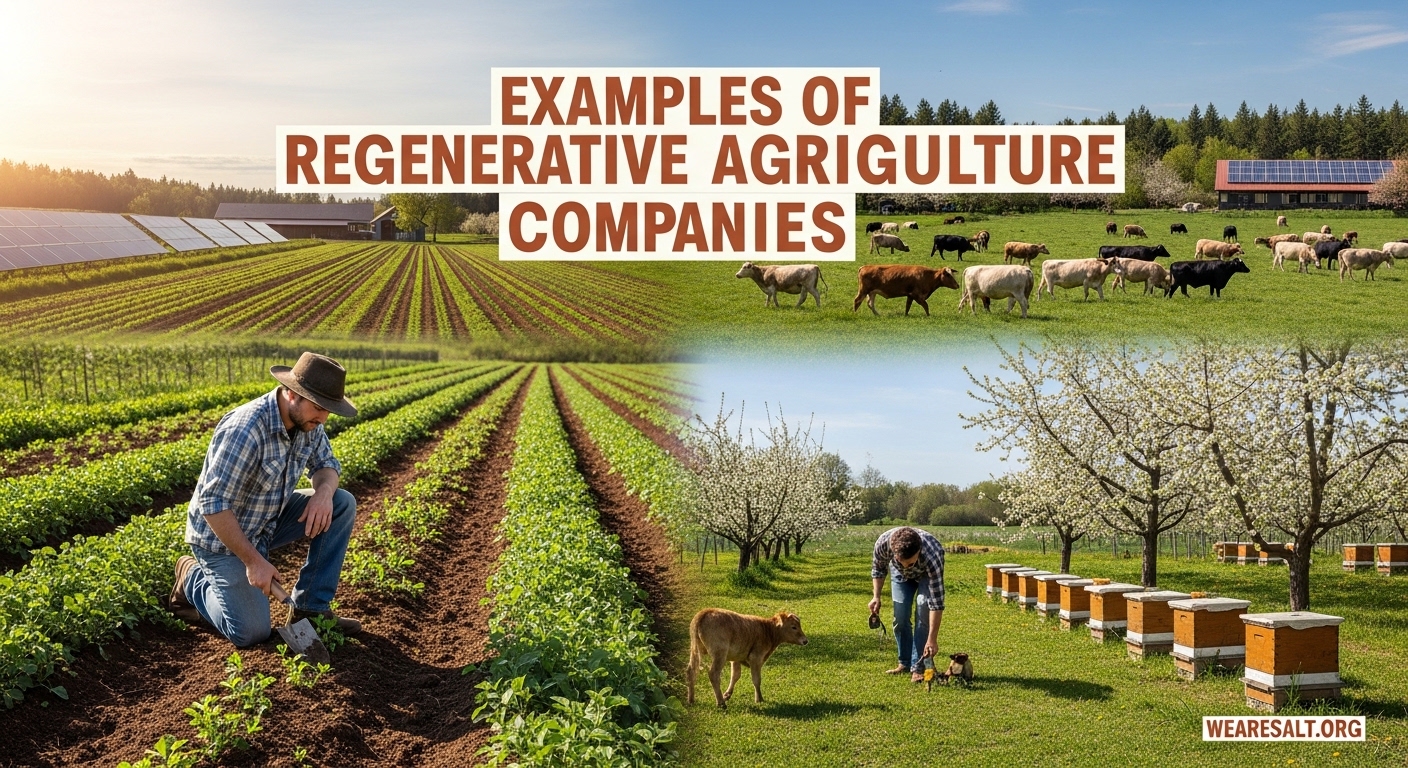
Regenerative agriculture has moved from niche farming circles to the mainstream in 2026. Companies across the food industry are adopting practices that restore soil health, sequester carbon, and build resilient ecosystems. Our team has tracked this movement through hundreds of hours researching the companies leading this transformation.
This guide explores examples of regenerative agriculture companies across different sectors. You will discover food brands putting regenerative principles into every product, technology companies measuring soil carbon, and major corporations committing to regenerative supply chains.
Whether you are a consumer looking to support regenerative brands, a farmer considering the transition, or an investor seeking opportunities, these companies represent the vanguard of agriculture in 2026.
Table of Contents
What Is Regenerative Agriculture?
Regenerative agriculture goes beyond sustainable farming. While sustainable practices aim to maintain current conditions, regenerative practices actively restore and improve soil health, biodiversity, and ecosystem function. This approach treats farming as a holistic system where soil, water, plants, animals, and humans interact.
The core principles include minimizing soil disturbance, maintaining living roots in the ground year-round, maximizing biodiversity above and below ground, and integrating livestock when possible. These practices increase soil organic matter, which sequesters atmospheric carbon while improving water retention and nutrient cycling.
Unlike organic certification, which primarily restricts prohibited inputs, regenerative agriculture focuses on outcomes. A regenerative farm might not be certified organic, though many pursue dual certification. The key distinction lies in the net positive impact on the land rather than simply avoiding harm.
Types of Regenerative Agriculture Companies
The regenerative agriculture landscape includes diverse business models. Consumer-facing food brands source ingredients from regenerative farms and market the benefits to conscious buyers. Agricultural technology companies develop tools to measure soil carbon, verify practices, and connect farmers with carbon credit markets.
Service providers help farmers transition to regenerative methods through consulting, financing, and technical assistance. Major food corporations are launching regenerative agriculture programs to secure their supply chains while meeting sustainability commitments.
Nonprofit organizations and certification bodies round out the ecosystem, establishing standards and verifying claims. Together, these companies are building an infrastructure that makes regenerative agriculture scalable and economically viable.
Regenerative Food Brands
These companies have built their entire business models around regenerative sourcing. They work directly with farmers practicing regenerative methods and communicate those practices clearly to consumers.
Patagonia Provisions
Patagonia Provisions launched in 2012 with a mission to repair the food system. The company sources ingredients exclusively from farms and fisheries using regenerative practices. Their product line includes regenerative organic certified soups, snacks, and pantry staples.
The brand works closely with farmers transitioning to regenerative methods, providing long-term contracts that reduce financial risk. Patagonia Provisions helped establish the Regenerative Organic Certified standard and continues advocating for stronger agricultural policies.
Dr. Bronner’s
Known primarily for soap, Dr. Bronner’s has invested heavily in regenerative agriculture through its food and body care lines. The company sources coconut oil, palm oil, mint oil, and other ingredients from regenerative projects worldwide.
Dr. Bronner’s operates the Serendipol project in Sri Lanka, which trains farmers in regenerative coconut cultivation. The company has converted over 1,200 acres to regenerative organic practices and continues expanding these programs. Their regenerative coconut oil represents one of the largest regenerative commodity sourcing programs in the personal care industry.
Lundberg Family Farms
This California-based rice company has practiced environmental stewardship since 1937. Lundberg grows rice using organic and regenerative methods that build soil health while reducing water use. Their practices include cover cropping, crop rotation, and water-efficient irrigation systems.
Lundberg Family Farms farms over 17,000 acres using these methods and sources from a network of regenerative organic rice growers. The company has achieved Regenerative Organic Certification for multiple product lines and continues investing in research to improve sustainable rice production.
General Mills
General Mills has committed to advancing regenerative agriculture across one million acres of farmland by 2030. Through brands like Cascadian Farm and Cheerios, the company works with farmers transitioning wheat, dairy, and other key ingredients to regenerative practices.
The company provides technical assistance, equipment cost-sharing, and long-term purchasing agreements to reduce farmer risk. General Mills has established regenerative agriculture programs across North America and Europe, focusing on oats, wheat, and dairy supply chains.
Pure Indian Foods
This family-owned company produces ghee and cooking oils from regenerative farms in India and the United States. Pure Indian Foods sources grass-fed butter from farms practicing managed grazing, a key regenerative practice that builds soil through rotational livestock management.
The company partners with small-scale farms using traditional regenerative methods that have sustained Indian agriculture for centuries. Their sourcing standards emphasize animal welfare, soil health, and farmer prosperity alongside product quality.
Agricultural Technology and Service Companies
These companies provide the tools, verification, and financial infrastructure needed to scale regenerative agriculture.
Indigo Ag
Indigo Ag operates the largest agricultural carbon credit program in the world. The company works with farmers to implement regenerative practices and measures the resulting soil carbon sequestration. Farmers earn carbon credits that Indigo sells to corporations seeking to offset emissions.
The platform includes agronomic support, satellite-based monitoring, and third-party verification. Indigo Ag has enrolled over 5 million acres across multiple continents and continues expanding its carbon farming marketplace.
Regenified
Regenified provides verification and certification services for regenerative agriculture claims. The company developed a science-based framework for measuring outcomes including soil health, biodiversity, water cycling, and carbon sequestration.
Their verification process includes on-site audits, soil testing, and ongoing monitoring. Regenified works with food companies, farmers, and landowners to provide credible third-party validation of regenerative practices.
Soil Capital
This European company helps farmers finance the transition to regenerative agriculture. Soil Capital provides upfront capital for equipment, cover crop seed, and other transition costs. Farmers repay these investments through verified carbon credits generated by their improved soil management.
The model reduces the financial barrier that prevents many farmers from adopting regenerative practices. Soil Capital has supported transitions across thousands of acres in France and continues expanding throughout Europe.
Regen Network
Regen Network uses blockchain technology to verify and trade ecological credits. The platform enables farmers to earn income from ecosystem services including carbon sequestration, water conservation, and biodiversity enhancement.
The company has developed methodologies for measuring and verifying regenerative outcomes across multiple agricultural systems. Regen Network connects farmers directly with buyers seeking verified ecological credits.
Corporate Regenerative Initiatives
Major food corporations are launching regenerative agriculture programs to secure supply chains and meet sustainability goals.
PepsiCo
PepsiCo has committed to spreading regenerative agriculture across 7 million acres by 2030. The company works with farmers growing potatoes, corn, oats, and other key ingredients across 28 countries.
Their program provides farmers with technical assistance, cost-sharing for equipment, and premium pricing for regeneratively grown ingredients. PepsiCo reports that participating farms have seen improved soil health and reduced water use while maintaining yields.
Walmart
Through Project Gigaton, Walmart aims to avoid one billion metric tons of greenhouse gas emissions from its global supply chain by 2030. Regenerative agriculture is a key pillar of this initiative.
The company works with suppliers to implement regenerative practices across produce, grain, and protein supply chains. Walmart provides funding for farmer education and transition support while creating market demand for regenerative products.
Kering
The luxury group behind Gucci, Saint Laurent, and other brands has committed to regenerative agriculture for its cashmere, wool, and leather supply chains. Kering partners with farms in Mongolia, New Zealand, and Europe to implement regenerative grazing practices.
The company has developed the Regenerative Fund for Nature, which provides transition financing to farmers and herders. Kering reports improved animal welfare and ecosystem health in participating supply chains.
Danone
Danone has committed to regenerative agriculture across its dairy supply chain. The company works with dairy farmers to implement practices including cover cropping, reduced tillage, and improved manure management.
Their program includes farmer training, financial support, and long-term purchasing agreements. Danone has enrolled thousands of farms across North America and Europe in regenerative agriculture initiatives.
How to Verify Regenerative Agriculture Claims
As regenerative agriculture gains popularity, greenwashing concerns have emerged. Several methods help verify legitimate regenerative claims.
Look for third-party certifications like Regenerative Organic Certified (ROC), which requires farms to meet strict standards for soil health, animal welfare, and social fairness. The certification includes annual audits and ongoing monitoring.
Research the specific practices companies mention. Legitimate regenerative brands detail their methods including cover cropping, reduced tillage, diverse rotations, and livestock integration. Vague claims without specific practices warrant skepticism.
Check for transparency in reporting. Leading regenerative companies publish impact reports with measurable outcomes like soil carbon increases, biodiversity improvements, and water conservation metrics. Independent verification adds credibility to these claims.
Consider the company’s overall commitment. Regenerative agriculture requires long-term dedication rather than one-off projects. Companies with dedicated regenerative teams, multi-year programs, and farmer partnerships demonstrate genuine commitment.
Examples of Regenerative Agriculture Companies: Frequently Asked Questions
What companies use regenerative agriculture?
Many companies across the food industry use regenerative agriculture. Food brands like Patagonia Provisions, Dr. Bronner’s, and Lundberg Family Farms source exclusively from regenerative farms. Technology companies like Indigo Ag and Regenified provide measurement and verification services. Major corporations including PepsiCo, Walmart, General Mills, and Danone have launched regenerative agriculture programs across their supply chains.
What is an example of a regenerative company?
Patagonia Provisions serves as an excellent example of a regenerative company. They source all ingredients from farms using regenerative practices, helped establish the Regenerative Organic Certified standard, and provide long-term contracts that support farmers through the transition process. Their product range includes soups, snacks, and pantry staples made with regenerative ingredients.
Is regenerative agriculture profitable?
Regenerative agriculture can be profitable, though transition costs present challenges. Farmers often see reduced input costs for synthetic fertilizers and pesticides after transitioning. Additional revenue streams include carbon credits, premium pricing for regenerative products, and improved resilience against drought and extreme weather. Many companies now provide financial support to help farmers manage transition costs.
How do you know if a brand is truly regenerative?
Verify regenerative claims by looking for third-party certifications like Regenerative Organic Certified (ROC), researching specific practices mentioned, checking for published impact reports with measurable outcomes, and evaluating the company’s long-term commitment. Transparent brands detail their methods and provide independent verification of their claims.
Conclusion
Examples of regenerative agriculture companies span from small food brands to global corporations. These organizations recognize that soil health, farmer prosperity, and food security interconnect. By supporting companies committed to regenerative practices, consumers and businesses drive demand for agriculture that heals rather than depletes.
The regenerative agriculture movement continues accelerating in 2026. New companies enter the space regularly while existing businesses deepen their commitments. This growing ecosystem makes regenerative agriculture increasingly accessible for farmers and consumers alike.