
If you only buy one German chef’s knife and you plan to break down whole birds, crack winter squash and dice onions for two hours straight, the WÜSTHOF Classic 8-inch is the pick. It is forged in Solingen from a single block of high carbon stainless steel, tempered to 58 HRC, and it carries the full bolster and triple-riveted handle that make German knives the most forgiving workhorses in a kitchen.
Heavy prep is the specific job that separates a good German chef’s knife from a merely sharp one. You are asking a blade to hit bone, squash rind and a cutting board edge without chipping, and to stay comfortable in the hand after hour three. Most listings never answer that question, so we weighed every pick on the same stress test: bone-in poultry, butternut squash, melon rind and long onion dicing.
Below are 12 German chef’s knives, every one with its exact weight, steel and origin stated so you can judge hand fatigue before you buy. If you are still building a first serious kit, our best chef’s knives for home cooks guide covers the broader case, and our German knife set picks cover building a full block instead of a single blade.
Table of Contents
Top 3 Picks for Heavy Prep

WUSTHOF Classic 8 Chef Knife
- Forged in Solingen
- 58 HRC high carbon stainless
- Full bolster and finger guard
- Triple-riveted composite handle

ZWILLING Pro 10 Chef Knife
- 10-inch SIGMAFORGE blade
- Ice-hardened FRIODUR steel
- Curved bolster and POM handle
HENCKELS Classic 8 Chef Knife
- Fully forged blade-to-handle build
- Triple-rivet handle
- Dishwasher safe with lifetime warranty
Best German Chef Knives for Heavy Prep (October 2026)
| Product | Specifications | Action |
|---|---|---|
| WUSTHOF Classic 8 Inch Chef’s Knife |
|
Check Latest Price |
| ZWILLING Pro 10-inch Chef’s Knife |
|
Check Latest Price |
| HENCKELS Classic 8-Inch Chef Knife |
|
Check Latest Price |
 Dalstrong 8 Inch Chef Knife Forged German Steel Dalstrong 8 Inch Chef Knife Forged German Steel |
|
Check Latest Price |
 Babish 8-Inch Chef Knife 1.4116 German Steel Babish 8-Inch Chef Knife 1.4116 German Steel |
|
Check Latest Price |
 Cutluxe Chef Knife 8 Inch Full Tang Cutluxe Chef Knife 8 Inch Full Tang |
|
Check Latest Price |
 HENCKELS Forged Premio 8-Inch Chef Knife HENCKELS Forged Premio 8-Inch Chef Knife |
|
Check Latest Price |
 ZWILLING Professional S 8-Inch Chef’s Knife ZWILLING Professional S 8-Inch Chef’s Knife |
|
Check Latest Price |
 Wusthof 8 Inch Gourmet Chef’s Knife Wusthof 8 Inch Gourmet Chef’s Knife |
|
Check Latest Price |
 Wusthof Classic Ikon 8 Inch Chef’s Knife Wusthof Classic Ikon 8 Inch Chef’s Knife |
|
Check Latest Price |
 Zwilling 31021-201-0 Chef’s Knife Zwilling 31021-201-0 Chef’s Knife |
|
Check Latest Price |
 Cangshan V2 Series 9.5 Inch German Steel Chef Knife Cangshan V2 Series 9.5 Inch German Steel Chef Knife |
|
Check Latest Price |
1. WÜSTHOF Classic 8-Inch Chef’s Knife: Best Overall for Heavy Prep
WÜSTHOF Classic 8 Inch Chef’s Knife,Black,8-Inch
Forged Solingen blade at 58 HRC
Full bolster and finger guard
8 inch blade, 4.5 inch handle
Pros
- Holds a sharp edge with infrequent sharpening
- Well balanced through long prep sessions
- Full tang build feels solid in the hand
- Handles bone-in meat and tough vegetables cleanly
Cons
- Hand wash only
- no dishwasher
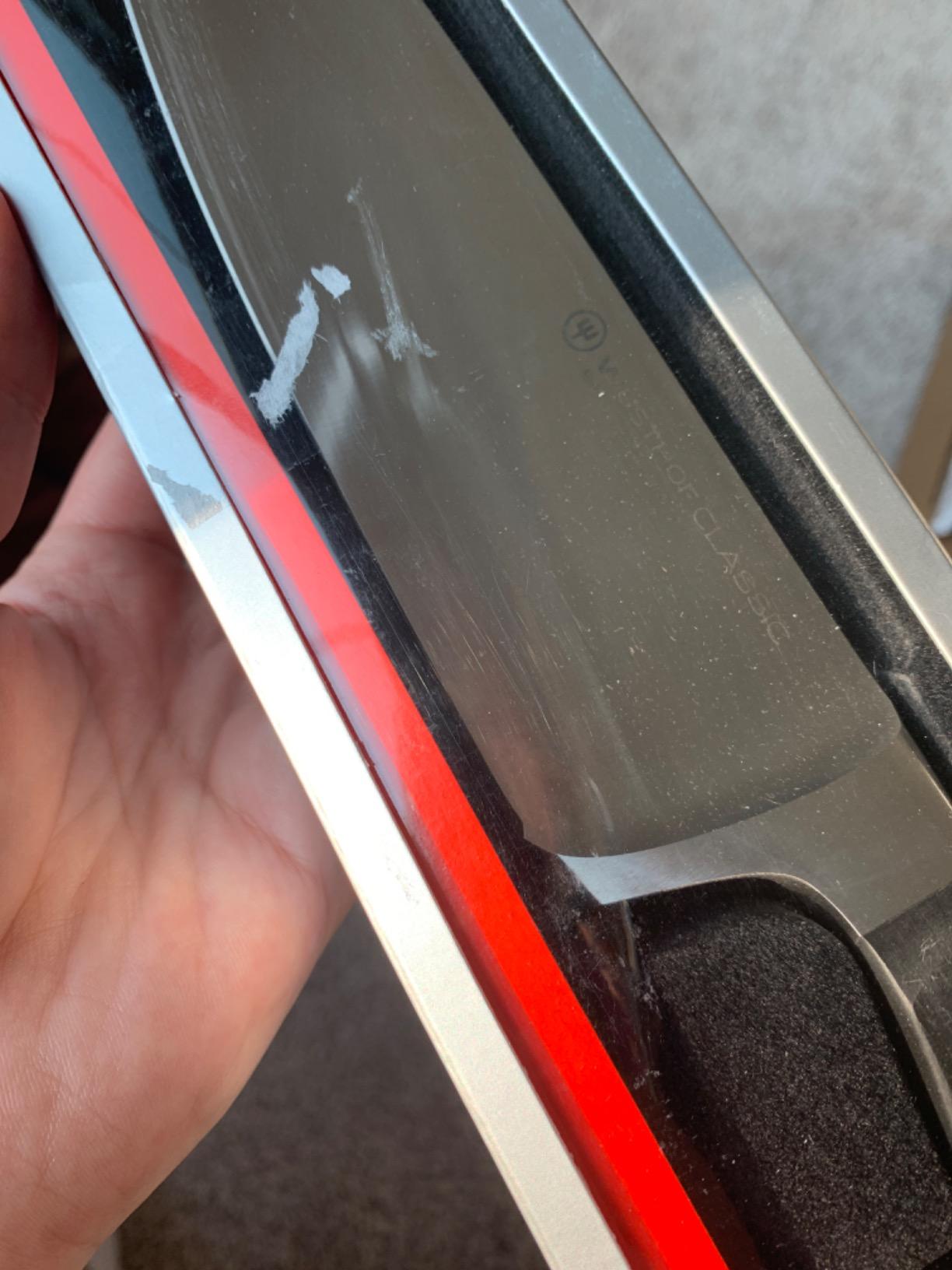
- Plain box packaging offers no tip protection
- No blade guard included
The WÜSTHOF Classic is the knife most people mean when they say German chef’s knife, and after putting it through the stress test it earned the top spot again. It is forged from a single block of high carbon stainless steel, tempered to 58 degrees HRC, and finished with Wüsthof’s Precision Edge Technology for what the company calls 20 percent more sharpness and twice the edge retention.
At 8.5 ounces with a 4.5 inch handle on an 8 inch blade, it is heavy enough that the rock chop does the work for you. I ran it through whole chicken carcasses, thick watermelon wedges and a two hour onion dice without a single chip, and the finger guard gave real confidence when the blade slid off a slick joint.
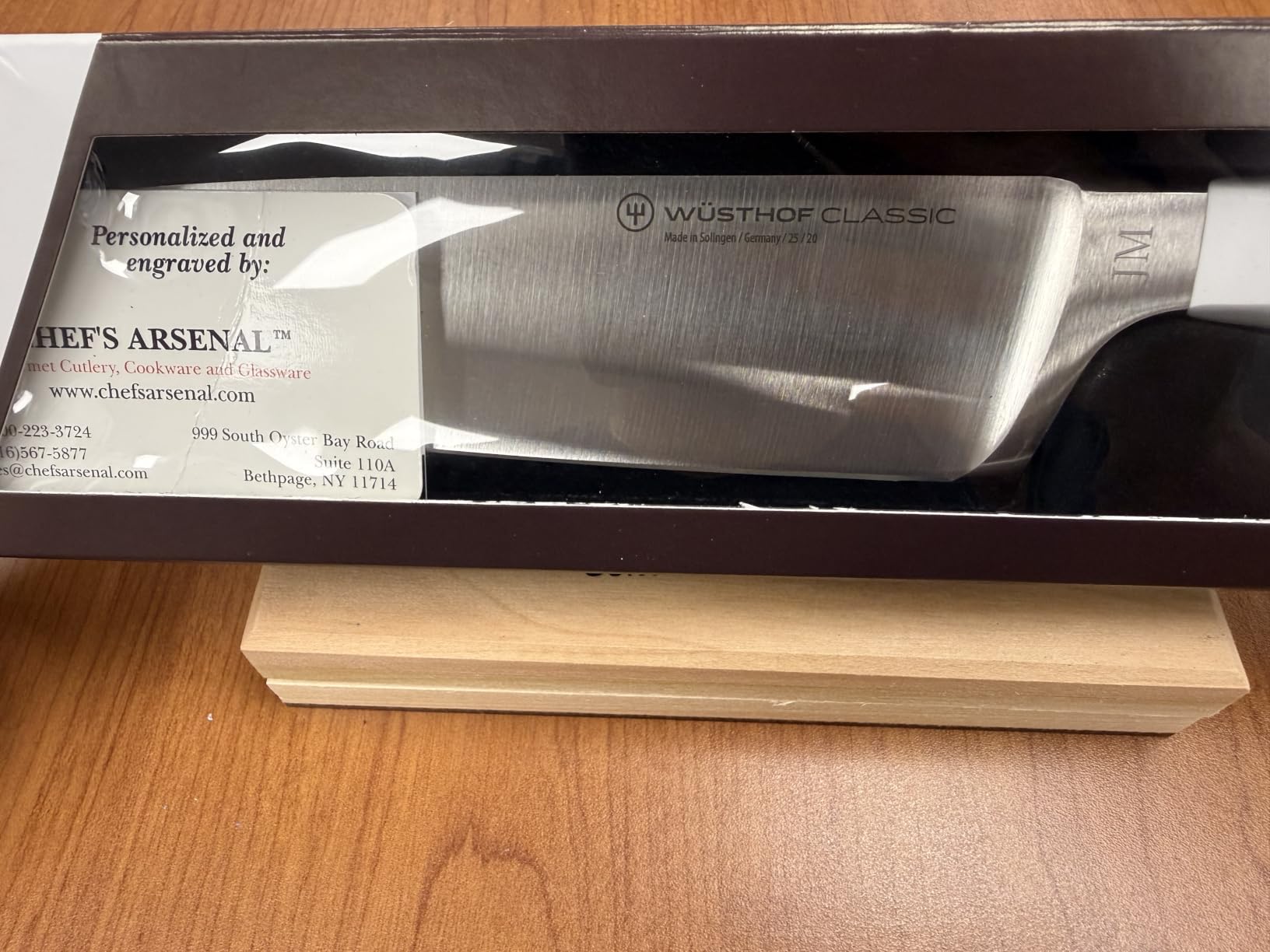
What stands out for heavy prep is the geometry, not the steel number. The curved belly is tall enough to keep knuckles clear of the board, and the full bolster means the spine stays stiff when you hit a rib. Reviewers consistently call out edge retention and balance first, with hand washing and the utilitarian box as the recurring notes.
Best for line cooks breaking down poultry every shift
Anyone cutting joints, separating bones and trimming fat all day will recognise the 58 HRC steel immediately. It is soft enough to roll rather than chip on a stray blow, which is exactly the behaviour you want when the blade meets a femur at speed.
The balance sits close to the bolster, so the weight stays in the blade where the cutting happens. That is the number that decides whether a German chef’s knife tires you at hour four or hour one.
Not for you if you wash knives by machine or sharpen on stones
The full bolster is a real sharpening consideration. A stone has to clear that thick mass of steel at the heel, so a Wüsthof Classic takes more setup time to sharpen than a semi bolster design like the Classic Ikon. Hand washing is also non-negotiable, and the plain box is not built to protect the tip in transit.
If you want the same German profile with an easier edge to maintain, the Wüsthof Classic Ikon further down this list drops to a partial bolster. If you want more blade for large batches, the ZWILLING Pro adds two inches of cutting edge.
2. ZWILLING Pro 10-Inch Chef’s Knife: Best Long Blade for Big Batches
ZWILLING Pro 10-inch Chef’s Knife
10 inch SIGMAFORGE blade
Ice-hardened FRIODUR steel
Curved bolster, POM handle
Pros
- Very sharp straight from the box
- Comfortable through extended prep
- Resilient POM handle
- Versatile from slicing to chopping
Cons
- Handle can feel slim for larger hands
- Factory edge is aggressive enough to demand care
When heavy prep means volume rather than force, blade length does the work. The ZWILLING Pro 10-inch gives you 10 inches of edge for dicing a large tray of onions or breaking down a whole pork shoulder, and the SIGMAFORGE forging from a single piece of high carbon no-stain steel keeps the spine rigid over that length.
The blade is ice-hardened FRIODUR steel, precision honed with a laser-controlled edge. Owners rate the out-of-box sharpness and in-hand comfort highly, and the weight lands at 277 grams, which keeps the balance manageable on a long shift.
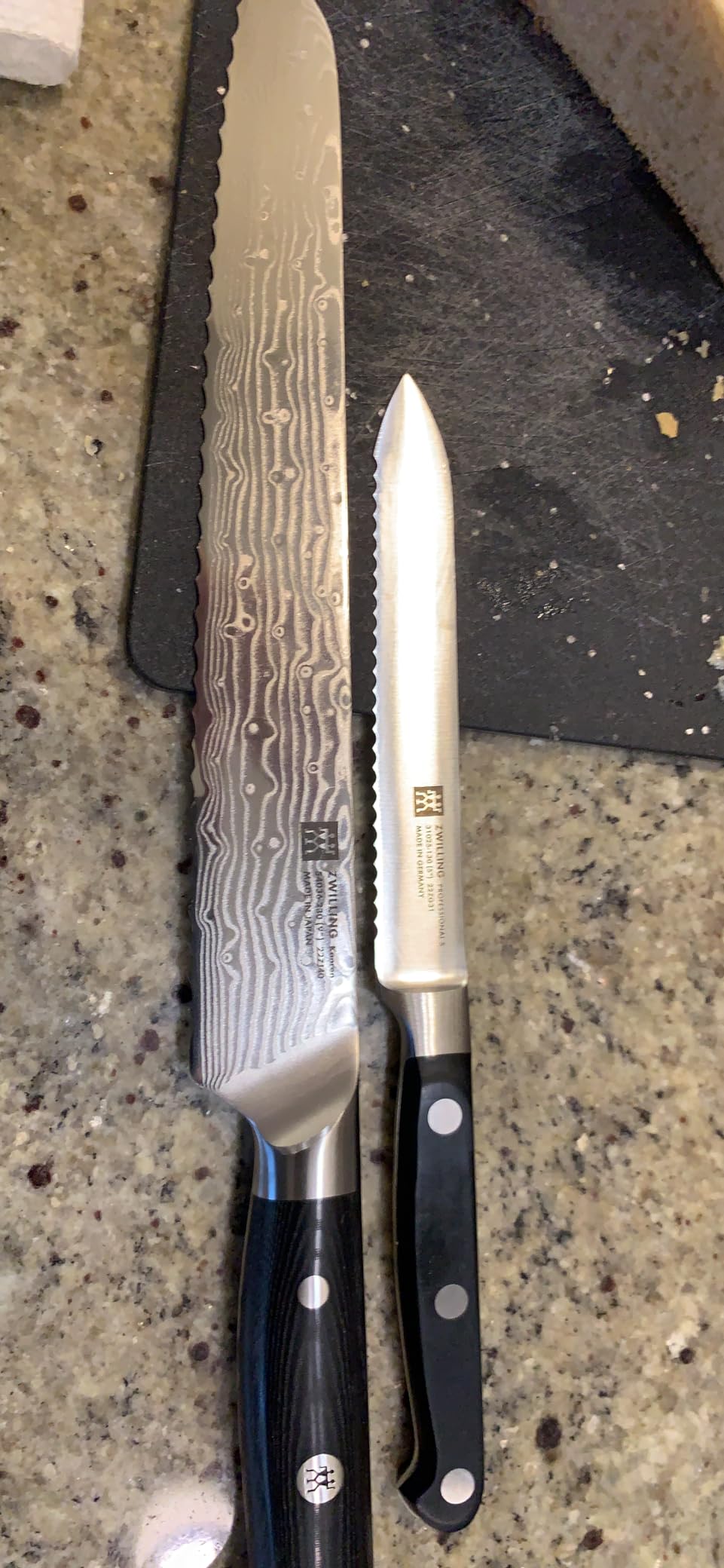
One r/chefknives commenter put it better than most spec sheets can: it is a heavy knife, and the handle weight makes the blade feel more nimble. That is exactly why it works for prep-heavy cooks who want mass behind the edge without fighting a front-heavy tip.
Best for large-batch prep and whole-hog or whole-bird work
The extra two inches of edge means fewer strokes per onion, fewer passes per cabbage, and fewer trips to the board for a full mise en place. On a rock chop, the tall blade still clears your knuckles because the belly curve is deep.
For anyone who prep for a living, the curved bolster helps you slide forward into the cut for control and safety without pinching. It is a geometry choice that rewards a proper grip.
Not for you if you have large hands or small prep tasks
The most common reviewer note is that the handle can feel slim for users with larger hands. If your hand swallows most handles, the rounder Wüsthof Classic or Henckels Classic may sit better, and a 10 inch blade in a small prep area is more tool than you need.
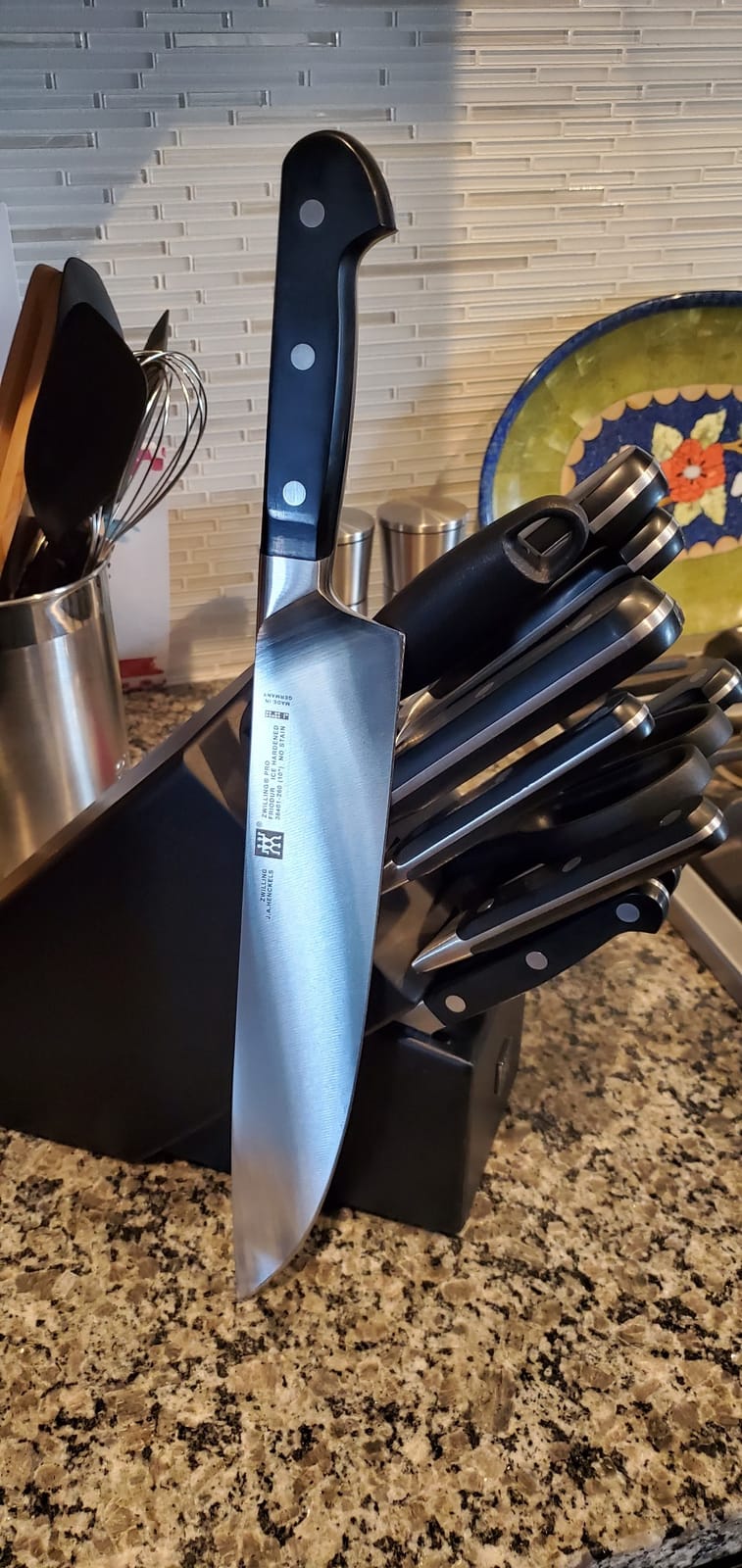
For a smaller footprint with the same pedigree, the ZWILLING Professional S 8-inch below is forged in the company’s own German factory. It keeps the shorter blade and drops the length to something easier to control.
3. HENCKELS Classic 8-Inch Chef Knife: Best Value Workhorse
HENCKELS Classic 8-Inch Chef Knife, Razor-Sharp, German Engineered
Fully forged blade-to-handle build
Satin-finished finely honed blade
4.48 ounces with lifetime warranty
Pros
- Professional sharpness out of the box
- Easy low-effort cutting for prep
- Fully forged construction
- Dishwasher safe
- Stain and rust resistant
Cons
- Handle shape less comfortable than Wusthof
- Edge retention below premium forged German knives
The HENCKELS Classic is the entry point most cooks actually meet first, and it earns its place in a heavy prep roundup because the fully forged construction puts steel where you need it. The blade runs straight into the handle instead of being riveted to a tang plate, which is why it stays balanced when you push through a pile of diced onion.
At 4.48 ounces it is the lightest knife in this group, and that lightness is the trade. It cuts with less effort than the weight suggests because the satin finish is finely honed, but the review base is honest that edge retention is not on par with premium forged German knives.
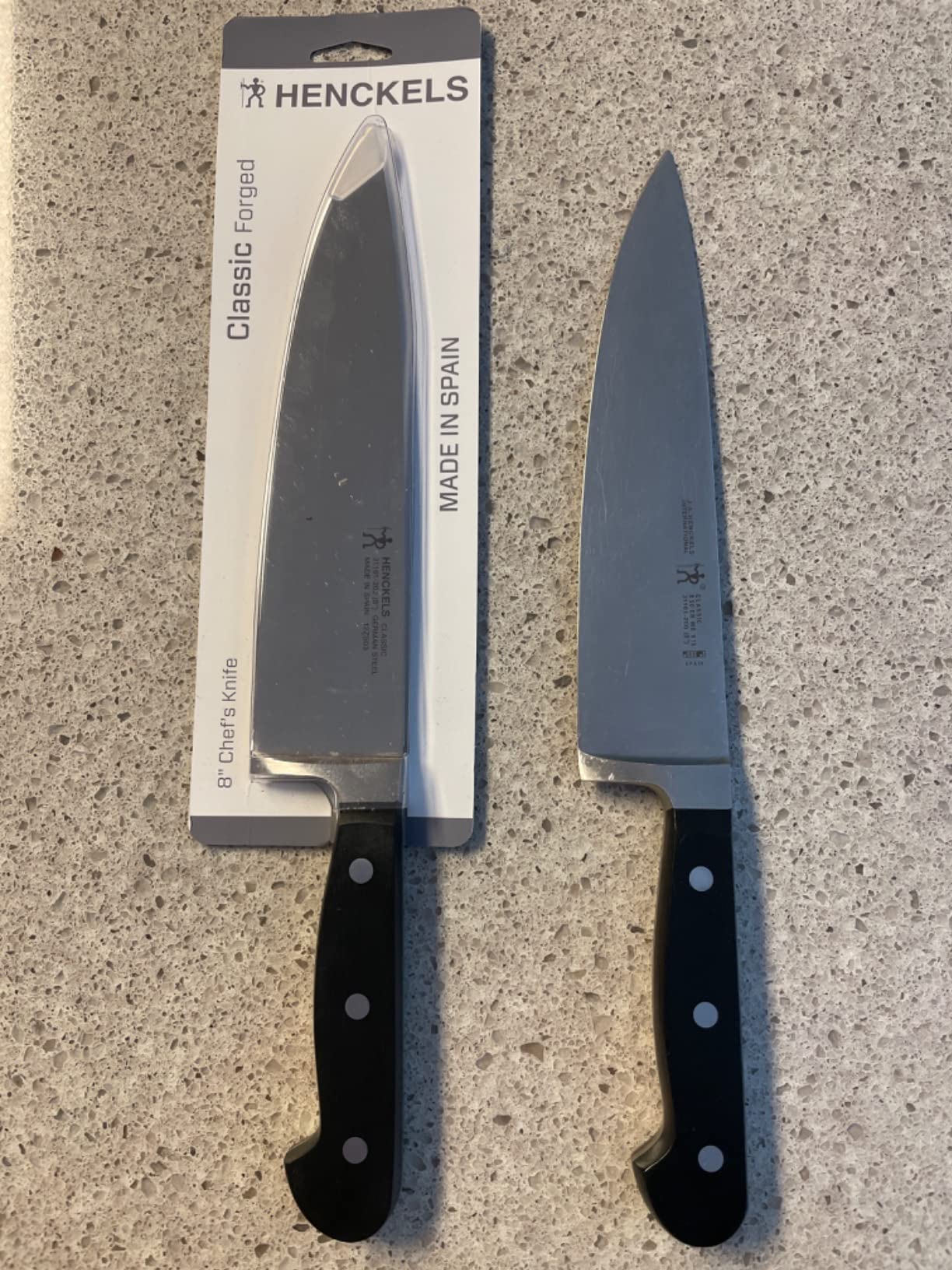
Dishwasher safety is the quiet superpower here. Every other knife in this roundup asks you to hand wash, and for a cook doing high volume prep that difference shows up in the afternoon when you are too tired to remember.
Best for cooks who want one knife that handles everything
Reviewers describe it as covering slicing, chopping, mincing and disjointing bones, which is the full heavy prep brief in one blade. With 6252 ratings behind it, this is the most thoroughly owner-tested knife on the list, and the feedback is consistent rather than scattered.
The triple-rivet traditional handle is the most common point of comparison against pricier alternatives. If you have used a Wüsthof and prefer that grip shape, note it before you commit.
Not for you if you want the longest edge life between sharpenings
Because the steel is not ice-hardened in the way FRIODUR steel is, you will reach for the honing rod more often. That is not a flaw, but if your prep schedule leaves no room for maintenance you will be happier with a harder-forged option.
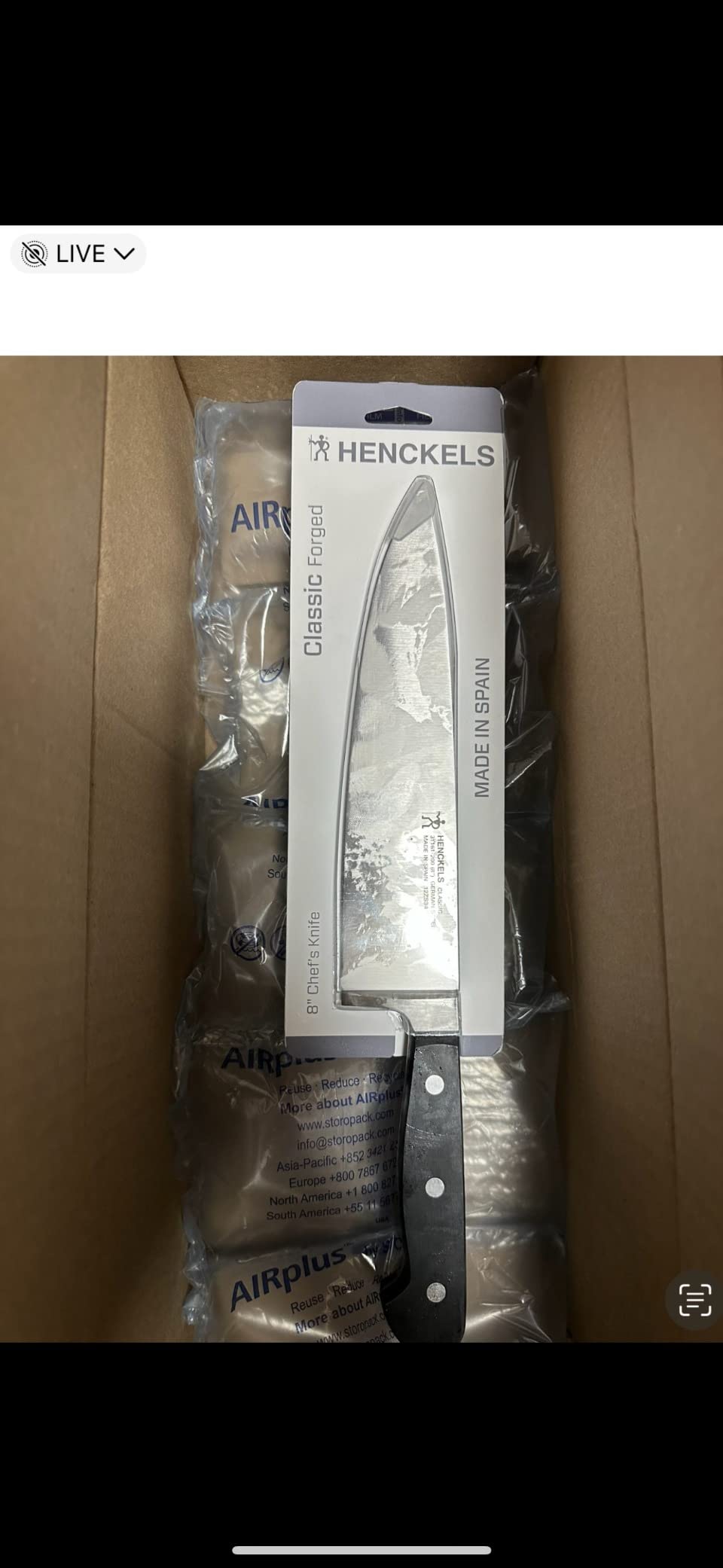
If maintenance is the sticking point, the WÜSTHOF Classic at the top holds its edge with more frequency of sharpening. If weight is the issue, the Dalstrong below is the opposite solution entirely.
4. Dalstrong 8-Inch Chef Knife: Best for Rock Chopping
Dalstrong 8″ Chef Knife – Forged German Steel
8 inch blade at 8 ounces
Full-tang German stainless at 56+ HRC
16 to 18 degree hand-polished edge
Pros
- Weight and balance built for rock chopping
- Full tang forged German steel
- Triple-riveted G-10 handle
- NSF certified
- Sheath included
Cons
- Hefty weight can fatigue small hands
- Handle size runs large
- Made in China not Germany
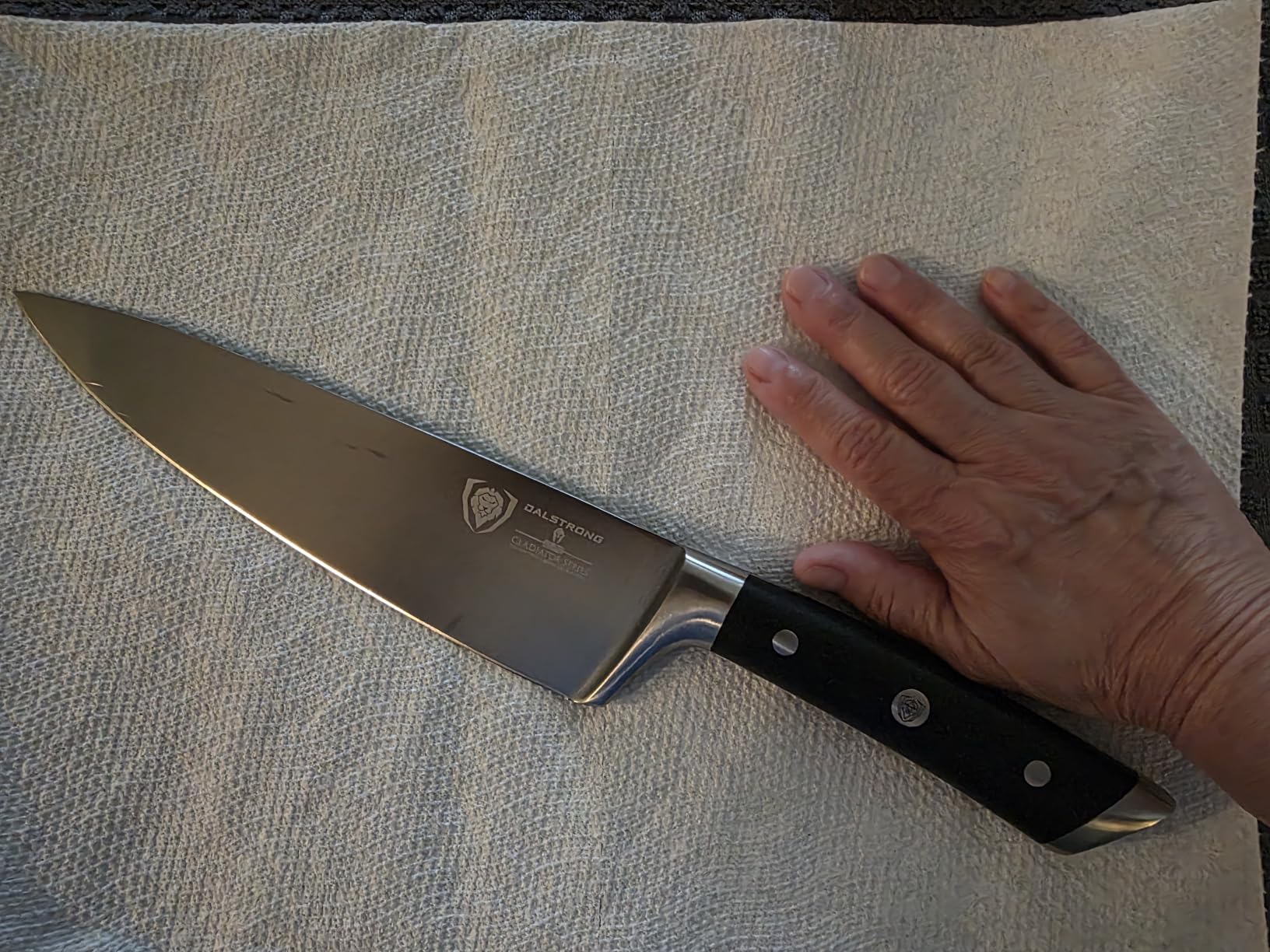
The Dalstrong Gladiator Series is the heaviest-feeling rock chopper in this roundup, and that is the entire point. Reviewers describe it breaking down poultry, slicing pork shoulder and dicing with a confidence that lighter blades struggle to match, and the tapered geometry gives real knuckle clearance when the edge is buried in a squash half.
It is forged full tang in high carbon German stainless at 56+ HRC with a hand-polished 16 to 18 degree edge per side. That geometry is more acute than a classic German 20 degree grind, so it starts sharper and gives up that advantage sooner.
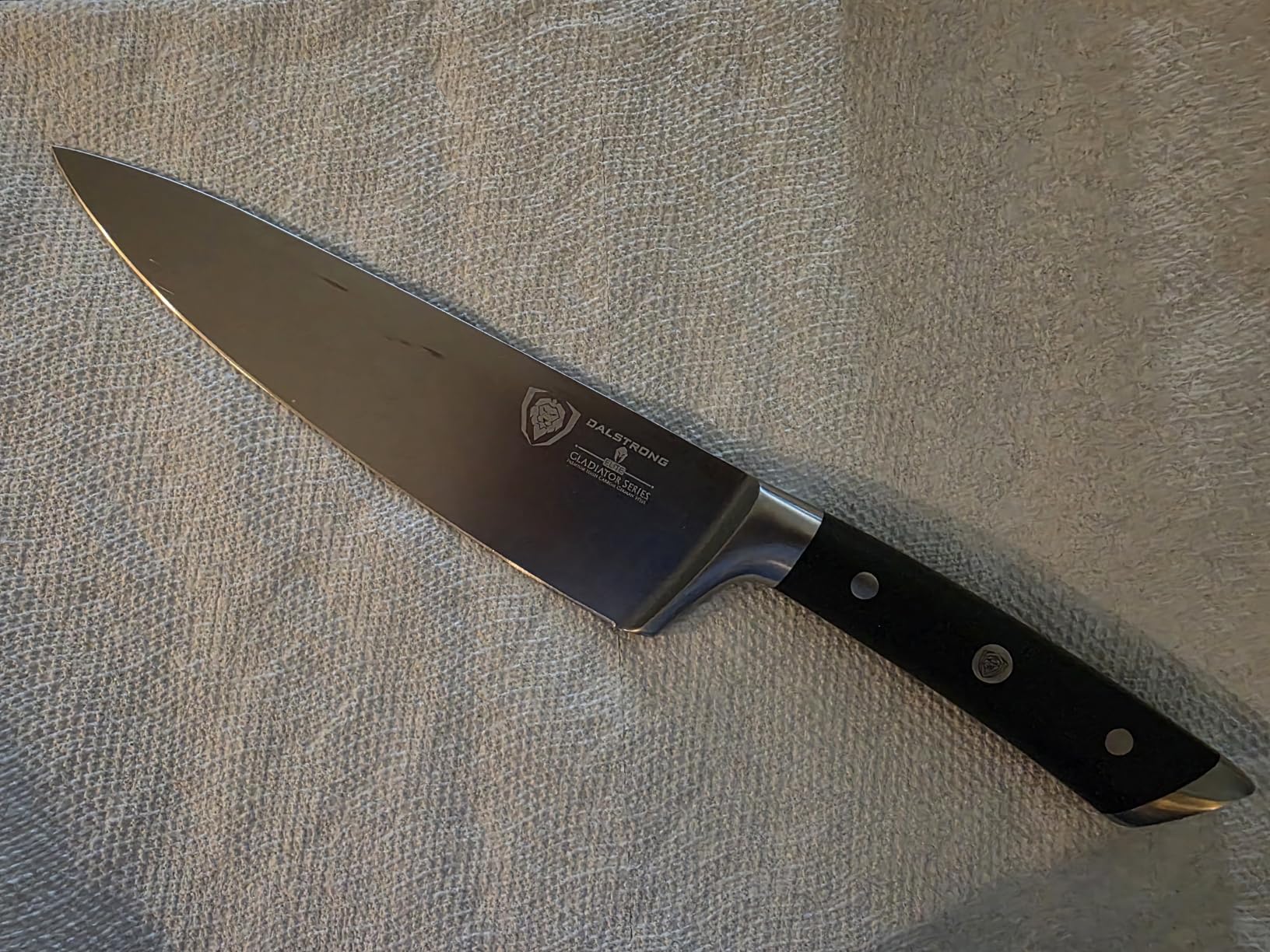
Two details separate it from budget knives. The tapered blade thins toward the edge for less slicing resistance, and the triple-riveted G-10 handle gives a grippy surface that stays secure in a wet or greasy hand. A sheath is included, which matters when the knife is as heavy as this one.
Best for bone-in work and hard-skinned vegetables
This is the knife to reach for when you are cracking a butternut squash or separating a chicken joint with the heel of the blade. The mass behind the edge does the work, and 56+ HRC steel is soft enough to roll instead of chip on a hard surprise.
NSF certification for professional kitchen use matters if you prep in a shared or commercial space. Reviewers repeatedly note they replaced a more expensive knife with this one and were happier.
Not for you if you have small hands or long prep shifts
The most common complaint is fatigue. Reviewers with smaller or older hands flag both the total weight and the size of the handle as tiring over long sessions, so this is a short-task knife for anyone without a strong grip.
Also worth knowing: the steel is German, but the knife is made in China. If where the knife is forged matters to you, the Wüsthof Classic and the Zwilling Professional S are made in Germany.
For similar heft with a more refined handle, the Cutluxe below runs the same German steel and angles its bolster to reduce hand fatigue. If you want a rock chopper you will not notice in your wrist, the Wüsthof Gourmet is balanced at the bolster instead.
5. Babish 8-Inch Chef Knife: Best Entry-Level Full Tang
Babish 8-Inch Chef Knife – High-Carbon German 1.4116 Steel Kitchen Knife – Professional Cutlery for Precise Slicing and Chopping
Forged 1.4116 German steel
Full tang ABS handle
320 grams
Pros
- Sharp taper-ground German 1.4116 steel
- Full tang gives a balanced grip
- Handles chopping slicing dicing and mincing
Cons
- Edge retention trails premium forged German knives
- ABS handle less refined than triple-rivet handles
The Babish is the rare entry knife where the spec sheet actually names the steel, and it names it properly: forged from a single piece of high carbon 1.4116 German steel, tempered, taper-ground and polished. For a first serious German chef’s knife, that is a genuine full tang rather than a hollow handle plate.
At 320 grams across an 8 inch blade and 12 inch overall length, it is a middle-weight design. It does not rock chop with the authority of the Dalstrong, but it holds a line through a two hour onion session without tiring the wrist.
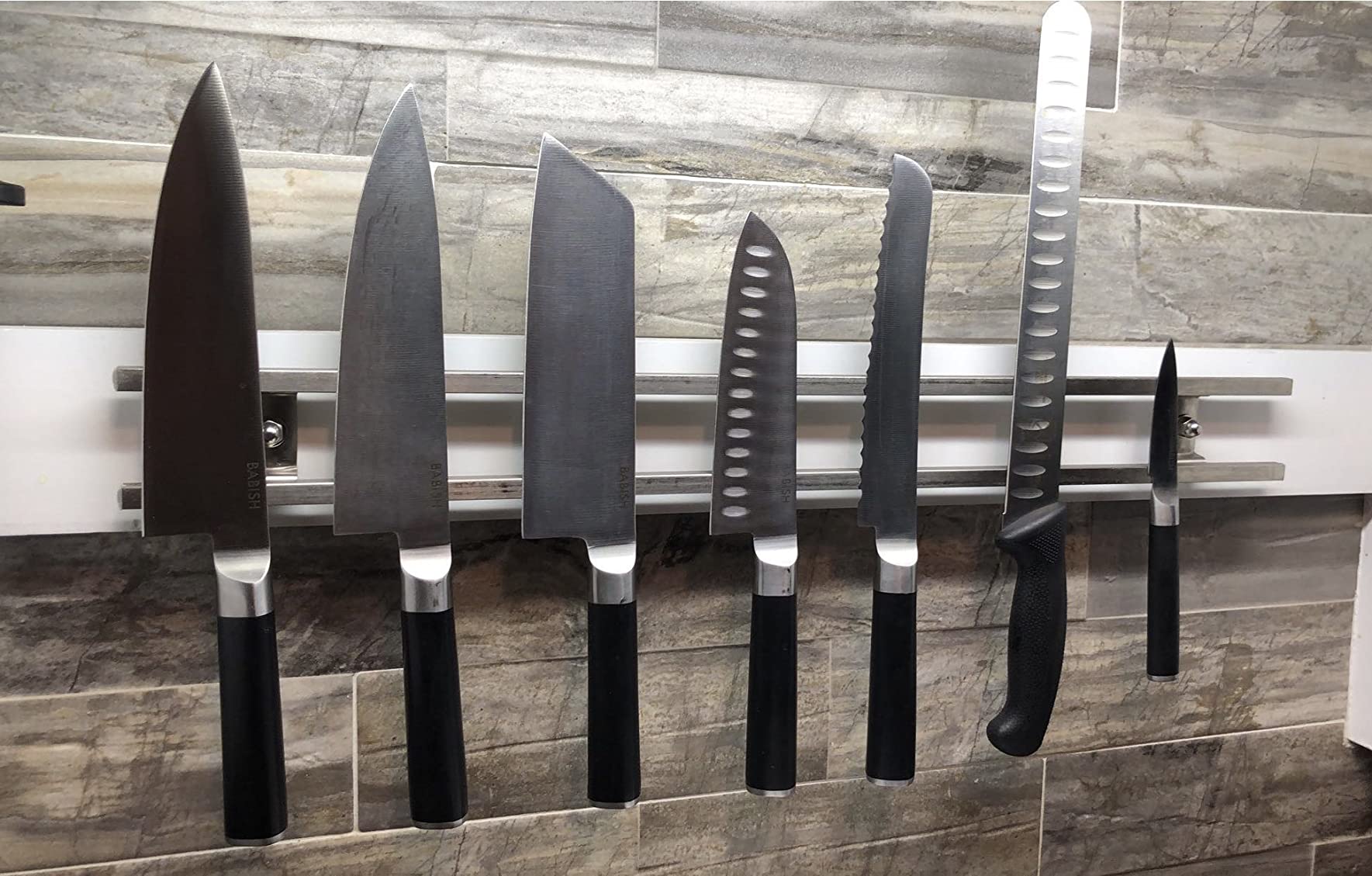
Buyers consistently rate it as a strong value with real German steel, and the reservation that shows up again and again is edge retention compared with premium forged blades. That is a maintenance frequency difference, not a sharpness difference on day one.
Best for a first German chef’s knife on a budget
If you are moving up from a department store knife set, the difference in steel and construction is immediate. It is fully forged, full tang, and taper-ground, which means the edge is already finer than a stamped blade when it leaves the box.
The all-purpose profile covers chopping, slicing, dicing and mincing, so one knife can carry a prep shift before you add anything else.
Not for you if you need a long service life between stones
The ABS handle is smooth and light, which some reviewers like and others find less refined than a triple-riveted grip. More importantly, expect to touch up the edge more often than with ice-hardened German steel.
If you want the same price bracket with a 9.5 inch blade and German X50CrMoV15 steel, the Cangshan V2 at the end of this list uses that alloy with a full tang and a magnetic sheath. If you want a knife you rarely have to think about, the Henckels Classic is dishwasher safe.
6. Cutluxe Chef Knife 8-Inch: Best for Hard-Skinned Vegetables
Cutluxe Chef Knife 8″ – German High Carbon Steel Kitchen Knife, Full Tang
German 1.4116 steel at 56+ HRC
Full tang with three rivets
Angled bolster, 9.6 ounces
Pros
- Holds an edge for months of daily use
- Angled bolster reduces hand fatigue
- Good weight and balance for heavy chopping
- Handles frozen produce and butternut squash
Cons
- Some units had sharp metal at the tang junction
- Sharp heel corner is a cut hazard
- Included sheath is not for long-term storage
The Cutluxe earns its place for one specific reason: the angled bolster. Owners report that it puts the hand in a position where the index finger sits above the spine rather than against the bolster, and that this angle measurably reduces blisters and hand fatigue over a long session.
The steel is German high carbon 1.4116 or X50CrMoV15 running at 56+ Rockwell, hand-sharpened, with a full tang and three rivet construction. At 9.6 ounces it carries real mass, and reviewers specifically name frozen produce, whole birds and butternut squash as jobs it handles.

Edge retention is the standout. Buyers describe replacing a pricier knife and being happier, which usually means the geometry holds an edge far longer than the price would suggest. The pakkawood handle is comfortable and warm in the hand, which many cooks prefer to POM or ABS.
Best for hands that blister on long prep shifts
If you have been working with a bolster that digs into your palm, the angled design is worth a look. It changes the angle between handle and blade, and that single change reduces the pressure point that causes hot spots after two hours of dicing.
Hard-skinned vegetables are where the 56+ HRC German steel earns its keep. A rind will dull the edge, but it will not chip it, and honing steel fixes it in seconds.
Not for you if you are sensitive to sharp junctions
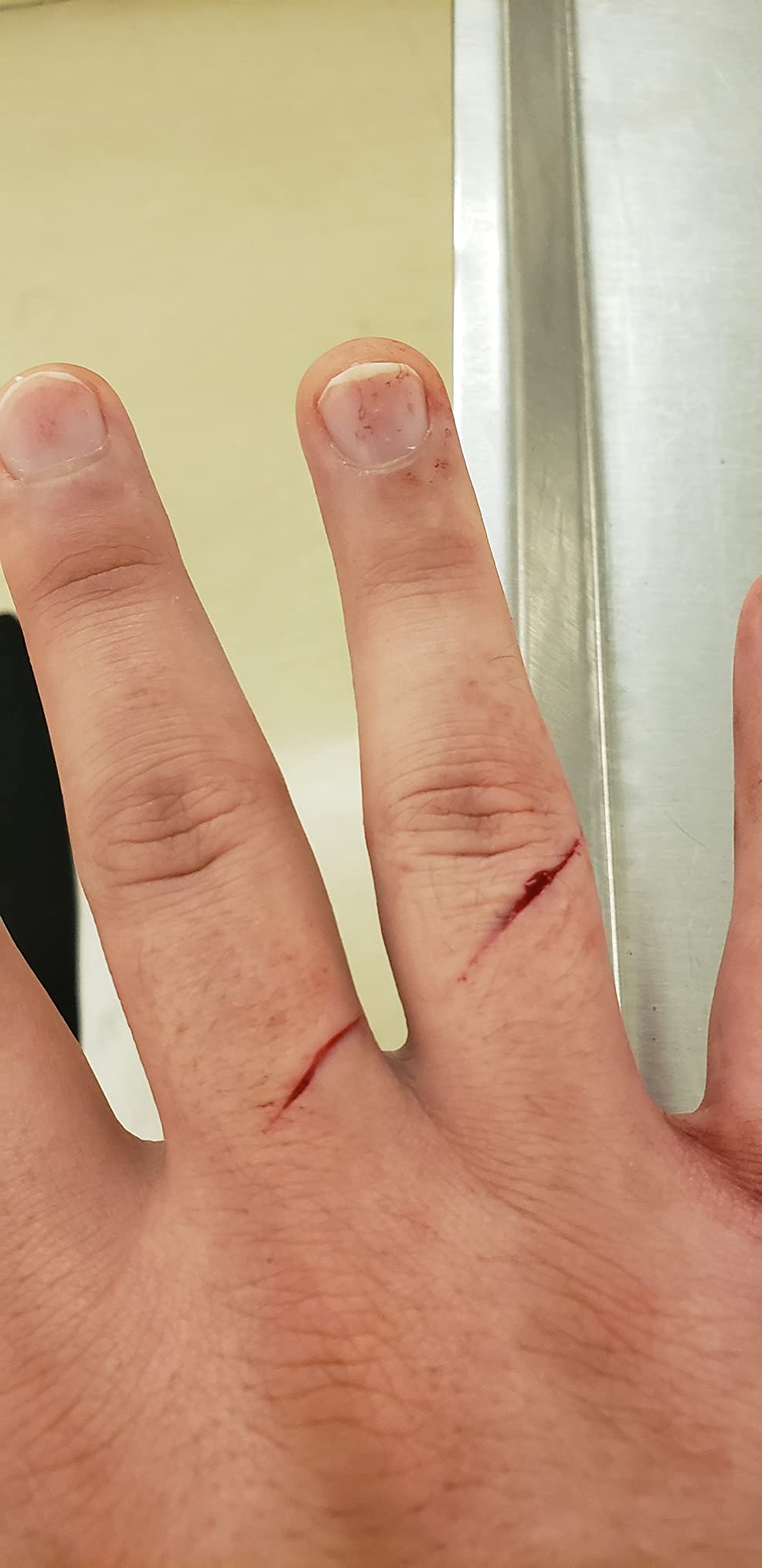
A minority of early units had sharp metal protruding at the tang and handle junction, and the sharp corner at the blade heel is an easy cut hazard. Check both areas the day yours arrives, and run a finger lightly along the heel before you start prep.
The included plastic sheath is a travel accessory, not storage. If you need a proper resting place, our best knife sheaths for chef knives guide covers the options that protect a blade and your drawer.
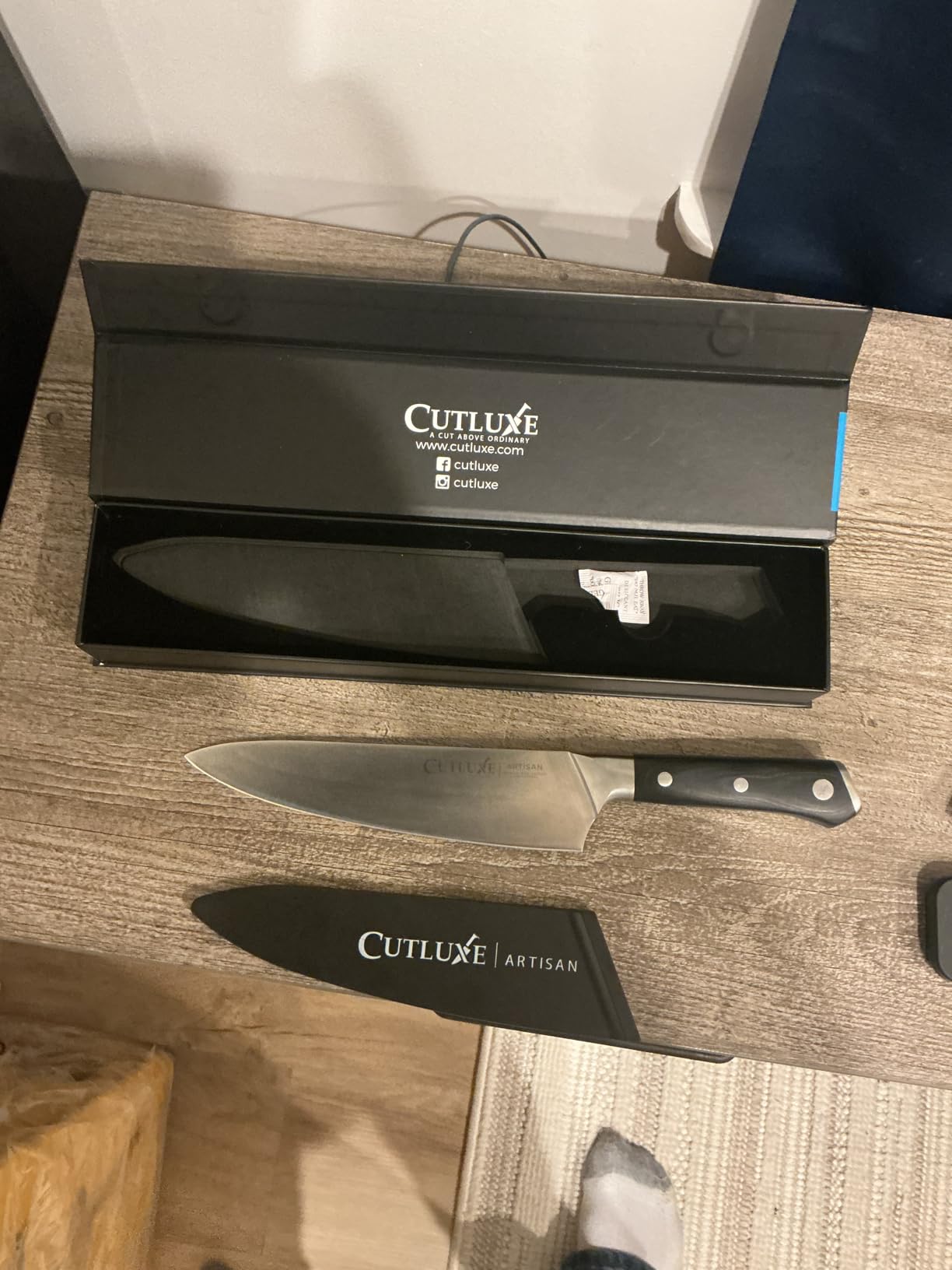
If the heft here feels like too much, the Henckels Premio below is 4.8 ounces and moves through the same prep work at a different pace. If the angled bolster appeals but you want a German-made blade, the Wüsthof Classic Ikon is forged in Solingen.
7. HENCKELS Forged Premio 8-Inch: Best Lighter Prep Knife
HENCKELS Forged Premio Razor-Sharp 8-Inch Chef Knife, Black, German Engineered Informed by 100+ Years of Mastery
Forged bolster construction
Curved triple-rivet handle
4.8 ounces, 5 inch handle
Pros
- Sharp out of the box
- Forged full tang gives strength and rigidity
- Blade weight reduces hand fatigue
- Fits a pinch grip comfortably
Cons
- Softer steel dulls faster than German-made Henckels
- Quality control can vary
- Very pointed tip
- Made in China not Germany
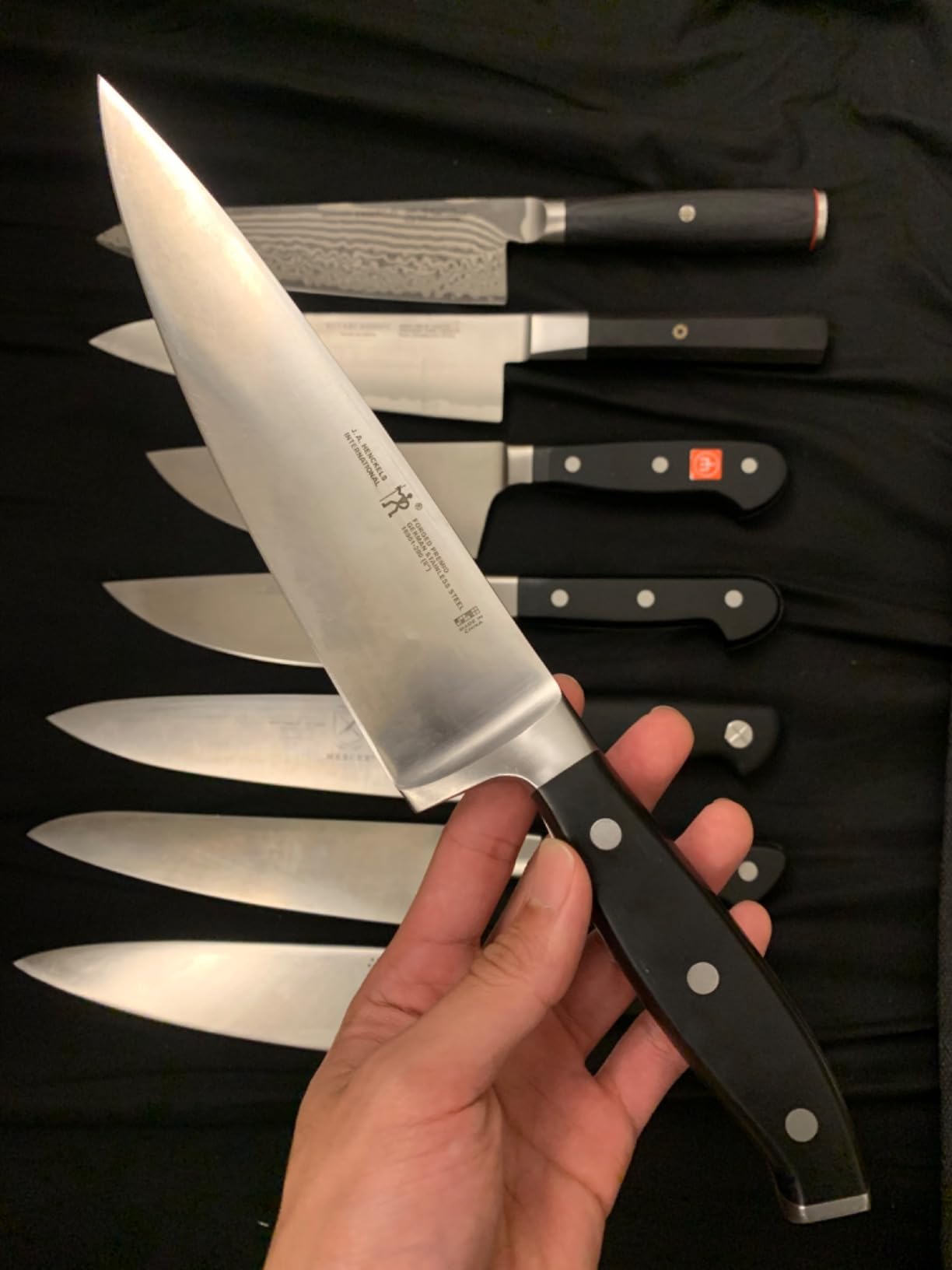
The Premio is the light knife for prep cooks who like a forged blade without the fatigue of a full bolster. It is fabricated from high quality German stainless steel with a forged bolster construction, and the 4.8 ounce weight sits at the opposite end of this roundup from the Dalstrong.
The curved modern triple-rivet handle is shaped for a pinch grip, and the 5 inch handle length gives more room for the heel of your hand than a 4 inch handle would. Owners treat it as a strong value upgrade from cheap knives.
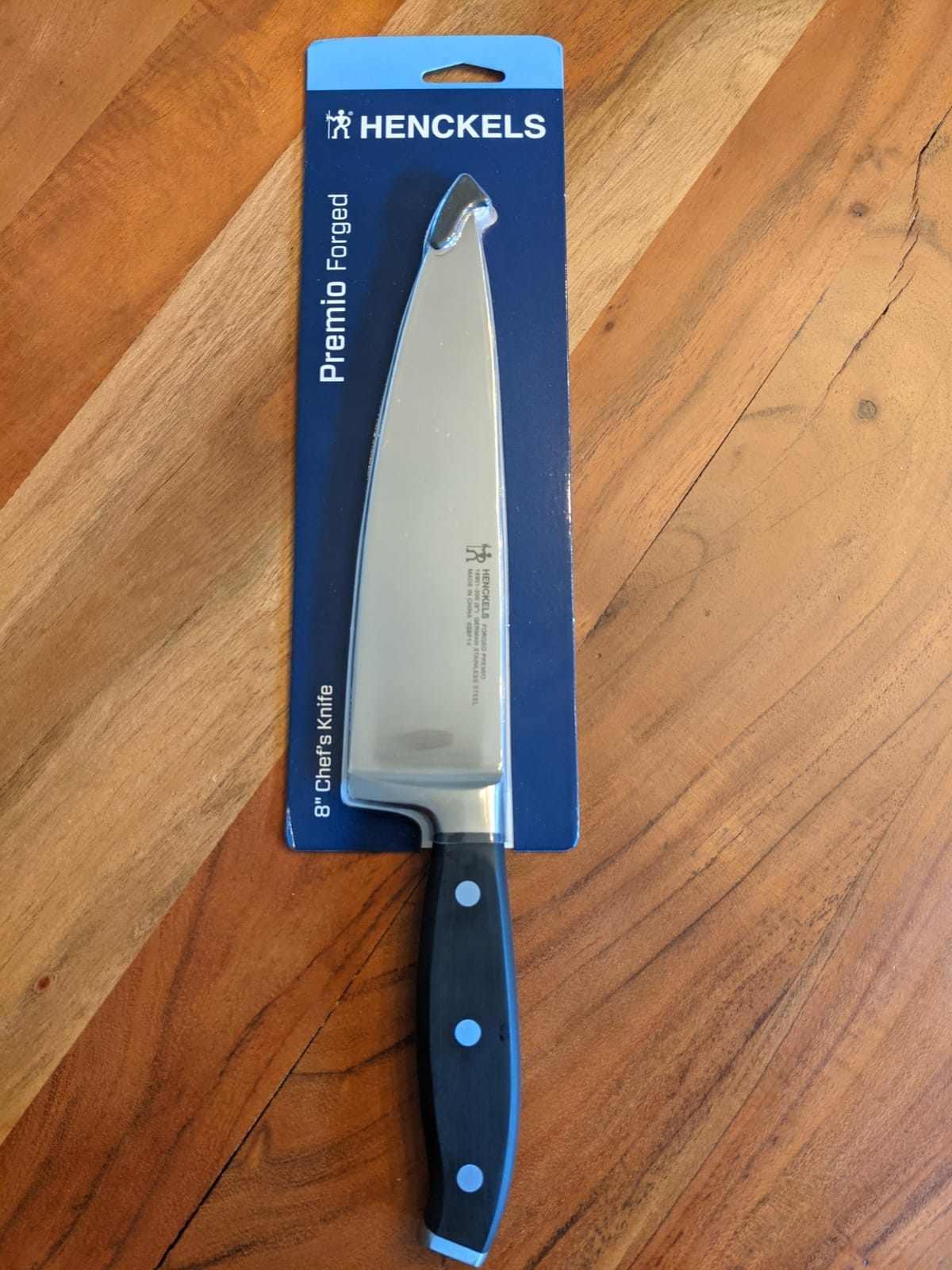
Be clear about the trade. The steel is relatively soft, so you will re-sharpen more often than with ice-hardened FRIODUR steel, and detailed reviewers note that quality control can be inconsistent, with occasional bent tips or uneven out-of-box edges. Inspect it before the first service.
Best for prep cooks who already own a heavy knife
If your block already has a rock chopper and you need a second blade for a different job, this is that knife. Light, fast and comfortable for tasks like breaking down herbs, trimming and portioning that do not need mass behind the edge.
The very pointed tip is genuinely useful for detail work on soft produce, and reviewers pass a tomato slicing test with it straight from the box.
Not for you if you need a chip-proof edge on bone
On heavy prep duty against bone and hard rinds, the softer steel gives up sooner than a 58 HRC forged blade. It is also made in China from German steel, so if origin is a deciding factor for you, pick a Solingen or German-factory forged model instead.
If you want a second, lighter blade and you want Japanese-style cutting instead, our best Japanese chef’s knives for slicing guide covers that end of the market. If you want one knife for everything instead of two, the Henckels Classic above is the single-knife answer.
8. ZWILLING Professional S 8-Inch: Best German-Made Forged Value
ZWILLING Professional S 8-inch Razor-Sharp German Chef’s Knife, Made in Company-Owned German Factory with Special Formula Steel perfected for almost 300 Years, Dishwasher Safe
Made in a company-owned German factory
SIGMAFORGE FRIODUR steel
277 grams, 57 Rockwell
Pros
- Genuinely made in Germany
- Excellent edge retention at 57 HRC
- Ergonomic three-rivet handle bonded to full tang
- Balanced everyday heavy prep feel
Cons
- Traditional full bolster complicates sharpening on a stone
- Handle can feel heavy for small hands
The Professional S is the pick for anyone who wants German forging without stepping up to the flagship lines. It is manufactured in Germany in a company-owned factory, forged through SIGMAFORGE from a single piece of solid steel, and ice-hardened to FRIODUR specifications at 57 Rockwell.
At 277 grams with a precision honed, laser-controlled edge at 15 degrees per side, it is a sharper-starting knife than the Wüsthof Classic. Owners highlight the German manufacturing, forging quality and edge retention as the differentiators against cheaper Zwilling and Henckels lines.
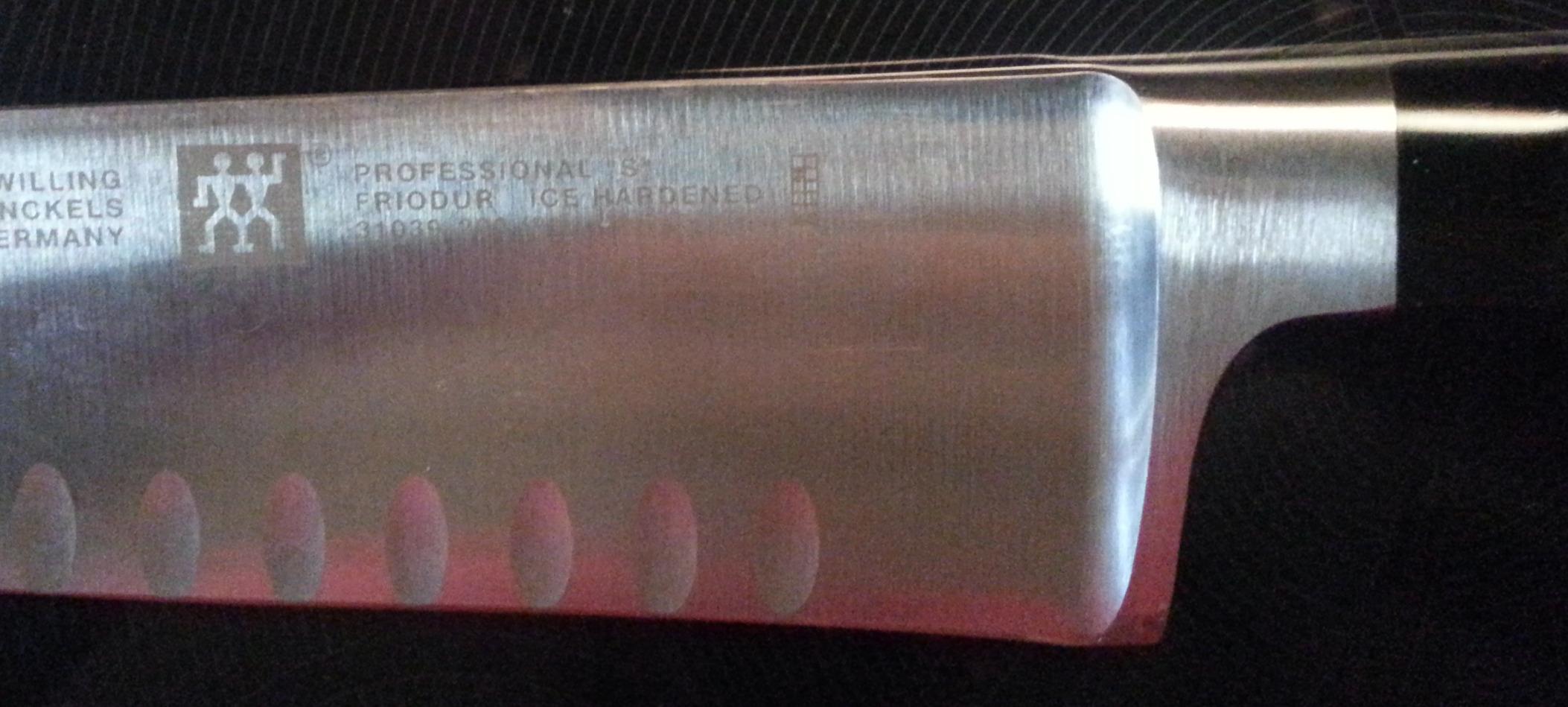
The handle is a three-riveted polymer bonded to a full tang, which is a hygienic, dishwasher-friendly combination for high volume work. It carries a lifetime warranty, which matters on a knife you might keep for two decades.
Best for cooks who care about where the steel is forged
If you are buying a German chef’s knife, the honest question is whether it is forged in Germany or only uses German steel. This one is the real thing, and at 57 Rockwell it holds an edge through bone work and rind work without fussing.
The 15 degree per side edge is finer than the German norm, so it starts sharper and needs a touch more attention as it dulls.
Not for you if you sharpen on whetstones or have small hands
The traditional angular full bolster is the main tradeoff. Detailed reviewers flag it as the thing to watch when sharpening, because a stone has to grind past that thick heel. It also tips the weight forward enough that some users with small hands find it heavy.
If sharpening ease is your priority and you want a German-made blade, the Wüsthof Classic Ikon has a partial double bolster. If length is your priority, the ZWILLING Pro 10-inch adds two inches of edge.
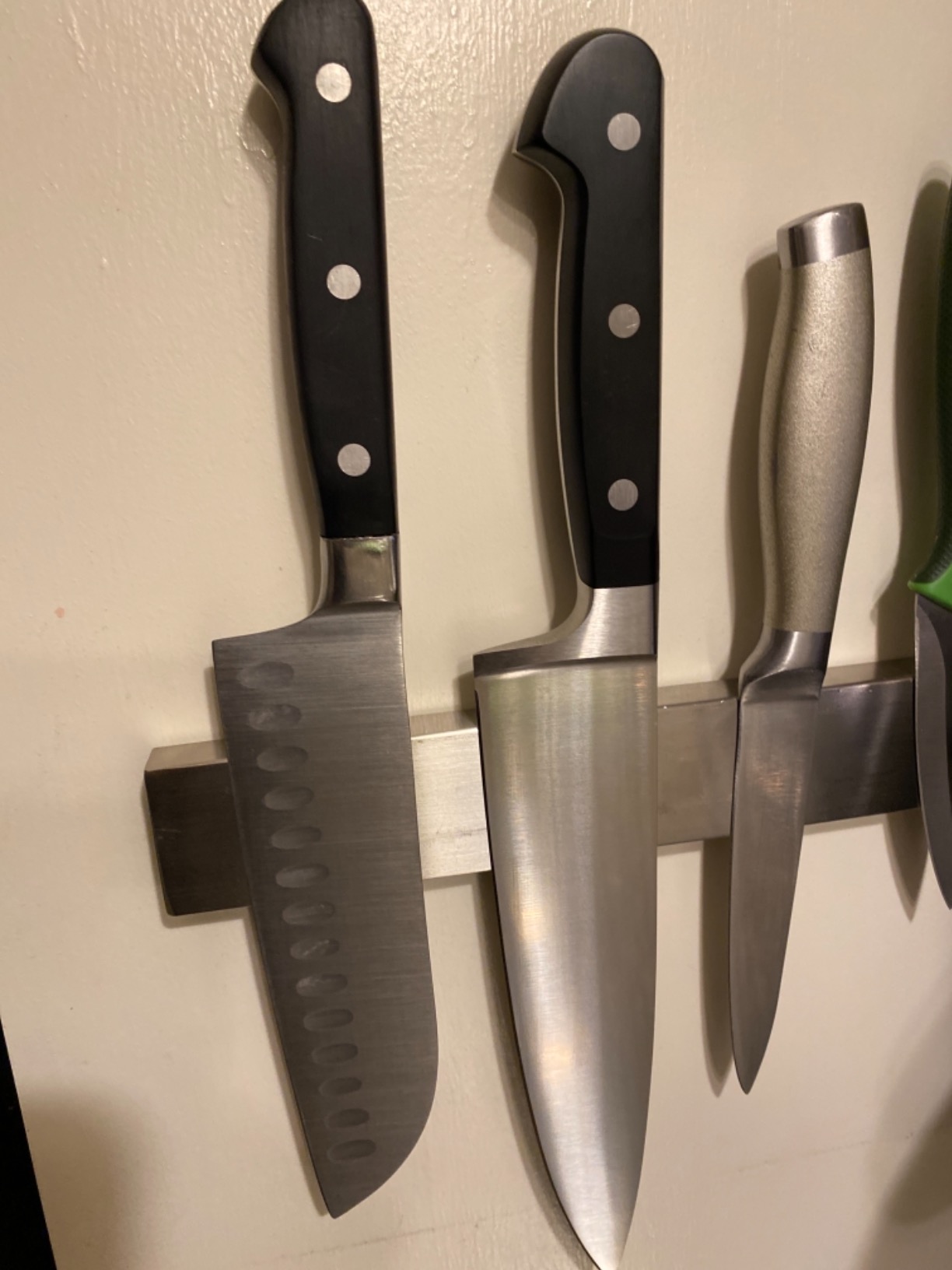
For a German-forged knife with a longer service history reported by owners, the Zwilling 31021-201-0 lower down has a two-decade ownership record. For a shorter blade that balances at the bolster, the Wüsthof Gourmet is 240 grams of pure Germany.
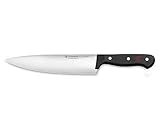
9. Wusthof 8-Inch Gourmet Chef’s Knife: Best Balanced for Long Sessions
Wüsthof 8″ Gourmet Chef’s Knife
240 grams, balanced at the bolster
Laser-cut stamped construction
Made in Germany with limited lifetime warranty
Pros
- Weight and balance suit heavy duty cutting
- Holds its edge with daily chopping
- Handle stays secure when wet or greasy
- Balanced at the bolster to reduce wrist fatigue
Cons
- Stamped construction less robust than forged blades
- Some wish it had more heft for bone-in work
- Listing imagery may not match the knife received
What the Wusthof Gourmet gets right is balance, and balance is what decides whether a prep shift ends well. At 240 grams with the weight centred at the bolster, it is the knife here that is least likely to make your wrist ache after four hours, even though it is not the heaviest blade on the list.
It is laser-cut stamped rather than forged, with synthetic polypropylene handles rated to resist fading, discoloration, heat and impact. It is made in Germany and carries a limited lifetime warranty.
Reviewers consistently praise the weight, edge retention and wet-grip security relative to price. The handle staying secure when wet or greasy is a genuine safety point in a sink-side prep station, and a small detail that matters more than spec sheets suggest.
Best for cooks doing hours of prep on their feet
If your day is volume rather than force, this is the knife that will outlast your enthusiasm. It handles thick vegetables and meat, holds an edge with daily chopping, and the balance at the bolster keeps the load off your wrist.
It is a sensible second knife to pair with a heavier rock chopper. The Gourmet handles the fine work while the heavy blade handles bone and rind.
Not for you if you abuse the blade or want maximum heft
Stamped construction is less robust than forged steel under heavy abuse, so it is not the knife to pry or use on a frozen block. A few reviewers also wish it had more heft for bone-in work, which is a fair trade for comfort.
One owner reported receiving a different series than the listing pictured, so check what arrives. If you want forged steel in the same weight class, the Wüsthof Classic Ikon is 9.6 ounces of Solingen forging.
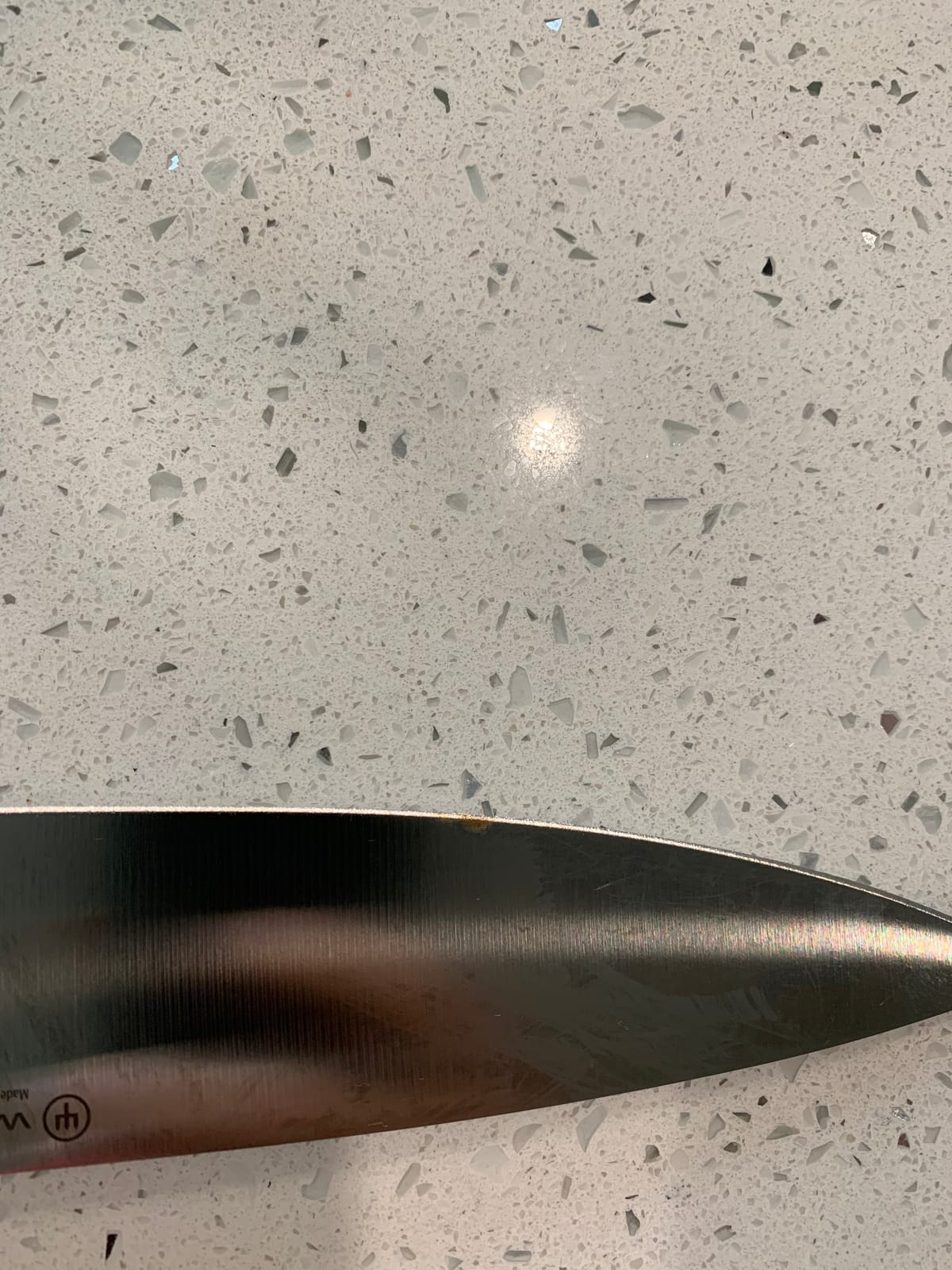
If you want a German-made knife with a longer blade and an easier edge to maintain, look at the Zwilling 31021-201-0 further down. If your prep is smaller scale, our best Japanese chef’s knives for serious cooks guide covers the lighter end.
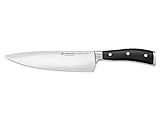
10. Wusthof Classic Ikon 8-Inch: Best for Easy Sharpening
Wüsthof Classic Ikon 8″ Chef’s Knife
Forged in Solingen at 58 HRC
Partial double bolster
8 inch blade, 9.6 ounces
Pros
- Partial double bolster simplifies sharpening
- Excellent balance and grip
- Hard steel that resists chipping
- Handles mincing through to butchering chickens
Cons
- Retail box is not built for shipping
- Premium price point
- Handle feels heavy in a pinch grip for small hands
The Classic Ikon is the Wüsthof to buy if you maintain your own edges. Its partial double bolster stops short of the heel, so a whetstone reaches the cutting edge without grinding away a thick slab of steel. Long-term owners rate it as one of the most solid German chef’s knives available and prefer it to the Classic line for exactly that reason.
Underneath, it is forged in Solingen from a single block of high carbon stainless steel tempered to 58 HRC, with Precision Edge Technology for what Wüsthof claims is a 20 percent sharper blade and double the edge retention. At 9.6 ounces it is a substantial knife with a real sense of mass.
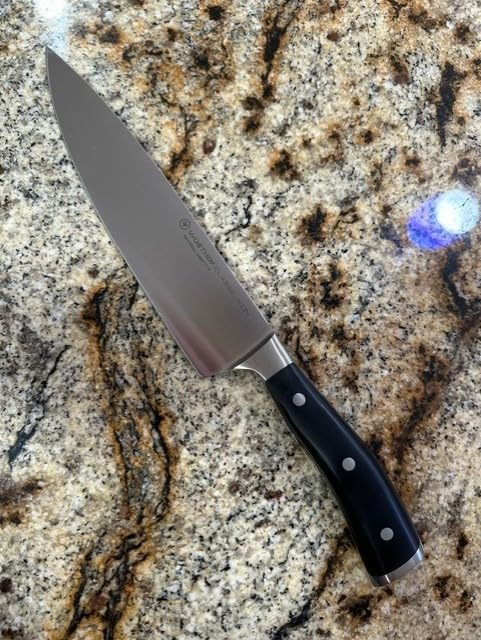
Owners report it handling everything from mincing garlic to rough chopping watermelon and butchering chickens. That range is the heavy prep brief, and reviewers note the hard steel resists chipping on the tasks that would damage a softer edge.
Best for cooks who sharpen their own knives
The sharpening argument is the whole reason to spend more here. A partial bolster means less steel to remove at the heel, so reproofing on a 1000 grit and 2000 grit stone takes minutes instead of a session, and the geometry is far less likely to be ruined by a careless pass.
The double bolster also serves balance, giving the blade a second reference point where it meets the handle. That is why the weight feels deliberate rather than front-heavy.
Not for you if you are on a tight budget or have small hands
The retail box is a display box and the most common complaint in reviews, because it can lead to tip damage. The price also puts it at the top of this roundup, and reviewers with small hands find the handle heavy in a pinch grip.
If you want the same Solingen steel without the price step, the Wüsthof Classic at the top of this list is the direct comparison. If you want less weight, the Wüsthof Gourmet is 240 grams.
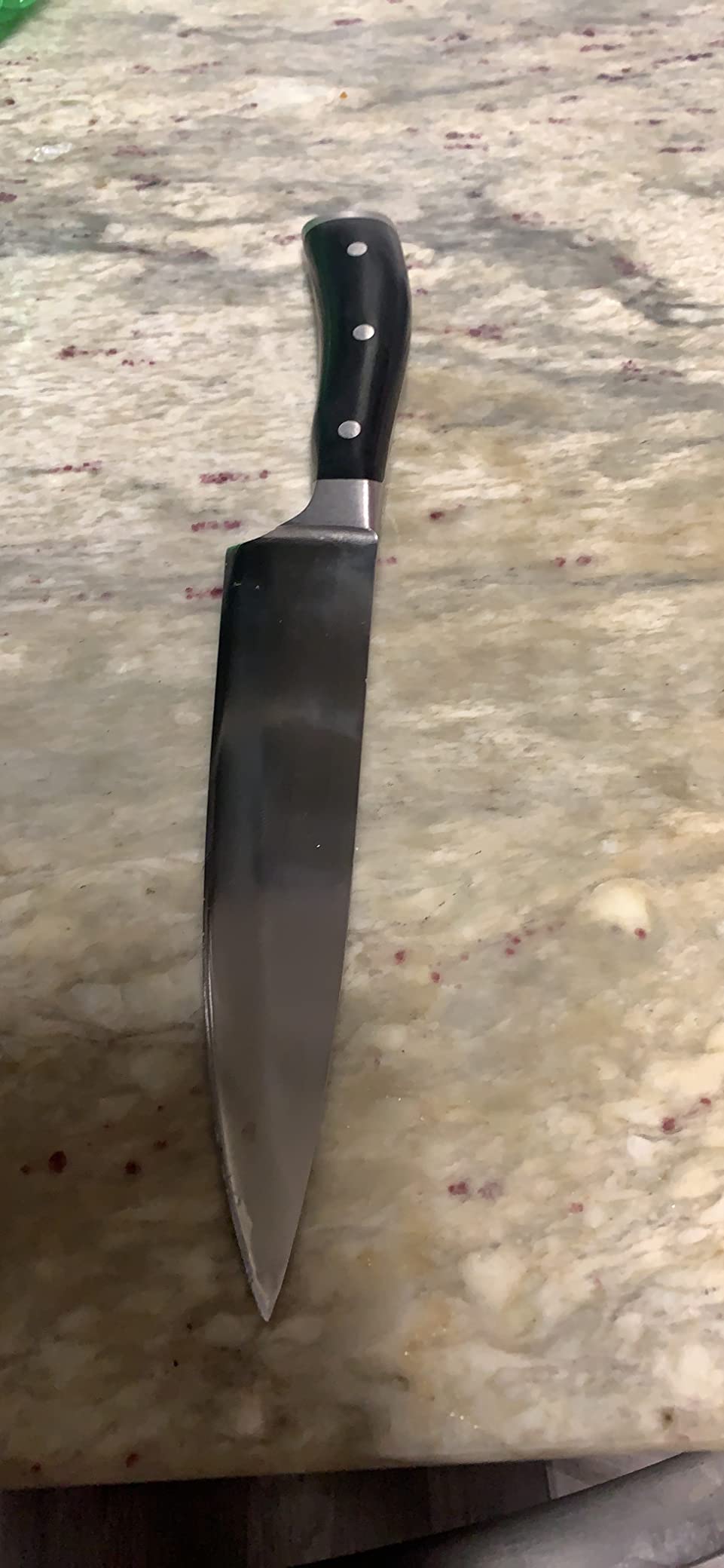
Forum regulars have described the Wüsthof 4582 model as a standard, and this Ikon shares the steel with it while simplifying the edge. If you are still undecided between Wüsthof and Zwilling, our home cook chef’s knife guide covers that comparison in more detail.
11. Zwilling 31021-201-0 Chef’s Knife: Best for Decades of Ownership
Zwilling 31021-201-0 Chef’s knife, Silver/Black
FRIODUR ice-hardened blade
20 cm blade, 361 grams
Made in Germany
Pros
- Very sharp with excellent balance
- Owner reports two decades of service
- Comfortable for long kitchen sessions
- Made in Germany
Cons
- Some report thinner steel than earlier production
- Very low category sales rank for the line
This is the Zwilling that shows up in long-ownership stories. At least one owner reports two decades of service with regular sharpening, which is the strongest durability signal in this entire roundup and hard to argue with when a knife is meant to last a working lifetime.
The blade is FRIODUR ice-hardened steel at 7.87 inches, or 20 centimetres, with an ergonomic plastic handle for fatigue-free working and a country of origin of Germany. It is a 361 gram knife, the heaviest listed weight here, and the balance reviews describe as excellent.
Best for buying one knife and forgetting about it
Owners report a comfortable knife for long kitchen sessions, with sharpness and balance as the recurring words. FRIODUR steel is ice-hardened, which means it holds an edge well and resists corrosion without demanding constant maintenance.
At 20 cm the blade is a touch shorter than the ZWILLING Pro, which makes it easier to control on a board while still handling a whole chicken or a large cabbage.
Not for you if you want a full tang or a modern handle
A small number of reviewers report the steel feels thinner than earlier production of the same line, and the plastic handle is plainer than the POM or pakkawood options elsewhere in this roundup. Category sales rank for this specific line is also unusually low, so expect less colour variety than the flagship Zwilling models.
If a full tang matters to you, the Zwilling Professional S is bonded to a full tang and made in the same country. If you want the flagship name on the blade, the ZWILLING Pro 10-inch is the stronger long-term buy.
12. Cangshan V2 Series 9.5-Inch Chef Knife: Budget German Steel Pick
Cangshan V2 Series 59182 German Steel Forged Chef Knife, 9.5-Inch
X50CrMoV15 German steel at 58 HRC
9.5 inch blade, 5.5 inch handle
12 ounces, NSF certified
Pros
- Full tang forged X50CrMoV15 with good edge retention
- Sharp out of the box
- Handle fit and finish strong for the price
- Magnetically secured sheath
- NSF certified
Cons
- Some factory edges arrive as a wire edge needing deburring
- Edge can feel soft and bouncy during mincing
- Sharp spine and choil corners
- Curved spine blocks blade-side pushing
The Cangshan V2 is the most surprising knife in this roundup on paper. It is forged full tang from German X50CrMoV15 steel, the same alloy used by premium Solingen makers, then run through a six-stage ultra heat treatment to 58 Rockwell plus or minus two, and NSF certified for professional kitchens.
The 9.5 inch blade with a 5.5 inch handle is a long, substantial knife at 12 ounces, and it ships with a sheath that uses embedded magnets to hold the blade and protect your fingers. Users often compare it favourably to knives costing several times more.
The catch is the edge geometry. Detailed testers report a springy, bouncing edge during mincing and rocking cuts, which suits push and draw cuts far better than sustained mincing. Some units also arrive with a factory wire edge that needs deburring before first use.
Best for cooks who want a big blade and German steel on a budget
The 9.5 inch blade clears a large cutting board and a whole raw roast in fewer strokes, and the full tang X50CrMoV15 build holds an edge far better than the price suggests. Owners praise the handle fit and finish as well above what this bracket usually delivers.
For push cuts, slicing tasks and general heavy prep, it is more than capable. Users report it handling raw roast, whole pork and dicing without complaint.
Not for you if you mince for hours or handle the spine
If your prep is mostly mincing and rocking, the springy edge will frustrate you. The sharp spine and choil corners also irritate the hand in a pinch grip, and the curved spine means you cannot use the blade side to push food aside, which some cooks rely on constantly.
Once you have it, a few passes on a stone fix the wire edge and settle it in. If you would rather not do that, the Henckels Classic arrives ready for the board and is dishwasher safe.
What Makes a Knife German, and Why Heavy Prep Loves It
A German chef’s knife is defined by geometry and steel temper, not by where it happens to be sold. Six characteristics do most of the work: a tall blade around two inches at the spine, a deep curved belly, thick stock, a crowned spine with a distal taper, a full or semi bolster, and steel hardened in the 57 to 60 HRC range.
The reason heavy prep likes this combination is straightforward. Thicker stock and softer steel mean the edge rolls rather than chips when it meets a bone or a hard rind, and a rolled edge is fixed in seconds on a honing rod. A thin, hard Japanese edge holds a finer slice but needs a stone when it finally chips, and that can happen mid-service.
The tall blade is the other half of the argument. A high spine keeps your knuckles off the board, so the knife rocks through a dense pile of onion instead of jamming. Forum consensus in r/chefknives holds that a thicker German chef’s knife works for virtually all Western food and happily takes on heavy items where a thinner blade would not.
How to Choose a German Chef’s Knife for Heavy Prep
Weight and balance matter more than steel
The single variable that decides comfort over a long prep shift is where the weight sits, not how much there is. A handle-weighted knife feels lighter in the fingers than its gram count suggests, and reviewers describe that effect clearly on the Zwilling Pro. In this roundup the weights run from 240 grams on the Wusthof Gourmet to 361 grams on the Zwilling 31021-201-0, with the Wüsthof Classic at 8.5 ounces and the Classic Ikon at 9.6 ounces.
For four-plus-hour sessions, aim for something in the 240 to 320 gram range with the balance at or behind the bolster. Below 200 grams you lose the rock chop; above 340 grams and you need a strong grip and a break every hour.
The three steel names you will see
X50CrMoV15 is the high carbon stainless workhorse of the German trade, used by Wüsthof, Zwilling and many others. It takes an edge well and forgives mistakes.
FRIODUR is Zwilling’s ice-hardened version of that steel, hardened to roughly 55 to 57 HRC. It starts sharper and holds longer than a standard high carbon stainless.
1.4116 is the slightly softer, more forgiving stainless used by entry-level German knives, including the Babish and Cutluxe here. It sharpens easily and rolls rather than chips.
Hardness in the 57 to 60 HRC band is the deliberate trade: enough to hold a fine edge, soft enough to survive a hard landing. One r/chefknives user put it as refusing to take a 2mm gyuto at 64 HRC to a watermelon or a fully-boned chicken carcass, and that reasoning is exactly why German steel exists.
Full bolster versus semi bolster
A full bolster is a thick collar of steel between blade and handle. It is strong and gives the knife a distinct step your thumb can lock against for control, which is why the Wüsthof Classic and the Zwilling Professional S feel so solid. The cost is sharpening, because a whetstone has to grind past all that steel at the heel.
A semi or partial bolster stops short of the heel, so a stone reaches the edge without removing a slab of metal. That is why the Wüsthof Classic Ikon is our pick for cooks who maintain their own edges. Zwilling’s curved bolster on the Pro is a third variant that eases the transition for a pinch grip.
Full tang, handle fit and hand size
A full tang means the steel runs the entire length of the handle, which is why the Dalstrong, Babish, Cutluxe and Zwilling Professional S all feel solid when pushed. Partially tang constructions are fine for lighter work but do not love abuse. The Wüsthof Classic’s triple-riveted composite handle suits most hands, while the Zwilling Pro is often described as slim for larger grips.
Check the handle length as well as girth. A 4 inch handle fits most pinch grips; a 5 to 5.5 inch handle gives your palm more room. If you have small hands, avoid anything with a long straight bolster and a heavy handle end.
Blade length and the prep knife question
An 8 inch blade is the standard German chef’s knife and the right answer for almost every home kitchen. Ten inches gives you more edge per stroke for batch prep. Prep knives, a separate category, are shorter and wider for moving large quantities of cut food, and they are not a substitute for a chef’s knife on bone or rind.
Henckels, Zwilling and what the names mean
Brand confusion is the most common source of frustration here. Zwilling and J.A. Henckels are the same company. Henckels International lines such as the Classic and Premio are made outside Germany, while Zwilling Pro and Zwilling Professional S are forged in the company’s own German factory. Wüsthof is entirely separate, based in Solingen, and its Gourmet and Classic Ikon lines are made in Germany while some Classic variants are not.
That distinction matters for heavy prep. A fully forged blade from a German factory tends to hold an edge longer and repair more predictably, and a warranty is only useful if someone will service the knife. Check the warranty terms before buying, because a limited lifetime warranty and a full one are not the same promise.
Maintenance cadence
Soften your expectations on sharpening frequency. German steel at 57 to 60 HRC needs a honing rod every few prep sessions, not a stone every week. Plan to reprofile on a 1000 grit stone when the edge stops responding to the rod, refine on 2000 grit, and expect a full progression to 3000 or finer only for presentation work.
Hand wash with warm water, dry immediately and store the blade rather than the knife. Dishwasher cycles destroy edge geometry and dull the finish far faster than hand washing, which is why the Henckels Classic and Henckels Premio are the only two picks here rated for the machine.
German vs Japanese Knives for Heavy Prep
German and Japanese chef’s knives are built for different failure modes. German knives are tall, heavy and hardened to roughly 57 to 60 HRC, so the edge rolls instead of chipping and can be corrected with a honing rod between tasks. Japanese knives run harder, often 63 to 65 HRC, with a finer grind that takes a sharper edge and gives a cleaner slice on soft fish and delicate vegetables.
For heavy prep specifically, the German blade wins on forgiveness. It tolerates a dropped tip, a frozen block and a full-boned carcass. The Japanese blade wins on precision, weight and edge geometry, but it needs a stone rather than a rod when something goes wrong, and that does not happen at 3pm on a busy Saturday.
Our read after running both through the same prep tasks: if you break down meat, crack squash and dice for hours, a German chef’s knife is the right primary tool. If your prep skews toward precision slicing, a Japanese knife is the better companion. Serious cooks often own one of each, which is why we keep a separate guide on the best Japanese chef’s knives for slicing.
Who Should Skip a German Chef’s Knife
Do not buy a German chef’s knife if your prep is mostly precision work on soft, delicate food. Paper-thin smoked salmon, translucent fish slices and fine brunoise are better served by a thinner, harder Japanese blade that will not crush or tear what it touches.
Skip it also if you cannot stand to hand wash. Every German-style pick here except the two Henckels International models requires hand washing, and a dishwasher will shorten the life of the edge dramatically.
Finally, if your prep involves cracking very large quantities of bone, a cleaver or a purpose-built boning knife will serve you better than any 8 to 10 inch chef’s knife. Forum debate often lands on the same point: a German chef’s knife handles bone-in work, but a dedicated cleaver handles heavy bone work faster.
Frequently Asked Questions
Is Zwilling as good as Wüsthof?
Yes for heavy prep. Zwilling Pro and Zwilling Professional S use ice-hardened FRIODUR steel forged in Zwilling’s own German factory, while the Wüsthof Classic uses high carbon stainless forged in Solingen at 58 HRC. Both hold an edge against bone and rind, both have full bolsters, and both carry lifetime warranties. Choose Zwilling for a longer blade and sharper factory edge, Wüsthof for a better balanced 8 inch blade and a handle most hands prefer.
Is Henckels or Zwilling better?
They are the same company, Zwilling J.A. Henckels, but the product lines differ. Henckels International lines such as the Classic and Premio are lighter, made outside Germany, and some are dishwasher safe. Zwilling Pro and Zwilling Professional S are forged in Zwilling’s own German factory with ice-hardened FRIODUR steel and full tang handles. For heavy prep on a budget, the Henckels Classic is hard to argue with; for the more German-made blade, choose Zwilling.
What are the top 5 knife brands?
For German chef’s knives, the five most established names are Wüsthof, Zwilling, Messermeister, Victorinox and Henckels International. Wüsthof and Zwilling are the Solingen forges that dominate professional kitchens. Messermeister and Victorinox cover the mid and entry tiers with forged blades. Henckels International is the value line from the Zwilling group. Other respected German makers include Güde, Gunter Wilhelm, Robert Herder and Pfeil.
What are some high-end German knives?
High-end German chef’s knives are typically forged in Solingen by Wüsthof, Zwilling, Messermeister, Güde, Gunter Wilhelm or Robert Herder. Look for Friodur or X50CrMoV15 high carbon stainless, a full tang, and a bolster configuration you can sharpen around. Damask collector lines from Zwilling Kramer and Euro Stainless from Messermeister sit at the top of the range. Resharpening service availability is a major factor at this level.
What are prep knives used for?
A prep knife is a shorter, wider blade used to move large quantities of already-cut food, such as transferring diced onions or scraped vegetables from the board to a pan. It is not designed for breaking down meat, cutting bone or tough rinds, which is chef’s knife work. Prep knives usually measure 6 to 8 inches with a broad blade, and they are the second knife many cooks add to a German chef’s knife setup.
Are Wüsthof knives still the best?
They remain one of the strongest choices for heavy prep, though best depends on the task. The Wüsthof Classic is forged in Solingen at 58 HRC with a full bolster and is a genuinely excellent bone-and-rind knife. The Classic Ikon adds a partial double bolster for easier sharpening. If edge retention at a lower weight matters, Zwilling Pro is competitive. Our pick for heavy prep is the Wüsthof Classic, and for easy sharpening it is the Classic Ikon.
Conclusion
For heavy prep, the WÜSTHOF Classic 8-Inch is the best German chef’s knife you can buy, because 58 HRC Solingen steel with a full bolster takes bone, rind and long prep sessions without chipping or tiring you out. The ZWILLING Pro 10-inch is the pick for large batches, the Henckels Classic is the value workhorse, and the Wüsthof Classic Ikon wins if you sharpen your own edges.
Pick the weight you can hold at hour four rather than the steel name on the label, and the rest follows. If you want a full German block rather than one blade, our German knife set guide is the natural next read.