

The best egg candlers for incubating eggs are the Magicfly Bright Cool LED Light Egg Candler Tester for most people, the Titan Incubators High Intensity LED Candler if you hatch dark brown Marans or olive eggs, and the Magicfly Rechargeable Egg Candler Tester if you would rather not run a cable across your incubator. That is the short answer, and the rest of this guide explains why.
Candling is simply holding an egg up to a bright, cool light during incubation to see what is happening inside. A fertile egg shows branching blood vessels spreading from a dark embryo spot and a clearly defined air cell at the fat end. An infertile egg, usually called a yorker, looks empty and clear. A blood ring means development started and stopped. If you have never done it before, start with a beginner egg incubator and candle on day 7 and again around day 14.
Candling is not mandatory. Plenty of backyard keepers simply let a clutch run and take what hatches. But candling lets you pull infertile eggs and dead embryos early, stop a spoiled egg from exploding and fouling the whole tray, and confirm that your temperature and humidity are actually producing development. In our view that is worth a few minutes of handling, especially on a large clutch or an expensive one.
We spent weeks putting ten candlers through light brown eggs, olive eggs and quail eggs in a dark room, and compared brightness, power, handling and what you can actually read through the shell. Every candler below uses cool LED light, which means nothing gets hot enough to harm an embryo. These are the ten we would consider buying in 2026.
Top 3 Egg Candlers for Incubating Eggs in 2026
Three candlers stood out from the pack. One is the most complete package for ordinary eggs, one is the cheapest way to go cordless, and one is the only one here that reliably reads the darkest shells.

Magicfly Bright LED Egg Candler Tester
- Cool LED candling light
- Two rubber tips for quail to duck eggs
- Comes with development phase chart
- Powered by power supply
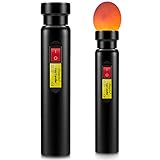
Magicfly Rechargeable Egg Candler Tester
- Rechargeable and cordless
- Top-mounted one-hand switch
- Two rubber covers
- About 6 hours of use per charge
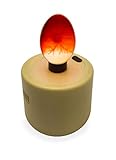
Titan Incubators High Intensity LED Candler
- High-output cold LED
- Two light widths for duck and chicken eggs
- Egg rests on ring for hands-free viewing
- 4 AA batteries included
Best Egg Candlers for Incubating Eggs (October 2026)
All ten are cool LED candlers. The differences that matter in practice are light output, whether the beam seals around the egg, and how you power them. Here is the full lineup in one place.
| Product | Specifications | Action |
|---|---|---|
| Magicfly Bright LED Egg Candler Tester |
|
Check Latest Price |
| Magicfly Rechargeable Egg Candler Tester |
|
Check Latest Price |
 HBlife Wired LED Egg Candler HBlife Wired LED Egg Candler |
|
Check Latest Price |
 Incu-Bright Ultra Bright LED Egg Candler Incu-Bright Ultra Bright LED Egg Candler |
|
Check Latest Price |
| Titan Incubators High Intensity LED Candler |
|
Check Latest Price |
 NestEcho Rechargeable Egg Candler Tester NestEcho Rechargeable Egg Candler Tester |
|
Check Latest Price |
 ZZBUY Rechargeable USB Egg Candling Light ZZBUY Rechargeable USB Egg Candling Light |
|
Check Latest Price |
 GOOD MOTHER Cool LED Egg Candler Tester GOOD MOTHER Cool LED Egg Candler Tester |
|
Check Latest Price |
 Sonew High Cool LED Candling Lamp Sonew High Cool LED Candling Lamp |
|
Check Latest Price |
 Little Giant Cordless Egg Candler Little Giant Cordless Egg Candler |
|
Check Latest Price |
1. Magicfly Bright LED Egg Candler Tester – Best All-Rounder
Magicfly Bright Cool LED Light Egg Candler Tester, Powered Only by Power Supply
Cool LED light
Two rubber tips for quail to duck eggs
Development phase chart
Corded power supply
Pros
- Bright cool LED that seals around the egg and limits light leakage
- Two rubber tips cover duck eggs through tiny quail eggs
- Slim shape allows candling from the top or the side
- Soft tips are easy to change in the dark and grip well
- Development phase chart included
Cons
- Short power cord
- Not cordless so you need an outlet nearby
- Some candlers reported failing after a few months
- Not the strongest choice on dark olive eggs
This is the candler we keep reaching for. The slim barrel sits in your palm, and the egg drops straight onto the opening so the rubber tip seals around it and blocks ambient light. That seal is the single most important thing in this whole category, and it is the reason this model reads clearly in a normal room rather than demanding total darkness.
The two rubber tips are the detail other cheap candlers skip. One covers a standard chicken egg, the other fits the wide end of a duck egg or the tiny end of a quail egg, so you can change size in the dark by feel. Reviewers consistently praise the grip, and a lot of owners candle straight through the incubator lid rather than lifting eggs out, which is exactly what you want on a day 7 check.
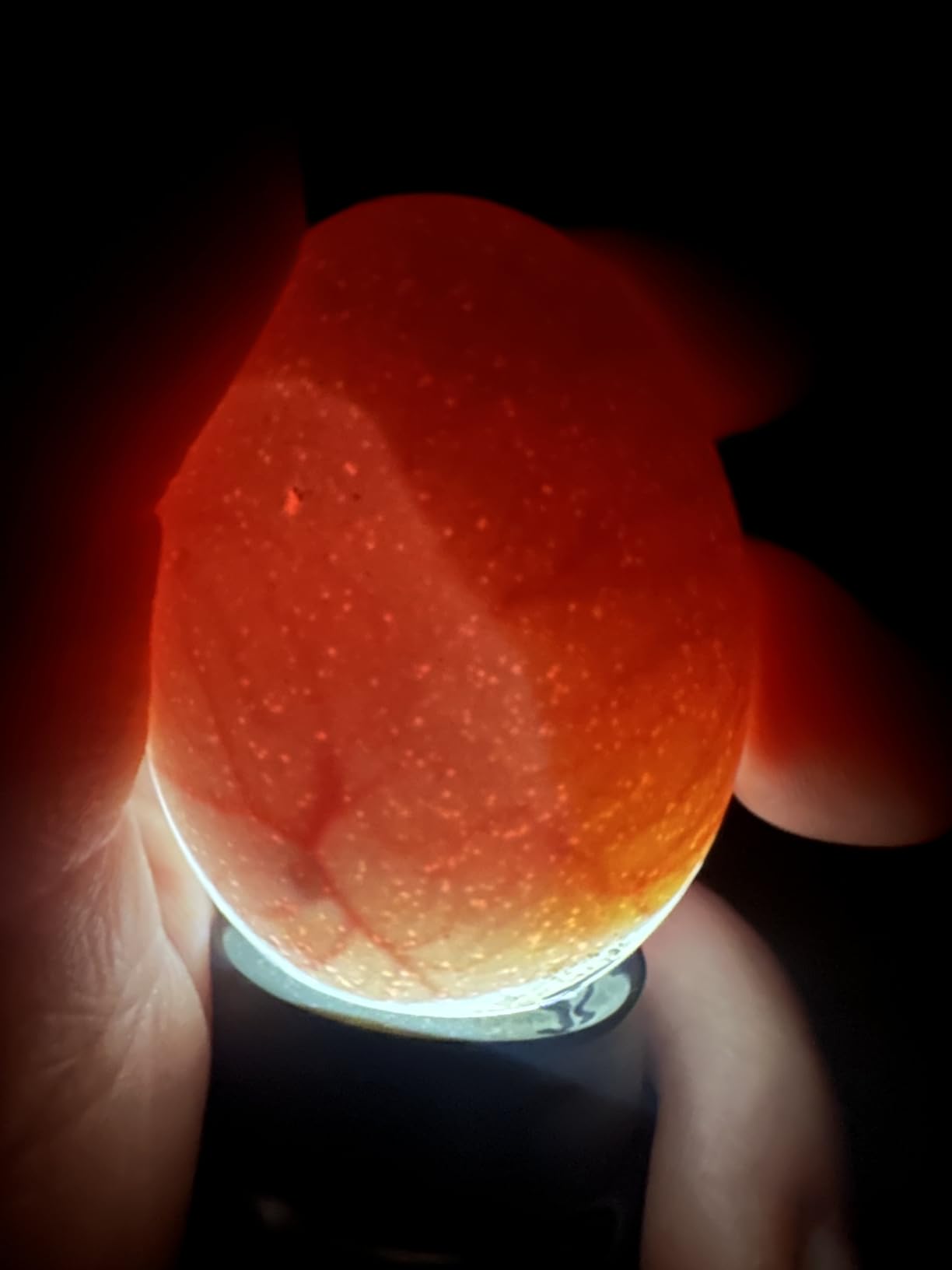
It ships with a development phase chart, which is more useful than it sounds. New hatchers constantly ask whether the smudge they can see is an embryo or a blood vessel, and having a printed reference next to the incubator settles that argument quickly. For classroom and 4-H demonstrations the same chart does the explaining for you.
The one real gripe is the cord. It is short, so most people end up running an extension lead to the nearest outlet, and that cable is exactly what you are trying to avoid if you work in a damp barn at night. A smaller number of owners on BackYard Chickens report candlers dying after a few months of daily use, and because the bulb is sealed in, it is not replaceable. That is a durability risk to weigh against how often you actually candle.
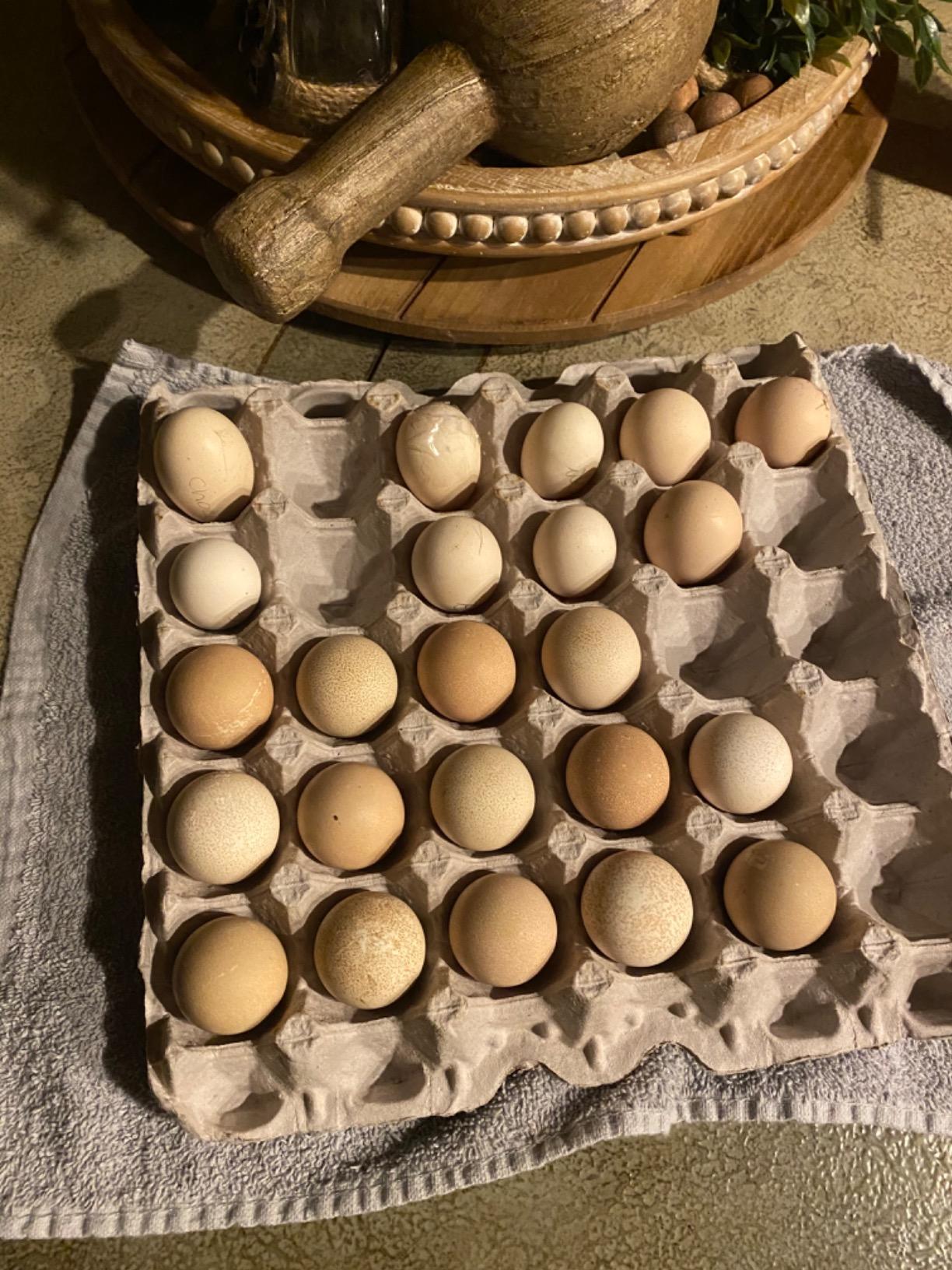
How well does it handle brown and quail eggs
On cream, white and light brown eggs it is excellent. Branching veins show up clearly by day 7 and the air cell at the fat end is sharply defined, which is what you are really looking for. The two rubber tips mean a clutch of mixed sizes, quail through goose, all works with the same light.
Dark olive and near-black shells are where it starts to struggle. Reviewers report that the light gets swallowed up and you see a dim grey shape rather than a clear embryo outline. If your birds lay Copper Maran or Olive Egger eggs, step up to the Titan candler instead.
Who should skip it
Skip it if your eggs are very dark, or if you are hatching somewhere without a reliable outlet nearby. It is also the wrong pick for anyone who wants to check eggs in a far corner of a barn or garden without dragging a cable.
If you can live with a cord and your eggs are normal colours, this is the safest buy of the ten. It has the largest review base in the group, the parts are simple, and nothing about it is likely to surprise you.
2. Magicfly Rechargeable Egg Candler Tester – Best Value Cordless Pick
Magicfly Rechargeable Egg Candler Tester for Monitoring Eggs Development, Bright Cool LED Light Candling Lamp
Rechargeable cordless body
Top-mounted switch
Two rubber covers
About 6 hours per charge
Pros
- Cordless after charging so no cable across the incubator
- Top-mounted switch works one-handed without shaking the unit
- Cool bright light that does not heat the egg
- Rubberised end cups the egg for a steady seal
- Two covers fit duck eggs through quail eggs
Cons
- Some candlers stopped accepting a charge
- Bulkier body than most competing candlers
- Printed instructions are very small
- Doubles as a flashlight with no special benefit
The rechargeable version of the Magicfly solves the problem that annoys people most about wired candlers. You charge it before you walk out to the incubator, then you carry it to the coop, the shed or the far end of a bench without thinking about cables. For a short clutch that is genuinely all you need.
The switch sits on the top of the barrel rather than at the end, so pressing it does not jolt the candler while your other hand is holding an egg. That sounds trivial until you have dropped a day 12 egg on the floor because a thumb slipped on a recessed button. The rubberised end also cups the egg rather than just touching it, which improves the seal and steadies the view.
Rated at 1.67 watts and 5 volts, it takes roughly three hours to charge and gives about six hours of continuous use. That is far more runtime than most people need, since nobody candle every hour of a 21-day hatch. It also works as a plain flashlight, which is handy in a dark coop but not a reason to buy it.
Battery longevity is the weak spot. A recurring theme in reviews is candlers that stopped taking a charge after a few months, and the brand has replaced at least one faulty candler for a buyer. The body is also longer and clumsier than the wired model, so it does not nestle in your hand as neatly, and the instructions are printed far too small to be useful.
Whether it beats a wired candler over a full hatch
For most backyard hatches, yes. You will candle twice or three times in a 21-day cycle, and a couple of hours of charge covers that with room to spare. The freedom of movement is worth more than perfect lightness in the hand.
For a small hatchery running dozens of clutches, we would go wired. Batteries that degrade are a nuisance when you are candling every batch, and a dead candler at the wrong moment means eggs sitting out while you find a spare.
Where it falls short on dark eggs
It reads light brown eggs well and blue or speckled eggs adequately. On deep olive shells the rubber cup helps, but you are still squinting at a faint outline rather than counting blood vessels. Pick the Titan for Marans.
If you hate cables and your eggs are ordinary colours, this is the pick. Just expect a slightly chunky tool and keep the charger somewhere dry.
3. HBlife Wired LED Egg Candler – Best for First-Time Hatchers
HBlife Wired LED Egg Candler, Bright Cool Light Egg Candler Tester for Monitoring Egg Development with 2 Soft Rubber
Corded electric
39.3 inch cord
Two soft rubber ends
Incubation phases guide
Pros
- Powerful light makes veins and embryo movement clearly visible
- Soft rubber ends conform to quail
- duck and chicken eggs without cracking
- Corded power removes battery charging from the workflow
- Includes an incubation phases guide for judging development
- Works for home hatchers and classrooms
Cons
- Needs a nearby outlet so it cannot be used away from one
- Some buyers find it less bright than expected on dark shells
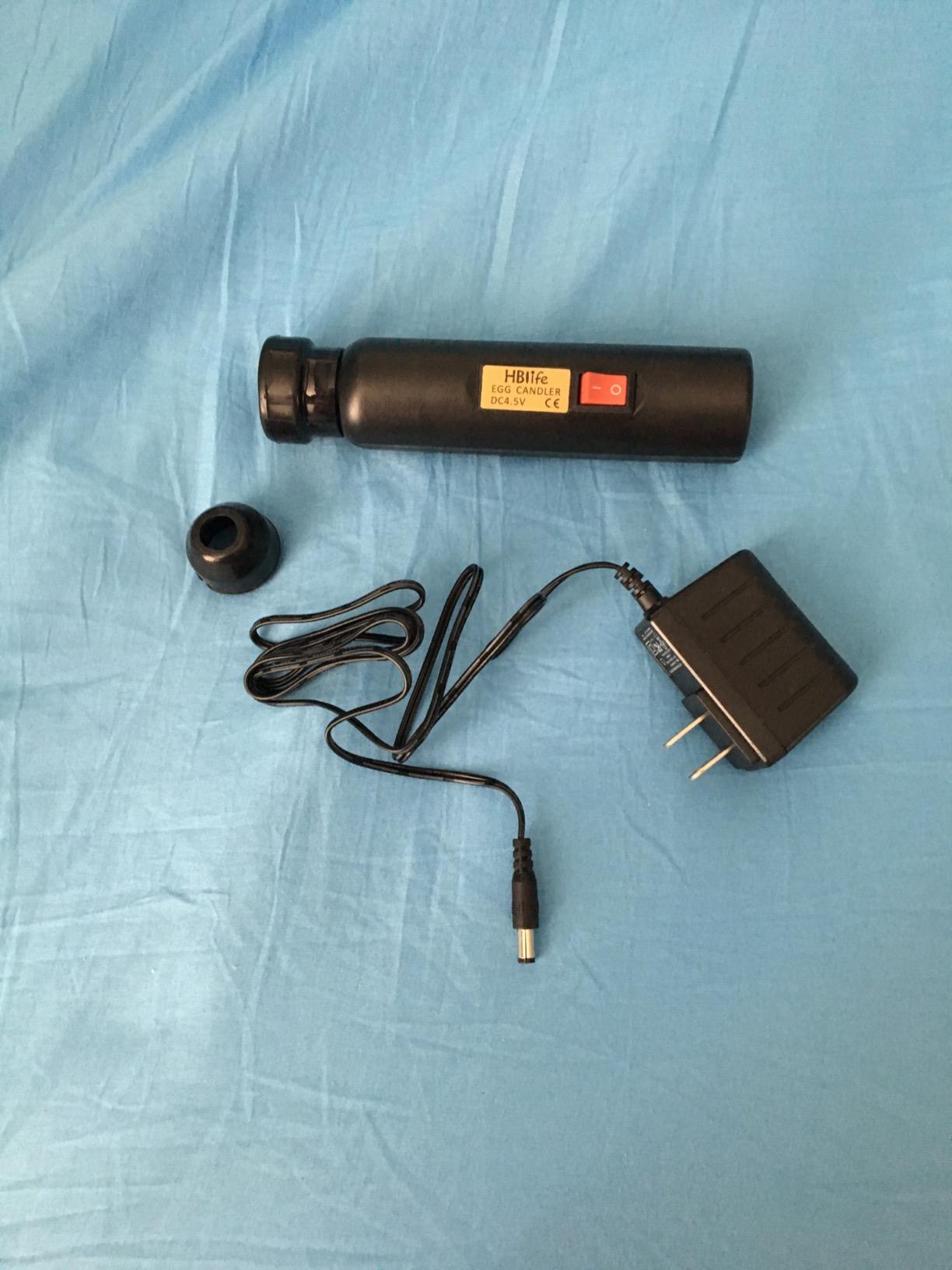
If candling is new to you, this is an easy place to start. It is a straightforward wired candler with two soft rubber ends, and the 39.3-inch cord is long enough that you are not constantly repositioning between the outlet and the incubator. It weighs 5.12 ounces, which is light enough for one-handed use over a full tray.
The soft rubber ends are the part we like most. They flex to fit the egg rather than gripping it, so you are less likely to crack a thin or heavily speckled shell, and they cover quail eggs as well as standard chicken eggs. Reviewers mention the grip specifically, which is the second most common way people lose eggs during candling.
The included incubation phases guide is the other beginner-friendly touch. It shows what a normal egg should look like at each stage, which means you are not guessing whether the dark area you can see is an embryo or a shadow. Plenty of first-timers tell us that chart alone stopped them from throwing out viable eggs.
The limitation is honest and simple: it needs an outlet. There is no battery version, so taking it to another incubator in the shed means moving the extension lead too. A small number of buyers also report that the light is not as strong as they expected on the very darkest shells, so if Marans are your birds, look elsewhere.
Why beginners get on better with it
Nothing about it needs learning. Plug it in, seat the egg on the rubber end, and look. The cord is long, the light is cool, and there is no battery to forget, which are exactly the three things that trip up new hatchers at midnight in a barn.
It also suits a classroom, where a spare candler that a student can break is less painful than one you paid a premium for. We would still check the brightness on your own egg colour before committing to a full clutch.
Where it is not enough
It is not enough for dark brown, olive or heavily pigmented eggs, and it is useless more than a few steps from an outlet. Anyone with a dark layer flock or a mobile hatching setup should put the cord requirement aside.
For cream, white and light brown eggs in a fixed location, this is a dependable first candler and an easy second one.
4. Incu-Bright Ultra Bright LED Egg Candler – Best for Thick and Large Shells
Incu-Bright™ Ultra Bright LED Egg Candler – Portable Light for All Egg Size
250-lumen CREE LED
Durable aluminium case
3 AAA battery cordless
Fits quail to goose eggs
Pros
- Bright enough to candle thick goose eggs and dark shells
- Cordless battery operation is convenient
- Sturdy aluminium case that feels well made
- Fits eggs neatly including quail eggs
- Lightweight and comfortable to hold
- Backed by a one-year guarantee
Cons
- Batteries may arrive dead and are not included
- Batteries need replacing with regular use
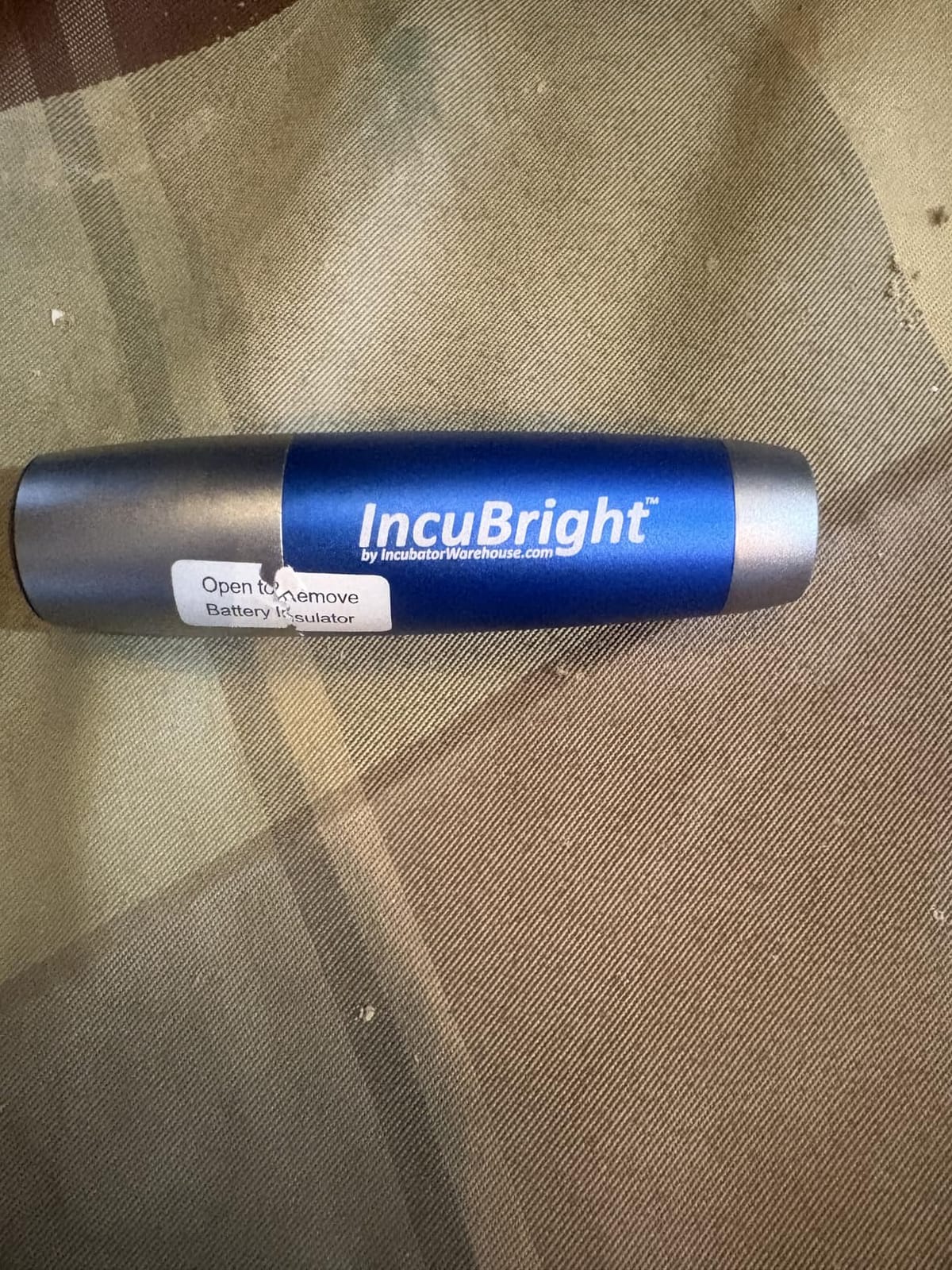
This is the only candler in the group with a published light output, and that number matters. It uses a 250-lumen CREE LED in a low-temperature housing described as 39 percent brighter than earlier versions. When a category is full of vague bright LED claims, a real figure tells you where you stand.
In practice it handles shells that defeat cheaper units. Owners report reading dark blue, brown and thick goose eggs with this light, which makes it a strong choice if you hatch waterfowl alongside chickens. The beam is wide enough at the aperture that a standard egg seats without much fiddling, and quail eggs fit too.
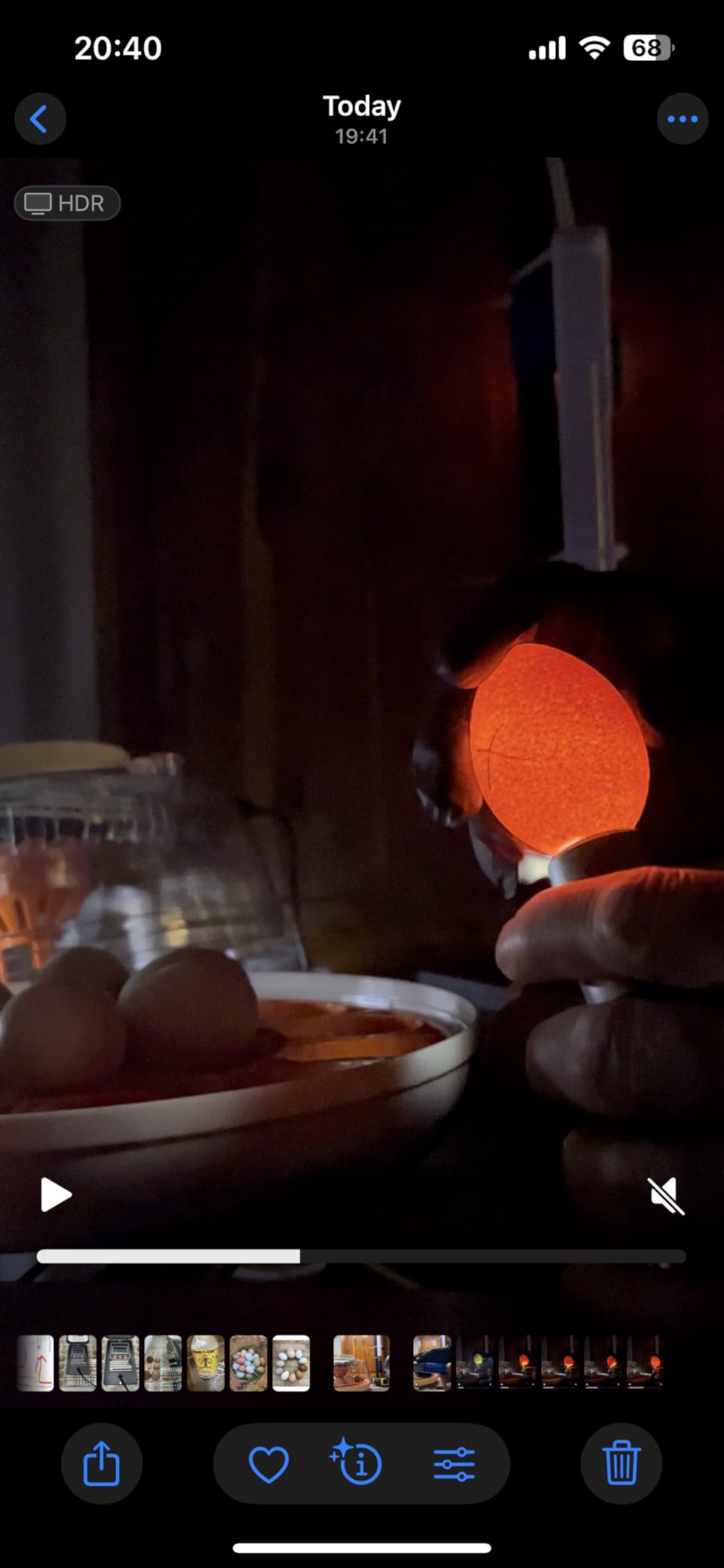
The aluminium case is the other reason it feels different in the hand. At 3.52 ounces it is the second-lightest candler here, and the metal body does not feel like the thin plastic shells on the budget models. There is also a one-year hassle-free guarantee behind it, which is unusual in a category where most units come with nothing.
The catch is batteries. It runs on three AAA cells, and they are not included. Reviews flag that batteries sometimes arrive dead in the box, so plan to buy a fresh set on day one rather than waiting for the first candle to go dark mid-check. Replacing cells regularly is the ongoing cost of owning it.
Is it genuinely brighter than the Magicfly
On ordinary chicken eggs the two are close, and you would not reliably tell them apart. On thick shells and on larger eggs the gap opens up, and this is the candler we would hand to someone running a mixed flock with goose or Muscovy eggs in the tray.
The light is also cool enough that you can hold an egg against it for as long as you like without worrying about embryo damage, which matters if you are slow and methodical rather than quick.
Who it is not for
It is not for anyone who hates replacing batteries, because over several hatch cycles the AAA cells need swapping regularly. Nor is it the most pocketable option here. If you candle rarely and want zero consumables, pick a rechargeable model.
For large, thick or dark eggs and for anyone who wants a stated lumen figure rather than a marketing adjective, it is the strongest pick in the group.
5. Titan Incubators High Intensity LED Egg Candler – Best for Dark Brown and Olive Eggs
Titan Incubators High Intensity LED Chicken Egg Candler/Tester – Battery Powered
High-output cold LED
Two light widths
Black ring holds egg hands-free
4 AA batteries included
Pros
- Handles very dark eggs such as Black Copper Marans
- Two different light widths suit duck and chicken eggs
- Egg rests on a ring so both hands stay free
- Bright enough to read development with blinds drawn
- Cold LED light avoids overheating the egg
- Made in the UK
Cons
- Costs more than most comparable candlers
- Best results need a darkened room and the right angle on dark shells
- Tiny printed manual text is hard to read
This is the candler for the frustrating eggs. It carries the highest rating in our group and the review pattern explains why: owners repeatedly single out its ability to read the darkest shells, and several say it replaced a flashlight they had been relying on. If you keep Marans, Olive Eggers or Speckled Sussex, this is the one.
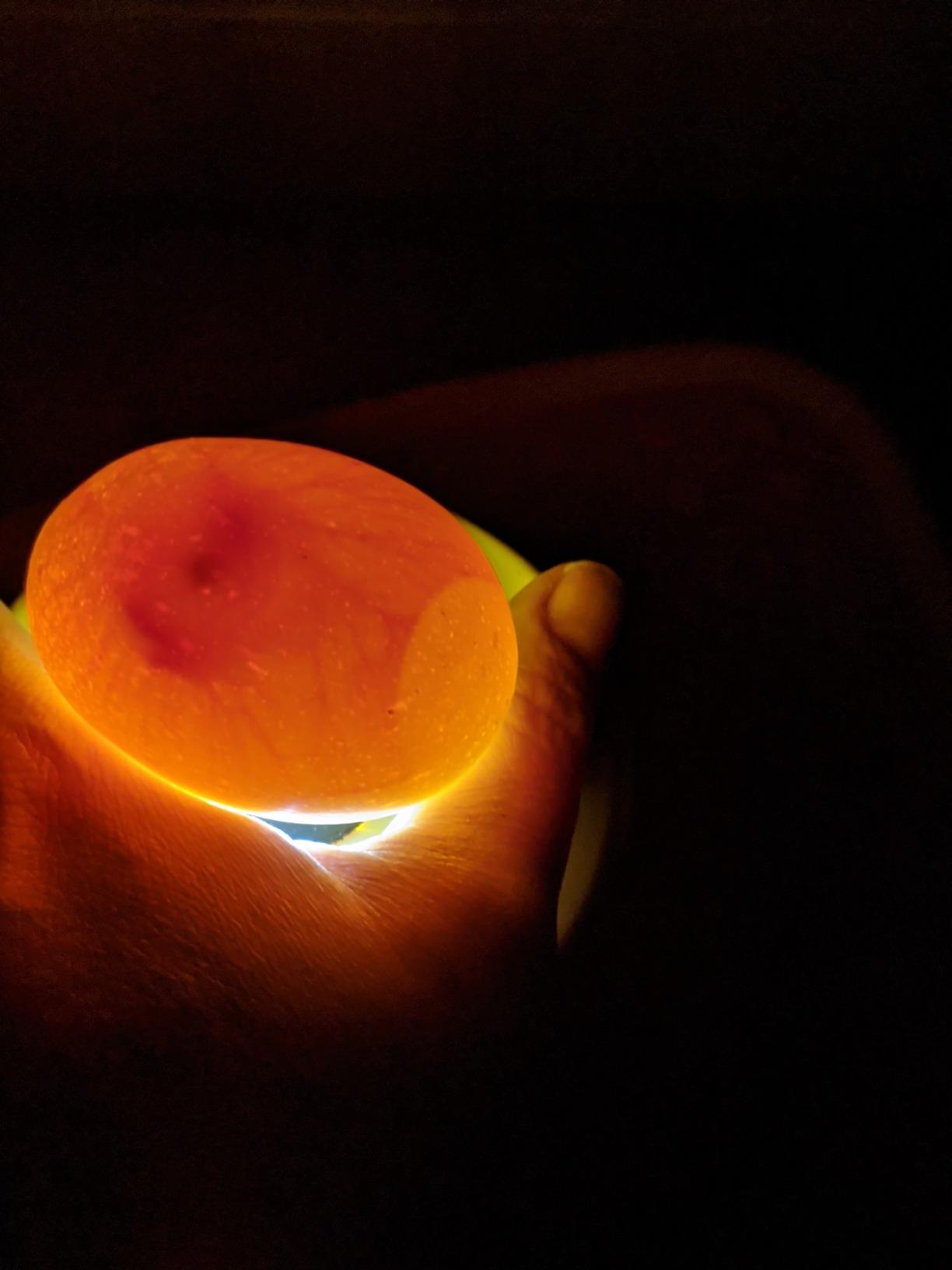
The high-output cold LED produces a tight, bright beam rather than a wide wash. Two different light widths are included, so you can match the beam to the egg, and the egg rests on a black ring shoulder fitting. That ring holds the egg steady for hands-free viewing, which means you can rotate it with two fingers and keep the beam at the right angle instead of chasing it around the shell.
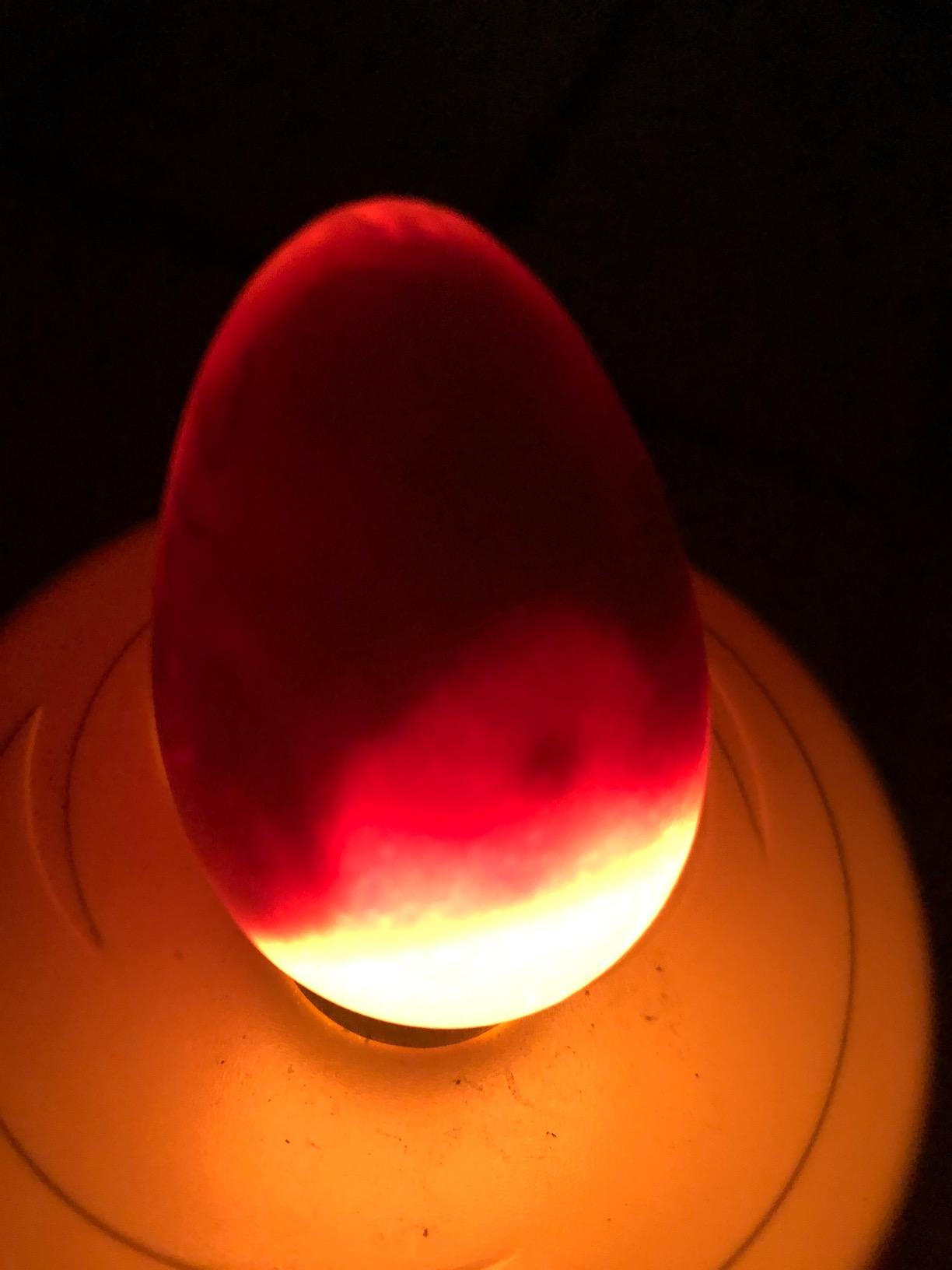
That ring matters more than it sounds. Finding the right angle on a dark egg is the hardest part of candling, and reviewers on smallholder forums describe this as the feature that made dark-egg candling routine rather than frustrating. Several users report being able to read development with daylight and the blinds drawn rather than requiring a genuinely blacked-out room.
The light is cold, so there is no heat load on the egg during a long check. Four AA batteries are included in the box, which is one less thing to buy on a Sunday morning before a candling session.
How it compares with a bright flashlight
It is better, but the honest version is that it is better at one thing: reaching the beam through pigmented shells. On BackYard Chickens, owners report that an ordinary bright LED flashlight works on light brown eggs and even on Black Copper Marans in a truly dark room. Where the flashlight frustrates people is fit and light control, not raw brightness.
This candler gives you a stable egg holder, a sealed contact point and consistent output. Once you are candling twenty eggs rather than three, that consistency is worth more than the highest peak lumens on a torch.
Where it disappoints
It is the most expensive candler here, and you pay for beam quality you cannot see on a white egg. On very dark shells it still performs best in a darkened room with the correct angle, so it is not a substitute for a blackout curtain.
The manual is also practically unreadable, with tiny printed text. If you are the type who likes instructions, this is not it. Everything you need to know you can learn in one session.
6. NestEcho Rechargeable Egg Candler Tester – Best for Multiple Light Modes
NestEcho Egg Candler Light Tester Egg Candler Tester Candling Lamp for All Egg Typy
Rechargeable with charger
High, low and flash modes
Compact body
Weighs 0.17 kg
Pros
- Very bright output
- even able to light up goose eggs
- Rechargeable battery plus included charger removes battery costs
- Three lighting modes including a flash mode
- Noticeably better than a phone or flashlight for spotting fertile eggs
- Compact and lightweight
Cons
- Small light opening requires good dexterity to seat the egg
- Some buyers report not enough brightness for fine embryo detail
- Charger plug may not fit non-US outlets
Three lighting modes on a candler is unusual, and it turns out to be more useful than it sounds. High intensity is for establishing that an embryo is there, low intensity is easier on the eyes when you have twenty eggs to check in a row, and flash mode lets you scan a whole tray quickly before switching to steady light on the ones that need a closer look.
Owners consistently rate the brightness higher than the price would suggest, with several reporting it lights up even goose eggs. It is cordless and the charger is included, so there is nothing to buy and no cable to run. At 0.17 kg it is light enough to hold for a full clutch without your hand cramping.
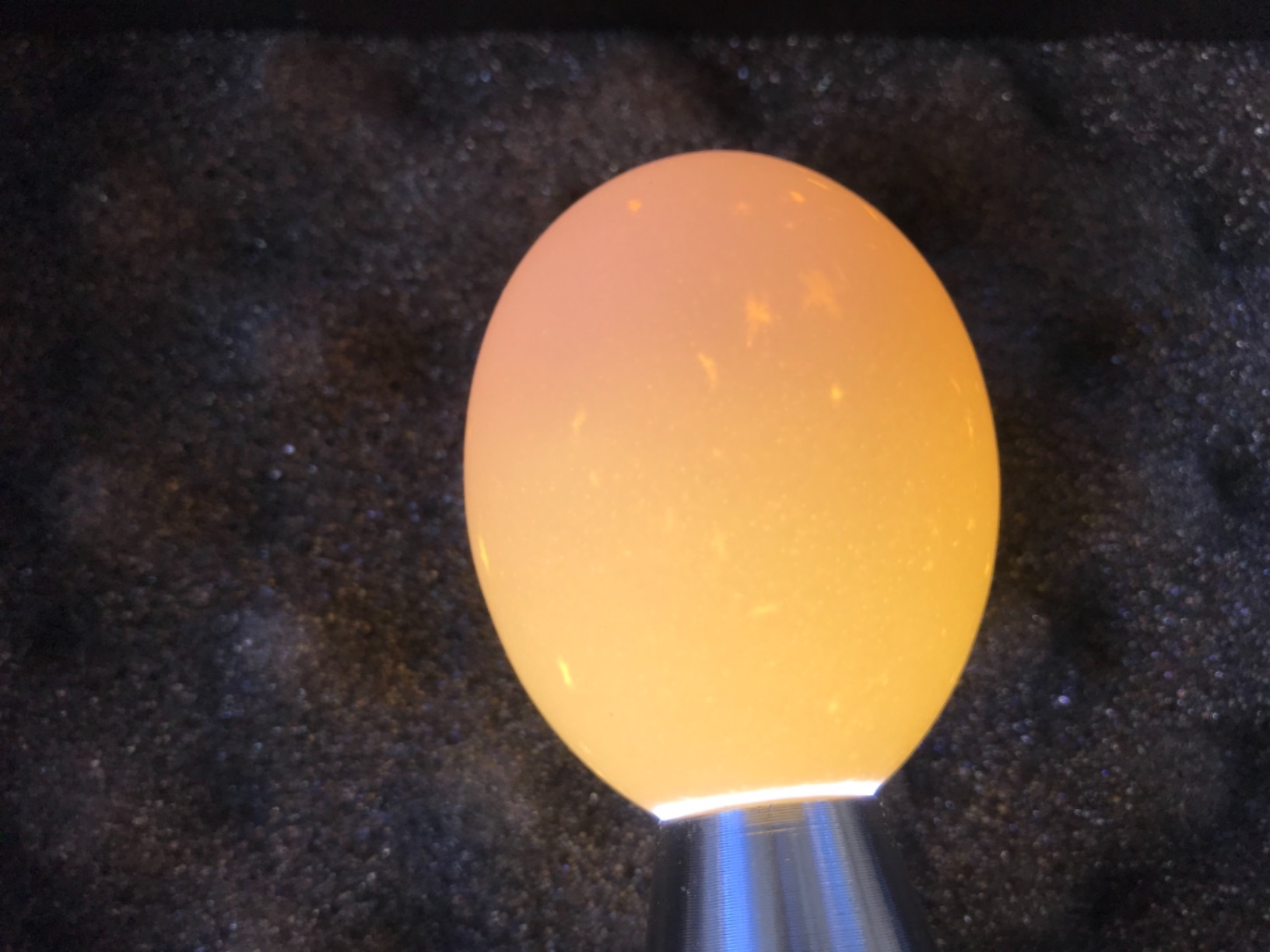
It also doubles as a general flashlight, and reviewers consistently describe it as a clear step up from pointing a phone light at an egg. That framing is fair. The mode switching genuinely speeds up a big clutch, which is the main reason we like it.
The design compromise is the small light opening. It needs a bit of dexterity to seat the egg properly and get a clean seal, and if you are working with jumbo eggs or with one hand while holding a candle in the other, it is fiddly. A minority of buyers also say the light does not reveal fine embryo detail even at maximum brightness.
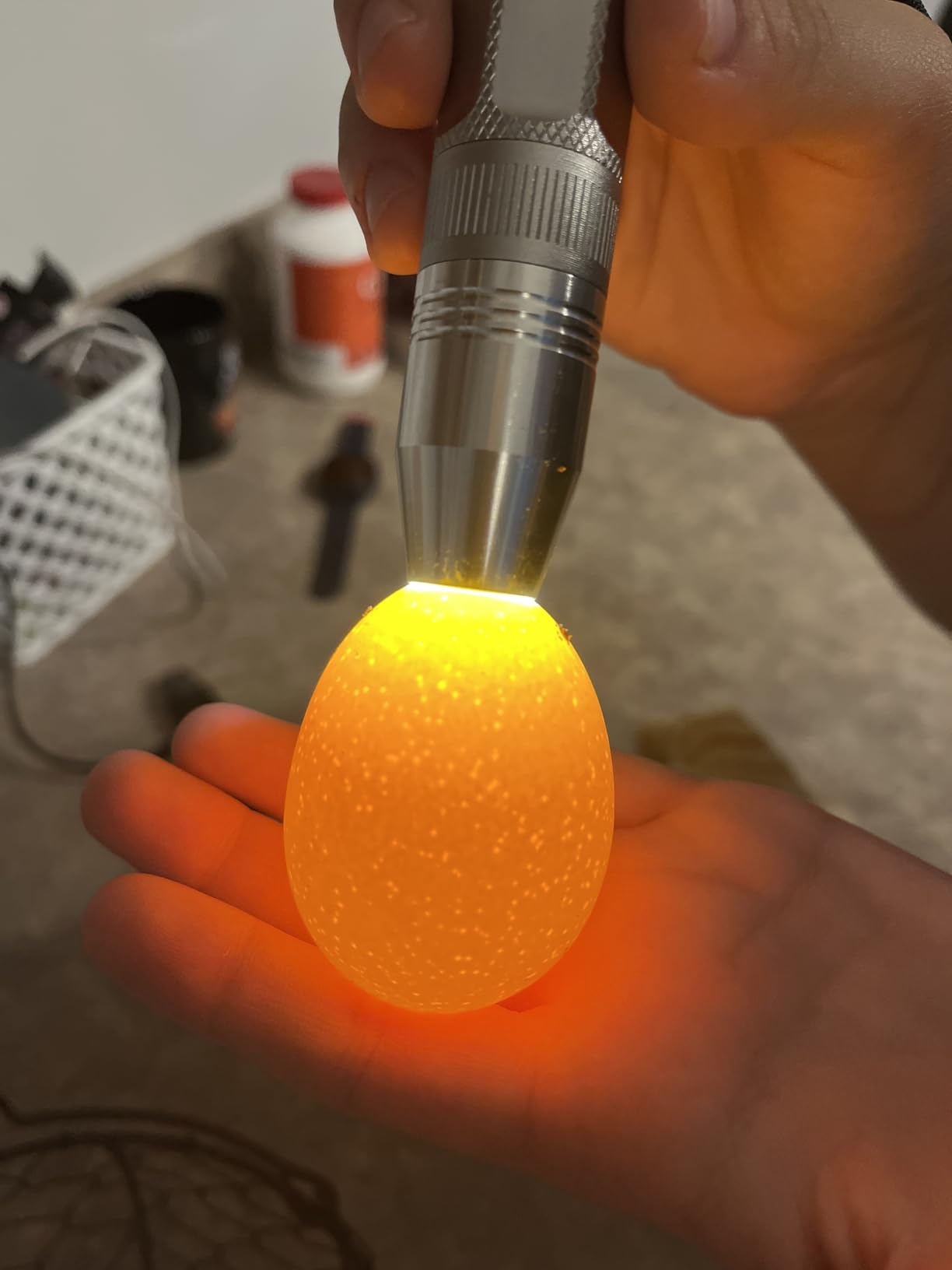
Best use case: scanning a large clutch quickly
This is where the three modes pay off. Flash through a tray to spot anything that looks wrong, then drop to steady high intensity and work through the suspicious eggs one at a time. On a 30-egg clutch that workflow saves real minutes and reduces how long the incubator door stays open.
For quail eggs the narrow opening works in your favour, since a small beam suits a small egg. Reviewers using it on quail report a usable view once the egg is seated.
What to watch out for
The charger plug may not fit outlets outside the US, so check before you order if you are elsewhere. Beyond that, the main risk is over-expecting the fine detail at early days, when you are trying to see a heartbeat that may only be a millimetre across.
If you want one cordless candler that adapts to different jobs, this is the one. If you want the simplest tool, the Magicfly rechargeable is easier to handle.
7. ZZBUY Rechargeable USB Egg Candling Light – Best for Travel and Outdoor Use
ZZBUY Egg Candler for Chicken Eggs, Rechargeable USB Egg Candling Light
Five lighting modes
1200mAh battery
Aluminium alloy body
Waterproof design
Pros
- Bright enough to see through dark eggs
- Long-lasting 1200mAh battery that rarely needs recharging
- Five modes including high
- medium
- low
- flash and SOS
- Aluminium alloy body feels durable and lightweight
- Waterproof design suits daily outdoor use
- Works as a candler
- flashlight and incubator light
Cons
- One buyer received a candler with a loose weld that would not light
- Cheap third-party charger may be a weak point
- Sold by a third-party seller rather than the brand
- Compact body covers less shell than rubber-cupped candlers
Five modes is the most of any candler here, and the SOS mode makes it a genuine dual-purpose tool. The 1200mAh battery is the largest capacity in the group, and owners report rarely needing to top it up. For someone who candles at a different location every week, that combination is the point.
Reviewers also rate the brightness favourably on dark eggs, which is not always the case with generic multi-mode torches. The aluminium alloy body is light and feels durable, and the waterproof claim makes it the one we would not worry about taking into a damp shed or a wet morning round of the coop.
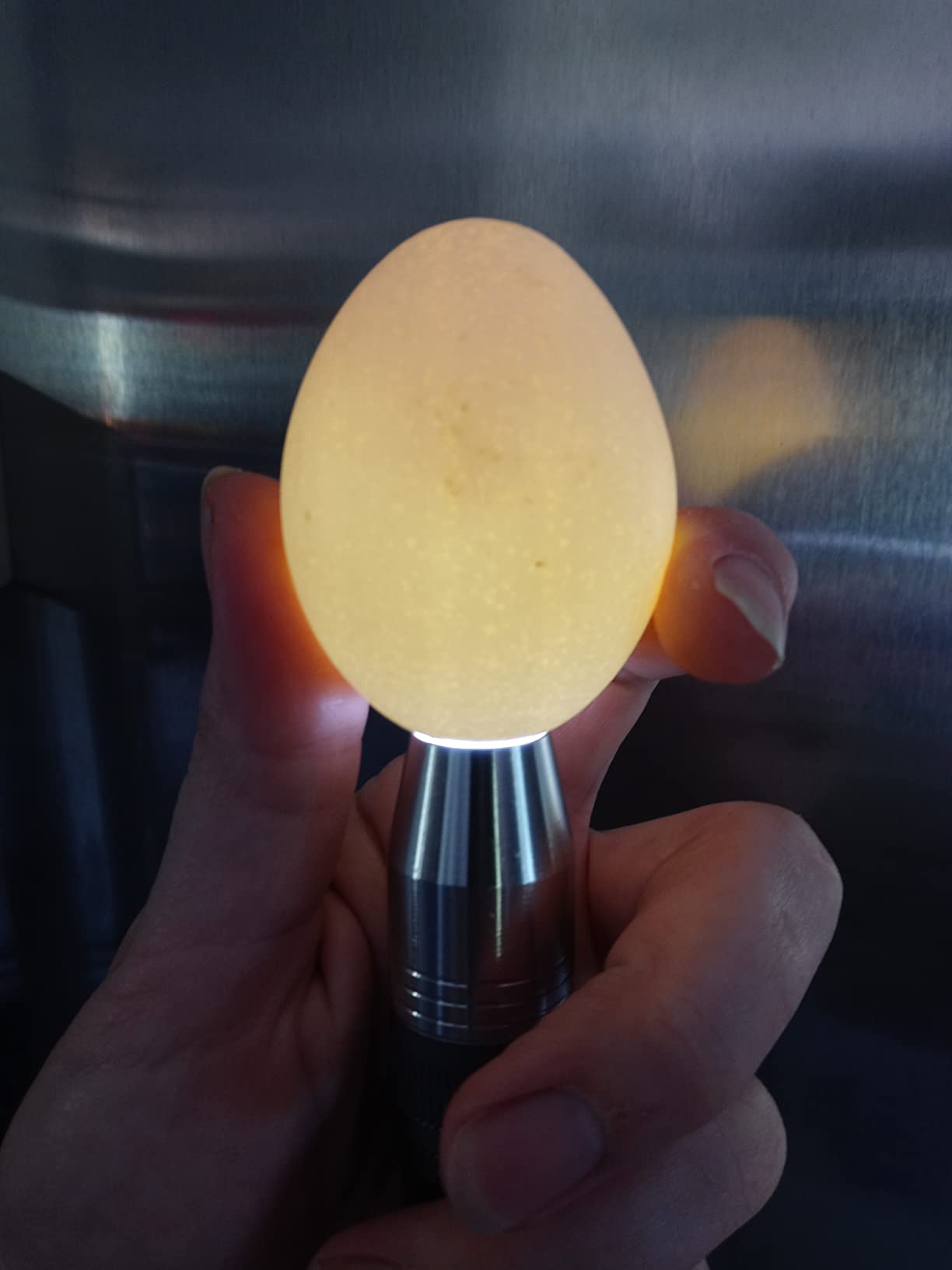
It also works as a general flashlight and an incubator light, which means one tool covers three jobs in the toolshed. At 4.44 watts it is the most powerful lamp spec in this roundup, and the USB charging has been upgraded with a better port and charging chip according to the manufacturer.
Quality control is the weak spot and it is worth being honest about. One buyer received a candler with a loose weld that would not light at all, and the bundled charger is described as a cheap third-party unit. Being sold by a third-party seller rather than the brand also means less support when something goes wrong, and that matters more than the mode count over a long ownership period.
Is it bright enough for Maran eggs
Owners say yes for most dark eggs, and it holds up better than the average multi-mode torch. We would still describe the Titan as the safer choice for a flock that is entirely dark-shelled, because beam control matters more than raw brightness on Marans.
For a mixed flock, or for someone whose eggs are olive, blue and speckled rather than pitch black, this gives you usable views at a fraction of the fuss.
Where it is the wrong tool
It is the wrong tool if reliability under warranty matters most to you and you prefer to deal with a brand rather than a marketplace seller. It is also less forgiving than rubber-cupped models because the compact body does not seal as well around a large egg.
If you want one bright, waterproof, multi-mode light that works as a candler and a flashlight, this earns its place. If you want a sealed beam on a big brown egg, choose a candler built for it.
8. GOOD MOTHER Cool LED Egg Candler Tester – Best for Mixed-Size Birds
GOOD MOTHER Bright Cool LED Light Egg Candler Tester Incubator for Chickens Ducks Birds Eggs – Powered by Power Cable Only
Cool LED with no heat
Corded with two rubber covers
Weighs 5.9 ounces
Package includes power adapter
Pros
- Cool LED light that does not heat the egg
- Two rubber covers work with chicken
- duck
- goose
- quail and most bird eggs
- Power cable operation means no battery charging
- Compact and comfortable to hold
- Useful for classroom teaching as well as hatching
Cons
- Short cord for reaching an outlet across a nest
- Does not work well on dark shelled eggs or duck eggs
- Performance on goose eggs is inconsistent
The two rubber covers are the reason this one is on the list. They are supplied for chicken, duck, goose, quail and most bird eggs, which makes it a good match for a mixed flock rather than one that only ever hatches hens eggs. The package includes the candler, both covers and a power adapter, so nothing else is needed.
It is a cool LED with no heat output, so you can take your time. At 5.9 ounces it sits comfortably in the hand, and owners describe the shape as easy to hold for a full tray without cramping. No batteries means no consumables and no charging before a candling session.
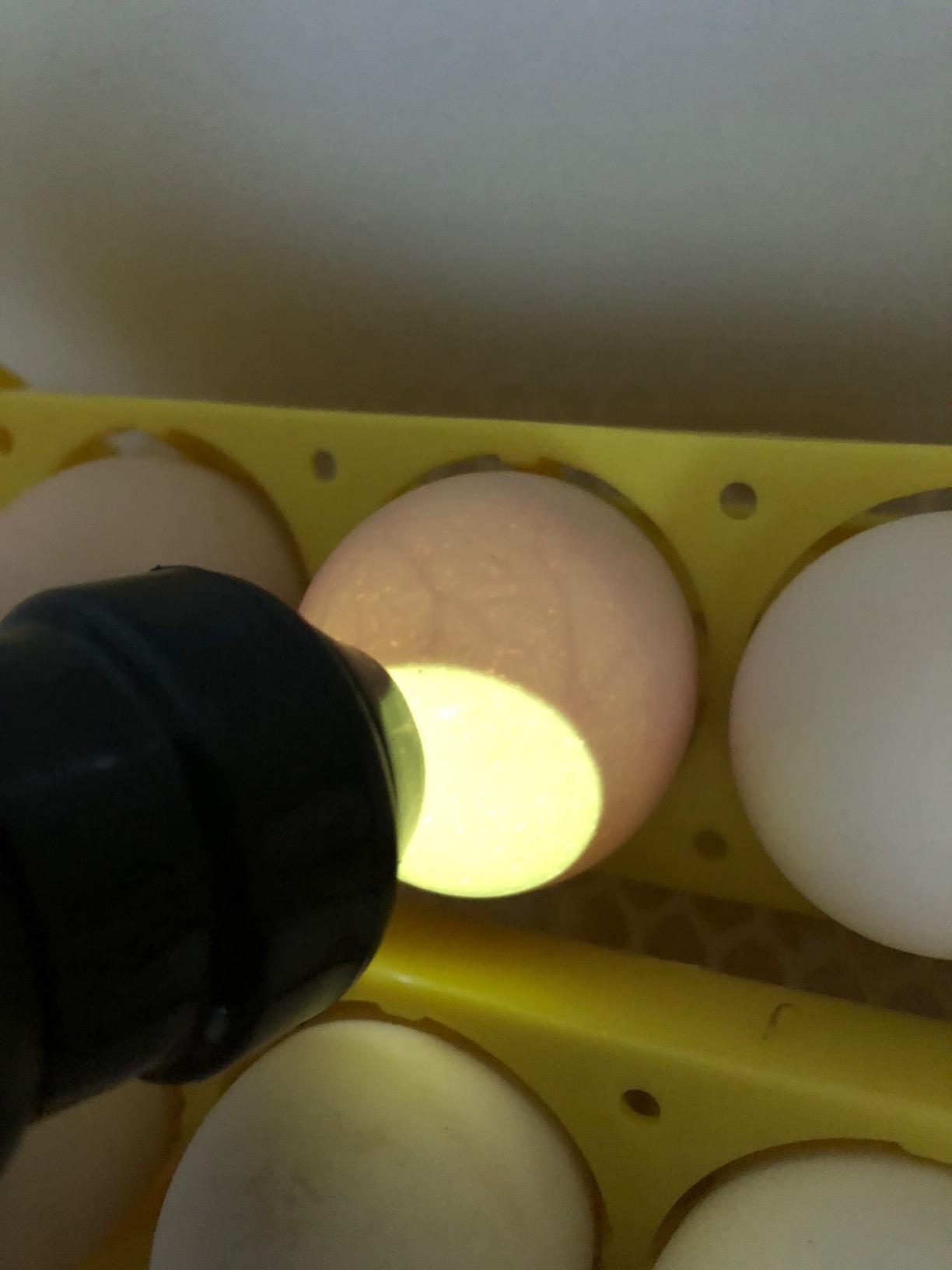
The honest problem is penetration. Reviewers note it does not work well on dark shelled eggs, and one three-star owner found it unreliable outside chicken eggs. If your flock is Marans or Olive Eggers, this is the wrong tool no matter how tidy the cover set looks.
The short cord is the second complaint, and it is the same issue as the wired Magicfly. It is not a short cord for a bench beside the incubator, but it is short for reaching an outlet on the far side of a nest.
Which egg colours it handles well
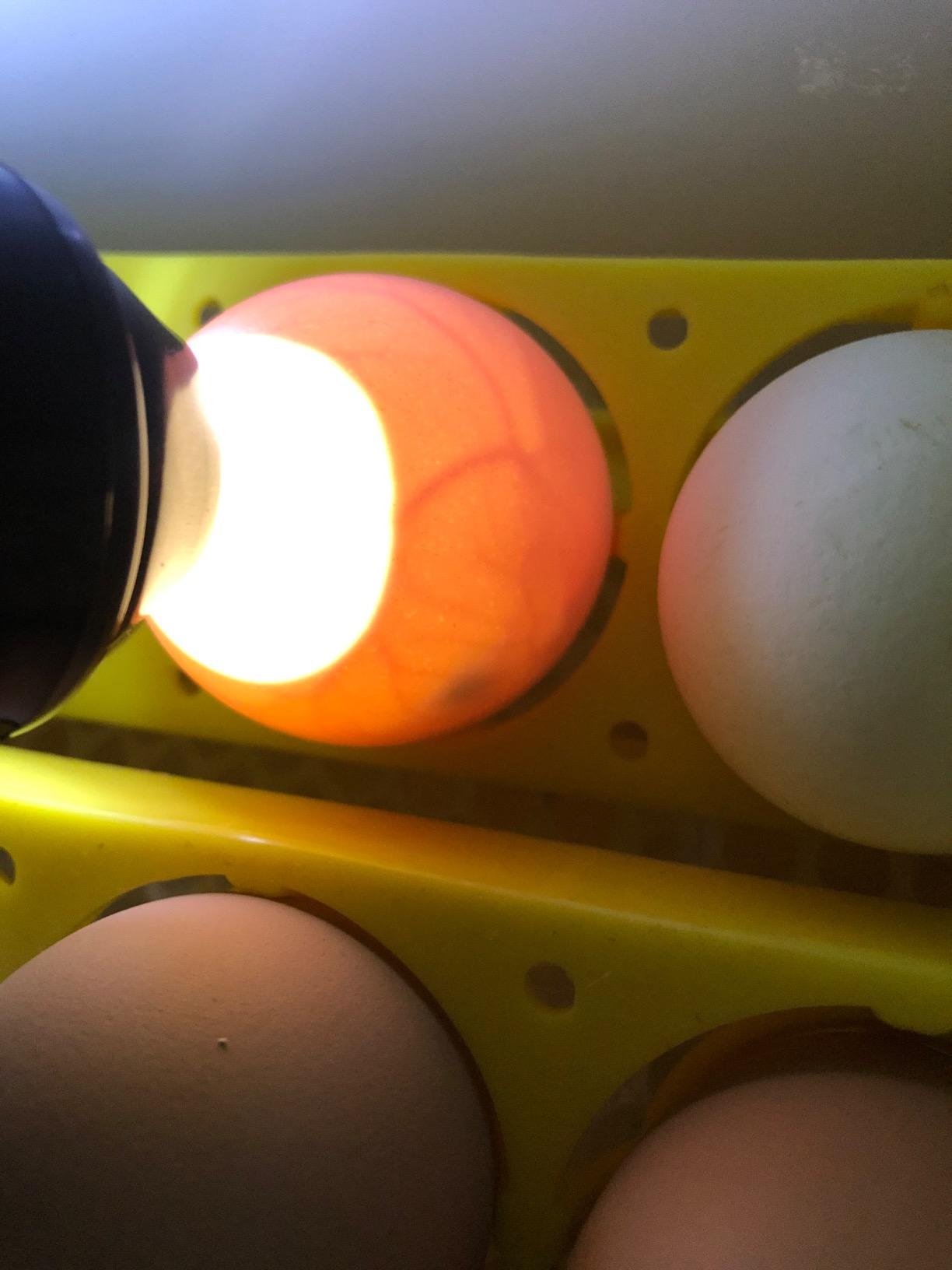
White, cream, light brown and ordinary speckled shells are all comfortable. The dark spot and a few vessels show up clearly by day 8 to day 12, and the air cell at the fat end is visible without straining. That covers the majority of backyard flocks.
Duck and goose eggs are covered by the accessories but not by the brightness. If waterfowl is a large part of your hatching, the Incu-Bright or the Titan is a better bet.
Who it suits and who it does not
It suits beginners, classrooms and anyone who keeps a mixed flock of small birds alongside chickens and wants one accessory to cover all of them. The kid-friendly simplicity is part of the appeal.
It does not suit anyone with dark layers, anyone hatching goose regularly, or anyone who needs to use it away from an outlet. For those, the extra spend on a higher-output candler is worth it.
9. Sonew High Cool LED Candling Lamp – Best Non-Scratching Metal Body
Sonew Egg Candler Tester High Cool LED Light Candling Lamp, Rechargeable for All Types Egg Broody or Incubator Monitor The Development of The Embryo Within Egg
Sealed focused LED beam
ABS with metal casing
Corded push-button
Weighs 6.7 ounces
Pros
- Blocks light leakage and channels a strong beam into the egg
- Cool light with no heat damage to the embryo
- Smooth metal casing will not scratch eggshells
- Cable power avoids battery charging
- Usable for classroom incubation experiments
Cons
- Lowest average rating in this group with a larger share of one-star reviews
- Needs a dark room to see development clearly
- Corded operation limits where you can use it
The idea here is sound: channel the LED into the egg so no light leaks around the shell, which improves contrast and makes the interior easier to read. Reviewers credit the sealed beam with making candling straightforward in a dark room. It is designed with dark eggs and thick shells specifically in mind.
The body measures 5.91 by 1.57 by 1.57 inches and weighs 6.7 ounces, and it runs off a cord with simple push-button control, so there are no batteries to forget before you walk out to the incubator.
What holds it back is the feedback. It carries the lowest average rating of the ten, with roughly one review in seven at one star. Most of those complaints come down to needing a properly dark room and to corded operation limiting where you can use it.
Is the scratch-free body worth choosing
For heavily speckled or dark shells, yes. Scratching does not kill an embryo, but it does leave a mark on eggs you may be selling or gifting, and it removes a reason to worry when you are handling 30 eggs one-handed in a dark room.
For cream eggs from a small hobby flock, it is a nice-to-have rather than a deciding factor, and you could get the same safety from a rubber-cupped candler.
Where the low rating comes from
Brightness is not the issue, contrast in darkness is. The reviewers who rate it highly are already working in a blackout space. Those who try it in a lit room report not being able to see development, and corded operation means you cannot just carry it somewhere better lit.
Check your setup before buying. A genuine dark hatchery corner and this candler is a good match. A bright utility room and this candler is a frustration waiting to happen.
10. Little Giant Cordless Egg Candler – Best for Pocket-Sized Quick Checks
Little Giant® Egg Candler | Handheld Cordless Light for Checking Incubator Egg Development | Compact Incubation Flashlight Tester with Wrist Strap & AAA Battery Included
Flashlight-style body
3.63 inch long
AAA battery and wrist strap included
Weighs 2.4 ounces
Pros
- Very compact and pocketable for quick checks near the nest
- Cordless battery design with no cable to tangle
- Wrist strap keeps it handy and helps prevent dropping it on eggs
- AAA battery included so it is usable straight away
- Several owners find it bright enough in near darkness
Cons
- Weakest light output in this group with several owners unable to read even light eggs
- Some candlers failed after limited use
- One reviewer reported a sticking push button
- Pocket-sized form gives no shell-sealing cup
At 2.4 ounces and 3.63 inches long, this is the smallest and lightest candler here by a clear margin. It fits in a pocket, runs on a single AAA battery that is included, and the wrist strap means it stays in your hand instead of landing on your eggs when you shift grip.
That makes it genuinely useful for a quick look at one egg without walking back to the incubator with a torch. Several owners find it bright enough in near darkness for a casual check, and the fact that it takes no cable is a real convenience at the hen house door.
The problem is that it is not really a candling tool in the sense the rest of this list are. It has the weakest light output of the ten, and several owners report they cannot read even light-coloured eggs with it. There is no rubber cup, so there is no seal, which means you get ambient light spill and a much less useful image of the interior.
Reliability is also mixed. Some owners report units failing after limited use, and one reviewer found the push button sticking so badly that they had to unscrew the body to switch it off. That is not a tool you want to be fighting at day 14.
When a pocket candler is enough
It is enough for a single quick sanity check in a dark coop, or for checking whether an egg is obviously clear before you commit it to the incubator. Some people candle holding the egg cupped in one hand in front of a bright light, which this matches in convenience even if not in brightness.
It is not enough for a systematic day 7 or day 14 check across a clutch, where you need to see veins and a defined air cell rather than a vague glow.
Why we put it last
Not because it is bad at what it does, but because the category has better options for the same money. Every other candler here gives you a stronger light, and most give you a seal. This one gives you a small body and nothing else.
Consider it a secondary tool to keep in a jacket pocket for spot checks, not the candler you plan your whole hatch around. If you want one dedicated egg candler tester, buy any of the nine above it.
How to Candle Eggs Without Costing You the Hatch
Most candling problems are technique, not hardware. A strong light in a bright room with an egg held too loosely will show you nothing useful, and no candler in this list fixes that. Work through these six steps in order and you will get a readable image from almost any of the ten.
Set up in a dark room first
Kill the lights and pull a blind over any window before you open the incubator. Close the door behind you and give your eyes a minute to adjust. This matters more than lumens, because the shell is illuminated from one side and every stray photon from the room washes out the contrast you are trying to read.
Work fast and keep eggs warm
Candling twice per clutch is plenty. The 20 to 30 minute limit is the practical rule that keeps frequent checks from hurting your hatch, because each egg you remove cools down and the humidity in the incubator drops every time you open it. Getting the room to temperature first makes the whole job faster.
Handle eggs gently and one at a time
Cup the egg in one hand and the candler in the other, with the pointed end down and the fat end up. You are looking at the fat end, because that is where the air cell sits and where a blood ring is most obvious. Move the egg slowly rather than turning it fast, and put it back the same way up.
Mark what you find
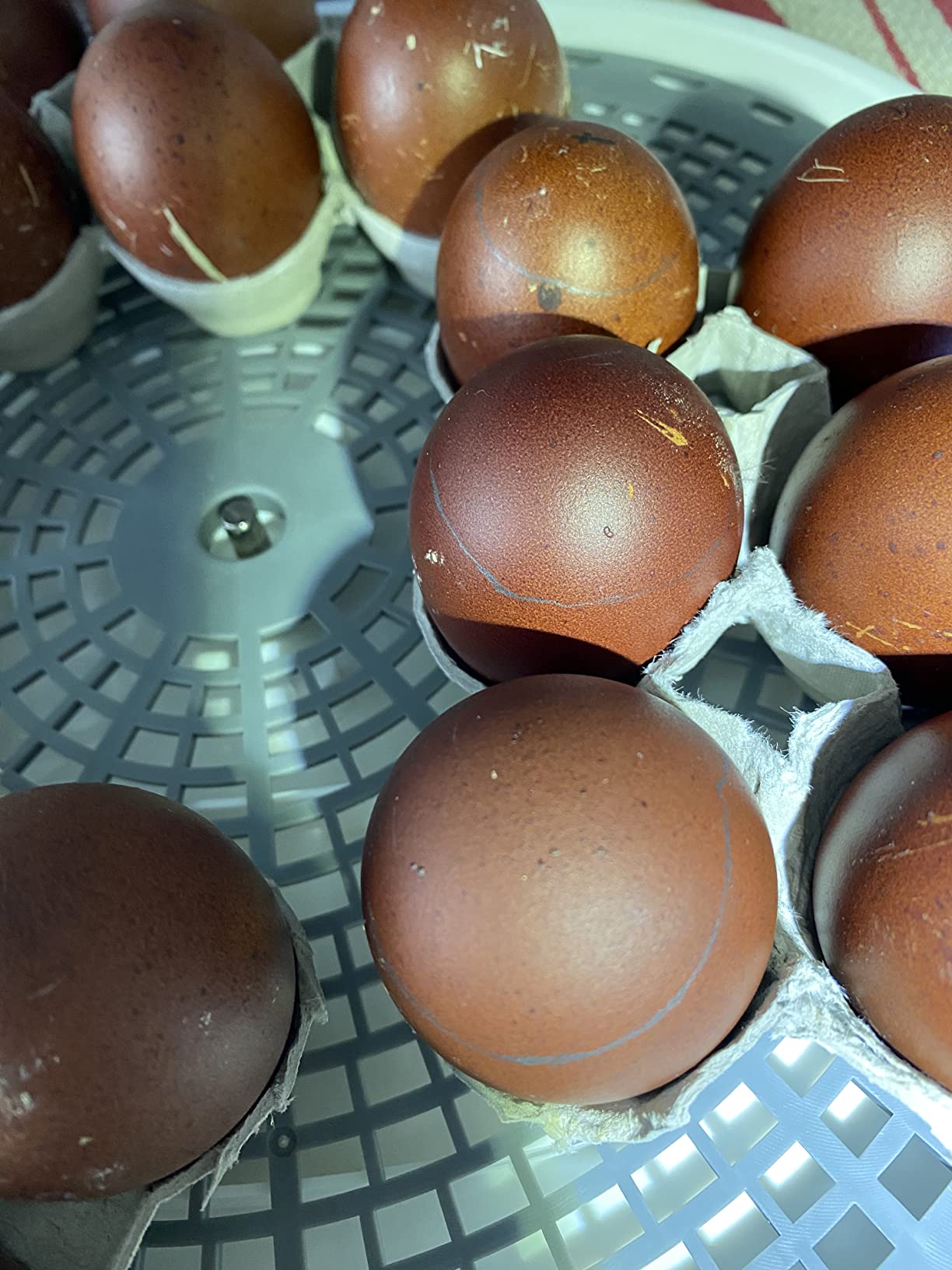
Use a soft pencil to mark unfertilised eggs and suspected dead ones so you do not handle them again by accident. Marking also lets you track the same egg at day 14 and see whether development has advanced, which is far more informative than a single snapshot.
Read the result in three seconds
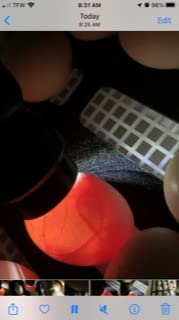
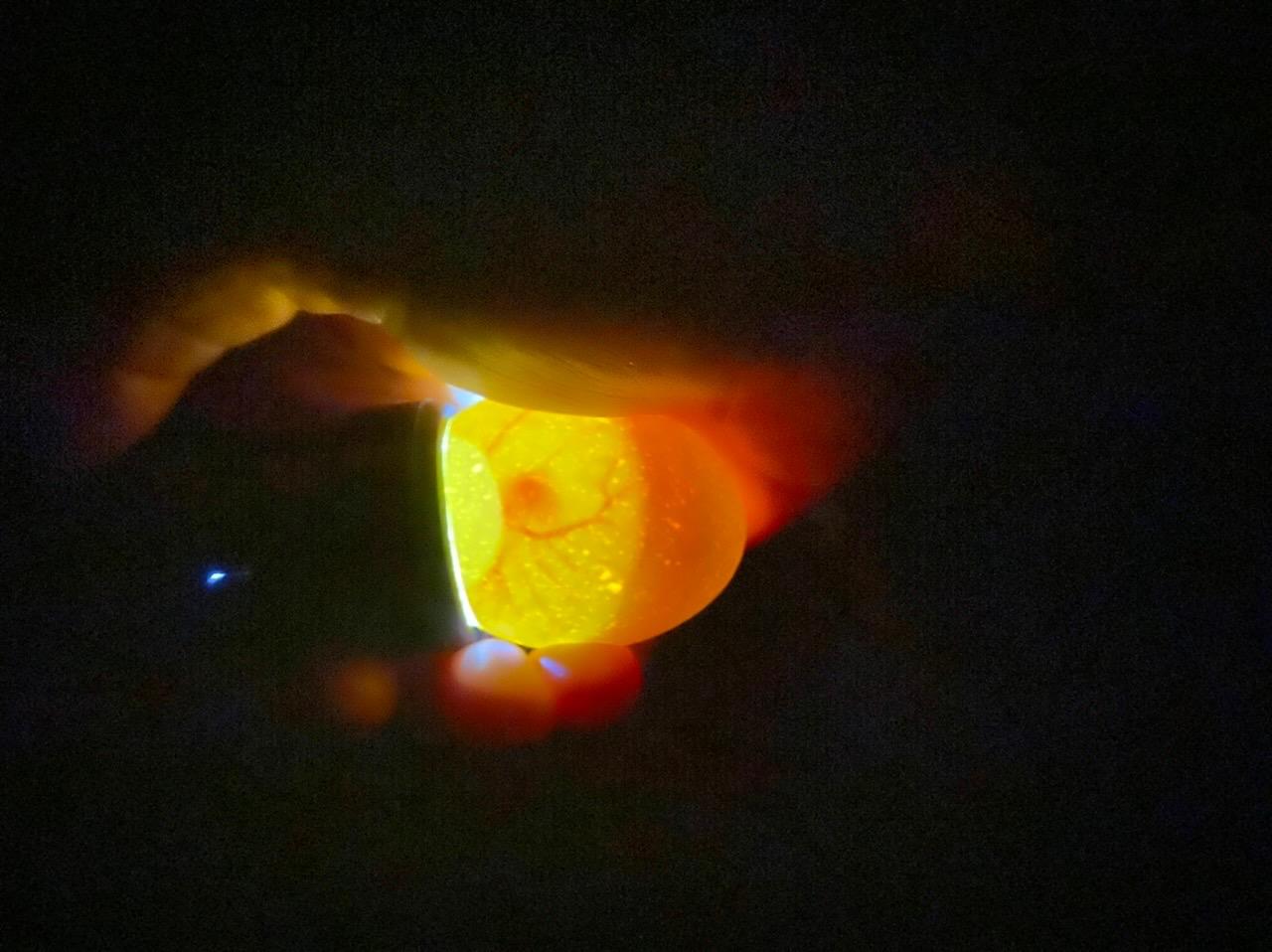
A fertile egg shows a dark embryo spot with fine blood vessels radiating from it and a clean air cell at the fat end. An infertile egg, called a yorker, looks clear and even with no vessels at all. A blood ring is a ring of blood with no developing embryo, which means fertilisation happened and then stopped. None of these tells you whether the hatch will succeed, so remove empties and dead ones and leave the rest alone.
Watch for movement in the later stages
From roughly day 17 the embryo moves, and you can often see it shifting inside the shell. That is satisfying and useful, but it also means the egg is close to hatching and should be left undisturbed. Keep in mind that by day 14 the shell contents darken considerably, so late candling is more about confirming life than diagnosing problems.
Timing matters as much as technique. Day 7 is the classic first check, day 14 is the second useful one, and day 18 is when you stop opening the incubator altogether. Many quail keepers candle around day 7 to 9 and again near lockdown, which matches the same logic on a shorter cycle.
Candling Dark Brown, Olive and Speckled Eggs
Dark eggs are where candlers separate the useful from the disappointing. A light shell passes almost any beam and hides nothing. A deep olive or dark reddish-brown shell absorbs so much of the light that a weak candler shows you a featureless dark blob, which is the single most common complaint we see from Maran and Olive Egger keepers.
The fix is combination rather than one magic number. Shell thickness matters, room darkness matters, and beam focus matters more than raw output. A tightly focused beam that seals around the egg beats a wide bright wash, because all the light arrives where you are looking. For the darkest shells, the Titan Incubators candler is the pick, and the Incu-Bright is the alternative when you also hatch large waterfowl eggs.
Speckled and mottled shells are a different problem. The pigment spots scatter light and make vessels harder to trace, so look at the clear areas between speckles and at the air cell, which stays legible even when the body of the egg does not. Rotate slowly rather than sweeping quickly, and give yourself more time than you think you need.
On the question of whether a dedicated candler beats a bright flashlight, forum experience is genuinely split. Users on BackYard Chickens report that an ordinary bright LED flashlight works on light eggs and even on Black Copper Marans in a fully dark room, and some keepers go further and simply hold the egg cupped in their hand in front of a strong light. Where a dedicated candler earns its place is consistency: a sealed cup, two hands free, and the same view on egg number one and egg number thirty.
One more honest point. Candling cannot tell you whether an egg will hatch. It tells you whether an embryo is present and whether development has stalled. Plenty of keepers decide candling is not worth the handling at all and simply let the clutch run, and for small clutches that is a defensible choice.
Egg Candler Buying Guide: Brightness, Power and Form
Five things decide whether a candler is useful to you. Rank them in this order and the choice becomes obvious. Start with shell colour, because that sets the brightness bar, then decide how you will power it, then the form factor, then the seal, then everything else.
Brightness: match the light to the shell
Published lumen figures are rare, which is frustrating, but the Incu-Bright at 250 lumens gives you an anchor point. As a working guide, light white, cream and light brown eggs are readable with a modest LED. Brown and speckled eggs want a stronger, tighter beam. Dark brown, olive and blue shells want the most focus and the best seal you can get.
This is why we would not buy on the word bright alone. A brand that publishes a bulb type or a lumen number is telling you something; a brand that says ultra bright LED is telling you very little. If your eggs are dark, the spec sheet matters more than the styling.
Power: corded versus rechargeable across 21 days
Wired candlers never fail and never need charging, but they need an outlet within reach and a cord that does not catch on the incubator door. Rechargeable candlers give you freedom of movement, but the battery is a consumable that can degrade, and a dead candler at day 14 means eggs out of the incubator while you find a replacement.
For a backyard flock of 20 to 40 eggs, cordless wins, because you candle two or three times in 21 days and one charge covers it. For a hatchery running clutches back to back, corded is more reliable over months of daily use. Battery-powered disposable cells sit in between and are the least convenient of the three because you must buy and carry spares.
Form factor: handheld, ring-mounted or desktop
Every candler here is handheld, and for most people that is correct. The difference between them is how the egg is held. Rubber cups seal around the shell and give the best image. A ring mount like the Titan holds the egg steady so both hands stay free. A plain flashlight-style body like the Little Giant gives you no seal at all.
Desktop candlers and multi-egg trays exist for hatchery-scale work where you want to check 30 eggs at once, and they are worth it only if you are doing that regularly. If you are hatching one incubator’s worth of eggs, a handheld is simpler and cheaper to store.
The seal is the feature nobody mentions
Ambient light leaking around the shell washes out the exact detail you are trying to see. Rubber tips, a black ring, or a recessed cup all solve this, and they are the reason a mid-priced candler with a seal beats a bright bare torch. When you compare two units, check whether the egg sits against something that blocks light before you compare brightness.
What to skip
Skip units with no stated light source, no lumen or bulb specification, and no stated power method. Those are the units that show up as a dark blob on a normal brown egg and generate most of the complaints we read. Also be cautious about very small openings that cannot seat a standard egg, and about third-party marketplace listings where a quality complaint gets no support.
One more thing worth checking: whether the candler can be used through the incubator lid. A slim barrel lets you candle eggs in place, which is faster and avoids the dropping risk that makes people nervous about candling in the first place.
If you are still choosing the incubator itself, our guides to the best automatic egg incubators and the best cabinet egg incubators cover the setups that pair well with a handheld candler. Larger operations usually want the best commercial egg incubators instead.
Frequently Asked Questions
When should I candle incubated eggs?
Candle at around day 7 for a first fertility check, then again around day 14 to confirm development has advanced. Stop opening the incubator from day 18 onward, when humidity matters most for hatching. Many quail keepers candle around day 7 to 9 and again near lockdown on the shorter quail cycle.
What is the best light for candling eggs?
A cool white LED is the best light for candling eggs because it runs cool enough to avoid embryo damage and gives a bright, even image. Light shells read fine with a modest LED, while dark brown, olive and speckled eggs need a tighter, more focused beam and a rubber cup that seals out ambient light.
What are common mistakes when candling eggs?
The most common mistakes are candling in a room that is not dark, holding the egg fat-end down instead of pointed-end down, and leaving eggs out of the incubator for too long. Others include candling every day instead of twice, gripping eggs too hard, and buying a dim candler and then blaming your eggs.
Is day 4 too early to candle eggs?
Day 4 is possible but rarely useful. Blood vessels have barely started to spread at that point, so it is hard to tell a fertilised egg from an unfertilised one, and you risk removing a viable egg by mistake. Day 7 gives a much clearer picture and is the first check most hatchers make.
Can you candle quail eggs and how do I spot bad ones?
Yes, you can candle quail eggs, and they need a small, focused beam rather than a wide flood of light. A fertilised quail egg shows a small dark spot with fine vessels and a clear air cell. A bad one looks empty and clear, or shows a blood ring with no embryo. Heavily coloured quail shells are genuinely difficult and benefit most from the strongest candler you can get.
Why can’t I see anything when I candle my eggs?
Usually the room is too bright. Kill the lights, close the door and wait for your eyes to adjust before you judge the egg. Other causes include a candler with too little output for your shell colour, a poor seal around the egg so ambient light washes out the image, or checking too early in incubation when there is little to see yet.
Which Egg Candler Should You Buy?
The Magicfly Bright LED Egg Candler Tester is our pick for most people in 2026, because the sealing rubber tips, the slim barrel and the included development chart make it the least likely to disappoint. Hatch dark brown, olive or Speckled Sussex eggs and the Titan Incubators High Intensity candler is worth the extra spend, since it is the one that reliably shows you vessels through pigmented shells. Going cordless, take the Magicfly Rechargeable and accept that batteries age.
Whichever you choose, darken the room, candle on day 7 and day 14, and get the eggs back into the incubator quickly. That is what actually protects your hatch rate, not the candler.