
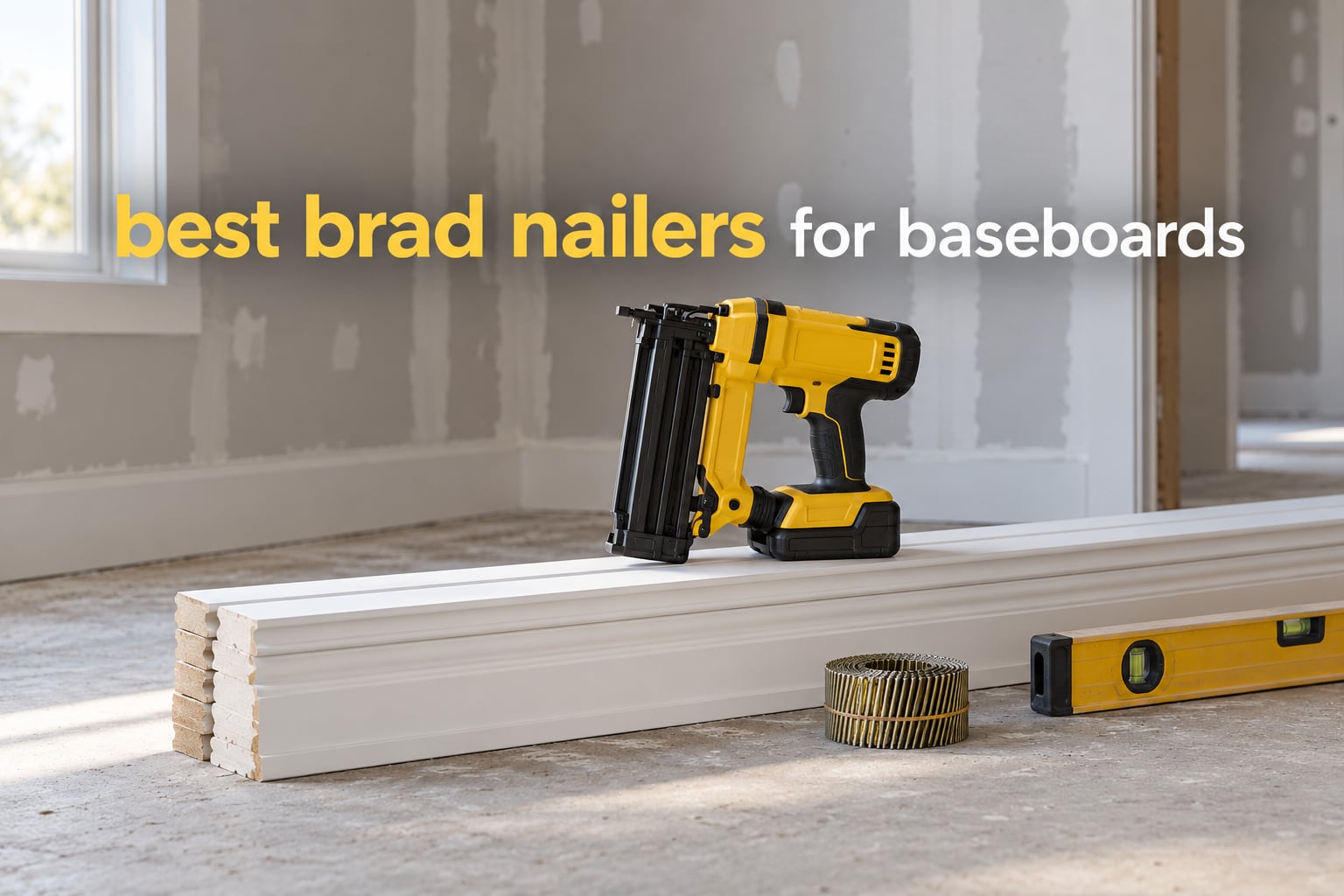
Here is the honest answer before any product list: a brad nailer is the right tool for base shoe, quarter round, and smaller profile baseboard, but a 15- or 16-gauge finish nail holds far better on tall, solid wood, or MDF runs. Pick the brad nailer if your boards are 4 inches or shorter and you want the nail holes to disappear. Pick the finish nailer if you are nailing 5-inch-plus boards across studs and care more about holding power than a clean face.
A brad nailer is a power tool that drives thin 18-gauge nails, called brads, from 5/8 inch up to 2-1/8 inches long. Because the brad head is small and the shank is narrow, the hole it leaves is usually small enough that you never touch it up. That is the whole argument for the brad nailer on trim work.
We built this guide around one job: installing baseboard. We compared 10 brad nailers on the things that actually decide whether a baseboard run goes smoothly or badly, which is nail length range, nose width, depth control, weight in the hand, magazine type, and whether the tool jams on dense board. Specs come from the manufacturer data, and the practical notes come from what buyers report after real runs of trim. No product here earned a spot on brand name alone, and the list includes cordless, pneumatic, and 2-in-1 combo tools so you can match the pick to how you actually work.
Top 3 Picks for Baseboard Work in 2026

DEWALT DWFP12231 Pneumatic Brad Nailer Kit
- 18GA nails 5/8 to 2 in.
- 2.65 lb body
- Tool-free depth and jam release
- Non-marring nose tip

DEWALT DCN680B 20V XR Cordless Brad Nailer
- Brushless motor
- Micro nose
- Selectable sequential or contact trigger
- LED workspace light
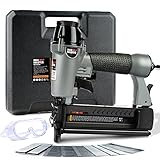
NEU Master 2-in-1 Pneumatic Brad Nailer…
- Brads plus crown staples
- Rotatable 360-degree exhaust
- 100-fastener magazine
- Sequential safety trigger
Quick Overview: Best Brad Nailers for Baseboards in 2026
Every tool below drives 18-gauge brads in the range that suits baseboard work. Read the nail length range first, because that single spec decides whether a tool can handle your board height, and read the weight second, because you will be holding it overhead for an entire afternoon.
| Product | Specifications | Action |
|---|---|---|
| DEWALT DWFP12231 Pneumatic Brad Nailer Kit |
|
Check Latest Price |
| NEU Master 2-in-1 Pneumatic Brad Nailer and Stapler |
|
Check Latest Price |
| DEWALT DCN680B 20V XR Cordless Brad Nailer |
|
Check Latest Price |
 Makita AF506 2 Inch Pneumatic Brad Nailer Makita AF506 2 Inch Pneumatic Brad Nailer |
|
Check Latest Price |
 Metabo HPT NT50AE2 Pneumatic Brad Nailer Metabo HPT NT50AE2 Pneumatic Brad Nailer |
|
Check Latest Price |
 Bostitch BTFP12233 Smart Point Brad Nailer Kit Bostitch BTFP12233 Smart Point Brad Nailer Kit |
|
Check Latest Price |
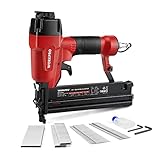 WORKPRO 2-in-1 Pneumatic Brad Nailer and Staple Gun WORKPRO 2-in-1 Pneumatic Brad Nailer and Staple Gun |
|
Check Latest Price |
 Ryobi 18V ONE+ Cordless Airstrike Brad Nailer P321 Ryobi 18V ONE+ Cordless Airstrike Brad Nailer P321 |
|
Check Latest Price |
 SILVEL 21V Cordless 2-in-1 Brad Nailer Kit SILVEL 21V Cordless 2-in-1 Brad Nailer Kit |
|
Check Latest Price |
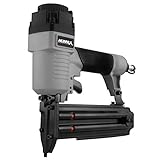 NuMax SBR50 Pneumatic 2 Inch Brad Nailer NuMax SBR50 Pneumatic 2 Inch Brad Nailer |
|
Check Latest Price |
1. DEWALT DWFP12231 Pneumatic Brad Nailer Kit: the most proven pick for baseboard runs
DEWALT Brad Nailer Kit, 18GA, 5/8-Inch to 2-Inch, Pneumatic (DWFP12231)
18GA nails 5/8 to 2 in.
2.65 lb
Pneumatic
Tool-free depth and jam release
Pros
- Tool-free depth-of-drive adjustment with detents
- Tool-free jam release
- Maintenance-free motor avoids surface stains
- Removable non-marring nose tip
- Light 2.65 lb body
Cons
- Sequential-only trigger slows long runs
- Needs a compressor and hose
More than 5,000 buyers have rated this one, and that volume of long-run feedback is why it tops our list. The feature that matters most on a baseboard job is the tool-free depth-of-drive adjustment with detents, because it lets you set nail head depth by feel and repeat it on every board without guessing. Detents matter more than people expect because you will fire 300 nails before you notice the head sitting proud.
The maintenance-free motor is the second reason this tool fits baseboard specifically. Compressor oil blowing out of a pneumatic nailer can land on a freshly painted or primed baseboard face and stain it, and this design removes that failure mode entirely.
The removable non-marring nose tip is the detail trim carpenters care about. When you are working a wall in a finished room, the tip is what touches the visible face of the board, and a metal nose can leave a bright mark on painted MDF. The tip stores on the tool, so it does not get lost in a toolbox.
At 2.65 pounds, this is one of the lighter pneumatic options in the group, which matters because a baseboard job means holding the tool at shoulder height or above for hours. Buyers running long baseboard and casing runs single out the integrated rubber grip as the reason their hand does not cramp.
What to check before you commit to it
The trigger is sequential style only, so every single nail takes one trigger pull. On a 12-foot wall of 4-inch baseboard you are looking at a lot of individual pulls, and if you are used to contact-bump speed on a long run you will notice. Plan for it rather than fighting it.
You also need a compressor and hose in the mix. If you rent one for a weekend project, the economics are fine. If you do not own a compressor and do not want to, this is the wrong pick even though it is the strongest tool here.
Where it is the wrong choice
Do not buy this for tall solid wood or MDF baseboard and expect it to behave like a finish nailer. Eighteen-gauge brads have real pull-out limits in dense board, and no depth adjustment changes the diameter of the shank.
The two-inch maximum nail also caps you. Boards taller than about 5 inches need something heavier, and this tool cannot reach past 2 inches even with a compressor and a hammer on the end of the day.
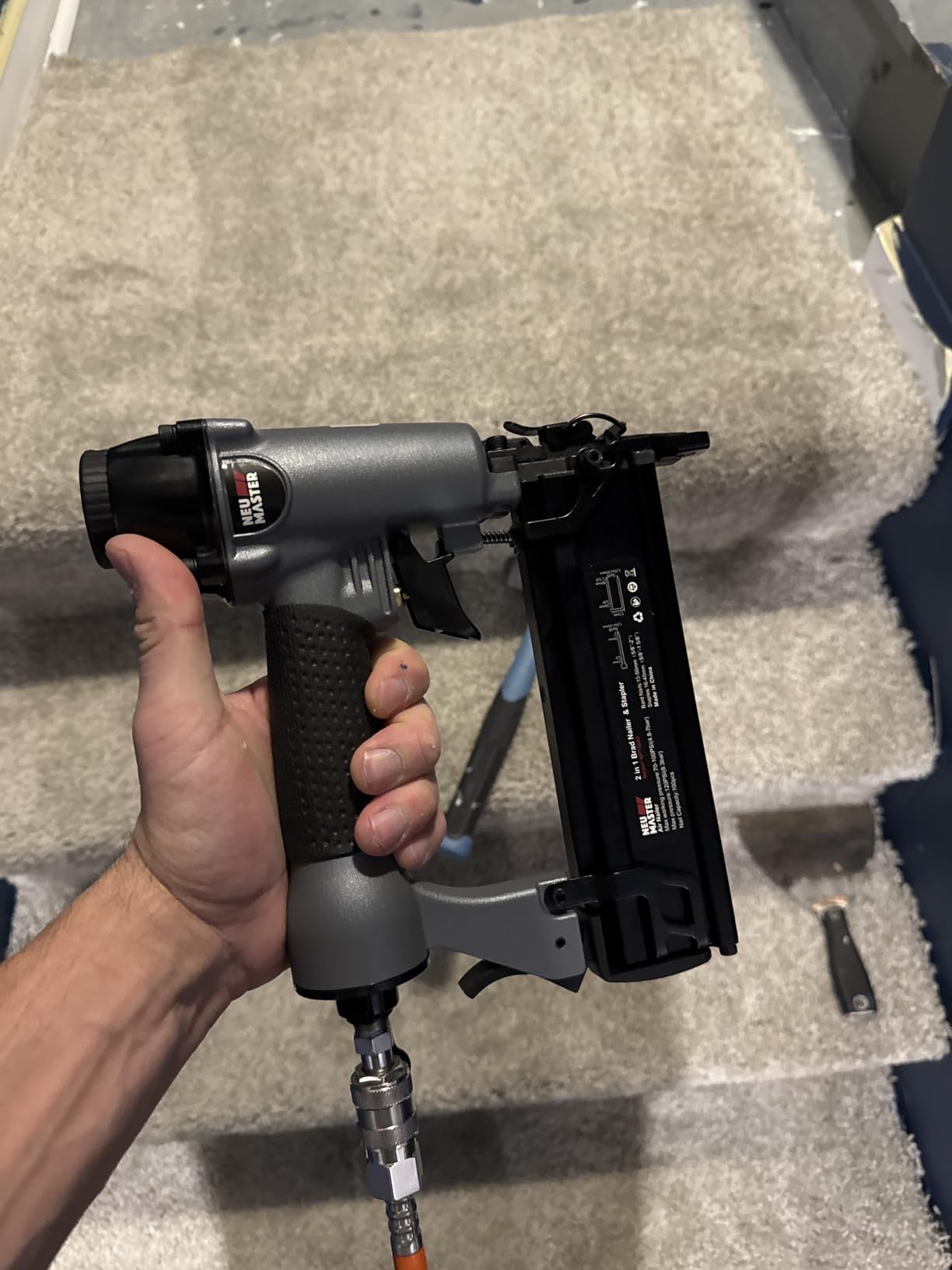
2. NEU Master 2-in-1 Pneumatic Brad Nailer and Stapler: the most flexible budget tool
NEU Master Nail Gun, 2 in 1 Pneumatic Brad Nailer/Staple Gun
Brads 5/8 to 2 in. plus crown staples
2-in-1 design
100-fastener magazine
Pros
- Fires brads and crown staples from one tool
- 360-degree rotatable exhaust
- Tool-free jam clear with quick-release magazine
- 1000-piece starter kit included
- Light and comfortable in long sessions
Cons
- No on-tool depth adjustment
- Sequential trigger only
- Not for walls or masonry
This is the pick if your trim work is not only baseboard. The same tool fires 18-gauge brads from 5/8 to 2 inches and quarter-inch crown staples from 5/8 to 1-5/8 inches, so base shoe, quarter round, and picture frame work all come from one body. Buyers building shelving or crate projects use the staple side constantly.
Roughly 3,900 reviews at a 4.5 average is a strong signal for a tool at this tier. The reported pattern is consistent: it does not jam on baseboard or shoe molding, and fastener placement comes out clean and even, which is exactly what you want when the board face is visible across a whole room.
The 360-degree rotatable exhaust is more useful than it sounds. You can turn the air and debris away from your face and away from the finished face of the board, so you are not blowing sawdust into a wet paint line. The transparent magazine window also tells you what is left before you commit to a firing rhythm.
The included kit is unusually complete: nails, staples, a carrying case, safety glasses, and air tool oil are all in the box. For a first trim gun that is a real saving, because the consumables and the case are the two things owners most often end up buying separately.
What to check before you commit to it
There is no on-tool depth calibration. Nail depth is tuned at the compressor by regulating air pressure between 60 and 120 PSI, which means you cannot adjust depth for a soft MDF board and a hard oak board in the same session without changing the regulator. On a mixed-material remodel this is a genuine annoyance.
Buyers also report a relatively larger exit hole that can need filling, and there is no contact or bump-fire mode, so every nail is a deliberate trigger pull.
Where it is the wrong choice
It is not meant for fastening into walls or masonry. If your baseboard job involves ripping out old boards and hitting unusual substrate, move up to a dedicated tool with a proper depth dial.
For painted MDF where the face is the whole point, the oversized hole is the deciding factor. This tool works, but you will be filling holes on the good side of a baseboard run more often than with a dedicated brad nailer.
3. DEWALT DCN680B 20V XR Cordless Brad Nailer: the best cordless countersinker
DEWALT DCN680B 20V MAX* XR® 18 GA Cordless Brad Nailer (Tool Only)
20V XR cordless
18GA brads
6.2 lb
Brushless motor
Micro nose
Pros
- Highest-rated tool in the group at 4.8
- Cordless with no hose or compressor
- Micro nose and LED lights for accurate placement
- Tool-free depth adjustment and jam release
- Selectable sequential or contact trigger
Cons
- Tool only
- battery and charger sold separately
- Heaviest option at 6.2 lb
If you already own 20V MAX batteries, this is the strongest cordless brad nailer for baseboard work. It carries the highest average rating in the group, and 88% of more than 3,700 reviews are five-star. The micro nose is the reason: it gives you a line of sight to the nail head that wider noses simply do not, and that is what makes consistent countersinking on MDF possible.
Being battery powered removes the compressor, the hose, and the trip to the garage from a baseboard job entirely. For a homeowner with one room to do, that is worth more than any spec on the list.
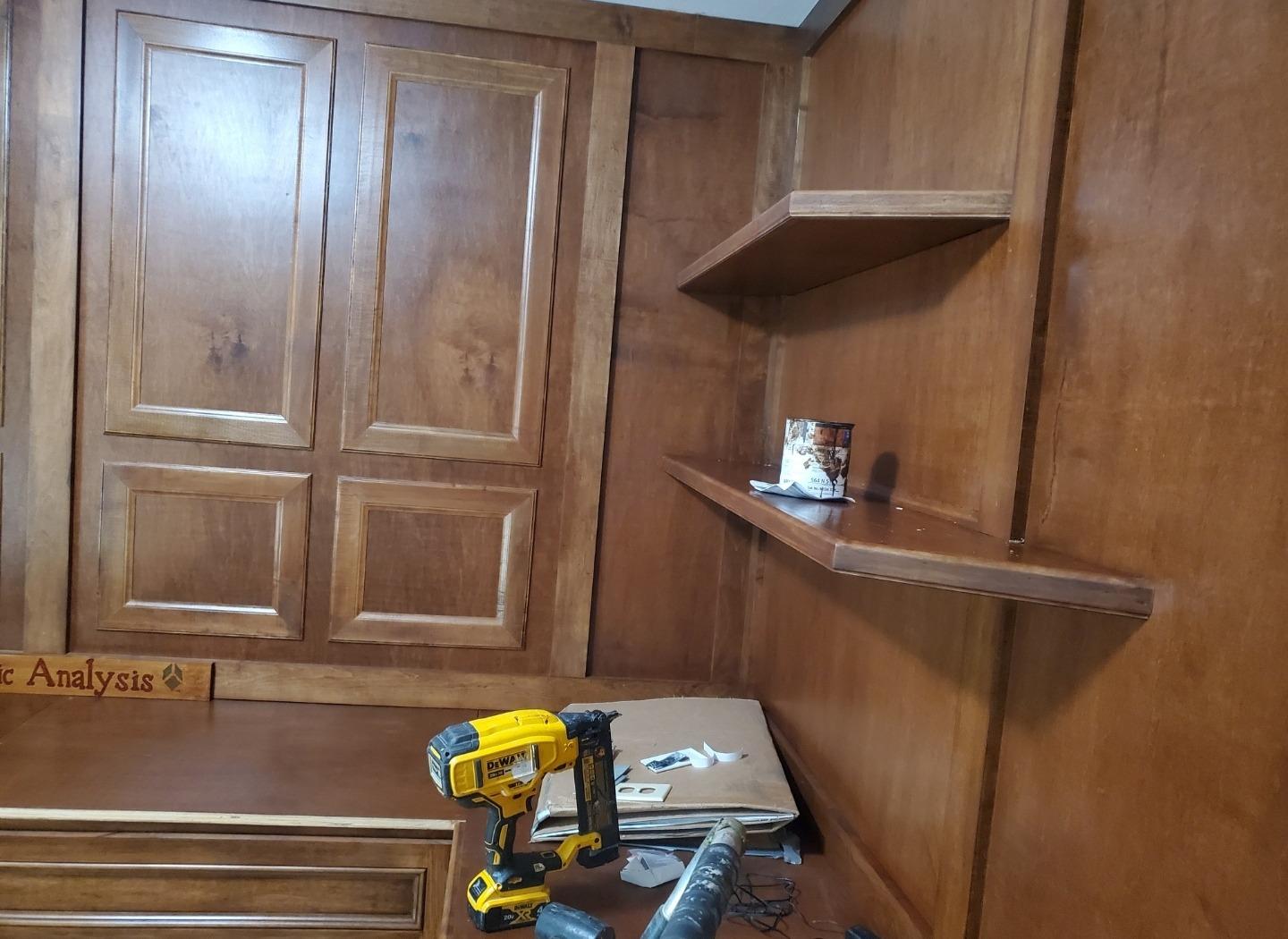
The tool-free selectable trigger lets you switch between sequential and contact actuation with one switch, so you can set precise single nails where a finished face is visible and speed up where it is not. The low nail lockout prevents dry firing, which matters because a dry fired nail on a painted board leaves a mark you cannot undo.
There is also an integrated tool-free stall release lever and a brushless motor, which is the part buyers credit for durability and runtime. The multi-functional LED workspace light handles the dark corners of a finished room, though it is not a substitute for lighting the wall properly before you start.
What to check before you commit to it
This is a tool-only package. The battery and charger are sold separately, so if you are not already on the 20V platform, the real cost of getting into this gun is the battery kit as well. Check what you own first.
At 6.2 pounds it is the heaviest nailer in this roundup. On a ceiling-height wall or a stair run, that weight lands in your shoulder and wrist over a long afternoon. For a single 10-foot wall, nobody will notice.
Where it is the wrong choice
Two inches is still the practical ceiling on nail length for most 18-gauge brad nailers, including this one. If your project involves 6-inch or taller baseboard, a heavier finish nail is the correct fastener and this tool will not reach for it.
If you do not own DeWalt batteries and this would be your only tool for the platform, the cost of batteries and charger can outweigh the price gap that makes the gun look expensive next to a pneumatic kit.
4. Makita AF506 2 Inch Brad Nailer: the best narrow-nose pneumatic for corners
Makita AF506 2″ Brad Nailer, 18 Gauge
18GA nails 5/8 to 2 in.
2.86 lb
Narrow nose
Aluminum body and cylinder
Pros
- Narrow nose reaches confined areas
- Aluminum body magazine and cylinder
- Tool-less depth adjustment dial
- Built-in air duster
Cons
- Pneumatic so a compressor is required
- Smaller installed base than the leading kits
Baseboard jobs are full of tight geometry: inside corners where two runs meet, the short return behind a door, the spot where trim passes a closet opening. The narrow nose on this Makita is the reason it belongs on baseboard duty in the first place, because you can see where the nail is going in places a wider nose would block.
Just over 3,700 reviews at 4.7 with 83% five-star tells you the durability story holds up. The aluminum body, magazine, and cylinder are the reason: this is a tool that gets dropped in a truck bed and keeps working, and 83% five-star across that volume is uncommon.
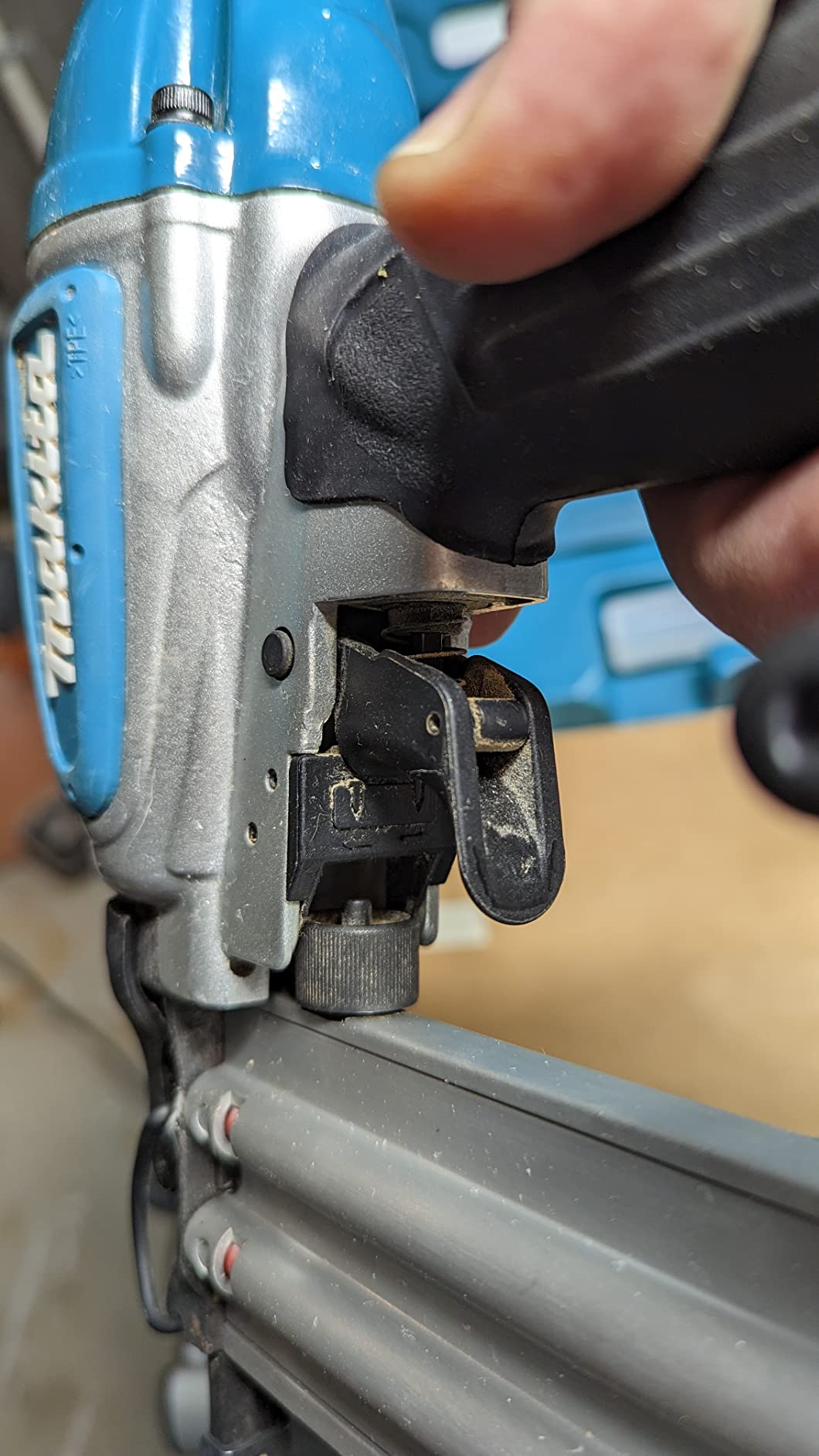
The tool-less depth adjustment dial gives you repeatable countersinking across a whole run, which is the same benefit the DEWALT detent system provides in a different form. The built-in air duster clears debris off the work surface before each shot, which on a long baseboard run where you are kneeling on flooring is a real time saver.
The box contents are generous for a pneumatic: pneumatic nailer oil, a no-mar tip, an air fitting, a tool case, and safety glasses. Having a spare no-mar tip in the case from day one avoids the annoying search through the toolbox when the installed one goes missing.
What to check before you commit to it
It is pneumatic, so a compressor and hose are required. There is no battery option here and no way around that. If you are already set up with air, this costs you nothing extra to run.
Its installed base is smaller than the leading DEWALT and Bostitch kits, so replacement parts and general familiarity are thinner in the field. For a homeowner that does not matter at all.
Where it is the wrong choice
If you want one tool for brads plus staples, this is a dedicated brad nailer and the staples capability is not there. Check your project list for crown staple work before choosing it.
Like every pneumatic brad nailer here, it is the wrong fastener for tall MDF or solid wood baseboard. The aluminum construction solves durability, not holding power.
5. Metabo HPT NT50AE2 Pneumatic Brad Nailer: the lightest tool for overhead runs
Metabo HPT Brad Nailer, Pneumatic 18 Gauge Adjustable Depth, NT50AE2
18GA nails 5/8 to 2 in.
2.2 lb
Bump or sequential switch
Pros
- Lightest pneumatic option at 2.2 lb
- Selective actuation for bump or sequential
- Tool-less depth-of-drive dial
- Reload indicator prevents blank drives
- No-mar tip and 360-degree exhaust included
Cons
- Needs a compressor and hose
- Mid-range rating with a small share of 3-star reviews
Weight is the deciding spec for baseboard work, and this nailer wins that comparison outright at 2.2 pounds. When you are holding a tool above shoulder height for two hours on a stair run or an upper-floor hallway, the difference between 2.2 pounds and 2.65 pounds is felt by the end of the first wall.
With more than 3,600 reviews at 4.6 and 81% five-star, the light weight is not bought at the expense of build quality. The extended manufacturer warranty is longer than most in this group and is a reasonable signal on a tool that gets handled roughly.
The selective actuation switch is the feature trim carpenters ask about first. It lets you choose bump fire to move fast along an open wall, then flip to sequential for the last few feet where you are working around a door frame and want to see every nail go in. Switching is a single control rather than a separate tool.
The reload indicator is quietly the most underrated part. It alerts you when nails are running low, so you are not mid-run with a board half fastened and a gun that dry fires. The tool-less depth-of-drive dial and the no-mar tip handle the finish side of the job.
What to check before you commit to it
The compressor requirement applies here as with any pneumatic. It runs on standard shop air, and the included air fitting is the right size for a standard hose.
Its 4.6 sits slightly below the top group, and 4% of reviews are three-star, a slightly larger share of middling feedback than the leaders carry. Nothing in the reported complaints is structural.
Where it is the wrong choice
If your project includes 18-gauge staples, this is a brad nailer only. There is no staple mode here, so staple-driven trim work means a second tool.
It shares the ceiling of every brad nailer in this roundup: 2 inches of nail. Tall baseboard in MDF or hardwood still belongs to a finish nailer.
6. Bostitch BTFP12233 Smart Point Brad Nailer Kit: the longest nail reach in the group
BOSTITCH Brad Nailer Kit, 18GA, Smart Point, Pneumatic (BTFP12233)
18GA nails 5/8 to 2-1/8 in.
5.16 lb
Oil-free
Smart Point nose
Pros
- Reaches 2-1/8 inch nails
- the longest here
- Oil-free operation prevents stains on trim
- Dial-A-Depth for precise countersinking
- Selectable sequential or contact trigger
Cons
- Heaviest pneumatic kit at 5.16 lb
- Requires a compressor and hose
This is the one to look at if your baseboard is taller than the others in the house and you have hit the 2-inch wall with the lighter tools. At 2-1/8 inches of nail capacity it reaches further than anything else in this roundup, and that extra eighth of an inch is meaningful on a 5-inch board.
It ties for the highest rating here at 4.8 across more than 2,600 reviews, with 86% five-star. Oil-free operation is the detail that makes it a baseboard tool rather than a general trim tool: no compressor oil blowing onto a primed or painted face.
Dial-A-Depth gives you countersinking control you can actually repeat, and Smart Point Technology keeps the nose narrow for placement accuracy. The belt hook with an integrated pencil sharpener is a small, honest convenience that shows up on real job sites, and the rear air exhaust keeps debris off the work.
The extended limited manufacturer warranty is the longest in this group, which matters for a tool expected to outlive several remodeling cycles. The kit includes a carrying case and extra no-mar tips, so the consumables you are most likely to need are covered.
What to check before you commit to it
At 5.16 pounds this is the heaviest pneumatic kit here, and on an overhead run that is a real cost in fatigue compared with the 2.2-pound Metabo HPT. If your baseboard work is all at knee and waist height, that weight never becomes an issue.
Like every pneumatic tool, it needs a compressor and hose. The included quarter-inch air fitting connects to standard shop air.
Where it is the wrong choice
Extra nail length does not translate into extra holding power. If your problem is that brads pull out of MDF, driving a slightly longer brad deeper is not the fix, and this tool will not change the fastener gauge.
If your work is mostly crown molding and picture frames rather than baseboard, the extra reach is unused capacity and the weight works against you on a ladder.
7. WORKPRO 2-in-1 Pneumatic Brad Nailer and Staple Gun: the dependable workhorse combo
WORKPRO 2-in-1 Pneumatic Brad Nailer/Staple Gun, 18 GA
18GA nails and staples
Continuous shot mode
Compressor not included
Pros
- Owners report no jams over tens of thousands of fasteners
- Depth matching higher-priced name brands
- Lightweight and easy to handle
- Quick-release fitting and 360-degree exhaust
- Includes 400 nails and 300 staples
Cons
- Arrives in a cardboard box rather than a hard case
- Occasional misfires if debris enters the slide
- Requires a compressor
This is the second 2-in-1 option here, and it competes on continuity rather than refinement. Long-term owners describe running it through tens of thousands of fasteners without jamming, which is the durability claim that matters most in a cheap tool, and the same owners compare its nail and staple depth favorably against tools costing several times more.
About 1,700 reviews at 4.5 puts it behind the leaders on volume, but the 74% five-star share tells you most buyers are satisfied with what they get.
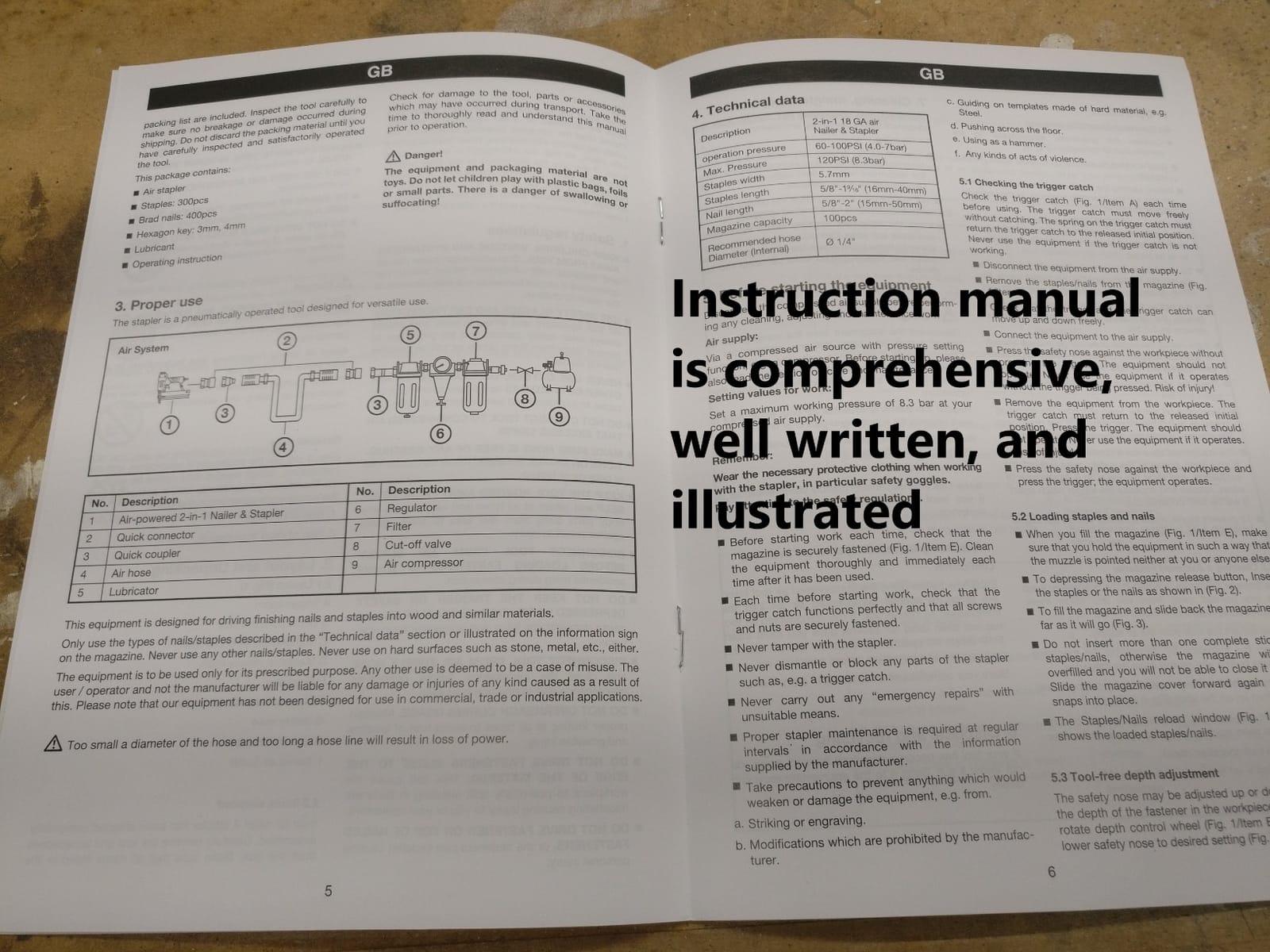
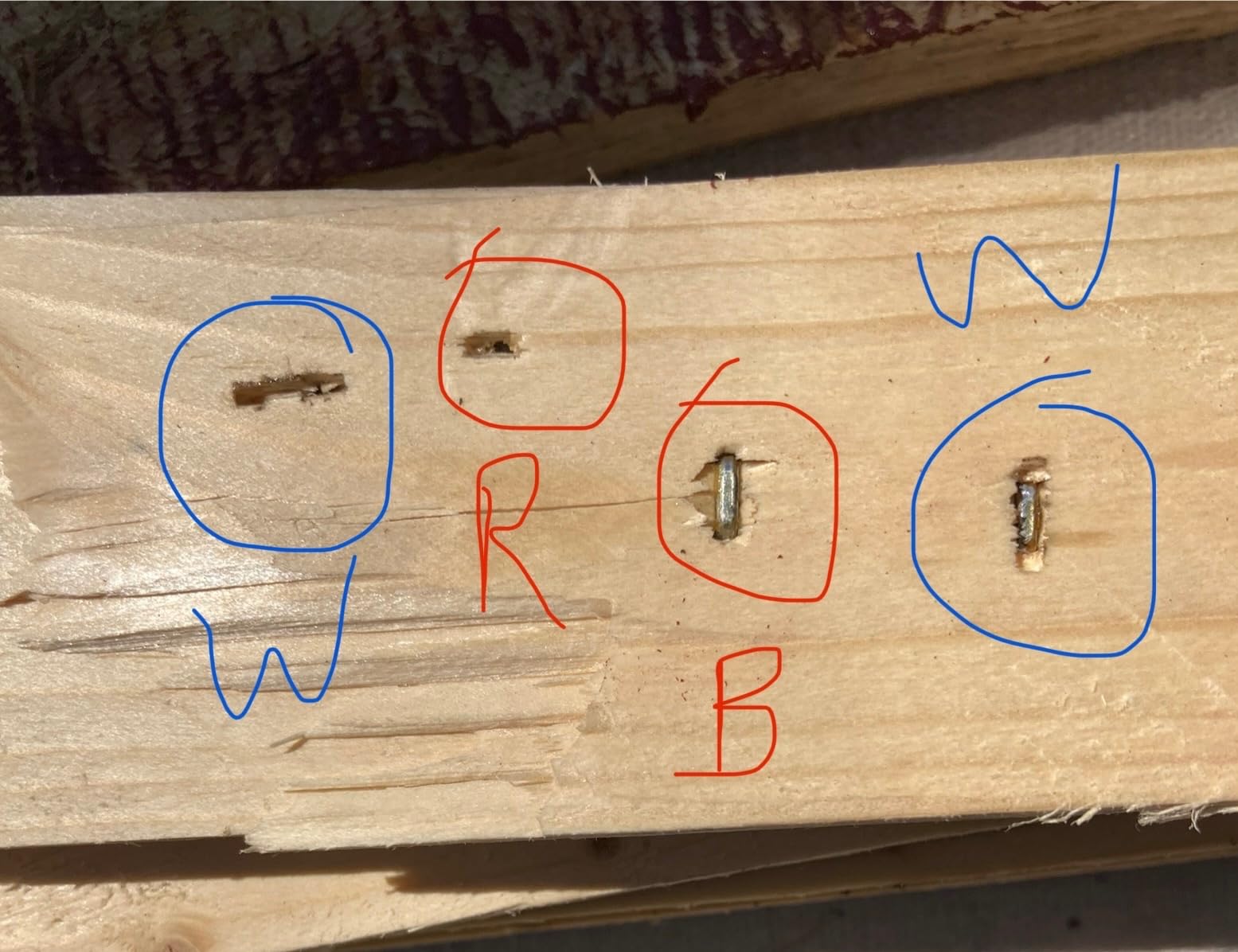
Continuous shot mode is the feature that separates it from the other budget combo in this roundup, which is sequential only. On a run of base shoe and quarter round that is already fastened, moving in continuous mode is a genuine pace gain. The 360-degree adjustable exhaust keeps air and debris off the visible face of the work.
The box includes 400 brad nails and 300 staples plus lubricant, so you can start cutting baseboard the day it arrives rather than making a supply run first. The rotating depth control wheel adjusts firing depth without tools.
What to check before you commit to it
It arrives in a cardboard box rather than a hard plastic case. That is a minor annoyance on day one and a real one after the tool slides around in a truck bed. Budget for a case separately.
Misfires do show up when debris gets into the slide or when fasteners are poor quality, so keep the magazine clean and buy a known brand of nails. Cleanliness is more important with this tool than with the metal-magazine premium options.
Where it is the wrong choice
It runs on 60 to 100 PSI with a quarter-inch NPT air inlet, and a compressor is not included. Budget for that separately if you do not own one.
On painted MDF where the face is the entire point, buy a tool with a proper no-mar tip and a depth dial. This one trades finishing control for simplicity.
8. Ryobi 18V ONE+ Cordless Airstrike Brad Nailer P321: the platform match for ONE+ owners
Ryobi 18V ONE+ 18-Gauge Cordless Airstrike Brad Nailer (Tool Only) P321
18V ONE+ cordless
6 lb
Tool-free depth adjustment
Tool only
Pros
- Batteries interchange with other ONE+ tools
- No compressor or hose
- Owners report smooth firing and no jams
- Good battery life on a 4.0Ah pack
- Reasonable noise level
Cons
- Several owners report the tool freezing mid-shot
- Tool only with battery and charger sold separately
If you already own ONE+ batteries, this is the shortest path to a cordless brad nailer because the packs you have already fit. Buyers with the platform in place rate the convenience of the shared battery above everything else about the tool, and it is hard to argue with that on a single baseboard job.
Its 4.4 sits in the lower half of the group, with 8% one-star reviews. That is worth reading before you buy, because the complaints are specific and repeatable rather than scattered.
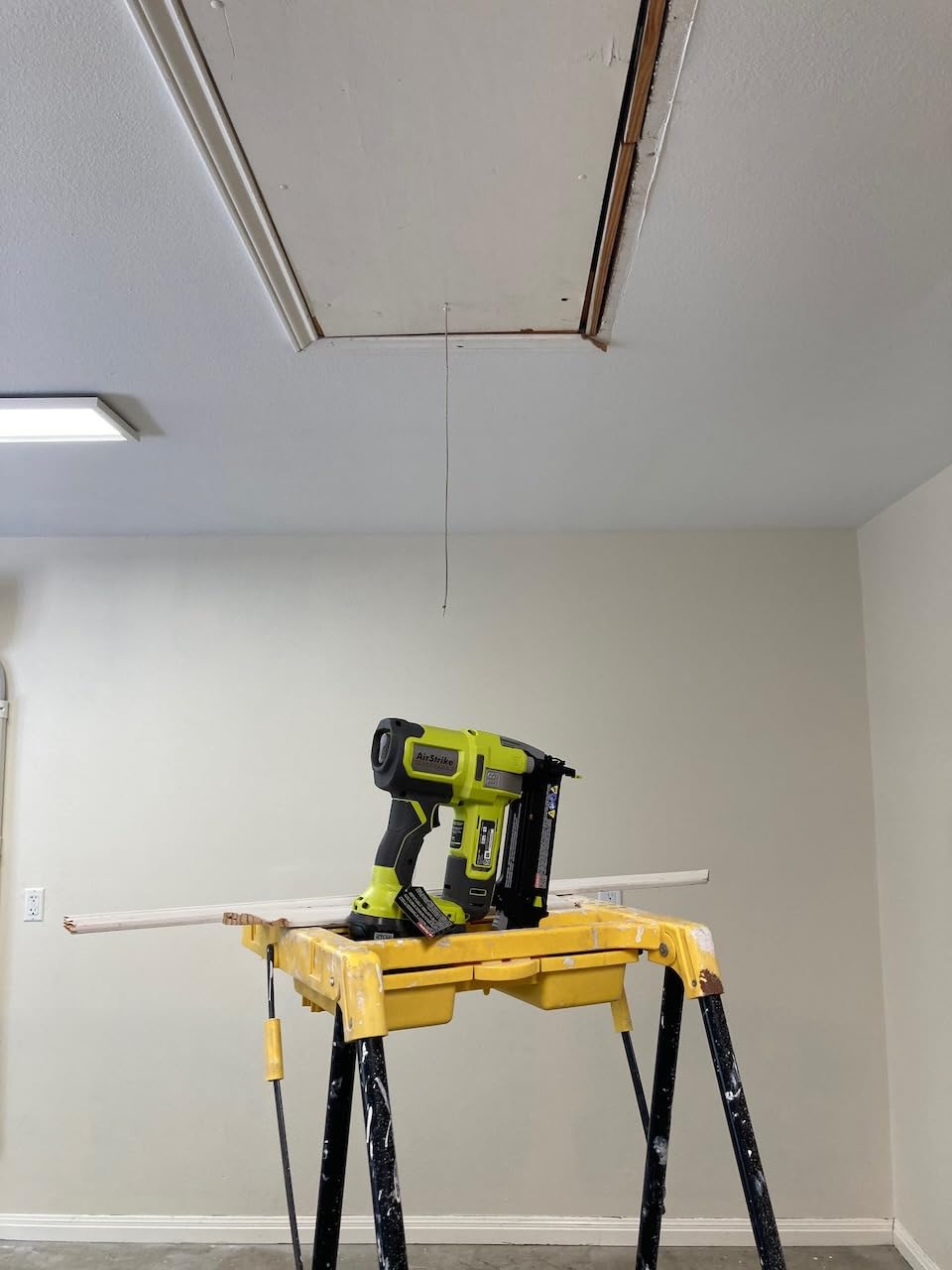
The recurring problem several owners describe is the tool freezing mid-shot, which they work around by lubricating the driver tab. A small maintenance step, but it is a step you should know about before you need it, and one reviewer reported outright failure after roughly half a magazine of nails.
On the positive side, owners report smooth nail delivery with no jams, easy depth adjustment, and battery life that covers an afternoon of trim work on a 4.0Ah pack. The noise level is also among the more moderate, which is considerate in an occupied house.
What to check before you commit to it
The warranty terms are the shortest in this roundup by a wide margin. It is the only tool here where the warranty is shorter than the return window most people assume, and combined with the freeze reports it means you should keep the box and receipt.
It is also tool only, so if you are not already on the ONE+ platform you are buying a battery and charger to go with it.
Where it is the wrong choice
At 6 pounds it is heavy for a cordless nailer, and it is the tool on this list where weight and reliability complaints appear together most often. If your baseboard work is overhead or on stairs, pick a lighter option.
If MDF is your main material, the 2-inch nail ceiling and the reported freezing behavior are both reasons to look at a heavier, higher-rated tool instead.
9. SILVEL 21V Cordless 2-in-1 Brad Nailer Kit: the most complete cordless package
SILVEL 2″ Cordless Brad Nailer, 2-in-1 21V Electric Brad Nailer with 2 * 2.0Ah Battery, 1000pcs Nails, 18GA Staples, Adjustable Depth for Woodworking, Home Improvement, green
Cordless 2-in-1
18GA nails 3/4 to 2 in. and staples
Two 2000mAh batteries
100-nail magazine
Pros
- Tool with two batteries
- hard case and 1000 fasteners included
- Owners report no misfires on baseboard trim
- Single-shot and contact firing modes
- Top knob depth adjustment
Cons
- Heavier than the pneumatic options
- Some reports of nails sitting proud regardless of depth setting
- 9% one-star ratings
This is the only cordless 2-in-1 in the group, and it comes with everything attached: two 2000mAh batteries, a hard case, and 1000 fasteners. If you do not own any battery platform, this is the lowest-friction cordless entry in the roundup because there is nothing else to buy before the first nail.
Ratings land at 4.3 from about 1,475 reviews with 69% five-star, so it is the second-lowest rated tool here. Buyers mostly report capability for the money, with a specific depth-control complaint underneath that.
It fires 18-gauge brads from 3/4 to 2 inches and 18-gauge staples from 3/4 to 1-5/8 inches, with two firing modes: single shot for fine work and contact for continuous rapid work. The 100-nail magazine capacity is competitive, and the LED lights help in the dark corners of a finished room.
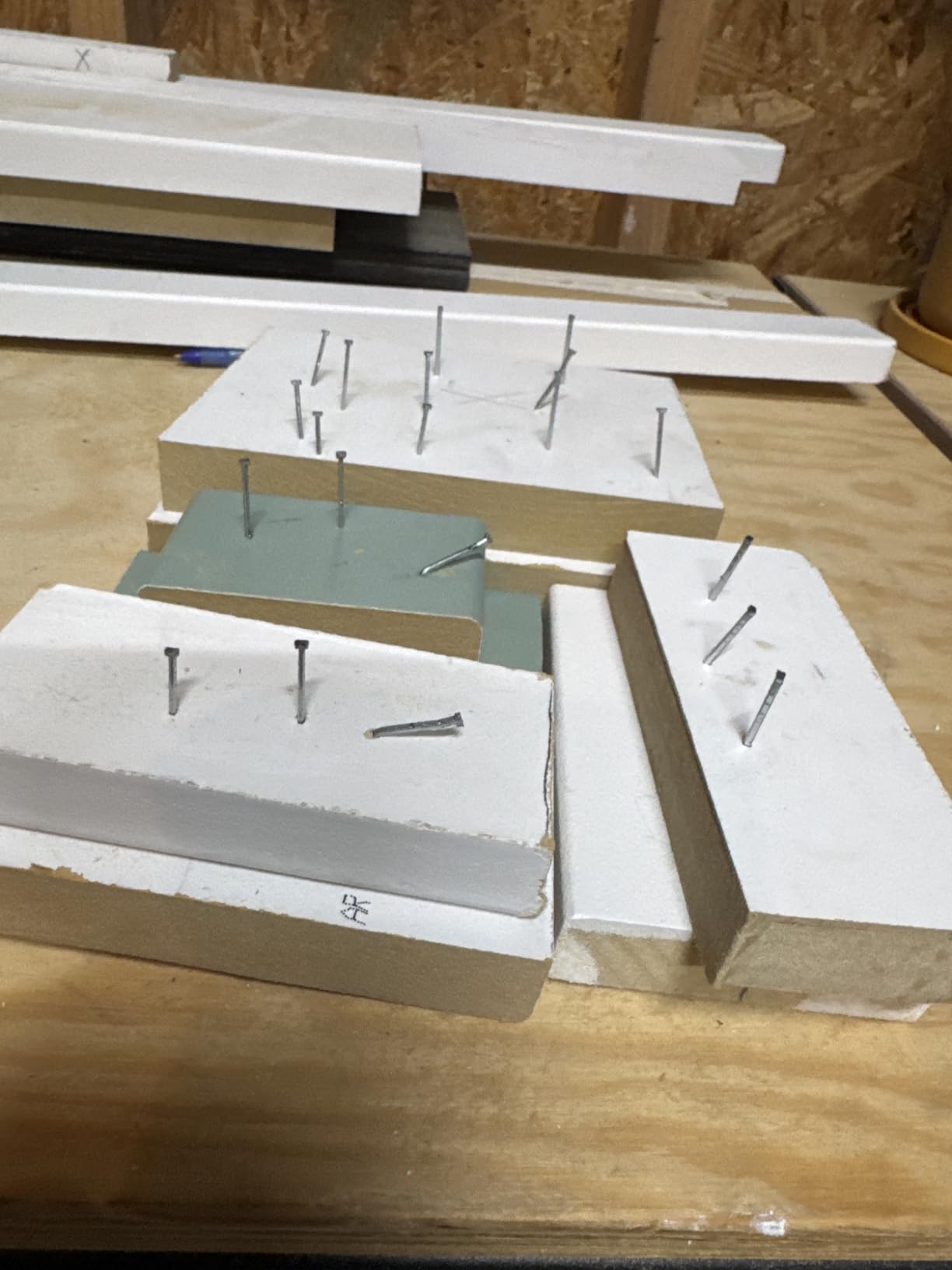
Owners report no misfires and good power for floor and baseboard trim, and the long handle is credited with reducing hand fatigue on longer runs. The depth adjustment knob sits on top of the tool, which is easier to reach mid-run than a side-mounted control.
What to check before you commit to it
The reported problem to weigh is depth. A number of reviews describe nails left standing proud of the workpiece regardless of the depth setting, which on a painted baseboard face means visible failures along the whole run. Ask about returns where you bought it before committing to a full room.
Also note that some variant packaging arrives without the advertised extra batteries, so verify what is actually in the box on arrival day.
Where it is the wrong choice
It is heavier than every pneumatic tool in this roundup, and owners call that out explicitly. On overhead or elevated baseboard work, that weight compounds with the existing fatigue problem.
At 9% one-star ratings it carries the largest negative share in the group. If you want a cordless tool with a stronger support record and a better warranty position, the DEWALT DCN680B is the safer bet.
10. NuMax SBR50 Pneumatic 2 Inch Brad Nailer: the entry-level baseboard specialist
NuMax SBR50 Pneumatic 18-Gauge 2″ Brad Nailer
18GA nails 5/8 to 2 in.
2.6 lb
Reload indicator
Diecast aluminum body
Pros
- Purpose-built for base boards and crown moulding
- Light 2.6 lb comfort grip body
- One-piece hardened steel drive blade
- Diecast aluminum body
- Reload indicator and 360-degree exhaust
Cons
- Needs a compressor and hose
- Shortest limited warranty in the group
- Smallest installed base in the group
The NuMax SBR50 is unusual in that the manufacturer names base boards first in its intended applications, alongside crown moulding, window casing, and chair rails. For a homeowner who only ever wants one small pneumatic tool for trim, that is exactly the use case on the label.
About 870 reviews at 4.4 with 72% five-star is a smaller sample than the leaders, and it has the lowest sales rank in the group, so treat the feedback as thinner evidence.
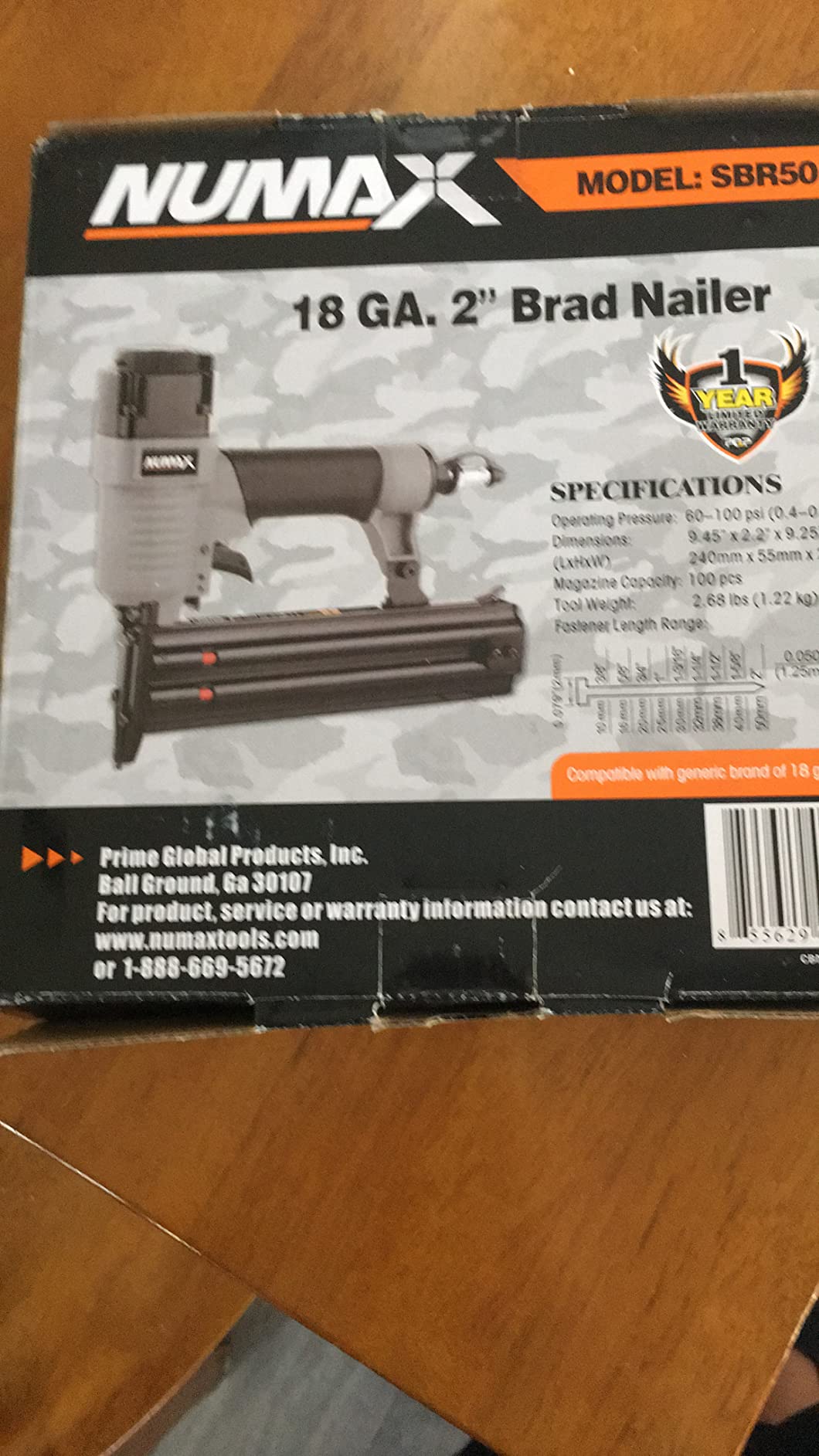
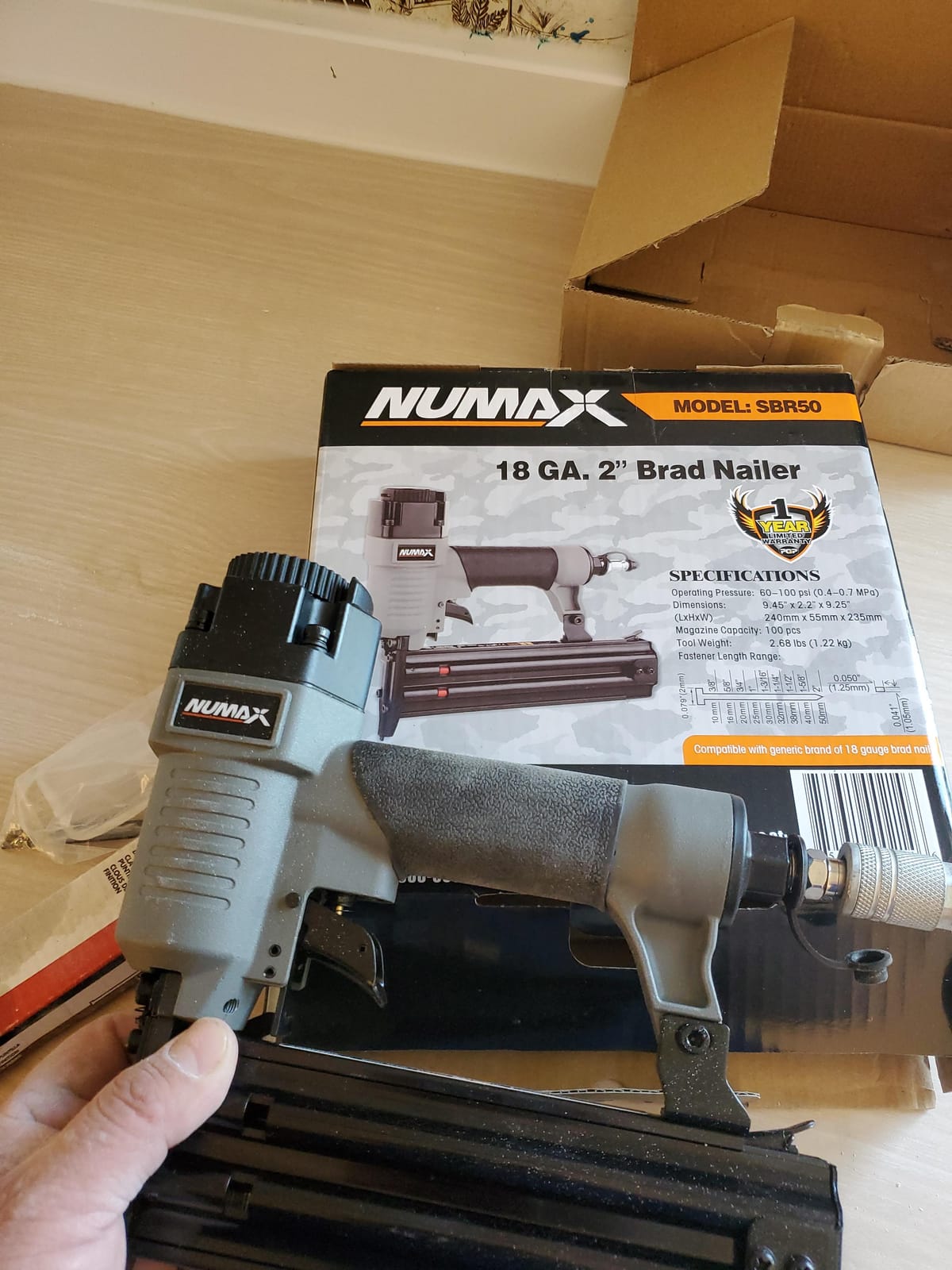
The one-piece hardened steel drive blade and diecast aluminum body are better materials than the plastic-body budget tools at this level, and the 2.6-pound weight with a comfort grip handle keeps fatigue down on a long run. Buyers cite both as reasons the tool outlasts their expectations.
The reload indicator shows remaining fasteners to eliminate guesswork, and the 360-degree adjustable exhaust directs air away from your face, which is a genuine comfort benefit when you are crouched at floor level for hours.
What to check before you commit to it
The warranty is 1 year limited with a 30-day parts warranty. That is the shortest coverage on this list and it is the main reason we place it last despite the good materials.
A compressor and hose are required. Air tool oil and adjustment tools are included, but the compressor is not part of the package.
Where it is the wrong choice
There is no depth-of-drive control listed, so nail set is fixed by compressor pressure. If you are nailing a mix of soft MDF and hardwood in one run, that lack of control is a real limitation.
Its 2-inch nail ceiling and small installed base make it a trim-only tool. Pro framing or structural work is outside what this is built for.
How to Choose a Brad Nailer for Baseboard
Start with your tallest board, then work down. Every other decision on the page is secondary to whether the nailer can reach into the stud and hold the board where you need it.
18-gauge brad or 15/16-gauge finish nail
An 18-gauge brad has a shank around 1 millimeter thick and a head small enough to skip filling. A 15- or 16-gauge finish nail is roughly twice the mass, drives deeper into the stud, and leaves a hole you will want to fill with wood filler or paint.
Eighteen-gauge is the right answer for base shoe, quarter round, small trim, and boards up to about 4 inches. Above that, especially in MDF or engineered material, most experienced finish carpenters redirect you to a finish nailer, and the research on this question is consistent: 15-gauge holding power in MDF is markedly better.
How long of a nail for your baseboard height
Use this as a starting point and adjust for the material. The rule of thumb is a nail that penetrates the board and lands at least 1 inch into the stud.
- 3 to 4 inch baseboard: 1-1/4 to 1-1/2 inch brads at studs, with additional fasteners between studs for MDF
- 4 to 5 inch baseboard: 1-1/2 to 1-3/4 inch brads, or move up to a 15-gauge finish nail
- 5 inch and taller: a finish nailer with 2 to 2-1/2 inch nails is the correct tool
- Base shoe and quarter round: 5/8 to 1 inch brads are plenty
- MDF or engineered board: add one mid-span fastener between studs, because these materials hold poorly on their own
Most nailers in this roundup top out at 2 inches of brad, and only the Bostitch BTFP12233 reaches 2-1/8 inches. If your math needs more than 2 inches, a brad nailer is the wrong tool category and no brand will fix that.
Should you go cordless or pneumatic
Go cordless if you do not own a compressor or do not want to manage a hose across a job. Every cordless tool here removes the compressor from the equation, at the cost of weight and battery platform lock-in.
Go pneumatic if you already have a compressor, especially if you own one platform battery. Pneumatic tools in this group run 2.2 to 2.65 pounds, which is the single biggest ergonomic advantage on an overhead baseboard run. The cordless options here run 5.46 to 6.2 pounds.
Weight matters more than power on baseboard
Baseboard work is holding a tool in front of you or above your shoulder for hours at a stretch. The lightest pneumatic here is 2.2 pounds; the heaviest cordless is 6.2 pounds. That spread is nearly three times, and it will shape your day more than any other spec on the list.
Look for a no-mar tip, a contact trip that does not need compressing, and an exhaust you can rotate away from your face. These three determine whether the tool is pleasant to use in a finished, occupied room.
Check the battery platform before you buy
Two of the cordless tools here come as tool only, meaning battery and charger are separate purchases. If you already own 20V MAX or ONE+ packs, the effective cost of getting going drops sharply. If you own nothing, price the battery kit before you commit, not after.
Jams, hole visibility, and MDF
Tool-free jam release, tool-less depth dials, and reload indicators are the three features that decide whether a long run goes smoothly. All ten tools here have at least one of them, and the four with genuine tool-free jam release are the ones we would reach for on dense engineered board.
On MDF specifically, reduce your line pressure or air pressure a touch, shoot into the same face you will paint, and keep the fastener count higher. Owners who report nails stopping short on MDF usually fixed it with a longer nail and one extra fastener per stud bay rather than with a different tool.
If you are planning a whole-house baseboard project alongside other work, it is worth reading our baseboard heater buying guide as well, since both decisions affect the same low wall space and the same stud spacing.
Frequently Asked Questions
Is a brad nailer better for installing baseboards than a finish nailer?
For most full-length baseboard runs, a 15- or 16-gauge finish nailer holds better, especially in MDF, engineered board, or solid wood taller than about 4 inches. A brad nailer wins on appearance and on lighter work: base shoe, quarter round, small trim, and short boards where a nearly invisible hole matters more than maximum holding power.
Should I buy a 16 or 18 gauge brad nailer?
An 18-gauge brad nailer is the right choice for baseboard trim because the small head usually needs no filling. A 16-gauge finish nail gives you much stronger holding power but a larger hole. Choose 18-gauge for low-profile trim and shorter boards, and step up to 15 or 16 gauge once the board is tall, solid wood, or MDF.
How long of a nail do I need for a 4 inch baseboard?
For a 4 inch board, 1-1/4 to 1-1/2 inch brads driven into studs is the usual starting point, adding fasteners between studs if the board is MDF or engineered material. Boards 5 inches and taller generally need a 2 to 2-1/2 inch finish nail instead, since most 18-gauge brad nailers stop at 2 inches.
Can you use DeWalt brad nails in a Ryobi brad nailer?
Do not mix brands of collated brads unless the nail strip length, gauge, and head size match exactly. Most nailers are made for one manufacturer’s strip dimensions, and forcing a mismatched strip causes jams and misfires. Any quality 18-gauge brad in the correct length range will fire in a compatible nailer, so buy nails by specification rather than by logo.
Why does my brad nailer jam in baseboard?
Most baseboard jams come from four things: debris in the follower, mixed or low-quality nails, driving into dense engineered board with too much pressure, and an over or under-set depth dial. Clean the magazine and nose, use one brand of nails, lower your line or air pressure for MDF, and re-check depth. Tools with a tool-free jam release and a reload indicator make this far less frequent.
Our Verdict on the Best Brad Nailers for Baseboards in 2026
The DEWALT DWFP12231 is the pick to beat. More than 5,000 reviews, a 4.7 average, a tool-free depth dial, a maintenance-free motor that will not stain a painted face, and a 2.65 pound body that stays manageable overhead. If you own a compressor, it is the safest choice on this page for a baseboard run in 2026.
If you have no compressor, the DEWALT DCN680B is the strongest cordless option and the better buy if you already own 20V MAX batteries. If your boards are taller than 4 inches, or MDF, skip the brad nailer entirely and buy the finish nailer. That decision will save you more time than any tool on this list.