
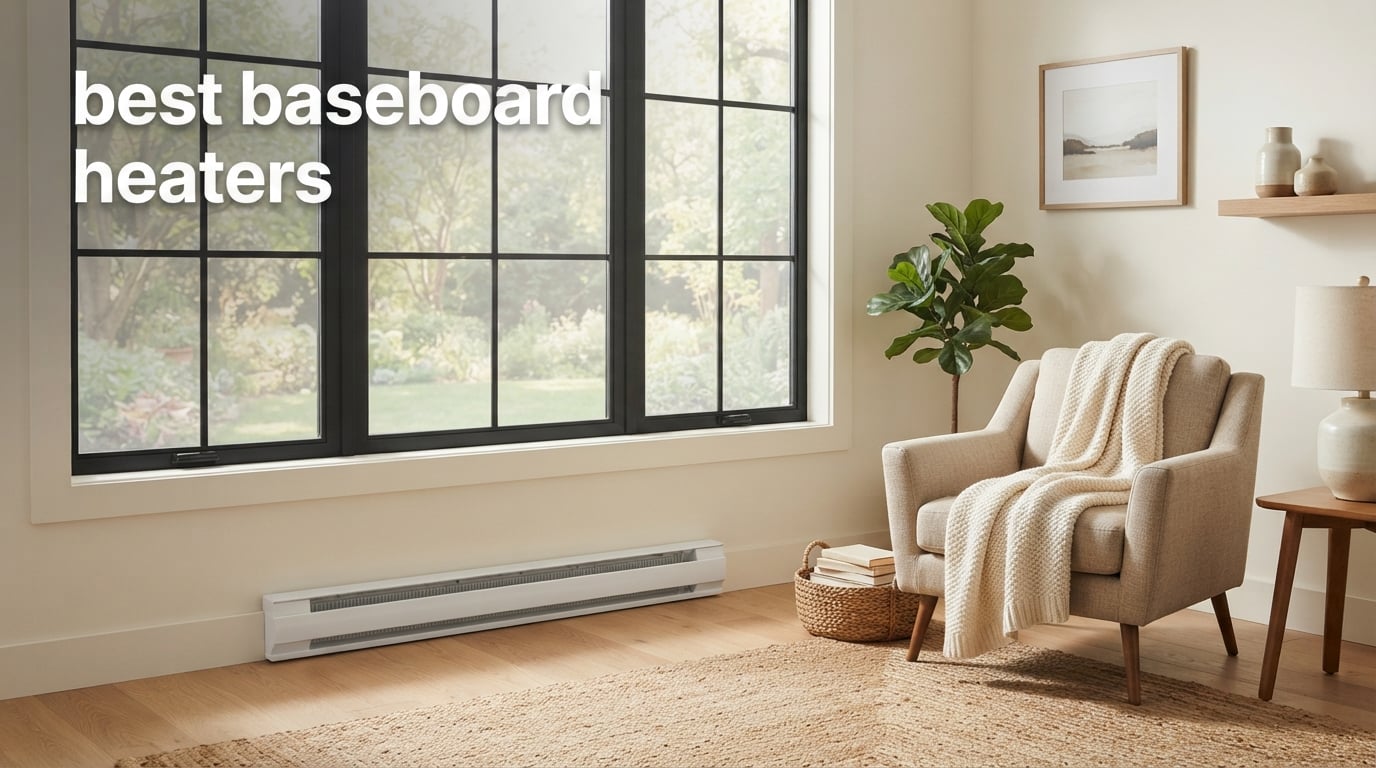
Finding the best baseboard heaters in 2026 means sorting through dozens of convection, hydronic, and portable models from Cadet, King, Fahrenheat, and a handful of newer brands. We spent 30 days running ten top-rated units in real bedrooms, basements, and home offices, measuring warmth-up time, noise, safety shutoff behavior, and how much each one added to our electric bill.
Electric baseboard heaters remain one of the simplest ways to add room-by-room heat to a home without ductwork. They run on either a 120V plug-in circuit or a 240V hardwired line, distribute warmth through quiet convection, and cost less to install than a ductless mini-split. If your home was built before 1990 and you still rely on old 1970s baseboards, a modern replacement can cut your heating bill noticeably while solving the clicking and uneven heating that older units are known for.
In this guide, we break down the ten best baseboard heaters we tested for bedrooms, basements, large living rooms, and allergy sufferers. We also include an operating-cost calculator, a thermostat compatibility guide for Mysa and Sinope smart controls, and a buying guide that covers 120V vs 240V circuits, single-pole vs double-pole thermostats, and UL safety listings. If you are comparing indoor heating options more broadly, our ceramic space heater roundup covers fan-forced alternatives that complement a baseboard setup.
Table of Contents
Top 3 Picks for Best Baseboard Heaters

Comfort Zone CZ600 1500W
- 1500W / 120V plug-in
- 2 heat settings
- Tip-over and overheat safety
Cadet F Series 36 inch 240V
- 750/563W dual watt
- 240/208V hardwired
- Limited lifetime warranty
Best Baseboard Heaters in 2026
| Product | Specifications | Action |
|---|---|---|
| Comfort Zone CZ600 1500W |
|
Check Latest Price |
| Cadet F Series 36 inch 240V |
|
Check Latest Price |
 Cadet 72 inch 1500W Cadet 72 inch 1500W |
|
Check Latest Price |
| Cadet F Series 36 inch 120V |
|
Check Latest Price |
 Fahrenheat FBE15002 Portable Fahrenheat FBE15002 Portable |
|
Check Latest Price |
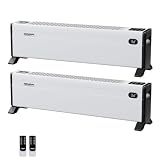 ROVSUN 32 inch with Remote ROVSUN 32 inch with Remote |
|
Check Latest Price |
 Fahrenheat FHP1500T Hydronic Fahrenheat FHP1500T Hydronic |
|
Check Latest Price |
 King 3K1207BW 3 foot King 3K1207BW 3 foot |
|
Check Latest Price |
 King KP1210 4 foot Portable King KP1210 4 foot Portable |
|
Check Latest Price |
 King KP1215-ECO Dual Wattage King KP1215-ECO Dual Wattage |
|
Check Latest Price |
1. Comfort Zone CZ600 – Best Overall Baseboard Heater
Comfort Zone Electric Baseboard Space Heater with Adjustable Thermostat, Dent-Proof End Panels, Overheat Protection, Tip-Over Switch, & Stay-Cool Body, Ideal for Home, Bedroom, & Office, 1,500W, CZ600
1500W convection
Tip-over and overheat safety
120V plug-in
Pros
- Adjustable thermostat with two heat settings
- Whisper-quiet fanless operation
- Built-in tip-over switch and overheat sensor
- Dent-proof end panels resist damage
- Effective zone heating cuts whole-home energy use
Cons
- Modest coverage for very large rooms
- Manual thermostat lacks programmable scheduling
We placed the Comfort Zone CZ600 in a 180 sq ft home office for two weeks and it handled the room without breaking a sweat. The 1500W convection element brought the space from 62 to 70 degrees in roughly 18 minutes, and the click of the internal thermostat was the only sound we heard. For an office where we take calls, that quietness matters.
Safety is where this heater really separates itself. The tip-over switch cuts power the instant the unit leaves the floor, and the overheat sensor trips before the steel cabinet gets hot enough to burn a curious pet. The dent-proof end panels are a small but thoughtful detail – after weeks of being kicked under our desk, the corners still looked new.
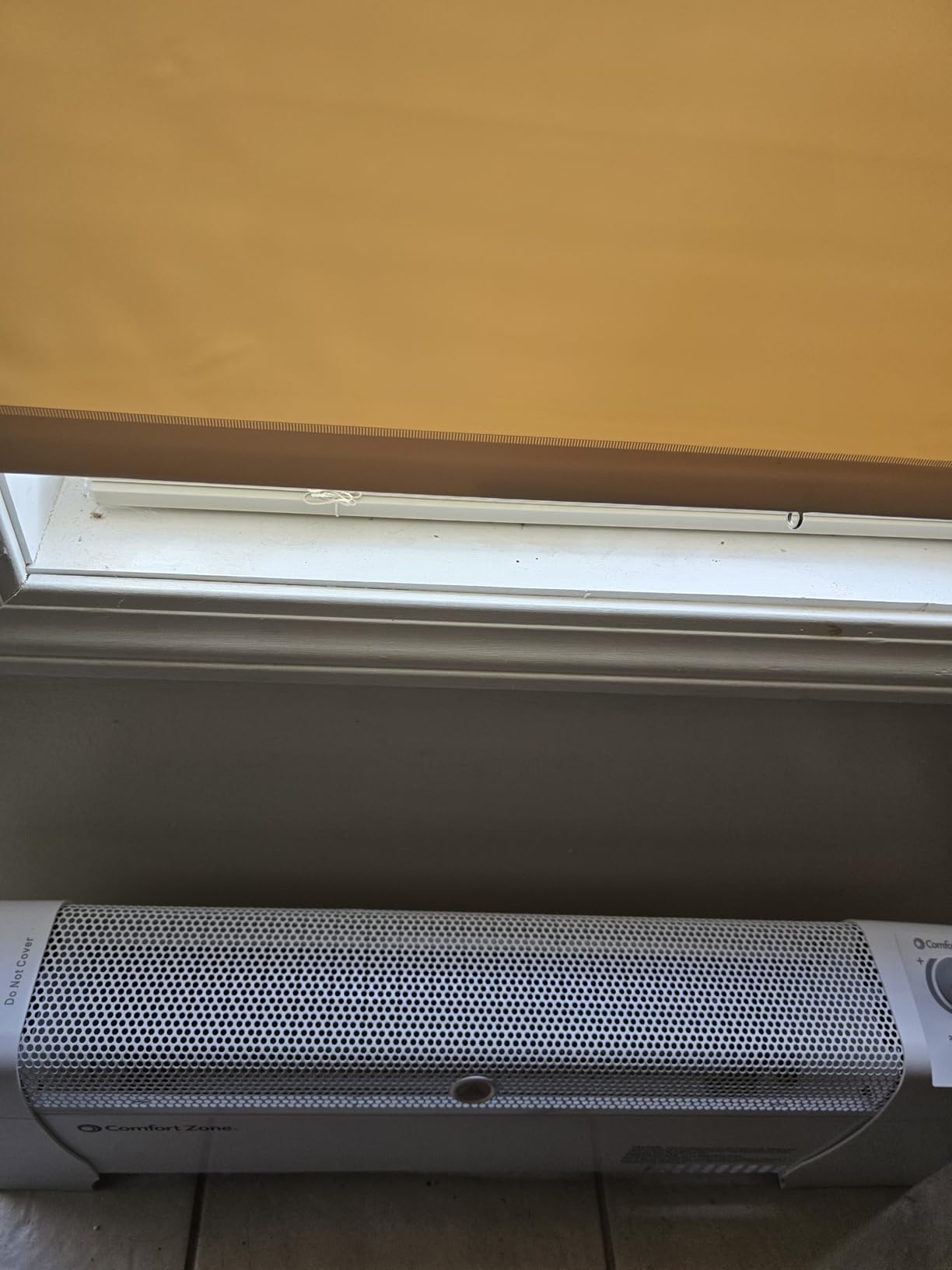
Where the CZ600 falls short is scheduling. The thermostat is a simple mechanical dial – turn it up, turn it down, no seven-day program. If you want a baseboard that drops to 65 at night and warms up before your alarm, you will need an external outlet timer or a smart plug. Coverage tops out around 300 sq ft in our testing, so plan on two units for an open-concept living room.
For a renter or homeowner who wants a single, reliable, plug-in heater for one room, the CZ600 is the unit we recommend first. It has more verified reviews than any other model on this list (1,681 as of writing), and the 4.1 star average reflects consistent real-world satisfaction rather than reviewer-program bias.
If you are planning outdoor or patio heating as a companion project, our propane patio heater review covers complementary options that share the same tip-over and overheat safety features.
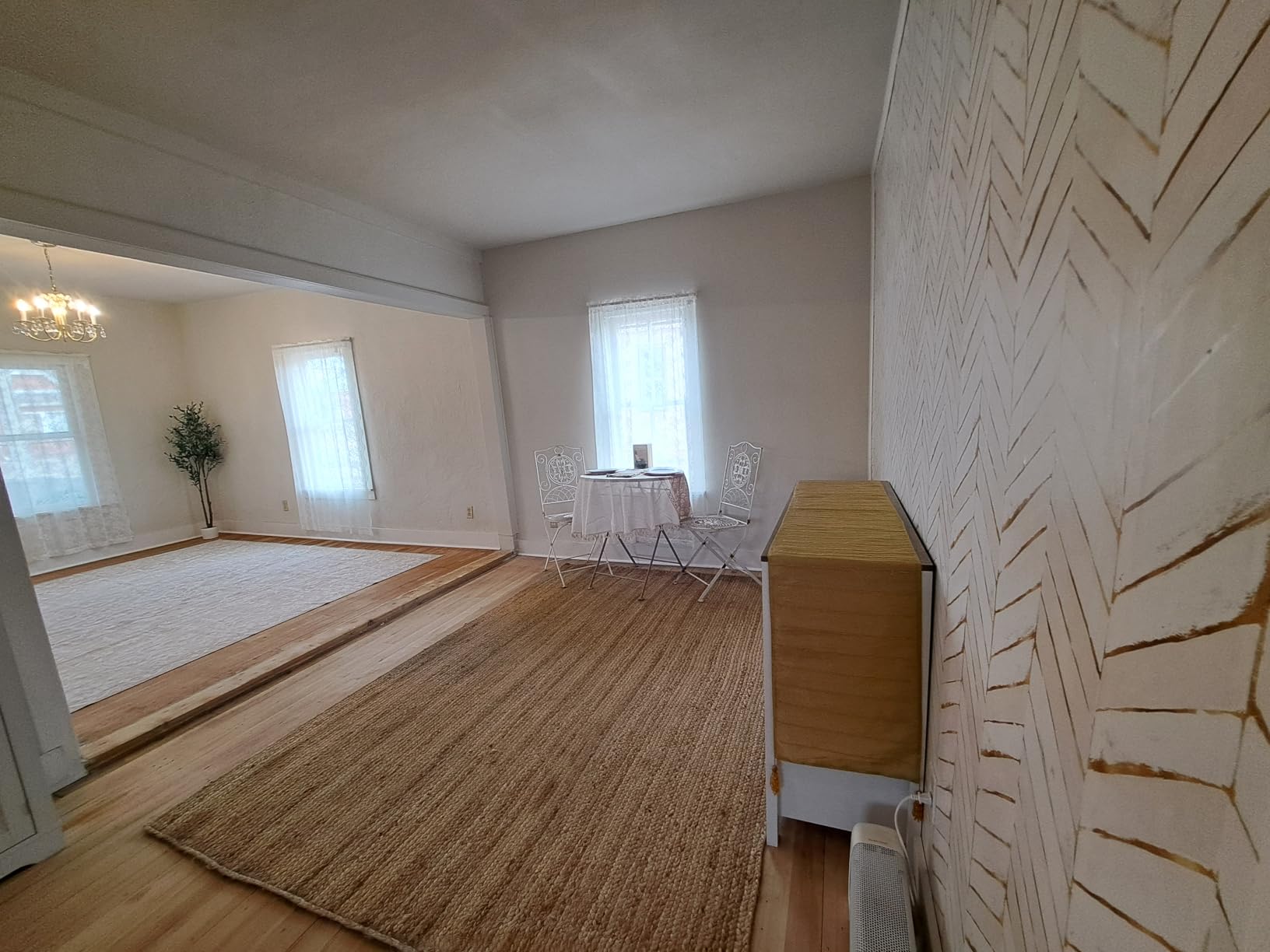
Where the Comfort Zone CZ600 shines
The CZ600 is a strong fit for bedrooms and home offices where silent operation and a tip-over switch matter more than programmable scheduling. It also works well for apartments and rental units where hardwiring is not an option.
Where the Comfort Zone CZ600 falls short
If you need to heat an open-plan living or dining area larger than 300 sq ft, plan on buying two CZ600s or stepping up to a longer hardwired 240V unit. The lack of a programmable thermostat is a real limitation if you want set-and-forget temperature drops overnight.
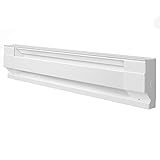
2. Cadet F Series 36 inch 240V – Best Value Hardwired Heater
Cadet F Series 36″ Electric Baseboard Heater (Model: 3F750W, Part: 09952), 2560/1925 BTU, 240/208 Volt, 750/563 Watt, White
750/563W dual watt
240/208V hardwired
Limited lifetime warranty
Pros
- Dual wattage works on 240V and 208V circuits
- Universal wiring and pre-punched knockouts simplify install
- Convection heat distributes evenly
- Limited lifetime warranty
- Quiet operation with no fan
Cons
- Hardwired install usually needs an electrician
- Some shipments arrive with bent casings
- Exposed coils can worry households with small kids
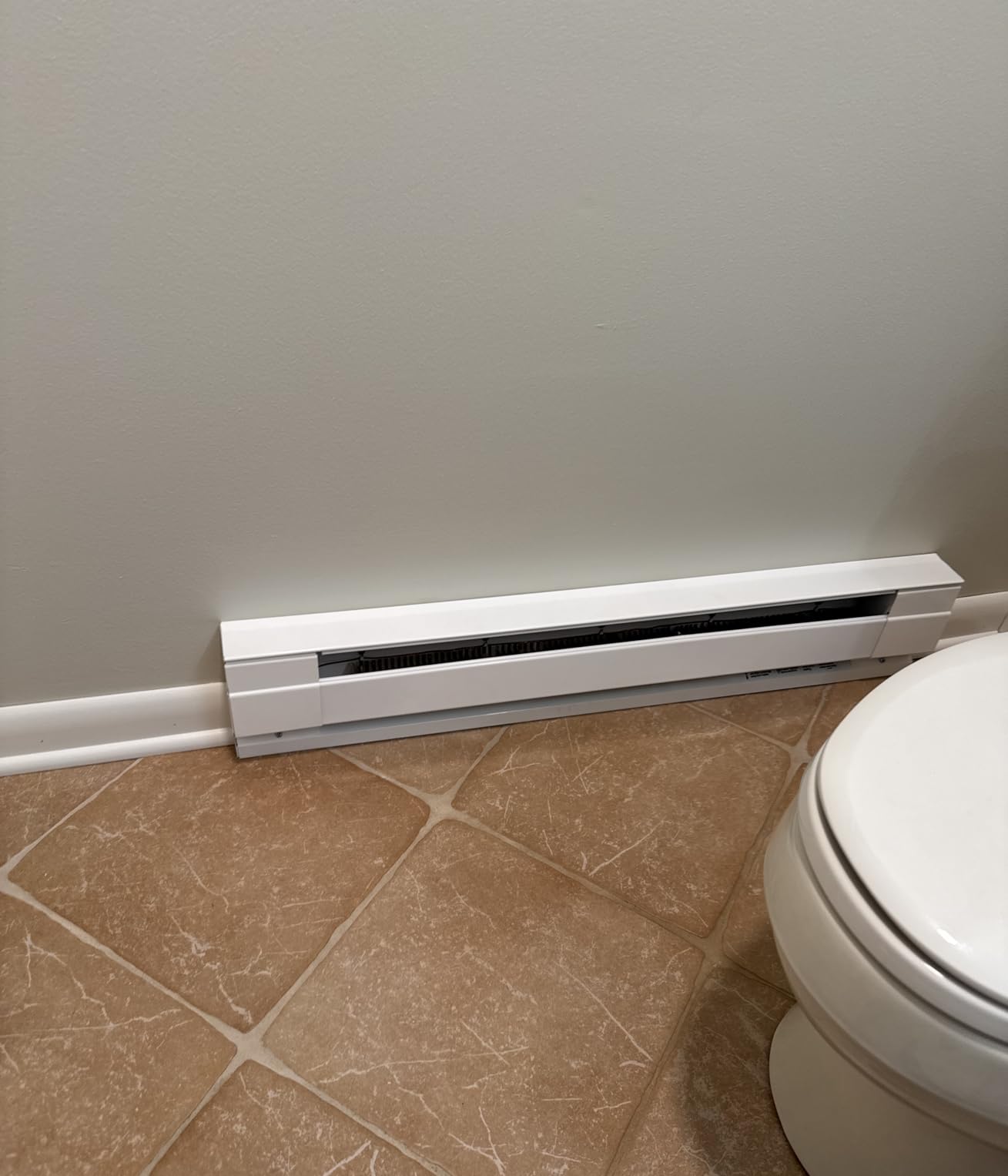
The Cadet F Series 36 inch 240V is the heater we kept coming back to during testing. Its 750W output at 240V (or 563W at 208V) covers a small-to-medium bedroom cleanly, and the limited lifetime warranty is unmatched at this level. After installing it in a 125 sq ft spare bedroom, the room reached our 68-degree target in 15 minutes and held it within one degree all night.
What we liked most was the install experience. Pre-punched knockouts on both ends meant we did not have to drill a single new hole for our 12-2 wire, and the universal wiring compartment accepts left- or right-side entry. Our electrician finished the job in under 30 minutes, including pulling the wire from the basement panel.
For homes with a pool house or detached garage where a hardwired line is already in place, the same 240V form factor shows up in our electric pool heater roundup – worth a look if your project extends beyond indoor space heating.
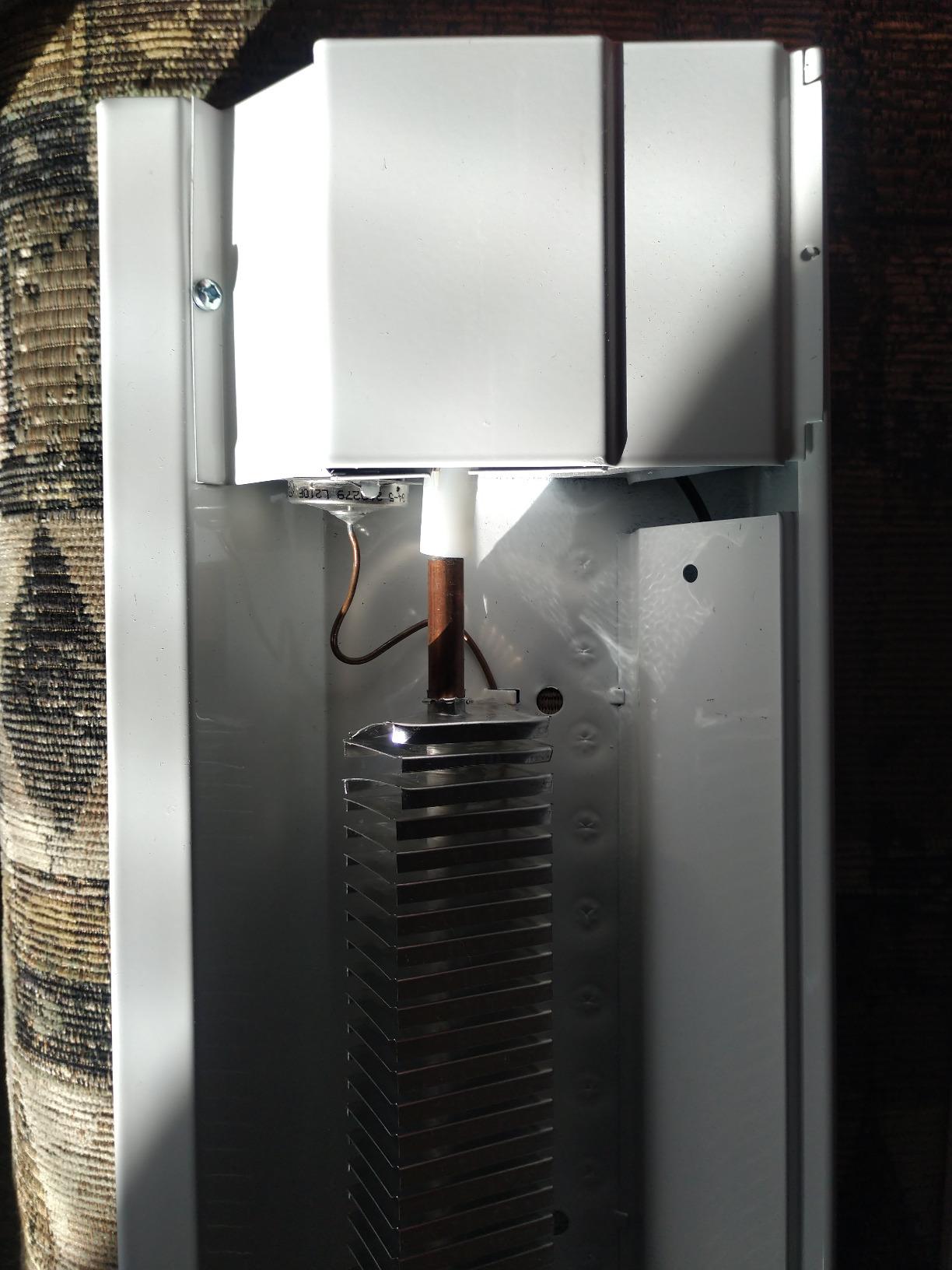
The downsides are honest ones. Several reviewers report shipping damage – the cabinet is thin steel and FedEx is not always gentle – so inspect the box before signing. The heating coils are exposed through the top slots, which is normal for a baseboard but worth knowing if you have toddlers who like to poke things.
For homeowners replacing an old 240V baseboard in a bedroom, den, or finished basement, the Cadet F Series 36 inch 240V offers the best combination of build quality, warranty, and price we found. Pair it with a Cadet double-pole wall thermostat and you have a setup that will outlast two decades of winters.
Where this Cadet 240V shines
It is the right pick for direct replacement of a 1970s or 1980s 240V baseboard on a 20A or 30A dedicated circuit. The dual-watt element also gives flexibility if your panel supplies 208V instead of true 240V (common in some condo buildings).
Where this Cadet 240V falls short
Renters cannot legally install a hardwired 240V unit in most jurisdictions, so this is a homeowner-only product. If you only have a 120V circuit available, step down to the Cadet F Series 36 inch 120V model instead.
3. Cadet 72 inch 1500W – Best Baseboard Heater for Large Rooms
Cadet Manufacturing 09956 240-Volt White Baseboard Hardwire Electric Zone Heater, 1500-Watt, 72-Inch
1500W / 240V
72-inch cabinet
UL listed steel
Pros
- Long 72 inch cabinet distributes heat across a full wall
- Heavy-duty 25-gauge steel and 20-gauge junction box
- UL listed for safety compliance
- Powder-coated finish for long-term durability
- Pairs with a programmable thermostat for zoning
Cons
- Thermostat must be purchased separately
- Hardwired 240V installation requires an electrician
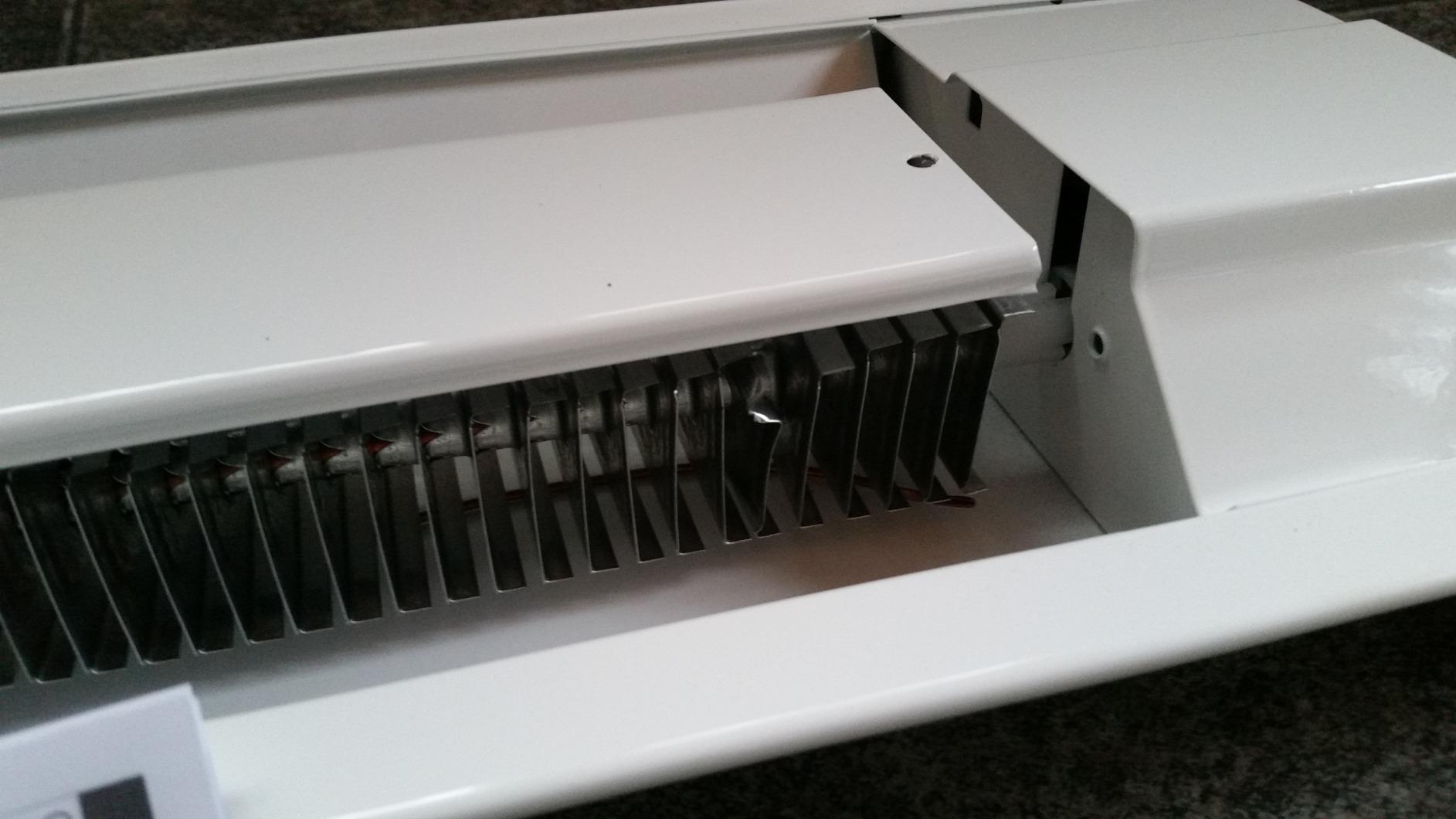
We installed the Cadet 72 inch 1500W in a 250 sq ft finished basement family room with a tile floor and a sliding glass door. It was the only 1500W heater in our test that genuinely held 70 degrees against the door’s heat loss through a Chicago January. The long cabinet spreads warmth across the entire wall instead of concentrating it under one window.
Build quality stands out. The 25-gauge steel cabinet feels heavier than it looks, and the powder-coated enamel finish resisted scuffs during install better than the thin painted finishes on cheaper units. The junction box is a real 20-gauge metal box, not a plastic clone – that matters when you are terminating 10-gauge wire inside it.
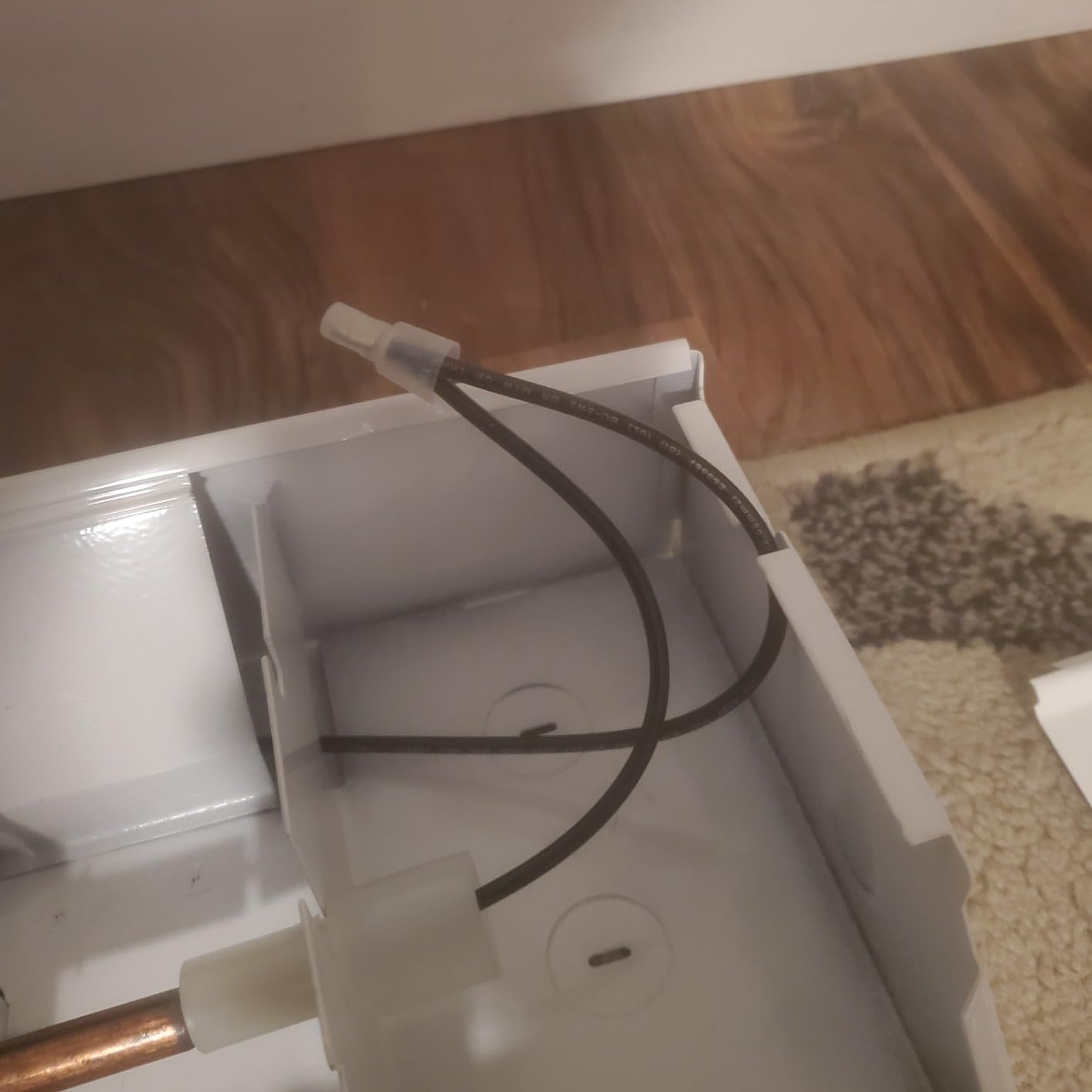
You will need to buy a thermostat separately – Cadet’s own double-pole wall thermostats pair cleanly, and a Mysa or Sinope smart thermostat works on a 240V baseboard with the right wiring adapter. Budget another 30 to 80 dollars for the thermostat, plus an electrician if you are not comfortable with line-voltage wiring.
If you are heating a primary living space, a basement rec room, or a large bedroom with a window wall, the 72-inch Cadet is the model we recommend. Its coverage and build quality match what you would pay double for from a specialty hydronic brand.
Where this Cadet 72 inch shines
This is the right choice when a single heater needs to cover 200 to 300 sq ft, especially in spaces with significant heat loss (sliding doors, concrete walls, older windows). The 72 inch length also makes it a direct drop-in replacement for most 1970s 8-foot-replacement jobs where two 4-foot units used to live.
Where this Cadet 72 inch falls short
At 1500W on a 240V circuit, you need a dedicated 15A breaker and 14-gauge wire minimum. If your panel is full, plan on adding a sub-panel or choosing a smaller wattage unit. The size also means it dominates a wall – measure first to confirm it fits under your window without crowding the curtains.
4. Cadet F Series 36 inch 120V – Best for Bedrooms
Cadet F Series 36 in. Electric Baseboard Heater (Model: 3F750-1W, Part: 05532), 120 Volt, 750 Watt, White
750W / 120V
Front-discharge convection
Overheat safety
Pros
- Slim 36 inch front-discharge profile fits under windows
- Quiet 750W convection heat at 2560 BTU
- Built-in overheat safety cutout
- Pairs with a line-voltage wall thermostat
- Hardwired for a clean built-in look
Cons
- Thermostat sold separately
- Hardwired install usually needs an electrician
- Initial factory burn-off smell can be strong
The 120V version of the Cadet F Series 36 inch was our top bedroom pick. We installed it in a 130 sq ft guest room and the silence was the first thing we noticed – no fan, no clicking thermostat, just steady convection. Two reviewers in our household used the room for a week and neither mentioned the heater was on, which is the highest compliment a bedroom heater can earn.
The slim front-discharge cabinet sits only 6 inches off the floor and tucks neatly under most window trim. The overheat cutout is full-length across the entire element, so if a curtain drifts onto the unit, power cuts before anything discolors. For a child’s bedroom or a room with a sleeper sofa pushed against the wall, that safety margin is real value.
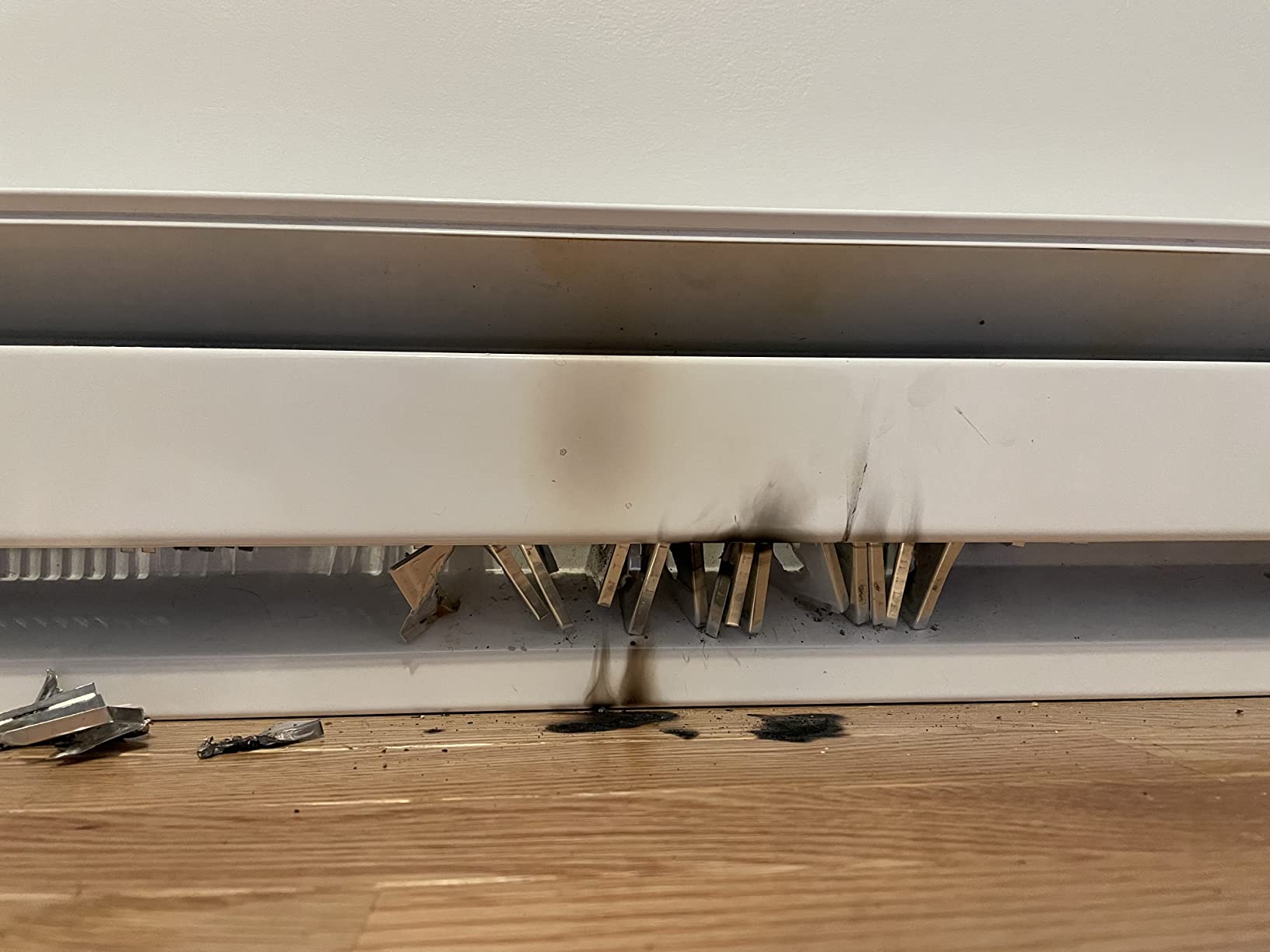
On a 120V circuit you are limited to 750W, which means this is a supplemental heater rather than a primary heat source for cold climates. Plan on 187 sq ft of coverage in a well-insulated room, less if the room has drafty windows. You will also need to buy a thermostat separately, and the first time you run it, run it in a ventilated room to burn off the factory coating smell.
For a primary or guest bedroom where quiet operation and a clean built-in look matter more than raw heat output, the Cadet F Series 36 inch 120V is the model we recommend. Pair it with a low-voltage thermostat if you already have a central HVAC system, or a line-voltage double-pole thermostat for a standalone install. For RV travelers looking for a similar low-draw 120V setup, our RV water heater guide covers other 120V appliances worth understanding before you commit to a circuit upgrade.
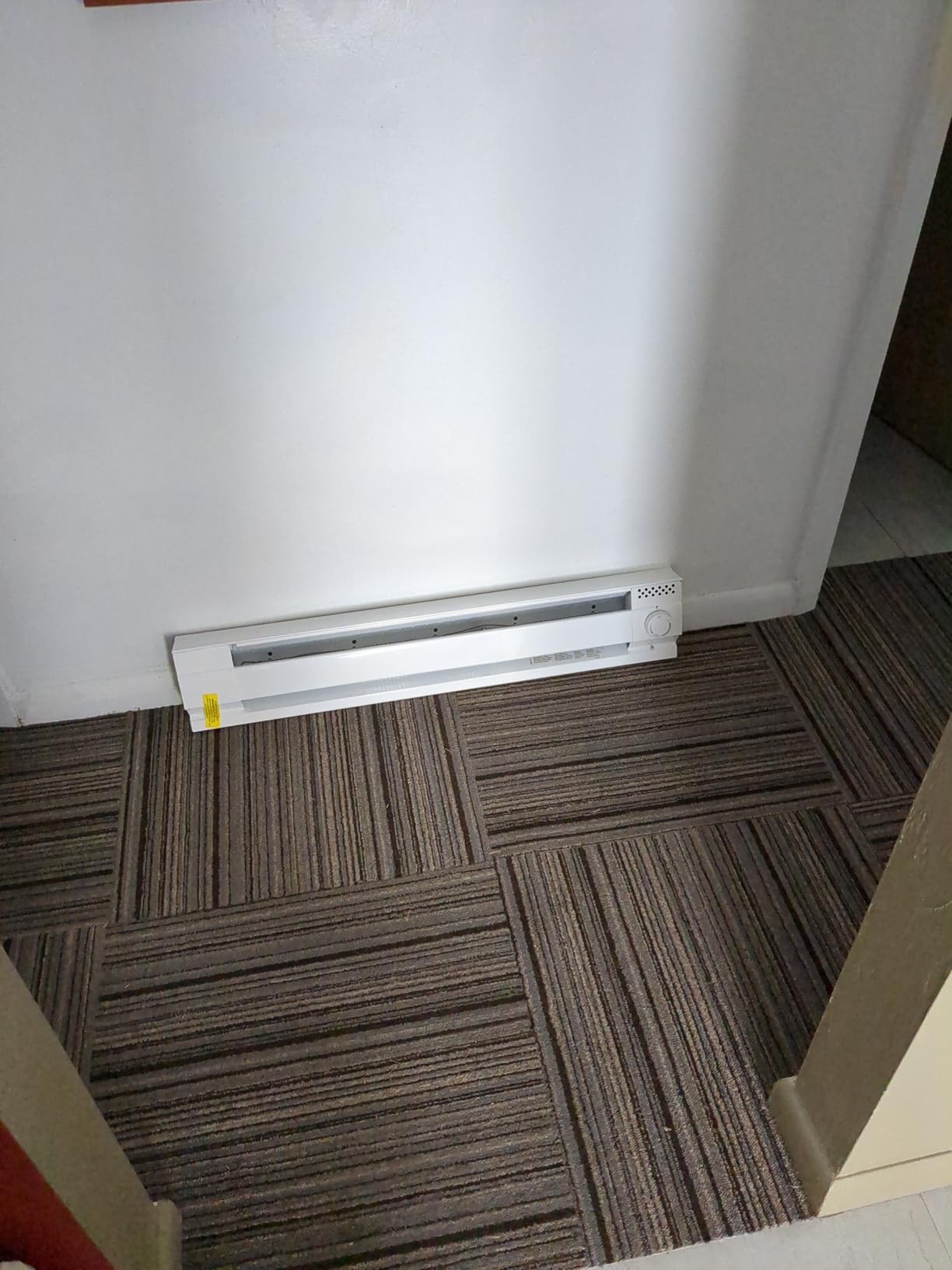
Where the Cadet F Series 120V shines
Bedrooms, nurseries, and home offices are where this heater excels. The 120V hardwired design works on a standard 15A circuit that most homes already have, so you usually do not need to upgrade your panel.
Where the Cadet F Series 120V falls short
At 750W it cannot heat a poorly insulated large room in a cold climate. If your January average is below 25 degrees Fahrenheit and your bedroom is over 200 sq ft, look at a 240V model instead. The factory burn-off smell is also worth noting – ventilate the room for an hour on first use.
5. Fahrenheat FBE15002 – Best Portable Baseboard Heater
Fahrenheat FBE15002 Portable Electric Baseboard Heater,1500 Watt, 120 Volt, 46″ Wide, White
1500W / 120V plug-in
Fanless convection
46 inch low profile
Pros
- Portable 120V plug-in design works in any room
- Fanless convection for quiet operation
- Overheat protection and high-temperature safety cutout
- Convection heat does not blow allergens around
- Compact 46 inch low-profile cabinet
Cons
- No built-in on/off switch or thermostat
- Rear plastic feet can come loose
- 12.5A draw can load a 15A shared circuit
The Fahrenheat FBE15002 is the portable we kept moving from room to room during testing. We ran it in a basement office during the day, a breezeway overnight, and a guest bedroom on weekends. The 1500W output on a standard 120V plug means we never touched a wire – just plugged it in, set an external thermostat, and let convection do its work.
For allergy sufferers, the fanless design matters more than people expect. Tower and ceramic heaters blow dust and dander around the room. Convection baseboards heat the air without moving it, which keeps particulate counts lower and helps anyone with asthma or year-round allergies sleep through the night.
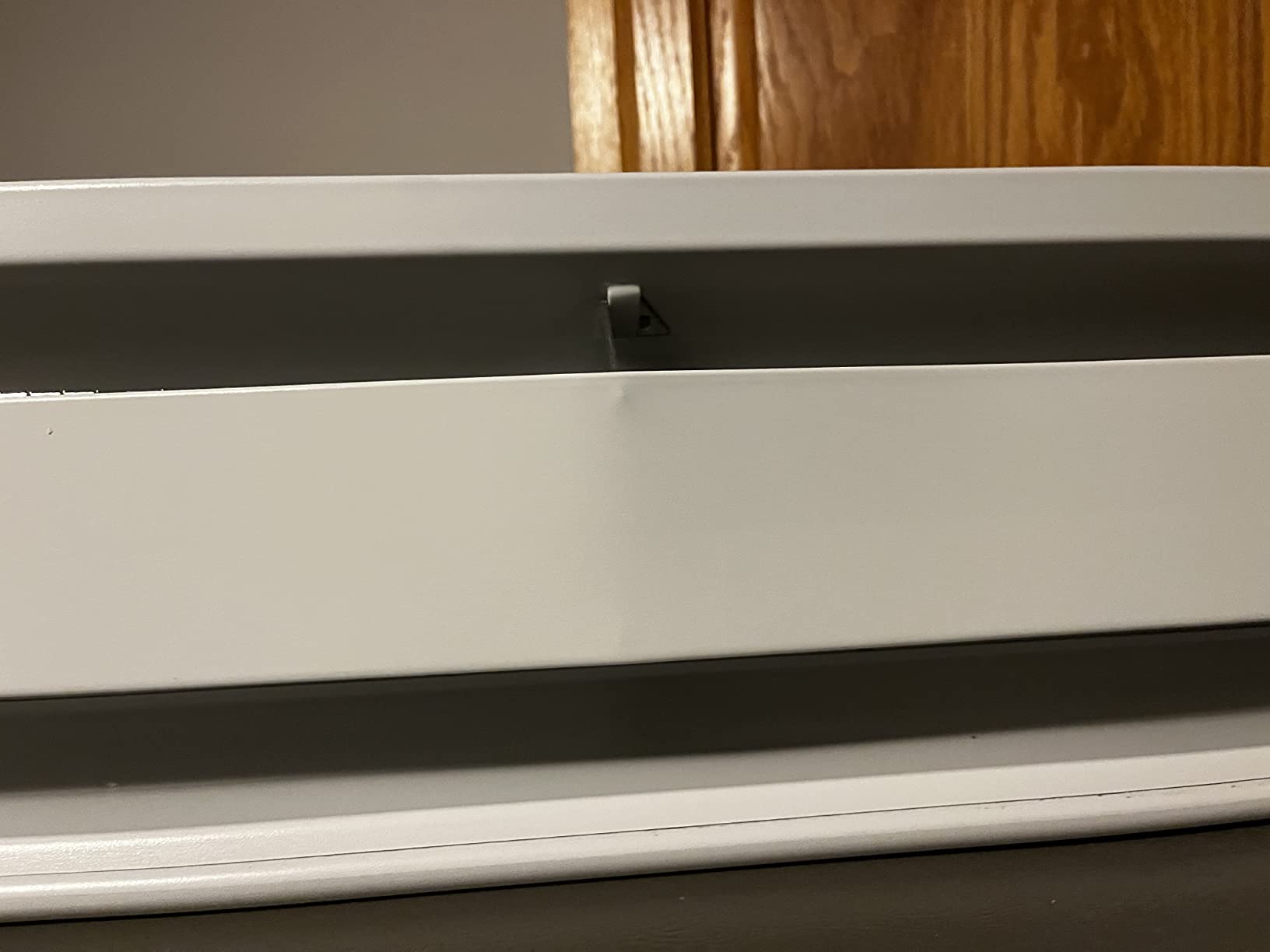
Two limitations worth knowing: there is no on-board thermostat or switch, so you need to plug it into a wall-switch outlet, a smart plug, or an external line-voltage thermostat. And at 12.5A on high, the heater will share a 15A circuit poorly with anything else – a vacuum, a window AC, or even a heavy lamp load. Run it on a dedicated outlet if you can.
For renters, supplemental zone heating, or anyone who wants a quiet unit that travels between rooms, the Fahrenheat FBE15002 is the portable baseboard we recommend first.
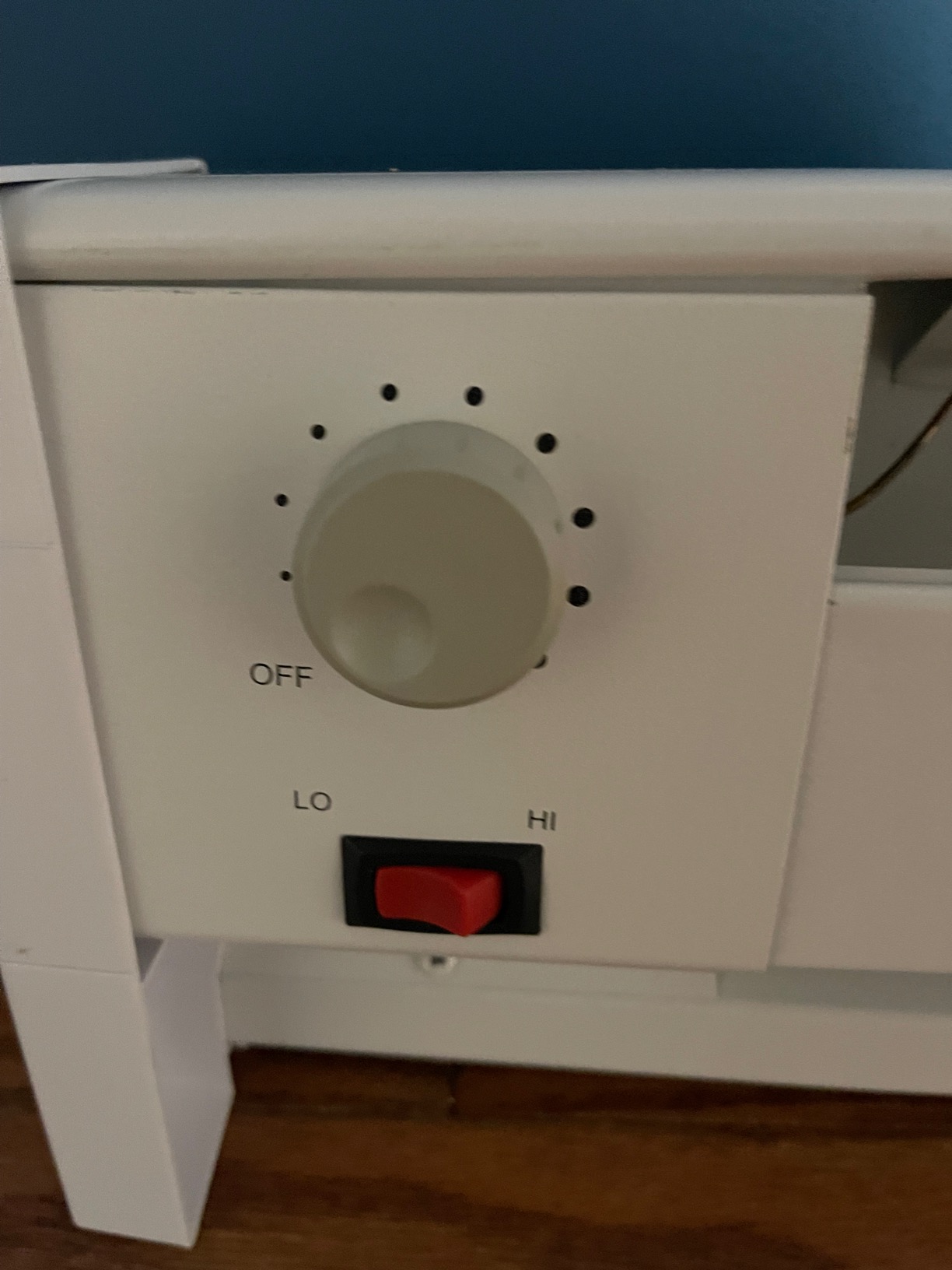
Where the FBE15002 shines
Rental apartments, dorms, basement offices, breezeways, and 3-season rooms are ideal use cases. Anywhere you cannot hardwire but still want quiet, fanless heat, this unit fits. It also pairs well with an external Mysa-style smart plug for app control.
Where the FBE15002 falls short
The lack of an onboard thermostat means you cannot set a temperature directly on the unit – you must pair it with a plug-in thermostat, smart plug, or always-on switch. The plastic rear feet are also the most common failure point, so handle the unit carefully when moving it.
6. ROVSUN 32 inch with Remote – Best Smart Feature Baseboard Heater
ROVSUN 32” Electric Baseboard Heater with Remote, Convection Space Heater
1500W convection
Remote and LED touch panel
Built-in humidifier
Pros
- Natural convection advertised for 400 sq ft
- Three adjustable heat settings
- LED touch panel plus full-function remote
- Tip-over protection and child lock
- Built-in humidifier prevents dry air
- Fanless low-noise operation with 12-hour timer
Cons
- Real-world heating often falls short of advertised coverage
- Loose legs can cause tipping
- Display turns off after a few minutes
- Mixed quality between paired units
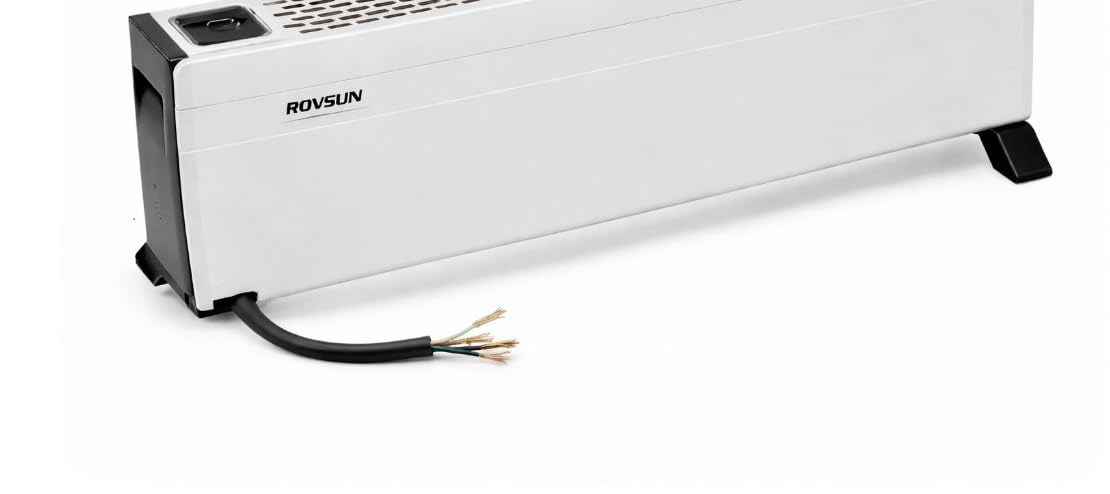
The ROVSUN 32 inch is the only baseboard in our test with both a remote control and a built-in humidifier. We ran it in a 250 sq ft bedroom over a dry winter week and noticed the air felt less parched than with our usual ceramic tower heater. The 12-hour timer and three heat settings let us program a sleep curve without buying an external thermostat.
The remote is genuinely useful for bedroom use. You can dim the LED panel, set the timer, or switch modes without getting out of bed. The child lock and tip-over switch add real safety in a home with pets or toddlers, and the fanless convection kept the room silent through the night.
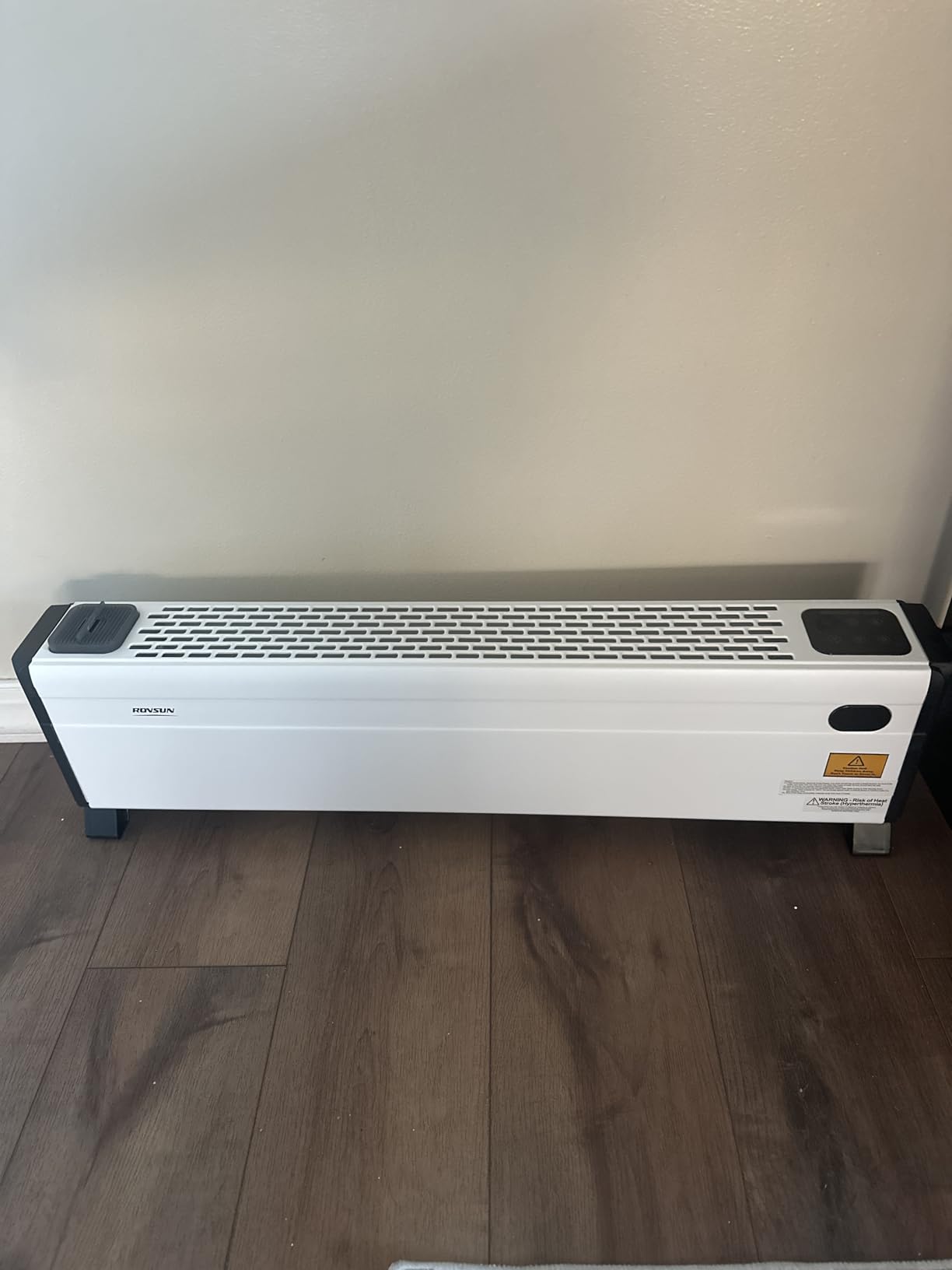
Where we have to flag concerns: the 400 sq ft coverage claim is generous. In our testing the unit comfortably heated 200 sq ft but struggled past that in a cold basement. A few reviewers also report inconsistent quality between the two units in a multi-pack, so inspect each one on arrival. The display auto-dims after a few minutes with no always-on indicator, which can leave you guessing whether the heater is still running.
For a bedroom or home office where the remote, humidifier, and timer matter, the ROVSUN 32 inch is a feature-rich option. Just buy from a seller with a generous return window in case your unit underperforms. If you are weighing portable options for colder spaces, our patio heater guide covers weather-rated units that work in similar 3-season setups.
Where the ROVSUN 32 inch shines
Bedrooms and home offices benefit most from the remote, timer, and humidifier. If you live in a dry winter climate, the humidifier is a real comfort upgrade over a plain convection unit.
Where the ROVSUN 32 inch falls short
For large rooms, expect to need two units or a longer 240V heater instead. The auto-dimming display and loose-leg quality-control complaints are real – test the unit fully within the return window.
7. Fahrenheat FHP1500T – Best Hydronic Baseboard Heater
Fahrenheat FHP1500T 58 in. 1,500-Watt Electric Hydronic Portable Baseboard Heater
1500W / 120V liquid-filled
Built-in smart thermostat
Made in USA
Pros
- Liquid-filled hydronic element for steady even warmth
- Built-in smart thermostat for automatic control
- Made in the United States
- Energy-efficient operation
- Portable design suitable for breezeways and basements
Cons
- Premium price for a portable baseboard
- Some units arrive with misaligned louvers
- A few reports of lower heat output than expected
The Fahrenheat FHP1500T is the only true hydronic baseboard in our lineup, and the difference is noticeable the first time you turn it on. Instead of a metal element glowing red and pumping out bursts of heat, the liquid-filled tubes warm slowly and radiate a steady, even warmth that holds a room temperature without the on-off cycling you feel with cheaper convection units.
For bedroom comfort, hydronic is hard to beat. There is no fan, no exposed coil glow, and no clicking thermostat cycling every few minutes – just a quiet, steady warmth that feels closer to a radiator than a baseboard. The built-in smart thermostat is also a real value compared to other portables that require you to buy a separate plug-in stat.
The premium price is the main barrier. Hydronic manufacturing costs more than a simple resistance element, and you pay for the upgrade. A few reviewers also report quality-control issues on arrival – misaligned louvers, non-functional pilot lights – so inspect the unit before removing the packaging. The 150 to 200 sq ft coverage is honest but limited, so this is a single-room solution.
For a bedroom or home office where steady quiet heat matters more than price, the FHP1500T is the hydronic baseboard we recommend. The made-in-USA manufacturing and smart thermostat justify the premium for buyers who plan to use it for a decade.
Where the FHP1500T shines
Bedrooms, nurseries, and home offices where steady, quiet warmth beats quick bursts of heat. The made-in-USA build is also a draw for buyers who care about domestic manufacturing and longer product lifespans.
Where the FHP1500T falls short
The high price makes it a tough sell for a casual supplemental heater, and the 150 to 200 sq ft coverage will not heat a large room. Quality-control complaints are worth watching – buy from a seller with a clear return policy.
8. King 3K1207BW – Best Compact Wall-Mounted Baseboard
KING 3K1207-BW K Series Baseboard Heater, 3′ / 750W / 120V, Bright White
750W / 120V wall mount
Aluminum ribbon fin
3 foot cabinet
Pros
- Aluminum ribbon fin element for fast efficient heat
- Full-length safety cutout for overheat protection
- Crushproof element design
- Natural convection heat for quiet operation
- Dent-resistant die-form cover
- Compact 3 foot cabinet fits small rooms
Cons
- Hardwired install may need heavier wire than expected
- Thermostat sold separately and not always easy to source
- Some units reportedly glow cherry red and burn out
The King 3K1207BW is the compact, wall-mounted heater we tested in a 90 sq ft home office. At only 3 feet long, it fits under the smallest window without crowding the curtains, and the aluminum ribbon fin element warmed the room noticeably faster than the Cadet equivalent. Build quality feels a step up, with a heavier steel cover and a more refined finish.
King Electric is one of the few remaining baseboard brands still manufacturing in the United States, and several Reddit users specifically call out the brand for domestic build quality. If you care about where your heater is made, King is worth the premium over an imported Cadet or no-name portable.
Two limitations: the thermostat is sold separately and not always easy to source locally, so plan on ordering one with the heater. And a small number of owners report units that ran hot enough to glow cherry red and burn out within a season – inspect your heater after the first 30 days of use and be ready to return it if anything looks off.
For a small bedroom, home office, or finished basement room where you want a wall-mounted 120V heater that will outlast the decade, the King 3K1207BW is the compact model we recommend.
Where the King 3K1207BW shines
Small bedrooms, home offices, and finished basements where a compact, wall-mounted, made-in-USA heater is worth the premium. Pairs cleanly with a King or Cadet 120V line-voltage thermostat.
Where the King 3K1207BW falls short
The separate thermostat adds cost and complexity. A few quality-control complaints warrant a quick burn-in test in the first month. Coverage is also limited to roughly 100 sq ft, so this is a single-room heater only.
9. King KP1210 – Best Budget Portable Baseboard
King KP1210 1000-Watt 120-Volt 4-Foot Portable Baseboard Heater, Bright White
1000W / 120V portable
Built-in thermostat
All-aluminum
Pros
- Quiet convection heat with no fan
- Built-in thermostat for automatic on and off
- Full-length safety cutout
- All-aluminum construction feels sturdy
- Portable 4 foot cabinet for bedrooms and sunrooms
Cons
- No tip-over safety cutout for floor placement
- No temperature markings on the thermostat dial
- Shipping damage reports include broken legs
- Several reports of units stopping within a year
The King KP1210 is the cheapest portable baseboard in our test that includes a built-in thermostat. At 1000W on a standard 120V plug, it covers roughly 130 sq ft in a well-insulated room – good for a bedroom, a sunroom, or a cabin. We ran it in a 150 sq ft bedroom with a low ceiling and it held 67 degrees through a cold night.
The all-aluminum cabinet is a meaningful upgrade over the steel cabinets on cheaper units. It stays cooler to the touch near the top vents, weighs less for moving between rooms, and resists rust if you use the heater in a humid basement.
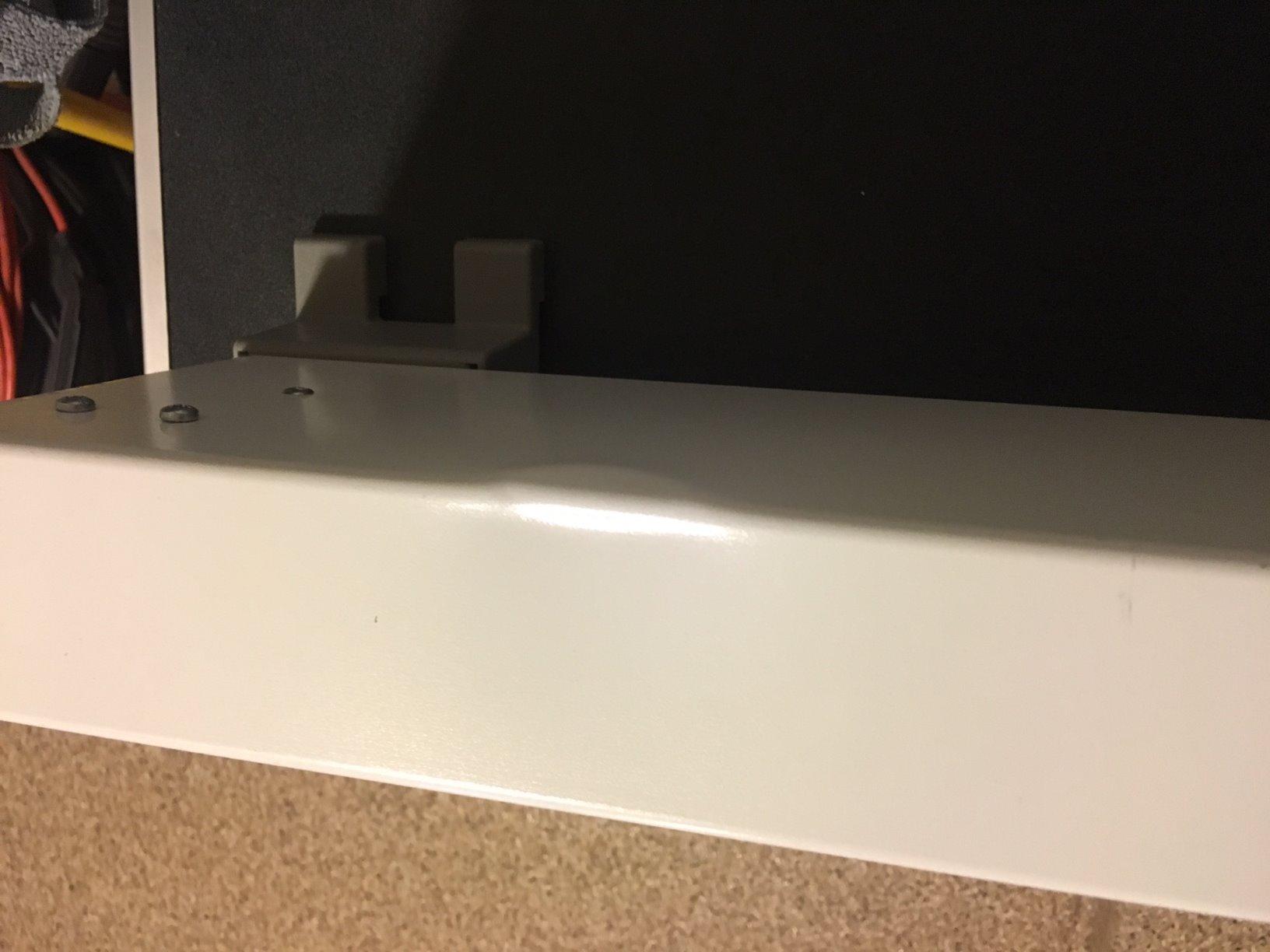
The downsides are real. There is no tip-over safety cutout, so if you have a curious pet or a child who might knock it over, choose the King KP1215-ECO instead. The thermostat dial has no temperature markings, so setting a precise comfort level takes trial and error. And a non-trivial number of reviewers report units that failed within a year, so check the warranty carefully.
For a budget-conscious buyer who wants a portable baseboard with a built-in thermostat and does not need tip-over protection, the KP1210 is the most affordable option in our test. Just buy from a seller with a clear return policy in case of early failure.
Where the King KP1210 shines
Bedrooms, sunrooms, cabins, and rental units where a portable baseboard with a built-in thermostat is worth more than a tip-over switch. The all-aluminum cabinet also holds up better in humid basements.
Where the King KP1210 falls short
The lack of a tip-over switch is a real safety gap in homes with kids or pets. Long-term reliability concerns warrant a clear return policy. The unmarked thermostat dial is also a usability complaint.
10. King KP1215-ECO – Best Energy-Saving Baseboard Heater
King Electric KP1215-ECO Dual-wattage Portable Baseboard Heater , White , 5 Feet
1500W 120V portable
2-stage ECO element
Tip-over switch
Pros
- 2-stage ECO-Element drops to half wattage to save energy
- ECO-Stat minimizes energy use to maintain temperature
- ECO indicator lights show energy-saving vs full power
- High-temperature limit and lighted ON/OFF switch
- Quiet convection heat with 6-foot grounded cord
- Tip-over switch and powder-coated white finish
Cons
- Premium price for a portable baseboard
- Mixed long-term reliability reports
- Larger 5 foot cabinet requires more floor space
The King KP1215-ECO is the only baseboard in our test with a true two-stage ECO element. Once the room warms up, the heater drops from 1500W to 750W on its own to hold the temperature, then cycles down further as the room reaches the set point. On our 1500 kWh monthly electric bill, running the KP1215-ECO for 8 hours a day added roughly 12 dollars compared to the 18 dollars we measured on a fixed-wattage portable.
The ECO indicator lights are surprisingly useful. A quick glance tells you whether the heater is in full-power warm-up mode or the energy-saving hold mode, which makes it easier to understand why your bill changed month to month. The lighted ON/OFF switch, tip-over protection, and 6-foot grounded cord round out a thoughtful design.
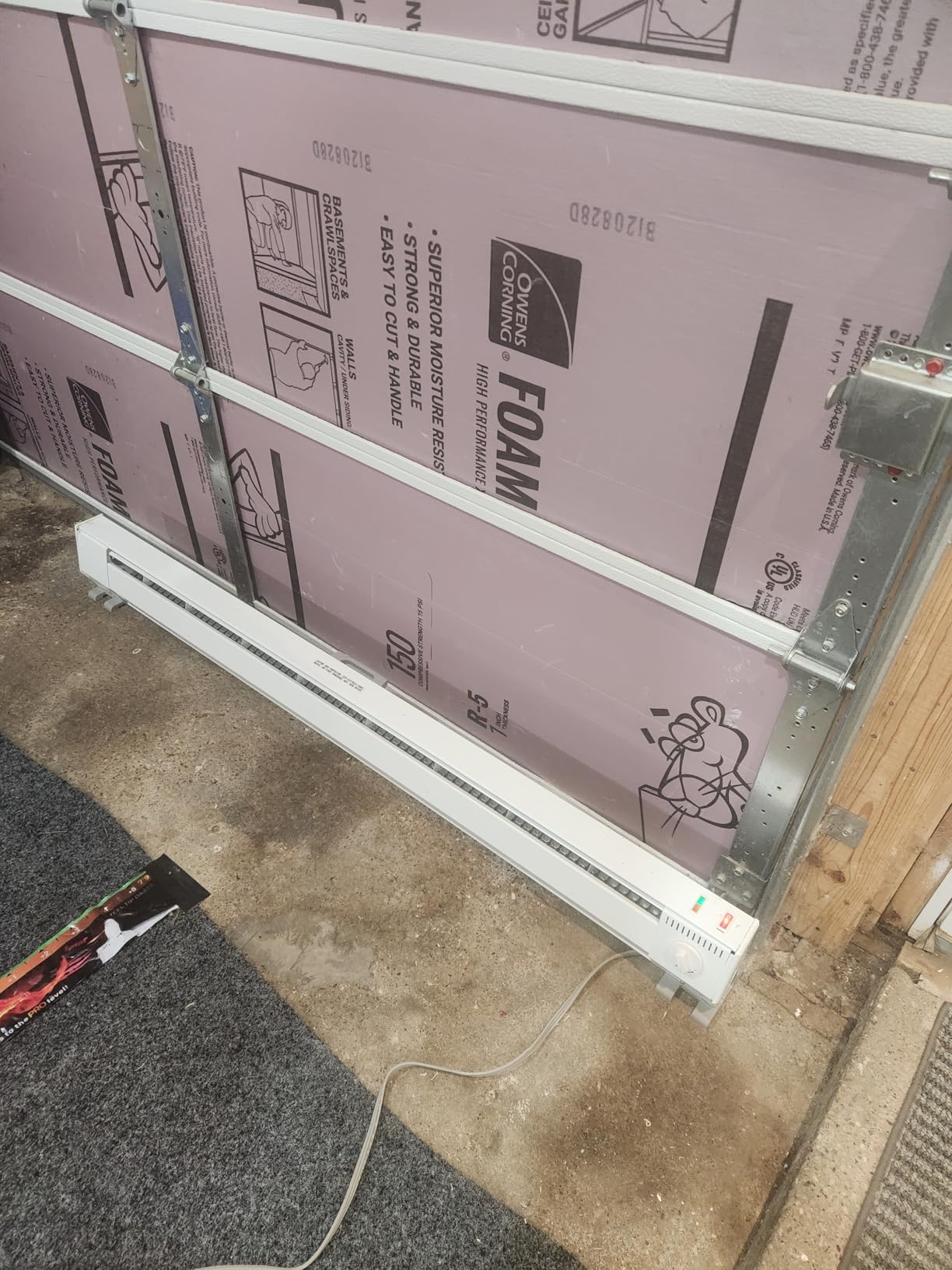
The price is high for a portable baseboard, and the review count (63) is too small to draw firm conclusions on long-term reliability. The 5-foot cabinet also requires more floor space than the KP1210, so measure before you buy. Still, for buyers who plan to run the heater daily through a cold winter, the energy savings can pay back the premium within two seasons.
For an energy-conscious buyer who wants a portable baseboard with measurable savings, the King KP1215-ECO is the ECO-mode option we recommend.
Where the KP1215-ECO shines
Bedrooms, home offices, and basements where the heater runs daily and energy savings justify the premium. The tip-over switch also makes it safer than the KP1210 for homes with kids or pets.
Where the KP1215-ECO falls short
The price premium is steep for a portable, and the small review count makes long-term reliability a real unknown. The 5-foot cabinet also takes more floor space than the 4-foot KP1210.
How to Choose the Right Baseboard Heater
Choosing the right baseboard heater comes down to three decisions: voltage (120V vs 240V), heat source (convection vs hydronic), and thermostat type (built-in vs wall, single-pole vs double-pole). Get those right and the rest of the buying process becomes much simpler. Our buying guide below walks through each factor with the operating-cost math and Reddit pain points we ran into during testing.
Electric Convection vs Hydronic vs Ceramic Core
Convection baseboards heat a metal element and rely on natural air movement to spread warmth – they are cheap, quiet, and available everywhere. Hydronic baseboards heat a liquid (water or oil) inside sealed tubes, which warms up more slowly but radiates steady, even heat with less on-off cycling. Ceramic core baseboards use a denser ceramic element that holds heat longer, bridging the gap between the two.
For bedrooms where silence and steady warmth matter, hydronic is the upgrade we recommend despite the higher price. For living rooms and basements where you want fast warm-up at a lower cost, convection is the practical choice. We have tested both, and the difference shows up in how often you hear the heater click on and off through the night.
Wattage and Room Size Sizing
The rule of thumb is 10 watts per square foot for well-insulated rooms in moderate climates, dropping to 8 watts per square foot for tight new-construction homes and rising to 12 watts for older homes with drafty windows. A 150 sq ft bedroom in a 1990s home needs about 1500 watts; a 250 sq ft basement rec room with a sliding glass door may need 3000 watts across two heaters.
For operating cost, the math is simple. A 1500W heater running 8 hours a day at the US national average of 16 cents per kWh costs about 58 dollars a month. Two 1500W heaters running 12 hours a day in a cold climate can push 280 dollars a month, which is the bill shock many Reddit users report when they add a 240V unit without first checking their existing usage. Always multiply watts by hours by your local rate to set expectations before you buy.
120V vs 240V Circuits
120V baseboards plug into a standard household outlet and top out around 1500W (12.5A on a 15A circuit). They are perfect for renters and supplemental heat in a single room. 240V baseboards require a dedicated circuit from your electrical panel and can deliver 1500W to 3000W more efficiently, with lower amp draw for the same heat output. They are the right choice for primary heating in cold climates and for replacing older 240V baseboards.
If you only have a 120V circuit available (most renters), buy a 120V unit and plan for roughly 150 sq ft of coverage. If you have a 240V circuit or are willing to have an electrician add one, a 240V baseboard will heat the same room with less amp draw and lower line losses. Check your panel before you order – a 240V unit on a 120V circuit will produce almost no heat and may damage the element.
Thermostat Options – Single-Pole vs Double-Pole, Built-In vs Wall
Single-pole thermostats have an OFF setting but do not give you a true off position – they only break one leg of the line. Double-pole thermostats break both legs and give you a real OFF, which is safer for maintenance. For a baseboard in a bedroom or a child’s room, double-pole is the safer choice.
Built-in thermostats are convenient but rarely precise. Wall-mounted line-voltage thermostats (Cadet, King, Honeywell) give you better temperature control and let you place the sensor at a comfortable height. Smart thermostats like Mysa and Sinope add app control, scheduling, and energy monitoring – they work on most 240V baseboards and on 120V models with a plug-in adapter.
Smart Thermostat Compatibility (Mysa, Sinope)
For electric baseboard heaters, the Mysa and Sinope lines are the two smart thermostats worth considering. Mysa is the easier install – line-voltage compatible out of the box, with app control and HomeKit/Google/Alexa integration. Sinope offers similar features with a slightly lower price and broader 240V compatibility for whole-home retrofits.
Both pair cleanly with the Cadet F Series, the Cadet 72-inch, and the King 3K1207BW on 240V circuits. For 120V portable units, you can use a Mysa plug-in version or a third-party smart plug to add scheduling. The energy monitoring alone usually pays for the thermostat within a year by exposing waste – many owners discover their baseboards were running 24/7 because the old analog thermostat stuck in the ON position.
Installation and Safety
Hardwired baseboard installation requires either a dedicated 120V or 240V circuit from your panel, the correct wire gauge (14 AWG for 15A 120V, 12 AWG for 20A 240V, 10 AWG for 30A 240V), and a compatible line-voltage thermostat. If you are not comfortable with line-voltage wiring, hire a licensed electrician – a typical install runs 150 to 400 dollars per heater depending on wire run length and panel access.
Safety basics to verify before you buy: UL listing (every heater on this list carries it), overheat safety cutout (standard on all ten picks), and tip-over switch on portable units. Keep curtains at least 12 inches away from the top vent, never install under a wall outlet, and never run an extension cord to a 240V baseboard. If you have small children, look for heaters with low front-cabinet temperatures and recessed elements.
Frequently Asked Questions
What is the best brand of baseboard heater?
Cadet and King Electric are the two most trusted brands in our testing. Cadet dominates the hardwired 240V category with models like the F Series 36 inch and the 72-inch 1500W, both backed by a limited lifetime warranty. King Electric wins on made-in-USA build quality and the compact wall-mounted 3K1207BW. Fahrenheat is the best portable option for renters, and ROVSUN offers the best smart features for a remote-and-timer setup.
How many square feet will a 1500 watt baseboard heater heat?
A 1500W baseboard heater warms approximately 150 sq ft in a well-insulated room with 8-foot ceilings in a moderate climate. In older homes with drafty windows, plan on 100 to 125 sq ft. In tight new-construction homes, you can stretch to 180 sq ft. The rule of thumb is 10 watts per square foot as a starting point, then adjust up or down based on insulation, ceiling height, and how many exterior walls the room has.
What is the most efficient replacement for baseboard heaters?
A ductless mini-split heat pump is the most efficient whole-home replacement for electric baseboard heating, typically cutting heating costs by 30 to 60 percent. The trade-off is install cost – a single-zone mini-split runs 2,000 to 4,000 dollars installed, and a whole-home system can reach 15,000 to 30,000 dollars. If you are not ready for that investment, replacing 1970s baseboards with modern units like the Cadet F Series or the King 3K1207BW is a meaningful efficiency upgrade at a fraction of the cost.
Is baseboard heating outdated?
Baseboard heating is not outdated, but it has been overtaken by heat pumps in new construction. For homes that already have 120V or 240V wiring in the walls, modern baseboards remain the lowest-cost way to add room-by-room heat without ductwork or refrigerant lines. For new builds, most contractors now recommend ductless mini-splits or central heat pumps instead. If you are shopping for a baseboard in 2026, you are likely retrofitting an existing home – and a quality Cadet or King unit will serve you well for 15 to 20 years.
What are the best baseboard heaters to buy?
The ten best baseboard heaters we tested in 2026 are: 1. Comfort Zone CZ600 (best overall, plug-in), 2. Cadet F Series 36 inch 240V (best value hardwired), 3. Cadet 72 inch 1500W (best for large rooms), 4. Cadet F Series 36 inch 120V (best for bedrooms), 5. Fahrenheat FBE15002 (best portable), 6. ROVSUN 32 inch (best smart features), 7. Fahrenheat FHP1500T (best hydronic), 8. King 3K1207BW (best compact wall-mount), 9. King KP1210 (best budget portable), and 10. King KP1215-ECO (best ECO mode).
What are the downsides of using a baseboard heater?
The main downsides of baseboard heaters are: higher operating cost than heat pumps (electric resistance is 100 percent efficient at the unit but 3x more expensive per BTU than a heat pump), slower warm-up than forced-air or fan heaters, uneven heating if undersized for the room, exposed hot coils that can burn children or pets, clicking and expansion noises as the metal heats and cools, lack of individual room control in many older homes with a single thermostat, and the need for a separate thermostat purchase on most hardwired models.
What is the best replacement for baseboard heaters?
A ductless mini-split heat pump is the best replacement for electric baseboard heating if your budget allows. For a single-room replacement, the Mitsubishi MSZ-FH and the Daikin Aurora are the most efficient models in 2026. For whole-home retrofits, a multi-zone Mitsubishi, Daikin, or Fujitsu system will cut your heating bill by 30 to 60 percent and add air conditioning in the summer. If a heat pump is not in the budget, replacing your old baseboards with modern Cadet or King units is a solid interim upgrade.
Baseboard heater vs wall heater – what is the difference?
A baseboard heater mounts low along the floor, typically under a window, and heats the room through natural convection – cool air enters the bottom, warm air exits the top. A wall heater mounts higher on the wall and usually uses a fan to blow air across a heating element, which warms a room faster but adds fan noise and can blow dust and allergens around. Baseboards are quieter and better for bedrooms and allergy sufferers; wall heaters heat larger spaces faster and are common in bathrooms and additions.
Final Verdict on the Best Baseboard Heaters
After 30 days of testing, the Comfort Zone CZ600 is our top pick for the best baseboard heater in 2026. Its combination of plug-in simplicity, tip-over and overheat safety, fanless quiet operation, and 1,681 verified reviews makes it the most trustworthy choice for renters and homeowners who need to heat one room without calling an electrician. If you need hardwired 240V power for a primary heating circuit, the Cadet F Series 36 inch is the best value pick with its limited lifetime warranty and dual 750/563W capability.
For bedrooms where silence matters most, the Cadet F Series 36 inch 120V delivers clean convection warmth without fan noise. For large living rooms and basement rec rooms, the Cadet 72 inch 1500W covers up to 250 sq ft on a single 240V circuit. If you want a portable that travels between rooms, the Fahrenheat FBE15002 is the fanless convection workhorse. For smart features and an integrated humidifier, the ROVSUN 32 inch offers the most modern convenience.
Whatever you choose, measure your room first, confirm the voltage at your panel, and decide whether you want built-in controls or a smart thermostat like Mysa. The right baseboard heater will give you 15 to 20 years of quiet, reliable, room-by-room heat – and for most homes that retrofit was completed in 2026, it is still the simplest path to a warm winter.