

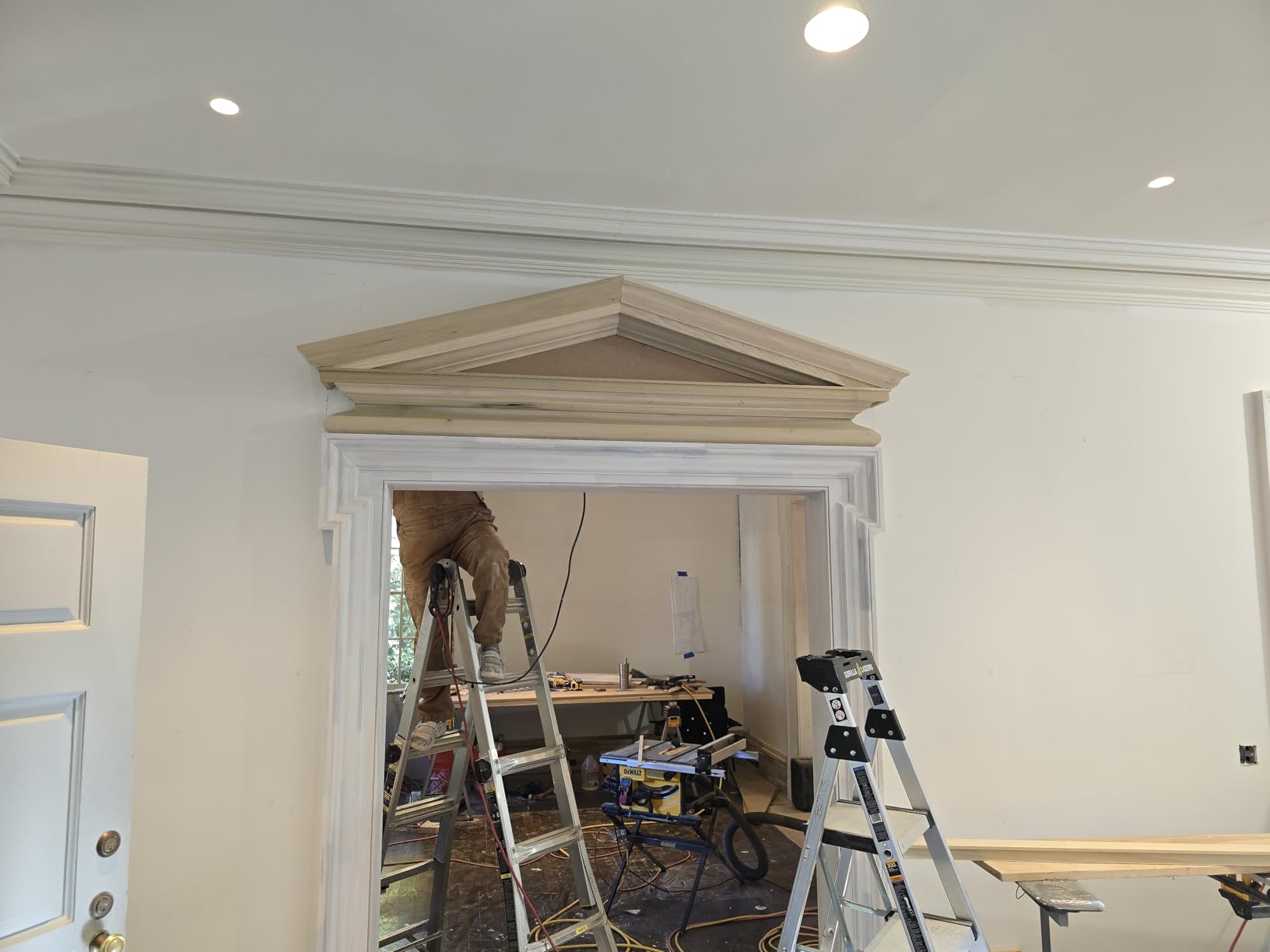
Trim carpentry is a different job from framing, and the miter saw you learned on will show it the first week you hang crown. A finish carpenter cuts dozens of identical pieces at the same odd angle, then has to see every joint line up. That repeatability is the whole reason a compound miter saw exists: it locks an angle in once and cuts the same part all afternoon, which no circular saw or hand saw matches at speed.
The trouble is that the saws pull in opposite directions. Tall crown molding wants a dual-bevel head with tall fences and enough crosscut capacity to lay the board flat. A jobsite saw wants to be light, fold flat and run off a battery in a house with no power in the back room. A shop saw wants a dust port that actually catches something before it settles on the floor you just finished.
So this is a roundup built around trim use rather than general woodworking. We compared twelve miter saws against the questions a trim carpenter actually asks: crosscut capacity at 90 degrees, bevel range on both sides, nested crown capacity, fence height, cutline accuracy, weight you can lift alone, and whether the blade it ships with can cut finished wood at all. If you are still framing and want one saw to do everything, start with our broader miter saw picks for home use instead.
One term first, because every spec table below depends on it. Crosscut capacity is the widest board a saw can cut straight across at 90 degrees, measured at the fence with the blade at full height. A compound cut combines the miter angle and the bevel angle in one pass, and a dual bevel saw tilts in both directions so you never flip the workpiece.
Top 3 Miter Saws for Trim Carpentry in 2026
The three picks below cover the widest range of trim work. Each one wins a different fight, and we explain which fight in its full review further down.


Quick Picks by Use Case for Trim Carpentry in 2026
Every saw in the table appears in the picks below with the full spec breakdown. Scan this row first if you already know your material and your angles.
| Product | Specifications | Action |
|---|---|---|
 DEWALT DWS715 12-Inch Single Bevel DEWALT DWS715 12-Inch Single Bevel |
|
Check Latest Price |
| DEWALT DWS780 12-Inch Dual Bevel Sliding |
|
Check Latest Price |
 DEWALT DWS713 10-Inch Single Bevel DEWALT DWS713 10-Inch Single Bevel |
|
Check Latest Price |
 Bosch CM10GD 10-Inch Axial-Glide Dual Bevel Bosch CM10GD 10-Inch Axial-Glide Dual Bevel |
|
Check Latest Price |
 Makita LS1040 10-Inch Single Bevel Makita LS1040 10-Inch Single Bevel |
|
Check Latest Price |
| SKIL MS6305-00 10-Inch Dual Bevel Sliding |
|
Check Latest Price |
 Metabo HPT C10FCG2 10-Inch Single Bevel Metabo HPT C10FCG2 10-Inch Single Bevel |
|
Check Latest Price |
 Makita LS1019L 10-Inch Dual Bevel Sliding Makita LS1019L 10-Inch Dual Bevel Sliding |
|
Check Latest Price |
 EVOLUTION R185SMS+ 7-1/4-Inch Sliding EVOLUTION R185SMS+ 7-1/4-Inch Sliding |
|
Check Latest Price |
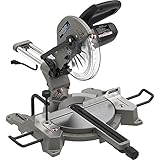 Delta 10-Inch Compound Sliding Miter Saw Delta 10-Inch Compound Sliding Miter Saw |
|
Check Latest Price |
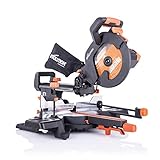 EVOLUTION R255SMS+ 10-Inch Sliding EVOLUTION R255SMS+ 10-Inch Sliding |
|
Check Latest Price |
 DOVAMAN 12-Inch Dual Bevel Sliding Miter Saw DOVAMAN 12-Inch Dual Bevel Sliding Miter Saw |
|
Check Latest Price |
1. DEWALT DWS715 12-Inch Compound Miter Saw: the Best All-Round Choice for Trim
DEWALT 12-Inch Miter Saw, 15-Amp, Single Bevel, Compound (DWS715)
12 inch blade
4500 rpm
15-Amp
0-48 deg left bevel
2x8 at 90 deg
Pros
- XPS shadow line needs no measuring or batteries
- Clean cuts and detents that hold position through repeated angles
- Plenty of power on dimensional lumber without bogging down
- Light for a 12-inch saw and easy to store
Cons
- Single bevel tilts left only so crown cuts need a flip
- Supplied material clamp is awkward against the palm
- Included dust bag is basic
This is the saw we would hand a trim carpenter who does one job type at a time. The XPS cross-cut positioning system throws a shadow line onto the workpiece from a strip of LED material above the blade, so you align to light rather than to a pencil mark. On a room full of baseboard that difference adds up, because you are not re-measuring every piece.
Out of the box it comes with an 80-tooth blade, which is unusual in this class and removes the single most common complaint we see on new saws. A coarse framing blade smokes and burns MDF and tears the back of hardwood trim. This one cuts finish stock without an upgrade.
Spec sheet worth noting: 4500 rpm on a 15-Amp motor, a stainless-steel miter detent plate with 14 positive stops, and a tall sliding fence that holds 5-1/2-inch base vertically. It crosscuts 2×8 dimensional lumber at 90 degrees and 2×6 at 45 degrees. Bevel runs 0 to 48 degrees left and 0 to 3 degrees right.
The compromise is the single bevel. For crown molding at 22.5 or 31.6 degrees, you set the miter, bevel the head to the left, cut, then flip the board and repeat. Nothing breaks, but it doubles your handling and adds a chance to shift the workpiece between cuts. Trim carpenters who install real crown daily should look at pick 2 instead.
Weight matters more than the number suggests. At 42.8 pounds it is heavy enough to feel solid under a wide board and light enough for one person to load into a truck bed. Buyers replacing old cast-iron saws mention this more than any other single change.
What to check before you commit
If your work is baseboard, casing, and picture frame molding under 5-1/2 inches, the 2×8 crosscut and the vertical fence height are enough and the single bevel costs you nothing. If the job includes crown at all, even in a single room, the flip-over workflow will slow you down before you finish the first wall.
Two accessories close the gaps. A proper clamp with a better grip than the supplied one, and a shop vacuum on the dust port instead of the fabric bag. Owners report both changes are worth making within a week of buying the saw.
Where this saw falls short
The adjustment hardware is plastic thumbwheels rather than metal, and the base has no slide-out material supports for long boards. Neither affects accuracy, but both are the first two things a trim carpenter notices reaching for a comfortable position.
Because the bevel only goes left, picture frame and box molding that needs a right-hand bevel means turning the saw or the board around. For a one-off weekend that is fine. For a full interior package it adds up across hundreds of cuts.
2. DEWALT DWS780 12-Inch Dual Bevel Sliding Saw: Best for Tall Crown and Wide Base
DEWALT Miter Saw, 12-inch Double Bevel Sliding Compound Miter Saw with XPS LED Shadow Light System, Includes Blade Wrench, Material Clamp and Dust Bag (DWS780)
12 inch blade
3800 rpm
15-Amp
dual bevel
2x14 at 90 deg
Pros
- Dual bevel removes the flip for compound crown cuts
- Tall sliding fences hold crown to 7-1/2 in nested and base to 6-3/4 in
- Rated to capture over 75 percent of generated dust
- Cam lock miter handle with detent override for odd angles
Cons
- One of the larger machines here and best kept in one shop location
- Slide rails need rear clearance behind the saw
- Complex belt drive and gearbox compared with simpler saws
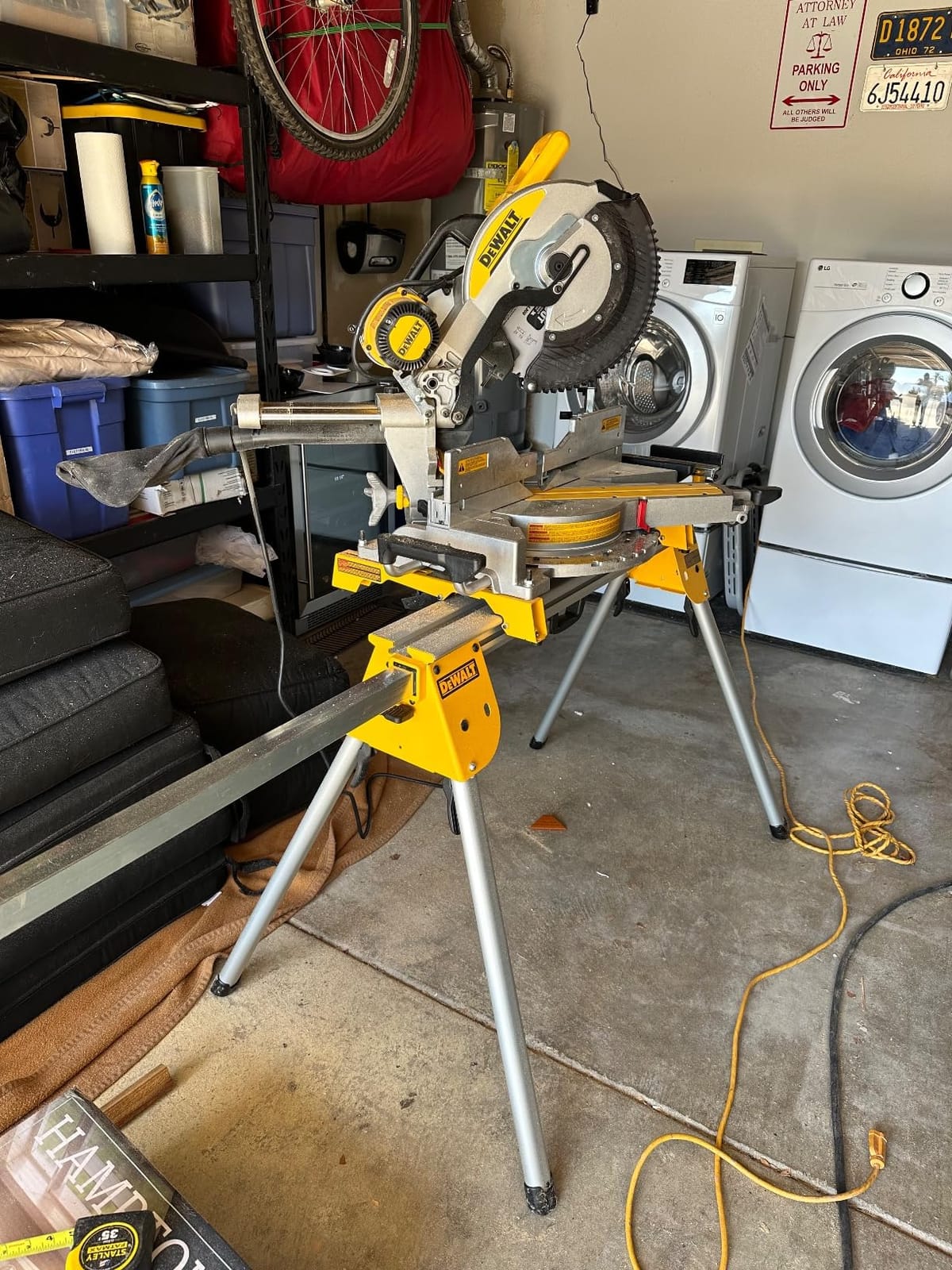
If the words tall crown and wide base appear anywhere in your project list, this is the saw. Dual bevel means the head tilts left and right, so a compound crown cut happens with the molding lying flat against the fence, the correct way up, in one pass. That single feature is why finish carpenters reach for a dual bevel saw instead of a cheaper single bevel one.
The numbers back up the marketing. Crown molding nests to 7-1/2 inches and base molding stands 6-3/4 inches vertically against the fence. It crosscuts 2×14 dimensional lumber at 90 degrees and 2×10 at 45 degrees, miters 60 degrees right and 50 degrees left, and comes with an 80-tooth blade.
The XPS LED shadow line here is the same system as pick 1, and the cam lock miter handle with detent override is the feature trim carpenters mention first. You can unlock the detent, nudge the angle by hand to something like 23.75 degrees for an out-of-square room, then lock it back and cut the whole wall at that number.
Dust capture is rated by the manufacturer at over 75 percent of generated dust. That figure is a spec sheet claim, not our measurement, but it is the only quantified capture number in this group, and indoor trim work is exactly where it matters. A 12-inch slider throws more debris than a 10-inch non-slider, and that dust lands on finished floors and freshly painted cabinets.
What to check before you commit
Rear clearance is the deciding question. The dual steel rails with linear ball bearings need room behind the saw to reach full crosscut capacity, so plan the station before you buy. Our broader shop-saw guide on miter saws for home use covers small-shop layout in more detail.
The dust bag included is a starter bag. Pair the port with a shop vacuum and a separator if you are cutting inside a finished house. The blade is 3800 rpm rather than the 4500 or 5000 rpm of the 10-inch saws, which is normal for a 12-inch arbor and still fast enough for crosscutting trim.
Where this saw falls short
This is a shop saw in practice. It is one of the larger machines here, and moving it solo between rooms or jobs is a two-person job. If you need one saw for a truck and a remodel, pick 1 or pick 6 will serve you better.
The belt-drive and gearbox design adds mechanical complexity compared with a direct-drive saw. It is a proven design and buyers rate the cutting quality highly, but the saw is simply more to maintain if something goes wrong.
3. DEWALT DWS713 10-Inch Compound Saw: Best for Small Shops and Solo Transport
DEWALT Miter Saw, Single Bevel, Compound, 10-Inch, 15-Amp (DWS713)
10 inch blade
5000 rpm
15-Amp
31 lb
14 positive stops
Pros
- Lightest of the 10-inch DEWALT saws here at 31 pounds
- 5000 rpm gives a fast clean crosscut
- Machined base fence support and 14 positive stops repeat angles
- Compact footprint suits a small shop or apartment
Cons
- Single bevel tilts left only
- Crosscut capacity stops at 2x6 at 90 degrees
- Fence holds only 4-1/4-inch base vertically
This is the pick when the wall is eighteen inches behind where the saw needs to stand. There are no slide rails, so the footprint is only as deep as the table, and at 31 pounds one person can carry it upstairs or out to the van without planning around it.
It runs 5000 rpm on a 15-Amp brushless motor and comes with an 80-tooth stainless blade, so it is finish-ready out of the box. Crosscut capacity is 2×6 at 90 degrees and 2×4 at 45 degrees, which covers baseboard, casing, and window trim on typical residential work.
The stainless-steel miter detent plate with 14 positive stops and the machined base fence support are the parts that decide whether repeated cuts match. Cheap saws drift at the fence; a machined support does not. Trim carpentry is repeatability work, and this is where the money goes.
Bevel runs 0 to 48 degrees left and 0 to 3 degrees right, same single-side arrangement as pick 1. The tall sliding fence holds 4-1/4-inch base vertically, which is the number to check against your tallest baseboard profile.
What to check before you commit
Add up the widest board you actually crosscut. A 2×6 at 90 degrees handles most interior trim, but 2×8 wall dimension and tall base are common in remodels, and this saw stops short of both. If your list includes wide base or dimensional lumber, step up to pick 6 or pick 2.
On the positive side, no slide means no rail play and no rear clearance problem, which is why many finish carpenters in small shops choose a non-slider for interior work and only rent a big saw for framing days.
Where this saw falls short
The basic dust bag will not protect a finished floor. Plan on a shop vacuum from day one, and if most of your cuts are indoors, tell that to the buyer when you shop for accessories.
Because the fence only carries 4-1/4-inch base vertically, tall base molding has to be cut lying flat on the table instead. It is a slower method, but the cut quality is the same.
4. Bosch CM10GD 10-Inch Axial-Glide Dual Bevel Saw: Best When the Saw Has to Sit Against a Wall
BOSCH 15.0 Amp CM10GD 10 In. Dual-Bevel Glide Miter Saw for Woodworking
10 inch
4800 rpm
15-Amp
47 deg both sides
6 in nested crown
Pros
- Axial-Glide hinge arms cut roughly 10 inches of rear footprint versus a slide saw
- 60-tooth carbide blade leaves clean splinter-free cuts on hardwood
- Detents at common miter and bevel angles with a front thumb override
- All major controls sit up front
Cons
- At 64 pounds this is a two-person carry
- No laser or shadow-line cut guide included
- Shallow dust nozzle that does not seal to the table
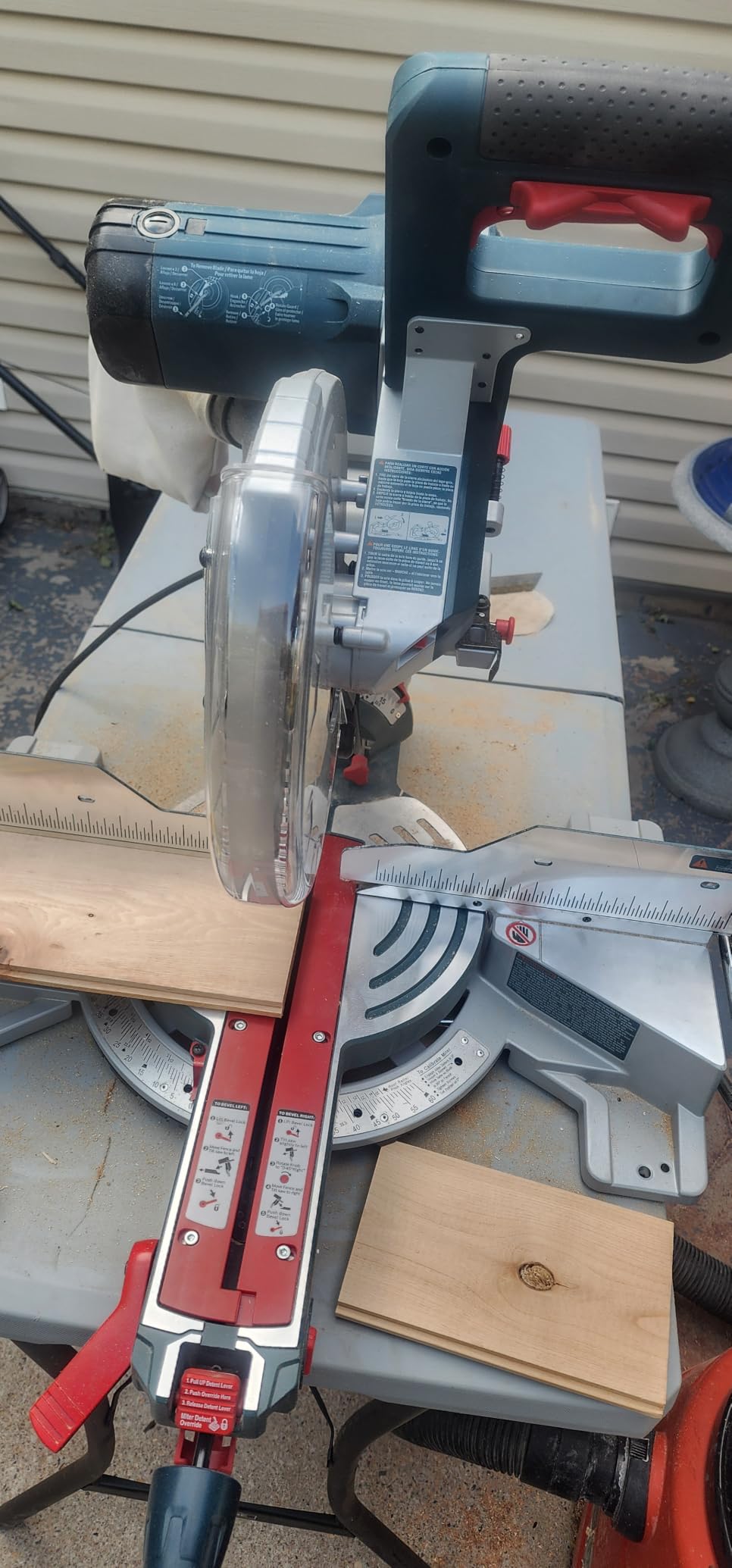
Every sliding compound saw needs clear air behind it, and that is the whole reason the Bosch CM10GD exists. The articulated hinge arms pull the head back instead of sliding it back, which trims up to 10 inches of front-to-back depth against a slide saw with similar capacity. The saw body sits flat against a wall where a conventional slider will not fit.
For trim, the rest of the spec sheet is strong. A 15-Amp motor at 4800 rpm, 47 degrees of bevel to the left and 47 to the right, and 6 inches of nested crown capacity at 45-degree spring angle. The miter detents sit at 0, 15, 22.5, 31.6, 45 and 60 degrees, which covers essentially every angle a trim carpenter uses.
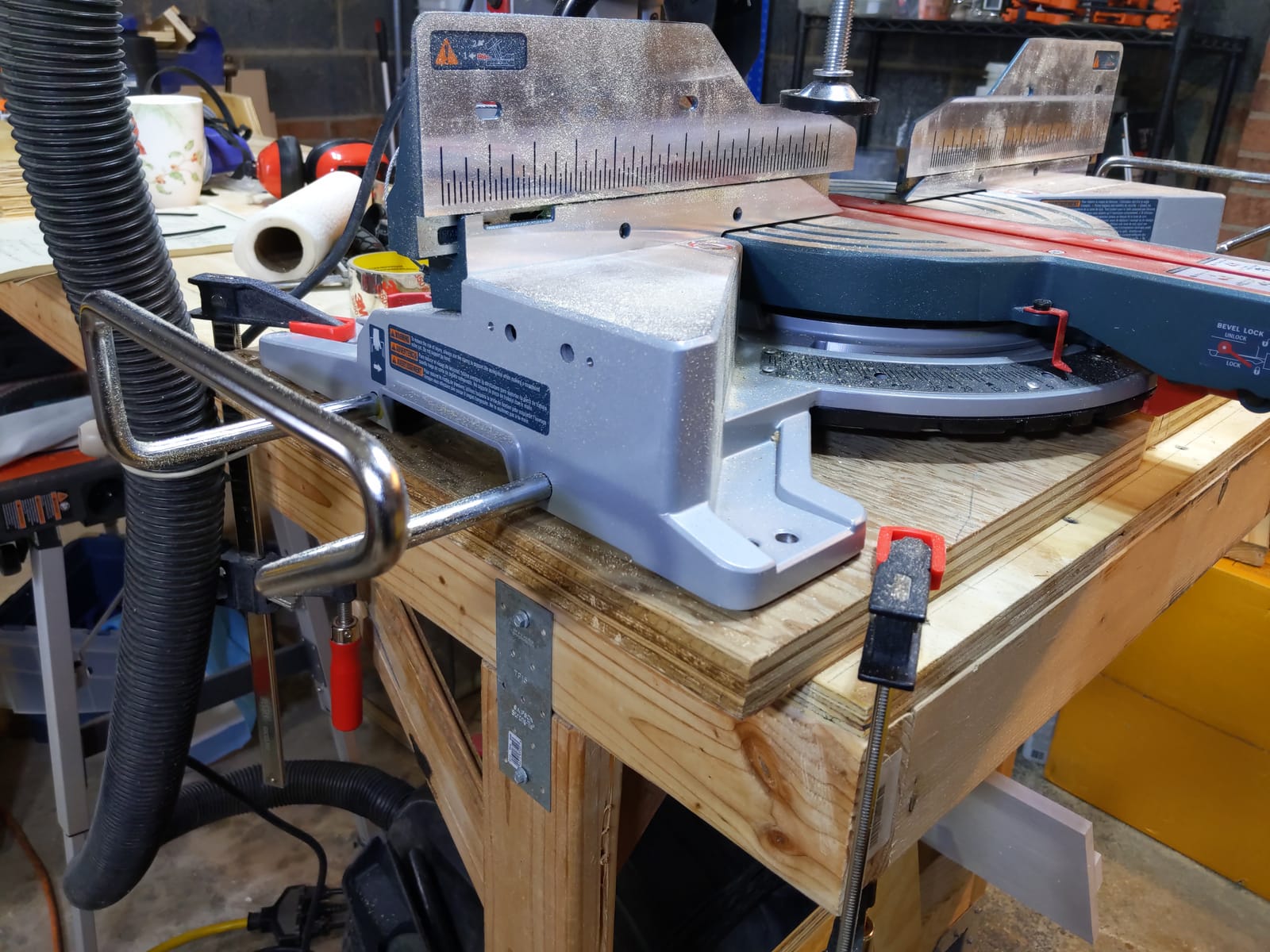
Professional flooring and finish installers pick this saw for cut consistency on hardwood, and several owners report the miter gauge was dead-on out of the box. That matters more than any marketing claim because a saw that is off by a fraction of a degree at the fence puts a visible gap in every baseboard joint.
The blade it comes with has 60 teeth, which is a genuine finish blade and a step up from the coarse teeth most saws include. It is not the finest cut available, but it will not burn painted MDF or tear the back of a hardwood casing.
What to check before you commit
There is no laser or shadow line on this saw, so you need another way to see the cut line. Owners use a pencil, a clamp-mounted guide, or a sacrificial mark on the fence. If a cutline system matters to you, pick 1, pick 6, and pick 8 each include one.
Plan the dust port. The included collector nozzle is shallow and does not seal tightly to the table, so it leaks fine dust into the room. A shop vacuum with a proper adapter solves it in an afternoon.
Where this saw falls short
At 64 pounds this is one of the heaviest saws here, and there is no soft start, so it jolts noticeably at startup. Expect to plan the carry rather than lifting it casually between rooms.
The large slide-button safety trigger is a matter of hand and stance. Test it in the aisle before you commit, because a trigger you have to re-grip costs you time on every cut.
5. Makita LS1040 10-Inch Compound Saw: Best Direct-Drive Workhorse
Makita LS1040 10″ Compound Miter Saw
10 inch
4600 rpm
15-Amp direct drive
27 lb
9 positive stops
Pros
- Direct-drive motor has no belt to stretch or replace
- 27 pounds is genuinely light for the bevel range
- Positive miter stops at 9 settings for repeat angles
- Miters to 52 degrees right for wide corner work
Cons
- Bevel is left side only
- Non-sliding design caps crosscut width
- No laser guide and comes with a 40-tooth blade
The Makita LS1040 is the traditional compound saw that a lot of finish carpenters still buy once and keep for twenty years. The direct-drive motor at 4600 rpm means there is no belt to stretch, no belt to replace, and no change in behavior as the saw warms up during a long cut run.
At 27 pounds it is the second-lightest saw here, and it still miters 0 to 45 degrees left and 0 to 52 degrees right. Nine positive stops at 0, 15, 22.5, 30 and 45 degrees left and right keep repeat pieces consistent.

The construction is what earns the long service reputation: a machined aluminum base, dual aluminum slide rails, and a dual-post compound pivoting arm that resists the twisting that cheap arms develop. Bevel reaches 45 degrees left, which is all you need for crown on a non-sliding saw.
One thing to plan for: the included blade is a 40-tooth model. That is a rough-cutting blade, and for finished hardwood or painted MDF you will want an 80-tooth ATB blade before the first trim cut. Owners who do crown and casing usually make that swap immediately.
What to check before you commit
The non-sliding frame means your crosscut width is fixed and there is no rail play to worry about. Buyers who want maximum accuracy on 45-degree frame miters often prefer a non-slider for exactly that reason, and the machined base here helps.
With 27 pounds and no slide, this saw moves room to room easily and mounts on a lightweight stand. It is a sensible second saw for someone who also works with a micro saw for fine detail work.
Where this saw falls short
Single bevel, left side only, and 10-inch capacity. Crown molding at height is not this saw’s job, and buyers who expected 12-inch-class capacity report disappointment.
There is no laser guide, and the 40-tooth factory blade is the most common upgrade path in this group. Budget for an 80-tooth ATB blade on day one.
6. SKIL MS6305-00 10-Inch Dual Bevel Sliding Saw: Best Value for a Full-Time Finish Saw
SKIL 10″ Dual Bevel Sliding Compound Miter Saw-MS6305-00
10 inch
4800 rpm
15-Amp
dual bevel
2x12 at 90 deg
Pros
- Dual bevel with positive stops at 48 and 45 degrees left and 45 right
- LED shadow line is bright and needs no batteries
- Crosscuts 2x12 at 90 degrees and 2x8 at 45 degrees
- Eleven positive miter stops up to 50 degrees both sides
Cons
- Comes with a 40-tooth blade that must be replaced for finish trim
- Heavier and larger in footprint than a non-sliding 10-inch saw
- Extension rod support sets are fiddly to position
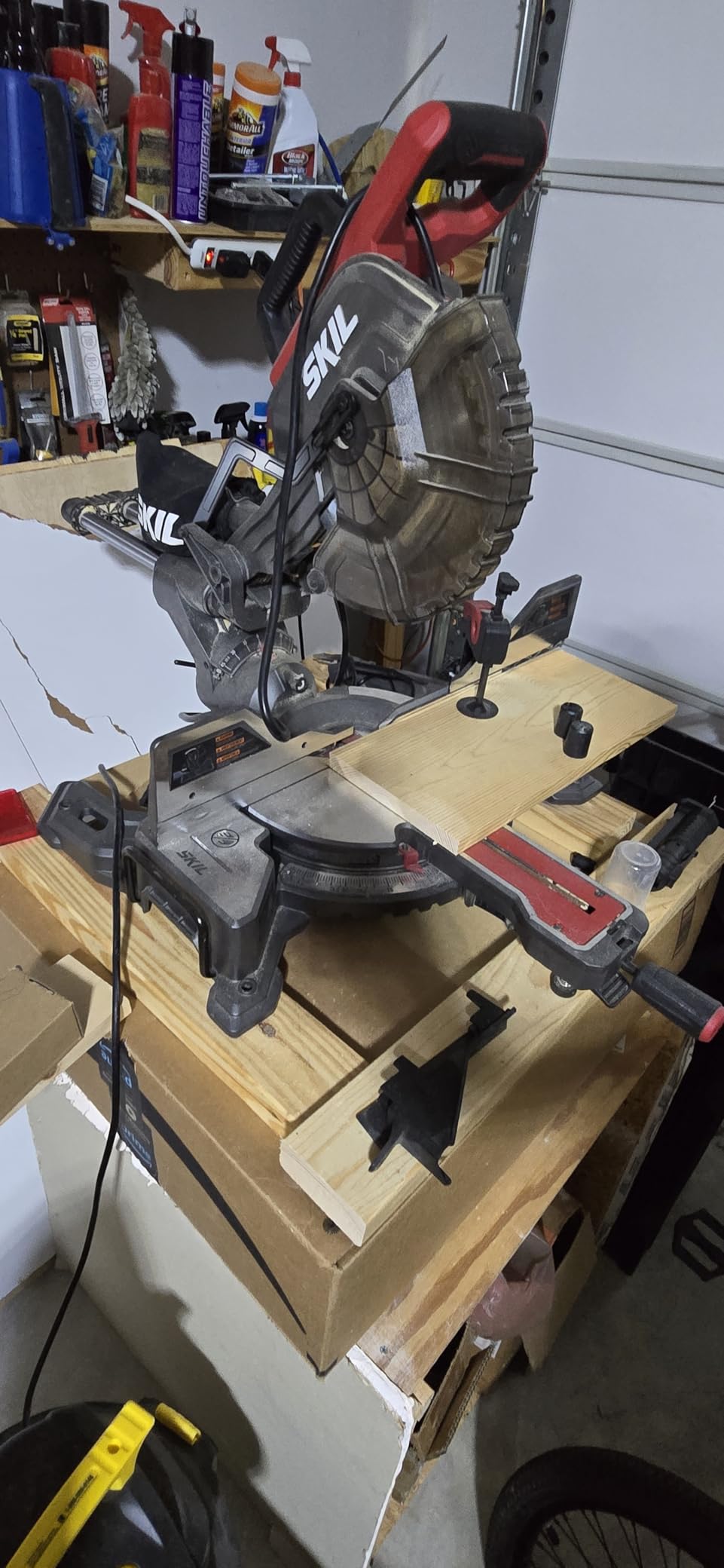
The SKIL MS6305-00 is the value answer to the crown molding problem. A 10-inch dual-bevel sliding saw with a full 2×12 crosscut at 90 degrees is a combination that trim carpenters usually only find higher up the range.
The LED shadow line is the feature that gets noticed first. It throws a bright line across the board, needs no batteries and no calibration, and reviewers call it more accurate than a laser for a shadow-style reference. On long trim runs you align to the line instead of to a measurement you have to re-verify.

The bevel stops sit at 48 and 45 degrees left, 0, and 45 degrees right, with miter up to 50 degrees left and right on 11 positive stops. That covers crown, base, casing and the odd picture frame angle without hunting for a setting.
At 4800 rpm with a 15-Amp motor it keeps pace with the other 10-inch saws here, and the extension rod support sets on both sides help with long baseboard. They are the fiddliest part of the saw, so set them once and leave them.
What to check before you commit
Buy an 80-tooth ATB blade before the first piece of finished trim. The 40-tooth blade in the box is a framing blade, and it will burn MDF base and tear hardwood casing.
That blade swap is the most common owner complaint on this saw, and replacing it takes minutes rather than buying a new one.
Because it slides, it needs rear clearance. In a small shop this saw goes on a rolling stand in the middle of the floor rather than against a wall. Compare that to pick 4 if wall space is the constraint.
Where this saw falls short
It is heavier and deeper in the footprint than a non-sliding 10-inch saw, and the dust bag catches only a portion of the debris. Pair it with a shop vacuum, and set the miter stop square before trim day rather than after.
7. Metabo HPT C10FCG2 10-Inch Compound Saw: Budget Pick and the Lightest Here
Metabo HPT 10-Inch Compound Miter Saw, 15-Amp, Single Bevel, C10FCG2
10 inch
5000 rpm
15-Amp
24.2 lb
0-45 deg bevel
Pros
- Lightest saw in this group at 24.2 pounds
- 5000 rpm motor for a fast clean crosscut
- Miters 0 to 52 degrees left and right with a 0-45 degree bevel
- Miter scale and positive stops keep repeat angles consistent
Cons
- Included 24-tooth TCT blade is too coarse for finish molding
- Small table gives less support for long or tall trim
- Single bevel tilts left only
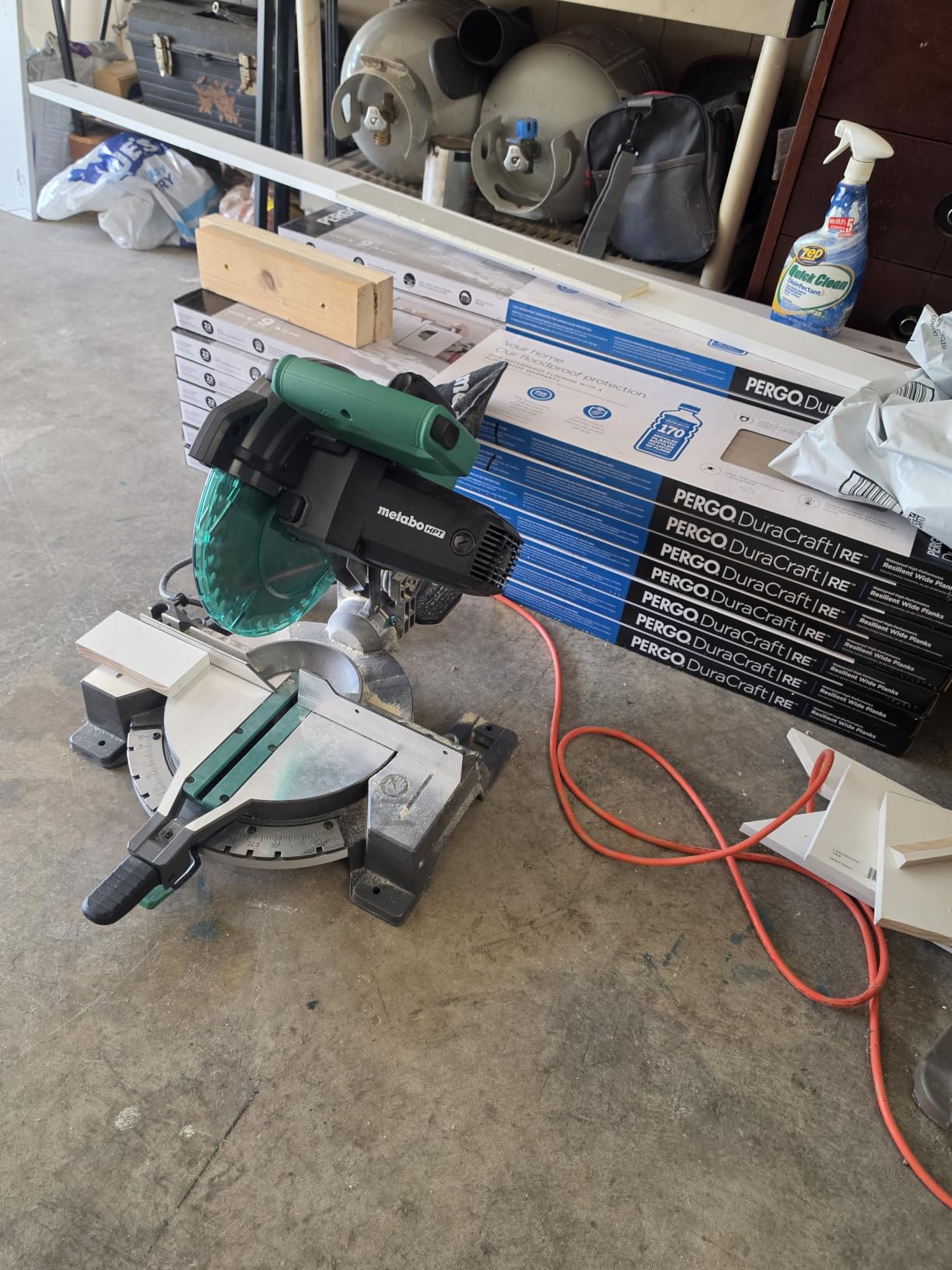
At 24.2 pounds this is the lightest saw in the roundup, and it is light because there is no slide and no cast slide table. If you move between apartments, up stairs, or in and out of a small van, weight is a daily fact rather than a spec sheet line, and this saw wins on it.
The 15-Amp motor reaches 5000 rpm and miters 0 to 52 degrees left and right with a 0 to 45 degree bevel. Owners consistently describe the miter scale and positive stops as improved enough to make repeat angles consistent, which is the thing that actually matters on a trim run.
The motor and gearbox package is the reason some buyers treat this as a shop saw rather than a starter saw. It pairs 15-Amp power with a detent plate that holds its setting, and at this weight it stays accurate on stacked trim rather than walking across the table.
The catch is the 24-tooth TCT blade in the box. It is a rip and framing blade, and putting it on painted MDF baseboard produces a burnt edge on the face and tear-out on the back. This saw is budget-friendly only if you plan to add a finish blade.
What to check before you commit
Decide how much crown you will actually cut. A single bevel with a 0-45 degree left tilt handles crown by flipping the workpiece, and the small table gives less support for tall pieces. Base, casing and picture frame work is where this saw is comfortable.
Set your total cost before comparing. The saw plus an 80-tooth ATB blade and a shop vacuum is the realistic starting configuration for finish work, and owners who skip the blade step report the same complaint every time.
Where this saw falls short
The table is smaller than any sliding saw here, so long baseboard needs an outfeed support or a sacrificial extension. Expect to add a roller stand for anything over about eight feet.
Dust collection is basic, and the left-only bevel means half your compound work needs a flip. Neither is a defect, but both shape how you work.
8. Makita LS1019L 10-Inch Dual Bevel Sliding Saw: Best 10-Inch for Crown Capacity
Makita LS1019L 10″ Dual-Bevel Sliding Compound Miter Saw with Laser
10 inch
3200 rpm
6-5/8 in nested crown
ball bearing slide
laser
Pros
- Delivers 6-5/8 inches of nested crown capacity
- Linear ball bearing rails for repeat accuracy
- Two-rail design reduces footprint so it can run near a wall
- Integrated laser guide
Cons
- Rough 58-pound weight means job-site moves need a stand or cart
- Slower 3200 rpm blade speed than most 10-inch saws here
The Makita LS1019L exists to solve one specific complaint: that 10-inch saws cannot handle crown. It cuts 6-5/8 inches nested, the molding capacity of a 12-inch saw, in a 10-inch dual-bevel body. The direct-drive gearbox and guard system raise vertical cutting capacity to 5-1/4 inches.
The linear ball bearing slide is the reason repeat cuts match. Ball bearings roll instead of sliding on a wear surface, so the head does not develop side play as the saw ages, and that is the difference between a wall of baseboard that gaps and a wall that closes up.
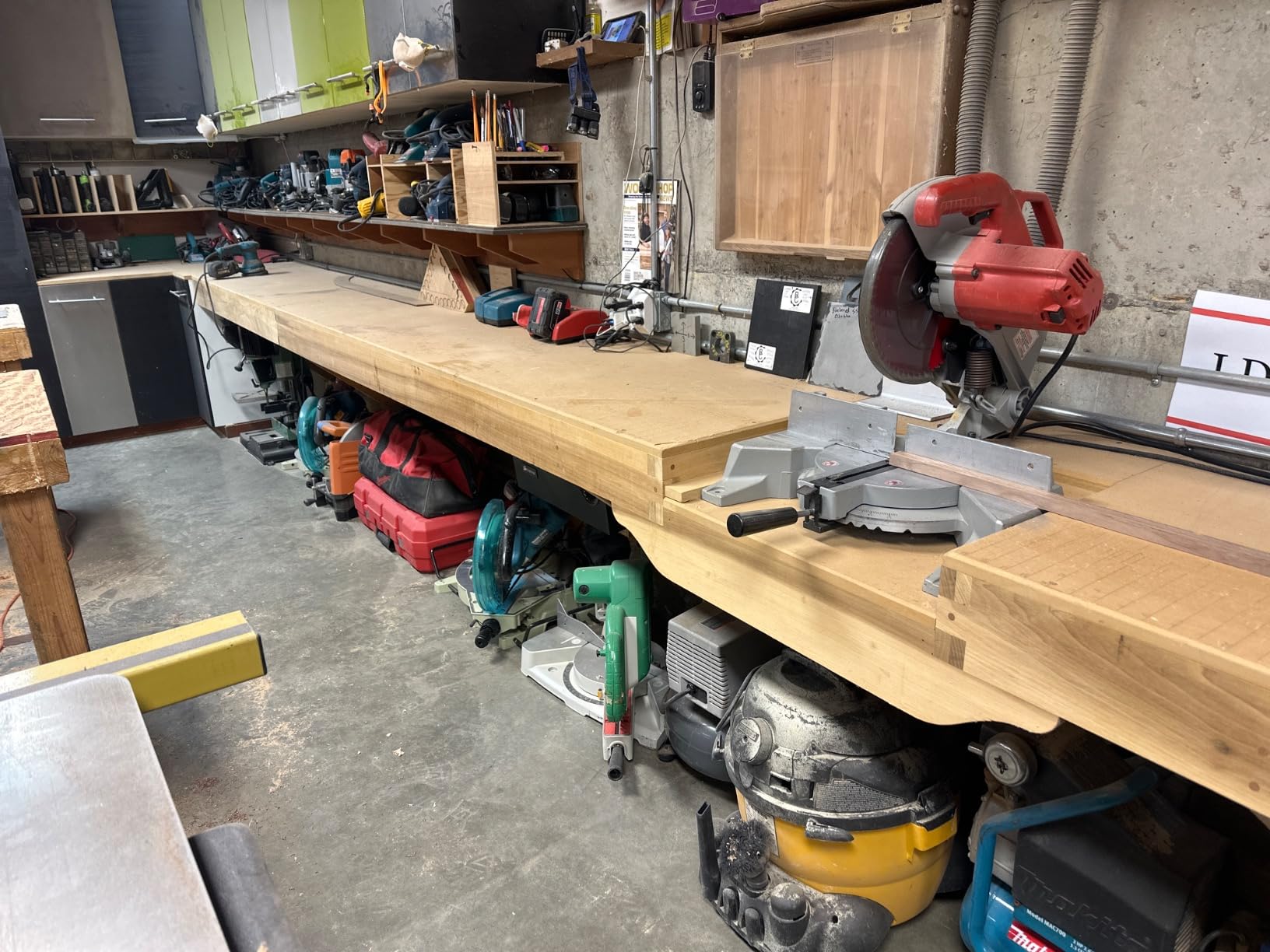
The two-rail single slide-glide design reduces the footprint enough that the saw can operate close to a wall, which is unusual for a 10-inch slider and useful in a small shop. The integrated laser guide is a faint line rather than a bright one, so a shadow-line saw is still easier to align by in low light.
The blade it comes with is a 60-tooth micro-polished model, which is a legitimate finish blade. For painted MDF on a color-matched job, move up to an 80-tooth ATB anyway.
What to check before you commit
Weight is the real constraint. Owners put it near 58 pounds, and the listed product weight is higher still, which makes it a two-hand carry and a stand-and-cart machine. If you carry tools alone, treat it as a shop saw that travels rather than a saw you move between rooms.
Blade speed is 3200 rpm, slower than most 10-inch saws here, and reviewers notice the difference in cut time on thick hardwood. It is a trade for the gearing and the crown capacity, not a defect.
Where this saw falls short
The dual-bevel geometry adds width behind the fence, so wide material is still tight. And at this size and weight, the saw is not a candidate for one person moving between jobs regularly.
Only three attachments are listed in the box, and there is no material clamp beyond the vertical vise. Plan on buying a proper clamp.
9. EVOLUTION R185SMS+ 7-1/4-Inch Sliding Saw: Best for Small Profiles and Mixed Material
Evolution Power Tools R185SMS+ Sliding Miter Saw with Multi-Material Cutting, 45 Degree Bevel, 50 Degree Miter, 210 mm Slide, Blade Included Cuts Wood Plastic Metal & More, 7-1/4″
7-1/4 inch
3700 rpm
60T TCT blade
45 deg bevel
50 deg miter
Pros
- One blade cuts wood plus plastic plus mild steel with no coolant
- Compact 7-1/4 inch format suits tight workspaces
- 210 mm slide with 45 degree bevel and 50 degree miter
- Cool cuts leave steel cool to the touch
Cons
- Small blade limits crosscut width and tall molding capacity
- Cut finish on wood is rougher than purpose-built wood blades
- Lower star ratings reflect finish variability
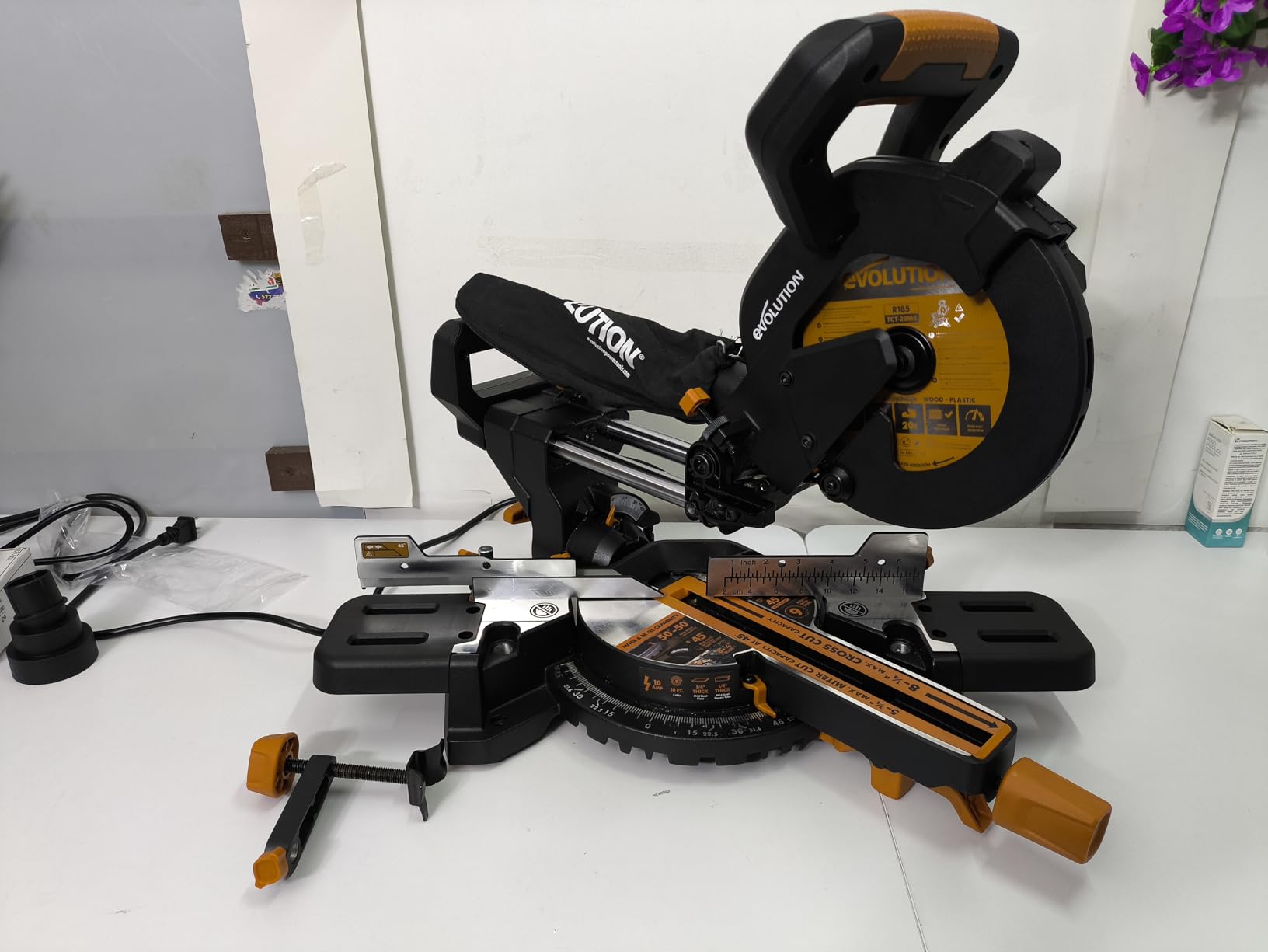
Here is the case for a small multi-material saw in a trim shop. If your work includes shoe molding, small casings, door hardware surrounds, or a remodeling job where you also cut steel strap, aluminum trim and composite decking, the EVOLUTION R185SMS+ removes the blade-change habit entirely.
The 60-tooth tungsten carbide tipped blade cuts wood, plastic and mild steel, and the dry metal cutting runs with minimal heat and no coolant. Owners report the blade lasting about 1000 cuts in 2×2 mild steel, which makes the blade economics work out over a busy metal trim schedule.
At 7-1/4 inches with a 210 mm slide, a 45 degree bevel and a 50 degree miter, it covers the standard trim angles. The cast aluminum base gives it rigidity for multi-material work, and the compact format is genuinely useful in a small room or on a crowded jobsite.
There is a real reason owners look for a smaller saw on jobs like this: slim molding profiles get chewed by a large miter saw, and a small chop saw cuts them cleanly. If your trim is mostly under two inches wide, this class of saw may be the right size, and our roundup of miter saws for home use covers the size question in more detail.
What to check before you commit
Confirm you are not planning tall molding on it. A 7-1/4-inch blade cannot nested-cut crown the way a 10-inch or 12-inch saw can, and crosscut width is limited in a way that will show on wide base.
Also confirm the listed weight and dimensions match what you need to move. The manufacturer listing data is inconsistent for this model, and reviewers differ on how it feels to carry.
Where this saw falls short
Cut finish on wood is rougher than a purpose-built wood blade, and the ratings in this roundup reflect that. For a trim job where the face of the molding is visible against a painted wall, plan on a dedicated wood blade for the finish cuts.
Motor output is below the 15-Amp wood-only saws here, so it is slower through thick hardwood. It is a versatility saw, not a pure woodworking saw.
10. Delta 10-Inch Compound Sliding Miter Saw: Best Lightweight Slider for a Weekend Shop
Delta – 10 in. Compound Sliding Miter Saw
10 inch
5500 rpm
15-Amp
30 lb
2x12 at full bevel
Pros
- 30-pound weight and it still crosscuts 2x12
- Fastest blade speed in the group at 5500 rpm
- Spindle lock makes blade changes straightforward
- Factory accuracy held up when checked with squares
Cons
- Included dust bag is ineffective and blocks the slide bars
- Laser guide is weak and inconsistent
- Bevel is left side only
This Delta answers a narrow question well: can you get a sliding saw light enough to move and fast enough to keep up? At about 30 pounds with a 5500 rpm motor, it is the lightest slider in this group and the fastest-spinning saw here.
It crosscuts 2×12 dimensional lumber, and at full bevel it still cuts nominal 2×12. That is unusual for a 30-pound saw and it means one machine can cover both finish trim and the framing material you turn up on a remodel.
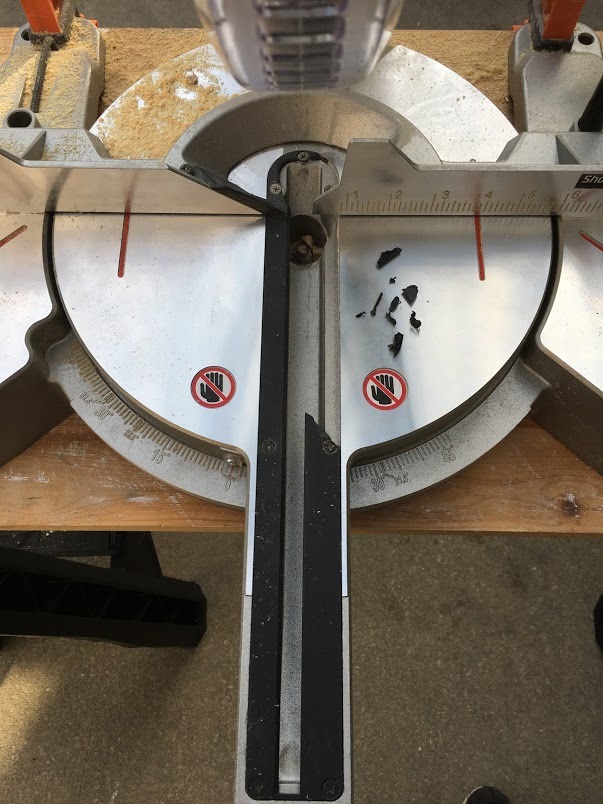
The spindle lock holds the arbor while the blade nut comes off, so blade changes do not require the two-person wrench routine. Combined with a cord that exits out the rear of the slide bar, protected from the blade, it is a well-thought-out design for someone who changes blades often.
Owners report factory accuracy that held up when checked with squares out of the box, and the solid metal construction has no flexy plastic joints. The slide can stick occasionally, which is a cleaning issue rather than an alignment one.
What to check before you commit
Bevel is 0 to 45 degrees to the left only, so compound crown cuts need a flip. For baseboard, casing and dimensional crosscuts that is not a problem, but crown installers should look at pick 4 or pick 6.
Plan to fasten it down. Several reviewers recommend bolting the saw to a bench because the motor torque produces a noticeable kick at startup that moves a free-standing saw.
Where this saw falls short
The included dust bag is ineffective and sits across the slide bars. Go straight to a shop vacuum with a hose adapter, and expect more noise at startup than most comparable saws.
The integrated laser is weak and inconsistent, which owners note is fine indoors and unreliable in a bright or dusty space. The cord is short, so plan on an extension.
11. EVOLUTION R255SMS+ 10-Inch Sliding Saw: Best When You Cut Metal and Decking Too
Evolution Power Tools R255SMS+ PLUS 10-Inch Sliding Miter Saw Plus Multi-Material Multi-Purpose Cutting Cuts Metal, Plastic, Wood & More 0˚ – 45˚ Bevel & 50˚ – 50˚ Miter Angles TCT Blade Included
10 inch
2500 rpm
one TCT blade for wood and metal
0-45 deg bevel
Pros
- One blade cuts wood plus nails plus decking plus plastic and mild steel
- Steel comes out cool with virtually no sparks
- Dual quick-release clamps speed up setup
- Taller fences help support base and crown molding
Cons
- Cut finish on finish wood is rougher than dedicated wood saws
- 2500 rpm is slower than most saws here
- About 42 pounds limits frequent carrying
The R255SMS+ is the bigger sibling of the 7-1/4-inch saw, and it is aimed at the remodeler who is not purely a finish carpenter. One tungsten carbide tipped blade cuts wood, wood with embedded nails, composite decking, plastic and mild steel, and the steel comes out cool enough to touch.
Bevel runs 0 to 45 degrees and miter 0 to 50 degrees on both sides, which covers the standard trim angles and the compound cuts a dual-position bevel handles without a flip. The taller fences give better support for base and crown than a standard 10-inch slider.

The dual quick-release clamps are the feature trim carpenters mention. Repositioning a workpiece on a conventional clamp takes a turn of a handle each time; a quick-release clamp changes in seconds, and on a room full of casing that adds up.
Integrated carry handles make it easier to move than its weight suggests, and the slide rail protector is a sensible inclusion for a saw that will be loaded and unloaded.
What to check before you commit
Decide honestly how much of your work is metal or composite. If the answer is rare, the cut finish on finish wood will disappoint you next to a dedicated wood blade, and a dedicated wood saw is the better tool.
Blade speed is 2500 rpm, slower than the other saws here, so expect longer cuts through hardwood than on a 5000 rpm saw. The multi-material blade is a TCT design, which is harder and coarser than a carbide wood blade by nature.
Where this saw falls short
The ratings trail the wood-only saws in this roundup, and cut finish on hardwood and molded profiles is the reason. That is the trade for the metal and decking capability, and it is worth making deliberately rather than by accident.
At about 42 pounds it takes two hands to carry comfortably, and owner reviews show more variability in cut quality here than on the DEWALT and Makita saws. Test a scrap piece before committing a full wall of molding to it.
12. DOVAMAN 12-Inch Dual-Bevel Sliding Saw: Best Budget 12-Inch Slider
DOVAMAN 12-Inch Dual-Bevel Sliding Compound Miter Saw, 15-Amp
12 inch
3800 rpm
15-Amp
4.2 x 13 in capacity
dual bevel
Pros
- 12-inch capacity of 4.2 x 13 inches handles wide dimensional material
- Dual bevel 0-45 degrees on both sides
- Nine angle presets on both sides of the table plus a laser guide
- Spare carbon brushes and side plates included
Cons
- Manufacturer advises checking miter alignment after delivery
- 40-tooth blade is coarse for finish trim
- About 54 pounds and rougher castings than premium brands
If you need 12-inch capacity on a budget, this is the pick. This DOVAMAN 12-inch slider has a maximum cutting capacity of 4.2 by 13 inches, a 15-Amp pure copper motor turning up to 3800 rpm, and dual bevel at 0 to 45 degrees on both sides, which is a spec sheet most budget 12-inch sliders cannot match.
The detent layout is thoughtful for trim: nine common presets including 0, 15, 22.5, 30 and 45 degrees on both the left and right sides of the table. Paired with the integrated laser guide, that is most of the setup work already done for you.
The accessory package is unusually generous for the class, with two spare carbon brushes, two side plates, a support clamp, a wrench and a dust bag. The ambidextrous safety-lock switch lets you work right or left handed, and the transparent blade guard keeps the cut line visible.
The honest caveat is in the documentation. The manufacturer advises checking the miter angle for misalignment after the saw arrives, because factory alignment can shift in transit. That is not a criticism, it is a warning, and it means you should square the saw before your first piece of finished trim.
What to check before you commit
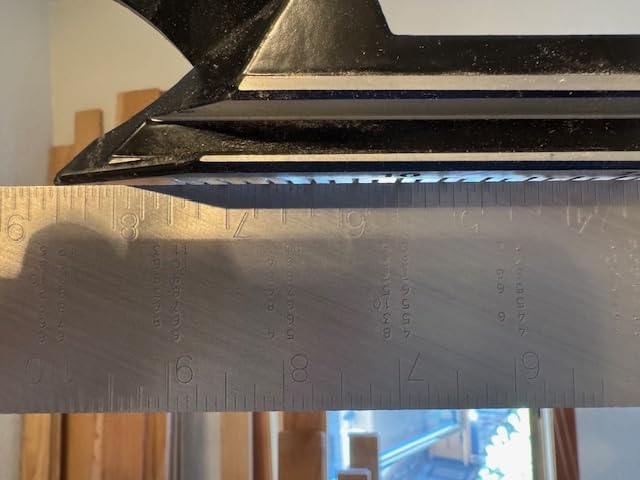
Run the squaring checks on arrival, before the first day of work. Set aside an hour with a machinist square and a scrap of trim. It is the same routine we describe below, and it is the difference between a saw that is accurate and one you assume is.
The 40-tooth wood blade in the box is a rough-cutting blade. Add an 80-tooth ATB finish blade before you touch painted MDF or finished hardwood.
Where this saw falls short
This saw sits at the bottom of the ratings range here, which points to more variability in quality control rather than one specific fault. Budget for the possibility of adjusting it on day one.
At about 54 pounds it is a heavy saw, and the castings and finish are rougher than the premium brands. It is a capacity-for-money pick rather than a feel-for-the-work pick.
What to Look for in a Miter Saw for Trim Carpentry
The specs that decide a trim saw are narrower than the specs that decide a framing saw. Ignore peak marketing and check these five things in order: crosscut capacity at 90 degrees, bevel range on both sides, fence height, nested crown capacity, and the blade in the box.
10-inch versus 12-inch. A 10-inch saw crosscuts 2×6 at 90 degrees on a non-slider and up to 2×12 on a slider, while a 12-inch saw crosscuts 2×8 non-sliding and 2×14 sliding. Crosscut capacity is the number to check first, because it is the one that ends a cut short. For interior trim, baseboard and casing, a 10-inch saw is genuinely enough. For wide base, tall crown, and dimensional material on remodel days, go 12-inch.
Single versus dual bevel. A dual bevel saw tilts the head left and right, so compound cuts happen in one pass with the workpiece the right way up. A single bevel saw tilts left only, so crown and cove work means flipping the board between cuts, which adds handling and a chance to shift the workpiece. If crown molding is on the job list at all, dual bevel is worth the money.
Sliding versus non-sliding, and rear clearance. Sliding saws give you 2×12 or wider crosscut capacity and are the only choice for tall crown. They also need roughly a foot or more of clear space behind the head to reach full travel, which is why they cannot sit against a wall. Axial-glide saws such as the Bosch CM10GD solve this by pulling the head back instead of sliding it back, and the Makita LS1019L uses a two-rail design to shrink the footprint. In a small shop, rear clearance is a first-class buying criterion, not an afterthought.
Cutline systems. A shadow line, where an LED strip projects a line onto the workpiece, is the most reliable option because there is nothing to calibrate. XPS systems on the DEWALT saws are the reference implementation. A laser guide is a thin line that washes out in bright light. A pencil line works if you are patient.
Dust. Fine MDF dust settles on finished floors, into cabinets and onto wet paint, and it does not come back. The DWS780 is the only saw here with a quantified capture rate, at over 75 percent. Everywhere else, budget for a shop vacuum, a dust separator, and floor protection before you cut inside a finished house. If your work is largely indoor finish, that budget line matters more than the saw itself.
Weight and power. Saws here run from 24.2 pounds to a good deal more, and a saw over 60 pounds is effectively a shop machine that travels on a stand or cart. On corded versus cordless, every saw in this roundup is corded. A 15-Amp corded saw runs indefinitely, which matters when you are cutting a full room of crown. Cordless is worth it when there is genuinely no power on site, and a dual-battery platform is a sensible long-term purchase, but no battery saw here matched a 15-Amp corded motor for sustained cut time on thick hardwood.
Why 22.5 and 31.6 Degrees: Crown Molding Angle Math
Two numbers cause more confusion than any other part of trim work: 22.5 degrees and 31.6 degrees. Both come from crown geometry, and both are stop positions on a good miter saw.
Every piece of crown molding has two angles. The crown angle is the angle the face of the molding makes with the ceiling and wall surfaces, and it is the number printed on the molding. The spring angle is the angle the profile makes at its back. The compound cut you make is half the crown angle plus half the spring angle, which is why a 60-degree crown with a 52-degree spring angle cuts at 30 plus 26, or 56 degrees each way, while a 45-degree crown with a 45-degree spring angle cuts at 22.5 plus 22.5, or 45 degrees each way.
The stops labelled 22.5 and 31.6 on a miter saw come straight out of that half-and-half calculation, and both are common North American crown profiles. The 22.5 figure is half of a 45-degree crown angle, the setting used when you nest a 45-degree crown profile on a 10-inch or 12-inch saw. The 31.6 figure is that same 22.5 plus a 9.1 degree spring contribution, which comes from a 18.2 degree spring angle. Both are detent positions on saws such as the Bosch CM10GD, which stops at 0, 15, 22.5, 31.6, 45 and 60 degrees.
One caution on nested crown capacity claims. Manufacturers usually quote the number with the molding lying flat on the saw, nested, which is the correct method, but they often assume a 45-degree spring angle unless stated. A taller or flatter profile than the one they tested will not cut the same way, so compute it yourself: half the crown angle plus half the spring angle, and check the result against the saw’s miter range.
How to Square a New Miter Saw Before the First Cut
Almost nobody returns a miter saw because it was out of square. They return it because the first wall of baseboard gapped and they blamed the saw. Five checks, about an hour, and you will know.
1. Set the saw down and settle it. Put it on a flat bench, let the head sit at 0 degrees, and push the head fully down several times so the elevation settles against the stop. Then do not move it again until the checks are done.
2. Check the miter at 0 degrees. Place a machinist square or a good combination square against the fence and the table. There should be no gap at the fence face and no gap where the square meets the table. If there is a light gap, the miter needs a small adjustment before anything else.
3. Check the bevel at 0 and 45 degrees. Square the blade against the fence at 0 degrees. A straightedge held against the blade body at 45 degrees tells you whether the bevel stops agree with the scale.
4. Set a stop block and cut a test square. This is the method experienced finish carpenters use. Screw a stop block to the table so the blade will not cut past a preset distance, then flip the saw over on a padded surface and cut a full-depth kerf into the block. Turn the saw back over and you have a perfectly square stop, repeatable for the rest of the project. Out of square at the miter, the stop block removes the error from every cut that follows.
5. Cut four test pieces and check them against each other. Square the first piece, then lay the next three against it. Identical pieces mean your saw repeats. Gaps that grow mean the miter detent, the head bolts, or the fence need attention. A small gap at the blade guard on a new saw is normal tolerance, so compare pieces against each other rather than against a number.
If the cuts are consistently off in one direction, adjust before you start. A saw that is close to square out of the box is worth a half hour of adjustment; a saw that is way off is a return, and no amount of tuning fixes a bent head or a cracked casting.
Blade Life, Repairability and What to Buy Less Often
A miter saw is a long-lived tool, but the blade is a consumable you will replace repeatedly, and that is worth thinking about before you buy.
Most saws in this roundup come with a blade designed for dimensional lumber, not for finish. A 24-tooth or 40-tooth blade is fast on framing stock and rough on painted MDF and hardwood trim. An 80-tooth alternate top bevel blade is the standard finish-trim upgrade: the ATB grind alternates left and right, so the cutting edge shears rather than shoves, and the higher tooth count leaves a smoother face with less sanding. On a painted MDF baseboard package, that one blade swap is often the difference between a good day and a full day of touch-up.
Beyond blades, look at what you will replace over the life of the saw. Fences, clamps, dust bags and detent plates are all wear items with different availability across brands. Service networks and parts availability matter more than the warranty length on paper. A long tool warranty is only worth something if parts are available when something fails.
Repairability is a fair question in this category. Direct-drive saws like the Makita LS1040 and the Makita LS1019L have fewer wear parts than belt-drive designs, which is one more reason the older saws outlast the newest ones. Blades, brushes, fences and cords are consumables you can replace; a cracked gear housing is not, and it is the part most likely to end a saw’s life.
If you are weighing platform economics rather than saw specs, a battery platform only pays off if you already own tools on it. Every saw in this roundup is corded, so this is a decision for the cordless saw market rather than this list, but the same logic applies to a stop block, clamps and dust extraction. Buy the accessory once and reuse it across saws.
Frequently Asked Questions
What is the best miter saw for trim carpentry?
The DEWALT DWS715 is the best all-round choice for trim carpentry, with an 80-tooth blade in the box, an XPS shadow line cut guide, 4500 rpm, and crosscut capacity of 2×8 lumber at 90 degrees. If you install tall crown molding, choose a dual-bevel sliding saw such as the DEWALT DWS780, which nests crown to 7-1/2 inches and crosscuts 2×14 at 90 degrees.
What is the best miter saw for crown molding?
For crown molding, the DEWALT DWS780 is the strongest pick because it is a dual-bevel sliding saw with tall fences that support crown up to 7-1/2 inches nested and base molding up to 6-3/4 inches vertically. If you want 10-inch capacity with 12-inch-class crown capacity, the Makita LS1019L nests 6-5/8 inches of crown in a smaller footprint.
What type of saw is best for cutting crown molding?
A compound miter saw with dual bevel is best for cutting crown molding. Dual bevel means the head tilts left and right, so the molding lies flat on the saw with the face up and you make the compound cut in a single pass. A single bevel saw tilts left only, which means flipping the workpiece between cuts and adding both setup time and error.
Why 31.6 degrees for crown molding?
A compound crown cut equals half the crown angle plus half the spring angle. A 45-degree crown angle is half of 22.5 degrees, which is the stop labelled 22.5 on most miter saws. The 31.6 stop comes from the same half-and-half method on a crown whose spring angle contributes about 9.1 degrees, and saws such as the Bosch CM10GD carry a detent at exactly 31.6 for it.
What is the best miter saw blade for trim work?
An 80-tooth alternate top bevel blade is the standard finish-trim upgrade, because the alternating bevel shears the edge rather than shoving it and leaves a smoother face on painted MDF and hardwood. Most saws in this roundup come with a 24-tooth or 40-tooth framing blade, which burns and tears finish trim. A 60-tooth blade is a reasonable middle step for hardwood casing.
Is a 10-inch miter saw big enough for trim work?
Yes, for most interior trim. A 10-inch saw crosscuts 2×6 lumber at 90 degrees on a non-slider and up to 2×12 on a sliding model, and it handles baseboard, casing and window trim. Move up to 12 inches for tall crown, wide base or dimensional material, and check nested crown capacity against your actual molding profile rather than the headline number.
How do I make a miter saw cut square?
Settle the head at 0 degrees on a flat bench, check the miter square with a machinist square against the fence and table, verify the bevel at 0 and 45 degrees, then screw a stop block to the table and cut a full-depth kerf into it with the saw flipped over. That stop block is now your square reference, and repeated pieces cut on it will match each other exactly.
Bottom Line on the Best Miter Saws for Trim Carpentry
The DEWALT DWS715 is our pick as the best miter saw for trim carpentry overall. It comes with an 80-tooth blade, the XPS shadow line removes measuring from every cut, and 4500 rpm keeps up with a full day of base and casing without the weight of a full sliding saw.
Install tall crown and the choice changes. The DEWALT DWS780 is the crown and wide base machine, with dual bevel, 7-1/2 inches of nested crown and a 2×14 crosscut. If the shop has no wall clearance, the Bosch CM10GD’s axial-glide head solves that. On a budget, the SKIL MS6305-00 gives you a dual-bevel 10-inch slider with a 2×12 crosscut, provided you add a finish blade.
Whichever saw you choose, square it before the first cut, fit an 80-tooth ATB blade, and plan the dust extraction before you cut inside a finished house. Those three steps matter more to the quality of your trim than any feature on a spec sheet. For narrower work, our picks on scroll saws and band saws cover the curved and resawn stock a miter saw cannot reach.