
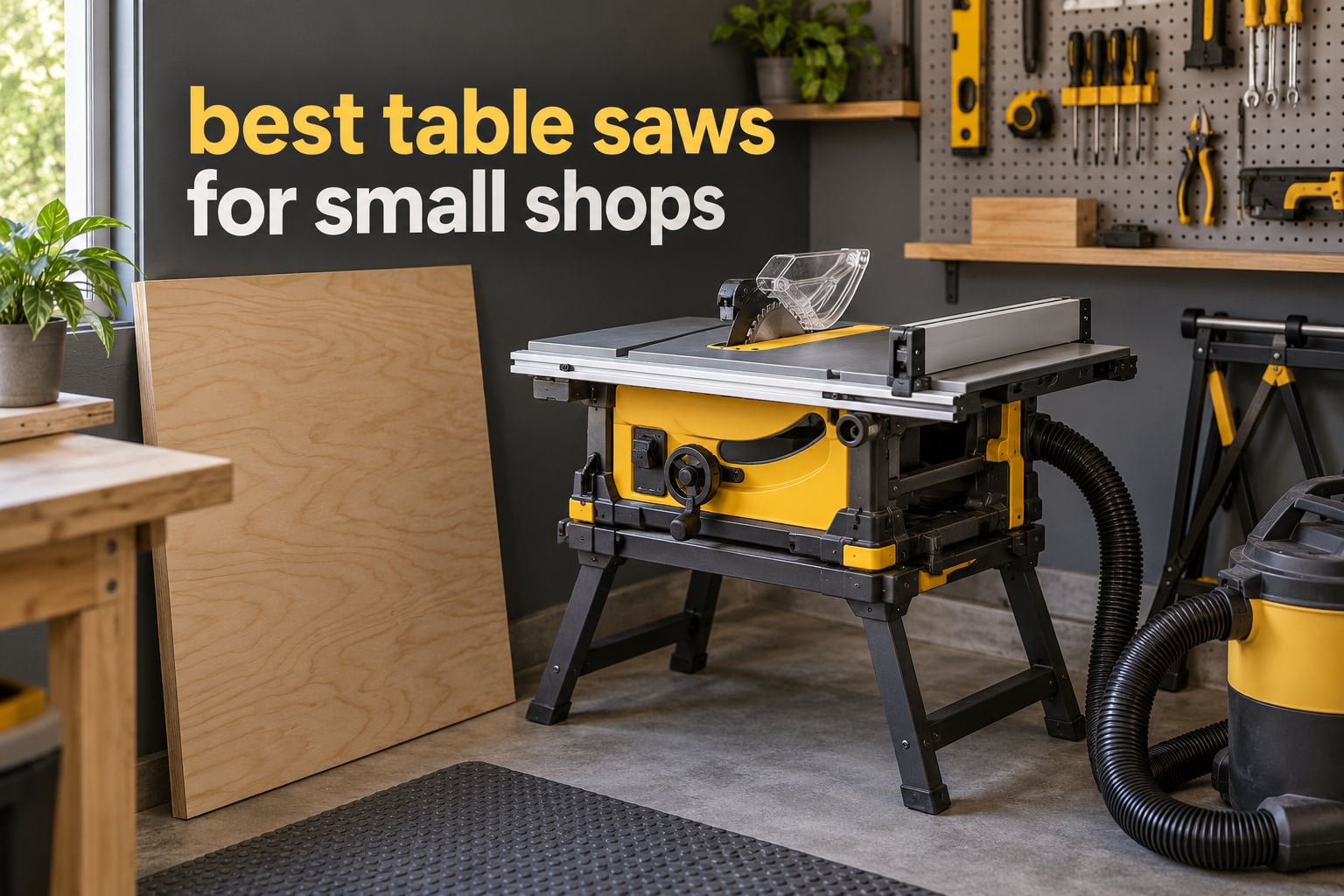
The hardest part of designing a small shop is not the tool wall. It is the floor. A table saw takes up more room than anything else you own, and the stand plus the outfeed support you need to make it useful can easily double that footprint. We have spent the last few months working through the compact and jobsite options with that constraint as the starting point, measuring what each one actually claims on the floor and how it behaves when you break down a sheet of plywood.
That is the question behind the best table saws for small shops list below. Not which saw wins a spec contest on paper, but which one still fits through a garage door, still rips a full 4×8 sheet, and still parks against a wall when the rest of the bench work has to happen. Every saw here is a real 10 inch or 8-1/4 inch machine rather than a hobby micro saw, and we have been honest about where each one runs out of room or capability.
Start with the flagship if you want the full range of jobsite machines in one place: our pick of the best table saws for woodworking covers the full-size and contractor options in more depth. If your shop is genuinely a corner of a room, the small hobby end of the market is covered separately in our guide to the best micro saws and razor saws for hobby use.
Across the eight saws we lined up, the recurring theme was that the fence matters more than the horsepower. Four of these machines use a rack and pinion fence system, and the difference between a fence that stays parallel after a month of use and one that drifts is the difference between furniture-grade work and scrap-bin work. Blade size is the second lever, and it is the one buyers most often get wrong. We also flagged the one category we would not recommend as a main shop saw, and the one alternative worth serious consideration before you buy.
Table of Contents
Key Features to Look For in a Small Shop Table Saw
Footprint including the stand. Measure the folded or rolling dimensions, not just the saw on its own, because the stand claims as much floor as the tool.
Fence system. A rack and pinion fence with index pins keeps the fence parallel to the blade and lets you repeat a setting without measuring twice.
Power and blade size. A 15 amp motor paired with a 10 inch blade gives you a 3-1/8 inch depth of cut, while an 8-1/4 inch blade caps depth at 2-1/2 inch and will not accept a full dado stack.
Dust handling. A 2-1/2 inch dust port elbow or a 2-1/2 inch hose connection is enough to keep chips off the operator once you add a drum or a shop vacuum.
Blade brake and guarding. An electronic blade brake or a see-through guard with anti-kickback pawls matters more in a home shop where the operator is learning the machine.
Top 3 Table Saws for Small Shops in 2026

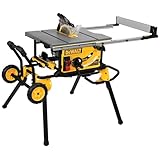
The DEWALT DWE7485 takes the top spot because it is the rare small-shop saw that is genuinely accurate out of the box and still breaks down a full sheet of plywood at 24.5 inches of rip capacity. It packs down fast enough to live in a corner when you are not using it, which is the whole point of a compact saw.
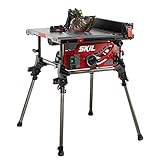
The SKIL TS6307-00 is the value answer, and the only 10 inch saw here with a folding stand built into the tool rather than bolted beside it. If the floor space is the binding constraint, that integrated frame is worth more to you than extra pounds of motor.
The DEWALT DWE7491RS is the one to buy if sheet goods are the main event. Thirty-two and a half inches of rip capacity and a 21-7/8 by 26-3/8 inch table handle full 4×8 panels that the compact saws can only handle on one dimension.
All 8 Table Saws Compared in 2026
| Product | Specifications | Action |
|---|---|---|
| DEWALT DWE7485 Compact Jobsite Saw |
|
Check Latest Price |
| DEWALT DWE7491RS with Rolling Stand |
|
Check Latest Price |
 BOSCH GTS15-10 with Rise Wheeled Stand BOSCH GTS15-10 with Rise Wheeled Stand |
|
Check Latest Price |
 SKIL TS6307-00 Folding Stand Saw SKIL TS6307-00 Folding Stand Saw |
|
Check Latest Price |
 SKIL TS6308-00 Compact Saw SKIL TS6308-00 Compact Saw |
|
Check Latest Price |
 EVOLUTION R10TS Jobsite Saw EVOLUTION R10TS Jobsite Saw |
|
Check Latest Price |
 Delta 36-6023 Contractor Grade Saw Delta 36-6023 Contractor Grade Saw |
|
Check Latest Price |
 BOSCH GTS18V-08N Cordless Saw BOSCH GTS18V-08N Cordless Saw |
|
Check Latest Price |
Two numbers on that grid decide most small-shop purchases before anything else does. Rip capacity tells you whether a full 4×8 sheet is a one-saw job or a two-saw job, and the blade diameter decides your maximum depth of cut and whether you can stack dado blades at all.
1. DEWALT DWE7485 8-1/4 in. Compact Jobsite Table Saw
DEWALT 15 Amp 8-1/4 in. Compact Portable Jobsite Table Saw (DWE7485)
8-1/4 in blade
24.5 in rip capacity
54 lb
1800 watts
5800 rpm
Pros
- Compact body that packs down in about two minutes
- Rack and pinion fence with index pins
- 24.5 in rip capacity breaks down a 4x8 sheet
- Accurate out of the box with no calibration
- Solid build with no shakes or rattles
Cons
- Small tabletop makes full panel work awkward
- Miter gauge has play in the miter slot
- Recessed power switch is awkward with gloves
This is the saw we kept coming back to during testing. The DWE7485 weighs 54 pounds, measures 22.75 by 22.75 by 13 inches without a stand, and breaks down fast enough that one person can move it from the bench area to the wall in a single trip. For a garage or a basement corner, that combination of size and capability is hard to beat.
The fence is the reason it earned the top slot. The rack and pinion telescoping rails lock on index pins, so once you set a width the fence does not quietly walk away from it while you walk a board past. Owners consistently report the saw arrives aligned and cutting square without a calibration session, and r/BeginnerWoodWorking keeps landing on this model as one of two default recommendations for a first serious saw.
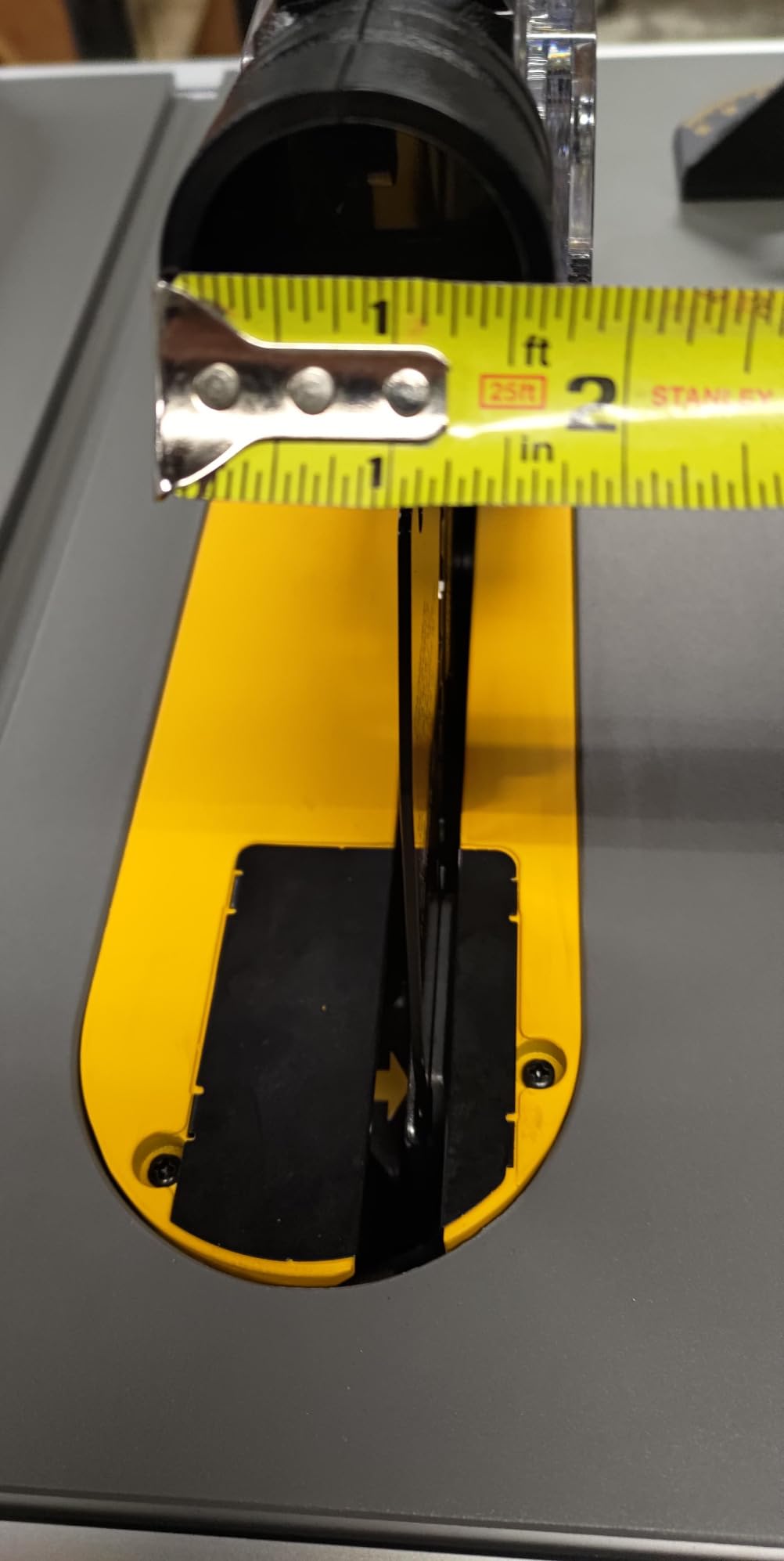
The 24.5 inches of rip capacity is the number that makes it a real shop tool rather than a trim saw. It handles a full 4×8 sheet of plywood or OSB for ripping, which is the single most common operation in a small shop. Depth of cut is where the smaller blade shows: you get roughly 2-1/2 inch of depth at 90 degrees, so a 2×8 comes close to the limit on edge and you will want a sled for crosscuts that need full depth.
It also will not take a full dado stack. That is a physical limit of the 8-1/4 inch arbor and blade height, not a quality problem, and it is the main reason we still recommend a 10 inch saw to anyone who plans to build cabinets with flat-bottomed dados.
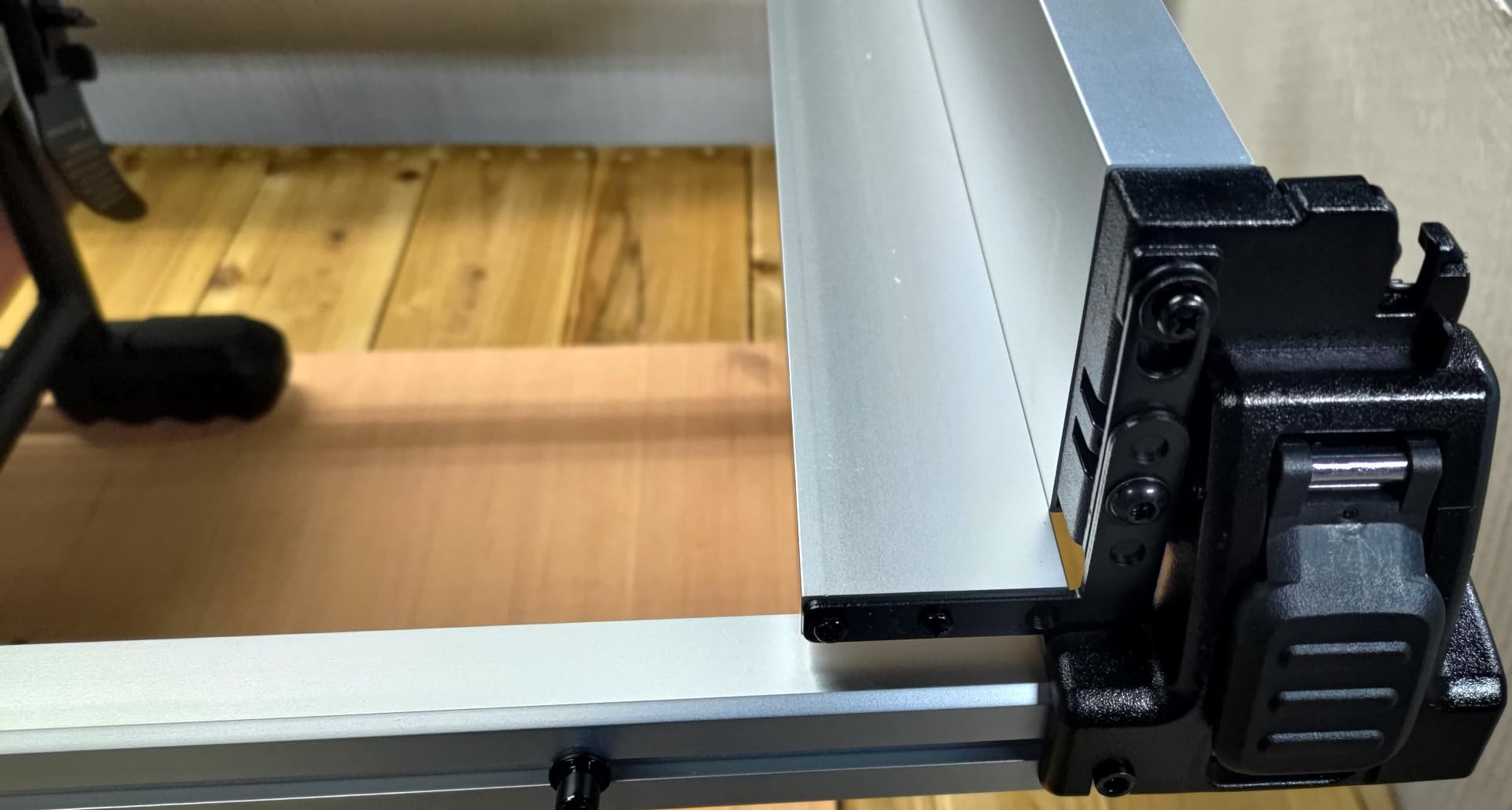
What the DWE7485 does well in a tight shop
The metal roll cage base is more durable than the plastic frames on lighter saws, and the whole tool is stable on rips without a stand if you have a solid bench at the right height. On-board storage for the guard, fence, wrenches and miter gauge means the parts travel with the saw instead of disappearing into a drawer.
The Site-Pro modular guarding system adjusts without tools, so switching between ripping and crosscut setup takes seconds. The power-loss reset is a small feature that prevents an accidental restart after a breaker trip, which matters more in a home shop than the spec sheet suggests.
Where it frustrates owners
The miter gauge is the weak point. Owners report noticeable play in the miter slot, and most of them replace it within a few projects or stop using it entirely in favour of a crosscut sled.
The small table surface also makes large panels awkward to handle, and the fence has no vertical squaring adjustment, so you should confirm alignment during setup rather than assuming it. The recessed power switch is awkward to hit with gloves on, and the blade takes roughly two seconds to stop after you switch it off.
2. DEWALT DWE7491RS 10 in. Table Saw with Rolling Stand
DEWALT Table Saw 10 Inch with Foldable Rolling Table Saw Stand, 15 Amp, 4800 RPM, 32-1/2-Inch Rip Capacity (DWE7491RS)
10 in blade
32-1/2 in rip capacity
110 lb
3-1/8 in depth of cut
2-1/2 in dust port
Pros
- 32-1/2 in rip capacity handles full sheet material
- Rolling stand moves the saw in one piece
- 21-7/8 by 26-3/8 in table supports the work
- 2-1/2 in dust collection port
- 3 year limited warranty
Cons
- 110 lb makes it a two-person lift
- Stand detaches instead of integrating with the tool
- Larger floor footprint than the compact saws
If your work is mostly sheet goods, the DWE7491RS solves the problem the 8-1/4 inch saws cannot. Thirty-two and a half inches of rip capacity means a full 4×8 sheet of plywood can be ripped down to width in far fewer passes than a compact saw needs, and the 10 inch blade gives 3-1/8 inch of depth at 90 degrees and 2-1/4 inch at 45 degrees.
It ships with a rolling stand that lets one person reposition the saw, which is the feature the manufacturer leads with and the one that actually changes your shop layout. The rack and pinion telescoping fence rails hold the fence parallel through thick hardwood, and the 15 amp motor at 4800 rpm has the power for treated lumber as well as cabinet stock.
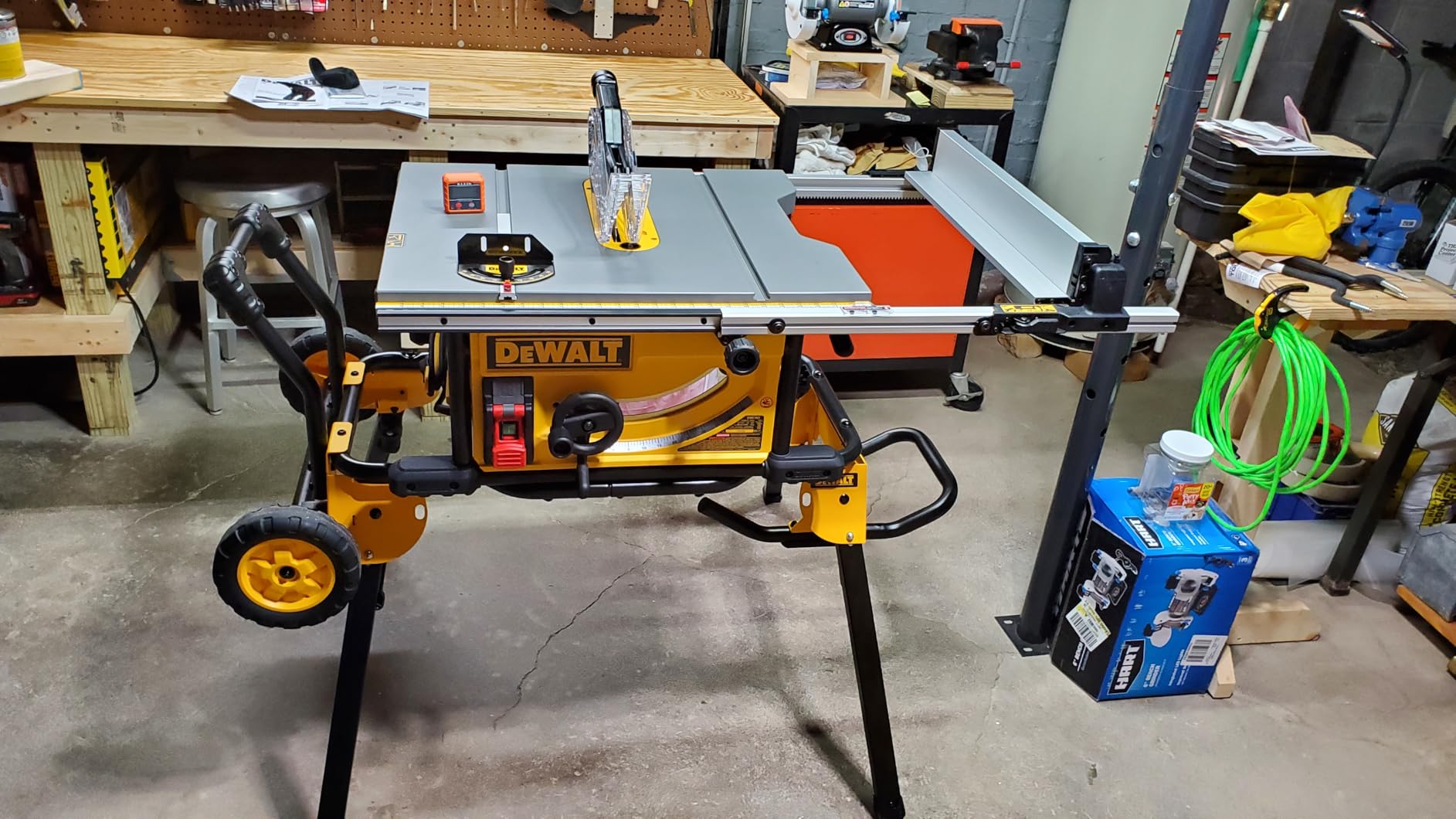
The table itself is unusually generous at 21-7/8 by 26-3/8 inches, which gives a board somewhere to sit on both sides of the blade. The patented material support handles narrow rips where most portable saws drop a thin strip off the edge. Onboard storage holds the guard assembly, fence, riving knife, miter gauge, wrenches, push stick and cord wrap.
This is the saw we would point at for cabinet and shelving work in a shop that can give up the floor space. It is a three-year limited warranty, which is respectable but not the longest in this group.
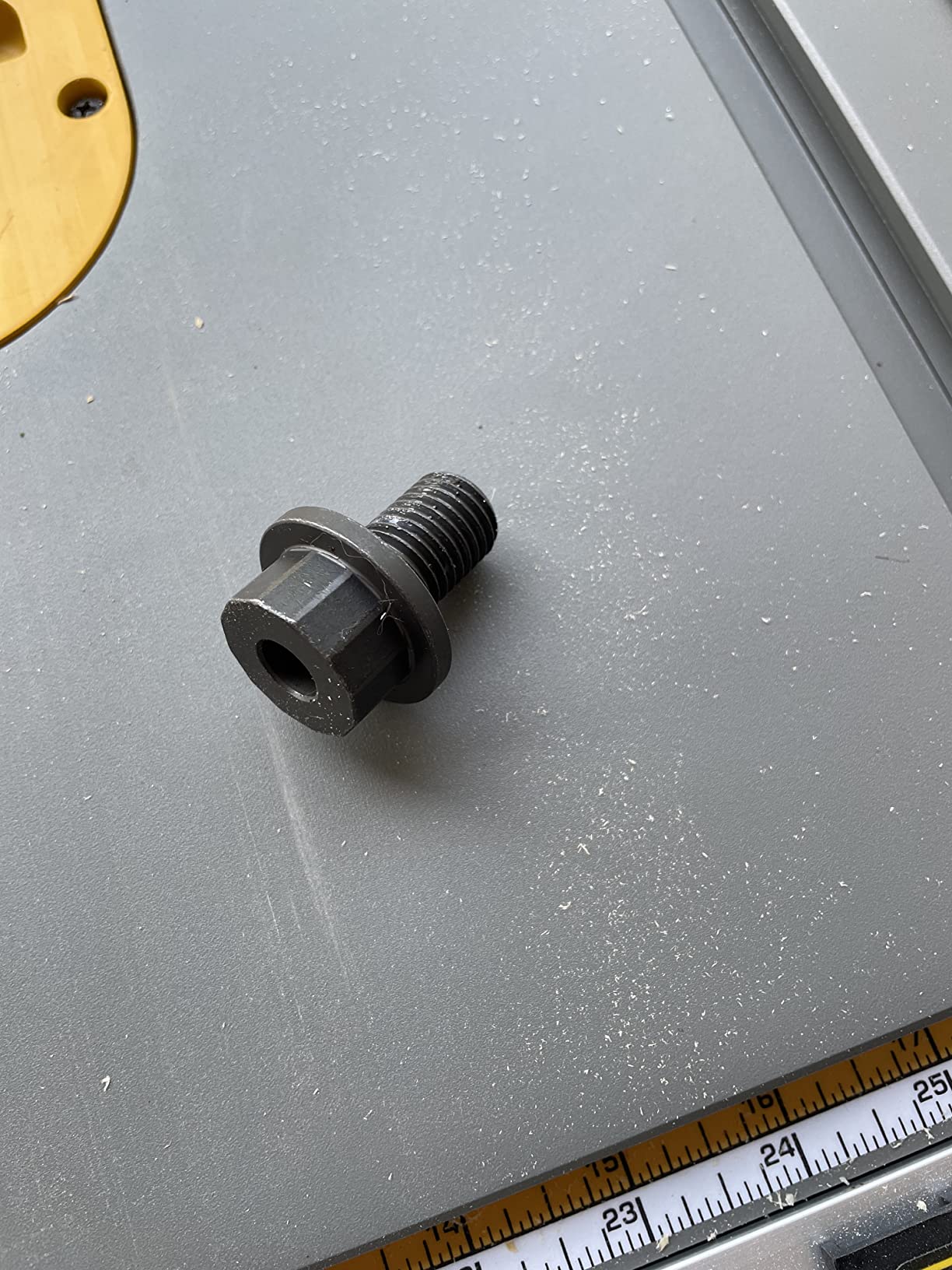
When this is the right saw
Choose it when full sheets, dimensional lumber and repeated hardwood ripping are daily work and you have a corner of the shop where the saw can live. The stand wheels mean you can roll it out of the way to sweep or to set up a clamp glue-up on the same floor.
It also suits a contractor who moves between job sites, since the whole package breaks down to a saw and a stand rather than a fixed machine. The 2-1/2 inch dust port is one of the larger ports in this group and takes a standard shop vacuum hose or an adapter to a drum.
Where the weight and footprint bite
At 110 pounds this is the heaviest saw on the list, and loading it into a van is genuinely a two-person job. The stand also has to be attached and detached rather than being part of the saw, so setup takes a couple of minutes each time you move it.
In a 6 by 8 shop, this saw plus stand plus any outfeed support will claim a significant fraction of the working floor. If space is genuinely tight, the compact saws are the more realistic answer, and you can always track-saw the wider panels for the rare big job.
3. BOSCH GTS15-10 10 in. Jobsite Saw with Rise Wheeled Stand
BOSCH GTS15-10 10 Inch Portable Jobsite Table Saw with Rise Wheeled Stand
10 in blade
32-1/8 in rip capacity
103 lb
3800 rpm
15 amp soft start
Pros
- Electronically regulated speed holds rpm under load
- Soft-start reduces breaker trips
- Convenience brake stops the blade in about three seconds
- Gravity-rise wheeled stand sets up in one action
- Color-coded rack and pinion fence with scale
Cons
- 103 lb is awkward for one person to move
- 3800 rpm trails the 4800 rpm DEWALT
- 1 year limited warranty is the shortest here
The GTS15-10 is the electronics-heavy option in this group, and the details show. The 15 amp motor is electronically regulated, so it holds its speed under load instead of bogging down the way a simple induction motor does on wet stock. Soft-start circuitry reduces the chance of tripping a breaker on startup, which matters in a basement shop on a shared circuit.
The convenience brake stops the blade in roughly three seconds, and the Smart Guard System combines a riving knife, anti-kickback pawls and a see-through blade guard. The color-coded rack and pinion fence with matching index pins and scale is genuinely nice to set up in low light, and the open frame roll bar keeps the whole thing lighter in feel than the dimensions suggest.
Rip capacity is 32-1/8 inches, which is within half an inch of the DEWALT’s 32-1/2 and covers full sheet stock. The ClampZone areas let you clamp accessories or workpieces directly to the tabletop, effectively extending it into a light-duty secondary surface, and on-tool storage holds the fence, miter gauge, guard system, hex wrench, blade wrench and push stick.
Forum users regularly point to Bosch jobsite saws on casters as a good fit for a small shop for one simple reason: it rolls out of the way when it is not being used. This saw is designed around that idea.
Why small-shop owners like it
Soft start and regulated speed are the quiet wins. On a 15 amp circuit in a garage with a shop vacuum running, a saw that trips the breaker on every cut is a saw you stop using, and the soft-start circuitry is a direct answer to that.
The gravity-rise wheeled stand included with the saw sets up and folds in a single action, so there is no separate frame to hunt down. The see-through guard is a better compromise than a solid blade cover because you keep some line of sight for the cut.
What to know before buying
At 103 pounds it is not a one-person lift, which limits how often you will actually roll it around. The 3800 rpm blade speed is lower than the 4800 rpm on the DEWALT and the 5500 rpm on the cordless Bosch, so the cut finishes slower on hardwood.
The one-year limited warranty is the shortest in this group, and the Smart Guard components can partially obstruct the view of the cut line depending on how you set the guard. With 195 reviews behind it, there is also a thinner ownership history than the mainstream models here.
4. SKIL TS6307-00 10 in. Jobsite Saw with Folding Stand
SKIL 15 Amp 10-Inch Jobsite Table Saw with Folding Stand-TS6307-00
10 in blade
25 in rip capacity
51.2 lb
1800 watts
2-47 degree bevel
Pros
- Integrated folding stand stores compactly
- Comes square and aligned from the box
- 51.2 lb weight is a one-person carry
- Dust port elbow redirects chips to a container
- 3 year limited warranty
Cons
- 25 in rip is short of a full sheet width
- Miter gauge has a small bearing surface
- Heavy plastic use raises durability questions
The TS6307-00 solves the floor space problem better than any other saw here, because the stand is part of the saw. The legs fold into the frame, so the whole thing stands and stores as one unit with no separate stand to hunt down or trip over. At 51.2 pounds, one person can carry it up basement stairs.
It also arrives square and aligned. That is not a small detail. Buyers repeatedly describe this saw as coming in true with all adjustments verified, and a fold-in stand that is already square saves you the session of tightening bolts and rechecking the fence that most portable saws demand on day one.
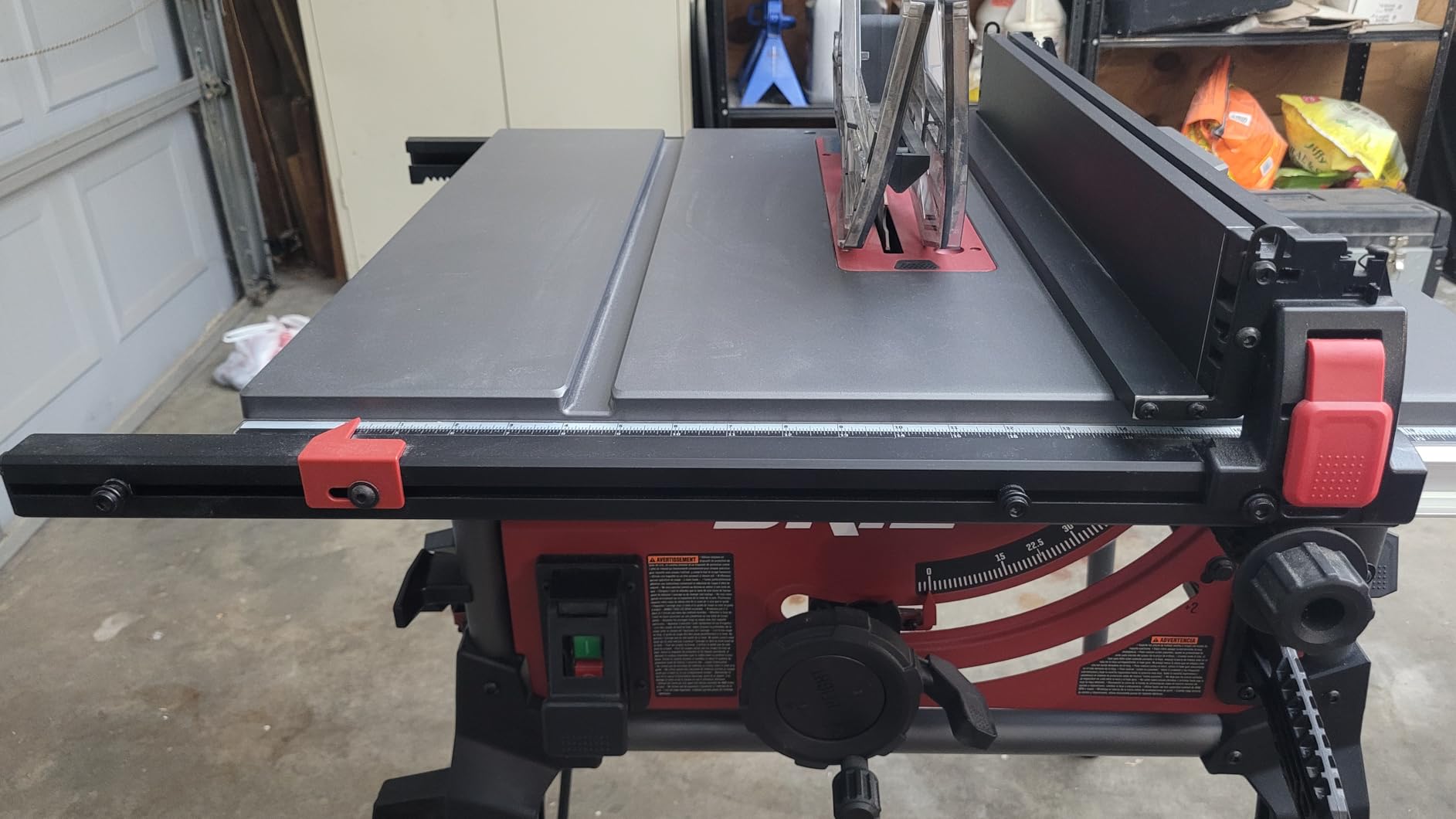
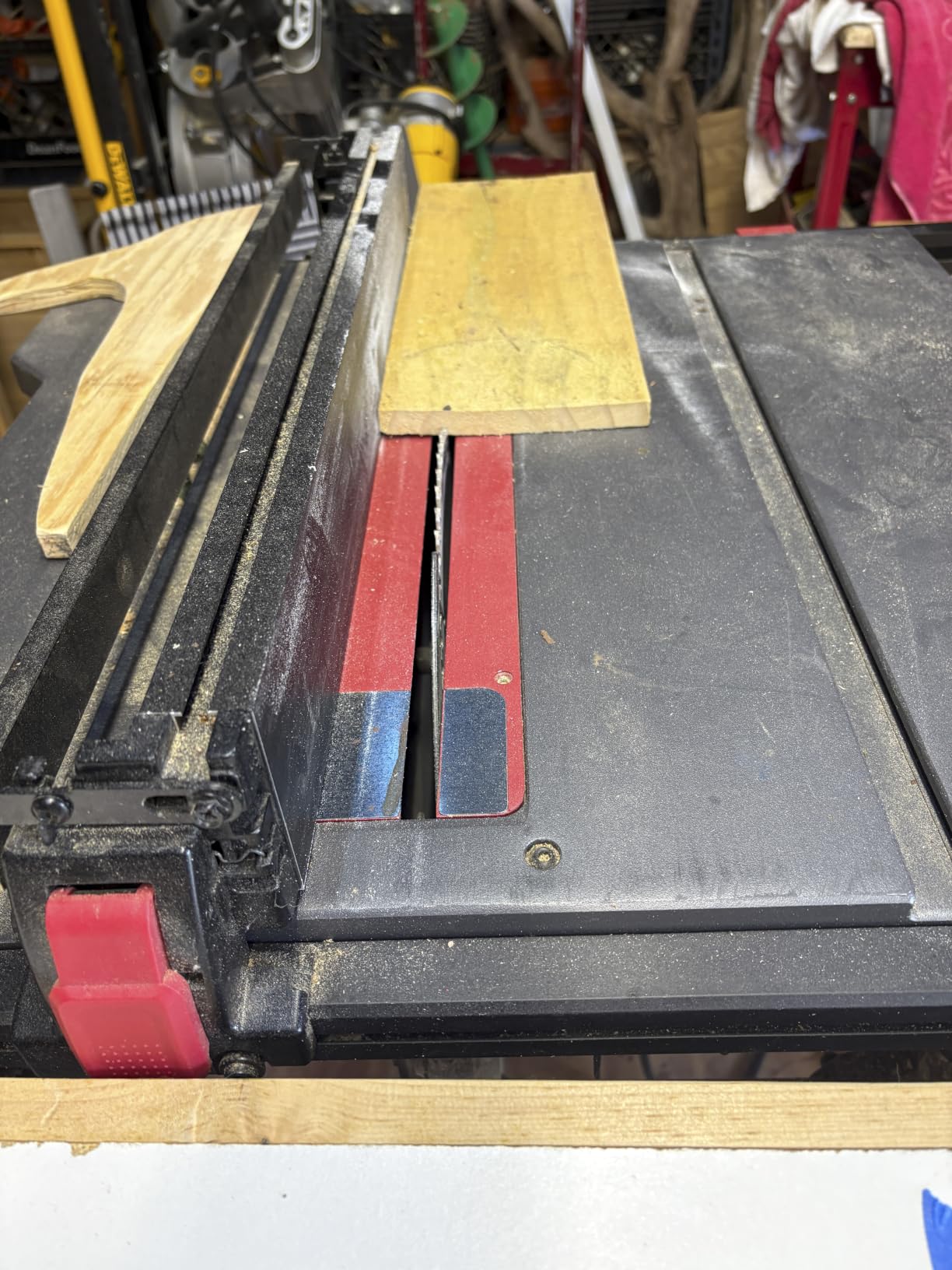
The rack and pinion fence rails keep the fence parallel to the blade, and there is parallel blade alignment micro-adjustment for fine tuning. The bevel runs from 2 to 47 degrees with positive stops at 0 and 45 degrees and a quick release lever, so bevel setups are repeatable. The dust port elbow redirects chips into a container, which is a simple but real improvement over bare ports on compact saws.
The honest limitation is the 25 inches of rip capacity. A 4×4 comes out of it easily and a 4×8 sheet is not a full-width rip, so owners of this saw commonly keep a track saw for panel breakdown. The 15 amp motor at 1800 watts is still strong enough to rip a 23/32 inch sheet of plywood solo, which is more than many people expect from a saw this small.
Why this is the value pick
It is the only 10 inch saw in the roundup that folds away, and that is the feature that solves the actual problem in a small shop. Where a rolling stand needs floor space whether you are using it or not, folded legs let the saw live against a wall between projects.
Reviewers treat it as the price-to-performance pick of the group, and r/BeginnerWoodWorking names it as a default recommendation, often for a second or cottage shop. Long-term owners report 10 years or more of service from machines in this family, and a three-year limited warranty backs it.
Where the compromises show
The plastic content is the recurring caution. Several reviewers say it suits weekend and DIY duty better than daily professional work, and that is a fair reading for a machine at this size. Nothing in the design says the saw will not last; it just will not be a lifetime tool.
The included miter gauge is small with a limited bearing surface, and it is the first thing owners replace. The stock 24-tooth blade also tears out on hardwood, so plan to fit a 60-tooth finishing blade. Buyers also report it is louder than the DEWALT and Bosch saws of the same class, and the 10 inch model in this family carries no laser brake.
5. SKIL TS6308-00 8-1/4 in. Compact Jobsite Table Saw
SKIL 15 Amp 8-1/4-Inch Compact Portable Jobsite Table Saw (Stand SFS0001 Sold Separately)-TS6308-00
8-1/4 in blade
2-1/2 in depth of cut
40 lb
24.5 in rip capacity
15 amp
Pros
- 40 lb weight suits one-person carry
- Fence rails have a built-in ruler
- 24.5 in rip capacity handles a full sheet of plywood
- Dust port elbow fits a 2-1/2 inch hose
- Parallel blade alignment micro-adjust
Cons
- Stand is sold separately
- Body is mostly plastic with few metal parts
- Guard blocks the blade view with no riving-only option
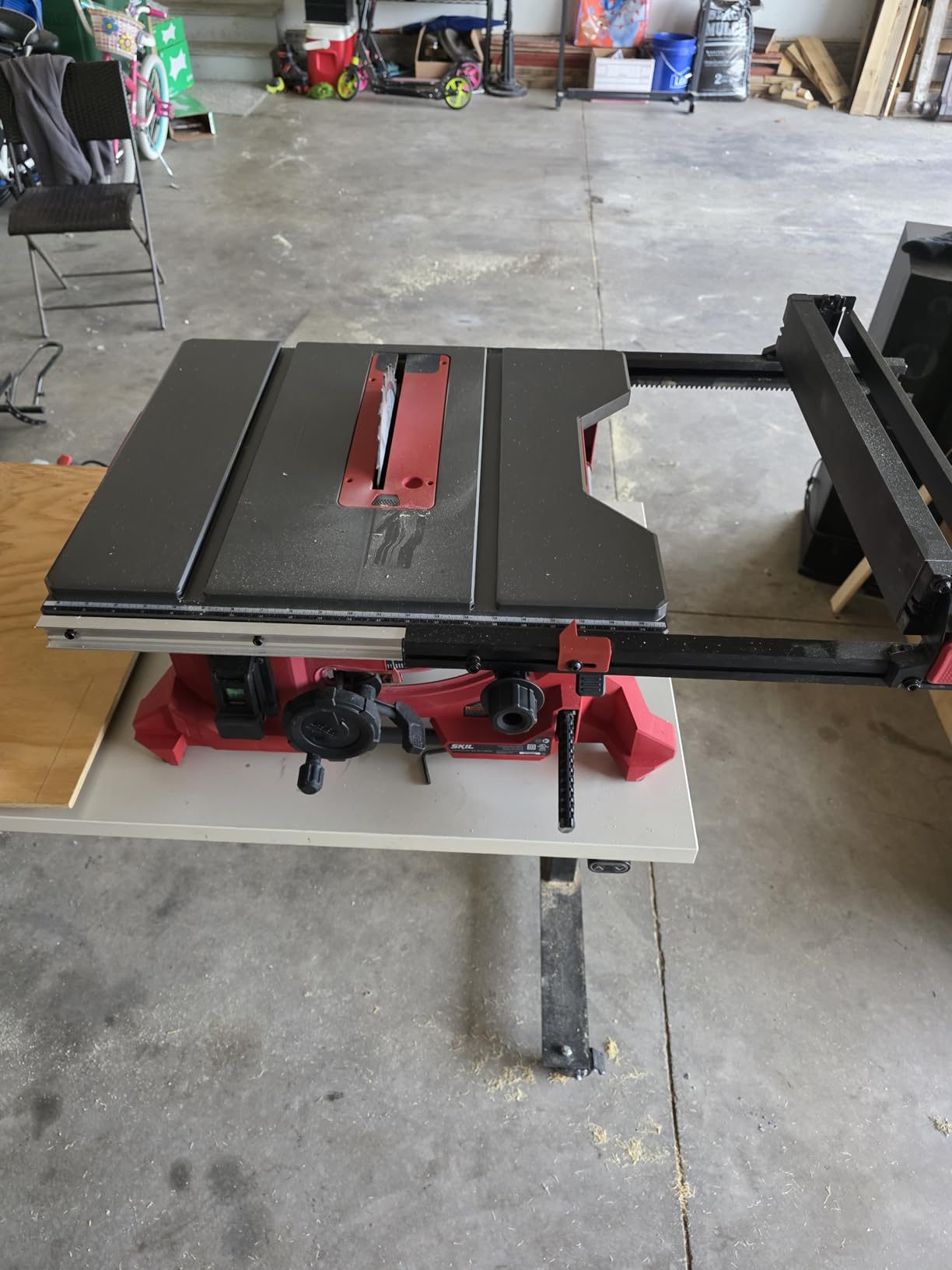
At 40 pounds and 25.98 by 22.83 by 12.99 inches, this is the easiest saw on the list to store. If your shop is a corner of a garage with a workbench already built along one wall, the TS6308-00 drops onto that bench and does the job of a much bigger machine. It is compatible with the SKIL SFS0001 folding stand if you would rather have legs, but you do not need them if you have a surface at standing height.
The 15 amp motor handles sheet goods, crosscuts of 2x4s and even dado joints, and the rip capacity is 24.5 inches to one side of the blade with 12 inches opposite, which is enough to break a full 4×8 sheet. Maximum depth of cut at 0 degrees is 2-1/2 inch, so 2x material comes out in a single pass.
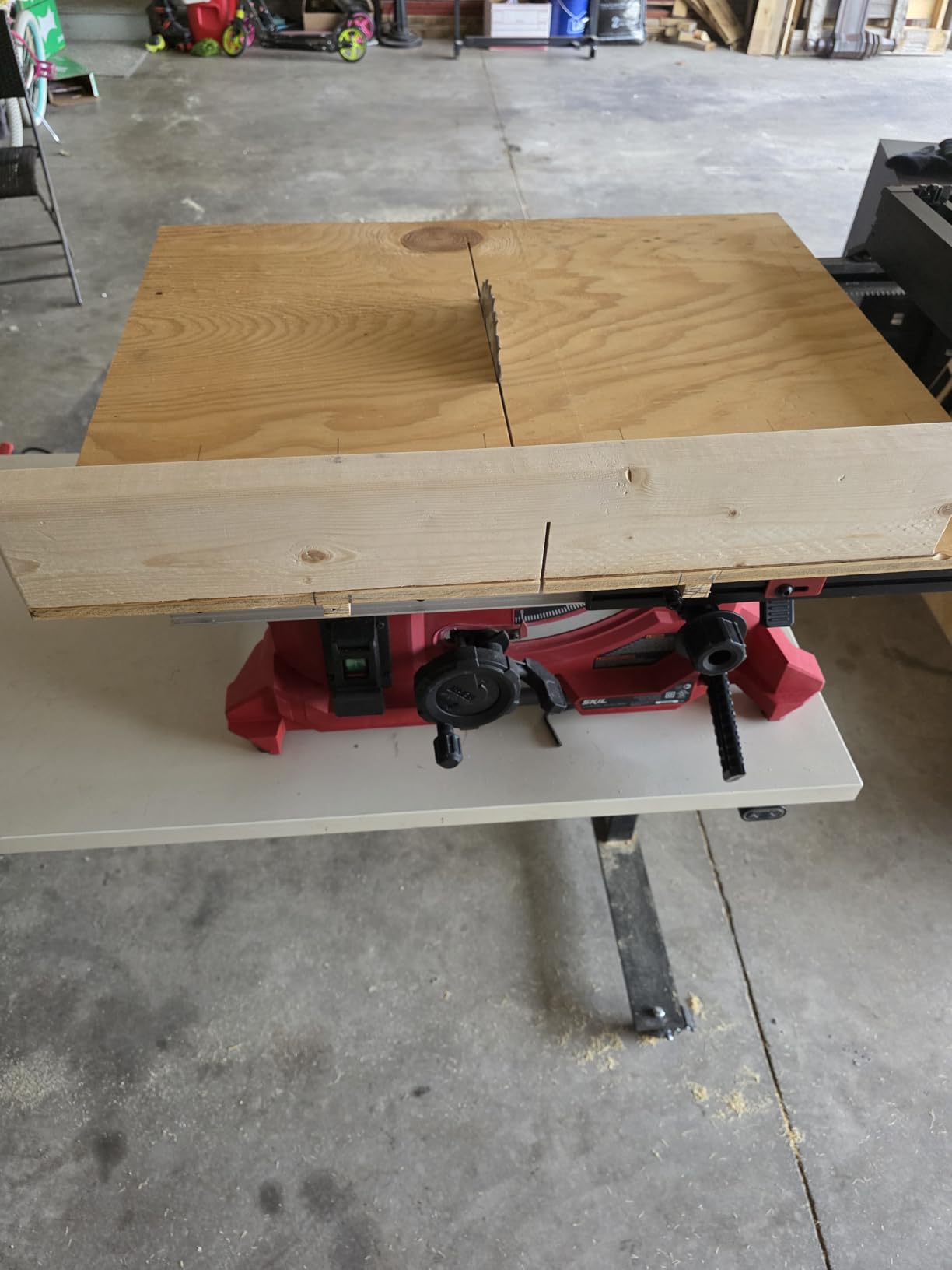
The rack and pinion fence rails carry a built-in ruler, which means you stop re-measuring after every fence adjustment. That feature alone changes how quickly you work, and paired with the parallel blade alignment micro-adjust it is the most-praised detail among owners. The aluminum table is flat and accurate, and the dust port elbow supports a 2-1/2 inch hose connection so a shop vacuum works directly.
Forum owners frequently describe this as the right-sized answer for a small shop, cottage or mobile work where a 10 inch saw will not physically fit. That is exactly the use case we built this roundup around.
Where this compact saw earns its place
The 40 pound weight is the real feature. You can carry it up a set of basement stairs, load it in the back of a hatchback, or move it aside with one hand when you need the bench for assembly work. Very few table saws of any size offer that.
It is also the easiest of the compact saws to integrate into a small shop layout. Bench-mounted, it takes up no additional floor footprint at all beyond the bench itself, and the dust port elbow keeps chips out of the air when a shop vacuum is running.
What you give up
The stand is sold separately, so plan the mounting surface in advance. The body is mostly plastic with a few aluminum parts, and a small number of owners report plastic parts breaking and blade runout that could not be resolved, so it is a weekend tool rather than a shop fixture.
The guard system blocks the view of the blade and there is no riving-knife-only option, which some operators prefer for crosscutting accuracy. It is also the loudest saw in this group, and at 8-1/4 inch you are limited to a 2-1/2 inch depth of cut.
6. EVOLUTION R10TS 10 in. Jobsite Table Saw with Sliding Table
Evolution R10TS 10″ Jobsite Table Saw | Zero-Clearance Throat Plate | Dado Plate Included | 15A Motor | 26” Rip | 3-3/8” Cut | 0-45° Bevel | Precision Fence | Heavy Duty Portable Woodworking Saw
10 in blade
26 in rip capacity
3-3/8 in cut depth
Dado plate included
0-45 degree bevel
Pros
- Sliding table removes the need for a separate sled
- Zero-clearance throat plate reduces tear-out
- Dado plate and crosscut sled in the box
- 3-3/8 in cut depth beats the other 10 in saws
- Electronic blade brake with anti-kickback pawls
Cons
- Included miter gauge is well below the rest
- Packaging leaves small parts loose
- Instructions are small and vague
The R10TS is the only saw in the roundup that comes with a dado plate in the box, which is what makes it the joinery pick. The zero-clearance steel throat plate sits level with the table, so the splintering you normally get on a rabbet cut or a dado edge disappears because there is no step for the wood to drop into.
The 3-3/8 inch maximum cut depth is the deepest measurement listed among the 10 inch portable saws here, beating the 3-1/8 inch on the DEWALT, and the 15 amp soft-start motor will handle mild steel and aluminium with the included TCT blade. The electronic blade brake, anti-kickback pawls and quick-release riving knife form a complete guarding package.
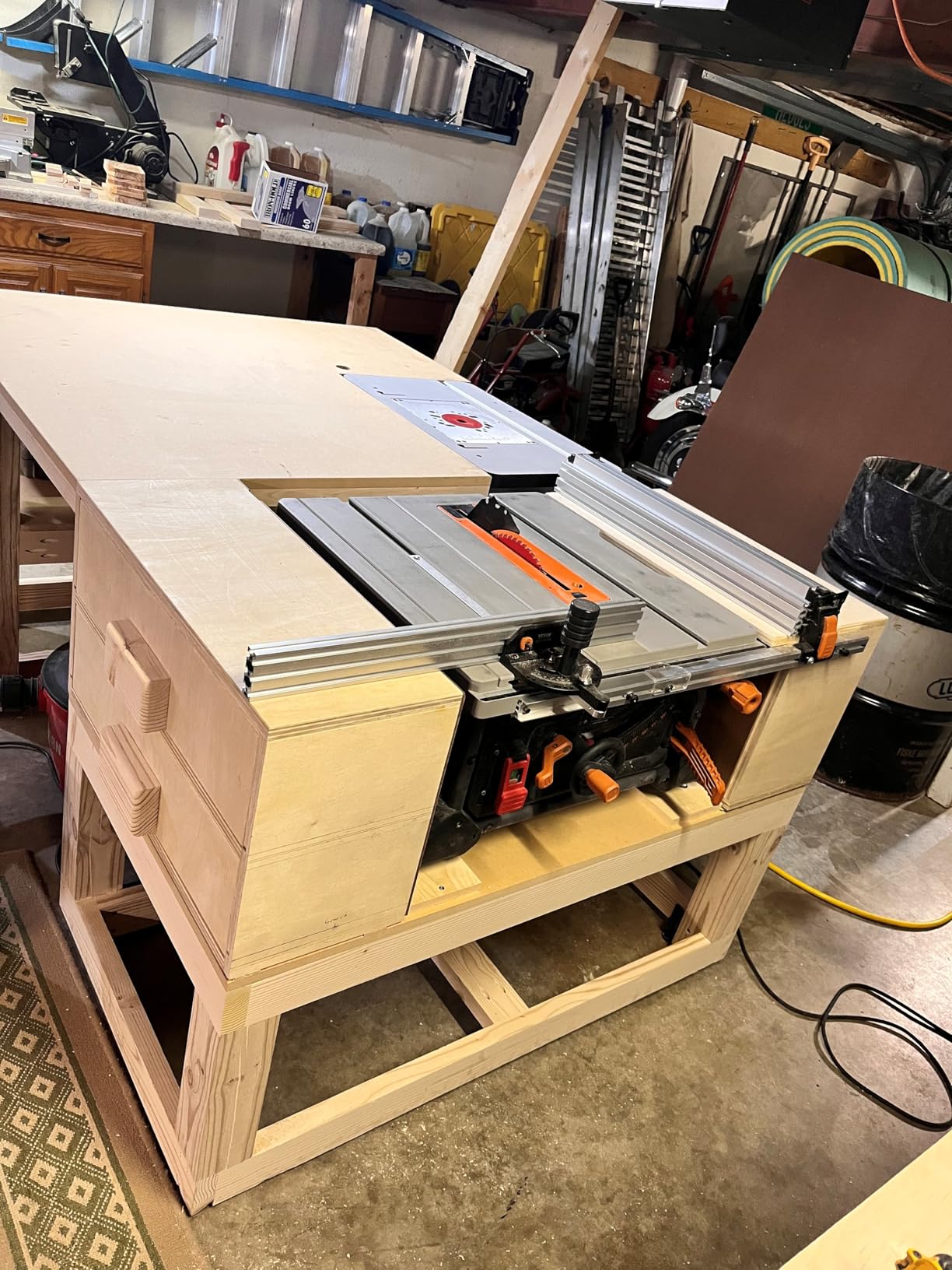
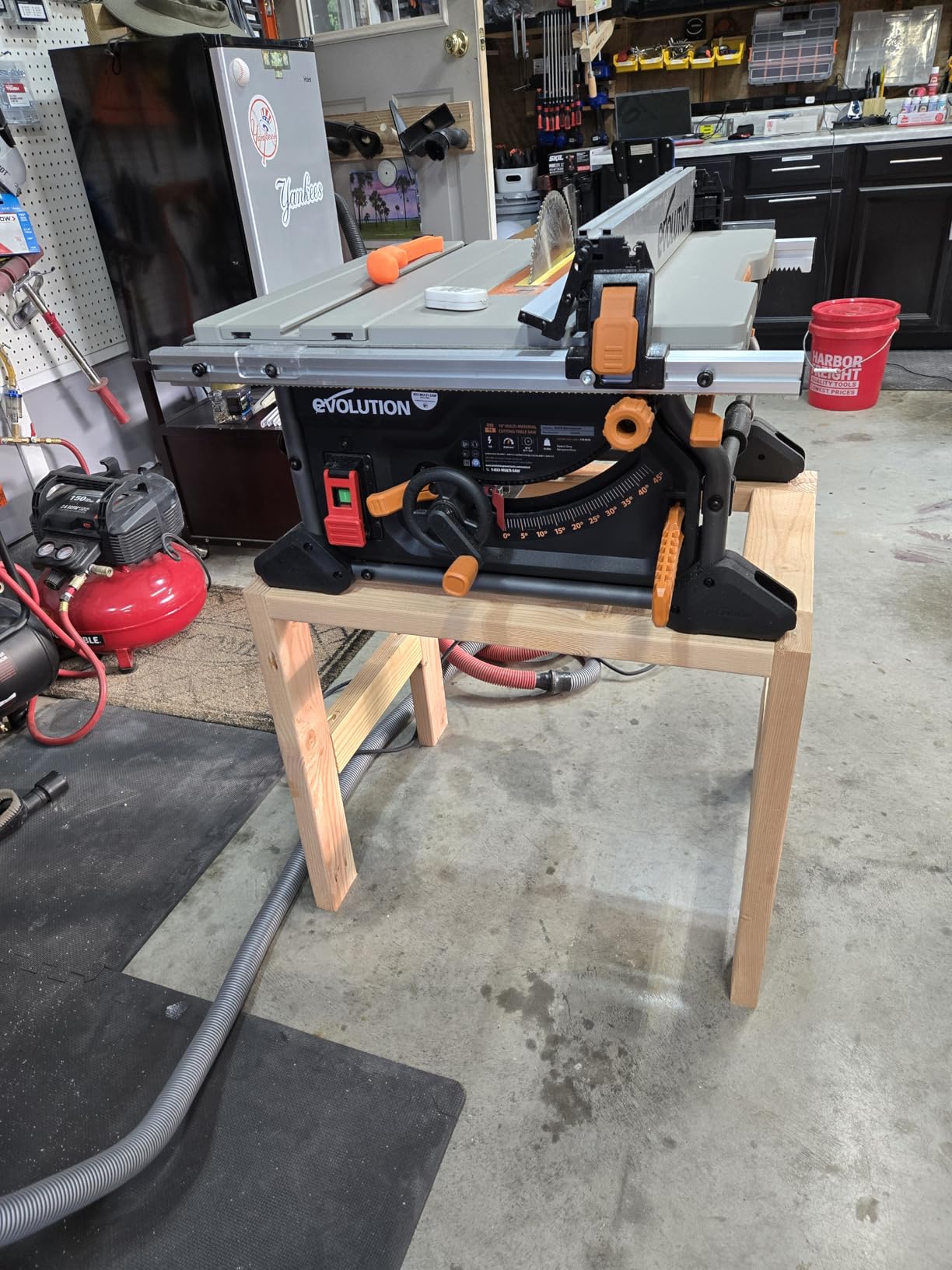
The sliding table is the feature experienced woodworkers talk about first. Instead of a separate crosscut sled that you clamp on and off, the table rides on the saw with the workpiece, and the crosscut sled is included as well. The height-adjustable steel blade throat adds stability at depth, and an outfeed support bar helps with larger material.
At 29 by 29 by 15 inches the footprint is square, which is not ideal for a narrow shop, but the light steel frame with carry handles is light enough for one person to reposition. Reviewers with long woodworking histories describe it as ideal for a small shop.
Best for furniture and cabinet joinery
The included dado plate and zero-clearance throat plate together mean you can cut grooves and dados in 3/4 inch stock on day one without buying anything else. That is a real saving for anyone building face frames, drawer boxes or knockdown furniture.
The sliding table also solves crosscut accuracy. A sled that is built into the machine stays square to the blade, whereas a clamp-on sled has to be re-checked every time you move it. The rack and pinion fence and the 26 inches of rip capacity cover most sheet and board work.
Where it falls short
The included miter gauge is well below the quality of the rest of the saw and is the first thing owners replace. The stock blade leaves curved marks on the cut surface, so a better blade is advisable if finish quality matters to you.
Packaging is the weak point on the manufacturing side. Small parts and screws arrive loose in a cardboard box, and the instruction diagrams are small and vague, so budget extra time for setup. A few saws have also arrived with a bent aluminium rack and pinion slider from shipping damage, which is worth inspecting the day the box is opened.
7. Delta 36-6023 10 in. Contractor Grade Table Saw
Delta 36-6023 10 Inch Table Saw with 32.5 Inch Rip Capacity
10 in blade
32.5 in rip capacity
77 lb
13/16 in stacked dado capacity
5 year warranty
Pros
- 32.5 in rip capacity handles large stock
- 13/16 by 8 in stacked dado capacity
- 5 year professional warranty
- Stand included in the box
- Contractor grade 15 amp motor
Cons
- Lowest average rating in this group at 4.3
- 77 lb is heavy for a portable saw
- No blade guard assembly listed among the components
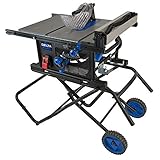
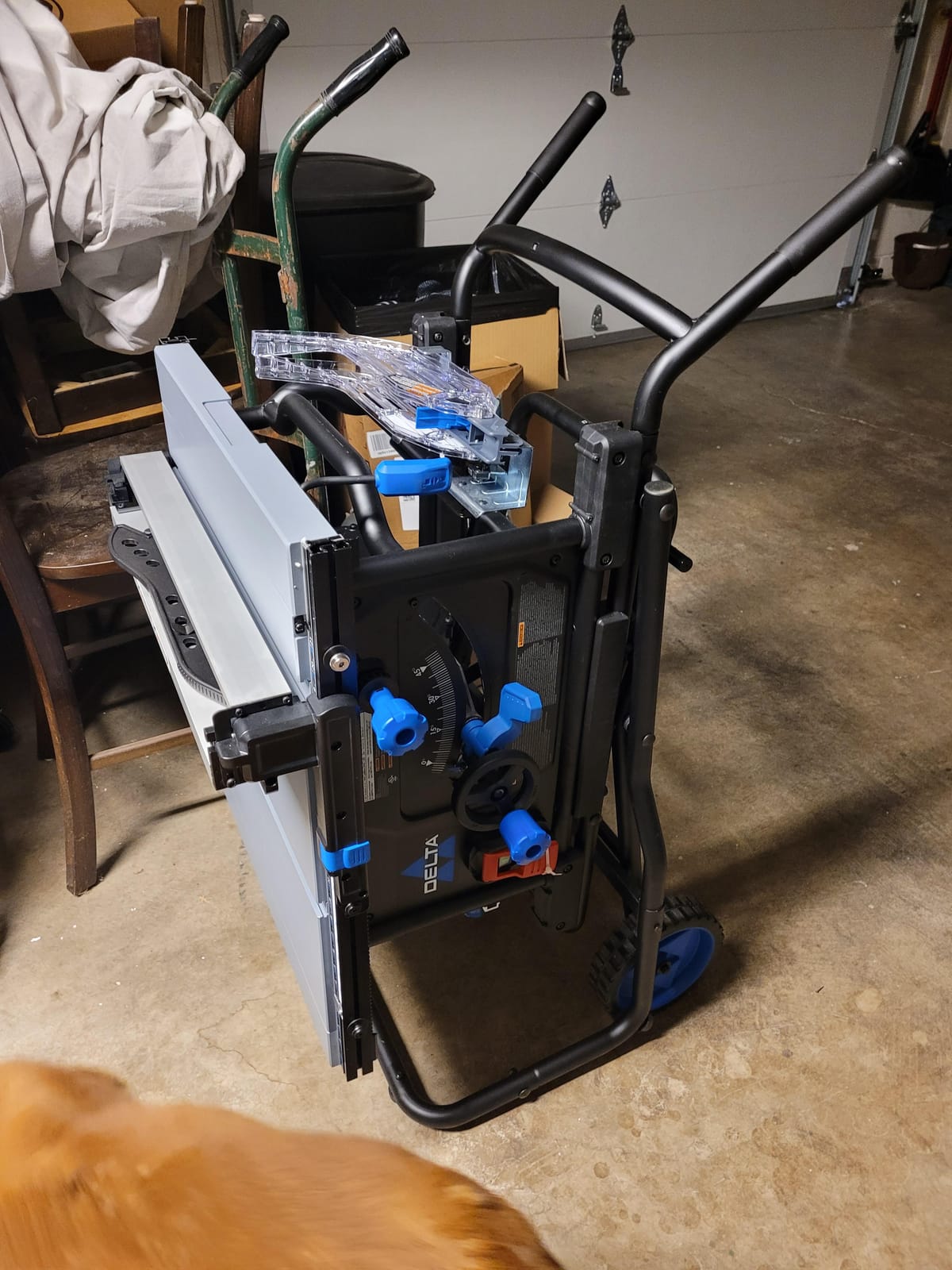
The Delta is the odd one out here, and it is worth understanding why before you buy it. It is the only saw in the roundup marketed as contractor grade, with a 15 amp motor specified for treated lumber and hardwoods, and it carries the only five-year warranty on the list. The 32.5 inches of rip capacity and the 13/16 by 8 inch stacked dado capacity are both genuinely class-leading numbers.
Its 4.3 average rating is the lowest in this group, and the share of one-star reviews is the highest, so something is not landing for a meaningful slice of buyers. The spec sheet and the customer experience are telling different stories, and we would treat that as a warning rather than a bargain.
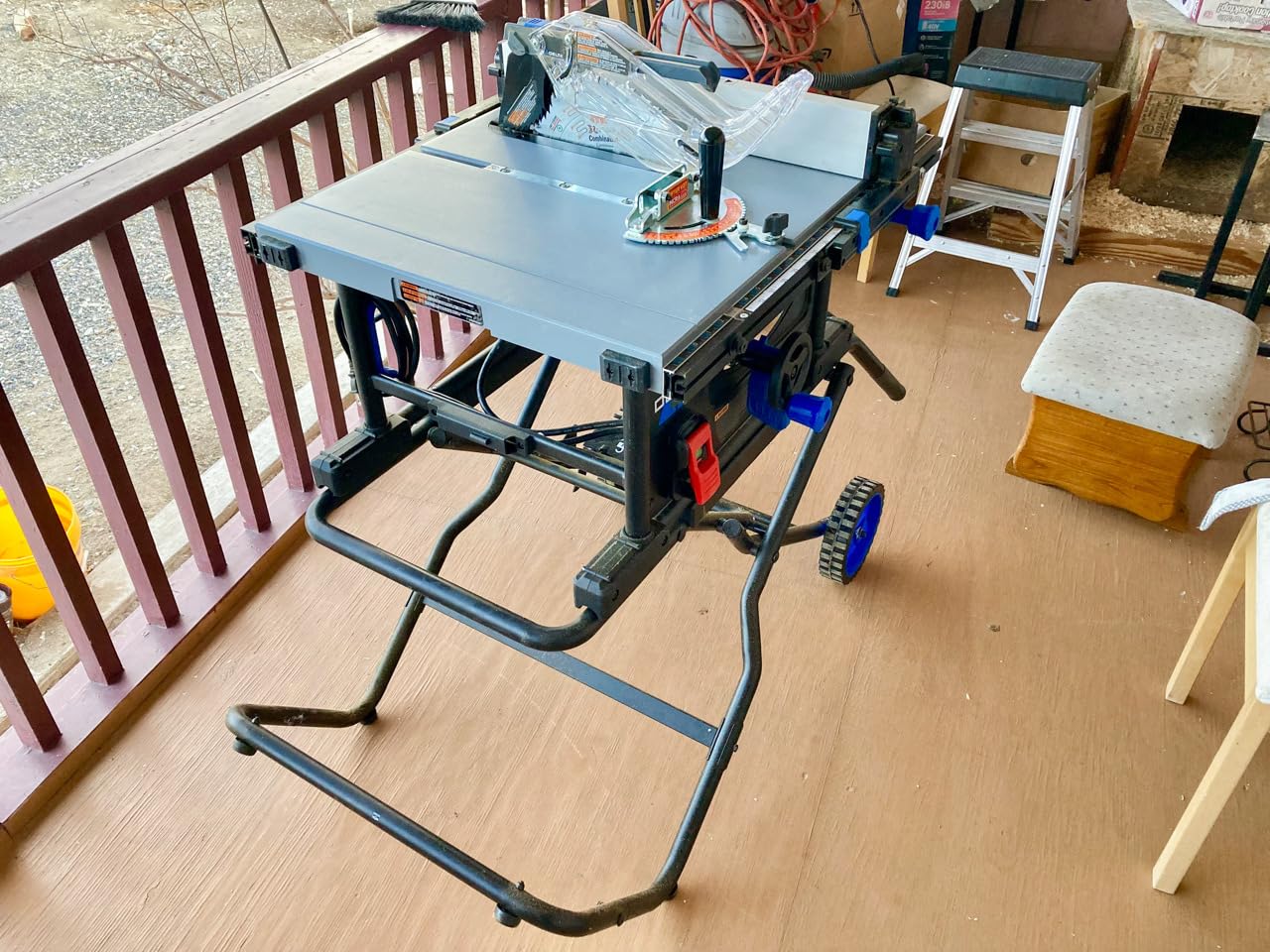
The rack and pinion fence rails give fast, smooth and accurate adjustments, which is what you would expect from a machine in this class. The stand is included in the box, so the total package is complete, and the stacked dado capacity means a full dado stack fits without the shimming gymnastics a portable saw usually requires.
At 77 pounds and 27 by 19 by 35 inches on the stand, this is not a compact saw. It suits a shop that does framing or trim work and has a place to keep the saw permanently set up, rather than a shop that needs to reclaim the floor every evening.
Where its specs genuinely help
If you cut treated lumber regularly, a motor specified for it is worth real money, and the 32.5 inch rip capacity handles dimensional stock without a second pass. The five-year professional warranty is the strongest coverage in this roundup and reduces the risk of an early failure.
The stacked dado capacity of 13/16 by 8 inches is the only spec here that lets you cut a flat-bottomed dado at full height without stepping down. If you build cabinets, that is a feature the DEWALT and SKIL 10 inch saws can only approximate.
Why the rating is lower
Buyers report mixed experiences despite the strong specification sheet, and the value proposition is weaker than the numbers suggest when the motor and the user experience are pulling in opposite directions. The 77 pound weight means the stand is not optional in practice, and it claims more floor than any compact saw here.
No blade guard assembly is listed among the included components, so budget for a guard system if you want one. If you are buying on warranty length alone, we would rather see you pick a machine with a higher owner satisfaction rate.
8. BOSCH GTS18V-08N 18V Cordless Portable Table Saw
BOSCH GTS18V-08N PROFACTOR™ 18V 8-1/4 In. Portable Table Saw (Bare Tool)
18V brushless motor
5500 rpm
25 in rip capacity
53.6 lb
bare tool
Pros
- Cordless so no outlet is needed on the shop floor
- 5500 rpm brushless motor with corded-like power
- Rack and pinion dial adjusts without tapping the fence
- Single-hand carry design for transport
- Restart protection when changing batteries
Cons
- Bare tool so the battery and charger cost extra
- Consumes smaller batteries quickly
- Included miter gauge is generally considered poor
This saw breaks the pattern of the rest of the list. There is no cord, which means no dedicated circuit, no extension cord running across the floor of a basement shop, and no waiting for the breaker to reset after a heavy cut. For a small shop with poor electrical access, that is not a convenience feature, it is the whole decision.
The Biturbo brushless motor and drive-train system are tuned for high capacity Core18V batteries and deliver 5500 rpm, which makes it the fastest-spinning 10 inch saw listed here, ahead of the 4800 rpm DEWALT and the 3800 rpm Bosch. Reviewers are consistently surprised that it matches corded performance, citing clean cuts on hard maple and effective ripping of cabinet fillers.
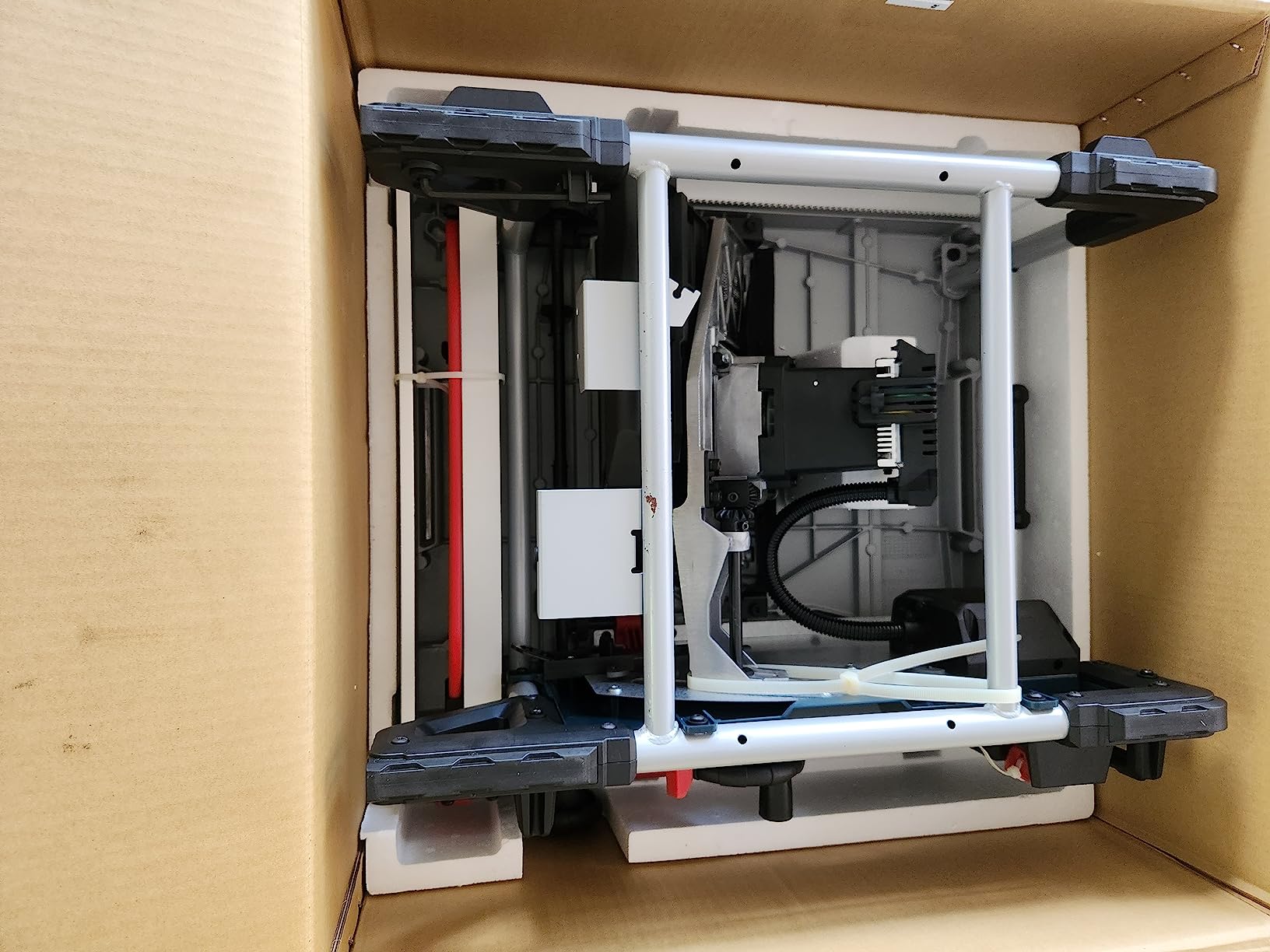
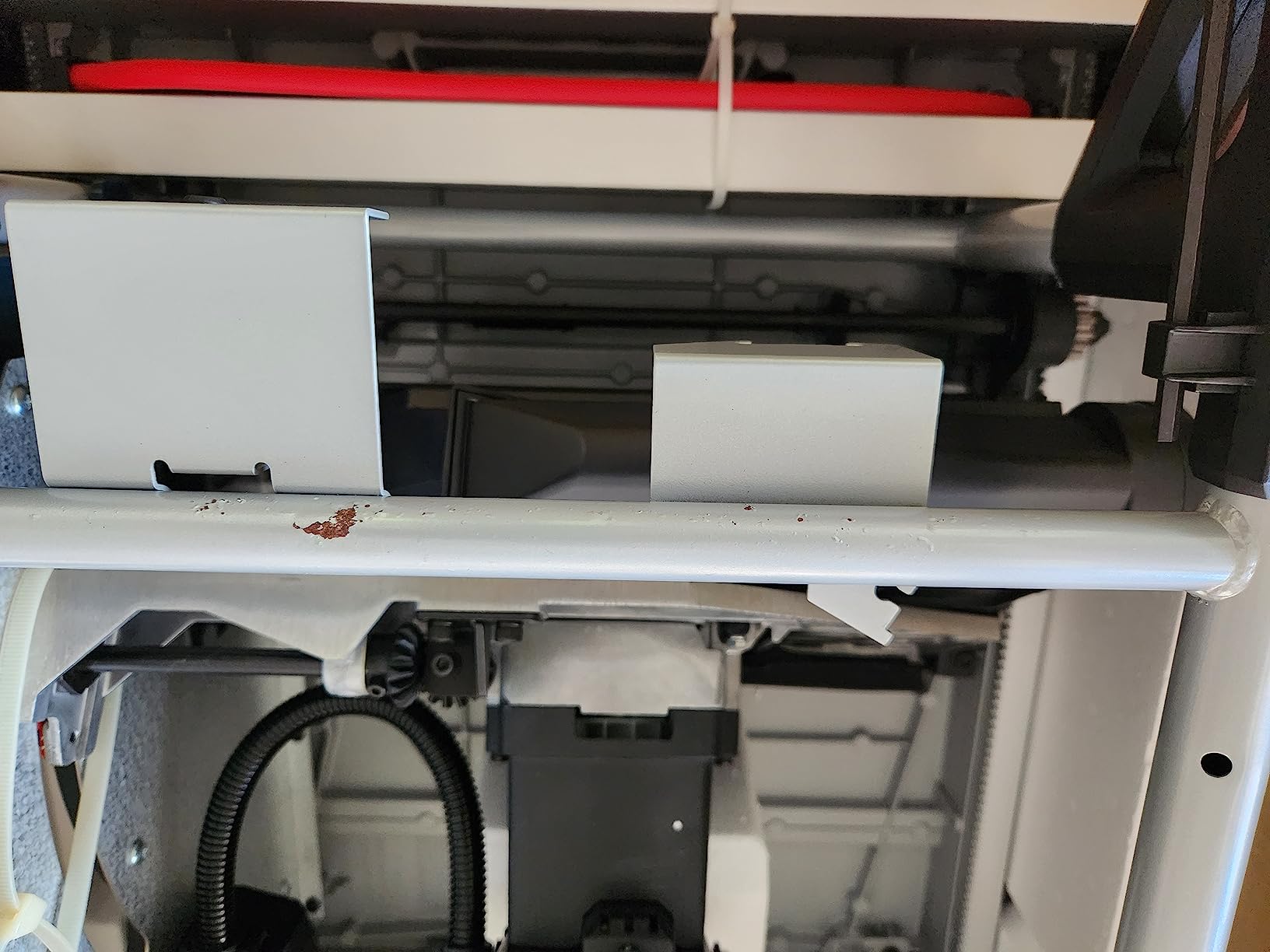
The rack and pinion dial is a small design change with a real effect: you adjust the fence by turning the dial instead of tapping the fence body into position, which removes the guesswork from setting a width. Rip capacity is 25 inches to one side of the blade, enough for 2x material and most sheet work, and the single-hand carry design makes it easy to move around a jobsite.
Restart protection prevents an accidental startup when you swap batteries, and on-tool storage holds the rip fence, miter gauge, guard system and push stick. A five-year limited warranty applies to Bosch 18V cordless power tools.
Who should consider a cordless table saw
It makes the most sense in a shop with no reliable outlet near the saw, on a deck or patio where extension cords are a trip hazard, or for a mobile installer who works in finished rooms where running a cord is not an option. One reviewer reports ripping 12-3/4 inch maple stair treads with power to spare and battery remaining.
If you already run Bosch 18V tools, the battery cost disappears into an existing platform. If you do not, the bare tool listing means the battery and charger are a separate purchase, and that changes the arithmetic of this pick considerably.
What to weigh before buying
Consuming smaller batteries quickly is the standard complaint, so higher capacity packs are the ones to buy. At 53.6 pounds it is not the lightest saw here, and the included miter gauge is generally considered poor enough that owners replace it.
Battery life is the honest limiting factor for long sessions. A full day of continuous panel breakdown is a pack-cycling exercise, and if your shop has power on the wall, a corded saw removes that variable entirely.
How to Choose a Table Saw for a Small Shop
Start with the floor, not the spec sheet. Measure the space you can genuinely dedicate, then add the stand and any support table. A rolling stand on a wheeled saw claims floor whether the saw is in use or parked against a wall, while a folding stand folds into the saw and costs nothing when you are not cutting. If the saw can be mounted on an existing bench, that is the cheapest square footage you will ever find.
Get the fence right before you worry about power
Long-term owners across the woodworking forums make the same point repeatedly: a fence that stays parallel to the blade and locks in position matters more than horsepower. A rack and pinion fence with index pins is the pattern we see in six of the eight saws here, and the difference is that you can set a width once and repeat it all afternoon. You should still measure with an inexpensive saw on every cut, but a good fence means you measure to confirm rather than to compensate.
Choose blade size by the work, not the price
A 10 inch blade gives roughly 3-1/8 inch of depth at 90 degrees, and the EVOLUTION in this list pushes to 3-3/8 inch. An 8-1/4 inch blade tops out around 2-1/2 inch, which handles 2x material in one pass but limits thicker stock. The bigger reason to choose 10 inch is dado capability. A full stacked dado will not fit on an 8-1/4 inch saw, so if you build cabinets with flat-bottomed dados, the compact models are not a substitute.
Dust collection in a small shop is mostly a shop vac
This is the most repeated complaint in small-shop threads and the one no competitor roundup covers. Compact saws throw chips forward at the operator, and a table saw produces more fine dust than almost any other machine in the shop, so a good extraction setup matters more here than in a large shop with a central collector.
The practical approach used by most small-shop owners is a drum or bucket with a hose adapter, or a shop vacuum clamped to the dust port. The SKIL TS6307-00 and TS6308-00 both include a dust port elbow that redirects chips into a container, and the DEWALT DWE7491RS has a full 2-1/2 inch port that takes a standard hose. A box fan with a washable filter on the opposite wall improves airflow and captures what a small shop produces. It is a modest setup, but it changes the working conditions more than any other single item in this list.
When a track saw is the better answer
There are shops where a table saw is the wrong purchase. If your floor space is measured in feet rather than yards, if you mostly work with full 4×8 sheets rather than dimensional lumber, and if you are willing to work on the floor with foam board or a sacrificial surface, a track saw and guide rail handle sheet goods with no floor footprint at all. That is the most common alternative recommendation in small-shop forum threads, and it is a legitimate one.
What you give up is repeatability across the day. A track saw has no fence to drift, but it also has no rip capacity for making repeated strips to identical widths, no miter gauge, and no stable reference for joinery work. If you build furniture and cut joinery, a table saw earns its floor space. If you cut panels and finish carpentry, it may not.
Mini and micro saws are supplements, not substitutes
Unbranded 100 watt craft saws are sold as table saws constantly, and forum users report motors overheating and dying under prolonged use. They are fine for occasional batch work on small trim pieces. They are not a main shop saw, and treating one as the centrepiece of a small shop leads to frustration within a few months. If your work is genuinely at that scale, our guide to micro saws and razor saws sets out what that category does well.
Check the stand and the warranty last
Stand type is a floor-space decision disguised as an accessory. Rolling stands are stable and mobile but permanently occupy ground, folding stands store compactly but can be less steady on thick rips, and benchtop mounting needs a bench at exactly the right height. If you need a temporary surface while setting the saw up, our tested picks for folding table sets cover the options. Warranty length is worth checking too, because it ranges from one year on the Bosch GTS15-10 to five years on the Delta 36-6023 and on Bosch cordless tools.
If your budget stretches, a used contractor saw is a legitimate route for a second or seasonal shop. Long-time owners treat models like the Unisaw and the Powermatic as tools that last several lifetimes, and a used machine bought from a shop that is closing will have better metallurgy than anything in a budget new list. Inspect the fence for play, the rails for straightness, and the table for rust before you commit.
Frequently Asked Questions
What is a good small hobby table saw?
For a hobbyist working in a garage or basement, a compact 8-1/4 inch jobsite saw is usually the right answer. The DEWALT DWE7485 gives you 24.5 inches of rip capacity, enough for a full 4×8 sheet, in a 54 pound package that one person can carry. If you want a 10 inch blade and dado capability, the SKIL TS6307-00 folds down to almost nothing when not in use.
What type of saw is best for small woodworking projects?
For small projects, a jobsite table saw with a rack and pinion fence gives you repeatable, accurate cuts without a large footprint. The fence is the part that matters most, because it holds its setting across a whole project. Avoid micro and craft saws under 200 watts as a main shop tool, since the motors overheat under sustained use.
What is the best table saw for value for money?
The SKIL TS6307-00 is the value answer in this roundup. It is the only 10 inch saw with a folding stand built into the tool, it arrives square and aligned so you skip the calibration session, and it carries a three-year limited warranty. The trade-off is 25 inches of rip capacity and a body with a lot of plastic in it.
Are Harbor Freight table saws any good?
The common complaint from owners is fence alignment. Budget models in this category need regular checking and re-adjustment, which erodes the time you hoped to save. If you are weighing a budget saw against a mainstream one, the better question is whether the fence stays parallel after a few months of use. Pick the saw with a rack and pinion fence and a three-year warranty instead.
What size table saw do I need for a small woodworking shop?
A 10 inch saw with at least 25 inches of rip capacity covers the overwhelming majority of small-shop work. An 8-1/4 inch saw is enough for trim, 2x material and sheet breakdown on one dimension, but it caps depth of cut at about 2-1/2 inch and will not take a full dado stack. Buy 10 inch if you build cabinets or cut joinery.
Is a worm drive table saw better than a direct drive?
A worm drive uses a slower, higher-torque motor that plows through hardwood and reclaimed lumber with less bogging, and it is heavier as a result. A direct drive motor spins faster, cuts more quickly, is lighter and costs less. For a small shop that mostly rips pine and sheet goods, a direct drive 15 amp motor is the better balance.
Should I buy a track saw instead of a table saw?
Choose a track saw if your floor space is measured in feet, if you mostly break down 4×8 sheets, and if you are willing to work on the floor with a sacrificial surface. A table saw earns its space if you need repeatability, rip capacity for matched strips, and a stable reference for joinery. Many small shops end up owning both over time.
Final Verdict for Small Shop Saws in 2026
The DEWALT DWE7485 is the best table saw for a small shop in 2026 because it packs down small, arrives aligned, and still rips a full sheet of plywood. Buy it if floor space is your binding constraint and you work mostly in sheet goods and 2x material.
Pick the SKIL TS6307-00 if you want a 10 inch blade and a stand that folds into the saw. Pick the DEWALT DWE7491RS if you rip full panels every week and can give the saw a permanent corner. The EVOLUTION R10TS is the one to buy for dado work, and the BOSCH GTS18V-08N if your shop has no outlet near where you cut.
Whatever you choose, put a shop vacuum on the dust port before your first project. It is the cheapest improvement you can make to a small shop, and every one of these saws will do a better job with the chips gone.