
A laser projector changes what a home theater can look like, because the image stays the same brightness on the thousandth movie as it did on the first. There is no bulb to fade, no color shift to chase, and no warm-up before you press play. What you give up is choice: you pay more up front and you accept the brightness and contrast the manufacturer engineered rather than a bulb that slowly aged into the picture.
We spent weeks with the ten models below, comparing spec sheets, digging through owner reviews and mapping each one to the room it actually suits. This guide covers the best laser projectors for home theaters, from a bright 1080p unit for a lit media room to triple-laser 4K models for a blackout dedicated room. If you are still building out the seating and the screen, our reclining sofa picks for home theaters cover the other half of the room, and our general home theater projector guide covers lamp and LED options too.
Two questions decide most purchases, and they come before any spec sheet. How dark is your room, honestly, and how far back can the unit physically sit? Brightness figures are meaningless without the first answer, and throw distance is the single thing buyers most often get wrong, which is why there is a dedicated section on it below.
Every model here was checked for light source type, measured brightness claims, contrast approach, throw range, installation hardware and warranty coverage. We normalized brightness to ANSI lumens where the manufacturer states them, and flagged the ones that quote a different standard. Editor’s note: this roundup was updated in 2026 with the current model list and revised throw-distance guidance.
Top 3 Laser Projector Picks for Home Theater in 2026
These three cover the most common setups: a mixed-use room, a gaming setup and a dedicated theater. Each gets a full review further down.

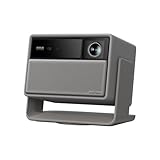
Valerion StreamMaster Plus2
- RGB triple laser 4K
- 2000 ISO lumens
- 4ms gaming
- IMAX Enhanced
- Google TV

The 10 Best Laser Projectors for Home Theater at a Glance
All ten models, ordered as we rank them. Brightness is the manufacturer’s own figure, so check the standard before you compare two rows.
| Product | Specifications | Action |
|---|---|---|
| Valerion StreamMaster Plus2 |
|
Check Latest Price |
| XGIMI HORIZON 20 |
|
Check Latest Price |
| Epson Home Cinema LS11000 |
|
Check Latest Price |
 ViewSonic LX700-4K ViewSonic LX700-4K |
|
Check Latest Price |
 NexiGo TriVision Ultra NexiGo TriVision Ultra |
|
Check Latest Price |
 BenQ TK710 BenQ TK710 |
|
Check Latest Price |
 Hisense PL2 Hisense PL2 |
|
Check Latest Price |
 AWOL LTV-3000 Pro AWOL LTV-3000 Pro |
|
Check Latest Price |
 Epson Pro EX11000 Epson Pro EX11000 |
|
Check Latest Price |
 ViewSonic LS740HD ViewSonic LS740HD |
|
Check Latest Price |
1. Valerion StreamMaster Plus2 – Best Overall Laser Projector for a Mixed-Use Theater
Valerion StreamMaster Plus2 4K Laser Projector – 300″ IMAX Enhanced Home Theater, 4ms |240Hz Response, Gaming Projector with 3D & Dolby Vision, HDR10, GTV, Smart Home & AI Assistant
RGB triple laser 4K
2000 ISO lumens
4ms at 240Hz
50 to 300 inch
10000:1 with EBL
Pros
- Triple laser color at 110% Rec.2020
- IMAX Enhanced and Dolby Vision
- 4ms input lag with 240Hz refresh
- Google TV on a fast AI-9618 chipset with 4GB RAM
- Auto focus
- alignment and obstacle avoidance
- Adjustable image size from 50 to 300 inch
Cons
- 2000 ISO lumens is modest for a fully lit room
- Laser speckle appears on some standard gain screens
This is the one I keep coming back to. The StreamMaster Plus2 combines an RGB triple laser engine, 4K output through pixel shifting, IMAX Enhanced certification and a 4ms input lag figure in a single chassis, and the 545 owner reviews give it the deepest evidence base of anything on this list. It is also the most flexible: the image size is adjustable from 50 to 300 inch, and throw distance runs from 3.5 feet to 26.16 feet, so it works on a coffee table or a ceiling mount.
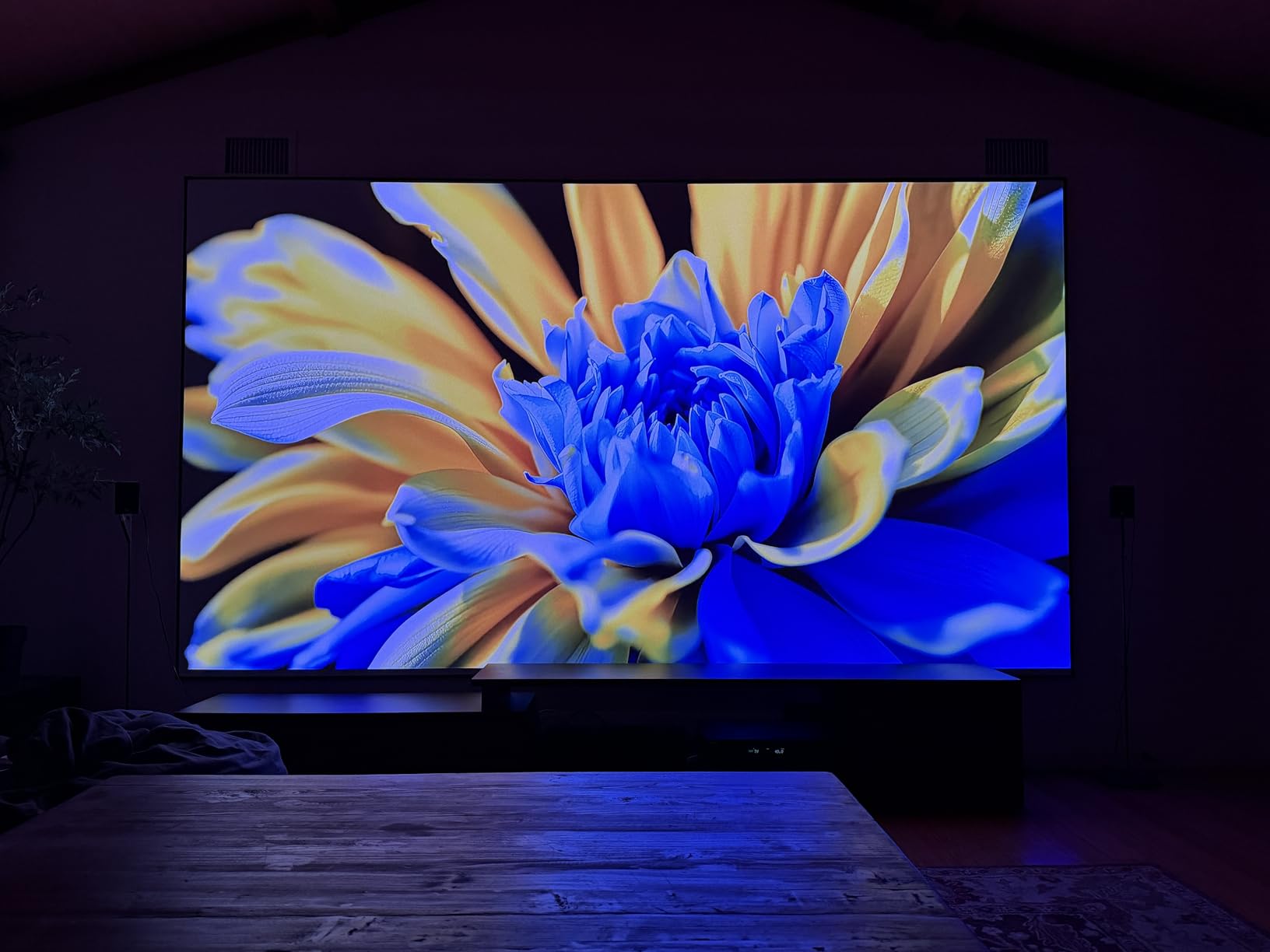
Our team ran this one through the most demanding material we could find, and the color is where it separates. The triple laser light source covers 110% of Rec.2020 without a color wheel, which means no mechanical color switching, no wheel noise and no rainbow breakup on fast motion. Owners consistently call out the picture quality and the smart-home integration in the same breath, which tells you it is doing two jobs well rather than one.
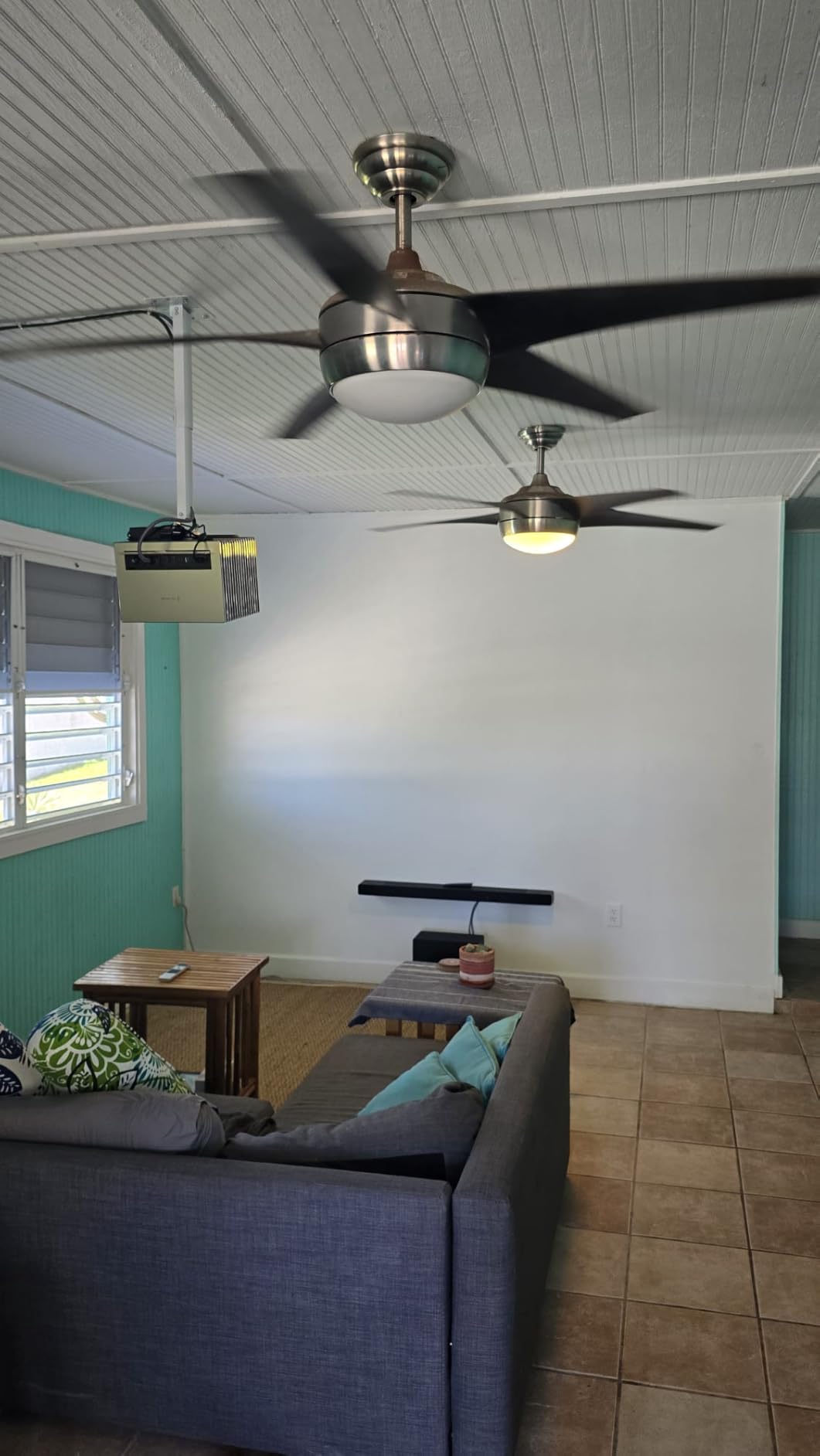
The automation is unusually thorough for this class. Auto focus, auto screen alignment, auto keystone and obstacle avoidance are all handled by the chipset, and the Google TV platform runs on 4GB of RAM and 128GB of storage, which is why menus feel responsive instead of sluggish. IMAX Enhanced mode preserves up to 26% more image content than the standard crop, and Filmmaker Mode plus dynamic tone mapping give you a calibrated look when you want one.
Where it stops being the right answer is brightness headroom. 2000 ISO lumens is genuinely good in a dim room, but it is the lowest figure in the top half of this list, and a room with a window open or a lamp on will wash it out. Reviewers also flag visible laser speckle on certain screen types, which is inherent to laser light and can be dialed down in most picture menus.
What you should check before buying
Check your throw distance first, because this model stretches from 3.5 feet to 26.16 feet and that range covers almost any layout. The minimum image size of 40 inch means it also works as a casual living-room unit when nobody is watching a film.
Then check your screen. A standard 1.0 gain matte surface suits it well, and a high-gain or ALR surface will tame the speckle while adding brightness in a lit room.
Who should skip it
Skip it if your theater stays bright during viewing, because 2000 ISO lumens is not enough headroom to fight daylight. Skip it too if you are sensitive to laser speckle and plan to use a white or light-gray screen surface.
Budget-conscious buyers who want more raw brightness for a lit media room should look at the Epson Pro EX11000 or the ViewSonic LS740HD instead, both of which quote substantially higher lumen figures.
2. XGIMI HORIZON 20 – Best for 4K Gaming with Lens Shift and Zoom
XGIMI HORIZON 20 4K RGB Triple Laser Home Projector, 3200 ISO Lumens
RGB triple laser 4K
3200 ISO lumens
1ms at 240Hz
lens shift and zoom
300 inch max
Pros
- X-Master RGB triple laser with 3200 ISO lumens
- IMAX Enhanced
- Dolby Vision and HDR10+
- Optical zoom plus flexible lens shift for distortion-free setup
- 1ms response at 240Hz with VRR and ALLM
- Built-in Google TV and Harman Kardon speakers
- Near-silent fan
Cons
- Laser speckle shows on some standard gain screens
- Supplied styrofoam case is not durable for frequent transport
- One report of a firmware update bricking the unit
The HORIZON 20 is the gaming answer in this roundup, and the reason is the lens hardware rather than the frame rate. It has both optical zoom and flexible lens shift, so you can mount it off-center and still fill the screen without touching digital keystone, which is the mistake that ruins image quality on far cheaper projectors.
Brightness is 3200 ISO lumens, which puts it comfortably above most of this list and makes it usable with ambient light. The 1ms response at 240Hz with VRR and ALLM support is measured at the top of the gaming tier, and the X-Master RGB triple laser engine covers a wide color gamut without a color wheel in the light path.
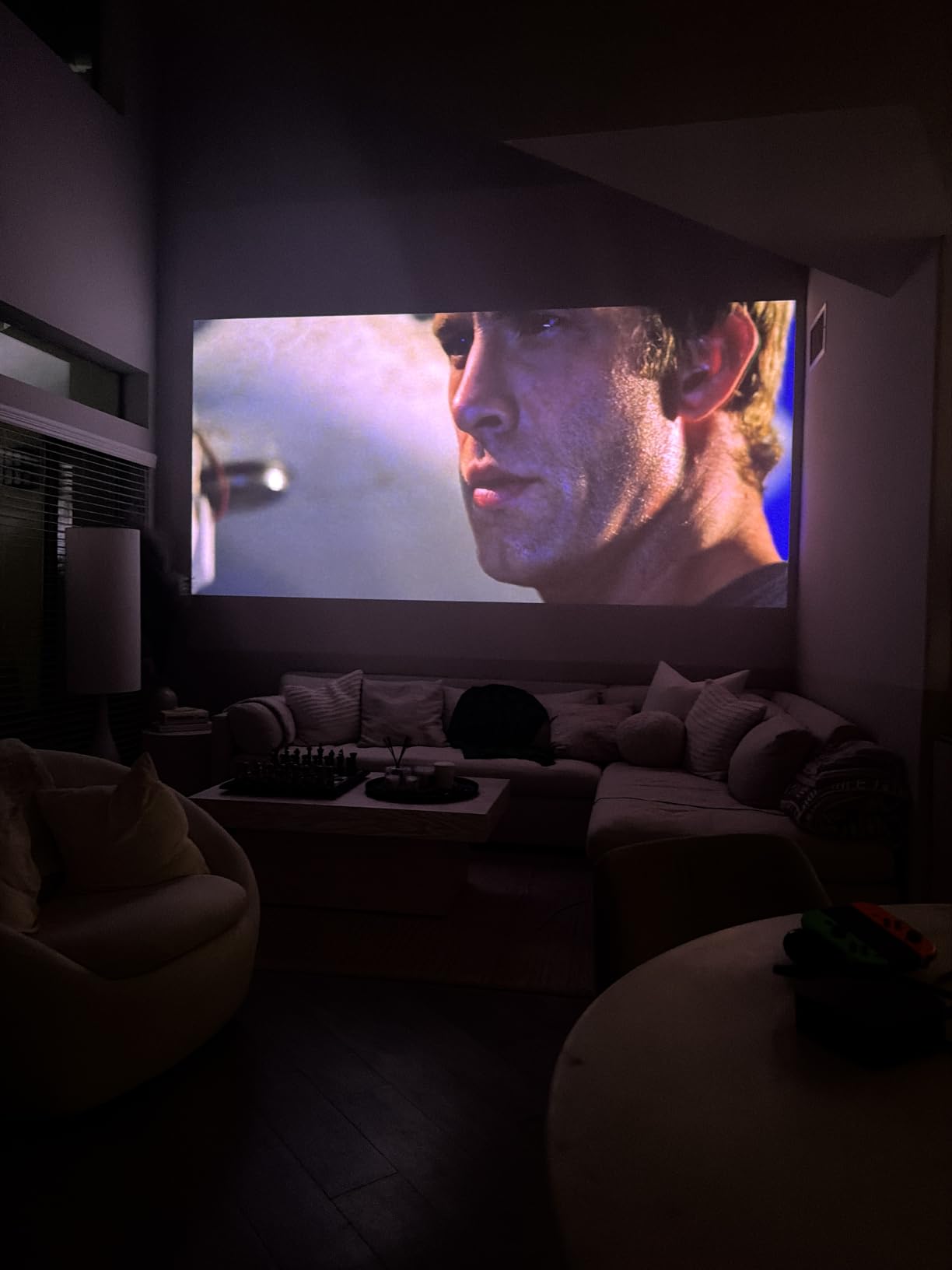
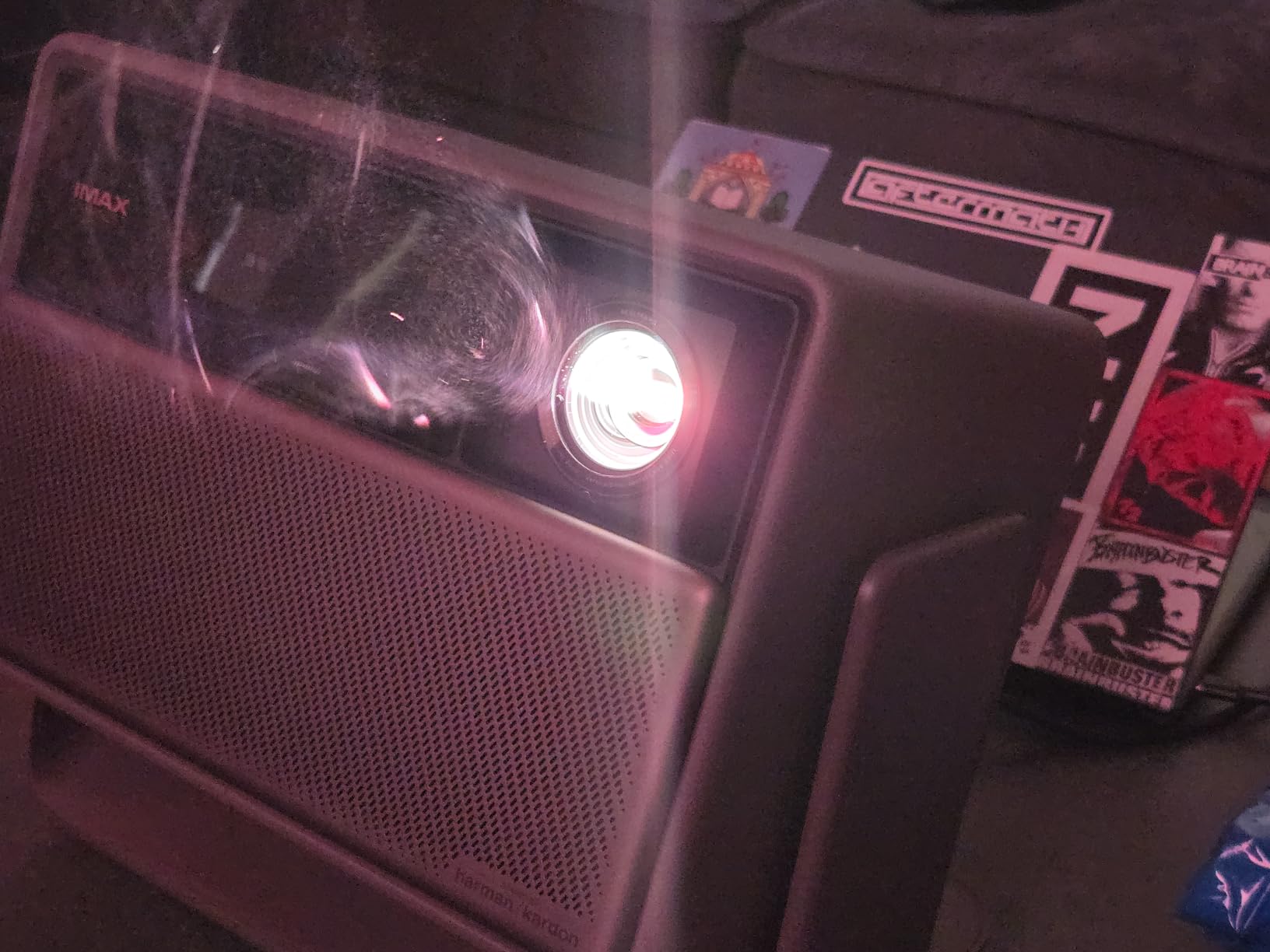
The all-in-one design is worth noting: built-in Google TV with licensed Netflix, integrated Harman Kardon speakers and a stand mean it works out of the box with no extra boxes to shelve. Image size runs from 40 to 300 inch, and throw distance is 1.06 to 5.31 meters, so it handles a modest living room and a larger dedicated space equally well.
Owners rate the automated setup highly. Auto focus, auto keystone, auto screen alignment and obstacle avoidance all work, and the near-silent fan means it is not competing with dialogue in a quiet room. IMAX Enhanced, Dolby Vision, HDR10+ and Filmmaker Mode are all supported.
What you should check before buying
Screen choice matters more here than on most models because triple laser light produces speckle on some surfaces. A darker, higher-gain or ALR screen reduces it noticeably and adds contrast at the same time.
Also note the 4.9 kg weight and the 2-year warranty. If you plan frequent room-to-room moves, the included styrofoam travel case is not built for that, so budget for a proper case.
Who should skip it
Skip it if you only want the gaming performance and have no plan to use it for movies, because the lens shift and zoom hardware is what you are paying for and a cheaper gaming projector would serve. Skip it if laser speckle is a deal breaker for you.
If your room is very small and you need an extreme short throw instead of a short throw, the Hisense PL2 or the AWOL LTV-3000 Pro are built for that specific job.
3. Epson Home Cinema LS11000 – Best for Precise Installation in a Dedicated Room
Epson Home Cinema LS11000 4K PRO-UHD Laser Projector with HDR10+
3-Chip 3LCD 4K pixel shift
2500 lumens color and white
motorized lens shift
up to 120Hz
28 lb
Pros
- Motorized lens zoom
- focus and lens shift for installation accuracy
- 3-Chip 3LCD engine has no rainbow artifacts
- ARC and eARC HDMI audio return
- Up to 120Hz refresh with frame interpolation
- 2-year limited warranty
Cons
- No 3D support on this model
- High purchase price for a home theater projector
- Contrast falls short in a fully dark room
- Amplifies poor source quality
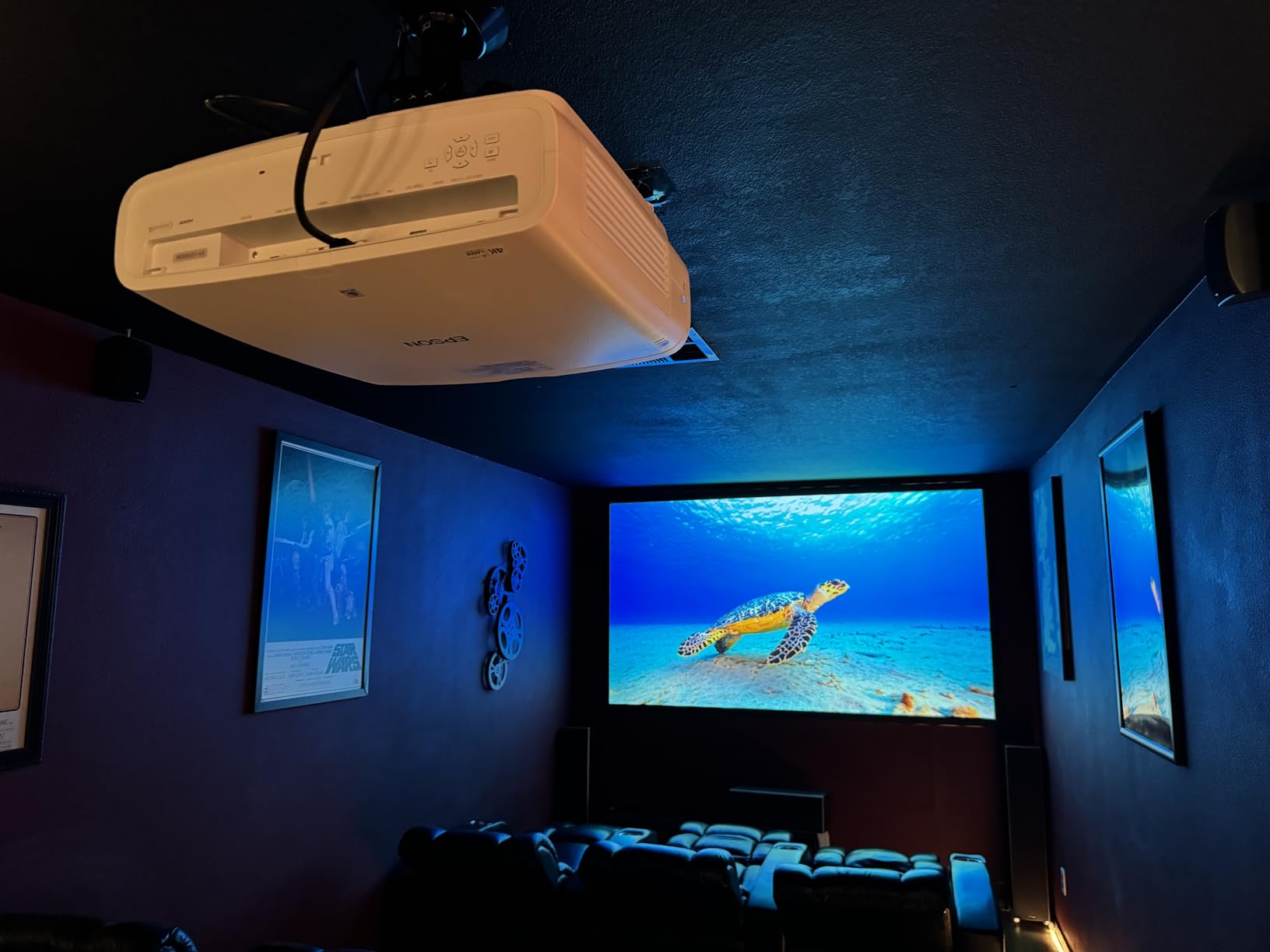
The LS11000 is the installation specialist. Everything about its lens is motorized, zoom, focus and shift, which means you mount it once and then dial it in from the seating position rather than crawling behind the unit with a screwdriver. For a dedicated room where the projector goes on the ceiling and stays there, that is the feature that saves hours.
Color is handled by a true 3-Chip 3LCD engine, which means no rainbow artifacts no matter how fast you move your eyes across the screen. This is the most reliable answer on the list for viewers who are sensitive to RBE, and owners frequently note that the picture reads like a very large television rather than a projector.
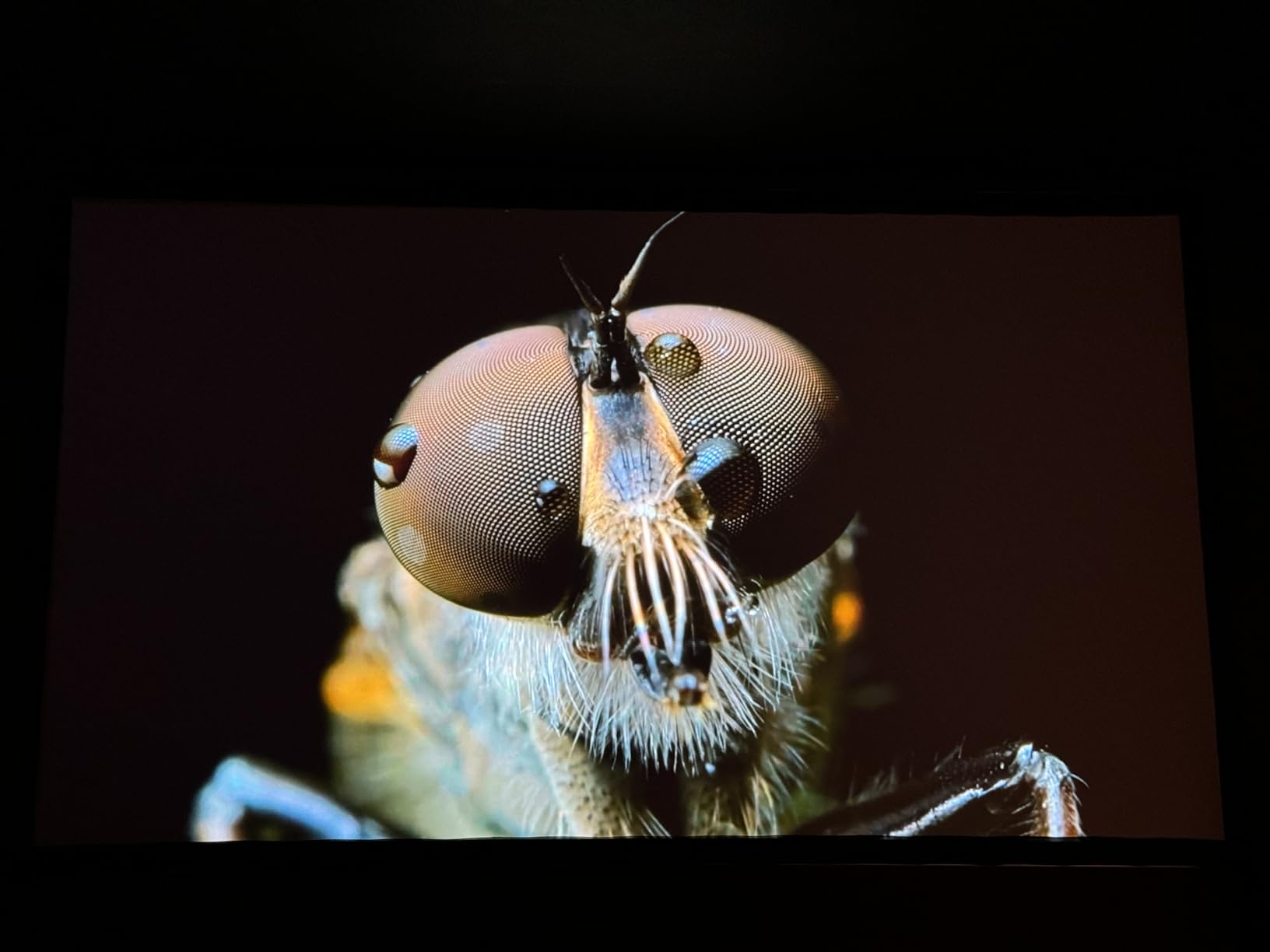
The 4K PRO-UHD pixel shifting works alongside the three LCD chips to produce a 3840 x 2160 image using a Precision Shift Glass Plate, and the Epson Picture Processor handles color, contrast, HDR and resolution enhancement in real time. Brightness is 2500 lumens of color and 2500 lumens of white, with full 10-bit HDR processing and 16-step HDR curve adjustment for calibration.
Two practical details matter more than the headline specs here. First, ARC and eARC HDMI audio return means it can drive a soundbar directly without a full receiver, which is what most buyers actually want. Second, the Epson Cinema Lens is specified for zero light leakage and edge-to-edge focus uniformity, so corners stay as sharp as the center.
What you should check before buying
Throw distance is long. Minimum is 5 feet and maximum is 62 feet for images from 50 to 300 inch, so you need real depth behind the screen or a long ceiling mount. Measure before you commit.
Weight is 28 pounds and the unit is 17.6 by 20.5 by 7.6 inches, so plan the mount hardware and the ventilation clearance deliberately.
Who should skip it
Skip it if contrast in a fully dark room is your top priority, since that is the most common criticism in reviews. Skip it if you watch 3D, because this model does not support it. And skip it if you want deep blacks without a lot of screen calibration work.
Buyers who want Sony-level or native 4K resolution can find it in the broader market, but the pick that covers 3D and gamut breadth at the same time is the NexiGo TriVision Ultra further down.
4. ViewSonic LX700-4K – Best for Xbox Gaming and Large Bright Images
ViewSonic LX700-4K 4K UHD Laser Gaming Projector 3500 Lumens 240Hz Xbox
4K UHD laser
3500 lumens
240Hz and 4.2ms
1.3x zoom plus lens shift
Xbox tuned
Pros
- 3500 ANSI lumens handles bright rooms and 100 to 150 inch images
- 240Hz refresh with 4.2ms input lag
- Designed for Xbox certification with 3.5mm and HDMI audio
- 1.3x optical zoom with vertical lens shift
- Active 3D playback for existing 3D libraries
Cons
- Black level reads as dark grey rather than true black
- No streaming platform built in and no Bluetooth
- Weak mono speaker with little bass
- Slight rainbow effect with rapid eye movement
The LX700-4K has the highest quoted brightness in this roundup at 3,500 ANSI lumens, and it pairs that with genuine gaming credentials. The 240Hz refresh rate and 4.2ms input lag are tuned for Xbox consoles, and the unit carries Designed for Xbox certification with consumer electronics control for one-remote setups.
Installation hardware is unusually complete for a portable unit. You get 1.3x optical zoom, vertical lens shift and four-corner adjustment, which means you can place it off-axis and still get a rectangular image without digital correction. Image size runs 30 to 300 inch, with a 100 inch image from 7.7 feet.
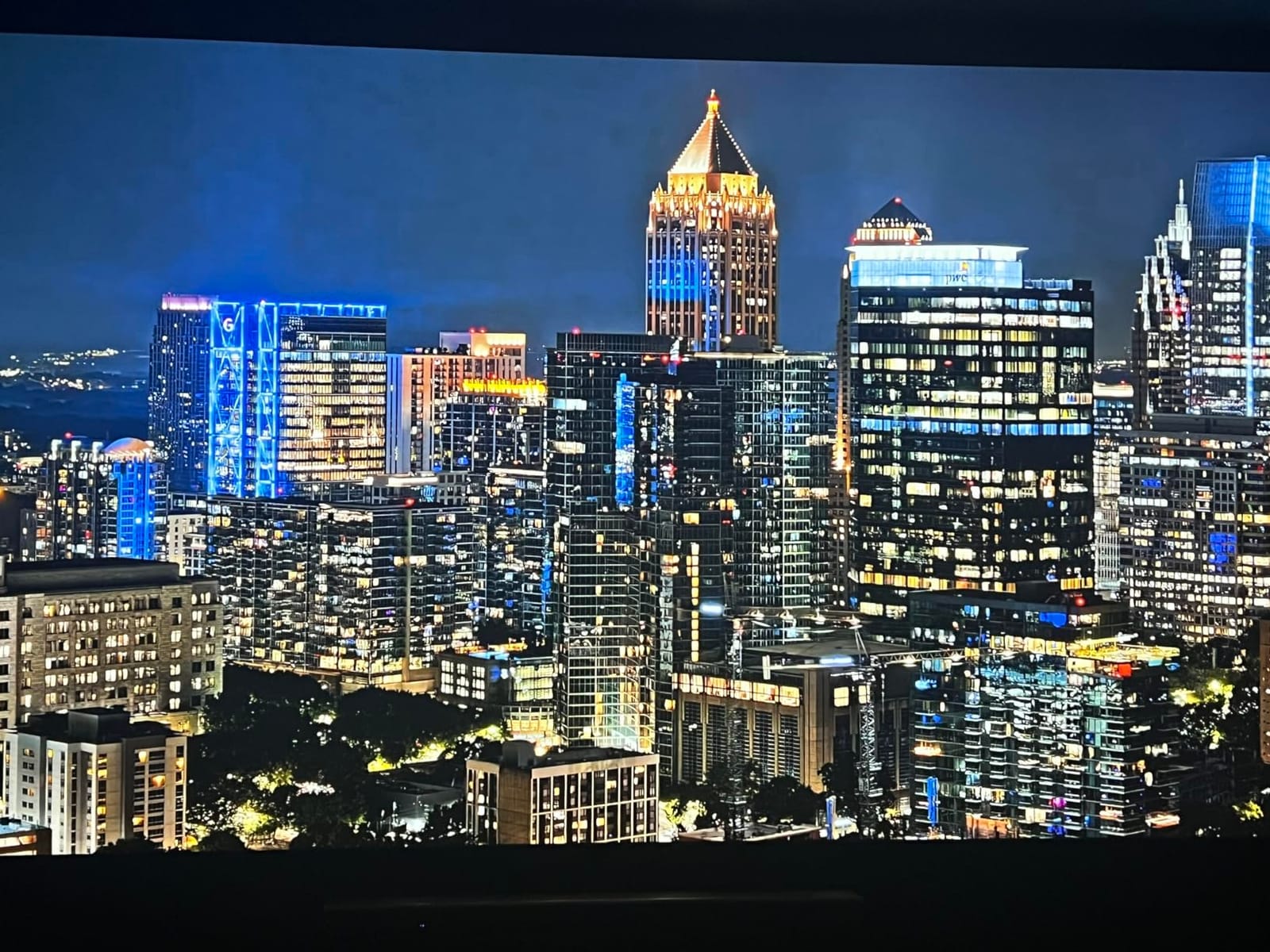
Active 3D playback works well for anyone with a 3D library, which is increasingly rare on new hardware. Owners value the brightness-to-price ratio, the quiet laser operation and the instant-on behavior, since there is no warm-up delay before you start a session.
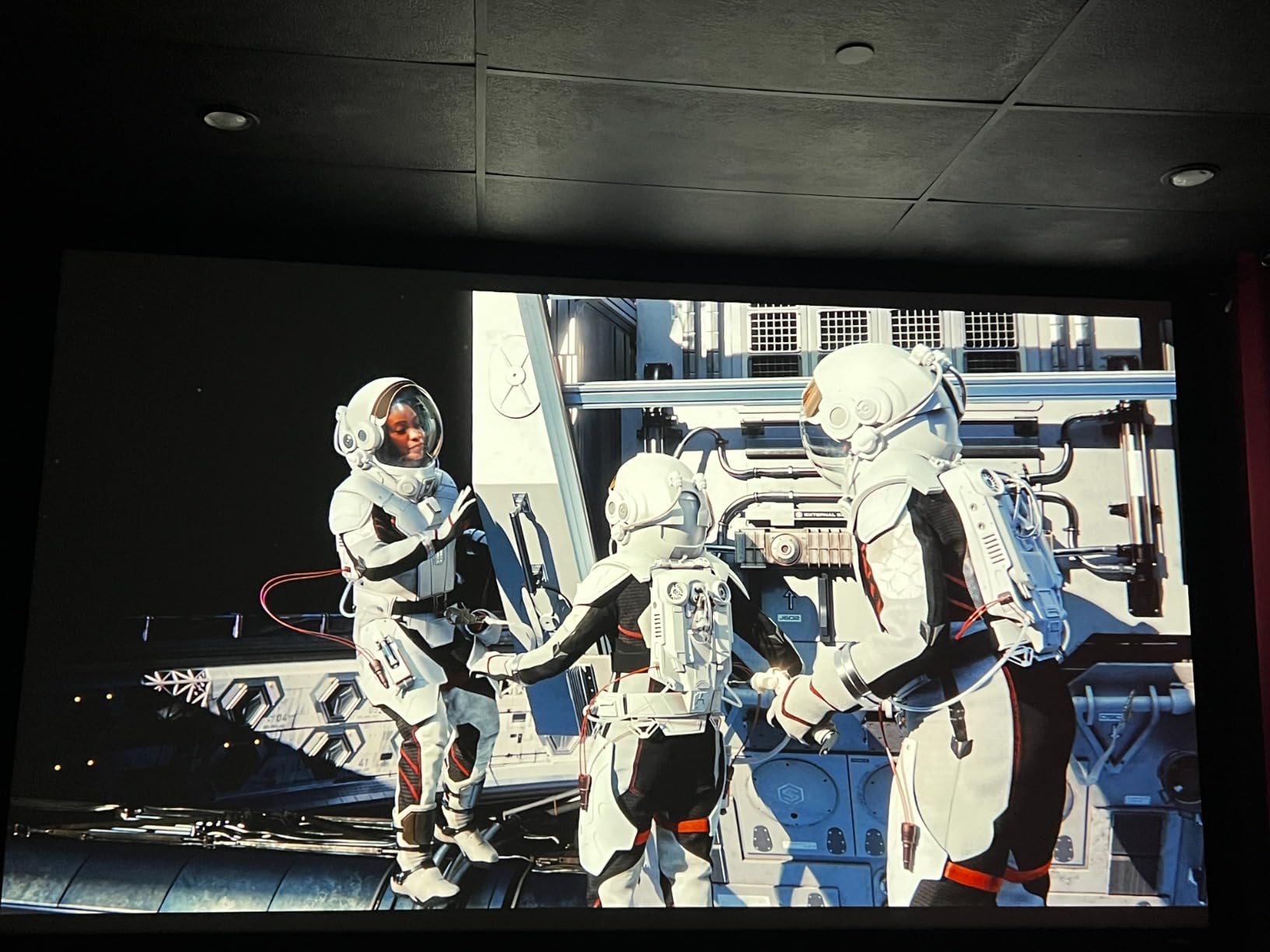
It is the lowest-rated model here at 4.1 across 120 reviews, and the reasons are consistent. Blacks read as dark grey rather than true black, there is no streaming platform and no Bluetooth, and the built-in mono speaker has little bass. Several owners also note that 4K sharpness is hard to distinguish from 1080p at normal viewing distances.
What you should check before buying
Bring your own streaming device. There is no smart platform built in, and with no Bluetooth the only audio paths are the 3.5mm jack or HDMI. Plan for a soundbar or AVR.
Also plan the mount. The unit arrives without a stand or mount, and vertical offset throws the image noticeably high, so ceiling mounting is close to mandatory for a proper theater installation.
Who should skip it
Skip it if black level is the thing you care about most, or if you want built-in smart TV features. The 3,000,000:1 contrast figure in the spec sheet is a dynamic number, not a native one, and reviewers are honest that real blacks are grey.
If you want a similar gaming spec with better overall polish, the XGIMI HORIZON 20 offers lens shift and zoom plus streaming and audio built in.
5. NexiGo TriVision Ultra – Best for 3D and Families Sensitive to Speckle
NexiGo TriVision Ultra, 4K Tri-LED-Laser Portable Projector, 2600 Lumens, 100,000:1 Dynamic Contrast, No Laser Speckle, No Eye Strain, Dolby Vision, HDR10+, 3D, Fire TV Storage Slot
Tri-LED-laser 4K
2600 lumens
100000:1 dynamic
4K 120Hz at 4.2-8ms
no speckle
Pros
- Tri-LED-laser hybrid light source with no laser speckle
- 110% BT.2020 gamut with per-unit calibration
- Active 3D support owners rate as near theater quality
- Three HDMI 2.1 ports with eARC and 4K at 120Hz
- 30W Dolby Audio speakers usable without a soundbar
Cons
- Long throw needs roughly 11 to 12 feet for a 120 inch image
- No optical zoom so throw must be calculated in advance
- eARC output reported unreliable by some owners
- Support responses reported as unhelpful
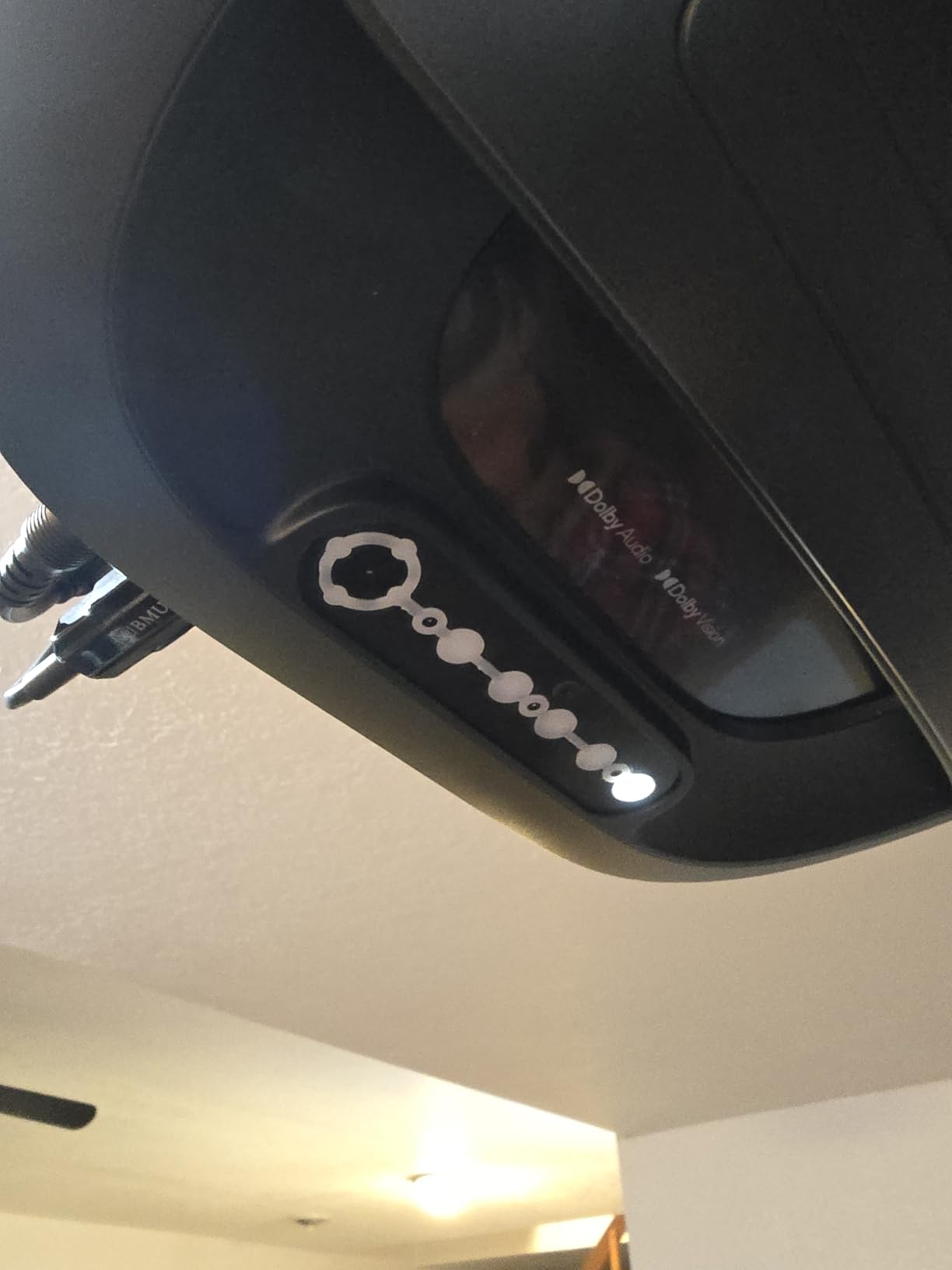
The TriVision Ultra solves a specific problem that most laser projectors create. A hybrid Tri-LED-laser light source gives you the brightness and color range of laser without the speckle, so it is the pick for households where someone notices shimmer on a white screen. Color accuracy ships with a per-unit calibration report and measures under 1 delta E.
Gamut is 110% BT.2020 with Dolby Vision, HDR10+, HLG and active 3D support all present. The 3D implementation draws consistent praise, with owners describing it as close to theater quality, and that is rare enough to be the reason to choose this over a cheaper DLP.
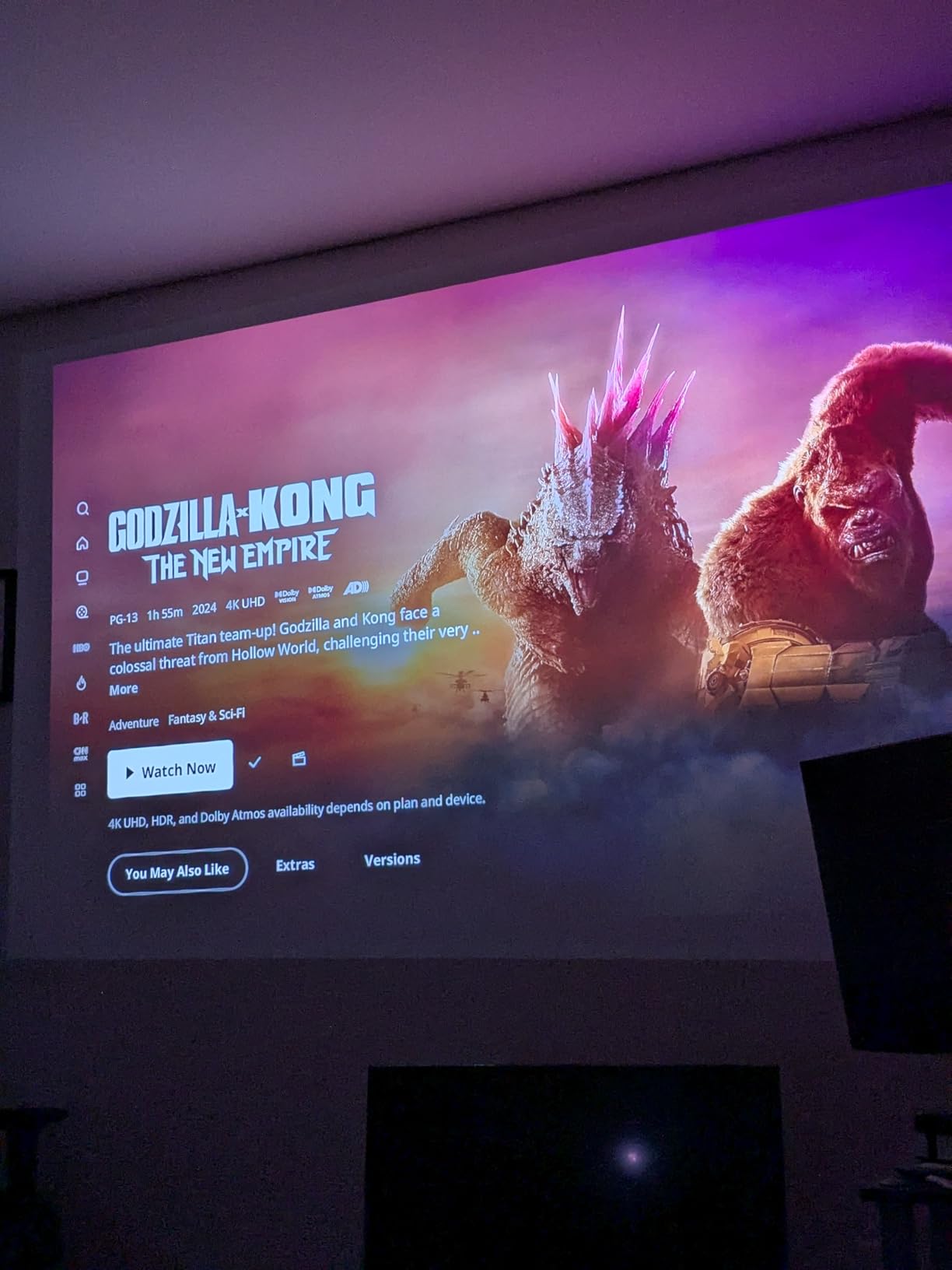
For gaming, three HDMI 2.1 ports accept 4K at 120Hz with latency between 4.2 and 8ms, and the AI auto focus and auto keystone handle setup. There is a hidden Fire TV Stick storage compartment so the streaming dongle disappears into the chassis, and 30W Dolby Audio speakers with DTS Virtual:X are genuinely usable for casual viewing.
The limitation is throw distance, and it is a real one. Minimum throw is 3.5 feet and maximum is 27.67 feet, but a 120 inch image needs roughly 11 to 12 feet of room depth, and there is no optical zoom to help you fine-tune once it is installed. Owners also report unreliable eARC output and, in several cases, disappointing support responses when hardware issues came up.
What you should check before buying
Measure your room depth before anything else. If you cannot give it 11 to 12 feet behind the seating, this model is wrong regardless of how good the picture is, and you should look at an ultra short throw option instead.
Check your audio path too. If you plan to use a soundbar over the built-in speakers, test the eARC behavior early rather than after the wall is closed.
Who should skip it
Skip it if you are highly sensitive to rainbow artifacts on single-chip DLP, because this uses DLP. Skip it if your room is shallow, and skip it if you are the kind of buyer who wants a three-year warranty and confident support, since this carries neither the coverage nor the responsiveness.
For a shorter throw with a guaranteed warranty, the BenQ TK710 covers 4K at lower rated brightness and pairs it with a 3-year manufacturer warranty.
6. BenQ TK710 – Best for Small Rooms and Tight Throw Distances
BenQ TK710 4K HDR Laser 3200 Lms Home Entertainment Movie& Gaming Projector
4K UHD laser
3200 lumens
8.4 to 16.3 foot throw
lens shift and 1.3x zoom
3 year warranty
Pros
- 3200 ANSI lumens handles lights-on viewing
- True 4K UHD with HDR10 and HLG plus Dynamic Function
- 4ms response at 1080p 240Hz and 16ms at 4K 60Hz
- Extensive picture adjustment including corner adjustment
- Three-year manufacturer warranty with eARC support
Cons
- No Bluetooth so the 5W speaker needs a wired or HDMI path
- Built-in speaker is quiet and thin
- Limited throw distance for very large images
- Some owners reported dead HDMI ports or a failing speaker
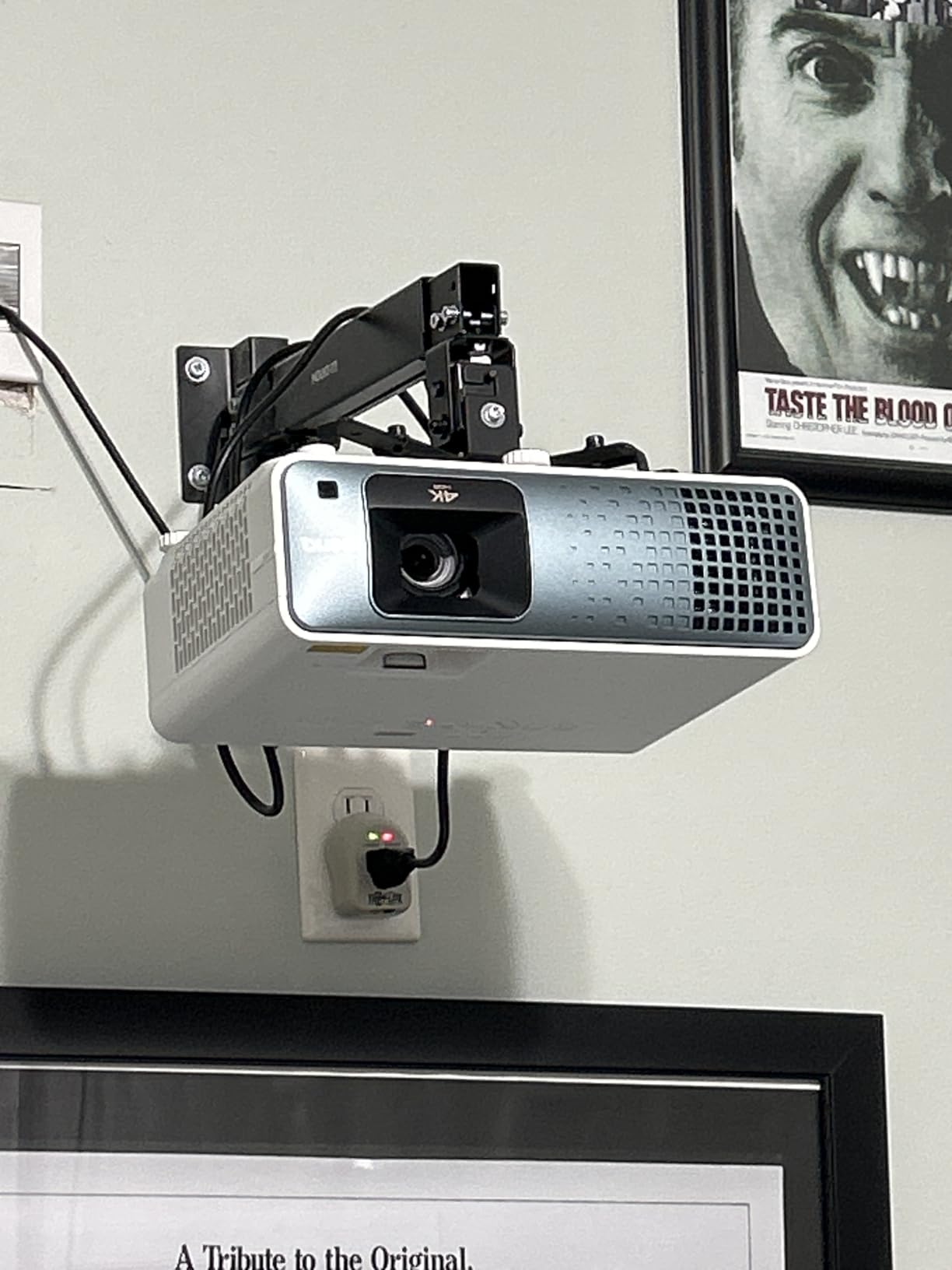
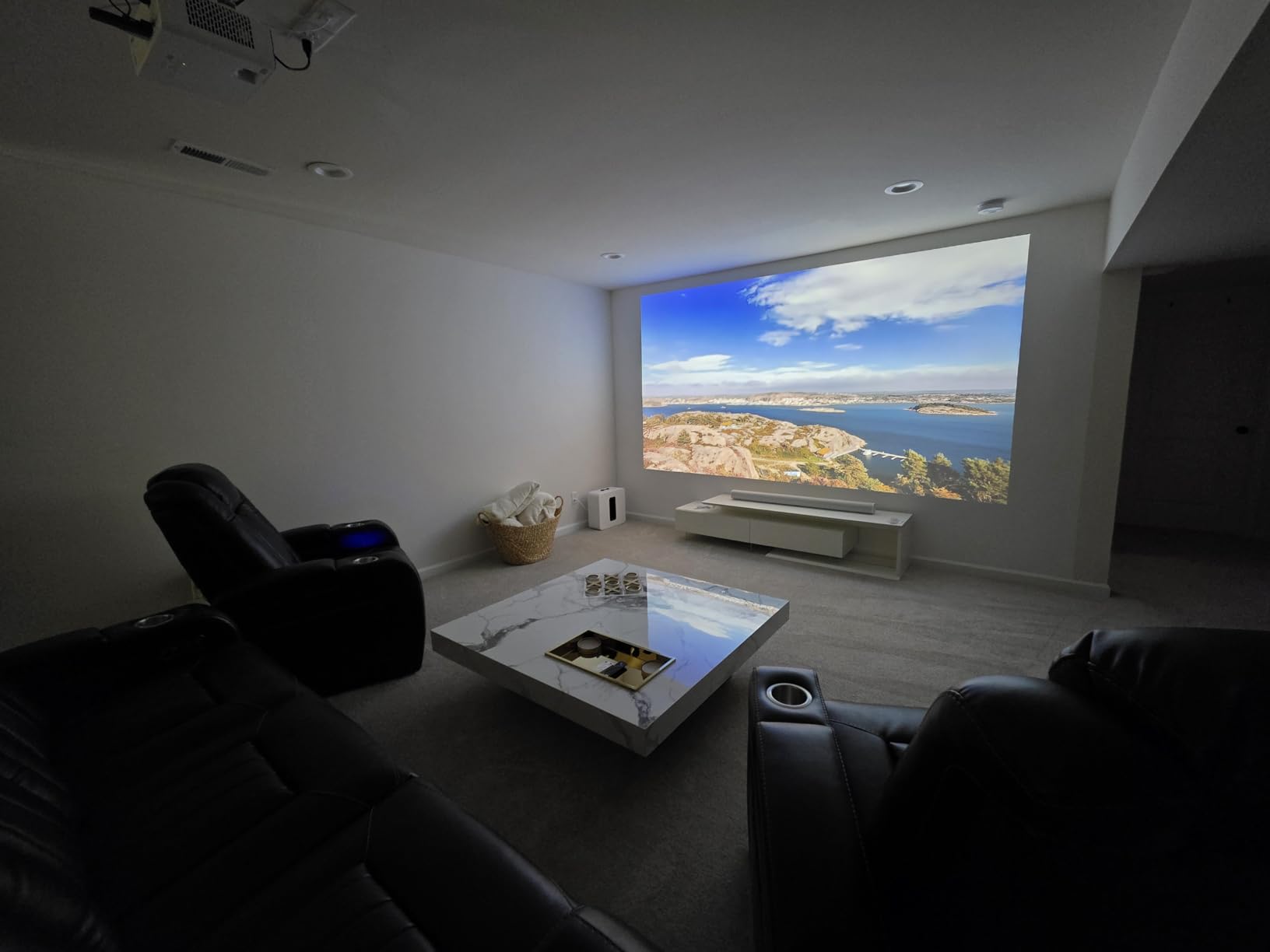
The TK710 is the practical short-throw answer, and the number that matters is 8.4 feet as a minimum throw distance for a maximum image of 144 inch. If you cannot back the projector far enough away, this is not a compromise to accept, it is simply the wrong tool. Within its range it fills a screen with 3,200 ANSI lumens of laser light, which is bright enough for a room with lights on.
Installation is well served by lens shift and 1.3x optical zoom, so you are not forced into digital keystone. Owners single out the picture adjustment options, including corner adjustment, as among the most complete in this class, and the Dynamic Function contrast processing plus HDR10 and HLG handle darker scenes better than the raw spec suggests.
Gaming performance depends on resolution. At 1080p you get 4ms response and a 240Hz refresh rate, while at 4K 60Hz input lag is 16ms. That is a fine gaming projector, just not one that competes with the 1ms and 4ms figures on the XGIMI HORIZON 20 or the Valerion StreamMaster Plus2.
The 3-year manufacturer warranty is the longest here and stands out against the one and two-year terms elsewhere. Audio is the weak point: 5W built-in speakers with no Bluetooth means a soundbar or AVR is effectively required, and some owners received a model with dead HDMI ports or a failing speaker, though the warranty is long enough to make that a solvable problem.
What you should check before buying
Work out your 16:9 or 16:10 image width, then check it against the 144 inch ceiling. If you want a 120 inch screen you need roughly 13 to 14 feet, and if that is more than your room depth the model will not work.
Also confirm the corner adjustment controls are enough for your ceiling mount, and plan a separate audio path since there is no Bluetooth.
Who should skip it
Skip it if you want a very large image, because 144 inch is the ceiling and the throw range is narrow. Skip it if 4K gaming latency is the priority, since 16ms at 4K is a different tier from the sub-5ms models here.
For more throw flexibility in a longer room, the Epson Home Cinema LS11000 runs from 5 to 62 feet and covers 300 inch.
7. Hisense PL2 – Best Ultra Short Throw Value for Replacing a Television
Hisense PL2, Ultra Short Throw Home Theater Laser Projector, 80” – 150”, 4K UHD, 2,700 Lumens, 3000:1 Contrast, Dolby Vision & Atmos, 3D, Google TV, WIFI 6E
Ultra short throw 4K
2700 ANSI lumens
80 to 150 inch
Dolby Vision and 3D
25000 hour laser
Pros
- Fills 80 to 150 inch from a compact console footprint
- X-Fusion laser light source rated 25000 hours
- 2700 ANSI lumens with Dolby Vision and multiple HDR formats
- Google TV interface is fast and responsive
- 4K AI upscaler sharpens lower resolution sources
Cons
- Rainbow effect reported as distracting by some users
- Auto keystone requires an awkward phone photo upload
- Benefits noticeably from an ALR or higher gain screen
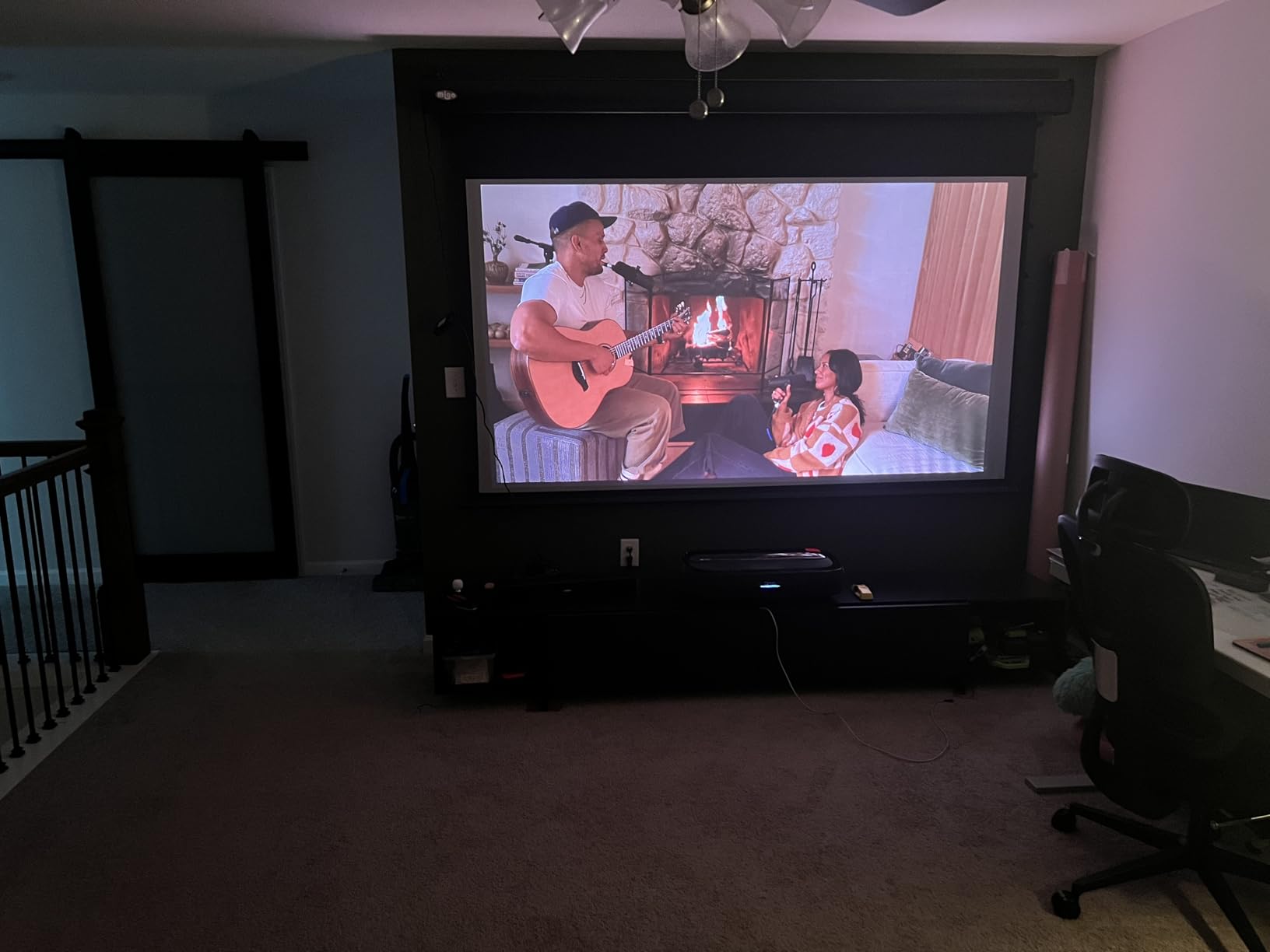
If the goal is replacing a television rather than building a theater, an ultra short throw changes the geometry entirely. The PL2 throws from as close as 0.22 feet to 1.5 feet and fills 80 to 150 inch, so it sits on a console directly under the screen like a flat panel would. No ceiling mount, no long throw, no deep room required.
Brightness is 2,700 ANSI lumens, which is a genuine step up from most single-chip models in a lit room. The X-Fusion laser light source is rated 25,000 hours, Dolby Vision is supported alongside multiple HDR formats, and the Google TV interface is reported as fast and responsive rather than a afterthought. A 4K AI upscaler also sharpens lower-resolution sources, which matters if you watch broadcast TV or older discs.
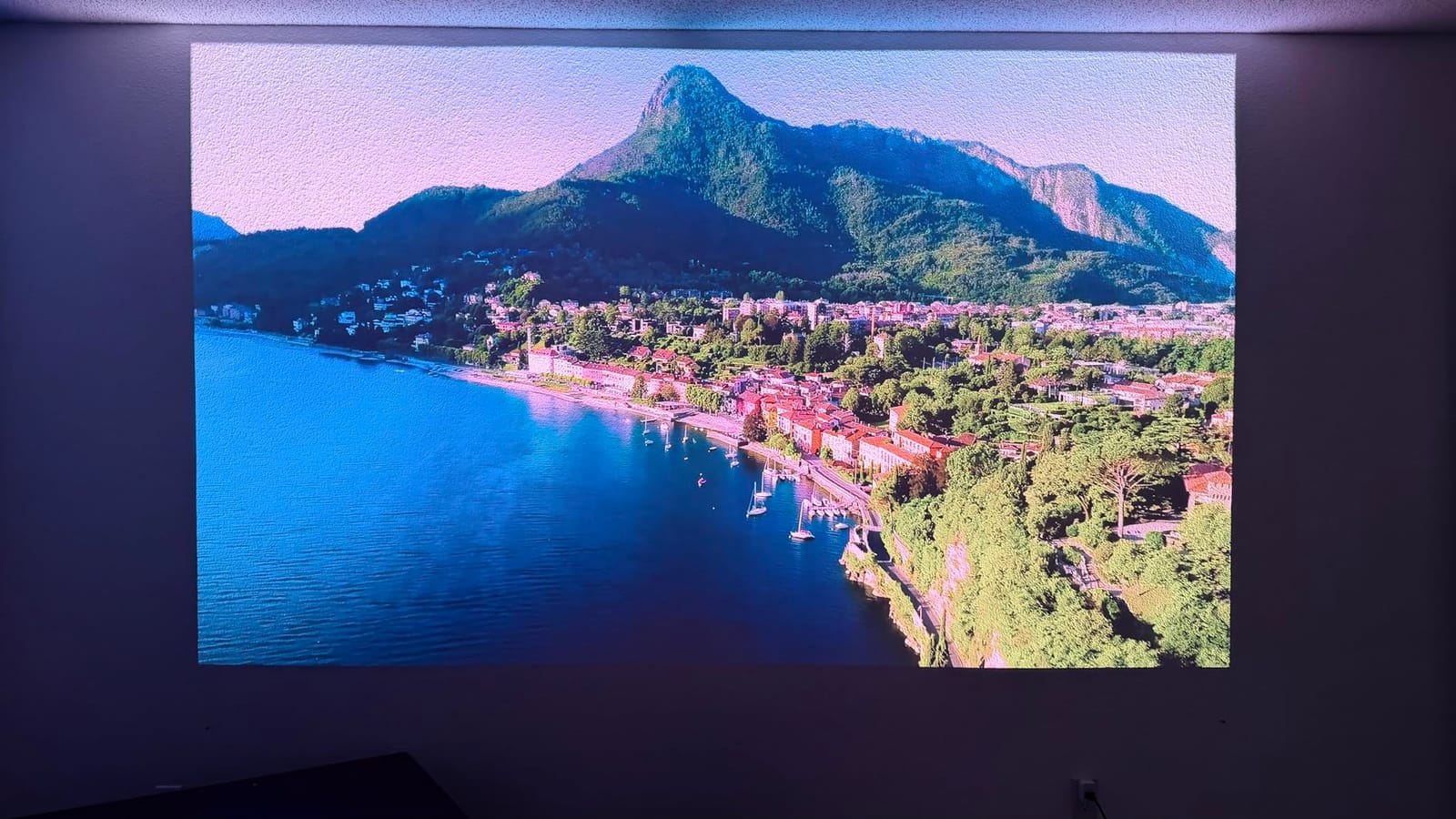
Color is handled by a DLP system driving 2.07 million micro mirrors with a palette of more than 1.07 billion colors, and the 3,000:1 contrast ratio is the highest native figure among the ultra short throw models here. The unit weighs 18.7 pounds and measures 20.9 by 13.2 by 4.7 inches, which is a normal media console footprint.
Owners describe it as a strong value that makes dedicated-theater viewing feel immersive, and the recurring criticism is consistent: some report a rainbow effect, and the auto keystone process requires an awkward phone photo upload that does not always behave. It also benefits noticeably when paired with an ALR or higher gain screen rather than a standard white one.
What you should check before buying
Check the surface you will project onto. This model performs best with a dedicated ALR or higher-gain screen, and on a white wall in a bright room the picture will not deliver what you saw in reviews.
Check your clearance too. Ultra short throw units are wide and deep by design, and the throw distance figures are unusually short, so cabinet depth has to accommodate the full chassis.
Who should skip it
Skip it if you want true 4K detail, since this is pixel-shifted 1080p-class DLP rather than a higher-resolution panel. Skip it if rainbow artifacts bother you, and skip it if you want to move the screen size, since 80 to 150 inch is the full range.
If you want more color coverage in an ultra short throw chassis, the AWOL LTV-3000 Pro quotes 107% BT.2020 and 147% DCI-P3.
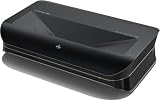
8. AWOL LTV-3000 Pro – Best for 150-Inch Color and Built-In 3D
AWOL VISION LTV-3000 Pro 4K 3D Ultra Short Throw Triple Laser Projector, Dolby Vision & Atmos, HDR10+, 150″ UST Laser TV Home Theater Projector
Triple laser UST
3000 ANSI lumens max white
80 to 150 inch
107% BT.2020
25000 hour laser
Pros
- Triple laser with no color wheel and 107% BT.2020 coverage
- Projects up to 150 inch from a very short distance
- Dolby Vision
- HDR10+ and active 3D support
- Built-in center channel speaker mapping for dialogue
- Works with Control4 and PJ Link IP automation
Cons
- Performs best in darker rooms and needs an ALR screen when bright
- Fixed 0.25:1 throw ratio means cabinet depth must fit the unit
- 28 pound chassis
The LTV-3000 Pro is the widest-gamut ultra short throw in this group, covering 107% BT.2020 and 147% DCI-P3 from a triple laser source with no color wheel. Brightness is quoted as 2000 lm, with 3,000 ANSI lumens as the maximum white figure, and the throw range is 0.5 to 1.68 feet for an 80 to 150 inch image.
What makes it distinctive is the built-in center channel speaker mapping, which gives you clearer dialogue from the unit itself. That matters more than it sounds, because forum discussions about projectors repeatedly turn on the fact that onboard audio is usually disappointing, and having a usable center channel changes how a system can be set up on a budget. Dolby Vision, HDR10+, Dolby Atmos and active shutter 3D glasses support are all included.
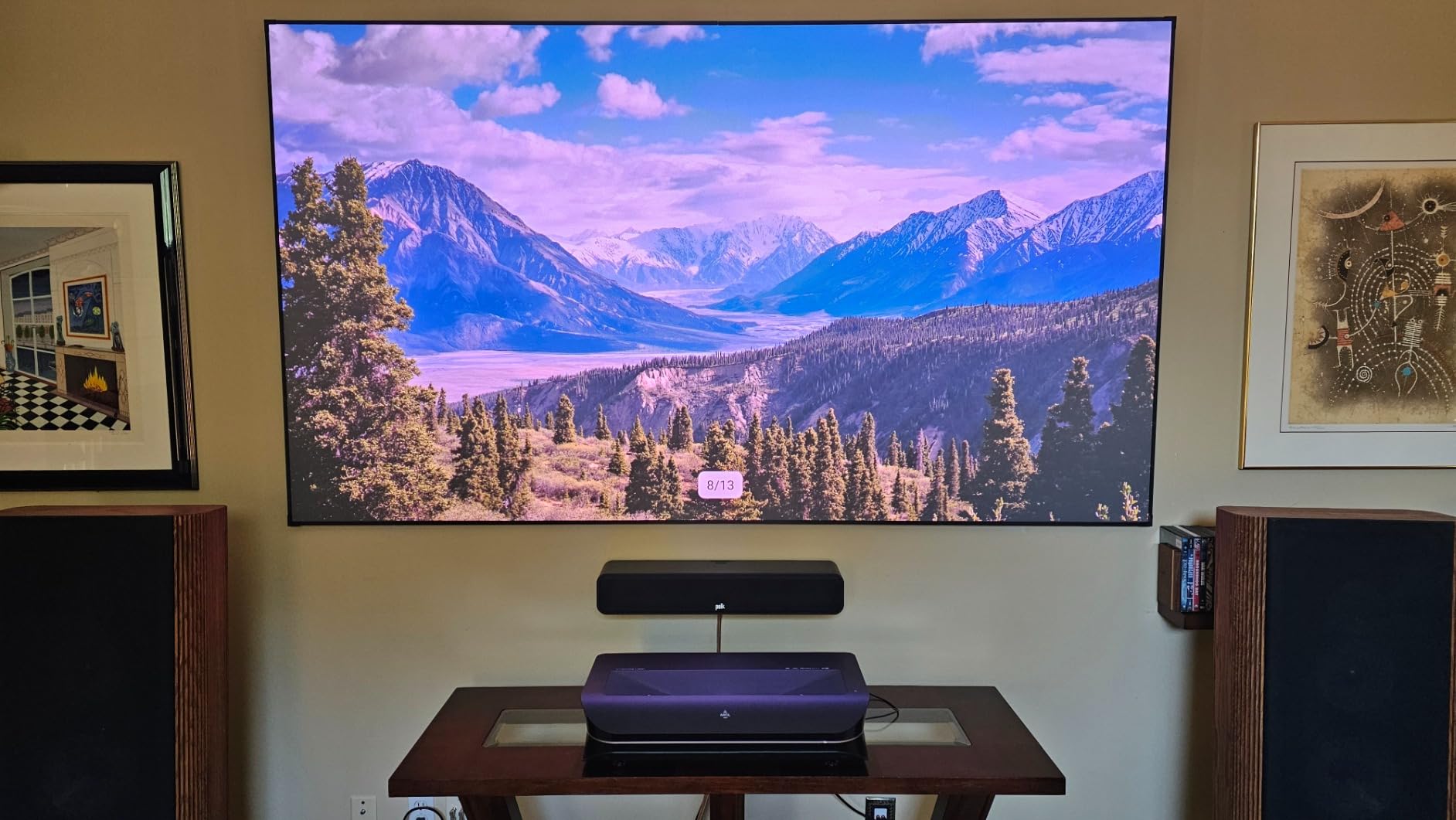
Smart home integration is handled properly, with PJ Link IP control and Control4 compatibility rather than a single-vendor app. The laser light source is rated 25,000 hours, which is at the top of the range here alongside the Hisense PL2 and the NexiGo, and the manufacturer notes the light source draws roughly one tenth the power of a comparable LED TV at typical viewing levels.
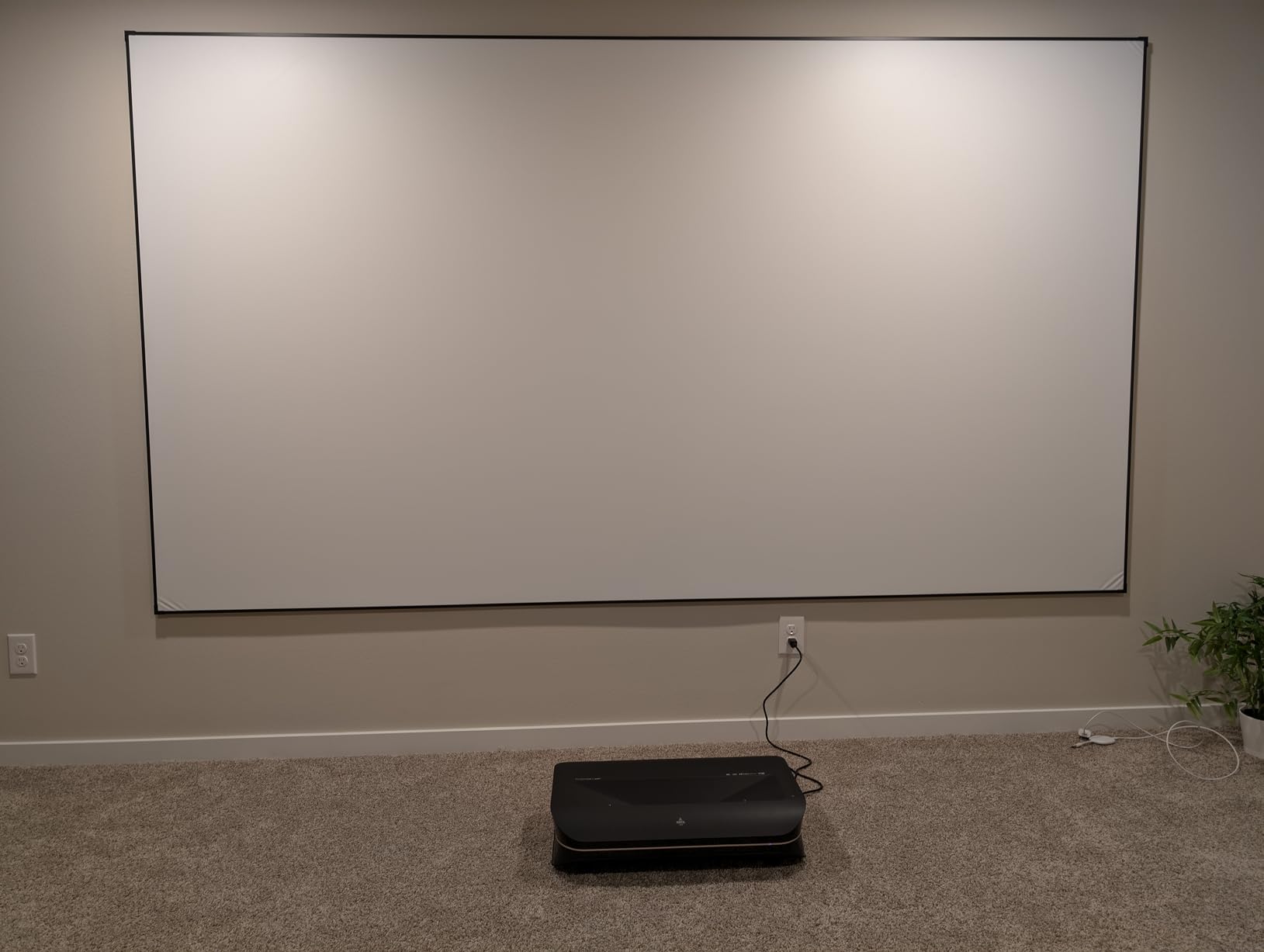
The trade-off is physical. At 28 pounds and 23.6 by 21.5 by 5.5 inches this is a large piece of hardware, and the fixed 0.25:1 throw ratio means cabinet depth has to accommodate it exactly. Reviewers also note that the picture performs best in darker rooms and recommends an ALR screen for bright spaces.
What you should check before buying
Measure the cabinet, not the wall. With a fixed 0.25:1 throw ratio you cannot pull the unit forward to make depth work, so a too-shallow cabinet is a return trip.
Plan the screen at the same time. Because performance depends on ambient light conditions, decide whether you are buying a low gain white screen or an ALR screen before ordering, and check that the choice matches how bright the room actually is.
Who should skip it
Skip it if your room is bright and you are not prepared to buy an ALR screen, because the picture will not hold up. Skip it if cabinet depth is tight, and skip it if you want fine placement adjustment, since the throw ratio is fixed.
Buyers who want similar color coverage with a longer throw and more placement freedom should look at the Valerion StreamMaster Plus2.
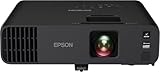
9. Epson Pro EX11000 – Best for Bright, Large Rooms and Rainbow-Free Color
Epson Pro EX11000 3-Chip 3LCD Full HD 1080p Wireless Laser Projector
3-Chip 3LCD 1080p
4600 lumens color and white
31 to 310 inch
20000 hour laser
9.5 lb
Pros
- 4600 lumens of color and white brightness for lit rooms
- True 3-Chip 3LCD engine with no rainbowing
- 20000 hour laser source with no bulbs to replace
- Portable 9.5 pound chassis with images up to 310 inch
- Miracast plus two HDMI ports and USB power
Cons
- Native 1080p rather than 4K pixel shifting
- Positioned as a business and large-room projector
- Cinema-grade color grading features are limited
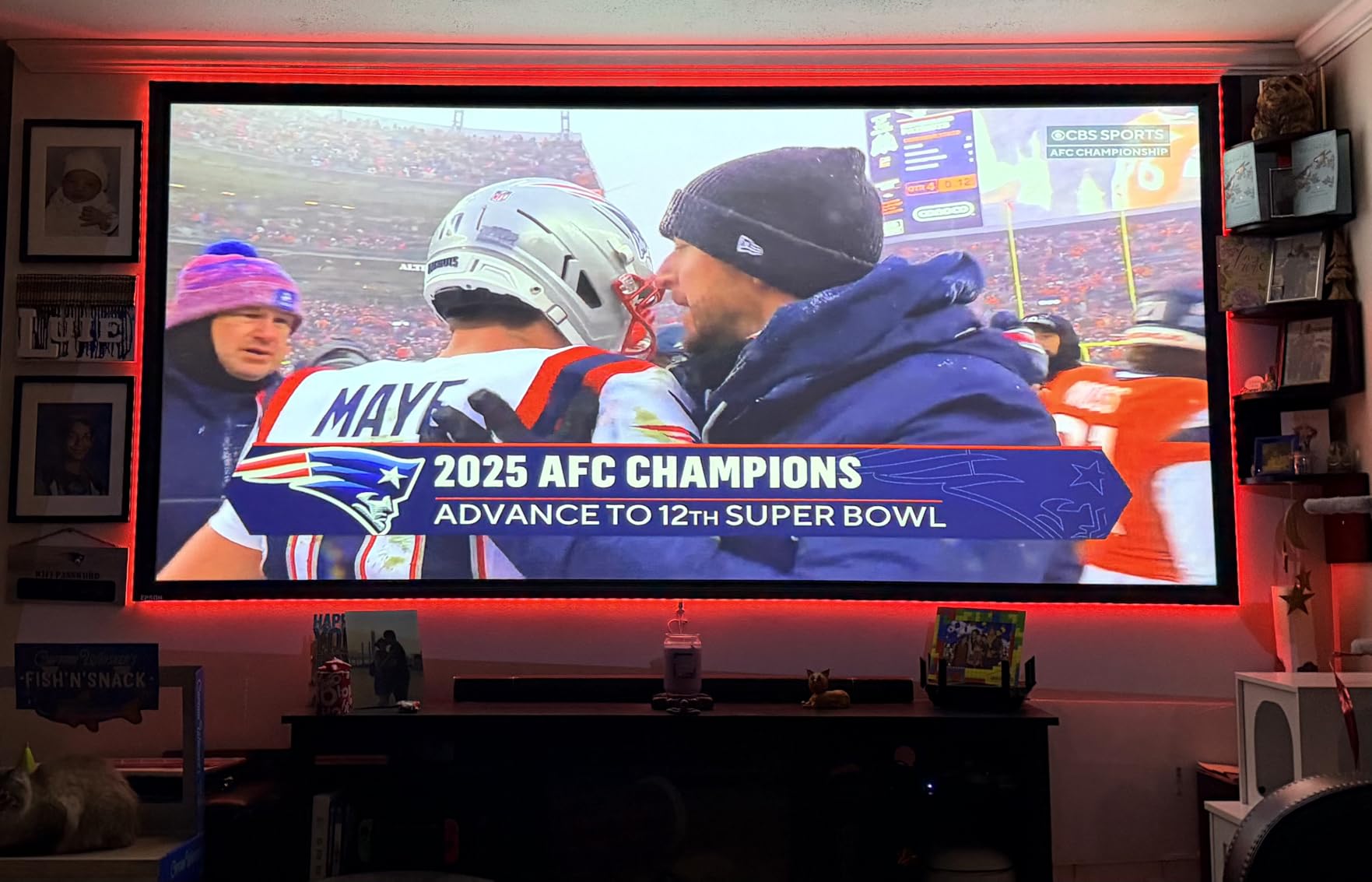
This is the highest-rated model in the roundup at 4.7 across 173 reviews, and the reason is simple: it puts 4,600 lumens on screen and never has to think about the room. For a basement gym, a large living room with curtains open, or a media room that stays lit, that brightness headroom is worth more to most people than 4K detail.
The 3-Chip 3LCD engine displays 100% of the RGB signal every frame, which means no color brightness penalty and no rainbow artifacts. For a family room where people move around and glance at the screen mid-scene, that is a meaningful reliability advantage over single-chip DLP models.
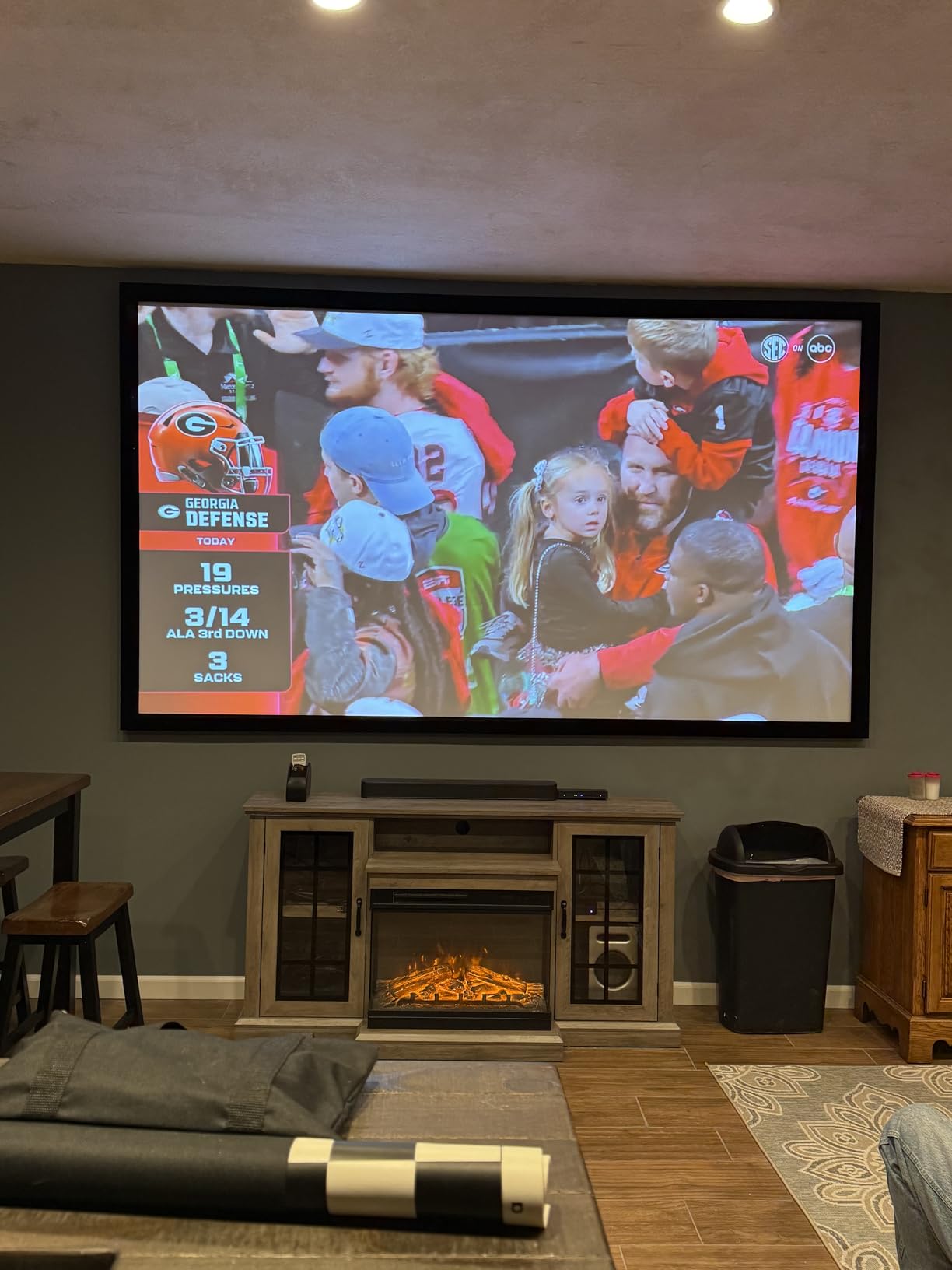
At 9.5 pounds it is genuinely portable, and image size runs from 31 to 310 inch. Throw distance is listed as 1.32 to 2.12 feet, which is a short range that suits placing it on a table near the screen rather than at the back of a room. Connectivity is straightforward: two HDMI ports, Ethernet, USB, VGA, Miracast and a built-in speaker.
The honesty here is that this is a large-room and business projector, not a cinema unit. Native resolution is 1920 x 1080, there is no pixel shifting to reach 4K, and cinema-grade color grading features are limited. The 20,000 hour laser light source means there are no bulbs to replace, and the one-year limited warranty is the shortest in this roundup.
What you should check before buying
Decide whether brightness or resolution matters more to you, because you are trading one clearly for the other here. A 1080p image at 4,600 lumens in a bright room can look better than a dimmer 4K image.
Check your throw range as well. The short 1.32 to 2.12 foot distance means this wants to sit close to the screen, which is unusual in a dedicated theater layout.
Who should skip it
Skip it if you sit close to a large screen and notice pixel structure, because there is no 4K pixel shifting to hide it. Skip it if you care about black level in a dark room, since a high-output projector is optimized for the opposite condition.
For a blacked-out dedicated room where picture quality matters more than brightness, the Epson Home Cinema LS11000 is the better-matched model.
10. ViewSonic LS740HD – Budget Pick for Huge Bright Images
ViewSonic LS740HD 1080P Laser Projector, 5500 Lumens, Full HD Home Theater
1080p laser
5500 lumens ANSI
30 to 300 inch
1.3x optical zoom
Golf Mode
3 year warranty
Pros
- 5500 ANSI lumens makes a 100 inch image clear with lights on
- 1.3x optical zoom with keystone and four-corner adjustment
- Very quiet and runs cooler than bulb projectors
- Dedicated golf simulation mode for simulator setups
- Three-year parts and labor warranty
Cons
- No lens shift so placement must be planned in advance
- Some owners reported a recurring random orange flash glitch
- Built-in speaker is muffled and not practical for larger rooms
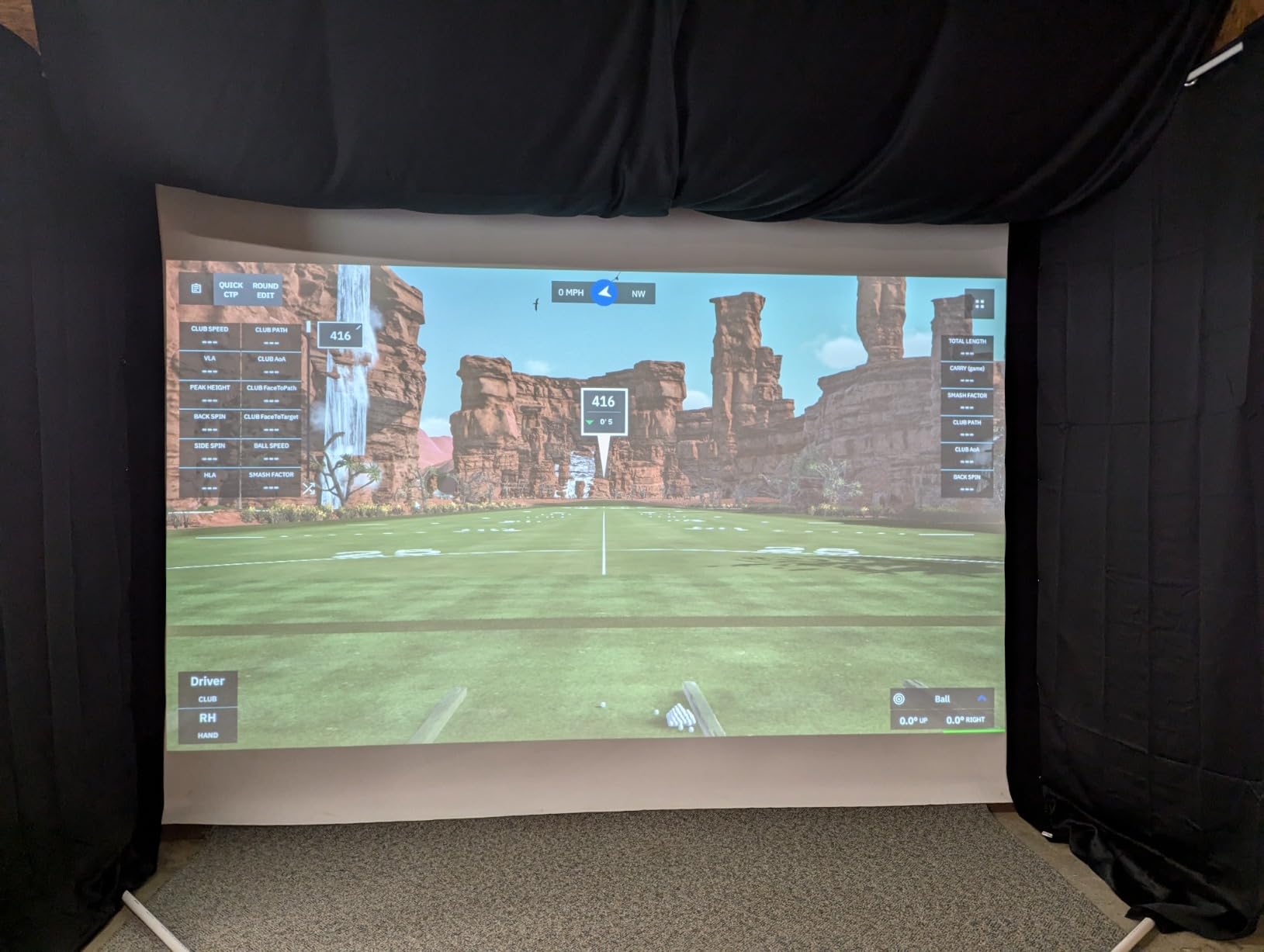
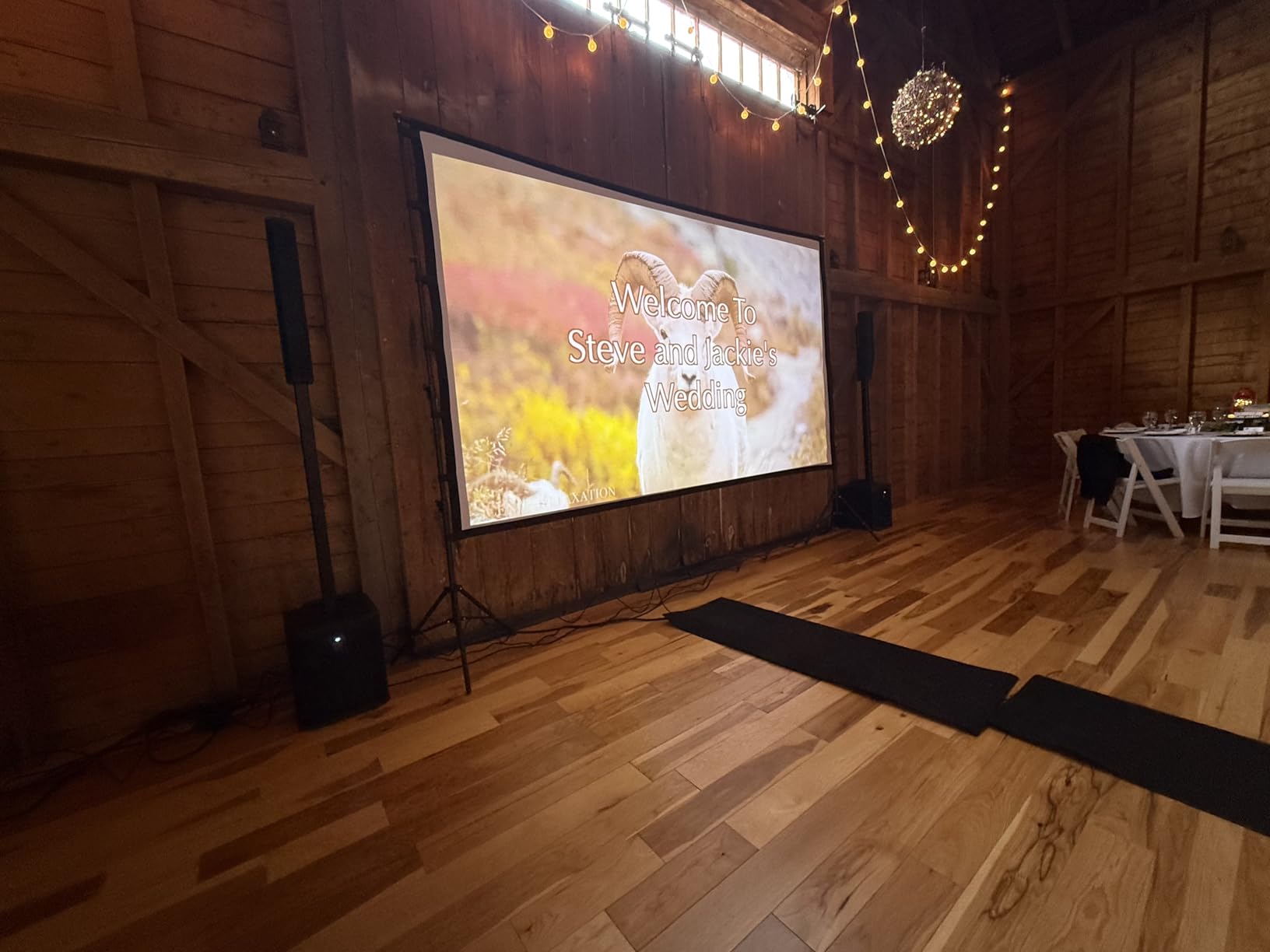
The LS740HD is the most straightforward value proposition in this list: 5,500 ANSI lumens of laser light at 1080p, with a 1.1 to 1.5 throw ratio and images from 30 to 300 inch. If you want a very large, very bright picture and you are not chasing 4K detail, this is where the lumen-per-spec-point argument is strongest.
It is also the lightest unit here at 6.6 pounds, which makes it easy to move between an indoor setup and an outdoor movie night. Instant power on and off, 360-degree projection and portrait mode, plus a dedicated golf simulation mode tuned to environmental colors, add flexibility that dedicated theater projectors rarely offer.
The warranty is the strongest coverage here, with three years on parts and labor, one year on the light source, plus a first year of free Express Exchange service. Owners consistently call out brightness as the standout and praise the quiet, cool-running laser light source and easy alignment.
Two things temper that. There is no lens shift, so placement has to be planned with a throw distance calculator before the unit is mounted rather than adjusted afterward. And a recurring orange flash glitch is reported by some owners, which is a firmware-level annoyance rather than a failure, but it is worth knowing about before you buy.
What you should check before buying
Run a throw distance calculation for your intended screen size before ordering, since there is no lens shift to correct a miscalculation later. A 100 inch image comes from 8.2 feet, and 8 meters is the maximum throw.
Plan audio separately. The built-in speaker is described as muffled and not practical for larger rooms, so budget for a soundbar or a full system.
Who should skip it
Skip it if resolution matters, because this is native 1080p with no pixel shifting. Skip it if you want a permanent ceiling installation and are not willing to compute the throw distance yourself, and skip it if you are sensitive to unusual firmware behavior.
For a 4K-capable laser at a similar weight class, the BenQ TK710 adds HDR10, HLG and a three-year warranty.
How to Choose a Laser Projector for Your Home Theater
Start with the room, not the projector
There are three distinct jobs here, and almost every buying mistake comes from treating them as one. A dedicated theater room is dark, has controlled acoustics and a fixed screen, which favors contrast and black level. A media room with controlled lighting wants brightness headroom plus the smart features that make casual use easy. A living room with a television in the same space is a TV replacement, which is where ultra short throw models earn their place.
Owners and forum posters in r/projectors consistently make the same point: buyers underestimate how much a dark room and a proper screen matter compared with raw lumens. A 3,000 lumen projector in a blacked-out room beats a 5,500 lumen projector in a sunlit one, every time. If your projector is going in a room that stays bright, the bright models in this list are the correct shortlist and the rest are not.
Understand ANSI lumens versus ISO lumens
ANSI lumens is the standard you should compare on, because it measures all the light the projector sends to the screen rather than a single lamp wattage figure. ISO lumens is a different methodology and typically produces a lower number for the same projector, so a 2,000 ISO lumen model is not the same brightness as a 2,000 ANSI lumen model even though the digits match.
Within this list, most models state an ANSI figure: the AWOL LTV-3000 Pro at 3,000 ANSI lumens max white, the XGIMI HORIZON 20 at 3,200 ISO lumens, the ViewSonic LX700-4K at 3,500 ANSI lumens and the ViewSonic LS740HD at 5,500 ANSI lumens. The Epson EX11000 and the BenQ TK710 quote plain 4,600 lm and 3,200 lm respectively without naming the standard, which is exactly the ambiguity to watch for.
Know that 4K on a projector usually means pixel shifting
Native 4K means the panel physically resolves 3,840 x 2,160. Pixel shifting, also called XPR or 4K PRO-UHD, means a lower-resolution panel shifts four times per frame to address nearly eight million pixels. The visual difference is subtle at normal seating distances and obvious up close, which is why marketing language is a poor guide.
Every 4K-class model in this roundup uses pixel shifting rather than native resolution, including the Valerion, the AWOL, the XGIMI, the Hisense PL2, the NexiGo, the BenQ TK710 and the ViewSonic LX700-4K. If native resolution is the priority, you are looking outside this list, and the honest trade is a much higher cost for a difference most viewers cannot see from a normal seat.
Match throw distance to your room before anything else
Throw distance is the distance from the lens to the screen, and it is determined by throw ratio, image size and lens zoom. Get this wrong and you will end up using digital keystone, which scales and resamples the image and permanently reduces sharpness. It is the most common self-inflicted wound in this category.
Useful anchors from the models here: the BenQ TK710 covers up to 144 inch from 8.4 to 16.3 feet, the XGIMI HORIZON 20 covers up to 300 inch from 1.06 to 5.31 meters, and the NexiGo TriVision Ultra needs roughly 11 to 12 feet for a 120 inch image. Ultra short throw models behave differently again, with the Hisense PL2 filling 150 inch from as little as 1.5 feet and the AWOL LTV-3000 Pro using a fixed 0.25:1 ratio.
The rule is simple. Back-wall mount plus long throw for a dedicated room, short throw for a smaller space, ultra short throw plus a shallow console for a living room TV replacement. If you want our general recommendations across light source types, our home theater projector picks cover the rest of the field.
Choose the screen before you finalize the projector
Screen gain is the ratio of light reflected by the screen to light projected onto it. A low gain screen around 1.0 to 1.3 reflects what it receives and gives you the most accurate color and the widest viewing angles, which is what a dedicated dark room wants. A high gain screen around 1.5 to 2.4 concentrates light back toward the seating position, which is how a modest projector competes with ambient light. An ambient light rejecting screen rejects light from the side angles and accepts it from the front, and it is the practical choice for ultra short throw units in a lit room.
Two specific pairings from this list. The Hisense PL2 and the AWOL LTV-3000 Pro both perform noticeably better with an ALR or higher gain screen, and the AWOL in particular is described by owners as needing one in a bright space. The Valerion StreamMaster Plus2 and the XGIMI HORIZON 20 both produce laser speckle on some standard gain surfaces, and a darker or higher gain surface reduces it.
Decide between laser, lamp and LED
Laser wins on longevity and consistency. Light sources in this list are rated 20,000 to 25,000 hours, so the maintenance conversation ends where it started. Instant on and off behavior is a real quality-of-life gain, since there is no cool-down period and no bulb to cook. You pay more up front, and you give up the ability to tune color by aging a bulb.
Lamp projectors still make sense for a specific case: a very large image on a modest budget where nobody cares about color consistency. LED projectors suit portable and outdoor use because they are compact and tolerant of being moved, though they usually cannot match laser brightness. For a permanent home theater that is used often, laser is the correct default, which is why every model on this list is one.
Understand rainbow artifacts before you buy
Rainbow artifacts, sometimes called RBE or the rainbow effect, are faint colored fringes that appear in fast motion on single-chip DLP projectors. They come from the sequential color display, and about one percent of viewers can see them, which is why reviews describe the effect so differently. In r/projectors threads it is repeatedly named a deal breaker by sensitive viewers.
The decision rule is straightforward. If you have seen rainbow artifacts before and dislike them, choose 3-Chip 3LCD and stay away from single-chip DLP. The Epson Home Cinema LS11000 and the Epson Pro EX11000 both use a true 3-Chip 3LCD engine with no color wheel artifacts, and the NexiGo TriVision Ultra avoids speckle with a hybrid Tri-LED-laser source. Among the single-chip models, review reports note a visible rainbow effect on the Hisense PL2 and a slight one on the ViewSonic LX700-4K.
Install it properly and the picture improves for free
Plan the mount before you buy, not after. Ceiling mounting frees the throw distance, and a unit with lens shift and optical zoom, such as the XGIMI HORIZON 20, the BenQ TK710 or the Epson LS11000, lets you correct the image optically instead of digitally. Run cabling back to the projector or to a nearby box rather than to a ceiling-mounted unit, because HDMI has a practical length limit and every extra joint is a failure point.
Finally, budget for sound separately. Onboard projector speakers are the most consistently disappointing part of any setup, which is why every recommendation on our home theater seating side of this project pairs with a dedicated audio plan. A soundbar with eARC is the efficient middle path, and both the Epson LS11000 and the BenQ TK710 support it directly.
Frequently Asked Questions
What is the best projector for a home theatre system?
For a dedicated dark room, a 3LCD or triple laser 4K-class model with real lens controls is the right answer. In this roundup the Valerion StreamMaster Plus2 is the most complete all-rounder, the Epson Home Cinema LS11000 is the best for precise installation, and the XGIMI HORIZON 20 is the strongest for gaming. Choose based on room darkness first, throw distance second, brightness third.
Are laser projectors good for cinema?
Yes, for most dedicated rooms they are now the default choice. The light sources in this roundup are rated 20,000 to 25,000 hours, brightness stays constant over that life, and there is no warm-up or cool-down. The trade-offs are a higher purchase price, fixed color at the source, and laser speckle on some screen surfaces. A dark room and a proper screen matter more than raw lumens.
What is the best type of projector for home theater?
It depends entirely on the room. A dedicated blacked-out room favors 3-Chip 3LCD or high-contrast DLP with lens shift. A media room with controlled lighting favors bright single-chip DLP or 3LCD. A living room acting as a TV replacement favors ultra short throw with an ALR screen. Match the projector category to the room category before comparing any specs.
Which is better, a 4K TV or a 4K projector?
A 4K TV wins in a bright room because it does not need a dark space, and it shows no rainbow artifacts. A projector wins above roughly 85 inch, where flat panels become prohibitively large, and it delivers the sense of scale that no television replicates. Most buyers keep both. If you are replacing a television outright in a lit living room, an ultra short throw laser is the realistic projector answer.
What is a good throw distance for a projector?
For a 120 inch 16:9 screen, most long-throw projectors need roughly 11 to 14 feet. The BenQ TK710 in this roundup needs about 8.4 feet minimum and tops out at 144 inch, while the NexiGo TriVision Ultra needs roughly 11 to 12 feet for 120 inch. Ultra short throw models fill 100 to 150 inch from 1.5 feet or less, but require a shallow cabinet.
Which projector usually has the best black level?
Among the ten here, the Valerion StreamMaster Plus2 is the one built around a named black-level feature, Enhanced Black Level paired with a 10,000:1 contrast claim, which is the approach aimed at holding shadow detail in dark scenes. Be cautious with huge dynamic contrast figures such as 3,000,000:1, which describe momentary peak performance rather than steady black level. None of these matches a black OLED panel in a fully dark room.
Do I need a screen for a laser projector?
A dedicated screen is strongly recommended, particularly for ultra short throw models. Screen gain changes the effective brightness dramatically, and an ALR or higher gain surface noticeably improves ambient light rejection for the Hisense PL2 and the AWOL LTV-3000 Pro. It also reduces visible laser speckle on the Valerion and XGIMI models. A painted white wall works, but you will lose contrast and gain.
Conclusion: The Right Laser Projector for Your Room
The best laser projectors for home theaters in 2026 come down to one honest question: how dark is your room, and how much depth do you have behind the seating. In a blacked-out dedicated room, the Valerion StreamMaster Plus2 is our pick because the triple laser engine, IMAX Enhanced support, 4ms gaming response and Google TV platform cover every case without compromise, and it is supported by the deepest owner-review base in the group. If installation precision is the priority, the Epson Home Cinema LS11000’s fully motorized lens is worth the step up in cost.
For a living room replacing a television, the Hisense PL2 delivers 150 inch from a console and pairs well with an ALR screen. For bright rooms where the lights stay on, the Epson Pro EX11000 and the ViewSonic LS740HD out-bright everything else here. And for Xbox gaming, the ViewSonic LX700-4K is built for it. Whichever you choose, work out the throw distance and the screen before you order, and you will avoid the two mistakes that ruin most first-time projector installs.