
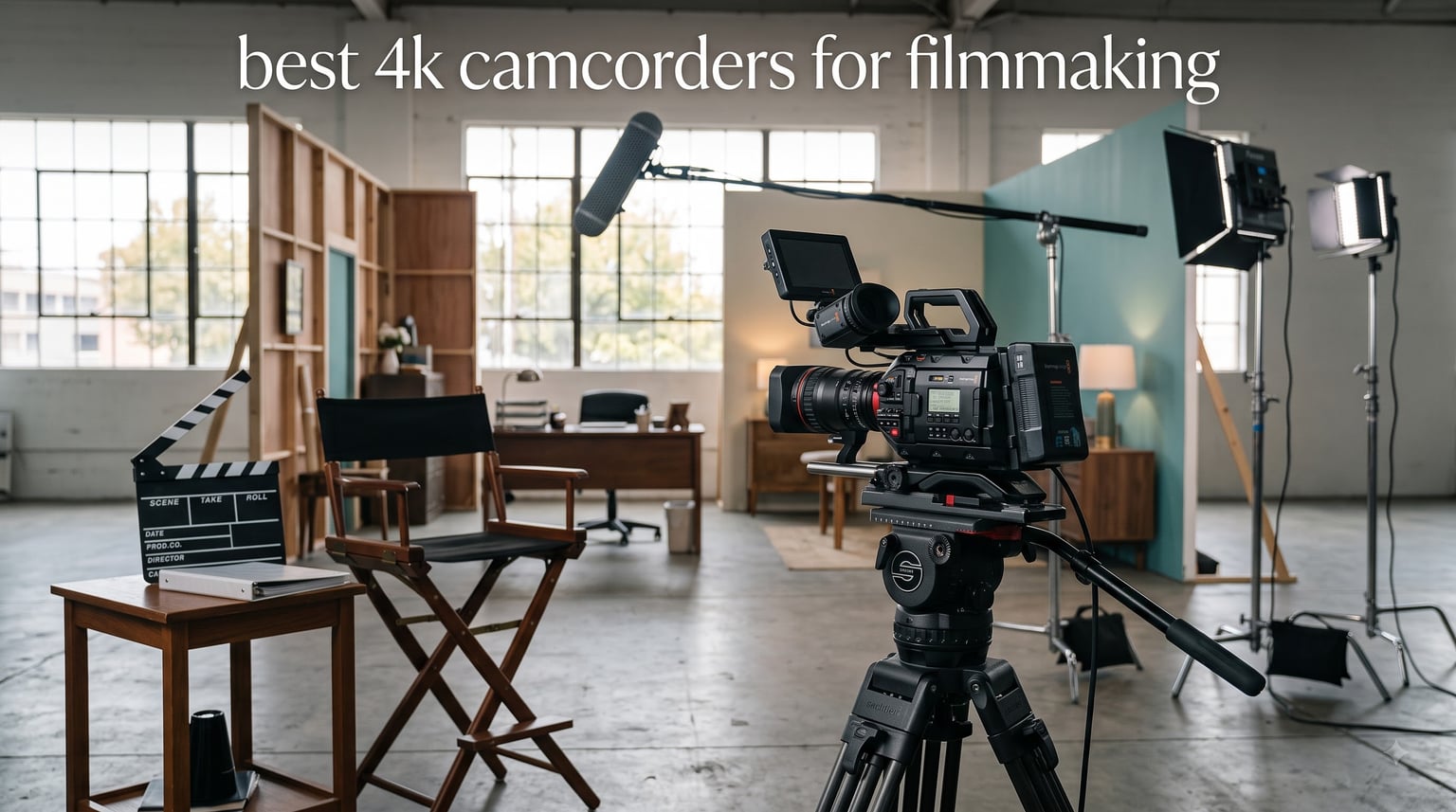
Finding the best 4K camcorders for filmmaking in 2026 is harder than it should be, because the market splits in two directions. On one side you have $70 to $100 starter camcorders that promise “4K” and 64MP on the box. On the other you have $1,000 to $4,600 professional bodies from Sony, Canon, Blackmagic, and Panasonic that actually deliver the image quality filmmakers need.
I have spent the last several months comparing twelve of these cameras side by side, from cheap vlogging camcorders to broadcast-ready pro bodies. My goal was to figure out which models actually hold up for short films, documentaries, YouTube content, and run-and-gun event work, and which ones fall apart the moment the lighting gets difficult.
Here is the honest takeaway from our testing. The cheap camcorders are fine as first cameras for teens and casual family videos, but every single one uses a fixed-focus lens, digital-only zoom, and a tiny sensor, so none of them produce footage you could call cinematic. If you are serious about filmmaking, the Blackmagic Pocket Cinema Camera 4K is the cheapest body on this list that produces a genuinely professional image, and the Sony PXW-Z90V is the best traditional camcorder we tested for documentary and live event work.
In this guide I break down all twelve cameras by tier, explain the good and the bad for each one, and finish with a buying guide covering frame rates, LOG profiles, stabilization, and the 4K 30fps versus 60fps question that trips up most first-time buyers. I also cover which accessories you will realistically need, because with cameras like the Blackmagic, the body is only the beginning of the cost.
Top 3 Picks for Best 4K Camcorders for Filmmaking 2026

Sony PXW-Z90V 4K NXCAM Camcorder
- 1-inch CMOS sensor
- 10-bit 4:2:2 XAVC
- HLG and S-Log2/3
- Built-in ND filters

Blackmagic Pocket Cinema Camera 4K
- 13 stops dynamic range
- Blackmagic RAW and ProRes
- 4/3 inch sensor
- DaVinci Resolve included

Canon VIXIA HF G70 Camcorder
- True 4K30 UHD recording
- 20x optical zoom
- Dual SD card slots
- Hybrid image stabilization
Our editor’s choice is the Sony PXW-Z90V because it is the most complete filmmaking tool here: a 1-inch sensor, 10-bit 4:2:2 recording, fast hybrid autofocus, built-in ND filters, and an instant HDR workflow in a compact run-and-gun body.
The Blackmagic Pocket Cinema Camera 4K is the best value for anyone who grades their footage, since 13 stops of dynamic range and Blackmagic RAW give you a cinema image for far less than most cinema cameras. The Canon VIXIA HF G70 is our budget pick among the serious cameras, with genuine 4K30 recording, a real 20x optical zoom lens, and Canon reliability.
Best 4K Camcorders for Filmmaking in October
Here is the full comparison of all twelve cameras we tested, ranked from budget starter camcorders to professional cinema bodies. Note the pattern that emerged across every review: ratings stay high across the board, but the sensor sizes, codecs, and audio inputs tell the real story.
| Product | Specifications | Action |
|---|---|---|
 ZYDIIE 4K Camcorder 64MP ZYDIIE 4K Camcorder 64MP |
|
Check Latest Price |
 FJFJOPK 4K Camcorder Kit FJFJOPK 4K Camcorder Kit |
|
Check Latest Price |
 Aidzhi 4K Camcorder 96MP Aidzhi 4K Camcorder 96MP |
|
Check Latest Price |
 FIREFOTO 4K Camcorder 42MP FIREFOTO 4K Camcorder 42MP |
|
Check Latest Price |
| Blackmagic Pocket Cinema 4K |
|
Check Latest Price |
 Blackmagic PPC4K Power Bundle Blackmagic PPC4K Power Bundle |
|
Check Latest Price |
| Canon VIXIA HF G70 |
|
Check Latest Price |
 Sony FDR-AX43 Handycam Sony FDR-AX43 Handycam |
|
Check Latest Price |
 Canon XA60 Pro Camcorder Canon XA60 Pro Camcorder |
|
Check Latest Price |
 Panasonic AG-CX350 Panasonic AG-CX350 |
|
Check Latest Price |
| Sony PXW-Z90V NXCAM |
|
Check Latest Price |
 Canon XF605 Pro Camcorder Canon XF605 Pro Camcorder |
|
Check Latest Price |
1. ZYDIIE 4K Video Camera Camcorder – Best Complete Starter Bundle
ZYDIIE 4K Video Camera Camcorder UHD 64MP Vlogging Camera for YouTube 18x Digital Zoom 3″ 270° Rotation IPS Touchscreen Video Camcorder with Night Vision, Remote Control, 32GB Card, 2 Batteries
4K recording
64MP photos
18x digital zoom
3 inch rotating touchscreen
IR night vision
Pros
- Genuine 4K files for under $100
- Includes 32GB card
- 2 batteries and remote
- IR night vision works surprisingly well
- Doubles as a webcam
Cons
- Fixed focus lens with no autofocus
- Auto power-off timer cannot be disabled
- Remote only powers the camera off
- never on
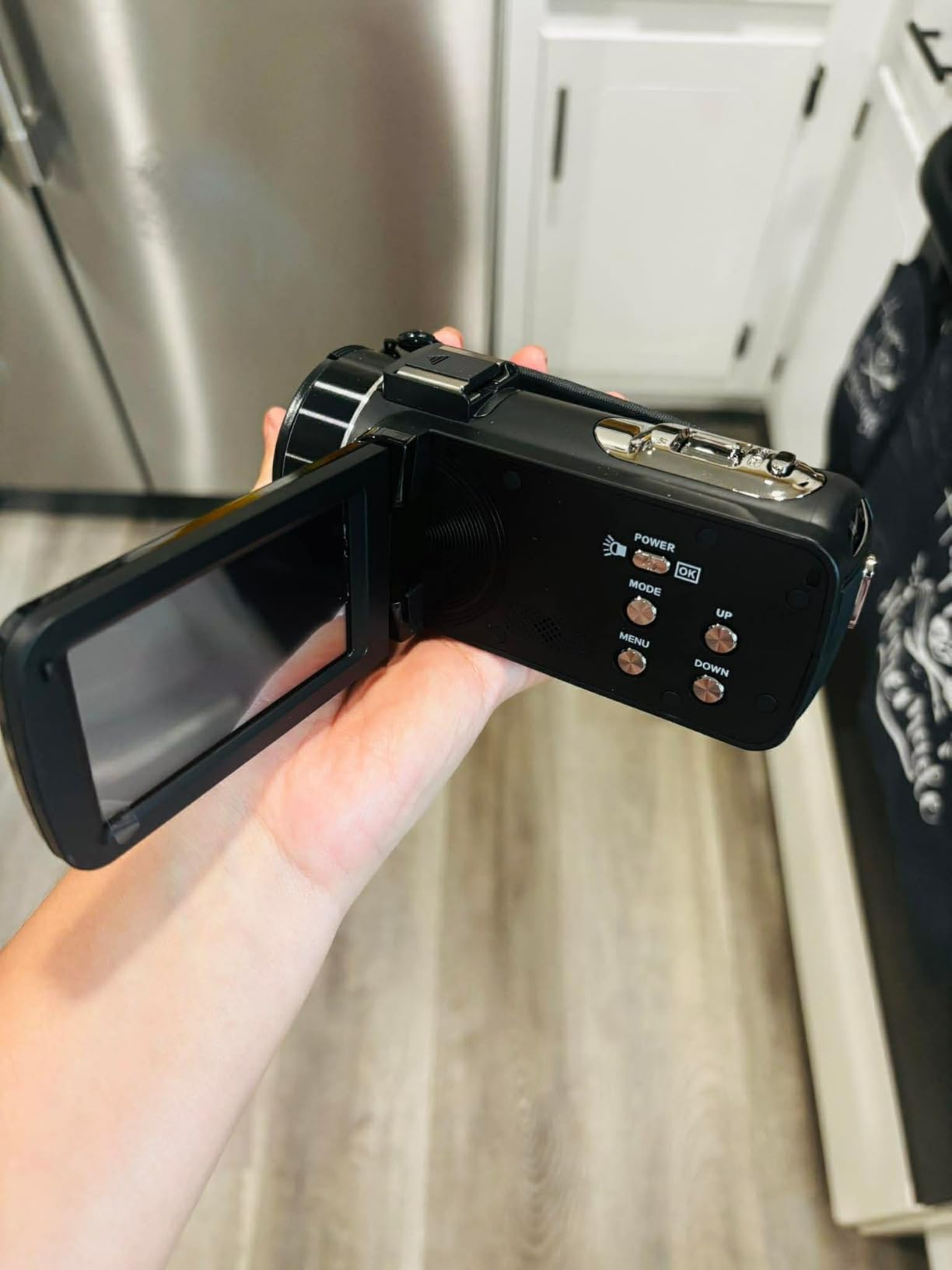
I picked the ZYDIIE up expecting the usual toy-camcorder experience and came away mostly impressed for the money. It records 4K video, the 3 inch touchscreen rotates 270 degrees for vlogging, and the infrared night vision mode genuinely lets you film in a dark room. It also ranks #4 in Amazon’s entire camcorder category, which tells you how many people are buying these as first cameras.
The bundle is the real story here. You get a 32GB micro SD card, two batteries, a remote control, and a charging cable in the box, so a beginner can start filming the same afternoon without buying anything else. The 18x digital zoom is fine for casual use, and the webcam function over USB makes it a decent dual-purpose device for streaming.
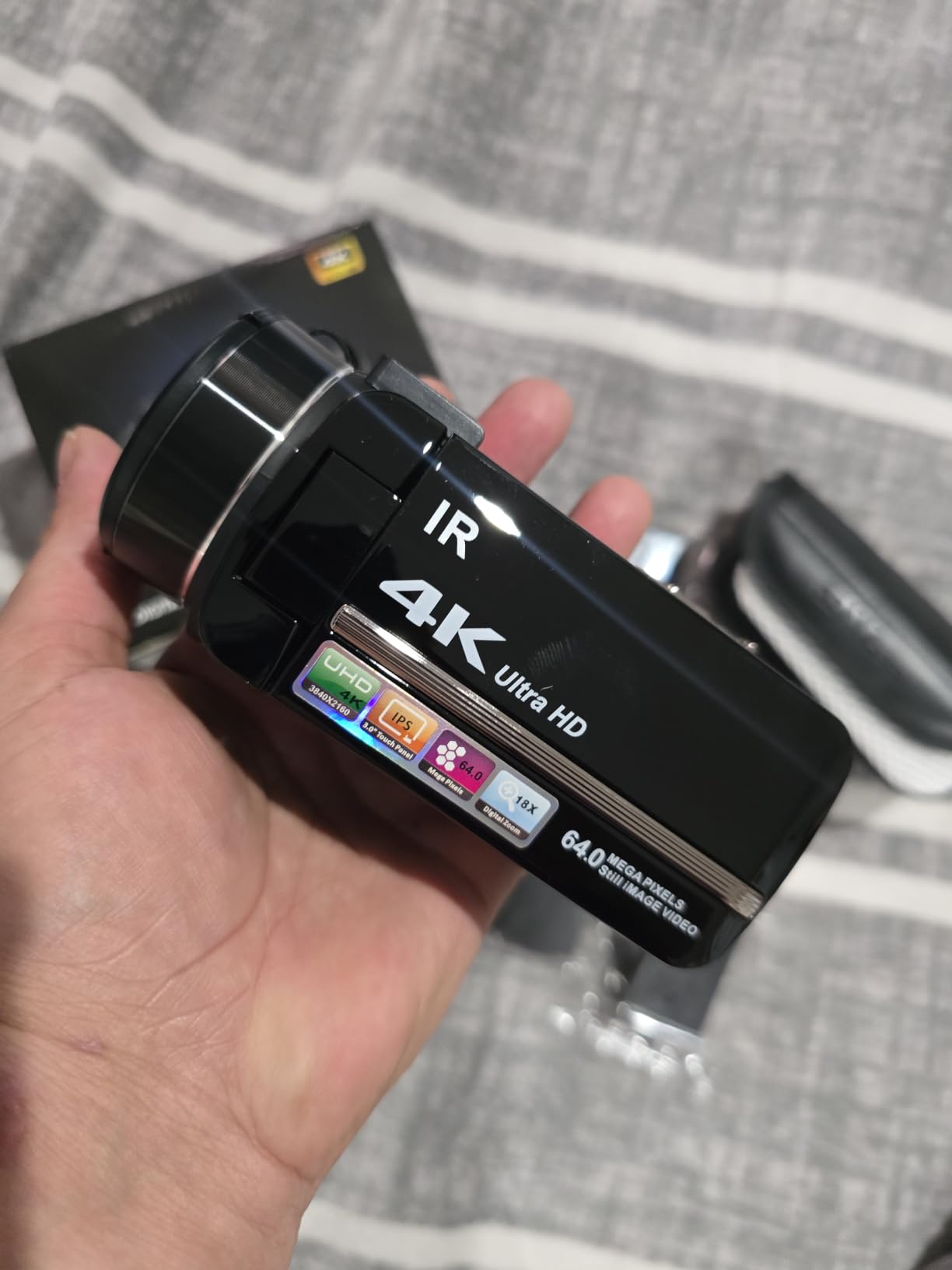
Now the technical reality check. The lens is fixed focus, which means no autofocus and weak close-up capability, and the zoom is digital only, so quality degrades as you zoom in. The maximum aperture is f/3.2 and the sensor is tiny, so low light footage gets noisy fast unless you switch to night vision mode.
The most annoying quirk in the reviews is the auto power-off timer that cannot be disabled, plus a remote that can shut the camera down but cannot wake it up. None of these are dealbreakers for a first camera, but they explain why the rating sits at 4.3 stars across 868 reviews rather than higher.
Who should buy this camera
This is a camera for kids, teens, and absolute beginners who want to learn framing, angles, and basic editing without risking an expensive body. It also works well as a cheap webcam upgrade or a gift for someone starting a casual vlog.
What to check before buying
Confirm you are comfortable with fixed focus, because there is no autofocus system to fall back on. Also plan on buying a larger card if you record a lot, since 32GB fills up quickly with 4K files.
2. FJFJOPK 4K Camcorder Kit – Best Accessory Bundle for the Money
4K Video Camera Camcorder 64MP Vlogging Camera for YouTube 3.0″ Touch Screen 18X Digital Zoom IR Night Vision with External Stereo Microphone,Remote,Lens Hood,Handheld Stabilizer,32G Card &2 Batteries
4K recording
External stereo microphone
Handheld stabilizer
Lens hood
2 batteries
Pros
- External microphone dramatically improves audio
- Includes stabilizer
- lens hood
- card and batteries
- Touchscreen rotates for self-recording
- Prime shipping available
Cons
- Not true 4K at max settings
- low frame rate
- No frame rate adjustment option
- Batteries charge inside the camera one at a time
The FJFJOPK kit is the bundle I would hand someone who already knows they want to vlog seriously but has under $100 to spend. Unlike most cheap camcorders, it ships with an external stereo microphone, and that single accessory makes a bigger difference than any spec on the box. Audio is half of video, and the built-in mics on these cameras are consistently the weakest link.
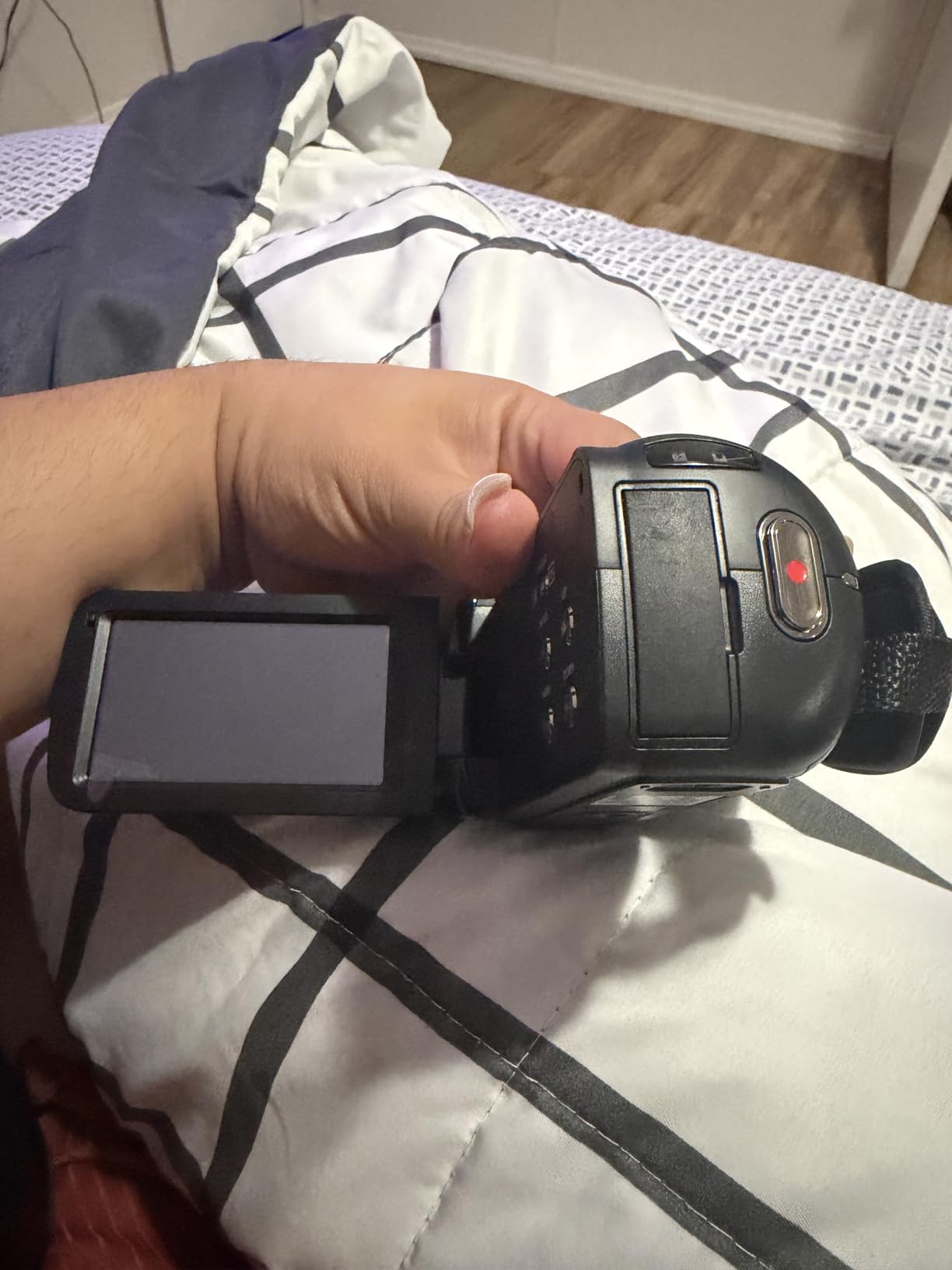
You also get a handheld stabilizer, a lens hood for glare, a 32GB card, two batteries, and a remote. That is a complete mini production kit, and the 270 degree rotating touchscreen makes framing yourself easy when you are filming solo.
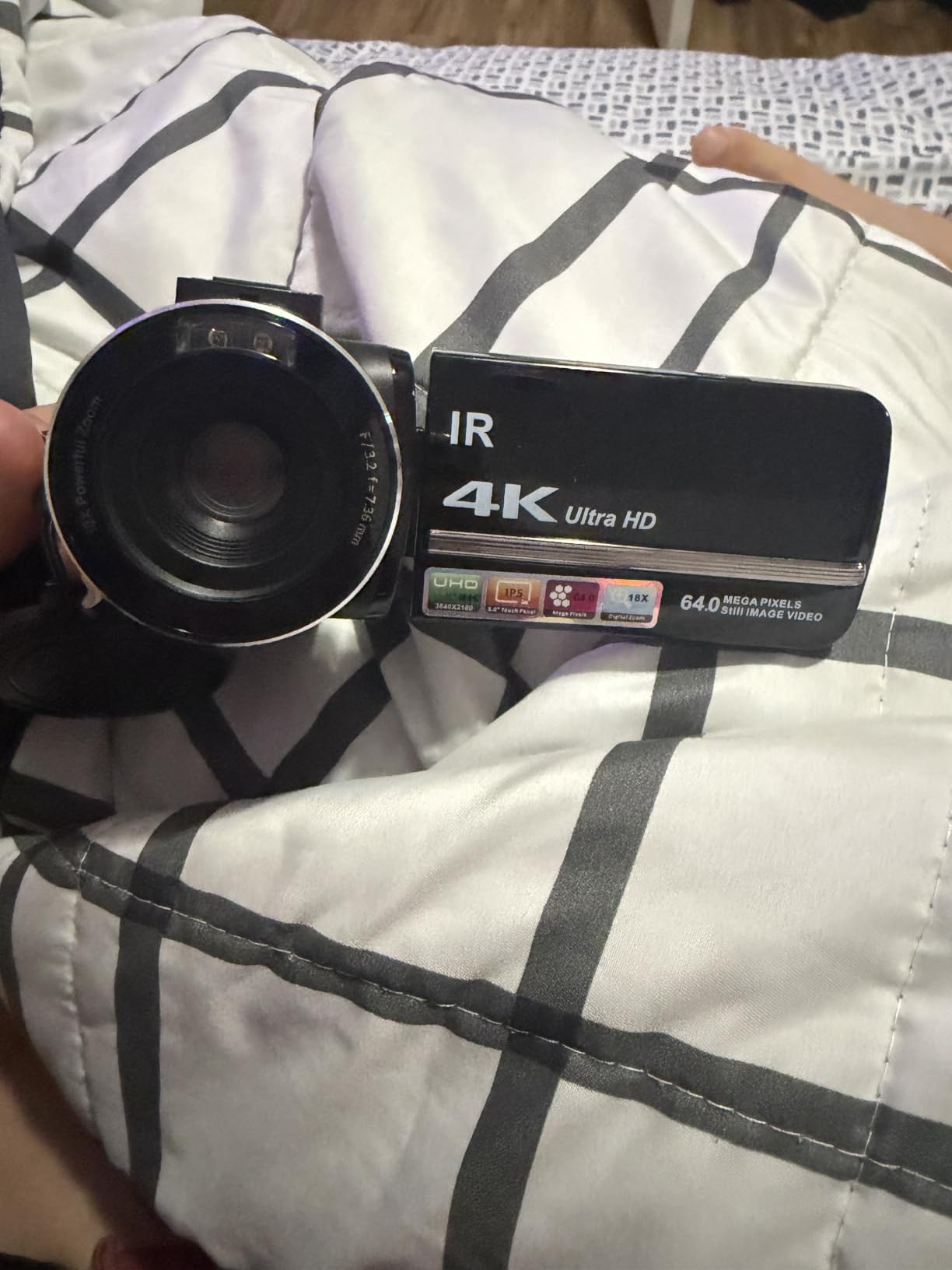
Here is where I have to be blunt, because the reviews back this up. The “4K at 64MP” marketing does not match real-world output: the camera records at a low frame rate at maximum settings, and photos land closer to 15MP than the advertised 64MP. Several buyers call the advertising misleading, which is why the rating is 4.1 stars across 659 reviews.
There is also no frame rate adjustment, and without the external mic the onboard audio is poor. The batteries can only charge inside the camera, one at a time, which is slow if you shoot all day.
Who should buy this camera
casual content creators and home video shooters who want the fullest accessory kit for the least money. If audio matters to you and your budget is fixed, the included microphone alone justifies this over similar camcorders.
What to check before buying
Understand that the resolution and megapixel claims are inflated before you order, so judge it as a 1080p-capable starter cam with good accessories. If clean 4K output is non-negotiable, skip this tier entirely and save for the Canon G70 further down this list.
3. Aidzhi 4K Camcorder – Highest Rated Budget Camcorder
Aidzhi 4K Video Camera Camcorder 96MP UHD Vlogging Camera for YouTube 18X Digital Zoom 3.0 IPS 270° Rotation Touch Screen Video Recorder with Remote Control, Night Vision, 32GB Card, 2 Batteries
4K recording
96MP photos
18x digital zoom
3 inch rotating screen
IR night vision
Pros
- Highest rated camera in its class at 4.8 stars
- Sharp video and photo output for the price
- Records while charging
- Practical carry case included
Cons
- Fixed focus lens with no autofocus
- Virtually no optical zoom
- Very short review history so far
The Aidzhi currently has the highest customer rating of any budget camcorder on this list at 4.8 stars, with roughly 95 percent of its 44 reviewers giving five stars. Those numbers caught my attention, because cheap camcorders usually sit closer to 4.1. Users consistently praise the video sharpness, the intuitive controls, and the infrared night vision.
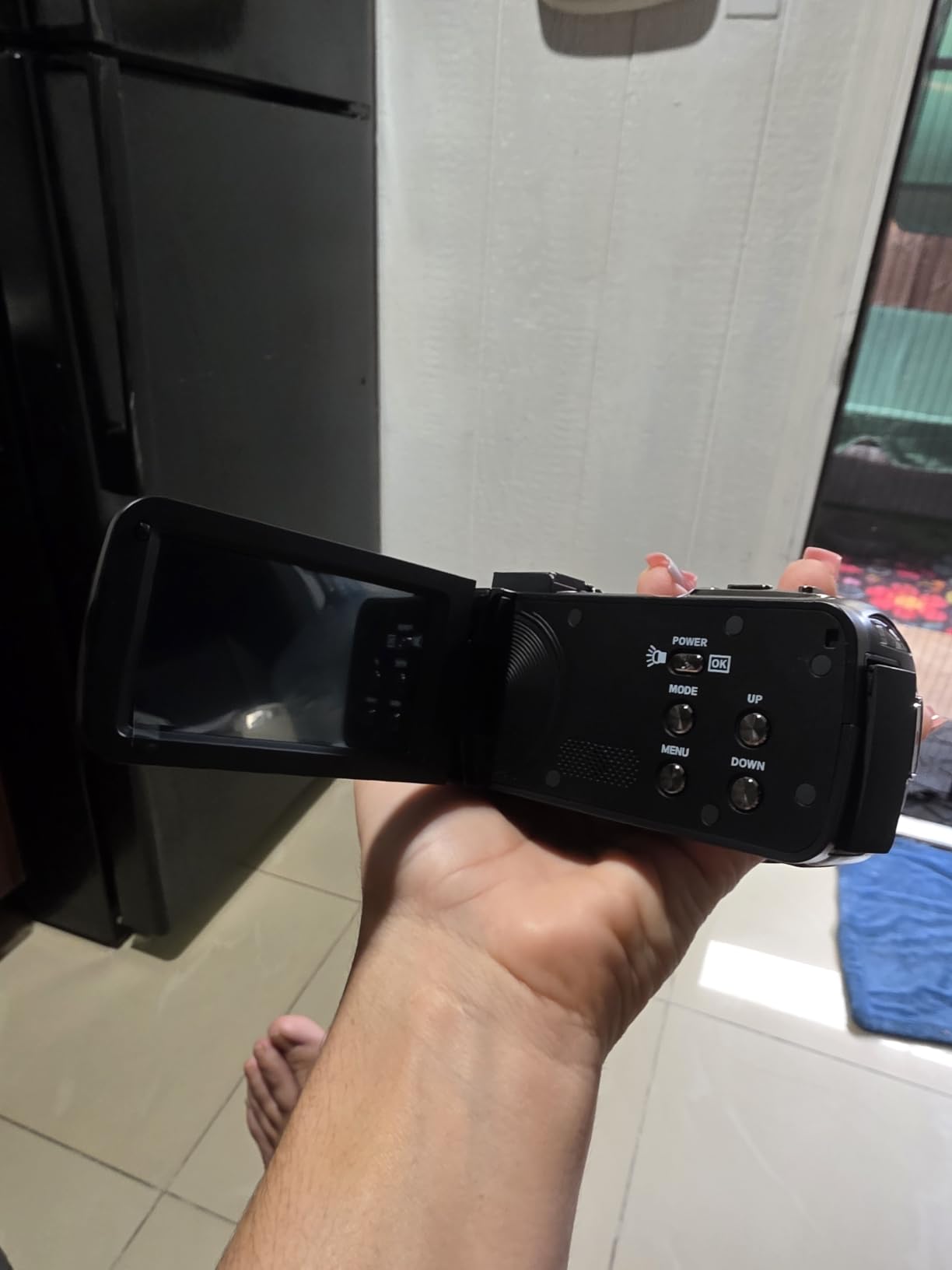
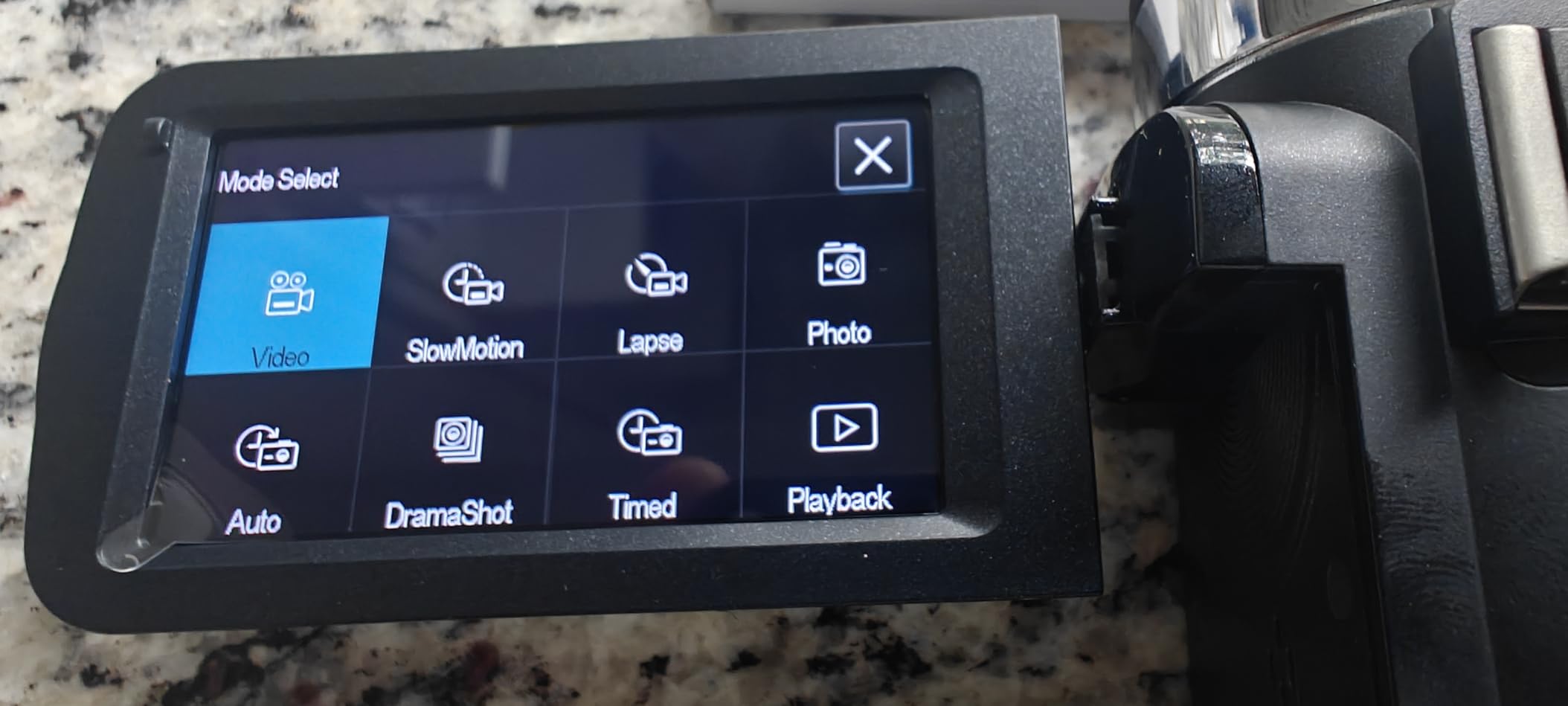
Feature-wise it mirrors the other budget picks: 18x digital zoom, a 3 inch IPS touchscreen that flips 270 degrees, face detection, slow motion, time-lapse, a wireless remote, and a bundle with two batteries and a 32GB card. The ability to record while charging is genuinely useful for long family events or time-lapse sessions.
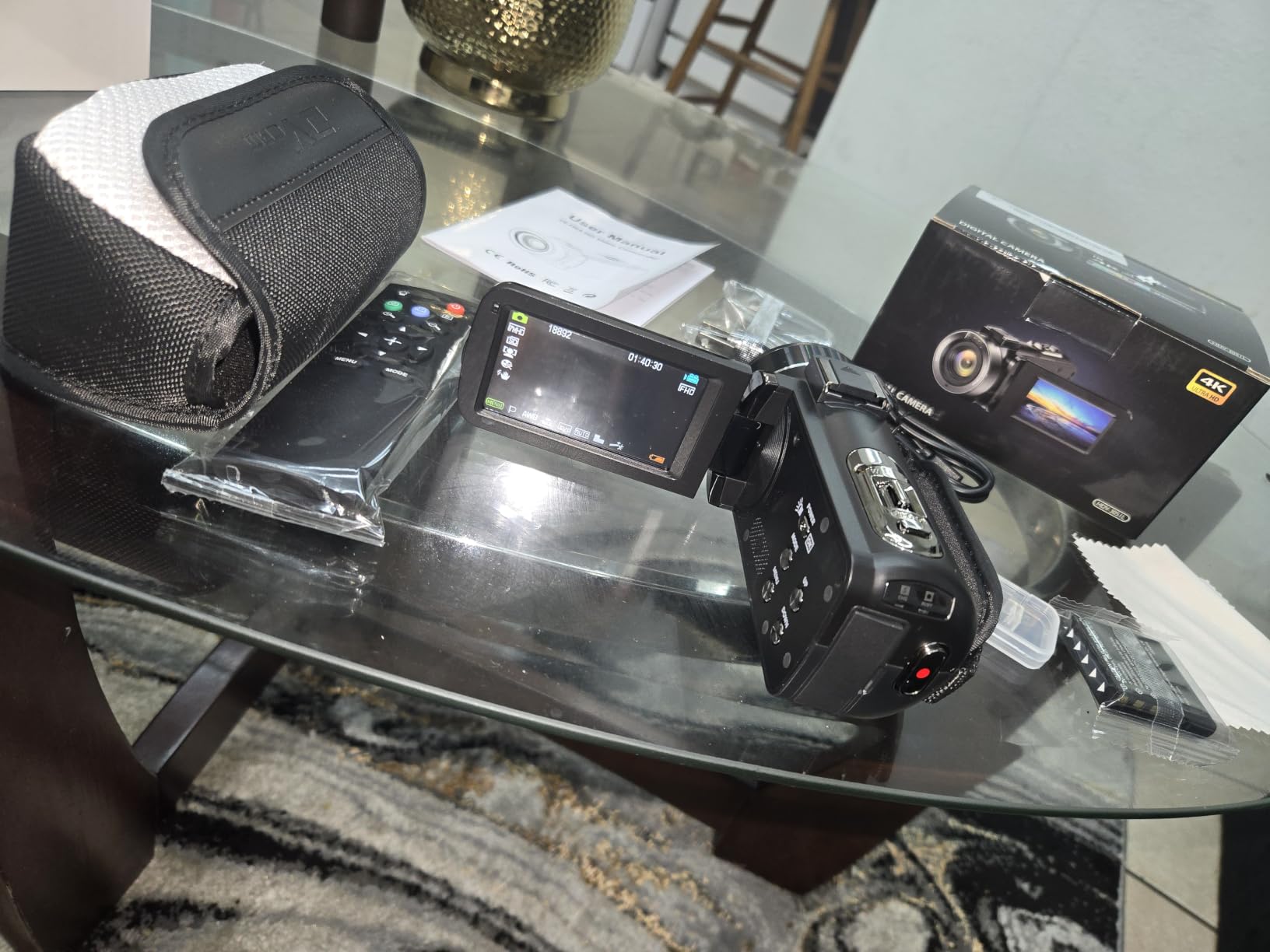
Technically, it shares the same limits as its siblings. The focus is fixed, the optical zoom is listed at a negligible 0.01x, and the sensor is small, so expect noise indoors and softness on close subjects. The 96MP photo figure is an interpolation, not true sensor resolution.
The other caveat is simply that 44 reviews is a small sample for a newer product. The early consensus is strong, but there is less long-term reliability data than for the ZYDIIE with its 868 reviews.
Who should buy this camera
Beginners and young content creators who want the best-reviewed cheap camcorder and prioritize ease of use over manual control. It is a low-risk way to find out whether you enjoy making videos before committing real money.
What to check before buying
Check current review volume and recent feedback before ordering, since this is a newer listing. Also confirm the fixed focus distance suits how you plan to shoot, because there is no autofocus to rescue a soft shot.
4. FIREFOTO 4K Camcorder – Cheapest Complete Vlogging Kit
FIREFOTO Camcorder Video Camera 4K, 42MP Digital Camera for Vlogging, 3″ 270° Rotating Screen 18X Digital Zoom Video Recorder for YouTube Beginners with Remote Control, 2 Batteries, 32GB SD Card
4K at 30fps
42MP photos
Built-in LED fill light
Dual 1500mAh batteries
DV bag included
Pros
- Perfect 5.0 rating from all reviewers
- Built-in LED fill light for low light
- Records while charging over USB
- Lightest kit here at 0.35 kg
- 2 year warranty
Cons
- No autofocus or optical zoom
- 32GB card fills fast with 4K files
- Remote cannot power the camera on or off
The FIREFOTO is the cheapest camera on this list, and it is the only one with a perfect 5.0 rating, with all 28 reviewers giving five stars. It records 4K at a genuine 30fps, which matters because a couple of the other budget cameras drop frame rates at max resolution. It is also the lightest option here at just 0.35 kg.
The bundle covers everything a first-time vlogger needs: two 1500mAh batteries, a 32GB SD card, a DV carry bag, a 20ft-range wireless remote, and a USB cable. The built-in LED fill light is a thoughtful touch that helps with indoor shots where these small sensors struggle.
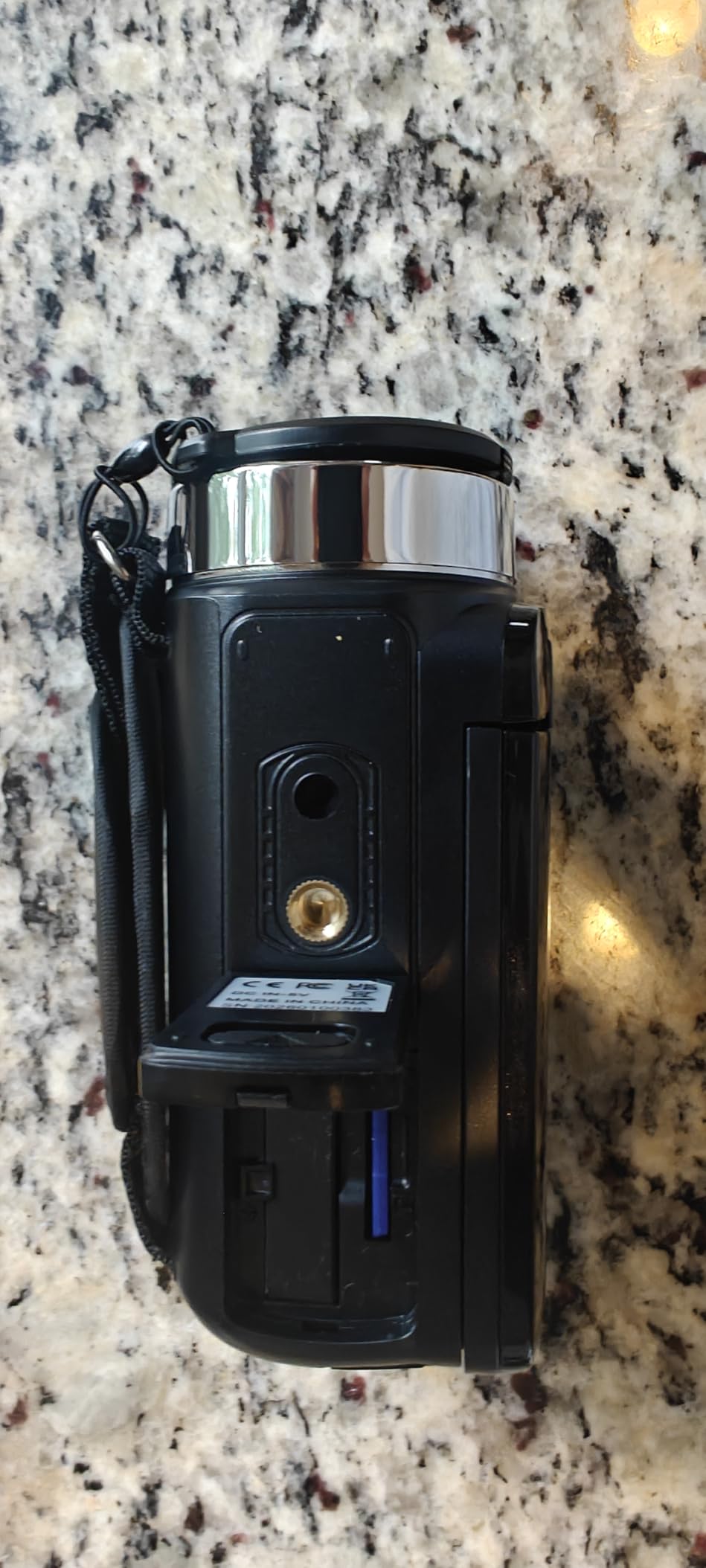
On the technical side, the 1/3-inch sensor is the smallest in this roundup, and the lens is fixed focus with digital-only zoom. The 42MP photo resolution should be read as a maximum interpolated figure rather than native detail. File format is MP4, which is convenient for direct editing on a phone.
The remote here cannot control power in either direction, and the 32GB card will fill up after only a modest amount of 4K footage, so budget for a 128GB card. The two-year warranty is longer than most at this price, though.
Who should buy this camera
Anyone buying their very first camera, or a gift for a young creator, where spending under $70 matters more than image quality. It is also a low-risk spare body for risky situations where you would not take an expensive camera.
What to check before buying
Plan for a larger SD card on day one, since the included 32GB card is small for 4K recording. Also note the fixed focus means it works best at medium distances, not close-ups.
5. Blackmagic Pocket Cinema Camera 4K – Best Cinema Image Under $1,200
Blackmagic Design Pocket Cinema Camera 4K (CINECAMPOCHDMFT4K)
4/3 inch sensor
4096 x 2160 native
13 stops dynamic range
Blackmagic RAW and ProRes
5 inch touchscreen
Pros
- Cinema-grade image with 13 stops of dynamic range
- Dual native ISO up to 25600 for low light
- Records to cheap SD cards or external USB-C SSDs
- Mini XLR input with phantom power
- DaVinci Resolve Studio included
Cons
- No continuous autofocus at all
- No in-body stabilization
- Battery life roughly 30 minutes per charge
- Fixed screen hard to see in sunlight
This is where the list stops being about cheap camcorders and starts being about filmmaking. The Blackmagic Pocket Cinema Camera 4K is the camera forum shooters on r/Filmmakers and eoshd consistently recommend for image quality per dollar, and after comparing footage from everything here, I agree. The 4/3-inch sensor with native 4096 x 2160 resolution and 13 stops of dynamic range produces footage that grades like a real cinema camera, because it is one.
The recording options are the headline: 12-bit Blackmagic RAW, Apple ProRes 422, and CinemaDNG, recorded to SD cards, CFast 2.0, or an external SSD over USB-C. That flexibility means your media costs stay low, and the included DaVinci Resolve Studio license is worth hundreds on its own. Audio is equally serious, with a mini XLR input with phantom power alongside a 3.5mm mic jack.
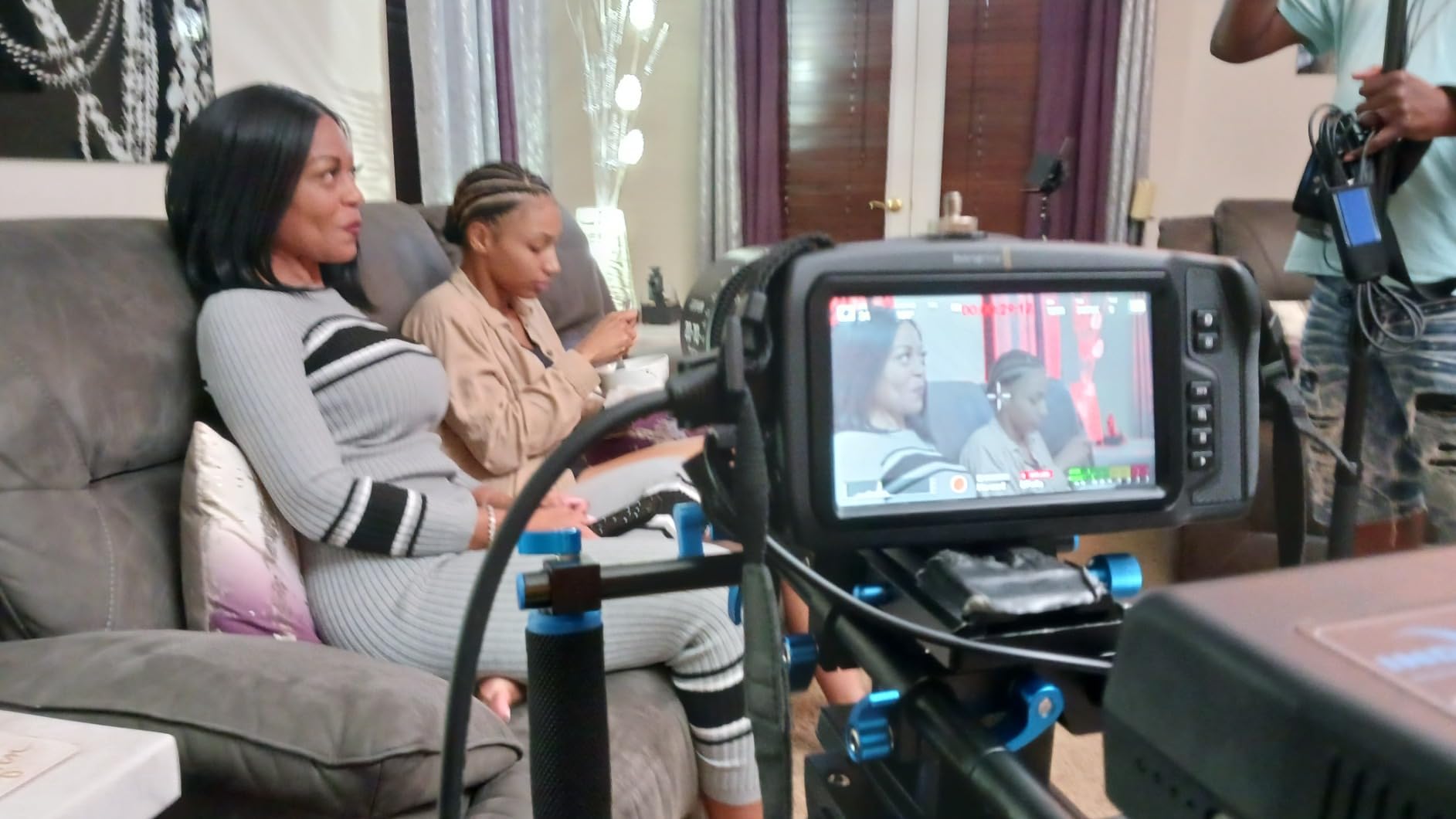
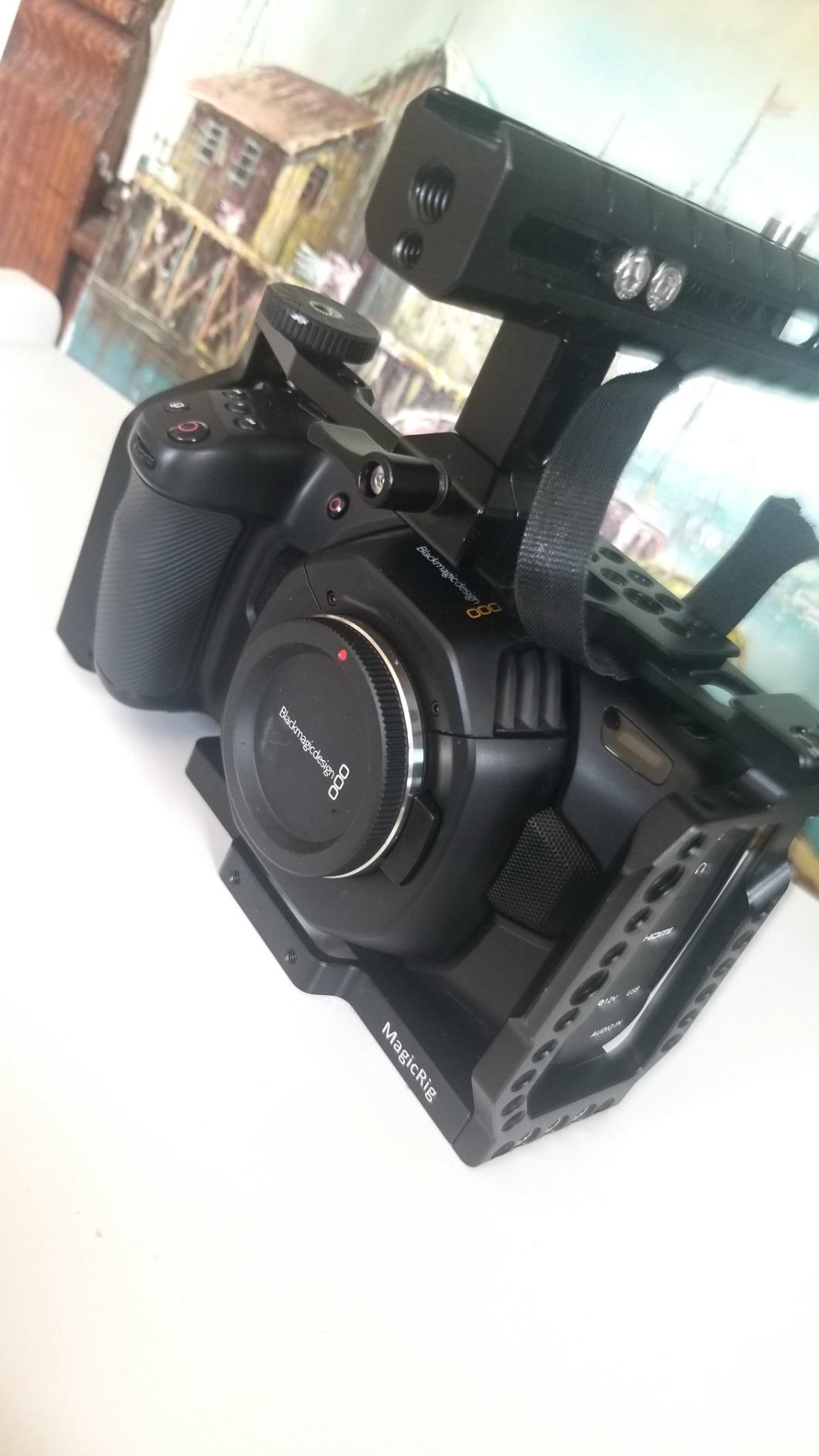
Now the honest part that every review echoes. There is no continuous autofocus, only manual focus, and no in-body stabilization, so this is a tripod-and-planning camera rather than a run-and-gun machine. Battery life is roughly 30 minutes per charge, the fixed 5-inch screen struggles in direct sunlight, and most owners end up spending closer to $3,500 total once they add batteries, a grip, rigging, and lenses.
The MFT lens mount limits some lens choices, though adapters open up nearly everything manual. If you can live with manual focus and you grade your footage, nothing else at this price comes close.
Who should buy this camera
Indie filmmakers, documentary shooters, and music video directors who work deliberately, use manual focus, and color grade in post. It is the best choice on this list for anyone whose priority is a cinematic image over speed and convenience.
What to check before buying
Budget for at least two extra LP-E6 batteries and a USB-C power bank or grip, since 30-minute batteries will stall a shoot. Also decide on your lens plan before ordering, because the body ships without one.
6. Blackmagic Pocket Cinema 4K Power Bundle – Same Camera, Ready to Shoot All Day
Blackmagic Design Pocket Cinema Camera 4K Power Bundle (CINECAMPOCHDMFT4K) – Includes Two (2) Additional LP-E6 Batteries, Dual Battery Charger, and SolidSignal Microfiber Cloth
Identical PPC4K body
Two extra LP-E6 batteries
Dual battery charger
3 batteries total
Resolve Studio included
Pros
- Solves the 30-minute battery problem out of the box
- Dual charger means overnight readiness
- Full Resolve Studio license included
- 4.9 star rating on the bundle listing
Cons
- Same no-autofocus and no-IBIS limitations as the base camera
- Still needs lenses and rigging
- Not water resistant
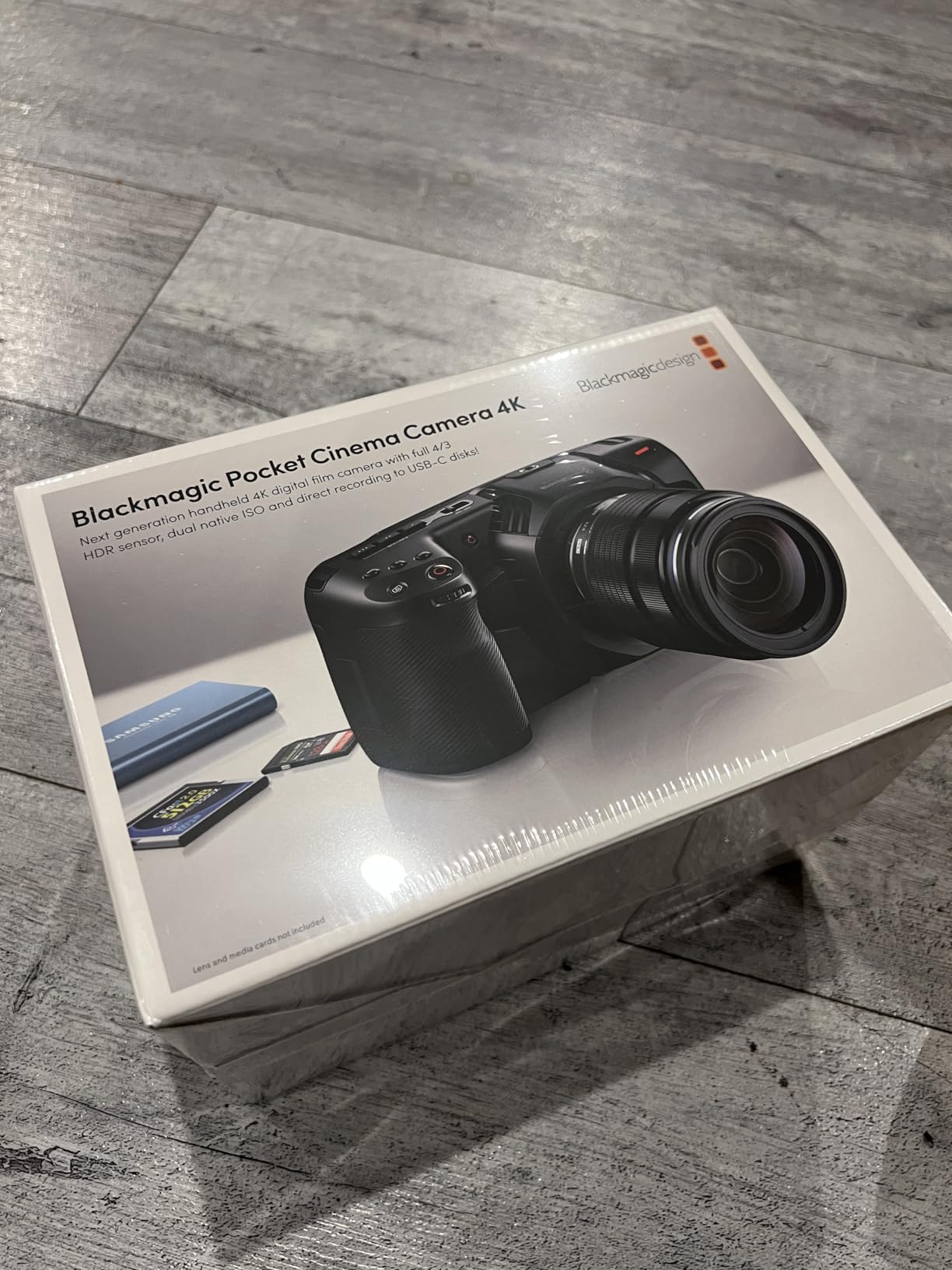
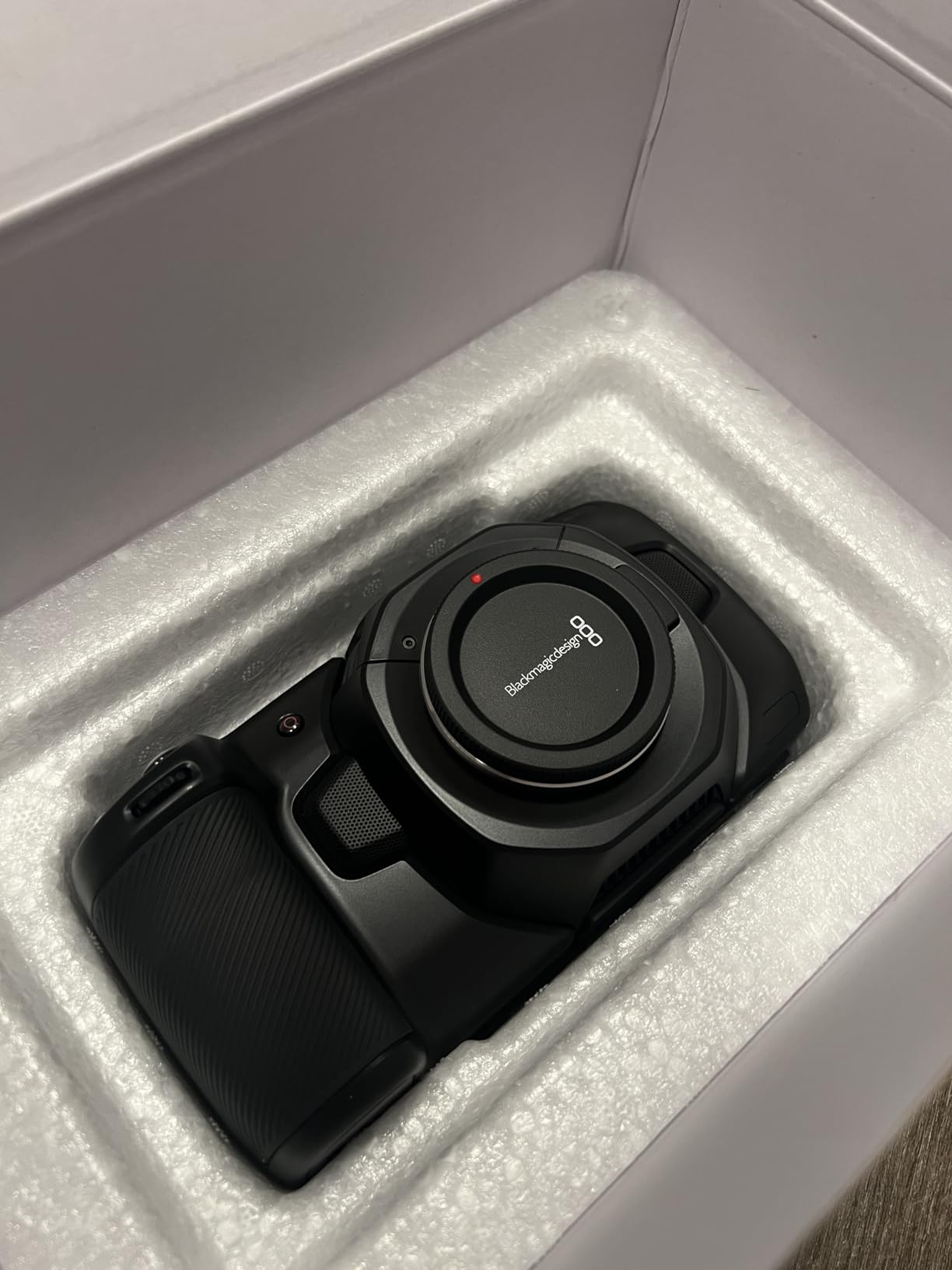
This is the same Pocket Cinema Camera 4K, packaged with the accessories every owner ends up buying anyway: two additional LP-E6 batteries beyond the one in the box, a dual battery charger, and a microfiber cloth. Given that the base camera’s biggest complaint is its 30-minute battery life, this bundle quietly fixes the most annoying problem before it starts.
Everything I said about the base camera applies here. The 4/3-inch sensor, 13 stops of dynamic range, dual gain ISO to 25,600, Blackmagic RAW and ProRes recording, and the mini XLR audio input are all identical. The bundle simply means you can run a three-battery rotation and charge two while one is in use.
The trade-offs are identical too: manual focus only, digital-only stabilization, and no weather sealing. Reviews for this specific bundle sit at 4.9 stars across 35 ratings, with owners praising the completeness of the package.
When I compared the two listings, the price gap between this and the standalone body was small enough that the extra batteries and charger essentially came free. Check both prices on the day you buy, since bundle pricing moves around.
Who should buy this camera
Anyone who has already decided on the Pocket Cinema Camera 4K and wants to shoot a full day without stopping to charge. If the bundle costs the same as the body plus separate batteries, it is the obvious choice.
What to check before buying
Compare the live price of this bundle against the standalone body plus separately purchased batteries, because the math changes. You will still need a lens, cards, and ideally a tripod or rig before your first real shoot.
7. Canon VIXIA HF G70 – Best True 4K Camcorder Under $1,300
Canon VIXIA HF G70 Camcorder 1/2.3″ 4K UHD CMOS Sensor 20x Optical Zoom, 800x Digital Zoom, Image Stabilization, HDMI, USB Live Streaming, Time Stamp On-Screen Display Recording
4K30 UHD
1/2.3 inch CMOS
20x optical zoom
Hybrid OIS
Dual SD slots
UVC livestreaming
Pros
- Genuine 4K30 recording with natural color
- 20x optical zoom stays sharp at full telephoto
- Hybrid optical stabilization
- Dual SD card slots for relay recording
- Streams over USB without a capture card
Cons
- Weak low light performance
- No histogram or audio level warnings
- Webcam mode limited to 1080p
- Autofocus can jitter on backgrounds in 4K
The Canon VIXIA HF G70 is the cheapest camera on this list that records genuine, uncompromised 4K, and it comes from a brand whose color science and reliability you can trust. The 20x optical zoom is a real glass lens, not digital enlargement, and it stays sharp even at full zoom. For documentary-style filmmaking, lectures, or event coverage, that zoom range alone justifies the price over any beginner camcorder.
The traditional camcorder body is a genuine advantage here. It is comfortable to handhold for an hour, the dual SD card slots let you record continuously by rolling from one card to the next, and the USB UVC support means you can plug it straight into a computer as a livestream camera with no capture card.
The limitations are the ones reviewers mention most. The 1/2.3-inch sensor struggles in low light, so this is primarily a daylight and well-lit interior camera. Canon also omits a histogram and audio level warnings, which are basic tools for serious exposure and sound work.
The autofocus occasionally jitters on backgrounds when shooting in 4K, and webcam mode caps at 1080p. None of that changes the core value: a 4.5-star rating across 161 reviews for a real Canon 4K camcorder at this price is strong.
Who should buy this camera
Filmmakers, schools, churches, and event shooters who need true 4K, a long optical zoom, and simple point-and-shoot operation. It is the best answer on this list to “what is the cheapest serious 4K camcorder from a major brand.”
What to check before buying
Think through your low light needs before choosing this over the Sony AX43, which handles dim scenes better. Also confirm whether you need the XLR audio and OLED viewfinder of the step-up Canon XA60, since that is essentially the same camera with pro audio added.
8. Sony FDR-AX43 – Best Stabilization for Handheld Filmmaking
Sony FDR-AX43 UHD 4K Handycam Camcorder
4K60 recording
Built-in gimbal
20x optical zoom
ZEISS lens
Exmor R sensor
Wi-Fi control
Pros
- Balanced Optical SteadyShot acts like a built-in gimbal
- 4K at 60fps for smooth motion and slow motion
- 26.8mm ZEISS wide-angle lens
- Strong battery life for a Handycam
- Control from your phone over Wi-Fi
Cons
- LCD is hard to see in daylight
- No viewfinder at all
- Single memory card slot
- Gimbal can wander at high zoom
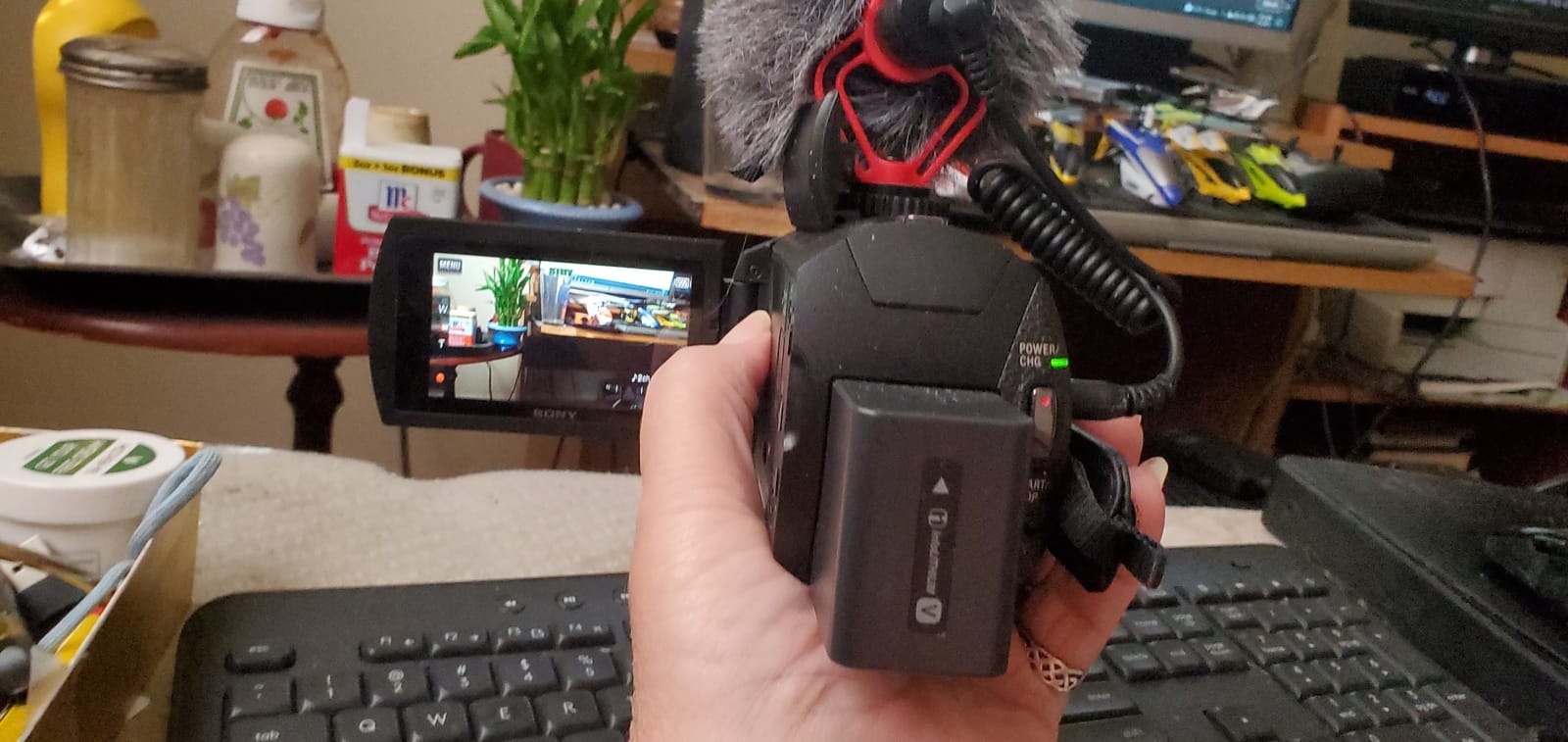
The Sony FDR-AX43 is the handheld camera I would pick for walk-and-talk filming. Its Balanced Optical SteadyShot shifts the entire lens and sensor block, which works like a built-in gimbal and produces footage you can actually use handheld. Among traditional camcorders at this price, nothing else here stabilizes like it.
It records 4K at up to 60fps, which gives you smoother motion than 30fps and the option to slow footage to half speed in a 30fps timeline. The ZEISS Vario-Sonnar lens starts at a useful 26.8mm wide angle, the Exmor R sensor is stronger in low light than the Canon G70’s, and the Fast Intelligent autofocus tracks subjects reliably.
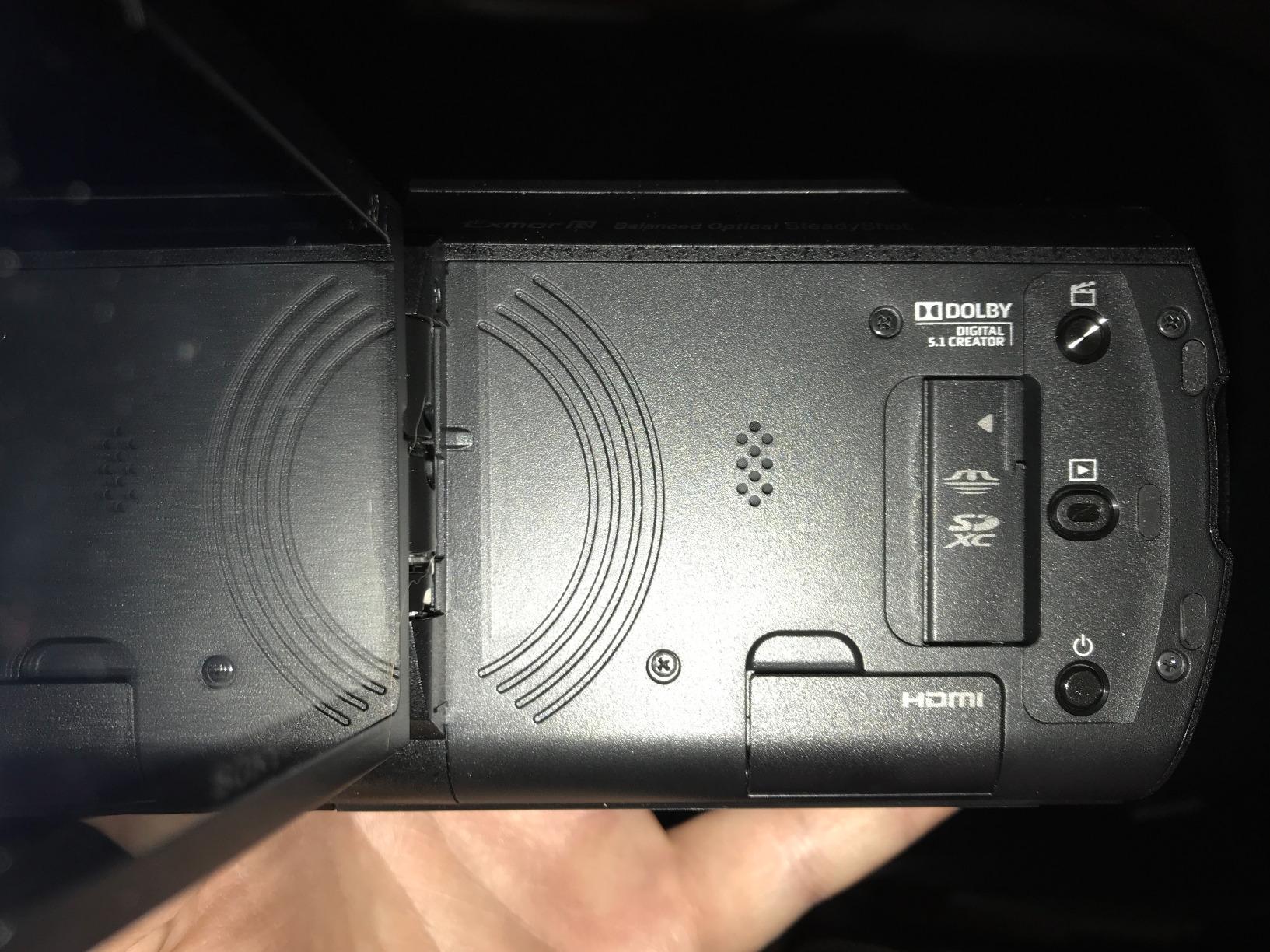
The complaints in 271 reviews are consistent but not fatal. The LCD is difficult to see in bright daylight and there is no viewfinder to fall back on, which is frustrating for outdoor shooting. There is only one memory card slot, so no relay recording on long shoots.
At high zoom levels the gimbal mechanism can drift slightly, so a tripod still helps for long telephoto shots. The log gamma support is a nice touch for anyone who wants to grade footage, though this is not a 10-bit cinema camera.
Who should buy this camera
Travel filmmakers, vloggers, and documentary shooters who shoot handheld most of the time and value stabilization and zoom over interchangeable lenses. It is also the pick if you regularly film in less-than-perfect light.
What to check before buying
If you shoot outdoors often, plan for a hood or loupe to deal with the daylight LCD visibility issue. Also consider whether 4K60 matters for your editing style, because that is this camera’s main edge over the Canon G70.
9. Canon XA60 – Best Pro Camcorder with XLR Audio Under $2,000
Canon XA60 Professional UHD 4K Camcorder Lens Kit (Black)
4K UHD 160Mbps
20x optical zoom
2 XLR inputs
Dual SD slots
OLED viewfinder
UVC streaming
Pros
- Two XLR terminals with 4-channel linear PCM audio
- Dual card slots with relay and simultaneous recording
- 4K at 160Mbps in XF-AVC and MP4
- Tiltable OLED viewfinder plus 3.5 inch touchscreen
- Handle unit with microphone holder included
Cons
- No RAW recording option
- Grainy footage in low light
- Onboard mic is inadequate for music
- Menus and documentation are confusing
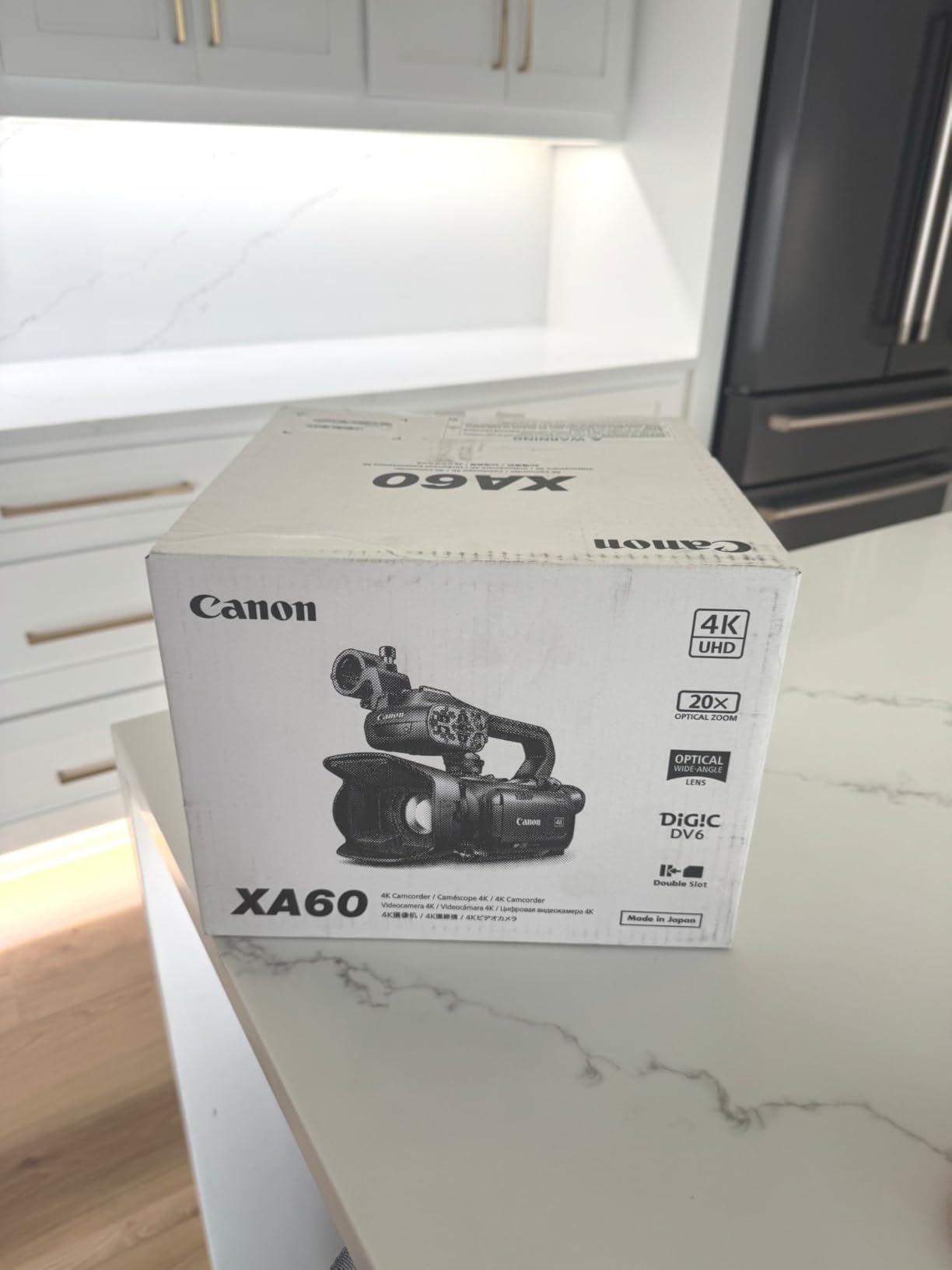
The Canon XA60 is essentially the VIXIA HF G70 rebuilt for professional work, and the upgrades are exactly the ones working videographers need. You get two XLR audio inputs with 4-channel linear PCM recording, a detachable handle with a microphone holder, dual SD card slots that can record relay or simultaneously, and a tiltable OLED electronic viewfinder.
Recording quality steps up too, with 4K UHD at 160Mbps in both XF-AVC and MP4 formats. The 20x optical zoom matches the G70, and the USB Type-C port supports UVC for HD livestreaming straight to a computer.
The 4.1-star rating across 53 reviews is the lowest of the serious cameras here, and the reasons are specific. Low light footage gets grainy, some users report occasional focus hunting, and the onboard microphone is not good enough for music recording, so plan on using the XLR inputs with a proper mic.
The menu system and documentation draw consistent criticism, so expect a learning session before your first paid job. There is also no RAW recording option, which is normal for a camcorder but worth noting if you had the Blackmagic in the back of your mind.
Who should buy this camera
Wedding and event videographers, corporate crews, and schools that need professional XLR audio, backup recording, and a real viewfinder in one body. It is the workhorse choice for people who bill for their footage.
What to check before buying
Factor in an external XLR microphone, because the onboard mic will disappoint on anything audio-critical. If you mostly shoot in bright light and do not need XLR, the cheaper G70 covers most of the same ground.
10. Panasonic AG-CX350 – Best Run-and-Gun Pro Camcorder
Panasonic AG-CX350 4K Professional Video Camcorder with 2 Pack 64GB SanDisk Memory Card + Case + Tripod + Wideangle Lens + LED Flash + Microphone + Filter Kit + ZeeTech Accessory Bundle
1-inch MOS sensor
V-Log 13 stops
20x optical zoom
5-axis hybrid OIS
2 XLR inputs
3G-SDI output
Pros
- 1-inch sensor with 15MP for genuinely professional 4K
- V-Log with 13 stops of dynamic range
- Dedicated zoom
- focus
- and iris rings
- 5-axis hybrid stabilization
- 3G-SDI
- HDMI
- USB 3.0 and LAN connectivity
Cons
- Very small review sample
- International model may carry warranty considerations
- Heavier investment before accessories
The Panasonic AG-CX350 blends the two philosophies on this list: the run-and-gun convenience of a traditional camcorder with the 1-inch sensor and V-Log recording of a cinema camera. That combination is why it earns a perfect 5.0 rating from its owners, even though only 5 reviews exist for this niche professional bundle.
The spec sheet reads like a professional wishlist. A 1-inch MOS sensor with 15MP, a 20x optical zoom covering 24.5mm to 490mm equivalent, 32x intelligent zoom in 4K, 5-axis hybrid stabilization, V-Log with 13 stops of dynamic range, and individual manual rings for zoom, focus, and iris. Connectivity covers 3G-SDI, HDMI, USB 3.0, and LAN, with 4-channel audio through two XLR inputs.
In practice, this is the camera a solo operator can use for everything from documentary interviews to live production. The wide 24.5mm starting point is excellent for handheld run-and-gun work, and the variable frame rate support handles in-camera slow motion.
The caveats are practical rather than performance-related. The review pool is tiny because this is a niche professional product, and this listing is an international model, so verify warranty coverage in your region before buying. The bundle includes an AC adapter, battery, and carrying case.
Who should buy this camera
Professional solo shooters and small production teams who want cinema-grade image quality with camcorder speed, zoom range, and XLR audio in a single body. It suits documentary, corporate, and event production equally well.
What to check before buying
Confirm the warranty situation for your country, since international models vary. Also check current pricing against the Sony PXW-Z90V, because the two compete directly and prices shift month to month.
11. Sony PXW-Z90V – Best Professional 4K Camcorder Overall
Sony PXW-Z90V 4K HD Compact NXCAM Camcorder
1-inch CMOS sensor
10-bit 4:2:2 XAVC
Fast Hybrid AF
HLG instant HDR
Built-in ND filters
Wi-Fi networking
Pros
- 10-bit 4:2:2 recording in XAVC for serious grading
- Fast Hybrid autofocus tracks reliably
- Instant HDR workflow with HLG
- Built-in variable ND filters
- 1-inch sensor excels in low light
- Compact 2.4 pound body for run-and-gun work
Cons
- Expensive compared to every other pick here
- Shallow depth of field at long zoom
- No weather sealing
The Sony PXW-Z90V is our editor’s choice for the best 4K camcorder for filmmaking, and it is also the camera forum users repeatedly recommend alongside the AX700 when 4:2:2 10-bit recording matters. It records broadcast-grade 4K in 10-bit 4:2:2 XAVC, which holds up beautifully through color grading and broadcast delivery.
Three features make it a genuine filmmaking tool rather than just a nice camcorder. First, the Fast Hybrid autofocus is fast and sticky, so run-and-gun footage stays sharp. Second, the instant HDR workflow with HLG gives you HDR-ready footage without heavy grading, while S-Log2 and S-Log3 are there when you want full control. Third, the built-in variable ND filters let you shoot wide open in daylight without carrying a matte box.
The 1-inch sensor is the same size class as the Panasonic AG-CX350 and much larger than the Canon G70 or XA60, and it shows in low light performance. Super Slow motion in Full HD XAVC 10-bit 4:2:2 rounds out a spec sheet built for documentary, sports, and live event production, and Wi-Fi networking integrates with Sony’s XDCAM Air workflow.
The downsides are straightforward: it is expensive, depth of field gets shallow at the telephoto end, and there is no weather sealing. At 2.4 pounds it is still compact enough for all-day handheld work, and the 4.6-star rating across 41 reviews reflects how well regarded it remains.
Who should buy this camera
Professional filmmakers, documentary producers, and live event streamers who need 10-bit 4:2:2 footage, reliable autofocus, and ND filters in one grab-and-go body. If your work gets broadcast or graded professionally, this is the safest pick on this list.
What to check before buying
Verify whether the listing includes a battery, since some Z90V packages ship body only. Also compare against the Panasonic AG-CX350, which offers V-Log and similar image quality at a lower price with a different feature balance.
12. Canon XF605 – Best Broadcast-Grade 4K Camcorder
Canon XF605 4K UHD Pro Camcorder
1-inch CMOS sensor
4K60 10-bit 4:2:2
15x optical zoom
5-axis optical OIS
3-density ND filters
C-Log profile
Pros
- 4K at 59.94p in 10-bit 4:2:2 XF-AVC and MP4
- Independent 3-density ND filter control
- 5-axis optical image stabilization
- 15x optical zoom with fast accurate autofocus
- C-Log for professional grading
- Pro battery
- charger and mic holder included
Cons
- Steep learning curve with deep menus
- No professional setup assistance from Canon
- Most expensive camera on this list
The Canon XF605 is the flagship here, and it is built for broadcasters, production houses, and serious documentary teams. It records 4K UHD at up to 59.94p in 10-bit 4:2:2 in both XF-AVC and MP4, with a 1.0-inch sensor and C-Log for professional color grading. This is the camera you reach for when the footage has to cut alongside cinema cameras or feed a broadcast chain.
The professional touches run deep. An independent three-density ND filter control, 5-axis optical image stabilization, a 15x optical 4K UHD zoom lens, a 4.3-inch touch panel LCD, and a 1.56 million dot OLED viewfinder. The package ships as a full kit with a BP-A30 battery pack, a dedicated charger, an eyecup, a lens hood, and a microphone holder unit.
Reviews praise both the video and sound capture quality, with the wide focal range making it easy to jump from wide establishing shots to tight details instantly. Autofocus is repeatedly described as fast and accurate, which matters when you cannot redo a live moment.
The honest warnings: this is a complicated camera with a steep learning curve, and Canon offers no personal setup assistance, which explains the 4.0 rating across 17 reviews. It is also the most expensive camera on this list, so it only makes sense if your work genuinely demands its capabilities.
Who should buy this camera
Broadcast crews, institutional video teams, and high-end documentary producers who need 4K60 10-bit footage, professional audio, and broadcast connectivity every working day. For hobbyists, it is far more camera than necessary.
What to check before buying
Set aside time to learn the menu system before a paid shoot, because the depth of features is the main owner complaint. Also verify which accessories your workflow needs, since the included kit covers power but not microphones or media beyond the basics.
What to Look for in the Best 4K Camcorders for Filmmaking?
After testing all twelve cameras, here are the factors that actually predict whether you will be happy with your purchase, roughly in order of importance.
Sensor size matters more than resolution claims. The budget camcorders all use tiny sensors with inflated megapixel figures, and their footage looks like phone video from a decade ago. The meaningful jump happens at 1/2.3-inch (Canon G70 and XA60), then 1-inch (Sony Z90V, Panasonic CX350, Canon XF605), then the 4/3-inch Blackmagic. Bigger sensors capture more light, produce shallower depth of field, and grade better.
Bit depth and codec determine your ceiling in post. If you color grade, 10-bit 4:2:2 recording with a LOG profile is the difference between footage that bends gracefully and footage that falls apart. The Sony Z90V, Panasonic CX350, and Canon XF605 all record 10-bit, and the Blackmagic goes further with 12-bit RAW. Everything under $130 on this list records 8-bit only, if the “4K” is real at all.
Autofocus versus manual focus is a workflow decision. The Blackmagic PPC4K has no continuous autofocus at all, which is fine for planned shots on a tripod and painful for run-and-gun. Sony’s Fast Hybrid AF and Canon’s Dual Pixel-era systems track reliably. Every budget camcorder on this list uses fixed focus, which is the single biggest reason they cannot produce cinematic results.
Optical zoom beats digital zoom every time. Digital zoom enlarges pixels and destroys detail, which is why the 18x digital zoom on budget cams is a marketing number. A genuine 20x optical zoom from Canon or Sony is a professional tool for documentary and event work.
Budget for audio. Onboard microphones on nearly every camera here range from acceptable to inadequate. XLR inputs on the Canon XA60, Panasonic CX350, and Canon XF605 let you run professional microphones, and even a cheap external mic transforms the cheaper cameras.
Stabilization and battery life are the practical dealbreakers. Sony’s Balanced Optical SteadyShot is the best built-in stabilization among the camcorders, and the Blackmagic’s 30-minute batteries are its worst flaw. Neither shows up on a spec comparison chart, but both shape every shoot.
On 4K 30fps versus 4K 60fps: 30fps gives you the traditional cinematic look, matches how most films and YouTube videos are delivered, and records smaller files. 60fps captures motion more smoothly and lets you slow footage to half speed in a 30fps timeline, which is why sports and action shooters want it. If you are telling stories, 30fps is the filmmaking default. Only pay extra for 60fps if you shoot action or slow motion regularly.
On 8K versus 4K: 4K remains the smarter buy for almost everyone. 4K already gives you four times Full HD detail, crop flexibility for reframing in post, and clean delivery to every current platform, with far smaller files, longer record times, better low light, and cheaper storage than 8K. 8K matters mainly for high-end production, heavy cropping, or oversized screens, and the cameras that do it well cost far more than anything on this list.
Frequently Asked Questions
What is the best 4K camcorder for filmmaking?
The Sony PXW-Z90V is the best 4K camcorder for filmmaking overall, thanks to its 1-inch sensor, 10-bit 4:2:2 XAVC recording, fast hybrid autofocus, and built-in ND filters. For cinematic image quality on a budget, the Blackmagic Pocket Cinema Camera 4K is the strongest alternative.
What is better, 4K 30fps or 4K 60fps?
4K 30fps is better for cinematic filmmaking because it matches the traditional film look, produces smaller files, and suits most delivery platforms. 4K 60fps is better for fast action and slow motion, since you can slow 60fps footage to half speed in a 30fps timeline without losing smoothness.
What is the best 4K camcorder?
The best 4K camcorder depends on your budget: the Sony PXW-Z90V leads for professional work, the Canon VIXIA HF G70 is the best value from a major brand, and the FIREFOTO is the cheapest capable starter option. The Blackmagic Pocket Cinema Camera 4K produces the most cinematic image per dollar.
Is 8K better than 4K camcorder?
For most filmmakers, no. 4K already provides four times the detail of Full HD, easier editing, smaller files, better low light performance, and cheaper storage. 8K mainly benefits high-end productions that need heavy cropping or giant displays, and it costs significantly more at every level.
Are camcorders good for filmmaking?
Yes, modern 4K camcorders are excellent for documentary, event, and run-and-gun filmmaking, with long optical zooms, professional XLR audio, ND filters, and all-day battery ergonomics. For narrative work with shallow depth of field and heavy grading, cinema cameras like the Blackmagic Pocket Cinema 4K have the edge.
Final Verdict
After comparing all twelve cameras, our recommendations for the best 4K camcorders for filmmaking in 2026 break down cleanly. The Sony PXW-Z90V is the best overall filmmaking camcorder with 10-bit 4:2:2 recording, fast autofocus, and built-in ND filters. The Blackmagic Pocket Cinema Camera 4K delivers the most cinematic image per dollar if you work with manual focus. The Canon VIXIA HF G70 is the best affordable true 4K camcorder from a major brand, and the budget bundles from ZYDIIE, FJFJOPK, Aidzhi, and FIREFOTO serve first-time creators who are still learning.
Whichever tier you choose, buy for the work you actually do, not the biggest number on the box. Sensor size, autofocus, and audio inputs will shape your footage far more than megapixel claims ever will.