
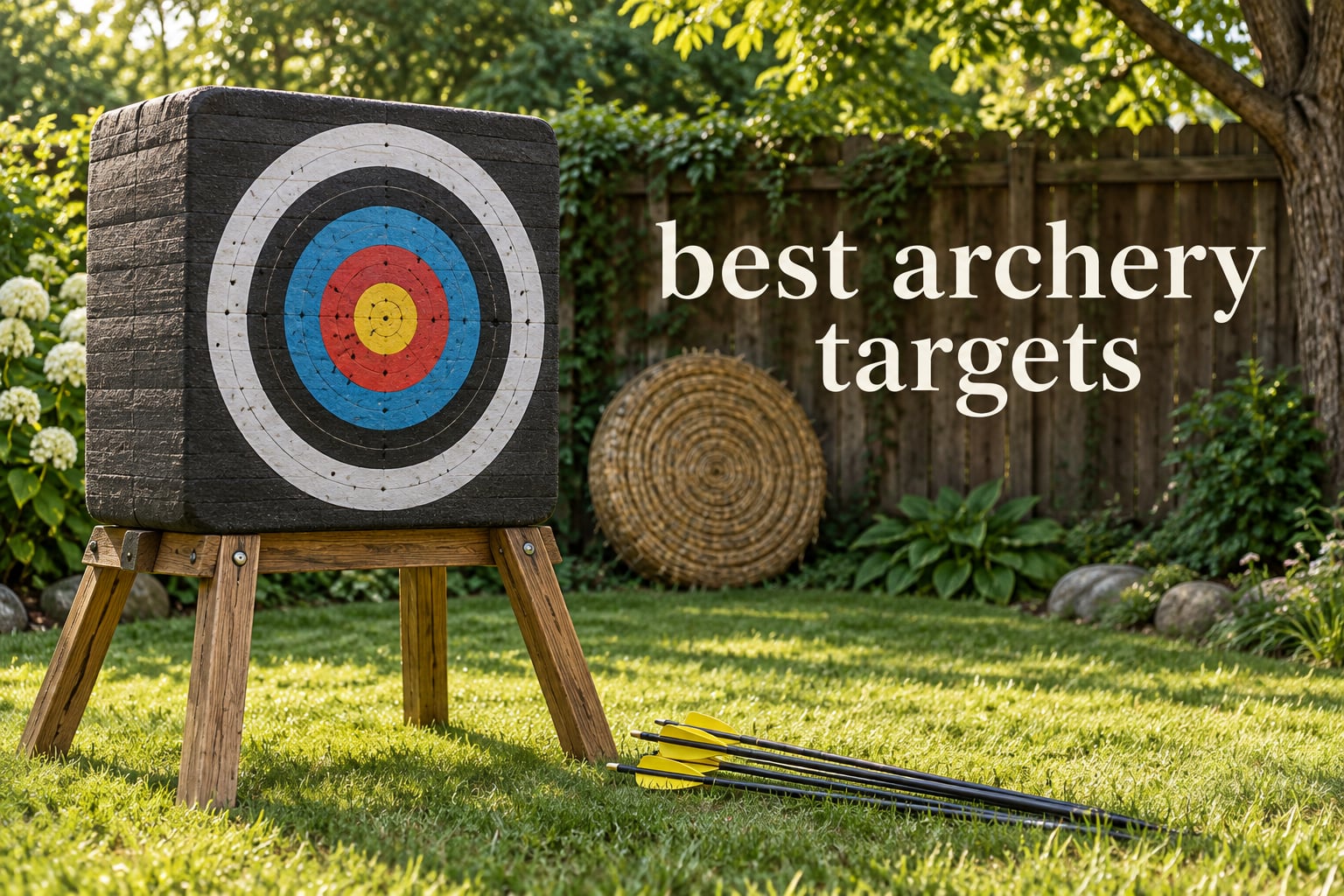
Finding the best archery targets comes down to one question: are you shooting field points, broadheads, or both? That answer rules some targets in and others out, and it is why a target that tops one shooter’s list frustrates the next person on the same backyard range.
Our team has been shooting at foam blocks, straw mats and polypropylene bags for years, and the failure patterns repeat. A target gets destroyed by broadheads it was never rated for, a bag soaks up rain and turns into dead weight, or a crossbow bolt punches clean through a block sold as crossbow-ready. We put 11 of the most-reviewed targets in the category through that lens for 2026.
What follows covers foam block, bag, straw and crossbow-rated builds, plus the backstop and yard-safety guidance most roundups skip. If your setup is still a bare target on a fence post, our backyard archery target guide covers layout in more detail.
Top Archery Targets by Category in 2026
- Best Overall: Black Hole 4-Sided Target, an 18 x 16 x 11 inch open-layer Ethafoam block rated to 300 FPS that stops arrows with friction rather than force.
- Best for Young Archers: Block GenZ 16 Inch Youth Target, a 5.6 pound foam block built for 40 lb draw bows where a child can pull their own arrows.
- Best Field Point Bag: Morrell Yellow Jacket Stinger, a 20 inch bag with 38 layers, two shooting sides, 10 bullseyes and an E-Z tote handle.
- Best High-Volume Bag: Morrell Yellow Jacket Supreme 3, 54 layers of MLDD construction in a weatherproof shell for thousands of shots.
- Best for Crossbow Bolts: Morrell Yellow Jacket Dual Threat Foam, a four-sided fused cellular foam block rated to 350 FPS, with a 380 FPS variant.
- Best for Bow Tuning: BLOCK Classic Layered Foam, an 18 x 18 x 13.5 inch two-sided target with a high-contrast layout and friction release on pull.
- Best Cube: Rinehart 18-1, a 15 inch self-healing foam cube with 18 separate faces, broadhead capable and rated to 500 FPS.
- Best Heavy Field Point Bag: Delta McKenzie Speedbag 20, a 27 pound high-density bag rated to 525 FPS with built-in hanging grommets.
- Best Low-Cost Pick: AUVIM Straw Archery Target, a hand-woven 19.7 inch forage target offered in one, three and five layers for light bows.
- Best for Very Fast Crossbows: SpyderWeb 18XL, an 18 x 18 x 14 inch Spylar target tested beyond 700 FPS with more than 200 aiming points.
- Best for Family Practice: Dostyle Straw Round Target, a handmade 19.7 inch straw face with a colored rope rim that doubles as wall art.
Our Top 3 Picks for 2026

Black Hole 4-Sided Target
- Open-layer friction stopping
- Ethafoam build
- Four shooting sides
- Stops 300 FPS arrows

Morrell Yellow Jacket Stinger
- 38 layers of stopping power
- 2 sides and 10 bullseyes
- E-Z tote handle
- Weather-resistant shell

Block GenZ 16 Inch Target
- Built for 40 lb draw bows
- Young archers pull own arrows
- Field tips blades and mechanicals
- 5.6 lb carry weight
Best Archery Targets at a Glance in 2026
| Product | Specifications | Action |
|---|---|---|
| Black Hole 4-Sided Archery Target |
|
Check Latest Price |
| Block GenZ 16 Inch Youth Open Target |
|
Check Latest Price |
| Morrell Yellow Jacket Stinger Bag Target |
|
Check Latest Price |
 Morrell Yellow Jacket Supreme 3 Morrell Yellow Jacket Supreme 3 |
|
Check Latest Price |
 Morrell Yellow Jacket Dual Threat Foam Morrell Yellow Jacket Dual Threat Foam |
|
Check Latest Price |
 BLOCK Classic Layered Foam Target BLOCK Classic Layered Foam Target |
|
Check Latest Price |
 Rinehart 18-1 Cube Target Rinehart 18-1 Cube Target |
|
Check Latest Price |
 Delta McKenzie Speedbag 20 Inch Delta McKenzie Speedbag 20 Inch |
|
Check Latest Price |
 AUVIM Hand-Woven Straw Target AUVIM Hand-Woven Straw Target |
|
Check Latest Price |
 SpyderWeb 18XL Crossbow Target SpyderWeb 18XL Crossbow Target |
|
Check Latest Price |
 Dostyle Straw Round Archery Target Dostyle Straw Round Archery Target |
|
Check Latest Price |
1. Black Hole 4-Sided Target – Best Overall for Field Points and Broadheads
Black Hole 4-Sided Archery Target, 18″ x 16″ x 11″, 300 FPS, Uses Friction Not Force to Stop All Field Points and Broadheads, Open-Face Layered Design, Lightweight and Carry Strap for Portability
Ethafoam open-layer build
18 x 16 x 11 inch
Stops 300 FPS field points and broadheads
8 ounces
Pros
- Four-sided shooting with contrasting aiming points
- Open-layer design stops arrows with friction not force
- Lightweight body with a convenient carry handle
- Made in the USA
Cons
- Only the open-face sides are rated for broadheads
- Listed 8 ounce weight looks inconsistent with the physical size
The open-layer construction is why this one worked for us. Arrows sink into the layered face and stop through friction rather than being crushed against a solid core, so pulling them out takes a steady hand instead of a bolt cutter.
Two sides are open-face and two are wrapped. Field points can go anywhere, while broadheads and expandables belong on the open layers only, which is the one thing to understand before you buy.
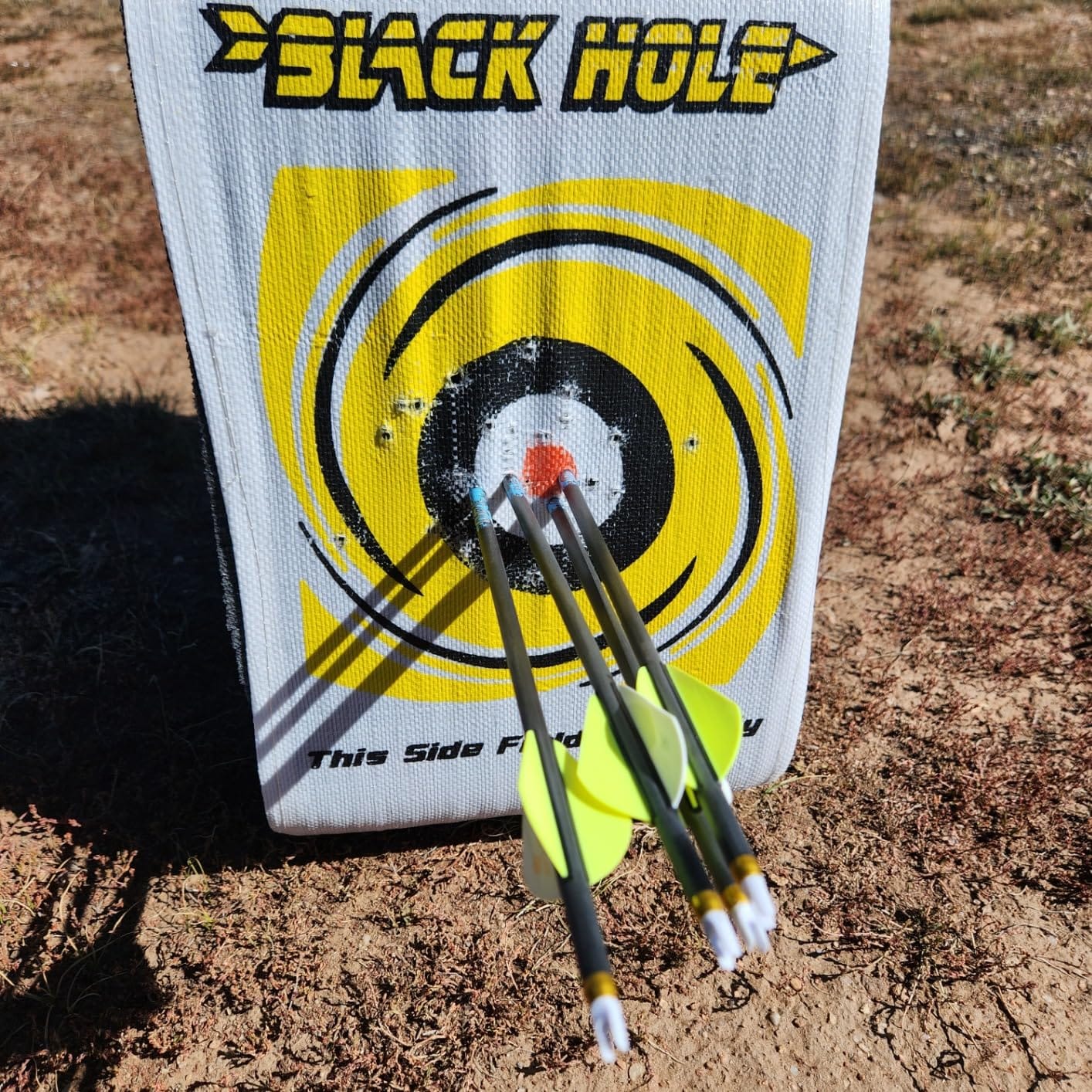
Stated stopping power is 300 FPS for standard diameter arrows on the 18 inch and 22 inch wide versions. The 16 inch crossbow version is rated to 375 FPS bolts, so this is range-capable rather than a dedicated crossbow backstop.
Owners also flag a listed weight of 8 ounces that looks small for a block this size, so treat it as approximate. It still needs a stand or a brace behind it at full draw.
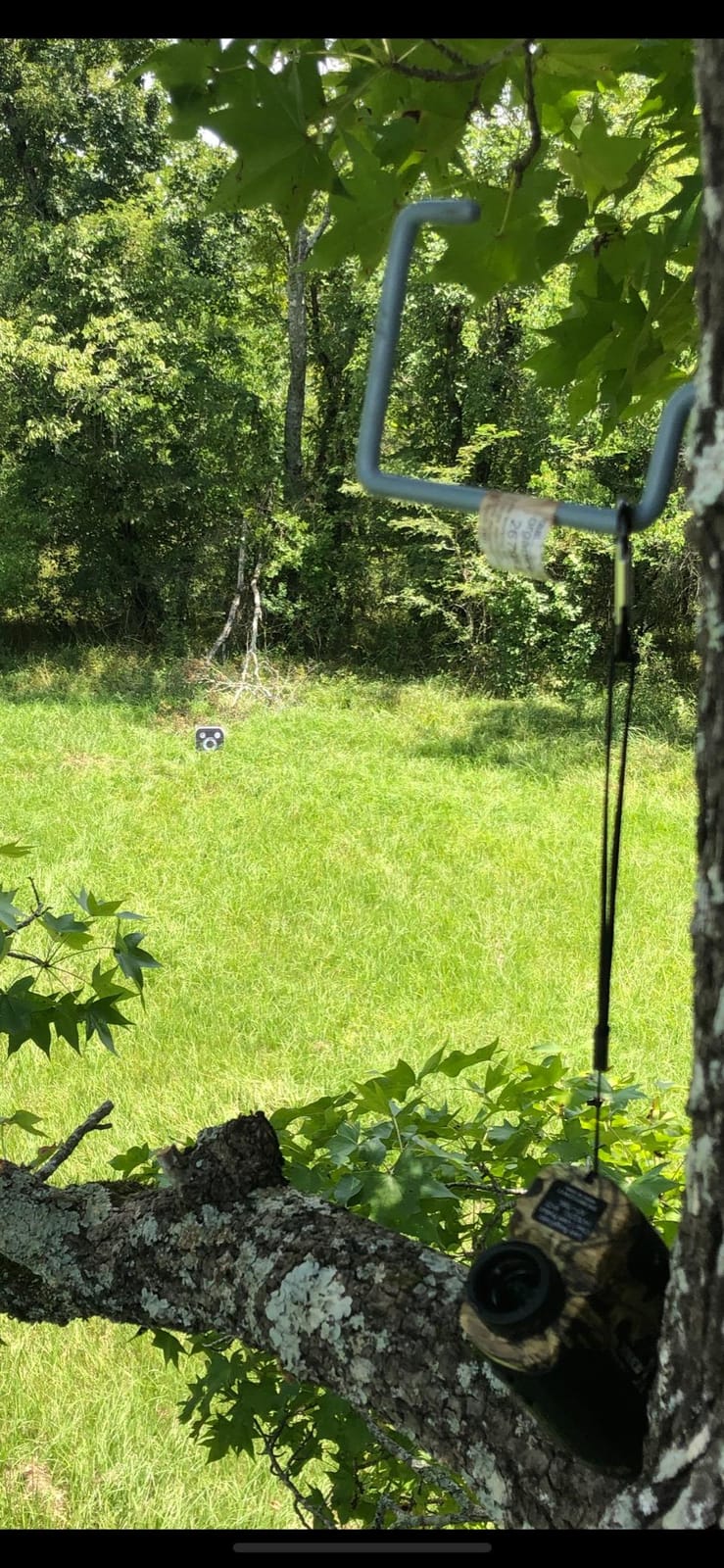
What to check before you buy
Decide which point type you actually shoot. Broadhead shooters should work only the open-face sides, so plan your practice around two broadhead surfaces rather than four.
Where it falls short
It will not handle a crossbow shooting bolts in the 400 to 500 FPS range. As a foam block it also will not swallow a missed arrow the way a filled bag does.
2. Block GenZ 16 Inch Target – The Pick for Young Archers
Block GenZ 16″ Youth Open Archery Target, 40Lb Draw, Easy Removal, Multi-Color
Foam open-layer design
16 inch youth size
Built for 40 lb draw and under
5.6 pounds
Pros
- Young archers can pull their own arrows
- Accepts field tips fixed blades and mechanicals
- Light enough for kids to carry
- Handles frequent daily shooting
Cons
- Light enough to tip when struck high
- Over-powered adult bows can punch through
- Only two usable shooting faces
The detail that sold us is not stopping power, it is arrow removal. A 40 lb bow driven by a nine-year-old cannot bury a steel tip, so the friction-layer design lets kids finish their turn without an adult pulling arrows.
It takes field tips, fixed blades and mechanicals, so a young archer can move from paper-foil practice to real hunting heads. The 16 inch face keeps groups tight and aiming points easy to see close up.
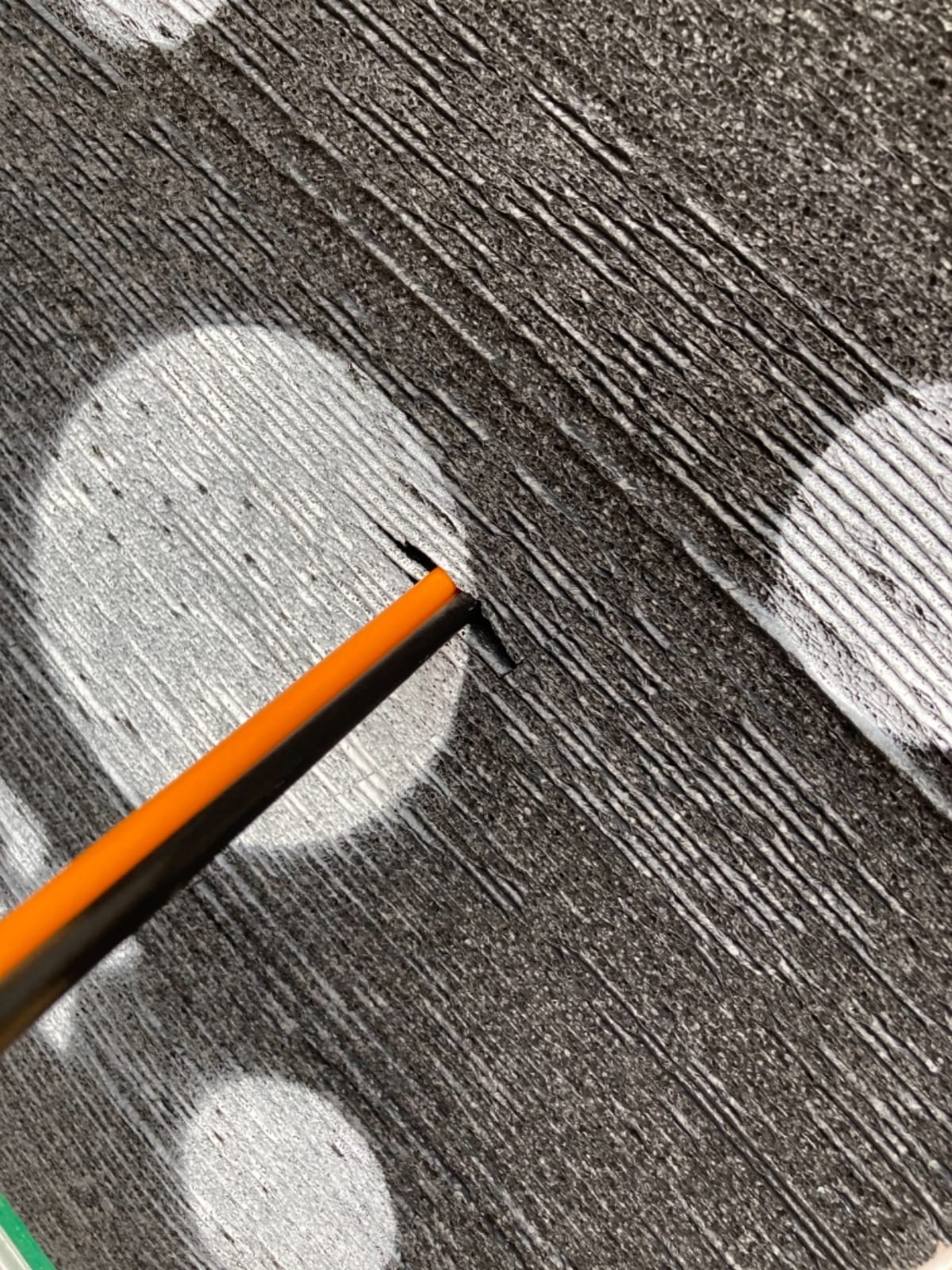
Reviewers describe it holding up under the daily shooting a young archer puts into it, which is where foam blocks usually start shedding. The open-layer build is listed as tolerating more hits than a regular block.
It weighs 5.6 pounds and measures 16 by 17 by 7.5 inch, and that low mass cuts both ways. Easy for a child to carry, equally easy to knock off a stand.
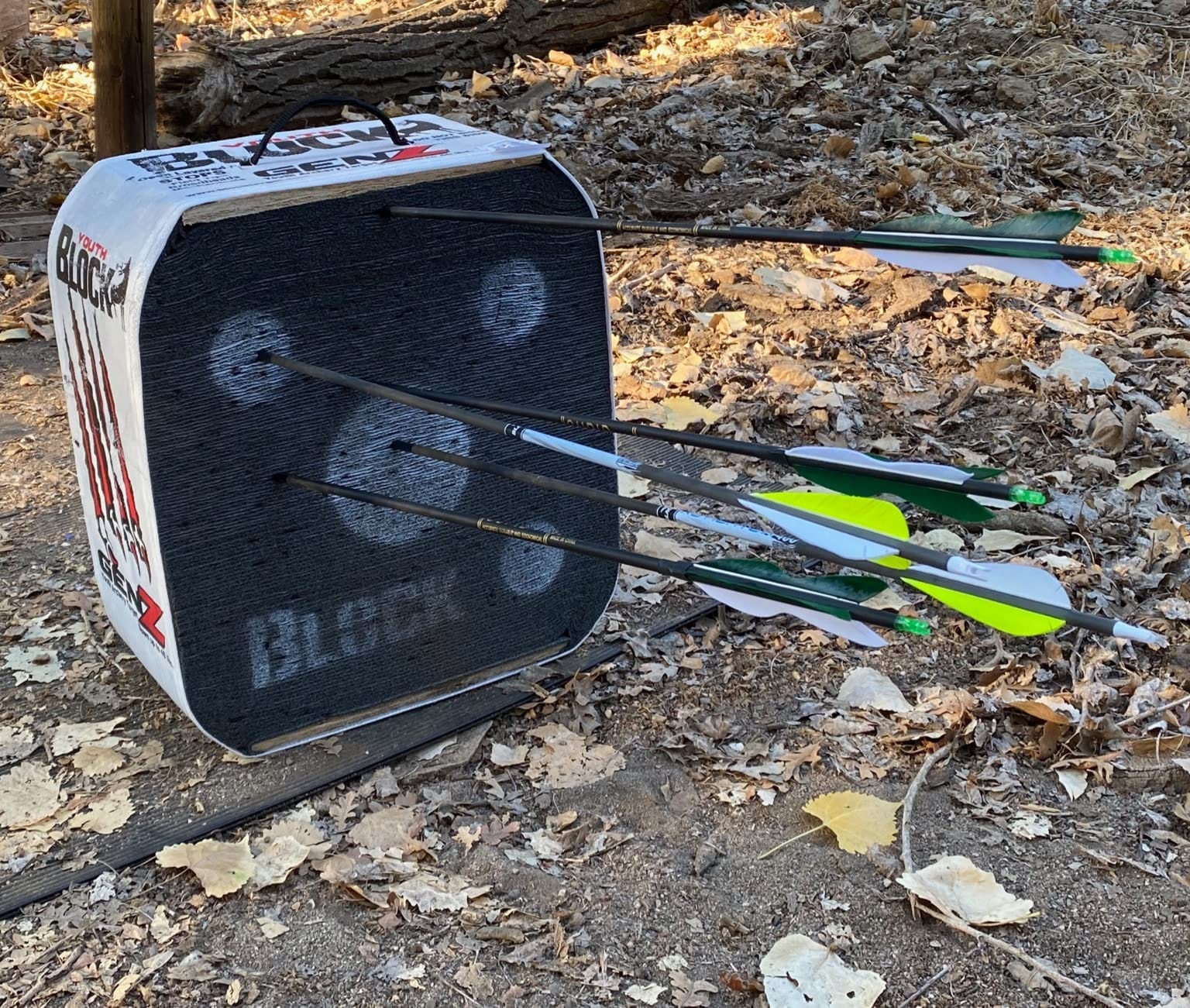
What to check before you buy
Check the shooter’s actual bow. Over 40 lb draw and arrows will drive through the block, which damages shafts and creates a real safety problem near the face.
Where it falls short
Only two surfaces are shooting faces. The top and side wooden frame are structure, not scoring surface, so anyone expecting four usable sides will be disappointed.
3. Morrell Yellow Jacket Stinger – Best Value Field Point Bag
Morrell Yellow Jacket Stinger, Field Point Outdoor Backyard Archery Target
Polypropylene bag target
20 x 12 x 20 inch
38 layers of stopping power
18.3 pounds
Pros
- Easy arrow removal the whole family can manage
- E-Z tote handle for transport
- Weather-resistant surface
- Two sides with 10 bullseyes
Cons
- Field point oriented so broadheads are not the intended use
- Heavier to haul than a foam block
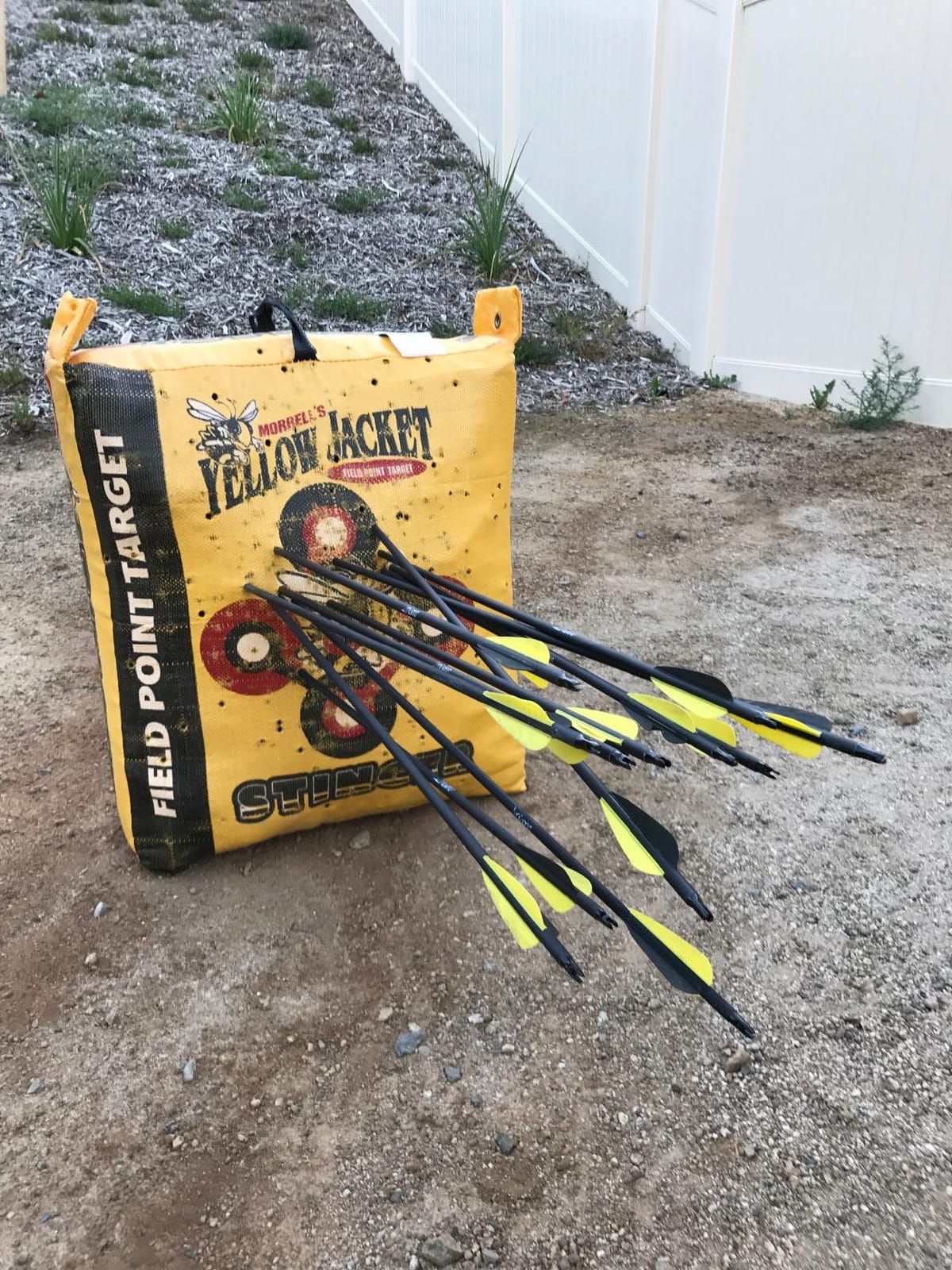
Bags earn their reputation for one reason, and this one makes the case cleanly. A missed arrow that buries itself in loose fill is a far smaller problem than one that disappears into your lawn.
The trade is that fill dampens impact instead of stopping force, so arrows can still be damaged. Morrell uses 38 layers and its X-Tended life design here, and reviewers consistently call out how easily arrows come out.
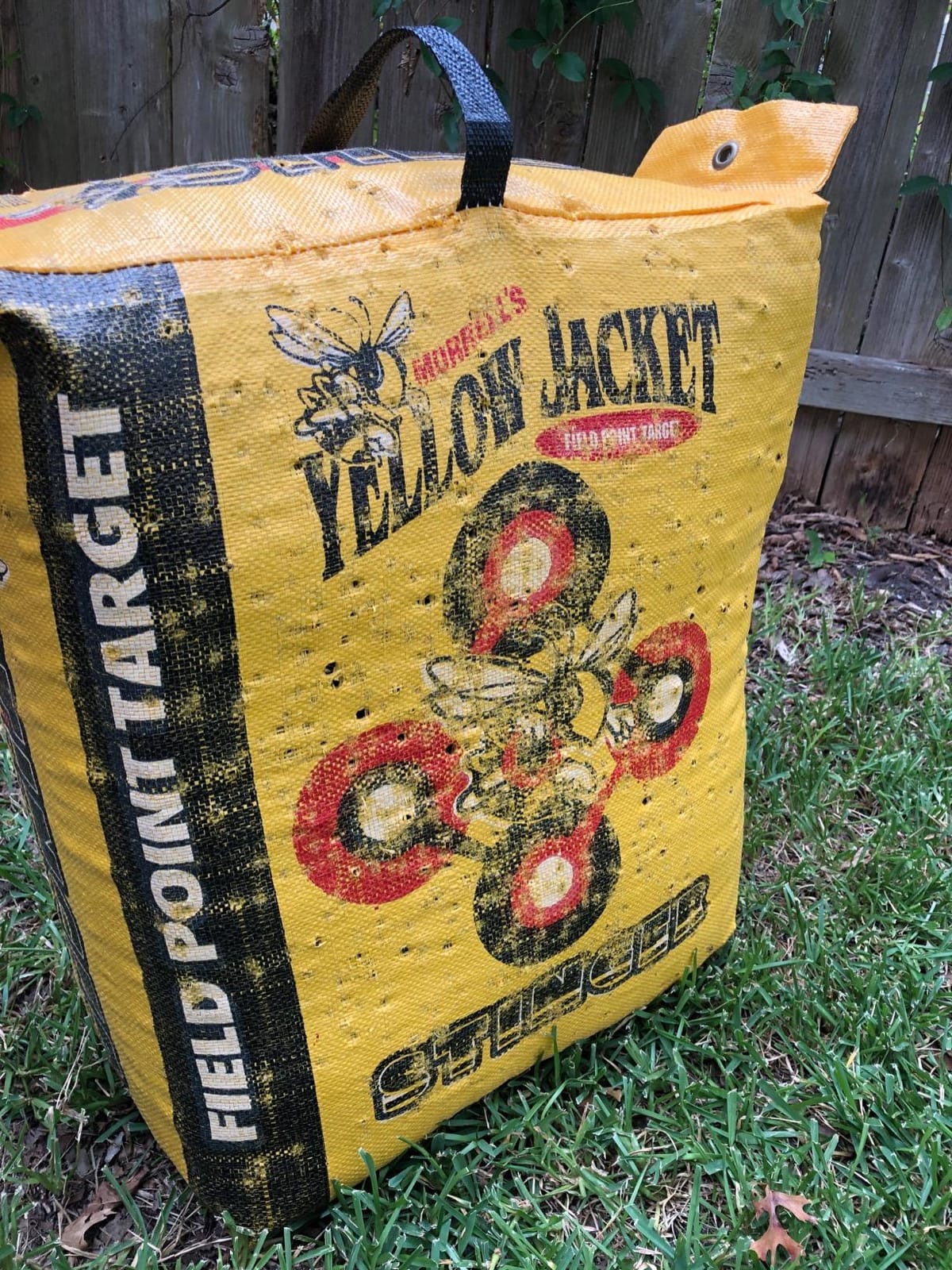
Two shooting sides with 10 bullseyes give you variety without buying a second target. The E-Z tote handle helps on the move, but 18.3 pounds is a two-hand carry from the trunk without a cart.
It is field point only, and reviewers are blunt about that. One broadhead shot opens the bag and exposes the fill, which is the most common way people ruin an otherwise good bag.
What to check before you buy
Count your shooting surfaces. Two sides suits a family rotating between shooters, but a single shooter will wear one side out long before the other.
Where it falls short
Not a broadhead target and should not be treated as one. It is also the heaviest of the smaller targets here, which matters if your range is more than a short walk from the house.
4. Morrell Yellow Jacket Supreme 3 – Deep 54-Layer Bag for High Volume
Morrell Yellow Jacket Supreme 3 Dual-Sided Archery Target, 23 x 12
Polypropylene bag target
23 x 12 inch face
54 layers with MLDD construction
28 pounds
Pros
- 54 layer build holds up under thousands of shots
- Weatherproof for year-round outdoor use
- Dual-sided with 10 bullseyes
- E-Z tote handle for range transport
Cons
- 28 pounds is one of the heaviest carries here
- Fixed 23 x 12 inch face gives less aiming area
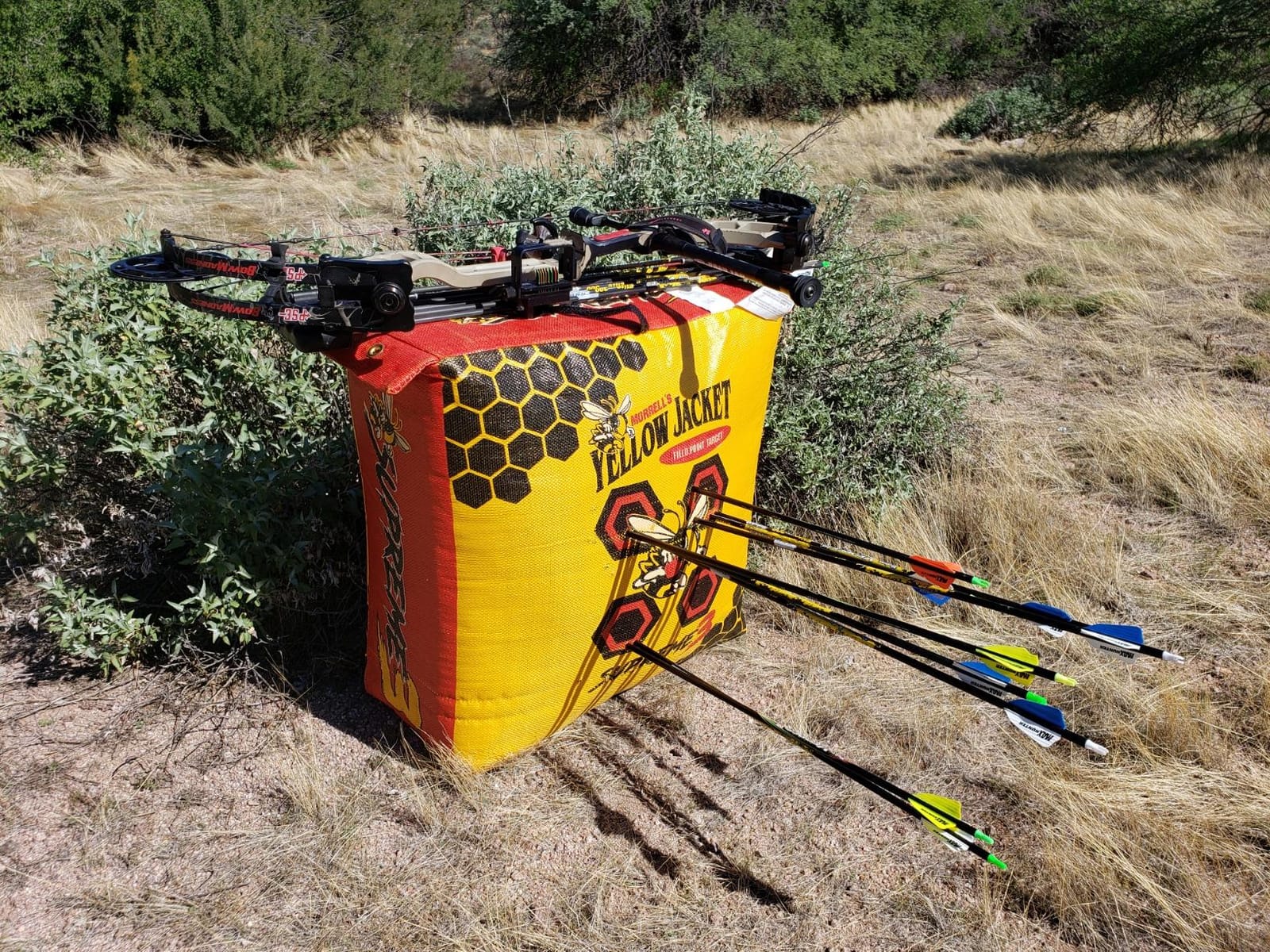
If you shoot volume, this is the bag to buy. The 54-layer MLDD construction is the deepest build in this roundup, and 4.7 stars across 1,769 reviews makes the longevity claims consistent rather than anecdotal.
Weatherproofing is the other reason to step up. Bags left in rain soak up water, become extremely heavy and eventually fail at the outer casing, and this shell is built for year-round use.
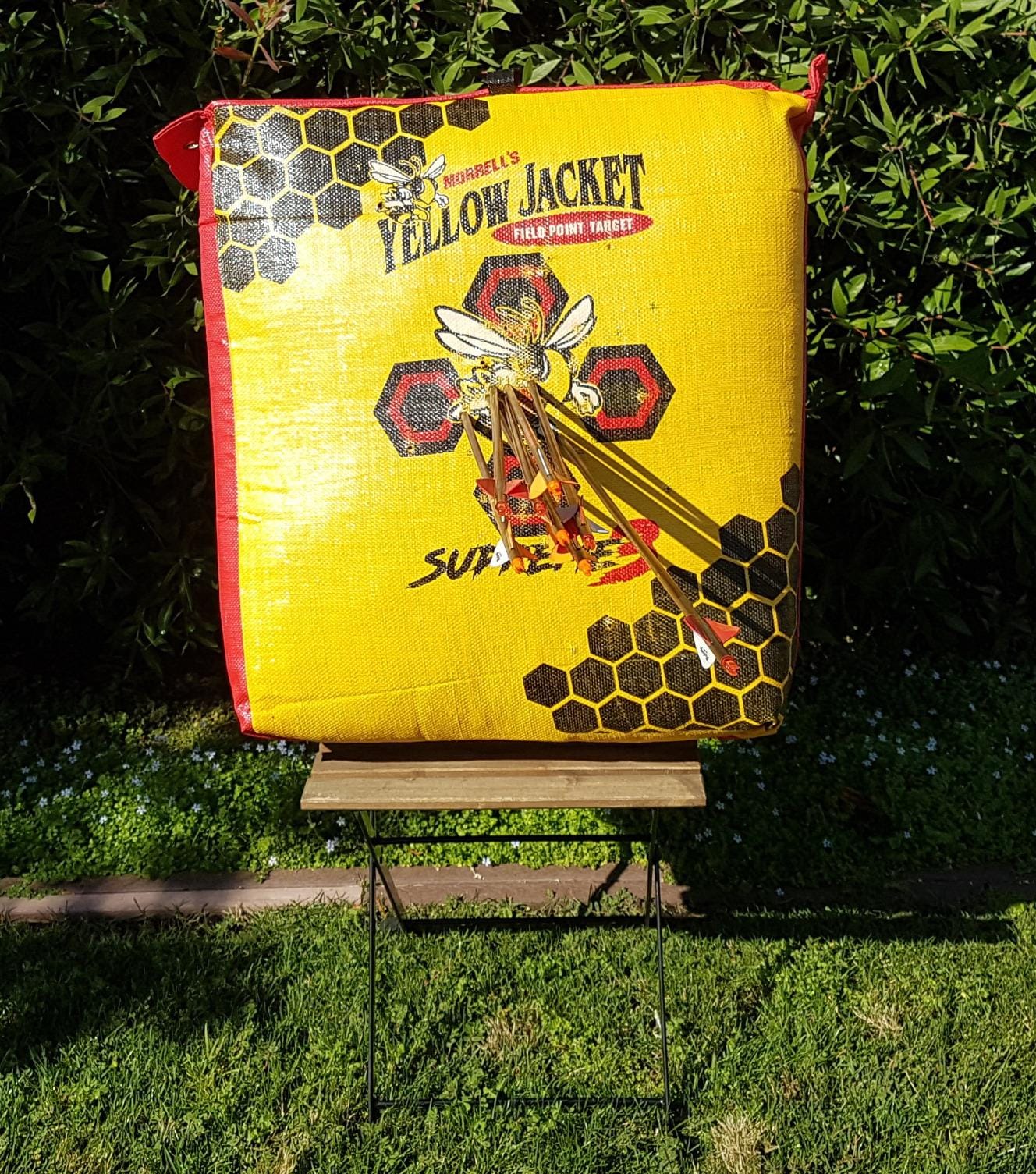
It carries a limited two year warranty, which is worth noting in a category where most targets carry less or nothing. Dual-sided shooting with 10 bullseyes means both faces wear at the same rate if you alternate.
At 28 pounds you feel every one of those layers. Plan the carry path before you buy, because moving this bag across uneven ground is a two-person job for most adults.
What to check before you buy
Measure your lane. The 23 by 12 inch face is narrower than the 20 inch bag faces here, so at longer yardages the aiming area feels tight despite the deeper stopping power.
Where it falls short
It is a field point bag. Broadheads cut the outer layers and expose the fill, and no layer depth protects the shell once it is open.
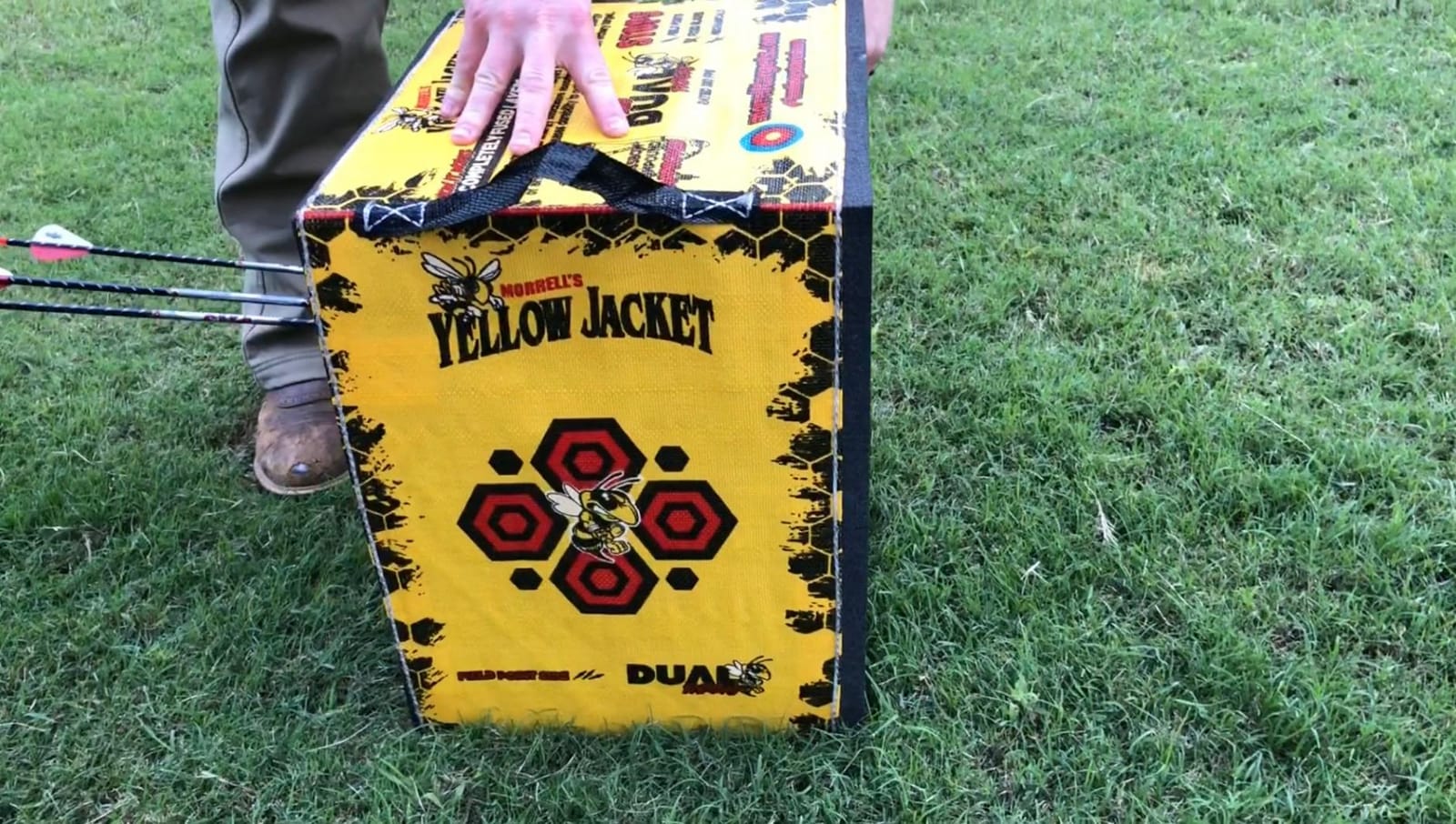
5. Morrell Yellow Jacket Dual Threat Foam – Best for Crossbow Bolts
Morrell Yellow Jacket Dual Threat 380 FPS Foam Archery Target Block, Yellow
Fused cellular foam block
4 sided square format
350 FPS rating,380 FPS variant
16 ounces
Pros
- Stops high speed crossbow bolts reliably
- Fused foam holds together after thousands of shots
- Accepts field points and broadheads
- Weatherproof surface with carry handle
Cons
- Arrows can be hard to pull
- Some buyers report pass-through below the stated rating
- Broadheads chew up the white aiming circles
This pick drew real disagreement from owners, so read the cons first. At 4.3 stars across 828 reviews it has the lowest average here, and the split is always the same: some love the stopping power, others cannot get arrows out.
On the positive side, fused cellular foam and offset bullseye technology have held together for owners putting thousands of shots through four sides carrying 32 bullseyes. It takes field points, fixed blades and mechanicals, which is rare for a crossbow-rated block.
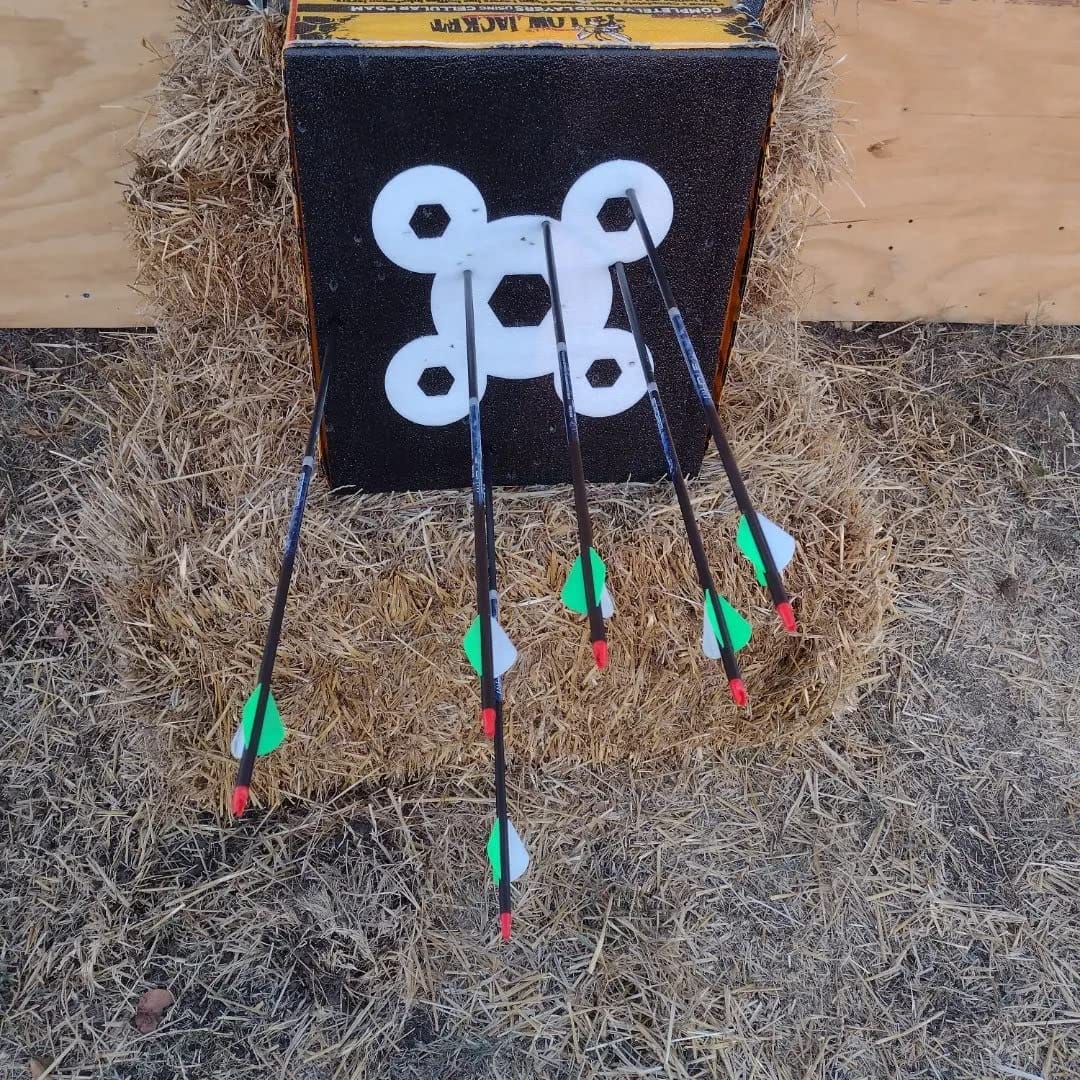
The rating is 350 FPS with a 380 FPS version available, and owners specifically cite stopping bolts at 340 FPS and above. The listed 16 ounce weight makes it one of the easiest blocks here to carry out to a treeline.
Pass-throughs are the reported failure mode, and a few buyers describe arrows exiting below the advertised rating. If your bolts run fast, test the first shots on a low-risk section of the block.
What to check before you buy
Buy an arrow puller. Multiple reviews recommend a double-D puller alongside this block, because fused foam grips shafts hard once a broadhead has softened the hole. Pulling by hand is how people snap shafts.
Where it falls short
White aiming circles degrade quickly under broadhead fire, and the foam block format is bulkier than a flat bag. At 4.3 stars it is also the least consistent performer here.
6. BLOCK Classic Layered Foam – Best for Bow Tuning and Sight-In
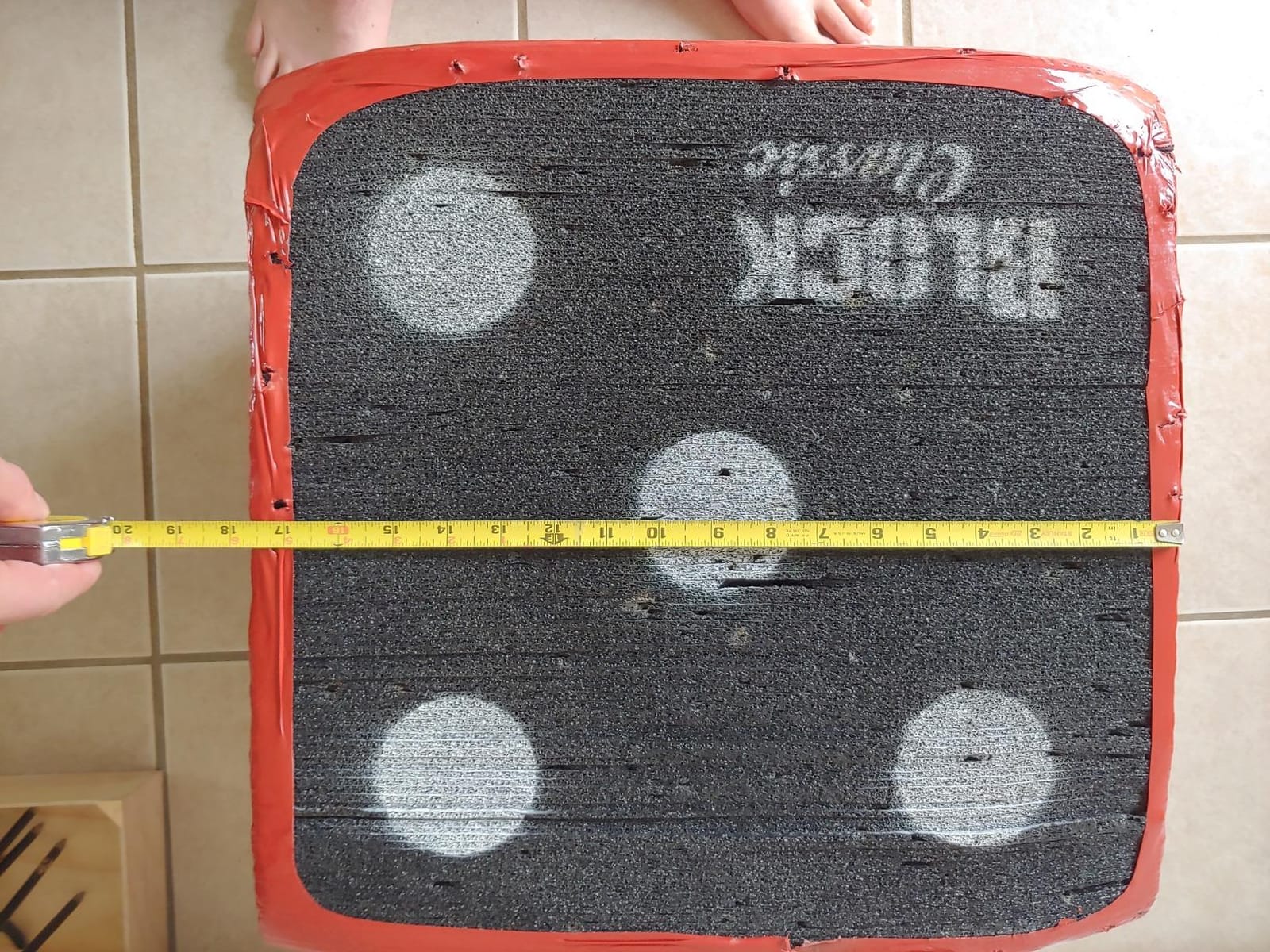
BLOCK Classic Layered Foam Archery Target, 18” x 18” x 13.5”, 2-Sided Shooting, Unique Open Layer Design Stops Field Points and Broadheads with Friction Not Force, Easy Arrow Removal, Top Carry Handle
Open layer friction foam
18 x 18 x 13.5 inch
Two sided shooting
Top carry handle
Pros
- Genuinely easy arrow removal without tearing shafts
- Handles crossbow bolts and field points
- One owner reports 3000 plus shots with acceptable wear
- High contrast black and white layout
Cons
- Blank reverse side wears through under center shooting
- Broadheads damage the bullseye faster than field points
- Edge shots can cut the wrap band holding layers
Sight-in work needs a target that shows exactly where the arrow went without collapsing the hole. The open-layer design grips the shaft with heat and friction on entry, then releases as it cools, which is what keeps groups readable.
Owners compare it favorably to 3D foam animal targets on cost and longevity, and one reports 3,000 plus shots with wear still acceptable. The high-contrast black-and-white layout aids acquisition at short and long range.
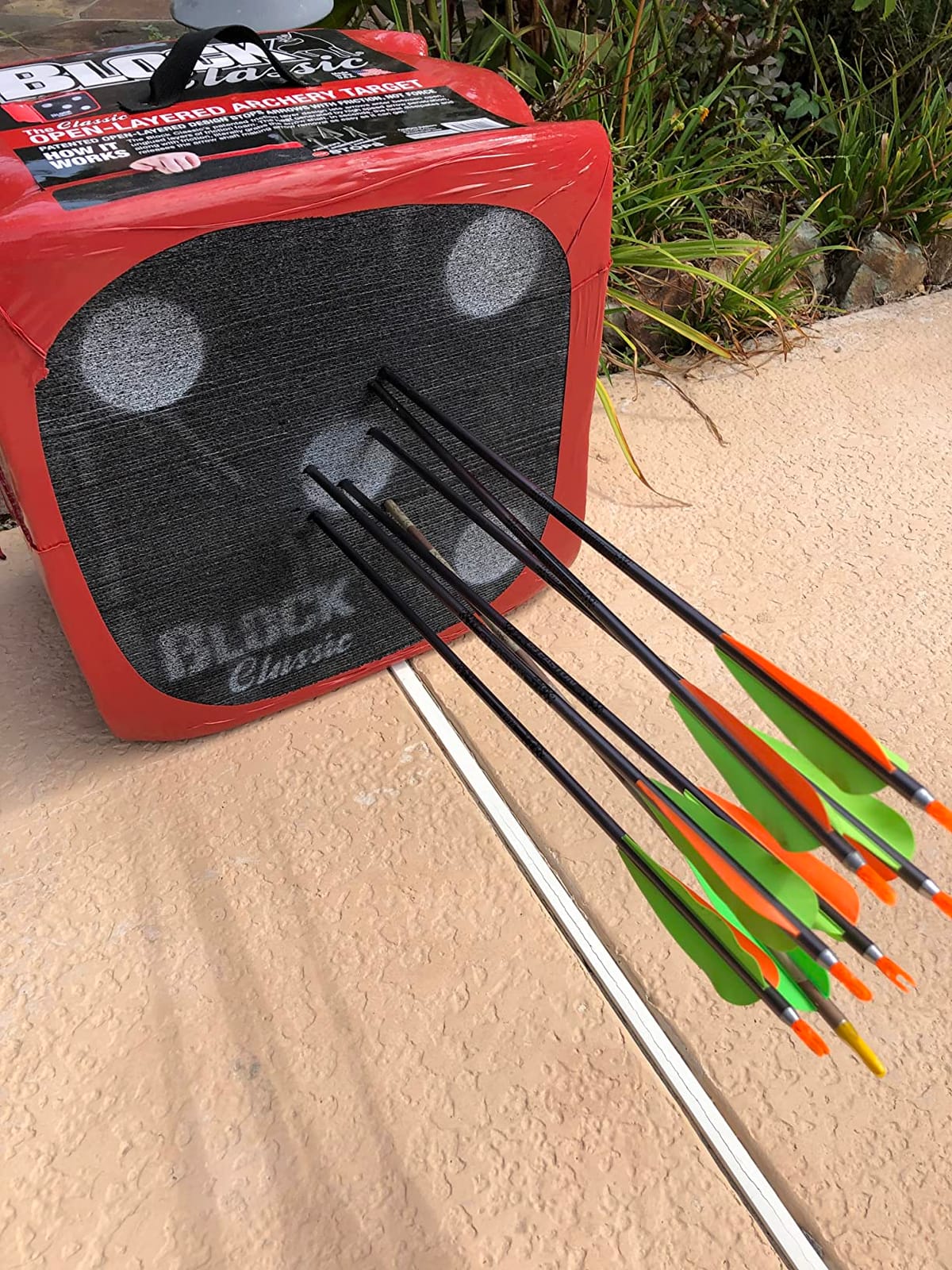
Crossbow bolt penetration here is reported at 2 to 4 inches, a useful reference point. A 22 inch wide version exists if your field point groups need more face than 18 inches gives you.
Edge work is the weak spot. Shots landing near the edge can cut the wrap band holding the layers together, and crossbow bolts with broadheads can protrude out the back.
What to check before you buy
Note that one reverse side is a blank face. For sighting work you get a single high-contrast scoring side, so a second target size is a better buy than replacing this one.
Where it falls short
Broadheads damage the bullseye faster than field points, and edge shots cut the wrap band. Check shaft condition after crossbow bolt impacts, since protruding bolts can be damaged inside the layers.
7. Rinehart 18-1 Cube – Best Cube for Long-Term Broadhead Practice
Rinehart 18-1 Archery Target, 18-Sided, Broadhead & Field Point Compatible
Self-healing foam cube
15 x 15 x 15 inch
18 separate shooting faces
Rated to 500 FPS
Pros
- 18 faces spread impact wear across many aim points
- Broadhead capable and rated to 500 FPS
- Self-healing foam holds its shape
- Lightweight with an easy carry handle
Cons
- One of the higher priced targets in the lineup
- 15 inch cube gives less face area than 18 to 22 inch blocks
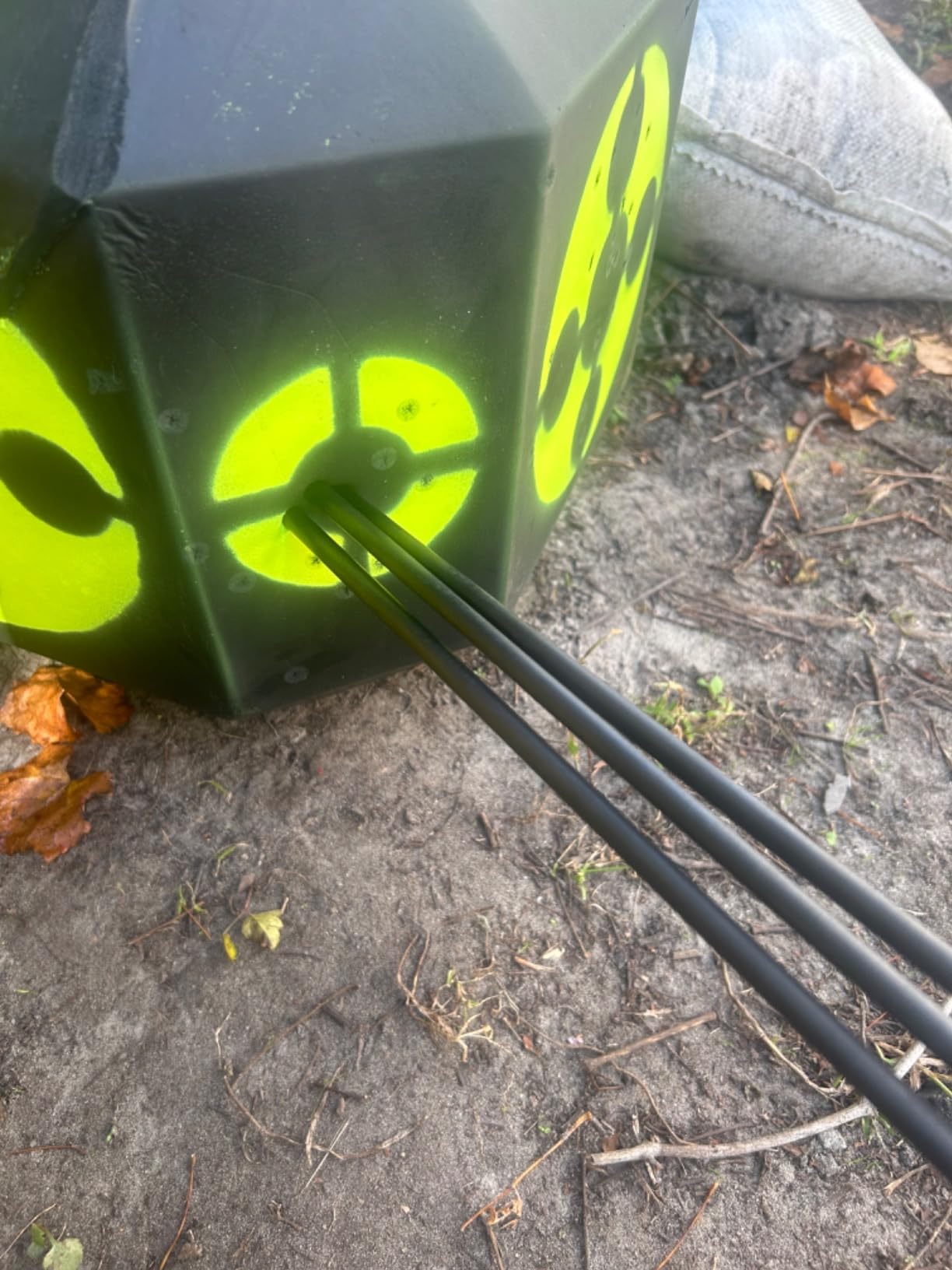
The 18-1 name comes from 18 shooting faces, and that number is the whole design brief. Most targets concentrate wear in one tiny cluster because archers keep shooting the same hole; this cube spreads impact across many aiming points instead.
It is broadhead capable, crossbow approved and rated to 500 FPS, so it is one of the few picks here handling both point types and a fast bolt without changing products. The self-healing foam closes around each penetration and holds its shape.
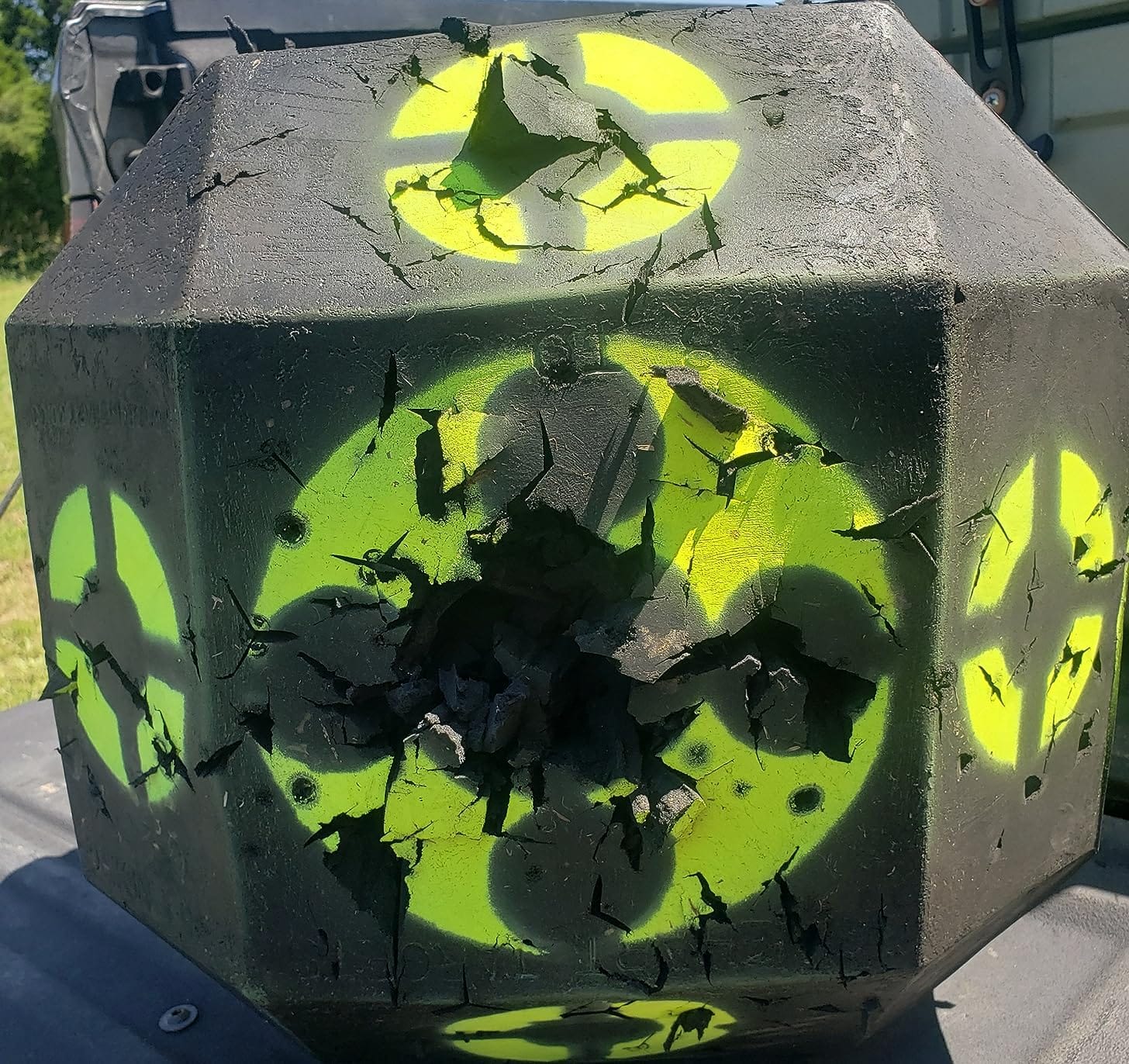
On r/Archery, the Rinehart 18-1 comes up repeatedly when people ask which cube lasts, alongside other long-life cubes. That consensus matters more than any spec sheet, because durability here is decided by shot count.
Highly visible target zones help you acquire the face quickly, and the carry handle makes it easy to move to the range, backyard or woods. The 15 inch cube size is the tradeoff for all that face count.
What to check before you buy
Work out whether 18 faces outlasts your patience. A target that is not shot out is wasted, and plenty of archers move to a bigger block after one season of tight groups.
Where it falls short
Face area is the compromise. At 15 inch per side you have less scoring surface than an 18 or 22 inch block, which matters when grouping at distance rather than tuning up close.
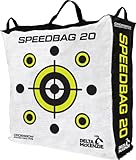
8. Delta McKenzie Speedbag 20 – Best Bag for Heavy Field Point Work
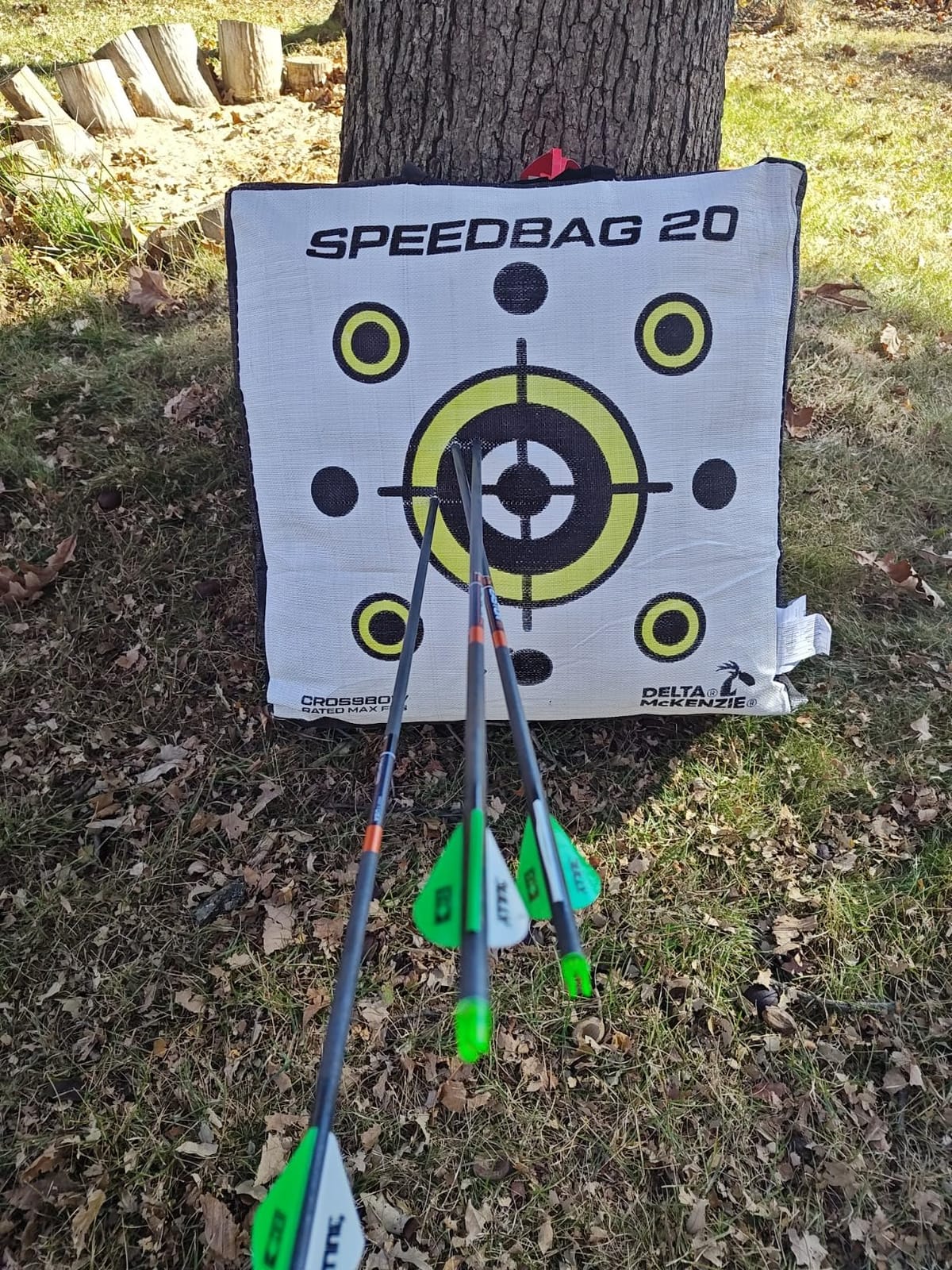
Delta McKenzie Speedbag 20″ Archery Field Point Bag Target – High-Density Material – Dual-Sided Aiming Points – Easy Arrow Removal – Weatherproof Design for Compound Bows, Recurve & Crossbows
High density nylon bag
20 inch diameter by 10 inch depth
525 FPS field point rating
27 pounds
Pros
- Rated to stop field points to 525 FPS
- Dual sided high contrast aiming points
- Weatherproof for indoor and outdoor use
- Built-in hanging grommets for vertical mounting
Cons
- Field point oriented so broadhead performance is not claimed
- 27 pounds is a heavy bag to reposition
The round shape is the difference. A 20 inch round face gives you aiming area extending in every direction, which is why bag shooters who move between bow types and distances prefer it to a rectangular face.
At 525 FPS for field points this is the highest stated rating among the bags here, and reviewers treat it as a dependable heavy-duty option. The dual-sided high contrast points stay visible in varied lighting.
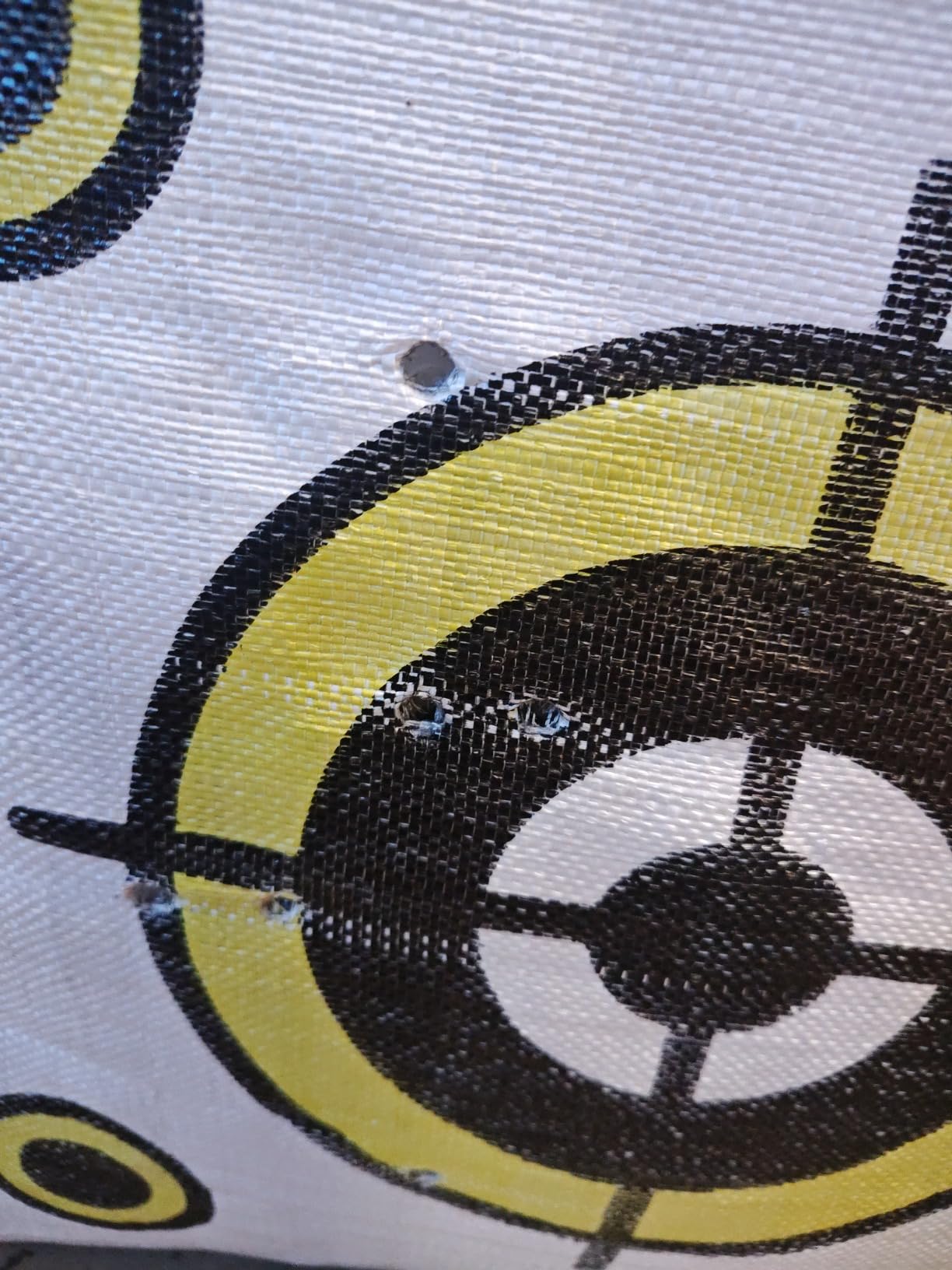
Built-in grommets let you hang it vertically without a separate frame, which is useful for an indoor setup or a temporary spot behind a garage. It is listed for compound, recurve and crossbow.
At 27 pounds this is a heavy bag, and reviewers name repositioning as the main gripe. If you are not loading it beside a vehicle, budget for a hand truck rather than your back.
What to check before you buy
Confirm your arrow speed against the 525 FPS field point figure. This is a bag, so a faster compound or a crossbow can still punch the outer layers, and that rating is your reference point.
Where it falls short
Broadhead performance is not claimed, and one broadhead opens the shell. It is also the widest, heaviest bag here, so the same material that stops arrows well makes it awkward to move solo.
9. AUVIM Straw Archery Target – Low-Cost Pick for Traditional Bows
AUVIM Archery Targets Straw Solid Hand-Made Archery Target for Recurve Bow Compound Bow or Longbow 20 Inches Traditional Bow Arrow Target for Kids Youth Adult Archery Hunting Backyard Practice
Hand woven straw face
19.7 inch diameter
One three and five layer options
0.74 kg
Pros
- Degradable forage material gentle on arrows
- Light enough for kids and beginners to carry
- Layer options matched to bow weight
- Works for backyard practice and hunting prep
Cons
- Handmade so dimensions vary slightly
- One layer suits only light bows at short range
- Straw compacts faster than foam blocks
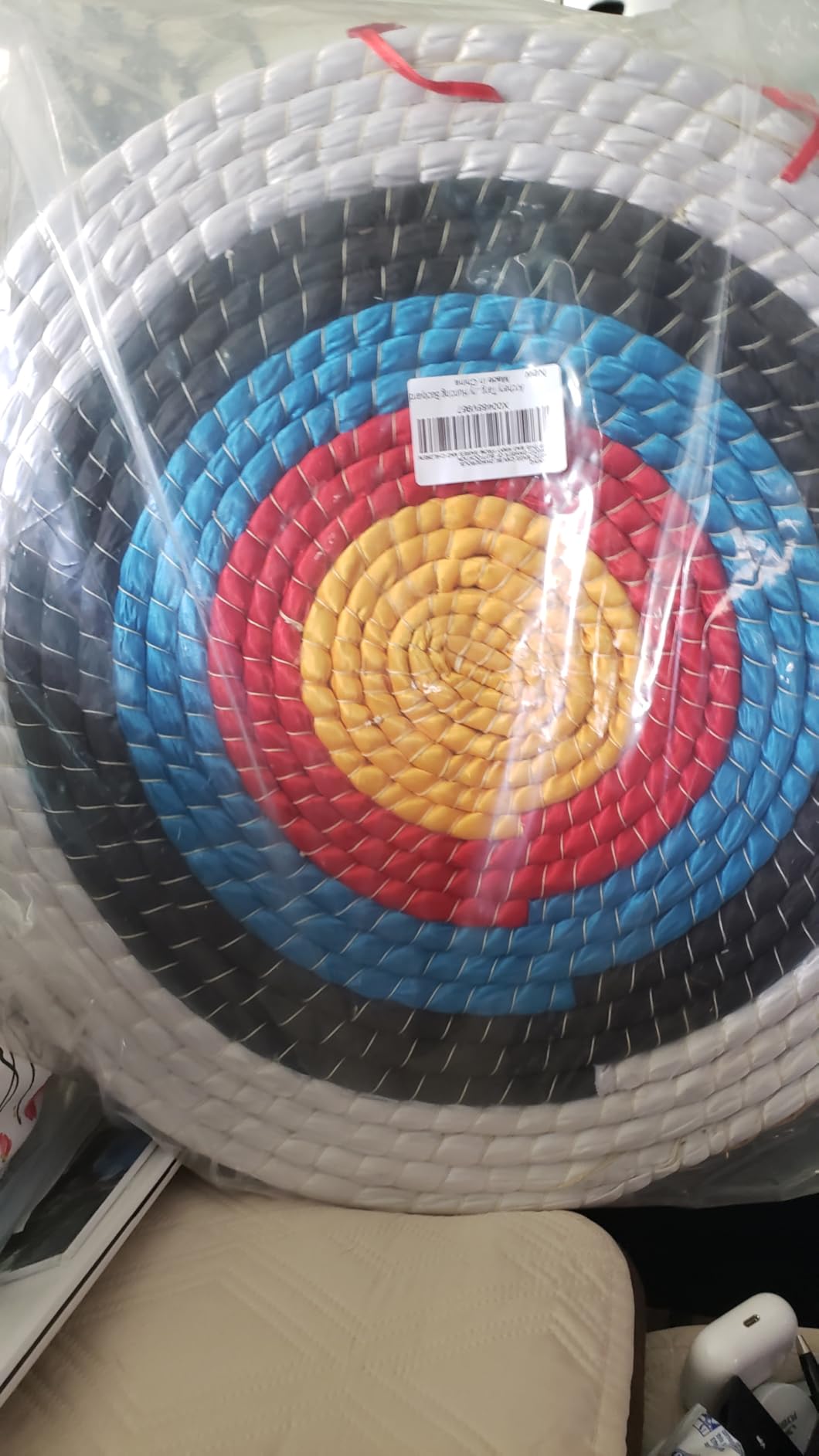
Straw targets belong to a different use case. They are quiet, they do not shed foam shreds across your yard, and a loose arrow that buries itself in woven forage is safer to dig out than one lost in a foam block.
This one is handmade from degradable forage material in one, three and five layer versions. Listed guidance is one layer for 10 yards under 15 lbs, three layers for 20 to 30 yards under 35 lbs, and five layers above 35 lbs.
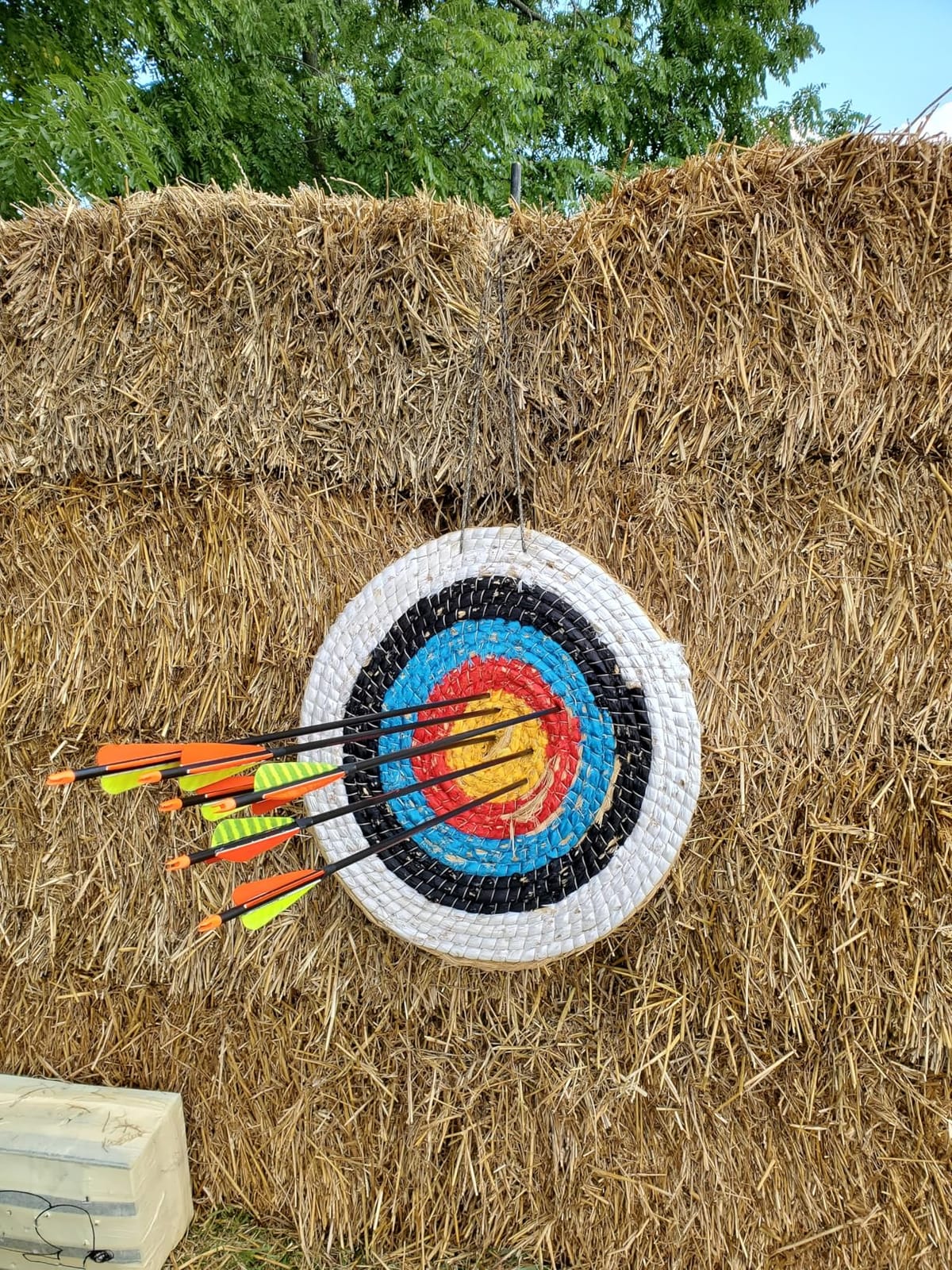
Depth scales with layer count: 0.78 inch for one layer, 2.3 inch for three and 3.9 inch for five. Matching that is the most important decision on this target, and missing it is how straw faces lose their shape.
It weighs 0.74 kg in the single layer version, light enough for a child to carry, which makes it a genuine first archery target rather than a compromise.
What to check before you buy
Measure draw weight and shooting distance, then pick the layer count from the guidance. Underestimating here ends with a pass-through and a broken shaft.
Where it falls short
Handmade by farmers, so the actual diameter varies slightly from the listed size. Straw also compacts and wears faster than foam, and the outer forage frays with volume shooting.
10. SpyderWeb 18XL – Best for Very High Speed Crossbows
SpyderWeb 18XL No Speed Limit Crossbow Target 500+ FPS
Spylar woven mesh target
18 x 18 x 14 inch
Tested beyond 700 FPS
34 pounds
Pros
- Stops 400 to 500 plus FPS crossbow bolts
- Arrows pull out with two fingers
- Over 200 aiming points spread the wear
- Weather resistant shell with steel handle
Cons
- The highest priced target in this lineup
- 34 pounds is heavy to reposition
- Field points only so broadheads are out of scope
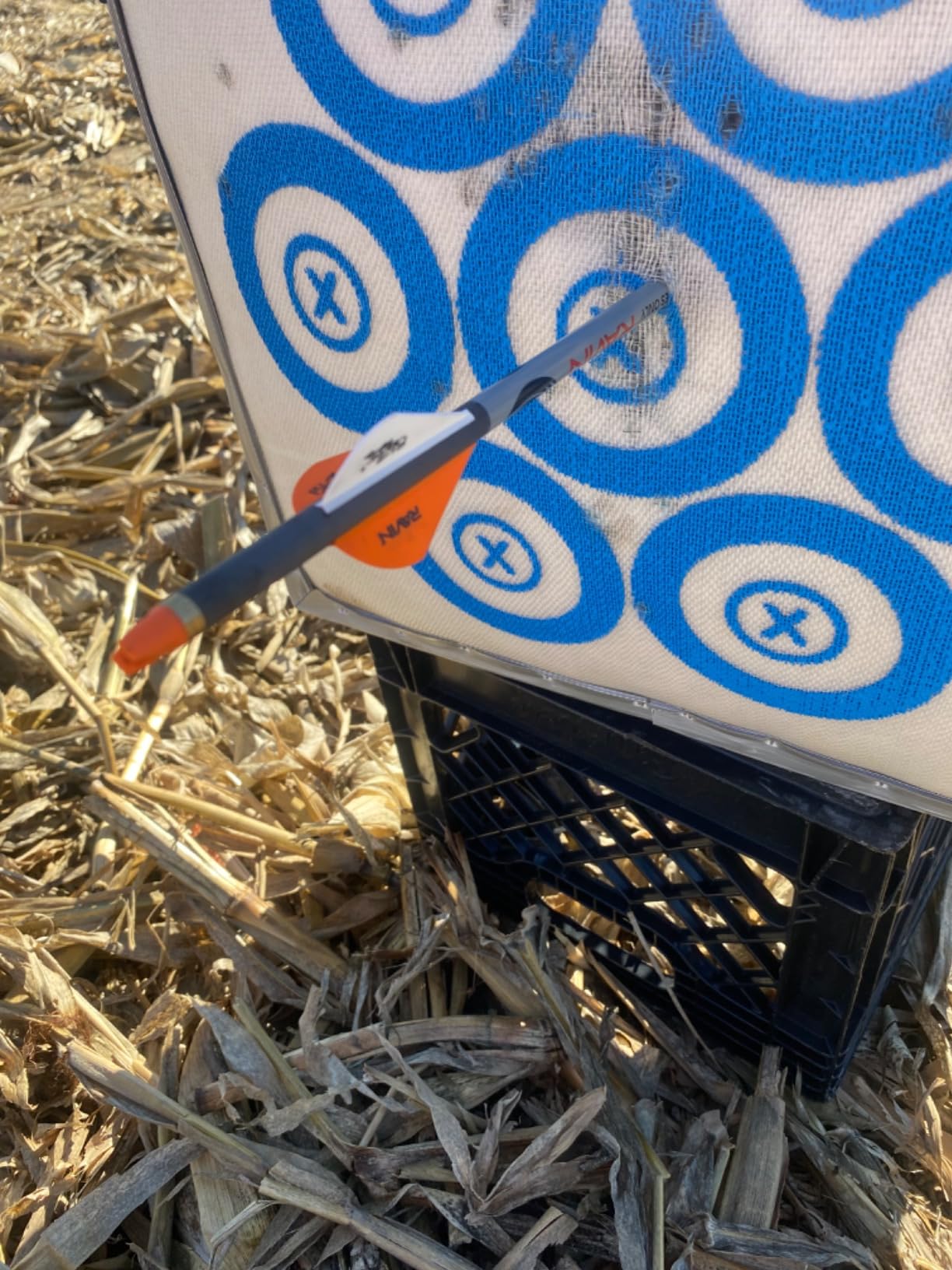
Crossbow shooters are who this was built for, and the specification is the differentiator. It is tested on crossbows, compound bows and airbows beyond 700 FPS, a category most foam blocks never reach.
Owners who have owned five or more targets single it out, and 4.7 stars across 280 reviews gives it the strongest rating here. Bolts penetrate 8 to 10 inches and pull out with two fingers, even for a small child.
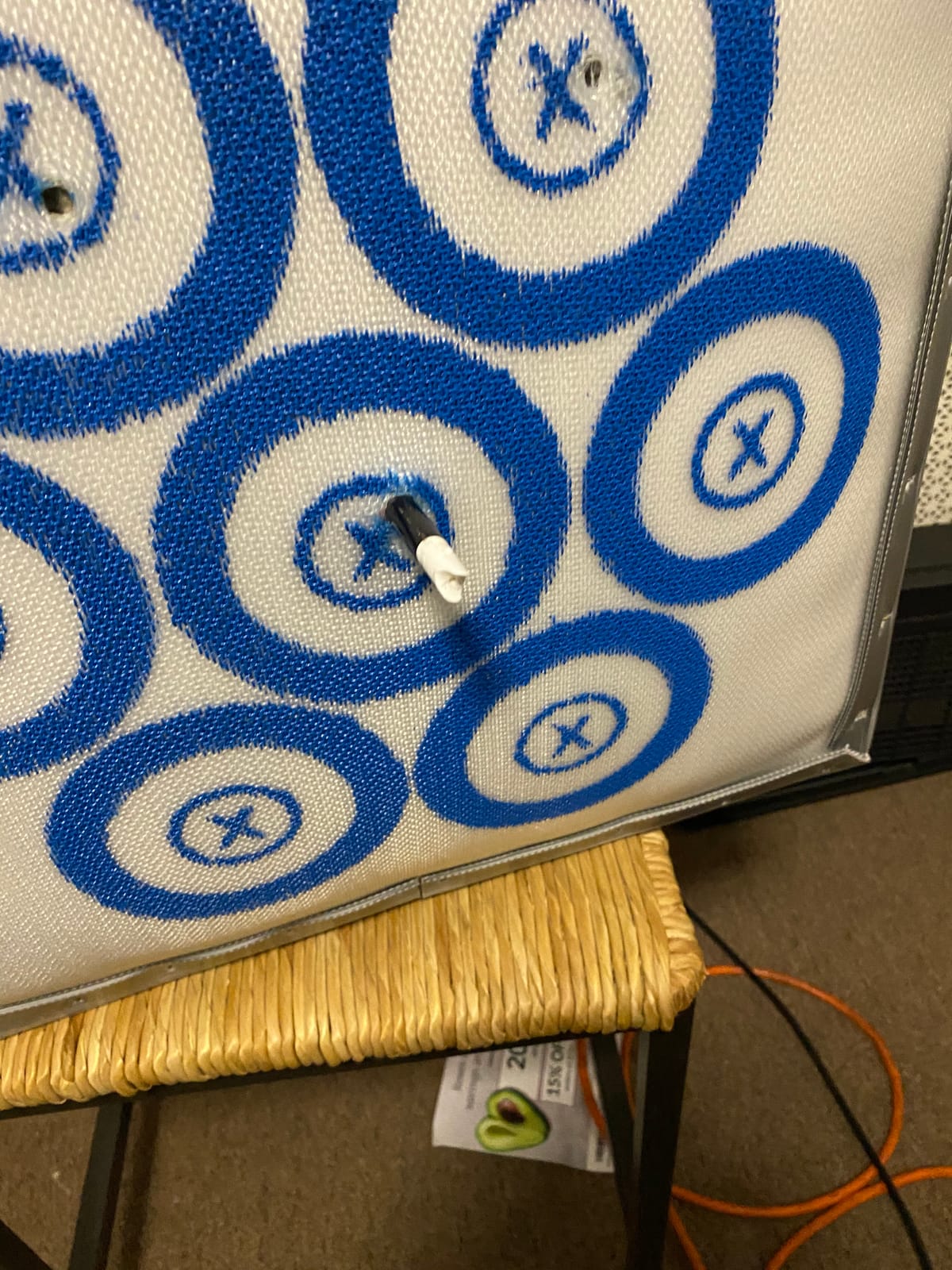
More than 200 strategically placed aiming points spread impact across the face, extending target life and reducing the hole buildup that ruins good blocks. The woven mesh also removes arrows with minimal face damage.
It is built in St. Joseph, Michigan, with a weather resistant shell and heavy-duty steel handle. That handle matters on a 34 pound block, because this is not a target you carry one-handed.
What to check before you buy
Verify that you shoot field points. This target is field points only, so a hunter wanting to tune with broadheads needs a different product and would waste a bolt here.
Where it falls short
It carries the highest price tag and the heaviest listed weight at 34 pounds. Both are justified by the speed rating, and neither is comfortable if you move targets alone.
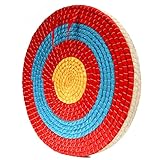
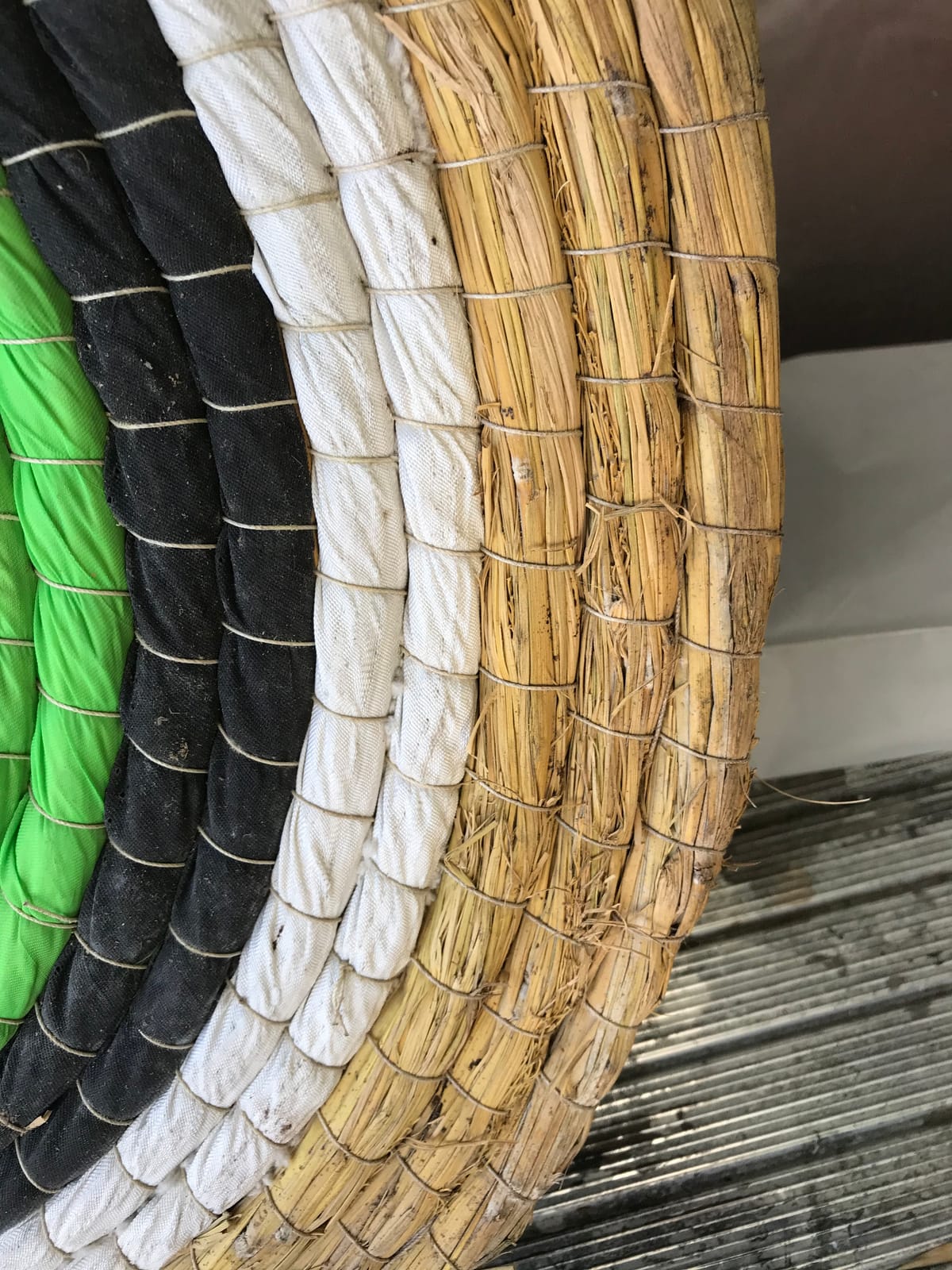
11. Dostyle Straw Round Target – Best for Casual and Family Practice
DOSTYLE Archery Targets Traditional Solid Straw Round Archery Target Shooting Bow Coloured Rope Target Face Three Layers for Shooting Practice
Handmade straw target
19.7 inch diameter
One three five and seven layers
2.3 kg
Pros
- Safe on arrows and reusable
- Decorative rope face doubles as wall art
- Ten color and layer variants
- Light and inexpensive for youth practice
Cons
- Handmade items vary slightly in size
- Three layers suit bows under about 35 lbs only
- Straw faces lose density with heavy sustained shooting
This is the target to buy when several people at different skill levels share a small piece of ground. A roughly 20 inch face is forgiving, arrows come out cleanly, and a child can pull their own shaft.
Layer guidance is worth following: one layer under 15 lbs at 10 yards, three layers under 35 lbs at 20 to 30 yards, five layers for 35 to 45 lbs and seven layers above 45 lbs. Depths run 0.78 to 5.5 inch.
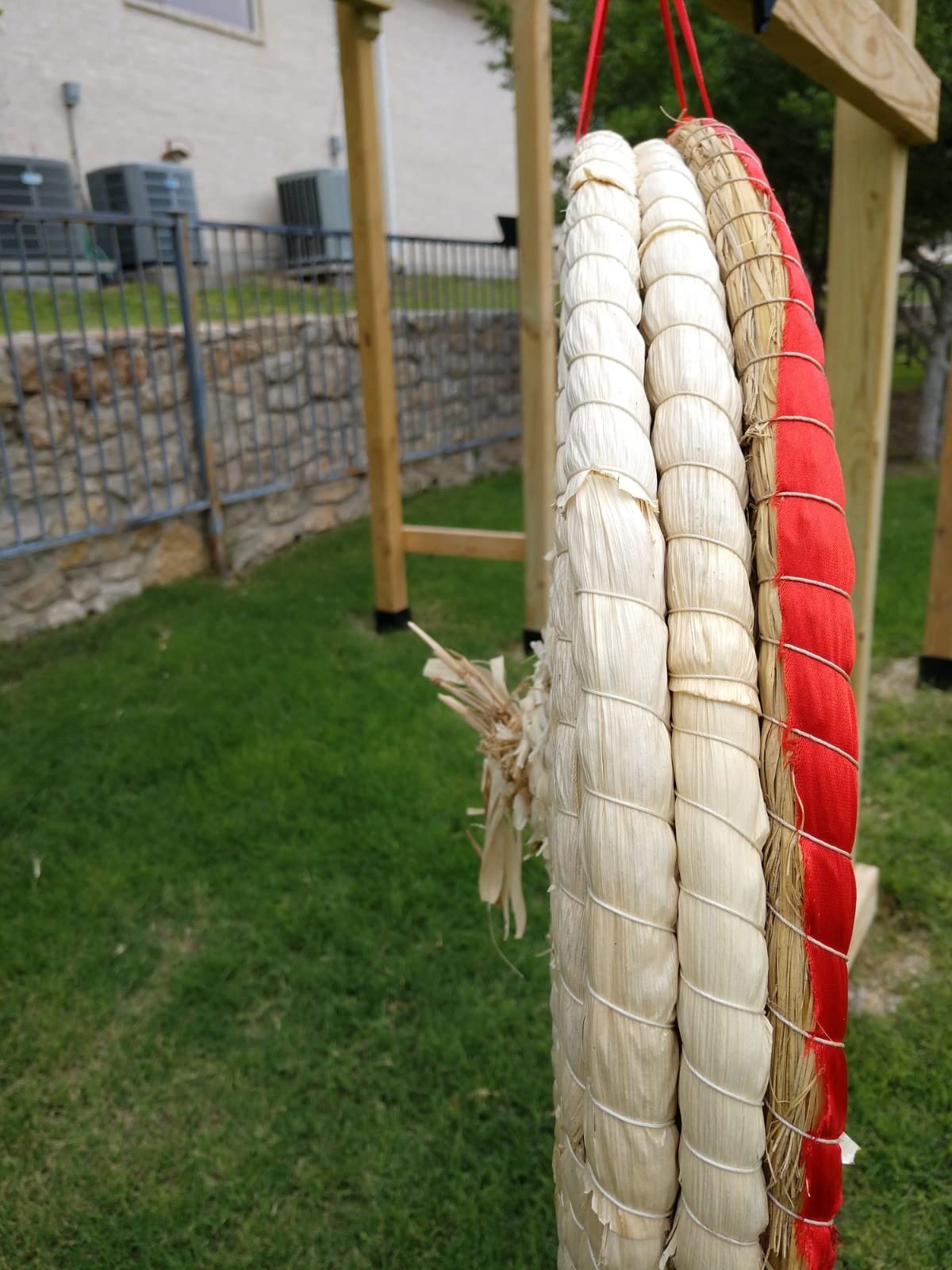
The colored rope face separates it visually from a plain straw butt, and reviewers mention the decorative appeal directly. It genuinely doubles as wall art, which makes it easier to place in a shared space than a black foam block.
At 4.6 stars across 1,495 reviews it is well proven as a family and youth option. The material is degradable forage, so the target is reusable and harmless to arrows, in ten color and layer variants.
What to check before you buy
Match the layer count to the heaviest bow in the house, not the lightest. If an adult with a 45 lb compound will shoot the same target as a child, you need the five or seven layer version.
Where it falls short
Handmade with no factory standardization, so expect slight variance from 19.7 inch. Straw faces also lose density and shape under heavy sustained shooting, so this is not a volume target.
How to Choose an Archery Target That Outlasts Your Arrows
Start with your point type, because it eliminates most of the list immediately. Broadheads need foam block or 3D targets, field points work on anything, and a bag is the only option that quietly catches a miss without launching a shaft into the neighbor’s fence. Shoot both, and a layered foam block with replaceable faces is the only sensible single purchase.
Foam block, bag or straw: which stopping method fits
Foam blocks stop arrows through the shear resistance of bonded layers and hold a precise hole, which makes them the only honest choice for tuning and grouping. Bags stop arrows through friction between compressed fill, so they are quieter and safer on a miss but will not give you a readable group. Straw is the traditional option, gentle on arrows and very quiet, but it compacts and loses density as it ages.
Match the FPS rating to your bow
A rating is a ceiling, not a suggestion. Above it, arrows pass through, which destroys shafts and is a safety problem in a backyard. The bags here run from 300 to 525 FPS for field points, the foam blocks from 350 to 500 FPS, and the SpyderWeb is the only pick tested beyond 700 FPS for crossbows, compounds and airbows.
Size the face by bow type and distance
Face size is about how much room you have to miss. A 16 inch youth target suits a 40 lb bow at short range, a 20 inch round face handles multi-shooter family practice, and anything at 30 yards or beyond with a hunting bow wants 18 to 22 inches of width. Moving between a recurve and a compound? Round faces give the most usable area for the space.
Backstop and backyard safety
A target is not a backstop. Anything behind the target must stop an arrow that misses, and horse stall mats are the most repeated recommendation in the forums we reviewed for a cheap, tough DIY backstop. Hanging netting works for indoor and covered ranges, and a dirt berm is strongest where space allows. Never use plywood, sheet metal or chain link, because they produce bounce-back more dangerous than the miss itself.
Check local ordinances before the first shot, because residential archery rules vary and some municipalities treat projectile discharge the way they treat firearms. Keep the line of fire clear of roads, paths and neighbor windows, and shoot at chest height. Our guide to setting target science-based layouts covers range geometry in more detail, and if you shoot steel alongside foam, our steel target roundup is the companion read.
Plan for replacement, not permanence
Every target here has a finite life, and the arrow count depends more on point type than on the badge. Field points are gentle, broadheads cut wider holes, and large-cut mechanicals shorten life fastest. Rotate aim points and rotate faces rather than replacing the whole product, and cover targets between sessions to slow the UV degradation that turns foam brittle and crumbly.
Frequently Asked Questions
What type of archery target lasts the longest?
A solid self-healing foam cube with many separate shooting faces generally lasts longest, because impact wear is spread across 18 aiming points instead of one hole. Layered foam blocks built on an open-layer friction design run a close second, with owners reporting 3,000 plus shots with acceptable wear. Straw targets compact and lose density faster, and bag targets fail at the outer casing once soaked or cut.
Are foam or bag archery targets better?
Foam blocks are better for tuning, sight-in work and honest grouping because they hold a precise hole. Bags are better for safety and volume, because a miss buries itself in fill instead of flying past. If you shoot broadheads you need foam, since bags are field point only. If you have children or neighbors nearby, a bag is the more forgiving choice.
Can I put an archery target in my backyard?
Usually yes, but check first. Residential archery rules vary by city, county and neighborhood covenant, and some municipalities treat projectile discharge the same way they treat firearms. You also need a backstop behind the target, a clear line of fire that does not cross a road, path or neighbor’s property, and a backstop that is not plywood, sheet metal or chain link.
What is the best backstop for an archery target?
For most home setups, horse stall mats are the most recommended option, because vulcanized rubber takes field point and broadhead impacts well and lasts a long time. Hanging netting works for indoor and covered ranges, and a dirt berm is the strongest option where space allows. Avoid plywood, sheet metal and chain link, which send arrows back toward the shooter.
What is the best archery target for a kid?
A youth-rated foam block built for 40 lb draw weight or less is the right answer, because the light weight lets a child carry it and the open-layer friction design lets them pull their own arrows without adult help. Match the target to the bow rather than the age. A three layer straw target is a good low-cost alternative for a light recurve at short range.
The Best Archery Targets to Buy in 2026
The Black Hole 4-Sided Target takes our Editor’s Choice for 2026 because it handles both point types, spreads wear across four faces and pulls arrows out cleanly, with 4.5 stars across 5,500 reviews behind it. For crossbow bolts at 500 FPS and beyond, the SpyderWeb 18XL is the only pick tested past 700 FPS, and for a shared family range the three layer straw targets do the job without a foam mess.
Pick the point type first, then the FPS rating, and you will land on the right target in a couple of minutes. If you shoot both broadheads and crossbows, spend the money on a foam cube or a crossbow-rated block and rotate your faces rather than replacing the whole product each season.