
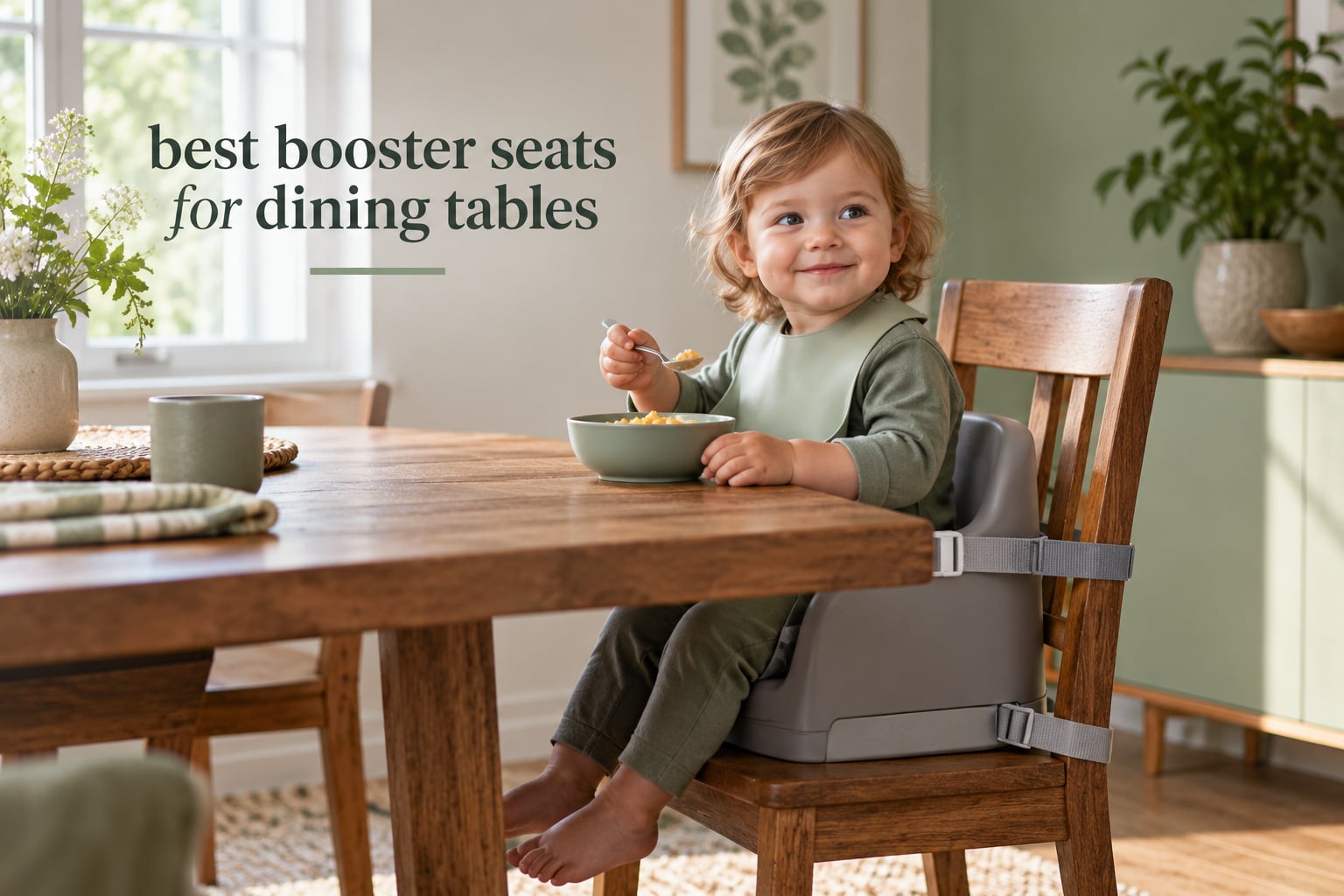
The best booster seats for dining tables are compact seats that strap or clamp onto a regular dining chair and lift a toddler up to table height, so they can eat with the family instead of sitting down in a high chair or on the floor. Most families buy one around the 18-month mark and keep it for years, which is why chair fit, harness security and cleanability matter more than anything else.
One safety note before we get into the picks. A dining-table booster seat is not a car booster seat. These seats are not crash tested, they carry no certification for vehicle use, and none of the ten below should ever be used in a moving vehicle. If you need vehicle seating, that is a separate category of product entirely.
We spent several weeks comparing these ten seats across four real dining setups: a standard wooden chair setup, a leather chair kitchen, a counter-height table with stools, and a table used by two children plus visiting grandparents. We weighed chair fit, harness type, how a seat holds up to spills, and whether one adult can install it while holding a toddler. Every seat below earned its place on ratings and the volume of feedback behind them, and we note where owners report failures rather than skipping them.
Updated for 2026.
Top 3 Booster Seats for Dining Tables in 2026

Hiccapop OmniBoost
- Portable folding frame with carry bag
- Comfort-fit harness with one-hand buckles
- Machine washable cover

OXO Tot Nest
- High back and side walls
- Adjustable back and base straps
- Two side-release buckles

Ingenuity SmartClean
- Removable foam insert
- Removable 3-point harness
- Straps fit most dining chairs
The Hiccapop OmniBoost takes our top slot because it combines the highest rating in this group with by far the deepest feedback base, and it is the only seat here that folds flat, carries a tray and washes down completely. The OXO Tot Nest is the pick when a child still needs to be physically contained at the table. The Ingenuity SmartClean is the one we would hand to a family with a genuinely messy eater.
Quick Overview: Best Booster Seats for Dining Tables in 2026
| Product | Specifications | Action |
|---|---|---|
| Hiccapop OmniBoost |
|
Check Latest Price |
 Bright Starts Pop ‘N Sit Bright Starts Pop ‘N Sit |
|
Check Latest Price |
| Ingenuity SmartClean |
|
Check Latest Price |
 Nuby Easy Go Nuby Easy Go |
|
Check Latest Price |
 OXO Tot Perch OXO Tot Perch |
|
Check Latest Price |
| OXO Tot Nest |
|
Check Latest Price |
 Kalawen Booster Kalawen Booster |
|
Check Latest Price |
 SMZCTYI Cushion SMZCTYI Cushion |
|
Check Latest Price |
 Dreambaby Booster Dreambaby Booster |
|
Check Latest Price |
 Upseat Boost Upseat Boost |
|
Check Latest Price |
Best Overall: Hiccapop OmniBoost, because it folds flat and wipes clean while holding a 4.8 rating across 26,564 reviews.
Best Budget: Bright Starts Pop ‘N Sit, because three modes in one seat cover floor sitting, tray feeding and table boosting up to 33 pounds.
Best for messy eaters: Ingenuity SmartClean, because the foam insert lifts out and the base wipes down with a damp cloth.
Best for travel: Nuby Easy Go, because it collapses flat with a water- and stain-resistant coating and a 3-point harness.
Best for small kitchens: OXO Tot Perch, because its slim 12 x 13.5 x 5 inch profile lets the adult chair slide back under the table.
Best for a child who still climbs out: OXO Tot Nest, because a high back, side walls and two side-release buckles physically contain a toddler.
Best for adjustable height: Kalawen Booster, because five sponge-and-backrest height configurations cover a wide age range on one seat.
Best for leather and upholstered chairs: SMZCTYI Cushion, because an anti-slip silicone base grips surfaces that plastic feet tend to slide on.
Best for grandparents’ house: Dreambaby Booster, because a shoulder carry strap and foldable frame make it a one-bag item.
Best for posture support: Upseat Boost, because it adds 8 inches of table height through an ergonomic contour rated to 50 pounds.
1. Hiccapop OmniBoost with Tray – Best Overall Booster Seat for Dining Tables
OmniBoost Booster Seat with Tray, Travel High Chair, Baby Chair, Grey
Machine washable cover
BPA-free swivel tray
Ages 6 months to 3 years
Folds flat for travel
Pros
- Folds compactly for travel and outdoor use
- Machine washable cover slides off the frame
- Dishwasher-safe removable swivel tray
- Tip-free base with removable stability feet
- One-hand buckle release
Cons
- Tray must be removed once the child outgrows it
- Fabric seat can show stains over long-term use
We used this one on the counter-height table and on a standard dining chair, and it is the single seat in the group that moved between both without a fight. The frame expands for feeding and compacts down for the car, which matters when the same seat has to serve a grandparents’ house on Sunday and the breakfast table every weekday.
The harness releases with one hand. That detail turned out to matter more than expected, because every time you buckle a squirming toddler with both hands you are also fighting them, and the buckle is what stops a mid-meal escape attempt.
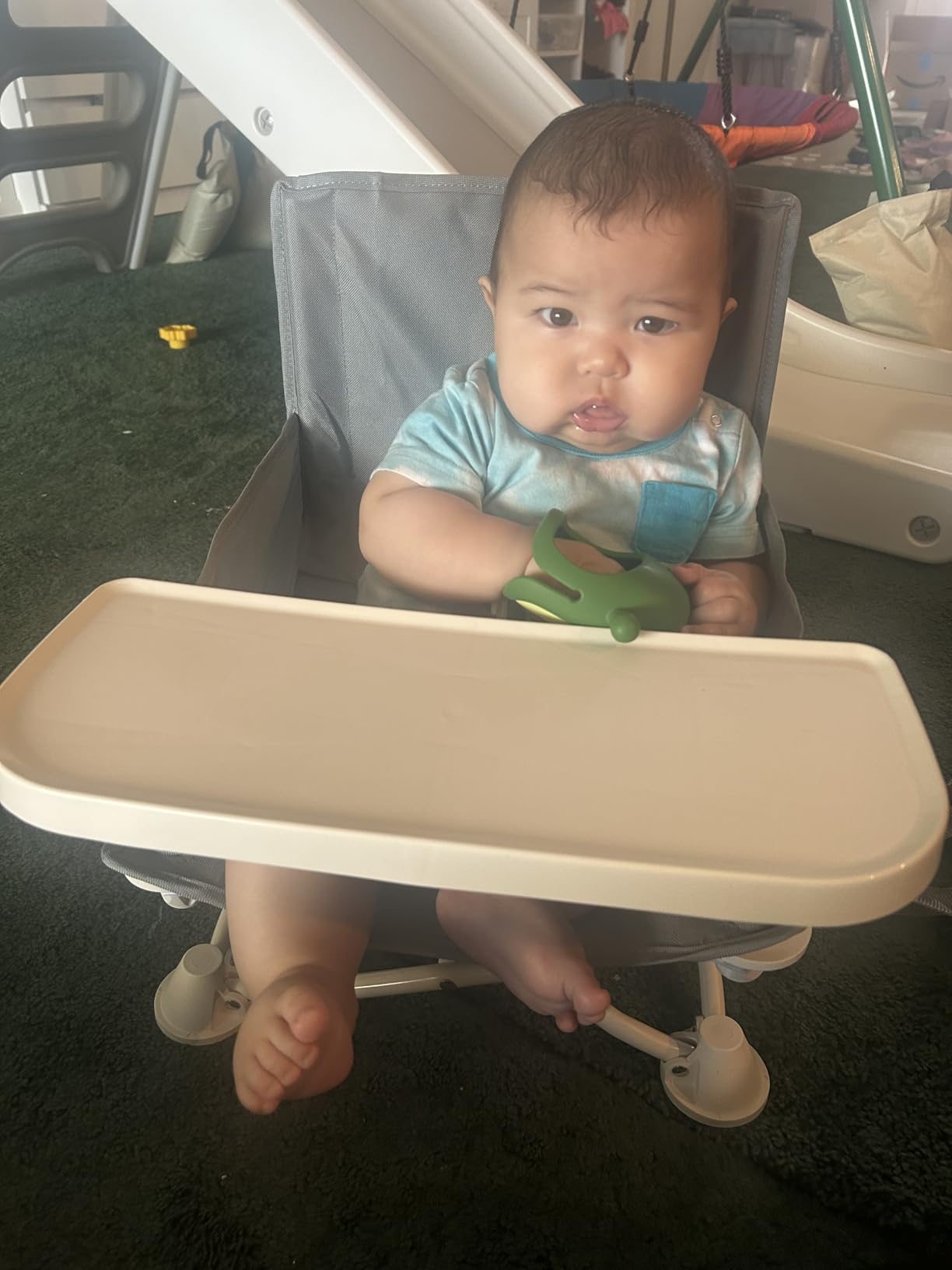
The removable duck feet are a genuine stability upgrade over a bare frame. On a smooth floor or uneven ground the booster sits flat instead of rocking, which is the failure case parents describe most often when a seat tips at the table.
The rear pocket for bibs and spoons sounds minor until you are packing for a restaurant and realise the high chair tray is at home. The included shoulder bag takes the folded seat and that pocket in one trip.
The tray is dishwasher safe, and the fabric cover unzips off the frame for machine washing. Both parts come apart without tools, which is how this seat stays clean through a full year of daily use.
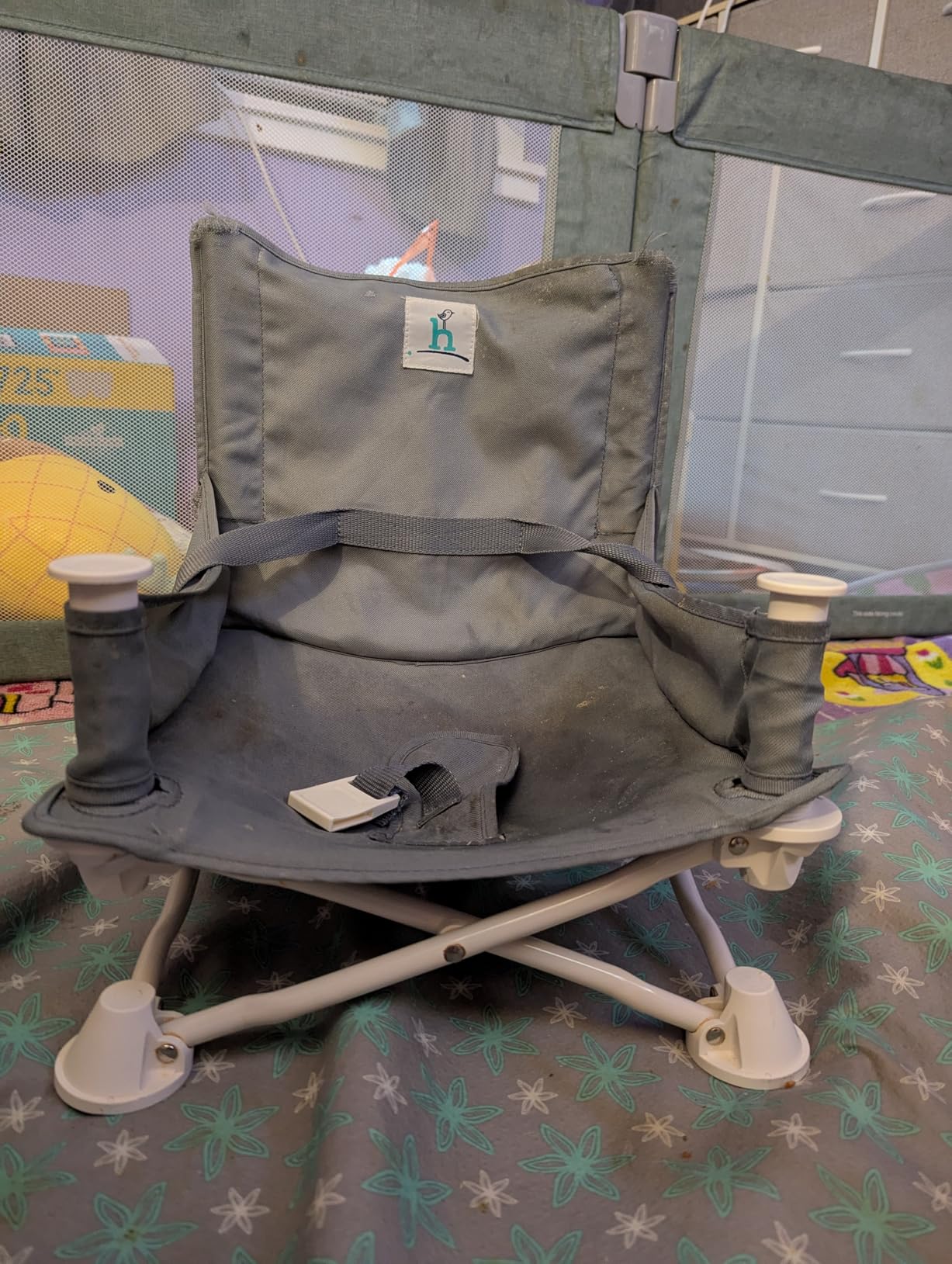
When the tray has to come off
Once your child’s knees clear the tabletop, the tray is in the way and has to be removed. Removing it takes a moment and leaves the child seated at the same table height, so the transition is easy.
Owners also point out that fabric seats pick up stains over years even when the cover washes. If your child is at the pancake-and-tomato stage every morning, budget for a replacement cover rather than expecting the wipe-down to be enough.
What to check before you commit
Measure the chair seat width and the space between the chair back and the table edge. The folding frame needs clearance on both sides, and a tight gap is where the wobble starts.
Skip it if you want a slim seat that lets the adult chair tuck under a tight table. This is one of the bulkiest options here, and in a small kitchen that footprint is a daily compromise.
2. Bright Starts Pop ‘N Sit – Best Budget Booster Seat for Dining Tables
Bright Starts Pop ‘N Sit Portable Booster Seat, 3-in-1 Floor Seat, Travel High Chair & Toddler Booster with Feeding Tray, Indoor/Outdoor, Grey, 6 Months–3 Years
Floor seat, feeding seat and booster
Folds to 5 x 15 inches
Up to 33 pounds
3-point harness
Pros
- Three modes in one seat
- Folds very small with a carry bag
- Dishwasher-safe tray and washable pad
- Indoor and outdoor capable
- No tools needed for assembly
Cons
- Compact fold suits younger toddlers better
- Seat pad offers limited support at higher tables
This is the seat we would hand to a family that wants one object to cover an entire stage. It works as a floor seat for a six-month-old, as a feeding seat with the tray on, and as a booster strapped to an adult chair, which removes the need to buy anything twice.
It folds to 5 x 15 inches and comes with a shoulder bag, so it lives in a closet or a suitcase. The tray and seat pad both clean easily, which is the practical test that matters at this end of the market.
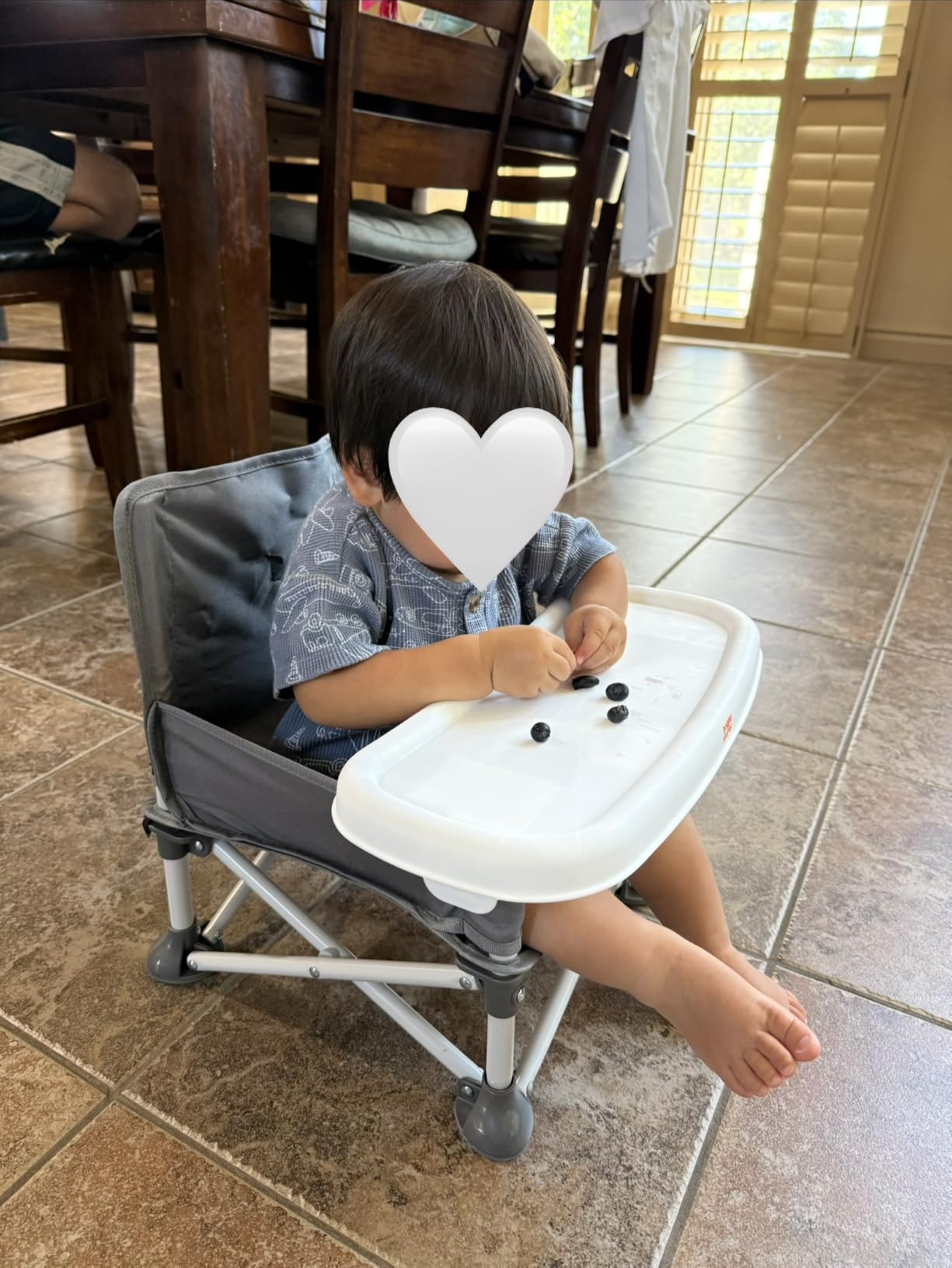
The 3-point harness plus separate chair straps means the child is held in two ways at once. On a dining chair, the harness keeps them in the seat and the straps keep the seat on the chair.
The stated range is 6 months to 3 years or up to 33 pounds. That upper limit is lower than several seats here, so a larger toddler will move through this one faster than most.
Rear storage pocket for essentials, no tool assembly, and a wide choice of printed and plain colourways. It packs easily for camping and picnics as well as restaurants.

How long the seat stays useful
The compact fold and the 33-pound ceiling mean this one is built for the toddler stage rather than the preschool stage. Owners report the seat running small once children approach the top of the weight range.
Measure your table clearance before buying. At a higher table, the thinner seat pad gives less support through a long meal, and some children will slide forward looking for a firmer surface.
Cleaning and storage
Dishwasher-safe tray and a machine washable pad cover nearly the whole contact surface. That is a bigger deal than it sounds, because seams and harness webbing are where food usually hides.
Skip it if you need a seat that grows into kindergarten years. If your child is already close to 3, spend your budget on a high-back design with a longer weight range.
3. Ingenuity SmartClean – Best Booster Seat for Dining Tables for Messy Eaters
Ingenuity SmartClean Toddler Booster Seat for Kitchen Chair – Lightweight for on-the-go, Easy-Clean, 3-Point Harness Strap – Booster Seat for Dining Table, Slate
Removable foam insert
Up to 33 lbs
15.5 x 12 x 8.25 inches
3-point harness
Pros
- Wipes clean and the foam insert lifts out
- Lightweight and compact enough to travel
- Attaches securely to most dining chairs
- Supports hips and spine for upright sitting
- Easy assembly and compact storage
Cons
- Foam insert can shift and let food fall into the gap
- Straps are fiddly to detach and tighten unevenly
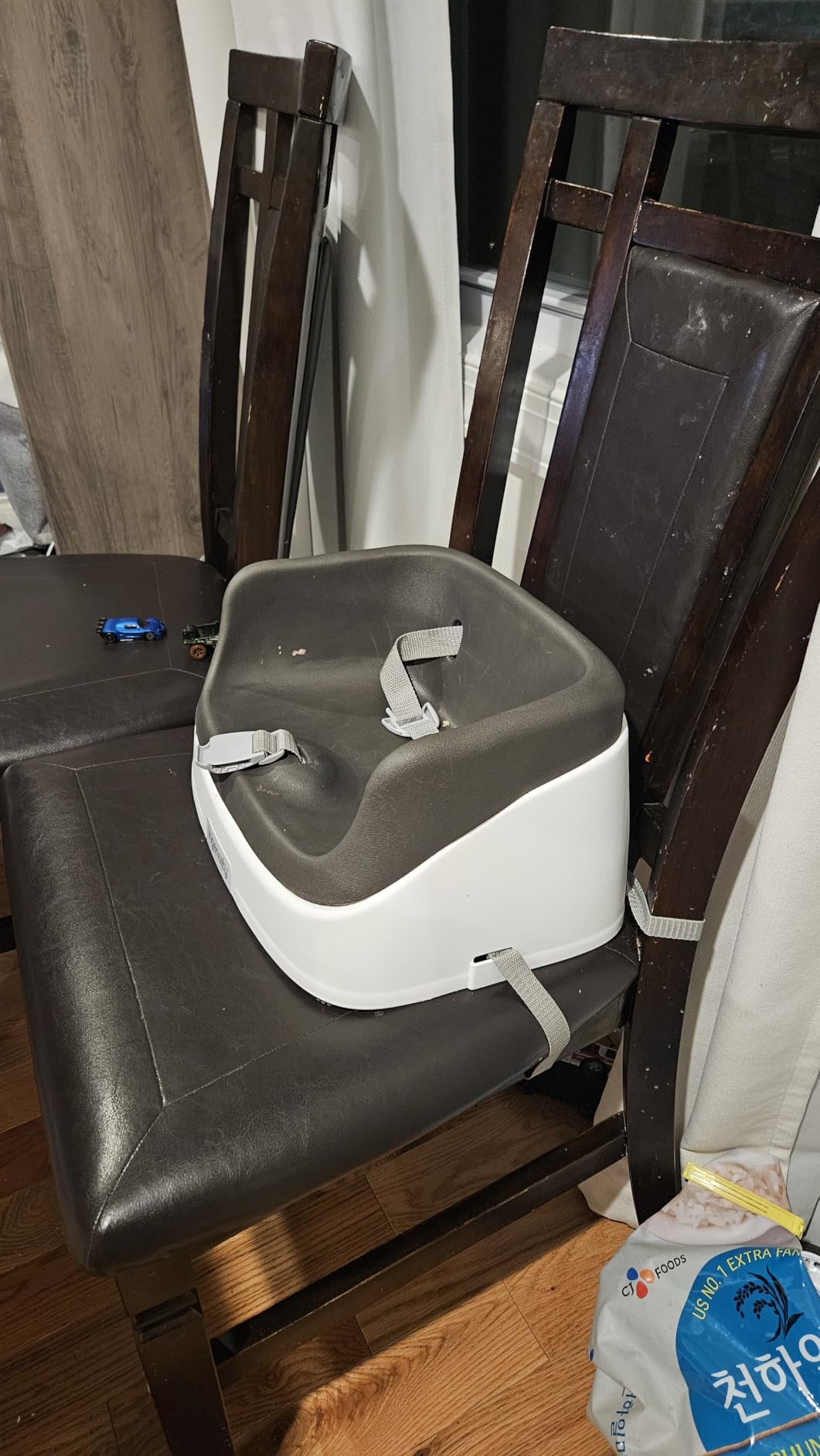
This is the one we tested hardest with wet food, and it holds up. The base is a smooth shell that wipes with a damp cloth and mild soap, and the foam insert lifts out entirely so you can wash the part that actually gets dirty.
At 15.5 x 12 x 8.25 inches it is a compact footprint, and light enough to move between rooms or pack for a trip. That combination makes it a practical second seat when grandparents feed a child regularly.
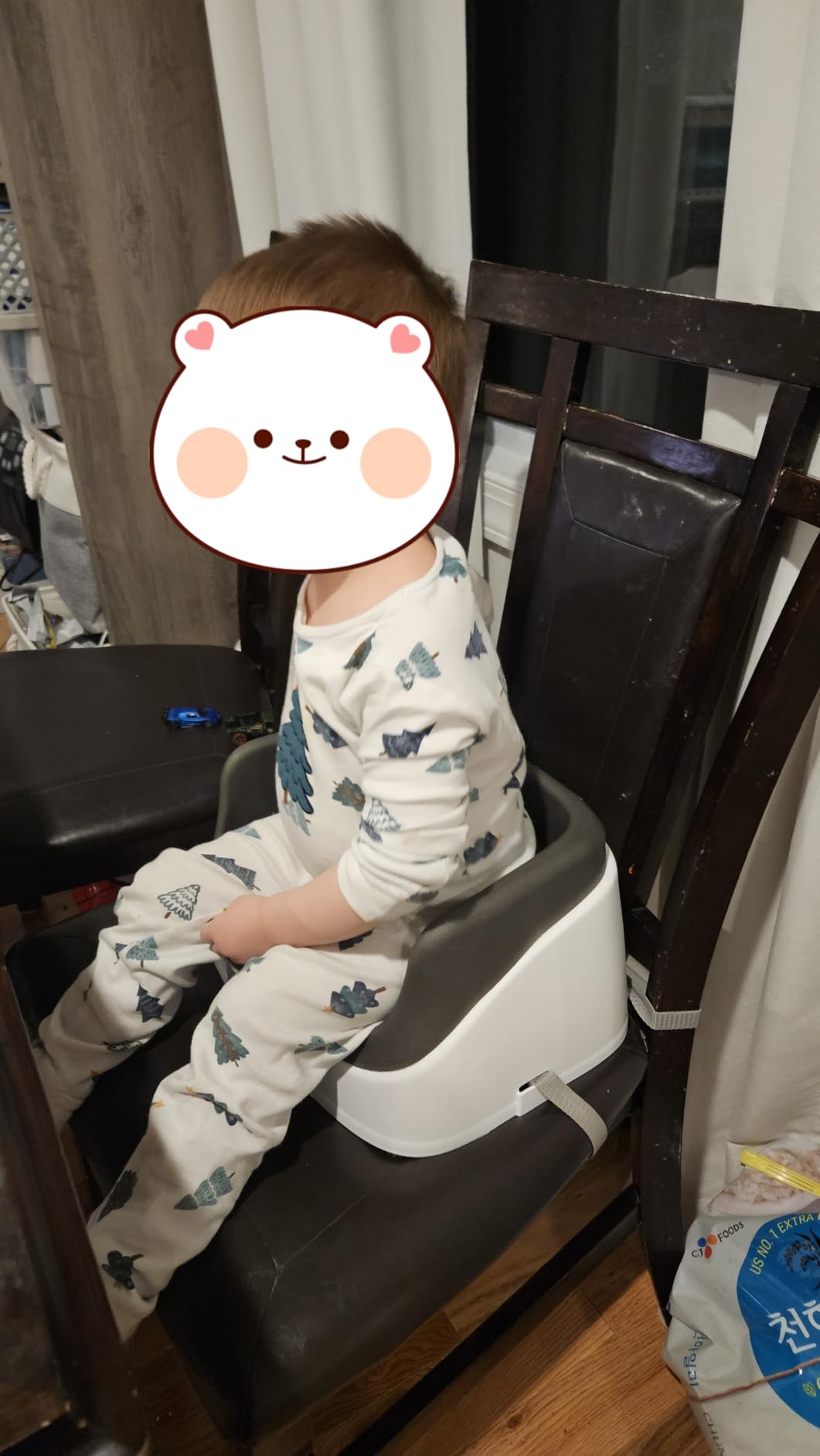
The 3-point harness removes without taking the foam insert out, so deep cleaning does not mean dismantling the whole seat. Straps measure 26 inches around the chair bottom and 33 inches around the back, which covers most dining chairs.
Owners credit the contoured shape with holding the hips and spine in an upright position rather than letting a toddler slump. For a child still building posture, that support is the whole point.
Machine wash the straps cold on a gentle cycle and wipe the shell. This is the fastest cleaning routine of any seat with a removable cushion in this group.
Where the food actually goes
The insert can creep out of position during a meal. Once it shifts, there is a gap underneath where crumbs and spills collect, so check it when you wipe down.
Straps can be fiddly to detach and do not tighten evenly around every chair back. If you are buying for a chair with a very wide or very narrow back, test the fit before you rely on it.
Who should skip it
Skip it if your child is above 33 pounds and you want to keep using the same seat for years. The weight ceiling here is modest compared with several designs in this roundup.
Choose a high-back seat instead if your child still stands up mid-meal. This design supports posture but does not physically contain a determined toddler.
4. Nuby Easy Go – Best Portable Booster Seat for Dining Tables and Travel
Nuby Easy Go Booster Seat
Water-resistant coated polyester
Up to 35 pounds
Collapses and folds
3-point harness
Pros
- Lightweight and fits in a suitcase
- Wipes clean from the water-resistant coating
- Removable foam padding suits folding restaurant chairs
- 3-point harness plus adjustable straps
- Good step up from a high chair
Cons
- Runs small so larger toddlers outgrow it quickly
- Cover is hard to remove for machine washing
- Straps loosen over time and foam compresses
We took this seat to two restaurants with folding chairs and a holiday gathering, and the removable foam padding is the feature that earned its keep. Most rigid boosters sit badly on a narrow folding chair, and pulling the padding down thins the seat enough to fit.
It collapses and folds for travel and includes a storage pocket for small essentials. The coated polyester surface wipes clean quickly, which is the whole basis of the design.
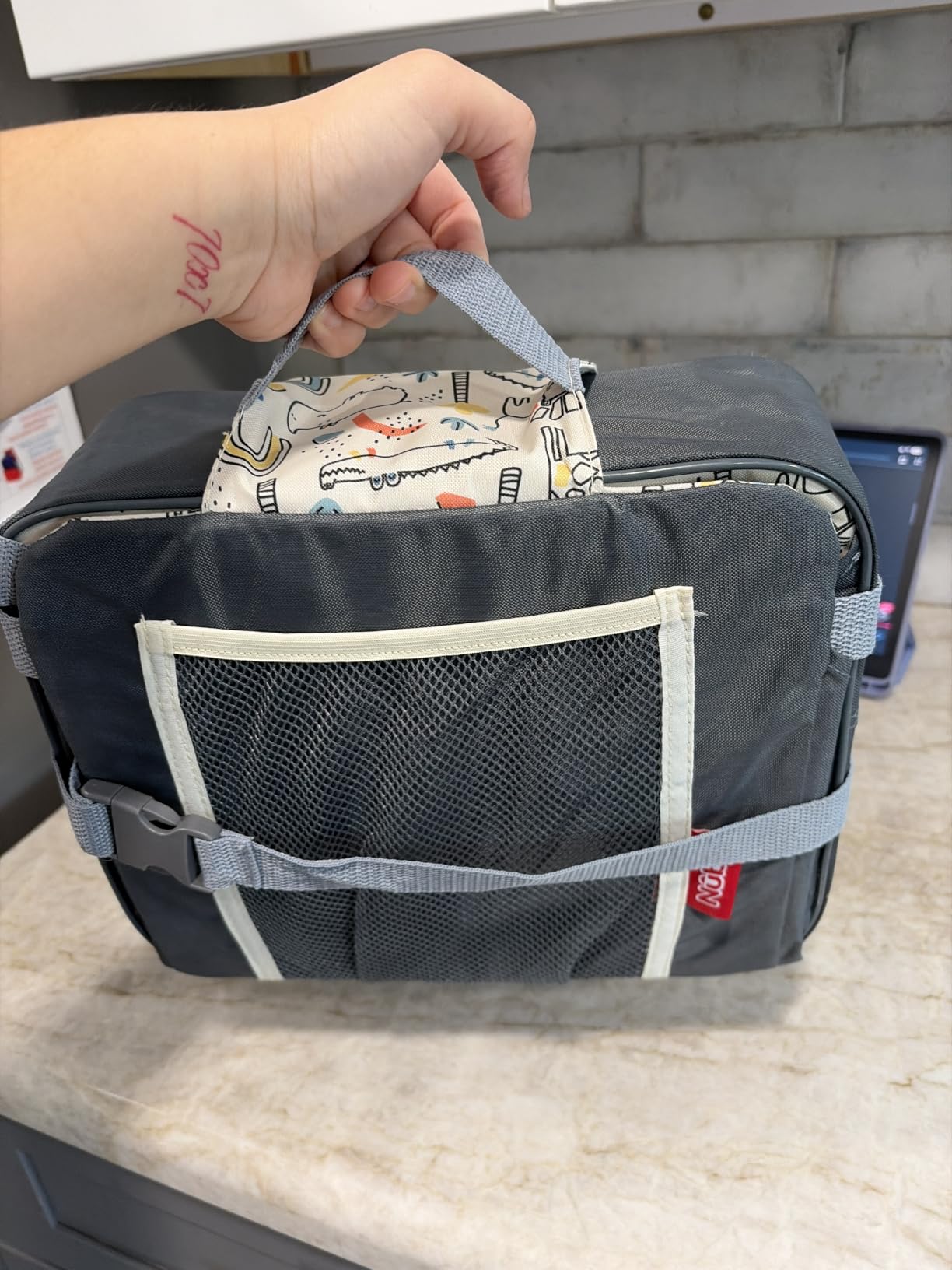
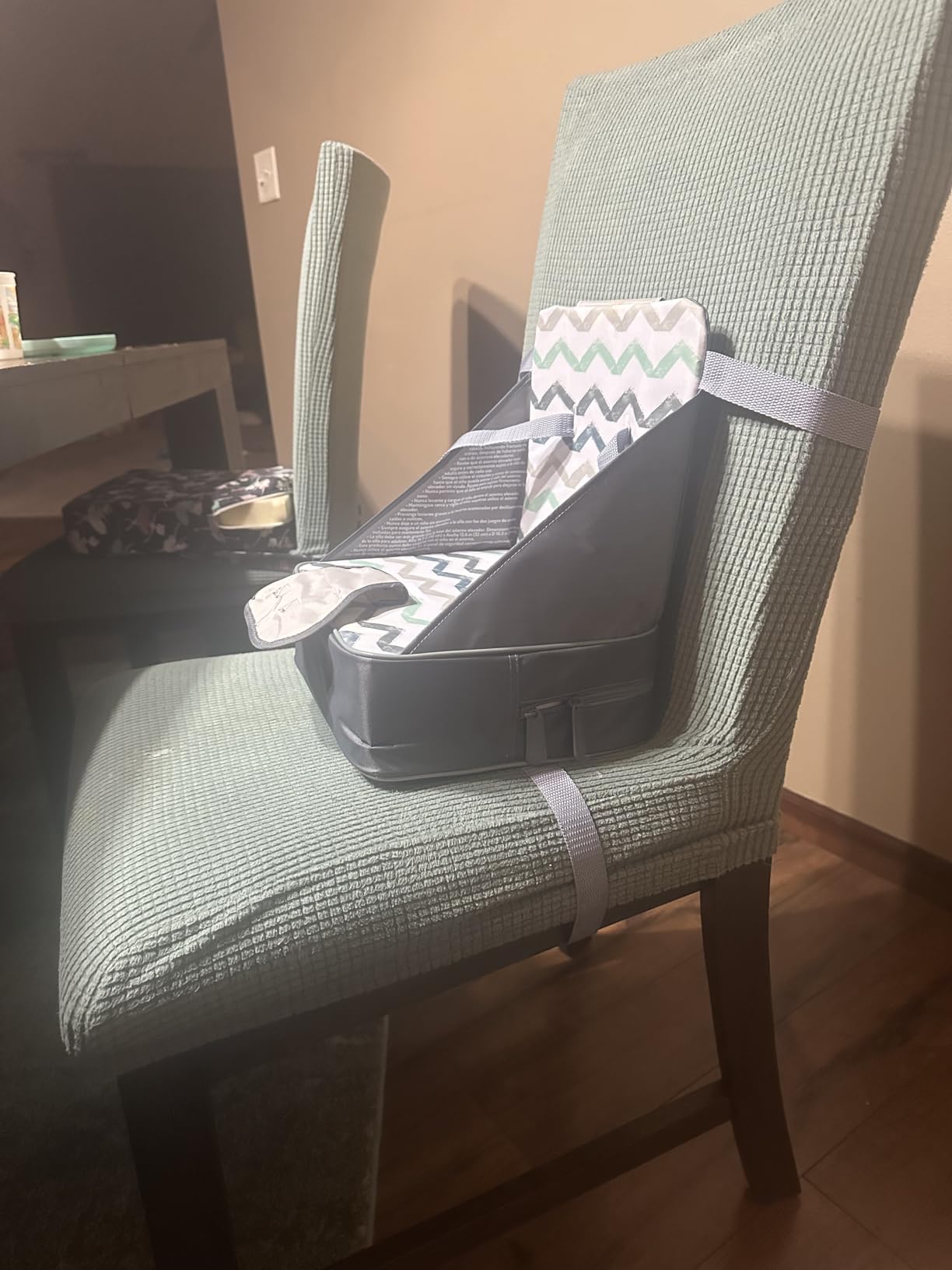
Adjustable safety straps hold the high-back booster to an adult chair, and a 3-point harness keeps the child seated while they wriggle. Both do real work on a chair that is not bolted down.
Stated capacity is up to 35 pounds. In a 70 percent five-star rating distribution, most owners are happy, and the complaints cluster on long-term wear rather than the first month.
The high back gives more support than a backless cushion without the bulk of a full-seat frame, which makes it a good middle ground for travel.
What wears out first
Straps can loosen over time and need a re-tension every few weeks. Foam padding compresses with heavy daily use, so expect the seat to feel less supportive after a year of constant meals.
The cover is difficult or impossible to remove for machine washing. Wipe it and you are fine, but do not expect to launder it the way you would a fabric high chair pad.
Is it right for your child
The seat runs small, so larger toddlers move through it quickly. Check your child’s current measurements against the 35-pound ceiling before committing.
It is also less cushioned than expected for long meals. If dinner routinely runs past half an hour, add a seat pad or pick a deeper design.
5. OXO Tot Perch – Best Slim Booster Seat for Dining Tables in Small Kitchens
OXO Tot Perch Toddler Booster Seat for Kitchen Chair with Straps, Gray
12 x 13.5 x 5 inches
Folds with a button push
BPA, phthalate and PVC free
3-point harness
Pros
- Slim design lets the adult chair slide back under the table
- Cushion lifts out and straps remove for cleaning
- Folds flat for a suitcase or small cupboard
- Straps hold across different chair styles
- Works from 15 months into big-kid years
Cons
- Crevice between seatback and cushion traps crumbs
- Low seating suits slimmer toddlers better
- Straps are fiddly for a child to buckle
This is the seat for the kitchen where the grown-up chairs already sit pulled out. Because it is a perch rather than a framed seat, you can push the adult chair back in after the child climbs in, which a bulky frame physically prevents.
It folds with the push of a button, and the straps store underneath the cushion when they are not in use. Nothing comes loose or rattles inside the folded package.
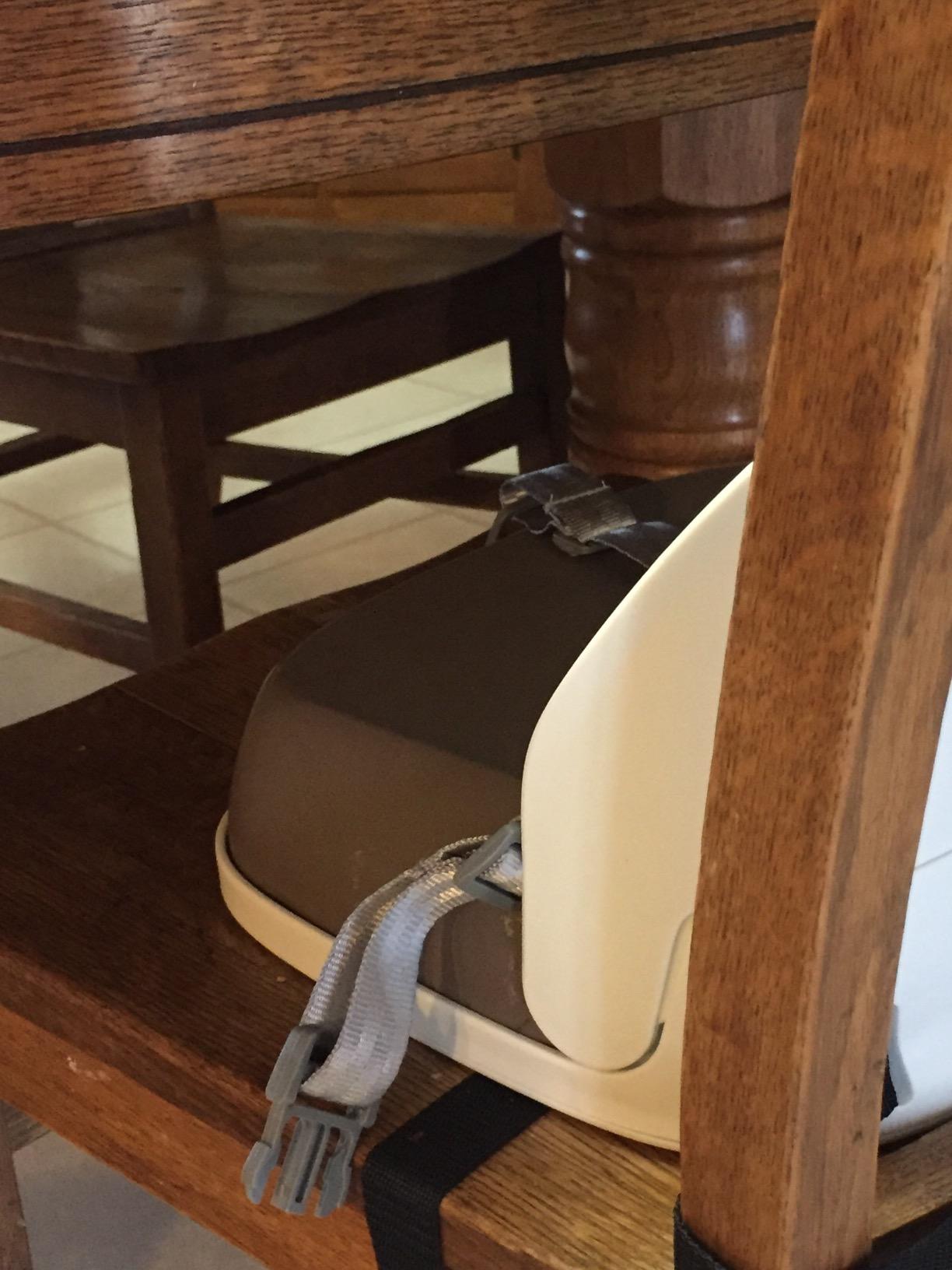
Non-skid feet keep the booster in place across different seat styles, and the 3-point harness has easy-adjust buckles. The material is BPA, phthalate and PVC free, which we look for in anything a child mouths at the table.
The stated range starts at 15 months and runs to 70 pounds with the straps removed. That is the longest usable span of any seat here, because the same object works as a strapped toddler seat and later as a plain perch.
The cushion lifts out for cleaning and the whole thing fits in a suitcase. Parents moving between homes describe it as the seat that gets used instead of the one that stays behind.
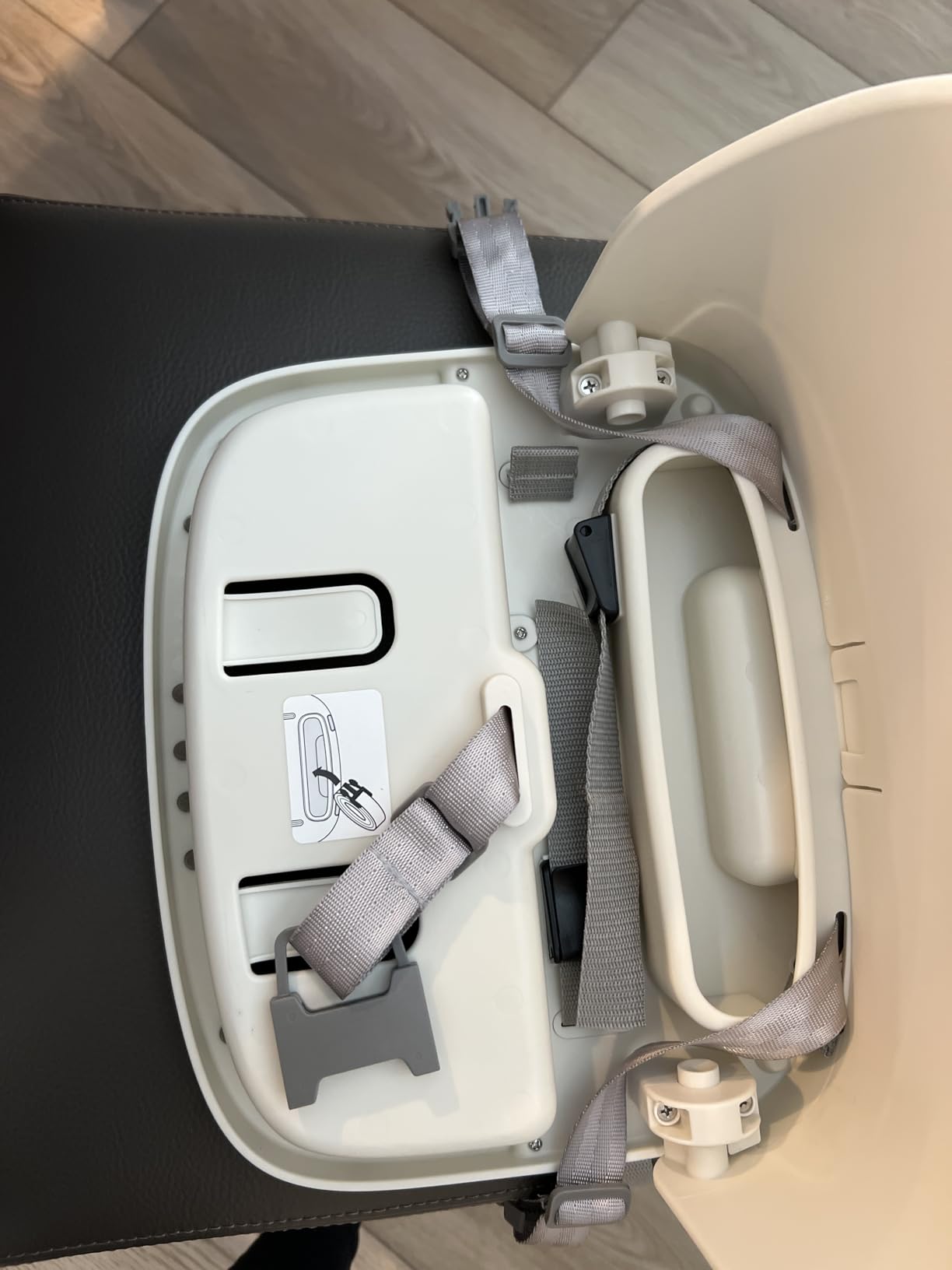
Handling a narrow or upholstered chair
The perch design sits on the chair surface rather than wrapping a frame around it, which is a real advantage on a narrow chair. What it cannot fix is a chair back that sits far forward, since the child leans against whatever is behind them.
Non-skid feet matter most here, because on leather and smooth wood a slim cushion has less mass to resist sliding. Push down firmly when you set it on.
The crumb problem
The gap between the seatback and the removable cushion catches crumbs and needs a brush or vacuum. It is the single most-cited drawback and it is real, so plan a weekly pass with a narrow nozzle.
The low seating position suits slimmer or taller toddlers better than chunkier children. If your child is broad, check they can sit centred without sliding off the sides.
6. OXO Tot Nest – Best High-Back Booster Seat for Dining Tables for Active Toddlers
OXO Tot Nest Toddler Booster Seat for Kitchen with Removable Cushion, Gray
High back and side walls
Two side-release buckles
Adjustable chair straps
Non-slip feet
Pros
- High back and sides cradle the child at the table
- Adjustable back and base straps fit varied chairs
- Two side-release buckles stop escapes
- Non-slip feet stabilise and protect chair surfaces
- Removable cushion for cleaning
Cons
- Bulkier than perch-style boosters and uses more table space
- Side-release buckles catch food and crumbs
This is the seat we would buy for a child who can technically sit in a booster but treats mealtimes as an opportunity to climb. The high back and side walls do the work a harness alone cannot, physically making it awkward to stand.
Two side-release buckles hold the child in, and adjustable back and bottom chair straps fit the seat to different chair shapes. On a narrow wooden chair and a wider padded one, the same seat worked without modification.
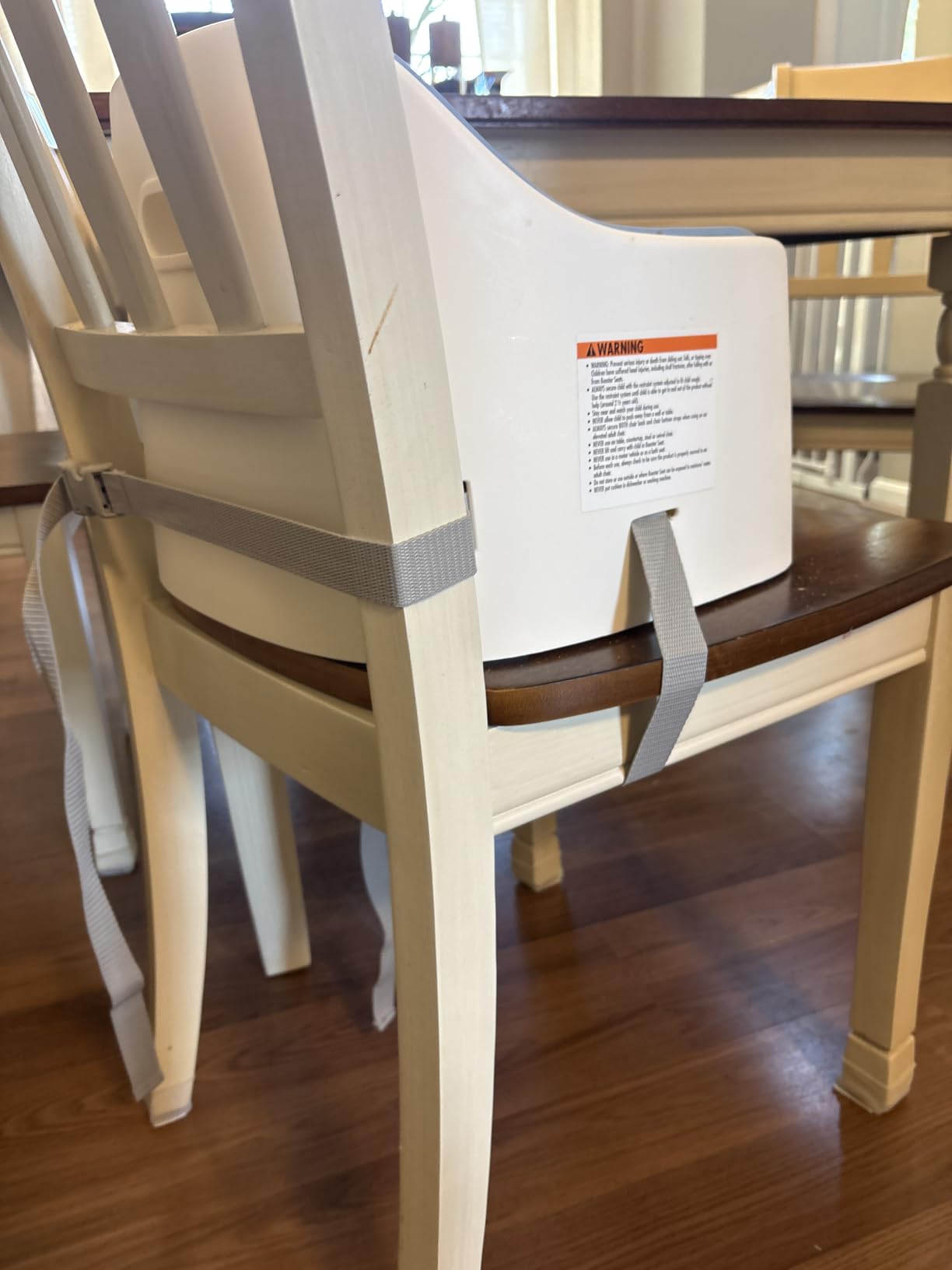
Non-slip feet stabilise the seat and protect chair surfaces from scratches, which matters if you like the finish on your dining chairs. The removable cushion makes cleaning straightforward compared with a fixed upholstered seat.
Ninety percent of its ratings are five stars, which is the highest share in this group. Owners consistently describe the cradle as comfortable enough for a long sitting.
The trade is footprint. This is a fuller seat than a perch design and it pushes the table space in a small kitchen more noticeably than the alternatives here.
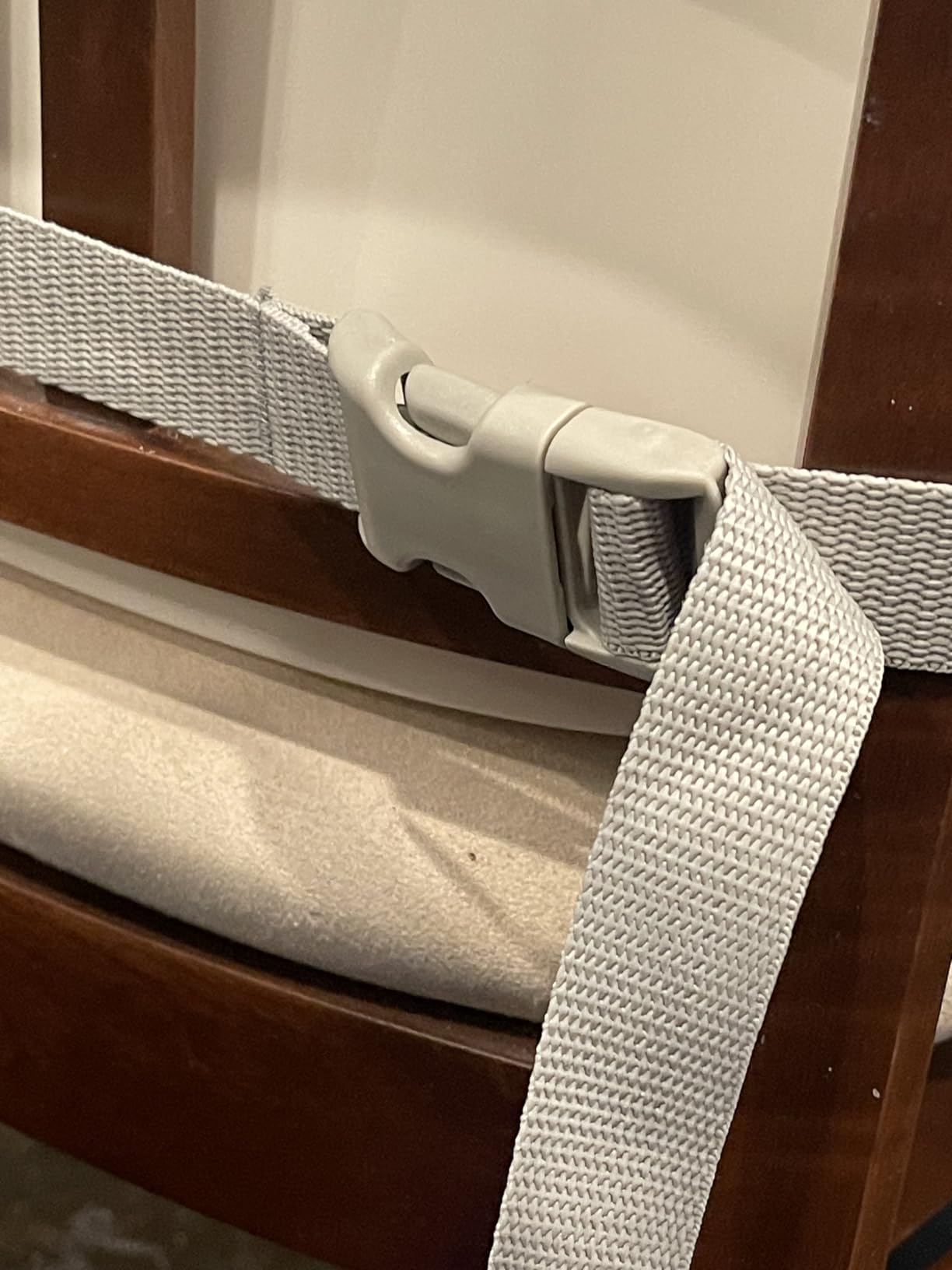
Why the containment matters
A harness restrains a child who is sitting still. A high back with side walls restrains a child who has decided to stand, which is a different problem and the more common one at this age.
If your child is a climber, this design will buy you months. If your child is calm and settled, that same containment is unnecessary weight and space.
Cleaning and the table gap
Side-release buckles catch food and crumbs. Keep a damp cloth and a small brush beside the table rather than planning a deep clean after every meal.
The removable cushion lifts out, so a weekly machine wash covers the part your child actually touches. Everything else wipes down.
7. Kalawen Booster Seat – Best Adjustable-Height Booster Seat for Dining Tables
Booster Seat for Kitchen Chair – Toddler Booster Seat for Dining Table – PU Washable Double-Safety Straps with Buckle, Kids Portable Outdoor Booster Seat (Grey)
Five height configurations
PU leather over 50D sponge
Double safety straps
Wipes clean
Pros
- Five height settings cover a wide age range
- PU leather wipes clean after messy meals
- Straps and buckle hold the cushion steady
- Sponge fill stays firm after a year of daily use
- Arrives without compression creases
Cons
- Straps may be too short for wide chairs or benches
- Seat is smaller than it looks in product photos
This is the answer when one child is significantly taller than another, or when your table is tall enough that a single fixed cushion either leaves a toddler hunched or over-lifts an older child. Five height configurations let you change the effective seat height rather than replace the product.
The fill is 50D high-density sponge, and owners report it still firm after a year of daily use. That durability claim is what separates it from the thin foam blocks that compress within months.
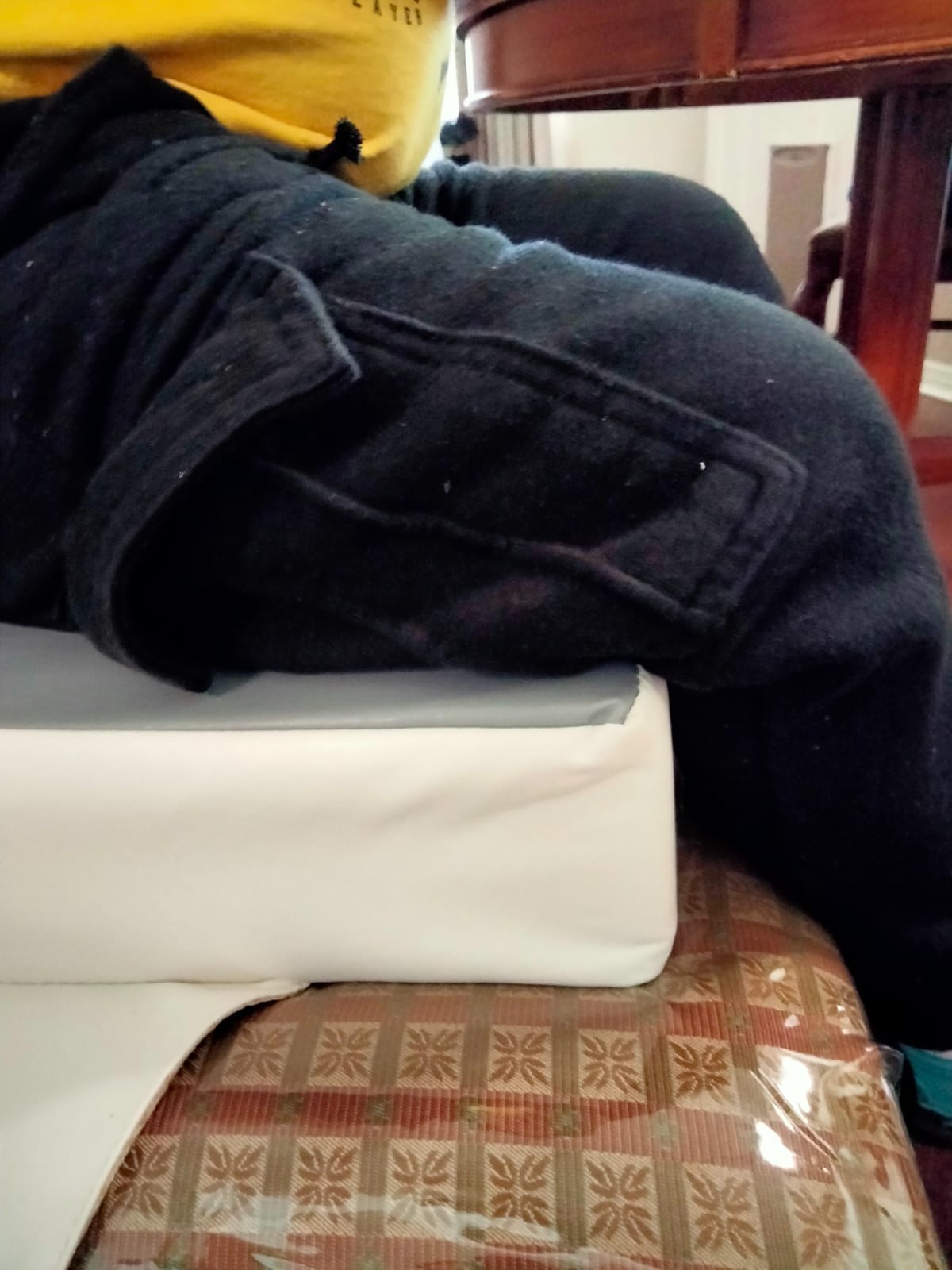
The configurations run at 1.8 inch, 3.2 inch and 5 inch, plus two backset combinations that raise the backrest independently of the seat. Raising the back matters more than raising the seat once a child is tall.
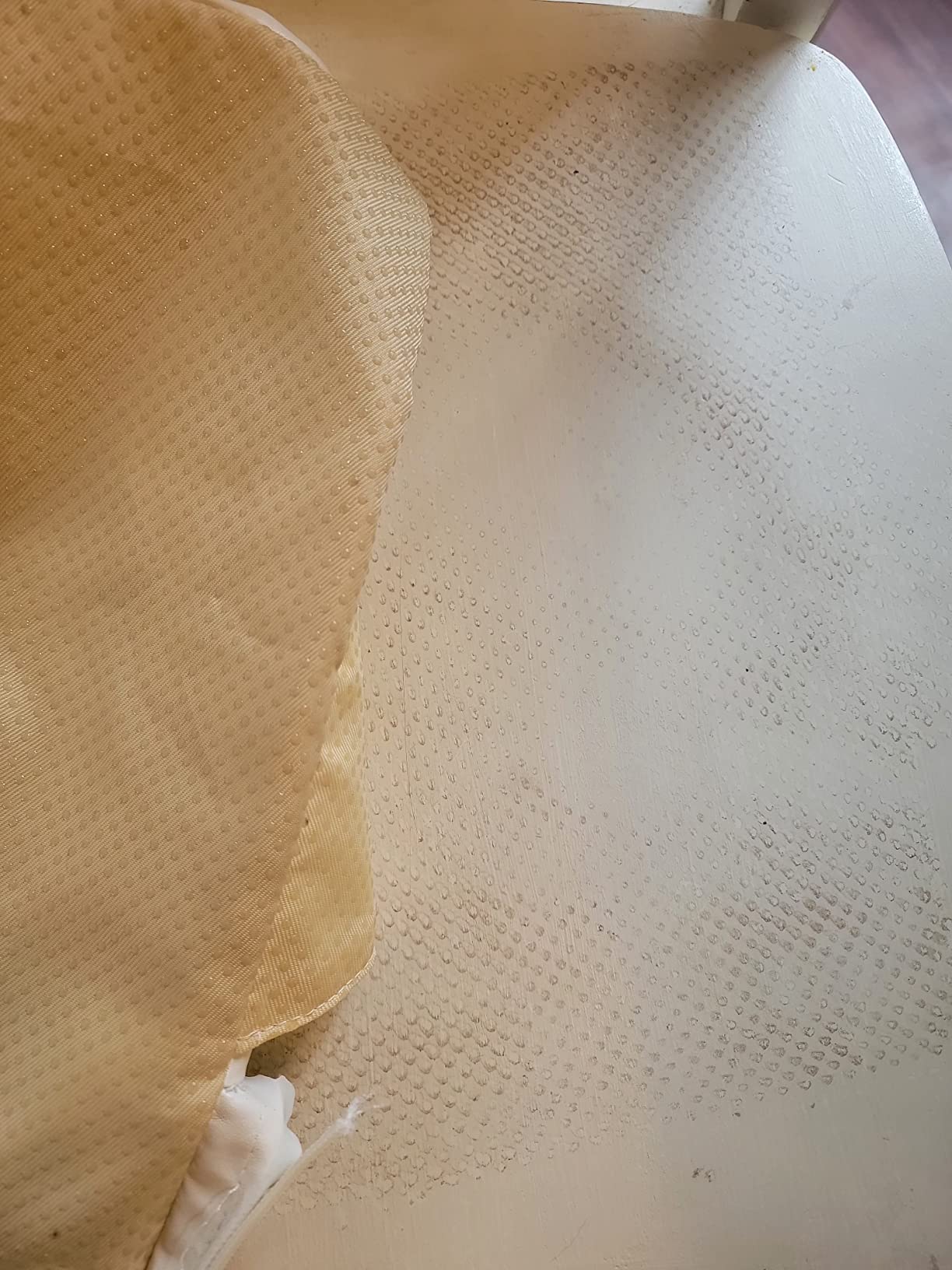
PU leather over the sponge wipes clean with a wet paper towel, which is faster than laundering and does not create seams for food to lodge in. Upgraded wide straps and an enhanced buckle with non-slip spots keep the cushion steady on the chair.
Packaged without compression, so it arrives without the permanent creases common to vacuum-packed cushions. It is compact enough to bring on trips.
Measure before you order
Straps may be too short for wide dining chairs or benches. This is the most important measurement on this page: measure around the chair bottom and up the back before you buy, not after.
The seat also reads smaller in photographs than it is in the hand. If your child is broad or on the taller side for their age, check the actual dimensions against the chair.
Materials and daily wear
PU leather is wipeable but not breathable in the way fabric is. In a warm room over a long meal, some children will want the cover changed.
Because the height settings use sponge rather than a rigid frame, this is a cushion product. It supports posture well but will not stop a toddler who stands up mid-meal.
8. SMZCTYI Removable Chair Cushion – Best Booster Seat for Dining Tables on Leather Chairs
SMZCTYI Toddler Booster Seat for Dining Table, Removable Chair Cushion
PU surface with waterproof fabric
14.2 x 12.6 x 3.5 inches
Anti-slip silicone base
Two safety belts
Pros
- Thick cushion that stays firm with daily use
- Two buckles and a bottom clip stabilise it on any chair
- PU leather wipes clean in seconds
- Easy to install and move between rooms
- Children adapt faster than with a high chair
Cons
- Runs narrow and could be wider for standard chairs
- Compressed packaging needs up to 48 hours to regain shape
We tested this one on a leather dining chair, which is where most framed boosters disappoint. Plastic feet glide on a smooth leather seat, and the silicone base on the underside of this cushion grips it without scratching.
The zipper design separates the PU surface from the sponge, so you can pull the cover off and wash it rather than scrubbing the whole cushion. Two safety belts fix to the back and bottom of the chair, with a bottom clip adding stability.
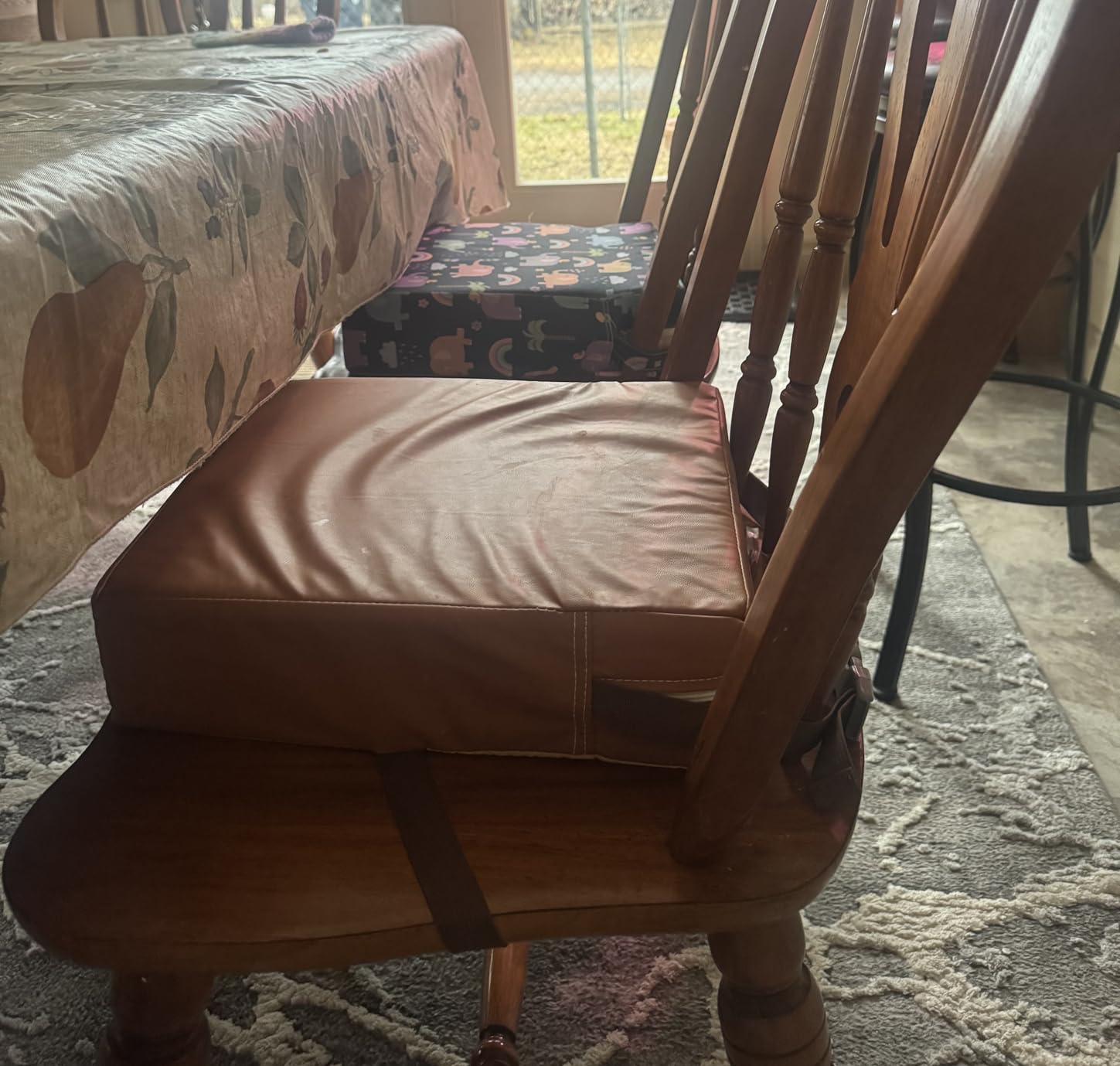
An extra inner sponge layer helps with comfort and shape retention, which is why owners report the cushion still holding its shape after months of daily meals. The footprint is 14.2 x 12.6 x 3.5 inches.
It is lightweight enough to move between rooms, and a cushion is a quicker transition than a high chair because the child is already sitting at table height from day one.
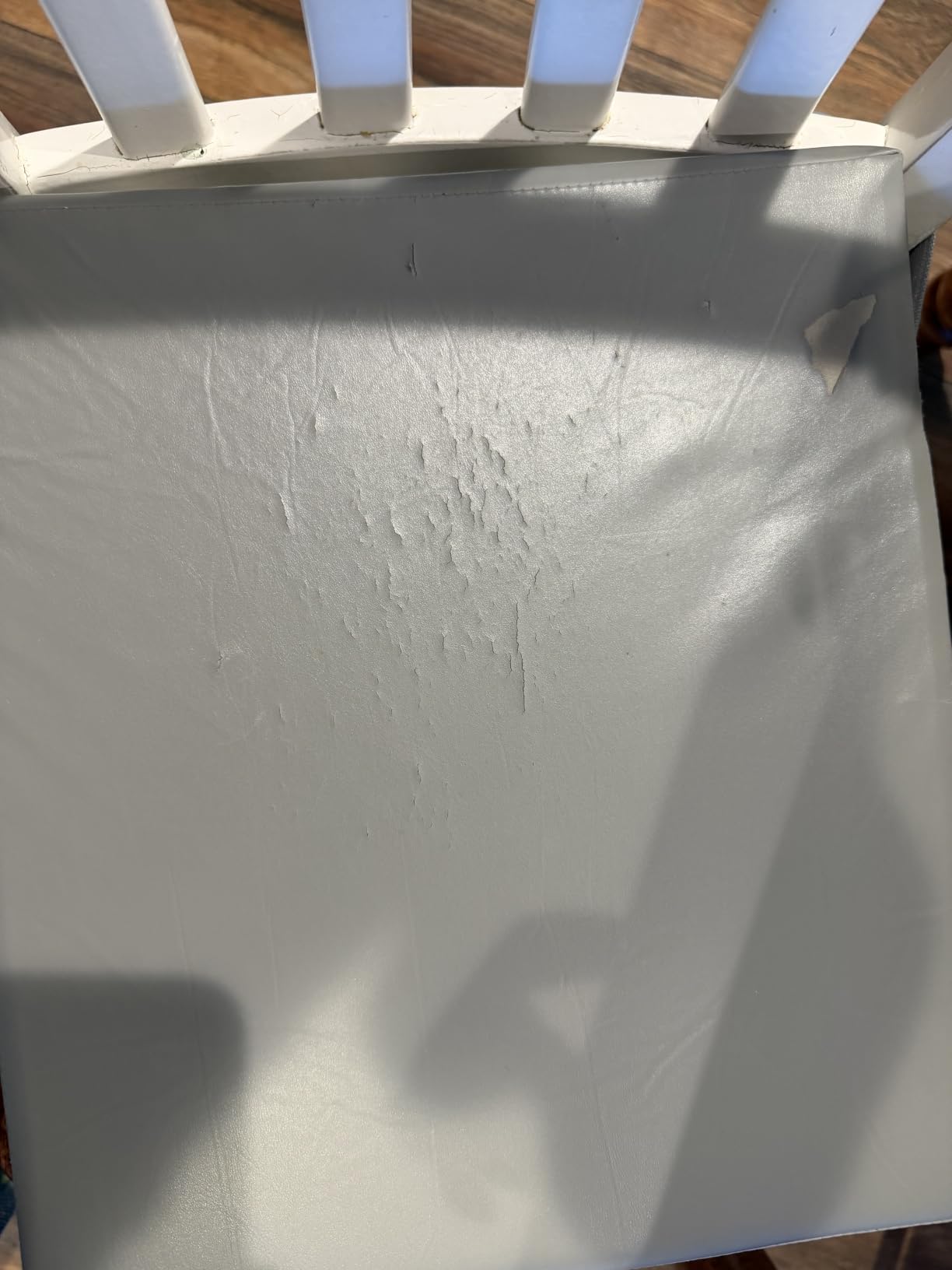
Wipe clean with a damp cloth. The PU synthetic leather surface over waterproof fabric means nothing seeps into the foam.
What to check on your own chair
This cushion runs narrow, and that is the main complaint from owners. Measure your chair seat width and be honest about whether a few extra inches matter for a broad toddler.
It arrives in compressed packaging and takes up to 48 hours to return to full height. Plan the first meal accordingly rather than judging it on day one.
Where a cushion fits and where it does not
A cushion is the fastest route to table height and the easiest to move around. It also has no back, so a slumping child gets no correction.
Skip it if your child still needs containment. Choose a high-back or harness design if standing mid-meal is a pattern.
9. Dreambaby Dining Booster Seat – Best Booster Seat for Dining Tables for Grandparents and Restaurants
Dreambaby Dining Booster Seat – Portable High Chair for Dining Table
3-point harness with adjustable straps
Folds with carry strap
Suitable from 6 months
Not for use in motor vehicles
Pros
- Carry strap makes it easy to throw over the shoulder
- Folds down for compact storage
- Storage pocket holds snacks and small items
- 3-point harness keeps the child secure
- Adjustable straps span 6 months to about 3 years
Cons
- Cushioning can feel thin for longer meals
- Harness and strap fit may need adjusting for smaller children
This is the seat for a child who eats at three tables. The carry strap and foldable frame mean it moves between your dining room, a grandparents’ house and a restaurant without becoming a separate piece of furniture at each one.
It is for use from 6 months, once a child can sit upright, up to roughly 3 years. The manufacturer states it is not for use in motor vehicles, which matches our own safety rule at the top of this guide.
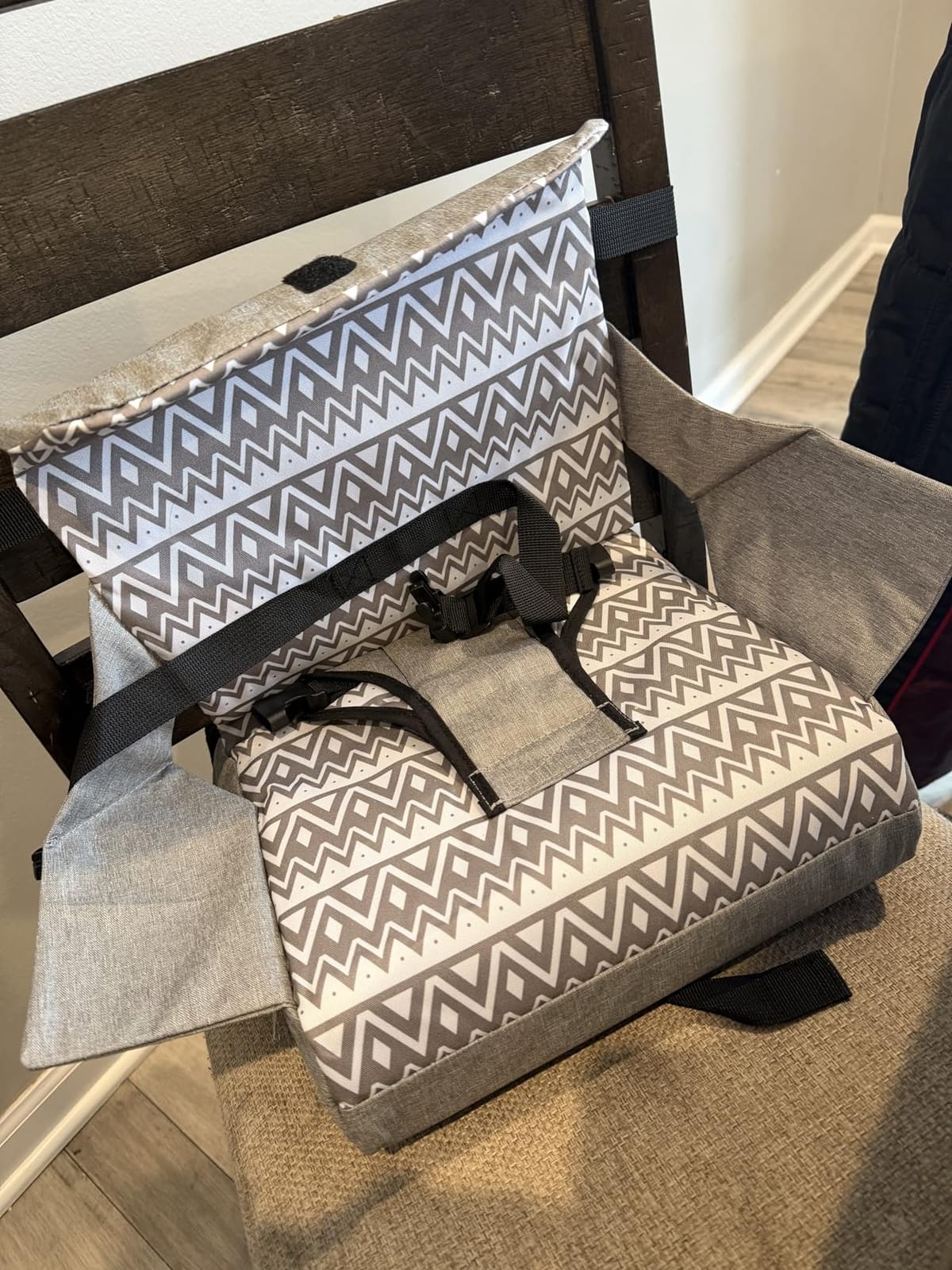
The 3-point harness has adjustable straps, which is the part that does the work on a chair you do not own. On an unfamiliar dining chair, a short strap set is the difference between a seated child and one who is halfway to the floor.
Built-in storage holds baby essentials and snacks. For outings that is genuinely useful, and it is the reason parents carry this seat rather than borrowing one.
Feedback is more mixed on cushioning than on portability, with owners noting it feels thin past the first half hour of a meal.
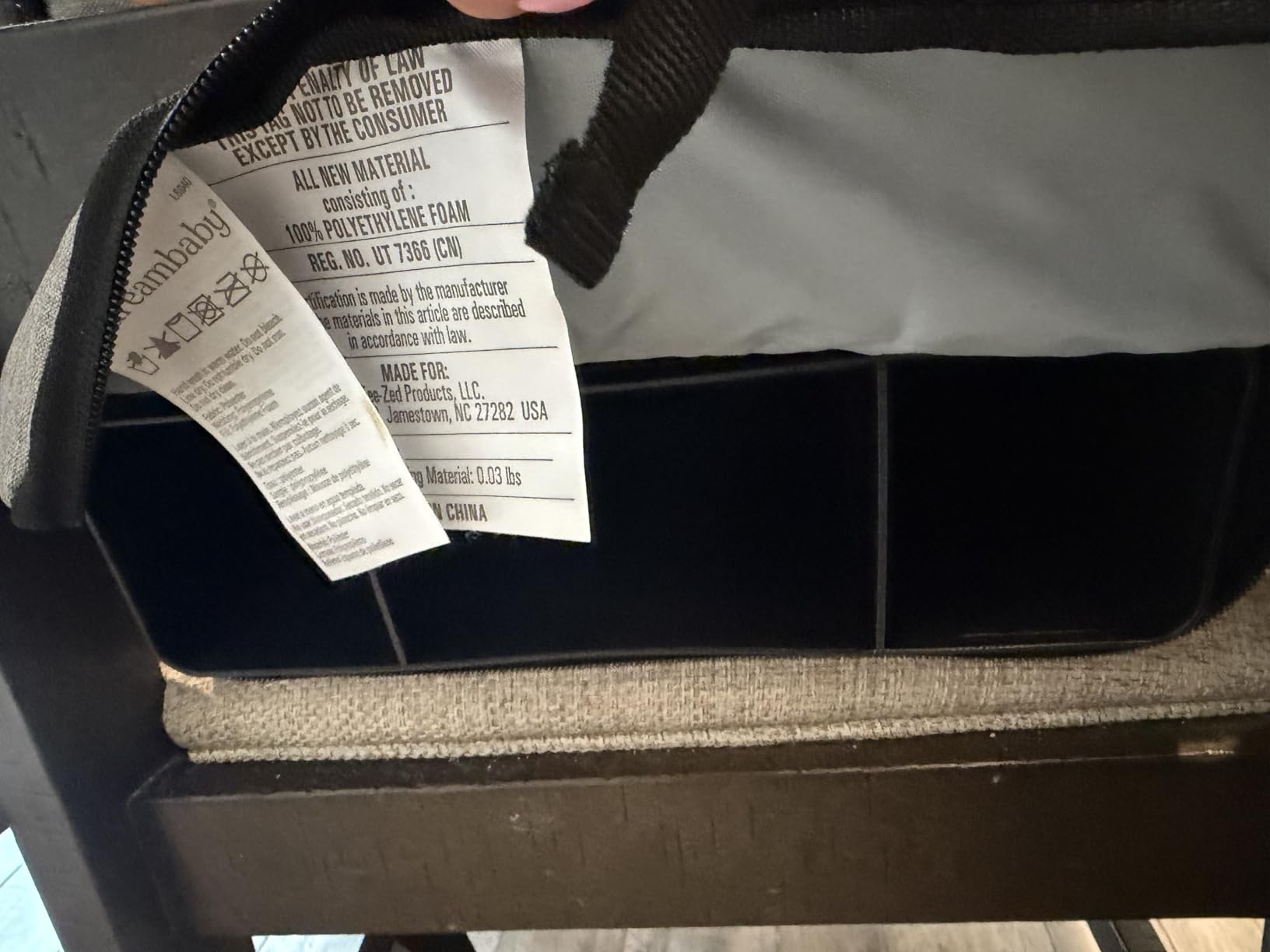
Tuning it for a small child
Harness and strap fit can require adjustment for smaller children. Set the harness snug against the shoulders before you first sit them down, and re-check it after a few meals.
Long meals are the weak point. If dinner often runs long, a foam insert or a deeper seat will hold up better for a child who does not want to get down.
When a shared seat is the plan
If two children need to eat at your table, check chair spacing first. A foldable seat you carry between houses is easier to manage than a fixed one you have to share.
Choose a high-back design instead if your child is over 3 and you want the seat to last into kindergarten years.
10. Upseat Boost – Best Ergonomic Booster Seat for Dining Tables for Posture Support
Upseat Boost – The Original Ergonomic Toddler Booster Seat for Dining Table, Developed with Physical Therapists to Encourage Posture, Adjustable Height, Easy to Wipe Clean, and Travel-Friendly
Adds 8 inches of table height
18 months to 5 years or 50 lbs
Lifetime warranty
Made in North America
Pros
- Ergonomic contour encourages upright sitting
- Two height levels via a detachable platform
- Attaches easily and stays put
- Wipes clean with no fabric creases
- Carry handle for restaurants and grandparents
Cons
- Forward leg position can feel uncomfortable when splaying legs
- Harness straps are hard to remove or release
- Food lodges in buckle crevices
This is the only seat here designed specifically for posture, and the difference is visible. Owners who wanted their child’s slouching corrected report straightening within weeks, and the seat was developed with physical therapists to engage posture muscles rather than simply prop a child up.
It adds 8 inches of table height, and a detachable platform adds more for younger children. That gives two height levels from one product, and the stated range is 18 months to 5 years or up to 50 pounds.
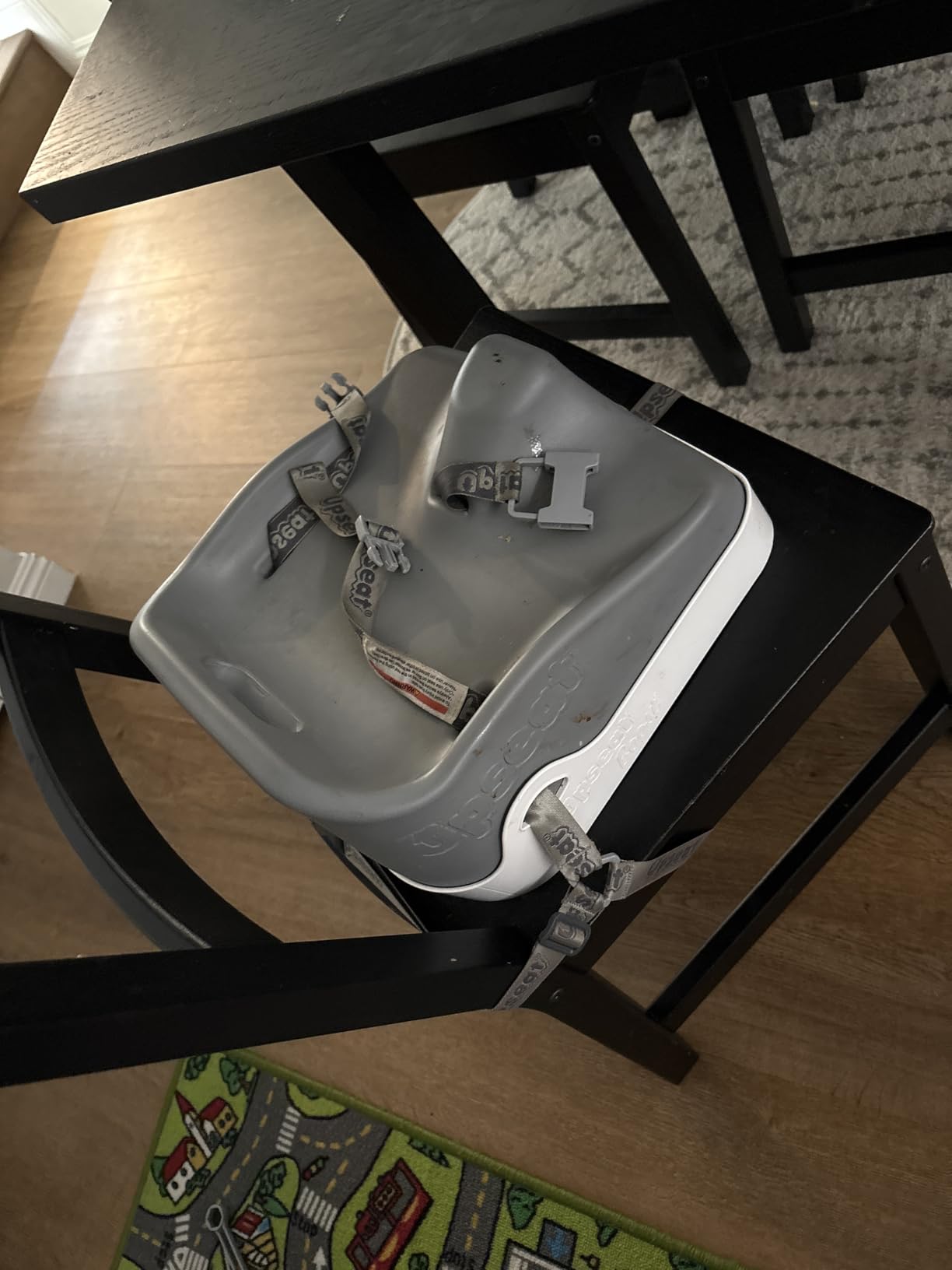
The 3-point harness adjusts as the child grows, so it does not have to be swapped out when they outgrow the first setting. The material is medical grade padding in an easy-to-clean finish with no fabric creases.
A carry handle and a light weight make it portable to restaurants and to grandparents’ houses. It is made in North America and backed by a lifetime warranty, which is unusual in this category.
Attachment is straightforward and it stays put once fitted, which addresses the most common complaint parents raise about booster seats.
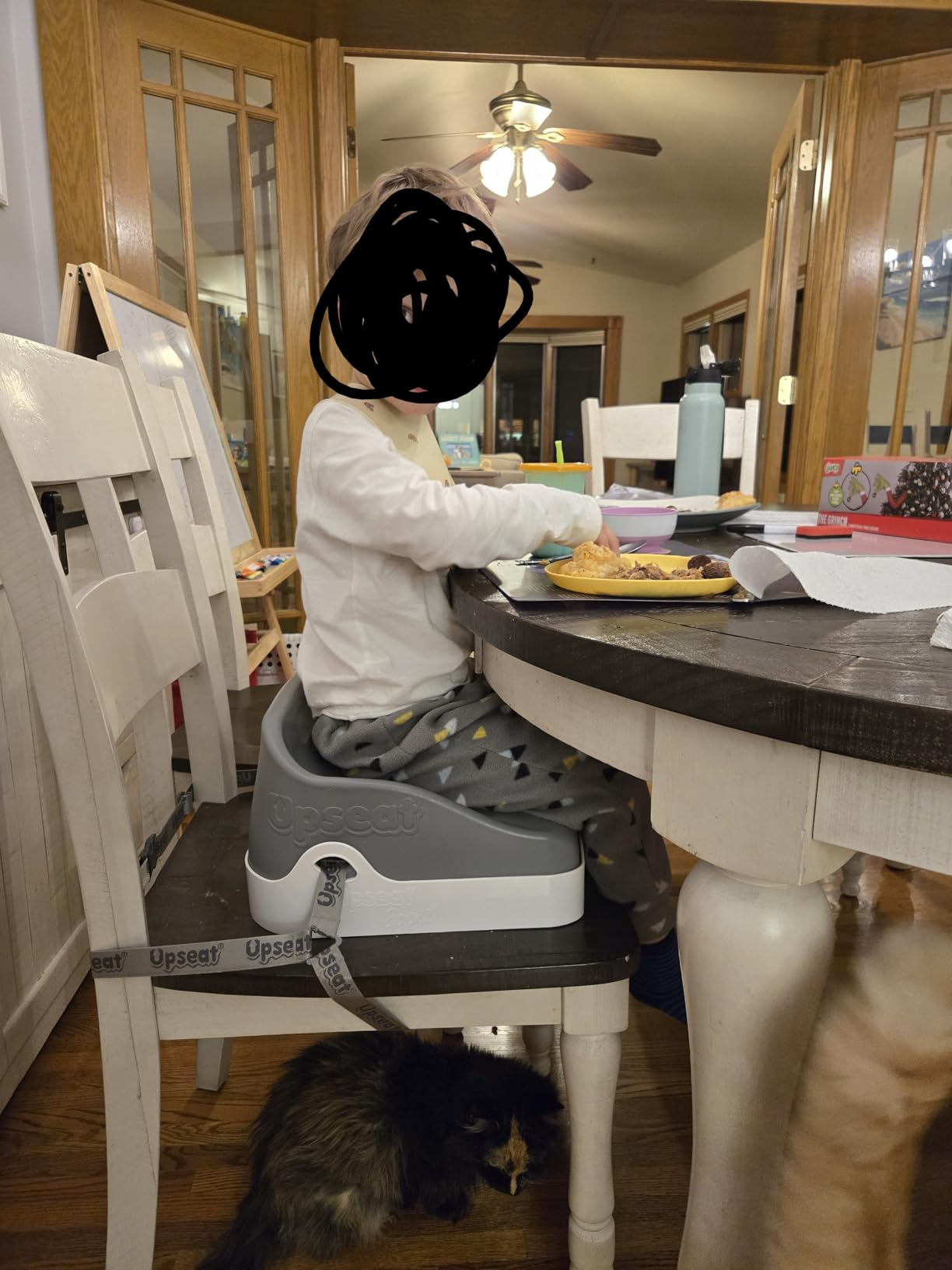
Comfort is not universal
Children may find the forward leg position uncomfortable when they try to splay their legs, and some lean back against the dining chair instead of sitting upright. The contour that helps one child holds another rigidly.
On a rounded-back chair the seat sits bulkily and can leave a gap behind the child. Check the shape of your chair back before choosing this design.
Cleaning and long-term ownership
Food can lodge in the buckle crevices and is hard to clean out. The rest wipes down easily, but the buckles need a brush on a regular basis.
Harness straps are difficult to remove for washing or to release. If you want every strap machine washable, pick a design where the harness detaches fully.
How to Measure Your Dining Chair for Booster Seat Fit
Chair fit is the single most common reason a booster gets returned, and it takes about three minutes to check properly. Every manufacturer publishes strap lengths or seat dimensions somewhere in the listing, so you can match numbers instead of guessing.
Three measurements to take first
1. Seat width. Measure across the inside of the chair seat at its widest point. This tells you whether a narrow cushion product will leave your child unsupported on both sides.
2. Strap reach. Measure around the bottom of the chair seat and up the back to a point just below where the back meets the seat. Write both numbers down and compare them to the stated strap length.
3. Table gap. Measure the distance from the front edge of the chair seat to the table edge. This is what determines whether the grown-up chair can slide back in afterwards.
Bench seating, stools and counter-height tables
A bench has no back, so back straps have nothing to grip. On a bench you want a seat with a wrap-around base or a cushion that stays put by weight alone, and you should check that the bench is wide enough for the child’s legs to hang comfortably.
Counter-height and bar-height tables change the maths entirely. A typical booster adds between 5 and 8 inches of height, and at a 36-inch counter a short child still needs a high-back seat rather than a cushion. Measure the difference between the chair seat and the tabletop before you buy anything.
Leather and upholstered chairs
Smooth leather and tightly woven upholstery both create slippage that a plastic base will not solve. Look for a silicone or rubberised base, and press down firmly when you set the seat on.
Deeply cushioned chairs are their own problem: the child sinks, the harness rides up, and the chair back sits further away than the booster assumes. A slim perch design handles this better than a full frame.
Four-point fit checklist
The child’s hips sit flat on the seat with feet supported rather than dangling. The harness sits snug at the shoulders, not loose across the chest. The booster does not rock when you press the child forward. And the grown-up chair still pushes back under the table afterwards.
If you are still choosing tables rather than seats, our guides to high end dining tables and round dining tables for six cover the heights and clearances that affect booster fit.
When to Move From a High Chair to a Booster Seat
Most children are ready somewhere between 18 months and 2 years, but the signs matter more than the number. Look for a child who sits calmly for a full meal, whose thighs are thick enough that they will not slide forward on a smaller seat, and who is walking steadily rather than still cruising.
Readiness checklist
They can sit for twenty minutes or more without fidgeting out of the seat. They are comfortable eating at a table height rather than only from a tray. They no longer need the tray for balance, even if they still want it. And they are above the weight floor of the seat you are considering.
Should a 2 year old still use a high chair
There is no rule that ends high chair use at a fixed age. A calm two-year-old who sits well and eats independently can usually start on a booster. A restless two-year-old who climbs or stands will last longer in a high chair, or on a booster with a high back and buckles.
A 40-pound three-year-old can comfortably use most booster seats in this group. Several models here top out at 33 or 35 pounds, so check the ceiling before assuming.
The behavioural part nobody warns you about
The hardest part of the transition is often not physical. Parents describe children who can technically sit in a booster but will not leave the tray, or who stand up every few minutes. Many families handle this by removing the tray entirely and pulling the child up to the table, which shortens the step.
Other families keep the buckle because it is the only thing holding an enthusiastic toddler in place. If you are in that camp, buy containment rather than a thin cushion.
When to move on entirely
Plan the next step when your child’s feet reach the floor with knees bent at a right angle, or when they start asking to sit in a real chair. A high-back seat extends the usable years, but it cannot give a child a table as their own.
What to Avoid When Shopping for a Booster Seat
The shopping results for this keyword are full of generic foam blocks with thin ratings and no stated certification. They sit in the tail of the listings for a reason, and parents report the same failure pattern repeatedly: the foam compresses, the seams split, and the straps are too short for a real dining chair.
Avoid any listing that does not state a weight limit. A seat with no published capacity is a seat nobody tested, and you are the test.
Avoid unstrapped cushions for children under three. A toddler who can climb will climb, and a cushion gives them a step up.
Avoid wide-base and framed seats for narrow armless chairs. Parents repeatedly warn that bulky boosters will not attach to a slim dining chair, and the straps end up dangling.
And avoid buying a dining booster expecting a car seat to come with it. Vehicle seating is a certified, crash-tested category with its own age and weight stages, covered separately in our guide to booster car seats.
If you eat outdoors or on a patio as well as inside, table height and stability requirements differ again, and our outdoor dining table guide covers the setups worth matching a booster to.
Frequently Asked Questions
What is the best baby booster seat for a table?
The best overall pick is the Hiccapop OmniBoost, rated 4.8 across 26,564 reviews. It folds flat for travel, has one-hand harness release, and includes a dishwasher-safe swivel tray, so it works at home and at restaurants. For a child who is only just out of a high chair, the Bright Starts Pop ‘N Sit covers floor sitting, tray feeding and boosting in one seat up to 33 pounds.
Which toddler booster seat is the safest?
Look for three things: a stated weight limit, straps that actually reach around your chair, and either a 3-point harness or a high back with side walls. The OXO Tot Nest has a high back, side walls and two side-release buckles, which contain a child who tries to stand mid-meal. Any seat without a published weight capacity is one to avoid.
Are booster seats safe for tables?
Yes, when the seat fits the chair properly and the straps are tightened. A dining-table booster is not crash tested and must never be used in a moving vehicle. Check that the child sits centred, that the harness is snug at the shoulders, and that the seat does not rock when you press the child forward before the first meal.
Can my 40 lb 3 year old sit in a booster seat?
Most can, but check the individual limit first. Several boosters in this roundup are rated up to 33 or 35 pounds, so a 40-pound child has already outgrown them. Seats rated to 50 pounds or more, such as the Upseat Boost, or high-back designs, suit a 3-year-old of that weight with room to spare.
At what age can a child switch from a high chair to a booster seat?
Most children are ready between 18 months and 2 years, though the signs matter more than the number. Look for a child who sits calmly for a full meal, has thighs thick enough to stay on a smaller seat, and walks steadily. A 2-year-old who still climbs or stands will last longer in a high chair.
Conclusion
After putting these ten through four dining setups, the Hiccapop OmniBoost remains our pick for the best booster seats for dining tables in 2026. It earns the rating, it survives the mess, and it folds down small enough that you will actually take it to other people’s houses instead of leaving it in the dining room.
Pick the OXO Tot Nest if your child needs physical containment, the Ingenuity SmartClean if the meals are messy, the Kalawen if you need height that adjusts across siblings, and the SMZCTYI cushion if your chairs are leather. Measure your chair first, tighten every strap before the first meal, and keep these seats at the table.