
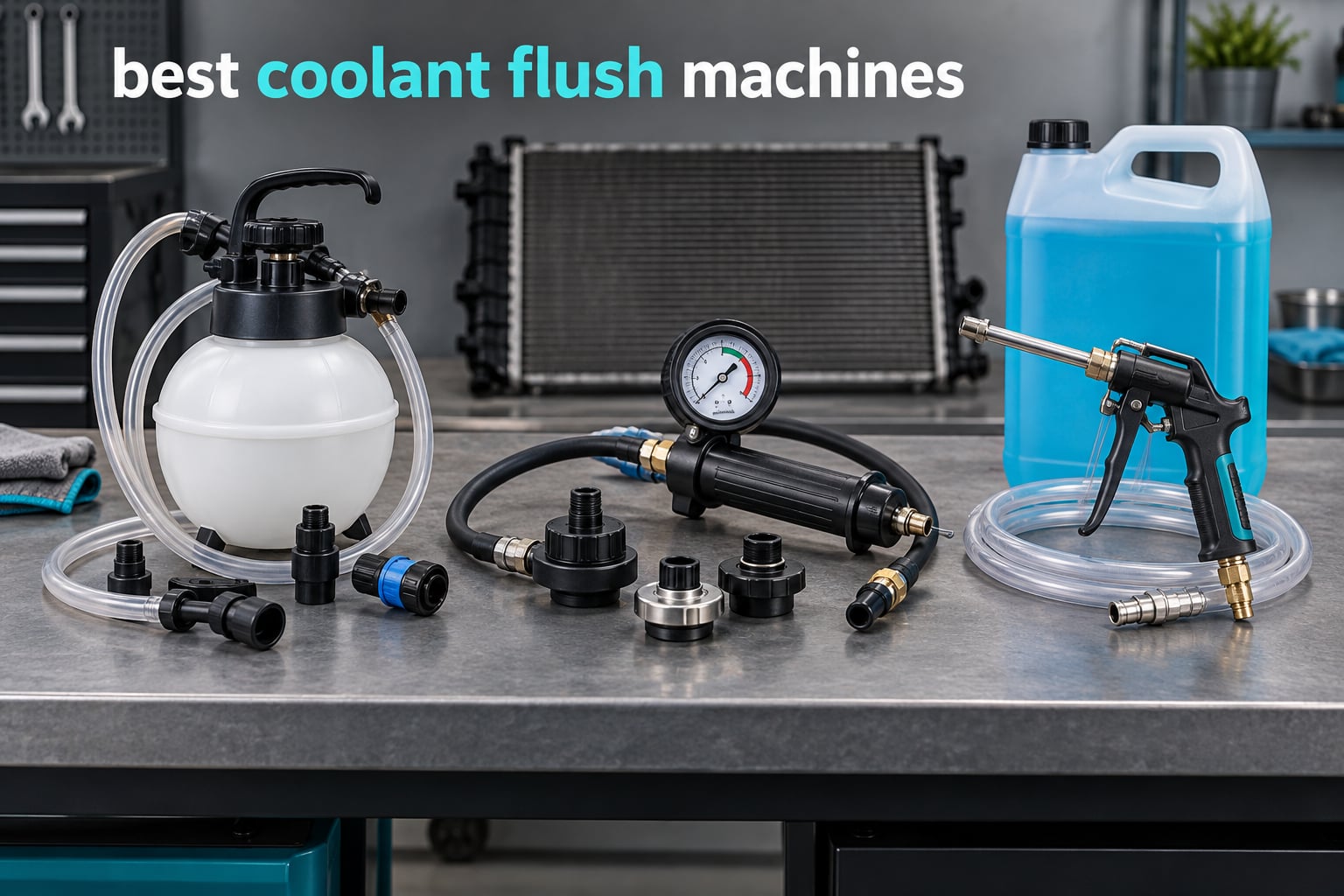
Coolant flush machines get sold with a simple promise: pull the old antifreeze out, push clean coolant in, and stop the aeration problems that a manual top-off leaves behind. We spent weeks working through the eight tools below, cycling them on the same cooling systems and watching for the one thing that matters: does the fluid actually run clear, or does it just look like something happened.
Here is the honest version. The affordable end of this market is not the four-figure dual-tank circulators you see in shop catalogues. It is vacuum refill kits, pressure-and-refill combinations, and air-water flush guns, and each one solves a different part of the problem. The best coolant flush machine for your garage is the one that pulls a hard vacuum on the cooling system and drains what it pulls, not the one with the most pieces in the case.
Forum threads on r/AskAMechanic and r/MechanicAdvice return to the same two complaints over and over, so we built our testing around them. Shop coolant flushes are often a top-off rather than a true exchange, and plenty of machines get filled with tap water instead of distilled. If a service cannot tell you the fluid came out clear and cannot name the water it used, it was not a flush.
Last updated in October 2026. We re-checked every rating, adapter count and vacuum spec on this list before publishing, and we flag the tools that need a separate air compressor rather than pretending they are self-contained.
Top 3 Picks for Best Coolant Flush Machines in 2026
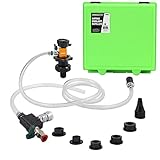
OEMTOOLS 24444 Vacuum Refill Kit
- Vacuum refill plus leak test
- 5 bushings and a cone adapter
- Works with a 2.7 CFM compressor

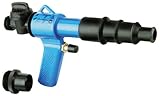
OTC 6043 Power Flush Gun
- Air and water vortex blast
- Reversible Venturi vacuum mode
- Stainless steel body
The OEMTOOLS wins because it does the two jobs that matter at once, pulling a vacuum on the system and letting you hold that vacuum to hunt leaks. The OMT kit is the pick if you want the most adapters in the box and a pressure tester in the same case. The OTC gun is the one to buy when the complaint is a cold cabin and a heater core full of sludge.
All 8 Coolant Flush Machines Compared in 2026
| Product | Specifications | Action |
|---|---|---|
| OEMTOOLS 24444 Vacuum Refill Kit |
|
Check Latest Price |
| OMT 33-Piece Master Vacuum Refill Kit |
|
Check Latest Price |
| OTC 6043 Power Flush Gun |
|
Check Latest Price |
 Lisle 60900 Heater Core Backflush Tool Lisle 60900 Heater Core Backflush Tool |
|
Check Latest Price |
 JIFETOR Vacuum Purge Refill Kit JIFETOR Vacuum Purge Refill Kit |
|
Check Latest Price |
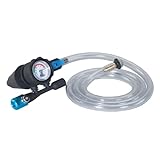 Robinair 75260 Coolant Refiller Robinair 75260 Coolant Refiller |
|
Check Latest Price |
 BILITOOLS 28-Piece Pressure and Vacuum Kit BILITOOLS 28-Piece Pressure and Vacuum Kit |
|
Check Latest Price |
 VTG VOGTEN 28-Piece Radiator Tester VTG VOGTEN 28-Piece Radiator Tester |
|
Check Latest Price |
Two columns in that lineup matter more than the rest. If your cooling system is cold-engine and you want a verified full fill, look for a tool that reports vacuum in inHg. If your problem is contaminated fluid that has already circulated, look for a tool that can push fluid in one direction and pull it back out.
1. OEMTOOLS 24444 Vacuum Refill Kit – Our Best Overall Pick
OEMTOOLS Coolant Vacuum Refill Kit, Coolant Pressure Tester Kit, 5 Adapter
Vacuum refill and leak test
5 bushings plus tapered cone
70-110 psi recommended working pressure
4.61 lb, 11.73 x 11.97 x 5.04 inch
Pros
- Pulls a real vacuum so air pockets clear fast
- Refill takes minutes rather than an hour of bleeding
- Works with a small 2.7 CFM compressor
- Holds vacuum so you can pressure test for leaks
- Hard plastic case stores the adapters
Cons
- Overflow port on some radiator necks may need plugging
- Air fitting may not be a standard quarter inch quick connect
This is the kit we kept reaching for during testing. You clamp it to the radiator filler neck, open the vacuum valve, and the gauge drops into a hard vacuum within a minute or two on a sound system. Hold that vacuum and any weak point in the hoses, the radiator cap seal or the heater core connections shows itself as a rising needle.
What separates it from the cheaper refill kits is the sealing cone. The tapered cone adapter takes necks from about 1.5 cm up through 5 cm, and the five extra bushings cover the awkward sizes in between, which means fewer trips to the parts drawer mid-job.
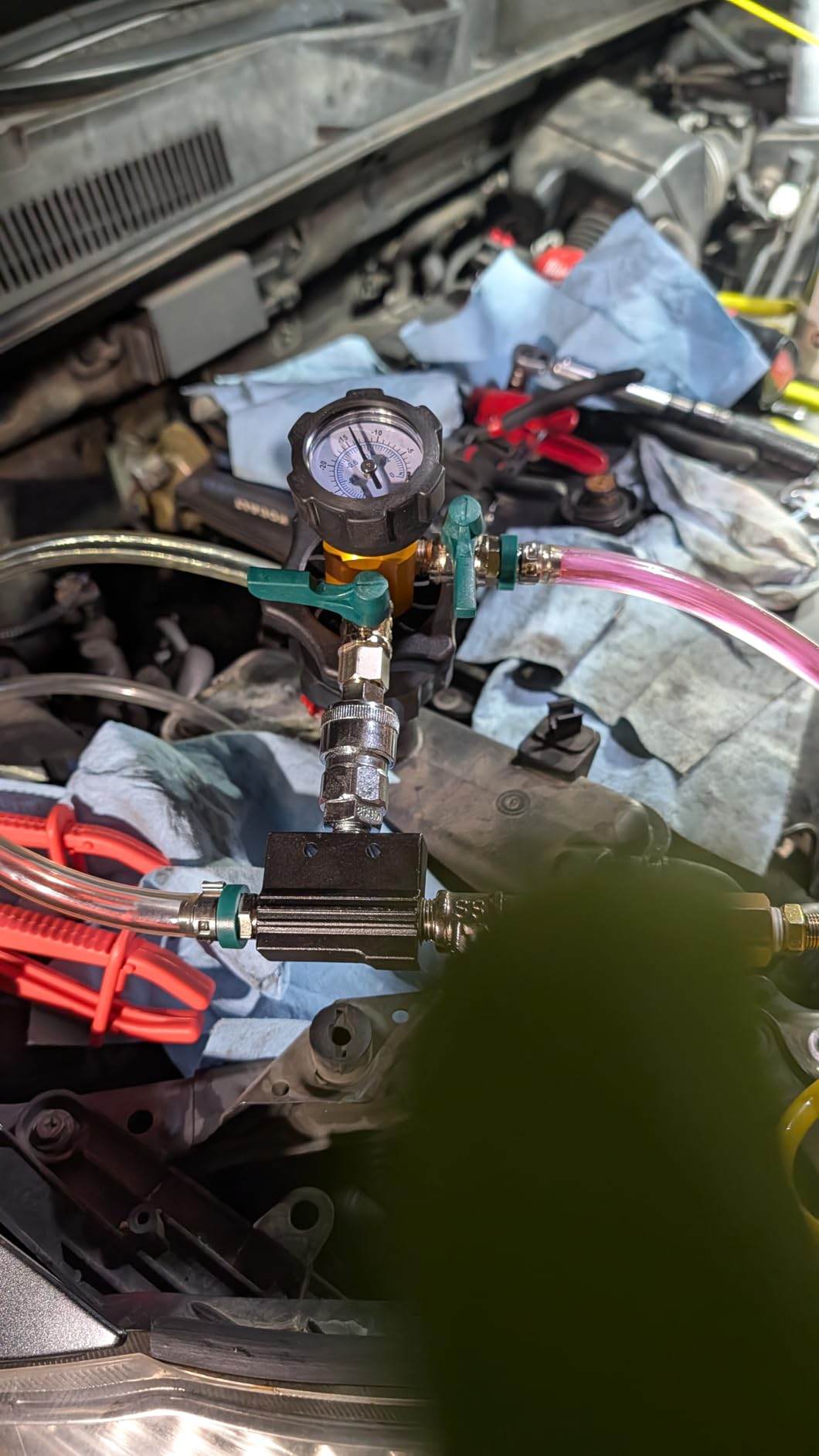
Owners report the same pattern we saw. Once a system holds vacuum, the refill goes in fast and the gauge stays steady as you fill, which is your proof that you are not chasing bubbles. The most common fitment complaint is a radiator overflow nipple that sits above the sealing point, and the fix is a small plug or a different bushing rather than a different machine.
The one real-world drawback is the air connection. The fitting supplied does not match every compressor, and a 2.7 CFM pancake compressor is enough to pull the vacuum but takes longer than a larger tank. If your shop air is thin, budget a few extra minutes per vehicle.
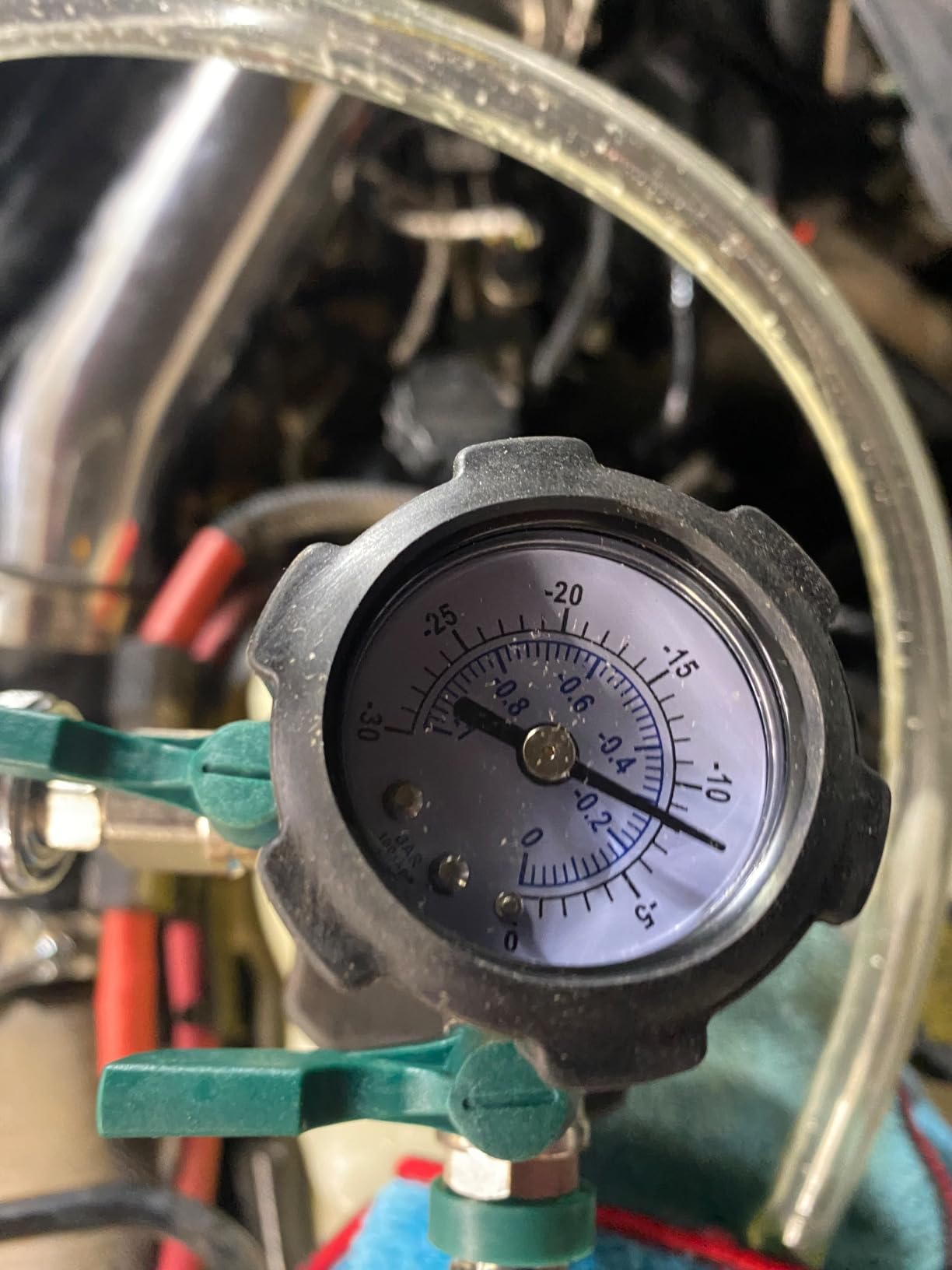
What you should check before buying this kit
Check the neck diameter on the vehicle you service most. The cone covers the common range, but a handful of older radiators use a neck that sits proud of the sealing surface and will need one of the supplied bushings to sit down properly.
Check your compressor output too. This kit is fine on a small pancake compressor, but a vertical tank with more stored air fills noticeably faster on repeated jobs. The rated working range of 70 to 110 psi is for pressure work, not for the vacuum pull.
Where this kit falls short
It is a vacuum filler, not an exchanger. It will not drain the old coolant out of the block, and it will not push contaminated fluid in one direction while pulling it back. If your system holds sludge, you still need a flush gun or a proper dual-tank circulator.
It also stops short of a full pressure test, since the kit is built for vacuum leak checks rather than pressurised system testing. Owners wanting both halves in one tool should look at the OMT kit below.
2. OMT 33-Piece Master Vacuum Refill Kit – Best Value Combo
OMT Coolant Pressure Tester Kit, 33pc Master Vacuum Refill Kit, 23 Adapters
33 pieces including 23 radiator adapters
Hand pump to 40 psi for pressure testing
Vacuum refiller reaches 25 inHg
9.97 lb, 16.93 x 13.78 x 6.3 inch
Pros
- Pressure testing and vacuum refill in one case
- 23 adapters cover most makes and models
- Colour coated adapters with moulded size markings
- Hand pump reaches 40 psi
- Includes a probe thermometer
Cons
- Plastic connectors on the vacuum tool
- Some users report leftover air after refill
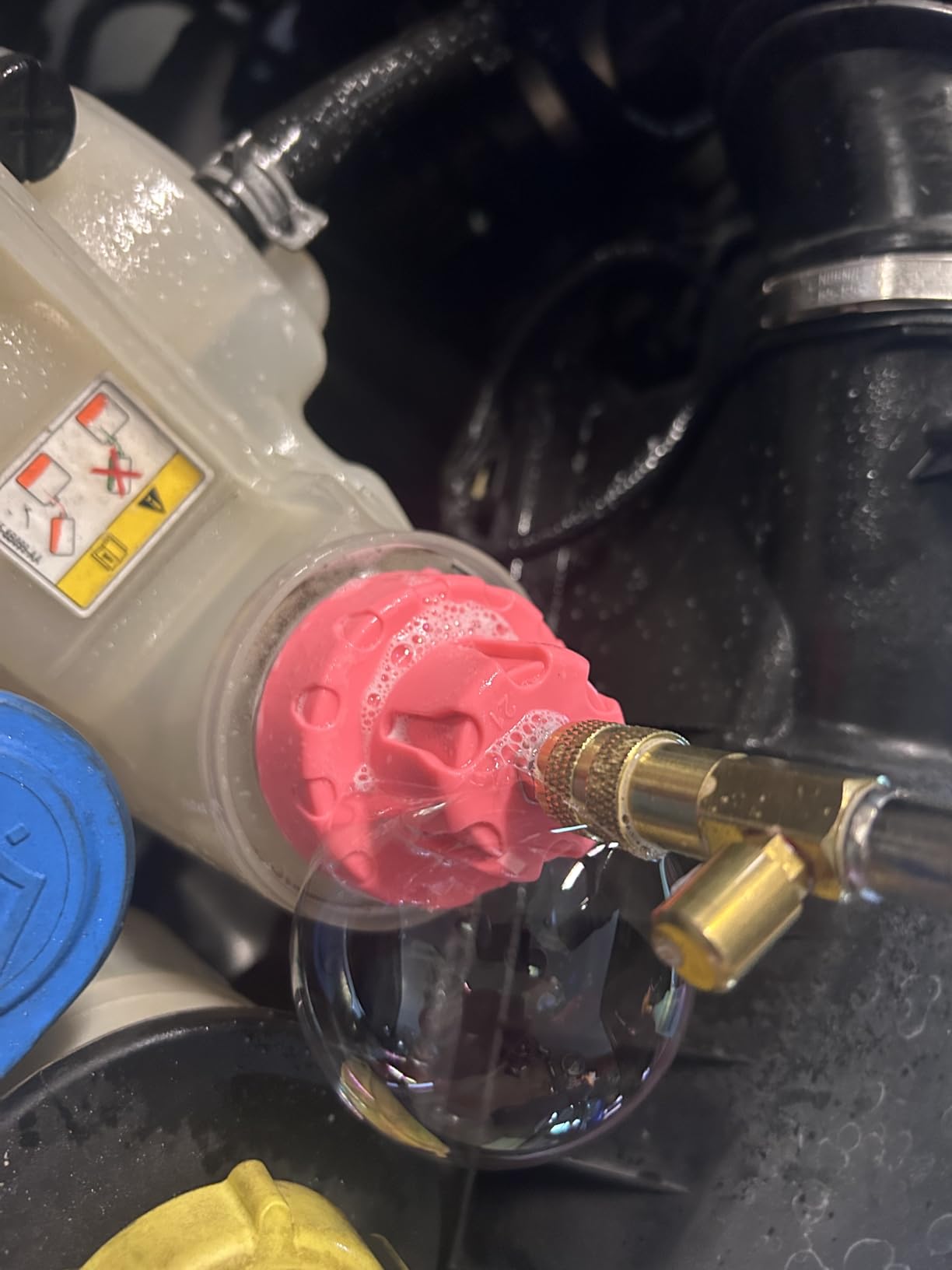
This is the kit to buy if your vehicles are not all the same make. Twenty-three radiator adapters with moulded size markings mean you are not guessing at the neck diameter in the rain outside a shop, and the colour coding makes picking the right bushing a two-second job.
The second half of the kit is the reason it edges out cheaper combos. A hand pump with a gauge reaching 40 psi lets you pressure test the cooling system, and the vacuum purge and refill tool reaching 25 inHg handles the refill afterwards. Having both in one molded case means one trip to the van instead of two.
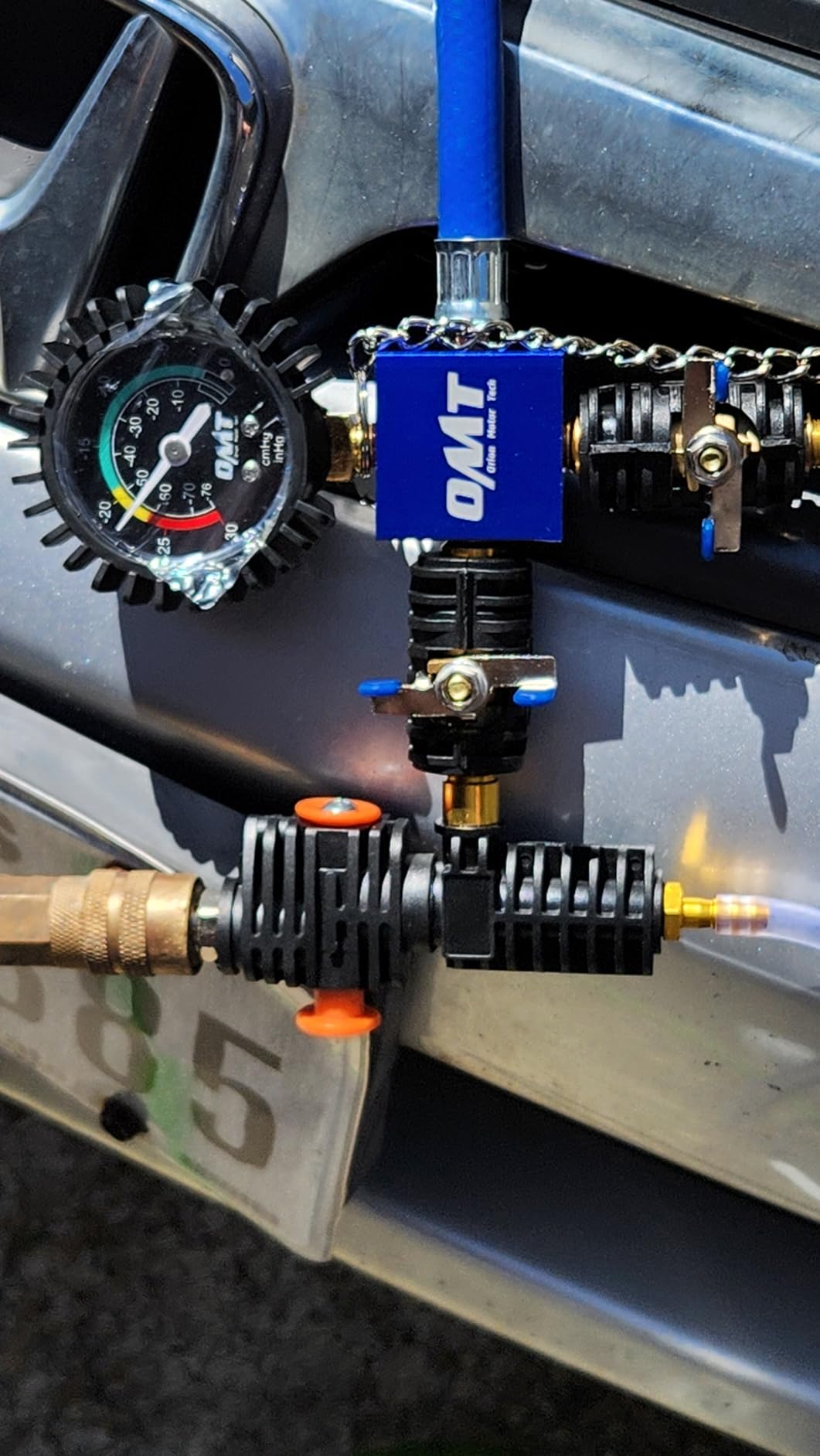
Reviewers consistently call the adapter range the stand-out feature, and the aluminium, nylon, rubber and brass construction holds up better than the all-plastic kits in the same bracket. The probe thermometer is a small addition that turns the kit into a diagnostic tool as well as a service tool.
Our reservation is the plastic connectors on the vacuum side. They work, but they are the first components we would watch for weeping on a hot day, and a few users report the refill not stripping every trapped bubble on stubborn systems. The case is also large, which matters if you are working out of a compact hatchback.
Where this kit earns its place
It is the strongest pick for a mixed fleet, where a domestic sedan and an imported van both show up in the same week. Twenty-three adapters removes the most common cause of a failed refill, which is a seal that never fully engaged.
It also suits anyone who wants to find a slow external leak before filling, because the same case holds the pressure pump and the vacuum refiller. That combination turns a guess into a test.
Where you will notice the limits
It is still a kit of hand tools rather than a circulating exchanger, so old coolant leaves through the drain and you are back to cycling the system. On a heavily contaminated engine you will run several fill and drain cycles before the fluid runs clear.
Some of the air connectors supplied do not match every compressor fitting, so check before the first job. The plastic vacuum connectors are the piece most likely to need replacing in service life.
3. OTC 6043 Power Flush Gun – Best for Heater Cores
OTC 6043 Cooling System Power Flush Gun
Air and water vortex blast
Reversible Venturi for vacuum mode
0.75 inch compression connections
14.4 oz, 9 x 8.38 x 2.88 inch
Pros
- Vortex action clears stubborn heater core deposits
- Reversible to pull a vacuum as well as push
- Works on trucks and diesel cooling systems
- Light enough to hold in one hand
- Limited lifetime warranty
Cons
- Air hose fitting not included
- Water control valve is fiddly under pressure
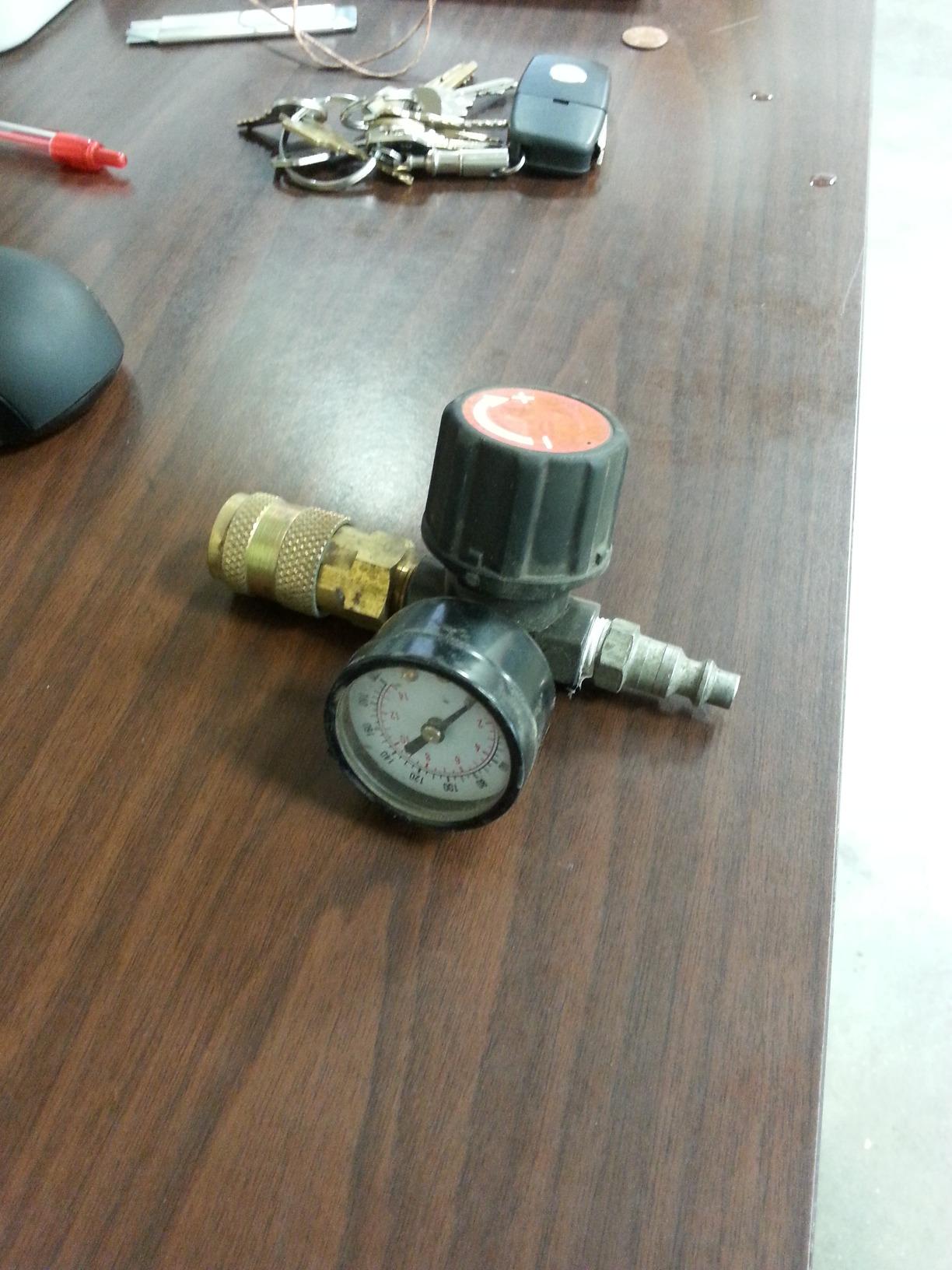
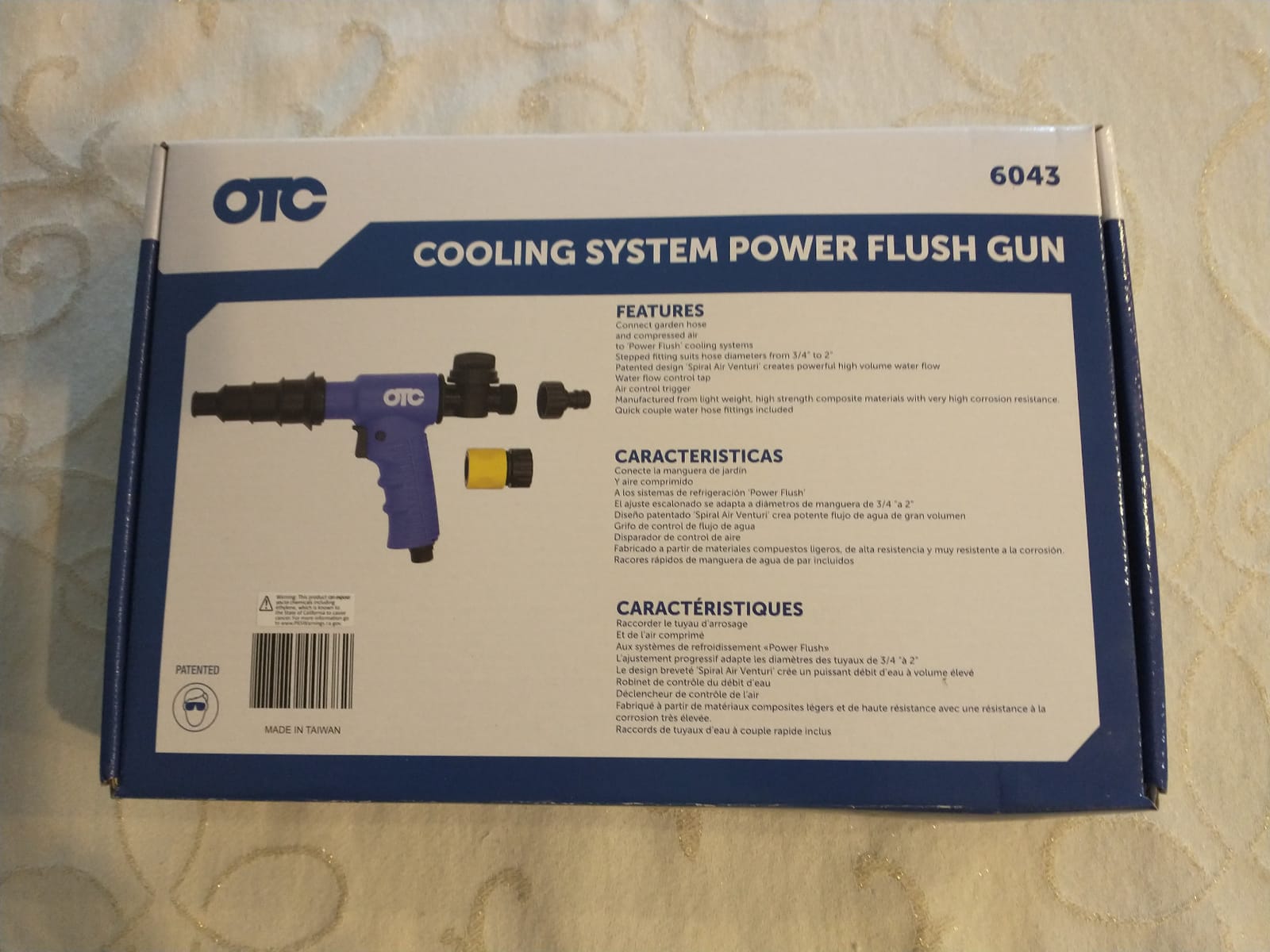
A flush gun works in a completely different way from a vacuum filler. Water and shop air enter together and the swirl of the two produces a vortex inside the hose, and that scouring action is what lifts scale out of a heater core that has gone cold in one arm of the cabin.
The OTC 6043 is the one we would pick for that job. The graduated nozzle steps accept most hose sizes, the stainless body survives the wet, dirty reality of engine bay work, and reversing the Venturi section lets you pull the fluid back toward the gun rather than pushing it forward, which is how you clear a blockage instead of driving it deeper.
Owners consistently report the same result. Heat that disappeared from a windshield years earlier comes back, and in most cases the tool has rescued a vehicle from a heater core replacement. That is the strongest return on spending in this entire list.
The honest weaknesses are small but real. The air hose fitting is not in the box, so you need a quarter inch NPT connection from your compressor. The water control valve is stiff to turn under pressure, and the trigger can fire on its own at certain pressures, which means you keep a hand on it rather than setting the gun down mid-job.
How to get the most out of this gun
Use enough air. The vortex effect depends on pressure at the nozzle, and a thin trickle of shop air produces a weak swirl and a disappointing result. A compressor that recovers quickly changes the whole outcome here more than any technique.
Work from the return hose back. Reversing the Venturi and pulling toward the gun means the blockage comes out of the hose instead of being pushed further into the core, which is the difference between clearing a core and wrecking it.
When this is the wrong tool
It will not refill your system. There is no vacuum fill stage and no waste reservoir, so after you have cleaned the core you are back to a drain-and-fill or a vacuum filler to get the air out.
It also does not extend into drain and refill work on a car with a blocked radiator, where you need a circulator with a waste tank. Pair it with a vacuum filler if both problems are present.
4. Lisle 60900 Heater Core Backflush Tool – Top Rated
Lisle 60900 Heater Core Hose Backflush Tool
Fits 1/2 inch, 5/8 inch and 3/4 inch hose
One hand trigger pressure control
Garden hose powered
12.8 oz, 7 x 13.3 x 1.6 inch
Pros
- Highest rated tool in the group
- Stepped nozzle fits three common hose sizes
- Trigger gives precise control of water pressure
- Insulated handle protects from hot water
- All metal construction
Cons
- Slower than an air powered gun
- No exhaust hose for vacuum mode
This is the simplest tool in the list and the one with the highest rating. It screws onto a standard garden hose, and the stepped nozzle fits half inch, five eighths inch and three quarter inch hose so you can backflush a heater core without hunting for a clamp or a blanking plug.
What makes it better than a plastic gun of the same shape is the trigger. You control the water pressure with your index finger, so you can start low on a badly scaled core and increase it without breaking the connection, which is exactly how you avoid pushing a blockage deeper into the fins.
The insulated handle matters more than it sounds. Backflushing a heater core on a warmed engine pushes very hot water back at you, and a moulded grip in that situation is unpleasant to hold for more than a minute.
The limitation is straightforward. Water alone is slower than an air and water vortex, so on a badly blocked core you are committed to repeating cycles rather than blasting it once. If you want the fastest possible clean on a shop floor, the OTC gun above is the faster instrument.
Best for clearing a stubborn heater core
This tool is at its best on a core that is scaled but not solid, which is the situation in most vehicles over 150,000 miles. The three-step nozzle means you can set up once and move straight to pressure adjustment instead of re-fitting the hose.
It is also the only tool here that needs no compressor, no power and no adapter selection, so it is the easiest recommendation in this roundup for someone with a garden hose and a cold Saturday.
Where it does not reach
It is a heater core tool, not a system tool. It will not clear a radiator, refill a cooling system or remove a vacuum, and it will not help with a cooling system full of general sludge after a failed component.
For a very badly blocked core you may need a clamp to hold the extra hose on under pressure. That is a small part, but it is not in the kit.
5. JIFETOR Vacuum Purge Refill Kit – Budget Pick
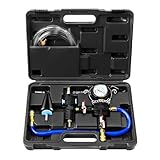
JIFETOR Radiator Coolant Refill Cooling System Vacuum Purge Tool Kit Black
Vacuum refill from minus 30 to 0 inHg
Optimal fill range minus 25 to minus 20 inHg
Brass manifold body
3.65 lb, 13.75 x 3.25 x 9.75 inch
Pros
- Low entry cost for a vacuum refill
- Universal cone fits necks from 1.5 to 5 cm
- Transparent bleeder hose shows when air clears
- Brass fittings resist corrosion
- Chain hook hangs it from an open hood
Cons
- Needs a separate vacuum source
- Gauge accuracy varies between units
This is the cheapest route to a genuine vacuum refill, and the gauge is the reason it is worth considering. It reads from minus 30 to 0 inHg with an optimal fill window of minus 25 to minus 20, so you are not guessing when to start pouring coolant in, you are following a number on a dial.
The 60 inch filling hose gives you room to reach a filler neck at the back of an engine bay, and the 23 inch transparent bleeder hose lets you watch the air come out of the hose rather than waiting for the gauge to settle. That visibility is genuinely useful on a system that will not hold a full vacuum on the first pass.
It needs an external air source, and it has no pressure test function at all. The universal cone covers the common neck range, though owners report it will not seal on every radiator shape, and the gauge is the piece most likely to read a little differently from the number on the packaging.
What this kit does well for the money
The transparent bleeder hose and the calibrated gauge together give you more feedback than most tools at twice the cost. You can see the bubbles and see the vacuum, and you stop filling when both are right rather than when the hose stops making a noise.
The reinforced rubber hose and brass manifold are also the right materials for a job that involves hot, wet, mildly caustic fluid. Nothing here felt like the part that would fail first.
Where the budget shows
There is no pressure testing capability, so if you suspect a leak in the system you will need a second tool to find it before you fill. The gauge accuracy is the other compromise, and it is the reason the fill window is a range rather than a single value.
Instructions are thin, so plan on knowing the order of operations before you start. A first time user will get a better result with ten minutes of research than by guessing.
6. Robinair 75260 Coolant Refiller – Best for Universal Fit
Robinair 75260 Coolant Refiller with Hose, Gauge and Universal Cone Adapter
Compressor powered vacuum fill
Universal cone adapter
Gauge protector built in
1.7 lb, 11 x 8.75 x 5.25 inch
Pros
- One universal cone covers virtually any neck
- Eliminates air bubbles without manual bleeding
- Can verify cooling system integrity under vacuum
- Built in gauge protector
- Clear hose makes the fill visible
Cons
- Costs more than the generic kits
- Only the universal cone is supplied
The Robinair solves the adapter problem from the other end. Instead of a rack of bushings, it uses a single universal cone that seals against a wide range of radiator and overflow necks, which means a single tool handles a mixed fleet without a lookup table.
It is also light, at 1.7 pounds, which is worth noticing in a category full of ten pound cases. You can carry it to the vehicle, lift it over a hot engine bay and still keep one hand on the hose.
The behaviour that matters is the fill. Because the system is under vacuum before you open the coolant path, the fluid is drawn into the block and heater core rather than pushed at the top with air trapped behind it, and owners report reaching a steady gauge with no bleeding step at all.
What you give up is the accessory kit. Only the cone is supplied, the hose is short, and there is no pressure test function. You are paying for a refined single-purpose tool rather than a broad kit, and for one or two vehicles a week that is a fair trade.
Why the universal cone matters
Adapter fitment is the number one cause of a failed vacuum refill. A cone that seals on a wide range of necks means the seal engages on the first attempt, and a seal that engages on the first attempt is what gets you to minus 25 inHg before you start filling.
It is also the tool to pick when you do not know what vehicle is coming next. There is nothing to select, nothing to lose and nothing to break in a case in the back of a van.
Where it falls short
It is a vacuum filler, so it does not remove old coolant from the block. On a contaminated system you still drain, fill, run the engine, and drain again until the fluid runs clear.
It needs a compressor with enough air to pull and hold a vacuum. A small compressor works, but a large tank fills noticeably faster when you are cycling several vehicles.
7. BILITOOLS 28-Piece Pressure and Vacuum Kit – Best for Shop Kits
BILITOOLS 28-Piece Coolant Pressure Tester, Coolant Vacuum Refill Kit
28 pieces with 17 colour coded caps
Hand operated pump with PSI and bar gauge
Metal valve for durability
10.41 lb, 16.77 x 12.8 x 5.91 inch
Pros
- Metal valve outlasts the rubber valves in rival kits
- 17 colour coded caps cover most vehicles
- Dual scale gauge reads in PSI and bar
- Includes a probe thermometer
- Wide coverage for domestic and import
Cons
- Some plastic parts in the pump assembly
- Case organisation is basic
The BILITOOLS kit earns its place on one component. The vacuum and pressure valve is metal rather than rubber, and that single change is the difference between a tool that survives a season of shop use and one that weeps at the fitting after a few months.
Seventeen colour coded test caps give decent coverage of the common filler neck shapes, and the dual scale gauge reading both PSI and bar avoids a conversion step when you are reading a manufacturer spec from a European vehicle.
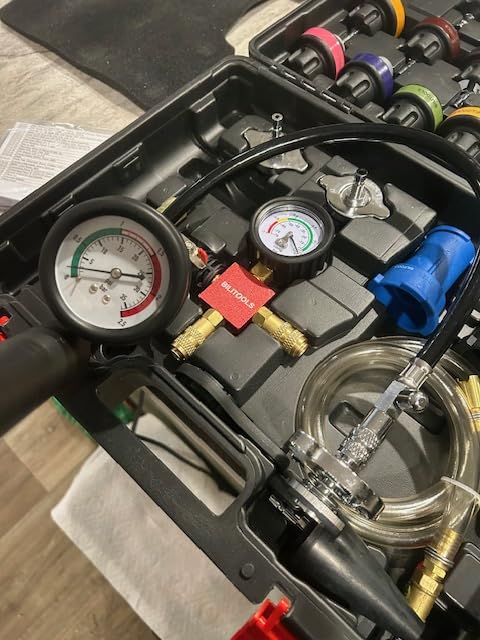
At 10.41 pounds it is a substantial case, and that is the honest trade. The weight is mostly the hand pump and the case structure, but it is a lot of gear to carry up a set of stairs into a home garage.
The vacuum refill performance is the part that varies most in owner reports, so treat it as a solid refiller with a pressure tester attached rather than a premium vacuum tool. The instructions are thinner than the parts list suggests, and a few minutes of reading pays off.
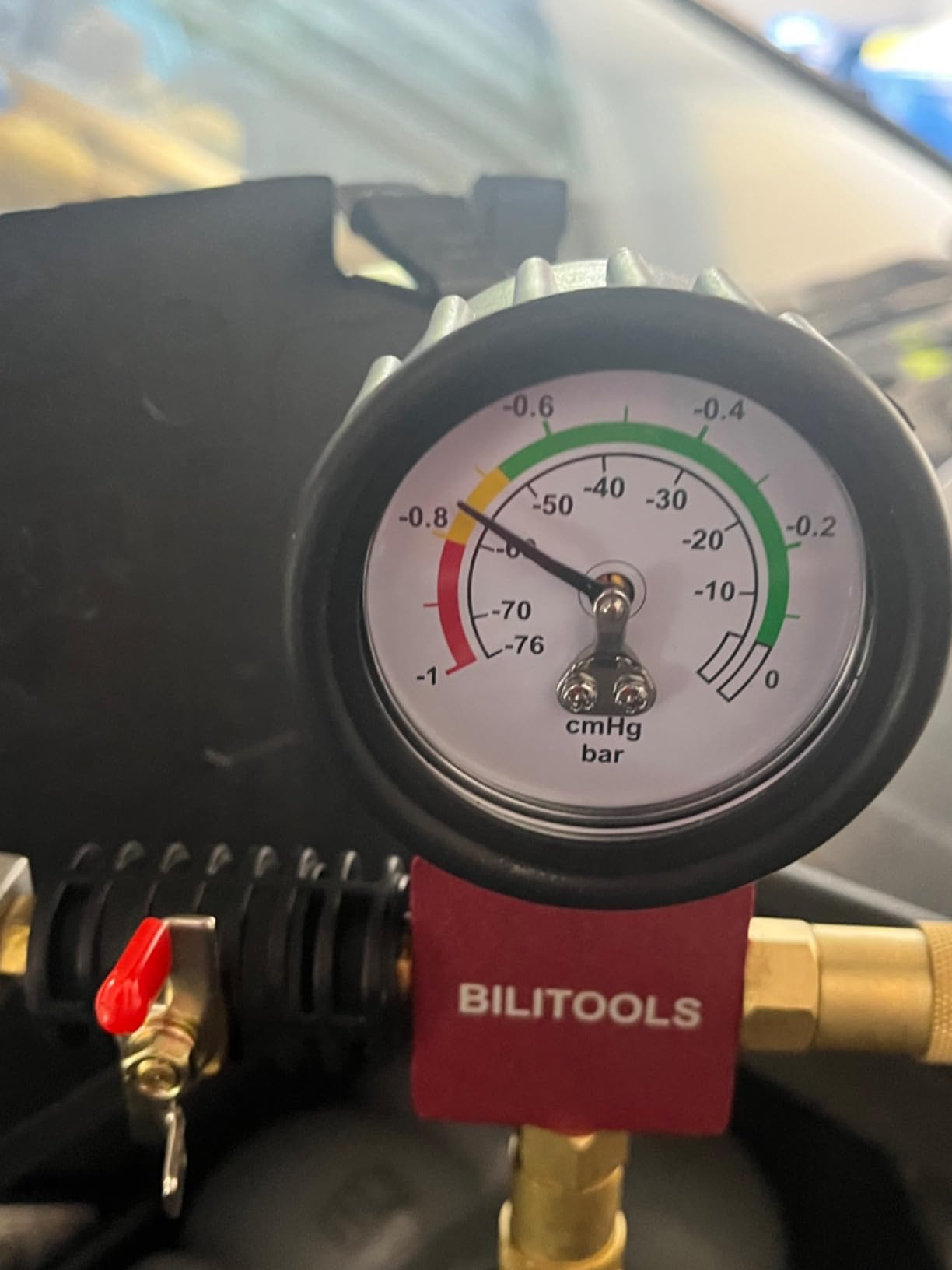
Why the metal valve is the deal
Rubber valves harden, flatten and start weeping at pressure, and a weeping vacuum valve slowly destroys the vacuum you are trying to hold. A metal valve keeps its seal through repeated temperature cycles, which in a shop means all year round.
It is the same reason to favour this kit over a cheaper combined set if you plan to use the tool commercially. The colour coded caps are a genuine time saver once the system is down.
Where it does not lead
It does not lead on vacuum strength, and a modest vacuum means a slower fill. If your priority is pulling a hard vacuum on one difficult vehicle rather than covering many vehicles, the OEMTOOLS or Robinair is the better instrument.
Adapter coverage is good but not class leading, and a few owners report fitment issues on specific vehicles. Check the cap list against what you actually service.
8. VTG VOGTEN 28-Piece Radiator Tester – Best for Adapter Coverage
VTG VOGTEN 28PCS Coolant Pressure Tester Kit,w/23 Radiator Adapters
28 pieces with 23 radiator adapters
Pressure pump with gauge reading minus 30 to 0 inHg
Vacuum purge and refill tool included
9.11 lb, 16.54 x 13.82 x 4.53 inch
Pros
- Twenty three adapters for wide compatibility
- Aluminium alloy
- rubber and nylon construction
- Includes a radiator cap wrench and thermometer
- Gauge covers vacuum and pressure in one dial
- Reinforced hose with an upgraded filling valve
Cons
- Newer brand with a shorter track record
- Plastic parts inside the pump assembly
Where the VTG VOGTEN leads is coverage. Twenty three radiator adapters, seventeen colour coded caps, three aluminium adapters and a universal adapter put more ways to make a seal in the box than anything else in this roundup, and for a technician who does not want to think about neck sizes, that is worth paying for.
The single gauge reading from minus 30 to 0 inHg handles both the vacuum pull and the pressure test, which keeps the case compact and means there is one dial to learn. The radiator cap wrench and the probe thermometer are small parts that make the kit a genuine diagnostic set rather than a refill tool with extras.
Construction is aluminium alloy with rubber and nylon, and the reinforced hose with the upgraded filling valve is the part we would inspect first after a year of service. It is a recent addition to the market, so there is less long-term evidence on it than on the older brands in this list, and that is a real difference when you are buying for a shop.
A few owners report fitment issues on specific vehicles even with this many adapters, which usually points to an unusual neck rather than a missing piece. The case is the weakest part in the set.
What this kit is built for
It is built for a mixed fleet where the deciding factor is whether you can make a seal at all. The adapter count turns a potential failed job into a two minute adjustment rather than a trip back to the shop for the right bushing.
The dual purpose gauge means one tool covers finding the leak and then refilling after the repair, and the cap wrench means you are not improvising a tool to remove a stuck cap.
Where the newer brand shows
Long term durability is unproven, and the pump assembly still contains plastic parts even though the rest of the kit is metal. If you are buying for occasional weekend use the adapter count more than compensates, and for daily commercial work a longer established brand is the safer bet.
It is also a kit rather than a dedicated tool, so it will never be the fastest way to fill one difficult vehicle. It is the fastest way to be able to handle any vehicle.
What a Coolant Flush Machine Actually Does (and What It Does Not)
A coolant flush machine, also called a coolant exchanger, connects to the radiator filler neck or the expansion tank and does one of two jobs. Either it pulls old coolant out under vacuum while pushing new coolant in from a separate tank, or it pushes coolant through the system under pressure so that old fluid leaves through a hose and new fluid enters at the radiator.
Both architectures matter for the same reason. The engine cooling system holds coolant in the radiator, the cylinder head, the block, the heater core and the expansion tank, and a simple drain at the radiator only empties the radiator. A large share of the fluid stays where it is, along with whatever corrosion product and sludge came with it.
The second job of a machine is air removal. Air pockets form at the top of the system and around the heater core, and an aerated cooling system does not transfer heat properly, which shows up as a thermostat that never fully opens and a cabin that never gets hot. Pulling a vacuum before filling is what prevents those pockets, and it is the reason a vacuum filler beats a bucket and a funnel.
What a coolant flush machine does not do is fix a leak. If the system is losing coolant through a failed head gasket, a cracked block, a bad cap or a tired water pump, the machine will flush the system perfectly and the vehicle will still lose coolant. Repair first, then flush.
It also does not clean a system that has been chemically abused. Flushing a system full of the wrong chemistry with more of the same chemistry reproduces the original problem, and separating new fluid from old fluid in separate tanks is the reason professional machines are built that way.
When You Need a Machine and When a Drain-and-Fill Is Enough
A drain-and-fill is genuinely enough in most cases, and saying otherwise would be selling you a tool you do not need. If your vehicle is inside the factory service interval, sitting on factory long-life coolant, and has never overheated, the fluid has not degraded enough to justify a machine.
A machine earns its place in three situations. The first is a high mileage vehicle that has never been flushed and has a history of overheating, where the block and heater core hold decades of corrosion product. The second is any vehicle that has just had a head gasket, radiator or water pump replaced, because the old fluid and the contamination it carried need to be out before fresh coolant goes in.
The third is a heater core that has partially blocked, which is where a flush gun earns its place instead of a filler. A cold cabin on one side at low engine speed is a heater core problem, and no amount of new coolant fixes it.
On the question of whether coolant flushes are worth it, forum consensus is more measured than the advertising. The most common complaint across r/MechanicAdvice and r/AskAMechanic threads is not that flushing is bad, it is that many services only top off. One owner reported a Subaru found with mixed coolant rather than the specified fluid, which is the exact failure a true exchange is supposed to prevent.
The second most repeated piece of advice is to use distilled water and repeat the drain until the fluid runs clear. Several owners note that once you switch to distilled water and cycle the system a few times, a heavy chemical flush is not needed at all. That verification step, clear fluid, is the test we use to judge whether a flush actually happened.
Coolant Chemistry Compatibility: OAT vs HOAT vs IAT
Chemistry matters more than most roundups admit, because the wrong coolant can gel, corrode or drop out the corrosion inhibitors that the whole system depends on. There are four families you will meet in a driveway, and mixing them is where expensive mistakes start.
OAT, or organic acid technology, is the long-life coolant most modern vehicles ship with, and it is usually coloured orange, yellow, pink or turquoise depending on the manufacturer. It lasts a long time and it does not contain the silicates that older formulations relied on, so mixing it with an older silicate coolant can leave a gel or a deposit in the heater core.
HOAT, or hybrid organic acid technology, is a mineral-based coolant with an organic acid inhibitor package, and it is common on European and Asian vehicles from the last two decades. IAT, or inorganic additive technology, is the older green or yellow formulation that most American vehicles used before OAT arrived.
Silicate-based coolant is the traditional green coolant. It is genuinely effective, it lubricates the water pump seal, and it needs more frequent changes than OAT, which is precisely why the long-life chemistry displaced it.
The practical rule is simple. Use the coolant the manufacturer specified, in the colour they specified, and do not mix families to save what is left in the bottle. If you cannot identify what is in the system, a full exchange with the correct fluid is cheaper than finding a gel block in a heater core in two years.
On the chemical flush question, which comes up constantly on this SERP, a bottle of Prestone or Blue Devil is a chelating cleaner that binds dissolved metals and suspended rust so they can be drained rather than left in the system. It is genuinely useful on a mildly contaminated system. It is not a substitute for an exchange, and pouring it into a system that already has the wrong chemistry in it simply moves the problem around.
How to Choose Tank Size, Connection Method and Power
First, be realistic about what the affordable tools here are. None of the eight on this list is a dual-tank circulator with a new coolant reservoir and a waste reservoir. Those machines start in the thousands, and they belong to a shop that is doing dozens of exchanges a week. What is on this list are vacuum fillers, pressure testers and flush guns, and for most home jobs they are the right tool.
Match the tool to the fluid volume, not the tank label. A small car cooling system holds somewhere around 3 to 4 gallons including the heater core, a midsize sedan closer to 7, and a large truck or SUV can be 10 or more. If your tool takes a container, you will need several jugs of premix to complete one exchange, and a 50/50 premix costs more than mixing your own with concentrate and distilled water.
Connection method is the next decision, and it maps to the three architectures here. A vacuum filler seals at the filler neck, pulls a vacuum and refills without bleeding. A pressure tester seals the same neck and lets you find leaks with a hand pump. A flush gun connects to a hose and blasts with air and water rather than sealing the neck at all.
Power source decides your speed. Every vacuum tool here needs shop air, and the small pancake compressor in most home garages will do the job, just more slowly. The Lisle backflush tool needs nothing but a garden hose, which makes it the easiest starting point for a first flush.
Size and weight deserve more attention than they get. Cases in this group run from 1.7 pounds to nearly 10 pounds, and the heaviest are heavy because they carry a hand pump and a full adapter set. If you are working out of a home garage with steps in the way, the lighter tools are the ones you will actually keep using.
Warranty and support are the last filter. The OTC carries a limited lifetime warranty, the Lisle carries a 30 day warranty, and the rest of the group has no stated manufacturer warranty. That difference matters if the tool earns a place in a business, and it matters less if it lives in a cupboard between uses.
Quick Buying Checklist
Run through these seven checks before you commit, and most of the wrong purchases stop at number two.
Confirm the adapter or cone range covers the neck sizes on the vehicles you actually service.
Confirm the vacuum specification, and that your compressor can hold the vacuum it claims.
Check whether the tool pulls fluid out as well as pushing it in, or only refills.
Decide whether you need a pressure test, a vacuum fill, a heater core flush, or a combination.
Check the weight and case size against where you will store and carry it.
Confirm you have a way to dispose of used coolant properly, and a supply of distilled water for the final fill.
Check the warranty term if the tool will earn a place in a business.
Two of those deserve extra weight. The water question is the one forum readers raise most often, and using tap water in a system where the owner cares about corrosion undoes part of the reason the flush was worth doing.
On disposal, used coolant is a regulated waste in most jurisdictions and should never go down a storm drain, a soil patch or a household sink. Many parts stores, service stations and recycling centres accept it at no charge, and a machine with a waste reservoir makes the handling tidy rather than a spill problem. The same careful handling of water and waste runs through our home plumbing coverage, including dual flush toilet picks for water saving and the trap machines worth fitting, where the same rule applies: know where the water goes before you send it down the drain.
Frequently Asked Questions
Are engine coolant flushes worth it?
Yes on a high mileage vehicle with a history of overheating, on any vehicle that has just had a head gasket, radiator or water pump replaced, and on a system where the heater core has partly blocked. No on a newer vehicle sitting on factory long-life coolant with no overheating history. The bigger issue is quality, not necessity, because many advertised flushes are only a top-off. Ask whether the fluid came out clear and whether distilled water was used.
What is the best coolant system flush?
A true machine exchange that separates new coolant from waste coolant in two tanks and circulates it through the system beats a drain-and-fill or a bottle of chemical cleaner. Among affordable tools, a vacuum filler that pulls a hard vacuum on the cooling system is the closest you can get, because the vacuum is what pushes fluid through the block and heater core and removes the trapped air that causes aeration.
What is a good chemical flush for coolant systems?
A chelating cleaner such as Prestone or Blue Devil is a reasonable first step on a mildly contaminated system, because it binds dissolved metals so they drain away rather than staying in the block. It is not a substitute for a full exchange, and it is not a good idea on a system that already has the wrong chemistry in it. Use the manufacturer coolant for the vehicle, not whatever is in the container.
At what mileage should I do a coolant flush?
There is no single mileage figure, because service life depends on the chemistry and the maintenance history rather than distance alone. A practical trigger is condition, not odometer. Flush when the vehicle has an overheating history, when the fluid is discoloured or rusty, when you are opening the cooling system for another repair, or when the manufacturer long-life interval is reached on a vehicle that has never been serviced.
What is the best radiator flush for removing sludge?
For sludge that has circulated, nothing beats a dedicated dual-tank coolant exchanger that pushes fluid one way and draws the waste to a separate reservoir, followed by repeat cycles until the fluid runs clear. Among affordable tools, a pressure-driven flush gun clears localised blockage in a heater core or radiator section, and a vacuum filler handles the air removal on the refill. A drain-and-fill with distilled water, repeated until clear, is the reliable manual method.
Do coolant flush machines work on any vehicle?
Most do, provided the neck size is covered by the supplied adapters and the system is cold. Electrical vehicles are the clear exception, since many have no conventional liquid cooling loop and heat pumps on hybrids use circuits that a generic machine should not be connected to. Check the manufacturer coolant specification first, and never connect a machine to a system that is hot or pressurised.
Final Recommendation
For most people reading this, the OEMTOOLS 24444 is the best coolant flush machine to start with. It pulls a real vacuum, it holds that vacuum so you can find a leak, and it refills the system without an hour of bleeding at the radiator neck. It has the deepest review history of anything on this list, which matters when you are buying a tool that has to work the first time.
Pick the OMT 33-piece kit instead if adapter coverage across mixed vehicles is your headache. Pick the OTC 6043 if the problem is a cold cabin and a scaled heater core, and the Lisle 60900 if you want the simplest job on this list with no compressor involved at all.
Whatever you choose, run the cycles until the fluid coming out is clear, fill the last stage with distilled water and a correct 50/50 premix, and confirm the full system capacity is filled rather than topped off. That verification is what separates a real coolant flush from the top-off that forum readers complain about most, and it costs nothing but a jug and some patience.
Updated for October 2026. If you would rather not buy anything at all, drain the radiator, drain the block, refill with distilled water and the correct coolant mix, and repeat until it runs clear. That manual method works, and it is the right answer if you only have one vehicle that has already been flushed twice.