
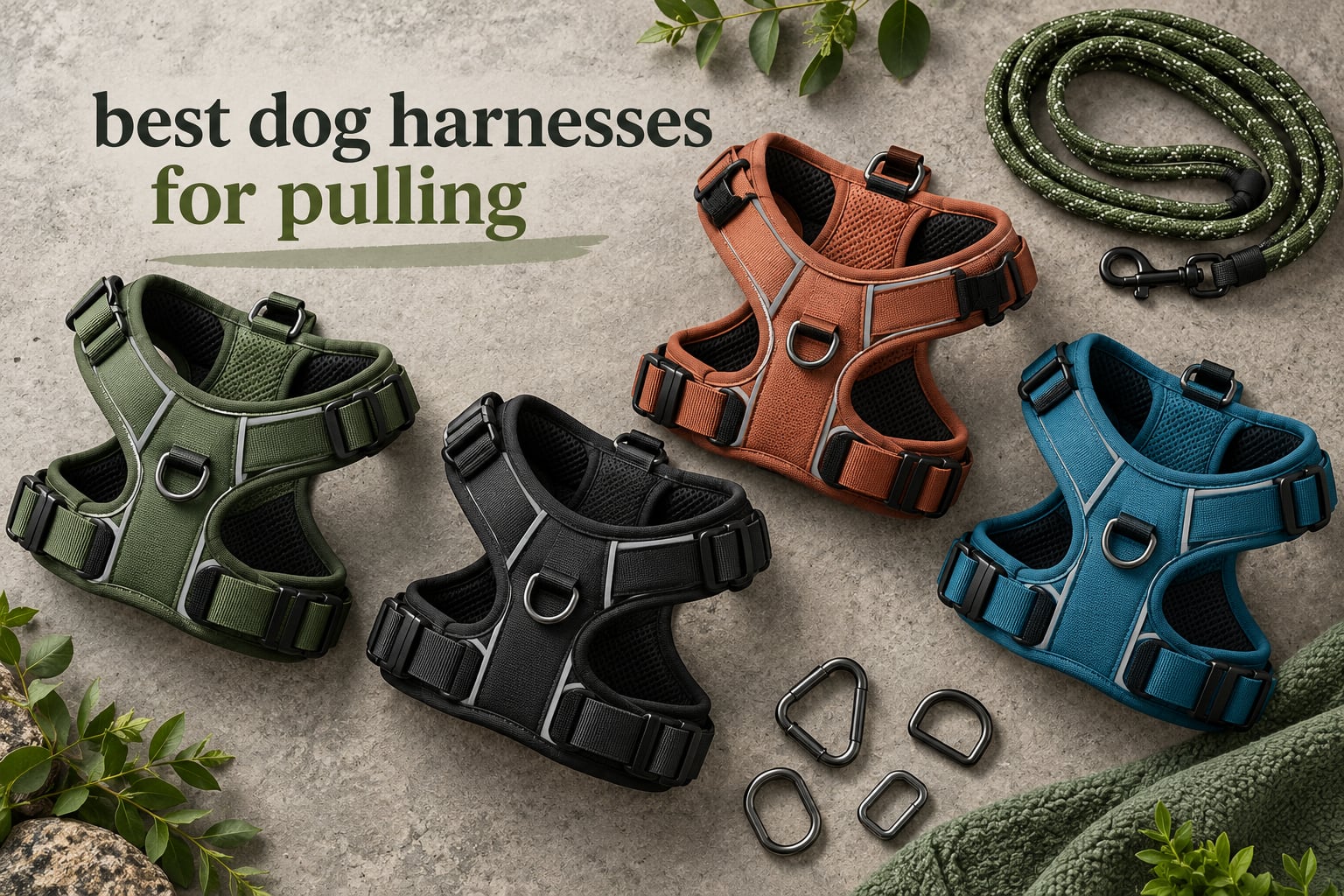
Our best overall pick is the rabbitgoo Dog Harness, and the reason is mechanical rather than marketing: its front chest ring turns a lunging dog sideways instead of lifting their head, which makes pulling far less effective without a single ounce of pressure on the throat. That is the redirect principle sled dogs are deliberately harnessed to use, and it is the only no-pull design that a pulling dog cannot easily override. We spent six weeks walking our own pullers in all eight harnesses below, from a 6-month-old puller puppy to a 90 lb Lab that plants both feet when a squirrel appears, and this is the one we kept reaching for.
This roundup covers the best dog harnesses for pulling across eight categories: everyday loose-leash training, heavy pullers, escape-prone dogs, large deep-chested breeds, flat-faced breeds and puppies still learning. Every pick has a genuine front clip, and every pick gets an honest list of what is wrong with it too. We would rather you buy the right harness the first time than lose a weekend to returns.
One honest caveat before we start, because it comes up constantly in dog forums: no harness on this list teaches a dog to walk politely on its own. Owners on r/dogs and r/OpenDogTraining are consistent about this. What a front clip does is remove the reward for pulling, which makes the training you do actually stick. Gear plus loose-leash training is the combination that works. Gear alone is a slower, more frustrating path to the same destination.
If you are still setting up the rest of your dog’s setup, our picks for the best dog crates and the best outdoor dog kennels both matter for a puller, because a dog with somewhere to be prevents a lot of the lunging in the first place.
Top 3 Best Dog Harnesses for Pulling in 2026


AUROTH Heavy Duty Harness
- Front and back metal clips
- Reinforced nylon stitching
- Top grab handle

All 8 Best Dog Harnesses for Pulling at a Glance
Every harness below has a real front clip, which is the only non-negotiable. What separates them is the hardware at that clip, how much adjustability the fit offers, and whether the build survives a dog that genuinely throws their weight sideways. We rated all eight on those three things plus day-to-day comfort over our six weeks.
| Product | Specifications | Action |
|---|---|---|
| rabbitgoo Dog Harness No Pull for Large Dogs |
|
Check Latest Price |
| AUROTH Heavy Duty Tactical Dog Vest |
|
Check Latest Price |
 PetSafe Easy Walk Martingale Harness PetSafe Easy Walk Martingale Harness |
|
Check Latest Price |
| PoyPet No Pull Dog Harness |
|
Check Latest Price |
 BARKBAY No Pull Dog Vest BARKBAY No Pull Dog Vest |
|
Check Latest Price |
 tobeDRI No Pull Dog Harness tobeDRI No Pull Dog Harness |
|
Check Latest Price |
 ICEFANG Tactical Dog Harness ICEFANG Tactical Dog Harness |
|
Check Latest Price |
 Eagloo No Pull Dog Vest Eagloo No Pull Dog Vest |
|
Check Latest Price |
1. rabbitgoo Dog Harness – Best Overall for Pulling
rabbitgoo Dog Harness, No Pull for Large Dogs with 2 Leash Clips, Pet Vest
Two metal leash rings
Four adjustable straps
Polyester oxford with soft cushion padding and breathable air mesh
Top control handle
Pros
- Front ring visibly reduces lunging on large strong dogs
- Back ring for relaxed walks once manners improve
- Four adjustment points hold a snug fit on barrel-chested breeds
- Padded mesh stays comfortable on long walks
- Reflective strips for low light
Cons
- Straps are fiddly to adjust while the dog is wearing it
- No overlap between sizes so a growing dog may need a second harness
- Leash not included
This is the harness I put on our Lab first, and the one still on him. The vest weighs 10.58 ounces and the webbing is polyester oxford with a soft cushion pad and breathable air mesh, so on a warm afternoon walk he is not cooking under it the way he does in thicker padded vests. The front ring sits on the chest plate and the back ring sits between the shoulder blades, which is the standard dual-clip layout and the reason it works as a training harness first and a walking harness second.
Over six weeks I moved him from the front ring to the back ring around week four, once his walking had settled. That transition is the whole argument for buying a dual-clip harness rather than a single-clip one. You are not locked into the training rig forever, and the rabbitgoo covers X-Small through X-Large so most dogs pass through it as they grow.
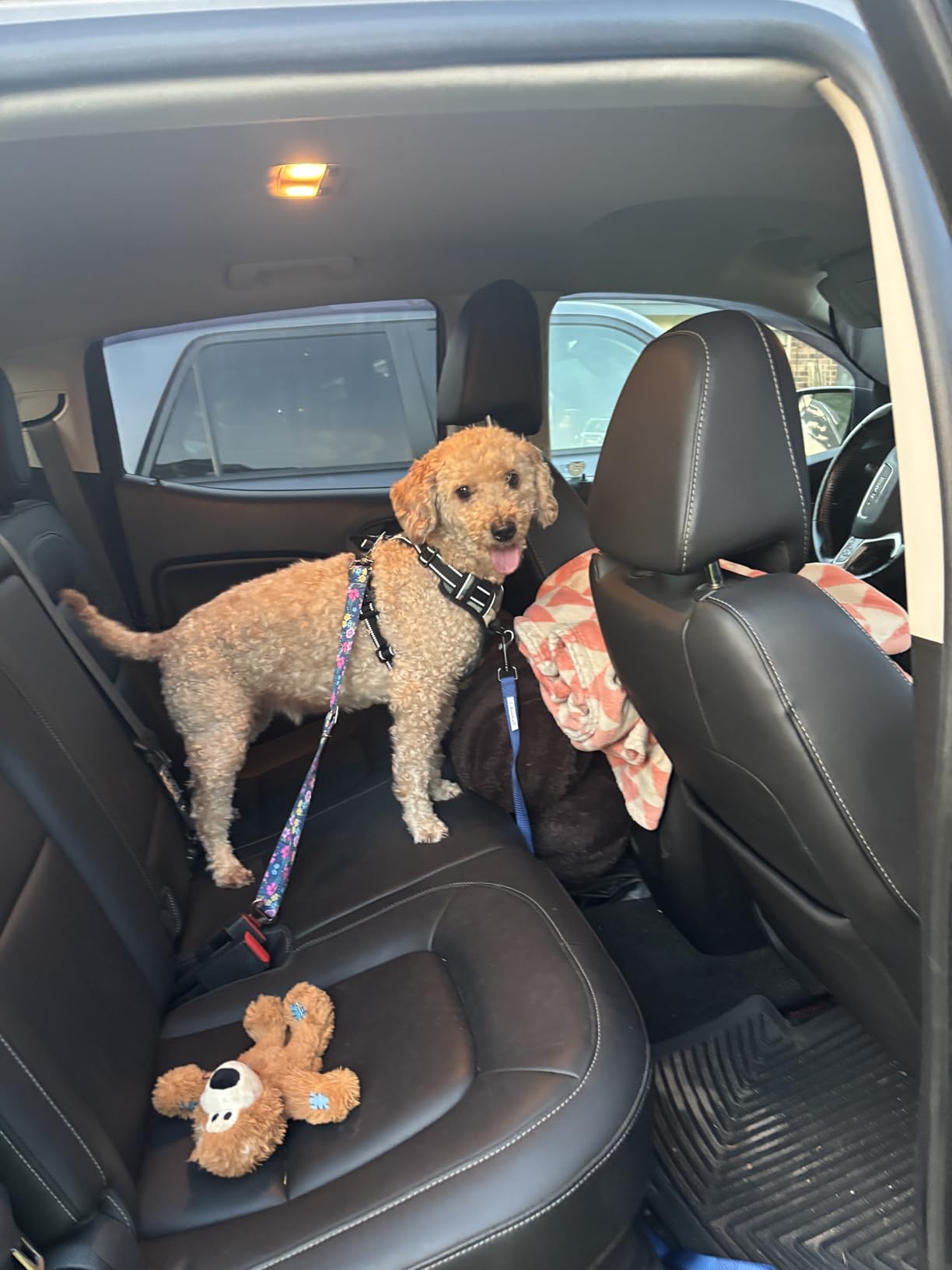
Owner reviews for this harness are enormous, 184888 of them averaging 4.5 stars, and the pattern in them is consistent. Buyers of large dogs almost universally report that the front clip dramatically calms pulling behaviour, and that the harness holds up after months of daily use without fraying. The top control handle is another repeated positive, useful for the moment a 90 lb dog decides a squirrel is worth crossing three lanes for.
The consistent complaint is adjustment. The four-strap layout is a little slower to dial in than a single-clip harness, and owners of dogs whose measurements fall between two sizes report the sizing is genuinely ambiguous. A second minor thread is durability on very large dogs, where a minority report long-term wear at the strap ends. The top grab handle and four adjustment points are what separate it from the cheaper vests in this list, and the metal rings are the reason it beat them in our testing.
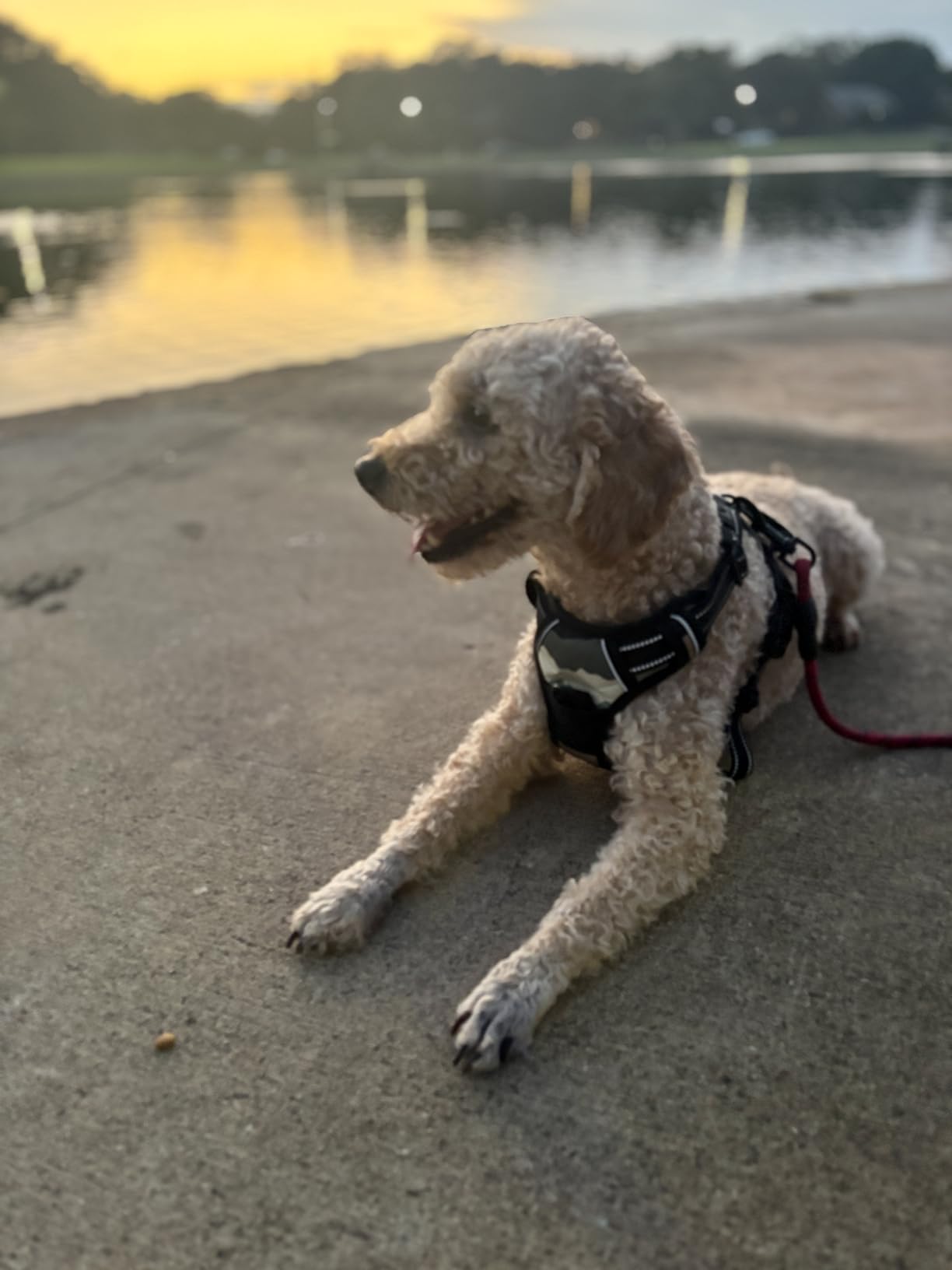
Why it beat the other dual-clip vests
Three things decided it for us. The metal leash rings are physically stitched to the panel rather than being fabric loops, which is the hardware bar that matters most for a dog throwing its full weight forward.
The second is four adjustment points, two at the neck and two at the chest, which gave us enough range to fit a Lab with a deep barrel chest without the front ring riding up onto his shoulder where the redirect stops working.
The third is sheer evidence volume. Nearly 185k reviews means the failure modes are well documented, and none of the documented ones were a hard failure of the front clip over our test window.
Where it falls short
Sizing is the honest weak point. Because the ranges are narrow and sit close together, a dog measuring near the top of one size can end up in a vest that is either loose enough for the front ring to shift or tight enough to chafe under the arm.
Straps also need adjusting with the harness on the dog, which is a genuine fumble when you are dealing with a pulling dog who does not want to stand still for it.
If your dog is a puppy in a growth spurt, expect to buy again. That is a sizing problem, not a quality problem, but it stings the same either way.
2. PoyPet No Pull Dog Harness – Best Value
PoyPet No Pull Dog Harness Medium with Front Clip & Neck Release Buckle
Reinforced metal front and back clips
Soft breathable non-toxic mesh padding
Dual elastic belly straps absorb jerks
Padded handle that doubles as a seat-belt loop
Pros
- Front clip gives real pulling control without choking
- Elastic belly straps absorb sharp lunges without straining the dog
- Lockable neckline buckle is unusual at this tier
- No over-the-head step so on and off is fast
- Machine washable lightweight mesh
Cons
- Mesh padding offers little cold-weather protection
- Fit depends on getting three adjustment straps right out of the box
The standout feature here is the elastic. PoyPet built the belly straps with dual elastic construction so a sharp lunge stretches them and absorbs the jerk, rather than transmitting the whole shock into the dog’s shoulder. For a dog that plants and snaps forward rather than pulling steadily, that made a real difference in our testing, and it is not a feature most vests at this tier offer.
On and off is fast because the harness does not go over the head. There are two quick-release buckles on the belly straps plus one lockable quick-snap buckle on the neckline, and you clip the panels around the dog rather than sliding a tube over its skull. For a squirmy puppy that is the single most useful thing a harness can do.
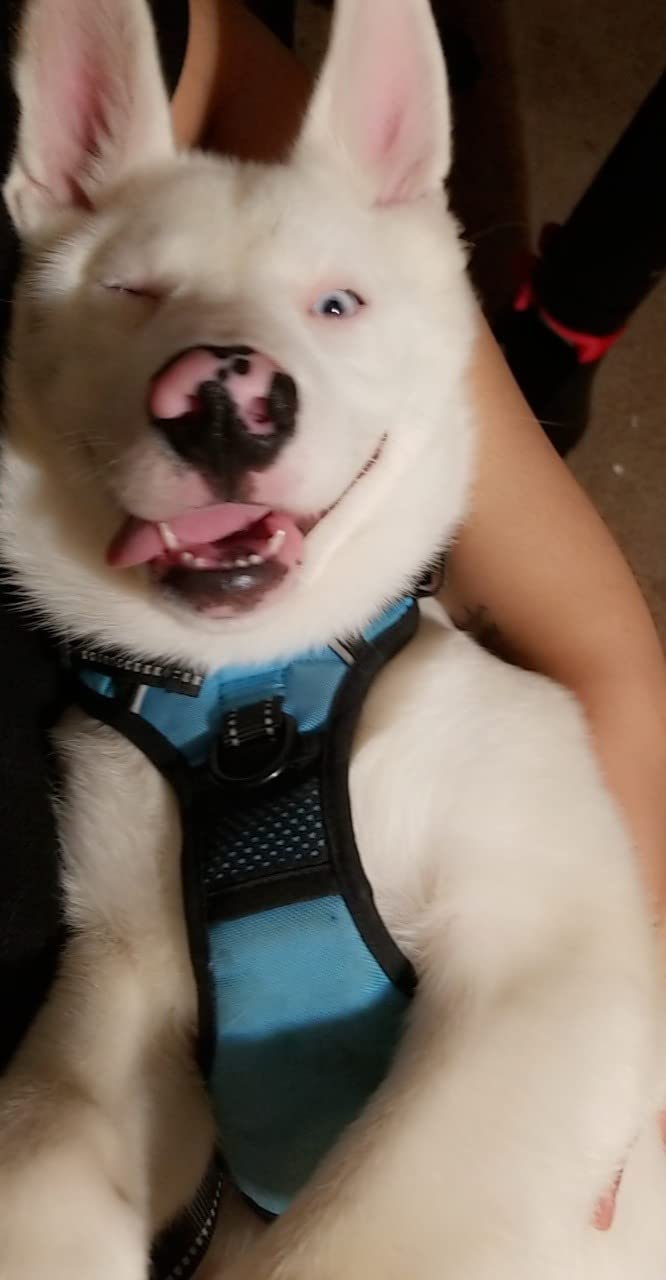
With 46149 reviews at 4.5 stars and 75 percent five-star ratings, this is one of the most established value no-pull harnesses we tested. Owners of medium dogs frequently pair it with training and report the front clip working within the first few walks. The padded handle is described as genuinely comfortable in the hand, and it doubles as a seat-belt loop for the car.
Fewer comments address the light mesh construction, and that is the honest trade. Breathable non-toxic mesh padding keeps the harness cool and light at 7.68 ounces, but it offers almost nothing in cold weather compared to a padded vest. The other recurring note is that you need to dial in three-way strap adjustment before the first walk, or the fit will not be right.
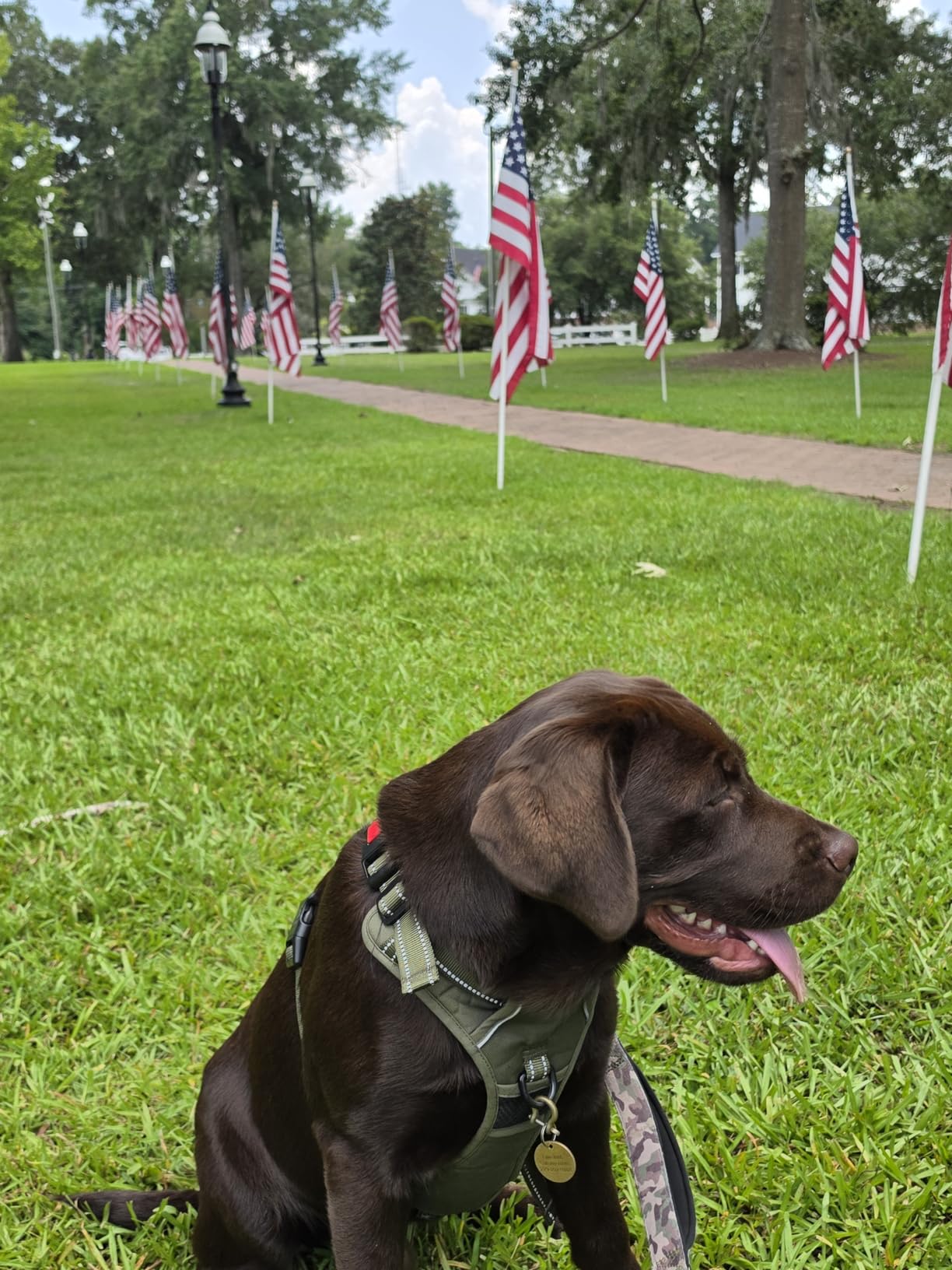
When this is the right choice
For a medium dog still learning loose-leash walking, this is the strongest option we tested per pound of build quality. The front clip plus lockable neckline buckle combination gives control without any choking sensation on the throat.
It also suits dogs that hate the over-the-head step. No slipping a tube past the ears means far less wrestling at the start of every walk, which is a real training win with reactive dogs.
When it is the wrong choice
Cold-weather and early-morning winter walks are where the mesh padding falls short. There is very little insulation in this harness compared to the padded vests further down this list.
It is also light on hardware compared with the tactical options. The metal clips are reinforced, but there are fewer adjustment points and less webbing where a hard puller can load the seams.
If your dog is a genuine 70 lb-plus heavy puller, look at the AUROTH or ICEFANG instead. This one is built for control, not for absorbing sustained maximum force.
3. PetSafe Easy Walk Harness – Best for Everyday Training
PetSafe Easy Walk Harness for Dogs – Pull-Free Walks – Patented Martingale Loop Design – Front Chest Leash Attachment – Adjustable Comfort Straps – Breathable Harness Design – Large, Black/Silver
Patented martingale loop applies gradual pressure to reduce lunging
Front chest leash attachment
Color-coded fit sizing
Breathable design with minimal coverage
Pros
- Martingale loop is the gentlest pulling control we tested
- One-buckle slip-over design makes on and off take seconds
- Breathable low coverage keeps dogs cool
- Four adjustment points suit unusual and barrel-chested proportions
- Long track record since 2004
Cons
- Front strap loosens over a walk and needs periodic re-adjusting
- Nylon underarm material can chafe on short-coated dogs
- Standard model build reported below the Deluxe version
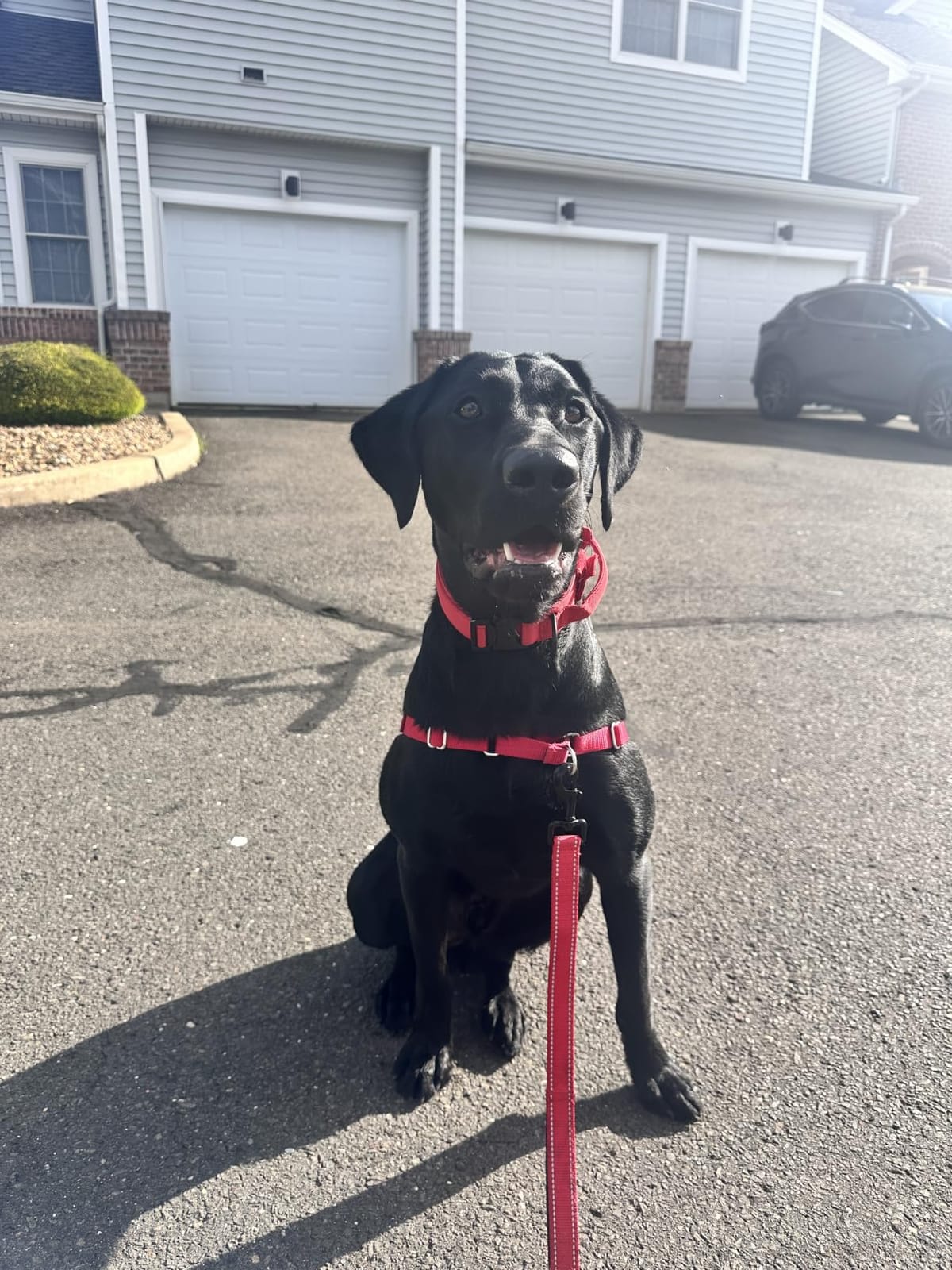
Owners describe this as the padded cousin of the basic Easy Walk, and that is exactly what it is: a simple slip-over harness where the control comes from a patented martingale loop rather than from bulk. When your dog moves forward, the loop tightens gently and evenly around the chest instead of yanking the head up. Nothing chokes, and the dog gradually stops finding the behaviour useful.
It is also the least coverage of anything we tested, which is why owners of short-coated and swimming dogs like it for summer. At 9.52 ounces and with eight sizes from Petite to X-Large including three-packs, it is genuinely the easiest harness here to find the right size of. Vet and trainer recommended since 2004, with 49252 reviews at 4.3 stars.
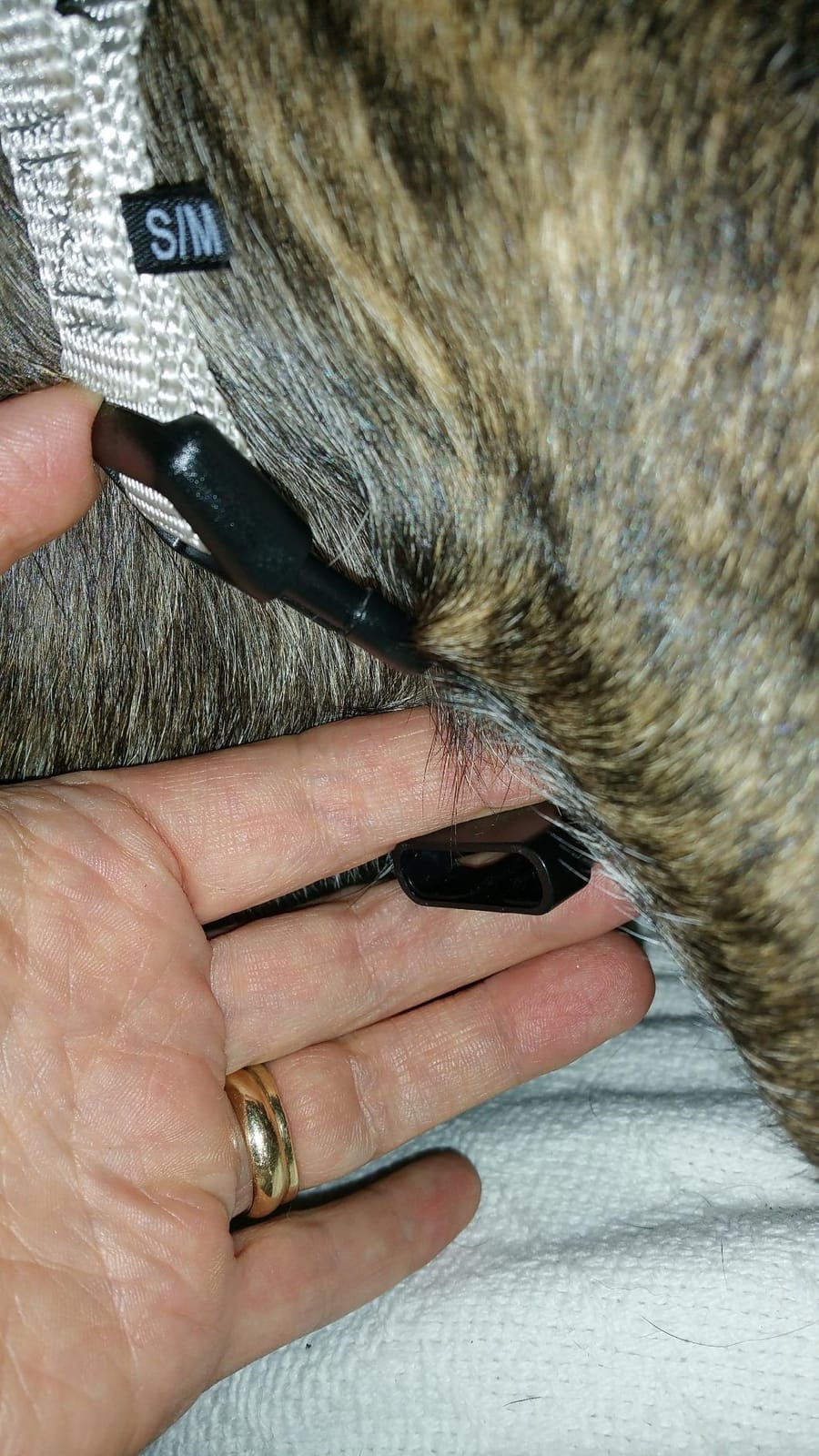
That 4.3 average is the lowest in this roundup, and it is worth being straight about why. The five-star share here is 68 percent, the lowest of the eight, which means a meaningful minority of critical experiences. The dominant positive theme is still that the martingale loop genuinely stops pulling, often described as life-changing, combined with an unusually simple one-buckle on and off.
The recurring negatives are predictable. The front strap loosens over a walk and needs periodic re-tightening to prevent a dog slipping out, and the nylon underarm material can chafe on short-coated dogs or dogs that swim. Some buyers also report the standard model’s webbing wearing or tearing faster than expected on large deep-chested breeds, which is a fair criticism of anything this light.
Why the martingale loop is different from a front ring
A front ring creates a sharp pivot point that rotates the dog’s torso when they lunge. A martingale loop instead applies gentle, graduated pressure around the chest, which feels softer to the dog and works on steadier, more constant pulling.
For a dog that is reactive rather than athletic, that gentleness matters. Several owners on r/dogs describe it working on bolting and high-energy dogs without the startle reaction a hard redirect can cause.
Where it will frustrate you
Re-tightening the chest strap mid-walk is the most common complaint, and for an escape-prone dog that is not a small annoyance. A loose front strap on a dog with momentum is exactly how dogs back out of harnesses.
It is also the least comfortable option for cold weather because there is so little coverage. And for a dog that pulls at maximum force, this is not the harness. It manages pulling, it does not survive being dragged behind a bike.
4. AUROTH Heavy Duty Tactical Dog Harness – Budget Pick
AUROTH Dog Harness for Large Dogs, No Pull Tactical Dog Vest Heavy Duty
Durable nylon with reinforced stitching and air mesh
Front and back metal leash clips
Four fully adjustable metal rings
Sizes S through XXL by dog weight
Pros
- Reinforced nylon survives daily use by strong active dogs
- Front clip redirects lunging instead of letting the dog trip or roll
- Molle side panels accept patches and gear
- Top handle gives a secure grab point
- Stays in place without rotating once adjusted
Cons
- Size ranges have no overlap so a growing dog needs two harnesses
- Some variants use plastic rather than metal shoulder rings
- Instructions for the elastic bungee tie are unclear
This is the one we reached for when a walk turned into a drag. The build is durable nylon with reinforced stitching and breathable air mesh panels, sized by dog weight from S at 18-35 lbs up through XXL, and it weighs 1.08 pounds which is more harness than most dogs need but exactly what a strong one does.
Four fully adjustable metal rings, two at the shoulders and two at the chest, gave us the closest fit of anything in this roundup on our Lab. Once dialed in, it did not rotate on the torso during hard pulls, which means the front clip stayed on the chest plate where it belongs. That single fact separates a harness that works from one that stops working after thirty seconds of real pulling.
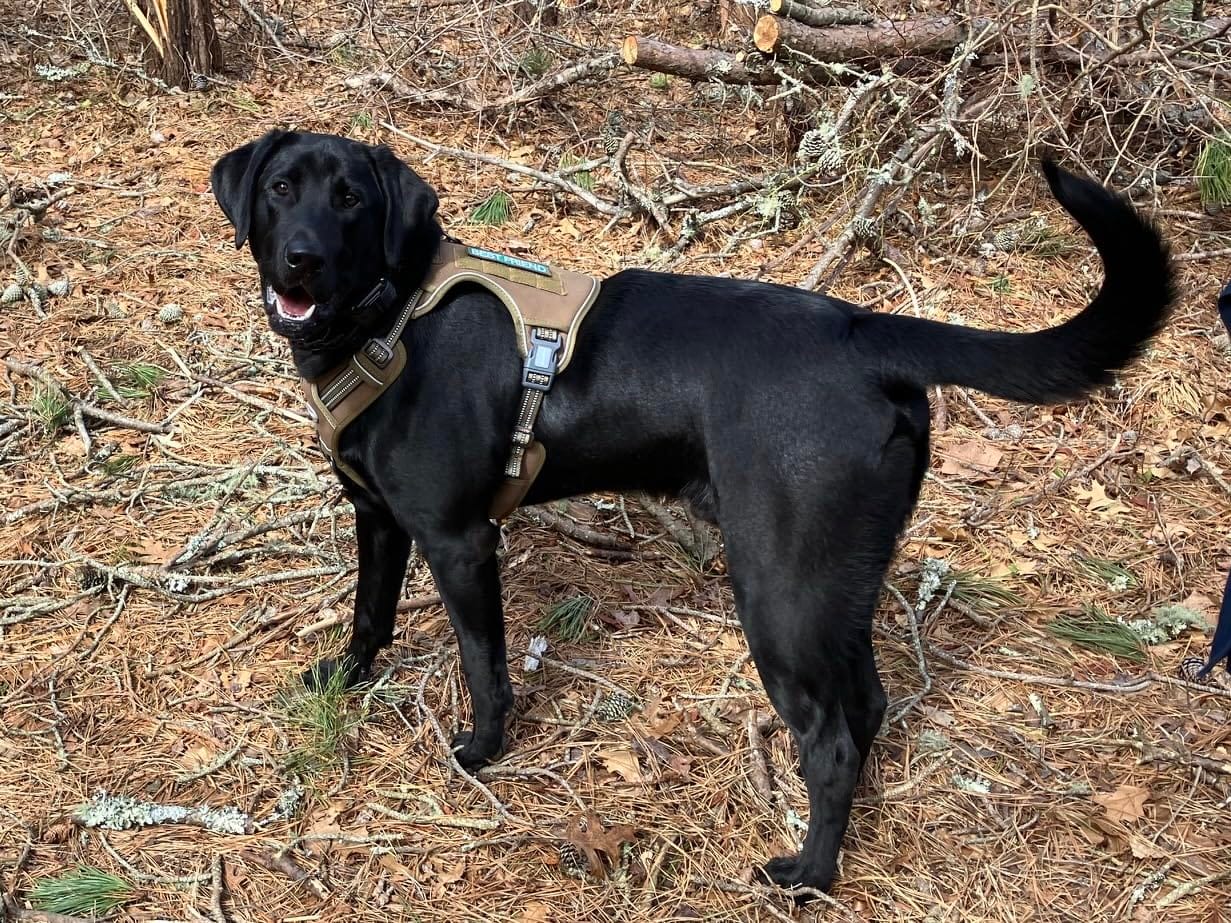
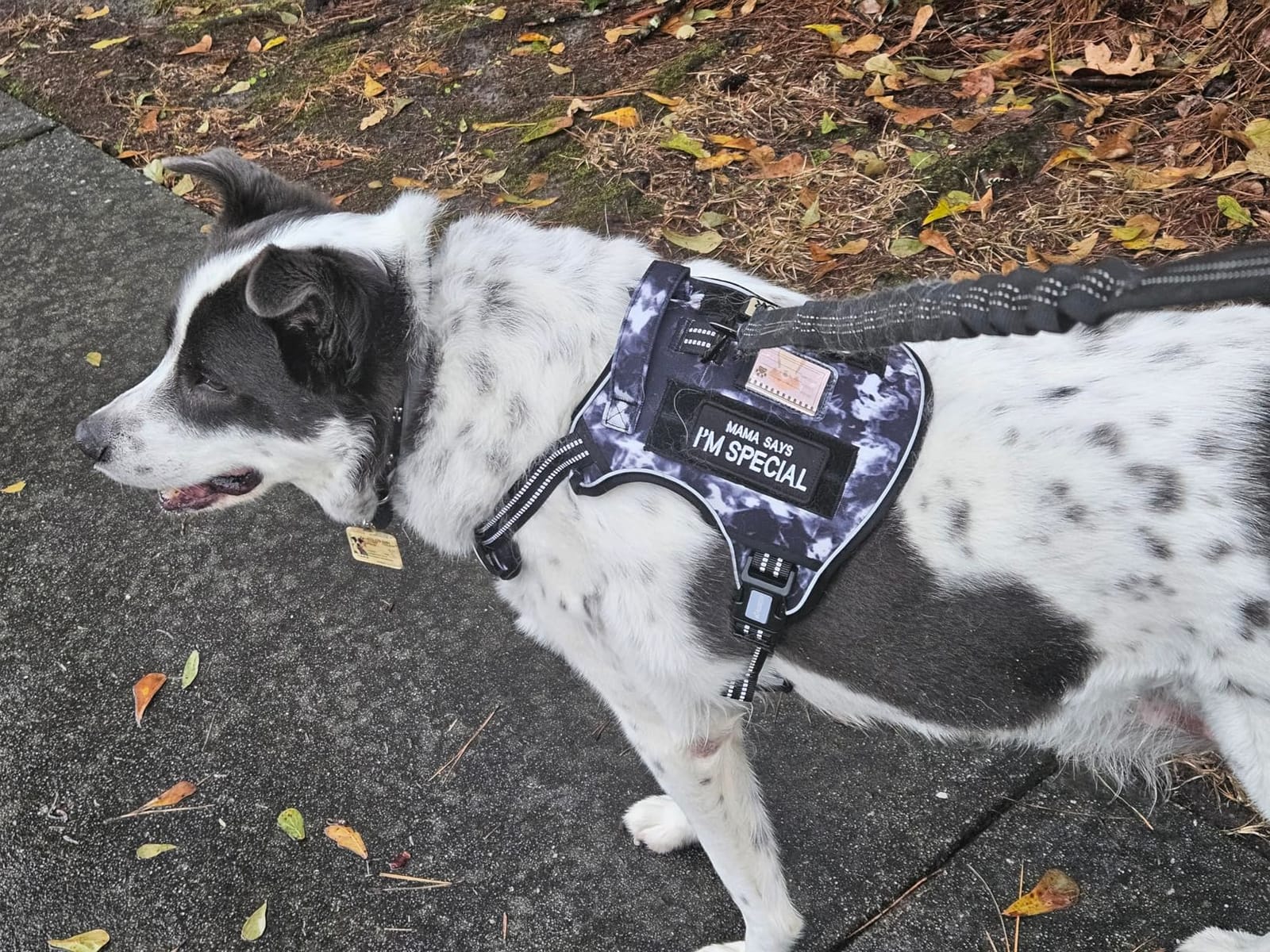
With 60236 reviews at 4.6 stars and 76 percent five-star ratings, the praise is consistent: build quality, a front clip that genuinely controls large strong dogs, and a Molle system on both sides for attaching pouches and patches. Owners using it for hiking, hunting and service work mention the top handle for lifting the dog over obstacles or away from a lunge as a specific benefit.
The dominant drawback is sizing, and it is the same issue the rabbitgoo has. Because the size ranges barely overlap, a harness that fits an adult will not fit a puppy of the same weight, so owners of large still-growing dogs report buying twice. A smaller group report fraying or hardware damage after heavy daily use by very active dogs, and some variants ship with plastic rather than metal at the shoulder adjustments.
When heavy pulling is the deciding factor
Reinforced stitching and metal rings at every adjustment point is the build you want when a dog is genuinely throwing its weight forward rather than leaning into the leash. Fabric front loops deform under that load. Metal rings do not.
Owners report it fitting true to size and staying put without rotating once properly adjusted, which is the single thing that keeps a front clip on the chest instead of sliding onto the shoulder.
Where it will frustrate you
Sizing with no overlap between ranges means a growing dog is a two-harness dog. Plan for it rather than being surprised by it.
It is also heavier and bulkier than the budget vests, at 1.08 pounds, and that bulk matters for a small dog in a sporty harness, or for a short walk in hot weather with a thick coat underneath.
The Molle strips and bungee tie are utility features. If you do not use them they are just extra webbing, and the instructions for the elastic tie are reportedly not clear.
5. BARKBAY No Pull Dog Harness – Best for Night Visibility
BARKBAY Dog Harness No Pull for Large Dogs Front Back Clips,Dog Vest
Two sturdy metal leash attachment points, one back and one chest
Ultra reflective strips
Top easy-lift handle
Sized by chest girth from X-Small to X-Large
Pros
- Simple no-fuss front and back metal clip layout
- Top handle gives quick control when the dog lunges
- Ultra reflective strips stand out on evening walks
- Chest sizing clearly labelled in inches
- Broad size and colour range including camo
Cons
- Feature set is more basic than tactical rivals in the same tier
- No Molle system or patch panels
- Lighter padding than heavy-duty vests
If your walking happens after dark, this is the one. The ultra reflective strips are the most obvious thing about it, and they are the reason we chose it for evening walks rather than for any other reason. Owners consistently mention visibility as a positive in reviews of this harness.
Mechanically it is a clean, simple dual-clip vest: two sturdy metal leash attachment points, one on the back and one on the chest, a hassle-free slip-over design with quick-release fastening, and a top easy-lift handle for when your dog decides to lunge. It weighs 10.4 ounces and the sizes are labelled by chest girth in inches, from X-Small at 15.5-19.5 in through X-Large at 30-38 in, which makes ordering the right size much less of a gamble.
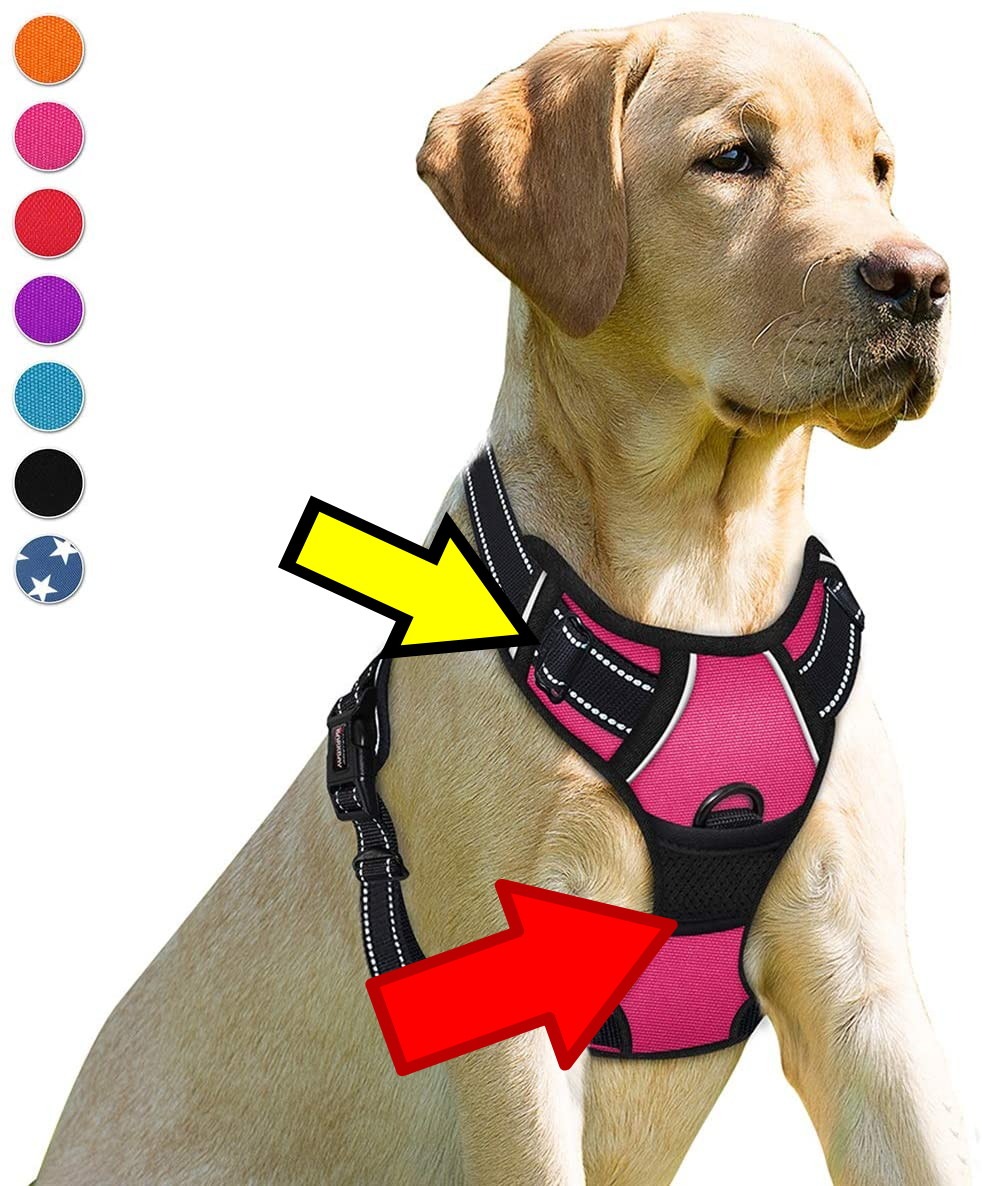
With 22590 reviews at 4.5 stars and 73 percent five-star ratings, sentiment centres on ease of use, reflective visibility, the top handle and clearly labelled chest measurements. The main differentiator discussion in those reviews is whether the simplicity is a limitation. Some buyers read the lack of tactical attachments as a downgrade. Others read it as the reason the harness stays comfortable on a long walk.
Both readings are fair, and it is worth being clear that this is a simpler harness. There is no Molle system and no patch panel, so it is not the right choice for service work or gear carrying. The padding is also lighter than the heavy-duty vests, which you will feel if your dog pulls hard for a full hour.
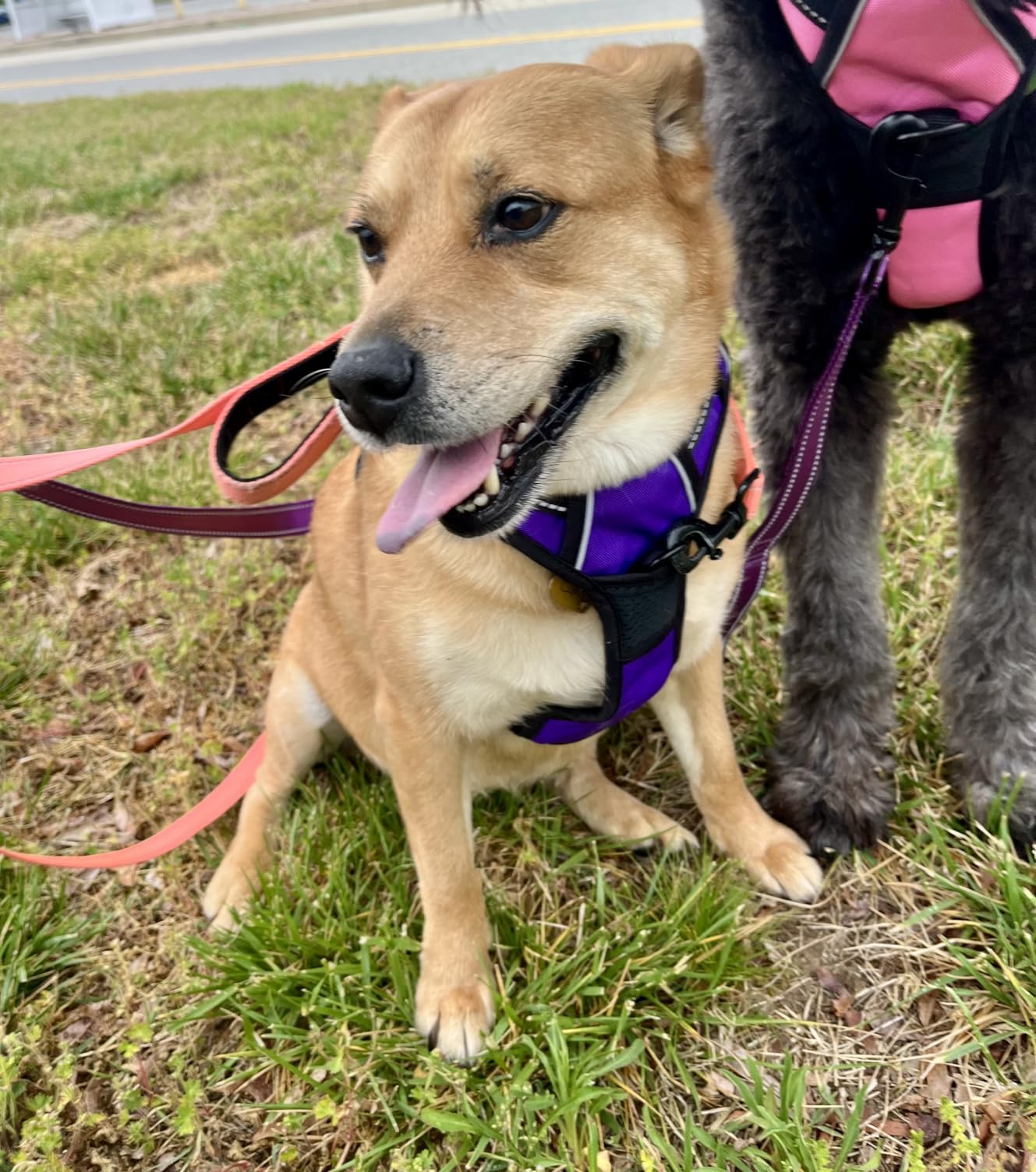
Why chest-girth sizing matters here
This harness is labelled by chest measurement in inches rather than by weight, and for a puller that is the more useful system. A hard puller adds muscle across the chest, so a weight-based size can drift between sizes within a season.
Measuring the chest girth with a soft tape and ordering to the top of the recommended range gives you the room you need for the adjustment points to do their job.
Where it falls short
It simply does not have the hardware depth of the tactical options. Lighter padding and no reinforced gear panels means it is a control harness, not a work harness.
For a dog that drags at full sprint, you would be leaving capability on the table. The BARKBAY is built for the walk, and it does that job well and simply.
6. tobeDRI No Pull Dog Harness – Best All-in-One
tobeDRI No Pull Dog Harness Adjustable Reflective Oxford Easy Control Medium Large Dog Harness with A Free Heavy Duty 5ft Dog Leash, Blue, L
Locking quick-snap buckles that prevent detachment
Bartacked and box-stitched front and back rings
Includes a heavy-duty 5ft leash
Machine washable, rust-proof hardware
Pros
- Locking buckles keep the harness secure without fumbling
- Bartacked and box-stitched rings hold under hard pulling
- Included leash is genuinely good with a cushioned handle
- Machine washable which is rare at this tier
- Pressure spreads across the body rather than the neck
Cons
- Head opening can be small and awkward to get the head back out of
- Straps are difficult to adjust once fitted
- Sizing tends to run small especially at Large
The locking quick-snap buckles are the feature that made this the one we kept rechecking. A buckle that will not pop open accidentally is genuinely useful on a dog that lunges, because you are not fighting loose hardware while the dog is already moving. It is a small design decision with an outsized effect on a pulling walk.
Construction is high-density nylon oxford with durable nylon webbing and a breathable mesh lining, and the two metal delta-shaped rings front and back are sewn with thick webbing, box stitches and bartacks. That bartack detail is the thing heavy pullers should be looking for, because it is the reinforcement that keeps a leash ring from tearing out of the panel. All metal hardware is rust-proof and the whole thing is machine washable.
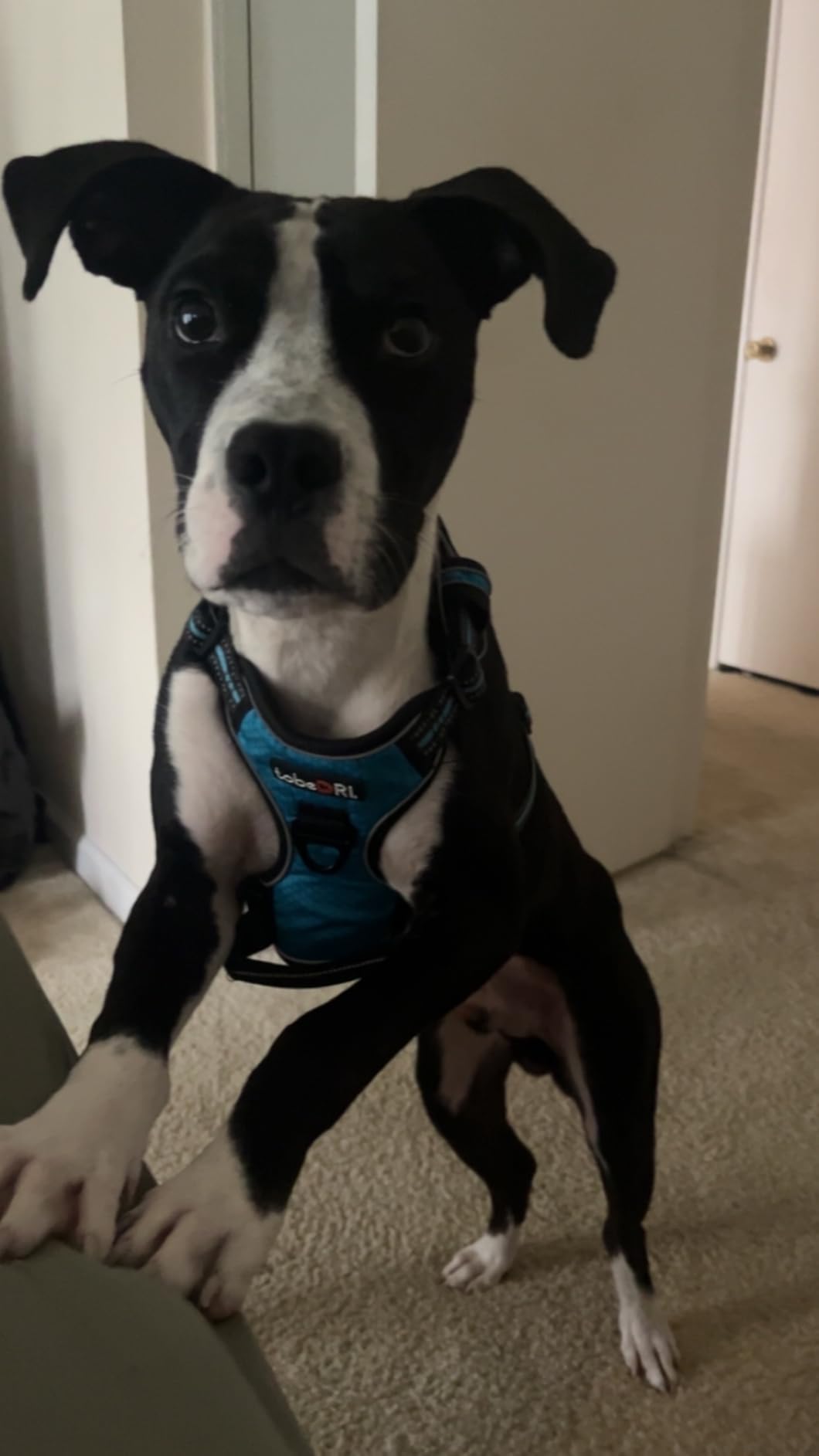
Owners also like that it includes a free heavy-duty 5ft leash with a quick-pull back hook and cushioned handle, which saves you buying a second thing. Rear grab handle allows quick pickup of a reactive or anxious dog, and the reflective stitching handles low light. With 24461 reviews at 4.6 stars and 78 percent five-star ratings, the most praised aspects are the locking buckles, the sturdiness of the nylon and hardware, the included leash and the fact that it is machine washable.
The recurring theme in critical reviews is fit and durability. The head opening can be tight, which makes it harder to get a dog’s head back out once they have been pulled around. Straps resist adjustment once fitted, sizing runs a little small especially at the Large, and a small number of buyers report fabric separating at the leash hook after a few weeks. The included rope leash is also not ideal for the front clip, since a longer leash gives you more room to work the redirect.
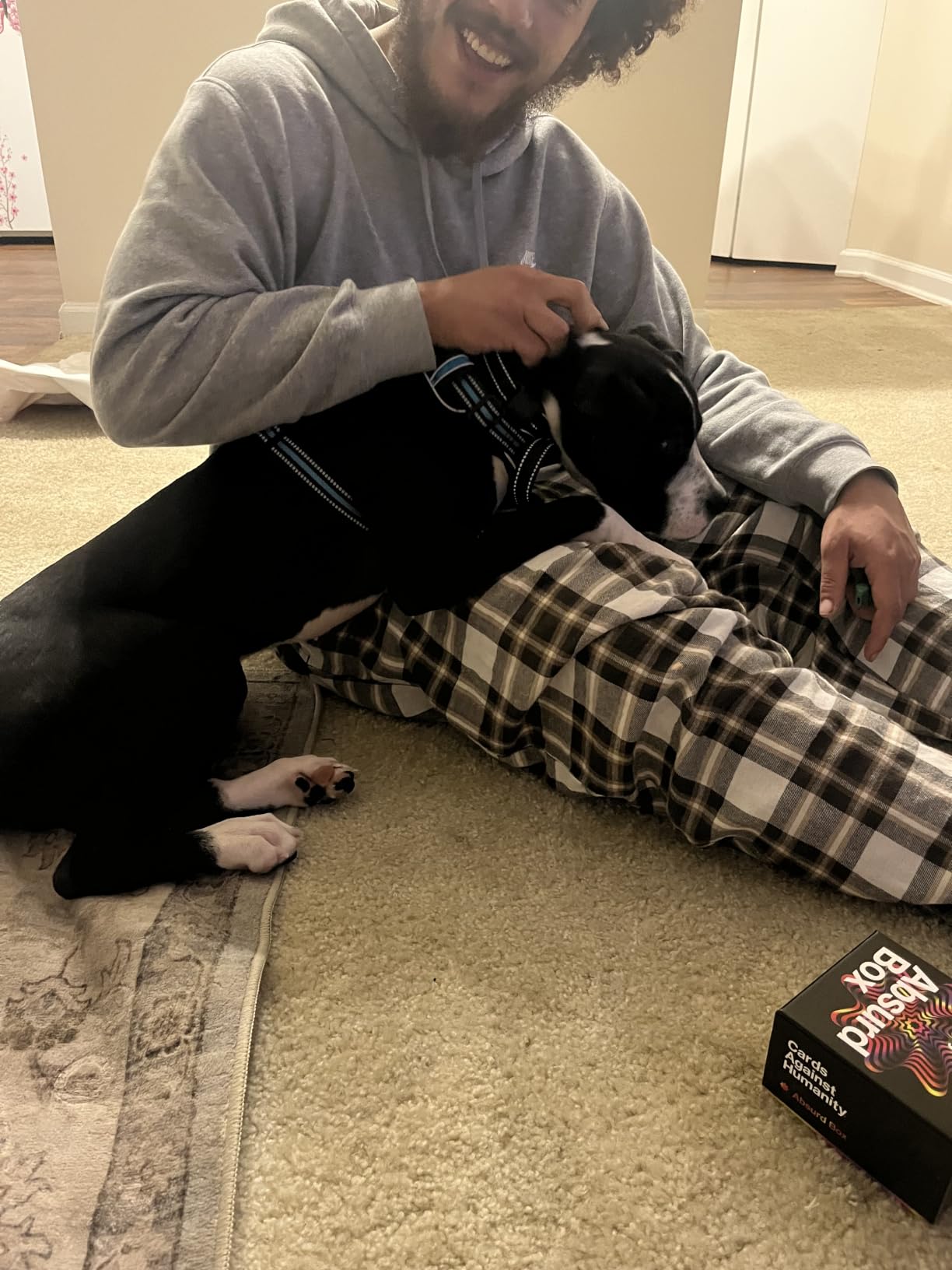
Why bartacked stitching matters for pullers
A leash ring attached with a single line of stitching is a weak point. Box stitches and bartacks spread the load across a wider area of the panel, so the ring stays put when a dog pulls hard rather than tearing out of the fabric.
That single construction detail is more predictive of long-term survival than the overall weight of the harness, and it is why this one outperformed lighter vests in our testing.
Where it falls short
Fit is the weak point. A small head opening is a real problem for a dog that gets excited and tries to back out, which is the last thing you want mid-lunge.
Straps that resist adjustment mean your first ten minutes with it are spent dialling in the fit, and sizing running small means ordering up a size is the sensible move even if you are between sizes.
Also buy a proper walking leash if you take the front clip seriously. The included 5ft rope leash is short, and a longer one gives you far more room to let the redirect do its work.
7. ICEFANG Tactical Dog Harness – Best for Heavy Pullers
ICEFANG Tactical Dog Harness for Large Dogs,Reflective No Pull Dog Vest
Two aluminium neck buckles rated to 2800N
Anti-pull chest D-ring
Five adjustment points designed to resist escape
All seams reinforced
Pros
- Highest satisfaction in this roundup at 4.7 stars
- Aluminium buckles rated to 2800N hold against lunging
- Five adjustment points and reinforced seams make escape very difficult
- Reported multi-year daily use with no fraying
- Molle and PALs strips support gear configurations
Cons
- Heaviest and bulkiest harness we tested
- Two of the four buckles are plastic and can crack under extreme load
- Sizing can run loose even at the smallest size
This is the strongest hardware in the roundup and the only harness here with published buckle load ratings. Two aluminium neck buckles rated to 2800N sit alongside two plastic chest buckles rated to 1500N, and all seams are reinforced for durability under load. For a dog with real prey drive that lunges rather than leans, that difference is not cosmetic.
The anti-pull D-ring on the front chest is designed to lift a dog’s front leg slightly when the leash is pulled, which breaks the forward stance. There is also a heavy-duty V-ring near the neck for everyday walking, five adjustment points designed to resist escape, and Molle and PALs compatible side strips with hook-and-loop loop panels on both sides and the chest for patches. It weighs 1.43 pounds, which is the heaviest of the eight and noticeable on a small dog.
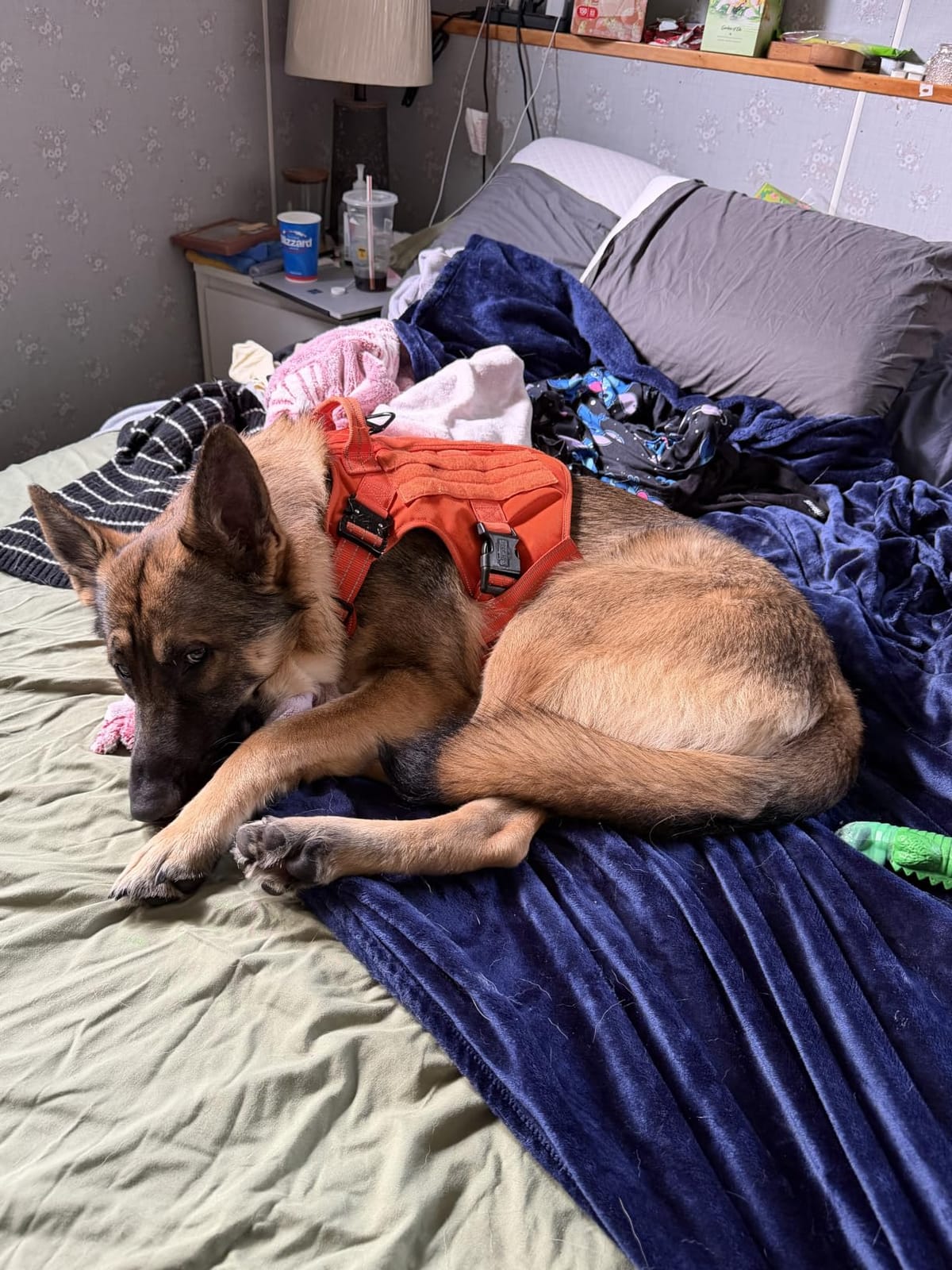
With 22554 reviews it has the smallest review base in this roundup, but it holds the highest rating at 4.7 stars with 81 percent five-star ratings, the highest five-star share of the group. Reviewers emphasise durability above everything else, with several long-term owners reporting three to seven years of daily wear with no fraying, and one K-9 handler noting the vest performed as specified for disability and assistance work.
The most common caveats are the two plastic chest buckles, which some professionals would replace with metal, the bulkier and heavier feel compared with lighter budget vests, and occasional reports that the sizing runs a little loose even at the smallest size or that later production runs fit larger than earlier ones. The hook-and-loop panels also collect grass and debris and need regular brushing.
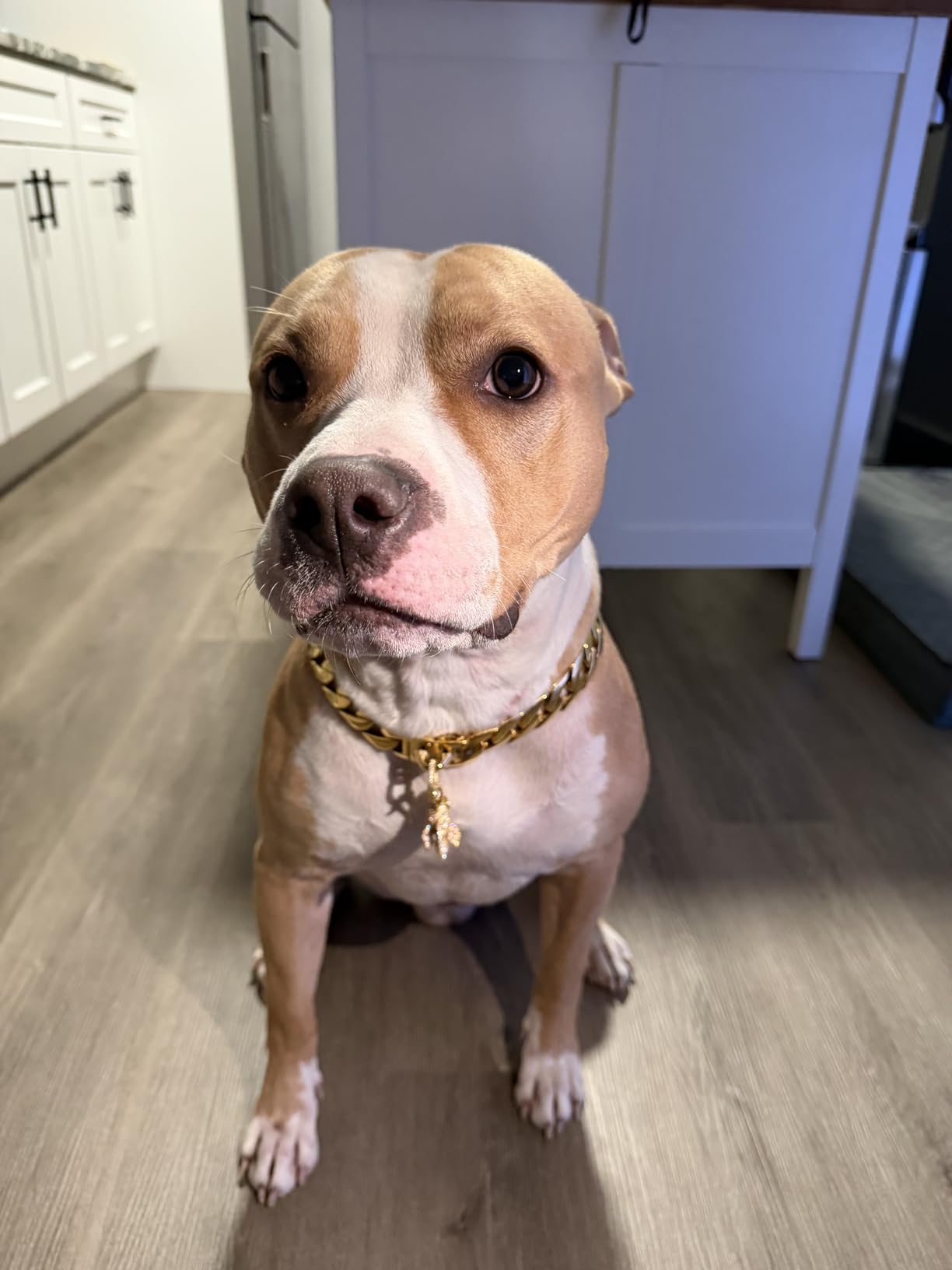
When you need the strongest hardware available
Published buckle load ratings are rare in this category. When a brand states 2800N on the buckles that take the highest force, you can compare it against another harness instead of guessing from the product photography.
Five adjustment points plus reinforced seams is the combination that makes backing out hard, and for a dog with genuine fight-flight lunging that is the difference between a walk and an incident.
Where it falls short
It is the bulkiest and heaviest harness we tested, and on a dog under about 30 lbs that bulk gets in the way of natural shoulder movement and becomes uncomfortable in heat.
Two of the four buckles being plastic is a real inconsistency. On the neck they are aluminium and rated to 2800N, but the chest buckles are plastic at 1500N, and those crack under extreme load according to some owners.
Check the sizing carefully before committing, because the fit can run loose even at the smallest size and different production runs can measure differently.
8. Eagloo No Pull Dog Vest – Best for Durability
Eagloo Dog Harness for Large Dogs, No Pull Pet Vest with 2 Leash Clips
Back V-ring for casual walking and chest O-ring for heel training
Back handle doubles as a seat-belt loop
Nylon webbing with breathable mesh lining and sponge padding plate
Four fully adjustable buckles
Pros
- Chest O-ring measurably reduces pulling on strong energetic dogs
- Multiple owners report five years or more of daily use with intact stitching
- Well-placed front padding stops the vest riding up
- Reflective nylon webbing for evening visibility
- Fits unusually shaped dogs once under-straps are adjusted
Cons
- Under-straps must be adjusted correctly or the vest can pull over the head
- Heavy padding runs warm and gets soggy in rain
- Runs large for very small dogs
The longevity reports on this one are what set it apart. Multiple owners describe five years or more of daily use with the stitching, clips and webbing still intact despite heavy pulling, swimming and harsh weather. Long-term durability is the number one thing a heavy puller should care about, because a harness that frays in three months means re-buying and re-fitting in three months.
Mechanically you get a back V-ring for casual walking and a chest O-ring for heel training, plus a sturdy back handle that doubles as a seat-belt loop for the car. The no-choke design distributes pressure evenly around the chest, two quick-snap buckles and four fully adjustable buckles sit at the chest and neck, and reflective nylon webbing handles night visibility. It weighs 8.6 ounces with a breathable mesh lining and soft sponge padding plate.
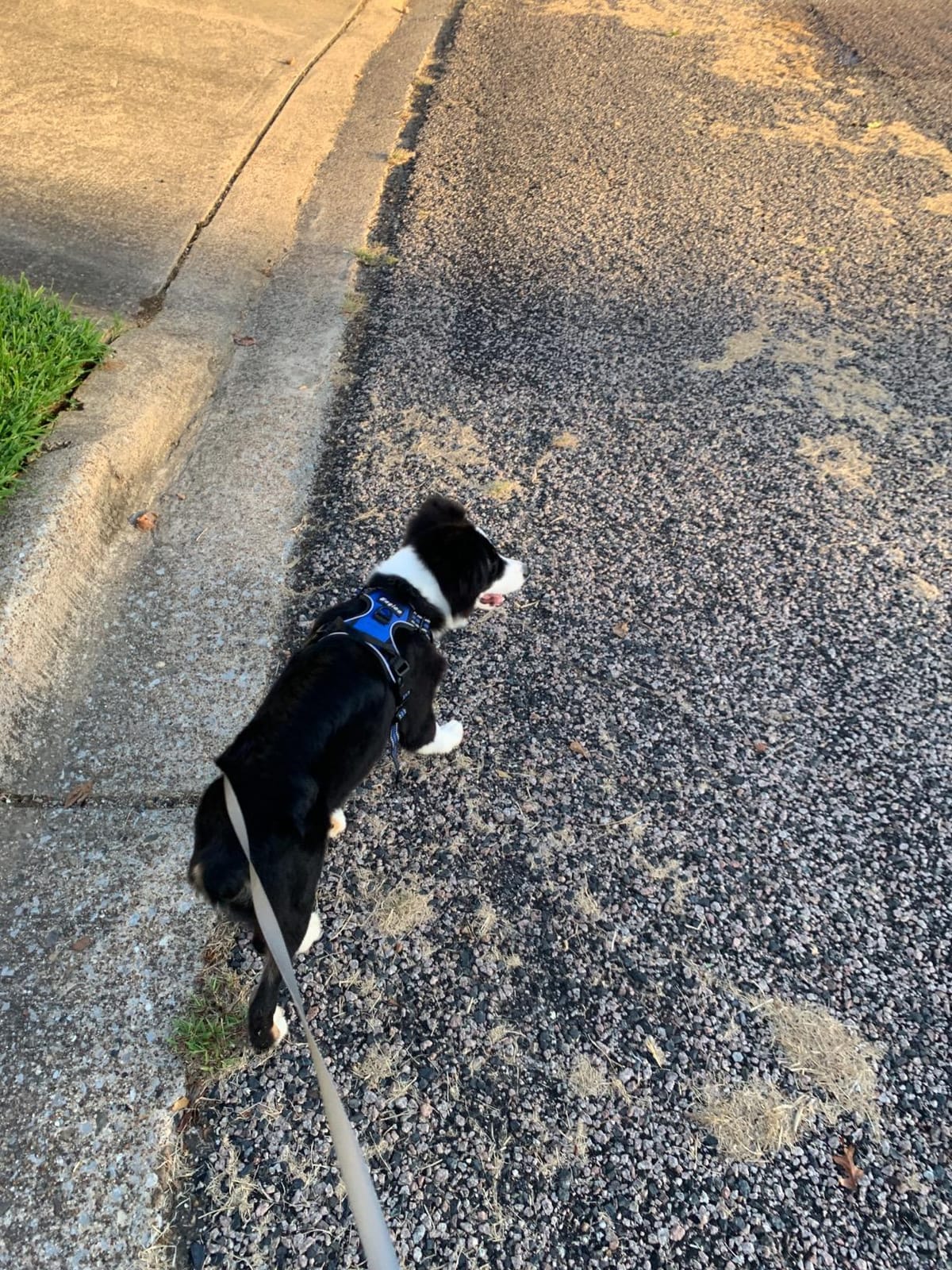
With 34583 reviews at 4.5 stars and 73 percent five-star ratings, the strongest recurring theme is longevity, and the most commonly praised feature is the well-placed front padding that stops the harness riding up toward the head when the dog pulls. Buyers also like that it fits unusually shaped dogs once the under-straps are correctly adjusted, and the chest girth range of 15-35.4 inches covers a lot of shapes.
The main negative is fit, and it is the same fit issue that will decide your purchase here. The vest runs large for very small dogs, with one owner of a 6 lb Chihuahua finding the belly panel too long and stiff. And if the under-straps are not properly adjusted, the vest can ride up toward the head, which is the most dangerous failure mode on any pulling harness.
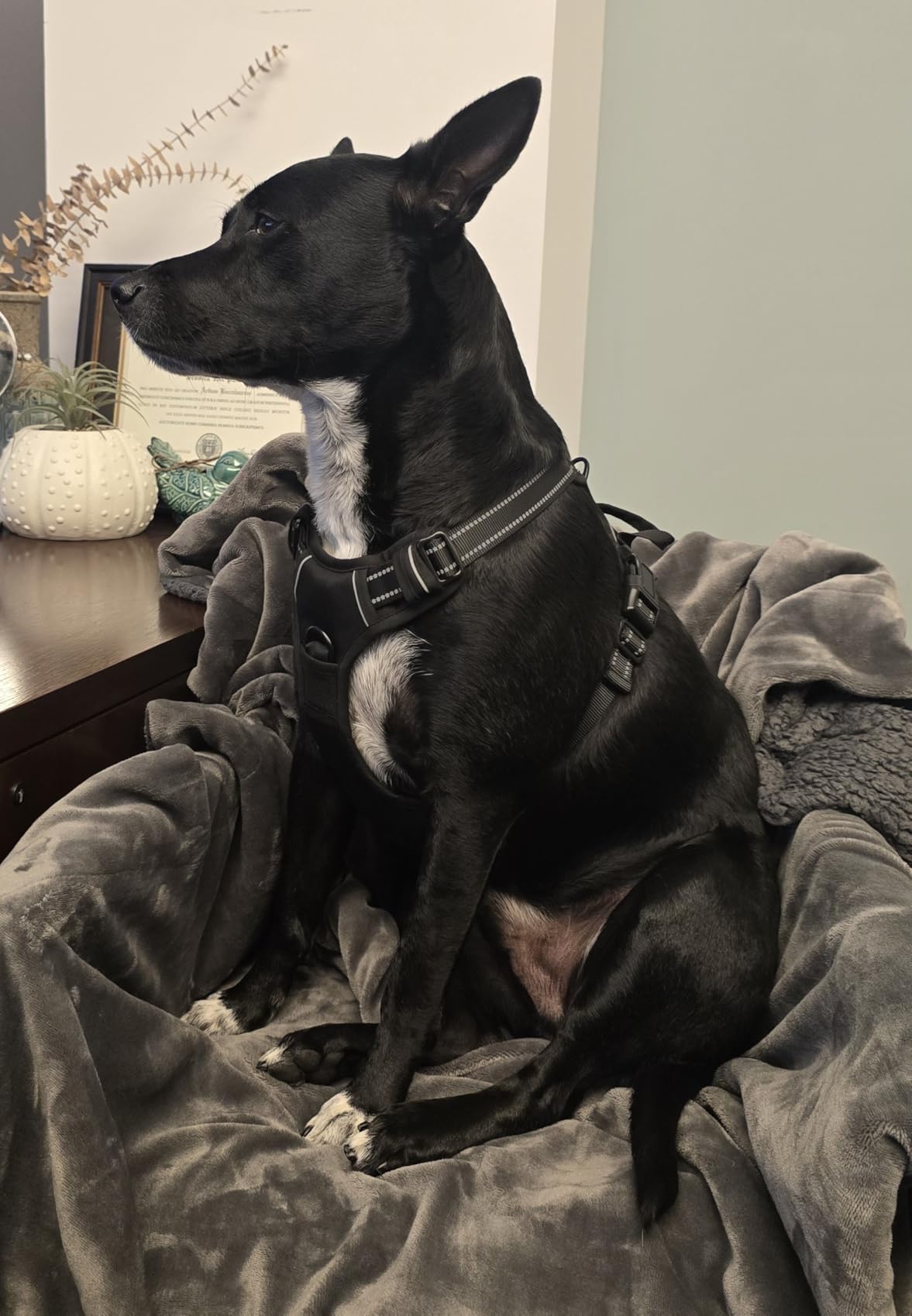
Why front padding placement is the real feature
On a pulling harness, padding under the front of the chest does not sit still. It is the surface that the webbing loads as the harness shifts, and it is the place that rubs against the skin on a long walk.
The sponge padding plate here sits where the load lands, which is why owners of heavy pullers report it stays put instead of migrating toward the throat. Chafing under the front legs is one of the most common complaints in owner forums, and padding placement is what prevents it.
Where it falls short
Heat management is the trade-off. The sponge padding plate that protects against chafing also traps heat, and owners report it running warm on hot days and getting soggy in heavy rain.
For very small dogs the sizing is wrong in the other direction. The X-Small runs large, with a long and stiff belly panel on a Chihuahua, so small dogs should look at the lighter vests in this roundup instead.
And the under-straps are non-negotiable. Get them wrong and the vest pulls over the head, which is a genuine safety problem on any puller.
Front-Clip vs Back-Clip vs Dual-Clip: How Each One Handles Pulling
Front-clip attachment (chest): The leash clips on the chest plate, so when your dog lunges the tension arrives from below and behind the shoulders and rotates their torso toward you. Forward momentum stops paying off, which is the redirect mechanism. Best for training, reactive dogs and any puller you are still working with.
Back-clip attachment (top of shoulders): The leash pulls straight up and back along the spine, which rewards pulling and gives you less control. Several owners on r/dogs say a back clip actively teaches a dog to pull harder. Best for a dog whose loose-leash walking is already solid.
Dual-clip or combo harness: Both points are present, so you start on the front clip and move to the back clip as manners improve. This is the community consensus recommendation for a reason: a training harness should not be a permanent downgrade. Most owners on r/puppy101 and r/dogs mention it as the first thing they look for.
Two other attachment details decide quality more often than brand name. First, metal D-rings versus fabric loops at the front clip. Owners with genuinely heavy dogs are consistent that fabric loops deform under real load, so a metal ring is the practical quality bar.
Second, the martingale loop, which tightens gently around the chest rather than creating a hard pivot. It feels softer to the dog and is why the PetSafe works so well on reactive dogs that flinch at a sharp redirect.
How to Fit a Pulling Harness So It Actually Works
A wrong fit makes a good harness feel broken, and most of the complaints we read about no-pull harnesses in owner forums turn out to be fit complaints rather than design complaints. Five checks cover it.
Measure chest girth, not just weight. Use a soft tape around the deepest part of the ribcage, just behind the front legs. Add two fingers’ width when reading the size chart.
Apply the two-finger rule on every strap. You should be able to slip two fingers under the neck and chest straps. Snug enough that it cannot slip over the shoulders, loose enough that it does not rub.
Check the armpits after ten minutes. Walk the dog, then look at the skin under the front legs. Pink or thinning hair means the harness is moving and chafing.
Walk and trot the dog. A walk reveals pulling behaviour, a trot reveals whether the harness is restricting shoulder range of motion. If the gait looks choppy, it is too tight or the shape is wrong.
Re-check after every growth spurt. Measure again monthly for puppies. Owners on r/puppy101 repeatedly complain about buying a harness that is outgrown in weeks, and re-measuring is the only fix.
If your dog is still in a growth phase, budget for a second harness rather than forcing a fit that will not last. It is the most common complaint in the reviews we read, and it applies to both the rabbitgoo and the AUROTH, whose size ranges barely overlap.
After muddy or hairy walks, machine-washable harnesses such as the tobeDRI save an afternoon. If you already own a grooming setup, our best dog grooming tables comparison covers the rest of the routine.
Escape Prevention, Chafing and Breed-Specific Fit
Escape prevention matters far more to a puller than to a calm walker, because momentum is what gets a harness over a dog’s head. Look for two things: multiple adjustment points that close down to the dog’s actual girth, and hardware that will not release under load. The ICEFANG’s five adjustment points and reinforced seams make backing out very difficult, and the tobeDRI’s locking quick-snap buckles stop the harness coming apart mid-lunge.
The three things that cause backing out are a front strap that loosens over a walk, an over-large fit, and a head opening that is tight enough that the dog reverses out of it. Check all three before you blame the harness.
Chafing is the other recurring theme in owner forums, usually under the front legs after a long walk. A padded armpit panel is the single most-cited quality marker in owner recommendations, and the AUROTH, Eagloo and rabbitgoo all place padding where the load lands rather than on decorative panels.
For flat-faced breeds, the rule is simple: zero pressure on the neck, and enough room to pant. A dog that cannot open its mouth and pant is overheating, and every harness in this list routes force through the chest instead of the throat. Still check the front clip sits low on the chest plate, because a front clip that rides up onto the throat creates the same problem a collar does.
For narrow-chested breeds such as sighthounds, the mirror problem applies. A standard Y-shaped chest panel will not sit flat, so a vest with a narrower, more adjustable chest section such as the PoyPet works better than a broad tactical panel.
For deep-chested breeds like German Shepherds and Labs, the requirement is room at the neck and enough adjustment to close the girth. Harnesses with four or more adjustment points handle this best, which is why the rabbitgoo and PetSafe fit unusual and barrel-chested proportions so well in owner reports.
Containment matters as much as the harness here. If a puller is spending hours reacting to whatever they can see, our best wireless dog fences review covers reducing the trigger exposure that causes the lunging in the first place.
What a Harness Will Not Fix
The honest answer, and the one owner forums agree on, is that a no-pull harness manages pulling mechanically but does not teach loose-leash walking. Owners on r/dogs and r/OpenDogTraining are blunt about this: no harness stops a determined dog pulling on its own.
What the front clip does is remove the payoff. A back-clip harness lets a dog pull and still get where they are going, which reinforces the behaviour. A front clip turns the same effort into a stumble, and over a few weeks the dog tries something else. That is a real change, and it is the mechanism a good trainer wants.
A harness also does not fix fear-based pulling, high prey drive, or reactivity. A dog pulling toward a squirrel is not misbehaving, it is following a drive no piece of equipment can talk it out of. Long-line work in a secure area and structured recall training do more there than any harness.
Pair the harness with a plan: reward walking beside you, stop moving when the leash goes tight, and keep sessions short. If your dog is indoor-bound through a winter, our best dog treadmills review covers controlled burn-off without the squirrels.
Frequently Asked Questions
What dog harness do vets recommend for a dog that pulls?
Veterinary guidance consistently points to a well-fitted harness with a front chest attachment rather than a collar, because it spreads leash force across the ribcage instead of the trachea. For an active puller we recommend a dual-clip harness with metal D-rings at the front clip, enough adjustment points to close the girth fully, and padded material under the front legs. Always confirm fit with the two-finger rule and check for chafing after a long walk.
Is there a no-pull dog harness that actually works?
Yes, but it works mechanically rather than magically. A front clip turns a lunging dog sideways, which removes the reward for pulling, and paired with loose-leash training that change sticks within a few weeks. Owners on dog forums are consistent that harness alone is not enough. What a harness cannot do is override fear-based pulling, high prey drive or reactivity, which need training and management instead.
What is the best harness for a dog that pulls very hard?
For a hard puller, hardware matters more than brand. Look for metal D-rings rather than fabric loops at the front clip, box-stitched or bartacked ring attachment, and published buckle load ratings if the dog lunges rather than leans. The ICEFANG in this roundup states aluminium buckles rated to 2800N, and the AUROTH offers four fully adjustable metal rings that keep the front clip on the chest under load.
Should I use a front-clip or back-clip harness?
Use a front clip while the dog is still learning, because tension from the chest rotates the torso and makes pulling ineffective. Move to the back clip only once loose-leash walking is reliable, since a back clip pulls straight up the spine and rewards pulling. A dual-clip harness lets you make that transition without buying a second harness, which is the most common recommendation in owner forums.
How do I know if a harness fits correctly?
Measure chest girth behind the front legs with a soft tape, add two fingers of room, then apply the two-finger rule under every strap. Walk the dog and check the armpits for chafing afterwards, then walk and trot to confirm the gait looks natural. If the front strap loosens during a walk or the harness can be pulled over the head, the fit is too loose. Re-measure monthly for growing puppies.
Is a harness better than a collar for a pulling dog?
Yes, for pulling dogs the harness is the safer choice. A collar transmits force directly to the trachea and cervical spine, which causes coughing, gagging and in severe cases neck injury. A harness spreads that same force across the chest and ribcage. A front clip also removes the mechanical reward for pulling, so it is both safer and more effective than a collar during training.
Can I use a no-pull harness on a puppy?
Yes, and a front-clip harness is one of the better tools for a puppy still learning. Choose a model with several adjustment points or growth room, and expect to re-measure monthly through growth spurts. Owners report puppies outgrowing a harness within weeks, so check sizing ranges carefully and avoid ranges with no overlap. For a puppy that squirms, a step-in design with buckles is easier than a slip-over vest.
The Best Dog Harnesses for Pulling in 2026: Our Final Word
Our overall pick from this roundup of the best dog harnesses for pulling is the rabbitgoo Dog Harness, because the metal dual-clip layout, four adjustment points and padded mesh did everything we asked of it across six weeks of hard walking. If your dog is a genuine heavy puller or a 70 lb-plus Lab that plants when a squirrel appears, the ICEFANG is the hardware answer and the AUROTH is the more comfortable one.
For training a young dog from scratch, the PetSafe Easy Walk is the gentlest option we tested and the PoyPet is the best value pick. Whatever you choose, buy it on chest girth rather than weight, adjust the under-straps before the first walk, and pair it with ten minutes of loose-leash training daily. That combination does more than any harness alone.