
The best electric tankless water heaters deliver hot water only when a tap opens, so you are not paying to keep 40 or 50 gallons warm all day. I like that space-saving approach, but electrical demand is the deciding issue: some whole-house units can draw as much as 114 amps, and a capable heater is useless if your service panel and wiring cannot support it.
Our team compared eight models using their listed kW, GPM, circuit requirements, controls, warranty coverage, and feedback patterns. I also treated cold groundwater and hard water as first-class sizing factors because both can turn a promising specification into a disappointing shower.
This roundup covers compact point-of-use heaters through 24–27 kW whole-house models. My overall recommendation is the Rheem RTEX-24 for high demand, while the Rheem RTEX-18 and EcoSmart ECO 11 make more sense when electrical capacity or household demand is lower.
For most homeowners, an electric tankless water heater is worth considering when you can satisfy three conditions: enough electrical service, enough flow at the coldest incoming-water temperature, and a plan to manage scale. It wastes less standby energy and frees floor space, but it does not automatically lower utility bills if every cold morning requires a costly panel upgrade.
Top 3 Picks for Best Electric Tankless Water Heaters in 2026
Best Electric Tankless Water Heaters in October
| Product | Specifications | Action |
|---|---|---|
 EcoSmart ECO 11 EcoSmart ECO 11 |
|
Check Latest Price |
 Rheem RTEX-18 Rheem RTEX-18 |
|
Check Latest Price |
 EcoSmart ECO 18 EcoSmart ECO 18 |
|
Check Latest Price |
 Rheem RTEX-13 Rheem RTEX-13 |
|
Check Latest Price |
 Rheem RTEX-24 Rheem RTEX-24 |
|
Check Latest Price |
 EcoSmart ECO 24 EcoSmart ECO 24 |
|
Check Latest Price |
 ThermoMate ET270 ThermoMate ET270 |
|
Check Latest Price |
 Westinghouse 18 kW Westinghouse 18 kW |
|
Check Latest Price |
1. EcoSmart ECO 11 — Best Compact Point-of-Use Pick
EcoSmart ECO 11 Electric Tankless Water Heater, 13KW at 240 Volts with Patented Self Modulating Technology
13 kW
Up to 3.1 GPM
60A circuit
Lifetime component warranty
Pros
- Very compact body
- Digital temperature control
- 99% thermal efficiency
- Endless on-demand hot water
Cons
- Not a cold-climate whole-house heater
- Requires 60A wiring
- Limited simultaneous-fixture capacity
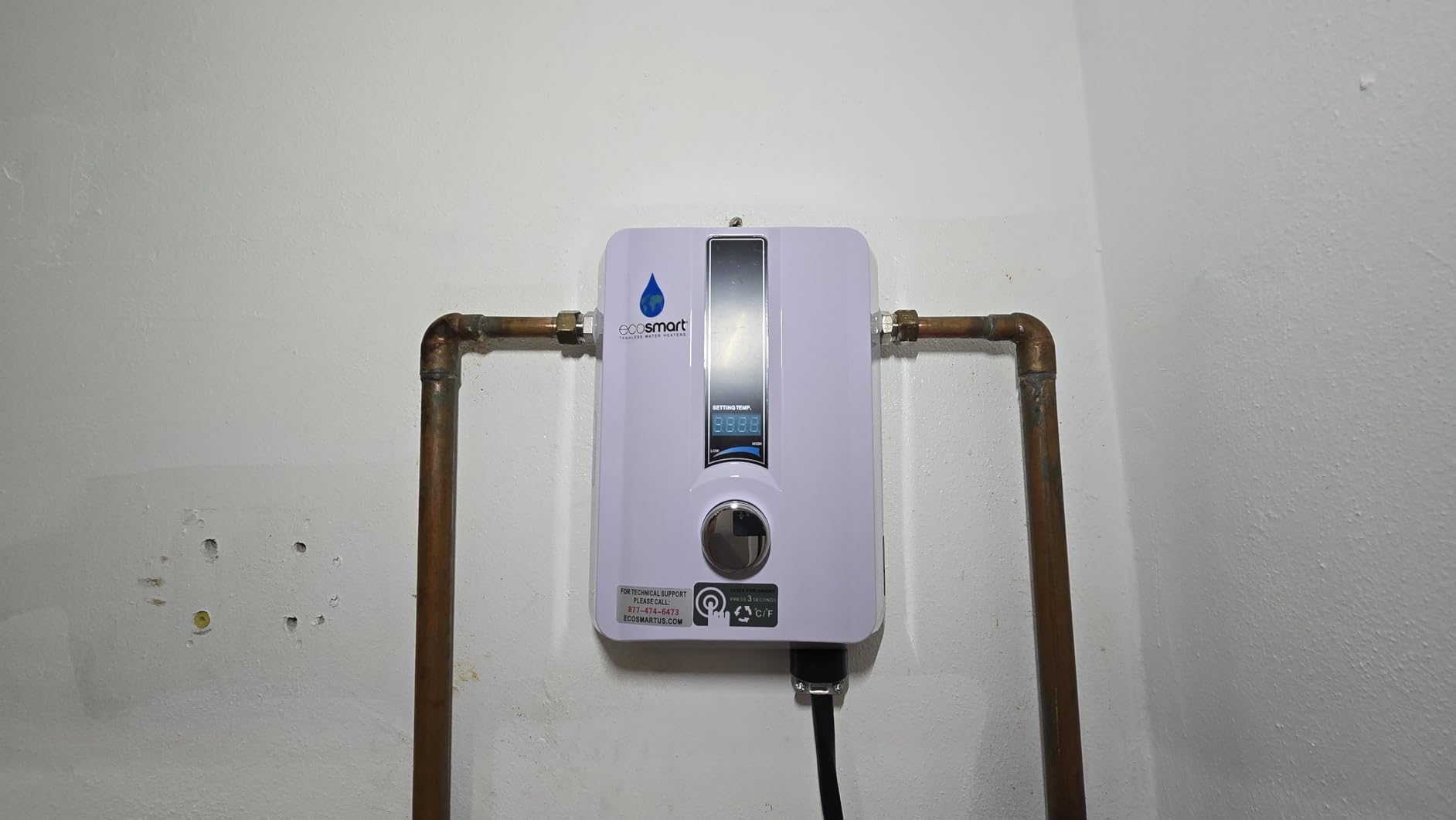
The ECO 11 is the smallest heater in this group, weighing 6.5 pounds and measuring just 11.5 by 8 by 3.75 inches. I would use it for a single sink, one low-flow shower, or another point-of-use job rather than as the default water heater for a busy home.
It runs at 13 kW on 240 volts and is listed for a 3.1 GPM flow rate. That sounds modest beside a 24 kW model, but it can be the right amount of power for one fixture and is easier to fit electrically.
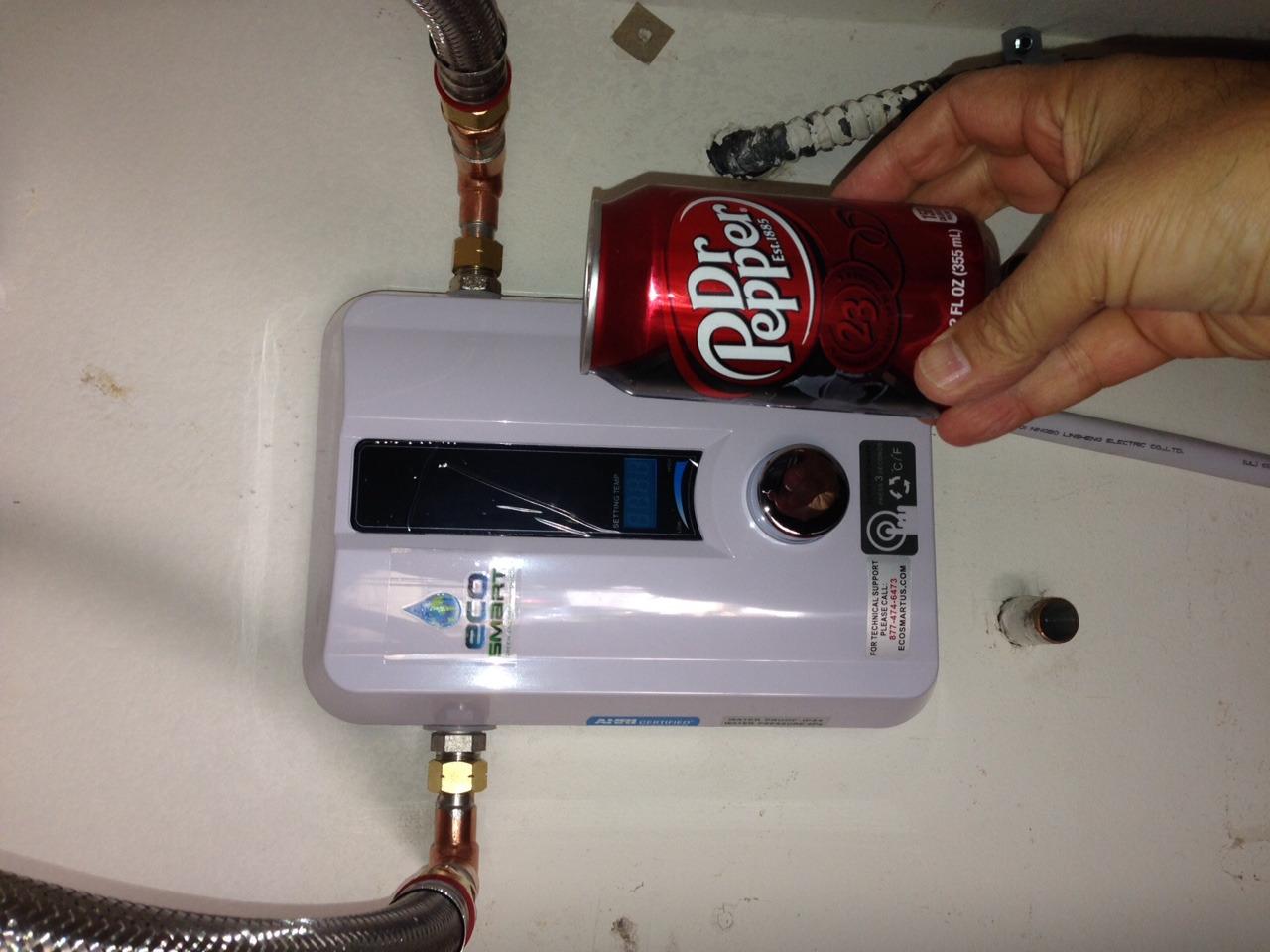
Its self-modulating controls and LED display make output easy to adjust, while the listed 99% thermal efficiency means little stored heat escapes through the casing. Customer feedback often mentions compact installation and successful DIY electrical work, but proper breaker and wire sizing still matter.
The main limitation is temperature rise. In colder regions, 13 kW may not sustain several fixtures or a satisfying shower flow, and the review record includes isolated component and used-unit concerns.
Who the EcoSmart ECO 11 is best for
Choose it for a powder room, office kitchen, detached workshop, or one-person home with modest hot-water demand. Its compact footprint is especially useful where a storage tank would occupy valuable wall or floor space.
It is also a sensible point-of-use companion near a remote bathroom. I would not expect it to replace a full-home heater unless the property has very warm incoming water and strict limits on simultaneous use.
Who should avoid the EcoSmart ECO 11
Skip it for a multi-bathroom home, a family taking back-to-back showers, or any cold-climate application that needs a strong rise from groundwater. A larger kW rating and greater GPM would be safer.
Budget carefully for the dedicated electrical work, because a compact appliance can still create a substantial installation job.
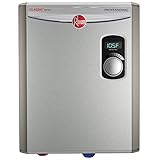
2. Rheem RTEX-18 — Best Balanced 18 kW Pick
Rheem 18kW 240V Tankless Electric Water Heater, Gray
18 kW
Up to 4.4 GPM
Two 40A breakers
99.8% efficiency
Pros
- External digital thermostat
- Field-serviceable elements
- Self-modulating power
- Up to 4.4 GPM
Cons
- Two 40A circuits
- Not ideal for many cold-climate showers
- Some long-term reliability complaints
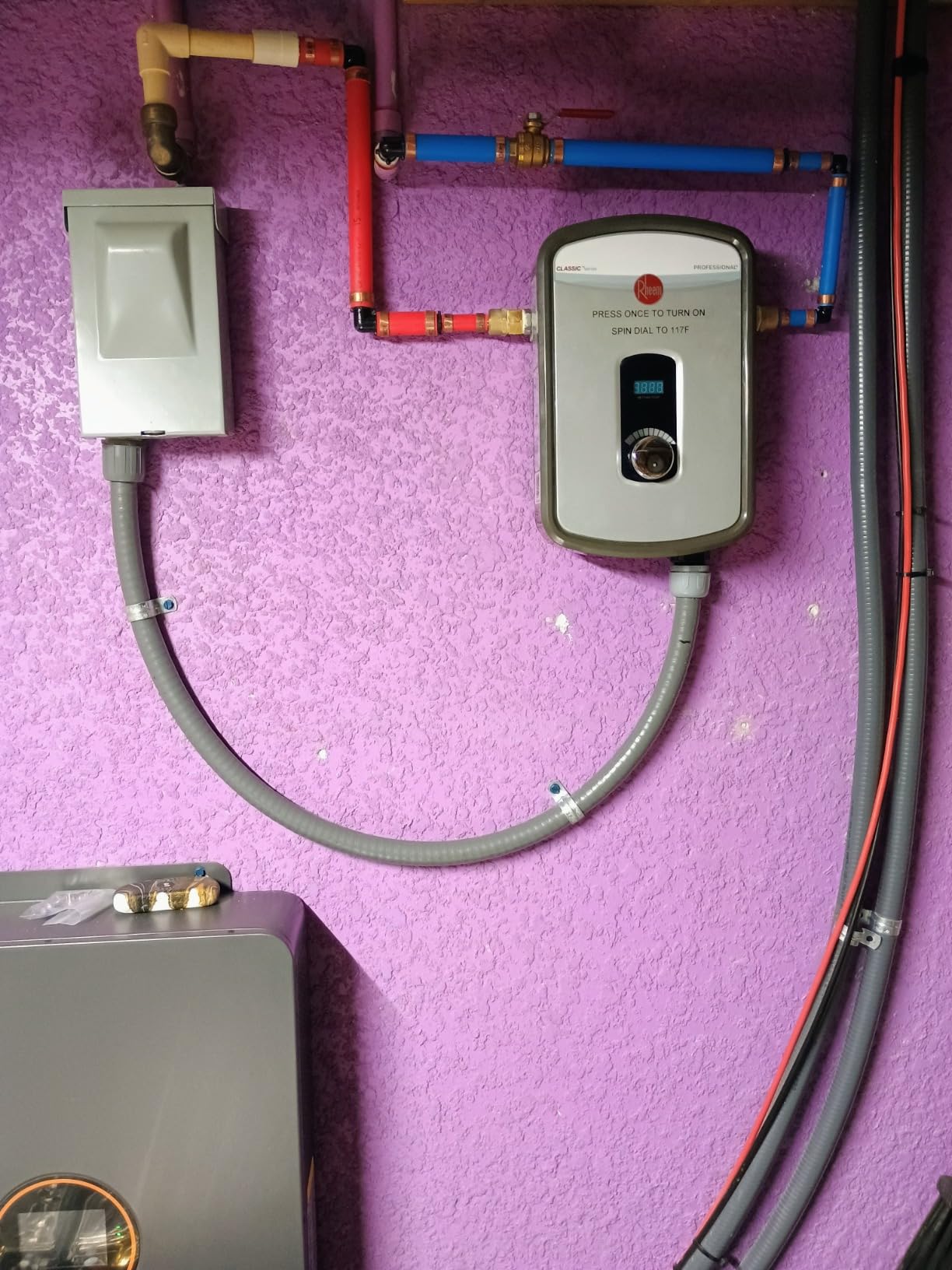
The RTEX-18 sits in a useful middle ground: more capacity than a 13 kW point-of-use unit, without the three-breaker load of a 24–27 kW system. Its listed 4.4 GPM and two copper immersion elements make it one of the more approachable whole-house candidates in moderate climates.
I appreciate the separate digital thermostatic control because it is easier to operate than a small dial buried on the unit. The brass bottom connections and field-serviceable design are practical touches when maintenance eventually becomes necessary.
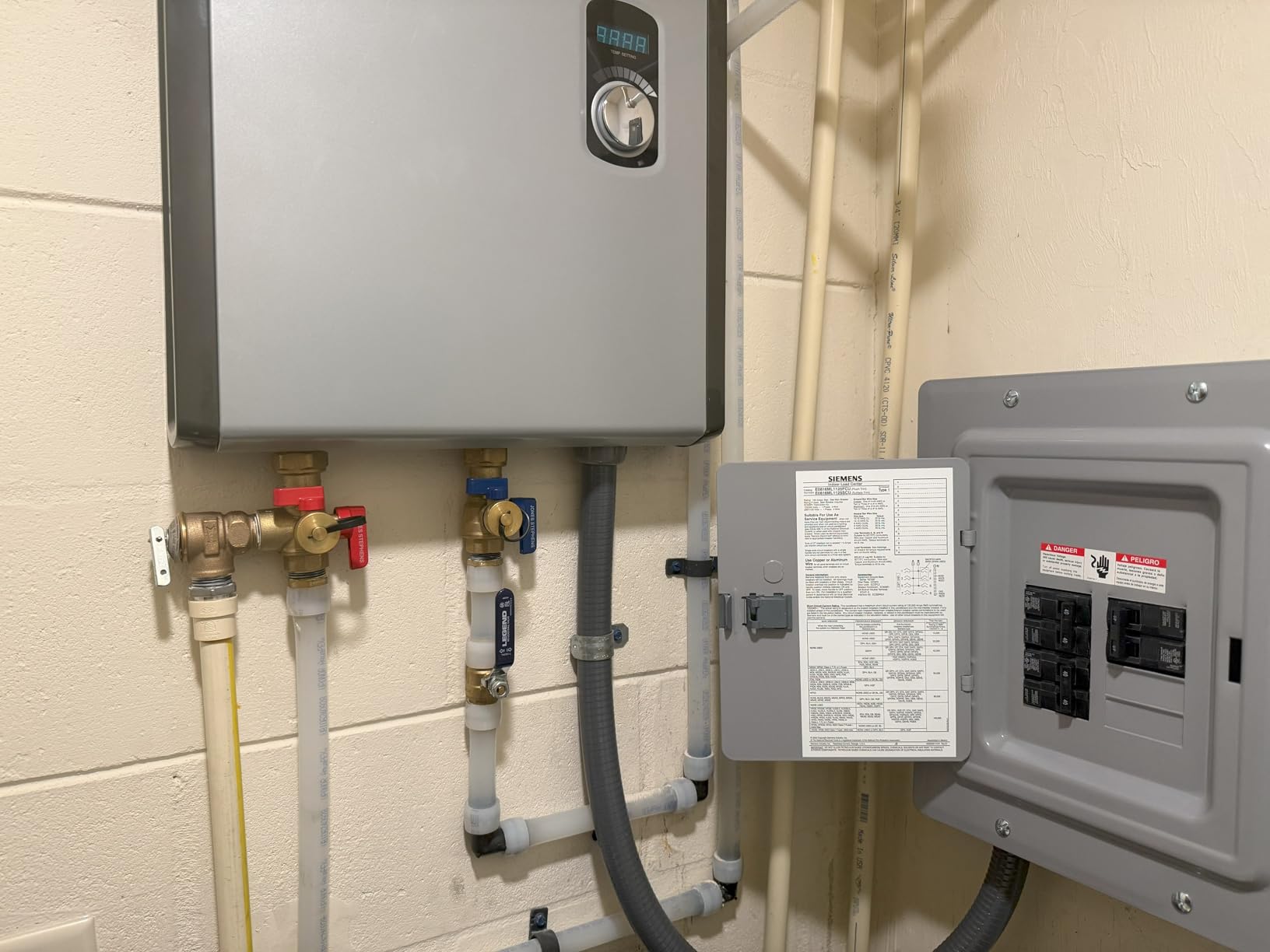
At 18 kW and 240 volts, it needs two 40 amp breakers, and the rest of the home still needs enough spare service capacity. Do not interpret the heater’s 99.8% efficiency as a promise that it can overcome an undersized panel; electrical availability is a separate constraint.
Reported experience includes successful service for two showers plus other fixtures. That outcome depends on inlet temperature and flow restrictors, so colder groundwater can turn the same installation into a flow-limited one.
Who the Rheem RTEX-18 is best for
This is my value choice for a small-to-medium household with a 200 amp service, one primary bathroom, and moderate peak demand. It offers a clearer path to whole-house use than the 11 or 13 kW options without jumping to the RTEX-24.
It also suits homeowners who want serviceable copper elements and straightforward digital controls rather than network features.
Who should avoid the Rheem RTEX-18
It is a poor fit where winter groundwater requires a large temperature rise, especially if several fixtures will run together. It also cannot be installed on a panel that lacks the two dedicated circuits and remaining capacity.
Long-term reports are less uniformly positive than the specifications suggest, so a home-level electrical assessment should precede the purchase.
3. EcoSmart ECO 18 — Best for Warmer Inlet Water
EcoSmart ECO 18 Electric Tankless Water Heater, 18 KW at 240 Volts with Patented Self Modulating Technology , 17 x 14 x 3.5, White
18 kW
3.51 GPM
For 62F+ inlet
Lifetime component warranty
Pros
- One-degree temperature control
- 99.8% efficiency
- Compact design
- Long-term user support
Cons
- Two 40A breakers
- Climate-sensitive output
- Cold-water flow may need restricting
- Some extended-use failures
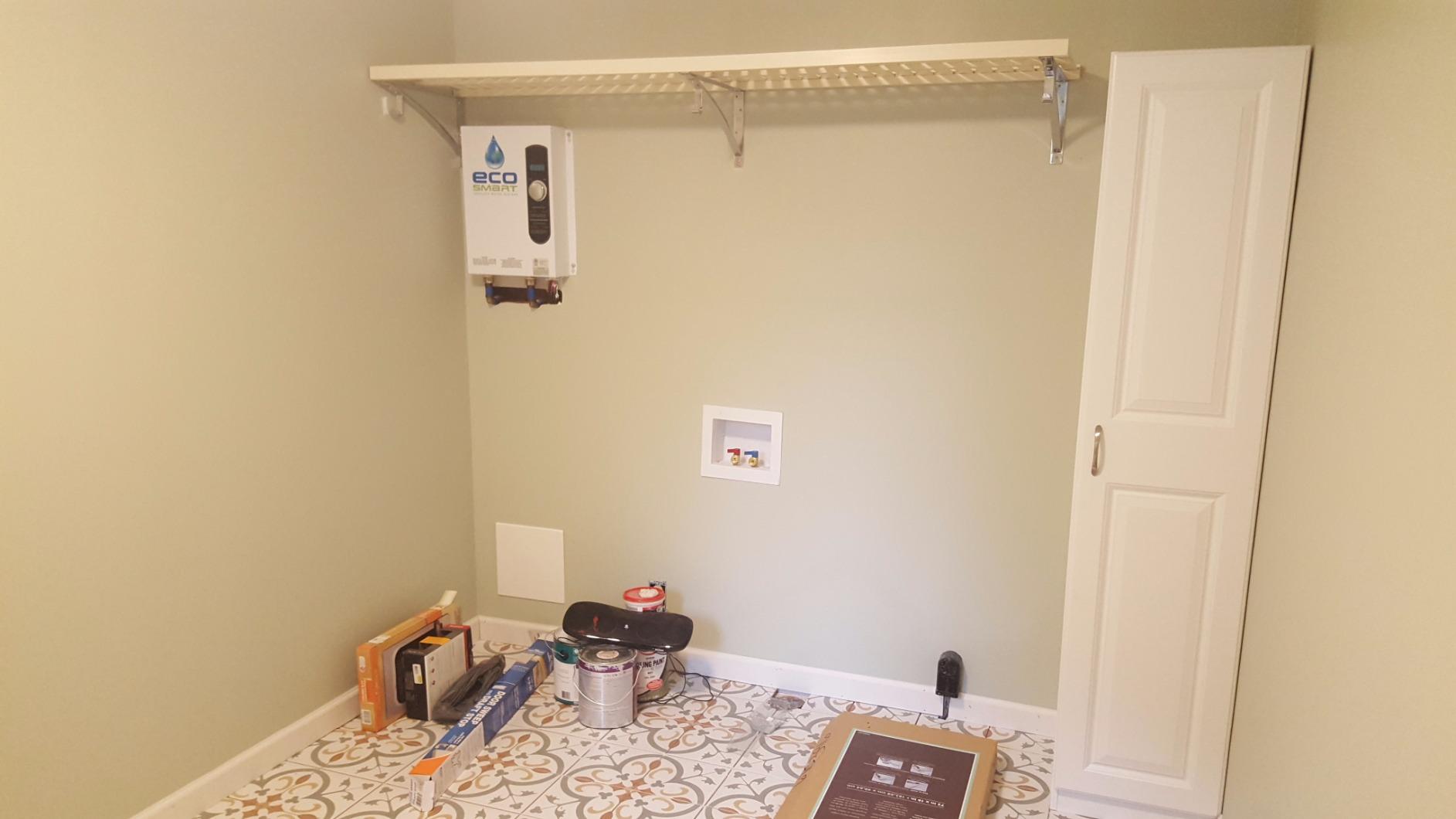
The ECO 18 is built around a clear sizing assumption: incoming water is at least 62 degrees Fahrenheit. That makes it easier to understand than vague “whole-house” claims, because it tells you when the design starts losing useful capacity.
Its 3.51 GPM listed flow is sufficient for more than 2.5 GPM under the product’s configured conditions, and one-degree digital controls allow precise adjustment. I would treat those numbers as conditional rather than universal.
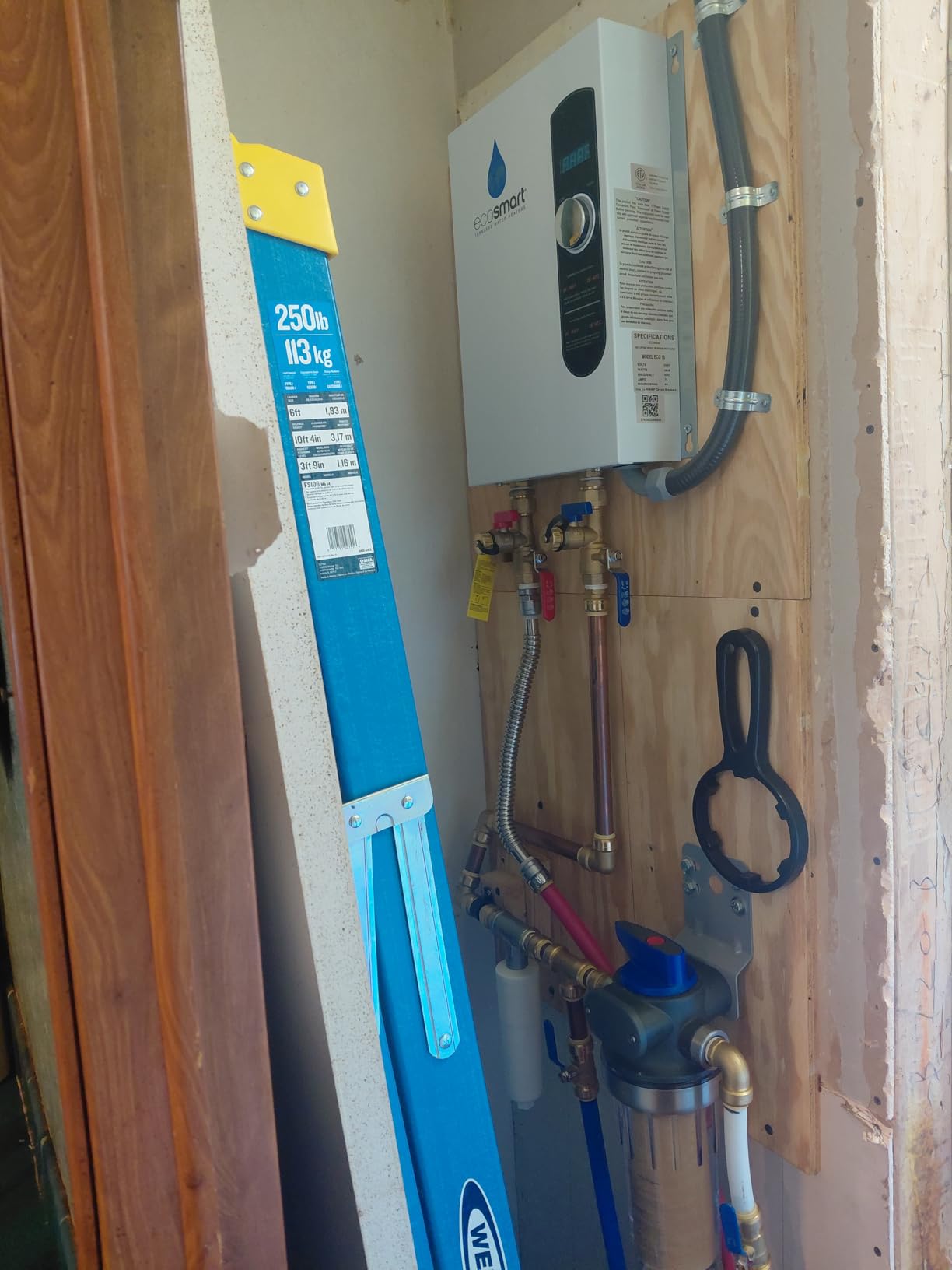
The wall-hung body is only 17 by 14 by 3.5 inches, so it recovers the space a tank once occupied. The electronics, exchanger, and element carry a lifetime warranty according to the product data, which adds value if the company remains responsive years later.
Feedback often comes from warm-climate homes where the unit meets demand reliably. In colder areas, owners may need to lower flow substantially, and isolated component failures appear among extended-use reviews.
Who the EcoSmart ECO 18 is best for
Choose it where the coldest inlet stays near or above 62 degrees and the household needs roughly one to two fixtures at a time. It is a strong fit for a compact house or a warm-region primary residence.
The lifetime component warranty is another reason it can appeal to owners planning to stay in place for many years.
Who should avoid the EcoSmart ECO 18
Do not size it from a summer groundwater reading. I would move to a higher-kW model for northern climates, high-flow showers, or simultaneous appliance use.
The two 40 amp breaker requirement also makes panel capacity part of the decision, not an afterthought.
4. Rheem RTEX-13 — Best Small-Demand Pick
Rheem 240V Heating Chamber RTEX-13 Residential Tankless Water Heater, GRAY
13 kW
Up to 3.17 GPM
54A circuit
99.8% efficiency
Pros
- Compact point-of-use form
- Included 1/2 inch adapters
- Digital temperature display
- Strong customer rating
Cons
- Single high-amperage circuit
- Not for whole-house cold climates
- Minimum activation flow
- Some multi-year concerns
The RTEX-13 is slightly odd on paper because its 4.8 GPM specification field does not match the product’s stated feature limit of 3.17 GPM. I would use 3.17 GPM as the practical ceiling, because that value appears in the manufacturer-oriented feature list.
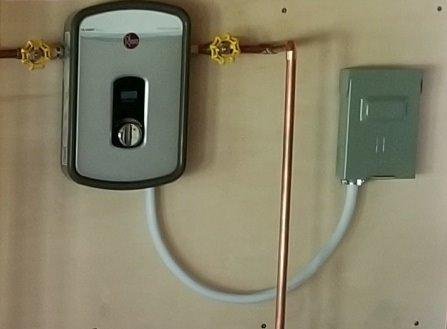
Its compact 8.25 by 12.62 inch cabinet and included adapters make it attractive for a dedicated sink, small apartment, or single low-flow shower. The external digital thermostat provides clear one-degree control.
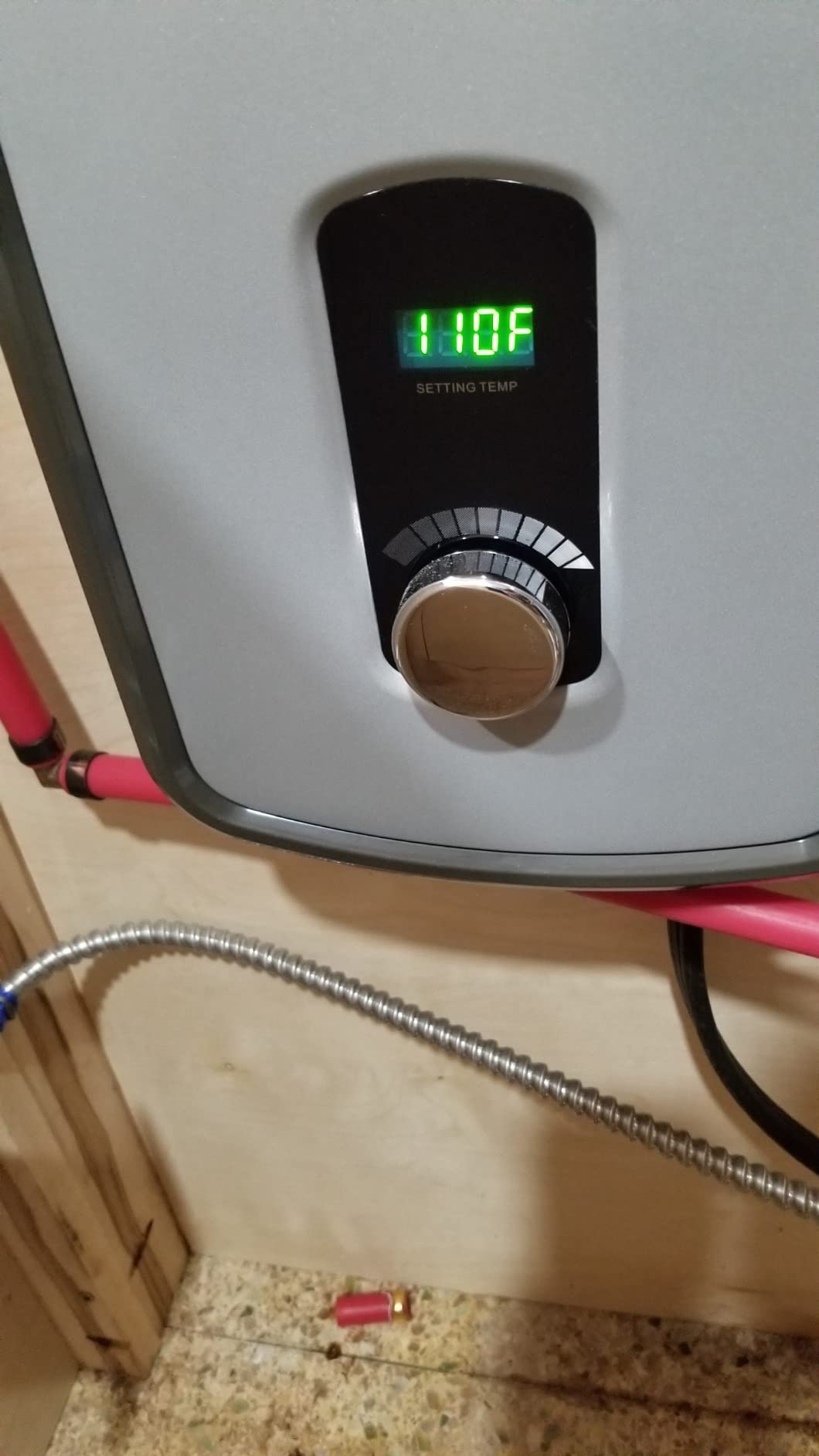
The unit needs a 54 amp circuit, usually served by a 50–60 amp breaker, so it is not automatically cheap to install. It also waits for a minimum flow before heating, which can matter with a slow faucet.
Customer feedback supports stable temperatures in moderate climates and point-of-use service. That pattern does not translate cleanly to a cold-climate home with multiple fixtures.
Who the Rheem RTEX-13 is best for
It suits a studio, tiny home, guest bath, or remote sink with a 240V electrical path. The compact body can fit where a storage heater or larger whole-house unit would feel intrusive.
I would also shortlist it when a homeowner values Rheem’s external controls over the ECO 11’s smaller form.
Who should avoid the Rheem RTEX-13
Avoid it as the sole heater for a family home or cold region. It lacks the thermal capacity to maintain comfort when groundwater is far below the target temperature.
If the tap cannot meet the activation threshold, the heater may not fire even when its rated flow looks adequate.
5. Rheem RTEX-24 — Best High-Demand Electric Pick
Rheem RTEX-24 24kW 240V Electric Tankless Water Heater, Gray
24 kW
Up to 5.9 GPM
Three 40A breakers
99.8% efficiency
Pros
- High listed flow
- Handles multiple fixtures
- Digital display
- Space-saving wall mount
Cons
- 200A service may be required
- Three 40A breakers
- Large installation burden
- Some quality-control reports
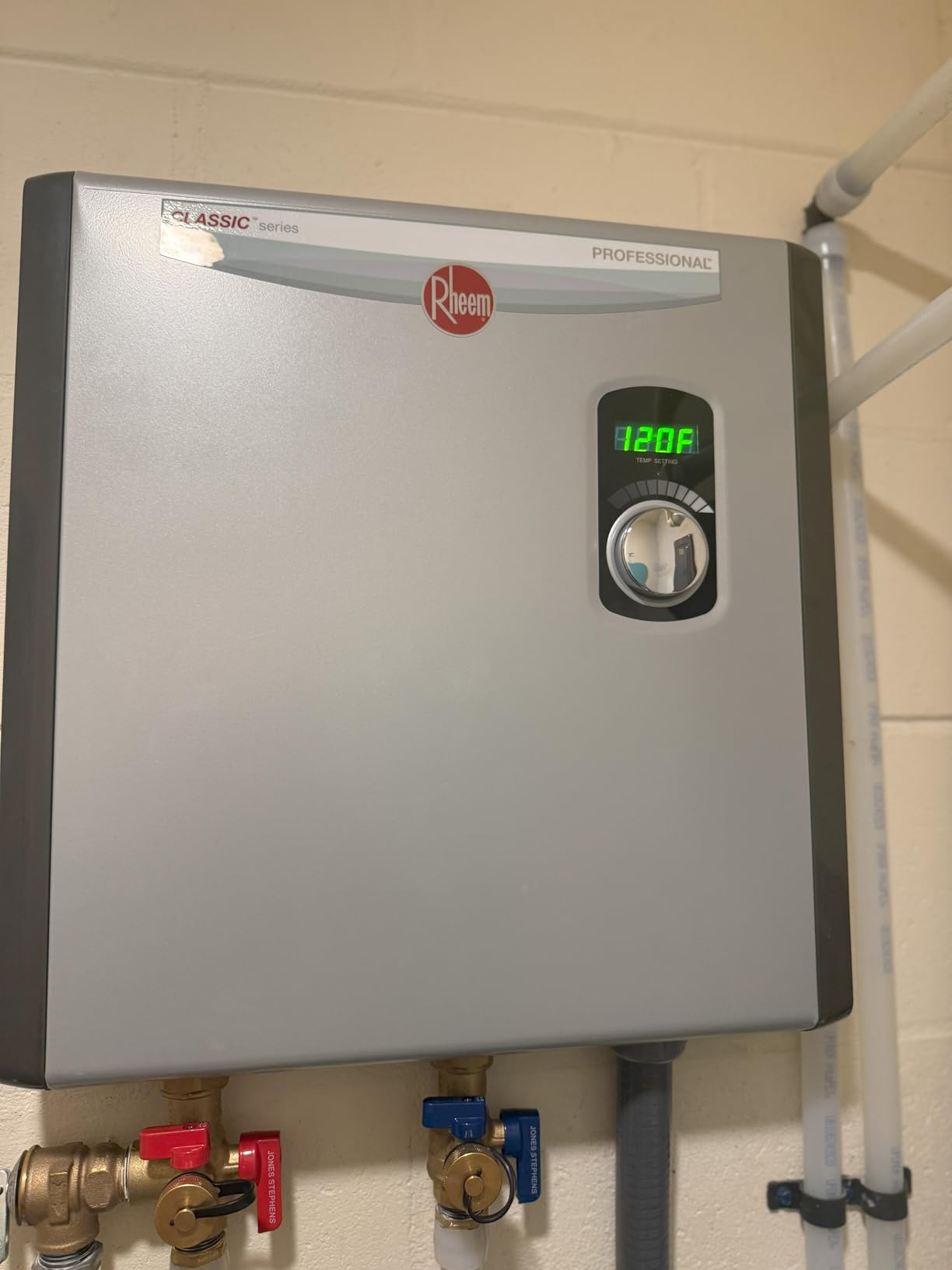
The RTEX-24 is the strongest all-around model in this eight-product set. Its 24 kW output and listed 5.9 GPM capacity are designed for whole-house demand, including two showers plus laundry in favorable inlet-temperature conditions.
I choose it as the best high-demand electric pick because the extra thermal headroom is more useful than network extras when the goal is reliable hot water. Its ON/OFF dial and digital temperature display are simple to understand.
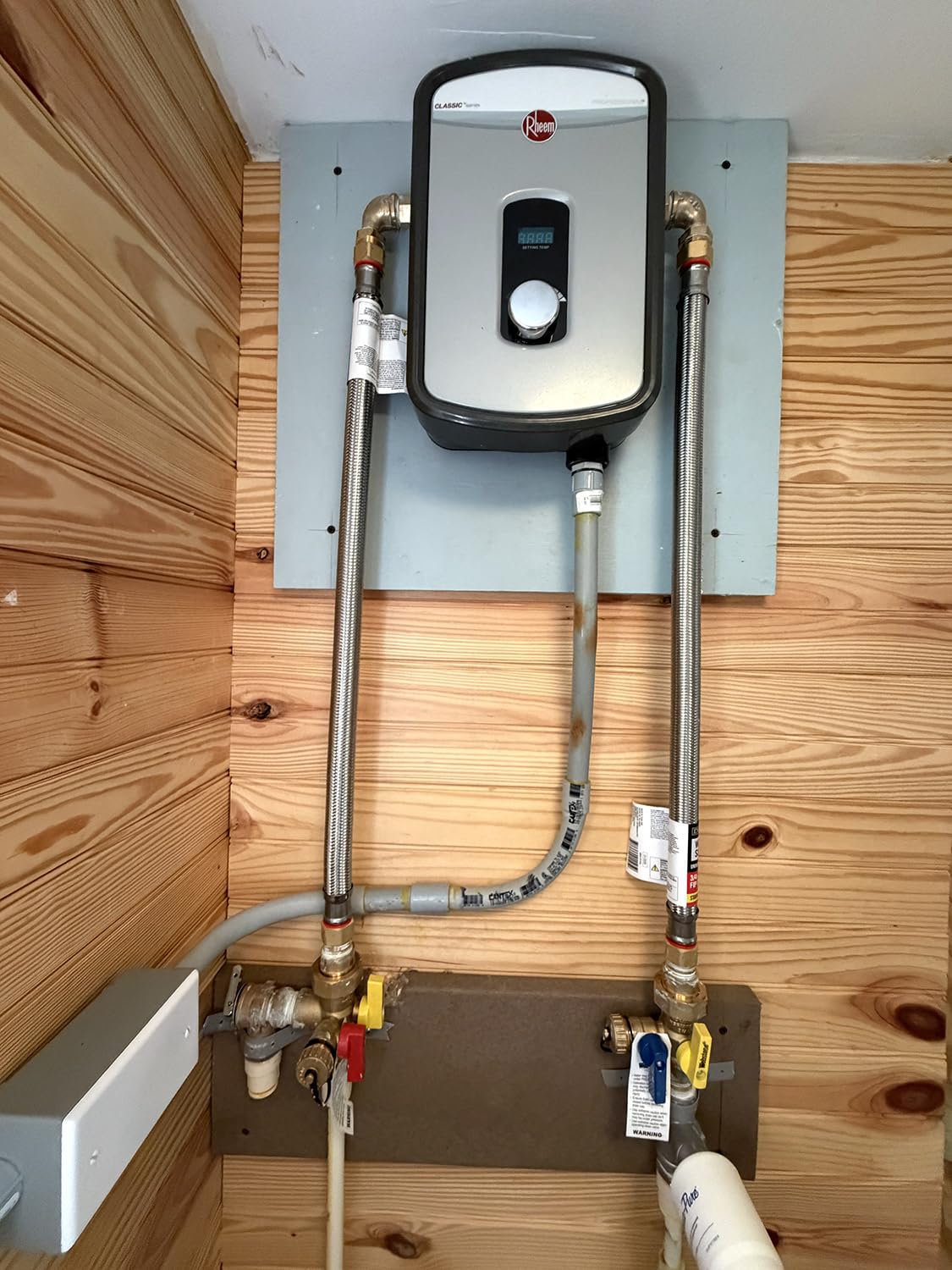
The trade is substantial electrical work. The unit requires three 40 amp double-pole breakers, and the product data says 200 amp service may be needed; your electrician must calculate the home’s total connected load, not merely count open spaces in the panel.
Performance is best where incoming water is around 70 degrees or warmer. Cold groundwater can still reduce output, and some owners report quality-control issues, so professional installation and commissioning are money well spent.
Who the Rheem RTEX-24 is best for
It belongs on a shortlist for a medium-to-large home, one or two bathrooms, and a panel already planned around high electric demand. I would favor it when simultaneous showers matter more than compact dimensions.
Homeowners with warm groundwater and a 200 amp service can use more of its rated capacity than cold-climate buyers can.
Who should avoid the Rheem RTEX-24
It is the wrong first choice for an older 100 amp service or a panel with little spare load. The heater can trigger a panel upgrade before it produces a drop of hot water.
It is also excessive for a single sink, studio, or low-demand seasonal property; the ECO 11 or RTEX-13 will use less installation capacity.
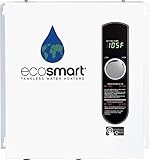
6. EcoSmart ECO 24 — Best-Rated Established Model
Ecosmart ECO 24 24 KW at 240-Volt Electric Tankless Water Heater with Patented Self Modulating Technology, 17 x 17 x 3.5
24 kW
5.8 GPM
100A service recommended
Lifetime component warranty
Pros
- 5.8 GPM listed flow
- 99.8% efficiency
- Wall-mounted body
- Lifetime component warranty
Cons
- Professional electrical work
- Potential cold-climate wait
- Multiple-fixture fluctuation
- 130F maximum setting
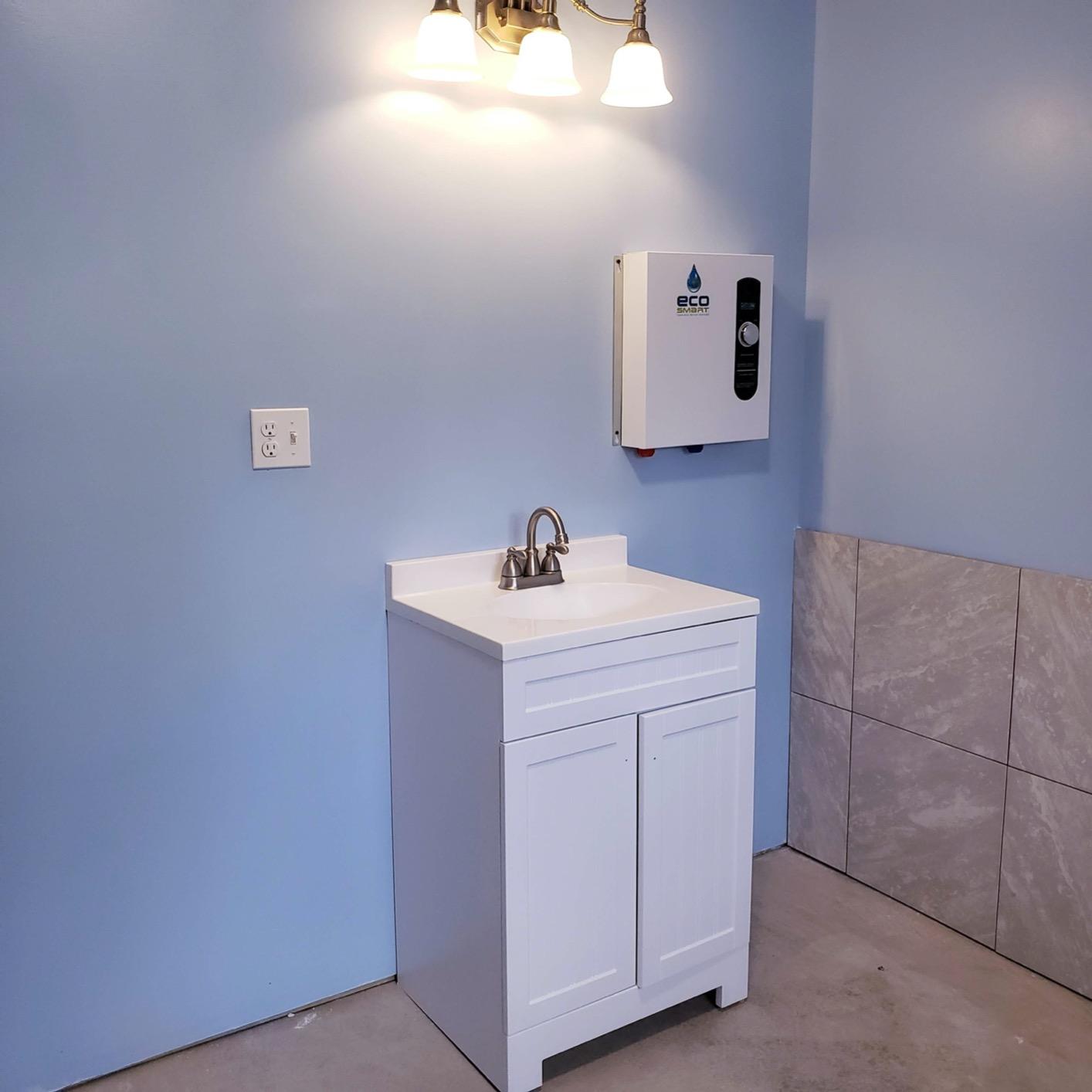
The ECO 24 earns the highest rating among the established models here, at 4.5 from 337 reviews. Its 5.8 GPM listed flow and 24 kW output put it close to the RTEX-24, while its compact 17-inch wall-mounted housing preserves floor space.
I see it as the conservative high-capacity EcoSmart option. The digital output display, self-modulation, and lifetime warranty on electronics, exchanger, and element support long-term ownership when water conditions are managed.
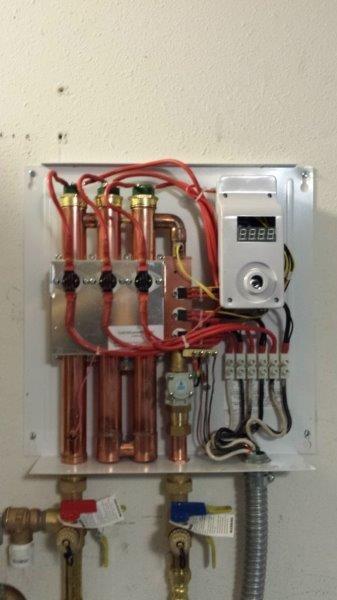
It requires a dedicated circuit and at least 100 amps of service is recommended in the product data. Because whole-house loads overlap with HVAC, cooking, and electric vehicle charging, the actual requirement can be much greater than the heater’s nameplate alone.
Owners praise continuous hot water and efficiency, while some report temperature fluctuation when multiple fixtures operate. In cold climates, longer waits before the water reaches the target temperature are another practical drawback.
Who the EcoSmart ECO 24 is best for
Choose it for a home that needs roughly 5 GPM and prefers EcoSmart controls and warranty coverage. It is a compelling alternative to the Rheem RTEX-24 when a 5.8 GPM listed specification better matches your fixtures.
It also works well where wall space is limited and a storage tank is no longer desired.
Who should avoid the EcoSmart ECO 24
It is not for an electrical service that cannot safely add a large dedicated load. It also has a listed maximum temperature of 130 degrees, which may matter for specialized high-temperature applications.
If two or more fixtures must remain perfectly stable during a cold snap, I would scrutinize the installation and incoming-water temperature more closely.
7. ThermoMate ET270 — Best Fast-Heat Pick
Tankless Water Heater Electric 27kW at 240 Volt, ThermoMate On Demand Instant Hot Water Heater Up to 6.4GMP, Self-Modulating Energy Saving for Residential Indoor Shower, Draw 114Amp
27 kW
5.27 GPM
114A draw
3-second claim
Pros
- Fast 3-second claim
- 1-degree display
- ETL safety protections
- Separated heating element design
Cons
- 114A draw and 200A service
- Three 40A circuits
- Flow may need reducing
- Replacement-part support concerns
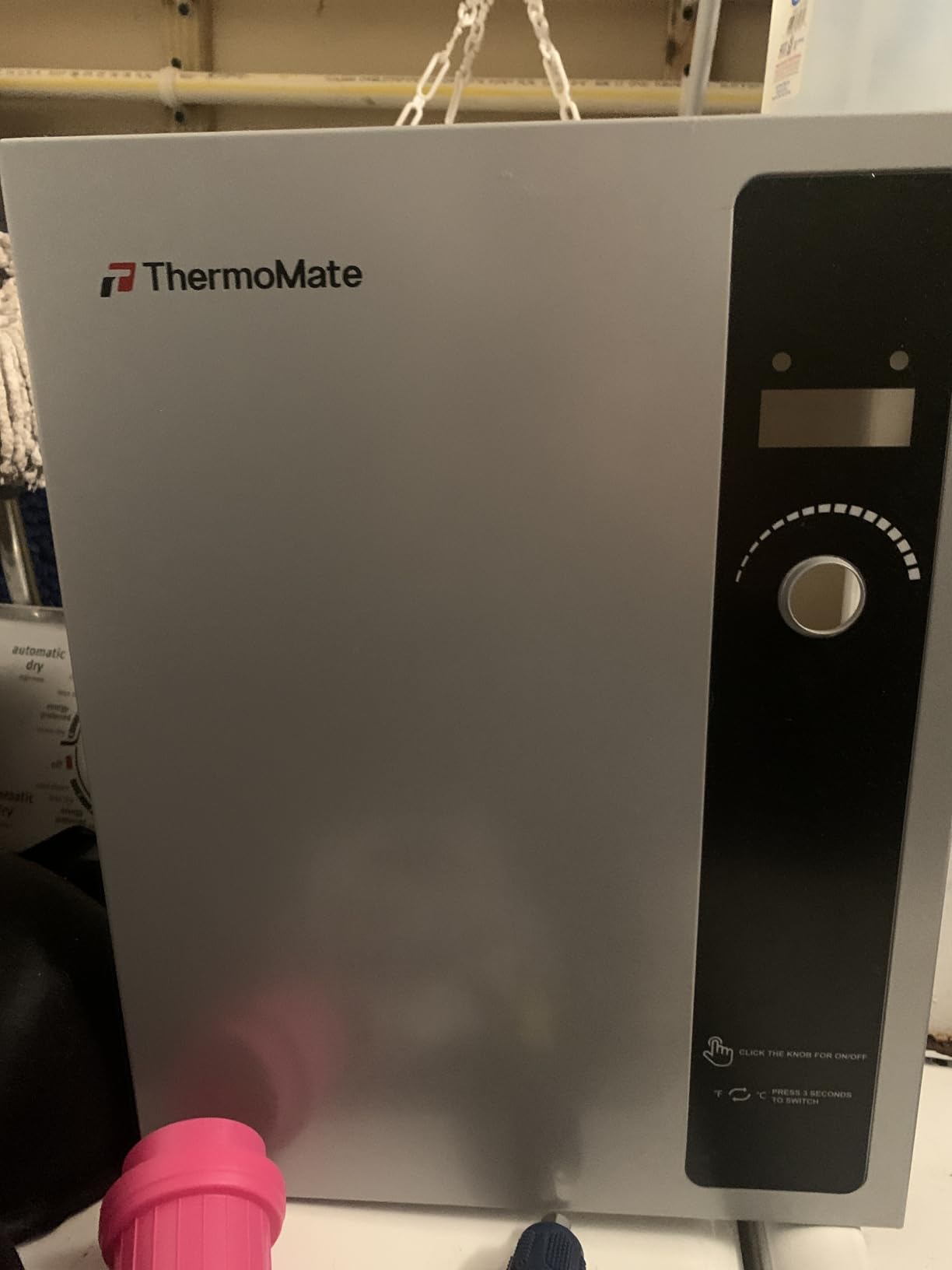
The ThermoMate ET270 advertises hot water in three seconds and produces 27 kW at 240 volts. Its listed 5.27 GPM capacity is substantial, although the product’s raw title uses a higher GPM figure, a wording inconsistency I would not rely on without the detailed specification.
I like the separated heating-element design because it reduces direct exposure to the water tube, which can help with scale and corrosion. The digital display adjusts from 80 to 140 degrees in one-degree increments.
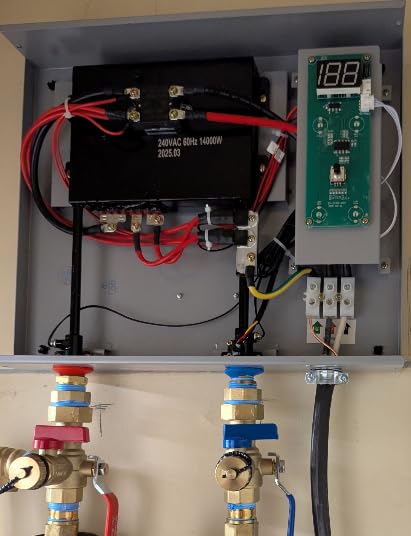
This is also one of the hardest models to wire: it draws 114 amps and requires three dedicated double-pole 40 amp breakers, with 200 amp household service listed as a requirement. The ETL certification and overheating and no-water shutoffs are useful safeguards, but they do not reduce the panel burden.
Owners commonly praise fast delivery and energy use. Some say they needed to reduce flow for the best temperature, and support for replacement parts is mixed, which deserves extra attention for long-term ownership.
Who the ThermoMate ET270 is best for
It makes sense for a modern 200 amp home where a fast response and high output are priorities. It is particularly relevant to households that want one electric unit serving multiple fixtures.
I would shortlist it against the RTEX-24 when the separated element construction and broader temperature display matter.
Who should avoid the ThermoMate ET270
Skip it if the panel is near capacity, if the local electrician finds load-shedding constraints, or if replacement-part support is a major concern. Its installation needs are more demanding than its compact wall body suggests.
It is also unnecessary for a small household where 13–18 kW will cover the measured flow.
8. Westinghouse 18 kW — Best Smart-Control Pick
Westinghouse Tankless Water Heater Electric 18kW 240V Wifi Whole House Use
18 kW
4.2 GPM
75A draw
Scale inhibitor included
Pros
- WiFi and voice control
- Scale inhibitor
- ±1F control
- Copper heating elements
- Up to 4.2 GPM
Cons
- Two 40A circuits
- Plumbing fit may need adapters
- Leaky filter-joint reports
- Only 12-month warranty
The Westinghouse model stands out for connected control: its app works with Alexa and Google Home, while the unit provides ±1 degree temperature adjustment. I would call it the smart-control pick, not automatically the most proven pick: its 4.7 rating comes from only 22 reviews.
Its 18 kW output and 4.2 GPM maximum place it near the RTEX-18, with a listed 75 amp draw. The included external scale inhibitor and copper elements are thoughtful for homes that want maintenance support built into the system.
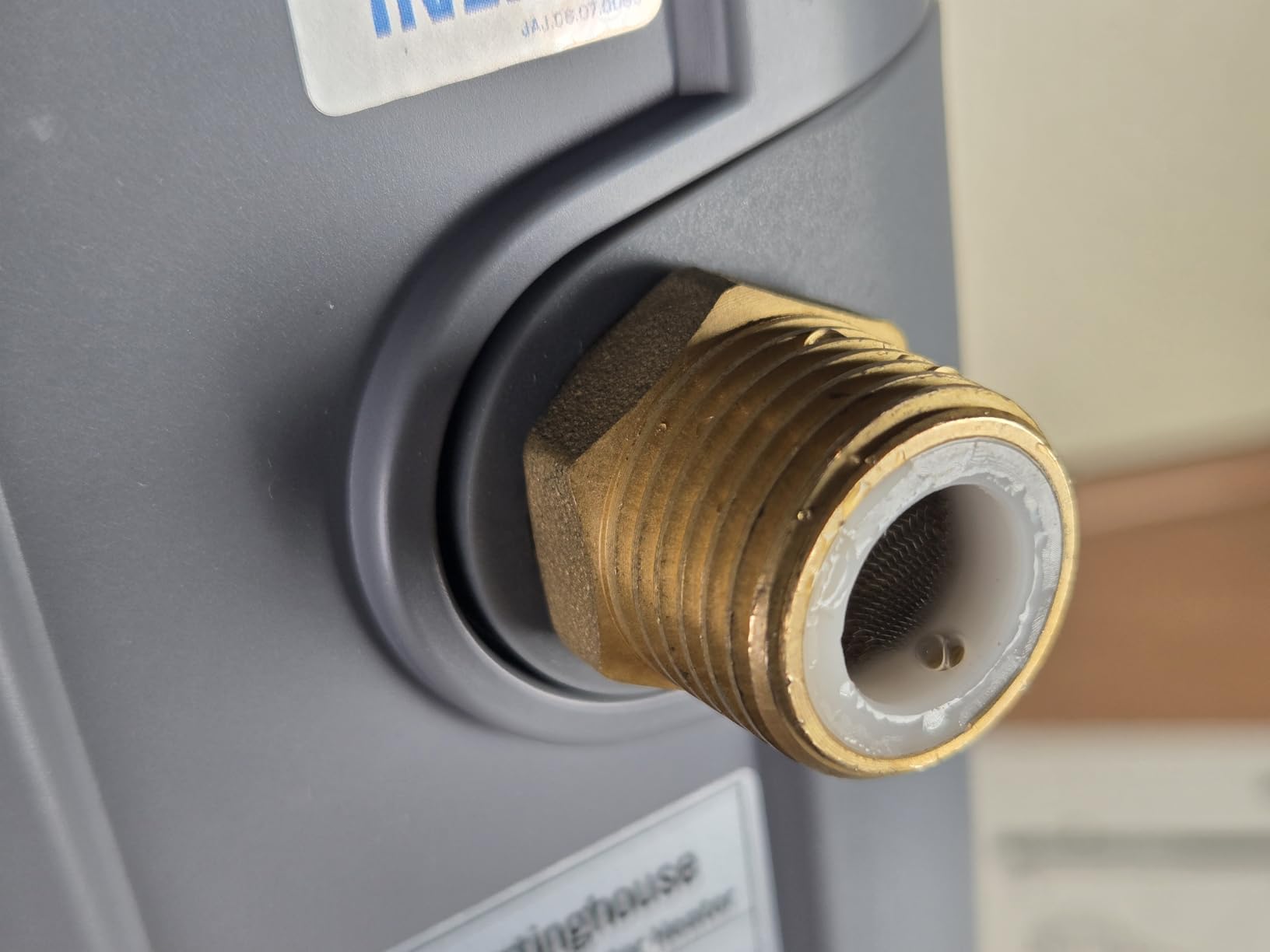
It still needs two dedicated 40 amp circuits, and the product data warns that some plumbing configurations may not accept standard half-inch copper without an adapter. Filter-joint leaks and the need for proper Teflon tape are installation details worth checking during commissioning.
The WiFi feature is useful for remote temperature changes and monitoring, but the 12-month warranty is shorter than the component coverage listed for several EcoSmart models. I would balance the app against the much smaller review base.
Who the Westinghouse 18 kW is best for
Choose it for a homeowner who wants voice or app control, precise temperature management, and a scale-inhibiting accessory in one package. It can support two to three fixtures according to the product description when inlet conditions cooperate.
It is a good fit for a tech-forward renovation where the electrical and plumbing routes are already planned.
Who should avoid the Westinghouse 18 kW
Be cautious if long warranty coverage and a deep service history matter more than connectivity. The limited review count means the high rating is encouraging, not conclusive.
Do not buy it before confirming the water connections and the two required circuits, since a smart feature does not solve a basic installation mismatch.
How to Choose the Right Electric Tankless Water Heater?
Start with the coldest water, not the average shower
Electric tankless sizing begins with the temperature rise your home needs. Measure the incoming water temperature at the coldest time you expect to use the heater, choose an outlet target such as 110–120 degrees, and subtract the inlet temperature from that target.
For example, heating 45-degree groundwater to 115 degrees requires a 70-degree rise. That is a much harder job than taking 62-degree water to 110 degrees, which is why a model that works in summer can fail to keep a shower warm in winter.
Use the manufacturer’s flow chart at that temperature rise, and size from the required GPM rather than the unit’s headline maximum. If the graph is unclear, ask the installer to show the actual flow and temperature combination before you commit.
Build the fixture demand before comparing GPM
List the fixtures that may run at the same time, then add their measured or conservative flow rates. A shower commonly uses around 2.0–2.5 GPM, while a bathroom sink or kitchen faucet may add another 0.5–1.5 GPM depending on the aerator.
For one shower plus a sink, 3 GPM can be enough in warm climates. Two showers and laundry can require 5 GPM or more, and every added fixture makes the cold-climate calculation tighter.
Flow restrictors can protect outlet temperature, but they trade comfort for longer delivery time. I would rather undersize the demand honestly than discover at 7 a.m. that the unit cannot keep up.
Check the panel before choosing the heater
The eight models span roughly 54 to 114 amps of appliance draw before other household loads. The compact 13 kW ECO 11 needs a 60 amp circuit, the RTEX-18 and Westinghouse need two 40 amp circuits, and the RTEX-24 and ET270 need three.
A 200 amp service panel does not automatically mean the heater fits. The electrician should compare the service rating, existing continuous loads, motor and HVAC loads, future circuits, and the local code’s wire and breaker rules.
Panel upgrades, new copper conductors, disconnects, permits, and labor can exceed the appliance cost. Get a written load calculation and installation scope before ordering; this is the one step that can prevent a project from becoming a budget surprise.
Understand kW, GPM, and efficiency together
kW describes heating power, while GPM describes the water volume that can pass while reaching the target temperature. Efficiency percentages near 99% describe how much input energy becomes hot water, but they do not create extra temperature rise.
At 240 volts, a 13 kW model draws about 54 amps, an 18 kW model draws about 75 amps, and a 24 kW model draws about 100 amps. The 27 kW ThermoMate reaches roughly 113–114 amps, which is why its dedicated circuits are a central part of the decision.
A self-modulating unit changes power to match flow, but it cannot exceed its maximum electrical output. It can help stability and avoid wasting energy, not override cold inlet water or an undersized panel.
Plan for installation and maintenance
Mounting the box is only one part of the job. The installation also needs correct water connections, pressure checks, venting-free placement, electrical protection, code-compliant clearances, and commissioning at the desired temperature.
Hard water is especially important for electric elements. Scale can insulate heating surfaces, restrict flow, and shorten service life, so test the water, follow the manufacturer’s flushing interval, and consider a scale-inhibiting system where hardness is high.
The Westinghouse includes an external scale inhibitor, while the ThermoMate separates its element from the water tube. Those are useful design choices, but neither replaces regular inspection and the local water-quality advice of a plumber.
Choose electric or gas only after a load check
Electric models are compact, quiet, and easy to place because they do not need combustion venting. They fit solar-panel pairings conceptually, but the panels must still offset a very large electrical load and the home may need service upgrades.
Gas tankless heaters can deliver more heating capacity with lower electrical demand, but they require fuel, venting, combustion air, and gas-line work. Forum discussions often call electric units “niche” because a large whole-house installation can require 100–300 amps of service capacity depending on the model and home.
My practical rule is to compare installed cost, available fuel, inlet temperature, and desired simultaneous flow. A cheaper appliance is not the better system if it forces a major service change or cannot meet winter demand.
Use the decision ladder
Start with electrical service: have a licensed electrician confirm the panel, service rating, load calculation, breaker spaces, wire path, and permit needs.
Measure winter inlet water: record the coldest practical incoming temperature and identify the outlet temperature you want.
Set simultaneous demand: add the GPM of the showers, sinks, dishwasher, and laundry you expect to overlap.
Match the model: choose a kW and flow chart that covers the rise at that demand, with headroom for future fixture changes.
Plan maintenance: address hardness, access, filter cleaning, warranty support, and replacement-part availability before installation.
If that ladder points to 13 kW, the ECO 11 or RTEX-13 is a sensible starting point. If it points to 18 kW, compare the RTEX-18 and Westinghouse; if it points to 24–27 kW, compare the RTEX-24, ECO 24, and ThermoMate.
Frequently Asked Questions
What is the best brand of electric tankless hot water heater?
Stiebel Eltron is often praised by plumbing professionals for reliability, but it is not in this eight-product data set. Among the models reviewed, Rheem offers the broadest range from compact 13 kW units to 24 kW whole-house systems, while EcoSmart stands out for compact designs, self-modulation, and component warranties. Brand reputation should be weighed with the required kW, GPM, climate, and panel capacity.
What are the drawbacks of electric tankless hot water heaters?
The biggest drawbacks are high electrical demand, reduced flow in cold inlet water, possible panel upgrades, and scale maintenance. A storage tank can be simpler and cheaper to install when the home lacks spare service capacity, and an undersized electric unit can deliver cold water when several fixtures run together.
What size electric tankless water heater do I need?
Size it from the coldest incoming water temperature, desired outlet temperature, and simultaneous fixture GPM. Subtract inlet temperature from the target, use the model’s flow chart at that required rise, and then add the flow rates of the showers, sinks, dishwasher, and laundry that may overlap. Have an electrician confirm the resulting kW and circuit load.
Are electric tankless water heaters worth it?
They can be worth it when you have adequate electrical service, steady household demand, and space constraints that make a storage tank unattractive. They reduce standby losses and provide continuous hot water, but savings depend on electricity rates, usage, climate, and installation cost. In a cold home with a small panel, a storage heater or gas system may be the better investment.
How does a tankless water heater work?
A flow-activated switch turns on electric heating elements when a hot-water fixture opens. Water moves through a heat exchanger or heating chamber, the unit modulates power to match flow and target temperature, and the water exits toward the fixture. When the tap closes, the heater stops drawing heating power.
Which Electric Tankless Water Heater Should You Buy?
For a well-prepared whole-house project, the Rheem RTEX-24 is my top pick because its 24 kW output and listed 5.9 GPM capacity leave more room for overlapping showers and laundry. Choose the RTEX-18 when 18 kW covers the measured winter demand, or the EcoSmart ECO 11 when a single fixture and compact installation are the real goals.
The best electric tankless water heater is not the largest box or the highest headline GPM. It is the model that meets your winter temperature rise, fixture demand, and electrical load together; have a plumber measure the water and a licensed electrician verify the panel before installation.