
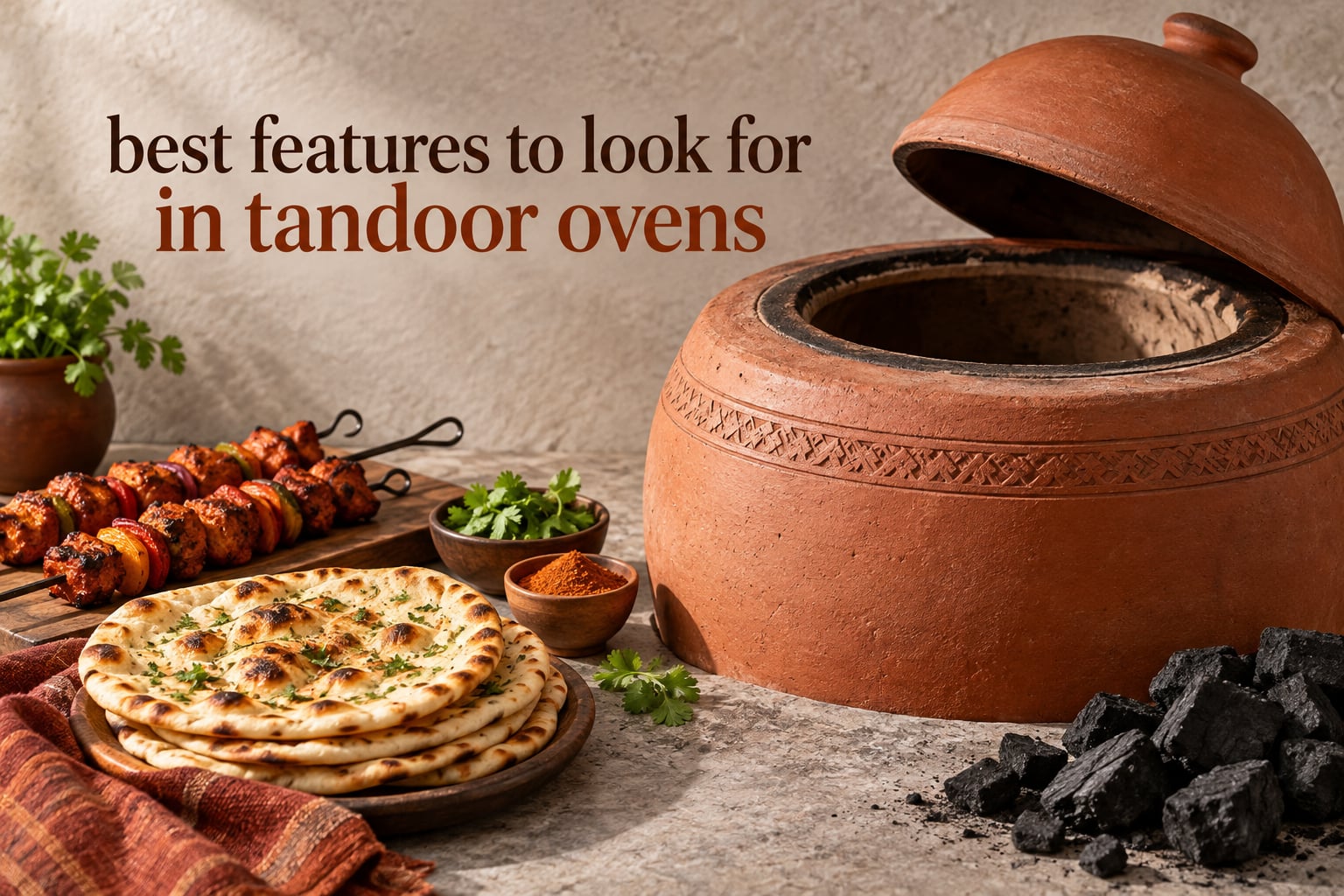
The features to look for in tandoor ovens matter far more than the badge on the box. Two ovens can cost roughly the same and behave completely differently, because one holds heat in a thick clay wall while the other simply gets hot. We spent weeks comparing specs, capacities and owner feedback across ten tandoor ovens so you can see which ones earn their counter space.
Our approach was simple. We read every specification line, checked the review volume behind each claim, and asked the same question of each unit: does this feature earn its place at a real cooking session? That killed a lot of marketing language and left us with a short, practical list of criteria that actually predict whether the bread blisters and the kebabs char.
This guide covers the ten features that separate a good tandoor oven from a disappointing one, then puts ten named models through that checklist so you can see the trade-offs in real products. Updated for 2026, it also covers lifespan, cold-climate care and the honest limits of electric models, because those are the details that decide whether you still enjoy the oven three winters from now.
Table of Contents
What Makes a Tandoor Oven Different From a Grill or Pizza Oven?
A tandoor works with three heat mechanisms at once: radiant heat from the walls, rising convection, and smoke. Fuel burns in a well at the base, the thick walls soak up that heat and radiate it inward, and the narrow top opening forces hot air to travel downward and back around the food. That combination is why meat chars on the outside while the centre stays juicy, and why bread puffs instead of drying out.
A grill radiates heat downward from bars with air on both sides, so juices drip and flare. A pizza oven works like a brick oven, with a flat floor and high dome for fast bake. A conventional oven heats air that then heats the food, which is gentler and slower. A tandoor is the only one of the four that surrounds food with radiant heat from all directions while trapping smoke in the same chamber.
That is why temperature matters. Traditional clay tandoors reach roughly 700-900 F, and the 900 F figure is the number that produces leopard spotting on naan and hard char on tikka. Gas stainless steel units typically top out around 750 F. Electric countertop units reach 550 F in some designs and 752 F in others, which is a real ceiling that no amount of marketing erases.
One more practical difference. A tandoor is a vertical oven, so food hangs on skewers or presses against the wall rather than sitting on a rack. If you want to compare appliance formats before you commit, our picks for the best countertop pizza ovens cover the flat-floor approach in detail.
The 10 Features to Look For in a Tandoor Oven
Here is the checklist we scored every oven against, written so you can apply it to any listing in a couple of minutes.
Double-wall insulation. A clay or steel liner surrounded by an air gap and outer shell holds heat far longer than a single wall.
Liner material and thickness. Kiln-fired clay gives radiant heat and smoke flavour; steel is durable but reflects heat outward.
Maximum temperature. Look for a stated figure. Below 700 F you will bake bread but rarely get true tandoor char.
Fuel type and control. Charcoal and wood add flavour, gas gives turn-it-down control, electric gives thermostat precision with no flame.
Internal diameter and depth. Capacity comes from volume and mouth width, not from the exterior footprint on the box.
Adjustable ventilation. A vent or damper at the base controls airflow, which controls heat and how fast you can get back to cooking.
Built-in thermometer. Without a gauge you are guessing, and guessing costs you fuel and char.
Removable ash tray or crumb tray. Cleaning a wood or charcoal model by hand every session is the fastest way to lose interest.
Insulated handles and a secure lid. Metal gloves are not optional when the shell reaches several hundred degrees.
Certification, warranty and spare parts. Look for UL or CSA listing on electric models and a real parts supply for liners and skewers.
Red flags are as useful as features. Be careful with listings that publish no dimensions, no wattage or BTU figure, and no material detail. A model that claims commercial duty but lists a 0.39 inch dimension is selling you a spec sheet, not a product. Owners in owner forums consistently rank build quality and insulation above decorative extras, and the same goes for spare parts availability years later.
Top 3 Features To Look For In Tandoor Ovens (October 2026)

Angaar Mini Electric Tandoor
- 1800W convection element
- 15.5 inch countertop footprint
- Non-stick top hot plate
- Dialled to 900 F

YDBMY 2-in-1 Electric Tandoor
- 2100W U-shaped element
- Cooks two pizzas at once
- Adjustable temperature knob
- Heat-resistant glass door

Aluminium Multi-Purpose Gas Tandoor
- Aluminium cavity
- 34 x 34 x 26 cm
- 14.08 ounces
- Smoke flavouring
Every Tandoor Oven in This Roundup at a Glance
| Product | Specifications | Action |
|---|---|---|
| Angaar Mini Electric Tandoor |
|
Check Latest Price |
| YDBMY 2-in-1 Electric Tandoor |
|
Check Latest Price |
| Aluminium Multi-Purpose Gas Tandoor |
|
Check Latest Price |
 BMDTYCX 12L Commercial Tandoor BMDTYCX 12L Commercial Tandoor |
|
Check Latest Price |
 Generic 15L Electric Tandoor Generic 15L Electric Tandoor |
|
Check Latest Price |
 Generic 1500W Countertop Tandoor Generic 1500W Countertop Tandoor |
|
Check Latest Price |
 Puri SS1 Ultima Charcoal Tandoor Puri SS1 Ultima Charcoal Tandoor |
|
Check Latest Price |
 Puri SS2 Deluxe Charcoal Tandoor Puri SS2 Deluxe Charcoal Tandoor |
|
Check Latest Price |
 Omcan 44385 Natural Gas Tandoor Omcan 44385 Natural Gas Tandoor |
|
Check Latest Price |
 Compact Charcoal Tandoor Compact Charcoal Tandoor |
|
Check Latest Price |
1. Angaar Mini Electric Tandoor Oven – Countertop Bread With a Real Footprint of Reviews
Mini Tandoor Oven Angaar Tandoor Electric Oven 4 Minute Pizza Maker – Table Top Pizza Oven, Tandoori Roti, Naan
1800W element
Convection heat
Temperature dials to 900 F
15.5 x 13.5 x 9 inch
Pros
- Bakes naan and tandoori roti with a clay-oven taste
- Compact 15.5 x 13.5 x 9 inch countertop footprint
- Non-stick top plate gives consistent breads
- Convection cooks pizza without cold centres
- Simple on/off switch and dials
Cons
- Mixed 3.7 average with a notable share of 1-star reviews
- Single shelf limits batch cooking
This is the only oven in the set with a real review history, and that changes how we talk about it. One hundred and fifty-six reviews at a 3.7 average is not a glowing score, but it is an honest one, and the pattern in the feedback is consistent: the bread works, the footprint works, and some people never get the four-minute pizza the listing promises.
In use, the thing that stands out is the non-stick hot plate on top. That plate is what turns this from a pizza box into a tandoor substitute, because you press dough against a direct heat surface rather than baking it on a rack in moving air. Rotis come off evenly, which is the part most electric ovens at this size get wrong.
It also happens to be the one electric unit in this roundup that claims dialled temperatures up to 900 F. Treat that as a manufacturer claim rather than a measured one, since the specification sheet gives no verified probe reading. What buyers describe in practice is a well-behaved convection bake with a hot top plate.

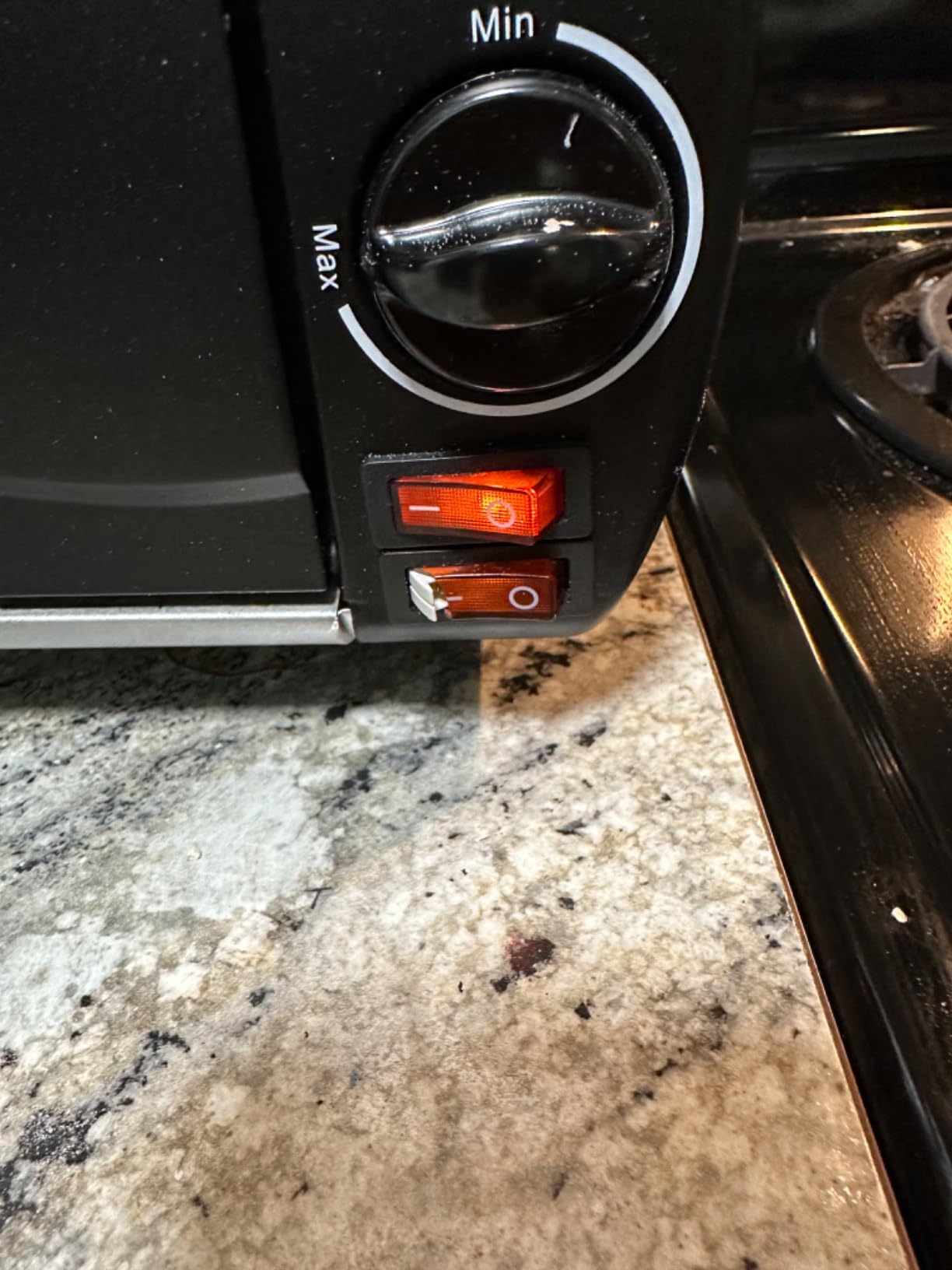
The controls are as plain as they come: an on and off switch plus temperature dials. There is no fan curve, no probe and no programme logic, which means you learn the dials in one session and never touch them again. For a first tandoor appliance that is a feature, not a limitation.
The single shelf is the honest constraint. One tray at a time means naan and pizza compete for the same cavity, and a dinner party means rounds. Two of the other ovens here bake two items at once, so this is where the Angaar loses ground.
Who this suits?
Apartment and first-time buyers. It is 15.5 x 13.5 x 9 inches, needs no fuel line, produces no smoke indoors and heats with a dial. If you cook naan, roti and pizza for one to three people, the capability matches the space it occupies.
Who should look elsewhere?
If your plan is tandoori chicken on skewers for eight people, or you want smoke in the food, this is the wrong shape. There is no skewer rail, no ash tray and no way to add a fuel source, so the ceiling is bread and small bakes.
2. YDBMY 2-in-1 Electric Tandoor Oven – Most Cooking Power Per Unit
2-in-1 Electric Tandoor Oven, Roti Maker with Temperature Control, Glass Door, Bake Tray & Rack, 2100W Pizza Oven for Chapati, Naan, Lahmacun
2100W U-shaped element
Two pizzas at once
Adjustable temperature knob
Heat-resistant glass door
Pros
- 2100W U-shaped tube spreads heat evenly
- Cooks two pizzas simultaneously
- Glass door retains heat while you watch
- Non-stick coating simplifies cleanup
Cons
- No customer reviews to confirm real-world performance
- Capacity listing is minimal so interior size is hard to judge
The specification that stands out is 2100W through a U-shaped heating tube, which is the highest figure in this roundup and the reason it preheats faster than the 1500W and 1800W units here. On paper that is the strongest argument for this oven.
On the second paper is the absence of evidence. There are no customer reviews, so everything above comes from the manufacturer listing. That is not disqualifying for an electric appliance at this stage, but you should plan to test flatbread twice before you commit to a large order of naan flour.
The dual-capacity claim is the part I find most interesting. Cooking two pizzas at once doubles your output without a bigger cavity, which is the same trade-off as a two-level rack in a standard oven and it works for flatbreads too.
What to check before you order?
Ask for the usable interior dimensions. The listing names a capacity but no internal diameter or depth, and those two numbers decide whether a 12-inch pizza fits flat or hits the element. The toaster oven guides on the site explain why cavity depth matters more than wattage on small units.
Where the budget claim stops?
It stops at the absence of reviews. For a first electric tandoor this is a reasonable entry, and 2100W is a real advantage over the 1500W option in this list. For a primary cooking appliance, wait for owner feedback.
3. Aluminium Multi-Purpose Gas Tandoor – Lightest and Simplest
DESI SAMAAN STORE Aluminium Multi Purpose Oven|Gas Tandoor|Barbeque Griller/Bati/Pizza Maker|Size 34 X 34 X 26 Cm (Silver)
Aluminium cavity
34 x 34 x 26 cm
14.08 ounces
External gas burner
Pros
- Multi-purpose for bati
- roti
- chicken
- naan and pizza
- Smoke flavouring from the metal cavity
- Very light at 14.08 ounces
- Simple lid operation
Cons
- Aluminium cavity so no true tandoor char
- Burner not included and flame placement is fiddly
- No customer reviews to validate durability
At 14.08 ounces this is the lightest unit in the roundup by a distance, and that single fact changes what you can do with it. You carry it to a balcony, set it on a table with your existing gas burner underneath, and cook. There is no fixed installation and no fuel line.
The honesty here is that this is aluminium, not clay. The listing says so plainly: the cavity gives indirect heat and smoke flavouring, which produces a pleasant roasted result but none of the true char of a clay tandoor. Anyone promising both on a unit this light is overselling.
Placement is the real task. The instructions say to keep the burner on a low or medium flame and centred under the cavity, because an off-centre burner on a light aluminium base will scorch the table. Treat that as a two-minute job you do every time, not a one-off.
Where it earns its place?
Rentals, balconies, small patios and anyone who wants to try tandoor cooking without committing counter space or a fuel line. As a multi-purpose oven for bati, roti, naan and small pizzas, the capability list is genuinely long for something this light.
What you give up?
Char, temperature control and durability certainty. There is no built-in thermometer, no vent, and no reviews, so nobody has confirmed how the aluminium ages after repeated high heat. Use a trivet and expect to replace it eventually.
4. BMDTYCX 12L Commercial Tandoor Oven – Countertop Capacity for Small Food Service
12L Commercial Tandoor Oven – 2-in-1 Pizza & Naan/Roti/Lahmacun Maker, Countertop Clay Oven with Bake Tray, Rack & Handle, for Manakish, Chapati, Takeaway Kitchen
12L cavity
2100W element
Adjustable rack
Cast iron drop-down door
Pros
- 12L cavity suits light takeaway service
- 2100W element spreads heat evenly
- Non-stick top coat speeds cleaning
- Adjustable temperature knob
Cons
- Listed dimensions and wattage figures are inconsistent
- No reviews to confirm clay-cavity performance
- Air fry basket in the box is not tandoor-specific
The 12L cavity is the reason this one is in the roundup. It is a step up from the 7 to 8 litre cavity of a standard countertop oven, and it comes with a bake tray, rack, handle and an adjustable rack position.
Everything else in the listing is a standard electric-oven feature set: 2100W U-shaped tube, adjustable temperature knob, heat-resistant glass door, non-stick top coat. Solid hardware, nothing exotic.
What gave us pause is the specification sheet itself. It lists dimensions as 0.39 inch by 0.39 inch by 0.39 inch, a capacity of 1 g and a wattage of 1 kwh, none of which can be right. If you are buying for a food business, ask for the internal cavity drawing before you spend anything.
Good for takeaway kitchens
For a manakish or chapati operation doing small batch flatbreads, a 12L electric cavity with a non-stick surface and a glass door is a workable setup. It preheats in minutes, cleans fast and needs no gas licence.
Not a clay tandoor
Despite the name, this is an electric oven with flatbread capability, not a radiant clay chamber. The included air fry basket points to the same conclusion. If smoke and char are the goal, keep looking up the list.
5. Generic 15L Electric Tandoor and Pizza Maker – Best Temperature Range for a Flatbread Focus
Electric Tandoor Oven and Pizza Maker 2-in-1, 2100W 15L Mini Oven with Adjustable Temperature Control for Home, Naan, Baking and Grilling – Compact for Authentic Tandoori Cooking
2100W element
122-752 F control
15L interior
5 kg with tray, rack and handle
Pros
- Wide 122-752 F range from proofing to charring
- 15L cavity bakes two 12-inch pizzas
- Non-stick interior with stainless exterior
- 5 kg and compact for apartment counters
Cons
- No customer reviews to confirm naan results
- Electric cavity cannot reproduce clay radiant flame cooking
The 122-752 F control range is the feature to notice. It starts warm enough to proof dough and finish high enough to char, which means one appliance handles the whole bread workflow instead of just the final bake.
It is also the most completely specified electric unit in this roundup. You get the interior size, the weight, the exterior dimensions and a full accessory list: bake tray, bake rack and tray handle. That is what a listing should look like, and it makes comparison shopping far easier.
Two 12-inch pizzas at once is a real throughput number for a flatbread-focused household. Combined with a 2100W element, it should reach temperature faster than the 1500W unit further down this list.
Why it works in a small kitchen?
At 15.8 x 11.8 x 8.6 inches and 5 kg, it stores away between sessions and stays put on a counter. It needs no fuel, no ventilation and no clearance, which makes it the most practical choice for a flat, an apartment or a garage kitchen.
What the range does not give you?
Radiant flame cooking. 752 F with an electric element is well below the 700-900 F a clay tandoor reaches, and there is no smoke. Bread will brown and crisp, but it will not blister the way a clay-lined chamber does. If you need a proper 900 F sear, the answer is fuel, not watts.
6. Generic 1500W Countertop Tandoor Oven – Best for Flatbread Variety
Countertop Pizza Oven 1500W, Electric Tandoor for Naan Roti Chapati, Adjustable Temp 122-752°F, Compact Design with Glass Door, Ideal for Home Kitchen Baking
1500W element
50-400 C control
15L cavity
Top warming plate
Pros
- 50-400 C range suits flatbreads and pizza
- Top plate warms food while you cook below
- Glass door for monitoring without heat loss
- Stainless body with non-stick interior
Cons
- No customer reviews to verify flatbread quality
- 1500W output is lower than the 2100W rivals so preheat is slower
- No tandoor-specific clay cavity
This one is aimed squarely at the flatbread list: chapati, roti, naan, lahmacun and manakish, all on a 50-400 C control range. That is a wider recipe brief than most electric tandoors in this roundup advertise.
The multifunction top warming plate is the quiet extra. While the cavity is baking, the plate keeps finished breads hot without a second oven or a foil tent losing crispness on the counter.
The trade is power. At 1500W this is the lowest element figure among the electric units here, so preheat takes longer than the 2100W models. In a 15-litre cavity that difference is noticeable, and it is the main reason to choose the 15L 2100W model instead.
Best use
Households that cook a different flatbread most days rather than one dish on repeat. The adjustable thermostat, the non-stick interior and the stainless body are all easy-clean features that suit daily use.
Best reason to skip it
If you want the fastest possible preheat on a busy evening, the 1500W figure works against you. There are no reviews to confirm how the thermostat behaves in practice either, so budget a couple of trial cooks.
7. Puri SS1 Ultima Charcoal Tandoor – The Most Complete Accessory Package
Puri Tandoor Oven – SS1 Ultima – Charcoal & Gas – Tandoor – Vertical Fat-Free Cooking, Authentic Chargrilled Flavor
122 pounds
Charcoal fired
Caters to 10-12 people
22 x 20 x 27 inch
Pros
- Traditional clay oven inside an insulated steel casing
- Caters to about 10-12 people
- Accessories include skewers
- naan rods
- gaddi
- griddle and cover
- Gas conversion available as an add-on kit
Cons
- At 122 pounds it is a fixed outdoor installation
- Gas kit costs extra and arrives in a separate box
- No customer reviews yet on heat retention
This is the first true tandoor in the list: a traditional Indian clay oven encased in a stainless steel shell with heavy insulation, fired primarily by charcoal. Vertical fat-free cooking is the design, so fat falls away from the food instead of pooling under it.
The accessory package is the standout. You get two detachable snap-on side tables, ten stainless skewers, two naan rods, a naan gaddi cushion, a stainless griddle, a weatherproof cover and a recipe book. That is everything a new owner normally has to source separately, and it is the strongest bundle in the roundup.
Rated for roughly 10-12 people, it is a two-foot-wide, 122-pound unit that stays where you put it. Plan the site before it arrives, because that is not a weekend repositioning job.
What the accessories actually buy you?
Skewers and naan rods turn the vertical cavity into a working tandoor rather than a bread box. The gaddi cushion and rods are what let you slap naan against the wall properly, and the weatherproof cover is what protects the clay in winter. This package alone justifies the specification list.
What to decide before buying?
Charcoal or the gas add-on. Charcoal gives the smoke profile that makes tandoor cooking distinctive; gas gives faster, cleaner control and a shorter learning curve. If you already have a gas line or a good burner setup, the kit is worth considering separately.
8. Puri SS2 Deluxe Charcoal Tandoor – Sized for Parties of 20-25
Puri Tandoor Oven – SS2 Deluxe – Large Home Tandoor – Charcoal Fired – 25 Person Capacity
132 kg
Charcoal fired
20-25 person capacity
22 x 18 x 26 inch
Pros
- Rated for home parties of 20-25 people
- Traditional clay oven in a polished steel casing
- Vertical fat-free cooking for naan and tikkas
- Bundle includes skewers
- naan rods
- gaddi
- griddle and cover
Cons
- Small review base with a mixed 3.4 average
- At 132 kg it is a permanent outdoor installation
- Gas operation requires a separate add-on kit
The SS2 is the same design philosophy as the SS1 scaled up: a clay chamber in a polished stainless steel casing with heavy insulation, charcoal fired, with vertical fat-free cooking. The difference is capacity, and the stated party rating is 20-25 people.
That is the biggest stated group size in this roundup, and it comes with eight stainless skewers, two naan rods, a naan gaddi, a stainless griddle and a weatherproof cover. If you cook for a crowd rather than a family, the accessory list scales with the capacity.
The feedback here deserves a caveat. Eight reviews at a 3.4 average is a thin sample, and the spread runs from 48 percent five-star down to 24 percent one-star. Owners who like it tend to praise capacity; owners who do not tend to mention heat retention. Eight reviews cannot settle that question, so treat the capacity figure as solid and the performance claims as unconfirmed.
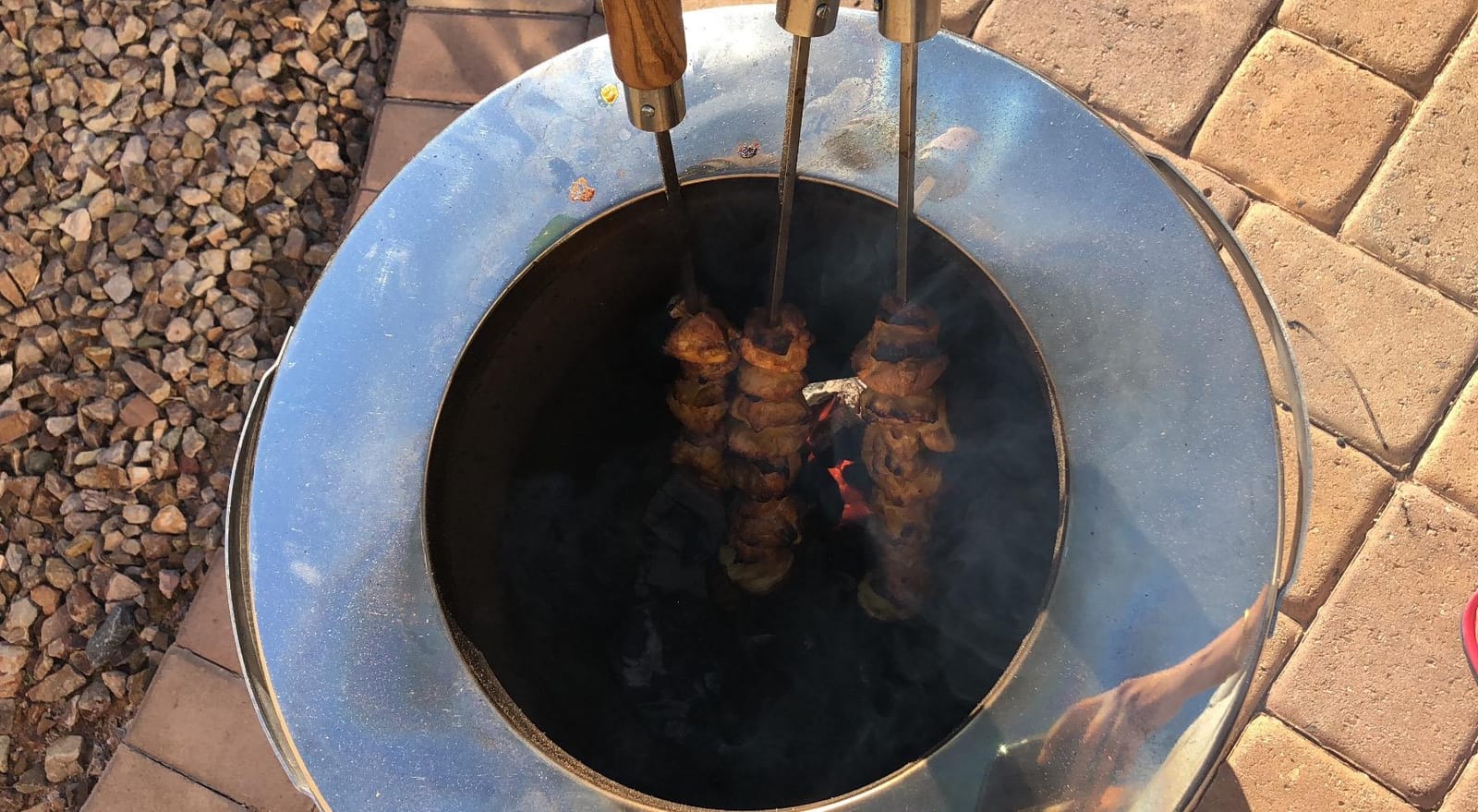
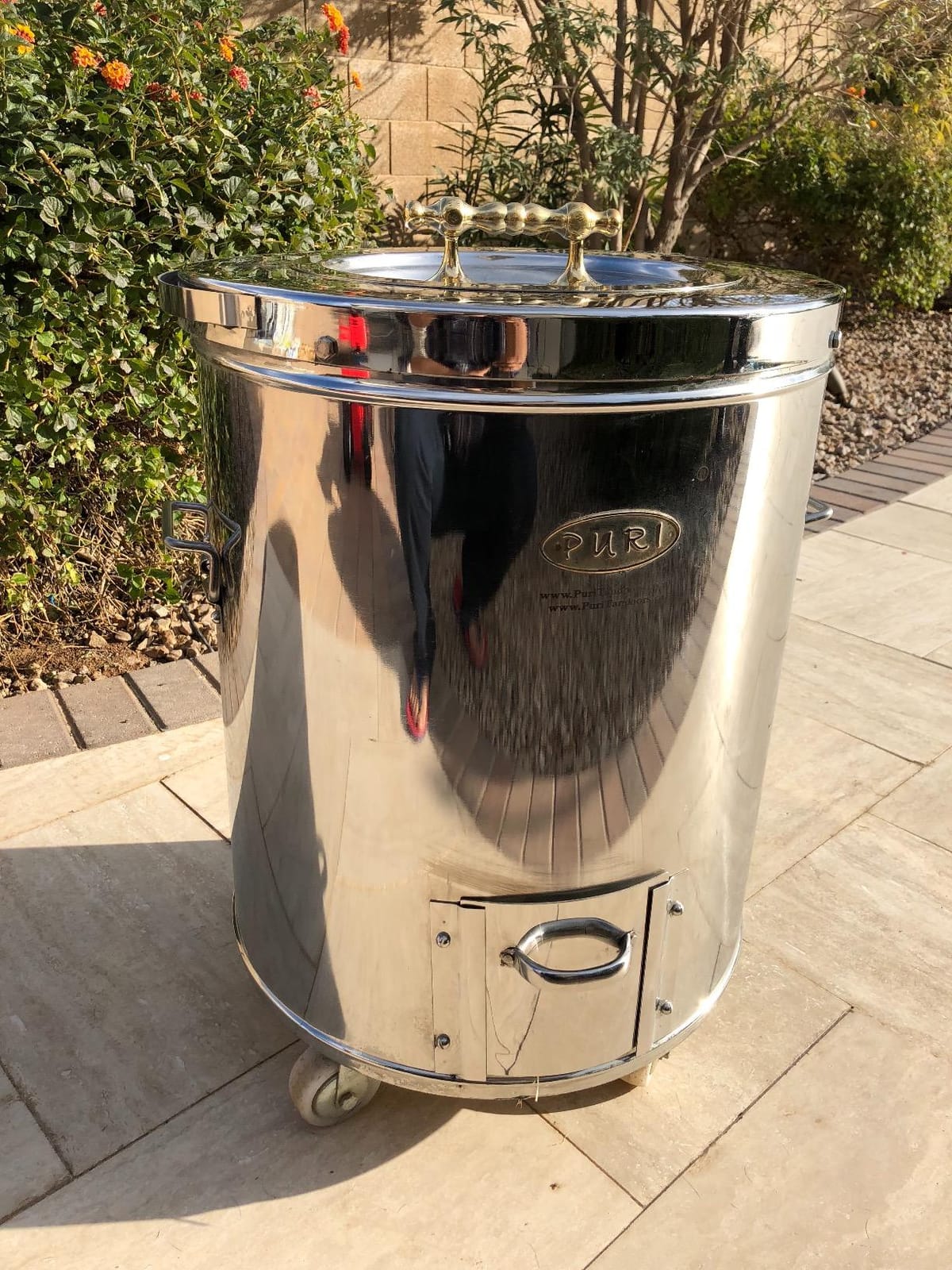
At 132 kg this is a permanent outdoor installation and needs a level, non-combustible base plus clearance. Experienced owners warn that insulation quality, not exterior styling, determines whether the oven holds temperature, and that a badly insulated body burns fuel and gets dangerously hot on the outside.
Interior shielding is another detail real owners mention. Some people arrange vegetables or a shield inside to stop the upper cavity blackening, which tells you the chamber runs hotter at the top than the cooking results alone suggest.
Best for large gatherings
Anyone hosting fifteen-plus people regularly, or running a home catering side, needs a chamber that holds heat through several rounds of skewers. The 20-25 person rating and vertical layout are built for exactly that, and the accessory set scales up with it.
Wrong for a small patio
A 132 kg footprint on a small deck is uncomfortable, and you will move it exactly once. If you are cooking for four on a weeknight, the lighter electric units above are a better fit and cost a fraction of the outlay.
9. Omcan 44385 Natural Gas Clay Tandoor – Restaurant Construction
OMCAN 44385 34” X 34” STAINLESS STEEL TANDOOR CLAY OVEN – NATURAL GAS
Natural gas fired
Handcrafted 29 inch clay pot
277 kg
1 year parts warranty
Pros
- Handcrafted clay pot inside a stainless steel body
- Natural gas firing cooks quickly without burning
- Includes skewers
- tawa hot plate
- clay balls
- gaddi and repair kit
- 1 year parts and labor warranty
Cons
- Natural gas regulator kit sold separately
- Clay pot is not covered by the warranty
- 277 kg and pallet supplied so installation is a project
This is the only unit in the roundup built to restaurant specification, and the details show it. A handcrafted clay pot sits inside a stainless steel outer box, the pot stands 29 inches tall with a 23 inch lid, and firing comes from a 12 inch umbrella natural gas burner on an 18 inch pipe extension.
Natural gas is the reason it cooks quickly without burning, which matters when you are running a service rather than a dinner. It also means a gas line, a permit in many areas and a technician who knows the equipment.
The accessory set includes skewers, a tawa hot plate, clay balls, a naan gaddi and a repair kit with a seasoning jar and additional clay. That repair kit is the detail experienced buyers care about most, because the pot is the consumable part of a clay tandoor and it is not under warranty.
The warranty is one year parts and labor. The listing states the usual pot life is about five years, which is the honest number to plan around rather than the warranty length.
What makes it commercial?
Scale, a handcrafted pot, a gas umbrella burner and a supplied repair kit. At 34 x 34 x 36 inches and 277 kg, supplied on a pallet, it is a utility-scale installation that needs planning for delivery, siting and connection.
What to weigh first?
It carries a single review. A 5.0 average from one buyer is not a performance signal, and the pot is explicitly excluded from the warranty. If you are a home cook, this is far more oven than you need. If you are feeding people commercially, it is the most complete build on this list.
10. Compact Charcoal Tandoor – Portable Free-Standing Format
Compact Charcoal Tandoor for Japanese & Korean BBQ – Portable Design for Commercial Use – Authentic Traditional Cooking Experience
Charcoal fired
Free-standing portable
Handmade clay pot
Type a and Type B variants
Pros
- Portable free-standing charcoal format
- Handmade clay pot for even heat distribution
- Suits grilling
- baking and roasting
- Listed for indoor or outdoor use
Cons
- No dimensions
- weight or capacity are published
- Listing is padded with generic marketing copy
- No customer reviews to verify performance
The idea here is a handmade charcoal tandoor in a free-standing portable format, built for Japanese and Korean barbecue as much as Indian breads. A premium clay pot gives even heat distribution, and the pot handles grilling, baking and roasting.
One safety note on the listing. It is described for indoor and outdoor use, but a charcoal fire indoors is a carbon monoxide risk regardless of what a product page says. The listing itself recommends a stainless steel water tray underneath, which is a sensible precaution and worth taking seriously.
Beyond that, the specification is thin. There are no dimensions, no weight, no capacity and no reviews, and the description carries a lot of generic customer-service text. The usable facts are the charcoal fuel, the portable free-standing form and the clay pot material.
Where the format helps?
Free-standing portable construction matters if you cook at a different location each time, or want tandoor heat alongside a charcoal grill rather than instead of it. Two variants are offered, Type a and Type B.
What to ask before ordering?
Ask for internal diameter, external dimensions, weight and pot wall thickness. Without those four numbers you cannot plan a site, a base or a lifting method, and they are the first things to check on any clay tandoor listing.
Tandoor Oven Buying Guide: Fuel, Material, Size and Safety
The feature list only matters once it points at a fuel type and a site. These are the decisions that sit underneath the checklist.
Fuel type sets flavour and control
Charcoal and wood give you the smoke profile that defines tandoor cooking, and clay chambers with them reach roughly 900 F after a 60-90 minute preheat. Gas stainless steel units preheat in 20-30 minutes and typically top out near 750 F, which is a fair trade for far better control. Electric units are the fastest of all, often under 15 minutes, and the best spec in this roundup reaches 752 F.
Clay, steel or ceramic
Clay is the traditional liner: porous, radiant, and it gives you the char. It is also the fragile part of the appliance, and a good clay pot is expected to last around four to six years, which is why a repair kit or spare pot matters. Stainless steel lasts 15 years or more but reflects heat rather than radiating it, so flavour comes from the fuel and the smoke instead. Ceramic hybrids split the difference and are worth paying for if you want the clay radiant feel in a lighter body.
Size: count mouths, not litres
Internal diameter and depth decide what fits. A 15L electric cavity suits flatbreads and one-to-two pizzas. A clay unit rated at 10-12 people handles skewers for a family gathering. Anything listed at 20-25 people needs a proper base and clearance. Mouth opening width is a real design trade-off too: a wider mouth loads more easily but loses heat faster, which is the single most useful thing to read about in any review.
Safety, placement and certification
Only fully enclosed, vented electric models are appropriate indoors, and even those want clearance. Any fuel-fired tandoor needs a non-combustible surface and roughly three feet of clearance, and open-flame units fall under local fire rules. For electric models, look for UL or CSA listing; its absence is a red flag, not a detail.
Lifespan and cold weather
Clay cracks from thermal shock and from freeze-thaw cycles, not from normal use. Never put water on a hot chamber, and never move a hot unit. In freezing climates, dry the oven, cover it and shelter it if you can. That habit is the difference between four years and six, and it is the most common regret owners report.
Running cost per cook
A charcoal tandoor uses a bag of charcoal and a few wood chunks per session. A gas unit uses a burner on medium for half an hour or so. An electric unit costs pennies per hour at typical rates. Over five years, that difference is smaller than most buyers expect, which is another argument for buying the machine you will actually use rather than the cheapest one.
If you also cook large cuts on a rotisserie, our rotisserie oven reviews cover that style of outdoor cooking, and our outdoor feature picks cover the patio setup around it.
Frequently Asked Questions
What’s special about a tandoor oven?
A tandoor surrounds food with radiant heat from thick walls while rising convection and trapped smoke finish the job. Fuel burns in a well at the base, the walls soak up the heat and radiate it inward, and a narrow top opening forces hot air back down around the food. That combination flash-sears the outside while the inside stays tender, and clay chambers reach roughly 700-900 F.
What is the best tandoor oven for home use?
For most home cooks the answer is a clay chamber fired by charcoal with good insulation, sized for the number of people you actually cook for. Choose a unit rated for 10-12 people for a family, and 20-25 only for large gatherings. If you need no smoke and no fuel line, a countertop electric tandoor is the practical alternative, with a realistic temperature ceiling around 752 F.
What features should I look for when buying a tandoor oven?
Look for double-wall insulation, a stated liner material, a published maximum temperature, adjustable ventilation, a built-in thermometer, a removable ash tray, insulated handles, a secure lid, published internal dimensions, UL or CSA certification on electric models, and a warranty with real spare parts. Red flags are missing dimensions, missing wattage or BTU figures and unclear material descriptions.
What are the disadvantages of an electric tandoor oven?
Electric tandoors have a lower temperature ceiling than fuel-fired clay chambers, topping out around 550-752 F depending on the element, so you get browning rather than true tandoor char. There is no smoke, no radiant flame and no charring from dripping fat, and the heating element cannot replicate clay radiant heat. They also cost more to run per hour than charcoal, and indoor models need their own circuit and ventilation.
What are the key differences between a tandoori oven and a regular oven?
A conventional oven heats air, which then heats the food, so browning is gentle and cooking is slow and even. A tandoor radiates heat from thick walls in every direction, holds much higher temperatures, traps smoke for flavour and cooks food vertically on skewers or pressed against the wall. That is why tandoori bread blisters and meats char while a standard oven mostly browns them.
Is tandoori cooked in a clay oven?
Traditionally, yes. Classic tandoori cooking uses a cylindrical clay oven with thick walls, fired with charcoal or wood, where skewered meat and naan are cooked against the hot inner surface. Modern tandoor ovens keep the clay liner but surround it with stainless steel, and some are entirely metal or electric. The clay liner is what gives the characteristic char and smoke, so a metal or electric unit imitates the result rather than reproducing it.
Which Tandoor Oven Should You Buy in 2026?
The Angaar Mini Electric Tandoor is our top pick for 2026, and the reason is evidence rather than features. It is the only oven in this roundup with a real review history, it heats a small countertop footprint, and its non-stick top plate produces the flatbreads people actually buy a tandoor for.
If you want true char and smoke, move up the list to a clay chamber fired by charcoal, the Puri SS1 Ultima for a family or the SS2 Deluxe for large gatherings. For restaurant-scale service, the Omcan 44385 is the only build here with a handcrafted pot, a gas umbrella burner and a repair kit. Start with the ten features above, check the red flags, and pick the fuel you will actually use.