
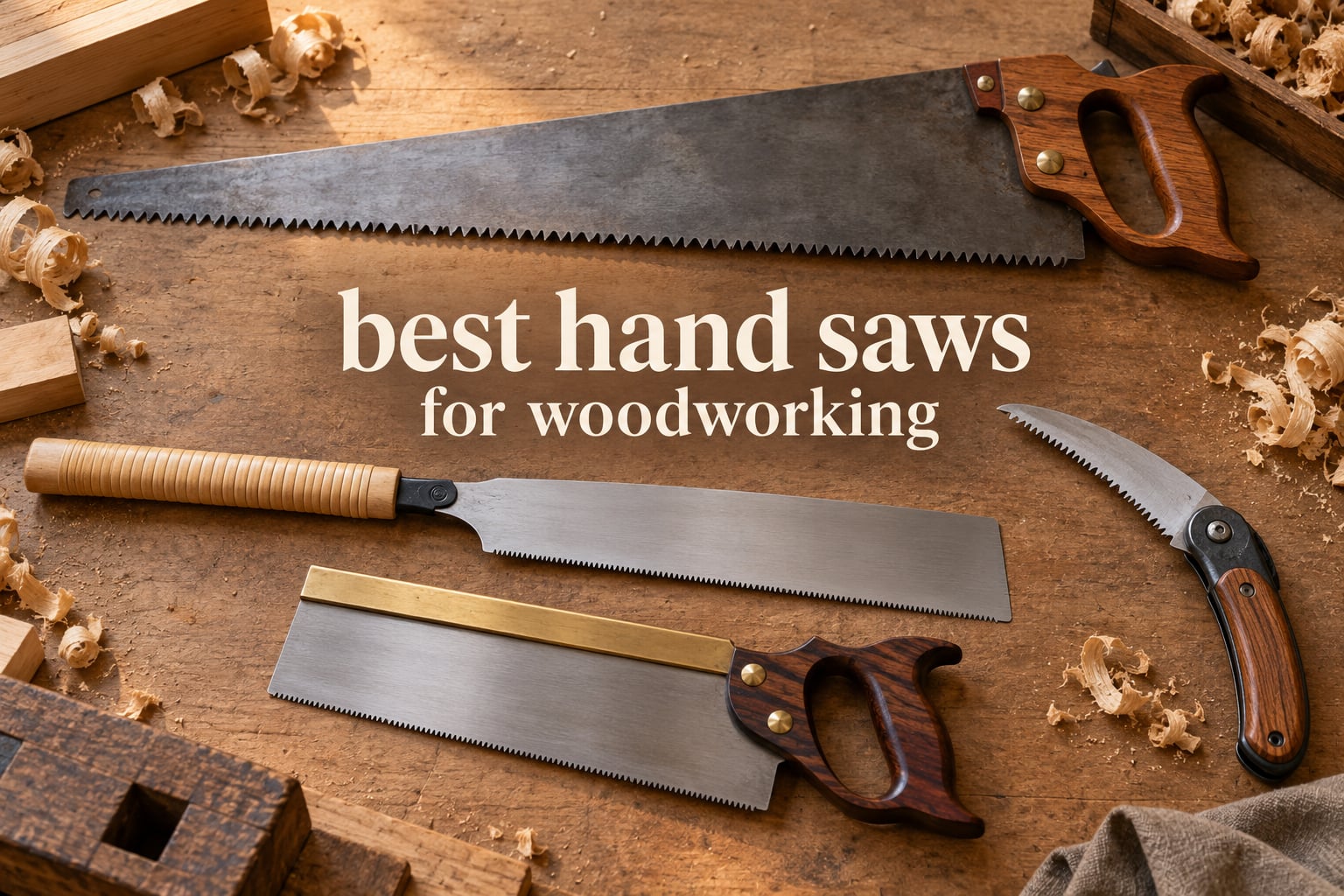
The best hand saws for woodworking are not one saw but three, because the tool only works if the tooth pattern matches the cut. A saw cuts fast and rough along the grain, cuts clean across the grain, and cuts fine joinery only with teeth fine enough to leave almost nothing to sand.
Here is the short version of our answer. For most people, the SUIZAN Ryoba 9.5 inch double-edge pull saw is the single tool that covers the widest range of work, and it is our top pick below. For panel work, sheet goods and long trim, the CRAFTSMAN 20 inch fine finish panel saw is the right Western push-stroke saw. For dovetails and flush cuts, the SUIZAN Dozuki 6 inch saw and the SUIZAN flush cut saw do the work that power tools do badly.
We chose these twelve by grouping customer ratings by saw family rather than by brand, then checking blade length, teeth per inch, tooth pattern, steel type, handle and whether the blade can be filed back to sharp by hand. That last point matters more than most shoppers expect. A saw that can be resharpened is a tool you keep for decades, while an induction-hardened blade is a tool you eventually replace.
Two notes before the picks. First, if you already own a circular saw, a hand saw is still worth owning for anything that needs a line to follow, a flush cut, or a cut in a space a power saw cannot reach. Our guide to the best table saws for woodworking covers the powered half of the shop. Second, prices move constantly, so use the buttons rather than any number you remember.
Best Hand Saw by Use Case in 2026
Best for general carpentry and rough cuts: IRWIN 15 inch coarse cut carpenter saw. Features: thick-body alloy steel blade, deep gullets, M2 tri-ground teeth. Best use: framing lumber, sheet goods and demolition-adjacent work where speed beats finish.
Best for panel work, trim and plywood: CRAFTSMAN 20 inch fine finish panel saw. Features: induction hardened teeth, bi-material handle, built-in 45 and 90 degree angle guide. Best use: cutting long trim, panels and sheet goods square to a long edge.
Best all-round fine woodworking saw: SUIZAN Ryoba 9.5 inch double-edge pull saw. Features: 9 TPI rip side and 15 TPI crosscut side, 0.5 mm Japanese steel blade, 0.8 mm kerf. Best use: everything from furniture parts to trim and sheet material.
Best for hardwood joinery: Gyokucho Razorsaw 9.5 inch double edge. Features: 22 TPI crosscut and 9 TPI rip, 0.018 inch blade, teak handle. Best use: dense and abrasive hardwoods where a thicker blade binds.
Best for dovetails and tenons: SUIZAN Dozuki 6 inch saw. Features: 25 TPI dozuki crosscut teeth, 0.3 mm blade, 0.5 mm kerf. Best use: hand-cut dovetails, tenons and clean crosscuts that need no sanding.
Best for pruning and firewood: MOSSY OAK 7 inch folding saw. Features: bimetal blade, 7 TPI triple-ground teeth, Teflon coating, auto-lock. Best use: branches, shrubs, kindling and camp wood.
Best for mouldings and small tenons: Spear & Jackson 12 inch Predator tenon saw. Features: 15 points per inch, solid steel back, finger guide and angle guide. Best use: mouldings, skirting, architraves, dowels and small tenons.
Best for tiny cuts and model work: ZONA 35-500 fine razor saw. Features: 32 TPI, 0.010 inch kerf, 1-3/16 inch cut depth. Best use: delicate work on wood, plastic, acrylic and soft metals.
Top 3 Best Hand Saws for Woodworking (October 2026)
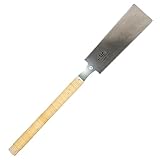
SUIZAN Ryoba 9.5 inch Pull Saw
- Double edge 9 TPI rip and 15 TPI crosscut
- 0.5 mm Japanese steel blade
- 0.8 mm kerf for fine cuts
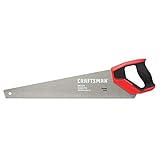
CRAFTSMAN 20 inch Panel Saw
- Induction hardened teeth
- Bi-material handle
- 45 and 90 degree angle guide

SUIZAN Dozuki 6 inch Dovetail Saw
- 25 TPI dozuki crosscut teeth
- 0.3 mm thin blade
- 0.5 mm kerf
All three of these are Western or Japanese crosscut-capable saws rather than pruning tools, because two thirds of the work in a workshop is cutting wood to length rather than cutting branches.
All 12 Hand Saws Compared in 2026
| Product | Specifications | Action |
|---|---|---|
| SUIZAN Ryoba 9.5 inch Double Edge Pull Saw |
|
Check Latest Price |
| CRAFTSMAN 20 inch Fine Finish Panel Saw |
|
Check Latest Price |
| SUIZAN Dozuki 6 inch Dovetail Saw |
|
Check Latest Price |
 MOSSY OAK 7 inch Folding Saw MOSSY OAK 7 inch Folding Saw |
|
Check Latest Price |
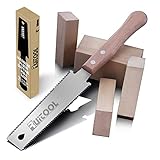 RUITOOL 6 inch Double Edge Pull Saw RUITOOL 6 inch Double Edge Pull Saw |
|
Check Latest Price |
 SUIZAN 5 inch Flush Cut Pull Saw SUIZAN 5 inch Flush Cut Pull Saw |
|
Check Latest Price |
 Gyokucho Razorsaw 9.5 inch Double Edge Gyokucho Razorsaw 9.5 inch Double Edge |
|
Check Latest Price |
 IRWIN 15 inch Coarse Cut Carpenter Saw IRWIN 15 inch Coarse Cut Carpenter Saw |
|
Check Latest Price |
 REXBETI 11 inch Folding Saw REXBETI 11 inch Folding Saw |
|
Check Latest Price |
 ZONA 35-500 Fine Razor Saw ZONA 35-500 Fine Razor Saw |
|
Check Latest Price |
 Spear and Jackson 12 inch Predator Tenon Saw Spear and Jackson 12 inch Predator Tenon Saw |
|
Check Latest Price |
 IRWIN 250mm 12 TPI Tenon Saw IRWIN 250mm 12 TPI Tenon Saw |
|
Check Latest Price |
Quick verdict: pick the Ryoba if you want one saw for most furniture work. Pick the CRAFTSMAN panel saw if you cut long trim and sheet goods. Pick the ZONA if you already own a full-size saw and need something small. Pick any folding saw only if the wood comes to you rather than the other way around.
1. SUIZAN Ryoba 9.5 Inch Double Edge Pull Saw Review
SUIZAN Ryoba Double Edge Saw 9.5″ – Japanese Pullsaw Hand Saws Wood Cutting
Japanese steel,9.5 inch blade
Double edge: 9 TPI rip and 15 TPI crosscut
Weight: 0.2 kg
Pros
- Tracks a line with very little effort
- Double edge covers rip and crosscut
- 0.8 mm kerf leaves almost nothing to sand
- Long wooden handle is comfortable in the hand
- Handles hardwoods and softwoods alike
Cons
- Not for thick or cross-grained stock
- Hardened teeth cannot be resharpened
- Pull stroke has a learning curve for Western saw users
This is the saw we keep reaching for. The blade is 0.5 mm thick Japanese steel with a 0.8 mm kerf, so it removes almost nothing and leaves an edge that needs very little sanding. Two edges are ground into it, a 9 TPI side for ripping and a 15 TPI side for crosscutting, which means one tool covers both directions of cut.
The overall length is 23.2 inch and the weight is 0.2 kg, which sounds odd until you pick it up. A thin blade that long feels like a much bigger tool because it is doing the work of one. The wooden handle is long enough to use both hands for a heavy cut and narrow enough to hold with one hand on a delicate one.
Roughly 86 percent of more than 10k ratings sit at five stars, and the praise is consistent: sharp steel, accurate tracking and a cut clean enough to show on finished furniture. Reviewers single out the double edge as the reason it replaces two saws on a small bench, and the thin blade gets credit for not binding in figured wood.
The honest limitation is maintenance. The teeth are hardened, so once this blade loses its edge you replace it rather than file it, and a replacement blade is available for this model.
If you prefer a saw you can put on a workbench and file back to sharp every few months, a Western saw is the better tool. The tradeoff is speed and confidence on hardwood.
Who the SUIZAN Ryoba suits
Furniture makers, cabinet installers and anyone cutting hardwood parts to a marked line will get the most out of this saw. The 15 TPI crosscut side is fine enough for a visible finished edge and coarse enough to keep pace with real work, which is a narrow window that few saws hit.
It also suits a first serious hand saw, because the double edge removes the rip-versus-crosscut decision entirely. You do not have to know which kind of saw you wanted before you buy it.
Who should skip the SUIZAN Ryoba
Skip it if you cut thick rough lumber for a living or split firewood, because the gullets are too shallow to clear heavy chips. The fine crosscut side will labour on stock over an inch or so thick.
Also skip it if you have never used a pull-stroke saw and refuse to practise. Cutting on the push stroke with this blade is the single most common beginner mistake, and it will flex and wander rather than tell you why.
2. CRAFTSMAN 20 Inch Fine Finish Panel Saw Review
CRAFTSMAN Hand Saw, 20-Inch, Fine Finish (CMHT20881)
20 inch high speed steel blade
Induction hardened teeth
Bi-material handle
14.4 oz
Pros
- Fast clean cuts on trim and panels
- Induction hardened teeth hold an edge
- Built-in 45 and 90 degree angle guide
- Bi-material handle is comfortable
- Full lifetime warranty
Cons
- 20 inch blade is bulky in tight spaces
- Push stroke needs more arm effort than a pull saw
A 20 inch panel saw is one of the most useful shapes in hand sawing because the length does the work. On a sheet of plywood or a long piece of trim, you are not pushing hard, you are guiding a long blade that naturally resists wandering. Combined with the fine finish tooth geometry, it produces a cut square enough to check with a square and be satisfied.
The teeth are induction hardened, which is the trade you make for longevity. They will stay sharp through a lot of sheet-goods work, but they are not the teeth you file.
The bi-material handle is the other feature worth knowing about, along with the moulded square and miter guide built into it, which lets you find 45 and 90 degree angles from the handle itself.
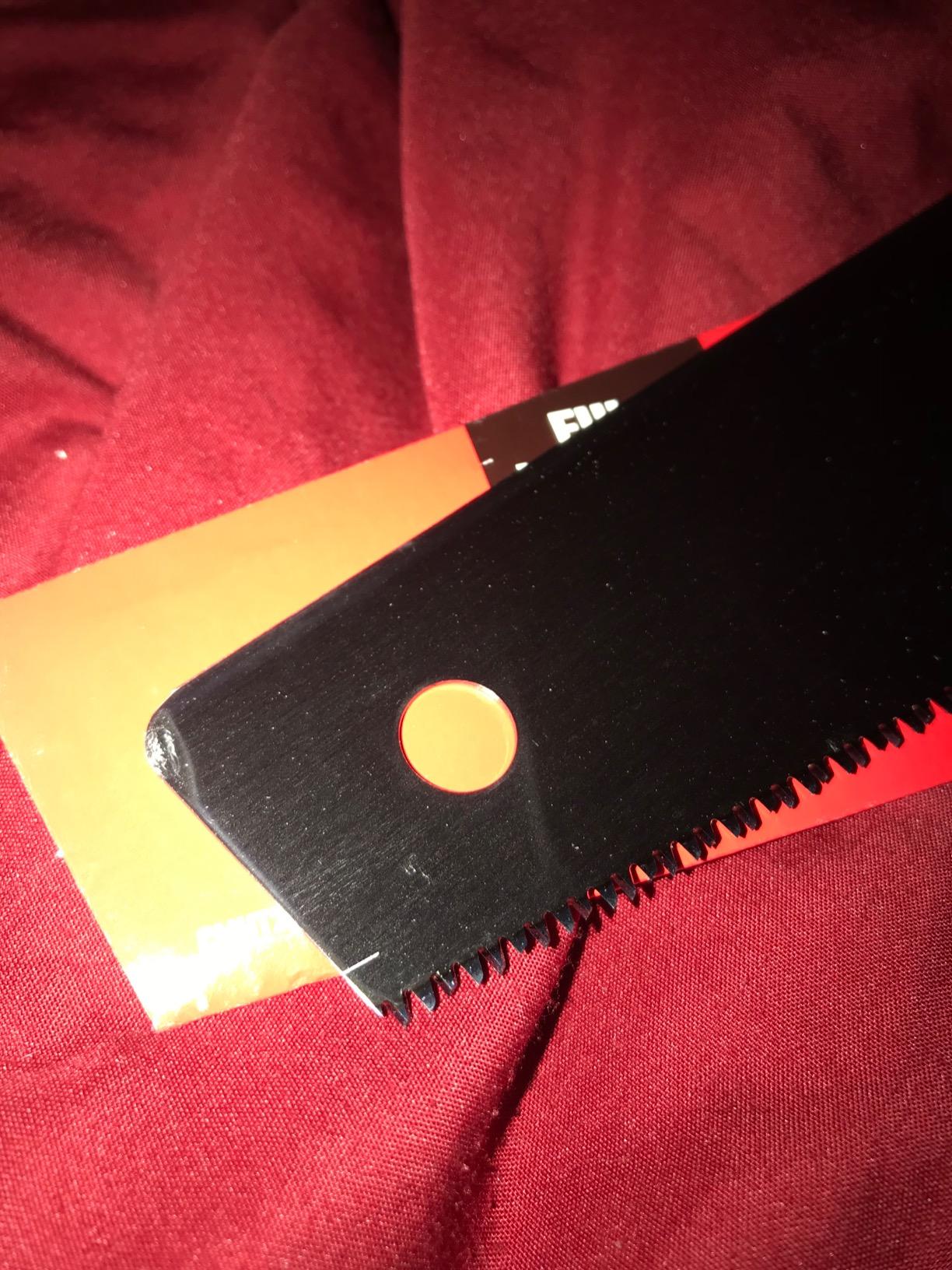
Reviewers consistently point at the same three things: the clean fast cut, the comfortable handle and the angle guide. At 4.7 across more than 1,300 ratings with 80 percent at five stars, the pattern is one of a tool that simply does what it says for a long time.
Weight is 14.4 ounces, which sounds heavy for a saw until you cut a full sheet. The extra mass is what stops the blade from whipping.
The real cost is manoeuvrability: in a small shop, a 20 inch saw needs room to swing, and detail work at a bench is not its purpose.
Who the CRAFTSMAN panel saw suits
Anyone cutting plywood, MDF, melamine or long trim benefits from the blade length more than from any other spec. If your projects involve sheet goods, the blade length alone justifies the purchase more than any other spec.
Beginners who want one Western push saw to learn on also suit this design, because panel saws are forgiving. The long blade cuts straight without constant correction, which is a kinder first lesson than a short aggressive saw.
Who should skip the CRAFTSMAN panel saw
Skip it if your work is small-scale furniture and every cut happens over a bench with a clamp nearby. At that scale the blade is in the way and a pull saw will be faster and cleaner.
Skip it if you want to maintain the saw yourself with a file. Induction hardened teeth can be touched up with a diamond file, but they are not a file-and-set saw, and the effort involved is not worth it for a blade this shape.
3. SUIZAN Dozuki 6 Inch Dovetail Saw Review
SUIZAN Dozuki Dovetail Saw 6″ Cross Cut – Japanese Pullsaw Hand Saws
6 inch Japanese steel blade
25 TPI dozuki crosscut
0.3 mm blade and 0.5 mm kerf
0.16 kg
Pros
- 25 TPI teeth leave a splinter-free face
- 0.3 mm blade tracks a scribed line
- 0.5 mm kerf wastes almost no material
- Wooden handle suits long joinery sessions
Cons
- Fine teeth are slow in thick stock
- Crosscut only so it will not rip
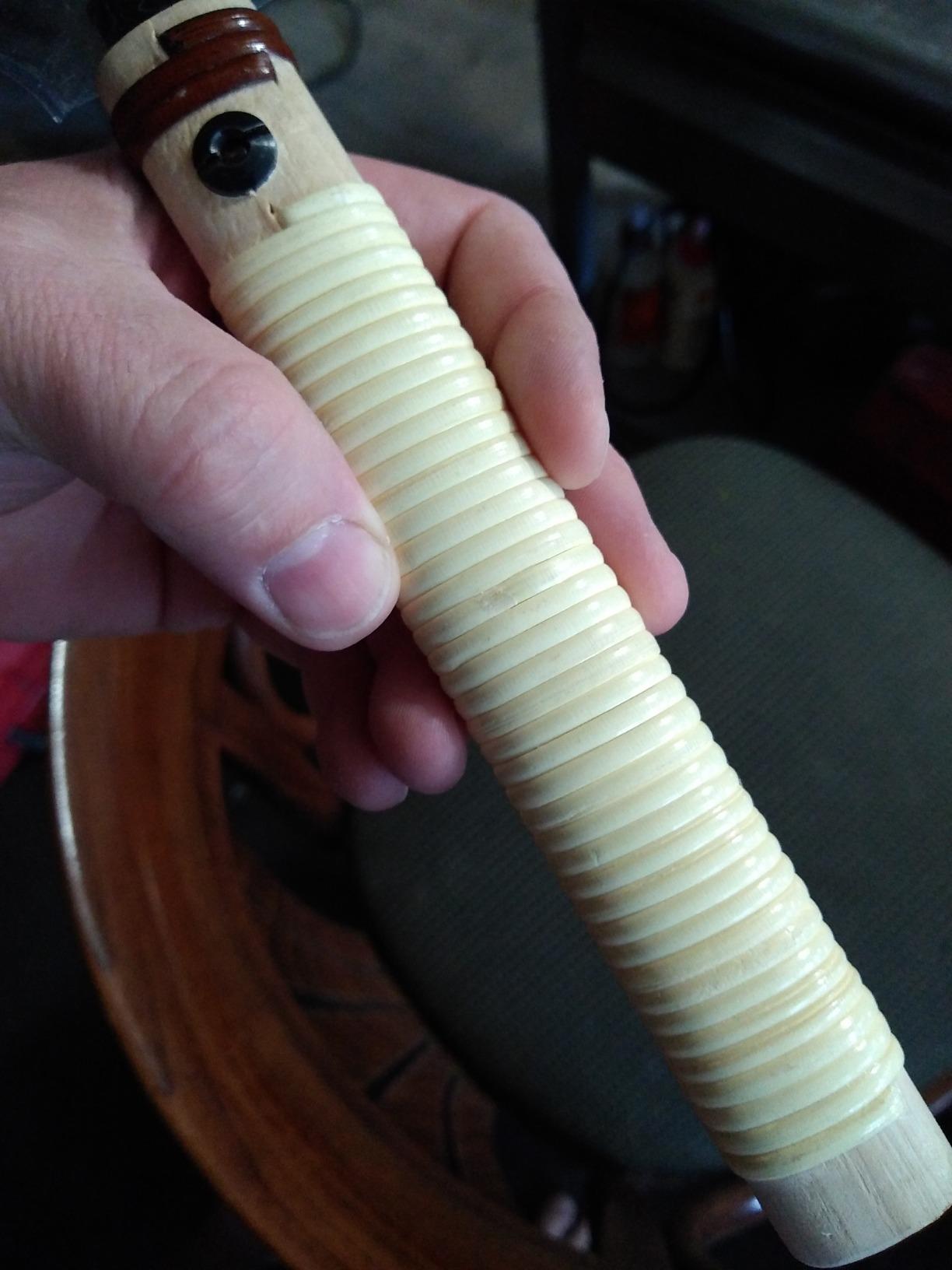
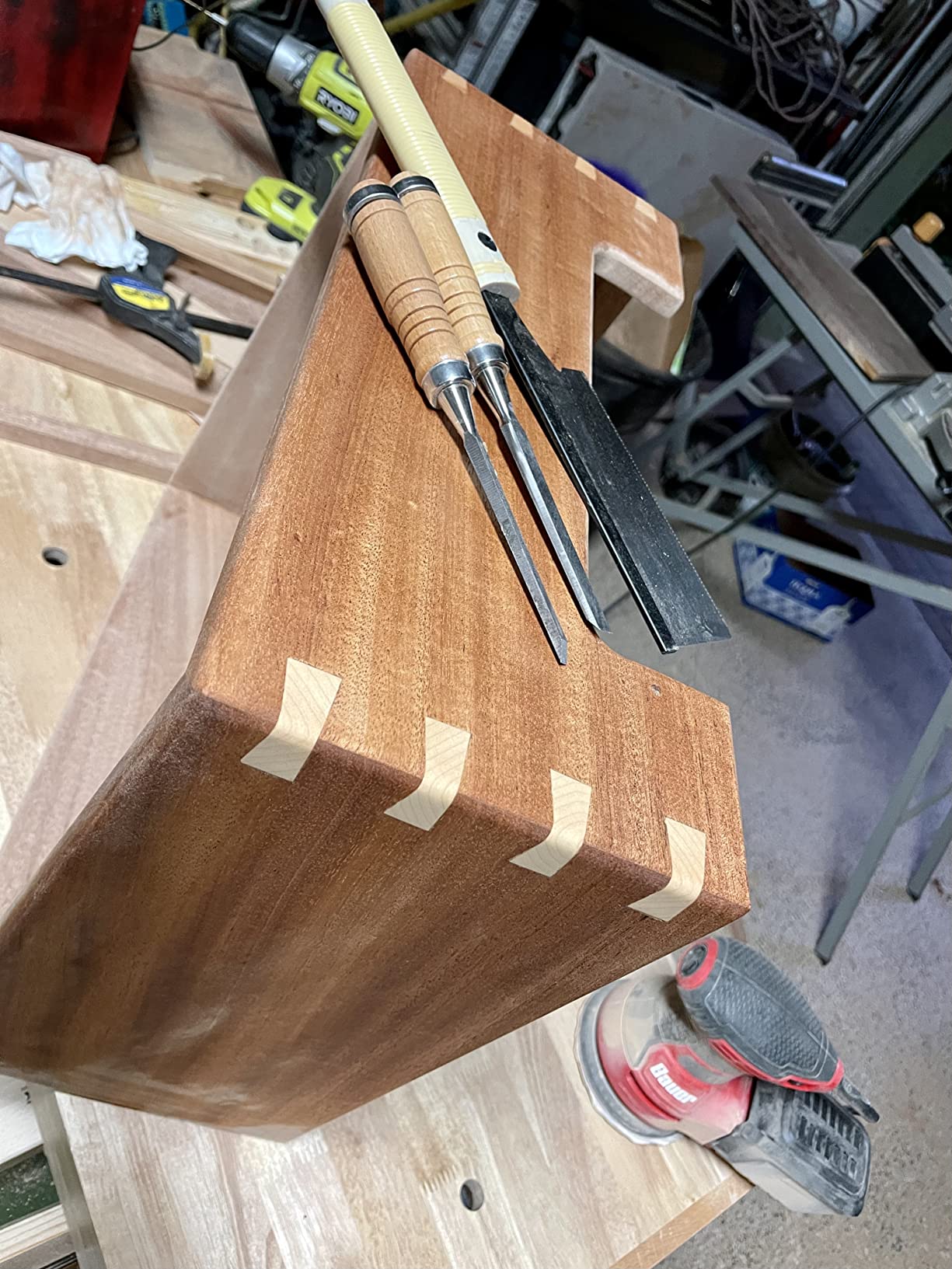
A dozuki pattern is the Japanese answer to the European backsaw, and the difference shows in how it feels. The teeth are set almost to zero, the blade is 0.3 mm thick and the kerf is 0.5 mm, so the saw tracks a scribed line without the small wander that a backsaw’s tension can introduce. On a dovetail socket you mark out by hand, that is exactly what you want.
At 25 TPI the teeth do real work on hardwood but move slowly in thick material. Overall length is 15.2 inch and weight is 0.16 kg, so it sits comfortably in one hand with a pencil behind your ear. It is made in Japan, and the fit and finish reflect that.
With 4,000-plus ratings and 84 percent at five stars, the feedback centres on cut quality rather than speed. Buyers use it for dovetails, tenons, crosscuts and clean trimming, and several mention how little sanding the face needs afterwards.
The two complaints are the same two facts: fine teeth are slow, and it is a crosscut saw. Neither is a flaw if you bought it to cut across the grain.
Both are frustrating if you expected a general-purpose tool, so treat it as the second saw in a kit rather than the only one.
Who the SUIZAN Dozuki suits
Hand-cut dovetailers, tenon makers and anyone assembling furniture will get the most from it. Furniture makers who want a face they can finish without sanding will appreciate the 0.5 mm kerf more than almost any other number on a saw.
It also works as a general fine crosscut saw for resawn and quartersawn stock, where a coarser saw tends to tear out along the grain lines.
Who should skip the SUIZAN Dozuki
Skip it if you break down furniture or cut rough stock regularly. The gullets cannot clear heavy chips and you will spend more time than the job deserves.
Skip it if you have no pull-stroke experience. A 25 TPI blade with almost no set punishes a wandering hand more than a coarse saw does, so learn the stroke on a longer saw first.
4. MOSSY OAK 7 Inch Folding Saw Review
MOSSY OAK Folding Saw, 7 Inch Hand Saw with Pouch
7 inch bimetal blade
7 TPI triple-ground teeth
Teflon coating and auto-lock
0.26 kg
Pros
- Aggressive teeth cut branches quickly
- Auto-lock keeps it safe in a pocket
- Carry pouch clips to a belt
- Coating resists rust and friction
Cons
- Composite handle is less refined than wood
- 7 TPI teeth are for pruning not finish work
Folding pruning saws are not really woodworking saws, but a surprising share of buyers want one, and this is the version we would carry. The blade is a D6A and M2 bimetal strip, which is the material used in hacksaw blades, and it carries a Teflon coating that keeps sap and moisture off the steel.
Seven teeth per inch, triple ground, is the right geometry for green wood. The teeth are set alternately to each side so the kerf is wider than the thin blade and they bite into a branch rather than skate across it.
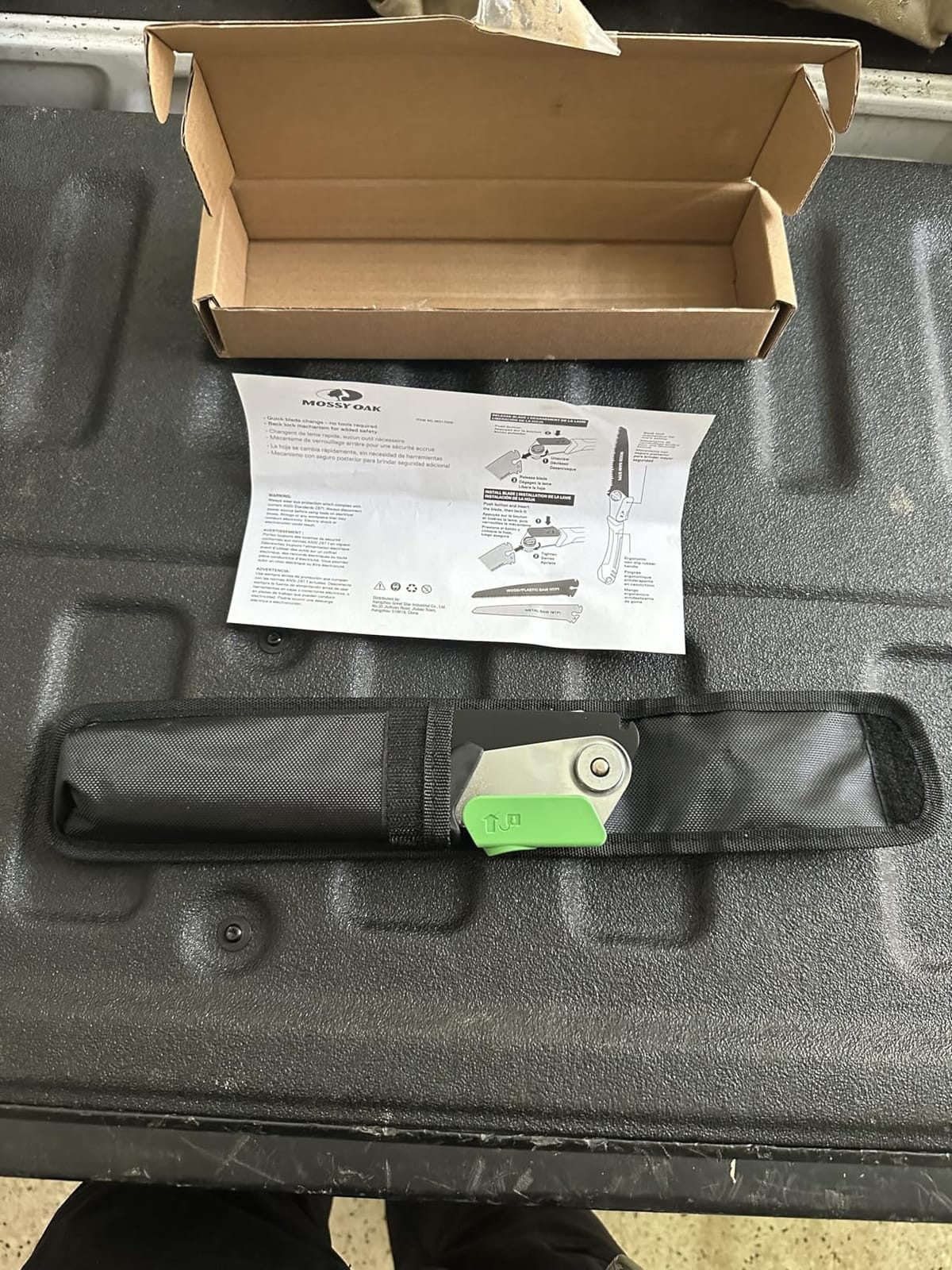
The auto-lock engages when the saw is fully open, and there are no exposed teeth when it is folded.
Ratings sit at 4.7 across more than 10k, with 78 percent at five stars, and the praise is about the same three things every time: sharp teeth, a fold that stays locked, and the included pouch. Buyers mention bushcraft, camping and yard trimming as the main uses.
The handle is plastic or composite, which is the reason this is not a workshop saw. It feels fine in short bursts and gets slippery in wet hands over a long session.
A wooden handle absorbs moisture and can be shaped to your grip, while a moulded one cannot.
Who the MOSSY OAK folding saw suits
Gardeners, campers and anyone who trims branches where a saw cannot reach suit this saw well. The 7 inch blade and folding format make it easy to keep in a backpack or a car door pocket, and the pouch that comes with it clips to a belt.
It also makes a sensible second saw for a workshop, because a pruning saw is the right tool for offcuts and knock-down timber that would dull a fine blade.
Who should skip the MOSSY OAK folding saw
Skip it for furniture or cabinet work. Seven teeth per inch and a wide set produce a cut that is fast and rough, and there is no fine edge on the blade to switch to.
Skip it if you need a straight cut in thick hardwood. A 7 inch blade with this tooth geometry works hard and wanders on a heavy crosscut, so it belongs in the garden rather than at the bench.
5. RUITOOL 6 Inch Double Edge Pull Saw Review
RUITOOL Japanese Hand Saw 6 Inch Double Edge Ryoba Pull Saw for Flush Cuts
6 inch SK5 high-carbon steel blade
17 TPI and 14 TPI double edge
Weight: 0.11 kg
Pros
- SK5 steel is sharp and flexible
- Doubles as rip and crosscut saw
- Only 0.11 kg so it travels anywhere
- Beechwood handle reduces fatigue
Cons
- Beech handle is less durable than premium hardwood
- Pull stroke needs adjustment if you are new to it
- Flush cuts can mark without practice
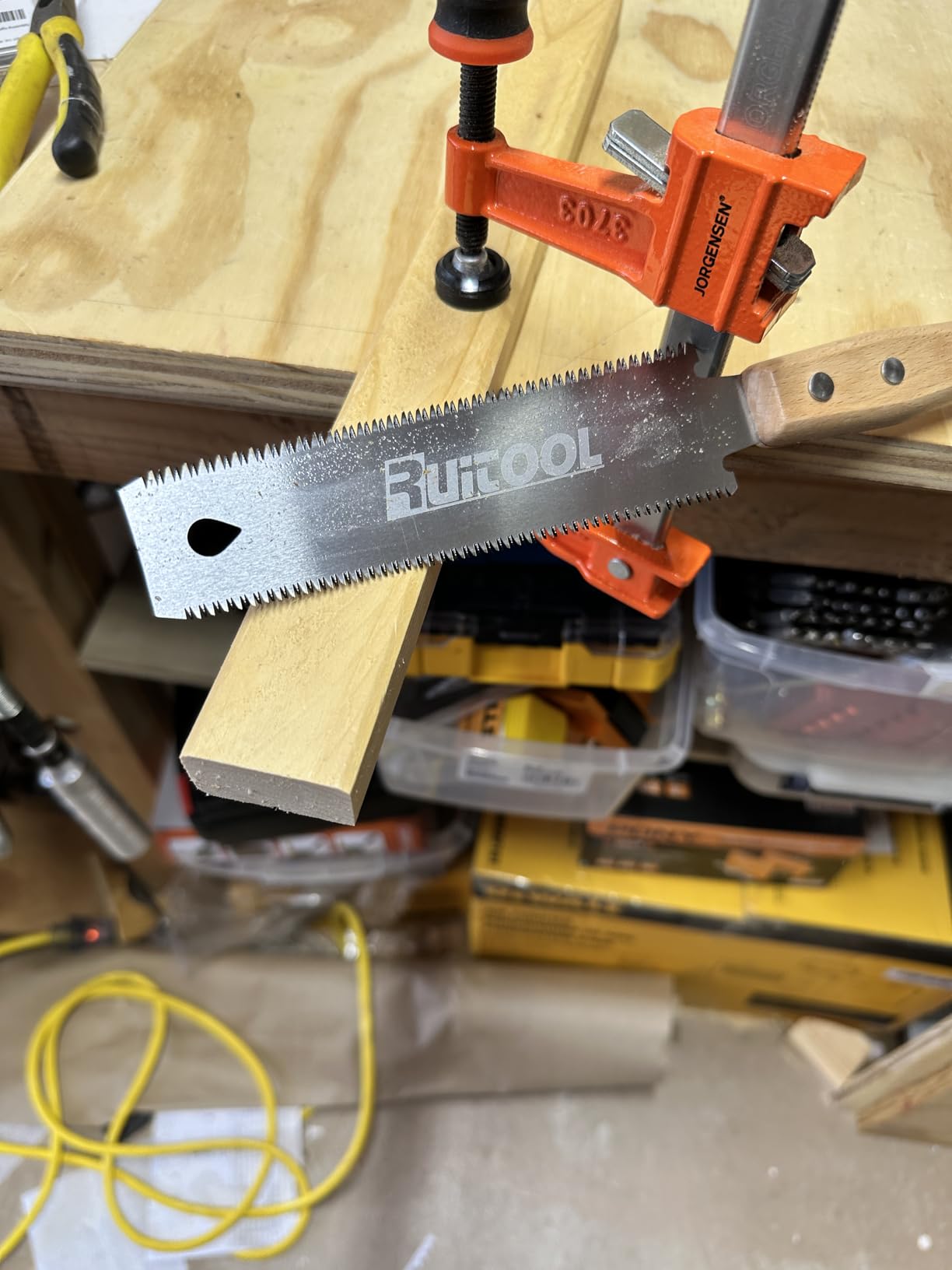
This is the small-shop version of the Japanese pull saw and one of the lightest tools in the group at 0.11 kg. The blade is SK5 high-carbon steel with the teeth hardened to HRC60-63, and it is double edged with 17 TPI on one side for hardwood and rip work and 14 TPI on the other for softwood and crosscutting.
Because it folds down to a small footprint, it is the saw we would pack for a balcony workshop or a small apartment where a 20 inch blade will not swing. Overall length is 12.2 inch, so it is genuinely one-handed, and the beech handle gives you something solid rather than plastic.
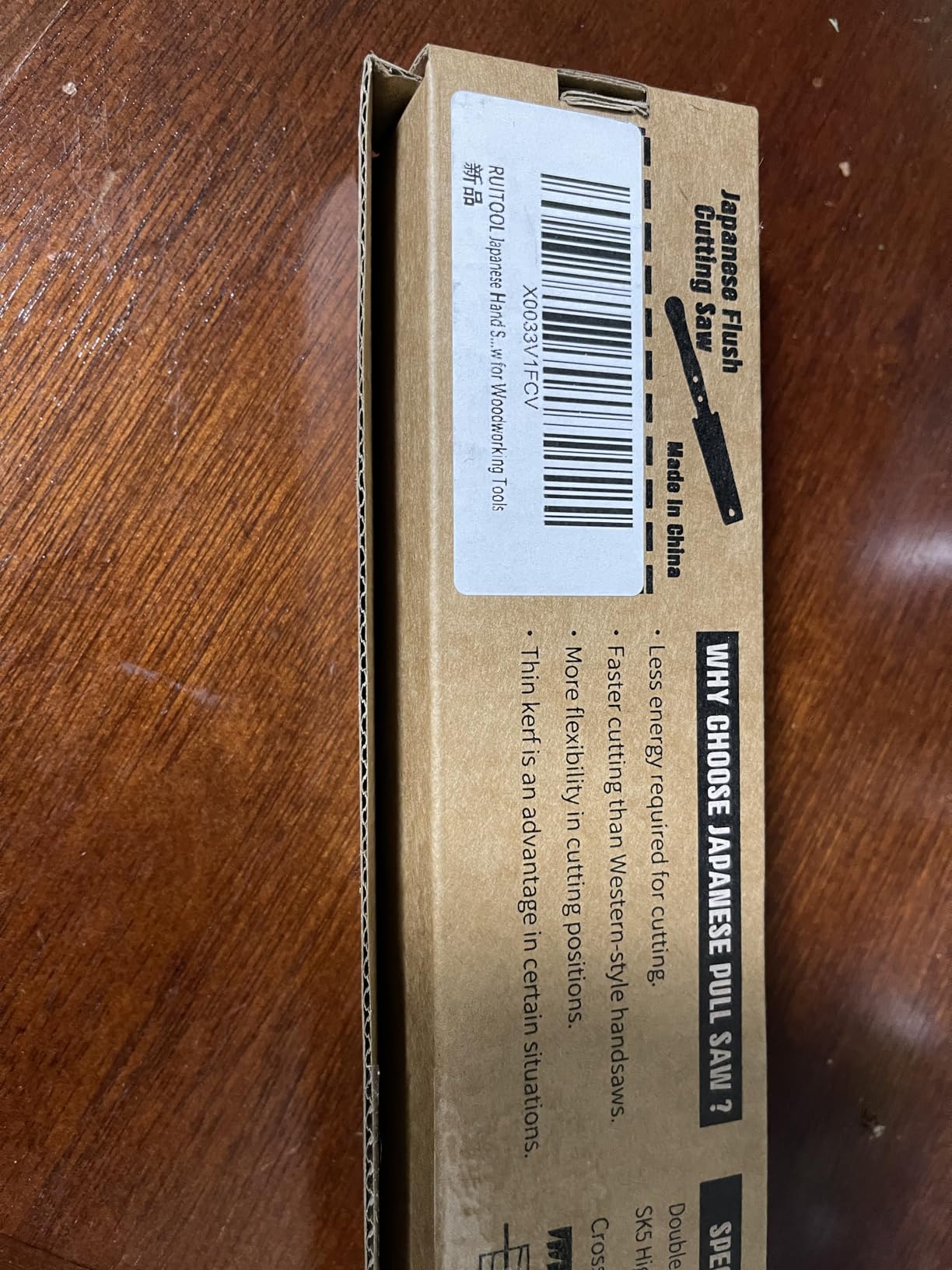
Reviewers at 4.6 across more than 6,000 ratings describe it as sharp, accurate and easy to carry, with 78 percent at five stars. The three-sided ground tooth design is often mentioned as the reason it clears chips well for a blade this fine.
The criticism is consistent too. Beech is a good hardwood but not as dense as the Japanese and European handles used on better pull saws, and flush cuts leave small marks until you get used to pulling straight down.
The listing shows a lifetime warranty, which is a point in its favour given the price tier.
Who the RUITOOL pull saw suits
Apartment and small-space woodworkers, and anyone who wants a second saw that fits in a tool bag, get a lot from this. It is also a good first pull saw for a beginner, since the short blade is easy to control and forgiving while you learn the stroke.
Model makers and people cutting small parts benefit from the fine teeth and the light weight, because a heavy saw is hard to use on a small workpiece.
Who should skip the RUITOOL pull saw
Skip it for heavy crosscutting or thick hardwood, where a 6 inch blade will not generate enough speed. The 14 TPI crosscut side is for work up to about an inch thick, not for framing lumber.
Skip it if you intend to rip long boards. There is a rip edge, but at 6 inch the leverage and cutting depth are limited, so long rip cuts will feel slow.
6. SUIZAN 5 Inch Flush Cut Pull Saw Review
SUIZAN Flush Cut Saw 5″ – Japanese Pullsaw Hand Saws Wood Cutting
5 inch Japanese steel blade
25 teeth for fine work
Weight: 0.05 kg
Wood handle
Pros
- Light enough for delicate flush cuts
- Cuts plugs and dowels cleanly
- Wood handle gives real control
- Handles common hardwoods such as oak and walnut
Cons
- Blade is not replaceable on this model
- Too short for thick stock or rough work
Flush cutting is the one job a power saw cannot do well, and this is the tool for it. A flush cut means cutting a tenon cheek, a plug or a dowel end perfectly level with a surrounding surface.
A circular saw cannot manage it because the blade guard and shoe stand in the way. A thin pull saw with a fine toothed edge slides straight down into the hole instead.
At 5 inch and 0.05 kg this is the lightest saw in the group, and the 25 teeth give a cut that needs no cleanup. The wooden handle is small enough to turn the saw with your fingertips, which is what flush work needs.
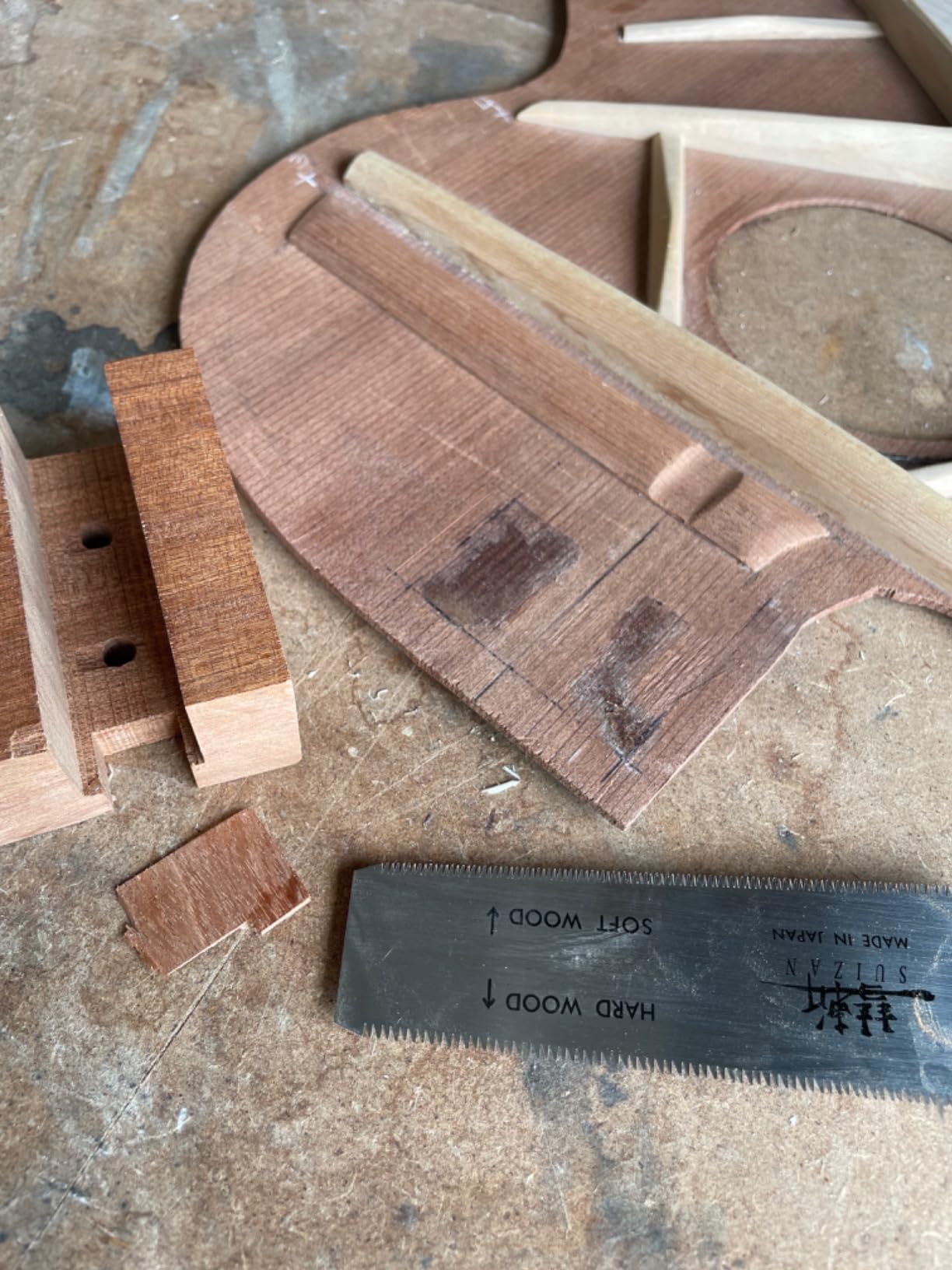
With more than 7,000 ratings at 4.7 and 79 percent at five stars, this is one of the better-reviewed small saws available. Buyers use it for trimming dowels, cutting plugs, flush cutting tenons and general small detail work in hardwood.
The one drawback that appears repeatedly is that the blade on this model is not replaceable. If you damage the teeth on a nail or a hidden screw, the tool is finished.
That is a poor outcome for a saw you would otherwise keep for years.
Who the SUIZAN flush cut saw suits
Cabinetmakers, hand-tool furniture builders and anyone cutting tenons by hand should own one of these. It is also the right saw for cutting plugs after a hinge or knob is removed, and for trimming dowels flush in a mortise.
Anyone learning hand-cut joinery benefits from practising flush cuts on a cheap tool before doing it with a saw they care about.
Who should skip the SUIZAN flush cut saw
Skip it as a general saw. At 5 inch it has no capacity for thick stock, and using it for that will only frustrate you. It is a specialist detail tool.
Skip it if you are rough on tools. Because the blade cannot be replaced, it is better matched to a careful user who files nails out of scrap first.
7. Gyokucho Razorsaw 9.5 Inch Double Edge Review
Gyokucho Razorsaw 9-1/2″ Double Edge (Ryoba) For Hardwoods
9.5 inch blade with 23 inch overall length
22 TPI crosscut and 9 TPI rip
0.018 inch blade
185 g
Pros
- Exceptional cut quality for the effort
- Specifically designed for hard and abrasive woods
- 0.018 inch blade tracks tightly
- Teak handle is comfortable and durable
Cons
- Costs more than entry-level pull saws
- Very fine teeth need patience in thick stock
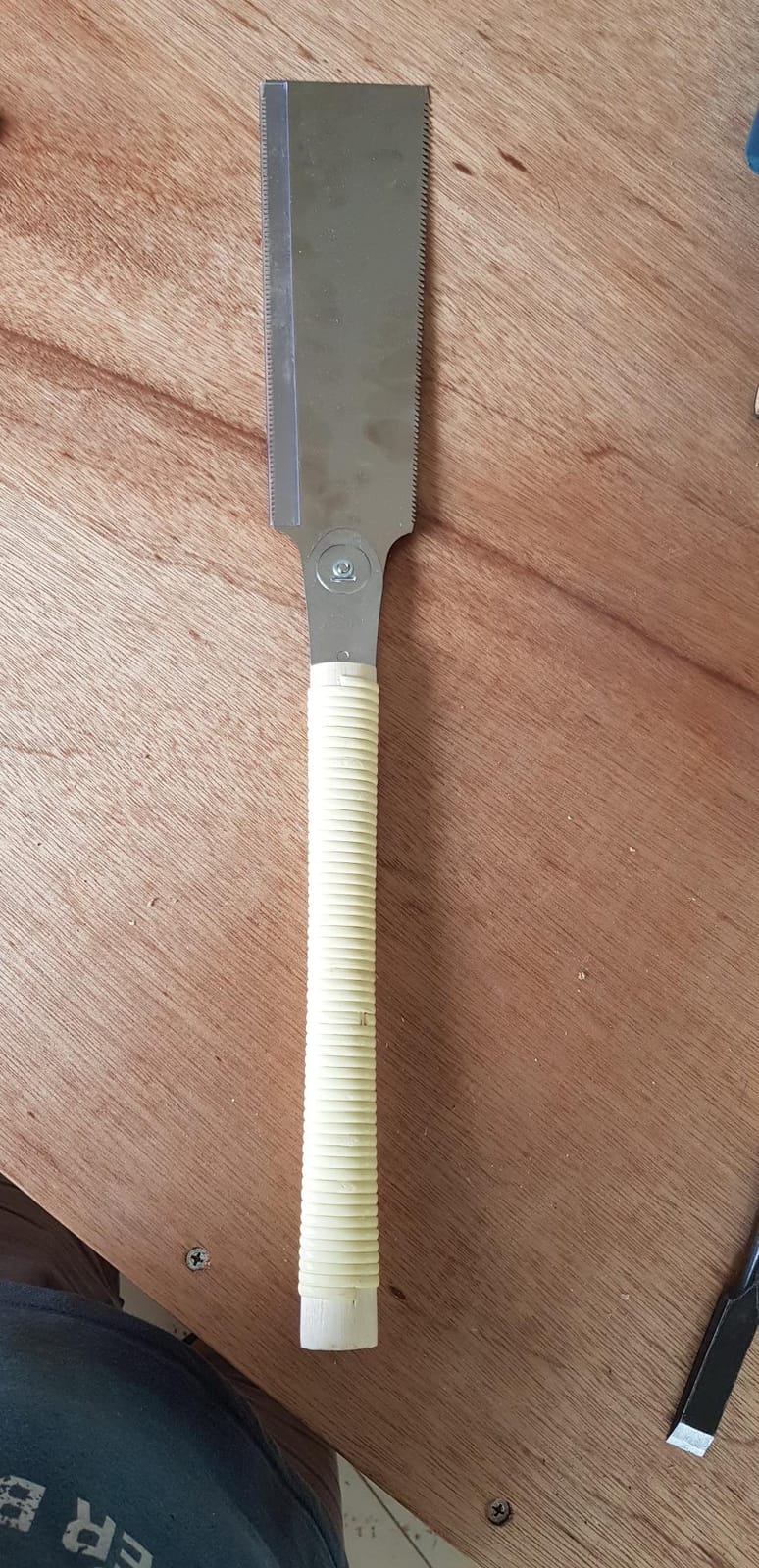
This is the saw to reach for when the wood is the problem. A ryoba pattern is ground with rip teeth along one edge and crosscut teeth along the other, and the idea is that each side does one job very well rather than compromising on both. The result is 9 TPI on the rip side and 22 TPI on the crosscut side, on a blade only 0.018 inch thick.
That thinness is the whole argument. A thin blade flexes around a knot or a resin pocket instead of jamming against it, which is why this saw is specified for hard and abrasive hardwoods like teak, oak and ebony.
Overall length is 23.6 inch with a 185 g weight and a teak handle that takes a slick gracefully.
At 4.8 with 89 percent of ratings at five stars, this saw has the highest share of five-star ratings in our group, even though it has a smaller review base than the mass-market entries. Reviewers describe the cut as smooth and accurate with minimal effort, and repeatedly credit the thin blade for not binding.
The two limits are predictable. It costs more than entry-level pull saws, and 22 TPI crosscut teeth move slowly through thick stock, so patience matters more than strength.
If you are buying your first Japanese saw and cutting mostly plywood and softwood, the longer Ryoba is the more sensible purchase.
Who the Gyokucho Razorsaw suits
Woodworkers who work in dense tropical hardwoods, or who cut exotics that chew up ordinary blades, are the ideal users. The thin blade also makes it excellent for resawn stock and for any cut that has to follow a line exactly.
Anyone who values cut quality over speed should consider it too. Several reviewers describe the finish as close to what a sharp plane leaves behind.
Who should skip the Gyokucho Razorsaw
Skip it if you cut a lot of softwood and sheet goods. A 22 TPI crosscut edge is wasted on plywood, and the rip side at 9 TPI is coarser than a general panel saw needs to be.
Skip it if sharpening matters to you. Like most Japanese pull saws, the teeth are hardened and are treated as a consumable rather than something you file back.
8. IRWIN 15 Inch Coarse Cut Carpenter Saw Review
IRWIN Hand Saw, Coarse Cut, ProTouch Handle, 15-Inch (2011201)
15 inch alloy steel blade
M2 tooth technology with tri-ground teeth
Weight: 16 oz
Wood ProTouch handle
Pros
- Aggressive teeth rip through wood fast
- Thick rigid blade stays straight
- Comfortable wood handle with good weight
- Works on roots branches and rough stock
- Blade and handle are replaceable
Cons
- Coarse teeth cannot make finish cuts
- Very sharp so it needs a little practice
- Tiring on high volumes of repeated cuts
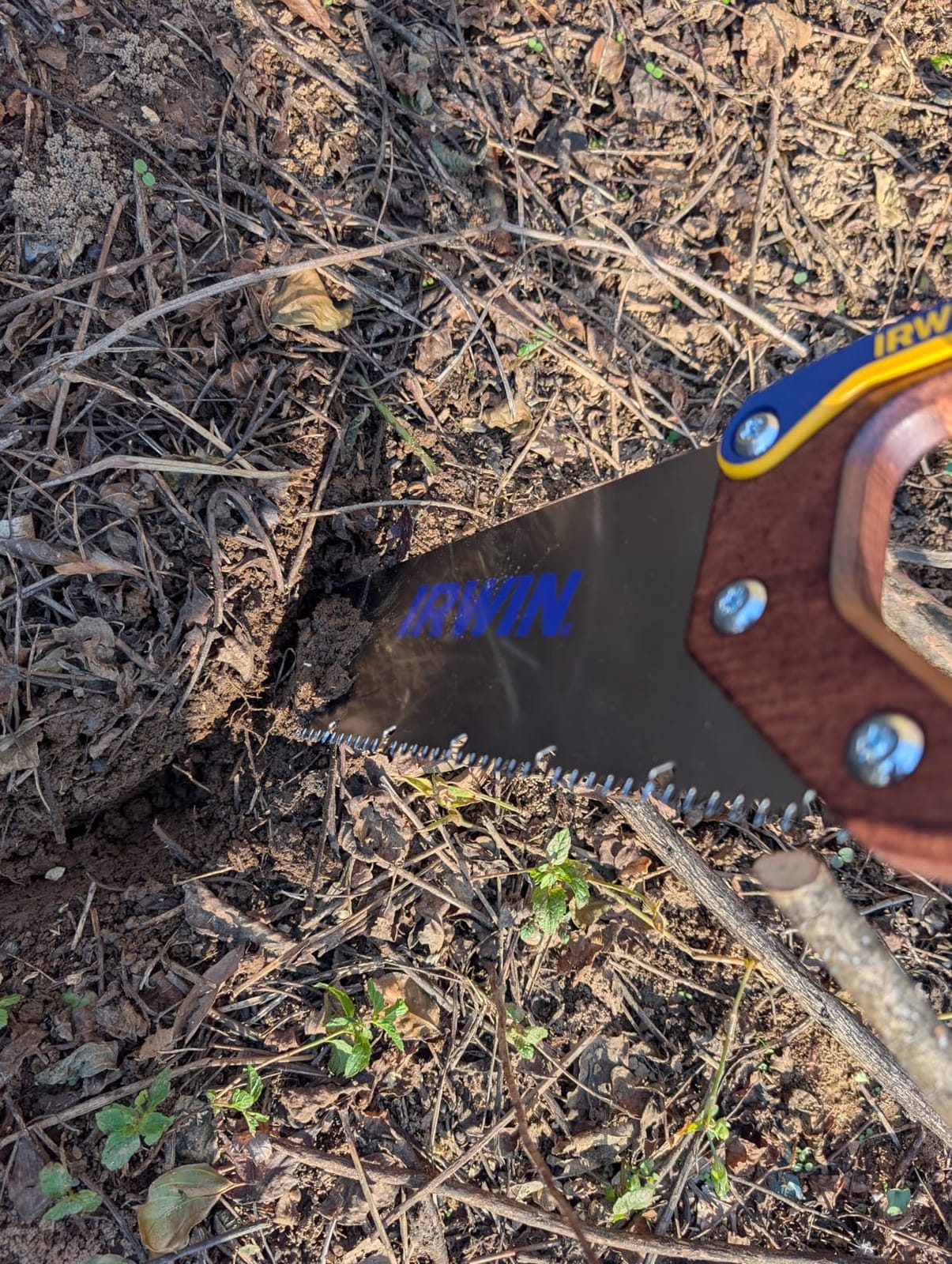
Every shop needs a rough saw and this is a strong one. Fifteen inch is the classic carpenter’s length, long enough to cut a sheet of ply in a few strokes and short enough to control in a confined space. The blade is thick-body alloy steel, and the thickness is what stops it flexing when you are leaning into a cut.
The teeth use M2 tooth technology with tri-ground profiles, which means the teeth are ground on three sides so they stay sharp and cut cleanly as they wear. The tapered-pitch nose improves clearance at the front of the cut, and the deep gullets clear chips quickly.
The ProTouch wood handle carries a shape that spreads pressure across the palm.
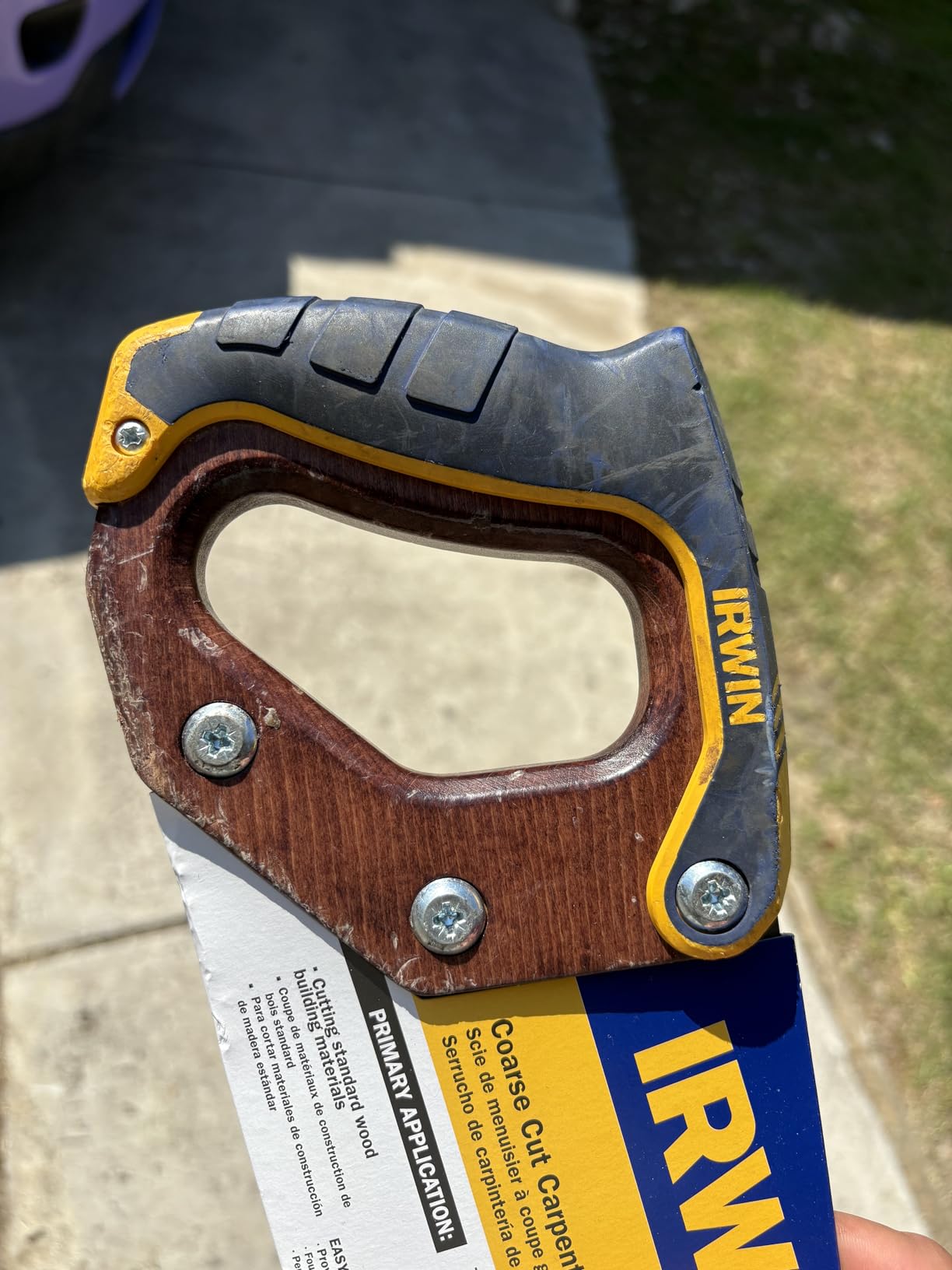
At 4.8 with 87 percent at five stars, reviewers describe it as fast, aggressive and rugged, and several mention roots and branches as well as lumber. The replaceable handle and blade are mentioned favourably because they extend the life of the tool rather than forcing a full replacement.
Two cautions come up repeatedly. Because the teeth are so sharp and the blade so rigid, beginners sometimes steer it too hard and wander off the line.
On a job that needs hundreds of cuts, a push-stroke saw this size also tires the arm faster than a pull saw does.
Who the IRWIN coarse cut saw suits
Carpenters, renovators and anyone cutting dimensional lumber, sheet goods and offcuts benefits from the 15 inch format. It is also a good saw for firewood and light demolition, where the coarse teeth and deep gullets are exactly right.
People who maintain their own tools should note the replaceable parts. A saw whose handle and blade can be swapped is a saw that stays in service indefinitely.
Who should skip the IRWIN coarse cut saw
Skip it for furniture and cabinet work. The coarse tooth pattern will tear the edge on a crosscut and leave a surface you have to plane, so it is the wrong tool for anything you intend to finish.
Skip it if you have very limited strength or shoulder problems. A rigid 15 inch push saw asks you to push, and a pull saw will do the same work with far less effort.
9. REXBETI 11 Inch Folding Saw Review
REXBETI 11-Inch Folding Saw, Heavy Duty Hand Saw, Wood & Camping, SK5 Steel
11 inch SK-5 steel blade
7 TPI staggered teeth
Weight: 14.88 oz
Rubber coated polymer handle
Pros
- Cuts dry branches quickly
- Folds and locks securely
- Light enough to carry in a pack
- Comfortable grip in any weather
Cons
- Blade can bend and stay bent in green wood
- Teeth can grab and stall in wet branches
- Some owners report blade failure under heavy use
This is the folding saw for people who carry one everywhere. Eleven inch of SK-5 steel with 7 TPI staggered teeth, and the manufacturer rates it for branches up to 6 or 7 inch across. The staggered arrangement means alternating teeth cut at different widths.
At 14.88 oz it disappears in a pack, and the rubber-coated polymer grip stays usable with wet, cold or dry hands. The fold lock is what matters for a pocket saw, and reviewers note that it holds securely in both the open and closed positions.
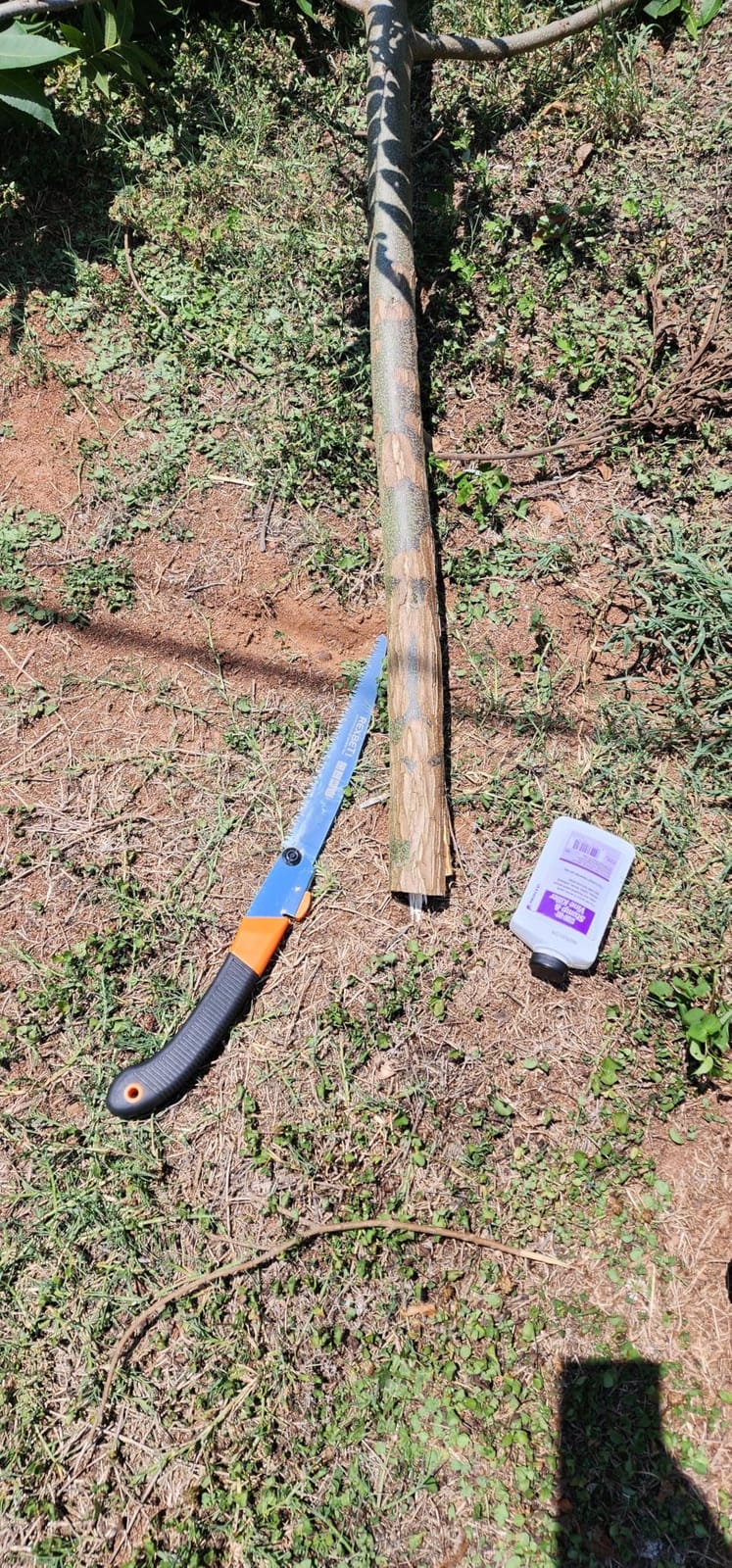
Ratings sit at 4.6 across more than 10,000, which is a large sample, and 75 percent are five stars. The consensus is that for dry firewood, small branches and light yard work it is quick and easy, and the grip and fold lock are praised more than the blade.
The durability criticism is real and worth stating plainly. On green or wet wood the teeth bind and the blade flexes, sometimes staying bent, and some owners report blade failure under heavy loading.
Position it as a light-duty saw rather than a heavy-duty one, which is how most reviewers use it successfully.

Who the REXBETI folding saw suits
Campers, bushcraft users, gardeners and anyone who cuts firewood by hand suit this saw well. It is a good weekend saw and a reasonable addition to a workshop for offcuts that would otherwise be sawn by a power tool.
People with limited hand strength get more from it than from a 20 inch push saw, because a short blade in a compact handle is far easier to control.
Who should skip the REXBETI folding saw
Skip it for anything structural or fine. There is no fine edge, the blade is not rigid enough for a straight cut in thick stock, and the joint where the blade meets the handle is the weak point under load.
Skip it if you regularly cut green timber from a tree or large branch, which is exactly the condition reviewers report as the failure case.
10. ZONA 35-500 Fine Razor Saw Review
ZONA – SA35/500 Zona 35-500 Fine Razor Saw, 32 TPI, 010-Inch Kerf, Blade Length 6-1/2-Inch, Cut Depth 1-3/16-Inch
32 TPI fine razor teeth
0.010 inch kerf
6.5 inch blade
1-3/16 inch cut depth
Pros
- Extremely fine cuts that need no cleanup
- Pull stroke gives good control
- Cuts wood plastic acrylic brass and copper
- Leaves splinter-free edges
- Made in the USA
Cons
- Sold as a bare tool with no handle
- Teeth too fine for aggressive work
- Cardboard packaging has to double as a sheath
At 32 teeth per inch and a kerf of 0.010 inch, this is the narrowest cut in the group. That number is the reason to own one. On a thin strip, a model, a small bracket or a laminated piece, the material you remove is almost nothing and the finished edge is genuinely smooth.
The cut depth of 1-3/16 inch limits it to light work, and the blade is only useful to about half an inch deep in most hardwood, but for what it is built to do there is nothing cheaper that does it as well.
It cuts on the pull stroke, so it is a Japanese-style saw in feel despite the Western listing.
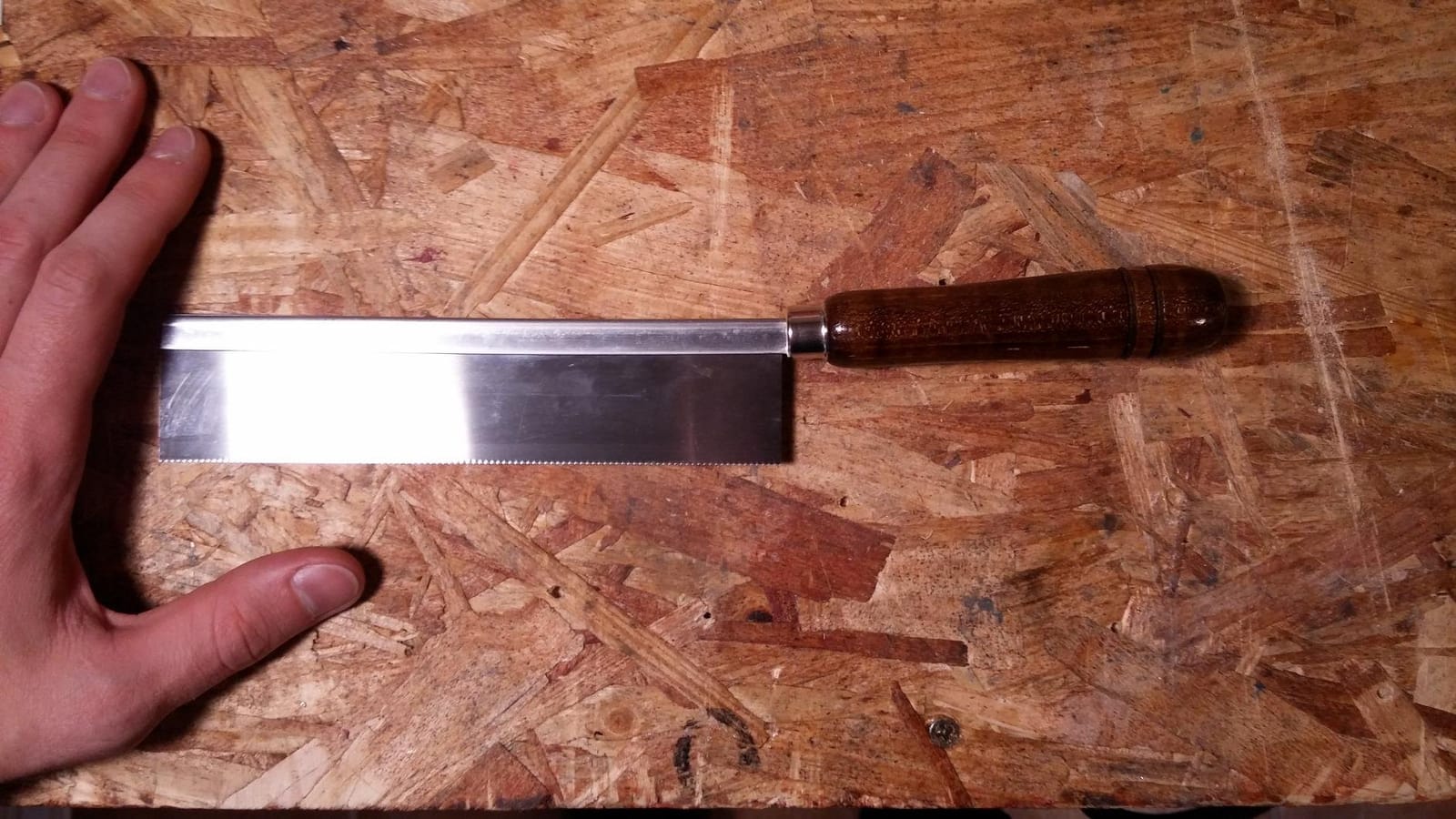
At 4.7 from more than 500 ratings, the feedback is enthusiastic for the finish. Reviewers list dovetails, model building and delicate woodworking as the main uses, and several note that it also handles plastic, acrylic and soft metals, which widens its appeal for a workshop that does repairs as well as furniture.
Be clear about what arrives. This is a bare tool listing, so some buyers receive the saw without a handle, and the shipping box is the only sheath.
That is a design decision rather than a fault, but it is worth confirming what is in the box before you order.
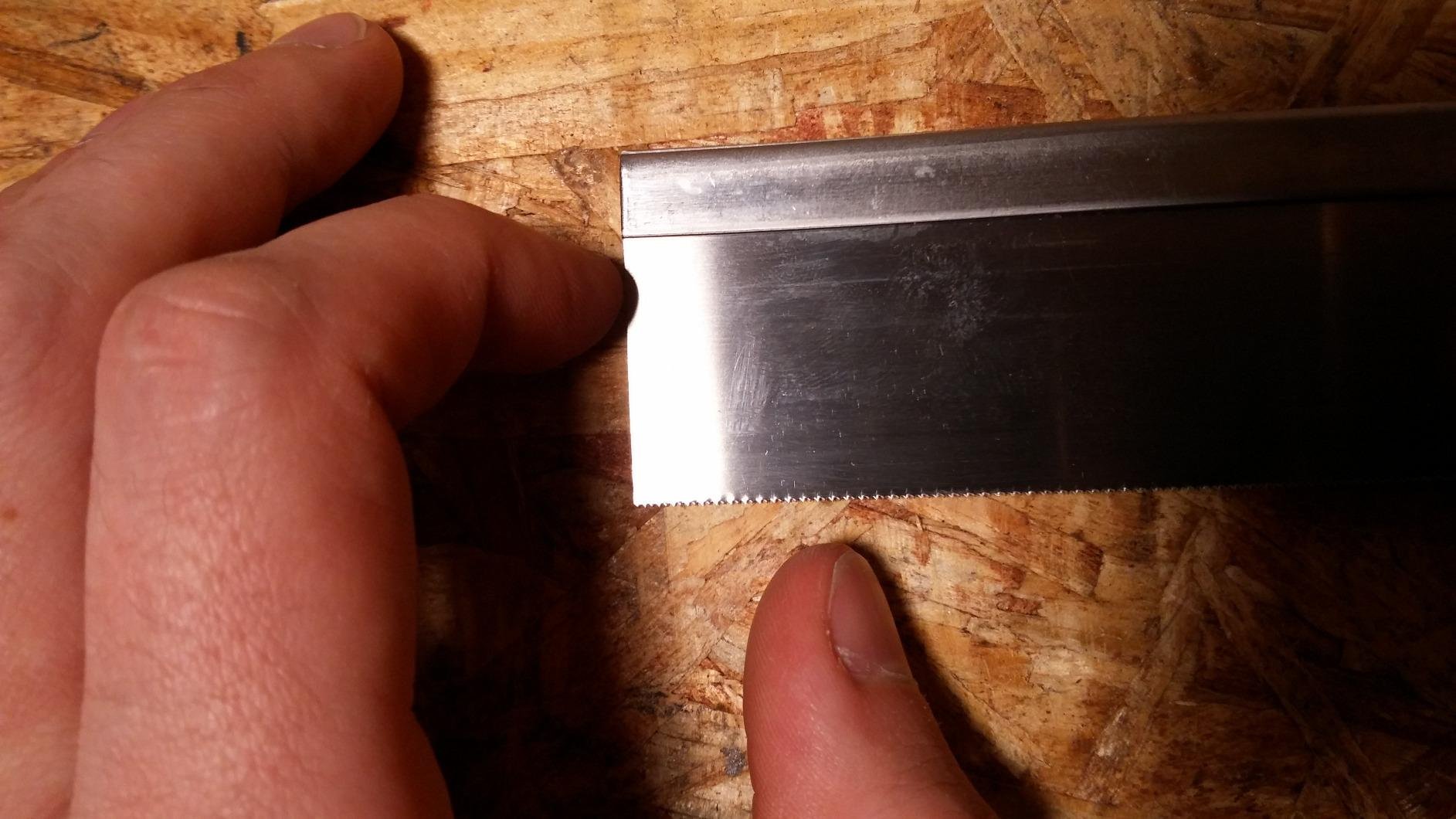
Who the ZONA fine razor saw suits
Model builders, instrument makers and fine woodworkers who need the thinnest possible cut are the natural users. It is also genuinely useful for trimming small parts flush and for cutting plastic or acrylic where a coarse tooth would crack the sheet.
Anyone who already owns a full-size saw will find this is the inexpensive companion piece rather than a replacement.
Who should skip the ZONA fine razor saw
Skip it if you want one general-purpose hand saw. At 32 TPI and a 1-3/16 inch cut depth it will not handle anything thick, and it will bend rather than cut.
Skip it if you plan to cut brass or copper regularly despite the material list. A bimetal blade will do it, but a proper metal-cutting saw will do it many times faster.
11. Spear & Jackson 12 Inch Predator Tenon Saw Review
Spear & Jackson B9812 12 inch (305mm) X 15pts Predator Tenon Saw
12 inch alloy steel blade
15 points per inch teeth
Solid steel back
Weight: 1 lb
Pros
- Purpose-built for tenons mouldings and dowels
- Fine 15 point teeth cut smoothly
- Solid steel back resists flex
- Angle guide and finger guide for repeat cuts
Cons
- Lowest rated saw in this group at 4.4
- Plastic handle lacks the feel of hardwood
- 12 inch blade is narrow for large stock
A tenon saw is a backsaw, and that means a spine down the back of the blade with a fine tooth line below it. The spine keeps the teeth from flexing, which is how a tenon saw cuts a shoulder dead straight without drifting.
Fifteen points per inch is a fine, fast-ripping tooth that leaves a clean face on mouldings and trim.
The solid steel back is the reason it is 12 inch and still rigid enough for repeat cuts, and the handle adds real value for accuracy. A finger guide sets your index finger against the work and a 45 and 90 degree angle guide is moulded into the handle, so you can transfer an angle from the saw to the line without a square.
Who the Spear & Jackson tenon saw suits
Anyone cutting mouldings, skirting, architraves, dowels or small tenons gets a purpose-built tool rather than a general saw pressed into service. It is also a traditional choice for hand-cut dovetails, where a 15 point tooth is at the coarse end but workable.
People restoring old furniture will like that it cuts along and across the grain, so one saw handles both ends of a joint.
Who should skip the Spear & Jackson tenon saw
Skip it if cut quality is the priority. The rating of 4.4 is the lowest in our group, and several reviewers note that the plastic handle transmits more vibration than a wooden one. A Japanese dovetail saw makes a noticeably finer face.
Skip it if you need a deep cut. A 12 inch blade with a solid back has limited capacity, so it will not handle thick stock or a deep tenon shoulder.
12. IRWIN 250mm 12 TPI Tenon Saw Review
Irwin 10507424 XP3055-250 12TPI Tenon Saw, 250mm
250mm blade at 12 TPI
Triple-ground tooth technology
Weight: 5.28 oz
Soft-grip handle
Pros
- Triple-ground teeth cut well on push and pull
- Cuts on both the push and pull stroke
- Soft-grip handle is comfortable
- High angled nose keeps the blade stable
Cons
- 12 TPI is too coarse for very fine work
- Manual operation only
This is the compact European-style tenon saw, and the 250mm blade makes it small enough to work inside a mitre box. That is the specific job it fits, because with the saw confined to a box you get a square cut on a small section.
It is also the reason most mitre box work needs a saw this short, since there is no room to swing a long blade.
The teeth are 12 TPI with triple-ground technology, and the notable feature is that they are ground to work on the push and the pull stroke. That is unusual for a saw of this type and it means you do not have to reverse your thinking about which way the blade cuts.
The high angled nose is there for stability at the start of the cut, where tenon saws usually wander.
Who the IRWIN tenon saw suits
Anyone who owns a mitre box or does repeat small crosscuts on picture frames, mouldings and trim will find this the right size. The soft-grip handle is a bonus over bare wooden handles when you are making dozens of identical cuts.
It also suits anyone cutting openings in plasterboard, which is a use several reviewers mention and which suits the fine tooth pattern.
Who should skip the IRWIN tenon saw
Skip it for fine joinery. Twelve teeth per inch is a coarse figure and leaves a face you will need to plane, so a dovetail saw is the correct tool if the cut will be seen.
Skip it if you want one saw for a whole shop. At 250mm and 5.28 oz it is light and quick for small work, but it is not a general carpentry saw.
How to Choose a Hand Saw for Woodworking
Start with the cut, not the brand. If most of your work is cutting with the grain to length, you want a rip tooth, which is few teeth per inch and a steeper angle. If most of your work is cutting across the grain, you want a crosscut tooth, which is more teeth per inch and a shallower angle. A double-edged saw gives you both and removes the guesswork.
Teeth per inch, explained. TPI is simply the number of tooth tips along one inch of blade. Coarse teeth, around 7 or 8, cut fast and rip material away quickly, while medium teeth around 10 to 12 are a sensible crosscut for general work.
Fine teeth at 15 to 19 suit tenons and smooth crosscuts, and teeth at 24 and above are for dovetails and model work. Sawmill Creek forum regulars give the same answer for a general saw, which is a full-length saw filed to a crosscut at about 8 PPI.
Blade length decides how fast you cut. A longer blade moves more teeth through the wood per stroke, so a 20 inch saw eats a sheet of plywood far faster than a 6 inch saw with the same tooth count. The cost is manoeuvrability.
Our guide to the best micro saws and razor saws covers the opposite end of the range.
Push stroke or pull stroke changes how the saw feels. Western saws cut on the push, which means the blade is under compression during the working stroke and a thick rigid blade works well. Japanese pull saws cut on the pull, where the blade is in tension, which allows a much thinner blade and a much narrower kerf.
That is why a pull saw is accurate and quiet, and why a Western saw is fast and handles abuse. If you are new to hand saws, the pull stroke is the easier of the two to learn because the blade self-corrects against a pull.
Kerf is the width of the cut, and set is why the blade can make it. The teeth are set alternately to each side so the kerf is wider than the blade itself, which is what stops the saw binding. A saw with almost no set, like a Japanese dozuki, makes the narrowest cut and the smoothest face, while a saw with aggressive set cuts fast and rough.
Sharpenable or not. This is the decision most shoppers skip and later regret. Plain high-carbon and alloy steel blades with induction-hardened teeth can be touched up with a diamond file, while blades with fully hardened Japanese teeth cannot be filed back and are effectively consumable.
A fileable saw is a purchase you make once. A consumable blade is a running cost, and it is worth knowing which kind you are buying before the teeth go dull.
Handle, weight and storage. A closed wooden handle spreads pressure well and can be reshaped, while a moulded composite grip is lighter and cheaper but transmits more vibration. A rubber-coated grip is the right choice for outdoor or wet conditions.
For storage, look for a folding saw with a lock or a saw with a sheath, because an exposed blade on a shelf is a hazard. Our picks of the best scroll saws cover the powered route for curved work.
Your first hand saw. If you own nothing, buy the Ryoba at number one and add a folding saw for the garden. Those two cover most of what a beginner will ever need, and both together cost less than a single power tool. Adding the flush cut saw at number six later is the natural upgrade when you start cutting joints.
When you have moved on to powered cutting, our picks of the best jigsaws for woodworking cover curved and freeform cuts that no hand saw makes cleanly.
Safety, briefly. Wear eye protection, keep a glove on the hand holding the workpiece, and check for nails before starting. A dull blade is more dangerous than a sharp one because it binds and then releases suddenly, so let the saw do the work rather than forcing it.
How to Sharpen and Maintain a Hand Saw
Most cheap saws arrive dull, some arrive twisted, and almost none arrive properly set. Before the first cut, a ten-minute session makes a large difference.
1. Check the tooth line. Hold the saw up to a window and sight along the teeth. If the line waves, jointing is required. Lay the saw flat on a flat surface and run a flat file along the tops of the teeth with a light forward-only stroke to bring the highest points level with the rest.
2. Joint the blade if the teeth vary in height. Push a flat mill file along the tooth line with the saw flat on a bench, taking light strokes, until you can run a straightedge across the whole tooth line and feel no steps. This is the step that gets skipped, and it is why a cheap saw can feel bad forever.
3. Set the teeth. Hold the saw steady and run a hand-setting file down one side, tilting away from you by a few degrees, then down the other side. A saw set to about a quarter of the tooth thickness either side is a good general target. Too little set and the saw binds, too much and it wanders and cuts slowly.
4. File the teeth. Only file a tooth that is broken, bent or rounded. Use a single-pass file, pushing forward and lifting on the return, and shape the file to the tooth profile. A dozuki wants a shallow bevel, a crosscut saw wants a triangular file, and a rip saw wants almost no filing at all beyond removing the set.
5. Refine the edge. A few strokes along the front face of each tooth with an oilstone leaves the edge sharp enough for hardwood. Reviewers who maintain dovetail saws often report that the burr left by filing is all the set a fine crosscut saw needs.
One rule is worth knowing before you start: a saw can be filed to a coarser tooth than it currently has, but never to a finer one. If you want a 14 TPI saw at 8 PPI you are in luck, because filing removes teeth.
If you want an 8 PPI saw at 15 TPI, the tool cannot do it. Choose the tooth count you will end up with, not the one that looks attractive on the shelf.
This is also the sustainability argument. A fileable saw is a tool that can be restored rather than replaced, and a wooden-handled saw that is kept in a workshop rather than a skip ends up costing almost nothing per year of use. A folding saw with a lifetime warranty and a replaceable handle has a similar profile. The least sustainable option in this category is a cheap saw that ends up bent in green wood every season.
Frequently Asked Questions
What kind of saw is best for woodworking?
A rip saw is best for cutting with the grain, a crosscut saw for clean cuts against the grain, a backsaw or dovetail saw for fine joinery, and a Japanese pull saw for precision work where a thin kerf and an accurate line matter more than speed. A double-edged pull saw covers rip and crosscut in one tool.
What are the top-quality hand saws?
Quality in this category is judged by steel, tooth grind and sharpenability rather than price alone. Japanese-made pull saws such as the SUIZAN Ryoba and the Gyokucho Razorsaw, Western induction-hardened saws such as the CRAFTSMAN panel saw, and traditional tenon saws from makers such as Spear and Jackson sit at the top of our list. A saw that can be filed back to sharp is worth more than a saw with a prettier finish.
Are Japanese hand saws better?
Not universally. Japanese pull saws cut on the pull stroke, so the blade stays in tension and can be very thin, giving a narrow kerf and excellent accuracy in hardwood. Western saws cut on the push stroke with a thicker, more rigid blade that is faster and tougher. Many woodworkers keep a Western saw for general work and a pull saw for joinery rather than choosing one over the other.
How many teeth per inch should a hand saw have?
Use 7 to 8 teeth per inch for fast ripping and rough general work, 10 to 12 for a general crosscut, 15 to 19 for tenons and smooth crosscuts, and 24 or more for dovetails and fine detail. A 15 point tenon saw suits mouldings and small tenons, while a 25 to 32 tooth dovetail or razor saw suits hand-cut joinery.
Can you sharpen a hand saw yourself?
Yes, for most Western saws. The sequence is jointing to level the tooth line, setting to give the teeth clearance either side, then filing only broken or dull teeth and finishing the edge on an oilstone. Japanese pull saws with hardened teeth cannot be filed back, and induction-hardened Western teeth are best touched up with a diamond file rather than a flat file.
What is a good first hand saw for a beginner?
The SUIZAN Ryoba 9.5 inch double-edge pull saw is the most forgiving first hand saw, because it handles both rip and crosscut work and its thin blade tracks a line without much pressure. For panel work and long trim, the CRAFTSMAN 20 inch fine finish panel saw is easier to keep straight. Add a folding saw such as the MOSSY OAK for branches and firewood, and you have covered most jobs.
The Best Hand Saws for Woodworking in 2026: Final Verdict
The best hand saws for woodworking depend on which cut you make most often, and that is the whole answer. For the widest coverage on one tool, the SUIZAN Ryoba 9.5 inch double-edge pull saw is our pick, with a 9 TPI rip side and a 15 TPI crosscut side on a 0.5 mm Japanese steel blade. For panel goods and long trim, the CRAFTSMAN 20 inch fine finish panel saw cuts faster than anything else in this list. For dovetails and flush work, the SUIZAN Dozuki and the SUIZAN flush cut saw finish faces you would otherwise sand.
One saw is enough to start, two is enough to finish. Many experienced woodworkers settle on a long Western saw for general work plus a pull saw for joinery, and add a folding saw for the garden, which is exactly the set we have recommended here.
Check the current listing for each pick, and hold onto whichever one you buy rather than replacing it. A hand saw that is jointed, set and kept oiled will outlast the shop it was bought for.