
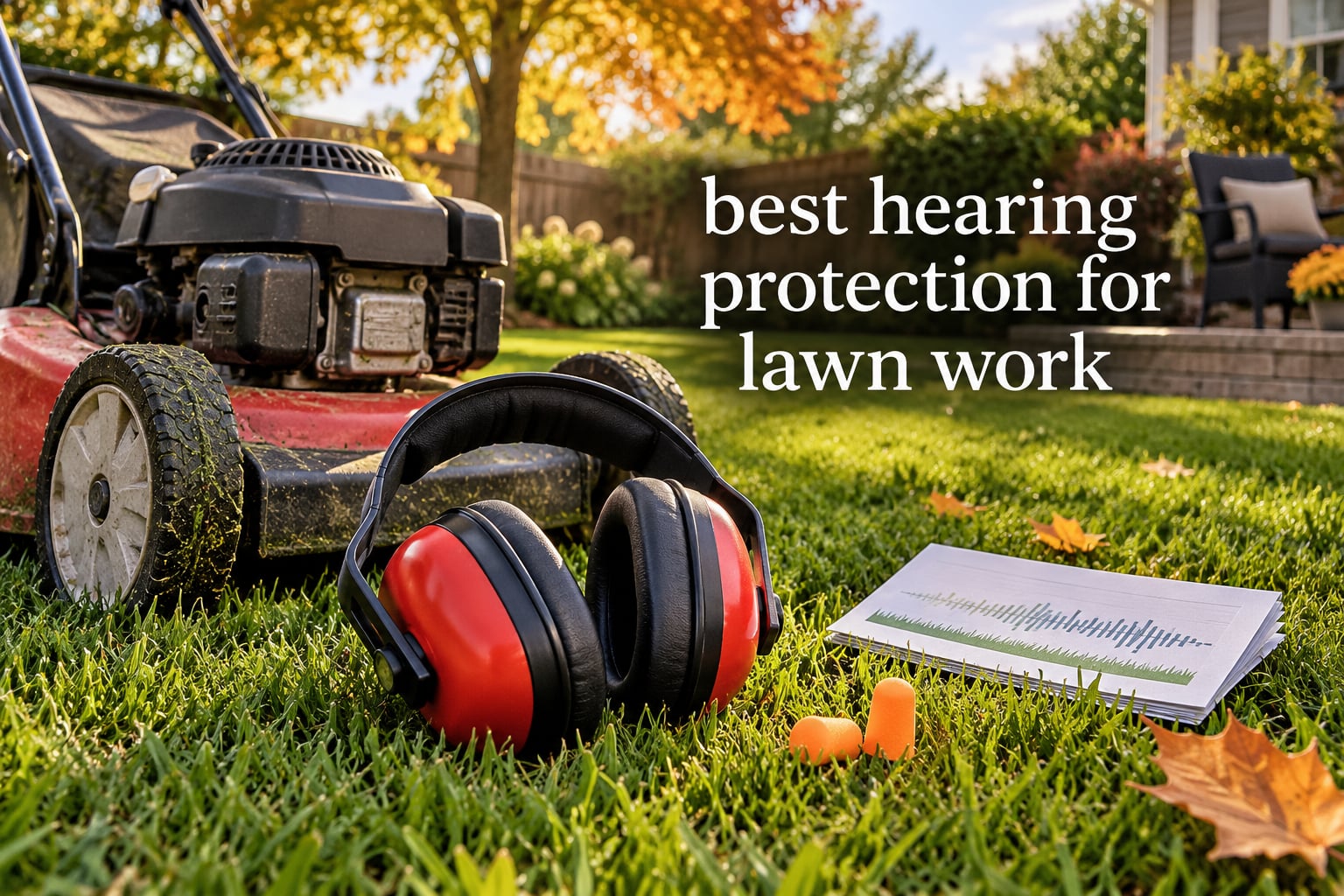
If you want one honest answer before you read the rest: the best hearing protection for lawn work is a certified muff or earplug with a printed NRR of 25 dB or higher for mowing, and 30 dB or more with double protection for leaf blowers, trimmers and chainsaws. Everything else on this page, from Bluetooth earmuffs to foam plugs, is judged against that standard.
Lawn work is louder than most people assume, and the damage is cumulative. A push mower sits near the 85 dB mark, and a gas blower or chainsaw pushes past 100 dB. NIOSH treats 85 dB as the recommended exposure limit, which means noise-induced hearing loss starts long before anything feels wrong. Tinnitus and permanent loss are the eventual results, and neither reverses.
That matters here at We Are Salt because we spend our time with hearing technology, and the most common thing we hear from people who mow every week is that they never once considered protection until a family member lost their hearing. Our roundup of the 10 best hearing protection options for lawn work in 2026 is built around published NRR numbers, lab certifications, and what reviewers say after a full season of use.
Every muff below states its attenuation on the product page, and nine of the ten attach a laboratory standard to it. We left out the flood of generic marketplace earmuffs that dominate shopping results precisely because many of them print no NRR at all, and no printed NRR means it is not tested personal protective equipment.
Top 3 Best Hearing Protection for Lawn Work (October 2026)

Walker’s Razor Slim Muff
- Two hi-gain microphones for ambient sound
- Ultra slim cups that fit under a cap
- 3.5mm input jack for music
- Rubberized 12.63 ounce housing
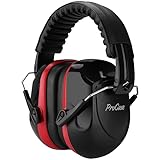
ProCase SNR 33dB Muff
- Lab tested SNR 33dB and NRR 28dB
- Folds into a compact ball
- No batteries or charging
- Works with eyeglasses
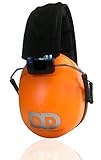
Decibel Defense 37 dB Muff
- 37 dB NRR
- the highest published rating here
- ANSI S3.19 and CE EN 352-1 certified
- Regular and XL sizes
- 11.7 ounces
The Walker’s Razor Slim takes the top slot because it is the only electronic muff here with a five-figure review count behind it, and its amplification means you can hear a neighbor or a reversing machine without taking protection off. The ProCase wins on value and on lab-verified attenuation with no electronics at all. The Decibel Defense 37 dB is the one to buy when the loudest tool in your shed is a chainsaw or a gas blower.
All 10 Picks at a Glance in 2026
| Product | Specifications | Action |
|---|---|---|
| Walker’s Razor Slim Electronic Muff |
|
Check Latest Price |
| ProCase SNR 33dB Ear Muffs |
|
Check Latest Price |
| Decibel Defense 37 dB Ear Muffs |
|
Check Latest Price |
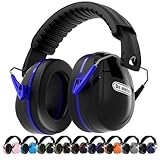 Dr.meter FM-1B Ear Protection Dr.meter FM-1B Ear Protection |
|
Check Latest Price |
 Radians Dewalt DPG62-C Earmuff Radians Dewalt DPG62-C Earmuff |
|
Check Latest Price |
 Husqvarna Headband Protectors Husqvarna Headband Protectors |
|
Check Latest Price |
 PROHEAR 037 Bluetooth Muff PROHEAR 037 Bluetooth Muff |
|
Check Latest Price |
 3M WorkTunes Connect 3M WorkTunes Connect |
|
Check Latest Price |
 3M Peltor X2A Over-Head Muffs 3M Peltor X2A Over-Head Muffs |
|
Check Latest Price |
 ISOtunes Link 2.0 ISOtunes Link 2.0 |
|
Check Latest Price |
1. Walker’s Razor Slim Electronic Muff – Best Overall for Yard Work
Walker’s Razor Slim Electronic Muff, Black
Electronic protection with sound amplification
12.63 ounces
3.5mm audio input jack
Pros
- Lightweight and comfortable for long sessions
- Amplification lets you hear speech and surroundings while loud transients are attenuated
- Extra slim cups fit under a baseball cap
- Recessed volume knob and battery door usable with gloves
Cons
- Electronic passthrough adds noticeable latency
- Digital audio artifacts reduce music quality
The Walker’s Razor Slim is the model I would hand to someone who mows every Saturday and still wants to hear the neighborhood. Two hi-gain microphones provide omnidirectional amplification, so quiet sounds come up while sudden loud peaks from the engine are clamped. That combination is the whole reason to buy electronic protection over a passive muff.
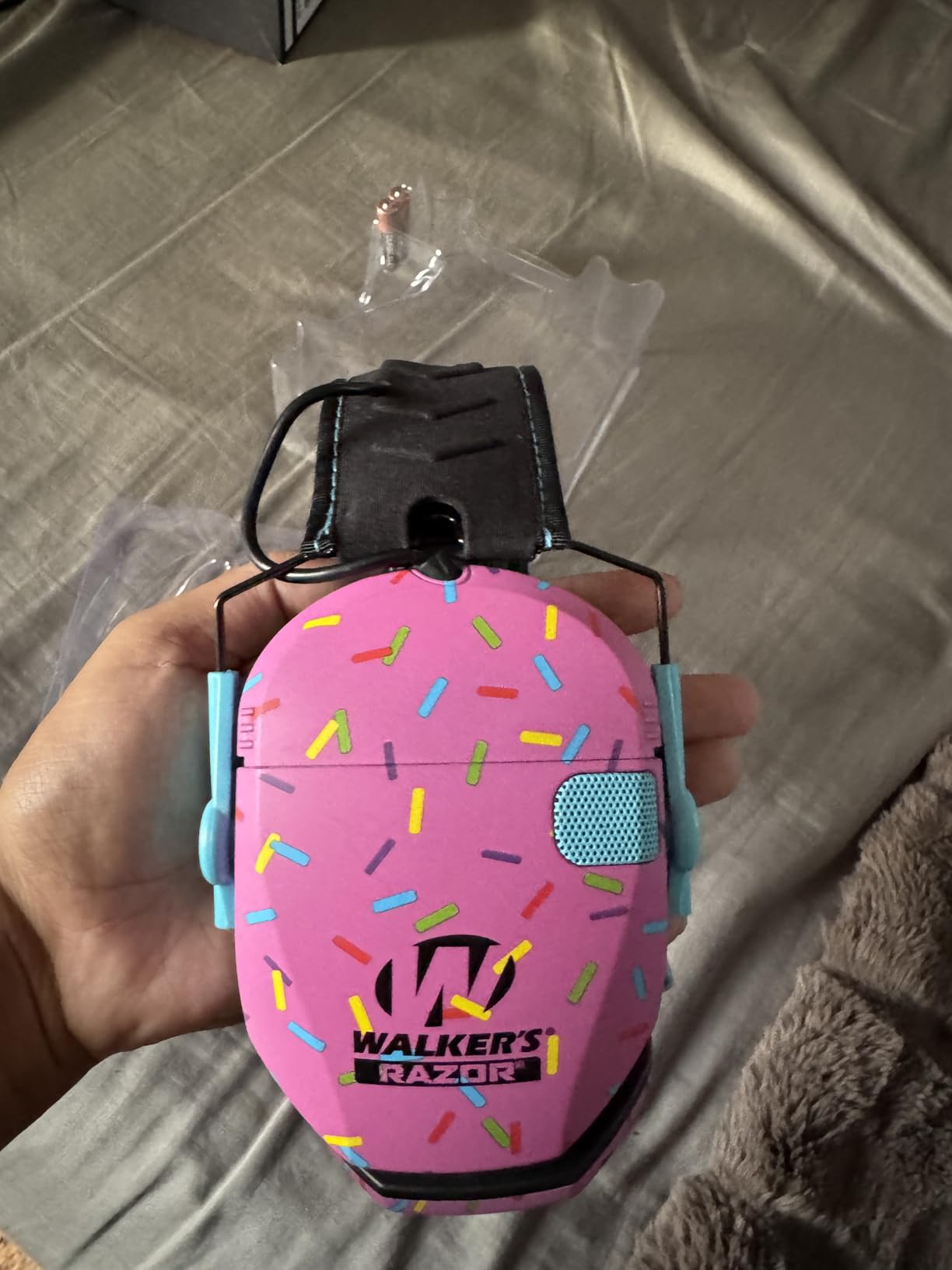
It weighs 12.63 ounces and the ear cups are noticeably slimmer than a typical safety muff. That matters for one specific yard problem: a wide cup and a tight headband fight a baseball cap, and the seal breaks. This design slips under a cap without pushing it off your head.
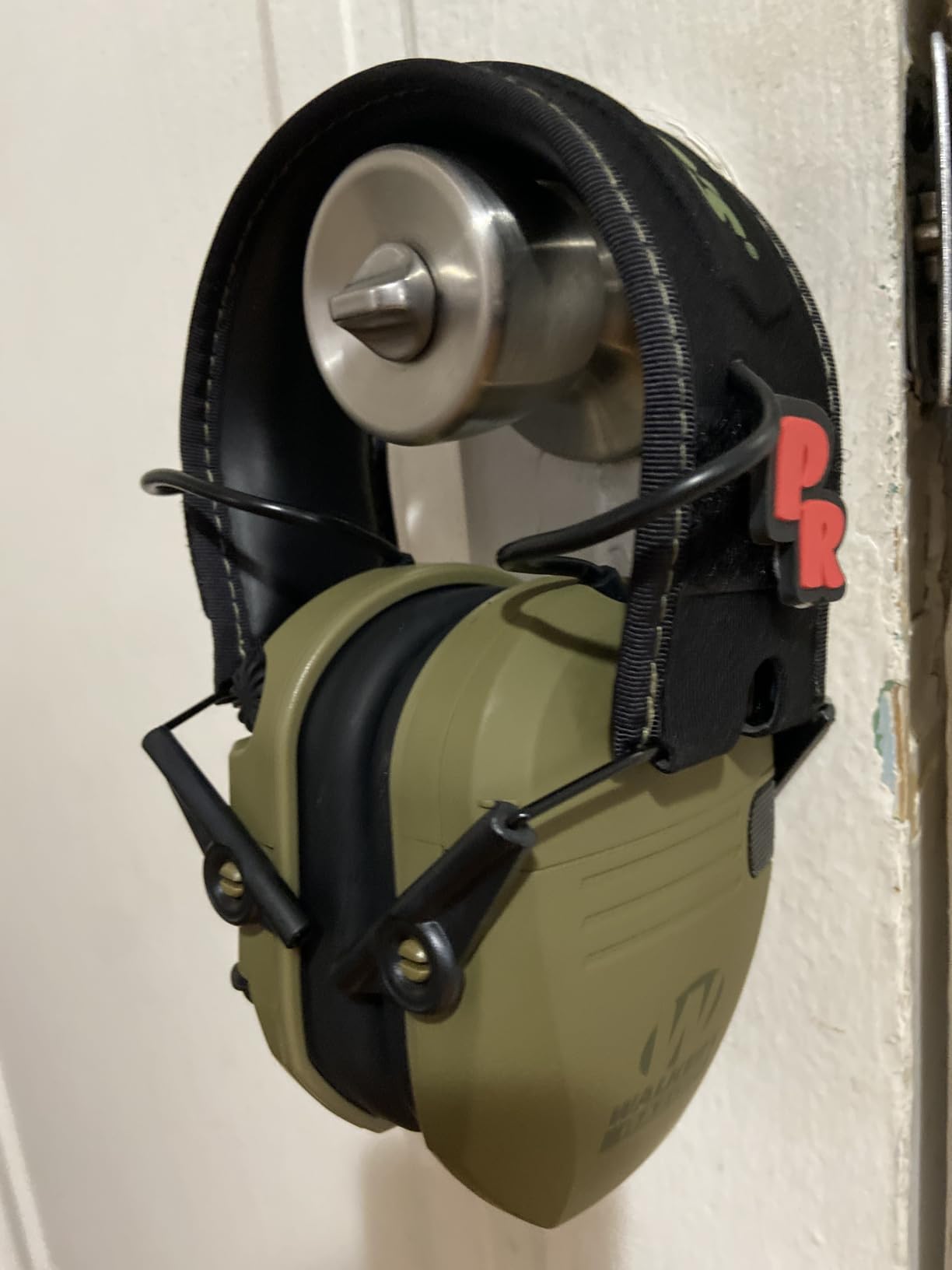
The controls are physical and recessed, which is a small detail until you are wearing gloves and gripping a mower handle. The volume knob and the battery door both sit on the outside, reachable without pulling the muffs off, and a 3.5mm input jack lets you drive music from a phone through a device that is still attenuating.
The build is a rubberized coating over a sound-dampening composite housing with a padded metal wire frame headband. Reviewers describe seals that hold, and the small number of complaints that do exist cluster around audio rather than protection.
What you will notice in the first ten minutes
The amplification has a processing delay, so the world sounds slightly flat and a little behind reality for the first few minutes. Most people stop noticing it quickly, but if you have never worn electronic protection before, expect to adjust.
Because amplification is doing the work here rather than a passive seal, awareness is the trade you are making. You will hear a neighbor speak and catch a reversing machine earlier than a passive muff allows, but you are relying on the limiter circuit rather than a certified seal.
Music through the 3.5mm jack sounds processed rather than clean. This is a hearing protection device that also happens to play audio, not an audiophile headphone, and buyers who want reference sound should not expect it.
Where it falls short
This listing does not publish an NRR number or a certification standard, which is a real gap in a roundup like this one. It is an electronic muff, so attenuation is a function of its limiter circuit rather than a lab-tested passive seal, and you should not treat it as certified PPE for chainsaw or blower work.
The 3.5mm jack means you need a second device if you want wireless audio. That is a small inconvenience rather than a problem, but it does add a cable across your chest near moving equipment.
2. ProCase Ear Muffs SNR 33dB – Best Value for Everyday Mowing
ProCase Hearing Protection Ear Muffs SNR 33dB, Noise Cancelling Headphones
SNR 33dB / NRR 28dB equivalent
Lab tested under EU EN 352-1
Foldable clamshell design
Pros
- Strong attenuation verified by accredited lab testing
- Folds into a compact ball for a toolbox or bag
- Soft cushions for extended wear
- No batteries or charging needed
- Works with eyeglasses
Cons
- Headband extension has limited range
- Sliders can feel stiff the first few times
- Some adults find the standard size small
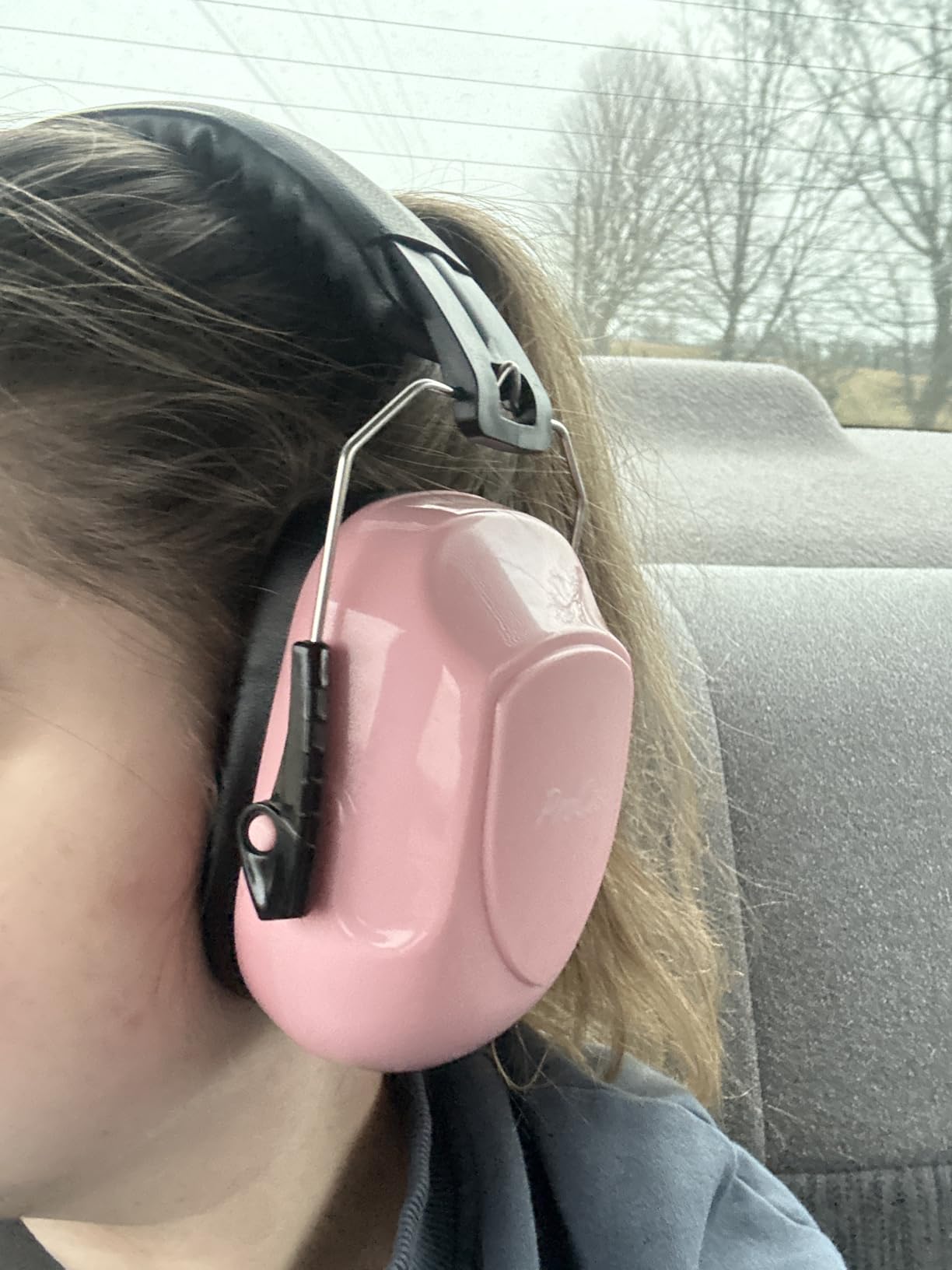
The ProCase is the pick for anyone who wants a real, lab-verified rating without any electronics to charge. It carries SNR 33dB under EU EN 352-1, which the manufacturer lists as equivalent to NRR 28dB in the US, and it was tested by an NVLAP accredited laboratory rather than estimated by the seller.
That rating is the point. For a gas push mower or a string trimmer, a verified 28 dB NRR with proper adjustment and a clean seal is real protection, and it is the least expensive way into rated equipment. There is nothing to charge, nothing to pair and nothing to fail.
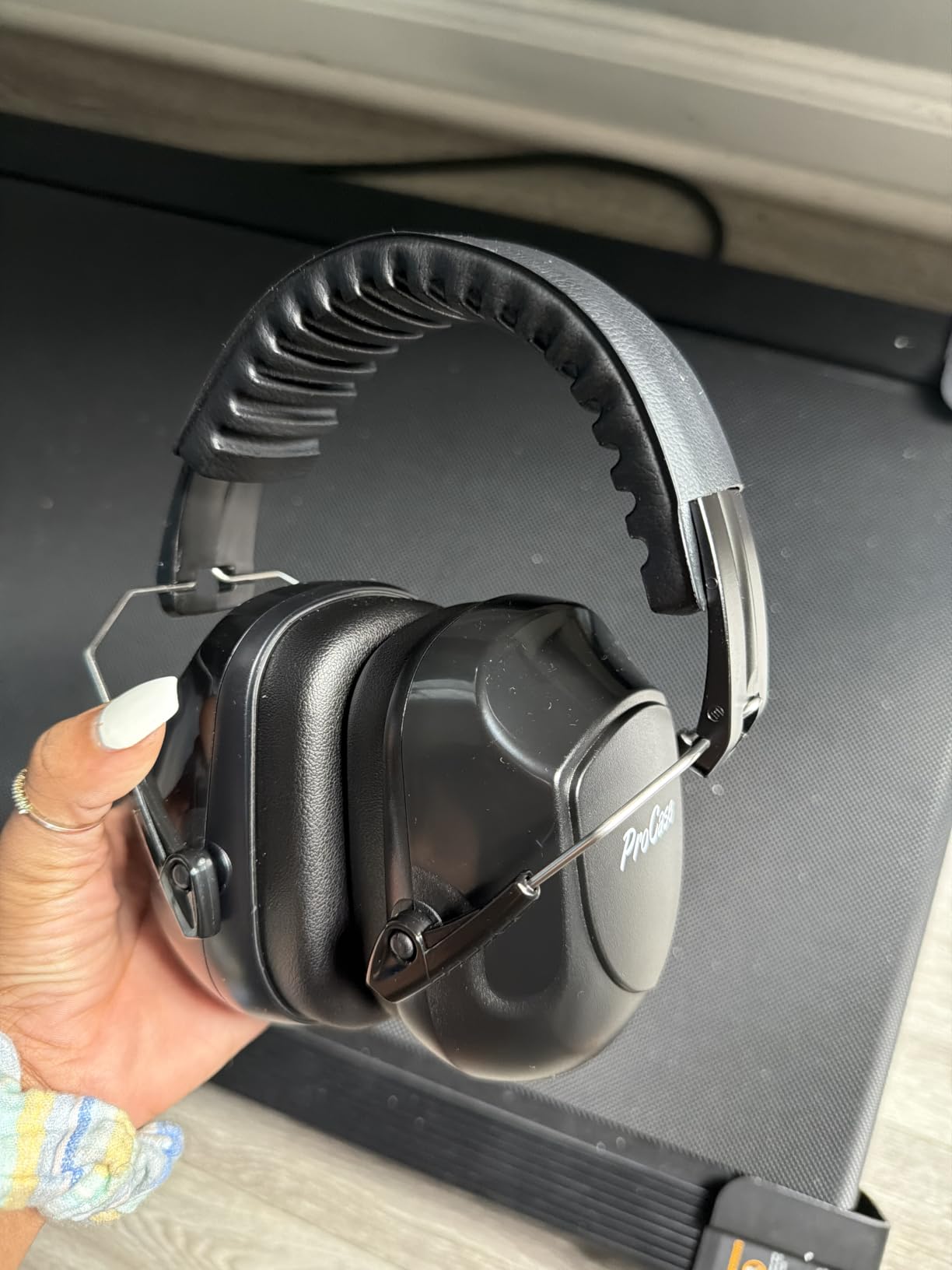
The folding clamshell design is the sleeper feature for yard work. It collapses into a compact shape that fits in a toolbox, a glovebox or a jacket pocket, so the muffs are not living on a shelf between September and April. Buyers mention mowing and general yard work as the common use.
The cushions are thickened soft foam in an ABS shell, and reviewers consistently report wearing them for extended sessions without the pressure headache that tight muffs cause. The frame is metal with a padded headband and it works with eyeglasses without shoving the temples into your skull.
Where the rating actually lands in the field
Treat 28 dB NRR as a starting number rather than a promise. The OSHA correction method halves an over-ear rating for real-world fit, so plan on roughly 14 dB of effective protection, which is still the difference between a comfortable mower session and a damaging one at typical mower levels.
Because it is passive, everything depends on the seal. Grass dust and sweat on the cushions reduce attenuation, so wipe the pads down after a session and check that the sliders are fully extended before you start.
Who should skip it
Anyone with a genuinely large head should read the fit complaints before buying. Reviewers point out that the headband extension has limited range and that the standard size can run tight, with a larger variant offered for that reason.
The metal sliders also need a firm initial push to expand, and several adults found them stiff the first few times. It is a minor annoyance, but it matters if you need the muffs on and off repeatedly during a day of yard cleanup.
3. Decibel Defense 37 dB Ear Muffs – Highest Rated Protection in the Roundup
DECIBEL DEFENSE Ear Protection, 37 dB NRR Ear Muffs (HI-VIZ ORANGE)
37 dB NRR passive protection
11.7 ounces
ANSI S3.19 and CE EN 352-1 certified
Pros
- 37 dB NRR
- the highest published rating here
- No batteries or electronics to fail
- Comfortable for hours including over a hat
- Regular and XL sizes
Cons
- Regular headband extension is short
- Adjustment is counterintuitive and instructions are missing
- Bulkier look than slim electronic muffs
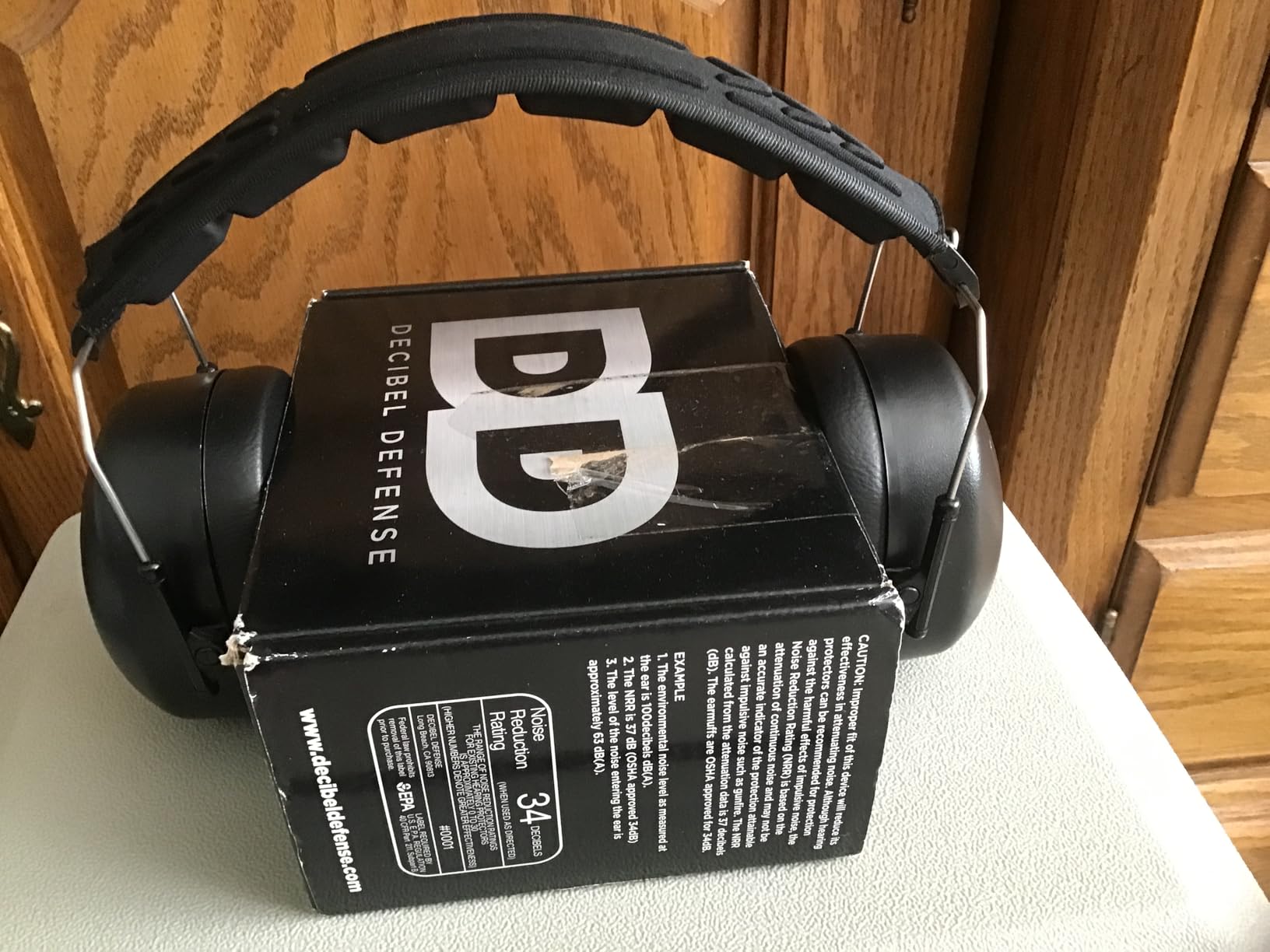
The Decibel Defense is the one to buy when the loudest thing in your yard is a gas blower or a chainsaw. Its 37 dB NRR is the highest published rating in this roundup, and it is certified to both ANSI S3.19 and CE EN 352-1, which means the attenuation was measured by a lab rather than claimed.
Buyers frequently name lawn care and leaf blowers as the reason they bought it, and they describe a seal that noticeably lowers machinery noise. The passive design means there is no electronics, no charging and nothing to fail on a wet morning in October.
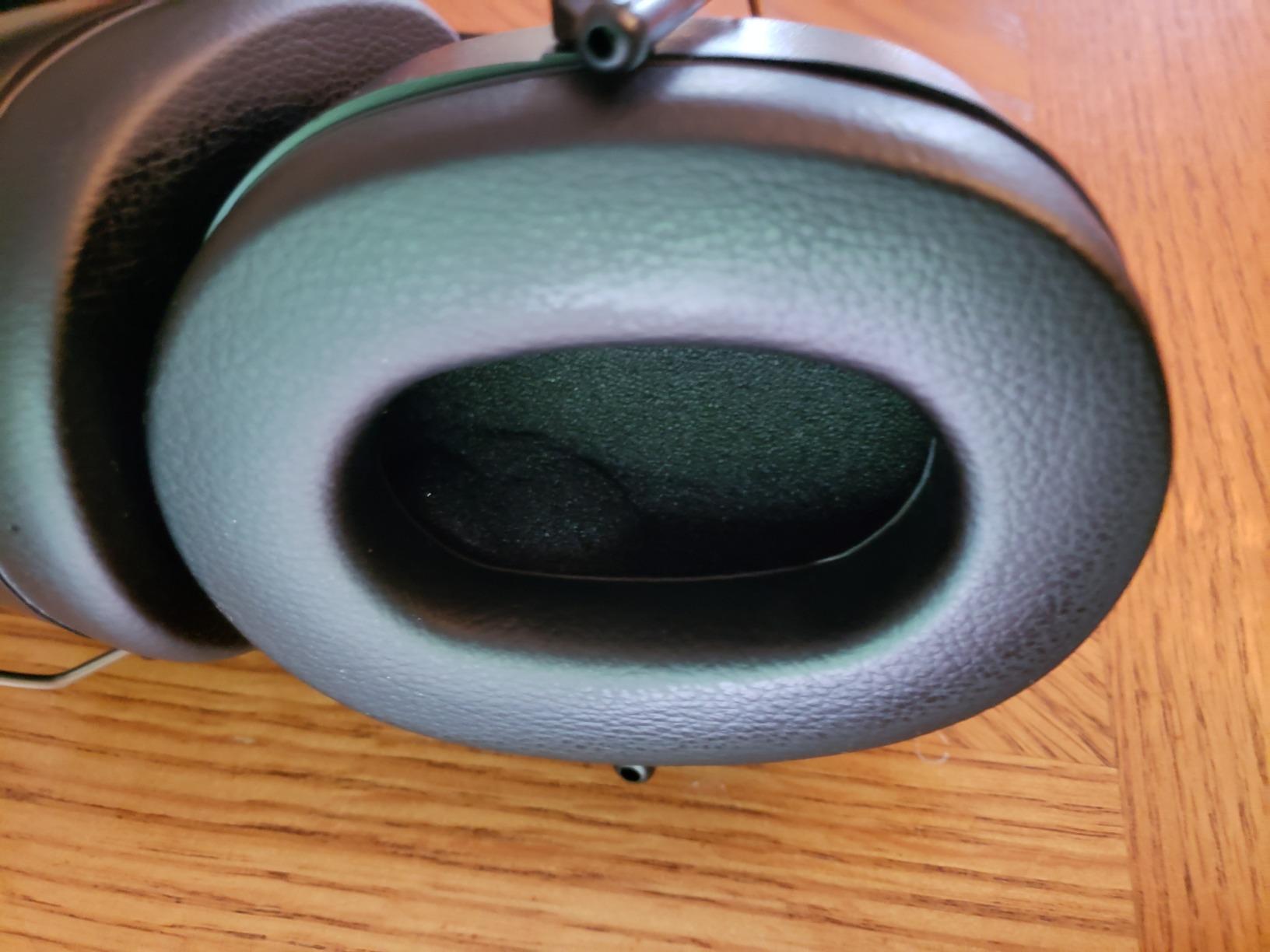
Comfort comes from a padded headband and soft foam cushions at 11.7 ounces, which is light for a muff rated this high. Owners report wearing them for hours, including over a hat, which is exactly the combination that frustrates people with thicker muffs.
There are two sizes, a regular fit for ages ten and up and an XL with extra extension. The ear cups adjust on metal sliders, and reviewers note that the adjustment is easy to operate, including for users with arthritic hands.
When this rating is worth the extra weight
A 37 dB NRR de-rated the OSHA way still gives you roughly 18 dB of estimated real-world protection. For a backpack blower running near 100 dB, that is the difference between exposure well above the recommended limit and exposure close to it.
This is also the muff to wear over foam plugs when the job is chainsaw work or repeated blow-down. Double protection adds a meaningful amount of attenuation on top of either device alone, and the passive design keeps that combination simple.
What to watch out for
The regular size headband extension is short, so large heads should look at the XL. The same fit note appears in reviews often enough to treat as a real limitation rather than a preference.
Adjustment is counter to intuition, because pulling one side shorterens the other, and the box does not include instructions. Budget a minute to work it out, and check both sides are level before you rely on the seal.
4. Dr.meter FM-1B Ear Protection – Best Fit for Families Mowing Together
Dr.meter Noise Cancelling Headphones for Adults Kids Ear Protection Mowing
SNR 31dB and NRR 26dB
ANSI S3.19-1974 and CE EN 352-1 certified
Memory foam and PU leather
Pros
- Memory foam cores avoid pressure marks over long sessions
- Adjustable headband fits kids through adults
- Strong reduction while speech still comes through
- Folds small enough for a glovebox
Cons
- Runs slightly tight even at the smallest setting
- PU leather padding traps heat and sweat
- Not sized for infants
The Dr.meter FM-1B is the one for a household where a teenager or a spouse helps with the mowing, because the adjustable headband spans kids through adults. Both halves of the family can use the same pair of muffs, which removes the usual argument about who gets protection.
The attenuation is properly certified at SNR 31dB and NRR 26dB under ANSI S3.19-1974 and CE EN 352-1. Inside, ABS shells are layered with triple-layer acoustic foam and the ear cushions use memory foam cores under PU leather.
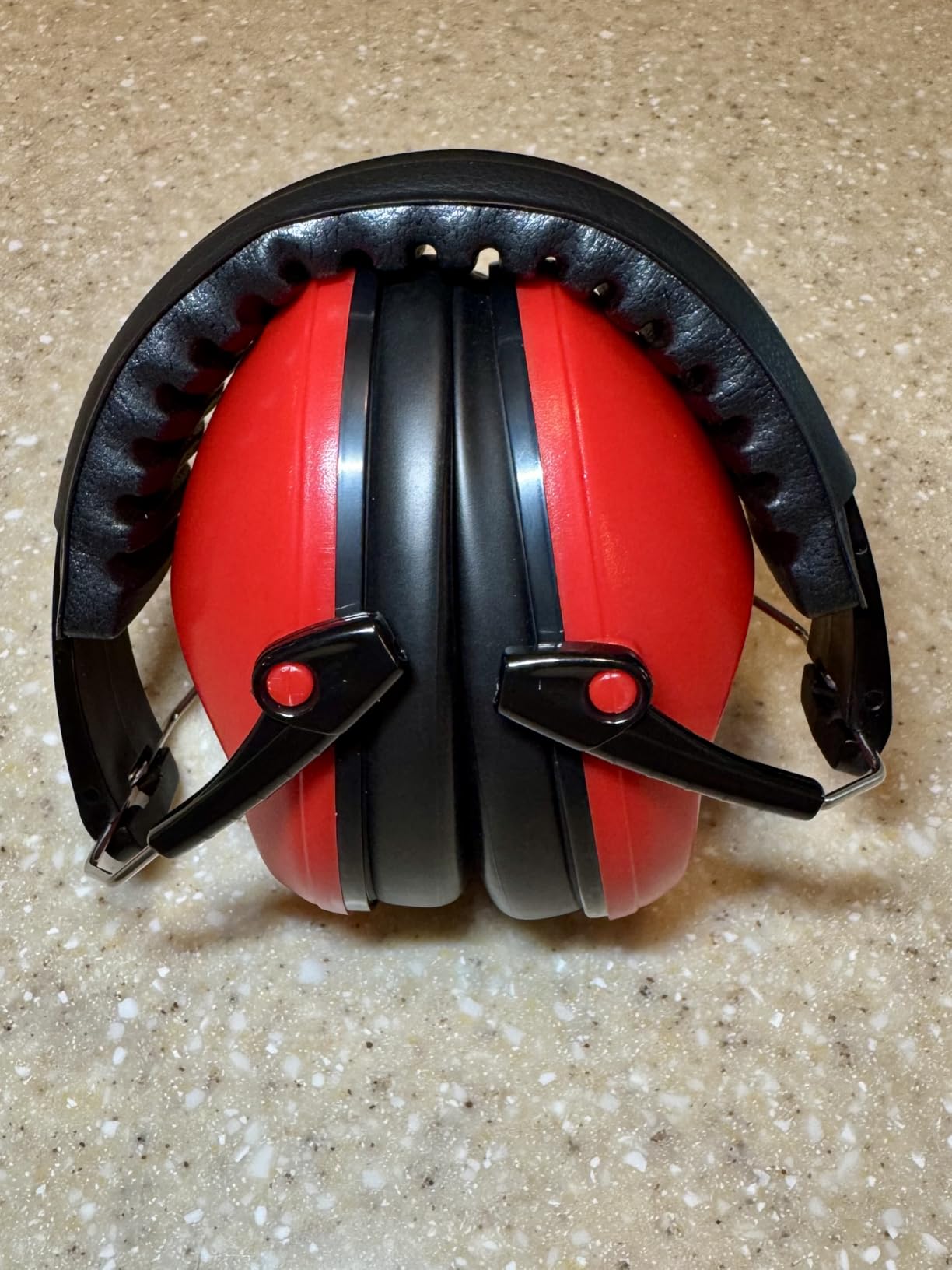
Reviewers like that the muffs reduce noise without shutting you off from speech, which matters when a family member is nearby with a hand rake. The foldable flat design and included carrying pouch make it practical to leave in the mower bag rather than in the garage.
Color choice is a genuine selling point for this one. Buyers mention kids and teens specifically, and the range of prints and colors on offer is broader than most of the plain industrial muffs in this roundup.

Why the fit range matters for a shared pair
Headband adjustment covers a wide span, so one muff can serve a ten year old and an adult in the same session. That matters more than any feature on the spec sheet when the goal is getting everyone protected rather than protecting one person.
At NRR 26dB, this sits in the middle of the group, which is appropriate for push mowers and trimmers. It is not the choice for a chainsaw, where you would want to add plugs underneath or move up to a higher rating.
Where the design disappoints
PU leather padding traps heat, and sweat builds up around the ears over a long summer session. In a hot climate that is the deciding factor between keeping protection on and pushing it up onto a hat brim.
Even at the smallest setting the muff can feel tight for smaller heads, and it is not sized for infants. If the smallest wearer in your household is a toddler, choose a dedicated child product instead.
5. Radians Dewalt DPG62-C Earmuff – Best for Blowing and Trimming
Dewalt DPG62-C Interceptor Protective Safety Earmuff Yellow/ Black, Adult
29 dB NRR
Lightweight over-ear design
Folding cups that seal out dust
High visibility yellow and black
Pros
- Effective against mower
- weedeater and chainsaw noise
- Lightweight enough to forget you are wearing it
- Doubles as some head protection from low branches
- Folding cups keep dirt and debris out
Cons
- Runs tight on some heads and leaves the ears sore
- Clamp arms can interfere with safety glasses
The Radians Dewalt DPG62-C is a straight passive muff with a 29 dB NRR, which is a sensible rating for weed eaters, string trimmers and mid-range blowers. It is yellow and black, so it reads as safety gear rather than a gadget, and it does one job without any settings to adjust.
Yard buyers consistently single out how light they find it. Lightweight matters more than raw attenuation in summer, because the muff that stays on your head is the muff that actually protects you for the whole session.
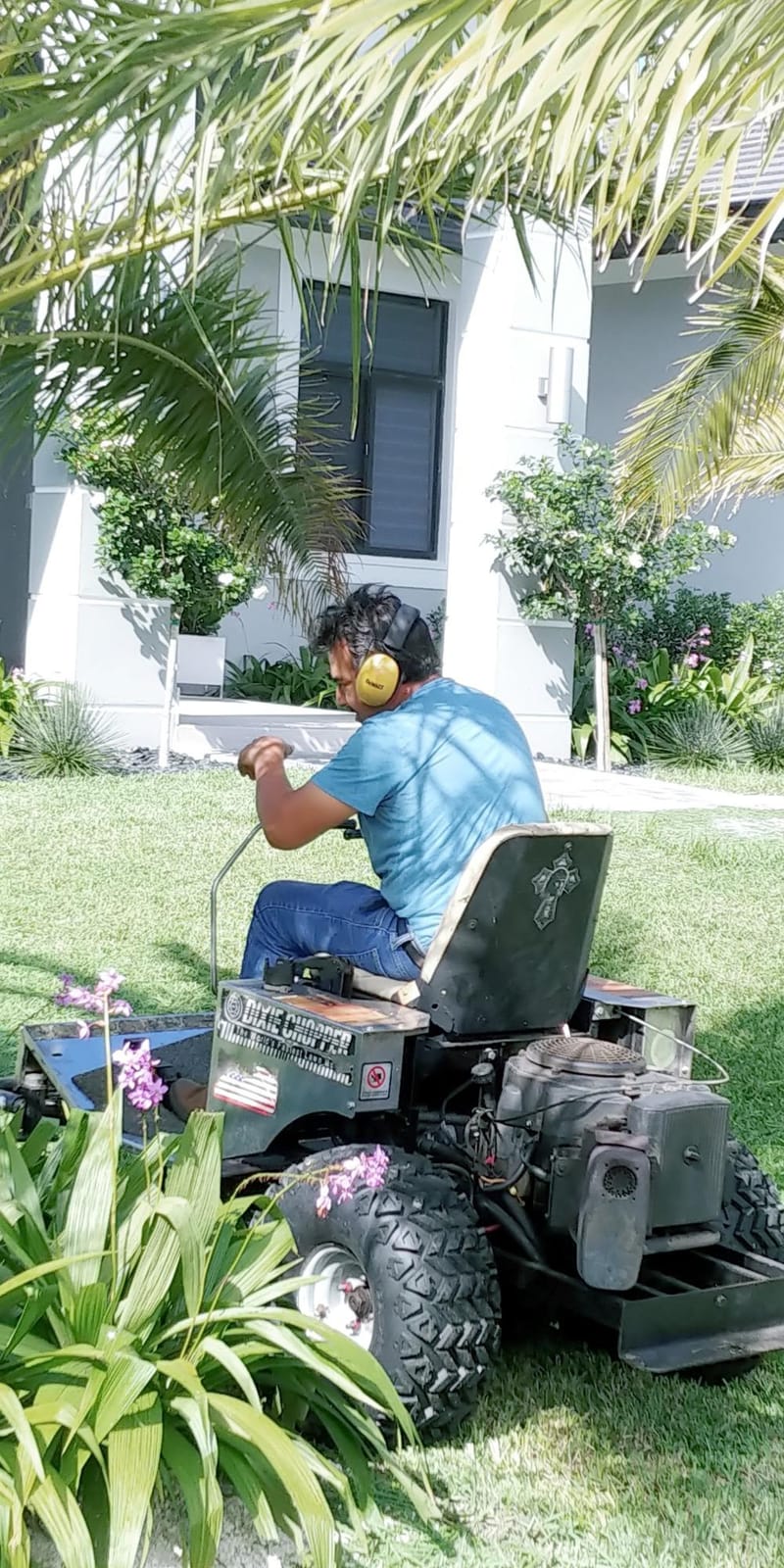
The compact folding design is aimed at storage. Folding the cups keeps dust, dried grass clippings and sawdust out of the padding, which protects the seal over a season of repeated use and keeps the earmuffs from becoming a debris trap in the shed.
Reviewers also note an unexpected benefit: with a rigid shell over the ears, the muffs take the sting from low branches and a swinging mower deck. That was not the reason to buy it, but owners mention it repeatedly.
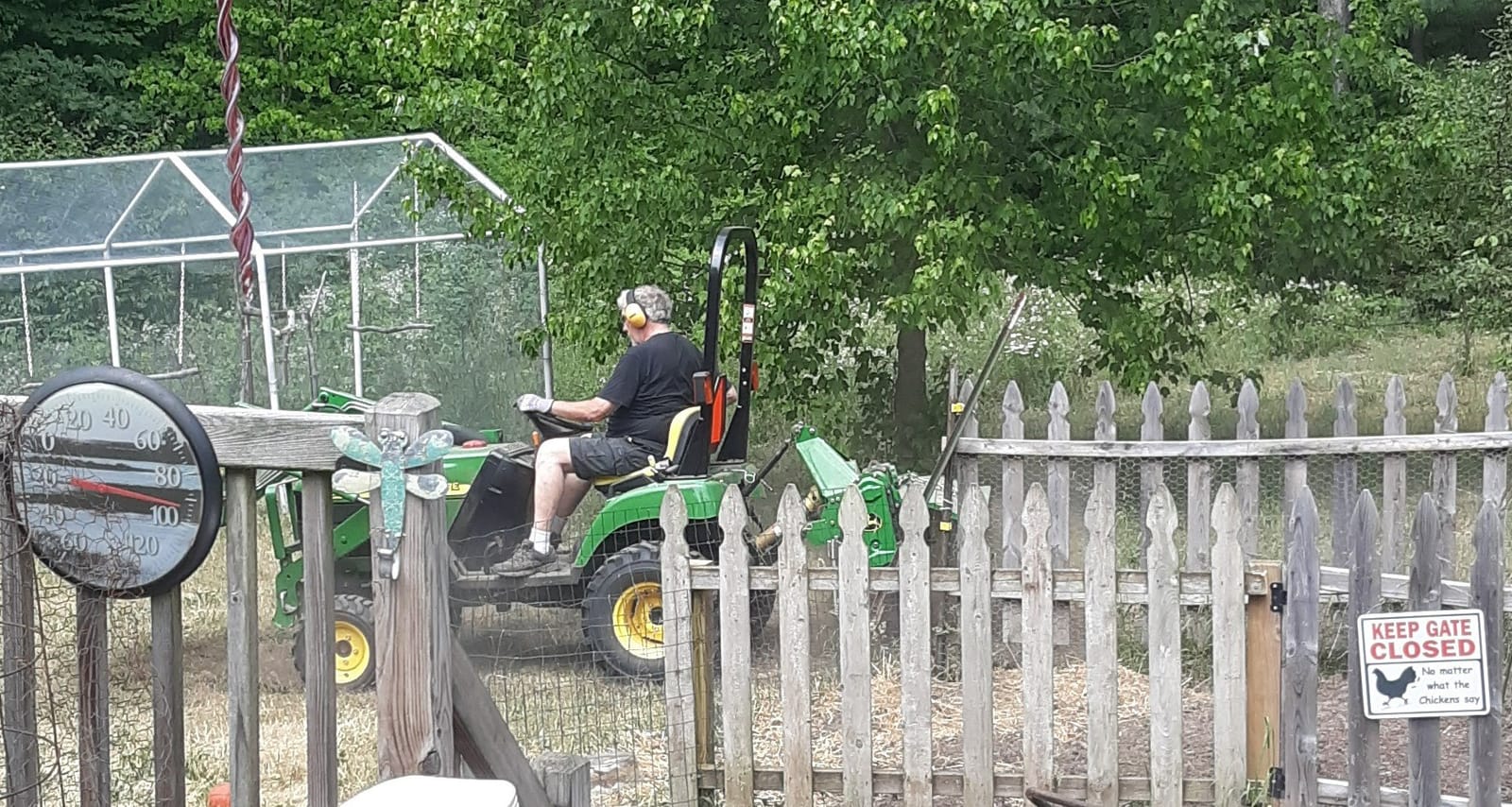
Where it fits in a two-person rotation
Because the rated protection is 29 dB with no electronics, this pairs well with foam plugs underneath for the loud half of a fall cleanup day. Muffs for repeated on and off work, plugs for the blower and chainsaw hours, is the split experienced crews use.
The high visibility yellow is a real feature with a backpack blower, where being seen by a neighbor or a passing vehicle matters. It is not decoration in that situation.
What to check before you commit
Several reviewers report the band running tight and leaving the ears sore after a long mowing session, particularly on larger heads. The fit complaints are specific rather than general, so if you know you have a broad head, read them before ordering.
The clamp style arms can also press against safety glasses arms over extended wear. If you wear glasses for the whole session, a muff with deeper cups and softer temple contact is a better match.
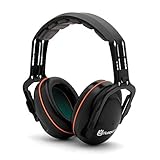
6. Husqvarna Professional Headband Protectors – Best for Daily Wear
Husqvarna Professional Headband Hearing Protectors 25dB(A) NRR, Lightweight Ear Protectors with Padded Headband and Clamshell Design for Hearing Protection, Black
25 dB(A) NRR
One size fits most
Padded flexible headband
Thumb slider adjustment
Pros
- Padded headband avoids pressure points over months of daily use
- Thumb sliders adjust from slack to firm tension
- Plastic shell tolerates rain and sweat
- Works with safety glasses
Cons
- Cups can feel tight on very large heads
- Cup pressure builds during continuous all-day wear
- Does not fold flat
The Husqvarna is built by a maker whose equipment you probably own, and it is aimed at the person who uses a trimmer, blower, mower or chainsaw regularly. The 25 dB(A) NRR rating covers typical yard equipment comfortably, and the padded headband is the reason owners describe it as the most comfortable muff they have owned.
That comfort claim is unusually specific. Reviewers report the padded headband not creating pressure points after eight months of daily use, and the padding being softer and more supple than stiffer competing models they had owned. Comfort is what determines whether protection is worn at all.

Adjustment uses thumb sliders that move from slack to firm tension, which is a nicer mechanism than the pinch-and-hold on many cheaper muffs. You can loosen it while walking to the mower and tighten it before you start the engine.
The plastic shell is the right material for outdoor equipment. It survives drops, rain and sweat without the corrosion problem you get with cheap foam-and-metal builds, and the cups double as space to wear earbuds underneath if you want music for the drive home.
When this beats a higher rating
A 25 dB NRR muff that you put on without thinking is more useful than a 35 dB muff that sits in the truck because it is too hot or too tight. If your yard work is mower, trimmer and light blow-down, this rating is sufficient with a good seal.
It also works well with safety glasses without pinching the arms, which is a common conflict that pushes people toward foam plugs they then misinstall.
Where it falls down
The cups can feel tight on very large heads even after adjustment, and reviewers report cup pressure building during continuous all-day wear. For long crew shifts, a lighter alternative may be more comfortable.
It does not fold flat, so it is bulkier to store than the ProCase or Dr.meter, and the adjustment instructions are unclear. Budget time to work out the thumb sliders before you need them mid-job.
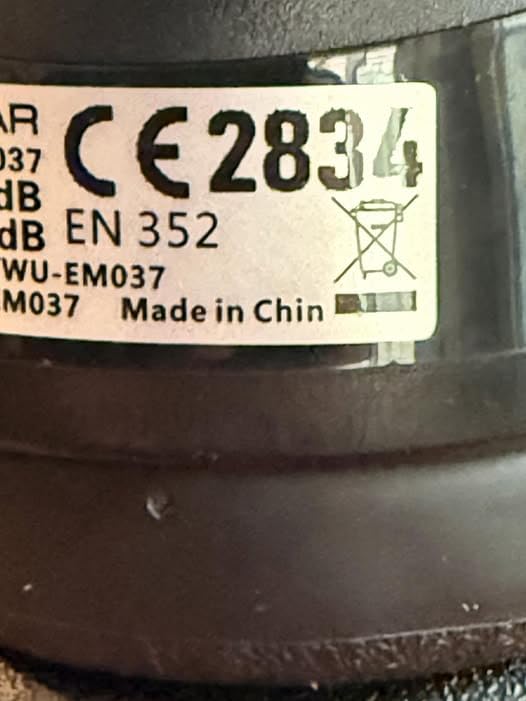
7. PROHEAR 037 Bluetooth Hearing Protection – Best Battery Life for Long Jobs
PROHEAR 037 Bluetooth 6.0 Hearing Protection Headphones with Rechargeable 1100mAh Battery, 30dB SNR Safety Noise Reduction Ear Muffs 120H Playtime for Mowing, Workshops, Snowblowing – Black
30 dB SNR
Bluetooth 6.0 with 80ft range
1100mAh battery
11.52 ounces
Pros
- Stable Bluetooth connection with no dropouts across a worksite
- Very long battery life supports multi day use
- Raised buttons are easy to find and adjust with gloves
- Comfortable headband and breathable pads
Cons
- Bluetooth volume is limited against loud machinery noise
- Some reviewers report connection drops or firmware issues
The PROHEAR 037 is the pick when the yard job is a full day or a full week and you do not want to hunt for a charger between the mower and the blower. It carries a 1100mAh lithium battery with a stated 120 hours of playtime, which is the longest claimed runtime among the wireless muffs here.
Connection stability is the other thing owners notice. Reviewers report a stable Bluetooth link with no dropouts across a worksite, and an 80ft range, which means the phone can stay in a pocket or a pack rather than clipped to your collar.
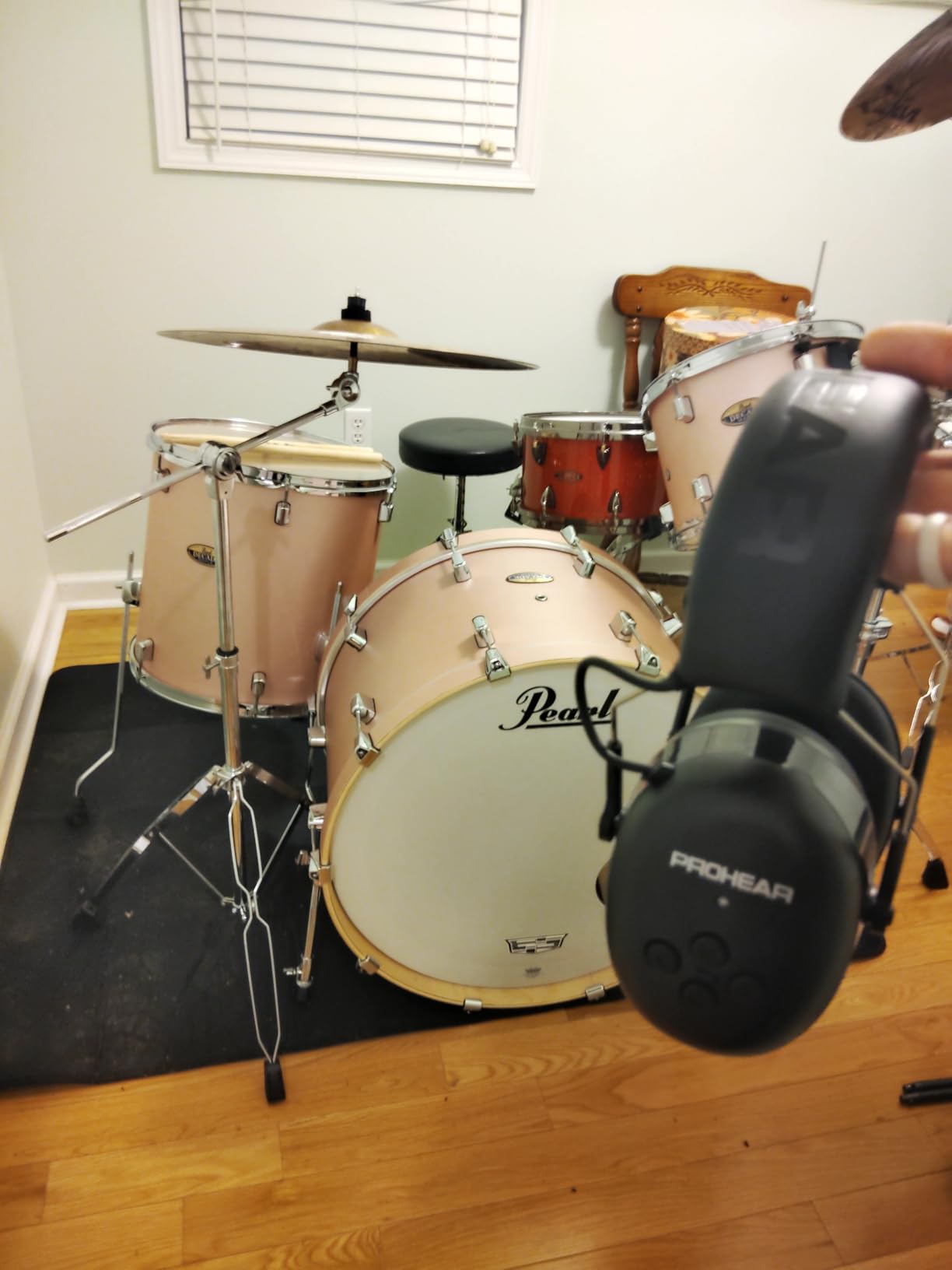
The controls are raised buttons on the housing, designed to be located and pressed without taking the muffs off, even through work gloves. That is a small design decision that removes the most common annoyance on Bluetooth hearing protectors.
Weight is 11.52 ounces with soft breathable ear pads on an adjustable headband, and there are hard hat compatible variants in the range. The box includes a 3.5mm cable, a charging cable, a manual and a black leather bag.
Why the drone defeats the audio
This muff sits at the low end of the ratings here, and the reason is consistent in the reviews. The Bluetooth audio volume is limited, so a mower drone or a sustained weed whacker overwhelms music and podcasts at maximum volume.
The pattern generalizes beyond this product. Audio playback is a bonus feature, not a noise control, and it competes badly with steady low frequency equipment noise even when the protection itself is doing its job.
Who should buy it anyway
Anyone whose yard sessions are spread across several days, or anyone who works around equipment on a property and wants calls and music without stopping. For those users the battery life and glove friendly controls outweigh an audio ceiling.
If you mostly want protection and never plan to play audio, spend the same money on a higher passive NRR instead. You get more attenuation and nothing to charge.
8. 3M WorkTunes Connect – Best Fit Under a Hat
3M WorkTunes Connect Wireless Hearing Protector with Bluetooth
26 dB NRR
40 plus hours of battery life
USB-C charging
14.72 ounces
Pros
- Battery often lasts two full work weeks per charge
- Good attenuation that still lets you hear people talk
- USB-C charging is a clear improvement
- Headband cutouts leave room for a cap button
- Soft padding for long days
Cons
- Bluetooth playback cannot outrun mower and trimmer noise
- Heavier than competing models
- Microphone picks up background noise on calls
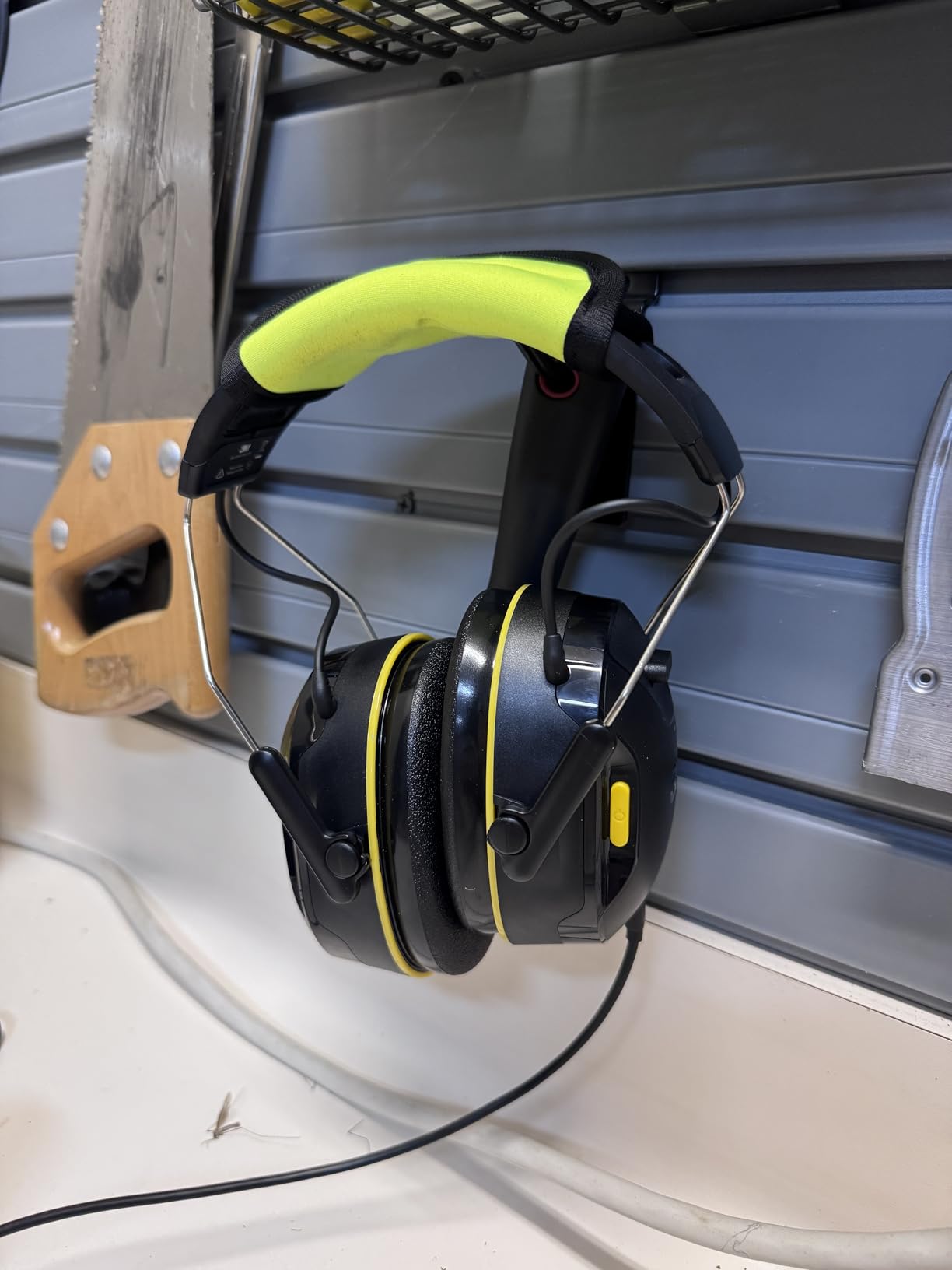
The 3M WorkTunes Connect is the version with the cutouts in the headband, and that single design choice is why it is the pick for people who work in the sun in a cap. There is a gap in the headband where a baseball cap button would otherwise press into the top of your head for two hours.
Protection is 26 dB NRR, which is appropriate for lawn equipment, and the reviewers say you can still hear people talk while the machinery is muffled. The self adjusting volume control and limiter work in the background whether or not you are playing audio.
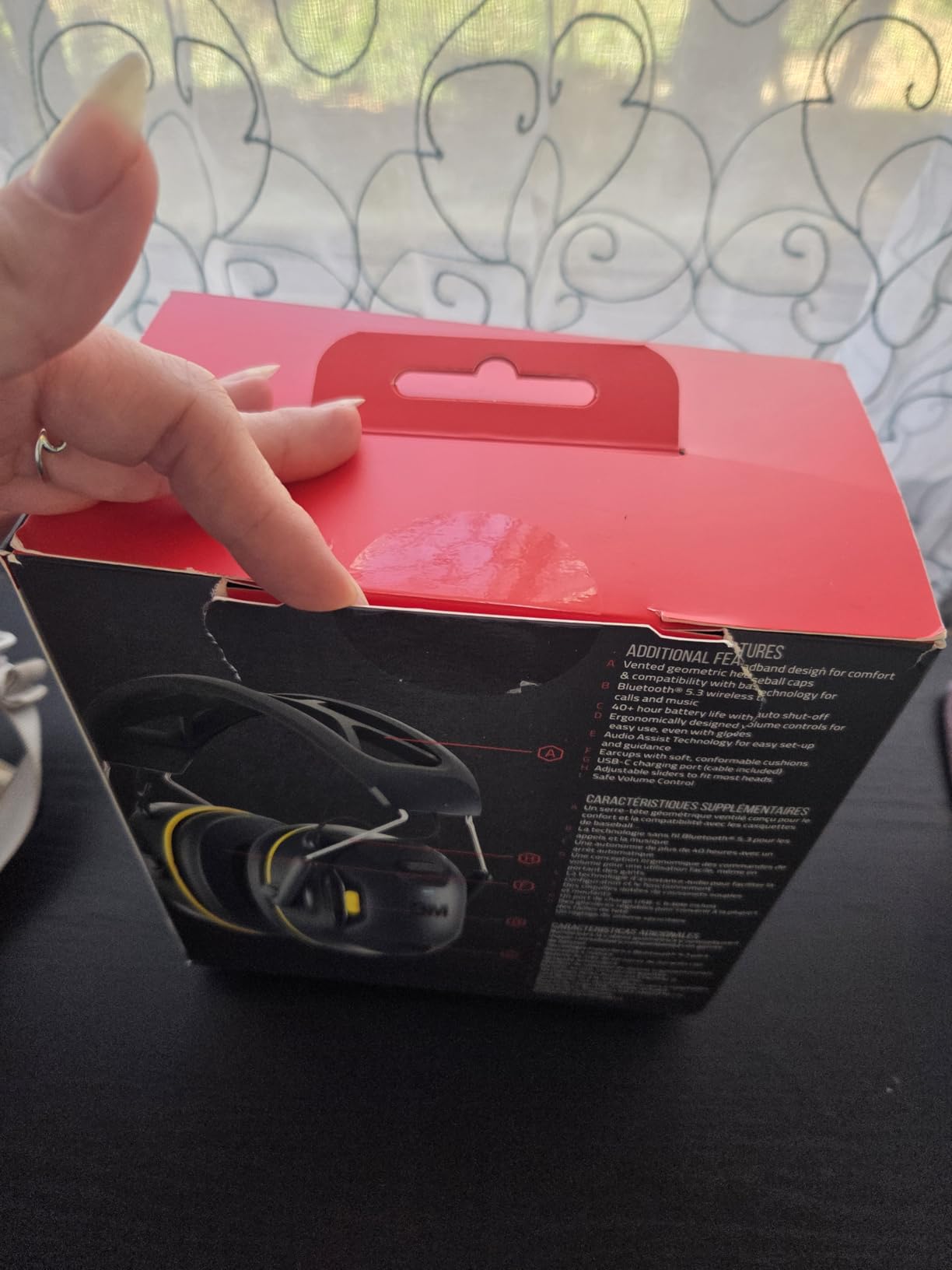
Battery life is the headline. Forty plus hours on a USB-C charge regularly works out to roughly two full work weeks for most users, which removes the low battery anxiety that stops people from wearing wireless protectors at all.
It is also water and sweat resistant, which is the correct specification for outdoor work in humidity. At 14.72 ounces it is not a featherweight design, and owners accept the extra heft for the sound quality and the seal.
What the cap compatibility really solves
A baseball cap under an earmuff is one of the most common ways people break a seal without realizing it. When a hat brim or a tight band compresses the cushion unevenly, the leak is on the side that matters least to the manufacturer and most to your protection.
The cutouts keep the cap comfortable rather than floating the muff away from your head, so you get a consistent seal with the hat on. That is the whole argument for this model over a generic Bluetooth muff.
Where it disappoints
The audio cannot be pushed loud enough to hear podcasts over sustained mower and trimmer noise at maximum volume. Protection still works, but treat the Bluetooth as something for breaks, not for the session itself.
It is heavier than the other wireless options, and owners report the top headband section becoming uncomfortable during very long shifts or when worn with a hat after all. The microphone also picks up background noise on calls, which is awkward if you take calls on the job.
9. 3M Peltor X2A Over-Head Earmuffs – Best Lightweight Pick for Long Days
3M PELTOR Hearing Protection Ear Muffs, Over the Head Headband, NRR 24 dB
NRR 24 dB
8 ounces
9 x 6 x 5 inches
Over the head adjustable headband
Pros
- Comfortable for hours without the headaches tight muffs cause
- Deep cups fit larger ears well
- Works with glasses without pinching
- Lightweight at 8 ounces and still blocks plenty of noise
Cons
- 24 dB NRR is the lowest published rating in this roundup
- Airtight seal needs care when removing
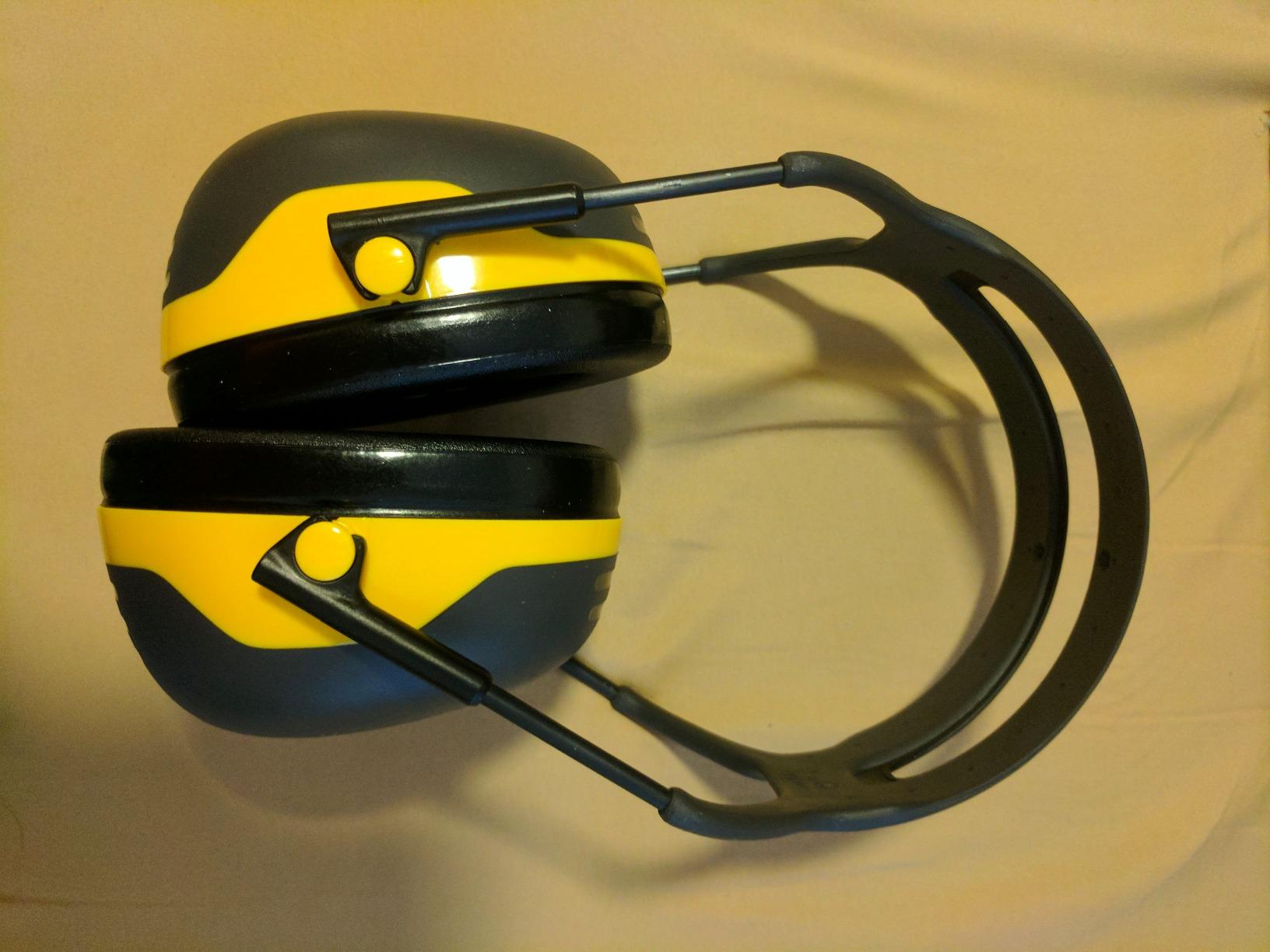
The 3M Peltor X2A comes in at 8 ounces, which makes it one of the lighter muffs in this roundup. That is not a marketing detail. When the machine stops and you want to hear the birds, the house, or a person walking up behind you, the difference between 8 ounces and 13 ounces is the difference between protection you keep on and protection you take off.
Its NRR of 24 dB is the lowest published rating here, so treat it as mower and general equipment protection rather than blower and chainsaw protection. Buyers who need more attenuation add earplugs underneath, which is the standard double protection approach.

The deep ear cups are sized to accommodate larger ears, and reviewers with glasses call out that the cushion sits well without shoving the temple into the side of the head. The tension adjustment is smooth and even, and it holds position once set rather than slowly sagging.
Long term owners report years of reliable use, and the ratings sit at 4.7 across more than 1,900 reviews. This design has been in production long enough that replacement cushions are easier to source than for newer models.
When a lightweight muff is the right answer
Long sessions in heat are where weight shows up. If your yard work is spread across several short bursts a week, or if you are the type to lift the muffs off after twenty minutes, the 8 ounce weight and even tension are worth more than a higher number on the box.
It is also a straightforward pick if you wear glasses all day, since the seal and the frame both accommodate eyewear better than most clamping designs.
What the lower rating means for you
At 24 dB NRR, this is a light duty muff. A gas blower or a chainsaw at the levels listed earlier will still be loud through these cups, and several buyers note that sirens and engines come through clearly.
The airtight seal also deserves a moment of attention. Pull the cups off slowly and slightly forward rather than straight up, so the pressure change on the eardrum is gentle, and expect a moment of tinnitus after a long session that is normal rather than alarming.
10. ISOtunes Link 2.0 – Best for Professional Crews and Long Shifts
ISOtunes Link Bluetooth Earmuffs, OSHA Compliant Headphones for Work
25 dB NRR, ANSI certified
OSHA approved
SafeMax limiter caps at 85 dB
50 plus hours of battery
Pros
- Rugged build that survives repeated drops
- Real 50 plus hour battery life confirmed over long use
- Loud enough for music while mowing under the SafeMax limit
- Fits large heads and stays in place
Cons
- Clamping force is tight and can cause headaches
- Weak bass response and a low volume ceiling past 60 percent
- Can develop resonance over rough terrain on a mower
The ISOtunes Link 2.0 is the only product in this roundup that states OSHA approval alongside the NRR and an ANSI certification, which is the language a commercial crew needs on paper. The 25 dB NRR is unremarkable, but the documentation around it is not.
For crews running equipment eight to ten hours a day, the power story matters. Fifty hours on the internal battery, plus up to a hundred more hours using AAA backup batteries, means a full work week without a charger. Two hours brings it back to full.
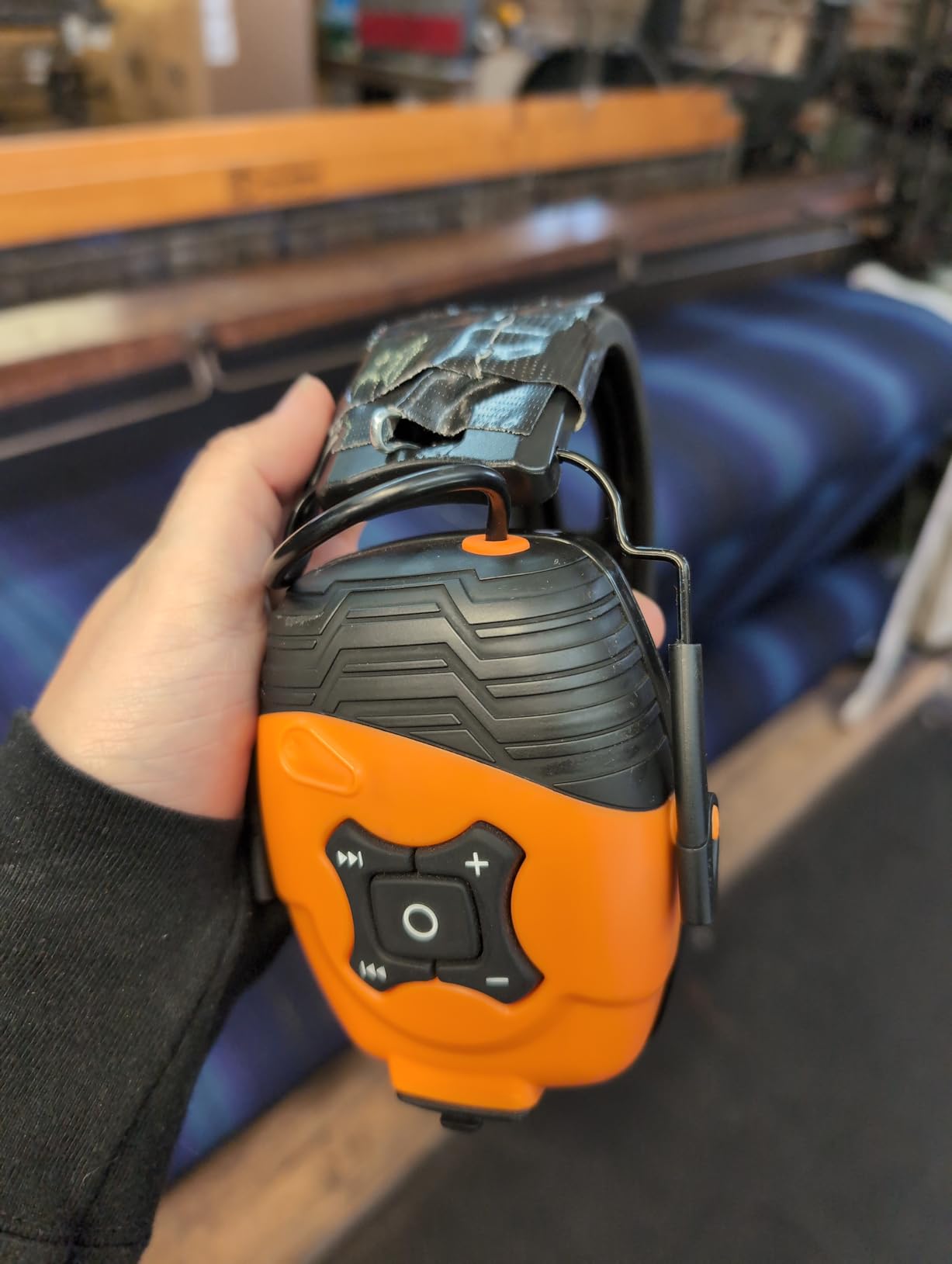
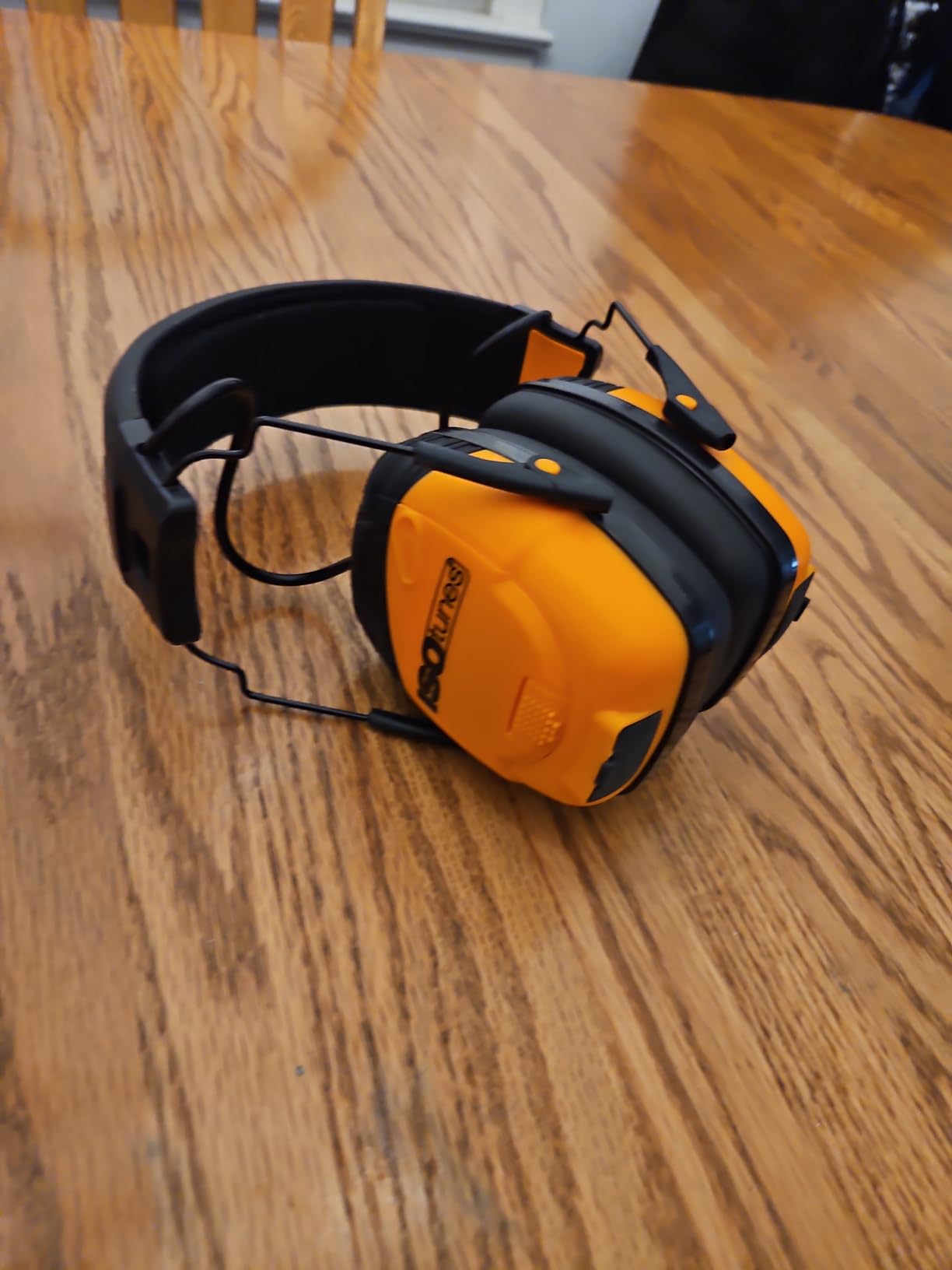
SafeMax Technology limits audio output to 85 dB, which is the level that keeps listening itself from becoming the hazard. Owners say it is still loud enough to enjoy music while mowing, which is a rare combination of a capped volume and a usable one.
Build quality is a repeated theme. Reviewers describe a very rugged body that survives repeated drops, a fit that works on large heads and stays put, and Bluetooth 5.0 with two way communication that stays clear in noisy conditions. There is also room in the cups to wear over hearing aids.
Why the paperwork matters for crews
OSHA compliant language and an ANSI certification are what an employer or a safety coordinator asks to see, and hearing protection documentation is a real part of a commercial operation. This model is the one here that states both without hedging.
IPX4 water and sweat resistance is the correct rating for outdoor work, and the foldable frame means it does not take up a full foot of truck bed space. Raised buttons work with gloves.
Where the fit and audio frustrate people
This is the lowest rated product in the roundup at 4.2, and the complaints are consistent. The clamping force is tight enough to cause a headache after a few hours for some wearers, and the volume ceiling feels low past roughly 60 percent.
Bass response is weak, and some owners report a resonance or reverberation inside the cups when riding a mower over rough terrain. If your property is rough ground, test that before committing to a full crew purchase.
What NRR Do You Actually Need for Lawn Work?
For a standard push or riding mower, look for a minimum rated NRR of 25 dB. For leaf blowers, trimmers and chainsaws, target 30 dB or more, and add foam plugs underneath your muffs for the loudest jobs. Below that, you are relying on luck and short sessions.
An NRR is a laboratory number measured under ideal conditions, which no yard matches. The OSHA correction method is the honest way to read it, and it is the piece of arithmetic almost every roundup leaves out. For over-ear muffs, subtract 50 percent. For earplugs, subtract 70 percent.
So a muff marked 37 dB gives you an estimated 18.5 dB of real world protection, and a plug marked 33 dB gives you about 10. For reference, halving a mower’s output from 95 dB to roughly 76 dB moves it from damaging to safe for a normal session. That is why the de-rated figure is the one that should drive your purchase.
Three further notes close out the technical picture. First, double protection, meaning plugs worn under muffs, adds roughly 5 dB more than the better of the two devices alone, and it is the correct answer for chainsaw and backpack blower work. Second, if an earmuff has no printed NRR anywhere on the cup, the headband or the packaging, it is not certified personal protective equipment and you should assume it attenuates very little. Third, foam plugs only deliver their rating if you roll them into a thin cylinder and pull straight back before inserting, then hold them in place for twenty seconds. A badly inserted plug can lose more than half its rated protection.
Regular noise cancelling headphones and earbuds are not hearing protection, and the distinction is not subtle. ANC is designed to cancel low frequency sound for listening, not to attenuate a 100 dB blower at your ear, and consumer headphones carry no NRR and no certification. The honest framing, repeated in lawn care forums, is that they handle sudden spikes reasonably well and steady mower drone badly, and they are no substitute for a rated muff or plug.
If the goal is something that works as a daily driver rather than a piece of gear, our guides to hearing aids for seniors and invisible hearing aids cover the other side of the problem, once exposure has already done its work.
One more caution, and it is the important one. Protection prevents additional damage, it does not repair damage. If you already finish a day of mowing with ringing in your ears, that is tinnitus, and it is a signal to be evaluated rather than to keep mowing louder. Our guide to hearing aids for tinnitus covers what comes next if that is where you are.
For anyone dealing with loss that is already significant, we also cover hearing aids for severe hearing loss. None of that replaces a muff on a Saturday morning in July.
Frequently Asked Questions
Should you wear ear protection when lawn mowing?
Yes, for gas mowers, riding mowers, trimmers and blowers. Those tools commonly run between 85 and 100 dB, and NIOSH treats 85 dB as the recommended exposure limit, with the safe exposure time halving for every 3 dB above it. An electric mower under 85 dB is lower risk, but protection costs little and prevents cumulative damage.
Will noise cancelling headphones block a lawn mower?
Partly, and not well enough to rely on. Active noise cancelling targets low frequency sound, so it reduces the drone of a mower better than a sudden spike, but consumer ANC headphones carry no NRR, no ANSI certification and no OSHA approval. For protection, choose a rated muff or earplug instead.
What is a good NRR for earmuffs?
For mowing, a minimum rated NRR of 25 dB is a sensible target. For leaf blowers, weed eaters and chainsaws, look for 30 dB or more and wear foam plugs under the muffs. Remember the OSHA de-rating, which halves an earmuff rating, so a 30 dB muff is worth about 15 dB in real use.
What is the best hearing protection for leaf blowers?
A high NRR passive muff worn over foam earplugs. Backpack and gas blowers commonly reach 95 to 110 dB, which needs both double protection and the highest rating you are comfortable wearing. A muff rated 37 dB de-rated to roughly 18 dB is a strong match for blower work.
Can I wear earmuffs with a hat while mowing?
Yes, but a thick cap or a hard hat can compress the ear cushions and break the seal, which reduces the protection you paid for. Choose a muff with headband cutouts for a cap button, or loosen the muff after putting the hat on and check both sides sit level before you start the engine.
What are the best earbuds for outdoor work?
Only models that publish a rated NRR should be considered, and even then in-ear protection is easier to misinstall. Foam plugs installed correctly deliver their full rating, while a poorly inserted plug can lose more than half of it. For extended yard sessions, a rated over-ear muff is usually more consistent.
Conclusion
Ten products later, the answer to the best hearing protection for lawn work in 2026 is still straightforward. Take the Walker’s Razor Slim if you want to hear your surroundings safely, choose the 3M WorkTunes Connect if you wear a cap in the sun, and buy a certified muff with a printed NRR of at least 25 dB for mowing or 30 dB or more plus foam plugs for blowers, trimmers and chainsaws.
Whatever you choose, wear it every time. Hearing damage from yard work is cumulative, silent while it happens and permanent once it has. The muff that gets worn beats the muff that scores best on a spec sheet, and the cheapest thing you can do this week is check that whatever you are using has a number printed on it.