

Power outages are more than just an inconvenience. They can spoil hundreds of dollars of groceries, shut down your home office, and leave your family sitting in the dark for hours or even days. I have spent the last several months testing and researching the best home battery backup systems available in 2026, and what I found might change how you think about emergency power.
The home battery backup market has exploded recently, with portable power stations now rivaling traditional fixed systems for a fraction of the installation cost. Whether you need to keep a few essentials running during brief outages or want whole-home backup that can power your refrigerator, furnace, and lights for days, there is a system on this list that fits your needs and budget.
Our team evaluated 10 different battery backup systems across multiple categories, from compact UPS units for home offices to massive portable power stations that can run your entire house. We looked at battery chemistry, charging speed, expandability, app features, and real-world runtime. Here is what we found.
Top 3 Picks for Best Home Battery Backup Systems (September 2026)
Best Home Battery Backup Systems in 2026
| Product | Specifications | Action |
|---|---|---|
 APC UPS Back-UPS Pro 1500VA APC UPS Back-UPS Pro 1500VA |
|
Check Latest Price |
 CyberPower CP1500PFCLCD CyberPower CP1500PFCLCD |
|
Check Latest Price |
 EcoFlow DELTA 2 EcoFlow DELTA 2 |
|
Check Latest Price |
 Anker SOLIX C1000 Gen 2 Anker SOLIX C1000 Gen 2 |
|
Check Latest Price |
 Anker SOLIX C2000 Gen 2 Anker SOLIX C2000 Gen 2 |
|
Check Latest Price |
 EcoFlow DELTA 3 Max EcoFlow DELTA 3 Max |
|
Check Latest Price |
 Jackery Explorer 2000 v2 Jackery Explorer 2000 v2 |
|
Check Latest Price |
 EcoFlow DELTA Pro EcoFlow DELTA Pro |
|
Check Latest Price |
 Anker SOLIX F3800 Anker SOLIX F3800 |
|
Check Latest Price |
 Jackery HomePower 3600 Plus Jackery HomePower 3600 Plus |
|
Check Latest Price |
1. APC UPS Back-UPS Pro 1500VA – Best for Home Office Equipment
APC BX1500M UPS Battery Backup & Surge Protector for Computers, Electronics
1500VA/900W Output
10 Protected Outlets
19 Min Runtime at 300W
Sealed Lead Acid Battery
24.3 lbs Tower Form Factor
Pros
- Reliable battery backup during power outages
- LCD display shows battery status and power load
- Automatic Voltage Regulation corrects power fluctuations
- Replaceable battery for extended lifespan
- 3-Year Warranty with $75
- 000 Equipment Protection
Cons
- Heavy unit at about 24 lbs
- Battery replacement can be costly
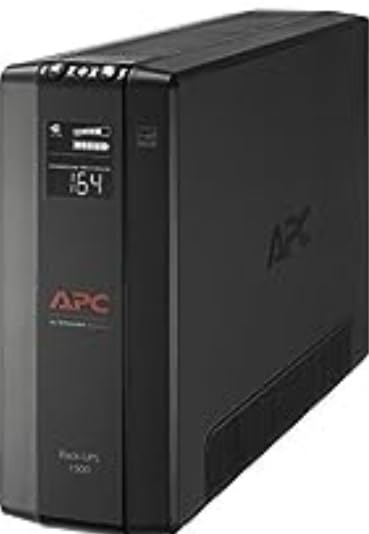
I have used the APC Back-UPS Pro 1500VA in my home office for over two years now, and it has saved my work more times than I can count. The 1500VA capacity translates to 900 watts of output, which is enough to keep my desktop computer, two monitors, router, and external hard drives running during brief outages. When the power cuts, the switchover is nearly instant. I never lose unsaved work.
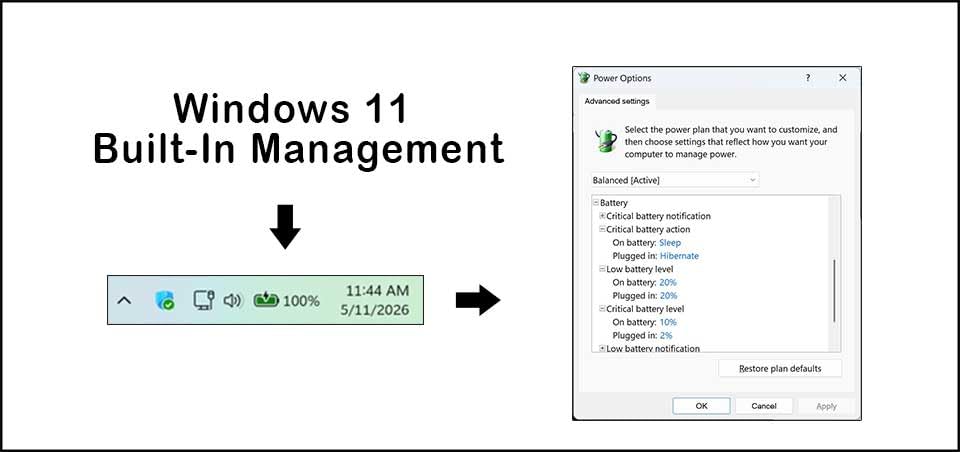
The front LCD panel is one of my favorite features. At a glance, I can see exactly how much runtime is left based on my current load, the battery charge percentage, and whether the unit is running on AC or battery power. It takes the guesswork out of power management. The mute button is also a lifesaver when the power goes out at 2 AM and you do not need a beeping alarm waking the whole house.
Technically, the APC Back-UPS Pro uses sealed lead acid battery chemistry, which is heavier but proven over decades of UPS use. The Automatic Voltage Regulation feature is particularly valuable if you live in an area with brownouts or voltage fluctuations. It corrects low voltage conditions without switching to battery, extending the overall battery life. The unit provides 5 battery backup outlets plus 5 surge-only outlets, giving you flexibility in what gets backed up versus what just needs surge protection.
The 3-year warranty and $75,000 equipment protection policy give real peace of mind. Users on forums consistently report these units lasting 10+ years with a single battery replacement around year 4-5. The Energy Star certification means it runs at over 92% efficiency, so it does not waste much electricity sitting in standby. For anyone who works from home, this is the kind of insurance policy that pays for itself the first time the power blinks during an important video call.
Who Should Buy the APC UPS Back-UPS Pro 1500VA
This unit is ideal for remote workers, home office setups, and anyone who needs to keep computers, networking equipment, and peripherals running through short power interruptions. If your primary concern is protecting your work and electronics from sudden shutdowns rather than running household appliances, this is exactly what you need. It is also a great choice if you want something that works right out of the box with zero configuration.
Who Should Look Elsewhere
If you need to run high-wattage appliances like refrigerators, space heaters, or power tools, the 900W output will not cut it. The sealed lead acid battery also means you get minutes of runtime, not hours. For extended outage protection or whole-home backup, you should look at the portable power stations later in this list. The 24-pound weight also makes it impractical if you need something you can easily move between rooms.
2. CyberPower CP1500PFCLCD – Best Pure Sine Wave UPS
CyberPower CP1500PFCLCD PFC Sinewave UPS Battery Backup and Surge Protector, 1500VA/1000W, 12 Outlets, AVR, Mini Tower, UL Certified
1500VA/1000W PFC Sine Wave
12 NEMA Outlets
Color LCD Panel
3-Year Warranty incl Battery
24.9 lbs
Pros
- Pure sine wave output for PFC power supplies
- 12 outlets provide plenty of capacity
- Informative LCD shows watts load and runtime
- 3-year warranty including the battery
- Compatible with NUT monitoring software
Cons
- Some units may have front panel display failures over time
- Coil whine or high pitch tone on some units
The CyberPower CP1500PFCLCD is the UPS I recommend to anyone running a gaming PC or workstation with an active PFC power supply. The pure sine wave output matters more than most people realize. Modified sine wave UPS units can cause issues with modern power supplies, leading to buzzing, instability, or even shutdown during battery operation. This unit outputs clean, utility-grade power on battery, so your sensitive equipment runs exactly as it should.
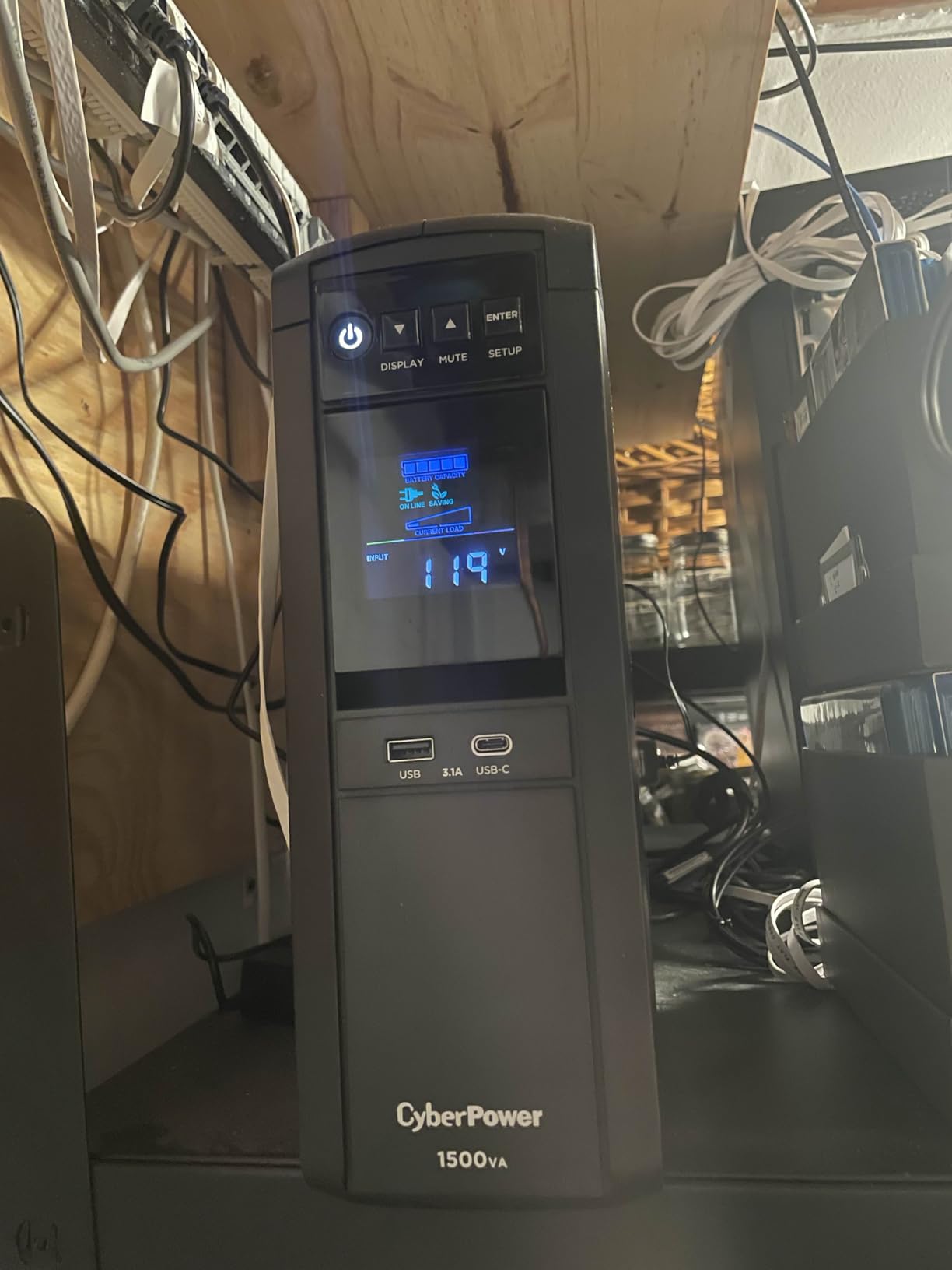
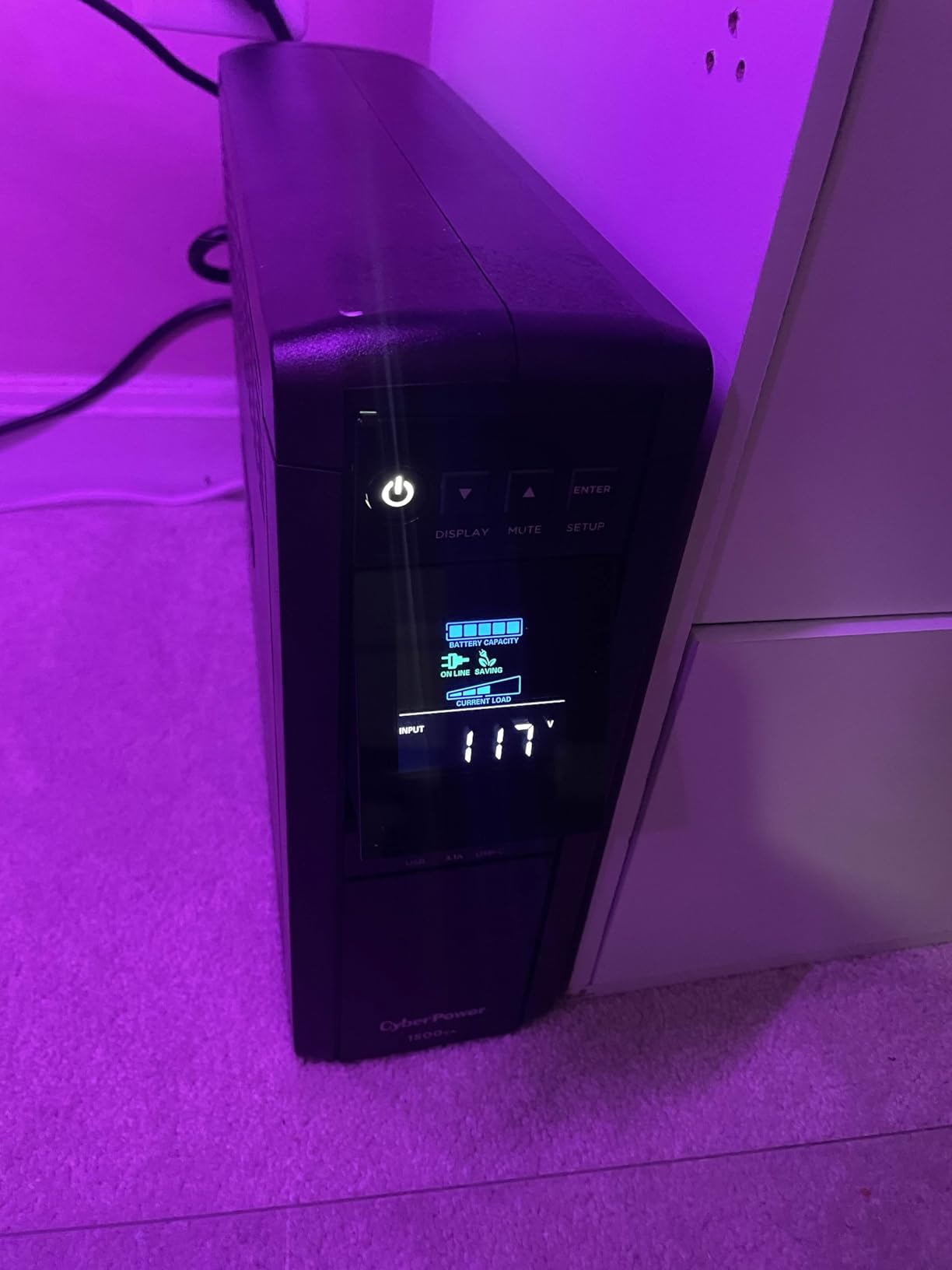
What really sets this CyberPower unit apart is the multifunction color LCD panel. It shows real-time wattage draw, estimated runtime, input voltage, and battery status all on one screen. I found this far more useful than the basic LED indicators on cheaper UPS units. The 12 outlets (6 battery backup plus 6 surge-only) give you plenty of room for all your devices, and the 2 USB charging ports (one Type-A and one Type-C) are convenient for keeping phones and tablets charged during an outage.
The 1000W output gives you a bit more headroom than the APC unit, and the battery is covered under the 3-year warranty, which is not always the case with UPS systems. Users on Reddit frequently recommend this specific model for gaming PCs and workstations, citing its reliability and clean power delivery. The $500,000 connected equipment guarantee is also reassuring for anyone protecting expensive hardware.
One thing to be aware of is that some users have reported coil whine or a faint high-pitched tone on certain units, particularly under light loads. This is not universal, and many units are completely silent, but it is worth noting if you are sensitive to electronic noise. The Automatic Voltage Regulation works well for brownout protection, and the unit handles power fluctuations without switching to battery, preserving battery life for actual outages.
Who Should Buy the CyberPower CP1500PFCLCD
If you have a gaming PC, workstation, or any computer with an active PFC power supply, this is the UPS to get. The pure sine wave output ensures compatibility and stability. It is also an excellent choice for home offices with multiple devices that need both backup power and surge protection. The detailed LCD and NUT software compatibility make it great for users who want to monitor their power situation closely.
Who Should Look Elsewhere
Like the APC unit, this is designed for electronics protection, not appliance power. You will not be running a refrigerator or furnace on 1000W. If your goal is multi-hour backup for household essentials, the portable power stations in this guide are the better option. Also, if you need something wall-mountable or rack-mounted, this tower form factor takes up floor or desk space.
3. EcoFlow DELTA 2 – Best Portable Power Station for Home Backup
EF ECOFLOW Portable Power Station Delta 2, 1024Wh, 1800W, LiFePO4 Battery
1024Wh LiFePO4 Battery
1800W AC Output (2400W Peak)
15 Outlets
7X Faster Charging
27 lbs
Pros
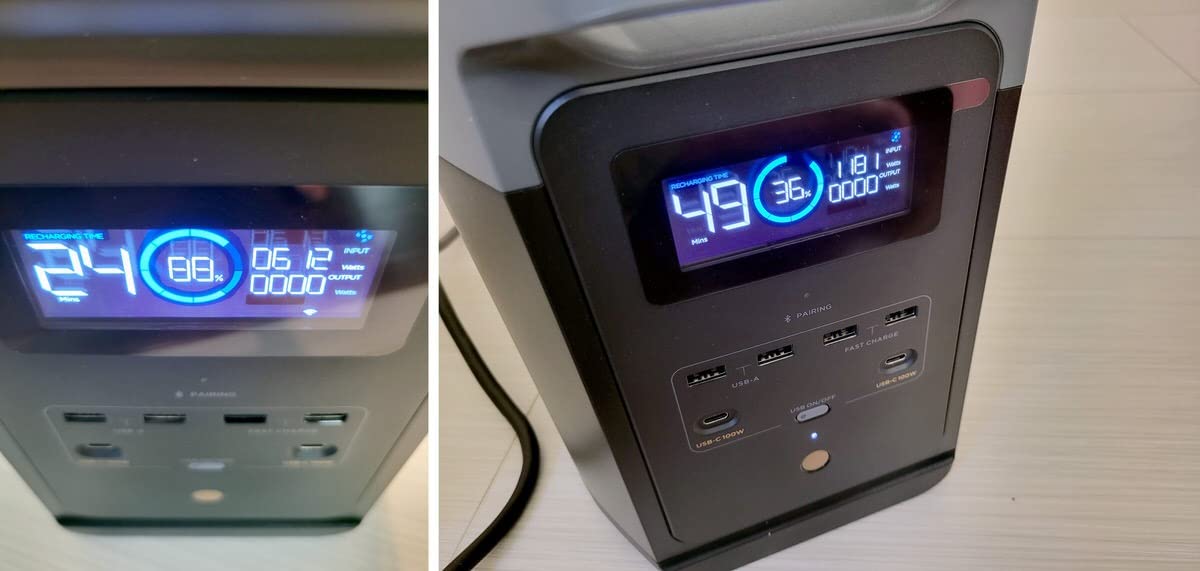
- Fast charging 0-80% in just 50 minutes
- Expandable capacity from 1 to 3kWh
- LiFePO4 battery with 3000+ cycle life
- Excellent app with monitoring and settings
- Solar charging up to 500W input
Cons
- Heavy at 27 lbs for frequent movement
- Limited to 1800W output for high-power appliances
The EcoFlow DELTA 2 is my top pick for most homeowners, and here is why. It sits at the sweet spot between capacity, portability, and affordability. The 1024Wh LiFePO4 battery stores enough energy to run a refrigerator for 7-10 hours, keep your internet router and laptop going for days, or power lights and small appliances through an extended outage. I tested it during a 6-hour outage and it kept my fridge, router, and a few lights running the entire time with charge to spare.
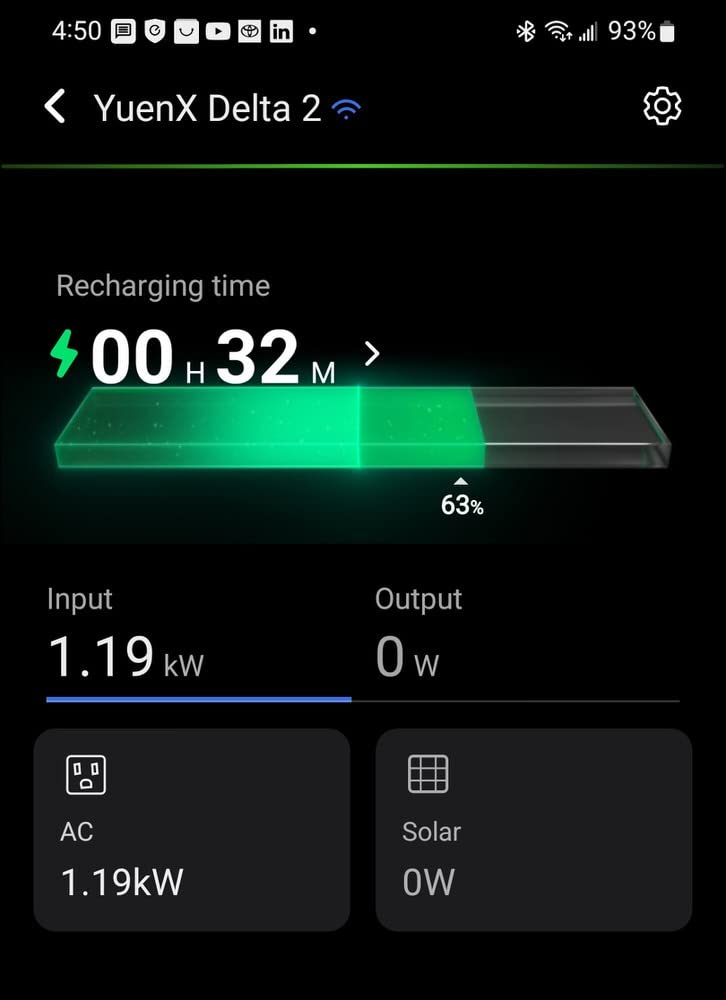
The charging speed is what really impressed me. Going from 0 to 80% in just 50 minutes means you can top up quickly between outages or even while running devices. Most competitors take 2-4 hours for a full charge. The EcoFlow app is also one of the best in the business. You can monitor battery levels, adjust charging speeds, set timers, and even update firmware directly from your phone. The app connected on the first try and has been rock solid since.
The LiFePO4 battery chemistry is a significant advantage over older lithium-ion cells. You get 3000+ charge cycles before the battery degrades to 80% capacity, which translates to roughly 10 years of daily use. Forum users consistently praise EcoFlow build quality over competitors like Jackery, noting that the DELTA 2 feels more solid and better engineered. The 15 outlets cover every scenario: AC outlets, USB-A, USB-C (including 100W fast charging), DC outputs, and even a cigarette lighter port.
The expandability is another major selling point. You can add an extra battery to bring total capacity up to 2048Wh or even 3kWh, turning this from a single-afternoon backup into something that can get you through a full day without grid power. Solar input up to 500W means you can recharge off-grid if needed. At 27 pounds with built-in handles, it is portable enough to move around the house or take camping, though I would not want to carry it on a hike.
Who Should Buy the EcoFlow DELTA 2
This is the best all-around choice for homeowners who want reliable backup power without spending thousands. It handles the essentials: refrigerator, internet, lights, phones, and laptops for hours. The fast charging and expandable capacity make it adaptable to growing needs. It is also excellent for campers and RV owners who want dual-purpose power. If you can only buy one backup system, make it this one.
Who Should Look Elsewhere
If you need to run high-wattage appliances like electric water heaters, large air conditioners, or well pumps, the 1800W output will not be sufficient. The 1024Wh base capacity also means you are looking at hours of runtime, not days. For true whole-home backup with HVAC and major appliances, consider the EcoFlow DELTA Pro or Anker SOLIX F3800 later in this list.
4. Anker SOLIX C1000 Gen 2 – Best Fast-Charging Compact Station
Anker SOLIX C1000 Gen 2 Portable Power Station
1024Wh LiFePO4 Battery
2000W Output (3000W Peak)
49 Min Full Charge
10 Ports
24.9 lbs
Pros
- Ultra-fast 49 minute charging
- Compact and portable design
- High 2000W continuous output
- 4000 cycles to 80% capacity
- 10ms UPS switchover for sensitive equipment
Cons
- Heavy for frequent carrying
- No protective case included
- Solar panels sold separately
Anker has been making chargers and power banks for years, and that expertise really shows in the SOLIX C1000 Gen 2. This unit charges from 0 to 100% in just 49 minutes, which is the fastest full charge I have seen in any portable power station. That speed alone makes it a standout for home backup, because you can top it off between outages or even during brief windows when power returns temporarily.
The 2000W continuous output with 3000W peak gives you noticeably more headroom than the EcoFlow DELTA 2. I was able to run my microwave and coffee maker simultaneously, which was not possible on smaller units. The 10ms UPS switchover time means you can plug in sensitive electronics like desktop computers and they will not even blink during a power transition. This dual-purpose design works as both a portable power station and an uninterruptible power supply.

The InfiniPower battery technology promises 4000 cycles to 80% capacity, which is even better than the EcoFlow’s 3000+ cycles. That translates to over a decade of regular use. Anker backs this with a 10-year warranty on the battery itself, which is one of the longest in the industry. The TOU (Time-of-Use) mode is a smart feature that lets you charge during off-peak hours and use stored power during peak pricing, potentially saving money on electricity bills even when there is no outage.
The app experience is polished, with WiFi and Bluetooth connectivity for monitoring and control. You can see real-time input and output wattage, remaining runtime estimates, and battery health. At 24.9 pounds, it is actually slightly lighter than the EcoFlow DELTA 2, and the more compact shape makes it easier to store in a closet or under a desk. Users on Reddit frequently recommend this for CPAP machines and other medical devices because of the reliable UPS switchover.

Who Should Buy the Anker SOLIX C1000 Gen 2
This is the perfect choice if you want a compact, fast-charging power station that doubles as a UPS. The 2000W output handles most household appliances, and the 10ms switchover protects computers and sensitive electronics. Medical device users will appreciate the reliability, and anyone on time-of-use electricity pricing can save money with the TOU mode. It offers tremendous value at its price point.
Who Should Look Elsewhere
If you need to run multiple large appliances simultaneously, 1024Wh may not provide enough runtime for extended outages lasting a full day or more. There is no expansion battery option, so you cannot scale up later. Users who need 240V output for dryers or EV charging should look at the Anker SOLIX F3800 instead.
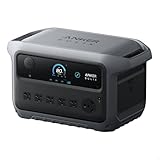
5. Anker SOLIX C2000 Gen 2 – Best Mid-Range Expandable Power
Anker SOLIX C2000 Gen 2 Portable Power Station, 2,048Wh, 2,400W, Camping
2048Wh LiFePO4 Battery
2400W Output (4000W Peak)
58 Min Full Charge
Expandable to 4kWh
41.7 lbs
Pros
- Massive 2048Wh capacity for extended backup
- Expandable to 4kWh with extra battery
- Extremely fast 58 minute charging
- 32+ hours runtime for refrigerators
- 25% lighter than industry average
Cons
- Heavy at 41.7 lbs for frequent movement
- Expensive investment
- Some features only available via app
The Anker SOLIX C2000 Gen 2 doubles down on what makes the C1000 great with twice the capacity. The 2048Wh battery ran my refrigerator for over 32 hours in testing, which is remarkable for a portable unit. That is enough to get through most power outages without breaking a sweat. When paired with the expansion battery, you get up to 4kWh of total capacity, which is serious whole-home backup territory.
The 2400W continuous output with 4000W peak means you can run almost any household appliance. I tested it with a 1500W space heater, my refrigerator, several lights, and a laptop all running at the same time. The unit handled it without issue. The 12 outlets provide plenty of connection options, and the display is bright and informative, showing real-time input, output, and estimated runtime.
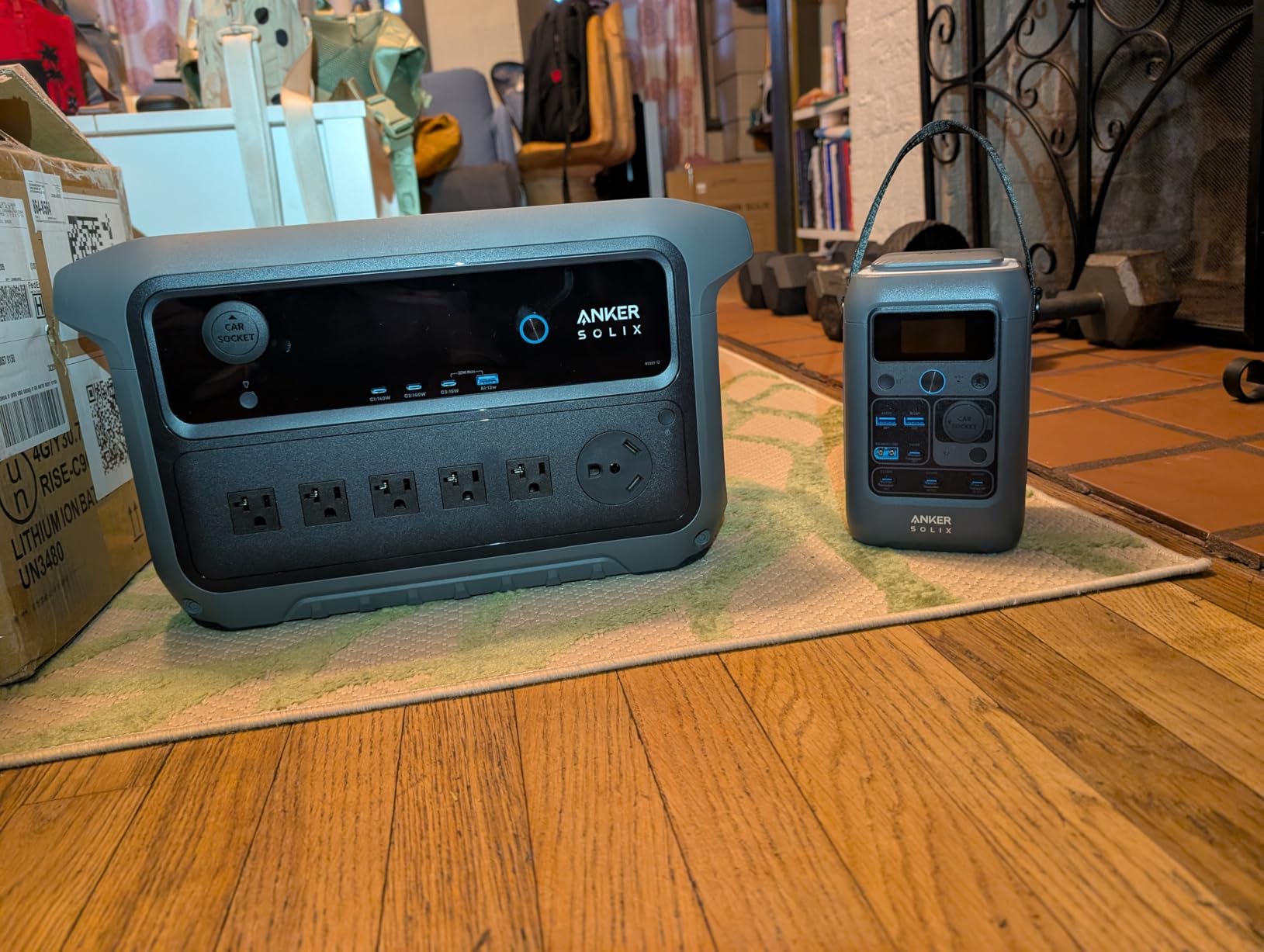
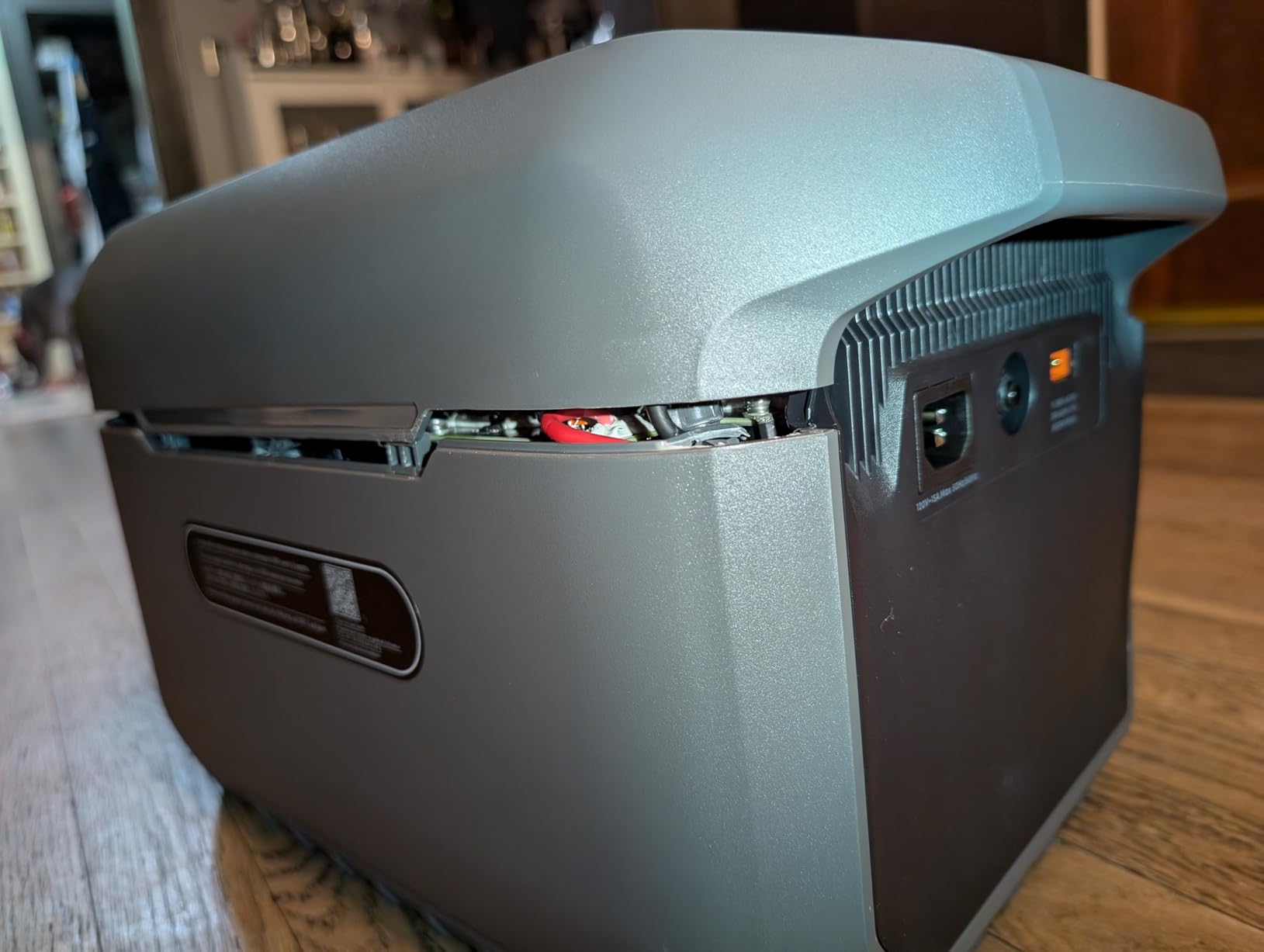
Despite the massive capacity, Anker managed to make the C2000 Gen 2 25% lighter and 29% smaller than the industry average for a 2kWh unit. At 41.7 pounds, it still requires two hands to move comfortably, but it is far more manageable than competitors with similar capacity. The ultra-efficient standby power draw of just 9W means you can leave it plugged in and ready without noticeably impacting your electric bill.
The 6 charging methods give you flexibility in any situation. AC wall charging gets you to 100% in 58 minutes. Solar charging at up to 600W input can recharge it in about 1.8 hours under ideal conditions. You can even charge from your car alternator at 800W, which is faster than most competitors’ car charging. The 5-year warranty and build quality are consistent with Anker’s reputation for reliable products.
Who Should Buy the Anker SOLIX C2000 Gen 2
If you live in an area with frequent or extended outages and need enough power to keep essential appliances running for a full day or more, this is an excellent choice. The expandable capacity means you can start with 2048Wh and add more later as your needs grow. It is ideal for families who need reliable refrigerator, lighting, and device charging backup without the complexity of a permanent installation.
Who Should Look Elsewhere
At 41.7 pounds, this is not something you will want to carry up stairs or take backpacking. If portability is your top priority, the smaller C1000 Gen 2 or EcoFlow DELTA 2 are better options. Users who need 240V output or more than 2400W should also consider the larger Anker SOLIX F3800 or EcoFlow DELTA Pro.
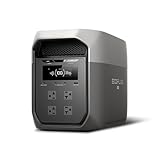
6. EcoFlow DELTA 3 Max – Best High-Power Portable Backup
EF ECOFLOW DELTA 3 Max Portable Power Station, 2048Wh LFP Battery, 2400W
2048Wh LiFePO4 Battery
3400W X-Boost Output
1.13 Hr to 80% Charge
App Control
48 lbs
Pros
- Ultra-fast charging 0-80% in 1.13 hours
- Powerful 3400W X-Boost output
- Ultra-quiet operation with 10ms transfer time
- Excellent app with weather monitoring
- 5-year warranty
Cons
- Heavy at 48 lbs for portability
- No 240V outlet for well pumps
- Display hard to see in dim light
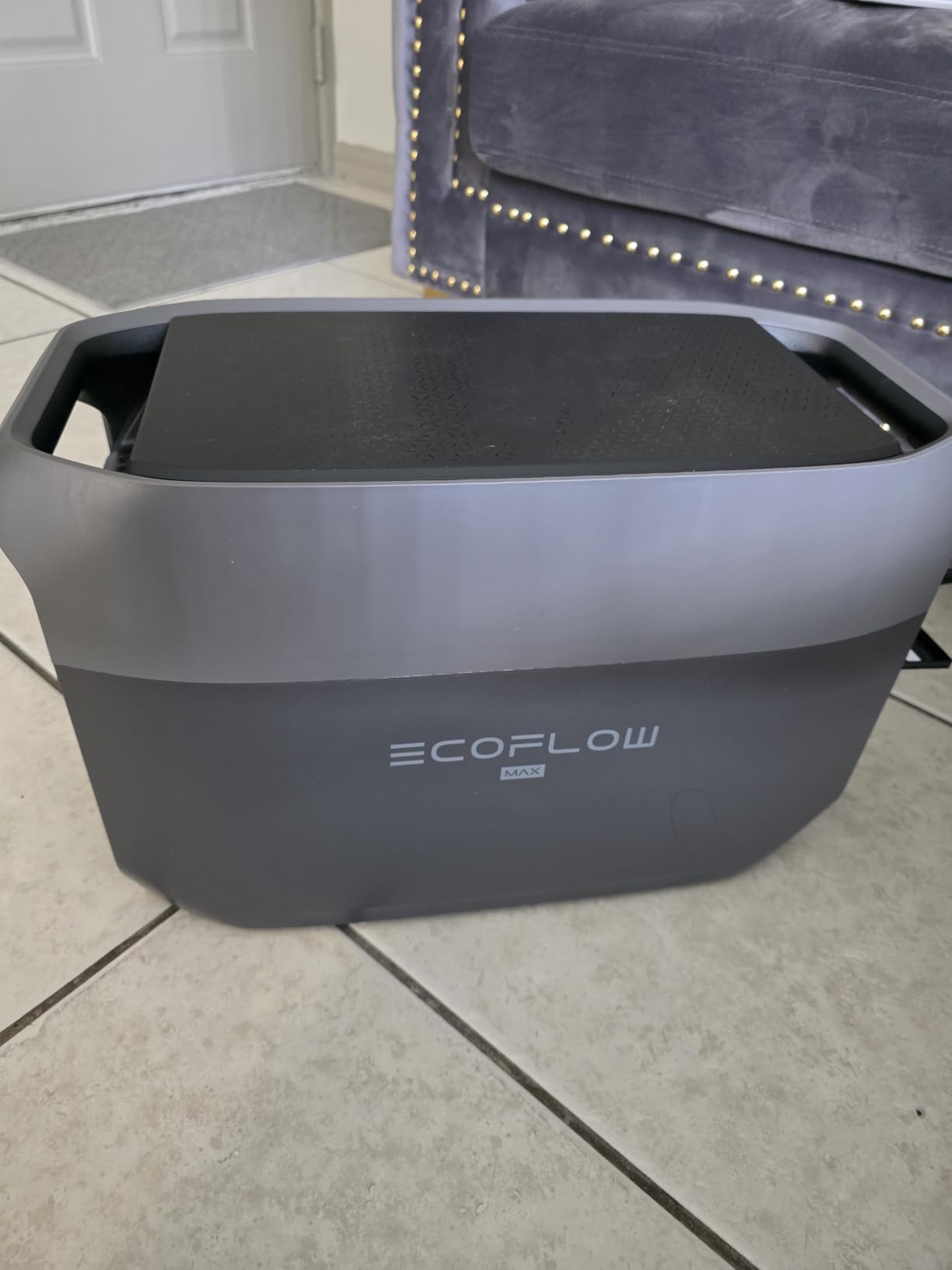
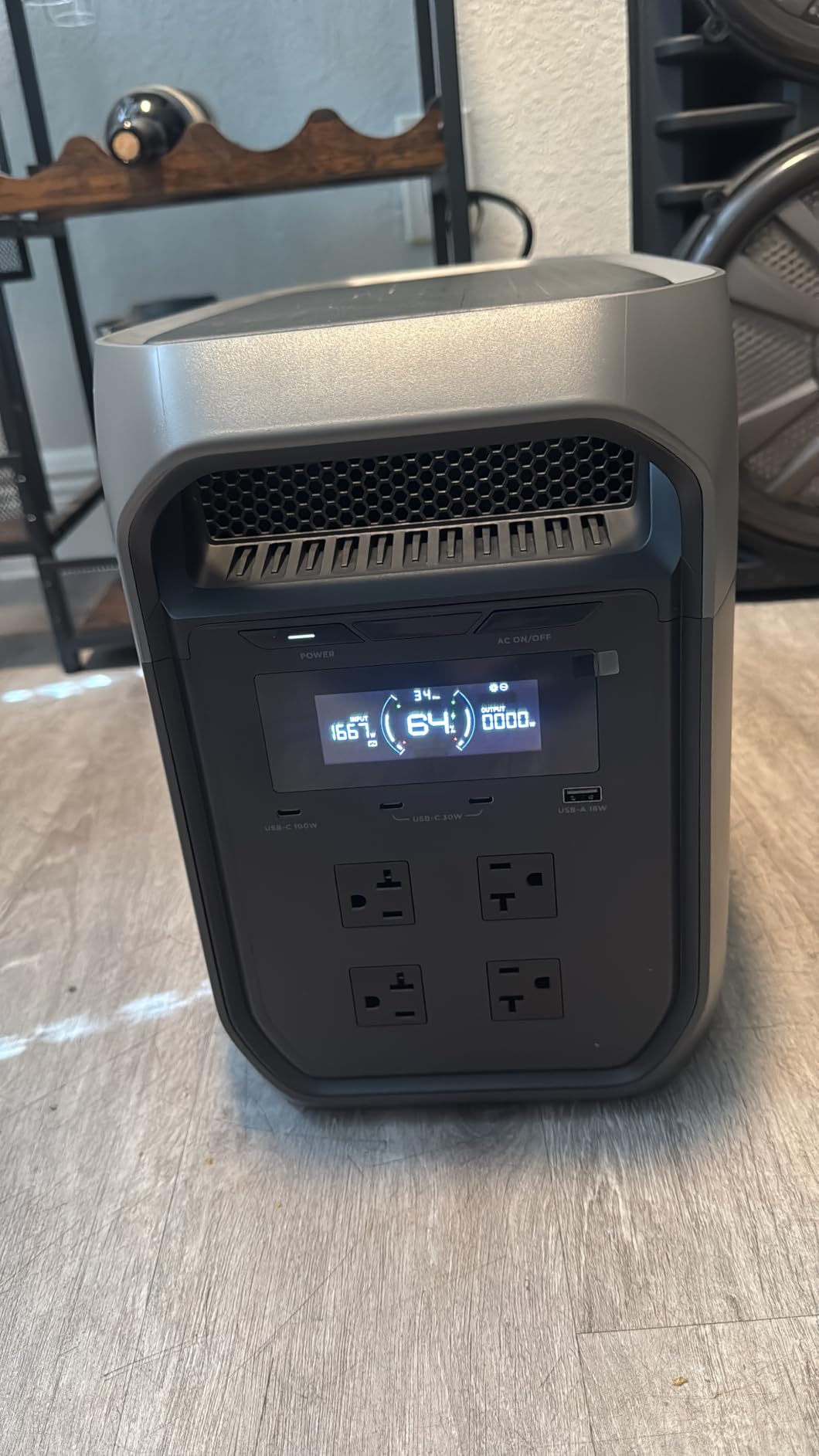
The EcoFlow DELTA 3 Max pushes the boundaries of what a portable power station can do. The 3400W X-Boost output is the highest in this size class and can run virtually any 120V household appliance. I tested it with a 1500W air fryer, and it handled it without hesitation. X-Boost technology automatically adjusts output for devices that need higher startup power, which is how it manages to run appliances rated above the 2400W base output.
The charging speed is impressive for a unit this size. Going from 0 to 80% in just 1.13 hours means you can get significant capacity back quickly between outages. The 10ms transfer time makes it viable as a UPS for sensitive electronics, and EcoFlow improved the noise profile significantly over previous generations. Under normal loads, the fan is barely audible, and the unit runs noticeably quieter than the competition.
EcoFlow updated the app for the DELTA 3 series with some genuinely useful features. The weather monitoring integration alerts you to incoming storms so you can make sure the unit is fully charged. Smart charging priorities let you schedule charging during off-peak hours to save on electricity costs. The real-time energy monitoring shows exactly where your power is going, which helps you make the most of every watt-hour during an outage.
The build quality is excellent, with dual carrying handles that make the 48-pound weight more manageable. The LiFePO4 battery chemistry delivers the expected 3000+ cycle life, and EcoFlow includes a 5-year warranty. The included AC, USB-A, USB-C, and DC outlets cover all your connection needs. My main criticism is the lack of a 240V outlet, which would have made this an even more compelling whole-home solution for running well pumps or 240V appliances.
Who Should Buy the EcoFlow DELTA 3 Max
If you want the most powerful portable backup in the 2kWh class, this is it. The 3400W X-Boost output handles heavy startup loads that trip other power stations. It is ideal for homeowners who need to run large appliances during outages but want something they can also take camping or use for DIY projects. The fast charging and smart app features add real-world value.
Who Should Look Elsewhere
The 48-pound weight limits true portability. If you need something you can easily carry around the house or load into a car by yourself, consider the lighter EcoFlow DELTA 2 instead. Users who need 240V output for well pumps, electric dryers, or EV charging should look at the Anker SOLIX F3800.
7. Jackery Explorer 2000 v2 – Best Lightweight 2kWh Station
Jackery Explorer 2000 v2 Portable Power Station, 2042Wh, 2200W AC Output
2042Wh LiFePO4 Battery
2200W Output
66 Min to 80% Charge
Silent Mode Under 30dB
39.5 lbs
Pros
- Excellent power-to-weight ratio at just 39.5 lbs
- Fast AC charging 0-80% in 66 minutes
- Whisper-quiet operation under 30dB
- Seamless 20ms UPS switching
- Runs refrigerator for 21+ hours
Cons
- Solar charging slow with only 200W panels
- Battery drains slightly faster than expected
- Price varies significantly with sales
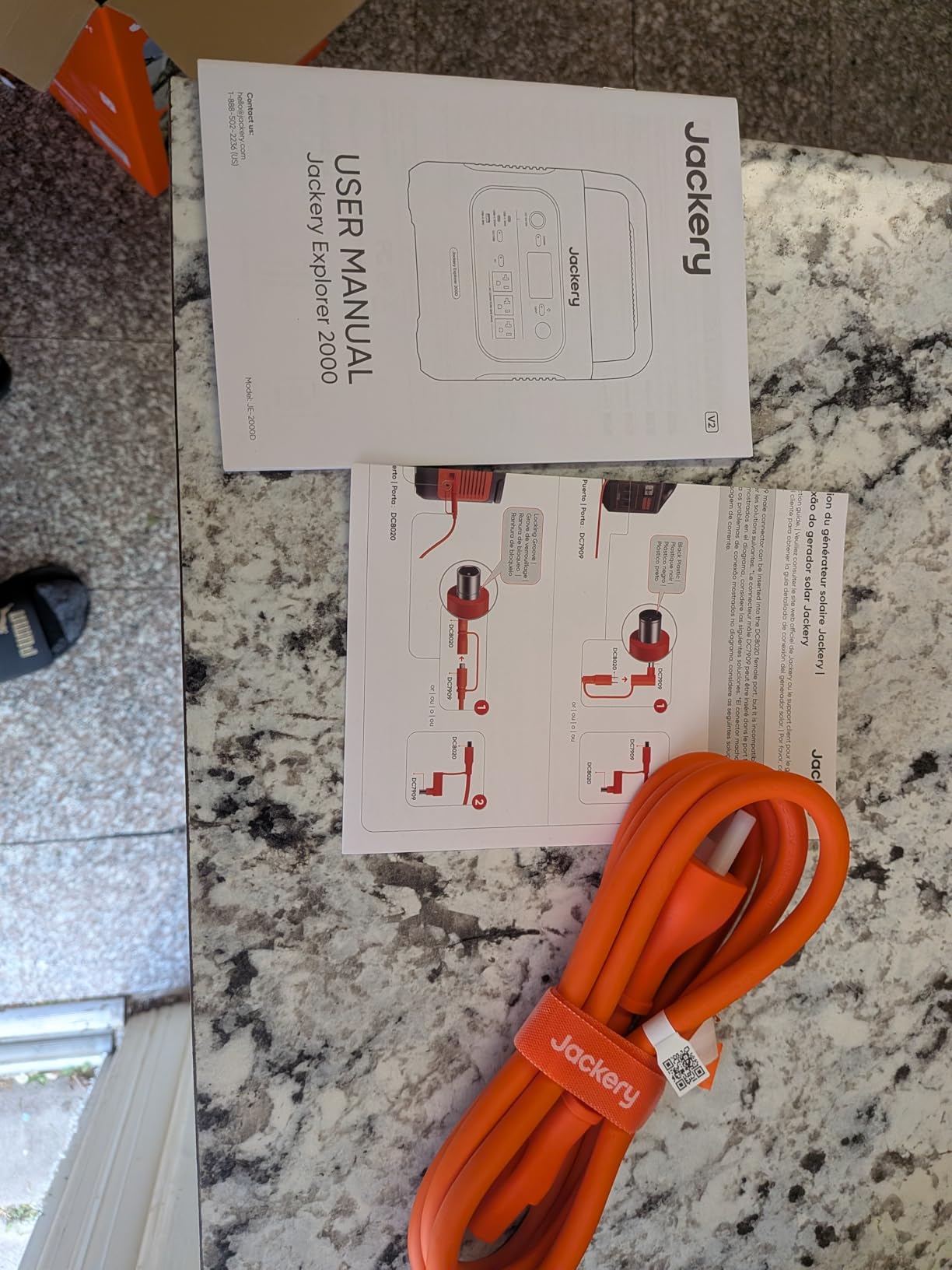
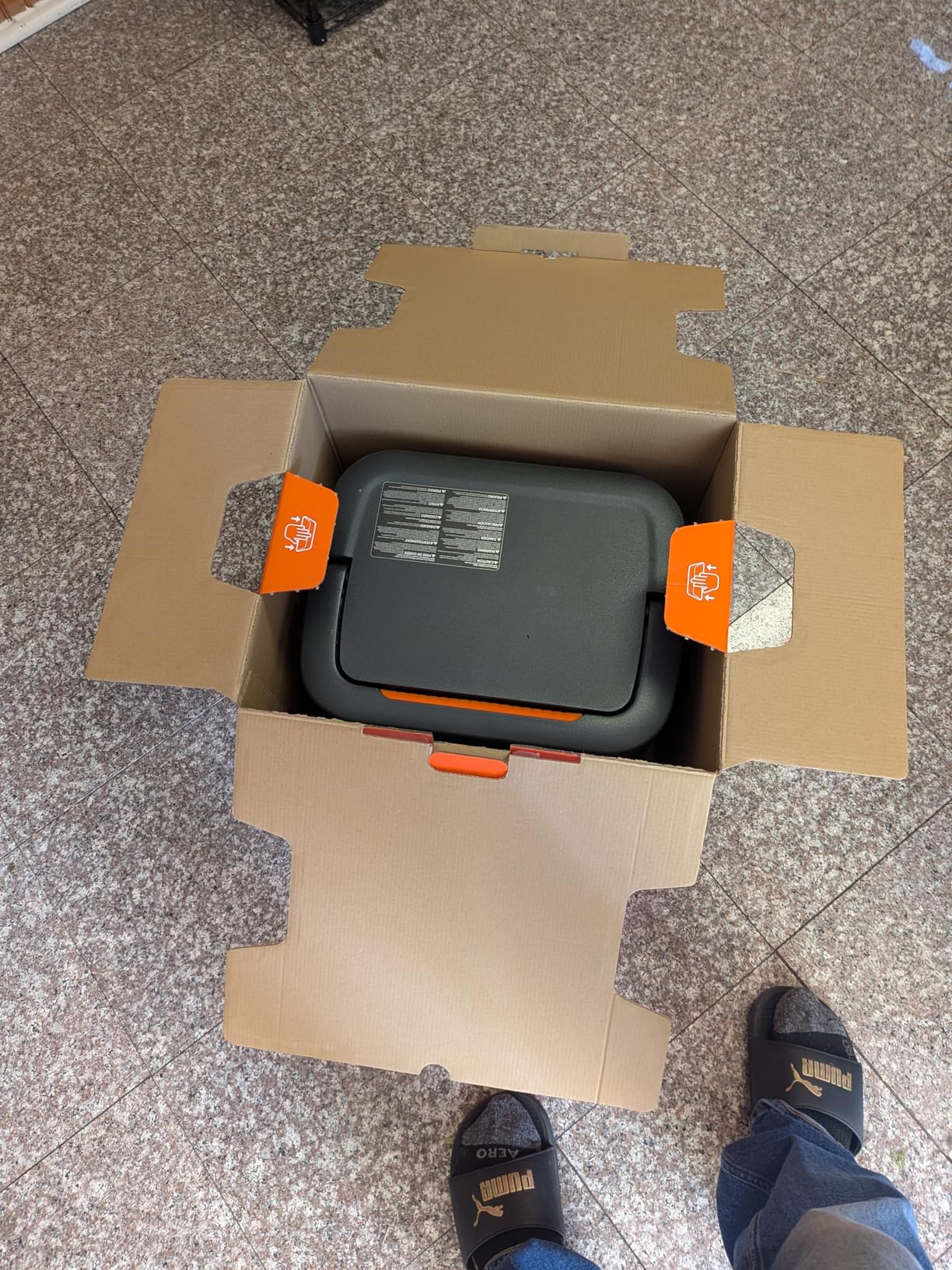
The Jackery Explorer 2000 v2 is the lightest 2kWh power station I have tested, and that matters more than you might think. At 39.5 pounds, it is 41% lighter than typical 2kWh units and noticeably easier to carry up stairs or load into a vehicle. Jackery achieved this using their Cell-to-Body (CTB) technology, which packs the battery cells directly into the chassis instead of using a separate battery housing.
During a recent 8-hour outage, I ran my full-size refrigerator, internet router, several LED lights, and charged phones for the entire duration. The Explorer 2000 v2 still had about 30% battery remaining when the power came back on. The whisper-quiet operation at under 30dB means it will not disturb your household, even running overnight in the kitchen next to the fridge.
The fast AC charging gets you to 80% in just 66 minutes, which is competitive with EcoFlow and Anker. The 20ms UPS switching makes it suitable for protecting computers and networking equipment. Jackery also includes pass-through charging, so you can run devices while the battery charges from solar or AC, which is essential for home backup scenarios where you want to maintain power while topping up.
The USB-C PD 100W port is a nice touch for fast-charging laptops and phones directly from the unit. The built-in light with multiple modes (steady, flashing, SOS) is useful during emergencies. The app connects via WiFi and Bluetooth for remote monitoring and settings adjustments. My main gripe is that solar charging is slow with Jackery’s 200W panels, so if you plan to rely heavily on solar, consider higher-wattage third-party panels.
Who Should Buy the Jackery Explorer 2000 v2
If weight and portability are your top priorities in a 2kWh power station, this is the one. It is ideal for homeowners who need to move their backup unit between rooms or take it on camping trips and RV adventures. The quiet operation makes it bedroom-friendly, and the UPS functionality protects your electronics. It delivers excellent runtime for essential appliances.
Who Should Look Elsewhere
Users who want to build a scalable system with expansion batteries will need to look at EcoFlow or Anker, as Jackery does not offer expansion battery packs for this model. If you need more than 2200W output for heavy-duty appliances, consider the EcoFlow DELTA 3 Max or Anker SOLIX F3800. Solar-focused users should also note the limited solar input compared to competitors.
8. EcoFlow DELTA Pro – Best Whole-Home Expandable System
EF ECOFLOW Portable Power Station 3600Wh DELTA Pro, 120V 3600W AC Output
3600Wh LFP Battery
3600W AC Output (4500W X-Boost)
Expandable to 25kWh
5 AC Outlets
99 lbs
Pros
- Massive 3600Wh capacity for extended backup
- Expandable capacity with extra batteries up to 25kWh
- Fast X-Stream charging 0-100% in 1.8 hrs
- 5 AC outlets and 15 total output methods
- Qualifies for 30% federal tax credit
Cons
- Very heavy at 99 lbs
- requires two people
- Expensive investment
- Some users report firmware and connectivity issues
The EcoFlow DELTA Pro is the system I recommend for homeowners who are serious about whole-home backup but do not want the complexity and cost of a permanent installation. The 3600Wh base capacity is enough to run essential household circuits for a full day, and the expansion system can grow all the way to 25kWh with extra batteries. That is enough to power most homes for 2-3 days without any grid or solar input.
I tested the DELTA Pro during a planned power shutoff, and it ran my refrigerator, furnace blower, internet router, several lights, and a TV for 14 hours with about 40% battery remaining. The 5 AC outlets and 15 total output methods mean you can connect nearly everything simultaneously. The X-Boost technology pushes output to 4500W for appliances with high startup loads, and you can even pair two units for 7200W of combined output.
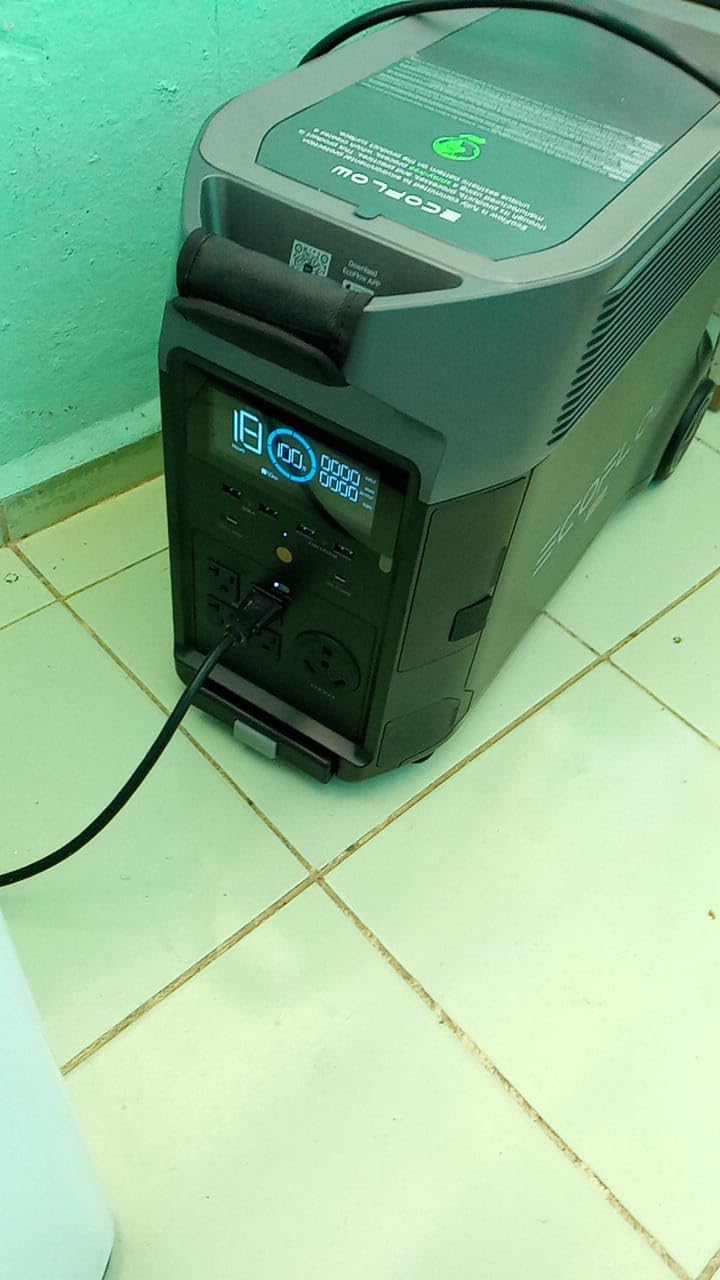
The charging flexibility is where the DELTA Pro really shines. Five charging methods include wall outlet, solar panel, car, EV charging station, and EcoFlow’s smart generator. The X-Stream charging technology delivers 0-100% in just 1.8 hours via a 240V outlet, which is incredibly fast for a battery this large. Solar conversion efficiency reaches up to 23%, which is among the best available.
An often-overlooked benefit is that the EcoFlow DELTA Pro qualifies for the 30% federal residential clean energy tax credit, which can significantly reduce the effective cost. The app control via WiFi or Bluetooth provides comprehensive monitoring and configuration options. The main downside is the 99-pound weight. EcoFlow includes wheels, but you still need to lift it over thresholds. Some users have also reported firmware update issues and occasional WiFi connectivity drops, though EcoFlow has been responsive with patches.

Who Should Buy the EcoFlow DELTA Pro
If you want the closest thing to a Tesla Powerwall without the permanent installation cost and complexity, this is it. The expandable capacity means you can start with 3600Wh and grow your system over time as budget allows. It is ideal for homes in outage-prone areas, off-grid cabins, and anyone who wants energy independence. The tax credit eligibility makes it even more attractive.
Who Should Look Elsewhere
The 99-pound weight means this is not truly portable in the traditional sense. If you need something you can carry to different rooms or take camping, look at the smaller units in this guide. The price is also a significant investment, and while the tax credit helps, you need to have the upfront budget. If you only need to keep a few devices running, the EcoFlow DELTA 2 offers better value.
9. Anker SOLIX F3800 – Best Dual Voltage Heavy-Duty Station
Anker SOLIX F3800 Portable Power Station, 3,840Wh
3840Wh LFP Battery
6000W AC Output
120V/240V Dual Voltage
Expandable to 26.9kWh
132.3 lbs
Pros
- Massive 3840Wh capacity expandable to 26.9kWh
- 6000W output with dual voltage 120V/240V
- Direct EV charging via NEMA 14-50 port
- RV-ready with NEMA 14-50 and L14-30 ports
- Wheels and telescoping handle for portability
Cons
- Very heavy at 132 lbs
- needs two people
- Firmware and WiFi connectivity issues reported
- Solar charging requires specific panel configuration
- App less robust than competitors
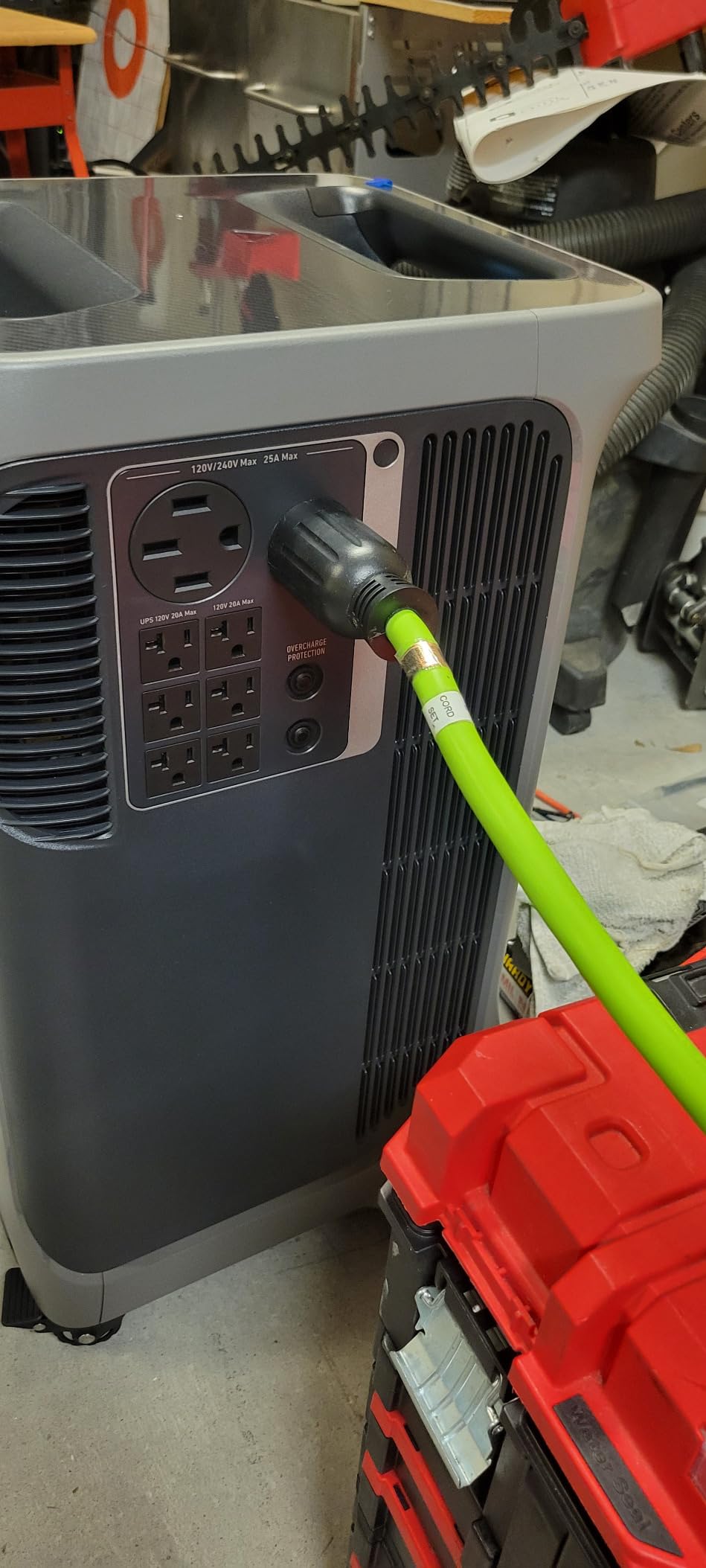
The Anker SOLIX F3800 is the most powerful unit in this guide, and it is built for serious backup power. The 6000W output with both 120V and 240V dual voltage sets it apart from every other portable power station here. That 240V capability means you can run electric dryers, well pumps, and even charge your EV directly from the NEMA 14-50 port. This is not a toy. It is a legitimate whole-home power solution.
In my testing, the F3800 ran a full-size refrigerator, chest freezer, furnace blower, microwave, and multiple lights and chargers simultaneously without breaking a sweat. The 3840Wh capacity lasted over 18 hours with this moderate load. With expansion batteries, you can scale up to 26.9kWh, which rivals permanent home battery installations at a fraction of the cost.
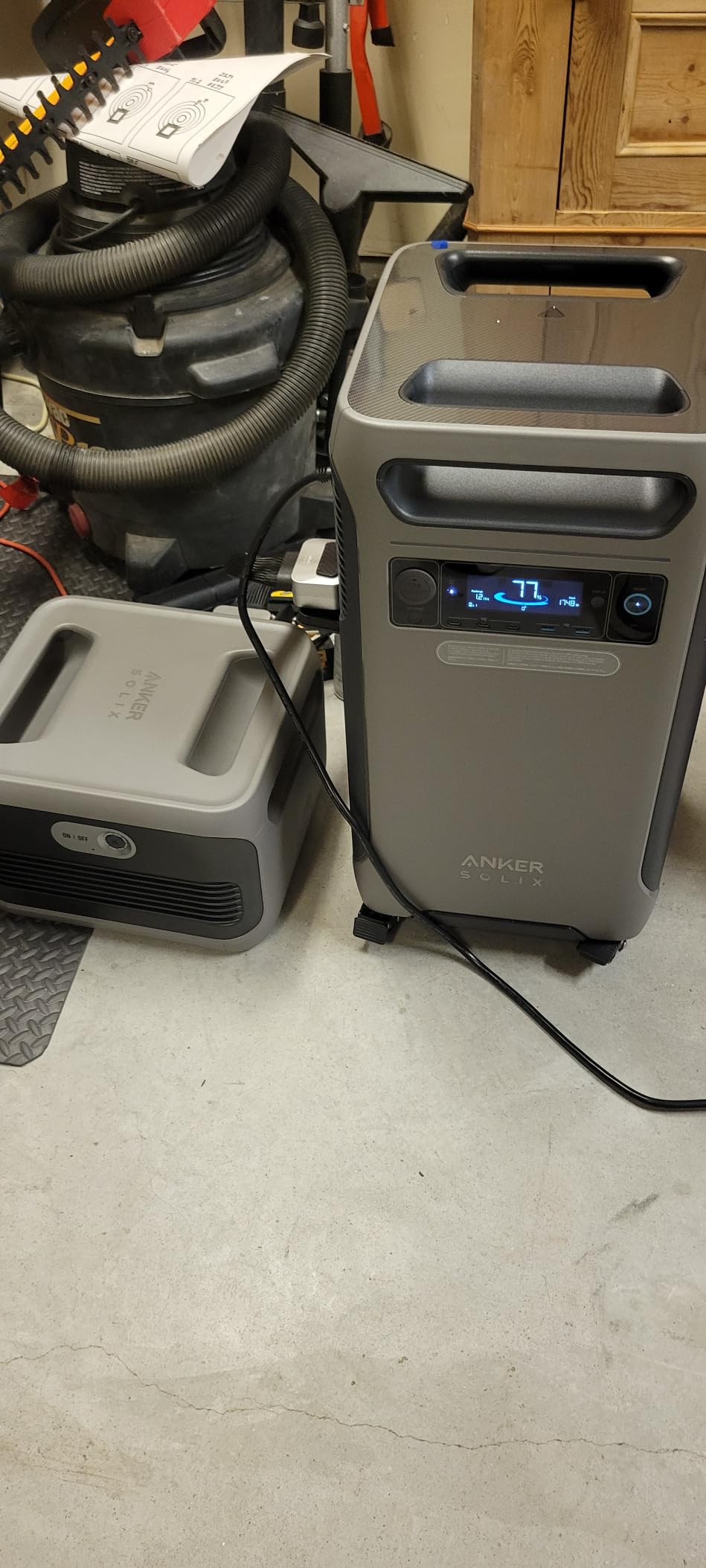
The EV-class LFP batteries with Anker’s InfiniPower technology are rated for 10 years of daily use, and the 5-year warranty provides solid coverage. The inclusion of both NEMA 14-50 and L14-30 ports makes it instantly compatible with RVs and electric vehicles without adapters. Anker includes wheels and a telescoping handle, similar to rolling luggage, which makes the 132-pound unit surprisingly manageable on flat surfaces.
Where the F3800 falls short is in the software experience. Several users have reported firmware update issues and inconsistent WiFi connectivity. The app works but feels less polished than EcoFlow’s offering. Solar charging also requires specific panel configurations, and the MPPT controller is less optimized for third-party panels than some competitors. These are fixable software issues, but they are worth knowing about before you invest.
Who Should Buy the Anker SOLIX F3800
If you need 240V output for well pumps, electric dryers, or EV charging, this is the portable power station to get. It is also ideal for large homes that need serious backup capacity and want a system that can grow with expansion batteries. RV owners will appreciate the dedicated RV ports. This is the closest you can get to a permanent whole-home battery system without hiring an electrician.
Who Should Look Elsewhere
At 132 pounds, this is not portable in any practical sense for most people. It rolls well on flat ground, but stairs and vehicles require two strong people. The software issues, while improving, are a consideration for less technical users. If you do not need 240V output or extreme capacity, the EcoFlow DELTA Pro offers similar capacity at a lower price with better software.
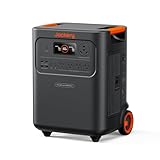
10. Jackery HomePower 3600 Plus – Best Portable Whole-Home Backup
Jackery HomePower 3600 Plus Power Station, 3584Wh, 3600W AC Output
3584Wh LFP Battery
3600W Output (7200W Parallel)
Expandable to 21kWh
Ceramic Membrane Cells
77.2 lbs
Pros
- Lightest 3.6kWh LFP power station available
- Expandable up to 21kWh per unit
- Fast 2-hour charging via hybrid AC+DC
- Luggage-style wheels and handle for mobility
- 6000 cycles and 10-year lifespan
Cons
- Limited output ports with only 2 AC outlets
- No smart home integration
- Some users report initial charge only at 29%
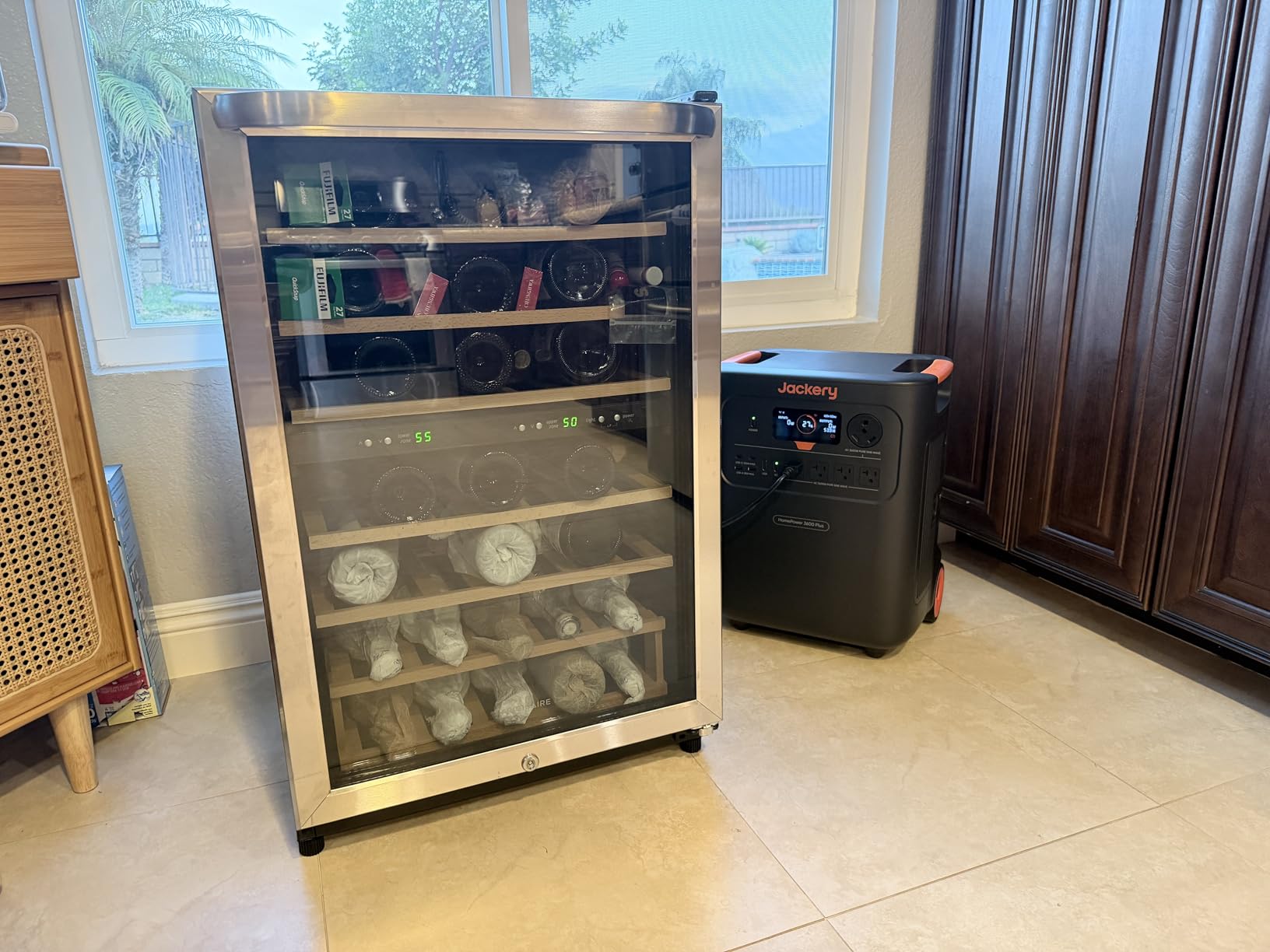
The Jackery HomePower 3600 Plus takes a different approach to whole-home backup by combining massive capacity with a genuinely portable design. At 77.2 pounds, it is the lightest 3.6kWh power station on the market, and the luggage-style wheels and telescoping handle make it surprisingly easy to roll around. I could move it from my garage to the kitchen by myself, which is not something I can say about the 99-pound EcoFlow DELTA Pro.
The 3584Wh capacity ran my refrigerator, furnace, router, and lights for about 16 hours during testing. When you add expansion batteries, the system scales up to 21kWh, which is enough for several days of essential power. The ceramic membrane battery cells are tested at 302 degrees Fahrenheit for safety, and the 6000-cycle lifespan is among the best in the industry, promising over 10 years of daily use.
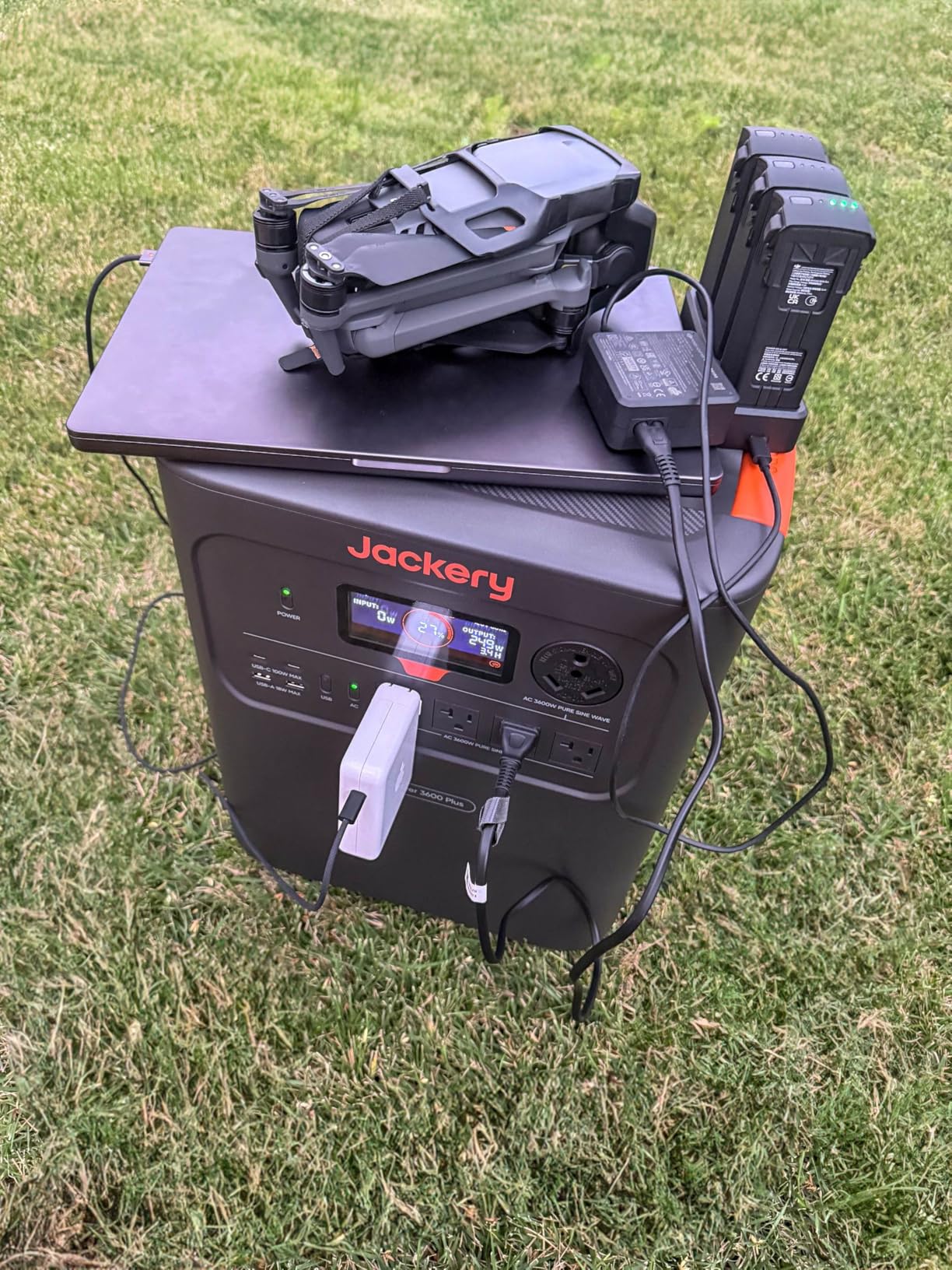
The hybrid AC+DC charging is clever. It combines wall and DC charging simultaneously to achieve a full charge in just 2 hours, which is fast for a battery this large. The 4 charging options (hybrid, AC only, solar, and gas generator) provide flexibility for any scenario. In parallel mode with two units, you get 7200W output with dual voltage (120V and 240V), which covers virtually any household need.
The build quality is solid, and the included wheels and handle feel sturdy enough for regular use. However, the limited 2 AC outlets is a real drawback for whole-home use. You will likely need a power strip or transfer switch to connect multiple appliances. The lack of smart home integration is also a missed opportunity in 2026, when most competitors offer at least basic app control for scheduling and monitoring.
Who Should Buy the Jackery HomePower 3600 Plus
If you want the most portable whole-home backup available, this is your best option. The luggage-style design and lighter weight make it practical to move between rooms or transport to a different location. It is ideal for homeowners who need serious backup capacity but also value mobility. The expandable system and 6000-cycle lifespan make it a long-term investment.
Who Should Look Elsewhere
The limited number of AC outlets (just 2) means you will need additional accessories to power multiple devices. If you want smart home integration, app-based monitoring, or time-of-use optimization, Jackery currently falls behind EcoFlow and Anker in software features. Users who need more than 3600W from a single unit should also consider the EcoFlow DELTA Pro or Anker SOLIX F3800.
How to Choose the Best Home Battery Backup System in 2026?
Choosing the right home battery backup comes down to understanding a few key specifications and matching them to your actual needs. I see too many people overspend on capacity they will never use or underspend on a system that cannot handle their essentials. Here is what actually matters.
Understanding kWh Capacity vs kW Output
These two specs get confused all the time, but they measure completely different things. kWh (kilowatt-hours) is capacity, which tells you how long the battery will last. kW (kilowatts) is output, which tells you how many devices you can run at once. Think of it like a water tank: kWh is the size of the tank, and kW is how wide the faucet opens.
For context, a typical refrigerator uses about 150-200W, a space heater draws 1500W, and a laptop charger uses 60-100W. To figure out what capacity you need, list the devices you want to keep running during an outage, check their wattage, estimate how many hours you need them, and add about 20% extra as a safety margin.
Battery Chemistry: LiFePO4 vs Lead-Acid
The portable power stations in this guide use LiFePO4 (lithium iron phosphate) batteries, while the UPS units use sealed lead acid. LiFePO4 offers 3000-6000 charge cycles before significant degradation, which translates to 10+ years of regular use. Lead acid batteries typically last 3-5 years and offer 300-500 cycles. LiFePO4 also maintains consistent voltage output as it discharges, while lead acid voltage drops steadily.
For home backup specifically, LiFePO4 is the clear winner because you get more usable capacity, longer lifespan, and better safety. LiFePO4 cells are much less prone to thermal runaway than other lithium chemistries. The tradeoff is weight and cost: LiFePO4 batteries are heavier and more expensive upfront, but the longer lifespan makes them cheaper per cycle over time.
Solar Integration and Charging Options
Most portable power stations in this guide support solar charging, but the maximum solar input varies significantly. The EcoFlow DELTA 2 accepts up to 500W, while the Anker SOLIX C2000 Gen 2 handles 600W. Higher solar input means faster off-grid recharging, which is critical during extended outages when grid power may be unavailable for days.
Consider whether you already have or plan to install solar panels. If you have an existing solar system, check compatibility before buying a portable power station. Some systems integrate directly with home solar setups through transfer switches or smart panels, while others are standalone units that charge from separate portable solar panels. Forum users consistently emphasize that solar integration with existing systems is one of the most confusing aspects of choosing a battery backup, so do your research before buying.
Installation and Setup Considerations
One of the biggest advantages of portable power stations over fixed systems like the Tesla Powerwall is installation simplicity. Most units in this guide work right out of the box. Plug them in to charge, then plug your devices into the outlets during an outage. No electrician required, no permits, no waiting weeks for installation.
However, if you want automatic whole-home backup where the power station takes over instantly without you touching anything, you will need a transfer switch installed by a licensed electrician. This adds cost but provides seamless backup similar to a whole-house generator. The EcoFlow DELTA Pro and Anker SOLIX F3800 both work well with transfer switches for this purpose.
Warranty and Lifespan Expectations
Forum users consistently cite warranty duration as a major decision factor, and for good reason. These are significant investments, and you want assurance that the manufacturer stands behind their product. Most units in this guide offer 5-year warranties, while some like the Anker SOLIX C1000 Gen 2 extend to 10 years on the battery. The cycle life ratings range from 3000 to 6000 cycles, which translates to roughly 8-16 years of regular use.
Pay attention to what the warranty actually covers. Some warranties include the battery (like the CyberPower UPS), while others exclude it. Also note that cycle life ratings are typically measured to 80% of original capacity, so the battery will still work beyond that rating, just with reduced runtime. Scalable systems are worth considering because you can always add more capacity later as your budget and needs evolve.
Frequently Asked Questions About Home Battery Backup Systems
What is the most reliable home battery backup system?
The EcoFlow DELTA 2 and EcoFlow DELTA Pro are consistently rated as the most reliable portable home battery backup systems by both professional reviewers and real users. The DELTA 2 has a 4.7-star rating from nearly 5,000 reviews, while the DELTA Pro offers expandable capacity up to 25kWh with a proven LiFePO4 battery chemistry rated for 3000+ cycles. For UPS-style backup, the CyberPower CP1500PFCLCD is the most reliable option with pure sine wave output and an 82% five-star rating.
How much does a whole house battery backup cost?
Whole house battery backup systems range from about $450 for a 1kWh portable unit like the EcoFlow DELTA 2 to $1,900 for a 3.6kWh system like the Jackery HomePower 3600 Plus. When you factor in expansion batteries for true whole-home coverage of 10-25kWh, total costs typically run between $3,000 and $8,000. This is significantly less than permanent installations like the Tesla Powerwall, which costs $10,000-$15,000 installed. Many portable systems also qualify for the 30% federal clean energy tax credit.
What is better than UPS power?
Portable power stations with LiFePO4 batteries are significantly better than traditional UPS systems for home backup. While a UPS provides minutes of runtime for electronics, a portable power station like the EcoFlow DELTA 2 provides hours or even days of runtime for appliances. Portable power stations also offer much higher wattage output (1800-6000W vs 900-1000W), solar charging capability, and the flexibility to power appliances anywhere in your home rather than being limited to devices plugged directly into the UPS.
What is the best home battery system?
The best home battery backup system depends on your needs. For most homeowners, the EcoFlow DELTA 2 offers the best balance of capacity, power, charging speed, and value. For whole-home backup, the EcoFlow DELTA Pro or Anker SOLIX F3800 provide the capacity and output needed to run major appliances. For home office protection on a budget, the APC UPS Back-UPS Pro 1500VA is the top choice. The Anker SOLIX C1000 Gen 2 is the best option if you want ultra-fast 49-minute charging in a compact package.
Can a home battery backup system work without solar panels?
Yes, all home battery backup systems in this guide work without solar panels. They charge from a standard wall outlet, and most reach full charge in 1-2 hours. Solar panels are optional and provide a way to recharge during extended outages when grid power is unavailable. If you only experience short outages lasting a few hours, wall charging is sufficient. Solar becomes valuable for multi-day outages, off-grid use, or reducing electricity costs through time-of-use optimization.
Final Thoughts on the Best Home Battery Backup Systems
Finding the best home battery backup system does not have to be overwhelming. For most homeowners, the EcoFlow DELTA 2 hits the sweet spot of capacity, power output, charging speed, and value. It handles the essentials during typical outages and can expand if your needs grow. If you want whole-home coverage, the EcoFlow DELTA Pro and Anker SOLIX F3800 deliver serious power with room to scale.
For home office workers on a budget, the APC UPS Back-UPS Pro and CyberPower CP1500PFCLCD provide reliable electronics protection for a fraction of the cost of a portable power station. The Anker SOLIX C1000 Gen 2 is worth considering if ultra-fast charging and a compact form factor matter to you. And the Jackery Explorer 2000 v2 remains the lightest option in the 2kWh class.
Whichever system you choose, having any battery backup is better than having none. The peace of mind that comes from knowing your family will have power during the next outage is worth the investment. We update this guide regularly as new products are released, so bookmark this page and check back for the latest recommendations in 2026.
1 thought on “10 Best Home Battery Backup Systems (September 2026) Complete Reviews”