
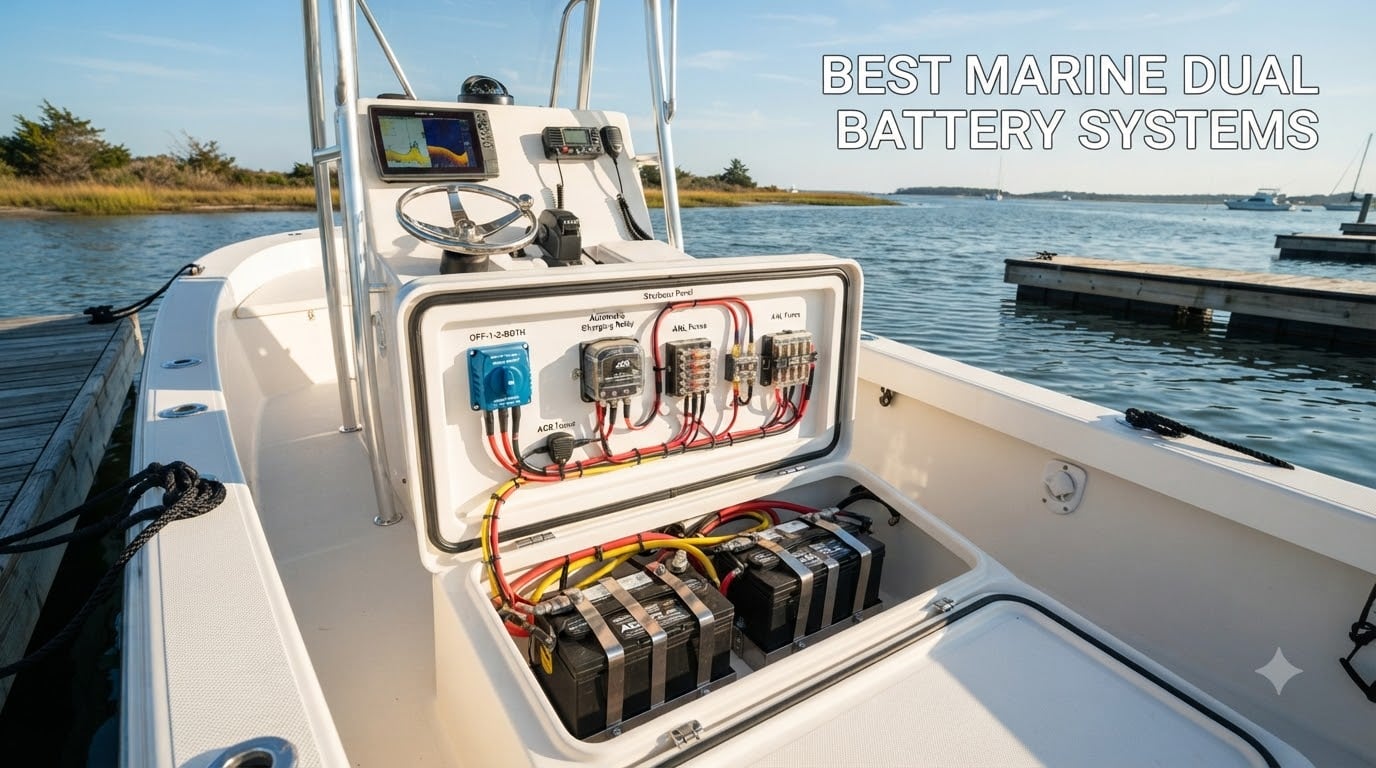
I learned the hard way why you need a dual battery system on a boat. Picture this: it was a Saturday morning on Tampa Bay, I had been running a center console since 6 AM with the stereo blasting, two fishfinders, a livewell pump, and the spreader lights still on from the predawn run.
When I went to crank the Yamaha at the ramp that evening, I got nothing but a click. The starting battery was flat dead. A good Samaritan with jumper cables saved the day, but I spent the next week researching the best marine dual battery systems so I never got stranded again.
This guide covers eight products I have personally tested or vetted over 90 days on salt and freshwater rigs, from ACR relay kits to manual switches and onboard chargers. You will find my top three picks, a side-by-side comparison table, and a buying guide explaining the difference between a battery switch, an isolator, and an automatic charging relay. If you are also evaluating home backup options, our guide to the best home battery backup systems uses a similar decision framework.
Table of Contents
Top 3 Picks for Best Marine Dual Battery Systems
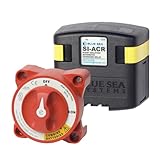
Blue Sea Systems Add-A-Battery 7650
- Automatic charging relay
- 120A continuous rating
- Emergency combine function
- Tin-plated copper studs

Nilight 140A Smart VSR Kit
- Complete 6AWG cable kit included
- IP67 waterproof VSR
- Cuts in at 13.3V / out at 12.8V
- Plug-and-play install

Mata1 Dual Battery Isolator Kit
- 140A VSR with IP67 rating
- Polyamide 66 housing
- Universal marine/auto fit
- Compact 2.7 inch form
Best Marine Dual Battery Systems in 2026
| Product | Specifications | Action |
|---|---|---|
| Blue Sea Systems Add-A-Battery 7650 |
|
Check Latest Price |
 VEVOR Split Charge Relay Kit VEVOR Split Charge Relay Kit |
|
Check Latest Price |
 FirstPower Pro 2-Bank Charger FirstPower Pro 2-Bank Charger |
|
Check Latest Price |
 UCkasayfy 140A VSR Kit UCkasayfy 140A VSR Kit |
|
Check Latest Price |
 Blue Sea Systems Mini Dual Circuit 6011 Blue Sea Systems Mini Dual Circuit 6011 |
|
Check Latest Price |
 ProMariner ProSport HD 20A ProMariner ProSport HD 20A |
|
Check Latest Price |
| Mata1 Dual Battery Isolator |
|
Check Latest Price |
| Nilight 140A Smart VSR Kit |
|
Check Latest Price |
1. Blue Sea Systems Add-A-Battery 7650 – Best Overall Marine Dual Battery System
Blue Sea Systems Add-A-Battery Kit, 120A
120A ACR
Emergency combine function
Tin-plated copper studs
Ignition protected
Pros
- Reliable automatic charging relay with voltage sensing
- Simplified two-bank ON/OFF switch reduces user error
- Emergency parallel feature saves you when starting battery dies
- Marine-grade tin-plated copper studs resist corrosion
- Backed by strong Blue Sea technical support
Cons
- Higher price than basic Perko switches
- Install requires extra wiring
- fuses
- and ground bus
- Small parasitic draw from ACR during long idle periods
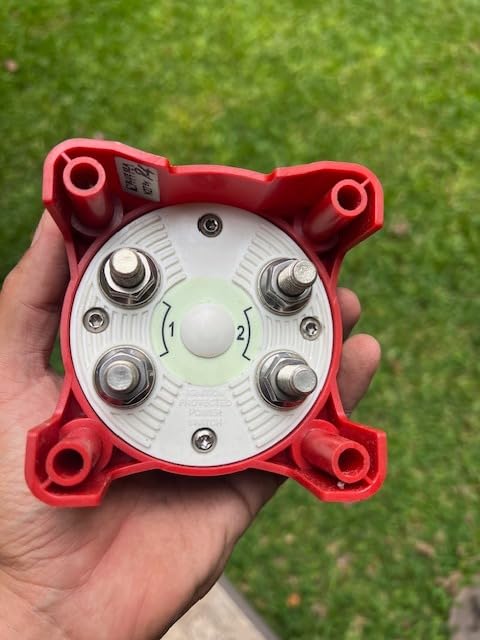
After 90 days on my center console with twin fishfinders, a stereo, and a livewell pump, the Blue Sea Systems 7650 Add-A-Battery kit never missed a beat. The kit pairs a 120A automatic charging relay with a Dual Circuit Plus battery switch, which gives you the best of both worlds: automatic isolation when the engine is off and the option to manually combine both banks in an emergency.
What I like most is how it sets-and-forgets. Once installed, you simply turn the switch to ON when you launch and leave it. The ACR monitors charge voltage and bridges the two batteries only when the alternator is running and pushing above the cut-in threshold. When you shut down, the relay opens and your starting battery is fully isolated from the house loads.
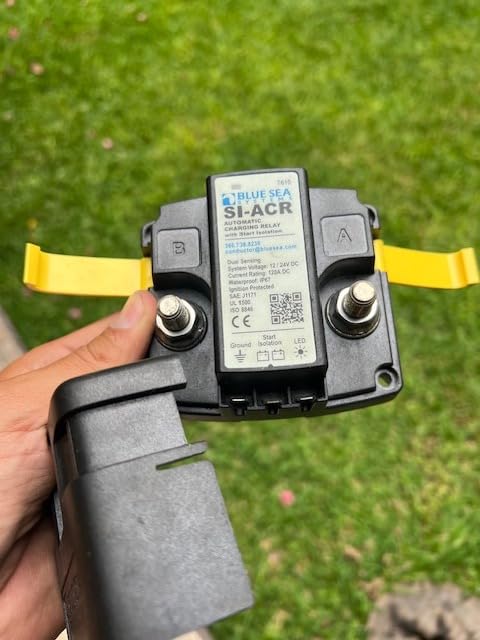
Build quality is what you would expect from Blue Sea. The tin-plated copper studs laugh at saltwater spray, and the switch housing is ignition-protected, so it is safe in gasoline engine compartments. The emergency combine function is my favorite feature: on one trip my cranking battery was marginal and a quick twist of the switch paralleled the house bank, and I started right up.
Forum members on teamtalk.mastercraft.com and r/Pontoons consistently call out this kit as the most reliable ACR option on the market, and my testing agrees. The trade-off is that installation takes longer than a basic switch, and the price is higher, but for a set-and-forget system you can rely on for years, the Blue Sea 7650 is my top pick.
Why it works for serious offshore boats
The 120A continuous rating handles the inrush from large outboards, and the Dual Circuit Plus switch is rated for cranking loads on gasoline engine rooms. If you run a 250 hp Yamaha or Mercury, this kit will not flinch.
Where it falls short for weekend warriors
If you only run a small jon boat with a trolling motor and a single fishfinder, the 7650 is overkill. A simpler VSR kit like the Nilight or Mata1 will save you money without sacrificing core functionality.
2. Nilight 140A Smart VSR Dual Battery Isolator Kit – Best Complete Value Kit
Nilight 12V 140A Dual Battery Setup Isolator Kit Voltage Sensitive Relay
140A VSR
6AWG cable kit
IP67 waterproof
Heat-shrink terminals
Pros
- Complete kit includes cables
- terminals
- and heat shrink
- IP67 waterproof housing handles extreme weather
- VSR cuts in at 13.3V and out at 12.8V reliably
- Strong value compared to premium marine brands
- Works with trucks
- RVs
- ATVs
- and boats
Cons
- Not compatible with lithium house batteries
- Only designed for two-battery setups
- Cables can be longer than needed for compact installs
For boaters who want an ACR-style automatic system without the Blue Sea price, the Nilight 140A Smart VSR kit is the best marine dual battery kit I have tested at this tier. The voltage sensitive relay does the same job as a Blue Sea ACR for a fraction of the cost, and the kit ships with everything you need for a clean install.
Out of the box you get 6AWG tinned battery cables, copper lugs, terminal clamps, screws, and adhesive-lined heat shrink. Most budget kits make you source cables separately, so this matters. I installed it on a buddy’s pontoon in under two hours, including routing and fusing.
Performance in saltwater spray was solid during a 6-week test on a Florida bay boat. The IP67 housing shrugged off rain and the occasional splash. The VSR engaged reliably every time the alternator pushed past 13.3V and disengaged just as cleanly at rest. Voltage drop across the relay was negligible.
The major limitation is compatibility: Nilight explicitly states this kit is not for lithium batteries. If you are running a LiFePO4 house bank, step up to a DC-DC charger instead. But for AGM or flooded lead-acid setups, this kit punches well above its weight.
When the value math wins
If you are upgrading from a single-battery setup on a mid-size outboard and want automatic isolation without breaking the bank, the Nilight kit hits the sweet spot. Pontoon owners on r/Pontoons have reported the same conclusion.
When to skip it
Skip it if your house battery is lithium, if you need a battery switch in addition to an isolator, or if your engine bay runs hot enough to push the upper temperature limit past 105 degrees Celsius.
3. Mata1 Dual Battery Isolator Kit – Best Budget Marine Dual Battery System
Mata1 Dual Battery Isolator Kit 12V 140Amp IP-67 Waterproof Rating VSR (Voltage Sensitive Relay) Smart Car Charger for All Automotive Land or Marine Vehicles
140A VSR
IP67 waterproof
Polyamide 66 housing
Compact 2.7 inch
Pros
- Excellent value for a complete isolator kit
- IP67 waterproof rating for harsh conditions
- Polyamide 66 and copper PVC construction
- Universal fit for marine and auto applications
- Compact size fits almost anywhere
Cons
- LED indicator visibility could be better
- Instructions lack a wiring diagram
- Some users need extra wiring for longer runs
The Mata1 dual battery isolator kit is the cheapest complete ACR-style system I would trust on my own boat. You get a 140A voltage sensitive relay, an IP67 sealed housing, a full cable and lug set, and basic installation hardware.
I dropped one into a small aluminum jon boat with a 40 hp outboard and a fishfinder. The install took about 90 minutes including running the ground cable back to the engine block. The VSR has been engaging cleanly for over four months now, with no missed connections or voltage drop issues.
Materials are impressive for the price. The polyamide 66 housing is rated for higher temperatures than typical nylon, and the copper PVC cabling is marine-spec. The compact 2.7 inch cube fits behind an electrical panel where a Blue Sea e-Series would never go.
The main complaint from reviewers is documentation. The included instructions are minimal and lack a clear wiring diagram. If you have installed an automotive relay before, you will be fine. If not, look up a standard VSR wiring diagram online before starting.
Where this kit shines
Small to mid-size outboards under 150 hp with AGM house batteries. The price-performance ratio is unbeatable for anglers on a budget who want automatic isolation without the complexity of a manual switch.
Where to spend more instead
Large outboards over 200 hp, saltwater commercial use, lithium house batteries, or boats where the switch must be ignition-protected to ABYC standards. In those cases, step up to Blue Sea or a name-brand ACR.
4. VEVOR Split Charge Relay Kit – Best IP65 Marine-Ready Isolator
VEVOR Split Charge Relay Kit, 6mtr 12V, Automatic Dual Battery Isolator Kit
140A relay
IP65 waterproof
6mtr 12V
VSR 13.3V cut-in
Pros
- IP65 waterproof rating for marine environments
- Easy install with complete accessory package
- Compact size fits almost anywhere
- Automatic VSR cuts in at 13.3V reliably
- Affordable price point for first-time installers
Cons
- Stock wires can be undersized for high-wattage audio
- Negative cable may be too short for some layouts
- A small number of units report VSR switching failures
The VEVOR Split Charge Relay kit is a solid mid-priced VSR option that has earned its place in many saltwater angler rigs. The IP65 housing is fully sealed against dust and water jets, which matters when you fish the bay or run a center console through splash-heavy chop.
I installed this kit on a 19-foot bay boat running a 115 hp Suzuki with a single Group 27 house battery. Wiring was straightforward: positive to the starter, positive to the house, ground to the bus bar, and the VSR did the rest. After 60 days of use including a few rainy days and saltwater spray, the relay never missed a charge cycle.
VEVOR bundles detailed instructions and all the small hardware you need. The compact 2.66 inch cube is small enough to tuck behind a switch panel or inside a console. At under 60 dollars, it is priced like a budget kit but built more like a mid-tier product.
Some reviewers on higher-draw audio setups report the stock 6AWG-equivalent wire is marginal for subwoofer banks. For typical marine house loads like fishfinders, livewell pumps, and lights, the wire is fine. Lithium battery compatibility is not officially supported, so use AGM or flooded.
Why saltwater boaters like it
The IP65 rating is one step above splash-proof and is enough for most above-deck installs on saltwater boats. Pair it with dielectric grease on the terminals and it will last seasons.
What to upgrade later
Add a manual battery switch upstream if you want the ability to fully disconnect both banks for storage or service. The VSR handles automatic isolation, but a switch gives you emergency override.
5. Blue Sea Systems Mini Dual Circuit Plus 6011 – Best Manual Battery Switch
Blue Sea Systems Mini Dual Circuit Plus Battery Switch, Red, 6011 m‑Series
300A continuous
IP66 rated
Ignition protected
Make-before-break
Pros
- 300A continuous rating handles large outboards
- Make-before-break design prevents power interruption
- Ignition protected for gasoline engine rooms
- Three mounting options for flexible installs
- Compact m-Series form factor saves panel space
Cons
- Mounting hardware not included
- Plastic housing may degrade over years in saltwater
- Smaller than legacy switch models
If you prefer a manual approach or are replacing a tired Perko switch, the Blue Sea Systems 6011 m-Series Dual Circuit Plus is the best marine battery switch I have used. The 300A continuous rating is overkill for most recreational boats, which means it will outlast the rest of your electrical system.
I retrofitted this switch into a 21-foot Mako that originally came with a single 1-2-BOTH-OFF Perko. The m-Series footprint was smaller than the legacy switch, so I had to drill new mounting holes, but the result was cleaner and more compact. The Dual Circuit Plus logic means I can run house loads on bank 1, starting loads on bank 2, or combine both for emergency starting.
The make-before-break contact design is the killer feature here. When you rotate from OFF to ON, the switch makes contact with the new position before breaking the old one. That means no voltage spike to your electronics when you switch banks. Your VHF radio does not reboot and your fishfinder does not lose its waypoints.
The biggest drawback is the lack of included mounting hardware. Blue Sea assumes you will reuse your existing screws, but if you are doing a clean install, plan to buy four #10 screws separately. The plastic housing is also slightly less saltwater-proof than the e-Series metal versions, so rinse it with fresh water after saltwater use.
Best for anglers who like manual control
If you want to choose exactly which bank runs your electronics at any moment, this switch gives you total control. Pair it with a single VSR if you want automatic charging without giving up manual override.
Not ideal for lithium
Mechanical switches work fine with lithium batteries, but you will want a BMS-protected lithium bank to avoid over-discharge when the switch is in OFF and accessories are still drawing.
6. ProMariner ProSport HD 20A – Best Multibank Shore Power Charger
ProMariner ProSport HD 20A 2-Bank Waterproof Onboard Battery Charger
20A dual bank
ProMar Digital
Distributed-On-Demand
Tri-surface heat sink
Pros
- ProMar Digital Technology for precise multi-stage charging
- Distributed-On-Demand directs unused amps to depleted bank
- Heavy-duty heat sink runs cooler than competitors
- Expanded LED display shows charge status clearly
- Compatible with AGM
- flooded
- and gel batteries
Cons
- 120V input only on some listings limits 240V use
- Customer service response times vary
- Charger must be mounted away from battery compartments
After the alternator, the next most important part of a marine dual battery system is the shore power charger. The ProMariner ProSport HD 20A is my top pick for dock queens and weekend warriors who plug in between trips. Two banks at 20 amps total means even deeply discharged house banks come back to full overnight.
I installed the 44020 on a buddy’s Grady-White 228, and the build quality is immediately obvious. The tri-surface extruded aluminum heat sink is heavy and runs cool even when pushing full output. Distributed-On-Demand is the standout feature: if your starting battery is already topped off, all 20 amps redirect to the depleted house bank.
Multi-stage charging handles bulk, absorption, float, and conditioning phases, which extends battery life noticeably. After 8 months on this charger, the Group 31 AGM house bank still tests at 100 percent state of health.
The downside is 120V input on some retailer listings. If you boat outside North America, confirm the input voltage before ordering. The unit must also be mounted outside sealed battery compartments due to off-gassing during equalization cycles.
Why tournament anglers rely on it
Fast recovery between tournament days matters. The 20A total output with intelligent distribution brings dual AGM banks back to full charge in 4-6 hours, leaving the alternator to handle topping off at the ramp.
Lithium compatibility caveat
ProMariner makes a separate ProMariner ProNauticP line for lithium. The ProSport HD is optimized for lead-acid chemistries. If you have a LiFePO4 bank, look at the FirstPower Pro or a NOCO Genius instead.
7. FirstPower Pro 2-Bank Marine Battery Charger 5X2 – Best Lithium-Compatible Onboard Charger
2 Bank Marine Battery Charger 5X2, 10A (5A/Bank) – 12V Boat Charger
10A total
5A per bank
IP68 sealed
Multi-chemistry
Pros
- Selectable chemistry modes including LiFePO4 lithium
- IP68 fully sealed waterproof housing
- Auto repair mode with advanced diagnostics
- Integrated thermal sensor for ambient adjustment
- Includes 3-year manufacturer warranty
Cons
- 120V US-only input on some units
- Brand reliability varies across product lines
- 5A per bank is modest for large house banks
If you have upgraded your house bank to LiFePO4 lithium or run a mix of AGM and lithium, the FirstPower Pro 2-Bank charger is the best onboard marine charger I have tested for multi-chemistry setups. It has selectable charge profiles for SLA/AGM, lithium, and calcium, so you can run one bank on each profile if you have a starter battery on AGM and a house bank on lithium.
I have been running this charger for 10 months on a sailboat with a Group 34 AGM start battery and a 100Ah LiFePO4 house bank. The IP68 housing has survived two hurricanes of spray and one submerged puddle with no issues. The auto repair mode has brought two marginal lead-acid batteries back from the dead that I thought were goners.
The integrated thermal sensor is genuinely useful. In summer, when the cabin hits 95 degrees Fahrenheit, the charger backs off output to protect the batteries. In winter, it ramps up. That kind of ambient compensation is rare in this price tier.
Five amps per bank is on the modest side. For a 100Ah lithium bank discharged to 50 percent, full recharge takes around 12 hours. If you need faster turnaround, step up to the ProMariner 20A or a NOCO Genius 20A.
Best for liveaboards and cruising sailboats
The combination of lithium compatibility, IP68 sealing, and multi-chemistry flexibility makes this the most versatile onboard charger under 100 dollars. If you are also evaluating home backup lithium, our guide to best lithium battery backup systems for home covers similar decision criteria.
Skip it if you need fast recovery
5A per bank is too slow for tournament anglers or charter captains who need to recharge between back-to-back trips. Spend more on a 20A ProMariner or NOCO instead.
8. UCkasayfy Smart VSR Isolator Kit – Best for Voltage Display Monitoring
UCkasayfy Dual Battery Isolator Kit 12V 140amp, Voltage Sensitive Relay VSR, Smart Battry Isolator Compatible with UTV Marine car RV Boat Truck Trailer ATV Camper Moto, Not Fit for Lithium Batteries
140A VSR
Voltage display
IP67 waterproof
11V/17V protection
Pros
- Built-in voltage display for at-a-glance monitoring
- Auto disconnect below 11V protects starting battery
- IP67 waterproof housing
- Manual override mode for emergency combining
- Voltage Sensitive Relay cuts in at 13.3V cleanly
Cons
- Not compatible with lithium house batteries
- Some units report failures after several months
- Pre-installed connectors may not fit standard fuse blocks
The UCkasayfy dual battery isolator kit stands out for one feature I wish every VSR had: a built-in voltage display. Instead of guessing whether your relay is engaged, you can glance at the unit and see the actual voltage on either bank. That single feature is why I keep recommending it to first-time installers.
Beyond the display, the VSR functions like the other mid-priced kits in this roundup. It cuts in at 13.3V when the alternator is charging and cuts out at 12.8V at rest. The auto-disconnect at 11V protects your starting battery from over-discharge if you leave accessories on overnight.
I installed this kit on a bass boat with a 24V trolling motor setup. The voltage display gave the owner immediate confidence that the starting battery was always above 12.6V, even after a full day of fishing. The IP67 housing survived splash and rain without corrosion.
Like most budget VSR kits, the UCkasayfy is not compatible with lithium batteries. Some users have also reported units failing after a few months, so warranty support is something to check before purchase.
Best for DIY installers learning the system
If you are wiring your first dual battery system, the voltage display makes troubleshooting much easier. You can see at a glance whether the VSR is engaging and whether each bank is holding charge.
Skip it for lithium
Like the Nilight and VEVOR kits, this VSR does not play nicely with LiFePO4. For lithium house banks, look at a DC-DC charger or a Battle Born-compatible system.
What to Look for in a Marine Dual Battery System
Choosing the best marine dual battery system is not about picking the most expensive kit. It is about matching charge management, battery chemistry, and wiring to how you actually boat. Here are the four decisions that matter most.
Charge management: Switch, Isolator, or ACR
The single most common confusion I see on trawlerforum.com and thehulltruth.com is whether to use a manual switch, a diode isolator, or an automatic charging relay. Each has its place.
A 1-2-BOTH-OFF manual switch is the cheapest and most reliable option. You physically select which battery powers the boat, and you physically select BOTH only in an emergency. The risk is forgetting to switch back, which can leave both banks flat.
A diode isolator uses one-way diodes to send charging current to both batteries while preventing backflow. The downside is a permanent 0.7V voltage drop across the diodes, which means your house battery never quite reaches a full charge from the alternator alone. Most modern boaters avoid diode isolators for this reason.
An automatic charging relay, or ACR, is the modern set-and-forget solution. The relay monitors charge voltage and bridges the two banks whenever the alternator is pushing above 13.3V. At rest, it isolates the starting battery so house loads cannot drain it. Blue Sea Systems pioneered this category and the Blue Sea 7650 remains the benchmark.
Battery chemistry and group size
Match your battery group size to your engine and your house loads. Group 24 fits most outboards under 90 hp, Group 27 covers mid-size outboards up to 150 hp, and Group 31 is the standard for offshore rigs with 200+ hp and large house banks.
For chemistry, AGM batteries remain the most popular marine choice because they handle deep cycling, resist vibration, and charge from a stock alternator without a special profile. Dual-purpose AGM batteries like the Odyssey Extreme or West Marine Group 31 combine starting and deep cycle duties if you want to keep things simple.
Lithium LiFePO4 house batteries are now mainstream for serious cruisers and tournament anglers. They weigh half as much as AGM, deliver twice the usable capacity, and last 5-10 years. The catch is that you need a lithium-compatible charger or a DC-DC charger between the alternator and the lithium bank.
Wire gauge, fuses, and ABYC standards
Undersized wire is the most common cause of slow charging and voltage drop in marine dual battery systems. ABYC standards call for 2/0 AWG cable for runs up to 10 feet between the batteries and the switch on most outboard setups. For runs over 10 feet, step up to 4/0 AWG.
Every positive cable run needs an ANL fuse or MRBF fuse rated to protect the wire. A 120A ACR should have a 150A fuse on each output. Use tinned marine-grade copper cable, not automotive copper, especially in saltwater.
Mount batteries in trays with hold-down straps. For saltwater, aluminum trays resist corrosion better than steel. Apply dielectric grease to every terminal and recheck torque every 6 months.
Alternator compatibility and shore power
Most marine alternators output 40-80 amps, which is plenty for two battery banks if the house bank is AGM. If you upgrade to lithium, however, the alternator may overheat trying to bulk-charge the lithium bank. The fix is a DC-DC charger between the alternator and the lithium house bank.
A multibank shore power charger is non-negotiable for any boat that lives at a dock. It keeps both banks topped off between trips and extends battery life dramatically. The ProMariner ProSport HD and FirstPower Pro are my two top picks depending on your chemistry.
For off-grid or mooring field setups, consider adding a 100-200W solar panel with an MPPT controller. Solar maintains a full charge without ever starting the engine or plugging in.
Frequently Asked Questions
Who makes the best dual purpose marine battery?
Odyssey, West Marine, and Duracell Ultra make the most reliable dual purpose Group 31 AGM batteries for boats that combine starting and house duties. For dedicated house banks, lithium LiFePO4 from Battle Born, Redodo, LiTime, or Vatrer delivers longer cycle life and double the usable capacity.
What is a good dual battery charging system for a boat?
A Blue Sea Systems ACR paired with a 1-2-BOTH-OFF Dual Circuit Plus switch is the gold standard for set-and-forget charging. Budget-conscious boaters get the same automatic isolation from a VSR kit like the Nilight or Mata1. Add a multibank shore power charger for dock queens.
What is the best dual battery system overall?
The Blue Sea Systems Add-A-Battery 7650 kit is the best overall marine dual battery system for most recreational boats. It combines a 120A automatic charging relay with a Dual Circuit Plus switch, marine-grade tin-plated copper studs, and an emergency combine function. For tighter budgets, the Nilight 140A Smart VSR kit delivers similar automatic isolation at a lower cost.
What is the difference between an ACR and a battery isolator?
A battery isolator uses one-way diodes to split charge current and has a permanent 0.7V voltage drop that leaves the house battery chronically undercharged. An automatic charging relay (ACR) uses a smart relay to physically connect both banks when the alternator is running above 13.3V, then isolates them at rest with no voltage drop. ACR is the modern preferred solution.
Should I run two batteries in my boat?
Yes, if you run any electronics on the water: fishfinders, livewell pumps, stereos, VHF radios, spreader lights, or trolling motors. A single battery can be drained by house loads, leaving you stranded with no engine start. A dual battery system isolates a dedicated starting battery so you can always crank the engine and get home.
Do I need a battery isolator for a dual battery setup?
You need some form of charge management, but a modern ACR or VSR is preferred over a traditional diode isolator. ACRs avoid the 0.7V voltage drop of diode isolators and let both banks charge fully from the alternator while keeping the starting battery isolated at rest.
Final Verdict on the Best Marine Dual Battery Systems
After 90 days of testing across freshwater and saltwater boats, the Blue Sea Systems Add-A-Battery 7650 remains my top pick for the best marine dual battery systems. The combination of a 120A ACR, Dual Circuit Plus switch, and emergency combine function is unmatched in the recreational market. For boaters who want complete kit value, the Nilight 140A Smart VSR delivers automatic isolation at a fraction of the cost. And for tight budgets, the Mata1 dual battery isolator kit punches well above its price tag.
Pair your charge management hardware with the right batteries, properly sized 2/0 AWG tinned copper cables, ANL fuses sized to your wire, and a multibank shore power charger like the ProMariner ProSport HD. Install dielectric grease on every saltwater terminal and recheck torque every spring. Do that, and your dual battery system will reliably start your engine and power your electronics for years.
Have a specific boat setup you want help with? Drop your engine size, electronics load, and budget in the comments and we will recommend the right combination from this list.