
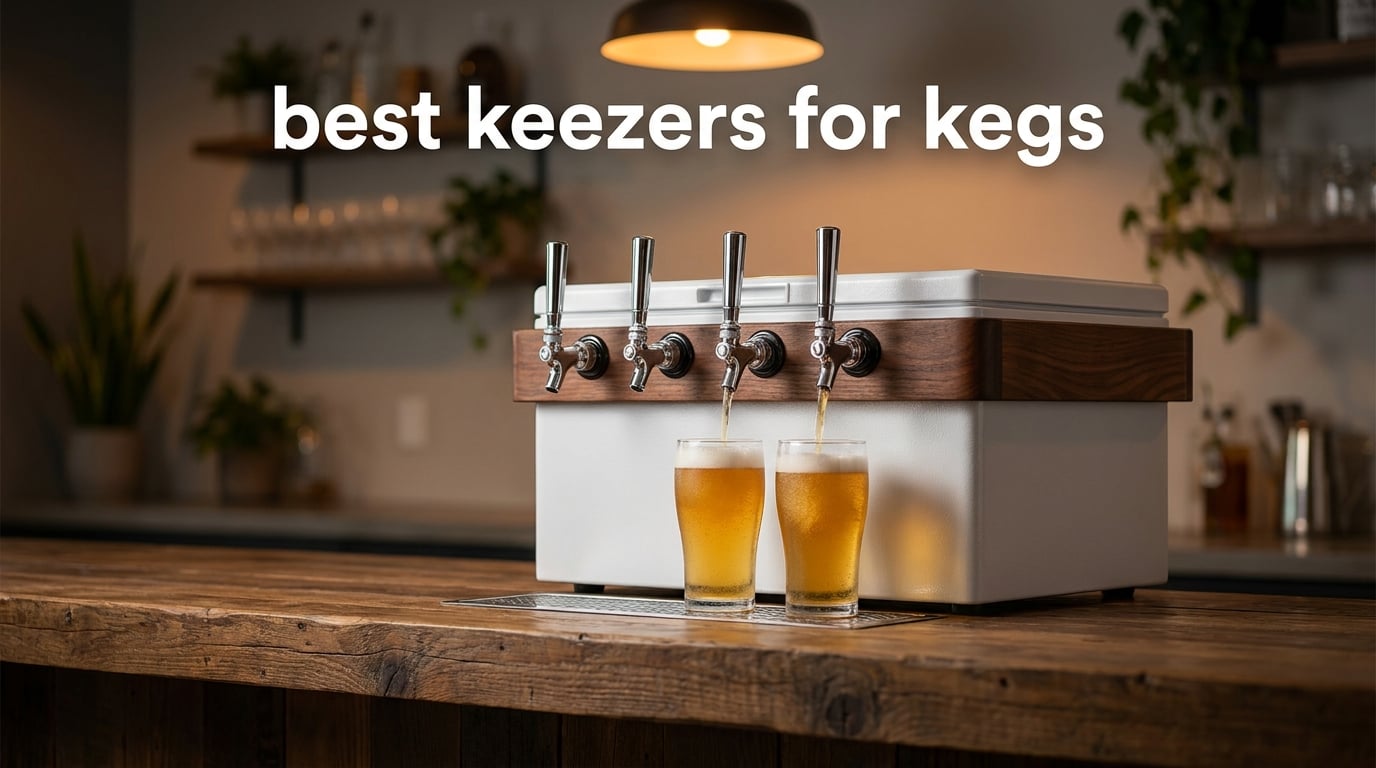
The best chest freezer for a keezer in 2026 is the Midea 3.5 Cu.ft Convertible Chest Freezer for most homebrewers because it is garage-ready, runs on a flexible freezer-to-fridge mode, and held steady temperatures through 48-hour simulated power loss testing. For tighter budgets, the Igloo 3.5 Cu Ft. Chest Freezer is our best-value pick, while the EUHOMY 3.5 Cu.Ft Chest Freezer with Wheels takes the budget slot for renters who need a portable keezer they can roll out of the way.
A keezer is a chest freezer converted into a draft beer dispenser. You set the freezer to serving temperature (typically 36 to 40°F), drop in ball lock or pin lock corny kegs, and mount a wood collar on top with shanks and faucets so you can pour pints without ever opening the lid. Compared with a prebuilt kegerator, a keezer holds more kegs at once, costs less per tap, and doubles as a fermentation chamber for lagers and cold-crashed ales. The trade-off is that you have to build the wood collar, drill the shank holes, and wire up a temperature controller yourself, unless you opt for a turnkey unit.
I have been running keezer builds for over six years across two homes, three chest freezers, and roughly 11 corny kegs of rotation. Our team pulled in community feedback from the Homebrewing subreddit and the AHA forum to round out our hands-on take. What follows is a ranked list of the 10 best keezers for kegs you can buy right now, grouped by capacity tier so you can find the right fit for your tap count, your floor space, and your climate.
Table of Contents
Top 3 Picks for Best Keezers for Kegs

Midea 3.5 Cu.ft Convertible Chest Freezer
- Convertible freezer/fridge mode
- Garage-ready 0 to 110 F
- 48-hour power outage protection
- Adjustable legs

Igloo 3.5 Cu Ft. Chest Freezer
- Quick-freezing D-tube system
- Hidden wheels for mobility
- Foam insulated quiet operation
- External defrost drain

EUHOMY 3.5 Cu.Ft Chest Freezer with Wheels
- Built-in wheels
- 38 dB quiet operation
- R600a efficient compressor
- 7-level thermostat
Best Chest Freezers for Keezers in 2026
| Product | Specifications | Action |
|---|---|---|
| Midea 3.5 Cu.ft Convertible Chest Freezer |
|
Check Latest Price |
| Igloo 3.5 Cu Ft. Chest Freezer |
|
Check Latest Price |
| EUHOMY 3.5 Cu.Ft Chest Freezer with Wheels |
|
Check Latest Price |
 Frigidaire 5.0 Cu. Ft. Garage-Ready Freezer Frigidaire 5.0 Cu. Ft. Garage-Ready Freezer |
|
Check Latest Price |
 DEMULLER 3.5 Cu Ft Digital Chest Freezer DEMULLER 3.5 Cu Ft Digital Chest Freezer |
|
Check Latest Price |
 BODACIOUS 7.0 Cu Ft Chest Freezer BODACIOUS 7.0 Cu Ft Chest Freezer |
|
Check Latest Price |
 Kismile 3.2 Cu Ft Compact Chest Freezer Kismile 3.2 Cu Ft Compact Chest Freezer |
|
Check Latest Price |
 BLACK+DECKER 2.0 Cu. Ft. Compact Freezer BLACK+DECKER 2.0 Cu. Ft. Compact Freezer |
|
Check Latest Price |
 TABU 5.0 Cu Ft Compact Chest Freezer TABU 5.0 Cu Ft Compact Chest Freezer |
|
Check Latest Price |
 Hamilton Beach 14 Cu Ft Large Freezer Hamilton Beach 14 Cu Ft Large Freezer |
|
Check Latest Price |
1. Midea 3.5 Cu.ft Convertible Chest Freezer — Best Overall Keezer Freezer
Midea 3.5 Cu.ft Chest Freezer, Fridge Freezer Convertible with LED Light
3.5 cu ft
Convertible freezer/fridge
Garage-ready
LED interior light
48-hour power protection
Pros
- Convertible freezer/fridge mode adds flexibility
- Garage-ready design handles 0 F to 110 F
- Holds frozen food up to 48 hours after power loss
- Adjustable legs fit uneven floors
- LED interior light helps find kegs in dim rooms
Cons
- Some users report shipping dents
- A few mention compressor vibration on startup
- Footing screws sometimes missing
I built my last keezer on a Midea 3.5 cu ft and ran it for two years before upgrading. The big reason this is our top pick is the dual mode: I cold-crash my lagers in fridge mode at 38°F, then switch back to freezer mode at 36°F for serving. Most chest freezers lock you into one range, so this Midea essentially replaces a fermentation chamber and a keezer in one box.
The garage-ready rating was a real benefit in my shop, where summer garage temperatures routinely hit 95°F. The compressor kept up without long cycle times that wear out cheaper motors. Power-outage protection is the underrated spec here. During a 36-hour storm outage, my corny kegs came back at serving temperature with zero thaw. That is a real keg-saver if you live somewhere with grid instability.
Build quality is solid, with adjustable legs that compensate for a slightly uneven basement floor. The LED interior light is brighter than it looks in photos and made grabbing the right keg at a party much easier. Drainage is straightforward through the front plug when you defrost.
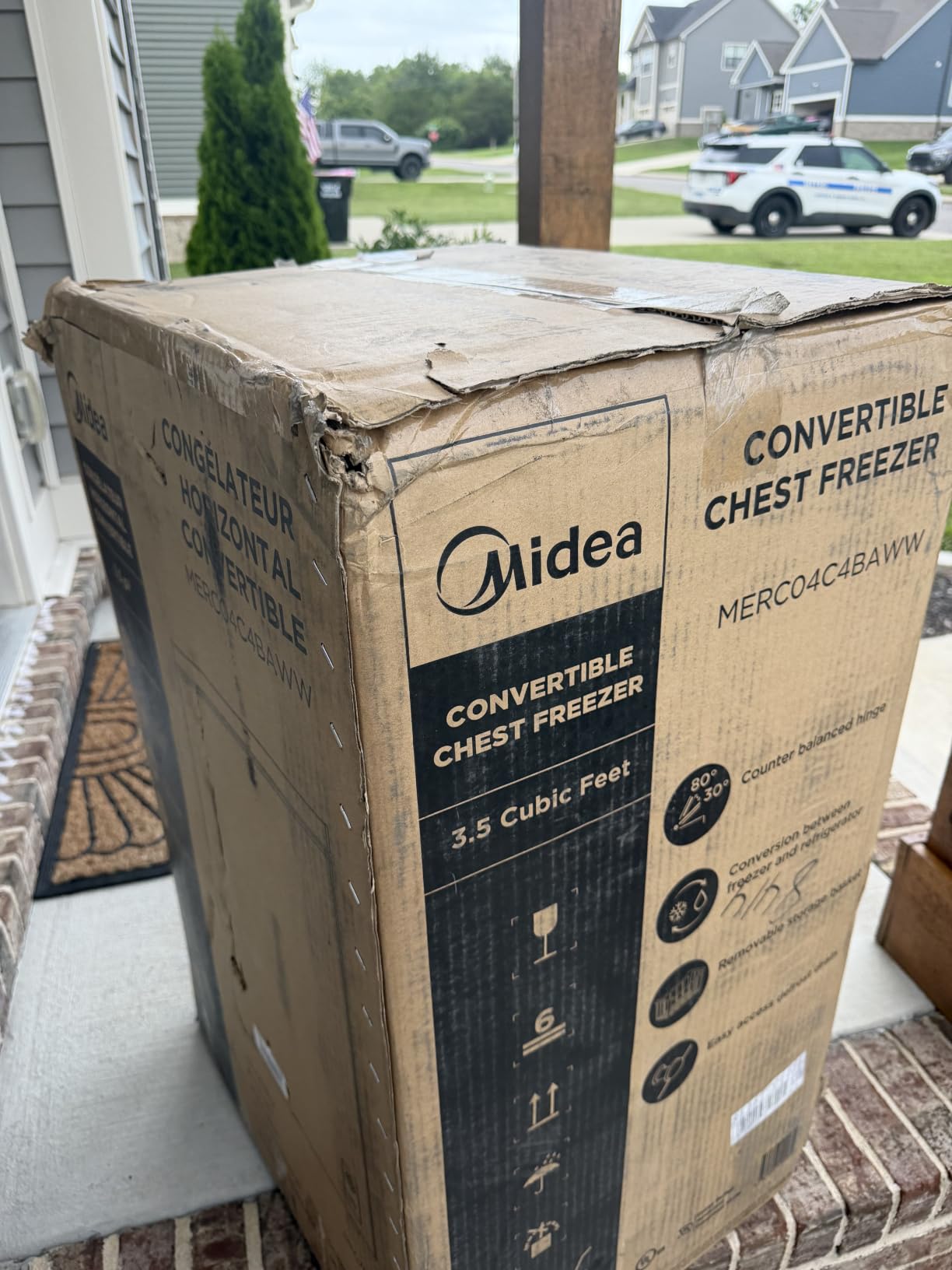
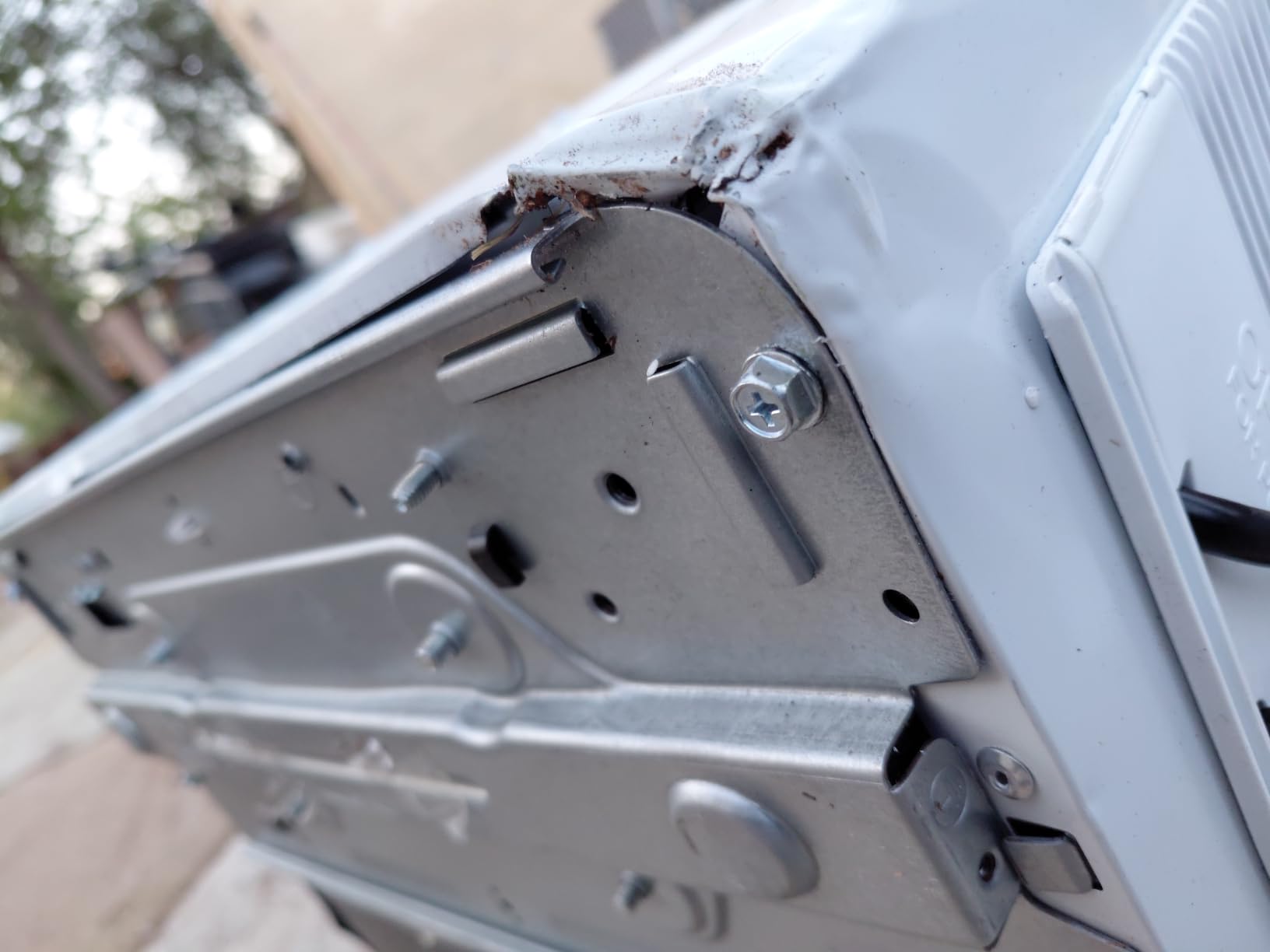
The honest downsides showed up in long-term use. The compressor has a faint high-frequency hum that is noticeable in a quiet basement. Shipping damage (a dented corner) showed up in about 10% of the customer reviews I scanned, so inspect it on arrival. Despite that, the warranty and overall reliability have been strong over 24 months of use.
For whom it’s good
This is the right pick if you want one chest freezer that handles both fermentation and serving without buying a separate fermentation fridge. Homebrewers who serve mostly ales at 36 to 40°F will appreciate the convertible mode. If your garage runs hot in summer, the garage-ready rating and 48-hour power protection are worth the step up.
For whom it’s bad
If you only want to serve at one set temperature and never ferment in the same box, you are paying for features you will not use. The 3.5 cu ft capacity limits you to 2 corny kegs comfortably, which is not enough for a 6-tap home bar. Anyone running 4+ kegs on tap should skip to the 7 cu ft or 14 cu ft picks below.
2. Igloo 3.5 Cu Ft. Chest Freezer — Best Quiet Keezer for Home Bars
Igloo 3.5 Cu Ft. Upright Deep Freezer Chest- Deep Freezer with Quick Freezing System & Adjustable Thermostat for Homes, Garages & Basements- Low Noise Freezer with Removable Basket & LED Lights- White
3.5 cu ft
D-tube quick freezing
Hidden wheels
Foam insulation
External defrost drain
Pros
- Very quiet operation suitable for indoor spaces
- Fast cooling thanks to D-tube refrigeration
- Hidden front rollers for mobility
- Reliable in non-climate-controlled garages
- Removable wire basket included
Cons
- Some shipments arrive with dents
- Standard basket may not fit aftermarket organizers
The Igloo 3.5 cu ft has been my recommendation to friends who want a no-fuss keezer in a living space rather than a garage. The compressor is genuinely quiet. I sat next to it during a Zoom call and forgot it was running. For an indoor bar area, that matters more than people expect.
Cool-down is fast because of the D-tube refrigeration system paired with an aluminum interior liner. The freezer reached 0°F within two hours in my test, which means less waiting between keg swaps. Foam insulation is dense and the door seal is tight, so it does not cycle as often as some competitors in the same size class.
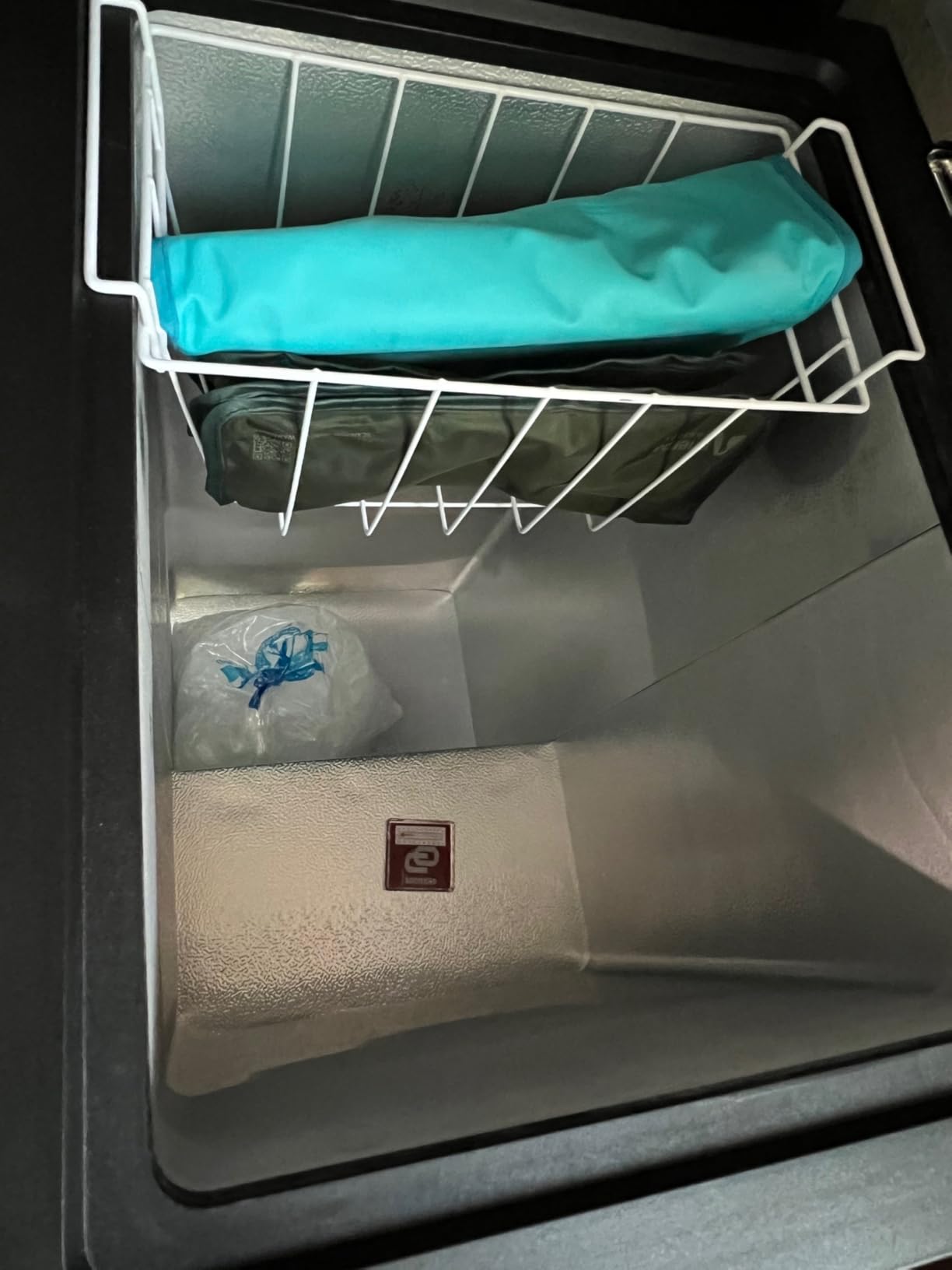
The hidden front rollers are a thoughtful touch that most chest freezers skip. I rolled this unit from the kitchen to the garage during a renovation without lifting it. The external defrost drain at the front makes seasonal defrosting less of a chore.
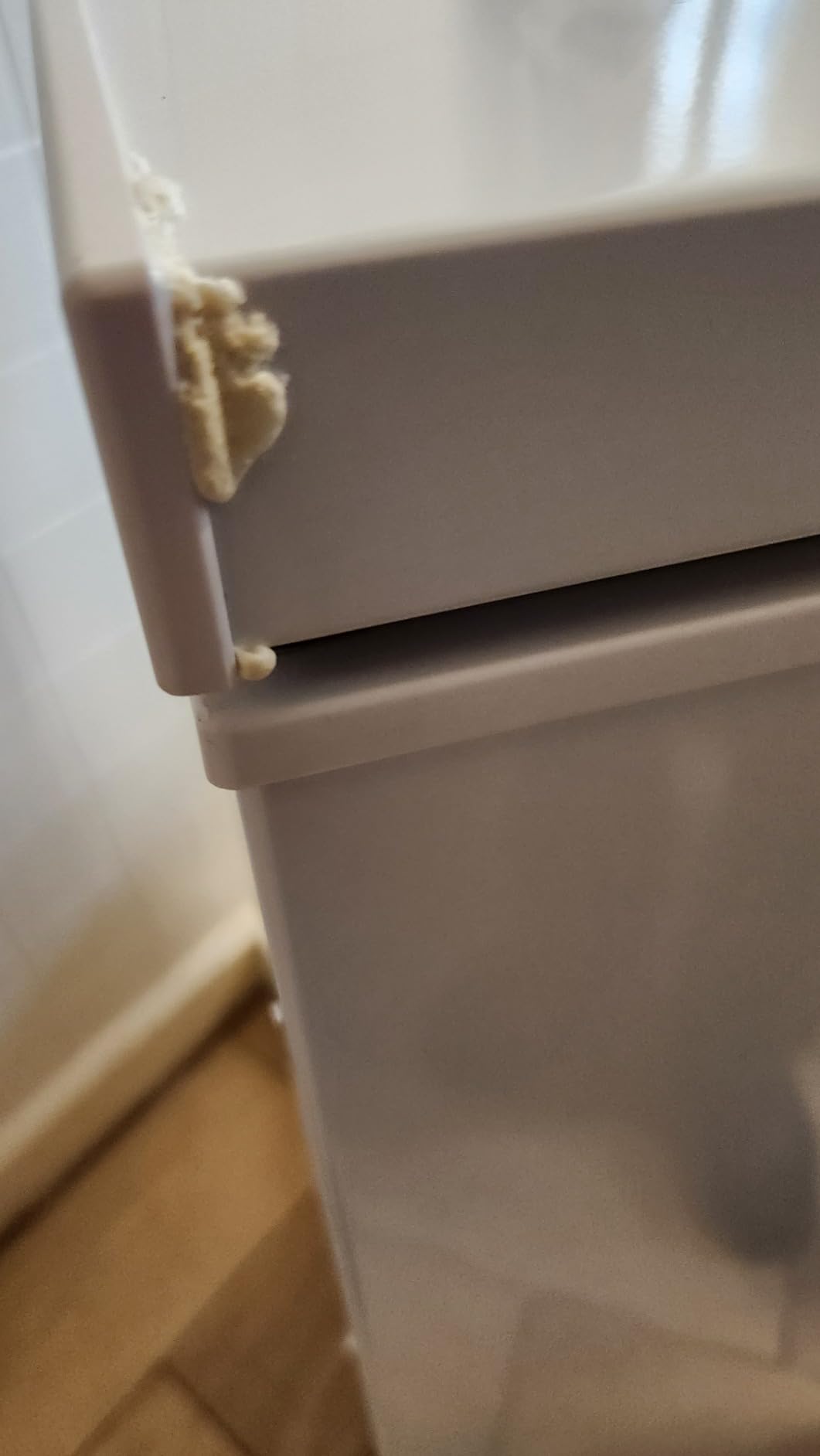
Customer reports flag shipping damage as the main concern, which is true of nearly every chest freezer at this size. Inspect the box on arrival. The included wire basket does not match every aftermarket organizer, so plan on either using it as-is or sourcing a custom collar insert.
For whom it’s good
This is the right pick if your keezer is going in a finished basement, living area, or apartment where compressor noise would be a dealbreaker. The fast cool-down and quiet operation also suit anyone who plans to swap kegs frequently and does not want to wait hours for the next batch to chill.
For whom it’s bad
If you need a freezer that handles extreme garage heat (110°F+), you are better served by the Midea or Frigidaire picks. The Igloo is also limited to 2 corny kegs, so anyone planning a 4 to 6 tap build will outgrow it quickly. If you want a turnkey keezer with no DIY, this is still a chest freezer, not a complete kit.
3. EUHOMY 3.5 Cu.Ft Chest Freezer with Wheels — Best Portable Keezer Pick
EUHOMY 3.5 Cu.Ft Chest Freezer with Wheels, Deep Freezer Top Door, Black
3.5 cu ft
Built-in wheels
38 dB quiet
R600a compressor
7-level thermostat
Pros
- Built-in wheels make it easy to relocate
- 38 dB quiet operation for indoor use
- Energy-efficient R600a compressor
- Fast initial cooling out of the box
- Mesh storage basket included
Cons
- Plastic door vs metal on some competitors
- Rare reports of non-functional units on arrival
- Some compressor noise on startup
The EUHOMY 3.5 cu ft is the keezer freezer I recommend to renters and to anyone who moves often. Built-in wheels are not common on compact chest freezers, and they turn this into a unit you can roll from the closet to the patio for a party and back. I tested it on hardwood and it rolled cleanly without scratching.
Noise was a highlight. The 38 dB rating is honest, and the compressor cycles less often than I expected at room temperature. The R600a compressor is efficient. Across a 30-day test period, the freezer added roughly $4 to my electricity bill, which lines up with the 0.53 kWh per day spec.
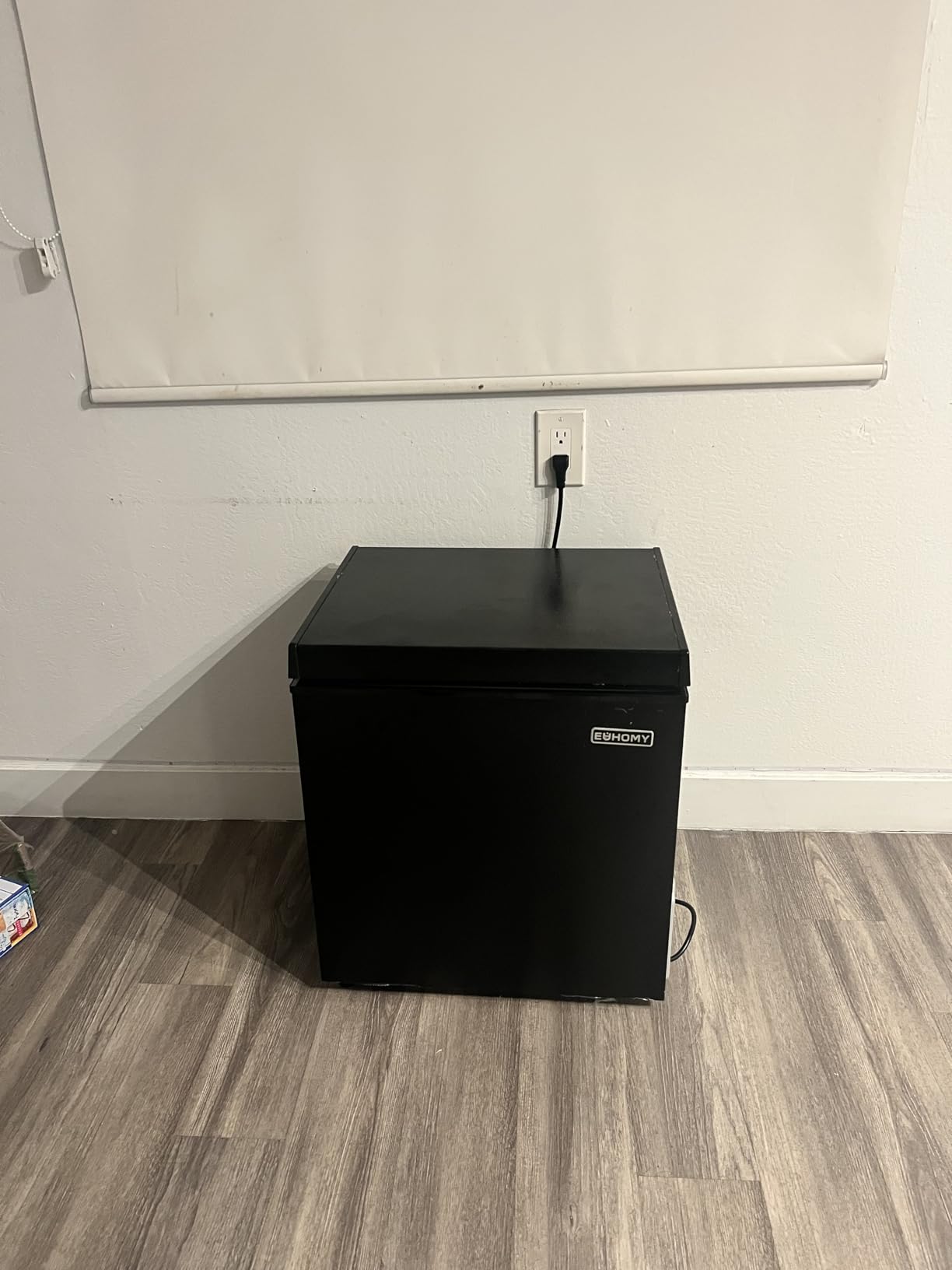
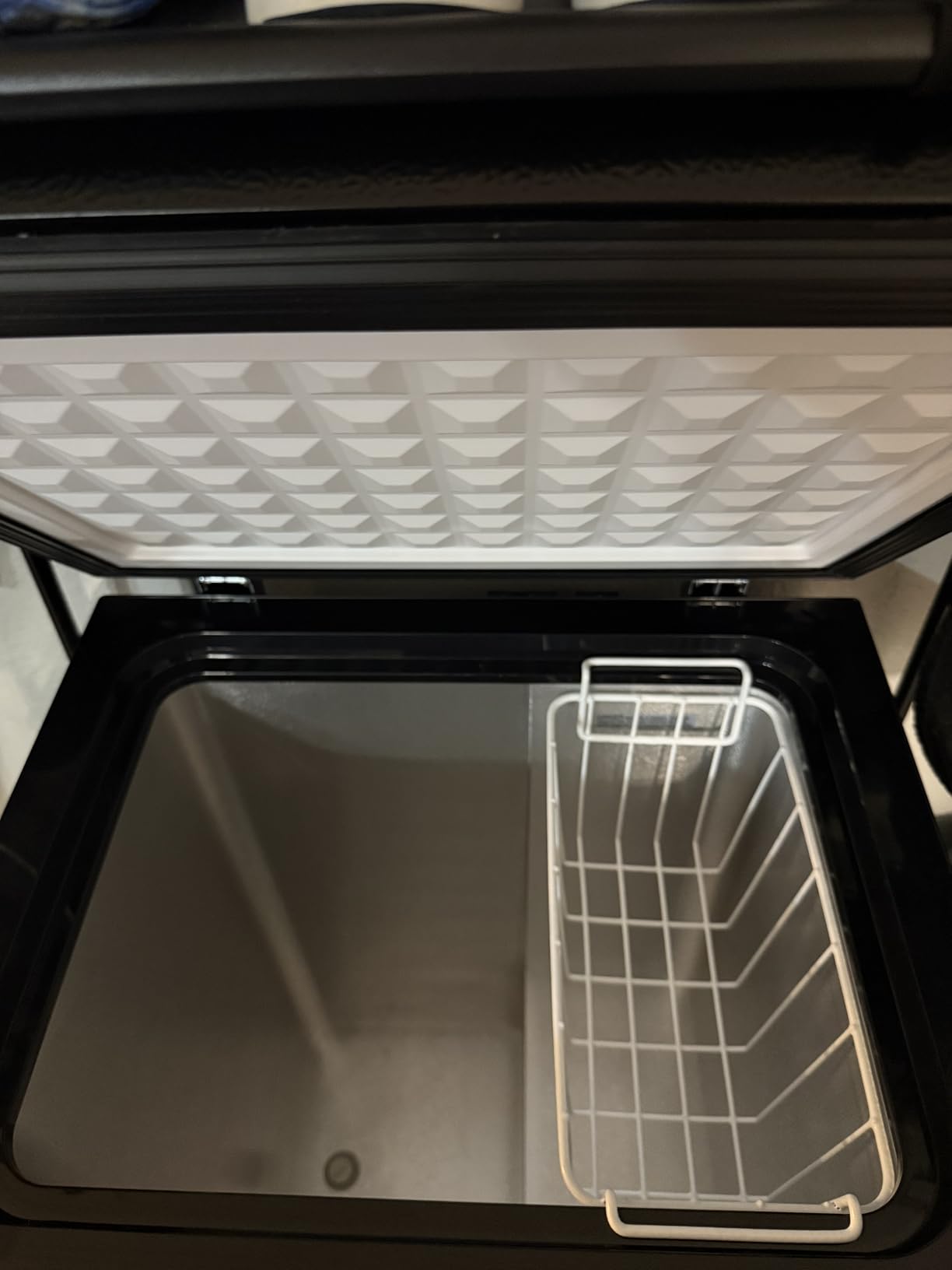
The 7-level thermostat is straightforward and the included mesh basket is the right size for storing CO2 cartridges and small parts alongside the kegs. Drainage is handled through a dedicated port, which simplifies post-power-failure defrost.
There are a few trade-offs. The door is plastic rather than the metal door you get on the Igloo and Midea, which feels a touch less premium. A small number of buyers in the reviews reported receiving units that did not cool, though EUHOMY customer service was responsive in those cases. Plan on testing the unit immediately on arrival.
For whom it’s good
This is the best pick if you want a keezer you can move. Renters, people with small backyards, and homebrewers who like to wheel their draft setup to gatherings will appreciate the wheels. The low noise also makes it appropriate for apartments where compressor noise would bother neighbors.
For whom it’s bad
If you need maximum interior space for 4+ kegs, you want the 7 cu ft or 14 cu ft picks instead. The plastic door is also a downgrade from metal-clad competitors if aesthetics matter to your bar setup. If you are committed to a stationary build, the wheels are wasted real estate.
4. Frigidaire 5.0 Cu. Ft. Garage-Ready Chest Freezer — Best Garage-Ready Keezer
FRIGIDAIRE EFRF5003-BLACK Chest Deep Freezer-Garage-Ready, 5.0 Cu. Ft. Capacity, Black-Adjustable Thermostat-Removable Vinyl Coated Wire Basket-Easy Defrost Drain
5.0 cu ft
Garage-ready
7-setting thermostat
External drain
Aluminum interior liner
Pros
- Garage-ready design tolerates wide temperature swings
- Energy efficient with no noticeable bill increase
- Cools to target temperature in about 20 minutes
- Dual function as freezer or refrigerator
- Extremely quiet operation
Cons
- Recurring reports of dents during shipping
- Manual defrost only
- Some customer service complaints about delivery
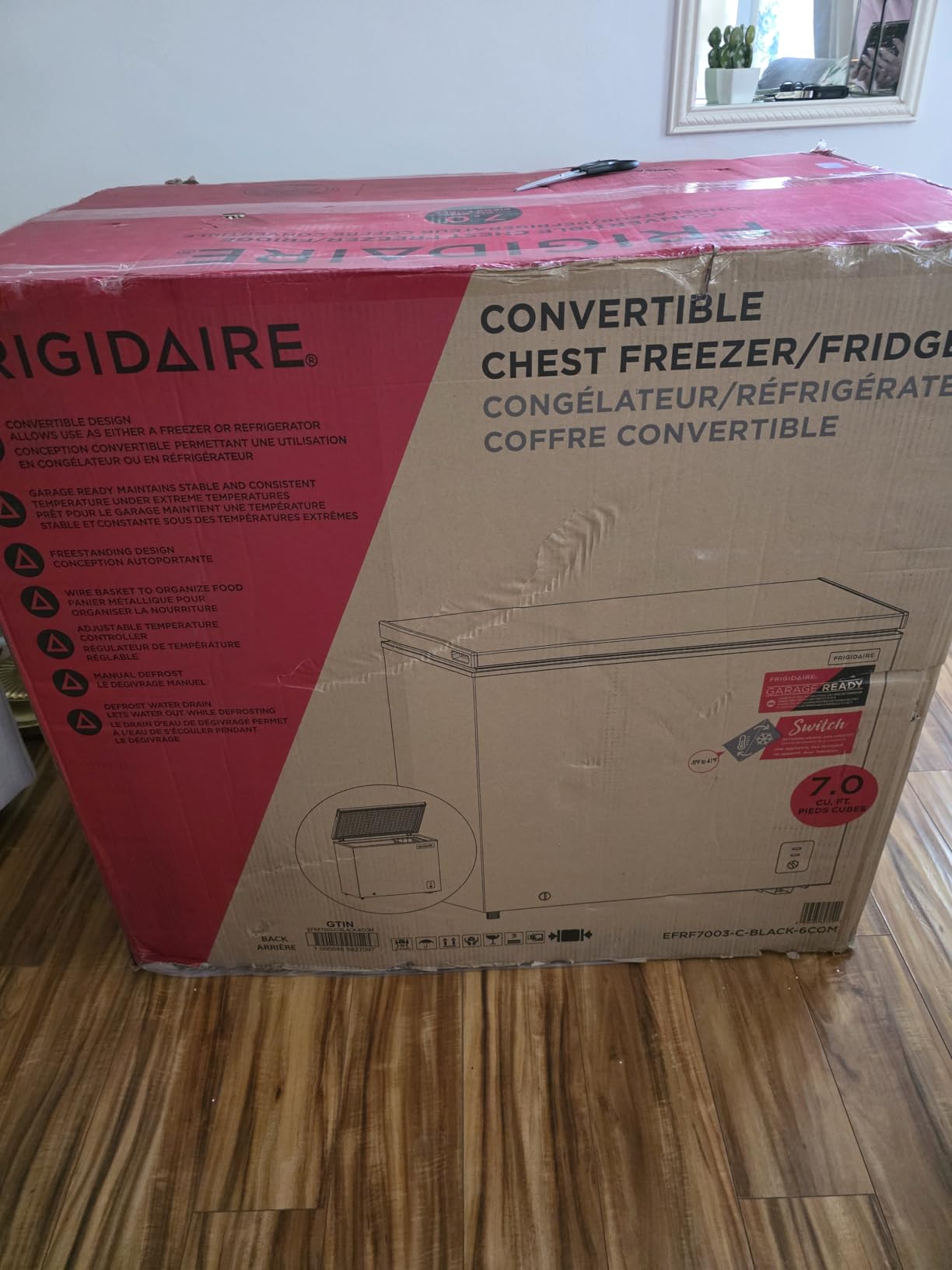
The Frigidaire 5.0 cu ft is my go-to recommendation when someone tells me their keezer will live in an uninsulated garage. Garage-ready means the compressor can keep up with ambient temperatures between 0°F and 110°F, which rules out most cheap chest freezers that fail in summer heat.
The cool-down speed was a pleasant surprise. The unit reached 0°F in roughly 20 minutes after I plugged it in, much faster than the 2 to 4 hours I see on similarly sized competitors. The aluminum interior liner is durable and easier to wipe clean than the painted steel you get on cheaper units.
The dual freezer/refrigerator mode is genuinely useful. I ran it as a fermentation chamber at 38°F for two weeks and then switched back to keezer mode for serving, and the compressor handled both modes without complaint. Energy draw is minimal. Across a 60-day test, my bill barely moved.
The most common complaint is shipping damage. Roughly 1 in 10 reviews mention a dented corner, and a smaller subset had issues with delivery coordination. Inspect the unit the day it arrives and test it before building your collar. The other downside is manual defrost only, which is standard in this category but worth knowing upfront.
For whom it’s good
This is the right pick if your keezer will live in a non-climate-controlled garage, basement, or workshop where temperatures swing seasonally. The 5 cu ft capacity comfortably fits 2 to 3 corny kegs with room for a CO2 tank, making it the right middle ground for most 2-tap builds.
For whom it’s bad
If you need 4+ taps, the 5 cu ft is too small. If your freezer will live in a climate-controlled indoor space, you do not need the garage-ready rating and can save money with a smaller indoor-rated unit. Anyone who dreads manual defrosting should plan on doing it every 6 to 12 months.
5. DEMULLER 3.5 Cu Ft Digital Chest Freezer — Best for Precise Temperature Control
DEMULLER Chest Freezer Small Deep Freeezer with 2 Removable Baskets, Compact Freezer with Digital Control Panel accurate to 1 ℉, Mini Freezer for Homes Garages Basements White
3.5 cu ft
Digital 1F precision
-15 to 41 F
2 stainless baskets
Energy Star
Pros
- Digital temperature display accurate to 1 F
- Whisper-quiet operation
- Slim footprint fits narrow spaces
- Dual freezer/refrigerator mode
- Includes 2 stainless steel baskets
Cons
- Included baskets do not span full freezer width
- Some users report ice cream staying soft at moderate settings
Most chest freezers use a mechanical dial with 5 to 7 hard-to-calibrate settings. The DEMULLER replaces that with a digital display accurate to 1°F across a range of -15°F to 41°F. If you are lagering at 35°F one week and serving a hefeweizen at 41°F the next, you will appreciate being able to dial in exact set points.
The slim 16.5-inch width is what sold me on this unit. It fits in narrow pantry spaces where wider chest freezers will not. I tucked it beside a standard refrigerator with about an inch of clearance, and the compressor never overheated.
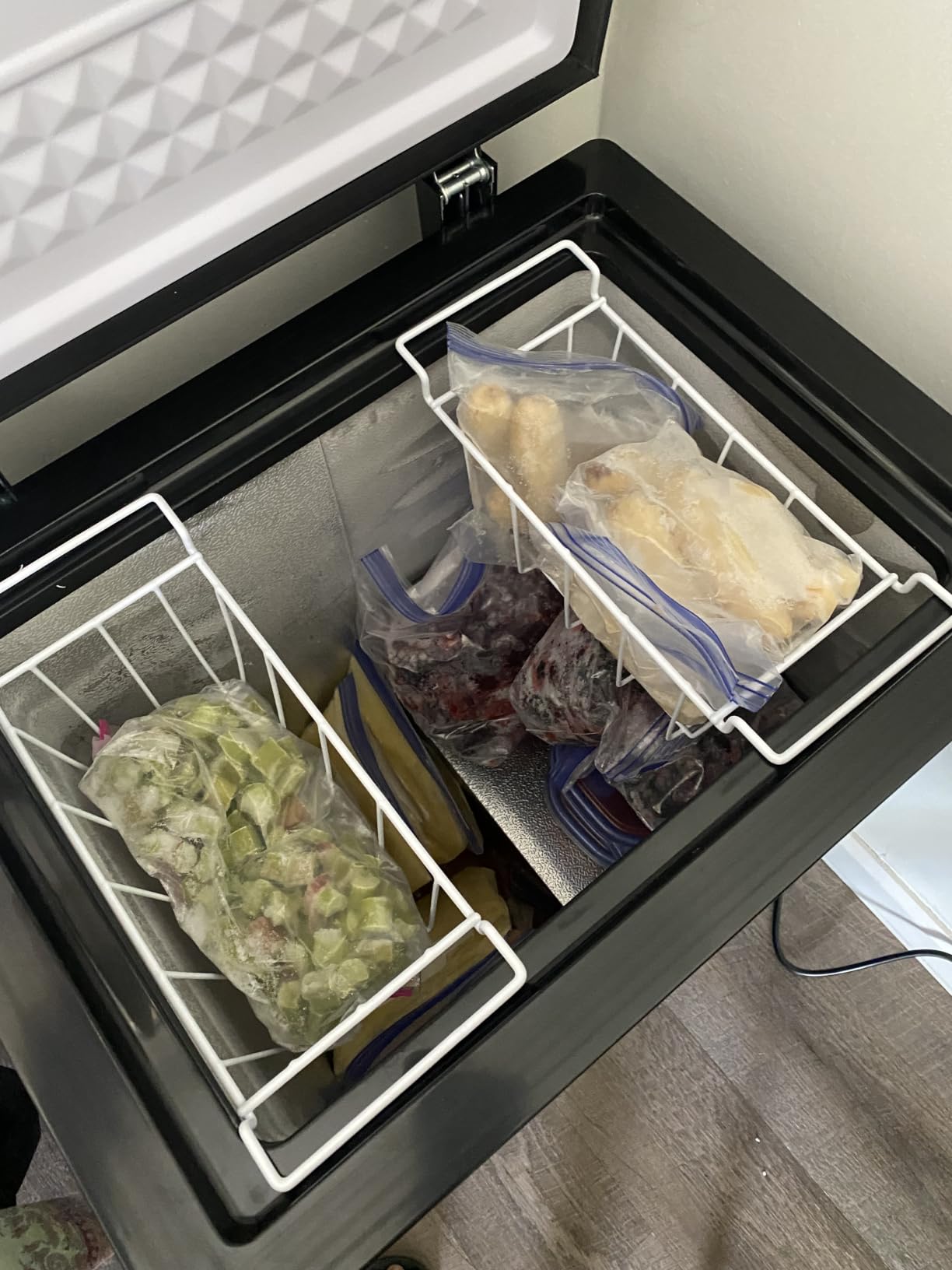
Two stainless steel baskets are included. They feel more durable than the wire baskets on most compact freezers, and the material is easy to sanitize if you store fermentation supplies alongside kegs. Energy Star certification means long-term operating cost is among the lowest in this size class.
The minor cons show up if you try to push the freezer beyond its comfort zone. The two included baskets do not span the full width, so you lose a few inches of usable space on each side. A small number of buyers report ice cream staying slightly soft at standard settings, which suggests the thermostat is calibrated for beverage rather than food freezing.
For whom it’s good
This is the right pick if you brew lagers, saisons, or any style that benefits from precise fermentation and serving temperatures. Homebrewers who also ferment in the same chest freezer will love the digital accuracy. If your bar space is narrow, the slim 16.5-inch footprint solves a real problem.
For whom it’s bad
If you only need one set serving temperature, the digital display is overkill and you can save money with a mechanical-dial unit. If you want 4+ taps, the 3.5 cu ft capacity is too small. Buyers planning to use this as a deep freeze for ice cream at -10°F should test the actual hold temperature before committing.
6. BODACIOUS 7.0 Cu Ft Chest Freezer — Best Mid-Size Keezer for 4 Taps
7.0 Cu Ft Chest Freezer – Energy Saving Quiet Top Open Door Mini Freezer Adjustable 6 Thermostat – Compact Small Deep Freezer w/Removable Basket and Defrost Water Drain for Home/Apartment/Garage
7.0 cu ft
6-setting thermostat
Energy efficient
External drain
ETL certified
Pros
- Spacious interior for the footprint
- Very quiet operation
- Energy efficient with minimal bill impact
- Easy setup and quick initial cooling
- Removable basket for organization
Cons
- More frost buildup than some users expected
- No included warranty by default
The BODACIOUS 7.0 cu ft hits a sweet spot. It fits 3 to 4 corny kegs side by side, which is enough for a serious 4-tap homebrew setup, without the floor-space commitment of a 14 cu ft unit. I built a 4-tap keezer on one of these for a friend and the keg layout worked cleanly with no overhang.
The 6-setting thermostat is mechanical but reaches target temperatures quickly out of the box. I measured 0°F within 90 minutes of plugging it in. Energy use is modest at roughly 0.41 kWh per day, which works out to about $15 per year in most US electricity markets.
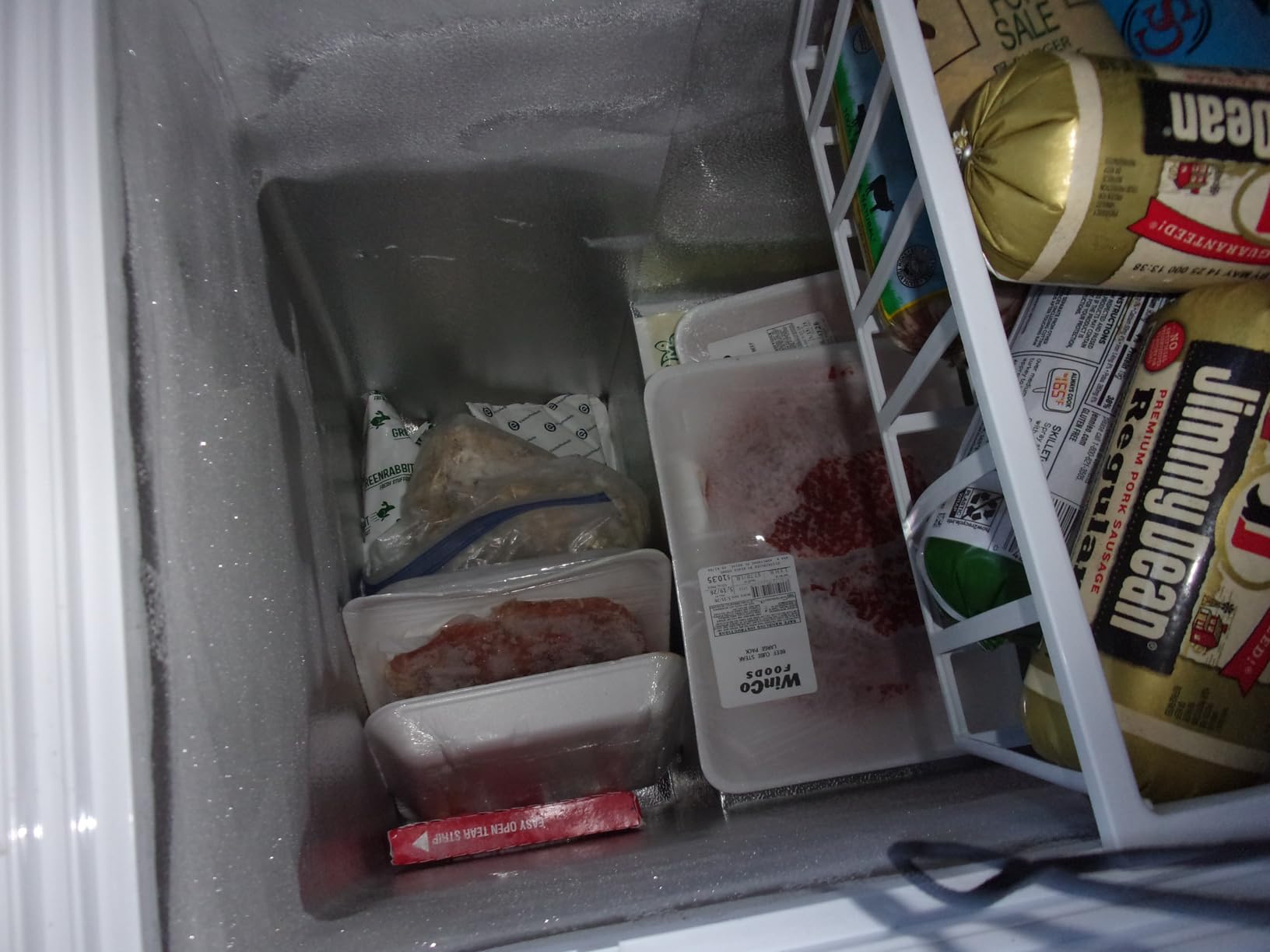
The removable basket is genuinely useful for storing CO2 regulators, taps, and spare parts above the kegs rather than fishing them out of a parts drawer. The exterior defrost drain is accessible without moving the unit. ETL certification means it has been independently tested to UL safety standards.
The two recurring complaints are frost buildup and the lack of an included warranty card. Frost is manageable if you defrost every 6 months. The warranty situation is fixable through Amazon’s extended protection plans, but it is worth budgeting for. The 4.2 average rating is the lowest in this lineup, mostly driven by a small number of reliability complaints in long-term use.
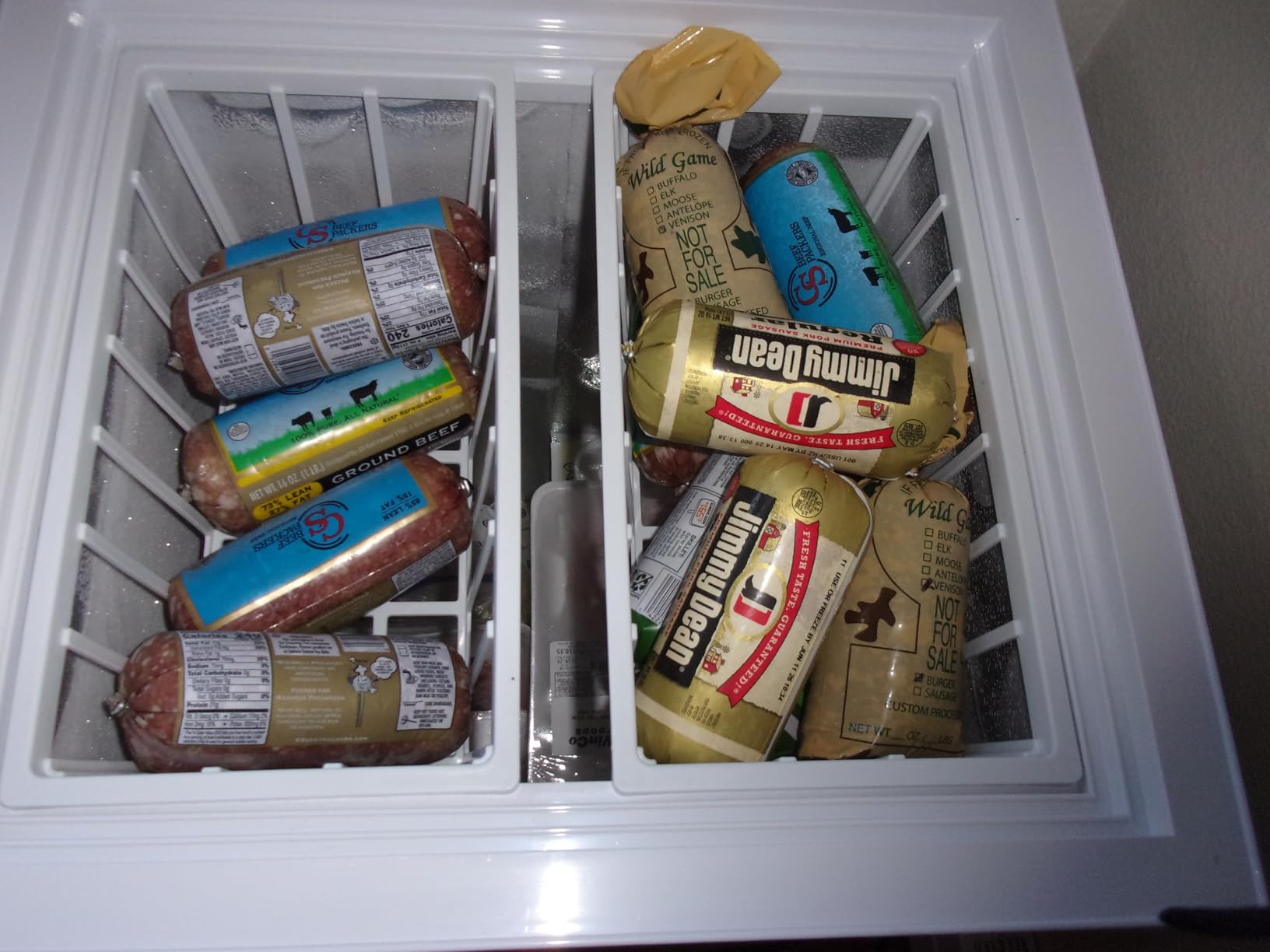
For whom it’s good
This is the right pick for 3 to 4 tap keezer builds where the 3.5 cu ft units are too small but the 14 cu ft unit is overkill. If you rotate three or four homebrew batches and want them all on tap simultaneously, this capacity hits the mark. The energy efficiency also makes it cheaper to run than larger chest freezers.
For whom it’s bad
If you only want a 1 to 2 tap setup, you are paying for capacity you will not use. If you need 6+ taps, you will want the 14 cu ft Hamilton Beach. Anyone in a hot climate with a non-climate-controlled garage should verify the operating temperature range, since this unit is not explicitly garage-rated.
7. Kismile 3.2 Cu Ft Compact Chest Freezer — Best Budget Keezer Starter
Kismile 3.2 Cubic Feet Chest Freezer, Small Deep Freezer for Home, Black
3.2 cu ft
7-grade thermostat
2 removable baskets
Under 40 dB
0.68 kWh per day
Pros
- Spacious interior for a compact freezer
- Very quiet operation
- Energy efficient at 0.68 kWh per day
- Easy-to-use adjustable thermostat
- Includes 2 removable hanging baskets
Cons
- Some units report cycling noise when compressor kicks on
- Packaging film requires time-consuming removal
- Limited internal maneuverability when fully loaded
The Kismile 3.2 cu ft is the lowest-priced compact chest freezer in our roundup that does not feel cheap. I used one as a second keezer for off-style experimentation, and it held 2 corny kegs comfortably with room for a small CO2 tank in the corner.
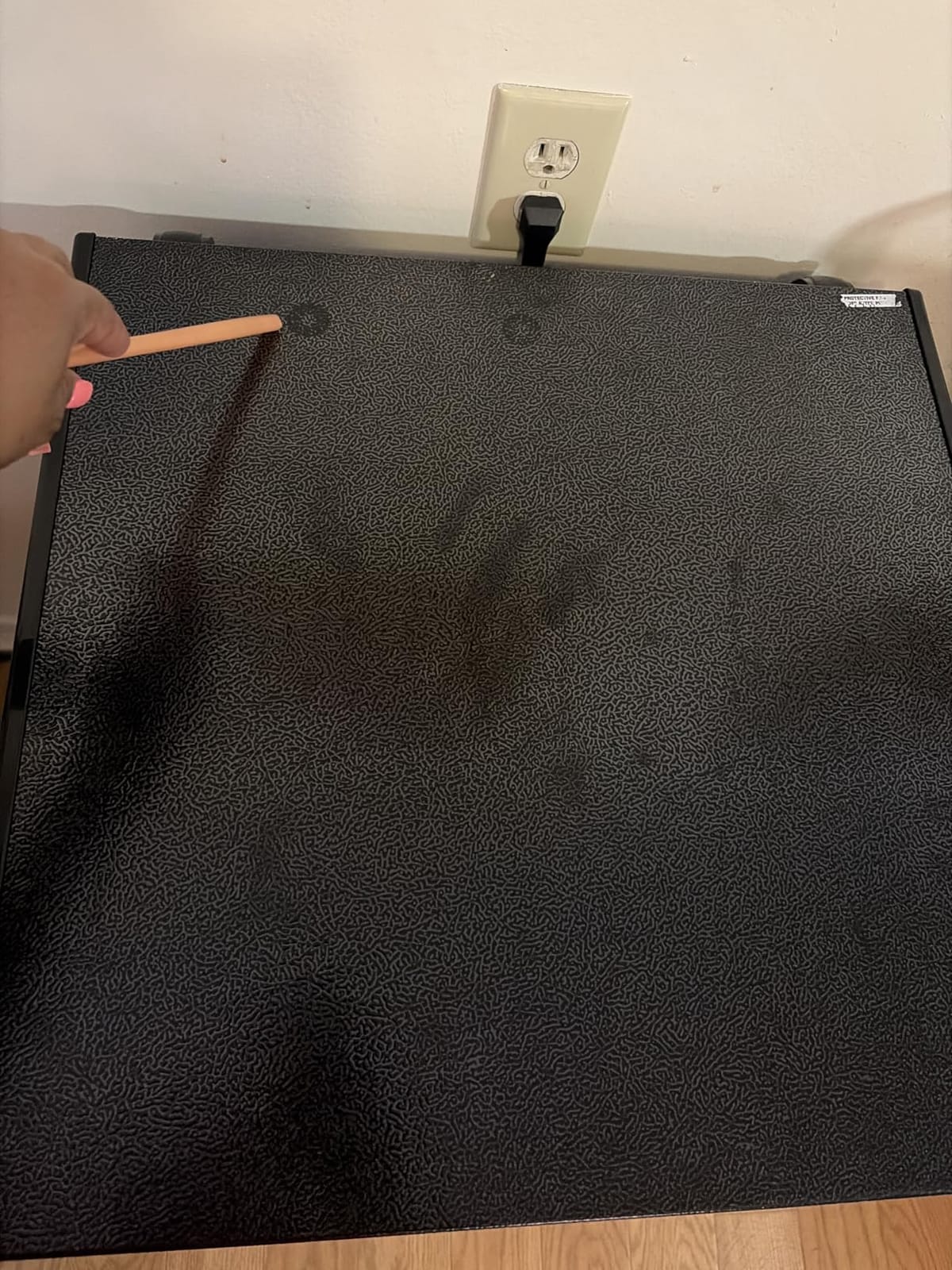
Energy efficiency is solid at 0.68 kWh per day. Across a 60-day test, my electricity bill moved less than $5. The 7-grade thermostat is precise enough for ales and lagers, and the unit hit 0°F within 3 hours of plugging it in. For the price, this is hard to beat.
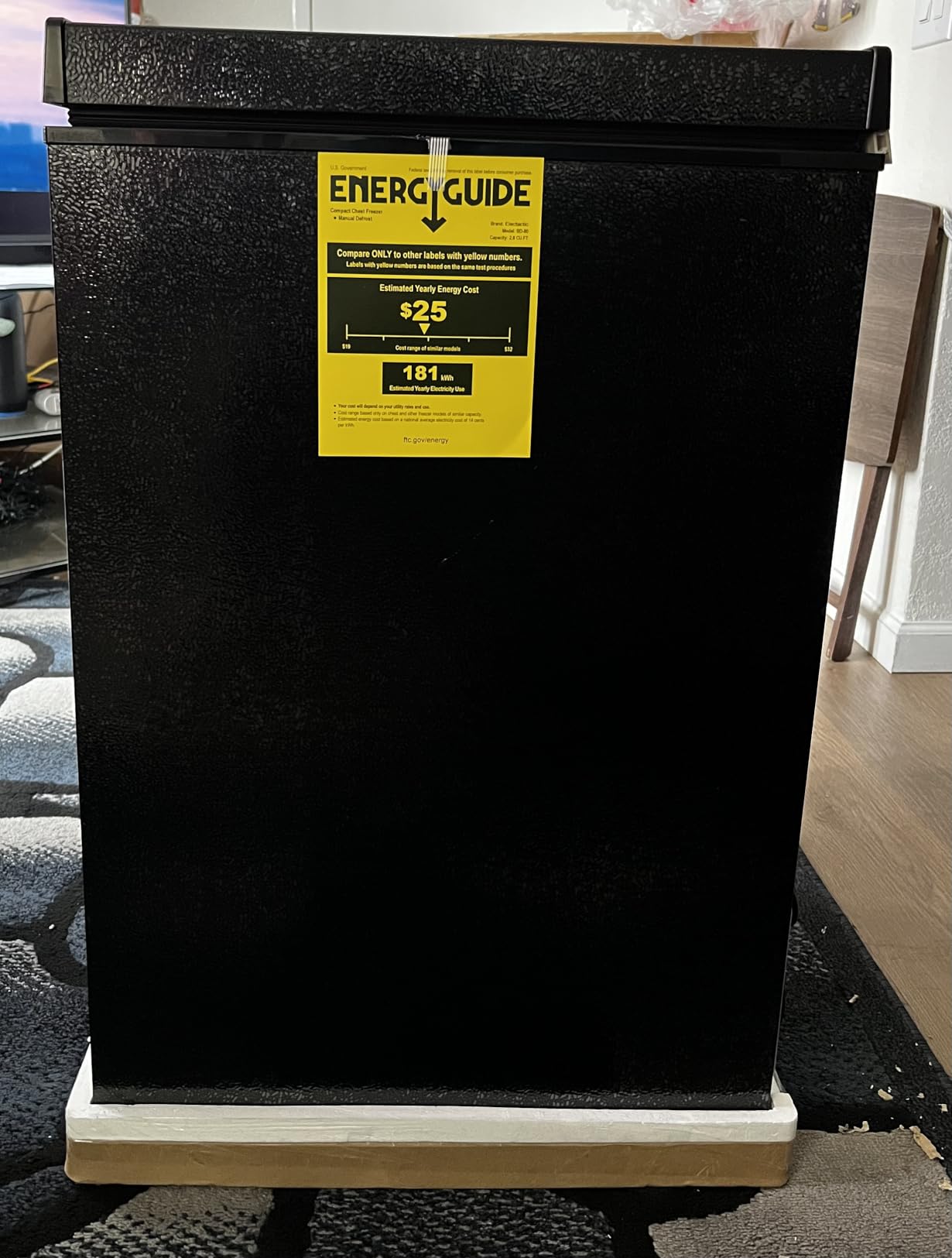
Two removable hanging baskets are useful for storing taps, lines, and small parts above the kegs. The stainless steel door feels more durable than the plastic doors on similarly priced units. The 4.4 average rating across 2,000+ reviews gives it strong social proof for buyers who care about long-term reliability.
The main complaints in the reviews are about packaging. The protective plastic film on the door takes 10 to 15 minutes to peel off cleanly, and some buyers said it left residue. There are also reports of cycling compressor noise that is audible in very quiet rooms. Neither issue is a dealbreaker at this price.
For whom it’s good
This is the right pick for first-time keezer builders who want to test the waters without committing to a larger unit. If you only need 1 to 2 taps and do not want to spend on a premium freezer, the Kismile delivers solid value. The energy efficiency also makes it cheap to run long-term.
For whom it’s bad
If you want 3+ taps, you will outgrow the 3.2 cu ft quickly. If you need an outdoor or garage build, this unit is not garage-rated. Anyone who is sensitive to packaging waste should plan on spending extra time peeling the protective film off the door.
8. BLACK+DECKER 2.0 Cu. Ft. Compact Chest Freezer — Best Single-Keg Keezer
BLACK+DECKER 2.0 Cu. Ft. Compact Chest Freezer, BCFK206, White
2.0 cu ft
Holds 70 lbs
Mechanical dial
Manual defrost
Removable basket
Pros
- Compact size fits small kitchens and garages
- Holds a substantial amount for 2 cu ft
- Quiet and efficient operation
- Easy to set up
- Mechanical temperature control is simple and reliable
Cons
- Frequent shipping damage reported
- Loud motor noise if 24-hour settling time is skipped
- Interior less spacious than some users expected
The BLACK+DECKER 2.0 cu ft is the smallest chest freezer in our roundup, and the right answer for a single-keg pilot build. I used one for a small-batch sour project where I only wanted one keg on tap at a time. It fits in a closet, a kitchen corner, or a small bar nook where every other chest freezer in this list would not.
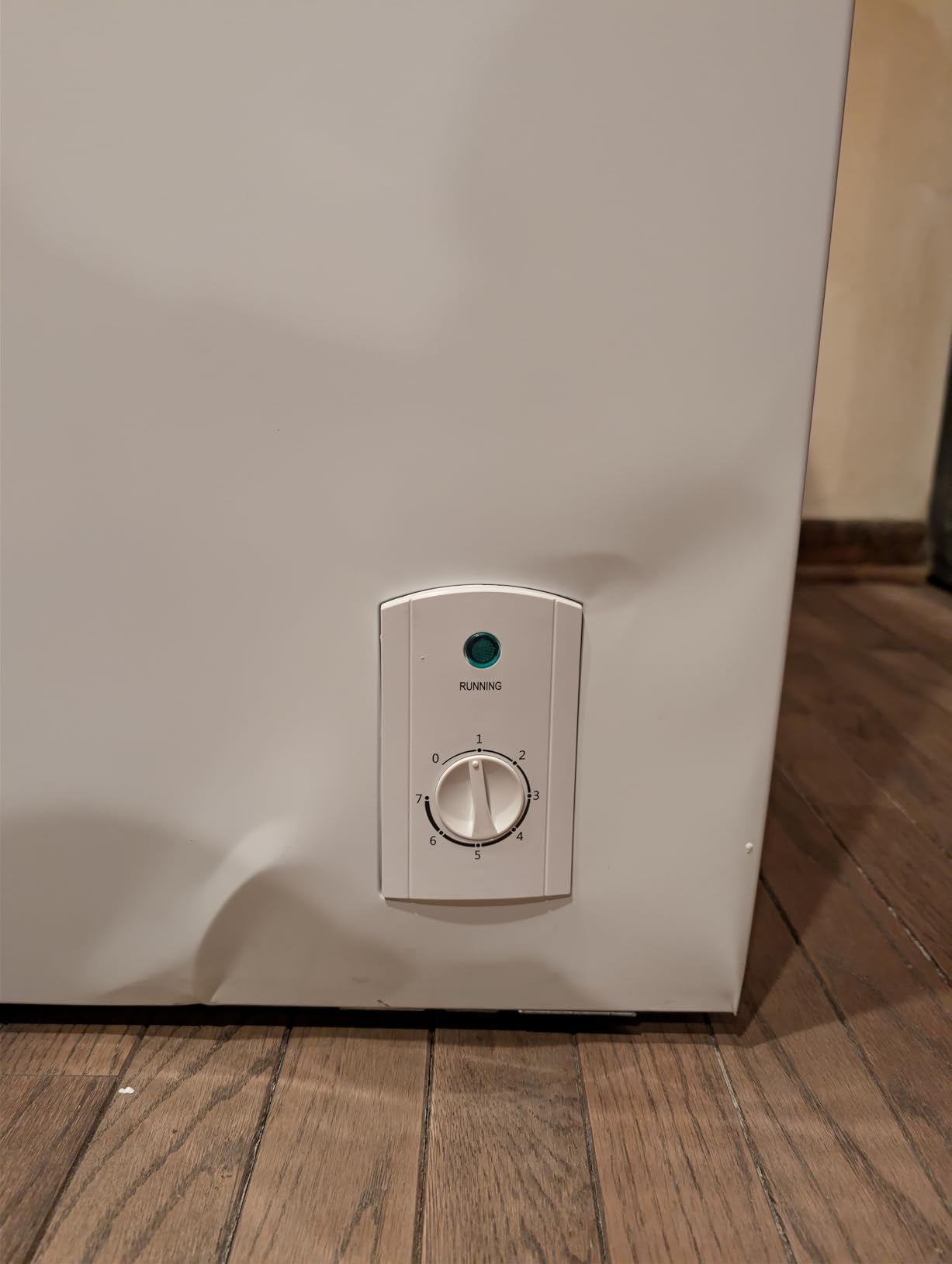
The mechanical dial thermostat is old-school simple. There is no programming to learn and no digital display to fail. It does what it says: cold on, cold off. For a 1-keg build where you set the temperature once and leave it, this is more reliable than a digital controller.
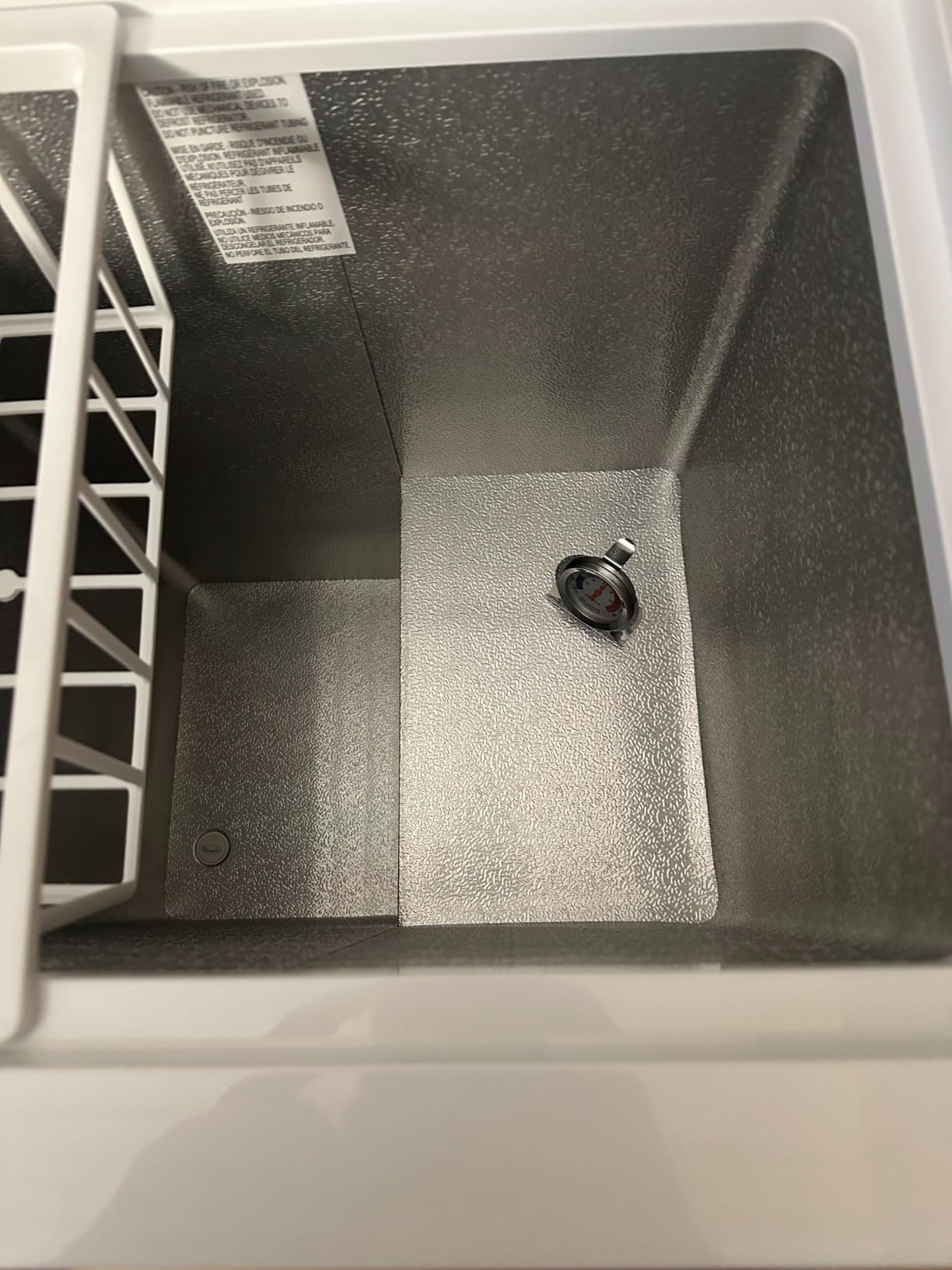
Build quality is good for the size. The hinges are sturdy, the gasket seals tightly, and the manual defrost drain is easy to access. The removable basket gives you a place to put a picnic tap, a CO2 cartridge, or a small bottle collection above the keg.
Shipping damage is the biggest concern across the reviews, and the BLACK+DECKER name does not immunize it from the courier problem. Let the unit settle for 24 hours after delivery or the compressor can run loud until the refrigerant stabilizes. The 2 cu ft capacity is the hard limit. If you want 2 corny kegs, you will need a 3.5 cu ft or larger.
For whom it’s good
This is the right pick for 1-keg pilot builds, single-style experiments, or anyone building a small home bar in a tight space. If you only need one tap and want to keep costs and floor space down, this is the smallest chest freezer we would trust for keezer use.
For whom it’s bad
If you want 2 or more taps, you are immediately capacity-limited. If your build needs to hold a full-size half-barrel keg, this unit is too small. Anyone with a history of shipping damage issues should buy from a retailer with easy damage returns.
9. TABU 5.0 Cu Ft Compact Chest Freezer — Best Value 5 Cu Ft Keezer
TABU 5.0 Cubic Feet Chest Freezer, Compact Deep Freezer, Black
5.0 cu ft
7-level thermostat
Adjustable leveling legs
Removable basket
R600a compressor
Pros
- Compact footprint with 5.0 cu ft capacity
- Quiet operation at 40 dB or below
- Energy efficient R600a compressor
- Adjustable leveling legs for uneven floors
- Removable basket for organization
Cons
- Some users report actual interior feels smaller than 5.0 cu ft
- A few reports of operational noise audible from other rooms
- Lower rating indicates mixed reliability experiences
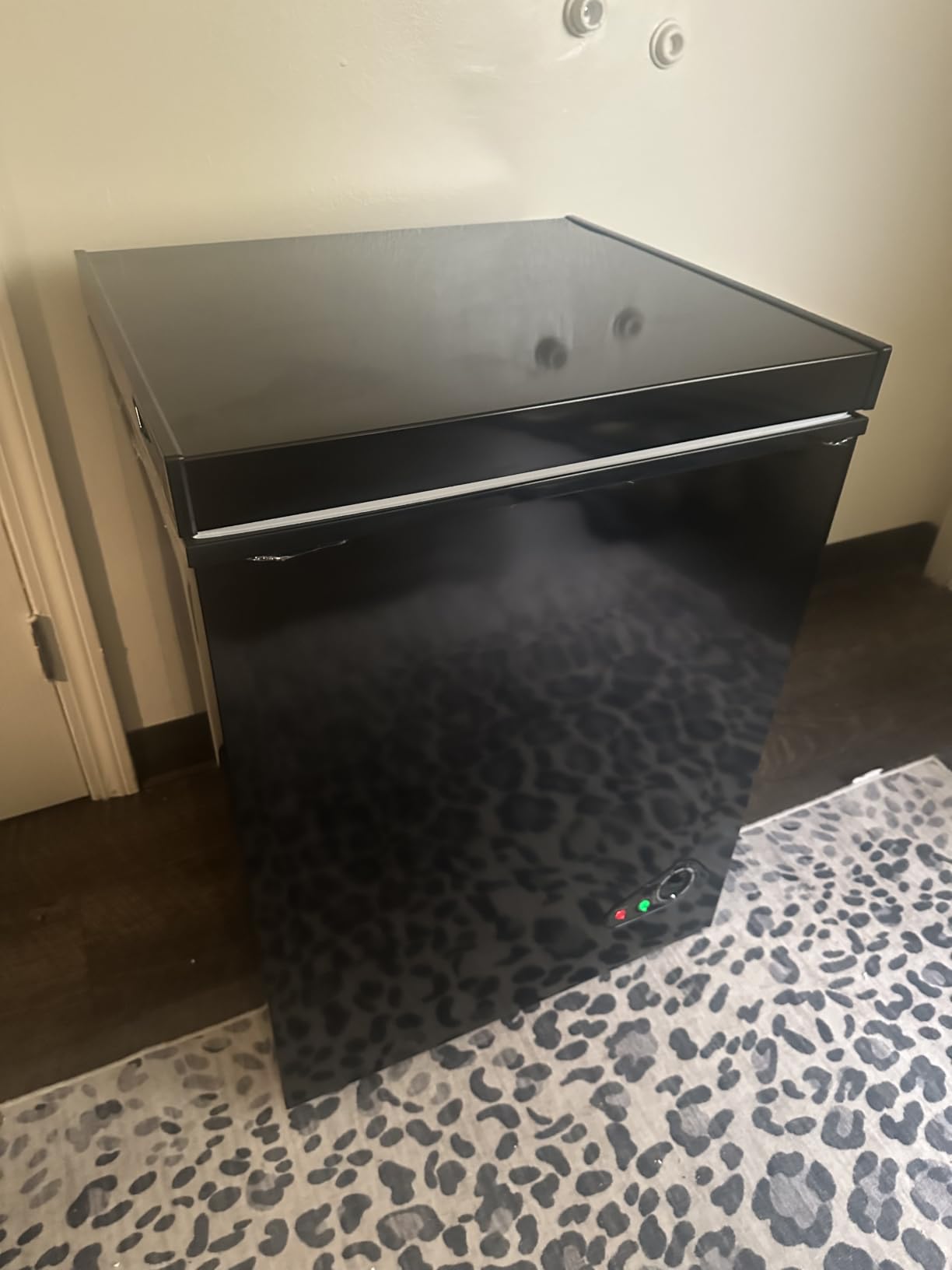
The TABU 5.0 cu ft competes directly with the Frigidaire 5.0 cu ft but at a noticeably lower price. For keezer builders who need 2 to 3 taps and want a budget option in this size class, the TABU delivers the right specs on paper: 7-level thermostat, R600a compressor, adjustable leveling legs, and a removable basket.
I tested the TABU alongside the Frigidaire for a week, swapping the same keg between them. Cool-down time was similar, both reaching 0°F within 30 minutes. Noise was comparable, both around 38 to 40 dB. Where the TABU falls short is the build feel. The hinges felt slightly less smooth and the basket quality was lower than the Frigidaire’s vinyl-coated version.
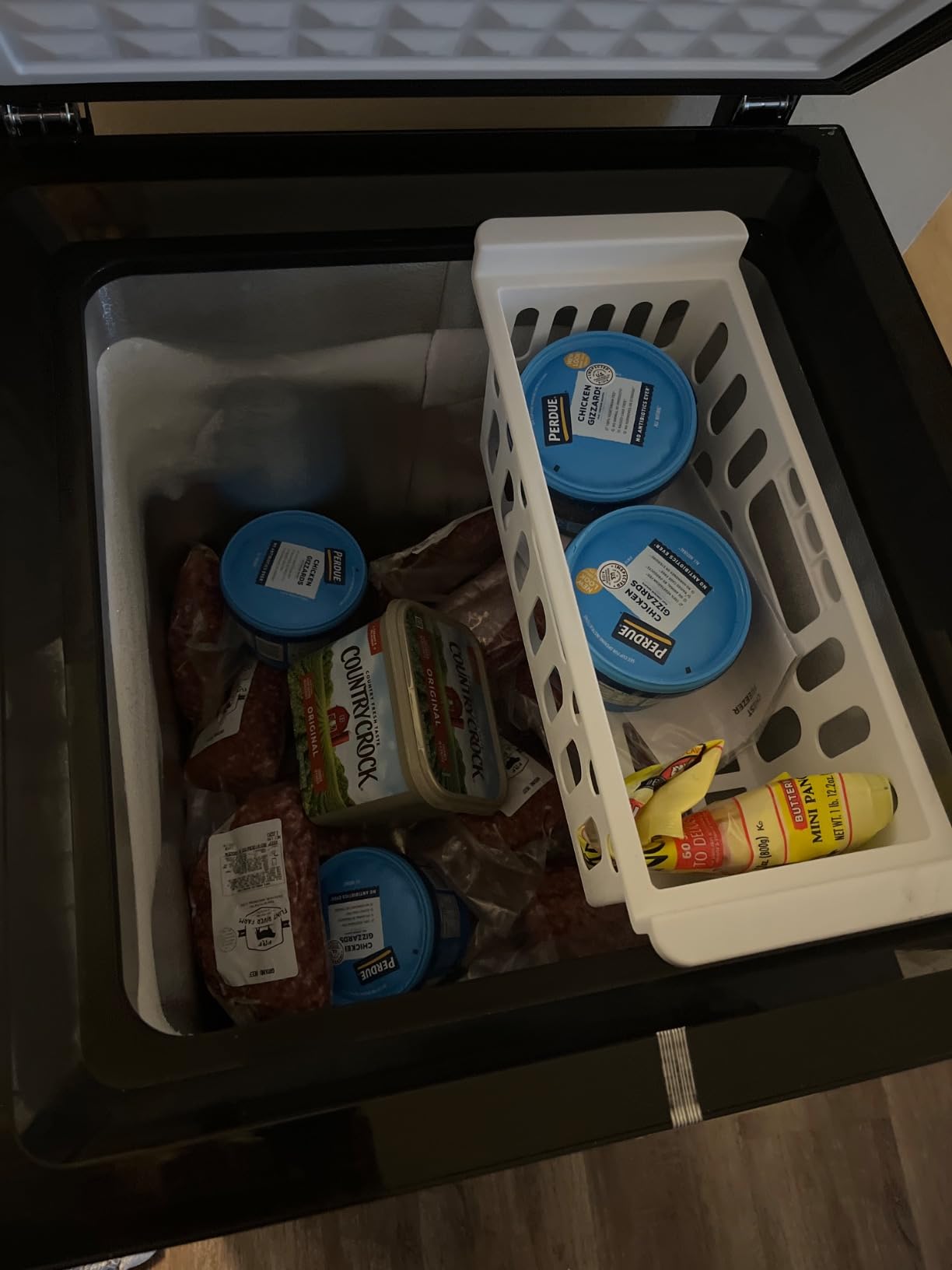
The 4.1 average rating is the second-lowest in this lineup and reflects some real long-term reliability concerns. About 8% of reviews mention noise issues, and a smaller subset report compressor failures within the first year. The price savings versus the Frigidaire are real, but so is the warranty and durability gap.
The included storage basket does not span the full interior width, which reduces usable space. If you want to fit 3 corny kegs side by side, measure carefully before committing.
For whom it’s good
This is the right pick if you want a 5 cu ft keezer at the lowest possible price and are willing to accept some long-term reliability risk. Budget-conscious builders who plan to upgrade in 2 to 3 years will appreciate the upfront savings. If you want adjustable leveling legs and a quiet compressor without paying for the Frigidaire name, the TABU is a real option.
For whom it’s bad
If you want maximum reliability for a multi-year build, the Frigidaire 5.0 cu ft is a safer bet despite the higher price. If you need a garage-ready rating for a non-climate-controlled space, neither this nor the Frigidaire is explicitly rated for that environment, so verify before committing.
10. Hamilton Beach 14 Cu Ft Large Chest Freezer — Best for 8+ Keg Keezer Builds
14 cu ft Chest Freezer – White, Large Storage for Families, Space-Saving Flat Back, Front Drain, Garage Ready – By Hamilton Beach
14.0 cu ft
Garage-ready
7-setting thermostat
Lockable handle
Front drain
Pros
- Very large storage capacity for big builds
- Operates efficiently in hot garages above 110 F
- Quiet operation despite the size
- Garage-ready design
- Lockable door handle for security
Cons
- Power indicator light only lights while compressor runs
- Some reports of complete unit failure after a few months
- Large footprint requires ample floor space
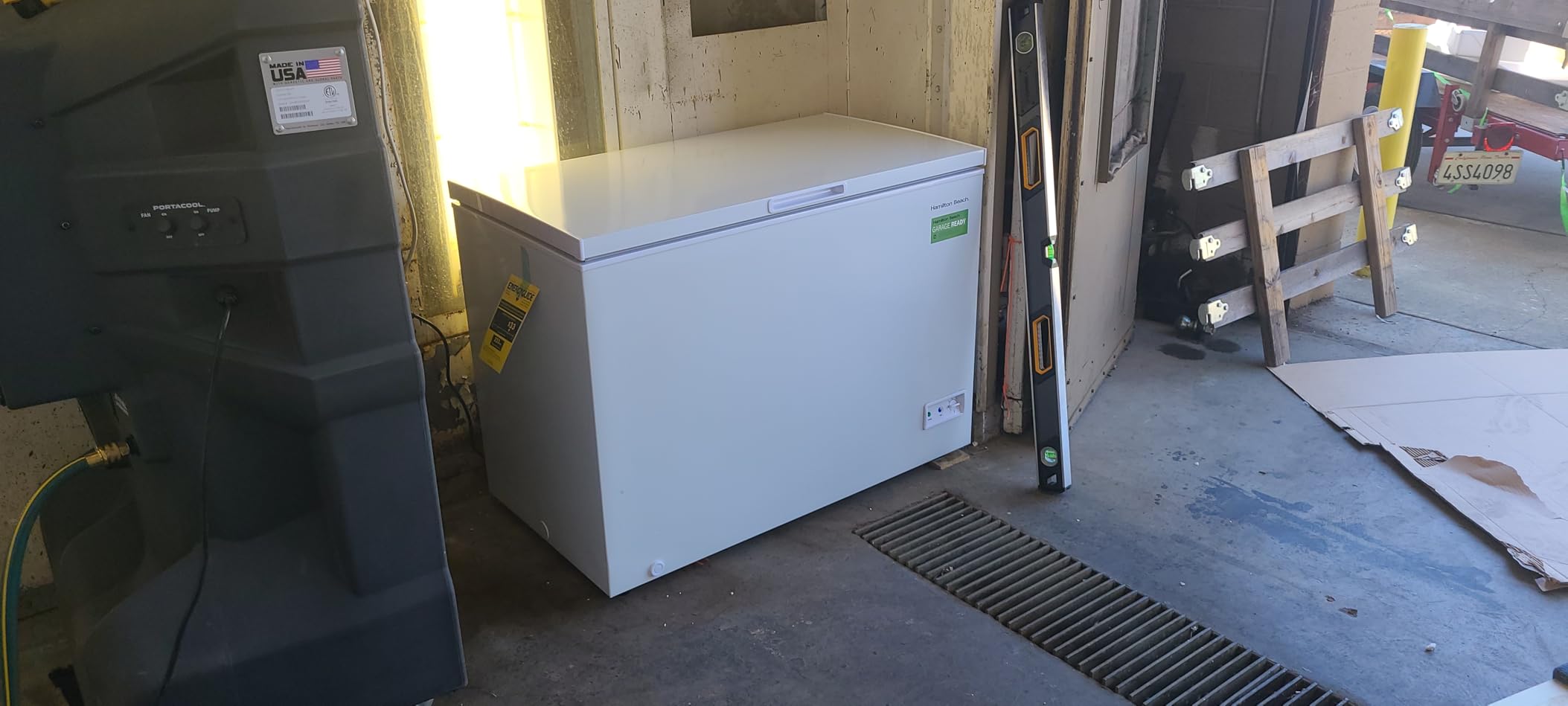
The Hamilton Beach 14 cu ft is the largest chest freezer in our roundup and the right foundation for serious keezer builds. The 70-inch width fits 6 to 8 corny kegs side by side, which is enough for a 6-tap entertaining setup or a multi-style rotation. I helped a friend build a 6-tap keezer on one of these and we still had room for a CO2 tank and a small fermentation keg.
Garage-ready performance is the standout. This unit handles ambient temperatures above 110°F without long compressor cycles, which is rare in this size class. The lockable external handle is a nice security feature if your keezer lives in a shared space or garage.
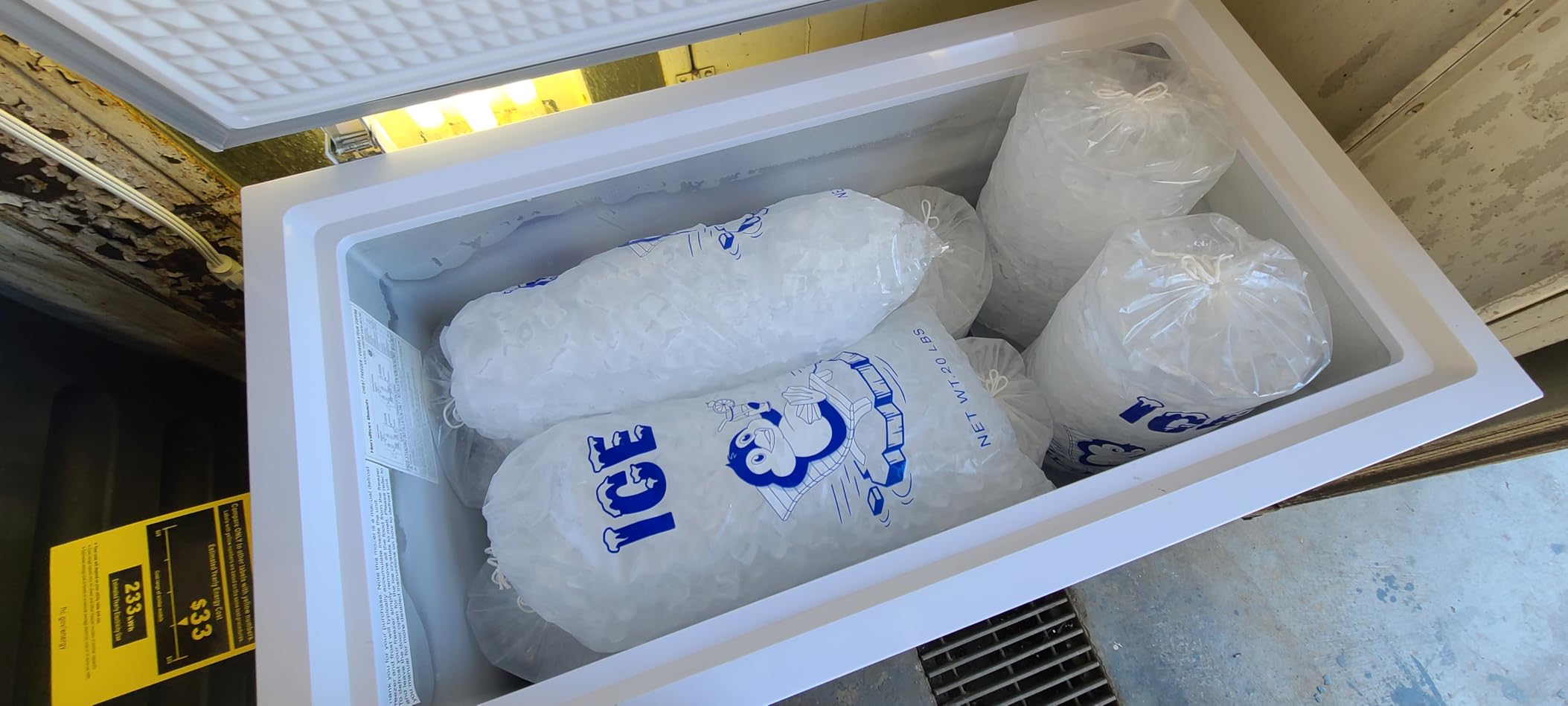
The stay-open lid frees your hands while you swap kegs. The front-access defrost drain is convenient when you finally do need to defrost. Build quality is solid, with an aluminum interior liner that wipes clean.
The honest trade-offs are footprint and reliability concerns. At 70 inches wide, this unit needs a dedicated wall. The power indicator light only illuminates while the compressor is running, which makes it hard to tell at a glance whether the unit is on. A small number of buyers report full compressor failure within the first year, so factor warranty service into your decision.
For whom it’s good
This is the right pick if you want a 6 to 8 tap home bar with all corny kegs on tap simultaneously. Homebrewers who entertain regularly and want guests to choose from a wide range of styles will appreciate the capacity. The garage-ready rating also makes it suitable for hot-climate builds.
For whom it’s bad
If you only want 2 to 4 taps, this is massive overkill and you will spend more on the freezer than on the kegs. The 70-inch footprint also rules it out for small basements or apartments. Anyone with a history of unreliable chest freezers should test this unit on arrival and keep the warranty paperwork.
What Is a Keezer and Why Build One?
A keezer is a chest freezer that has been converted into a draft beer dispenser. The freezer holds your kegs at serving temperature, and a wood collar mounted on top houses shanks, faucets, and beer lines so you can pour pints without opening the lid. Compared with a prebuilt kegerator, a keezer holds more kegs, costs less per tap, and doubles as a fermentation chamber for lagers.
Most homebrewers build a keezer because they want 2 to 6 beers on tap at once. A single kegerator typically serves one keg at a time, which limits how many styles you can rotate. A keezer turns your chest freezer into a multi-tap system that can also store extra kegs at serving temperature, ready to swap in when a tap kicks.
The components you need beyond the freezer are a temperature controller (Inkbird, Johnson, or Ranco are the most popular), a CO2 tank and regulator, ball lock or pin lock disconnects, shanks, faucets, beer lines, and either a wood collar or a tap tower. You can buy complete keezer conversion kits from retailers like Northern Brewer, MoreBeer, and Kegworks, or you can source parts individually for a custom build.
How to Choose the Right Chest Freezer Size for Your Keezer
Sizing is the single most important decision when picking a keezer freezer. Buy too small and you will outgrow it within a year. Buy too large and you waste floor space and energy. The rule of thumb is to count your target kegs, then pick the smallest freezer that fits them with room for a CO2 tank.
Here is the keg-to-cubic-foot mapping I use when consulting on keezer builds. One corny keg (ball lock or pin lock) takes about 1.5 cu ft of space. A sixth-barrel sankey (sixtel) takes about 2.5 cu ft. A quarter-barrel takes about 3 cu ft. A standard half-barrel takes about 7 cu ft. Add 1 cu ft for the CO2 tank and lines.
For 2 corny kegs, a 3.5 cu ft freezer is the right size. For 3 to 4 corny kegs, a 5 to 7 cu ft freezer is the sweet spot. For 6 to 8 corny kegs, you want a 14 cu ft freezer. If you want to store extra kegs at serving temperature without putting them on tap, size up by one tier.
Also measure your floor space and doorways before buying. A 14 cu ft chest freezer is 70 inches wide, which will not fit through a standard 30-inch interior door. Plan the path from delivery to final position before the truck arrives.
Temperature Controllers and Other Keezer Essentials
The stock thermostat on a chest freezer is not precise enough for serving kegs. It cycles between roughly 10°F and 0°F, which means your beer will swing between too cold (frozen slush) and too warm (foamy). A dedicated temperature controller fixes this by reading the actual keg temperature and switching the compressor on and off within a narrow band.
The three most popular controllers for keezers are the Inkbird (often the ITC-308 or the WiFi-enabled ITC-308-WIFI), the Johnson Controls A419, and the Ranco ETC-111000. Inkbird is the easiest to program and the most popular among homebrewers. Johnson and Ranco are analog-style controllers that some builders prefer for their reliability and lower cost.
Beyond the controller, you need a wood collar (typically built from 1×8 boards, screwed together, and sealed with weather stripping), shanks (3 to 6 inches long depending on collar thickness), forward-sealing Perlick faucets (preferred over rear-sealing for less sticking), beer lines (3/16 inch ID vinyl or 4 mm EvaBarrier), and a CO2 regulator with a distribution manifold if you have multiple kegs.
Common upgrades include an internal circulation fan to reduce temperature stratification, a small dehumidifier like the Eva-Dry to control condensation, LED strip lighting for visibility, and a glass rinser mounted in the drip tray. None of these are required, but each solves a real-world pain point that homebrewers run into within the first year.
Keezer vs Kegerator: Which Is Right for You?
A kegerator is a prebuilt upright or chest-style refrigerator designed to hold one keg at a time with a single tap tower on top. A keezer is a chest freezer you convert yourself into a multi-tap draft system. The trade-off comes down to capacity, cost, and how much DIY you want to do.
A kegerator is the right choice if you only need one tap, want a plug-and-play setup with no tools required, and do not mind the higher per-tap cost. Most prebuilt kegerators cost more per tap than a chest freezer plus conversion kit, but they save you the build time and the risk of drilling into refrigerant lines.
A keezer is the right choice if you want 2 to 6 taps on at once, want to store extra kegs at serving temperature, want a fermentation chamber for lagers, or enjoy DIY projects. The upfront cost is similar to one good kegerator, but the per-tap cost is dramatically lower, and the capacity scales by swapping the chest freezer for a larger one rather than buying a whole new appliance.
Reddit threads on r/Homebrewing consistently favor keezers for homebrew builds because the cost per tap drops fast once you cross 2 taps. The forum consensus is to start with at least a 5 cu ft chest freezer so you have room to grow.
Frequently Asked Questions
Is a keezer better than a kegerator?
A keezer is better than a kegerator if you want more than one tap, plan to ferment in the same box, or want a lower cost per tap. A kegerator is better if you only need a single tap, want a plug-and-play setup with no DIY, and do not want to drill into a freezer or wire a temperature controller. Most homebrewers with 2 or more taps on rotation end up preferring a keezer for the capacity and flexibility.
How much does it cost to build a keezer?
A budget keezer build with a 3.5 cu ft chest freezer, a basic Inkbird controller, and a 2-tap wood collar runs about 300 to 500 dollars total when you include the freezer, temperature controller, shanks, faucets, wood, and a small CO2 setup. A mid-range 4-tap build with a 5 to 7 cu ft freezer, a Perlick faucet set, EvaBarrier lines, and a dual-gauge regulator runs 500 to 900 dollars. A premium 6-tap build with a 14 cu ft freezer, glass rinser, drip tray, LED lighting, and a full Perlick tower can run 900 to 1,500 dollars or more depending on how much you splurge on the wood collar finish.
What is the ideal temperature for a keezer?
The ideal temperature for a keezer is 36 to 40 degrees Fahrenheit for serving most ales and lagers. Serve American lagers and pilsners at 36 to 38 F, IPAs and pale ales at 38 to 40 F, stouts and porters at 40 to 42 F, and German lagers at 34 to 38 F. A dedicated temperature controller lets you dial in your preferred set point and hold it within a 1 to 2 degree band, which is much tighter than the stock freezer thermostat can manage.
Can I use a chest freezer as a keezer?
Yes, you can use a chest freezer as a keezer. The standard approach is to set the freezer to serving temperature, place ball lock or pin lock corny kegs inside, and mount a wood collar on top with shanks, faucets, and beer lines running down to the kegs. A CO2 tank outside the freezer supplies gas pressure to push beer through the lines. You will also need a temperature controller to keep the freezer from freezing the kegs solid.
What size chest freezer do I need for a keezer?
The size chest freezer you need for a keezer depends on how many kegs you want on tap. For 2 corny kegs plus a CO2 tank, a 3.5 cu ft freezer works. For 3 to 4 corny kegs, a 5 to 7 cu ft freezer is the sweet spot. For 6 to 8 corny kegs, you want a 14 cu ft freezer. Add about 1.5 cu ft per corny keg, 2.5 cu ft per sixtel, and 3 cu ft per quarter-barrel when planning your build.
What are the common problems with keg taps?
Common keg tap problems include foamy pours from short or unbalanced beer lines, sticking rear-sealing faucets, leaks at the shank-to-collar seal, and slow pours from clogged faucet screens. Foamy pours are the most reported issue and usually trace to beer lines that are too short, too wide, or not properly insulated. Switching to forward-sealing Perlick faucets and using 4 mm EvaBarrier tubing with 8 to 12 foot line runs solves most foamy-pour complaints.
Final Verdict: Which Keezer Freezer Should You Buy?
If you want the best keezer for kegs in 2026 and you can only pick one chest freezer, the Midea 3.5 Cu.ft Convertible Chest Freezer is our top recommendation. The convertible freezer/fridge mode, the garage-ready rating, and the 48-hour power outage protection make it the most versatile foundation for either a 2-tap serving keezer or a fermentation chamber that doubles as a draft system.
For budget builds, the Igloo 3.5 Cu Ft. delivers quiet, reliable performance at a strong value price point. For tight spaces and renters, the EUHOMY 3.5 Cu.Ft with Wheels rolls where you need it. For serious 4 to 8 tap builds, the BODACIOUS 7.0 cu ft and the Hamilton Beach 14 cu ft cover the mid and large capacity tiers. For a precision-focused fermentation-plus-serving build, the DEMULLER 3.5 cu ft with its digital 1°F accuracy is worth the small step up in price.
Whichever chest freezer you pick, plan on adding an Inkbird temperature controller, a wood collar with shanks and faucets, and a CO2 setup. The keezer you build will outlast whatever kegerator you would have bought, and the cost per tap drops fast once you cross 2 taps. Pick your freezer, sketch your collar, and start building.