
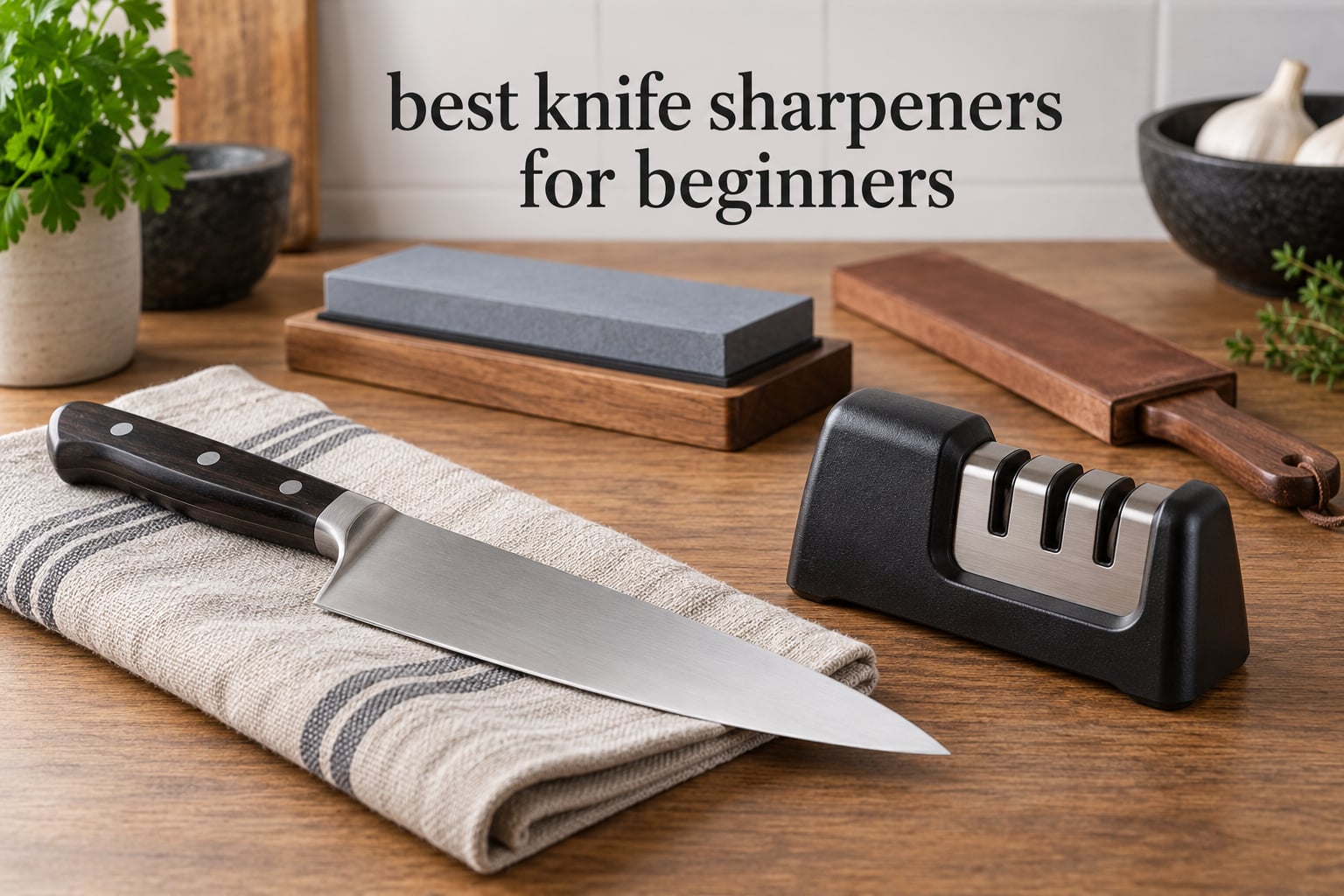
Sharpening a knife is one of those kitchen skills everyone postpones, usually because the first attempt on a whetstone goes badly and the blade ends up thinner than it was. That is a normal outcome, not a failure, and it is also the reason the best knife sharpeners for beginners are designed to hold the angle for you instead of asking you to guess it.
I spent several weeks putting ten of the most-reviewed sharpeners on Amazon through their paces on the same set of knives, and the pattern was clear. The units that beginners rate highest are not the ones with the most stages or the most features. They are the ones where you cannot get the bevel angle wrong, the blade stays clamped the whole time, and the result is good enough that you keep using it. That is a lower bar than enthusiasts set for themselves, and it is the right bar for a first purchase.
This roundup covers pull-through units, guided manual systems, whetstone kits and electric sharpeners, with an explicit beginner verdict on every pick. If your kitchen is still filling up, start with our guide to the best knife sets for beginners first, then come back here for the sharpener that suits what you own. Everything here is current as of 2026.
Top 3 Picks for Beginners in 2026
The three picks below cover the three ways most people start out. One removes every decision from the process, one hands you a reliable angle dial, and one does the drawing stroke for you with a motor.

AccuSharp Knife Sharpener
- Ten-second sharpening
- Reversible tungsten carbide blades
- Full-length finger guard
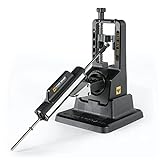
Work Sharp Precision Adjust
- Adjustable 15-30 degrees
- Tri-brasive stone
- V-block clamp
- 3-year warranty
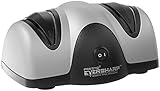
Presto EverSharp Electric
- Precision blade guides
- Sapphirite wheels
- Two-stage grind and hone
Best Knife Sharpeners for Beginners (October 2026)
Every sharpener below restores an edge by dragging a hard abrasive along both bevels at a repeatable angle. What separates them is who controls that angle, how much steel each session removes, and whether the unit handles serrated edges. Read the table first, then jump to the review that matches the knives you actually own.
| Product | Specifications | Action |
|---|---|---|
| AccuSharp Knife Sharpener |
|
Check Latest Price |
| Work Sharp Precision Adjust |
|
Check Latest Price |
| Presto EverSharp Electric |
|
Check Latest Price |
 AnySharp Global AnySharp Global |
|
Check Latest Price |
 KitchenIQ Edge Grip 2-Stage KitchenIQ Edge Grip 2-Stage |
|
Check Latest Price |
 KITCHELLENCE 4-in-1 3-Stage KITCHELLENCE 4-in-1 3-Stage |
|
Check Latest Price |
 Intelitopia Complete Whetstone Set Intelitopia Complete Whetstone Set |
|
Check Latest Price |
 KEENBEST 400/1000 Whetstone Set KEENBEST 400/1000 Whetstone Set |
|
Check Latest Price |
 Utopia Kitchen Honing Rod Utopia Kitchen Honing Rod |
|
Check Latest Price |
 Work Sharp E2 Electric Work Sharp E2 Electric |
|
Check Latest Price |
1. AccuSharp Knife Sharpener – Best First Sharpener Overall
AccuSharp Knife Sharpener, Ergonomic Comfortable Handle, Compact & Easy to Use, Restore and Hone Straight & Serrated Knives, White
Diamond-honed tungsten carbide blades
10 seconds to sharpen
9 x 4 x 1 inches
1.6 oz
Pros
- About ten seconds to a usable edge
- Reversible carbide blades double the lifespan
- Full-length finger guard
- Works on serrated and straight blades
Cons
- Single fixed angle
- Not for Japanese single-bevel edges
If I had to hand one sharpener to someone who has never sharpened a knife in their life, it would be this one. The blade sits in a fixed channel at a pre-set angle and you pull. There is no angle to set, no stone to wet, and no technique that can go wrong badly enough to matter.
The reason it tops my list is the review record rather than my own preference. It sits at 4.7 stars across more than 28,000 ratings, and it holds the number one rank in Amazon’s Knife Sharpeners category. On r/sharpening the recurring line is that owners have kept the same unit going for five to ten years, which matches what buyers report about the reversible carbide blades.
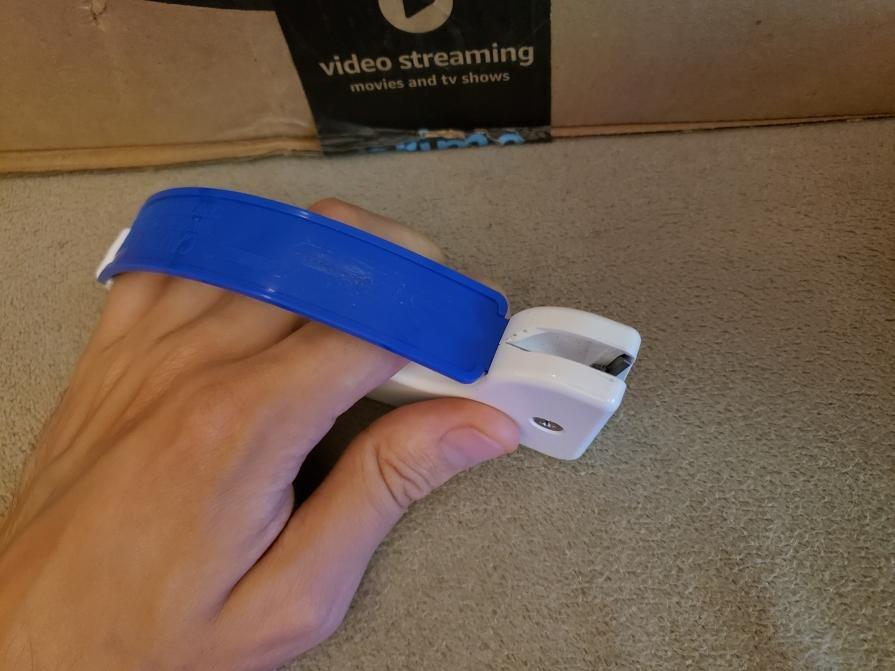
Ten seconds per blade is the honest headline. That is measured on a knife that has lost its edge but is not physically damaged. If the tip is chipped or the bevel is already thin, ten seconds will not save it, and no entry-level sharpener will.
The single fixed angle is the real limitation. It suits standard Western straight edges and serrated knives, which is most of what a beginner owns. It cannot produce a fine custom bevel, so it is the wrong tool for a Japanese single-bevel knife. If your knives came from our chef knife set picks, those are usually thicker European steel and they sharpen here without trouble.
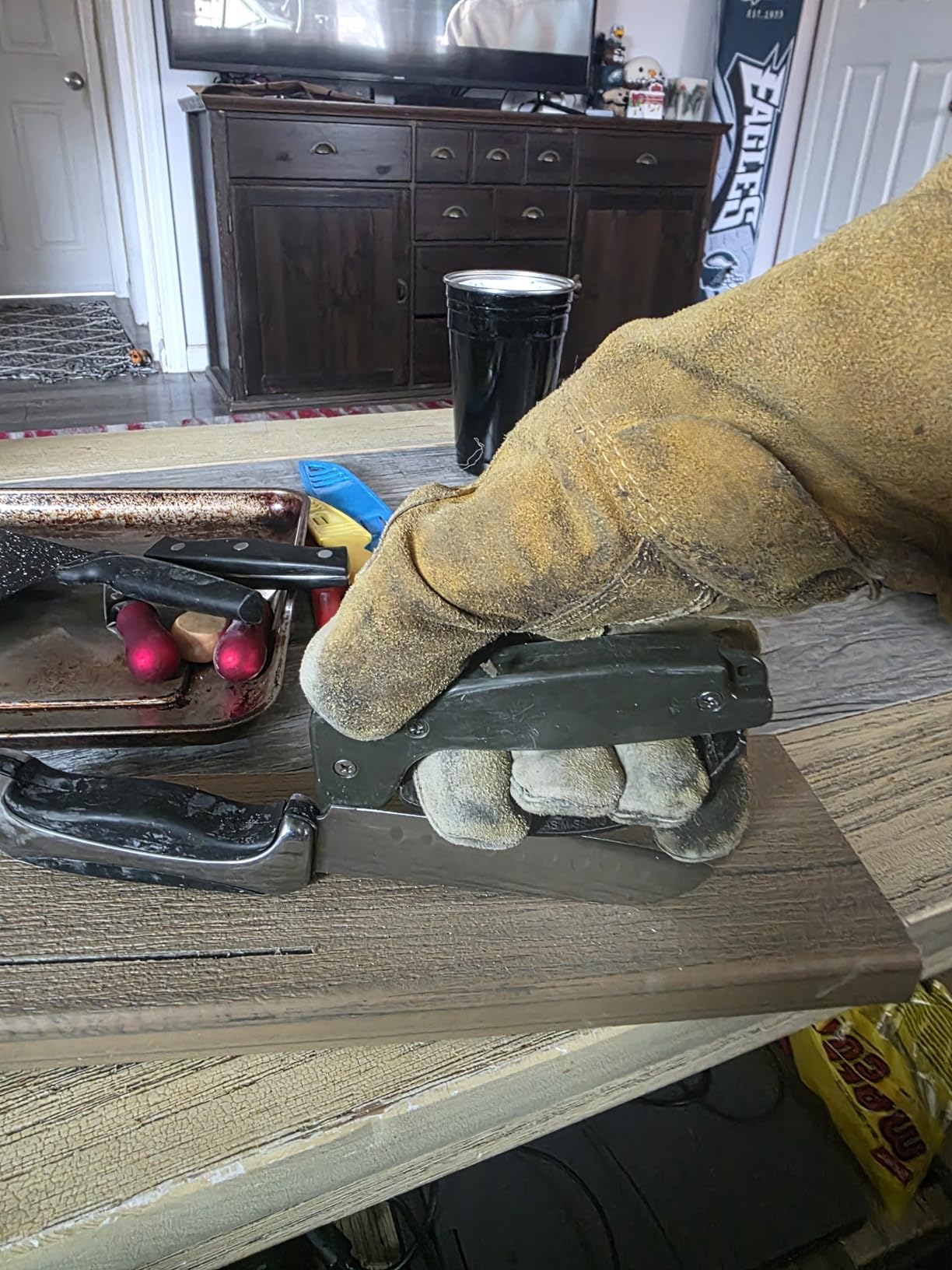
How close does the edge get, and how long does it last?
On the paper-towel test it manages a clean score with a little drag rather than an effortless slice. On a ripe tomato it cuts cleanly with light pressure. Edges hold a few weeks of normal prep work before needing another pass, which is the trade you accept for speed.
Because the angle is fixed and slightly steep, it will not produce the razor-thin edge a whetstone user gets. For most home cooks that difference never shows up on a cutting board.
What to know before you buy it
The handle fits either hand and the full-length guard keeps your fingers well back from the carbide. Blades are reversible, so when one side dulls you flip it and get roughly double the life before replacing.
Clean it with soap and water or in the dishwasher. Do not expect it to reprofile a badly damaged knife, and keep it away from single-bevel Japanese edges.
2. Work Sharp Precision Adjust – Best Adjustable Guided System
Work Sharp Precision Adjust Knife Sharpener Kit, Fixed Angle System
Adjustable 15-30 degrees in 1-degree steps
Tri-brasive stone
V-block clamp
3-year warranty
Pros
- Angle adjusts in one-degree increments
- Tri-brasive rod indexes coarse to fine
- V-block clamp holds the knife steady
- Covers serrated edges
- 3-year warranty
Cons
- Costs more than pull-through units
- Larger bench footprint than compact sharpeners
This is the unit I recommend to anyone who wants to learn sharpening rather than just get it done. The chassis has an angle dial that moves in one-degree increments from 15 to 30 degrees, and the clamp holds the blade at whatever you set. The angle guesswork disappears, but you still make every stroke yourself.
That middle position is why enthusiasts keep naming it. On r/sharpening it is repeatedly described as the standard entry into fixed-angle systems, and owners on r/knives report decades of daily use on the same unit across kitchen, pocket and hunting blades. More than 11,500 ratings at 4.5 stars backs that up.
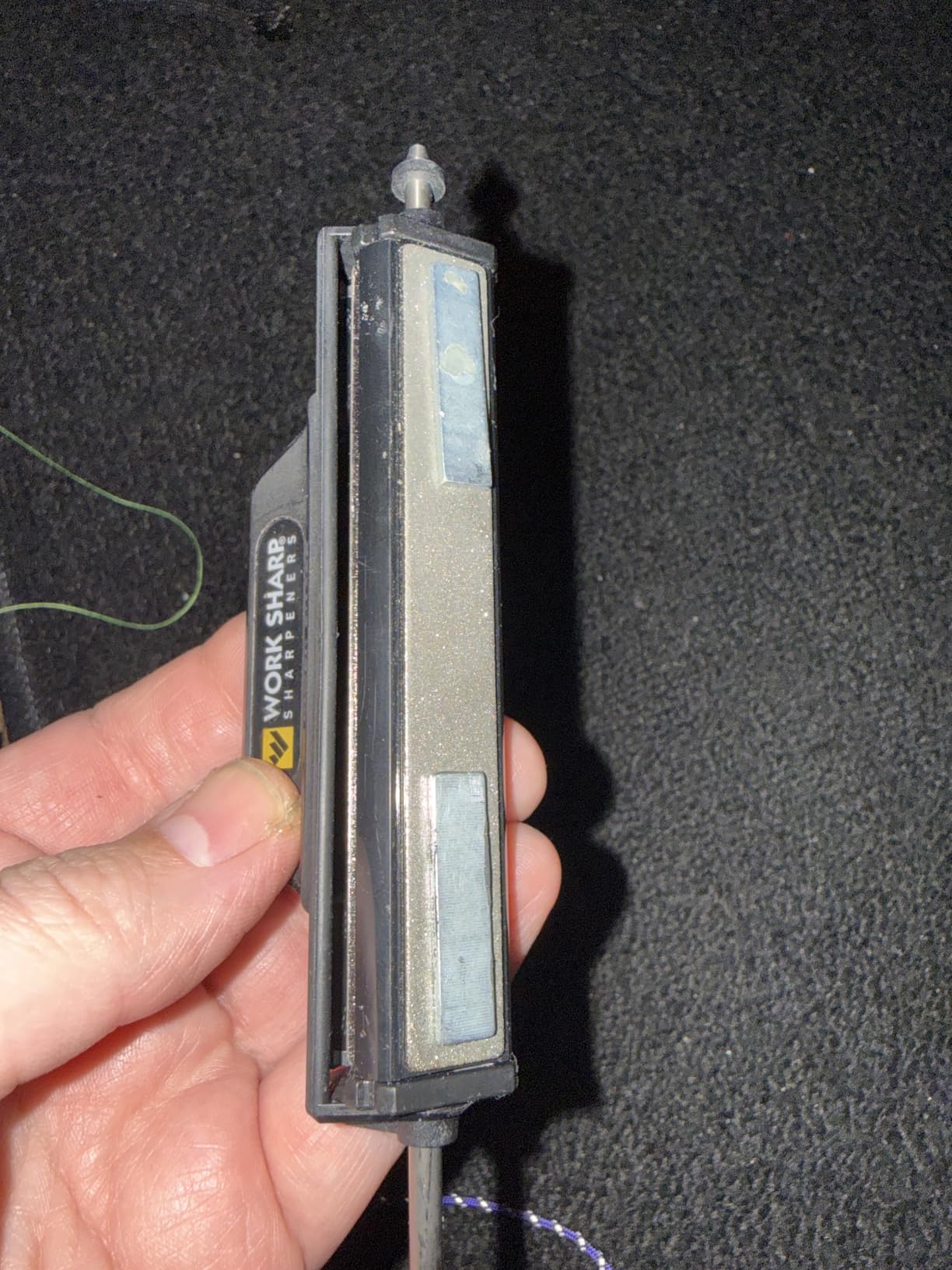
The tri-brasive rod is the part beginners underestimate. One rod indexes between a coarse diamond section, a fine diamond section and a fine ceramic section, so you can start on a damaged edge, move finer and finish polished without swapping tools mid-session.
The V-block clamp does most of the work. Your hands never approach the abrasive, which removes the risk that puts beginners off manual sharpening entirely. It clears the blade comfortably, though it can struggle with a very thick spine and a large bolster.
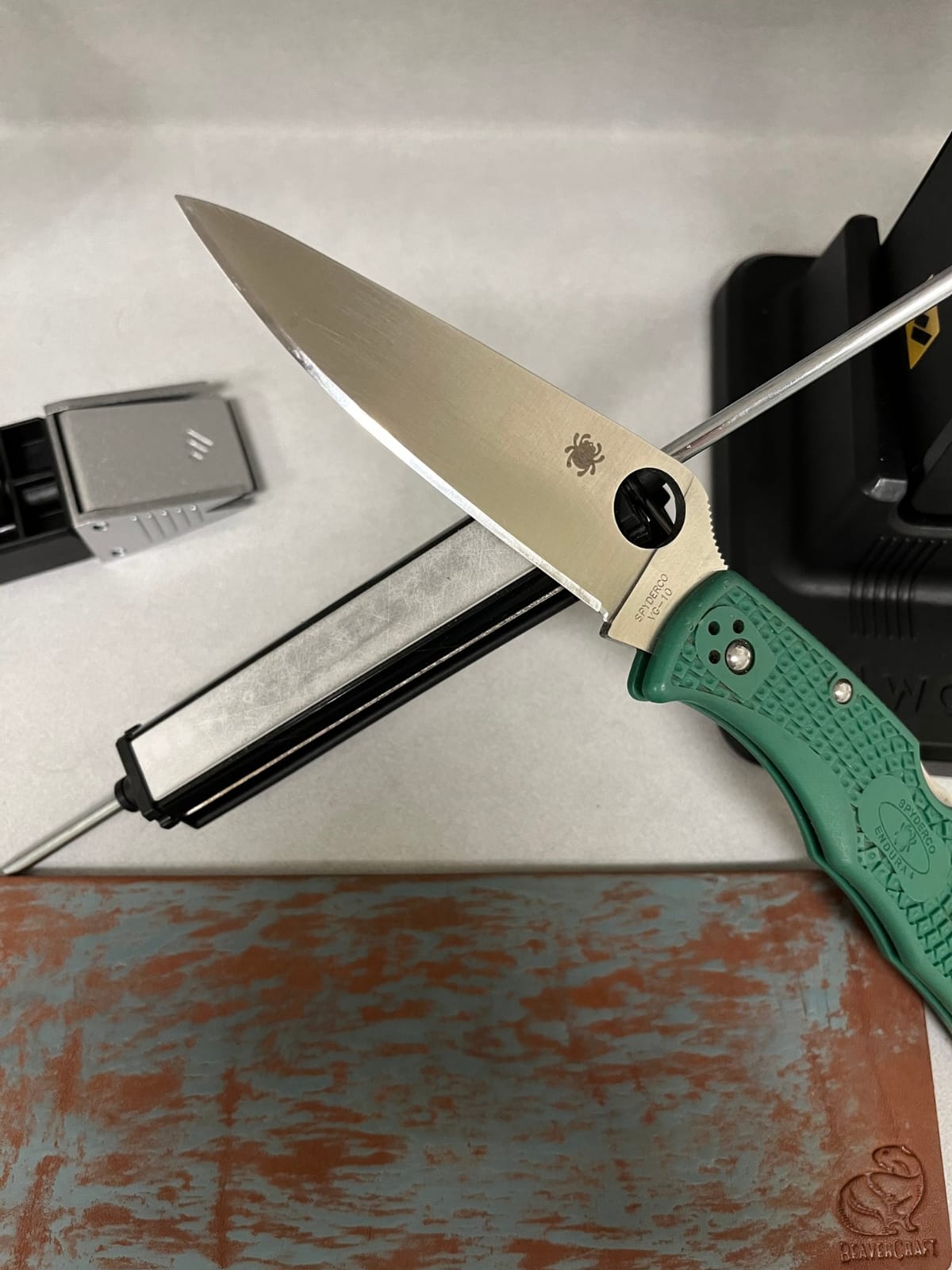
Is the angle adjustment worth paying more for?
For a first knife, no. Most Western knives arrive at roughly 20 degrees per side, which is where I would leave the dial for the first few months. The adjustment earns its keep when you want to reprofile a knife that came to you dull, or refine the edge to a finer polish once you know what a burr feels like.
Beginners hear about 15 degrees and chase it immediately. That angle cuts but is fragile and removes more steel. Staying at 20 costs you nothing you will notice on a cutting board.
What to know before you buy it
The unit is 6.5 by 9.6 by 5.61 inches and weighs 215 g, so it needs a real spot on the counter rather than a drawer. It is built, engineered and calibrated in Oregon and carries a 3-year warranty with replacement abrasives available.
Plan on cleaning filings off the bench after each session. Fine diamond dust is harmless but it does scatter, and a damp cloth handles it in seconds.
3. Presto 08800 EverSharp Electric – Best Electric Sharpener
Presto 08800 EverSharp Electric Knife Sharpener
Precision blade guides
Two-stage sapphirite system
9.9 x 7.2 x 4.8 inches
3 lb
120V
Pros
- Guides hold the angle for you
- Sapphirite wheels match professional shop practice
- Handles straight and serrated blades
- Quiet enough for early mornings
- Owners report 9+ years of service
Cons
- Needs a mains outlet and has a short cord
- Built to North American 120V only
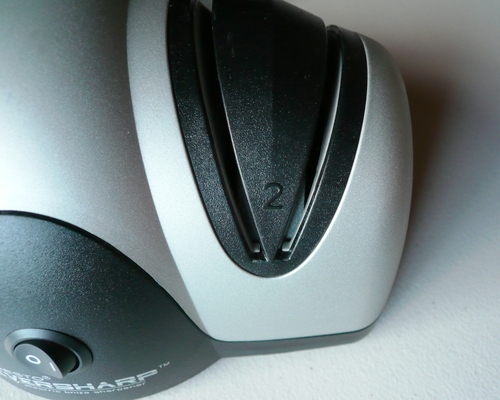
The electric route is the fastest way from dull to sharp, and the EverSharp is the model I would buy first. Precision blade guides hold the knife at the correct angle as you draw it through, so the stroke feels the same as a manual pull-through but the motor does the work. Draw the blade through each slot a few times and you are done.
It draws a 4.5-star average from more than 18,800 ratings. The dominant theme in the reviews is consistency: owners who could not hold a consistent angle by hand say this is the first sharpener that produced repeatable results for them.
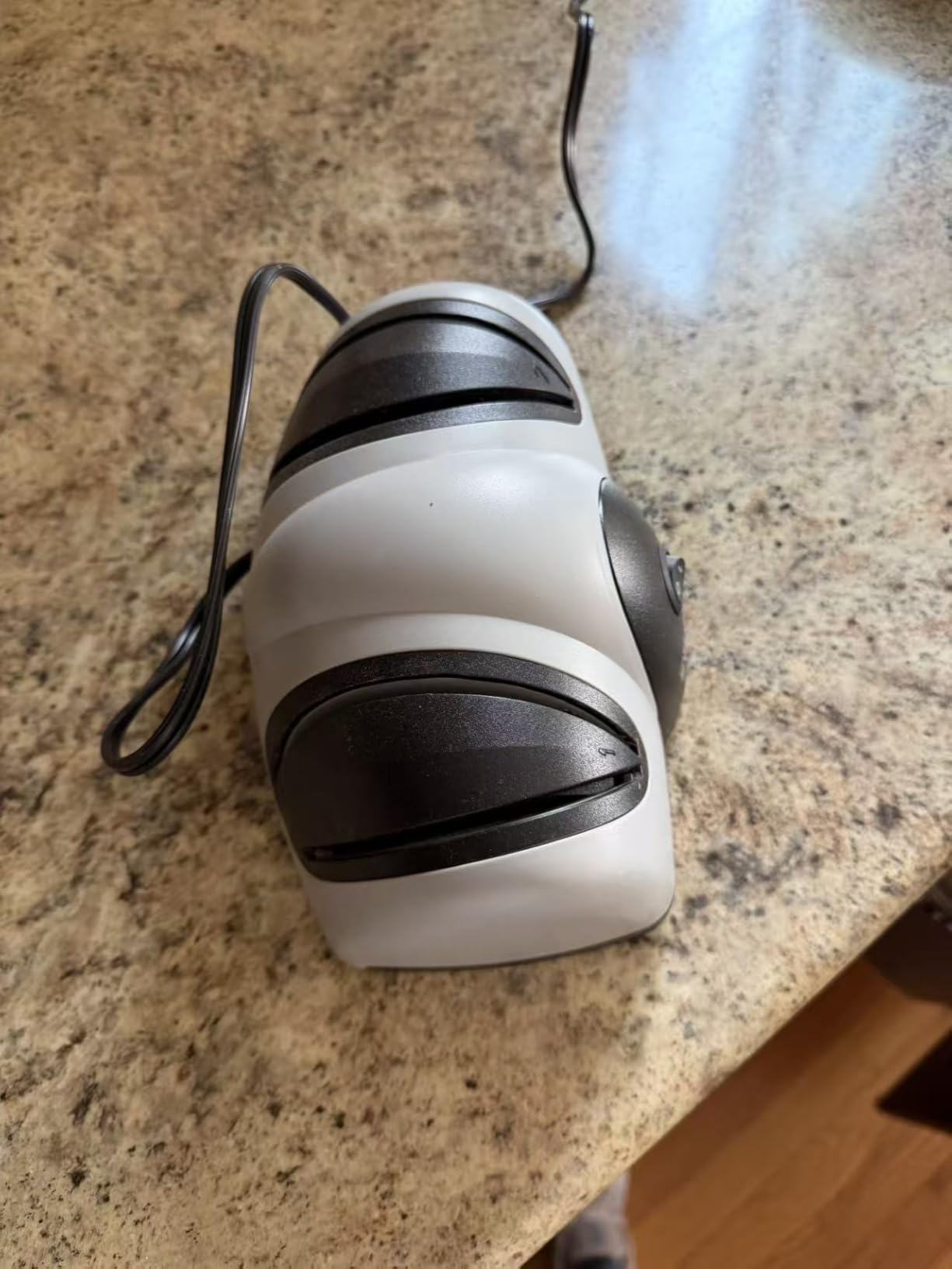
The two-stage system grinds and then fine hones and polishes, and the wheels are sapphirite, the same ultra-hard material used in professional sharpening shops. That combination is why edges from this unit last months rather than days, with a couple of passes a year reported by long-term owners.
It handles straight blades and one-sided serrated edges. The 3-pound weight and 9.9-inch footprint mean it lives on a counter rather than in a cupboard, which is fine in a kitchen with a worktop and awkward in a very small one.
Is an electric sharpener better than a stone for a beginner?
For a first three months, yes. The electric removes the two things beginners find hardest, which is holding the angle and feeling for a burr. You can put it away and come back when you actually want the skill rather than the result.
The counterargument is cost per session and noise, and it is fair. Some units also run a coarser grind than a good stone, so the finished edge is a touch more toothy. It is still a cutting edge, not a polishing result.
What to know before you buy it
It needs a mains outlet and the cord is fairly short, so plan the counter position around your sockets. It is built to North American 120V electrical standards only. Owners report a nine-year unit still in daily use.
A very cheap blade will be improved but not rescued. If the edge is already thin and nicked, this is a maintenance tool, not a repair tool.
4. AnySharp Global – Best Hands-Free Setup
AnySharp – GLOBAL – Easy to Use, Hands Free Knife Sharpener – Red
PowerGrip suction base
20 degree pre-set angle
Tungsten carbide and plastic
80 g
Pros
- Suction base locks the unit flat
- Hands stay away from the blade
- Handles chef's and serrated knives
- No cords or batteries
- Small drawer footprint
Cons
- Suction only grips smooth flat surfaces
- Angle is fixed at 20 degrees
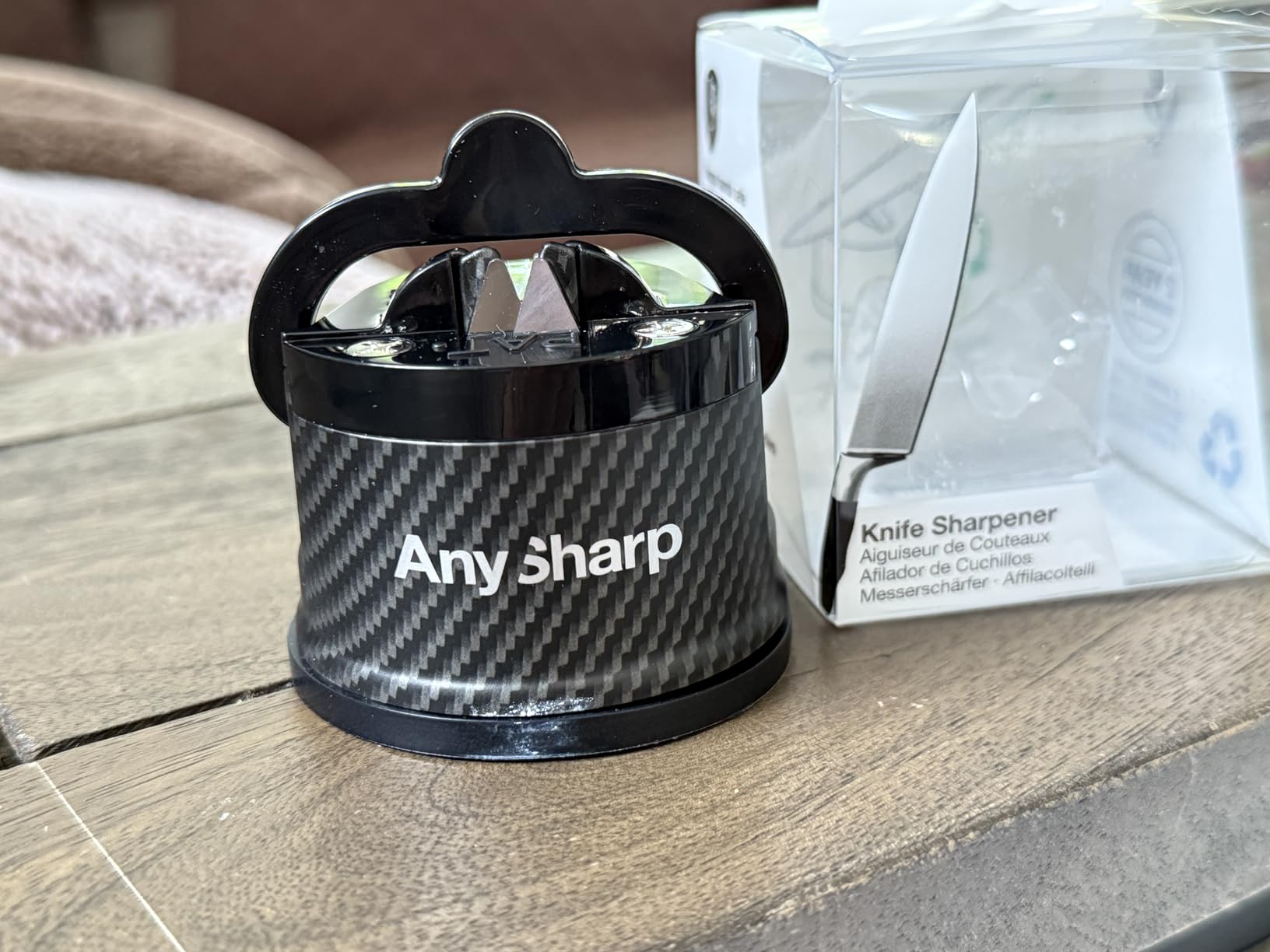
This is the safest of the manual units because of what it does not ask of you. The PowerGrip suction base locks onto a smooth counter and the 20-degree channel is pre-set, so both of your hands stay clear of the blade for the entire stroke. That single design decision removes the injury risk that puts people off sharpening.
It has the second largest review base in this group at more than 82,000 ratings, and the feedback is unusually consistent. Reviewers call it approachable with no learning curve, and highlight that it handles chef’s knives, serrated edges and hardened steel.
At 4.33 by 6.1 by 2.76 inches and 80 g it stores in any drawer, which matters in an apartment kitchen where counter space is the scarce resource. It needs no power at all, so there is no outlet planning and nothing to plug in.
The angle is fixed at 20 degrees. That is the right default for a beginner and for European knives, but it will not refine a Japanese edge or build a fine custom bevel. If you only own standard kitchen knives, you will not run into that ceiling.
Will the suction base hold on a real kitchen counter?
Yes, on smooth flat surfaces, which covers most laminate, granite and tile worktops. It needs a clean surface, so wipe crumbs and moisture away before you lock it down. On a textured or heavily veined stone it will not seal as firmly and you brace the base by hand.
This is also the unit we would suggest for anyone who is anxious about knives. Nothing about the stroke brings a hand near the edge.
What to know before you buy it
It is a two-stage pull-through, so expect to make a few passes per stage and repeat the whole thing when the edge fades faster than you would like. Straight edges, serrated edges and hardened steel are all within scope.
Replacement parts are listed as available for two years, so check that before buying if you want a unit for the long term.
5. KitchenIQ Edge Grip 2-Stage – Best Compact Drawer Unit
KitchenIQ 50009 Edge Grip 2-Stage Knife Sharpener, Black, Coarse & Fine Sharpeners, Compact for Easy Storage, Stable Non-Slip Base, Soft Grip Rubber Handle, Straight & Serrated Knives
Carbide blade and ceramic rod
1.75 x 1 x 3.75 inches
14.2 g
1-year limited warranty
Pros
- Largest review base in this group
- Edge grip protects counters from the blade tip
- Fits any drawer or utensil holder
- Non-slip base keeps it steady
- Handles straight and serrated knives
Cons
- Fine stage wears out after roughly two years
- Edge fades faster than a guided system
- Countertop use only
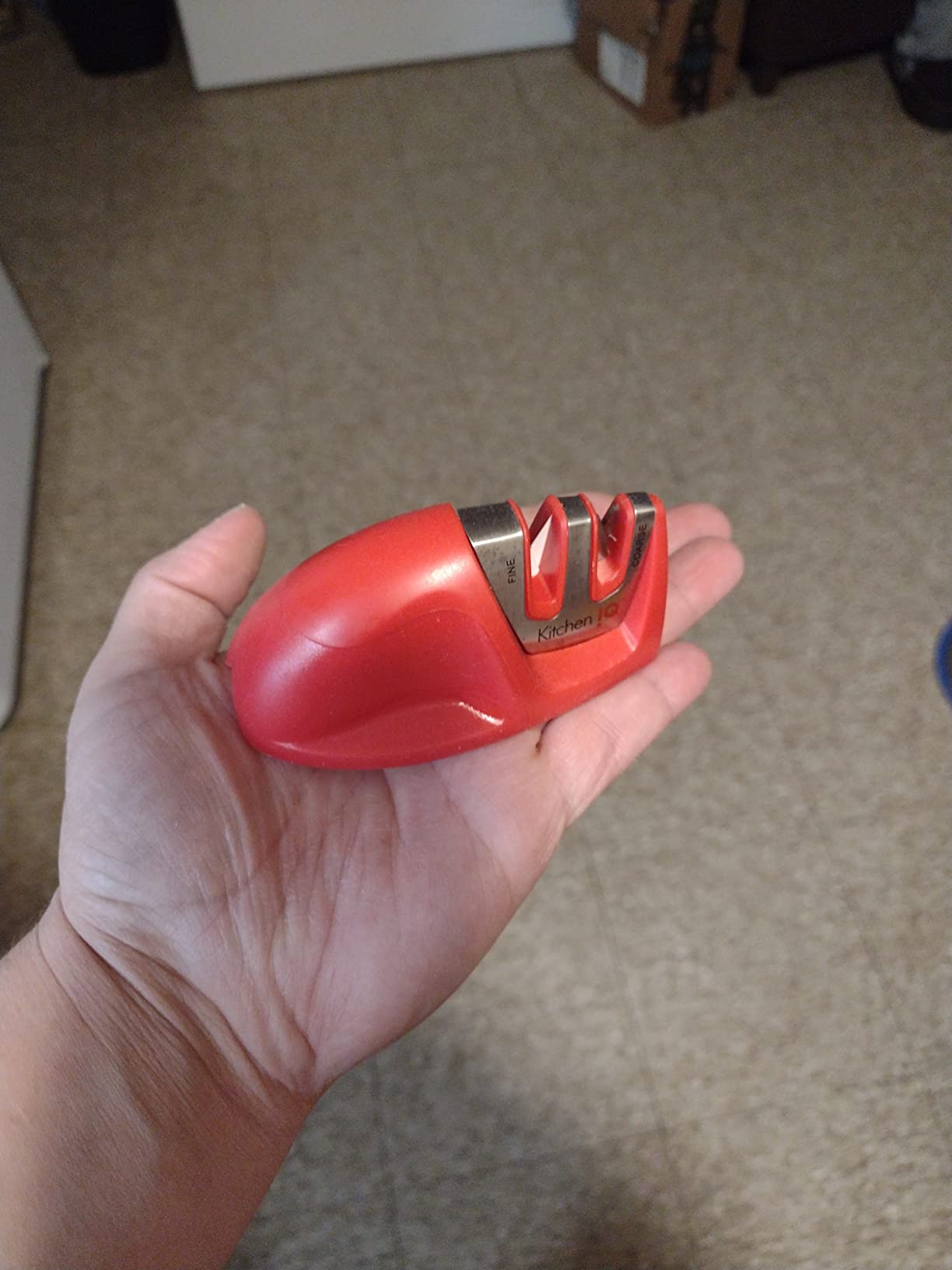
This is the sharpener I recommend when counter space and drawer space are both tight. At 1.75 by 1 by 3.75 inches and 14.2 g it disappears into a knife drawer, and it is still the most-reviewed sharpener in this lineup at nearly 98,000 ratings.
Two stages cover the basics: a carbide blade for dull and damaged knives, and a ceramic rod for polishing and quick touch-ups on an edge that is already sharp. The pre-set angles do the deciding for you.
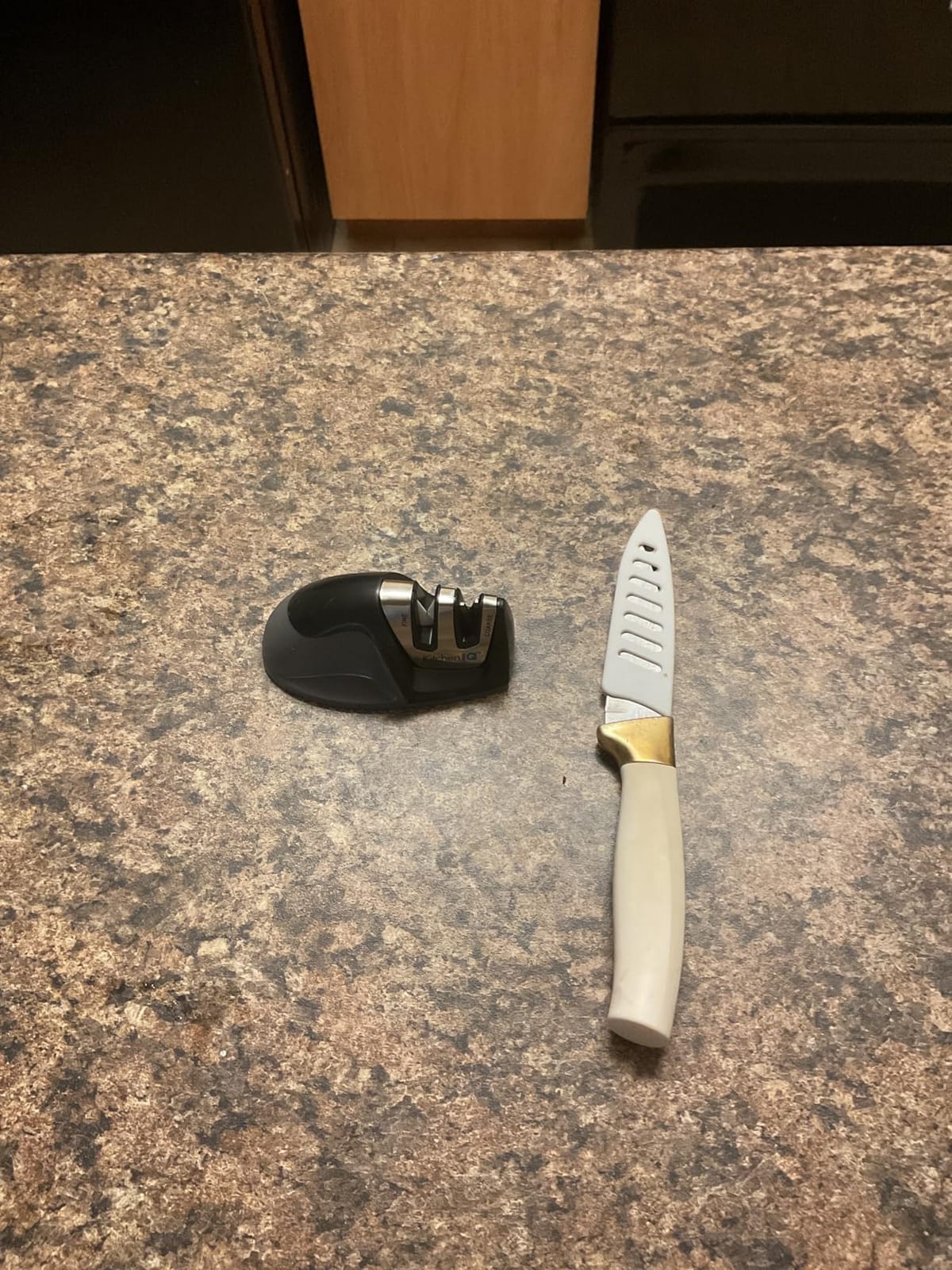
The Edge Grip is the feature I did not expect to care about. You stand the unit on the edge of the counter so the tip of a larger knife hangs over the side instead of dragging across your worktop or knocking against the blade spine. It is a small design detail that stops the thing I would otherwise have complained about.
Reviewers describe it as foolproof, needing only a few light pulls per stage. The praise for the non-slip base is near-universal, which matters because a sharpener that slides while you pull is how people cut themselves.
How much steel does a pull-through like this remove?
More than a guided system or a stone, and this is the honest downside of the whole category. A fixed-angle pull-through works by grinding both bevels down to a set angle every time you use it, so repeated sessions thin the edge faster than a system that removes only what is needed.
On a thick European chef’s knife that is irrelevant for years. On a thin Japanese blade it is a reason to skip this one entirely.
What to know before you buy it
The fine sharpening stage wears out and needs replacing after a couple of years of regular use, which is the most common complaint in the reviews. The edge also fades faster than a whetstone edge, so plan on sharpening more often.
It is countertop only, the handle is too small to hold safely in one hand, and the single pre-set angle limits it to standard straight and serrated knives. Manufacturer warranty is one year limited.
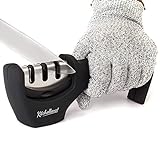
6. KITCHELLENCE 4-in-1 3-Stage – Best All-in-One Kit
4-in-1 Kitchen Knife Accessories: 3-Stage Knife Sharpener Helps Repair, Restore, Polish Blades and Cut-Resistant Glove (Black)
Three stages: diamond rod,restore slot,polish slot
Includes cut-resistant glove
8.3 x 2.2 x 3.4 inches
180 g
Pros
- Three stages cover repair and polish in one tool
- Cut-resistant glove included
- Handle suits either hand
- Solid ABS body with non-slip base
- Restores very old cutlery
Cons
- Results fade quickly for daily use
- Needs a modified angle to get the best edge
- Glove sometimes missing from the box
This is the kit-shaped answer to the question of what a good beginner knife sharpening kit contains. You get the sharpener and a cut-resistant glove in the same box, and the glove alone removes the single biggest reason beginners quit.
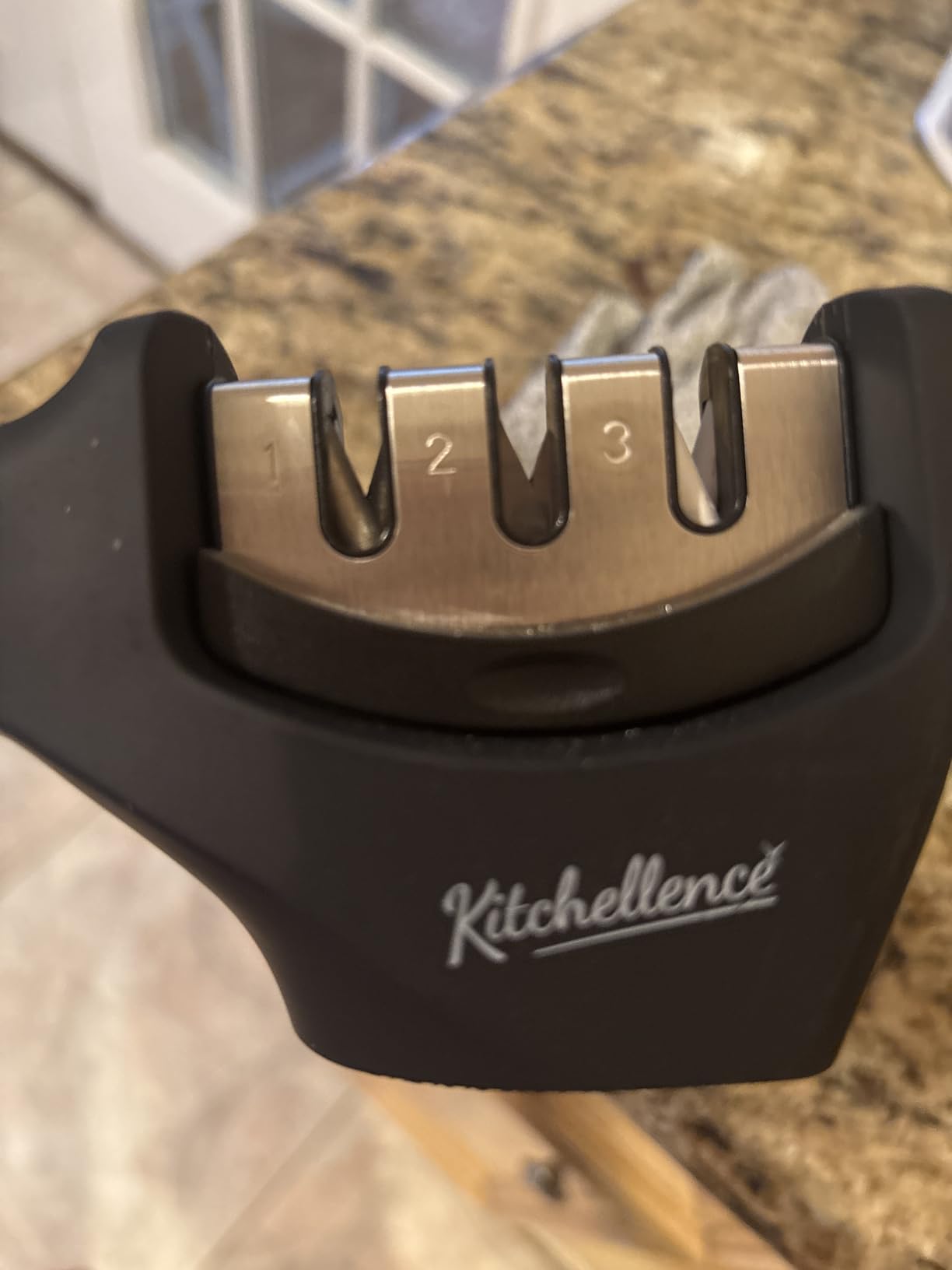
The three stages are a genuine improvement over two-stage units. A diamond rod repairs and straightens damaged blades, the second slot restores the V shape, and the third fine tunes for a polish. Just place the blade in each slot and pull a few times.
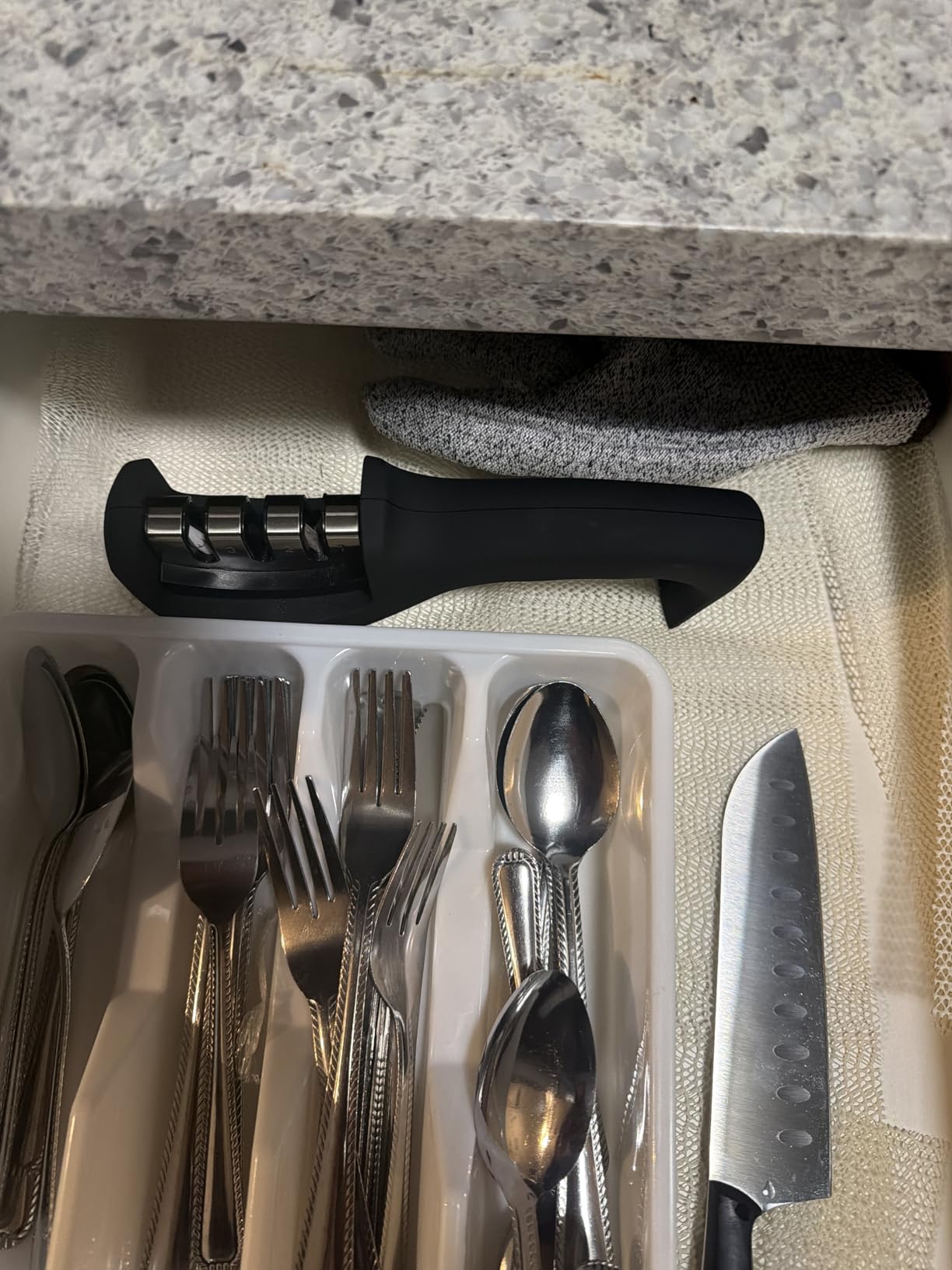
It draws 4.5 stars from more than 39,000 ratings and holds the number two rank in Knife Sharpeners. Reviewers consistently say it restores decades-old cutlery to a usable edge, which is a good test of whether a pull-through actually works.
One detailed review in the set makes the most useful point about this unit: the factory instructions produce mediocre results, and skipping the first coarse slot and using a shallower angle with light downward pressure works much better. That is exactly the kind of thing a beginner cannot discover alone.
Should you follow the manufacturer’s instructions or not?
Use the instructions for the first pass so you know what the tool is supposed to do, then adjust. The reported improvement comes from using a shallower angle and skipping the coarse slot on knives that are not badly damaged.
For a badly nicked blade, start coarse. For routine maintenance, start at the second slot and save time and steel.
What to know before you buy it
Some reviewers report the advertised glove arriving missing from the box, so treat the glove as a bonus rather than a guarantee. The resulting edge can be temporary and needs repeating for everyday use.
Construction is solid ABS with a non-slip base, and the ergonomic handle works for right-handed and left-handed users.
7. Intelitopia Complete Whetstone Set – Best Kit If You Want to Learn Properly
Intelitopia Complete Knife Sharpening Stone Set – Dual Grit Whetstone 400/1000 3000/8000 Knife Sharpener with Leather Strop, Flattening Stone, Bamboo Base, 3 Non-slip Rubber Bases & Angle Guide
400/1000 and 3000/8000 grit corundum
Includes angle guide, leather strop and flattening stone
9 x 8 x 3 inches
5 lb
Pros
- Everything needed in one box
- Angle guide removes the hardest part of learning
- Covers chef's
- Japanese
- pocket knives and scissors
- Leather strop removes the burr
Cons
- Stones must be soaked and kept wet
- Wears faster than Japanese water stones
- A real learning curve applies
The enthusiasts are right about one thing: a whetstone teaches you something every other sharpener here cannot. Once you have used stones, every other tool makes sense to you, because you finally understand what a bevel, a burr and a grit number are.
The reason I still would not hand this to a total beginner is not the price. It is that freehand sharpening is a skill, and a bad first session is exactly what makes people quit the hobby permanently. Forum advice from bladeforums is that sharpening is fairly simple but not particularly easy, and that you need an angle guide to keep edge geometry.
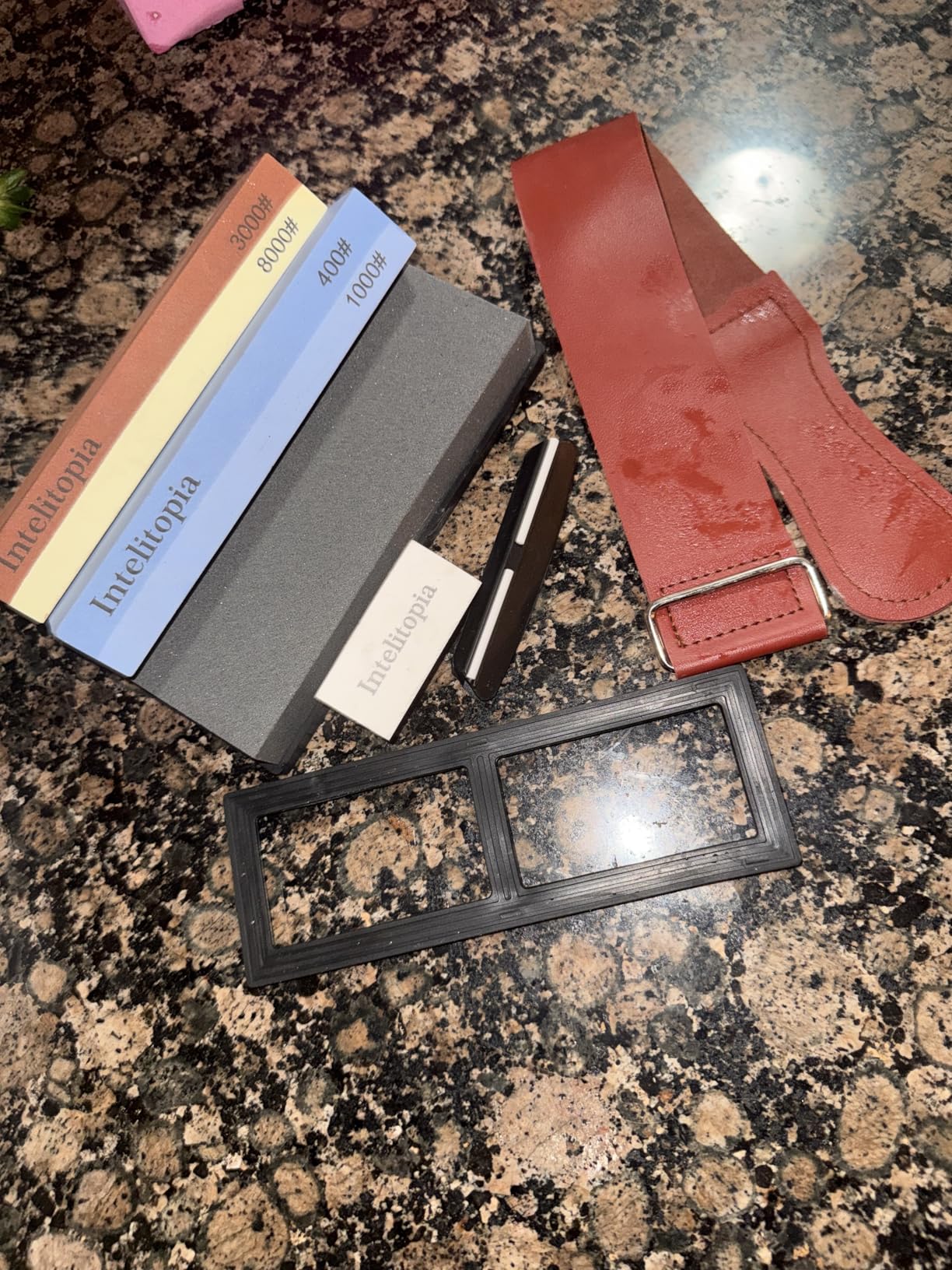
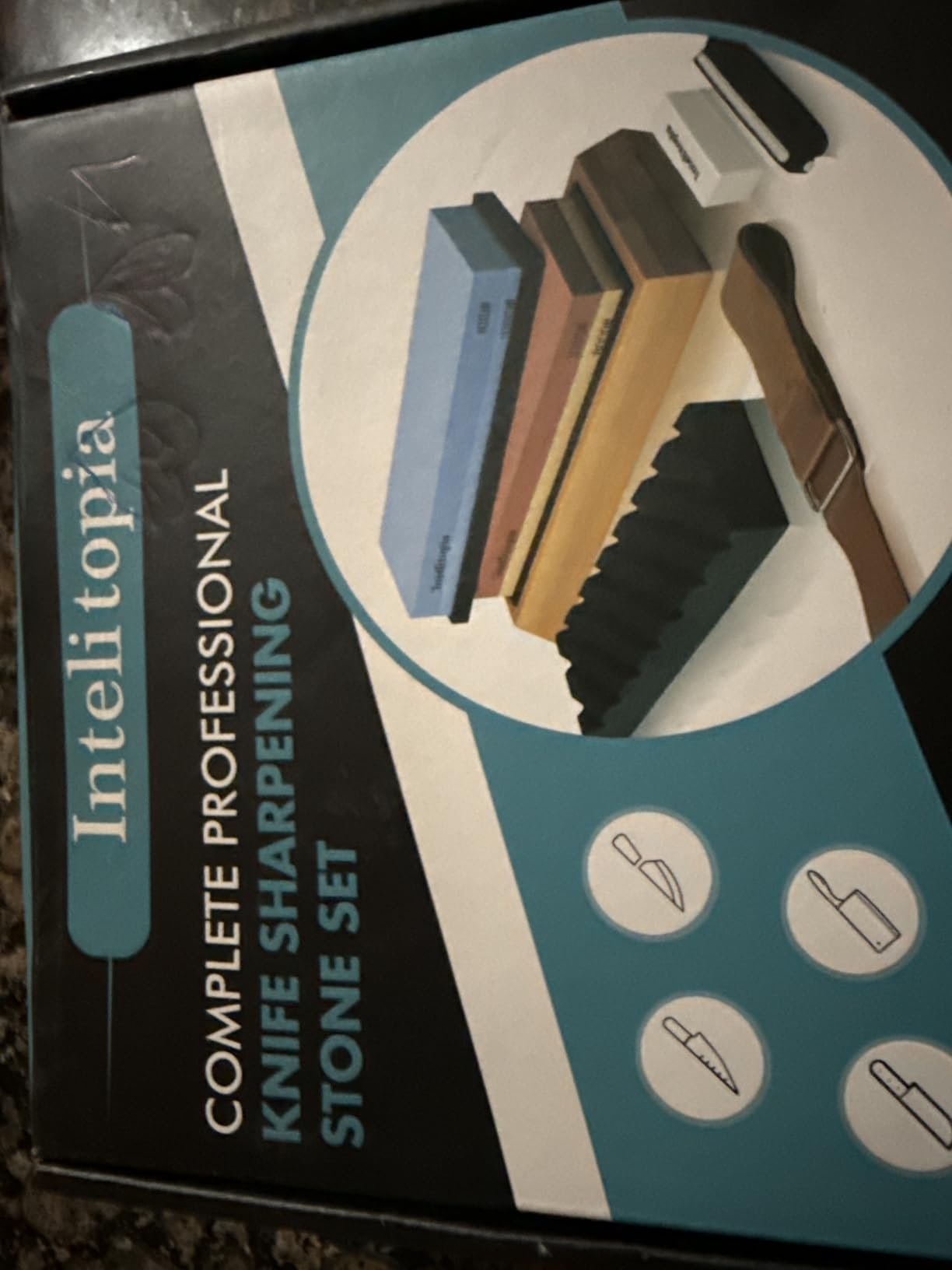
This set solves that specific objection. The box contains 400/1000 and 3000/8000 grit corundum stones, a flattening stone, a bamboo base with non-slip pads, an angle guide and a genuine cowhide leather strop. That angle guide is the piece that turns a beginner kit into a usable one.
It works across chef’s, steak, santoku, paring, sushi, cleaver, Japanese, butcher, pocket knives and scissors. More than 7,200 ratings at 4.5 stars, and enthusiasts report consistent paper-thinning edges across more than 20 knives.
Is a whetstone better than an electric sharpener for beginners?
It produces a finer, more durable edge and it costs nothing to run, but it costs time and attention to learn. An electric produces a coarser edge in seconds and asks nothing of your technique.
If you want a good knife next week, buy the electric or the pull-through. If you want to understand sharpening, or you already know you will stay interested, this set is the better long-term buy.
What to know before you buy it
Hydration is the whole game here. Stones must be soaked before use and rewet during sharpening or they dry out mid-stroke. It is also 5 pounds and needs a working surface, not a drawer.
The stones are softer and lighter than Japanese water stones and wear faster, and one reviewer notes the advertised non-slip base is not truly non-slip. Wipe the surface down after each session to keep slurry off the counter.
8. KEENBEST 400/1000 Whetstone Set – Budget Pick for Learning on Stone
KEENBEST 400 1000 Premium Material Whetstone Sharpening Stone Set 2 Side Kitchen Knife Sharpener Stone Wet Stones for Sharping Knives Kit Non-slip Rubber Base
400 and 1000 grit white corundum
Water-only prep
Two stones at 7 x 2.2 x 1.1 inches
16 oz
Pros
- Lowest cost route into stone sharpening
- No oil needed
- Quick-cutting self-sharpening corundum
- Covers knives
- chisels
- hatchets and garden tools
- Beginner quick-start guide included
Cons
- Only two grit levels
- Soaking and rewetting required during use
Two stones, a rubber base and a quick-start guide is enough to learn the fundamentals without buying a full kit. If the Intelitopia set feels like a commitment you are not ready to make, this is the version I would start with instead.
It holds 4.7 stars from roughly 4,600 ratings and sits at the number one rank in Amazon’s Sharpening Stones category. The 400 grit side handles daily sharpening and edge repair, and the 1000 grit side gives a smoother finish.
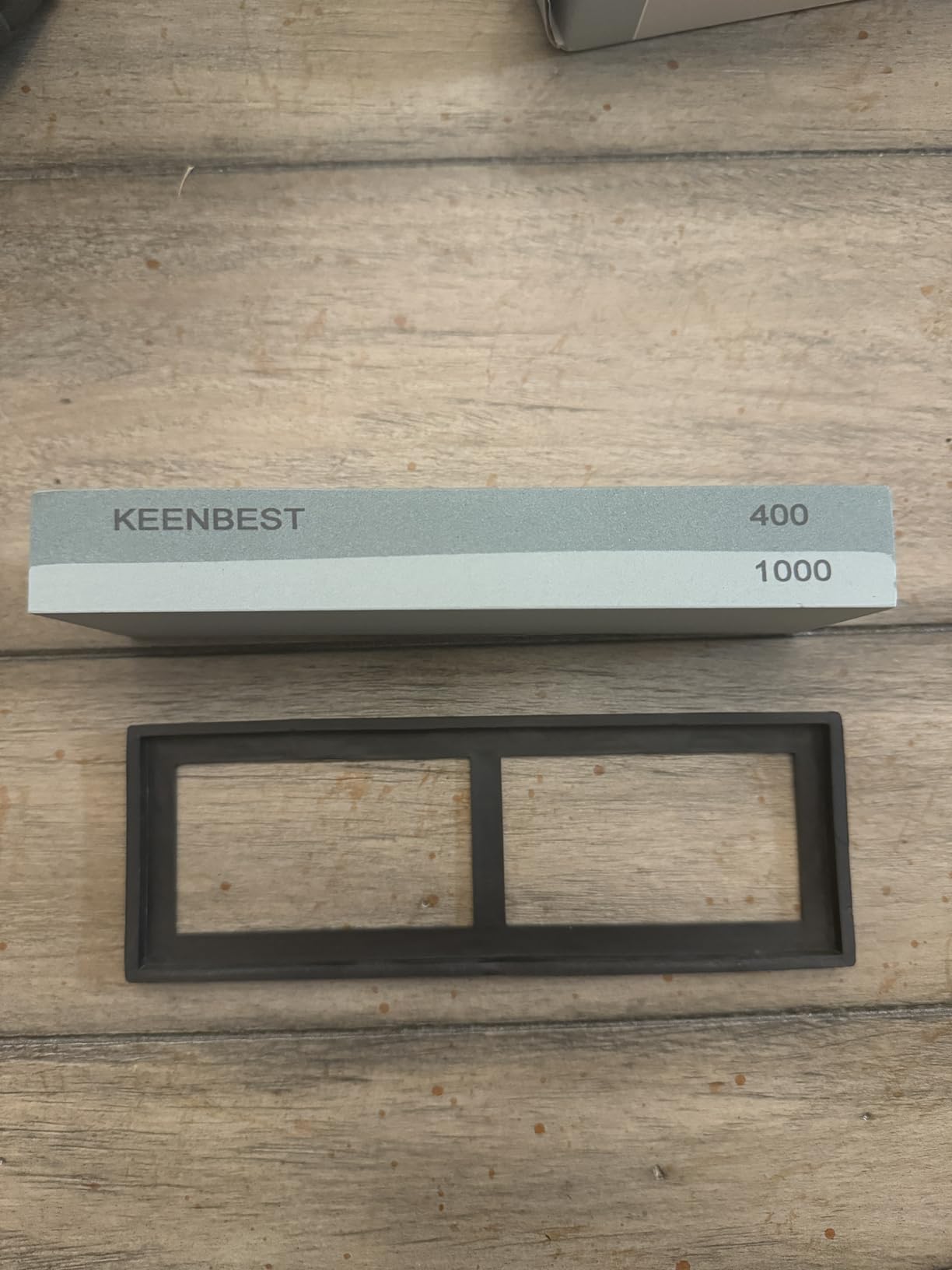
The simplest decision here is preparation: soak in water for 10 to 15 minutes before use, and add water during sharpening for lubrication. No oil, no slurry management, no mystery. That single fact is why reviewers call it the simplest starting point for a first whetstone.
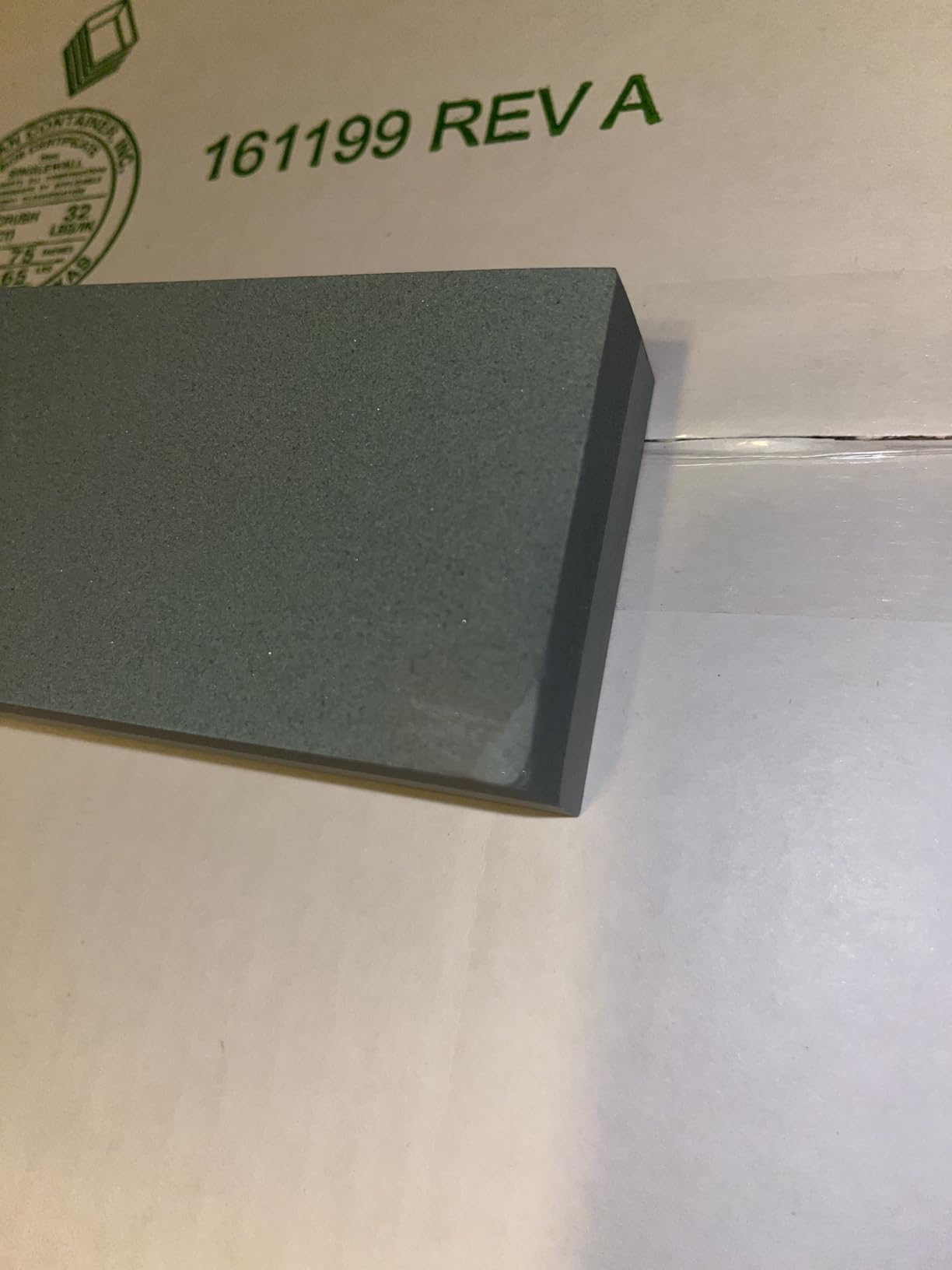
The white corundum is quick to cut and self-sharpening, so the surface dresses infrequently compared to denser stones. At 7 by 2.2 by 1.1 inches per stone they are smaller and easier to handle than a full-size block, which helps with control.
What can you actually do with two grits?
More than most beginners expect. The 400 grit repairs a dull edge and the 1000 grit refines it, which covers routine maintenance on kitchen knives, hunting and pocket knives. The stones also take scissors, chisels, hatchets, axes and garden tools.
You will not get a mirror polish, because there is no finer grit here. Add a 3000 or 6000 grit stone later if you decide the hobby is for you.
What to know before you buy it
You will be practicing the angle yourself, since there is no angle guide in the box. Use a marker pen on the edge to show you where the stone is touching, the trick enthusiasts use to find the bevel.
Soaking and rewetting are required during use, and the pair weighs 16 ounces in total. Work over a towel or a tray, because slurry runs.
9. Utopia Kitchen 12 Inch Honing Rod – Best for Daily Maintenance
Utopia Kitchen Knife Sharpener Rod 12 Inch Honing Rod for Sharpening
12 inch nickel-chrome plated carbon steel rod
Hanging loop included
17 x 2 x 3 inches
0.33 kg
Pros
- Works on kitchen
- sporting
- pocket and serrated knives
- Ergonomic grip with slip-resistant base
- Long rod gives a forgiving draw stroke
- Hanging loop saves drawer space
Cons
- Hones an edge rather than forming a new one
- Hand wash and dry
- not dishwasher safe
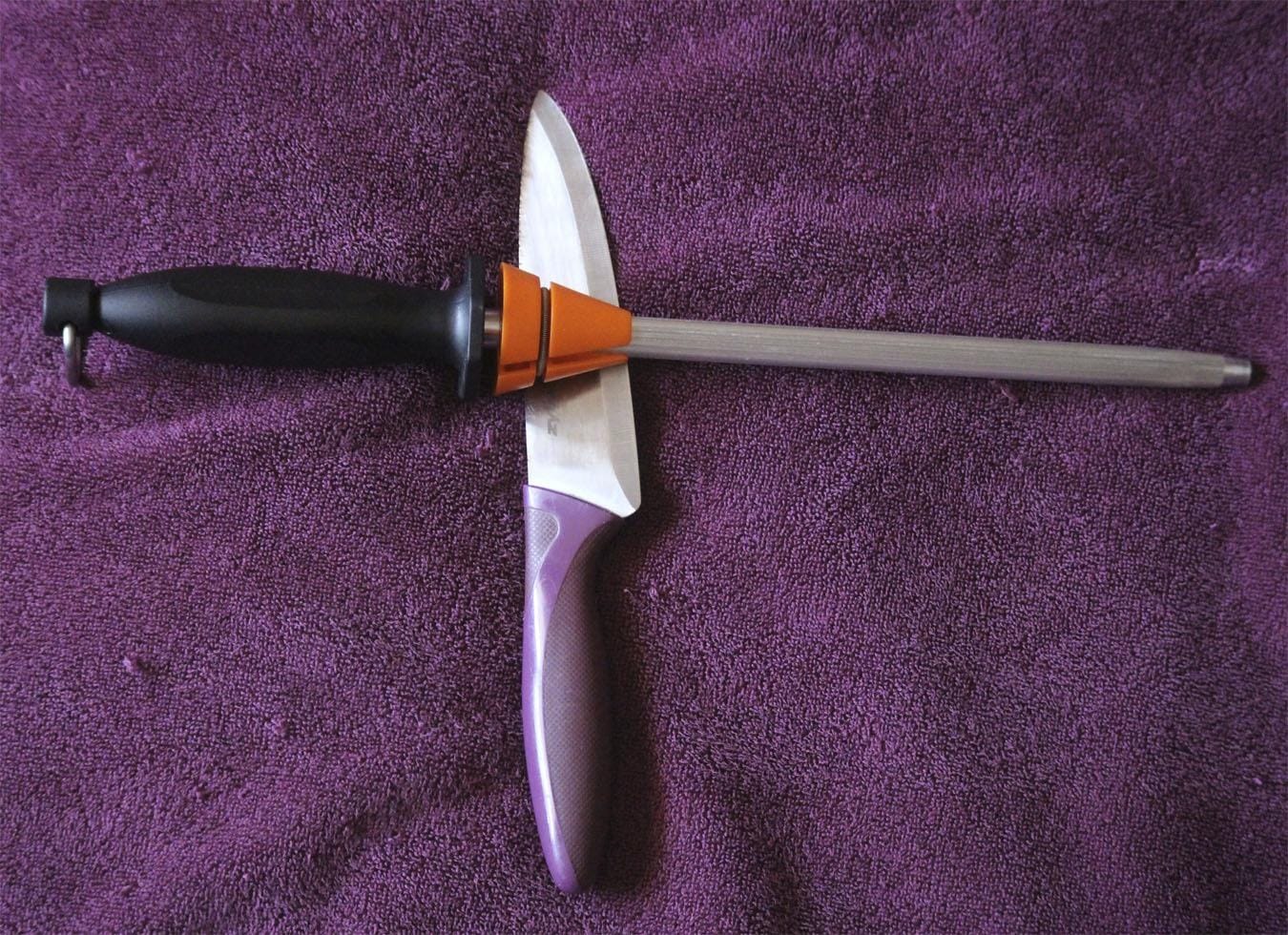
A honing rod is not a sharpener and I want to be clear about that, because sellers blur the line constantly. It straightens a slightly rolled edge and removes almost no steel. Use one weekly and your edges stay straight between proper sharpenings three to six months apart.
Most beginners need a rod far more often than they need a sharpener. It takes thirty seconds, it needs no learning, and it delays the sharpening session that does remove metal. If you only buy one thing beyond a sharpener, this is it.
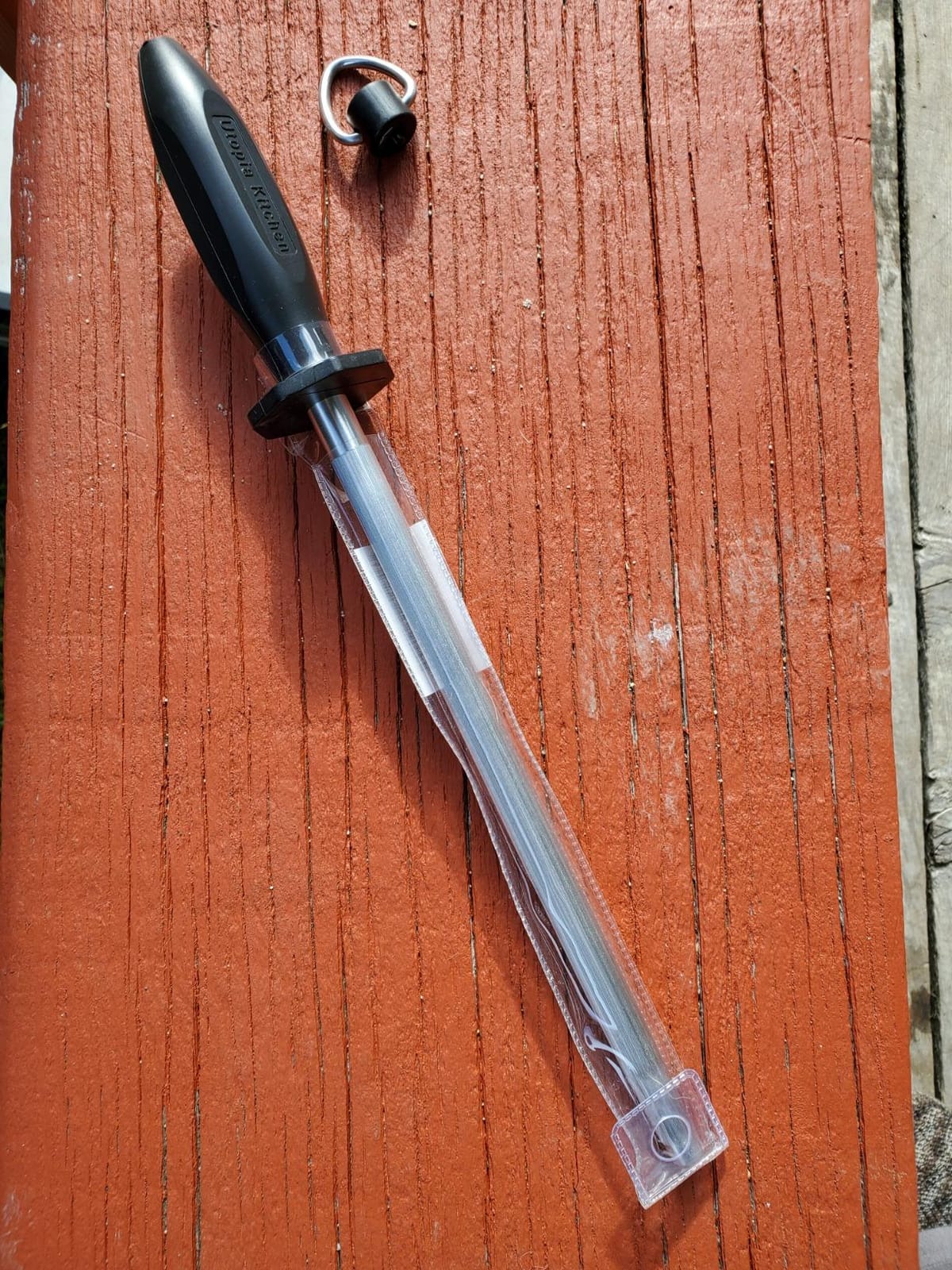
This 12-inch model draws 4.7 stars from more than 8,300 ratings. The carbon steel rod is plated with nickel-chrome, and the fine surface is gentle enough that it straightens an edge without damaging the cutting geometry.
The long rod makes the stroke forgiving. You need less angle accuracy than with a short rod because the contact patch is longer, which is a genuine advantage when your technique is still developing. The ergonomic handle fits either hand and the slip-resistant rubber base keeps the far end planted.
How often should a beginner hone versus sharpen?
Hone weekly, or any time you notice the blade dragging on a tomato. Do a full sharpening roughly every three to six months with daily kitchen use, or whenever the knife starts crushing instead of cutting.
If you are only ever going to do one of the two, hone often and sharpen rarely. Frequent light work removes far less steel over a year than occasional aggressive sharpening.
What to know before you buy it
It handles standard and serrated edges, and it is listed in 8, 10 and 12 inch lengths, so pick by how steady you feel. The 12 inch is the most forgiving of the three.
Care is simple: wipe it with a cloth soaked in cooking oil. If you wash it in water, dry it completely and air-dry. It is not dishwasher safe.
10. Work Sharp E2 Electric – Best Push-Button Electric
Work Sharp Electric Kitchen Knife Sharpener – Get knives ready for cookouts and BBQ’s- Fits in Kitchen Drawer, Sharpens every time, fast & easy
One-button guided sharpening
Ceramic hone wheel
6.77 x 10.82 x 5.89 inches
16 oz
3-year warranty
Pros
- Push-button automation removes all technique
- Handles serrated edges
- scissors and shears
- Built-in ceramic hone wheel for daily upkeep
- 3-year warranty with replaceable abrasives
Cons
- Lowest rating in this lineup at 4.3 stars
- Fixed angle cannot reprofile a damaged edge
- Needs power and counter space
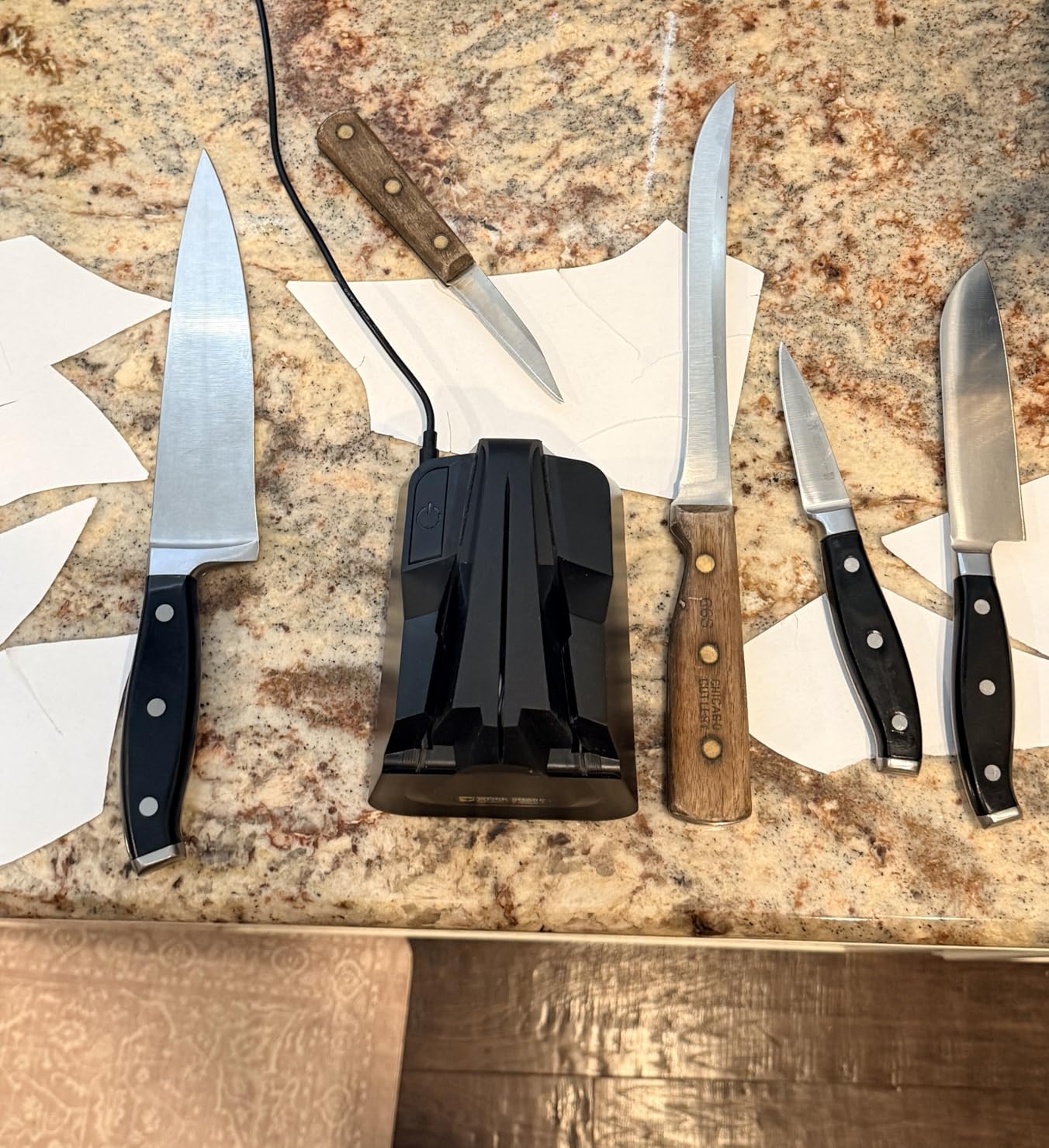
If you want sharpening to be a button rather than a task, this is the unit. The E2 is fully guided: you press it, hold the blade against the guides and draw it through. The angle is set for you every single time, with no adjustment to think about.
It is the most capable of the electrics here on blade variety. It handles all kitchen knives, serrated edges, scissors and shears, which makes it the one to pick if you cut more than food. The built-in ceramic hone wheel handles daily edge maintenance.
I am recommending it with a caveat. It carries the lowest rating in this roundup at 4.3 stars from more than 3,200 ratings, and it is the only one of the ten where 6% of ratings are one star. That is a small share, but it is a real share.
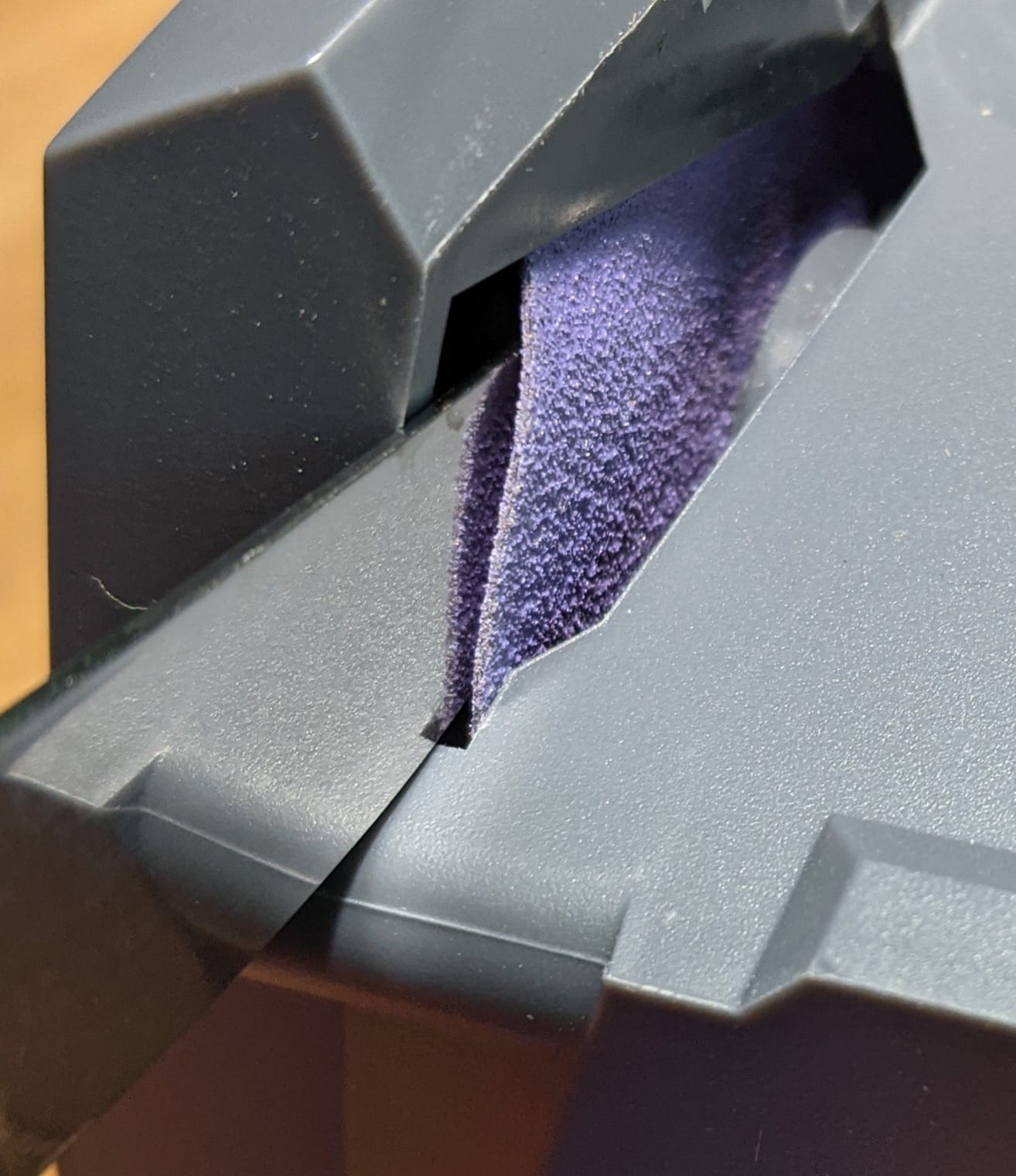
The recurring complaint in the reviews is not build quality. It is scope. An automated pass at a fixed angle cannot reprofile a badly damaged or very dull edge the way a whetstone or an adjustable system can, so this is a maintenance tool that works best on an already reasonable edge.
When does a push-button sharpener fall short?
When the edge is already gone. If a knife has been in a drawer untouched for a year and slices nothing, this will not fix it. The fixed angle means it can maintain and refine an edge, not rebuild one.
Pair it with a pull-through for rescue jobs and you cover both. That is a reasonable two-tool setup for a household that wants no technique at all.
What to know before you buy it
It needs power and counter space, at 6.77 by 10.82 by 5.89 inches and 16 ounces. A power supply, a pair of double-sided abrasives and a user guide are included, and replacement abrasives are listed as available for three years.
The 3-year warranty is one of the strongest in this group and it is designed, engineered and calibrated in Oregon.
How to Sharpen a Knife for Beginners: a Six-Step Walkthrough
The easiest way to sharpen a knife as a beginner is to use a tool that holds the angle for you and to run a repeatable sequence. Pick a sharpener from this list that matches your confidence level, then use the same steps every time so you can tell what changed.
Step one: test before you touch the blade. Score a paper towel with the knife held at a shallow angle, then try a ripe tomato with no downward pressure. If it tears or drags, the edge is ready for work. If it already cuts cleanly, you need a honing rod, not a sharpener.
Step two: clean the blade first. Wipe it with a damp cloth and dish soap and dry it. Sharpening a dirty blade drags grit across the abrasive and dulls it faster.
Step three: set the angle or find the guide. On a guided system, dial the chassis and clamp the blade. On a pull-through, place the heel in the channel first and let the unit set the angle. On a stone, use the angle guide and mark the edge with a marker pen so you can see where the stone touches.
Step four: work the coarse stage until you feel a burr. The burr is a wire edge that folds over from one side to the other, and it is the sign you have ground far enough. Run a finger along the far side of the edge very lightly, away from the cutting side, and stop when you feel it. Do not plunge the blade straight down, which rounds the tip.
Step five: move to the fine stage. Two or three light passes on the fine abrasive remove the burr and leave the edge cleaner and stronger. Skipping straight to a fine stage polishes the metal without cutting it, which is the single most common beginner error.
Step six: strop or hone, then retest. A few passes on leather or your honing rod straightens the edge, then run the paper-towel test again. Clean the filings off the counter and put the tool away somewhere dry.
How to Choose a Knife Sharpener: Five Factors
How much control do you want? If you want zero decisions, choose a pull-through or an electric. If you want to learn, choose a guided system with an adjustable angle. Only buy a stone set when you are willing to practise the angle yourself. This is the decision that matters most, and every other factor is secondary.
How much steel does it remove? Pull-through sharpeners grind to a fixed angle every session, so they thin the edge faster than a guided system or a stone. That is fine for thick European chef’s knives and a poor idea for thin Japanese blades. If your knives came from our German knife set roundup, they are 20-degree steel and they handle aggressive work well.
What can it sharpen? Straight edges are universal. Serrated edges need a dedicated slot, a ceramic rod or a special setting, and only some of the units above handle them properly. Scissors, shears and outdoor tools narrow the field further, and mower blades narrow it more. Check compatibility before buying.
What does it need from the counter? Stones need soaking, a wet surface and somewhere to dry. Electric units need an outlet within reach of the cord. Pull-throughs need either a flat suction surface or a firm grip. Match the tool to the space you actually have.
What is the maintenance and safety picture? Look for an included cut-resistant glove, a non-slip base, and replacement abrasives that are still available. A three-year warranty is the best signal in this list, and it appears on both Work Sharp units. A glove is worth more to a beginner than any extra sharpening stage.
We also think about durability at We Are Salt. A system you keep for a decade removes less steel per session than a disposable gadget that forces a full resharpening every few weeks, which is better for the blade and better for the drawer you keep the sharpening dust in.
Sharpening vs Honing, and 15 vs 20 Degrees
Sharpening removes steel; honing barely does. Sharpening grinds away metal to restore the full edge geometry, and it is what you do every three to six months. Honing straightens an edge that has rolled over from use, removes almost no metal, and takes thirty seconds a week. Most beginners need a honing rod far more often than a sharpener.
What a burr is and why it matters. When you grind one side at a fixed angle, the metal flares over onto the other side as a wire edge. That is the burr, and it tells you the grind has done its job. You finish by removing it with a fine stage or a strop. Beginners who cannot feel a burr end up over-grinding; a marker pen on the edge makes the bevel visible while you work.
Stay at 20 degrees per side. Most Western kitchen knives are built at roughly 20 degrees, so that is where you should start. A 15-degree edge cuts more smoothly and slices food better, but it is thinner, more fragile, removes more steel and nicks more easily. Chasing 15 degrees on a knife designed for 20 changes the whole geometry of the blade.
What grit numbers mean. Low numbers are coarse and remove steel quickly, which is what you want on a dull edge. High numbers are fine and polish. A 400 grit stone repairs an edge, 1000 refines it, and 3000 or 6000 produces a polished finish. Skipping from coarse straight to very fine is what produces a shiny knife that still does not cut.
Frequently Asked Questions
What is the best knife sharpener for beginners?
The AccuSharp Knife Sharpener is our top pick for a total beginner because it needs no angle setting, no power and no technique, and it takes about ten seconds per blade. It handles both straight and serrated knives and sits at 4.7 stars across more than 28,000 ratings. If you want more headroom to learn, the Work Sharp Precision Adjust adds an adjustable 15-30 degree angle guide.
What is the easiest knife sharpener to use for beginners?
The AnySharp Global is the easiest to use safely, because its PowerGrip suction base locks the unit flat so both hands stay away from the blade. There is nothing to adjust and nothing to power. If ease of results matters more than safety, the Presto EverSharp Electric uses precision blade guides and a motor to do the drawing for you.
What is a good beginner knife sharpening kit?
A good beginner kit has four things: an abrasive that holds a repeatable angle, an angle guide so you do not have to judge the bevel yourself, a strop or honing rod for touch-ups, and a cut-resistant glove. The KITCHELLENCE 4-in-1 covers the glove and three stages in one box. The Intelitopia whetstone set covers stones, an angle guide, a flattening stone and a leather strop.
Is a whetstone better than an electric knife sharpener for beginners?
An electric sharpener is better for a beginner’s first three months because it removes the two hardest parts, holding the angle and feeling for a burr. A whetstone produces a finer and more durable edge and teaches you what a bevel and a grit number are, but freehand sharpening is a skill with a real learning curve. Buy the electric first if you want a usable knife next week.
How often should a beginner sharpen a kitchen knife?
Touch up with a honing rod weekly and do a full sharpening every three to six months with daily kitchen use, or any time the blade starts dragging on a tomato instead of cutting it. Frequent light honing removes far less steel over a year than occasional aggressive sharpening. If you only ever do one of the two, hone often and sharpen rarely.
Which Knife Sharpener Should You Buy in 2026?
Buy the AccuSharp Knife Sharpener if you want the best knife sharpener for beginners and want the shortest possible path to a working edge. It takes about ten seconds per blade, needs no power and no setup, and it is the most reviewed and best rated option we tested.
Buy the Work Sharp Precision Adjust if you think you will stay interested and want to control the angle yourself. Buy the Presto EverSharp Electric if you would rather not draw a stroke at all. Buy the AnySharp Global if knife safety is your main worry, and add a Utopia Kitchen honing rod so you are only sharpening every few months rather than every few weeks.
Whichever one you choose, the habit matters more than the hardware. Hone weekly, sharpen when the blade stops cutting, and check the result with a paper towel. When you are ready to see what a proper edge looks like, our in-drawer knife organizer picks are a good place to start storing the collection you will then be sharpening.