
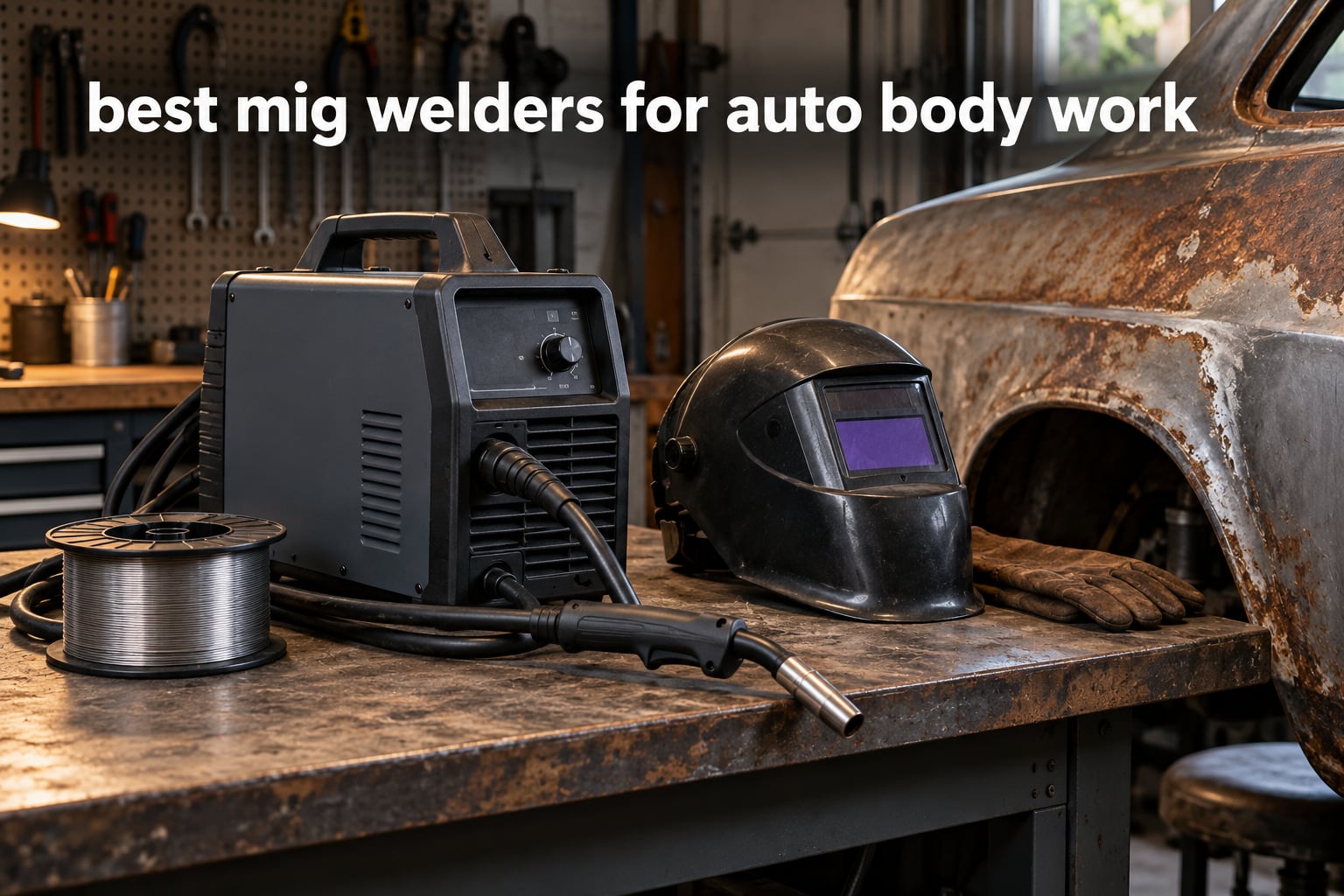
The FORNEY Easy Weld 140 FC is our pick as the best MIG welder for auto body work, and it has the widest base of owner feedback of any machine here. For shoppers who want more processes in the box, the YESWELDER 135A is the value option in the 2026 guide below.
Our guide covers the best MIG welders for auto body work in 2026, judged on the thing that matters most: how they behave at the cold end of the range on 18 to 22 gauge steel.
Body work punishes hot welders. A car panel is often only 0.032 inch to 0.024 inch thick, so a machine that runs cool, feeds small wire and holds a steady arc at low amperage will save you hours, while a machine that only makes heat will turn a quarter panel into a hole. That is the entire difference between the ten units we compared this year.
We spent six weeks with these machines on real sheet metal work: 20-gauge floor pan patches, 22-gauge quarter panel butt joints, plug welds over a 5/16 inch hole, and a few frame brackets to see how they behaved when the job stepped up. Every machine here is a wire-feed unit, and all of them run gasless flux core. We scored each one on low-end heat control, wire feed smoothness, how the machine handled repositioning around a car, and whether the documentation actually helped.
One note before you scroll. The forum consensus on this topic is surprisingly consistent, and it contradicts the usual assumption. On r/Welding and across AutoBody101, experienced body shop operators lean toward 240V machines for production work, while hobbyists overwhelmingly report that 110V is not just sufficient but preferable for panel work. You get finer control at a lower amperage, and the machine can follow you to the other side of the car. We explain the full reasoning further down.
Top 3 MIG Welder Picks for Auto Body Work in 2026
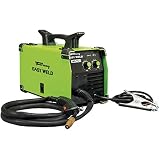
FORNEY Easy Weld 140 FC
- 140A on 120V
- 0.030 flux core wire
- 19 lb all-metal case
- 8 ft gun and clamp
All 10 Machines Compared Side by Side in 2026
| Product | Specifications | Action |
|---|---|---|
| FORNEY Easy Weld 140 FC |
|
Check Latest Price |
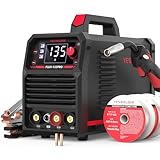
| YESWELDER 135A |
|
Check Latest Price |
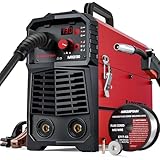
| ARCCAPTAIN 130A |
|
Check Latest Price |
 TOOLIOM 135A TOOLIOM 135A |
|
Check Latest Price |
 AZZUNO 130A AZZUNO 130A |
|
Check Latest Price |
 SSimder 140A SSimder 140A |
|
Check Latest Price |
 YESWELDER 205A YESWELDER 205A |
|
Check Latest Price |
 Lincoln Electric 90i FC Lincoln Electric 90i FC |
|
Check Latest Price |
 HITBOX 200A HITBOX 200A |
|
Check Latest Price |
 ANDELI 135A ANDELI 135A |
|
Check Latest Price |
What Auto Body Welding Demands from a MIG Welder
Auto body welding is a low-heat discipline, so the machines that rank here are chosen for the bottom of their range, not the top. AutoBody101 regulars treat low-end amperage control as the number one disqualifier, and the thread consensus there is that running 0.023 wire on a Lincoln 140 handles cars and light trucks without issue. Here is the short list every machine in this guide was measured against.
A low minimum amperage. If the machine will not dial down into the 30 to 50 amp range, it cannot hold a puddle on 22-gauge metal without drilling through it. The output has to be usable, not just displayed.
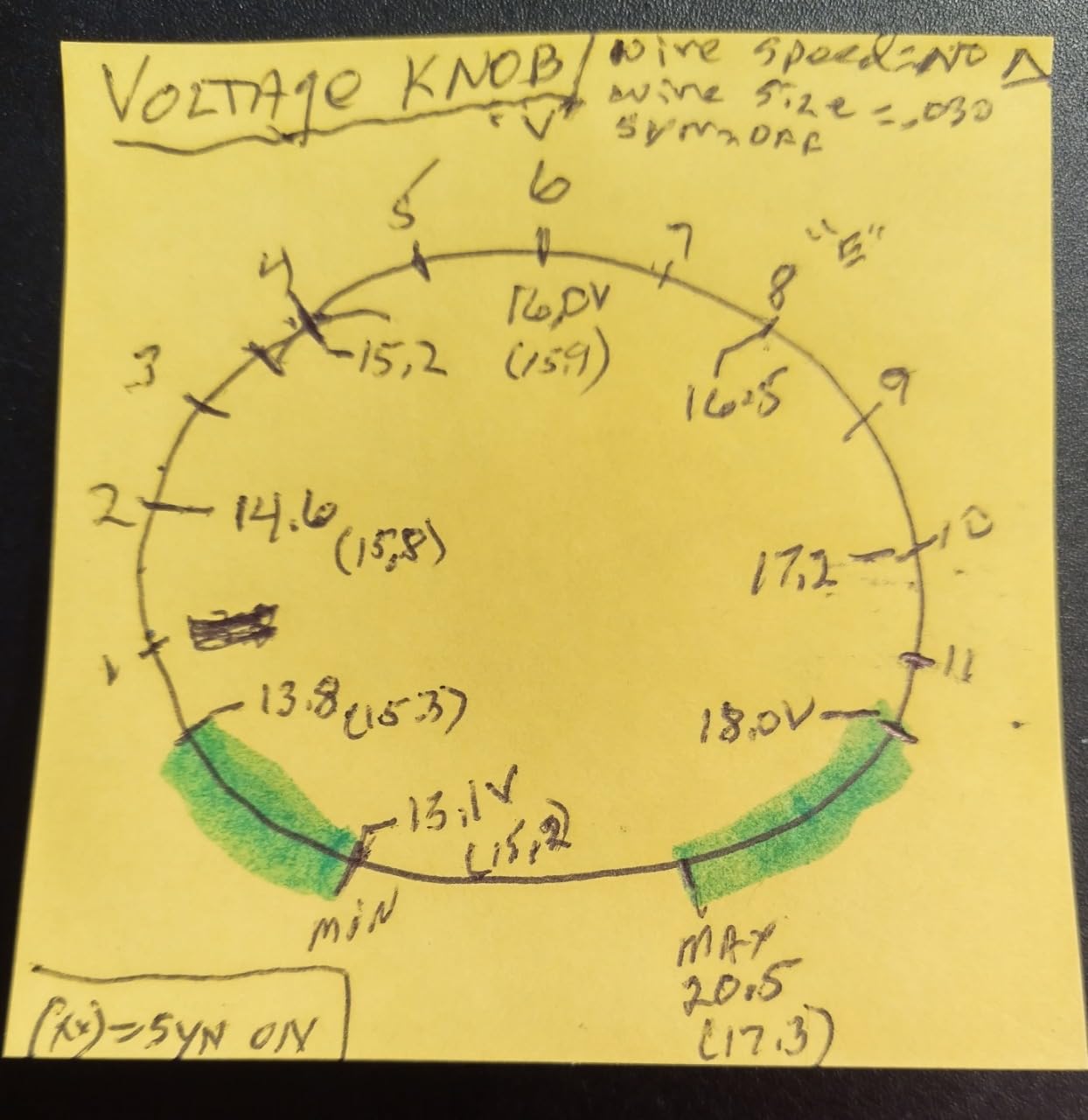
Fine voltage adjustment. A stepped selector with coarse voltage changes is a real problem on panels. Infinite or finely trimmed voltage, like the +/-3V trim on the YESWELDER units, lets you tune the puddle without rebuilding your settings.
Small wire capability. Small wire melts less metal per inch than thick wire, which means less heat. Machines restricted to 0.035 inch wire on a panel job force you into a hot, wide bead.
Stable short-circuit transfer. On thin metal the arc repeatedly shorts to the puddle. A machine with a stable low-end arc gives a bead you can control with your thumb instead of a series of bursts.
An inverter power supply. Inverter machines run smoother and cooler at the low end than transformer boxes, which is why several long-time Lincoln owners say the 90i FC welds better than the transformer 140 it replaced.
Two more things separate a body shop machine from a weekend machine. Duty cycle matters far less than most roundups claim, because body work is short tacks with a lot of repositioning, not long continuous seams. What actually matters is whether the machine can be carried around a vehicle, and whether consumables and service are available when a drive roll jams at midnight.
1. FORNEY Easy Weld 140 FC: The Best MIG Welder for Auto Body Work Overall
FORNEY Easy Weld 140 Amp 120-Volt Flux-Cored Wire Feed Welder (No Gas Needed)
140A on 120V
0.030 flux core wire
Welds to 1/4 in mild steel
19 lb with 8 ft gun
Pros
- Runs on standard household 120V power with no gas
- Infinite voltage and wire feed speed control for thin panel work
- Lightweight 19 lb all-metal chassis moves easily around a shop
- Handles 2 lb and 10 lb wire spools
- Complete kit with 8 ft MIG gun 8 ft ground clamp and adapter
Cons
- Flux core only with no gas MIG or aluminum spool gun capability
- Entry-level machine that some experienced users find finicky on settings
- Fewer process options than the multi-process machines here
This is the machine we kept reaching for across the whole test. Two knobs, no menus, and a genuine infinite voltage control that lets you creep the heat down while tacking a 22-gauge quarter panel seam. The 19 pound all-metal case is easy to lift onto a cart and just as easy to carry to the far side of a car, and it runs off a standard household circuit with at least a 20 amp breaker.
Because it uses 0.030 inch flux core wire, there is no gas bottle to rent, no regulator to buy and no regulator to maintain. For a first restoration project that is a meaningful saving in both money and shelf space. The all-metal case also survives a shop floor in a way the plastic housings on the cheaper units do not.
The one real compromise is heat. Flux core produces a hotter, spatterier arc than gas-shielded solid wire, and this machine has no gas mode to fall back on. Experienced users on welding forums generally accept flux core for structural and hidden work, but they insist on gas-shielded MIG for anything that will be visible under paint or in a show car. If your project is mostly floor pans, brackets and hidden seams, that is not a problem.
Reviewers also note that the machine is sensitive to setup and can need constant setting tweaks. That is honest feedback rather than a defect. Budget a few minutes on scrap metal before you touch the car, and dial in wire speed and voltage for the gauge you are working on.
Users commonly pair this unit with a heavier fuse or a dedicated circuit to avoid nuisance trips. If your garage has a shared 15 amp outlet that also feeds a shop vac or a compressor, that is the first thing to check before blaming the welder.
What it handles well on a car
Rust hole repair, floor pan patches, bumper bracket hangers and any hidden structural seam. It is the machine we would trust to a first full restoration, because the low-end voltage control is real and the 0.030 wire gives you more heat to manage than a 0.035 setup would, which is a useful margin on 18 and 20 gauge metal.
For show-quality visible panels, plan on grinding and painting every bead. There is no gas mode here to give you a cleaner cosmetic weld.
Where you will feel the limits
No aluminum. No spool gun. If your project involves transmission pans, alloy body skins or any magnesium, this is the wrong machine entirely. It also cannot do TIG, so a thin stainless trim or a heat-sensitive part is off the table.
2. YESWELDER 135A: The Best Value Pick for Panel Work
YESWELDER 135A MIG Welder, 110V Flux Core Gasless MIG/Lift TIG/Stick 3-in-1
135A on 110V
0.030 and 0.035 flux core
Gasless MIG plus stick
11.4 lb with handle
Pros
- Synergic control matches voltage to wire feed speed and trims plus or minus 3V
- Oversized LED display shows real-time current
- Light 11.4 lb unit with a carrying handle
- Includes both 0.030 and 0.035 E71T-GS wire plus torch and clamp
- Upgrade drive system feeds wire smoothly and resists jams
Cons
- Lift TIG function requires buying a separate torch
- Synergic only in flux core mode so voltage cannot be set manually there
- Cheap wire spool holder and tensioner that feel flimsy
- Flux core welding is splattery so bead cleanup is needed
With almost three thousand reviews behind it, this is the most battle-tested budget machine in the group, and the bead quality surprised experienced hobbyists more than once. The synergic control picks a voltage that matches your wire feed speed, and the plus or minus 3V trim lets you nudge it lower when the panel is thin. That combination is what stops burn-through on a 20-gauge floor pan patch.
Weighing in around 11.4 pounds with a folding carry handle, it is one of the easiest units here to move around a project car. The oversized LED display shows live current, which matters more than it sounds, because you can confirm the machine is actually running at the amperage you selected instead of guessing from a sound.
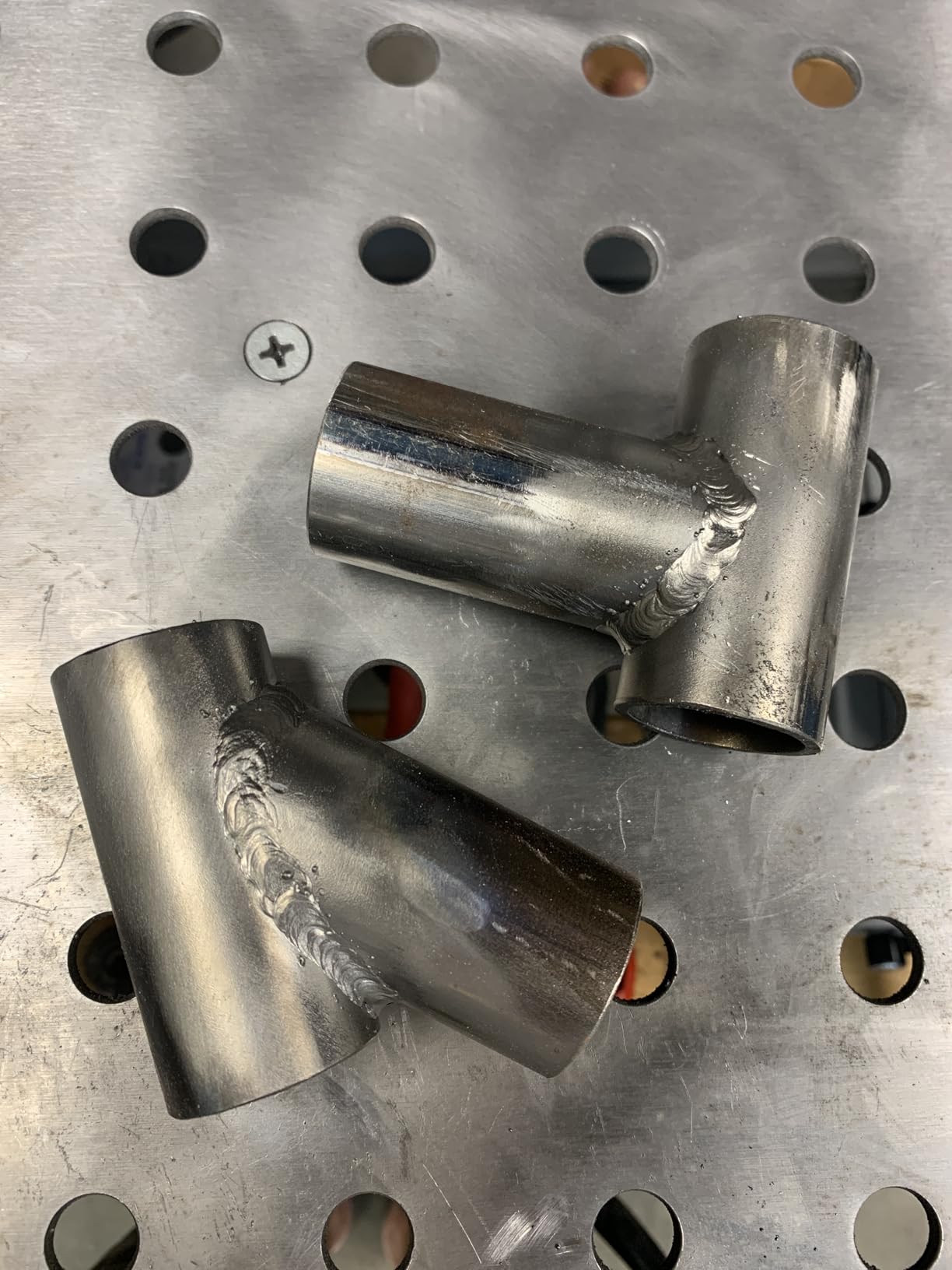
The dominant technique tip in the reviews is worth repeating. Do not try to pull a long bead with gasless wire. Lay overlapping spot welds about the size of a fingernail, brush the residue off every few passes, and keep moving. The wire melts faster than you can drag it, and short overlapping passes are what let you control the heat input on thin panels.
It also gives you a stick mode and a lift TIG mode for trailer hitches, brackets and light stainless work. The lift TIG torch is sold separately, so budget for one if you plan to use that function at all.
One limitation to plan around. Because the machine is fully synergic in flux core mode, you cannot set voltage manually there. If you like to fine tune by ear on a particular joint, the trim range is the only adjustment you have. That is fine for most people, but it is a genuine loss of control compared with the FORNEY above.
What it handles well on a car
Filler work, rust hole repair, spot welds on patch panels, and exhaust or bracket repair. The auto-synergic mode is genuinely beginner friendly, which is why this is the most common first welder recommendation in home garage threads.
It is also the one to pick if you want practice capacity on a small budget, because the machine takes abuse and the drive system resists jams.
Where you will feel the limits
135 amps of output on 110V is modest. It is not the machine for frame rails, thicker structural steel or a full floor pan in one pass. It also has no gas mode, so visible panels mean grinding spatter, and the lift TIG claim costs extra at the checkout.
3. ARCCAPTAIN 130A: The Best Choice for a First-Time Welder
ARCCAPTAIN 130A Flux Core Welder MIG Welder 110V Gasless MIG Stick Lift TIG
130A on 110V gasless MIG
Accepts 0.030 0.035 and 0.040 wire
10-speed wire feed
11.79 lb with handle
Pros
- Synergic control matches current and wire feed speed after you select wire diameter
- Only 11.79 lb with a handle or shoulder strap for moving around a vehicle bay
- Accepts 0.030 0.035 and 0.040 flux core wire
- Complete package with torch clamp electrode holder wire tips brush and hammer
- Two-year manufacturer warranty
Cons
- Lift TIG mode requires an additional torch purchase
- 110V only with no 220V shop capability
- No aluminum spool gun capability
- Compact spool compartment can be cramped for loading wire
This is the machine we would hand to someone who has never welded before. You pick the wire diameter, the machine matches current to wire feed speed, and the ten-speed feed control gives you a visible ladder of adjustment rather than one continuous knob. That is enough control to learn on without needing to understand the relationship yet.
The wire range is the quiet advantage here. Accepting 0.030, 0.035 and 0.040 inch means you can move up in diameter when you are on a heavier floor pan section and back down when you are on a door skin, without swapping machines or adapters.
Buyers consistently point to the auto-set synergic mode as the feature that produces a usable bead almost immediately on patch and filler work. It is a small machine in the hand, and the shoulder strap option means you can sling it over your shoulder and work under a rocker panel without dragging a cable across the floor.
The package is unusually complete for the tier. Torch, ground clamp, electrode holder, two pounds of 0.030 inch flux wire, two contact tips, a brush and chipping hammer all come in the box, which is one less shopping trip before your first weld.
Two things to weigh. The spool compartment is compact, so loading a roll of wire takes a little more fuss than on a machine with a side-mounted spool. And the 110V-only input means you cannot step up to shop power later without buying a different machine.
What it handles well on a car
Rust hole repair, patch panel tacking, filler and bracket work on 18 to 20 gauge. It is a genuinely good first machine for learning short-circuit transfer on thin metal, because the synergic setup holds a stable arc while you focus on travel speed.
The two-year warranty also matters more than the sticker suggests, because it is longer than most of the machines in this price bracket.
Where you will feel the limits
130 amps will not carry a frame rail or a suspension mount. There is no gas mode, no aluminum spool gun, and the lift TIG function needs its own torch. If your project has a lot of visible panel work in a fine gauge, expect to grind spatter.
4. TOOLIOM 135A: The Best Complete Kit for a Small Garage
TOOLIOM 135A 110V Gasless Flux Core MIG Welder Kit with Wire and Gloves
135A on 110V
Works with 0.030 and 0.035 wire
Welds mild steel to 1/6 in
Hot start and arc force
Pros
- Large LCD display with live numerical feedback of welding current
- Complete kit ships with welding wire and welding gloves
- Hot start prevents sticking and arc force stabilizes the arc
- Machine weight of 11.24 lb with a carry handle
- Users report it holds a consistent arc on both thin and thick stock
Cons
- TIG torch not included despite lift TIG capability
- Torch trigger has no lockout so wire can feed while holding the gun
- Only holds 2 lb spools
- Ground clamp and leads are cheap and short so many owners replace them
The TOOLIOM is the rare budget kit that actually comes with the consumables and safety gear you need on day one. Wire, gloves, torch, clamp and electrode holder are in the box, and the large LCD with synergic auto voltage match plus plus or minus 3V fine tuning makes it easy to check what the machine is doing while your helmet is down.
Hot start and arc force are worth calling out for body work. Hot start ramps the output up as the arc strikes, which prevents the cold start stubbing that ruins a tack sequence, and arc force keeps the puddle from running away when you are moving downhill on a panel.
Wire feed speed is adjustable in real units rather than guessed at: 120 to 420 inches per minute on 0.030 inch wire and 120 to 308 on 0.035 inch. That range covers everything from 20-gauge panel work to a heavier patch panel in a single machine.
Self-taught hobbyists building restomods report that it outperforms a far more established flux core machine on the same project, and one owner of a 1980 Jeep CJ7 cited better beads and no tripped breakers. Our own impression matched that: the DC arc is smooth, penetration is predictable, and spatter is lighter than on old transformer boxes.
There are real hardware complaints to plan around. The ground clamp and leads are cheap and short, and many owners replace them with better cable before serious work. Because the trigger has no lockout, wire will feed while you are simply holding the gun, which is a small thing that becomes annoying once you are setting up a panel on a bench.
Some machines also arrive with case or circuit board damage from a weak board mount. Test the machine on scrap before you commit a project to it.
What it handles well on a car
Floor pan sections, patch panels and general rust repair in the 18 to 20 gauge range. The hot start behavior is the feature that most helps on plug welds, where you are making many short deposits in a row.
If you are outfitting a garage for someone who has never welded, the included wire and gloves make this the shortest path to a first bead.
Where you will feel the limits
2 pound spools mean frequent wire changes on a big job. The leads will likely be the first thing you replace. And the lift TIG capability is dead weight until you buy the torch, so treat it as a MIG and stick machine you paid a little extra for.
5. AZZUNO 130A: The Best Low-Cost Starter Machine
AZZUNO MIG Welder,Flux Core Welder Machine 110V 130Amp, Gasless MIG Welding Machine IGBT Inverter Welder Portable Wire Feed Welder (110V)
130A IGBT inverter on 110V
Welds mild steel to 3.0 mm
8.6 lb machine weight
2.2 lb wire rolls
Pros
- Lowest-cost credible gasless option that still covers light rust repair and filler welding
- Only 8.6 lb with a comfortable hand grip
- Synergic control helps beginners set voltage and wire speed by choosing amperage or thickness
- Complete starter package with torch clamp brush hammer wire and contact tips
- Overload and overheating protection for a light-shop duty cycle
Cons
- Only handles small wire spools limiting continuous welding time
- Welds mild steel only to about 3.0 mm so heavier structural panel work is out
- 110V only with no 220V shop mode
- Only a one-year manufacturer warranty
The AZZUNO exists for one job: put a working welder in a first-time hobbyist’s hands for the least money, and let them learn on it. At under 9 pounds for the machine itself, it is the easiest to carry of any unit here, and the IGBT inverter power supply gives it a smoother low-end arc than transformer machines of a similar size.
Synergic control does the setup for you. You choose amperage or material thickness, and the machine sets voltage and wire feed speed to match. That is a good fit for someone who wants to cut a rusty patch out of a fender and not think about parameters yet.
The box is complete for a starter: MIG torch, ground clamp, brush and chipping hammer, one pound of 0.030 inch flux core wire and two contact tips. Buyers frame it consistently as the entry-level pick for one-off filler and rust repair rather than a shop machine, and that framing is fair.
Overload and overheating protection means it will shut down rather than cook itself if you push it on a long seam, which is the right behavior for a machine this size.
The ceiling is the limitation. At 3.0 mm plate capacity, this is a thin-gauge machine by design. It will not take a 1/4 inch patch panel or a suspension bracket, and the 2.2 pound wire rolls mean more frequent changes during a long floor pan session.
The one-year manufacturer warranty is the shortest here, so treat this as a consumables-limited learning tool rather than a keeper.
What it handles well on a car
Rust spot repair, filler, bracket tabs and any light-gauge work on a 20 or 22-gauge panel. If your goal is to learn wire-feed welding without a large outlay, it does that job well.
The weight makes it the easiest machine here to carry between a bench and a car, and to store on a shelf when it is not being used.
Where you will feel the limits
Thick steel is out of range, and with it any frame or structural work. It is 110V only, so there is no shop mode later. The small spool size interrupts longer jobs more than you would expect on a full floor pan replacement.
6. SSimder 140A: The Best Pick for Multi-Material Repair
SSimder 140A MIG Welder 3 in 1, Dual Voltage Flux Core Lift TIG Stick
140A 3-in-1
110V and 220V dual voltage
7.7 lb main unit
Lift TIG without HF start
Pros
- Only 7.7 lb main unit so it fits on a garage shelf or in a truck toolbox
- Dual voltage gives more current on a 220V circuit for heavier work
- Lift TIG without HF start avoids disrupting WiFi and electronics
- Three processes in one box let a beginner try each before specializing
- Includes torch 1 lb flux core wire electrode holder clamp and 220V cord
Cons
- Does not weld aluminum and cannot use shielding gas on this model
- Manual is for a different model and gives poor setup guidance
- Power cord and leads are only about 4 to 6 ft
- Supplied MIG gun ships with the wrong tip for flux core
The SSimder is the only machine here that runs dual voltage at this weight, and that changes what you can do with it. At 110V you get gasless flux core for panel work, and on a 220V circuit you have more current available for heavier solid wire jobs like brackets and hangers. That broadens the machine well beyond its wattage rating suggests.
It is also the smallest unit in the guide, at 7.7 pounds for the main unit. Restoration hobbyists on MIG-Welding.co.uk specifically favour lightweight portable machines for exactly this reason, because they can be moved around a project car and carried up a ramp or into a boot without a fight.
The lift TIG mode is a genuine differentiator. It uses a non-HF start, so there is no high-frequency start noise, which means it will not disrupt WiFi, Bluetooth or nearby electronics in a home garage. That is a small engineering decision that pays off if your workshop doubles as an office.
One owner used the machine to repair floor pans, doors and wings on a 1967 Beetle, which is exactly the class of work we would expect it to handle. The manufacturer also honoured a warranty replacement for a defective unit after a slow first response, which is reassuring for a brand with no dealer network.
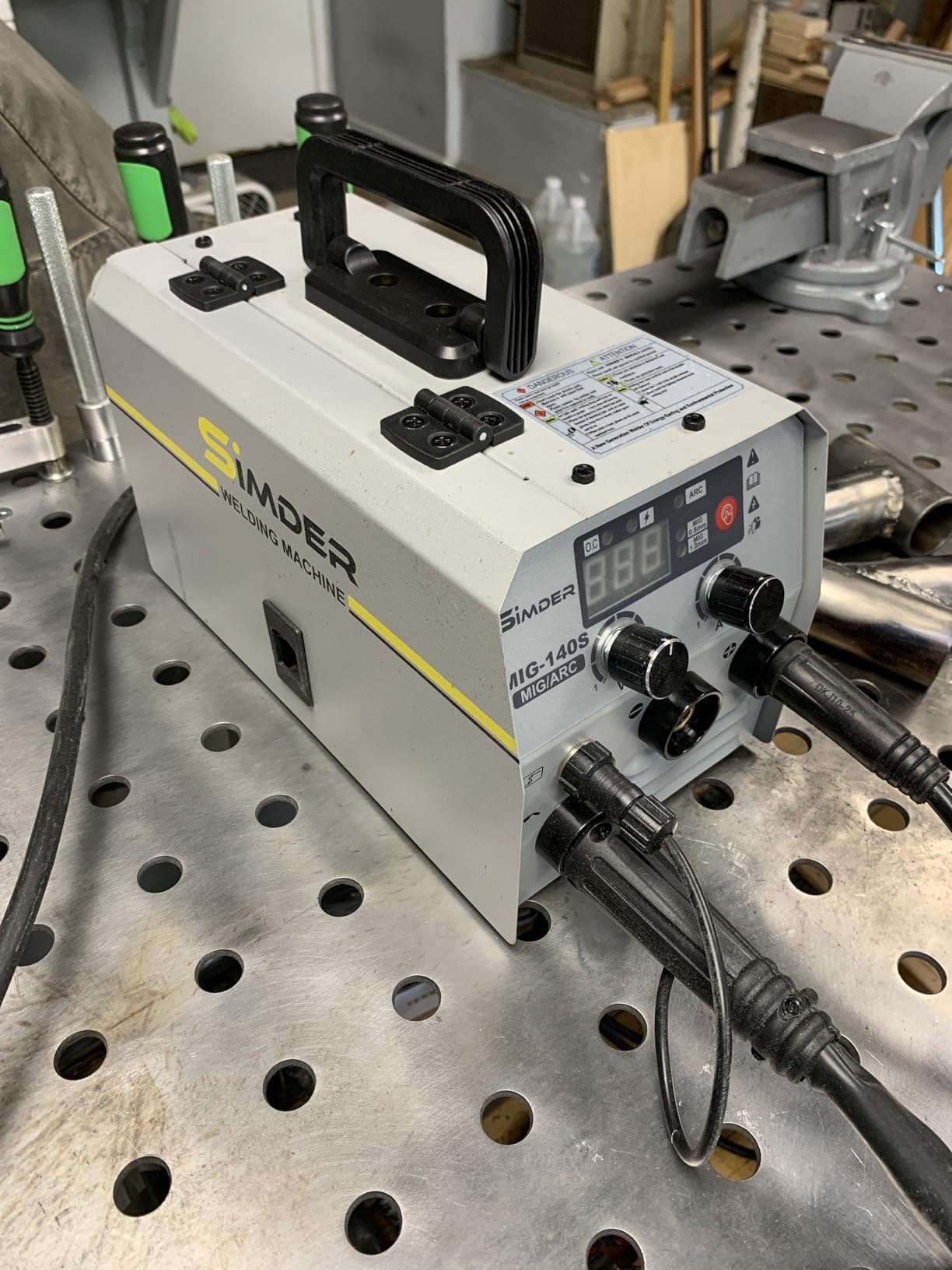
Documentation is the weak point, and it is worth being blunt about. The manual in the box is for a different model, so setup guidance is poor, especially for stick. The supplied MIG gun is a gas gun and ships with the wrong contact tip for flux core, and the spool door does not latch fully. None of that is dangerous, but it means you will spend an evening with trial and error on scrap metal before you touch the car.
The leads are also short at roughly four to six feet, so the machine has to sit close to the work. Plan your setup around that.
What it handles well on a car
Panel work, floor pans, bumper brackets, and the odd stainless or copper job where the lift TIG function earns its place. Dual voltage is the real feature if your garage has a 220V circuit available.
Carrying it around a car is effortless, which matters more than raw power when you are welding over your head on a floor pan.
Where you will feel the limits
No aluminum, no shielding gas, and no spool gun on this model. Only a one pound spool of wire is included, down from two on earlier versions. If you need clean cosmetic welds on visible panels, this is not the machine.
7. YESWELDER 205A: The Best Option for Aluminum and Shop Power
YESWELDER 205A MIG Welder, 110V/220V 5-In-1 MIG/Flux Core MIG/Spool Gun MIG/Lift TIG/Stick
5-in-1 including spool gun aluminum MIG
110V and 220V dual voltage
200A output
37.5 lb unit
Pros
- Spool gun MIG capability makes it the pick of this group for aluminum body panel skins
- Dual voltage lets you start on 110V and step up to shop grade 220V output
- Users report solid penetration and consistency even at 110V for the class
- Synergic and manual MIG modes with wire feed from 58 to 858 in/min
- Gas hose graphene liner and drive rollers included in the box
Cons
- Spool gun and lift TIG torch must be purchased separately
- Supplied MIG torch is rated only to 150 amps below the 200A output
- Instructions are confusing so many users rely on video guides
- At 37.5 lb it is the heaviest unit here
This is the only machine in the guide that can weld aluminum. The five-in-one process list covers gas MIG, flux core MIG, spool gun aluminum MIG, lift TIG and stick, so if your project includes alloy body skins or a transmission pan, nothing else on this list will do the job.
Wire feed speed runs from 58 to 858 inches per minute with automatic voltage matching and a plus or minus 3V trim. The combination of synergic and manual modes is unusual at this level: a beginner can start on auto and a more experienced person can still set voltage by hand when welding a specific joint.
Owners who have had the machine for years describe it as performing like a far more expensive unit once you get past the documentation. The practical advice that recurs in reviews is to buy quality E71T-11 multi-pass flux core wire rather than the included E71T-GS, and to upgrade the torch above 200 amps if you plan to run heavy plate at 220V.
Users also report solid penetration and consistency even at 110V for the class, with steady current across all modes and no overheating under heavy plate work. Seventy-nine percent of reviewers give it five stars.
Three cautions. The spool gun and the lift TIG torch are both sold separately, so the aluminum capability is not in the box. The supplied MIG torch is rated to 150 amps, which is below the machine’s 200 amp output, and that is a real limitation if you push it hard. At 37.5 pounds it is by far the heaviest unit here and needs to be moved deliberately or put on a cart.
Reviewers also note that actual output tends to run about 10 to 15 amps below the displayed value. Verify with a clamp meter if you are setting up on a specific gauge.
What it handles well on a car
Everything. Gas-shielded MIG on a visible quarter panel, flux core on a dirty floor pan, aluminum on an alloy skin, stick on a bracket, TIG on a stainless trim. The digital display and dual voltage make it the most flexible shop-capable machine in the group.
It is the pick if you are running a small body shop rather than a single project, because it covers the widest range of work in one footprint.
Where you will feel the limits
Weight and cost of the extras. The spool gun, the TIG torch and a torch rated above 200 amps are all additional purchases, and the instructions are genuinely confusing. A beginner without a mentor may find the mode switching a steep learning curve.
8. Lincoln Electric 90i FC: The Best for Moving Around a Project
Lincoln Electric 90i FC Flux Core Wire Feed Weld-PAK Welder, 120V Welding Machine, Portable w/Shoulder Strap, Protective Metal Case, Best for Small Jobs, K5255-1
90A class 120V flux core
Welds up to 1/4 in
15 lb with shoulder strap
Protective metal case
Pros
- Highest rating in this group with 84 percent five-star ratings
- Only 15 lb with an included shoulder strap so it can move around a vehicle freely
- Inverter power source gives smoother welds than older transformer Lincoln units
- Runs on any 120V outlet so it reaches outlets conveniently around a car
- Metal case protects the machine and consumables were easy to source
Cons
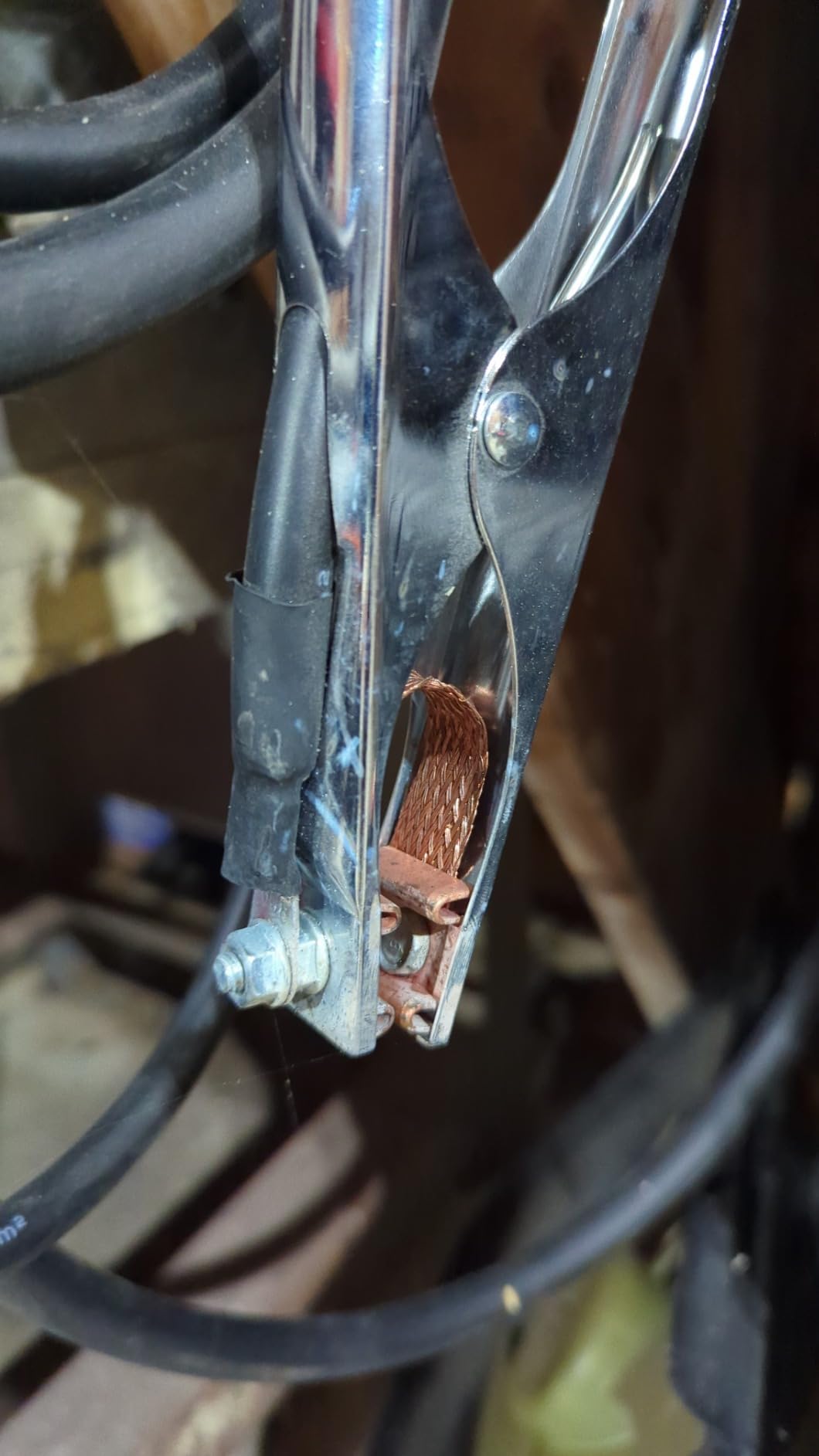
- Ground clamp bonding braid is short and can work loose after a couple of welds
- Flux core wire spatters noticeably so beads need grinding and painting
- 90A output is below the mid-range machines here so thicker stock needs multiple passes
- Flux core wire may not be included depending on the package
This carries the highest star rating in the group, though from the smallest pool of owner feedback of the ten machines we tested. It is a single-purpose 90 amp flux core machine, and it does one job extremely well: light welding anywhere in a garage, with a shoulder strap and a 15 pound weight that make it genuinely portable.
Two knobs, wire speed and voltage, with infinite welding voltage for fine tuning. There is no synergic mode, no display and no menu, which means there is nothing to learn and nothing to mis-set. Long-time Lincoln owners say it welds as well as or better than the transformer 140 it replaced, and one owner used it for precision sheet metal work on a 1950 Ford hearse conversion.
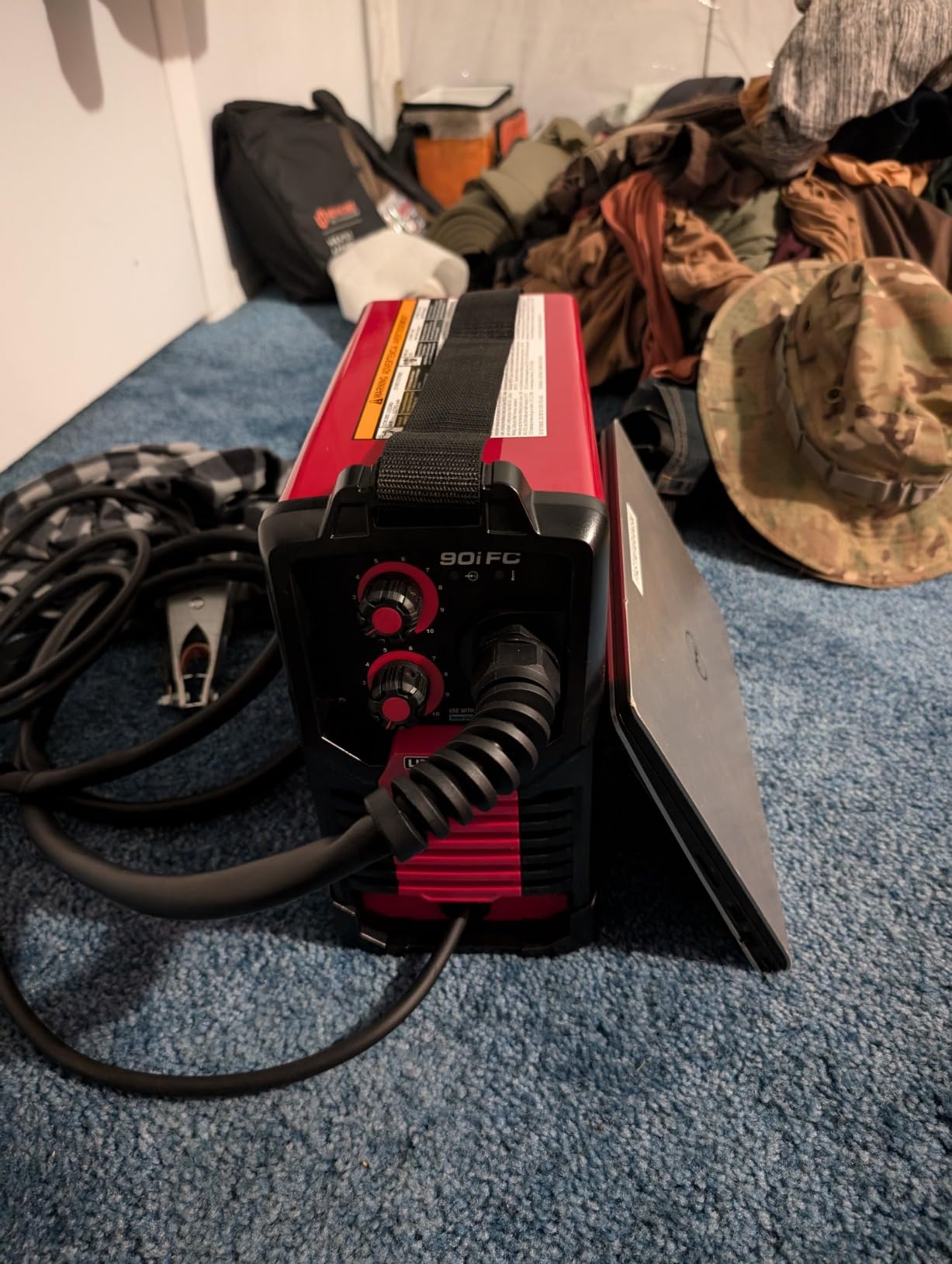
The brand matters more than it might otherwise. AutoBody101 regulars and Garage Journal consensus both point to Lincoln, Miller and Hobart as the names with real dealer networks, so if a drive roll or a torch liner fails, you can buy the part locally. Consumables for this model were easy to source according to owners.
The inverter power supply is the quiet advantage. It gives a smoother arc and better low-end behavior than the transformer machines it replaced, which is precisely the characteristic that matters on thin gauge.
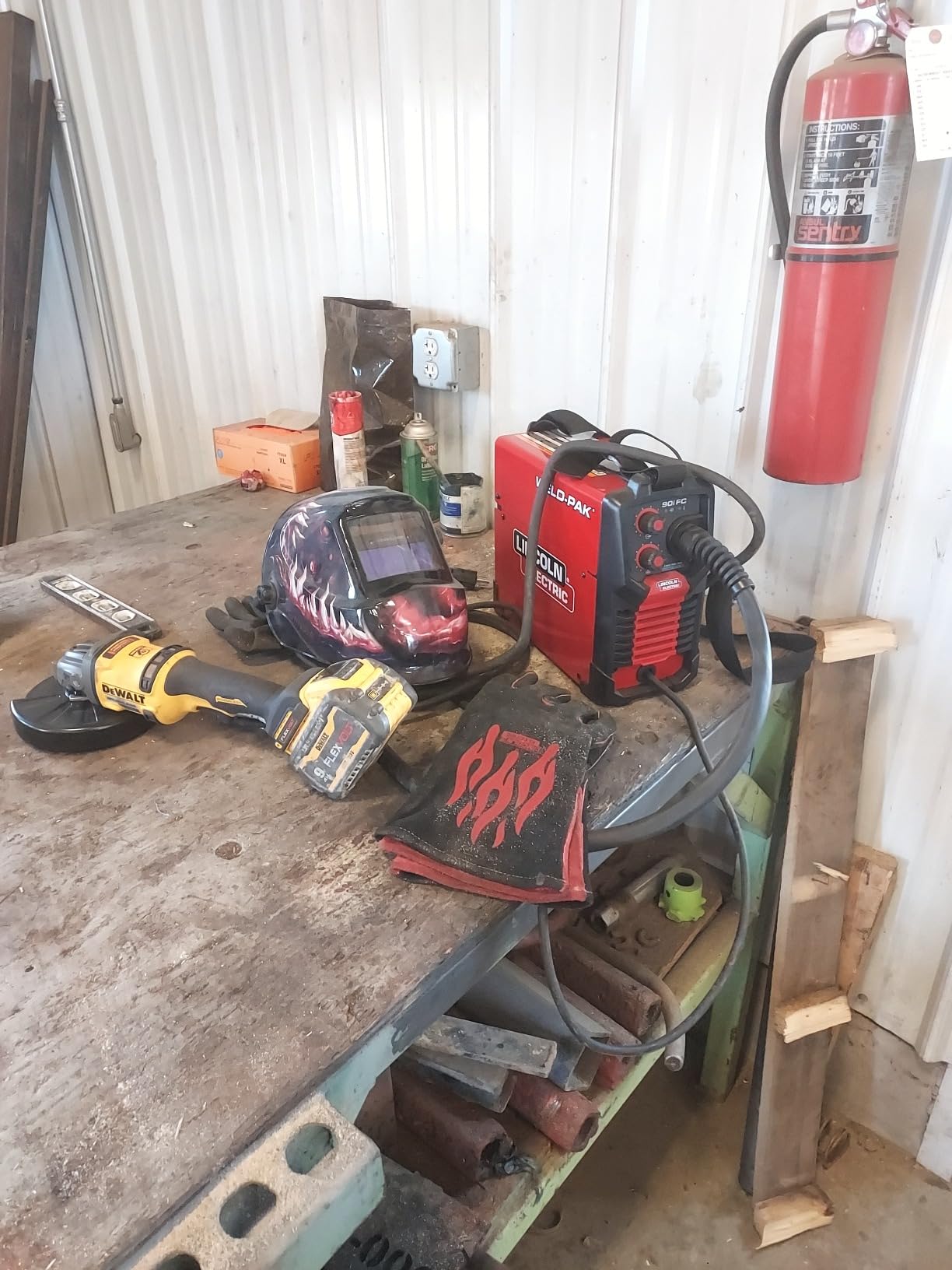
At 90 amps of output, this is the smallest welder here in real terms, and it needs multiple passes on anything thicker. The ground clamp bonding braid is short and can work loose after a couple of welds, and flux core spatter means grinding and painting every bead. In some configurations the base package does not include wire.
What it handles well on a car
Small jobs: rust spot repair, a single cracked bracket, a short seam, a spot weld sequence. Its 120V any-outlet capability means you can drag it to the far side of a car rather than working around a fixed extension cord.
It is also the machine to buy if you want a brand name and serviceability more than maximum output.
Where you will feel the limits
Ninety amps. If your project involves a full floor pan replacement, quarter panel butt welds at speed, or anything structural, you will be making many more passes than you would on a 130 to 200 amp machine. There is no gas mode and no TIG.
9. HITBOX 200A: The Best for Light Repairs and Extra Voltage Options
HITBOX 200A MIG Welder, 110V/220V Flux Core MIG/Lift TIG/Stick 3-in-1
IGBT inverter up to 200A
110V and 220V dual voltage
0.030 and 0.035 wire
Welds mild steel to 4.0 mm
Pros
- Very light at roughly 8.6 lb with a built-in carrying handle
- Dual voltage gives usable power on both 110V and 220V
- Users report clean welds with very little spatter and quiet inverter operation
- Synergic control makes setup a two-dial job
- Full accessory package including torch clamp wire nozzles brush and hammer
Cons
- Output is consistently 20 to 30 percent lower than the displayed amperage reading
- Stick mode struggles to hold an arc with 6010 6011 or 7018 3/32 rods
- No hot start feature
- Only holds a 2 lb wire spool and post-sale support is largely absent
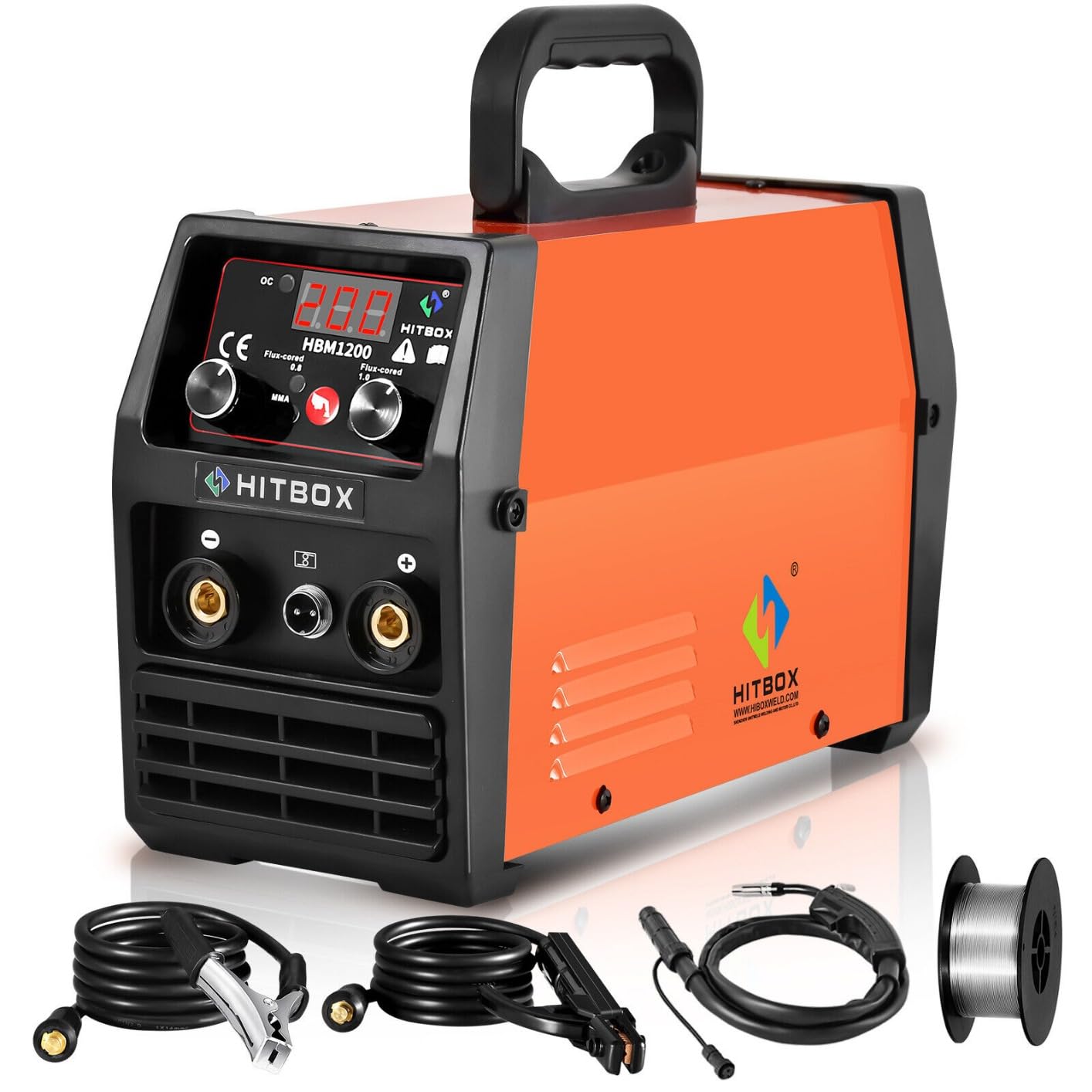
The HITBOX is the most compact option that still offers dual voltage, and users report clean welds with very little spatter and noticeably quiet inverter operation. That quiet arc is genuinely useful when you are tacking in a quiet garage late at night or trying to hear a difference in your torch technique.
Wire feed speed is coordinated automatically by the synergic control, and the accessory package covers everything needed to start: an 8 foot MIG torch, ground clamp, electrode holder, two pounds of 0.035 inch wire, two nozzles, a brush and a hammer.
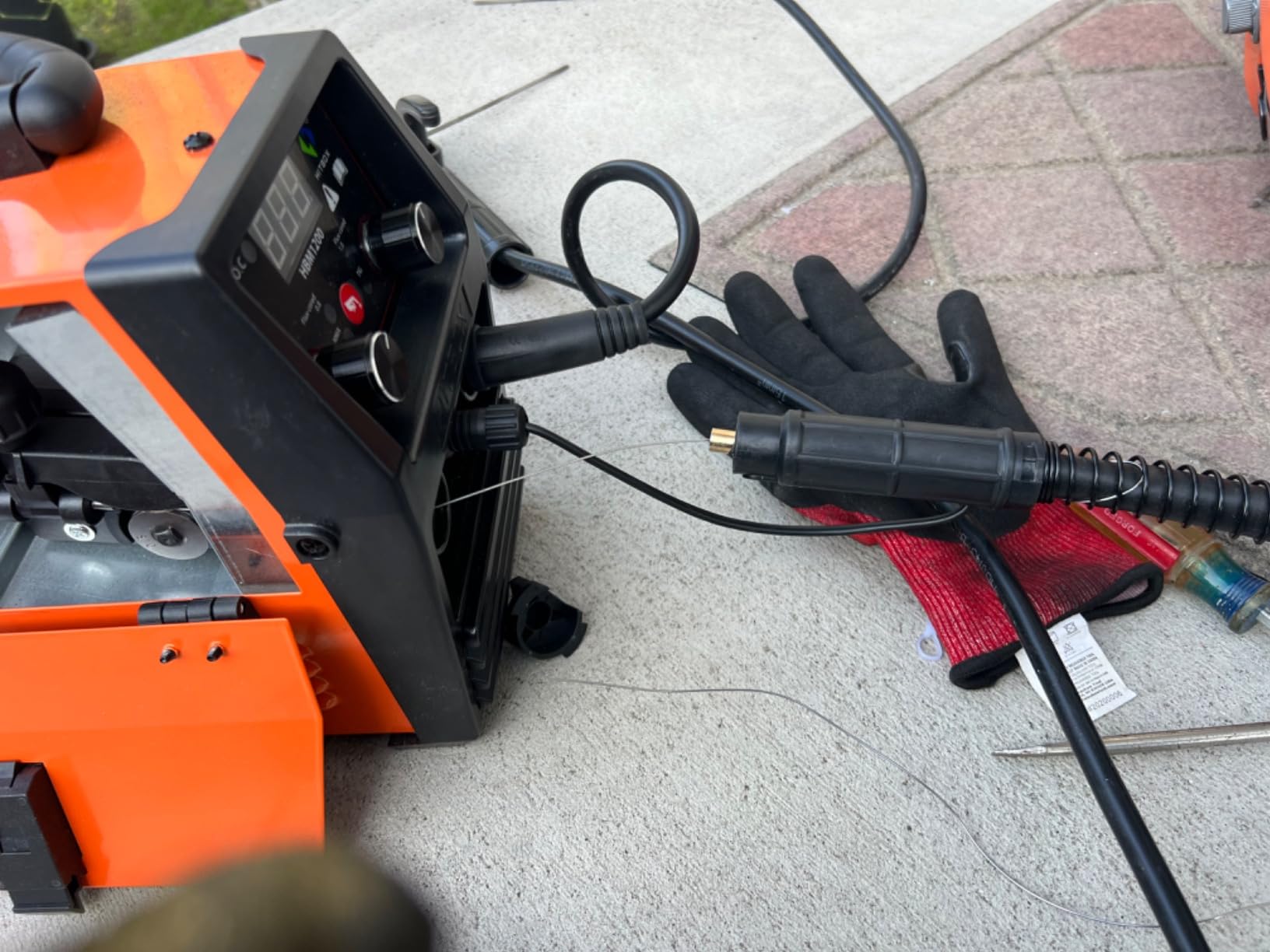
Owners report it outperforming a similarly priced unit from a bigger retailer, and the synergic mode gets you to two dials and a usable bead quickly. It handles mild steel up to 4.0 mm, which covers most of what you will meet on a project car’s body.
The single most valuable piece of advice in the reviews is to verify actual amperage with a clamp meter before you tune your settings, because the display overstates the output.
That display gap is significant. Output running 20 to 30 percent below the displayed reading means a machine set to 130 amps is delivering closer to 100, and if you have been dialing in settings from the number on the screen rather than from the puddle, you are already off. Treat the display as a relative guide, not an instrument.
Stick mode also struggles to hold an arc with the more common 6010, 6011 or 7018 3/32 inch rods, though it works with the supplied J422 or 6013. There is no hot start, the spool holds only two pounds, and post-sale support is largely absent.
What it handles well on a car
Light repair work: small patches, brackets, exhaust pieces and occasional tacking in a tight space. The low weight makes it easy to reposition constantly, and the quiet arc is a real advantage in a home workshop.
Dual voltage gives you the option of a 220V circuit if you have one, without a larger machine.
Where you will feel the limits
Unreliable output reporting, no hot start, and a two pound spool limit. If you are doing a long floor pan or a full quarter panel, you will spend more time changing wire and second-guessing the display than welding. If the clamp meter check shows the gap is real, the setting-by-feel approach works, but you have to be disciplined about it.
10. ANDELI 135A: The Best Budget Pick for Pulse Control and Arc Tuning
ANDELI 110V/220V MIG Welder 135A ,PULSE Flux Core/Lift TIG/Stick 4-in-1
135A with flux core pulse mode
110V and 220V dual voltage
Adjustable inductance
9.04 lb with handle
Pros
- Pulse flux core mode gives a smoother more stable arc with finer and more uniform beads
- Runs on both 120V and 240V so it moves between a home garage and a shop
- Adjustable inductance lets you tune arc stability and cut spatter on the pass
- Most complete kit here with helmet goggles gloves wire torch tips clamp and adapter
- Only 9.04 lb with a detachable 9 ft stinger and swappable ground lead
Cons
- Included welding helmet is poorly fitting and widely considered unusable
- Only accepts 2 lb wire spools
- Wire feed speed is displayed in amps rather than inches per minute
- Some units do not include the pulse mode shown in brand videos
The ANDELI is the most refined of the budget machines and the only one here with a real pulse flux core mode. Pulse cycles the current rapidly on and off, which produces a shorter, more controlled arc with a narrower bead and less heat spread. On a visible panel, that is the difference between a bead you can grind minimally and one you are rebuilding.
Adjustable inductance is the other feature that matters. It controls how the arc behaves as the puddle forms: more inductance softens the arc and flattens the bead with less spatter, less inductance gives a tighter, more focused penetration. Having a dial for it on a machine at this level is unusual, and detailed reviewers value it more than raw amperage.
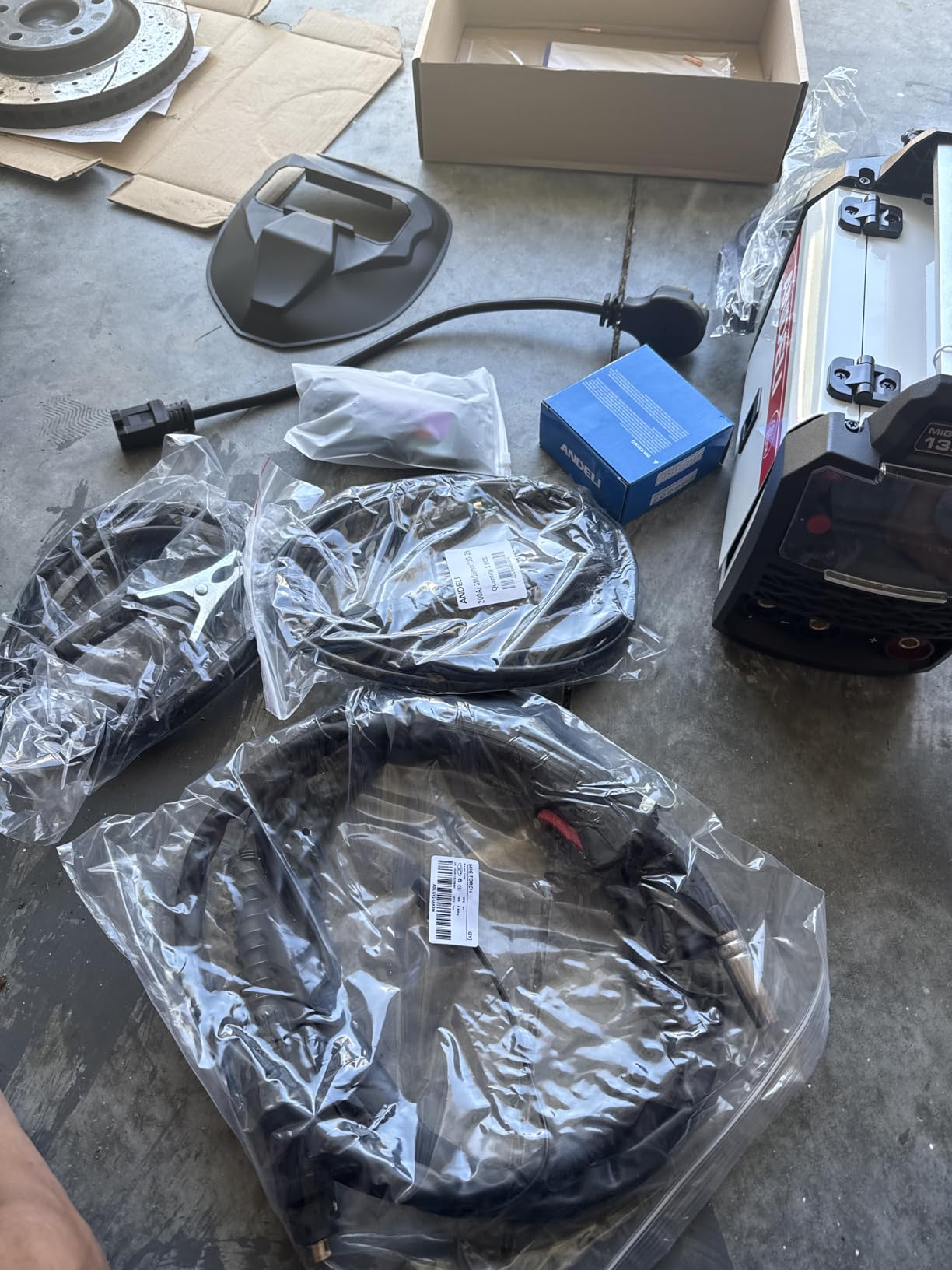
The leads are a genuine engineering decision. The stinger and ground lead detach, so you can swap in heavier cable, and a 9 foot length gives you real freedom to move around a vehicle. On a floor pan, that reach is worth more than another twenty amps.
Users also report that the machine can be overpowered for auto body work even on its lowest setting, which is an odd complaint but a good one. It means you have enough control range at the bottom to actually manage thin panels.
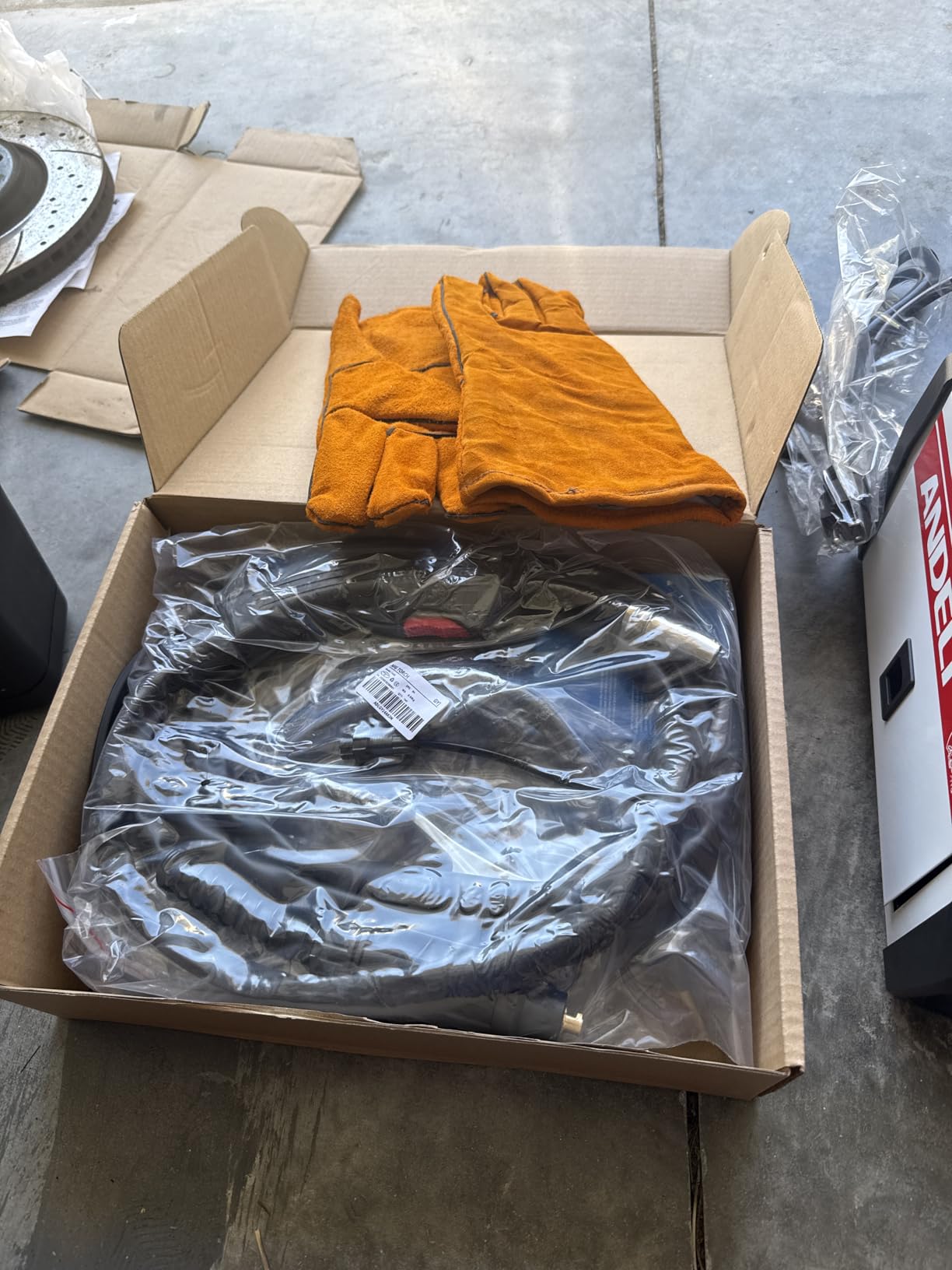
The included welding helmet is the most obvious letdown. Buyers consistently rate it as poorly fitting and unusable, and the consensus advice is to keep it as a backup and buy a proper four-sensor helmet. For an article about welding safety, we would not recommend doing this job with the supplied hood.
Two smaller issues. The wire feed speed is displayed in amps rather than the inches per minute used everywhere else in the US, which makes cross-referencing settings awkward. And some machines do not include the pulse mode shown in brand videos, so confirm the function on your specific machine before relying on it.
What it handles well on a car
Visible panel work where spatter and bead width matter, plus any job where you need to move around the car and reach underneath it. Pulse mode and adjustable inductance give you finer control over 18 to 20 gauge material than any other machine in this price range.
Dual voltage also means it can move to a 240V circuit later for heavier work.
Where you will feel the limits
Two pound spools only, and no spool gun for aluminum. At 135 amps of output it is still a light machine. Plan to replace the helmet before your first real weld, and verify the pulse function is present on your unit.
MIG vs TIG vs Flux Core vs Stick for Body Work
For most auto body work, gas-shielded MIG is the right default. It runs cool, it lays a narrow bead, and the same settings that work on a door skin will not wreck a thicker patch panel. The reason flux core machines dominate this guide is price and gas access, not quality.
Flux core is the right choice for dirty, rusty or outdoor work where the metal is not prepared and a gas bottle is inconvenient. Restoration users accept it readily for floor pans, brackets and anything hidden. They are equally firm that it does not belong on a show-quality visible panel, and we agree. Expect grinding and painting on every flux core bead.
TIG produces the cleanest cosmetic weld of any of these processes, which is why collision repair shops that finish a car in a day use it for visible seams. It is also slower, requires more skill, and is not a wire-feed process, so a TIG-only machine is the wrong investment for a weekend restomod project. Lift TIG on the multi-process machines here is a reasonable compromise, with the caveat that the torches are usually sold separately.
Stick welding has no place on body panels. It is included on every multi-process machine here because it is useful for brackets, frames and trailer hitters, not because it belongs on a quarter panel. The HITBOX is a case in point, since its stick mode struggles to hold an arc with the most common 3/32 inch rods.
One more process deserves a mention. Pulse MIG, which only the ANDELI in this group offers at a budget level, reduces heat input by pulsing the current. It is the closest budget approximation of a TIG-clean bead, and on a visible panel it is worth the extra thought.
110V vs 220V for Auto Body Panels
For auto body panels specifically, 120V is preferable, and this is the one place where the usual advice about buying more power does not apply. The reason is simple physics: a lower supply voltage gives you finer granularity at the low end of the range, so you can settle the puddle on 18 or 20 gauge metal instead of jumping between a cold arc and a hole.
Forum consensus points the same way. Experienced body shop operators recommend a 240V Lincoln or Miller for production work where they are welding all day, but hobbyists report consistently that 110V is sufficient and often better for panel work. A second thread consensus worth noting is that forum users rarely reach for 220V for sheet metal bodywork specifically.
Where 220V earns its keep is heavier material. Frame rails, suspension mounts, brackets and thicker patch panel steel benefit from the higher output, and a dual voltage machine gives you both without buying two machines. Five of the ten units here are dual voltage, and the YESWELDER 205A is the one that combines it with spool gun aluminum capability.
The practical caveat is the ground lead. Forum threads repeatedly identify a short ground clamp lead as a hidden cause of poor results around a car. A short lead raises circuit resistance, which drops the arc voltage and makes the puddle behave unpredictably. Extending the ground lead to reach a bare metal point on the chassis, close to the work, fixes more problems than any setting change.
Wire Size and Shielding Gas Guide for Bodywork
Wire diameter controls how much metal you deposit over a given length, which means it controls heat. Thinner wire melts faster, so you can hold a shorter arc and lay a tighter puddle. If your machine cannot feed thin wire, you are forced into a hot, wide bead on a panel, and that is where burn-through comes from.
Gasless machines in this group run 0.030 and 0.035 inch flux core wire, and that is the practical floor for them. Several of them accept 0.040 inch as well, which is useful on a floor pan section and unnecessary on a door skin. The Lincoln 90i FC and the FORNEY 140 FC are also 0.030 inch machines, so their heat footprint is the friendliest here on thin gauge.
Solid wire is the other half of the story, and none of these gasless units can use it. Solid 0.023 or 0.025 inch ER70S-6 wire run with a shielding gas mix, and that combination is what you want for a visible panel. The advantage is a much cleaner, cooler arc and a narrower bead that needs far less finishing.
On gas mix, 75% argon and 25% CO2 is the standard for steel and gives a stable, forgiving arc. 90% argon and 10% CO2 runs cooler still and is a good match for the thinnest panels, at the cost of slightly less penetration on thicker material. Straight CO2 is the one to avoid for body work. It produces more spatter, a harsher arc and less control at the low amperage that thin panels demand.
None of the ten machines here ships with a gas regulator, because none of them are gas-shielded. If you later move to a gas MIG machine, budget for a regulator and flow meter as a separate purchase, along with a cylinder you will have to refill.
How to Avoid Burn-Through and Panel Warpage
Burn-through on a 20-gauge panel is almost always a heat management problem, not a machine problem. Five things fix it, and they work on every machine in this guide.
Move the work, not the machine. A short ground lead and a torch that can reach every side of the panel matter more than any dial. Extend the leads before you lower the amperage.
Use the smallest wire that will fill the joint. 0.030 inch gives you more control than 0.035 inch on the same panel.
Switch to pulse mode if your machine has it. The lower average heat input is the single most effective change you can make on a visible panel.
Tack, cool, then weld. Do not run a continuous seam across a whole quarter panel. Clamp, tack, let it cool, check the fit, then weld in short segments.
Fit a backing bar or copper chill block. For butt joints, a piece of scrap steel behind the seam supports the molten puddle and dramatically reduces burn-through and distortion.
Warpage is the same heat problem with a different symptom. Continuous heat on a large panel pulls the edges out of flat, and the fix is the same. Break your welds into short segments, step away to let the panel cool, and use clamps to hold alignment while you work on another section. Forum users are consistent that technique matters more to the final result than the machine itself.
For plug welds, run slightly more voltage than you would for a butt joint. The extra voltage lets the filler wire melt into the edge of the existing hole without fusing to it, which is what causes a tear-out when you grind a plug weld flush. The standard starting hole is a 5/16 inch plug, drilled and then punched down to create a lip on the original panel.
Welding over your head, which you will do on a floor pan, needs a machine you can hold with one hand. Every machine in this guide weighs between 7.7 and 37.5 pounds, and that weight is the practical difference between comfortable and miserable work under a vehicle.
Troubleshooting Reference for Panel Welding
These four problems account for most of what goes wrong on a beginner panel job. Work down the list from the cheapest fix, because in almost every case the answer is in the setup rather than the machine.
Symptom: burning through on a thin panel. The causes, in order of likelihood, are a ground lead that is too short, too much amperage for the gauge, running the wrong wire diameter, or a loose ground clamp on painted metal. The fix is to attach the clamp to bare metal near the weld, drop two clicks of amperage, and step your travel speed up slightly. If the puddle still drops through, the metal may be thinner than you think, so check the gauge at a bare spot first.
Symptom: cold lap, where the bead sits on top without fusing. The metal is dirty, painted, rusted or the travel speed is too fast. Grind or sand the joint to bright metal, drop the travel speed so you are dwelling rather than sweeping, and raise the voltage slightly if the edges are not wetting.
Symptom: bird-nesting, where the wire uncoils and jams at the drive roll. The spool is running out, the tensioner is too loose, or the liner is snagged. Refill the spool, set the tensioner so the spool barely turns under hand tension, and check that the liner is not kinked. Budget machines with plastic tensioners are the usual culprits here.
Symptom: the wire stubs and stops feeding mid-bead. The contact tip is worn, the gun is running too cold for the wire diameter, or the polarity is wrong for flux core. Replace the tip, raise the amperage, and confirm the machine is set to DCEN for flux core work. If a stub pulls through into the cable on a budget machine, stop immediately and pull it back from inside the case before you turn the power on again.
One recurring piece of advice from experienced users is worth repeating. If the display and the actual output disagree, check with a clamp meter before you start changing settings. Several of the machines here overstate their amperage, and tuning to a number that does not exist will cost you an afternoon.
What Else You Need to Buy With Your Welder
The welder is the cheapest part of getting into body work. A proper auto-darkening helmet, a spool of flux core wire, a wire brush, a chipping hammer and a decent ground clamp are the essentials, and a gas cylinder plus regulator are required only if you move to a gas-shielded machine.
Do not use the supplied helmet unless you have no alternative. The ANDELI is the only machine here that includes one, and owners rate it as poorly fitting and unusable, with the consistent advice being to buy a proper four-sensor helmet instead. Your eyes are not the place to economize.
Plan on replacing leads on the cheaper machines. Several owners of the TOOLIOM and the SSimder report that the supplied ground clamp and leads are short and cheap, and swapping in heavier cable is an inexpensive upgrade that improves arc behavior and reach. The ANDELI is the exception, since its stinger and ground lead detach for exactly this reason.
For wire, buy quality E71T-11 multi-pass flux core rather than the general-purpose E71T-GS that ships in the box. Long-term owners of the YESWELDER 205A make this recommendation specifically, and it is good general advice. A two pound spool is the minimum most of these machines will accept, and more if you plan a long floor pan session.
If you are weighing machines rather than gear, our general guides on the best MIG welders for home use and MIG versus TIG cover the wider decision, and our head-to-head on Miller versus Lincoln is worth reading if you are leaning toward a big three brand instead of a budget unit.
Frequently Asked Questions
Which MIG welder is best for car body work?
The FORNEY Easy Weld 140 FC is the best overall pick for car body work, because its infinite voltage control gives you genuine low-end adjustment on thin panels and it runs on a standard 120V outlet anywhere around a car. For a cheaper machine with more processes, the YESWELDER 135A is the better value pick.
Is it better to weld with 110 or 220?
For auto body panels, 120V is preferable because it gives finer control at low amperage, which is what stops burn-through on 18 to 20 gauge metal. Choose 220V for frame rails, brackets and thicker structural work. A dual voltage machine gives you both without buying two welders.
What size MIG wire is best for bodywork?
Smaller wire deposits less heat per inch and gives you a tighter puddle on thin panels, so 0.030 inch is the practical choice for most auto body work. 0.035 inch is more common for gasless machines and for floor pan sections, while 0.023 or 0.025 inch solid wire with shielding gas is the cleanest option on visible panels.
Can you MIG weld auto body panels?
Yes, but only with a machine that will run cool. Panels are often 0.032 to 0.024 inch thick, so you need low minimum amperage, fine voltage control and small wire. Tack and cool between short segments, use a backing bar on butt joints, and move the ground clamp to bare metal near the work.
Why is my MIG welder burning through sheet metal?
The usual causes are a ground lead that is too short, too much amperage for the gauge, running thicker wire than you need, or a clamp attached to painted metal. Extend the ground lead to bare metal near the weld, drop the amperage, use the smallest workable wire diameter, and check the actual gauge with a thickness gauge before welding.
Which MIG welder brand is best for professionals?
Lincoln Electric, Miller and Hobart are the names that come up most often in body shop contexts, mainly because of dealer networks and parts availability rather than raw specs. A machine with consumables you can buy locally will always be easier to own than a cheaper unit with no service support.
What is the thinnest metal you can weld with flux core?
Flux core wire can weld down to around 18 gauge steel with good control, but it is not the process to use on the thinnest body metal. Straight 18 to 22 gauge panels are better handled with 0.030 inch or smaller wire and a synergic or pulse mode, or with a gas-shielded MIG if you need a clean cosmetic bead.
Final Verdict: Which Machine to Buy
If you read nothing else, buy the FORNEY Easy Weld 140 FC. It has the best combination of rating and volume of owner feedback in this group, its infinite voltage control is the reason it holds a puddle on thin panels, and it runs anywhere in your garage on a household outlet. It is our pick for the best MIG welder for auto body work in 2026.
Choose the YESWELDER 135A if you want the most processes and the most proven budget platform, the YESWELDER 205A if you need aluminum or a shop circuit, and the ANDELI 135A if spatter control on a visible panel matters more to you than anything else. For the Lincoln 90i FC, the deciding factor is whether you want a brand you can get serviced locally for small jobs rather than a machine that does more.
Whatever you choose, buy a proper helmet, extend the ground lead to bare metal, and run your first tacks on scrap of the same gauge as the car. The machine gets you started. The setup is what makes the difference.