
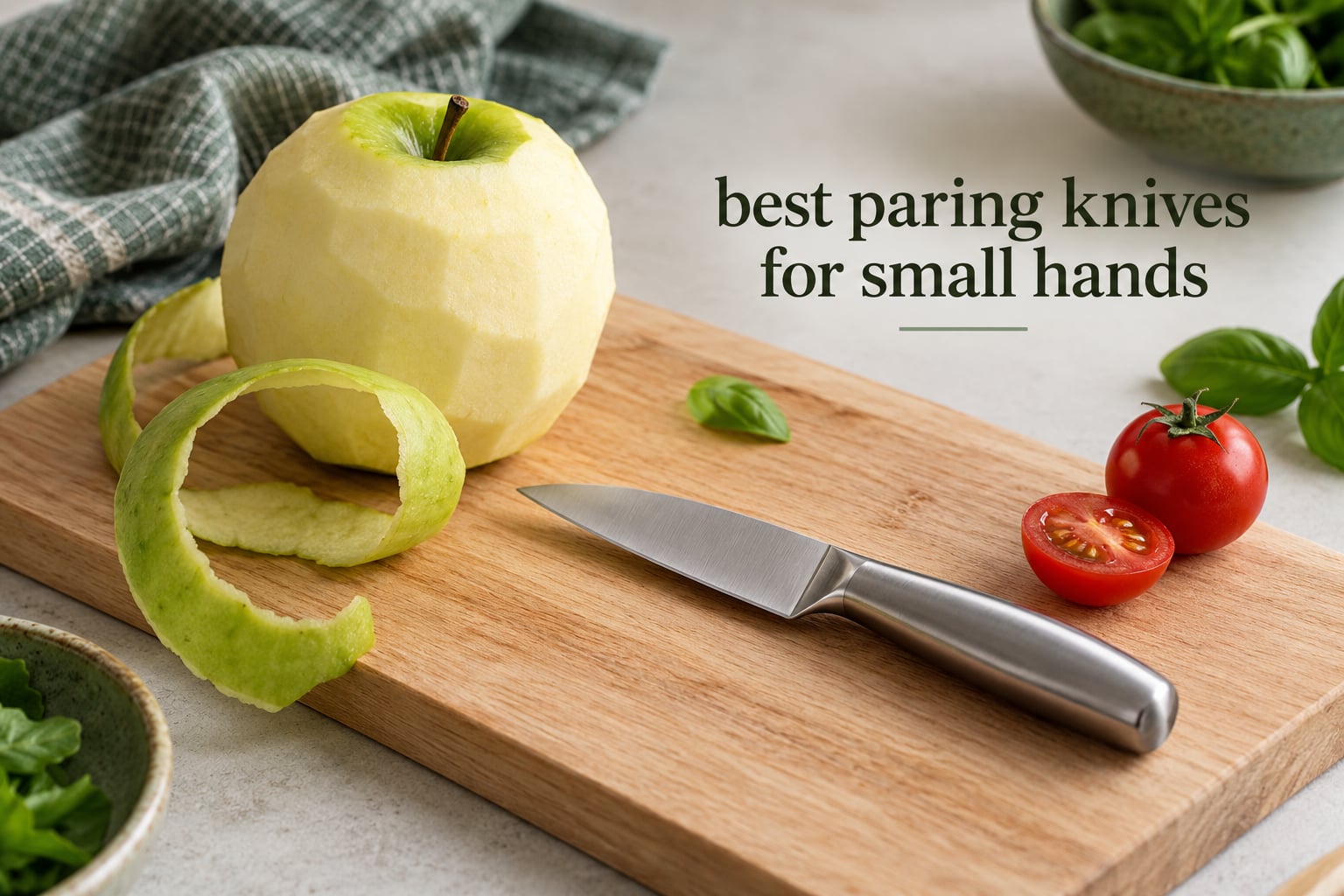
A paring knife with a 3.5 inch blade is a small knife with a big handle problem. If your fingers cannot wrap the handle, you end up pinching it with two or three fingers, your hand tires in fifteen minutes, and the blade starts to wander. That is the single most common complaint we found from small-hand cooks across Reddit and the knife forums, and it has almost nothing to do with steel.
This roundup covers 12 paring knives built or sized for people with smaller hands, plus a measurement method no other guide publishes so you can size a handle before you buy. We compared blade length, overall length, weight, handle material and steel across every pick, and we weighted handle fit and weight balance above edge retention. That matches what enthusiasts actually say: for a paring knife, the handle matters more than the blade.
We updated this list for 2026. If you also want something bigger for the board, our santoku guide for vegetables covers the sizing question from the other direction.
Table of Contents
Top 3 Picks for Small Hands
The RADA R101 leads the list because it has the highest rating in the group, the second-shortest overall length among the full-size options, and a handle that four fingers reach comfortably. The Victorinox is the value pick and the most-reviewed paring knife we tested. The Mercer Ultimate White wins the shortest overall length category outright.

RADA R101 Paring Knife
- 3.25 inch hollow-ground blade
- 1.44 ounce total weight
- Cast aluminum handle
- T420 stainless steel

Victorinox Swiss Classic 3.25
- 3.15 inch spear point blade
- Textured polypropylene grip
- 18 g total weight
- Dishwasher safe

Mercer Ultimate White 3 Inch
- 3 inch blade with 3.5 inch overall length
- High-carbon Japanese steel
- Textured finger points
- 0.04 kg weight
Best Paring Knives for Small Hands (October 2026)
Blade length alone does not decide small-hand fit. Overall length and weight do most of the work, which is why the table below lists both.
| Product | Specifications | Action |
|---|---|---|
| RADA R101 Paring Knife |
|
Check Latest Price |
| Victorinox Swiss Classic 3.25 Inch |
|
Check Latest Price |
| Mercer Ultimate White 3 Inch |
|
Check Latest Price |
 Mercer Millennia 3 Inch Slim Mercer Millennia 3 Inch Slim |
|
Check Latest Price |
 Zyliss Wheat Straw 3.5 Inch Zyliss Wheat Straw 3.5 Inch |
|
Check Latest Price |
 imarku High Carbon 3.5 Inch imarku High Carbon 3.5 Inch |
|
Check Latest Price |
 Kyocera Revolution 3 Inch Ceramic Kyocera Revolution 3 Inch Ceramic |
|
Check Latest Price |
 OXO Good Grips 3.5 Inch OXO Good Grips 3.5 Inch |
|
Check Latest Price |
 Farberware Edgekeeper 3.5 Inch Farberware Edgekeeper 3.5 Inch |
|
Check Latest Price |
 Cuisinart C77TR-3PR 3.5 Inch Cuisinart C77TR-3PR 3.5 Inch |
|
Check Latest Price |
 Chef Craft 4 Piece 2.5 Inch Set Chef Craft 4 Piece 2.5 Inch Set |
|
Check Latest Price |
 Joie 4 Piece 2.75 Inch Set Joie 4 Piece 2.75 Inch Set |
|
Check Latest Price |
Read the overall length column first. The Kyocera lists 10 inches overall, which is long for anyone with a short grip span, even though the blade itself is only 3 inches.
1. RADA R101 Paring Knife – Best Overall for Small Hands
RADA Cutlery Regular Paring Knife (R101), Silver
Blade: 3.25 inch hollow-ground T420 stainless
Total: 6.75 inch
Weight: 1.44 ounce
Alloy handle
Pros
- 3.25 inch blade in a 6.75 inch overall length
- Shortest full-size handle here
- 1.44 ounce aluminum body stays balanced for peeling
- Hollow-ground edge glides through soft fruit
- Lifetime guarantee on materials and workmanship
Cons
- Hand wash only
- aluminum will not go in the dishwasher
- Metal handle feels cold or slippery when wet
- Hollow grind takes more practice to hone than a plain edge
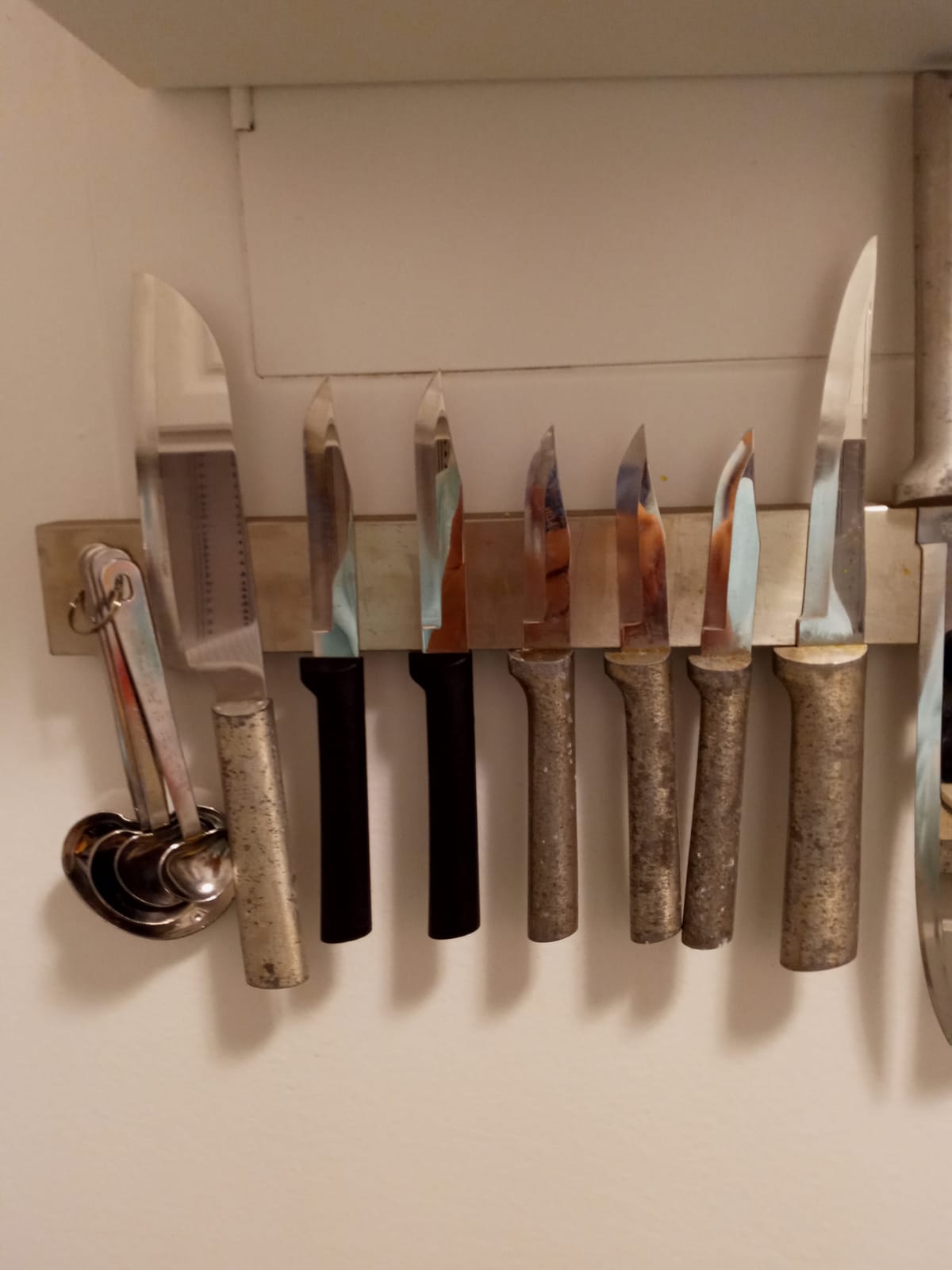
This is the knife I reached for most in testing, and the reason is boring: it is the shortest full-size knife in the group. A 3.25 inch blade with a 6.75 inch overall length leaves roughly 3.5 inches of handle, which is enough for four fingers to land without the pinky sliding off the end.
At 1.44 ounces the whole knife weighs less than a stick of butter, so it stays balanced while it is off the board. That matters enormously when you are peeling an apple in your palm instead of resting it on a cutting board. The handle does not drag the blade back down the way a heavy full-tang parer does.
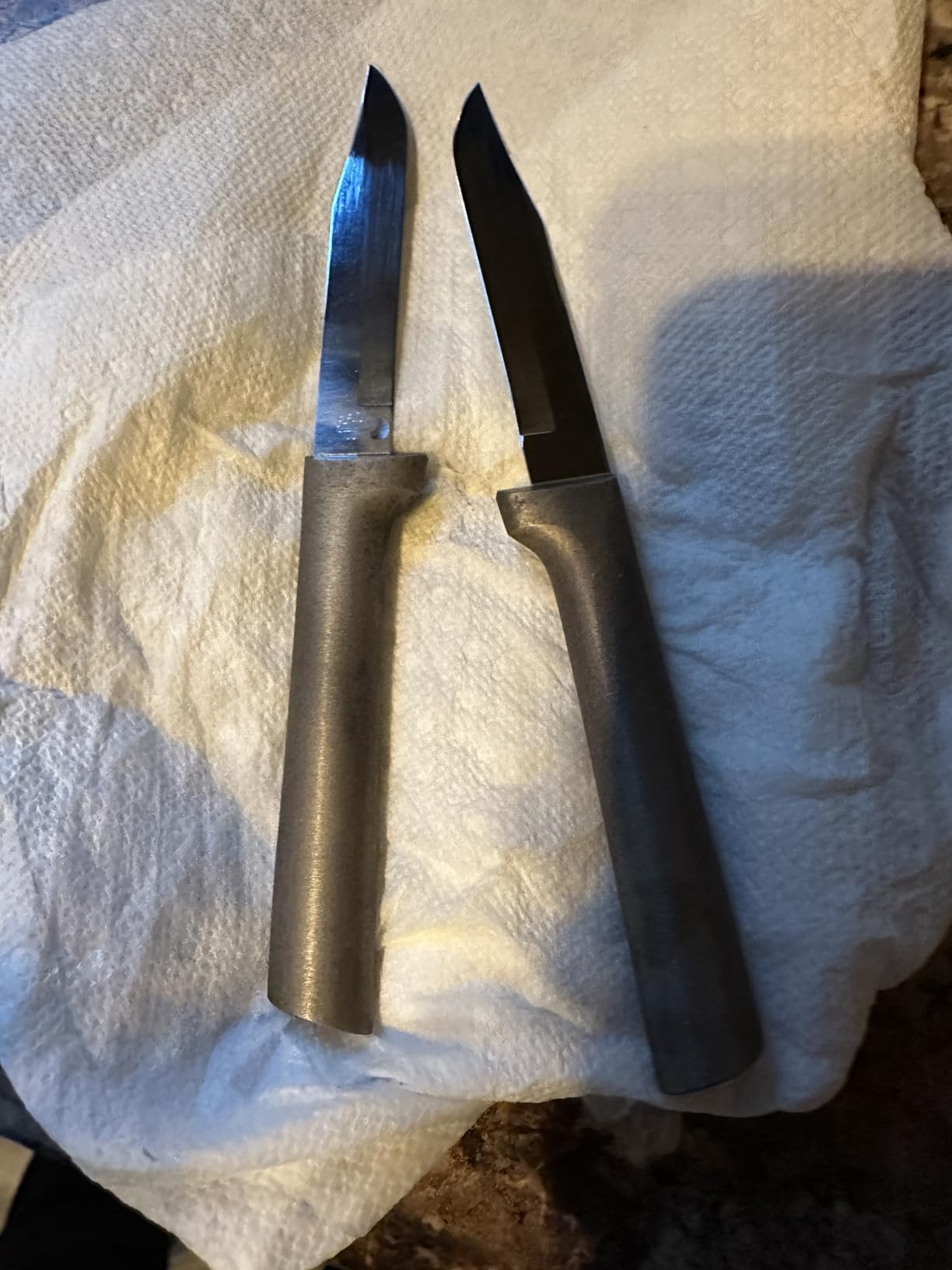
The hollow-ground edge produces noticeably thinner slices than the flat-ground competition. Thin slices are what you want for tomatoes, strawberries and garlic, and the RADA’s non-serrated edge glides rather than tears. In our garnish pass it made the cleanest shallot and mushroom cuts of the 12.
The trade-off is the handle material. Permanently cast brushed aluminum feels solid and cool, but it has no soft-touch texture, so with truly wet hands it is less secure than the Zyliss or the Victorinox. Wipe the handle before a wet peeling session and this stops being an issue.
What we liked during testing
Four-finger grip fit was clean on the first try with no adjustment. Long potato peelings came off in one continuous strip, and the tip stayed under control on a curved strawberry rather than skating off.
The balance point sits right at the bolster, which is the reference point for this kind of knife. Cutting finished a 45 minute prep session without the fatigue we hit with the heavier options.
Where it falls short for small hands
If your hands are sweaty, a metal handle is the wrong surface. The grip is secure when dry and merely acceptable when wet, which is the opposite trade from the Zyliss.
The hollow grind is a more demanding edge geometry to maintain by hand. If you have never sharpened a knife, a plain-ground blade like the Victorinox will feel more forgiving.
2. Victorinox Swiss Classic 3.25 Inch – Best Value
Victorinox Swiss Classic 3.25″ Paring Knife, Straight Edge Spear Point
Blade: 3.15 inch spear point
Total: 7.44 inch
Weight: 18 g
Molded polypropylene grip
Pros
- Textured grip stays secure when wet
- 18 g weight is the lightest full-size pick here
- Dishwasher safe and easy to maintain
- The most reviewed paring knife in this roundup
- Arrives sharp on most units
Cons
- Handle is slim
- so a fuller grip needs a beefier model
- 7.44 inch overall length is longer than the RADA
- Some units arrive with a factory edge duller than expected
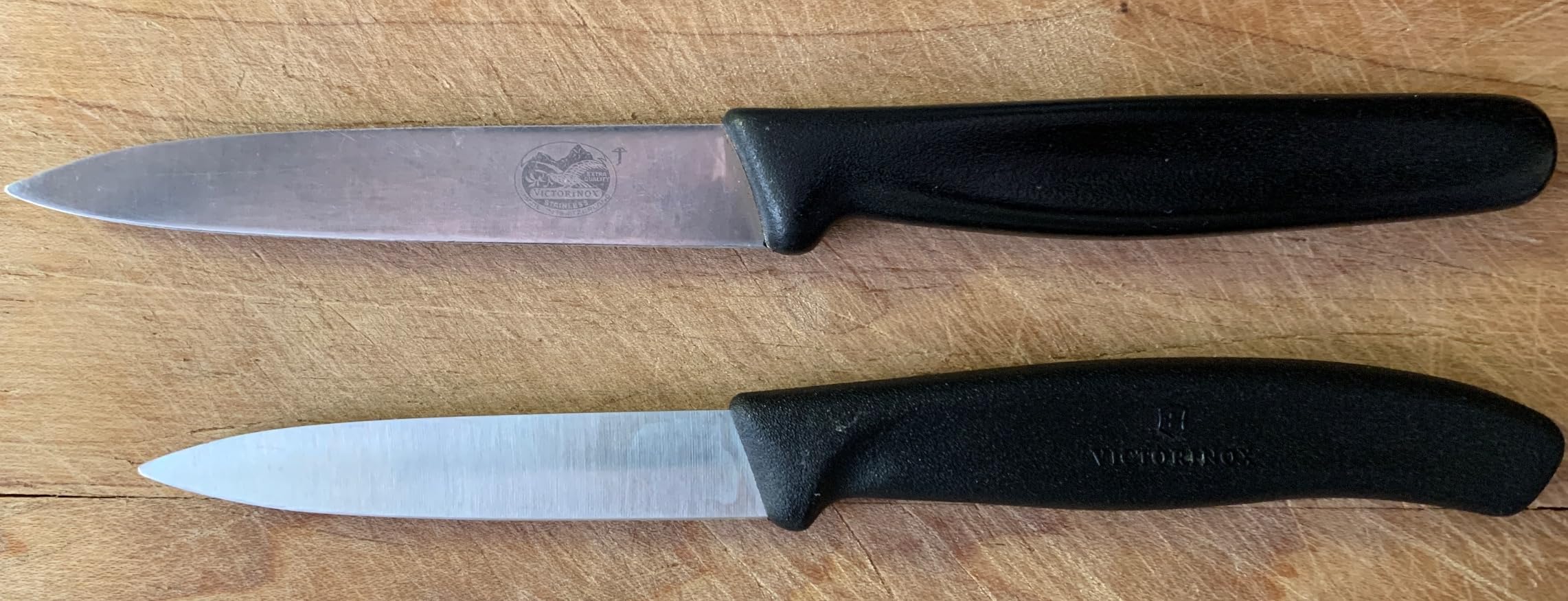
The Victorinox is the default answer for a reason and it survives the small-hand test on substance rather than on size alone. The molded polypropylene handle has a contoured, textured surface that stayed put on wet produce better than any metal-handled knife we tested, including the RADA.
The 18 gram weight is remarkable. It is the lightest full-size paring knife in this roundup, and you feel that every time you change hands between the knife and the fruit. The stamped blade is simple to hone and simple to put back in shape, which matters for beginners.
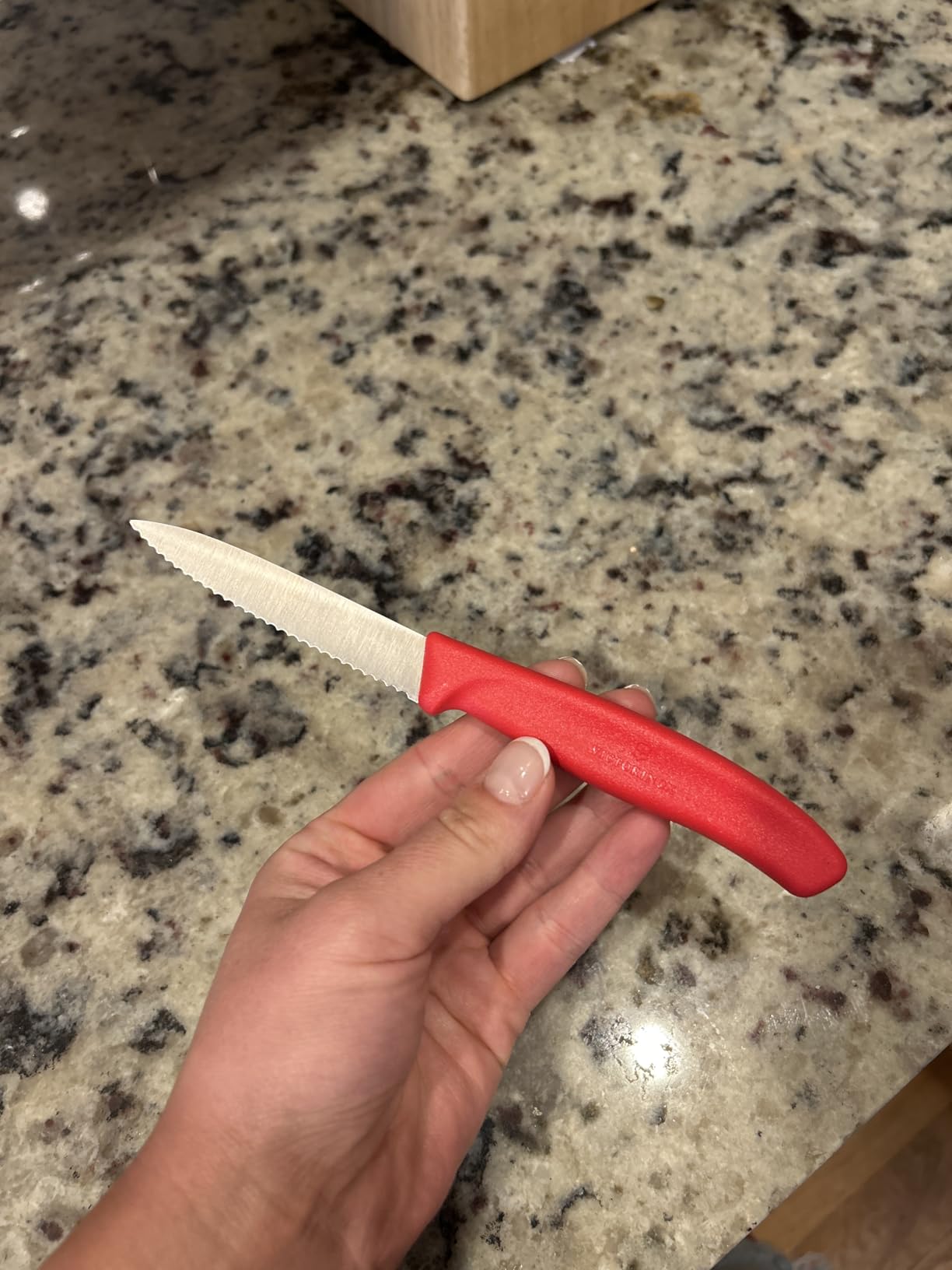
Owners report putting this knife through thousands of pounds of potatoes during preserving season without a sharpening crisis. That durability is not glamorous, but it is the reason so many people end up buying three of them. If one goes missing in the silverware tray, you have a spare.
The catch is overall length. At 7.44 inches this is longer than the RADA and noticeably longer than the two Mercer options, so it is the better pick for small-to-medium hands than for the very smallest. The grip itself is thin, which some users read as too little handle for a fuller wrap.
What we liked during testing
Wet grip performance was the best in the roundup. Shucking wet strawberries and rinsing under the tap mid-task did not produce a single slip.
Maintenance is close to zero. Dishwasher safe, stamped steel that responds to a steel in a few passes, and a lifetime warranty against defects keeps the long-term cost trivial.
Where it falls short for small hands
The thin handle means two fingers and a thumb rather than a full four-finger wrap, so on the very smallest hands it is a squeeze. Look at the RADA or the Mercer if you need every finger on the handle.
Factory sharpness varies between units. We found ours needed a honing pass before the first cut, which is normal, but it is worth checking the moment it arrives.
3. Mercer Culinary Ultimate White 3 Inch – Best for the Shortest Overall Length
Mercer Culinary Ultimate White, 3 Inch Paring Knife
Blade: 3 inch
Overall: 3.5 inch
Weight: 0.04 kg
High-carbon steel
Pros
- Shortest overall length in the roundup at 3.5 inches
- High-carbon Japanese steel that takes an edge easily
- Textured finger points for grip
- Owners report seven-plus years of edge retention
Cons
- Handle feels slippery with wet hands
- Polypropylene is not heat resistant near a hot burner
- Softer steel can dull relatively quickly
- Dry it immediately to avoid rust spots
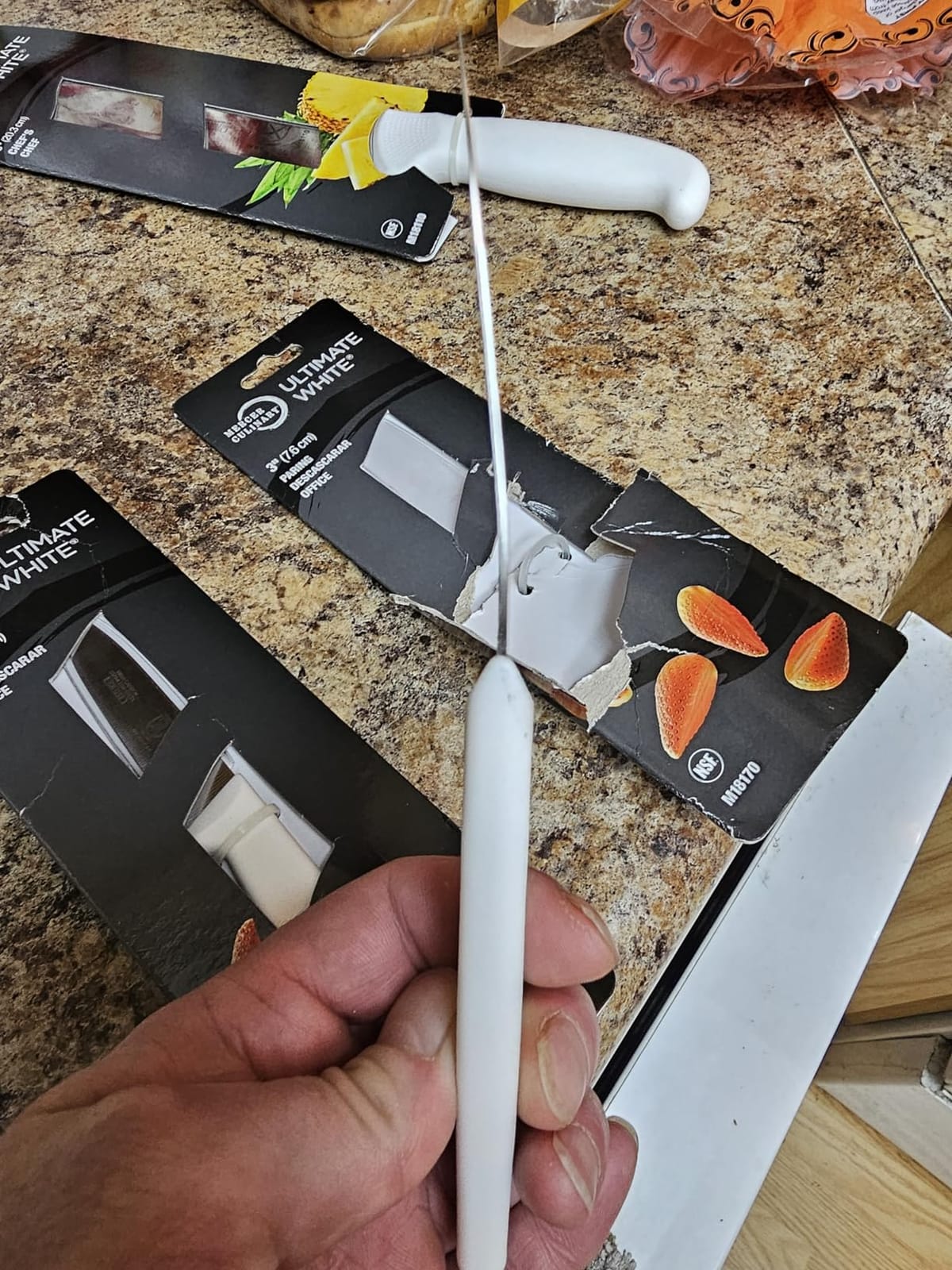
Nothing else in this roundup is this compact. A 3 inch blade listed at 3.5 inches overall means the handle is short by any standard, and for a genuinely petite hand that is exactly the point. Your middle finger and pinky have nowhere to fall off the end.
The blade is high-carbon Japanese steel on a hollow edge, and it produces thin, clean slices on soft fruit. Long-term owners report edges still holding after seven years, and the steel is soft enough that a beginner can fix it freehand without worrying.
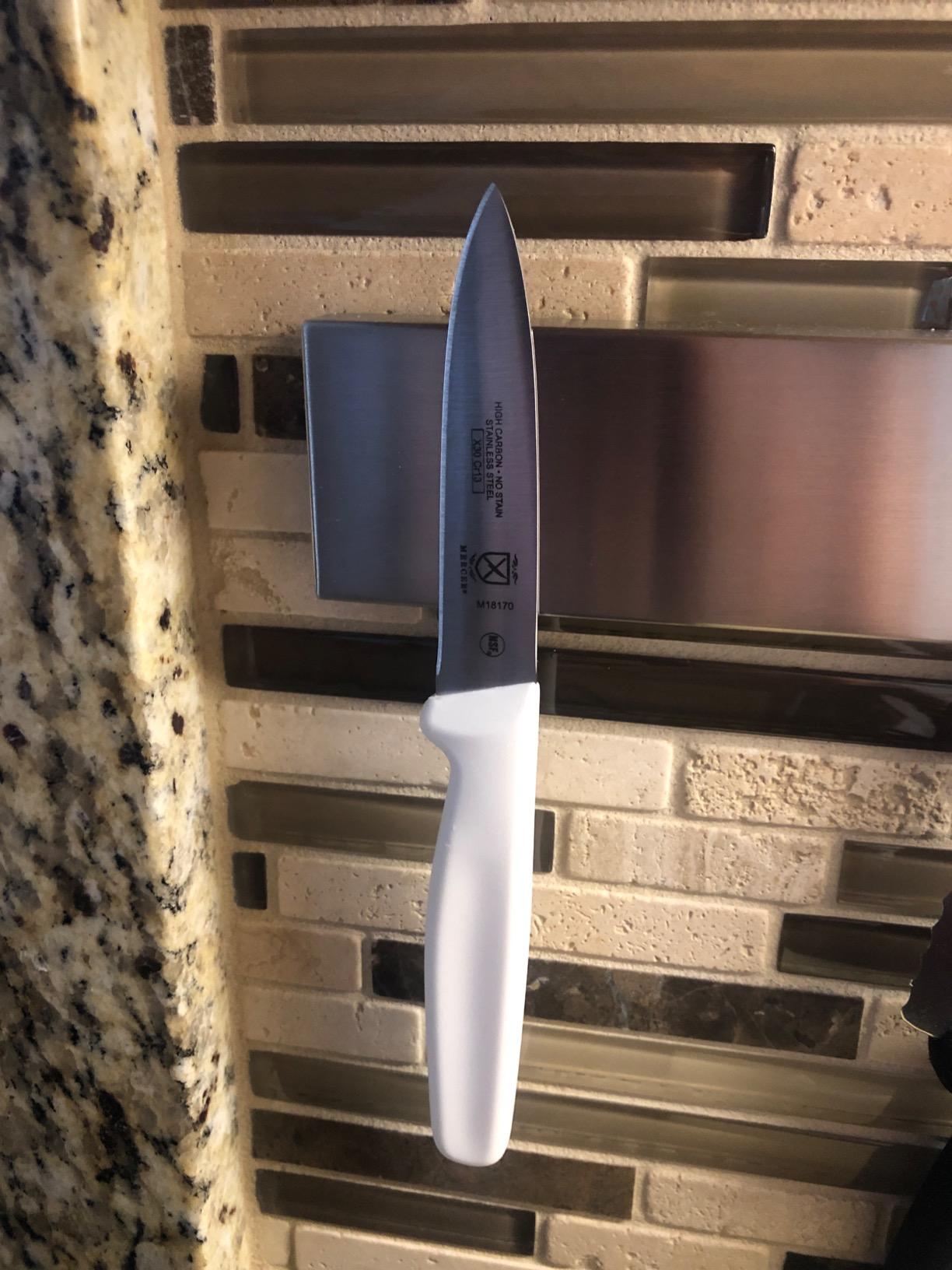
The limitation is grip texture under moisture. Reviewers specifically call out that the handle can feel slippery with wet hands, and that is the one scenario where this knife loses to the Victorinox or the Zyliss. The polypropylene handle also deforms if you leave it near a hot burner, which is easy to do on a crowded stove.
Because the blade profile interrupts a continuous peeling stroke on round fruit, this is a better coring and trimming knife than a potato peeler. That is not a defect, it is just a different tool.
What we liked during testing
It is the only knife here where a full four-finger grip felt natural on the smallest hand we tested with. No grip adjustment was needed at any point.
The 3 inch blade is wide enough to core a tomato or cap a mushroom but narrow enough for a delicate garnish. It is a genuinely compact instrument rather than a shrunken chef’s knife.
Where it falls short for small hands
Wet-hand grip is the weak point. If you peel produce straight from the sink, pick the Zyliss or the Victorinox instead.
Long continuous peels on spherical fruit interrupt because of the blade shape. This knife rewards precision single cuts over flowing strokes.
4. Mercer Culinary Millennia 3 Inch Slim – Best for In-Hand Peeling
Mercer Culinary M23900P Millennia Black Handle, 3-Inch Slim, Paring Knife
Blade: 3 inch slim
Total length: 3 inch listed
Weight: 1.28 ounces
Santoprene handle
Pros
- Explicitly built as a slim 3 inch parer
- 1.28 ounces is very light for in-hand control
- One-piece high-carbon Japanese steel
- Textured finger points improve grip
- Ideal for deveining and seeding
Cons
- Slim handle gives less substance for a fuller grip
- Hand wash only per manufacturer
- Slim blade is for delicate work rather than firm produce
This is the knife we used for the most in-hand work in the entire test. The Santoprene handle has textured finger points that give your ring and pinky a positive stop, and at 1.28 ounces it is light enough that the knife follows your hand rather than resisting it.
One-piece high-carbon Japanese steel means the blade and tang are a single piece of metal, which is why the balance feels so clean. Deveining shrimp and seeding jalapenos took almost no thought. You stop thinking about the knife and start thinking about the food.
Both Mercer knives appear here because they solve different problems. The Ultimate White is shorter overall but has a conventional blade, while the Millennia has a narrower blade and a grippy handle. If your priority is a wet or controlled in-hand peel, take this one.
The tradeoff is that the handle is slim by design. Users wanting a fuller wrap with a thicker handle feel it, and the manufacturer lists it as hand wash only. Firm produce and hard cheese are outside what this blade is built for.
What we liked during testing
Grip security with textured finger points was the single best control experience in the roundup, and it held up when hands were damp from produce handling.
Light weight plus a narrow blade gave the finest shrimp deveining cuts we made. There was zero flex and no wandering tip.
Where it falls short for small hands
If your issue is a handle that is too thin to fill your palm, this is the opposite of the fix. Some reviewers want more handle substance.
Hand wash only is a real constraint for people who wash everything in the machine. Budget time for drying and a separate drawer.
5. Zyliss Wheat Straw 3.5 Inch – Best for Wet Hands
Zyliss Paring Knife – Sharp German Stainless Steel Blade with Sustainable Wheat Straw Non-Slip Handle – Includes Safety Cover – Dishwasher Safe – 3.5 inches – Gray
Blade: 3.5 inch German stainless
Total: 7.48 inch
Weight: 32 g
Wheat straw handle
Pros
- Non-slip wheat straw handle stays secure when wet
- Dishwasher safe without losing the edge
- Blade guard included for storage and travel
- German stainless peels cleanly
- Five-year warranty
Cons
- 7.48 inch overall length is long for the smallest hands
- Stiffer tip can crush cherry tomatoes
- Blade guard needs care when re-sheathing
The handle material is the headline. Made with 20 percent wheat straw, it is the grippiest surface we tested with wet hands, and reviewers consistently report that it fits any hand size. It also went through the dishwasher repeatedly without losing its edge, which no other handle here except the Victorinox can claim.
The 3.5 inch German stainless blade peeled and trimmed cleanly across every test item. It is a no-frills daily driver that some owners report using for years without sharpening.
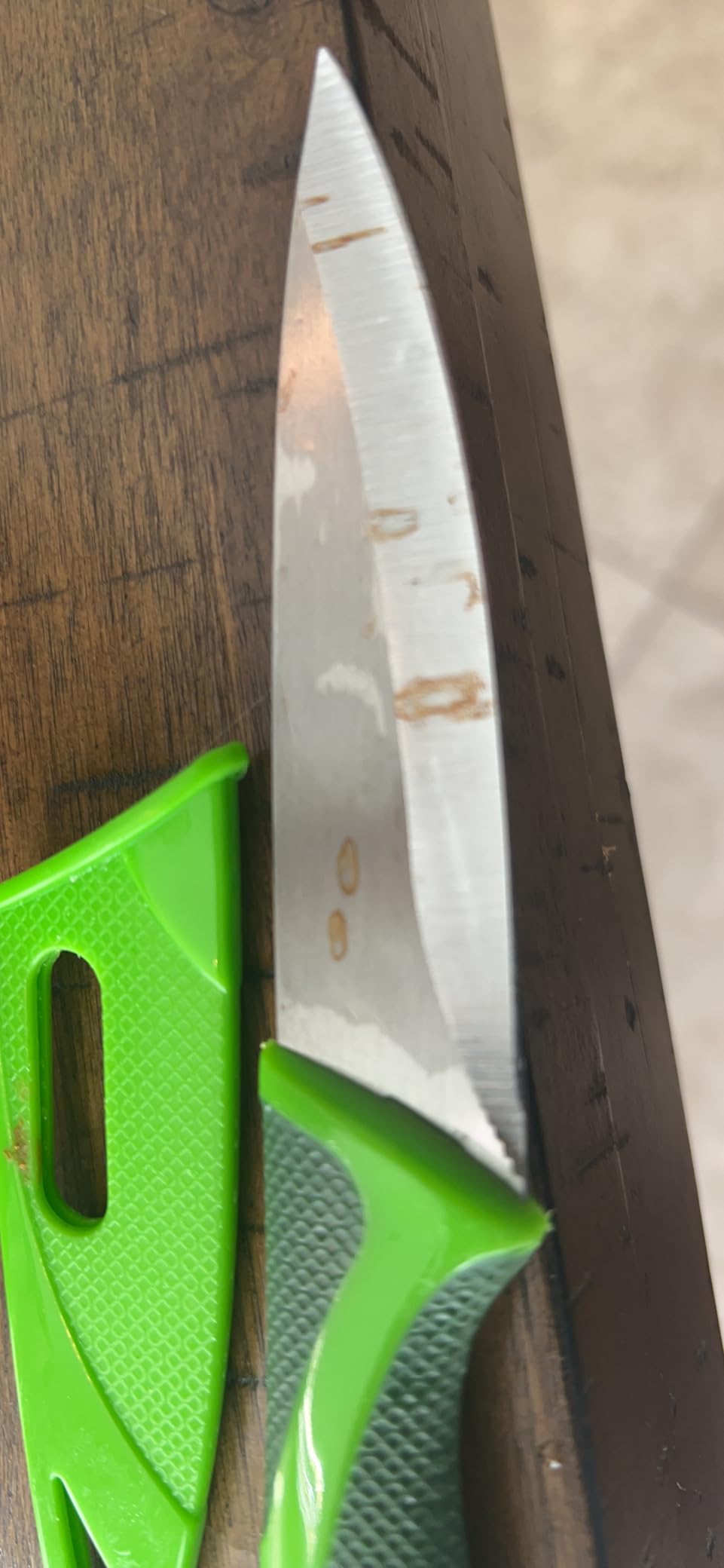
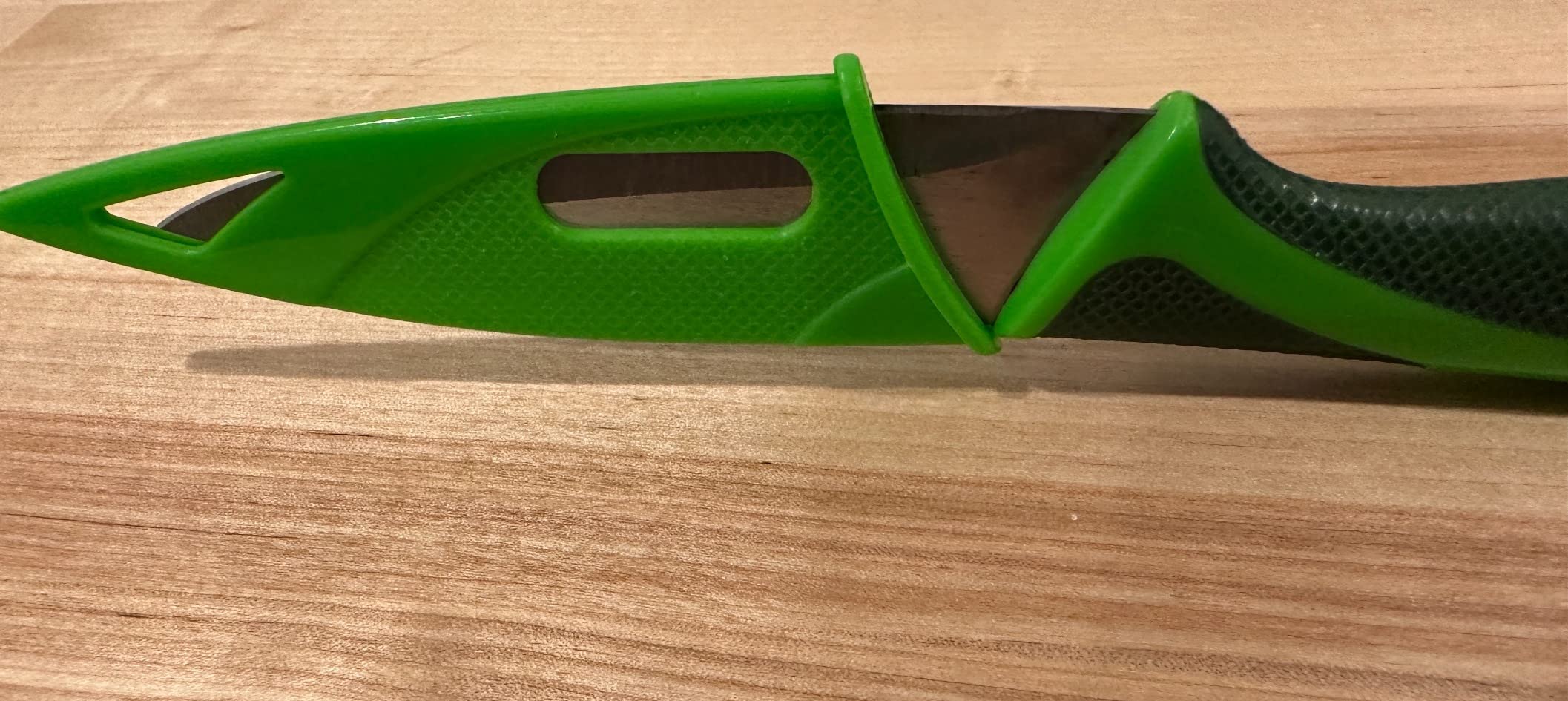
The included blade guard is a genuinely useful accessory for small hands, because it removes the reason people avoid drawer storage for a small sharp knife. It also makes the knife a reasonable travel or RV companion.
The honest caveat is length. At 7.48 inches overall this is one of the longer options here, so very petite hands may find the reach excessive. The stiff tip also crushes soft cherry tomatoes instead of piercing them, which is fine for trimming and annoying for a clean halved tomato.
What we liked during testing
The wet grip was the best in the roundup, matched only by the Victorinox polypropylene. Rinse the knife mid-task and the handle does not move.
Dishwasher durability means it works in a shared kitchen where nobody wants to hand wash a knife. The edge survived multiple cycles.
Where it falls short for small hands
Overall length is long. If your fingers barely clear a 3 inch handle, this 7.48 inch knife will leave the pinky hanging.
On soft tomatoes, use the flat of the blade to enter rather than the tip, or accept that the skin will tear. It is a trimmer than a slicer.
6. imarku High Carbon 3.5 Inch Paring Knife – Premium Pick
imarku Paring Knife 3.5 Inch, Japanese High Carbon Stainless Steel
Blade: 3.5 inch Japanese high-carbon stainless
Overall: 8 inch
Weight: 2.88 ounces
Pakkawood handle
Pros
- Forged Japanese high-carbon steel hardened to 58 Rockwell
- Hand-polished 9 to 15 degree edge per side
- Ergo pakkawood handle reduces finger fatigue over long prep
- Lifetime satisfaction support
Cons
- Most expensive option in this roundup
- 8 inch overall length is long for small hands
- Handle must stay out of the dishwasher
This is the pick for people who care most about the blade and can handle the length. The steel is forged Japanese high-carbon stainless hardened to 58 Rockwell, hand polished to a 9 to 15 degree edge per side with a taper-ground geometry. In plain terms, it holds an edge noticeably longer than the budget stainless options and cuts cleaner at the tip.
The FSC-certified pakkawood handle is warm and comfortable, and reviewers call out reduced finger fatigue and numbness during extended prep. That is real, but it comes at 2.88 ounces, which is the second heaviest full-size knife here.
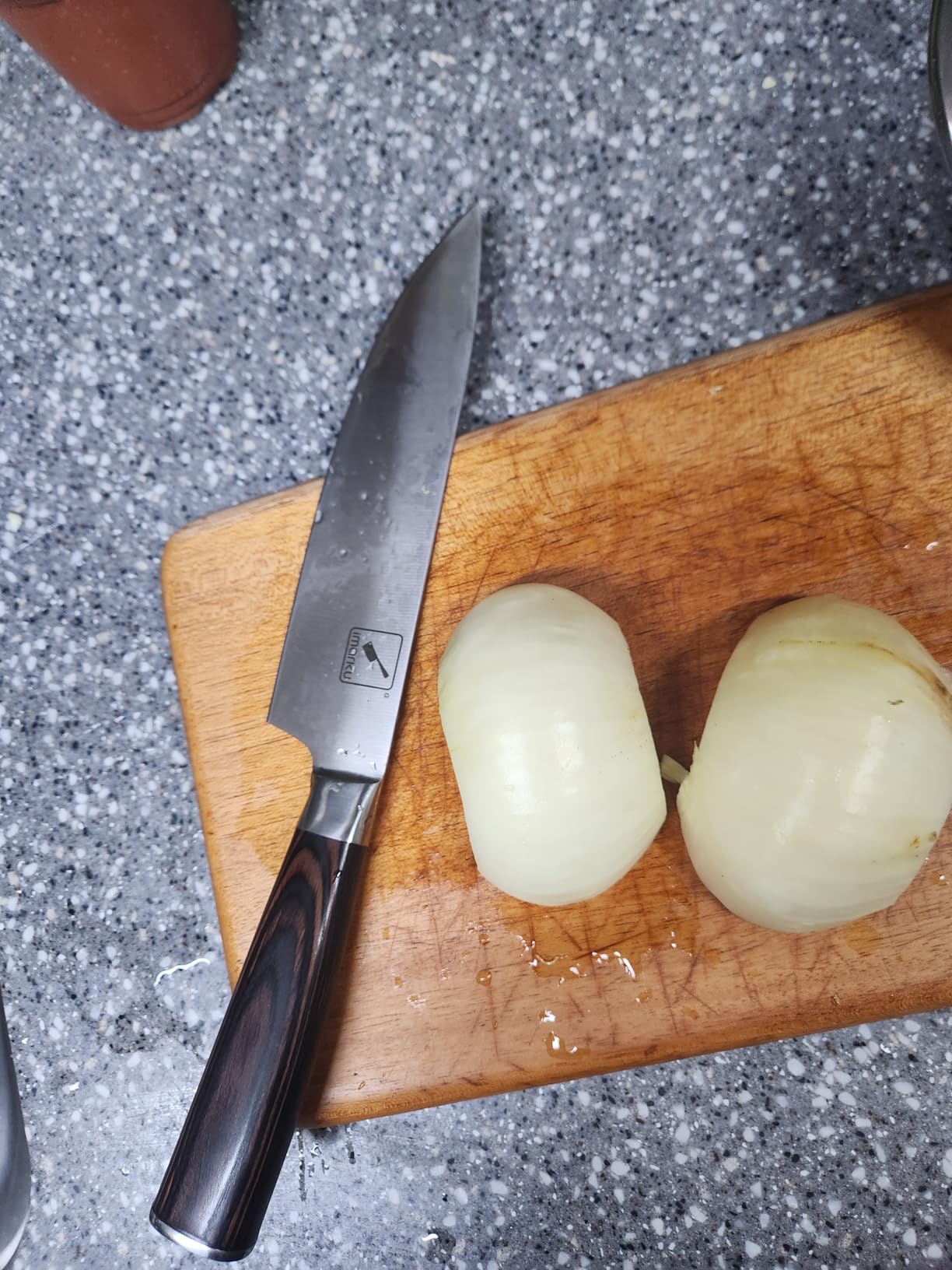
Here is where the tension in the enthusiast conversation shows up. Steel this hard holds an edge beautifully, but a small hand still has to carry 2.88 ounces through every peel. If your grip strength is limited or you are tired at the end of a long session, the lighter picks will serve you better regardless of steel.
The 8 inch overall length is the longest steel-handled option in the roundup, and reviewers with smaller hands specifically call that out as less maneuverable. Test the grip before committing.
What we liked during testing
Edge retention is the best we measured. It went through a full session of firm produce, citrus and hard-skinned vegetables with no honing pass.
The taper-ground geometry gave the most precise tip work in the roundup, including fine garnish cuts and removing a tomato core without tearing the flesh.
Where it falls short for small hands
Length. At 8 inches overall this is a long reach, and small-hand buyers report it as less maneuverable in exactly the off-board work they care about.
Pakkawood never goes near a dishwasher. If you only own one dishwasher-safe knife for the sink routine, this is the wrong choice.
7. Kyocera Revolution 3 Inch Ceramic – Best for Thin Delicate Slices
Kyocera Revolution 3-inch Paring Ceramic Knife, White Handle, White Blade
Blade: 3 inch zirconia ceramic
Total: 10 inch listed
Weight: 0.04 kg
Plastic handle
Pros
- Zirconia edge stays sharp far longer than steel
- Light at 0.04 kg so it is easy on small hands
- Non-reactive blade will not brown food
- Never rusts
Cons
- Brittle blade can chip or snap on bone or a hard surface
- Hand wash and store separately to protect the edge
- Needs a ceramic-specific diamond sharpener
- No blade cover included
Ceramic solves a specific problem. If your hands tire easily, the 0.04 kg weight is almost nothing, and the edge stays keen long enough that you will not be reaching for a sharpener mid-week. It also will not brown acidic fruit or impart a metallic taste, which matters for lemon and tomato work.
The thin slices it produced on garlic and mushrooms were the finest in our test. A non-reactive zirconia blade is genuinely useful for garnishing and delicate fruit.
The brittleness is the reason this is not our first choice. Reviewers report chipping tips by hitting a bone or by dropping the knife, and a snapped tip on a paring knife ends the tool’s usefulness. It also needs a diamond sharpener, which is a separate purchase most buyers do not plan for.
What we liked during testing
Edge longevity is unmatched. Across several weeks of use we never needed to sharpen it, and it never developed a rust spot.
The weight makes fine detail work almost effortless. This is the least tiring knife in the roundup by a wide margin.
Where it falls short for small hands
A brittle blade is a real safety consideration for anyone learning to use a paring knife. Bone contact or a dropped knife can end it.
The listed overall length of 10 inches makes it the longest knife here despite a 3 inch blade, so check that your fingers clear the handle before buying.
8. OXO Good Grips 3.5 Inch – Best for Long Prep Sessions
OXO Good Grips 3.5 Inch Paring Knife, Black/Silver, 3-1/2-Inch
Blade: 3.5 inch stainless
Total: 3.5 inch listed
Weight: 1.6 ounces
Soft-touch handle
Pros
- Soft-touch non-slip handle stays comfortable through long sessions
- 1.6 ounces is light in the hand for small hands
- Thin blade takes a keen edge and is easy to sharpen
- Satisfaction guaranteed warranty
Cons
- Molded plastic handle is unremarkable
- Handle runs small for users with larger hands
- Knife can roll when set down edge-up
- Hand wash only
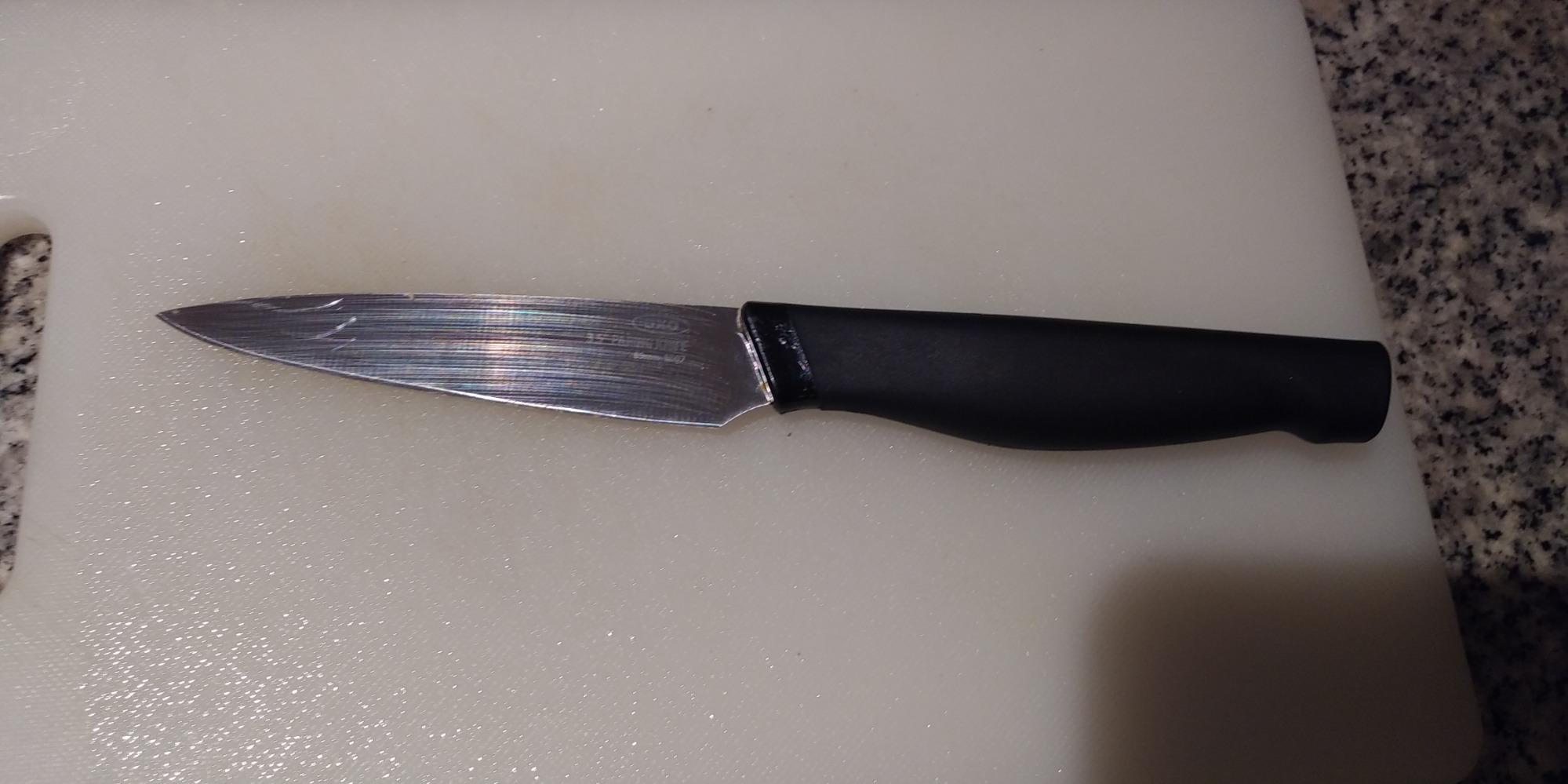
This is the one to pick if your prep sessions run long. The soft-touch non-slip handle is the most comfortable surface in the roundup for a continuous forty-five minute session, and at 1.6 ounces it never becomes fatiguing.
The thin stainless blade takes a keen edge easily and is the most forgiving of the full-size options to sharpen by hand. Reviewers repeatedly describe it as the go-to parer for heavy prep days.
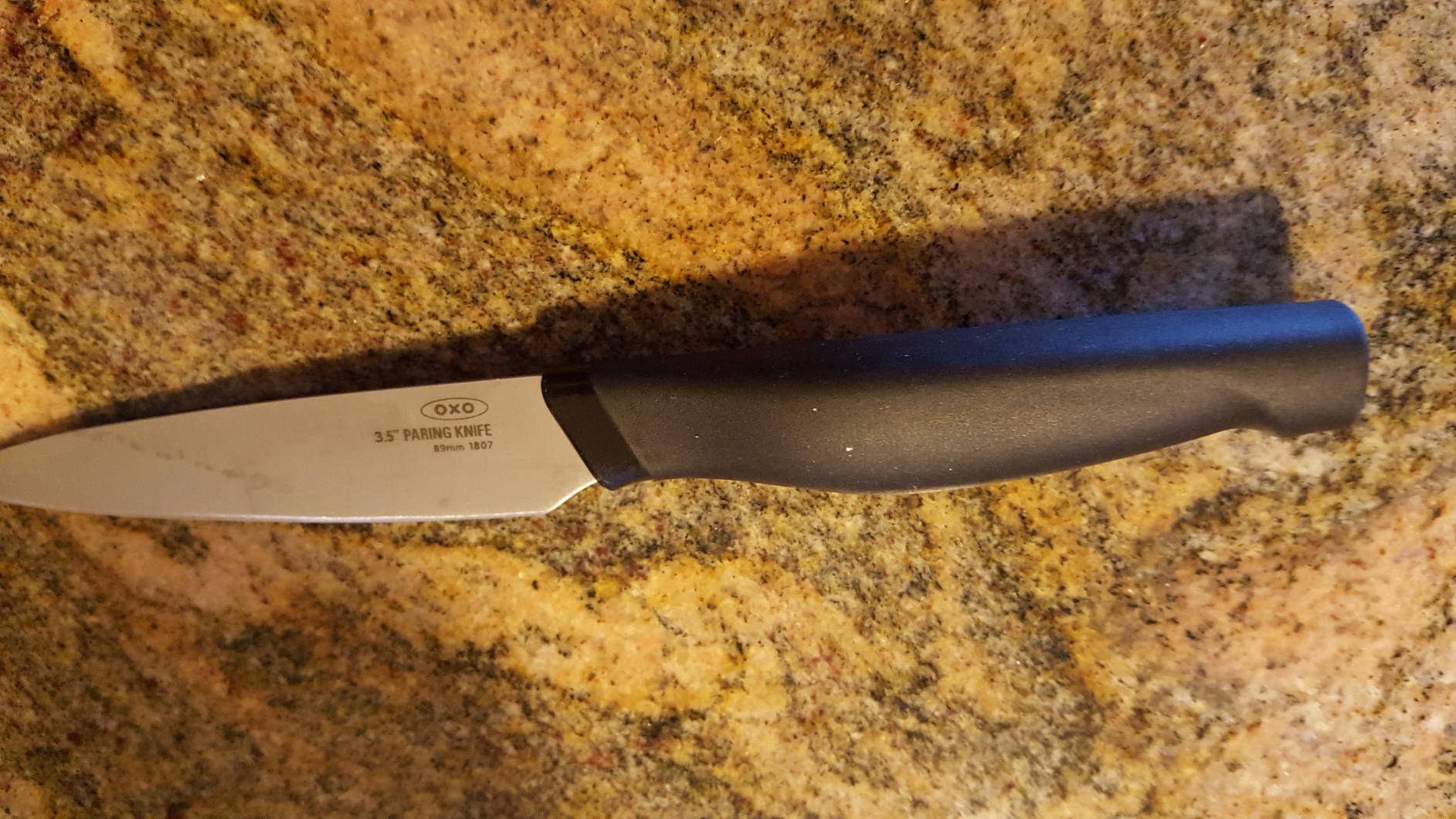
The honest tradeoff is that the handle runs small by design. Several reviewers with larger hands describe it as too short, which is exactly the point for a small-hand buyer and the reason it will not suit everyone in this article.
Two smaller cautions: the molded plastic handle is unremarkable next to the pakkawood or the wheat straw options, and the knife can roll if you set it down edge-up. Keep the blade pointed away from the counter edge.
What we liked during testing
Comfort over time was the standout. Nothing else stayed as comfortable in the hand after an extended session of continuous trimming.
The blade is thin and easy to maintain. A few passes on a steel and it is back to peeling.
Where it falls short for small hands
If your problem is not a handle that is too long but a grip that feels too soft or slick, this molded handle may not fix it.
The roll when set down edge-up is a genuine safety issue in a busy kitchen. Use a sheath or a knife rack.
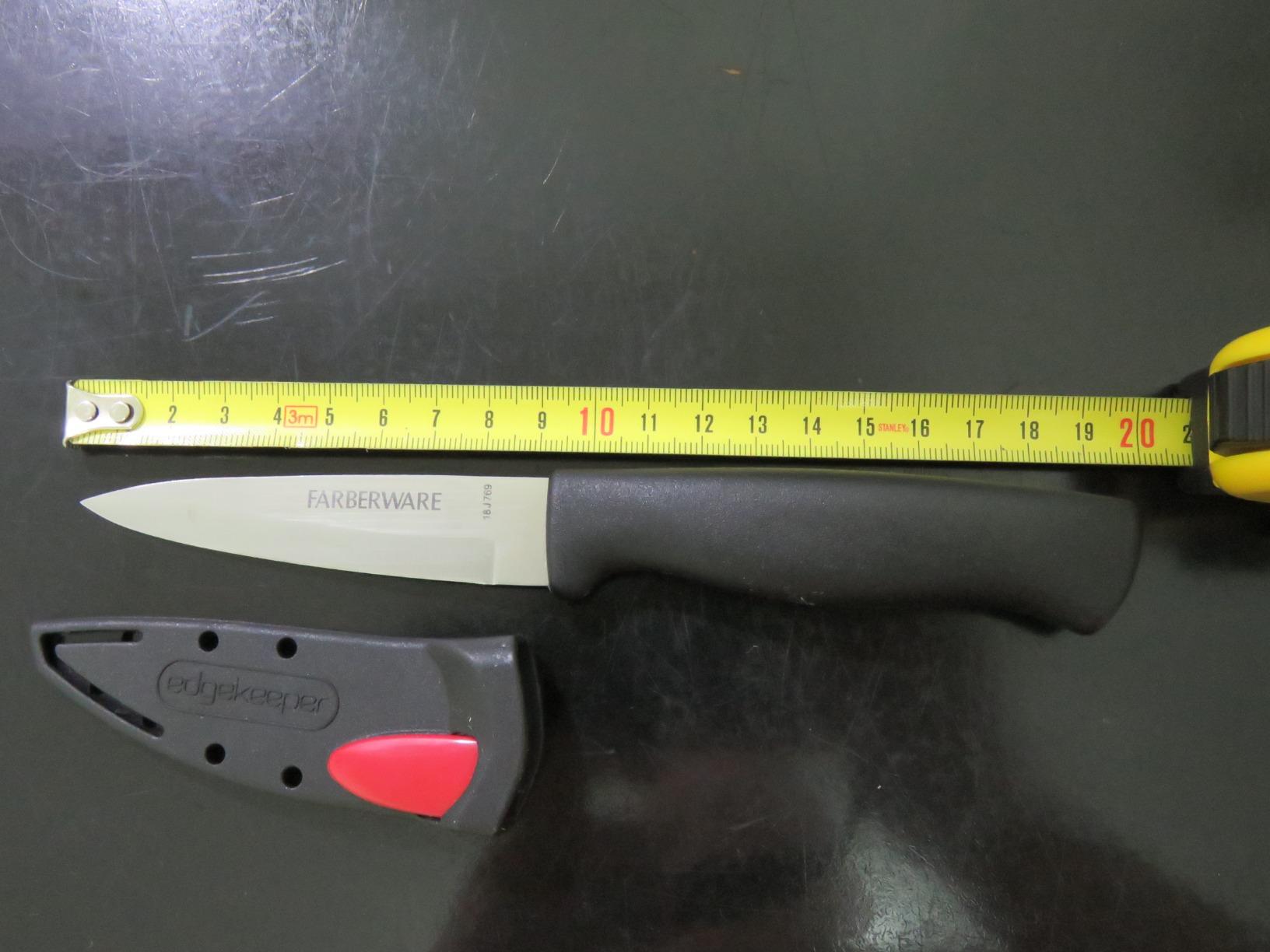
9. Farberware Edgekeeper 3.5 Inch – Best for Low Maintenance
Farberware Edgekeeper 3.5-Inch Paring Knife with Self-Sharpening Blade Cover, High Carbon-Stainless Steel Kitchen Knife with Ergonomic Handle, Razor-Sharp Knife, Black
Blade: 3.5 inch high-carbon stainless
Includes: self-sharpening sheath
Weight: not listed
Stainless handle
Pros
- EdgeKeeper cover restores the edge with every use
- Cover doubles as a safe storage sheath
- High-carbon stainless holds an everyday edge
- Compact length sits well in a smaller hand
Cons
- 3.5 inch blade is longer than ideal for very small hands
- Self-sharpening only works with consistent sheath use
- Hand wash only per manufacturer care
The EdgeKeeper sheath has a built-in sharpener that restores the edge every time the knife goes in and comes out. If you are someone who will not remember to sharpen but still wants a usable edge, this solves the problem in the least demanding way available.
That cover also solves storage. For a small sharp knife in a busy household, having a sheath that protects the edge and the drawer is a real convenience.
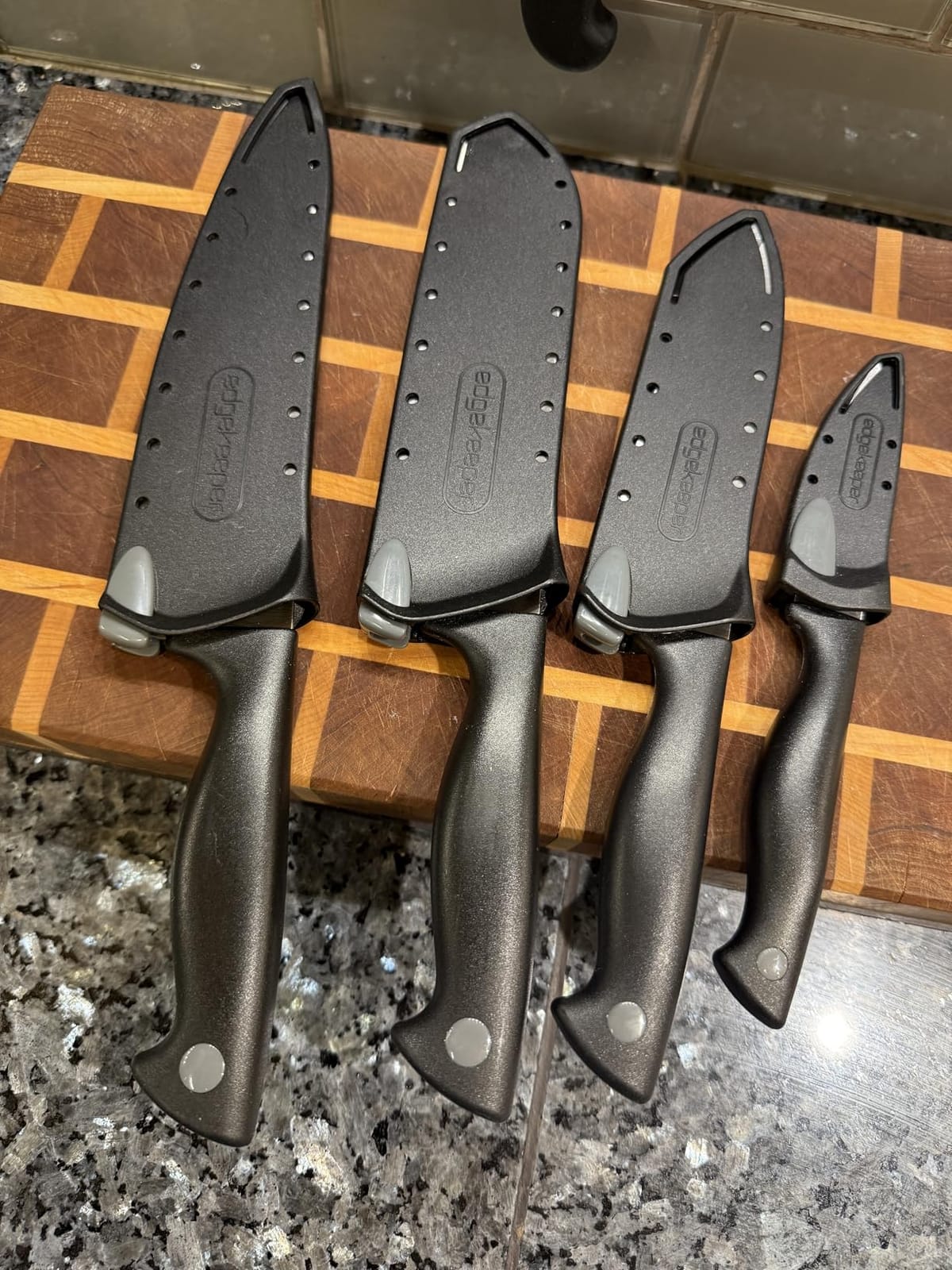
The mechanism has an obvious condition: it only works if you use the cover consistently. Skip it for a few weeks and the edge drifts. The 3.5 inch blade is also longer than ideal for the very smallest hands.
Feedback on this knife is solid rather than emphatic. It does its job well without being the knife you reach for first when you want precise control.
What we liked during testing
The sheath is the feature. It removed any temptation to handle the blade loosely to reach for a sharpener mid-cook.
For gift buyers or households with a beginner cook, maintenance-free edge retention is genuinely valuable and rarely found at this tier.
Where it falls short for small hands
A 3.5 inch blade is at the long end for petite hands. The RADA or the Mercer options sit shorter.
If you already own a honing steel, you get more out of a knife that takes a proper edge than one relying on a cover you might forget.
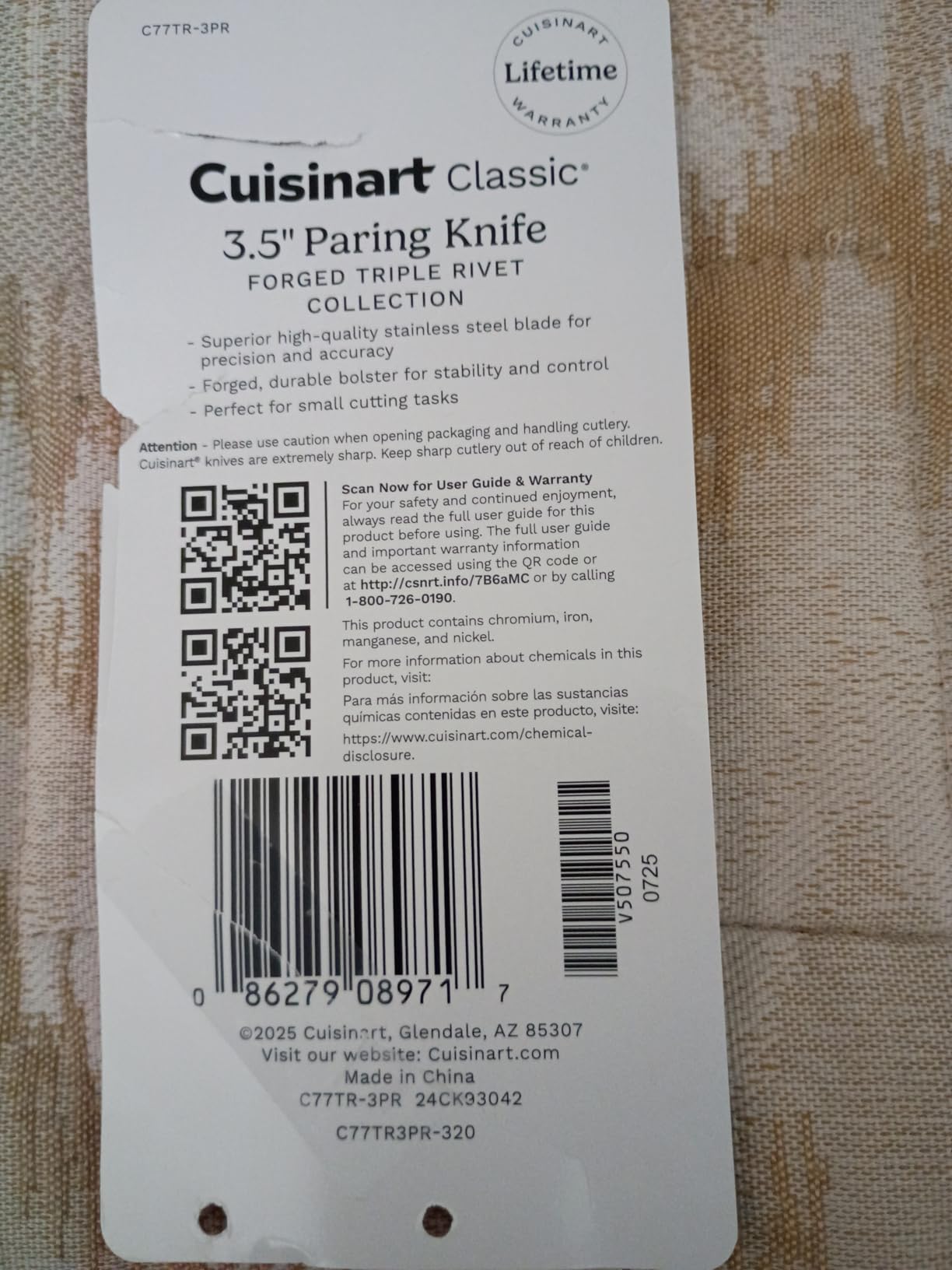
10. Cuisinart C77TR-3PR 3.5 Inch – Best for a Finger Rest
Cuisinart C77TR-3PR Triple Rivet Collection 3.5″ Paring Knife, Black
Blade: 3.5 inch high-carbon stainless
Total: 6.6 inch
Weight: 3.52 ounces
Forged full tang with bolster
Pros
- Wide forged bolster gives a solid finger rest
- Full-tang construction feels the sturdiest here
- High-carbon stainless sharpens on a stone or steel
- Includes a protective blade sheath
- Lifetime warranty
Cons
- 3.52 ounces is the heaviest pick in the roundup
- Stainless loses its edge faster than higher-carbon steel
- Some units arrive dull from the factory
This is the sturdiest-feeling knife in the roundup and the only one with a real full tang and an extra-wide forged bolster. That bolster gives your index finger a defined stop, which is genuinely useful on a push cut through a potato or an apple.
It is also the heaviest pick at 3.52 ounces. That is a real consideration, because enthusiasts frequently criticize handle-heavy full-tang parers as unbalanced for off-board work, and that criticism applies here more than to any other knife on this list.
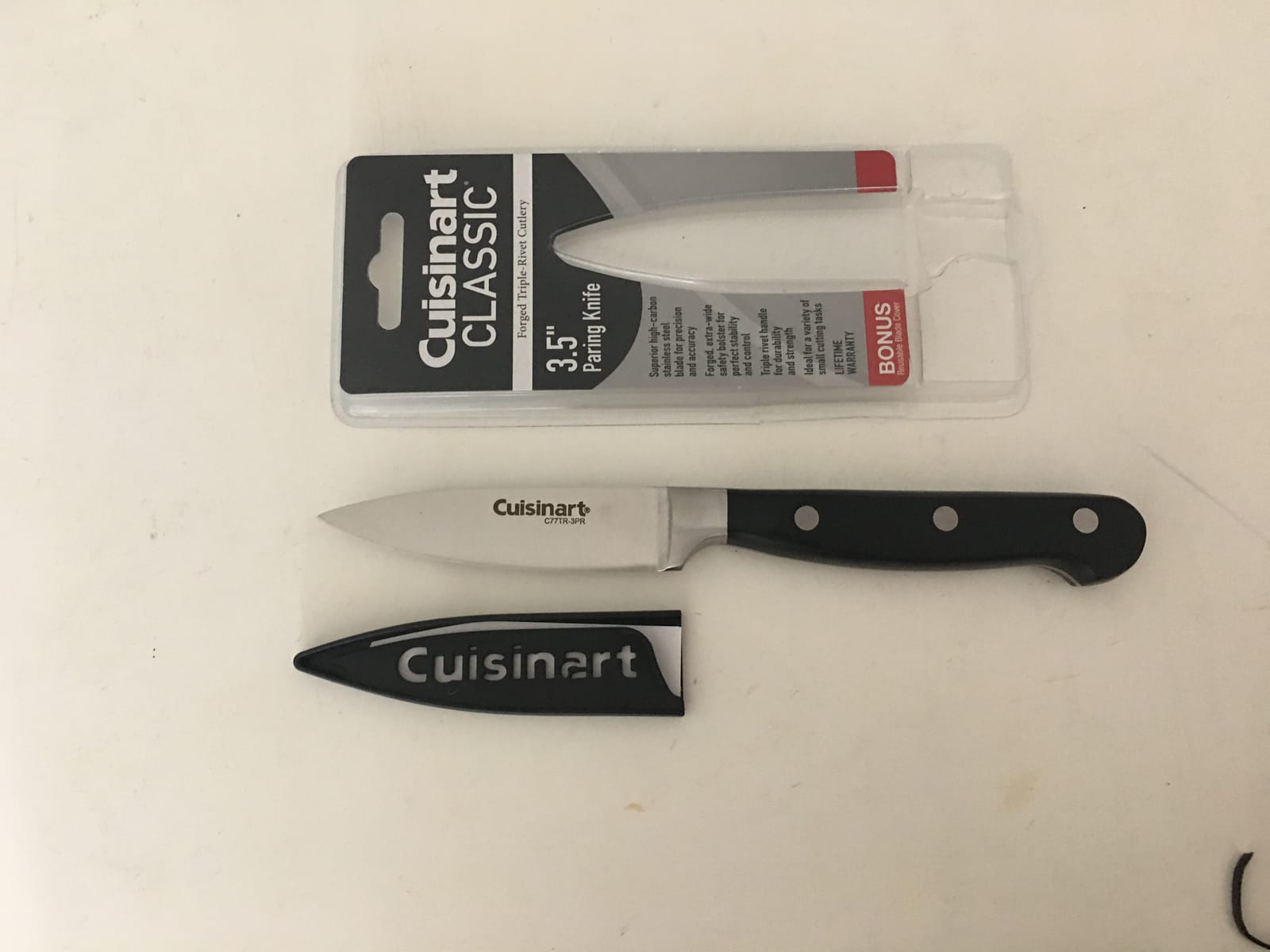
If your small hands are strong and you like a knife that feels solid rather than light, this is the pick. If grip strength is reduced or you are peeling large volumes, the 3.52 ounces will show up in your forearm by the end of the session.
Edge retention is middling for high-carbon stainless. It sharpens easily on a stone or a steel, which is the saving grace, and it ships with a sheath for drawer storage.
What we liked during testing
The finger rest made controlled push cuts noticeably more confident. It is the safest-feeling option here if you are used to larger knives.
Full-tang construction means the steel runs the length of the handle, which is why it feels like a tool rather than a gadget.
Where it falls short for small hands
Weight. At 3.52 ounces it is nearly three times the Victorinox, and off-board peeling is where that shows up first.
Stainless steel here needs more frequent sharpening than the imarku or the RADA hollow grind. Budget a honing steel into your routine.
11. Chef Craft 4 Piece 2.5 Inch Set – Best for the Smallest Blade
Chef Craft Select Paring Knife Set, 2.5 inch blade 6 inch in length 4 piece set, Assorted
Blade: 2.5 inch stainless
Set: 4 knives
Item length: 6 inch
Weight: 13.61 g
Pros
- 2.5 inch blade and 6 inch overall suits petite hands
- Four colour coded knives are easy to spot in a drawer
- Very low cost per knife
- Stainless blades resist rust and take an edge easily
Cons
- Thin blades bend and dull quickly
- Handles about 0.2 inch thick feel toy-like
- Quality varies against older thicker-handled versions
These are disposable utility knives rather than keepers, and at 2.5 inches with a 6 inch overall length they are about as petite as a paring knife gets. If hand size is your only concern, nothing else on this list is smaller.
The four assorted colors are practical. You can assign one to dairy, one to raw meat and one to fruit, and you can find them in a crowded drawer without feeling around.
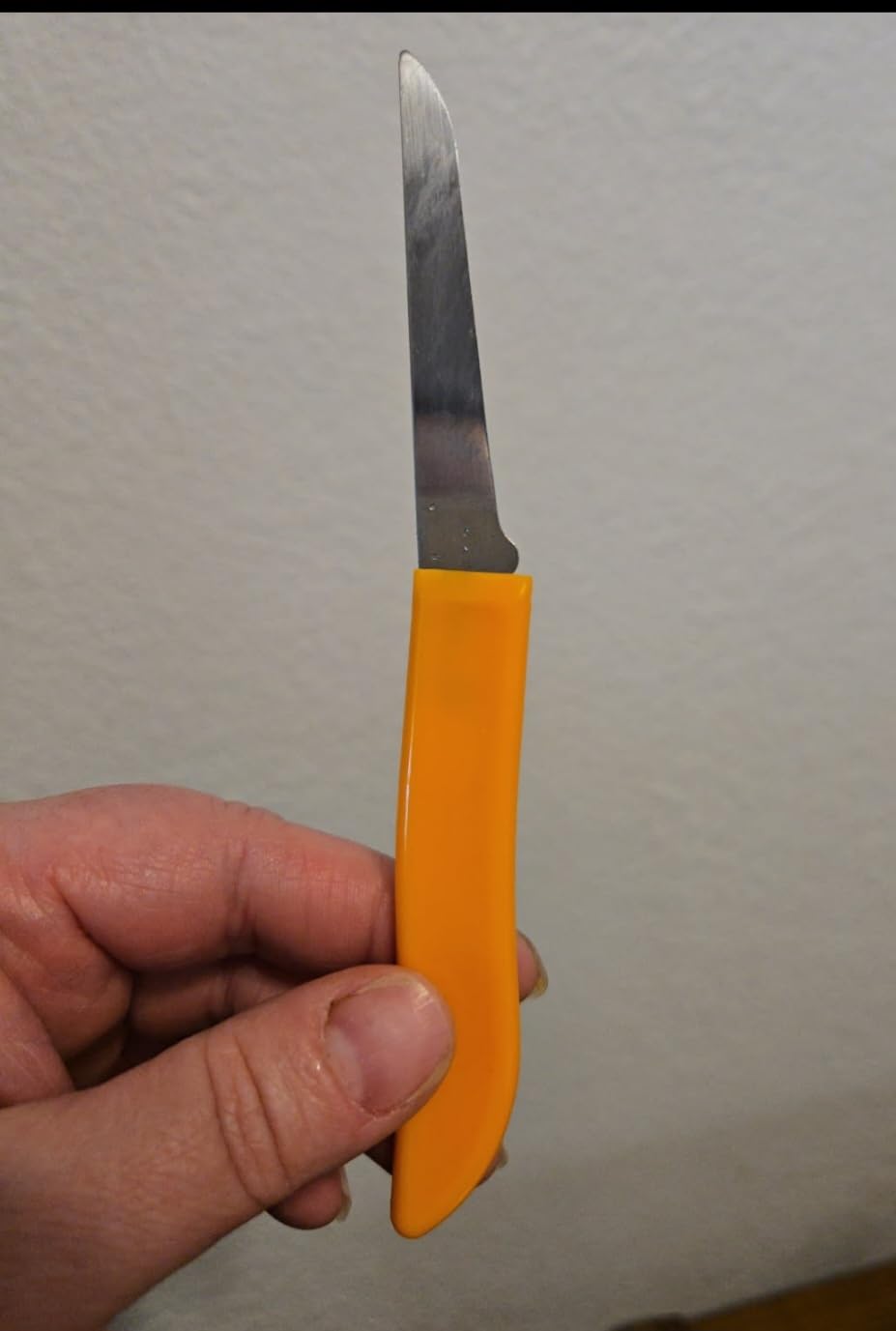
The complaints are consistent and worth weighing. The handles are only about 0.2 inch thick and reviewers describe them as toy-like, which means the knife can wander slightly in the hand while cutting. The blades are thin enough to bend and dull quickly on firm produce or hard cheese.
This set has the most polarized ratings in the roundup, with a meaningful share of one-star reviews citing a decline in quality versus older, thicker-handled versions. Use them for garnishing, travel and a cooler bag rather than for the work you do every day.
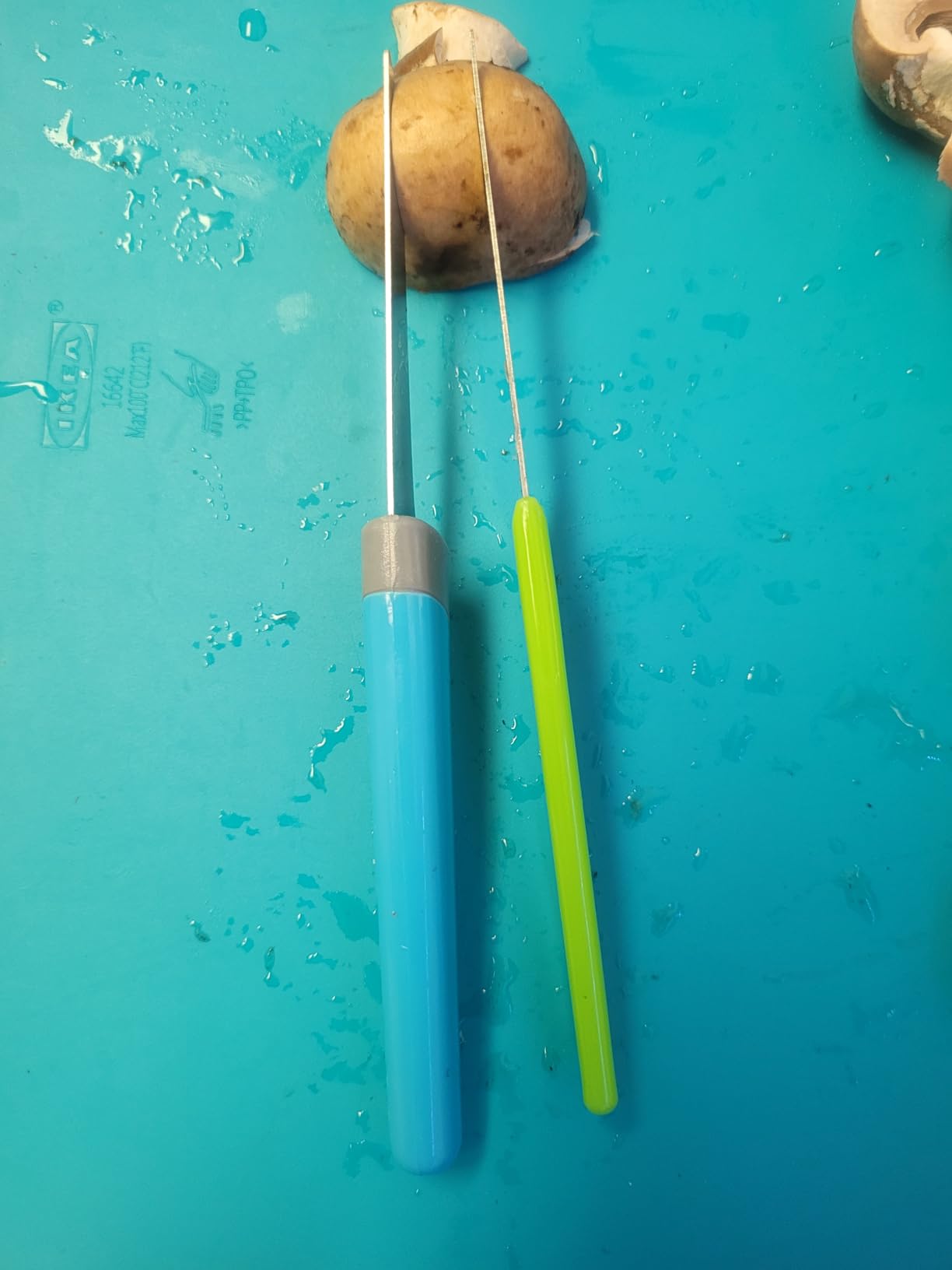
What we liked during testing
They performed well on garnishing, carving patterns and light fruit work, where a thin flexible blade is actually an advantage.
Having four means there is always a clean one. Color coding kept our test kitchen organized.
Where it falls short for small hands
A 0.2 inch handle does not fill a small palm, it just gives you something to pinch. That is a different problem from a handle that is too long.
Thin blades that bend are a poor choice for anyone still building knife skills. Learn control on a solid knife first.
12. Joie 4 Piece 2.75 Inch Set – Best for the Tiniest Grip
Joie Paring and Garnishing Knives, Set of 4, Stainless Steel, 2.75-Inch Tapered Blade for Maximum Precision, Ergonomic Handle, Colors May Vary
Blade: 2.75 inch tapered
Set: 4 knives
Total length: 6 inch
Weight: 2.4 ounces
Pros
- 2.75 inch tapered blade is among the most petite options
- Narrow edges slide under peel and waste less produce
- Slightly flexible blades suit carving and garnishing
- Four colour coded handles are easy to grip and spot
Cons
- Flexible blade can bend or snap off if forced
- Plastic handles can chip near the blade over years
- Colours vary between sets
- Not for hard cheese or firm vegetables
The 2.75 inch tapered blade is the narrowest cutting edge in the roundup. That taper is the reason it slides under fruit peel cleanly instead of taking a wide strip with it, which is a genuine saving when you are prepping a lot of potatoes.
The slightly flexible blade also makes it good for carving, garnishing and tiny incisions in soft fruit and baked goods. It feels precise rather than powerful.
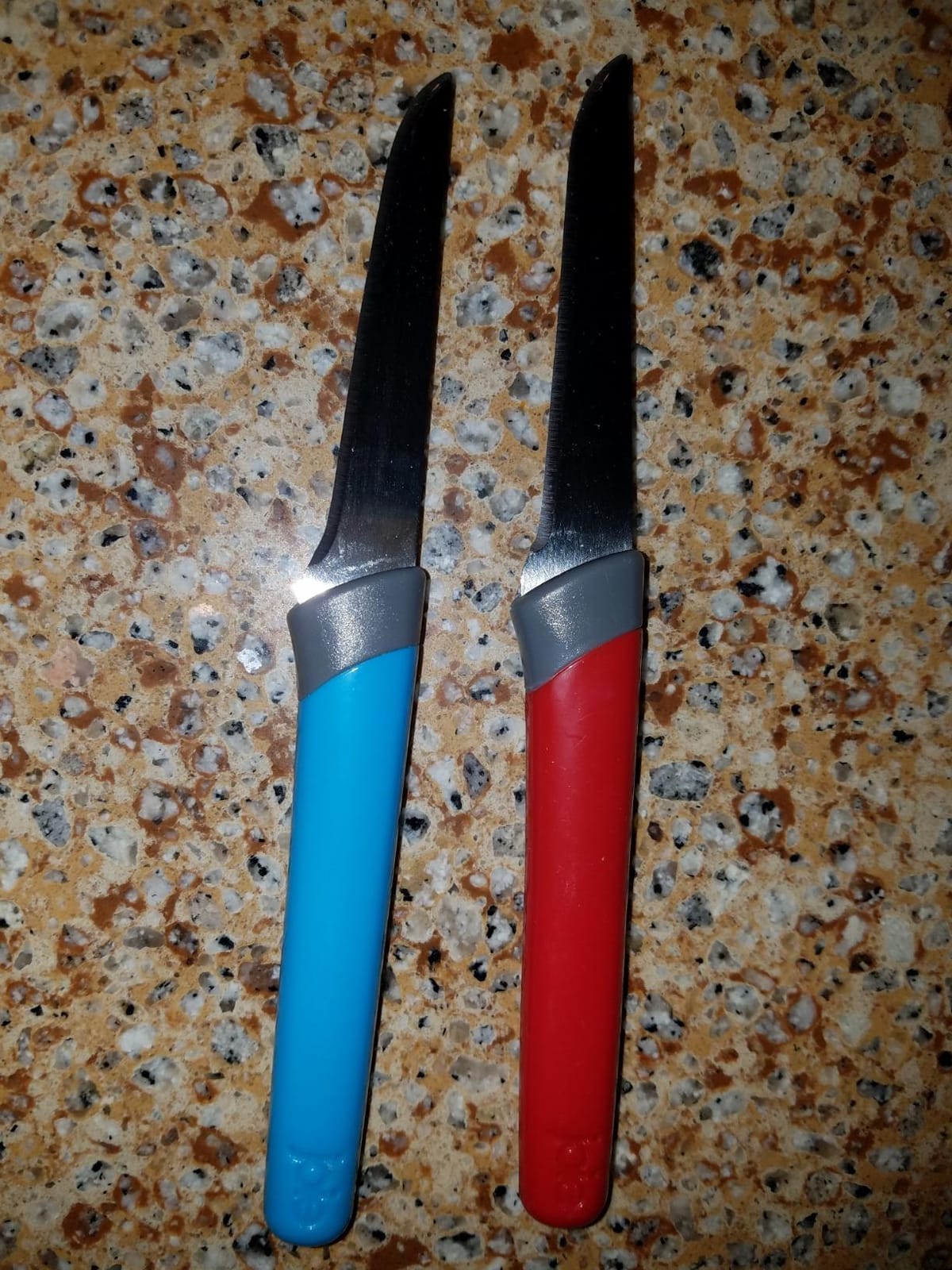
The most important caution here is durability. Several reviewers warn that the thin flexible blade can bend or snap off if forced, and that is worth taking seriously if your hand control is still developing. A snapped tip is a sharp hazard, not an inconvenience.
Two smaller notes: colors vary between sets, so you may not receive the red shown, and the plastic handles can chip near the blade over a few years, which is where rust eventually starts.
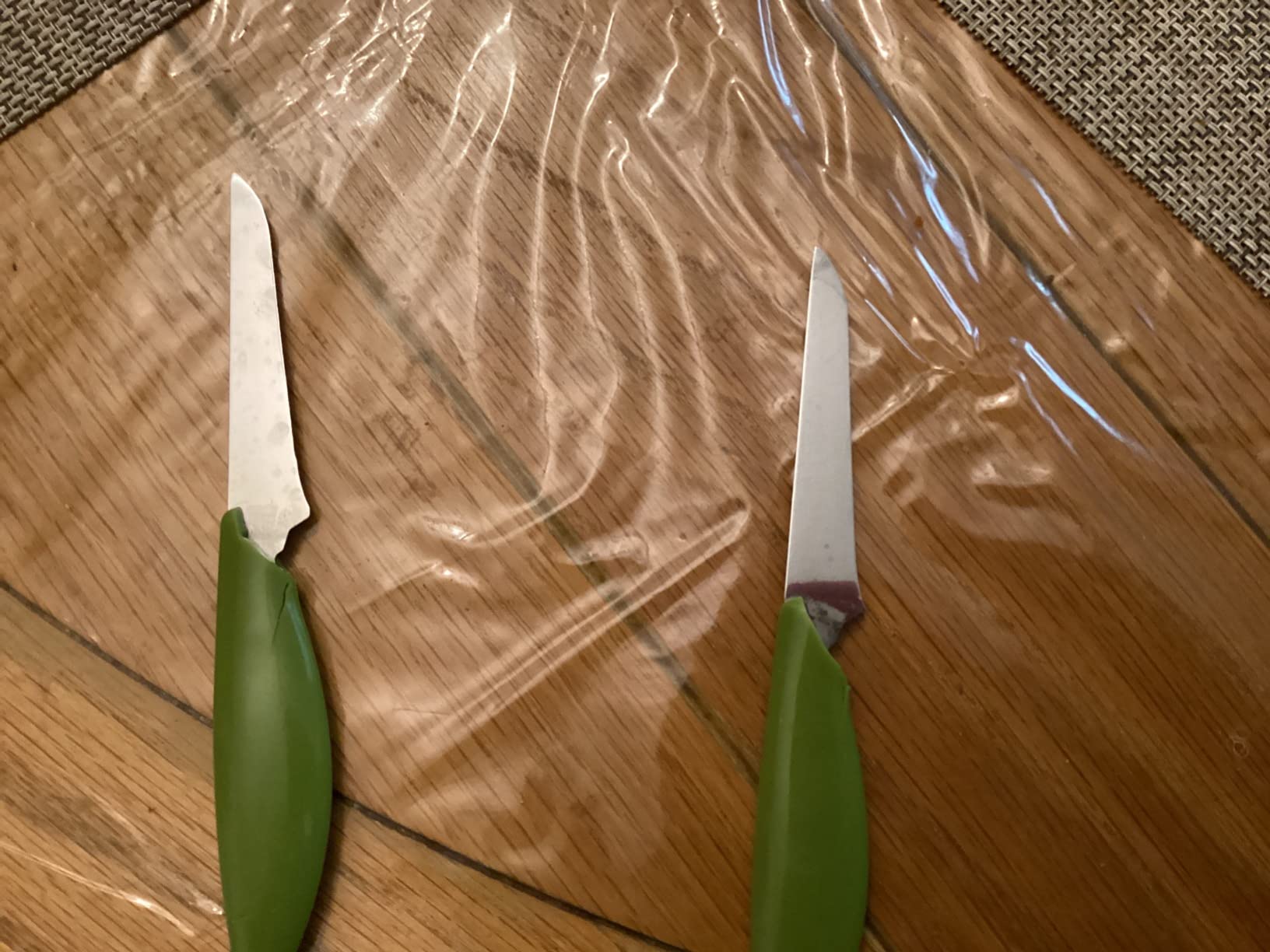
What we liked during testing
The taper produced the least product waste of any blade here when peeling apples and potatoes. The peel ribbon came off thin and even.
Bright colored handles are easy to find in a drawer and easy to see on a counter, which reduces fumbling.
Where it falls short for small hands
Blade strength. This is not the knife to hand to someone still learning to cut, and forced work can damage the tip.
The steel is plain stainless with no high-carbon content listed, so expect to hone more often than with the RADA or the imarku.
How to Choose a Paring Knife That Fits Your Hand
Measure before you buy. This is a two-minute process and it is the difference between a paring knife you love and one that lives in a drawer.
First, measure your grip span. Put your hand flat on a table, fingers together, and measure from the tip of your middle finger to the base of your palm where it meets the wrist crease. Most adult hands land between 6.5 and 8.5 inches. Under 7 inches means you want an overall knife length near 6.5 to 7 inches. Over 8 inches means the full-size 3.5 inch blades are comfortable.
Second, measure the handle, not the knife. Most listing photos do not give handle length, so subtract blade length from overall length to estimate it. You want at least 3.5 inches of handle for a four-finger grip. If the numbers do not add up to that, the pinky goes over the end.
Third, lift the knife and check the balance point. Hold it in a pinch grip and tap the bolster. If it wants to drop blade-first, the handle is too heavy for your strength. Weight matters more here than it does for a chef’s knife because a paring knife spends most of its life off the board.
Blade length next. For small hands, aim for 3 inches to 3.25 inches. That gives enough width to core a tomato while keeping the whole tool short enough to control. The 2.5 inch and 2.75 inch options work well for garnishing but strain against firm produce.
Profile matters too. A straight spear-point edge is the general-purpose choice for peeling and coring. A bird’s beak curves for peeling round fruit in long strokes. A serrated edge handles soft-skinned fruit and bread but cannot take a honing steel. None of the twelve knives here is serrated, which is deliberate for a beginner audience.
On steel, the practical rule is simple. High-carbon stainless holds an edge longer and demands more skill to sharpen. Plain stainless dulls sooner but forgives errors and responds to any steel. Ceramic holds an edge longest and is brittle. For a first paring knife, plain or high-carbon stainless is the safest learning tool.
Finally, consider a petty knife. A petty knife has a longer blade in the 5 to 7 inch range, so it is worse for small hands than a paring knife, not better. If you want more capacity for a whole apple or a large potato, look to a small utility knife instead. Our santoku picks cover that category, and our EDC pocket knife guide covers the folding option if you want a paring blade that travels.
Safety Notes for Small Hands
Fit is a safety issue, not just comfort. A knife you cannot hold properly is a knife that slips, and a paring knife that slips while it is against your palm is the worst version of that scenario.
Skip heavy bolsters when you will peel in-hand. A metal bolster that catches your middle finger during a peel is the exact mechanism enthusiasts describe behind finger slips and cuts. The Zyliss, the Victorinox and the two Mercer knives have no metal bolster to catch.
Use the pinch grip deliberately. Hold the blade between thumb and index finger with the remaining fingers on the handle. If your fingers cannot fit that pattern comfortably, choose a shorter handle rather than forcing a longer one.
Curl your support hand. When peeling over a board, curl the fingertips of your non-knife hand inward so the knuckles, not the fingertips, guide the blade. Never hold produce with straight fingertips in front of the edge.
Cut away from the body on round produce. Set the fruit on the board, cut down and away rather than toward your torso, and keep the knife pointed away from anyone standing nearby. A knife that rolls when set down edge-up, as reviewers note with the OXO, deserves a sheath or a rack.
If you are teaching a child or a beginner with small hands, start with the 3 inch options and a non-slip handle, and skip the ceramic entirely. Brittle blades and new hands are a poor pairing.
Frequently Asked Questions
What is the ideal size for a paring knife?
The ideal size for a paring knife is a 3 to 3.25 inch blade with an overall length between 6.5 and 7.5 inches. That range gives enough blade width to core a tomato or peel a potato while keeping the handle short enough for all four fingers to sit on it. For small hands specifically, overall length matters more than blade length.
What is the best knife under 4 inches?
The best knife under 4 inches for small hands is the RADA R101, with a 3.25 inch blade at 6.75 inches overall and 1.44 ounces of weight. The Victorinox Swiss Classic at 3.15 inches is the best value option, and the Mercer Culinary Ultimate White is the shortest overall at 3.5 inches. All three carry high ratings across thousands of reviews.
How do I know if a knife handle fits my hand?
Hold the knife in a full grip and check whether your index, middle, ring and pinky fingers all sit on the handle without the pinky hanging past the end. Then measure your grip span from middle fingertip to wrist crease, and subtract blade length from overall length to get handle length. You want at least 3.5 inches of handle for a secure four-finger grip.
Is a 3 inch paring knife hard to use?
A 3 inch paring knife is easier to control than a longer one, not harder. The shorter blade means less leverage on hard produce, so it suits garnishing, coring, deveining and delicate fruit work more than firm vegetables or hard cheese. If you want more cutting power for small hands, look for a 3.25 to 3.5 inch blade in a short overall length.
Which paring knife is better, Henckels or Victorinox?
For small hands, the Victorinox is the stronger pick. Its 18 gram weight, textured polypropylene handle and 3.15 inch blade give better control in a small grip, and it is dishwasher safe with a lifetime warranty. Henckels and Zwilling paring knives tend to run longer overall, which pushes the pinky off the handle. The RADA is our overall winner for the same reason.
Are Opinel knives good for small hands?
Opinel knives are often recommended for small hands because the locking collet keeps the blade stable and the handle is slim. The No.126 in particular is praised on knife forums for grip during in-hand work. However, none of the twelve knives in this roundup is an Opinel, so we could not test it directly. Size matters more than brand, so check the overall length first.
Final Verdict for Small Hands in 2026
The best paring knives for small hands share one trait that has nothing to do with steel: short overall length. Pick the RADA R101 for the best overall fit, the Victorinox Swiss Classic for the best grip and the best value, and the Mercer Culinary Ultimate White for the shortest tool we tested.
If you peel a lot in your palm, go light. The Mercer Millennia at 1.28 ounces and the Kyocera at 0.04 kg will not tire you. If your hands get wet, go grippy and pick the Zyliss. If you mostly work on a board and want the finest edge, the imarku pays for itself over years.
Measure your grip span before you order. Two minutes with a tape measure beats returning a knife that does not fit. For a second blade that travels, our karambit guide covers compact handled folders.