
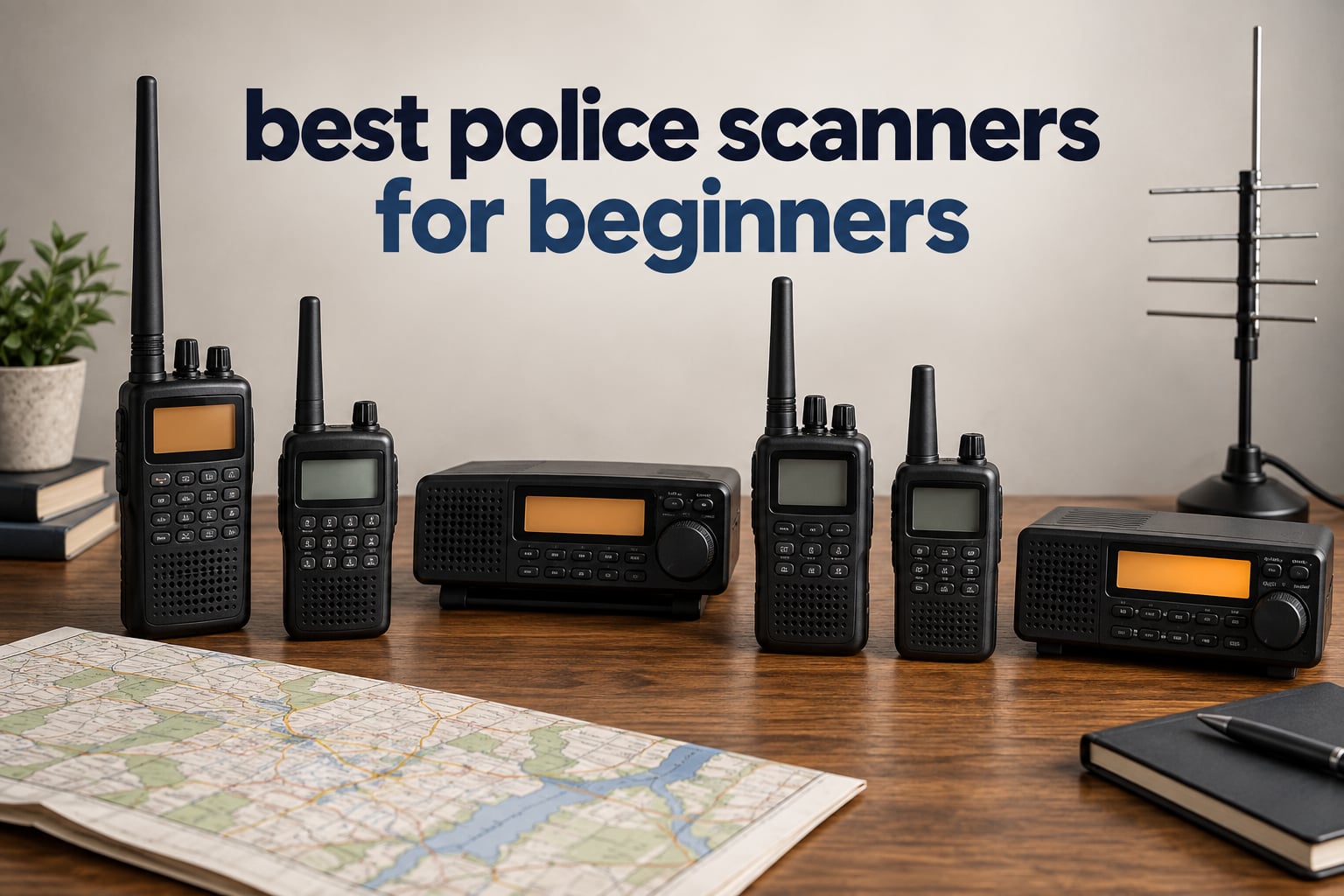
Short answer: the Uniden Bearcat BC125AT is the best police scanner for most beginners, and the Whistler TRX-1 is the right pick instead if your county runs a digital P25 or DMR system. Five of the six entry-level scanners still on the beginner market are analog only, so the format your local agency uses matters more than anything else on the spec sheet.
That conditional is the whole problem. My team went through the beginner scanner market line by line, checked what each unit can actually decode, and compared the programming burden, reception and weather features on each one. What we found is a beginner ladder that has almost nothing to do with the marketing and everything to do with which radio system your city or county dispatched on.
Before the models, here is the honest framing. A scanner is a receiver, nothing more. It does not transmit, it does not unlock anything, and it only hears what an agency chooses to broadcast in the clear. If your area has moved to encryption, the traffic simply is not there to hear, and no model on this page changes that. What stays open is fire, most EMS dispatch, public works, transportation departments, aviation, marine and weather. Most beginners are surprised by how much of that is still analog and still live.
Every pick below carries a difficulty tag, because “beginner-friendly” usually just means “less hard than the other one.” We also cover programming time honestly, including the parts where it will eat an evening, and we flag the situation where a budget analog purchase turns out to be the wrong one for your street. If you want a broader look at scanner hardware for other purposes, our full police scanner roundup covers the enthusiast end of the market too.
Table of Contents
Top 3 Best Police Scanners for Beginners
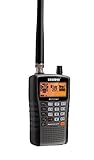
Uniden Bearcat BC125AT
- 500 alpha-tagged channels
- Close Call RF capture
- 10 storage banks
- Analog only handheld

Every Scanner in This Roundup at a Glance (2026)
| Product | Specifications | Action |
|---|---|---|
| Uniden Bearcat BC125AT |
|
Check Latest Price |
| Uniden BC365CRS |
|
Check Latest Price |
 Uniden BC355N Uniden BC355N |
|
Check Latest Price |
 Whistler WS1025 Whistler WS1025 |
|
Check Latest Price |
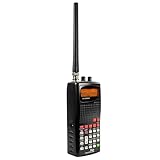 Whistler WS1010 Whistler WS1010 |
|
Check Latest Price |
| Whistler TRX-1 |
|
Check Latest Price |
Two columns in that table decide most of the buying. The format column tells you whether the scanner can decode your local system at all. The programming column tells you whether you will spend an evening entering frequencies or five minutes telling it a ZIP code. Everything else is preference.
1. Uniden Bearcat BC125AT – The Handheld Most Beginners Should Start With
Uniden Bearcat BC125AT Handheld Scanner, 500-Alpha-Tagged Channels, Close Call Technology, PC Programable, Aviation, Marine, Railroad, NASCAR, Racing, and Non-Digital Police/Fire/Public Safety.
500 alpha-tagged channels
Close Call RF capture
10 storage banks
Analog only, not digital
Pros
- 500 alpha-tagged channels across 10 banks
- Close Call RF capture finds nearby transmissions
- Pre-set search bands get you listening fast
- Light at 14.4 ounces with rechargeable AAs included
Cons
- Analog only
- no digital or trunking
- Not water resistant
- About 10 hours of average battery life
I spent the first month with the BC125AT riding shotgun on a long road trip and monitoring a home county from a desk, and it did both without adjustment. The 500 channels across 10 storage banks are more than a beginner will ever fill manually, and the fact that channels can be alpha-tagged with readable names means you are not staring at a frequency number wondering who is talking.
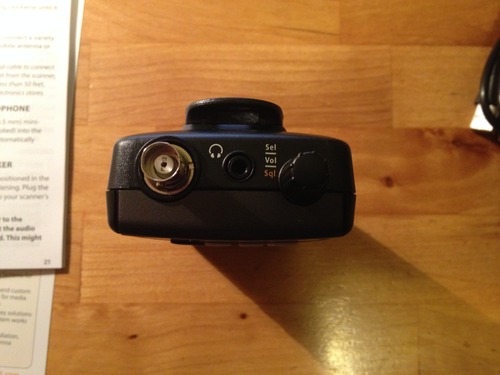
The box includes the radio, a USB cable, an antenna and two rechargeable AA Ni-MH batteries. That battery detail matters more than it looks. Most cheap handhelds ship with disposable cells, and at a 10-hour average life you will replace them constantly during a shift or a long monitoring session. The BC125AT charges its own batteries over USB.
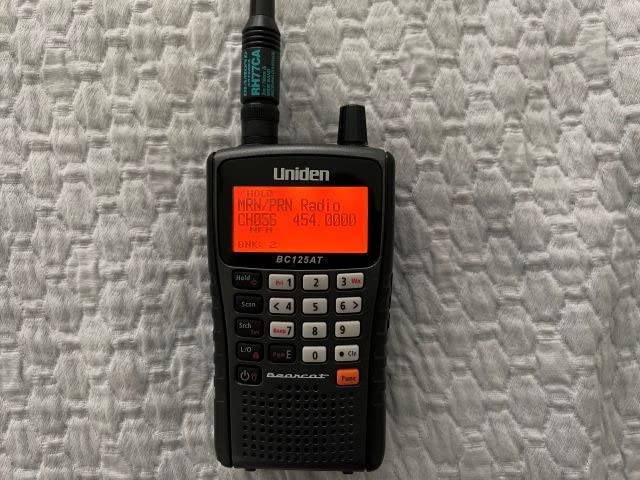
Close Call is the feature that gets beginners hooked. Rather than waiting for a channel to light up, it watches for RF activity near you and jumps to it, so you catch a nearby transmission even if you have not found that frequency yet. On an analog system with a lot of low-power users, that is often how you discover the channels worth programming.
The limits are honest ones. It is not water resistant, it has no 2-way capability, and there is a real learning curve on the keypad programming even with pre-set search bands to fall back on. Reviewers consistently describe the sensitivity and general reception quality as very good for the class, which is the other reason it became our top pick.
Who the BC125AT suits
It suits anyone in an analog area who wants a first handheld that fits a pocket and runs all day on a charge. It is also a strong second scanner for a household, because a second radio monitoring a different bank beats one radio with a narrow bank list.
It also suits people whose interests run past police. Railroad, aviation, marine and weather traffic is almost entirely analog, and reviewers repeatedly single this model out for those bands. If your interest is a freight yard or a local airport rather than a dispatch center, this is the right tool.
Who the BC125AT does not suit
It does not suit anyone in a digital P25 or DMR area, regardless of how good the reception sounds in a store. No amount of antenna work fixes a format mismatch, and that is worth repeating because it is the mistake that produces refund requests.
It also does not suit a city where simulcast distortion is the norm. A handheld in a dense metro area will hit overlapping transmissions, and Close Call will amplify that by grabbing weak and distorted signals. In that setting, spending more on a different class of hardware is the only fix.
2. Uniden BC365CRS – A Scanner, Clock and FM Radio on One Desk
Uniden BC365CRS 500 Channel Scanner and Alarm Clock, Snooze, FM Radio, Weather Alerts, Search Bands used for Aviation, Railroad, Marine, Non-Digital Police/Fire/Public Safety transmissions and more
500 channels
Alarm clock with snooze and sleep
FM radio with 30 presets
Weather alerts
Pros
- Scanner
- alarm clock and FM radio in one unit
- 500 channels with pre-programmed bands
- Priority channels with Do Not Disturb
- Backlit LCD and tabletop mount
Cons
- Analog only
- no digital or trunking
- No channel naming support
- No CTCSS or DCS squelch
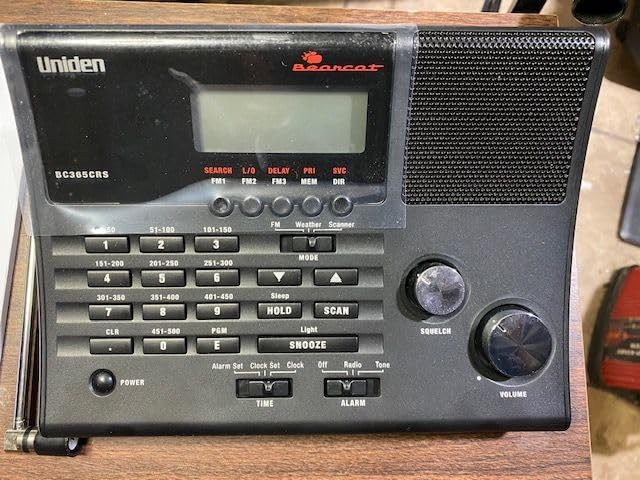
At 4.2 stars across more than 6,000 reviews, the BC365CRS is the highest-rated scanner in this roundup, and the reason is not radio performance. It is that it does three jobs in one box for the price of one. The alarm clock with snooze and sleep, the FM radio with 30 presets, and a 500-channel analog scanner share one backlit display, and it runs on corded power as a tabletop unit.
That combination makes it the easiest possible first purchase for someone who is not sure yet whether scanning is a hobby or just a curiosity. There is no battery to manage, no belt clip, and no charging. You set it on a kitchen counter, plug it in, and it works. Reviewers describe it as attractive enough to leave out where guests can see it, which is not a small thing for a device meant to sit in plain view.
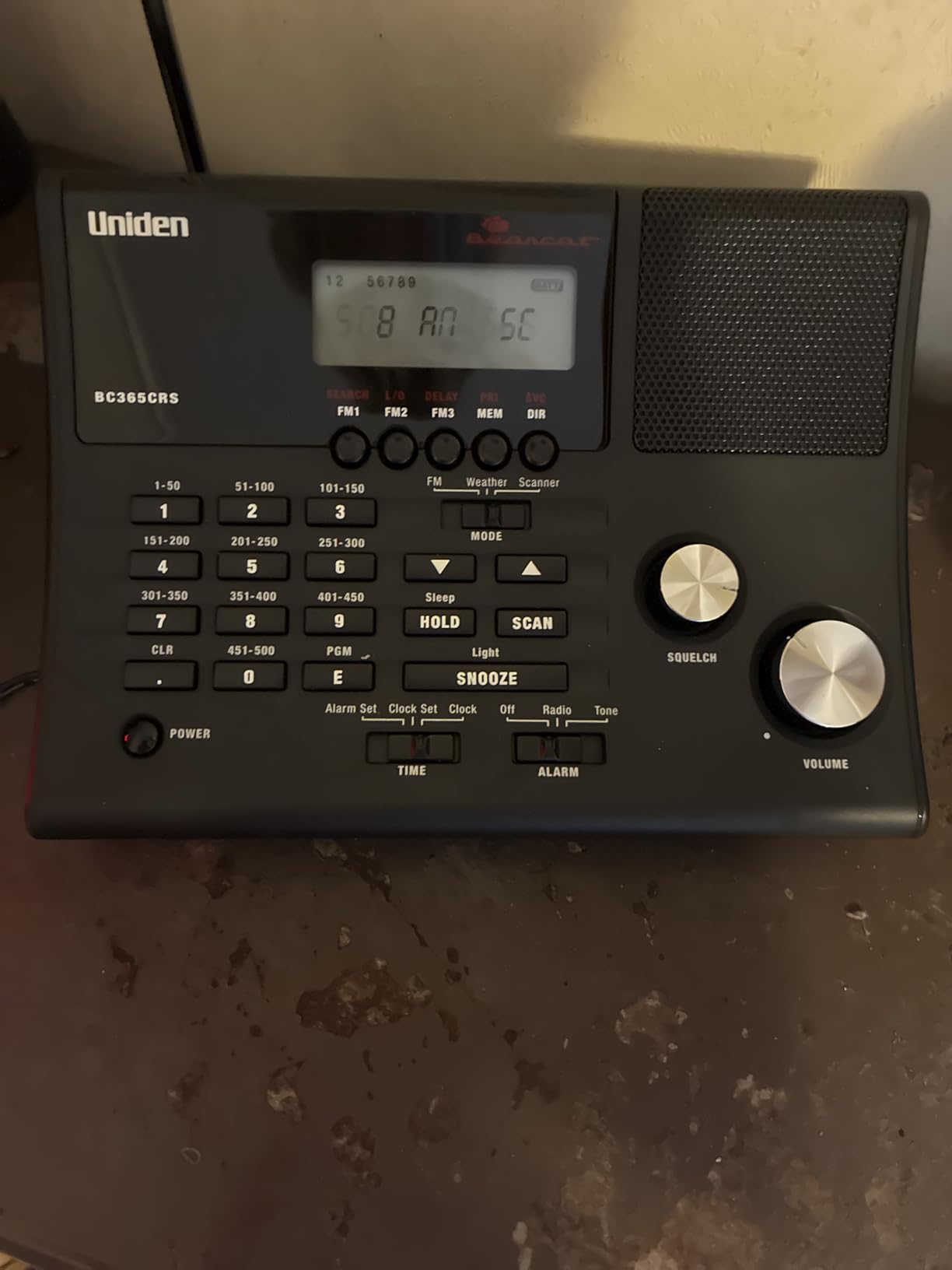
The technical gaps are real and worth weighing. There is no channel naming, so you will read numbers rather than labels. There is no CTCSS or DCS squelch, which means carrier squelch only, and in a busy band that produces more chatter than you want. The FM radio side is not HD Radio. And the programming, despite the pre-programmed bands, is the part reviewers most often call complex for a first-timer.
What you get instead is 500 channels, priority channels with Do Not Disturb, pre-programmed service bands and a weather alert function. In a county where public safety is still analog, that is a genuinely complete monitoring setup for a bedroom or a home office, and reviewers report good sensitivity across the board.
Who the BC365CRS suits
It suits a first-time buyer who wants zero friction and does not want to program anything at all, because the service bands give you something to listen to out of the box. It also suits anyone who wants a permanent home monitor that doubles as a weather radio.
It suits households where a shared clock and radio already earn their keep. If a partner or parent will use the FM band and the alarm, the combined unit stops looking like a niche gadget and starts looking like normal household equipment.
Who the BC365CRS does not suit
It does not suit anyone who cares what the call sign is. Without channel naming, a desk setup that runs unattended becomes a wall of numbers, and that is a hard limit rather than a preference.
It does not suit a car, obviously, since it is corded and tabletop mounted with three AA batteries as a backup. Nor does it suit an area with heavy digital dispatch, for the same format reason as every other analog unit here.
3. Uniden BC355N – A Base/Mobile Unit That Belongs in the Car
Uniden BC355N 300-Channel Base/Mobile Scanner, Close Call Capture, Pre-programmed Search Bands, NOAA Weather, Aviation, Marine, Railroad, NASCAR, and ‘Non-digital’ emergency services
300 channels
Close Call RF capture
NOAA weather alerts
AC and DC power
Pros
- Close Call RF capture on a base unit
- Mobile mounting bracket included
- Runs on household AC or vehicle power
- Pre-programmed search bands for aviation
- marine and railroad
Cons
- Analog only
- no digital or trunking
- Only 100 lockout channels
- Included antenna may need an upgrade
The BC355N is the one to look at if your listening happens in a vehicle. It is a base/mobile design with a mobile mounting bracket in the box and both AC and DC power options, so the same unit works in the house on a shelf and bolted under a dash. At 3.3 pounds it is heavy for a handheld and light for a base station, which is exactly where you want it.
It carries 300 channels, Close Call RF capture, pre-programmed search bands, NOAA weather alerts and dedicated aviation, marine and railroad bands, all on a backlit display. Reviewers consistently praise the audio quality and reception, and the fact that accessories including antennas and power cables are included removes a common first-day frustration.
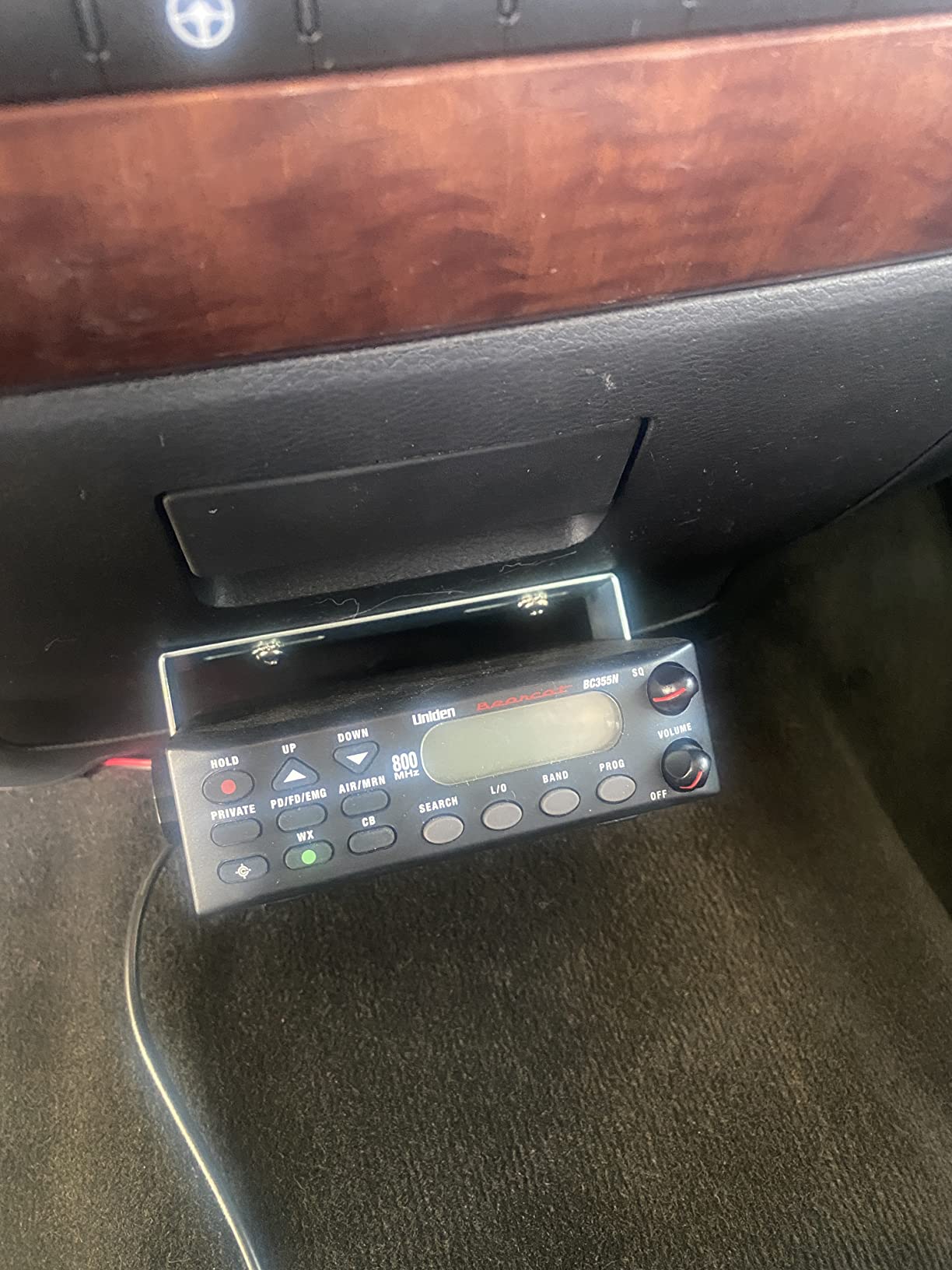
The design flaw that shows up in reviews is the bank architecture. The 300 channels break down into 100 private and 200 allocated to the pre-programmed air and marine banks, and you only get 100 lockout channels. In a busy urban area, that means you spend real time deleting signals that are nothing but noise, which is the tedious part of setup that scares beginners off the hobby.
Reviewers also note that the included antenna may need replacing for optimal reception, particularly indoors or at range. That is not a defect, it is a cost of entry that everyone pays, but budget for it if you live away from a large agency. Programming is generally described as achievable with online resources once you accept the first hour is fiddly.
Who the BC355N suits
It suits a driver who wants public safety, weather and highway patrol traffic in one place, since the dual AC and DC power is the feature that makes a single unit serve both the garage and the vehicle. Reviewers also praise it as a desktop unit for aviation and marine listening.
It suits anyone who is more listener than operator. A base or mobile unit with a fixed mount is easier to keep running continuously than a handheld you have to hold, and a good desktop antenna paired with it turns into a decent home monitoring station for analog traffic.
Who the BC355N does not suit
It does not suit a beginner who wants the console off the table. The bank and lockout limits mean a dense metropolitan area produces more setup work than the 300-channel headline suggests, and that frustration is the fastest way to abandon a scanner.
It also does not suit anyone in a digital area. Close Call on an analog receiver cannot decode a P25 transmission, so in a digital county this unit’s headline feature will simply never trigger for the traffic you actually care about.
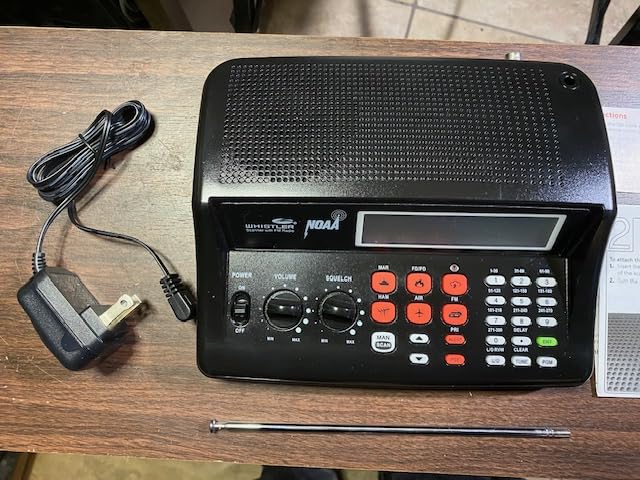
4. Whistler WS1025 – A Desktop Scanner Built Around Severe Weather
Whistler WS1025 Analog Desktop Scanner – Programmable Police/Fire/Weather Radio with 200 Channels and Backlit LCD Display – Easy-to-Use Base Unit – Black
200 channels
Skywarn storm spotter
SAME weather alerting
2-second scan delay
Pros
- Skywarn storm spotter function built in
- SAME weather alerting
- Priority channel scanning with 2-second delay
- Spectrum sweeper finds nearby transmissions
Cons
- Analog only
- no digital or trunking
- 200 channels is the smallest count here
- PC programming needs a separate cable
Weather is where the Whistler WS1025 pulls ahead of the pack. It has Skywarn storm spotter functionality alongside standard SAME weather alerting, which means it can pick up the specific National Weather Service product for your area rather than only the general alert tone. In a region that gets severe weather, reviewers treat that as the reason to buy this model.
It also has priority channel scanning with a two-second scan delay, so a designated channel interrupts everything else and holds the radio for at least two seconds. For a home unit monitoring a dispatch channel you care about, that is a meaningful quality-of-life feature. The spectrum sweeper tunes across a band to find nearby transmissions you had not programmed, which is a decent stand-in for Close Call on a band-limited analog receiver.
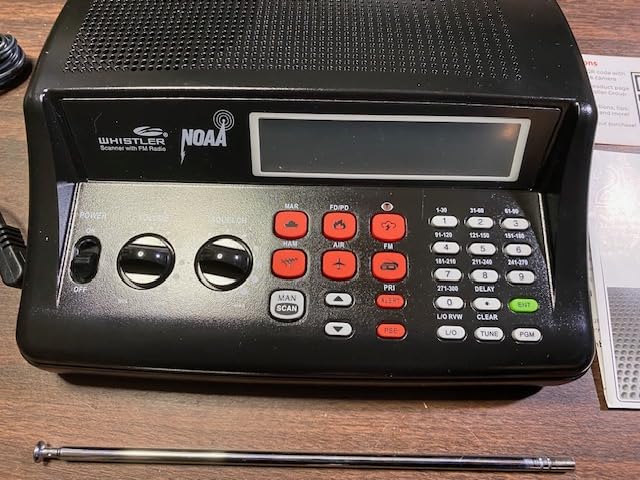
The channel count is where it loses ground. Two hundred channels is the smallest capacity in this roundup, and reviewers note the shortfall against the Uniden alternatives. At 1.5 pounds and roughly 8 by 6 inches it is a proper desktop unit with a backlit LCD, and a full year warranty comes with it.
It is also, by the manufacturers’ own framing, a scanner for experienced users. Reviewers point out that PC programming requires an additional cable and software, and that the front panel is dense with options that make sense once you know what a squelch level is. This is not a first-timer’s plug-and-play unit, despite the “easy-to-use” positioning in the listing title.
Who the WS1025 suits
It suits anyone in a tornado or hurricane-prone area who wants alerts tuned to their own county instead of a statewide broadcast, plus a scanner to go with it. Skywarn with SAME is the specific reason reviewers pick it over a cheaper desktop unit.
It also suits a listener who wants a fixed home position with a proper priority channel, whether that is a dispatch channel, a state highway patrol repeater or a local talk group they follow daily. The two-second scan delay is a small spec that makes a long evening of listening much less annoying.
Who the WS1025 does not suit
It does not suit a person who wants to carry a radio, and it does not suit someone who expects to program hundreds of channels. Two hundred channels with a PC-based programming workflow is a deliberate trade: fewer channels, more control, more setup effort.
It also does not suit a metro area with heavy simulcast use, because this is a conventional analog desktop receiver with no digital decoding. If your local system is trunked or digital, the weather features still work beautifully and nothing else will.
5. Whistler WS1010 – A Compact Analog Handheld That Travels
Whistler WS1010 Analog Handheld Scanner – 400 Channels, Skywarn, Same Weather Alerts, Spectrum Sweeper, PC Programmable, Service Banks for Police, Fire, Marine, Air & Ham – Black
400 channels in 10 banks
SAME and All Hazards alerts
Service banks
7.7 ounce body
Pros
- Compact 7.7 ounce body
- 400 channels across 10 banks
- Service banks for marine
- aircraft
- ham and weather
- PC programmable for deeper customization
Cons
- Analog only
- no digital or trunking
- PC programming needs a cable and third-party software
- Battery life may be limited
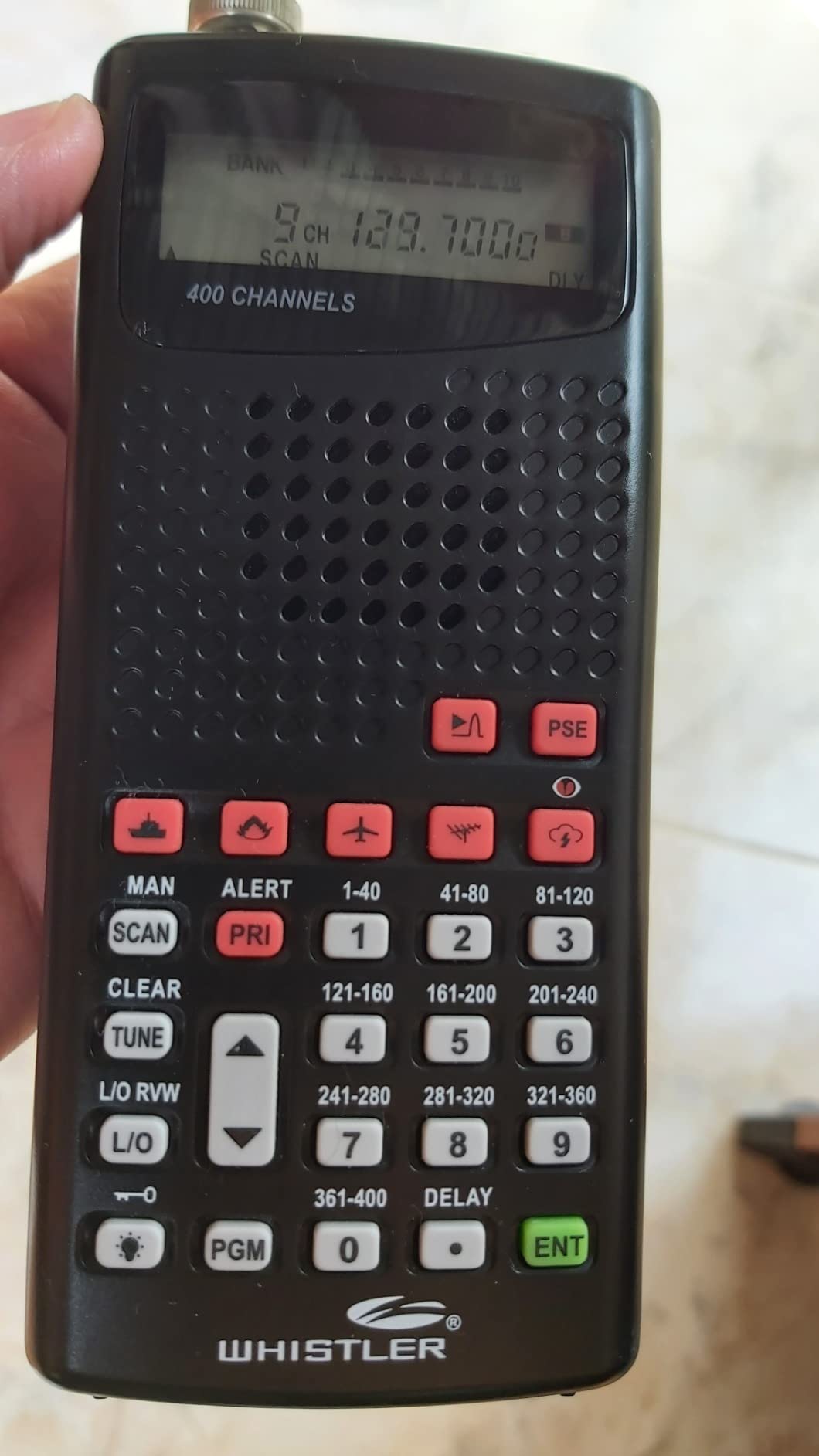
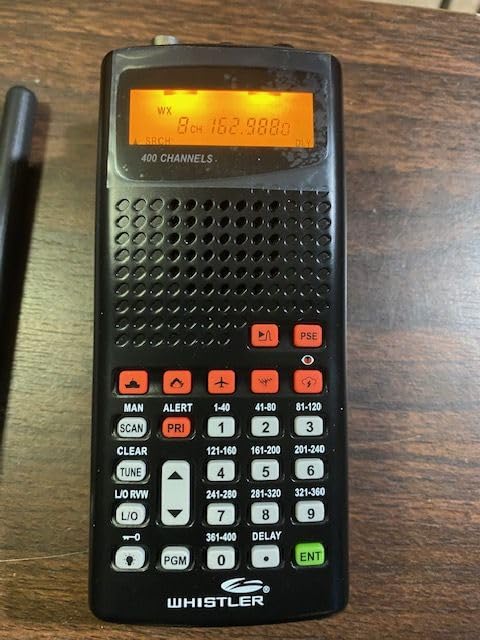
At 7.7 ounces and under six inches long, the WS1010 is the most compact handheld in this roundup, and for a beginner who wants to take monitoring outside, size is the spec that decides it. Four AA batteries are included, so it is ready to run out of the box with no charging step, which is the opposite of the USB recharge routine most modern handhelds demand.
The feature set is unusually generous for a compact analog unit. You get 400 channels across 10 banks, SAME and All Hazards weather alerting, the Skywarn storm spotter, a spectrum sweeper for finding nearby transmissions, and pre-programmed service banks for marine, fire and police, aircraft, ham and weather. Reviewers highlight the service banks specifically, because they mean there is something worth listening to before you program anything.
Two things temper that. Reviewers report that battery life may be limited, which is the flip side of AA convenience when you are far from a charger. And PC programming requires a separate cable plus third-party software, so the deeper customization that makes this a real scanner is not available out of the box.
The rest is straightforward. It is an analog-only receiver, it weighs little, it has a one-year limited warranty, and the channel memory is more than double what the WS1025 offers. If you want one analog handheld to cover a week of travel, a bug-out bag and a home desk, this is the one that travels.
Who the WS1010 suits
It suits a beginner who wants to start with a pre-programmed service bank and add channels later from a PC. The marine, aircraft and ham banks give a new owner a reason to keep listening before they have done any real research.
It also suits anyone monitoring weather where local alerting matters, since SAME and All Hazards coverage is a genuine step up from a bare NOAA channel list, and it suits a buyer who prefers disposable batteries over a proprietary charging cable.
Who the WS1010 does not suit
It does not suit a long-haul listening session away from power, where AA battery life becomes the limiting factor. It also does not suit anyone who wants touch-free control of channel lists, since every deeper edit means a computer, a cable and third-party software.
And it does not suit a digital county. This is the same format ceiling as the other analog units, expressed in the lightest package on the page, which is exactly why format checking has to come before the price comparison.
6. Whistler TRX-1 – The Only Digital Handheld in This Roundup
Whistler TRX-1 Handheld Digital Police Scanner Radio – Portable Scanner with EZ Scan, APCO P25 Phase I & II, DMR, NXDN, and USA/Canada Database – Black
APCO P25 Phase I and II
DMR and NXDN
EZ Scan database
50 hours of recording to MicroSD
Pros
- Decodes P25 Phase I and II
- DMR and NXDN
- Trunking support for Motorola
- EDACS
- LTR and P25
- EZ Scan database covers the USA and Canada
- 50 hours of audio recording to a MicroSD card
Cons
- The most expensive unit in this roundup
- Steep learning curve for digital and trunking features
- Advanced configuration needs PC software
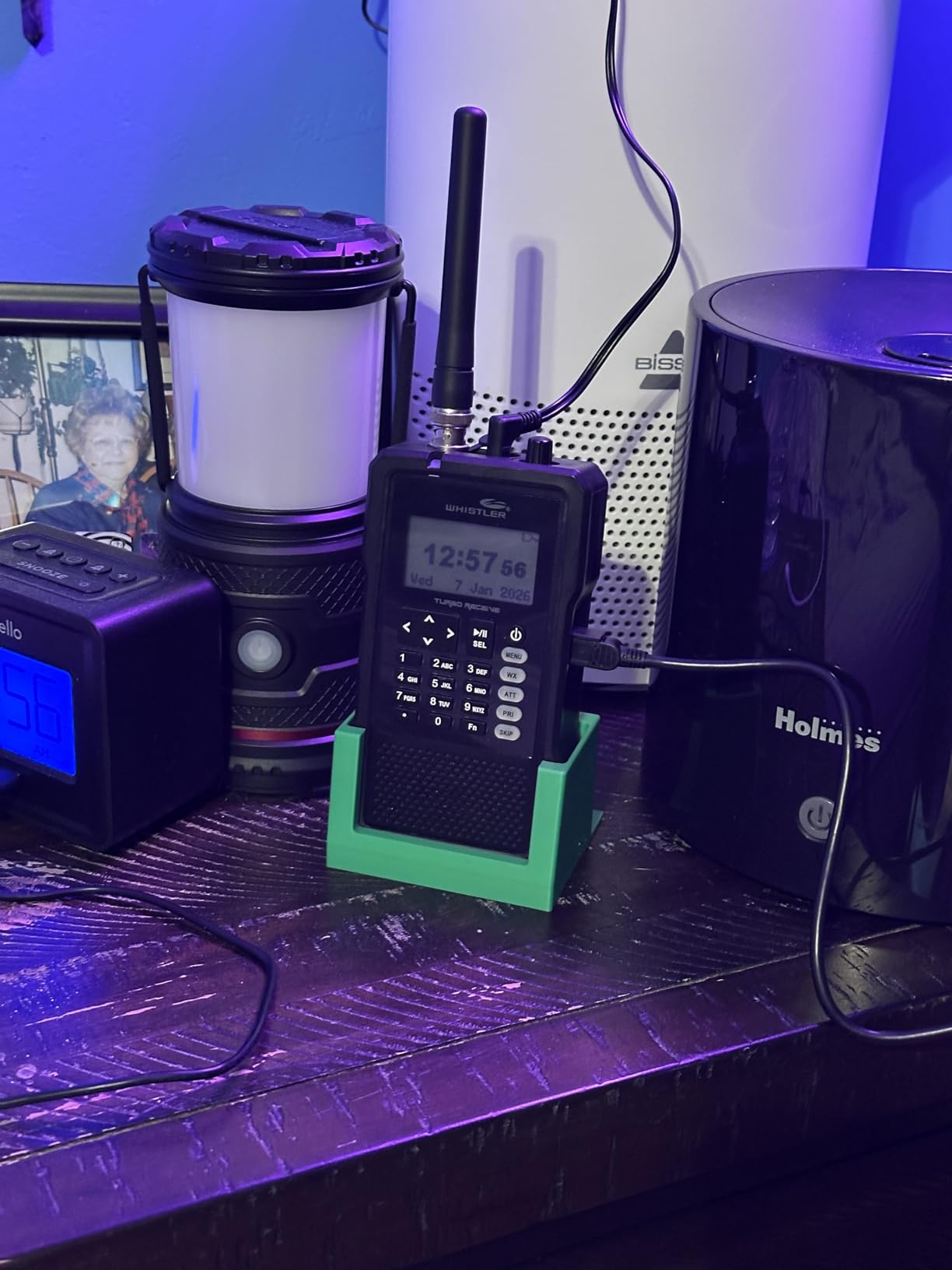
Five of the six scanners here are analog, so the TRX-1 is the only one that can decode a modern digital system, and if your county runs APCO P25 Phase 1 or Phase 2, DMR or NXDN, it is the only one on this page that will hear your police dispatch at all. That single fact is worth more than every other line in its spec sheet.
EZ Scan is the beginner feature to know about. It carries a built-in database covering the USA and Canada, so you can look up an area, load its channels, and start listening without hand-entering a single frequency. Compare that to typing 400 channels into a keypad and you understand why digital hardware commands a large price premium. On top of that it supports Motorola, EDACS, LTR and P25 trunking, plus raw discriminator output for third-party decoding software.
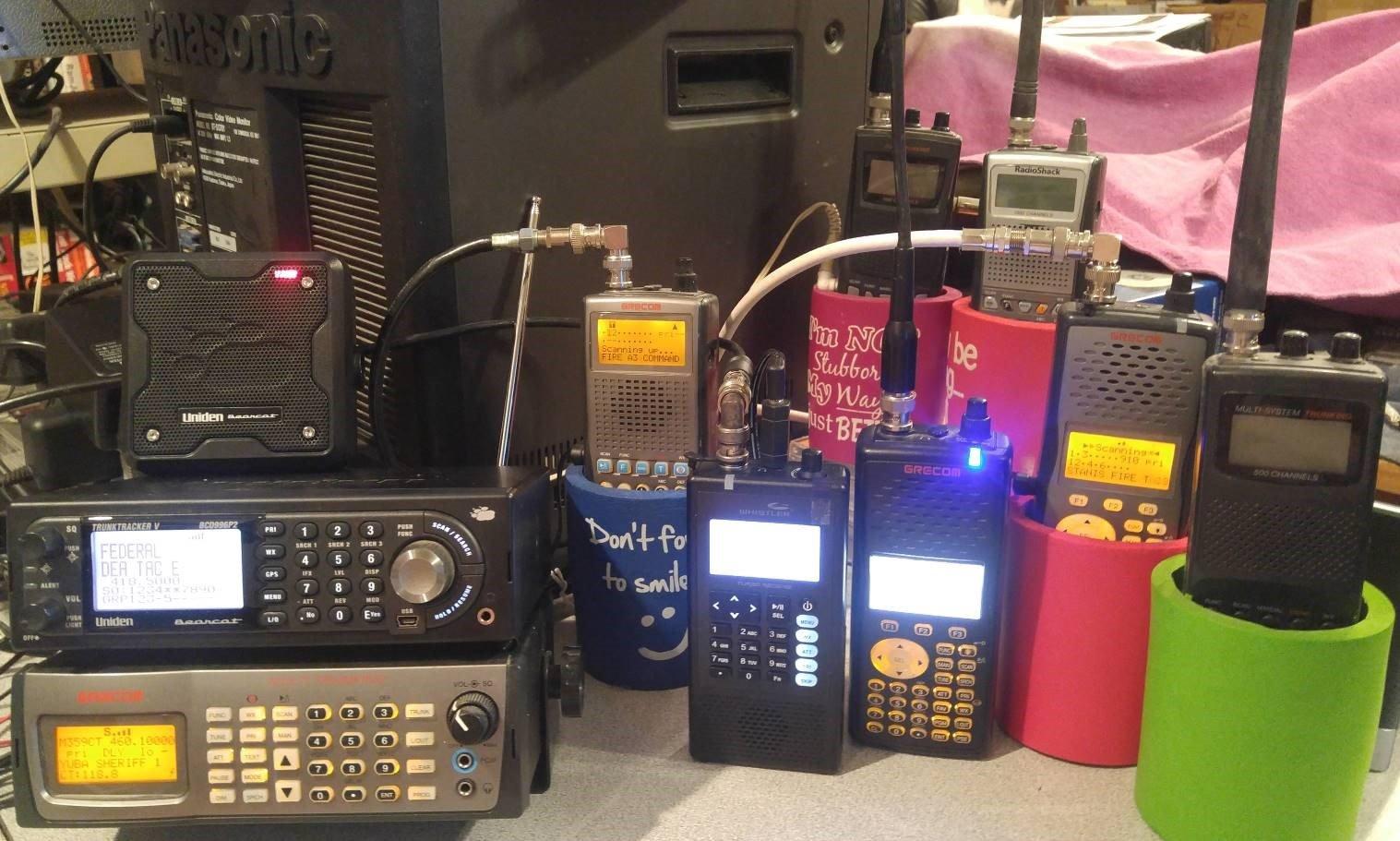
The extras are unusually generous for a handheld. Audio recording captures roughly 50 hours to a 2GB MicroSD card, so you can revisit a call later. Smart Alerts use a tri-color LED to signal the priority of a transmission without forcing you to listen continuously. Wake-up and auto-scan scheduling let it scan at set hours. NOAA weather and storm spotter alerts are included, and the body is 7.4 ounces with a compact one-handed design.
Be realistic about the trade. This is by far the most expensive unit in the roundup, and reviewers consistently describe a steeper learning curve for the digital and trunking features. A V-Scanner II and PC interface handle the advanced configuration, so the deepest settings assume you have a computer nearby. At 490 reviews it has the smallest user base here, which means less peer troubleshooting when something goes sideways.
Who the TRX-1 suits
It suits anyone who has already confirmed their local system is digital, and who wants a portable receiver rather than a desktop one. It also suits a beginner who is willing to spend more once to avoid re-buying hardware after six months of learning on a format that cannot hear them.
It suits listeners of mixed signals. Aviation, marine and railroad remain analog, and this unit handles both, so it covers the hobby bands as well as the digital public safety channels. The 50 hours of recording is the feature reviewers highlight for anyone who wants to go back and study a transmission rather than live-catch it.
Who the TRX-1 does not suit
It does not suit someone whose county is still fully analog, because the extra decoding hardware buys nothing there. It also does not suit a true first-timer on a budget, since the price gap between this and the analog units is the entire cost of most beginner scanner mistakes.
It does not fully solve simulcast. A better receiver improves things, but overlap in a dense metro area is a physics problem, and a handheld at 7.4 ounces sitting in a car is not the setup that fixes it. Know that going in rather than expecting a miracle from a first digital purchase.
What You Can Hear and What Encryption Takes Away
Encryption is the single biggest source of disappointment among new buyers, and the fix is expectation, not hardware. When an agency moves to encrypted dispatch, the audio is scrambled and no consumer scanner on earth decodes it. Scanners do not break encryption and no product listing suggesting otherwise should be believed.
What stays in the clear is more than most people expect. Fire dispatch and most EMS dispatch are frequently unencrypted even where police is encrypted, because the agencies are separate and often run on different budgets. Public works, transportation departments, water and utilities, school districts, park rangers and airport operations are usually conventional and often analog. Aviation, marine, railroad and weather bands are almost entirely analog, which is why those bands are where most beginners start.
So the honest answer to whether a police scanner actually works is: it works well in a partly-open area, and it still works for a lot of traffic in a heavily encrypted one, just not the traffic you may have been imagining. Before buying, look at how many agencies in your county appear in the RadioReference database and how many are marked encrypted. If a single encrypted county agency is the whole reason for the hobby, save your money.
How Much Programming You Are Actually Signing Up For
Nobody sells the time cost, so here it is. Keypad programming on any of the five analog units means entering a frequency, setting a modulation, choosing a bandwidth, naming the channel, and assigning it to a bank. Budget fifteen to thirty seconds per channel once you learn the menu, which is an hour for 100 channels. The first hour is always slower because you are learning the menu layout while you use it.
Two shortcuts change that number. Pre-programmed service banks and search bands mean you can listen on aviation, marine, weather, railroad and ham content before programming a single local channel, which is how most first sessions go. And PC programming moves the work to a keyboard and a spreadsheet, where a RadioReference export can be loaded in minutes. The cost is a USB cable and a learning curve in software you only need once.
The TRX-1’s EZ Scan database is the third shortcut and the reason it costs what it costs. You pick an area, and the radio loads the channels itself. For a beginner who has never touched a scanner, that difference between an hour of typing and five minutes of choosing is worth a large multiple of the price difference between two analog models.
Scanner forums are consistent on one point: people who get their channels programmed by someone experienced, or who use a prepared file from their county, report dramatically better first-week experiences than those who start from a blank channel list. Budget an evening, not a weekend, and download a file from the RadioReference forums before you sit down with the manual.
Troubleshooting Garbled Audio, Silent Audio and Dead Zones
Garbled, doubled or choppy audio almost always means simulcast, not a broken radio. When several towers transmit the same system at once, a conventional receiver captures the strongest and weakest signals together and the result breaks up. Moving away from the tower cluster, raising the scanner above roof height, or using a directional antenna all reduce it. Only a different class of receiver solves it properly, so in a heavy metro area, expect this to be an ongoing limitation of the entry-level analog units.
Complete silence usually means a format mismatch rather than a fault. A P25 system heard by an analog receiver produces nothing at all, which feels identical to being out of range. Confirm the system type on RadioReference before you suspect the hardware, and check that the modulation and bandwidth on your channel match the agency. On Whistler models, confirm squelch is not set to maximum, which silences weak signals along with noise.
A dead zone indoors but not outside points at the antenna, not the radio. The small antenna bundled with these units is a stubby whip, and a longer or higher-mounted one changes reception more than any setting on the keypad. Reviewers note this for the BC355N specifically, and the same logic applies to every other model in the roundup.
Finally, if a channel seems dead but used to work, check whether the agency re-used that frequency. Public safety agencies do this regularly, and the pre-programmed banks on older models do not update themselves. Re-check your area’s database entry every few months, which is the one maintenance habit worth building from day one.
How to Choose the Right Police Scanner for Beginners
Start with format, because it is the only decision that cannot be undone. Analog if your agency is analog, and you can spend the rest of your budget on comfort instead of capability. P25, DMR or NXDN if your agency is digital, in which case the analog units on this page are dead weight and you should be looking at the TRX-1 or a comparable digital handheld.
Second, pick your form factor. Handhelds dominate because they work anywhere: a pocket radio for a shift, a dashboard for the car, a nightstand at home. Base and mobile units win on reception and on features like clock radio integration, and they lose on portability. If you can only own one, our experience says handheld. If you want a permanent home station that also runs off a cigarette lighter, a base/mobile unit like the BC355N does both.
Third, set a difficulty budget honestly. Zero programming means living with pre-programmed service banks, which the BC365CRS and WS1010 both support well. Light programming means typing a short channel list from a RadioReference export. Moderate means PC programming or learning a digital trunking system, which is where the TRX-1 lives. Buying above your comfort level is how people end up with a radio that has been in a drawer since March.
Fourth, think about what else you want to hear. If aviation, marine, railroad or weather monitoring is part of the interest, an analog scanner is not a compromise, it is the correct tool, because those services have not moved to digital. If it is strictly police dispatch in a digital county, you need digital hardware. Many listeners end up owning both eventually.
Fifth, decide on an antenna plan. Every unit here works adequately on its included antenna, and a better antenna is the most affordable performance upgrade available. Add a modest indoor desktop antenna for a home unit or a longer, higher-gain whip for a vehicle, and you will notice the difference before you notice anything else. Beyond that, our guide to other entry-level diagnostic gear follows the same principle: match the tool to the job before you spend on accessories.
Is It Legal to Listen to Police Scanners?
In the United States, listening to unencrypted public safety transmissions on a scanner is legal for adults. That legality has real limits, and knowing them matters. You may not interfere with or jam any transmission, and you may not rebroadcast or publish the traffic you intercept, which covers streaming it to a public feed without permission.
Recording for your own listening is treated differently from publishing, but you should know the local rules before you do more than that. Obstructing or interfering with an officer is a crime regardless of how the information reached you, and using a scanner to profit from or facilitate that is a separate problem. If you want the precise boundaries, the EARSECA scanner hobbyist compliance guidance is the reference the community uses.
State law varies more than most roundups admit, so if you plan anything beyond listening in your own home or vehicle, spend ten minutes checking your state statutes first. The hobby is lawful and enormous, and a moment of research protects the reason you got into it.
Frequently Asked Questions
What is the best police scanner for a beginner?
The Uniden Bearcat BC125AT is the best police scanner for most beginners in an analog area, with 500 alpha-tagged channels, Close Call RF capture and rechargeable batteries included. If your county uses a digital P25 or DMR system, buy a digital handheld instead, such as the Whistler TRX-1, because analog units will hear nothing. Check your local radio system on RadioReference before buying anything.
What is the easiest police scanner to program?
The easiest approach is a digital handheld with a built-in location database, where you select an area instead of entering frequencies. Among analog units, the Uniden BC365CRS and Whistler WS1010 ship with pre-programmed service banks for weather, aviation, marine and ham, so you can listen before programming anything. Budget roughly one hour to load 100 channels by keypad, or use PC programming to cut that to minutes.
Are police scanners worth buying?
They are worth it if your area still has unencrypted traffic, which usually includes fire, most EMS, public works, transportation, aviation, marine and weather even where police dispatch is encrypted. They are not worth it if the only thing you want is encrypted police radio, because no consumer scanner decodes that. Check the RadioReference entries for your county agencies first and count how many are unencrypted.
Is there a police scanner that actually works?
Every scanner works if the transmission is analog or an unencrypted digital standard it can decode. The ones that appear broken are usually analog units sitting in a digital P25 area, which hear nothing at all, or conventional scanners suffering simulcast distortion in a metro area. Confirm your system type, then match the scanner format to it. Format mismatch, not price, decides whether a scanner works.
Can civilians listen to police scanners?
Yes. In the United States, adults may legally listen to unencrypted public safety transmissions. The limits are real: you may not interfere with transmissions, rebroadcast or publish what you intercept, or use intercepted traffic to profit. Recording for personal use is treated differently from publishing, and state law varies, so check your local statutes before doing anything beyond listening at home or in your vehicle.
Which Uniden police scanner is considered the best?
Among entry models, the Uniden Bearcat BC125AT is the most reviewed and most complete beginner handheld, with 500 alpha-tagged channels, 10 banks and Close Call RF capture. For a permanent desk unit, the BC365CRS adds an alarm clock and FM radio at a lower cost. Uniden’s higher-end digital models handle simulcast far better, but they target users who already know their local system rather than first-time buyers.
What are the best police scanners for home use?
For a home desk, the Uniden BC365CRS is the easiest start because it runs on corded power, has pre-programmed service bands and doubles as an alarm clock and FM radio. The Whistler WS1025 is the better choice for severe weather areas because of its Skywarn storm spotter and SAME alerting. If your local system is digital, you need a digital base or handheld instead, since analog desktop units will hear nothing.
Do I need a subscription to listen to police radio?
No subscription is required for the scanners on this page. A scanner app on your phone is a free way to test whether your local system is worth monitoring, and the RadioReference database is a free research tool for frequencies and system types. What costs money are optional extras: a programming cable, a better antenna, or a professionally programmed channel list, which many beginners find worth it for the time it saves.
Final Recommendation
If your local agency is analog, buy the Uniden Bearcat BC125AT. It carries the most channel memory alongside the BC365CRS and the most user history on this page, it weighs almost nothing, and its rechargeable batteries remove the one annoyance that spoils entry handhelds. For a permanent desk setup in a home, the Uniden BC365CRS is the easier first purchase of the two.
If your county runs digital P25 or DMR, skip every analog unit here and go straight to the Whistler TRX-1, whose EZ Scan database removes the manual programming step that stops most beginners. In a severe weather area, the Whistler WS1025 earns its place on Skywarn and SAME alerting alone.
Whatever you choose, spend the ten minutes on RadioReference first. Confirm your system type, confirm how much of it is unencrypted, and the best police scanners for beginners becomes a much shorter and much cheaper question. Our broader scanner guide covers the higher tiers once you know which format you actually need.