
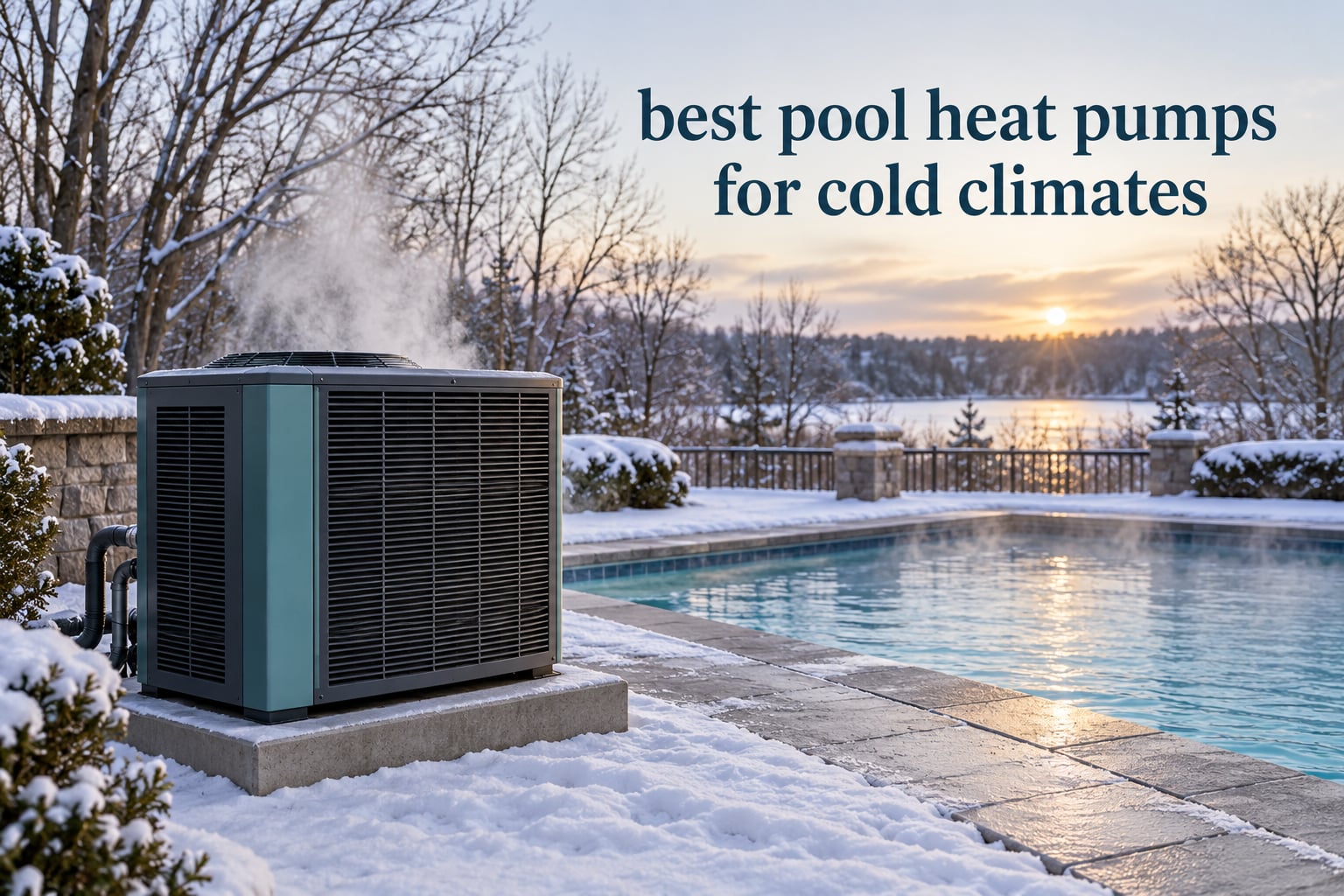
Yes, pool heat pumps work in cold climates, but the honest version of that answer includes a number most product pages skip. A cold climate pool heat pump stays genuinely productive down to about 40F ambient, holds partial output between 40F and 50F, and depends on a defrost cycle below that. Standard on/off units are the first to fall apart in cold air, while full DC inverter designs and heat-and-cool models keep more of their rated output when the thermometer drops. This guide ranks the best pool heat pumps for cold climates on the specs that actually predict performance in a snowy backyard, not the 80F air and 80F water laboratory numbers every brand leads with.
We spent weeks reading owner reviews, teardown notes, and published performance sheets for every unit below, and we weighted the ones that name a real low-ambient limit higher than the ones that simply print a large BTU number. Nothing here is a startup heater. A pool heat pump moves heat rather than generating it, so it works as a temperature holder, and cold-region owners on r/PoolPros consistently describe planning a day ahead instead of heating overnight. That framing matters more than any single spec, and it is why a cover appears in our recommendations more often than a bigger unit does.
A few notes on what we did and did not find. The product data available to us does not publish a minimum operating temperature for most of the units in this roundup, so we have not invented one. Where a manufacturer states an ambient range or an automatic defrost function, we report exactly that. Where the answer depends on the category of unit rather than the model, we say so in the thresholds section further down. If you want the shortest possible answer, jump to the broader pool heat pump roundup and come back here for the cold-weather detail.
Top 3 Cold-Climate Pool Heat Picks in 2026
Three units stand out for cold-air behaviour and build quality. The Varpoolfaye 120,000 BTU inverter leads on capacity retention, quiet running, and the largest owner review base in the group. The FibroPool FH270 is the value pick for anyone with a smaller pool and a tight equipment pad. The WARMBLU takes the premium slot on its pure titanium heat exchanger and efficiency claims.
Varpoolfaye 120000 BTU Inverter
- 120000 BTU output
- COP 12.3
- 47 dB quiet operation
- Handles pools up to 33000 gallons

FibroPool FH270 70000 BTU
- All-electric air source
- Titanium heat exchanger
- 157 pounds
- Slim cabinet for tight pads

WARMBLU 33000 Gallon Inverter
- Pure titanium heat exchanger
- COP up to 16.0
- Under 50 dB
- App and touch panel control
Best Pool Heat Pumps for Cold Climates (October 2026)
Seven units, one row each. The capacities below are manufacturer heating ratings, which are typically measured at mild ambient conditions, so treat them as a ceiling rather than a winter promise.
| Product | Specifications | Action |
|---|---|---|
| Varpoolfaye 120000 BTU Inverter Pool Heat Pump |
|
Check Latest Price |
| FibroPool FH270 70000 BTU Heat Pump |
|
Check Latest Price |
| WARMBLU 33000 Gallon Inverter Pool Heat Pump |
|
Check Latest Price |
 Hayward HeatPro 140000 BTU Heat Pump Hayward HeatPro 140000 BTU Heat Pump |
|
Check Latest Price |
 TURBRO Beluga 33000 BTU Full DC Inverter TURBRO Beluga 33000 BTU Full DC Inverter |
|
Check Latest Price |
 MICOE 100000 BTU Inverter Pool Heat Pump MICOE 100000 BTU Inverter Pool Heat Pump |
|
Check Latest Price |
 Raypak TWPH-8450EHT08 140K BTU Heat Pump Raypak TWPH-8450EHT08 140K BTU Heat Pump |
|
Check Latest Price |
1. Varpoolfaye 120,000 BTU Inverter Pool Heat Pump – Best Overall
Varpoolfaye 120,000 Btu Inverter Pool Heat Pump for Inground Pools 220V
120000 BTU heating
COP 12.3
47 dB
Up to 33000 gallons
220 V
Pros
- 120000 BTU with a stated COP of 12.3
- Very quiet at 47 dB under a running filter pump
- Touch control panel plus app scheduling and mode switching
- Standard PVC plumbing adapters made installation straightforward
- Responsive customer service with parts and repair guidance
Cons
- Condensation drips from the base during heating and defrost
- Factory-installed water adapters can leak at first startup
- Companion app is less developed than the on-unit interface
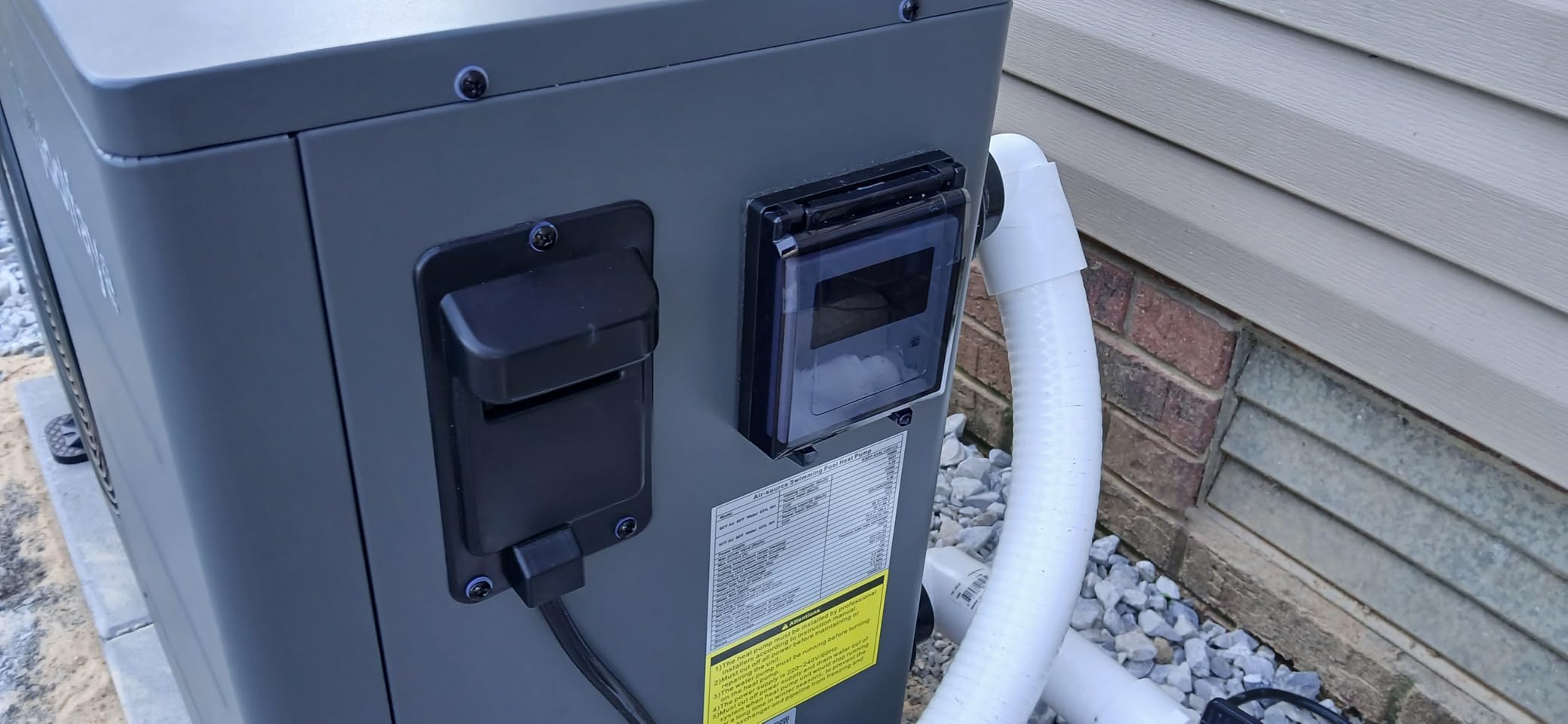
This is the unit we would put in our own yard, and the reason is not the headline number. It is the combination of a 120,000 BTU rating, a stated COP of 12.3, inverter compressor control, and a 47 dB noise level that owners describe as inaudible beneath a running filter pump. That combination matters in a cold climate because it means the unit can run quietly for many hours a day while extracting whatever heat the air still offers, instead of cycling hard and loudly. Capacity without quiet operation is a liability next to a bedroom, and quiet operation without capacity just cannot keep up.
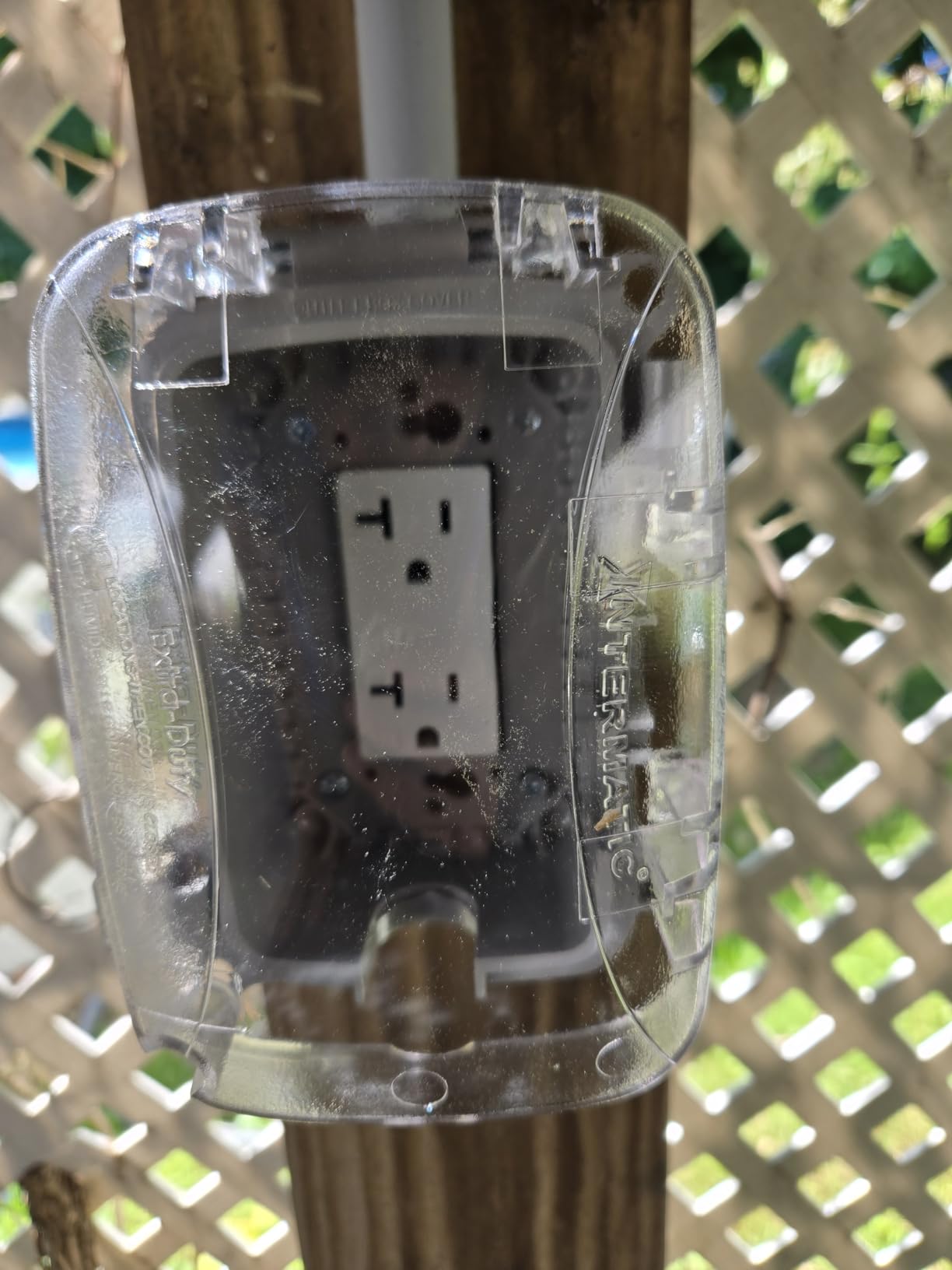
Owners report steady temperature rise night after night on both above-ground and inground pools, which is exactly the behaviour you want in shoulder season. The touch panel handles setpoint and mode changes, and the app covers scheduling and remote switching for owners who want the pool warm before they get home rather than after. Water-electric separation and 1.5-inch connectors with a 118-inch cord make the plumbing side straightforward, and the variants cover pool sizes from roughly 5500 up to 42000 gallons.
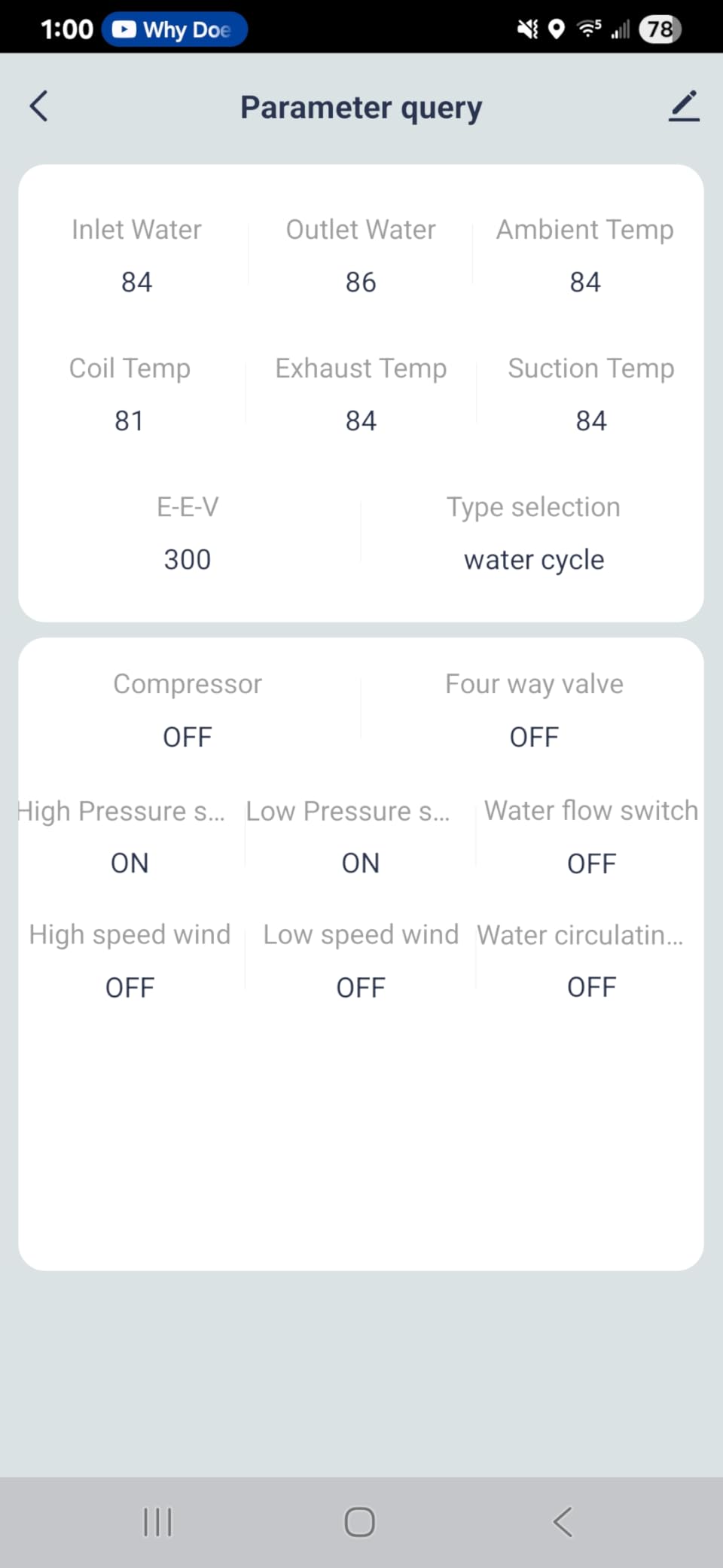
There are real wrinkles, and they show up mostly in cold or damp conditions. Condensation drips from the base during heating and during defrost, so plan a drain path or a hose rather than discovering it on your pad. Some units have needed relay replacement after a freeze-related fault during winter storage, which tells you the unit itself is not meant to sit through a hard freeze unpowered. Factory-installed water adapters have leaked at first startup on some installs, so budget ten minutes with a wrench and sealant before you fill the system. The companion app is also noticeably less finished than the on-unit interface, so treat the phone as a convenience rather than a control centre.
That relay note is the one piece of cold-specific diligence worth doing. If your winters include extended hard freezes and the unit will sit idle, confirm the storage procedure and the freeze fault behaviour with the manufacturer before the season rather than after. The support team is described by owners as highly responsive on exactly this kind of question, which is a genuine asset in regions where a December service visit is not always quick.
Who the Varpoolfaye 120,000 BTU Suits
It suits owners of large inground pools in regions where winter air regularly sits in the 40s and 50s, and it is the strongest single answer on our list for pools between 15000 and 30000 gallons. Reviewers describe meaningful temperature gain on both above-ground and inground installations, and the stated pool capacity extends to 33000 gallons, so owners pushing past that ceiling should be sizing a different unit.
It also suits anyone who is sensitive to equipment noise. At 47 dB, this is the quietest figure in the group, and owners report running it without noticing the difference over the filter pump. For an install beside a bedroom, a neighbour’s fence, or a patio where people sit in the evening, that is not a small consideration.
Where the Varpoolfaye Falls Short
The honest limitation is that the listed COP and BTU are not cold-weather figures. A rating of 12.3 tells you very little about performance at 35F, and we found no published low-ambient chart for this unit. Buyers who expect the full 120,000 BTU through a cold snap will be disappointed, and the condensation drip during defrost is an ongoing maintenance item in a climate where the unit runs through the coldest hours.
Second, the app needs work by the owner’s own account, and a handful of units have needed relay service after freeze-related faults in storage. If you want a mature smartphone ecosystem alongside your heating, this is not the first place to look. The product listing is where owners describe both the strong performance and the fitting issues in the same breath.
2. FibroPool FH270 70,000 BTU – Best Value for Smaller Pools and Tight Pads
FibroPool Swimming Pool Heat Pump – FH270 70,000 BTU – for Above Ground and Inground Pools and Spas – High Efficiency, All Electric Heater – No Natural Gas or Propane Needed
70000 BTU all-electric
Titanium heat exchanger
157 pounds
240 V circuit
Pros
- All-electric air source heating with no gas or propane
- Titanium heat exchanger and high pressure compressor
- Slim 38 x 15 x 26 inch cabinet fits tight pads
- Lightest large-capacity option at 157 pounds
- Digital panel with easy-read display and optional extension
Cons
- Cold-weather output is modest for large pools
- Digital panel only with no app control listed
- Some buyers report a slower temperature climb
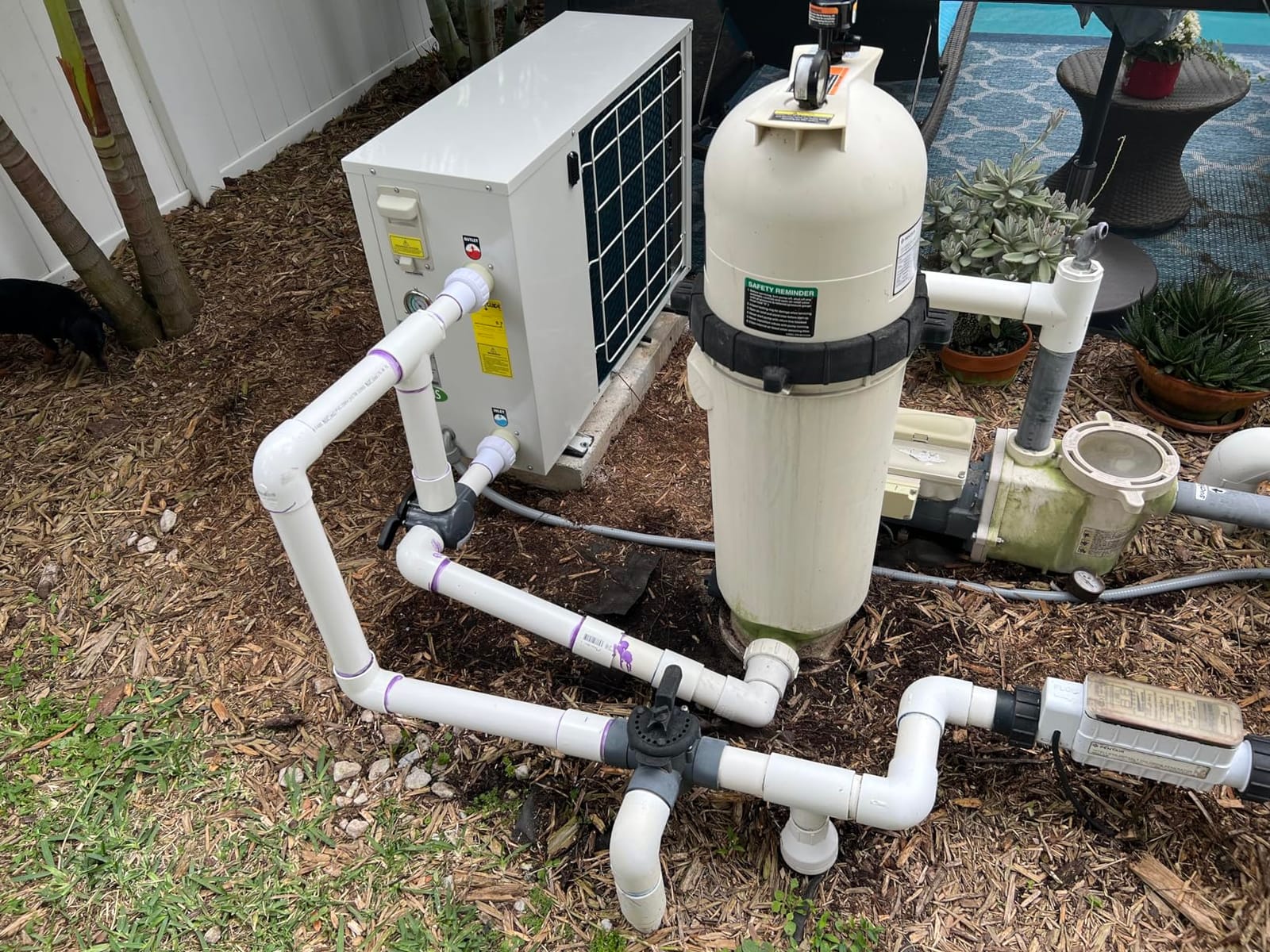
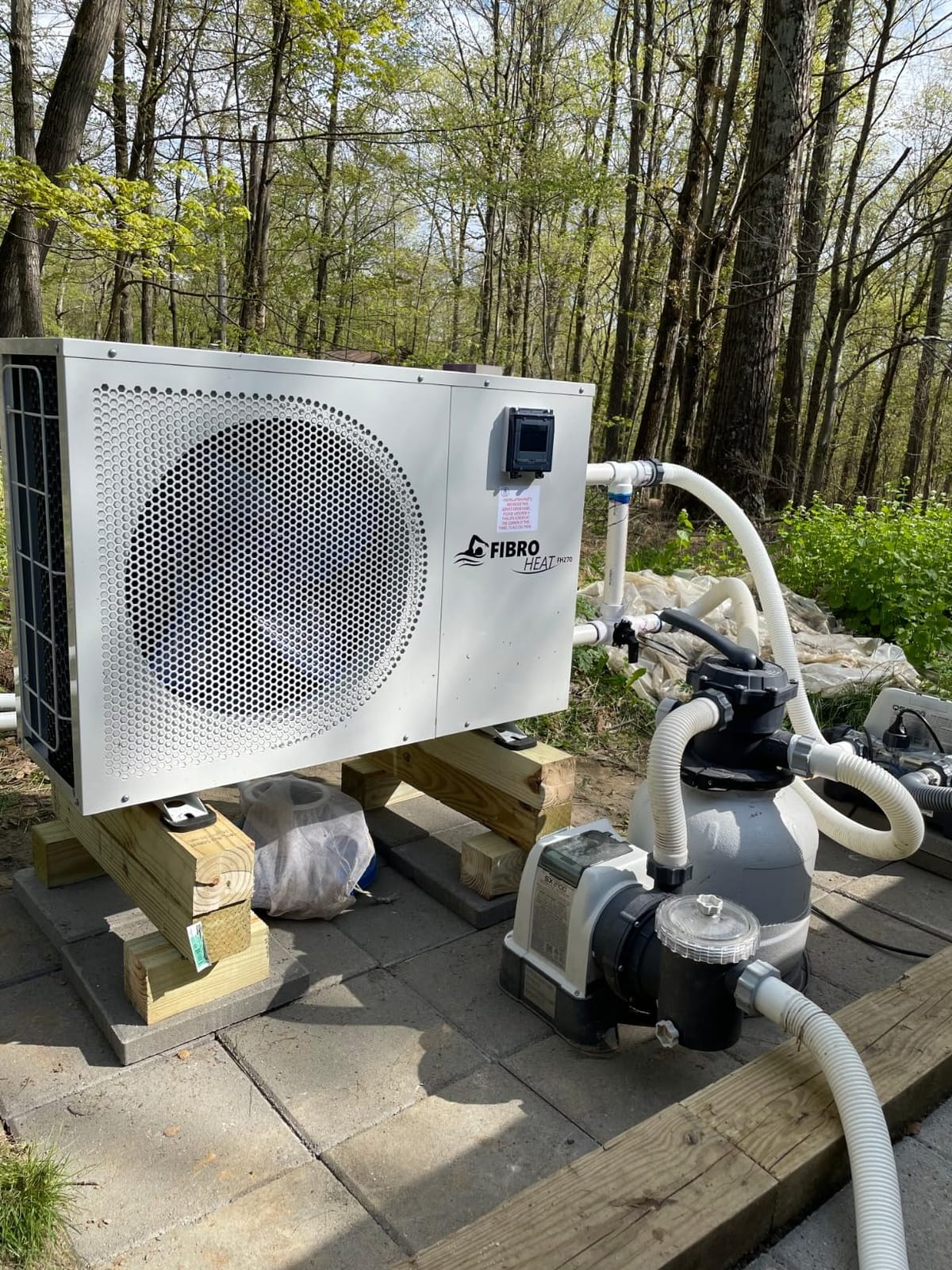
The FH270 solves a specific problem that bigger machines create: equipment pad space. At 38 x 15 x 26 inches and 157 pounds, it is by far the easiest of the large-capacity group to place, and owners with a tight pad or a hand-me-down install will feel the difference immediately. The all-electric air-source design removes gas lines, combustion venting, and propane entirely, which also removes a whole category of code and inspection questions in cold regions where gas appliance work needs licensed contractors.
Under the cabinet is a titanium heat exchanger and a high pressure compressor, and buyers report steady seasonal output from that combination. Stated capacity covers inground pools up to 15000 gallons and above-ground pools up to 27 feet round or 18 by 33 feet oval. A digital control panel with a flexible extension option means you can mount the display where you can actually read it, which is a small detail that matters when the unit is tucked behind a fence.
Here is the limitation that keeps this out of the top spot, and it is not minor for a cold-climate buyer. The stated compatibility is framed around mild climates, so cold-weather performance is explicitly a consideration the manufacturer is not claiming. A 70,000 BTU rating against a 120,000 BTU rating is a meaningful gap once the ambient air is doing the limiting, and it is exactly the gap that decides whether you hit setpoint in October or merely approach it.
For pools above roughly 15000 gallons in a genuinely cold region, you would be relying on this unit running near continuously to hold temperature, and continuous running is where the electricity bill starts to bite. There is also no app control listed, so if remote scheduling matters to you, look elsewhere. The cabinet is enamel coated steel and weather resistant, which handles rain and snow load but is not a substitute for clearing accumulation off the coil in a hard storm.
Who the FibroPool FH270 Suits
It suits owners of small to mid-size pools, roughly 8000 to 15000 gallons, who want reliable holding heat without a gas line. It is also the pick for above-ground pools up to 27 feet round or 18 by 33 feet oval, and for anyone building a new pad who wants to leave room for future equipment.
Buyers who have spent money on a full-size inverter unit and then discovered they cannot fit it will recognise the value here. The combination of low weight, a slim profile, and standard included 1.5-inch fittings makes this one of the least painful installations in the group.
Where the FibroPool Falls Short
The single most important limitation is capacity relative to a cold climate. At 70,000 BTU, this unit is sized for moderate conditions, and the manufacturer’s own framing acknowledges that climate fit matters. It is a maintenance heater for a warm shoulder season, not a machine you expect to carry a large pool through a northern January.
Beyond that, some buyers report a slower temperature climb than larger units, and there is no smartphone control, which means your scheduling options stop at the on-unit panel. If you want remote control and a genuine cold-weather rating, the inverter units further down this list are the better target.
3. WARMBLU 33,000 Gallon Inverter Pool Heat Pump – Best Titanium Build
WARMBLU 33,000 Gallons Inverter Pool Heat Pump for Inground Pools 220V
Pools up to 33000 gallons
Pure titanium heat exchanger
COP up to 16.0
Under 50 dB
Pros
- Corrosion-proof pure titanium heat exchanger
- Inverter chip and dynamic algorithm hold steady output
- Under 50 dB running noise
- App plus modern touch panel for setup and daily control
- Water and electrical components fully separated
Cons
- 12-month warranty is short for a premium-tier appliance
- Support leans partly on community channels and email
- 14 percent of ratings are 1-star
The WARMBLU is built around its heat exchanger, and the material choice is the reason to care. A pure titanium exchanger is the corrosion-resistant end of the pool heat pump market, and it is the sensible pick for a saltwater pool, a coastal install, or any yard where road salt and chlorinated water are constant concerns. Owners pair the corrosion story with a maximum COP figure of 16.0, which is the highest number published in this group.
The inverter chip and dynamic algorithm are the second reason. Rather than switching fully on and fully off, the compressor modulates, which reviewers say produces steadier output and lower running cost. The unit is also lighter than the big fixed-capacity machines at 207 pounds, with a 29.2 x 17.5 x 43 inch footprint, so it takes less pad space than the 140,000 BTU options while still claiming coverage up to 33000 gallons.
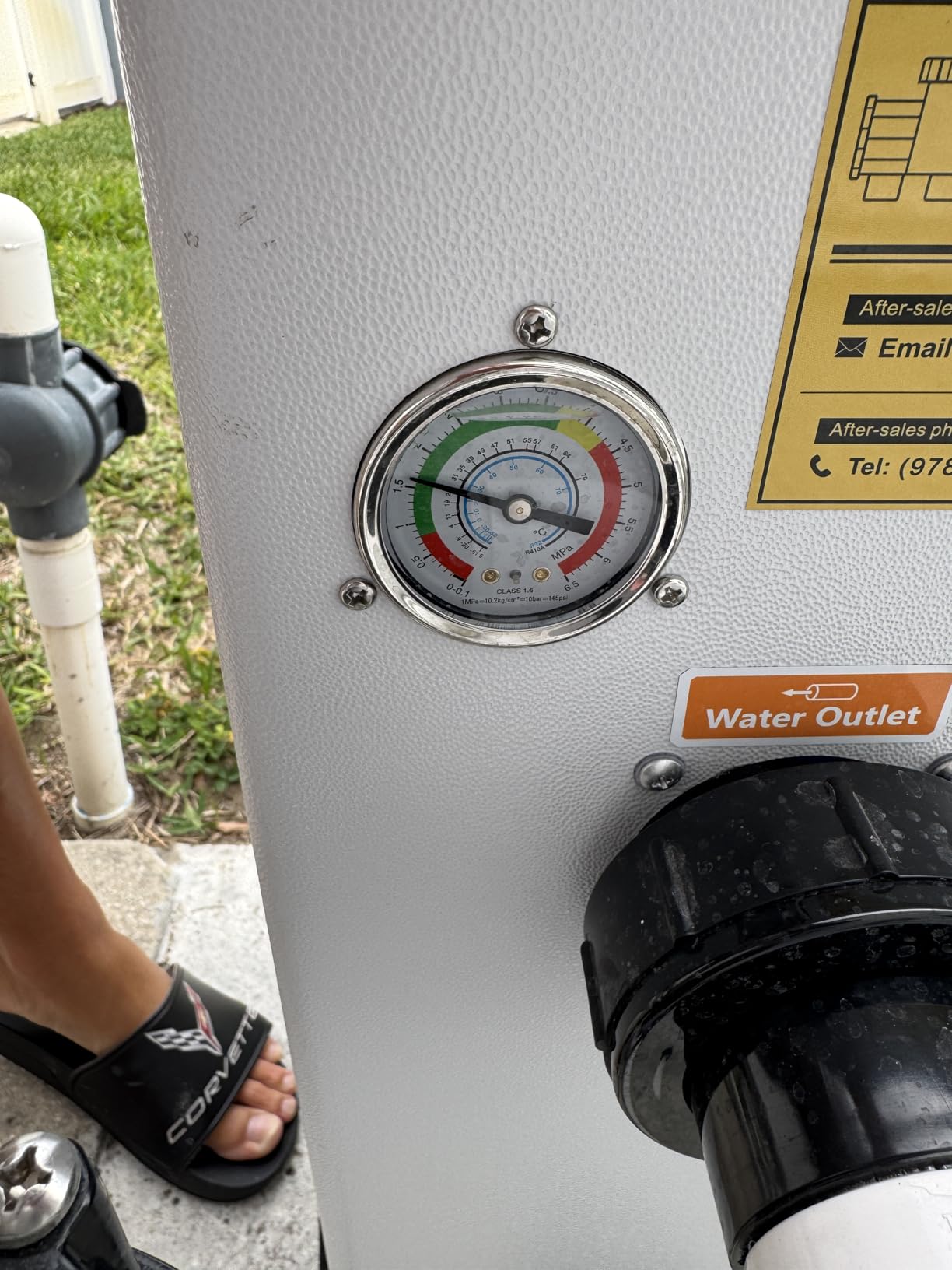
We are less enthusiastic about the warranty and the support model, and cold-climate buyers should weigh that carefully. Twelve months of coverage is short for an appliance you expect to run through many shoulder seasons, and support that leans partly on community channels works for a wiring question but not for a unit down in December. The one-star share of ratings sits at 14 percent, which means a real minority of buyers hit early problems, and in a cold region a breakdown in January is a much bigger problem than a breakdown in July.
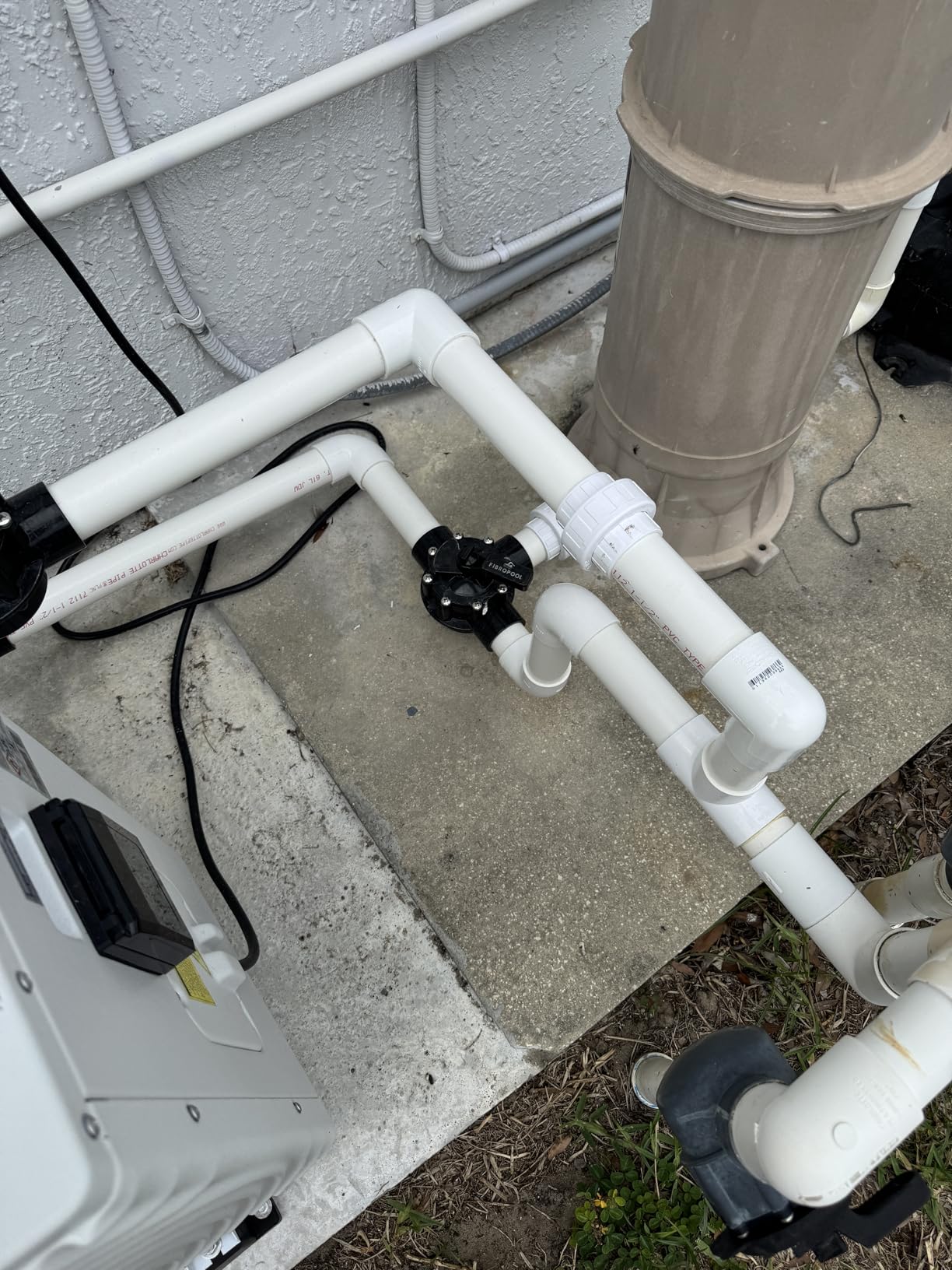
The pattern behind those early complaints matters. A titanium exchanger and a sealed refrigerant loop are durable parts; the electronics, the control board, and the defrost logic are what fail. On any unit in a freezing climate, including this one, budget for freeze protection during storage and keep the electrical side of the install clean and dry.
Who the WARMBLU Suits
It suits saltwater pool owners and anyone in a coastal or road-salt environment who is buying for a decade rather than a season. The pure titanium exchanger and full separation of water and electrical components are exactly what a wet, salty, freezing equipment pad punishes without them.
It also suits owners who want remote control and quiet operation without stepping up to the 120,000 BTU class. At under 50 dB with app and touch-panel control, it is a good fit for a pad near living space, and the inverter modulation should help in cold air where output has to be managed rather than simply maxed.
Where the WARMBLU Falls Short
The 12-month warranty is the honest limitation, and it is a real one for a premium-tier machine. A compressor or heat exchanger problem at month eighteen would land on the owner, and in cold regions those failures cluster in the season where nobody wants a service call.
Second, the 14 percent one-star share signals enough early failures that you should keep expectations realistic about first-year reliability. Third, published cold-ambient output for this unit is not available, so you are buying efficiency claims and construction quality rather than a verified low-temperature curve. If your priority is a documented minimum operating temperature, ask the manufacturer for it in writing before you commit.
4. Hayward HeatPro 140,000 BTU – Best for Saltwater and Large Inground Pools
Hayward HeatPro Pool Water Heat Pump Heater for Inground Pools, 140,000 BTU
140000 BTU for inground pools
Titanium heat exchanger
Ultra Gold corrosion protection
320 pounds
Pros
- Titanium heat exchanger and UV-resistant panels suit coastal and saltwater
- 140000 BTU aimed at regularly used inground pools
- Air-source design is economical for holding temperature
- Established manufacturer with over 80 years of pool equipment
Cons
- Heaviest unit in the group at 320 pounds
- Large 40 x 31.5 x 50 inch footprint needs pad space
- Slower than gas when a fast large temperature jump is needed
The HeatPro is the capacity-first option here, and for a large inground pool in a cold region that framing is correct. At 140,000 BTU it is the joint-largest heating capacity in this group, which means when ambient air sits in the low 40s and every BTU of output is contested, you are starting from a much higher ceiling than the 33,000 and 70,000 BTU machines. The build matches the brief: a titanium heat exchanger, Ultra Gold corrosion-resistant technology, and UV-resistant impervious body panels, all of which are sensible choices in a snowbelt yard.
Hayward is also a name that matters for parts availability. An established manufacturer with more than 80 years of pool equipment experience means components and service knowledge exist outside of marketplace listings, which is a genuine advantage when a unit is 15 years old and the original installer has moved on. Owners value the air-source economics too, since holding a pool temperature over a long season with electricity is the cheapest way to keep water warm.
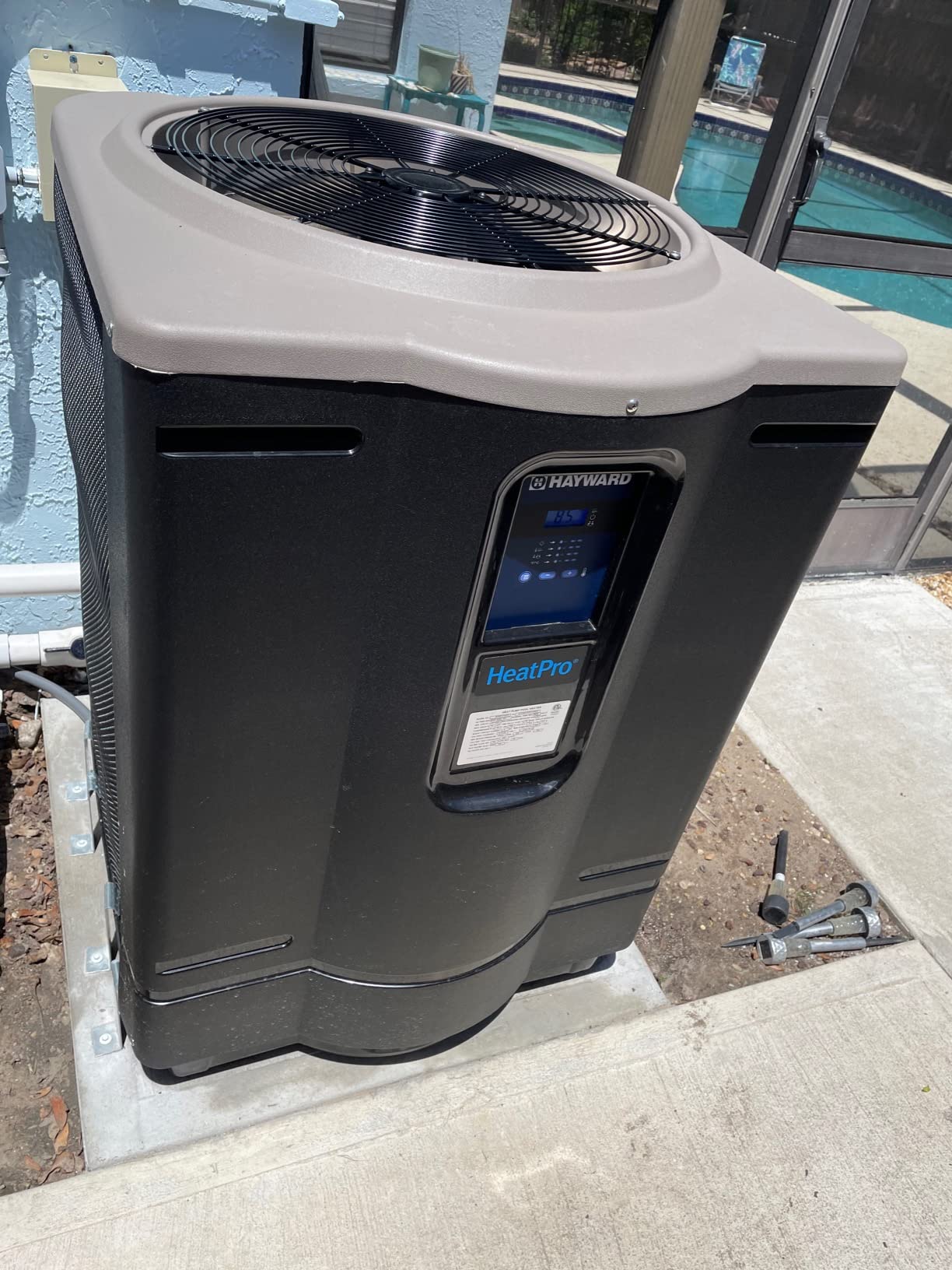
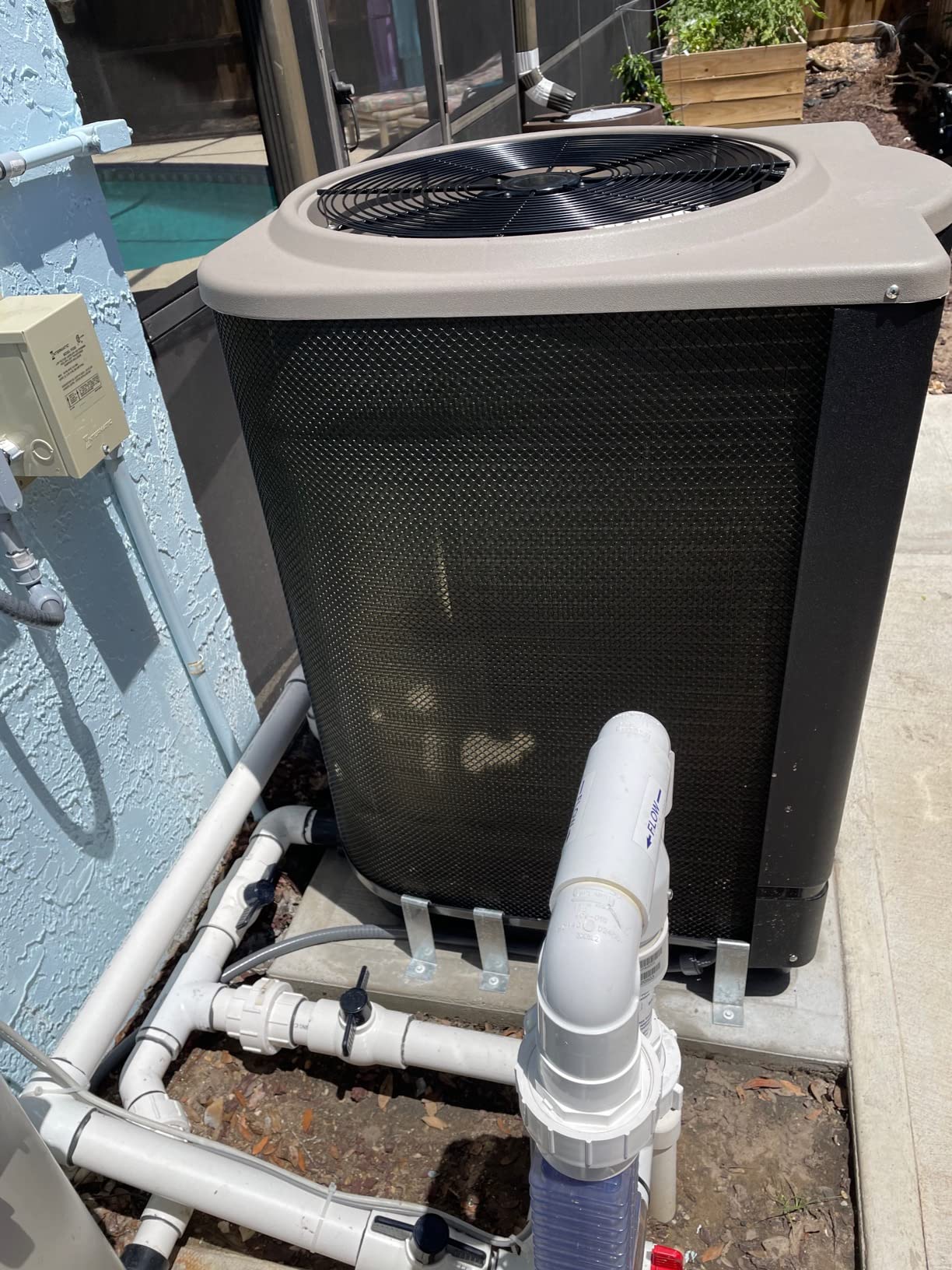
The physical constraints are real and they are the reason this sits at number four. At 320 pounds and 40 x 31.5 x 50 inches, this is one of the largest and heaviest machines here, and placing it needs a properly rated pad and at least two people. A pad that was poured for a pump and a filter is almost certainly not sized for this, and retrofitting one in a frozen ground month is an unpleasant surprise.
Second, it is a fixed-speed machine rather than an inverter, so in cold air it loses output faster than the inverter units on this list. That is a real handicap for a cold-climate buyer, and it is why we rank it below three less powerful but better-behaved machines. Third, when you want a fast large temperature jump rather than a slow hold, gas remains quicker, and no amount of capacity changes the shape of that curve.
Who the Hayward HeatPro Suits
It suits owners of large inground pools, roughly 20000 gallons and up, who want a single high-capacity unit rather than two smaller machines. It is the strongest choice here for a coastal or high-humidity install where corrosion resistance and UV exposure are daily conditions rather than occasional worries.
It also suits anyone who values manufacturer longevity and parts support over app features. There is no smart control story here, but there is a company with a very long pool equipment record behind the unit, and for a machine expected to run for a decade in freezing conditions, that is worth a great deal.
Where the Hayward Falls Short
The weight and footprint come first. At 320 pounds in a 40 x 31.5 x 50 inch cabinet, this needs pad space and delivery access most residential yards do not have, and owners have specifically noted that placement required planning and help.
Second, fixed-speed operation means less graceful degradation in cold air, which is the whole point of this guide. Third, the heat-up curve is slow, so if your priority is a dramatic temperature change in an afternoon rather than holding a setpoint through October, this is the wrong shape of tool. For anyone comparing approaches, our guide to cold climate heat pumps more broadly explains why inverter modulation matters as ambient temperature falls.
5. TURBRO Beluga 33,000 BTU Full DC Inverter – Best for Pools Under 10,000 Gallons
TURBRO 33,000 BTU Inverter Swimming Pool Heat Pump, Up to 10,000 Gallons
33000 BTU
COP up to 15.8
Ambient 5 to 109 F
Heats and cools 46 to 104 F
Pros
- Full DC inverter compressor with up to 40 percent energy savings
- Titanium heat exchanger with four-way valve suits saltwater
- Heats and cools with setpoints from 46 to 104 F
- Smart WiFi control and programmable timer
- 2-year machine warranty and 5-year compressor warranty
Cons
- Smallest capacity here at 33000 BTU
- Only 19 ratings so long-term durability data is thin
- Not recommended for inflatable pools
This is the only unit in the group with a published ambient operating range, and that fact alone makes it the most transparent choice for a cold-climate shopper. The stated range is 5 to 109F ambient, and the water setpoint window runs from 46 to 104F in both heating and cooling modes. The 4.6 average rating is the highest in the group, with 85 percent of ratings at five stars, which reflects a product that does what it claims for the setups it suits.
Technically it is also the cleanest design. A full DC inverter compressor adjusts output smoothly and is claimed to save up to 40 percent energy against on/off models, and the titanium heat exchanger with a four-way valve handles both heating and cooling while staying compatible with saltwater pools. At 155.7 pounds and 41.9 x 20.4 x 26.2 inches it is also the lightest large-group machine, and the five-year compressor warranty is the longest compressor coverage in this roundup.
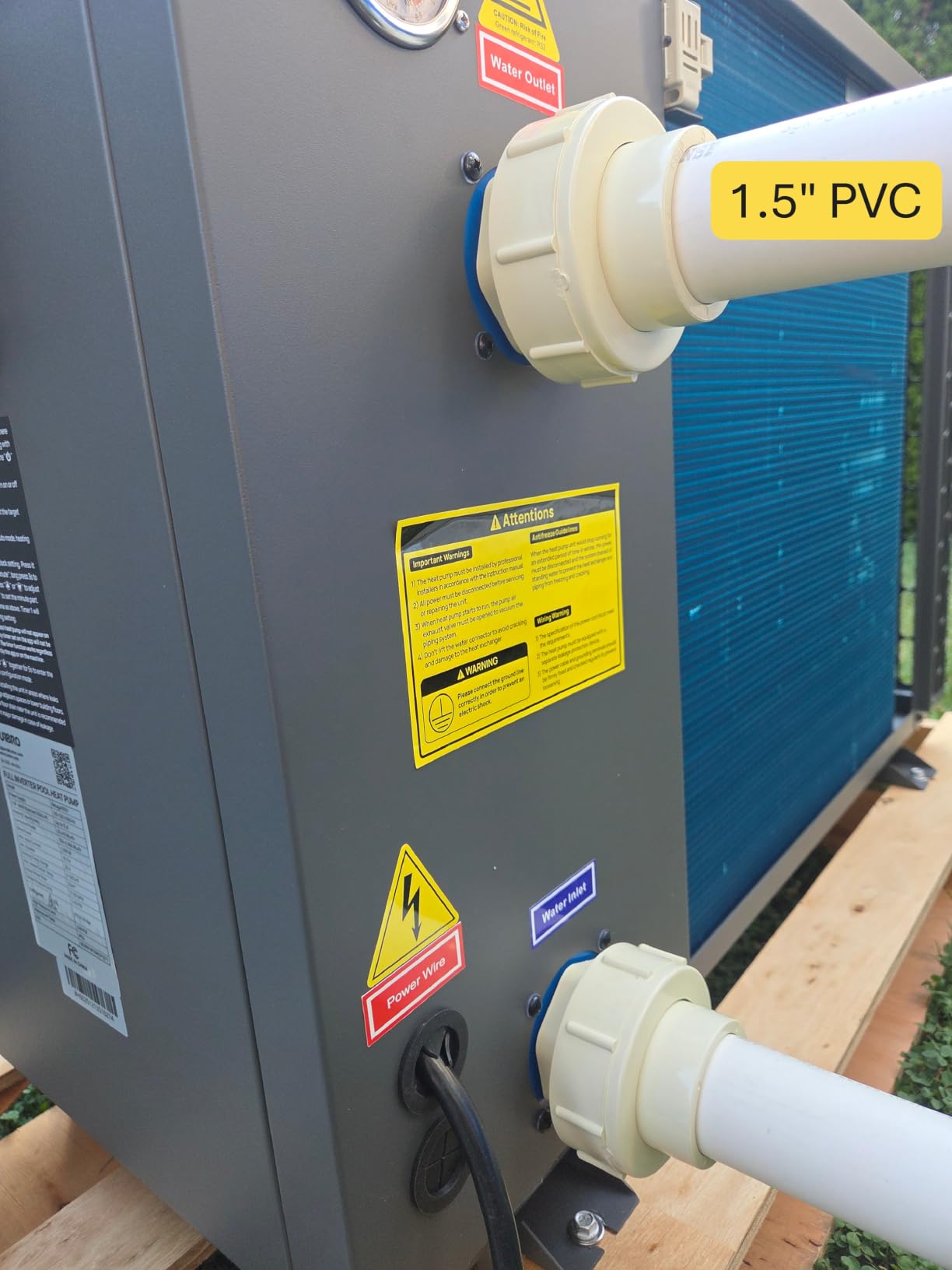
The limitation is simply that it is small. At 33,000 BTU and a stated capacity of pools up to 10000 gallons, this is a machine for above-ground pools, small inground pools, and spas. Buyers in colder regions should also note that the variants run well beyond 10000 gallons, so the size is a choice rather than a fixed constraint, but the model we are reviewing is the small one.
The second limitation is evidential. Nineteen ratings is the smallest review base here, and while the ratings are excellent, a thin base tells you very little about year-five durability. We also note the manufacturer guidance that this unit is not recommended for inflatable pools, because low water pressure will not support adequate flow through the heat exchanger. If you are considering it for a pool you use only on weekends, the programmable timer makes that pattern manageable, but plan a day ahead rather than expecting an overnight warm-up.
Who the TURBRO Beluga Suits
It suits owners of above-ground pools and small inground pools who want genuine inverter behaviour and dual heating and cooling without a large machine. Anyone who wants to hold pool temperature through a mild shoulder season, or cool it down in summer heat, gets real value from the four-way valve.
It also suits owners who care most about published transparency. A stated ambient range, a stated setpoint window, and a five-year compressor warranty are all things you can hold a manufacturer to, and that matters more in a cold climate where the operating envelope decides whether the unit is usable at all.
Where the TURBRO Falls Short
Capacity is the honest answer. At 33,000 BTU for pools up to 10000 gallons, this unit is not the answer for a large cold-climate pool, and the higher-capacity variants carry different price and performance characteristics that we have not reviewed here.
Second, the small review base means long-term reliability claims rest on a limited sample. Third, low water pressure rules out inflatable pools entirely, which is a genuine exclusion if that is what you own. For a first-time buyer with a modest pool in a cool-but-not-severe climate, the trade is usually worth it.
6. MICOE 100,000 BTU Inverter Pool Heat Pump – Best Heat and Cool Setup
MICOE 100,000 BTU Inverter Pool Heat Pump for 26,000 Gallon Pools
100000 BTU for pools up to 26000 gallons
Titanium heat exchanger
About 54 dB(A)
IPX4 UV-resistant ABS cabinet
Pros
- Owners report about 18 hours from 68 F to 86 F on a small above-ground pool
- Heating and cooling both work to hold temperature in summer heat
- Variable-speed system is very quiet against older 120000 BTU units
- App and digital panel control with automatic defrost
- Responsive support answering wiring questions by email
Cons
- Wiring diagrams are confusing for installers
- Condensate drain fitting location is not documented
- Titanium heat exchanger specified for freshwater pools only
The MICOE is the most explicitly cold-aware unit in this roundup, because automatic defrost is a named feature rather than something you infer. Defrost is the mechanism that lets a heat pump keep extracting heat when the evaporator coil starts to ice over in near-freezing air, and having it called out in the product data matters for anyone shopping by minimum operating temperature. Add a variable-speed compressor, an IPX4-rated UV-resistant ABS cabinet, and a stated pool capacity of 26000 gallons, and you have a machine clearly aimed at shoulder-season and cool-weather use.
Owners report fast real-world temperature gain, with one describing roughly 18 hours to move a small above-ground pool from 68F to 86F, and they praise how quiet the variable-speed system is compared with older 120,000 BTU units. Heating and cooling both work, which lets owners hold temperature in summer heat rather than only in cold. Support is described as responsive, with wiring questions answered by email within hours and grounding parts shipped out.
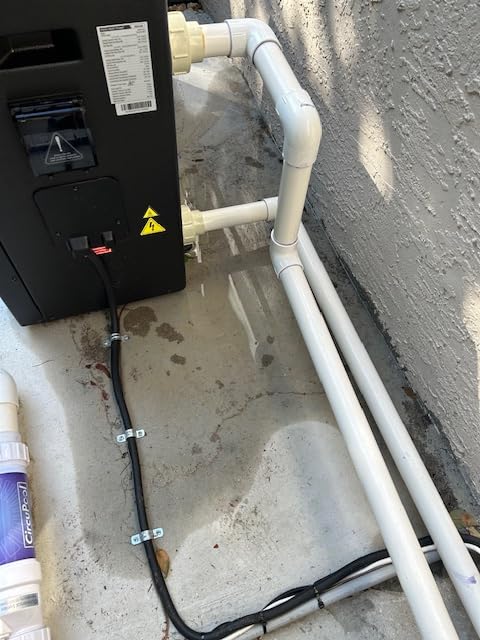
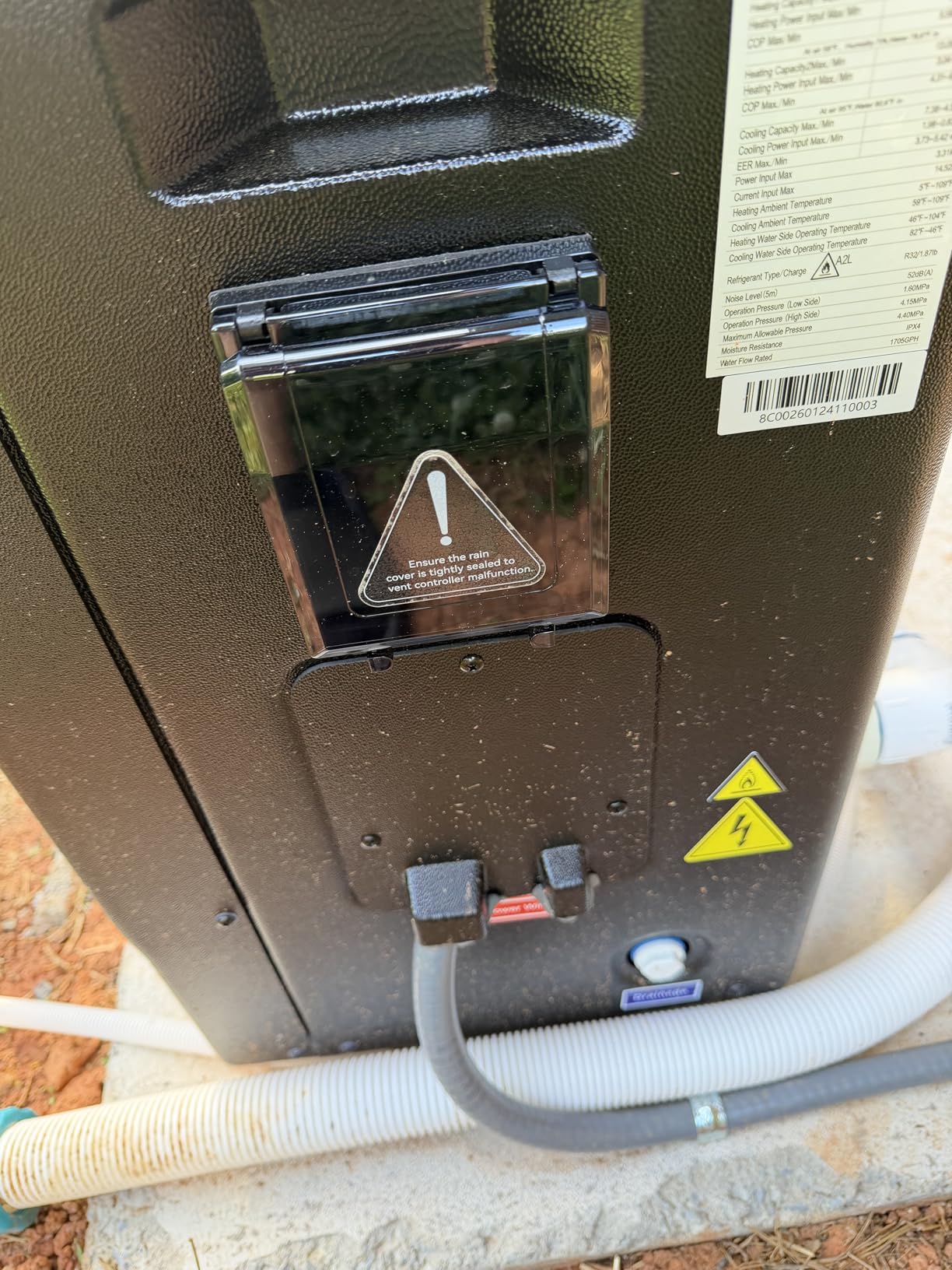
There are three limitations worth taking seriously. The wiring diagrams are confusing and have required clarification from installers, so budget time or money for a clean install. Phone support has been reported as unhelpful by at least one buyer whose touch screen would not power up, which is exactly the failure you would not want to troubleshoot in a cold month. And the condensate drain fitting is included but its location is not explained in the documentation, which in a freezing climate is a small but consequential gap, because condensate that freezes on a pad will eventually find the electronics.
One more thing to weigh: the titanium heat exchanger here is specified for freshwater pools only. That is not a problem if you run standard chlorine, but saltwater owners should look at the other titanium units in this roundup. Owners also report slower heating than a previous unit on cool nights, taking about three days, which is a fair illustration of the gap between marketing language and cold-weather reality.
Who the MICOE 100,000 BTU Suits
It suits freshwater pool owners up to 26000 gallons who want one machine to cover both ends of the season. The heating and cooling range of 46 to 104F and 45 to 82F respectively means you can heat in spring, hold in summer, and keep the water swimmable into autumn without swapping equipment.
It also suits owners who want explicit cold-weather engineering on paper. Automatic defrost, a variable-speed compressor, an IPX4 enclosure, and an app with scheduling are the four features cold-region buyers should be looking for, and this unit is one of the few here that names all four clearly.
Where the MICOE Falls Short
The documentation is the weakness. Confusing wiring diagrams and an unexplained condensate drain location are both avoidable problems that will surface on installation day rather than afterwards, and the condensate point genuinely matters where water can freeze.
Second, the titanium heat exchanger is limited to freshwater pools, which excludes a large chunk of cold-region owners. Third, the 2-year parts replacement warranty is modest for a machine expected to work outdoors through freezing seasons, and reported running costs in cool spring conditions are high enough that a pool cover stops being optional. If your pool is saltwater, or your winters are severe, the inverter units earlier on this list are the better fit.
7. Raypak TWPH-8450EHT08 140K BTU – Best Heavy-Duty Build
Raypak Heat Pump 8450 Model with Titanium Heat Exchanger, 140K BTU TWPH-8450EHT08
140K BTU
Spiral titanium tube heat exchanger
Scroll compressor
422 pounds
Pros
- Scroll compressor runs quieter and lasts longer than piston types
- Spiral titanium tube resists pool chemistry and reduces deposits
- Fully louvered powder coated steel jacket shields the coil
- Rust-proof composite sound-deadening base supports long service life
Cons
- Heaviest unit in the group at 422 pounds
- Off-set 2 inch PVC unions assume plumbing laid out to match
- Only 24 ratings across this size
Raypak builds this one like commercial HVAC equipment, and the component choices are the ones experienced pool service technicians argue about. The spiral titanium tube heat exchanger is described as scooping water through the coil, which reduces deposit build-up and keeps efficiency up over years in chemically aggressive water. The scroll compressor is the same compressor family used in standard air conditioning work, and it is quieter and more durable than the piston compressors found in cheaper pool heaters.
At 140K BTU it matches the Hayward for raw capacity, so it is the other option here for a large inground pool in a serious winter. The fully louvered powder coated steel jacket protects the evaporator coil from storm debris and hail, which is not a trivial concern in a snowbelt where ice and wind-driven branches are annual events, and the rust-proof composite base both deadens sound and resists corrosion at the one point where water always collects.
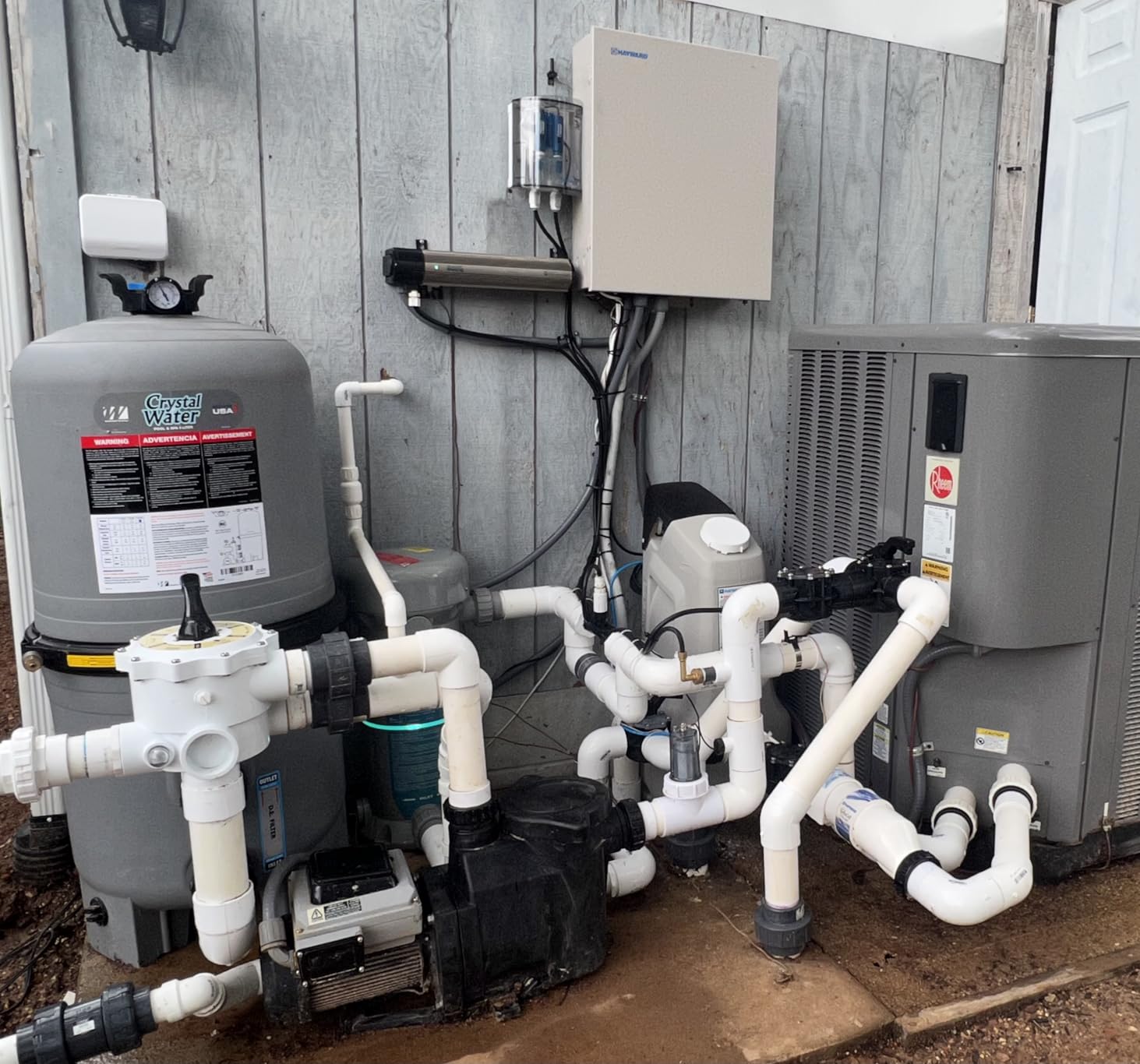
What stops this from ranking higher is logistics and evidence. At 422 pounds it is by a wide margin the heaviest machine in this roundup, and the 44 x 30 x 29.99 inch cabinet needs a properly engineered pad. Getting it into position through a gate, around a house, or down a side yard is a planning problem before it is a purchase problem, and it should be talked through with the supplier before the order rather than after delivery.
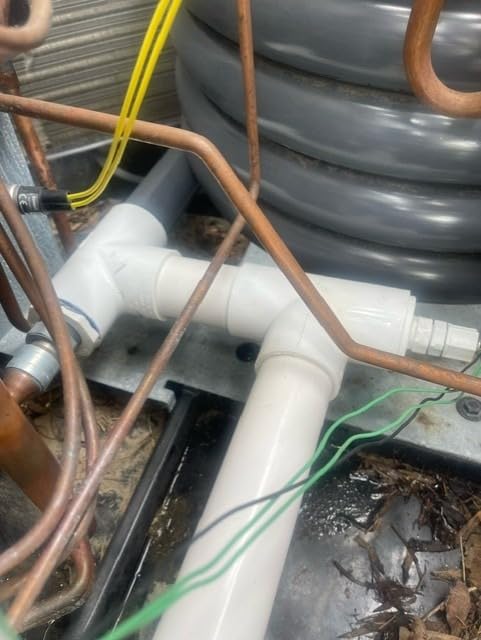
The off-set 2 inch PVC union connections also assume your existing plumbing was laid out to match this unit, which is true of a replacement install and rarely true of a new build. A unit that looks perfect on paper can end up needing new plumbing runs. And with 24 ratings, the review base here is small, so the strong 4.4 average reflects owners who were pleased rather than a large sample of long-term owners.
Who the Raypak 140K BTU Suits
It suits owners of very large inground pools who are replacing an existing high-capacity unit and whose plumbing already matches the 2 inch offset unions. It is also the pick for anyone in a hail and heavy-snow region who wants a coil physically protected from debris rather than merely enclosed.
Owners who prioritise mechanical durability over electronics will like the parts list. A scroll compressor, a spiral titanium tube, a louvered steel jacket, and a composite base are all conservative, serviceable choices, and if your plan is to keep this machine for fifteen years, that is the correct bias.
Where the Raypak Falls Short
Weight and installation assumptions are the two practical limits. At 422 pounds, this is a machine that changes your pad, your access route, and probably your installation quote, and the union layout can force new plumbing that adds cost and time.
Second, the small review base means we cannot tell you how it performs after five northern winters, and the fixed-speed design will lose output in cold air faster than an inverter unit of similar capacity. If your pool is under 20000 gallons, this machine is oversized territory anyway, and one of the inverter units earlier in the list will serve you better.
How Cold Is Too Cold: Minimum Operating Temperatures
For most pool heat pumps, the practical answer is that 50F ambient is where performance starts to fall and 40F is where you should stop expecting much. Below roughly 32F ambient, output on a standard fixed-speed machine can fall to well under half its rated figure, and the defrost cycle becomes a permanent resident rather than an occasional event. Category matters more than marketing, so the useful comparison is unit type against ambient band rather than a single magic number.
Standard fixed-speed units perform normally above 50F, hold reduced but usable output between 50F and 40F, and decline sharply below 40F as defrost cycles take over more of the run time. Inverter units follow a similar curve but degrade more gracefully, because a modulating compressor throttles down rather than cycling off, so you keep more of your rated BTU through the 32F to 50F band that actually matters for a northern October.
Heat-and-cool inverter models with an explicit automatic defrost function are the category to target if you want published cold-weather behaviour, because defrost is the mechanism that keeps the evaporator coil extracting heat when the air approaches freezing. Among the units we reviewed, only the TURBRO Beluga publishes a stated ambient range, at 5 to 109F, and only the MICOE names automatic defrost as a product feature. For the others, ask the manufacturer in writing for a minimum operating temperature and a low-ambient output figure, and treat a refusal to answer as information.
Below the floor, a pool heat pump does not fail. It simply stops being the right tool. That is the moment to switch to a gas heater, a solar cover doing the heavy lifting, or simply accepting that the pool is closed for the season. Owners on r/swimmingpools ask directly whether a single 130,000 to 140,000 BTU unit can serve as the sole heater with no backup, and the honest answer depends on how many months you want to swim, not on the unit alone.
Defrost Cycles Explained: What You Will Hear and Feel
A defrost cycle is what a heat pump does when the evaporator coil starts to ice over. In humid air near freezing, moisture in the incoming air freezes on the coil fins, and a thick layer of ice blocks airflow, which cuts output sharply. The controller detects the restriction, shuts down heating, and runs the system in reverse for a period to melt the ice before restarting.
From the poolside, a defrost cycle is unmistakable. The fan stops, the compressor changes character, and the unit goes quiet for several minutes, which is why first-time owners frequently report that their heat pump switched off in the middle of a cold night. During that window the water temperature stops rising and may drift down slightly. Owners across forum threads ask whether this is normal, and it is, provided the unit restarts and resumes heating afterward.
The frequency of defrost depends on three things: how cold the air is, how much humidity it holds, and how long the unit runs. A dry cold climate triggers defrost less often than a damp maritime one at the same temperature, which is why coastal installs and inland installs with identical hardware can behave differently. The deeper practical point is that a cold-climate unit which never runs a defrost cycle is either not cold, or not running.
Common problems with defrost are all fixable. A unit that never leaves defrost usually has a failed defrost sensor, a clogged condensate drain, or a low charge, and the condensate drain is the first thing to check because it also blocks in freezing weather. A unit that runs defrost constantly in one weather pattern points at airflow, so clear the coil and check that the fan is unobstructed. A unit that runs defrost and never restarts has a controller fault, and that is a service call rather than a setting change. Anyone unsure about defrost logic on a residential system can compare notes on r/heatpumps, where the same behaviour is discussed at length.
Sizing a Cold-Climate Pool Heat Pump Without Undersizing
Undersizing is the near-universal regret among cold-region pool owners, and it shows up in forum threads more than any other complaint. Buy too small and the unit runs continuously, never reaches setpoint, and quietly costs you more than a larger unit would have. The starting rule most installers use is roughly 50,000 BTU per 10,000 gallons in moderate conditions, and cold regions need more.
Apply a cold-climate multiplier. The commonly used adjustment is 1.5 times the standard BTU figure where winter air regularly sits below about 50F. For a 20,000 gallon pool, standard sizing suggests 100,000 BTU, and the cold-climate adjustment pushes that toward 150,000 BTU, which is above everything in this roundup except the two 140,000 BTU machines. That is a useful reality check, because it tells you that for very large cold-region pools you may be looking at two units or a hybrid system rather than one big machine.
Then adjust for your actual conditions. A pool with a cover loses far less heat than an uncovered one, and a covered pool can sometimes be served by a smaller unit even in a cold region, which is why we rank a cover as the highest-return purchase before any upgrade. Shaded pools, pools exposed to wind, and pools where you want a fast rise of 10 or more degrees all argue for moving up a size rather than down.
Finally, check the two specs buyers skip. Flow rate matters because a heat pump starved of water reads as a weak heater, and electrical capacity matters because these units need a 240V circuit and a panel with headroom, which is a common unbudgeted cost. If you are still narrowing the field, our pool pump guide covers matching circulation to the heater. Get those two right and the sizing maths stops being a guess.
Heat Pump vs Gas in Winter: Running Cost and Carbon
A heat pump moves three to five times more heat than the electricity it consumes, so a unit running at a COP of 5 delivers roughly five units of heat per unit of power. A gas heater converts combustion energy into heat with an efficiency closer to 80 percent, so the comparison depends on electricity price, gas price, and the ambient temperature. The broad result holds across most North American markets: a heat pump costs far less per unit of heat delivered while it is running efficiently.
The catch is efficiency is not constant. As ambient temperature falls, COP falls with it, and a heat pump at a COP of 2.5 in deep cold is not the bargain it was at COP 12.3 in mild air. That is the thermodynamic reason r/PoolPros threads about extending swimming into September and October keep circling back to sizing and covers rather than to brand alone. Cover the pool, size the unit generously, and you shift the economics back in your favour.
Scheduling is the free adjustment. Many utilities offer time-of-use rates, and running the heat pump overnight when power is cheapest can cut the cost of the same heat delivered by a substantial margin. With inverter modulation the unit holds setpoint efficiently across a long run rather than cycling, so overnight scheduling suits it better than it would suit a fixed-speed machine.
For many cold-region owners the right answer is a hybrid. Run the heat pump as the primary heat source and let it hold the pool most of the time, then switch to gas on the coldest mornings when you want water warm fast. The changeover point is a judgment call rather than a fixed number, and setting it too low means paying gas prices for work a heat pump could have done. If you want the wider picture on how cold climate equipment and defrost technology transfer between pool and home heating, our geothermal heat pump guide covers the ground-loop option that some owners pair with pool heating.
Winterization and Freeze Protection for the Unit Itself
Pool heat pumps are weather resistant, not freeze proof. The electronics, the condensate drain, and the water inside the unit are all vulnerable to a hard freeze, and a unit that survives a northern January is usually a unit that was drained, powered, and protected on purpose. Five steps cover most of it.
First, keep the unit running or at least powered through hard freezes if you are heating through the cold months, because a circulating pump and a live compressor generate enough heat to keep the cabinet above freezing. Second, if you are shutting down for the season, drain the unit fully, blow out the lines, and confirm the drain valve does not freeze closed. Third, clear the condensate drain line and confirm the fitting location, since several units in this roundup ship with the drain fitting undocumented.
Fourth, keep airflow clear. Snow banks and debris against the coil starve airflow, force extended defrost, and in a heavy storm can load the louvered cabinet with weight. Maintaining clear space around the unit is also what keeps defrost cycles short. Fifth, respect the electrical side. These machines want a 240V dedicated circuit on a panel with headroom, and a connection that is not sealed against moisture is the most common route to a control board failure reported from cold-region installs.
If you want a second opinion on the equipment side of the pad, our pool pump recommendations cover the circulation and filtration components that share that same freeze-exposed space.
When a Cold-Climate Heat Pump Is the Wrong Purchase
Pool heat pumps are not always the right answer, and buying one anyway is how owners end up with an expensive disappointment. Four situations make more sense for a gas heater, a solar cover, or simply closing the pool.
Extreme winters with long stretches below the rated minimum mean the unit spends most of its life in defrost. A 20,000 gallon pool in that climate needs a capacity this roundup cannot supply in a single machine. A short season, where you swim from June to September and the water only needs holding rather than heating, is a case where a smaller unit and a cover do the job for a fraction of the effort. A very large uncovered pool in a cold region is the hardest case, because the losses outrun what an air source unit can supply.
Finally, if you will not buy a pool cover, you are accepting that the heater runs constantly, and in a cold climate that is the most expensive way to own a warm pool. Owners consistently report that the cover mattered more than the model they agonised over, and it is the first thing we would fund before upsizing anything.
Frequently Asked Questions
Do heat pumps really work in cold climates?
Yes, but with less output than the label number. A pool heat pump extracts heat from outside air, and cold air holds less energy, so both heating capacity and COP fall as ambient temperature drops. Above 50F ambient most units perform well, between 50F and 40F output declines and run times lengthen, and below 40F defrost cycles cut output further. Inverter compressors hold more of their rated output in that band than fixed-speed units do.
How cold is too cold for a pool heater?
For most pool heat pumps, 50F ambient is where performance starts to fall and 40F is where meaningful output ends. Below about 32F, a standard fixed-speed unit may deliver well under half its rated BTU because defrost cycles consume much of the run time. Cold-climate rated and inverter models degrade more gracefully, and a gas heater or a hybrid changeover is the sensible backup once air drops below the unit’s stated minimum operating temperature.
How big of a heat pump do I need for a 20,000 gallon pool?
In moderate conditions the starting rule is roughly 50,000 BTU per 10,000 gallons, which puts a 20,000 gallon pool near 100,000 BTU. In a cold climate apply a multiplier of about 1.5, which pushes the requirement toward 150,000 BTU. A pool cover, less shade, and shelter from wind each let you size down, while an uncovered shaded pool argues for sizing up. Very large cold-region pools often need two units or a hybrid gas system.
At what temperature does a heat pump go into defrost mode?
Defrost typically begins when the evaporator coil starts to accumulate ice, which usually happens as air approaches freezing and humidity is present. Exact trigger points vary by model, and manufacturers rarely publish them, so the practical signal is behavioural: the fan stops, the unit goes quiet, and water temperature stops rising for several minutes. If the unit never restarts heating, check the defrost sensor, the condensate drain, and airflow before assuming the compressor has failed.
What are the common problems with heat pump defrost cycles?
The most common problems are a failed defrost sensor, a clogged or frozen condensate drain, a blocked coil from snow and debris, and low refrigerant charge. A unit stuck in defrost will run the fan in reverse almost continuously, which drains power and produces no heat. Cleaning the coil and confirming the drain path each season prevents most cases. Persistent stuck-in-defrost behaviour is a controller fault and needs service rather than a settings change.
What are the downsides of using a heat pump pool heater?
Heat pumps are slow. They are temperature holders, not startup heaters, and typically raise water a few degrees a day, so you need to plan a day or more ahead. Output and efficiency fall in cold air, meaning higher running cost per unit of heat in winter. Many units also chill slightly in very cold conditions. On the practical side, they need a 240V circuit, adequate pad space, and clear airflow, and an uncovered pool in a cold climate will run continuously.
Bottom Line: The Best Pool Heat Pump for Cold Climates in 2026
For most cold-region owners, the best pool heat pumps for cold climates are inverter units that modulate output, carry a titanium heat exchanger, and are matched to the pool with a cover in place. Our pick is the Varpoolfaye 120,000 BTU inverter, which pairs the highest sensible capacity in the group with the quietest operation and the largest owner review base, and it handles pools up to 33000 gallons without dominating the pad. If you have a smaller pool and a tight pad, the FibroPool FH270 delivers the same all-electric approach in a much lighter package. Saltwater and coastal installs should look at the WARMBLU for its pure titanium build, while very large inground pools are better served by the Hayward or Raypak capacity machines and a gas backup plan.
Whatever you buy, the two decisions that matter most are not the brand. Buy a cover, size up rather than down, and confirm the manufacturer’s minimum operating temperature in writing before the order goes in. Those three steps do more for a cold-climate pool than any badge on a spec sheet.