
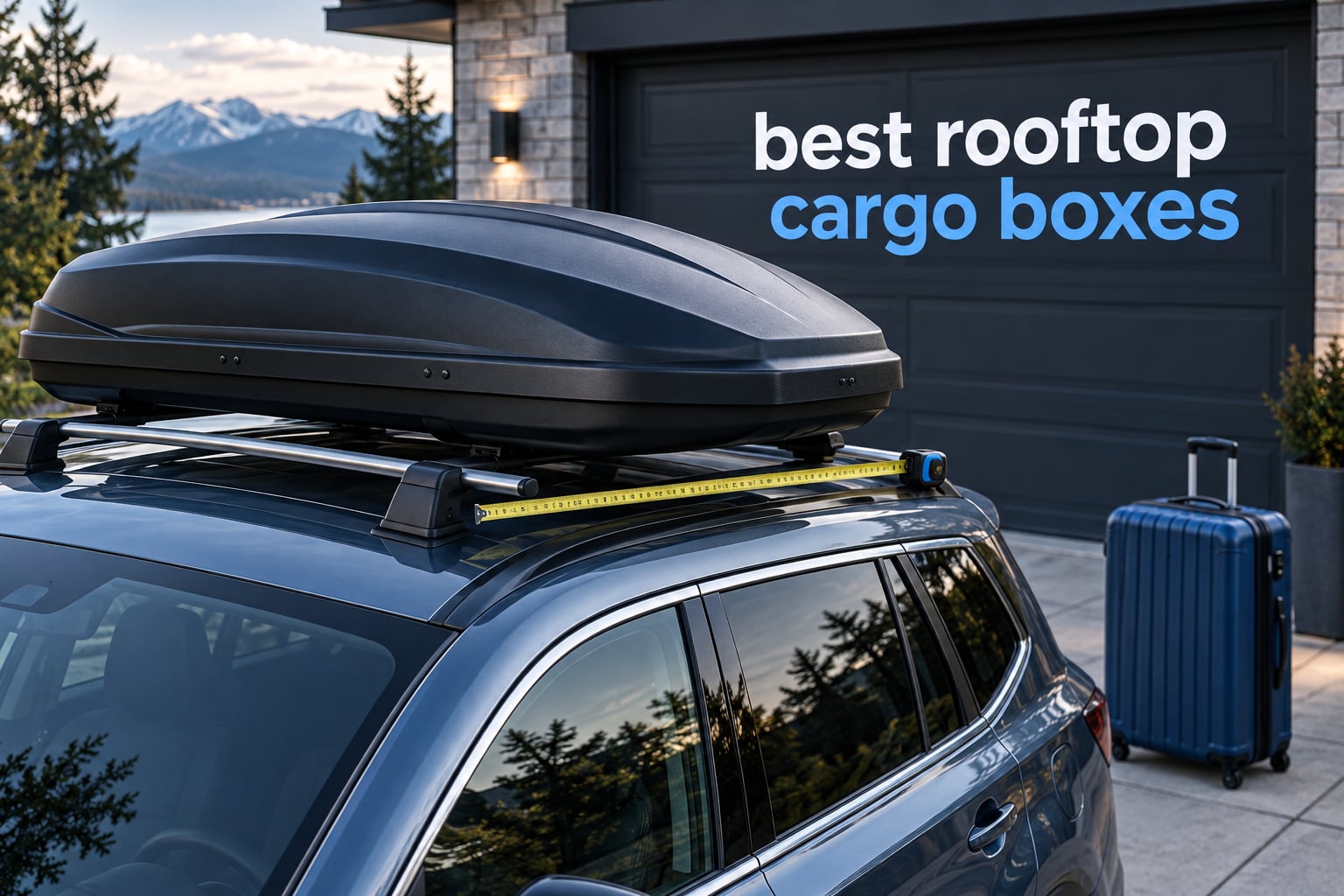
The best rooftop cargo box for most drivers is the SportRack Vista XL, because it pairs 18 cubic feet of genuinely usable space with a tool-free mount, a rear opening that keeps you away from traffic, and the largest owner-review base in the category. Thule and Yakima own the conversation and make the most refined boxes money can buy, but the premium tier asks a real premium, and the Vista XL is the pick that most people end up happiest with. Below I break down all 12 boxes we analyzed in 2026, from a 20 pound compact model you can lift solo to an 18 cubic foot family hauler.
A rooftop cargo box is a lockable hard shell that clamps to your crossbars and adds roughly 8 to 18 cubic feet of enclosed, theft-resistant space above the cabin. That solves the single most common road trip problem, which is running out of room while keeping luggage dry and out of sight. It also does something open crossbars cannot: a closed shell cuts drag and wind noise relative to bare bars with luggage strapped on top.
The trade-offs are real, though. Added roof weight eats into your vehicle’s published roof load limit, you lose a few miles per gallon, and the box only fits if your crossbar spacing and hatch clearance line up. A wrong purchase here usually means a return, and returns are the single most common owner complaint in the reviews we read. We compared 12 models across capacity, empty weight, opening style, mounting hardware, lock design and verified owner feedback, and we flagged where the fit is fussy.
Last updated for 2026. We work from manufacturer specifications and thousands of aggregated owner reviews rather than a single test vehicle, and every number in this guide traces back to published product data or reported owner experience. We are an Amazon Associate, so we may earn from qualifying purchases.
If you are still deciding between a hard shell and a fabric carrier, our rooftop cargo carriers guide covers the full category including soft bags, and our rooftop box guide for cars narrows it down for sedan and hatchback owners specifically.
Top 3 Picks for Best Rooftop Cargo Boxes in (October 2026)
The three boxes below are the ones we would put on our own roofs first. Each wins a different kind of trip, and the full 12-model table follows immediately after.
SportRack Vista XL
- 18 cu ft capacity
- Tool-free rear opening
- Crossbar mount 23.6 to 29.8 inch

Thule Motion 3
- Wing-shaped low drag nose
- PowerClick click torque indicator
- SlideLock latch system

The Best Rooftop Cargo Boxes at a Glance in 2026
This table is the fast answer. It carries every model we analyzed with the two numbers that decide most purchases, cargo volume and empty weight, plus the opening style that determines how easily you load in a parking lot. Check the capacity rating and the mounting window against your bars before you commit.
| Product | Specifications | Action |
|---|---|---|
| SportRack Vista XL 18 Cu Ft |
|
Check Latest Price |
 Auto Dynasty 11 Cu Ft Cargo Box Auto Dynasty 11 Cu Ft Cargo Box |
|
Check Latest Price |
 Goplus 14 Cu Ft Dual-Side Box Goplus 14 Cu Ft Dual-Side Box |
|
Check Latest Price |
 JEGS 10 Cu Ft Weatherproof Box JEGS 10 Cu Ft Weatherproof Box |
|
Check Latest Price |
| Thule Motion 3 |
|
Check Latest Price |
 GarveeTech 14 Cu Ft Dual-Side Box GarveeTech 14 Cu Ft Dual-Side Box |
|
Check Latest Price |
 D SOLUTIONS 11 Cu Ft Hard Shell D SOLUTIONS 11 Cu Ft Hard Shell |
|
Check Latest Price |
 Yakima SkyBox NX 18 XLG Yakima SkyBox NX 18 XLG |
|
Check Latest Price |
| INNO Wedge 660 |
|
Check Latest Price |
 VISRACK 14 Cu Ft Dual-Side Box VISRACK 14 Cu Ft Dual-Side Box |
|
Check Latest Price |
 Thule Pulse 2 L Thule Pulse 2 L |
|
Check Latest Price |
 INNO Ridge 240 8 Cu Ft INNO Ridge 240 8 Cu Ft |
|
Check Latest Price |
Two things stand out immediately. Every box here is a hard shell, so the soft-versus-hard decision is covered in the buying guide rather than in this list. And the mount styles differ more than the marketing suggests, which is why three of the twelve carry a fitment warning.
1. SportRack Vista XL 18 Cu Ft – Our Overall Pick
SportRack Vista XL Rear Opening Cargo Box,Black
18 cu ft (510 L)
Rear opening
Tool-free mount
100 lb load limit
Pros
- Enormous usable volume for the money
- Tool-free install one person can do
- Quiet and stable at highway speed
- Keeps contents dry in rain snow and ice
- 25 year manufacturer warranty
Cons
- Rear-only opening makes front access awkward
- Key can stick in the lock cylinder
- Wide bar spacing may need extra mounting holes
The Vista XL is the box we keep coming back to because the spec sheet understates how much fits inside it. Eighteen cubic feet swallows three or four rolling suitcases, a golf bag, folding chairs and a cooler for four people without anything bending. The shell is UV-resistant ABS, and the dimensions come in at 63 by 38 by 19 inches, which is a big box that still looks proportionate on a mid-size SUV.
Mounting is the part that sold us. The hardware is fully tool-free, and owners describe getting it onto the bars and back down again in a few minutes without a ladder for a second set of hands. That matters more than it sounds, because the alternative in this category is often a 50 pound box that needs two people and a folding step stool.
Owners describe it as genuinely quiet once it is on, holding steady through heavy snow, ice and long highway runs. The most common praise is about the weather sealing, with multiple reviews reporting dry contents after sustained rain.
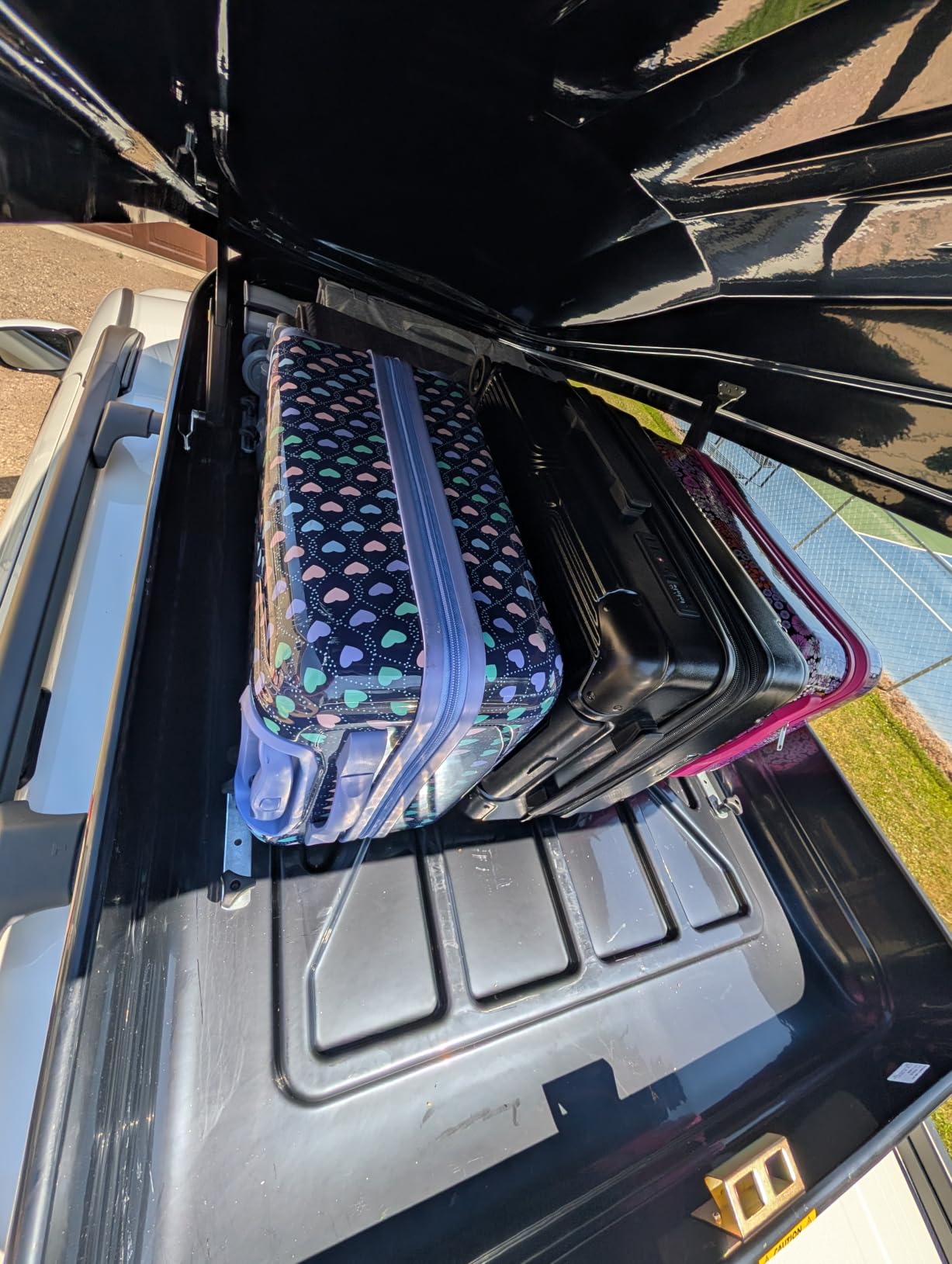
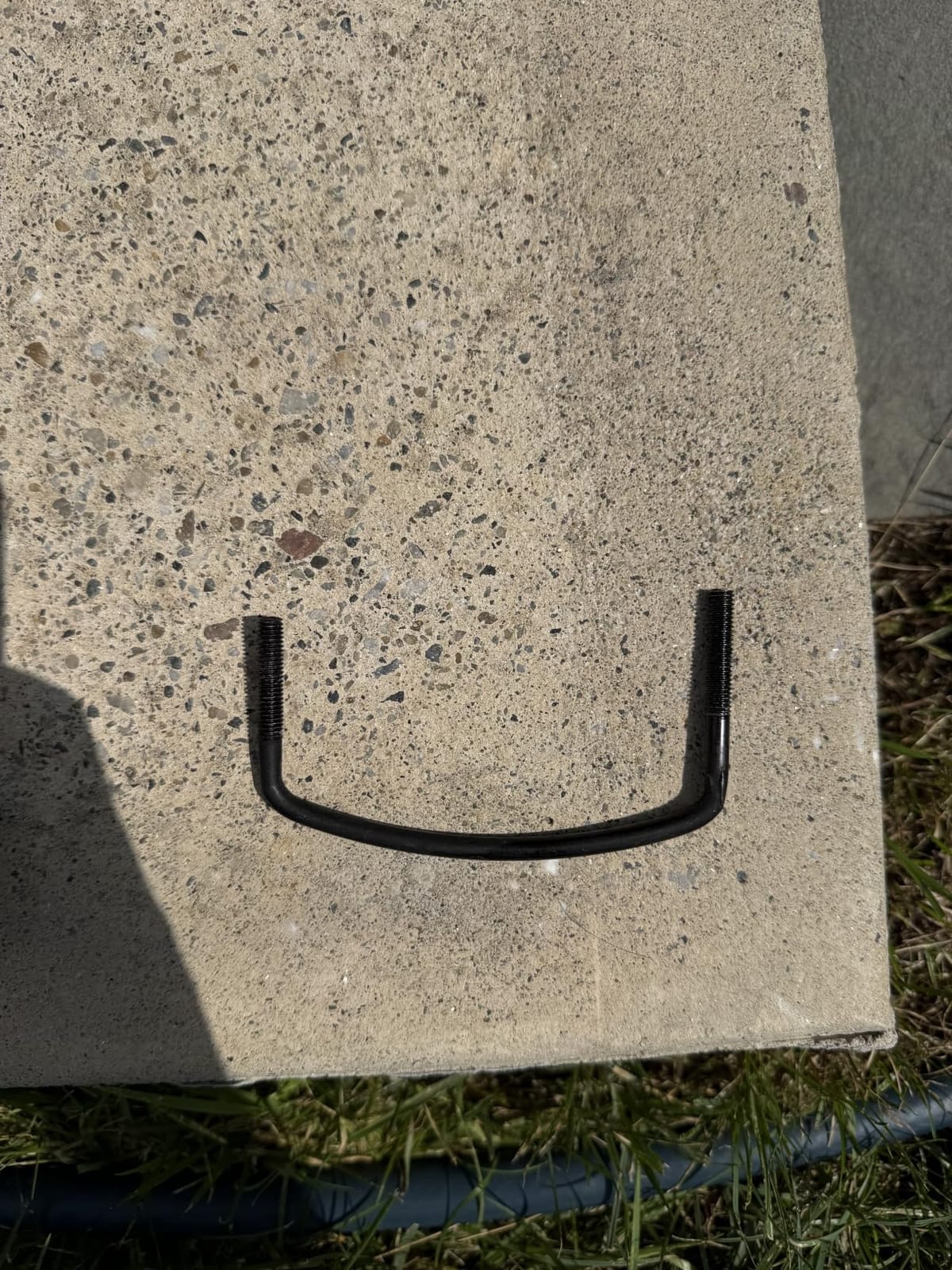
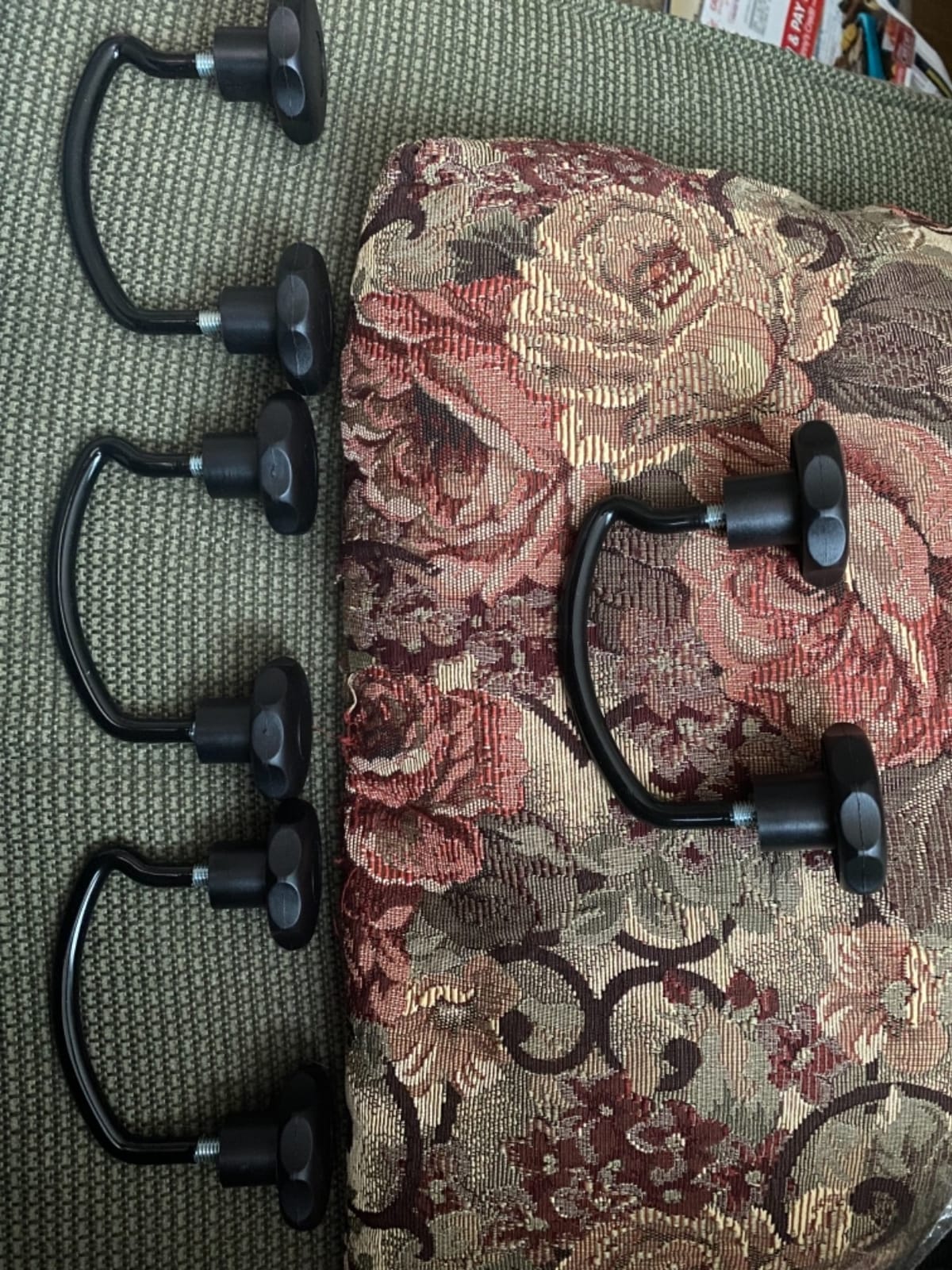
The trade-offs are all about access and hardware refinement. A rear-only opening means reaching past the front of the box to grab something underneath, and tall items are awkward to load. The supplied U-bolt plastic knobs have recessed threads that some owners say do not grip thicker bars properly.
There is a lock quirk worth knowing before you buy. The key can stick in the cylinder, and reviewers say it needs a particular approach angle. That is a five-second annoyance rather than a failure, but on a box this size you will use the lock every time you stop.
A smaller group of owners with wider crossbar spacing report that the pre-drilled mounting holes do not line up, and they drilled extra holes themselves. Measure your bar spacing first. The published window is 23 5/8 to 29 3/4 inches, and if your bars sit outside it, this box will not clamp as designed.
Will the Vista XL fit your bars and your garage
The Vista XL is universal fit, and the hardware works with SportRack rack systems, square bars, round bars and most factory racks. That flexibility is genuinely unusual at this volume level, and it is why the Vista XL works on everything from a compact hatchback to a full-size SUV with a factory roof rail package.
The 19 inch height is worth checking against your garage door. This is not a low-profile box, and if your garage or parking structure is tight, the INNO Wedge 660 further down the list solves that problem instead.
Who should skip the Vista XL
Skip it if you routinely load tall gear, because the rear-only opening forces you to reach over the front lip. If you park on a street where the curb side is the driver’s side, you will be loading from traffic, which the rear opening was designed to avoid.
Also consider a different box if water resistance is non-negotiable for you. Reviews on this model are overwhelmingly positive on keeping contents dry, but if your trips are multi-day rain cycles with soft clothing inside, a box with a warranty behind it is a better bet.
2. Auto Dynasty 11 Cu Ft Hard Shell – Straightforward Value Pick
Auto Dynasty Hard Shell Roof Top Mount Cargo Carrier Travel Luggage Box
11 cu ft storage
14 inch wide opening
110 lb limit
Bars up to 13 inch
Pros
- Wide 14 inch opening for bulky gear
- Passenger-side access with dual lock points
- Tool-free brackets included
- UV and weather resistant ABS
- Multiple size variants available
Cons
- Lid flexes and feels flimsy when open
- Latch and key cylinder take practice
- Bars wider than 13 inch will not fit
The Auto Dynasty box is the simplest answer in this group, and simplicity has real value. Eleven cubic feet at 53 by 34 by 15 inches is enough for two large suitcases, a carry-on and a week of soft gear, and the shape is short enough that it does not dominate the roofline.
The feature that separates it from other budget boxes is the opening. At 14 inches wide it is a genuinely wide aperture, so you can slide in a duffel, a folded playpen or a boot rather than lowering everything vertically into a slot. Access is from the passenger side, and there are two lock points with a key that only releases once everything is secured.
Owners confirm the tool-free brackets make setup quick and that the ABS holds up in sun, rain and snow. The same owners also note that the box is available in several sizes and finishes from 11 to 17 cubic feet, which is unusual at this tier.
The 4.1 rating comes from hardware, not the shell. Reviews repeatedly describe the lid flexing when it is opened or pressed, and the support arms that hold it open can be stubborn to position. The latch and key cylinder are described as awkward until you get the feel of them, which is a learnable thing rather than a broken thing.
The fit limit is the one to respect. This is universal fit only for crossbars up to 13 inches wide, which excludes several wide aero bars and some factory systems. If your bars are wider than that, this box is not for your vehicle, and measuring first will save you a return.
Load rating is 110 pounds, which is more than enough for luggage and light camping gear. It is not the box for toolboxes, dive gear or anything with a high density.
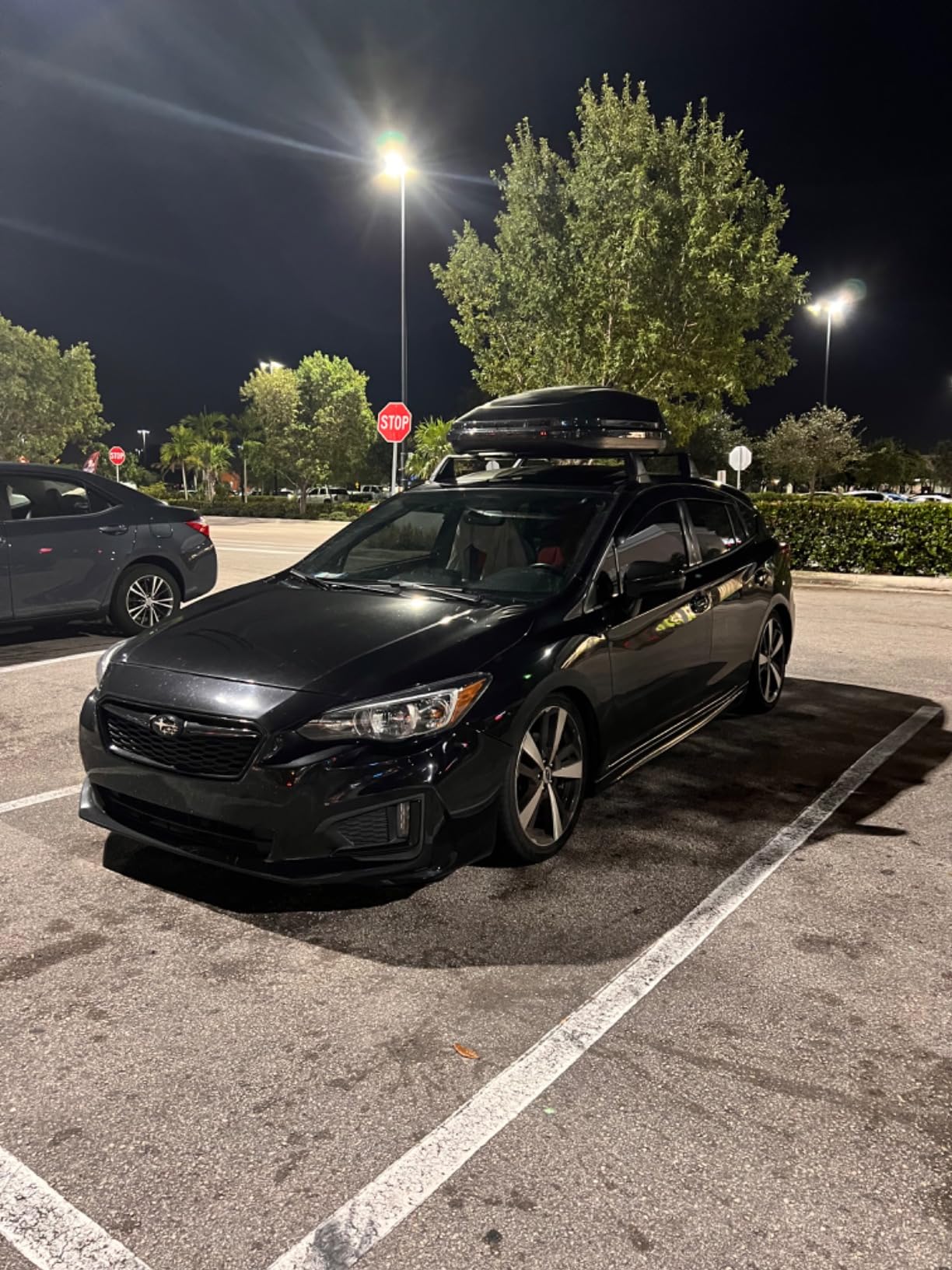
Is 11 cubic feet enough for a family trip
For two adults and a short trip, yes comfortably. For a family of four with hard-sided luggage all the way to a destination, it is tight. Real owner reports mention fitting large amounts into it, but the aperture width means you are stacking more than most 11 cubic foot boxes allow.
If you are traveling with four people and ski or snowboard equipment, look at a 14 cubic foot dual-side box or the Yakima SkyBox NX 18 instead. The difference in packing pressure is what determines whether you can leave anything in the cabin.
How the Auto Dynasty compares to the Vista XL
The Vista XL gives you seven more cubic feet, a higher 100 pound load limit in a different mounting system, and a much larger review base. The Auto Dynasty gives you a wider opening and a shorter body that is easier to manage on a smaller vehicle.
If your bars are within 13 inches and your trips are moderate, the Auto Dynasty is a defensible money decision. If you want maximum volume per dollar, the Vista XL is simply more of it.
3. Goplus 14 Cu Ft Dual-Side Box – Access From Both Sides
Goplus Rooftop Cargo Carrier Hard Shell, 14 Cubic Feet Waterproof Car Roof Cargo Carrier w/Dual Side Opening, Security Key, 165LBS Capacity, for 17” to 22.8” Wide Crossbar Rack, Vehicle Cargo Box
14 cu ft capacity
Dual-side opening
165 lb load limit
ABS and PC shell
Pros
- Opens from either side of the vehicle
- High 165 lb weight rating
- Metal lid stiffeners add real rigidity
- Works with round square and aero bars
- Key cannot be removed unless fully locked
Cons
- Crossbar window is restrictive and often needs modification
- Lid can be hard to close evenly
- Basic surface finish
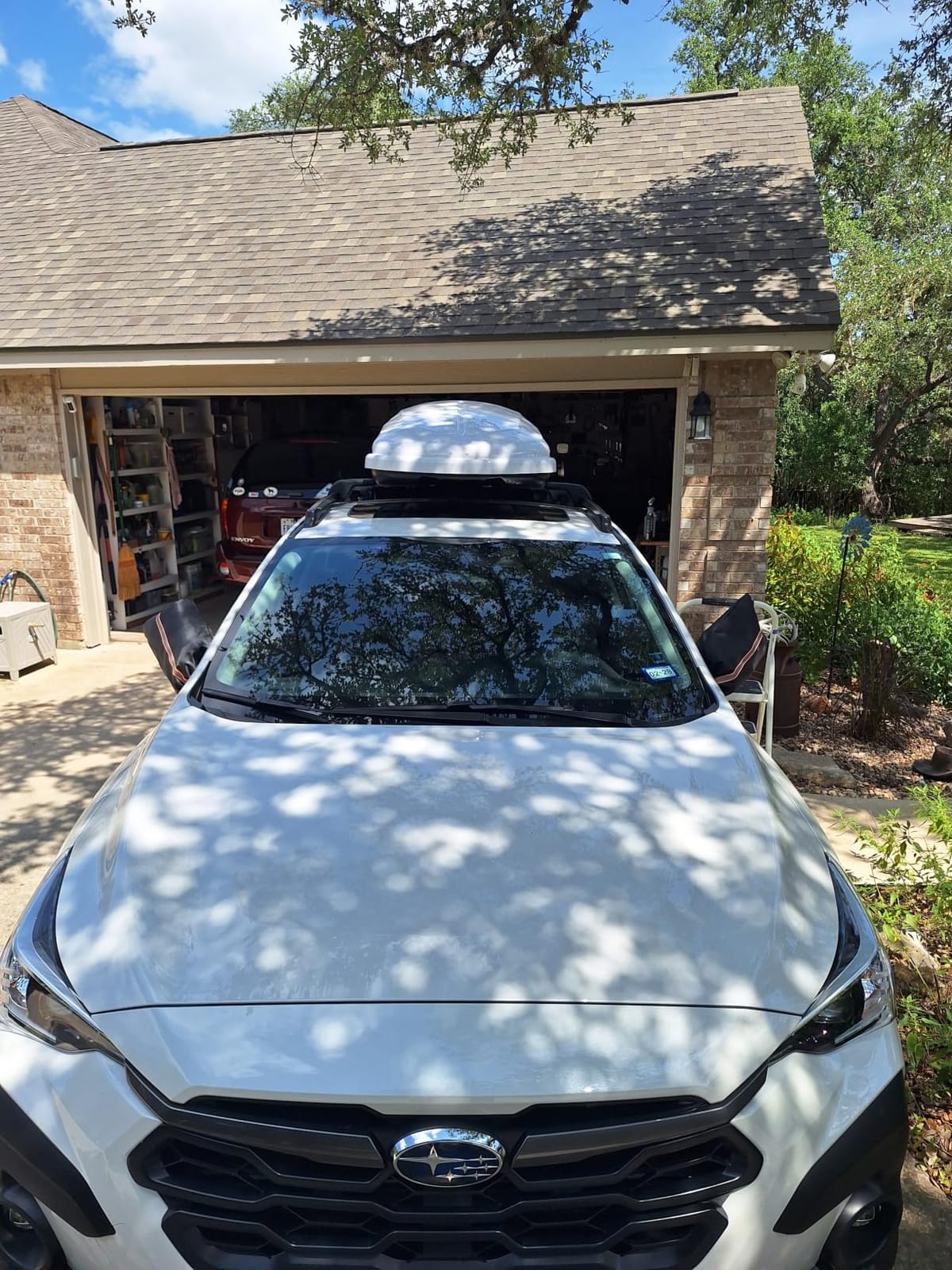
Dual-side opening is the feature that changes daily usability, and the Goplus is one of the more affordable boxes in this roundup that has it. You can pull up on either curb and load from whichever side has room. On a narrow street with a wall on one side, that alone justifies the purchase.
Fourteen cubic feet and a 165 pound load limit make this one of the stronger capacity-to-weight combinations here, and the load rating is well above what luggage alone demands. Metal stiffeners at the base of the lid add rigidity that all-plastic budget boxes do not have, and owners who compared the two noticed the difference.
The double-lock design is a genuine security feature. The key physically cannot be removed unless the lid is closed and locked, which prevents the most common failure of leaving a box unlocked in a parking lot.
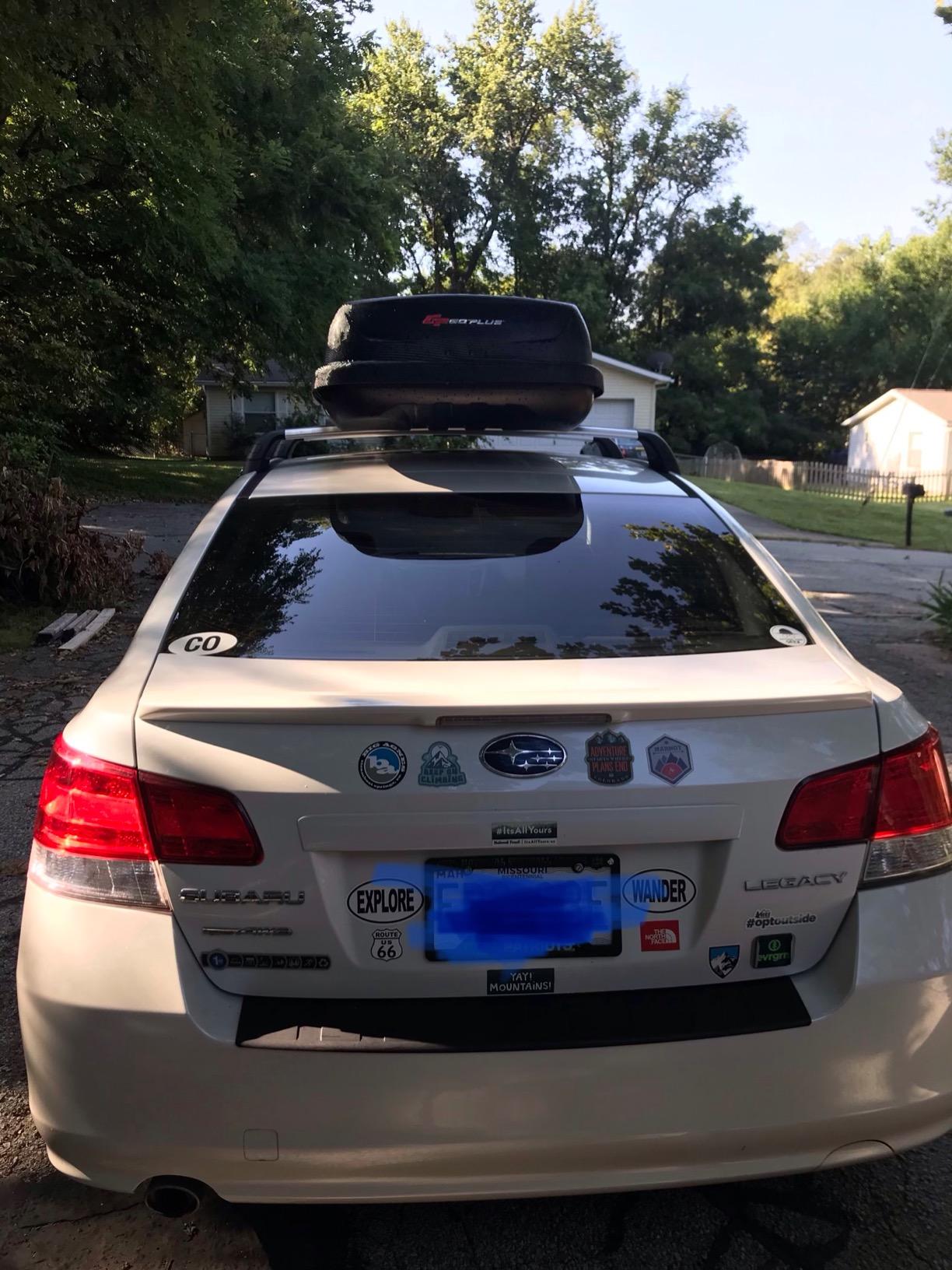
Fitment is where this box earns its complaints. It is compatible with racks from 17 to 22.8 inches wide, with crossbar width under 3.1 inches and thickness under 1 inch, and that window is restrictive. Multiple owners report drilling extra holes or sourcing different hardware to get it mounted.
Owners also note that the lid can be difficult to close evenly, and that both locks need firm pressure to engage at the same time. The white finish is described as basic rather than premium, which is cosmetic but visible from the curb.
There is no detailed vehicle fit guide published with this box, so the measuring work falls on you. Know your bar width and thickness before ordering.
What dual-side opening is actually worth
On a road trip you load and unload once or twice a day, so access convenience matters more than most spec comparisons credit it for. Dual-side opening means you never carry luggage over a curb, through traffic, or around the nose of the vehicle.
It also means the box packs more evenly. Loading from one side and accessing from the other lets you fill the far end first, which reduces the amount of reshuffling you do at the destination.
Is the 165 pound rating realistic
For luggage, camping gear, ski boots and a snowboard, yes, comfortably. The rating is a structural limit rather than a recommendation, and the more relevant limit is the 14 cubic feet of space itself, which fills up long before 165 pounds does.
If you plan to carry dense items like toolboxes or a full set of golf clubs plus coolers, check the interior dimensions of 62.5 by 30 by 15 inches before you commit.
4. JEGS 10 Cu Ft Weatherproof Box – Smallest and Lightest
10 cu. ft. Rooftop Cargo Carrier, Weatherproof Lockable, 110 lb. Capacity
10 cu ft HDPE shell
23 lb empty
Dual-side opening
110 lb capacity
Pros
- Genuinely waterproof in rain snow and mud
- Lightest shell here at 23 lb empty
- Dual-side opening at an entry price
- Compact size suits smaller vehicles
- No tools needed for assembly
Cons
- Latch feels flimsy and some add a strap
- Wire brackets slip on curved aero bars
- Only a 30 day warranty
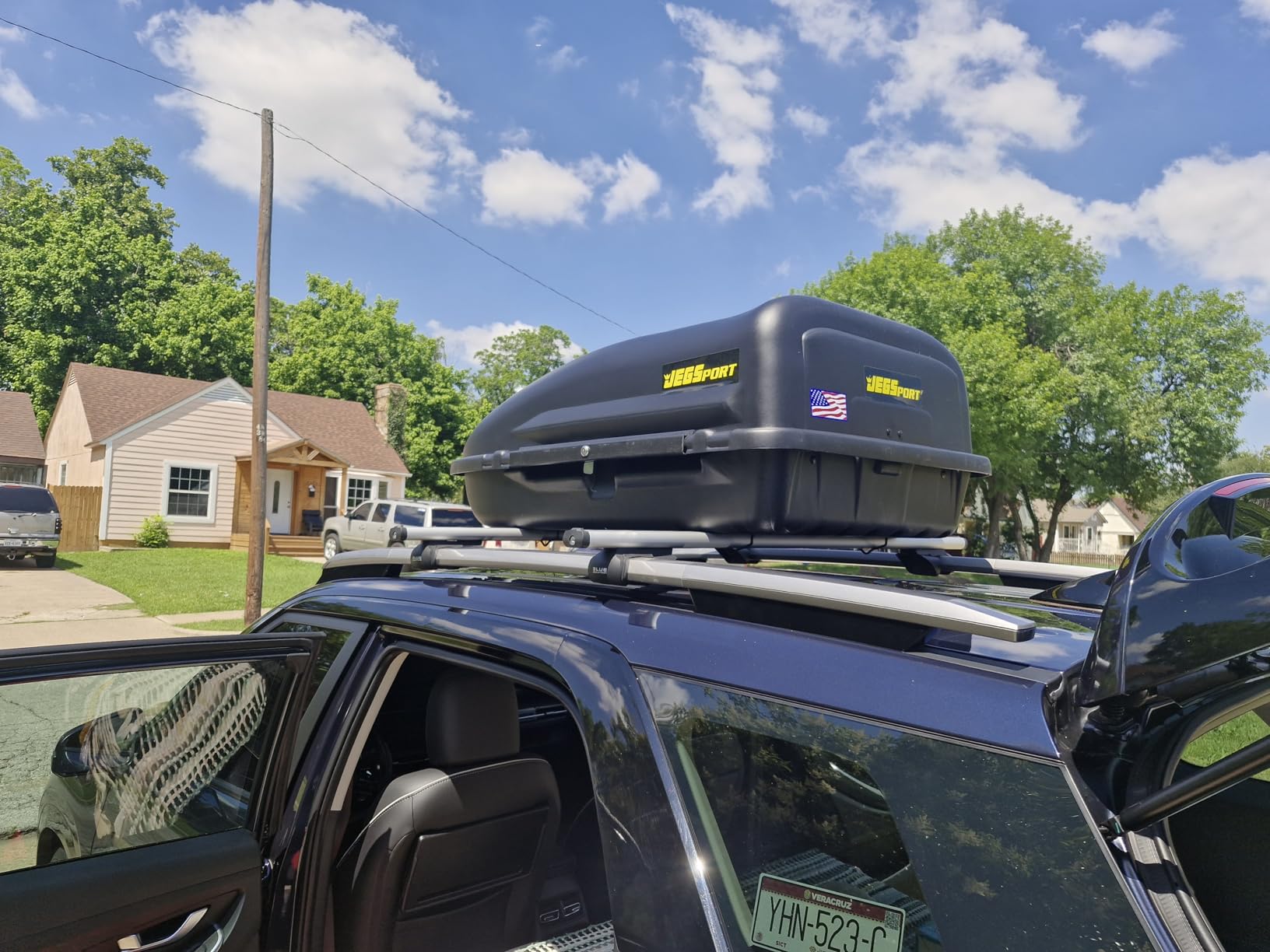
The JEGS box answers a question the bigger boxes ignore, which is what happens on a small car where volume is not the problem. At 46.5 by 30.5 by 17.5 inches it is the most compact hard shell here, and at 23 pounds empty it is the second lightest in the group, which means one person can put it on and take it off without help.
Owners report that it is genuinely waterproof across thousands of miles in rain, snow and mud, with the dual side locking system and front latch holding a weather-tight seal. Several reviews describe fitting three suitcases plus a large bag, which is a realistic weekend load for two or three people.
Dual-side opening at this price is unusual, and the no-tool assembly with included hardware means a first install does not need a workshop.
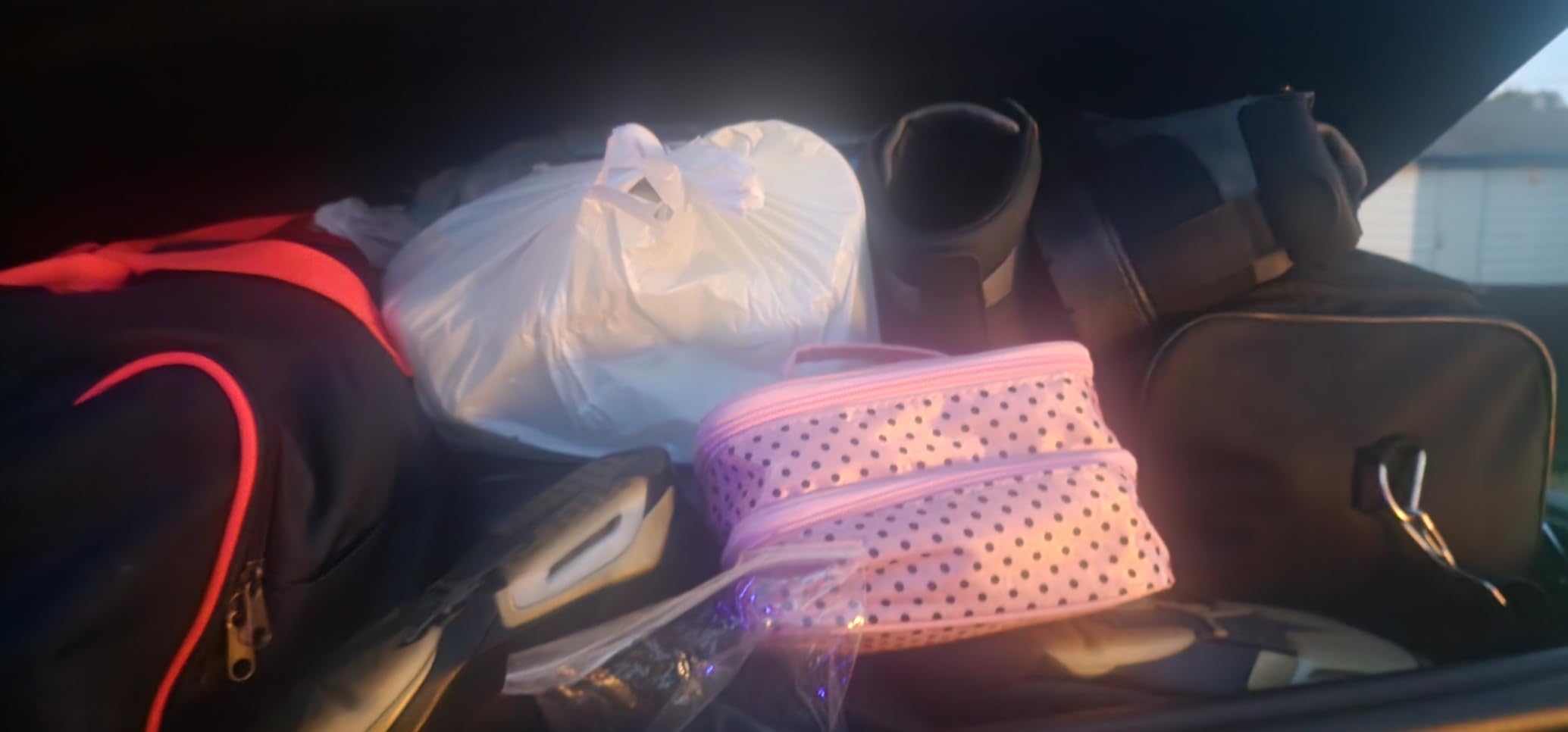
The complaints here are about hardware rather than the shell. The latch feels flimsy, and a number of owners added a strap over the lid for extra security. That is a reasonable five dollar fix if you park in busy areas, but it is a modification you are making because the factory part underdelivers.
The wire mounting brackets are the bigger issue. They do not grip curved aerodynamic crossbars such as Thule Evo WingBar-style profiles well, and several reviews describe returns being difficult when the bracket did not suit a particular rack. If your bars are aero-shaped, do not buy this expecting it to work without modification.
Two other limits are worth noting. The underside can bow under dense heavy loads like toolboxes, and the warranty is 30 days, which is the shortest in this roundup by a wide margin.
Is 10 cubic feet enough for anything real
Ten cubic feet suits a weekend, not a fortnight. Owners consistently fit three suitcases and a large bag, which covers two adults traveling light or a family of three with soft duffels.
For a family road trip with a fortnight of luggage, this is the wrong size. The space fills before your holiday does, and the alternative is a compressed cabin full of bags you cannot reach.
What to check before buying the JEGS
Check your crossbar shape first. Round and square bars are fine, curved aero bars are the problem case. If you have aero bars and want this size of box, the JEGS 10 is not the right answer and the Auto Dynasty or Goplus are safer bets.
Also check the roof load limit on your vehicle. At 23 pounds empty, this box is one of the friendliest options to a modest roof rating, but you still have to add your gear weight to the total.
5. Thule Motion 3 – The Premium All-Rounder
Thule Motion 3 XXL Rooftop Cargo Box, 21 Cubic Feet, Locks Included
Wing-shaped drag-reducing nose
PowerClick mount
SlideLock latch
Lifetime warranty
Pros
- Aerodynamic profile measurably cuts drag
- Click torque indicator confirms a secure mount
- SlideLock signals a fully closed lid
- Wide handle for one-handed use
- Limited lifetime warranty
Cons
- Costs far more than mid-range boxes
- Needs compatible Thule or crossbar hardware
- Long nose adds noise if mounted too far back
The Thule Motion 3 is the box the premium tier is measured against, and the reason is aerodynamic shape. The wing-shaped profile with a forward-leaning nose is designed to move air around the box rather than over it, and owners consistently report a noticeable reduction in drag and fuel use on long drives compared with a square-shelled box.
The mounting hardware is the part we like most. The PowerClick quick-mount clamps onto the bars without tools, and the integrated torque indicator clicks when the box is properly mounted, so you get physical confirmation rather than a guess. It removes the single most common install error, which is an under-clamped box.
The SlideLock system separates locking from opening and signals when the lid is fully closed. The wide lid handle allows one-handed opening and closing, which matters more than it sounds when your hands are full of ski boots.
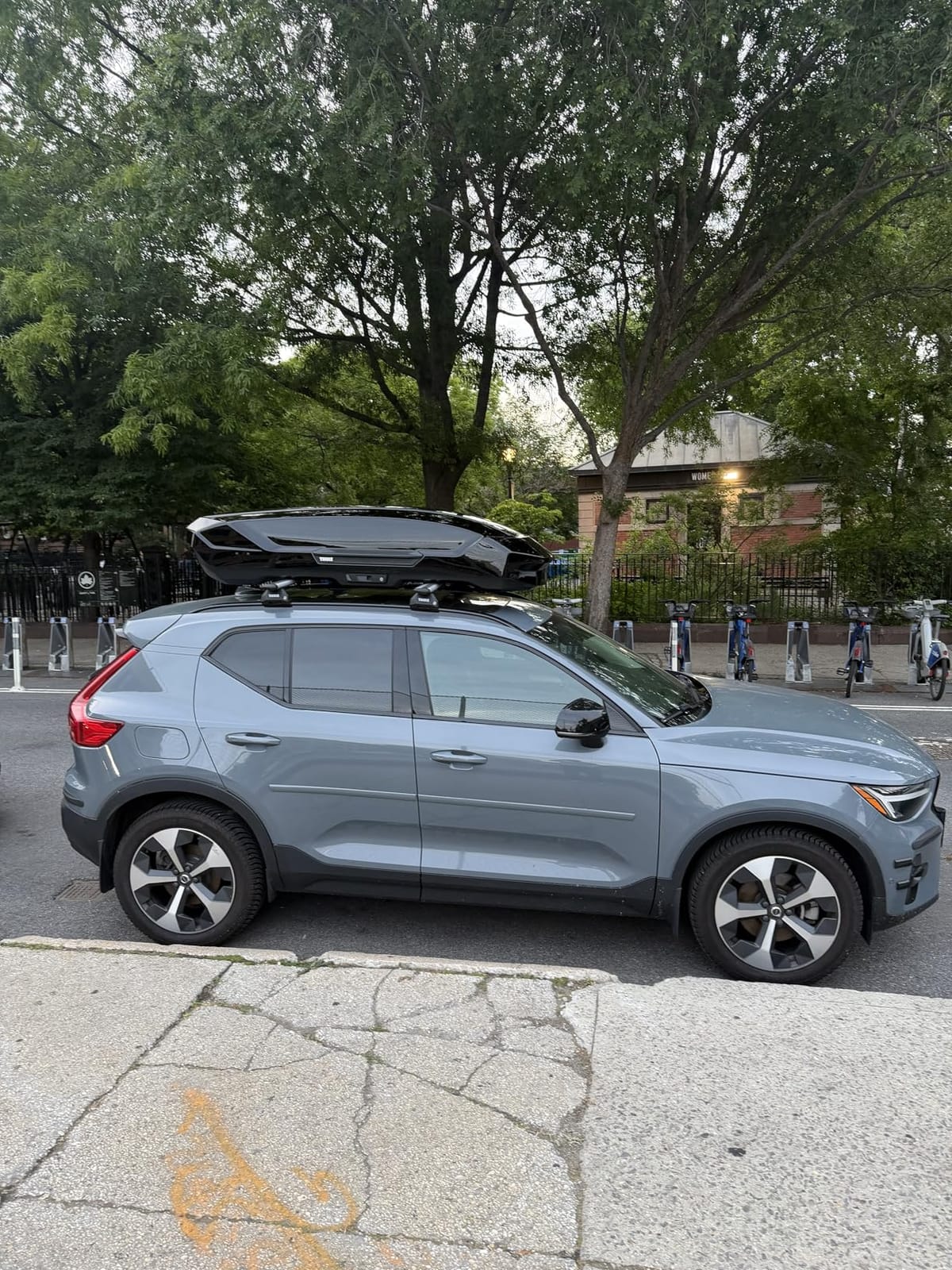
There is one reason most people do not buy it, and it is the price tag. The Motion 3 sits at the top of the category and the gap between it and a mid-range box is large enough that many owners ask whether the aerodynamics and hardware justify it over several years of use.
You also need compatible hardware. For most vehicles that means a separate Thule rack or a set of crossbars that meet the fit requirements, and that is a second purchase people forget to budget for.
Positioning matters more with this box than with a squarer one. Owners report that mounting too far back can reintroduce wind noise, because the forward-leaning nose works best when it is ahead of the bulk of the roof.

Is the aerodynamics worth the money
If you drive long highway distances regularly, the wing-shaped profile is the feature you are paying for. Owners of the Motion 3 describe the fuel economy benefit as noticeable on long drives, and the shape also holds up better in crosswinds than a vertical-sided box.
If you drive 20 minutes a day and load on weekends, you will not recover the difference in fuel. In that case the Vista XL or a mid-range box is the better buy and the Motion 3 is simply an expensive thing to look at in a parking lot.
Motion 3 versus Yakima SkyBox NX 18
These are the two flagships, and the honest answer is that Yakima is as good as Thule. The SkyBox gives you more interior volume and longer internal ski length, while the Motion 3 wins on aerodynamics and the click-confirming mount.
Owners on both sides of that debate describe their own box as excellent, which is the clearest signal that the difference is preference rather than quality. Choose by fit, volume and which hardware you already own.
6. GarveeTech 14 Cu Ft Dual-Side Box – Wide Loading, Low Profile
GarveeTech Rooftop Cargo Box Carrier, Dual-Side Opening Luggage Storage
12 or 14 cu ft sizes
Dual-side opening
165 lb limit
13.4 inch tall
Pros
- Low wide profile cuts wind buffeting
- Opens from either side of the vehicle
- Installs in about 10 minutes
- Fits three suitcases plus soft bedding
- Good value against premium brands
Cons
- Mounting slots too far inboard for wide bar spacing
- Some units arrived with pre-punched shell holes
- Sides flex when swung open
The GarveeTech is shaped around wind noise, which is the complaint owners raise most often in this category. At 13.4 inches tall across both the 12 and 14 cubic foot versions, it presents a low, wide face to the air rather than a tall wall, and buyers specifically cite reduced freeway buffeting and turbulence as the reason they are happy.
Fourteen cubic feet with dual-side opening and a 165 pound maximum capacity is a strong combination of packing volume and load rating. Owners report fitting three full-size suitcases plus pillows and blankets, which is a real family weekend rather than a theoretical one.
Installation is quick, with several owners timing it at around ten minutes on crossbars. That is fast because the shell is light and the mounting pattern is conventional.
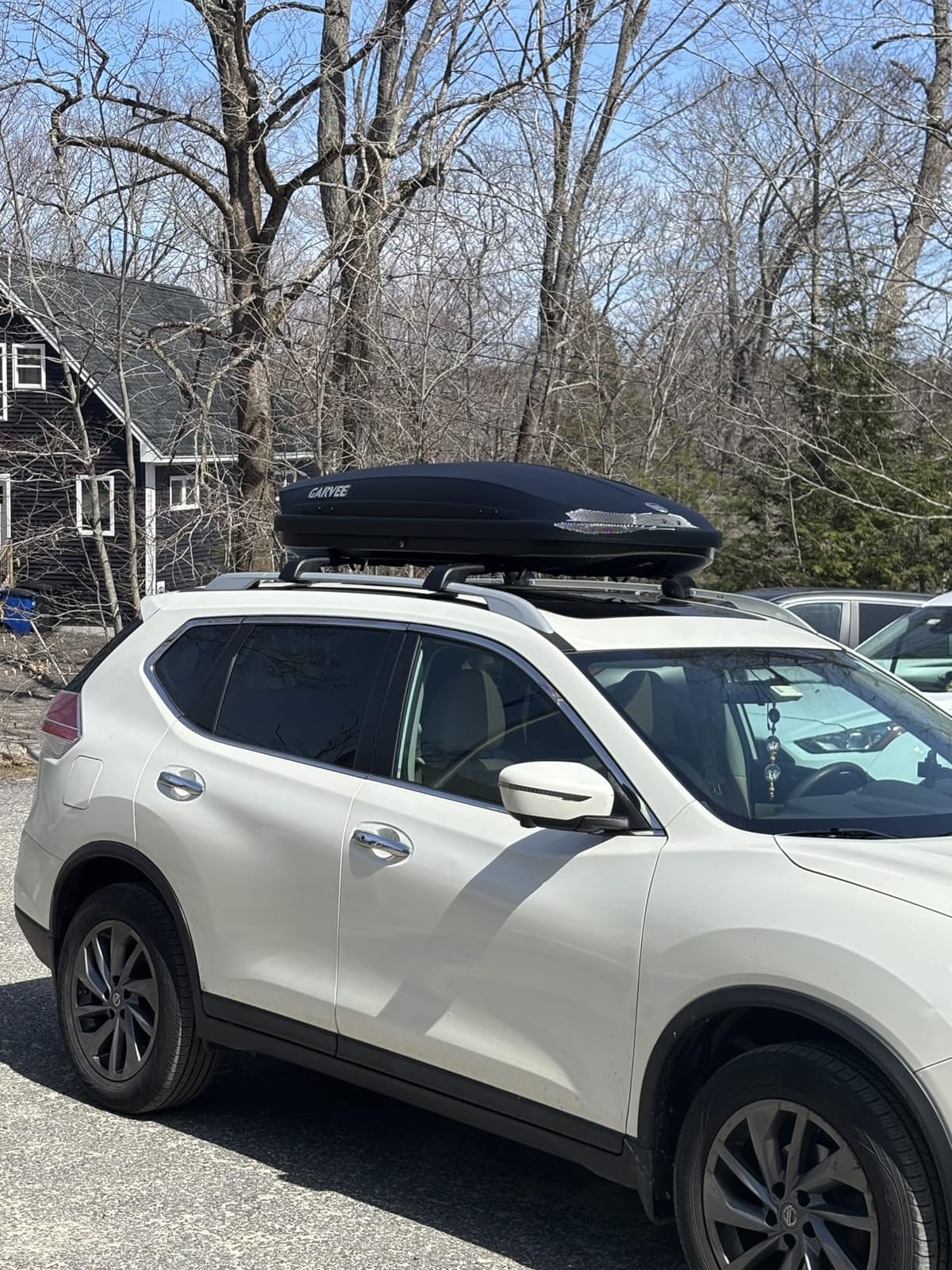
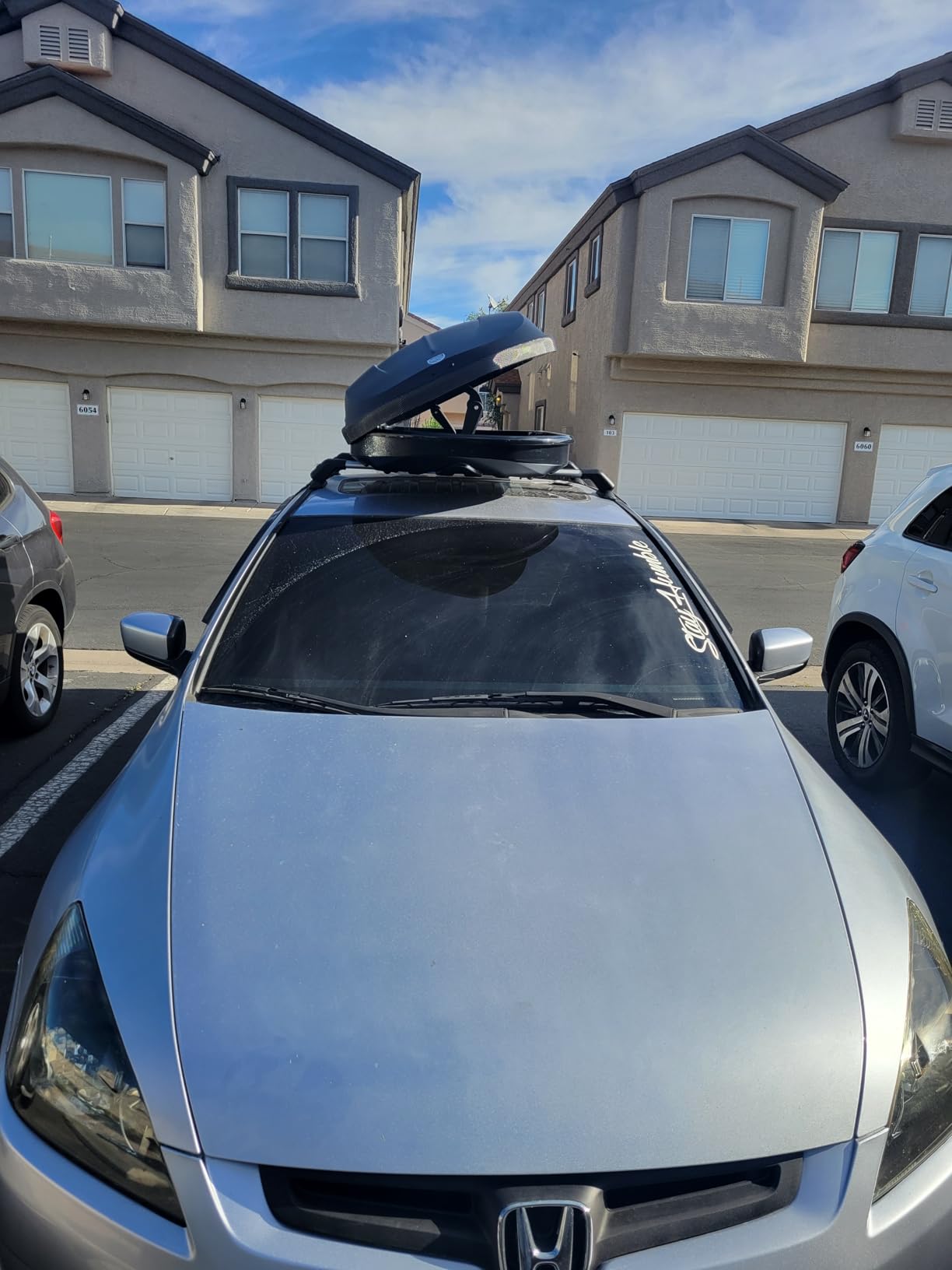
Fitment is the recurring problem, and it is specific. The mounting slots are cut too far inboard, so on vehicles with widely spaced crossbars, including some recent CR-V models, the box will not reach the mounting points. Several owners solved it with extra hardware rather than modifying the shell.
A smaller group reported units arriving with holes already punched in the shell, which is a quality control issue rather than a design flaw. A few reviews also report a lock breaking in use with limited support for a repair.
The sides flex when the lid is swung open, which makes loading into the corners awkward. At 44.8 pounds this is not a solo-lift box either, despite the easy install time once it is up there.
Is this the quietest box in the roundup
It is among the quietest, and the reasoning is shape rather than volume. Owners of this box and of the 11 inch INNO Wedge 660 both report minimal highway noise, and both get there by being low rather than by being small.
For comparison, the Vista XL sits 19 inches tall and the SkyBox NX 18 is 16.5 inches. Height is the single biggest driver of wind noise, so if noise is your top priority, look at the low boxes first.
What to measure before ordering the GarveeTech
Measure the distance between your crossbar mounting positions and compare it against the inboard slot position on this box. The published complaint is about wide bar spacing, so the more room between your bars, the more likely you have an issue.
Check your garage clearance as well. At 13.4 inches this is low enough for most domestic garages, which is a genuine advantage over the taller boxes in this list.
7. D SOLUTIONS 11 Cu Ft Hard Shell – Reported As Quiet on the Highway
D SOLUTIONS Hard Shell Roof Top Cargo Carrier Waterproof Travel Luggage Box
11 cu ft capacity
110 lb load limit
No-tool mount
Key lock
Pros
- Owners report near-silence at 70 to 80 mph
- Contents stayed dry in monsoon rain
- Tool-free install on crossbars
- No noticeable fuel economy hit reported
- Holds three rolling carry-on bags
Cons
- Opens from one side only
- Instructions are unclear
- Lock can fail to engage and support is weak
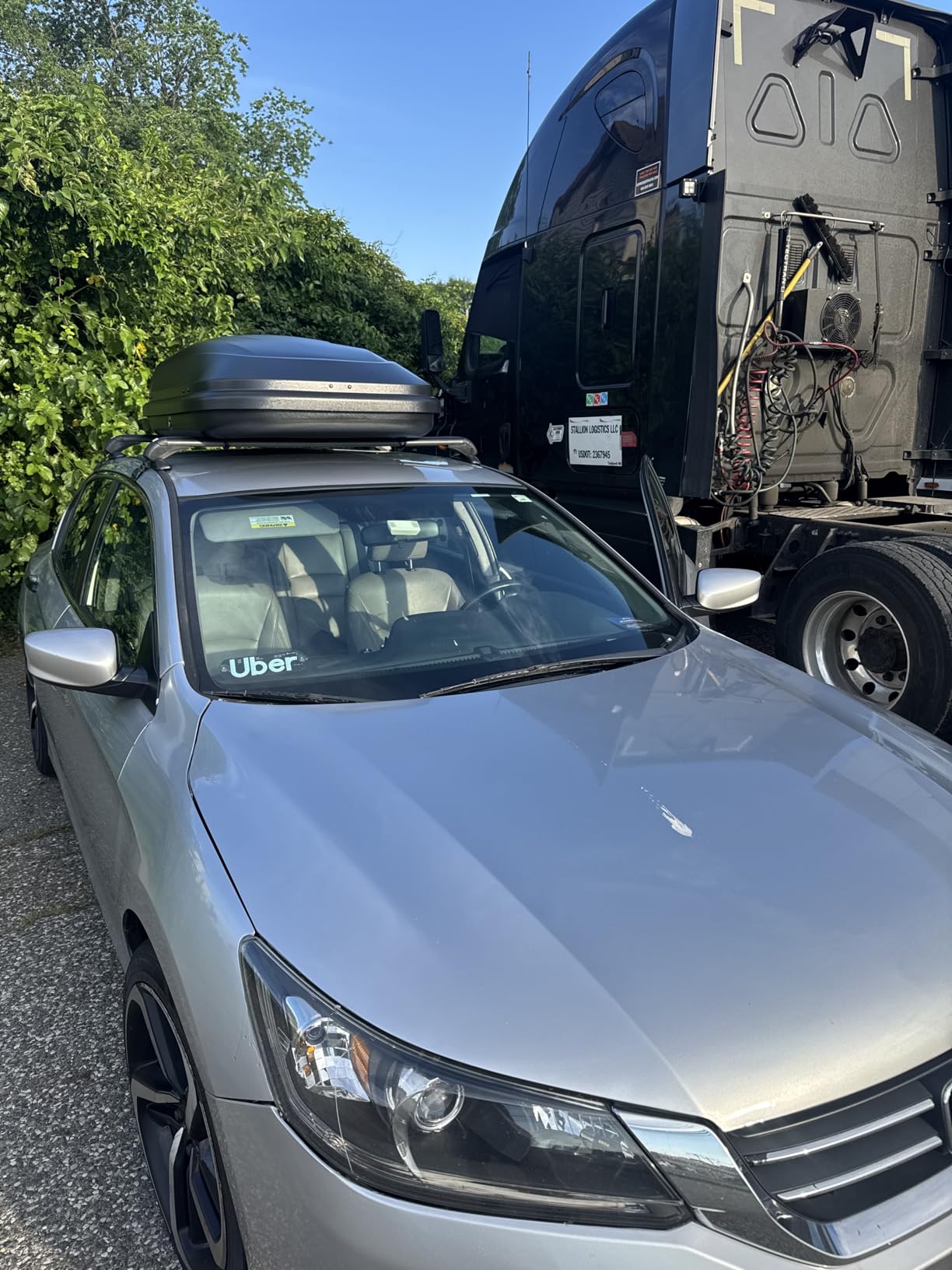
This box earns its place for a specific reason: owners report it being quiet. At 70 to 80 mph, multiple reviews describe barely noticing the box on the roof, which is not something you hear often in a category where wind noise is the top complaint.
It is also reported as dry. Owners describe contents staying dry through monsoon rain and general wet weather, and the box is listed as waterproof with UV-resistant ABS construction. The listed load capacity is 110 pounds with a strong support arm, and it is stable enough on the rack to hold three rolling carry-on bags.
Installation needs no tools and the package includes the box, a pair of keys, and four ABS mounting brackets with hardware. That is a complete kit, which is more than some competitors ship.
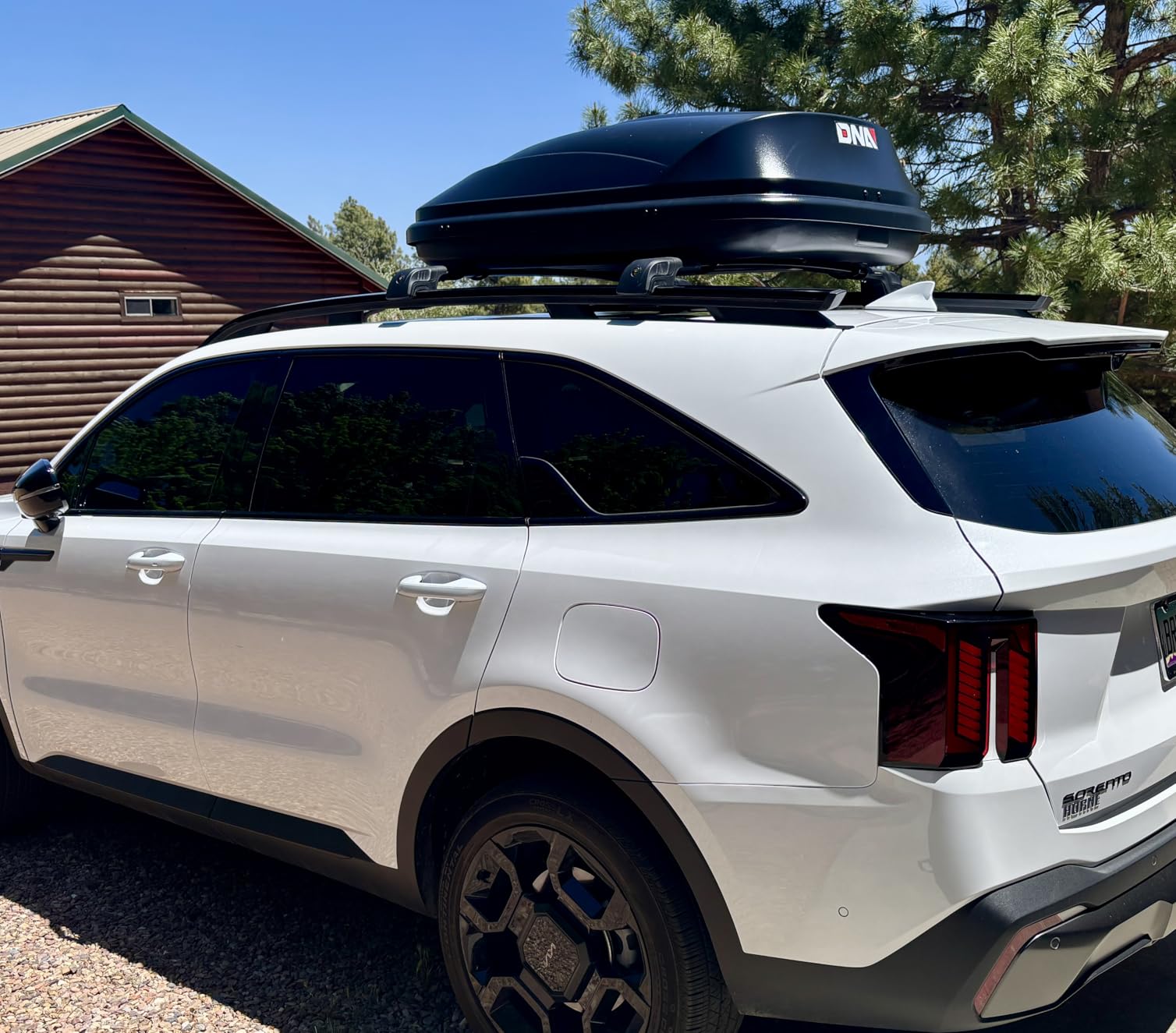
Single-side opening is the drawback owners mention most, and it is a real inconvenience at the far end of the box. If you are used to dual-side boxes, this feels like a step backward.
The instructions are described as unclear and poorly laid out, which turns a ten-minute install into a longer one. Several buyers also report needing two people to install it, which is notable for an 11 cubic foot box.
Most seriously, a small but notable group of reviews report a lock that would not engage reliably, combined with poor after-sales support. Because the lock is central to what the product does, treat that as a meaningful risk rather than a rounding error.
How quiet is quiet
Quiet for a roof box means you have to actively look for the noise. That is what owners of this model report at highway speed, and it puts it in the same conversation as the INNO Wedge 660 and the VISRACK box.
Worth noting that several owners on this box also report no noticeable hit to fuel economy, which is unusual feedback. Aerodynamics plus a low enough profile is the likely reason, and it is the kind of result that makes a box feel invisible on a long trip.
Should you buy with a small review base in mind
The owner feedback here is thinner than for the Vista XL, so you are relying on a smaller sample. That does not make it a bad box, but it does mean you should check the return terms more carefully before committing.
Given the quiet running and the reported dry interiors, this is a strong option for high-mileage drivers who spend real time at highway speed. For a single weekend trip a year, the larger review base on the Vista XL is worth more.
8. Yakima SkyBox NX 18 XLG – Room for a Family of Four
Yakima SkyBox NX 18 XLG Rooftop Cargo Carrier, 18 Cu Ft, SKS Lock, Black
18 cu ft for 4 campers
Fits skis to 195 cm
Dual-side opening
SKS locks
Pros
- 18 cu ft sized for up to 4 campers
- Long 195 cm ski and snowboard capacity
- Dual-sided opening for easy loading
- Full metal handle and SKS locks
- Flat unobstructed interior floor
Cons
- Listed as not water resistant
- Heaviest box here at 53 pounds
- Universal hardware may need adapters
The SkyBox NX 18 is built around one number, and that number is four. Yakima sizes it for up to four campers, and at 18 cubic feet with a flat, unobstructed interior floor it is one of the few boxes where a family of four can put full-size luggage in the box rather than half in the box and half in the cabin.
The ski specification is the other standout. It fits skis and snowboards up to 195 cm, which covers long Nordic touring skis as well as standard resort setups. If you are splitting one box between a family and a ski trip, this is the box that handles both without repacking.
Security hardware is the full metal opening handle with SKS locks, which secure the gear inside and the box to the vehicle in one mechanism. Dual-sided opening means no reaching across the vehicle.
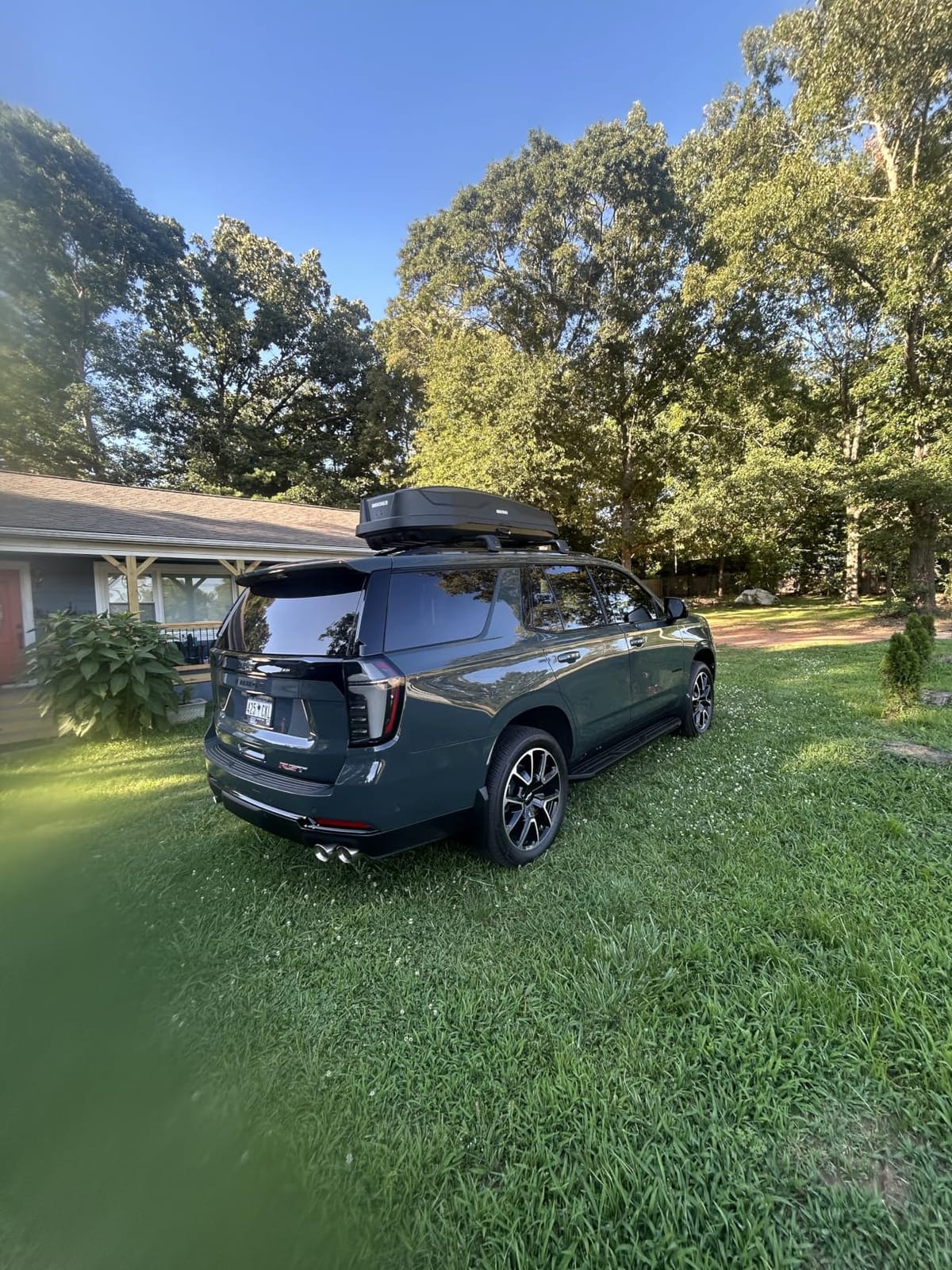
Two practical concerns come up repeatedly. First, this box is listed as not water resistant, so for wet climates or multi-day rain you want a liner or dry bags inside. That is a real difference from the boxes that are explicitly waterproof.
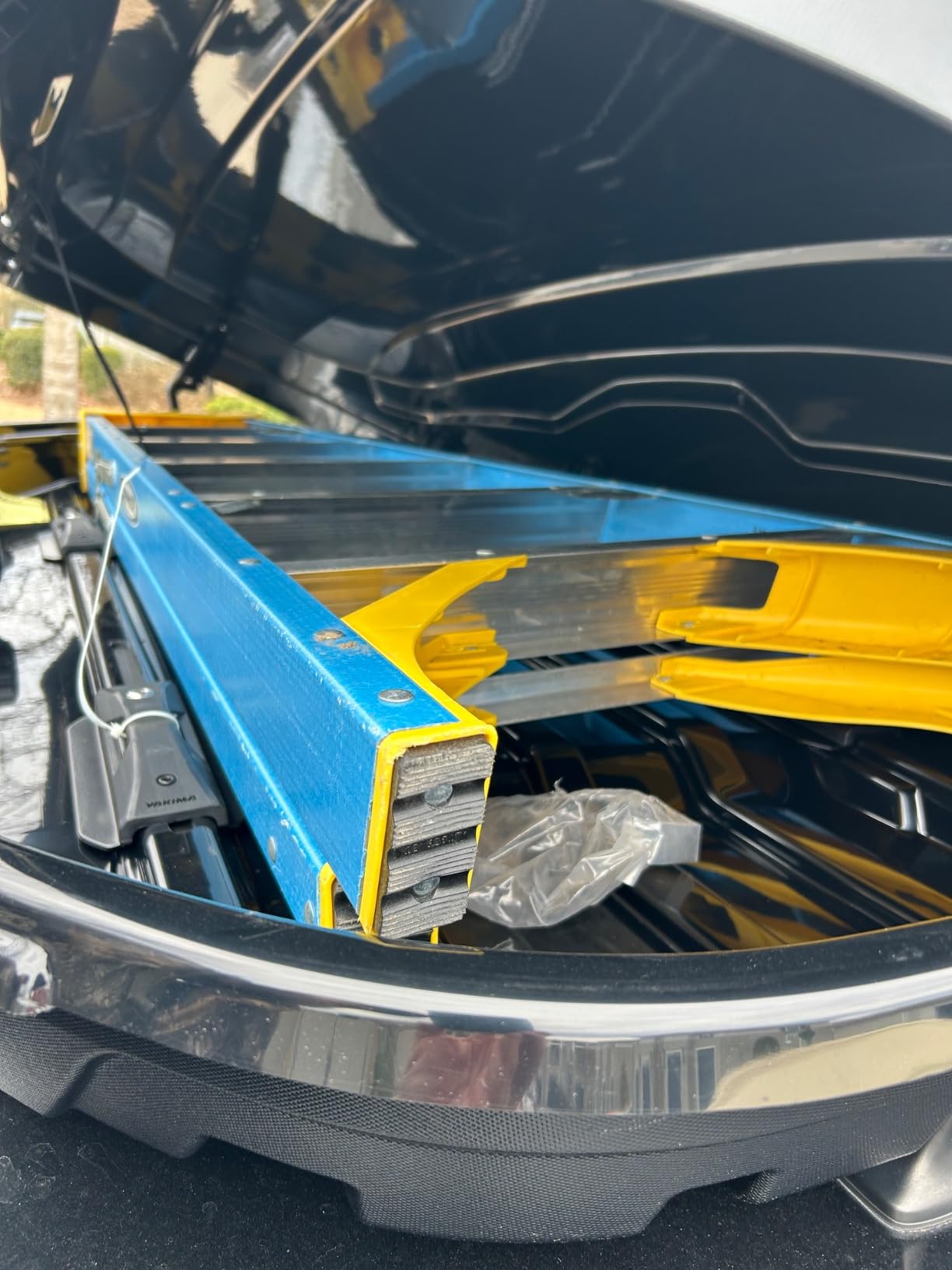
Second, it weighs 53 pounds empty. That makes installation and removal a two-person job, and it is the heaviest box in this roundup. If you live alone or your roof is high, plan for help and a step stool.
Universal mounting hardware may not work with every rack without adapters, so confirm the fit before you commit. The limited lifetime warranty is the strongest long-term cover here alongside Thule and INNO.
Yakima or Thule, which is the better box
Both brands build boxes to the same standard, and owners on enthusiast forums describe their choice as the best one available, which is the clearest evidence that the answer is preference. Yakima wins on interior volume, internal ski length and a flatter usable floor.
Thule wins on aerodynamics and on the click-confirming PowerClick mount. Long-standing 4Runner forum members have chosen Yakima specifically for easier roof-top mounting, while LandCruiser Forum regulars report long-term satisfaction with Thule racks. Both are defensible.
What 18 cubic feet really buys you
Eighteen cubic feet is the point where a box stops being an overflow basket and becomes the main luggage carrier. It fits three to four large suitcases, a golf bag, or a full set of ski and boot bags, with the flat floor meaning the stack stays square.
The trade is roof load and lift weight. At 53 pounds empty, add your gear and you are using a meaningful slice of your vehicle’s roof rating, and you will need a second person to get it up there.
9. INNO Wedge 660 – The Best Low Profile Box
INNO Wedge 660 Black 11 cu ft, Roof Rack, Roof Box, Cargo Box, Hard Shell, Low Profile, Dual‑Side Opening with Locks, Made in Japan, Compatible with Aero & Square Bars, Tool Free Install
11 cu ft
Only 11 inches tall
Dual-side opening
Memory Mount
Pros
- Highest rated box in this roundup at 4.7
- 11 inch height clears garages and car parks
- Memory Mount makes install fast and precise
- Base locks with separate push release
- Excellent sealing through car washes
Cons
- 80 inch body can hit roof antennas
- Front bar must be mounted far forward
- Premium cost for 11 cubic feet
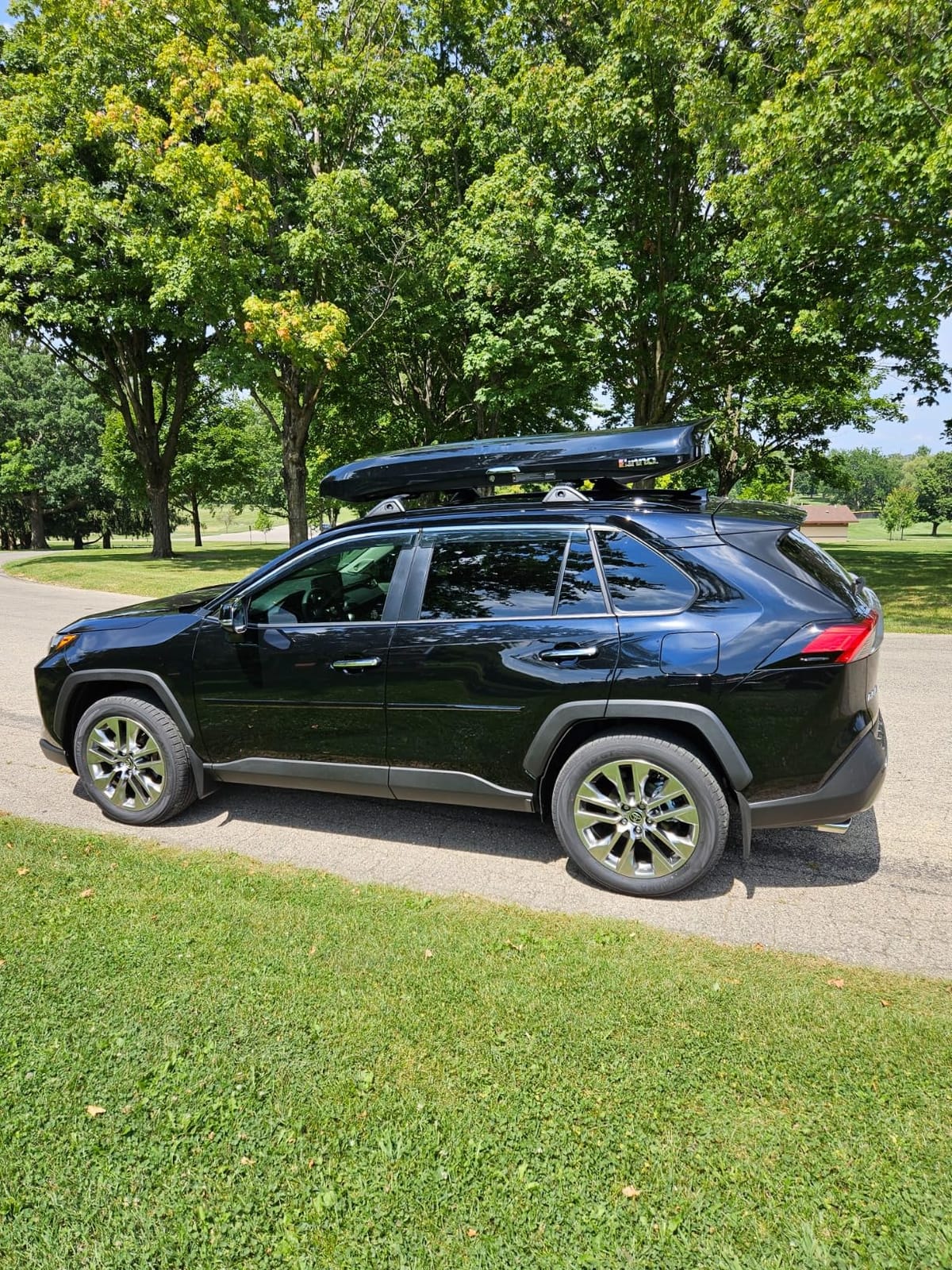
The Wedge 660 is the one box here that solves a constraint nobody else mentions, which is height. At 11 inches tall and 80 inches long, it is the flattest hard shell in this roundup, which means it clears low garage doors, underground parking and covered parking structures that everything else here will not.
It also carries the highest owner rating in the group at 4.7, with an 80 percent five-star share and only 2 percent one-star. That consistency comes from owners reporting minimal wind noise, a small fuel economy impact, and dry contents through heavy rain and even car washes.
The Memory Mount sliding system makes installation fast and precise, working with aero bars, square bars and many factory crossbars. Locks are built into the base with a separate push-release, and the key cannot be removed unless the box is fully closed.
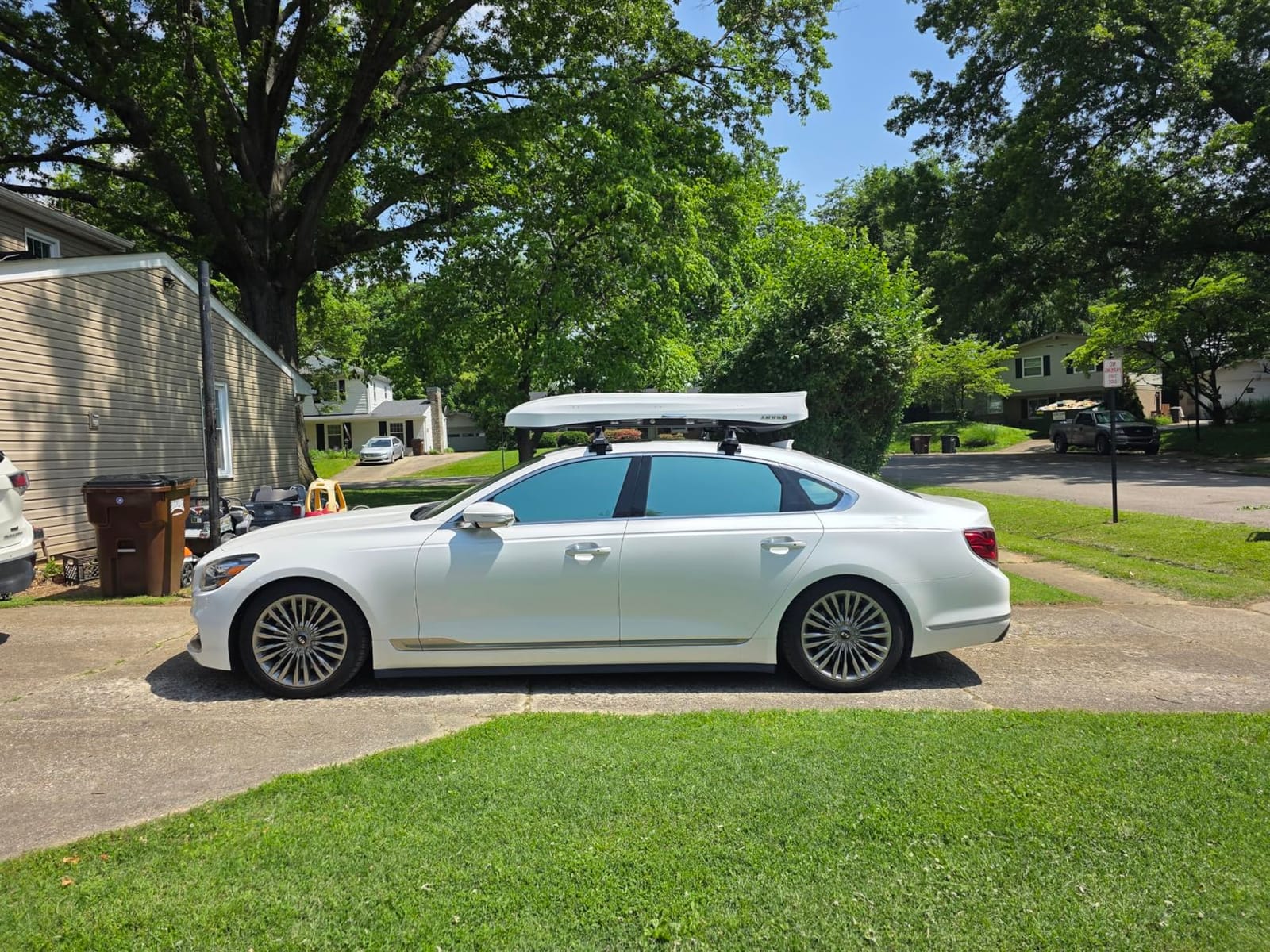
Fit is where this box needs care. At 80 inches long it can interfere with roof-mounted antennas, and if the front crossbar is mounted too far back, the box can begin to lift at highway speed. Both are mounting problems with straightforward fixes, but you have to know about them before the box is on the roof.
A few units arrived with scratches or black markings on the white interior that did not wipe off, which is a packaging or handling issue rather than a design problem. INNO USA service has been reported as responsive when a locking issue came up.
Capacity is 11 cubic feet, holding 6 to 8 pairs of skis or 4 snowboards. For a family of four with luggage, you will need more volume than this.
Why height matters more than you think
Height drives three things at once: wind noise, fuel economy and whether you can park at all. A box 11 inches tall presents a fraction of the frontal area of a 19 inch box, which is why owners of the Wedge 660 report the least noise and the smallest economy penalty in this group.
For anyone with a low garage, a covered parking space or a rooftop car park, this is not a nice-to-have. Every other box in this roundup at 15 inches or taller will scrape or force you to fold the box down, and folding is not always possible.
Wedge 660 versus the Motion 3 for low profiles
These are the two aerodynamic flagships, and the comparison is about shape philosophy. The Motion 3 uses a long forward-leaning wing nose over a large box, while the Wedge 660 uses a short wedge that trades interior volume for a dramatically lower profile.
If your garage allows 18 inches, the Motion 3 gives you more space. If it does not, the Wedge 660 is the only box in this roundup that works, and it does the job quietly and cleanly.
10. VISRACK 14 Cu Ft Dual-Side Box – Best for Carry-On Bags
VISRACK Roof Cargo Box, Dual-Side Opening Design, 14 Cubic Feet Capacity
14 cu ft
150 lb load limit
30.2 lb empty
Central lock
Pros
- Second highest rating in the roundup
- Fits five carry-on bags and flat items
- Tool-free install in a few minutes
- Quiet at speed with no rattling
- Interior ratchet straps stop gear shifting
Cons
- Install and removal slower than a Thule
- Written instructions are sparse
- Some sizes smaller than expected
The VISRACK is the most interesting box in this roundup on value grounds, because it delivers a 4.6 owner rating at a mid-range price with a 14 cubic foot interior and dual-side opening. That combination usually costs considerably more.
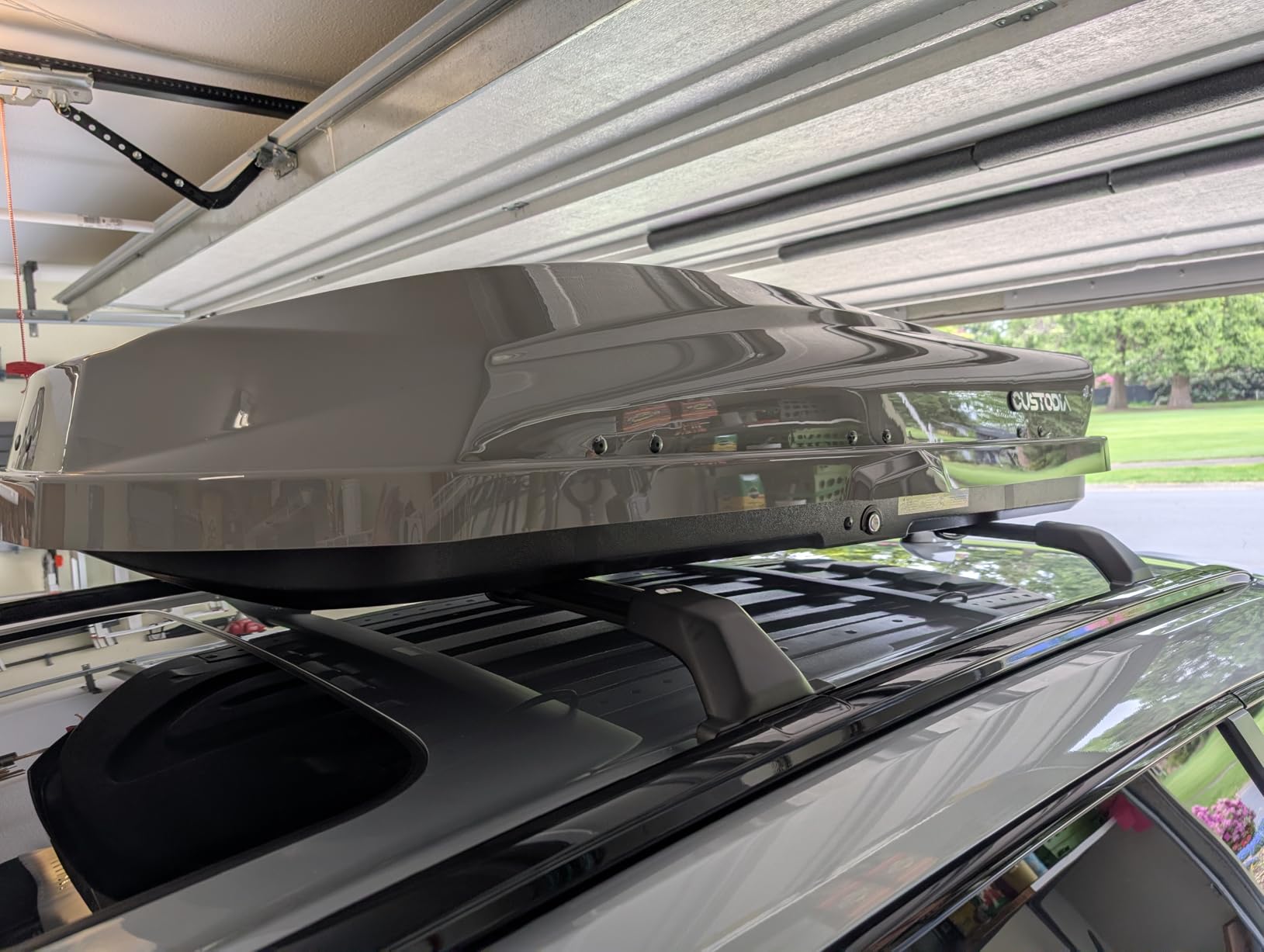
The shape of what fits is the reason it suits airport runs and organized travelers. Owners report fitting five carry-on bags plus golf clubs and bulky flat items, and the 30.2 pound empty weight is light enough to be a genuine one-person job. Several owners note it is still low enough to drive into a garage with the box fitted.
Quietness is reported explicitly, with owners describing no rattling and no whistling at highway speed. Interior ratchet straps are included, which stop gear shifting over long distances rather than letting a bag slide into the nose of the box.
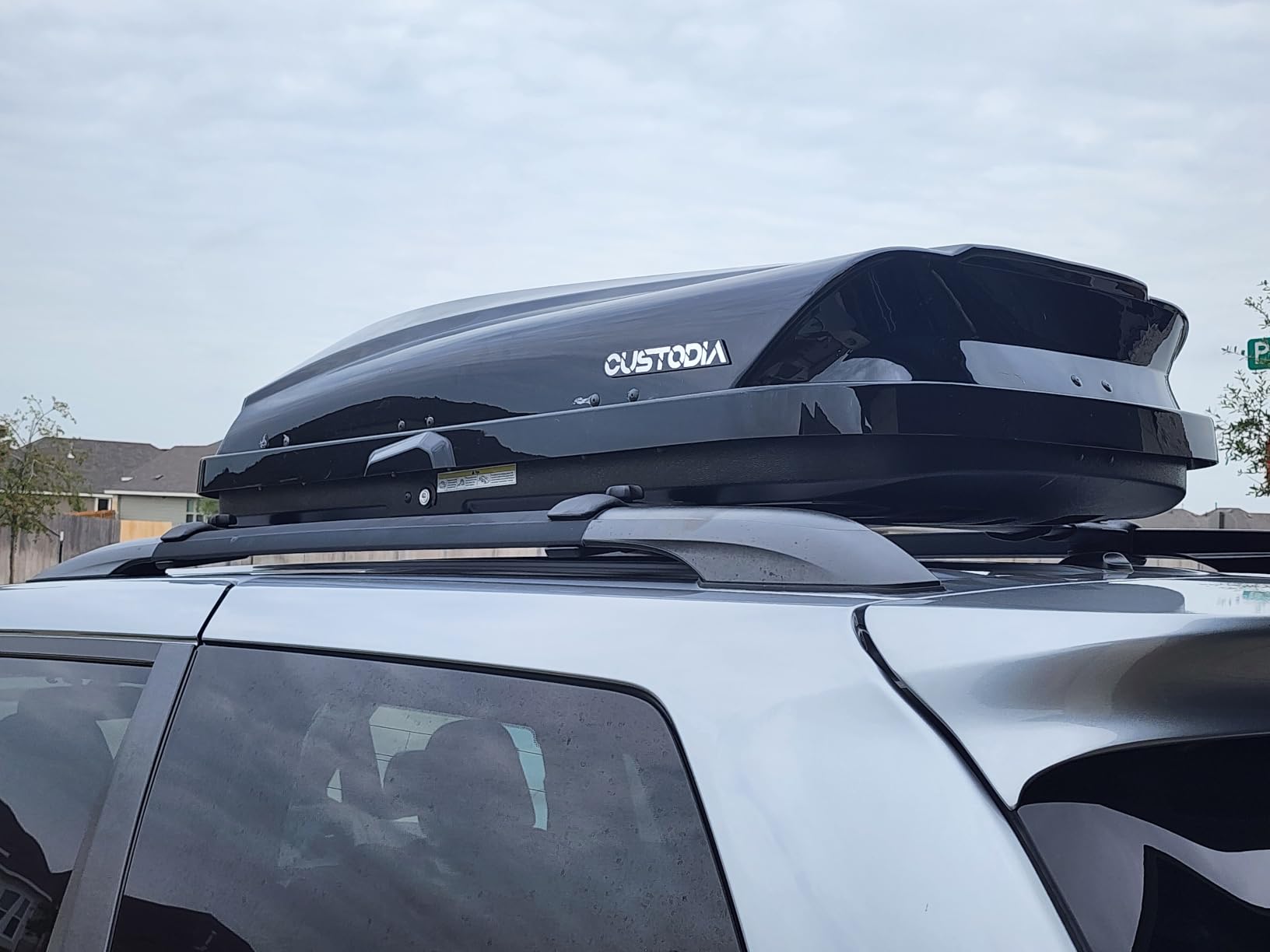
Installation and removal take longer than on a Thule, and the written instructions are sparse and mostly pictorial. The hardware is tool-free, but the process is less refined than a click-confirming mount.
Size expectations catch people out. Some buyers found their chosen variant smaller than expected, so measure your rack and your intended cargo before picking a capacity. Interior dimensions are 62.5 by 32.5 by 13.2 inches.
Two ownership details matter. The warranty is 30 days, which is short, and replacement keys are ordered from the manufacturer overseas and took about two weeks for one buyer. Customer service was reported as responsive when it mattered.
Is it right for a family of four
Fourteen cubic feet is a workable size for a family of four traveling with soft luggage and for a short trip, and the flat internal floor helps you use it. Five carry-ons is a real owner-reported capacity, which is a meaningful benchmark.
For a two-week trip with hard-sided suitcases, you will want the 18 cubic foot SkyBox NX or the Vista XL. Fourteen is a strong weekend and a tight fortnight.
How VISRACK compares to the Goplus
Both are 14 cubic foot dual-side boxes with a similar load rating, so the difference is refinement. The VISRACK is quieter, lighter at 30 pounds against 25 for the Goplus box in its listing, and rated higher by owners, while the Goplus adds metal lid stiffeners and a higher stated capacity limit.
Fitment is the tie-breaker. The Goplus has a restrictive 17 to 22.8 inch bar window, while the VISRACK publishes a 17.32 to 38.58 inch mounting hole range. Check which one matches your bars.
11. Thule Pulse 2 L 16 Cu Ft – Best for Daily Driving
Thule Pulse 2 L Roof Mounted Box, 16 Cubic Ft, Dual-Side Opening
16 cu ft (450 L)
75 kg load limit
Dual-side access
Click torque indicator
Pros
- Click torque indicator confirms a secure mount
- Dual-side access without reaching across
- Streamlined shape suits modern vehicles
- ASA-ABS resists sun scratches and weather
- Forward position keeps trunk access
Cons
- Listed as not water resistant
- Premium cost for 450 litres
- Needs compatible crossbars bought separately
The Pulse 2 L is Thule’s entry into the range, and it exists for a specific buyer: someone who wants Thule mounting quality and aerodynamics without paying flagship money. At 16 cubic feet and 450 litres it is still a genuinely large box, not a token model.
You keep the features that matter. The tool-free mounting system has the same click-type torque indicator as the Motion 3, so you get the physical confirmation that the box is securely attached. The box also confirms closure, and access is from either side of the vehicle.
The forward mounting position gives full trunk access with minimal risk of contact, and the ASA-ABS plastic resists sun, scratches and weather. Owners describe the streamlined shape as suiting modern vehicles well and limiting noise.
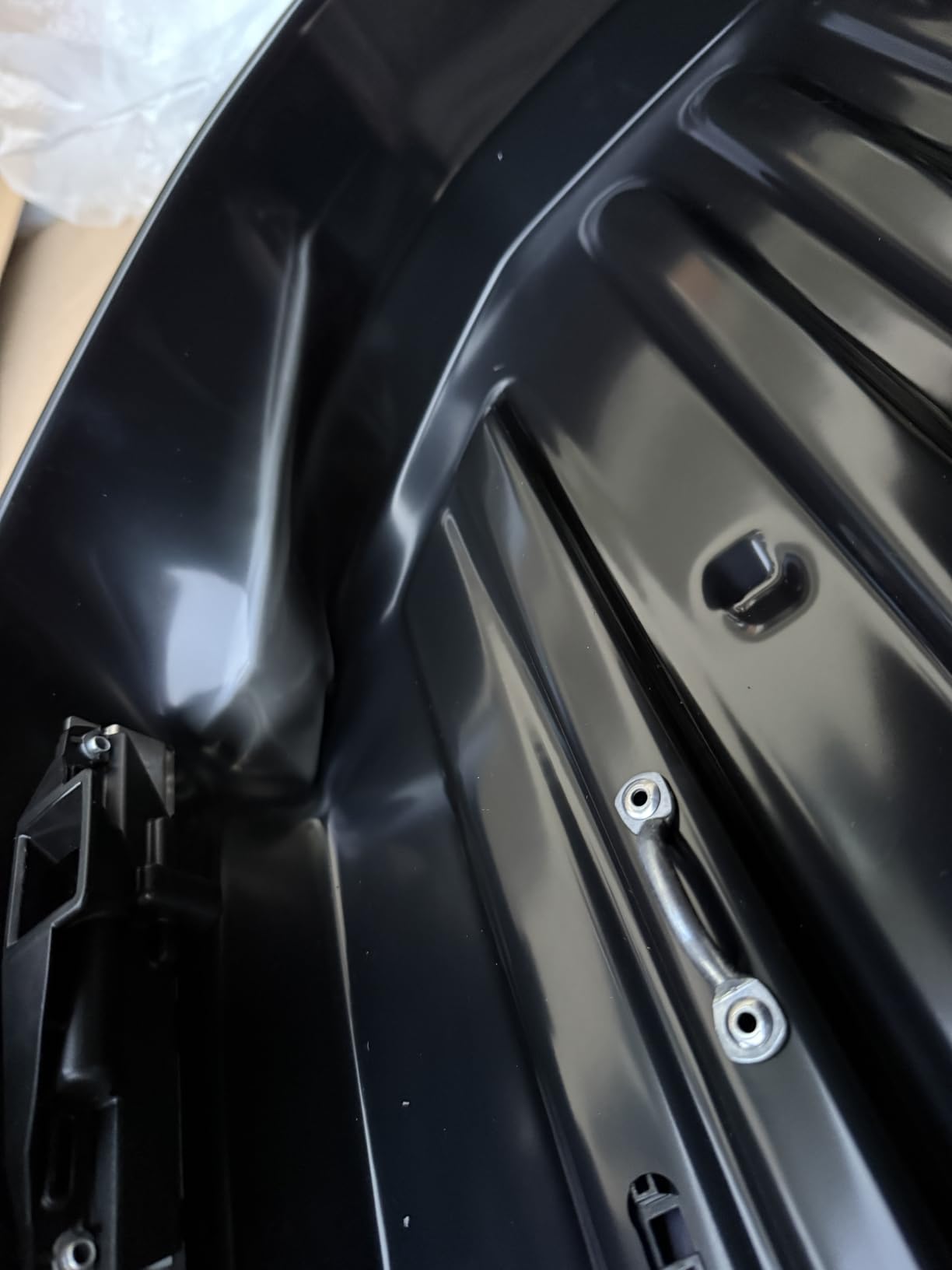
It is listed as not water resistant, which is the same caveat as the SkyBox NX and applies to multi-day rain trips. Line the interior with a dry bag or liner if your weather is unpredictable.
Compatible crossbars are typically bought separately, and that is a real addition to the total cost of ownership. The review base is also the thinnest of any Thule product here, so you are reading less long-term data than you would on a Motion 3 owner.
Load capacity is 75 kg, which is 165 pounds and more than enough for luggage, gear, skis and snowboards.
Who this box is for
This is the Thule box for a commuter who also takes a weekend trip. You want a streamlined shape that does not upset fuel economy on the daily drive, dual-side access so loading is quick, and a mount that confirms itself when it is secure.
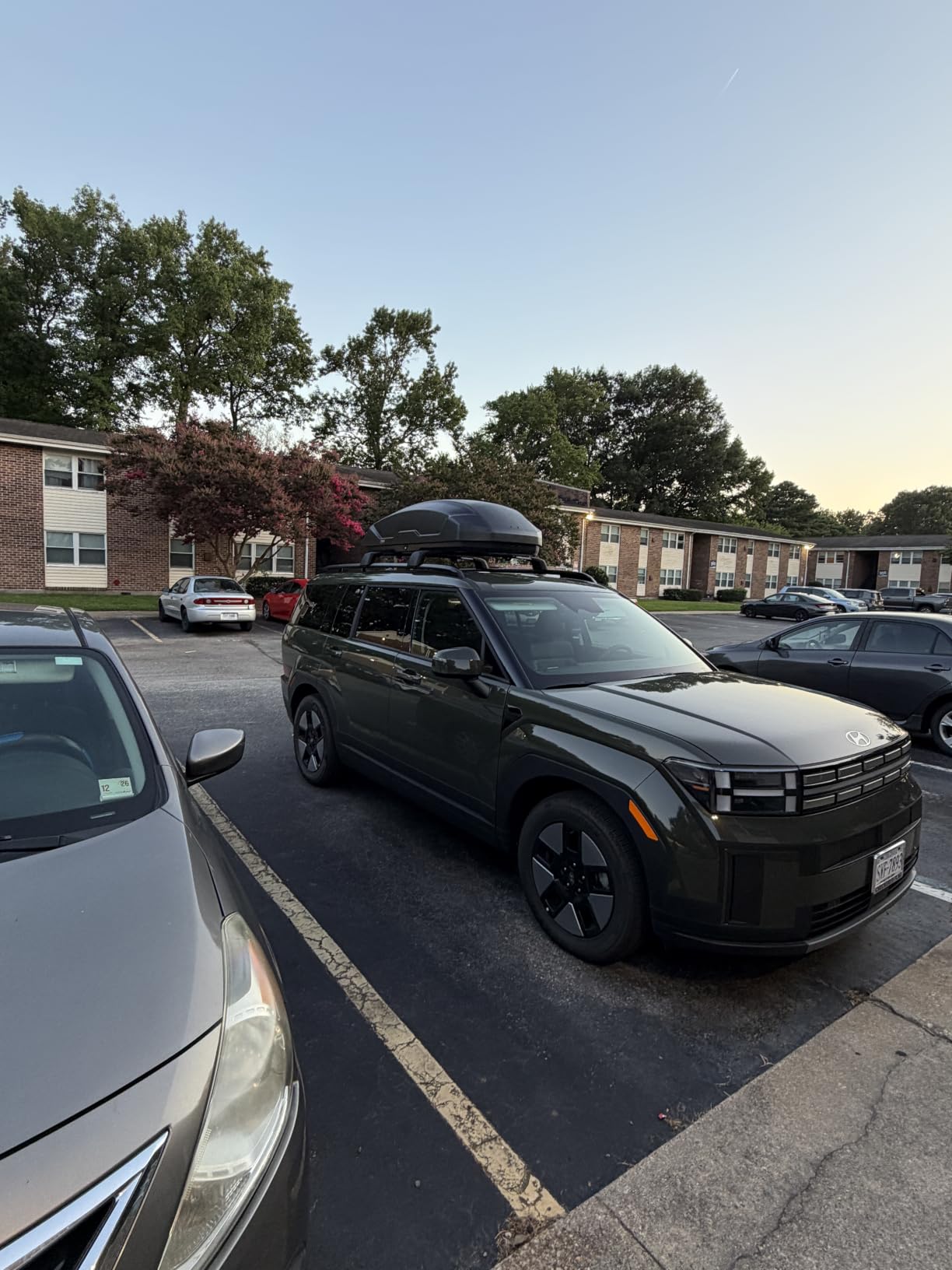
If your roof is a short roof or your vehicle is compact, the 81 inch length is on the longer side. Check hatch clearance before ordering, because a long box mounted too far back is the classic return reason.
Pulse 2 L versus Motion 3
Same brand, same mounting concept, different envelope. The Motion 3 is the wing-nosed flagship with a wider feature set and accessories including an interior light, box liner and storage cover. The Pulse 2 L is the streamlined, simpler box for shorter, more frequent trips.
Owners rate both highly and describe both as refined. The Pulse 2 L is the sensible entry point if you are new to roof boxes and want Thule hardware without flagship pricing.
12. INNO Ridge 240 8 Cu Ft – Best for Solo Installation
INNO BRA240BK Ridge Cargo Box – 8 Cubic FT (Gloss Black)
8 cu ft
Only 20 pounds empty
Passenger-side opening
Lifetime warranty
Pros
- Lightest box here at 20 pounds for solo fitting
- Compact enough for sedans small SUVs and EVs
- Build quality above off-brand models
- Stays dry in heavy rain with supplied plugs
- Limited lifetime warranty
Cons
- Passenger-side opening only
- Some vehicles need extra holes drilled
- Plastic U-bolt knobs feel cheap
- Lock needs a firm slam to engage
The INNO Ridge solves the problem that stops most people buying a roof box at all, which is the lift. At 20 pounds empty it is the lightest hard shell here by a wide margin, and owners specifically report installing, removing and storing it alone. For someone on a sedan, a small SUV or an EV with limited rack space, that changes the decision entirely.
It is compact enough for vehicles nobody else fits. Owners single out the Toyota Prius Prime and Kia Niro EV as vehicles this box suits, which tells you how small it is. At 50.4 by 23.6 by 11.4 inches it is a narrow, low wedge that disappears on a small roof.
Build quality is consistently rated above off-brand models, and reviewers place it between Yakima and Thule in feel. The safety lock system only releases the key once the box is locked, and the included hole plugs and rubber strip keep it dry through hours of rain.
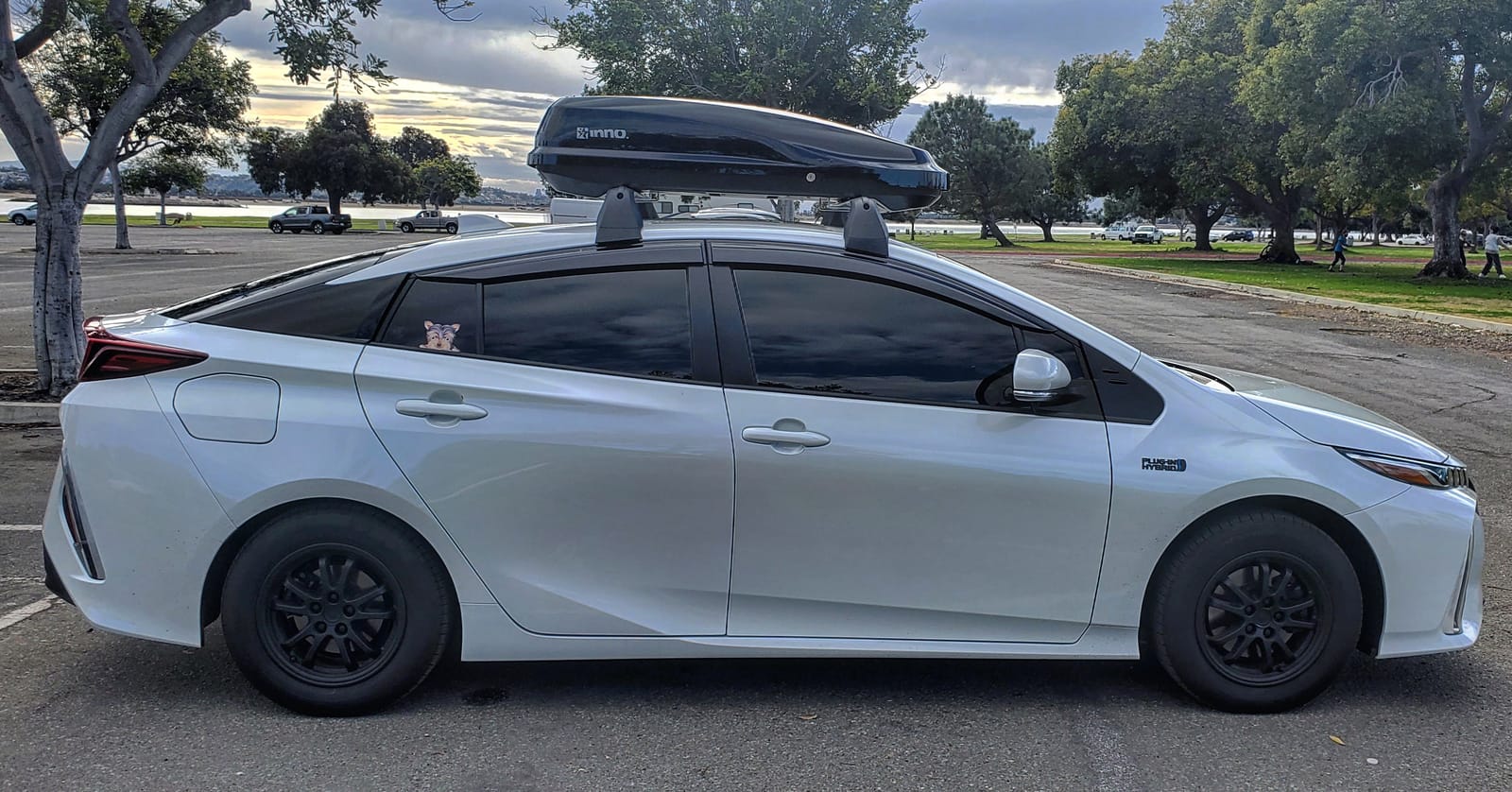
The opening is passenger-side only, so it is not ambidextrous like the dual-side boxes, and that is the most repeated complaint. Some vehicles expose too little crossbar surface and require drilling extra mounting holes, so check exposed bar length before ordering.
The plastic U-bolt locking knobs are criticised as cheap compared with Thule or Yakima hardware, and the lock needs a firm slam to engage reliably. First installs can be awkward alone on the hinge side of the lid or with a soft top.
Eight cubic feet is a weekend’s worth of gear for one or two people, not a family holiday. It will also fit inside a station wagon if you want extra security while parked, which is a genuinely useful trick owners mention.
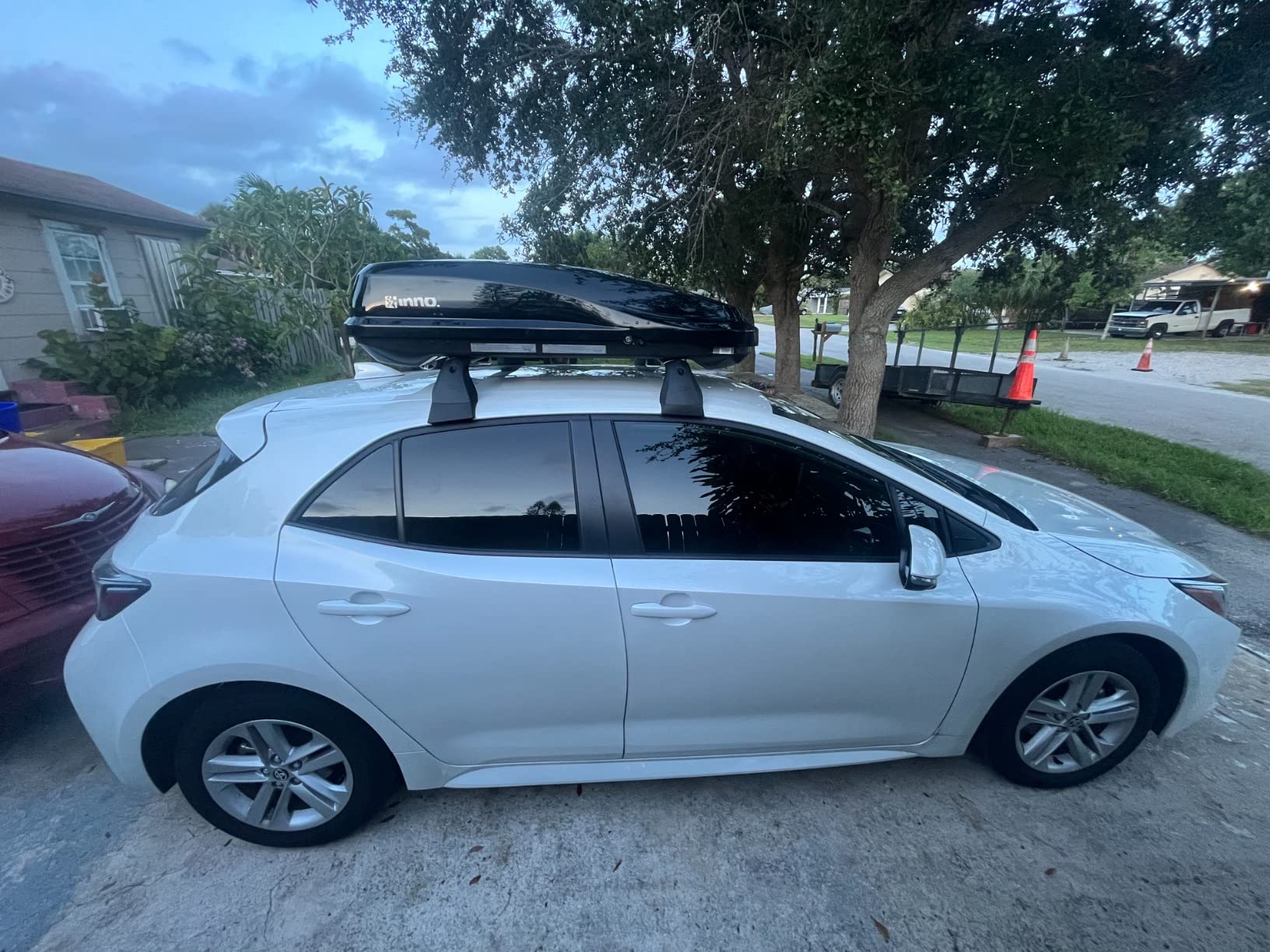
When 8 cubic feet is the right amount
Eight cubic feet covers two people traveling light, a golf bag, or a day trip with a change of clothes and a laptop. It is also the size that works on vehicles where nothing bigger will mount, including small EVs with factory roof rails.
It is not enough for a family of four or for skis and luggage together. If either is your use case, the 11 cubic foot INNO Wedge 660 is the natural step up from the same brand, with dual-side opening and a similar low profile.
Why solo-install weight matters more than specs
Every box in this roundup above 30 pounds is realistically a two-person job, and most manufacturer manuals assume two people. The 20 pound Ridge is the one that works on your own, which for a single person means the difference between a box you use and a box still in the garage.
Add the compact body and the low 11.4 inch profile and you have the easiest box here to handle in every sense. That is why it is also the easiest to remove and store between trips.
What Real Owners Say About Roof Boxes
Almost every page-one result for this query is an owner forum rather than a magazine, which tells you something useful about what actually matters. We read the recurring verdicts so you can weigh them against the spec sheets above.
Wind noise and fuel economy are the two loudest recurring complaints, and they are usually about the bars rather than the box. In a long-running r/rav4club thread, an owner wrote that the wind noise is real and that they had not known roof racks affected fuel efficiency, then removed the crossbars after the experience. In r/XVcrosstrek, the widely repeated line is that roof racks are loud and will take 3 to 5 MPG off your economy. On r/HRV, an owner of a 2020 Honda HR-V put it plainly, having tried both round bars and more aerodynamic bars: they all make a lot of noise and they all cut down on your MPG.
The counterpoint exists. An r/Subaru_Crosstrek owner reports no issues and no noticeable extra wind noise or decreased gas mileage with crossbars installed. And in r/ToyotaHighlander, a first-trip-with-a-cargo-box post reports that the box made a world of difference and avoided the drag and wind noise of a bare rack, with 23.4 mpg recorded on that setup. The pattern is that a closed shell is quieter than open bars, and that aerodynamic bars and low-profile boxes reduce the penalty further.
On brand choice, forums split honestly and the split is worth hearing. A long-running Toyota 4Runner forum thread on which brand to buy contains owners who chose Yakima over Thule specifically for easier roof-top mounting. On TDI Club, the common view is that the Yakima SkyBox 16 is the best box and the best size for the Jetta SportWagen, having looked at the Thule 1600 as well. On the LandCruiser Forum, an active thread reports that a roof box is the best option for adding cargo capacity and that the poster has had good experience with Thule racks.
Two practical points come up that roundups rarely cover. First, many owners point out that the factory roof rack already on the vehicle is often the cheapest and most effective route to carrying a cargo box, as noted on TacomaWorld. Second, r/urbancarliving frames the purchase as a value-versus-longevity question, which is exactly how the Vista XL and Ridge end up being justified: they are boxes you can move between vehicles and keep for years.
If you are weighing a bike rack alongside a box, our cargo bike trailer guide covers the towing alternative, and our rooftop tent guide covers the other thing people put on a crossbar. If you need a box for a specific vehicle rather than in general, start with the measurement steps below rather than a brand.
How to Choose a Roof Cargo Box: 8 Steps
Almost every return in this category is a fitment problem, not a quality problem. Work through these eight checks before you pick a model, and you will avoid the two that cause most disappointment: a box that will not clamp to your bars, and a box that blocks your rear hatch.
1. Measure your crossbar spread
Measure the distance between the center of your front and rear crossbars, then compare it against the box’s published mounting window. This is the single most important number. The SportRack Vista XL accepts 23 5/8 to 29 3/4 inches, the Goplus box needs 17 to 22.8 inches of rack width with bars under 3.1 inches wide and 1 inch thick, and the VISRACK publishes a 17.32 to 38.58 inch hole range.
Also check bar width and thickness, not just spacing. Budget boxes with wire U-brackets slide off curved aerodynamic bars, which is the most common hardware failure reported in reviews.
2. Measure from the front bar to your hatch
Measure the distance from the center of your front crossbar forward to the point where your rear hatch meets the roof. That number, not the length of your roof, determines whether the box blocks access. Manufacturers also disagree on where to measure, which is why fit guides from two brands can disagree about the same vehicle.
Mount the box as far forward as your front bar allows. Owners of several models report that positioning too far back reintroduces wind noise, and the Thule Pulse 2 L specifically notes that a forward position preserves full trunk access.
3. Check your vehicle’s roof load rating
Find the dynamic roof load limit in your owner’s manual and add the box’s empty weight to your gear weight. The lowest published limit wins, so if your vehicle and your bars each have a rating, the lower one is the one that counts.
This is where the weight ranking in this roundup matters. The INNO Ridge at 20 pounds and the JEGS box at 23 pounds are the gentle options. The Yakima SkyBox NX 18 at 53 pounds and the GarveeTech at 44.8 pounds eat a large share of a modest roof rating before you load anything.
4. Pick volume by trip type
Roughly 8 to 10 cubic feet covers one or two people traveling light, a golf bag, or a day trip. Roughly 11 to 14 cubic feet covers a family weekend, and 16 to 18 cubic feet covers a family holiday with hard-sided luggage or a full ski setup for several people.
Cargo volume is not usable capacity. A box with a curved nose or a raised mounting base gives you fewer usable liters than the headline figure, which is why the Yakima’s flat unobstructed floor is repeatedly praised at the same 18 cubic feet other boxes also claim.
5. Check internal length for skis and golf
For skis and snowboards, internal length is the deciding spec. The Yakima SkyBox NX 18 fits skis and snowboards up to 195 cm, and the INNO Wedge 660 holds 6 to 8 pairs of skis or 4 snowboards. Add boot bags and that space is gone fast, so buy for the gear you actually carry.
Golf clubs fit in most boxes above 10 cubic feet, but a full golf bag is bulky and benefits from a wide opening rather than a long one.
6. Decide the opening side
Dual-side opening lets you load from whichever curb you are parked on and packs the far end first. It is the most practical feature in this category and it is now available at every price tier, from the 10 cubic foot JEGS box to the Yakima and INNO.
Single-side opening is fine if you always park with the same side free. Rear-opening designs keep you away from traffic, which is the reason the Vista XL uses one.
7. Decide hard shell versus soft carrier
A hard shell keeps water out, locks your gear, resists UV and looks clean. A soft bag is cheaper, folds flat, weighs far less and can be installed solo, but owners consistently report leakage and less security. If your gear is soft clothing, electronics or anything moisture-sensitive, hard shell wins.
Soft carriers make more sense if you use the roof three or four times a year and need the storage space back in the garage.
8. Plan for the fuel economy and noise penalty
Owner reports put the penalty from racks and boxes at roughly 3 to 5 MPG, and one recorded figure with a box in place was 23.4 mpg. Aerodynamics move that number. The 11 inch INNO Wedge 660 and the 13.4 inch GarveeTech report minimal wind noise, while the 19 inch Vista XL sits at the louder end despite its good reviews.
Crossbar choice matters as much as box choice. Round bars are louder than aerodynamic profiles, and this debate runs through the Subaru, Honda and VW owner threads constantly. If noise is your main complaint, budget for aero bars.
Frequently Asked Questions
Which roof box is better, Thule or Yakima?
Both are excellent and owners on enthusiast forums describe their own choice as the best available, so the honest answer is that the difference is preference. Yakima wins on interior volume, internal ski length and a flat usable floor, with the SkyBox NX 18 sized for up to 4 campers and skis up to 195 cm. Thule wins on aerodynamics and on the PowerClick mount, whose torque indicator clicks when the box is securely attached. Choose by fit, volume and which bars you already own.
Are rooftop cargo boxes worth it?
For families who run out of cabin space, skiers who need internal length, and anyone who wants luggage dry and locked rather than strapped in the open, yes. A box adds roughly 8 to 18 cubic feet of enclosed space and cuts drag and wind noise compared with bare crossbars. The trade-offs are added weight against your vehicle’s roof rating, a fuel economy penalty of roughly 3 to 5 MPG by owner report, and the need for correct crossbar spread and hatch clearance.
How much MPG do I lose with a roof box?
Owners commonly report losing 3 to 5 MPG from racks and boxes, and one recorded figure with a cargo box fitted was 23.4 mpg. Aero bars and a low-profile box reduce the penalty, which is why the 11 inch INNO Wedge 660 and the 13.4 inch GarveeTech report minimal noise and a small economy impact.
Does any roof box fit any roof bars?
No, and this is where most returns happen. Check three numbers: the distance between your bar centers, the width and thickness of the bars themselves, and the exposed bar length available for clamps. Wire U-bolt brackets on budget boxes slide off curved aerodynamic bars, and some boxes publish narrow windows that exclude aero racks entirely. Measure before you order.
How fast can I drive with a roof box, and do I need to tell my insurer?
Fit and load matter more than a fixed limit, and a box that is not fully clamped or exceeds your roof rating is unsafe at any speed. SportRack’s own instruction manual for its rooftop cargo carriers warns against travelling empty above 40 mph, which reflects how much drag a large empty shell creates. On insurance, check your policy for accessory and roof-mount coverage, since standard comprehensive cover often excludes damage caused by an improperly secured load.
Final Verdict: The Best Rooftop Cargo Boxes in 2026
The best rooftop cargo box for most drivers in 2026 is still the SportRack Vista XL. Eighteen cubic feet, a tool-free mount one person can manage, a 25 year warranty and the largest owner-review base in the category combine into the box most people are happiest with three years later. It ranks number one in our table, in our top three and in this verdict, and that consistency is the point.
Buy the Thule Motion 3 if you drive long highway distances and care about fuel economy, or the INNO Wedge 660 if you need to fit under a low garage door. The Wedge 660 also carried the highest owner rating in the group at 4.7, and its 11 inch height is the quietest running option we analyzed.
Buy the Yakima SkyBox NX 18 if you are a family of four or you carry long skis, and accept the 53 pound lift with help. Buy the INNO Ridge if you are alone and want a box you can install and store by yourself at 20 pounds.
And before you order anything, spend five minutes with a tape measure on your crossbar spread and your front-bar-to-hatch distance. That is the step that decides whether you enjoy the box or return it, and no amount of cubic feet fixes a fit problem.