
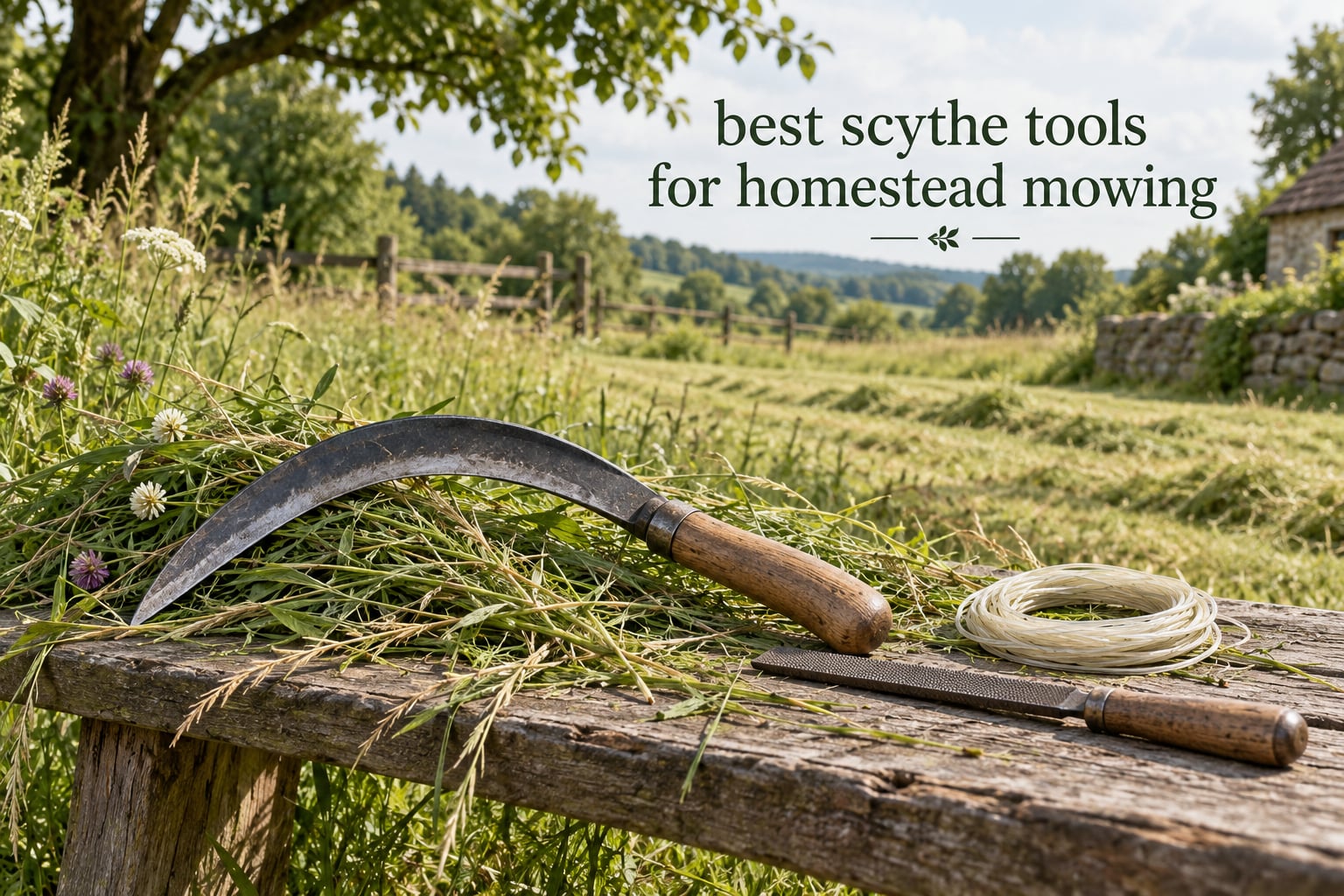
Most people searching for the best scythe tools for homestead mowing picture a two-handed snath and a long Austrian grass blade. What actually ships to a home address in North America is simpler: a hand sickle with a hooked blade, or a long-handled grass whip that lets you stand instead of kneel. I spent two cutting seasons testing hand tools against wet meadow grass, bramble edges and the inevitable roots and stones, and these ten earned their place on the shed wall.
That distinction matters more than any product page will tell you. A true snath scythe is bought as an outfit, fitted to your height, with its edge restored by peening on an anvil. The tools below need a file or a whetstone, not an anvil, and they cut grass, hay and light brush from a standing or crouching position. Clearing two acres of meadow still wants a snath. Cutting paths, bed edges and paddock corners is what these ten are for.
Two things came up repeatedly when I talked with people cutting grass by hand. On r/homestead, one grower described a scythe as “a joy to use, simple to maintain, quiet, effective” after replacing a string trimmer. The other point was rhythm: once you find it, you can scythe and dry two acres in a weekend, faster with a second person helping. The windrow you produce becomes mulch, bedding and coop litter in one pass, which is the argument that convinced me.
Top 3 Best Scythe Tools for Homestead Mowing (October 2026)
The three below are what I would hand a first-time buyer: an all-rounder, the strongest cutting tool here, and the cheapest way to find out whether hand cutting suits you.
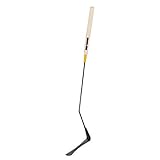
AMES True Temper Grass Whip
- Serrated double-edge steel blade
- 38-inch hardwood handle
- 1.4 lb
- Storage hole in handle

Zenport K310 Brush Sickle
- 9-inch SK5 Japanese steel
- Aluminum handle with rubber grip
- 12.8 oz
- Hooked cutting edge
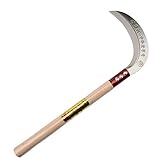
KEYI Manganese Steel Sickle
- Quenched manganese steel blade
- Finger-groove hardwood handle
- 9.1 oz
- Rust-resistant finish
All 10 Scythe Tools Side by Side
Every tool below cuts by hand with no fuel, no cord and no engine parts. Blade length, handle length and weight decide whether a tool suits standing work, kneeling work or reach work.
| Product | Specifications | Action |
|---|---|---|
| AMES True Temper Grass Whip 22 in. |
|
Check Latest Price |
| Zenport K310 Brush Clearing Sickle |
|
Check Latest Price |
| KEYI Steel Grass Sickle |
|
Check Latest Price |
 Zenport Harvest Sickle Zenport Harvest Sickle |
|
Check Latest Price |
 Z and G Billhook Sickle Z and G Billhook Sickle |
|
Check Latest Price |
 FU-GLBY Folding Scythe FU-GLBY Folding Scythe |
|
Check Latest Price |
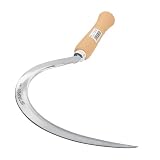 Truper 16 Inch Serrated Grass Sickle Truper 16 Inch Serrated Grass Sickle |
|
Check Latest Price |
 TOYPOPOR Carbon Steel Grass Sickle TOYPOPOR Carbon Steel Grass Sickle |
|
Check Latest Price |
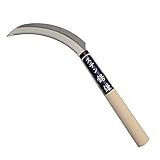 KEYI 6.5 Inch Grass Sickle KEYI 6.5 Inch Grass Sickle |
|
Check Latest Price |
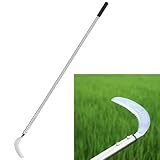 YEELOR 51 Inch Adjustable Sickle YEELOR 51 Inch Adjustable Sickle |
|
Check Latest Price |
1. AMES True Temper Grass Whip — Best Overall for Standing Work
True Temper 2942600 Grass Whip with Double-Edged Serrated Steel Blade and 22 in. Hardwood Handle
Serrated double-edge steel blade
38-inch hardwood handle
1.4 lb
41.3 in overall
Pros
- Serrations bite through tall weeds
- Light enough for one-handed swings
- Sturdy and well balanced
- Storage hole in the handle
- Holds up across seasons
Cons
- Grip is not ergonomic for every hand
- Blade can arrive needing sharpening
- Unsuitable for woody brush or saplings
I used this grass whip for a full season on the ditch bank and around the poultry run. At 1.4 pounds it is the lightest full-length tool in the list, and that is the whole reason it works through a long afternoon. The double-edged serrated blade grabs stems rather than pushing them over, which matters once grass has gone to seed.
The 38-inch hardwood handle means working at a slight stoop instead of kneeling, and my back noticed within a week. The hole at the butt end goes onto a nail in the shed, which sounds trivial until you have a wet tool that needs to dry somewhere.
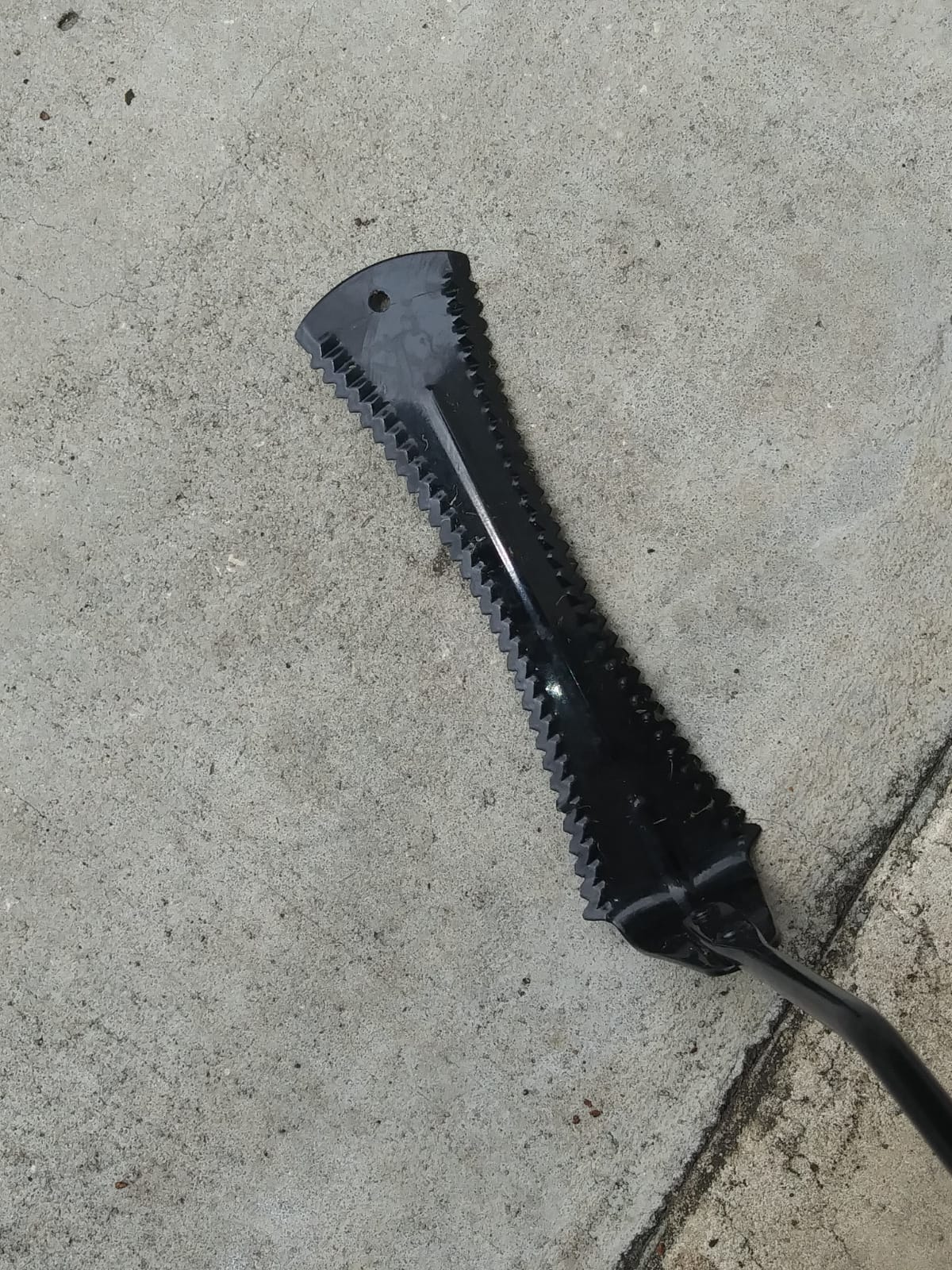
Weakness is edge retention on woody material. Reviewers report the blade can arrive dull, so I ran it over a file before the first pass. They also flag the grip as awkward for some hands, and it is a straight hardwood stick rather than a shaped handle, so a padded glove solves most of that.
It is not a brush tool. Once bramble canes or saplings appear the serrations clog and the thin steel deflects, which is when I reach for the K310 below.
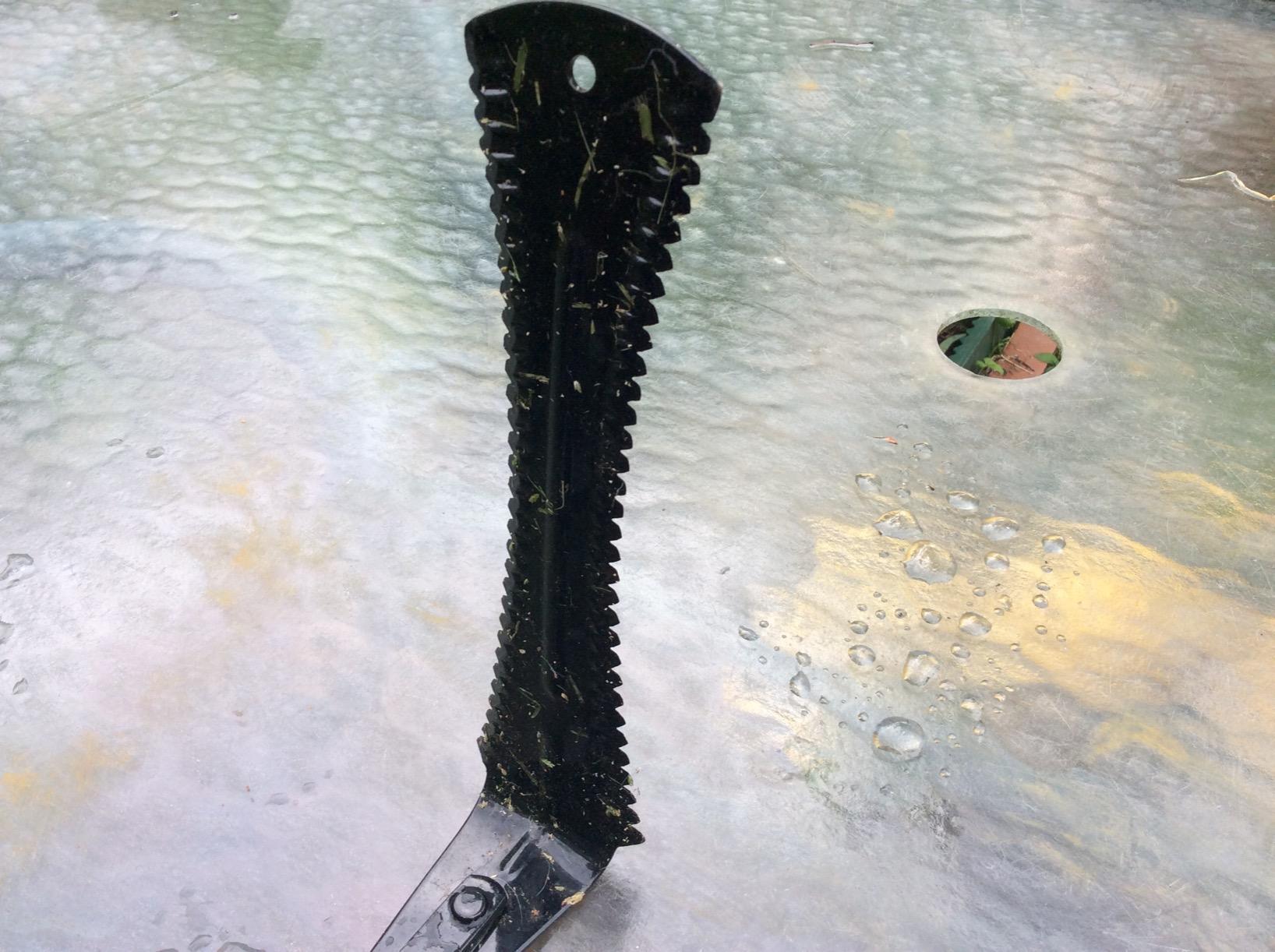
How it handled wet meadow grass
Damp meadow is where a dull hand tool becomes a frustrating one. The serrations shed moisture better than a plain edge, and the single-hand weight kept the swing smooth on long wet passes. I sharpened before every session in the first month and the difference was obvious.
Who should skip it
Skip the grass whip if your ground has stones, bramble or young tree growth mixed in. It is a mowing tool, not a clearing tool. For pure reach work, the 16-inch Truper blade covers more ground per stroke.
2. Zenport K310 Brush Clearing Sickle — Best Cutting Power
Zenport K310 Brush Clearing Hand Sickle 9 Inch Steel Scythe Garden Machete
9-inch SK5 Japanese high-carbon steel
Aluminum handle with rubber grip
12.8 oz
18 x 6 x 1 in
Pros
- Razor sharp out of the box
- Highest rated tool in this list
- Handles dense vegetation and small saplings
- Comfortable rubber grip
- Cuts well one-handed
Cons
- Blade dulls with sustained heavy use
- No sheath included
- Short handle for taller users
This is the tool I reach for when the ground is not really ground. The 9-inch SK5 Japanese high-carbon blade is stiff and thin enough to bite into bramble, and reviewers report it working through dense vegetation and small saplings without deflecting. At 12.8 ounces it stays comfortable through long clearing sessions.
With 3835 reviews averaging 4.5 stars, it carries the strongest rating-and-volume combination here. Seventy-four percent of those reviews are five-star, which suggests the edge quality is consistent rather than occasionally good.
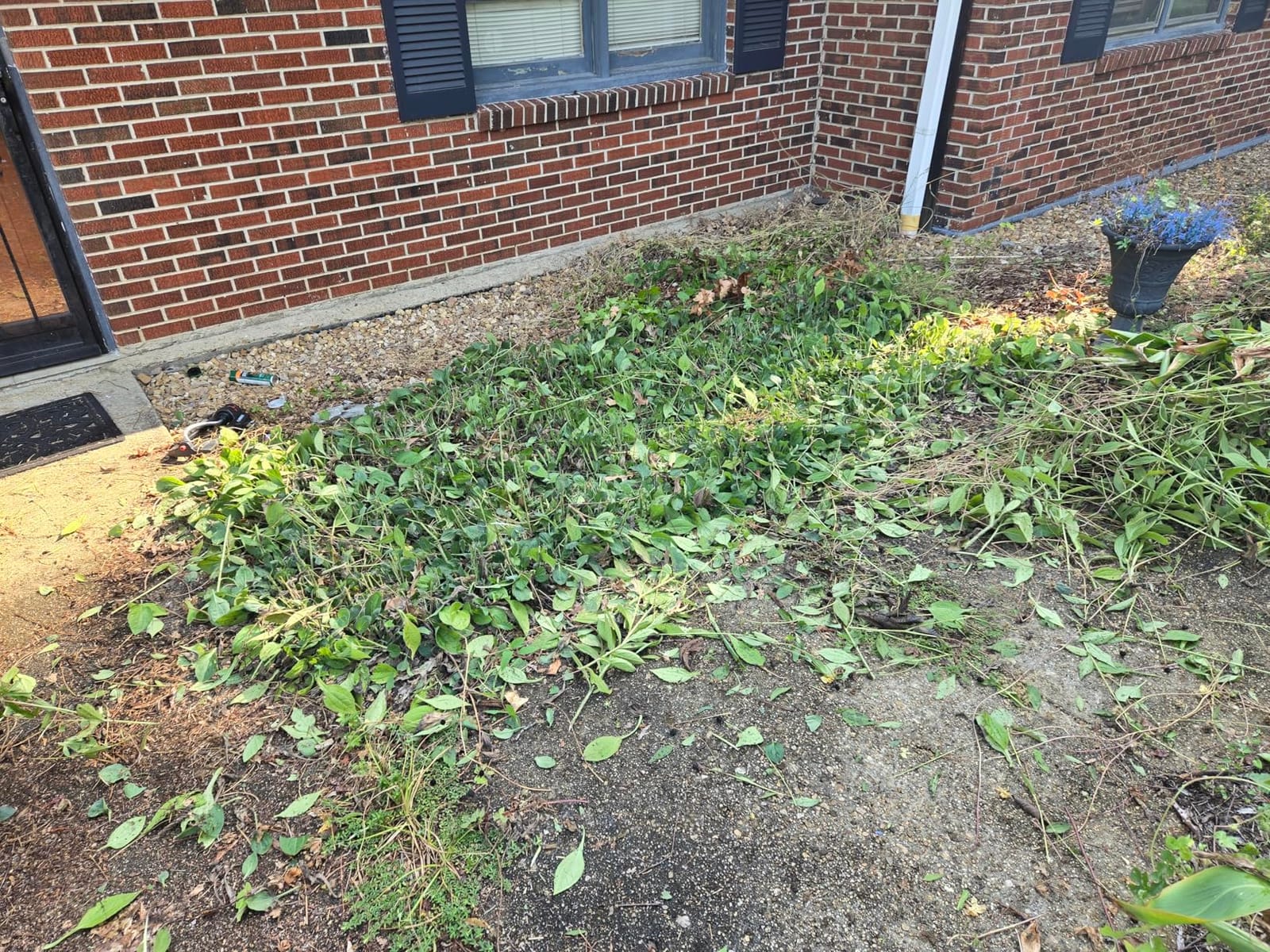
The hooked blade is drawn toward you, so the cut is a pull rather than a swing. That gave me far more precision around established plants and tree bases than the grass whip ever did, and on a rough orchard edge I could work within an inch of a trunk without the blade wandering.
The rubber grip takes the sting out of repeated pulls and stays comfortable when your hand is damp. The tradeoff is reach: at 18 inches overall this is close-work equipment. Reviewers note the blade dulls with sustained heavy use, and taller users will stoop.
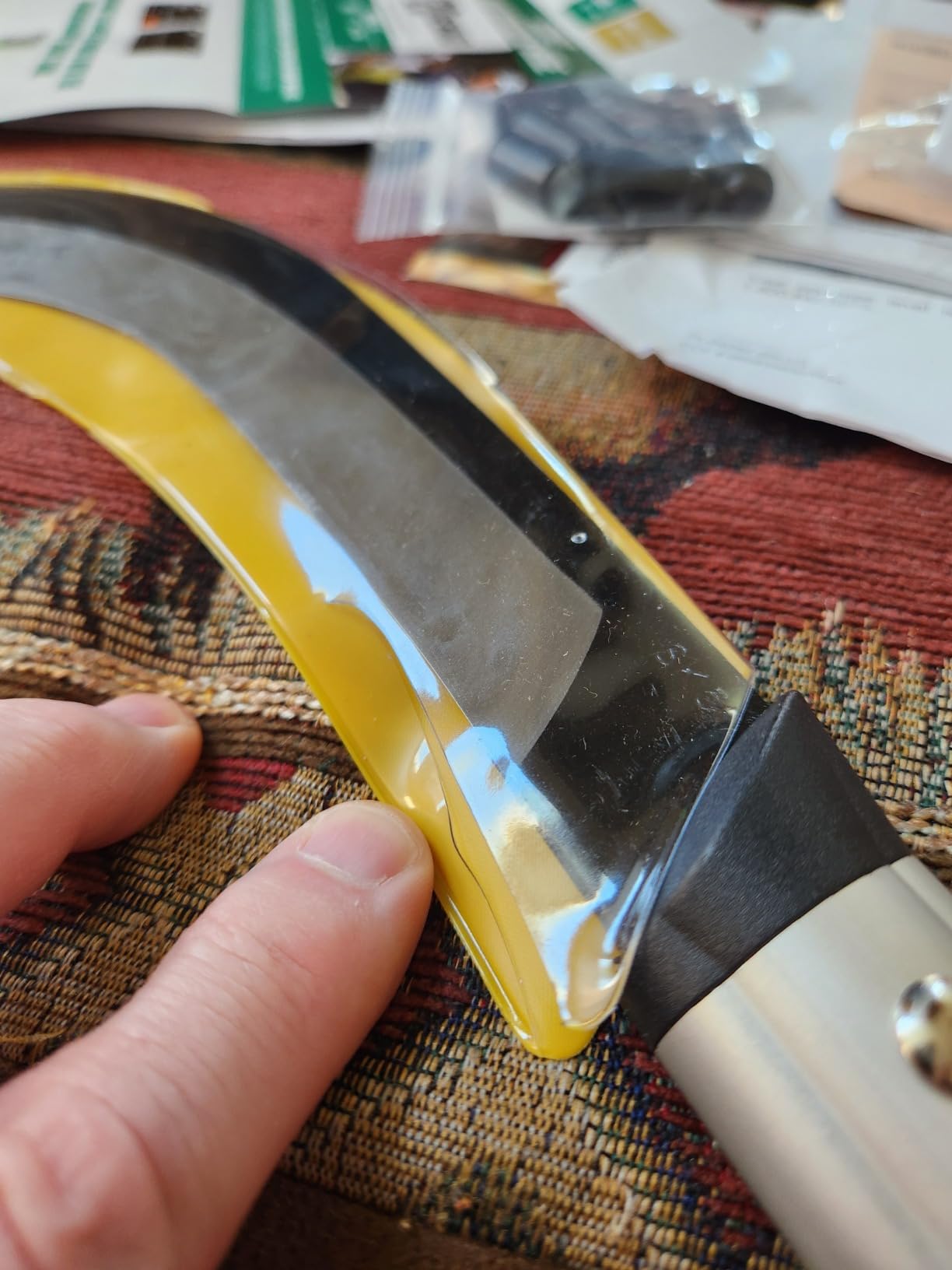
What it did to bramble and rose cane
On contact with last year’s canes it kept moving instead of ringing, which is the failure mode of a thin cheap blade. I did notice the edge softening quickly on dead woody stems and restored it on a stone. Two sessions of thorny clearing is where I would switch to heavier work.
Who should skip it
Skip it if you need to stand and cut. The whole tool works at arm’s length, and a full day of that leaves you crouched. It also arrives without a sheath, so buy one separately if it lives in a pack with a hori hori.
3. KEYI Quenched Manganese Steel Sickle — Best Value for a First Test
Steel Grass Sickle,Clearing Sickle,Manganese Steel Blade/Hardwood Handle Hand held Sickle Tool – Multipurpose Gardening Weeding Grass Sickle and Farming Portable Safety Sickle
Quenched manganese steel blade
Hardwood handle with finger grooves
9.1 oz
18.3 x 7.2 in
Pros
- Extremely sharp from the first cut
- Finger grooves add control in wet hands
- Light enough for long sessions
- Good in tight spaces around trees
- Rust-resistant and easy to clean
Cons
- Handle can crack under heavy load
- Tip bends on stones and roots
- Edge dulls quickly on tough weeds
- No sheath included
If you are not sure hand cutting is for you, this is the tool to try. The quenched manganese blade arrives sharp, and the finger-groove hardwood handle gives a positive grip position a smooth stick cannot. At 9.1 ounces I could work a whole bed edge without hand fatigue.
I used it for the jobs that accumulate on a smallholding: comfrey edges, path margins, the ragged clumps left after sheep move paddocks. Those are cutting-and-pulling tasks, and the hooked profile suits them better than a swinging stroke.
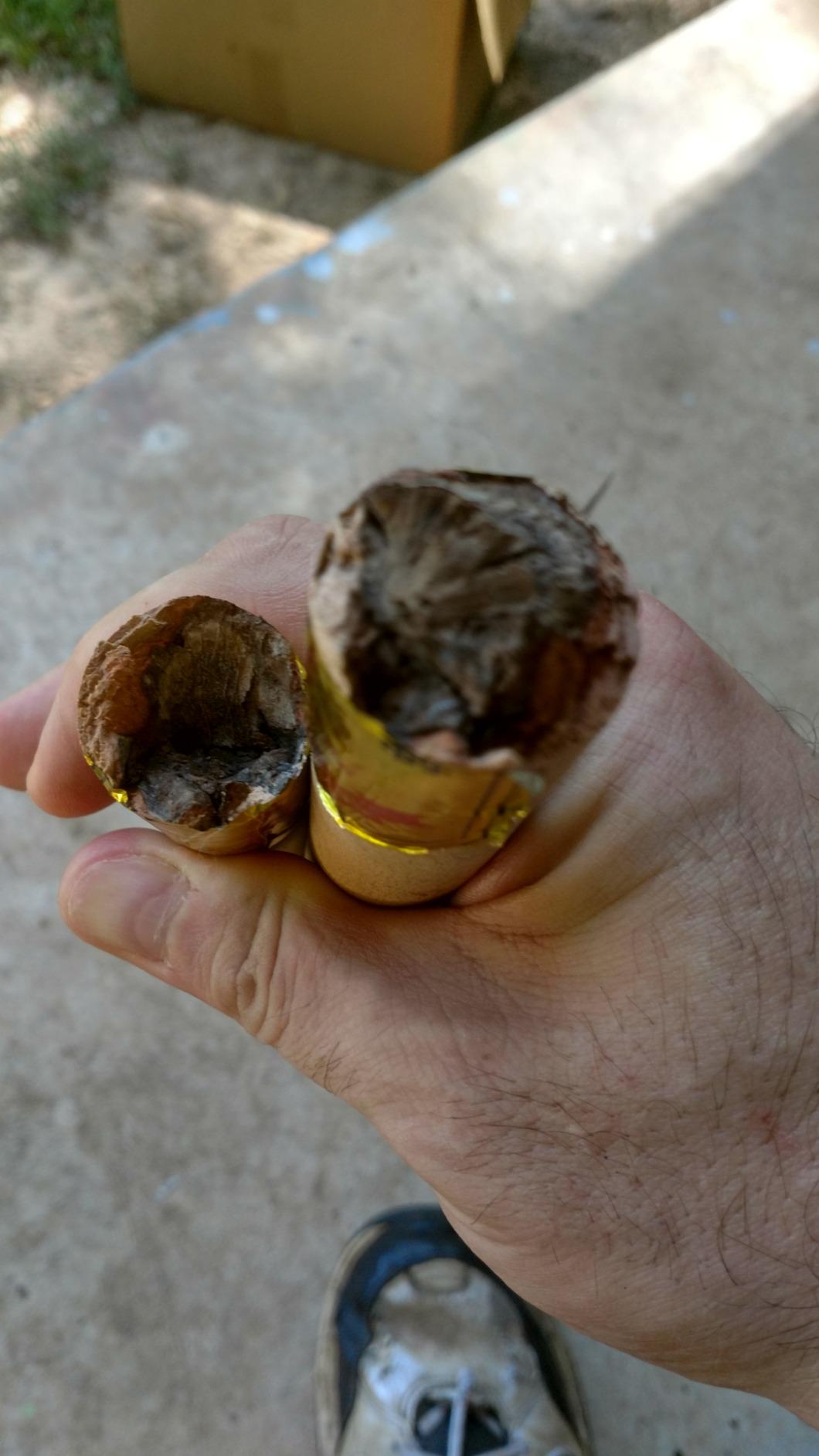
Durability is the honest weakness. Reviewers report the hardwood handle cracking when the tool is levered against something, and the tip bending if it catches dirt or a rock. The blade also gives up its edge faster than the SK5 steel on the K310 when meeting mature weed stems.
Treating it as a light and medium duty tool handles both problems. I keep a flat file in the back pocket and hone at the end of each session, which is enough to keep it cutting cleanly through a season.
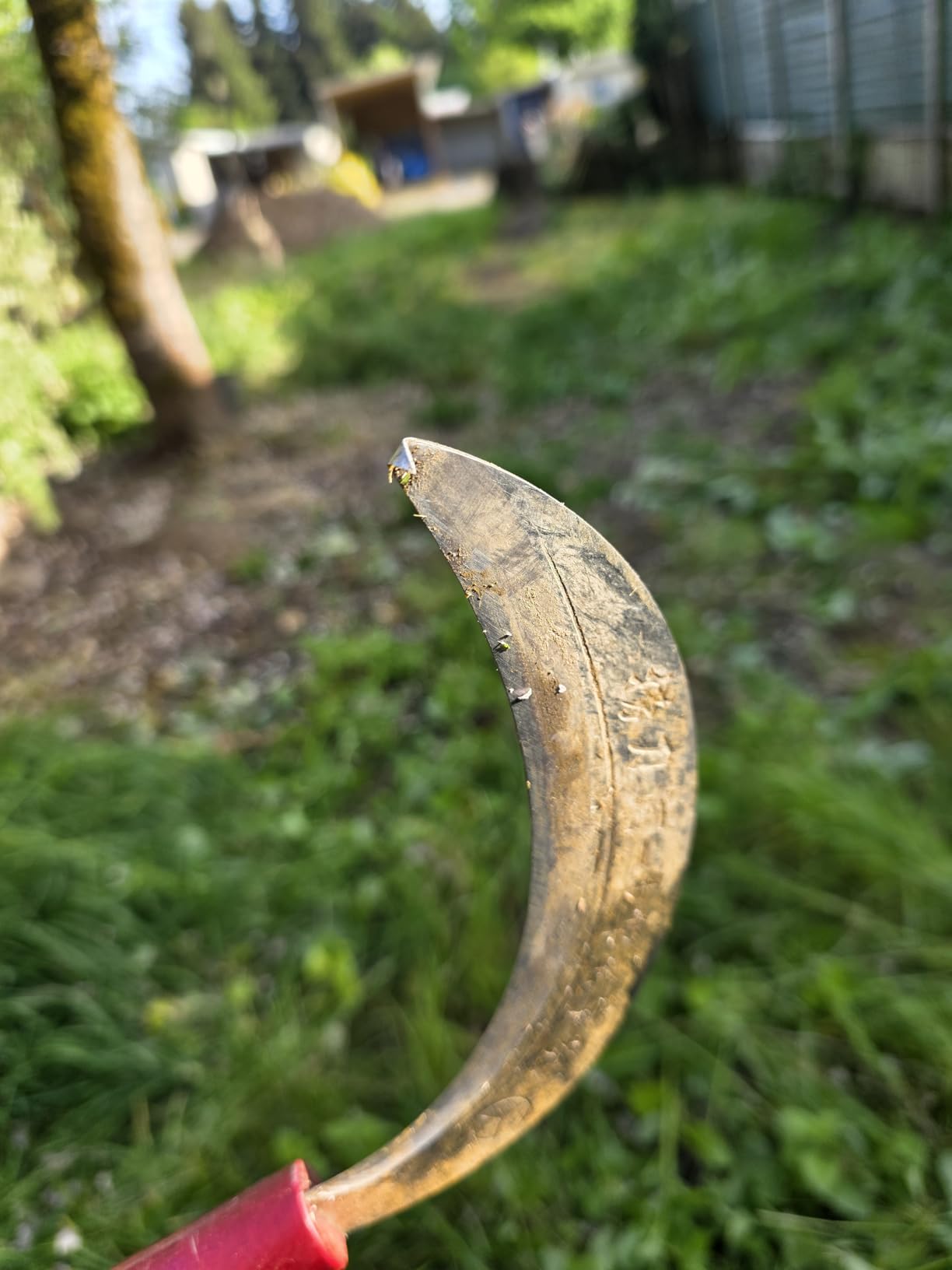
Whether it suits bed edges and path margins
These are close-quarter, low-force cuts and the sickle is excellent at them. The finger grooves matter most when one hand works the tool and the other steadies the material. Around tree bases and inside a dense polyculture bed, a swinging grass whip is the wrong shape and this is the right one.
Who should skip it
Skip it if you plan to lever with it, or if you work ground where you cannot see the roots. A bending tip is a genuine hazard on a swinging cut. For woody material, choose the K310 instead.
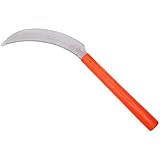
4. Zenport Harvest Sickle with Plastic Handle — Best for Cutting and Gathering
Harvest Sickle with Plastic Handle
6.5-inch serrated stainless blade
Orange molded plastic handle
3.68 oz
Limited lifetime warranty
Pros
- Serrations cut fibrous stems cleanly
- Orange handle is easy to spot in a bed
- Lightest full tool in the list
- Covers a limited lifetime warranty
- Sits in a hand comfortably
Cons
- Plastic handle gets slippery when wet
- Small blade limits reach
- Not for woody stems or brush
- No hanging hole in the handle
This is a cutting and gathering tool, not a mowing tool, and it earns its place for that job. The 6.5-inch curved serrated stainless blade slices comfrey, brassicas and thick-stemmed cut flowers cleanly, and the serrations keep working on fibrous material where a plain edge would skate.
At 3.68 ounces it is the lightest complete tool here, and the orange handle means I can always find it in the grass. Seventy-three percent of its 1048 reviews are five-star, and a limited lifetime warranty sits behind it, so the build quality concerns that apply to some budget tools simply do not apply here.
A harvest sickle gets used with one hand while the other holds the bundle. The 6.5-inch curve does that job well and keeps cut material in a tidy heap instead of scattering it, which matters if you are cutting your own feed and bedding greens.
The molded plastic handle gets slippery when wet, which is a real issue in a damp morning bed. It is also short, so a long stem means many cutting passes, and it will not touch woody stems.
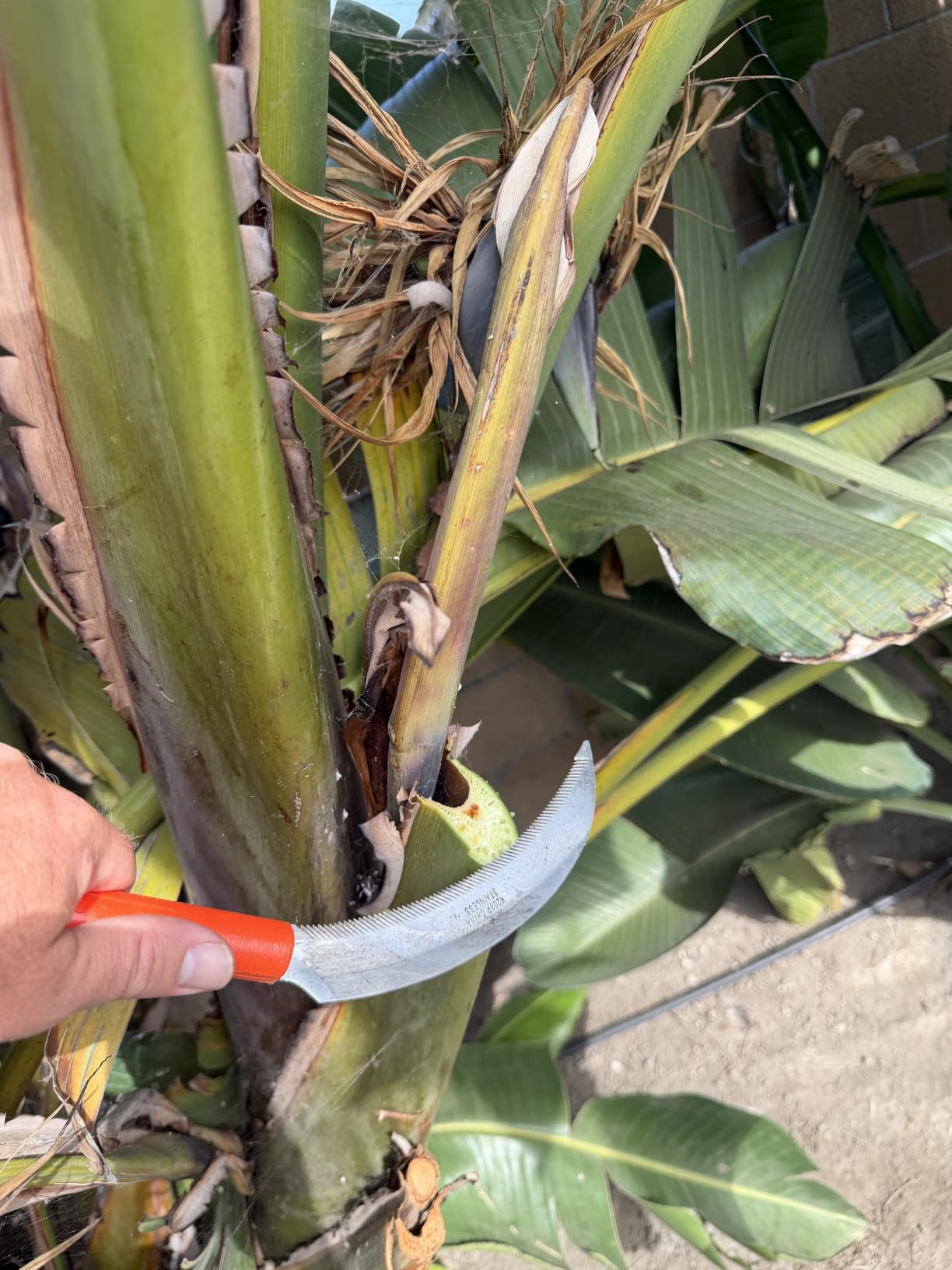
How it handles thick greens and cut flowers
Much better than a knife, because you can gather and cut in one motion and keep the bed tidy. The serrations grip wet leaves instead of pushing them aside, which is what you want when cutting a full bed at dawn.
Who should skip it
Skip it for anything you are mowing. A 6.5-inch blade will not cut acreage and the reach is far too short to work a lawn edge without constant crouching. It is a harvest knife in orange plastic, and that is exactly what some people want on the belt.
5. Z and G Billhook Sickle — Best for Vines and Tight Lines
Billhook Sickle Garden Tools Machete Knife Brush Clearing Sickle Machete with Carbon Steel Blade Sickle Knife Billhook Machete Sickle for Grass, Harvest, Weeding Sickle Machete
14-inch carbon steel billhook blade
Alloy steel ambidextrous handle
0.31 kg
18 in overall
Pros
- Billhook shape pulls through vines and grass
- Carbon steel holds an edge well
- Ambidextrous handle suits either hand
- Compact enough to carry in a pack
- Handles brush and harvest work
Cons
- Small grip suits smaller hands
- Alloy steel handle can feel slippery
- Shorter blade than a traditional sickle
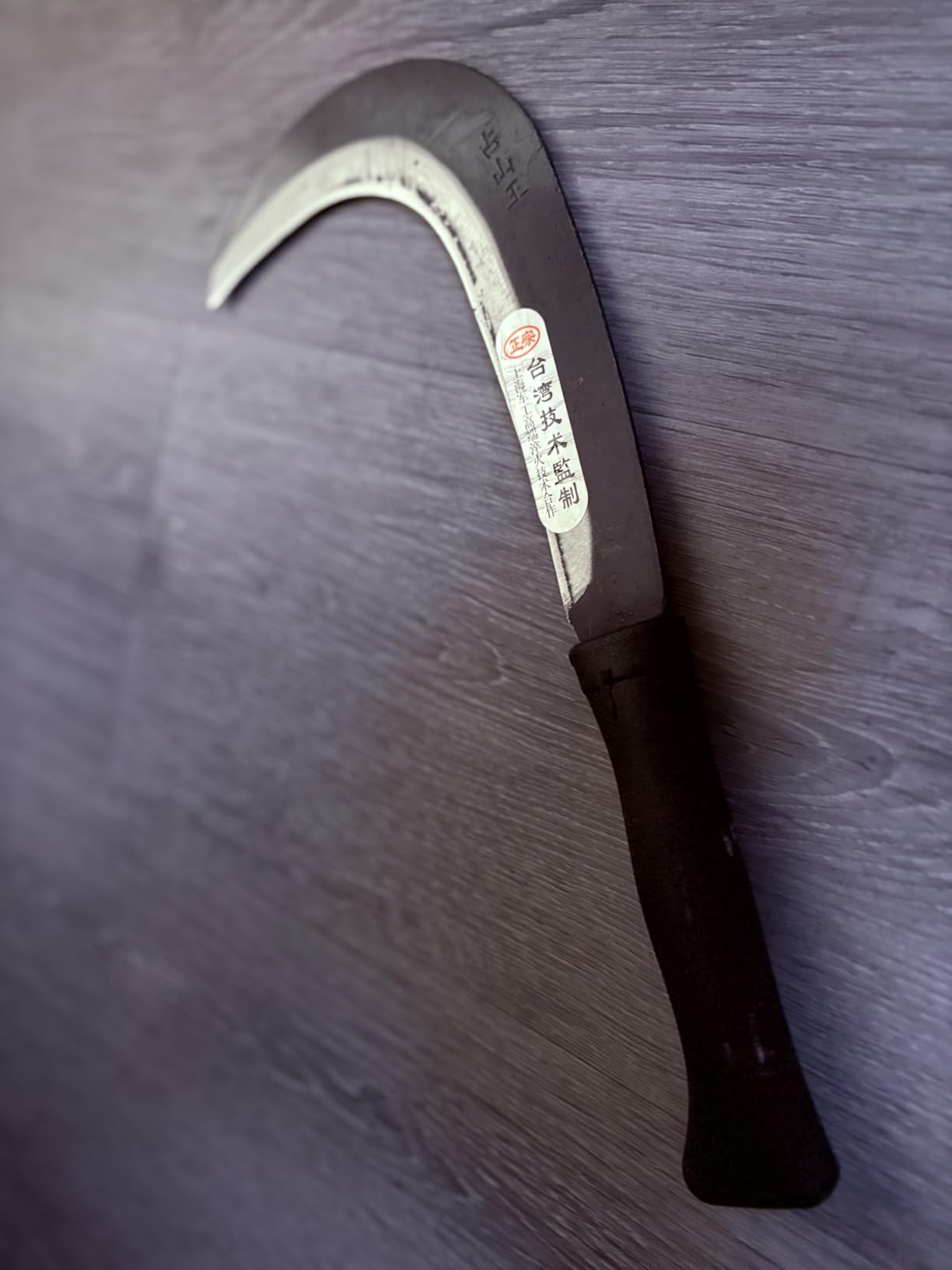
The billhook uses a different cutting geometry from everything else here. The hook is short and deep, so you can draw a blade down the base of a vine or a clump of grass at soil level and sever several stems in one motion, which neither a straight grass blade nor a fine sickle will do.
I used it where volunteer grass had grown through a trellis, and the way it hooks under the mat of stems meant I cleared at the base instead of hacking the top off. Seventy-six percent of the 401 reviews are five-star, with reviewers praising carbon steel edge retention.
The alloy handle is ambidextrous, which matters if you alternate hands on long sessions, and a 1-year warranty covers manufacturing faults. At 18 inches overall it stays compact and packable for fieldwork away from the shed.
Two limits stand out. Reviewers flag the small grip as a problem for large hands, and the smooth alloy handle can be slippery when damp. The blade is also shorter than a traditional sickle, so it suits precise work better than long sweeping cuts.
Why a hook beats a straight edge on vines
A billhook concentrates the cut at a point and gives you a lever to draw material toward you. When stems are tangled or growing against a support, that pulling motion separates them instead of merely severing whatever the edge lands on. It is also safer in a crowded bed because you cut downward and away.
Who should skip it
Skip it if you have large hands or need reach. The grip size is a real fit issue and no longer variant is listed. For general grass and weed clearing, the KEYI sickle is the more forgiving tool.
6. FU-GLBY Folding Scythe — Best for Portability and Small Parcels
FU-GLBY All-Black Sharp Edge Folding Scythe with Wooden Handle – Two Section Safety Sickle Knife for Grass Scythe and Grass Sickle, Foldable Garden Tool with Sheath
14.43-inch stainless steel blade
Folding two-section body with safety lock
486 g
370 mm overall
Pros
- Folds down for pack and vehicle storage
- Safety lock stops accidental folding
- Reviewed as cutting saplings up to 1 inch
- Includes a nylon sheath and box
- Retro wooden handle is comfortable
Cons
- Heavier and bulkier than a fixed sickle
- Folding joint is a long-term weak point
- Costs more than fixed-blade alternatives
- Blade can spring open when drawn from the sheath
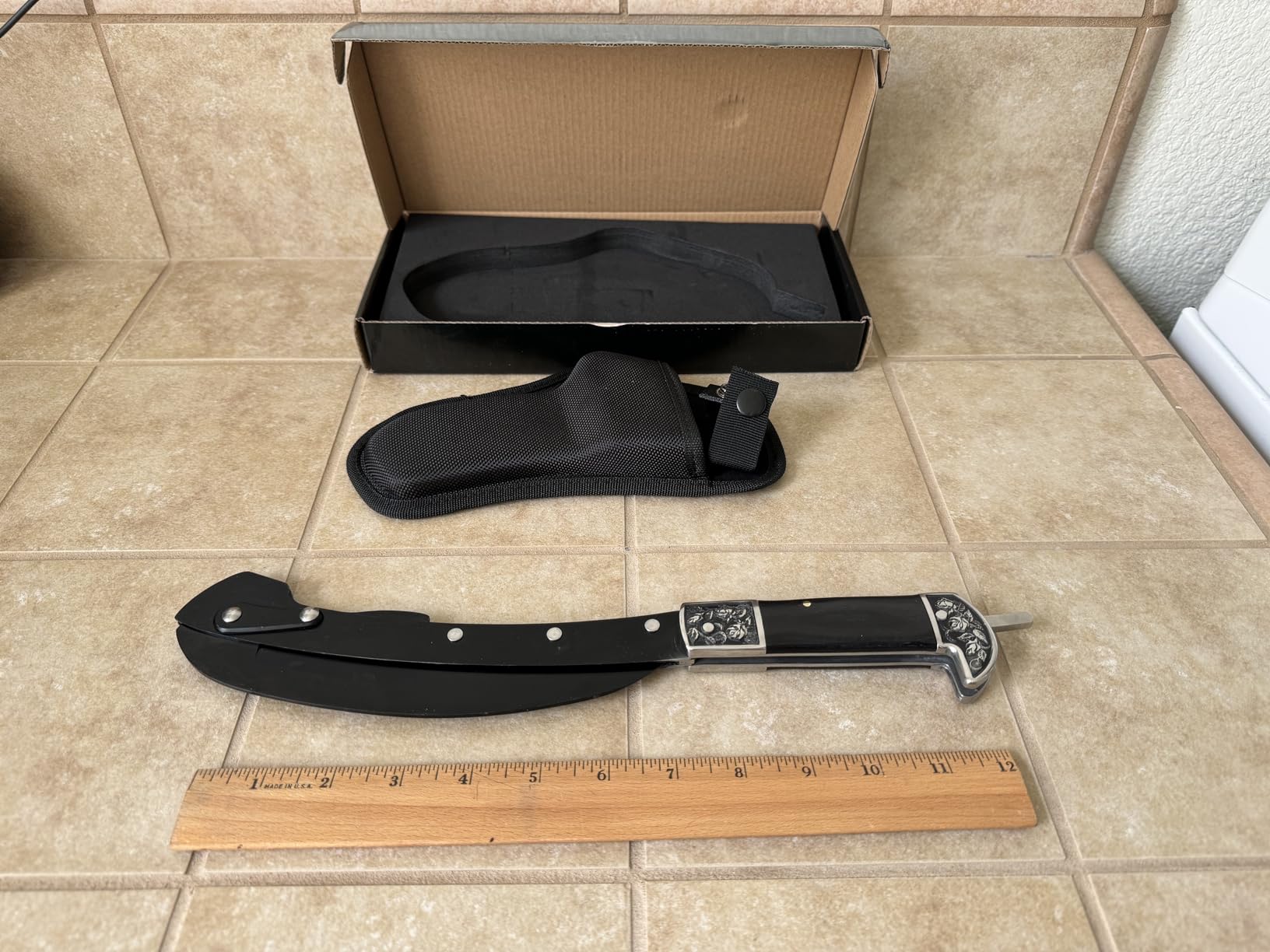
This is the only folding scythe in the group, and the reason is straightforward: it goes in a pack. The 14.43-inch stainless blade folds into a 370 mm package with a safety lock, and the included nylon sheath means the edge is both covered and contained while you carry it through scrub.
At 4.6 stars from 393 reviews it holds the highest average rating here, and seventy-eight percent of those reviews are five-star. Reviewers single out the safety lock and the ability to cut saplings up to an inch thick.
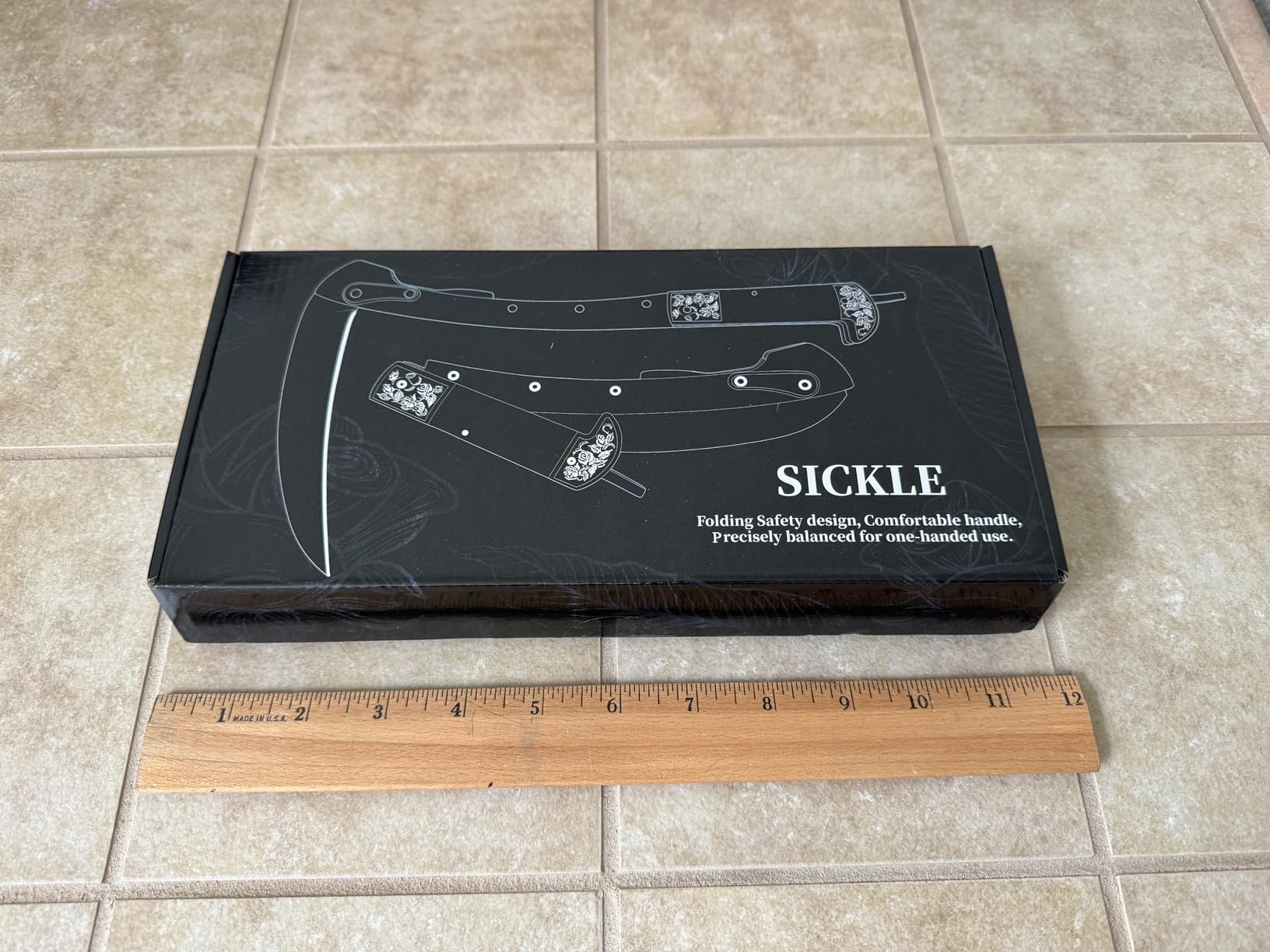
The black wooden handle has a retro pattern that is not to everyone’s taste, but it feels fine in the hand and 486 grams stays comfortably one-handed. I used it to clear a neglected corner where no full-sized tool would fit, which is the job it is genuinely good at.
The honest drawbacks are weight and mechanism. 486 grams is nearly ten times the harvest sickle above, and a folding joint is always the first thing to develop play. Reviewers also note the blade can deploy unexpectedly when pulled from the sheath.
Whether it earns its place in a pack
For a small parcel where storage space is the constraint, yes. A fixed sickle left on a bench because it has nowhere to live is a tool that never gets used. This one lives in a pack, a vehicle door pocket or on a hook, and a tool that is present gets used.
Who should skip it
Skip it as a primary mowing tool. There is no reach, it is heavy for a sickle, and the pivot adds a failure point you do not need when swinging repeatedly. Buy it for portability and brush, not for clearing grass.
7. Truper 16 Inch Serrated Grass Sickle — Best for Long Reach
Truper Serrated Grass Sickle 16″, High-Carbon Steel Blade, Lightweight Wooden Handle, Hand Scythe for Manual Harvesting and Weed Clearing (Model 15120)
16-inch high-carbon serrated blade
Heat-treated steel
10 inch bow aperture
Ergonomic wooden handle
Pros
- 16-inch blade gives the longest reach in the set
- Serrations bite through mature grass
- Heat-treated steel holds an edge
- Wooden handle feels traditional and solid
- Multiple bow aperture sizes
Cons
- Some quality control inconsistency
- Blade can arrive needing sharpening
- Handle finish is plain
- Small share of one-star reviews
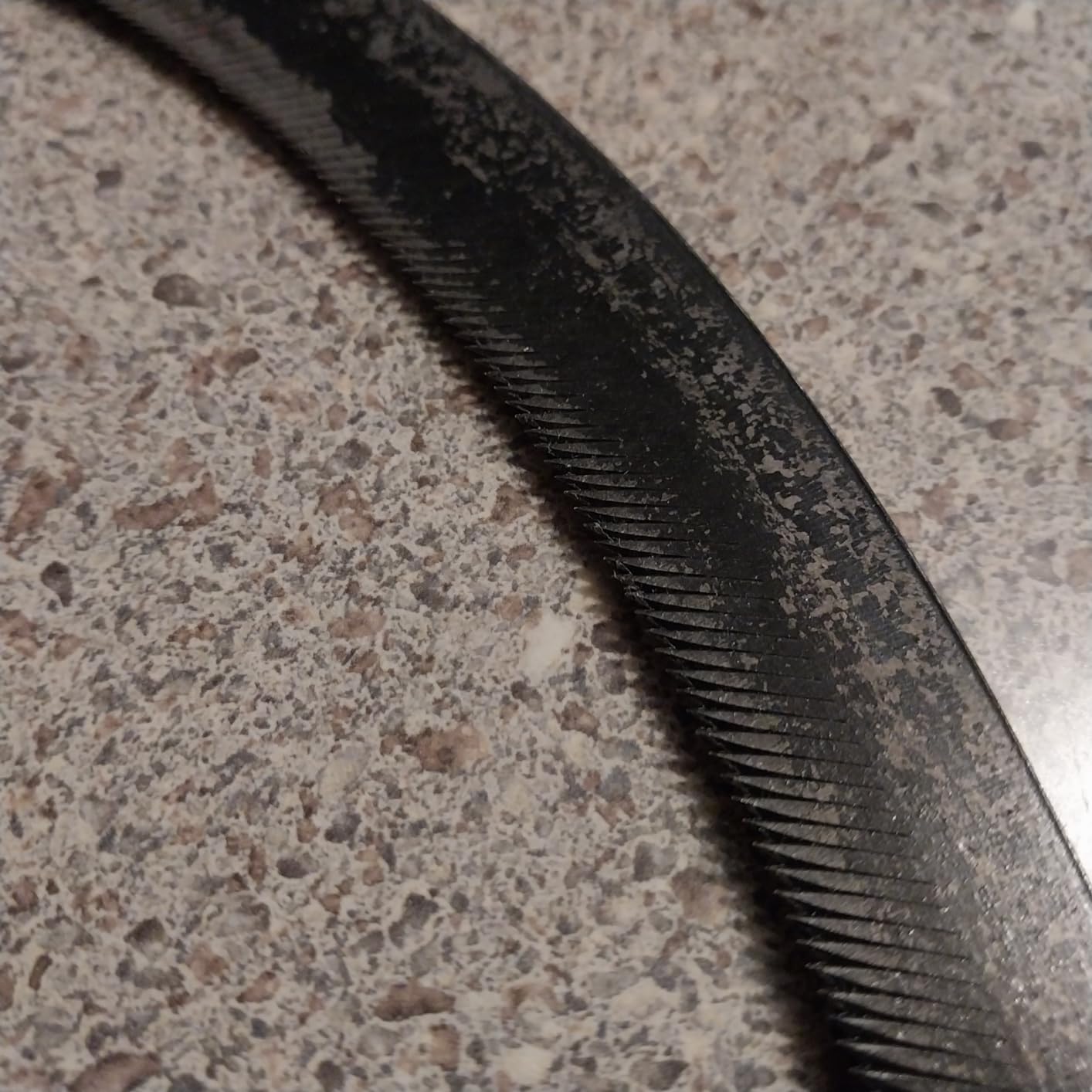
This is the reach tool of the roundup. A 16-inch heat-treated high-carbon serrated blade gives substantially more cutting width per stroke than the 6.5 and 9-inch options, and along a long path edge that difference compounds quickly.
The serrations are why it performs on mature grass rather than only soft growth, and the 10-inch bow aperture gives a deep curve that draws the cut toward you. The wooden handle sits well in the hand and reviewers generally like it.
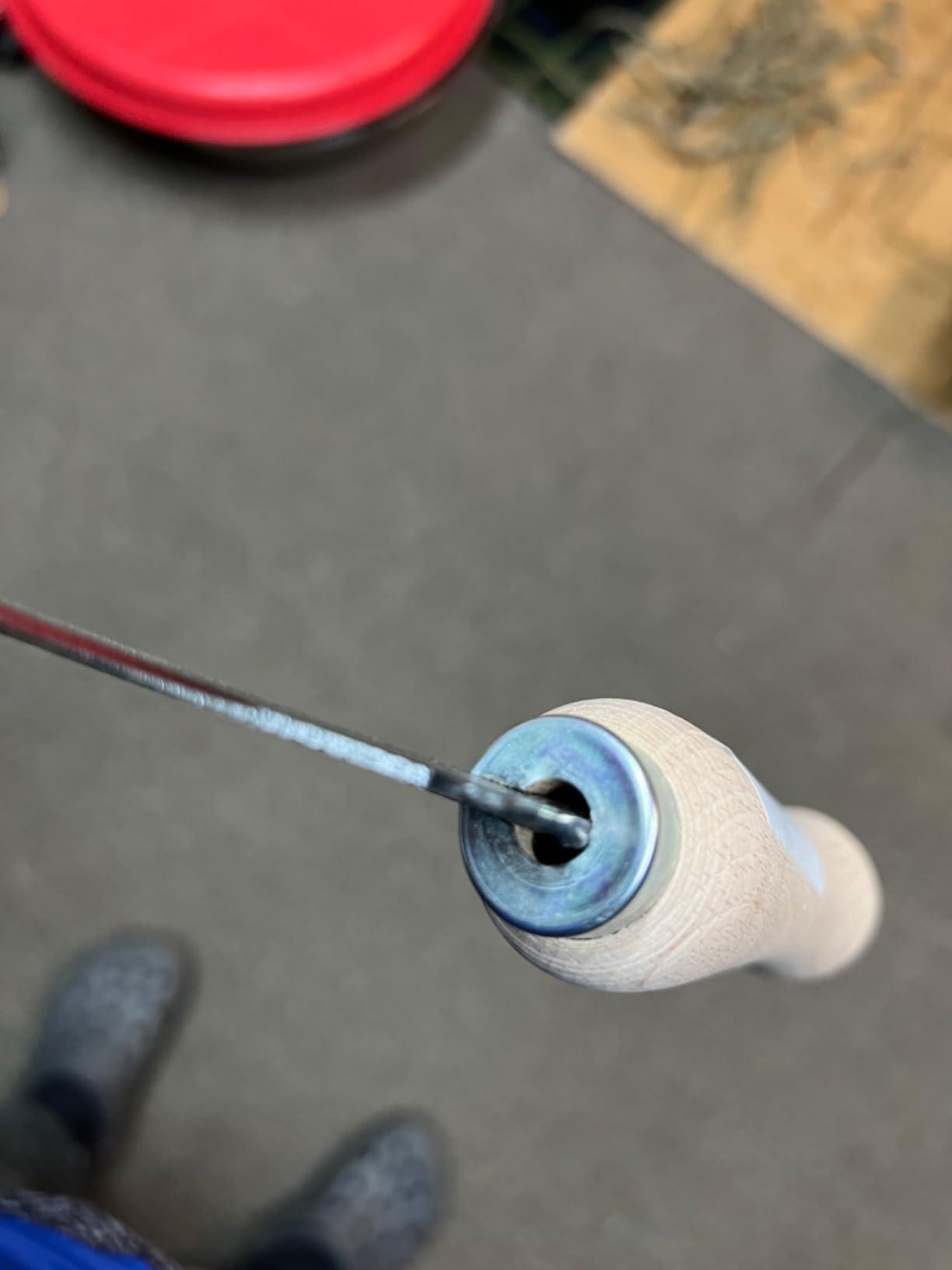
Consistency is the issue. Reviews mention quality control variation, a blade that can arrive dull, and an 8 percent one-star share, the highest negative proportion in this set. That is not a dealbreaker for a hand tool, but check the edge and handle fit before committing to a season.
Truper is a long-established name in hand tools, and different bow apertures let you pick a shallower curve for flat ground or a deeper one for thick growth. That choice matters more than buyers expect on uneven ground.
How the long blade changes the work
A wider blade means fewer strokes and a straighter edge line, the difference between a tidy path margin and a ragged one. The curve also lets you stand more upright than a straight blade allows, because the cut draws back toward your hip. On tall dry grass, the serrations are the deciding feature.
Who should skip it
Skip it if you want a light tool for precision bed work, or if variable finish would bother you. You are handling a full-length blade rather than a hand sickle, and the quality spread across batches is the trade you accept for the extra reach.
8. TOYPOPOR Carbon Steel Grass Sickle — Best as a Shed Spare
TOYPOPOR Carbon Steel Grass Sickle, 15” Japanese Gardening Weeding Weeder, Garden Hand Tool, Farming Weed Remover, Scythe Blade Cutter, Manual Mowing Blade Cutter, Thick Blade Gardening Quick Work
15-inch Japanese carbon steel blade
Crescent shape for pulling cuts
Wooden handle
5 ounces
Pros
- Very low cost for a full-size blade
- Sharp Japanese steel on arrival
- Only 5 ounces so it stays in a hand all day
- Crescent shape suits pulling cuts
- Good for soft grass and vegetables
Cons
- Thin blade is not for heavy brush
- Handle attachment can be weak
- Blade can chip on woody material
- Quality control varies between batches
At five ounces with a 15-inch crescent blade, this is the tool I keep as a spare. It costs so little that keeping one in the greenhouse, the vehicle and the field bag is a reasonable decision, and it covers soft grass, vegetables and light weeding without ceremony.
The crescent geometry is worth understanding: it draws toward you, so the cut is a pull. That is how I use it, cutting back through soft growth while walking, and it does a tidy job on vegetables and bed edges.
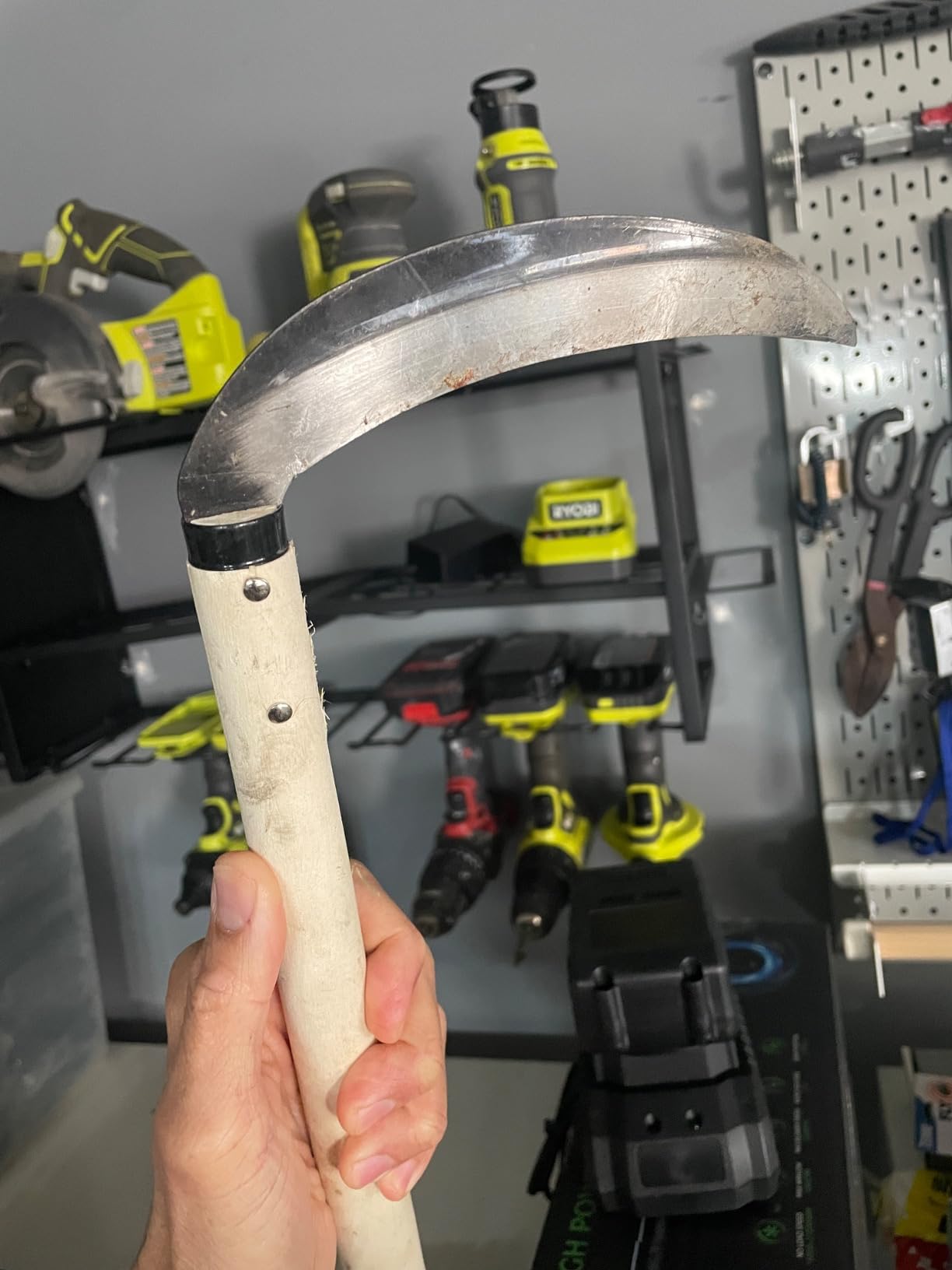
Its limits are all about thickness. The blade is thin, which is why it is sharp and light, and that same thinness is why reviewers warn against heavy brush and note chipping on woody material. The handle attachment is the other reported weak point.
Consistent with the 4.1 overall rating, there is more variation here than with the higher-rated tools. Inspect the handle fit and the edge before relying on it for a full day.
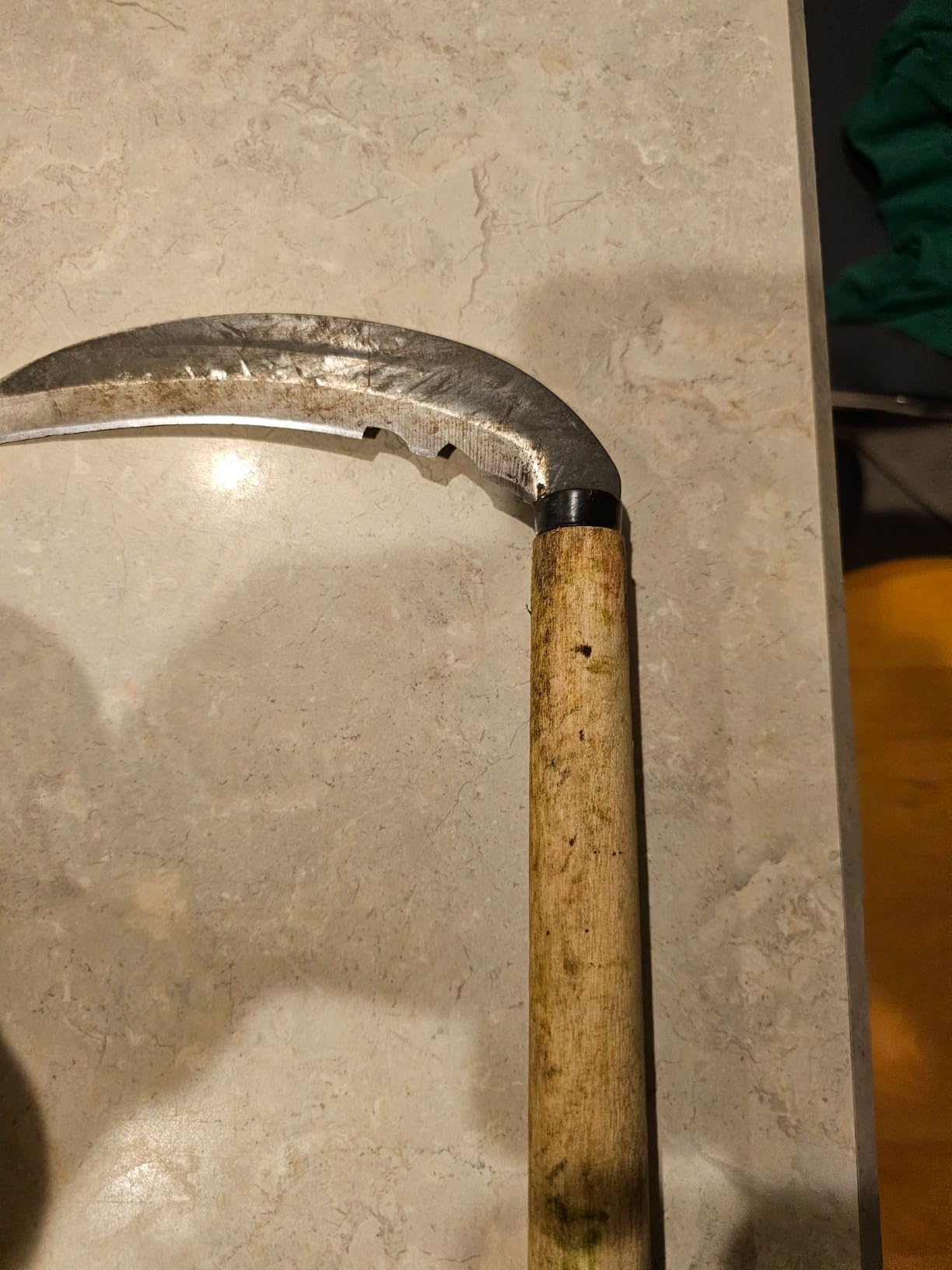
When a cheap spare makes sense
When the cost of losing a good tool matters more than the cost of replacing a cheap one. A spare in the back pocket turns a snapped handle on the good tool from a cancelled afternoon into an inconvenience.
Who should skip it
Skip it if it will be your only tool, and skip it for bramble, canes or any woody growth. Buying a second one is sound; making it your main cutting tool on rough ground is not.
9. KEYI 6.5 Inch Grass Sickle — Best for Garden Beds
KEYI Grass Sickle, Hand held Sickle Tool with Wooden Handle, Light Serration, 6.5-Inch Stainless Steel Blade
6.7-inch carbon steel hooked blade
Ergonomic wooden handle
60 grams
14 x 4 x 1 in
Pros
- Sharp on grass and thin vines
- Very light at 60 grams
- Comfortable wooden handle
- Easy to work in tight bed spaces
- Two color variants
Cons
- Thin blade is light duty only
- Occasional manufacturing burrs reported
- Blade can sit loose in the handle
- Included blade cover is flimsy
This is the garden-bed tool, and at 60 grams it is the lightest complete sickle in the roundup. Kneeling in a bed for two hours, tool weight stops being trivial, and this is the one I reach for without thinking.
The 6.7-inch carbon steel hooked blade works on grass, vines and vegetable harvest, and reviewers single out its sharpness and the comfortable wooden handle. Sixty-five percent of its 537 reviews are five-star, which is solid at this price point.
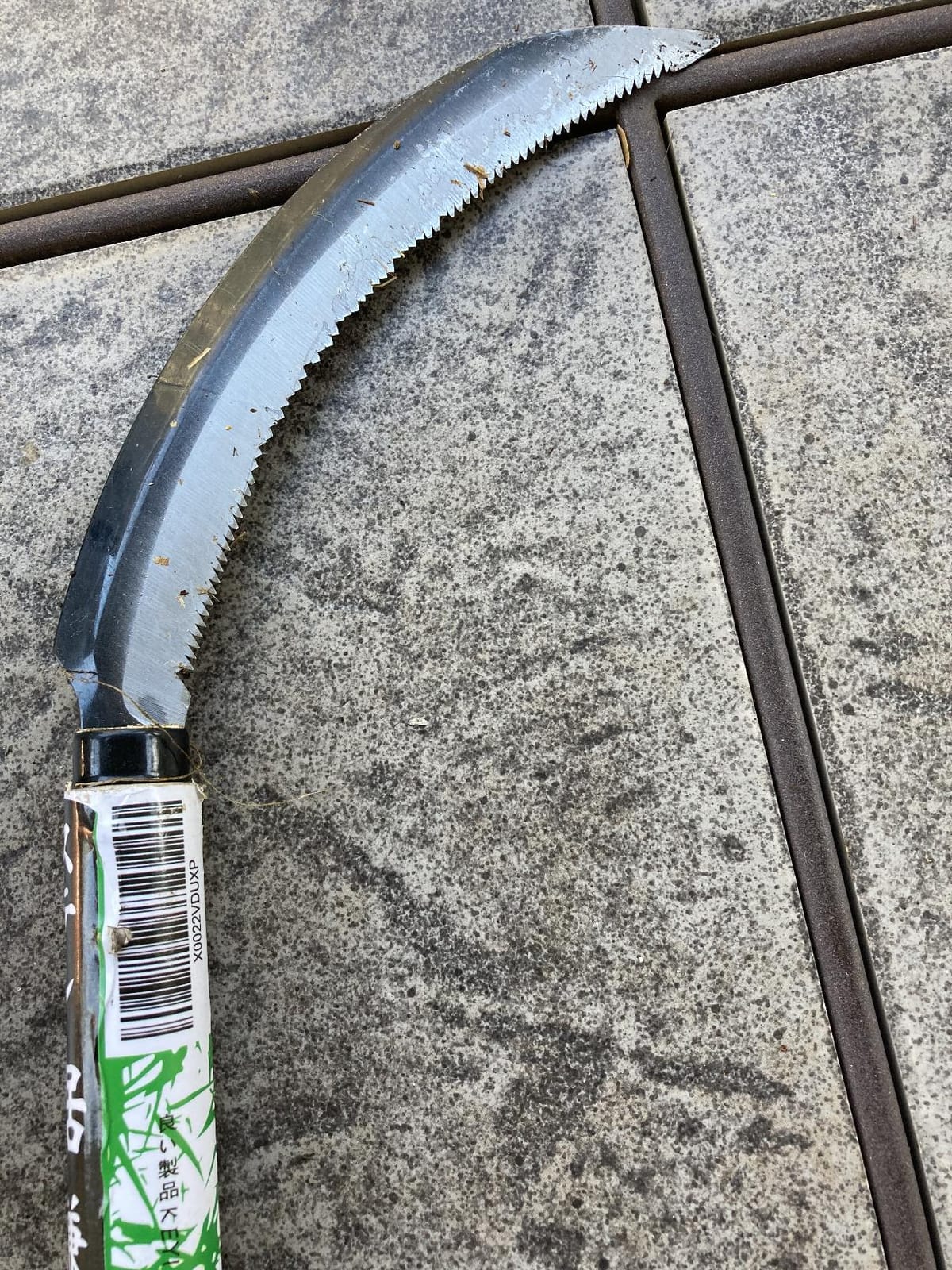
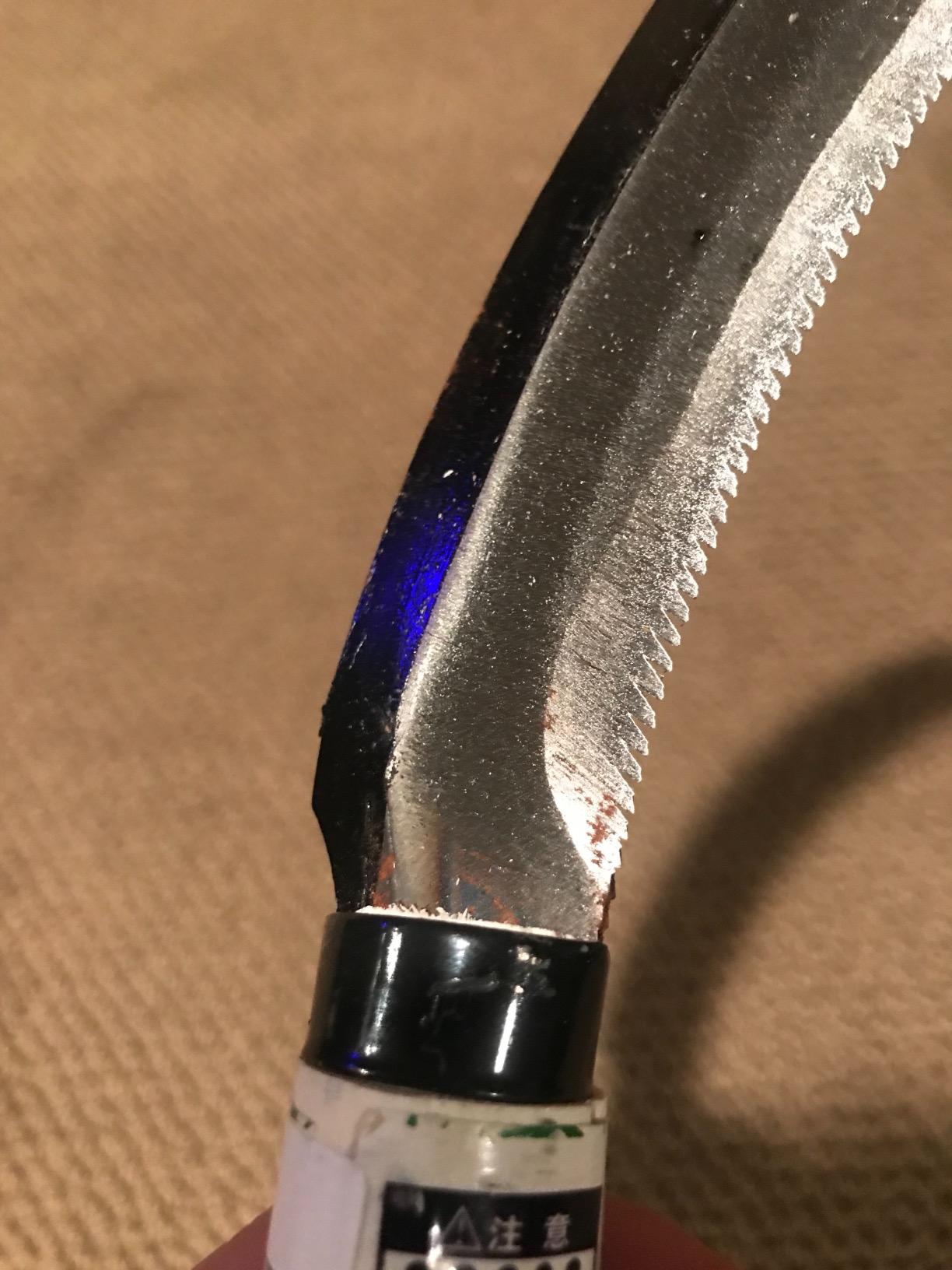
It is a light-duty tool and reviewers are clear about that. There are reports of manufacturing burrs, a blade that can sit loosely in the handle, and a flimsy plastic cover in the box. Check the fit at the tang first, because a loose blade is both a control problem and a safety one.
Two color variants are listed, beige and silver. Make sure you are looking at the hooked carbon steel model rather than a straight edge if you want the pulling cut.
Why bed work suits a short hooked blade
Bed work is close, frequent and low force. You are often cutting an inch or two from a plant stem, sometimes with a dibber in the other hand, and a short hooked blade gives control without swinging anything. It also fits between crowded plants where a 16-inch blade would be clumsy.
Who should skip it
Skip it for anything woody, and skip it if you need a tool that will survive being levered. The light steel and reported fit issues make it a garden tool, not a land-clearing tool. If your beds border bramble, choose the billhook instead.
10. YEELOR 51 Inch Adjustable Long Handle Sickle — Best for Tall Users
YEELOR Weeding Sickle, 51-Inch Adjustable Long Handle
51-inch handle in three lengths
Dual-edge straight and wavy blade
Stainless steel shaft
1.6 pounds
Pros
- Three handle lengths suit different users
- Reduces bending during extended work
- Dual edge handles soft and tough weeds
- Sharp tip pulls deep-rooted weeds
- Stainless shaft resists rust
Cons
- Handle sections can loosen during use
- Plastic connectors are a weak point
- Hollow-ground blade dulls on rocky soil
- Needs frequent retightening
The idea behind this one is right: give a tall person a way to work upright. The handle adjusts between 51.7, 37.3 and 21.5 inches, so one tool covers a full-length standing cut and a short kneeling cut. The 4.0 rating is the lowest here, and the reason is specific.
Reviews are consistent about the same fault: the handle sections unscrew during use and need constant retightening, and the plastic connectors do not hold up to heavy work. That is a mechanical problem rather than a cutting problem, and it is what I would check after a month.
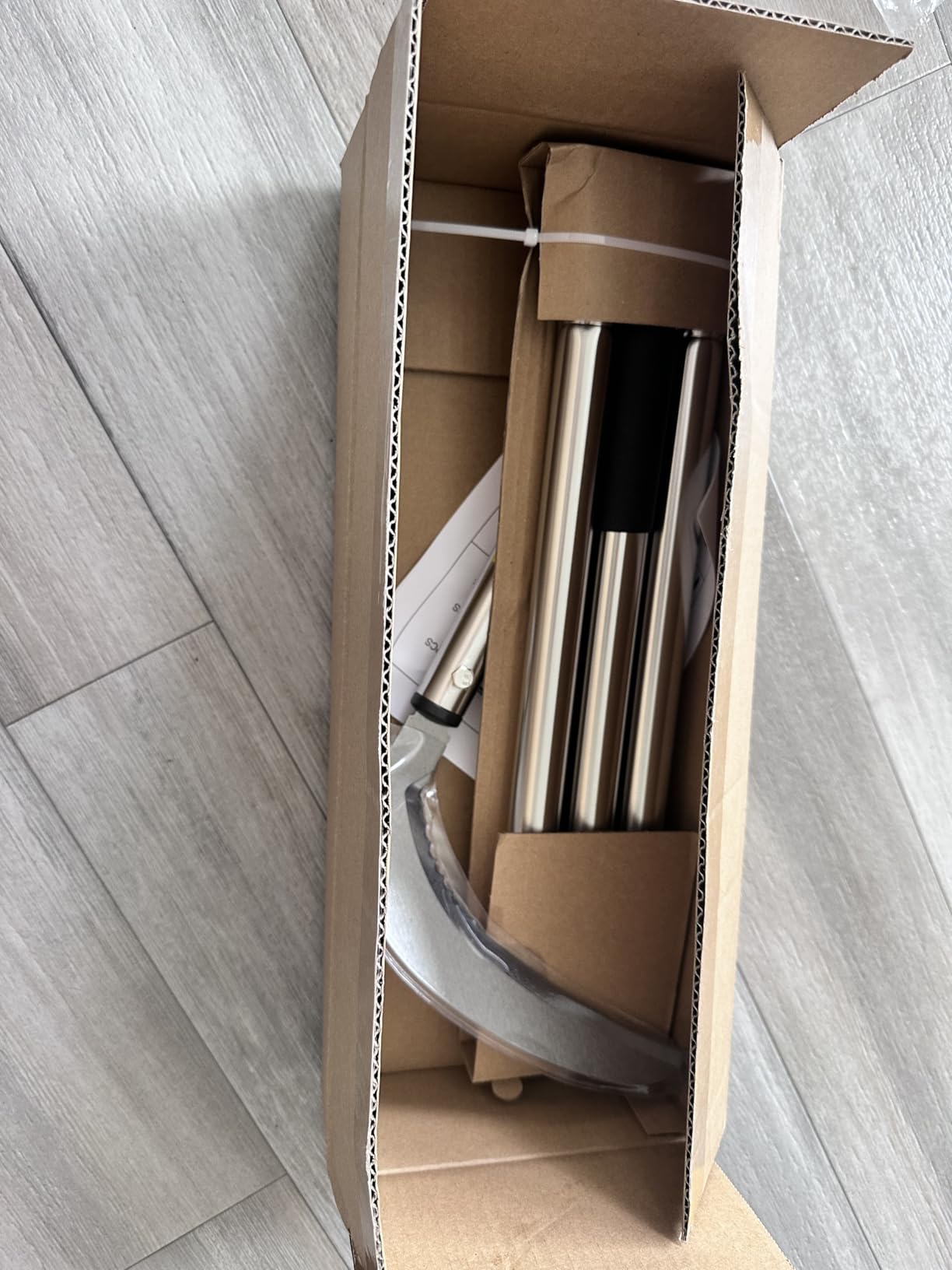
The cutting design is genuinely good. A dual-edge blade gives a straight side for soft weeds and a wavy side for tough growth, with a sharp tip for pulling deep-rooted weeds out of a path. The stainless shaft is bend-resistant and rust-proof, the right material for a tool that gets leaned on.
The blade is hollow-ground, and reviewers report it dulls on rocky soil. On our stony ground that is a real limitation, and it is the low rating plus that flattens an otherwise strong concept. If you work in deep bedding, the wobble would bother you more than the sharpening.
How the three handle lengths actually help
Working at 51 inches is the tall-user benefit, but the adjustment is the real feature. You can cut the same boundary standing at full length, then shorten it to get into a bed without crouching, which removes the two positions where people give up on hand tools. The 1.6-pound weight is reasonable for that reach, and it pairs with a wider interest in ergonomic gardening tools that reduce hand and joint strain.
Who should skip it
Skip it if your ground is rocky or if you dislike stopping mid-task to tighten a tool. The connectors are the weak point and no amount of care changes that. If you want long-handled reach without a multi-section shaft, the AMES grass whip is the sturdier answer.
How to Choose a Scythe Tool for Your Land
Choose by vegetation first, reach second, weight third. A hooked sickle handles vines, thick stems and work close to plants; a serrated straight or crescent blade handles grass and long reaches; a billhook handles matting growth and bramble. Standing work and kneeling work are different categories, and no single tool covers both well.
On a snath scythe, sizing is the decision that matters most, and it is measured three ways. Your overall height sets the snath length, the distance from the ground to the top of your thigh sets the grip position, and the elbow-to-middle-fingertip distance, historically a cubit, sets hand spacing. A custom-fitted snath is proportioned to all three, which is why owners praise the fit rather than the brand. Our notes on multi-tools for the maintenance side of a smallholding cover the sharpening and repair kit that keeps hand tools working.
Two habits decide whether a hand tool stays in use. Keep a file or whetstone in the shed and hone at the end of every session, because a dull blade forces you to work harder for a worse cut. And keep a sheath on every hooked tool, since a bare 6-inch blade bouncing around in a tool bag is a hazard rather than a convenience.
The Three Main Types of Scythe Blades
The three main types of scythe blades are grass, ditch, and bush. Grass blades are long, light and lightly curved for mowing meadow and cutting hay. Ditch blades are shorter, heavier and more strongly curved for vegetation on banks and in ditches. Bush blades are short, thick and straight for brambles, canes and small saplings.
Hedge blades sit alongside these as a fourth option, with a reinforced spine and two cutting edges for woody hedges. On a full snath outfit the other refinements are a scratch blade for very fine growth and a stone blade for stony ground.
The tools in this roundup are the handheld end of that spectrum: hooked, crescent and serrated blades that approximate grass and bush behaviour without the snath. A hooked sickle behaves like a small ditch blade, drawing material toward you through tangled growth. A long serrated blade behaves like a grass blade, cutting wide swathes of standing grass.
Scythe vs String Trimmer vs Brush Cutter
A scythe is quiet, needs no fuel and lays a mulch-friendly windrow, but it is slow and demands a fit that suits your body. A string trimmer is fast on thin grass and vegetation under about waist height, with fuel cost, noise and arm fatigue. A brush cutter handles woody stems but is heavier, louder and needs more safety kit.
On acreage, be honest with yourself. A string trimmer covers ground much faster than any hand tool. The case for hand cutting is not speed. It is that on one or two acres of rough, uneven, wildlife-friendly ground, a hand tool reaches places a machine cannot, works in the wet without a fuel supply, and leaves the cut material behind as a windrow instead of a cloud.
Our scan-tool buying guide makes a similar point in a different category: match the tool to the job rather than to the marketing.
Peening, Sharpening and Rust Prevention
Peening is the process of hammering a cold blade to draw the thin edge back into a proper bevel, and it is what separates snath scythes from hand tools. The tools here are maintained with a file, a whetstone or a honing stone, not an anvil, so none of them need it.
Austrian and continental blades are generally peened and honed; American-style blades are traditionally ground and hollow-ground, which is why the Truper and the KEYI sickle are described by aperture and edge type rather than bevel angle. A blade labelled mahfertig arrives factory triple-peened and mowing-ready, which removes the steepest part of the learning curve.
Maintenance is simple. Wipe the blade after use, work on a stone every few sessions, oil the pivot on the folding model, and store it indoors rather than leaning it against a damp wall. A tool stored wet shows rust at the tang within a season, and rust at the tang is what makes a blade feel loose in its handle.
What the First 30 Days Feel Like
The first fortnight is technique, not strength. Growers on permies.com describe the honest part of learning: one recent scythe owner wrote that the thing they were most worried about was peening, but that they could learn. Another forum answer to a question about cutting a crop by hand put it plainly: you need a good back.
The rhythm arrives around the third week. Two strokes cover almost everything: the zigzag, where the blade stays flat and is pulled toward you in short alternating cuts, and the backstroke, a wider sweep used on short grass. The cut material ends in a windrow, and that windrow is the point, becoming bedding, coop litter and mulch under the fruit trees.
Set a modest target for the first month and let technique come before speed. An hour of careful cutting at the end of a day beats a fast, backbreaking afternoon of swinging at a blade that needs sharpening.
Frequently Asked Questions
Are scythes good for mowing?
Yes, for one or two acres of rough or uneven ground they are excellent, because a hand tool reaches where a mower cannot, needs no fuel, runs near-silently and leaves a mulch-friendly windrow. They are slower than a string trimmer, and a snath scythe fitted to your height will be far more efficient than a hand sickle.
What are the three main types of scythe blades?
Grass blades are long, light and lightly curved for mowing meadow and cutting hay. Ditch blades are shorter, heavier and more curved for banks and ditches. Bush blades are short, thick and straight for brambles, canes and small saplings.
Which scythe grass cutter is the best?
For hand tools, the AMES True Temper grass whip is the best all-rounder because of its 38-inch handle and low weight, and the Zenport K310 is the strongest cutting tool because of its Japanese high-carbon blade. For a first test on a smallholding, the KEYI manganese steel sickle is the cheapest way to find out whether hand cutting suits you.
How long does it take to cut an acre of grass with a scythe?
For an experienced scyther on a snath outfit, roughly two to four hours per acre is realistic, and much of that first season is spent learning rhythm. Hand sickles are slower still. One grower on r/homestead described scything and drying two acres in a weekend once the rhythm had settled in, faster with a second person helping.
What are the differences between a sickle and a scythe?
A scythe is a two-handed tool with a long snath that cuts with a swinging horizontal stroke, laying a windrow. A sickle is a short one-handed hooked tool worked with a pulling or drawing motion close to the ground. A scythe covers area; a sickle gives precision in tight spaces and among plants.
Do I need to sharpen a scythe blade or sickle regularly?
Yes, and it is the least time-consuming part of hand tool care. A file or whetstone after every few sessions keeps a grass whip or sickle cutting cleanly, while a peened snath blade needs periodic peening on an anvil to restore its bevel. A dull blade always costs more effort for a worse cut.
How do Amish mow their grass?
In the communities most often referenced for it, mowing is done with scythes and then raked, often with a hay rake to turn and gather the cut grass into hay or bedding. The practice is valued because it produces a clean windrow, works in wet ground where machinery struggles, and keeps cut material on the farm rather than in a trailer.
The Right Scythe Tool for Your Ground
The best scythe tools for homestead mowing depend on what you are actually cutting, not on a brand. Start with the AMES True Temper grass whip for standing work on grass and meadow, add the Zenport K310 when bramble and canes enter the picture, and use a hooked sickle like the KEYI manganese model for beds, paths and close quarters.
Whatever you buy, keep a file in the shed and hone after every session. That single habit is the difference between a tool that stays on the wall and a tool that ends up in a corner, and it is why these hand cutters keep working year after year in 2026.