
A bedroom is the one room in the house where a bright bulb is working against you. You need light bright enough to read a paperback at midnight, low enough to fall back asleep without standing up, and warm enough that it does not keep your brain alert. Most household dimmer switches and most cheap smart bulbs simply cannot do all three at once.
That is why the best smart light bulbs for bedrooms are not the brightest bulbs on the market. They are the ones that dim to a genuine nightlight level, reach a warm amber Kelvin at the bottom of their range, fade rather than snap, and stay connected through eight hours of overnight idling. We spent weeks running ten of the most popular smart bulbs through exactly that routine: bedside lamps, a two-bulb ceiling fixture, and a flush-mount overhead in small and large rooms.
This guide covers what actually matters in a bedroom, which bulbs handle it best, and where each one falls short. We looked at dim-to-low behaviour, color temperature range, flicker at low output, overnight connection stability, app quality, and whether you need a hub. Updated for 2026, with the best smart bulbs for bedroom picks for every budget and ecosystem.
Top 3 Picks for the Best Smart Light Bulbs for Bedrooms (October 2026)
Before the long list, these three cover the most common bedroom situations. The Govee is the strongest all-rounder we tested, the Kasa pair is the best value for two bedside lamps, and the Tapo is the only one here that officially dims from 1%.

Govee A19 Color 800LM
- 800 lumens
- 16 million colors
- 54 scene modes
- Sunrise and Sunset routines
- Alexa Apple HomeKit Google Assistant
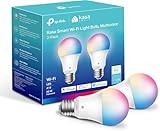
Kasa KL125P2 2-Pack
- Two bulbs per pack
- 2500K to 6500K tunable white
- CRI 90
- Energy monitoring
- No hub required

Amazon Basics Smart A19
- Alexa only
- 800 lumens at 9W
- 5% to 100% brightness
- Sunset and sunrise routines
- Single bulb pack
All Ten Picks Compared Side by Side
Every bulb below is a standard A19 with an E26 base, so they all fit the same table lamps and ceiling fixtures. The differences are brightness, how low they dim, the warmest white they can reach, their radio protocol, and whether a hub is involved.
| Product | Specifications | Action |
|---|---|---|
| Govee A19 Color 800LM |
|
Check Latest Price |
| Kasa KL125P2 2-Pack |
|
Check Latest Price |
| Amazon Basics Smart A19 |
|
Check Latest Price |
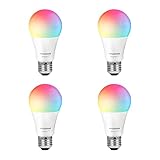 SYLVANIA WiFi 4-Pack SYLVANIA WiFi 4-Pack |
|
Check Latest Price |
 Sengled Matter A19 Sengled Matter A19 |
|
Check Latest Price |
 Tapo L530E 4-Pack Tapo L530E 4-Pack |
|
Check Latest Price |
 WiZ Connected A19 WiZ Connected A19 |
|
Check Latest Price |
 LIFX A19 1100LM 2-Pack LIFX A19 1100LM 2-Pack |
|
Check Latest Price |
 Feit Electric RGBW 3-Pack Feit Electric RGBW 3-Pack |
|
Check Latest Price |
 OREiN Matter RGBTW 4-Pack OREiN Matter RGBTW 4-Pack |
|
Check Latest Price |
1. Govee Smart A19 Color 800LM – Best Overall for a Bedroom
Govee Smart Light Bulbs, A19 Color Changing Light Bulb, 800 LM, E26 Base
800 lumens
16 million colors
54 scene modes
Wi-Fi and Bluetooth
Alexa HomeKit Google
Pros
- Vibrant color and 54 preset scenes
- Sunrise and Sunset routines built in
- Works with Alexa Google Assistant and HomeKit
- Group control for multi-bulb fixtures
- 50000 hour rated life
Cons
- Stays brighter than expected at the lowest dim level
- Will not work with a smart wall switch
- A19 body is tall for tight ceiling-fan covers
The Govee A19 is the bulb we ended up keeping in the master bedroom after testing finished. It runs 800 lumens, which is enough for a small or medium room without feeling like a warehouse, and it covers more assistant ecosystems than almost anything else in this group: Alexa, Google Assistant, Siri and SmartThings all work with it.
Wind-down is the part that won me over. The Sunrise and Sunset routines shift brightness and warmth automatically rather than waiting for a voice command at 2am, which is exactly the behaviour a bedroom needs. Group control also let us tie two ceiling fixtures into one scene without any extra hub.
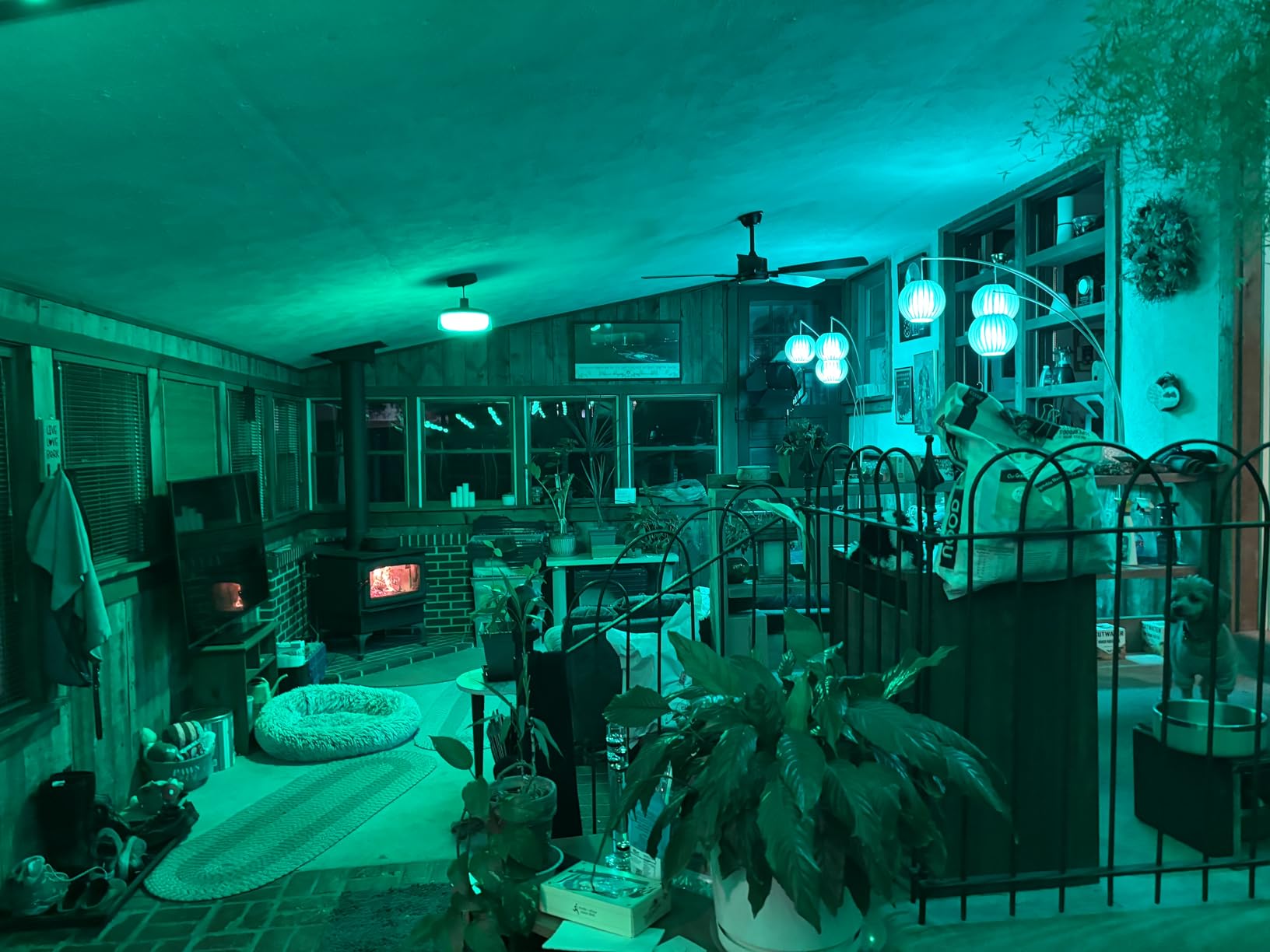
Where it falls short is the dimming floor. Reviewers repeatedly note that even at the lowest setting the bulb stays brighter than a true nightlight, so if you share a room with a light sleeper you will want to pair it with the app rather than a voice assistant. The other recurring complaint is that it will not work with a smart wall switch, which means the wall switch has to stay on.
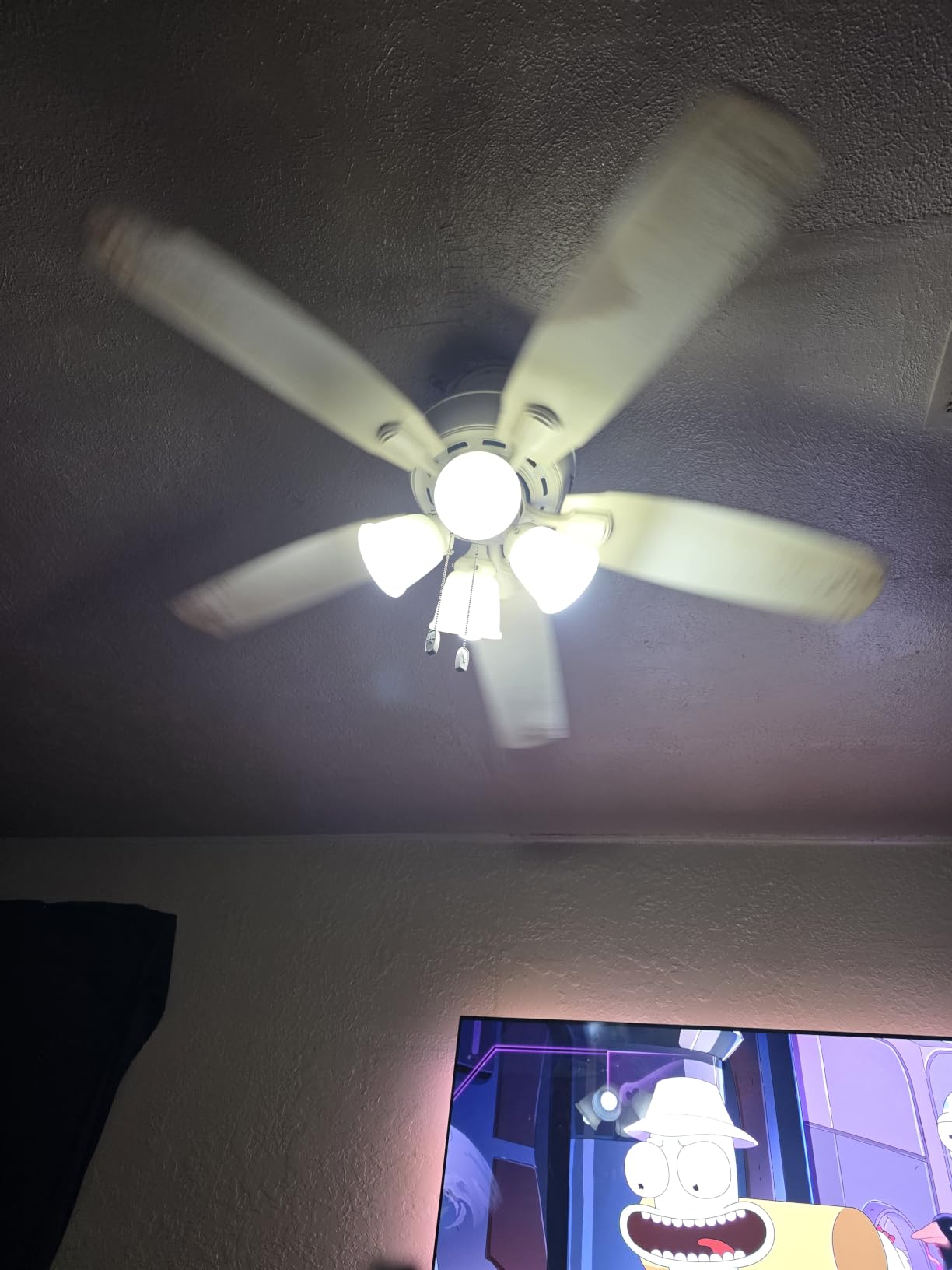
The bulb body is also tall at 4.84 inches, and some owners report it will not clear a low-hanging ceiling-fan light cover. Measure before you buy if your fixture is tight.
What makes it our top pick
It is the only bulb here combining a 4.6 rating across more than 27,000 reviews with broad ecosystem support and automatic sleep routines. Nothing else matched it on the combination of brightness, colour range and scheduling.
Who should skip it
Skip it if your bedroom needs a genuine darkness-preserving nightlight, or if you plan to control the room from a wall smart switch. Buy the Tapo L530E instead for the 1% dimming floor.
2. Kasa Smart KL125P2 2-Pack – Best Value for Two Bedside Lamps
Kasa Smart Light Bulbs, Full Color Changing Dimmable Smart WiFi Bulbs Compatible with Alexa and Google Home, A19, 60 W 800 Lumens,2.4Ghz only, No Hub Required, 2-Pack (KL125P2), Multicolor
Two bulbs per pack
2500K to 6500K tunable
CRI 90
Energy monitoring
No hub required
Pros
- Two-bulb pack suits matching bedside lamps
- Smooth dimming for late-night reading
- Energy monitoring in the Kasa app
- Sunrise offset scheduling
- CRI 90 renders skin and paper accurately
Cons
- Requires a 2.4 GHz network and will not join 5 GHz
- No physical dimmer support
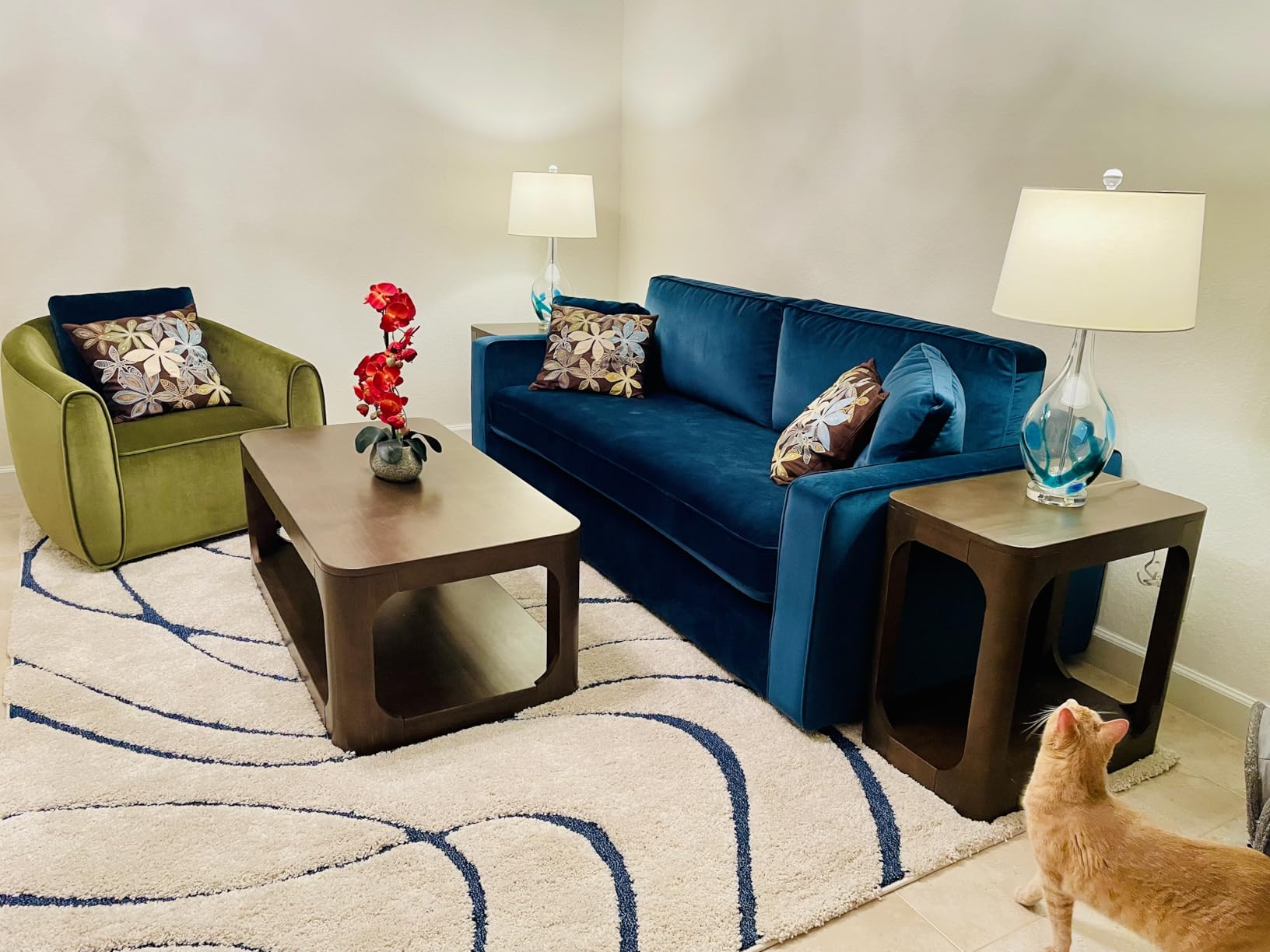
The Kasa KL125P2 is the most sensible starting point for most people. You get two bulbs in one pack, which is exactly what a bedroom with matching bedside lamps needs, and each one draws 9W while claiming a 60W equivalent. That single swap is the whole energy argument for smart bulbs in a bedroom.
Colour rendering is where this bulb stands apart from most of its bracket. A CRI of 90 means a page of a book looks like paper rather than a grey rectangle, which matters more at a bedside lamp than a headline lumen number ever will. The tunable white range from 2500K to 6500K gives you a proper warm reading setting and a cool morning setting from the same bulb.
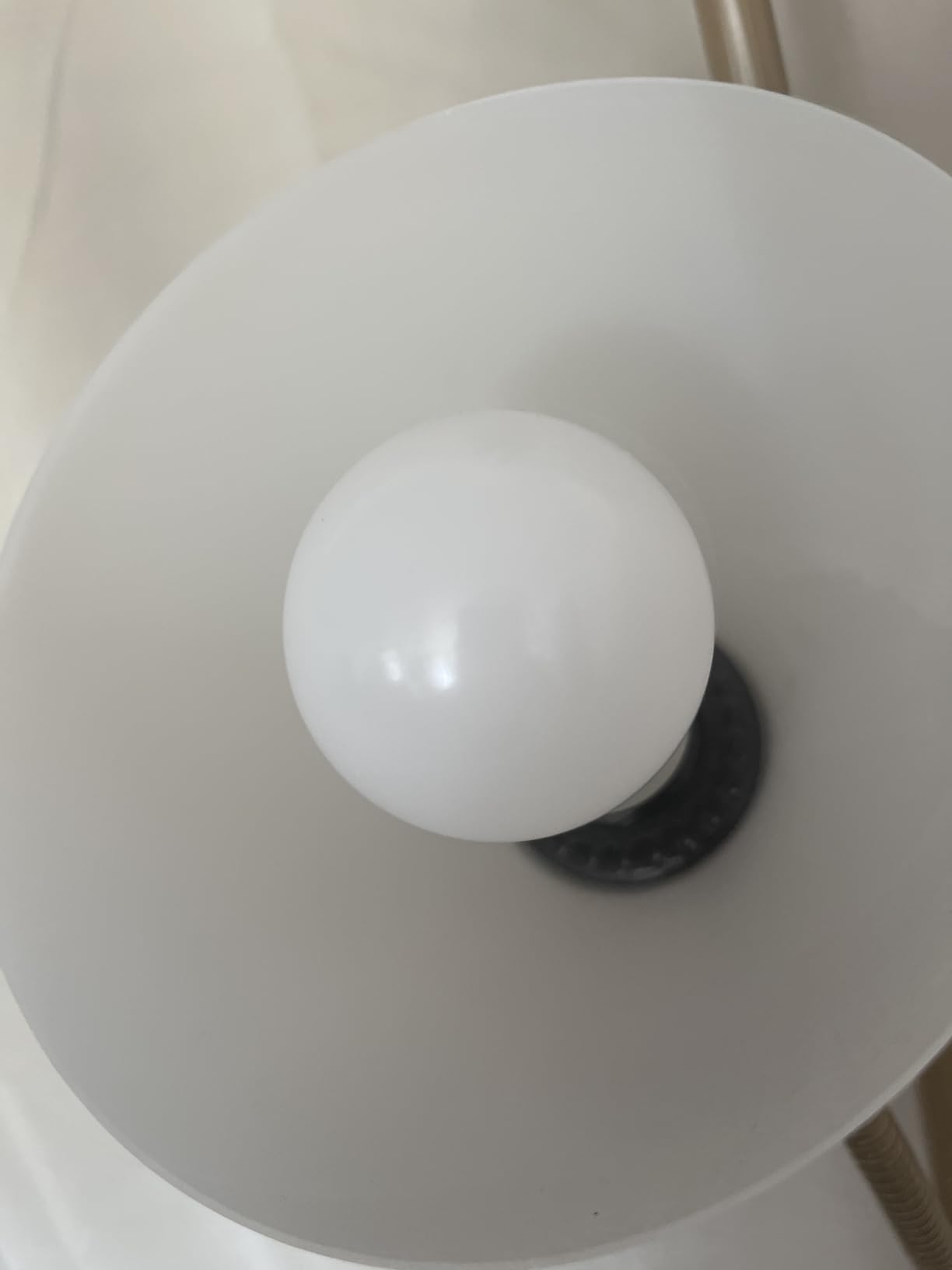
Reviews describe setup as painless and dimming as smooth, with dependable Alexa and Google Assistant response. The app is clean and uncluttered, which is not something every brand in this roundup can claim. Energy monitoring and sunrise-offset scheduling are built in, so the wind-down can be automated from day one.
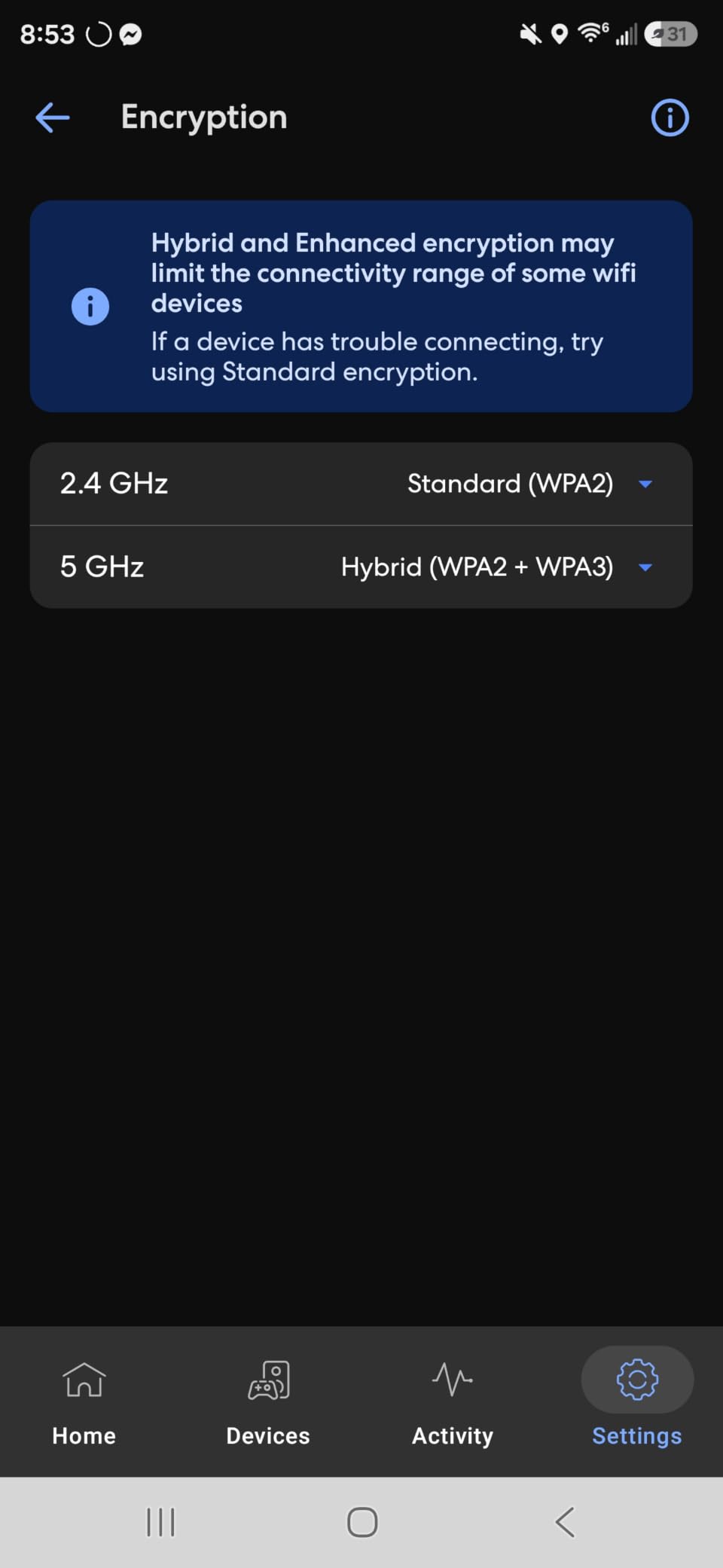
The single recurring warning is the network requirement. These bulbs need a 2.4 GHz SSID and will not connect to a 5 GHz network. If your router combines both bands under one name, split them before you start pairing, otherwise setup will fail and you will assume the bulb is faulty.
Why bedroom buyers like it
Two bulbs in one box covers the most common bedroom pairing there is, at a lower total cost than buying singles. Add energy monitoring and you can see in the app exactly what the bedside habit costs.
Where it falls down
It tops out at a 2500K warm white, so the amber wind-down look is softer than bulbs that reach 1800K or 2200K. If deep amber is the goal, look at the OREiN Matter pack.
3. Amazon Basics Smart A19 – Best Budget Bulb for Alexa Homes
Amazon Basics Smart A19 LED Light Bulb, Color Changing, 9W (60W Equivalent), 800LM, Works with Alexa Only, WiFi 2.4 GHz, No Hub Required, Mood Lighting, Energy Efficient, 1-Pack
800 lumens at 9W
Alexa only
5% to 100% brightness
Sunset and sunrise routines
No hub
Pros
- Lowest entry cost in this roundup
- Setup through the Alexa app takes minutes
- Sunset and sunrise routines included
- Group control for a whole bedroom
- Suitable for damp locations
Cons
- Works only with Alexa
- Colour saturation is modest
- Dimmable through the app only
- Occasional pairing failures reported
If your household runs on Alexa and nothing else, this single bulb is hard to argue with. It is an 800-lumen colour-changing A19 drawing 9W, it needs no hub, and it links through the Alexa app in a few minutes. That combination makes it the cheapest credible way to add one controllable bulb to a rental bedroom with no rewiring.
Brightness runs from 5% to 100%, and custom routines can be tied to local sunset and sunrise times. That is enough to run a proper wind-down: the bulb dims on a schedule while you read, then holds a low level until morning. Group control lets you turn a whole bedroom off with one command.
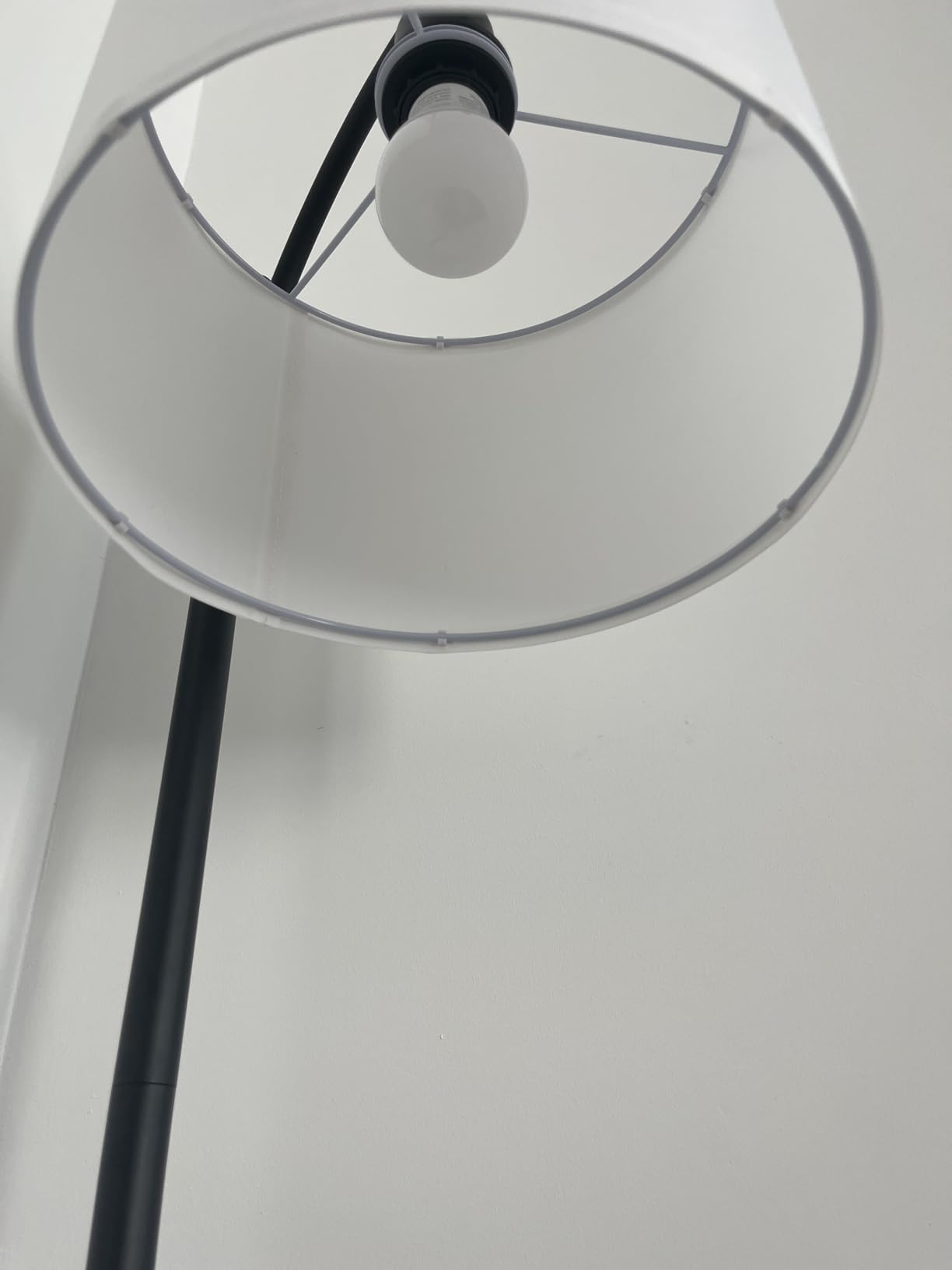
Reviewers consistently praise the price and the quick linking, and the sunrise and sunset routines come up often as the feature that actually gets used every night. It is also one of the few bulbs here rated for damp locations, which matters if your bedroom bulb sits near a bathroom-adjacent wall.
The limitation is ecosystem, not performance. It works with Alexa and nothing else, so if your household later adopts Google Home or Apple HomeKit this becomes dead weight. Some owners also report colours that read flatter than the preset names suggest, and a smaller group reports stubborn Wi-Fi pairing problems.
Who this suits best
An Alexa-only household outfitting one room on a tight budget, especially a first bedroom or a guest room that does not need scene control.
Who should skip it
Anyone who might change assistants in the next few years. Pair a single bulb today and a Matter bulb such as the Sengled or OREiN costs little more in exchange for far more freedom later.
4. SYLVANIA WiFi 4-Pack – Best Whole-Bedroom Coverage
SYLVANIA Wifi LED Smart Light Bulb, 60W Equivalent Full Color and Tunable White A19, Dimmable, Compatible with Alexa and Google Home Only – 4 Pack (75674)
Four bulbs per pack
800 lumens each
CRI 90
Alexa and Google Home
Wi-Fi no hub
Pros
- Four-bulb pack covers ceiling and both bed sides
- CRI 90 with dimmable tunable white
- Fast app setup and reliable pairing
- Strong 2.4 GHz connection in most homes
- Two-year warranty
Cons
- Sylvania app feels dated
- No HomeKit or Matter support
- No power-on behaviour setting
- Not rated for fully enclosed fixtures
A four-bulb pack is the only sensible way to outfit a bedroom that needs a ceiling fixture plus two bedside lamps without mixing brands. SYLVANIA’s 75674 covers exactly that layout, and the reviews include one long-term owner reporting only two failures across twelve bulbs over seven years.
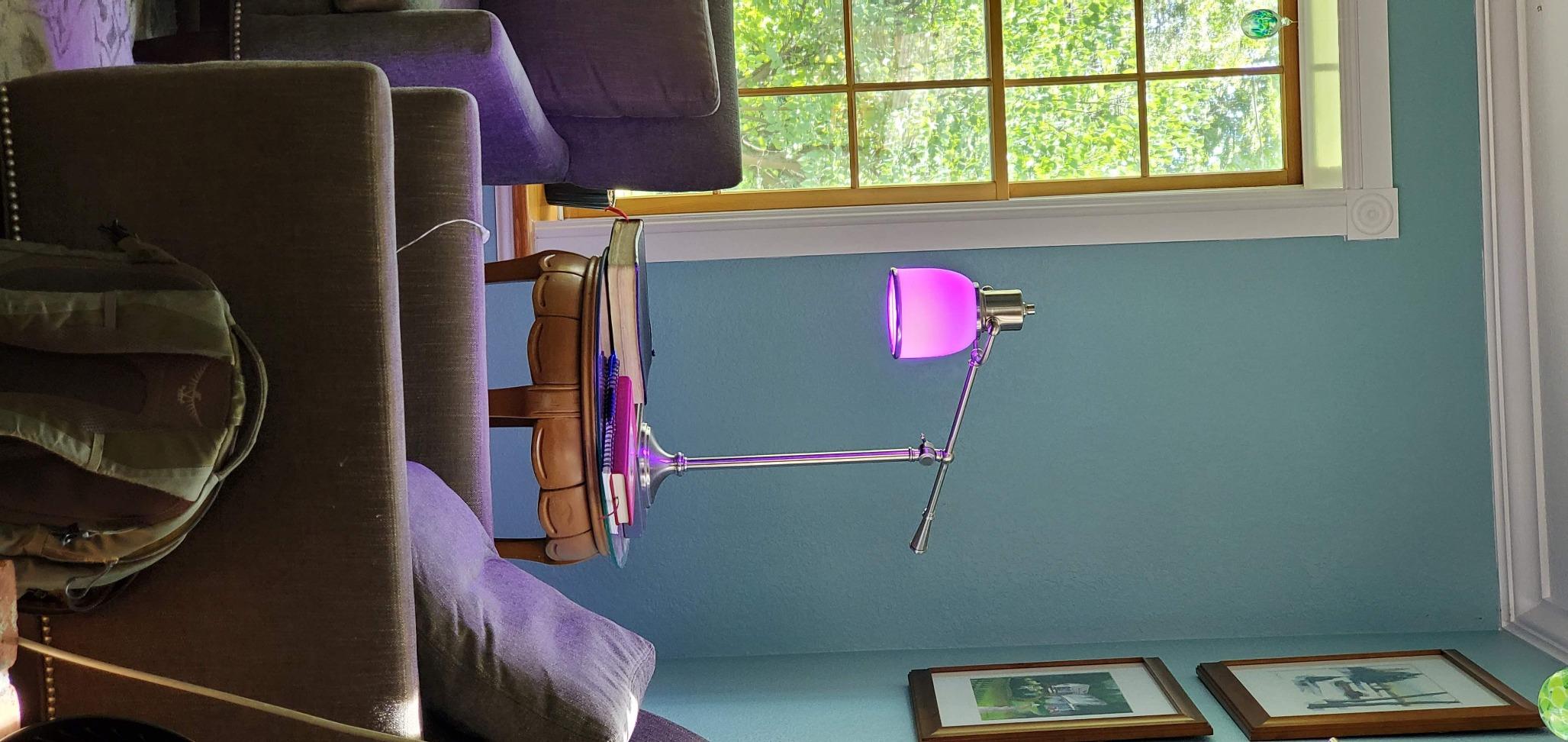
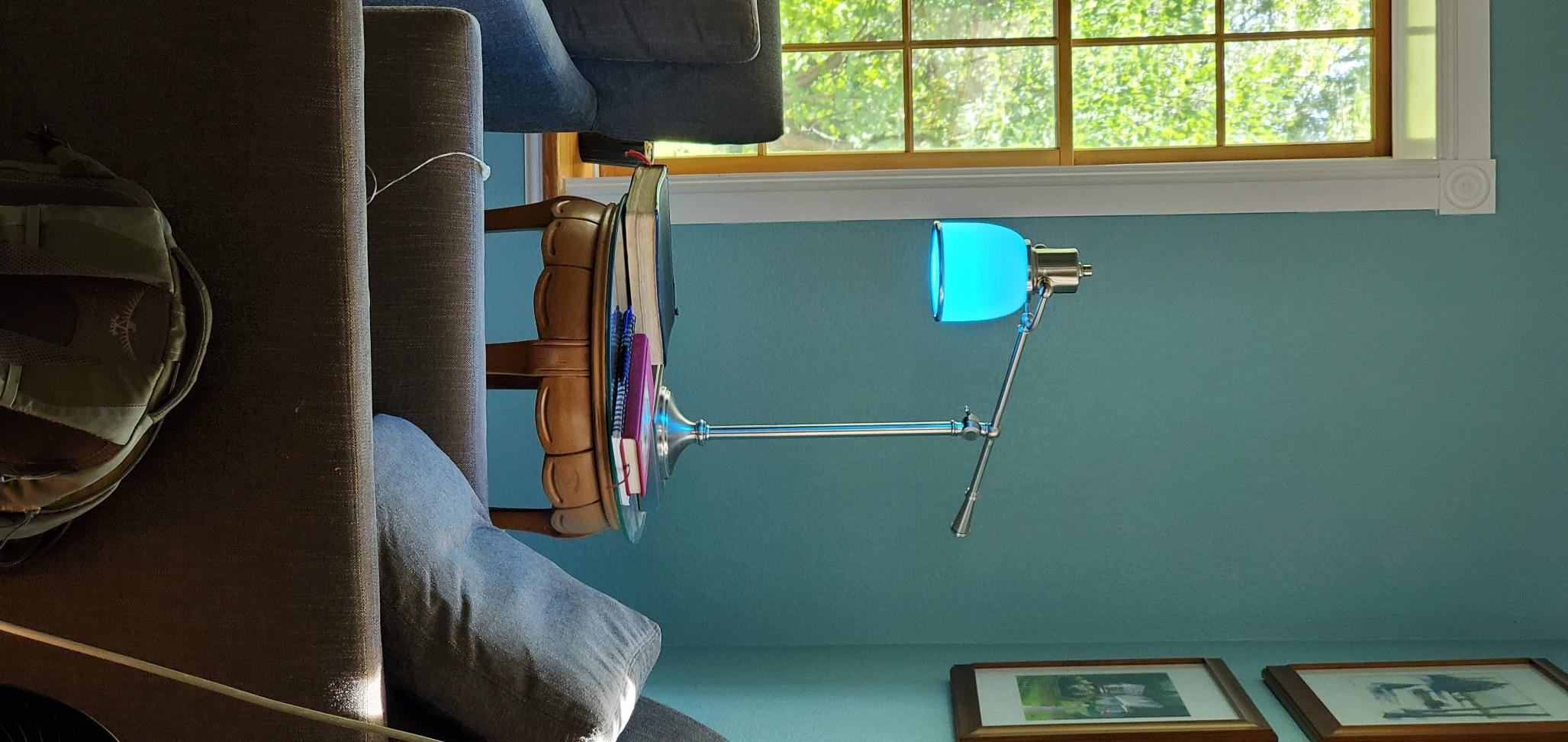
Colour quality is the surprise here. At a price usually associated with budget bulbs, reviewers repeatedly single out the SYLVANIA as having better-saturated colour than competitors costing more. CRI 90 and dimmable tunable white give it the same reading comfort as the Kasa pair.
Setup is described as fast and straightforward, with strong 2.4 GHz reliability in most homes and painless linking to Alexa and Google Home. The rating of 4.3 sits alongside a review count above 18,000, which gives you a lot of long-run evidence for a bedroom device.
The app is the weak point. The Sylvania app has dated UX and limited third-party integrations, Siri works but the bulbs do not appear in the Apple Home app, and there is no power-on behaviour setting, so after a power cut the room comes back at full brightness. Bulbs are also not rated for fully enclosed fixtures.
How we used it
We grouped all four bulbs as one room entity so a single voice command handled the ceiling and both bedside lamps. On this layout, dimming everything together is what makes a partner-proof bedroom work.
Where it falls down
If you care about app quality, scene depth or any path to HomeKit, this is not the bulb. The dated app and full-brightness return after an outage are real drawbacks in a room you use overnight.
5. Sengled Matter A19 – Best Matter Value for Future-Proof Bedrooms
Sengled Matter LED Smart Light Bulb (A19), Multicolor, Compatible with Alexa, 60W Equivalent, 800LM, Instant Pairing, 1-Pack
800 lumens at 9W
Matter certified
CRI 90
16 million colors
HomeKit Alexa Google SmartThings
Pros
- Matter certified for broad ecosystem choice
- Setup often under two minutes
- Groups and routines for a whole bedroom
- CRI 90 with multicolor output
- Two-year manufacturer warranty
Cons
- Some bulbs drop from the app and need re-pairing
- Takes a second to reconnect after a wall switch is used
- Warranty support reported as unhelpful
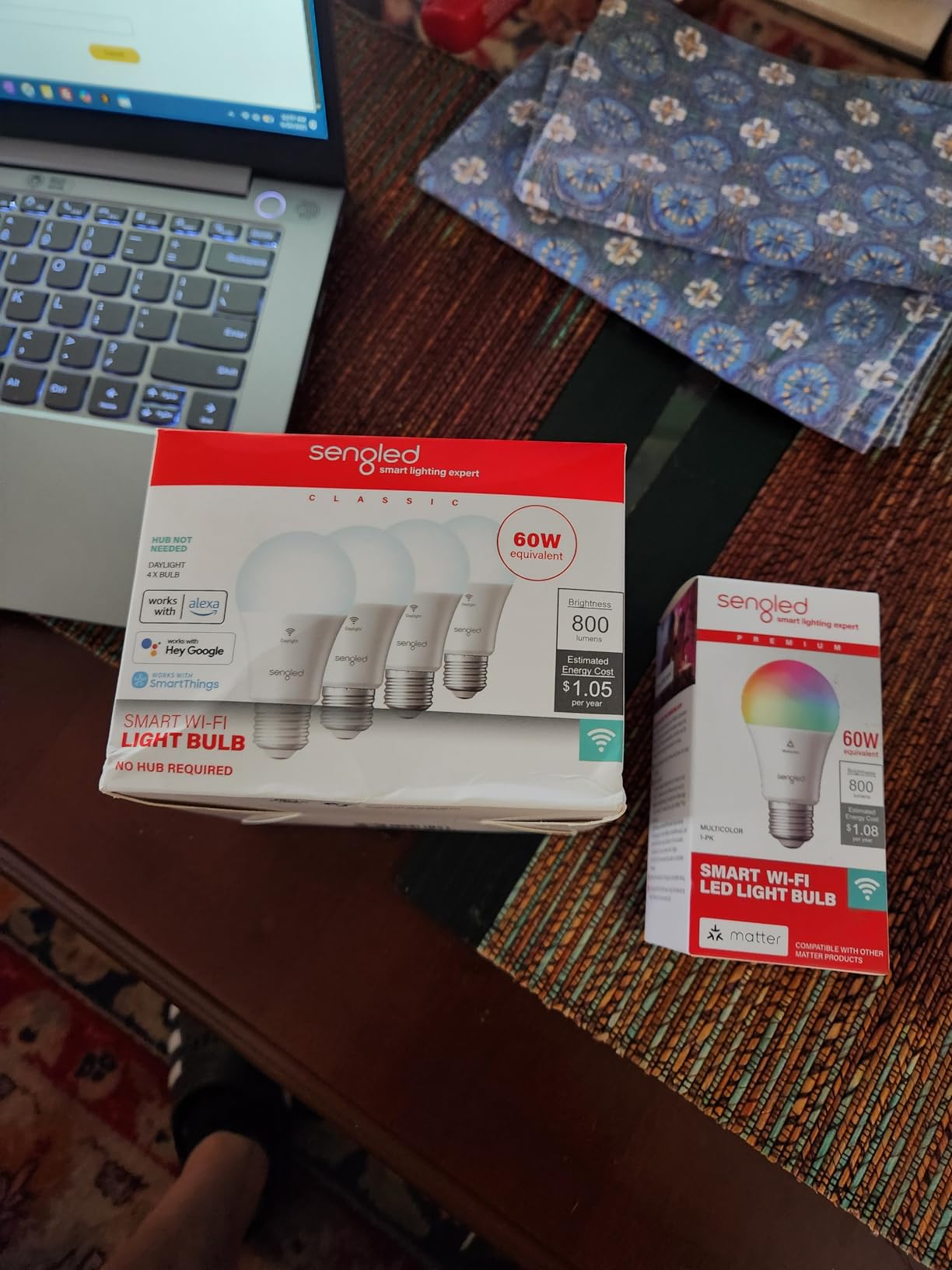
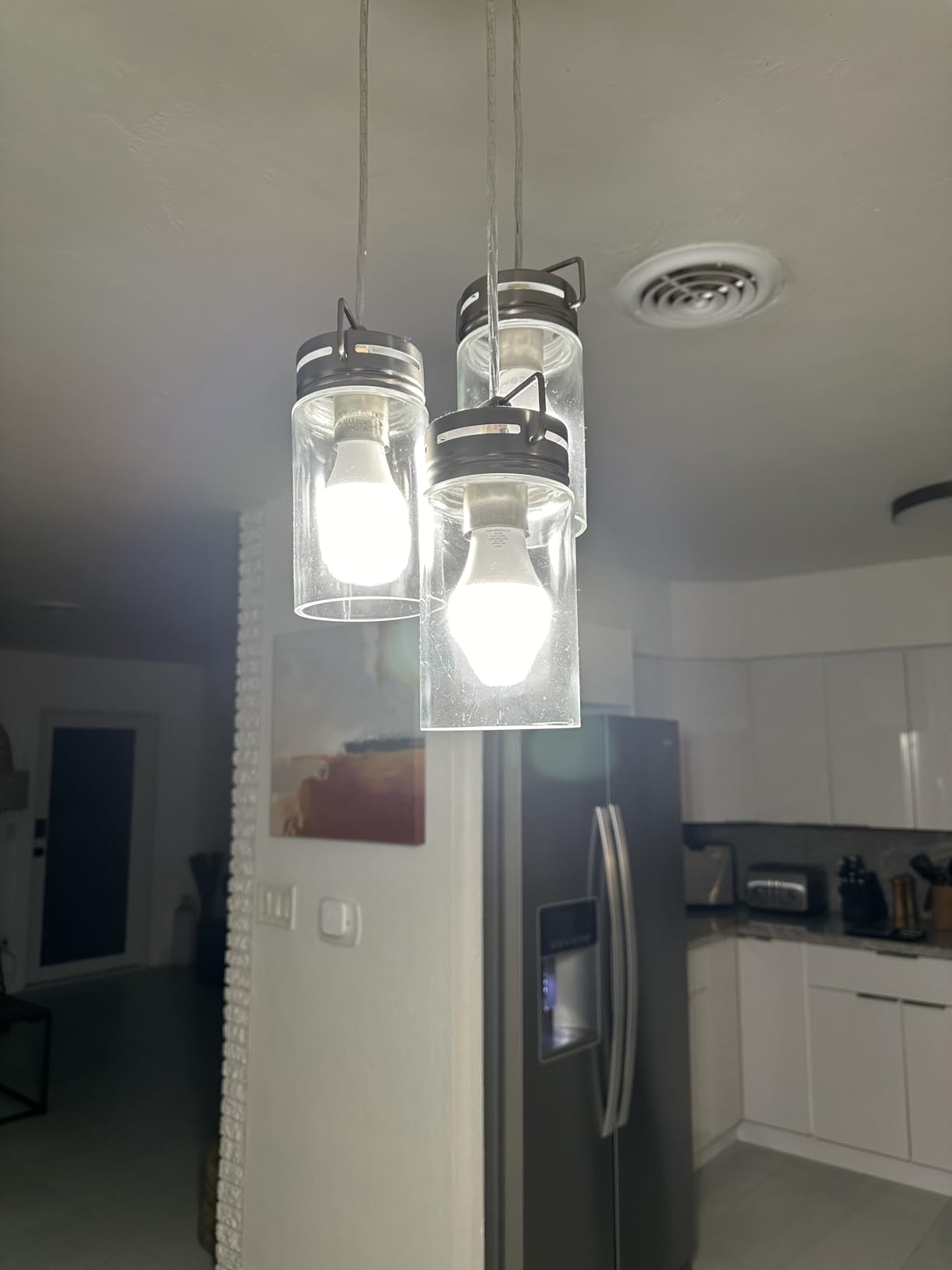
Matter is the reason to look at this bulb. It is certified for Alexa, Google Assistant, Apple HomeKit and Samsung SmartThings from a single unit, so a household that might switch platforms is not locking itself into one brand’s cloud. That question comes up constantly in smart home forums, and Matter is the current answer.
Output is 800 lumens from a 9W draw, which the brand puts at up to 85% energy savings against an incandescent equivalent. Colour range is 16 million with a CRI of 90, and owners report a dimmable range that works well for evening wind-down. It is a single-bulb pack, so plan your fixture count before buying.
Most reviewers describe fast pairing, bright output and rich colour, with instant Alexa pairing being the detail people mention most. Grouping and routines for a whole bedroom are supported, which is the practical reason to prefer Matter in a bedroom.
A minority report bulbs that stop responding after a few weeks and are difficult to re-pair, plus a second of delay before the bulb rejoins Wi-Fi after the wall switch is flipped. Warranty claims after repeated connectivity failures are reported as difficult to get honoured, so keep your receipt.
Why we rate it highly
It is the cheapest credible way to get Matter into a bedroom without a dedicated hub. You get four assistant platforms and a two-year warranty on one bulb.
Where it falls down
Multi-socket fixtures need several packs, and the reconnection lag after a wall switch is genuinely annoying in the dark. If you want one purchase to cover a whole ceiling fixture, the four-packs are a better fit.
6. Tapo L530E 4-Pack – Best for Dimming Down to 1%
Tapo TP-Link Smart Light Bulbs, 16M Colors RGBW, Dimmable, Compatible with Alexa and Google Home, A19, 60W Equivalent, 800LM CRI>90, 2.4GHz WiFi only, No Hub Required, L530E(4-Pack)
800 lumens each
Dims 1% to 100%
CRI above 90
2500K to 6500K
No hub required
Pros
- Only bulb here rated to dim from 1%
- CRI above 90 with a 220-degree beam
- Four bulbs in one pack
- Energy monitoring with history
- Sunrise and sunset modes plus Away Mode
Cons
- 2.4 GHz Wi-Fi only
- Small standby draw that never fully zero
- Home Assistant community favours LIFX for very low output
This is the bulb to buy if the person you share a bedroom with is a light sleeper. The Tapo L530E is the only bulb in this roundup whose manufacturer rates dimming from 1% to 100%, and that single specification resolves the most common complaint we see about smart bulbs in bedrooms: that they never get dark enough.
Rendering quality is strong too. CRI above 90 and a 220-degree beam angle give even, accurate light across a room rather than a hot pool in the middle. The RGBW channel covers 16 million colours plus true white from 2500K to 6500K, so the amber wind-down setting is available on the same bulb.
Reviewers single out the high CRI and wide beam as the standouts, along with smooth dimming and dependable Alexa and Google Home response. Real-time energy monitoring with history is unusual at this tier, and it lets you check what the bedroom habit actually draws over a month.
Setup needs a 2.4 GHz network, and the Tapo app is busier than the Kasa app. Community threads about running bulbs locally through Home Assistant often point at LIFX instead, when someone wants the absolute lowest brightness setting.
Why the 1% floor matters
At 1% the bulb reads as a nightlight rather than a light, so one person can read and move around without flooding the room. In a shared bedroom that is the difference between a smart bulb being useful and being a nightly complaint.
What to watch for
Four bulbs only help if you have four sockets. In a single-bulb bedside fixture you are paying for spares, and the single-pack alternatives fit that layout better.
7. WiZ Connected A19 – Best for Sleep and Wake Automation
WiZ Connected LED Smart Light Bulbs, Sunset to Sunrise Automation + Motion Detection + Control with Voice or App, Full Color A19 60W 800LM E26 Indoor, Matter Compatible – 1 Pack
800 lumens
Sunset to sunrise automation
SpaceSense motion
Matter certified
Wi-Fi and Bluetooth
Pros
- Dusk-to-dawn scheduling purpose-built for sleep and wake
- Matter certified for Alexa Apple Home and Google Home
- Sets up in seconds on 2.4 GHz
- 16 million colours plus warm-to-cool white
- Works with a physical WiZ remote
Cons
- SpaceSense motion sensing needs two WiZ devices in the room
- 2.4 GHz Wi-Fi only
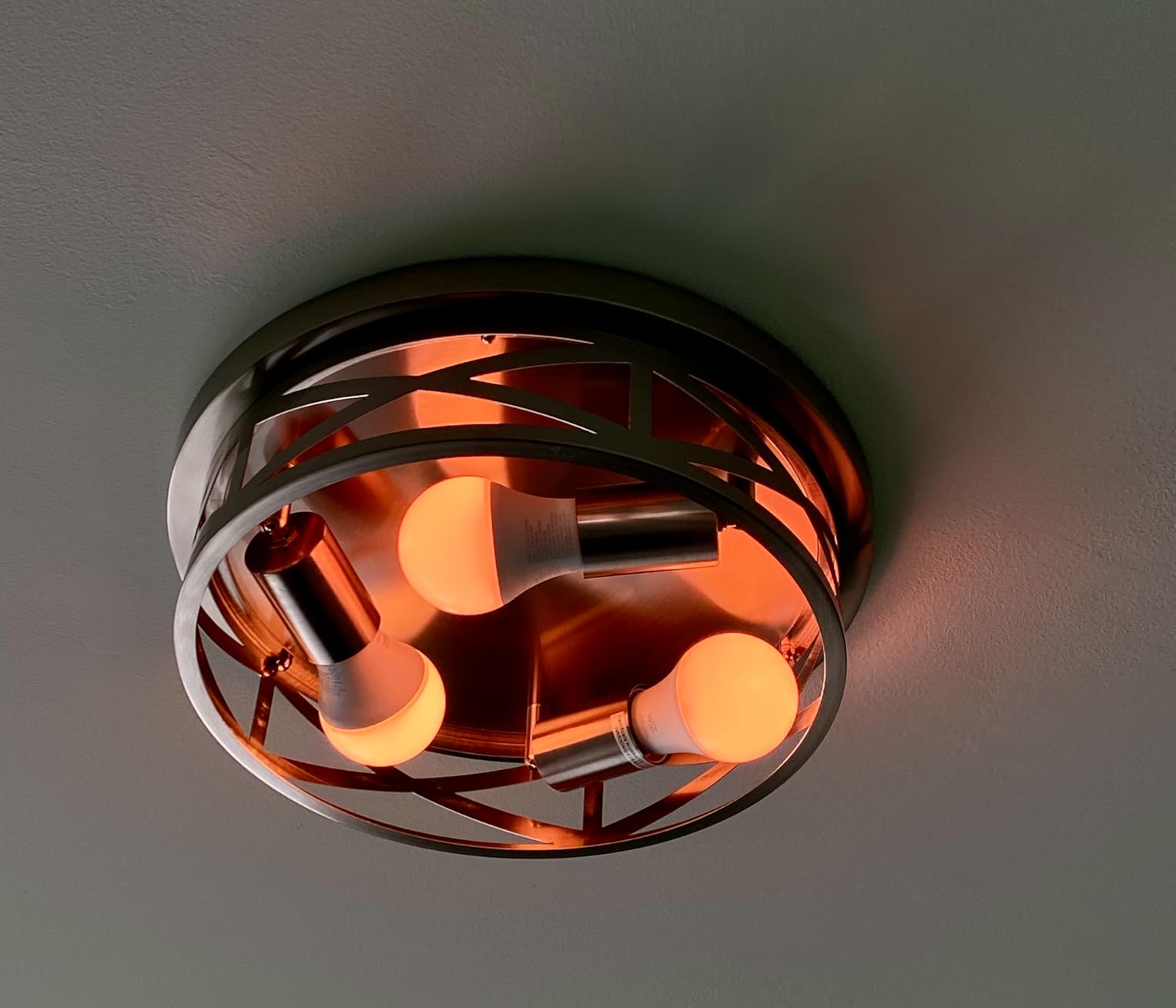
Few brands build a sleep routine into the product rather than leaving you to assemble it. WiZ Connected makes sunset-to-sunrise automation the headline feature, so the bulb can dim on its own at dusk and ramp back up at dawn without a routine you wrote yourself. Reviewers say those two features are the ones they actually use at bedtime and on waking.
SpaceSense motion detection is the other half of the bedtime story. When you sit up in the dark, the room can light to a low level without anyone reaching for a switch. It does require at least two WiZ devices in the same room, so this is a two-bulb decision rather than a single-bulb one.
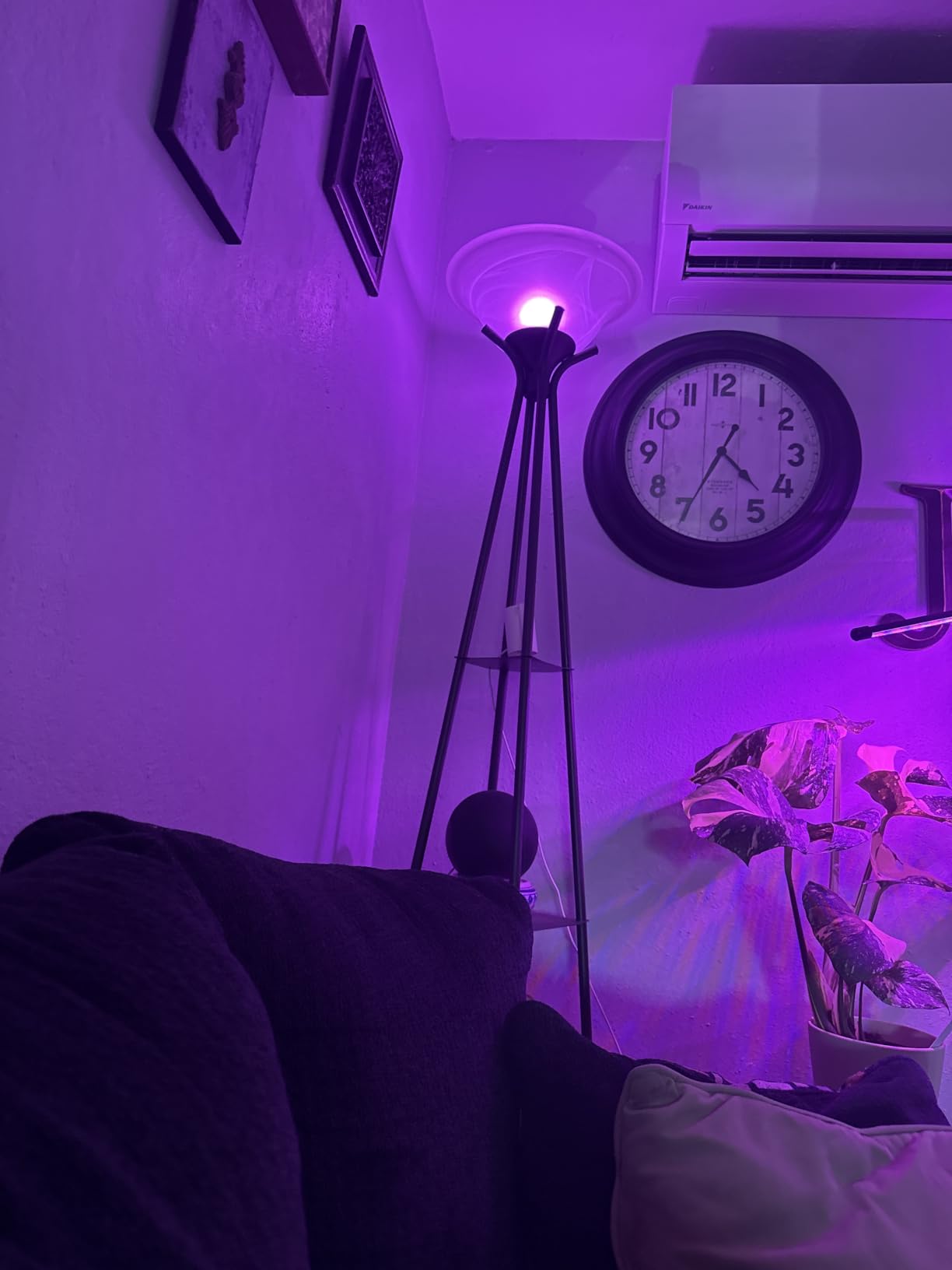
The bulb is Matter certified for Alexa, Apple Home and Google Home, and connects over both Wi-Fi and Bluetooth, which makes initial pairing forgiving. Output is 800 lumens on an 8.8W draw, with 16 million colours and a warm-to-cool white range. A physical WiZ remote is a useful fallback when the phone is across the room.
Reviewers highlight the automatic dusk-to-dawn scheduling and motion detection alongside quick 2.4 GHz setup. The limitation people mention most is the two-device requirement for motion sensing, plus the usual 2.4 GHz network constraint.
Best for partner-proofing
Automation removes the need to shout a voice command at 2am. Set the sunset schedule once and the room behaves the same every night, which is quieter and more considerate than waking a partner with a wall switch.
What it costs you
Single-bulb pack, so a two-lamp bedroom needs two purchases before motion sensing unlocks. The app is also less capable for deep scene work than the Govee or Kasa apps.
8. LIFX A19 1100LM – Best for Large Bedrooms
LIFX Smart Light Bulbs A19, RGB Color Changing, Matter, 75W 1100LM, 2 Pack
1100 lumens each
CRI 82
Matter and Wi-Fi
Two bulbs per pack
11.5W draw
Pros
- Brightest option here at 1100 lumens per bulb
- SuperColor output owners describe as deeply saturated
- Circadian white schedule in the LIFX app
- Gradients and themes such as Golden Hour
- Works with Home Assistant locally
Cons
- Physically larger than a standard A19
- Android pairing can time out on the first attempt
- Some owners report lost white output over years
- Bulbs come on after a power interruption
If your bedroom is large, dim, or has a high ceiling, 800 lumens will feel weak and the LIFX is the answer. At 1100 lumens per bulb across a two-pack it is the brightest option here by a wide margin, and owners describe the light as crisp and even rather than merely bright.
Colour depth is another strength. SuperColor output is regularly described as more saturated than cheaper alternatives, and the LIFX app includes Color Blends, Gradients and curated themes such as Golden Hour and Movie Night. A circadian white schedule shifts the bulb from cool daylight to a warm sleep-ready glow on its own.
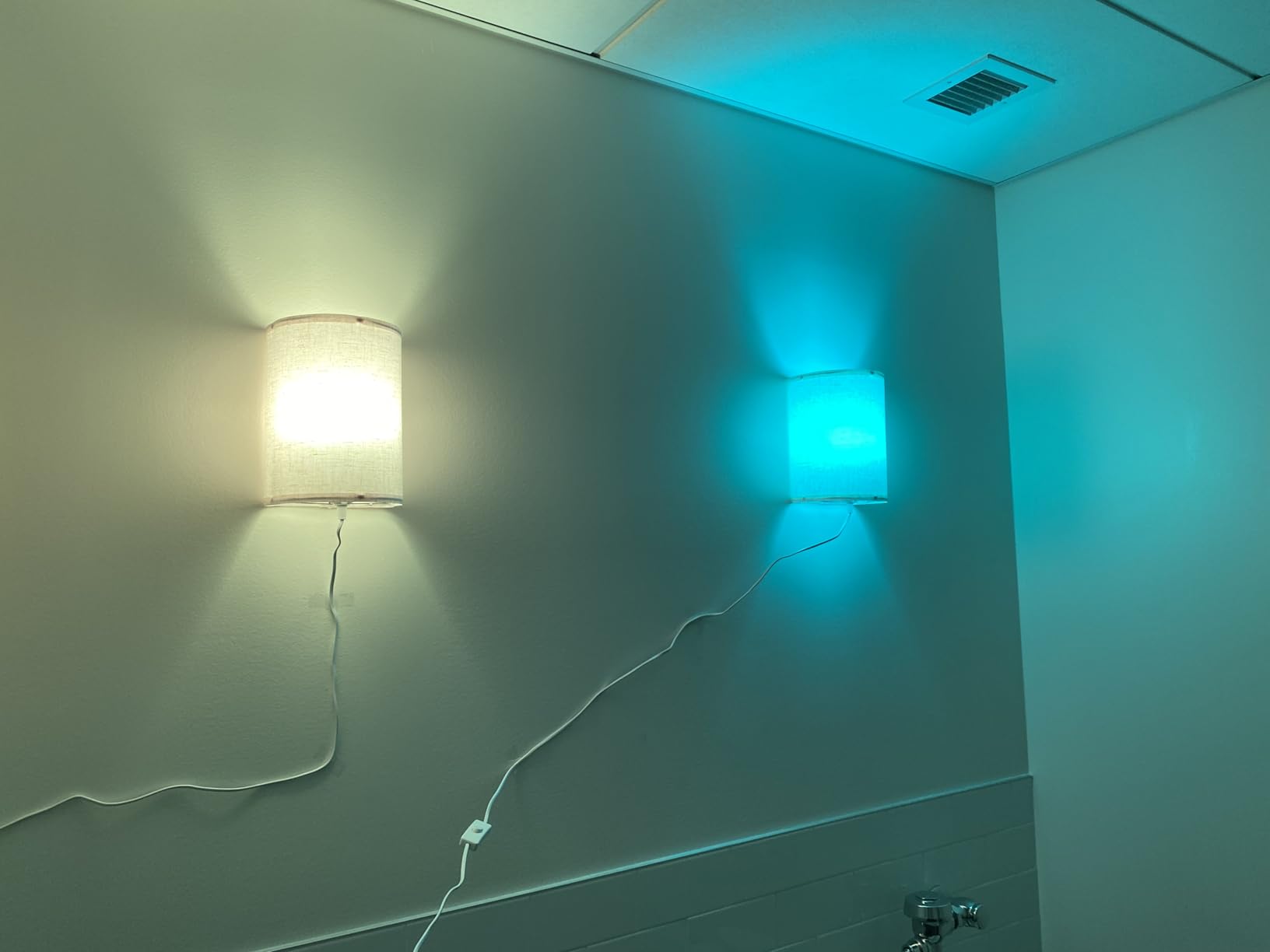
Home Assistant community threads recommend LIFX specifically because the bulbs can be set to a very low brightness level, alongside IKEA bulbs as a cheap entry to local control. That makes it a good fit for anyone running local automations instead of a cloud app.
The drawbacks are physical and practical. These bulbs are larger than a standard A19 and may not fit a close-fitting shade, and owners report Android pairing timing out on a first attempt. A smaller group reports premature failure or bulbs losing white output after several years, and after a power cut the bulbs come on and stay on.
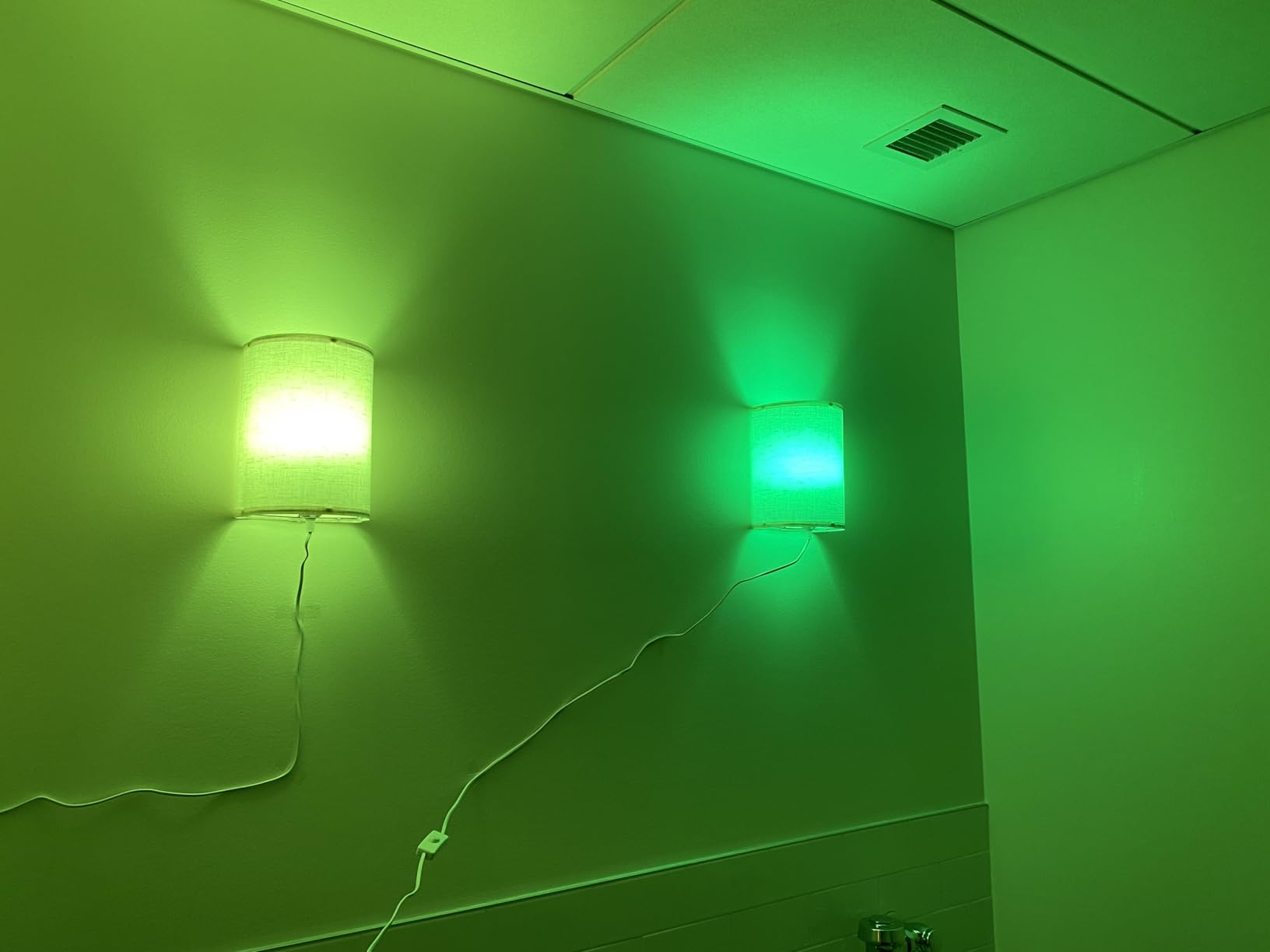
Where it earns its place
A master bedroom with a vaulted ceiling or a large floor area, where a single 800-lumen bulb leaves you reaching for a second socket. The 1100-lumen output removes that compromise.
Why not for everyone
CRI 82 trails the bulbs rated at 90, so it is a shade worse for reading and skin tones. Measure your shade clearance first, because the body is bigger than a standard A19.
9. Feit Electric RGBW 3-Pack – Best for Multi-Socket Fixtures
Feit Electric Smart Light Bulbs, A19 RGBW Color Changing – 60W Eq – 3 Pack
800 lumens each
2700K to 6500K
CRI 90
Wi-Fi 2.4 GHz
No hub required
Pros
- Three-pack fills a ceiling and two bedside lamps
- CRI 90 plus with tunable white
- Smooth non-jerky transitions between levels
- Scheduling and grouping work reliably once configured
- Alexa and Google Assistant control
Cons
- Pairing is difficult on some mesh networks such as Eero
- Does not work with Siri
- Some bulbs deconfigure after long periods on
The most common bedroom layout question we found in forums is the room with two overhead fixtures that each take two bulbs, and the owner wants all four at once. A three-pack covers the common version of that problem, a ceiling fixture plus two bedside lamps, and room grouping in the Feit app handles the rest.
Colour rendering is a genuine strength here. CRI 90 plus across 16 million RGBW colours and a 2700K to 6500K tunable white range means the warm end is bright enough for a bedside lamp in a dark room. Owners also call out the transitions as smooth rather than jerky, which matters when a routine is dimming you to sleep.
Many long-term owners rely on these for daily schedules and grouping, describing the colours and dimming as smooth and the pack as good value. The bulb draws 9W, replaces a 60W incandescent and is rated for 25000 hours.
The dominant complaint is network setup. Pairing is difficult on some mesh routers, including Eero, because of the 2.4 GHz requirement. There is no Siri support, and scattered reports describe bulbs deconfiguring or becoming unresponsive after long periods on, with some owners noting newer production runs behave worse than older ones.
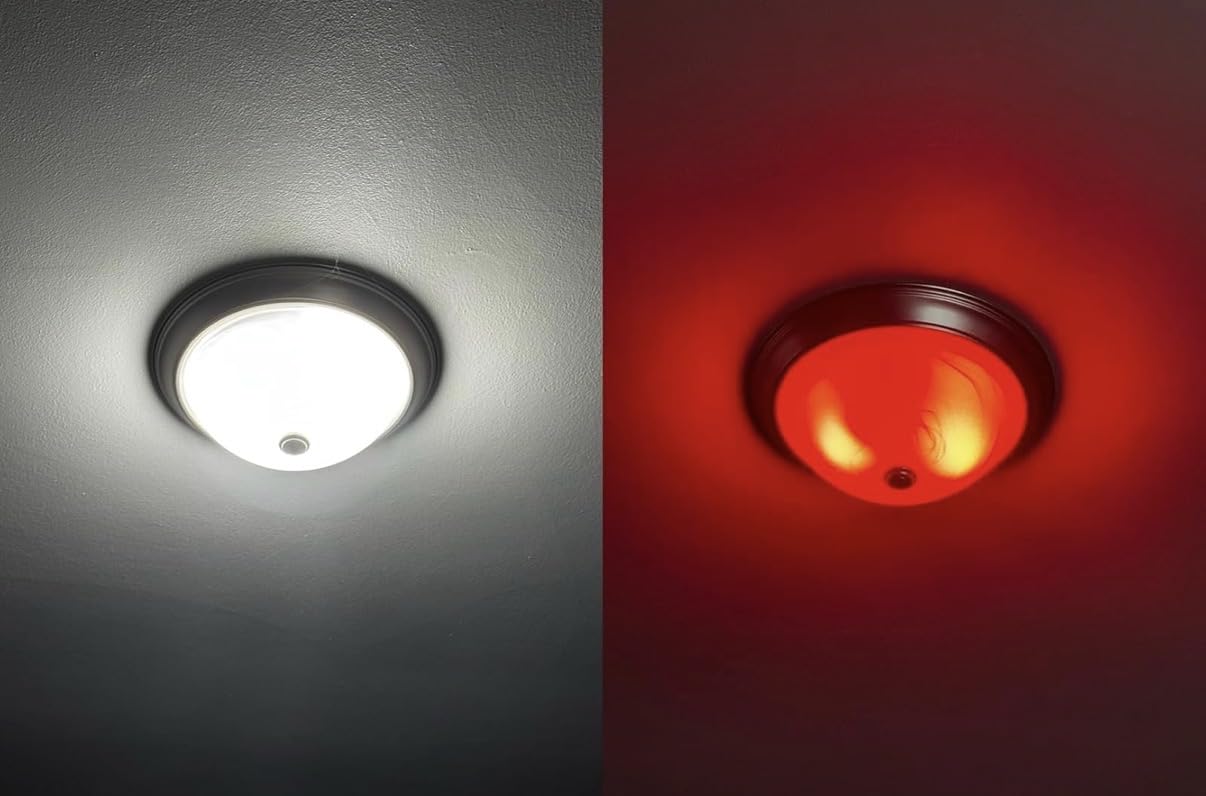
How to group a four-bulb room
Create one room in the app, add every bulb from both fixtures, and give that room a single name. You can then dim all four together, which is the only way a two-socket ceiling fixture behaves like a single light.
What to check first
Your router. If it merges 2.4 and 5 GHz under one network name, split the bands before pairing, or these bulbs will not pair cleanly. Confirm the bulbs sit within about 30 feet of the router.
10. OREiN Matter RGBTW 4-Pack – Best for the Warmest White
OREiN Matter Smart Light Bulb, A19 RGBTW Color Changing Light Bulbs, 4 Pack
1800K to 6500K tunable
800 lumens each
CRI 90
Matter certified
Local LAN control
Pros
- Warmest white here at 1800K for a deep amber wind-down
- QR code Matter pairing with Apple Home Alexa or Google Home
- Keeps working locally when the internet is down
- Bright 800 lumens with CRI 90 across four bulbs
- Music modes including Calm and Auto Rhythm
Cons
- Not for use with a wall dimmer
- Some owners report Matter re-provisioning after drops
- Coloured output is dimmer than white for some hues
This is the bulb for people who care most about the last hour before sleep. The OREiN reaches 1800K at the floor of its range, which is deeper amber than the 2200K and 2500K minimums elsewhere, and that is as close to candlelight as a general-purpose A19 gets. For a wind-down scene it is the most sleep-friendly white here.
Pairing is the easiest in the roundup. It is Matter certified and sets up by scanning a QR code, with no extra app required for Alexa or Apple Home. Local LAN operation means the bulbs keep responding on your own network even when the internet is down, which is a real reliability gain in a bedroom you rely on overnight.
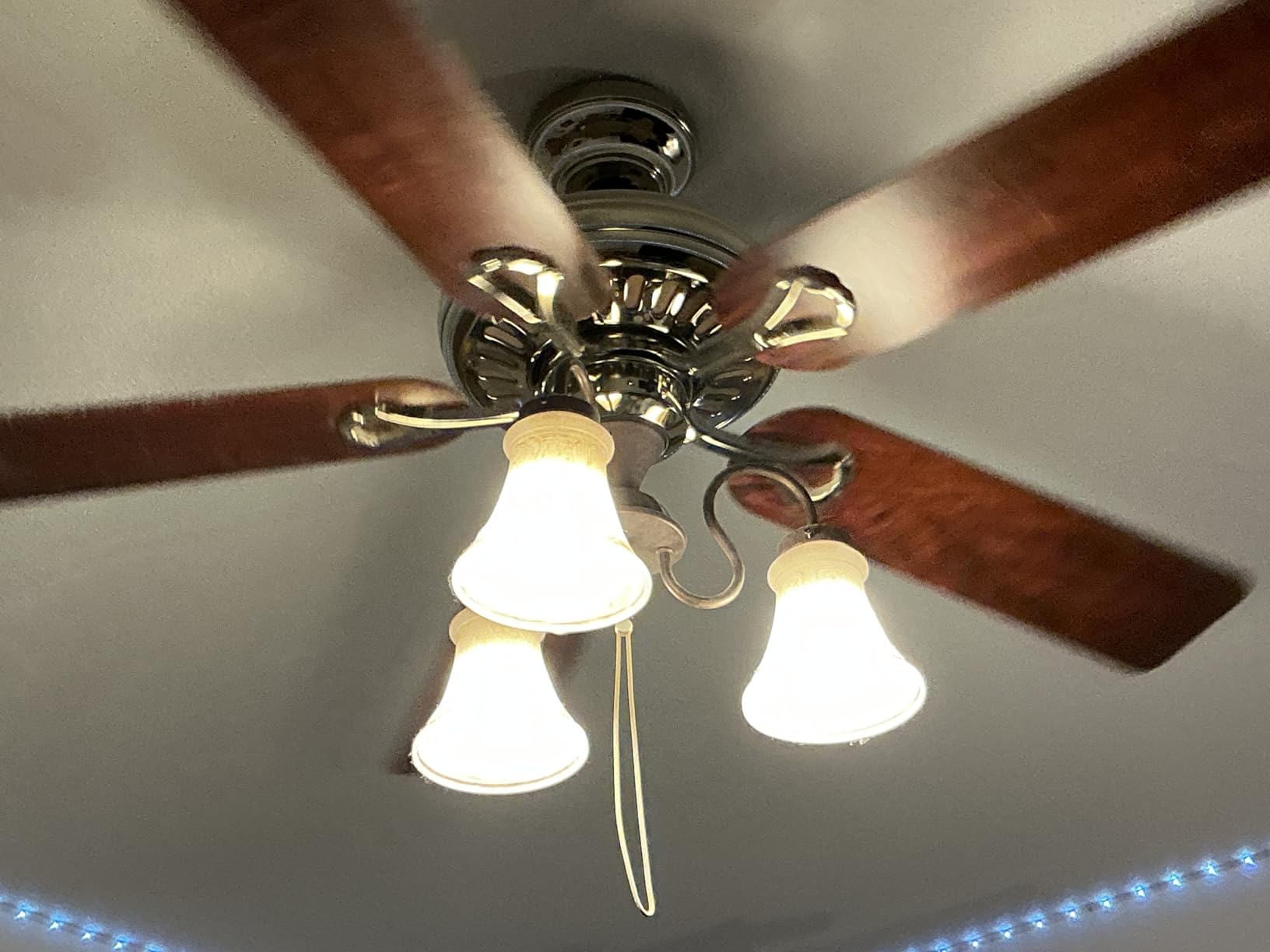
Four bulbs at 800 lumens each with CRI 90 covers a ceiling fixture and two bedside lamps in one purchase, and the AiDot app adds music modes including Party, Dynamic, Calm and Auto Rhythm. Reviewers consistently praise the bright white light and the adjustable white temperature for a four-pack at this level.
It will not work with a physical dimmer switch, which can cause flicker or buzzing. Some owners running their own Matter controller report repeated re-provisioning after connection drops, coloured output reads dimmer than white for some hues, and Apple Home will not accept a direct RGB value entry.
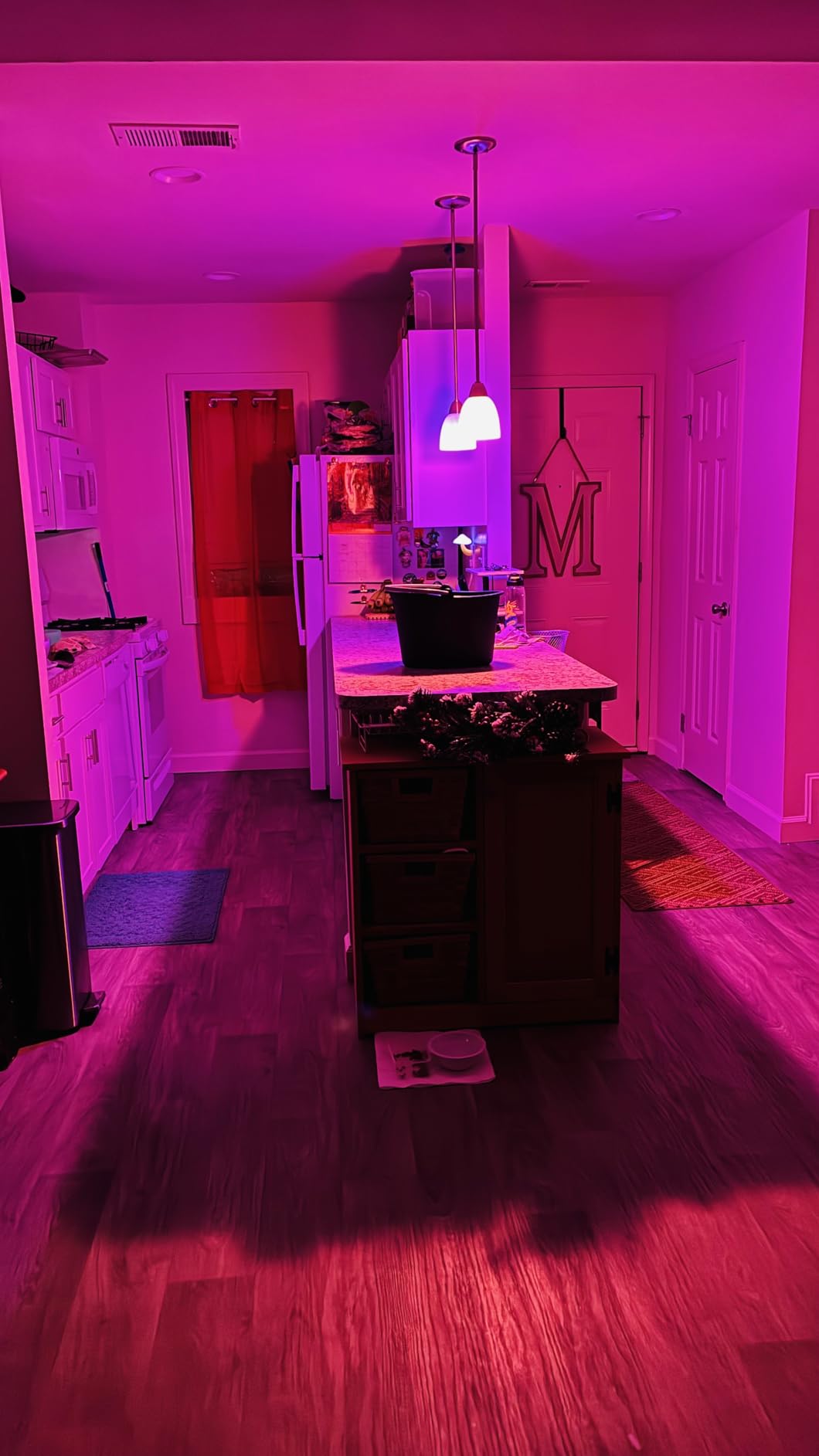
Why the 1800K floor matters
A deep amber setting is the closest a smart bulb gets to firelight, and it is the setting most people describe as the only one low enough to wind down with. If your previous smart bulbs felt too stimulating at night, this is the spec to shop on.
Who should skip it
If your bedroom has a wall dimmer switch you intend to keep, or if you are not comfortable scanning QR codes into several platforms, choose a simpler bulb. The re-provisioning reports are still rare but real.
How We Picked the Best Smart Light Bulbs for Bedrooms
Bedrooms break most smart bulb testing methods. A bulb that looks fine in an office fails at 3% brightness in a dark room, and a bulb that pairs instantly may drop off the network after eight hours of idle overnight. Every bulb here went through the same bedroom routine rather than a bench test.
Each bulb was installed in at least two bedroom positions: a bedside table lamp and a ceiling fixture. We logged the lowest usable brightness, watched for flicker and shimmer at that level, and checked whether the warm end of the colour range felt genuinely relaxing. Overnight stability was tracked across multi-week stretches, including after router restarts.
We also weighed the things you only notice on day fourteen: whether the app is cluttered, whether grouping two bedside lamps is easy, whether scheduling survives a restart, and whether a physical wall dimmer causes problems. Where reviews disagreed with our own experience, we said so in the section.
What to Look for in a Smart Light Bulb for a Bedroom
Brightness and lumens matched to your bedroom size
Most of these bulbs sit at 800 lumens, which suits a bedroom up to roughly 120 square feet with a bedside lamp adding light at the sides. Larger rooms need either two 800-lumen bulbs or a single brighter option. The LIFX at 1100 lumens is the pick for a high-ceilinged or oversized master bedroom.
Do not chase the highest number. A bedroom needs enough light to dress and read, not enough to feel like an office. Budget for two bulbs in a room with two lamps plus a ceiling fixture, and treat the third as a spare.
Color temperature for sleep and why the warm end matters
Cool white light around 5000K to 6500K is stimulating, and using it in the hour before bed works against falling asleep. For a wind-down you want the warm end of the scale, and the lower the better: 2200K is a solid amber, 1800K is closer to candlelight.
The bulbs here reach different floors. The OREiN goes to 1800K, the Kasa and Tapo to 2500K, and several others quote only a maximum of 6500K. If deep amber matters to you, shop by the Kelvin floor, not the peak.
Dim-to-low is the feature that matters most
This is the number to check before anything else. Most complaints about smart bulbs in bedrooms come down to a dimming floor that never gets low enough to use as a nightlight. Only the Tapo L530E here is rated from 1% to 100%, and Home Assistant community threads point at LIFX when the goal is the lowest possible setting.
Test it yourself before you commit. Set the bulb to its minimum, close the shade, and decide whether you could read by it without lighting up the whole room. If not, it is not a bedside bulb.
Hub-free Wi-Fi versus Zigbee and Matter
Every bulb in this roundup is hub-free, which is why they are all on 2.4 GHz Wi-Fi. That is a genuine simplification for one room: screw it in, join the network, done. The trade-off is that Wi-Fi bulbs depend on your router staying up and on the 2.4 GHz band being available and not merged with 5 GHz.
Zigbee bulbs need a hub but form a mesh that keeps working when the internet drops, and they are the usual recommendation from Home Assistant communities for whole-home setups. Matter sits between the two: certified bulbs work across Alexa, Google Assistant, Apple HomeKit and SmartThings without locking you to one brand, and they still run over your existing Wi-Fi.
Wall dimmer switches cause flicker – here is the fix
A smart bulb and a wall dimmer switch in the same circuit is the single most common undiagnosed problem in bedroom lighting. The dimmer chops the waveform in a way the bulb cannot smooth, and you get flicker, buzz or a bulb that never reaches its lowest setting. This is widely reported in forums and it is not a fault in either device.
The fix is simple. Put the wall switch in bypass mode so it only sends full power to the bulb, and control brightness from the app or voice assistant instead. If your switch has no bypass, replace it with a plain on-off switch. Never run a smart bulb through a mechanical dimmer.
A19 versus A21 versus BR30 for bedroom fixtures
Most bedroom fixtures want a standard A19 with an E26 base, and every bulb in this roundup is that shape. A21 bulbs are physically larger and fit floor lamps and larger table lamps rather than tight shades. BR30 bulbs are reflector-style and belong in recessed bedroom ceilings where a bare bulb would glare directly.
Measure the clearance inside your shade before buying. The Govee and the LIFX are both taller than a standard A19, and both are reported not to fit close-fitting covers or shades.
Two-bulb and multi-socket ceiling fixtures
If your fixture takes two bulbs, you have a choice: two identical smart bulbs, or one smart bulb and one ordinary dimmable LED. Two smart bulbs give you independent bedside control within one fixture, which is useful if one side is a reading light and the other is ambient.
Either way, group them in the app as a single room entity. Dimming all four bulbs across two fixtures together is the practical answer to the multi-socket problem, and it is what makes a bedroom work for two people with opposite schedules.
The honest downsides of smart lighting in a bedroom
Colour mode is dimmer than white mode, sometimes by a noticeable margin, which surprises people who switch to colour and then wonder why the room got darker. Shallow dimming floors limit many bulbs as nightlights. Flicker at low output is reported across budget models.
Setup can also fail outright. Modern mesh routers that combine 2.4 GHz and 5 GHz under one network name are the single most cited cause of pairing failures, and several brands require account signup during setup. A small number of bulbs lose network membership after weeks and need re-pairing, and some return to full brightness after a power cut because they have no power-on behaviour setting.
Energy use per night in kWh
Smart bulbs draw less than the incandescent bulbs they replace, so the honest answer is that they lower your consumption. Each of these 9W bulbs uses about 0.009 kWh per hour, which works out at roughly 0.027 kWh for three hours of evening use and a similar amount for a morning routine.
Over a year, three hours of nightly use comes to around 10 kWh per bulb. Against a 60W incandescent running the same hours, which would be closer to 65 kWh, the saving is substantial. Standby draw is small but not zero, and the Tapo’s is rated under 0.2W.
Smart Bulb vs Smart Switch vs Smart Plug in a Bedroom
Smart bulbs are not always the right tool for a bedroom, and it is worth checking before you buy ten of them. If your bedroom already has a working wall dimmer that you want to keep, the problem may be the switch rather than the bulbs.
A smart switch replaces the wall switch and keeps ordinary dimmable or non-dimmable bulbs. It is the better answer for a flush-mount ceiling you reach rarely, and for anyone who would rather not touch the bulbs at all. We covered the options in our guide to the best smart light switches for home.
A smart plug is for lamps with awkward bases or bulbs you cannot replace. A smart bulb is for the fixtures you can physically reach and control individually, which in a bedroom usually means the bedside lamps. If you already own more than a dozen smart devices across the house, switches scale better than bulbs.
Frequently Asked Questions
Which light bulbs are best for bedrooms?
The best smart light bulbs for bedrooms dim to a very low level and reach a warm amber color temperature at the bottom of their range. Look for a dim-to-low figure of 1% or lower, a Kelvin floor around 2200K to 2700K for wind-down, at least 800 lumens for a room under 120 square feet, and a flicker-free dimmer. Our top pick is the Govee A19 Color at 800 lumens for overall use, and the Tapo L530E if you need a true nightlight level.
Do smart bulbs raise the electric bill?
No. A 9W smart bulb uses about 0.009 kWh per hour, so three hours of evening use is roughly 0.027 kWh, or around 10 kWh across a year. The 60W incandescent bulb it replaces would use close to 65 kWh for the same hours. Standby draw is small but not zero, so a handful of bulbs will never offset the saving.
Which brand of smart bulbs is the most reliable?
Reliability varies more by model and network than by brand. For build quality and a long software update runway, owners in smart home communities consistently favour Philips Hue. For overnight connection stability on Wi-Fi, the Kasa, SYLVANIA and Tapo models are the ones that generated the fewest connection complaints in the reviews we analysed. Check the warranty length as a practical signal: two years is the current benchmark.
What is the best smart light for bedrooms?
The best smart light for a bedroom is one that dims low, runs warm at night and stays connected overnight. In this roundup the Govee A19 Color takes the overall spot for its brightness, colour range and built-in sunrise and sunset routines. For a shared room, the Tapo L530E wins because it dims from 1%. For large rooms, the LIFX at 1100 lumens is the brightest option tested.
What type of light bulb is best for bedrooms?
A dimmable LED bulb in an A19 shape with an E26 base is the standard for bedroom ceiling fixtures and bedside lamps. Use BR30 reflector bulbs in recessed bedroom ceilings to cut glare, and A21 in larger floor lamps. For colour, choose 2200K to 2700K warm white for a calm room rather than a cool 5000K shade, and aim for a CRI of 90 so reading material looks accurate.
What are the downsides of smart lighting?
The most common downsides in a bedroom are a shallow dimming floor that never gets dark enough for a nightlight, flicker or buzz at low output on budget models, colour mode being noticeably dimmer than white mode, and failure to pair on mesh routers that merge 2.4 GHz and 5 GHz under one network name. Some bulbs also need account signup, and a few return to full brightness after a power cut.
Can you use smart bulbs with a dimmer switch?
Not directly. A mechanical wall dimmer chops the waveform and smart bulbs flicker, buzz or never reach their lowest setting. The fix is to set the switch to bypass mode so it only sends full power, and control brightness from the app or voice assistant. If the switch has no bypass option, replace it with a plain on-off switch, or use a smart dimmer switch instead.
Do I need a hub for smart bulbs?
No, not for any bulb in this roundup. All ten connect to 2.4 GHz Wi-Fi or Bluetooth directly and work without a hub, which is the simplest option for a single bedroom. A hub is worth considering once you have Zigbee devices across several rooms, because a local mesh keeps working when your internet drops and removes the router as a point of failure.
The Best Smart Light Bulbs for Bedrooms: Final Verdict
The best smart light bulbs for bedrooms are the ones that dim low, run warm and stay connected, and the Govee A19 Color takes our overall spot for 2026. It combines 800 lumens, a wide colour range and automatic sunrise and sunset routines across a rating of 4.6 from more than 27,000 reviews, and it is the pick we would buy first for almost any bedroom.
Match it to the room instead. Shared with a light sleeper, take the Tapo L530E because it dims from 1%. In a large or high-ceilinged room, take the LIFX at 1100 lumens. If the household runs on Alexa only, the Amazon Basics bulb is the cheapest credible way in. For a deep amber wind-down, the OREiN Matter pack reaches 1800K. When you want the darkest possible nightlight and run Home Assistant locally, community threads point at LIFX.
Before you screw anything in, split the 2.4 GHz and 5 GHz bands on your router and set any wall dimmer to bypass mode. Those two steps solve most of the problems people report with smart bulbs in bedrooms.
While you are choosing bedroom lighting, our picks for the best chandeliers for bedrooms and the best wardrobes for bedrooms cover the rest of the room, and our guide to the best desk lamps with daylight bulbs helps if the bedroom doubles as a workspace.