
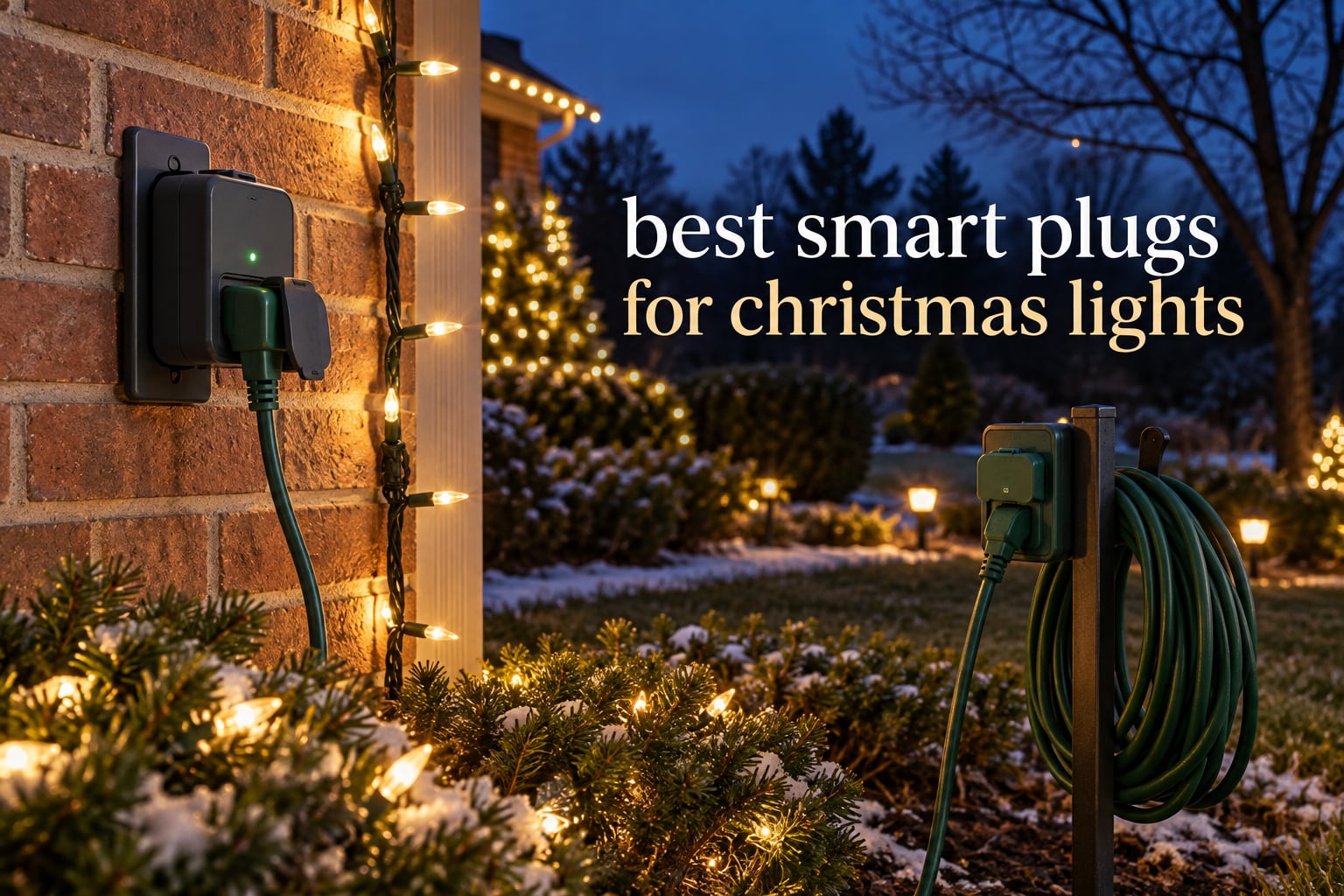
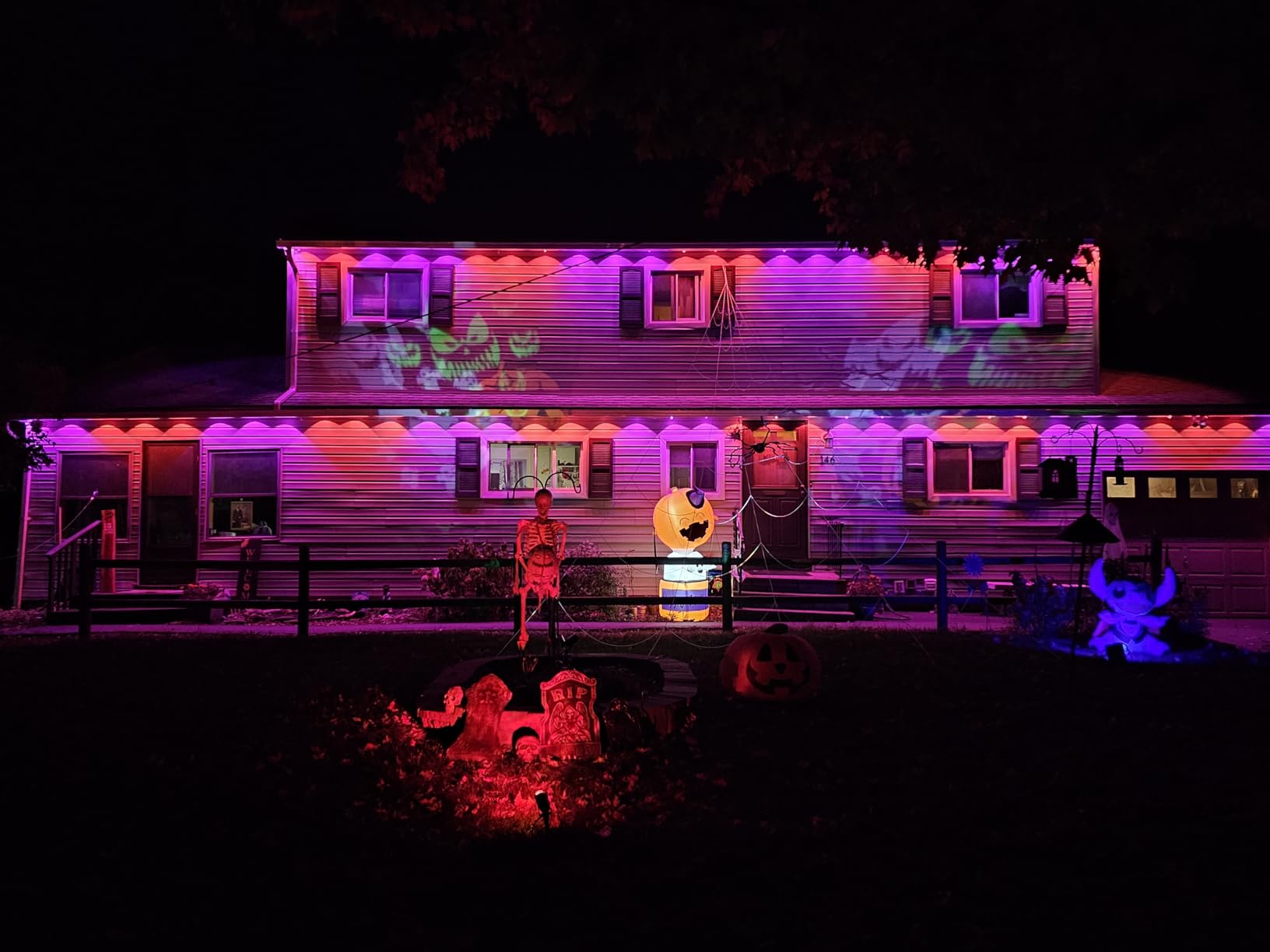
There is a specific reason smart plugs show up in so many December search results: they let a Christmas display run itself. A plug with an app and a schedule turns on the roofline at dusk, kills the yard inflatable at 11pm, and keeps the tree lit until you wake up, without anyone walking outside in gloves to hit a switch. The catch is that most plugs sold for holiday lighting are indoor devices wearing a marketing hat, and a surprising number of people discover that in the first cold week.
This guide covers the best smart plugs for Christmas lights across all 12 use cases that actually come up, from a single indoor tree strand to a four-zone yard display with roofline, net lights and an inflatable. We pulled the specifications, the load ratings, the weather ratings and the recurring complaints for every pick below, and split them the way buyers actually shop: indoor tree, outdoor zones, big displays, and budget.
Two things are worth knowing before you read further. First, one 15A/1875W outlet is far more capacity than most displays need, so a dual-outlet plug often replaces two single-outlet plugs. Second, every outdoor plug here is rated for weather resistance, not submersion, and placement does more for your display than the rating does. If you want a broader look at home energy gear, we also cover the best smart plugs for energy monitoring separately.
Table of Contents
Can I use a smart plug for Christmas lights?
Yes. A smart plug is one of the safest and simplest ways to automate hol iday lights, because it switches a strand on and off remotely without touching the wiring. Plug the adapter into a wall outlet, plug your lights into the adapter, connect it to its app, and set a schedule or trigger it by voice.
The two caveats that decide whether it works for you are weather and load. Indoor plugs have no water protection, so they belong inside only, and every outdoor plug here caps out at 15A/1875W, which covers several strands of LED string lights. The load that gets people into trouble is a yard inflatable with a blower motor on the same circuit as the lights, not the lights themselves.
If you only have one strand on one outlet, a mechanical dial timer does the same job for less and never fails when the router reboots. Smart plugs earn their cost when a display has two or more zones that need different schedules.
Top 3 smart plug picks for Christmas lights in 2026
The Amazon Smart Plug takes the top slot because of its rating, its review volume and how little it asks of you. The Kasa EP40 is the outdoor workhorse we would build a whole display around, and the Kasa KP401 is a straightforward way to add one more independently scheduled zone.

Kasa Outdoor Smart Plug EP40
- Dual outlets at 15A each
- IP64 weather resistance
- 300 ft Wi-Fi range
- Sunset scheduling

Kasa Outdoor Smart Plug KP401
- Single 15A/1875W outlet
- IP64 with attached cover
- 300 ft Wi-Fi range
- Sunset scheduling
All 12 picks at a glance in 2026
Every plug in this list switches lights. What separates them is outlet count, weather rating, maximum load and which voice platforms they talk to. That last column is where most disappointed buyers end up, because a plug that only works with one assistant still works fine, just not with the rest of the house.
| Product | Specifications | Action |
|---|---|---|
 Amazon Smart Plug Amazon Smart Plug |
|
Check Latest Price |
| Kasa Outdoor Smart Plug EP40 |
|
Check Latest Price |
| Kasa Outdoor Smart Plug KP401 |
|
Check Latest Price |
 Amazon Basics Outdoor Smart Plug Amazon Basics Outdoor Smart Plug |
|
Check Latest Price |
 Wyze Plug Outdoor Wyze Plug Outdoor |
|
Check Latest Price |
 Tapo Matter Outdoor Smart Plug P400M Tapo Matter Outdoor Smart Plug P400M |
|
Check Latest Price |
 meross Outdoor Smart Plug MSS620 meross Outdoor Smart Plug MSS620 |
|
Check Latest Price |
 TREATLIFE Smart Dimmer Plug Outdoor TREATLIFE Smart Dimmer Plug Outdoor |
|
Check Latest Price |
 Geeni Outdoor Duo 2-Pack Geeni Outdoor Duo 2-Pack |
|
Check Latest Price |
 HBN Outdoor Power Stake 6 Outlet HBN Outdoor Power Stake 6 Outlet |
|
Check Latest Price |
 TESSAN Outdoor Smart Plug TESSAN Outdoor Smart Plug |
|
Check Latest Price |
 HBN Outdoor Smart WiFi Plug U151T HBN Outdoor Smart WiFi Plug U151T |
|
Check Latest Price |
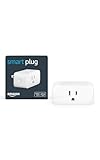
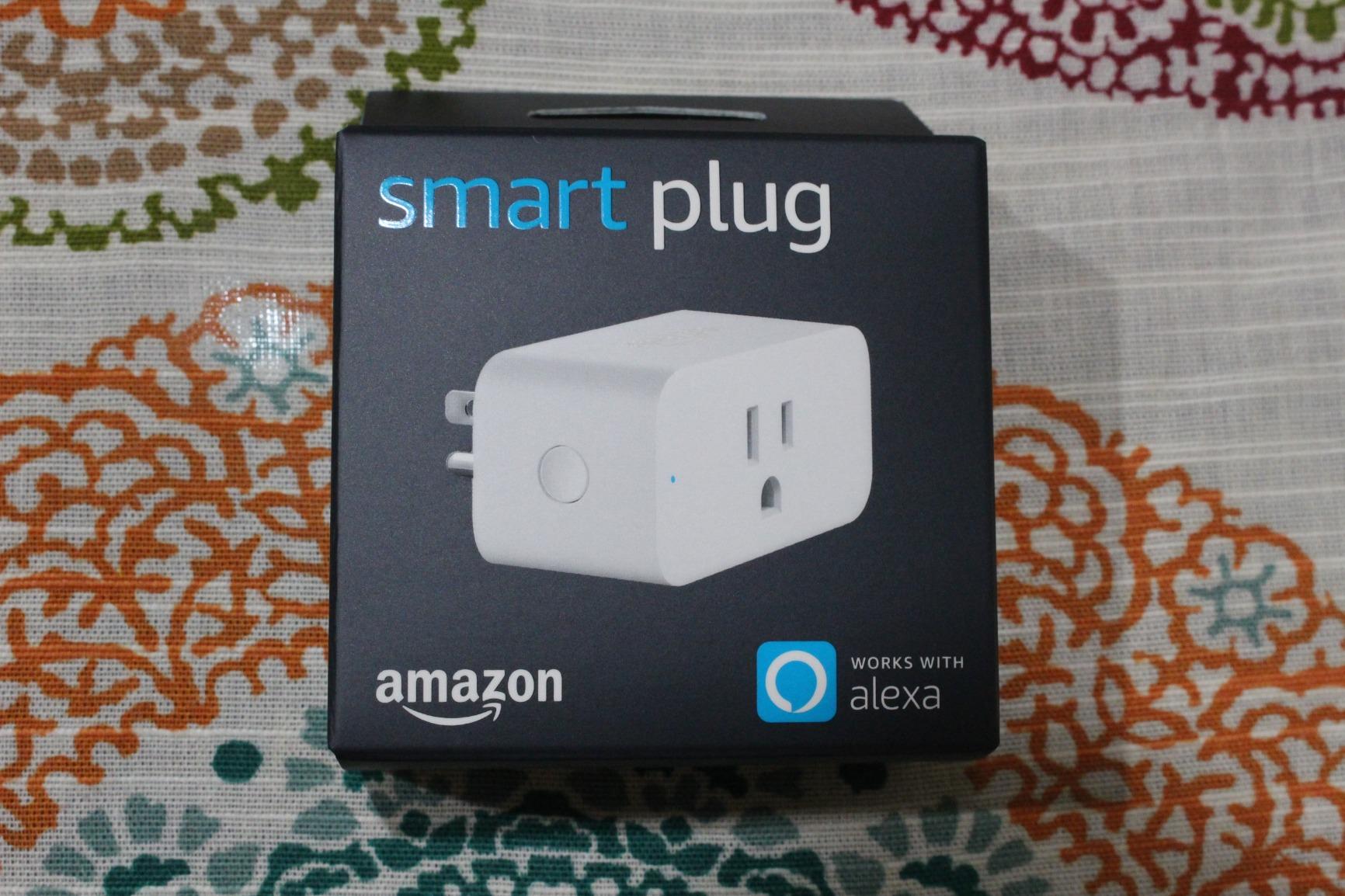
1. Amazon Smart Plug, Compact Indoor Choice With No Setup Friction
Amazon Smart Plug, Works with Alexa, Simple Setup, Endless Possibilities
Indoor only
Single compact outlet
Alexa only
No hub required
Pros
- Painless Alexa setup with no hub or third-party app
- Compact body keeps the second wall outlet free
- Reliably reconnects to Alexa after power and Wi-Fi outages
- Works as a timer or as a full lighting schedule
Cons
- Indoor only with no weather resistance for outdoor runs
- Locked to the Alexa ecosystem with no Google Home or Apple Home support
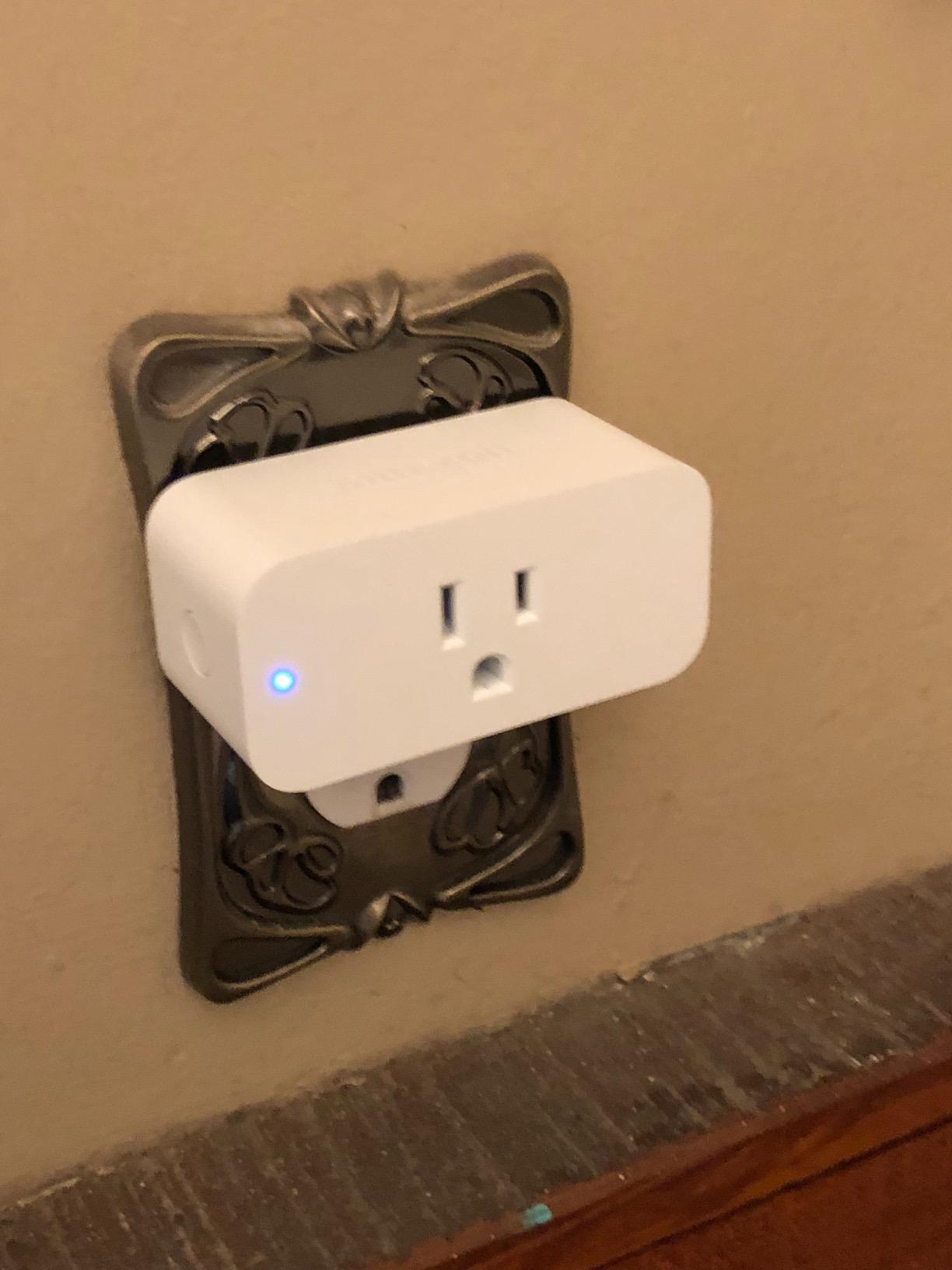
This is the plug we hand to anyone whose display is entirely inside the house. Pairing takes about a minute in the Alexa app, the body is small enough that the second socket on a duplex receptacle stays usable, and the schedule builder handles a tree on its own bedtime without any fuss. Reviewers treat it as the default answer for lamps, fans and lights, and the reliability record reflects that scale.
What impressed me most in the spec sheet is the auto-reconnect behavior. Reviewers consistently report the plug coming back on its schedule after a power or Wi-Fi interruption, which is exactly what you want from something running unattended for five weeks. Routines can be set by voice in plain language, so a bedtime scene is a spoken sentence rather than a menu walk.
The limitation is structural, not fixable. There is no weather sealing in this housing, so it stays away from exterior receptacles no matter how sheltered they are, and it will not appear in Google Home, Apple Home or SmartThings even if the lights are on the same network as everything else in your house. If your display crosses the threshold, this is the wrong category entirely.
For a single indoor tree, a window feature or a lit garland on a mantel, though, it does the job cleanly. It is also the easiest thing to hand to a relative who just wants the tree to come on at dusk and off at midnight without being taught anything.
When this plug makes sense indoors
Reach for it when the display is one or two runs of lights on a receptacle you can reach from inside the house. A tree plus a garland on two schedules is already enough of a use case, and the physical on/off button means someone can still switch it manually if the app is not around.
When to buy something else instead
Any exterior outlet disqualifies it, including a covered outlet mounted on an exterior wall. The failure mode people describe is water tracking into an unsealed indoor plug body, and that is not a risk worth taking for the length of a holiday season.
Skip it too if your household runs Google Home or Apple Home as its main assistant. A plug you cannot voice through the assistant you actually use is an app-only device wearing a smart plug’s clothes.
2. Kasa Outdoor Smart Plug EP40, Two Outdoor Zones From One Receptacle
Kasa Outdoor Smart Plug, Smart Home Wi-Fi Outlet with 2 Sockets, EP40
IP64 weather resistance
2 outlets at 15A/1875W
300 ft Wi-Fi range
6 foot cable
Pros
- Two independently controlled outdoor outlets at 15A/1875W each
- IP64 housing with attached protective cover
- Built-in power amplifier reaches up to 300 ft in open space
- Sunset and sunrise offset scheduling
- ETL certified with a 2 year warranty
Cons
- Rigid vertical plug head is awkward on horizontal exterior receptacles
- 6 inch cable can be long when the outlet sits low to the ground
- Requires a 2.4GHz Wi-Fi band
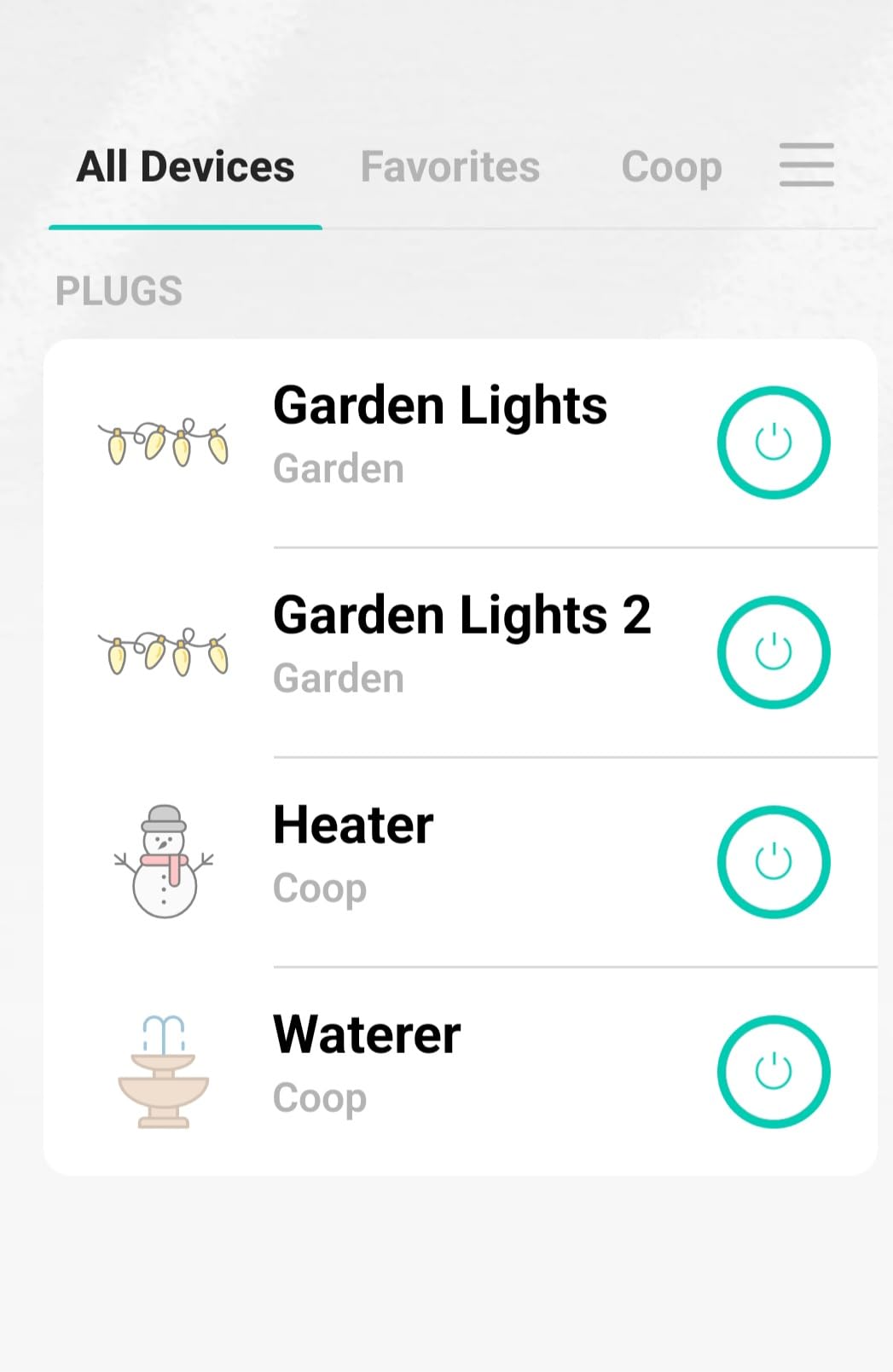
This is the plug most of our display plans are built around. One EP40 gives you two separately scheduled outdoor zones from a single exterior receptacle, so a roofline run and a set of net lights can come on at dusk and go off at different times without a second adapter or an extension cord. The 15A/1875W ceiling applies to each socket, not to the unit as a whole.
Reviewers describe it as the first thing that worked after mechanical timers and RF remotes failed them, and the dual sockets plus sunset scheduling come up repeatedly as the reason. Setup in the Kasa app is straightforward, and Alexa and Google Home both pick it up without extra hardware.
The Wi-Fi reach is a real spec rather than a marketing line. The built-in power amplifier is rated for up to 300 feet in open space, which is the difference between a garage wall that kills the connection and one that does not. The plug also reconnects on its own after a power outage, so you are not re-pairing it in January.
The physical design is where the complaints live. The plug head is rigid and vertical, and on a horizontally oriented exterior receptacle it can block the second outlet, which partly defeats the point of buying a dual-outlet unit. The 6 inch cable is also generous, and outdoors that often means an awkward loop hanging below the receptacle.
How to place the EP40 outside properly
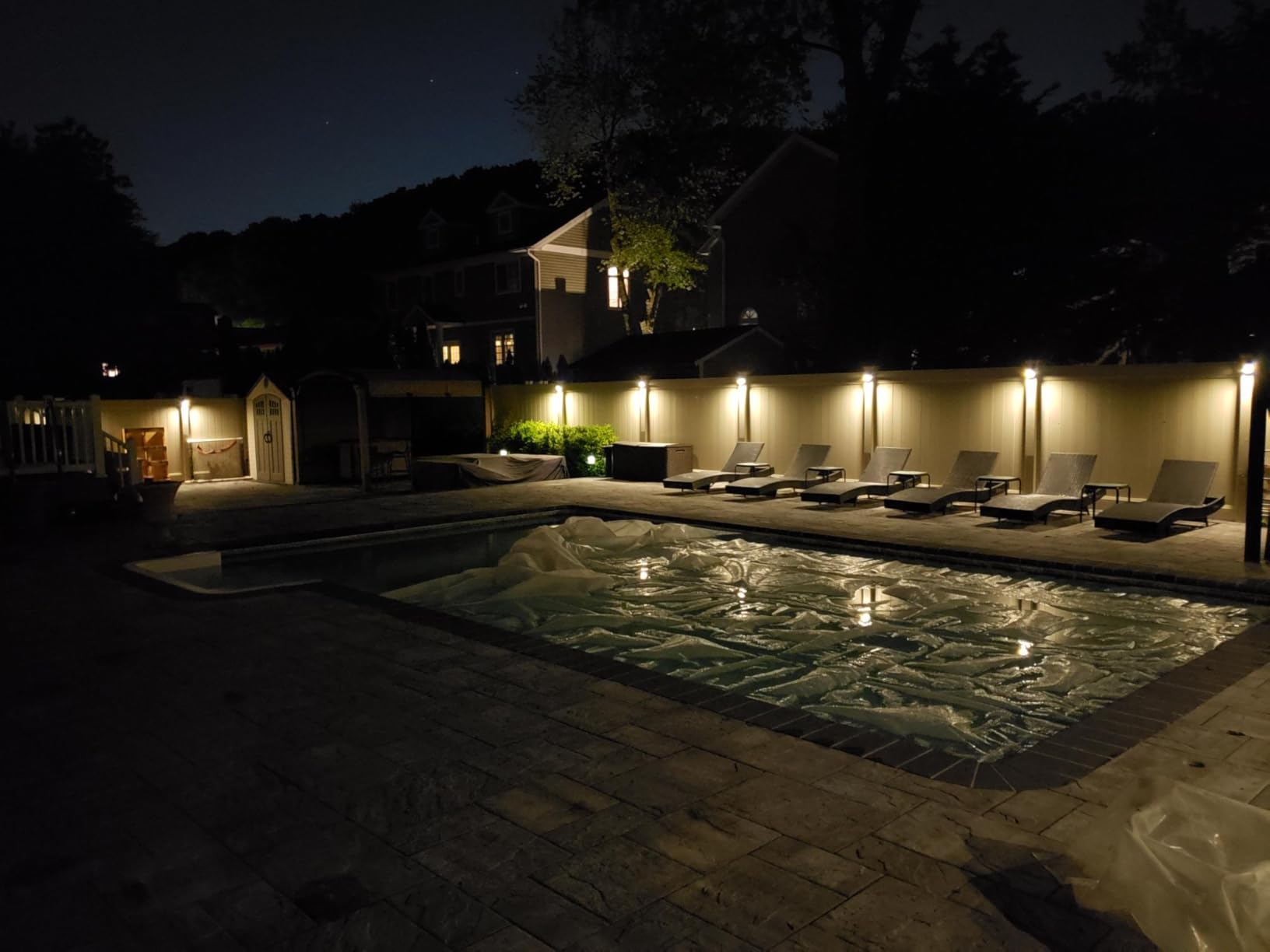
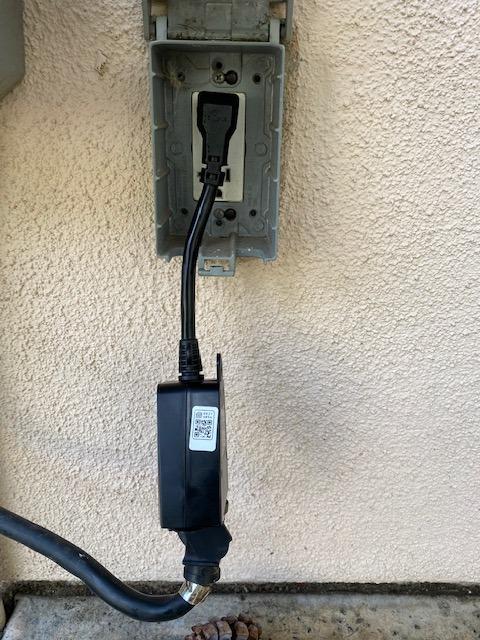
Mount it under an eave, a soffit or a covered box, and never in an uncovered receptacle. The IP64 rating covers dust and splashing water from any direction, which is not the same thing as being left in a downpour or sitting in a puddle. Orientation matters as much as rating: the socket should face down so water runs off rather than into the seam.
Run a drip loop in the cord right where it leaves the plug, so any water that travels along the insulation falls to the ground instead of following it into the housing. That single habit accounts for more outdoor plug problems than the ingress rating ever will.
Who should pass on it
It is also strictly 2.4GHz. On a router that has split the bands or moved to WPA3, pairing is the step most likely to stall, and the fix is temporarily disabling band steering on the router rather than a different plug.
3. Kasa Outdoor Smart Plug KP401, A Clean Way to Add One Zone
Kasa Outdoor Smart Plug KP401, Smart Home Wi-Fi Outlet Timer
IP64 weather resistance
1 outlet at 15A/1875W
300 ft Wi-Fi range
5.6 ounces
Pros
- Single 15A/1875W outdoor socket handles heavier holiday loads
- Verified working at minus 30 degrees according to reviewers
- 300 ft Wi-Fi range from a built-in power amplifier
- Fast Kasa app setup that syncs straight to Alexa
- Rotatable head can be turned to improve reception behind walls
Cons
- Rigid 90 degree head blocks fitting two plugs into one duplex outlet
- About 7 inches of hanging cord looks clunky on a patio
- Weather resistant rather than waterproof so the socket must hang facing down
The KP401 is the pick when you need one more zone and you are counting outlets carefully. A single 15A/1875W socket is generous for LED string lights, and reviewers running long Kasa installations report the same reliability after years, including through extreme cold. At 5.6 ounces it is light enough to swap between the house and a covered porch socket.
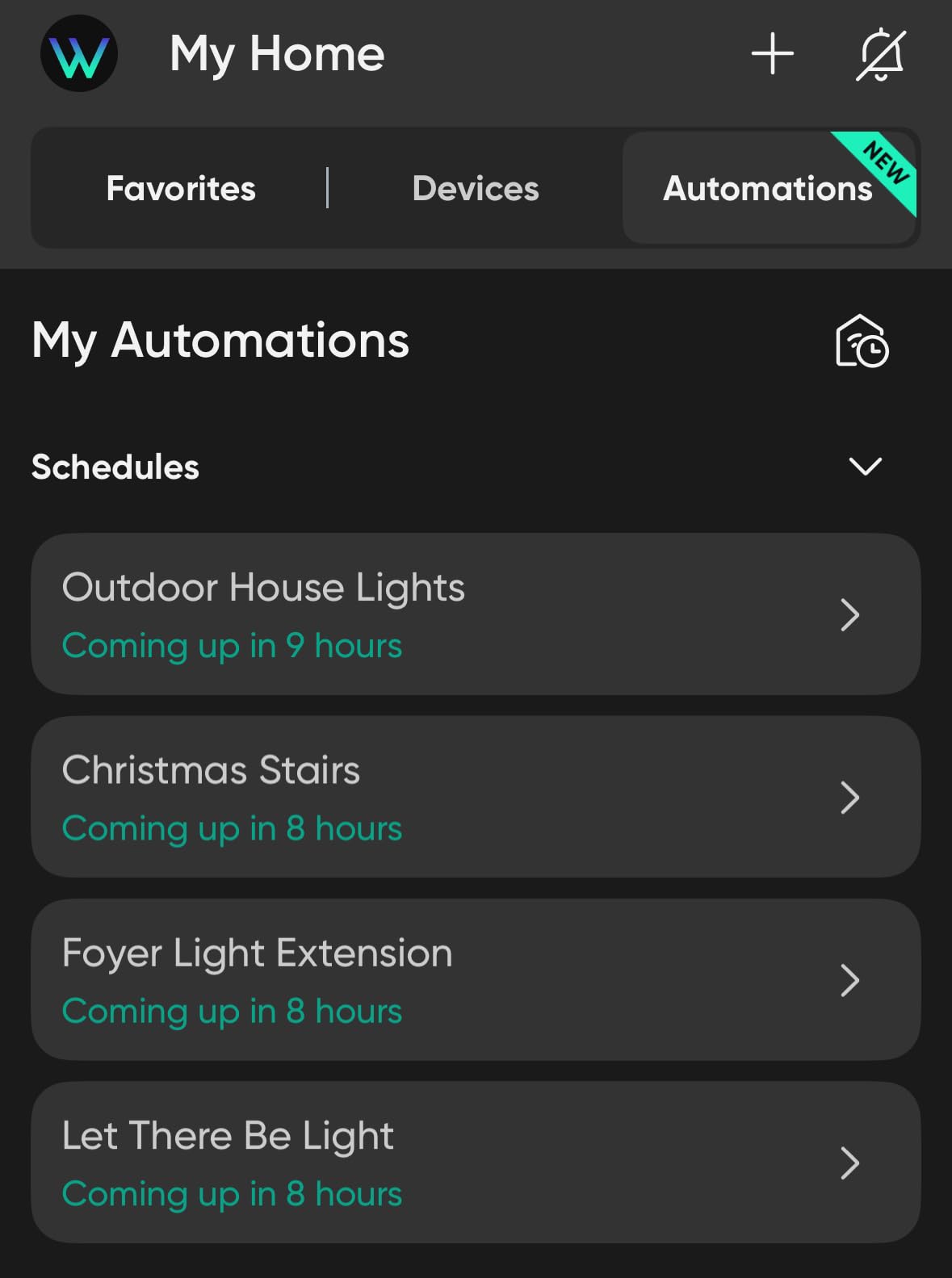
Sunset and sunrise offset scheduling is the feature that converts it from a remote switch into a seasonal tool. You set the trigger once in November and the plug follows the daylight change every night until you turn it off in January, with no weekly adjustment and no dial to reset.
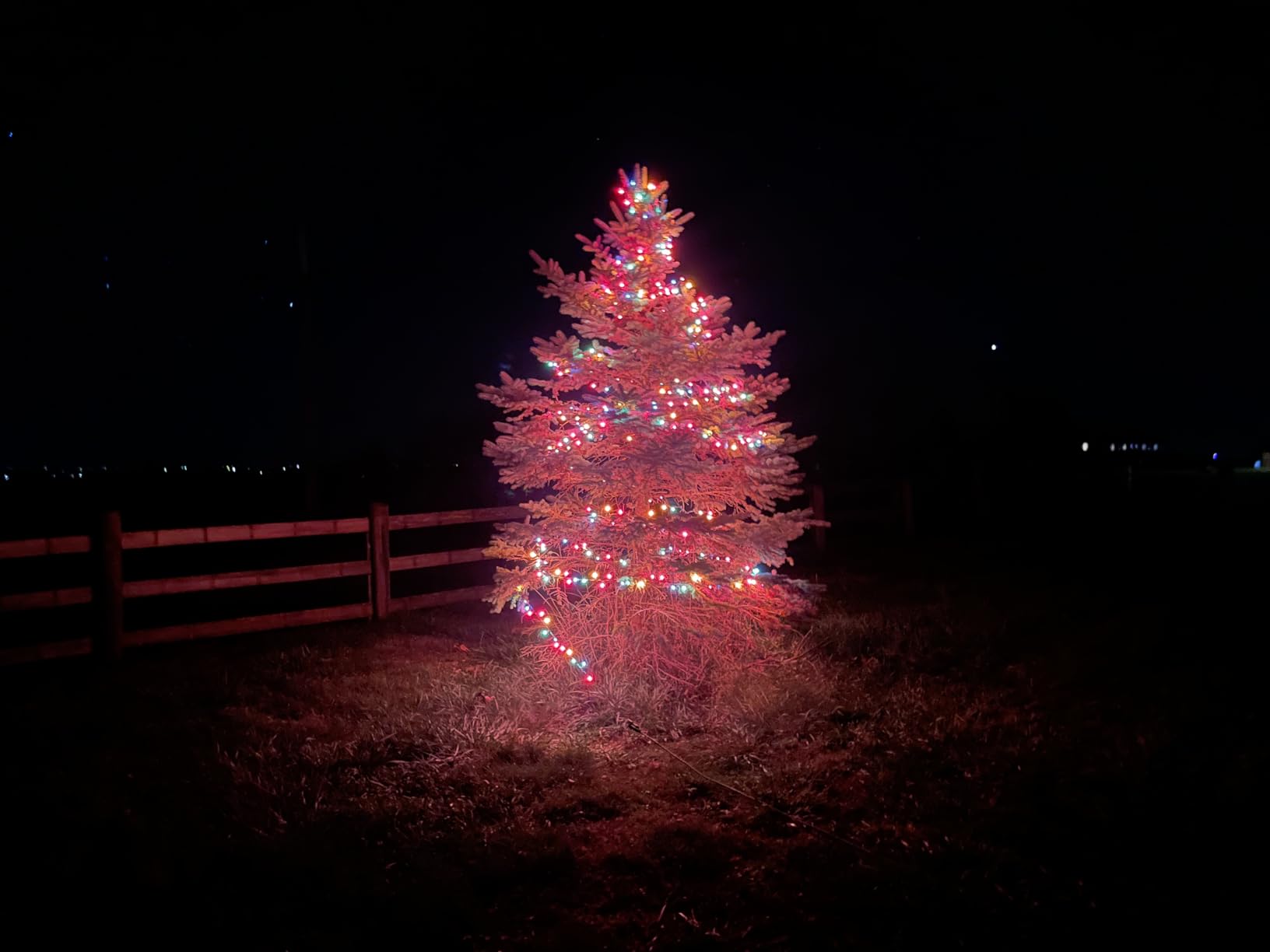
The 15A rating is not just a spec sheet number here. Reviewers use this plug for loads well beyond string lights, including e-bike chargers and pool equipment, which tells you the relay is not being pushed to its limit by a strand of LEDs. The attached cover keeps the socket shielded when it is not in use.
Two practical complaints come up. The 90 degree plug head does not rotate out of the way, so if you want two separately timed strings from one duplex receptacle you will be adding an extension cord. And the cord itself hangs about 7 inches, which reviewers describe as clunky in some patio arrangements.
When one socket is exactly what you need
It is the right unit for a porch strand, a single net-light run on a bush, or a window display where the receptacle already has something else in it. The weight and size also make it the easiest of the outdoor options to carry out to a covered outlet and back in when the season ends.
Pair it with the EP40 rather than replacing it if a display grows: one dual-outlet unit at the main wall and a KP401 on a far corner covers more ground than two dual-outlet units competing for the same duplex receptacle.
Limitations to plan around
Weather resistant is the accurate description, and it is weaker than waterproof. The socket has to hang facing down, out of any drip line, and the documentation in the app is thin enough that reviewers end up on the manufacturer’s website FAQ to understand menu options.
If you need Apple Home, this is not the plug. The Kasa app covers Alexa, Google Assistant and SmartThings well, and adding HomeKit support would mean buying a different unit or a bridge.
4. Amazon Basics Outdoor Smart Plug, Alexa-Only With Two Controlled Outlets
Amazon Basics Outdoor Smart Plug with 2 Individually Controlled Outlets, Works with Alexa Only, Voice Control, Weather Resistant, 2.4 GHz Wi-Fi, No Hub Required, Black
IP65 enclosure
2 independent outlets
15A rating
2.4GHz only
Pros
- Two independently controllable outdoor outlets in one unit
- IP65 enclosure resists low-pressure water jets from any direction
- Zero-touch setup by linking the device to your account at checkout
- Alexa groups combine multiple outdoor devices
Cons
- Alexa only
- with no Google Home or Apple Home support
- Requires a 2.4GHz Wi-Fi network
This is the outdoor option for a house where Alexa already runs everything and nobody wants another app on the phone. The IP65 enclosure is a step up from the IP64 housings on most competing outdoor plugs, and it is rated against low-pressure water jets from any direction rather than simple splashing. Two independently controllable outlets give you a genuine two-zone display from one exterior socket.
Reviewers frame it as the straightforward choice, pointing to fast setup, individual outlet control and solid weather resistance. Linking the device to your Amazon account at checkout can handle setup before the box is even opened, which is convenient when the lights are already up on the roofline.
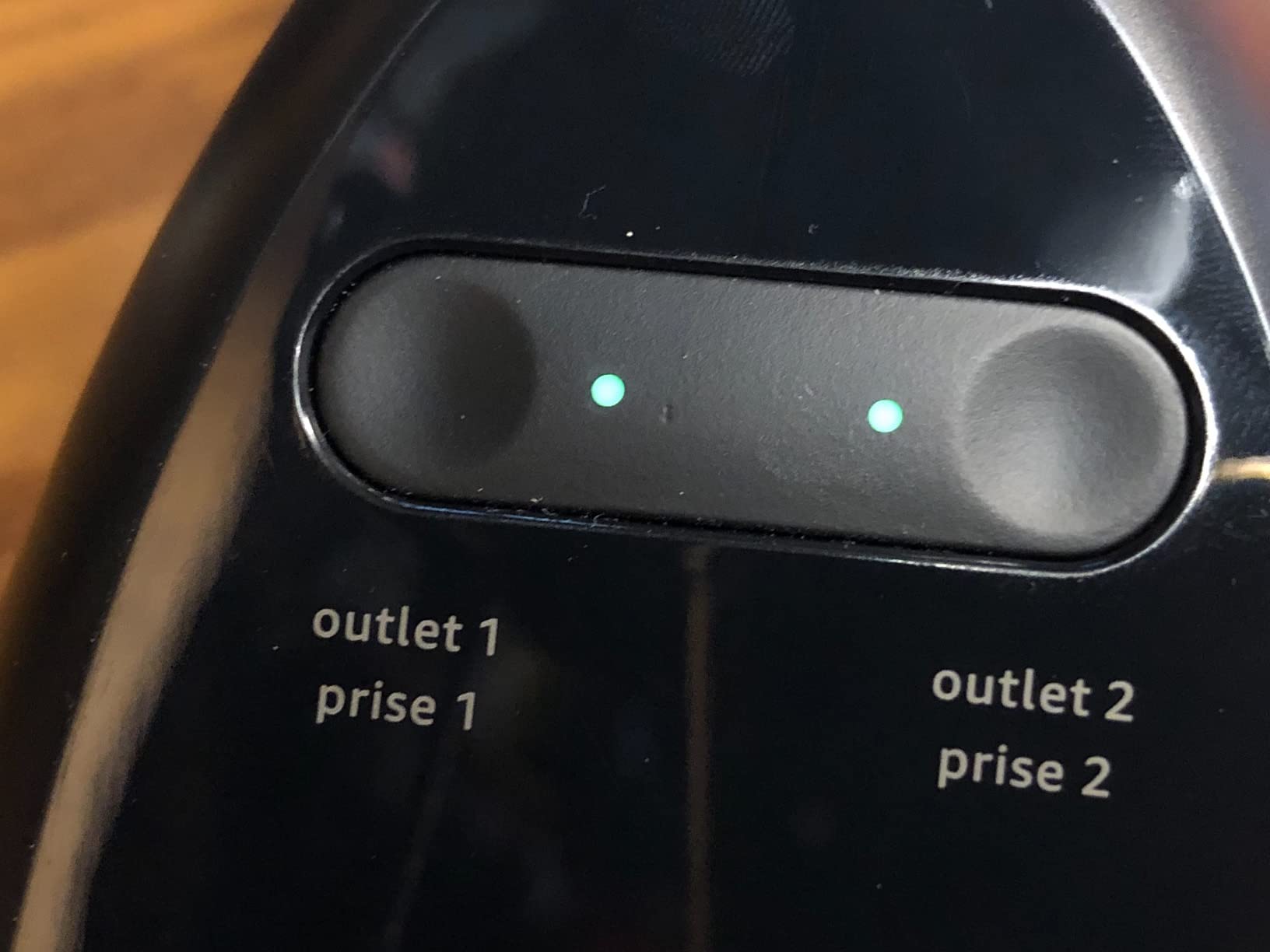
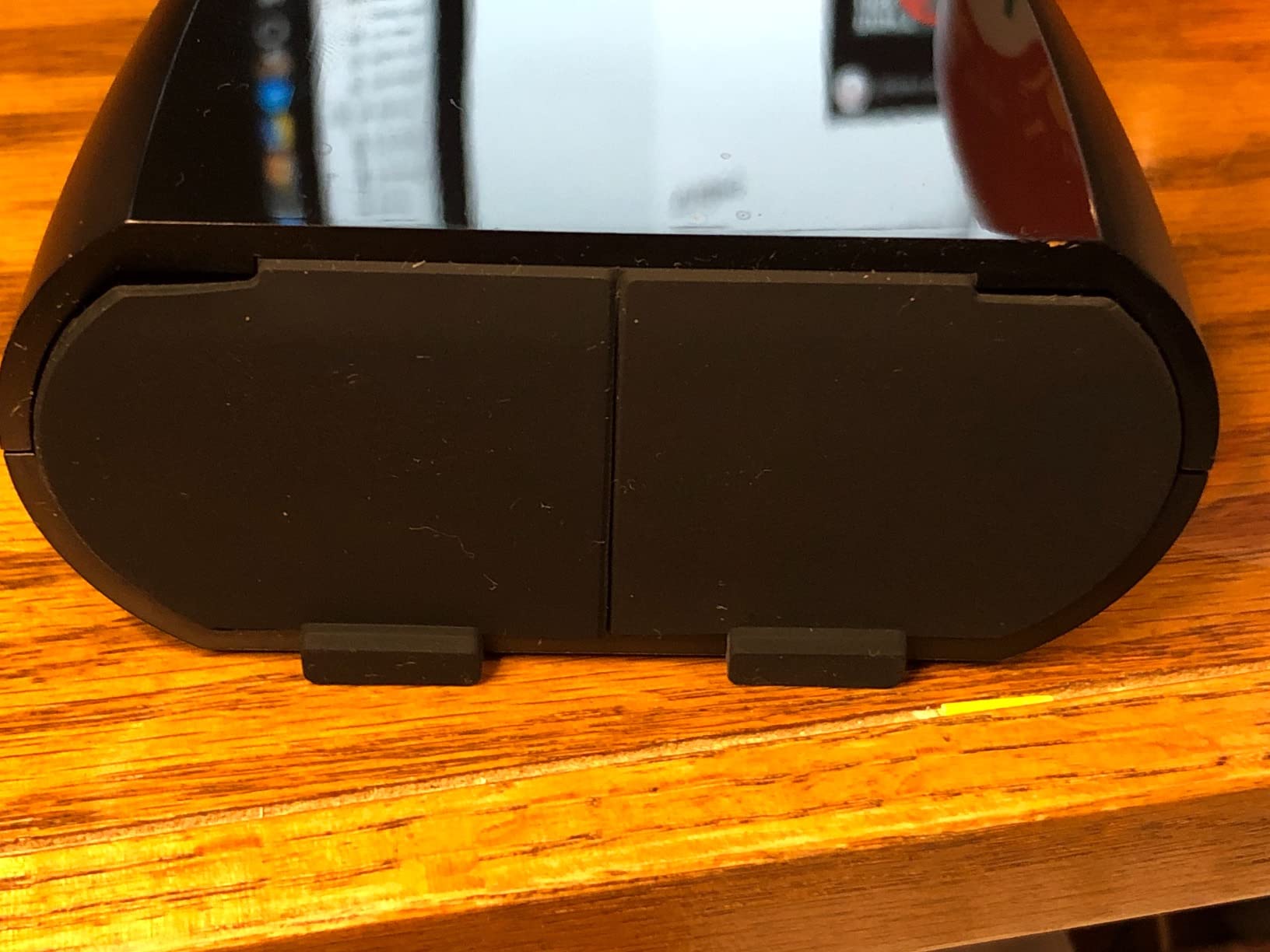
At 9.92 ounces in a PC and rubber housing, it is a compact unit meant to live at an exterior receptacle permanently rather than travel back and forth. Amazon’s grouping feature in the Alexa app lets several outdoor plugs share one voice command, which is how most people run a full display.
The platform lock is the whole trade. Anyone in a Google Home or Apple Home household can still control it inside the Alexa app, but the plug will not surface in another platform’s routines or automations, and voice control outside the Alexa app is not available at all.
What IP65 actually buys you
IP65 means protection against dust and water jets from any direction. In plain English, this plug tolerates being rained on and hosed down, and it is a reasonable choice for an exposed soffit outlet or a covered wall box. It is still not a submersible device, and it is still not something to leave standing in a lawn or under a sprinkler head.
Who should look elsewhere
Skip it if your household has more than one assistant. Lock-in is not a small annoyance when you are asking for lights to turn off at a bedtime scene that lives in a different app, and no setting inside Alexa changes that.
It is also a 2.4GHz-only device, so on a modern mesh network with band steering enabled, expect to temporarily split the bands during setup before the plug will pair.
5. Wyze Plug Outdoor, Energy Monitoring On Two Outdoor Sockets
Wyze Plug Outdoor, Dual Outlets Energy Monitoring, IP64, 2.4GHz WiFi Smart Plug, Works with Alexa, Google Assistant, IFTTT, No Hub Required, Black
IP64 weather resistance
Dual outlets
Energy monitoring
2.4GHz plus Bluetooth
Pros
- Dual outlets with built-in energy monitoring which is rare outdoors
- Works with Alexa and Google Assistant plus IFTTT without a hub
- Bluetooth pairing alongside 2.4GHz Wi-Fi
- IP64 rated for year-round outdoor string lights
Cons
- IP64 rating is one step below the IP65 enclosures on some competing plugs
- Energy monitoring adds cost without helping a pure on/off holiday schedule
The Wyze Plug Outdoor is the pick when you want to see what a display actually draws. Energy monitoring sits on a dual-outlet outdoor unit, which is unusual, and it turns the plug into something you can check after the season to find the strand that is pulling more current than the rest. If energy use is the part of holiday spending you want to understand, our dedicated guide to the best smart plugs for energy monitoring goes deeper on the reporting side.
Reviewers pick it mainly for the combination of two outlets and monitoring inside one weatherproof body, and they note the voice assistant range is wider than Alexa-only rivals. Bluetooth alongside 2.4GHz Wi-Fi makes pairing noticeably less painful, which matters when you are doing it on a ladder.

There is no hub requirement, and it runs on 120 volts AC through a 15A plug-in design, so it drops into an existing exterior receptacle the same way an indoor plug would. IFTTT support is a quiet bonus for people who already built their holiday automations around IFTTT applets.
The honest drawback is that the IP64 rating sits one step below the IP65 enclosures on the Amazon Basics and Tapo units, and energy monitoring is extra cost that does not help if your only goal is on and off at sunset. Buyers who never open the app to check wattage are paying for a feature they do not use.
Is the energy monitoring worth it for a display?
It is worth it if you have ever wondered why one zone seems brighter than another, or if you are splitting a display across several runs and want to balance the load. LED string lights draw very little, so the monitoring mostly tells you about strand count rather than about waste you can eliminate.
It is not worth it if your plan is on at dusk, off at bedtime, forget about it. For that, the same dual-outlet layout without monitoring leaves money on the table for a mechanical timer to use as a backup.
Where it fits in a display plan
This is a good unit for the yard, where you want two runs of net lights or bushes on separate schedules and one receptacle to serve both. IP64 plus a rubber housing is a reasonable combination under a covered outlet, and the wide voice assistant support means it can join routines in more than one ecosystem.
6. Tapo Matter Outdoor Smart Plug P400M, IP65 With Matter Support
Tapo Matter Outdoor Smart Plug, 2 Individual Outlets, P400M
IP65 weatherproof
2 outlets at 15A/1800W
Matter compatible
-4 to 122 F range
Pros
- Matter support covers Apple Home
- Alexa
- Google Home and SmartThings
- IP65 weatherproofing rated from minus 4 to 122 degrees F
- Two independently controlled 15A/1800W outlets
Cons
- Requires the Tapo app for initial setup before voice platforms are available
- 6 inch cable is short for reaching an outlet far from the plug location
The Tapo P400M is the pick for a household that is not locked to one assistant, and the reason is the standard rather than the hardware. Matter support means the same plug works inside Apple Home, Alexa, Google Home and SmartThings, which removes the ecosystem lock-in that decides the buy for a lot of households. You are choosing a protocol, not a brand.
Reviewers focus on exactly that combination, and it is the newest model among the outdoor units here. IP65 weatherproofing, an operating range of minus 4 to 122 degrees F, and two independently controlled 15A/1800W outlets cover a winter display and a summer one on the same hardware.
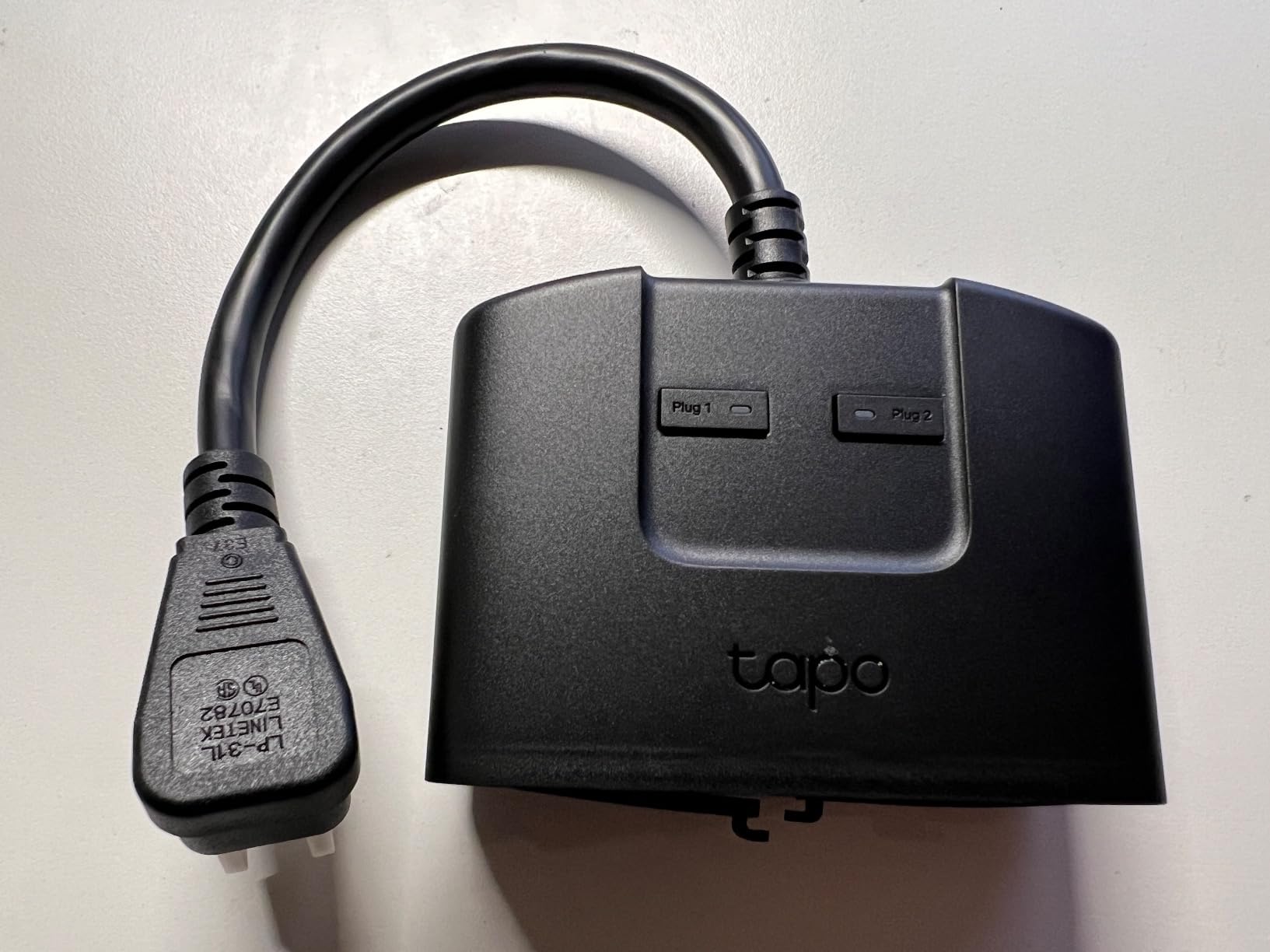
The signal specifications are unusually well stated. Up to 300 feet in an open field and 164 feet through three concrete walls is a real number, and it is the difference between a plug that stays connected from a detached garage and one that needs a mesh node. The relay uses UL94-V0 flame-retardant contact material and runs on 125 volts.
The included clamp and screw is a small detail that pays off every season. Mounting the plug means you can swap light strings without the adapter twisting in the receptacle, which is the moment most people drop something in December. A separate scheduling post also supports group control and custom scenes across a whole display.
When Matter is the deciding factor
Choose this if your household has more than one assistant, or if you expect to change ecosystems at some point. A Matter plug is bound through a hub, and if you already have one the cost is nothing, which makes the platform breadth unusually cheap here.
If you do not own a compatible hub, that changes the math entirely. This is the trap forum buyers hit, where a plug that looks inexpensive is the cheaper half of a two-part purchase, and the second part is the expensive half.
What to know before you order
Setup starts in the Tapo app even if you plan to use Apple Home afterward, so budget a few minutes on a phone rather than assuming voice-only pairing works out of the box. The other detail is the 6 inch cable, which is short when the plug is mounted on a wall and the receptacle is further out.
7. meross Outdoor Smart Plug MSS620, The HomeKit Outdoor Option
meross Outdoor Smart Plug Work with HomeKit, Alexa, Google and SmartThings
IP44 housing
2 independent sockets
3.2 ounces
HomeKit and Siri
Pros
- One of the few outdoor plugs with Apple HomeKit support alongside Alexa
- Google and SmartThings
- Mediatek IoT chipset delivers longer range and a lower offline rate
- Two independently controlled AC sockets
Cons
- HomeKit remote control requires an Apple hub such as a HomePod or Apple TV
- IP44 rating is weaker than the IP64 and IP65 units here
- Manufacturer states it should not be used for pump loads
If your home runs Apple Home, this is the outdoor plug that keeps your display inside the same app as everything else. Reviewers already in the Apple ecosystem single it out as a practical outdoor dual-outlet option, and the two independently controlled sockets are enough to run a roofline and a yard run on different schedules.
The Mediatek IoT chipset is credited with a longer connection range and a lower offline rate than cheaper outdoor plugs, which addresses the reliability anxiety that shows up in almost every holiday forum thread. Sunrise and sunset scheduling is supported, and the unit works with LED, CFL and incandescent bulbs.
At 3.2 ounces it is among the lightest units here, which is a genuine advantage for anyone pulling plugs down in January. The housing is fire-retardant ABS with overload protection, FCC and ETL certified, and the brand publishes that data is transmitted and stored on Amazon AWS servers in the US.
Two limits deserve a close read. The IP44 rating covers splash protection and is weaker than the IP64 and IP65 units in this roundup, so it belongs under a cover rather than on an exposed wall. And remote access through HomeKit needs an Apple hub, a HomePod or an Apple TV, which is an extra purchase if the house does not have one.
The HomeKit trade, stated plainly
The value here is that your holiday display lives in the same app as your lights, locks and cameras, with one automation that turns everything on at sunset. People who have already built a HomeKit setup describe the binding steps as a real chore, and having a purpose-built outdoor plug removes the workaround entirely.
When the IP44 rating is fine, and when it is not
IP44 is a splash rating. Under a porch roof, inside a covered outlet box or beneath an eave, it is a reasonable choice for a seasonal display, and a light unit on a hard surface is exactly where IP44 is at its best. Rain hitting the housing directly is where the margin narrows.
For a roofline run on an uncovered exterior receptacle in a wet climate, choose an IP64 or IP65 unit instead. The step up in ingress protection is the single most consequential difference between these two price and weight classes.
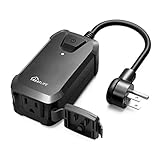
8. TREATLIFE Smart Dimmer Plug Outdoor, Dimming Instead of Switching
TREATLIFE Smart Dimmer Plug Outdoor Smart Plug Works with Alexa and Google Home, Light Dimmer APP Remote Control, Max Power 400W, IP44 for Dimmable Outdoor String Lights, Floor Lamp, Table Lamp
Dimmable bulbs only
3.33A load ceiling
LED up to 150W, incandescent 400W
IP44
Pros
- The only dimming option in this roundup
- so outdoor string lights can be turned down rather than switched off
- Sunrise and sunset automation removes seasonal rescheduling
- Vacation mode randomly cycles lights to simulate occupancy
- Handles up to 400W incandescent or 150W LED and CFL
Cons
- Only works with dimmable bulbs
- so non-dimmable Christmas strings will not run
- 3.33A rating is well below the 15A of the on/off plugs
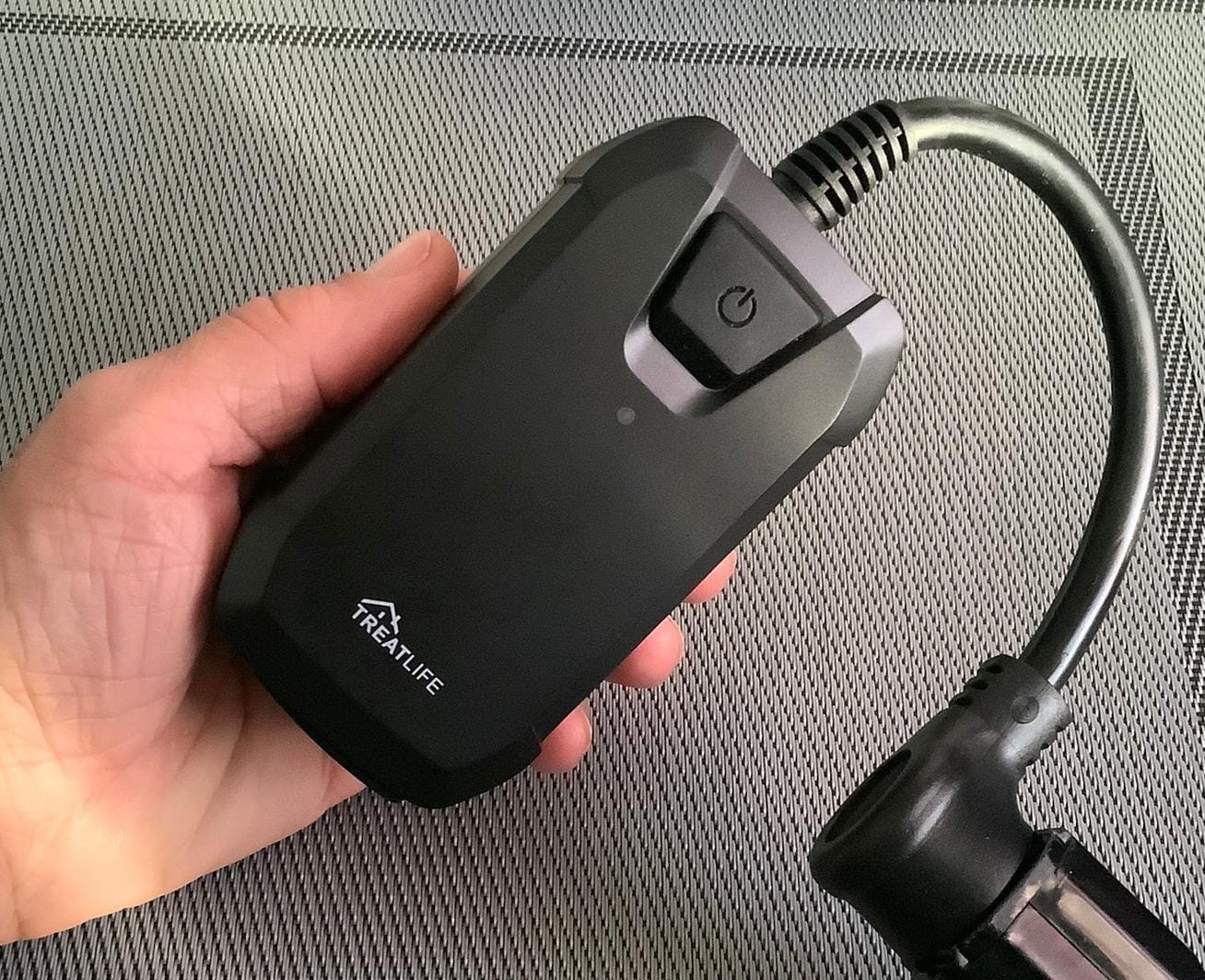
Dimming is the one capability the other plugs in this roundup do not offer. A dimmer turns your outdoor string lights down to a low glow at midnight rather than off entirely, which changes how a display looks from the street after the neighborhood has gone dark. If your strands are dimmable, that is a real difference no scheduling app can replicate.
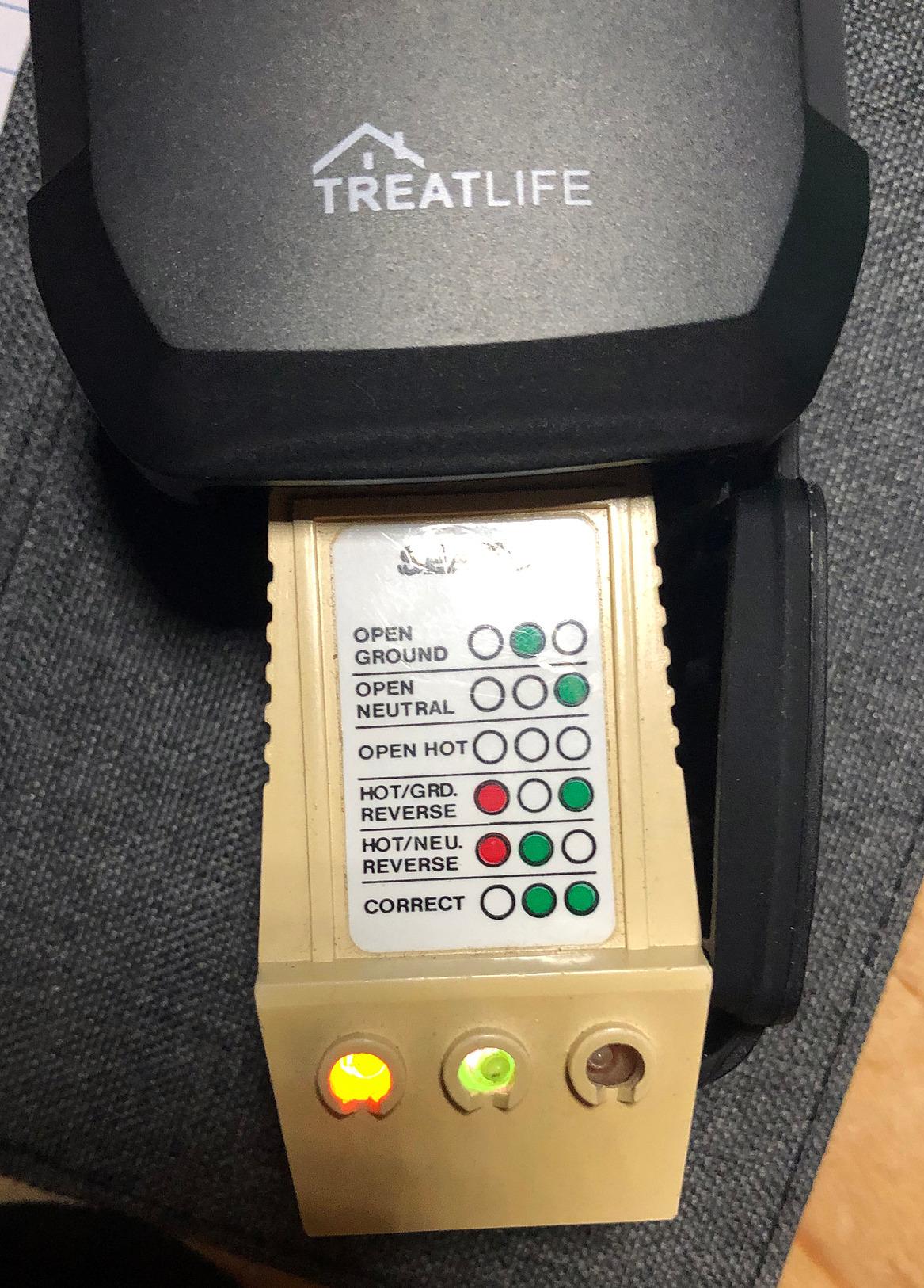
The compatibility boundary is the whole story, and it is narrower than the product page first suggests. It handles dimmable LED and CFL bulbs up to 150W and incandescent up to 400W, and nothing else. Non-dimmable Christmas strings, smart bulbs, fans, transformers, motorized devices and 0-10V low-voltage systems are all excluded, and a standard on/off strand plugged into it simply will not work properly.
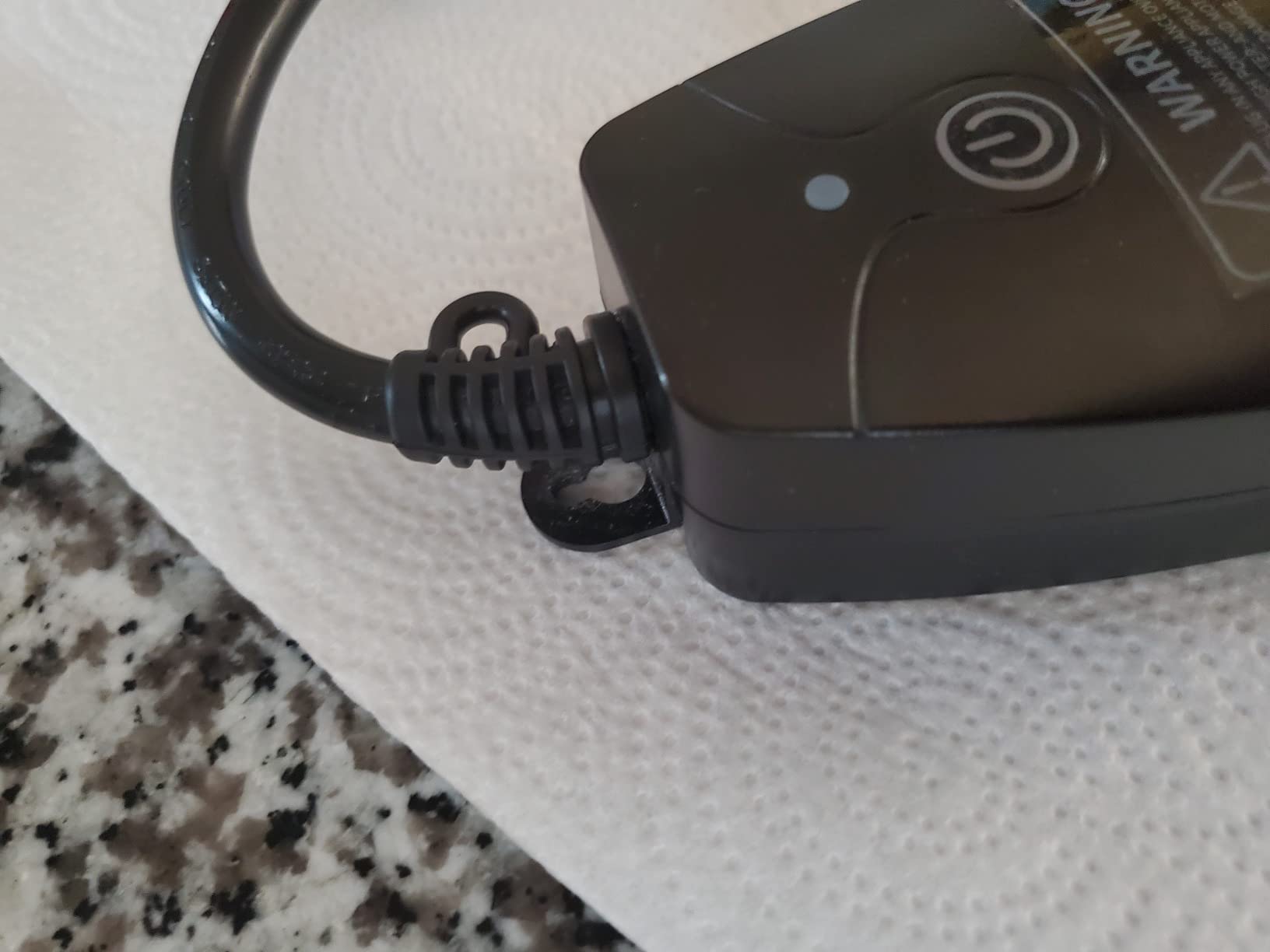
Sunrise and sunset modes, group control and vacation mode are all present, controlled from the SmartLife or TreatLife app alongside Alexa and Google Assistant over 2.4GHz with no hub. The 3.33A ceiling is far below the 15A of the on/off plugs, which is another reason it is a lighting-only device.
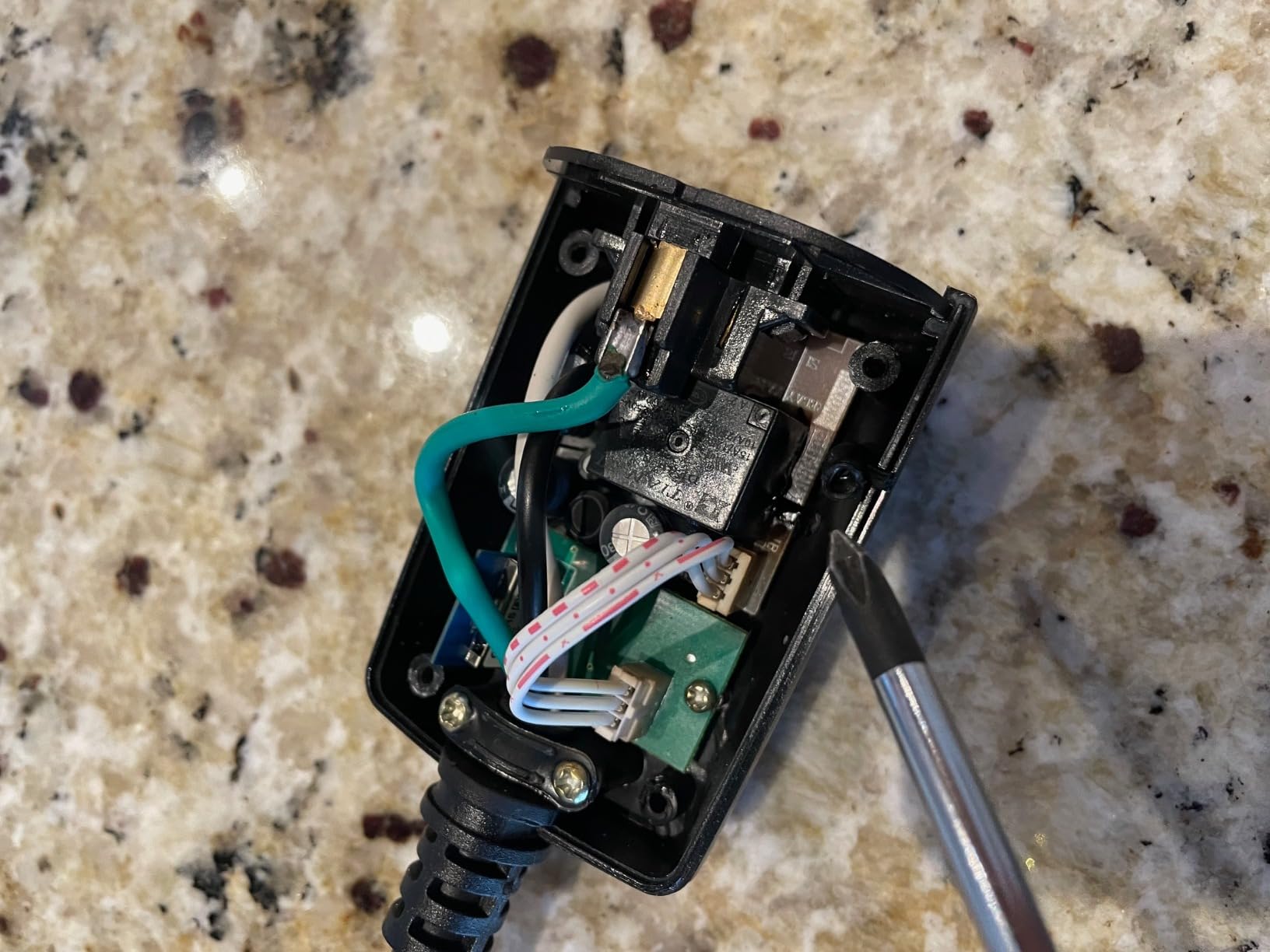
The IP44 sealing is among the weakest weather ratings among the outdoor units here, and there is no physical remote included, so every adjustment happens in the app. For a covered patio or an eave-mounted run, that is a workable trade for the dimming capability.
How to tell if your strings are dimmable
Check the cord or the bulb base for a dimmable marking, or look for a small dimmer switch on the strand’s controller. Most pre-strung LED net lights sold for outdoor holiday use are dimmable, while basic 120V string lights with a hard on/off controller usually are not.
When to choose a plain on/off plug instead
Any load with a motor, a transformer or a heating element is out. That rules out yard inflatables, which is exactly the load people most want to automate, and it is also why this unit is rated at 3.33A rather than 15A.
For a display where on and off is the only behavior you need, a 15A on/off plug gives you more headroom, better weather sealing and a wider bulb compatibility, and costs less attention to configure.
9. Geeni Outdoor Duo 2-Pack, Four Weatherproof Outlets in One Purchase
Geeni Outdoor Duo Wi-Fi Smart Plug | 2 Weatherproof Outlets, Compatible with Alexa & Google Assistant | Wireless Remote Control & Timer for Holiday Lights, Appliances, and More, 2-Pack
IP65 weatherproof
2 outlets per unit
Sold as a 2-pack
2.4GHz only
Pros
- A 2-pack gives four independently usable weatherproof outlets from one purchase
- IP65 weatherproofing for harsh seasonal conditions
- Schedules and timers aimed directly at automating holiday lights
- Works with both Alexa and Google Assistant
Cons
- Higher total cost than single-unit dual-outlet plugs
- No Matter or HomeKit support
- Setup limited to 2.4GHz Wi-Fi
Buying a 2-pack is the fast route to a multi-zone display without shopping four separate units. Two Geeni Outdoor Duo plugs give you four weatherproof, independently controllable outlets, and reviewers describe this as the way they covered a whole display in one order. Setup in the Geeni app takes a few minutes on 2.4GHz with no additional hardware.
Each plug has two weatherproof outlets rated to IP65, which is the same water-jet protection level as the Amazon Basics and Tapo units here. That makes it one of the stronger weather ratings available for a plug in this class, and it handles rain, snow and harsh conditions without an extra cover.
The scheduling and timer tools are pointed at exactly this use case, with per-outlet control so separate runs can come on at different times. Voice control covers both Alexa and Google Assistant, which covers most households without requiring a hub or a Matter controller.
What you give up is ecosystem breadth and unit price. There is no Matter and no HomeKit, so this is a two-platform plug rather than a four-platform one, and buying two units costs meaningfully more than a single dual-outlet plug. The grey housing is a minor plus in daylight, where black units stand out against siding.
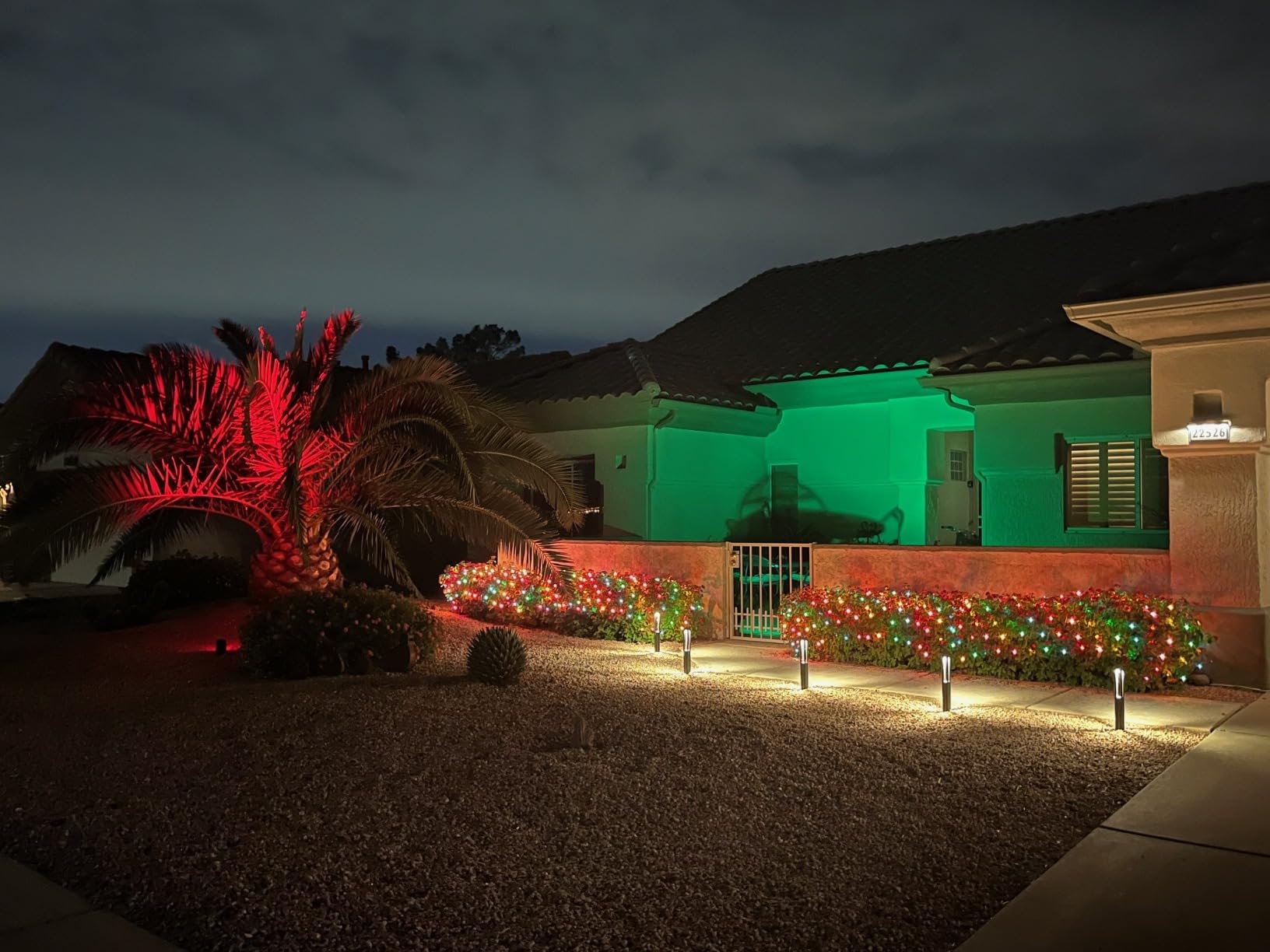
When a 2-pack beats two singles
It wins on a display with two or more exterior receptacles that each need two independently timed runs. Rather than choosing between zones or adding extension cords across the yard, you get four zones across two locations and a matching IP65 rating at each one.
It also wins on setup time. Two units pairing in the same app on the same 2.4GHz network is one process rather than two, and a matching housing at both outlets looks deliberate in a way two different brands never will.
When it is the wrong shape of purchase
If your display is one zone, a single dual-outlet plug leaves you with an unused socket and money spent. If your household runs Apple Home, this plug will not appear in Home at all, and the two-pack makes that mistake twice.
Also note that both units need their own exterior receptacle within Wi-Fi range. A pair staked at opposite ends of a long property will need mesh coverage before pairing succeeds, not after.
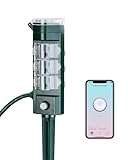
10. HBN Outdoor Power Stake, Six Grounded Outlets on One Stake
HBN Outdoor Smart Plug Timer,6 Outlets,WiFi Power Stake 6 Ft Cord
6 grounded outlets
15A/1875W with overload protection
6 foot cord with ground stake
IP44
Pros
- Six grounded outlets on one stake removes daisy-chained extension cords across the yard
- Ground stake and 6 foot cord give real placement flexibility in a decorated yard
- Built-in overload protection switch cuts power on current imbalance
- Works with Alexa and Google Assistant alongside the HBN app
- Green enclosure and stake blend into lawn and garden planting
Cons
- All six outlets are controlled collectively
- not individually
- 6 foot cord limits how far from a house outlet the stake can sit
- Manufacturer states it should not be used for pump loads
This one solves a problem no wall-mounted plug can. Holiday decorators describe it as a clean answer for large displays, because a single stake in the middle of the yard gives you six grounded outlets without running a chain of extension cords or making the nightly trip out to unplug things in the cold.
It is rated 125V, 60Hz, 15A/1875W resistive or general use, 8A/1000W for tungsten and electronic ballast loads, and 1/2 HP. A built-in overload protection switch cuts power on current imbalance, and the 12-inch ground stake plus 6 foot cord make it genuinely repositionable between seasons.
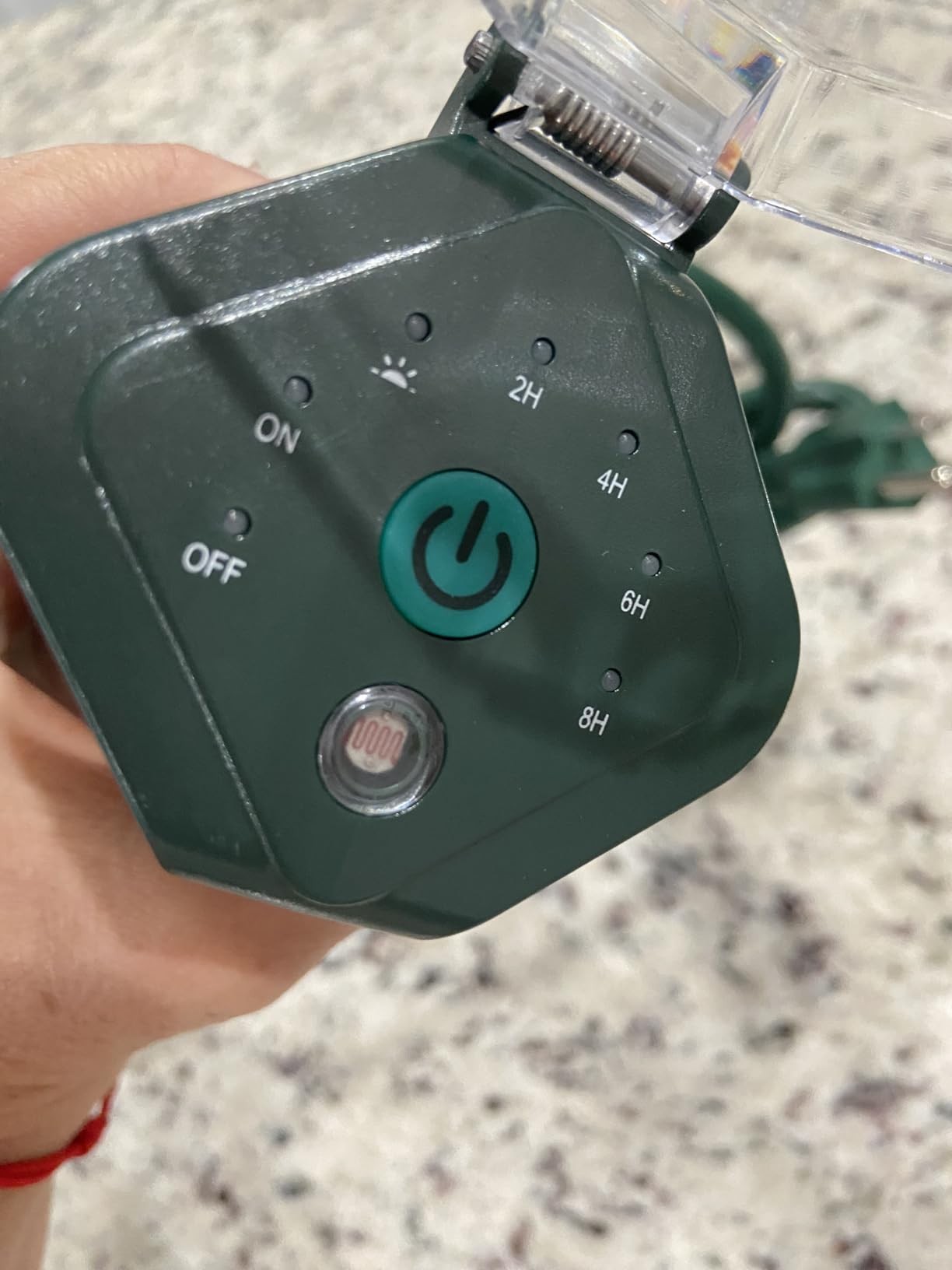
The listed compatible devices run from Christmas lights and garden lights to electric grills, sprinklers, lamps and home electronics, and the green enclosure is designed to be visible as garden equipment rather than as electronics. Scheduling from the HBN Smart app, or by voice with Alexa and Google Assistant, covers dusk-to-bed automatically.
The limitation is structural and you need to know it before planning. All six outlets switch together. If you want the yard lights off at 11pm while the inflatables stay on until midnight, this stake cannot do that, and you would need a second zone from a wall plug alongside it.
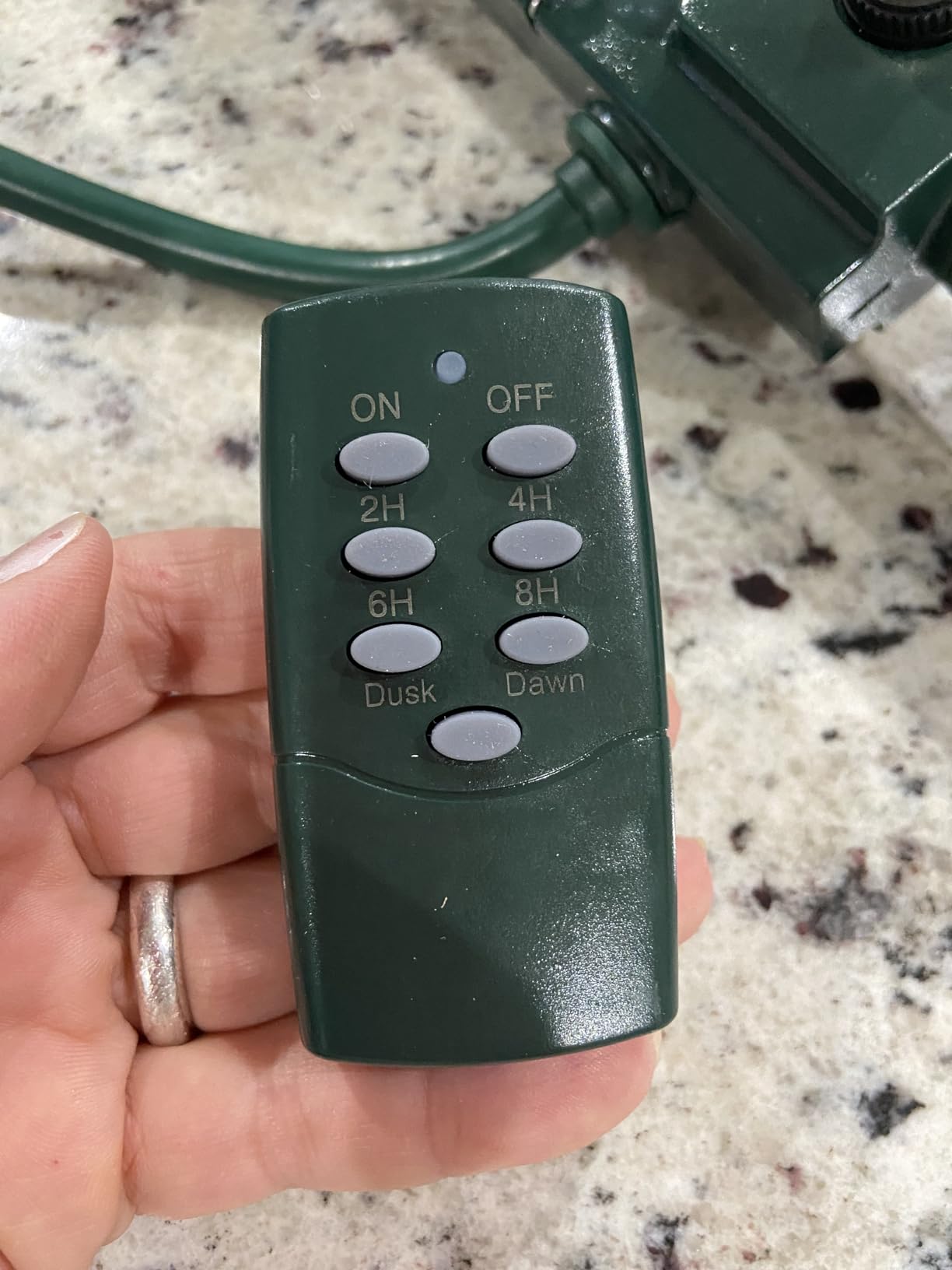
When a single switch is exactly right
Collective switching is an advantage when a display is one visual unit. Every net light on every bush, every stake-mounted lantern and every inflatable blower on that zone goes on at dusk and off at bedtime together, which is a simpler plan than six schedules and it is the plan most displays actually want.
Placement and safety notes
Stake it in a spot that keeps the cord and the unit out of standing water, and route the 6 foot cord so it does not cross a path or a mower line. The IP44 rating is a splash rating, so the enclosure is fine under light weather exposure but should not sit in a low spot that collects water.
Note also that the manufacturer excludes pump use, which rules out water features and any inflatable with a water pump. A blower motor for a standard inflatable is a different category, and it belongs on its own zone with its own load check.
11. TESSAN Outdoor Smart Plug, Three Independently Switched Outdoor Outlets
TESSAN Outdoor Smart Plug Waterproof, 2.4GHz WiFi Only
3 independent outlets
15A/1875W each
IP44 with flip covers
Smart Life app
Pros
- Three individually controllable outlets each rated 15A/1875W/2HP
- Per-outlet daily and weekly scheduling at this price point
- Long reviewers report more than three years of continuous outdoor operation
- Automatically reconnects to Wi-Fi after power outages
Cons
- Rated 4.2 with an 11 percent one-star share in reviews
- 3.94 inch cord is short enough to require an extension cord for most yard placements
- Some reviews report schedules not applying correctly in the Smart Life app
Three independently controlled outlets on one unit solves a scheduling problem that usually needs three plugs. Where most outdoor dual-outlet units give you two zones, this gives you three, each rated 15A/1875W/2HP, and the flip covers keep the sockets shielded from rain, snow and dust when they are not in use.
Long-term owners report three-plus years of continuous outdoor operation with reliable automatic reconnection after power outages, which is a more useful data point for a device that lives outside than any first impression.
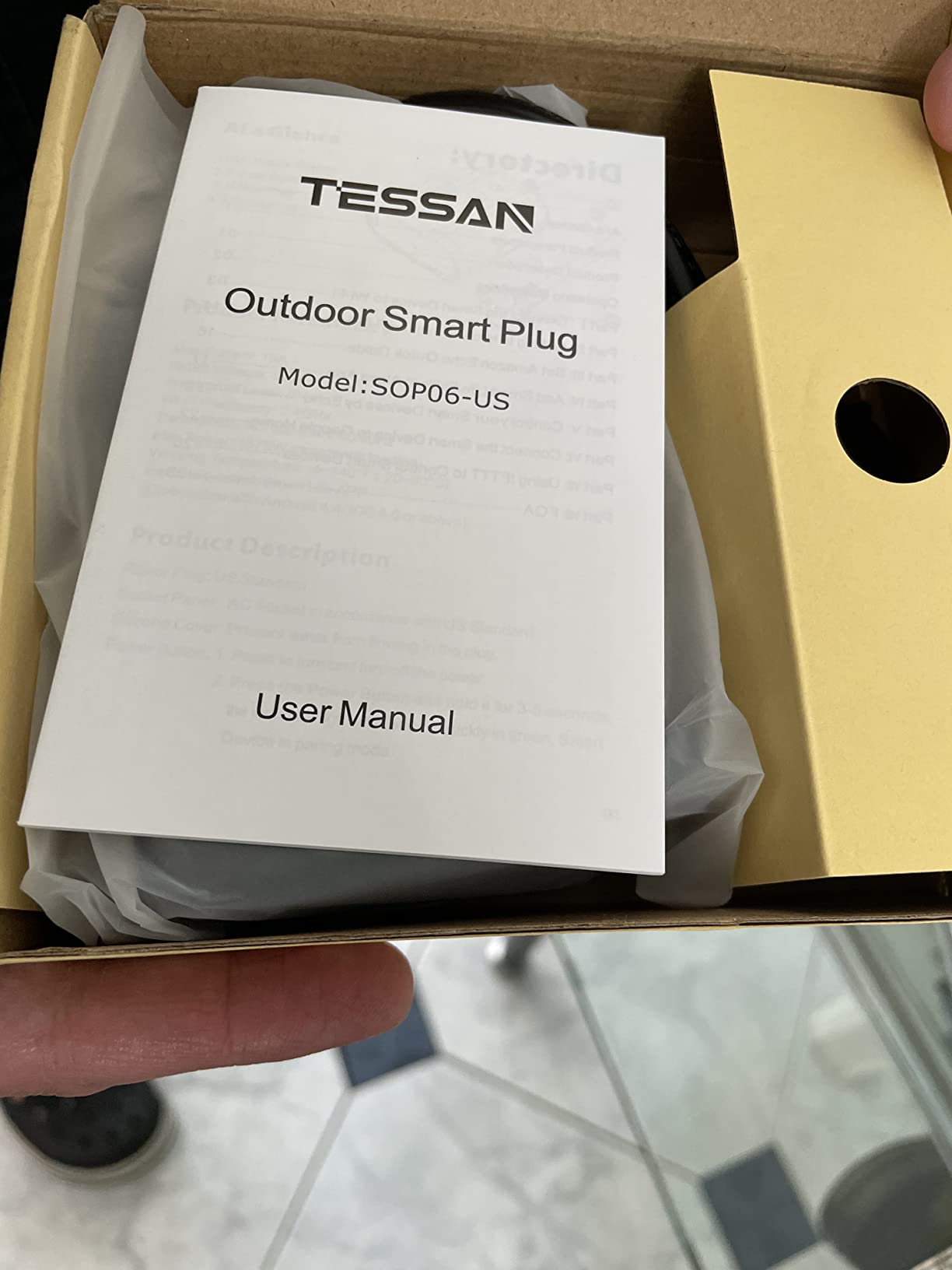
Per-outlet daily and weekly scheduling in the Smart Life app is rare at this level of hardware, and it lets a roofline, a set of net lights and an inflatable each run on their own clock from a single wall receptacle. Alexa and Google Home work through the SmartLife skill, and Bluetooth is available during setup to smooth pairing on 2.4GHz.
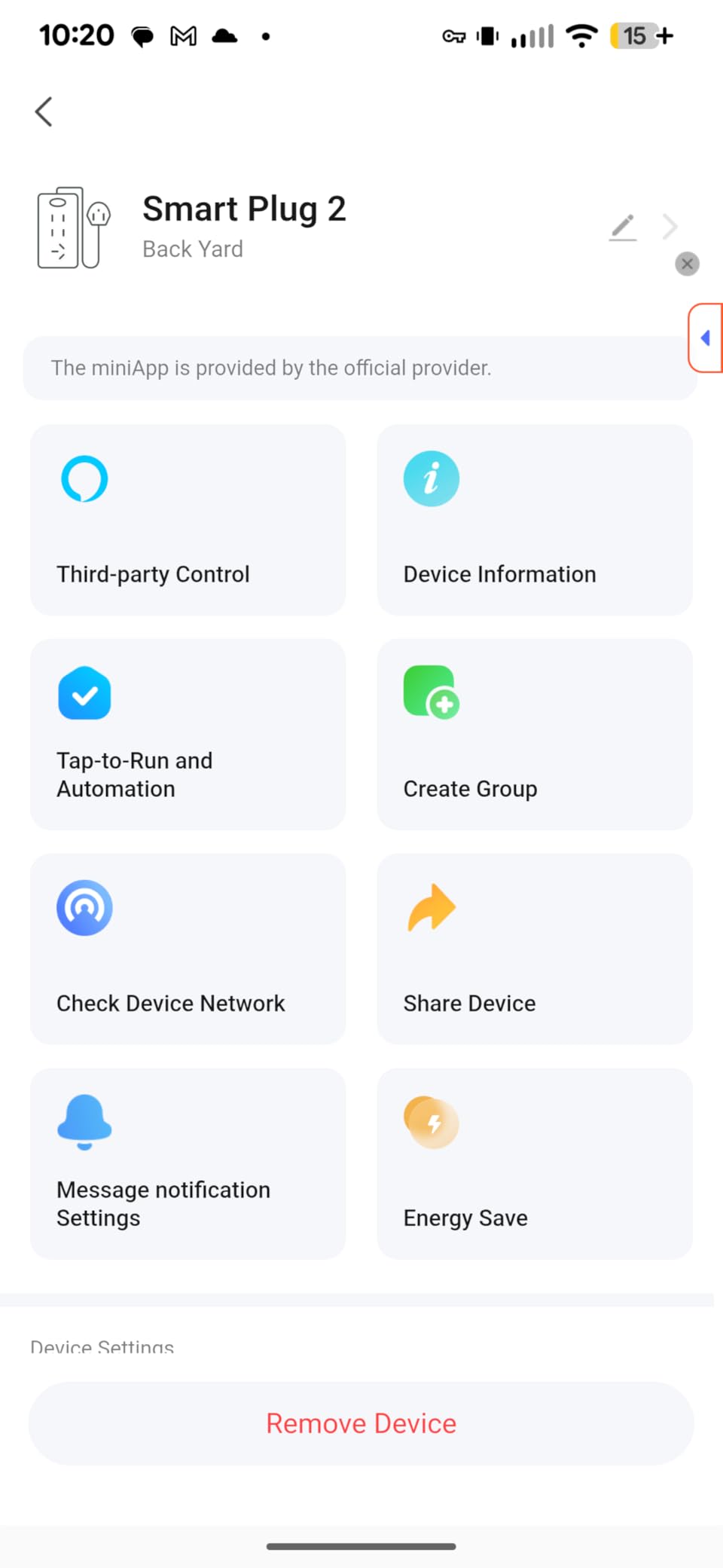
Two things temper that. Its 4.2 rating is among the lowest in the roundup, reflecting reports of individual outlets failing after extended use on high-draw loads such as pool pumps, and of schedules not applying correctly in the app. The 3.94 inch cord is also short enough that most yard placements need an extension cord, which cuts against the point of a weatherproof unit.
Why three zones matters for a mid-size display
Three separately timed outlets is the number that matches a very common display: roofline on at dusk, net lights and bushes on a longer schedule, and the front inflatable running to a later bedtime. One plug handles all three without a stake, without extension cords and without a second exterior receptacle.
It also makes partial displays possible. If you only want the roofline lit while the rest stays dark, that is one tap, which no mechanical timer with a single dial schedule can do.
What the low rating actually reflects
The complaints cluster around pump and high-draw loads, and around Smart Life schedules that do not stick after an app update. For LED string lights at typical seasonal draw, the failure reports do not describe the load most people will put on it. At 16 ounces it is the heaviest unit here, which suits a permanently mounted position.
12. HBN Outdoor Smart WiFi Plug U151T, A Single Outdoor Outlet On A Budget
HBN Outdoor Smart WiFi Plug, Heavy Duty 1 Grounded Outlet Timer, 1 Pack
IP44 weatherproof
1 grounded outlet
1875W resistive at 15A
2.4GHz only
Pros
- Entry-level outdoor plug with per-day and per-time scheduling
- Works with the Smart Life app so it joins an existing ecosystem
- Weatherproof enough to sit outside through repeated rain
- 1875W and 15A resistive rating is ample for Christmas string lights
Cons
- Only one grounded outlet
- so a second run needs another plug
- Reports of dropping off Wi-Fi and needing re-adding after firmware updates
- Older units and newer apps are not compatible with each other
This is the budget entry point, and users switching from old dial timers value it for the per-day scheduling and the ability to coordinate multiple light runs from the Smart Life app. The single grounded outlet is rated 1875W resistive at 15A, 625W tungsten at 5A and 1/2 HP, which is more than a strand of holiday lights needs.
It is ETL listed, weatherproof to IP44, and the manufacturer instructs that it be mounted at least 2 feet off the ground with the plug pointing straight down. Users report it weathering multiple rainy seasons without complaint, and the copper contacts and blade terminals are the kind of detail that shows up in products built for permanent outdoor mounting.
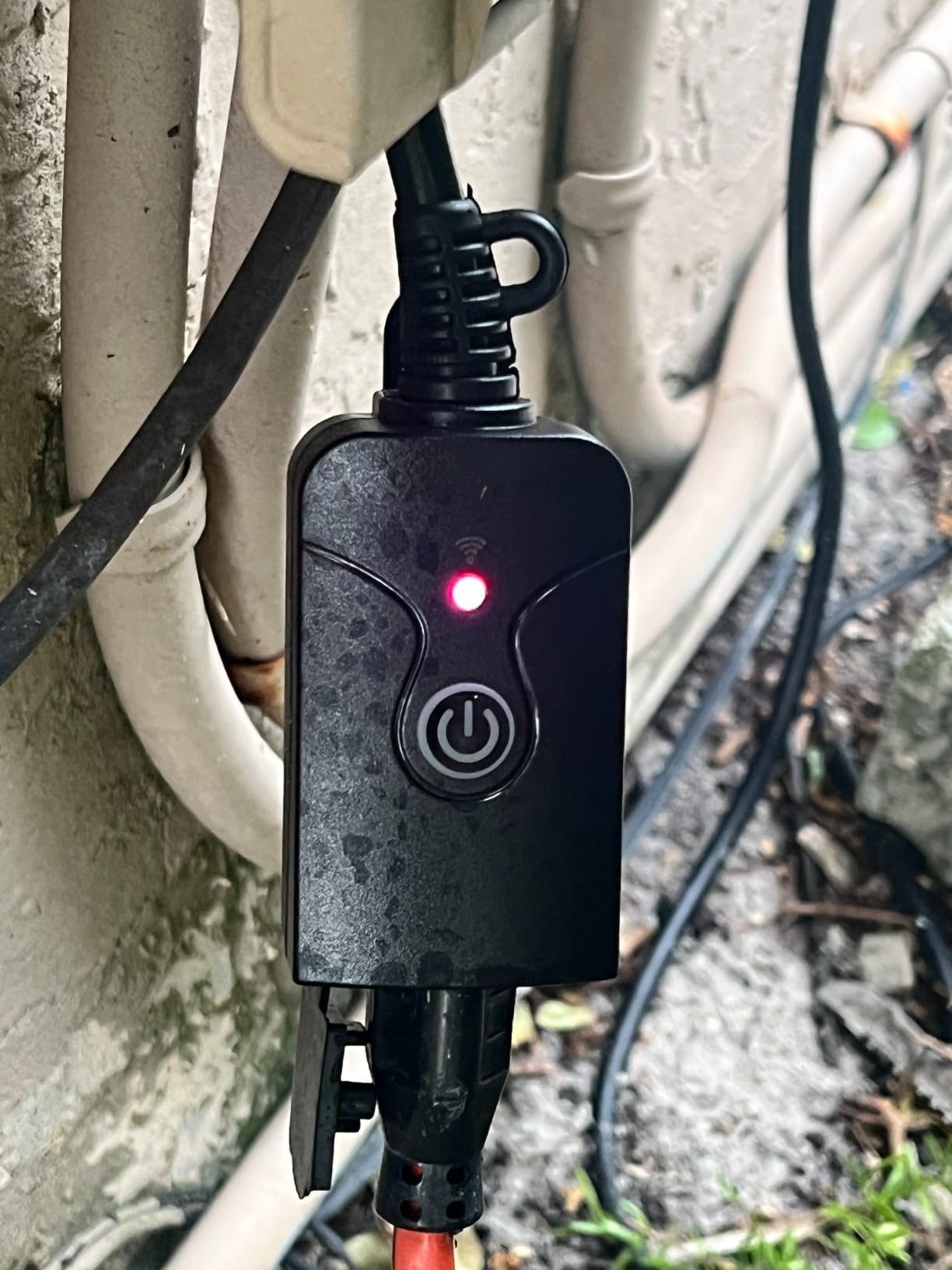
The honest weakness is reliability reports, and they are common enough to plan for. Multiple reviews describe the plug dropping off Wi-Fi and needing to be re-added after firmware updates, and others report the plug turning itself back on after a set timer, which is the specific failure mode that strands a display in the dark.
There is also an app version split worth knowing: older units and newer ones ship with different compatible apps, and migration from the HBN Smart app to BN-HUB means an old plug in storage may not pair with the app on your phone. Check the version before you commit to a multi-unit build.
How to get the most out of a budget plug
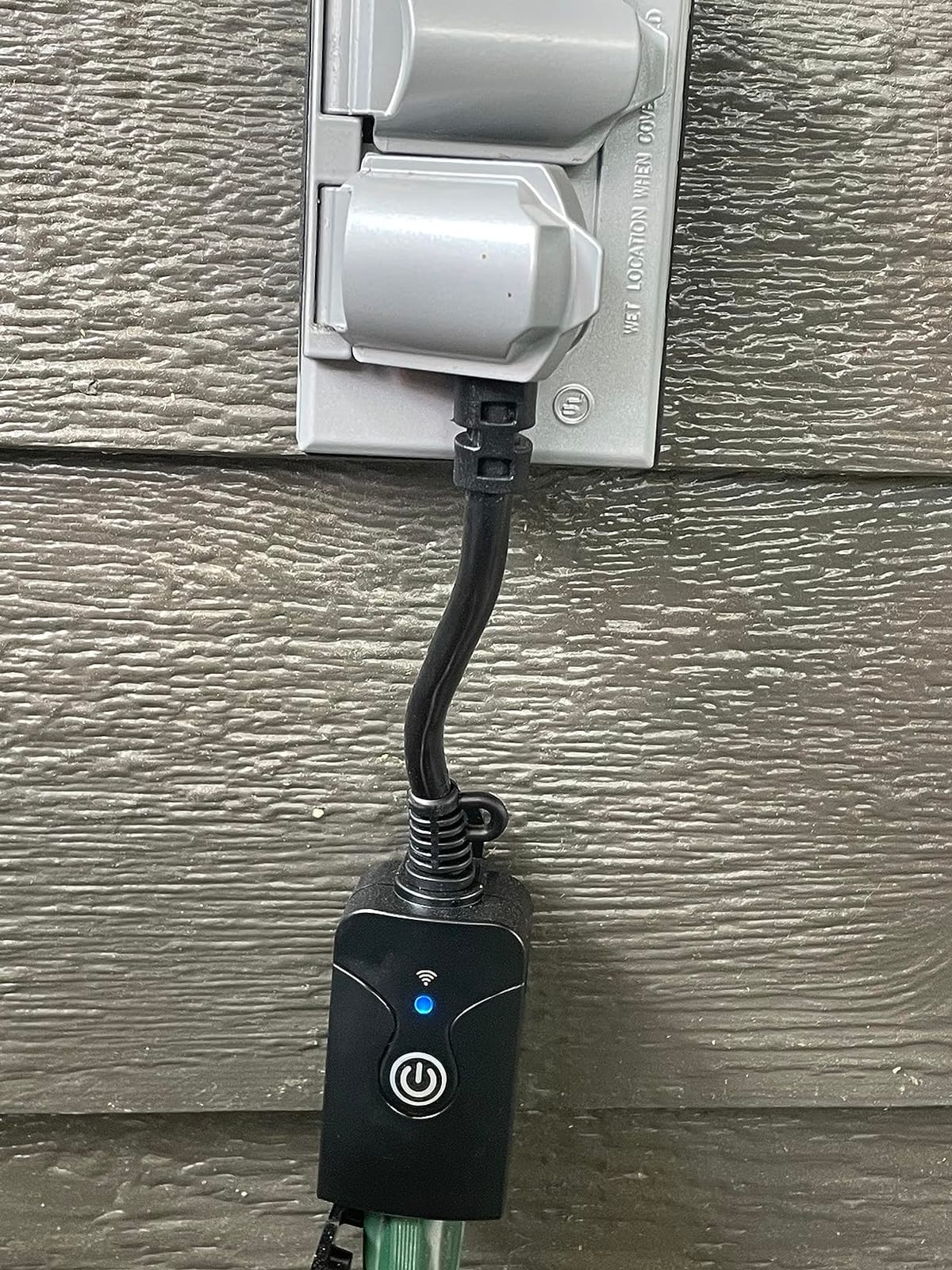
Give it a dedicated position rather than a crowded one, mounted high and dry with the socket facing down, exactly as the manufacturer instructs. A plug that drops off Wi-Fi is far more often a marginal signal problem than a hardware failure, and 2 feet off the ground is the cheapest fix available.
When a mechanical timer is the smarter buy
If this plug is your only planned smart device and your display is one or two runs, a mechanical dial timer costs less, has no app to configure and cannot fail in a way you do not notice. The smart plug earns its price through scheduling flexibility, not through reliability.
It makes more sense as a second or third zone alongside a more dependable unit, where a single drop-out affects one accent run rather than the whole display. Buy the budget plug for a zone you can live without for a night, not for the roofline.
How many zones does your Christmas display need?
Zones, not strands, decide how many plugs you need. A zone is any run of lights you want to turn on or off at a different time from the rest, and each zone needs its own independently controlled socket. Most displays land between one and four zones, and a dual-outlet plug often collapses two zones into one unit.
One zone. A single strand or a single set of net lights on one outlet does not need a smart plug. A mechanical dial timer does the same work for less and keeps working through a Wi-Fi outage, which is why we do not start most single-zone displays with Wi-Fi.
Two zones. This is where smart control starts earning its cost. The classic pair is roofline on at dusk and yard lights staying on later. The Kasa EP40 or the Amazon Basics Outdoor Smart Plug each give you two independently controlled outdoor sockets from a single receptacle.
Three zones. Roofline, net lights and an inflatable on three separate bedtimes is the most common three-zone display, and the TESSAN outdoor plug is the only unit here that handles all three from one wall receptacle. Alternatively, one dual-outlet plug at the house and a KP401 at a far corner covers the same ground with more flexibility.
Four zones or more. A large display is where a six-outlet stake, a 2-pack of dual-outlet units or several single-outlet plugs come in. At that point the constraint is usually how many exterior receptacles you have, not how many plugs you can buy.
For the indoor side, the tree is its own zone and gets its own answer. If you are decorating indoors, our guide to the best flocked Christmas trees and best Christmas garlands with lights cover the display itself, and either can hang off an indoor plug with its own bedtime schedule.
How to choose a smart plug for holiday lights
Start with where the plug physically lives, because that eliminates most of the list immediately. An indoor tree, a window feature or a mantel garland needs an indoor plug, and only two picks here are indoor. Everything else assumes an exterior receptacle and requires a weather rating.
Then read the IP rating as a placement instruction rather than a permission slip. IP64 protects against dust and splashing water from any direction, IP65 adds protection against low-pressure water jets, and IP44 covers splashes only. In plain terms, IP64 and above belong under an eave, on a covered wall or inside a weatherproof box. IP44 belongs indoors or under genuine cover. None of them belong in a puddle, in a lawn or under a sprinkler head.
Next, check the load against the number. Nearly every plug here is rated 15A/1875W for resistive loads, which covers a very large number of LED strands, and the exception is the dimmer at 3.33A. Adding up the wattage on the cord of each strand is a two-minute job and it is the only step that prevents the one failure that actually matters.
App quality and scheduling are the next filter. The feature that separates a holiday plug from a light switch is astronomical scheduling, which triggers on local sunset rather than a fixed clock time. Tapo, Kasa, Wyze, TREATLIFE, meross and TESSAN all support sunset and sunrise offsets. The two Alexa-only plugs schedule by clock, which means the display drifts about an hour each month relative to darkness.
Then think about ecosystem, because this is where the cost hides. Every plug here works on 2.4GHz Wi-Fi, so a router with the 2.4GHz band disabled will pair with none of them. Alexa-only plugs work without a hub. Matter plugs like the Tapo P400M need a compatible hub for anything beyond their own app, so a cheap Matter plug in a house with no controller is the more expensive purchase, not the cheaper one.
Energy monitoring is the one feature worth paying extra for only in specific circumstances. It is genuinely useful if you want to see which run draws the most current, and pointless if your plan is on at dusk, off at bedtime. The best smart plugs for energy monitoring guide covers the reporting side in more detail.
Smart bulbs versus smart plugs is a fair question, and for holiday lights the answer usually favors plugs. Most Christmas strands use non-standard wiring that smart bulbs cannot replace, and a bulb-per-bulb approach multiplies cost and failure points across a whole roofline. A single plug switches an entire run, and a dimmable plug gives you brightness control that no set of string-light bulbs offers.
Finally, know who should not buy one. If your exterior outlets are already weather-protected GFCI receptacles mounted under an eave, forum users make a fair point that a premium IP-rated plug may be redundant, and an indoor plug in a covered box is a legitimate answer. If your display is one strand, a mechanical timer is the better buy. And if nobody in the house will use an app, you are paying for a feature that never gets exercised.
Wattage, GFCI and outdoor safety rules that matter
Most Christmas lighting is a resistive load, which is the easiest kind for a smart plug to switch. Read the wattage printed on the cord of each strand, add them up, and compare the total against the plug’s rating. A 15A/1875W plug has more headroom than most displays need, and the real budget pressure comes from motors, not LEDs.
A yard inflatable is a motor, and a motor is a different category from a light strand. Several manufacturers here explicitly exclude pump loads, and running a blower on the same circuit as a display is the most common way people overload a plug. If you need an inflatable switched, give it its own zone on a higher-rated plug and check the running wattage on its own label.
Plug everything into a GFCI receptacle. Ground-fault protection is what trips if water finds its way into a lamp or a damaged cord, and an exterior display without one is the scenario where that protection matters most. An indoor plug in a covered exterior box should still be on a GFCI circuit.
Position is worth more than any rating on the box. Mount above ground, not at ground level, with the socket facing down, and run a drip loop so water leaving the plug head falls away instead of following the cord. Keep the plug out of any low spot where water collects, and remember that an eave or a covered box is the single most effective upgrade you can make.
Extension cords are the weak link, not the plug. A cord run across a yard to reach a receptacle should be outdoor-rated, correctly gauged for the load, and protected where it crosses a path. Stacking cheap indoor strips to reach a distant outlet is the practice that turns a rating on a product page into a meaningless number.
What happens when the Wi-Fi goes down
Every plug in this roundup keeps its schedule stored locally and executes it without the cloud. If your router reboots or the internet drops, a plug that is already paired keeps running the schedule you set, and most of them reconnect on their own when the network returns.
What does not survive is a power cut that also takes the plug offline mid-schedule, or a router that changes its network settings and drops the pairing entirely. Re-pairing usually means a few minutes in the app, but the display is dark or wrong for the rest of the evening, and no smart plug solves that for you.
This is the argument for the mixed setup that most experienced decorators use. Run the display’s main zone on a smart plug, and keep one mechanical dial timer ready as a physical backup for a single critical run. It costs very little, it needs no app, and it has no opinion about your router.
The 2.4GHz and WPA3 issue is the most common real-world failure, and it is not a reliability problem at all. If a plug will not pair, temporarily disable band steering or split the bands on the router, pair on 2.4GHz, and turn the setting back on. Forum users describe this as the fix for most Kasa pairing failures reported each December.
How we chose and sourced these picks
Every product here was selected from live listing data, and each one carries its published rating, review count, amperage, wattage, weather rating and dimensional details as listed by the manufacturer. Where reviewers report a recurring problem, we repeated it rather than smoothing it out, because the complaints are the part that helps you decide.
This guide was last checked in October 2026. Specifications on smart plugs change between hardware revisions, so confirm the model number on your box matches the one written here, particularly for the Kasa EP40 and KP401 and the HBN power stake, where similar-looking variants exist. For the display side of the season, our guide to the best outdoor Christmas decorations covers what the lights are hung on.
Frequently Asked Questions
Can I use a smart plug for Christmas lights?
Yes. A smart plug switches a strand on and off from an app or voice assistant on a schedule you set, without touching any wiring. Indoor plugs work for trees and window features. Outdoors, use only a plug with an IP64 or IP65 rating, mounted under cover with the socket facing down, and keep the total load under the plug’s 15A/1875W ceiling.
What is the best smart plug for controlling outdoor lights?
The Kasa Outdoor Smart Plug EP40 is the strongest all-round outdoor choice, with two independently controlled 15A/1875W outlets, IP64 weather resistance and Wi-Fi range rated up to 300 feet. For a higher ingress rating and wider platform support, the Tapo P400M adds IP65 and Matter. If your household runs Alexa only, the Amazon Basics Outdoor Smart Plug covers two zones without a hub.
How many Christmas lights can I run off one smart plug?
A 15A/1875W plug covers a large number of LED strands, because most LED string lights draw only a few watts each. Add up the wattage printed on each cord and keep the total comfortably under the rating. The exception is the TREATLIFE dimmer at 3.33A, which is for dimmable bulbs only. Motors such as inflatable blowers are a separate category and deserve their own zone.
Do smart plugs work outside in the rain?
Only the ones rated for it. Indoor plugs have no weather protection. Among outdoor units, IP44 covers splashes, IP64 covers splashing water from any direction, and IP65 adds protection against low-pressure water jets. None are submersible, so mount any of them under an eave or in a covered box, keep the socket facing down, and add a drip loop in the cord.
What happens to a smart plug’s schedule if the Wi-Fi goes down?
The schedule is stored in the plug, so an already-paired unit keeps running it during a network or internet outage and usually reconnects on its own when service returns. A power cut mid-schedule, a router setting change or a failed re-pair will stop it until you intervene, which is why keeping one mechanical dial timer as a backup for a critical run is a sensible hedge.
Do I need a smart home hub to use a smart plug for holiday lights?
Not for most of these. Every Alexa, Google Assistant and SmartThings compatible plug here works on its own app and 2.4GHz Wi-Fi with no hub. Matter support, including the Tapo P400M, is the exception: using it inside Apple Home, Alexa or Google Home requires a compatible hub, so factor that into the cost if you do not already own one.
The smart plug to buy for your Christmas lights in 2026
For an indoor tree or any interior run, the Amazon Smart Plug is the pick, with the highest rating in this roundup and setup that takes about a minute. For a display with real zones, the Kasa Outdoor Smart Plug EP40 is the one to build around, because two independently controlled IP64 outlets from a single receptacle solve most two-zone and three-zone layouts. The Kasa KP401 is a simple way to add one more zone.
Whichever you choose, decide the zone count first, confirm your router still serves 2.4GHz, mount anything outdoors under cover with a drip loop, and keep one mechanical timer in a drawer for the night the network misbehaves. A smart plug removes the daily trip to the outdoor switch. It does not remove the need to plan the display properly.