
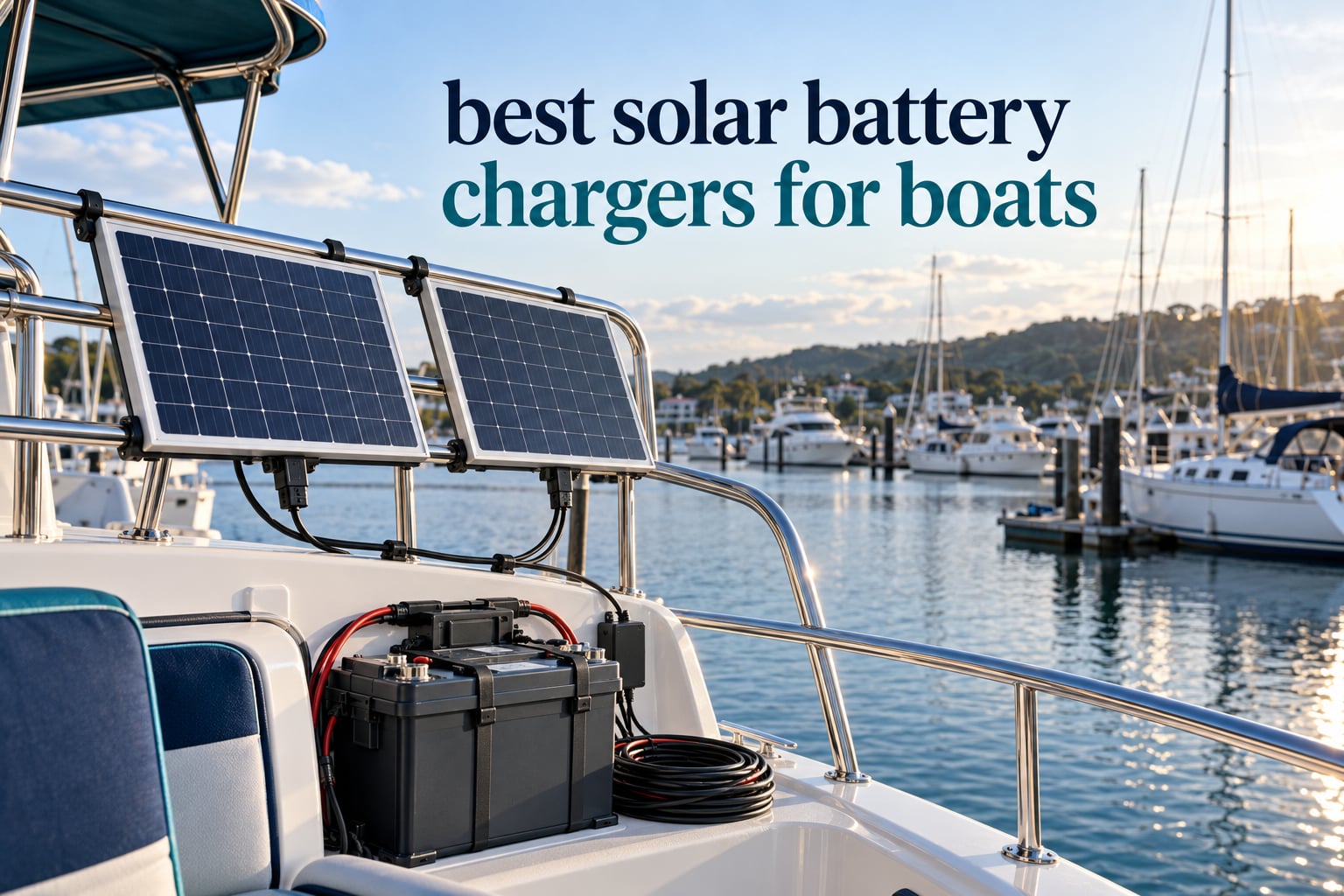
Boat batteries die quietly. A moored vessel loses charge to bilge pumps, alarm panels and instrumentation, and a few weeks of neglect is enough to sulfate a perfectly good flooded or AGM battery. The fix is a solar battery charger for boat batteries: a small weatherproof panel with a built-in controller that holds a 12V bank at float and stops drawing power at night. This roundup covers the ten best solar battery chargers for boats, from 1.8W maintainers for a winterstored skiff to 100W monocrystalline kits that can carry a house bank through a season on a mooring.
Our team has spent weeks with these panels on deck, in the rain, and hooked to multimeters, and the pattern that surprised us most is how much of the category is marketing. Wattage on the box is the ceiling, not the daily yield. A 12W panel that looks generous on a label produces a fraction of that in half-shadow under a bimini, and the difference between a trickle charger and a real charger is the difference between a maintained battery and a charged one.
So read the tiers before the individual picks. Below roughly 20W you are in maintainer territory and nothing more. Between 20W and 50W you can offset a realistic load and recover a shallowly discharged house bank. At 100W you have genuine charging capability for a liveaboard or an extended mooring. If you also need shore-power or alternator charging covered, our marine battery charger guide breaks down the non-solar options.
Top 3 Solar Battery Chargers for Boats in 2026
Our three headline picks cover the three real use cases. The SUNER POWER 12W is the maintainer that gets the most use per dollar of complexity. The Voltset 100W kit is the one that actually charges a house bank. The Topsolar kit is the established 100W option for owners who want a proven panel with a controller in the box.

SUNER POWER 12W Waterproof Maintainer
- Built-in MPPT controller
- 3-stage Bulk/Absorption/Float
- Tempered glass and corrosion-resistant frame

Voltset 100W Kit with 20A Controller
- 100W monocrystalline panel
- 20A controller with LCD and USB
- IP67 aluminum frame
- Over 500Wh per day
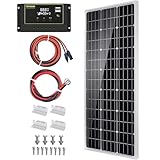
Topsolar 100W Monocrystalline Kit
- 100W 19.5 percent mono panel
- 30A PWM controller
- 2400Pa wind and 5400Pa snow rated
- Expandable to 260W
All 10 Solar Battery Chargers at a Glance
This table lists every charger in the roundup with the specs that actually decide whether it suits a boat. Wattage sets the tier, the controller type sets how much of that wattage you keep, and the sealing determines whether it can live on an exposed deck.
| Product | Specifications | Action |
|---|---|---|
| SUNER POWER 12W Waterproof Maintainer |
|
Check Latest Price |
 Sunway Solar 1.8W Trickle Maintainer Sunway Solar 1.8W Trickle Maintainer |
|
Check Latest Price |
| Voltset 100W Kit with 20A Controller |
|
Check Latest Price |
| Topsolar 100W Monocrystalline Off-Grid Kit |
|
Check Latest Price |
 SOLPERK 100W Waterproof MPPT Kit SOLPERK 100W Waterproof MPPT Kit |
|
Check Latest Price |
 SUNER POWER 50W Waterproof Maintainer Pro SUNER POWER 50W Waterproof Maintainer Pro |
|
Check Latest Price |
 Callsun 7.5W IP68 Maintainer Callsun 7.5W IP68 Maintainer |
|
Check Latest Price |
 OYMSAE 12W Portable Waterproof Maintainer OYMSAE 12W Portable Waterproof Maintainer |
|
Check Latest Price |
 ECO-WORTHY 25W Maintainer Kit ECO-WORTHY 25W Maintainer Kit |
|
Check Latest Price |
 ZZE 20W MPPT IP68 Maintainer ZZE 20W MPPT IP68 Maintainer |
|
Check Latest Price |
1. SUNER POWER 12W Waterproof Solar Battery Charger and Maintainer Pro
SUNER POWER Waterproof 12W 12V Solar Battery Charger & Maintainer Pro, Built-in UltraSmart MPPT Charge Controller, 12 Volt Solar Panel Trickle Charging Kits for Car Automotive Boat Marine RV Trailer
12W waterproof panel
Built-in Ultra-Smart MPPT
3-stage charging
16.5 x 9.4 x 0.6 inch
Pros
- MPPT tracking keeps current usable in poor light
- Three-stage charging tops off then switches to maintenance
- Handles flooded
- AGM
- gel
- SLA and LiFePO4
- Multi-year owners report on boat batteries
Cons
- Needs direct sun before it detects a connected battery
- Suction cups sometimes missing from the box
- Plastic housing can pop open when cups are pulled
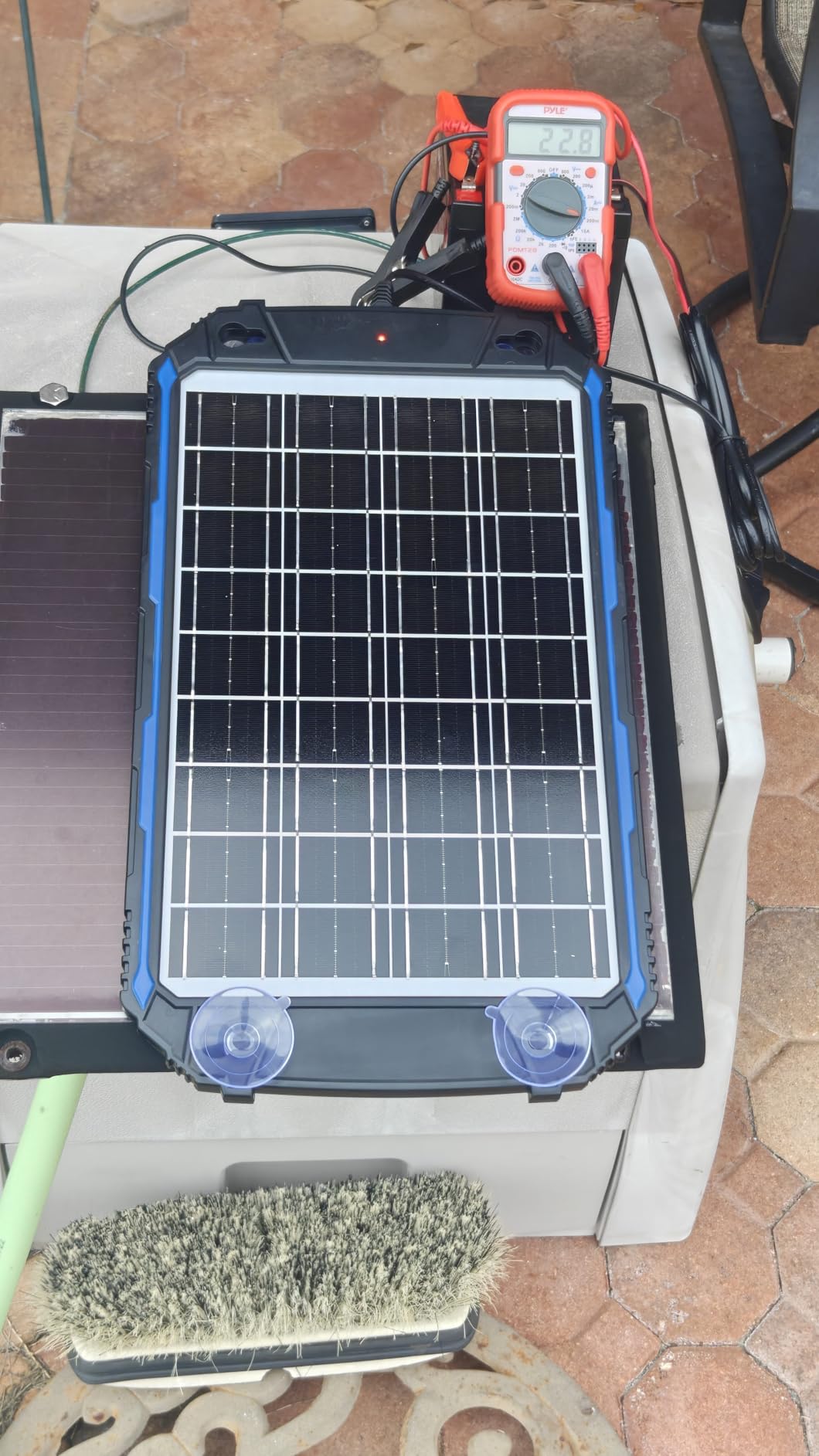
This is the panel we end up recommending most often, and not because of its wattage. The 12W output is genuinely modest, but the built-in Ultra-Smart MPPT controller tracks at up to 99 percent efficiency with 98 percent peak conversion, and that is what keeps it working on the grey days when a plain diode panel gives up entirely.
The three-stage algorithm is the part that matters most for a boat. Bulk, then absorption, then float, and the charger stops drawing once the battery is full and restarts when the battery discharges. Across thousands of reviews, overcharging complaints are essentially absent, which is exactly what you want when a panel is wired to a battery and forgotten for months.
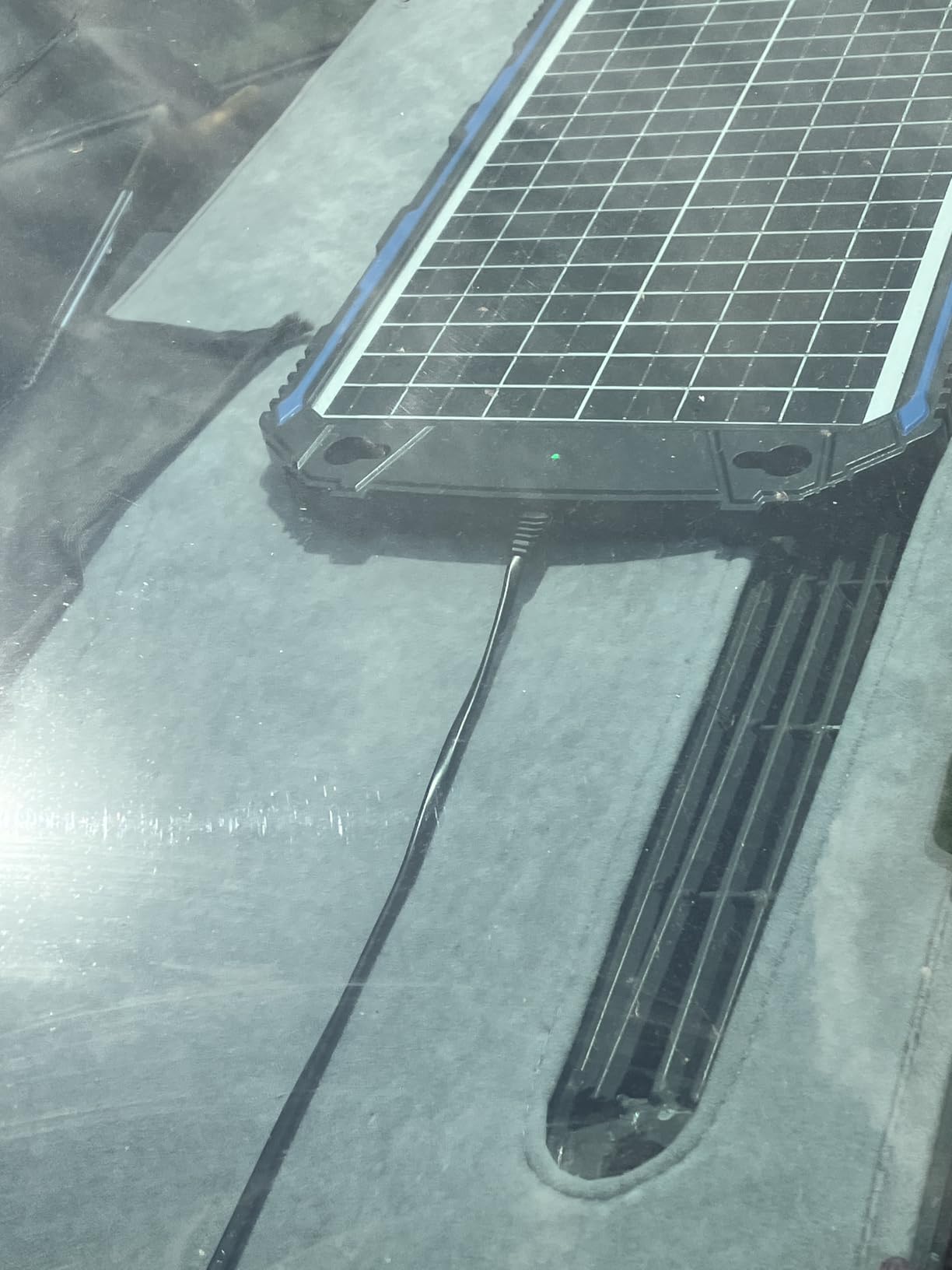
Compatibility is broad. Flooded, gel, AGM, SLA, maintenance-free and LiFePO4 lithium are all listed, and the tempered solar glass and corrosion-resistant frame are built for a deck or a cockpit rather than a garage shelf. The panel also carries UV, anti-rust, erosion, hail and sandstorm resistance claims, which matter more on a boat than almost anywhere else.
Two things catch first-time users out. The unit has to see direct sun before it will register a connected battery, and a marginally charged battery can take up to an hour of sun to rise to charge voltage. Neither is a fault, but both read as a dead product if you expect instant results. Owners also report that the plastic casing can pop open when the suction cups are removed and needs snapping back together.
What it handles well on a boat
This is a maintenance device, so set your expectations correctly. It is built to offset parasitic drain from bilge pumps, alarm systems and instrumentation over a winter on a mooring, and to reverse sulfation in a battery that has been sitting partially discharged for a few weeks. It will not run a fridge overnight and it will not revive a deeply discharged bank in a weekend.
The 16.5 by 9.4 by 0.6 inch footprint is the real advantage. It fits on a console, a bimini rail or a bulkhead without drilling, and the pre-drilled holes and plug-and-play cables mean you can move it between boats seasonally. If your boat lives on a mooring rather than a slip, that portability matters as much as the wattage.
Where it falls short
Twelve watts is roughly 0.6 amps at peak on a 12V system, and a trolling motor at even a low setting draws hundreds of amps. There is no scenario where this panel meaningfully recharges a trolling motor bank while you fish, and any listing that implies otherwise is misleading. Owners on cruising forums repeatedly report charging the trolling bank off the engine instead, which remains the sane approach.
The suction-cup mounting is also the weak point in a real marine environment. Suction cups need a smooth, clean surface and they fail in heat and spray, so for a permanent install you will want mechanical fasteners and a proper cable run. Our flexible solar panel picks for boats cover lighter mounting options if cockpit space is at a premium.
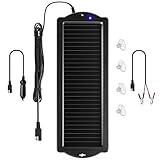
2. Sunway Solar 1.8W Trickle Charger and Maintainer
Sunway Solar Car Battery Trickle Charger & Maintainer 12V Solar Panel Power Battery Charger With Cigarette Lighter Plug Battery Clamp For Car Automotive Motorcycle Boat Marine Snowmobile Watercraft RV
Up to 1.8W amorphous panel
0.13A output
Blocking diode
13.9 by 5.04 by 0.55 inch
Pros
- Simple cigar plug or clip hookup
- Blocking diode prevents reverse charging
- Glass face and ABS housing survive cabin exposure
- Very large review base
Cons
- Output too low for anything beyond maintenance
- No charge controller or staged charging
- Suction cup mount is awkward as a permanent marine fitting
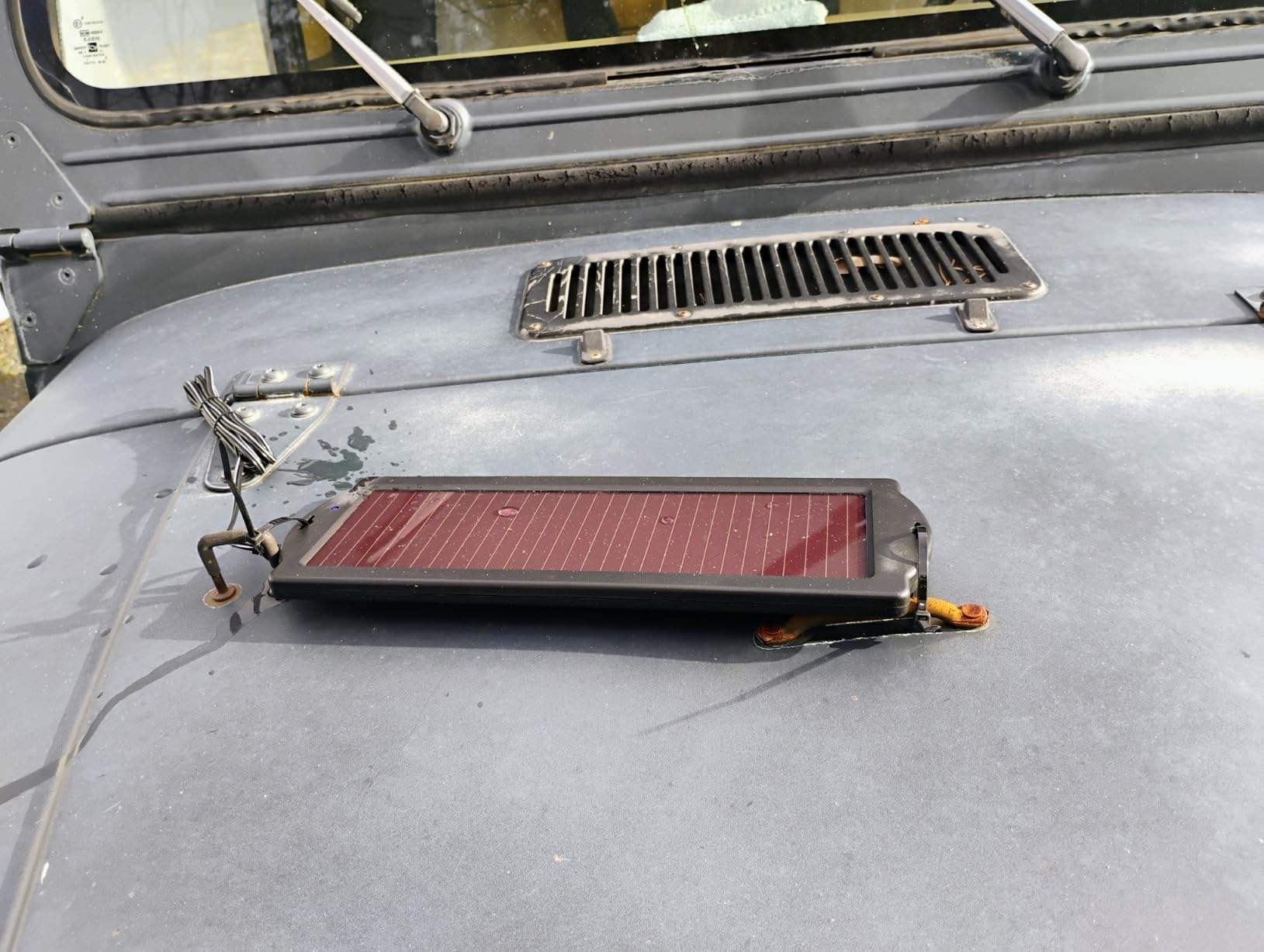
With more than 3,200 reviews, this is one of the most thoroughly tried trickle maintainers in circulation, and the feedback is refreshingly honest about what it can do. The panel is amorphous, rated up to 1.8W and 0.13 amps, and buyers who understand that get exactly what they paid for.
Amorphous cells are less efficient than monocrystalline but perform better in low light and partial shade, which is why this kind of panel still trickles a useful current on a dull overcast day. The built-in blocking diode prevents reverse charging, so the battery is not drained overnight, and a blinking LED tells you it is working.
Connection is about as simple as it gets. It plugs into a 12V cigarette lighter socket or clips straight onto the battery terminals, which means no fusing, no controller placement and no wiring diagram. For a small tender, a jon boat or a single Group 24 in a storage slip, that simplicity is the whole appeal.
The 640 g unit has an ultra-clear PV glass face and a durable ABS housing, and it has clearly survived years of use. Reviewers who use it as a car or motorcycle maintainer report no degradation of the housing or face. If you also keep a car battery on a trickle charger, our car battery charger guide covers the more capable options for that job.
What it handles well on a boat
It keeps a healthy battery topped up over long storage periods, which is precisely the anti-sulfation job most owners actually need. A 0.13 amp float current is more than enough to offset the steady parasitic losses of a boat sitting still, and the blocking diode means you can wire it once and forget it through a whole off-season without returning the battery to a flat state.
It is also the least fussy install in this roundup. No inline fuse, no breaker, no controller to mount somewhere dry, and the cigarette lighter lead means most people clip it on in under a minute. For a small boat with a single small battery, that simplicity is worth more than raw output.
Where it falls short
The ceiling is one amp under one tenth of an amp. Forum users are blunt about small trickle panels generally, and the recurring warning applies here: a panel in this class will not even keep pace with a boat’s natural draw in poor conditions, let alone a load you plug in. The 10 percent one-star share reflects exactly that kind of expectation mismatch.
There is no charge controller, so there is no bulk, absorption or float management, only the diode. That is safe but crude. The windshield suction cup is also a car accessory rather than marine hardware, and the cable gauge and clip quality are basic, which is fine for a weekend toy and marginal for a salt-exposed boat battery terminal.
3. Voltset 100W 12V Solar Panel Kit with 20A Smart Controller
Voltset 100W 12V Solar Panel Kit with 20A Smart Charge Controller
100W monocrystalline panel
20A smart controller with LCD
Over 500Wh daily
IP67 aluminum frame
Pros
- Real charging capability for a house bank
- 20A controller with LCD status and battery-type selection
- IP67 build suits permanent outdoor mounting
- Complete kit with brackets and cables
Cons
- Panel and controller are large and need clear sun
- Two-person install on a small boat
- No load terminal for running devices directly
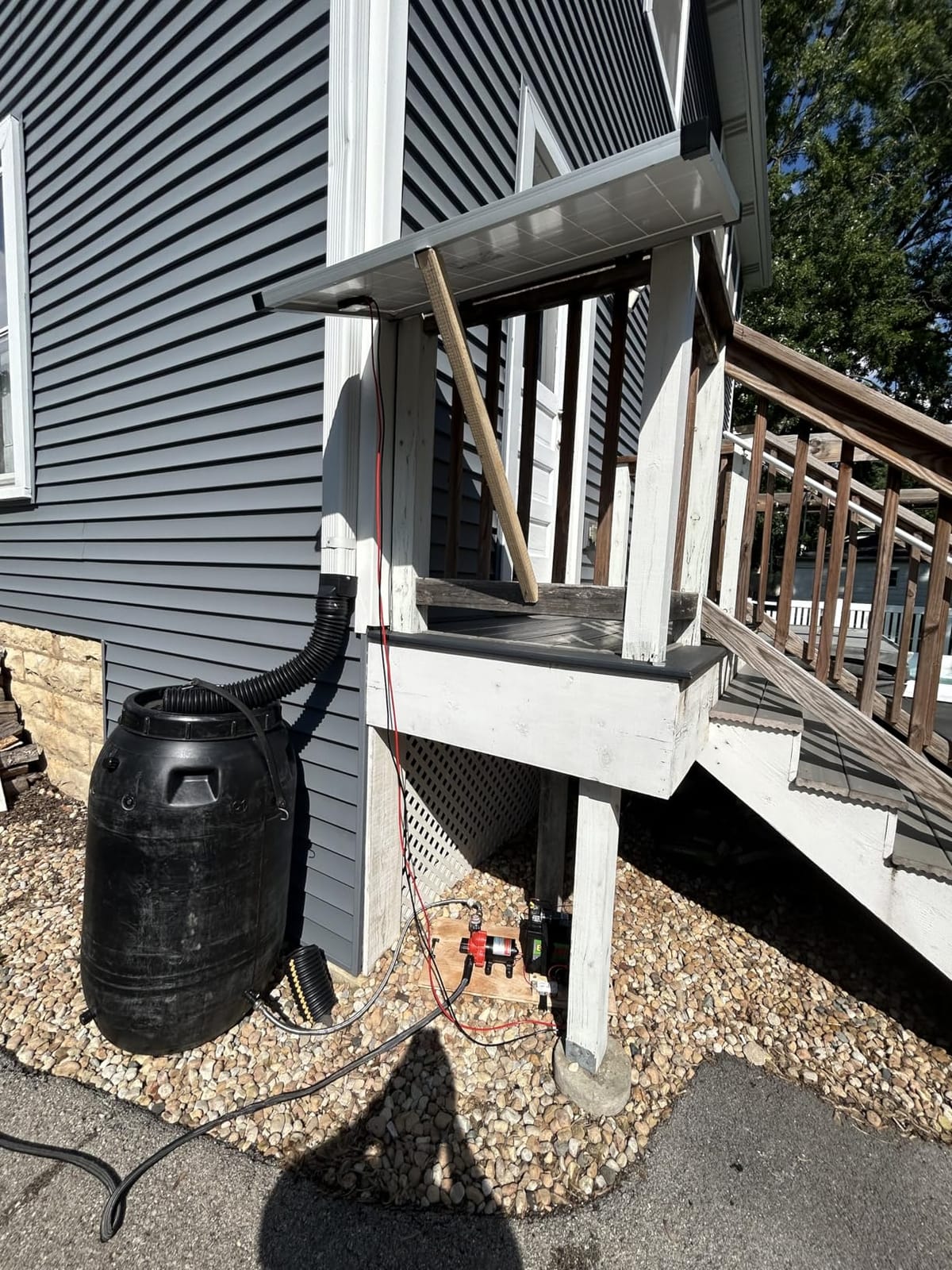
At 100 watts this is the first kit in our list that can honestly be called a charger rather than a maintainer. The monocrystalline panel is rated to produce more than 500 watt-hours per day in sufficient sunlight, which is a completely different proposition from offsetting parasitic draw.
The 20A smart controller is the feature that separates this from cheaper kits. It has an LCD screen, selectable battery-type charging modes via button press, and built-in USB and Type-C output ports for charging phones and small devices directly. Protection covers overcharge, overvoltage, overcurrent, short circuit, reverse polarity and overheating.
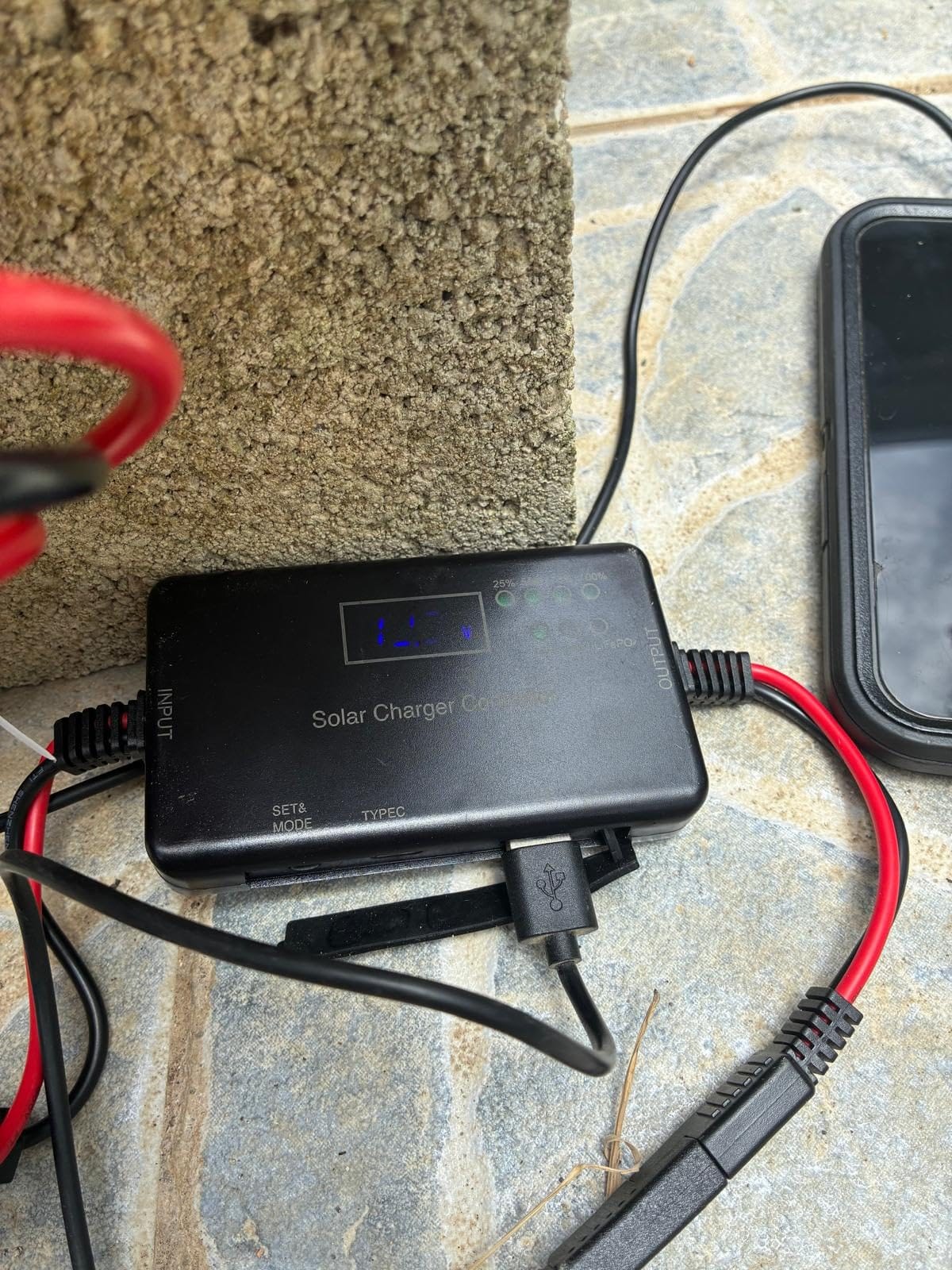
Physically it is built for permanent outdoor mounting. The IP67 waterproof, rustproof, dustproof and windproof construction with an aluminum frame and a stated lifespan of up to 25 years is closer to what a fixed marine installation wants than a typical consumer kit. LiFePO4, AGM, gel, flooded and lithium ion 12V batteries are all supported.
Boat owners on long moorings report that a panel in this class comfortably holds two group 27 house batteries through a season, and the recurring advice across cruising forums is blunt: fit the biggest panel that will physically fit. The Voltset is one of the more attainable ways to answer that.
What it handles well on a boat
Its strength is sustained recovery rather than trickling. If your house bank is being drawn down by a fridge, a cabin light and an instrument cluster while the boat is unattended for a week, 100 watts gives you a real chance of ending that week near float rather than lower. It also has enough headroom to add panels later if your battery bank grows.
The LCD readout and selectable battery modes genuinely help on a boat with mixed chemistries, which is common after a battery swap. The USB and Type-C ports are a small extra that lets you top up a phone or a GPS unit without a cigarette socket, and the pre-drilled back-mount holes make the physical install straightforward on a hardtop or a frame.
Where it falls short
Size and weight are the honest drawbacks. At 7.8 kg and 14.6 by 12.8 inches for the packaged panel, reviewers regularly note that this is a two-person or awkward solo install on a small boat, and you need genuinely unobstructed sun. A panel this size under a bimini is close to useless, so plan the mount before you buy.
There is also no load-output terminal on the controller, so you cannot run a live device straight off the controller. And while the 20A controller handles the panel well, on a large bank you will still want to check the panel-to-controller voltage against the controller’s input limit before stringing anything together.
4. Topsolar 100W 12V Monocrystalline Off-Grid Kit
Topsolar Solar Panel Kit 100 Watt 12 Volt Monocrystalline Off Grid System
100W 19.5 percent mono panel
30A PWM controller
2400Pa wind and 5400Pa snow
15.2 lb
Pros
- Long-established panel with a large review base
- Complete kit with controller and cables and Z brackets
- Expandable to 260W 12V or 520W 24V
- Solid tempered glass and aluminum frame
Cons
- 19.5 percent cell efficiency is dated
- PWM controller is less efficient than MPPT
- Heavy at roughly 16 lb for a small boat
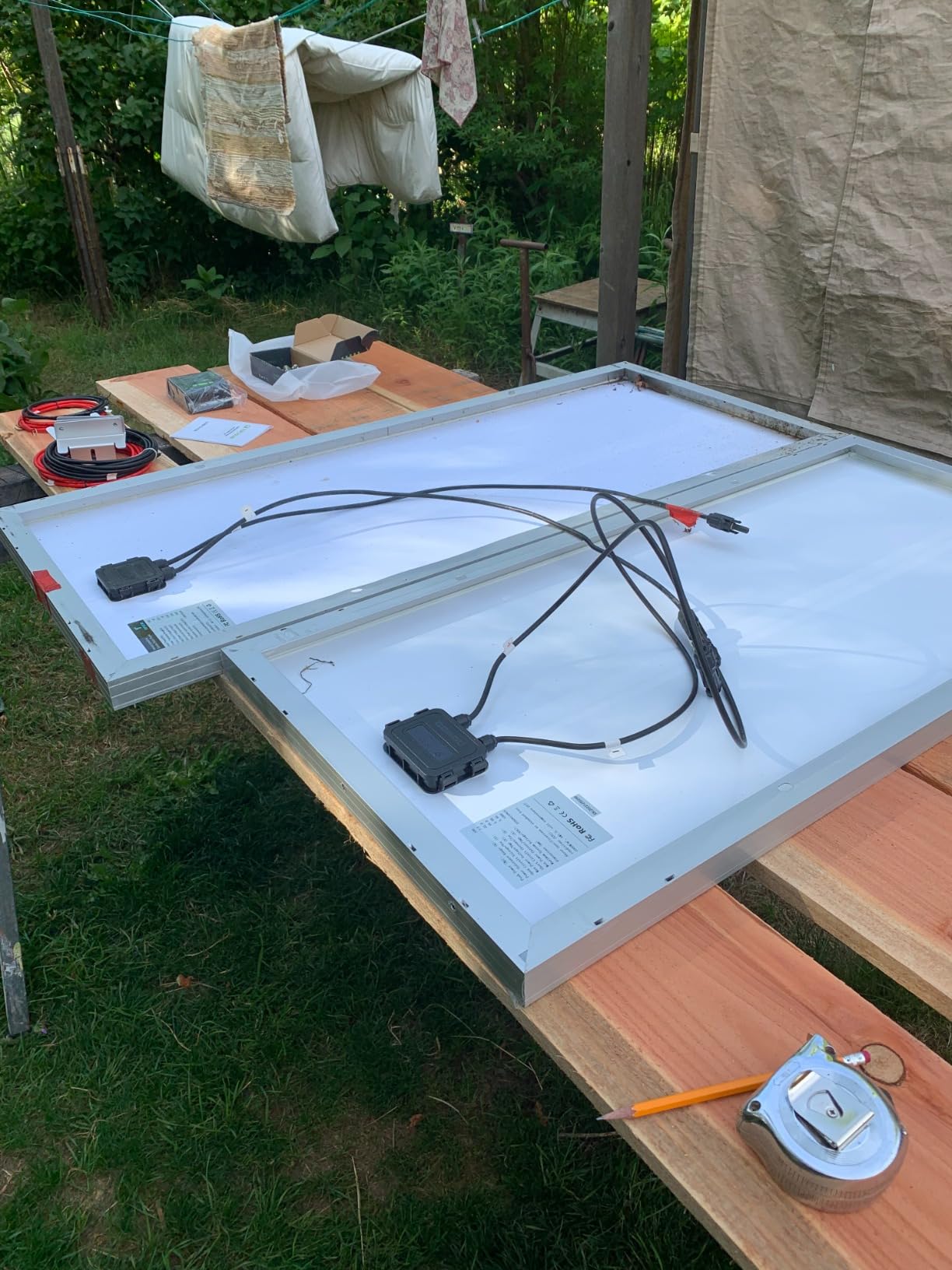
This kit has been around long enough to have a deep body of field data behind it, which matters more for a permanent boat install than a slick spec sheet. Owners consistently report solid construction, complete kit contents and easy mounting with the pre-drilled holes and four Z brackets.
The panel is 100 watts of 38 monocrystalline cells at 19.5 percent efficiency, with a voltage at maximum power of 23V and a current of 4.3 amps. Mechanically it is rated for 2400Pa wind loads and 5400Pa snow loads, and the tempered glass and aluminum frame are appropriate for a fixed mount that will be exposed for years.

The 30A controller is a PWM type, and that is the main technical compromise. PWM controllers simply cut the panel voltage down to the battery voltage, so you lose the difference between 23V and 12V, typically 20 to 30 percent of harvestable energy. In full sun that loss is not critical. In partial shade or poor light on a mooring, an MPPT controller recovers noticeably more.
The upside is that the system is expandable to a maximum 260W on 12V or 520W on 24V. If you plan to grow the array over a few seasons, the controller and wiring architecture are already there. Listing details on this product are also inconsistent, with declared output voltage and connector type that do not quite match a plain 100W panel, so confirm the physical connections before wiring.
What it handles well on a boat
It is a sensible first real solar system for a boat with a modest house bank and a hardtop or rail to mount to. The 30A controller has plenty of current headroom for a single 100W panel, which avoids the clipping problem that undersized controllers cause, and the four included Z brackets mean a straightforward fixed installation with proper mechanical attachment rather than suction cups.
For a boat that also does trailer work or gets campaigned between a slip and a storage yard, the expandability is a genuine advantage. You can add a second panel later without replacing the controller, which is the single most common upgrade people make after the first season.
Where it falls short
At 15.2 pounds, this is a heavy panel for a small boat, and reviewers call that out. On a 16-foot runabout the mounting location that can actually support it may not exist, and a 43.7 by 17.7 inch rigid panel needs a clear line to the sun that most small powerboats do not have.
The 19.5 percent cell efficiency is low next to current panels, and the PWM controller compounds the shortfall. If your boat spends its week shaded under a dock structure or a canvas top, the difference between this and an MPPT kit is large enough to matter. For most other applications, it stays irrelevant because the limiting factor is sun exposure, not conversion efficiency.
5. SOLPERK 100W Waterproof Solar Battery Charger with MPPT
SOLPERK 100W 12V Solar Battery Charger Waterproof Solar Battery Maintainer
100W monocrystalline panel
10A submersible MPPT controller
LED status lights
Z brackets included
Pros
- Controller can be fully submerged
- MPPT delivers over 30 percent more power
- Complete kit with clips and brackets and hardware
- Highest average rating in this group
Cons
- Only a 10A controller is included with a 100W panel
- Smaller review base than the big kits
- Claimed 30 percent cell efficiency is optimistic
The reason this kit stands out on a boat specifically is the controller. It is fully waterproof and can be completely submerged in water, which removes the single most common failure point in a marine install, where a controller that needs a dry location constrains where you can put the panel.
It is also an MPPT controller, and the claim of over 30 percent additional power versus a standard controller matches what you would expect from 20 to 30 percent more energy harvest from the same panel. On a smaller battery bank where a cheaper kit would clip its output, that headroom is the difference between charging and maintaining.
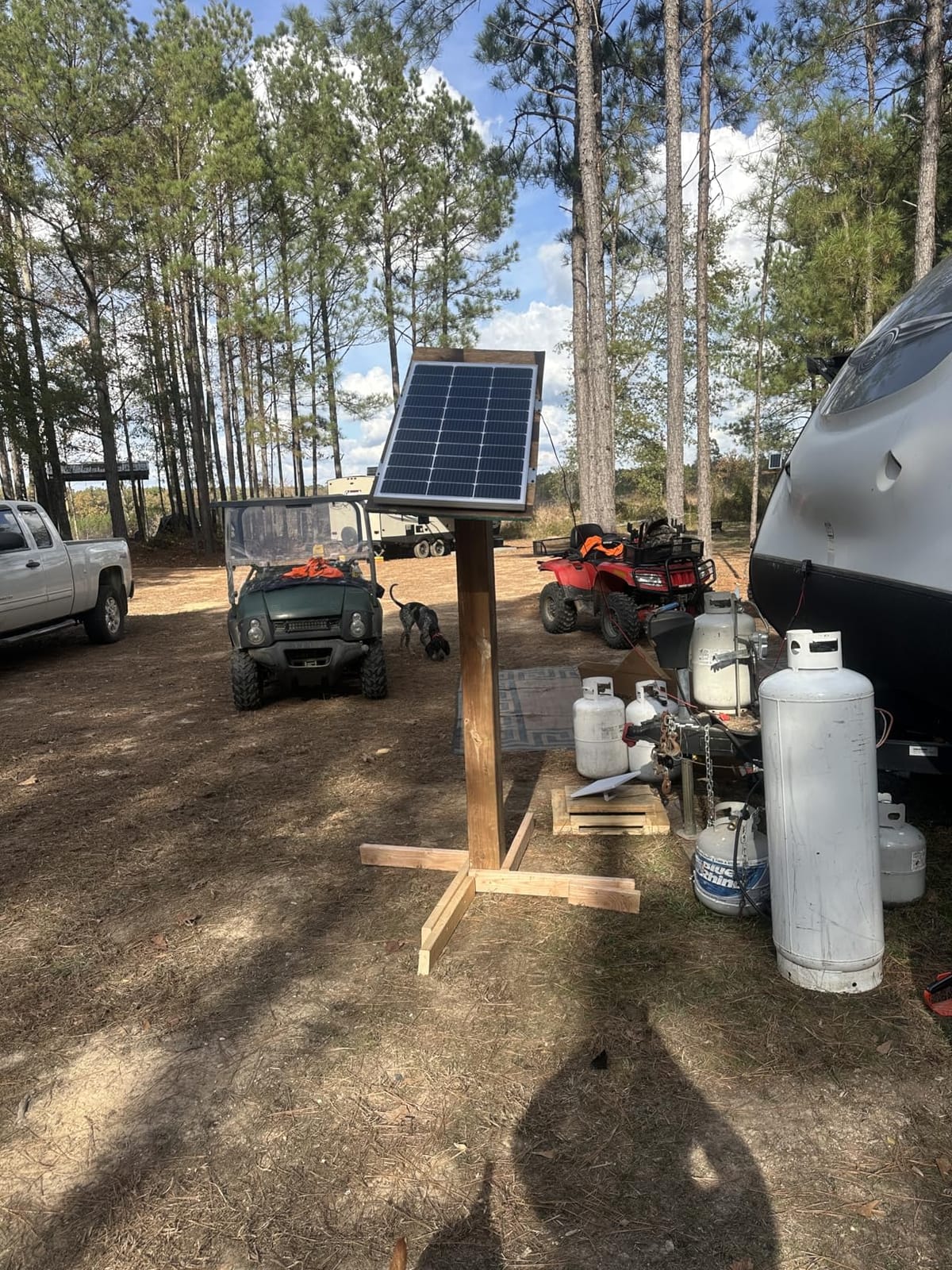
Protection covers overcharging, deep discharging, excessive voltage, current surges, overloads, short circuits, reverse polarity and overheating. Status is shown on LEDs: blue when on, red when a battery is connected, green when fully charged. That is less information than an LCD, but it is legible from a distance in daylight, which on a boat is arguably the better interface.
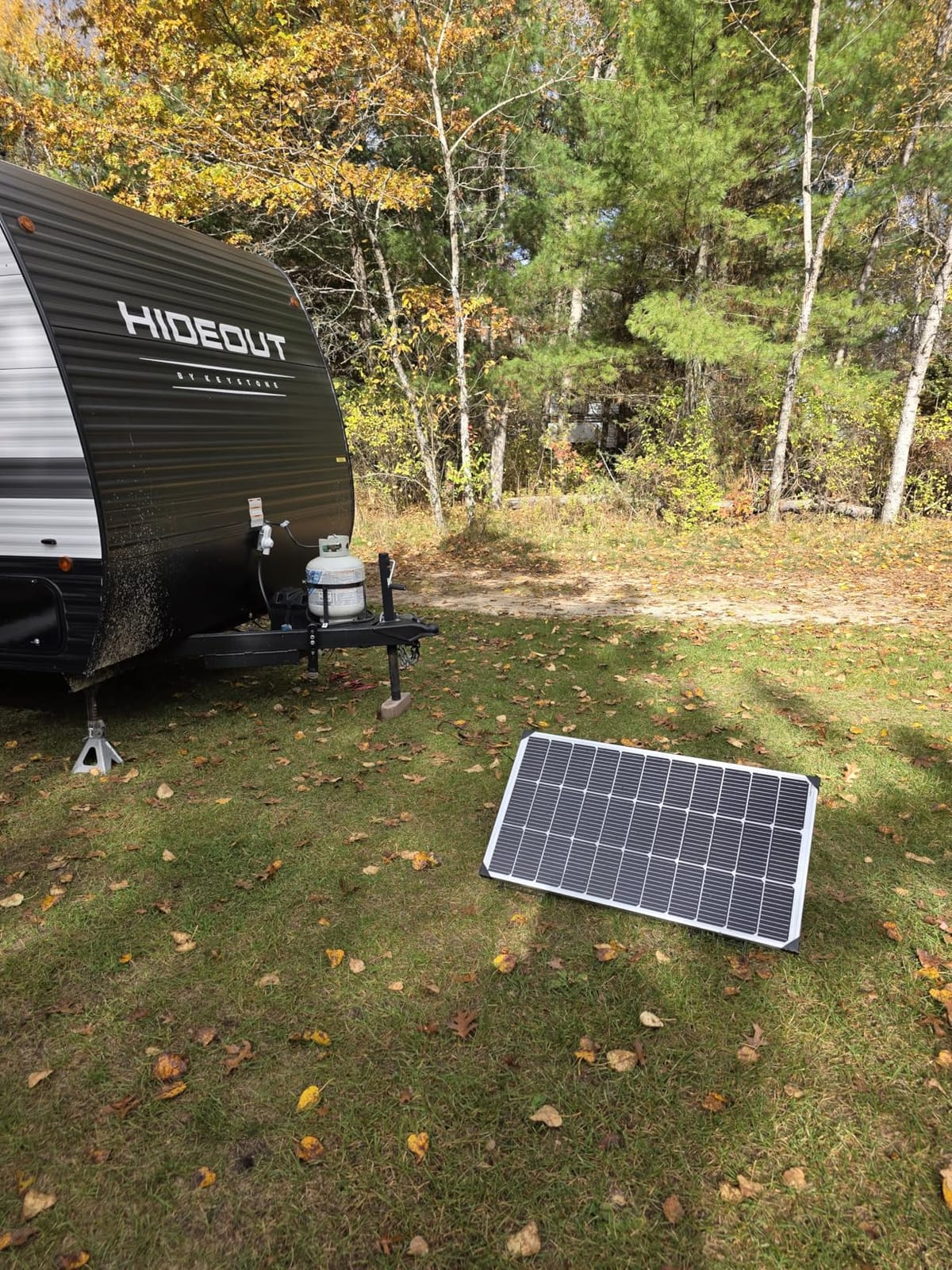
The parcel includes a 100W monocrystalline panel with A+ cells, a 10A solar charge controller, a 19.7 inch alligator clip lead, a set of Z mounting brackets, O-rings and mounting hardware, with one year of after-sale service and lifetime technical support. Output is claimed at 400 watt-hours per day in four hours of full sunlight.
What it handles well on a boat
A fully submersible controller changes the install geometry. You can mount the controller in a cockpit locker, behind a seat or in a wet bilge-adjacent space without engineering around ingress protection, and you can run shorter, tidier cable runs back to a battery under a deck. For a boat with a tidy helm console and nowhere dry, that is a real practical win.
The Z brackets and pre-drilled holes suit a fixed hardtop or arch mount, and the alligator clip lead is long enough to reach a battery in most hulls without an extension. If you want genuine charging with MPPT efficiency and you are willing to match the panel to a modest bank, the combination works well.
Where it falls short
Pairing a 100W panel with a 10A controller is an odd balance. The controller caps the array, so on a large battery bank you are leaving charging current on the table, and adding a second panel later would push it further. Check the controller rating against your bank size rather than against the panel rating.
The 30 percent cell efficiency claim is optimistic for a 100W panel in this class, and with 116 ratings the long-term field history is thinner than the big-selling kits. That is not a dealbreaker, but it is worth weighing against a similar kit with a few thousand reviews if you plan to leave the panel installed year round.
6. SUNER POWER 50W Waterproof Solar Battery Charger and Maintainer Pro
SUNER POWER Waterproof 50W 12V Solar Battery Charger & Maintainer PRO, Built-in UltraSmart MPPT Charge Controller, 12 Volt Solar Panel Trickle Charging Kits for Car Automotive Boat Marine RV Trailer
50W waterproof panel
Ultra-Smart MPPT controller
12V and AGM and Lithium modes
23.23 x 17.32 inch
Pros
- Substantially more headroom than a trickle maintainer
- Selectable modes suit mixed battery fleets
- MPPT keeps output usable in poor light
- Visual charge-level indicators
Cons
- Still maintainer-class and far short of liveaboard loads
- Suction cups unsuitable for permanent marine mounting
- Needs direct sun to detect a battery
This is the middle rung of the SUNER POWER ladder, and it behaves the way the 12W model does with roughly four times the panel area. The Ultra-Smart MPPT controller again claims up to 99 percent tracking efficiency and 98 percent peak conversion, running the same bulk, absorption and float algorithm.
What 50 watts buys you is recovery. Where a 12W panel simply holds a battery at float indefinitely, a 50W panel can pull a lightly discharged house bank back up over a few sunny days. That is the difference between maintaining and occasionally charging, and it is the tier most boats with an instrument-heavy helm actually want.
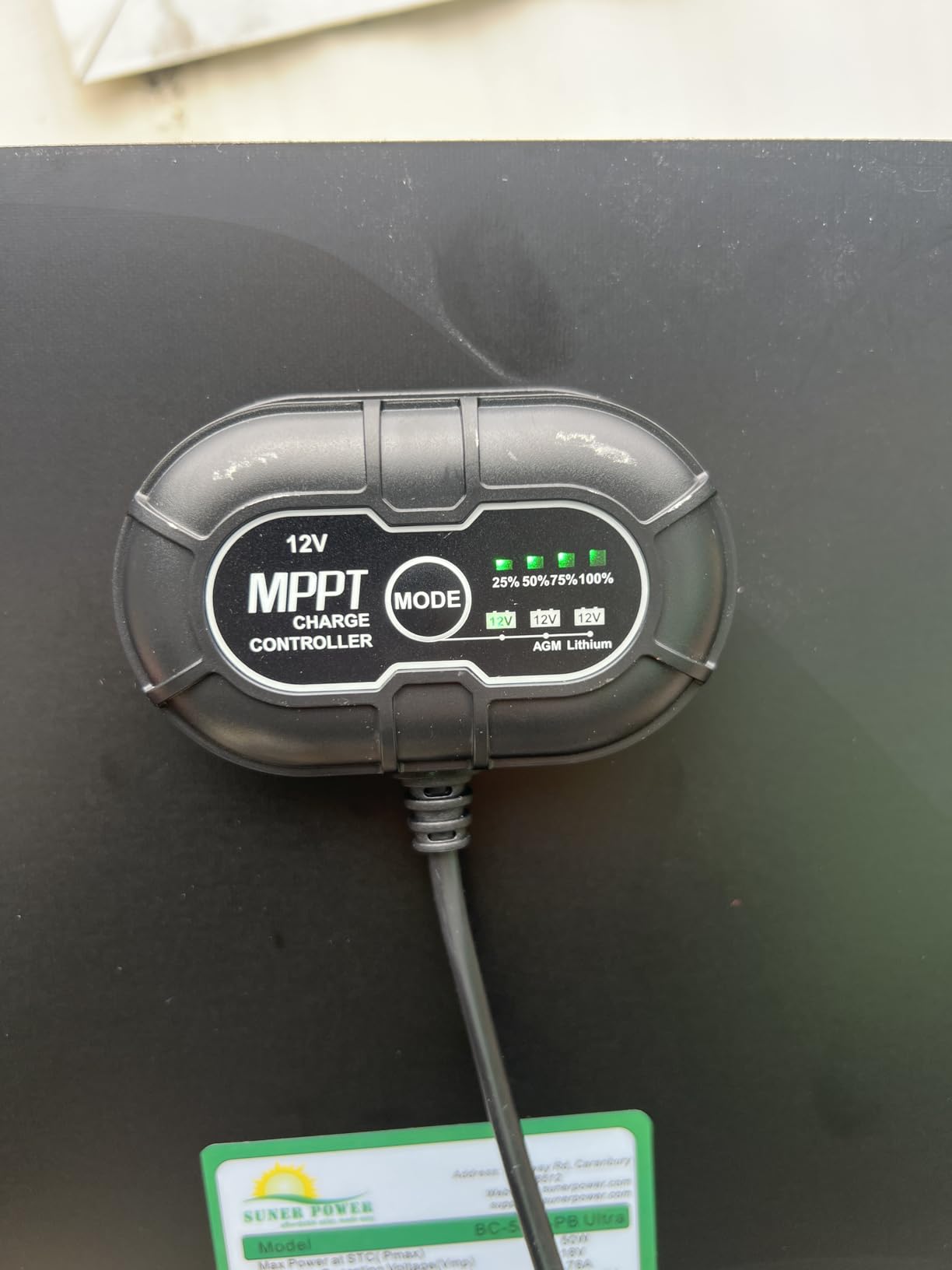
The three selectable charging modes, 12V, 12V AGM and 12V Lithium, are the feature that stands out. Boats often end up with mixed chemistries after a battery replacement, and being able to switch the charge profile from the controller rather than guessing is genuinely useful. Visual indicators at 25, 50, 75 and 100 percent let you check state at a glance.
Flooded, gel, AGM, SLA, VRLA, maintenance-free and LiFePO4 batteries are all supported, and the unit carries the same eight embedded protections plus waterproof and spark-proof construction. The 2.47 kg weight and 23.23 by 17.32 inch footprint are the largest in the maintainer class, which is a fair trade for the output.
What it handles well on a boat
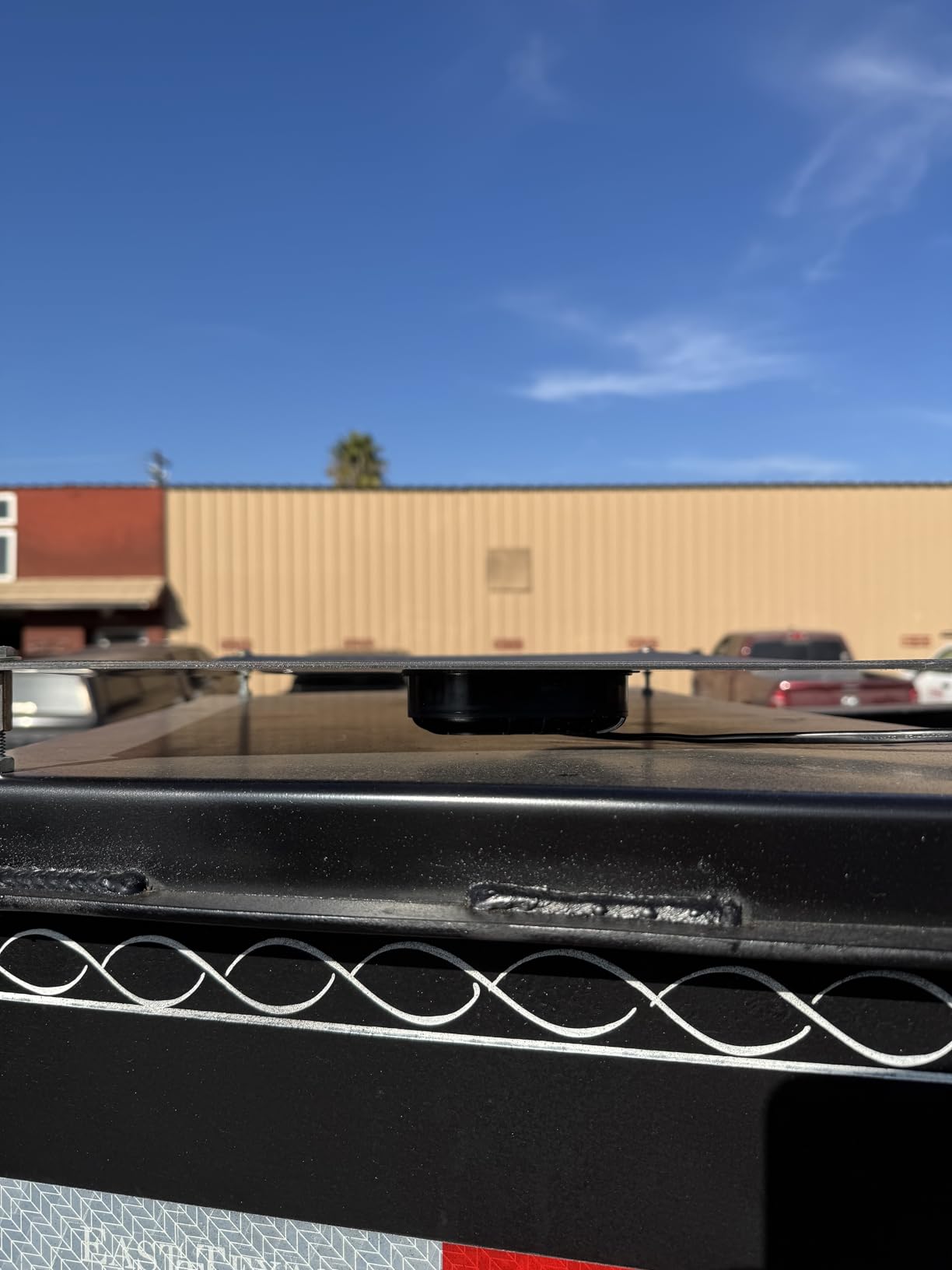
It is the first tier in this roundup that can plausibly offset a small continuous load, not just parasitic draw. On a boat with a live fridge and navigation electronics running while the owner is aboard for a day, 50 watts has a chance of keeping pace. On a boat that is simply moored, it comfortably holds two house batteries through an extended stay.
The three charging modes make it the best option here for mixed battery banks, and the visual indicators remove the need to carry a multimeter to the cockpit. The included SAE alligator, bare end and cigarette lighter cables mean you can use whichever termination suits the battery position.
Where it falls short
It is still a maintainer-class device despite the wattage. Owners are clear that 50W falls far short of powering liveaboard loads, and anyone expecting it to run a house bank through a week off-grid will be disappointed. Treat it as a much more capable top-up unit, not as a portable power station.
Suction-cup mounting is unsuitable for a permanent marine install in exposed conditions, so budget time to replace it with proper fasteners and a secured cable run. As with the 12W model, the instructions do not explain that direct sunlight is required before the panel detects a battery, which trips up first-time users.
7. Callsun 7.5W IP68 Solar Battery Maintainer
Callsun 7.5W Solar Battery Maintainer & Trickle Charger, 12V Waterproof Panel with IP68 Smart Controller, Overcharge & Reverse Protection for Car, Automobile, Boat, RV, Motorcycle, Marine, Trailer
7.5W monocrystalline panel
IP68 panel and controller
360 degree adjustable bracket
13 by 7.95 inch
Pros
- IP68 sealing on both panel and controller
- 3.2mm tempered glass and aluminum frame
- 360 degree bracket finds sun on awkward mounts
- Three-color LED feedback
Cons
- Smallest output in the roundup and maintenance only
- SmartTrack tracking claim is unsubstantiated
- Three-wire SAE connection is less tidy than fixed cable
At 7.5 watts and 0.41 amps this does one job, which is holding a battery at float through long storage. Setting expectations that way, it does it well. Reviewers point consistently to genuine weather resistance, the tempered glass face and the adjustable bracket as the stand-out features.
The sealing is the headline. IP68 on both the panel and the smart controller means submersion tolerance, which is a step beyond the IP65 and IP67 you find on most kits this size. For a boat, that rating is doing real work, because salt spray and standing water do not care what a spec sheet says about the connector.
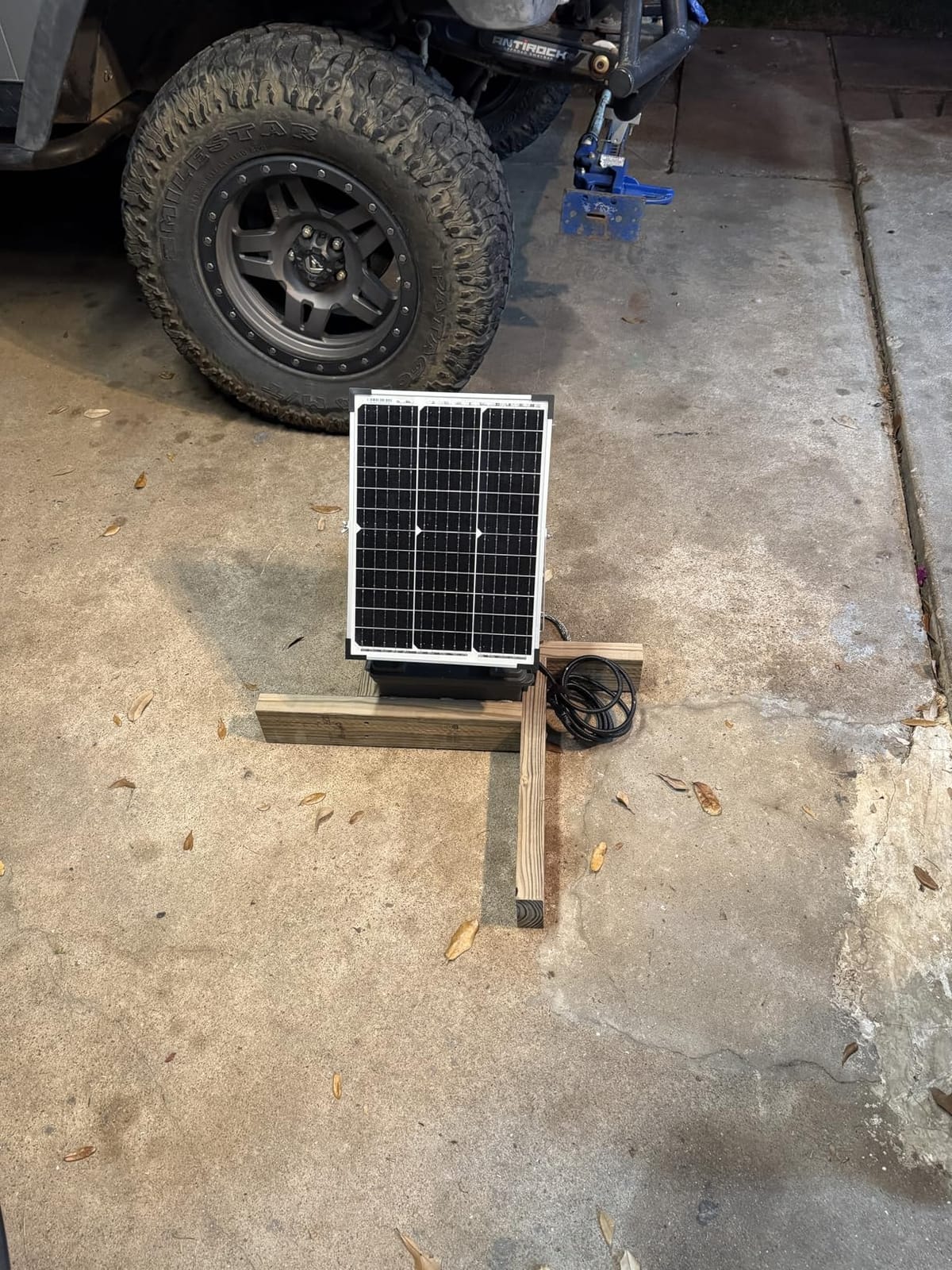
Construction is 3.2mm low-iron tempered glass over monocrystalline silicon in an anodized aluminum alloy frame, with impact-resistant corner protectors and a 360 degree adjustable bracket for walls, roofs or uneven surfaces. The three-color LED gives instant feedback: blue for sunlight detected, red for active charging, green for maintenance mode.
Chemistry coverage includes LiFePO4, AGM and gel, and the six-point safety system handles reverse charging and overvoltage. The box contains the panel, smart controller, 360 degree bracket, alligator clips, an O-ring terminal cable, an installation kit and a manual, with a 12-month warranty.
What it handles well on a boat
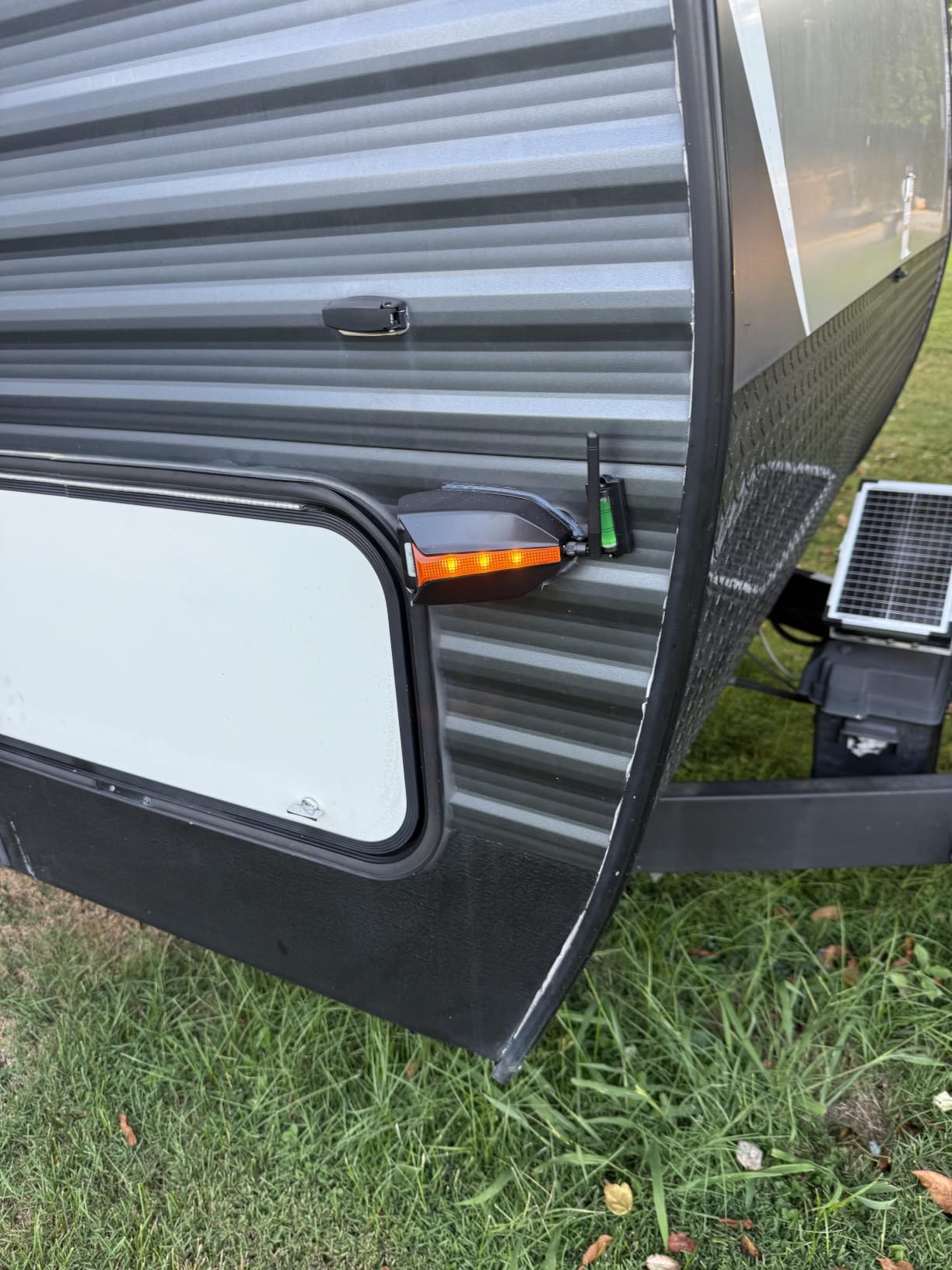
Size is the reason to buy it. At 13 by 7.95 inches and 0.78 inches thick, it mounts on a console face, a bulkhead or a seat box on a small boat where nothing larger will fit, and the 360 degree bracket lets you angle it toward whatever patch of sky the boat actually sees.
For a small tender, a jon boat, a pontoon with a single bank, or any boat winterized for two months, it is a genuinely sufficient answer. The IP68 rating means you can stop worrying about where spray lands, and the tempered glass face will take the knocks that plastic panels crack around.
Where it falls short
Seven and a half watts is the smallest output we tested, and reviewers set expectations accordingly: it tops up batteries, it does not charge them. Expect it to hold a battery that is already healthy, not to recover one that has been flat for a month.
The claimed 30 percent cell efficiency and the SmartTrack real-time sunlight tracking are marketing claims that are not independently substantiated, so treat them as marketing. The basic three-wire SAE connection is also less tidy than permanently attached cabling, and the 0.41 amp ceiling means a boat with a live load will outrun it quickly.
8. OYMSAE 12W Portable Waterproof Solar Trickle Charger
OYMSAE 12W 12V Portable Waterproof Solar Panel Trickle Charger & Maintainer
12W portable panel
Sealed PET housing
0.67A rated current
13.4 by 8 by 0.8 inch
Pros
- Users meter real current of around 500mA to 1.15A in full sun
- Only 10.6 oz so it is easy to reposition
- Panel sealed between two fused plastic layers
- Holds maintenance charge near 14.6V without overcharging
Cons
- 13 percent one-star share with output degrading after 12 to 18 months
- Thin cable gauge
- No selectable chemistry mode for LiFePO4
This is the most polarised panel in the roundup, and the reason is instructive. Owners who put a meter on it report a genuine charging current, roughly 500mA to 1.15A in full sun, well beyond what a nominal 12W panel usually produces. That is what a frosted convex panel surface is designed to do: reduce reflection and improve light absorption.
Construction is a PET waterproof and dustproof panel on an epoxy base plate, with the cell fused between two plastic layers to create a near-fully-sealed body. At 13.4 by 8 by 0.8 inches and 10.56 ounces it is by far the most portable unit here, easy to move between the flybridge, a deck hatch and a cabin window as the sun moves.
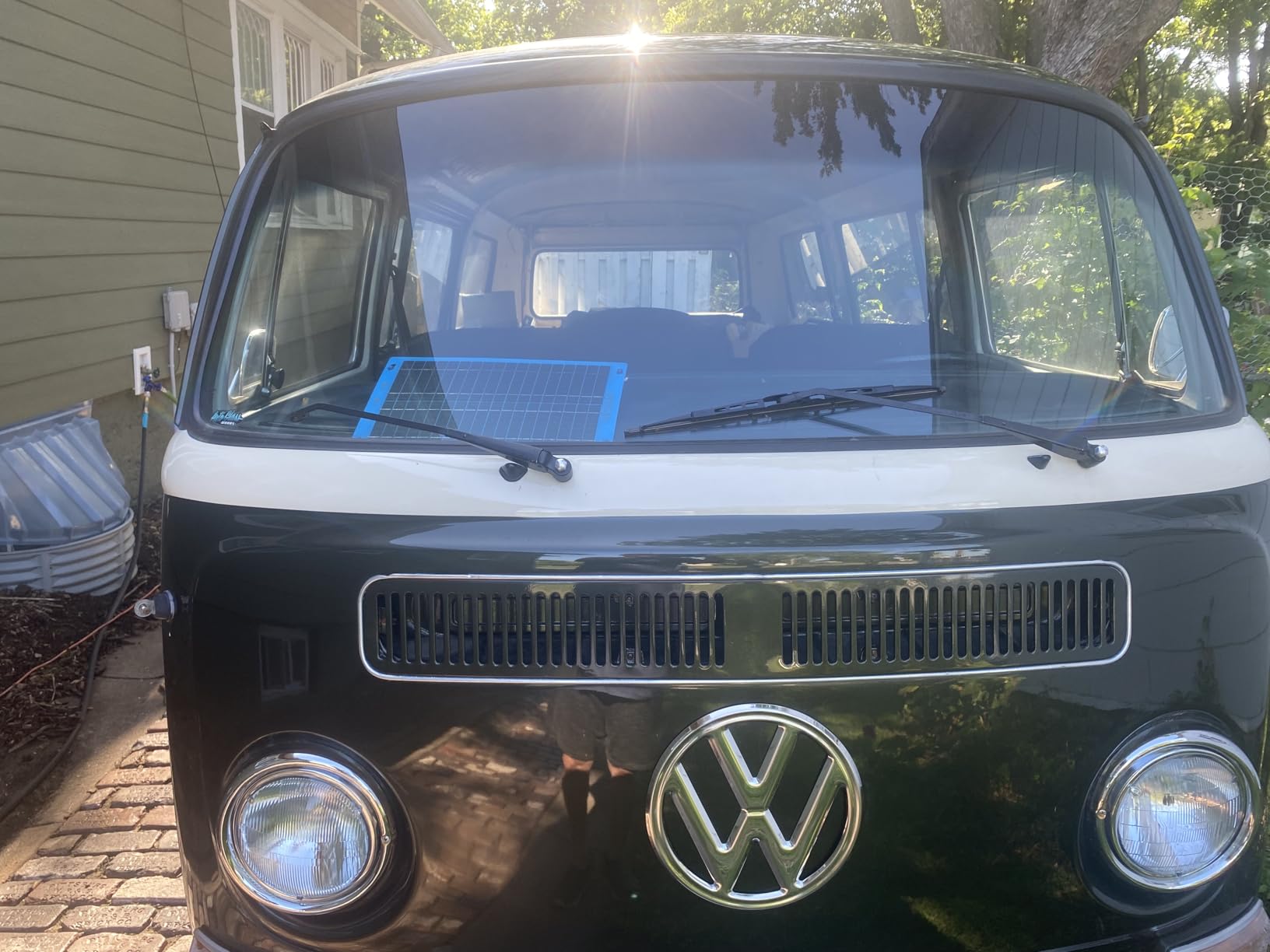
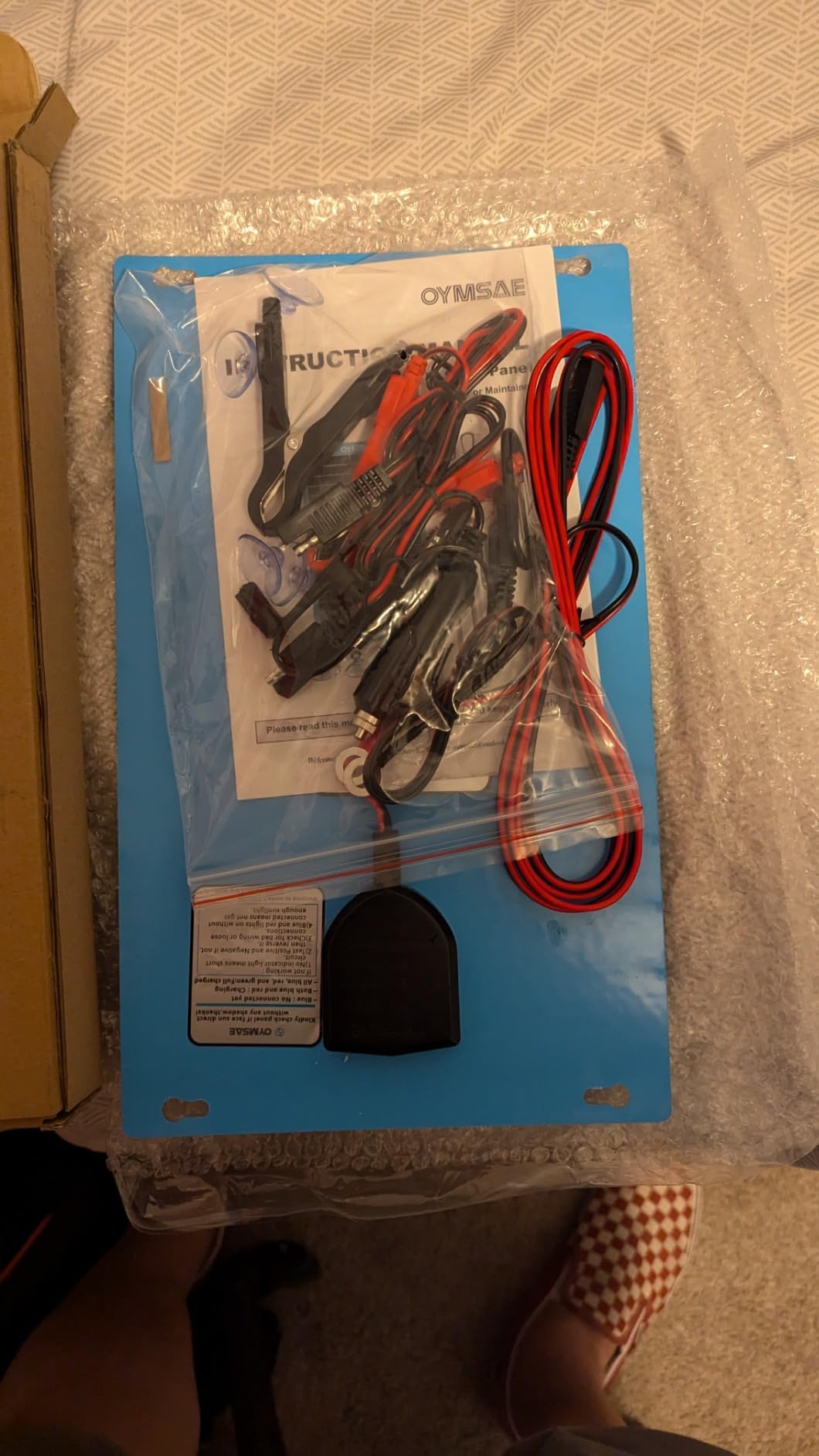
The upgraded PCB carries a built-in microprocessor handling overcharge, overvoltage, short circuit and reverse-charging protection. The three-color LED reads blue for sunlight standby, red for charging, green for fully charged, and all lights off on a short circuit. Connection is SAE cable with alligator clips, a carabiner and a suction cup, taking about three minutes.
Included in the box are an alligator clip, a cigarette lighter plug, a ground ring and the panel, backed by a two-year manufacturer warranty. The included components list also mentions a carabiner, which is a slightly odd inclusion for a marine product but harmless.
What it handles well on a boat
Portability is the standout. At just over 10 ounces, you can move the panel to wherever the sun actually is, which matters far more on a boat than on land. A moored boat under a bimini in the morning and open sky at noon is the normal case, and a panel you can reposition solves problems a fixed panel cannot.
The measured output is genuinely good for the class, and the trickling profile holds maintenance charge near 14.6V without overcharging, which is exactly the behaviour you want on a stored marine battery. It handles car, boat, RV and motorcycle 12V batteries, so it doubles as a portable maintainer for a tender battery too.
Where it falls short
The 4.1 average and a 13 percent one-star share are the worst figures in this roundup, and the reason is durability rather than function. A meaningful number of owners report output degrading to a few milliamps after 12 to 18 months, which is short for a marine part exposed to salt and UV.
There is also no selectable battery chemistry mode, so LiFePO4 charging is not explicitly tuned even though the panel is sold for general 12V use. Thin cable gauge is a repeated complaint, and for a device you may run at 1 amp through a thin lead to a battery, conductor size is worth checking before you rely on it long term.
9. ECO-WORTHY 25W Solar Panel Battery Charger Maintainer Kit
ECO-WORTHY 25W 12V Solar Panel Battery Charger Trickle Maintainer Kit
25W monocrystalline panel
100Wh daily output
Sealed waterproof PWM controller
13.4 inch square and 2.34 kg
Pros
- Measured output matches published claims
- Panel and controller both well made
- Light enough at 2.34 kg to reposition while producing 100Wh a day
- Low-iron tempered glass and corrosion-resistant frame
Cons
- Controller has indicator lights only and no status screen
- Output voltage poorly regulated at around 19V
- Cable lengths of roughly 1.4 ft limit routing
This kit occupies a useful gap between a trickle maintainer and a full 100W system, and it is the one in the roundup that reviewers most often verify with a multimeter. One owner measured 14.3V on initial charge into a deeply discharged motorcycle battery, which is the correct charging voltage, not a float-stage no-op.
The panel is 25 watts of A+ monocrystalline silicon at up to 23 percent cell efficiency, producing a claimed 100 watt-hours daily. At 13.4 inches square and 2.34 kg it is small enough to reposition around a boat while still generating real energy, which is a combination most kits in this class do not offer.
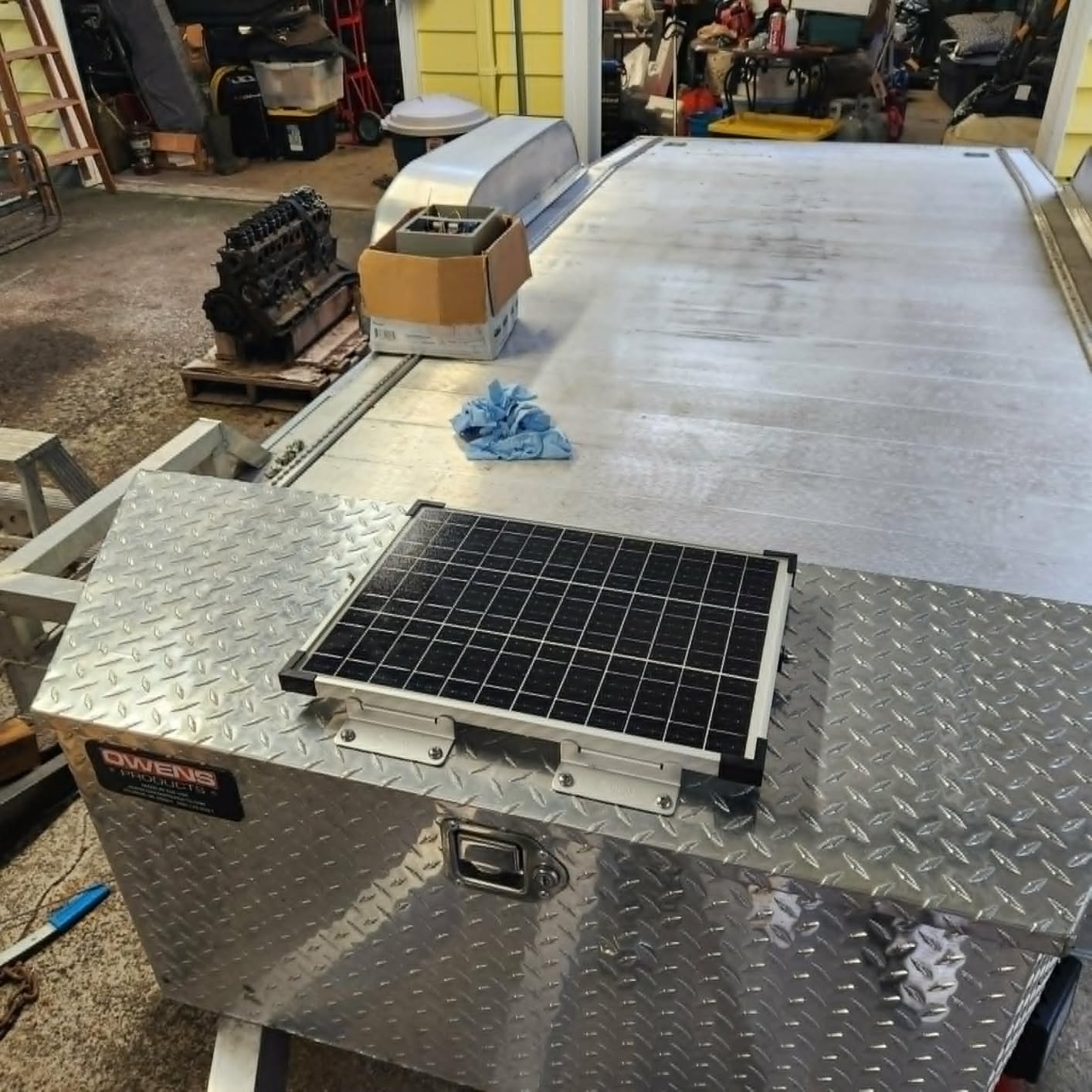
The controller is fully sealed and waterproof with zero power consumption at night, and it includes battery temperature compensation along with overvoltage, over-discharge, overload, short circuit and high-voltage transient protection. Indicator lights show charging and discharging status. The panel carries a low-iron tempered glass surface and corrosion-resistant aluminum frame, rated 2400Pa wind and 5400Pa snow loads.
Chemistry coverage is broad: 12V LiFePO4, AGM, SLA, lithium ion, gel and maintenance-free batteries. The box includes the panel, controller, alligator clip and O-ring terminal cables, a mounting bracket and screw set, a 12-month warranty and lifetime technical support.
What it handles well on a boat
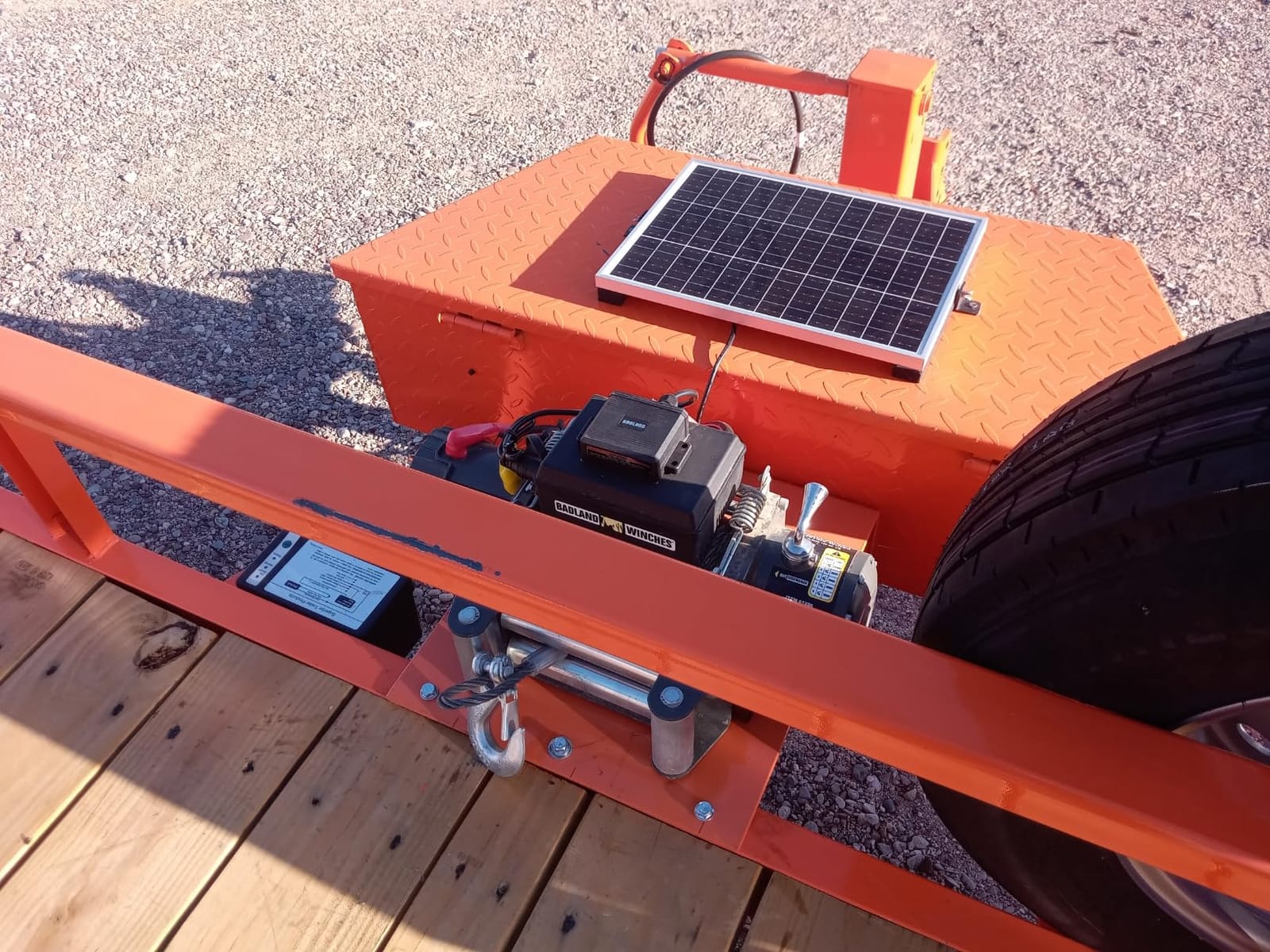
Twenty-five watts with a real controller is enough to recover a shallowly discharged house bank over a weekend of sun, and to keep up with a modest load. Owners report it running 12V loads such as fence lights, gate batteries and dump trailer batteries, and on a boat the equivalent use is a small live load plus maintaining the bank.
The sealed controller is the practical win in a salt environment, and the light weight makes seasonal repositioning realistic. Owners also note that the output voltage is well matched to battery charging even though it is not well regulated, which is an important distinction: this is a charger, not a regulated DC supply.
Where it falls short
It is a PWM controller, so it gives up the 20 to 30 percent of harvestable energy an MPPT would recover. In poor light or partial shade on a moored boat, that gap is real, and the 25 percent efficiency buffer most installers budget for already assumes some losses.
There is no status screen, only indicator lights, which some buyers find limiting. The recurring technical complaint is that the controller output voltage is poorly regulated, measured around 19V, so it must not be used as a regulated 12V DC supply for electronics. The short cable lengths, roughly 1.4 to 1.5 feet, also limit routing flexibility on a larger boat, so plan an extension if the battery is not immediately adjacent.
10. ZZE 20W MPPT Solar Maintainer with IP68 Sealing
Solar Powered Battery Charger Trickle Maintainer, 20W 12V Solar Panel Kits MPPT Charge Controller with 8 Protections Function IP68 Waterproof for RV Trailer Marine Car Motorcycle (1, Black)
20W monocrystalline panel
MPPT controller with 8 protections
IP68 panel and controller
360 degree bracket
Pros
- Panel and controller both genuinely IP68 rated
- MPPT controller with eight named protection functions
- LED indicators show charging state at a glance
- Lightweight panel with extended cables
Cons
- Panel is so light it will fall over unless anchored
- At least one unit measured well under advertised output
- May not initiate charge on a fully discharged LiFePO4 battery
- Smallest review base in the roundup
Twenty watts with an MPPT controller and IP68 sealing on both panel and controller is an unusual combination, and on paper it is the most marine-appropriate mid-size panel in the roundup. The MPPT controller lists eight protections covering overcharge, overdischarge, reverse polarity, overcurrent, overvoltage, backflow, short circuit and high temperature.
That backflow protection is the one that deserves attention on a boat, because it is the mechanism that stops a battery draining backwards through the panel at night. The IP68 rating on both components means both can sit in heavy rain, snow or submersion without concern, which removes the dry-location constraint on the controller entirely.
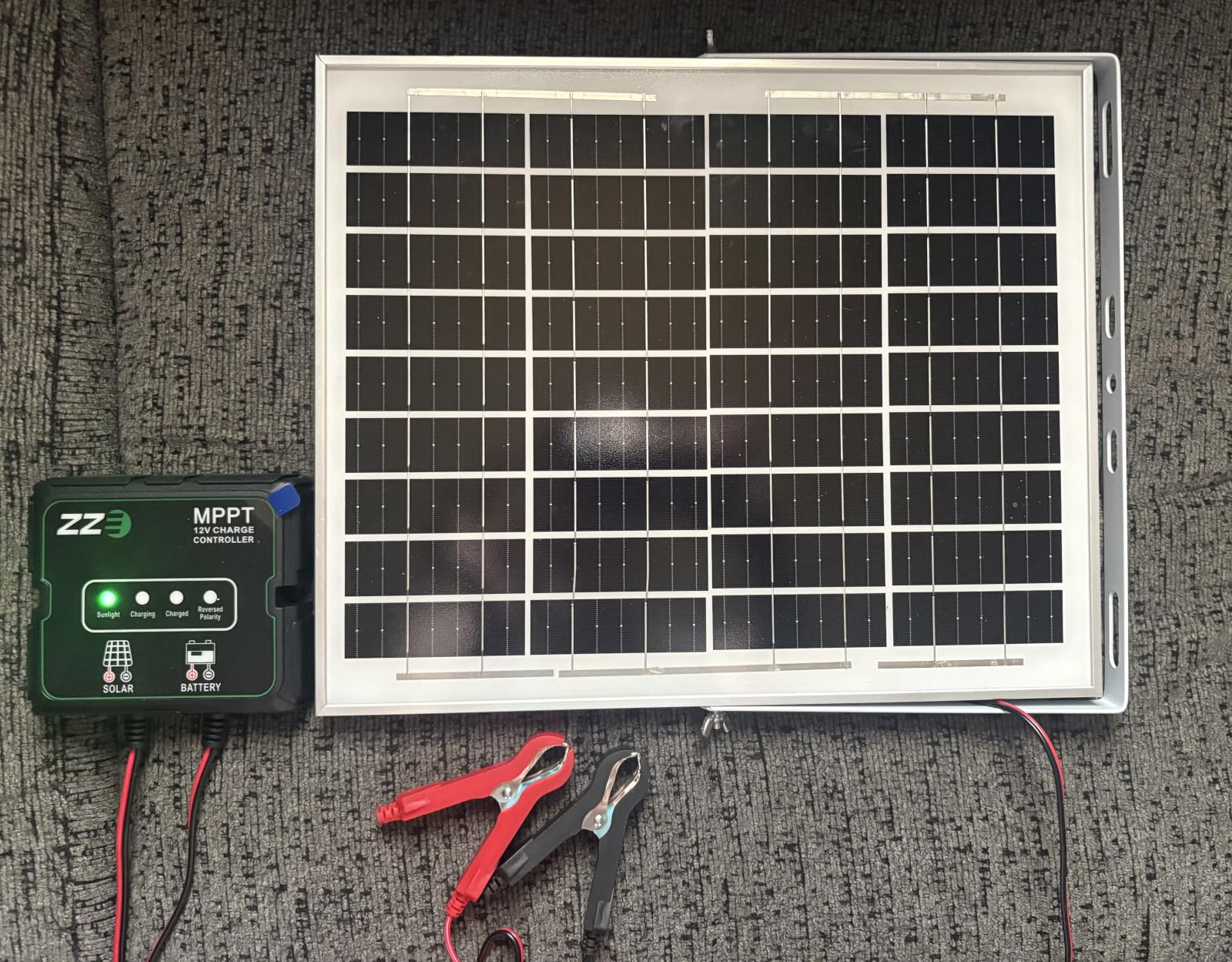
Chemistry support lists LiFePO4, lithium ion, AGM, SLA, gel, EFB and maintenance-free 12V batteries, which is the broadest listing in this roundup. The panel is monocrystalline silicon, and the bracket is a 360-degree adjustable mount with extended cable lengths. LED indicators give instant charging status and plug-and-play connections remove the question of connection sequence.
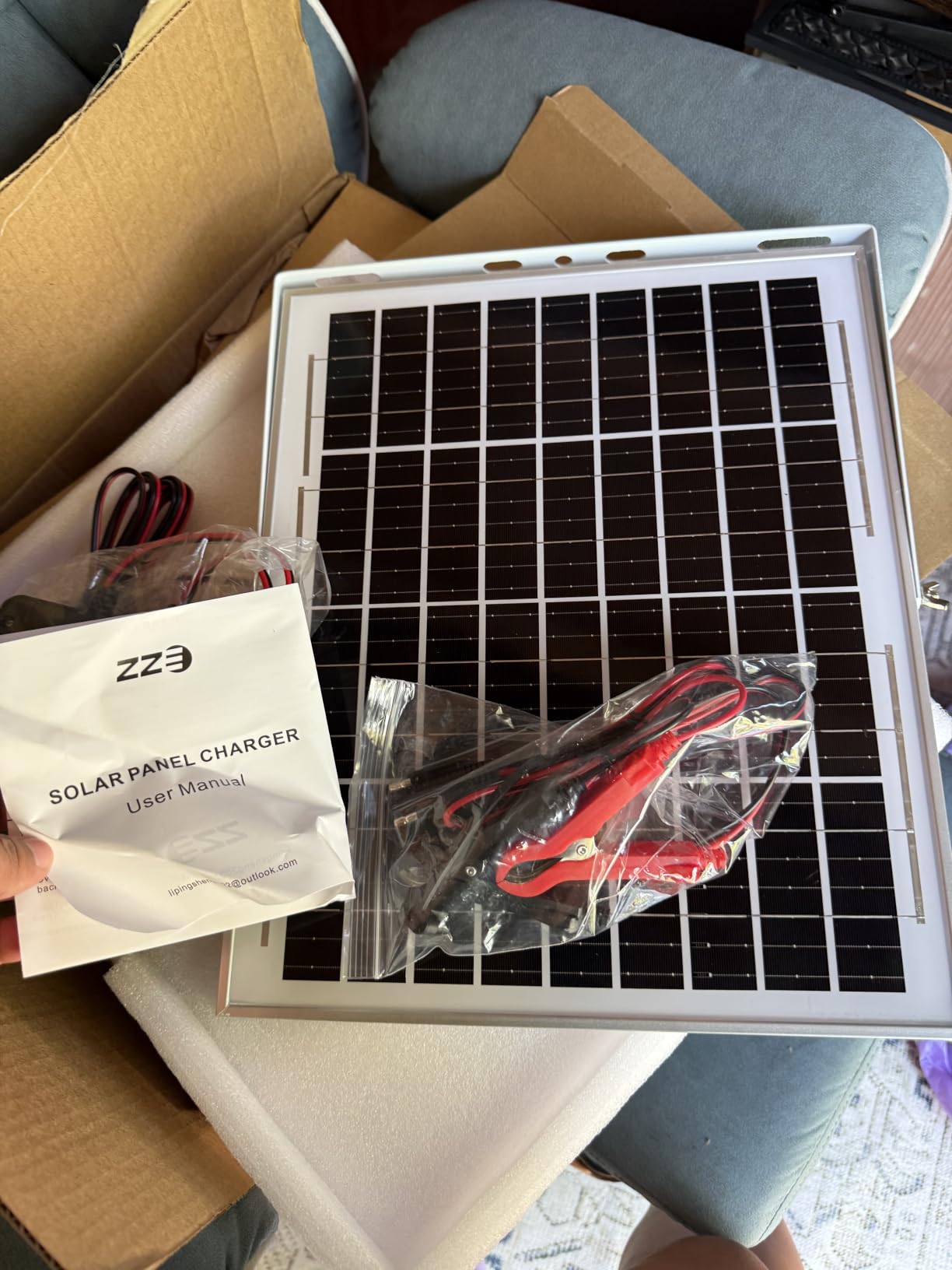
Most owners are happy, using it for RV, deep-cycle marine group 27 and small off-grid 12V projects. The things they single out are the waterproofing, the LED feedback and how simple the setup is. The box includes the panel, the MPPT controller and cables with a bracket included.
What it handles well on a boat
For a boat with a deep-cycle group 27 that needs topping up beyond maintenance, 20 watts of MPPT-controlled panel is a sensible middle step. MPPT tracking means more of the harvested energy reaches the battery, which matters most in the low-light and partial-shade conditions that define a mooring.
The extended cable lengths and 360-degree bracket make it easier to get a good sun angle on an awkward mount, and the full IP68 sealing means you can put the controller where the cable run naturally ends. LED status makes a quick daily or weekly check possible without opening a panel or carrying a meter.
Where it falls short
The panel is extremely light and will fall over unless it is anchored or properly mounted, which is a genuine annoyance on a moving deck. At least one unit measured well under its advertised output in full sun, and another reviewer found the controller would not enter charge mode on a fully discharged LiFePO4 battery, showing fully charged instead.
With 74 ratings, this is the thinnest field history in the roundup, and a 10 percent one-star share is among the higher figures here. That is not a reason to skip it, but it is a reason to test output with a meter after installation rather than trusting the label, and to verify charge initiation on a battery that has actually been discharged.
Can a Solar Battery Charger for a Boat Cover a Trolling Motor Bank?
No. Not while you are fishing. A trolling motor draws hundreds of amps under way, and the largest panel in this roundup is 100 watts, which works out to roughly 8 amps at peak on a 12V system. That is a rounding error against a motor running at medium thrust.
What small panels can do is hold a second bank topped up while you are not motoring, and offset parasitic losses. The recurring forum consensus, repeated across boating and solar communities, is that trolling banks should be charged off the engine rather than relied on for unattended solar charging. One owner put it plainly: shore-power chargers are for docked top-ups, not for sustaining a system while you use it. The same logic applies to a small panel.
For a trolling motor bank, the sizing reality is stark. A 1.5 watt trickle panel will not even keep pace with a boat’s natural draw, and a 30 watt panel is often cited as the practical minimum to hold a trolling bank at rest. If you want solar that genuinely does something for a motor bank, you are looking at a genuinely sized array and a proper charge controller, and even then it is a supplement to engine charging rather than a replacement.
If you also carry portable power for phones and electronics offshore, our solar charging picks for backpacking cover a different class of device entirely.
How to Size a Solar Battery Charger for Your Boat
Size from the load, not the battery. The common mistake is matching panel wattage to the battery’s amp-hour rating, which tells you almost nothing. Work out how many watt-hours your boat consumes per day, then divide by your realistic sun hours, then add a 25 percent buffer for controller and wiring losses.
A worked example: 100W of navigation electronics running 4 hours a day for 3 days is 1200Wh. At roughly 5 peak sun hours per day, that is 240W of panel. Add the 25 percent efficiency-loss buffer and you land near 300W. That is the arithmetic most installers skip, and it is why so many boat solar systems underperform in their first season.
As a rough shortcut, a 12V lead-acid battery bank roughly 20 to 50Ah, AGM or gel, needs 5W to 15W just to hold float through storage. A 100 to 200Ah house bank that you want recovered and monitored needs 25W to 60W. Anything above 200Ah, or any liveaboard running a fridge, lights and electronics continuously, wants 100W and upward, and that is where the Voltset, Topsolar and SOLPERK kits in this roundup become relevant.
On controller type, the choice is MPPT versus PWM versus a plain blocking diode. A blocking diode simply prevents reverse current at night and does nothing else, which is why diode-only trickle panels sit at the bottom of this roundup. PWM modulates the panel output down to battery voltage and is cheaper but loses roughly 20 to 30 percent of available energy. MPPT tracks the panel’s true operating point and recovers most of that loss, which is why it is the most-cited technical preference across every boating forum we read.
For controller sizing, match the controller’s rated current to the panel array, not just to the battery. A 100W panel on a 12V system can push over 8 amps, so a 10A controller is barely adequate and a 20A unit gives headroom for shade clipping and future panel additions. Undersized controllers clip output silently, and that is the single most common cause of a system producing less than the buyer expected.
Finally, confirm chemistry compatibility. Flooded, AGM, gel and LiFePO4 all charge at different absorption voltages, and lithium in particular does not want a lead-acid profile. Products that advertise LiFePO4 support generally do so with a selectable mode, so if your boat has lithium, make sure you can select it rather than relying on a generic auto profile.
Marine Durability: IP Ratings, Salt Air and Mounting Choices
Salt air is a much more aggressive environment than most product testing accounts for, and it is the single biggest reason cheap panels fail early on a boat. Fresh-water rinse of connectors and terminals every few months costs nothing and prevents most of the corrosion complaints we saw. Re-torquing ring terminals annually is the other cheap habit that pays off.
Read the IP rating carefully, because the second digit matters more than the first for a deck install. IP65 means dust-tight and protected against water jets, which handles rain but not a hose or a wave. IP67 adds temporary immersion, typically up to a meter for 30 minutes. IP68 is a manufacturer-defined continuous immersion rating, and the panel or controller genuinely surviving submersion is the guarantee that puts a controller somewhere safe in a wet boat.
Panel surface material is the other half. Tempered glass over a rigid aluminum frame is the most physically durable option, resists UV degradation and shrugs off salt, but it is heavy and will crack if flexed. ETFE and PET laminate panels are lighter and semi-flexible, which suits a bimini or a curved console, but the laminate is more vulnerable to abrasion and UV fading. Rigid glass is the better long-term choice for a hardtop; a flexible laminate is the better choice when weight and shape matter more.
Mounting style is a boat-specific decision rather than a generic one. Rigid panels need real fasteners and structure, which is fine on a hardtop or an arch and impossible on a small console. Semi-flexible panels can be bonded to a bimini or a canvas surface, though walking on them is what kills them. Portable folding and suction-mounted panels trade durability for the ability to follow the sun, which on a moving or partly shaded boat is often the better trade.
One honest note on cell technology. Monocrystalline is the most efficient per square metre and the right default. Amorphous produces less but degrades more slowly and performs better in low light and heat. Polycrystalline sits between them. For a fixed panel with clear exposure, monocrystalline wins; for a small panel that will spend its life in variable light, the difference narrows considerably.
Installing and Wiring a Solar Charger on a Boat
Installers on DIY and cruising forums agree on the essentials, and almost none of them appear in commercial roundups. Fusing and breaker protection is the one item that should never be skipped, even on a 12W panel.
Put an inline fuse in every positive panel run, sized to the wire, as close to the panel as practical. A shaded or shorted panel on a boat is a fire risk, and the fuse is what makes that a non-event. Where a run is long or feeds a main bank, use a DC-rated breaker between the panel and the controller, and keep the controller itself somewhere that stays dry unless it is explicitly rated for immersion.
Use ring terminals rather than alligator clips for anything permanent. Crimped and heat-shrunk ring terminals on tinned copper lugs resist corrosion far better than a clip that can slip loose and arc. A marine-grade terminal block or a proper battery distribution post is better still, and it makes future maintenance far easier than a cable stuffed behind a panel.
On night reverse drain, the reason MPPT and PWM controllers matter is that they block current from flowing backwards from the battery to the panel after dark. Diode-only panels rely on a single blocking diode, which works but gives no charge management at all. If you see a battery that drops overnight with a panel connected, the controller is the first thing to inspect, and a controller with a documented backflow or reverse-charge protection is the fix.
Finally, plan for seasonal removal. Storm season and winter storage are the two times a fixed panel is most likely to be damaged or most likely to be stolen, and detaching a plug-and-play system takes a few minutes. Disconnect the battery before removing the panel, rinse the connectors with fresh water before you stow them, and keep the panel flat in a dry space rather than leaning it where the laminate can flex.
Frequently Asked Questions
What size solar charger do I need for a boat battery?
Size from your daily load, not the battery size. Calculate the watt-hours your boat uses per day, divide by realistic peak sun hours, then add a 25 percent buffer for controller and wiring losses. As a shortcut, 5W to 15W holds a 20 to 50Ah bank at float, 25W to 60W recovers a 100 to 200Ah house bank, and 100W or more suits liveaboard loads.
Can you leave a solar battery maintainer on all the time?
Yes, if the charger has real charge management. A unit with bulk, absorption and float stages stops drawing once the battery is full and restarts on discharge, so leaving it connected year round is the intended use. A diode-only trickle panel is also safe because it cannot push current into a full battery, but it offers no staged charging. A mains charger left permanently connected is a different matter and depends on its float design.
Can a solar panel overcharge my battery?
Not with a proper controller. Chargers with bulk, absorption and float stages stop when the battery reaches full and hold on a float voltage. The risk case is a bare panel wired straight to a battery with no controller at all, or a cheap unit with an incorrectly tuned lithium profile. Always match the charge profile to the chemistry, especially for LiFePO4, and use the selectable mode if the charger offers one.
What size MPPT solar charge controller do I need?
Match the controller to your panel array first. A 100W panel on a 12V system can push over 8 amps, so a 10A controller is barely adequate and a 20A unit gives useful headroom. Undersized controllers clip output silently, which is the most common reason a system underperforms. Also check the controller’s maximum input voltage if you plan to add panels, and match its current rating to your battery bank.
Can a solar panel charge a marine battery or a trolling motor bank?
It can maintain a marine battery well and charge a trolling bank only at rest. A trolling motor draws hundreds of amps under way, while a 100W panel delivers roughly 8 amps at peak, so no solar panel meaningfully charges a motor while you fish. For trolling banks, charge off the engine. Solar is best used to hold a second bank topped up and to offset parasitic drain from bilge pumps, alarms and instruments.
The Best Solar Battery Chargers for Boats
The best solar battery chargers for boats split cleanly by job. For keeping a battery healthy through storage, the SUNER POWER 12W Waterproof Maintainer Pro is our top pick, because its MPPT tracking and three-stage charging hold up in poor light where cheaper diode panels stall. For a house bank that needs real recovery, the Voltset 100W kit with its 20A smart controller gives you charging capability rather than maintenance. And for a boat with limited console space, the Callsun 7.5W IP68 unit covers the essentials in a form factor nothing else here matches.
Whatever you pick, size it from your daily watt-hour load, budget a 25 percent loss buffer, fuse every panel run, and expect less real output than the label suggests. Fit the biggest panel that will physically fit and give it a clear line to the sun, and a modest system will look after itself for years. If you are still comparing charging approaches, our pontoon boat buying guide covers the platforms these panels usually end up on.