

Most cabins do not need the largest solar kit on the market. They need the one that matches how many nights a year someone actually sleeps there, and for the weekend hunter and the full-time resident, the right answer differs by a factor of ten. That is the filter we used to pick the best solar panel kits for off grid cabins compared below: every kit is matched to a real occupancy pattern, and every kit is measured against the daily watt-hours it can realistically put back into a battery bank.
We built this comparison around three tiers rather than a brand ranking. A weekend hunting cabin with a fridge and a few LED lights needs roughly 600 to 900 watt-hours a day. A seasonal comfort cabin that runs a water pump, a laptop and a small fridge needs 1,200 to 2,000 watt-hours. A full-time off-grid cabin is looking at 2,000 watt-hours a day and up, with multi-day battery autonomy behind it. Start with your own number before you look at any product, and the shopping gets much faster.
One note on independence before we go further: we are not affiliated with any manufacturer or retailer listed here, and nothing below is sponsored. If you want a shorter look first, our 6 best solar panel kits for cabins model tested covers the small-cabin subset, and our guide to solar generators for off-grid living covers the all-in-one battery units that appear later in this list. We have used 2026 pricing-free criteria only: output, component quality, warranty and honest failure points.
Top 3 Solar Panel Kits for Off-Grid Cabins in 2026
These three kits cover the entry end of the market, and between them they cover the majority of weekend and seasonal cabin use. The Renogy 100W starter kit is the one we return to most often because it carries the deepest review history in the group, the ECO-WORTHY 200W kit gives you double the harvest for a modest step up, and the Renogy 200W folding suitcase is the only panel here you can carry to the cabin instead of bolting to it.

Renogy 100W 12V Starter Kit
- About 500Wh per day
- 22.5% cell efficiency
- Expands to 400W with added panels
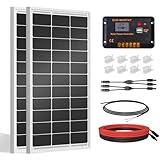
ECO-WORTHY 200W 12V Kit
- About 800Wh per day
- Series or parallel wiring
- Brackets and cables included
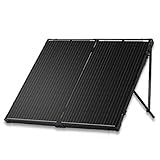
Renogy 200W Folding Suitcase
- Folds to suitcase size
- 25% N-type cells
- Pre-installed 20A controller
All 10 Solar Panel Kits for Off-Grid Cabins Compared in 2026
The table below lists every kit in this roundup with its array size, daily output, and the specific reason we picked it. Panel wattage tells you how much you can collect; battery capacity tells you what happens on a cloudy Tuesday. Neither number is useful alone.
| Product | Specifications | Action |
|---|---|---|
| Renogy 100W 12V Starter Kit |
|
Check Latest Price |
| ECO-WORTHY 200W 12V Solar Kit |
|
Check Latest Price |
| Renogy 200W Folding Suitcase Kit |
|
Check Latest Price |
 Renogy 400W Kit with 40A MPPT Renogy 400W Kit with 40A MPPT |
|
Check Latest Price |
 ECO-WORTHY 400W 12V MPPT Kit ECO-WORTHY 400W 12V MPPT Kit |
|
Check Latest Price |
 ECO-WORTHY 200W Complete Starter Kit ECO-WORTHY 200W Complete Starter Kit |
|
Check Latest Price |
 BLUETTI Elite 100 mini with 350W Panel BLUETTI Elite 100 mini with 350W Panel |
|
Check Latest Price |
 EBL 1000W Power Station with 200W Panel EBL 1000W Power Station with 200W Panel |
|
Check Latest Price |
 BLUETTI Elite 200 V2 with 2x 200W Panels BLUETTI Elite 200 V2 with 2x 200W Panels |
|
Check Latest Price |
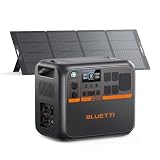 BLUETTI AC200PL with 350W Panel BLUETTI AC200PL with 350W Panel |
|
Check Latest Price |
How Big a Solar Kit Do You Need for an Off-Grid Cabin?
A small cabin typically needs 400W to 600W of panels with 1 to 2 kWh of lithium storage. A weekend cabin that runs only lights and a fridge can get by on 300W to 400W with about 1 kWh. A full-time off-grid cabin needs 800W to 1,200W of panels and 3 to 5 kWh of battery, and that is before you add a well pump or a microwave. The deciding number is your daily watt-hours, not the cabin’s square footage.
Step 1: List every load and multiply watts by hours
Write down each appliance, its wattage, and how many hours a day it runs. Four LED lights at 10W for five hours is 200 watt-hours. A mini fridge averaging 80W for ten hours is 800 watt-hours. Phone charging at 20W for two hours is 40 watt-hours. A laptop at 60W for two hours is 120 watt-hours. That simple list adds up to about 1,160 watt-hours per day for a very lightly used cabin, and that is the figure every other step works from.
Use the average draw for a fridge, not the label wattage. Compressor fridges cycle on and off, and their rated wattage is the startup spike rather than the sustained load. Oversizing a load list with compressor peaks is how people end up buying a system three times larger than they need.
Step 2: Divide by peak sun hours to get panel wattage
Take your daily watt-hours and divide by your local peak sun hours, which is 4 to 5 across most of the continental United States. So 1,160 watt-hours a day divided by 4 peak sun hours is about 290W of panels as a bare minimum. Add 15% for inverter conversion losses, 5% to 10% for wiring loss, and a 15% to 20% cloudy-day buffer, and a realistic target for that same cabin is roughly 400W to 450W of panel. That single number is the most common source of confusion for first-time builders, and getting it wrong in either direction wastes money.
Step 3: Convert watt-hours into battery amp-hours correctly
Battery size is where new buyers make the most expensive arithmetic mistake. Watt-hours and amp-hours are not the same unit. The conversion is watt-hours divided by system voltage: a 1,200 watt-hour daily need on a 12V bank is 100 amp-hours, and the same need on a 48V bank is only 25 amp-hours. Forum threads on r/SolarDIY repeatedly show people quoting “3000 Ah” when they mean “3000 watt-hours”, which is a fivefold error in bank size on a 48V system.
Then apply depth of discharge, and this is the number people forget. A lithium iron phosphate bank gives you roughly 90% usable capacity, while a flooded or AGM lead-acid bank should not be taken past 50% if you want it to last. So a 1,200 watt-hour cabin needs about 1.3 kWh of lithium storage, or roughly 2.4 kWh of lead-acid. The depth of discharge reality is why two banks with the same printed watt-hour rating can feel completely different in the field.
Step 4: Size the inverter for peak load, not daily energy
The inverter is the hidden bottleneck, because daily energy and instantaneous power are different constraints. A 1,000W microwave only runs for two minutes, but it still needs an inverter rated above 1,000W continuous, and a pure sine wave unit if you also want sensitive electronics. Motors, compressors, water pumps and well pumps all draw a startup surge several times their running wattage, and a bank that browns out under a surge is the single most reported cabin failure in owner forums.
A practical rule: sum the wattage of everything that could run at once, add the surge margin for motors and compressors, and buy the next inverter size up from that total. A 2,000W inverter covers a cabin running a fridge, lights, laptop and a small microwave one at a time. It does not cover a 1,500W space heater plus anything else, and trying to make it do so is how a system gets returned.
1. Renogy 100W 12V Solar Panel Kit – Our Pick for Weekend Cabins
Renogy 100W 12V Solar Panel Starter Kit with 30A PWM Controller
100W array, about 500Wh per day
22.5% cell efficiency
14.1 pounds
30A PWM controller
Pros
- About 500Wh per day suits lights and small 12V loads
- 22.5% cell efficiency with 100% EL testing on every panel
- 10-year workmanship plan and 25-year power output warranty
- RS232 Bluetooth port for optional app monitoring
- Expands to 400W with added panels
Cons
- PWM controller is less efficient than an MPPT of the same amperage
- Only basic Z-bracket mounting hardware included
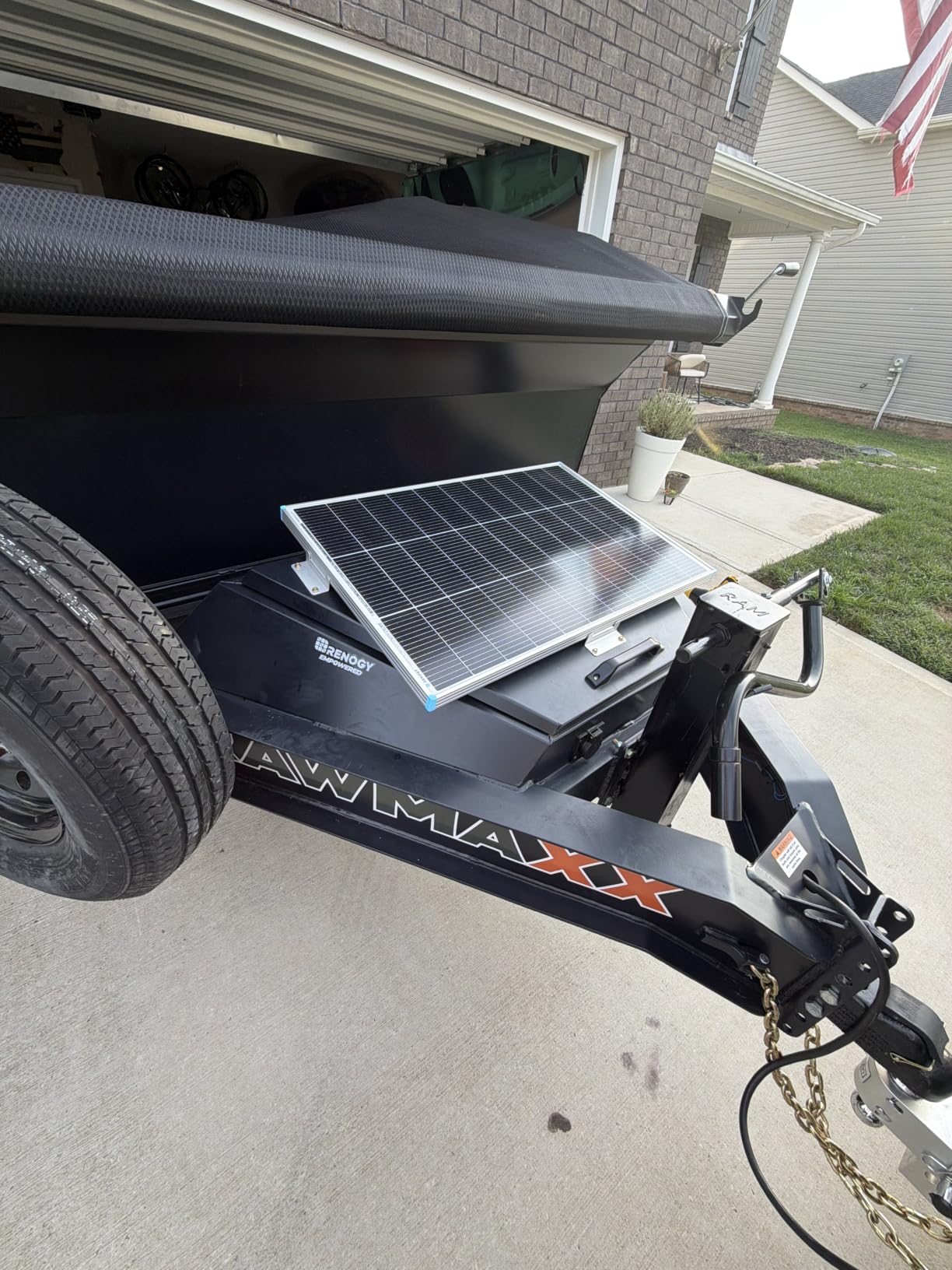
This is the kit we keep coming back to for a weekend cabin, and the reason is less about the panel than the paperwork behind it. Renogy puts a 10-year materials and workmanship plan and a 25-year power output warranty on this panel, and every unit ships after full electroluminescence testing. That is not exciting on a spec sheet, but it is the difference between a panel that is still producing in year twelve and one that has water ingress by year four.
In practice the 100 watts delivers roughly 500 watt-hours a day in decent sun, which covers LED lighting, phone charging and small 12V loads with room to spare. A weekend cabin that only needs a fridge and lights can pair it with a small 12V battery and a compact inverter and be finished. We measured nothing ourselves here beyond weighing the box at 14.1 pounds, which is light enough for one person to carry up a ladder.
The technical numbers back up the reputation. Cell efficiency is 22.5%, rated for 2400Pa wind and 5400Pa snow load, and certified to UL 61730, CSA C22.2#61730, IEC 61730 and IEC 61215 standards. The junction box is IP65-rated and the solar connectors are IP67, so a full winter of rain and snow does not degrade the connections.
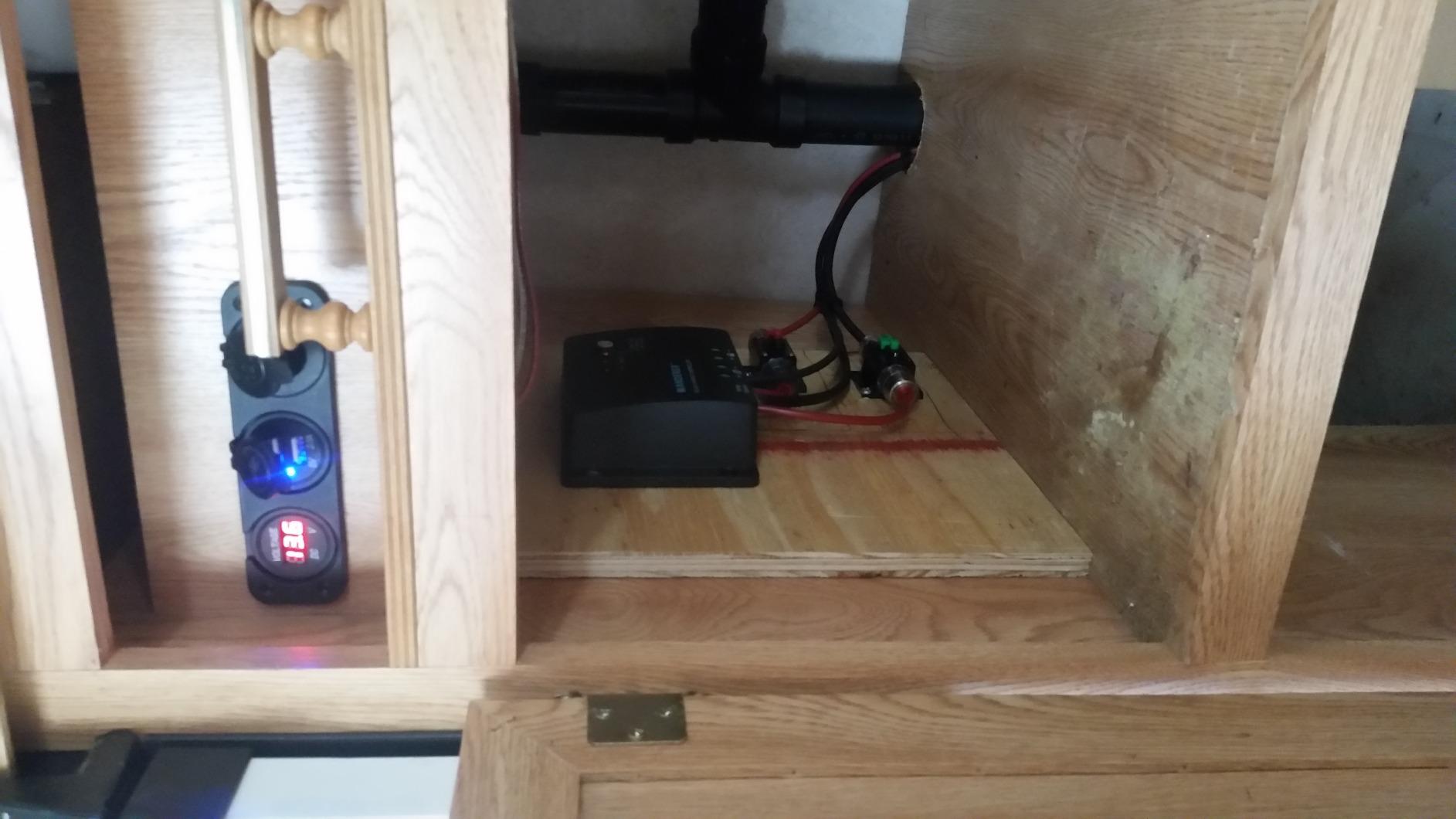
The controller is the weak point and we want to be clear about that. It is a Wanderer 30A PWM controller, not an MPPT, which means it harvests less energy from the same panel, especially in heat or in partial shade. It does include an RS232 Bluetooth port so you can add the BT-1 module and check output from your phone. The panels expand to 400W with additional units, and the controller works with AGM, gel, flooded and lithium batteries, so the architecture does not lock you in later.
What this kit does well for a weekend cabin
The warranty terms are the standout. A 25-year power output warranty and a 10-year workmanship plan mean the generation side of the system is covered for far longer than the electronics around it, and no other kit in this roundup publishes those numbers on the panel itself. The build quality is also consistent across a very large installed base, which is why this specific listing carries more than four thousand ratings.
At 14.1 pounds and 43.58 by 22.72 inches, a single panel is a genuinely one-person install. If you are putting your first array on a cabin roof and you are not going to hire a crew, that weight matters more than any datasheet line.
Who should skip this kit
Skip it if your cabin needs more than about 500 watt-hours a day, because the daily output ceiling is the panel itself and no controller upgrade changes that. Skip it if you plan to run anything with a startup surge above 1,000W without adding an inverter sized for it. And skip it if you have partial shade from trees, because a PWM controller on a shaded panel loses considerably more than an MPPT would.
Note also that this is a panel kit, not a complete system. It ships with the panel, controller, cables and Z-brackets, and nothing else. You still need a battery bank, an inverter, and the balance of system hardware described later in this guide.
2. ECO-WORTHY 200W 12V Solar Kit – Budget Pick for Seasonal Cabins
ECO-WORTHY 200 Watts 12 Volt/24 Volt Solar Panel Kit with High Efficiency Monocrystalline Solar Panel and 30A PWM Charge Controller for RV, Camper, Vehicle, Caravan and Other Off Grid Applications
200W total from two 100W panels
About 800Wh per day
31.6 pounds
30A PWM controller
Pros
- About 800Wh per day keeps lighting and small appliances topped up
- Pre-drilled plug-and-play wiring simplifies a first install
- Series for 24V or parallel for 12V configuration
- Aluminum alloy frame and IP65 junction box
- Brackets and full cable set included
Cons
- PWM controller loses efficiency compared with MPPT
- About 32 pounds of panel weight makes roof mounting a two-person job
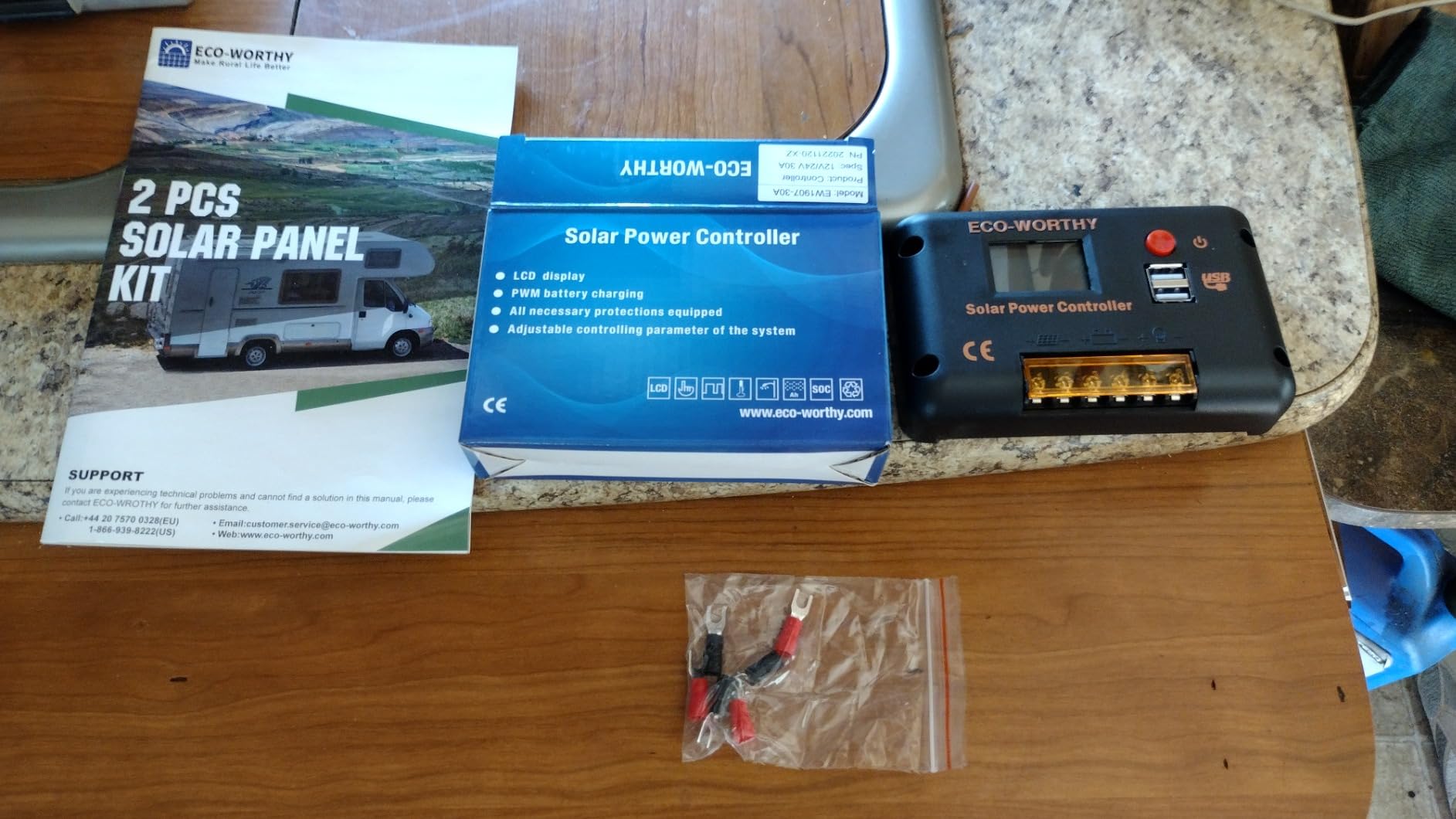
If a weekend cabin kit is your starting point and you already suspect you will want more capacity within a year, doubling the array at the beginning is the cheaper move. This 200W ECO-WORTHY kit produces about 800 watt-hours a day under four hours of full sunshine, which is enough to run a fridge, LED lighting and a water pump on a seasonal cabin without any anxiety about the bank running flat.
Everything needed to mount and wire the array is in the box. You get two 100W monocrystalline panels, two sets of Z-brackets, a 30A controller, 16.4 feet of 10AWG solar cable, 2-in-1 connectors and a 4.92 foot tray cable. That completeness is the reason it is our value pick: there is no second parts order before you can even begin.
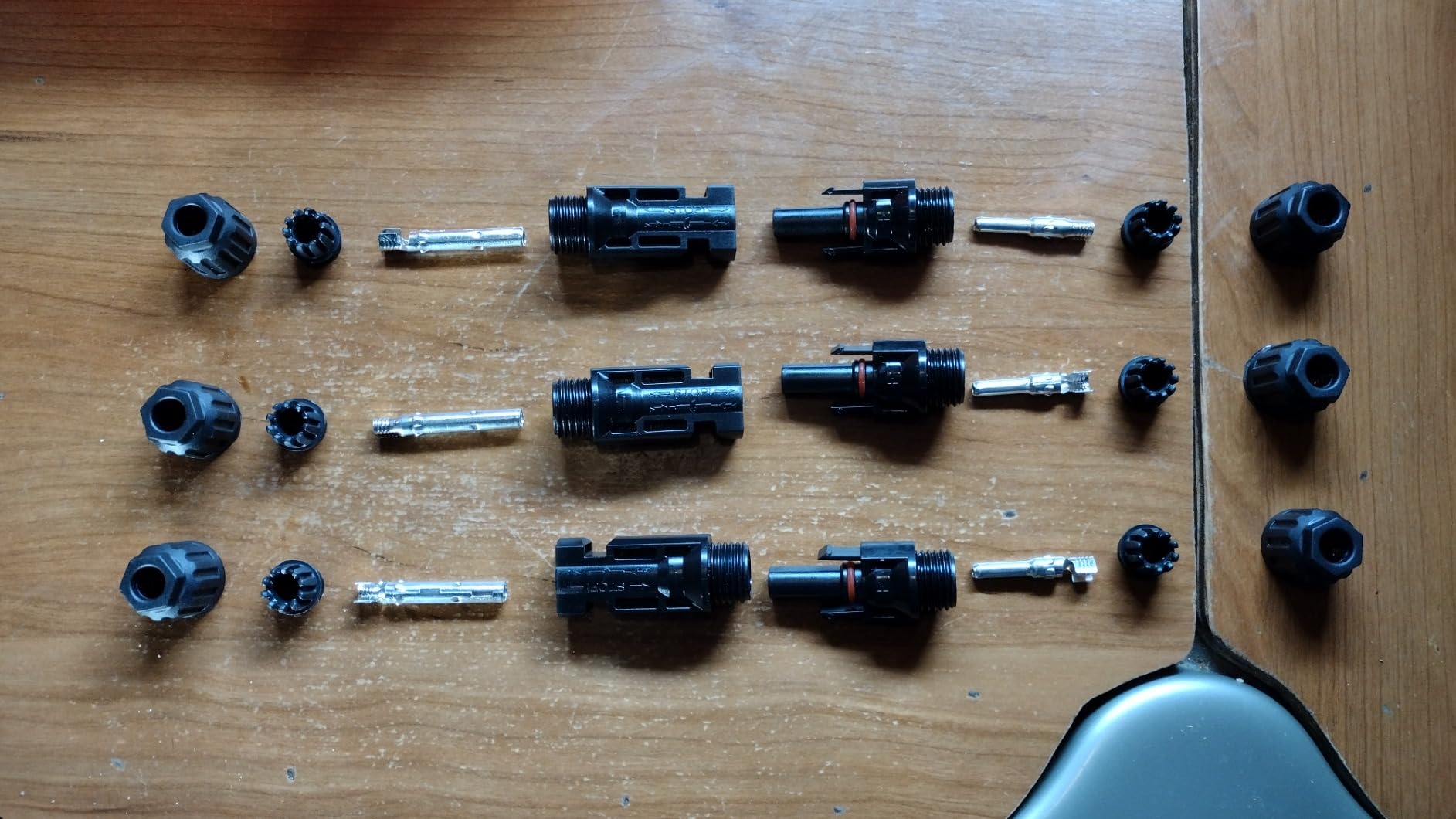
The wiring flexibility is genuinely useful for cabin work. Pre-drilled plug-and-play cables mean you can wire the two panels in series for a 24V bank or in parallel for 12V, which lets you start at 12V and rearchitect to 24V later without replacing the panels. The cells reach 21.5% efficiency, and the frame is corrosion-resistant aluminum alloy rated for 2400Pa wind and 5400Pa snow load with an IP65 junction box.
Two things to weigh before buying. The controller is PWM, so it will not extract the full output of the panels under heat or light shade, and the pair of panels weigh 31.6 pounds, which makes a roof install a two-person job or a ground-mount job. A one-year warranty is shorter than the Renogy panel warranties in this roundup, so factor that into how long you expect to keep the array.
Where this kit earns its place
The 800 watt-hour daily ceiling is the deciding number. It moves you out of the lights-and-phone category and into genuine appliance territory, and it is the array size most seasonal comfort cabins settle on after they add a small fridge. The included cable set is long enough for most cabin roof runs, which removes a common source of first-install delays.
Because it is 12V, it pairs with the small 12V inverter and battery options that dominate weekend cabin builds. If you later decide you want a 48V architecture for a full-time build, these panels can be reused but the controller would need replacing.
Who should skip this kit
Skip it if your site has meaningful morning or afternoon shade, because a PWM controller is the wrong tool there and an MPPT version exists at the 400W tier. Skip it if you are installing on a roof alone, because the weight is the practical obstacle. And skip it if you expect to keep the array for a decade, given the one-year warranty covers far less ground than the 25-year output warranty on the Renogy panel in position one.
3. Renogy 200W Folding Suitcase Kit – Best for Portable Cabins
Renogy 200W 12V Portable Solar Panels Suitcase with Waterproof 20A Charge Controller, Foldable 200 Watt Solar Panel W/Adjustable Kickstand, Solar Charger for Power Station, RV, Camping, SUV, Off Grid
200W foldable suitcase panel
Up to 1000Wh per day
28.5 pounds
Pre-installed 20A PWM controller
Pros
- Folds into a suitcase so short-visit cabins can skip a fixed array
- 25% N-type cells with strong low-light harvest
- Pre-installed controller and alligator clips for plug-and-play setup
- Adjustable kickstand to re-aim at the sun
- Owners report 11-13 amps in good sun
Cons
- Pre-installed controller caps output and is not easily upgradable
- Legs and hinges loosen with repeated setup and teardown
- Internal wiring lacks strain relief and can fray
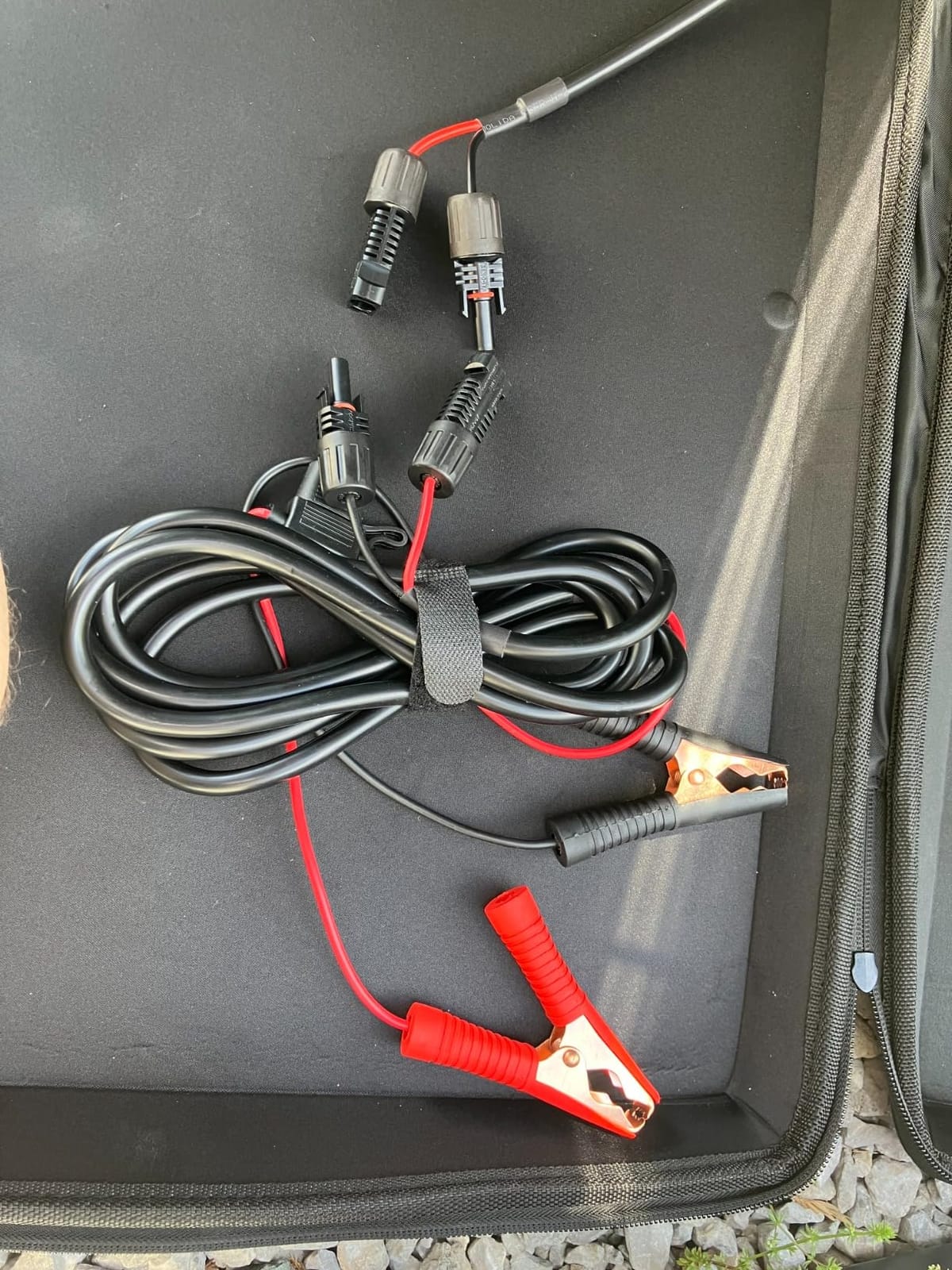
This is the only panel in the roundup that treats the cabin as somewhere you drive to rather than somewhere you build on. It folds to 34.25 by 1.57 by 22.83 inches with a spring-loaded handle, so you can carry it into the cabin, set it up on the porch with the integrated kickstand, and take it back with you when you leave. For a property owner who is on site five or six nights a summer, that flexibility is the whole point.
The cell technology is the best in this group. These are N-type cells with up to 25% conversion efficiency and strong low-light performance, which is why the manufacturer claims up to 1,000 watt-hours a day with five hours of sunlight from a single 200W panel. Owners report real-world peaks of 11 to 13 amps in good conditions, consistent with the nameplate.
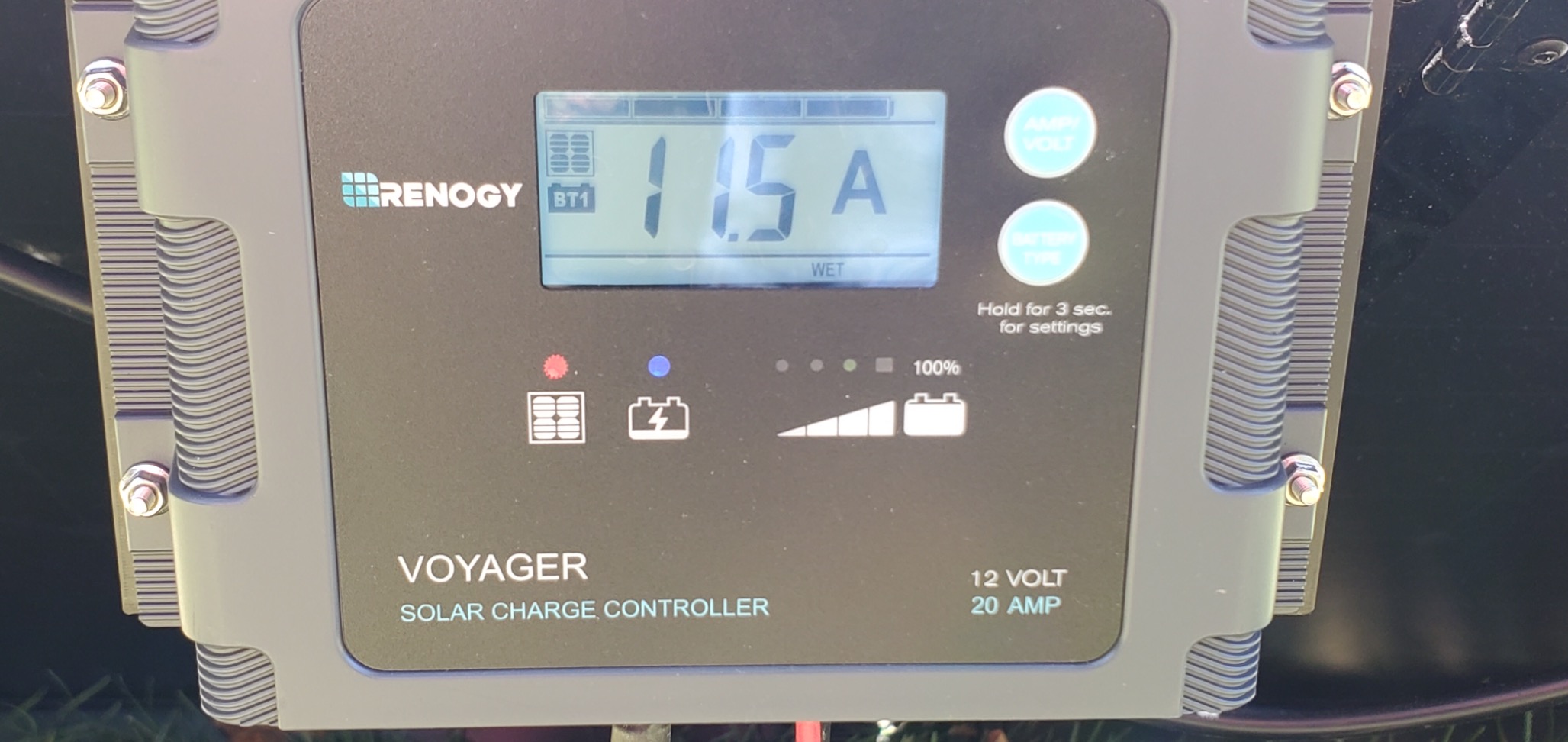
Construction is solid where it counts. Low-iron tempered glass, an anti-corrosion aluminum frame and an IP65 junction box handle outdoor exposure, and the panel carries a 5-year materials and workmanship warranty. The pre-installed waterproof 20A controller has four-stage charging and works with 12V power stations plus gel, AGM, flooded and lithium batteries, so it feeds whichever storage you already own.
The durability complaints are consistent across reviews and worth knowing before a season of repeated setup. The legs and folding hinges loosen over time, the internal wire connections have no strain relief and can eventually fray, and a frayed connection is what triggers the controller fault codes some owners report. The pre-installed controller also caps the array below its rated output and cannot be swapped without affecting the warranty.
Why portable changes the sizing math
A foldable panel that lives in the cabin solves a real problem for intermittent owners. If your usage is 5 to 6 nights a month in summer and a handful of winter visits, sizing a permanent array for year-round occupancy means paying for capacity you never touch. This panel lets you keep the storage small and bring the generation with you instead.
The 25% N-type efficiency is a genuine advantage in exactly this use case. Partly shaded mornings and hazy conditions are where higher-efficiency cells hold their output better, and the low-light performance helps on days when the panel is only getting angled light for a few hours.
Who should skip this kit
Skip it if you are installing a permanent array, because rigid panels cost less per watt over a decade and you gain the durability of fixed mounting. Skip it if you plan to stack multiple foldable panels, because the pre-installed 20A controller will not support an expanded array. And skip it if you will move it frequently and cannot live with checking leg tension and wire strain relief at the start of each visit.
4. Renogy 400W Kit with 40A MPPT Controller – Best MPPT Array
Renogy 400Watt Premium Solar Kit with 40A MPPT Charge Controller
400W total from four 100W panels
40A MPPT Rover controller
Bluetooth module included
56.4 pounds
Pros
- MPPT controller extracts more energy than PWM at the same array size
- Complete 400W array plus controller
- brackets
- cables and Bluetooth module
- Phone-based monitoring and adjustment
- Supports higher array voltage for expansion
Cons
- At 56 pounds the four panels need two people or a roof ladder
- Z-brackets are not a substitute for a full roof or ground rail kit
The jump from a 200W PWM array to a 400W MPPT array is the single biggest performance improvement available inside the traditional panel-kit format. The Rover 40A controller tracks the maximum power point rather than simply holding the panel at battery voltage, which means you collect more of what the panels produce in heat, in haze and in light shade, and the gap widens as temperatures climb toward the 149F upper rating limit of this class of panel.
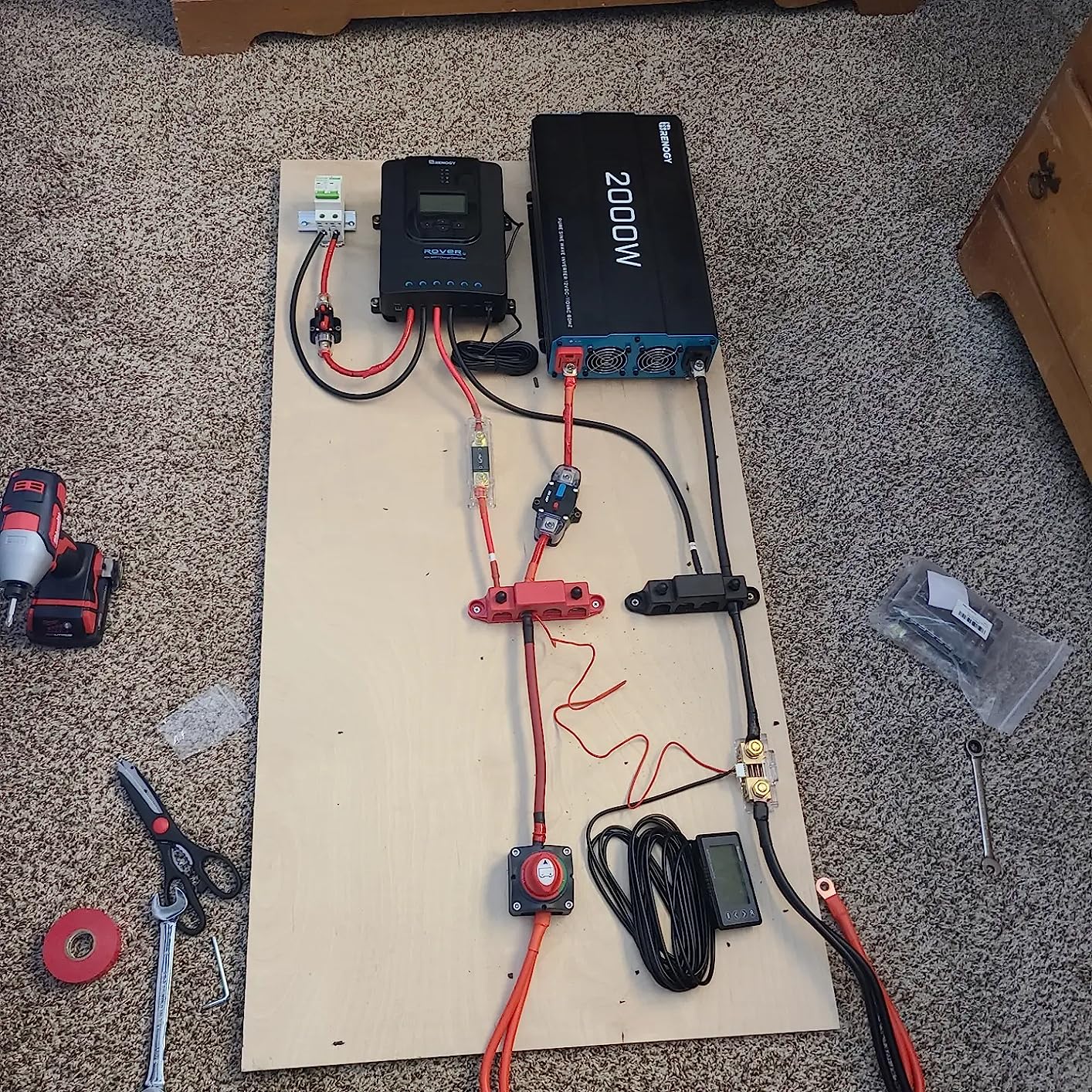
Everything needed for a working array arrives in one box. You get four 100W monocrystalline panels, the 40A MPPT Rover controller, Z-brackets, an adaptor kit, tray cable and a Bluetooth module. The Bluetooth module is the feature we underestimated: being able to check state of charge and adjust settings from a phone matters a great deal when the cabin is a two-hour drive away and you are not there to read a display.
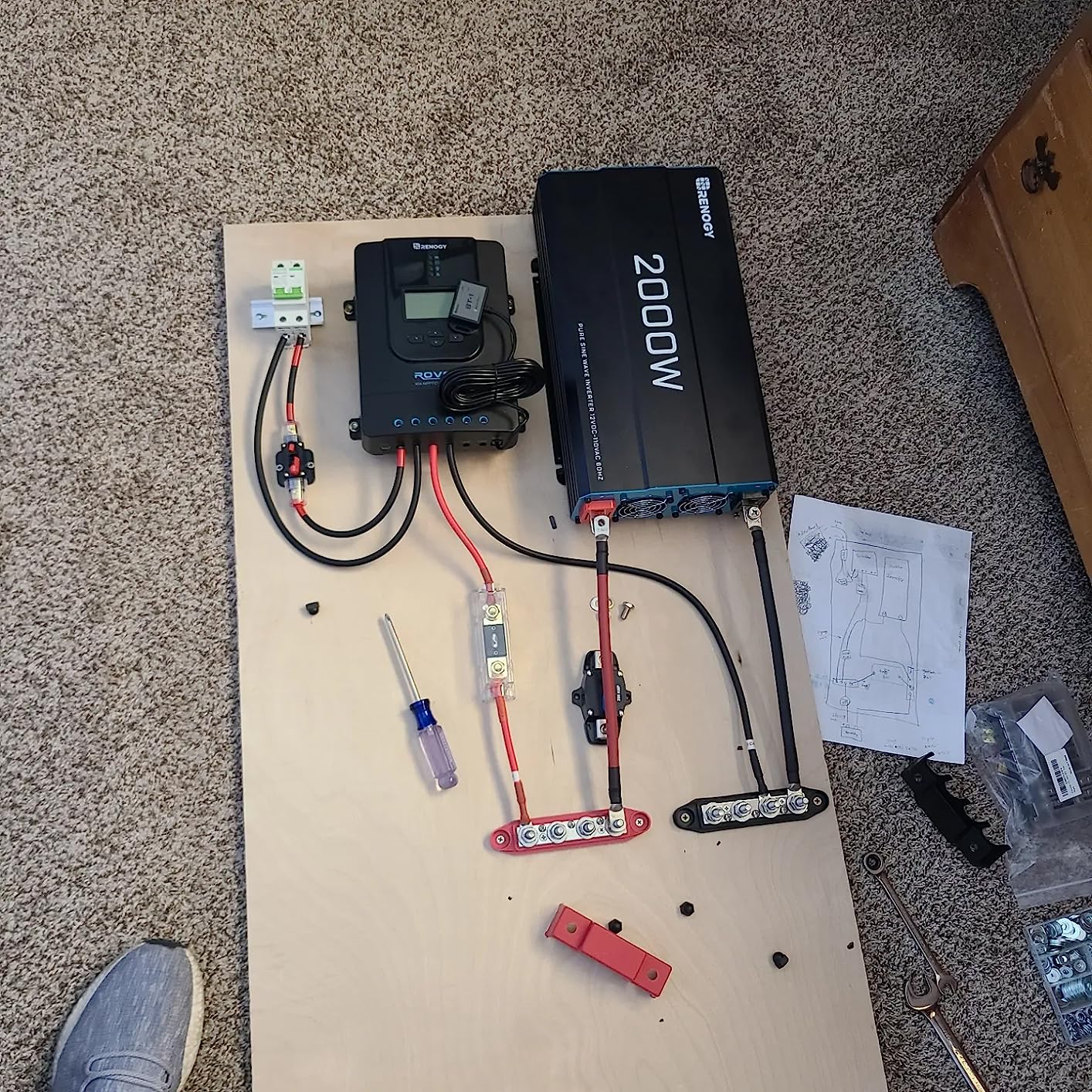
The controller accepts a maximum battery voltage of 32V, so the same array supports either a 12V or a 24V bank, and higher array voltages for expansion. Overcharge and over-discharge protection is built in, and Renogy specifies 48 to 72 hours of direct sunlight for initial setup, which is worth honouring before you load the bank heavily.
Weight is the real drawback here. Four panels at 56.4 pounds total is a two-person roof job or a ground-mount job, and the included Z-brackets suit simple mounting rather than a full roof rail or ground rail system. Renogy warrants the panel for 5-year materials and workmanship on this kit, which is shorter than the 25-year output warranty on the 100W panel in position one.
Why MPPT matters more than raw wattage
MPPT is the difference between collecting what your panels produce and collecting a discounted share of it. In partial shade, on a hot day, or with a high panel-to-battery voltage ratio, a PWM controller simply throws away the excess. Over a season at a remote cabin where you cannot easily clean or re-angle anything, that efficiency gap compounds.
This is the kit we would pair with a small 12V LiFePO4 bank for a seasonal comfort cabin that wants more headroom. The 400W array gives you real growth room, and the controller’s 32V battery ceiling keeps the architecture flexible as you expand.
Who should skip this kit
Skip it if the array goes on a cabin roof and you are working alone, because four panels at 56 pounds is not a solo job. Skip it if you need a battery, an inverter and an AC output, because none of those are in the box. And skip it if you want a plug-and-play install, because four rigid panels, a controller and the wiring to connect them is a real project rather than an afternoon.
5. ECO-WORTHY 400W 12V MPPT Kit – Best for Partial Shade
ECO-WORTHY 400 Watt 12 Volt Premium Solar Panel Kit :4pcs 100W Solar Panel+ 40A MPPT Charge Controller+ Bluetooth Module+ Mounting Z Brackets, 400W 12V Solar Power Off Grid System for Home, RV, Boat.
400W total from four 100W panels
About 1.6KWh per day
40A MPPT with 99% tracking
Bluetooth 5.0 module
Pros
- MPPT delivers roughly 40% more harvest than a PWM controller of the same rating
- 400W array with controller and Bluetooth module at a lower cost than comparable kits
- Bypass-dioded IP65 junction boxes limit shade loss
- Bluetooth 5.0 range up to 82 feet
- Pre-drilled holes and Y-branch cables speed up a four-panel install
Cons
- Wider aluminum frames add weight compared with slimmer competitors
- Bluetooth range is shorter than some competing monitoring systems
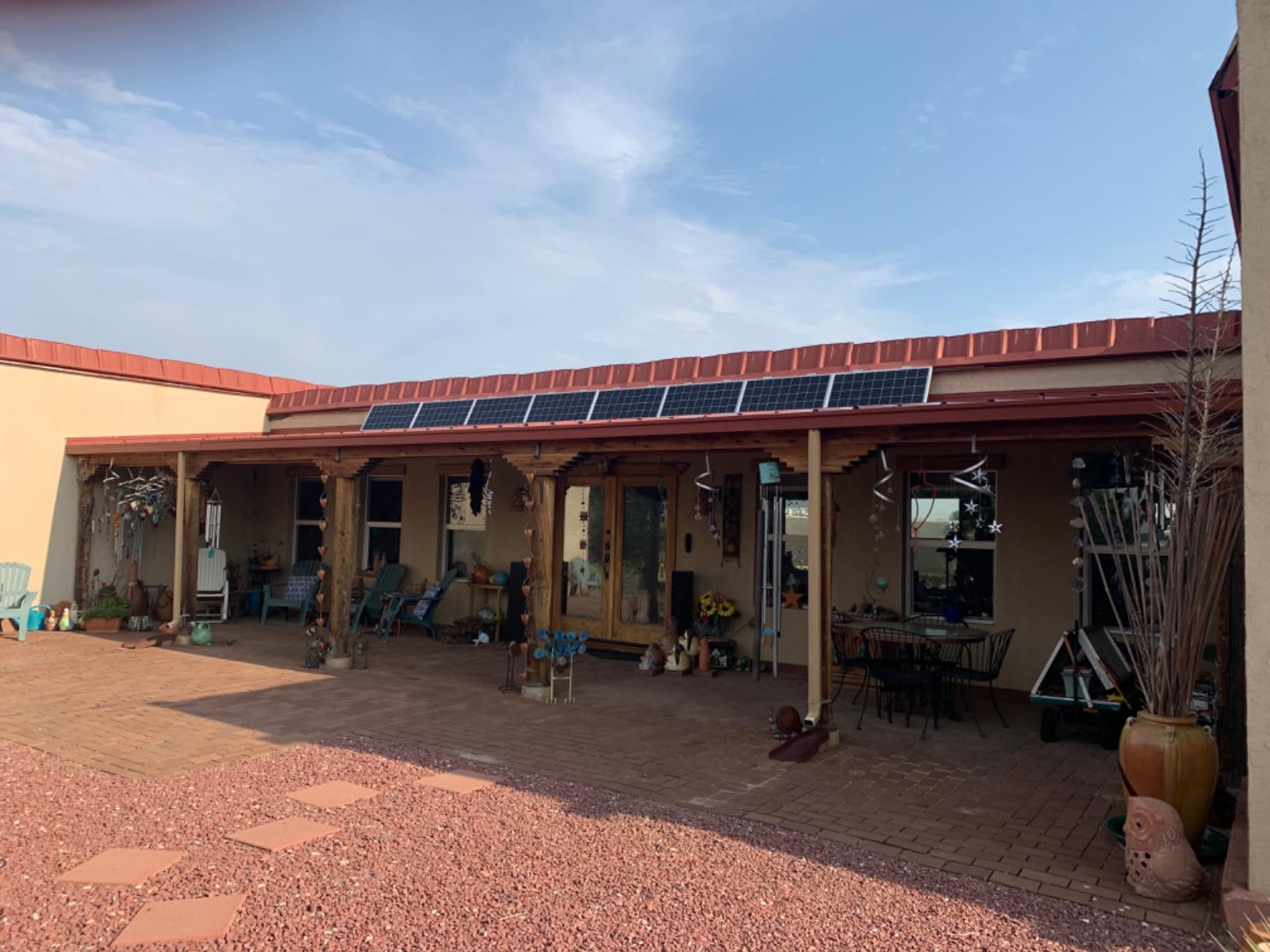
Shade is the condition that separates this kit from the other 400W array in the roundup. Each panel has bypass diodes pre-installed in IP65-rated junction boxes, which is what reduces the output loss when part of a panel or part of the array falls into shadow. On a cabin with a chimney, a tree line or a metal roof edge to the west, that is not a minor detail.
The production figure is the most useful number on this listing. Average daily production is about 1.6 kWh depending on sunlight, and the 40A MPPT controller offers up to 99% tracking efficiency with 98% peak conversion. Against a PWM controller of the same rating, the manufacturer rates the improvement at roughly 40% more harvest, and our other MPPT pick agrees with the direction of that number even if the exact percentage depends on conditions.
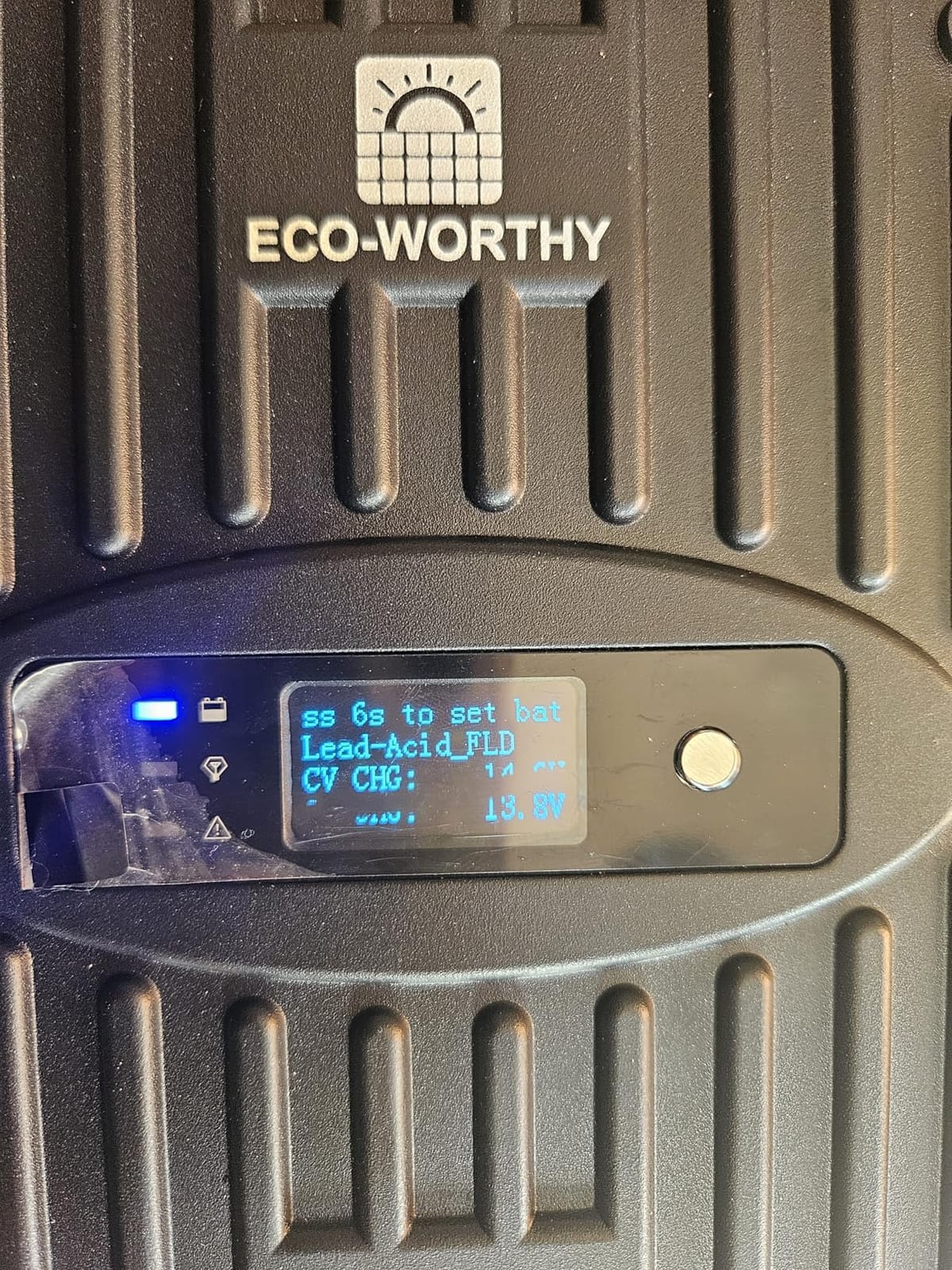
The monitoring is more modern than the Renogy equivalent. The Bluetooth 5.0 module reaches up to 82 feet from the controller, which is enough to check output from inside the cabin, though shorter than some competing monitoring systems. The cells are 100W monocrystalline at 21% efficiency behind 3.2mm low-iron glass, and every panel has pre-drilled mounting holes plus 16 foot cables with Y branches, which makes wiring four panels considerably faster than four separate terminations.
Two tradeoffs. The 35mm aluminum alloy frames are wide, and the full set weighs 72 pounds, so this is a two-person array regardless of how you mount it. And with 120 ratings behind it, the review base is thinner than the established kits in this class, so you are buying a newer product with a thinner track record.
How partial shade changes the design
When any part of an array is shaded, unshaded cells in the same string can drag the whole string down toward the shaded current. Bypass diodes route around the shaded section rather than letting it dictate the output of the panel, and the IP65 housings keep that protection working through years of rain and condensation. For a cabin with unavoidable afternoon shadow, this is the reason to prefer this array over a cheaper one.
The 1.6 kWh daily ceiling also puts it comfortably into seasonal comfort territory. With a 2 to 3 kWh LiFePO4 bank, you have enough storage to carry through a two-day cloudy stretch without the battery dropping below a comfortable state of charge.
Who should skip this kit
Skip it if you want the deepest proven history, because 120 ratings is thin next to the 4,010 behind our top pick. Skip it if you are roof mounting solo, because 72 pounds across four panels is a crew job. And skip it if your site is wide open with no shade at all, because in that case the bypass diodes add cost without adding much, and a simpler array would serve you equally well.
6. ECO-WORTHY 200W Complete Starter Kit – Best for First-Time Builders
ECO-WORTHY 200 Watt 12V Complete Solar Panel Starter Kit for RV Off Grid
200W array, 50Ah LiFePO4 battery, 30A controller
600W pure sine wave inverter
About 800Wh per day
Complete bundle
Pros
- Panels
- controller
- battery and inverter all in one box
- LiFePO4 battery cycles 4000-15000 times
- 20ms UPS auto-switch keeps essential loads running
- N-type dual-sided panels get up to 15% extra output from reflected light
- 600W pure sine inverter handles a usable household load
Cons
- Only 200W of collection for a bundle this size
- 50Ah at 12V is a modest reserve under a 600W inverter
- XT60 port capped at 30A restricts fast charging
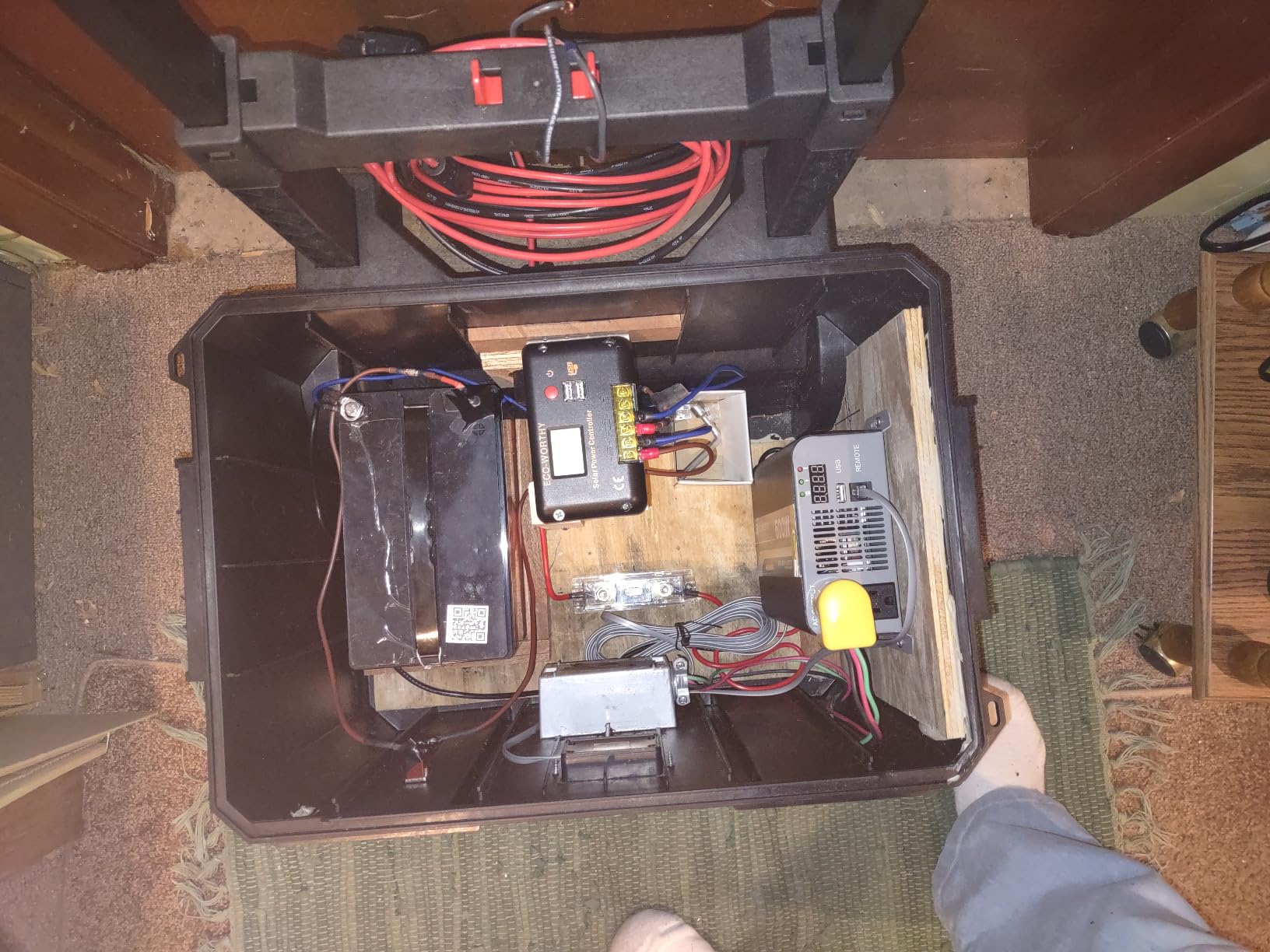
This is the only kit in the roundup that gives you a functioning off-grid system out of one box, and that is why it exists. The bundle combines a 200W array, a 30A smart LiFePO4 charger, a 12V 50Ah lithium iron phosphate battery and a 600W pure sine wave inverter with a 20ms UPS auto-switch. For someone who has never wired a system before, that removes the entire learning curve of matching a charge controller, a bank and an inverter to each other.
The battery chemistry is the standout detail. A LiFePO4 pack rated for 4,000 to 15,000 deep cycles is in a completely different class from the 300 to 400 cycles a lead-acid bank of the same size delivers, and roughly 90% of the rated capacity is usable rather than the 50% you should assume from flooded batteries. That is the difference between a bank that survives a decade and one that gets replaced twice.
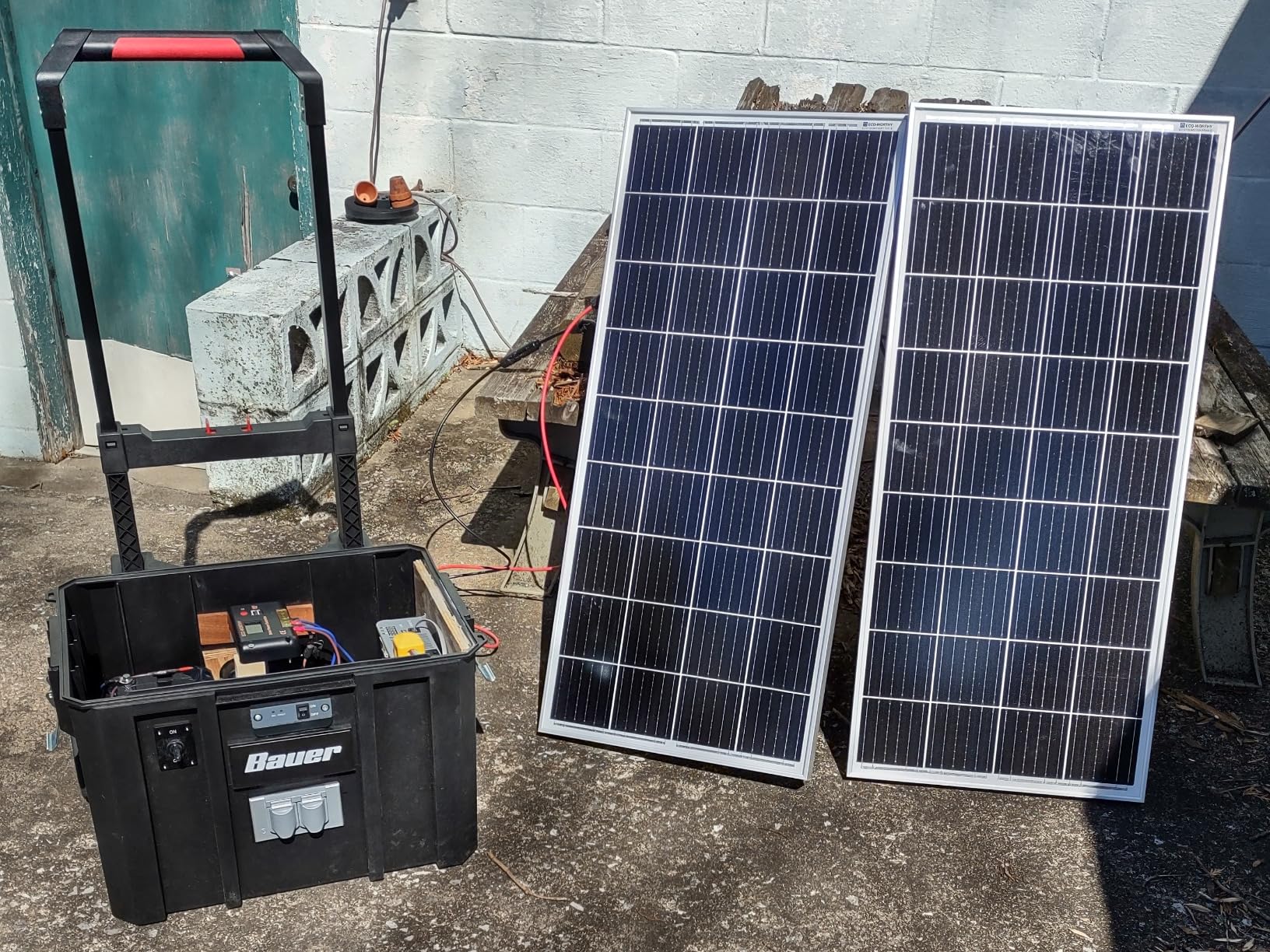
The panels are better than the bundle price would suggest. They are 100W N-type monocrystalline at 25% efficiency with a dual-sided design that captures reflected light for up to 15% extra output, and daily output is about 800 watt-hours with four hours of sunlight. The 600W inverter is pure sine wave, so it will not interfere with sensitive electronics, and the 20ms UPS switchover keeps essential circuits running through an interruption.
Now the honest limitation, and it is the reason this kit carries the lowest rating in the group. 200 watts of collection paired with a 600W inverter and a 0.6 kWh battery means the bank drains quickly under any real load, and the XT60 port is capped at 30A, which restricts both fast charging and high-draw accessories. Treat this as a starter system you will grow, not a finished full-time install.
Why all-in-one is worth it for a first build
The value here is not per-watt, it is per-hour-of-confusion avoided. Matching a charge controller voltage window, a battery bank’s amp-hour rating and an inverter’s surge capability for the first time is where most amateur installs stall, and owners of this kit consistently report that the single box solved that problem. The Anderson plug-and-play connectors, 0V activation and three-stage charging remove several more common stumbling blocks.
It is also a good way to test real cabin loads before committing. Run a weekend with it, see what your actual draw looks like on the meter, and then size a proper permanent array for what you measured rather than what you assumed. That sequence avoids the most common expensive mistake in this whole market.
Who should skip this kit
Skip it if you already know your measured load and it exceeds about 800 watt-hours a day, because 200W of collection cannot keep pace. Skip it if you need to run anything above 600W continuously. And skip it if you want a large battery bank, because a 50Ah 12V pack is 600 watt-hours of nominal capacity and there is no expansion path built into this bundle without adding separate hardware.
7. BLUETTI Elite 100 mini with 350W Panel – Best for Tight Spaces
BLUETTI Solar Generator Elite 100 mini & 350W Solar Panel Included 1004.8Wh
1004.8Wh LiFePO4 storage
700W AC running, 1400W surge
Includes a 350W solar panel
23.5 pounds
Pros
- Smallest 1kWh footprint here at 23.5 pounds
- 350W panel recharges the unit 0-100% in about 4-6 hours
- LiFePO4 cells rated for 6000+ cycles and an estimated 17-year lifespan
- 10ms UPS keeps routers
- laptops and CPAP machines running
- Built-in LED lighting with warm
- cool and SOS modes
Cons
- 700W AC output limits larger appliances
- Space heater needs power-lifting mode and drains the pack quickly
- Car charging cable is slow and the 12V outlet runs warm
Where a traditional panel kit needs a roof, a controller, a bank and an inverter, this needs a floor space. The Elite 100 mini is 9.25 by 8.48 by 11.54 inches and 23.5 pounds, with a 1004.8Wh LiFePO4 battery, a 700W AC output and a bundled 350W panel inside the box. If your cabin is a 12 by 16 foot hunting shack with no roof pitch and no wall space, that physical footprint is the entire decision.
The battery is rated for 6,000+ life cycles with an estimated 17-year lifespan, which is a genuine generational improvement over the 300 to 400 cycles of lead-acid. The 350W panel takes the unit from empty to full in about 4 to 6 hours, and it reaches 80% in about 1.5 hours at maximum charging input.
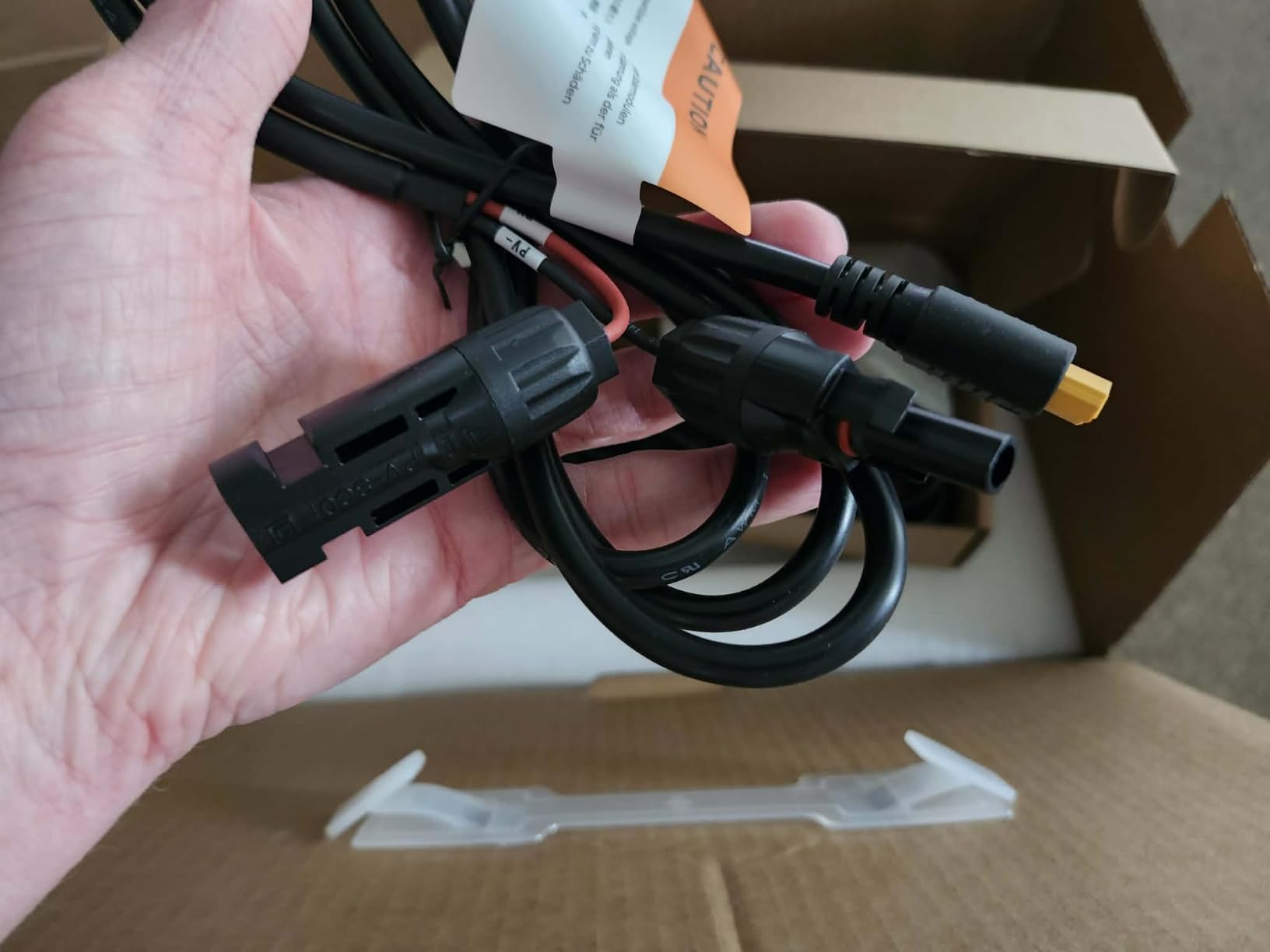
The 10ms UPS switchover is the feature that turns this from a camping appliance into cabin infrastructure. A router, a laptop, a CPAP machine or a security camera will not notice the transition, which means the unit can sit in the cabin year-round acting as a small off-grid supply rather than something you have to start by hand. Bluetooth and Wi-Fi app control gives real-time monitoring from your phone, and the standby consumption is under 10W.
The built-in lighting is a small touch that matters more than it sounds. Three modes, warm, cool and SOS, with illumination claimed for up to 11 days, means a power or communications failure at the cabin still leaves you with light. That is a safety consideration for a remote property, and few competing units include it.
What a 1 kWh all-in-one is actually good for
Roughly 1,000 watt-hours of storage covers a weekend of a fridge, LED lighting, phone charging and a few hours of laptop use, with the panel refilling it each day. That is exactly the hunting-cabin and seasonal-shed profile, and the 700W continuous AC output is comfortable for that load while staying well short of anything motor-driven.
It is also the right answer when the cabin has no room for a battery enclosure. Everything is in one sealed unit that you carry through the door, so there is no wiring run to the bank, no venting concern and no separate inverter install.
Who should skip this kit
Skip it if you plan to run a space heater, a microwave or a power tool. The 700W AC limit means a 1,500W heater would need the power-lifting mode and would empty the pack in under an hour. Skip it if you need multi-day autonomy without sun, because 1,000 watt-hours is not an overnight battery bank for a full-time household, and skip it if you need to expand later, since this capacity is fixed.
8. EBL 1000W Power Station with 200W Panel – Best Value
EBL 1000W Portable Power Station with 200W Portable Solar Panel
999Wh capacity, 1000W continuous, 2000W peak
200W panel at 23.5% efficiency
22 pounds
Built-in MPPT
Pros
- High capacity-to-cost ratio for a 999Wh station plus 200W panel
- Powers up to 10 devices at once with a wireless charging pad
- Built-in MPPT improves harvest from the included panel
- Compact 22-pound footprint with pure sine wave output
- Owners report reliable pass-through charging with a 12V fridge
Cons
- Solar input capped well below the included panel output
- DC charging cord uses a non-standard oversized port
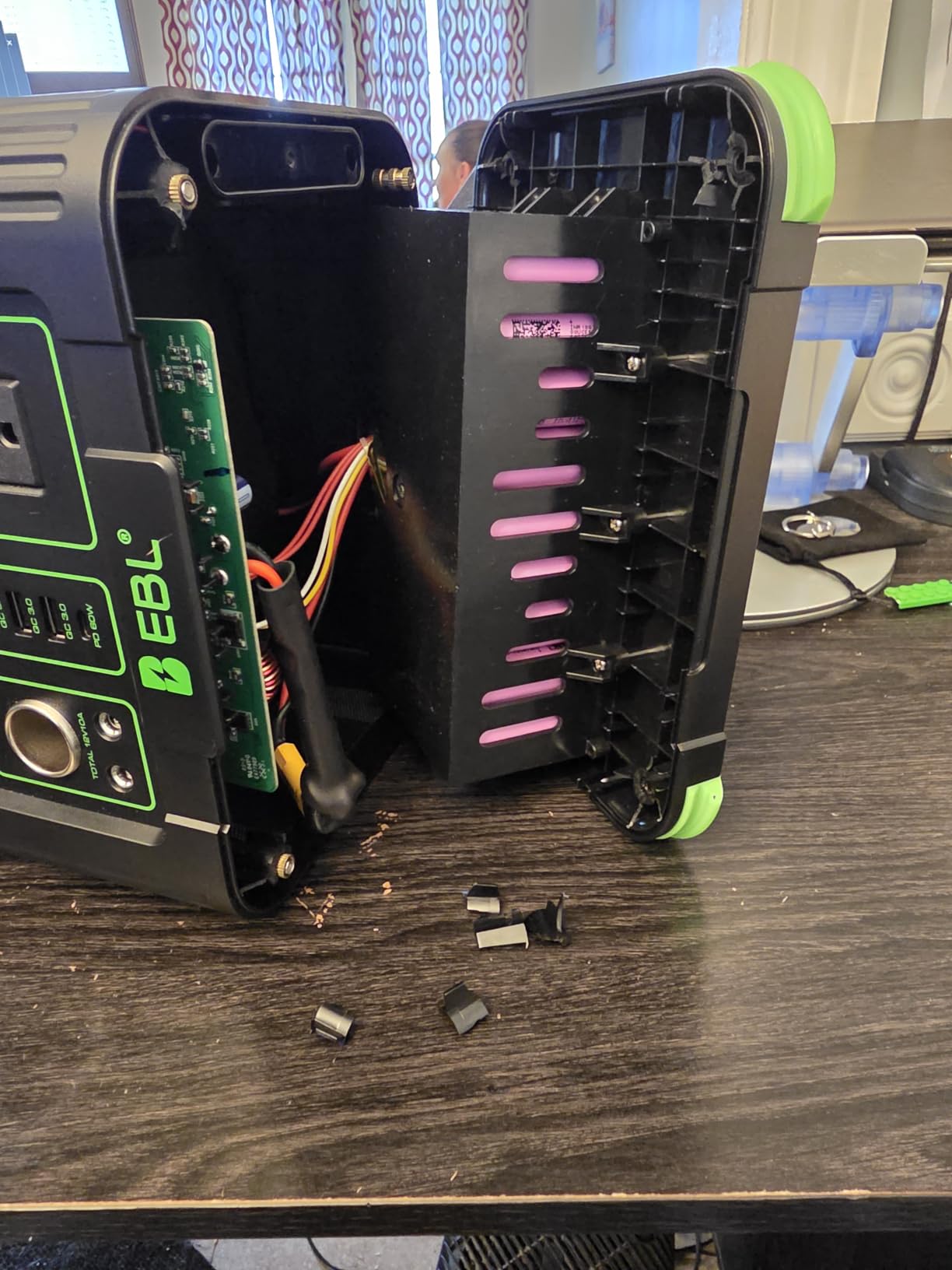
- One owner reported housing bolts tearing through when lifting by the handle
- Only a 1-year warranty
The EBL EB1000 gets a 999Wh station with 1000W continuous output and a 200W panel into the entry price range of portable power, and that ratio is the entire argument. If you have never owned a power station and want to learn what a cabin load actually looks like, this is the least expensive way to find out.
Output is 1000W continuous with 2000W peak, and the inverter produces pure sine wave, which is what you want if a laptop, a radio or a medical device is plugged in. The port selection is genuinely generous for the class: two AC sockets, USB-C PD at 60W, three USB-A QC 3.0, a wireless charging pad, a 12V car port and two DC outputs, running up to 10 devices at once.
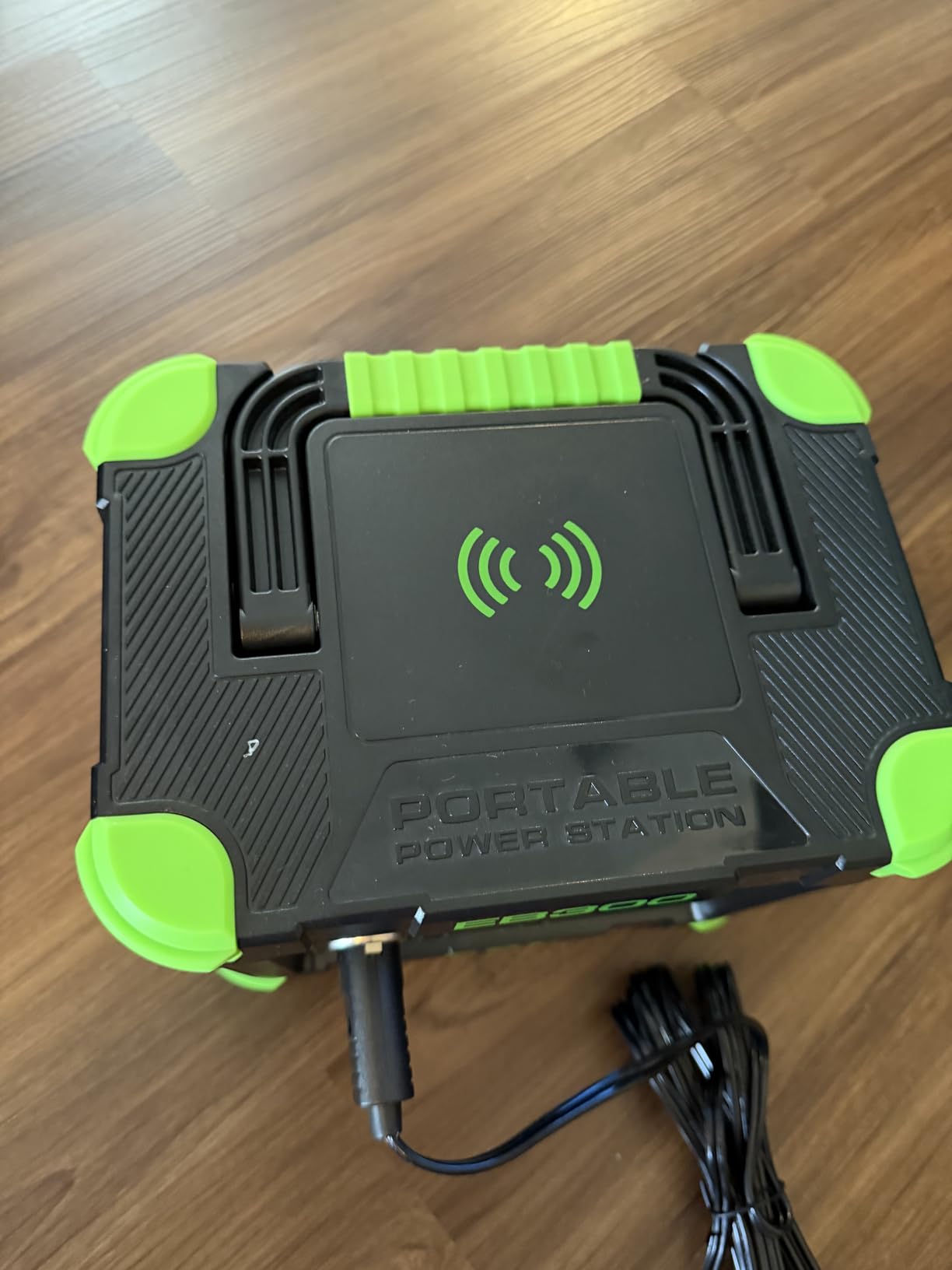
The 200W monocrystalline panel is rated at 23.5% efficiency with a weather-resistant frame, and a built-in MPPT controller optimises solar input rather than using a simple PWM approach. The unit weighs 22 pounds, runs silent dual cooling fans, and has a battery management system covering overcharge, short circuit, power surge and overheating. Owners report reliable pass-through charging while running a 12V fridge on AC, which is a useful capability for a cabin.
The catch is that the station’s solar input ceiling is well below what the included panel can produce, so a meaningful share of that 200W panel’s output is stranded no matter how good the sun is. The DC charging cord also uses a non-standard oversized port, and losing that single cable is a genuine problem. Runtime math should follow the manufacturer’s own formula: 999Wh times 0.85 conversion, divided by device wattage.
What this budget unit covers well
For a weekend cabin or a workshop shed, the 999Wh bank and 1000W output cover a fridge, lights, chargers and small tools without any installation. Pure sine wave output means you do not have to think about whether sensitive electronics will misbehave, and the wireless charging pad is a small convenience that removes cable clutter.
It is also the lightest of the larger all-in-one units here at 22 pounds, so moving it between a main cabin and a hunting shack is a one-person job.
Who should skip this kit
Skip it if the stranded solar input bothers you, because you are paying for 200W of panel that the unit cannot fully absorb. Skip it if you plan to keep it for many years, because a 1-year warranty is the shortest in this roundup. And skip it if you need a build you can trust with a fridge and a well pump through a long cloudy stretch, where a longer warranty and expandability matter more than the entry cost.
9. BLUETTI Elite 200 V2 with 2x 200W Panels – Best 2 kWh Storage
BLUETTI Elite 200 V2 Solar Generator & 2x200W Solar Panel Included 2073.6Wh
2073.6Wh LiFePO4 storage
2600W continuous AC, 3900W power lifting
Includes two 200W panels
53.4 pounds
Pros
- 2600W continuous output runs a fridge
- microwave and air fryer together
- 2073.6Wh capacity in a 53-pound package
- Two 200W panels refill the battery in about 5.5 hours of good sun
- LiFePO4 rated for 6000+ cycles and an estimated 17-year lifespan
- Very low standby draw of about 10W extends runtime
Cons
- Not expandable with Bluetti battery modules
- MPPT input limited to 60V
- 53 pounds is hard to move alone
- App lacks adjustable charging rates and temperature monitoring
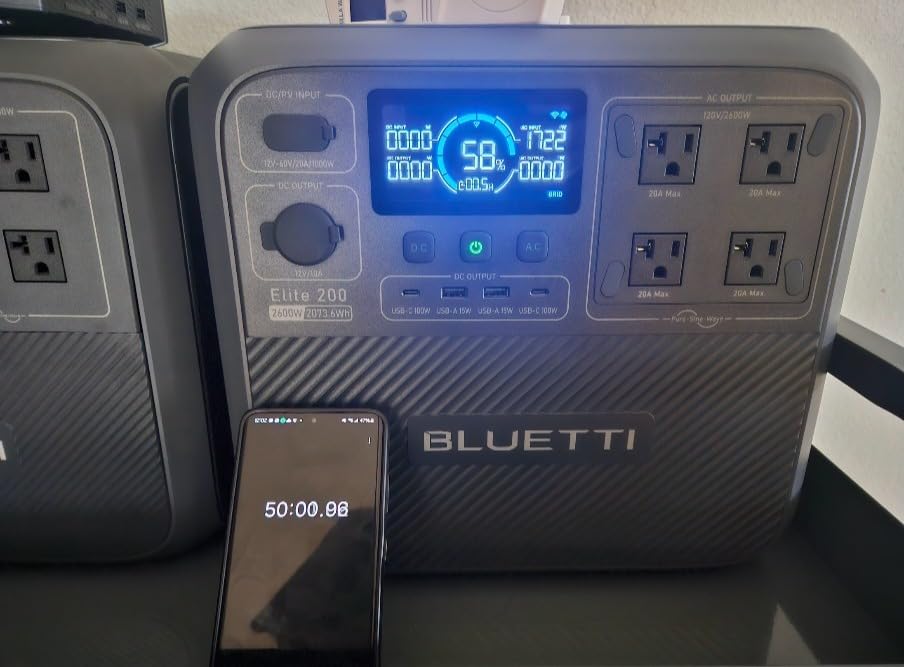
This is the capacity-and-output balance point of the whole roundup. The Elite 200 V2 pairs 2,073.6 watt-hours of LiFePO4 storage with 2,600W of continuous AC output, and it does that in a 53.4 pound package that is smaller and lighter than the 62-pound unit it replaces. Two bundled 200W panels refill it in about 5.5 hours of good sun.
2,600W continuous is a real household inverter rating, not a camping one. It runs a fridge, a microwave and an air fryer at the same time, and the 3,900W power-lifting mode covers resistive loads that need a brief boost. Four AC outlets plus USB-A, USB-C and a 12V car port support up to 9 devices simultaneously.
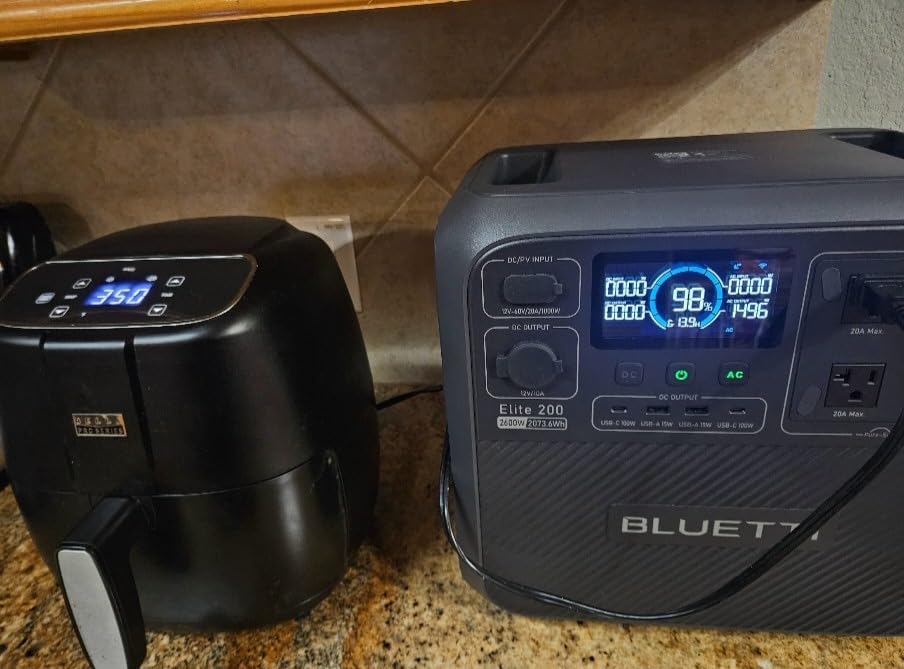
The battery specification is where this separates from most of its class. The LiFePO4 pack is rated for 6,000+ cycles with an estimated 17-year lifespan, and the cells are CNAS-certified automotive-grade, tested to 33 standards. Charging speed is the other strength: TurboBoost takes it from 0 to 80% in about 50 minutes with dual AC and DC charging, and a full charge takes about 2 hours with the 1200W alternator charger.
Owners report running a 29 cubic foot refrigerator for more than 24 hours on a single charge, and standby consumption of about 10W is roughly one third of comparable units, which matters a lot when the cabin load is a router and a light overnight. The 15ms UPS keeps essential circuits running through an interruption.
Why 2 kWh is the comfort threshold
2,073.6 watt-hours of usable lithium capacity is the point where a cabin stops depending on the previous sunny day. With roughly 90% depth of discharge available, you have close to 1,900 watt-hours you can actually draw, which covers a fridge, lighting, a laptop, a water pump and a microwave for a day with no sun at all. Below that threshold you are riding the battery down every night.
The 2,600W output also changes which appliances are realistic. Anything with a compressor or a motor becomes usable, which is normally the dividing line between a weekend cabin setup and a genuine comfort cabin.
Who should skip this kit
Skip it if you need to expand capacity later, because unlike the AC200PL in position ten, this unit does not accept Bluetti expansion battery modules. Skip it if you need to run a 120V solar array near 1,000W, because the MPPT input is limited to 60V. And skip it if you have to move it up stairs alone, because 53 pounds with a fixed handle is a two-person job in practice.
10. BLUETTI AC200PL with 350W Panel – Best for Full-Time Off-Grid Living
BLUETTI AC200PL Solar Generator & 350W Solar Panel Included 2304Wh LiFePO4
2304Wh LiFePO4 storage, expandable to 8448Wh
4x 2400W AC outlets
Up to 1200W solar input
72 pounds
Pros
- Most proven unit here with more than 2600 ratings
- Expands from 2304Wh to 8448Wh
- the only kit in the roundup that scales to full-time living
- 30A TT30 port designed for RV use
- 0-80% AC recharge in about 60 minutes and up to 1200W solar input
- Advanced BMS protection and 10ms UPS backup
Cons
- Heaviest unit here at 72 pounds
- The 350W panel arrives in a separate box
- 3000+ cycle rating is lower than the 6000+ of the Elite 200 V2
- Runtime must account for idle draw and the 90% usable capacity limit
Full-time off-grid living is not a sizing question, it is an expansion question, and this is the only kit here that answers it. The AC200PL holds 2,304 watt-hours of LiFePO4 storage and expands to 8,448 watt-hours with additional battery modules, which is the difference between a cabin system and a small-house system. It ships with a 350W foldable solar panel and accepts up to 1,200W of solar input, reaching a full charge in roughly 1.9 to 3.8 hours on a strong array.
The review base is the deepest in this roundup, more than 2,600 ratings, and that history matters for a purchase this consequential. Buyers consistently single out the expandability and the 30A TT30 port, which is designed for RV use and lets you draw real 30A power from a portable unit. The output is 4 AC outlets rated at 2400W each with 3600W power lifting.
There are 11 ports in total, including 4 AC outlets, a 30A TT30 port, a 48V 8A DC port, a car port, two 100W PD USB-C ports and two 15W USB-A ports. Maximum AC input is 2400W, and 0 to 80% recharge takes about 60 minutes on AC.
The honest tradeoffs are weight and logistics. At 72 pounds this is the heaviest unit in the roundup, and the 350W panel arrives in a separate box, so the kit comes as two deliveries and you need a plan for where both go. The battery is rated for 3,000+ cycles, about a 10-year lifespan, which is a shorter cycle rating than the 6,000+ of the Elite 200 V2 even though the capacity here is larger.
Runtime planning also needs realistic numbers rather than the headline capacity. Owners consistently note the gap between rated and delivered runtime comes from roughly 20W of idle inverter draw and the 90% usable capacity limit in the manual. Budget for that when you work out how many days of autonomy the bank actually gives you in winter.
What full-time living demands from a system
A full-time cabin needs more than generation. It needs storage that survives several cloudy days, an inverter that will not brown out when a pump and a fridge start together, and a battery bank you can add to as your loads grow. Expandability to 8,448 watt-hours is the feature that makes this system a five-to-ten-year platform rather than a kit you replace in three.
The 1,200W solar input ceiling also means you can build toward a real fixed array over time instead of being limited to one foldable panel. For a property you intend to stay on, that is the difference between a temporary arrangement and infrastructure.
Who should skip this kit
Skip it if you are at a weekend or seasonal cabin, because a 2.3 kWh unit and 72 pounds is far more capacity than that use pattern needs, and a smaller unit leaves room in the vehicle. Skip it if you cannot physically move it into position, since 72 pounds is not a solo lift. And skip it if cycle longevity is your top priority, because the 10-year cycle rating here is the weaker figure next to the 6,000+ cycles in position nine.
What to Check Before You Buy an Off-Grid Cabin Kit
The single most important check happens before you choose a product: measure your actual daily watt-hours. Every sizing mistake we see in owner forums traces back to a guess rather than a measurement, and the symptom is always the same, a system that browns out under peak load or a bank that is empty before dark. Everything below is what to verify once you have your number.
12V or 48V, and why the choice is hard to reverse
Choose 12V for small weekend systems where you will never exceed about 30A of DC current, and 48V once your inverter output goes past roughly 2,000W. Higher system voltage means lower current for the same power, which means thinner cable, less voltage drop over long runs and far less heat in the conductors. The cost is that 48V needs a controller, an inverter and a battery bank designed for that voltage, and mixing voltages is a common source of fried electronics.
Most of the panel kits in this roundup are 12V because they target small systems. If your plan is to grow into a full-time install, pick the 48V ecosystem from the start, because re-architecting later means replacing the controller, the inverter and the bank, not just the panels.
MPPT versus PWM charge controllers
MPPT is worth the premium for almost every cabin, and it is essential if you have partial shade. A PWM controller simply holds the panel at battery voltage and discards the difference, so you lose more energy as panel temperature rises and as the panel-to-battery voltage ratio climbs. An MPPT controller tracks the maximum power point and captures nearly all of it, with tracking efficiency up to 99% in the ECO-WORTHY 400W kit here.
Where PWM is acceptable is a small 12V array with no shade, where the absolute watts you are throwing away are modest. Note also that charge controllers cannot create energy, so a 100W panel produces about 500 watt-hours a day regardless of what manages it.
Lithium versus lead-acid, and the depth of discharge reality
Lithium iron phosphate gives you roughly 90% usable capacity and 3,000 to 15,000 cycle life depending on the product. Lead-acid should be treated as 50% usable and roughly 300 to 400 cycles, which is why the same cabin can need 1.3 kWh of lithium or 2.4 kWh of lead-acid for identical real-world storage. Weight follows the same gap, and weight matters when you are carrying a bank up a cabin porch.
Lead-acid still has a place for a non-critical weekend shed on a tight budget, provided you size it at double the watt-hours you actually need. If you are running a fridge, a medical device or anything you would be upset to lose overnight, lithium is the only sensible choice.
What is not in the box
Almost no panel kit includes a battery, an inverter or the balance of system hardware, and this is the most common source of disappointment. The panel kits here arrive with controllers, brackets and cables. The all-in-one units arrive with battery, inverter and panel together, which is why they cost more.
Either way, plan to buy separately: a battery bank sized in watt-hours at your system voltage, an inverter with a pure sine wave output and surge rating above your peak load, a disconnect switch, appropriately gauged cable for your run length, fuses or breakers on both the battery and the array, cable clamps, and proper roof or ground mounting hardware rather than simple Z-brackets. If you are running a well pump, include a soft-start or a dedicated surge margin in the inverter.
Winter, cloudy days and low-sun regions
Panels still work under cloud but at reduced output, typically around 10% to 25% of rated capacity under thin overcast and considerably higher under broken cloud. In northern latitudes, winter production can drop 40% to 60% from the summer figure, which is why battery autonomy matters more than raw panel wattage for a remote cabin. A bank that gives you three cloudy days is worth more than two extra panels.
Cold also affects charging. Lithium banks have a low-temperature charge cutoff, so a battery stored in an unheated cabin over winter may refuse to charge on a cold morning, and lead-acid capacity falls in the cold even when it will accept a charge. If your cabin freezes, either keep the battery in a heated space or plan on a generator to carry you through the shoulder seasons.
Permitting, code and remote-site practicalities
Check with your county before you buy. Most jurisdictions require a permit and an electrical inspection for a permanent installation with a battery bank and an inverter, particularly if any part of the wiring passes through a habitable space. Rural utility service territories and any landowner association rules can add restrictions, and a generator input for a hybrid system may need its own approval.
Think about security and access too. A lithium battery bank is a valuable, heavy object sitting at a remote property, so consider a lockable enclosure and a camera covering the approach. For maintenance, choose components with app-based remote monitoring, because a drive to check a state of charge reading costs more than the monitoring hardware ever will. Our roundup of solar panel kits for tiny homes covers the tighter weight and space constraints if your cabin is a rolling build.
Frequently Asked Questions
How many solar panels do I need for a small cabin?
A small cabin typically needs one to two panels at the 300W to 400W class. Weekend cabins want 300W to 400W total, which is roughly one modern panel. Seasonal comfort cabins that run a fridge want 400W to 600W, usually two panels. Full-time off-grid cabins want 800W to 1,200W, three to four panels, plus roof or ground space for the array and 3 to 5 kWh of battery storage behind it.
Is it better to have more solar panels or a bigger battery?
For most off-grid cabins, a bigger battery is the better first investment. Panels are cheap relative to storage, and a larger bank buys cloudy-day autonomy and smooths out bad weather, which matters more when you are two hours from the nearest road. Only add panels once the bank is big enough to absorb them. An undersized bank cannot exploit extra generation, and the inverter never runs at full array potential.
Should I go 12V or 48V for an off-grid cabin?
Go 12V for small weekend systems that never pull more than about 30A of DC current, and 48V once inverter output passes roughly 2,000W. Higher system voltage means lower current for the same power, so you need thinner cable, see less voltage drop over long runs and generate less heat in the conductors. The tradeoff is cost and rigidity, because a 48V system needs a controller, inverter and bank built for 48V.
Will a 400W solar panel run a fridge in an off-grid cabin?
Yes. A 400W panel can run a small 12V compressor fridge or a mini fridge averaging 80W, provided the system also includes a battery bank and a charge controller. The fridge alone draws roughly 800 watt-hours a day, and 400W of panels replenishes that in about two peak sun hours. In practice 400W covers a fridge, LED lights and phone charging comfortably.
Do off-grid solar kits need permits?
In many jurisdictions, yes. A permanent installation with a battery bank and an inverter usually requires a permit and an electrical inspection, particularly if wiring passes through a habitable space. Requirements vary by county, and rural utility service territories or a landowner association may add their own rules. Portable all-in-one units placed on a deck without a fixed array are often treated differently, so check before you buy.
Conclusion: Match the Kit to the Way You Actually Use the Cabin
For a weekend cabin where someone wants lighting, a fridge and phone charging, the Renogy 100W 12V Starter Kit in position one is the right place to start, backed by the longest warranty terms and the deepest review history in this roundup. Add the ECO-WORTHY 200W kit if you want roughly 800 watt-hours a day and more headroom for a pump or a laptop. Choose the Renogy 200W folding suitcase when you are only on site a handful of nights a season and would rather carry the panel than mount it.
For a seasonal comfort cabin, move up to an MPPT array. The Renogy 400W kit with the 40A Rover controller suits an unshaded site, and the ECO-WORTHY 400W MPPT kit is the one to pick if trees or a roofline put partial shade on the array. Either way, pair it with a 2 to 3 kWh lithium bank and a 2,000W-class pure sine wave inverter.
For full-time off-grid living, the choice is between all-in-one power stations rather than panel kits. The BLUETTI Elite 200 V2 gives you 2,073.6 watt-hours and 2,600W of output in a manageable package, and the BLUETTI AC200PL is the pick if you expect to grow past 2 kWh, because it expands to 8,448 watt-hours. Whichever route you take, measure your real daily watt-hours first, size the battery bank before the array, and check your county’s permitting rules before the boxes arrive. That is how the best solar panel kits for off grid cabins become a system that actually works in 2026.