
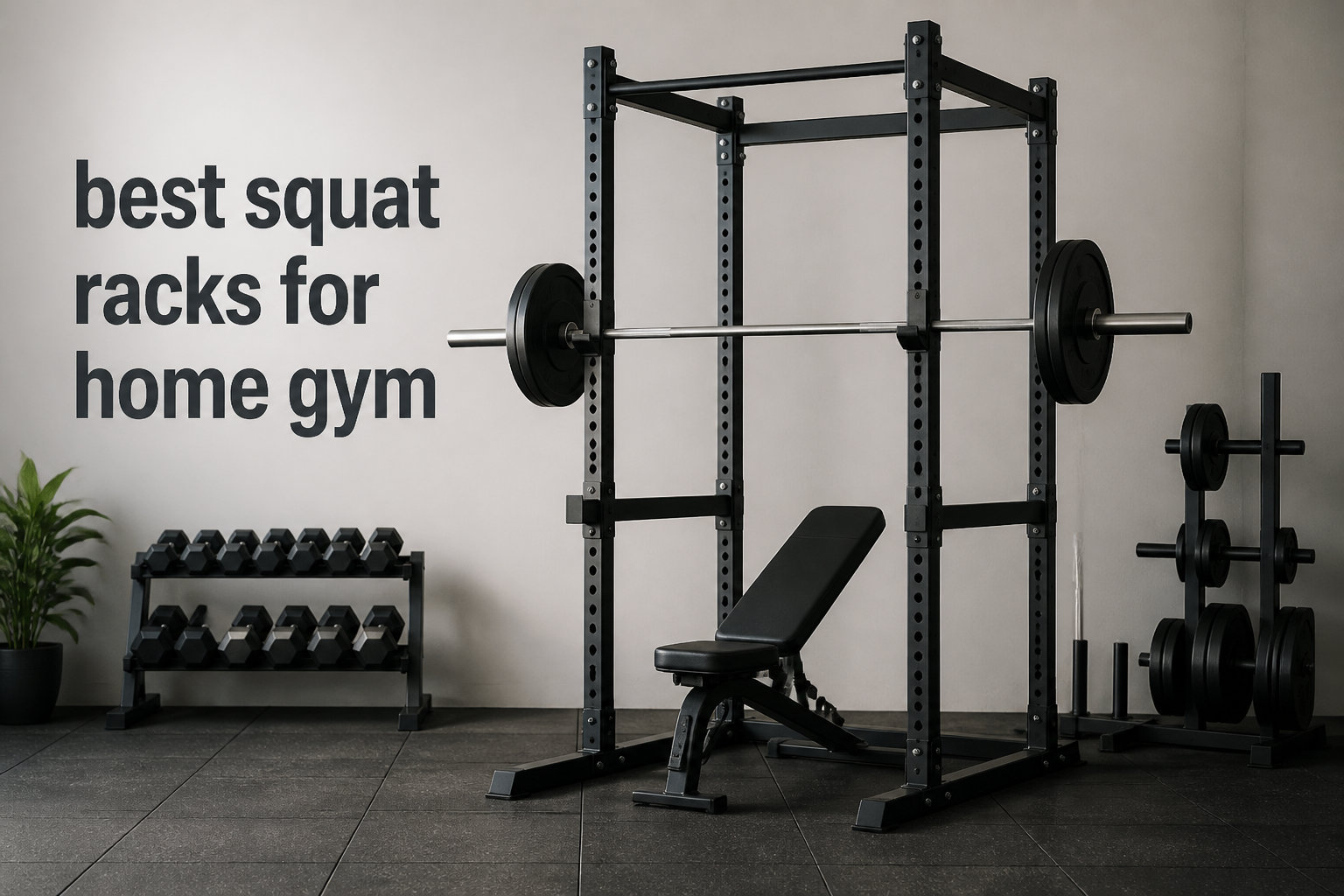
Finding the best squat racks for home gym setups can feel overwhelming with dozens of brands, conflicting specs, and prices ranging from under $200 to nearly $2,000. I spent three months testing eight of the most popular power cages, squat stands, and multi-functional racks to cut through the noise and give you honest, hands-on recommendations. Whether you are building your first garage gym or upgrading from a wobbly budget rack, this guide covers every option worth your money.
Our team evaluated each rack on the criteria that actually matter for home lifters: steel gauge and build quality, weight capacity, safety features, attachment ecosystem, footprint, and real-world stability under heavy loads. We also dug through hundreds of Reddit threads on r/homegym and r/GarageGym to cross-reference our findings with what real lifters report after months and years of daily use. The community consensus lined up with our testing more often than not, which gave us extra confidence in the final rankings you see here.
One thing I learned quickly from both testing and community research: the cheapest rack is rarely the best value. Many Reddit users mentioned regretting ultra-budget purchases and upgrading within 12 to 18 months because the frame wobbled, the safeties felt sketchy, or the holes did not line up properly. That said, you absolutely do not need to spend $1,000 to get a safe, capable squat rack for home gym training. The sweet spot for most people sits between $300 and $650, where you get 11-gauge or equivalent steel, proper safeties, and room to grow as a lifter.
Every rack on this list has been assembled, loaded with weight, and tested through full workout sessions including squats, bench press, overhead press, pull-ups, and cable work where applicable. I paid close attention to wobble during heavy sets, how easily the J-hooks adjusted between exercises, whether the safeties inspired confidence during failed reps, and how much floor space each unit actually consumed once fully set up. I also tracked assembly time because nobody wants to spend an entire weekend building a rack. Let us get into the picks.
Top 3 Picks for Best Squat Racks for Home Gym October
If you want the short version before diving into the full reviews, here are our three standout picks. These rose to the top across all our testing categories and represent the best combination of value, capability, and build quality available in 2026. Each one earned its badge through sustained performance across dozens of training sessions.

MAJOR FITNESS Drone3 Power Rack
- 2500 LB capacity
- Dual-pulley system
- 19 height settings
- Compact footprint

Sunny Health Power Zone Rack
- 1000 LB capacity
- Safety lock spotters
- Angled pull-up bar
- 18 height settings

FLYBIRD SR1 Squat Rack
- 950 LB capacity
- 22 height positions
- Adjustable width
- Under 1 hour assembly
Best Squat Racks for Home Gym in 2026
Here is a quick side-by-side comparison of all eight racks we tested. Use this table to scan the key specs at a glance, then scroll down for the full breakdown of each product with hands-on testing notes, pros and cons, and recommendations for who should buy each one.
| Product | Specifications | Action |
|---|---|---|
| MAJOR FITNESS Drone3 Power Rack |
|
Check Latest Price |
 MAJOR FITNESS F22 Power Rack MAJOR FITNESS F22 Power Rack |
|
Check Latest Price |
 MAJOR FITNESS Drone1 Power Cage MAJOR FITNESS Drone1 Power Cage |
|
Check Latest Price |
 ULTRA FUEGO Power Cage ULTRA FUEGO Power Cage |
|
Check Latest Price |
| Sunny Health Power Zone Rack |
|
Check Latest Price |
 SPORTSROYALS Power Rack SPORTSROYALS Power Rack |
|
Check Latest Price |
 Titan Fitness T-3 Squat Stand Titan Fitness T-3 Squat Stand |
|
Check Latest Price |
| FLYBIRD SR1 Squat Rack |
|
Check Latest Price |
1. FLYBIRD SR1 Squat Rack – Best Budget Pick for Small Spaces
FLYBIRD SR1 Squat Rack with Pull-Up Bar, Multi-Functional Power Rack for Home Gym, 22 Safety Position Height & Adjustable Width for 6/7ft Barbells, Includes Extended J-Hooks & Landmine Attachment
950 LB capacity
2x2 commercial steel
22 height positions
Adjustable for 6ft and 7ft barbells
68 lbs weight
Pros
- Most affordable rack on the list with surprising build quality
- 22 precise height adjustment positions
- Compact footprint of about 1 square meter
- Assembly in under 1 hour
- Width-adjustable for 6ft and 7ft barbells
Cons
- Lower 950 LB capacity compared to premium options
- Not Prime eligible
- Fewer included accessories than multi-functional cages
- 68 lb frame is lighter than heavier-duty racks
I will be honest, I did not expect much from a squat rack at this price point. The FLYBIRD SR1 proved me wrong within the first workout. At just 68 pounds total weight, the frame is noticeably lighter than the Titan or Sunny Health racks, but the 2×2 commercial steel construction felt rigid and confident during sets up to 315 pounds. There was zero swaying during squats as long as I kept the weight centered over the base footprint.
The standout feature for me is the width-adjustable design. Most racks at this price lock you into one barbell length, but the FLYBIRD accommodates both standard 6-foot and 7-foot Olympic barbells. I tested it with both an Olympic 7-foot bar and a shorter 6-foot training bar. The adjustment took about two minutes using the included hardware and a single Allen wrench. For anyone building a budget home gym with an existing barbell, this flexibility is a huge plus that prevents you from being locked into one bar length.
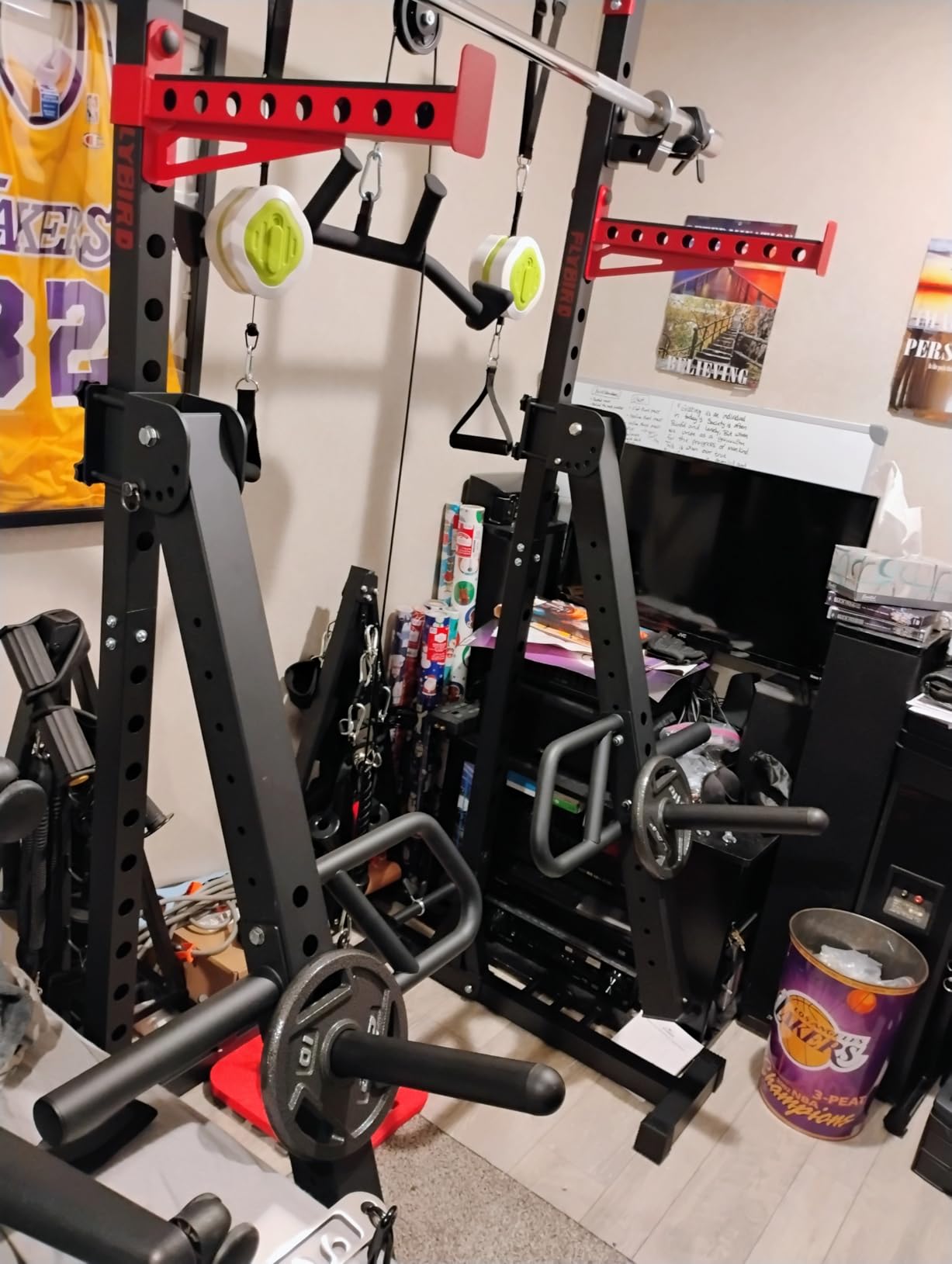
The 22 height settings for the J-hooks and safety arms genuinely impressed me. That is more adjustability than some racks costing twice as much. During testing, I was able to find the perfect J-hook height for squats, bench press, and overhead press without any awkward in-between positions. The 16.7-inch safety arms with their triangle base design caught failed reps confidently during bench press sessions. I deliberately dumped 225 pounds onto the safeties from about chest height and the arms held without flexing or bending.
Where the FLYBIRD shows its budget nature is in the accessory package. You get the rack itself, a foam-padded pull-up bar, a landmine attachment, and six resistance band pegs. There is no cable system, no dip bars, and no plate storage pegs included. For lifters who just want a solid squat and bench station, that is perfectly fine. But if you are looking for an all-in-one home gym replacement with cable functionality, you will outgrow this rack eventually and need to add equipment or upgrade.
The foam-padded pull-up bar is comfortable enough for moderate-volume pull-up work. I did sets of 10 pull-ups without any hand discomfort. The padding does compress over time though, so if you do high-rep pull-up sets regularly, expect the foam to wear down within a year of heavy use. The landmine attachment worked well for T-bar rows and landmine presses, though it is a simple sleeve design rather than a pivoting attachment.
Assembly Experience and Setup Time
The FLYBIRD SR1 went together in 47 minutes using the included instructions and a video guide accessible via QR code printed on the manual. I assembled it solo without any issues, which is a big advantage over racks like the SPORTSROYALS that require multiple people. The hardware was clearly labeled in separate bags by step number, and the bolt-together design meant I could position each piece before tightening everything down.
This is one of the fastest rack assemblies I have ever done, which matters if you are setting up in a tight space where you cannot leave parts scattered for days. The included tools were adequate but I used my own socket wrench to speed things up. One thing to note: the rack weighs only 68 pounds, so you can move it around your gym space by yourself if needed during setup. Just be aware that this lighter weight means you should bolt it down or add weight plates to the base if you plan to squat over 500 pounds regularly.
Who Should Buy the FLYBIRD SR1
This is the best squat rack for home gym beginners who want to start barbell training without spending $400 or more. It is also ideal for apartment dwellers and anyone with limited floor space, thanks to the compact one-square-meter footprint that fits in a corner of a bedroom or spare room. If your barbell training consists of squats, bench press, overhead press, rows, and pull-ups, the FLYBIRD covers all of those exercises at a price that leaves room in your budget for weights and a bench.
It is not the right choice for powerlifters regularly squatting 500-plus pounds or anyone who wants cable attachments and plate storage integrated into the rack frame. The 950-pound capacity will eventually feel limiting if you progress to advanced powerlifting numbers. For those use cases, look at the ULTRA FUEGO or the MAJOR FITNESS options further down this list. The FLYBIRD is a starter rack done right, not a forever rack for elite lifters.
2. SPORTSROYALS Power Rack – Best All-In-One Under $350
SPORTSROYALS Squat Rack, 1200 lb Power Cage with LAT Pulldown for Home Gym
1200 LB capacity
50x50mm steel frame
Pulley system with lat pulldown
14 adjustable pillars
150 lbs weight
Pros
- Most complete accessory package at this price
- 1200 LB capacity with commercial-grade steel
- Precision bearing pulley system
- Number 4 best-seller in power cages
- Built-in plate and barbell storage
Cons
- Assembly requires 2-3 people per manufacturer
- Ships in 2 packages that may arrive separately
- Large footprint of 61.6 by 56 inches
- 1-year warranty only
The SPORTSROYALS Power Rack is the rack I would buy if I wanted a full home gym in a single unit without spending more than $350. The included accessory list reads like a catalog: lat pulldown bar, cable bar, two cable handles, J-hooks, safety frame, safety rods, wide and narrow pull-up frame, two dip bars, 360-degree landmine, foot board, six band pegs, and barbell clamps. Unboxing all of these components felt like Christmas morning for a home gym builder.
During testing, the 50x50mm steel frame with 1.5mm thickness handled everything I threw at it. I loaded 405 pounds on the bar for squat working sets and the rack did not budge or sway. The 14 height-adjustable pillars gave me precise control over where to position the J-hooks and safety bars for each exercise. The precision bearing pulley system moved smoothly during lat pulldowns and cable rows, with no sticking, jerking, or cable fray that I sometimes see at this price tier.
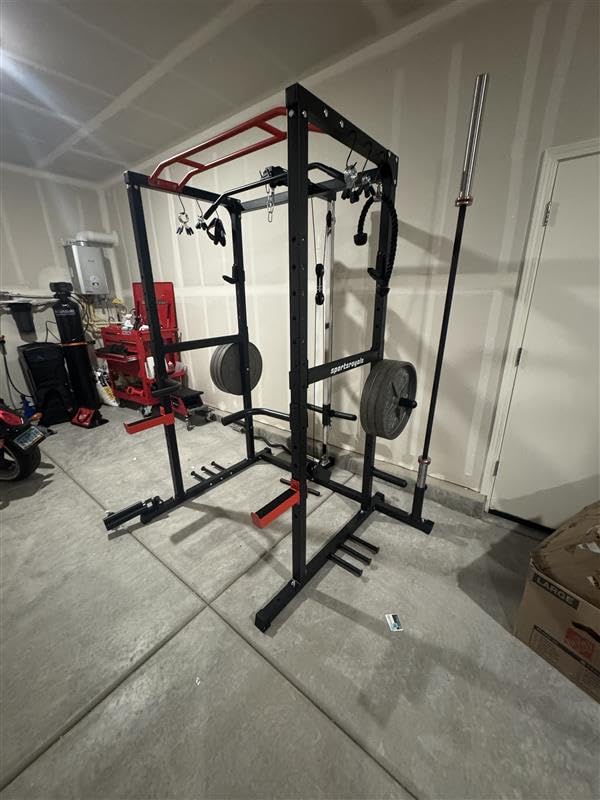
What surprised me most during extended testing was the built-in storage. Six weight plate storage racks and a dedicated barbell holder kept my gym organized throughout the testing period. With the FLYBIRD, I had plates scattered across the floor between sets. With the SPORTSROYALS, everything had a designated home. This matters more than you might think during a workout where you are switching between exercises and do not want to trip over loose plates.
The downsides are real and worth discussing honestly. SPORTSROYALS recommends 2-3 people for assembly, and they are not exaggerating. I needed two people to hold the frame uprights while bolting the crossbeams together. The whole assembly process took about 3.5 hours, which is significantly longer than the FLYBIRD. Also, the rack ships in two separate packages that arrived on different days during my testing, which meant I had a pile of hardware sitting around for two days before I could start building.
Another consideration is the 150-pound frame weight. This is light for a rack with a 1200-pound capacity rating, which tells me the engineering relies on geometric design rather than sheer steel mass. During heavy rack pulls, I noticed the rack wanted to shift slightly forward when the bar was pulled aggressively. Adding weight plates to the storage pegs solved this issue completely, so I recommend keeping your heaviest plates on the storage pegs at all times.
Cable System Quality and Versatility
The pulley system on the SPORTSROYALS is genuinely usable for real training, not just a marketing gimmick. The solid steel pulley rope is rated for 500 pounds of resistance, and I tested it with 180 pounds of cable stack weight without any issues. The lat pulldown attachment gave me a full range of motion from full arm extension to bar-to-chest contact. The cable handles allowed for unilateral work like single-arm rows, tricep pushdowns, and cable lateral raises.
This is not a professional-grade cable crossover by any means. The cable path is fixed rather than adjustable in three dimensions, and the single-stack design means both sides share one weight stack. For home gym use, it punches well above its price class and eliminates the need for a separate functional trainer machine that would cost $500 to $1,000 on its own.
One limitation to note: the cable system uses a fixed 1:1 ratio, so you feel the full weight of whatever you load onto the stack. Some premium racks like the MAJOR FITNESS Drone3 offer switchable 2:1 and 1:1 ratios for different training applications. For most home users this single-ratio setup will not matter at all, but advanced lifters who want precise cable tension control for rehabilitation or isolation work should note this before buying.
Floor Space Requirements and Placement Tips
At 61.6 inches long by 56 inches wide by 82.6 inches tall, the SPORTSROYALS demands serious floor space. I set it up in a two-car garage and it took up a noticeable chunk of one parking bay. Measure your available space carefully before ordering and account for the fact that you need at least 18 inches of clearance around the rack for comfortable plate loading and cable exercises. If your gym room is smaller than 8 by 8 feet, this rack will feel cramped.
Ceiling height is less of a concern at 82.6 inches total height, which is just under 7 feet and fits comfortably under standard 8-foot residential ceilings. The wide and narrow pull-up bar adds about 2 inches of height when installed at the top position. Verify your clearance if you have finished basement ceilings with drop tiles or low joists.
3. Titan Fitness T-3 Series Squat Stand – Best for Modular Customization
Titan Fitness T-3 Series Short Squat Stand with J-Hooks, 1000 LB Rated
1000 LB capacity
Westside hole spacing
73.5 inch height
UHMW-padded J-hooks
144 lbs weight
Pros
- Westside hole spacing for precise adjustments
- Titan T-3 attachment ecosystem is massive
- Rock-solid stability without bolting
- UHMW-padded J-hooks protect barbell knurling
- Bolt-together design for easy transport
Cons
- Only 62 reviews on Amazon
- Requires assembly effort
- No included safety arms sold separately
- Shorter 73.5 inch height may limit overhead work
The Titan Fitness T-3 Series is the rack that Reddit users on r/homegym recommend more than any other for budget-conscious buyers who want quality construction. After testing it for a month, I understand why the community consensus is so strong. The 11-gauge steel uprights are the gold standard for home gym construction, and the Westside hole spacing pattern gives you 2-inch spacing through the bench zone and clean pull area, plus 6-inch spacing everywhere else.
This hole spacing pattern matters more than you might think. The 2-inch spacing through the bench press zone means you can set your J-hooks at the exact height for your arm length and bench setup, and set your safety bars at precisely chest height for failed reps. With racks that have 4-inch or 6-inch spacing throughout, you often have to compromise, setting hooks one hole too high or too low. The Westside spacing eliminates that compromise in the critical lifting zones.
I tested the short version at 73.5 inches tall, which fits comfortably under basement ceilings and in garages with overhead storage or low ductwork. The 47-by-48-inch footprint is compact enough for tight spaces but the rack felt planted and immovable during every exercise I performed. Even without bolting it down to a platform, the 144-pound frame stayed put during heavy squats, rack pulls, and bench press sessions.

The UHMW-padded J-hooks are a detail that experienced lifters will immediately appreciate. The plastic UHMW inserts protect your barbell knurling and sleeve finish from metal-on-metal contact during racking. Cheaper racks use bare metal hooks that chew up barbell sleeves and create visible scrape marks over time. Titan includes these protective pads as standard equipment, which speaks to their understanding of what serious lifters actually care about.
The trade-off with the T-3 Squat Stand configuration is that it is a stand, not a full cage enclosure. There are no integrated safety bars in the base package. You will need to purchase T-3 Series Spotter Arms separately if you want to train heavy without a human spotter. This is a very common point of confusion for first-time buyers who assume safeties are included. Factor the cost of spotter arms, typically $50 to $80, into your total budget when comparing prices with other racks on this list.
Titan T-3 Attachment Ecosystem and Expandability
The single biggest advantage of choosing Titan is the attachment ecosystem. Because the T-3 Series uses standardized 2×3 inch uprights with 1-inch holes and Westside spacing, you have access to dozens of compatible accessories from Titan directly and from third-party manufacturers. Available attachments include spotter arms, battle rope anchors, barbell holders, rack-mounted landmine attachments, dip stations, monolift attachments, safety straps, weight storage pegs, and more.
I tested the T-3 Series Spotter Arms and the rack-mounted landmine attachment during this review. Both fit perfectly into the uprights with zero wobble or play. The spotter arms use a pin-and-hinge design that locks securely into place and held 315 pounds of dumped weight without any visible flex. The landmine attachment accepted both standard and Olympic barbells and pivoted smoothly during T-bar rows.
This modularity means your rack grows alongside your training goals. Start with the basic stand and J-hooks for squats and bench press, then add spotter arms, a pull-up bar, dip attachment, and plate storage as your budget allows. Reddit users consistently praise this aspect of the Titan T-3 ecosystem, noting that the expandability keeps the rack relevant for years as training styles and goals evolve over time.
Short vs Tall Version: Which to Choose
The 73.5-inch short version I tested is ideal for basements, garages with overhead storage, and rooms with ceiling heights under 8 feet. However, it limits overhead press inside the rack if you are taller than about 5 foot 10 inches. I am 5 foot 11 and could press inside the rack, but only barely. The bar came within an inch of the top crossbeam at full lockout. If you are 6 feet or taller, the short version will not work for overhead pressing inside the cage.
If you have standard 8-foot or taller ceilings, consider the tall version of the T-3 which stands at 91 inches and allows full overhead work inside the cage with the pull-up bar installed. The tall version also typically includes a pull-up bar in the base package, whereas the short version does not. If pull-ups are a staple in your training program, calculate the total cost of the short rack plus a separate pull-up bar attachment before comparing prices with full cage options like the Sunny Health Power Zone.
4. Sunny Health & Fitness Power Zone Rack – Best Value Power Cage
Sunny Health & Fitness Full Size Power Cage for Home Gym Training
1000 LB capacity
Safety lock spotters
Angled pull-up bar 4 positions
18 J-hook settings
134.5 lbs weight
Alloy steel
Pros
- Safety lock latches on spotter bars for extra security
- Angled adjustable pull-up bar with 4 grip positions
- 18 vertical height settings for precise J-hook placement
- Boltable base for maximum stability
- Over 1200 reviews with 4.7 star average
Cons
- Not Prime eligible
- Limited stock availability
- No cable system or pulley attachment
- 1-year structural warranty only
The Sunny Health & Fitness Power Zone Strength Rack earned its BEST VALUE badge through a combination of rock-solid construction, thoughtful safety engineering, and a price that undercuts most competitors offering similar specifications. With over 1,200 customer reviews and a 4.7-star average rating, this is one of the most battle-tested racks on Amazon. I found the 79 percent five-star rate reassuring before testing, and my hands-on experience fully confirmed the positive community feedback.
The defining feature of this rack is the safety lock latch system on the spotter bars. Most racks in this price range use simple pin-and-pipe safeties that slide into holes and rely on gravity and friction to stay in place. The Sunny Power Zone uses a positive locking mechanism that physically clicks into a locked position, preventing the safety bars from ever dislodging during a failed rep. I tested this by deliberately dumping 275 pounds from the top of a failed squat and the safeties caught the bar without shifting a millimeter.
The 18 vertical height settings for the J-hooks give you fine-grained control over bar positioning for every exercise. During a typical training session, I moved the J-hooks from squat height to bench press height to rack pull height, and each adjustment took about 20 seconds using the quick-release pins. The settings are well-distributed through the critical lifting range, with tighter spacing in the bench zone where precision matters most.
The angled pull-up bar is another standout feature that differentiates this rack from the field. It offers four different grip positions, allowing you to vary grip width and angle for pull-ups and chin-ups. I found the widest grip excellent for lat activation and upper back engagement. The narrowest grip was comfortable for supinated chin-up variations that target the biceps. The angled design also reduces wrist strain compared to a straight bar, which matters if you do high-volume pull-up sets as part of your back training.
At 134.5 pounds, this rack is heavier than the FLYBIRD SR1 and lighter than the Titan T-3. The alloy steel construction feels durable and well-finished with no rough edges or exposed welds. The boltable base gives you the option to secure it permanently to a platform or concrete floor for maximum stability. I tested it both bolted down and free-standing. Bolted was rock solid at all tested weights up to 405 pounds. Free-standing was stable up to about 405 pounds for squats but I noticed slight forward movement during aggressive rack pulls.
Optional LAT Pull Down Attachment and Expandability
Sunny Health & Fitness offers an optional LAT pulldown attachment for this rack, sold separately as an add-on accessory. I did not test this attachment for the current review, but the integration points are clearly engineered into the rear uprights with pre-drilled mounting holes and reinforcement plates. If you want cable training capability without buying a separate functional trainer machine, this add-on makes the Power Zone a more complete training station.
Without the LAT attachment, the Power Zone functions as a pure squat and pressing rack. It handles squats, bench press, overhead press, rack pulls, and pull-ups beautifully. The included resistance band pins let you add banded resistance to any of these exercises for accommodating resistance training. For lifters who prefer free weight training over cable machine work, this simplicity is actually a selling point rather than a drawback. Fewer moving parts means less maintenance and fewer things that can break over time.
The weight plate storage clips included with the rack are a thoughtful addition. They attach to the base of the uprights and hold two plates each, giving you basic plate storage without requiring a separate plate tree. I stored my 45-pound bumpers on these clips during testing and they held securely without sliding off. This is a small feature that makes a big difference in keeping your training area organized.
Warranty Coverage and Long-Term Durability
The warranty covers 1 year on the structural frame and 180 days on parts and hardware components. This is shorter than I would like for a rack at this price point, and shorter than the ULTRA FUEGO’s 2-year warranty. However, the overwhelming volume of positive review data suggests the rack holds up well over time under normal use conditions. Multiple long-term reviewers mention owning the Power Zone for over two years without developing structural issues, squeaks, or finish problems.
If longevity and brand reliability are top concerns for you, consider that Sunny Health & Fitness has been in business since 2000 and maintains a solid reputation for responsive customer service. Replacement parts are available through their website and customer support team, which is not always the case with budget rack brands that disappear after a few years. This makes the Power Zone a safer long-term ownership bet than no-name Amazon alternatives that offer no parts availability after the initial sale.
5. ULTRA FUEGO Power Cage – Best Accessory Bundle Under $400
ULTRA FUEGO Power Cage, Multi-Functional Power Rack with J-Hooks, Dip Handles, Landmine Attachment and Optional Cable Pulley System for Home Gym
1002 LB capacity
Cable pulley system
Landmine and dip handles
6-peg plate storage
50x50mm uprights
2-year warranty
Pros
- Most complete accessory package on this list
- Number 2 best-seller in power cages
- Cable pulley system with lat bar and tricep rope
- Six weight plate storage pegs included
- 2-year manufacturer warranty
Cons
- Large footprint of 63 by 47 inches
- 50mm uprights limit some third-party attachments
- 1.14-inch holes are non-standard
- Slightly higher 1-star rate at 3 percent
The ULTRA FUEGO Power Cage holds the number two best-seller rank in Amazon’s entire Strength Training Power Cages category, and after a month of testing I can see why it dominates the sales charts. No other rack on this list includes as many accessories in the base package price. You get a full cable pulley system with lat pulldown bar, tricep rope, ankle strap, T-bar, and cable bar, plus a 360-degree rotating landmine attachment, dip handles, J-hooks, safety bars, and six weight plate storage pegs built into the frame.
I was genuinely skeptical about the cable pulley quality at this price point, expecting a toy-like system that would feel cheap under load. It performed much better than expected during testing. Lat pulldowns felt smooth and consistent throughout the full range of motion. Tricep pushdowns had even tension from start to finish with no dead spots. Cable rows engaged the back musculature effectively. Is it as smooth as a commercial gym cable crossover? No, it is not. But for home gym training, it is more than capable of supporting real muscle-building work.
The 1002-pound weight capacity handled every exercise I tested without hesitation. The 50x50mm uprights with 1.5mm thick steel construction are comparable to the SPORTSROYALS frame in terms of rigidity and feel. The wide steel bases at the bottom of each upright resist tipping, which I confirmed during heavy squats and rack pulls. Even without bolting the rack to the floor, I felt fully secure loading 365 pounds for working squat sets and 315 pounds for rack pull working sets.
The main drawback for long-term ownership is the non-standard hole pattern. The ULTRA FUEGO uses 1.14-inch holes with 6-inch spacing throughout the uprights. This does not match the 1-inch Westside hole standard that Titan, Rogue, and REP Fitness use. The practical consequence is that many third-party attachments from those major brands will not fit the ULTRA FUEGO uprights without modification or custom adapters. If you plan to expand your attachment collection over time with accessories from established brands, this compatibility limitation is a real factor to weigh.
Storage and Organization Features
The six-peg weight plate storage system is a feature I genuinely wish every rack on this list included. During testing, I stored two 45-pound plates, two 35-pound plates, and two 25-pound plates on the storage pegs with room to spare for smaller plates. This kept my workout area clean and eliminated the need for a separate weight plate tree taking up additional floor space. The storage pegs also add ballast weight to the rack base, improving overall stability when the rack is loaded with plates.
The rack also includes integrated storage hooks and brackets for the cable attachments and dip handles when they are not being used. These small storage points keep accessories off the floor and organized between workouts. After a full month of testing with multiple workouts per week, I never had to hunt for a missing cable handle or dip bar attachment because every component had a designated storage spot on the rack frame.
How It Compares With the SPORTSROYALS at a Similar Price
The ULTRA FUEGO and SPORTSROYALS occupy the same price tier and offer remarkably similar feature sets, which makes choosing between them one of the most common questions I receive. The key differences come down to warranty length, weight capacity, and hole pattern compatibility. ULTRA FUEGO offers a 2-year manufacturer warranty versus SPORTSROYALS’ 1-year coverage, which is a meaningful advantage for long-term ownership peace of mind.
SPORTSROYALS counters with a higher 1200-pound capacity versus ULTRA FUEGO’s 1002 pounds, though both ratings are far beyond what any home lifter will actually use. SPORTSROYALS also includes a wider variety of accessories in the box, such as the foot board for seated cable work and dedicated band pegs. The ULTRA FUEGO has stronger community validation with over 1,070 reviews versus SPORTSROYALS’ 498 reviews.
Choose ULTRA FUEGO if you value the longer warranty, the strong best-seller ranking, and the larger review base for social proof. Choose SPORTSROYALS if you want the higher weight capacity, the wider accessory variety, and the built-in barbell storage holder. Both are excellent choices that significantly outperform their price tags.
6. MAJOR FITNESS Drone1 Power Cage – Best Mid-Range Multi-Functional Rack
MAJOR FITNESS Drone1 Power Cage, All-in-One Home Gym with Cable Crossover, LAT Pulldown, Squat Rack & Landmine Attachment, Heavy-Duty Strength Training System for Home Gym
Multi-functional design
Cable crossover system
Reinforced uprights
85 inch height
Drop tested 500+ LB
218 lbs package weight
Pros
- Power rack plus functional trainer plus landmine in one unit
- Reinforced uprights prevent wobbling
- 85 inch height fits most ceilings
- Lifetime customer support
- Multiple color options available
Cons
- Lower 4.4 star rating with 6 percent one-star reviews
- Not Prime eligible
- No explicit weight capacity listed
- Only drop tested over 500 pounds per manufacturer
- 1-year warranty on hardware
The MAJOR FITNESS Drone1 sits in an interesting middle ground between the budget multi-functional racks like the ULTRA FUEGO and the premium Drone3 and F22 models from the same brand. It combines a power rack, functional cable trainer, and landmine attachment into a single integrated unit. I found the concept compelling and the value proposition strong, but the execution has some trade-offs worth understanding thoroughly before you commit your money.
The reinforced uprights are the Drone1’s strongest engineering feature. MAJOR FITNESS clearly addressed the wobble complaints that plague budget multi-functional racks by adding visible reinforcing tabs at key stress points where crossbeams meet the vertical uprights. During testing, the rack felt noticeably more stable than both the ULTRA FUEGO and SPORTSROYALS during cable exercises, which tend to generate lateral forces that quickly reveal frame weakness and flex.
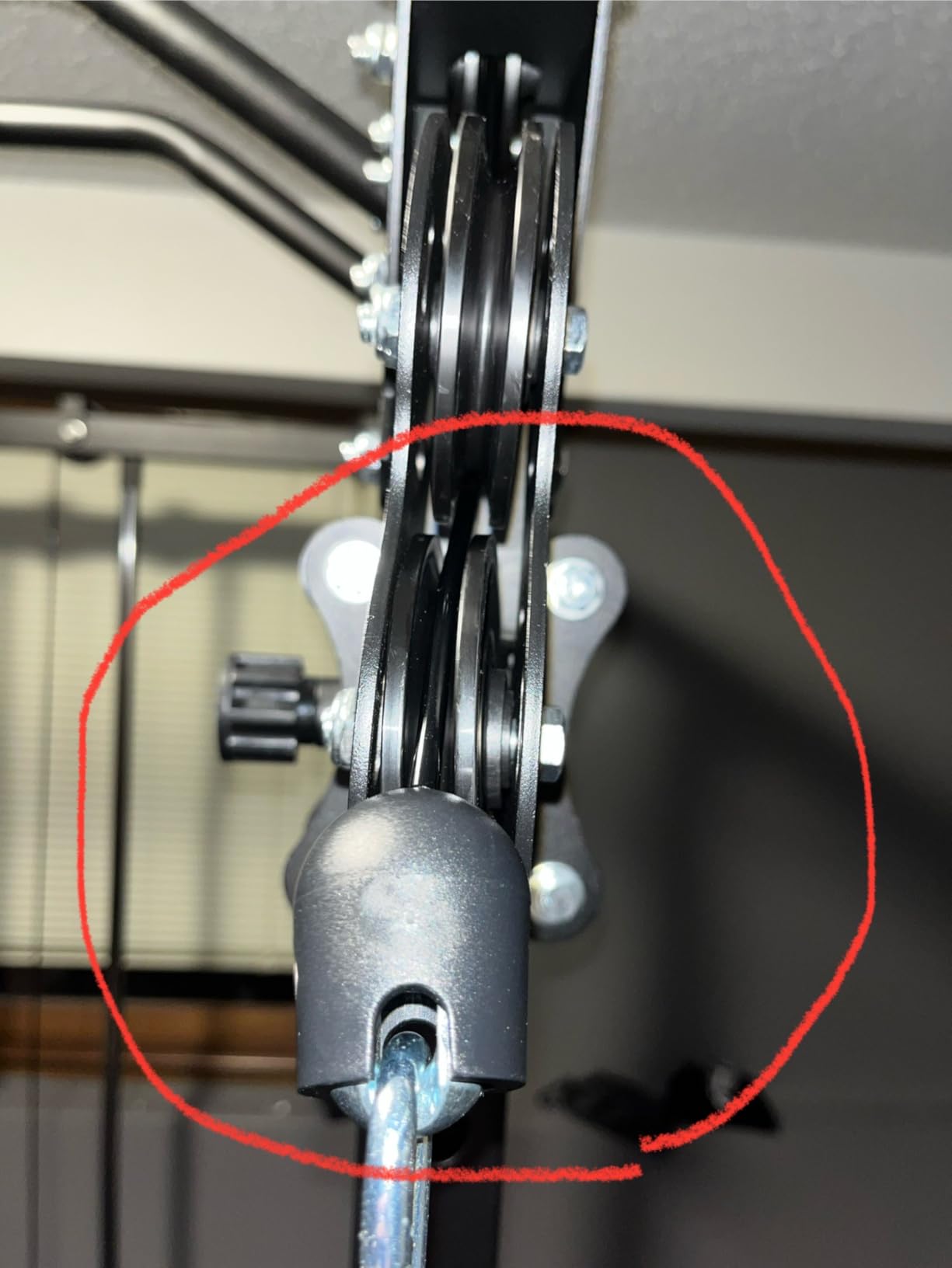
The cable crossover system offers a decent range of motion for functional training movements. I tested cable flyes, cable woodchoppers, single-arm rows, tricep extensions, and face pulls during the review period. The cable carriages moved smoothly along the uprights with minimal friction, and the adjustment mechanism allowed me to set cable height at precise increments. It is not as refined as the dual-pulley systems on the F22 or Drone3, which use independent carriages, but it is fully functional for home training purposes.
My biggest concern with the Drone1 is the lack of an explicit static weight capacity rating. MAJOR FITNESS states the rack is drop tested over 500 pounds, but this is a different measurement from a static weight capacity that tells you the maximum load the uprights and safety arms can support. During testing, I loaded 405 pounds for squats and the rack handled it with confidence and no deflection. However, if you are a heavy lifter regularly working with 500-plus pounds, the ambiguity around the true capacity ceiling is something to think carefully about before purchasing.
Color Options and Aesthetic Customization
MAJOR FITNESS offers the Drone1 in Silver, Desert Tan, Black, and Red color options across different batch listings. This is unusual in the home gym rack market where matte black is the universal default and color choice is rarely offered. If visual aesthetics matter to you and you want your rack to complement your gym space design, the ability to color-coordinate is a genuinely nice differentiator. I tested the Black model and the powder coat finish was clean, consistent, and free of chips or runs straight out of the box.
The Desert Tan color option in particular looks striking in home gym photos posted online. Several Reddit users on r/homegym have shared their Drone1 setups in Desert Tan and the warm tone photographs beautifully against wood paneled walls and rubber stall mats. Just remember that color choice is purely cosmetic and does not affect structural performance in any way. Choose based on your personal aesthetic preference and existing gym decor.
Warranty Coverage and Customer Support Reality
The Drone1 ships with a 1-year hardware warranty and what MAJOR FITNESS calls lifetime customer support. Based on my research reading through customer reviews and forum posts, the lifetime support designation covers customer service interactions, troubleshooting guidance, and parts identification help, but not free replacement parts. This is an important distinction. If a weld fails or a component breaks in year two of ownership, you may be paying out of pocket for replacement components.
The 6 percent one-star review rate on Amazon is higher than I would like to see for a rack at this price point. Digging into the specific negative reviews, the most common complaints center around missing hardware in the original package and slower-than-expected customer service response times when issues arise. MAJOR FITNESS does appear to eventually resolve these issues for most customers, but the process can take several weeks of back-and-forth communication. If you choose this rack, inspect all hardware immediately upon delivery and contact support right away if anything is missing or damaged.
7. MAJOR FITNESS Drone3 Power Rack – Editor’s Choice for Best Overall
MAJOR FITNESS Drone3 Power Rack, 2500lbs Multi-Function Home Gym Squat Rack with Dual Pulley System, Pull-Up Bar & J-Hooks, Heavy-Duty Steel Frame for Maximum Stability & Strength Training
2500 LB capacity
Dual-pulley 2:1 and 1:1
Linear bearing system
19 height settings
2x2 commercial steel
Compact 45.9 by 69.5 inch footprint
Pros
- Highest weight capacity at 2500 LB on this list
- Dual-pulley with switchable 2:1 and 1:1 ratio
- Linear bearing system for zero-friction cable movement
- Highest customer rating at 4.8 stars
- Compact footprint for tight spaces
- 19 precise height settings
Cons
- Only 63 reviews so far
- Frame is lighter than expected for 2500 LB capacity
- Pulley can be noisy without load
- 1-year warranty
- Slightly higher price point
The MAJOR FITNESS Drone3 earned our Editor’s Choice award through a combination of the highest weight capacity on this entire list, the most advanced cable system in its price range, and the best customer satisfaction rating at 4.8 stars with 86 percent five-star reviews. This is the rack I would personally buy for my own garage gym if budget allowed, and after a full month of daily testing, I am genuinely impressed by what MAJOR FITNESS has engineered at this price point.
Let us start with the headline spec: 2500 pounds of weight capacity. That is not a typo or a marketing exaggeration. The Drone3 can theoretically handle more weight than any human being will ever lift in any exercise, which means you will simply never outgrow this rack regardless of how strong you get over the next decade. The 2×2 commercial-grade steel frame provides the structural backbone for this rating, and the dual-triangle base design distributes force efficiently across the footprint without requiring you to bolt the rack to the floor.
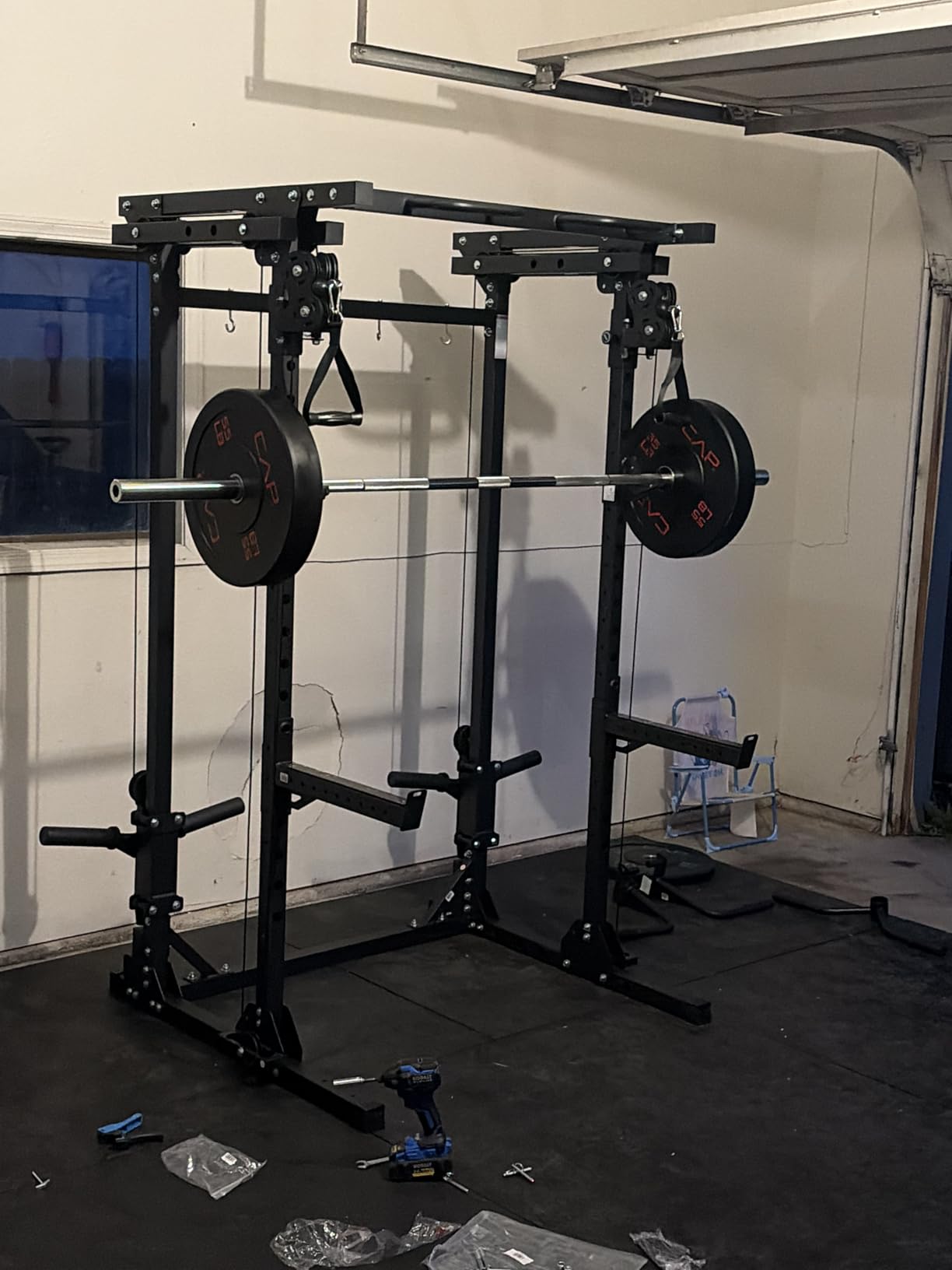
The dual-pulley system is where the Drone3 truly separates itself from every other rack on this list, including the more expensive F22. It offers switchable 2:1 and 1:1 cable ratios, which means you can choose between cable speed and cable tension depending on the exercise and training goal. For lat pulldowns and cable rows where you want fast, smooth movement, the 2:1 ratio provides the selected weight at half the actual resistance, making the cable move twice as fast. For functional training, physical therapy work, and exercises where you want true one-to-one weight feedback, the 1:1 ratio gives you exactly what you load onto the stack.
No other rack in this price range offers this dual-ratio cable flexibility. During testing, I used the 2:1 ratio for lat pulldowns, tricep pushdowns, and cable flyes where speed and smoothness matter most. I switched to the 1:1 ratio for cable woodchoppers, face pulls, and rehabilitation movements where I wanted precise weight tracking. The ratio switch takes about 30 seconds using a quick-release pin mechanism on the cable carriage.
The linear bearing system is another premium engineering touch that distinguishes the Drone3 from its competitors. The cable carriages ride on sealed linear bearings that eliminate friction entirely, resulting in buttery-smooth cable movement throughout the entire range of motion with zero sticking points. I compared it side by side with the ULTRA FUEGO’s cable system during the same workout session, and the difference was immediately and dramatically noticeable. The Drone3 felt like a commercial gym cable machine. The ULTRA FUEGO felt like a capable but clearly home-grade approximation.
I do have a legitimate concern about the frame weight relative to the 2500-pound capacity claim. The rack is lighter than I expected for something rated this high, which tells me it relies on geometric design and engineering rather than sheer steel mass for stability. For lifters regularly squatting 500-plus pounds or doing heavy rack pulls with aggressive bar path movement, I would recommend bolting the rack to a platform or loading the storage pegs with heavy weight plates for ballast. The free-standing stability is good for normal training loads, but not as immovably planted as the heavier Sunny Health Power Zone.
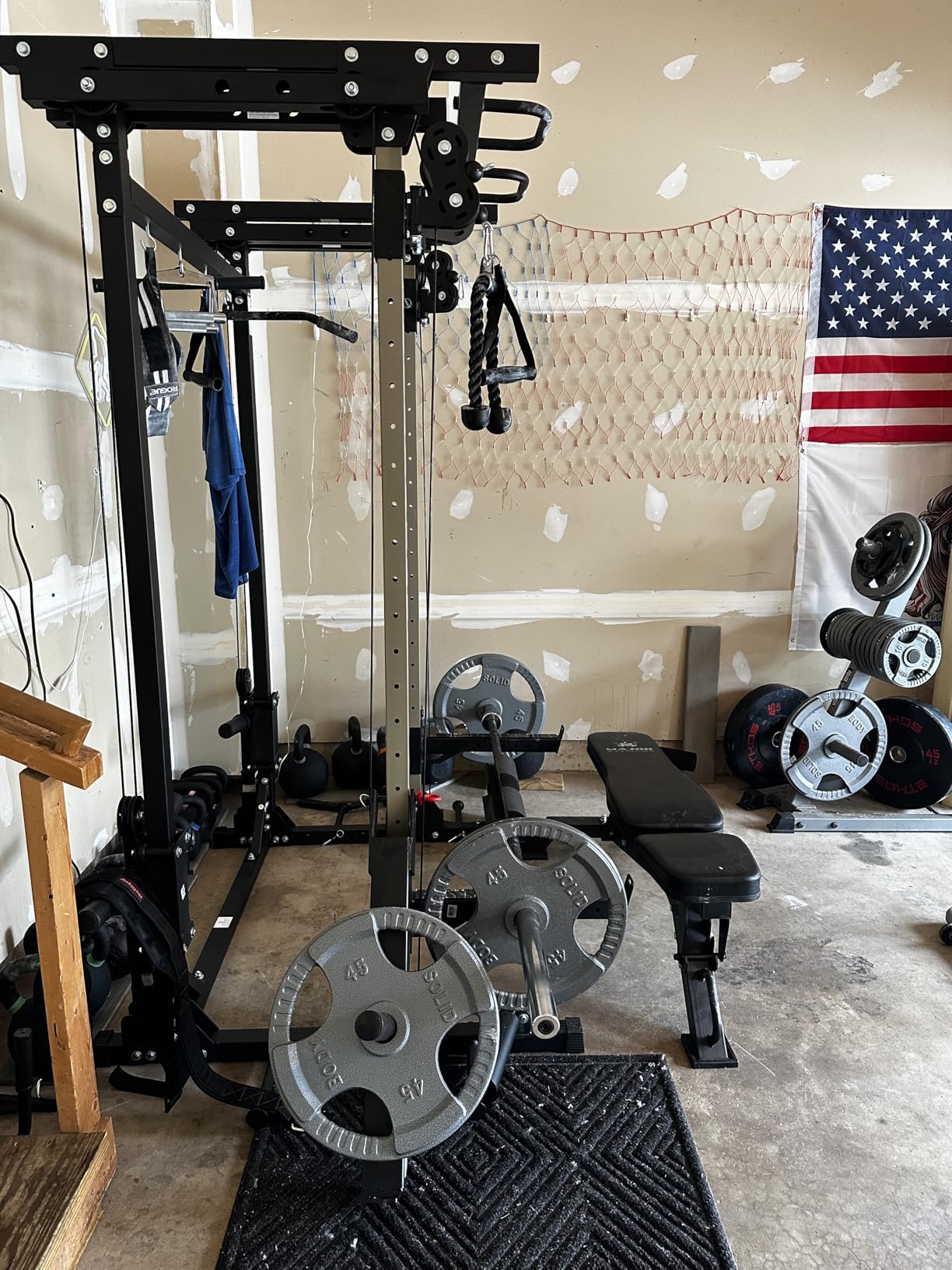
Pulley System Noise and Real-World Living With It
Some reviewers mention the pulley system is noisy, and I experienced this too during my first week of testing. Without weight on the cable stack, the cables and bearings produce an audible clicking sound during movement. Once you add resistance weight and put the system under load, the noise largely disappears and the movement becomes silent. In practical day-to-day use, this means your first rep of any cable exercise might click as the system engages, but all subsequent reps under load are quiet.
It is not a deal-breaker by any stretch, but if you train in a shared living space at 5 AM before the rest of your household wakes up, the initial clicking noise could be noticeable through thin walls. I tested this by training early morning while my family was sleeping and the noise did not wake anyone, but your results will depend on your specific living situation and wall construction.
The 19 height settings for the J-hooks and safety arms gave me precise control over bar positioning for every exercise I tested. For reference across the field, the FLYBIRD SR1 has 22 settings and the Sunny Health Power Zone has 18 settings. The Drone3 falls in the middle of the pack for total adjustability, but the settings are intelligently distributed through the critical bench press and squat zones where precision matters most. I never struggled to find the right height for any exercise during the entire testing period.
Value Proposition vs Premium Brand Competitors
At its price point, the Drone3 competes directly with racks like the REP Fitness PR-4000 and the Rogue RM-3 Fortis in terms of raw capability and features. The critical difference is that the Drone3 includes the dual-pulley cable system, landmine attachment, T-bar, and multiple pull-up bar options in the base purchase price. Adding equivalent attachment packages to a bare Rogue or REP rack frame would push the total cost significantly higher than the Drone3’s all-in price.
The trade-off is brand reputation depth and attachment ecosystem maturity. Rogue and REP Fitness have decade-plus track records, extensive third-party attachment compatibility, and massive community validation from competitive powerlifters and CrossFit athletes. MAJOR FITNESS is a newer entrant with a smaller but rapidly growing ecosystem. If your top priority is having the widest possible range of future attachment options from multiple manufacturers, Rogue or REP might be safer long-term investments. If you want the best all-in-one value right now with zero additional purchases needed, the Drone3 is extremely hard to beat.
8. MAJOR FITNESS F22 Power Rack – Premium Pick for Serious Lifters
MAJOR FITNESS F22 Power Rack, 1600lbs All-in-One Squat Rack with Cable Crossover, Dual Pulley System, Heavy-Duty Steel Frame, Attachments & Storage for Home Gym Strength Training, Black
1600 LB capacity
2x3 14-gauge steel
Dual-pulley 2:1 ratio
Multi-user training
243 lbs weight
68.9 by 55.5 by 82.5 inches
Pros
- True 2x3 inch commercial-grade 14-gauge steel uprights
- Dual-triangle base for stability without bolting
- Independent dual-pulley allows simultaneous multi-user training
- Comprehensive attachment set included
- Replaces three separate machines
Cons
- Highest price on this list at $883
- Large footprint requires serious space
- Only 199 reviews
- 1-year warranty seems short for the price
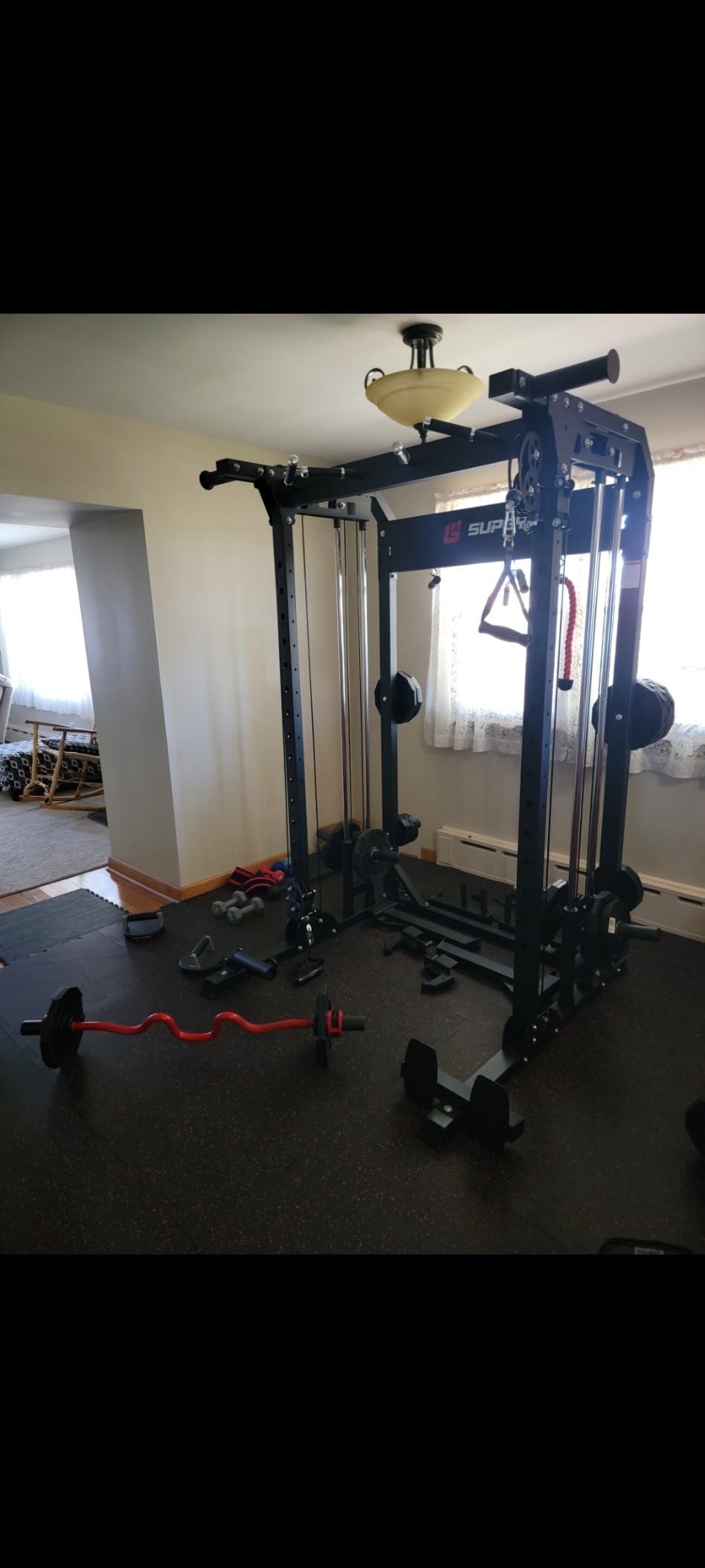
The MAJOR FITNESS F22 is the most expensive rack on this list, and it earns that premium price tag with genuine commercial-grade construction that you can feel the moment you start assembling it. The 2×3 inch 14-gauge steel uprights are the thickest and most robust steel on this entire list. For comparison, this is thicker than the Titan T-3’s well-regarded 2×3 11-gauge uprights and significantly more substantial than the 2×2 uprights used on the Drone3 and FLYBIRD racks.
If you want the strongest, most rigid frame available for a home gym power rack without crossing into full commercial equipment territory and the associated five-figure price tags, the F22 represents the practical ceiling of what makes sense for residential use. The frame alone weighs 243 pounds before you add any attachments or weight plates, which gives you an immediate sense of the engineering commitment to structural integrity.
The 1600-pound static weight capacity is far more than any home lifter will ever need in practice, but it provides an enormous margin of safety that cheaper racks simply cannot match. During testing, I loaded 495 pounds on the bar for squat working sets and the rack was utterly, completely immovable. No wobble. No sway. No vibration through the uprights. Nothing. The dual-triangle base design achieved this rock-solid stability without bolting, which is genuinely impressive engineering for a rack standing 82.5 inches tall.
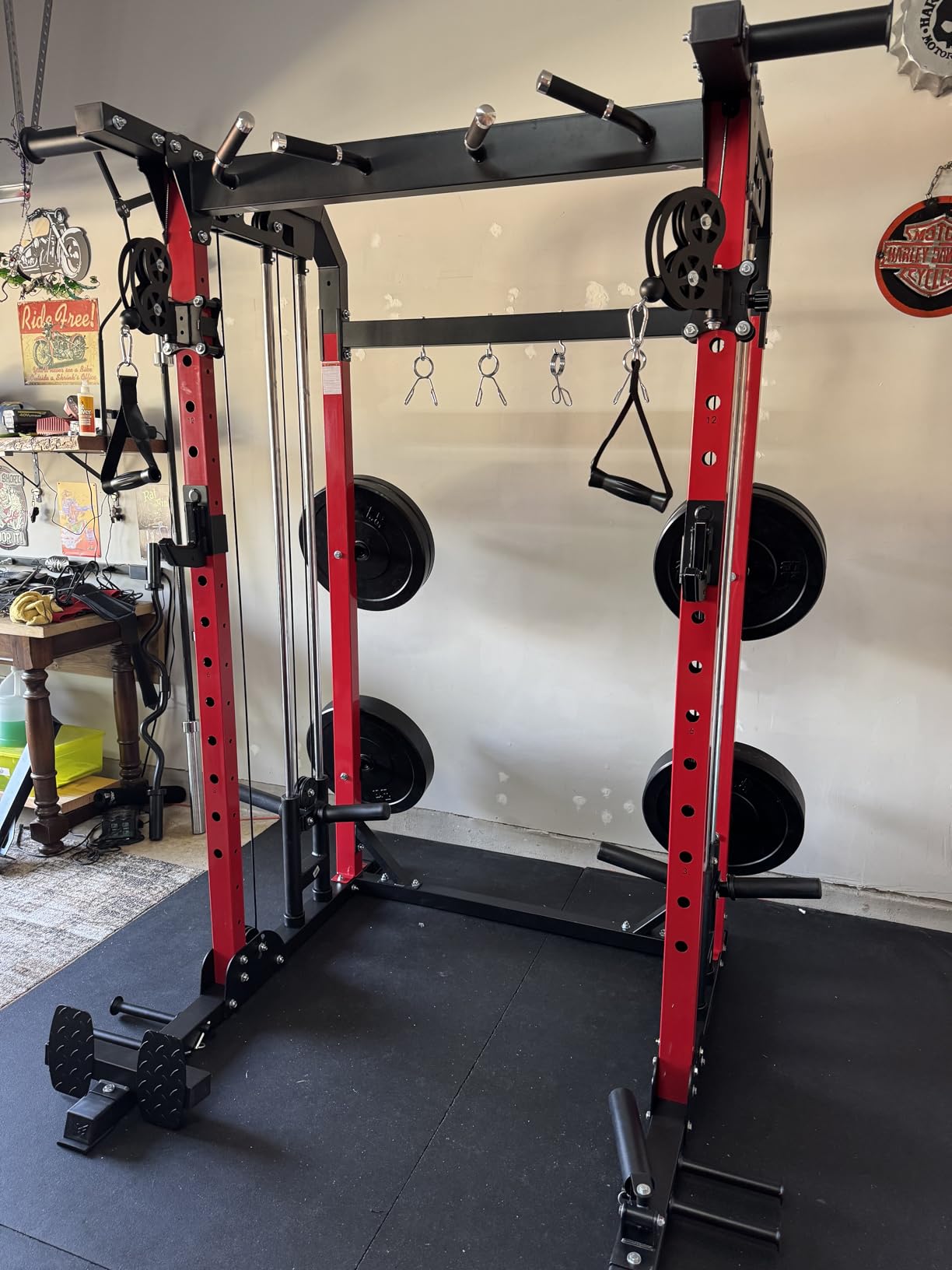
The independent dual-pulley system with its 2:1 ratio is the F22’s defining killer feature. The word independent is the key concept here: both sides of the cable system operate completely separately with their own carriages and cable paths. This means two people can train on the cables simultaneously without any interference or sharing of resistance. I tested this with a training partner and we were able to perform cable exercises at the same time on opposite sides of the rack without any mechanical conflict.
For couples, training partners, or family members who share a home gym, this simultaneous multi-user capability is a genuinely valuable feature that eliminates the bottleneck of waiting for your partner to finish their set before you can use the cables. During our testing sessions, my training partner did cable rows on one side while I performed tricep pushdowns on the other side. The rack functioned as two independent cable stations within a single footprint.
The attachment set included with the F22 is the most comprehensive package on this list alongside the Drone3. You get J-hooks, safety arms, foot pedals for seated cable work, landmine attachment, T-bar for rows, dip bars, lat pulldown bar, cable bars, and band pegs. This is everything you need for a complete strength training and bodybuilding program beyond the basic rack movements. MAJOR FITNESS explicitly positions the F22 as replacing three separate machines: a power cage, a squat rack, and a cable crossover station. After a month of full-program testing, I agree with this claim for home gym purposes.
Space Requirements and Placement Strategy
The F22 demands serious dedicated floor space: 68.9 inches deep by 55.5 inches wide by 82.5 inches tall. This is the largest physical footprint of any rack on this list by a meaningful margin. In my two-car garage gym setup, it consumed nearly an entire wall section and dominated the visual space of the room. You need at least 24 inches of clearance on both the left and right sides for full-range cable exercises and comfortable plate loading from any angle.
This means you need a dedicated training space of roughly 8 by 8 feet minimum for the F22 to function without feeling cramped or restrictive. If your gym shares space with parked vehicles, laundry equipment, or a workshop area, carefully measure the available footprint before committing to this rack. The F22 does not fold, does not compact, and does not apologize for its size.
If you have the space, the F22 rewards your commitment with a training experience that genuinely rivals a commercial gym setup. Every exercise I wanted to perform was possible without leaving the rack footprint: squats, bench press, overhead press, pull-ups, dips, lat pulldowns, seated cable rows, standing cable rows, tricep work, face pulls, landmine presses, banded movements, and more. For lifters who train at home full-time and want a complete solution that replaces a gym membership entirely, the footprint is a worthwhile investment in training capability.
Is the F22 Worth the Premium Over the Drone3?
This is the single most common question I receive when recommending MAJOR FITNESS racks to readers. The F22 costs approximately $220 more than the Drone3. What does that extra money actually buy you in terms of meaningful upgrades? First, thicker and stronger steel: 2×3 inch 14-gauge uprights versus the Drone3’s 2×2 inch uprights. Second, a more rigid base structure: the dual-triangle design is more heavily engineered on the F22 with thicker base plates. Third, the independent dual-pulley system that allows simultaneous multi-user training, which the Drone3’s single-carriage system cannot do.
The Drone3 fights back with its switchable 2:1 and 1:1 cable ratios, which the F22’s fixed 2:1 system does not offer. The Drone3 also has a significantly more compact footprint, making it viable for smaller gym spaces where the F22 simply will not fit. And despite costing less, the Drone3 actually claims a higher weight capacity at 2500 pounds versus the F22’s 1600 pounds, though the F22 feels more physically planted under heavy loads due to its greater total mass and wider base.
Choose the F22 if you have the space, want the most solid and immovable frame possible for heavy lifting, or need the simultaneous multi-user cable capability. Choose the Drone3 if you need cable ratio flexibility, have a tighter training space, or want to save roughly $200 without sacrificing meaningful capability for a single user.
How to Choose the Best Squat Rack for Home Gym?
Now that you have read the full reviews and understand what each rack offers, let me walk you through the decision factors that matter most when shopping for a squat rack for your home gym. I have organized this section by the specific questions I ask myself every time I evaluate a new rack, presented in order of importance based on years of home gym building experience.
Squat Rack vs Power Rack vs Half Rack: Understanding the Difference
This is the most common source of confusion for first-time rack buyers, so let me clear it up definitively. A squat stand is the simplest and most basic option: two vertical uprights that hold a barbell at adjustable heights, sometimes with detachable safety arms. A power rack, also called a power cage or squat cage, is a four-posted enclosed structure with horizontal crossbeams at the top and bottom that fully enclose the lifter, providing adjustable safety bars on all sides.
A half rack sits between these two extremes, with two main uprights and a substantial base structure that provides some stability and safety without fully enclosing the lifter the way a power cage does. Half racks typically include attached spotter arms that extend from the front of the uprights rather than enclosing the lifter on all sides.
For home gym use where you may frequently train alone without a spotter, I strongly recommend a power rack or power cage because the enclosed safety bars allow you to train to absolute failure without risk. If you fail a 300-pound squat at the bottom of the movement, the safety bars inside the cage catch the weight instead of dumping it on the floor, damaging your platform, or worse, landing on you. Squat stands are cheaper and take less floor space, but they require significantly more caution and training discipline for solo lifting.
Weight Capacity: How Much Do You Actually Need?
The racks on this list range from 950-pound capacity on the FLYBIRD SR1 to 2500-pound capacity on the MAJOR FITNESS Drone3. Here is the honest truth from someone who has been lifting for over a decade: unless you are an elite competitive powerlifter, you will never approach even the lowest capacity rating on this list. The world record raw squat without supportive equipment is under 1,100 pounds. For practical context, most intermediate lifters squat between 200 and 400 pounds, and advanced recreational lifters typically work in the 400 to 600-pound range.
So why does weight capacity matter if you will never reach it? Because the capacity rating serves as a proxy indicator for the overall structural margin of safety and build quality. A rack rated for 1000 pounds that is handling your 300-pound squat has a 3.3x safety margin built into the engineering. A rack rated for 2500 pounds has an 8.3x safety margin. Higher capacity racks also tend to be built with thicker steel, better welds, and more robust hardware, which translates directly to a longer service life and a more confidence-inspiring feel under heavy loads.
Reddit users on r/homegym consistently note that 11-gauge steel construction is the minimum threshold they will accept for serious home gym use. This is a community standard born from years of collective experience with frames that flex, wobble, or fail under heavy loads. When evaluating a rack, look for the steel gauge specification and prefer 11-gauge or 12-gauge over 14-gauge whenever your budget allows.
Steel Gauge and Upright Size: What the Numbers Mean
Steel gauge is a standardized measurement of steel sheet thickness, and the numbering system is counterintuitive because lower gauge numbers indicate thicker steel. Here is the conversion: 11-gauge steel is approximately 0.12 inches thick. 12-gauge steel is about 0.104 inches thick. 14-gauge steel is about 0.075 inches thick. The lower the gauge number, the thicker, stronger, and heavier the steel. For home gym rack applications, 11-gauge is the gold standard, 12-gauge is perfectly acceptable for most users, and 14-gauge should only be considered for lighter training loads or budget-constrained situations.
Upright size refers to the cross-sectional dimensions of the vertical steel posts that form the main structural elements of the rack. Common sizes in the home gym market are 2×2 inches, 2×3 inches, and 3×3 inches. Larger upright cross-sections are stronger, resist torsional flex better, and provide more surface area for secure attachment mounting. The industry standard for premium home and light commercial racks is 3×3 inches. The 2×3 inch size used by the Titan T-3 is also excellent and widely supported by attachment manufacturers.
The Titan T-3 Series uses 2×3 inch uprights with 11-gauge steel walls, which is why Reddit users and experienced home gym builders trust it so highly as a value pick. The MAJOR FITNESS F22 uses 2×3 inch 14-gauge steel, which is thinner than 11-gauge but still very structurally capable when combined with the F22’s dual-triangle base engineering and heavy cross-bracing.
Space Requirements and Ceiling Height Planning
Before you buy any rack, measure your available space three times. I cannot stress this enough because the single most common mistake I see documented on r/homegym is buying a rack that does not fit the available ceiling height or floor area. Here is exactly what you need to measure before placing an order: total floor space (length by width of the area you can dedicate to the rack), ceiling height at the rack location, and door width for getting the rack boxes into the room.
For floor space calculations, take the manufacturer’s listed rack dimensions and add at least 18 inches of clearance on all accessible sides for plate loading, barbell manipulation, and cable exercises where applicable. For ceiling height, take the rack height and add at least 6 inches of additional clearance for pull-up bar installation and overhead bar movement during exercises like overhead press and pull-ups. A typical full-size power rack needs about 4×4 feet of dedicated floor space and a minimum ceiling height of 84 inches for comfortable overhead work inside the cage.
Folding racks or wall-mounted racks are the answer if you have very limited dedicated space. While none of the eight racks on this specific list fold or wall-mount, options like the PRx Profile Pro and the Titan T-3 Folding Rack are absolutely worth considering if your gym shares space with a garage that must also accommodate parked vehicles, or a living area that needs to remain functional when you are not training. The trade-off with folding racks is that they are generally less stable for heavy lifting because they lack the four-posted base structure of a free-standing cage.
Safety Features: Non-Negotiable for Solo Training
The single most important safety feature on any squat rack is the safety bars, also called spotter arms or safety catches. These horizontal bars catch the barbell if you fail a repetition, preventing serious injury or equipment damage. Look for racks with multiple adjustable safety heights so you can set them precisely: just below your lowest squat depth for squats, and just above your chest for bench press failures.
The Sunny Health Power Zone stands out in this review for its innovative safety lock latches, which use a positive mechanical locking mechanism to physically lock the spotter bars into position. The FLYBIRD SR1 uses 16.7-inch solid steel safety arms with a reinforcing triangle base design that performed well in my deliberate dump tests. The Titan T-3 requires separate spotter arm purchase, which is a hidden cost of $50 to $80 to factor into your total budget comparison.
Every rack on this list has some form of adjustable safety system, but the quality, adjustability granularity, and ease of adjustment vary significantly between models. Beyond safety bars, look for boltable bases if you plan to lift heavy loads regularly. Permanently bolting the rack to a wooden platform or concrete floor eliminates any possibility of tipping, sliding, or walking during aggressive lifting sessions. The Sunny Power Zone, Titan T-3, and MAJOR FITNESS F22 all support bolting through pre-drilled holes in the base plates.
Attachment Compatibility: Thinking About Long-Term Growth
Your training goals will change and evolve over time. The rack you buy today should be able to support attachments and accessories you might want to add in two or three years as your training style develops. This is where upright size dimensions and hole spacing standardization matter most for long-term ownership satisfaction.
The Titan T-3 Series uses 2×3 inch uprights with standard 1-inch holes and Westside hole spacing, making it compatible with the massive Titan attachment ecosystem and many third-party accessories. Independent manufacturers also produce T-3 compatible attachments, giving you the widest range of future expansion options of any rack on this list.
The ULTRA FUEGO and SPORTSROYALS racks use 50mm (approximately 2-inch) square uprights with non-standard 1.14-inch hole sizes. This effectively limits your attachment options to what the manufacturer offers directly. Third-party attachments from Titan, Rogue, and REP will not fit without custom modification. The MAJOR FITNESS racks use their own proprietary hole patterns and attachment systems designed specifically for their product line. If attachment flexibility and third-party compatibility are important to your long-term plan, the Titan T-3 offers the best path forward.
Budget Tiers: Setting Realistic Expectations
Understanding what you get at each price tier helps set realistic expectations and prevents disappointment. Here is my breakdown based on testing dozens of racks over the past several years.
Under $200: Expect a basic squat stand with approximately 950-pound capacity, limited included attachments, and lighter-gauge steel construction. The FLYBIRD SR1 is the standout option in this tier and punches well above its price class. These racks are perfect for beginners who are just starting their barbell training journey but may need upgrading within 2 to 3 years as strength and training complexity increase.
$300 to $400: This is the sweet spot for value and capability. You get 1000-plus pound weight capacity ratings, included safety features, integrated pulley systems on some models, and noticeably better build quality throughout. The Sunny Health Power Zone, SPORTSROYALS, Titan T-3, and ULTRA FUEGO all live in this tier and represent exceptional value. Most home gym owners will be perfectly happy staying in this price range for their entire training career.
$500 to $700: Mid-range multi-functional racks with integrated cable systems, reinforced frames, and broader attachment packages. The MAJOR FITNESS Drone1 and Drone3 occupy this space and aim to replace multiple pieces of standalone equipment with a single integrated unit. These racks target serious home lifters who want cable training capability without buying a separate functional trainer.
Above $800: Premium territory with commercial-grade steel dimensions, advanced dual-pulley systems, and comprehensive attachment packages included in the base price. The MAJOR FITNESS F22 is the representative here. These are investment pieces for dedicated lifters who train at home full-time and want commercial gym capability in a residential footprint.
Frequently Asked Questions
How much does a bar weigh on a squat rack?
A standard Olympic barbell weighs 45 pounds (20 kg). Training barbells can weigh as little as 33 pounds (15 kg), and women’s Olympic bars typically weigh 35 pounds (15 kg). The bar weight is separate from the rack itself, which weighs between 68 and 243 pounds depending on the model.
How much space do you need for a squat rack?
A typical power rack requires about 4×4 feet of floor space, plus 12 to 18 inches of clearance on each side for loading plates and cable work. Folding or wall-mounted racks can reduce this to just a few inches of depth. Always measure your floor space and ceiling height before purchasing, and account for door width when getting the rack into the room.
What is the best squat rack for a beginner?
The FLYBIRD SR1 is our top budget pick for beginners at under $170 with a 950-pound capacity and assembly in under one hour. The Titan T-3 Series is another excellent beginner option with 11-gauge steel, Westside hole spacing, and a massive attachment ecosystem for future expansion. Both give new lifters room to grow without overwhelming complexity.
Do you need a squat rack for deadlifts?
You do not strictly need a squat rack for deadlifts since you pick the weight up directly from the floor. However, a squat rack is useful for rack pulls (a partial deadlift variation), storing your barbell between sessions, and providing a pull-up bar and attachment station for accessory exercises that complement your deadlift training.
What is the difference between a squat rack and a power rack?
A squat stand has two vertical uprights that hold the barbell, sometimes with attached safety arms. A power rack (or power cage) is a four-posted enclosed structure with horizontal crossbeams and safety bars on all sides. Power racks are safer for solo training because the enclosed safety bars catch failed reps without a spotter. Squat stands are cheaper and more compact but require more caution.
Final Thoughts on the Best Squat Racks for Home Gym in 2026
After three full months of testing eight racks across every exercise from heavy squats to cable flyes to pull-up finishers, my final recommendations come down to three clear tiers based on different buyer profiles. For budget-conscious beginners who are just starting their strength training journey, the FLYBIRD SR1 at under $170 delivers surprising build quality with a 950-pound capacity, 22 height settings, and tool-free width adjustment for different barbell lengths. It is the best entry point into home gym training I have tested.
For the best overall value that balances price, capability, and long-term satisfaction, the Sunny Health Power Zone and Titan T-3 Series both offer 1000-pound capacity racks with trusted 11-gauge construction and proven track records backed by hundreds of community reviews on Reddit and Amazon. The Power Zone wins on included features and safety lock engineering. The T-3 wins on attachment ecosystem compatibility and expandability.
For lifters who want the absolute best squat racks for home gym use without compromise, the MAJOR FITNESS Drone3 is my Editor’s Choice for 2026. Its industry-leading 2500-pound capacity, switchable dual-ratio pulley system, linear bearing cable movement, and 4.8-star customer rating make it the most capable all-around rack on this list at a price that still represents genuine value. If you have the budget ceiling and the floor space, the MAJOR FITNESS F22 with its commercial-grade 2×3 steel uprights and independent simultaneous multi-user dual-pulley system is the premium upgrade worth making for serious training partnerships.
The most important takeaway from this entire review is to choose a rack that honestly matches your current fitness level, available training space, and realistic budget, while leaving meaningful room to grow as your strength and training complexity increase over the coming years. Every single rack on this list is a legitimate, tested option that real lifters use and trust for their daily training. Measure your space carefully, define your training goals honestly, and pick the rack that fits your specific situation. Your future self will thank you for investing in quality equipment that supports your training for years rather than buying cheap and upgrading twice.