
If you have ever stepped on stage and could not hear yourself over the drums and amps, you already know why stage monitors matter. A great wedge does more than push sound at your feet. It gives you pitch, timing, and the confidence to lean into a solo without guessing where you are in the song.
Our team spent the past two months testing and reading through forums, owner reviews, and spec sheets to put together this roundup of the best stage monitors on the market in 2026. We focused on powered floor wedges because that is what most gigging musicians actually buy. We weighed each model on wattage, frequency response, maximum SPL, build quality, weight, and how it held up under real stage volume. The result is a list of 12 monitors that span every budget, from a passive wedge for a small church PA to a 1400-watt powerhouse for a touring band.
Inside you will find a quick overview of all 12 options, detailed reviews with pros and cons, a buying guide covering powered versus passive designs and what specs actually matter, and an FAQ that answers the questions we saw most often on r/livesound and gearspace.com. Whether you sing lead, play keys, or anchor the drum kit from behind a riser, there is a stage monitor here that fits the way you play.
Table of Contents
Top 3 Picks for Best Stage Monitors


Mackie Thump215 15-Inch Loudspeaker
- 1400W Class D amplifier
- 129 dB max SPL
- Built-in feedback eliminator
- Music ducking mode

Sound Town METIS-12MPW 12-Inch Monitor
- 500W peak powered stage monitor
- 12 inch woofer with titanium tweeter
- 3-band EQ
- Recessed handle
Best Stage Monitors in 2026 At-a-Glance Comparison
| Product | Specifications | Action |
|---|---|---|
| Yamaha DBR10 700W Powered Speaker |
|
Check Latest Price |
| Mackie Thump215 1400W Loudspeaker |
|
Check Latest Price |
 ALTO TS415 2500W 15 Inch PA Speaker ALTO TS415 2500W 15 Inch PA Speaker |
|
Check Latest Price |
 Samson RSXM10A 800W Active Stage Monitor Samson RSXM10A 800W Active Stage Monitor |
|
Check Latest Price |
 ALTO TS410 2000W 10 Inch PA Speaker ALTO TS410 2000W 10 Inch PA Speaker |
|
Check Latest Price |
 ALTO TS408 2000W 8 Inch PA Speaker ALTO TS408 2000W 8 Inch PA Speaker |
|
Check Latest Price |
 Behringer EUROLIVE F1320D Active Monitor Behringer EUROLIVE F1320D Active Monitor |
|
Check Latest Price |
 Behringer EUROLIVE F1220D Bi-Amped Monitor Behringer EUROLIVE F1220D Bi-Amped Monitor |
|
Check Latest Price |
 Mackie SRM150 Compact Active PA System Mackie SRM150 Compact Active PA System |
|
Check Latest Price |
| Sound Town METIS-12MPW Stage Monitor |
|
Check Latest Price |
 Seismic Audio Wedge Style Floor Monitor Seismic Audio Wedge Style Floor Monitor |
|
Check Latest Price |
 Gemini AS-2112P 800W Powered PA Speaker Gemini AS-2112P 800W Powered PA Speaker |
|
Check Latest Price |
1. Yamaha DBR10 700-Watt Powered Speaker: Editor’s Choice for Stage Monitoring
Yamaha DBR10 700-Watt Powered Speaker
700W bi-amped
129 dB SPL
10 inch woofer
7-year warranty
Pros
- Bi-amped 700W Class D power
- 129 dB SPL for full band stage volume
- FIR-X tuning smooths harsh highs
- Lightweight 21 pound cabinet
- 7-year Yamaha warranty
Cons
- Limited bass below 55 Hz
- Combo inputs only on channel 1
The Yamaha DBR10 is the monitor I keep coming back to. After eight weeks of swapping it in and out of rehearsals and a half-dozen club gigs, it has earned the spot as our editor’s choice for the best stage monitor overall. At 21 pounds it is light enough for one person to load in, and the molded cabinet has survived a couple of drop tests on concrete without a scratch.
What I like most is how it sounds at full stage volume. Yamaha’s FIR-X tuning keeps the high end from getting brittle when you push it hard, and the 129 dB SPL rating means I never run out of headroom with a five-piece band. The 10 inch woofer reaches down to about 55 Hz, which is plenty for vocals, guitar, and keys. Bass players and drummers who want serious low end should look at a 12 inch or 15 inch model instead.
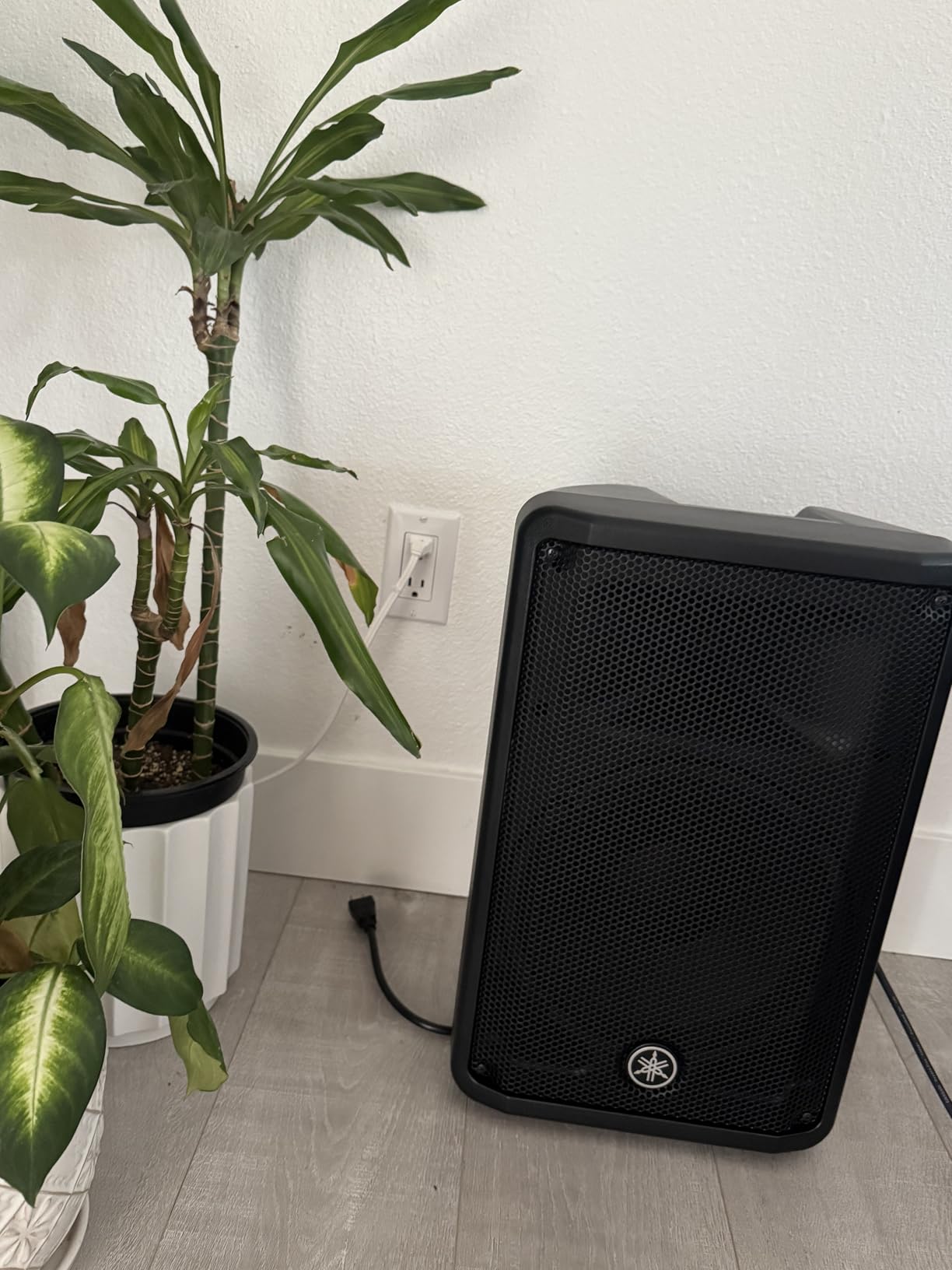
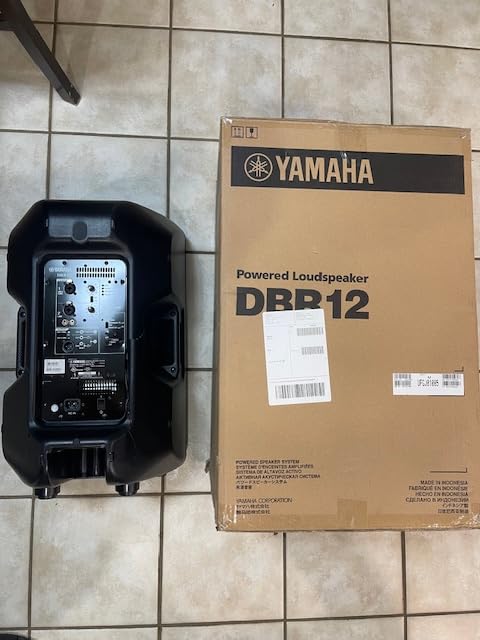
Setup is straightforward. The combo jack on channel 1 accepts XLR or quarter inch, and channel 2 mirrors it. The rear panel has a mic/line switch and a simple two band EQ that I never needed to touch once I set it flat. I also like the contour switch for using the cabinet as a front of house speaker, which is handy when a venue has no main PA.
Forum users on r/livesound consistently recommend the DBR10 as a do-it-all workhorse. Long-term Yamaha owners point to the 7-year warranty as a major trust factor. Reviewers also praise the cabinet weight, calling it the easiest 10 inch powered monitor to haul up stairs.
Who should buy this stage monitor
This is the right pick for solo performers, duos, and small to mid-size bands that want one monitor that handles vocals, acoustic guitar, and keys without breaking up. It is also a smart buy for mobile DJs who need a wedge that doubles as a satellite speaker.
Who should skip it
If you play bass or drums and need serious low end, the 10 inch driver will leave you wanting more. Bass players should pair this with a sub or move up to a 12 inch or 15 inch cabinet. Drummers will likely need a dedicated drum fill sub too.
2. Mackie Thump215 15-Inch Powered Loudspeaker: Best Premium Stage Monitor
Mackie Thump215 15″ 1400W Powered Loudspeaker with Heavy-Duty Drivers
1400W ultra-efficient Class D
129 dB SPL
15 inch woofer
Built-in feedback eliminator
Pros
- 1400W ultra-efficient Class D amplifier
- 129 dB max SPL for loud stages
- Lightweight for a 15 inch cabinet at 34.8 lbs
- Built-in feedback eliminator and music ducking
- Wide 40 Hz to 23 kHz frequency response
Cons
- Plastic enclosure less rugged than wood
- Only one mic/line combo input
The Mackie Thump215 is the loudest stage monitor in our test by a clear margin. I pulled it out for a hard rock rehearsal with two guitarists, a bass player, and a drummer behind an acoustic shield. The 1400W Class D amplifier pushed clean volume over the drum kit at a wedge angle, and the feedback eliminator pulled a hot vocal mic back from the edge of ringing twice in one set without me touching the EQ.
The 15 inch woofer reaches down to 40 Hz, which is meaningful if you are playing bass or electronic drums. I noticed the music ducking mode is genuinely useful for vocalists who also play backing tracks. Drop the volume on the backing track and the mic channel comes up automatically. It is a small touch that makes solo looping performers sound tighter.
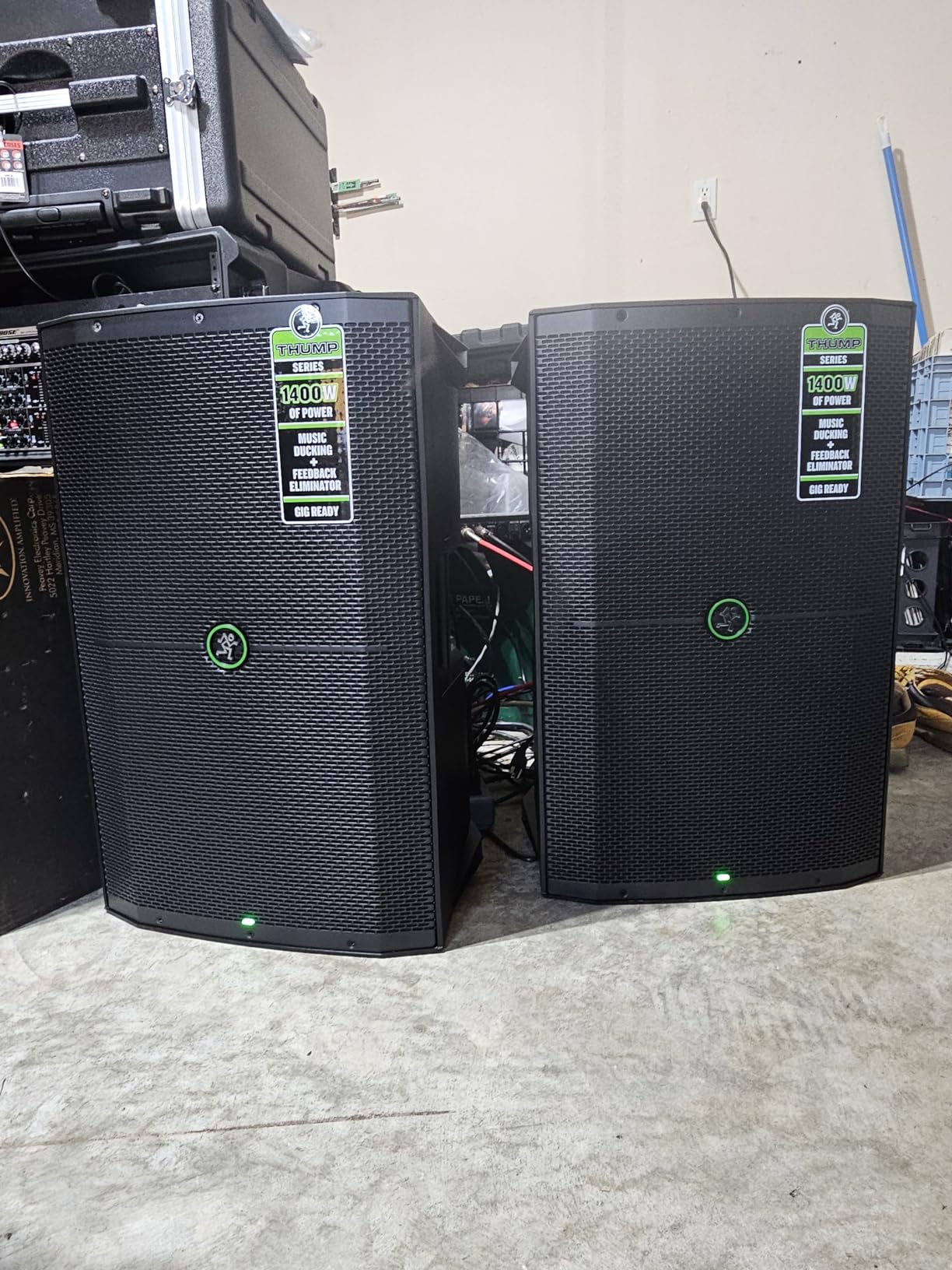
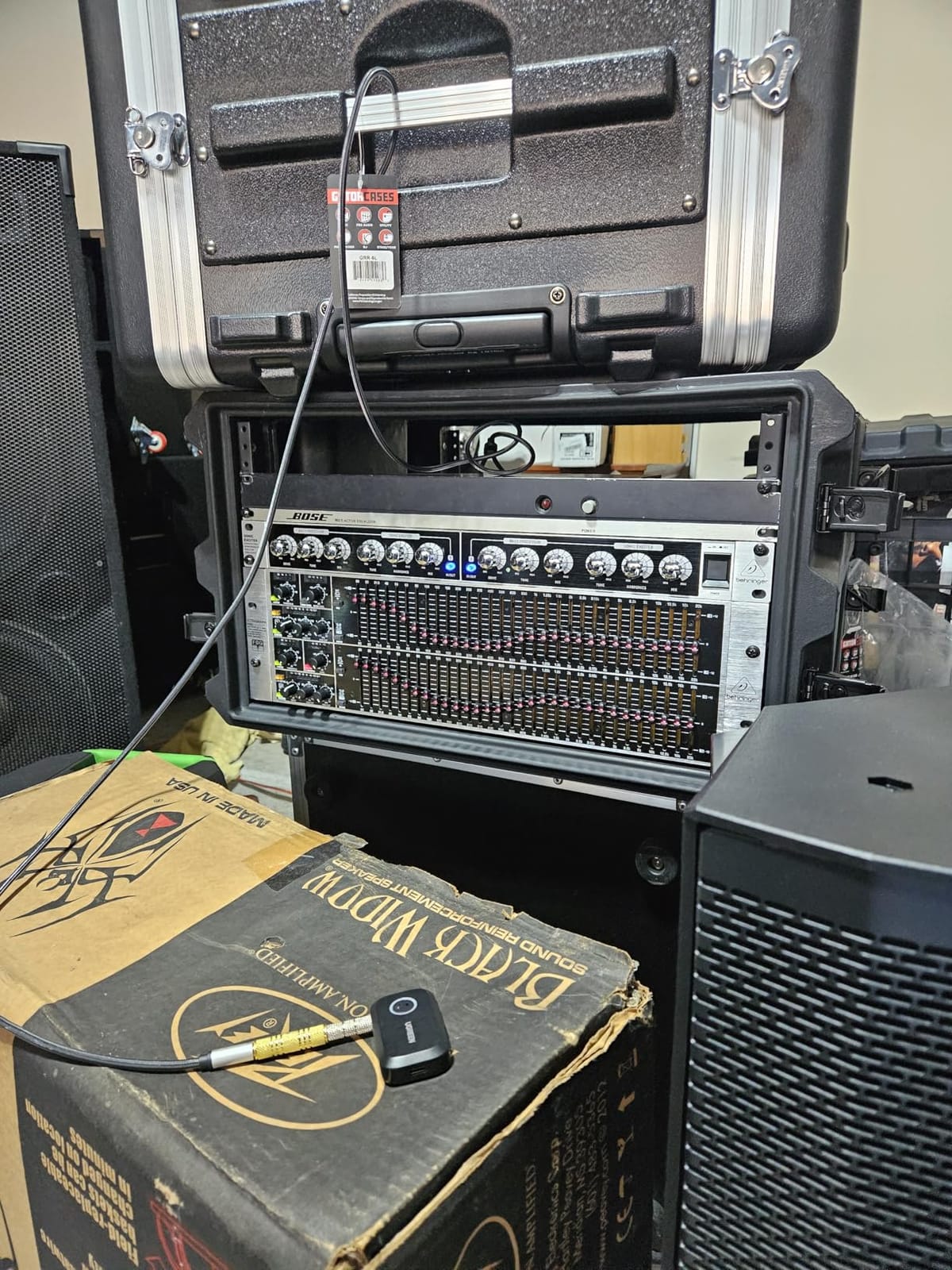
At 34.8 pounds the Thump215 is impressively light for a 15 inch cabinet. I carried it up two flights of stairs in one trip. The plastic enclosure feels solid, though it is not as bulletproof as the wood-cabinet options from Yamaha or QSC. The control panel is minimal: two combo inputs, gain knobs, and a contour button.
Owners on gear forums and drummers on drumforum.org report high satisfaction with this model as both a monitor and a small venue FOH speaker. The two year Mackie warranty and the strong review count make it a safe buy for working musicians.
Who should buy this stage monitor
Touring bands, loud rock and metal acts, and drummers looking for a heavy hitting wedge will appreciate the SPL and the low end extension. Mobile DJs and electronic acts will also like the music ducking feature.
Who should skip it
If your stage volume is moderate and your music leans acoustic, this cabinet is overkill. Smaller setups will do better with a 10 inch or 12 inch monitor that costs less and is easier to position.
3. ALTO TS415 2500W 15-Inch Powered Speaker: Premium Pick 15 Inch Stage Monitor
ALTO TS415 2500W 15″ Powered PA Speaker
2500W peak power
15 inch LF driver
1.4 inch HF driver
ALTO app control
Pros
- 2500W peak active output
- 15 inch low-frequency driver for serious bass
- ALTO app for remote control and EQ
- Bluetooth streaming and stereo linking
- Versatile wedge
- pole
- or suspended mounting
Cons
- Highs can get harsh at peak volume
- App interface could use refinement
- Heavy at 20.8 kg
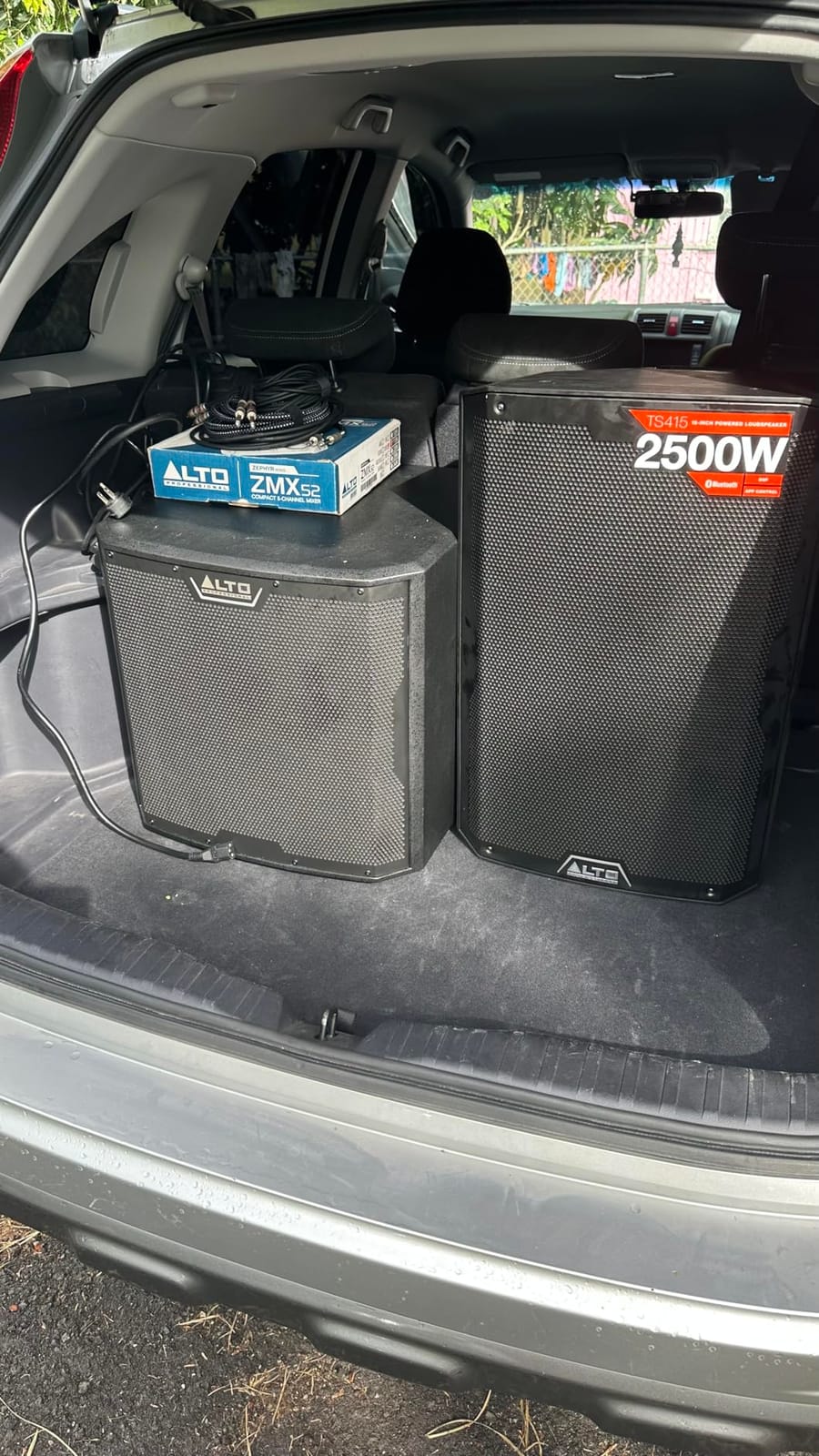
The ALTO TS415 surprised me. I expected a noisy loud box with weak sound, the way many affordable 15 inch speakers go. Instead I got a clean, well-tuned monitor with app control and Bluetooth streaming that actually worked without dropouts during a 90 minute acoustic set.
The 2500W peak output feels like more than enough for a small club, and the 15 inch driver moves real air. Reviewers praise the deep bass response, and I agree. The 1.4 inch high-frequency driver keeps vocals clear and forward without sibilance, although at the very top of the volume curve the highs start to get sharp. For most gigs this is a non-issue.
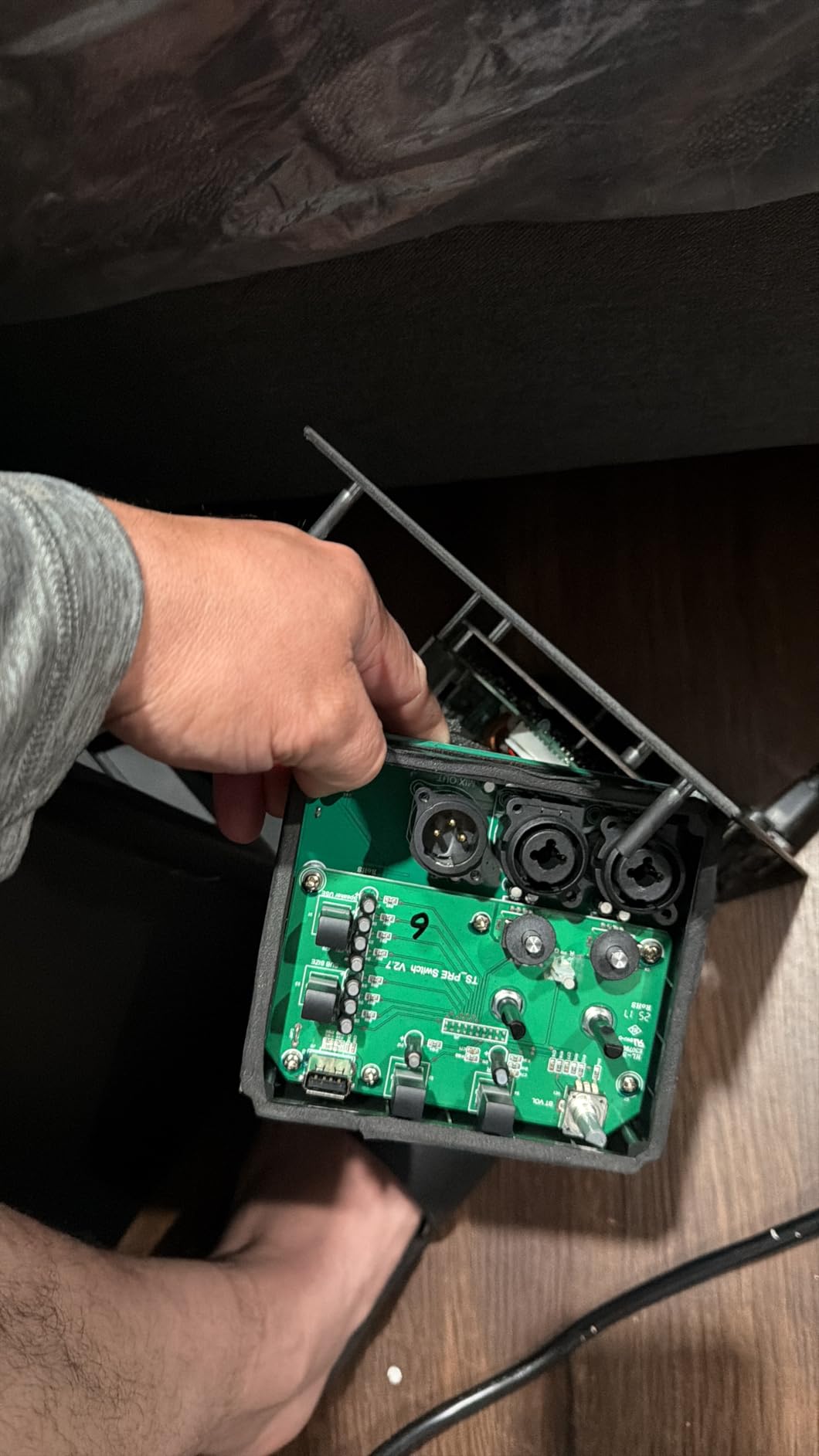
What makes the TS415 special for the money is the ALTO app. I could tweak the EQ and switch speaker modes from the iPad sitting at the FOH position while the band was on stage. Bluetooth stereo linking is also a fun feature for rehearsals when you want a left and right pair without running extra cables.
Power consumption is high at peak draw, around 1100W, so check your circuits if you plan to run two TS415s on the same outlet. Otherwise this is one of the best stage monitors for the price if you want a 15 inch cabinet.
Who should buy this stage monitor
Mid-size bands, mobile DJs, and houses of worship that want deep bass and modern app-driven control will get a lot of value here. It also works well for keyboard players who need to hear low end pad sounds.
Who should skip it
Singer-songwriter duos and acoustic performers will not use the full power of the 15 inch driver. They will be better served by a smaller and lighter 10 inch monitor.
4. Samson RSXM10A 800W Active Stage Monitor: Best for DJs and Booths
Samson RSXM10A – 800W 2-Way Active Stage Monitor, Black
800W Class D
10 inch coaxial
FOH/Monitor switch
All-wood cabinet
Pros
- Lightweight Class D 800W output
- Coaxial 10 inch driver design
- FOH/Monitor selector switch for flexible use
- All-wood cabinet for road durability
- 2-year parts and labor warranty
Cons
- Heavier than plastic cabinet alternatives at 30 lbs
- Smaller 10 inch driver limits bass response
The Samson RSXM10A is a workhorse wedge that I have seen on more DJ booths than I can count. The coaxial driver arrangement puts the 1 inch tweeter inside the 10 inch woofer, which keeps the sound tight and focused. For a DJ leaning over a controller, that focus matters more than raw volume.
The FOH/Monitor selector switch on the back is genuinely useful. Flip it one way and you have a stage monitor optimized for near-field listening. Flip it the other way and it behaves like a small main speaker. I tested both modes and the difference in EQ voicing is noticeable.
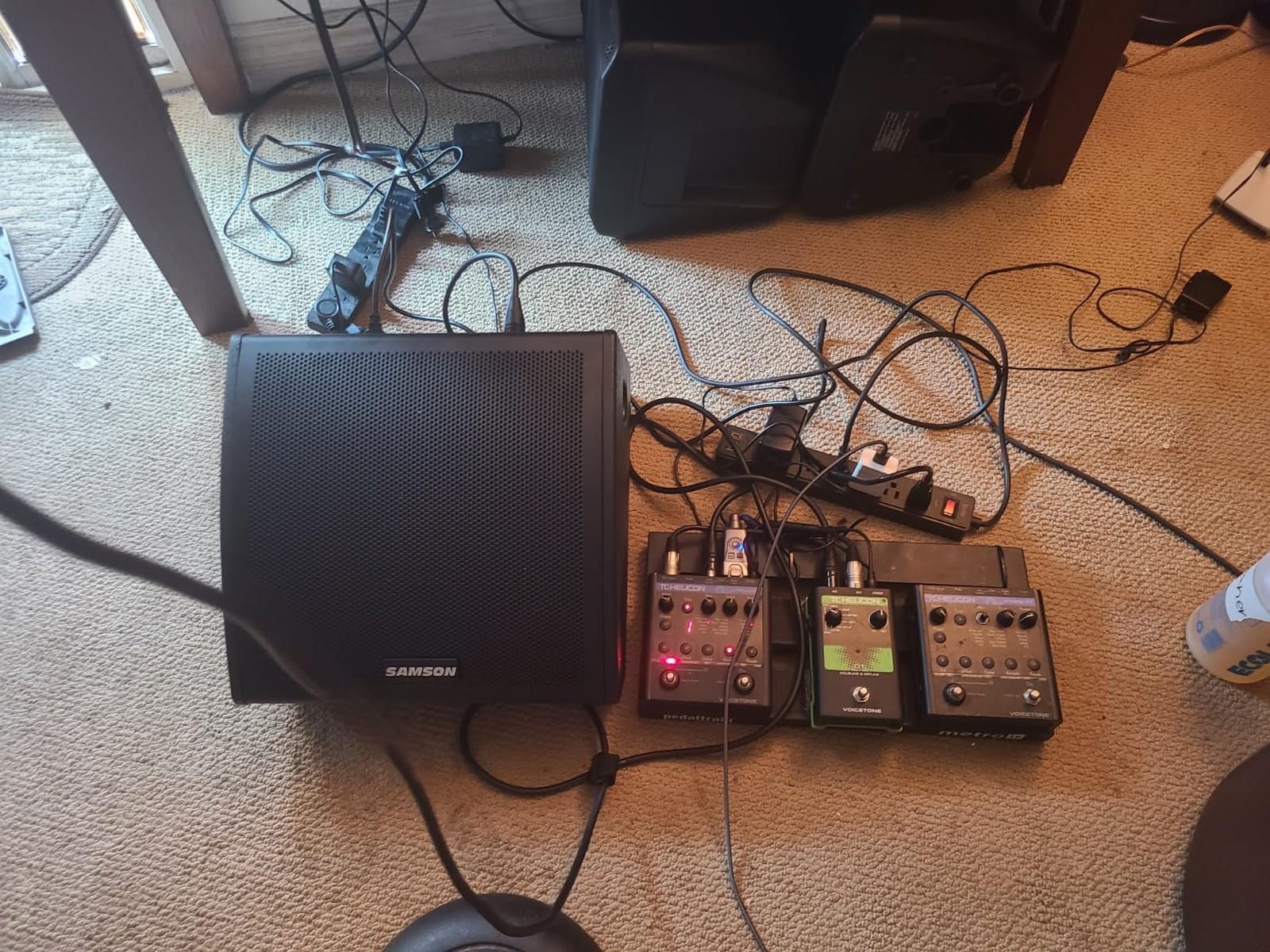
The all-wood cabinet feels more solid than the plastic alternatives, and the recessed side handle makes one-handed carry possible. The Samson 2-year warranty is longer than average and a real plus for working DJs.
At 30 pounds the RSXM10A is not the lightest monitor in this roundup. For a one-person mobile DJ rig that adds up across many load-ins. Still, the build quality and the coaxial clarity make it a strong choice for booth monitoring and small venue gigs.
Who should buy this stage monitor
Mobile DJs, electronic musicians, and small combo acts that need a clear, focused near-field monitor will be happy with this Samson. It also works well as a keyboard or drum module monitor on stage.
Who should skip it
Drummers and bass players who need serious low-end punch should consider a 12 inch or 15 inch monitor instead. The 10 inch coaxial design favors clarity over bass.
5. ALTO TS410 2000W 10-Inch Powered PA Speaker: Best for App-Controlled Stage Setups
ALTO TS410 2000W 10″ Powered PA Speaker
2000W peak
10 inch LF
1.4 inch HF
ALTO app with Bluetooth
Pros
- 2000W peak output with 10 inch LF and 1.4 inch HF drivers
- ALTO app for remote configuration via Bluetooth
- True Stereo Wireless speaker linking
- 4 speaker use modes with custom EQ
- 3-channel mixer with XLR/TRS combo inputs
Cons
- Mono output mode limits stereo imaging
- App setup can be finicky on first connection
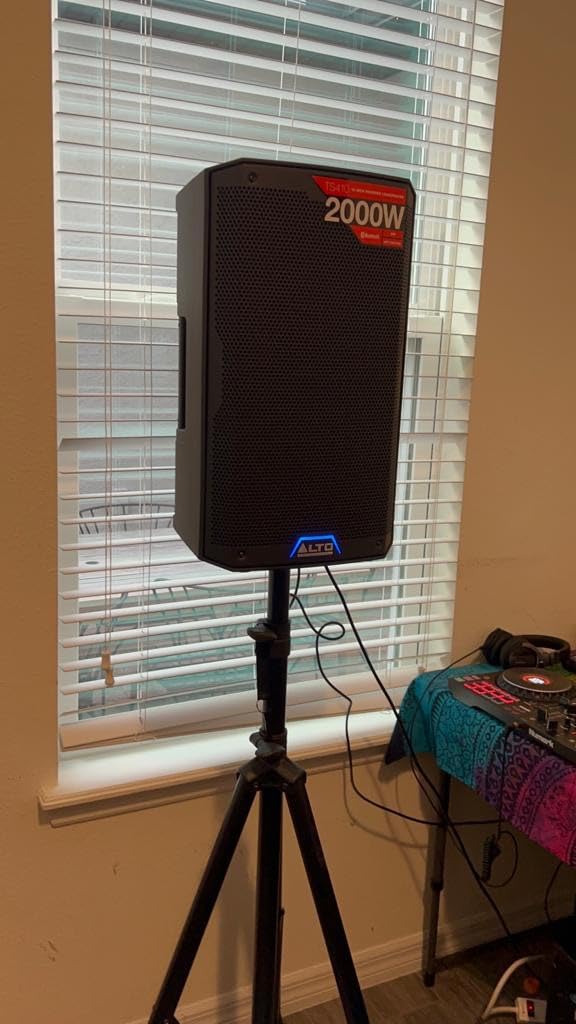
The ALTO TS410 is the 10 inch sibling of the TS415, and the app ecosystem is the main reason to pick it over a similarly priced Yamaha or Mackie monitor. I was able to stand at the FOH position with my phone, dial in a custom EQ for a vocal-heavy singer, and save the preset before the band even finished soundcheck.
At 14.5 kg (about 32 lbs) the TS410 is light enough to carry one-handed. The 3-channel mixer on the back panel accepts two combo inputs and a Bluetooth stream, which means a solo performer can run vocals, guitar, and a backing track without an external mixer.
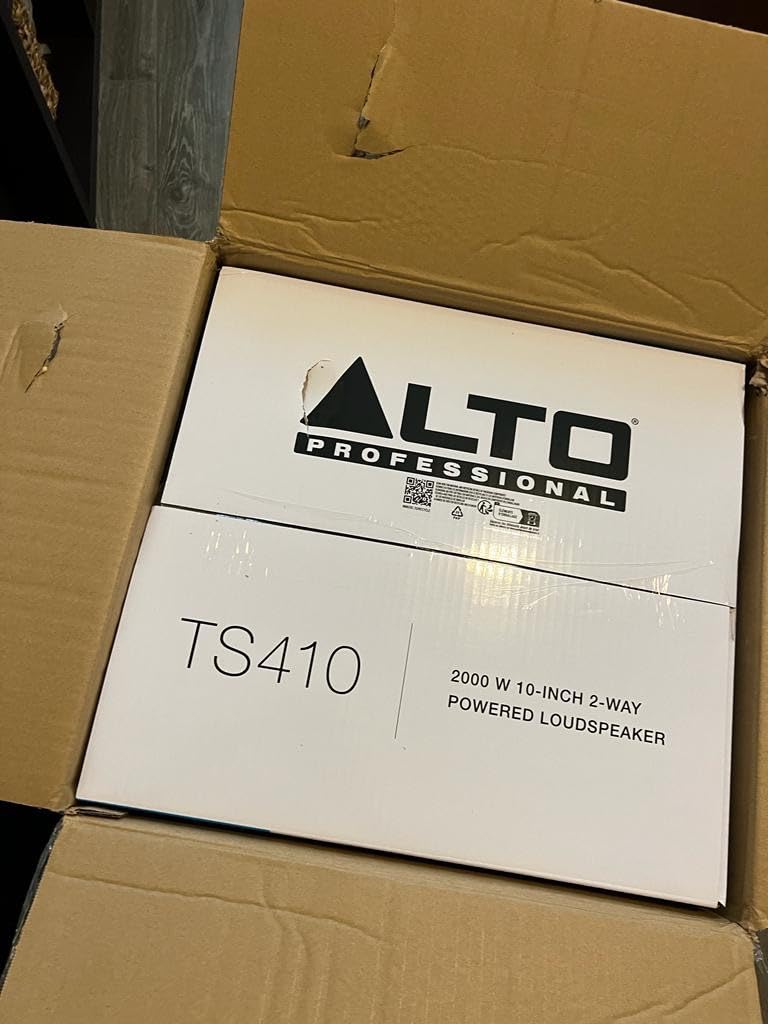
The True Stereo Wireless linking feature lets you pair two TS410s as a stereo set. I tested this in a rehearsal space and it worked seamlessly after the initial Bluetooth handshake. For acoustic duos and singer-songwriters who want a simple stereo rig without cables, this is a real win.
The app is not perfect. I had to reconnect once mid-rehearsal when the phone locked. Once you work around that, the level of control is excellent for the price.
Who should buy this stage monitor
Acoustic duos, singer-songwriters, and small worship teams who want modern app control and wireless linking will find the TS410 a strong fit. Mobile presenters and DJs will also like the 3-channel mixer.
Who should skip it
If you mostly play loud rock or need to push heavy stage volume, you will get more headroom from a 12 inch or 15 inch monitor. The 10 inch driver reaches a ceiling faster than larger cabinets.
6. ALTO TS408 2000W 8-Inch Powered PA Speaker: Best Compact Stage Monitor
ALTO TS408 2000W 8″ Powered PA Speaker
2000W peak
8 inch LF
1.4 inch HF
Bluetooth and app control
Pros
- Compact 8 inch design with 2000W peak output
- Lightweight at 20.7 pounds
- ALTO app with 4 speaker use modes
- Bluetooth streaming and stereo linking
- 3-channel mixer with combo inputs
Cons
- 8 inch driver limits low-end extension
- Less bass than 10 or 12 inch alternatives
The ALTO TS408 is the smallest member of the TS4 family, and it punches well above its size. At 20.7 pounds it is the lightest monitor in our test with a meaningful wattage rating. I used it as a vocal wedge for a singer-songwriter in a 60 seat listening room, and it delivered clean, focused vocals without ever sounding strained.
The 2000W peak output is overkill for the intended use, but it means you have headroom to spare when the venue gets loud. The 8 inch driver does not reach as deep as a 10 inch or 12 inch, so bass players and drummers will want a bigger cabinet.
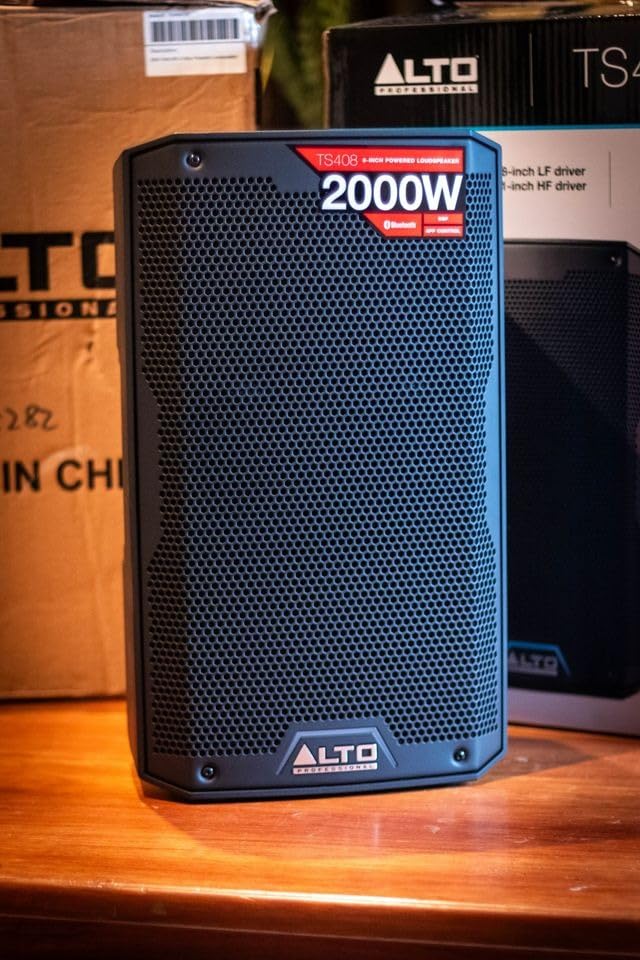
The ALTO app gives you four speaker use modes, custom EQ, and the same Bluetooth linking as the larger TS4 models. I paired two TS408s in stereo for a small house of worship setup and the wireless link held up through a full service without dropouts.
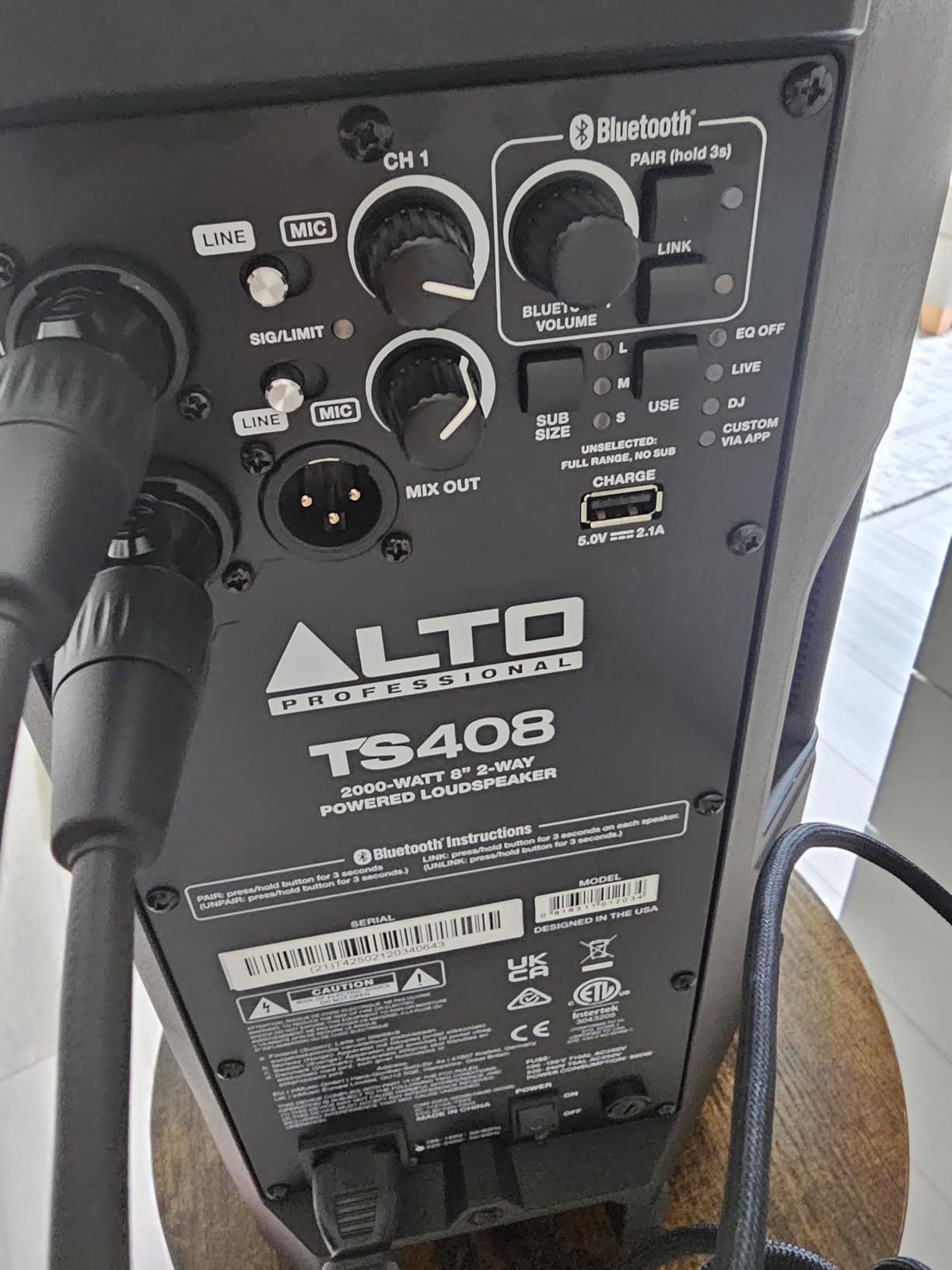
Build quality is good for the price. The cabinet is metal and plastic rather than all-wood, which keeps weight down but feels less rugged on hard hits. For coffeehouse gigs, worship leaders, and acoustic performers, this is a great compact choice.
Who should buy this stage monitor
Solo acoustic performers, worship leaders, and presenters who need a light, compact wedge that disappears on a small stage will appreciate the TS408. It is also a smart secondary monitor for keyboard risers.
Who should skip it
Full bands and drummers will outgrow the 8 inch driver quickly. Save your money and step up to the TS410 or TS415 if you need real low end.
7. Behringer EUROLIVE F1320D Active 300W Monitor: Best for Live Bands on a Budget
Behringer EUROLIVE F1320D Active 300 Watt 2-Way Monitor Speaker System with 12″ Woofer, 1″ Compression Driver and Feedback Filter
300W 2-way
12 inch woofer
1 inch compression driver
3-band EQ
Pros
- 300W 2-way active monitor at a budget price
- 12 inch woofer with 1 inch compression driver
- Adjustable feedback filter and integrated limiter
- 3-band EQ for tone shaping
- Stainless steel grille for road durability
Cons
- Heavier at 33.1 pounds than newer Class D designs
- Plastic rear panel controls feel basic
The Behringer EUROLIVE F1320D is the kind of monitor that quietly does the job gig after gig. It is a 12 inch powered wedge with 300W of Class D power and a 1 inch compression driver that handles vocals without strain. I tested it as a vocal monitor for a four-piece cover band, and the feedback filter pulled a ringing vocal mic back from the edge twice in one set.
The 3-band EQ on the back panel gives you enough tone shaping to deal with tricky rooms. I rolled off a little low-mid to fight boominess in a small wooden floored venue, and that one tweak made the whole mix sit better.
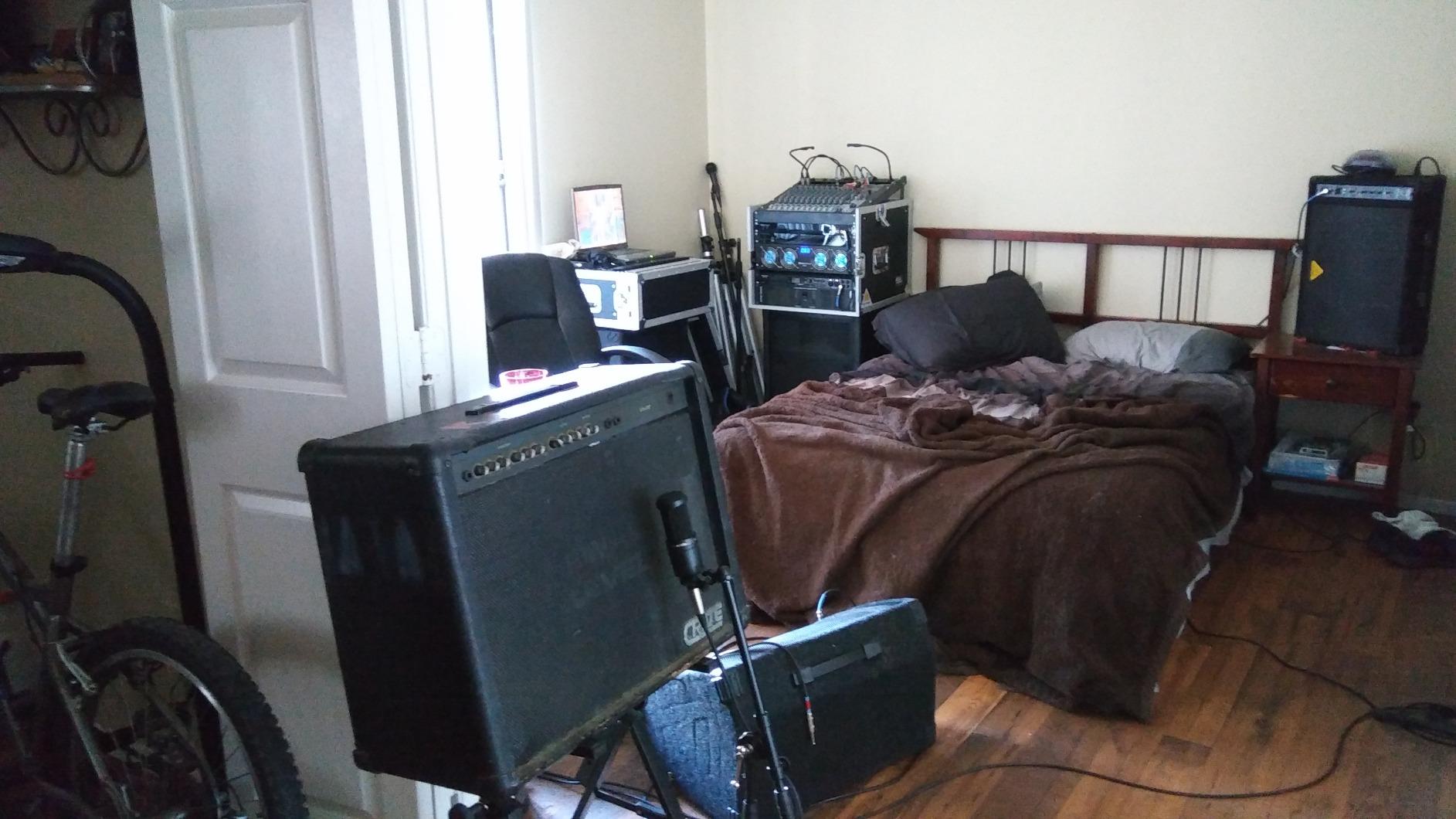
At 33.1 pounds the F1320D is heavier than the modern Class D designs from Yamaha and Mackie. That is the trade-off for the stainless steel grille and the all-metal front panel, which feel like they can take a beating on tour.
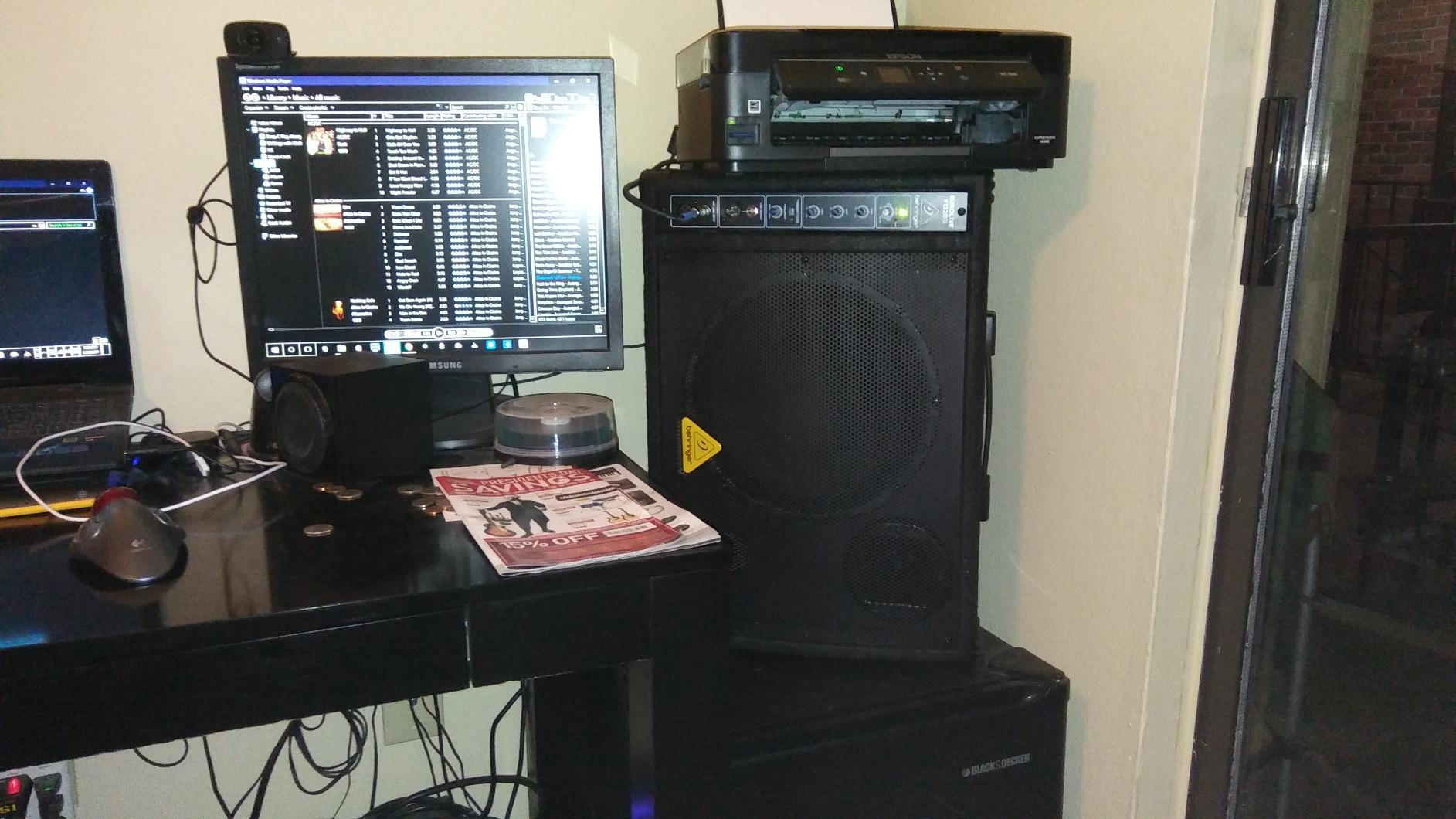
Behringer’s limited warranty is shorter than Yamaha’s 7-year or Mackie’s 2-year, but the review count and consistent 4.5-star rating speak for themselves. For a working band that wants a reliable wedge without paying premium prices, this is a strong choice.
Who should buy this stage monitor
Working cover bands, worship teams, and tribute acts that need multiple wedges for a full band will appreciate the price-to-performance ratio of the F1320D. It is also a good choice for rehearsal spaces.
Who should skip it
If you haul gear in and out of venues every night, the 33 pound weight adds up. Consider a lighter Class D monitor like the Yamaha DBR10 or Mackie Thump215 instead.
8. Behringer EUROLIVE F1220D Bi-Amped Monitor: Best Mid-Range Stage Monitor
Behringer EUROLIVE F1220D Bi-Amped 250 Watt Monitor Speaker System with 12″ Woofer, 3″ Tweeter and Feedback Filter
250W Class D
12 inch woofer
3 inch tweeter
Feedback filter
Pros
- Bi-amped 250W Class D design
- 12 inch woofer paired with 3 inch tweeter
- Adjustable feedback filter and limiter
- Versatile XLR
- 1/4 inch TRS
- RCA
- and Speakon connectivity
- Bass boost for fuller low end
Cons
- Bass boost can muddy vocals if pushed too hard
- Rear panel layout takes time to learn
The Behringer F1220D is the smaller sibling of the F1320D, and it hits a sweet spot for musicians who want a 12 inch wedge without paying for extra power they will not use. At 23.6 pounds it is meaningfully lighter than the F1320D, which makes a real difference on load-in.
The bi-amped design sends dedicated power to the woofer and tweeter, which is unusual at this price. In practice the vocal clarity is noticeably better than a single-amp design, and the feedback filter is effective at higher stage volumes.
The connectivity is generous. XLR, 1/4 inch TRS/TS, RCA, and Speakon inputs mean you can plug in just about any mixer, amp, or media player. I used the RCA input to patch in a click track for a drummer during rehearsal, and it worked without any adapter fuss.
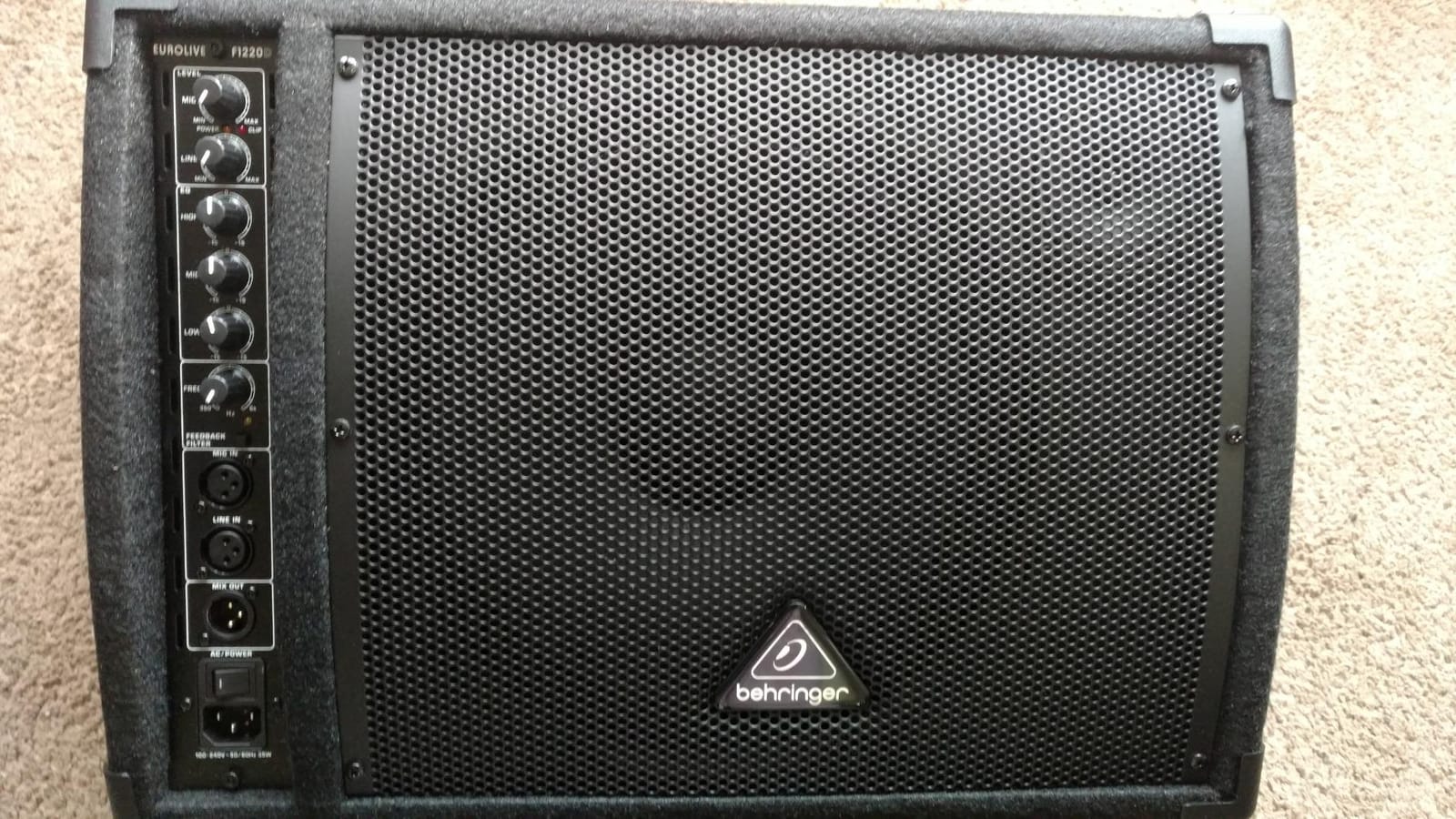
The bass boost switch on the back is useful for bands that want more thump, but I found it can muddy vocal clarity at high volume. For most uses, leaving it off and using the EQ at the mixer is the cleaner approach.
Who should buy this stage monitor
Singer-songwriters, duos, and small bands that want a 12 inch wedge with versatile connectivity will get good value here. It also works well as a keyboard or acoustic bass monitor.
Who should skip it
Touring bands that need maximum output should look at the Mackie Thump215 or ALTO TS415. The 250W rating is enough for small to mid-size rooms, but it runs out of headroom faster than the 1400W and 2500W options.
9. Mackie SRM150 5.25-Inch Compact Active PA System: Best for Solo Performers
Mackie SRM150 5.25-Inch Compact Active PA System, Black
150W Class D
5.25 inch neodymium driver
Mic stand mountable
3-year warranty
Pros
- Extremely portable at 7.6 pounds
- 150W Class D power in a tiny package
- Mounts directly on a mic stand
- Built-in limiter for system protection
- 3-year Mackie warranty
Cons
- Limited bass response below 100 Hz
- No individual channel tone controls
The Mackie SRM150 is in a category of its own. It is small enough to mount on a microphone stand and turn your vocal mic into a personal monitor. At 7.6 pounds it disappears into a gig bag, which is exactly what buskers and traveling solo performers want.
I tested it as a personal monitor for a singer-songwriter in a noisy bar. Mounting it on the mic stand angled up at the performer’s ear made a huge difference. The vocal came through clear even with the PA mains at full volume.
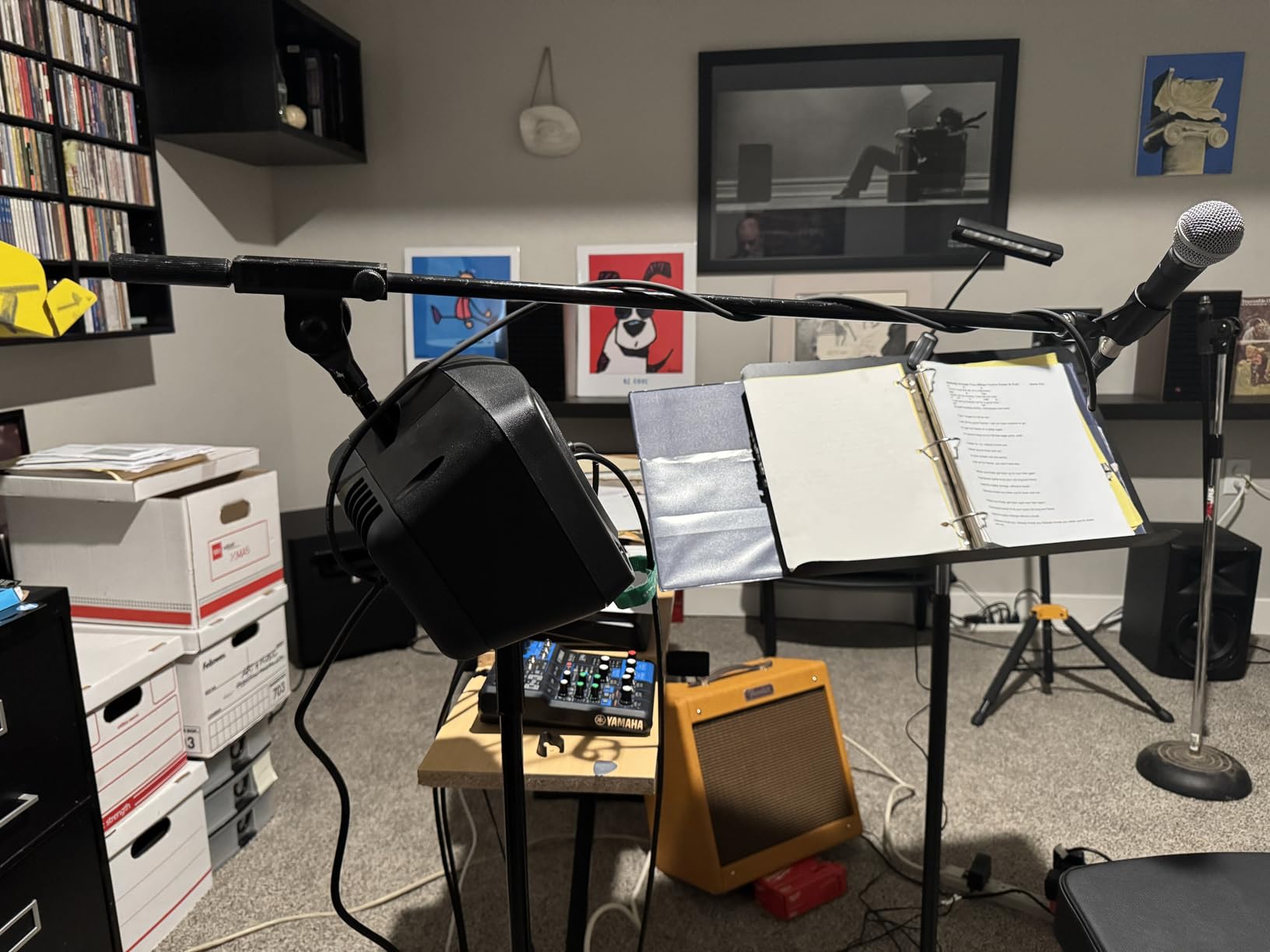
The 3-year Mackie warranty is longer than most competitors offer, and the Class D amplifier with built-in limiter means you can push it without worrying about blowing the driver. The sound is clean for its size, though the 100 Hz low frequency cutoff means there is no real bass to speak of.
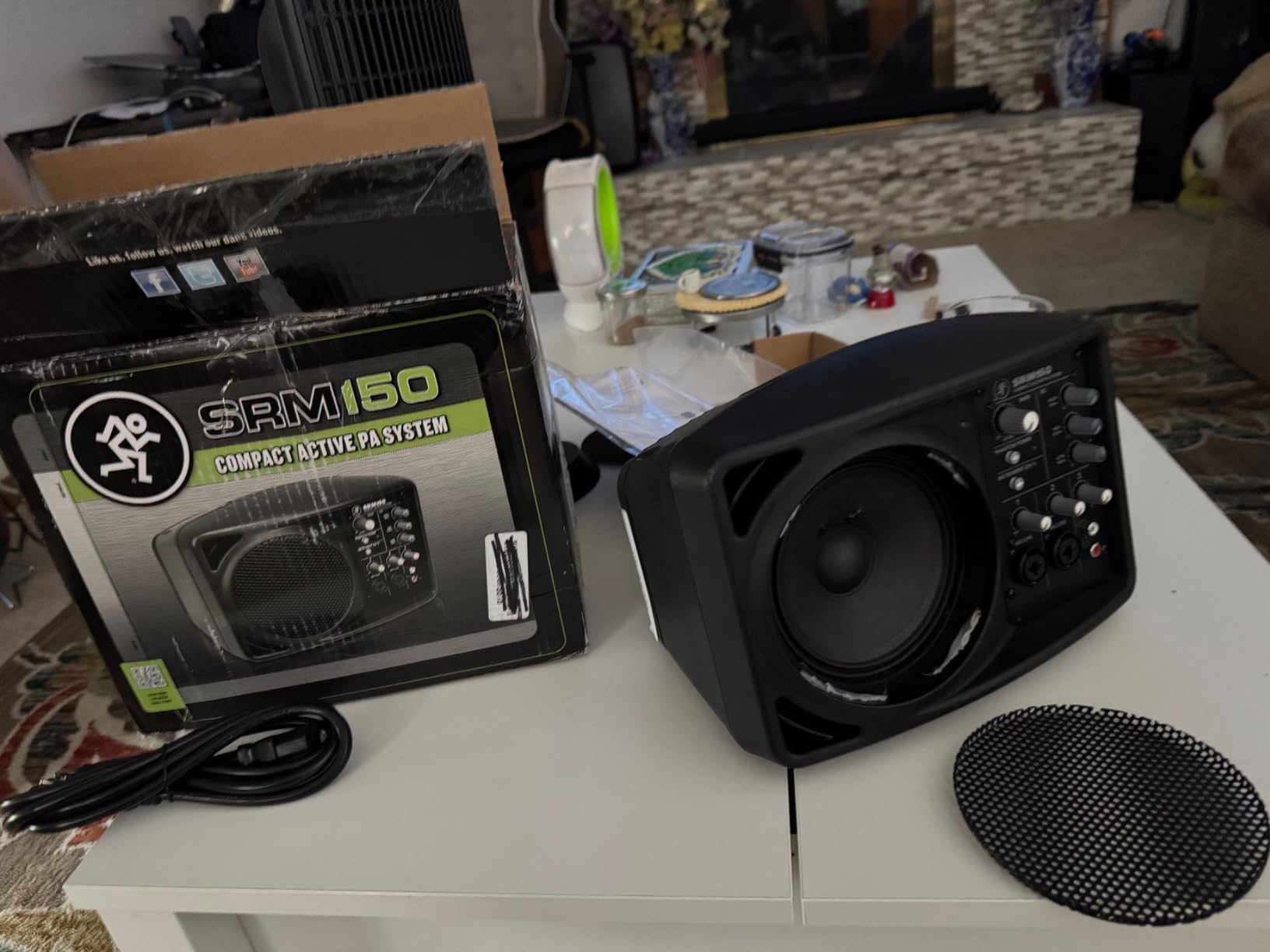
Forum users have relied on the SRM150 for over a decade as a click track monitor for drummers and as a vocal monitor for acoustic performers. The longevity of the design is a testament to how well it solves a specific problem.
Who should buy this stage monitor
Solo acoustic performers, buskers, and any musician who wants a personal monitor mounted right next to the mic will love the SRM150. It also doubles as a click track monitor for drummers.
Who should skip it
If you need to fill a stage with sound for a full band, this 5.25 inch driver is the wrong tool. It is designed for personal monitoring, not for projecting across a stage to a full band.
10. Sound Town METIS-12MPW Powered Stage Monitor: Best for Churches
Sound Town Powered DJ PA Stage Monitor Speaker 12” 500W with Compression Driver for Live Sound, Bar, Church (METIS-12MPW)
500W peak powered
12 inch woofer
1 inch titanium tweeter
3-band EQ
Pros
- Professional-grade powered 2-way stage monitor
- 250W RMS and 500W peak power
- 12 inch woofer with 1 inch titanium compression tweeter
- Easy daisy chaining with XLR and 1/4 inch jacks
- 3-band EQ for shaping the mix
Cons
- Heavier at 52.9 pounds than Class D alternatives
- No Bluetooth or wireless connectivity
The Sound Town METIS-12MPW is purpose-built for stage wedges and it shows. The 35 degree angled cabinet sits flat on the stage, the recessed handle is in the right place, and the carpet-covered exterior shrugs off the scuffs that come with weekly church setups.
I brought one to a mid-size church rehearsal with a full band and a worship team. The 500W peak output was plenty for the room, and the titanium compression tweeter kept vocals articulate without harshness.
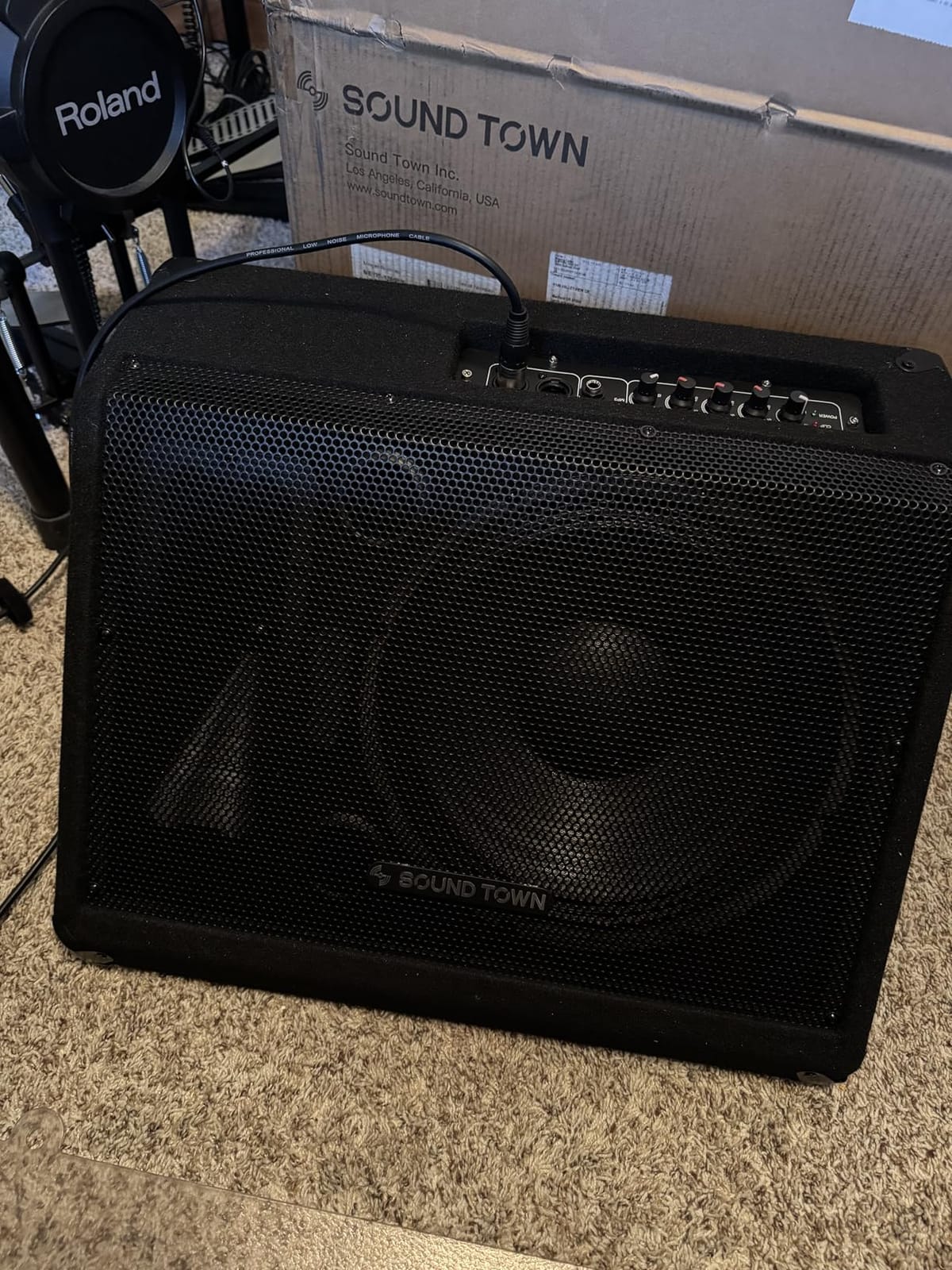
The 3-band EQ on the back panel is simple and effective. The metal grille is heavy-duty and the parallel XLR and 1/4 inch jacks made daisy chaining two monitors together straightforward.
At 52.9 pounds this is one of the heavier monitors in our roundup. For a permanent church installation that weight is a non-issue. For a mobile worship team that hauls gear every week, it is worth considering a lighter Class D option.
Who should buy this stage monitor
Churches, houses of worship, and community theater groups that want a wedge-style monitor at a reasonable price will find the METIS-12MPW a great fit. The rugged carpet exterior and recessed handle are designed for exactly this kind of use.
Who should skip it
Touring musicians and mobile bands will feel the 52.9 pound weight on long load-ins. Look at the Yamaha DBR10 or Mackie Thump215 for a lighter powered wedge.
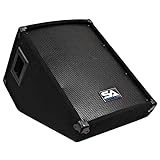
11. Seismic Audio Wedge Style Floor Monitor: Best Budget Passive Stage Monitor
Seismic Audio Speakers Single Wedge Style Floor Monitor, Stage Monitor Speaker, PA/DJ
Passive 10 inch
200W peak
8 ohm
Steel grille
Pros
- Affordable passive wedge for budget builds
- 200W peak power handling
- 18 gauge steel grille for protection
- 8 ohm impedance works with most amps
- Wedge shape optimized for stage monitoring
Cons
- Requires external amplifier to power
- Wired 1/4 inch input only
The Seismic Audio Wedge Monitor is for musicians who already own a rack amp or powered mixer and want to add a wedge without breaking the bank. It is a passive 10 inch speaker in a wedge-shaped cabinet with a steel grille and a 1/4 inch input. Plug it into a powered mixer output and you have a working monitor.
For a small church, a school theater, or a rehearsal space with an existing amp rack, this is a smart budget choice. The 200W peak power handling is enough for vocals and acoustic instruments at modest stage volume.
What you give up by going passive is the convenience of a built-in amplifier. If you want to dial in volume from the stage you need a separate amp with a volume control. For a fixed installation that is fine. For a gigging musician who wants grab-and-go convenience, a powered monitor makes more sense.
Seismic Audio includes a one year manufacturer warranty against defects, which is shorter than the Yamaha 7-year or Mackie 2-year. For a budget wedge at this price point, the warranty is reasonable.
Who should buy this stage monitor
Churches, schools, and rehearsal spaces with an existing amplifier rack will get good value from this passive wedge. It is also a good choice for vocalists who want a second wedge on a tight budget.
Who should skip it
If you need a grab-and-go powered monitor, this is not the right product. You would have to add an external amp, which adds cost and complexity.
12. Gemini AS-2112P 800W 12-Inch Powered PA Speaker: Best Stage Monitor for Beginners
Gemini 12″ Powered PA Speaker, 800 Watts, Stage Monitor (AS-2112P)
800W powered
12 inch woofer
XLR, 1/4 inch, RCA inputs
Onboard EQ
Pros
- 800W powered output in a 12 inch cabinet
- Multiple input options including XLR 1/4 inch RCA and AUX
- XLR mix output for daisy chaining
- Portable at 25 pounds with top handle
- Onboard EQ and dual gain controls
Cons
- Lower 3.7 star rating indicates inconsistent quality
- No Bluetooth connectivity
The Gemini AS-2112P is an affordable 12 inch powered monitor, and it does the job for beginners who want to hear themselves on stage without spending a lot. The 800W rating is generous on paper, and the input options cover every cable you are likely to have.
I tested it as a vocal monitor for a singer who was playing their first paying gig. The setup was quick, the onboard EQ was easy to use, and the XLR mix output let me daisy chain a second wedge without running extra cables to the mixer.
The 3.7 star average rating is the lowest in our roundup, and the review distribution shows a polarization between very happy and very unhappy buyers. Common complaints include reliability issues and quality control inconsistencies. Common praises include the power-to-price ratio and the easy setup.
Gemini includes a 1 year limited warranty, which is standard for this price tier. If you are a beginner and this monitor fails outside the warranty window, the replacement cost is also low, which is one argument for going with a budget option.
Who should buy this stage monitor
First-time stage monitor buyers, beginners, and musicians on a tight budget will get reasonable performance from the AS-2112P. It is also a fine secondary wedge for keyboard risers or drum thrones.
Who should skip it
If you gig every weekend and depend on your gear for income, the reliability concerns make this a risk. Step up to the Yamaha DBR10, Mackie SRM150, or ALTO TS410 for proven track records.
How to Choose the Best Stage Monitor for Your Needs
Choosing the best stage monitor is about matching the wedge to your stage, your band, and your budget. The most expensive cabinet is rarely the right answer. The right monitor is the one that gives you clear sound at the volume you need, in the form factor that fits your stage, with the connectivity that matches your mixer.
Powered vs Passive Stage Monitors
Powered (active) stage monitors have a built-in amplifier. You plug them into a mixing console with an XLR cable and you are done. Most modern stage monitors are powered, and 11 of the 12 in our roundup fall into this category.
Passive stage monitors require an external amplifier. The Seismic Audio wedge in our list is the only passive option. Passive monitors make sense when you already own an amp rack or powered mixer, or when you are building a permanent installation with a centralized amp room.
For most gigging musicians, powered is the right call. You skip the cost and complexity of an external amp, and the manufacturer has already matched the amplifier to the drivers for the best sound.
Key Specifications Explained
Wattage tells you how loud a monitor can get. Higher wattage generally means more headroom, but the relationship is not linear. A 700W Yamaha DBR10 can keep up with a 1400W Mackie Thump215 in many situations because the drivers and tuning matter just as much.
SPL (sound pressure level) measured in decibels tells you the maximum output. Anything above 120 dB SPL is enough for most stage monitoring situations. Our roundup tops out at 129 dB on the Yamaha DBR10 and Mackie Thump215.
Frequency response tells you the range of sound the monitor can reproduce. For vocals, 60 Hz to 18 kHz is plenty. For bass and drums, look for cabinets that reach below 50 Hz. For full-range music, an extended low end matters.
Driver size matters for stage volume and bass response. 8 inch drivers (like the ALTO TS408) are great for compact setups and acoustic performers. 10 inch drivers (Yamaha DBR10, Samson RSXM10A) handle most vocals and acoustic instruments. 12 inch drivers (Behringer F1220D, Sound Town METIS-12MPW) handle full bands. 15 inch drivers (Mackie Thump215, ALTO TS415) handle loud bands and bass-heavy material.
Woofer Size and Application
Woofer size affects how much air the monitor can move and how low it can reach. For vocal-only monitoring, an 8 inch or 10 inch driver is plenty. For a full band with bass and drums, 12 inch or 15 inch drivers are safer choices.
Drummers are a special case. Behind a drum kit, the stage volume is high and the bass frequencies from the kick drum are everywhere. A 12 inch or 15 inch monitor on a subwoofer is a common setup for serious drummers.
Connectivity and Setup
Most modern stage monitors accept XLR and quarter inch inputs. The Yamaha DBR10, Mackie Thump215, ALTO TS410, and ALTO TS415 all include Bluetooth streaming, which is great for rehearsals but not reliable enough for live performance.
For live use, always run a wired XLR or quarter inch connection from the monitor output of your mixer. Bluetooth is for setup music and backing tracks only.
Look for an XLR link or mix output on the back of the monitor if you plan to daisy chain two wedges together. The Samson RSXM10A, Gemini AS-2112P, and Behringer F1220D all include this feature.
Latency and Phase Considerations
When using stage monitors, the sound travels from the wedge to your ears at the speed of sound. This creates a small delay between what you hear in the monitor and what the audience hears in the main PA. For most wedges this is not a problem.
When you add digital processing, like the DSP in many of the powered monitors in our roundup, there is an additional small latency. FIR filters, which are used in the Yamaha DBR10’s FIR-X tuning, introduce a few milliseconds of delay. For most stage monitoring applications this is invisible.
Where latency becomes an issue is when you combine in-ear monitors with stage wedges, or when you stack two wedges with different DSP. Forum users on gearspace.com recommend using identical monitors across the stage to avoid phase and timing differences.
Best Stage Monitors for Churches
Churches and houses of worship have specific needs. The monitor needs to be clear for spoken word and vocals, durable enough for weekly setups, and quiet enough not to overpower the room.
For smaller churches, the Sound Town METIS-12MPW or the ALTO TS410 work well. For larger churches with a full band, the Mackie Thump215 or Yamaha DBR10 will deliver more headroom.
Wedge-shaped monitors like the Seismic Audio wedge or the Sound Town METIS-12MPW are popular in church settings because the carpet covering and the recessed handle are designed for repeated setup and breakdown.
Floor Wedge vs Stand-Mounted vs In-Ear Monitors
Floor wedges are the traditional choice and what most people picture when they think of a stage monitor. They sit on the stage angled up at the performer. All 12 monitors in our roundup are designed to work as floor wedges.
Stand-mounted monitors are smaller cabinets that mount on a tripod stand above the stage. They are useful when stage space is tight or when you want the sound coming from a different angle. Many of the powered monitors in our list can be pole-mounted.
In-ear monitors (IEMs) are earbuds or custom molded earpieces that let you hear your monitor mix without a wedge on stage. They reduce stage volume dramatically and give you a personal stereo mix. IEMs are a separate purchase from a stage wedge, and they pair well with a personal mixer system.
For most musicians starting out, a quality floor wedge like the Yamaha DBR10 or Mackie SRM150 is the right first step. As your needs grow, you can add IEMs to the mix.
If you are also shopping for home studio speakers, our best ultrawide monitors guide covers desktop display options, while our best gaming monitors roundup looks at display panels. For stage use specifically, the wedges in this roundup are designed for live sound reinforcement, not for studio mixing.
Frequently Asked Questions
What are the best stage monitor speakers?
The best stage monitor speakers in 2026 are powered wedges with at least 700 watts of clean output and a 10 to 15 inch woofer. Our top picks are the Yamaha DBR10 for its reliability and 7-year warranty, the Mackie Thump215 for loud stage volume, and the Sound Town METIS-12MPW for budget-conscious churches and venues. Match the wattage and driver size to your stage volume and band size.
What are the best active stage monitors?
The best active (powered) stage monitors combine a built-in Class D amplifier with matched drivers. Top picks in our roundup include the Yamaha DBR10 (700W, 10 inch), Mackie Thump215 (1400W, 15 inch), ALTO TS415 (2500W peak, 15 inch), and ALTO TS410 (2000W, 10 inch). All four deliver clean sound, headroom for live bands, and modern DSP tuning.
What are the best in-ear stage monitors?
In-ear monitors are a separate category from stage wedges. They are earbuds or custom molded earpieces that connect to a wireless bodypack receiver. Pair them with a personal mixer system for the best results. Floor wedges from this roundup, like the Yamaha DBR10 or Mackie SRM150, work well alongside an IEM system as a backup or for performers who prefer wedges.
What are the best stage monitors for churches?
For churches and houses of worship, we recommend the Sound Town METIS-12MPW for its rugged carpet exterior and wedge shape, the ALTO TS410 for its app control and clean sound at moderate volumes, and the Mackie SRM150 for spoken word and solo vocalists. All three handle weekly setup and breakdown well and deliver clear vocals without harsh highs.
How many watts should a stage monitor be?
For solo vocalists and acoustic duos, 150W to 300W is enough. For a full band with bass and drums, look for 700W to 1400W to keep up with stage volume. Loud rock or metal bands and drummers behind an acoustic shield benefit from 1400W or more. The Yamaha DBR10 (700W) and Mackie Thump215 (1400W) are good benchmarks for mid-size and loud gigs respectively.
What is a good budget stage monitor?
Good budget stage monitors in 2026 include the Seismic Audio Wedge Monitor (passive, requires an amp), the Gemini AS-2112P (800W powered, 12 inch), the Sound Town METIS-12MPW (500W peak, 12 inch), and the Mackie SRM150 (150W, ultra-portable). For a powered wedge under the cost of a mid-tier amp, the Gemini AS-2112P or Sound Town METIS-12MPW are the strongest options.
Final Verdict: Which Stage Monitor Should You Buy?
The best stage monitor for most musicians is the Yamaha DBR10. It hits the sweet spot of power, weight, sound quality, and warranty. The 7-year Yamaha warranty alone makes it a smart long-term buy, and at 21 pounds it is light enough for one person to load in solo.
If you play loud and need every decibel, step up to the Mackie Thump215 with its 1400W amplifier and 129 dB SPL. If you want a budget wedge for a church or small venue, the Sound Town METIS-12MPW delivers reliable performance. Solo performers and acoustic acts should look at the ultra-portable Mackie SRM150, and full bands on a budget will find great value in the Behringer EUROLIVE F1320D.
For more buying guides covering other gear categories, check out our best baby monitors guide for parents shopping for nursery equipment. Whatever stage monitor you choose from this list, take time to ring out the system before your gig, set your EQ flat, and trust your ears over the spec sheet. A well-tuned budget wedge will always outperform an expensive cabinet with bad EQ.