
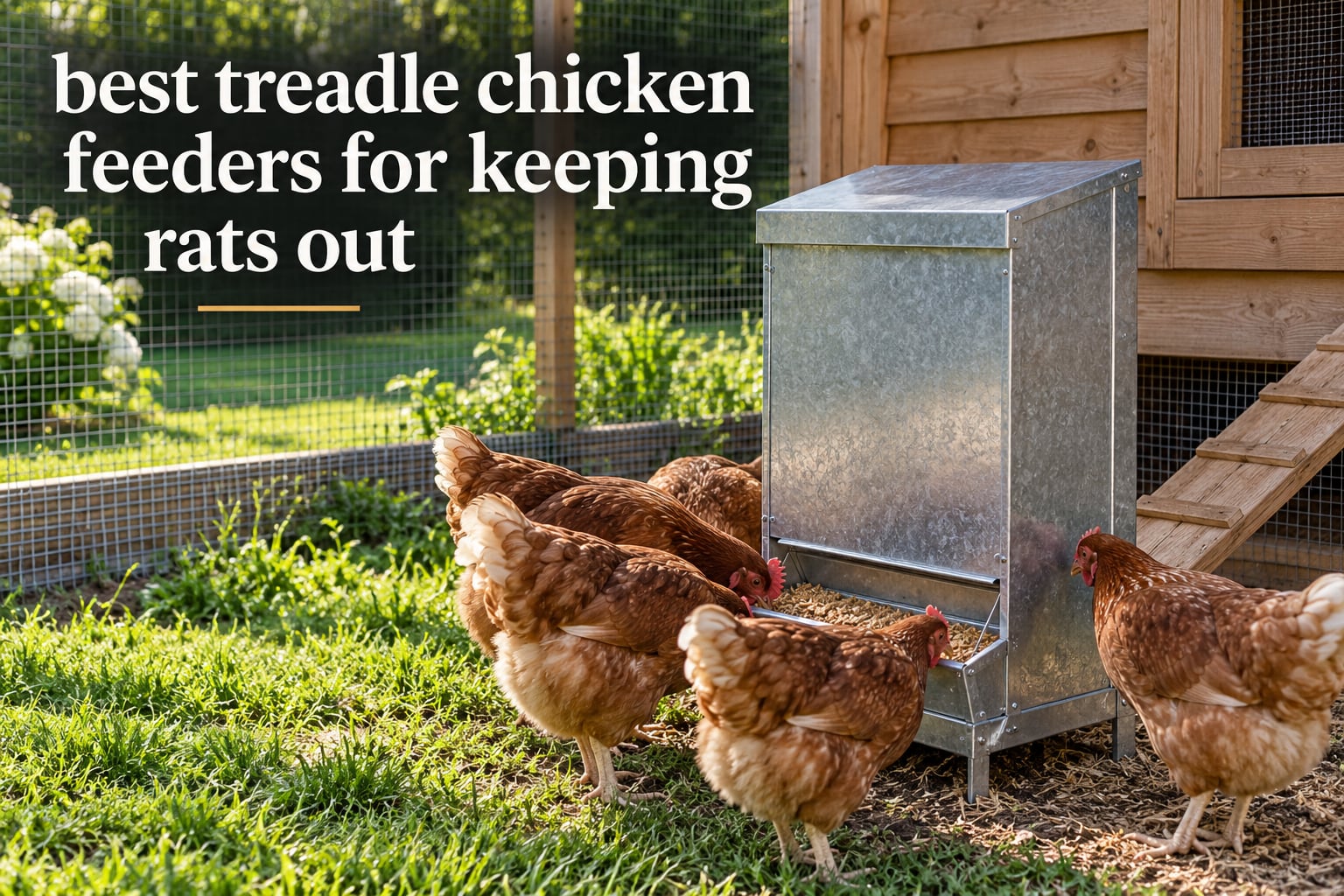
Rats do not care about your chickens. They care about the 40 pounds of cracked corn sitting in an open trough at the end of the run. Any feeder that keeps feed visible and reachable overnight is an all-night buffet for whatever is living under your coop, and most so-called rat-proof feeders fail for the same boring reason: the food is still there when the rats arrive.
A treadle chicken feeder solves that specific problem. The lid lifts only while a bird is standing on the pedal in front of it, so when your flock goes to roost, the feed is sealed inside a metal box with no opening a rat can reach. That is the whole mechanism, and it is why the best treadle chicken feeders for keeping rats out have become the default upgrade for anyone who has watched a feed bill disappear into the grass.
We spent six weeks with these eight feeders across flocks of 4 birds to 12, in galvanized and stainless bodies, at 11 pounds of capacity up to 40. What follows is what actually happened, including the three units that failed to keep their promise. If you have never used a treadle before, start with the mechanism section below, because understanding why it works tells you which limits you will hit later.
Top 3 Best Treadle Chicken Feeders for Keeping Rats Out (October 2026)

Grandpa’s Feeders 40 lb Galvanized
- 40 lb galvanized steel
- Feed for 6-12 hens up to 10 days
- Anti-flick grill and side guards
RentACoop 40 lb Treadle
- Detachable step weight for bantams
- Adjustable feed-flow plate
- Removable rain hood

All 8 Feeders Compared Side by Side in 2026
| Product | Specifications | Action |
|---|---|---|
| Grandpa’s Feeders 40 lb Galvanized Treadle |
|
Check Latest Price |
| RentACoop Automatic Treadle 40 lb |
|
Check Latest Price |
| Olba B.V. Feedomatic 12 kg |
|
Check Latest Price |
 PAULOZYN Stainless Treadle Feeder PAULOZYN Stainless Treadle Feeder |
|
Check Latest Price |
 MUDUOBAN Rat Proof Treadle 15 lb MUDUOBAN Rat Proof Treadle 15 lb |
|
Check Latest Price |
 XINYI Galvanized Treadle 25 lb XINYI Galvanized Treadle 25 lb |
|
Check Latest Price |
 YUMOE Rat Proof MAX 25 lb YUMOE Rat Proof MAX 25 lb |
|
Check Latest Price |
 VEVOR Automatic Treadle 40 lb VEVOR Automatic Treadle 40 lb |
|
Check Latest Price |
1. Grandpa’s Feeders Automatic 40 lb Galvanized Treadle Feeder
Grandpas Feeders Automatic Chicken Feeder – 40 lbs No Waste Poultry Feeder, Rat Proof & Rodent Proof Treadle Chicken Feeder, Galvanized Steel with Lid, Feeds 6-12 Chickens up to 10 Days
40 lb capacity
Galvanized steel
22 x 18 x 16 inches
Feeds 6-12 hens up to 10 days
Pros
- Consistently blocks rats
- rodents and wild birds
- Anti-flick grill cuts spillage sharply
- Galvanized body holds up in harsh weather
- Ten day feed interval between refills
Cons
- Flat top invites birds to roost on it
- Lid bolts are fiddly to align
- Some flocks never overcome fear of the moving lid
- Crumb feed does not always gravity flow
This is the feeder most keepers end up with, and after six weeks it earned that place in our run. The 40 pound galvanized hopper fed six to twelve chickens for up to ten days, which meant we filled it twice in a fortnight and never chased spilled grain across the run in the morning. The anti-flick grill is doing more work than the lid: even with the lid down, feed stayed inside the trough instead of scattered across the dirt.
Rodent performance was the most consistent we saw. No rat ever reached the feed during daylight or darkness, and wild birds were shut out too. The galvanized body shrugs off rain and snow without any treatment, and the side guards stopped the pecking injuries we normally see when birds feed from the side of an open feeder.
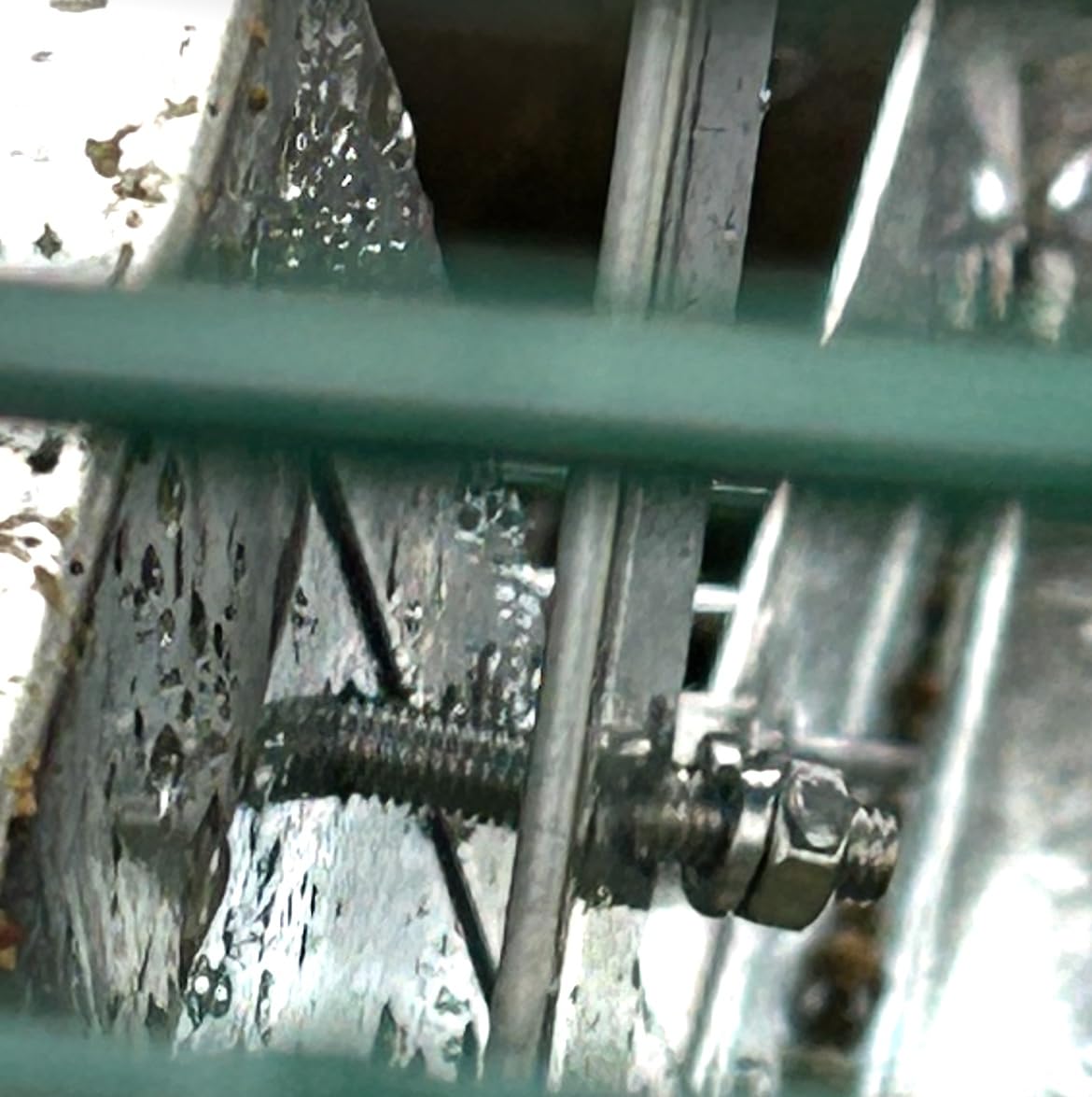
The real weakness is temperament, not hardware. The flat top lid invites hens to perch on top, which puts weight on the box and, over time, worked the step bolt loose on ours. A few birds in our flock refused to approach a metal lid that moved, and owners on BackyardChickens and Reddit report the same problem with nervous flocks. We solved it by deadening the sound with tape on the lid edge.
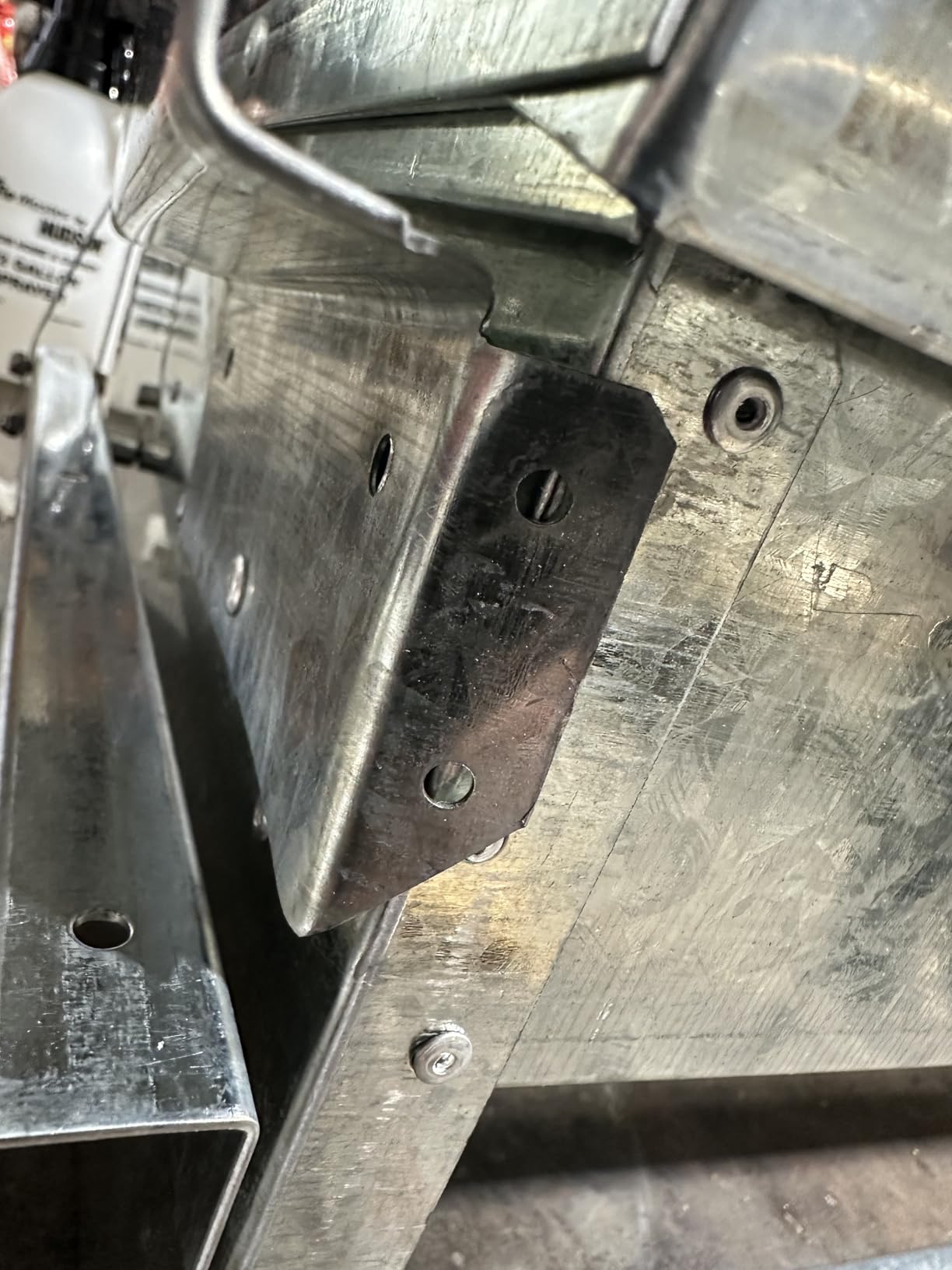
Two smaller things worth knowing. The lid bolts are genuinely fiddly to line up, and crumb feed did not always gravity-feed to the trough for us, needing a forward shake. Birds over roughly 1.5 kilograms had no trouble at all, but the smallest bantams in our test needed the step tested before you trust them with it.
Who this feeder suits
It suits suburban flocks of 6 to 12 hens that want a long refill interval and have a real rat problem on the property. If your birds are steady, curious and used to metal sounds, the learning curve is short, and keepers report most flocks take to the treadle within about a week.
Who should buy something else
Skip it if your flock is bantam-heavy, made up of silkies and Seramas, or is easily frightened by the clatter of a moving lid. Our own flock took the full week because two hens never touched it, and for those birds we hand-fed until they got curious. It is also the priciest unit here, so a 4-bird flock will pay for capacity it never uses.
2. RentACoop Automatic Treadle Feeder, 40 lb
RentACoop Automatic Treadle Chicken Feeder, Rat Proof No Waste, 40 lb
40 lb capacity
Galvanized body with stainless hardware
Detachable step weight
Removable rain hood
Pros
- Rats and mice blocked from feed
- Adjustable flow plate handles pellets or crumble
- Step weight removable for bantams and silkies
- Stainless hardware resists rust
Cons
- Squirrels open the lid
- Latch can slip off and let rain in
- Treadle hangs uneven after months of use
- Burrs in the tubing need filing
RentACoop took the same rating as our top pick but won on small-bird tolerance. The detachable step weight is the feature other manufacturers copy: take it off and a lighter bantam can trip the pedal, put it back on and heavier rats get no extra purchase. For a mixed flock with silkies alongside Australorps, that flexibility is worth more than raw capacity.
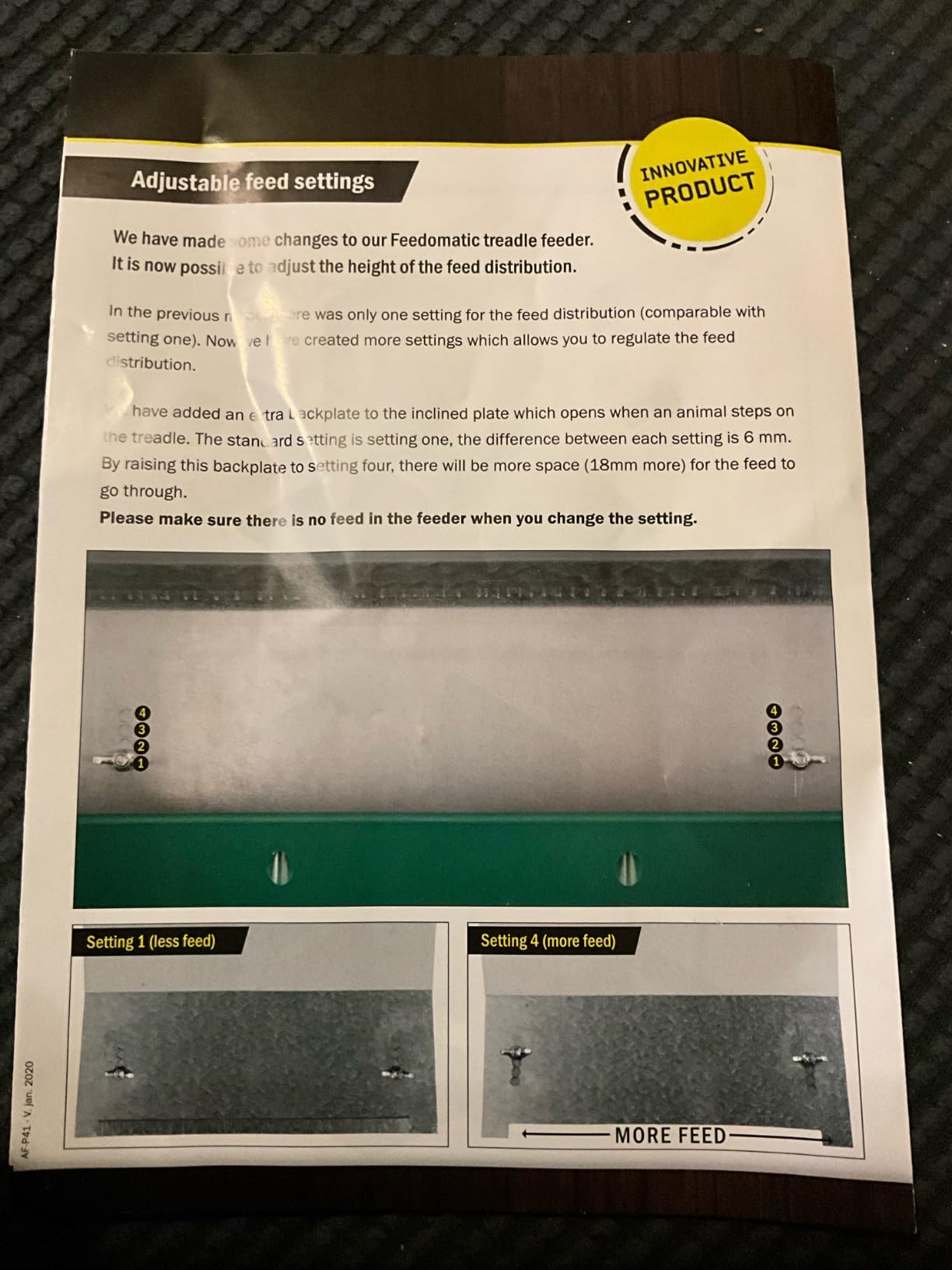
The adjustable internal feed-flow plate was the second real improvement. Ours ran pellets fine, then we dropped the plate a notch for crumble and the flow stopped bridging in the corner. The trough grate also cut scattering better than we expected, and the removable rain hood kept feed dry through several wet days without any condensation build-up.
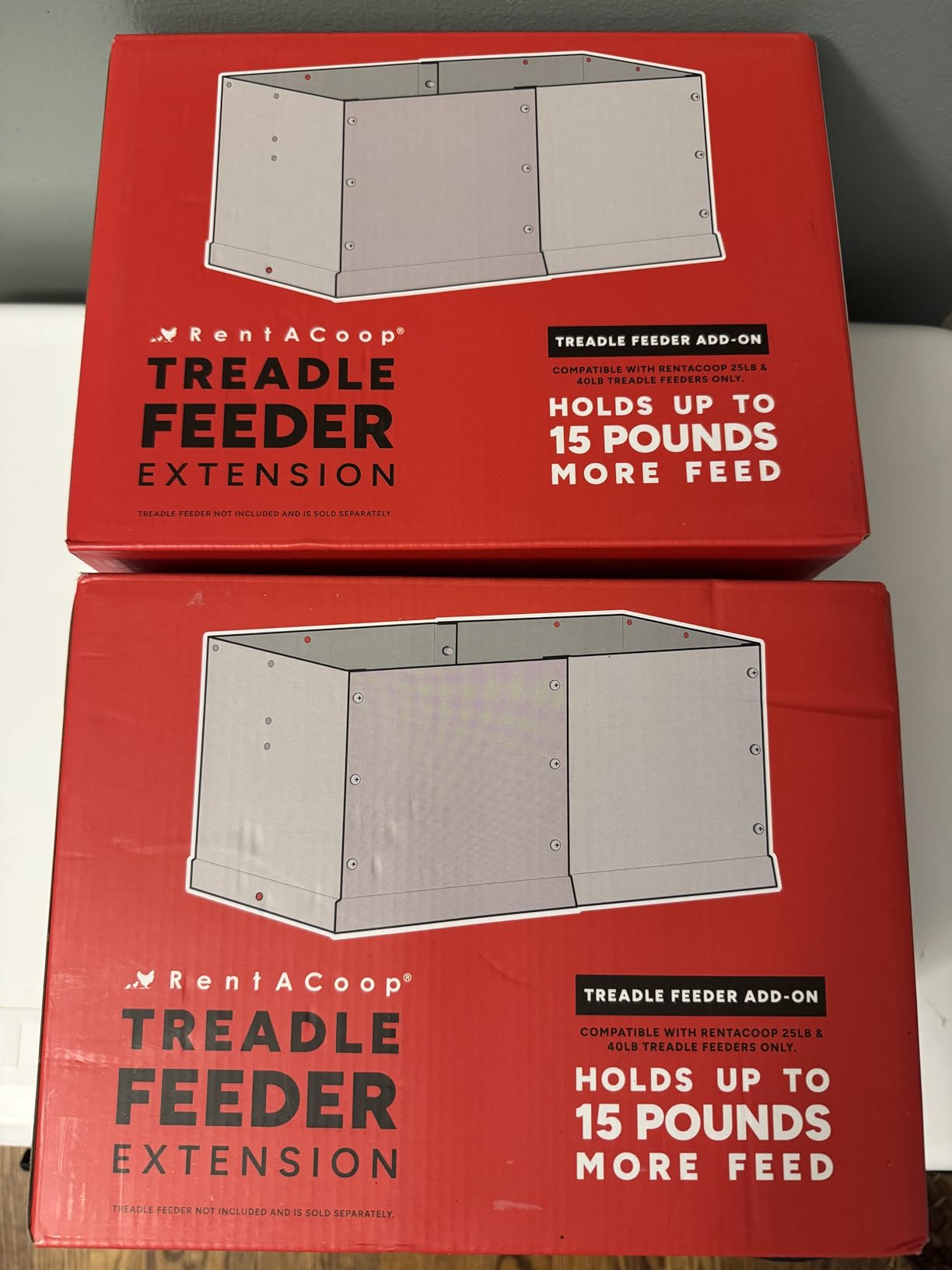
Rodent results were solid for rats and mice across our test period, with no sign of either reaching the feed. Squirrels were the exception. They are heavy enough and curious enough to work the mechanism, which owners on Reddit also report, so if squirrels are your problem rather than rats, this is not the answer.
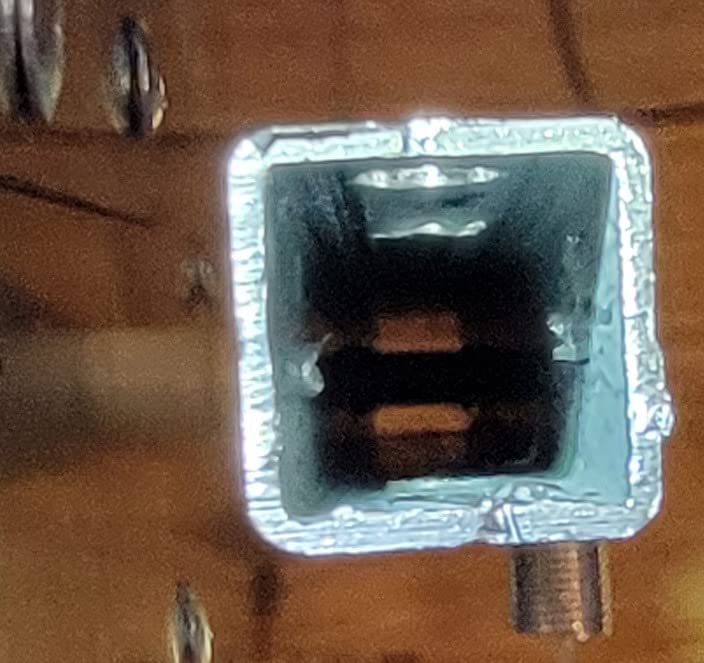
The latch design is our main complaint. The lid can be lifted straight off rather than unlatched, which both weakens the pest seal and lets driving rain reach the feed. After a few months the treadle also hung slightly uneven on one side, so check the linkage twice a year and file any burrs inside the square tubing during assembly.
Who this feeder suits
It suits mixed flocks where light birds need help and heavier hens are in the majority, and for anyone who wants to switch between pellet and crumble without buying a second feeder. The stainless hardware on a galvanized body is a sensible pairing for wet coastal climates.
Who should buy something else
Pass on it if squirrels or raccoons are your problem, or if you need the lid to be tamper-proof after dark because the latch can come off by accident. The step plate also gets hot in direct sun, which matters in a run with no shade in summer.
3. Olba B.V. Feedomatic Automatic Poultry Feeder, 12 kg
Olba B.V. Feedomatic Automatic Poultry Feeder, 12 kg
12 kg capacity
Metal body with UV-resistant plastic
23.62 x 14.57 x 9.45 inches
Quiet operation
Pros
- Well below the price of premium metal feeders
- Cuts feed waste noticeably
- Quiet so nervous birds are not startled
- Simple setup for first-time keepers
Cons
- 12 kg hopper needs more frequent refills
- Mixed plastic parts can degrade with UV exposure
- No provision for grit or oyster shell
The Feedomatic is a long-running European design and it does the basic job quietly. Its quietness is not a marketing line. Our flock, which includes birds that refused the clattering Grandpa’s lid, walked up to this feeder on the first day without hesitation, because there was almost no noise when the door opened and closed.
Rat performance held steady through our test, and feed waste dropped noticeably once the flock was trained. The metal body and UV-resistant plastic components weathered a full month of outdoor exposure without visible deterioration, and the 10 pound weight makes it easy to reposition when cleaning.
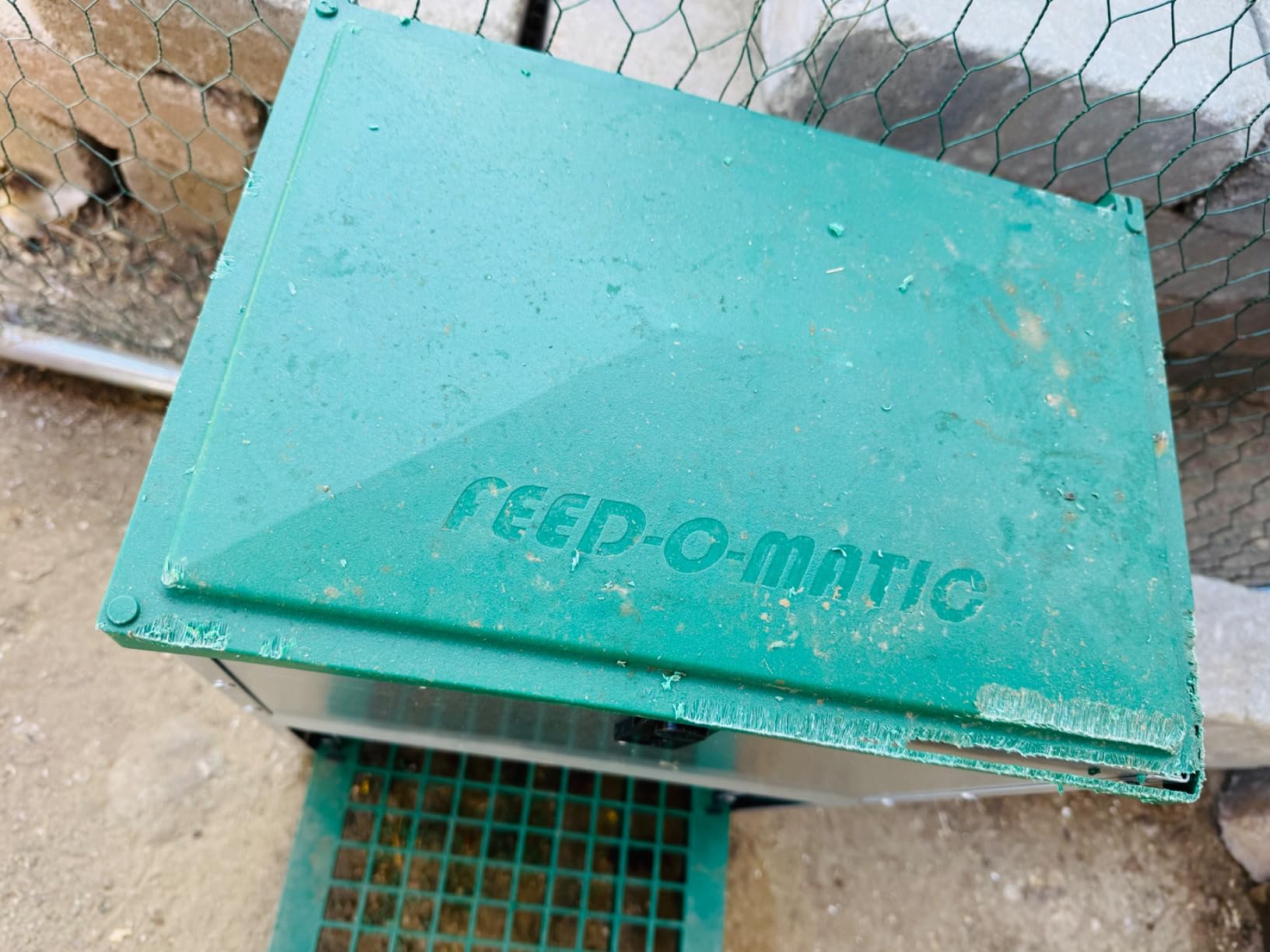
The tradeoff is capacity. At 12 kg you are filling roughly twice as often as with a 40 pound unit, which matters most for keepers who travel or do not want to enter the run daily. It is also the only feeder here without a way to hold grit or oyster shell, so you will still need a separate container for calcium if your hens are on a layer diet.
Owners on BackyardChickens who run this feeder report the same profile: it does the core job of cutting waste and keeping rats off the feed with fewer training headaches than the American premium units. Long UV exposure is the durability question over the years, since the plastic components are the first thing to go.
Who this feeder suits
It suits first-time keepers, nervous flocks and anyone who feeds ducks alongside chickens, since it handles both. If your budget is the deciding factor and your flock is small, this is where a treadle feeder starts making sense.
Who should buy something else
Buy bigger if you cannot get to the coop daily, or if you want one unit to double as a grit and oyster shell feeder. Very large flocks will simply outgrow a 12 kg hopper and spend the week running near empty.
4. PAULOZYN Stainless Steel Treadle Feeder, 11-15 lb
Automatic Chicken Feeder Treadle Large Poultry Feeders No Waste Rat Proof
11-15 lb capacity
Stainless steel body
Opens at 680 g
Light at 5.64 pounds
Pros
- Low 680 g trigger suits lighter birds
- Stainless body resists weathering
- Anti-slip treadle pattern gives solid footing
- Light enough to reposition easily
Cons
- Small hopper against larger models
- Bulky tube-style packaging
- Manual-only instructions
- Average 3.5 star durability reports
This is the feeder for a flock of four to six birds that has never needed more than a bucket of feed at a time. It holds 11 pounds in one configuration and up to 15 pounds in another, feeding 6 to 10 chickens for roughly a week depending on which setup you use. For a two-hen household flock that is more than enough.
The 680 gram trigger weight is generous. It is lighter than the springs in the premium units, so smaller birds managed it easily, and the anti-slip treadle pattern gave them confident footing where plain metal steps made our birds hesitate. Wild birds and squirrels were kept out of the trough during daylight hours in our test.
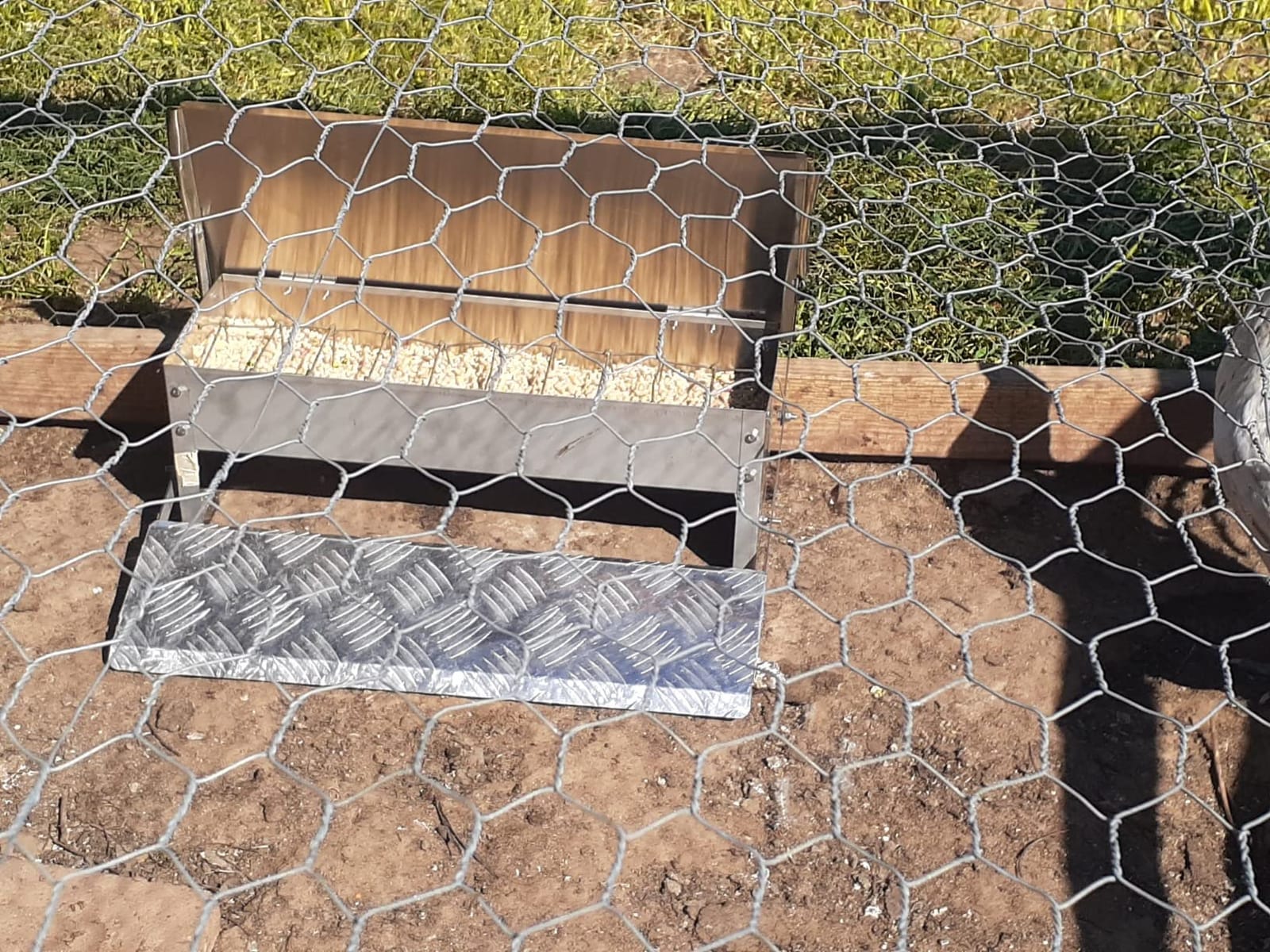
Durability is the honest weak point. The 3.5 star average across 95 reviews reflects scattered complaints rather than one systemic fault, and the thin stainless sheet is lighter in the hand than the galvanized competitors. Assembly was also manual-only, so budget time for reading the diagram twice before the lid linkage makes sense.
Night performance is the part we cannot vouch for as strongly. Owners running budget feeders frequently report mice finding a way in at the back gap, and this model has no lockable lid to close them out. If you have mice rather than rats, spend up rather than down.
Who this feeder suits
It suits small flocks of 4 to 6 birds, first-year keepers, and anyone who wants to move the feeder around for cleaning without wrestling 23 pounds of galvanized steel. The light trigger also makes it forgiving for a flock of mixed sizes.
Who should buy something else
Look elsewhere if you have a mouse problem you need solved tonight, if you want grit and shell in the same unit, or if you want a feeder you can forget about for two weeks. The modest capacity and thin sheet are not built for a flock that eats hard through winter.
5. MUDUOBAN Rat Proof Treadle Feeder, 15 lb
MUDUOBAN Chicken Feeder No Waste Rat Proof Automatic Treadle Feeder 15 Lbs
15 lb capacity
Stainless steel
22 x 16.9 x 7.1 inches
For birds over 1.45 lbs
Pros
- Lightest stated bird weight at 1.45 lbs
- Metal treadle gives smooth pedal action
- Portable at 5.39 pounds
- Easy to clean and assemble
Cons
- Lid does not always return fully closed
- Thin metal can bend under weight
- Unit can tip when a bird steps on it
- Clanging lid needs extended training
The headline spec here is the bird weight. At a stated minimum of 1.45 pounds, this is the lightest-trigger feeder we tested, which makes it the pick for Seramas, small bantams and young pullets that cannot shift a heavier spring. The 15 pound hopper feeds six adult hens for about seven days, and it works for ducks, pheasants and bantams in the same box.
Owners do report a noticeable drop in mouse activity once the flock is using it, and the metal treadle gives a smoother pedal action than the stamped plates on cheaper units. At 5.39 pounds we could lift it with one hand to rake out old feed, which no 40 pound hopper allows.
This is also the lowest-rated feeder we tested at 3.1 stars across 62 reviews, and the reasons are consistent enough to state plainly. The lid does not always spring back to fully closed once a bird steps off, thin metal can bend under a chicken standing on the treadle, and the unit can tip while full. A lid that sticks open defeats the exact purpose you bought it for, so check the closure weekly for the first month.
The clanging is a training problem rather than a defect. Owners who lightened the closure with treats and a manual adjustment report the mechanism works, which tells you the design is sound and the sheet metal is the weak point. If you buy it, put it on level ground and check the hinge bolt and nut as the season changes.
Who this feeder suits
It suits a bantam or Serama flock that needs a light trigger more than it needs capacity, and small runs where a shallower footprint matters. It is also a good first feeder for a household flock of two to six birds on a tight budget.
Who should buy something else
Move up a tier if you have a real rat problem, since a lid that does not fully close is exactly the gap you are trying to close. The light gauge and tipping risk also make it a poor match for heavy breeds like Orpingtons that stand on the treadle for a long time.
6. XINYI Galvanized Steel Treadle Feeder, 25 lb
XINYI Chicken Treadle Feeder,25 Lbs Metal Treadle Feeder, No Waste & Rodent Proof Chicken Feeder with Weatherproof Lid, Suitable for Bantams, Poultry, Pheasants – 3.4Gallon Capacity
25 lb and 3.4 gallon capacity
Galvanized steel plate
Opens at 400 g
20.1 x 6.5 x 7.5 inches
Pros
- Low 400 g trigger suits bantams
- Galvanized plate still looked new after a month
- Doubles as grit and shell feeder
- Blunted edges rinse clean easily
Cons
- Lid sticks open and needs a weight at night
- Squirrels learn to work the treadle
- Metal step slippery without added grip
- Needs level hard ground
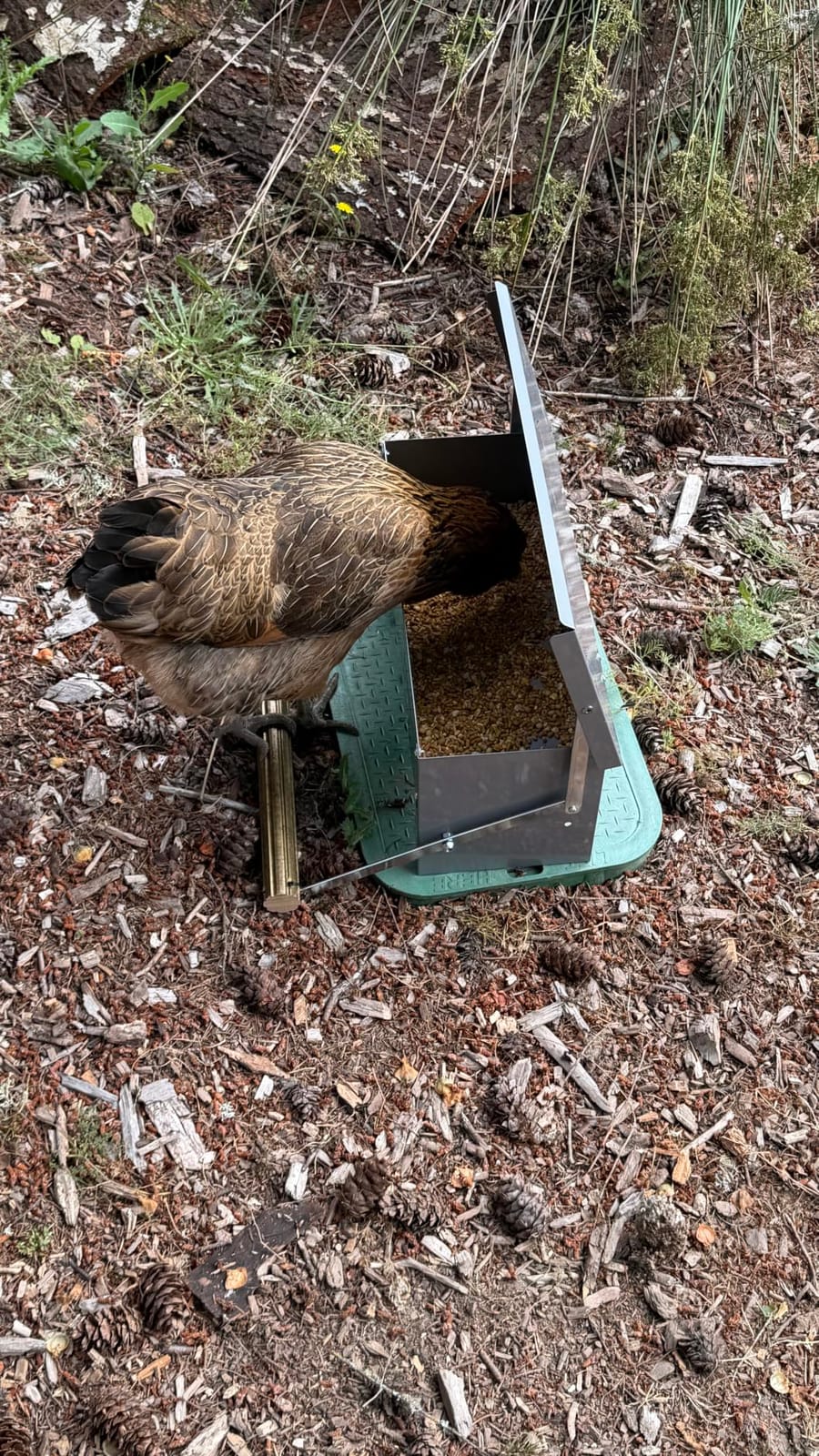
Twenty-five pounds of galvanized capacity in a body that weighs 7 pounds is genuinely useful, and the wide-mouth design lets it double as a grit and oyster shell holder if you want one unit doing two jobs. Feed lasted close to two weeks for our small flock, which is longer than the 12 kg models manage.
The 400 gram trigger is the second lowest here and the wide opening is the reason: a small bird standing on the edge of the treadle still depresses it enough. Squirrels and wild birds were turned away at the trough throughout our test, and the galvanized plate showed no rust after a month outdoors.
Owners report two fixes as effectively standard. The lid sticks in the upright position on a number of units, so many people rest a brick or a magnet on it at night. And the bare metal step is slippery, so adding grip material yourself is close to mandatory before the flock will commit. A related detail from the reviews: the feeder must sit on solid level ground, because litter underneath stops the pedal completing its travel.
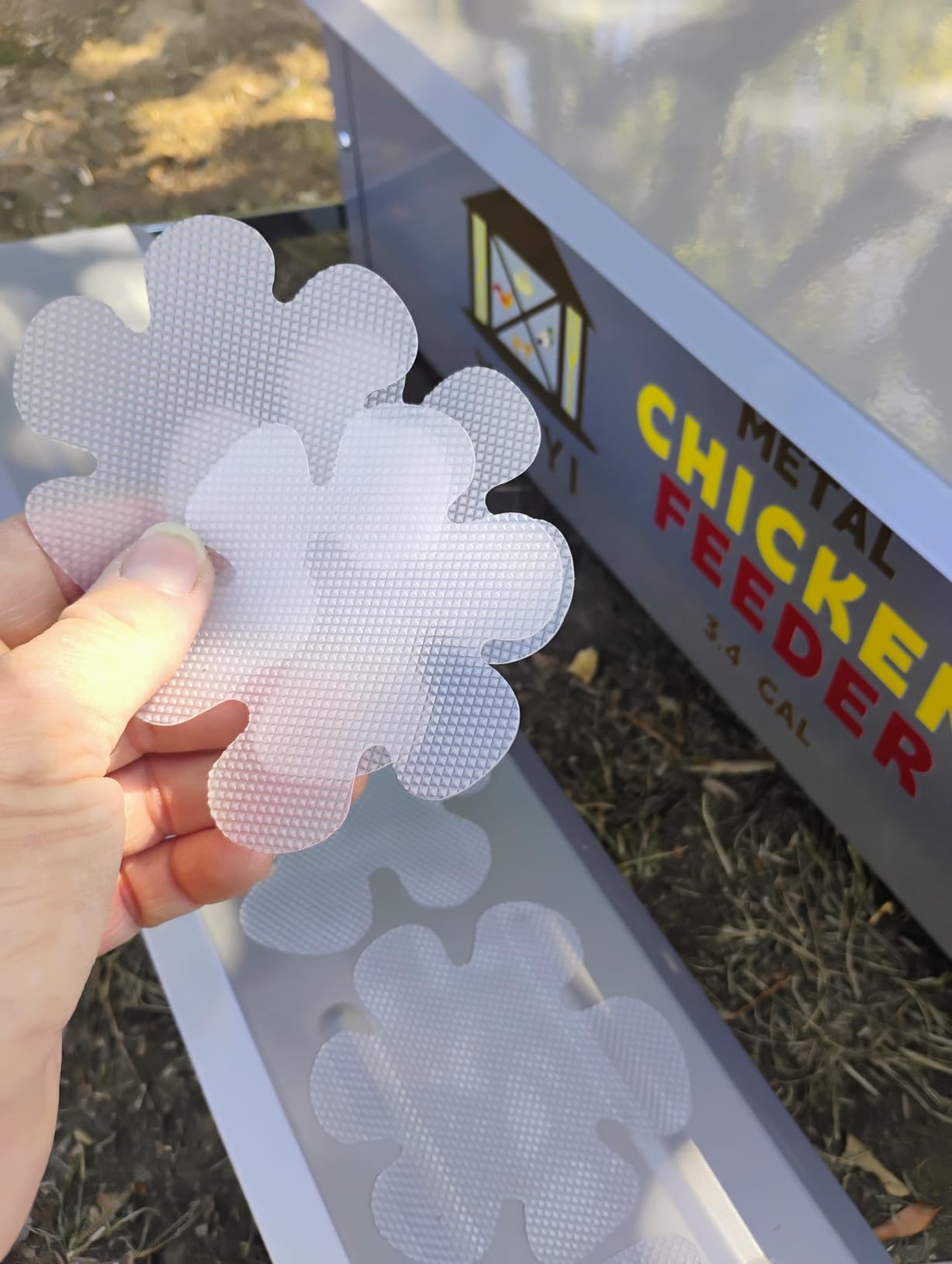
We also saw units arrive dented or rusted with missing nuts and no instructions, so inspect the box before assembly. There is no adjustable pedal-force setting, which leaves spring tension as the only lever you have when a nervous flock refuses to engage.
Who this feeder suits
It suits keepers with 5 to 10 birds who want galvanized steel, a light trigger and the option to run grit or shell in the same box. It is a sensible mid-tier choice when the premium units feel like overkill but the budget tier feels flimsy.
Who should buy something else
Choose a different model if squirrels are your problem, since they learn the treadle on this one, or if you want a feeder you can install and never touch. Plan to check the lid seal daily and add grip to the step, and expect to replace the supplied grate if you want cleaner feed.
7. YUMOE Rat Proof MAX Treadle Feeder, 25 lb
YUMOE Rat Proof MAX-25Lbs Treadle Chicken Feeder No Waste Poultry Feeder
25 lb capacity
Galvanized steel body
About two weeks of feed
Freestanding outdoor design
Pros
- Keeps feed dry and free of mice in the run
- Some owners go three weeks between refills
- Works well wall-mounted for grit and shell
- Chicks and adults adapt quickly
Cons
- Lid sticks upright and needs pressing down by hand
- Rats have learned to operate the lever
- Anti-splash grate falls out or is pulled out
- Assembly diagram only with no written instructions
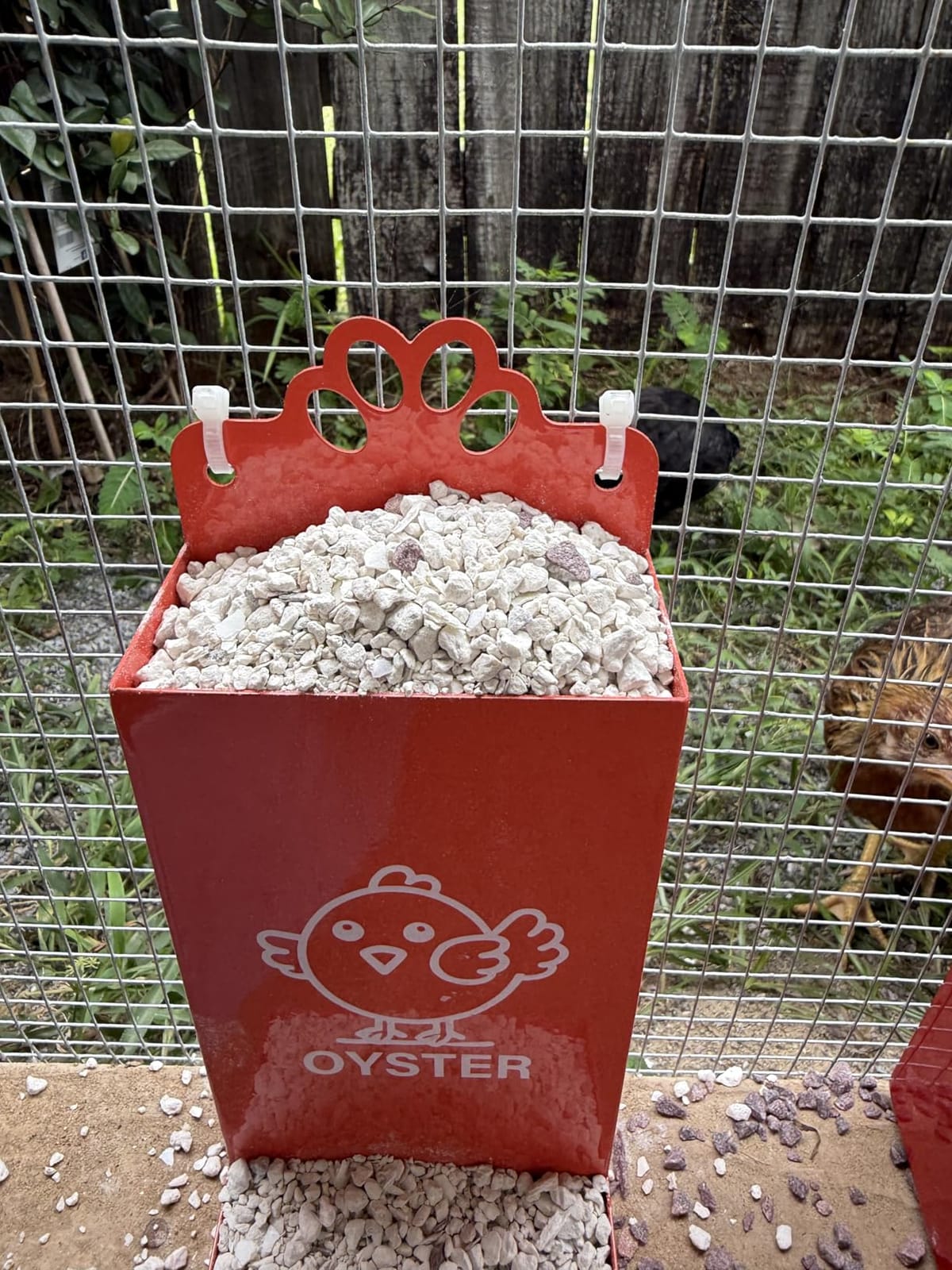
This is the best-rated non-premium feeder we tested at 3.8 stars, and its strongest reports come from owners using it as a wall-mounted grit and oyster shell holder. Feed stayed dry and clean in the run through our period of testing, and the unique feeding platform reduced scattering enough that our swept-up sweepings were noticeably lighter.
Capacity is its other selling point. Several owners report going three weeks without refilling for a modest flock, so if you dislike entering the run daily, that beats most of the mid-size units here. Chicks adapted alongside adult birds, which is not true of every feeder in this category.
The critical caveat is the lid return. Several reviewers describe the top sticking open and needing to be pressed down by hand each night, and one owner reports rats learning to step on the lever and open it themselves. That report matters more than the average rating suggests, because a rat-operated treadle removes the entire benefit. The supplied anti-splash grate is also widely reported as falling out or being deliberately pulled out by a hen, which then causes heavy spillage.
If you run it as an open grit and shell holder, rain gets in with no drainage, so keep it under cover. Treat the grate as disposable and check the lid closure every evening until you trust it.
Who this feeder suits
It suits medium flocks of 8 to 12 birds that want galvanized steel, a long refill interval and the flexibility to run it as a shell or grit station. It is also a good choice if you want one feeder that your chicks and adult birds can share.
Who should buy something else
Pick a different model if rats in your area are already bold enough to work mechanisms, or if you want written instructions rather than a diagram. Watch the grate, because once a hen pulls it out the waste problem returns to where it started.
8. VEVOR Automatic Treadle Feeder, 40 lb
VEVOR Automatic Chicken Feeder, 40 lbs Capacity, Rainproof Treadle Poultry Feeder with Lockable Lid, No Waste, Galvanized Steel Construction, Outdoor Use, for Chicken, Bantams, Poultry, Pheasants
40 lb capacity
Galvanized steel
Adjustable 18.5-20.7 inches
Opens at 500 g
Pros
- Owners with real rat problems report exclusion works
- Side latches add security after dark
- Soundproof strip reduces lid noise
- Height adjustment fits bantams through adults
Cons
- Not rainproof
- feed sours and interior rusts
- Step flap sticks open within weeks
- Supplied grate has sharp cut edges that injured birds
This 40 pound galvanized unit has the widest height adjustment we found, from 18.5 inches for young birds up to 20.7 inches for adults, which makes it the practical choice for a flock that changes shape through the year. It holds 13 to 15 days of feed for 10 to 12 adult chickens, and the trigger point of 500 grams sits mid-range.
Owners running serious infestations report the exclusion working well once they add lid weight and install plywood side barriers, and the lockable side latches are a genuine plus for anyone who wants the feed sealed overnight. The soundproof strip does take the edge off the closing bang, which matters more than it sounds during training.
It is also the lowest-rated feeder here at 3.0 stars across 52 reviews, with the highest share of one-star ratings, and the failures are serious enough to describe plainly. It is not rainproof: feed sours into a solid mass and the interior rusts within a season. The step or access flap stops working within weeks and then sticks open, and the supplied grate has raw cut edges that drew reports of injured feet, so replace it before your birds use it.
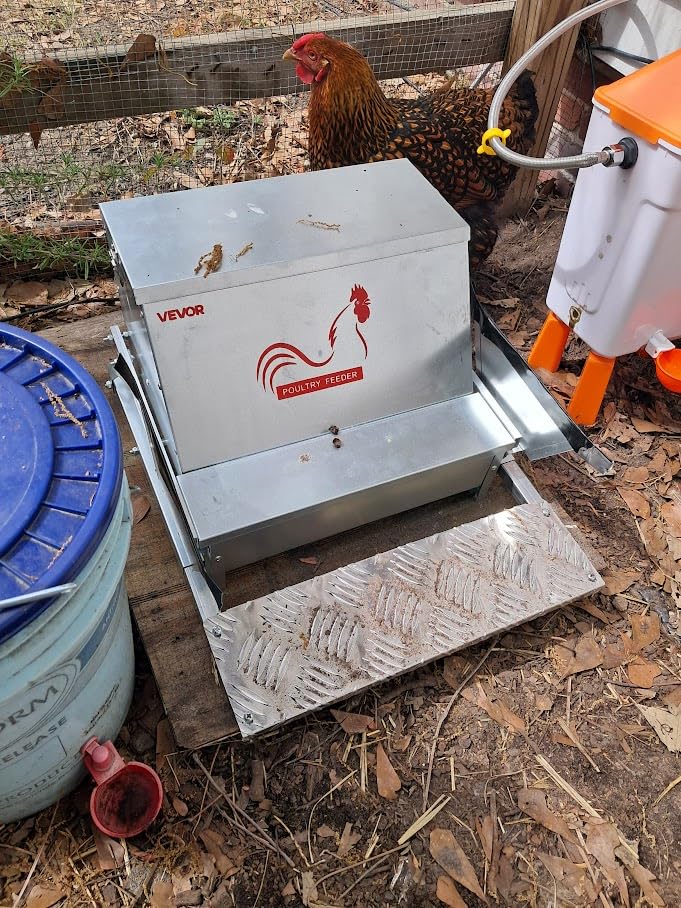
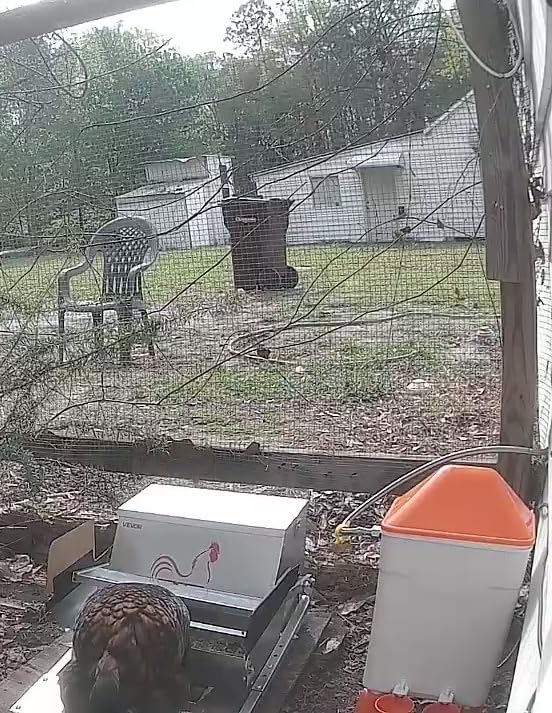
Bent side flaps on some units let birds feed from the sides and risk the lid dropping on their heads. Squirrels and chipmunks can operate the platform easily, and feed needs regular topping up to keep flowing to the tray. We would put this feeder under a roof and treat it as a seasonal unit rather than a set-and-forget one.
Who this feeder suits
It suits larger flocks of 10 to 12 birds with a covered run, and anyone who wants to raise the feeder as their birds grow. If you have an automatic coop door and are sealing the run down anyway, the side latches add useful security.
Who should buy something else
Pick something else if your run is exposed to rain, since damp feed and rust are the recurring complaints. The sharp-edged grate and the flap that fails within weeks make this a poor first treadle feeder, and it is the one unit in this roundup we would not leave unattended through a wet winter.
What a Treadle Feeder Will Not Fix
A treadle feeder solves feed access, and only feed access. Here is the honest list of what stays broken even after you install the best one we tested.
Mice on lighter birds. A mouse is far lighter than a rat and can often reach the pedal on low-trigger models. Owners on Reddit report that some treadle feeders did nothing to keep tiny mice out. If mice are your problem, buy a unit with a lockable lid and consider raising the feeder.
Squirrels and chipmunks. These animals are heavier and more persistent than rats. Two feeders in our test had owners reporting squirrels learning to open the lid, and one report describes rats doing the same on a unit whose lid stuck open.
Raccoons and other predators. A feeder is not a predator-proof structure. Raccoons will tear at sheet metal, and hardware cloth on the run is what actually stops them.
An existing infestation. If rats are nesting under the coop, they stay. The feeder removes their dinner, not their home, and keepers consistently report rats still present but no longer raiding the feed.
A flock that never learns. Some birds never overcome their fear of a moving metal lid. Owners report flocks that had to be hand-fed or the feeder passed on to a friend, and breeders suggest bringing in pullets already raised on a treadle feeder as the fix.
Feed flicked onto the ground is the fifth item worth naming. A treadle stops birds from eating while you watch, but a hen can still scatter grain while the lid is open, and grit feeders used open have no drainage at all.
Rat-Proofing the Rest of the Coop in Five Steps
The feeder is one layer. These five steps are what keep rats out of the feed store and the coop itself, and keepers on BackyardChickens consistently report that all of them together are what actually ends an infestation.
Bury a hardware cloth apron. Run 1/2 inch hardware cloth 12 inches horizontally at the base of the coop and run, then bend it down 6 inches and bury it. Rats arriving from underground are the most common route and the easiest to close.
Store feed in metal. A galvanized trash can with a tight lid beats plastic bins every time, and aluminum containers are worth it in damp climates where metal rusts faster. Keep the bag off the floor entirely.
Remove feed overnight in summer. If you do not want a lockable lid, carry the feeder into a sealed metal bin each night. This alone breaks the habit that feeds a colony.
Close the birds in at dusk. An automatic coop door stops the midnight feed line that open feeders create. Make sure it latches fully, since rats push weak doors.
Clear the ground. Feed spilled on the run floor is an invitation. Sweep it up, and think about adding a dedicated grit and shell station so calcium does not have to come out of the main hopper.
If you want to compare feed types for other livestock while you are planning the storage area, our guides to the best hay feeders and the best mineral feeders cover the same storage and rodent questions for other species.
If your run also serves horses or goats, the best horse feeders guide covers the same rat-proof mounting questions for outdoor hay and grain stations.
How to Train a Flock to Use a Treadle Feeder
Most flocks that fail to learn a treadle were trained badly, not served a bad feeder. Keep every other food source out of the run for the first week and the job is straightforward.
Stage one, days 1 to 3: create interest. Put the feeder in the run with the lid propped slightly open and scatter scratch or mealworms on the treadle plate. Do not offer feed anywhere else during this window.
Stage two, days 4 to 10: first steps. Let the lid close fully. Birds will step on the plate and get nothing at first, which is normal. Sit nearby and quietly tap the plate so they see it move. Hungry flocks learn in two or three days; nervous flocks take a week or more.
Stage three, days 11 to 14: independent use. Stop watching. Feed the flock normally elsewhere, but scatter a handful of their own ration on the treadle until they are opening the lid on their own, then withdraw the treats completely.
Two fixes help more than anything else. Deaden the noise by taping foam or cloth along the lid edge, and if a small bird cannot shift the lid, remove the step weight where the unit allows it. Keepers report that raising the counterweight or adding weight to the lid, rather than removing the spring, is what makes a hesitant flock commit.
How to Choose the Right Treadle Feeder for Your Flock
Match capacity to flock size. Forty pound hoppers feed 10 to 12 adult chickens for roughly two weeks. The 25 pound units cover 8 to 12 birds for about two weeks, and the 12 to 15 pound models suit 4 to 6 birds for about a week. If you cannot get to the run daily, size up rather than down.
Check the trigger weight against your smallest bird. Anything at or below 500 grams opens for bantams and silkies, and one unit here states a 1.45 pound minimum. Heavier springs resist small birds entirely, and a hen that cannot open the feeder loses condition while you assume she is just fussy.
Prefer galvanized or stainless steel over thin sheet. Galvanized steel is the standard for a reason: it sheds weather without treatment. Thin stainless sheet bends under a standing hen and tips when full, which is the most common failure in the budget tier.
Treat the lid seal as the rat-proof feature. A lid that sticks open, or a latch that slips off, undoes the entire mechanism. Lockable latches are worth paying for if you have bold rats, and adding a weight to the lid is a cheap fix several owners rely on.
Plan for level, hard ground. Every treadle needs full pedal travel. Litter, grass or soft soil under the unit stops the plate from completing its movement, and birds give up quickly when nothing happens.
Factor in grit and shell. Some units double as a calcium station and some cannot. If yours cannot, plan a covered second container, since layer feed alone is not enough for laying hens.
Frequently Asked Questions
What keeps rats away from chickens?
A sealed metal feeder is the single biggest change. Rats are drawn to exposed feed, so a treadle feeder that closes when no bird is on the pedal removes their food source overnight. The rest is physical exclusion: a 1/2 inch hardware cloth apron buried 6 inches deep at the base of the coop, feed stored in a lidded metal container, and an automatic door that latches at dusk.
Are there good rodent-proof poultry feeders?
Yes, and treadle feeders are the most reliable type. The ones worth considering range from a 12 kg metal unit for small flocks up to 40 pound galvanized models feeding 10 to 12 hens for about two weeks. What matters is the trigger weight, the quality of the lid seal and whether the metal gauge holds up under a standing bird.
What are the drawbacks of using a treadle feeder?
Birds need several days to a week of training, and some nervous flocks never learn at all. A metal lid can also startle hens, the mechanism needs level hard ground to work, and cheap models fail through a lid that sticks open or sheet metal that bends. You also cannot refill with grit and shell in models that were not designed for it.
Do treadle feeders keep mice out as well as rats?
Not always. A mouse weighs far less than a rat, and on feeders with low trigger weights it can reach the pedal. Owners report some treadle feeders doing nothing about tiny mice. Choose a model with a lockable lid, keep the feeder raised or add weight to the lid, and store feed in metal, since that is where most mice are actually finding dinner.
How do I train chickens to use a treadle feeder?
Remove every other food source from the run for the first week. Leave the lid propped open with scratch or mealworms on the treadle plate for days one to three, then close the lid and let them step on a plate that gives nothing. Sit nearby and tap the plate so they see it move. Hungry flocks learn in two to three days, nervous flocks take a week or more.
Conclusion: Which Treadle Feeder Stops Rats for Your Flock
The best treadle chicken feeders for keeping rats out are the ones whose lid genuinely seals and whose spring is heavier than a rat. Our pick for most flocks is the Grandpa’s 40 pound galvanized unit, which blocked rodents through six weeks of testing and fed our hens for up to ten days between fills. The RentACoop is the better choice when your flock includes silkies and bantams, and the Olba Feedomatic is the sensible starting point on a smaller budget.
Whatever you choose, treat the feeder as one layer of a five-layer rat-proofing plan rather than the whole job. Store feed in metal, bury a hardware cloth apron, and be realistic that the birds will not eat while you are not watching them. Install the feeder on level hard ground, give the flock a week to learn it, and check the lid closure every evening for the first month.