
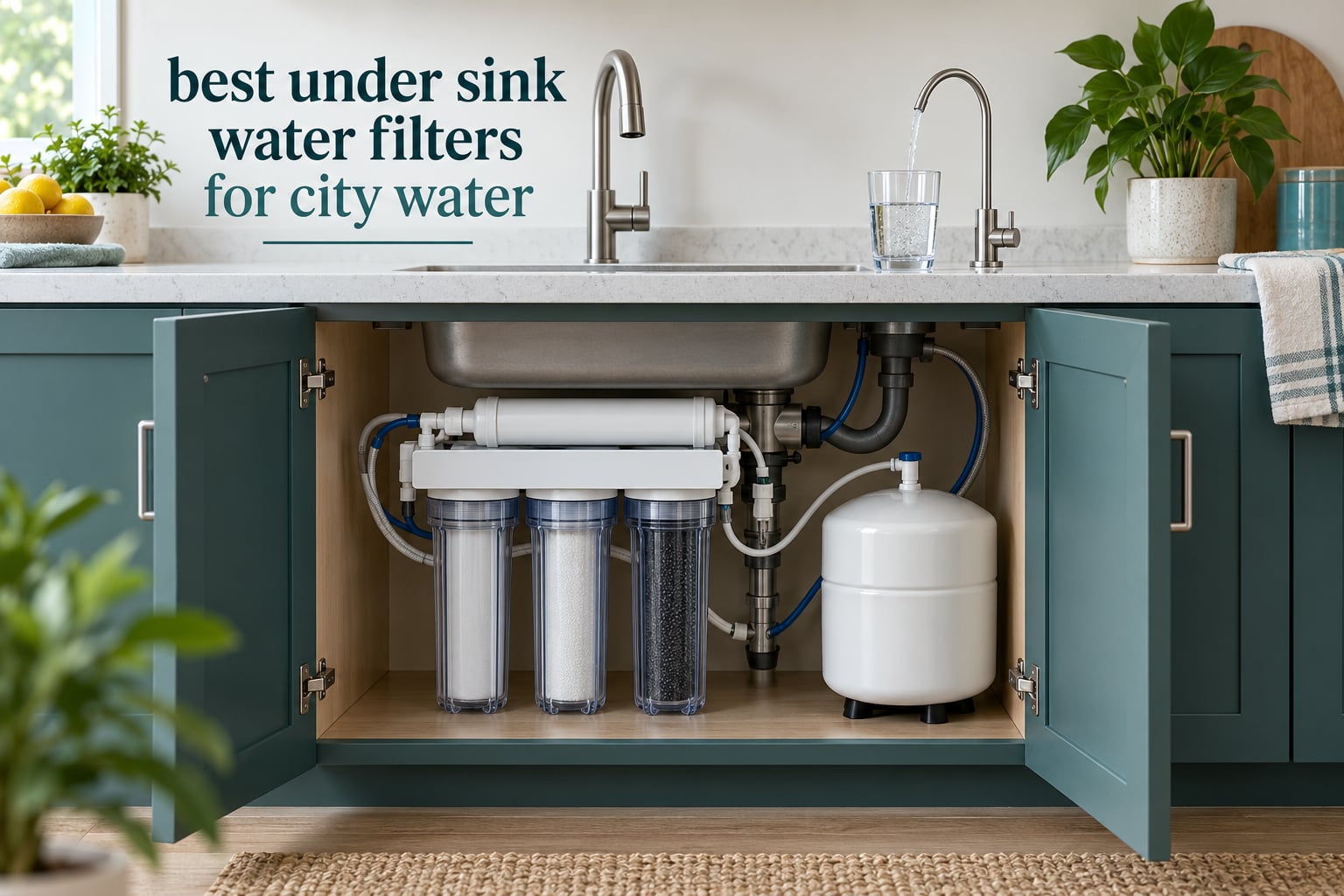
City water is treated to federal standards before it reaches your tap, but treatment is not the same as filtration. What arrives in your glass still carries a chlorine or chloramine residual, disinfection byproducts formed when that disinfectant reacts with organic matter, and in older homes lead leached from service lines and solder joints. Our answer to the question we get asked most often is simple: the iSpring RCC7AK-BN is the best under sink water filter for city water overall, because it is certified to NSF/ANSI 58 as a complete system, it treats total dissolved solids, and it has more owner reviews than anything else we tested.
That said, the best under sink water filter for city water is not one product. A household on a chloraminated supply with a small cabinet and no drilling permission needs something completely different from a family that wants bottled-water taste and does not care about the water going down the drain. We compared eight systems across carbon block, catalytic carbon, ultrafiltration and reverse osmosis to cover the range.
We also want to be honest about the contrarian case. Should you filter your city water? Sometimes the answer is no, and we explain when below. If your utility report shows every regulated contaminant well inside limits and you do not care about taste, a [whole house water filter for city water](https://www.wearesalt.org/best-whole-house-water-filters-for-city-water/) is a different conversation than a point-of-use system. We earn a commission when you buy through our links, and that relationship never changes which product we rank first.
Top 3 Best Under Sink Water Filter for City Water Picks (October 2026)

iSpring RCC7AK-BN 6-Stage RO
- Whole-system NSF/ANSI 58
- Remineralization AK stage
- Transparent first-stage housing
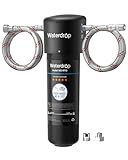
Waterdrop 10UA Carbon Filter
- NSF/ANSI 42 and 372
- 11000 gallon capacity
- Compact 12.3 inch body

CuZn UC-200 Inline Filter
- Five-year cartridge life
- No-drill inline install
- Retains minerals
Those three cover the widest spread of real situations. The iSpring RCC7AK-BN handles the broadest contaminant list, the Waterdrop 10UA is the low-commitment taste fix, and the CuZn UC-200 is the one you install when you hate buying cartridges.
All Eight Compared: Under Sink Filters for City Water in 2026
| Product | Specifications | Action |
|---|---|---|
| iSpring RCC7AK-BN 6-Stage RO |
|
Check Latest Price |
| Waterdrop 10UA |
|
Check Latest Price |
 iSpring CU-A4 Ultrafiltration iSpring CU-A4 Ultrafiltration |
|
Check Latest Price |
| CuZn UC-200 |
|
Check Latest Price |
 Frizzlife SP99 Frizzlife SP99 |
|
Check Latest Price |
 APEC ROES-50 APEC ROES-50 |
|
Check Latest Price |
 iSpring US31-NC iSpring US31-NC |
|
Check Latest Price |
 Waterdrop G2P600 Tankless RO Waterdrop G2P600 Tankless RO |
|
Check Latest Price |
Two specs decide most of these debates: whether the whole system or only the cartridge carries a certification, and whether the media lowers total dissolved solids. Every system below reduces chlorine taste. Only two actually strip dissolved solids, and only one targets chloramine with catalytic media on purpose.
1. iSpring RCC7AK-BN – Best Overall RO With A Mineral Stage
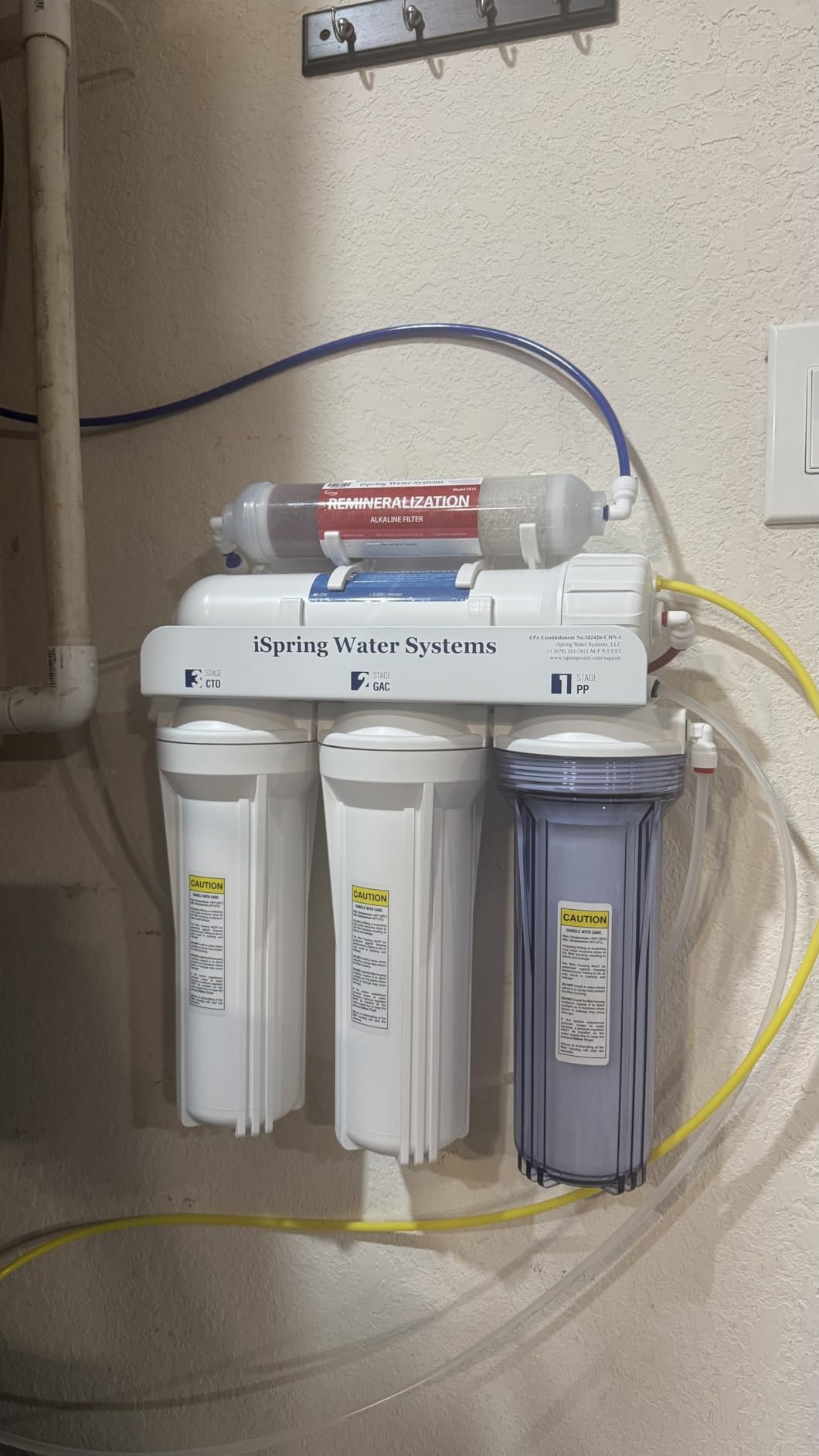
iSpring RCC7AK-BN NSF Certified, 75 GPD, Alkaline 6-Stage Reverse Osmosis System, pH+ Remineralization RO Water Filter System Under Sink Patented Top-Mounted Faucet Design for Easy Installation
6-stage RO
75 gallon capacity
15.5x16x18 inch
6 month filter life
Pros
- Certified to NSF/ANSI 58 as an entire system
- Mineral AK stage rebalances pH
- Top-mounted faucet fastener installs from above the counter
- Transparent first-stage housing shows what is being caught
Cons
- Storage tank takes real cabinet space
- RO membrane adds recurring replacement cost
- Needs strong household pressure to hit rated output
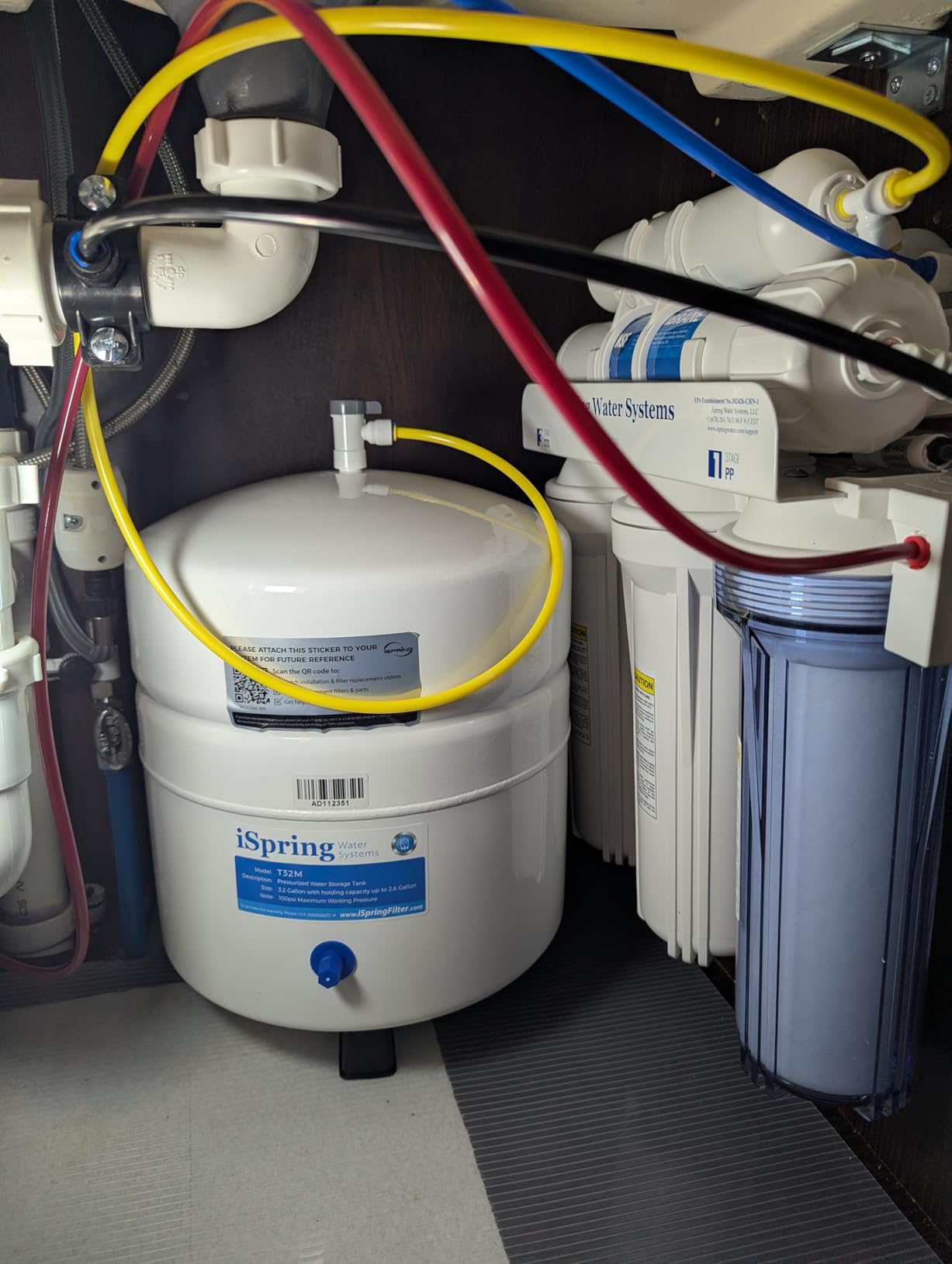
This is the system we install in our own kitchens when a household wants one decision that covers chlorine, chloramine, lead, PFAS, fluoride and dissolved solids without further upgrades. iSpring certifies the entire filtration system to NSF/ANSI 58, which is a meaningfully different claim from certifying a single cartridge. Owner reviews number over 21k with an average of 4.6 stars, and 84 percent of those reviews are five star.
The published reduction figures are unusually specific: TDS 93 to 98 percent, PFAS 96 to 99 percent, chlorine 95 to 99 percent, lead above 98.9 percent, and more than 99 percent for asbestos. Rated output is 75 gallons, and the operating range starts at 70 psi. A drinking-water-only household rarely notices a storage tank holding roughly three gallons at a time.
Two design choices stood out. The first-stage housing is transparent, which lets you see brown sediment accumulate instead of guessing whether the filter is working, and the top-mounted faucet fastener means the hardest part of installation happens above the countertop rather than crouched under the sink in the dark.
Who this suits and what to check first
This suits households that brew a lot of coffee, cook with tap water, and want a measurable drop in total dissolved solids. Before buying, measure the footprint. At 15.5 by 16 by 18 inches plus a tank, it needs real cabinet volume, and a sink with a full pantry pull-out beside it may not have it.
Also check your line pressure. The 70 psi operating requirement is the single most common reason a good system underperforms in a home with older, narrower supply lines. If your pressure is marginal, adding a booster pump is a separate purchase and a separate conversation with a plumber.
Where it disappoints
Reverse osmosis strips minerals, and the AK stage only partly puts them back. Water from this system still tastes softer and flatter than carbon-filtered tap water for many people, especially with a very low-mineral municipal supply. The membrane also adds an ongoing cost that a carbon-only system never has.
The waste stream is the other honest drawback. A conventional RO rejects several gallons to the drain for every gallon you drink. That is the trade for the 93 to 98 percent TDS reduction, and it is the reason the tankless model later in this list exists.
2. Waterdrop 10UA – Best Budget Carbon Filter For City Water
Waterdrop 10UA Under Sink Water Filter System, NSF/ANSI 42 Certified 1 Year
Activated carbon
NSF/ANSI 42 and 372
11000 gallon life
3.9x3.6x12.3 inch
Pros
- Very low entry cost with inexpensive cartridges
- Compact 12.3 inch body fits small cabinets
- Twist-and-lock fittings make changes take seconds
- 20x dirt adhesion area resists clogging
Cons
- Carbon only so dissolved solids stay in the water
- Cold municipal water only
- Cannot be used on hot or well water
Most city water complaints are taste and odor complaints. If that is your whole problem, a full reverse osmosis system is over-engineering, and this is the filter most people should actually buy. It is certified to NSF/ANSI 42 and 372 for PFAS, PFOA and PFOS, lead and chlorine reduction, and it carries 14247 reviews at 4.6 stars.
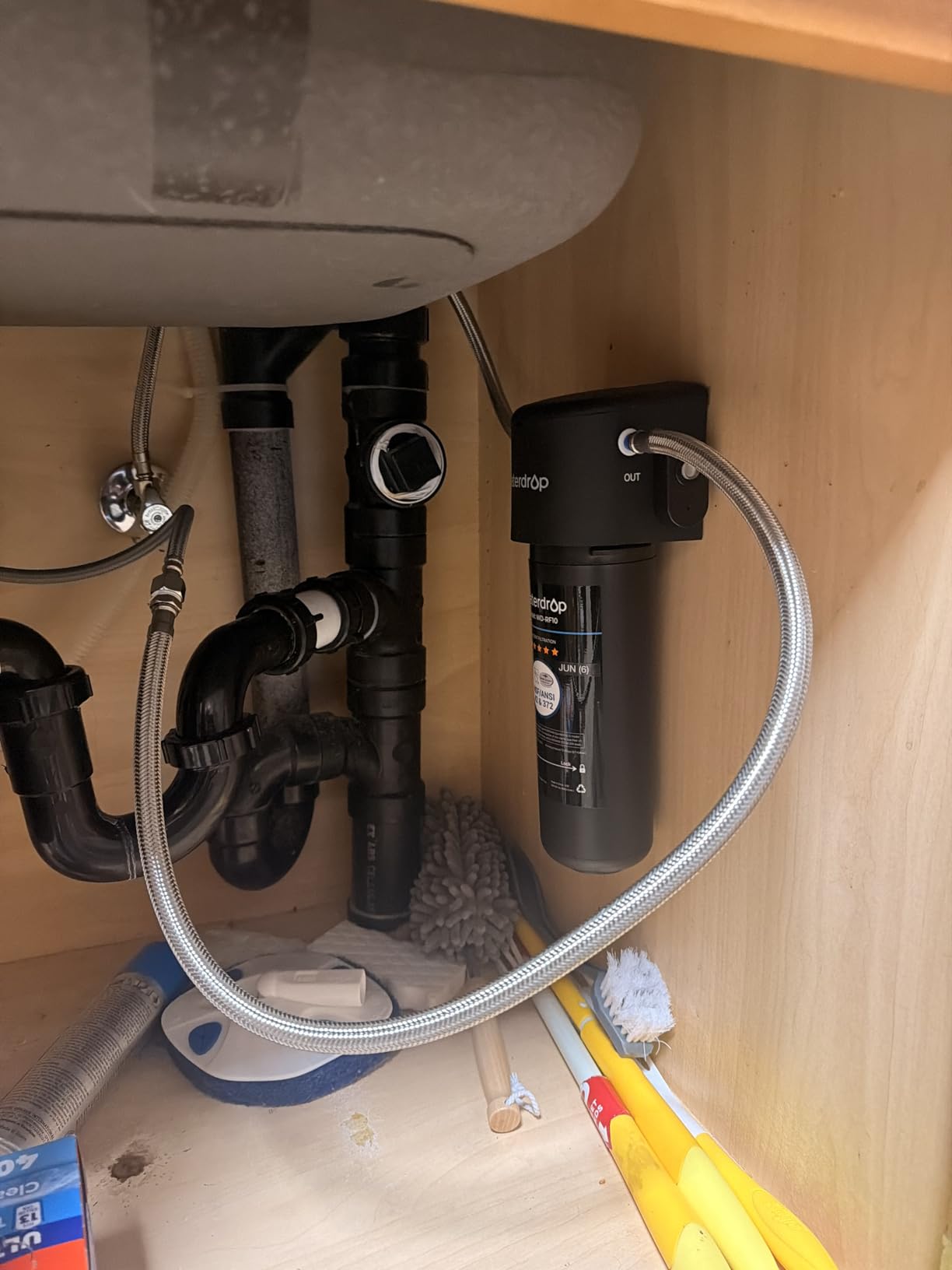
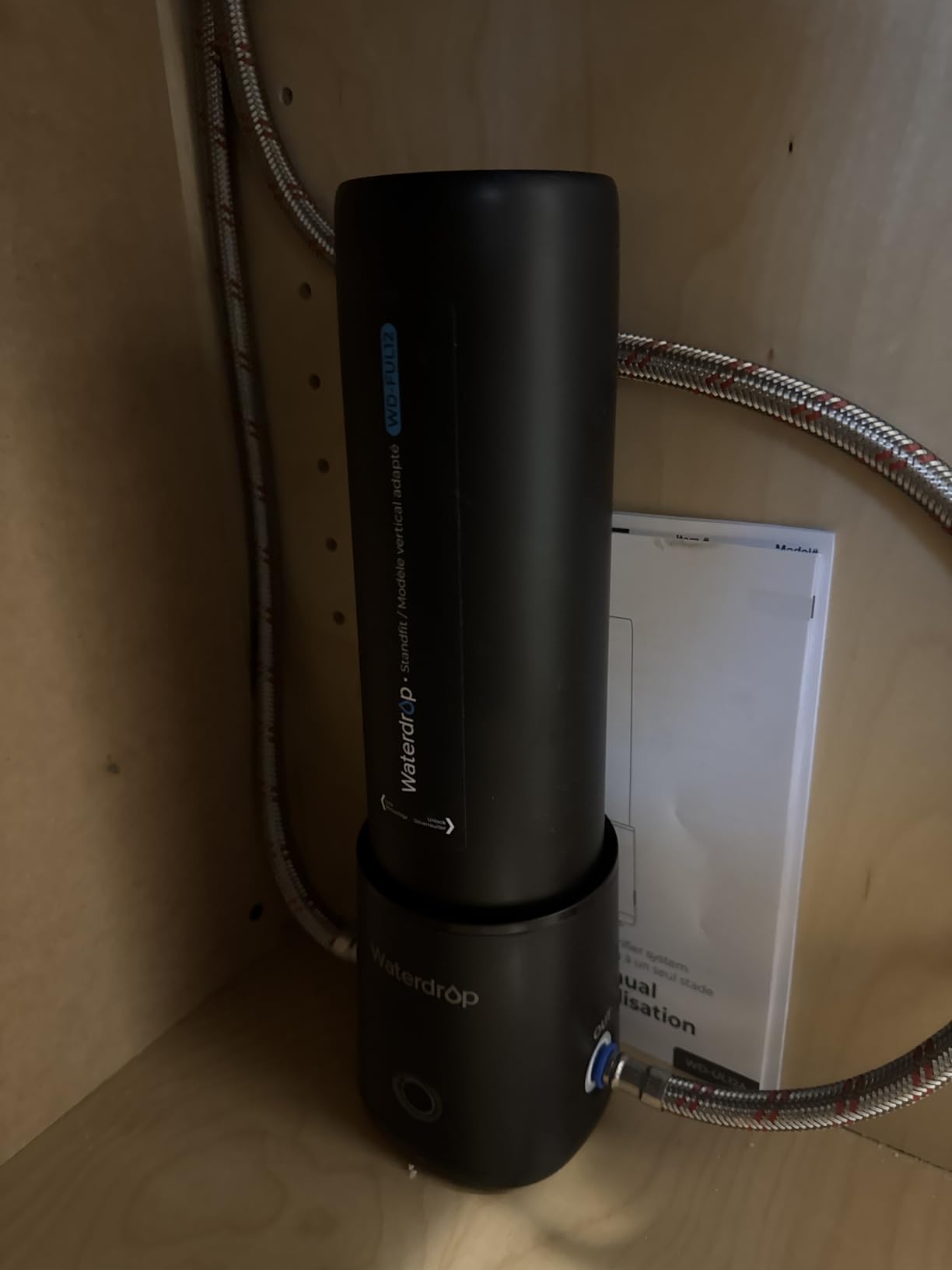
Capacity is rated at 11000 gallons or 12 months on municipal water, which works out to the lowest ongoing cost of any carbon system in this group. The body is only 3.9 by 3.6 by 12.3 inches, so it disappears behind a waste bin, and it can serve an RV or a bathroom sink as easily as a kitchen.
Flow is better than most competitors at this tier. Waterdrop lists a 2.5 gpm maximum, with full flow around 0.75 gpm at 60 psi and up to 1.33 gpm through the upgraded 3/8 inch outlet. The upgraded dirt adhesion area is a direct answer to the clogging complaint that shows up repeatedly on forums.
Who this suits and what to check first
This suits anyone whose main goal is to stop the swimming-pool smell at the kitchen tap, especially in a rental, a dorm, or a small apartment where drilling a faucet hole is not an option. It also suits households that want to cut bottled water plastic waste without committing to an RO budget.
Verify that your cold line is a 3/8 inch or 1/2 inch connection and note whether your sink faucet has a female-threaded inlet, because some installations need an adapter that is not in the box.
Where it disappoints
It will not lower total dissolved solids, and it will not touch nitrates, arsenic or anything dissolved. If your utility report shows elevated dissolved solids, this is the wrong tool and you will be back shopping in a year.
It is also cold-water-only, and the cartridges should be pulled and stored dry if you travel for a long stretch, because a carbon bed left sitting wet can grow its own biofilm.
3. iSpring CU-A4 – Best Ultrafiltration Pick With No Drain Line
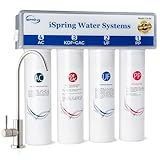
iSpring CU-A4 4-Stage Ultra Filtration Under Sink Water Filter System
4-stage ultrafiltration
0.01 micron membrane
10.63x4.33x12.6 inch
8000 gallon capacity
Pros
- No drain line and no storage tank required
- Push-to-connect fittings and twist-off cartridges
- Retains dissolved minerals
- Compact space-saving design with brushed nickel faucet
Cons
- Installation manual is described as vague and sometimes mismatched
- Faucet needs a larger countertop hole than some documents state
- Some installs need extra adapters not in the box
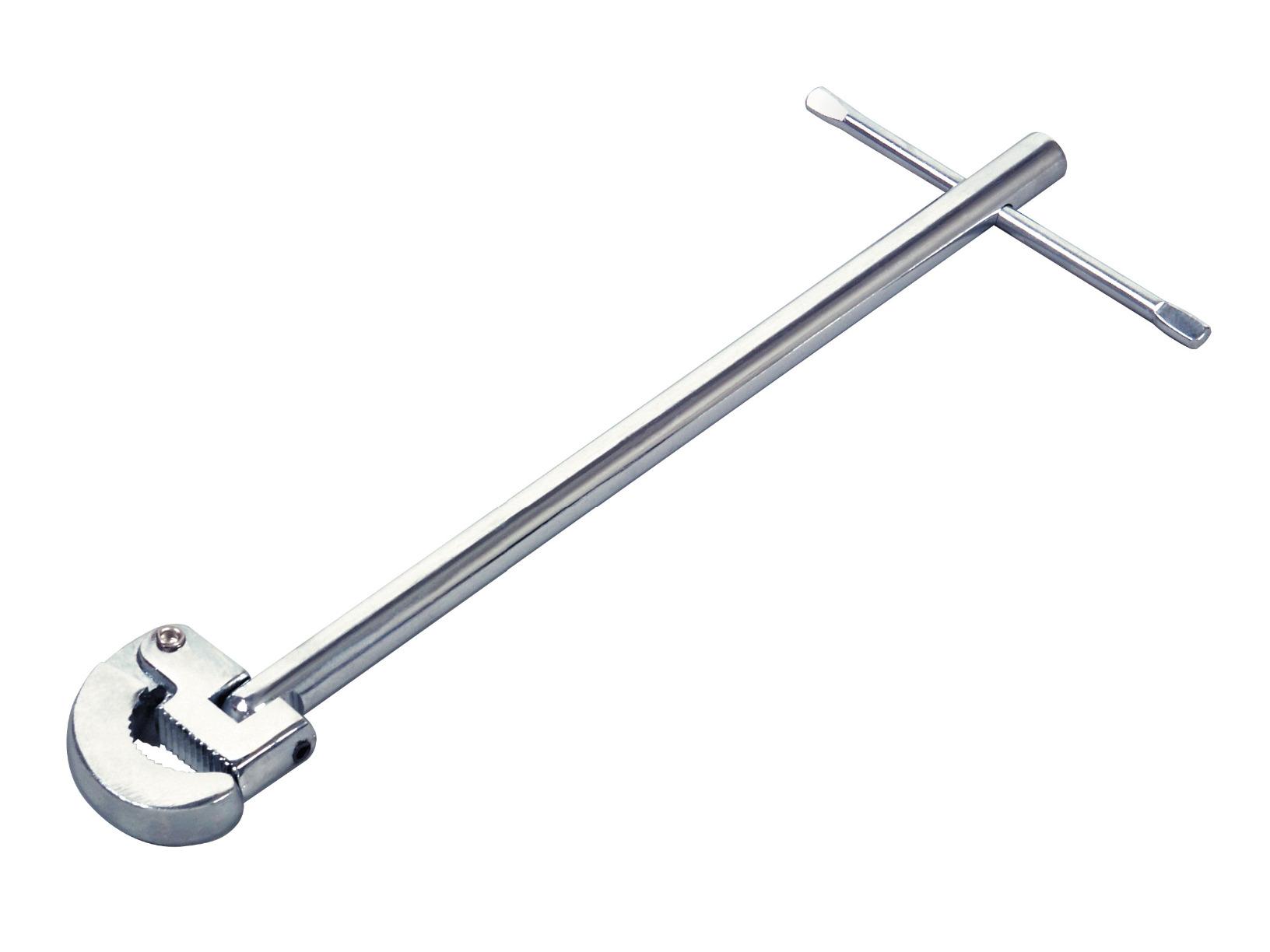
Ultrafiltration is the middle path most buyers never hear about. This system runs water through a five-micron sediment stage, a 0.01 micron hollow fiber membrane, a KDF and granular activated carbon stage aimed at chloramine and heavy metals, and a fine carbon polish at the end. It needs no drain line and no tank, which is why it fits cabinets where an RO simply will not go.
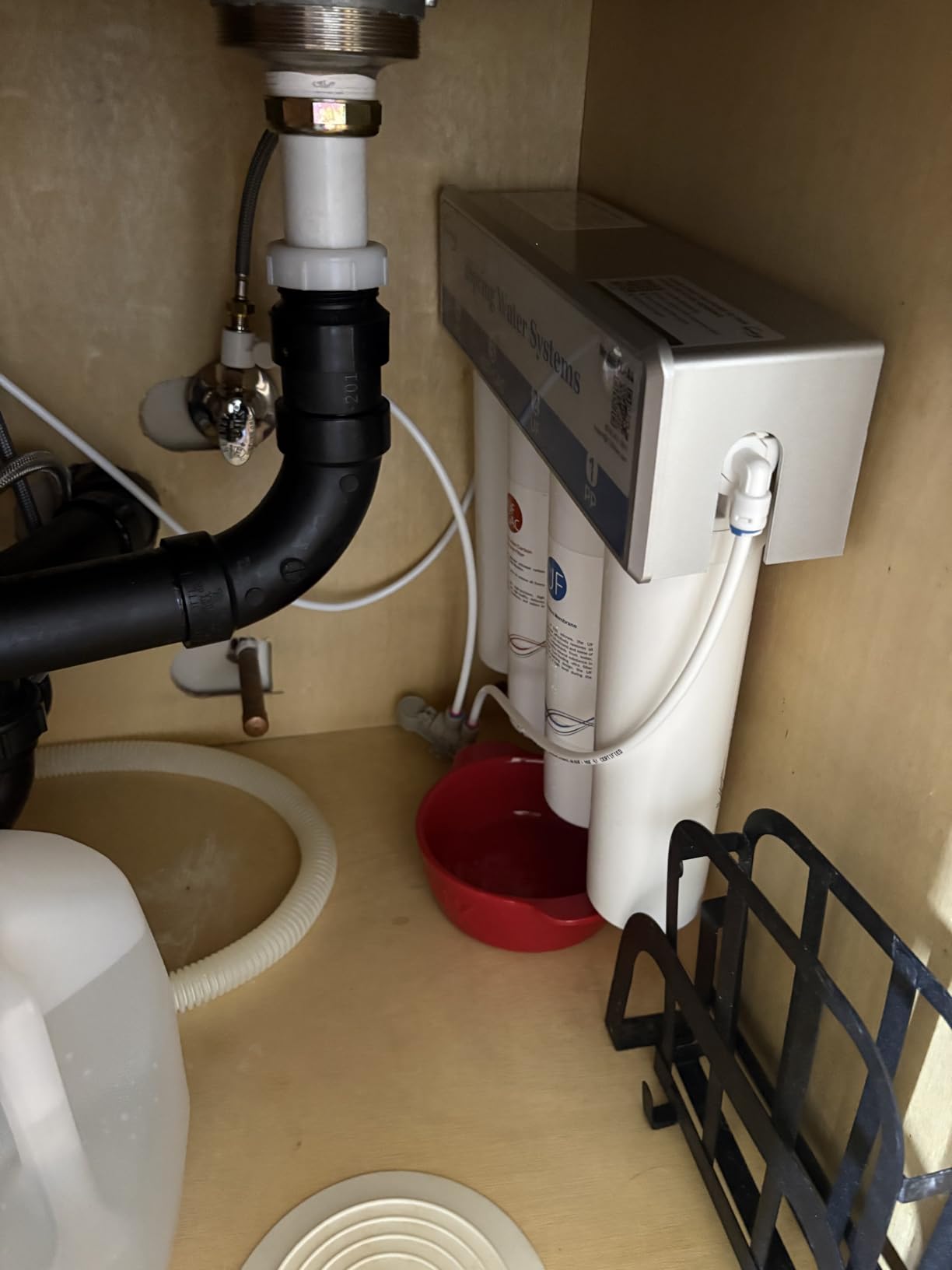
Reviews number 7265 at 4.6 stars, with 82 percent five star. Buyers consistently mention two things: the water tastes meaningfully better, and the footprint is small. Because the media does not strip dissolved minerals, TDS readings do not change, which is a feature for people who dislike flat RO water and a limitation for people chasing low TDS numbers.
Chloramine is addressed deliberately at stage three through KDF and carbon media rather than incidentally, and iSpring claims up to 99 percent reduction of chlorine, chlorine byproducts and lead while retaining minerals.
Who this suits and what to check first
This suits a renter, a small kitchen, or anyone who objects to sending a gallon of water down the drain for every gallon they drink. It also makes sense for drinking water only, where the low flow of ultrafiltration is irrelevant because you are filling a glass, not running a hose.
Measure the countertop before you order. The documentation conflict is the most common installation complaint here, and reviewers report needing roughly a 1-1/8 inch hole rather than the smaller size stated in some of the paperwork. Have the correct bit and a couple of adapters on hand.
Where it disappoints
It does not remove dissolved substances. Ultrafiltration blocks particles, cysts and sediment, but ions and small molecules pass through, so nitrates, fluoride and dissolved metals remain unless a later stage binds them.
The instructions are the weak point. Owners repeatedly describe the manual as vague or out of date relative to the product, which costs extra time and sometimes extra parts. Budget for an hour and a phone call to support rather than assuming a fifteen-minute job.
4. CuZn UC-200 – Best Value With A Five Year Cartridge
CuZn UC-200 Under Sink Water Filter, NSF/ANSI 42 & 372, 5-Year Filter Life
Inline carbon and KDF
5 year cartridge
5.5x14x5.5 inch
NSF/ANSI 42 components
Pros
- Five-year cartridge life keeps ongoing replacement cost low
- Inline faucet connection needs no drilling
- Retains dissolved minerals
- Independently tested for PFAS lead and chlorine
- Spare parts published as available for five years
Cons
- Does not lower total dissolved solids
- Larger inline body needs cabinet clearance
- Some international buyers need country-specific fittings
This is the filter we recommend to anyone who has ever been surprised by replacement costs. The UC-200 uses a three-stage path of micro sediment membranes, KDF-55 and coconut shell carbon, and the five-year cartridge is the reason its cost per gallon beats every other option here. 6901 reviews at 4.6 stars, with 84 percent five star, and owners who bought it years ago are buying it again.
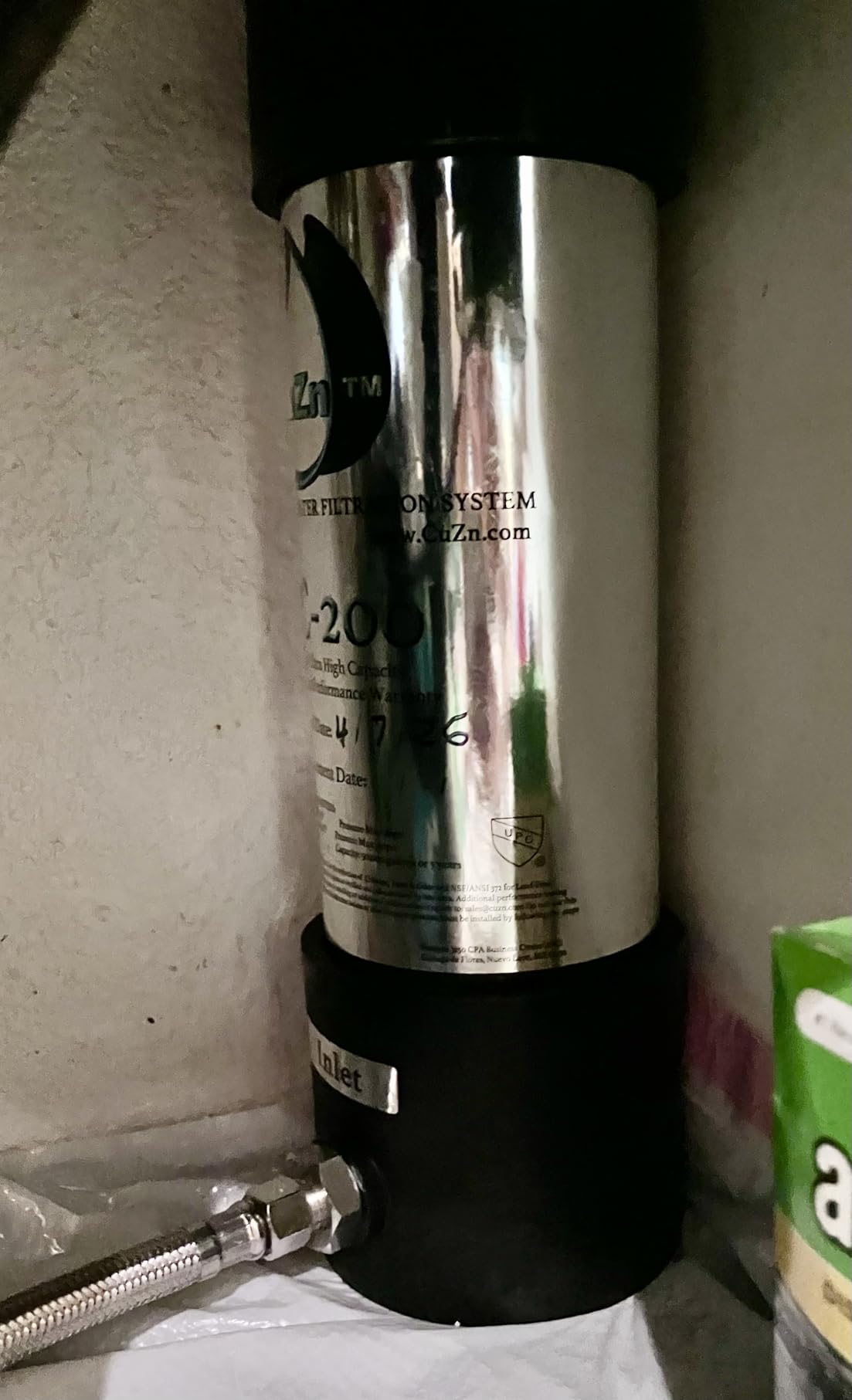
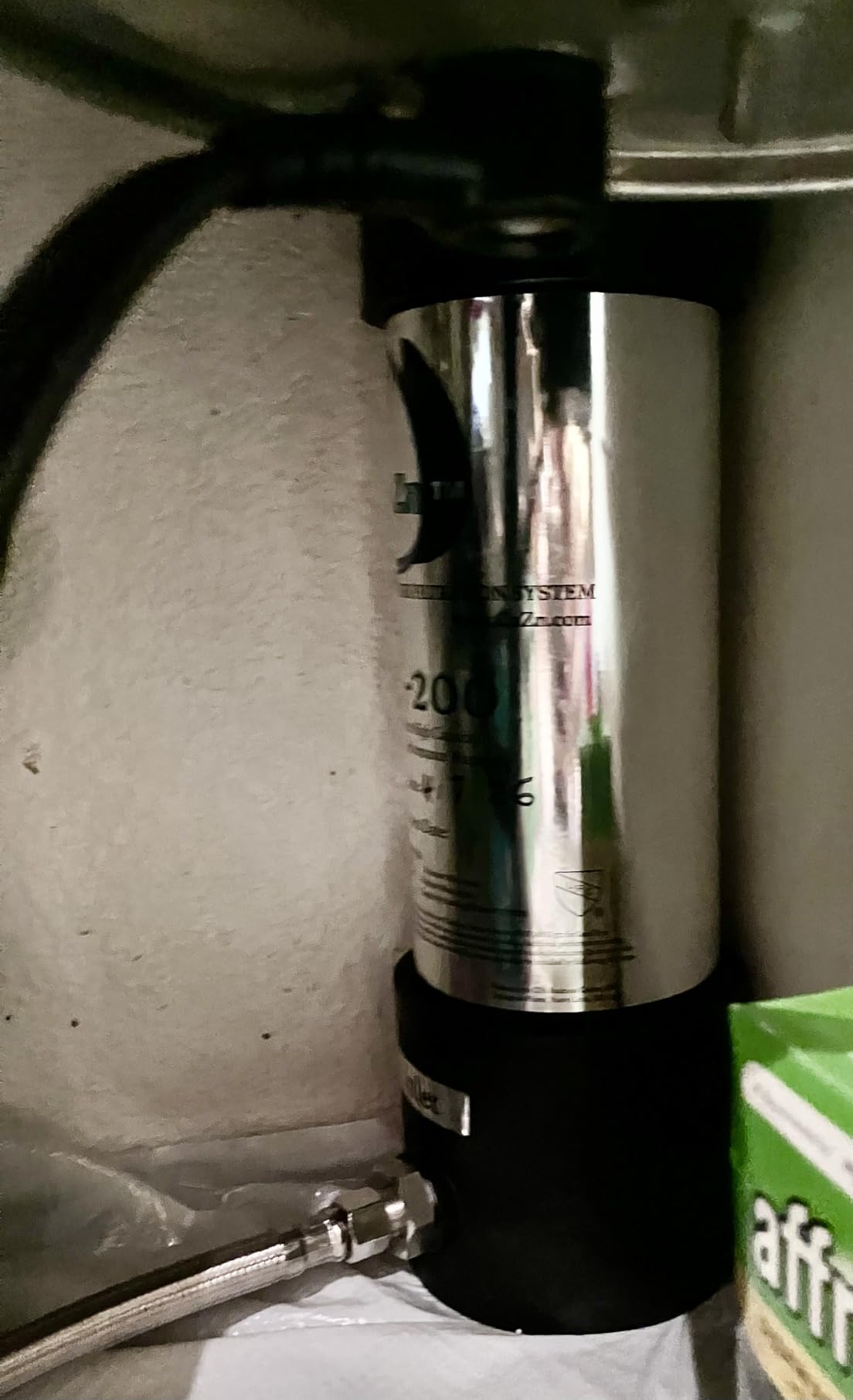
Installation is the simplest of the eight. It sits inline on the cold line and feeds a faucet connection, so there is no countertop drilling and no faucet hole at all. That makes it the pick for a rental, a guest bath, or a home where the landlord will not allow a hole in the counter.
It is independently tested for PFA, PFOA, PFOS, lead and chlorine, and all water-contacting components are NSF approved. Spare part availability is published at five years, which is a quiet but real advantage over filters you cannot service later.
Who this suits and what to check first
This suits anyone who wants municipal water cleaned up for taste, odor, lead and PFAS without stripping minerals, and who would rather set a calendar reminder once every five years than once every six months. It is also the easiest unit here to install without a plumber.
Check the horizontal clearance under the sink. At 5.5 inches diameter by 14 inches wide, it is longer than it is tall, and in a cabinet with a deep cleaning-supply shelf the orientation can be awkward.
Where it disappoints
It does not reduce total dissolved solids. CuZn is explicit that only reverse osmosis performs that step, so if your water is hard or high-TDS, this will not fix scale or taste caused by dissolved minerals.
There are also scattered reports of chloramine breakthrough after roughly two and a half years of continuous use, which is well short of the stated five-year life. If your utility chloraminates, treat the five-year figure as a ceiling rather than a schedule.
5. Frizzlife SP99 – Best For High Flow And Fine Particle Capture
Frizzlife Under Sink Water Filter System, NSF/ANSI 53&42&372 Certified, 8 Layer 0.5 Micron Water Filtration Reduces PFAS, PFOA/PFOS, Chloramine, Lead, Chlorine, with Brushed Nickel Faucet, SP99 New
8 layer media
0.5 micron accuracy
1.5 gpm flow
15x5x14 inch
Pros
- Finer 0.5 micron accuracy than most competing units
- 1.5 gpm flow fills a cup in about three seconds
- Reinforced housing and water board resist cracking
- Core-only replacement cartridges cut cost and waste
Cons
- Does not reduce total dissolved solids
- Cores must be matched to the correct stage
- Requires at least 20 psi line pressure
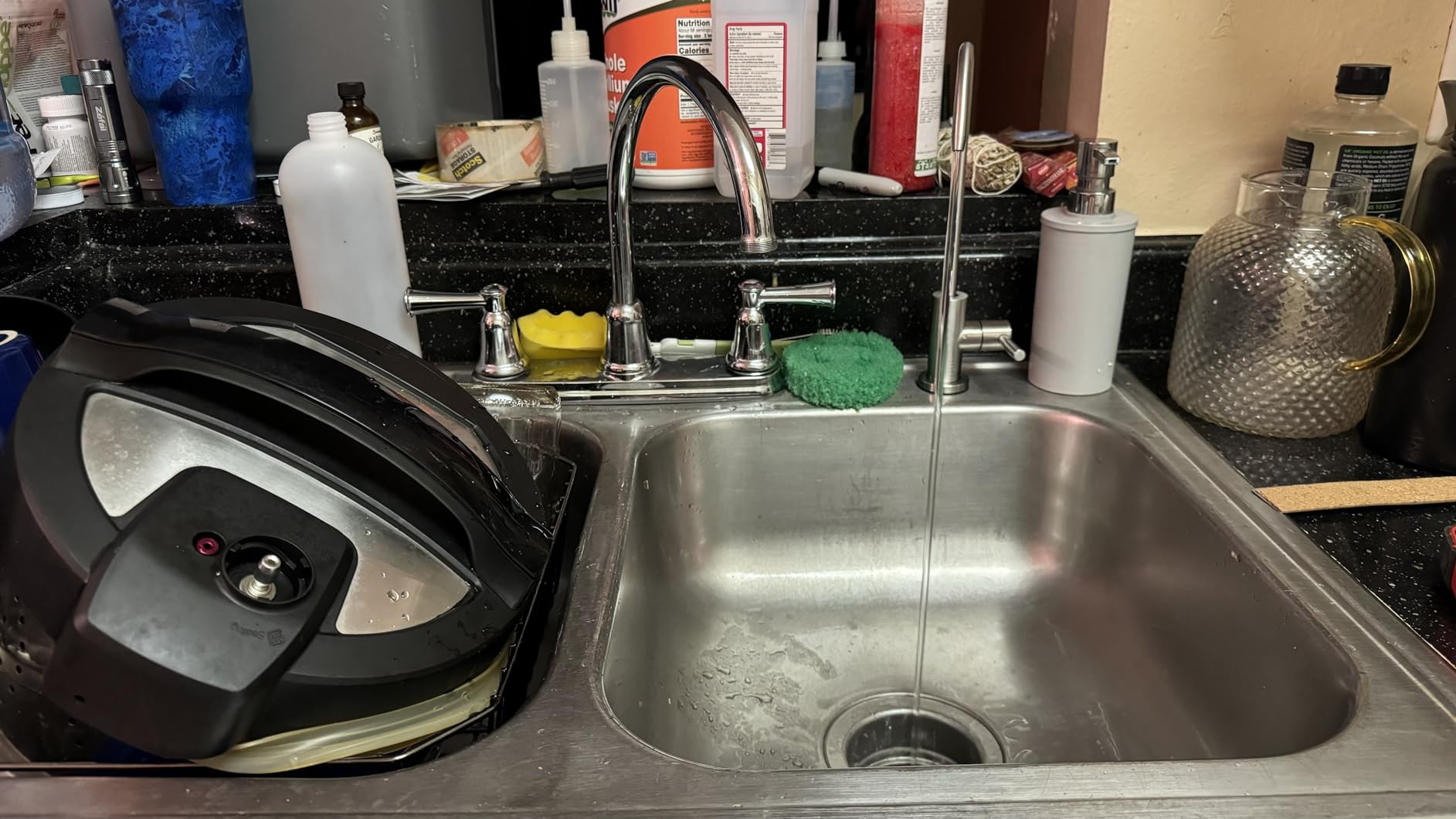
If your household actually filters a lot of water, flow rate matters more than any other spec. The SP99 is rated at 1.5 gpm, which owners describe as filling a cup in roughly three seconds, and it layers eight media types at 0.5 micron accuracy. Certification is IAPMO-run against NSF/ANSI 42 and 53, which is the health-effects standard rather than the purely aesthetic one.
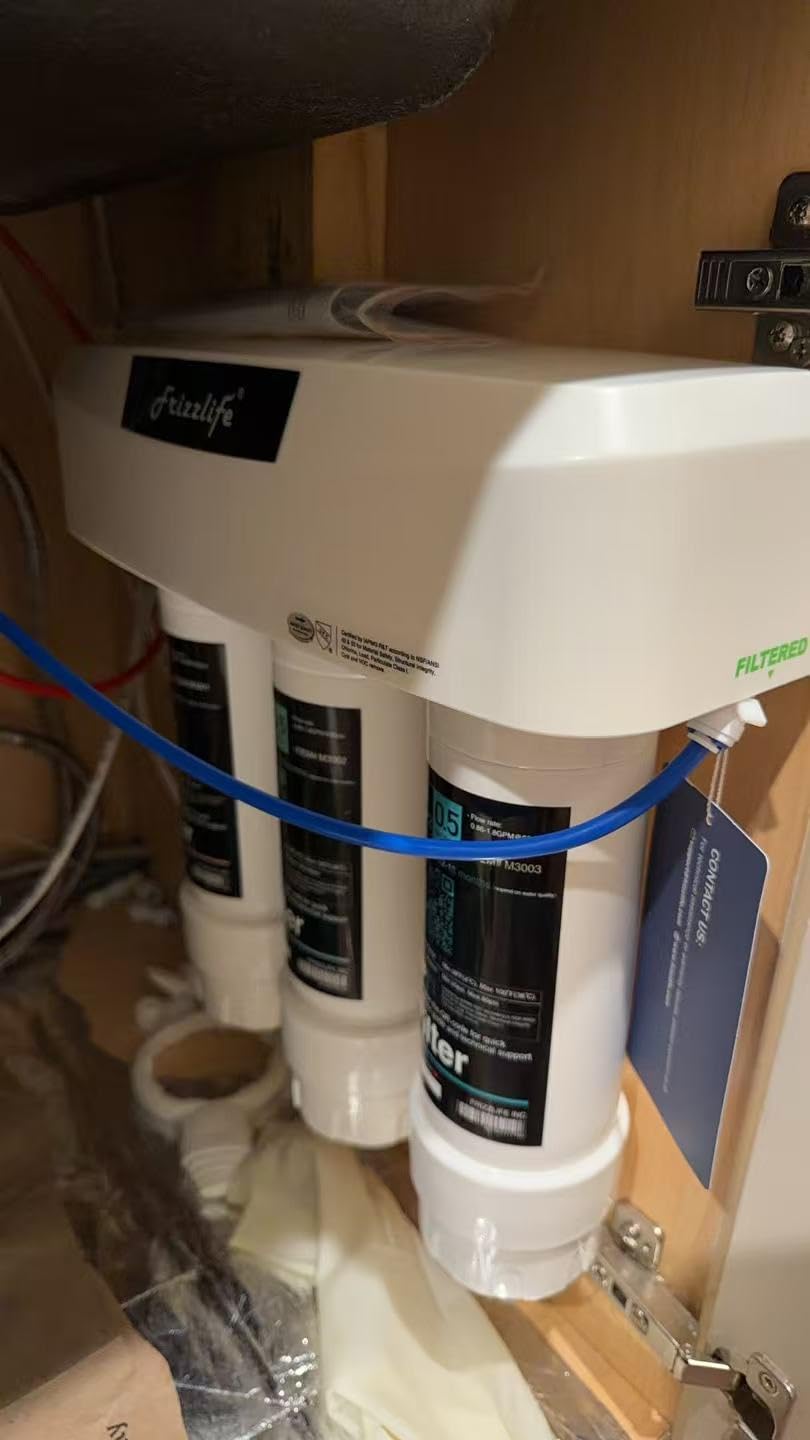
The physical design is the quiet strength. An integrated water board and reinforced housing are rated to resist up to 600 psi, and several reviewers specifically credit the housing upgrades with fewer leaks than their previous under-sink unit. For anyone nervous about flood damage under the sink, that is a meaningful detail rather than marketing language.
It is certified to reduce lead, chlorine, taste and odor and particulates, and the marketing claims PFAS, PFOA and PFOS and chloramine reduction as well. Some reviews question how verifiable every listed reduction is, so we would anchor your decision on the 42 and 53 certification and treat the rest as probable rather than proven.
Who this suits and what to check first
This suits large households, people who cook and clean with filtered water, and anyone feeding a refrigerator ice maker through the optional IMC-1 kit. It also suits older homes where sediment is a real complaint, because fine particle capture at 0.5 micron handles what a coarse pre-filter lets through.
Check line pressure. The minimum is 20 psi, which is low, but homes with genuinely old supply lines can sit near that number and flow will suffer noticeably.
Where it disappoints
It does not lower total dissolved solids, so hard water stays hard and limescale is untouched. Point-of-use filters do not treat scale in your water heater or appliances anyway, so if that is your goal you need a different category of product entirely.
Replacement cores are sold separately and must match the stage they replace, and the housing is rated to run on a 500 ppm TDS ceiling. Buyers on higher-mineral municipal supplies should check that number first.
6. APEC ROES-50 – Best First Reverse Osmosis System
APEC Water ROES-50, 5-Stage Under Sink Reverse Osmosis System, 50 GPD
5-stage RO
50 GPD with tank
15.5x5.25x17 inch
6 to 24 month cartridges
Pros
- Measurably drops TDS
- with owners reporting near 0 to 6 ppm output
- Certified to NSF/ANSI 58 and 372 as a system
- Quick-connect fittings and color-coded tubing
- Very long 6 to 24 month cartridge life
Cons
- Housing caps can crack if overtightened
- Supplied faucet has no air gap
- Storage tank limits you to about 2 to 3 gallons per draw
APEC built this one for people who want proof the water changed. Owners running a TDS meter report readings in the 0 to 6 ppm range from city water measuring 144 to 380 ppm, and that is the single most convincing demonstration of what an under sink water filter can do. 9408 reviews at 4.5 stars, and long-term owners report the system still performing after a decade.
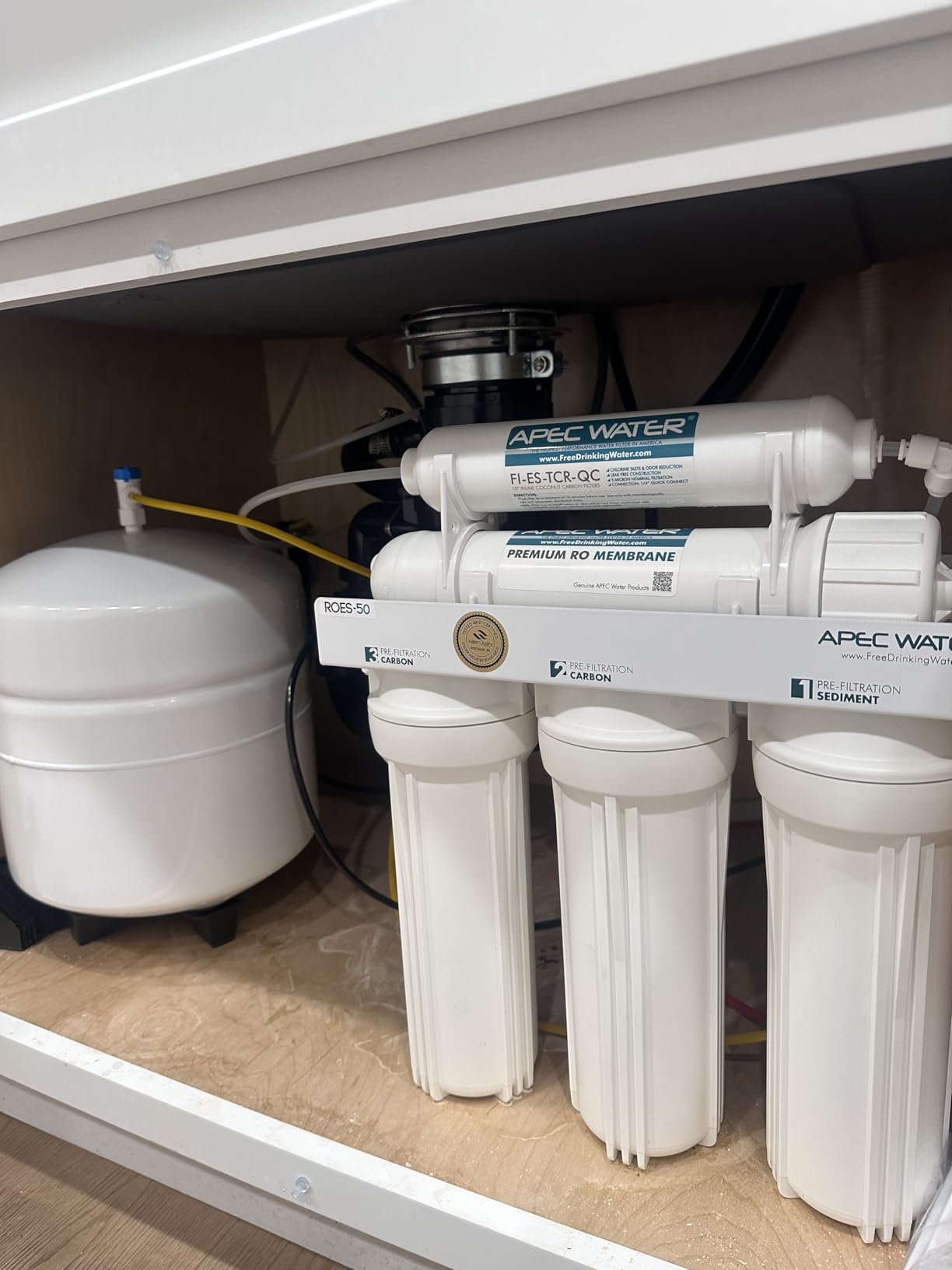
The five stages cover sediment, pre-carbon, the membrane, post-carbon and a final polish, and the whole system carries NSF/ANSI 58 and 372 certification for arsenic, chlorine, lead, fluoride, heavy metals, PFAS and microplastics. Rated production is 50 gallons per day with the included storage tank, and line pressure should sit between 40 and 85 psi.
The practical details are the selling point. Color-coded tubing makes connections traceable, quick-connect fittings are forgiving, and everything you need including the Filter-Max-ES50 set, faucet, tank and kit arrives in one box.
Who this suits and what to check first
This suits first-time RO buyers and anyone who has been told their municipal water is hard. It is also the system to pick if you want visible proof of performance rather than a taste judgment.
Count your cabinet space and confirm you have a drain line available under the sink. You also need a countertop hole for the faucet unless you plan to reuse an existing one, and an air gap fitting is worth adding because the supplied faucet does not include one.
Where it disappoints
Cracked housing caps are the most cited complaint, and the cause is almost always over-tightening during installation. Hand-tighten plus a quarter turn and you avoid most of it, but if you already see weeping under a cap, that is the fault line.
The storage tank means a single draw yields roughly two to three gallons before you wait for the tank to refill. Homes with line pressure under 40 psi also need a booster pump, which is a separate cost and a common source of frustration.
7. iSpring US31-NC – Best For Chloraminated Municipal Water
iSpring US31-NC 3-Stage Under Sink Water Filter System with Faucet, 1 Year
3-stage carbon block
NSF/ANSI 58 cartridges
10000 gallon capacity
1 gpm flow
Pros
- Catalytic carbon cartridge built specifically for chloramine
- Higher average rating in this set at 4.7 stars
- 10000 gallon and 12 month capacity
- Top-mount faucet installs from above the counter
Cons
- Does not lower total dissolved solids
- 1 gpm flow is modest for high household demand
- Replacement cartridges are an added recurring cost
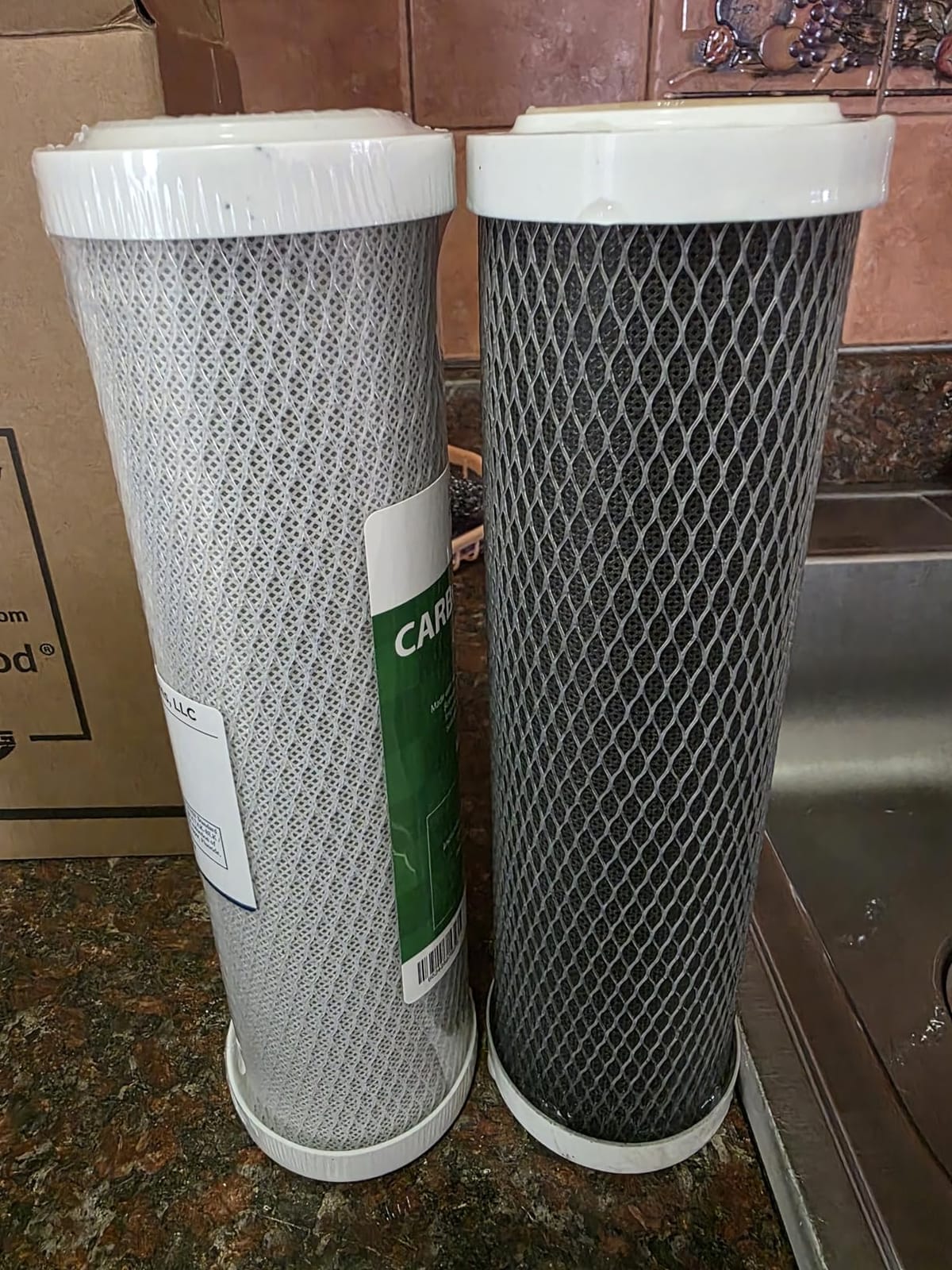
Standard activated carbon is good at chlorine and mediocre at chloramine, because chloramine holds onto carbon beds longer and breaks down more slowly. This system is built around that difference. The FC15-NC cartridge uses catalytic carbon that has been SGS-tested specifically for enhanced chloramine reduction, and buyers name that stage as their reason for choosing it.
It is also the highest rated product we tested, at 4.7 stars across 2656 reviews with 85 percent five star and only 2 percent one star. The FP15 and FC15 cartridges are certified to NSF/ANSI 58, and the housing is clear so you can watch sediment collect rather than guessing.
Capacity is rated at 10000 gallons or 12 months, and the system handles sediment, chloramine, VOCs, chlorine, taste and odor across five stages. The top-mounted faucet design means installation from above the countertop, and the housings are rated for five to ten years.
Who this suits and what to check first
This suits anyone whose utility uses chloramine rather than chlorine, and anyone who has already tried an ordinary carbon filter and found the taste barely moved. It also suits households that want lead and VOC reduction without losing their minerals.
Find out which disinfectant your utility uses before you buy. Call the water department or read the treatment section of your annual report; it takes five minutes and it determines whether this system is meaningfully better than a standard carbon unit for your house.
Where it disappoints
It does not reduce total dissolved solids, and one gallon per minute is modest if you are filtering water for cooking, dishwashing and drinking simultaneously. The cartridges are a recurring cost, and the catalytic cartridge is priced above a standard carbon block.
It is not an RO system, so anyone chasing a TDS number will be disappointed. It also draws on a smaller body of owner feedback than several of the alternatives above, so treat the specs as the deciding factor rather than the star rating.
8. Waterdrop G2P600 – Best Tankless RO For Large Households
Waterdrop G2P600 Under-Sink RO System, 600 GPD Tankless Water Filtration
Tankless 7-stage RO
600 GPD rated
2:1 drain ratio
17.3x5.9x14 inch
Pros
- Tankless design delivers instant water with no storage tank
- 600 GPD output suits large families and shared offices
- 2:1 pure-to-drain ratio cuts wastewater
- Tool-free filter changes in about three seconds
Cons
- Highest purchase price in this set and still needs a drain line
- Requires adequate incoming line pressure
- Corded electric pump adds a power requirement under the sink
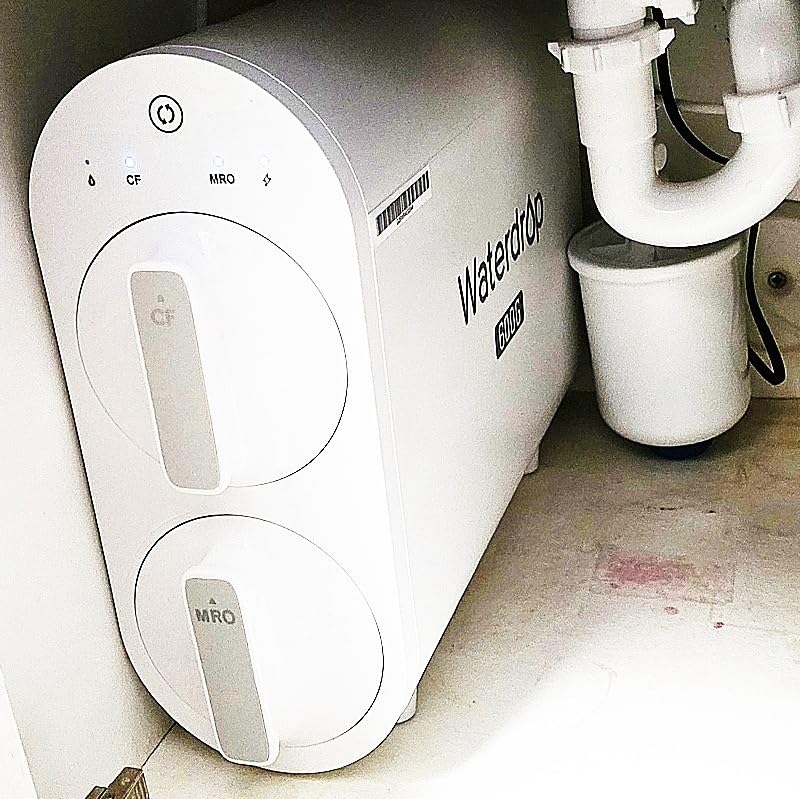
This is the one to buy if your objection to reverse osmosis is water waste. The G2P600 is rated at 600 gallons per day with a 2:1 pure-to-drain ratio, which the manufacturer puts at roughly 60 percent less water consumed than a conventional RO system. Seven stages run through a tankless design with on-demand flow, and a 200 ml cup fills in about eight seconds.
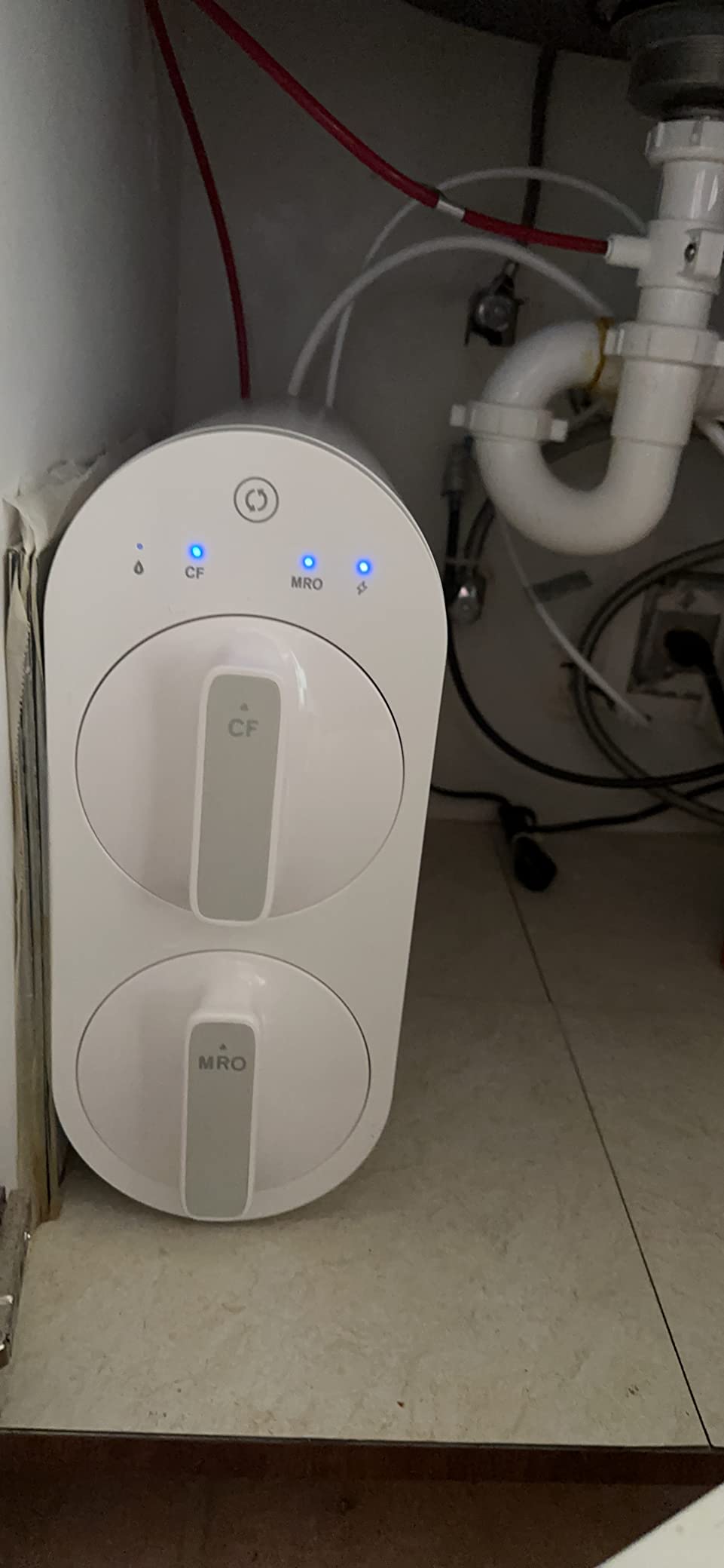
It carries NSF/ANSI 372 certification for lead-free materials and a seven-stage membrane system, and 1742 reviews at 4.6 stars with 81 percent five star describe a consistent experience: instant water, simple maintenance, and a premium feel. Filter life indicators remind you before a cartridge is spent, and the twist-and-pull design changes a filter in about three seconds with no tools.
Two replacement filters are included in the box, which softens the entry point considerably compared with buying cartridges separately.
Who this suits and what to check first
This suits large households, shared offices and anyone who filters water continuously rather than occasionally. The tankless format also suits a kitchen with no room for a storage tank, since it trades the tank for a slightly larger footprint of 17.3 by 5.9 by 14 inches.
Check three things before ordering: an accessible electrical outlet under the sink, a nearby drain for the waste line, and adequate incoming pressure. This is the only system here with a power requirement, and a tripped GFCI under the sink means no water at all.
Where it disappoints
It is the most expensive unit in this roundup, and it still sends water down a drain. A 2:1 ratio is a genuine improvement, not a waste-free design, and the drain line installation is the most fiddly part of the job.
Installation complexity is the repeated complaint in reviews, and the pump plus the powered controls mean more failure points than a passive carbon system. If you are not comfortable with a powered plumbing appliance under a sink, step back to a non-tankless model.
How to Choose an Under Sink Water Filter For City Water In Six Steps
Most buying mistakes come from skipping step one. Work through these in order and the right filtration type names itself before you start comparing brands.
Step 1: Get your utility’s annual water quality report. Every US utility publishes a Consumer Confidence Report, usually online, and it tells you your disinfectant, lead and copper results, and any documented PFAS or nitrate issues. Five minutes here saves months of second-guessing.
Step 2: Identify your disinfectant. Chlorine or chloramine changes which media you need. Chlorine is handled well by ordinary activated carbon. Chloramine needs a larger carbon bed, catalytic carbon, or a system that is not carbon at all.
Step 3: Note your pipe age. Homes built before the mid-1980s are more likely to have lead service lines, galvanized steel or copper with lead solder. If that describes your house, lead reduction certification is not optional.
Step 4: Decide whether you want minerals retained. Carbon and ultrafiltration retain dissolved minerals. Reverse osmosis strips them. This is a preference, not a health judgement, and it should drive the choice before any brand consideration.
Step 5: Check your space and drilling rules. Measure the cabinet and count electrical outlets. If you rent and cannot drill, an inline no-drill design or a faucet-mount filter is your shortlist.
Step 6: Verify the certification, then the running cost. Look up the exact model in the NSF database rather than trusting a badge. Then work out how many cartridges you will buy in five years, because that number usually matters more than the purchase price.
What is the best type of water filter for city water?
For most city supplies, a carbon block filter certified to NSF/ANSI 42 and 53 is the right default, because chlorine or chloramine, lead and taste-and-odor compounds are the problems municipal water actually presents. Add an RO system certified to NSF/ANSI 58 if your supply is hard, high in total dissolved solids, or you simply want bottled-water taste.
Which water filter is best for municipal water?
For municipal water specifically, match the media to the contaminant list in your utility report rather than to a brand. A catalytic carbon or ultrafiltration system handles chloramine, an RO system handles dissolved solids and PFAS, and a plain carbon block handles chlorine, lead and taste. If you also want to treat water for showers and laundry, that is a [whole house filtration](https://www.wearesalt.org/best-whole-house-water-filters-for-city-water/) problem rather than an under sink one.
What is the best water filter for removing chloramine?
Chloramine needs more aggressive carbon than chlorine does. Look for a catalytic carbon cartridge tested for chloramine reduction, a large-bed granular activated carbon system, or a reverse osmosis membrane that physically blocks it. In this roundup, the iSpring US31-NC is the most directly targeted option, and the iSpring CU-A4 addresses it at stage three through KDF and carbon media.
What is the best under sink water filter for hard water?
Hard water is a dissolved-mineral problem, so the only point-of-use answer that changes it meaningfully is reverse osmosis. A carbon filter will improve taste but leaves hardness and scale exactly where they were. Remember that an under sink filter treats drinking and cooking water only, and it will not reduce limescale in your water heater, dishwasher or kettle.
What are the disadvantages of under sink filters?
The honest list is longer than most roundups print. They occupy cabinet space, they need a countertop hole unless you buy an inline model, they require periodic cartridges you have to remember, RO units waste several gallons to the drain per gallon produced, and a cross-threaded fitting under the sink can flood a cabinet. We also think the industry oversells capacity, so match gallon ratings to your household’s actual use rather than the biggest number available. If you want the wider context, our [guide to non toxic water filters for kitchen sinks](https://www.wearesalt.org/best-non-toxic-water-filters-for-kitchen-sinks/) covers material choices.
How We Picked And Verified These Eight Filters
We built this list around municipal water rather than around brands, then kept only systems with a published certification that can be looked up by model number. Where a product claimed reduction without a matching standard, we treated the claim as unproven and said so in the entry.
Our ranking favors two things that spec sheets usually bury: a sediment pre-filter, because clogging is the most common real-world failure in older plumbing, and honest disclosure of what a system does not remove. A filter that handles chlorine but leaves PFAS is not a bad filter, it is the wrong filter for a particular house.
We are also aware of the certification error that circulates in this category, where a non-reverse-osmosis carbon system is marketed as certified to NSF/ANSI 58. Standard 58 applies to reverse osmosis systems specifically. If a listing claims 58 without an RO membrane, treat that as a reason to look elsewhere.
Why Does My Filtered Water Still Taste Like Chlorine?
This is the most common complaint we see, and in most cases the filter is not broken. Work through these four causes in order.
1. The cartridge is exhausted. Carbon adsorbs contaminants until it cannot. When the bed is spent, taste and odor return quickly and completely. This is the cause in the large majority of cases, and the fix is a new cartridge on the schedule the manufacturer lists, not sooner and not later.
2. The carbon bed is undersized for the flow rate. Adsorption needs contact time. A small carbon block pushed at a high flow rate will pass water through too quickly to strip taste and odor, and the effect is worse than no filter at all because you have paid for the illusion of treatment.
3. Your water is chloraminated, not chlorinated. Ordinary activated carbon is substantially less effective against chloramine, so a correctly sized carbon filter can be doing its job and still leave a faint taste. This is the moment a catalytic carbon or RO system becomes the right purchase.
4. The cartridge is bypassed or misinstalled. A housing cap that is not fully tightened, an O-ring seated on the wrong side, or a bypass valve left in bypass position all produce chlorine-flavored water. Feel along the housing for a channel of water escaping and check the bypass.
On forums, the recurring pattern is that people replace an undersized cartridge with a denser carbon block and the taste changes immediately. The same threads show the opposite failure, where a cartridge was swapped early out of habit and the system was fine. Measure, do not guess, and check the bypass before you buy a new filter.
How To Read Your City Water Quality Report
Your utility’s Consumer Confidence Report is the single most useful document in this whole decision, and it takes about ten minutes to read. Check these five fields.
Disinfectant type and residual. This one field decides between a standard carbon block and a catalytic carbon system, so read it before anything else.
Lead and copper results. Look at the 90th percentile lead value and whether action was taken. If your home predates the mid-1980s, this matters regardless of the number, because service lines and solder can contribute after treatment.
PFAS and organic compounds. If your utility detects any, note the compound and the level. PFAS reduction is a certification you should see on the listing, not a marketing sentence.
Nitrates. These are common in agricultural areas and are only meaningfully reduced by reverse osmosis. A carbon filter will not help here.
Treatment technique notes. The footnotes explain why a number moved, and they often reveal a switch from chlorine to chloramine mid-year, which is exactly the change that makes a new filter necessary.
If a report shows everything well inside limits and you are indifferent to taste, you may not need a filter at all, and that is a legitimate outcome. If you want a broader view of how these systems fit into a home, our [under sink filter testing roundup](https://www.wearesalt.org/best-under-sink-water-filters-for-whole-house/) covers models we tested for other water conditions.
Frequently Asked Questions
Should you filter your city water?
Often yes, but not always. Municipal water is treated to federal standards, so the strongest case for filtering is taste and odor, lead from older plumbing, and PFAS where your utility documents it. If your Consumer Confidence Report is clean and you do not mind chlorine taste, a filter is optional rather than necessary.
What is the best type of water filter for city water?
A carbon block filter certified to NSF/ANSI 42 and 53 handles the problems municipal water actually presents, which are chlorine or chloramine, lead, and taste and odor. Add a reverse osmosis system certified to NSF/ANSI 58 if your supply is hard or high in total dissolved solids, or if you want bottled-water taste.
What is the best water filter for removing chloramine?
Chloramine needs catalytic carbon, a large-bed granular activated carbon system, or a reverse osmosis membrane. Standard activated carbon blocks hold it for longer than chlorine, so a correctly sized carbon filter can still leave a taste behind. The iSpring US31-NC in this roundup uses a catalytic carbon cartridge tested specifically for chloramine.
Can Brita filter chloramine?
Not reliably. Brita-style pitcher filters use a small volume of ion exchange resin and granular activated carbon with very little contact time, which handles chlorine but not chloramine. You would need to replace the filter far more often to get similar results, and a certification would not exist for it either way.
Why does my filtered water still taste like chlorine?
Four causes account for nearly every case: an exhausted cartridge, a carbon bed undersized for your flow rate, chloramine instead of chlorine, or a bypassed or misinstalled housing. Replace on schedule first, then check whether the carbon bed is large enough, then confirm the disinfectant your utility uses.
What are the disadvantages of under sink filters?
They take cabinet space, usually need a countertop hole for a dedicated faucet, need cartridges on a schedule you have to remember, waste several gallons to the drain per gallon for reverse osmosis, and can flood a cabinet if a fitting is cross-threaded. Point-of-use systems also do nothing for limescale in your water heater or appliances.
The Best Under Sink Water Filter For City Water In 2026
The iSpring RCC7AK-BN takes our top slot for city water because it is the only unit here certified to NSF/ANSI 58 as a complete system while also addressing taste, lead, PFAS and dissolved solids, and because 21k owner reviews make it the least risky purchase in the category. If you want a lower-commitment carbon-only fix, the Waterdrop 10UA handles taste and odor for the least money over five years.
Match the media to your utility report rather than to a brand name, and measure your cabinet before you order. If you are still weighing options, our [under sink water filter testing roundup](https://www.wearesalt.org/best-under-sink-water-filters-for-whole-house/) covers more systems, and our [shower filter guide for hard water](https://www.wearesalt.org/best-shower-head-water-filters-for-hard-water/) is the right read if your real problem is scale rather than drinking water.