
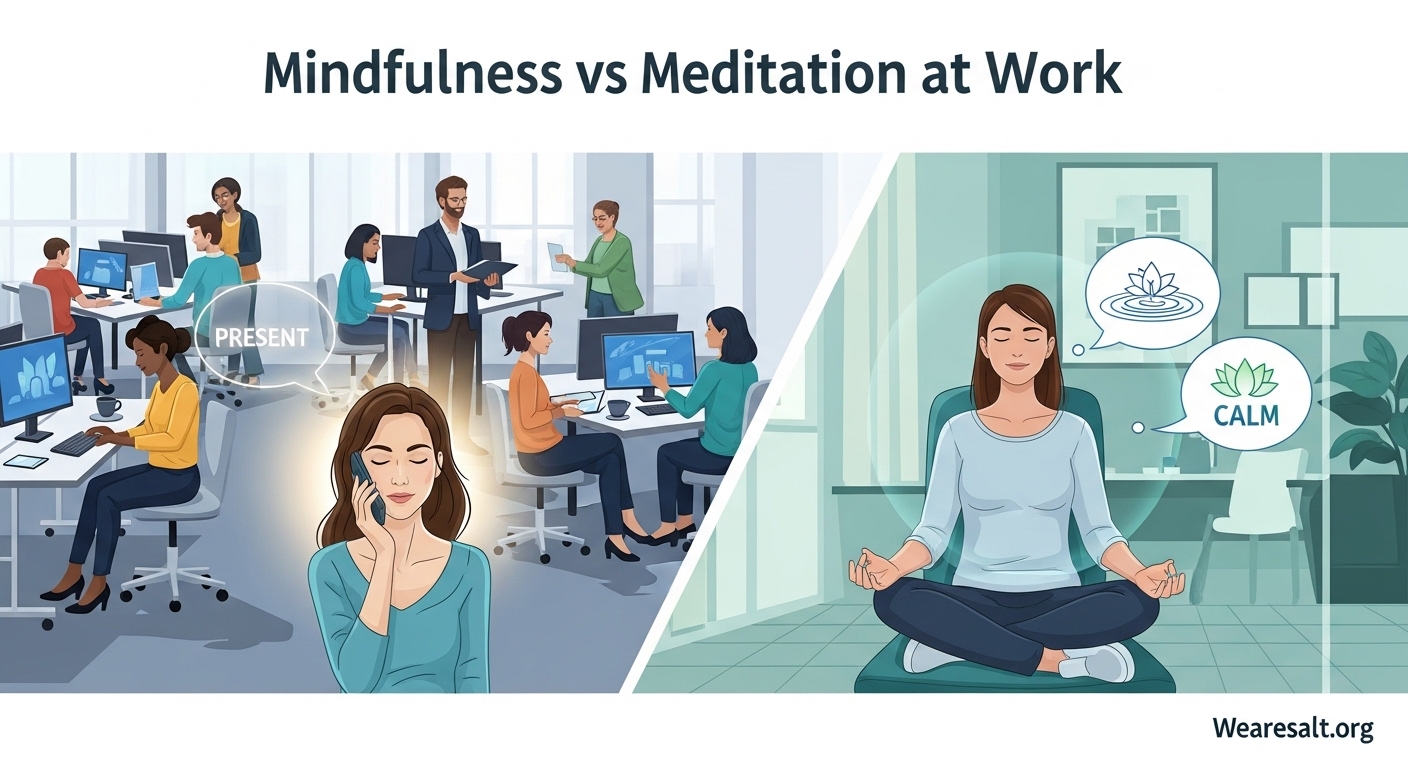
I used to think mindfulness and meditation were the same thing. I would hear coworkers talk about their morning meditation routine while others mentioned practicing mindfulness during meetings, and I assumed they were interchangeable terms.
After researching both practices and experimenting with them at my desk for the past three months, I realized they are distinct but complementary approaches to managing workplace stress. Understanding the difference between mindfulness vs meditation at work can help you choose the right practice for your specific situation.
This guide breaks down exactly what each practice involves, how they differ, and practical ways to use both to improve your focus and reduce stress during the workday.
Table of Contents
What Is Mindfulness?
Mindfulness is the quality of being fully present and engaged with whatever you are doing at the moment. Dr. Jon Kabat-Zinn, who developed the Mindfulness-Based Stress Reduction program, defines it as “paying attention, on purpose, in the present moment, non-judgmentally.”
When you practice mindfulness, you are not trying to empty your mind or achieve a special state. Instead, you are simply noticing what is happening right now without getting caught up in judgments about whether it is good or bad. This present moment awareness can happen anywhere, at any time, without any special equipment or dedicated space.
At work, mindfulness might look like giving your full attention to a colleague during a conversation instead of mentally rehearsing your response. It could mean noticing the sensation of your breath as you walk between meetings, or fully tasting your lunch rather than scrolling through emails while eating.
What Is Meditation?
Meditation is a formal practice that uses specific techniques to train your mind and develop qualities like concentration, clarity, and emotional positivity. Unlike mindfulness, which is a state of being, meditation is an activity you set aside time to do.
There are many types of meditation practices. Concentration meditation involves focusing your attention on a single point, such as your breath, a sound, or a visual object. Mindfulness meditation, also called insight meditation, involves observing your thoughts, feelings, and sensations without attachment or judgment.
Most meditation practices require you to find a quiet space, sit or lie in a comfortable position, and dedicate anywhere from five minutes to an hour to the practice. This formal structure helps build the mental muscles that make informal mindfulness easier throughout your day.
Mindfulness vs Meditation at Work: 5 Key Differences
Understanding how these two practices differ can help you decide which approach works best for your work situation. Here are the five main distinctions:
1. State vs Practice
Mindfulness is a state of mind you can enter at any moment. Meditation is the formal practice that helps you develop that state. Think of mindfulness as the destination and meditation as one of the vehicles that gets you there.
2. Informal vs Formal
You can practice mindfulness while typing an email, listening to a presentation, or walking to the break room. No one needs to know you are doing it. Meditation typically requires stepping away from work activities, finding a quiet space, and dedicating specific time to the practice.
3. Anytime vs Scheduled
Mindfulness happens in the flow of your regular workday. Meditation usually requires scheduling time on your calendar and protecting that time from interruptions. Many professionals struggle with this scheduling aspect, which makes informal mindfulness more accessible.
4. Open Awareness vs Focused Attention
Workplace mindfulness often involves open awareness, noticing whatever arises in your experience without narrowing your attention. Many meditation practices, particularly concentration techniques, involve focused attention on a single object or sensation.
5. Integrated vs Dedicated
Mindfulness integrates into existing work activities. Meditation requires dedicated time away from work tasks. Both have value, but integration makes mindfulness more sustainable for busy professionals who cannot step away for formal practice sessions.
| Aspect | Mindfulness | Meditation |
|---|---|---|
| Nature | State of awareness | Formal practice |
| Setting | Anywhere, anytime | Quiet space, scheduled |
| Duration | Moments to minutes | Minutes to hours |
| Attention style | Open awareness | Focused or open |
| Work integration | During tasks | Separate from tasks |
Benefits of Mindfulness and Meditation at Work
Research from the American Psychological Association and other institutions shows that both practices offer significant benefits for workplace performance and wellbeing. A 2026 meta-analysis found that mindfulness programs reduced stress by 28% on average among employees.
Stress Reduction
Both practices activate your parasympathetic nervous system, which counteracts the stress response. Regular practitioners report lower cortisol levels and reduced feelings of overwhelm during busy periods.
Improved Focus and Mental Clarity
When you train your attention through meditation or practice present-moment awareness through mindfulness, you build the ability to concentrate for longer periods. This focused attention translates directly into better work output and fewer errors.
Better Decision Making
Mindfulness creates a small gap between stimulus and response. That pause allows you to choose your reaction rather than acting on autopilot. In high-pressure work situations, this emotional regulation can prevent rash decisions you later regret.
Burnout Prevention
Employees who practice mindfulness or meditation show lower rates of emotional exhaustion and depersonalization, two key components of burnout. These practices help you maintain perspective and reconnect with your sense of purpose at work.
Enhanced Creativity
By quieting the mental chatter, both practices create space for new ideas to emerge. Many professionals report that their best creative insights come during or after meditation sessions.
How to Practice Mindfulness and Meditation at Work
You do not need a meditation cushion or a quiet room to benefit from these practices. Here are practical ways to incorporate both into your workday.
Quick Mindfulness Techniques
Take three conscious breaths before starting a new task. Feel your feet on the floor during meetings. Notice five things you can see, hear, or feel when you feel stressed. These informal practices take seconds but reset your nervous system.
Meeting Mindfulness
Arrive two minutes early and use that time to settle into your body. During the meeting, practice listening without planning your response. If your mind wanders to your to-do list, gently bring it back to the conversation.
Formal Meditation Options
If you can carve out dedicated time, start with five minutes of breath-focused meditation in an empty conference room or your car. Use a guided meditation app if you need structure. Schedule this time like any other meeting to protect it.
Transition Rituals
Use the moments between activities as mindfulness cues. Before opening your laptop, take one conscious breath. After a difficult conversation, pause to notice how your body feels. These micro-practices add up throughout the day.
Getting Started: A Simple Guide
If you are new to both practices, start with informal mindfulness. It requires no extra time and fits into your existing schedule.
Week one, pick one work activity to do mindfully each day. It could be your morning coffee, walking to your desk, or checking email. Give that activity your full attention.
Week two, add the three-breath practice before starting any task that requires concentration. This creates a mental transition and improves your focus.
Week three, try a five-minute guided meditation during a break. Notice how you feel afterward compared to scrolling through your phone.
From there, let your experience guide you. Some people thrive with a daily meditation practice. Others prefer the flexibility of informal mindfulness. Many find that a combination works best.
Frequently Asked Questions
What is the difference between mindfulness and meditation?
Mindfulness is a state of present-moment awareness that can happen anytime, while meditation is a formal practice used to develop mindfulness. Think of mindfulness as the quality of being present, and meditation as the exercise that strengthens that quality.
Can mindfulness be practiced without meditation?
Yes, absolutely. Mindfulness can be practiced informally throughout your workday by paying full attention to everyday activities like walking, eating, or listening to colleagues. No formal meditation is required to benefit from mindfulness.
Is meditation a form of mindfulness?
Meditation is a practice that develops mindfulness, but not all meditation is mindfulness meditation. Some meditation techniques focus on concentration rather than open awareness. Mindfulness meditation specifically trains you to observe your experience non-judgmentally.
What are the benefits of mindfulness in the workplace?
Workplace mindfulness reduces stress, improves focus and decision-making, prevents burnout, and enhances creativity. Research shows employees who practice mindfulness report better emotional regulation, clearer thinking under pressure, and greater job satisfaction.
Conclusion
Mindfulness vs meditation at work is not an either-or choice. Mindfulness offers a way to stay present during your regular work activities, while meditation builds the underlying capacity for that presence through dedicated practice.
Start with informal mindfulness techniques that fit into your existing routine. Notice how they affect your stress levels and focus. If you want to deepen the benefits, experiment with short meditation sessions during breaks.
Both practices require patience and consistency, but even small efforts yield noticeable results. Choose the approach that fits your schedule and personality, then begin with a single mindful breath.