
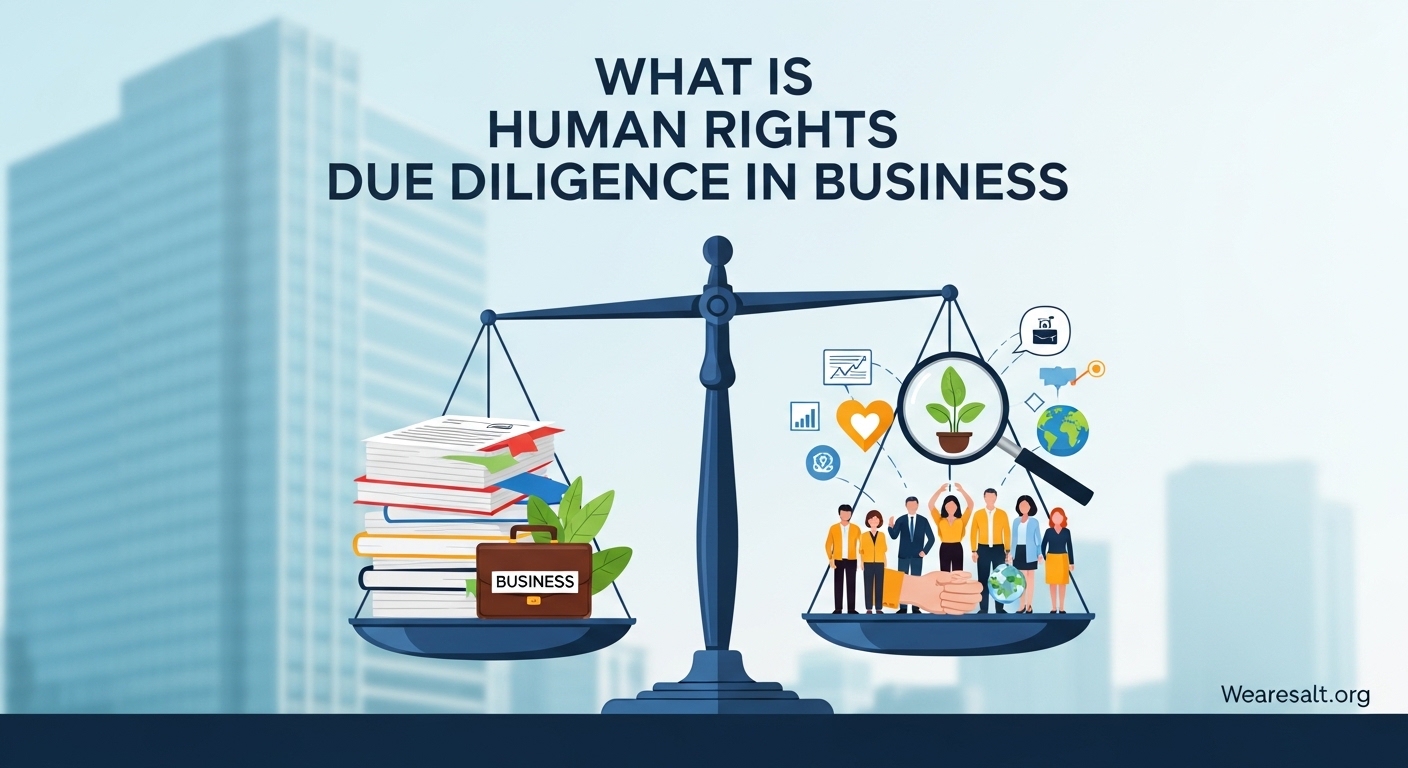
Human rights due diligence is an ongoing process through which businesses identify, prevent, mitigate, and account for how they address their impacts on people. Grounded in the UN Guiding Principles on Business and Human Rights (UNGPs), HRDD represents a fundamental shift from reactive compliance to proactive risk management. In 2026, this practice has evolved from voluntary best practice to mandatory legal requirement across multiple jurisdictions.
I have spent years helping organizations understand and implement human rights due diligence. What I have learned is that most businesses approach HRDD with good intentions but limited understanding of what it actually requires in practice. This guide will walk you through exactly what HRDD means, why it matters now more than ever, and how to implement it effectively in your organization.
Whether you are a small business owner or a corporate compliance officer, you will learn the five core elements of HRDD, how to apply them in your supply chain, and what happens when companies fail to meet their responsibilities. The legal landscape is changing rapidly, and understanding HRDD is no longer optional for responsible business conduct.
Table of Contents
What is Human Rights Due Diligence?
Human rights due diligence is a risk management process designed to help businesses understand, prevent, and address their actual and potential adverse impacts on human rights. Unlike traditional audits that focus on checking boxes against a predetermined standard, HRDD requires continuous engagement with affected stakeholders and adaptive responses to evolving risks.
The concept was formalized in 2011 through the UN Guiding Principles on Business and Human Rights, which established that businesses have a responsibility to respect human rights throughout their operations and business relationships. This responsibility exists independently of a government’s ability or willingness to protect human rights within its territory.
HRDD applies to all businesses, regardless of size, sector, or operating context. A small manufacturing company sourcing materials from high-risk regions faces the same fundamental responsibilities as a multinational corporation, though the scale and complexity of implementation will differ. The UNGPs are explicit that the steps a company takes should be appropriate to its size and circumstances.
How HRDD Differs from Traditional Compliance
Traditional compliance approaches typically focus on meeting specific legal requirements or certification standards in a particular jurisdiction. HRDD takes a broader view, recognizing that legal compliance with local law may still leave significant human rights risks unaddressed, particularly in countries with weak governance or enforcement.
Where traditional audits often rely on documentation review and occasional site visits, HRDD emphasizes ongoing engagement with workers, communities, and other affected stakeholders. The goal is not to achieve a one-time certification but to build systems that continuously identify and respond to emerging risks.
Another key difference is the focus on actual impacts rather than procedural compliance. A company could have perfect policies on paper but still cause or contribute to human rights harm through its operations or supply chain. HRDD requires looking at outcomes for people, not just checking whether processes were followed.
The Five Core Elements of HRDD
The UN Guiding Principles outline five core elements that form the foundation of effective human rights due diligence. These elements are not sequential steps to complete once and move on. They represent interconnected processes that should operate continuously and feed into each other.
Step 1: Embed Responsible Business Conduct
The first element involves embedding respect for human rights into company policies and culture. This goes beyond having a human rights policy document. It requires integrating human rights considerations into decision-making processes, performance metrics, and incentive structures throughout the organization.
Leadership commitment is essential here. Boards and senior management must demonstrate that human rights are taken seriously, allocating appropriate resources and holding themselves accountable for outcomes. This includes ensuring that business units understand their responsibilities and have the capacity to fulfill them.
Practical implementation includes training employees on human rights risks relevant to their roles, integrating human rights criteria into procurement decisions, and establishing clear accountability mechanisms. The goal is to make human rights thinking automatic rather than an afterthought.
Step 2: Identify and Assess Impacts
The second element involves identifying and assessing actual and potential adverse human rights impacts with which the business may be involved. This requires understanding both the company’s own activities and those of its business relationships, including suppliers and other partners.
Companies should prioritize risks based on their severity and likelihood. The UNGPs refer to identifying “salient” human rights issues, meaning those that stand out as the most severe potential impacts given the specific operating context. A technology company might focus on privacy and freedom of expression, while an agricultural business might prioritize forced labor and child labor.
Effective assessment requires meaningful engagement with affected stakeholders. Workers, communities, and human rights defenders often have the clearest understanding of actual risks on the ground. Relying solely on internal assessments or third-party audits may miss important context.
Step 3: Prevent and Mitigate Adverse Impacts
Once risks are identified, companies must take appropriate action to prevent and mitigate adverse impacts. The specific actions required depend on how the company is involved in the impact. The UNGPs distinguish between causing impacts, contributing to impacts, and being directly linked to impacts through business relationships.
When a company causes an impact itself, it should cease the activity and remediate any harm caused. When contributing to an impact along with other actors, it should take steps to reduce its contribution and use leverage to influence others to do the same. When directly linked to impacts through suppliers or partners, it should use leverage to seek change and consider ending relationships if change cannot be achieved.
Prevention often requires collaboration. A single company may not be able to address systemic issues like forced labor in a particular region, but working with industry peers, civil society, and government can create meaningful change.
Step 4: Track Implementation and Results
The fourth element involves tracking the effectiveness of prevention and mitigation efforts. This requires appropriate qualitative and quantitative indicators that reflect the experiences of affected stakeholders, not just internal process metrics.
Tracking should draw on feedback from both internal and external sources. Internal sources might include audit results and grievance mechanisms. External sources include stakeholder engagement, civil society reports, and independent assessments. The key is to verify whether actual risks to people are being reduced.
Companies should be prepared to adjust their approach based on what tracking reveals. If prevention efforts are not working, different strategies may be needed. The process of continuous improvement is central to effective HRDD.
Step 5: Communicate and Enable Remedy
The final element requires communicating how impacts are being addressed and enabling remedy for those harmed. Communication should be accessible to intended audiences, including affected stakeholders who may have limited literacy or access to technology.
Where the company identifies that it has caused or contributed to adverse impacts, it should provide for or cooperate in remediation through legitimate processes. This goes beyond traditional grievance mechanisms to ensure that those harmed receive effective remedy, which may include apologies, restitution, rehabilitation, and guarantees of non-repetition.
Even where the company is not directly responsible, it should enable access to remedy by using its leverage with suppliers and partners to ensure they have effective grievance mechanisms and follow through on legitimate claims.
Why Human Rights Due Diligence Matters Now
The business case for HRDD has strengthened dramatically over the past decade. Companies that fail to implement adequate due diligence face growing legal, financial, and reputational risks. Understanding these drivers helps explain why 2026 represents a tipping point for HRDD adoption.
Legal Requirements Are Expanding
Mandatory human rights due diligence legislation is spreading across jurisdictions. The European Union’s Corporate Sustainability Due Diligence Directive (CSDDD) will require large companies to identify, prevent, and mitigate human rights and environmental impacts throughout their value chains. Germany’s Supply Chain Due Diligence Act and similar laws in France, Norway, and other countries already impose binding obligations.
These laws typically require companies to conduct risk analyses, implement prevention measures, and report on their due diligence activities. Failure to comply can result in significant fines and liability for damages. The legal landscape will only become more demanding as additional jurisdictions adopt mandatory HRDD requirements.
Even companies not directly covered by these laws may face indirect pressure. Large companies subject to mandatory HRDD often require their suppliers to demonstrate equivalent practices, creating ripple effects throughout supply chains.
Investor and Stakeholder Expectations
Investors increasingly view human rights due diligence as a marker of well-managed companies. Institutional investors are integrating human rights factors into their environmental, social, and governance (ESG) assessments. Companies with weak HRDD practices may face divestment or exclusion from investment portfolios.
Microsoft shareholders, for example, have demanded human rights due diligence reports addressing specific concerns. Similar shareholder resolutions are becoming more common across sectors. Companies that cannot demonstrate robust HRDD may find themselves at a competitive disadvantage in capital markets.
Consumer expectations are also shifting. Stories about forced labor, child labor, and other abuses in supply chains can cause lasting reputational damage. Companies that proactively address these risks can differentiate themselves in markets where consumers increasingly care about ethical production.
The Risks of Non-Compliance
Companies that fail to implement adequate HRDD face multiple risks. Legal actions against major corporations are increasing, with lawsuits filed against companies including Nestle, Mars, Hershey, and Tesla over alleged human rights failures. These cases can result in significant financial liability and reputational damage.
Operational disruptions represent another risk. When serious abuses are discovered in supply chains, companies may need to sever relationships with key suppliers, causing production delays and cost increases. Proactive due diligence helps identify and address problems before they reach crisis levels.
Amnesty International assessments have shown that many companies still score below 51% on human rights due diligence measures. This gap between expectations and performance creates both risk and opportunity for companies that get ahead of the curve.
HRDD in Supply Chains
Supply chains represent both the greatest human rights risks and the greatest challenges for due diligence. Most companies have limited visibility beyond their direct suppliers, yet their responsibility to respect human rights extends throughout their value chains.
Understanding Supply Chain Risks
Different sectors face different patterns of risk. Electronics manufacturers may face concerns about conflict minerals from the Democratic Republic of Congo. Textile companies may encounter forced labor in cotton production or garment factories. Food and agriculture businesses may deal with risks around migrant workers or land rights.
Risks often concentrate in specific geographies and tiers of the supply chain. Raw material extraction and agricultural production typically involve higher risks than manufacturing or assembly. Countries with weak governance, limited labor enforcement, or ongoing conflict present elevated risks regardless of sector.
The first step in supply chain due diligence is mapping your supply chain to understand where these risks might arise. This requires engaging suppliers to identify their own suppliers and, where possible, tracing materials back to their origin.
Practical Implementation Approaches
Effective supply chain HRDD requires a combination of approaches. Supplier codes of conduct set expectations but are insufficient on their own. Risk assessments based on geography and sector help prioritize attention. Audits and assessments provide snapshots of conditions but miss ongoing dynamics.
Meaningful engagement with workers is particularly important. Traditional social audits have significant limitations, including the ability of suppliers to prepare for inspections and hide problems. Worker voice mechanisms, such as confidential hotlines and worker committees, can provide more reliable ongoing intelligence.
Building supplier capacity is often more effective than simply demanding compliance. Smaller suppliers may lack the knowledge and resources to address complex human rights issues. Providing training, technical assistance, and time to implement changes can produce better outcomes than immediate termination of relationships.
Common Implementation Challenges
Organizations implementing HRDD face predictable challenges. Understanding these challenges and how to address them can accelerate progress and avoid common pitfalls.
Integration with Existing Systems
Many companies struggle to integrate HRDD with existing compliance and risk management systems. Human rights due diligence is often treated as separate from core business processes, leading to siloed efforts that lack influence.
The solution is to embed human rights considerations into existing processes rather than creating parallel systems. Procurement decisions should include human rights criteria. Investment decisions should assess human rights risks. Performance reviews should evaluate managers on human rights outcomes, not just process compliance.
Stakeholder Engagement Difficulties
Meaningful engagement with affected stakeholders is essential for effective HRDD but can be challenging to implement. Companies may lack established relationships with workers and communities. Language barriers, cultural differences, and power imbalances complicate communication.
Successful engagement often requires working with intermediaries who have trusted relationships with affected communities. Local civil society organizations, trade unions, and human rights defenders can facilitate access and ensure that engagement is genuinely meaningful rather than performative.
Companies should also consider the safety of those they engage with. Speaking openly about human rights concerns can put workers and community members at risk, particularly in contexts with limited freedom of expression or association. Confidential and anonymous channels are often necessary.
Resource Constraints
Small and medium enterprises often assume that HRDD is only for large corporations with dedicated compliance teams. In reality, the UNGPs explicitly state that the steps taken should be appropriate to the size and context of the business.
Small businesses can start with basic steps: understanding their supply chains, engaging with suppliers on expectations, and listening to worker concerns. Industry initiatives and multi-stakeholder collaborations can provide resources and shared approaches that reduce the burden on individual companies.
The cost of inadequate due diligence often exceeds the cost of implementation. Legal fees, reputational damage, and operational disruptions from supply chain failures can be catastrophic for small businesses that lack the resources to weather crises.
Getting Started: A Practical Checklist
If you are just beginning your HRDD journey, here is a practical checklist to get started:
Establish commitment: Secure board and senior management commitment to respecting human rights. Develop or update your human rights policy to reflect the responsibility to respect human rights throughout operations and business relationships.
Know your context: Identify the countries and sectors where you operate and source from. Research the salient human rights risks in those contexts. Map your supply chain to understand where materials come from and who is involved in production.
Assess your impacts: Conduct an initial assessment of your actual and potential human rights impacts. Prioritize based on severity and likelihood. Engage with workers, communities, and other affected stakeholders to understand their perspectives.
Take action: Develop an action plan to address priority risks. Integrate human rights criteria into procurement and investment decisions. Train relevant staff on human rights risks and responsibilities.
Track and communicate: Establish indicators to track progress. Report publicly on your human rights due diligence efforts. Be transparent about challenges as well as achievements.
Provide remedy: Ensure effective grievance mechanisms are available to workers and communities. Follow through on legitimate claims. Cooperate with legitimate remediation processes where harm has occurred.
Frequently Asked Questions
What is human rights due diligence for a business?
Human rights due diligence is an ongoing process through which businesses identify, prevent, mitigate, and account for how they address their impacts on people. Grounded in the UN Guiding Principles on Business and Human Rights, it involves embedding responsible conduct, assessing impacts, taking action, tracking effectiveness, and enabling remedy.
What are the 7 main human rights?
While the Universal Declaration of Human Rights recognizes 30 articles, seven core categories include the right to life and liberty, freedom from slavery and torture, freedom of opinion and expression, the right to work and education, freedom from discrimination, the right to privacy, and the right to a fair trial. Businesses most commonly encounter rights related to working conditions, non-discrimination, and freedom from forced labor.
What are the 5 principles of human rights due diligence?
The five core elements of HRDD under the UN Guiding Principles are: 1) Embed responsible business conduct into policies and culture, 2) Identify and assess actual and potential adverse human rights impacts, 3) Take appropriate action to prevent and mitigate impacts, 4) Track the effectiveness of response efforts, and 5) Communicate how impacts are addressed and enable remedy for those harmed.
What is the risk of failing to implement human rights due diligence?
Companies that fail to implement adequate HRDD face legal liability under expanding mandatory due diligence laws, reputational damage from exposure of supply chain abuses, operational disruptions when supplier relationships must be severed, and exclusion from investment portfolios as ESG criteria become standard. Lawsuits against major brands demonstrate that the financial and reputational costs can be substantial.
Conclusion
Human rights due diligence in business has evolved from optional best practice to essential risk management. The UN Guiding Principles provide a clear framework, but implementation requires sustained commitment and practical action. Companies that treat HRDD as a compliance exercise will miss the point and likely face the risks they seek to avoid.
The five core elements of HRDD, embed, identify, prevent, track, and communicate, provide a roadmap for any organization willing to take its responsibility to respect human rights seriously. The legal and business environment of 2026 makes this commitment more important than ever.
If you are just starting out, focus on understanding your context and engaging with those most affected by your operations. Build systems that make human rights thinking part of routine business decisions. And remember that the goal is not perfect compliance but genuine respect for the dignity of every person your business touches.