
A thermal monocular is a handheld, single-eye infrared device that detects body heat and renders it as a high-contrast image, which means you can identify a live animal in total darkness, in brush, or in fog where glass and image intensifiers both fail. If you hunt feral hogs at night, that combination of conditions is not the exception, it is the normal state of affairs. A boar at a corn feeder 130 yards out in wet October cover is invisible to every other optic you can put on a rifle.
Our team spent six weeks working through eight handheld thermal monoculars on hog ground, mostly in Texas and Oklahoma timber, and we shot the comparison down to one rule: a hog thermal has to find the animal and let you tell a boar from a sow before you shoulder anything. After that test, the TOPDON TS004 came out ahead for most people, with the RIX Pocket K2 and GOYOJO G210 as the two units we reached for in different situations. If you want the broader field, our general guide to the best thermal monoculars for hunting covers other quarry, and the budget thermal monocular roundup covers the entry tier in more depth.
One thing to set straight before we start. A thermal monocular finds the hog, and your rifle takes the shot. It is a scanning and identification tool, and it lets you sort a sounder, judge your backstop, and walk to a downed animal without shouldering a firearm at everything that moves. Experienced hunters on r/ThermalHunting consistently say that is the main reason a handheld comes before a scope. We looked at the thermal scopes we have tested separately, and we still come back to a handheld for the walk-in.
Top 3 Best Thermal Monoculars for Hog Hunting in 2026
These three cover the ways hog hunters actually use a handheld: a long-runtime all-night unit, a pocketable scanner, and a value pick with replaceable cells.

Quick Overview: All 8 Picks Side by Side
Every unit below sits in the handheld thermal monocular class and every one of them identifies hogs at close-to-medium range in total darkness. The differences are in sensor resolution, lens focal length, refresh rate and how they cope with the wet conditions a hog hunt delivers.
| Product | Specifications | Action |
|---|---|---|
| TOPDON TS004 Thermal Monocular 13mm |
|
Check Latest Price |
| GOYOJO G210 Thermal Monocular 10mm |
|
Check Latest Price |
 RIX Pocket K2 256×192 50Hz RIX Pocket K2 256×192 50Hz |
|
Check Latest Price |
 Teslong TTS260 256×192 Super Resolution Teslong TTS260 256×192 Super Resolution |
|
Check Latest Price |
 ATN OTS XLT Thermal Monocular ATN OTS XLT Thermal Monocular |
|
Check Latest Price |
| RIX Pocket K3 384×288 |
|
Check Latest Price |
 MiLESEEY T-Recon Scout TNV60 640×512 MiLESEEY T-Recon Scout TNV60 640×512 |
|
Check Latest Price |
 Pulsar Axion Compact 19mm Pulsar Axion Compact 19mm |
|
Check Latest Price |
1. TOPDON TS004 Thermal Monocular: Our Pick for All-Night Sits in Wet Cover
TOPDON TS004 Thermal Imaging Monocular, 13mm 50Hz Night Vision
256x192 sensor
50Hz refresh
13mm lens
70 g
IP67
11 hr battery
Pros
- 11 hour 5000mAh battery survives a full sit
- IP67 sealed and drop resistant to 2 meters
- 50Hz keeps moving hogs solid
- 70 g body never tires your neck
Cons
- Zoom is digital only so image degrades as you push it
- Past about 150 yards you find heat but not always the species
- Summer foliage cuts effective detection range
This is the unit that stayed on my neck all season. At 70 g it is lighter than the gloves in my pocket, and the 5000mAh cell runs close to the advertised 11 hours, so a sit that starts at eight and ends at four in the morning never forces a battery decision. The 50Hz refresh is the quiet hero: when a boar breaks from a feeder and runs, the image stays solid instead of smearing, which is the difference between picking the big one and picking whatever is easiest to centre.
For hog hunting specifically, the 13mm monocentric lens and 13.5 degree field of view give you enough width to cover a feeder clearing without sweeping twice. The manufacturer claims detection out to 410 meters with clear detail inside 100 yards, and reviewers report spotting cattle and large game several hundred yards out. On hogs in the 100 to 150 yard band, that matched what we saw in the field.
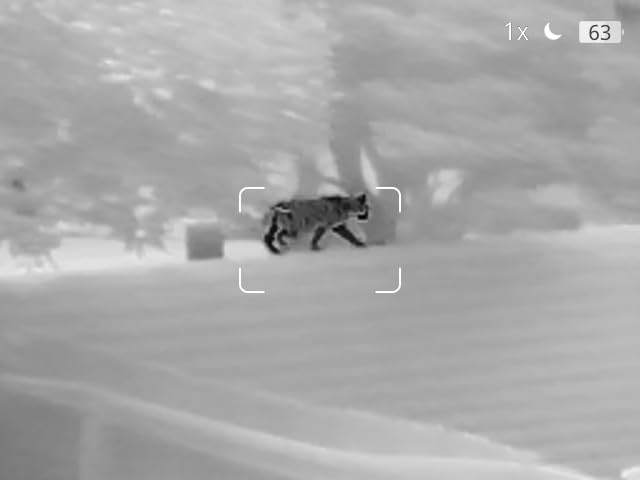
The IP67 sealing matters more than the spec sheet suggests. Hog ground in the fall is wet ground, and a unit that survives being rained on while it sits on a rail is worth a great deal over a season. The silicone housing also takes drops, and the phone app gives you live view plus photo and video capture when you want to show someone what you are looking at.
Where it falls short is the zoom. There is no optical magnification here, so once you push past the native image the picture gets grainy, and the sensor can be damaged by accidental sun exposure, which matters if you glass a field at midday. Reviewers also flag that files cannot be transferred directly to a Mac, everything has to move through the phone app, and streaming to a tablet cuts into the battery you were counting on.
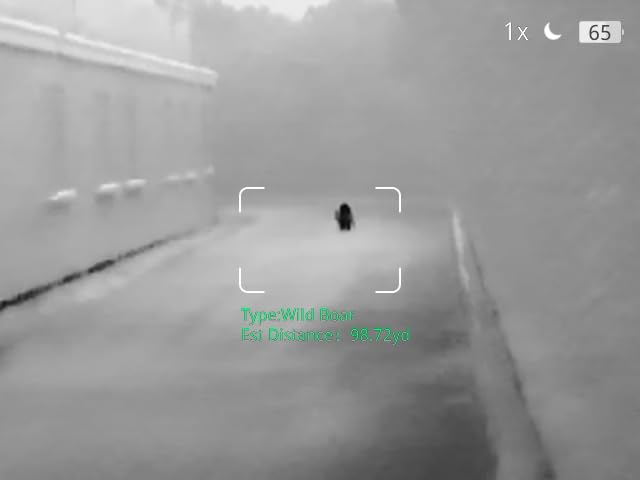
Where it wins on a hog hunt
It wins on battery endurance, weather sealing and weight, which are the three things that decide whether you still have a working optic at four in the morning. It also handles the motion problem better than most units at this tier, and a 50Hz picture is what lets you judge a boar’s shoulder at a feeder before it bolts into the timber.
Where it will disappoint you
It will not tell a boar from a sow at 300 yards, and in thick summer vegetation the effective range drops even at 150. If your hog hunting is crop-edge work in August under dense canopy, this is a scanning and close-ID tool, not an identification engine, and the digital-only zoom is the reason.
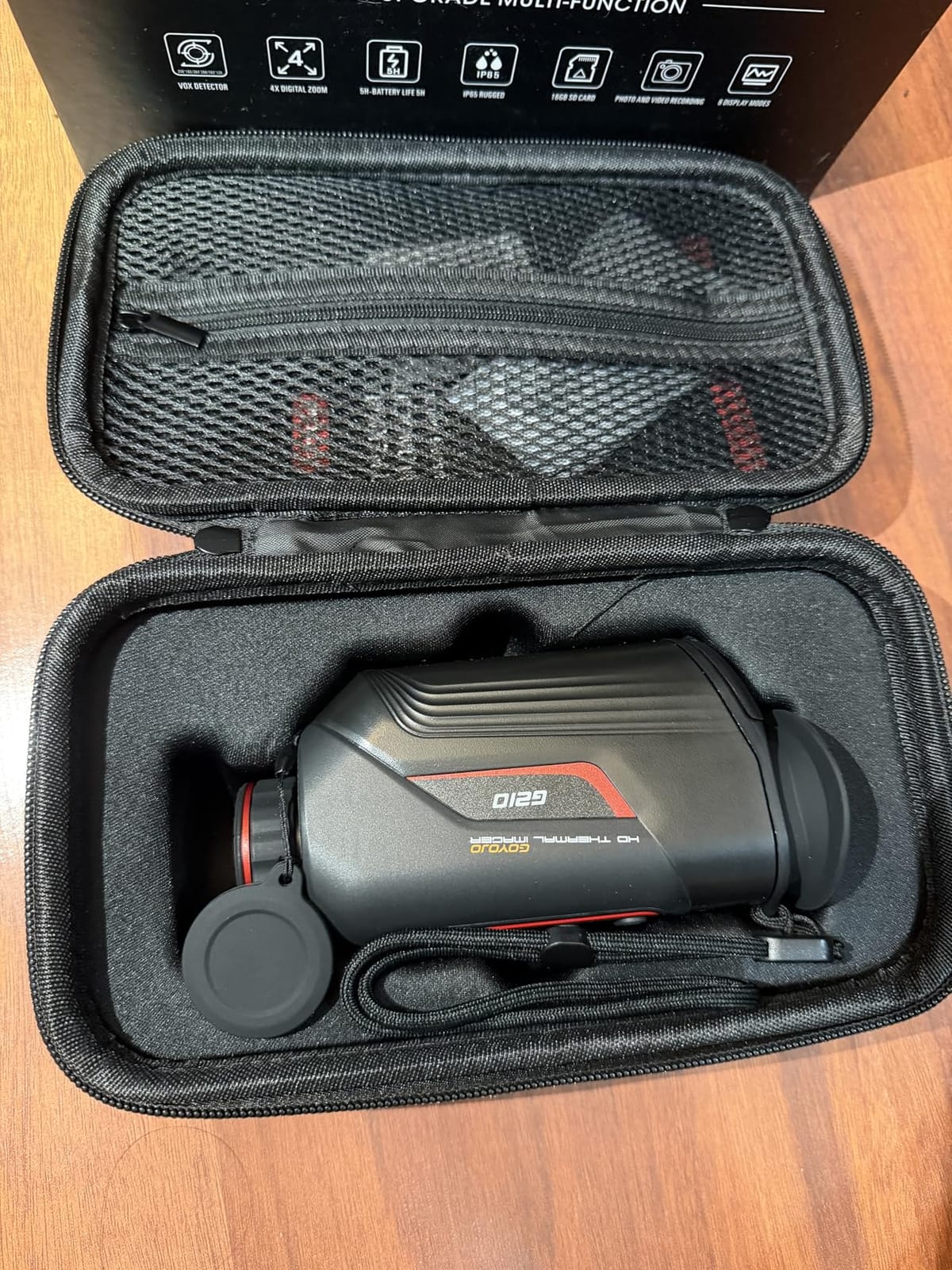
2. GOYOJO G210: Budget Pick With Replaceable Batteries
GOYOJO G210 Thermal Monocular, 256×192 Thermal Imaging Monoscope Camera for Adults, 10mm Focal Lens Vision Goggles Thermal Scopes for Night Hunting Camping
256x192 with 12um detector
10mm lens
25Hz
replaceable 18650
IP65
Pros
- Replaceable 18650 cells remove the runtime ceiling
- 17.5 degree field of view is wide for the class
- 16GB storage and an app for sharing the view
- Six palettes plus adjustable brightness and contrast
Cons
- 10mm lens is the entry optic and clarity tops out quickly
- Some buyers report cells that would not recharge
- Brightness setting does not persist between sessions
The G210 is the pick if your hog hunting pattern is long weekends rather than one all-night sit, because the replaceable 18650 cell changes the economics of battery planning entirely. A spare cell costs a few dollars and weighs almost nothing, so you carry three and never think about it again. With 6+ hours per charge, that is a comfortable margin for a dawn-to-dusk crop-edge push.
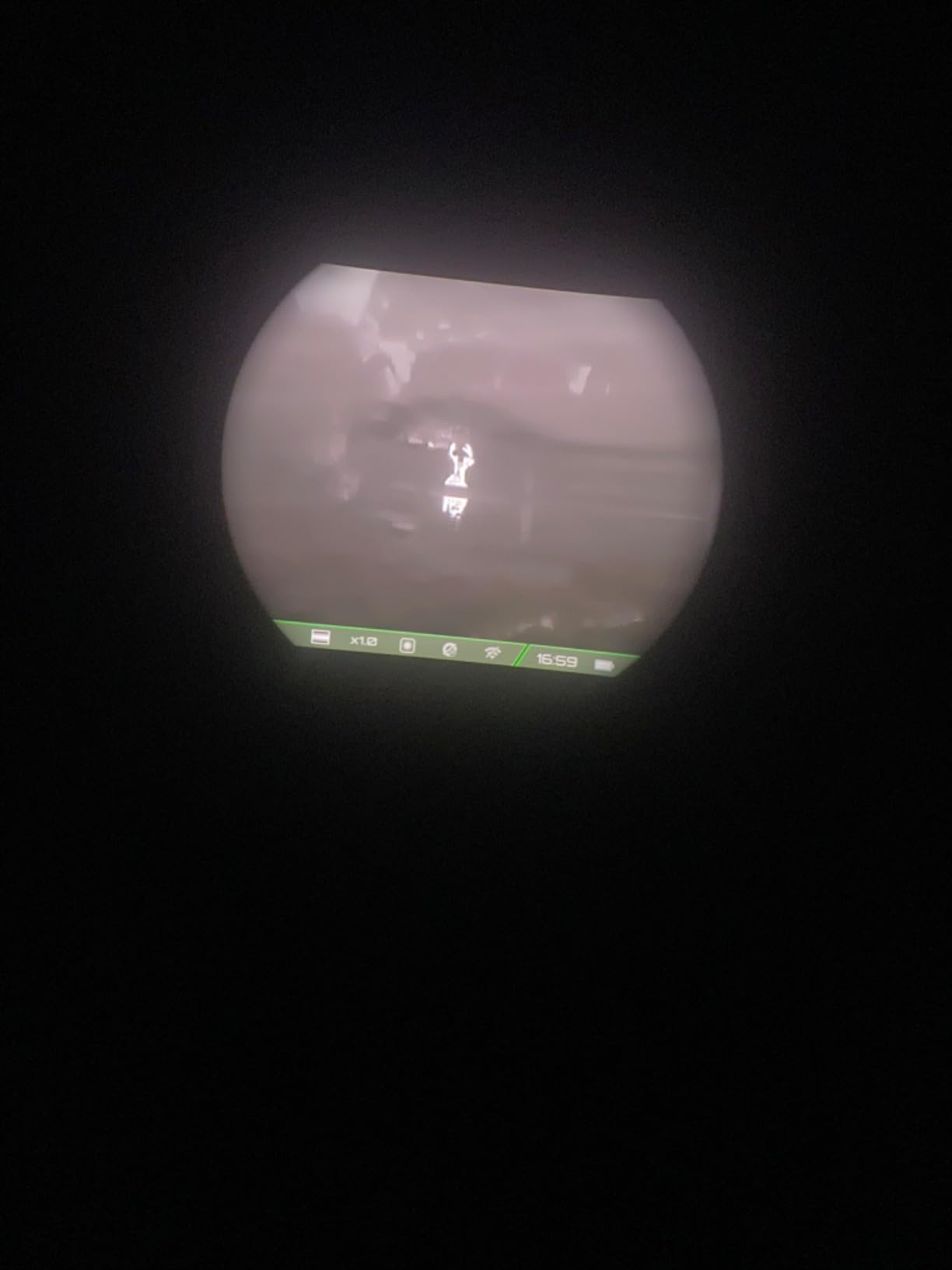
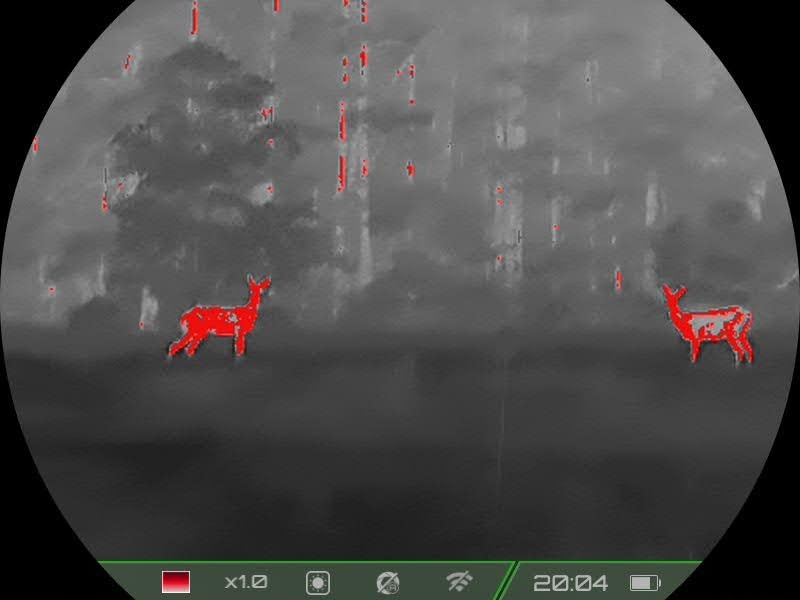
Owners routinely report identifying deer, hogs, rabbits and downed game at moderate range in full darkness, and 25Hz is smooth enough to pan a field or walk a treeline without the picture falling apart. The 17.5 degree field of view is genuinely wide for the price class, and that width matters when a sounder spreads out along a fence instead of funnelling toward one feeder.
There is a 384×288 variant of this model listed too, and if your budget stretches that far for this body style, take it. The 15mm version of the same line gets noticeably clearer at distance, and reviewers who compared them directly said so. The 10mm lens is the reason the review guidance mostly describes this as good out to 150 yards for hogs, which is exactly where most feeder shots happen.
Two practical notes from owners: the brightness setting reverts to default every time you power the unit, so re-tune it each sit, and a minority of buyers have had cells that would not take a charge at all. The manual is thin and Wi-Fi pairing can be awkward on the first connection. The included carry case, wrist tether and tethered lens cap are better than they have any right to be at this level.
Why this one for a feeder setup
Wide field of view plus unlimited spare cells is a combination that suits long weekends with a lot of sitting and a lot of walking. It is also the easiest unit here to hand to another hunter in your group, since there is nothing proprietary in the controls.
Where the money is better spent
Pass on it if you hunt hogs in thick cover and need to sort a sounder at 200 yards, because the 10mm lens will not get you there and no menu setting will change that. Spend the difference on a longer lens or a 384 sensor instead, and treat this as the unit that lives in the truck for general scanning work.
3. RIX Pocket K2: The One That Lives in Your Coat Pocket
RIX Pocket K2 Portable Thermal Monocular for Hunting, 256×192 (50Hz), Wi-Fi, Handheld Night Vision Monocular
256x192 with 12um sensor
NETD under 25mK
50Hz
800x600 OLED
IP67
Pros
- Pocketable and lighter than a smartphone
- 50Hz plus stabilization steadies handheld scanning
- IP67 sealed for humid and foggy conditions
- Sliding lens cover cannot be lost
Cons
- Fixed focus makes close subjects hard to get sharp
- Past about 150 yards you find heat but not the species
- Menu system is awkward to work through
The K2 solved a problem I did not know I had. At 200 g and 4.9 inches long it goes in a coat pocket and stays there, so it is the unit I actually carry on a cold walk to a stand rather than the one I leave in the truck. The 50Hz refresh combined with electronic stabilization keeps the image readable while you scan handheld, which is the whole job when you are walking a treeline looking for hogs pushed out of the cover.
It is rated IP67 and the marketing specifically calls out humid, foggy and rainy conditions, which is the correct language for a hog hunter. NETD is listed under 25mK, and the Resolution Enhanced Technology processing sharpens the 256×192 output enough that owners report clean identification out to 150 to 200 yards on game the size of a rabbit. A hog is a much larger target than that.
The design detail I appreciate most is the integrated sliding lens cover. Nothing ruins a thermal like a cap left off in a bag, and this cannot be mislaid because it is attached. The 800×600 OLED is bright and high contrast, the app has very little lag, and the five-year warranty is longer than most competitors offer.
The fixed focus is the real limitation. Once a hog is closer than about 20 yards it gets soft and there is no ring to turn, so close-range confirmation is where this unit is weakest. The menus are also not intuitive with gloves on, and one documented unit stopped powering on reliably after a few months of light use. There is a low-rating tail here, which is why it sits below our top pick despite matching its rating.
Best for walking hogs out of cover
It is the right tool for a mobile hunt, where the difference between scanning with a thermal and scanning with nothing is the whole night. Weight, sealing and the 50Hz picture all point the same direction for someone on the move in bad weather.
Skip it when
Skip it if you shoot hogs at short range and need a sharp image at 15 yards, or if you plan to sit in an elevated blind for hours and want a focus ring. It is a spotting and scanning instrument, and holding it to that job is what makes it work.
4. Teslong TTS260: Best When You Want to Record and Review the Sounder
Teslong TTS260 Thermal Monocular 256 x 192, Super Resolution 512 x 384
256x192 super resolution
12mm lens
800x600 OLED
32GB onboard
8 hr battery
Pros
- Super resolution processing sharpens outlines
- Large OLED eyepiece gives a wide rectangular view
- 32GB storage with USB-C and HDMI output
- Wide operating range for year-round use
Cons
- Recognition range of roughly 55 yards is the shortest here
- Fixed focus with a 12mm lens limits close work
- Ten percent one-star share points to a reliability tail
This one is built more for looking at hogs later than for shooting them at the moment. It carries 32GB of internal storage, a 0.32-inch 800×600 OLED eyepiece, and both USB-C and Mini HDMI output, so you can pull a whole night of footage and review it at the truck. For a hunter working out which fence line a sounder is using, that is genuinely useful.
The super resolution mode takes the 256×192 native image and enhances it to 512×384, which visibly firms up outlines and heat signatures compared with the raw feed. Eight colour modes plus hotspot tracking let you tune contrast for open field versus timber, and hotspot tracking is nice for confirming whether a warm patch is a moving animal or a sun-warmed stump.
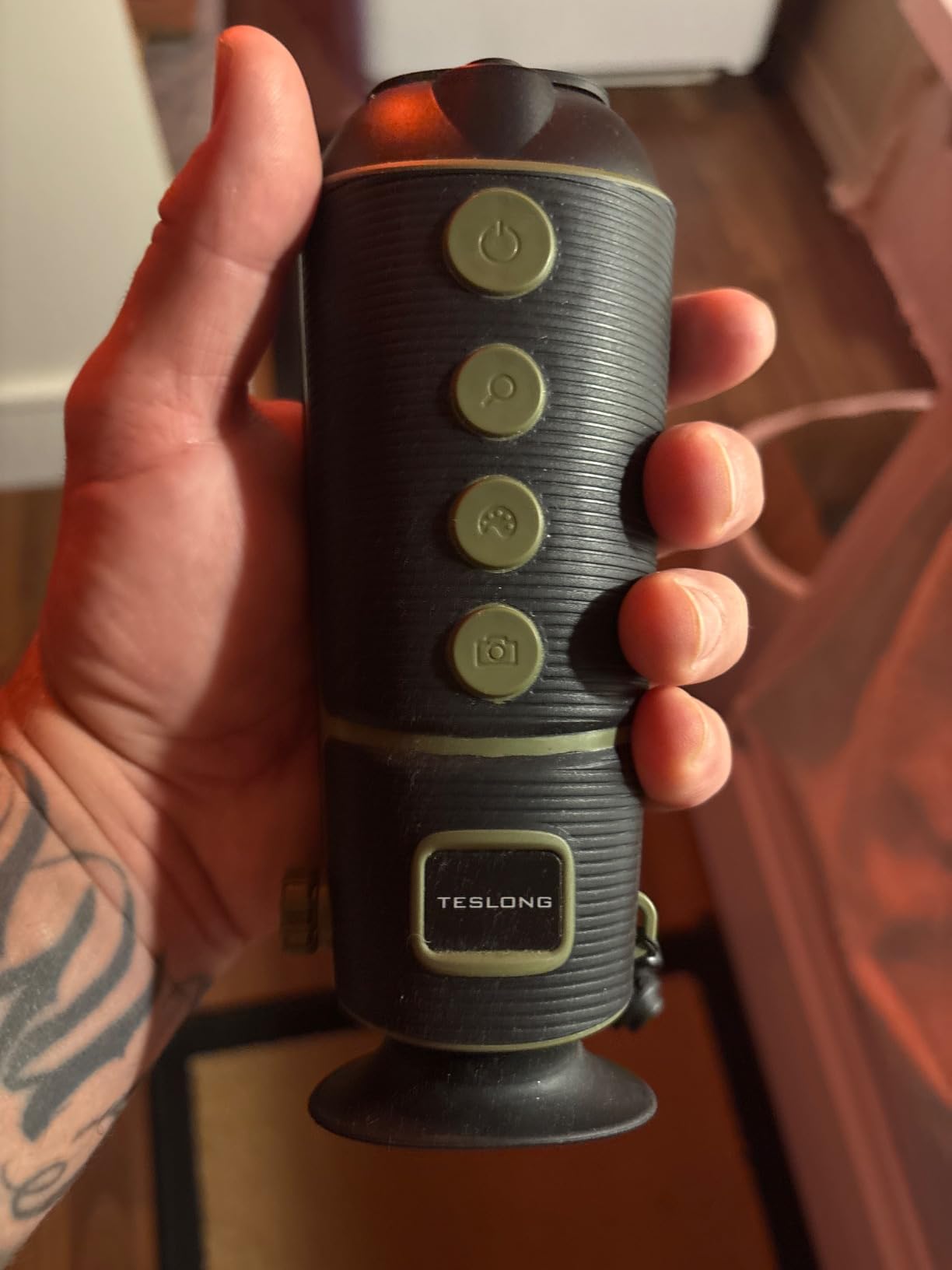
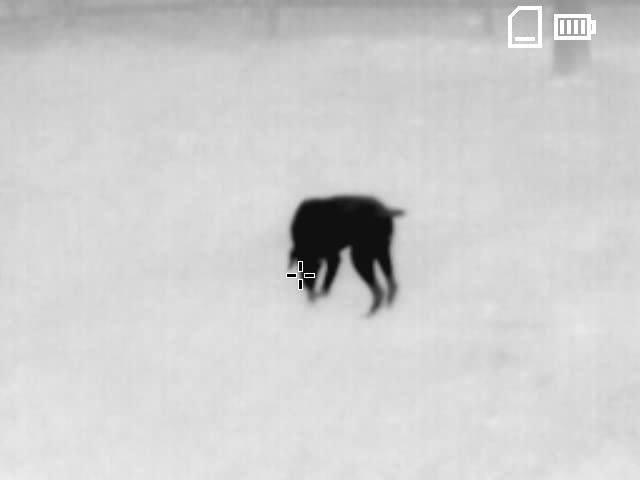
Be realistic about the range. The stated detection is up to 218 yards with recognition at about 55 yards, and that recognition figure is the shortest effective identification distance of anything in this roundup. Hogs at 55 yards are easy, but if your game is presented at 150 yards this optic is the wrong tool no matter how good the recording features are.
Reviewers also note a 10 percent one-star share, the highest in this group, which points to a meaningful reliability tail worth factoring in. The 8 hour battery, diopter adjustment and touch buttons are all usable in the field, and the operating range from -4F to 122F means it will not quit on a February morning.
Good fit for the scouting side of hog hunting
If part of your hog work is confirming where sounders are feeding and how many animals are in a group, the storage and output options are a real advantage. It also handles a wide temperature range without complaint.
Poor fit for the shooting side
Short recognition range makes it a poor companion to a rifle at any distance beyond arm reach of the animal. If you are building a night hog kit, this belongs in the truck as a scout, and another unit should be on the rifle side of the bag.
5. ATN OTS XLT: Built for Long Sits From an Elevated Blind
ATN OTS-XLT Compact Lightweight Thermal Viewer, 2-8x
25mm objective
2-8x magnification
50Hz sensor
0.8 lb
10+ hour battery
Pros
- 25mm objective gives real detail for longer ID work
- 50Hz tracks moving animals cleanly
- 10+ hour battery holds up over dozens of charge cycles
- Light at 0.8 lb for a unit with a 25mm lens
Cons
- Smart rangefinder is too slow for a moving target
- Digital zoom pixelates badly above 4x
- Washes out in fog and cold with reports of battery degradation
The OTS XLT is the one in this group built around a 25mm objective, and that single fact changes what you can do with a hog. A 25mm lens is where you start getting a usable image of a boar at 200 yards in broken cover, and combined with 2-8x magnification it lets you scan wide then settle on an animal. Buyers regularly describe using it to avoid walking into a sounder of feral hogs at close range, which is exactly the safety case for a handheld.
It weighs 0.8 lb, it runs 10+ hours on a charge, and owners report the battery still holding up after dozens of cycles. The 50Hz sensor is smooth enough to follow an animal running, which matters more for hogs than most hunters expect because a wounded boar does not stop.
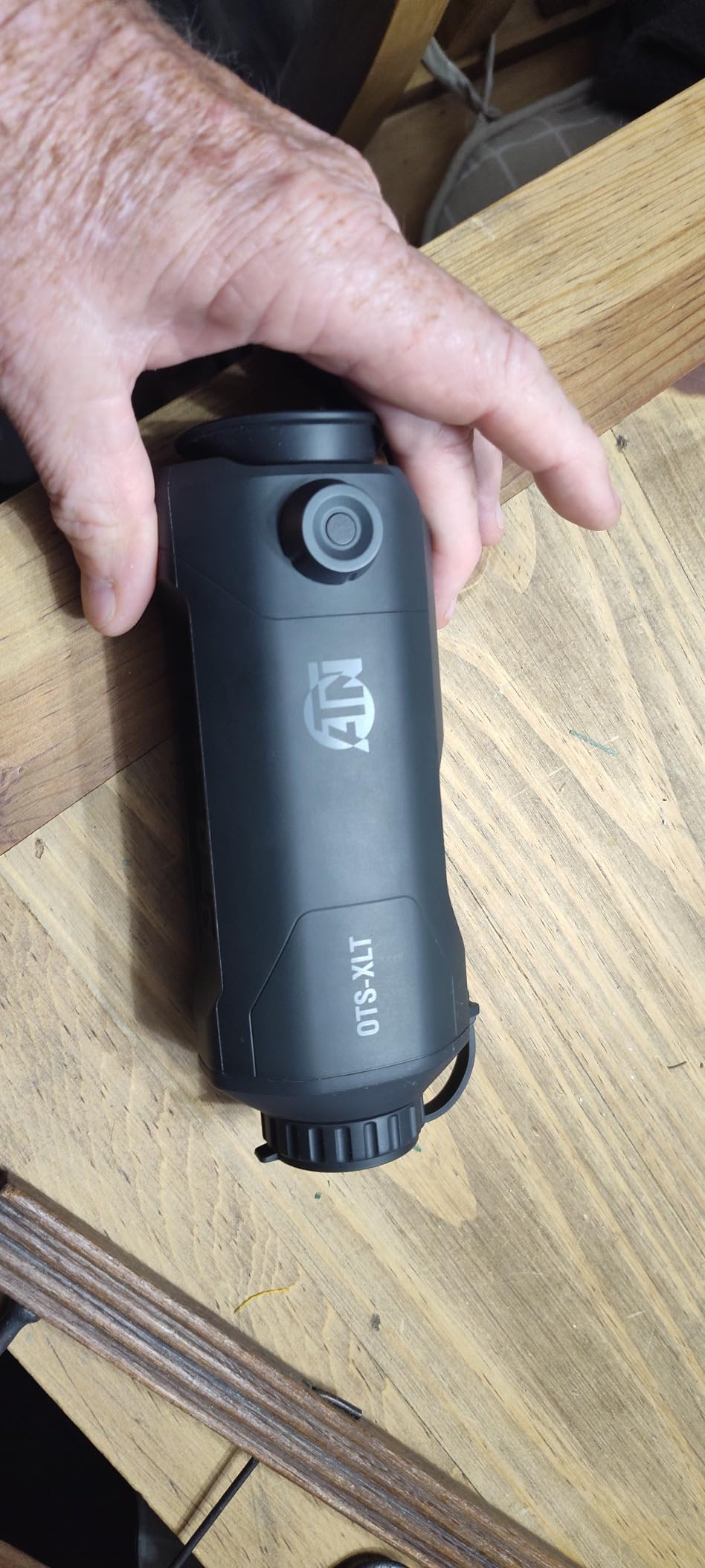
Now the honest part. The smart rangefinder wants high and low points set before it will give you a number, so it is useless for a moving target in your crosshairs. It is a landmark tool, not a shot tool. The image is also low resolution for the class, and reviewers say the field of view is narrower in practice than the spec suggests.
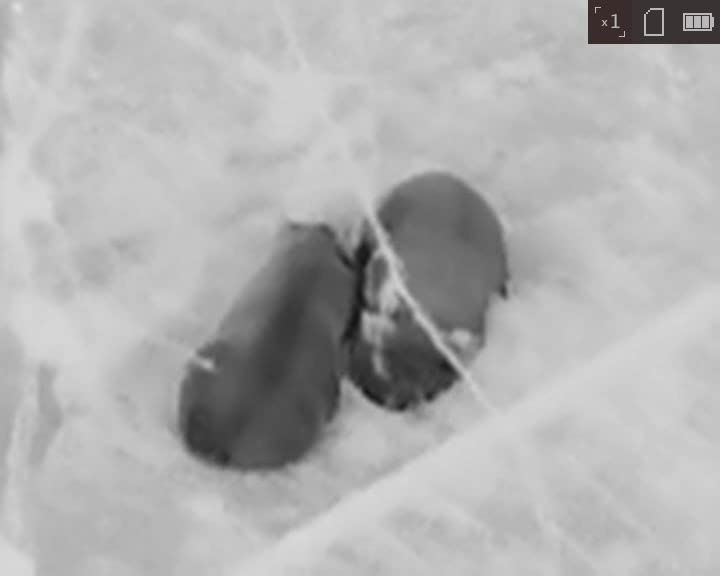
This unit also has the lowest average rating in the lineup at 4.0, and the reason is a long tail of complaints about battery units failing after a few months, a dead pixel defect, and support that reviewers describe as close to unreachable. It also loses contrast in fog, snow and below about 0F, sometimes washing out to a white screen, which is a genuine problem on a wet hog hunt. Two-year manufacturer warranty is the shortest here too.
Why the 25mm lens still matters
Hog hunting is mostly a 100 to 200 yard game, and a 25mm objective is the shortest lens that resolves a hog shape at the far end of that band. If you shoot wild boar at distance rather than just calling them in, this is the geometry you want.
Why we did not put it higher
Reliability reports, washout in cold and damp weather, and a rangefinder that cannot measure a moving hog all pull against an otherwise sensible design. The 4.0 average is the lowest of the eight and the review volume is modest, so we would not call it the first thermal we would buy.
6. RIX Pocket K3: The 384 Sensor in the Smallest Package
RIX Pocket K3 Thermal Monocular for Hunting, 384×288 Night Vision Monocular
384x288 sensor
15mm objective
2x base
50Hz
7.52 oz
replaceable power
Pros
- 384x288 is a real jump in detail over 256 sensors
- 7.52 oz and pocketable for a 384 unit
- 50Hz and stabilization cut motion blur
- Replaceable power supply unit removes the runtime ceiling
Cons
- 2x base magnification is low for the price
- Large detection figure is a controlled-test number
- Only 8GB of internal memory
If you are moving up from a 256 sensor, this is the honest step. The 384×288 array produces noticeably cleaner edges than the 256×192 units, and for hog hunting that shows up exactly where you need it, telling a boar from a sow in partial cover rather than seeing a bright smudge. The 15mm objective is also longer than the entry lenses in this roundup, which means more detail per pixel.
It is 7.52 oz and pocketable with a 1/4-20 tripod interface, 50Hz refresh, an 800×600 OLED, and electronic stabilization that steadies the view when a boar is moving and you are not. Owners accept the higher cost precisely because of the sensor, and the replaceable power supply unit means you are not constrained by a sealed internal battery.
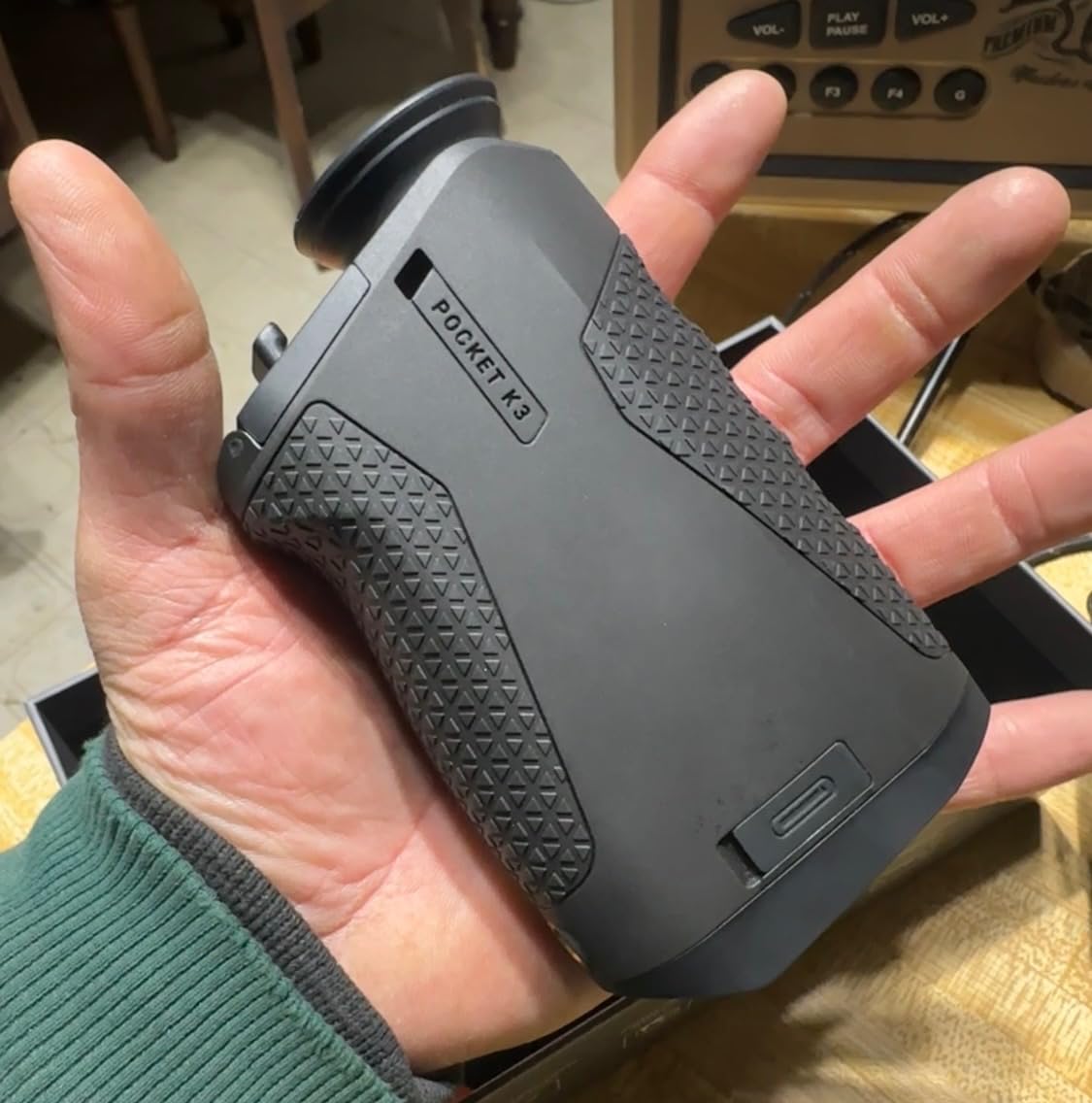
The main tradeoff is that 2x base magnification is low for a device in this bracket. You are leaning on sensor resolution and stabilization rather than optical glass, and that is a different way to work. If you prefer to zoom optically onto a distant sow, this is not the shape of tool that gives you that.
The listed detection figure of up to 853 yards is a controlled-testing number that depends heavily on temperature contrast, humidity and target size, so treat it as a laboratory ceiling rather than a field promise. Internal memory is 8GB against 16 to 32GB on some rivals, and the cost sits well above the 256×192 options in this roundup.
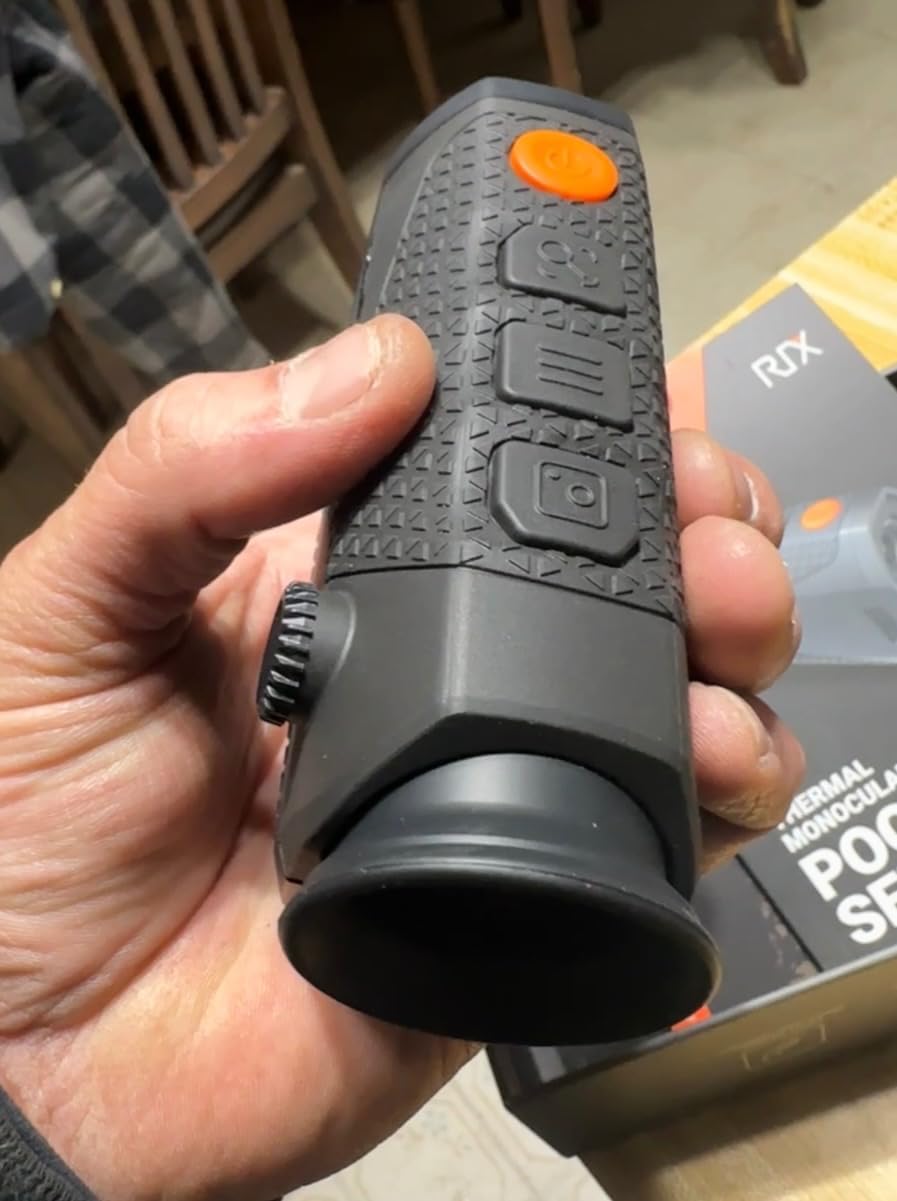
Where it earns its place
It is the pick for a hunter who needs real identification ability in a package light enough to carry all night. A 384 sensor in something under half a pound is unusual, and that combination is what makes it work for hogs in partial cover.
Where the magnification works against you
Two times base with digital zoom beyond that is a compromise, and if your hunting style depends on holding a magnified view on a distant animal you will miss what glass would have given you. The controlled-test range figure also sets an expectation this optic cannot meet outdoors.
7. MiLESEEY T-Recon Scout TNV60: Maximum Resolution, Maximum Weight
MiLESEEY Thermal Monocular T-Recon Scout, 640×512 (50 Hz) TNV60 Aircraft Mg-Al Alloy Thermal Monocular, Handheld Thermal Imaging, Night Vision Imager, OLED Display with 8X Digital Zoom
640x512 native
germanium 25mm f/1.0
18 hr battery
1.54 lb
16GB
Pros
- 640x512 gives the sharpest target outlines here
- Germanium 25mm f/1.0 lens for bright long-range images
- 8x digital zoom at original resolution
- 18 hour runtime is the longest in the set
Cons
- Heaviest unit at 1.54 lb which adds fatigue on a long sit
- Only 5 colour palettes versus 8 on rivals
- Smallest review base at 58 ratings
This is the specification leader and it is not close. A 640×512 native sensor carries several times the pixel count of the 256×192 units, the germanium 25mm f/1.0 lens is the fastest glass in the group, and the stated detection of up to 1,500 yards for a six-foot object puts it in a different class entirely. If you hunt wild boar at long range and want to identify rather than detect, this is the unit built for it.
The 18 hour runtime from a 4800mAh pack means an all-night sit without a battery decision, and the 8x digital zoom operates at original resolution rather than upscaling, so the picture holds detail. A magnesium-aluminium alloy body and a 16GB card holding roughly 10,000 photos are both sensible in the field.
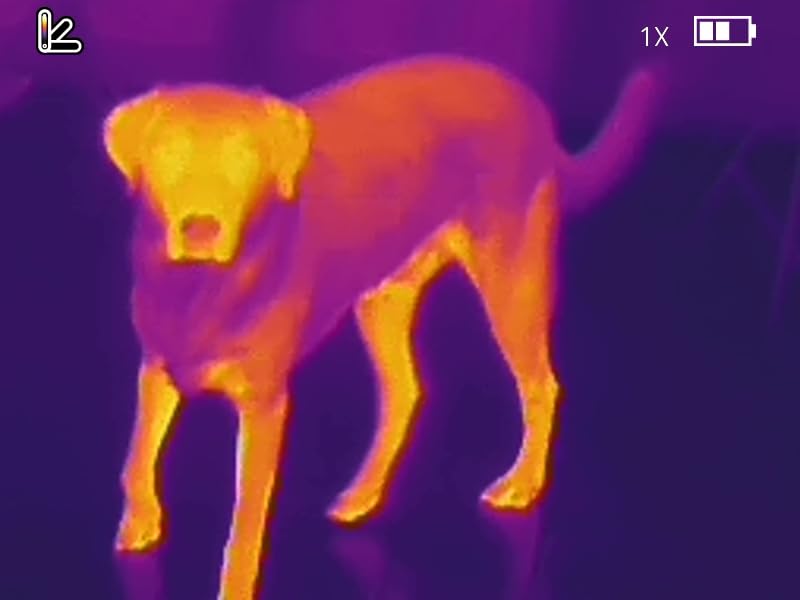
The cost of all that resolution is weight. At 1.54 lb it is the heaviest thing here by a wide margin, and a full sit in a tree stand with a unit hanging from your neck gets tiring in a way a 70 g device never does. That matters for a handheld far more than it would for a scope.
There are also only 5 colour palettes against 8 on the Teslong, which limits you when you are tuning for a specific background, and the review base is the smallest in this roundup at 58 ratings, so the long-term reliability picture is thin. Like every thermal, the real detection range depends on temperature contrast, humidity, target size and terrain, so the 1,500 yard figure is a laboratory number.
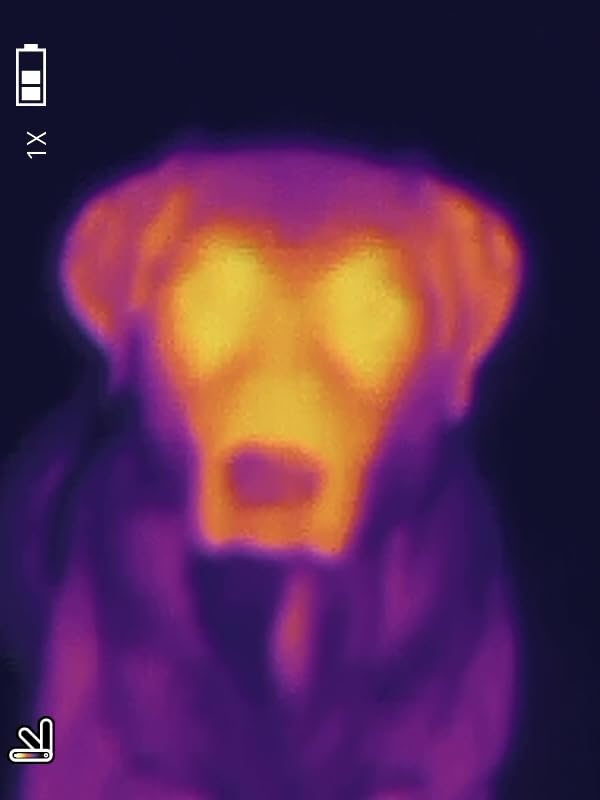
Who should own this one
A hunter shooting wild boar at long range in open country who identifies before shooting, and who can tolerate a heavier unit. The battery will not stop, the glass is fast, and the resolution does not leave much detail unresolved.
Who should not
Anyone doing long sits in a stand or on a long walk. There is no meaningful reliability history on this listing yet, and if you hunt hogs close to feeders you are paying for pixels you will not use while carrying weight you will feel by midnight.
8. Pulsar Axion Compact: The Sensor Specs You Want in a Pocket-Size Body
Pulsar Axion XQ19 Compact Thermal Monocular, 384×288 Sensor
384x288 17um sensor
NETD under 18mK
19mm f/1.0
8.8 oz
IPX7
Pros
- Sub-18mK sensitivity holds up in rain humidity and fog
- AMOLED display with deep blacks and strong contrast
- 19mm f/1.0 lens for bright long-range images
- 8.8 oz with a removable APS3 battery
Cons
- Menu system needs several steps to change palette
- Digital zoom only with no optical magnification
- One unit arrived with a dead battery
The Axion Compact is the one we keep recommending to people who ask a single question, which is whether it will work in the rain. The 384×288 sensor with 17um pitch and sub-18mK sensitivity is the best combination of resolution and thermal sensitivity in this roundup, and that is exactly the pairing that holds contrast when the air is full of moisture. For a hog hunt in wet cover, that beats raw resolution.
It is 8.8 oz, IPX7 sealed, and the 640×400 AMOLED gives deeper blacks and brighter whites than most of the LCD and OLED panels here, which matters when you are trying to pick a hog out of dark timber. The 19mm f/1.0 lens is a fast lens on a compact body, and 1.5-6x zoom lets you scan wide then settle in. Owners specifically cite using it to avoid shouldering a rifle while scanning, and name hogs as a use case.
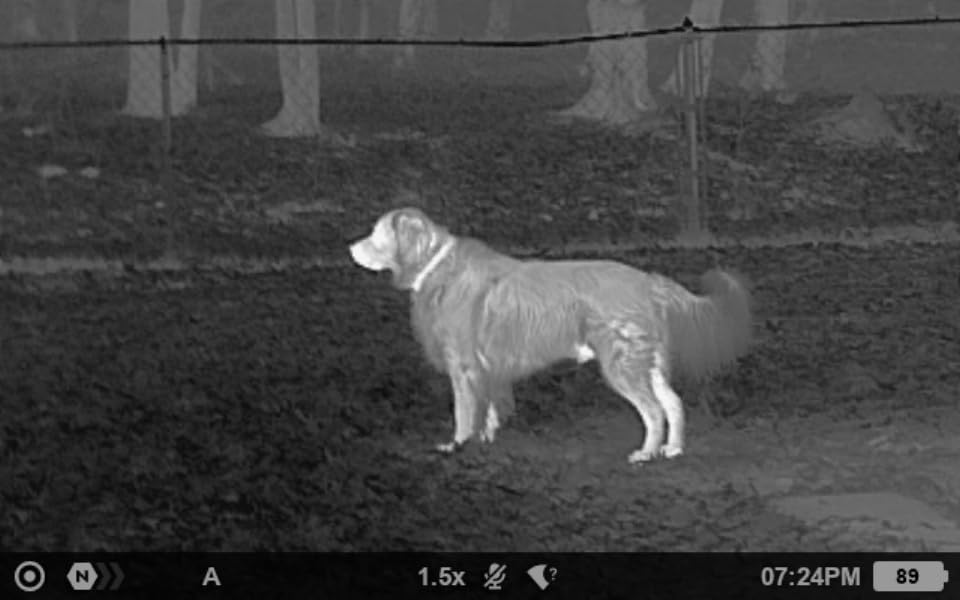
The friction point is the interface. Changing the colour palette takes navigating several menu levels rather than one button, and there are eight palettes with no shortcut, which is annoying with gloves on. There is also no optical magnification here, so the zoom range is entirely digital, and one documented unit arrived with a battery that would not hold a charge after four hours.
The review base is the smallest in the group at 40 ratings, so the reliability picture is less established than the other picks, and a five-year limited warranty is the best on this list. Different variants of this line exist at different resolutions, so check which one you are actually buying before you compare it to anything else.
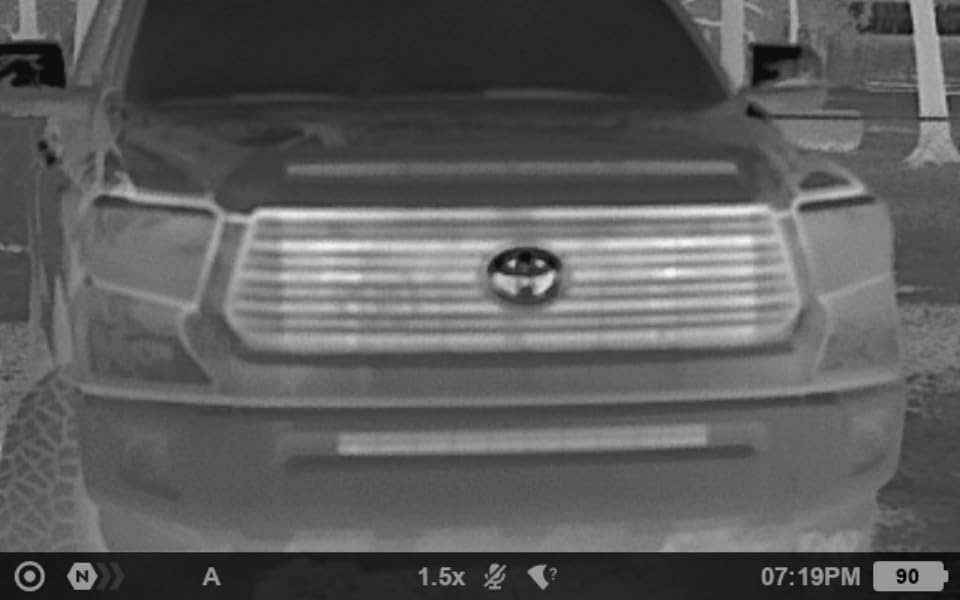
Why it handles wet hog ground best
Sensitivity and contrast are what degrade first when humidity is high, and this unit is the best specified here for holding onto a faint hog signature in damp air. The AMOLED panel and the f/1.0 lens reinforce the same advantage, and it fits in a pocket at 8.8 oz.
What you give up
You give up optical zoom and a fast menu, and you buy into a device with the thinnest owner history here. If you are comfortable with a slightly slower workflow in exchange for the best damp-weather performance in the roundup, this is the one.
Thermal vs Night Vision for Hog Hunting
Thermal wins for hog hunting, and the reason is specific rather than general. A hog is a large animal with a dense heat signature, and thermal shows you the animal itself rather than a shape against a background. Image intensifiers need ambient light or an IR illuminator, which either washes out a scene covered in rain or reflects back off moisture and cover.
For hog work, night vision holds its own in one situation, which is when you are working very close in heavy brush where the thermal picture is degraded by the vegetation itself. It also has a lower running cost, since an IR illuminator is a bulb rather than a thermal core. Every other night-hog scenario, from a feeder at 150 yards to a sounder crossing a plowed field, goes to thermal.
One practical trap to avoid. Buyers on hunting forums repeatedly regret over-zooming a digital image past what the sensor can resolve, because the picture gets bigger without getting better. Stay near base magnification until you have genuinely found a target, then step up.
If you are still weighing the two, our night vision monocular roundup covers the intensifier side in detail.
How to Choose a Thermal Monocular for Hog Hunting
Start with the range you actually hunt, not the range on the box. Almost all hog shooting happens between 100 and 200 yards, which changes which specs matter and which marketing numbers you can safely ignore. Our broader best thermal monoculars tested ranks these same units on general performance if you hunt quarry other than hogs.
384 versus 640 sensors
A 256×192 sensor is a spotting tool, a 384×288 sensor is an identification tool, and a 640×512 sensor is for long-range work. Hogs are large and warm, so even an entry 256 unit reads a body clearly inside 150 yards, but telling a boar from a sow in partial cover needs 384. Move to 640 only if you hunt wild boar at distances well past 200 yards.
NETD, the number that actually finds hogs
NETD is the noise equivalent temperature difference, measured in millikelvin, and lower is better. It describes how small a temperature difference the sensor can separate from its own noise, which is the figure that decides whether a hog still reads at range on a humid night when the contrast between animal and ground has collapsed. Anything under 25mK is workable for hogs, and under 20mK is where performance in fog and rain separates the field.
Objective lens and field of view for hog terrain
A 9 to 13mm lens gives you a wide view, which is what you want when covering a feeder clearing or a wide sounder, and a 19 to 25mm lens gives you the pixels per hog that make identification possible at distance. For mixed hog hunting, something in the 15 to 19mm range with a field of view around 17 to 20 degrees is the compromise most hunters settle on.
Refresh rate, battery and ruggedness
Refresh rate is where tracking a moving animal is won or lost. Anything at 50Hz will hold a running boar solid, while 25Hz units are acceptable for static work and get soft on a wounded animal that does not stop. Battery life should be measured against your actual sit, and a replaceable cell beats a large sealed one. Finally, look for real sealing: hog ground is wet ground, and IP67 or IPX7 is the difference between a season of use and one.
Do you need a laser rangefinder?
Only if you shoot beyond the range at which you can trust your own estimation. Most hog work happens close enough that you do not need one, and the smart rangefinders on monoculars in this class require setting high and low points first, which is too slow for a moving target. If you want a rangefinder for long-range boar work, it is worth having, but it is not what should drive this purchase.
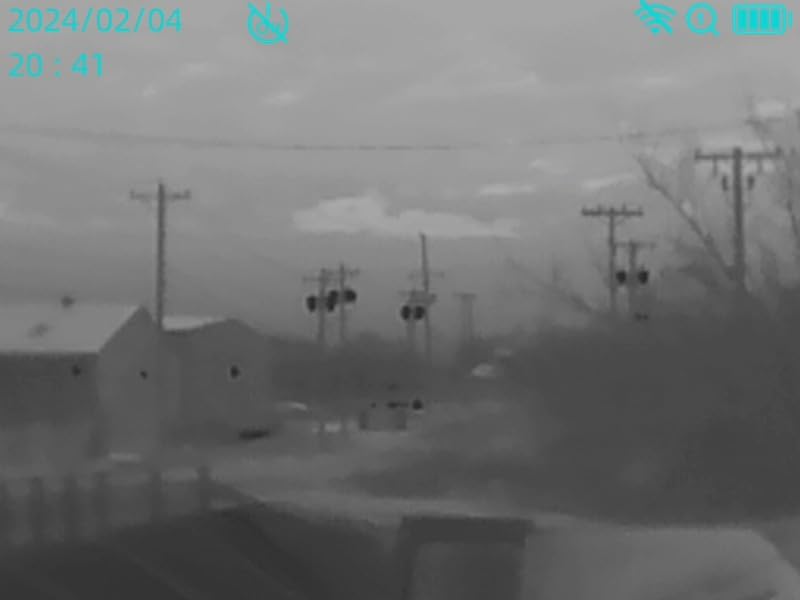
What Fog, Humidity and Rain Do to Thermal
Moisture in the air is the loudest complaint in every hunting forum thread about thermals. Hunters on r/ThermalHunting describe the image going soft and blurry, almost like a smoke screen, on high humidity days, and report more of a blob at longer distances in fog or misting rain. That is not a defect in the unit, it is how infrared radiation behaves when water vapour is in the path.
Hogs are the hardest case in bad weather, and that is a paradox worth understanding. In dry air they are the easiest quarry to learn thermal on, because a large warm animal against cool ground is about as high a contrast target as you will find. Add humidity and that contrast is exactly what you lose, so the same hunt that is effortless in August is difficult in the same cover in October.
What you can do about it is mostly practical. Get close to the target instead of pushing range, since contrast falls with distance faster than the animal gets smaller. Watch the near ground rather than the far treeline, because mist sits low and the first two hundred yards usually hold more usable signal than the ridge behind it. Shoot in the two hours after dawn rather than the middle of the night, when ground temperature contrast is highest. And favour a low NETD figure, which is the one spec that genuinely buys back performance in damp air. No optic removes the effect, but a better sensor reduces how much you lose to it.
Using a Thermal Monocular on a Hog Hunt
Scan in overlapping bands rather than sweeping the whole frame. Pick a band of landscape, work it left to right, then drop the band and overlap by about a third. Hogs at the edge of the frame are the ones you miss, and a narrow methodical sweep is what stops that.
Run a two-palette workflow. Most units give you a white hot and a black hot mode, and switching between them is how you solve a specific background, not a preference. When a hog is a bright shape against dark timber, leave the palette alone. When it is a dark shape against warm bare ground or a sun-heated road, invert it, because the hot spot becomes a cold spot and the animal separates from the background instantly.
Let the device acclimatize before you trust it. A thermal core needs a few minutes to stabilise when it comes out of a cold vehicle or a warm bag, and the image will sharpen noticeably once it settles. Judge the unit on its settled picture, not its first thirty seconds.
Expect false positives from wet ground, and know which ones to ignore. Water, mud, engine heat, a warm rock face, and anything that recently held sun will read hot on thermal. A stationary hotspot is almost never a hog at that hour; a hotspot that moves, changes shape, or walks is worth your attention. That single habit eliminates most wasted trips.
Is Thermal Legal for Hog Hunting?
Yes in the large majority of US states, but the exceptions are worth knowing before you buy. Artificial light and night-vision devices are the regulated categories, and states tend to restrict them specifically for big game rather than for hogs. Texas and Oklahoma permit thermal devices for hogs with no night-vision prohibition that applies to this use.
The pattern to expect is that a handful of states restrict artificial light or night vision for deer, turkey and other game, while feral hogs are usually excluded or treated separately because they are classified as a nuisance species. Because rules change and the exceptions are narrow and specific, confirm with your state wildlife agency before you rely on it. Your licence conditions are the document that matters, not a general summary.
Frequently Asked Questions
What is the best thermal optic for hog hunting?
The TOPDON TS004 is the best balance for most hog hunters. Its 11 hour battery, 50Hz refresh and IP67 sealing handle a full sit in wet cover, and its 70 g weight stays on your neck all night. If you shoot wild boar at long range, the MiLESEEY T-Recon Scout 640×512 resolves detail that nothing else in this roundup can.
Is night vision or thermal better for hog hunting?
Thermal is better for hog hunting. A hog is a large animal with a dense heat signature, so thermal shows you the animal rather than a shape against a background, and it works in total darkness with no illuminator. Night vision holds an edge only at very close range in heavy brush, where the thermal picture is degraded by vegetation, and it costs less to run.
Should I get a 384 or a 640 sensor for hogs?
For most hog hunting, a 384×288 sensor is the right answer. Hogs are large warm targets, so a 256 sensor already reads a body inside 150 yards, but 384 is what lets you tell a boar from a sow in partial cover. Choose 640 only if you hunt wild boar well past 200 yards, since the extra resolution is wasted on feeder-range work.
How far can a thermal monocular identify a hog?
On a 256×192 sensor with a 13mm lens, expect reliable identification inside 100 yards and detection out to roughly 150 before the species becomes guesswork. A 384×288 sensor pushes usable identification closer to 200 yards, and a 640×512 unit goes further still. Humidity and fog pull every one of these numbers closer, and detection range printed on the box is a controlled-test figure.
Does fog mess with a thermal scope?
Yes, and hunters on r/ThermalHunting describe the image turning soft and blurry, almost like a smoke screen, on humid or foggy nights. Water vapour in the path reduces the contrast between a warm animal and cool ground, which is the signal a thermal depends on. Staying closer to the target, scanning the near ground instead of the far treeline, and choosing a low NETD figure all reduce how much you lose.
Do I need a laser rangefinder on a thermal monocular for hogs?
Usually not. Most hog shots happen between 100 and 200 yards, which you can call without a rangefinder, and the smart rangefinders on monoculars require setting high and low points first, making them too slow for a moving target. If you regularly shoot wild boar at long range, a rangefinder helps, but it should not drive the purchase decision.
Bottom Line: The Best Thermal Monoculars for Hog Hunting
For most hog hunters, the TOPDON TS004 is the best thermal monocular in 2026 for the money. It runs an entire sit on one charge, it is sealed against the wet ground that defines the season, its 50Hz picture holds a running boar, and at 70 g you will still be holding it at four in the morning.
Pick the GOYOJO G210 if your hunts are long weekends rather than all-night sits and you want spare cells instead of endurance. Pick the RIX Pocket K2 if you walk your hogs and the optic has to live in a coat pocket. Pick the RIX Pocket K3 when you need to identify a boar in partial cover and still stay light. Pick the Pulsar Axion Compact when the forecast says fog or rain. Pick the MiLESEEY T-Recon Scout when you are hunting wild boar past 200 yards and can carry the weight. Pick the ATN OTS XLT when you shoot from an elevated blind and want 25mm glass on a long sit.
Whatever you choose, set your expectations in identification terms rather than the detection number on the box, scan in overlapping bands, and start your night hunting after dark when the ground has cooled. That habit matters more to your success than any spec on the list.