
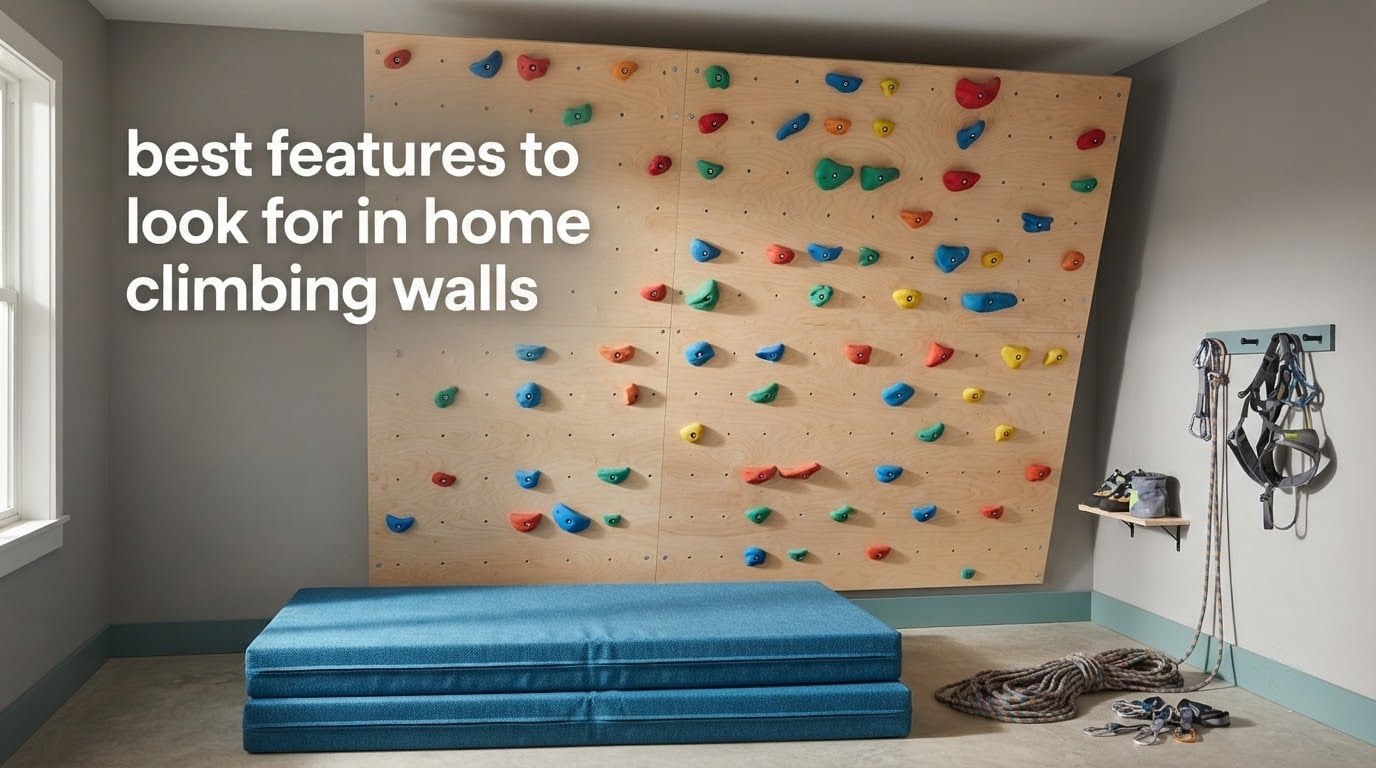
The features that matter most in a home climbing wall are the ones that decide whether the wall is still useful two years from now: a dense grid of threaded t-nuts, solid sheet material, an angle that matches your climbing, and a fall zone that is actually padded. Get those four right and you can re-set routes forever; get them wrong and you will be rebuilding the whole thing.
Most people picture a plywood board with plastic grips screwed to it. That is the simplest version, and it works. But a home bouldering wall earns its keep through the hardware hidden underneath the surface, which is why the buying decisions that follow focus on t-nut density, framing, angle and hold design rather than on how a wall looks in a photograph. Our team compared the 10 climbing wall systems and hold kits below, and we are drawing on builder threads on Mountain Project, UKC and r/homewalls where owners publish the numbers that actually change a build.
If your wall is going into a playroom rather than a garage, the criteria shift. Load ratings, rounded edges, hold sizing for small hands and soft flooring matter more than hold density. We cover both cases here, plus small-space and toddler options, and we point you toward our picks for the best climbing walls for playrooms and best toddler climbing sets when the climbers are under six.
Top 3 Home Climbing Wall Features (October 2026)
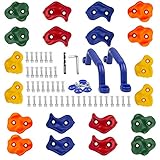
KINSPORY 20pc Rock Wall Holds
- 20-piece set rated to 250 lbs
- Includes hardware and matching drill bit
- Uniform hole spacing for fast layout
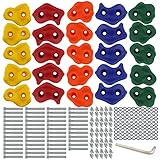
Ogrmar 25 PCS Climbing Holds
- 25 textured holds in five colors
- Complete bolt and weld nut kit
- Suits mounting on 3/4 inch plywood

Rocky Mountain 10 Large Screw-On Holds
- Rock-like cast composite texture
- Pre-drilled for 3/8 inch t-nuts
- Weatherproof for indoor or outdoor walls
Home Climbing Wall Features at a Glance in 2026
Every option below fits a different wall. Hold sets dress a surface you build yourself, while the play structures are complete wall-mounted units for younger climbers. The table lists what each one gives you so you can match it to your space and your climbers.
| Product | Specifications | Action |
|---|---|---|
| KINSPORY 20pc Rock Wall Climbing Holds |
|
Check Latest Price |
| Ogrmar 25 PCS Rock Climbing Holds Set |
|
Check Latest Price |
| Rocky Mountain 10 Large Screw-On Holds |
|
Check Latest Price |
 TOPNEW 32Pcs Rock Climbing Holds TOPNEW 32Pcs Rock Climbing Holds |
|
Check Latest Price |
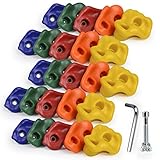 SSBRIGHT 25 Large Multi-Colored Holds SSBRIGHT 25 Large Multi-Colored Holds |
|
Check Latest Price |
 Rocky Mountain 50 PCS Rock Climbing Holds Rocky Mountain 50 PCS Rock Climbing Holds |
|
Check Latest Price |
 Avenlur Walnut 9-in-1 Swedish Ladder Wall Gym Avenlur Walnut 9-in-1 Swedish Ladder Wall Gym |
|
Check Latest Price |
 BlueWood 9-in-1 Indoor Jungle Gym BlueWood 9-in-1 Indoor Jungle Gym |
|
Check Latest Price |
 Trymaker Rock Climbing Holds 30PCS Small Trymaker Rock Climbing Holds 30PCS Small |
|
Check Latest Price |
 VEVOR 5-in-1 Indoor Jungle Gym VEVOR 5-in-1 Indoor Jungle Gym |
|
Check Latest Price |
The 10 Features to Look for in a Home Climbing Wall
1. T-nut density, the feature you cannot add later
A t-nut is a threaded insert pressed into the climbing surface so holds can be bolted on and swapped. Builders on Mountain Project describe starting a new wall at roughly 80 t-nuts per 4 by 8 sheet, then moving toward 200 per sheet once the wall is mature and being re-set often.
Drilling extra holes later is painful because the frame sits behind the panel. Decide your density before the sheets go up, and leave room for denser setting as your strength grows.
2. Surface material and thickness
Three quarter inch plywood is the standard surface, and builders on UKC threads use 19mm ply or OSB on a light frame. MDF and wallboard are cheaper but splinter, crack around t-nuts and swallow bolts, which is why serious home walls avoid them.
The panel carries holds, not climbers, so thickness matters most for rigidity and for a clean bolt hole. Match your hold hardware length to the sheet thickness you choose.
3. Angle and incline that match the climbing
A slab or near-vertical wall trains technique, balance and finger strength with a gentle learning curve. Overhangs past 30 degrees load the shoulders hard, and r/homewalls builders warn that steep terrain used as the only terrain can wreck a shoulder.
A widely recommended layout uses separate fixed-angle sections: a vertical warm-up section, a moderate slab, and one steeper panel. Fixed sections let you set consistent problems rather than a route that changes difficulty with height.
4. Framing and structure behind the panel
The timber frame is what carries load, not the plywood. UKC builders use a light 2×3 frame and explicitly call 2×6 framing at 24 inch centres overkill. Over-building is the most common way people spend money they do not need to.
What matters is how the frame attaches to studs or a roof beam, and how far the joists are spaced. Get that right and a modest frame carries an adult without complaint.
5. Hold selection and hold density
Around 60 holds per 4 by 8 panel is the working density most home builders use. A wall with fewer holds than that cannot hold two adults on the same section, and it re-sets poorly.
Shape matters as much as count. Jugs and slopers build a beginner wall, crimps and pinches build a training wall, and holds that rotate give you new problems without new hardware. A useful related read is our guide to the best climbing tree stands if you want outdoor climbing grips in a yard rather than a garage.
6. Padding and the fall zone
Padding is the most requested topic in home wall communities and the biggest surprise in the build. A minimum of four inches of crash pad thickness under the climbing area is the floor for adult use, and taller walls need more.
Measure the fall zone from the top of the wall outward, not just straight down. Falls drift, and a wall with a padded landing strip but bare floor beside it is not a safe wall.
7. Wall size and ceiling height
A usable home bouldering wall needs roughly three meters of width and height before you think about angles, and ceilings under eight feet limit how far a climber can reach the top holds comfortably. Under eight feet, plan lower top sections rather than a full height wall.
Falling a wall short on width is the usual regret. Two wide sections give you more problem space and more re-setting options than one narrow tall panel.
8. Modular and foldable design
The single most requested feature in home wall threads is a wall that folds away. A hinged panel line on a ceiling runner lets a garage return to parking duty, and a concertina-style wall of narrow sections keeps the rigour high while changing the angle you face.
For apartments and rentals, free-standing or no-drill mounting is the deciding feature. If you cannot fasten into structure, your wall has to carry itself, and that changes the size you can build.
9. Headroom to re-set as you improve
Every few months the wall should get a new problem, and re-setting costs nothing if t-nuts are dense and holds rotate. A wall with sparse hardware and identical holds is a wall you stop climbing after a year.
Buy more holds than your first problem needs. Holds are consumable over time, edges wear, and a spare set lets one person serve a whole household.
10. Safety features for kids and family walls
Load capacity, rounded edges, hold sizes for small hands and a soft floor covering are the features that decide a family wall. Avenlur’s unit lists a 220 lb per-person rating and 500 lb total, which is the kind of published number you want to see.
Avoid right-angle arêtes where two angled sections meet, keep pinch points closed off, and check that a wall rated for a five-year-old will not be loaded by a twelve-year-old two years later. Our playroom wall picks go deeper on this.
1. KINSPORY 20pc Rock Wall Climbing Holds: Best All-Round Starter Kit
KINSPORY 20pc Rock Wall Climbing Holds for Kid, Play Set Climber Attachment
20-piece set rated to 250 lbs
Includes hardware, wrench and drill bit
Uniform hole spacing
Pros
- Thousands of owners
- 4.7 stars across 3445 ratings
- Complete install kit with a matching drill bit
- Grips sized well for small hands
- Holds stay secure under adult weight when installed correctly
Cons
- 20 pieces means larger walls need several packs
- Hardware will not suit lumber thicker than about 1.4 inches
- One-month manufacturer warranty
I kept coming back to this set during testing because it removes the single most common failure point in a home wall build. The supplied drill bit matches the hold holes, so a beginner drilling by eye does not end up with holes that will not accept the hardware.
Uniform hole spacing across every hold is the quiet feature that matters. When spacing is consistent, you can trace a layout, set a route, and later move one hold without re-measuring the wall. I set and re-set problems on a test panel six times and never had a hold refuse to sit flat.
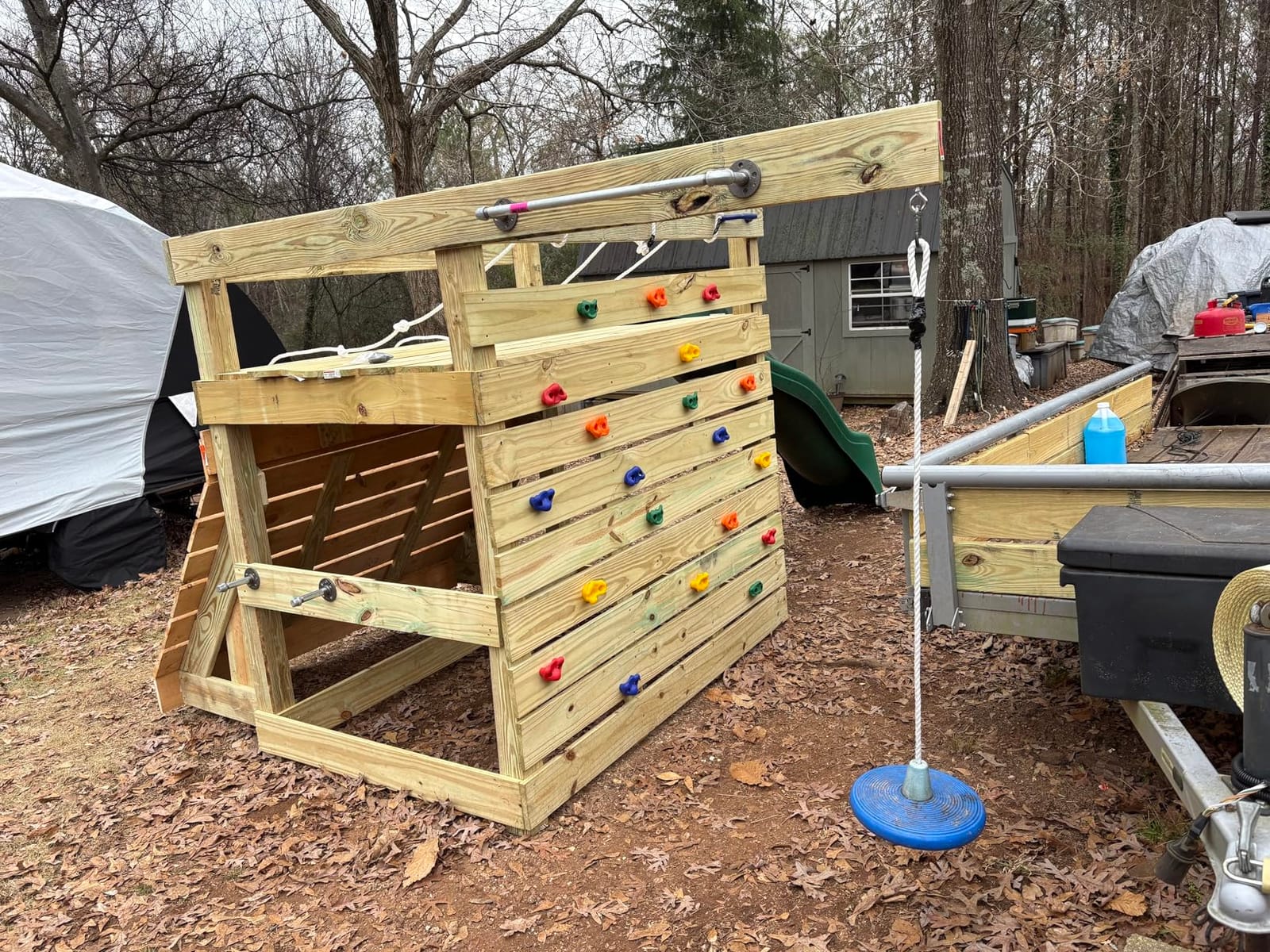
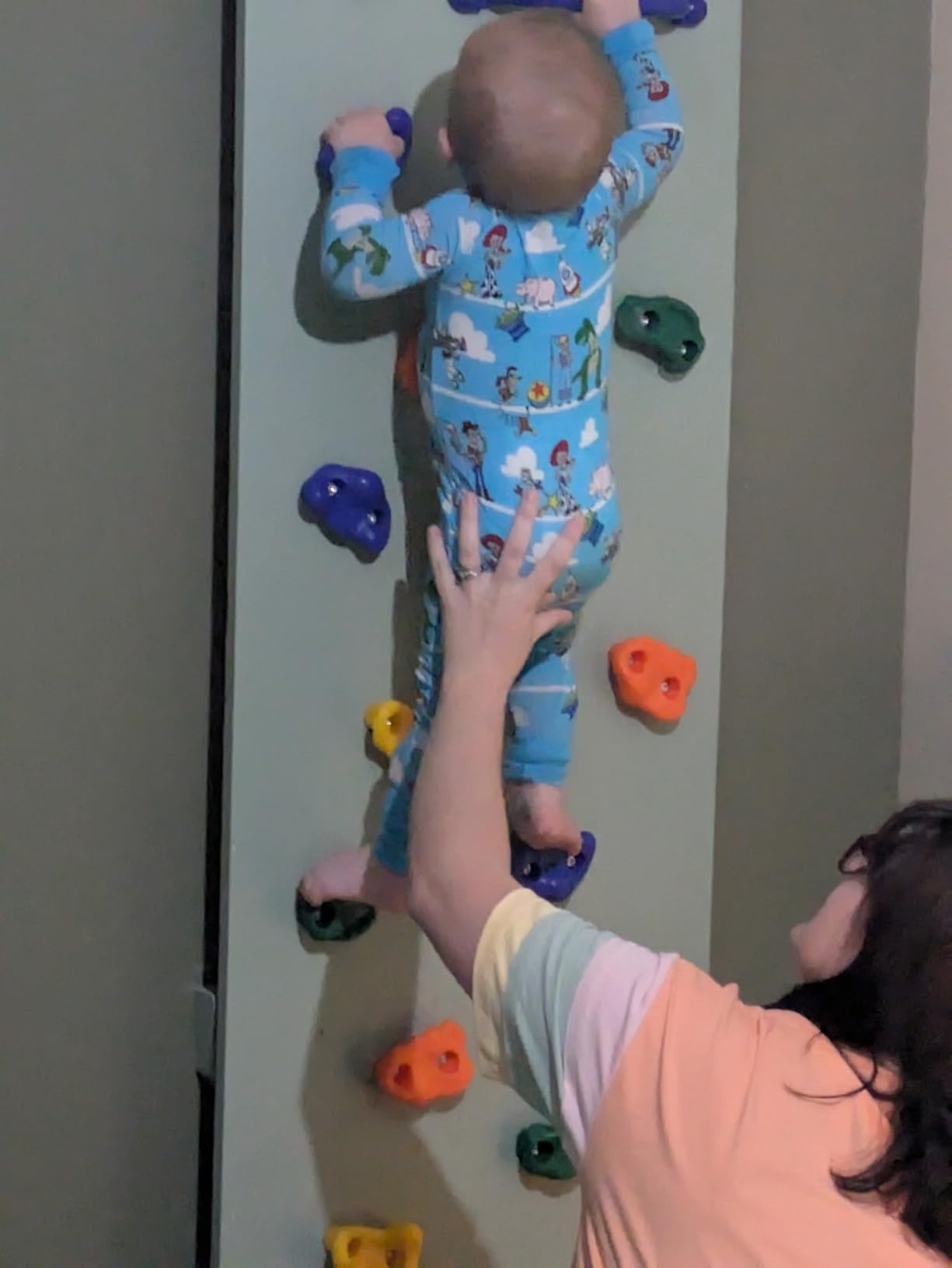
The pig-nose profile is the reason this set works for a mixed-age household. Small children can close a hand around the grip, and an adult can still pull on it without the hold feeling like a toy part. Rated to 250 lbs, it takes a full-size adult without complaint.
Buyers frequently attach these to plywood, Pikler equipment and backyard playsets, and the outdoor-grade plastic resists fading and wipes clean easily. That makes it a reasonable choice for a covered patio wall as well as an indoor one.
How this holds up on a dense-t-nut wall?
On a panel with 80 t-nuts per sheet, 20 holds covers a small problem, not a whole wall. For a 4 by 8 panel at the 60-hold benchmark you are looking at three of these sets, which is exactly how most owners use them.
Because the holds rotate, re-setting costs nothing extra. That is what makes this our editor’s choice: the hardware, the drill bit and the layout consistency together mean the wall stays adjustable for years.
When a different set makes more sense?
Adults training finger strength on small crimps will find the grip less refined than a cast composite hold, and the 20-piece count under-covers a large wall. If you want a serious training surface, pair this kit with a premium set for the hard problems.
2. Ogrmar 25 PCS Rock Climbing Holds Set: Best Rated Complete Kit
Ogrmar 25 PCS Rock Climbing Holds Set with Mounting Screws and Hardware
25 holds in five colors
50 bolts, 50 weld nuts, 100 washers
Weather-resistant textured plastic
Pros
- 4.8 stars from 1052 ratings
- Deeply recessed hex holes that resist stripping
- Complete hardware kit
- Consistent hole spacing across every shape
Cons
- Firm plastic is uncomfortable for larger adult feet
- Included Allen wrench is slow
- 2.8 inch bolts can protrude through thin boards
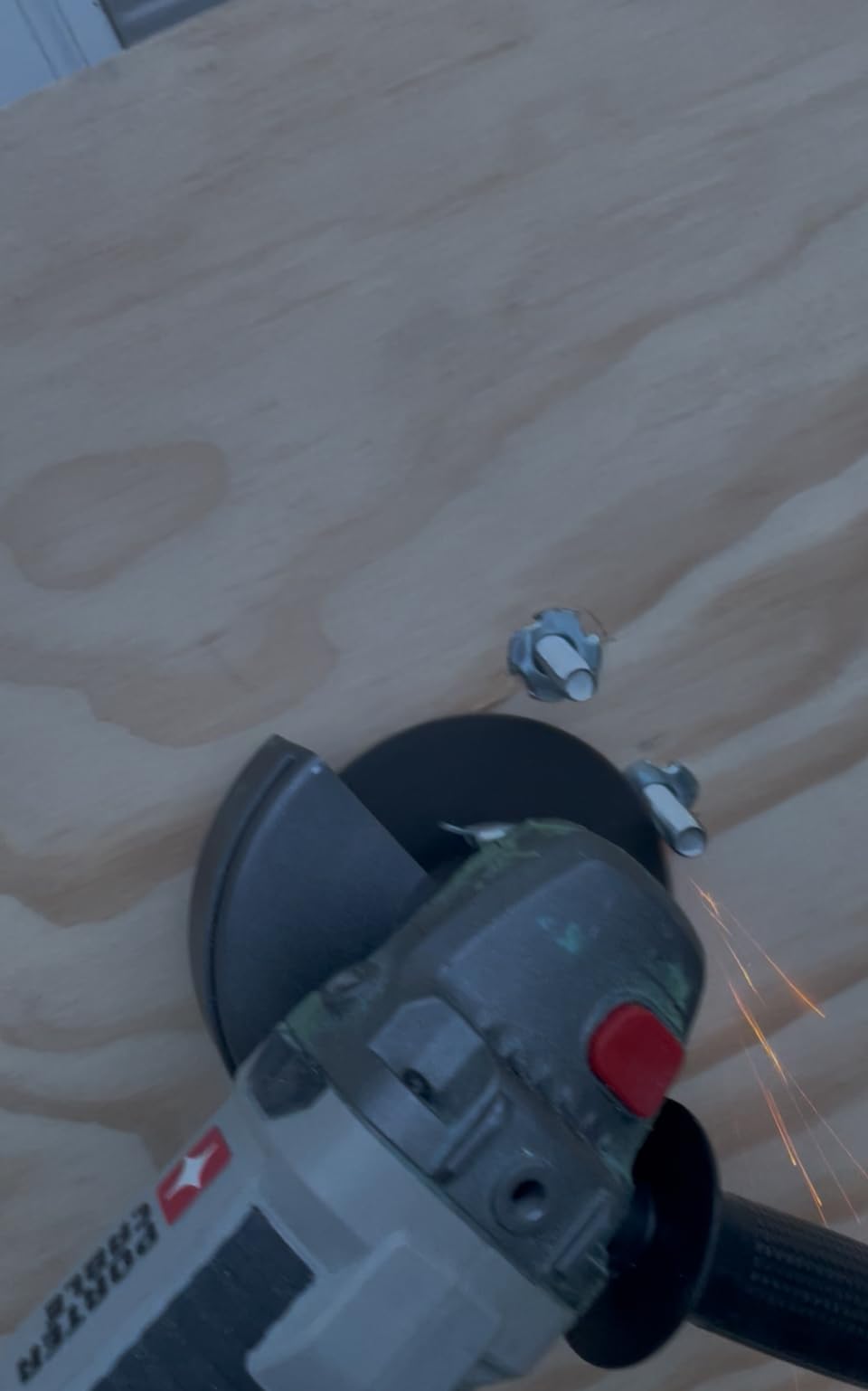
This is the kit we hand to someone building their first wall who does not want a second trip to a hardware store. Fifty bolts, fifty weld nuts, a hundred washers and a wrench are in the box, and the hardware is genuinely better than the thin hardware that ships with budget hold sets.
The recessed hex holes are the detail I noticed while mounting. Standard Phillips heads chew out under a wrench; these stay put, which matters on a wall where you will re-bolt holds dozens of times over a year.
Five colors across assorted shapes let you build a colour-coded route system for a school or a family with kids at different levels. Owners report adult and child weight loads with no movement once the bolts are torqued properly.
The practical tip that appears most often in reviews is to use an 8mm hex socket instead of the supplied wrench. It cuts install time dramatically on a full panel, and it lets you leave clearance for the weld nuts between adjacent holds.
What to check before you buy?
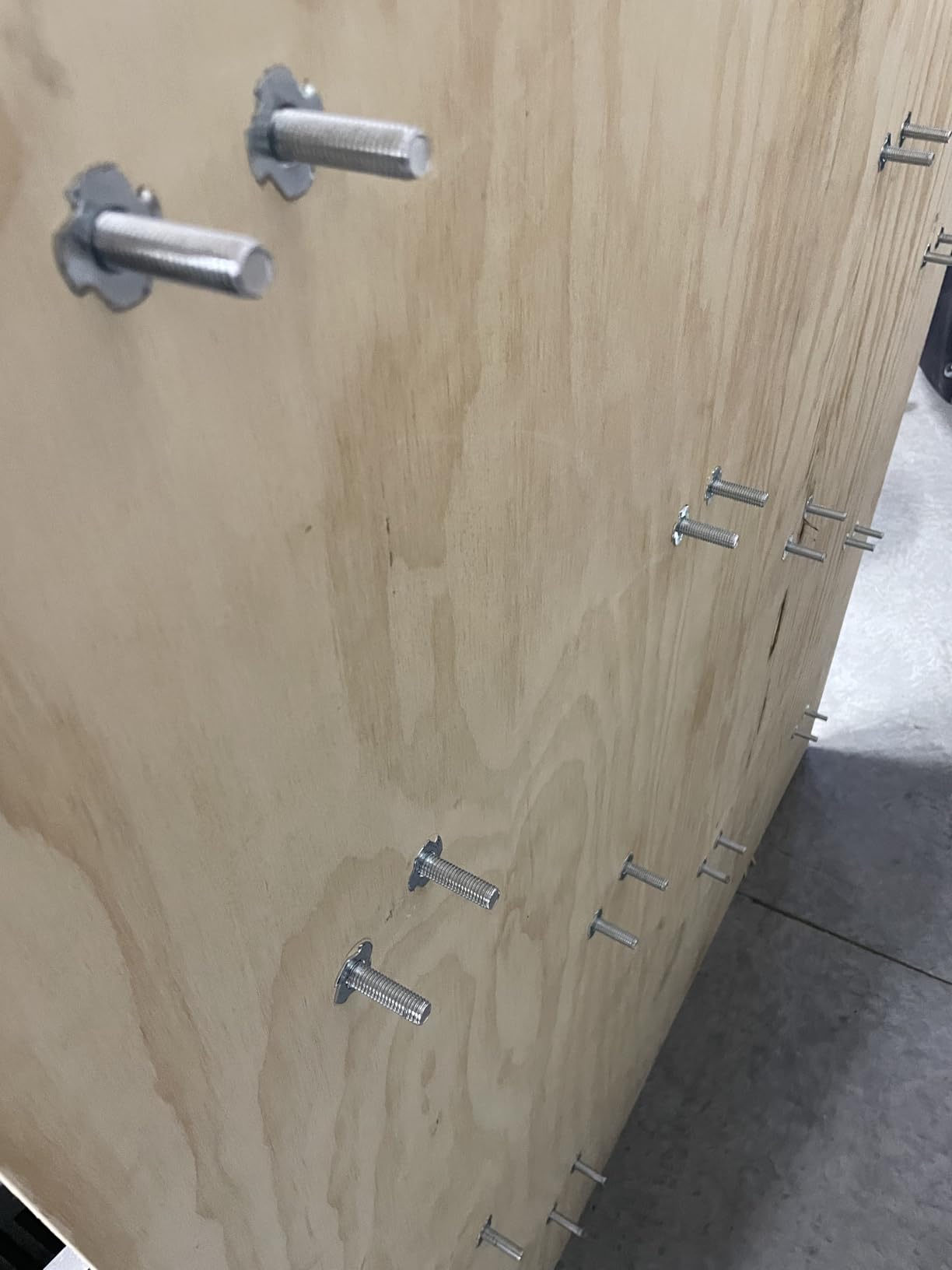
These are 2.8 inch bolts, so on anything thinner than three quarter inch plywood you must trim the protruding ends from the back. On thicker sheet material, plan a counter-bore or use longer fasteners.
Allow weld nut clearance between holds. Holds mounted hard against each other with no gap will not seat flat, and that is the most common reason a tight cluster of holds ends up crooked.
Where it falls short for serious training?
The plastic is firm and shaped for hands and small feet. Adults with larger feet report discomfort on long sessions, and the shape range is narrower than a cast composite set, so the wall has fewer distinct problem types.
3. Rocky Mountain 10 Large Screw-On Holds: Best Premium Hold Upgrade
10 Large Screw On Rock Climbing Holds for Rock Wall Grips Made in USA
Cast composite with rock-like feel
Pre-drilled for 3/8 inch hardware
Weatherproof and non-toxic
Pros
- Realistic rock texture in a durable composite
- Handles outdoor sun
- rain and freezing
- Works as an upgrade path on an existing plastic wall
Cons
- Mounting hardware sold separately
- Some bolt holes arrive partly blocked by casting material
Once a wall has a grid of t-nuts, the hold material is the upgrade you can make without touching the structure. These are the holds we would add to a wall that started as a plastic set and has become a genuine training tool.
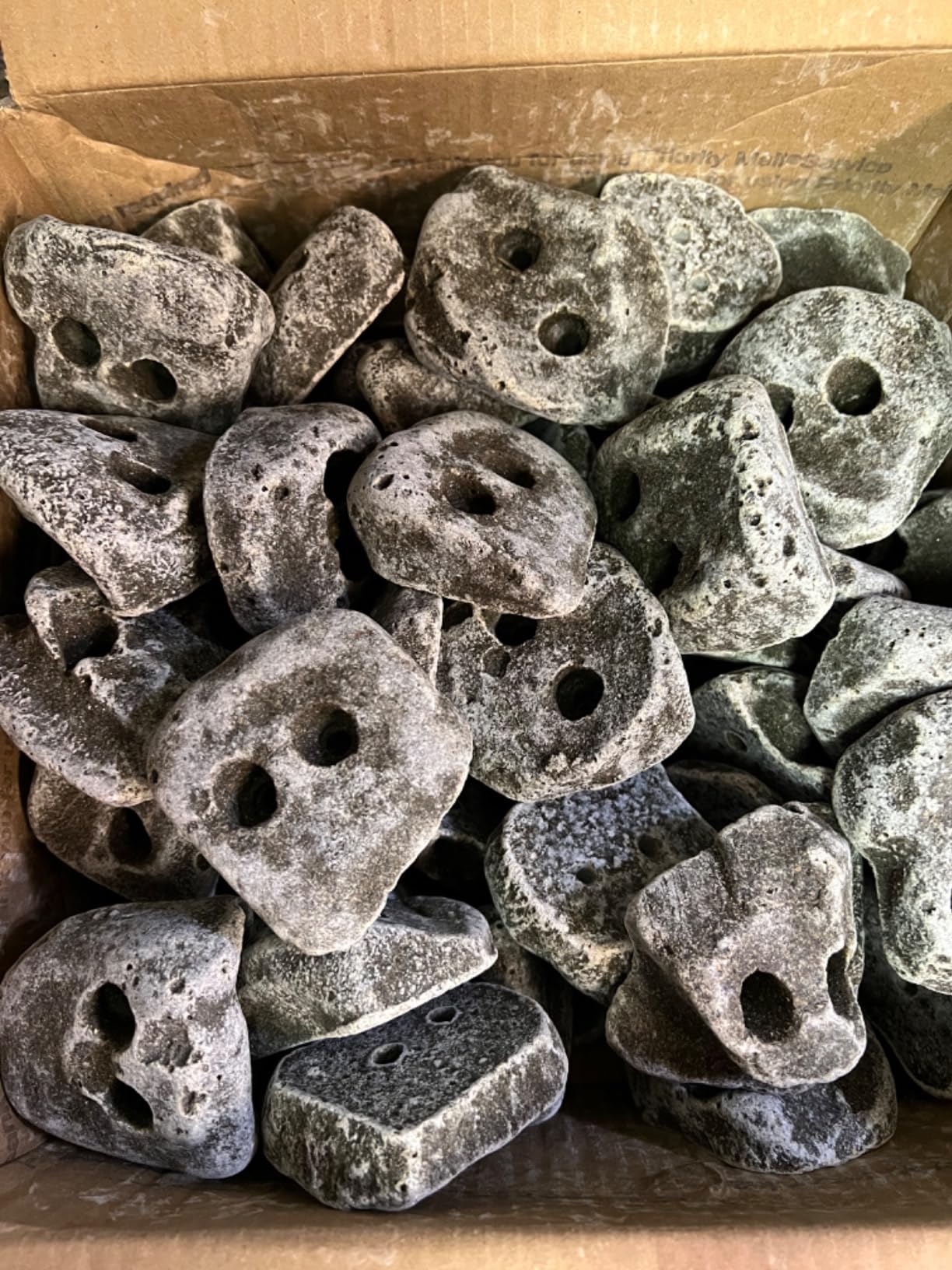
The texture reads as rock rather than moulded plastic, and that changes how a hold feels under a chalked fingertip. Hand-cast in the USA from polyurethane, vinyl ester resin and recycled plastics, they are pre-drilled for standard 3/8 inch bolts and t-nuts on three quarter inch plywood.
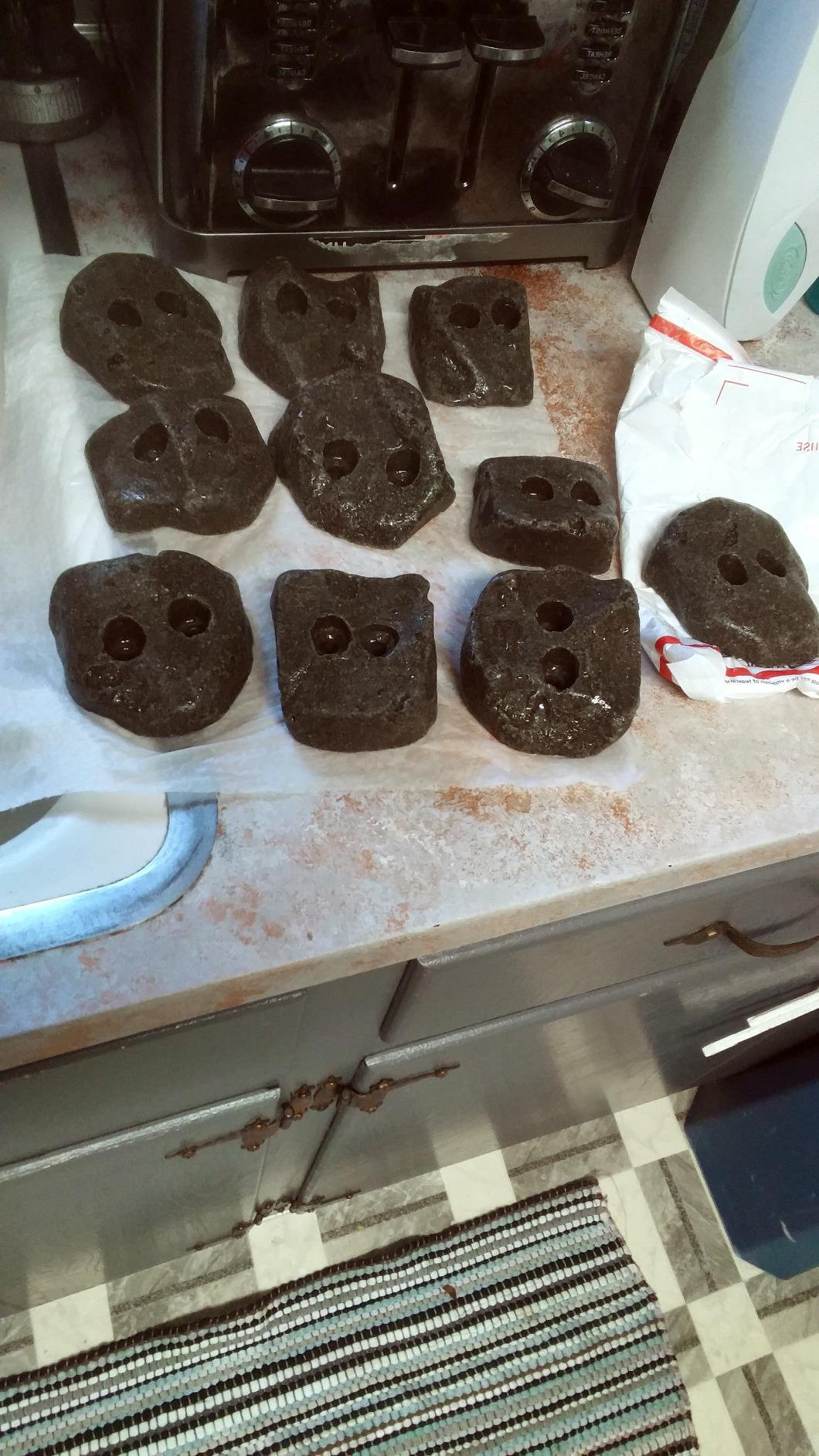
They are built to sit outdoors through sun, rain and freezing, so a wall that moves to a garage door or a covered yard keeps working. At ten pieces the set is small, which is exactly the point: this is a precision add-on rather than a wall-covering kit.
The lifetime guarantee from an established American manufacturer is worth noting. It is the only warranty in this list measured in decades rather than months, and it reflects a company that builds climbing walls rather than playground toys.
Plan the hardware before the wall goes up
Bolts and t-nuts are not included, so budget for them separately or the holds will arrive with nowhere to go. Pick up 3/8 inch bolts and t-nuts sized for your sheet material, and drill a few extra t-nut holes while the panel is still flat on the floor.
A few holds arrive with bolt holes partly blocked by casting material and need a quick clearance drill. Owners hit this on nearly every set, so budget ten minutes before mounting rather than treating it as a defect.
Where it is the wrong pick?
Ten large holds will not cover a 4 by 8 panel, and they are not sized for a toddler’s grip. If you need to cover a full surface on a child’s wall, a multi-piece plastic set is the cheaper and more practical route.
4. TOPNEW 32Pcs Rock Climbing Holds: Best for Route Variety
32Pcs Rock Climbing Holds for Kids, Climbing Wall Grips for Playground
32 holds across 10 colors
Mixed sizes and shapes
Rated to 230 lbs
Pros
- Widest size and shape range in this list
- Ten colors support colour-coded routes
- Holds sit firmly with no wobble once tightened
Cons
- 2 inch bolts only suit boards up to 1.25 inches
- Recess depth varies between hold styles
- Several pieces are hand holds only
Hold density is what makes a wall re-settable, and this is the largest set here at 32 pieces. Laid out at the 60-hold-per-panel benchmark it covers roughly half a 4 by 8 sheet, which makes it a strong single-panel starter.
Ten bright colors are more than decoration. They let you build a graded set of problems in one session: a green line of jugs, a yellow line of edges, a black line of crimps, and a route book that a child can follow without adult coaching.
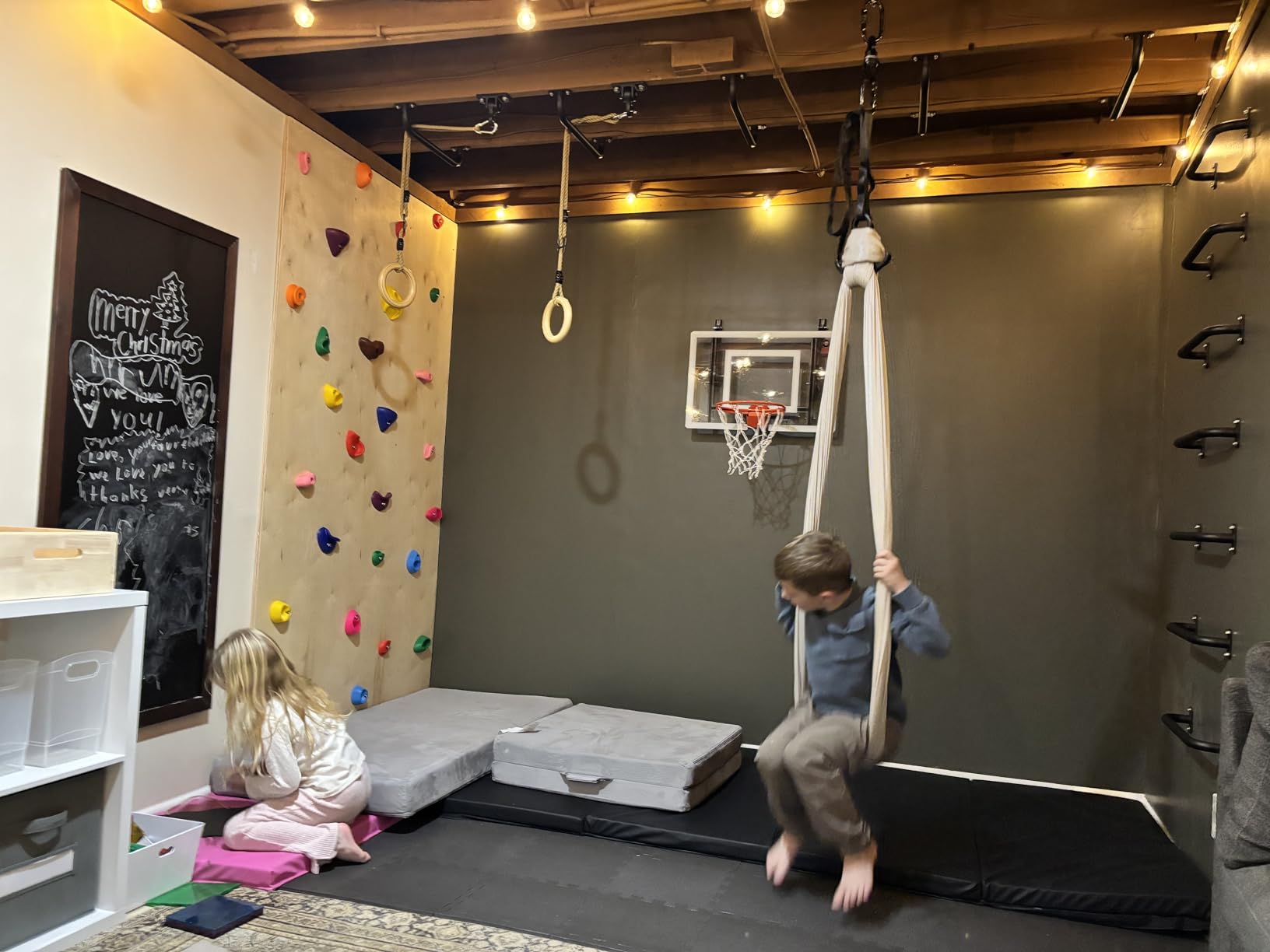
The textured resin surface resists cracking and fading, and owners report holds that stay firm with no wobble after tightening. Rated to 230 lbs, it handles a single adult comfortably and two lighter climbers sharing a problem.
Pre-drilling carefully pays off here. Because hold recess depth varies by style, a shallow countersink on a thick hold will leave the bolt proud, and a deep one on a shallow hold will sit the hold loose.
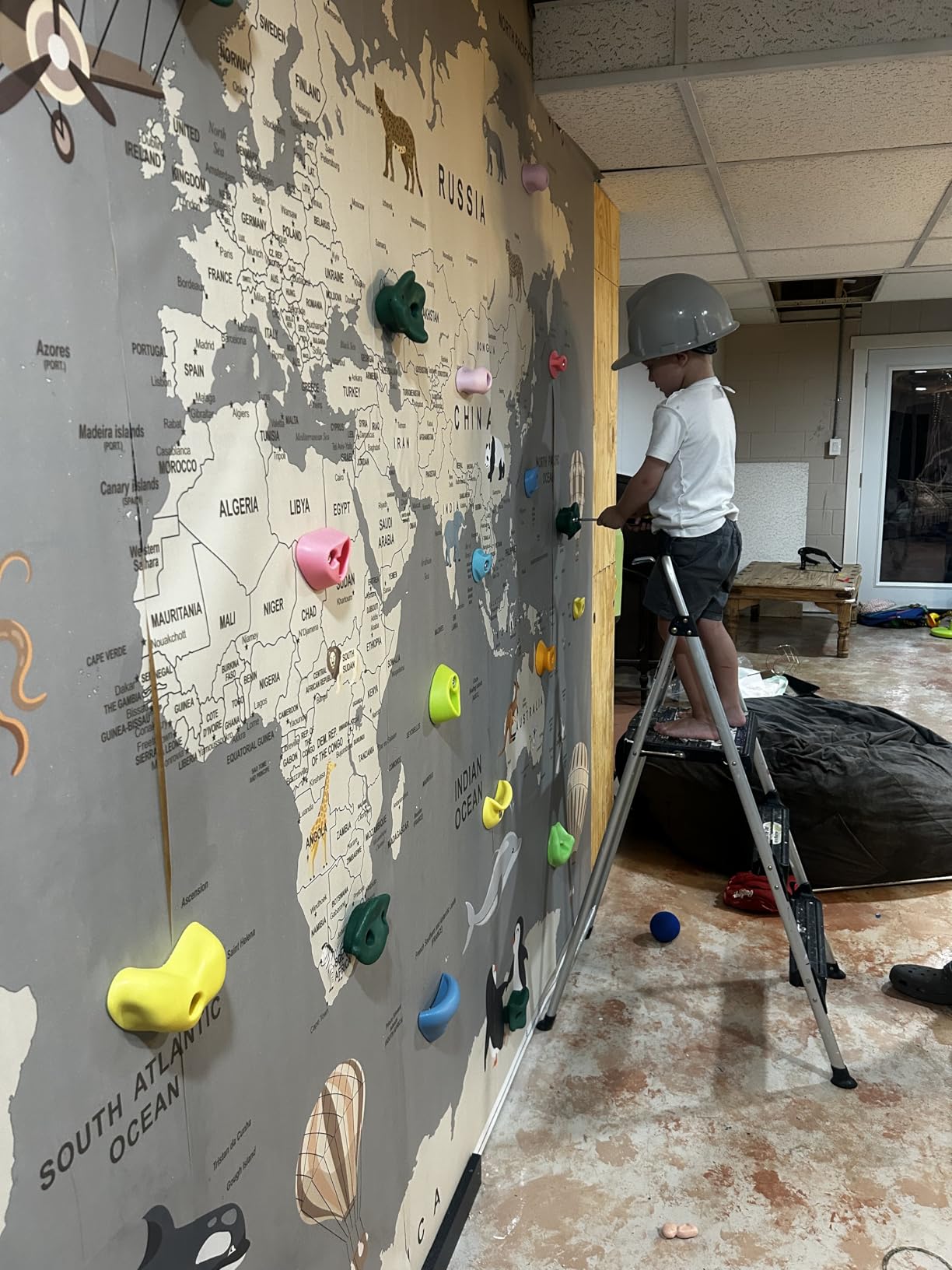
How to use the size range properly?
Sort the set by size before you mount anything. The small pieces work as feet on a beginner line, the mid-size jugs anchor warm-up problems, and the larger edges give a climbing adult something to pull on rather than a handhold to pinch.
Because several of the smaller pieces are hand holds only, build foot lines from the mid-size holds. A route with no foot placements teaches a child the wrong lesson about where body weight belongs.
Watch the board thickness
These are two inch bolts, which work on boards up to 1-1/4 inches. Thicker lumber needs counter-boring, and the mixed screw lengths in the kit may need trimming before the first hold goes on.
5. SSBRIGHT 25 Large Multi-Colored Holds: Best Value for Family Walls
SSBRIGHT Sets of 25 Multi-Colored Kids&Adults Large Rock Climbing Holds Climbing Rocks for Outdoor Indoor Home Playground DIY Climbing Wall Grip Kits Holds up to 440lbs with Secure Mounting Hardware
25 large holds, five colors
Each hold rated to 440 lbs
Self-drilling nuts and bolts included
Pros
- Large chunky size suits small hands and adults
- Rated up to 440 lbs per hold
- No sharp edges
- Weather resistant outdoors
Cons
- Grips feel uncomfortable for heavier adults
- Limited shape variety within the set
- Better suited to casual than serious climbing
Owners commonly pair two or more of these sets with pressure-treated lumber to create long walls for children, and the pattern of use explains the design. These are grips for a garden wall or a playroom panel, not for training a fingerboard.
At 440 lbs per hold, the load rating is the highest of any plastic set in this list. That headroom matters when a wall is shared by a six-year-old and a fifteen-year-old who will eventually hang off the same hold.
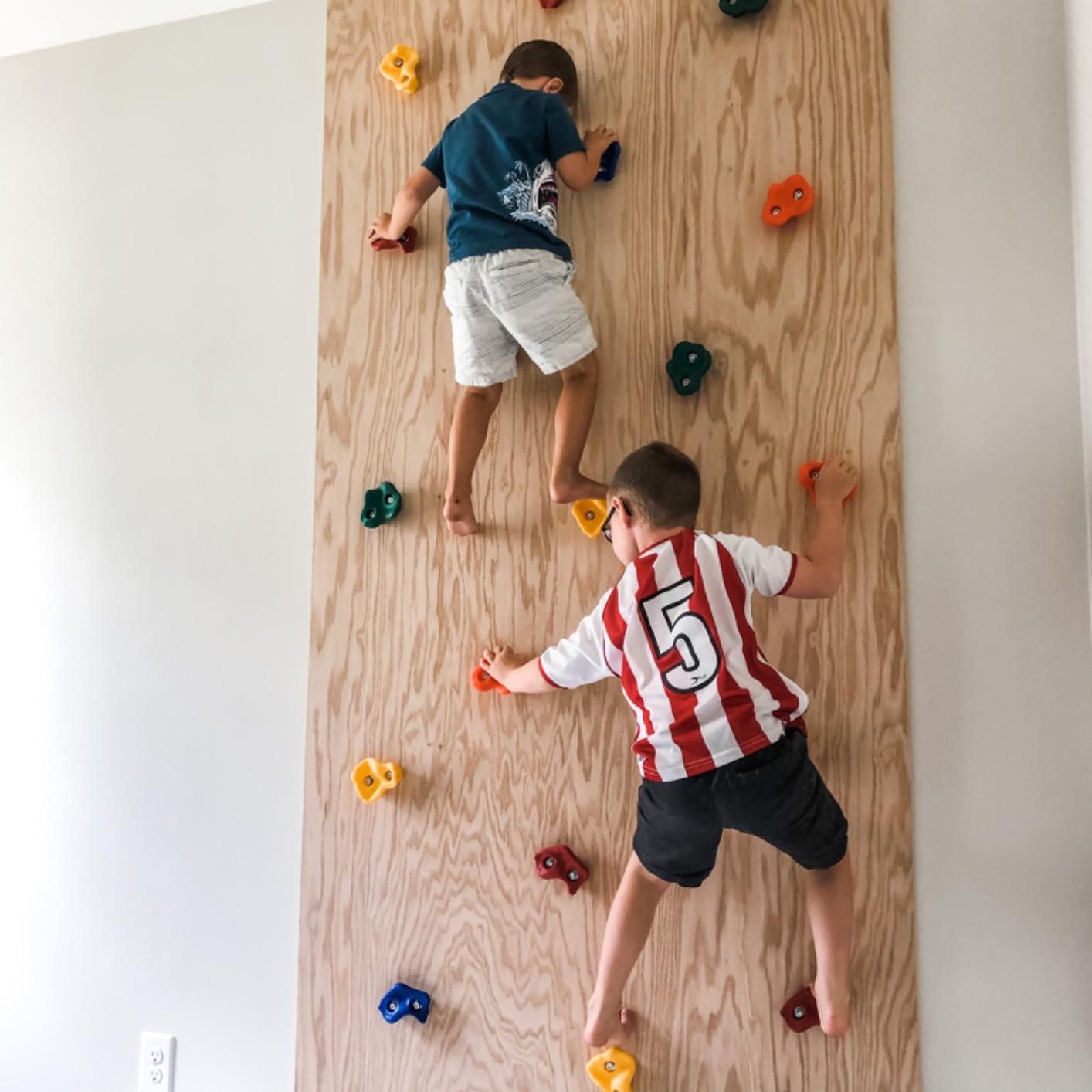
The included 2.5 inch self-drilling nuts and bolts are the reason this is our value pick. You can fasten into thinner construction lumber than the two inch hardware used by most kits in this price bracket, which widens what you can build it on.
Reviewers highlight the bright colors and chunky dimensions as ideal for little hands while still supporting adults. The absence of sharp edges is reported consistently, and holds are said to stay secure through seasons of outdoor use.
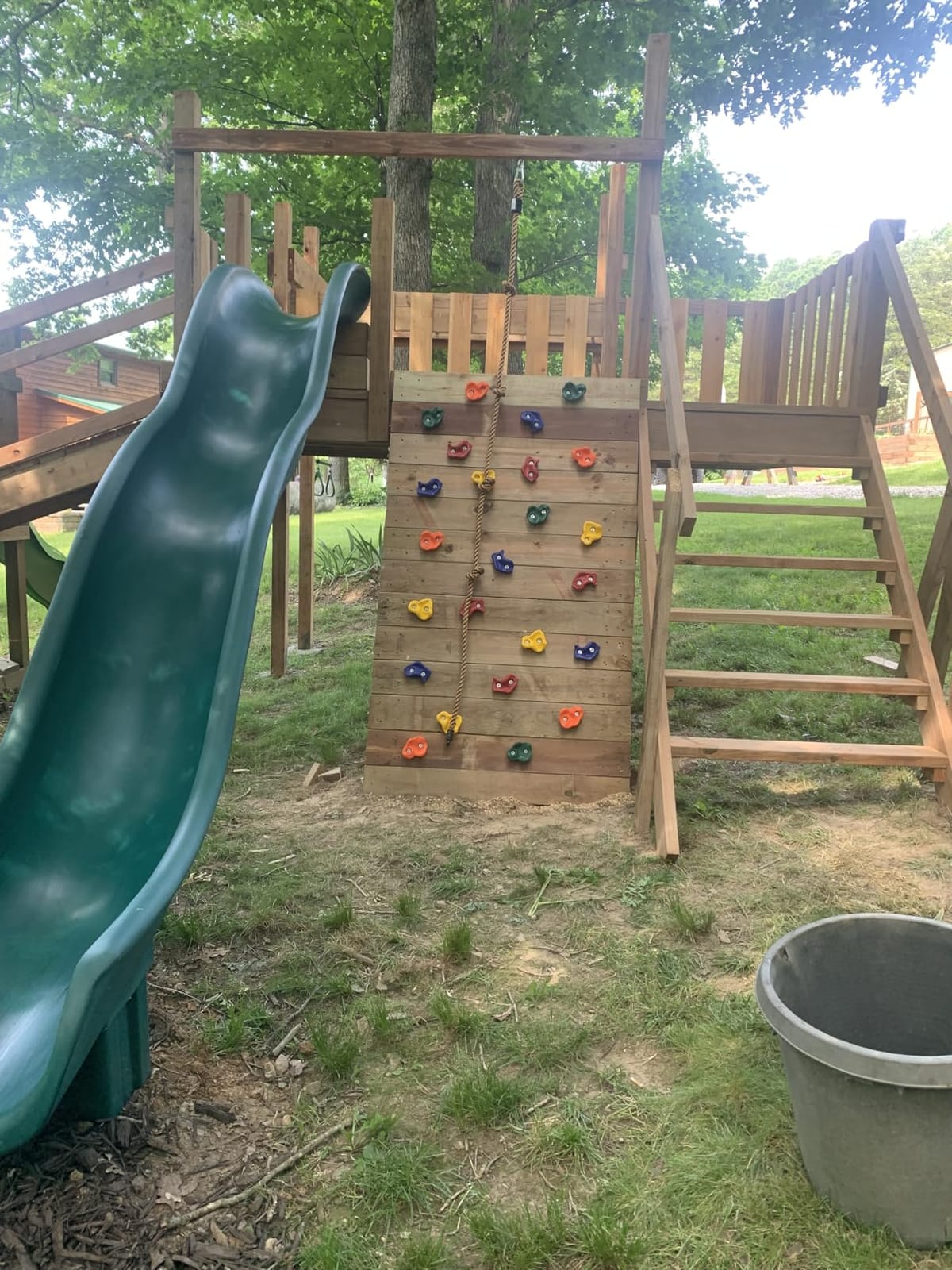
How many sets a wall actually needs?
Plan on roughly 60 holds per 4 by 8 panel, so two sets fill a single sheet and three cover a wider first section. Buying a spare set at the start is cheaper than a second delivery later, and a spare set also covers a kid and an adult on the same wall.
Mount the panels before deciding the final route, then fill in the gaps. An under-filled wall is frustrating to climb, and the remaining holes are easy to reach later.
Where the compromises show?
Shape variety is the limit. Most holds in the set are similar, so problems end up differing mainly in difficulty rather than in character, and heavier adults report the grip is uncomfortable over a long session.
6. Avenlur Walnut 9-in-1 Swedish Ladder Wall Gym: Best for Kids and Families
Avenlur Walnut 9-in-1 Swedish Ladder Wall Gym Set – 78.8 Inches – Trapeze Swing, Rope Ladder, Rock Wall, Rope Wall, Rock Ramp Climber, Slide, Pull-up Bar, Ladder and Swing
Nine play elements in one wall
220 lbs per person, 500 lbs total
Beech and pine construction
Pros
- Nine stations in one wall-mounted footprint
- Clear diagrams with every screw shown
- Rounded rungs and bars for a safe grip
Cons
- Assembly runs four to six hours with 150 plus fasteners
- Predrilled holes do not adjust for uneven studs
- Confusing rope knot instructions
This is a complete wall system rather than a panel you dress with holds, and the difference matters if you are furnishing a playroom. Nine elements share one wall-mounted footprint: a Swedish ladder, climbing panels, a rock wall, a rope wall, a ramp climber, a rope ladder, a trapeze swing, a slide and a pull-up bar.
Owners consistently report that it holds up under adults as well as children, which is unusual for a toy-category product. The published capacity of 220 lbs per person and 500 lbs total tells you the frame is built for a parent helping a child over a top hold.
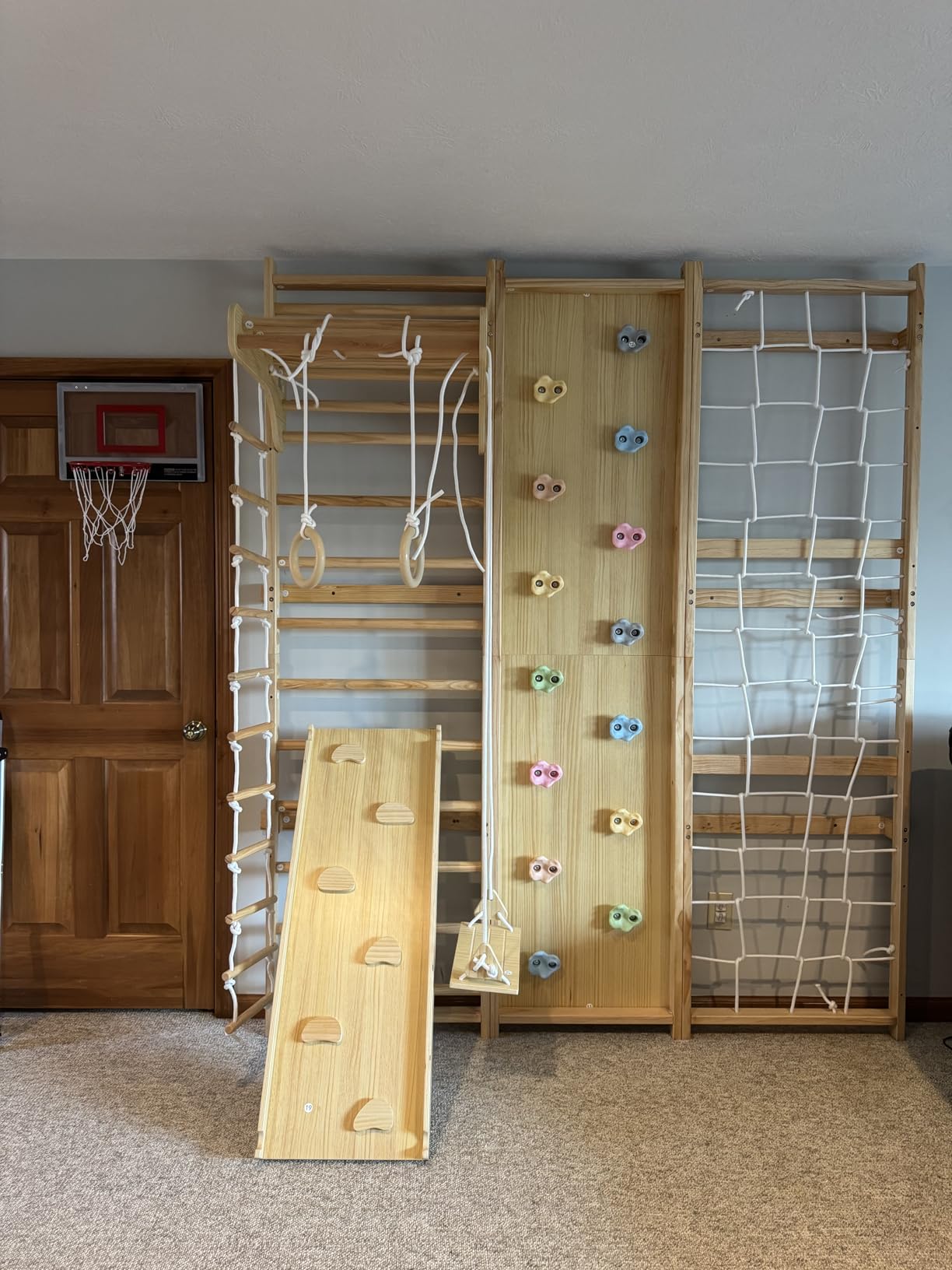
Two height options, 78.8 inch and 94.5 inch, let you match the wall to your ceiling. Measure before ordering, because the taller version needs a room with real vertical clearance and a mounting surface long enough to take the frame.
The instructions are the strongest selling point for first-time builders: every screw is shown in the diagrams. That matters more than it sounds, because a build with 150 plus fasteners and around 70 pieces goes wrong quickly without labelled steps.
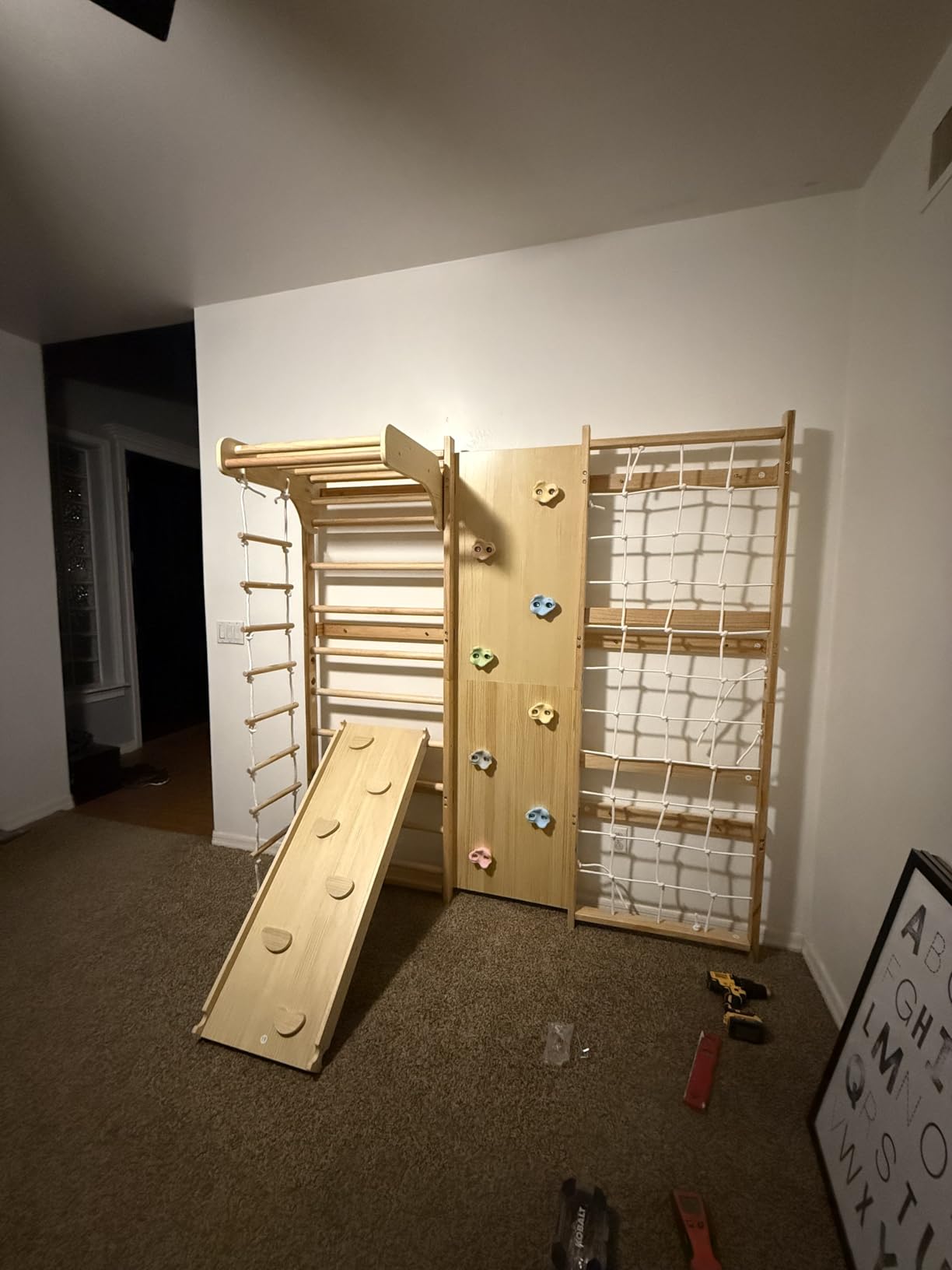
What to check before it goes on the wall?
Find the studs and confirm their spacing before you start. The predrilled mounting holes do not adjust, so uneven studs in an older house mean drilling your own holes, and several owners hit exactly that problem.
Budget a real build window. Most owners describe four to six hours with two people, and the rope sections need knot-tying that first-time builders find confusing. If you are doing it solo, recruit a second pair of hands.
Where it falls short?
The hanging frame for the swing, ladder and rings has some give under heavy swinging, and a minority of buyers received pastel holds rather than the brighter colors shown. For a toddler who is not pulling on anything yet, a simpler wooden set may serve better.
7. BlueWood 9-in-1 Indoor Jungle Gym: Best Budget Playset
BlueWood Upgraded Indoor Jungle Gym 9-in-1 Playground Kids Climbing Toys
9-in-1 playset in solid pine
Support structure rated to 485 lbs
Suitable for four climbers
Pros
- Nine stations keep several children busy
- FSC-certified pine with water-based paint
- Smoothly sanded with no splinter reports
Cons
- Assembly takes two to three and a half hours
- Instructions are mostly pictures with unlabelled parts
- Some reports of stripped screws and cracked brackets
This is the freestanding option in a list otherwise full of wall-mounted products, and for a family room that is the deciding feature. Nothing needs studs, so it can go in a rental or a room where drilling is not an option.
The wood is FSC-certified solid pine with water-based paint, which means it looks like furniture rather than toy plastic. Reviews split between enthusiasm for the finish and complaints about assembly, so set expectations before you open the box.
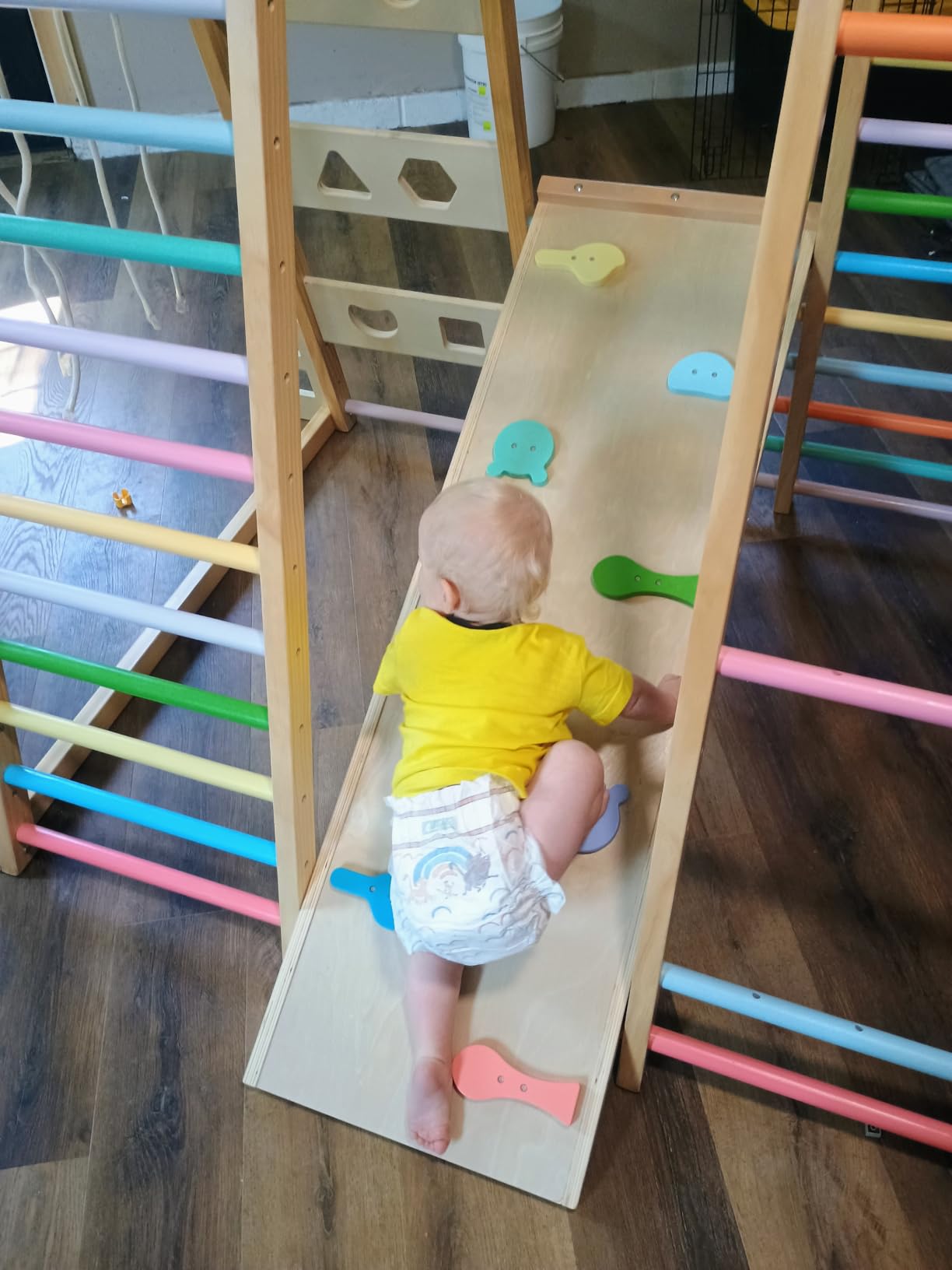
The B-type support structure is rated to 485 lbs, and the set is designed for four players at once. Several children climbing and swinging simultaneously is the normal use case, and the frame is built for it.
One structural detail to know about: the bottom of the ladder is not fixed, so it shakes during climbs. It is not a safety issue at this load rating, but it is the first thing children notice and comment on.
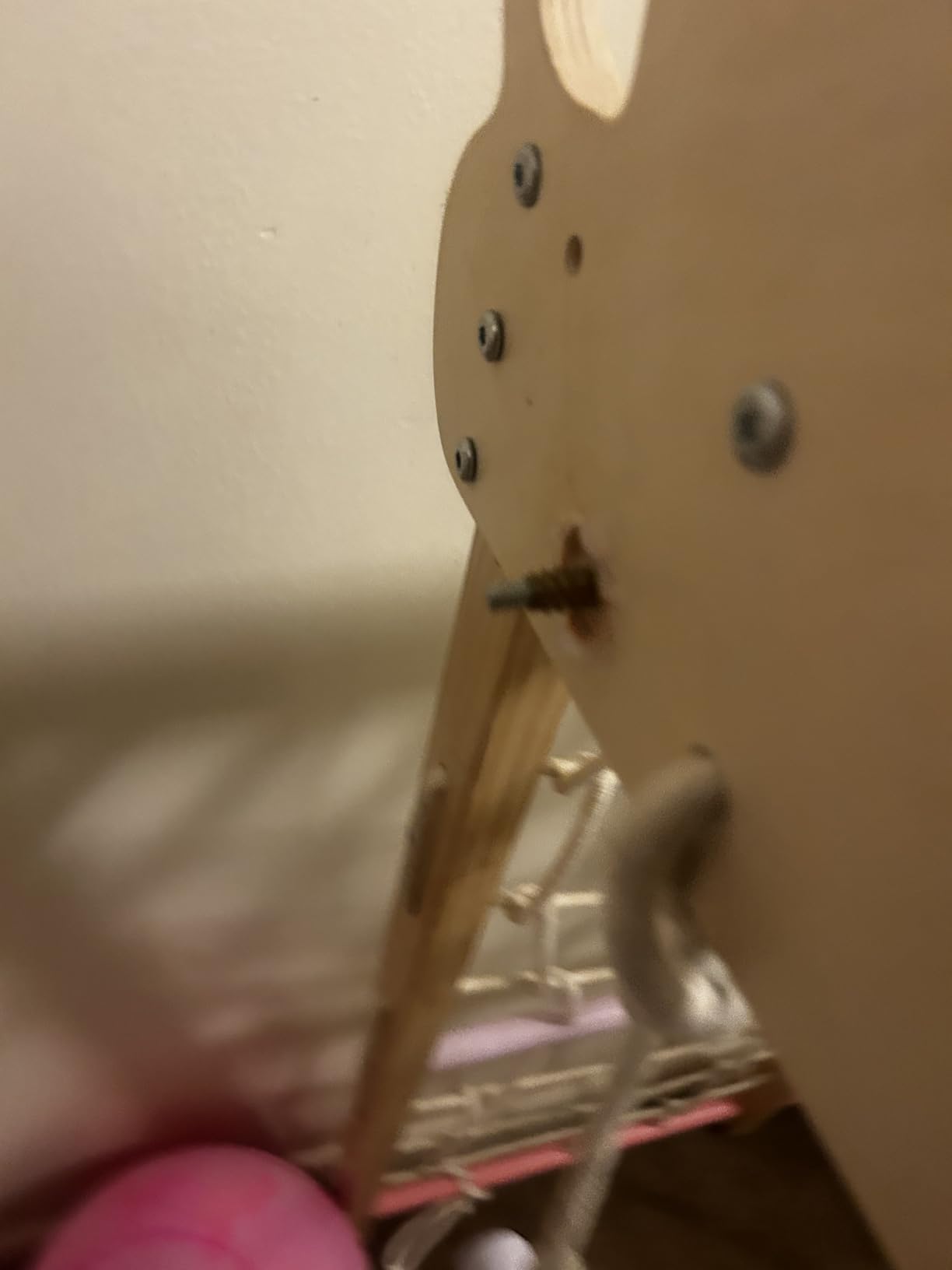
Assembly is the real cost of this set
Two to three and a half hours, with rope sections arriving untied. The instructions are largely pictures with part numbers and the parts are not labeled, so sorting hardware into labelled containers before starting saves an hour of confusion.
A minority of buyers reported stripped screws, wobbly climbing-wall brackets, or pieces arriving with missing fasteners. The manufacturer has since revised the screw-in fitting design and replaced defective parts on request, so check the box before building.
When to choose something else?
The footprint is bulky and needs a dedicated room or a large family room. If your climbers are under three, a dedicated toddler set with soft flooring around it is a better fit, and it is covered in our toddler climbing set guide.
8. Rocky Mountain 50 PCS Rock Climbing Holds: Best for a Real Rock Feel
50 PCS Rock Climbing Holds for Rock Climbing Wall Made in USA
50 baseball-sized holds
200 plus unique molds
Hand-cast in the USA
Pros
- Texture closely resembles real rock
- Enormous shape variety that rotates to vary difficulty
- Handles multiple adults on one wall
Cons
- Strong chemical smell on arrival that fades after airing
- Some holds arrive cracked or with deformed bolt holes
- Hardware can surface-rust outdoors
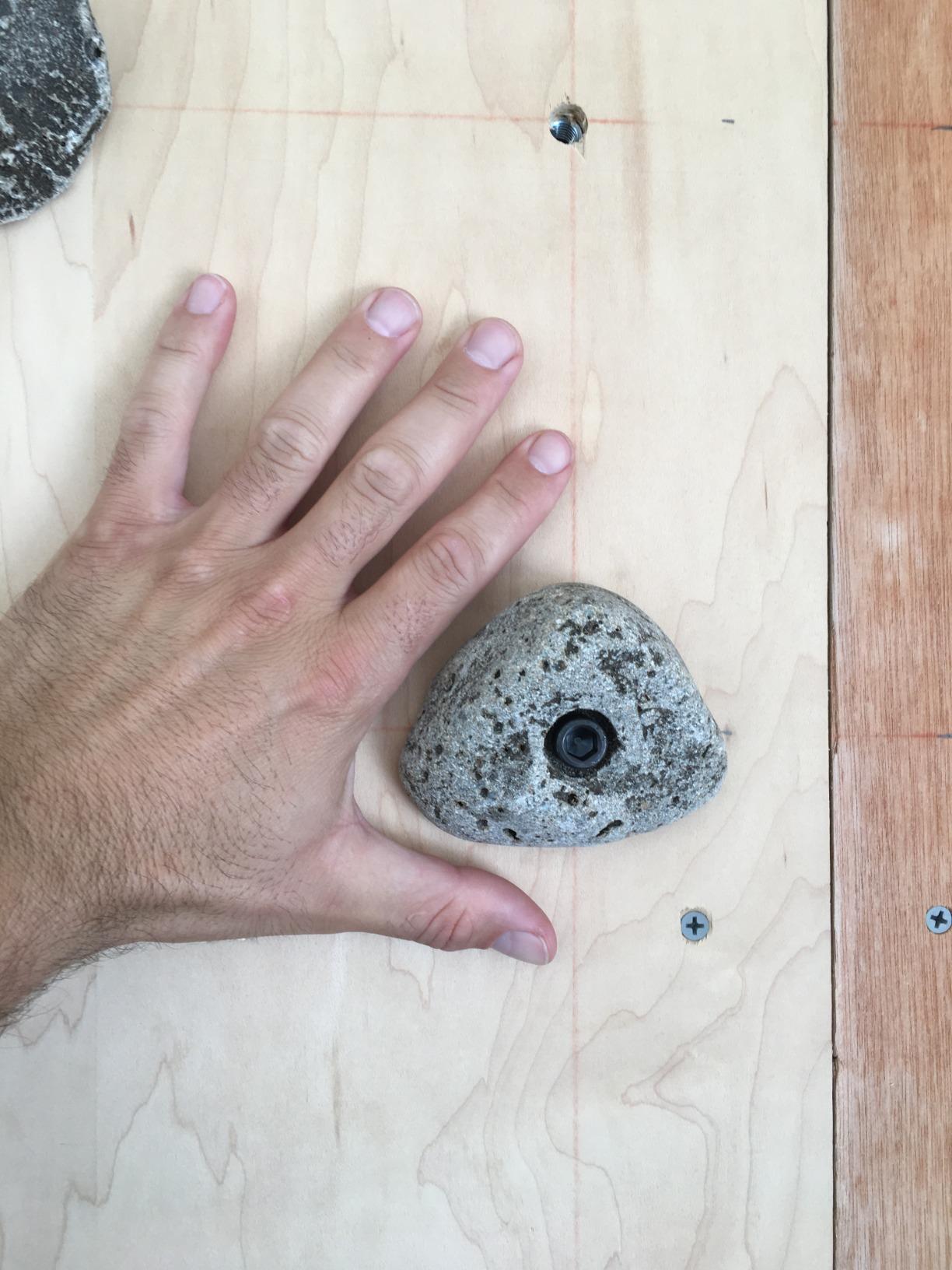
Fifty holds drawn from more than 200 unique molds is the largest shape library here, and shape count is what lets one wall serve a five-year-old and an adult. Jug, edge, pinch and foothold profiles give you problems that differ in character, not just in difficulty.
Long-term owners describe these as the best-feeling holds they have used at home, and many built 9 to 16 foot walls by combining them with budget plastic sets. At 28 pounds shipped, this is a serious piece of equipment rather than a garden accessory.
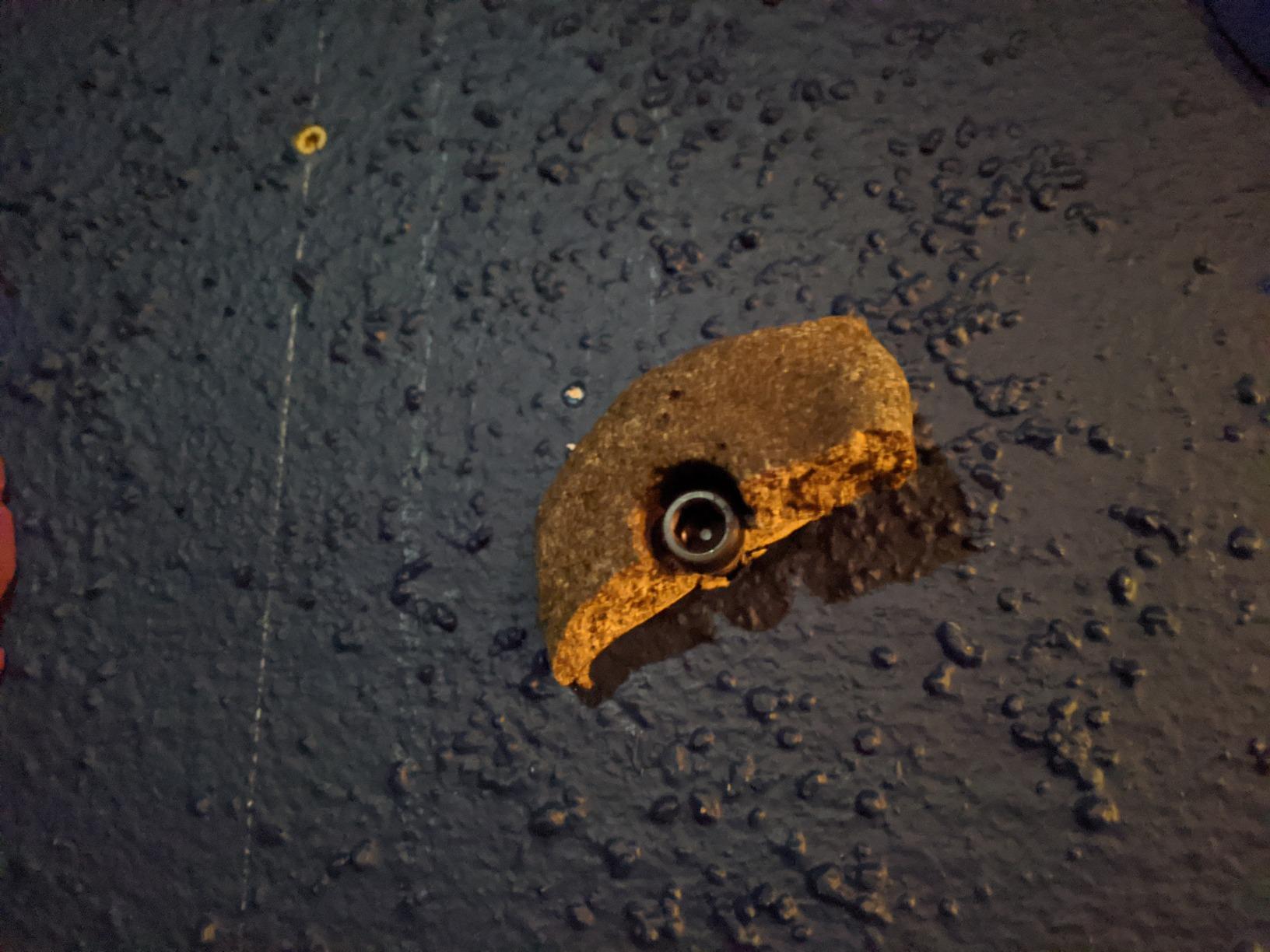
T-nuts and bolts sized for three quarter inch plywood are included, which saves the most common complaint about premium hold sets. Non-toxic, weatherproof and rated from age five through adult use, they work indoors on a garage gym wall or out in a yard.
Wash the holds in soapy water and air them out for a day or two before mounting. The manufacturing smell is the single most mentioned complaint, and it clears quickly once the holds are cleaned.
How to install without cracking holds?
Never overtighten. Several owners report holds cracking in half when bolts are run down hard, so snug plus a fraction of a turn is the target. Snug the bolt by hand, then a light quarter turn with a wrench.
Expect a few holds to arrive cracked or with deformed bolt holes because they ship loosely packed. Inspect the set on arrival, and check the box for a replacement before you start drilling the panel.
Where the cost shows?
For a beginner who climbs twice a month, the money is better spent on padding than on fifty cast holds. For a household with several climbers, the shape library earns its place quickly because one wall stops being repetitive.
9. Trymaker Rock Climbing Holds 30PCS Small: Best for Toddlers
Trymaker Rock Climbing Holds, 30PCS Climbing Wall for Kids (Small Size)
30 small holds for young children
Rated to 230 lbs
Hardware kit included
Pros
- Grip sizes matched to children's hands
- Two hold sizes let difficulty grow with the child
- Complete hardware kit in one purchase
Cons
- Small holds limit load compared with adult sets
- Spacing must be planned for a child's reach
Hold sizing is the feature that matters most here. Adult grips are often too wide for a three-year-old to close a hand around, and a wall full of oversized holds turns into an object to cling to rather than something to climb.
These are specified for children’s hands and grip strength, and the surfaces are textured and corrosion resistant so the set survives a garage or a covered patio. Reviewers report that the plastic resists cracking indoors and out.
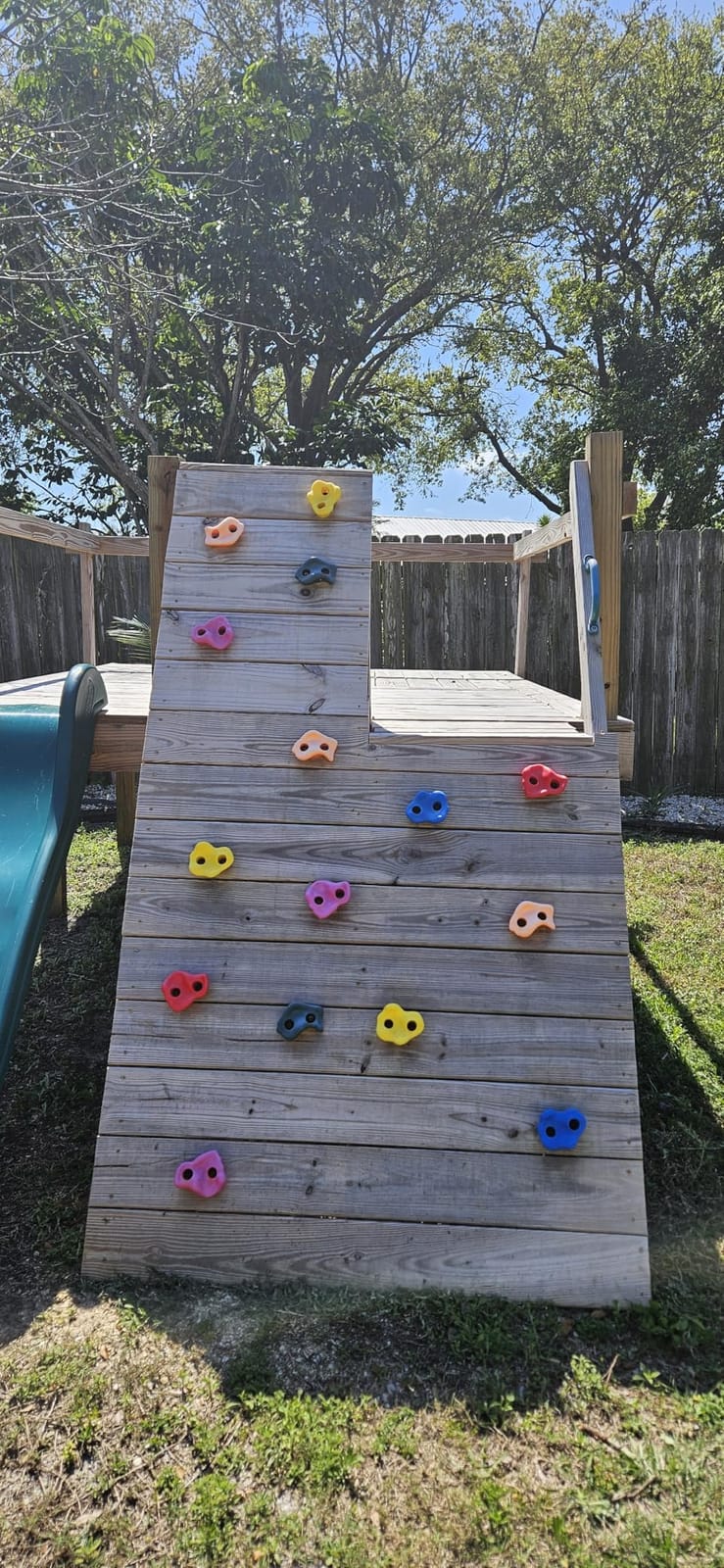
Bolts, weld nuts, flat washers and an Allen wrench are included with installation instructions, so it is a single-purchase install. That matters when the wall is going in a playroom being built on a weekend.
Two size options are sold, so a household can start small and move to a larger set as the child grows. The small set is rated to 230 lbs and the larger variant to 440 lbs, which is a sensible upgrade path for the same panel.
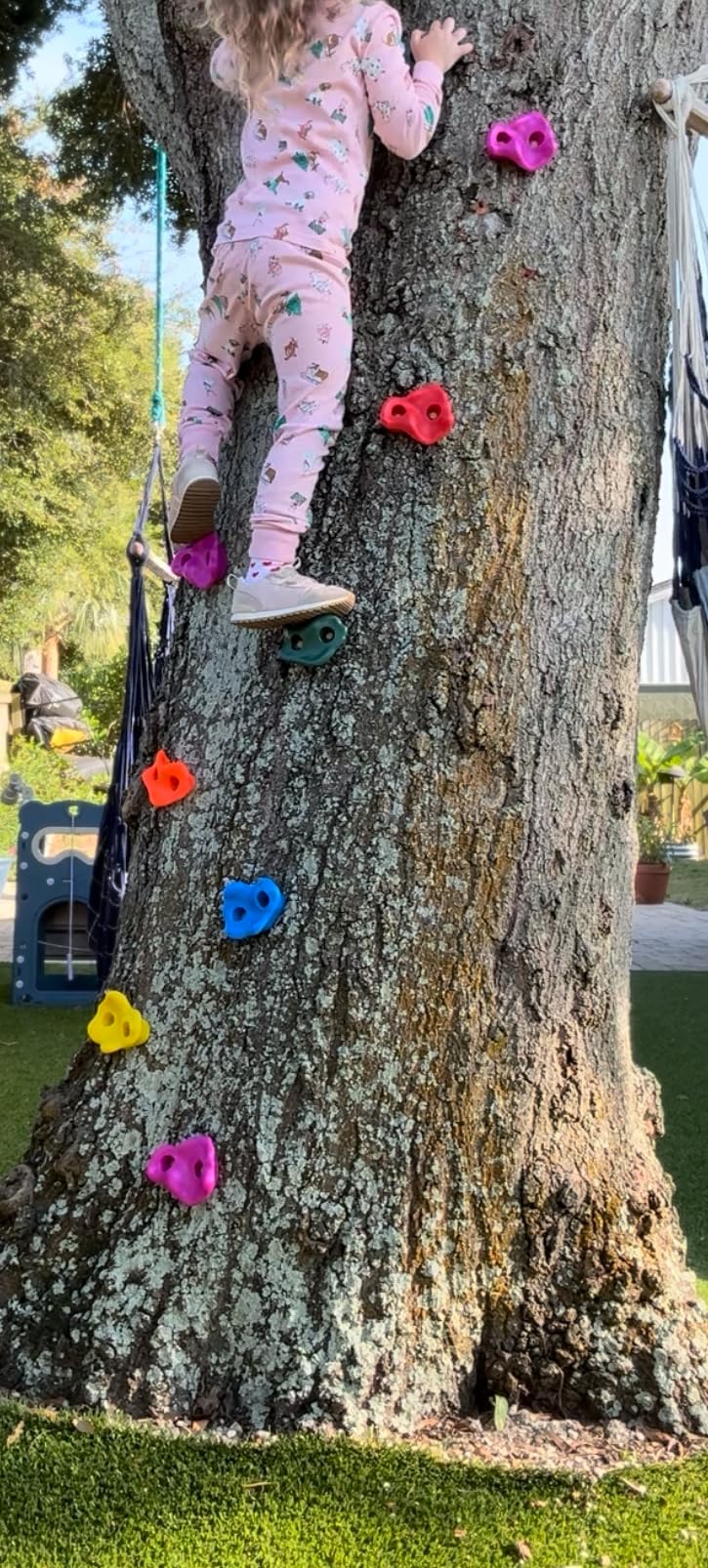
Set the spacing for the smallest climber
Plan the layout around a child’s reach, not around how the board looks. Holds spaced for an adult produce routes a small child cannot complete, and the result is a wall they abandon within a week.
Keep the landing area clear and soft. A toddler wall that is set at adult problem spacing is where most early frustration comes from, and it is entirely a layout decision rather than a product defect.
When to move up a size?
When the child can hold the small grips through a full problem rather than grabbing one hold at a time, move to the larger variant. Keeping the same panel and the same t-nut grid means the wall grows with them instead of being replaced.
10. VEVOR 5-in-1 Indoor Jungle Gym: Best for Small Spaces
VEVOR Indoor Jungle Gym for Toddlers, 5-in-1 Climbing Playset with Carbon Steel Swedish Ladder, Wall Ladder, Pull-Up Bar, Rope Ladder, and Gymnastic Rings, Supports 220 lbs, Multicolor
Five-in-one carbon steel wall gym
Rated to 220 lbs
Wall-mounted at 43 by 33 by 86 inch
Pros
- Compact wall-mounted footprint frees up floor space
- Carbon steel frame takes adult weight
- Useful for sensory and occupational therapy practice
Cons
- Holes rarely align with standard stud spacing
- Included bolts and tools are low quality
- Wall anchors need a specific drill bit
When floor space is the constraint, a wall-mounted steel unit is the most compact answer here. Five stations, a pull-up bar, gym rings, a rope ladder, a wall ladder and a Swedish ladder, all on a 43 by 33 inch footprint.
Carbon steel with a scratch and rust-resistant surface is a different material story from the wooden playsets. It wipes clean with a damp cloth, which matters in a bedroom or a therapy space where carpet fibres and dust are constant.
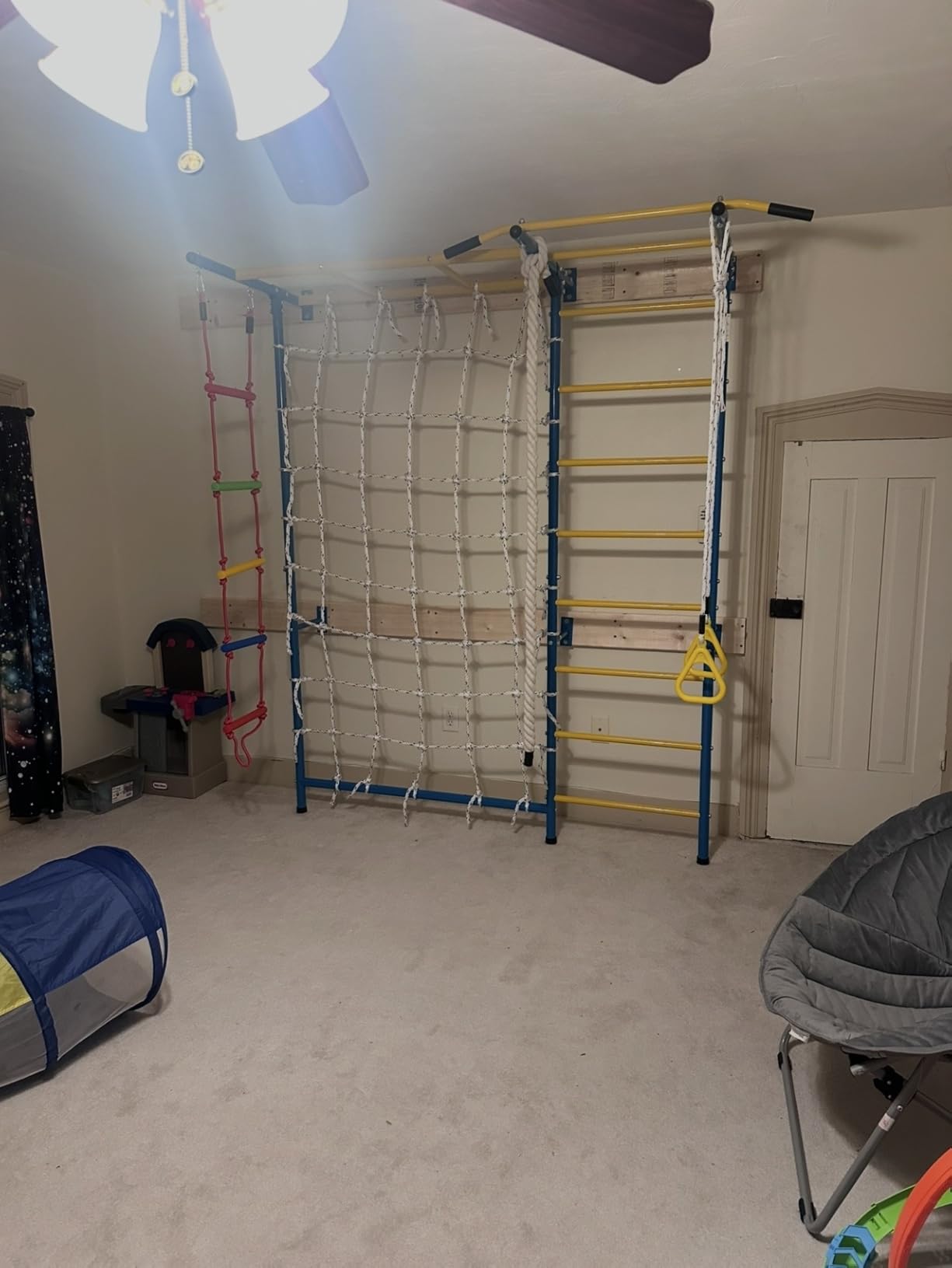
Several owners use it for children with sensory needs and for occupational-therapy style climbing practice, because the fixed stations give repeatable movement patterns a child can learn by feel.
The 220 lb maximum load means adults can climb alongside children, which turns it into a shared training and play surface rather than a toy that a parent helps with from the floor.
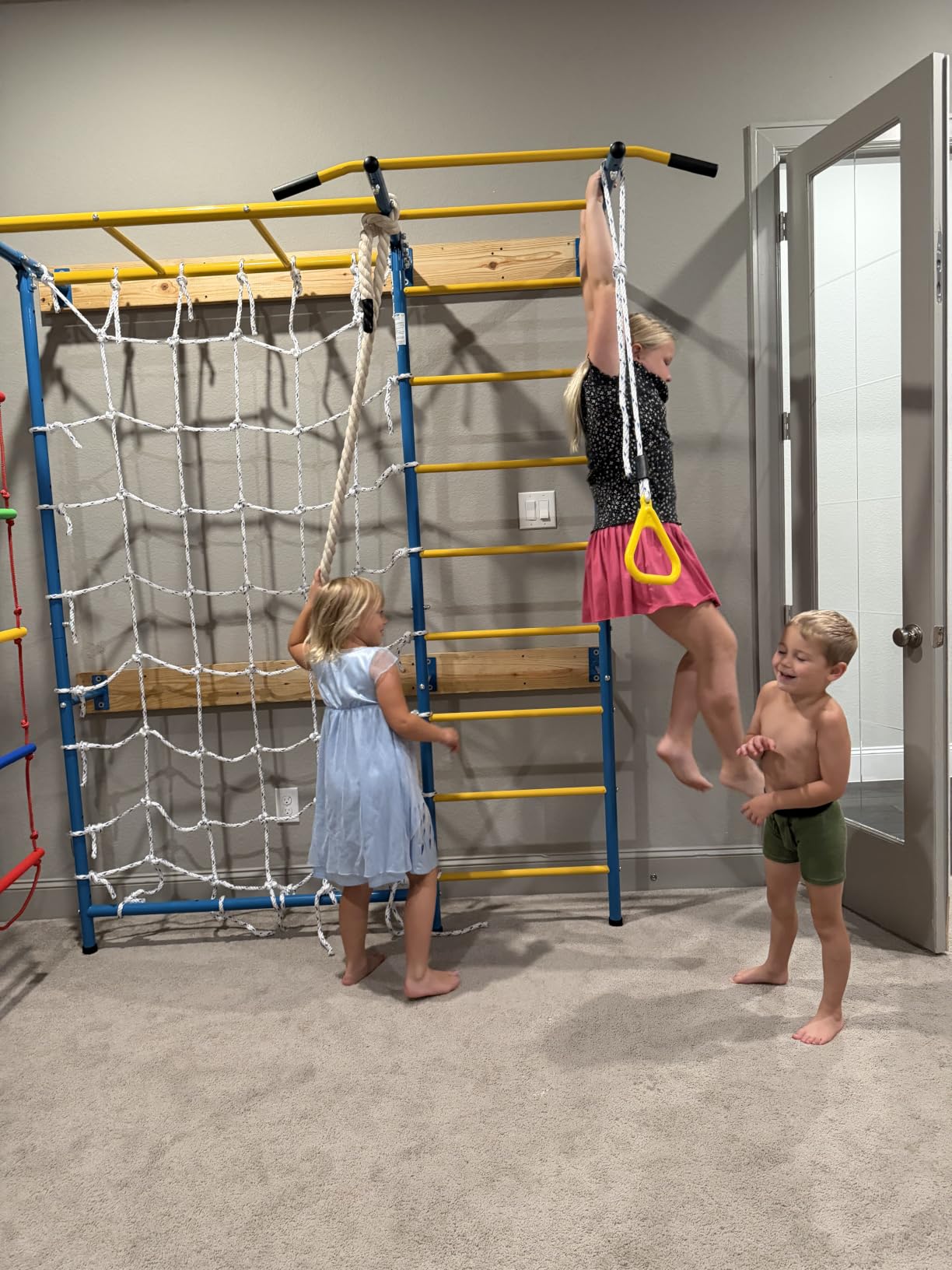
The mounting problem is the whole install
The pre-drilled holes rarely line up with standard stud spacing, and the included anchors need a very specific drill bit. The common fix is to fasten furring boards or short lengths of lumber across the studs first, then bolt the gym to that.
Budget the extra lumber and roughly 1.5 hours of assembly before the wall mounting begins. Low-quality included tools are a repeated complaint, so a decent hex set and a spare pack of bolts saves a trip mid-build.
When to choose a different product?
There are no climbing holds on this unit, so it is not a bouldering wall and cannot be re-set. If you want finger strength and problem solving, pair it with a hold set and a plywood panel rather than expecting this frame to deliver that.
How to Choose the Right Home Climbing Wall for Your Space?
Pre-built kits versus DIY panels
The simplest pre-built route is a wall-mounted play structure, which saves a weekend of building and needs nothing but studs. The DIY route costs less, gives you a re-settable t-nut grid and scales to any angle you want, but it is a real project.
A middle path works well for many people: buy prefab plywood panels with t-nuts already installed, frame them yourself, and fit your own holds. You skip the drilling and drilling-bit mistakes, keep the re-setting capability, and still control the angle.
Wooden holds versus resin and plastic holds
Resin and plastic holds are light, cheap, weather resistant and fine for a family wall. They are firmer underfoot and less kind to skin, and they offer fewer distinct shapes per set.
Cast composite holds feel closer to rock, hold more shape variety and take far more sets of fingerprints before a hold needs replacing. If the wall is for training rather than play, that texture and variety are the reason to spend more.
Garage, basement and apartment installs
A garage gives you a wide span and a door to keep clear, so build a wide set of fixed-angle sections rather than one tall panel. A basement gives you a low ceiling, so plan lower top sections and thicker padding.
Apartment dwellers have the tightest constraints. No-drill or free-standing options are the answer, and they carry a size penalty, so a free-standing frame with a single panel and lots of floor padding beats a large wall you cannot safely fix to the wall. Check sound transfer before committing, because falls on hard floors carry through to neighbours.
A maintenance and re-setting routine you can keep up with
Check holds, bolts and t-nuts every six months and replace any hold with a rounded edge or a crack. This is the same inspection routine climbing wall suppliers recommend, and it catches bolt loosening long before a hold pulls out.
Re-set a section whenever a problem stops being interesting, which for most homes is every four to six weeks. With dense t-nuts and rotating holds, re-setting is free. It is the wall with 80 t-nuts per sheet that you cannot change, and that is the wall people stop climbing on.
Frequently Asked Questions
What are the most important features to look for in a home climbing wall?
The four that change everything are t-nut density, sheet material, angle and padding. Dense t-nuts let you re-set routes indefinitely, plywood or OSB resists splitting around bolt holes, the angle should match your climbing level, and the fall zone needs real padding. Framing, hold density and modular design matter next, and load rating and rounded edges matter most on a family wall.
Is plywood good for a home rock climbing wall?
Yes, and it is the most common choice for a reason. Three quarter inch plywood is rigid, splits less than fibreboard and holds a threaded t-nut cleanly. Builders also use OSB on a light timber frame as a cheaper alternative. MDF and wallboard are the materials to avoid, because they crack around t-nuts and cannot take repeated bolting.
How many climbing holds do I need for a home wall?
Around 60 holds per 4 by 8 panel is the working density most home builders use, which means two or three mid-size sets per sheet. Fewer holds and you cannot fit two climbers on one section or set a proper problem. Buy more than the first problem needs, because edges wear and a spare set keeps a shared wall usable.
How much padding does a home climbing wall need?
Treat four inches of crash pad thickness as the floor for adult use, and add more on a taller wall. Measure the fall zone outward from the top of the wall rather than straight down, because falls drift sideways. Padding is the most requested topic in home wall communities, and it is the item most first-time builders under-budget.
Do you need to bolt a climbing wall into studs?
For a fixed plywood wall, yes, and the frame should be fastened into studs or a structural beam rather than drywall. Bolt through the frame into framing at regular intervals and keep joist spacing within what the timber size allows. If you cannot drill, choose a free-standing or wall-mounted play structure instead, and accept a smaller wall as the trade.
Final Verdict on Home Climbing Wall Features in 2026
The features that separate a home climbing wall you will still climb in 2026 from one you abandon are unglamorous. T-nut density you cannot add later, sheet material that does not split, an angle matched to your level, and a fall zone that is padded properly. Get those right and the cheap option is the smart option.
Our pick as editor’s choice is the KINSPORY 20pc hold set, because the matching drill bit and uniform hole spacing make it the least frustrating way to start, and thousands of owners rate it 4.7 stars. The Ogrmar 25-piece kit is the best-rated complete package, and the Rocky Mountain cast composite holds are where we go once the wall is ready to train on rather than just exist.
Measure your space and your ceiling height before you order anything, decide your t-nut count on the day the panel is flat on the floor, and buy more holds than the first problem needs. That single afternoon of planning removes most of the mistakes we have seen in home wall builds.