
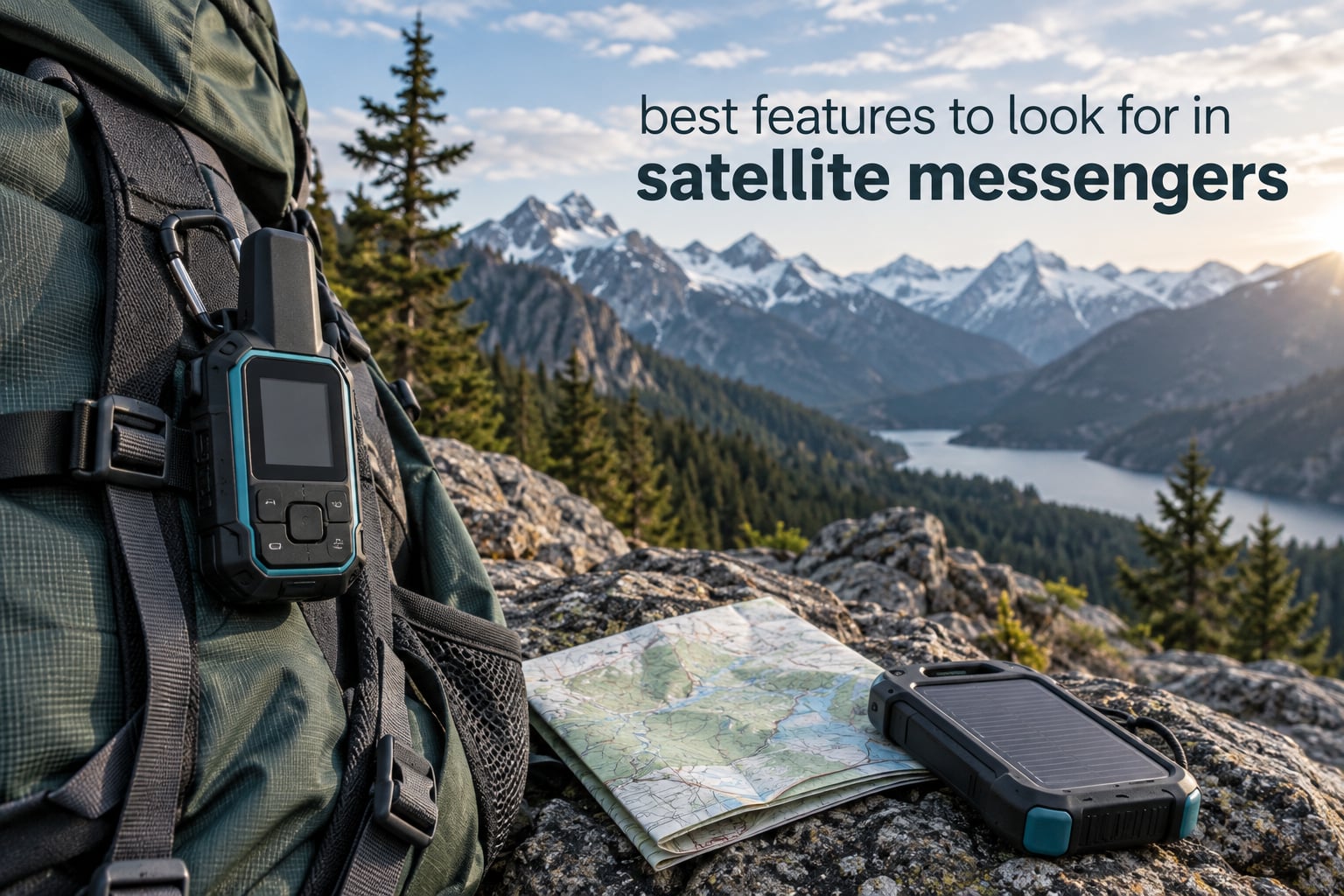
If you have ever had a phone go silent in a drainage with no signal bar and a knot in your stomach, you already know why satellite messenger features matter more than brand names. A satellite messenger is the only device that can turn a blank sky into a conversation, a breadcrumb trail, or a rescue call. The trouble is that the spec sheets all look roughly the same, and the differences that actually decide whether a device works for you hide in the second page of the manual.
This guide ranks the ten satellite messenger features that matter, in the order we would weigh them, and then shows each one in a real device. We looked at seven communicators that clear our bar for this category: genuine two-way units with interactive SOS, not satellite phones and not one-way trackers. If you want the short version of which unit to buy, our ranked [best satellite messengers tested and ranked](https://www.wearesalt.org/best-satellite-messengers/) companion piece goes device by device. This one is about the features underneath, so you can match a device to your trips instead of the other way around.
Two questions come up constantly when people read about this gear. First, do you need a two-way communicator or would a registered Personal Locator Beacon do the same job for less money and no monthly fee. Second, what happens when your phone dies, which is exactly the situation the phone was supposed to save you from. We answer both below, along with the network and subscription details that decide whether the device keeps working after you own it.
Everything in this guide was last checked in October 2026, and the ratings and review counts shown on each card are the live Amazon figures rather than numbers we estimated. Where buyers report a weakness, we say so, because a messenger that fails quietly on a ridge is worse than no messenger at all.
Top 3 Satellite Messenger Features (October 2026)

Garmin inReach Mini 2
- Two-way Iridium messaging
- Interactive SOS to Garmin response centre
- 14-day battery at 10-minute tracking
ZOLEO Satellite Communicator
- 200+ hours of battery
- IP68 waterproof
- Dedicated SMS number and email

Garmin GPSMAP 66i
- 3-inch color touchscreen
- Topo maps and Birdseye imagery
- Interactive SOS and two-way messaging
Satellite Messengers at a Glance in 2026
The table below lists every device in this guide with the headline specs that separate them. The single fastest way to narrow the field is the network column: two of these seven devices run on Globalstar, and every other one uses Iridium.
| Product | Specifications | Action |
|---|---|---|
| Garmin inReach Mini 2 |
|
Check Latest Price |
| ZOLEO Satellite Communicator |
|
Check Latest Price |
| Garmin GPSMAP 66i |
|
Check Latest Price |
 Spot X Spot X |
|
Check Latest Price |
 Garmin inReach Messenger Garmin inReach Messenger |
|
Check Latest Price |
 Motorola Defy Satellite Link Motorola Defy Satellite Link |
|
Check Latest Price |
 ACR Bivy Stick ACR Bivy Stick |
|
Check Latest Price |
The 10 Features That Actually Matter in a Satellite Messenger
Spec sheets reward the reader who knows which numbers change outcomes. Here is the ranked list we use, with the reasoning behind each one, starting with the feature that decides whether the rest matter at all.
1. Network coverage that is genuinely global
Coverage is the one feature you cannot work around. A messenger communicates with an orbiting satellite, which then relays the signal to a ground station, so it needs a broad view of the sky. Iridium-based units such as the inReach Mini 2, the GPSMAP 66i, the ZOLEO and the ACR Bivy Stick are built for worldwide travel. The Spot X and the Motorola Defy run on Globalstar, which is adequate on land in covered regions but has real gaps, and the Motorola is documented as working up to 75 miles off shore inside coverage areas.
2. True two-way messaging, not one-way check-ins
One-way trackers broadcast a preset alert to a contact list. Two-way messaging lets you send a custom text, receive a reply, and negotiate. That single difference is what turns a tracker into a communications tool, and it matters on long trips where a scheduled check-in tells your family nothing about a turned ankle. Every device in this guide except the most phone-dependent options can receive replies.
3. Interactive SOS with staffed monitoring
Interactive SOS means a human at a response centre acknowledges the alert, opens a two-way conversation with you, and coordinates help. One-way alerts just fire. Garmin routes through its own 24/7 response centre, ZOLEO and the Bivy Stick work through Global Rescue, and the Spot X and Motorola include unlimited or 24/7 search and rescue with the relevant plan. Ask who staffs the centre and whether they confirm receipt, because that confirmation is the trust signal buyers say matters most.
4. Standalone operation with no phone attached
If your phone is dead, soaked, or out of battery, a device that only works through an app has lost its purpose. Standalone operation means the device can send SOS, check-in, and receive replies on its own hardware. The Spot X, the inReach Mini 2, the GPSMAP 66i and the Bivy Stick all function without a paired phone, which is why we treat that as a headline feature rather than a footnote.
5. Battery life at your tracking interval
Advertised battery figures assume a specific tracking interval, and the difference is dramatic. The inReach Mini 2 is rated up to 14 days at 10-minute tracking; the inReach Messenger claims 28 days in the same mode, yet owners of that device report 2 to 3 days under heavy two-way messaging. The ZOLEO is rated beyond 200 hours, and the Motorola is quoted at 4 days of standby. Always read the interval next to the number, and assume cold weather cuts usable capacity.
6. Water and impact rating matched to your trip
Kayaking, boating, and rain all punish a device that is only splash resistant. The ZOLEO and the Motorola Defy carry IP68 ratings. The Bivy Stick meets IPX7 and MIL-STD-810 standards. The inReach models are described as water resistant, and the GPSMAP 66i is a handheld with a case. If your trips involve immersion, treat IP68 as a requirement rather than a nice-to-have.
7. Navigation and location features
Sharing a breadcrumb trail is different from navigating with it. The GPSMAP 66i is the only device here with a full topographic map set, Birdseye satellite imagery, and a large screen. The Bivy Stick offers downloadable offline maps and curated adventure guides in its app. The inReach Messenger has multi-band GNSS, and the Mini 2 adds TracBack return-to-start navigation. The ZOLEO and Motorola have no on-device navigation at all.
8. App quality, presets, and ecosystem fit
The app is where you actually type your message, configure contacts, and set check-in intervals, so its quality decides your daily experience. Garmin units sync with the Garmin Explore ecosystem and pair with handhelds, wearables and marine equipment. ZOLEO routes messages over Wi-Fi, then cellular, then satellite, which cuts airtime. The recurring complaint across reviews is documentation, not hardware: several brands ship a thin printed manual and push setup onto a browser portal.
9. Subscription terms, not just the monthly rate
Every two-way device except the registered-PLB route needs an active service plan, and the fine print matters as much as the headline figure. Look for the activation fee, whether you can suspend the plan between trips, whether your dedicated phone number survives suspension, and whether unlimited check-ins and preset messages count against an allowance. Garmin includes free preset check-in messages on the Messenger, and ZOLEO advertises unlimited check-ins, which quietly reduces airtime costs.
10. Weight, size, and glove-friendly controls
The Motorola Defy is the lightest at 2.5 ounces, the Bivy Stick 3.35 ounces, the inReach Messenger 4 ounces, and the inReach Mini 2 99 g. A protected SOS button you can find by touch, as on the Mini 2, matters when your hands are cold or you are wearing gloves. The trade-off is usually screen size and typing speed, and that is a choice, not a defect.
The 7 Best Satellite Messengers, Reviewed
Each review below scores the device against the ten features above and reports what owners actually say. We have written every card in our own words, but the rating and review count come straight from the live listing.
1. Garmin inReach Mini 2 – Compact With a Screen You Can Read in Sunlight
Garmin inReach® Mini 2, Satellite Communicator, Orange
1.27 in transflective screen
99 g
14-day battery at 10-minute tracking
Interactive SOS
Pros
- Works standalone or paired to a phone
- Extremely light and pocketable
- Physical buttons including a protected SOS
- Reliable two-way messaging and breadcrumb tracking
Cons
- 1.27 inch screen is slow for typing custom messages
- Delivery can take up to 20 minutes
- Activation is slow and presets need computer setup
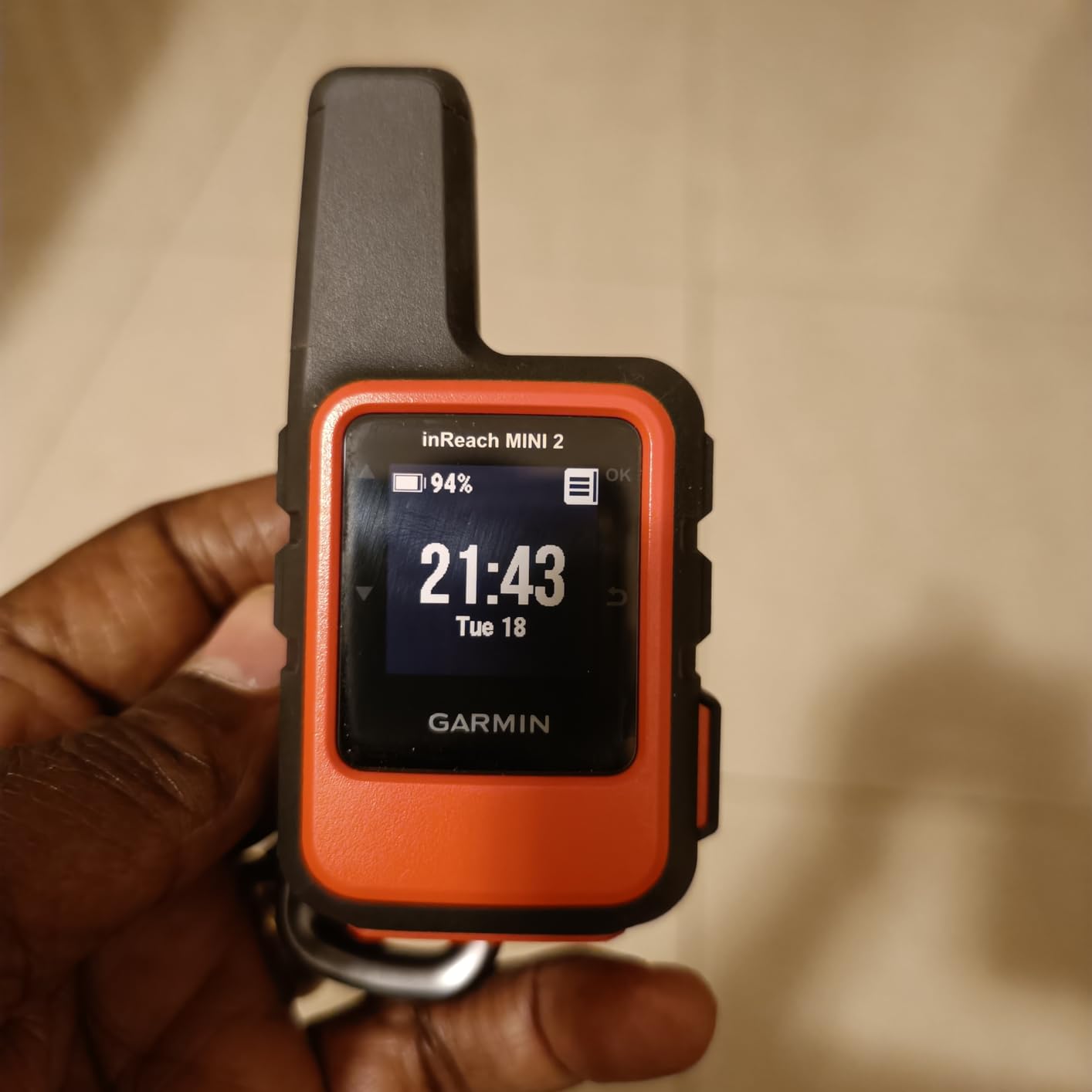
The Mini 2 is the unit we hand to someone who wants a real communicator without a brick in their pack. At 99 g it disappears into a shoulder strap, and the transflective memory-in-pixel screen stays readable in direct sun where an ordinary backlit panel washes out. Multi-band GNSS gives it a cleaner position fix than most, and TracBack walks you back to your start point without needing a paper map.
The interactive SOS is the feature that matters most, and it routes to Garmin’s own 24/7 response centre. Owners report real outcomes, including rescues where the device location was used to find a party. Weather forecasts and a MapShare page arrive over satellite, and pairing with a Garmin handheld or wearable lets you trigger SOS from the wrist, which is genuinely useful when the device is in a pack and your hands are cold.
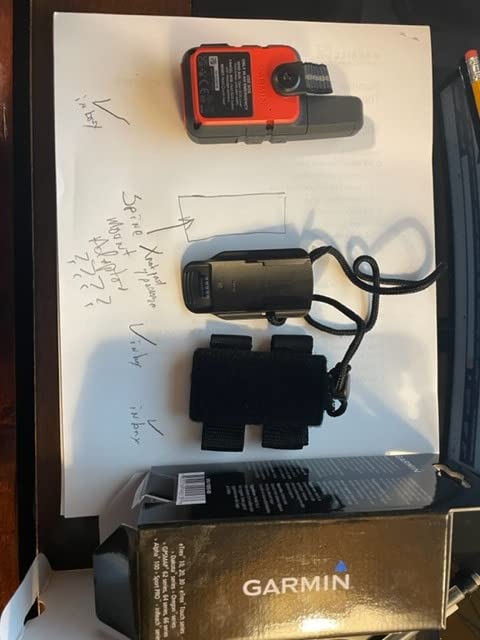
Where the compromises sit is the screen and the workflow. Composing a custom message on 1.27 inches of monochrome display is a slow, button-press affair, and the preset messages that fix this have to be configured on a computer through the inReach portal. Reviewers also report satellite delivery ranging from a few minutes to roughly 20 in poor sky conditions, and an activation process that can take a while to complete.
Two smaller details catch regular buyers out. The app does not require internet to function, which is unusual and good, but it does not always choose the cheapest path either, with some owners reporting traffic routed over satellite even when cellular was available. And the internal rechargeable battery means there is no AA fallback in a genuine pinch, so top up before a multi-day trip.
Who the inReach Mini 2 suits?
It suits solo hikers, skiers, and overlanders who want the strongest balance of size, battery, and interactive SOS in the group. Users who message in short sentences rather than paragraphs will find the screen far less annoying than reviewers imply. Garmin ecosystem owners get extra value from pairing with existing handhelds and wearables.
It also suits anyone who wants a messenger they will actually carry, because weight is the single biggest reason people leave safety gear at home. The 14-day figure at 10-minute tracking covers most multi-week trips without a mid-trip charge.
Who it does not suit?
It does not suit people who write long messages or expect replies in seconds, because satellite delivery is measured in minutes and the screen is small. Anyone who plans heavy typing while off-grid will find the experience tedious, and there is no physical keyboard here.
It is also the wrong pick for a trip where your phone is your only way to send anything, because the app-driven setup flow is an extra step. And buyers who want an immersion-proof IP68 body should look at the ZOLEO or Motorola instead.
2. ZOLEO Satellite Communicator – Longest Runtime and a Real Phone Number
ZOLEO Satellite Communicator (Slate Grey)
200+ hours of battery
IP68 rated
12 oz
Two-way Iridium messaging
Pros
- Very long battery life
- IP68 waterproof body
- Routes over Wi-Fi
- cellular then satellite
- Dedicated SMS number and email
- Unlimited check-ins
Cons
- Companion app has a learning curve
- No maps or navigation
- Text only with message delays
The ZOLEO is the endurance pick. Its stated battery life runs past 200 hours, and owners confirm that figure while reporting it held charge through more than a week of continuous tracking. At 12 ounces with a beacon-shaped body and a D-ring mount, it is the easiest device here to attach to a pack lid, a life vest, or a belt loop.
The smart feature is routing. The app sends over Wi-Fi first, then cellular, then satellite, so ordinary messages cost nothing in airtime and check-ins at home do not burn your plan. You get a dedicated SMS number and email on activation, plus unlimited check-ins and a Medical Assist option that reaches a response centre for a non-emergency medical call, which is useful for altitude or illness problems that do not need a helicopter.
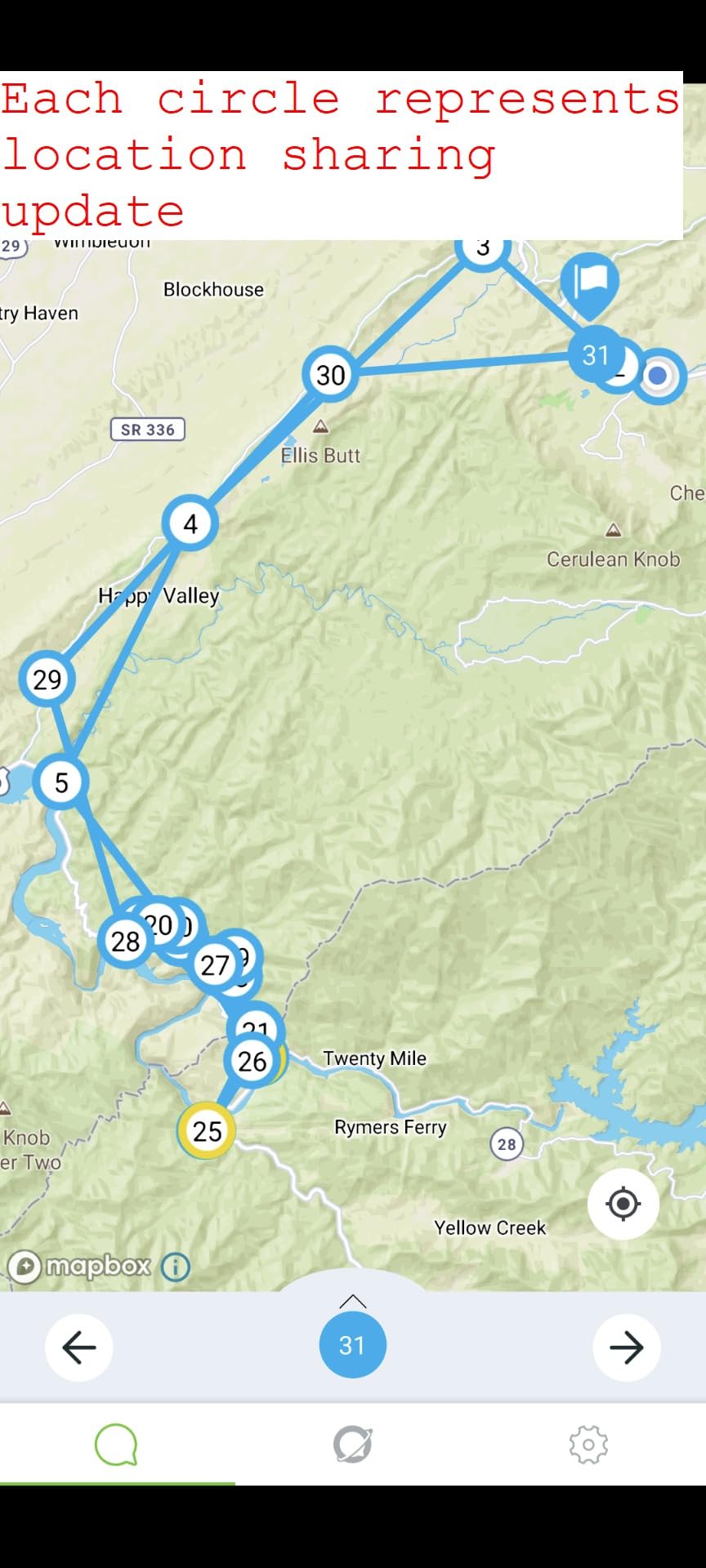
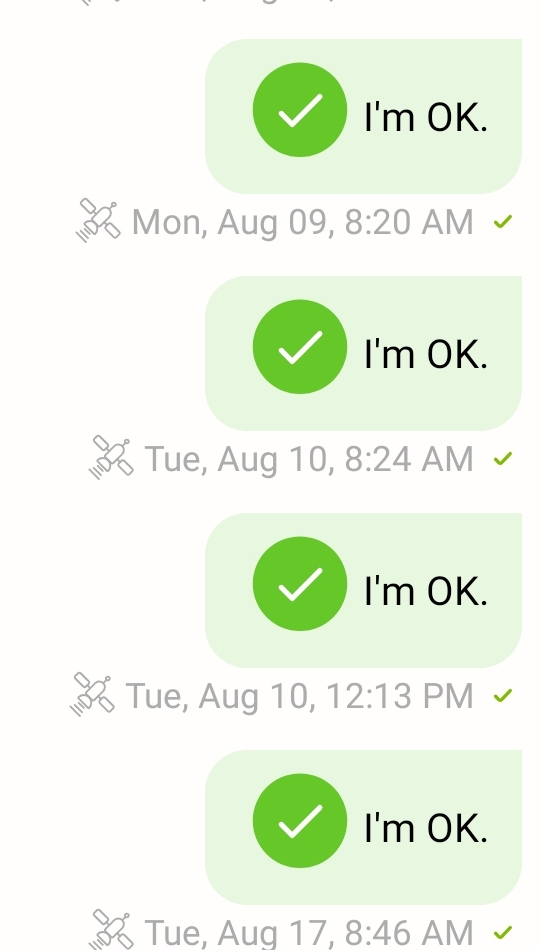
The honest weakness here is software polish. Owners consistently describe the companion app as unintuitive, the printed manual as sparse, and the contact and check-in interval setup as confusing without guidance. That is a real problem for a device whose entire value is communication, though it is a learning curve rather than a failure. One user whose broken leg was located and extracted by search and rescue credits the 24/7 SOS response directly.
There is also no built-in navigation, and no way to send voice or photos, so if you want maps you carry a separate GPS. Delivery can stretch to several minutes when the sky view is partly obstructed, which is worth setting expectations on with family before the trip.
Who the ZOLEO suits?
It suits long expeditions, winter trips, and anyone who will carry a phone but not want to depend on it, since the app can start on Wi-Fi and fall back to satellite automatically. Boaters and skiers benefit from the IP68 rating, and the 200-hour claim means most people charge it between trips rather than during them.
Families also like the dedicated number, because a parent can message the device directly without installing anything or learning a new app.
Who it does not suit?
It does not suit people who hate fiddling with software, because the app and setup documentation are the weakest part of an otherwise strong package. Anyone wanting on-device maps or navigation should skip it entirely, since this is a communicator and nothing more.
It is also a poor fit for users who need to send more than short text. The 900-character message limit is generous compared to rivals, but there are no images and no voice, so conversations stay terse by design.
3. Garmin GPSMAP 66i – Navigator and Communicator in One Device
Garmin GPSMAP 66i, GPS Handheld and Satellite Communicator, Featuring TopoActive Mapping and inReach Technology
3-inch color touchscreen
Topo maps and Birdseye imagery
35 h at 10-minute tracking
Interactive SOS
Pros
- Only full GPS navigator reviewed
- Large sunlight-readable color screen
- Free Birdseye imagery downloads
- Accurate satellite weather forecasts
Cons
- Interface has a steep learning curve
- Poor printed manual
- GPX route imports unreliable
- Too complex for casual day hikes
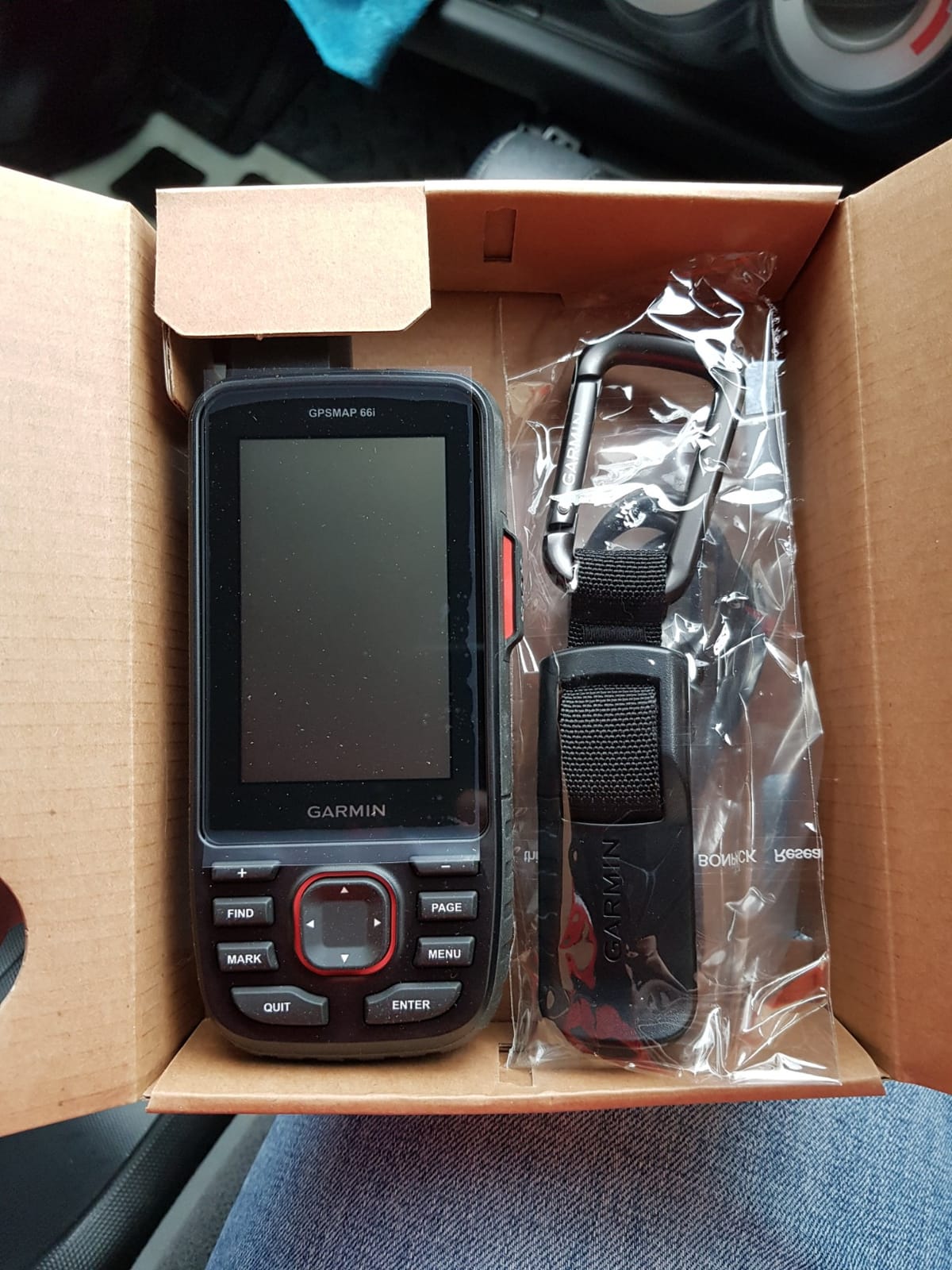
The 66i is the only device here that replaces two pieces of gear. It is a genuine handheld GPS with preloaded topographic mapping and free direct-to-device Birdseye satellite imagery, and it also carries interactive SOS to a 24/7 search and rescue monitoring centre over the full Iridium network. Experienced owners justify it by comparing it to a satellite phone plus a high-end GPS combined.
The 3-inch color screen is the largest in the group and stays readable in daylight, which makes route review before you move possible without extra gear. Multi-GNSS support, ABC sensors, OpenStreetMap support, and Wikiloc trails round out a navigation package the other devices cannot touch. Live geocaching and active weather forecasts work over cellular when you have it.
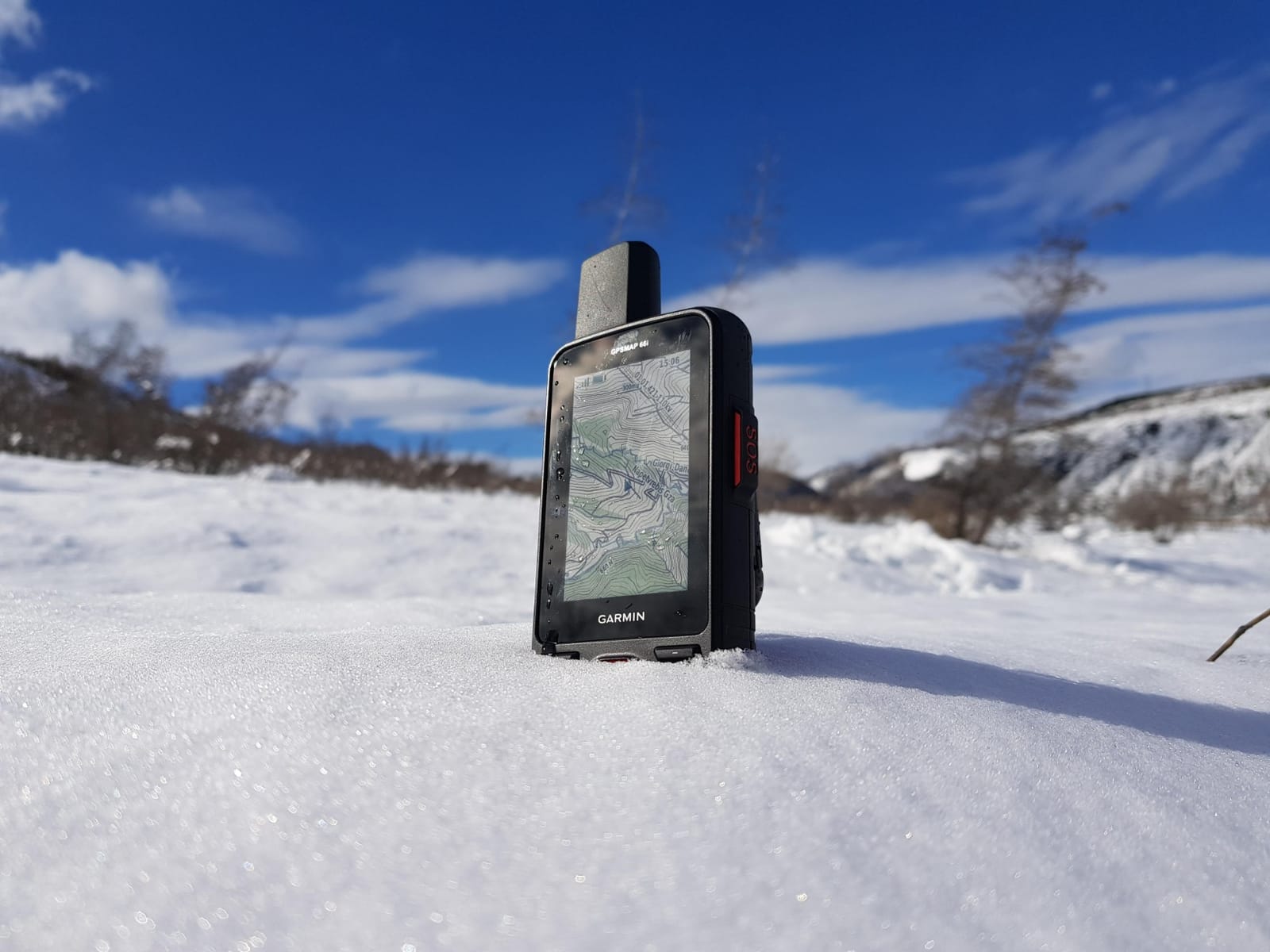
Battery behaviour is the smart part: about 35 hours at 10-minute tracking, extending to roughly 200 hours in Expedition mode. Reviewers call the 35-hour claim accurate in standard use, and the hyper-local satellite weather forecasts get singled out as useful for trip planning rather than decoration.
The learning curve is the honest drawback. Owners describe the interface as dated and hard to recall after a winter stored away, the printed manual as poor, and the Basecamp app as far superior for route planning but largely undocumented. GPX route imports are reported as unreliable, and early firmware versions had bugs, though the software has matured considerably since launch.
Who the GPSMAP 66i suits?
It suits expedition and backcountry users who navigate with maps rather than by memory, and anyone tired of carrying a separate GPS and communicator. It also suits paddlers and alpine skiers who want a screen large enough to read a route while moving.
Users who are willing to spend an evening learning the menu get the most out of it, and Garmin Explore integration makes trip planning on a computer straightforward.
Who it does not suit?
It does not suit weekend hikers who want a lightweight safety backup, since the capability and complexity are both overkill for a day hike. Reviewers call it too complex and heavy for casual use, and preset messages still need computer setup.
Buyers who expect a polished, modern interface should know before they buy. The functions are excellent and the documentation is not, and that combination is what holds the rating where it is.
4. Spot X – Two-Way Messaging With No Phone Attached
Spot X with Bluetooth 2-Way Satellite Messenger
Physical backlit keyboard
Globalstar network
240-hour battery
Standalone two-way SMS
Pros
- Works fully without a paired phone
- Unlimited check-ins and 14 preset messages
- Dedicated phone number for replies
- Weatherproof with a sealed port cover
Cons
- Cramped keyboard and slow button response
- Inbound messages unreliable in 5G areas
- Micro-USB instead of USB-C and slow charging
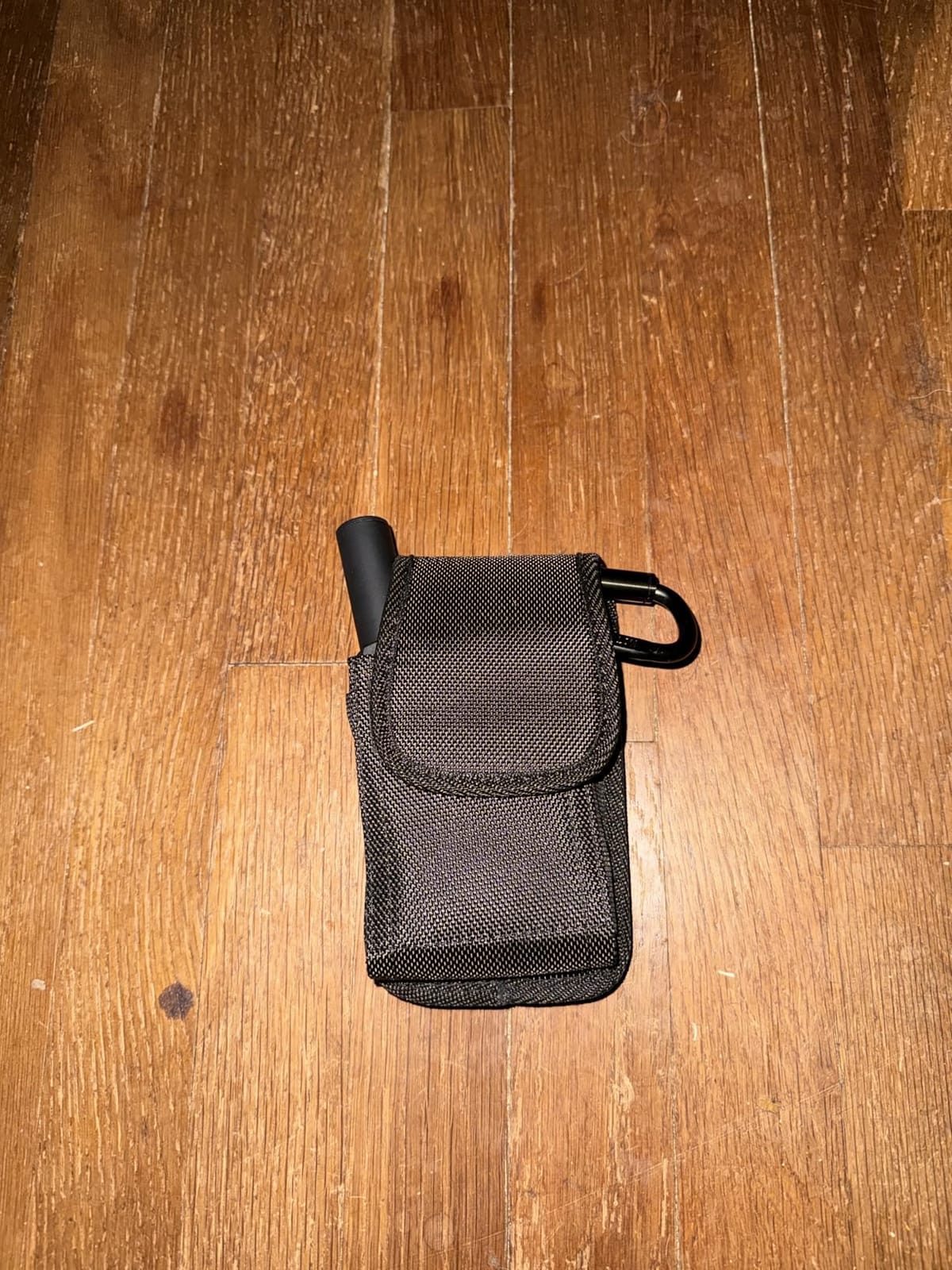
The Spot X is built around one idea: the device should work when nothing else does. It pairs with a phone over Bluetooth for convenient messaging, but it also runs standalone with its own dedicated mobile number, a physical backlit keyboard, and a screen, which means you can hold a two-way conversation with a dead phone in your pocket.
Message allowances are generous for the category. There are 14 customisable preset messages and unlimited check-ins that do not count against plan allowance, and GPS coordinates can go to any cell number or email. SOS runs 24/7 search and rescue with two-way emergency correspondence and delivery confirmation, which is the interactive model, not the one-way broadcast.
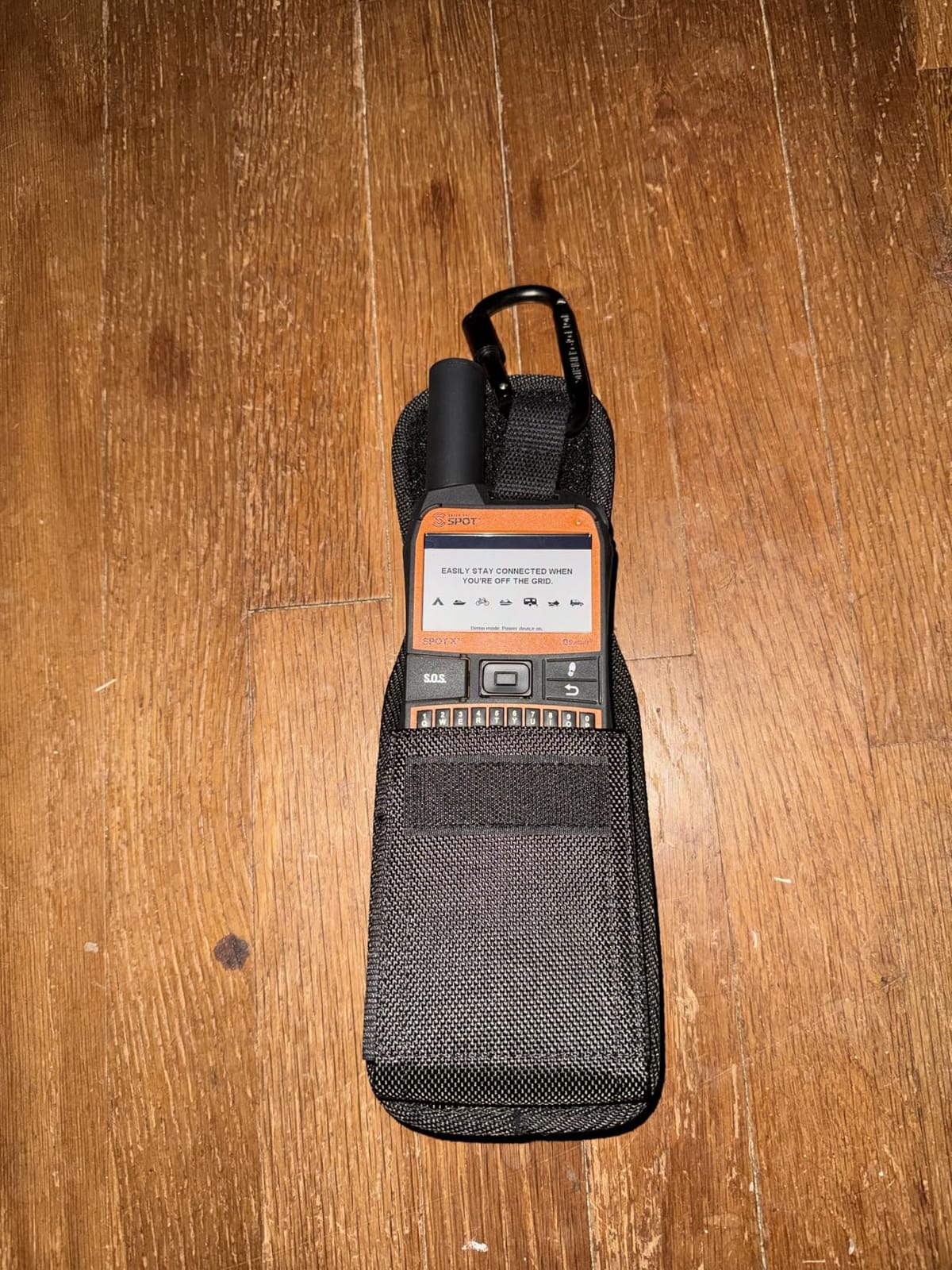
The complaints cluster around usability rather than capability. The keyboard is cramped in a BlackBerry style, buttons are sluggish and sometimes need several presses, and the icon indicators are small with no real-time signal strength readout. Delivery confirmation is unreliable, so the device keeps retrying when it cannot tell you the message arrived.
The most-cited real problem is 5G interference: some owners report that in areas with strong 5G coverage, sending works but incoming messages fail, which is a confusing failure mode on a safety device. It also uses micro-USB with slow charging. Against that, owners report solid behaviour outdoors with open sky even in bad weather, and customer service is repeatedly described as helpful and willing to issue replacements.
Who the Spot X suits?
It suits people who want a device that never depends on a phone app, including families who will message a dedicated number from any handset. Typing short replies on a real keyboard beats a tiny screen for anyone who resents hunting through character buttons.
It also suits users who want a messaging allowance that does not quietly drain with every check-in, and pairing still helps when a phone is convenient.
Who it does not suit?
It does not suit anyone who travels internationally, because the Globalstar network behind it has coverage gaps that the Iridium devices do not. It is also a poor fit for people who need navigation, since the device is a communicator with no mapping.
Buyers who want fast, certain message delivery should weigh the sluggish buttons and the reported inbound failure mode carefully. The capability is there, but the feedback that tells you it worked is the weakest part of the package.
5. Garmin inReach Messenger – Best for Tracking a Whole Group
Garmin inReach® Messenger Satellite Communicator, Global Two-Way Messaging
4 oz body
28 days at 10-minute tracking
Group messaging and tracking
Emergency phone charging
Pros
- Groups messages and tracks multiple contacts at once
- Larger screen than the Mini 2
- Automatic cellular then satellite routing
- Three preset check-ins that are free
Cons
- Real battery life closer to 2 to 3 days under heavy messaging
- Needs a wide sky view
- Confusing setup and unclear message path indicator
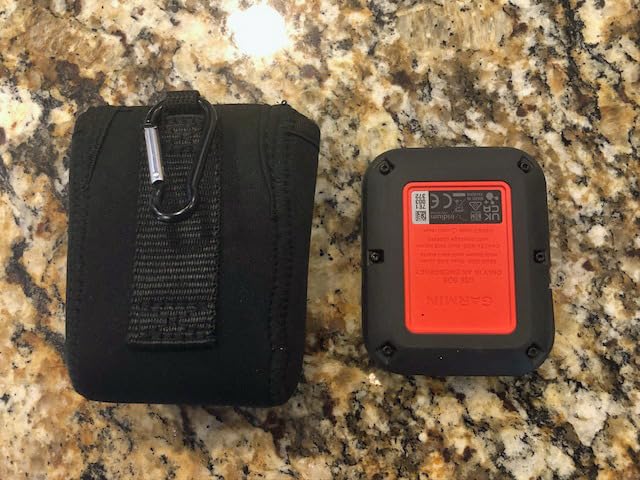
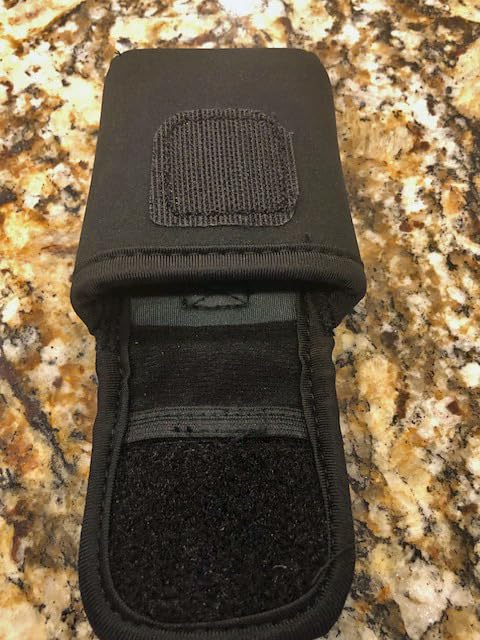
The Messenger is the middle of the Garmin line in size, with a 2.74 cm transflective screen that is more usable than the Mini 2 without becoming the GPSMAP 66i. At 4 ounces it still disappears into a pocket, and it adds multi-band GNSS including BeiDou and QZSS for a tighter position fix.
The feature that sets it apart is group messaging. It can message and track multiple contacts at once, which suits families, guides, and teams rather than one person. Three preset check-in messages do not count toward plan allowance, and automatic routing sends over cellular when it can and satellite when it cannot, which keeps airtime down. It also pairs with select Garmin handhelds, wearables and marine equipment, and offers emergency safety charging to recover a depleted phone.
Interactive SOS goes to the Garmin 24/7 monitoring and coordination centre, so it belongs in the same tier as the Mini 2 for rescue capability. Owners report it working reliably under partial tree cover and heavy cloud, with messages getting through in about 10 minutes in the worst case, and one user reported eight days of mixed on and off-grid use at only 40% battery consumption.
The battery claim needs context. The stated figure is up to 28 days at 10-minute tracking, but owners report 2 to 3 days under heavy two-way messaging, and the device requires a wide view of the sky, failing to lock under dense canopy or heavy rain. Setup instructions are unclear and pull down multiple apps, and it is never obvious whether a given message went by satellite or cellular. It also cannot charge while powered off, since plugging it in turns the device on.
Who the inReach Messenger suits?
It suits groups: families tracking several hikers, ski patrol teams, and anyone running a trip where more than one person needs updates from the same device. The free preset check-ins cover most routine status messages without touching the plan allowance.
It also suits buyers who want a screen they can actually read but not the bulk of the 66i, and anyone who values the ability to top up a dying phone from the device itself.
Who it does not suit?
It does not suit people camping under dense canopy, where owners report lock failures outright. The screen is still small enough that long messages are slow, and the interface gives you little confidence about which path a message took.
Anyone who expects the 28-day figure to hold under constant two-way traffic will be disappointed, and anyone who wants a physical keyboard is out of luck here.
6. Motorola Defy Satellite Link – Lowest Entry Cost, Phone Dependent
Motorola Defy Satellite Link – Rugged Handheld GPS Communicator, Two-Way Global SMS Text Messenger, Emergency SOS Alerting – Android iOS Compatible
2.5 oz body
IP68 rated
4-day standby
Satellite SMS through the Bullitt app
Pros
- Lowest entry cost in this group
- Messages reported out in 13 to 30 seconds
- Slim 2.5 oz body fits a pocket
- IP68 dustproof and waterproof
- Check-in and SOS work without a phone
Cons
- Needs the app on a phone with no on-device display
- Short message length around 35 characters
- Satellite acquisition slow and drops in motion
The Defy Satellite Link is the cheapest way into two-way satellite messaging, and at 2.5 ounces with an IP68 rating it disappears into a pocket. All messaging runs through the Bullitt app on an iOS 14 or Android 10 device, which neatly sidesteps the tiny-keyboard problem that frustrates owners of screen-equipped rivals.
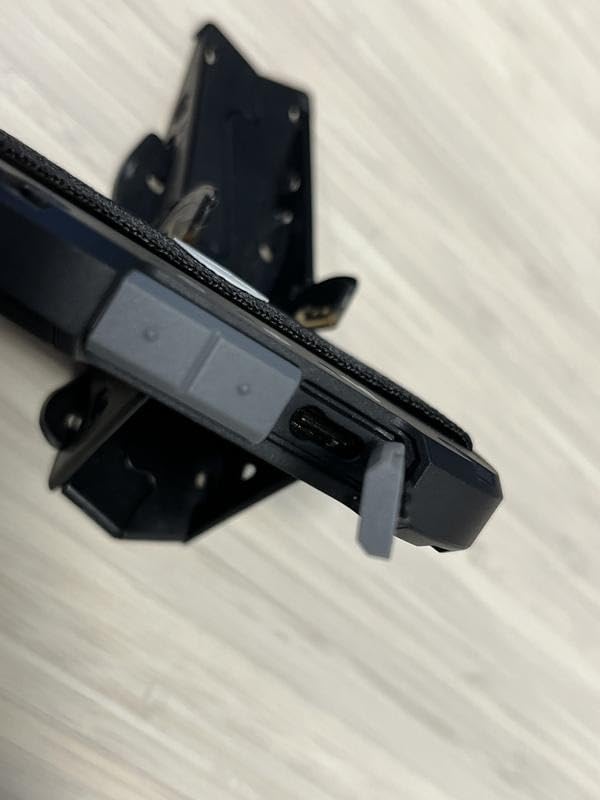
There is a physical check-in button on the device that sends coordinates or a message to your contacts, and SOS assist works without a phone connection, with unlimited SOS included on every plan. The 600 mAh battery is quoted at up to 4 days of standby, and USB Type-C charging means you already own the cable. Some users report satellite messages going out in 13 to 30 seconds, faster than the Spot X.
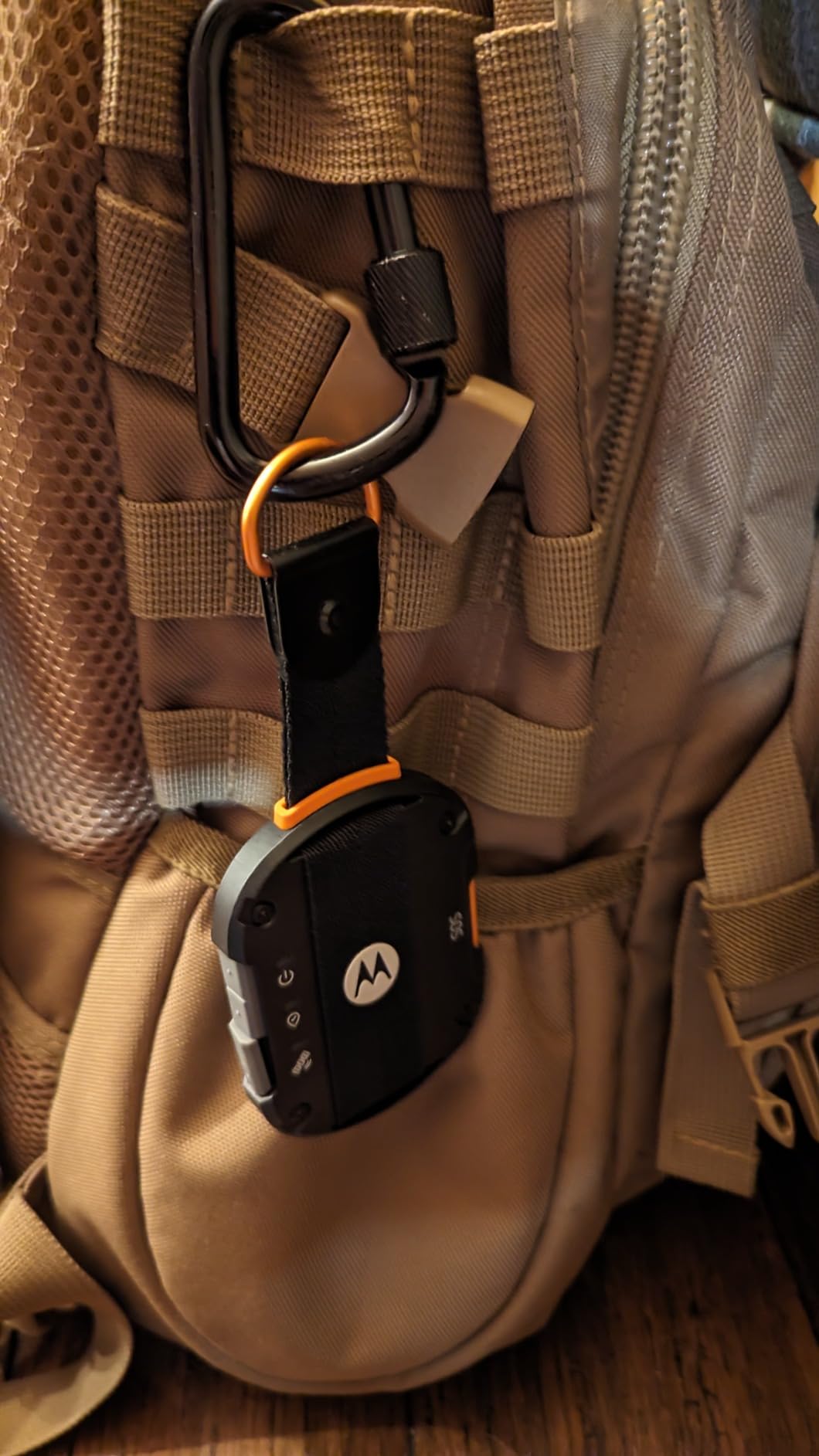
Now the honest accounting. The device has no display beyond LED indicators, so if the phone is dead you can send a canned check-in and an SOS but not a message. Message length is capped around 35 characters, satellite acquisition is slow and the connection drops frequently in motion, and plan allowances are counted by data used rather than message count, with restrictions on upgrading to flexible plans. iPhone Bluetooth pairing is reported as unreliable and needing manual re-pairing, and app account setup can loop on password resets.
Sentiment is sharply split, and the 3.6 average reflects that. Buyers who accept it as an inexpensive phone-dependent backup report fast, reliable texting and good value. Critics document inconsistent satellite lock, short limits, and app instability, plus a widely reported case of the service failing entirely on a demanding Appalachian trail, which is what pulled one-star reviews to roughly 23% of the total.
Who the Motorola Defy suits?
It suits hikers and travellers who already carry a phone, carry a charger, and want a low-cost emergency and check-in layer rather than a full communications setup. The dedicated check-in button means a gloved hand can send your coordinates without unlocking anything.
It also suits buyers who hate typing on tiny buttons, since the keyboard is whatever phone you already own, and anyone on a tight budget who accepts a narrower feature set.
Who it does not suit?
It does not suit anyone whose safety plan assumes the device works when the phone does not, and the 35-character limit makes real conversation impossible. If you need maps, offline navigation, or readable long messages, look elsewhere.
It is also a poor choice for people who move quickly while messaging, since the connection drops in motion, and for iPhone users who have been put off by flaky pairing. Treat it as a backup, not a primary communicator.
7. ACR Bivy Stick – Iridium Coverage With Built-In Offline Maps
ACR Bivy Stick – Iridium Satellite Communicator, GPS Tracker & SOS
3.35 oz body
IPX7 and MIL-STD-810
120-hour battery
Iridium with offline maps
Pros
- True global Iridium coverage
- Built-in GPS with downloadable offline maps
- GroupTrack for up to 12 people
- Dedicated phone number and email
Cons
- Group messaging capped at 12 people
- Offline maps need downloading before travel
- Less consistent software experience than rivals
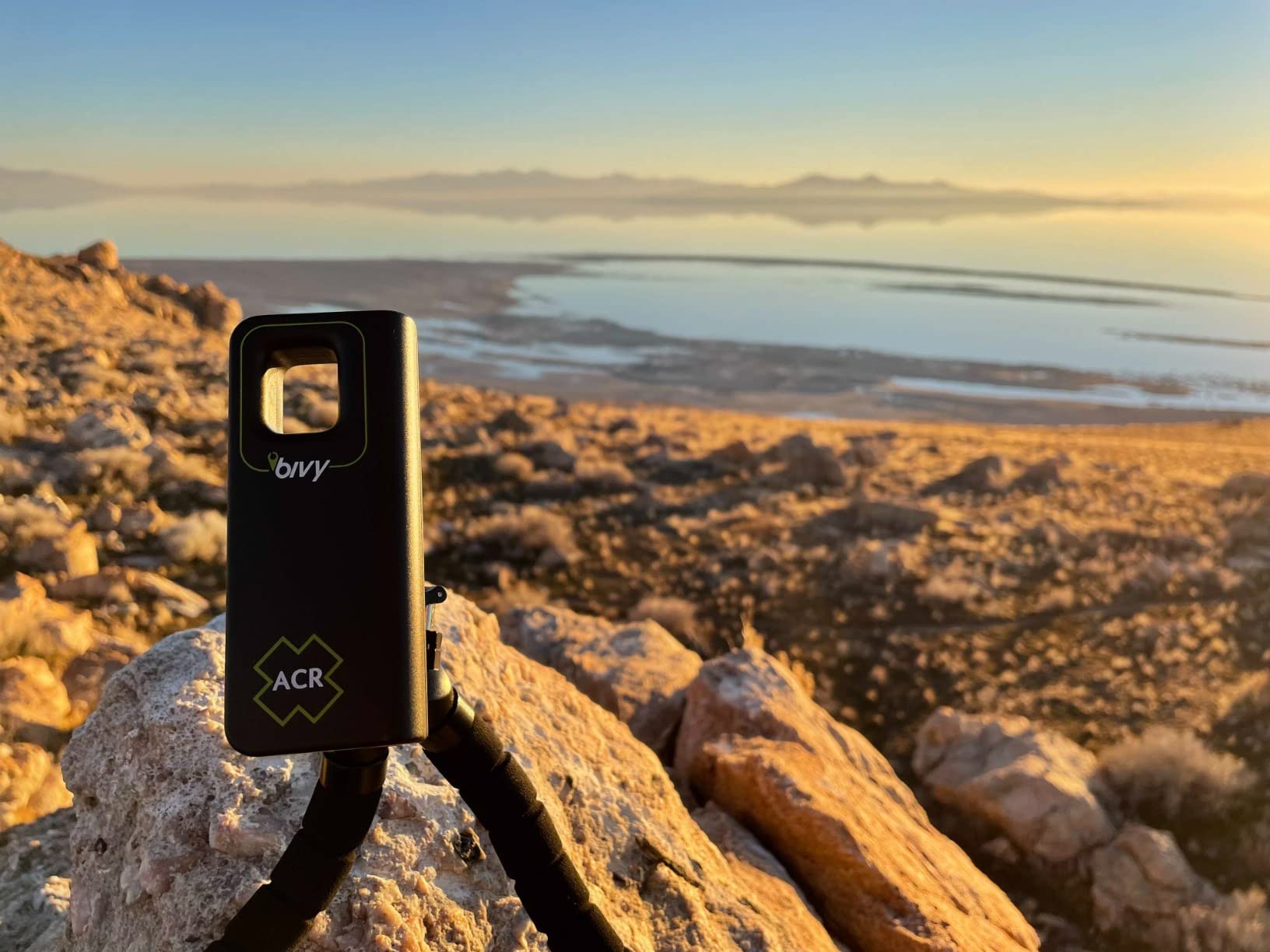
The Bivy Stick sits somewhere between a beacon and a communicator, and the navigation is what sets it apart. It has 100% global Iridium coverage, a built-in GPS, downloadable global offline maps, and 50,000-plus curated adventure guides in the app, so it can genuinely get you back without a paper map.
Messaging is two-way SMS and email over Iridium, with a dedicated phone number and email assigned on activation, unlimited customisable GPS check-ins, and live breadcrumb tracking. SOS is monitored 24/7 by Global Rescue with real-time location sharing, and GroupTrack covers up to 12 people sharing tracking and group messages. At 3.35 ounces with IPX7 and MIL-STD-810 construction and 120 hours of battery, it is a compact package for long trips.
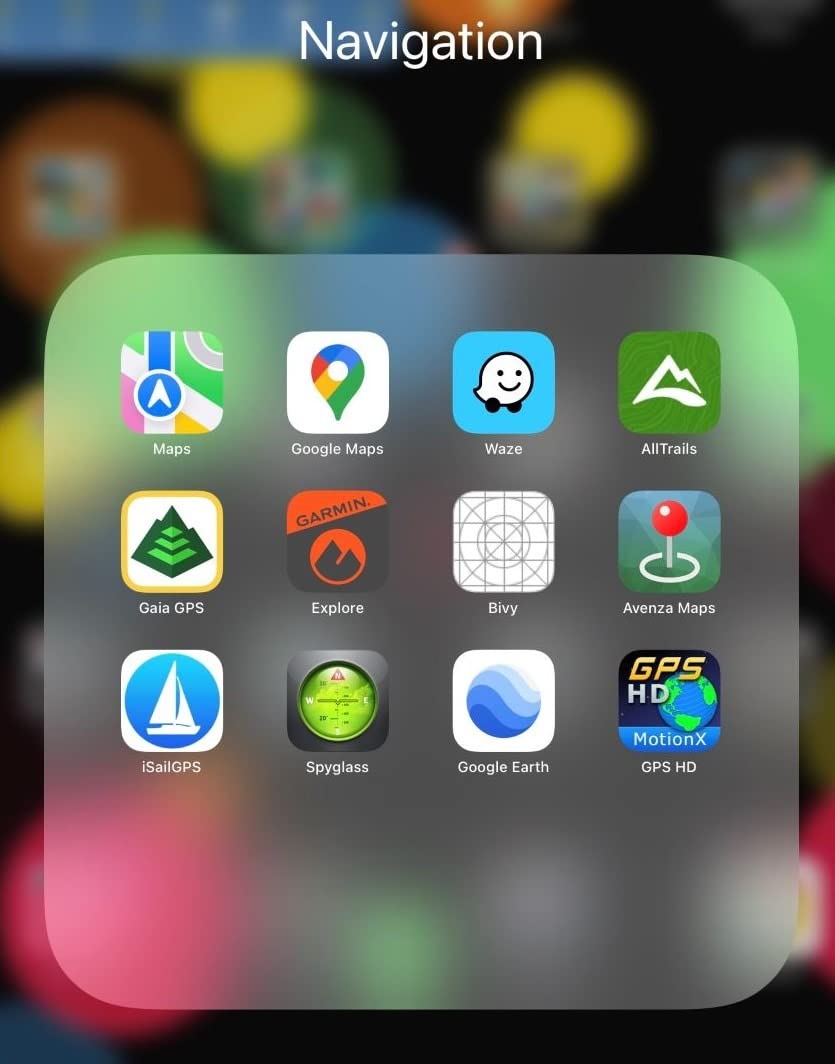
You can drive it from the device button or pair it to the Bivy app on iOS and Android, which means it works standalone when the phone is gone. Plans are tiered with a one-time three-month commitment before month-to-month flexibility, so it suits buyers who are still deciding how often they will use it.
The 3.8 average over a smaller review base points to a mixed experience rather than a broken device. Group messaging caps at 12 people, which limits larger teams. Offline map downloads are an extra setup step you must do before travel, not something you do in the field. And monthly plans cost more than the entry tier of some competitors for equivalent two-way SMS, so the value depends on how much you use the navigation features.
Who the ACR Bivy Stick suits?
It suits walkers and paddlers who want offline navigation and messaging in one 3.35-ounce device, and guides leading groups of up to a dozen people who will benefit from GroupTrack. It also suits international travellers who want the same Iridium coverage as the Garmin units.
It suits anyone who prefers a dedicated number and email that works without an app, and those who want the IPX7 and MIL-STD-810 durability for rough conditions.
Who it does not suit?
It does not suit teams larger than 12, and it does not suit buyers who want the deepest, most consistent software experience, since the underlying app lags the better-reviewed Iridium competitors.
Anyone who travels at the last minute should remember the map downloads are a pre-travel task. And for a device that is mostly about messaging, the plan cost per month is high relative to rivals doing the same job.
PLB or Satellite Messenger? How to Choose
A Personal Locator Beacon is the other option, and it is a genuinely different product. A registered PLB transmits a distress signal on the 406 MHz Cospas-Sarsat frequency and nothing else. There is no messaging, no tracking you can watch, and no subscription, because the distress frequency is funded publicly. That makes it cheaper to own and far simpler to use, and it is the correct choice if your plan is strictly rescue in a dire emergency.
The trade-off is everything that happens before the emergency. A PLB cannot send a check-in so your family knows you are safe, cannot deliver a weather forecast, cannot confirm that a message arrived, and cannot talk to a rescue coordinator. Interactive SOS on a messenger gives you a conversation with a staffed centre, which is a real advantage when the situation is complicated.
A useful rule: if you hike solo, only tell people where you are going, and cannot phone anyone, a registered PLB plus a tracker covers the safety need. If you want to reduce the number of times you or your family are worried, you want a two-way messenger. If you want navigation as well, the list narrows to the GPSMAP 66i and the Bivy Stick.
Two details catch newcomers out. PLB registration must be renewed periodically or the beacon will not be monitored properly, and the registration must match the trip plan you file. And every satellite device assumes a conscious, alert user who can operate it, which is a real limitation in a true emergency involving an injury that stops you operating the device.
Satellite Networks and Subscriptions: What You Are Really Buying?
The hardware is the cheap part of the decision. Two networks cover these devices. Iridium provides a true global footprint and is used by the inReach Mini 2, the GPSMAP 66i, the ZOLEO and the ACR Bivy Stick. Globalstar powers the Spot X and the Motorola Defy Satellite Link, and its coverage is more regional, which is why the Motorola is described as working up to 75 miles off shore inside coverage areas rather than anywhere. For international travel, Iridium is the safer assumption.
Beyond Iridium and Globalstar, Cospas-Sarsat is a separate system that most consumers never interact with. It is the 406 MHz distress network that PLBs use, monitored worldwide and free to the user. Some beacons also send a 121.5 MHz homing signal, which is what aircraft and search aircraft use to home in on a transmitting beacon.
Then there is the subscription, and this is where buyers report the most frustration. The complaints we see repeat across forums: paying monthly for gear used a handful of times a year, an activation fee that feels like a trap, and suspending a plan in winter only to find the dedicated phone number is gone, which breaks the contact workflow the family was relying on. Before you activate anything, find out whether the number survives suspension, whether presets and check-ins count against an allowance, and what happens to stored messages if you stop paying.
Different brands handle this differently and it shapes the true cost. ZOLEO advertises unlimited check-ins, the Spot X includes unlimited check-ins and 14 preset messages, and the Garmin Messenger offers three free preset check-ins that do not count against the plan. If you check in daily, allowances are the difference between a predictable bill and a surprise one. Our guide to outdoor water features covers the same buy-it-and-use-it-hard logic for gear you take on wet trips, where a low entry cost rarely beats a rating that survives real weather.
Setting Up a New Satellite Messenger Before Your Trip
Almost every avoidable failure happens in the first week, not on the mountain. Work through this list before you leave.
Activate the plan and test sending a message from the device, not just from the app. Enter your emergency contacts and check-in schedule on the actual device, because on several brands presets are configured through a browser portal and will not exist on the unit until you do it.
Run a shakedown. Take the device somewhere with a clear view of the sky, send a message to yourself, receive a reply, and watch how long delivery actually took. Note the time so you can set family expectations correctly.
If it is a PLB, register it and confirm the registration is current. Download any offline maps now while you have Wi-Fi. Practise finding the SOS button with gloves on, without actually triggering it, and know what your monitoring centre will ask you when you press it.
Finally, decide what happens if the phone dies. That single scenario separates the phone-dependent devices from the standalone ones, and it is worth choosing deliberately before you are tired, cold, and out of battery.
Frequently Asked Questions
Are satellite communicators worth it?
For solo hikers, skiers, sailors, and anyone travelling where there is no cell coverage, yes. The value is not the device itself but the ability to check in, share a location, and reach a staffed response centre when a phone has no signal. If you always travel with a group on marked trails, a tracker app plus a whistle may be enough. Most owners conclude that once you accept multi-minute message delivery, the peace of mind is worth the cost.
What is the cheapest satellite communicator?
Among the devices reviewed here, the Motorola Defy Satellite Link has the lowest entry cost and the cheapest airtime tiers, and it also includes unlimited SOS with every plan. It is a phone-dependent device, so treat it as a backup layer rather than a primary communicator. For a cheaper full standalone unit, the ACR Bivy Stick and the Spot X both avoid app dependency, but their plans cost more per month.
Is there anything better than Garmin inReach?
It depends on which job you need done. The ZOLEO and the ACR Bivy Stick run on the same Iridium network with much longer battery claims and waterproof IP68 bodies. The Spot X is the only reviewed device with a physical keyboard that works fully without a phone. The GPSMAP 66i is the only full navigator with topographic maps. For all-round balance, though, the inReach Mini 2 holds the strongest combination of rating and review count in this group.
Do satellite communicators need a subscription?
Yes, every two-way satellite messenger reviewed here needs an active service plan for messaging and SOS. The exception is a registered Personal Locator Beacon, which uses the publicly funded Cospas-Sarsat distress network at 406 MHz and costs nothing to use. Check the activation fee, whether you can suspend the plan between trips, and whether your dedicated phone number survives suspension before you commit.
What is the difference between a PLB and a satellite messenger?
A PLB sends a one-way distress signal to search and rescue and nothing else, with no subscription, so it is simpler and cheaper to own. A satellite messenger does two-way messaging, live location tracking, check-ins, weather forecasts, and interactive SOS where a staffed centre acknowledges the alert and opens a conversation with you. Choose a PLB for pure rescue capability, and a messenger when you want to reduce worry between emergencies.
How do satellite messengers work?
The device sends a radio signal up to an orbiting satellite, which relays it to a ground station and on to the recipient phone, email, or a 24/7 emergency response centre. Messages usually arrive within a few minutes rather than instantly, and the device needs a reasonably clear view of the sky. That line-of-sight requirement is why performance drops under dense canopy, in slot canyons, and in heavy rain.
Conclusion
If you take one thing from this guide, take the feature order: network coverage, two-way messaging, interactive SOS, standalone operation, then battery at your actual tracking interval. Everything else is preference. The Garmin inReach Mini 2 is our top pick in 2026 because it balances a readable transflective screen, 99 g of weight, multi-band GNSS, and Garmin’s own 24/7 response centre better than anything else in the group.
Choose the ZOLEO for endurance and an IP68 body, the GPSMAP 66i if you want real navigation, the Spot X if you refuse to depend on a phone, the inReach Messenger for tracking a group, the ACR Bivy Stick for offline maps, or the Motorola Defy as a low-cost phone-dependent backup. Whichever you pick, set it up and shakedown it before you need it, and see our [ranked satellite messenger guide](https://www.wearesalt.org/best-satellite-messengers/) for the side-by-side detail.