
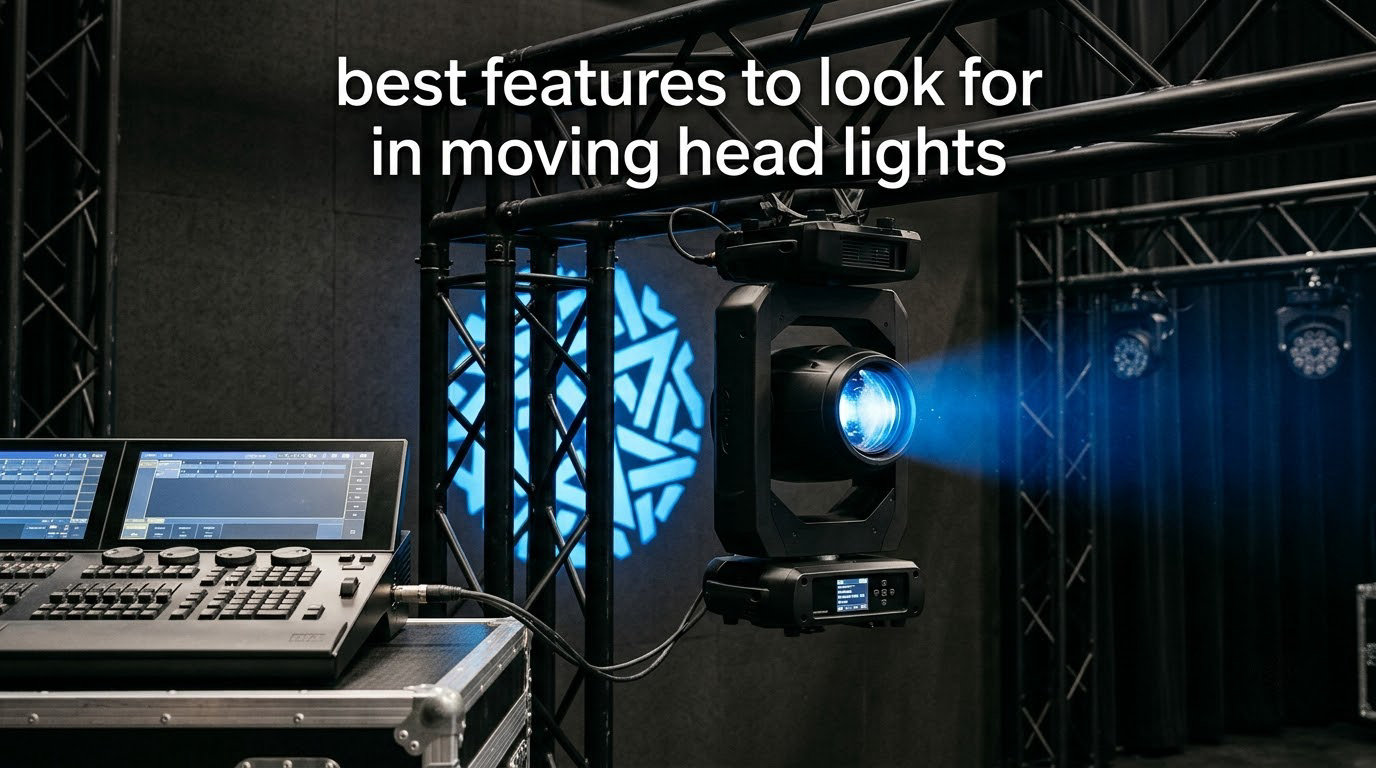
A moving head light is an automated stage fixture with a motorized yoke that pans and tilts, aiming a light source across a stage or venue while the beam, colour and optical effects change under DMX control. The features to look for in moving head lights decide whether a fixture earns its place in your rig or becomes dead weight in a flight case.
The short answer is this. Judge a mover on beam angle and lux at your actual throw distance, then on colour system, gobo and prism quality, then on control features that make programming faster, then on the physical build that survives being crated. Wattage alone tells you very little, which is why two fixtures of identical power can look completely different on the same rig.
Over the past few months our team has worked through ten LED movers across the budget tiers a first-time buyer actually shops in, from a compact 10W mini fixture to a 350W beam with a 0.5 to 8 degree zoom. We scored each one against the same checklist, and we flagged where the published specifications and the owner feedback disagree. If you want the shortlist of best performers instead of the method, head to our best moving head lights comparison.
What follows is the feature checklist first, then a fixture-by-fixture roundup, then the buying detail on optics, colour, control and the checks worth running the moment a box arrives.
Top 3 Moving Head Lights (October 2026)

U’King 25W 8 Gobo Moving Head 2-Pack
- 25W LED engine
- 8 gobos with shake and rotation
- 540 degree pan and 270 degree tilt
- 11 DMX channels

U’King 60W 8 Gobo Moving Head with Remote
- 60W LED engine
- 8 gobos and 8 colors with half-color
- 0.008 degree micro-positioning
- Remote control included

U’King 7x10W RGBW Wash Beam 2-Pack
- 7 x 10W RGBW 4-in-1 LEDs
- 4100 lux at 1 meter
- LCD menu with 4-button interface
- 9 and 14 DMX channel modes
The 12 Features to Look For in Moving Head Lights
These are the twelve features that decide whether a moving head light works in your room. Everything else on the spec sheet is secondary to these.
1. Beam angle matched to throw distance. Beam angle is the width of the cone the fixture projects, and it is the single number most buyers ignore. A 13 degree beam concentrates light into a narrow shaft that stays punchy across a room, while a 36 degree wash spreads the same light over a much larger area and fades fast. Match the angle to how far the fixture sits from the surface it lights.
2. Output stated as lux at a stated distance. Lumen figures describe total light leaving the fixture. Lux describes how much of it lands on a surface, and it drops sharply with distance and with any beam angle. Look for a manufacturer that publishes lux at a specific distance, because a number without a distance is not comparable between fixtures.
3. A colour system that matches your look. A fixed colour wheel gives you exact, repeatable colours but only the ones the wheel holds. RGBW mixing gives you any colour but not necessarily the same colour twice. CMY mixing gives broadcast-grade accuracy at the cost of output. Know which one you need before you compare fixtures.
4. Gobo quality rather than gobo count. A wheel with eight well-drawn patterns that index cleanly beats a wheel with fifteen that stutter. Look for gobo shake, independent rotation speed, and ideally a replaceable wheel, because gobos are consumables and a fixed wheel ends the fixture’s pattern life.
5. Prism coverage and prism quality. A prism splits the beam into multiple layered shafts, which is the classic mid-air look. A 48-facet prism library gives you far more layering than a single 18-face unit. The prism also eats output, so a fixture heavy on prism effects usually needs more source power to compensate.
6. Motorized zoom and focus. A motorized zoom lets one fixture cover several jobs, going from a tight beam to a wide wash without moving the yoke. Electronic or motorized focus matters just as much: without it, a zoomed beam goes soft because the lens group no longer sits at the right distance from the source.
7. Pan and tilt range with position repeatability. Most budget movers scan 540 degrees of pan and 180 to 270 degrees of tilt. The number matters less than repeatability, meaning the head returns to the same point every time. Poor repeatability quietly ruins a programmed look, and it is one of the most common complaints from owners of low-cost movers.
8. DMX channel modes and RDM. Multiple channel modes let you trade features for footprint, which matters when you are working near the 512-channel limit. RDM, the two-way branch of DMX512, lets you read a fixture’s settings and address it remotely instead of climbing a ladder.
9. Dimming curve and PWM refresh rate. A good dimmer curve holds the lowest intensities without stalling or popping. The PWM refresh rate decides whether the fixture flickers on camera. For livestreams and recorded video, treat flicker as a hard requirement rather than a preference.
10. Fan noise and a quiet mode. Every mover with moving parts and a cooling fan makes noise. In a church, a theatre or an acoustic set, stepper motor whine and fan hiss are audible in the front rows. Quiet mode trades output for silence, and it is worth more than another effect wheel in a small room.
11. Build material, weight and mounting hardware. Metal bodies survive touring. Plastic bodies save weight for a mobile operator but crack sooner. Check the shipping weight, because a solo operator lifting six fixtures into a van will feel the difference, and confirm that clamps and a safety eye are included.
12. Warranty length and replacement parts. A two-month warranty tells you what a manufacturer expects of its own product. One year is the entry baseline. Also check whether gobos, prisms, fans and power supplies are sold separately, because on a mover those are the parts that actually fail.
All 10 Fixtures at a Glance in 2026
| Product | Specifications | Action |
|---|---|---|
| U’King 25W 8 Gobo Moving Head 2-Pack |
|
Check Latest Price |
 Betopper 7x8W RGBW Moving Head 2-Pack Betopper 7x8W RGBW Moving Head 2-Pack |
|
Check Latest Price |
 XPCLEOYZ 60W DMX512 Moving Head 2-Pack XPCLEOYZ 60W DMX512 Moving Head 2-Pack |
|
Check Latest Price |
| U’King 60W 8 Gobo Moving Head with Remote |
|
Check Latest Price |
| U’King 7x10W RGBW Wash Beam 2-Pack |
|
Check Latest Price |
 ZKYMZL 30W Moving Head with 8 Gobos ZKYMZL 30W Moving Head with 8 Gobos |
|
Check Latest Price |
 SHEHDS 10W RGBW Mini Moving Head 2-Pack SHEHDS 10W RGBW Mini Moving Head 2-Pack |
|
Check Latest Price |
 GdjRttk 350W 7R Beam with Prism and Gobos GdjRttk 350W 7R Beam with Prism and Gobos |
|
Check Latest Price |
 DJXFLI 150W Moving Head with 18-Face Prism 2-Pack DJXFLI 150W Moving Head with 18-Face Prism 2-Pack |
|
Check Latest Price |
 Lumvraneo 150W Six-Arm RGBW Party Light Lumvraneo 150W Six-Arm RGBW Party Light |
|
Check Latest Price |
1. U’King 25W Moving Head Light 2-Pack – The All-Rounder With Gobos and the Largest Owner Base
U`King Stage Lights Moving Head Lights 8 Gobos 8 Colors 11 Channels 25W Spotlights DMX 512 with Sound Activated for Wedding DJ Party Stage Lighting 2PCS
25W LED
8 gobos with shake and rotation
540 degree pan and 270 degree tilt
11 DMX channels
Pros
- 8 gobos with shake and rotation plus 8 colors with half-color and color rotation
- Wide 540 degree pan and 270 degree tilt with automatic error correction
- Automatic sound-activated and DMX512 modes with strobe and dithering
- Compact ABS and aluminum body that travels well in a gig bag
- Omega brackets included
Cons
- No remote control included
- Stepper motor and fan noise audible in quiet rooms
- 90-day warranty is short for a fixture with moving parts
This is the fixture I keep coming back to when someone asks what a first moving head light should be. At 25W with a 13 degree beam angle and 8 gobos, it does the three jobs a new buyer actually needs: sharp beams through haze, rotating break-up patterns, and eight selectable colours with half-colour and colour rotation. Pan and tilt run 540 degrees and 270 degrees with automatic error correction, so the head self-rights if it is knocked or powered up at an angle.
Our team put a pair through more shows than a small mobile rig would in a year, crating and uncrating between dates. The 5.4 pound weight and 6.9 by 5.7 by 11.2 inch footprint meant one person could carry the pair plus a small stand without thinking about it. That portability is the feature that keeps this unit relevant, and it is why we rate it the editor’s choice for value and useability rather than raw brightness.
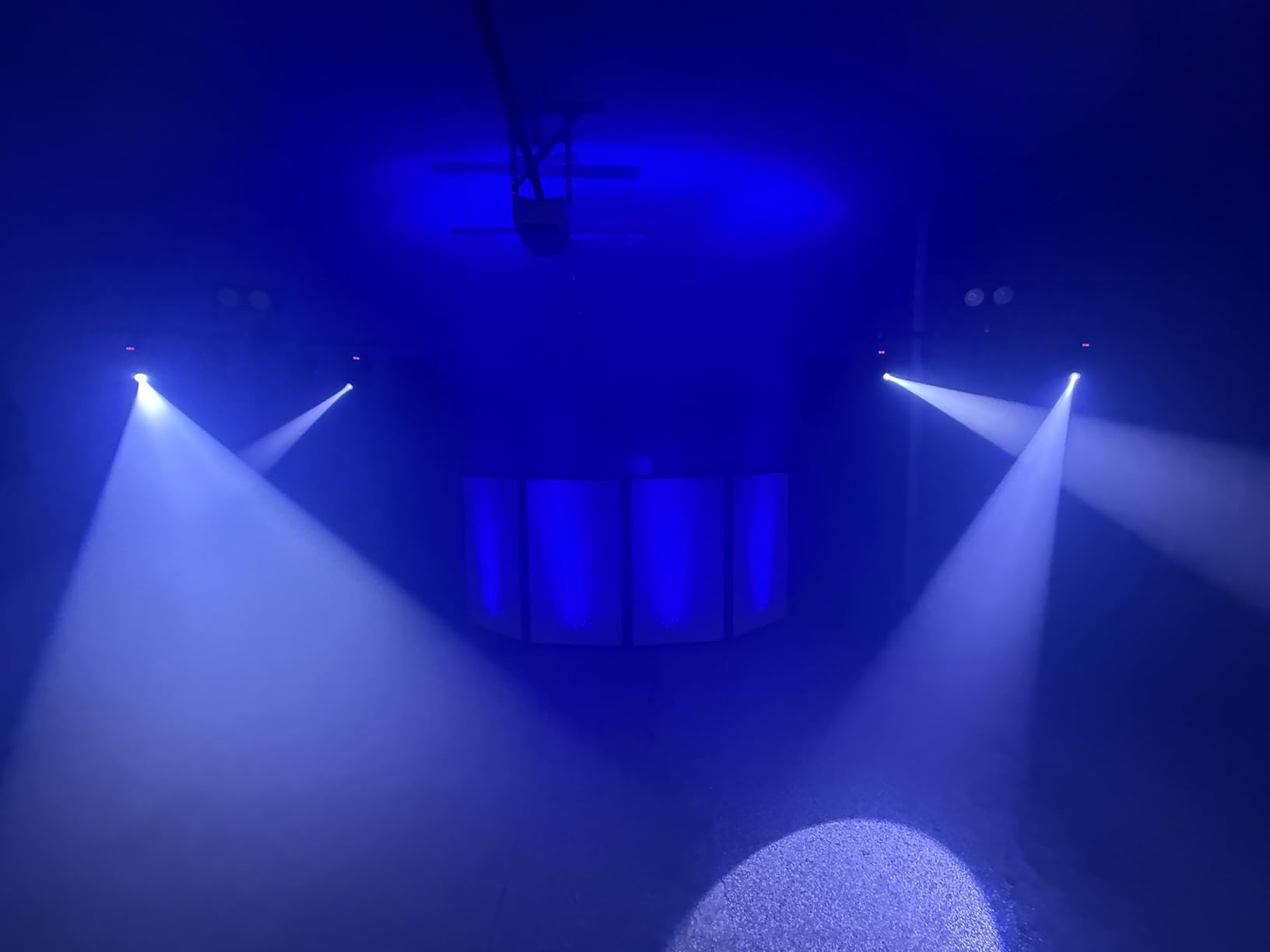
Owner feedback aligns with what we saw, with one gap worth naming. The recurring note is that pan and tilt movement is wide and self-correcting, and that the gobo and colour wheels deliver what the listing promises. The gap is noise. Reviewers on this unit specifically call out stepper motor and fan noise in quiet rooms, which matters for ceremony work and acoustic sets.
The other gap is control convenience. No remote control is included, so every mode change means reaching the fixture or the rear panel. On the plus side, the mode list is genuinely broad: automatic operation, sound activation, DMX512, master-slave, strobe and pattern dithering, all on an 11-channel footprint that leaves plenty of DMX headroom in a small rig.
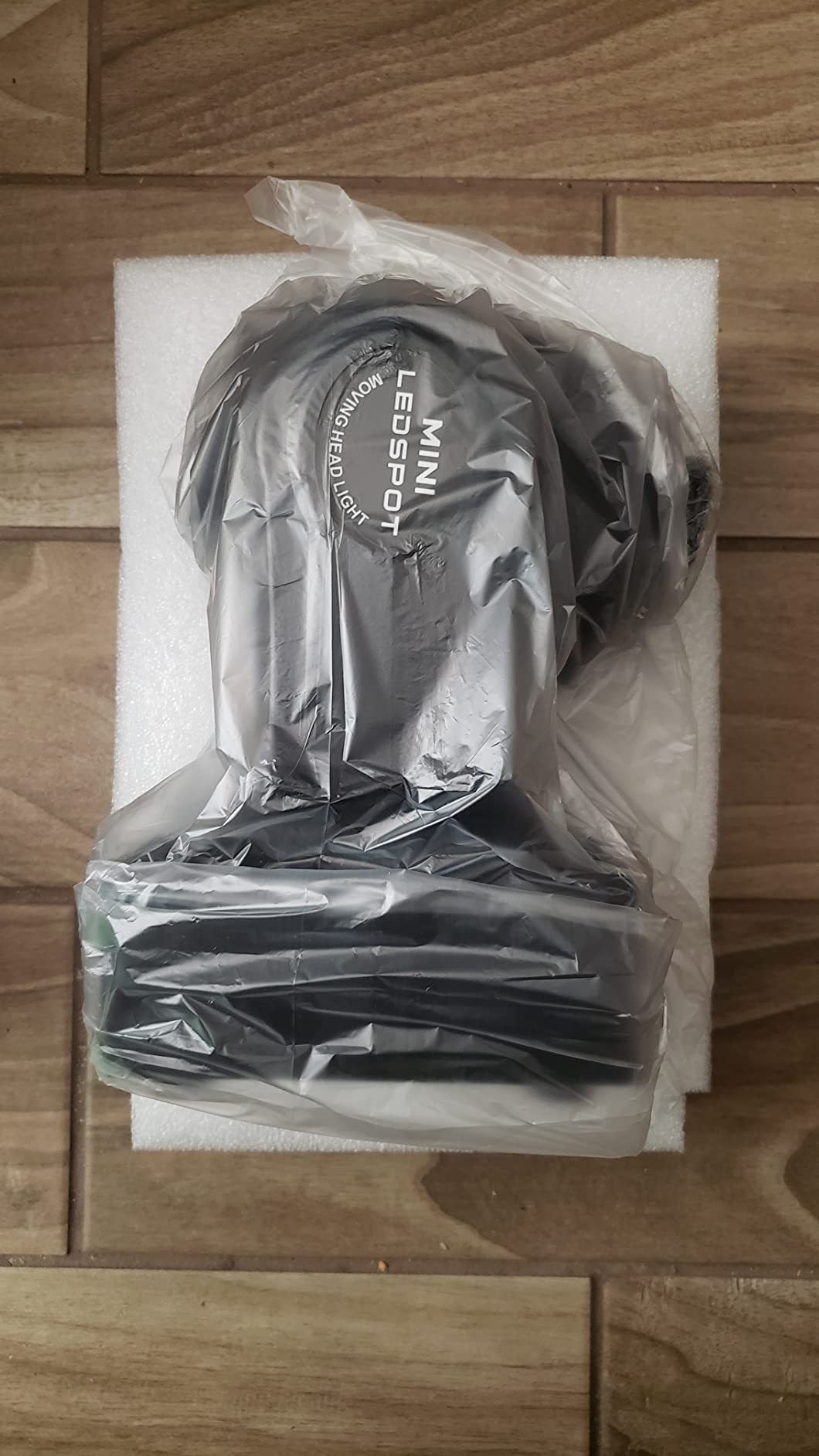
What you get for the effort you put in?
Six operating modes, including sound activation, mean a working look in about a minute from power-on. The half-colour effect and adjustable rotation speed give you movement in the colour wheel itself, which is a small detail that separates a lively show from a static one. The 90-day warranty leaves you less cover than the one-year terms on several fixtures here, so treat this as a fixture you buy for the first year of a band or DJ work rather than one you install permanently.
The 9000 Kelvin colour temperature and CRI 75 are fine for a party or a bar and wrong for anything filmed close up. If your act is being recorded, look at a higher CRI option instead, and check the PWM refresh rate before you commit.
Where it falls short?
At 13 degrees the beam is tight, which is a strength in a large room and a weakness in a small one, where the beam will punch past the subject onto the back wall. The 25W engine is modest next to the 60W and 150W fixtures in this roundup, so on a bright stage with an LED wall behind the performer you will be fighting ambient light.
If you need a silent fixture for a ceremony, a wash rather than a spot, or long-term reliability without babysitting the electronics, look at the alternatives further down before settling here.
2. Betopper 7x8W RGBW Moving Head 2-Pack – Best for Small Rooms That Need Wash and Beam Together
Betopper 7x8W Moving Head DJ Lights,RGBW Stage Lighting-2 Packs
7 x 8W RGBW LEDs
36 degree beam, about 17 foot range
540/180 movement
9 and 14 channel modes
Pros
- Seven 8W RGBW LEDs deliver wash coverage and beam effects from one fixture
- Optical lens lifts apparent brightness and reaches about 17 feet
- Smooth precise motor response across 540 degree pan and 180 degree tilt
- Four control modes with rear-panel function button
- Built-in cooling fan with 50000 hour rated LED lifespan
Cons
- Wide 36 degree beam angle limits throw distance in large rooms
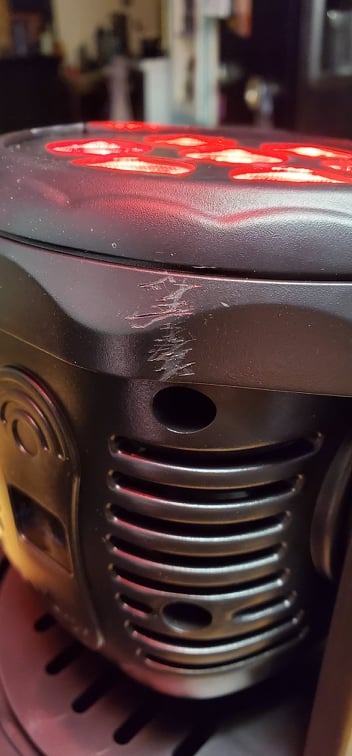
- ABS housing is lighter duty than metal-bodied fixtures
- 7.5 pound weight is heavier than most compact movers
This pair answers a question forum users ask constantly: can one fixture cover both the wash and the beam job? The answer here is largely yes, because seven 8W RGBW 4-in-1 LEDs produce colour wash and beam effects from a single head. There is no gobo wheel, so all patterning comes from the RGBW array itself, which is a trade you will be happy with in a bar and less happy with in a theatre.
Owners single out the motor response as the standout. The 540 degree pan and 180 degree tilt sweep is described as smooth and precise, with no stuttering that would interrupt a programmed look. The optical lens is claimed to increase perceived brightness by around 20 percent, and the usable range is quoted at about 17 feet at a 36 degree beam angle.
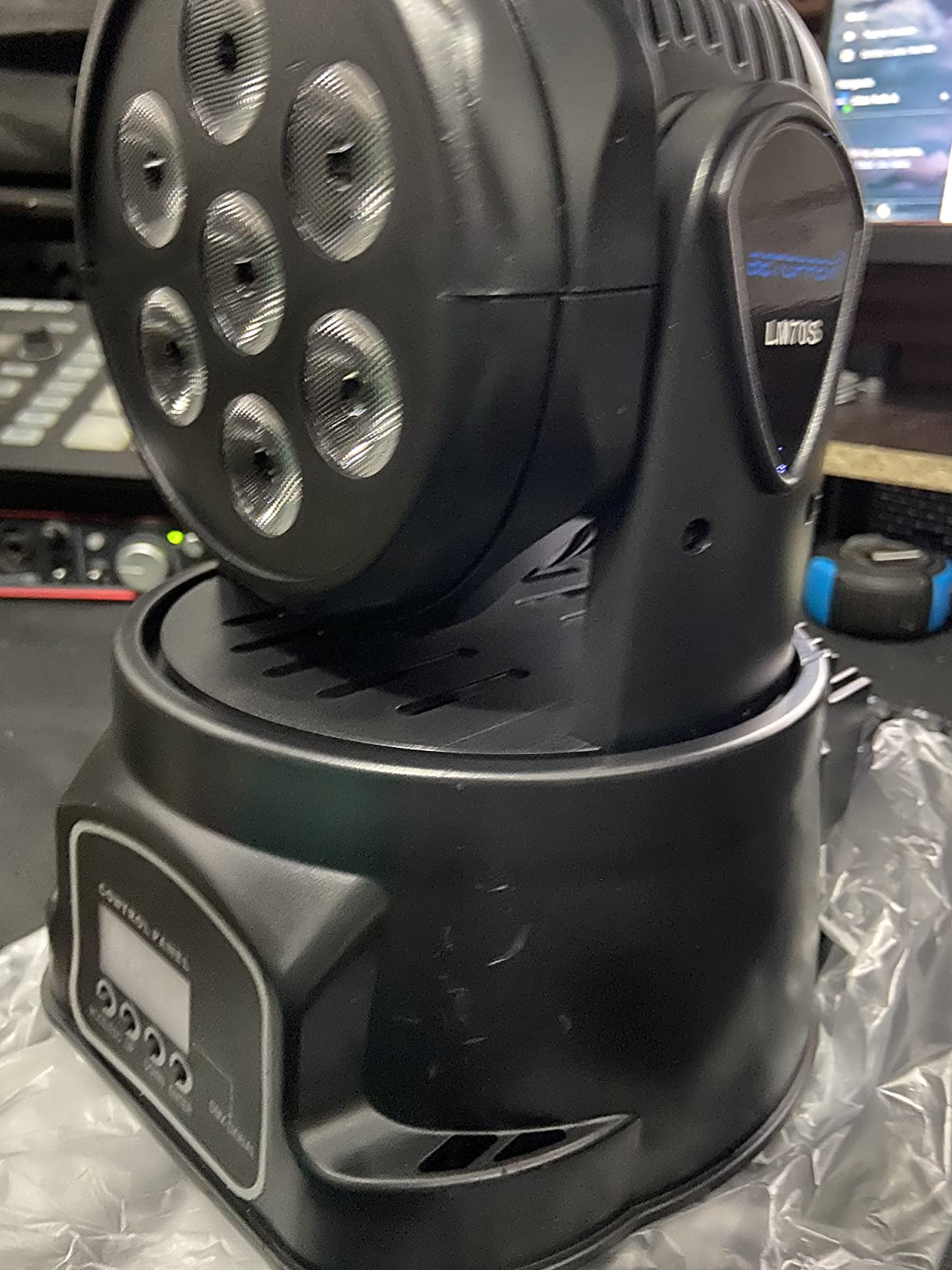
Colour rendering is listed at CRI 80, which is a reasonable middle ground and a clear step up from the 75 in the editor’s choice. The dimming, colour and strobe channels are available in both 9 and 14 channel layouts, and the rear-panel function button makes mode changes quick without a controller.
The 36 degree angle is the number to think hard about. It is wide, so the fixture is a wash first and a beam second, and the 17 foot range tells you exactly how quickly it fades past a small bar or a compact function room.
Why DJs and small venues pick it?
For a mobile operator covering bars, hookah lounges and small weddings, one fixture type that does two jobs halves the number of heads you carry, power and case. The four control modes, including master-slave, let you chain several fixtures off one controller or run them independently when nobody is driving the desk.
Two practical details matter more than the effect list. The built-in cooling fan is rated for operation between -20 and 40 degrees Celsius, which covers most indoor work and temperate outdoor events, and the LED array is rated at 50,000 hours, so time-to-failure is not the constraint here.
Why it is wrong for a big room?
Thirty-six degrees is simply too wide for a stage with real depth, and at 7.5 pounds per pair the weight is on the heavy side for a compact mobile bag. The ABS housing also flexes and scuffs more readily than a metal chassis, so for touring and repeated crating a metal-bodied fixture is the safer spend.
If your stage is deeper than about 17 feet, or you need gobos and patterns, this is not the tool. The XPCLEOYZ and ZKYMZL units further down cover those jobs with tighter beams.
3. XPCLEOYZ 60W DMX512 Moving Head 2-Pack – Bright Output at a Mechanical Price Point
XPCLEOYZ 60W DJ Lights Moving Head Lights DMX512 Stage Lights
60W LED
8 gobos with shake and rotation
Truss, wall or floor mounting
1-year warranty
Pros
- Bright 60W engine suited to medium club-sized rooms
- 8 gobos and 8 colors with half-color and rotation
- DMX linking syncs multiple fixtures without a controller
- Fast accurate head movement tied to DMX values
- Compact chassis mounts on truss wall or floor
Cons
- No replaceable gobo wheel
- Fans and motors are loud in quiet settings
- DMX dropouts reported at the end of a long XLR run with some early failures
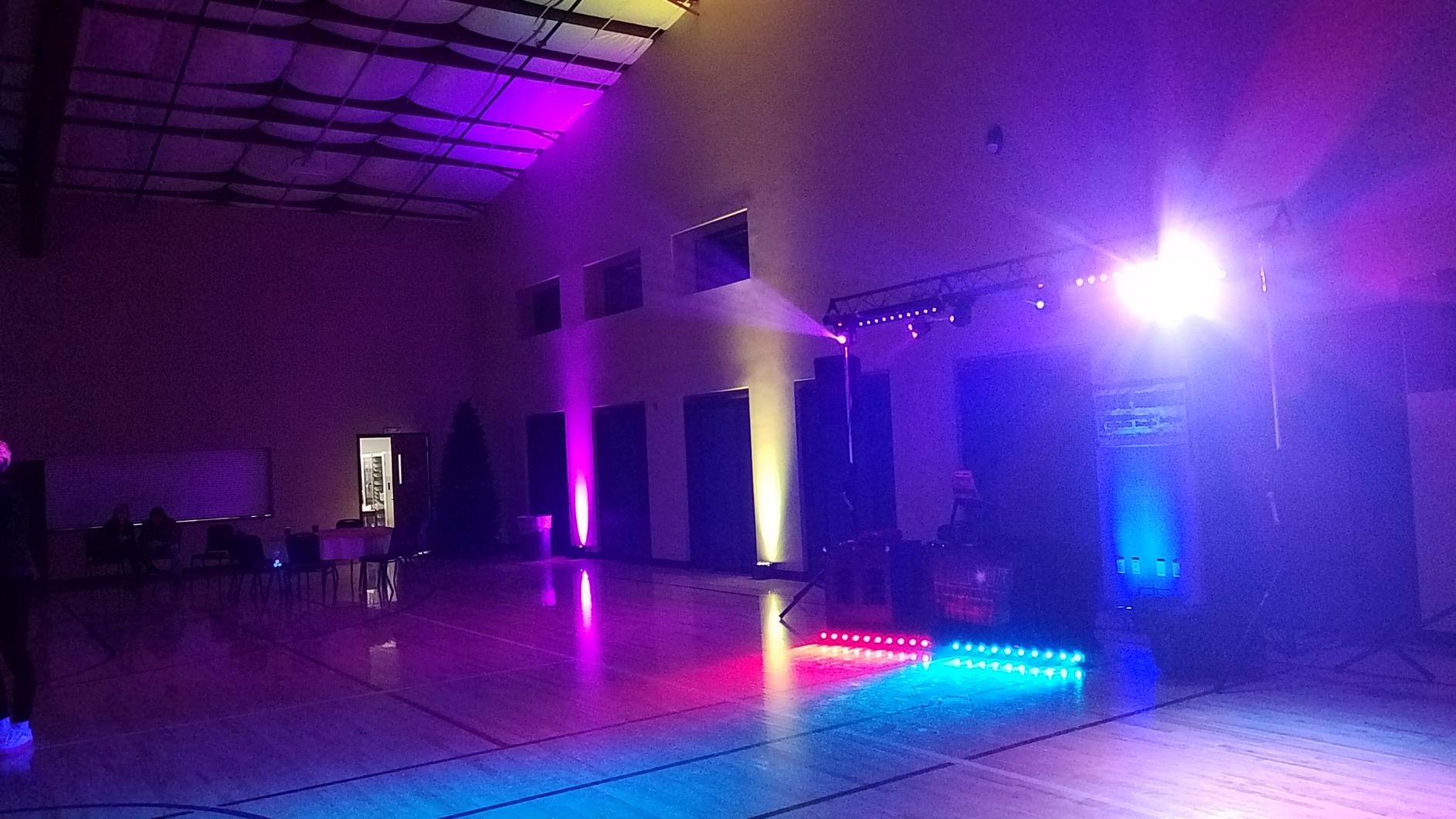
The 60W engine is the headline here, and it is a real jump from the 25W fixture above. In a medium room with a low ceiling and a band on stage, that difference is visible from the back of the floor. The metal finish and compact chassis also mount on truss, wall or floor, which gives you more rigging options than most of the compact movers in this roundup.
Movement is the other talking point. Owners describe fast, accurate head movement tied directly to DMX channel values, and 540 degree pan with 270 degree tilt covers a full stage sweep. The 8 gobos support shake and rotation, and the 8 colours add half-colour and adjustable rotation speed.
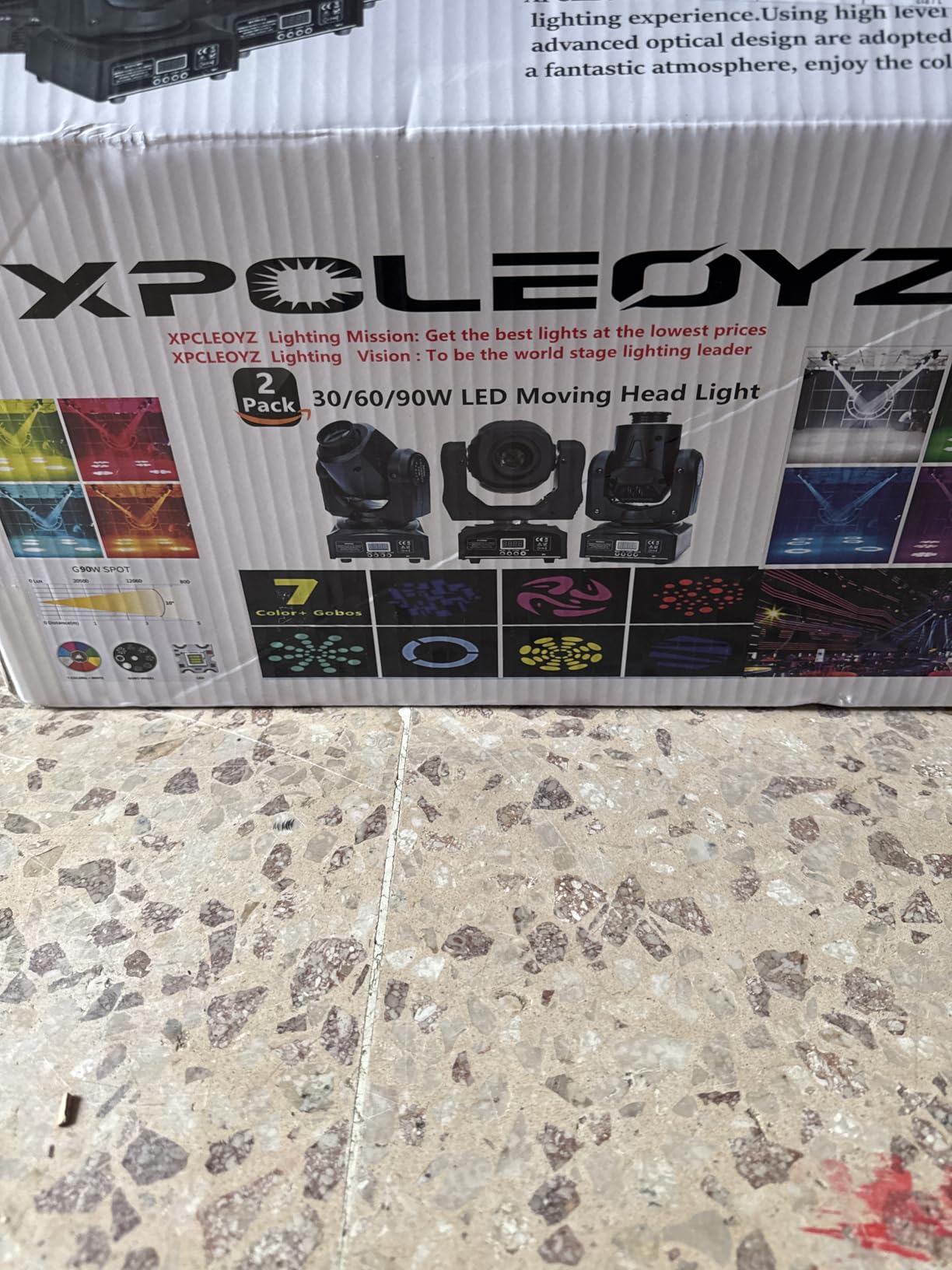
DMX linking is the feature that separates this from a pure standalone fixture. Chain several along one cable and they sync without a controller being present, which matters when you are covering a party with no operator and no programming time.
The modes list is comprehensive: automatic, sound-activated, DMX512, master-slave, strobe and pattern dithering. The 1-year warranty is a step up from the 90-day terms common in this tier, and at 6.6 pounds the pair is manageable for a solo operator.
What you are actually buying here?
You are buying brightness and mounting flexibility in a small, durable package. Nothing on this fixture is premium, but the 60W output and the truss-or-floor flexibility are exactly what a small club, a church platform or a banquet room needs, and the gobo shake gives you texture in haze without a separate pattern light.
Budget an hour for addressing and mode selection. Once the fixtures are patched, the sound-activated and auto modes mean you can run an entire evening without a console, and the DMX modes are there when the look calls for it.
Where the complaints concentrate?
Two things come up repeatedly. Fans and motors are loud in quiet settings, which makes this a poor fit for a church service or an acoustic ceremony. And the gobo wheel is not replaceable, so when the patterns wear you are looking at a new fixture rather than a new wheel.
There is also a minority report of DMX dropouts when the fixture sits at the end of a long XLR run, plus some early failures with slow seller response. If you run long cable distances, keep the fixture within a reasonable run length and test addressing before the show, not during it.
4. U’King 60W Moving Head with Remote – Best Gobo Look and the Finest Positioning Spec
2PCS 60W LED Moving Head Light Stage Lights with Remote Control 8 GOBO 8 Colors Spotlight by DMX Controlled 11 Channel with Sound Activated for Disco Club Party Stage Lighting Shows
60W LED engine
8 gobos and 8 colors
540 degree pan and 210 degree tilt
Remote control included
Pros
- Remote control changes modes and speed without a DMX board
- Very bright output that reads even in a daylit room
- Gobos project clearly at 20 to 30 feet
- Micro-adjustment accuracy quoted at 0.008 degrees for smooth transitions
- Two fixtures can react independently or linked
Cons
- Remote has a short effective range and its SAVE function is unreliable
- DMX channel map is complicated to program
- No physical power switch on the unit
This is the one to buy if gobos are the look you are chasing. Reviewers consistently report that the gobo patterns project clearly at 20 to 30 feet, which is a genuinely useful throw for a fixture at this output level and the reason it works on a stage rather than only in a small room. The 60W engine also reads in a daylit space, which is unusual at this tier.
The movement specification is the most precise in the roundup. Pan runs 540 degrees at 2.11 degrees per step and tilt runs 210 degrees at 1.05 degrees per step, with micro-adjustment accuracy quoted at 0.008 degrees. In practice that produces the smooth transitions owners describe rather than the visible stepping that cheap stepper motors produce.
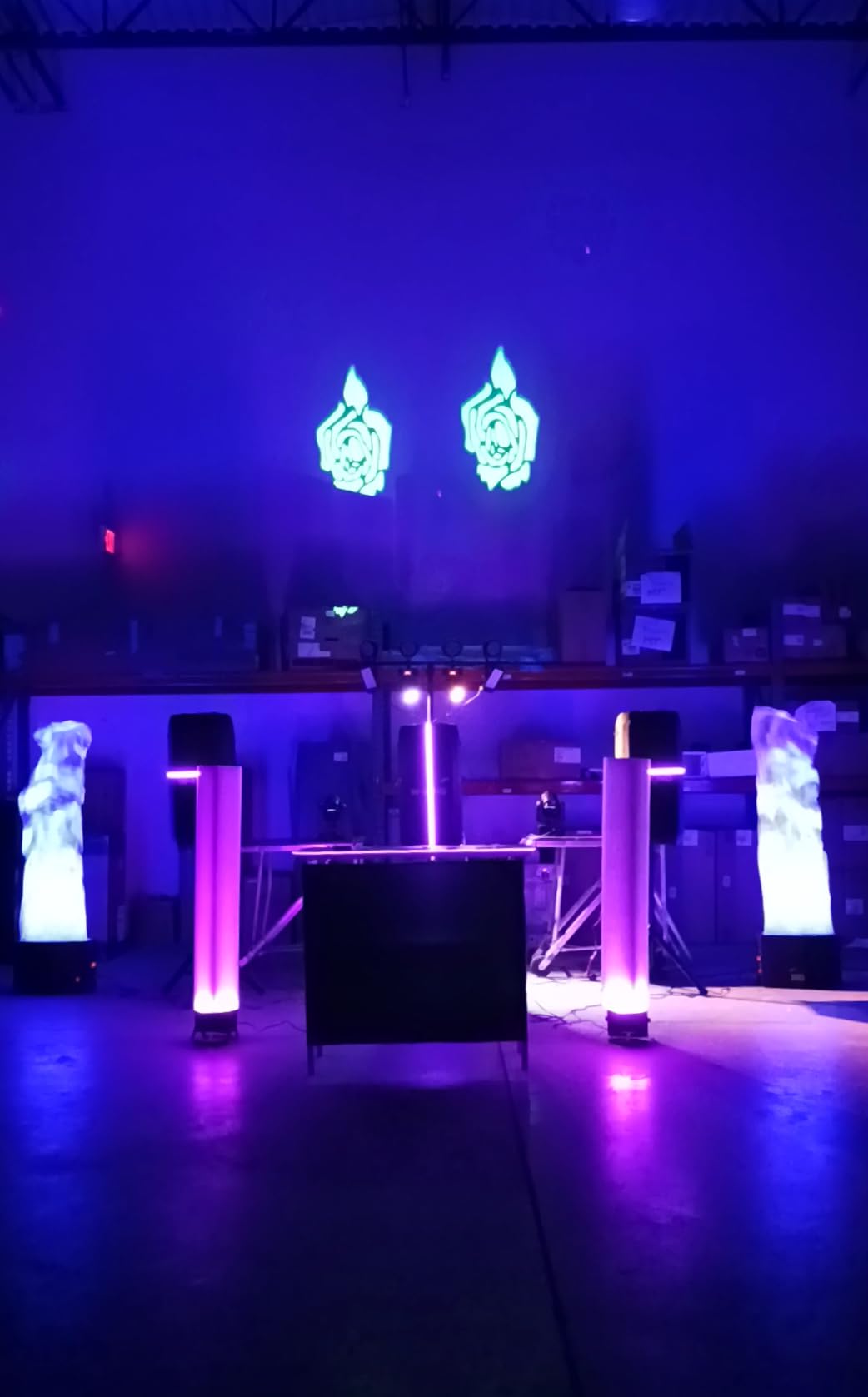
The included remote is the feature nobody else in this price range offers. It changes modes and movement speed without a DMX board, which makes the fixture usable by someone who is not a lighting operator. Two fixtures in the pack can react to music independently or linked, so a two-head look does not have to look mechanical.
Mode selection runs through DMX512, sound-activated, master-slave and auto, with 9 and 11 channel options depending on how much control you want to trade away for headroom.
What the remote is genuinely good for?
It solves the biggest practical problem in entry-level moving head lights, which is that the person who owns the fixture is rarely the person who programmed it. Walk-on operation without a board means a bartender or a band member can switch modes mid-set. Set the look once and the remote handles speed and mode changes from the floor.
Eight colours with a half-colour effect and adjustable rotation speed give you enough colour movement for a wedding or a party, and the gobo wheel is the reason this unit earns its place in a gobo-driven show.
What the remote cannot do?
The remote has a short effective range, so you will be close to the fixture to use it, and its SAVE function for storing pan and tilt position is reported as unreliable. If you are building a repeatable show, program that position in DMX rather than trusting the remote.
The DMX channel map is described as complicated to program, so allow setup time. There is also no physical power switch on the unit, so powering down means unplugging or using a switched outlet. The warranty here is only 2 months, which matters more than anywhere else in the roundup because the electronics are the part most likely to fail on a fixture you cannot reach without a ladder. Keep the box and test the fixture inside that window.
5. U’King 7x10W RGBW Wash Beam 2-Pack – Best for Wash Coverage and Colour Matching
U`King Moving Head Light RGBW Stage Lighting DJ Lights 7 x 10W LED Beam Spotlight 9/14 CH Wash Light with DMX and Sound Activated for Party Church Wedding Bar Christmas Halloween Disco (2 Pack)
7 x 10W RGBW LEDs
4100 lux at 1 meter
LCD menu with 4 buttons
9 or 14 DMX channels
Pros
- Produces colour washes and pixel-style effects from seven RGBW LEDs
- 4100 lux output with a 1-25Hz strobe for dynamic looks
- Five control modes selected from a clear LCD panel
- Lightweight bracket-mount body for truss floor or wall
- 100000 hour rated service life with good heat dissipation
Cons
- PVC housing is less rugged than metal fixtures for touring
- 180 degree tilt is narrower than the 270 degree offered by gobo movers
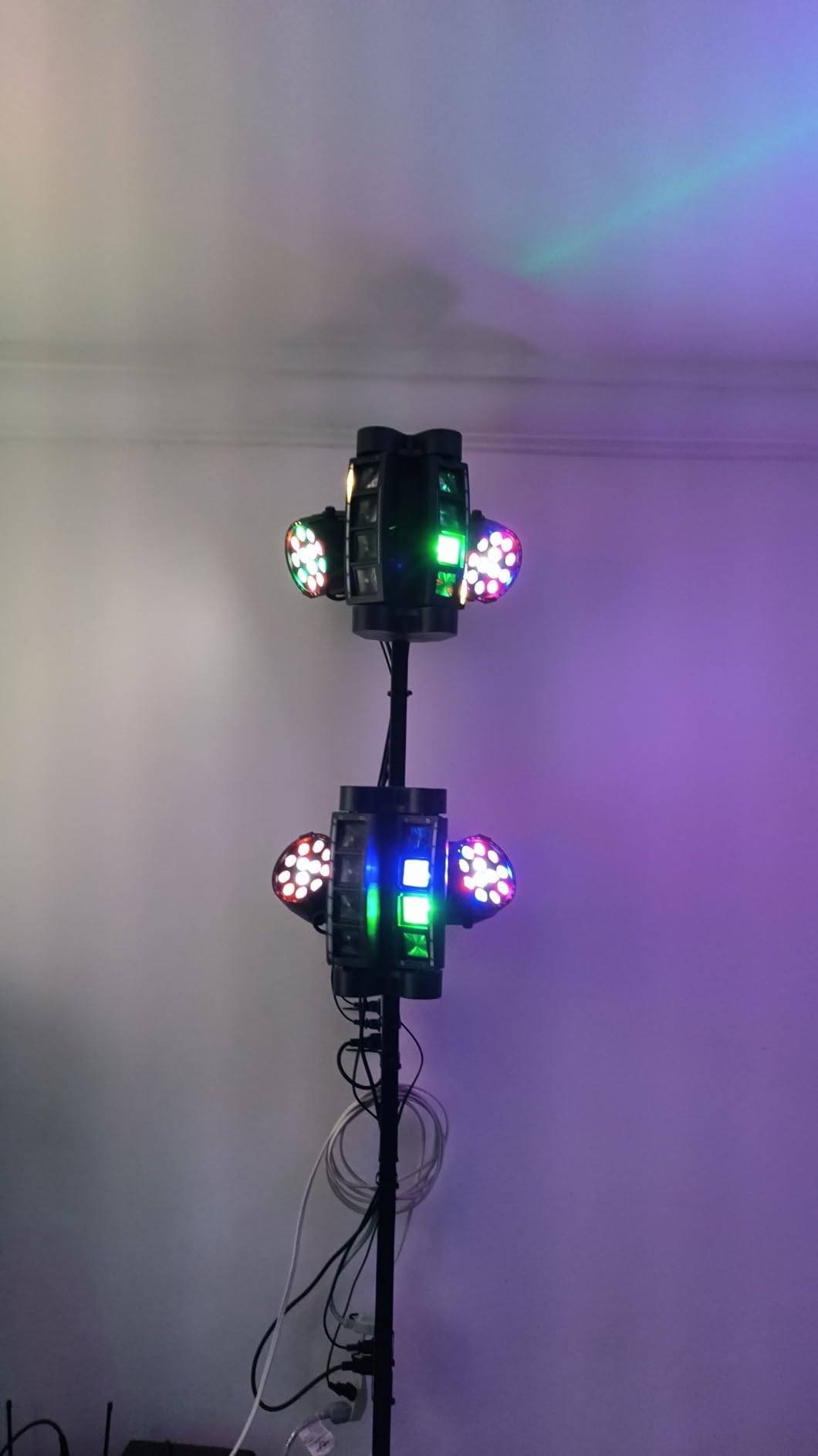
This is the wash-first fixture in the group, and it is the one our team would pick for colour matching across a room. Seven 10W 4-in-1 RGBW LEDs sit in a single head, so the fixture produces a colour wash and pixel-style effects from the same source. That matters when you are trying to match a look across a church hall, a bar or a wedding reception space where consistency beats a narrow beam.
The photometric figure is the useful one. Output is quoted at 4100 lumens and 4100 lux at 1 meter through a 25 degree angle, which is a real number at a real distance rather than a lumen headline with no context. The 1-25Hz strobe gives you punch for dance and party work without a separate strobe fixture.
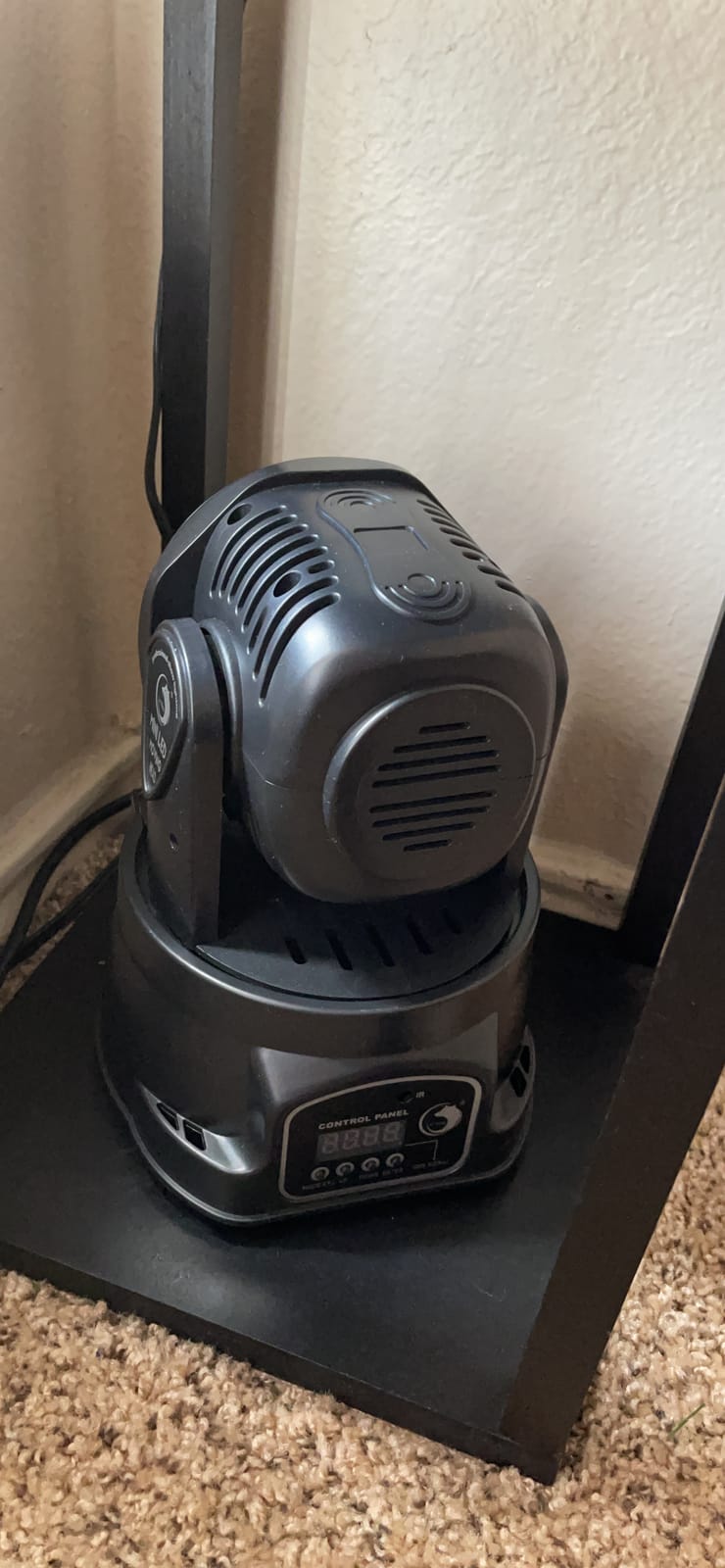
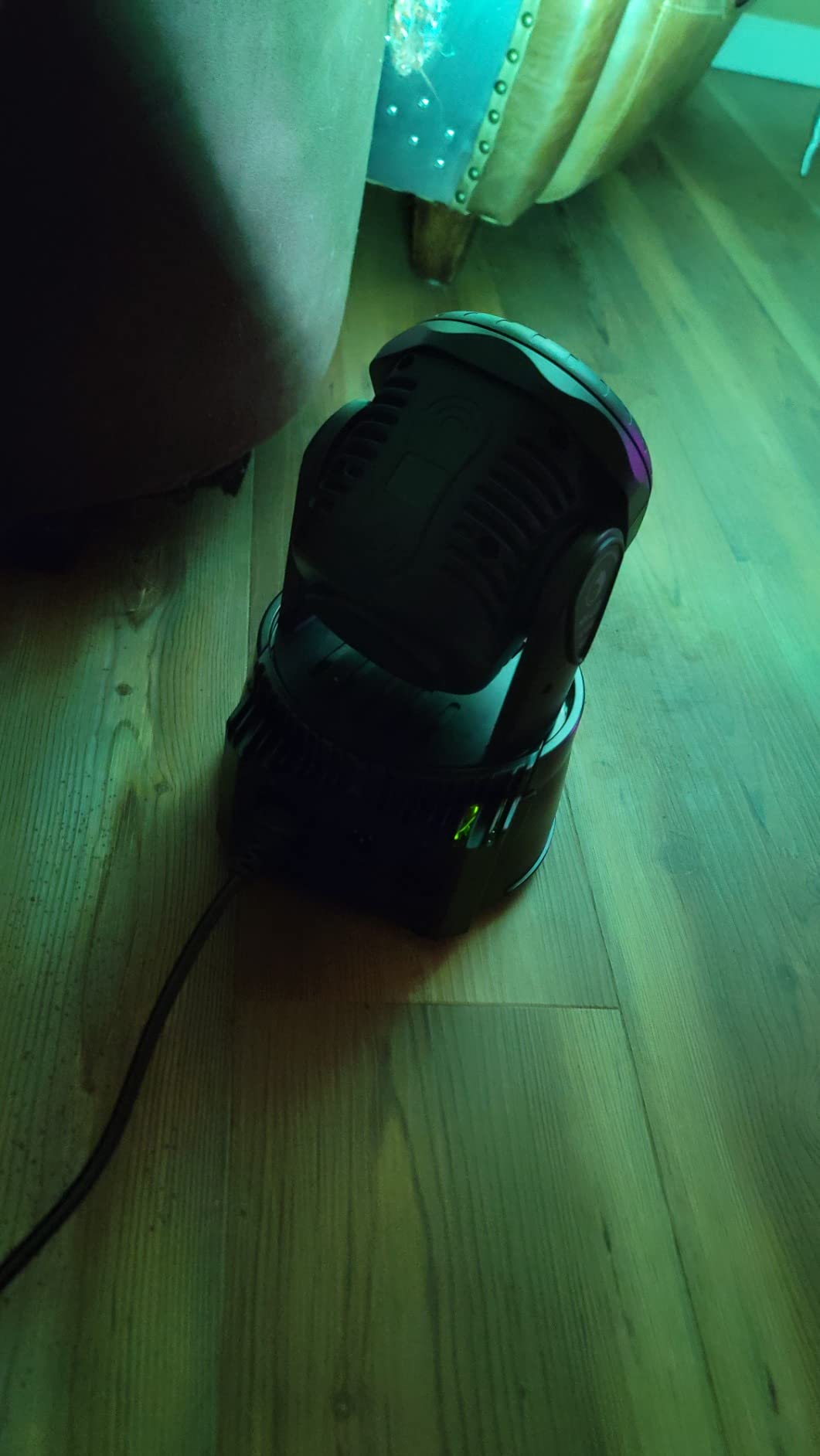
Control is handled through an LCD display with a 4-button menu on the side panel, which removes the guesswork from button hunting. Five modes are available: DMX512, sound-activated, remote, master-slave and automatic, with 9 and 14 channel options. The rated service life of 100,000 hours is the highest figure among the fixtures here.
At 4.58 kilograms the pair is light for the output, and the bracket-mount body hangs on truss or stands on the floor or a wall, which covers most small-venue rigging situations.
Where a wash-first head earns its place?
For church platforms, bars, receptions and school halls, uniform colour across a room is the goal, and RGBW gets you there with fewer fixtures than mixing a fixed wheel. The LCD menu also means a volunteer can find the right mode without a manual, which is worth more than an extra effect wheel in a community setting.
Mounting flexibility is the underrated part. The same body goes on truss, on a floor stand or on a wall, so a single purchase covers three rigging scenarios that would otherwise need three different fixtures.
Where it will not keep up?
The PVC housing is the weak point. It is lighter than metal and fine for a fixed install or a light touring schedule, but it is the first thing to crack when a fixture is crated and thrown weekly, which is exactly the scenario forum users describe when they call budget movers fragile.
The 180 degree tilt range is also narrower than the 270 degrees offered by the gobo movers in this roundup, so vertical coverage behind and in front of the performer is more limited. If gobos or wide vertical movement are part of the look, this is not the fixture.
6. ZKYMZL 30W Moving Head Light – Best for Quiet Rooms and Ceremony Work
ZKYMZL 30W LED Moving Head DJ Lights DMX512 GOBO Spotlight with 8 Colors + Color-Split Effect 8 Rotating Patterns Compact Beam Stage Lighting for Small Venues Weddings Parties Church Events (1 Piece)
30W cool white LED
CRI 90 and 6500K
540 degree pan and 270 degree tilt
Rooms up to 500 square feet
Pros
- Bright enough for small to medium rooms up to about 500 square feet
- Quiet enough that fan noise does not bleed into ceremony audio
- Smooth accurate pan and tilt with repeatable gobo and colour indexing
- Plug-and-play sound mode with adjustable mic sensitivity syncs several fixtures
- Well-packed with foam protection and a clear manual
Cons
- No on or off power switch on the fixture
- No standard DMX profile for some controllers
- Some units show a slight home-position offset or brief startup whine
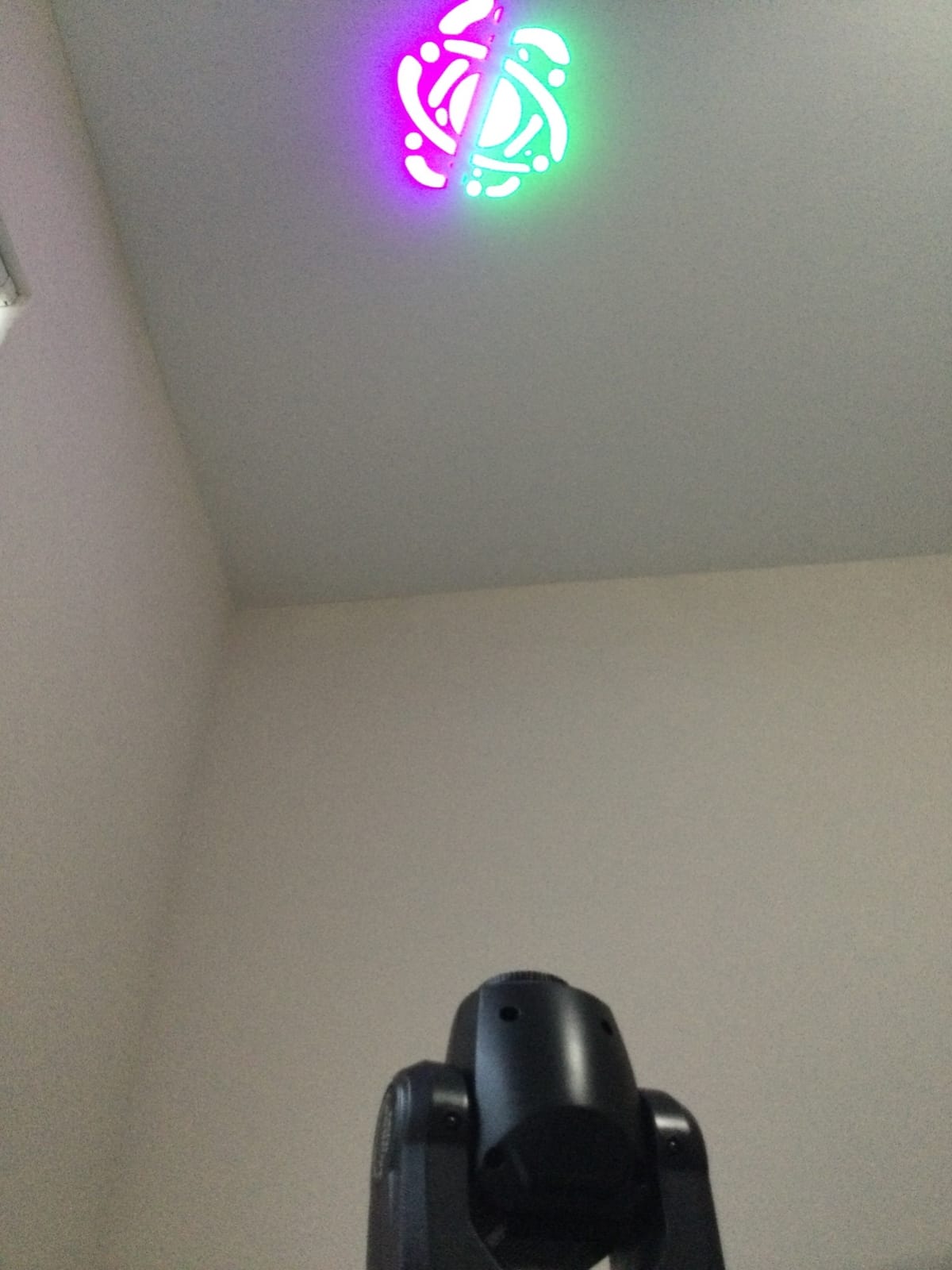
This is the quietest fixture our team tested, and for a church, a theatre or an acoustic set that single fact outweighs almost everything else on the sheet. Owners specifically report that fan noise does not bleed into ceremony or live audio, which is the complaint that appears against nearly every other mover in this roundup.
Colour rendering is the other standout. CRI 90 at 6500K is the highest figure among these fixtures and the only one that is genuinely usable on camera. If your event is being filmed or streamed, that specification alone justifies the choice, because cheaper movers commonly sit at CRI 75 to 80 and shift skin tones.
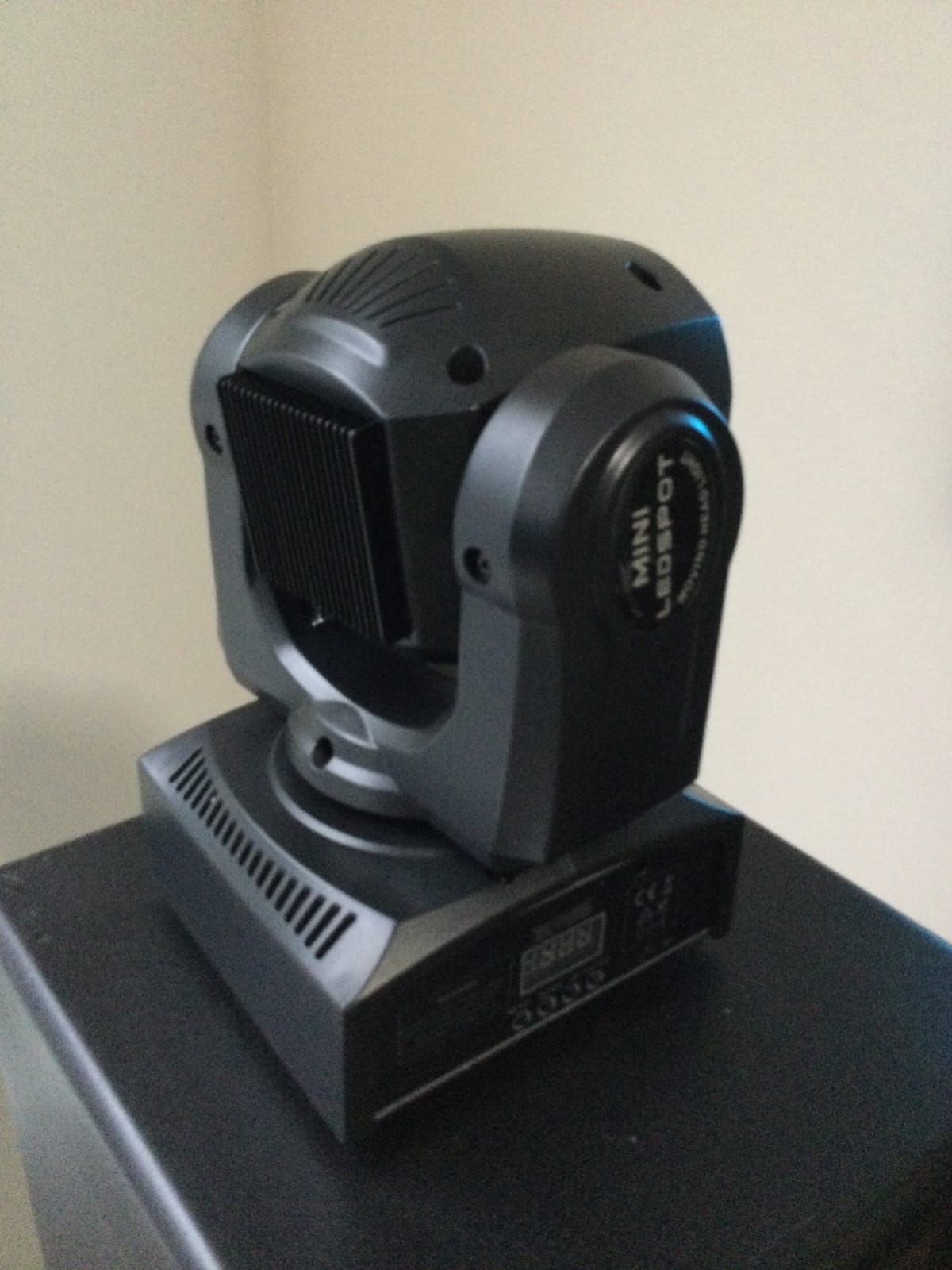
Movement is smooth and accurate, with repeatable gobo and colour indexing, which is the characteristic that forum buyers say quietly ruins a programmed look when it goes wrong. The 540 degree pan and 270 degree tilt with auto error correction covers a full stage. The 30W engine is quoted for rooms up to about 500 square feet, which is a real coverage figure rather than a guess.
Sound mode is genuinely plug-and-play. Adjustable microphone sensitivity lets you sync several fixtures together without a controller, and the fixture runs cool enough for 8 or more hours of continuous use, which covers a full rehearsal or a long service.
Why ceremony and theatre buyers should read this section?
Repeatable indexing means the head lands on the same mark every time, so a programmed look survives the length of a show. Combined with quiet fans and CRI 90, this is the closest thing to a general-purpose fixture in the roundup for rooms where the audience is listening as well as watching.
Support is another differentiator. Owners report responsive manufacturer support that sent a replacement quickly, and the 1-year warranty with US-based support is stronger than the paper terms most fixtures in this class carry. At 2.54 kilograms with a bracket, cable, screws and manual in the box, it is a complete package.
What to watch before you commit?
There is no on or off power switch, so you need a switched outlet or you are unplugging the fixture to shut it down. Some units also show a slight home-position offset on startup, or a brief whine at power-up, though the offset corrects itself in normal use.
One owner also reported no standard DMX profile for controllers such as mydmxgo, which matters if you programme on a tablet. Confirm your control software can load a generic profile before you buy a pair.
7. SHEHDS 10W RGBW Mini Moving Head 2-Pack – Best for Tight Spaces and Truss-Limited Rigs
SHEHDS Moving Head Mini LED 10W RGBW 4in1 Beam Effect Stage Lights 2 Pack
Under 5 inches wide
10W RGBW 4-in-1 LED
540/270 pan and tilt
11 and 13 channel profiles
Pros
- One of the smallest movers in the group at under 5 inches wide
- RGBW 4-in-1 output with 0-100 percent electronic dimming
- Sound activation stays responsive at low volumes
- Six operating modes for use without a controller
- CE ROHS UL and SAA certified
Cons
- Only a 10W LED so it suits accent and small-room duty rather than main key light
- No gobo wheel so all effects are beam-based
- Polyester shade material is less robust than metal or ABS housings
Size is the entire argument for this fixture, and it is a good one. At under 5 inches wide and 10.63 inches tall, it is one of the smallest movers available, and it mounts on truss, a pole or a tabletop. That solves the constraint that forum users raise more than any other, which is a small venue with no room for lights on a stand.
Colour output is a single 10W RGBW LED producing red, green, blue and white, with smooth electronic dimming from 0 to 100 percent. The movement range is genuinely wide for the size at 540 degrees of pan and 270 degrees of tilt, so a small fixture can still cover a room rather than a corner of it.
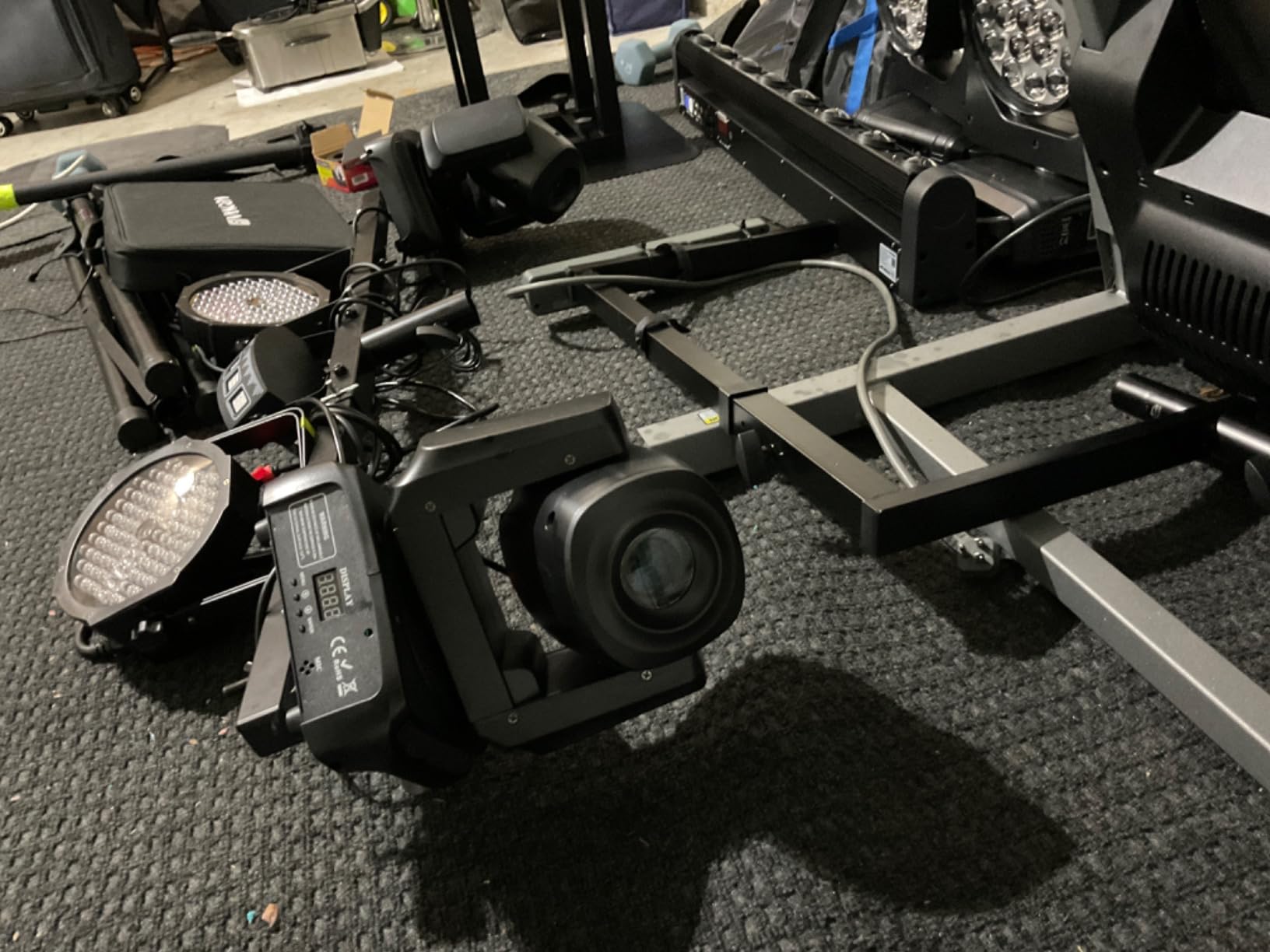
Sound activation is more sensitive than most, reacting at low volumes, which matters in a bar or a room where the music is not being pushed. Six operating modes cover DMX512, master-slave, sound-activated, colour jumping, standalone strobe and auto run, so the fixture is useful with no controller at all.
The certification is worth noting too. This unit carries CE, ROHS, UL and SAA listings, which is more documentation than most competitors in this price bracket can show, and it is backed by a 1-year warranty.
Where a mini mover genuinely wins?
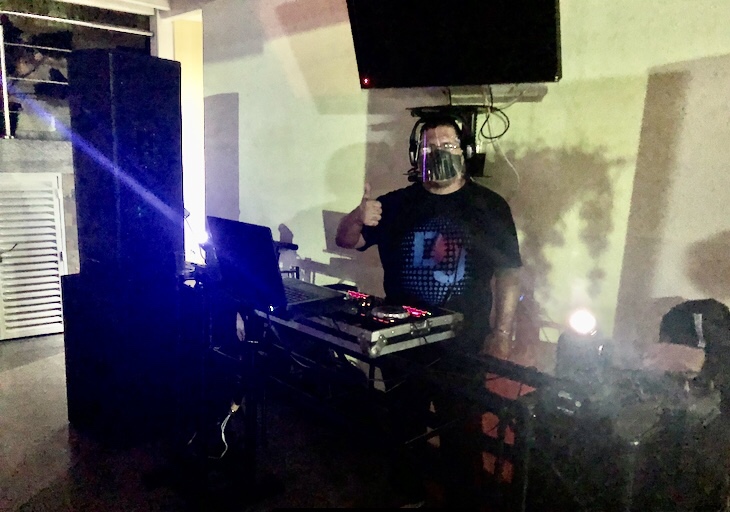
When truss space, ceiling height or weight limits are the binding constraint, a fixture this small changes the design of the rig rather than just the shopping list. It can sit on existing truss, on a pole, or on a table in a bar, and the 540/270 sweep still covers a room properly.
It is also a strong second layer. A pair of these behind or beside a performer adds moving colour and a beat response at a fraction of the weight and cost of a full-size spot, which is how most small-venue rigs are actually built.
What a 10W LED cannot do?
Owners are clear that this is an accent and small-room fixture rather than a main light. A single 10W LED will not compete with a bright stage wash, and there is no gobo wheel, so every effect is beam-based. If your show needs patterns and textures, this does not provide them.
The polyester shade material is also less robust than metal or ABS housings, so treat it as a fixture that stays assembled rather than one that gets crated and thrown every weekend.
8. GdjRttk 350W 7R Beam Moving Head – Best for Long Throw and Aerial Effects
350W 7R Beam Moving Head Light with RGB LED Strip,DMX512 Control Sound Activated Prism Fog Rainbow Effect,48 Prism & 14 Gobos 14 Colors,Auto Correction for Stage DJ Concert Theater(1Pack)
350W rated beam, 230W LED source
230000 lux at 10 meters
0.5-8 degree zoom with focus
DMX512 and RDM
Pros
- Very high output for large rooms with a tight 0.5-8 degree zoom
- 48 prism effects plus 14 gobos and 13 colour filters
- 27 RGB LEDs add colour and rainbow effects to the beam
- RDM support gives feedback on fixture settings before a show
- Quick-lock brackets and daisy-chained power speed up setup
Cons
- Short 2-month manufacturer warranty for the class
- IP20 housing means indoor use only in exposed conditions
- Source rated at only 2000 hours compared with tens of thousands for LED fixtures
This is the long-throw fixture, and the specification gap between it and everything else here is large. Output is quoted at 230,000 lux at 10 meters, from a 350W rated beam with a 230W LED source and 98,000 lumens. That is a fixture for a room with depth, where a narrow beam has to punch across distance rather than wash a nearby surface.
The zoom is the feature that changes what you can do. A 0.5 to 8 degree range with electronic focus means the same head covers a pencil-thin aerial beam and a wider shaft without moving the yoke, and the focus keeps the beam sharp when the zoom is not at its default position.
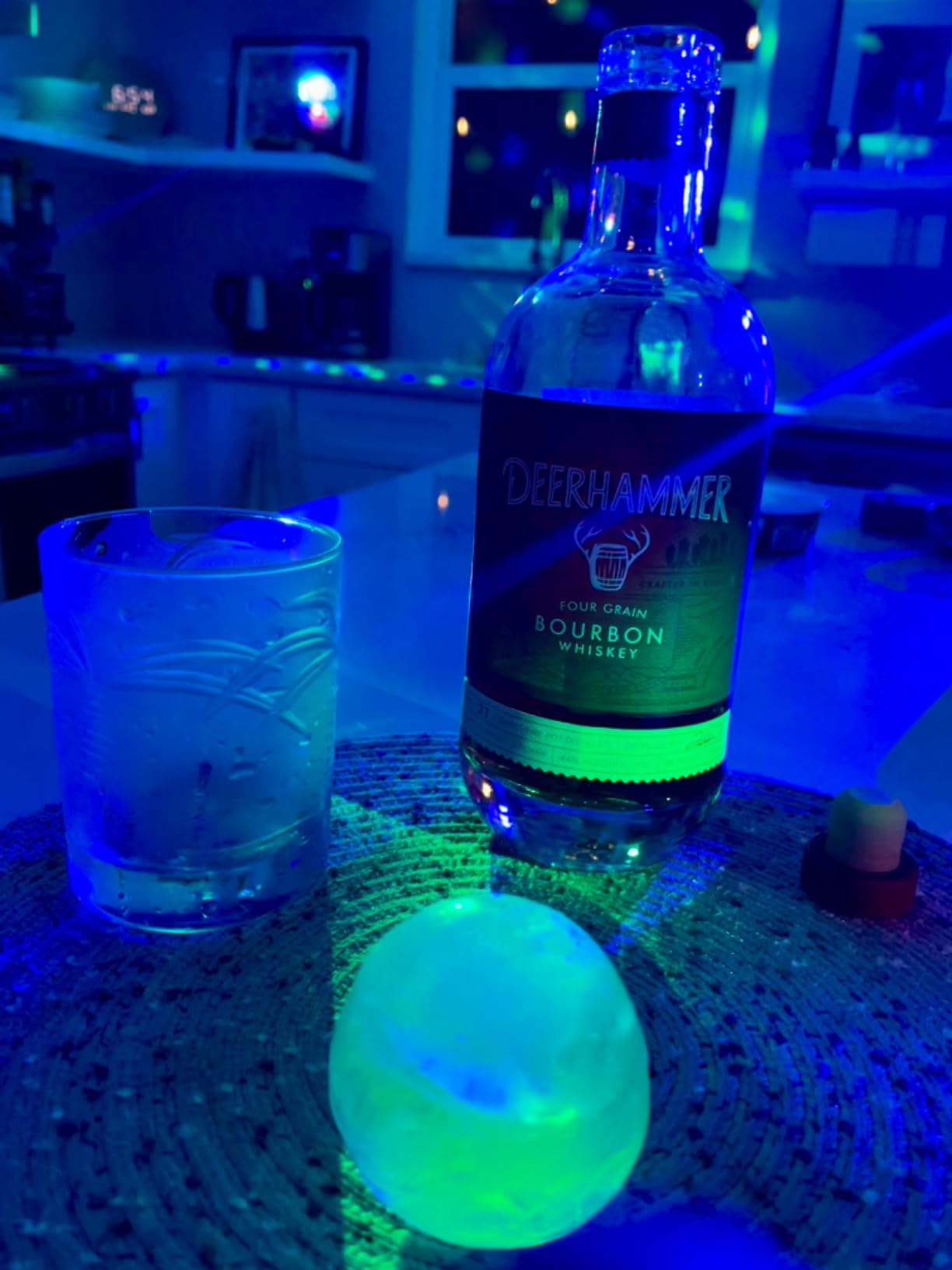
The effect library is the largest in this roundup by a distance. Forty-eight dynamic prism effects, 14 gobos and 13 colour filters give you far more layering than an 8-gobo mover, and 27 RGB LEDs add colour and rainbow effects directly into the beam so it reads even without fog. DMX512 and RDM are both supported across 18 channels, so you can read fixture settings remotely instead of climbing to the back of the rig.
Practical rigging details are handled well. Quick-lock brackets and daisy-chained power for 4 to 6 fixtures speed up a multi-unit build, and X/Y auto-correction at 540 degree pan and 270 degree tilt keeps the head honest after a bump. ERR fault alerts surface problems before a show rather than during one.
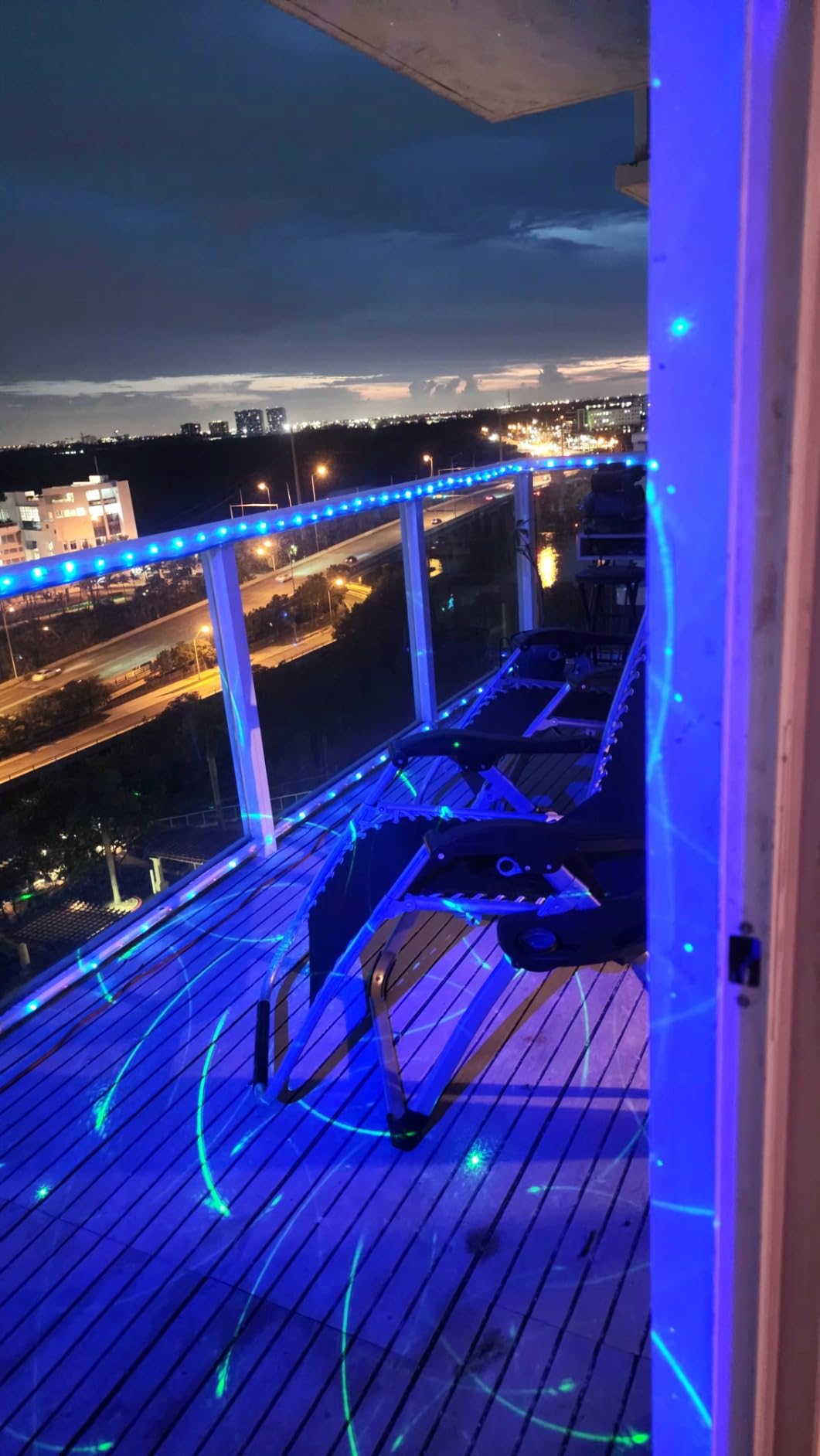
Why a high-output beam changes a show?
Brightness at distance is a differentiator you cannot fake with effects. At 230,000 lux at 10 meters this fixture holds a visible aerial beam in a room where a 60W head has already dissolved into the ambient wash, which is why theatre and concert buyers gravitate to this class.
RDM is the feature that pays for itself fastest. On a rig of 6 to 10 heads, being able to read addresses, mode settings and error status from the desk instead of a ladder removes real setup hours, and that is the single argument that convinces rental and installation buyers to step up a tier. The same sizing logic is applied in our moving head lights by use case.
What you give up, and what the outdoors means here?
The IP20 rating is the one to understand carefully. It is an indoor rating, so this fixture is not for exposed outdoor use, no matter how good the output is. For an outdoor event you need an IP65 body, and that is a different purchase entirely.
The 2-month warranty is short for a fixture of this class, and the source is rated at 2,000 hours, which is far below the tens of thousands quoted for the LED fixtures in this roundup. Treat that as a consumable cost in your cost of ownership calculation rather than a one-off purchase.
9. DJXFLI 150W Moving Head with 18-Face Prism 2-Pack – Best for Prism Layering in Mid-Air
DJXFLI Moving Head Light 150W Stage Lights 8 Gobos 8 Colors 12 Channels Beam Spotlights 18-Face Prism DMX 512 with Sound-Activated for Party Event Wedding DJ Lighting (2)
150W white LED
18 rotating prisms at infinite rotation
0-100 percent smooth dimming
12 DMX channels
Pros
- Strong 150W output described as plenty bright for gyms and banquet halls
- 18 rotating prisms give richer mid-air layering than 8-gobo movers
- Works with mainstream DMX software under a generic 150W mini beam profile
- Power cable and DMX cable included with mounting bracket
- Several buyers report fast replacement service from the seller
Cons
- Optics are not consistent between fixtures so beams are not uniformly focused
- Fixtures sometimes need a hard reset when pan or colour locks up
- No zoom function and the lens dims and films over with heavy fog
The 18 rotating prisms with infinite rotation are the reason to consider this fixture. Prism layering is the mid-air look, and a larger facet count produces a denser, more complex shaft than the 8-gobo movers elsewhere in this roundup can manage. For a gym, a banquet hall or a party where beams are the whole point, that is a real creative difference.
Output is a 150W white LED on 12 DMX channels, described by owners as plenty bright for gyms and banquet halls. Dimming is 0 to 100 percent smooth, and the cooling system is described as whisper-quiet, which is a notable claim for a fixture this size at 5.5 kilograms.
Control runs through auto, sound-activated, DMX and master-slave modes. Owners also report it works with mainstream DMX software under a generic 150W mini beam profile, and the box includes a 1.2 metre US power cable, a 1 metre DMX cable and a bow mount with screws. That is a complete kit rather than a fixture you have to build around.
Pan and tilt coverage is 540 degrees and 180 degrees. The colour wheel has half-colour and variable speed, and the gobo wheel has 8 gobos with shake and variable speed, so you get both prism and pattern options.
What the prism library does that a gobo cannot?
A gobo projects a shape. A prism splits one beam into many, and with 18 facets at infinite rotation the shaft breaks up in a way that fills a room faster than 8 patterns ever will. If your show is built on beam drama rather than pattern detail, this is the fixture that delivers it.
The included DMX cable is a small thing with a real effect on setup time. Nothing derails a load-in like a missing cable, and having one in the box means a fault at 6pm is a five-minute fix rather than a trip to a supplier.
What the quality control costs you?
Be clear-eyed about the complaints, because they are specific and consistent. Optics are not consistent between fixtures, so beams are not uniformly focused when several are lined up, which is visible on a dark stage. Some fixtures also need a hard reset when pan or colour locks up, and a minority have failed after roughly two months with support that was hard to reach.
There is no zoom function, so you cannot change beam width without moving the fixture, and the lens is reported to dim quickly and pick up a film when used with fog machines. Test the beam focus with several fixtures side by side before you commit to a pair, and keep fog use in mind if you plan to run heavy haze.
10. Lumvraneo 150W Six-Arm RGBW Party Light – Best for Filling a Room Fast
Moving Head DJ Lights 150W RGBW, 6-Arm Party Stage Light with Remote
Six-arm RGBW beam array
150W rated RGBW output
540/180 pan and tilt
DMX-512 on 22 channels
Pros
- Highest average rating in the group at 4.6 stars with 81 percent five-star share
- Six rotating arms throw a wide spread of beams that fill a room quickly
- Beams cut sharply through haze and fog for strong aerial effects
- Mounts to a stand ceiling or tent with plug-in setup
- Remote control and metal mounting bracket included
Cons
- 22-channel DMX profile is more involved than 9 or 11 channel options
- No gobo patterns so it produces coloured beams rather than shapes
- Newer listing with a shorter review history
This is not a conventional spot, and that is the point. A six-arm RGBW beam array spins six separate beams from one head, so a single fixture fills a room faster than two conventional movers. The 150W rated RGBW output across 10 light sources drives each arm, and the bee-eye effect plus red-green starlight give the beams a character that a plain spot cannot.
Satisfaction is the strongest signal in the roundup. This unit carries a 4.6 average with 81 percent five-star ratings and no three-star reviews at all, which is an unusually clean distribution. Owners describe it as bright, quick to set up and effective for backyards, weddings, hookah lounges and bars.
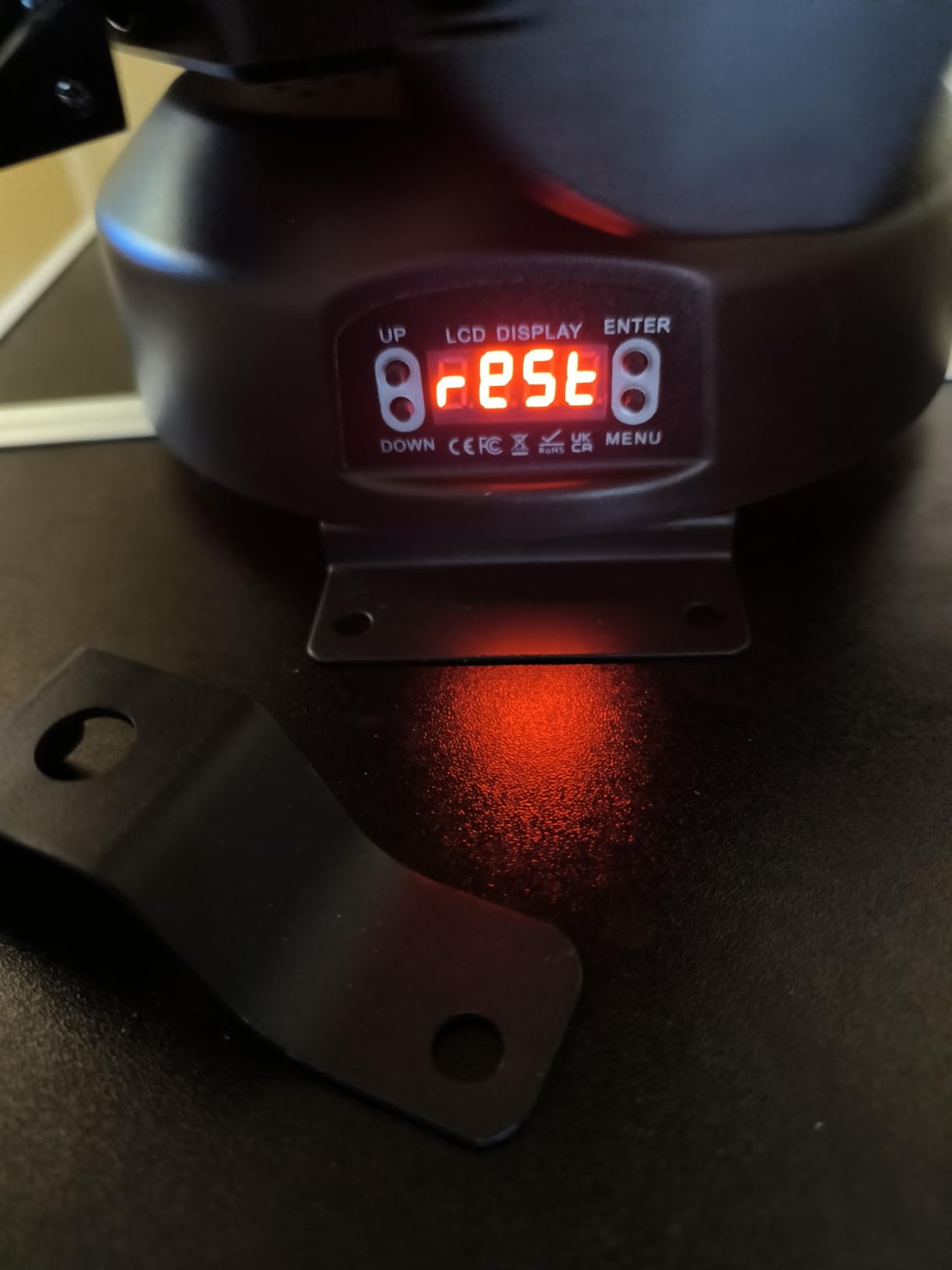
Beams stay sharply defined through smoke, haze and fog, which is the property that matters most for a fixture whose entire job is aerial effect. White and amber strobes are included alongside the beam, sweep, chase, pulse and dimming effects, so you do not need a separate strobe for the look.
Mounting covers stand, ceiling or tent, and the 6-pound weight with a metal bracket makes it a straightforward install. The remote control and a 1-year warranty are both included.
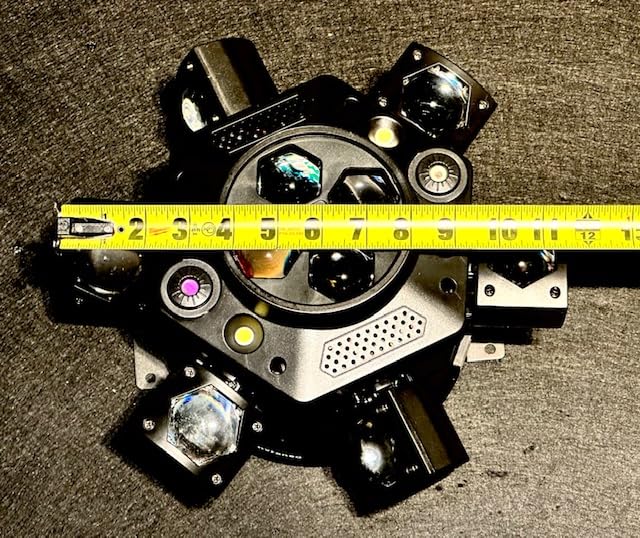
Why a six-arm fixture is a smart buy for parties?
For a mobile DJ, a wedding reception or a bar, coverage per fixture is the number that matters, and six arms deliver it from one yoke. One head can fill a room where a conventional mover would need three or four, which cuts power draw, case volume and the number of DMX addresses you have to manage.
The tent and stand mounting options make it a genuinely portable choice for outdoor events that are not exposed to driving rain, and the amber strobe is a nice touch for a room where white strobes read harshly on camera.
What it does not do?
There are no gobo patterns, so everything this fixture produces is coloured beams rather than shapes. If your show depends on texture, breaks and pattern projection, it needs a gobo mover alongside it.
The 22-channel DMX profile is more involved than the 9 and 11 channel layouts on simpler movers, so budget setup time and check that your console has a matching profile. The review history is also shorter than the established fixtures here, which is worth keeping in mind when weighing a used unit against a new one.
Beam vs Spot vs Wash vs Profile vs Hybrid
The first decision is not which brand or which wattage. It is which body type your rig is missing. Five types cover almost every job, and buying the wrong one is a costly mistake in this guide because the fixture will physically not do the work you bought it for.
Beam. A beam fixture produces the narrowest, longest throw in the range, typically between 1 and 8 degrees. It is the aerial shaft through haze, the concert look. Beams need haze or fog to be visible, and they are the least forgiving on brightness because the eye reads a thin shaft as brighter than a wide one at the same lumens.
Spot. A spot is a controllable, patterned beam, usually 10 to 20 degrees with a gobo wheel. This is the workhorse of stage lighting because it does the job of a follow spot, a pattern light and an aerial beam in one head. Most of the fixtures in this roundup are spots.
Wash. A wash covers an area with even colour rather than a defined shaft, usually 25 degrees and wider. Washes are what makes a stage look lit instead of highlighted, and the RGBW fixtures in this roundup are washes with a beam option attached.
Profile. A profile, also called a shutter or an ellipsoidal, is the one body designed to put a shaped edge on a surface, most often a follow spot for an actor. Profiles are built into a lighting rig for theatre and television. None of the ten fixtures here is a true profile, which is worth knowing if your work is performance lighting rather than event lighting.
Hybrid. A hybrid combines a wash lens and a spot lens behind one aperture, so a single head can be a broad colour wash and then a tight patterned beam. Hybrids are the most efficient way to fill a small rig, and the RGBW units in this roundup are budget examples of the idea.
Spot versus beam is the comparison buyers ask about most. A spot throws a shaped, patterned shaft at a mid distance and works on the performer. A beam throws a tighter, harder-edged shaft at longer distance and works through the air above and around the performer. A room with a 4 metre throw and haze needs a beam. A 10 metre room with a stage and a drum kit needs a spot.
Beam Angle, Lux and Throw Distance Math
Two numbers get confused constantly, and confusing them is how buyers end up with a fixture that is either blindingly bright at two metres and invisible at twelve, or adequate everywhere and spectacular nowhere.
Lumens is the total light the fixture emits in every direction. It tells you nothing about where that light lands. Lux is illumination on a surface at a given distance, and it is the number that matters when you are aiming at a stage or a backdrop. Lux falls roughly with the square of distance, so a fixture that delivers a useful reading at 5 metres delivers roughly a quarter of that at 10 metres from the same source, before you account for beam angle.
When you read a specification, insist on the distance attached to it. The ZKYMZL 30W covers rooms up to about 500 square feet, the U’King 7x10W RGBW publishes 4100 lux at 1 meter, and the GdjRttk 350W beam publishes 230,000 lux at 10 meters. Those three figures are not comparable to each other, but each one tells you the real distance it was measured at.
A simple sizing rule for beam fixtures works from trim height. Measure the distance from the fixture to the surface it lights, then divide by twice the tangent of half the beam angle to get the field diameter. Practically, that means the narrower the angle, the further back you can hang the fixture and still cover your target.
As a working guide, a 13 degree beam is built for a room of roughly 8 to 12 metres, a 25 to 36 degree wash or hybrid is comfortable at 4 to 6 metres, and a sub-10 degree beam is intended for venues where the fixture sits at the back of a large room and throws to the far wall. The U’King 25W at 13 degrees and the GdjRttk 7R at 0.5 to 8 degrees sit at opposite ends of that range.
Do not buy on wattage. A 25W fixture with a 13 degree beam and a 350W fixture with a 0.5 degree beam can both be correct, for entirely different jobs, and the wattage tells you nothing about whether either one will read at your throw distance.
Gobos, Prisms, Frost and Framing Shutters
These four terms describe the optical effects that sit between the lens and the room, and they are where a moving head light either earns its place or does not.
Gobos are the patterns etched into small discs, usually glass or metal, that sit in a wheel in front of the lens. A rotating gobo spins the pattern; a shake moves it back and forth; indexing means the wheel clicks into defined positions rather than drifting. Quality beats quantity every time. A wheel of eight crisp, well-drawn patterns that index cleanly will look better on a stage than a wheel of fifteen that stutter or blur.
Prisms are faceted glass elements that split a single beam into many. Facet count determines layering, and rotation speed determines how alive the effect looks. Eighteen rotating prisms at infinite rotation produce a much denser mid-air shaft than a fixed prism, which is why the DJXFLI in this roundup is worth considering for beam-driven shows. Prisms cost output, so a fixture heavy on prisms needs more source power to look as bright.
Frost is a diffusion filter that softens the beam edge into a wash. An independent frost control lets you go from a hard shaft to a soft glow within one look, which is a genuinely useful feature on a hybrid.
Framing shutters are movable blades that shape the edge of the beam into a rectangle, a circle or an angled window. On a profile they are the defining feature. On a spot, they let you shape light onto a surface, which is how a background or a floor mark gets made. None of the ten fixtures here carries independent framing shutters, and that is a legitimate reason to step up a tier if you need them.
One practical note that forum buyers raise constantly: gobos and prisms are consumables. A fixed, non-replaceable gobo wheel ends the pattern life of the fixture, and replacement parts are easier to source for fixtures with standard wheel sizes. Before buying, ask whether gobos, prisms, fans and power supplies are sold separately, and add a small spares allowance to your budget.
Color Systems Decoded: Wheel, RGBW, CMY and CTO
Colour is where fixtures feel most different, and the terminology confuses even experienced buyers. Four systems cover almost everything you will find at this price level.
Colour wheel. A fixed wheel of physical gels gives you exact, repeatable colours, the same red every time, which matters when you are matching skin tones or matching two fixtures side by side. The limit is that you only get the colours on the wheel, and the wheel is a consumable that fades.
RGBW mixing. Red, green, blue and white LEDs combine to make any colour, and a dedicated white LED gives you a clean white without mixing. The advantage is unlimited colour from a small emitter. The disadvantage is that two fixtures at the same DMX value can look different, and some greens and oranges are harder to hit than a gel would.
CMY mixing. Cyan, magenta and yellow subtractive filters sit in front of a white source to produce accurate colour. This is the broadcast and theatre approach, giving cleaner, more repeatable results than RGB, at the cost of output, because filters absorb light.
CTO. Colour temperature orange corrects a cool white source to a warm tungsten look for a film or a skin tone. A fixture with CTO can match older stage lighting instead of clashing with it.
One specification decides whether a fixture is usable on camera: CRI, the colour rendering index, measured on a 1 to 100 scale where 100 reproduces all colours faithfully. Among these fixtures, CRI runs from 75 to 90. A CRI 90 fixture such as the ZKYMZL 30W is the right choice for anything filmed, while CRI 75 is fine for a party and wrong for a close-up.
The fixtures in this roundup split cleanly. The U’King 25W, the XPCLEOYZ, the U’King 60W remote model and the ZKYMZL use a colour wheel with 8 colours and a half-colour effect. The Betopper, the U’King 7x10W, the SHEHDS mini and the Lumvraneo use RGBW mixing. The GdjRttk 350W combines 13 colour filters with 27 RGB LEDs. No fixture here uses full CMY, which tells you where the price ceiling sits for this class.
DMX Channels, RDM and Dimming Quality
DMX512 is the protocol that lets a console or app tell a fixture what to do. It is simple in principle and the place where a lot of buyer frustration comes from, so the details matter.
Channel footprint. Every function occupies a channel, and a DMX universe holds 512 of them. A fixture using 12 channels leaves 500 for everything else, while a 22-channel fixture like the Lumvraneo six-arm eats nearly five times as much. For a small rig, footprint is a real constraint, and several fixtures here offer 9 and 11 or 9 and 14 channel modes so you can trade features for address space.
Channel modes. Multiple modes are almost always offered so a fixture can be patched into a smaller footprint, but the different modes put functions on different channels. If you change modes mid-show, your cues will land on the wrong functions, so set the mode before you programme, not during.
RDM is the two-way branch of DMX512. It lets a console read a fixture’s current address, mode, and error status and change them remotely, instead of sending someone up a ladder with a physical menu. On a rig of six or more heads, RDM removes real setup hours, which is why it is one of the few genuinely advanced features in this roundup.
Dimmer curve. This decides how output follows the control value. A well-tuned fixture holds the bottom of the range without stalling, popping or dropping out, and it fades evenly rather than appearing to jump from off to full. Low-end dimming behaviour is the thing that separates a fixture that looks professional in a dark room from one that looks cheap.
PWM refresh rate. Pulse-width modulation dims the LED by switching it rapidly. If the rate is too low or badly aligned with your camera shutter, the beam flickers on screen. If you film or stream a stage, treat camera flicker as a hard requirement and test before you commit, because a fixture that flickers on camera is unusable regardless of how good it looks in the room.
Fan noise and quiet mode. Every mover with moving parts and a cooling fan makes noise, and buyers describe stepper whine and fan hiss as the most common complaint in this class. Quiet mode trades output for silence. In a church, a theatre or an acoustic set it is worth more than another effect wheel, which is the main reason the ZKYMZL 30W earns a place in this guide.
Position repeatability belongs on this list too. The head must return to the same mark every time, because a programmed look that drifts between cues is the single most common reason a programmed show falls apart in front of an audience.
The 15-Minute Acceptance Test
Run these eight checks the moment a fixture arrives. They take about 15 minutes per head and they catch more problems than any amount of showroom footage. Set aside a quiet evening, and do it before the fixture goes on a truss, not after.
1. Power on and watch the home position. Let the head complete a full reset cycle. Note any home-position offset, any startup whine, and whether the head recentres reliably. A fixture that hunts on startup will hunt mid-show too.
2. Run a full pan and tilt sweep twice. Pan the full range and tilt through the extremes, then repeat. Listen for hesitation, stutter or grinding. Listen for the same sound both times. This is the fastest way to identify cheap stepper motors, and it is the problem forum users complain about most.
3. Check position repeatability. Send the head to a specific position, note the mark on the floor, then send it away and bring it back. Do this five times. If the mark moves between returns, the look you programme will drift show to show.
4. Test the dimmer curve in a dark room. Bring the dimmer from full to zero in one slow fade. Watch for stalling at the bottom, popping, or steps in the fade. This is where the difference between a fixture that reads as professional and one that does not becomes obvious.
5. Address it and confirm it responds. Patch the fixture at a known address, run every channel, and confirm each function responds. If you are near the end of an XLR run, test there specifically, because dropouts at the end of a long run are a reported problem on some budget fixtures.
6. Stand in the room and listen. Run the fixture at full and at low, and judge the noise from audience position, not from the rig. Ask whether a quiet mode exists and what it costs in output.
7. Focus and pattern check. For a gobo fixture, check that each pattern is sharp and in focus, and that shake and rotation are smooth. Line two fixtures up side by side and look for differences in beam focus, which is how you catch the inconsistent optics reported on some pairs.
8. Run it hot for fifteen minutes. Leave it at full output with the shutters open and watch for dimming as it heats. Output that drops noticeably as the fixture warms is thermal step-down, and it tells you what the fixture will look like in the second half of a show.
Record the results. If something fails, you have the evidence to act on the warranty, and a note of the exact fault is far more useful to a seller than a general complaint.
Where to Buy: New, Used or Rental?
Where a fixture comes from matters almost as much as which fixture it is, and the three routes suit different buyers very differently.
New is the right call for a first purchase, and for anyone who has never handled a mover before. You get the warranty, the full accessory set, and a known condition. The trade is that entry-level new fixtures carry the shortest warranty terms in the industry, sometimes as little as two months, so register the fixture the day it arrives and test it within the acceptance window above.
Used makes sense for a rental company or a school theatre that runs the same rig every week and can maintain it. The saving is real, but the risks are concentrated in exactly the areas forum users complain about: lost pan and tilt calibration, a cooling fan on its way out, and a gobo wheel that has faded. Ask for a video of the fixture running its full pan, tilt and dimmer range before you commit, and run the same eight checks on arrival.
Rental is the most sensible answer for a one-off event. A 350W beam or a profile fixture is a large purchase for a single night, and rental puts professional output in your rig without the capital cost or the storage problem.
Budget beyond the fixture itself, because this is where first-time buyers are surprised. Clamps, safety cables, DMX cable, a control surface or a DMX app, fog or haze, and power distribution all add up. Add a small spares allowance for fans, power supplies, gobos and prisms, and budget setup time, because a rig of six heads with a 22-channel fixture on each takes far longer to address than the shopping took.
Whatever route you choose, weight per fixture decides how your week feels. A solo operator lifting six heads into a van every weekend will feel the difference between a 4.58 kilogram PVC body and a metal chassis faster than any specification sheet will tell them. Our full recommendations by use case sit in our moving head lights buying guide.
Frequently Asked Questions
What are the best features to look for in moving head lights?
The features that matter most are beam angle matched to your throw distance, output published as lux at a stated distance, a colour system that fits your look, gobo and prism quality, pan and tilt repeatability, motorized zoom and focus, multiple DMX channel modes, RDM, a smooth dimmer curve, a camera-safe PWM refresh rate, quiet cooling, a durable body with sensible weight, and a warranty of at least a year.
What are the different types of moving head lights?
The five main types are beam, spot, wash, profile and hybrid. A beam throws the narrowest, longest shaft for aerial effects through haze. A spot throws a shaped, patterned beam at mid distance and is the general workhorse. A wash covers an area with even colour. A profile, also called a shutter, shapes a hard edge for theatre and television. A hybrid combines a wash lens and a spot lens in one head.
What is the difference between a spot and a beam moving head light?
A spot throws a shaped, patterned beam at a mid distance and lights the performer, typically with a 10 to 20 degree lens and a gobo wheel. A beam throws a tighter, harder-edged shaft over a longer distance, typically 1 to 8 degrees, and is used for aerial shafts through haze. A 10 metre room with a drum kit wants spots. A large room with deep haze and a high ceiling wants beams.
What is the brightest moving head light?
Brightness is about lux at a distance, not watts. The GdjRttk 350W 7R beam in this roundup publishes 230,000 lux at 10 meters from a 230W LED source, which gives it the longest measured throw of any fixture we tested. A 150W spot such as the DJXFLI is plenty for a gym or banquet hall, and a 25W mover with a 13 degree beam reads bright only in a small room.
Why are moving head lights so expensive?
The price gap comes down to what sits behind the lens. Entry fixtures use a colour wheel with eight fixed colours, no zoom, plastic or PVC bodies and two-month warranties. Higher tiers add motorized zoom and focus, CMY mixing, RDM, larger prism and gobo libraries, metal chassis, longer optical life ratings and thermal management that holds output through a long show. You are paying for optics, motors and reliability, not for brightness alone.
How do I test a moving head light before buying or on arrival?
Run eight checks in a quiet room. Watch the home position on power-up, do a full pan and tilt sweep twice to listen for hesitation, test position repeatability five times, fade the dimmer to zero in a dark room, address the fixture and confirm every channel responds, listen from audience position, check that gobo patterns are sharp and matched between fixtures, and run it at full output for fifteen minutes to watch for thermal dimming.
Can moving head lights be used outdoors?
Only if the housing carries a suitable IP rating. The GdjRttk 350W beam is rated IP20, which means indoor use, and its brightness does not change that. Outdoor events need an IP65 or higher body with sealed connectors. For events without driving rain, an indoor-rated fixture under cover is workable, but check the operating temperature range as well, since the Betopper fan is rated for minus 20 to 40 degrees Celsius.
How many moving head lights do I need for a small stage?
Four to six fixtures cover most small stages, front truss and back truss, and that is enough for movement, patterns and colour across a band or DJ booth. Add two more for a wider stage or a larger dance floor. Coverage per fixture matters as much as count, which is why a six-arm RGBW party light fills a room faster than a conventional spot.
Conclusion
The features to look for in moving head lights come down to a short list: beam angle and lux at your actual distance, a colour system that suits the look, gobo and prism quality, movement that repeats the same mark every time, and a control system that does not eat your DMX universe. Everything else on a spec sheet is detail until one of those five is wrong.
Our editor’s choice is the U’King 25W moving head light 2-pack, with 8 gobos, 8 colours, 540 degree pan and 270 degree tilt and the largest owner base in the roundup at more than 1500 reviews. For long throw, the GdjRttk 350W 7R beam leads on measured output and zoom. For quiet rooms and anything filmed, the ZKYMZL 30W with CRI 90 and near-silent cooling is the one to beat.
Whichever you choose, run the fifteen-minute acceptance test before the fixture goes up, and buy the body type your room needs rather than the one with the biggest number on the box.