
Most people buy electronic shooting earmuffs by looking at one number on the box and one photo of the product. That approach is backwards. The number is measured in a laboratory, and the photo tells you nothing about how the muff handles a cold morning, a cheek weld, or a pair of shooting glasses.
This guide does the opposite. We break down the eight features that genuinely change how electronic shooting earmuffs perform on the line, then back every one of them with a specific product tested against it. The result is a buying framework you can reuse for any brand, plus eight pairs that cover the range from light slim muffs to multi-mode Bluetooth defenders.
A gunshot peaks somewhere between 140 and 175 dB, and a single unshielded shot of that magnitude can cause permanent damage. Electronic earmuffs answer that problem with a passive shell, a pair of microphones, an amplification circuit and small speakers: you hear speech and range commands at safe volume, and the circuit clips the blast the instant it arrives. The protection comes from the shell. The awareness comes from the electronics.
Updated for 2026, the roundup below is written for shooters who shoot indoors, take instruction, hunt, or train at a busy public range. If you want the short version first, jump to the comparison table. If you want to understand what you are actually paying for, start with the eight features.
Top 3 Electronic Shooting Earmuffs (October 2026)

Walker’s Razor Slim
- Ultra low-profile cups
- 4x hi-gain microphones
- Recessed volume knob
- 3.5mm audio jack

Howard Leight Impact Pro
- 30 dB NRR
- Amplifies ambient sound to 82 dB
- About 350 hours on 2 AAA
- Rubberized gun-contact points

Peltor Sport Tactical 500
- 25 dB NRR
- Dynamic suppression time
- Separate Bluetooth and ambient volume
- Long-gun cutouts with bumpers
8 Electronic Shooting Earmuffs Compared Side by Side in 2026
| Product | Specifications | Action |
|---|---|---|
| Walker’s Razor Slim |
|
Check Latest Price |
| Howard Leight Impact Pro |
|
Check Latest Price |
| Peltor Sport Tactical 500 |
|
Check Latest Price |
 Peltor Sport Tactical 100 Peltor Sport Tactical 100 |
|
Check Latest Price |
 Sordin Pro-X Sordin Pro-X |
|
Check Latest Price |
 Walker’s XCEL Digital Walker’s XCEL Digital |
|
Check Latest Price |
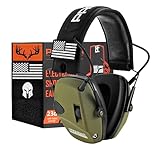 PROHEAR 4X PROHEAR 4X |
|
Check Latest Price |
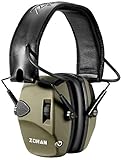 ZOHAN EM054 ZOHAN EM054 |
|
Check Latest Price |
If you have read our broader electronic ear protection guide, you already know the category. This article is narrower: it treats the electronics as a buying decision rather than a checkbox, and it spends most of its space on the eight features that separate a pair you will keep for a decade from one you replace in two seasons.
The 8 Features That Actually Matter When Buying Electronic Earmuffs
1. Noise reduction rating and how to read it
Noise reduction rating, or NRR, is the laboratory-measured attenuation of passive sound, printed in decibels. It is the single most quoted spec and the single most misunderstood one.
Across the eight products here, published NRR values run from 22 dB to 30 dB. Higher is better on paper. In practice, fit matters more than the last two decibels, and a well-seated 22 dB muff outperforms a badly-seated 30 dB one every time.
Look for an ANSI S3.19 or EN 352 rating on the listing rather than trusting a marketing number, and check the earcup seal with shooting glasses and a hat on before you commit.
2. Sound amplification and hearing enhancement
Sound amplification is the amount by which quiet ambient sound is boosted before it reaches your ear, and it is the reason to own electronic protection at all.
Products in this roundup amplify low-level sound by up to 4x, with some models offering selectable modes for hunting, focus, shooting and communication. That boost is what lets you hear a range officer call a cease-fire or hear a partner reposition without lifting the muffs off.
The trade-off is that amplified sound tells you nothing about how loud the shot was. Judge a muff on how clearly it voices range commands, not on how much it amplifies.
3. Response time (attack time) in milliseconds
Response time, sometimes called attack time, is the delay between a dangerous sound arriving and the suppression circuit reacting.
Anything in the range of 0.01 seconds or faster is imperceptible in practice. The PROHEAR 4X is specified to suppress gunshots in under 0.01s, which is about the practical floor for this category.
Slower circuits let the leading edge of a shot through as a crack before clamping down, which is where the uncomfortable edge in your hearing comes from. Faster is simply better, and it is a spec worth asking about.
4. Battery type, runtime and auto shutoff
Battery runtime decides whether your muff works on the morning of a hunt or the second match of a day.
The runtimes here range from roughly 300 hours on two AAA cells in the PROHEAR 4X to about 350 hours in the Howard Leight Impact Pro. Peltor models run on AA cells, with the Tactical 500 also accepting a separately sold rechargeable lithium-ion pack.
Auto shutoff is the feature that saves you at the bench. Timers range from 2 hours on the Peltor Tactical 100 to 4 hours on the Impact Pro, and several models add a low battery warning and voice prompts. Longer is more convenient, but any timer is better than a dead muff.
5. Bluetooth, aux input and device pairing
Bluetooth turns a hearing protector into headphones, but the quality of that connection varies far more than the spec sheets admit.
Two of the eight models here include Bluetooth: the Peltor Sport Tactical 500 and the Walker’s XCEL Digital. The Tactical 500 adds independent volume control for phone audio and ambient sound, which is the design detail that separates usable Bluetooth from a gimmick.
Owners of the XCEL report short range and the occasional dropped connection, so treat wireless as a convenience rather than a range-safety feature. If you only want a wired cable for a scanner or a phone, a 3.5mm jack does the job with no pairing and no charging.
6. Earcup profile, cheek weld and ear seal
Earcup profile is the feature that decides whether a precision shooter can keep a consistent cheek weld or whether the muff gets in the way of the rifle.
Slim, low-profile cups clear the action and keep your head down, but they trade away passive attenuation. Bulkier cups with a long-gun cutout and rubber bumpers protect both your cheek and the finish on your rifle, at the cost of more weight and more heat.
This is the compromise shooters argue about most on shooting forums, and there is no universal answer. Recoil shooters should prioritise the cutout; handgun and indoor shooters can accept a fuller cup for the extra attenuation.
7. Cushions, headband and all-day comfort
Comfort is not a luxury spec. It is the difference between wearing protection for a full day and taking it off halfway through a match.
Cushion material is the main variable. Memory foam gives a soft, gradual seal; gel pads stay cool and firm over long sessions and are the choice most cited by owners who shoot all day. Headband padding matters just as much, since a thin metal band or a hard edge becomes a pressure point on the top of your head.
Weigh the pair too. The heaviest muff here is 16 ounces and the lightest is 9.6 ounces, and that half-pound difference is obvious after a full match or a full day in the field.
8. Durability, water resistance and warranty
Durability is what separates a muff you buy once from a muff you replace every few seasons.
Look for a rubberized or composite shell, recessed microphones that will not snap off in a pocket, and a stated water rating. The PROHEAR 4X carries an IPX4 rating for water, sweat and dust. The Sordin Pro-X lists waterproof electronics, an improvement over its predecessor.
Warranty length is a useful tiebreaker when two models otherwise look alike. Replacement gel and foam cushions matter more in practice, since a flattened pad ruins the seal long before the electronics fail.
NRR and Why the Number on the Box Is Misleading
The honest answer: a printed NRR of 32 dB is excellent on paper, and no electronic muff in this roundup reaches it, but the real-world figure is always lower than the box.
OSHA’s recommended derating for workplace protection is to subtract 7 from the NRR and divide the remainder by 2. Run the numbers on the ratings in this roundup and the spread narrows dramatically. A 22 dB muff works out to about 7.5 dB, a 25 dB muff to 9 dB, a 26 dB muff to 9.5 dB, a 30 dB muff to 11.5 dB, and a 23 dB muff to 8 dB.
This is why the belief that electronic earmuffs top out around 23 dB and are therefore worse than passive protection circulates so widely. The comparison is real, and it is also incomplete. What that number does not capture is that the passive figure assumes a flawless seal, while the electronic figure is what allows you to hear a cease-fire call without removing protection.
Our practical advice is to stop optimising for the last few decibels. Concentrate on seal, fit and consistency. Shooters who double up with foam earplugs under the muff add meaningful protection without giving up the circuit that keeps voices audible.
8 Best Electronic Shooting Earmuffs
1. Walker’s Razor Slim: The Best All-Rounder for Low-Profile Wear
Walker’s Razor Slim Electronic Muff, Black
Weight: 12.63 oz
Ultra low-profile cups
Two hi-gain microphones
3.5mm audio jack
Pros
- Light and comfortable for long range sessions
- Slim cups clear a rifle cheek weld
- Clear amplification with little static
- Recessed volume knob works with gloves
- Still protects passively with the electronics off
Cons
- Noticeable latency in amplified passthrough audio
- Directionality takes practice to locate a sound
- Digital artifacts limit music through the aux jack
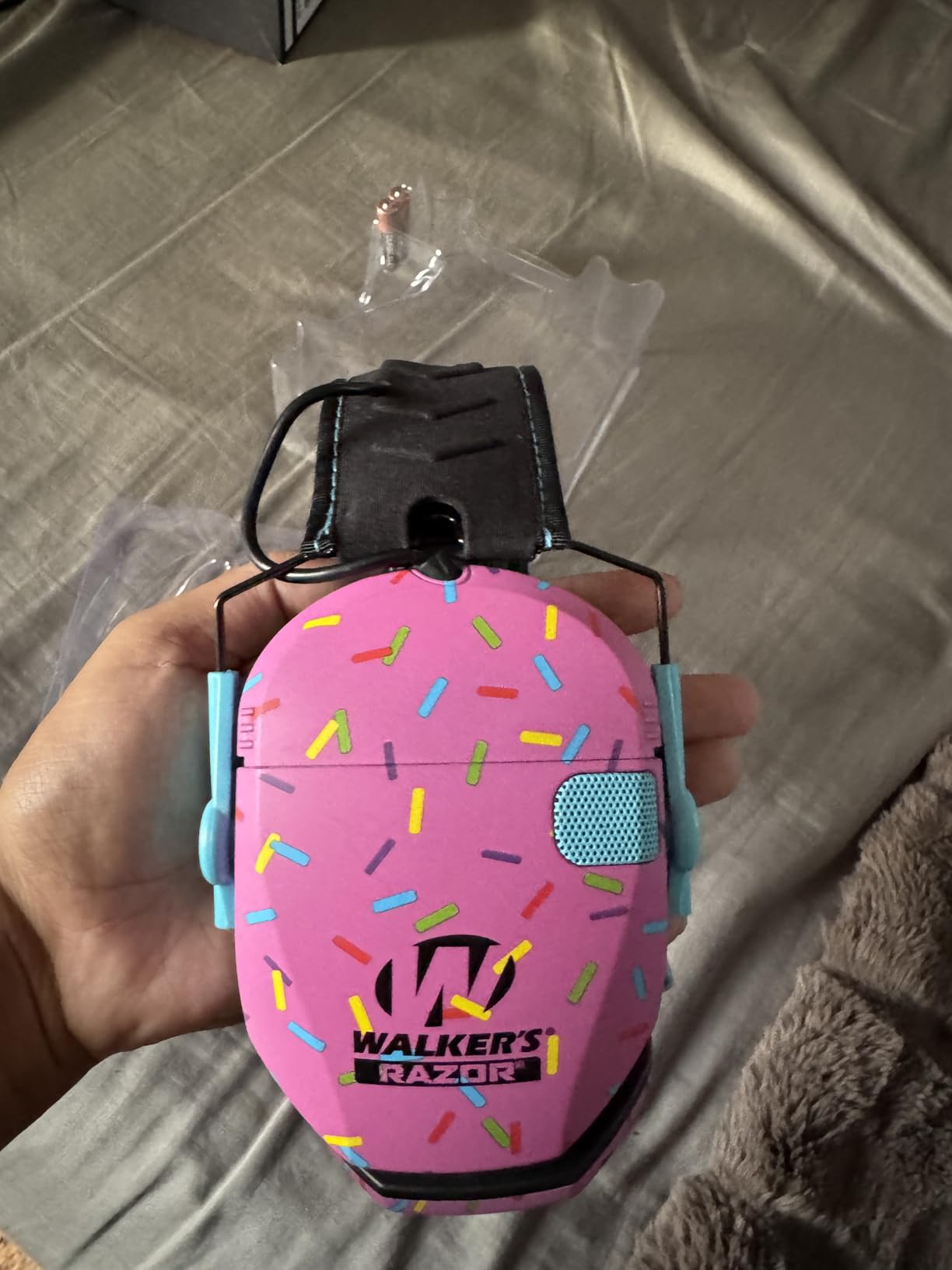
This is the pair we put on shooters who ask for one set of protection and do not want to think about it again. The Razor Slim weighs 12.63 ounces and uses extra slim ear cups, which is the whole design argument in one sentence: it disappears under a hat and stays out of the way of a rifle.
Two hi-gain microphones amplify safe sounds with enhanced low-end, so footsteps, rustle and voices come through with detail rather than as a thin hiss. That low-end emphasis is not marketing language, it is the difference between hearing a deer move and hearing a branch snap.
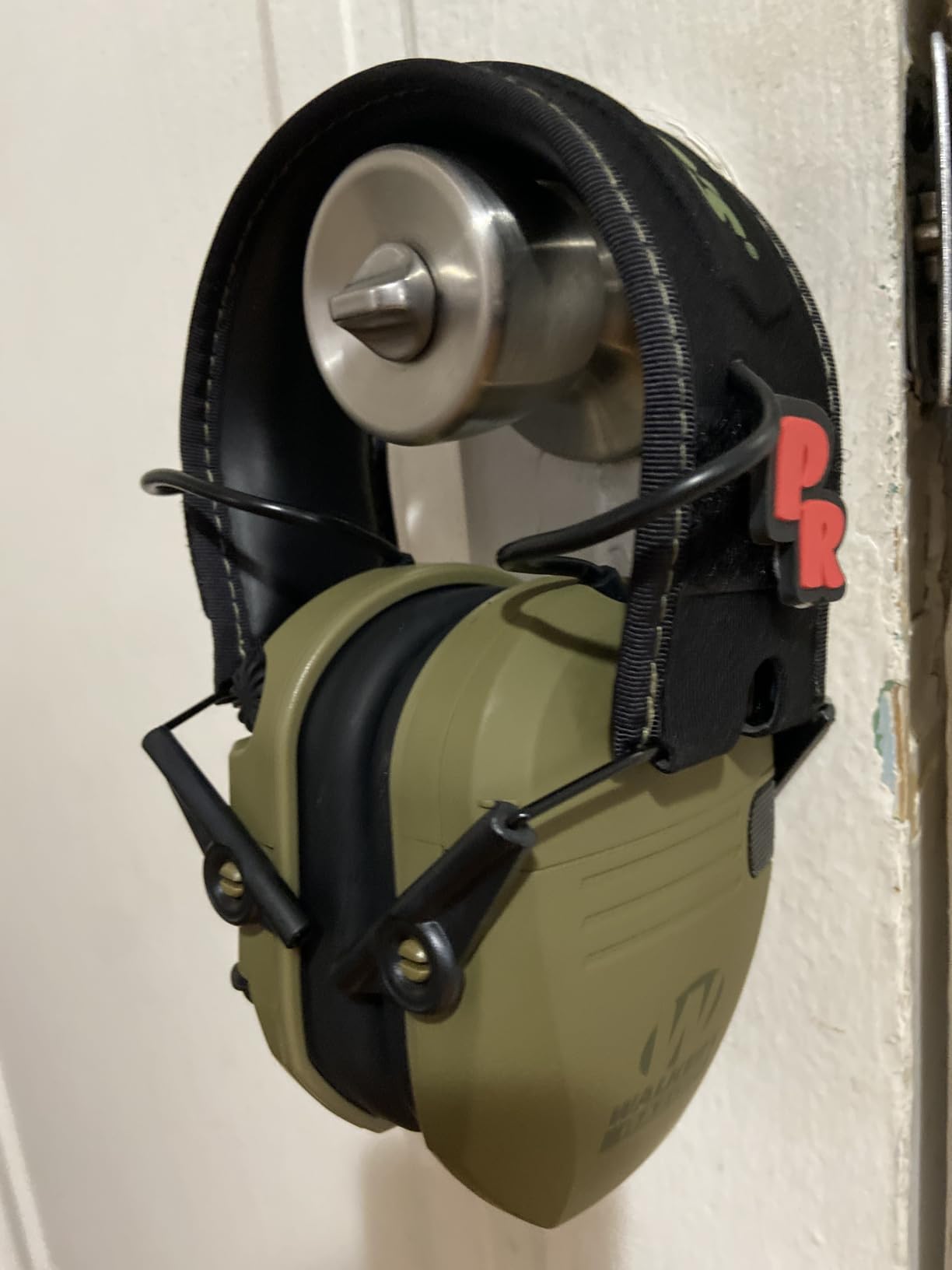
The build is where this model quietly outlasts cheaper options. A rubberized coating over a sound-dampening composite housing takes abuse in a range bag, and the padded metal wire frame headband holds its shape instead of sagging after a season.
Control layout matters more than most spec sheets admit. The volume knob is slightly recessed rather than flush, and the battery compartment opens from the outside, so you are not hunting for a screwdriver while wearing gloves on a cold morning.
What it does well for a decision?
Reviewers consistently single out the fit as the reason to keep buying the same model. The slim cup profile is the feature that lets a shooter stay low behind a rifle without the earcup shoving the rifle off line, and that problem is a dealbreaker in precision work.
It also degrades gracefully. Switch the electronics off and you still have a passive muff, which is the behaviour you want if a battery dies mid-session.
Where it is the wrong choice?
Those slim cups give up passive attenuation compared with bulkier over-ear models. If your primary environment is an enclosed indoor range where a low-caliber round is being fired, look at the Howard Leight Impact Pro instead for a higher published rating.
Audio quality through the 3.5mm jack is functional rather than musical, and passthrough amplification carries some latency that takes a few range sessions to stop noticing. Neither issue affects protection or range safety.
2. Howard Leight Impact Pro NRR 30: The Best Protection for Loud Indoor Ranges
Howard Leight NRR 30 Impact Pro Electronic Earmuff R-01902
NRR: 30 dB
Amplifies ambient sound to 82 dB
About 350 hours on 2 AAA
15.9 oz
Pros
- 30 dB NRR is among the highest on any electronic muff
- Analog amplification carries range commands clearly
- Thin profile suits a cheek weld and glasses
- About 350 hours on two AAA batteries
- Isolates well even with the power off
Cons
- Headband adjustment is fiddly on smaller heads
- Hiss and feedback appear at maximum volume
- Aux input is not tuned for music
This is the muff we recommend to anyone shooting an enclosed range, a pistol class, or any environment where a 30 dB NRR is worth more than connectivity. At 30 dB it carries the highest published rating of any electronic muff in this roundup, and the directional microphones amplify ambient noise up to 4x to a safe 82 dB before shutting the amplification off automatically.
That automatic shutoff is the mechanism that makes the whole category work. Below 82 dB you hear the room; above it, the circuit stops amplifying and the passive shell does its job.
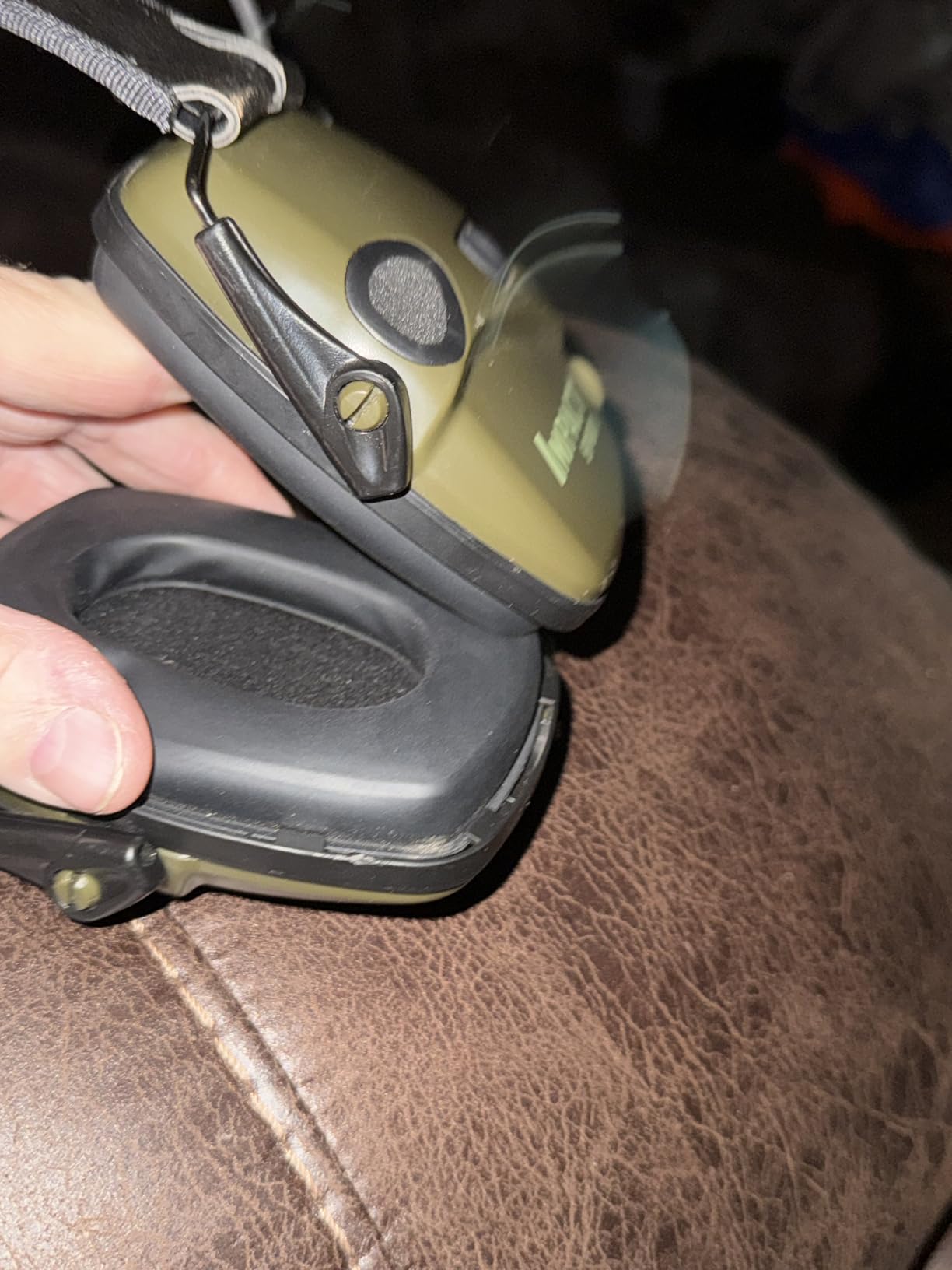
Owners treat this as a long-term purchase rather than a range-bag item, and the practical details back that up. The super deluxe padded telescopic headband spreads load across a long session, and a 3.5mm cord for scanners and phones is included in the box alongside two AAA batteries.
Roughly 350 hours of battery life and a 4-hour auto shutoff mean you can shoot a full program without thinking about power. At 15.9 ounces it is not the lightest pair here, but the weight buys a fuller, quieter cup.
What it does well for a decision?
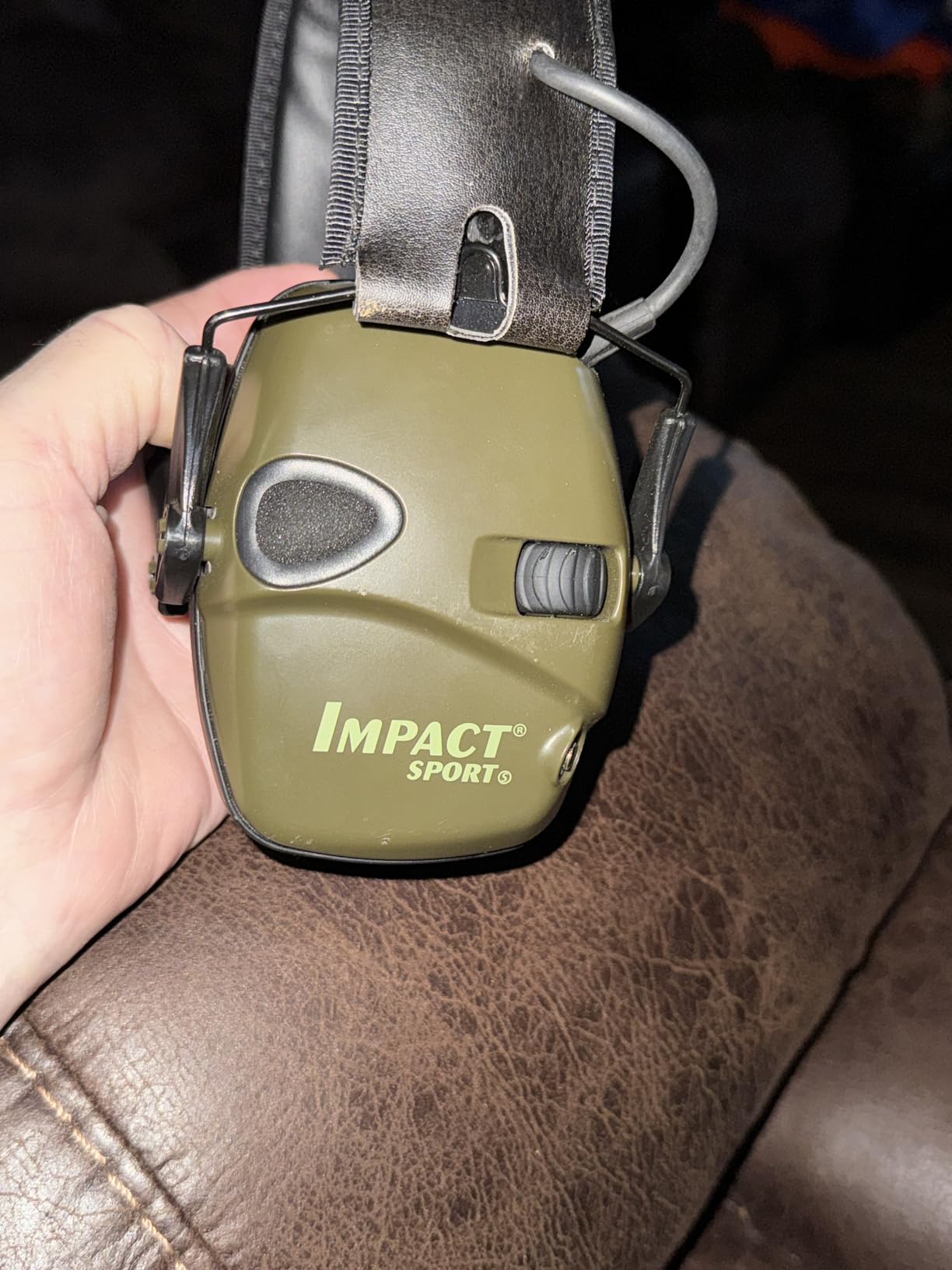
The rubberized pressure points are a small detail with a real purpose: they stop the earcup from scratching a rifle finish when you settle into a cheek weld. For a shooter who cares about preserving a rifle finish, that is worth more than any connectivity feature.
The single-knob control scheme is also a genuine advantage. One control for power and volume, no menus, no pairing, nothing to forget at a public range where a crowded bay and a busy line make distraction expensive.
Where it is the wrong choice?
The headband is the recurring complaint. Adjustment is fiddly, and the fit can feel tight on smaller heads, so if you are between sizes it is worth trying before committing.
At maximum volume the analog circuit hisses and feeds back, and the included aux cord is meant for scanners rather than music. If your priority is listening quality rather than attenuation, a digital multi-mode model is the better fit.
3. Peltor Sport Tactical 500: The Best for Bluetooth and Indoor Echo Control
Peltor Sport Tactical 500 Bluetooth Hearing Protection Ear Muffs, 25 dB NRR
NRR: 25 dB
Dynamic suppression time
Bluetooth with separate volume
12.96 oz
Pros
- Dynamic suppression adapts to different gunshot energies
- Clear Voice Tracking keeps commands intelligible in wind
- Separate volume for Bluetooth and ambient sound
- Long-gun cutouts with rubber bumpers
- Folds into the included storage bag
Cons
- AA batteries are not included
- Hard headband edges create pressure points
- Electromagnetic feedback near some phones
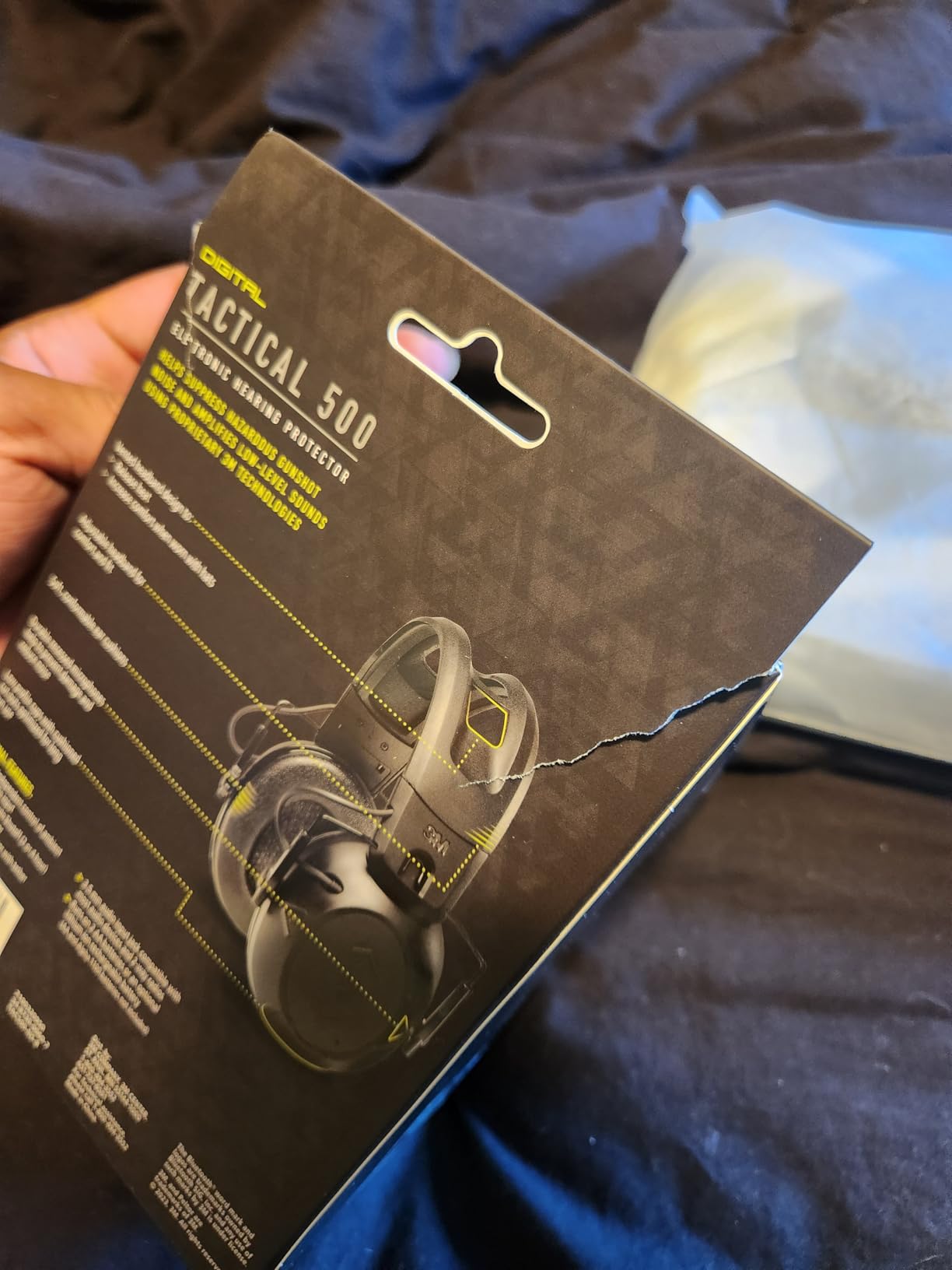
The Tactical 500 is the most complete feature set in this roundup, and its signature contribution is dynamic suppression time. Rather than clamping every shot identically, the circuit measures the energy of the noise and adjusts how long suppression holds, which is what reduces the ringing echo in an enclosed bay.
Clear Voice Tracking works alongside it. Recessed microphones filter wind and background noise while preserving the frequency range that carries human speech, which is exactly what you need to hear a coach or a range officer over the boom of a concrete room.
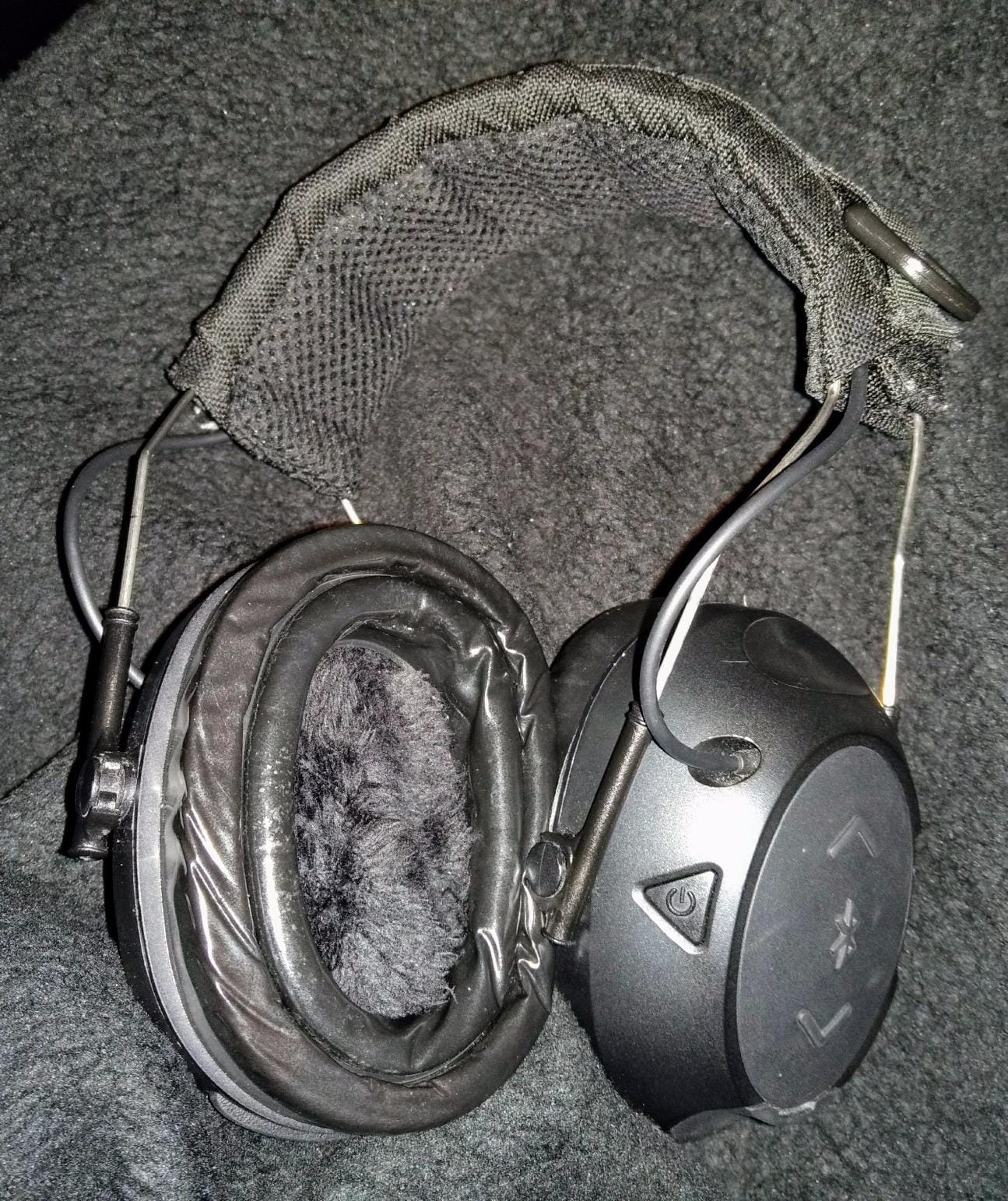
Bluetooth here is genuinely useful rather than decorative, and the reason is the independent volume control. You set your phone at one level and ambient amplification at another, so turning the music down does not deafen you to the line.
Power comes from two AA batteries, not included, or a separately sold 3M Alpha 1100 lithium-ion pack. Auto shutoff and a low battery indicator are both present, and the whole unit folds into the included storage bag.
What it does well for a decision?
The low-profile shell with long-gun cutouts and rubber bumpers solves the cheek-weld interference problem properly. The bumpers cushion the contact point so a cheek weld does not ring the finish, and at 12.96 ounces the muff stays comfortable through a long day.
It also works well outside shooting. Owners use it for yard work and other loud jobs, which is a fair signal that the suppression circuit is well tuned rather than tuned for one specific calibre.
Where it is the wrong choice?
The headband edges are the most reported comfort issue, and owners frequently add an aftermarket pad to fix it. Budget for that if you wear the muff for hours at a stretch.
Bluetooth and ambient amplification can pick up electromagnetic feedback from a phone held close, and AA cells are bulkier than AAA in a pocket. If wireless audio is not something you will use, a simpler model saves weight and hassle.
4. Peltor Sport Tactical 100: The Best No-Frills Muff for Indoor and Outdoor Shooting
Peltor Sport Tactical 100 Electronic Hearing Protector, Ear Protection, NRR 22 dB, Ideal for the Range, Shooting and Hunting, TAC100-OTH
NRR: 22 dB
Variable suppression time
Recessed microphones
2 AAA batteries
Pros
- Dependable platform for indoor and outdoor shooting
- Variable suppression time reduces echo in enclosed ranges
- Recessed microphones resist wind and handling
- Low profile cups clear a rifle or shotgun
- Simple controls with a padded adjustable headband
Cons
- 22 dB NRR is modest against 25 to 30 dB rivals
- No Bluetooth or audio input
- Two-hour auto shutoff is short
The Tactical 100 does less than the Tactical 500 and is easier to live with for it. There is no Bluetooth, no audio input and no mode selection, just a 22 dB NRR passive shell with a variable suppression circuit and microphones that filter background noise so you can hear commands more clearly.
That variable suppression control is the feature worth pausing on. It lets you trade some suppression for less echo in a hard-surfaced indoor range, which is the single most common complaint about shooting indoors.
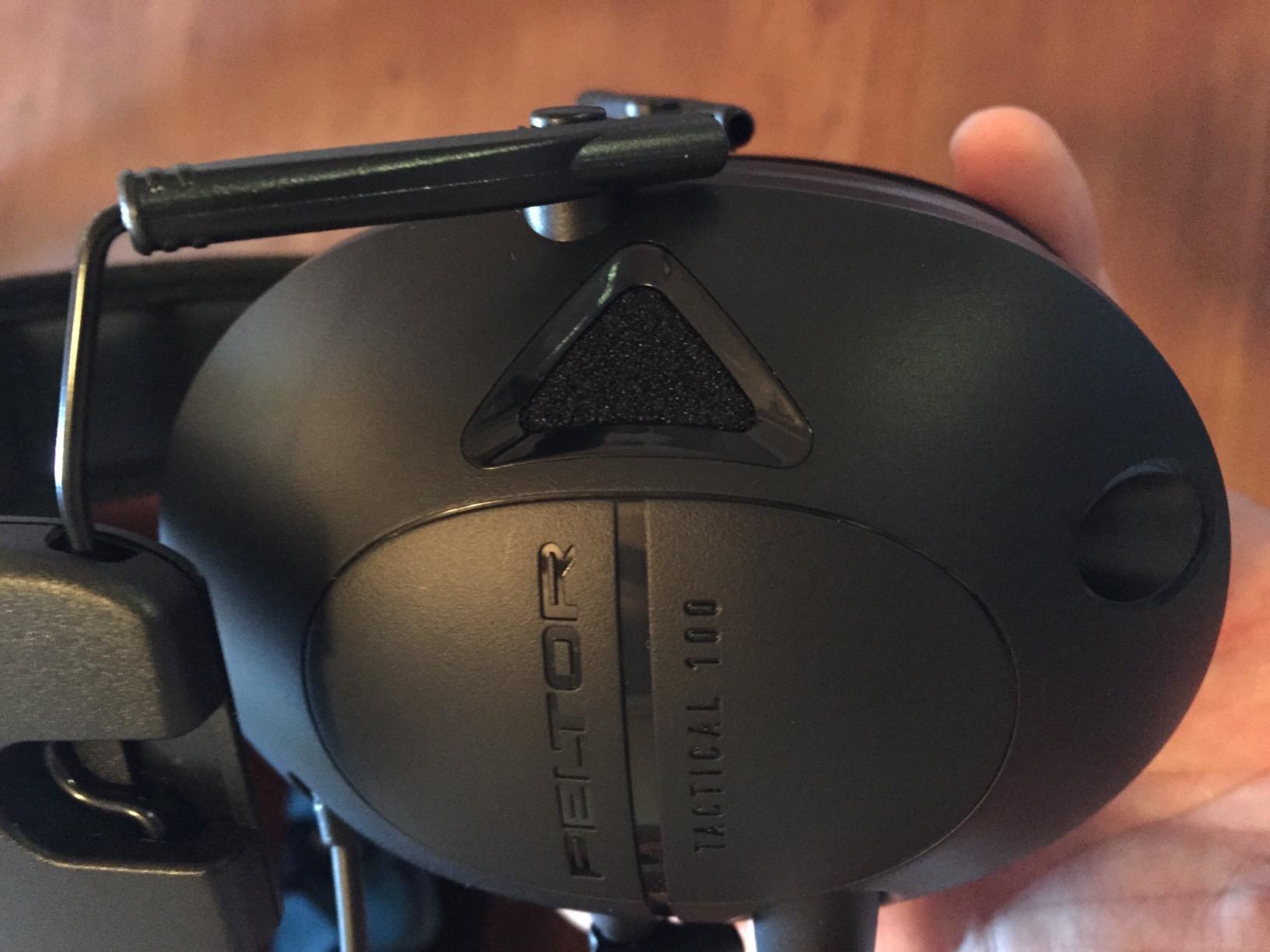
The recessed microphones are a durability decision rather than a styling one. Set into the shell rather than proud of it, they survive being shoved into a range bag and pick up less wind noise when you are shooting outdoors.
Low profile cups are designed to clear a rifle or shotgun, and the adjustable padded headband keeps the weight spread. At 13.6 ounces it sits in the middle of the pack on weight and at the bottom on published attenuation.
What it does well for a decision?
This is the model we suggest to a new shooter who wants a simple first pair without giving up hearing enhancement. There is nothing to pair, nothing to charge and no menu to learn, so the focus stays on fundamentals.
Owners also treat it as a jobsite and yard pair, which is a fair endorsement of how forgiving the electronics are under mixed noise.
Where it is the wrong choice?
At 22 dB this is the lowest published rating in the roundup, and it is worth remembering that this is a common figure for electronic muffs rather than a defect. If you shoot a magnum handgun indoors, the higher-rated Impact Pro is the safer purchase.
The 2-hour auto shutoff is the shortest here, and with no connectivity options you are committing to a single-purpose tool. If you want phone audio or scanner radio, this is the wrong muff.
5. Sordin Pro-X: The Best Premium Multi-Mode Defender for Hunting and Field Use
Sordin Pro-X Ear Muffs – 75302-X-G-S – Active and Electronic Ear Defenders w/Camo Headband – Gel Pads – Olive
Four selectable modes
1:4 amplification
Waterproof electronics
Gel pads
Pros
- Four modes for hunting focus shooting and communication
- Waterproof electronics for wet weather
- Gel pads and textile headband for long sessions
- Made in Sweden to EN 352 standards
- 1:4 amplification keeps game audible
Cons
- Top of the category on price
- Larger form factor than slim budget muffs
- Thin owner feedback compared with mainstream models
The Pro-X is the only model here designed around mode selection rather than a single listening profile. Four modes cover hunting, focus, shooting and communication, so you can widen or narrow what you hear without changing muffs.
Amplification runs at a 1:4 ratio with the electronics sealed against water, an improvement over the earlier Sordin Pro. For a hunter in wet ground or a shooter training in bad weather, that sealing is the practical feature.
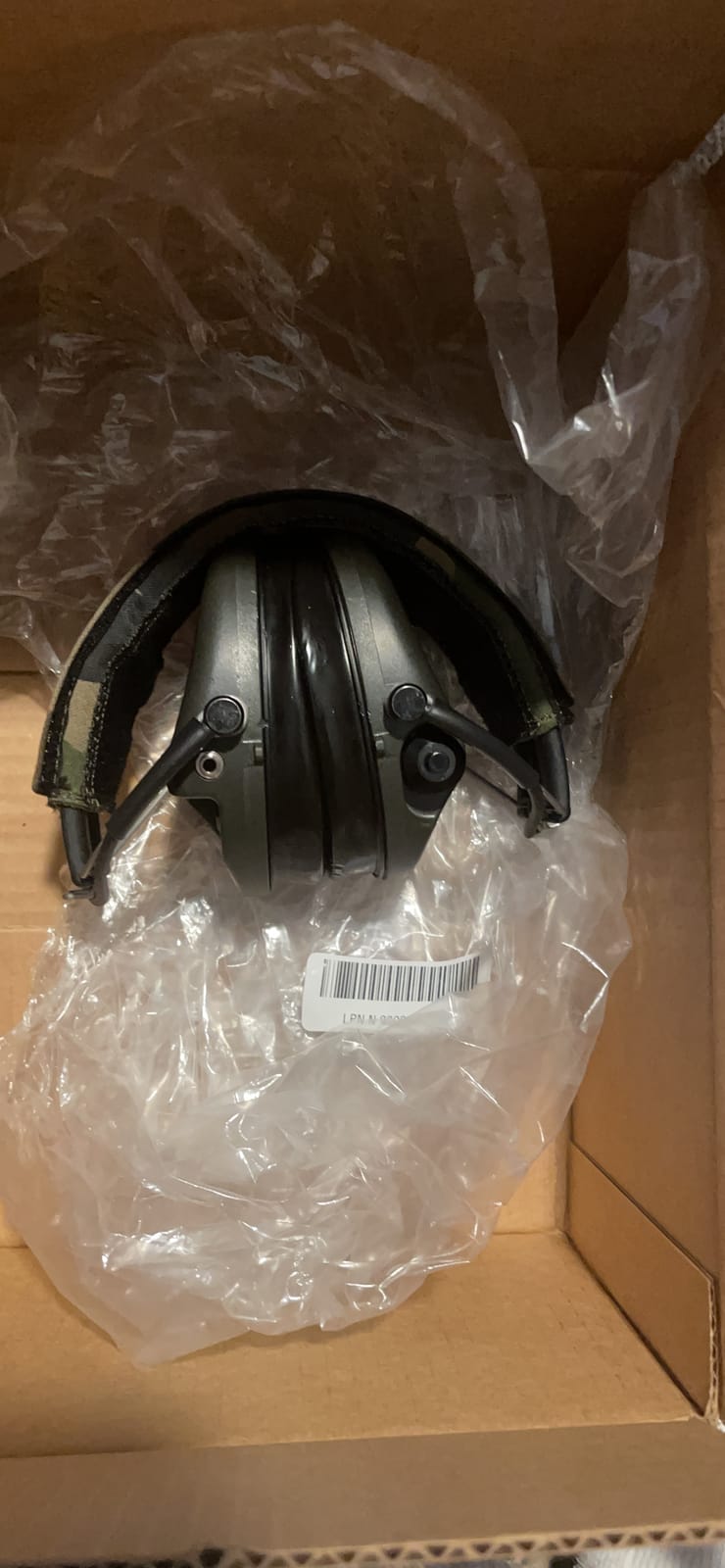
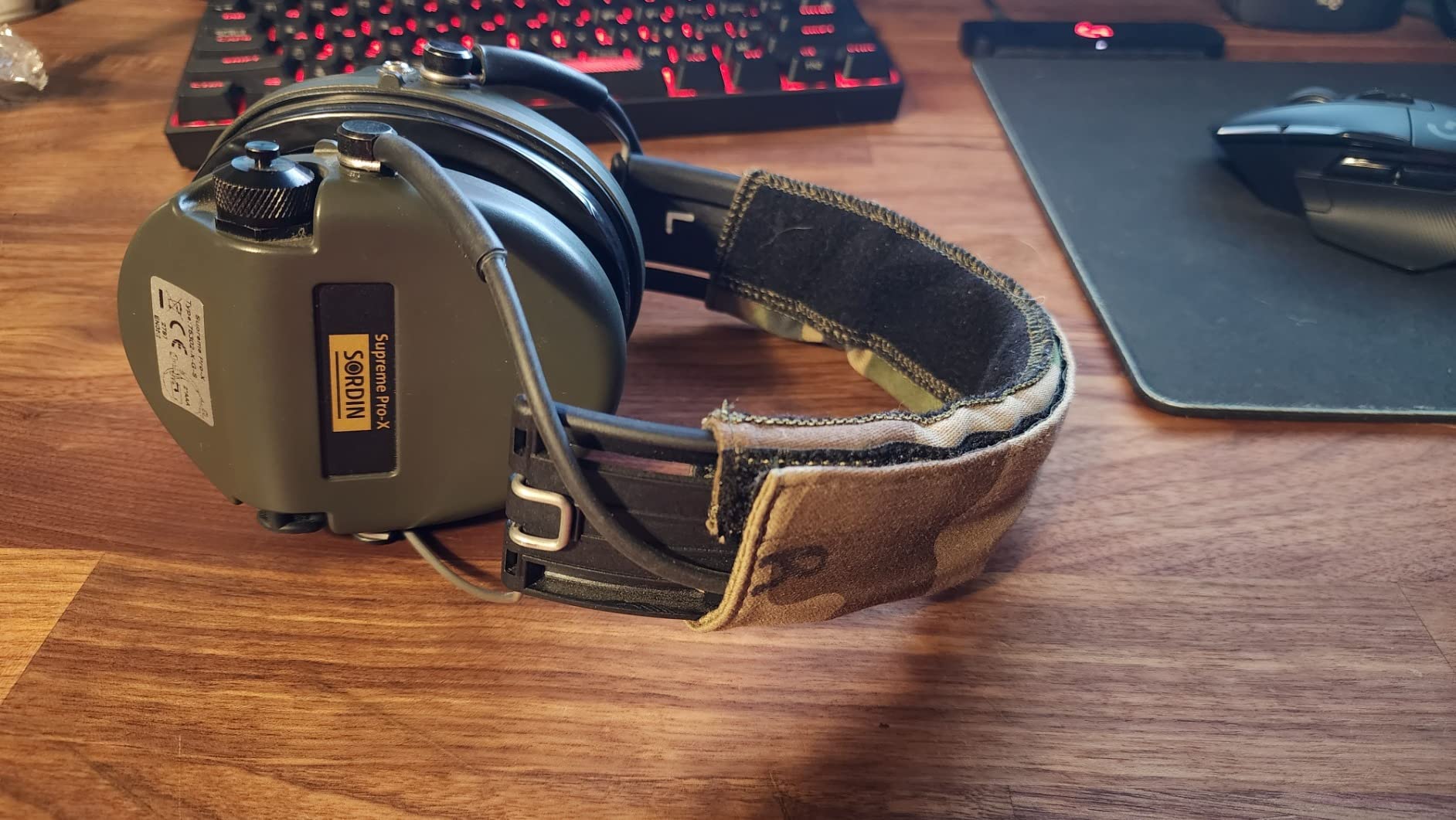
Comfort comes from the gel ear pads and the camouflage textile headband. Gel stays cool through a long day and does not flatten the way foam pads do after months of use, and the textile band spreads pressure without the hard edge that shows up on cheaper headbands.
It is made entirely in Sweden and meets EN 352 standards, which is the certification mark used across Europe for hearing defenders. If you shoot or train outside Europe, that is a meaningful quality signal rather than a formality.
What it does well for a decision?
The wide dynamic range is what hunters care about. You can hear a call from a partner and a game animal approaching while gunfire is still muffled, which is a genuinely different experience from a passive muff that simply goes silent.
For long days afield, the gel pads and sealed electronics mean comfort does not degrade the way foam and unsealed housings do.
Where it is the wrong choice?
This is the most expensive pair in the roundup by a wide margin, and for indoor range work the extra spend buys features you may never touch. Decide on the mode list and waterproofing, not on the badge.
The form factor is also larger than the slim budget models, so it is a poorer match for a tight cheek weld. And with far fewer owner reviews than the mainstream names here, you are buying on design rather than on years of field feedback.
6. Walker’s XCEL Digital: The Best for Voice Clarity with Bluetooth
Walker’s XCEL Digital Electronic Hearing Protection Earmuffs with Bluetooth & Voice Clarity – Grey
NRR: 26 dB
Four listening modes
Bluetooth connectivity
16 oz
Pros
- Clearer audio than the entry Razor series
- Keeps voices audible while suppressing gunfire
- Four listening modes with voice prompts
- Bluetooth for calls and notifications
- Gel pad upgrade available for glasses wearers
Cons
- Bluetooth range is short and can drop
- Control button is a reported weak point
- AAA cells need frequent swapping with daily use
The XCEL is a clear step up from the entry-level Walker’s muffs in sound quality, and that is what it is for. A 26 dB NRR pairs hi-gain omnidirectional microphones with sound-activated compression and dynamic sound suppression, so voices stay intelligible while a shot is clamped down.
Four distinct listening modes give you control over how much of the outside world reaches you, which is useful when you move between a shooting line and a waiting area.
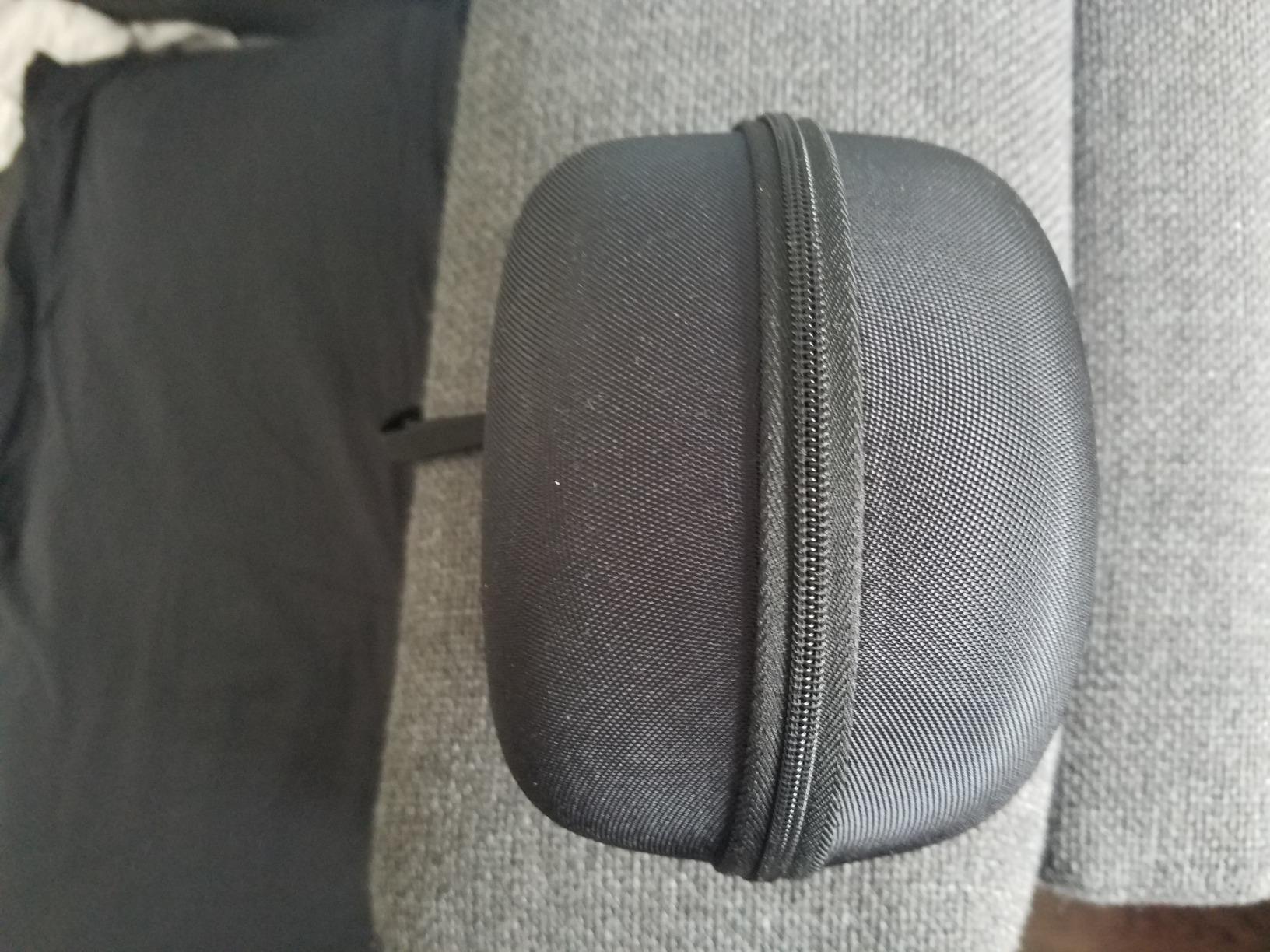
Bluetooth covers calls, notifications and voice assistants, and the ergonomic headband carries rubber bumpers. Owners also note fewer cup holes than entry models, which supports the stated NRR by reducing paths into the shell.
At 16 ounces this is the heaviest muff in the roundup, and it is a one-year limited warranty. A gel pad upgrade is available, which is the option to consider if you wear prescription shooting glasses.
What it does well for a decision?
If your main requirement is hearing people rather than hearing everything, this is the model to try. Reviewers consistently rate its voice clarity above the entry Razor series, and four modes plus voice prompts make it easy to adjust without looking.
Auto shutoff, a low battery warning and voice prompts are all present, which is a more thoughtful power system than most in this price bracket.
Where it is the wrong choice?
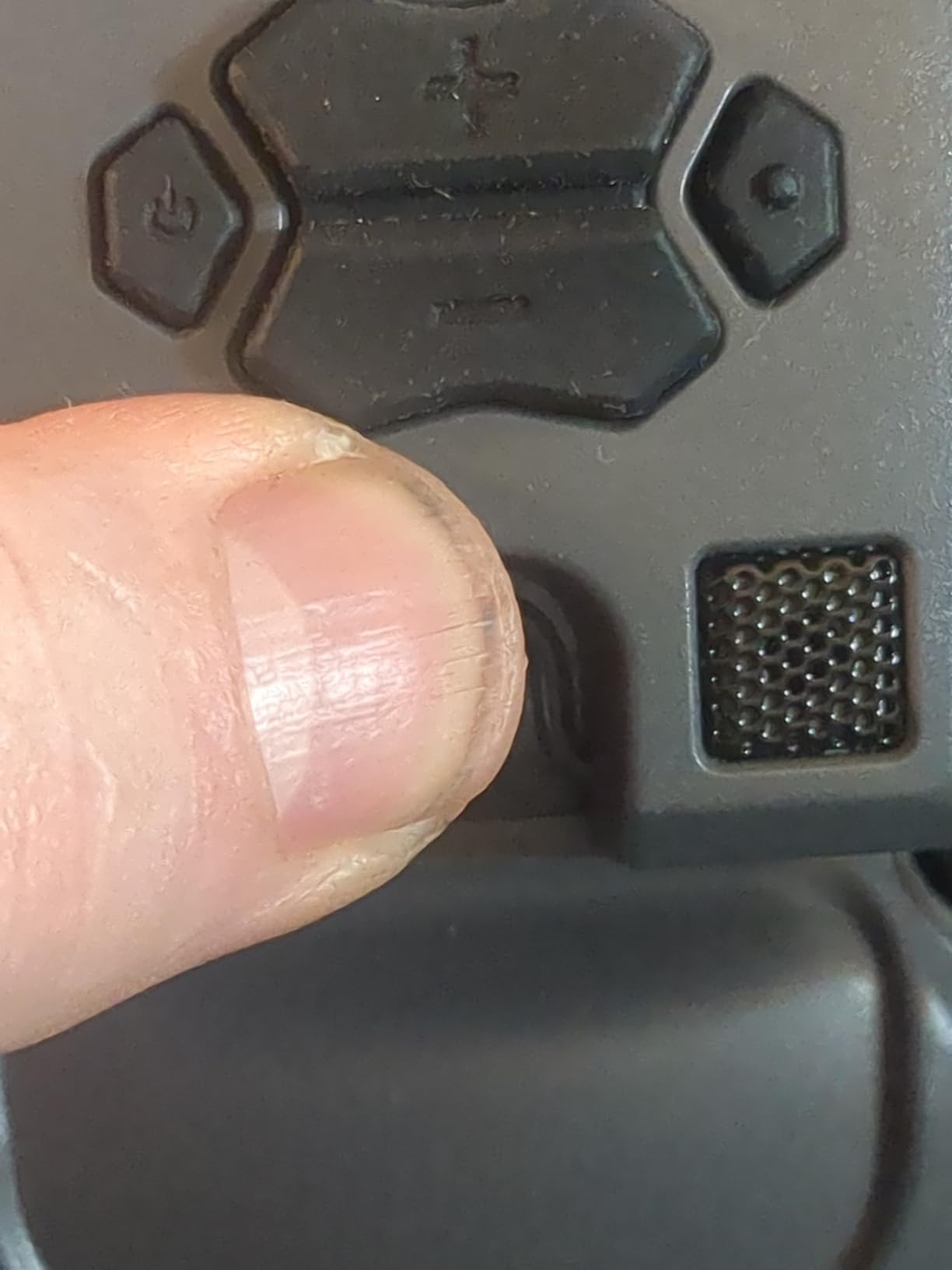
Bluetooth is the weak point. Range is short, connections can drop, and the control button is reported by some owners as the first component to fail. If dependable wireless audio matters, weigh the Peltor Tactical 500’s independent volume design more heavily.
It is also the heaviest pair here, the cups can feel tight over glasses for long wear unless you fit the gel upgrade, and daily users report frequent AAA changes.
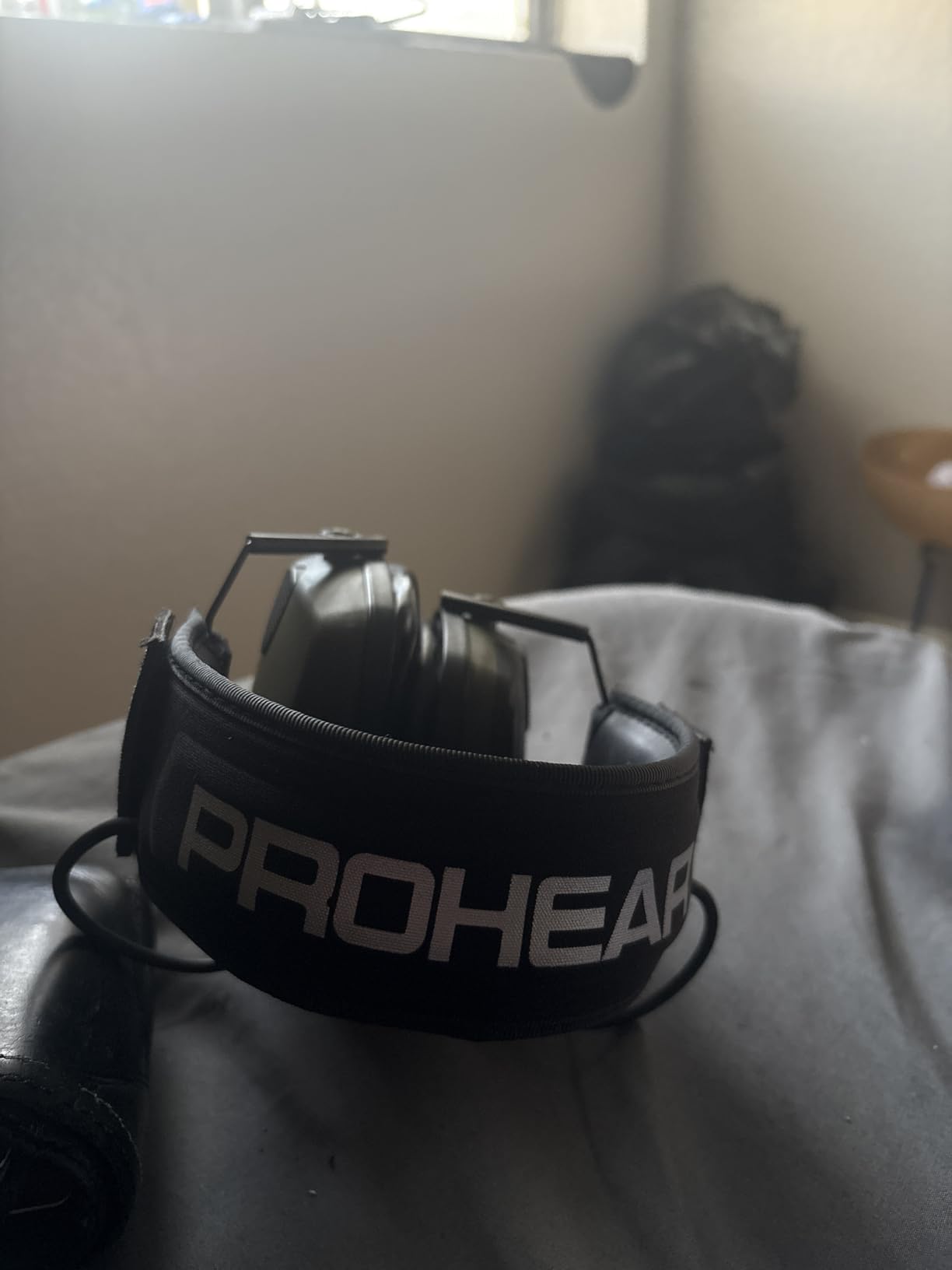
7. PROHEAR 4X: The Best Lightweight Muff for Long Days Outdoors
PROHEAR Electronic Ear Protection for Shooting with 4X Sound Amplification, Gun Range Hearing Protection Muffs, NRR 23dB Noise Reduction Headphones for Hunting, Green
NRR: 23 dB
4x amplification
300 hours on 2 AAA
IPX4 rated
Pros
- Weighs 0.6 lb so hours of wear are easy
- Suppression in under 0.01s
- 4x amplification for range staff calls
- 300 hours on two AAA batteries
- IPX4 water sweat and dust resistance
Cons
- Battery polarity markings are hard to read
- Headband adjustment latitude is limited
- Microphone interference at maximum volume
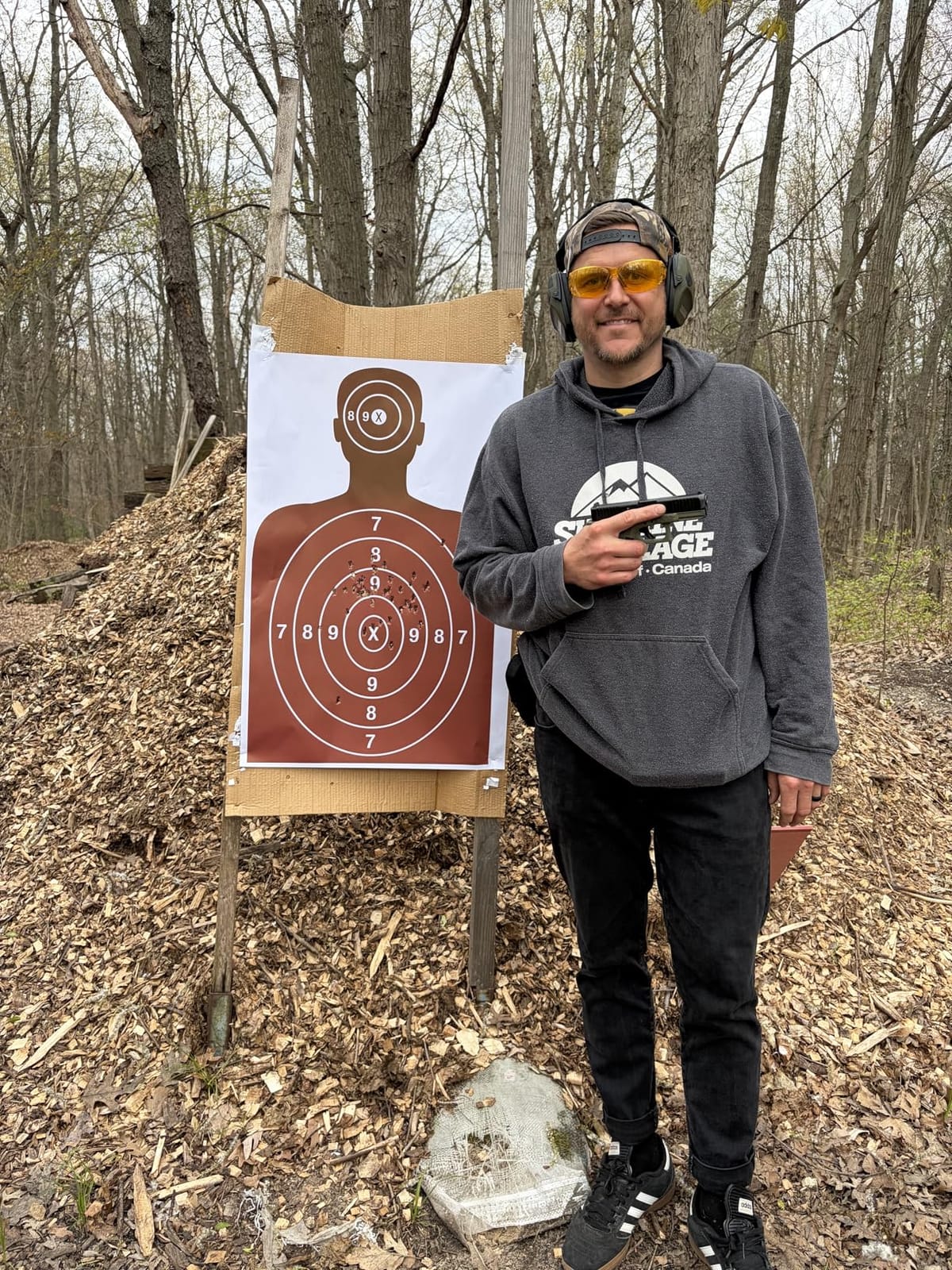
At 0.6 lb the PROHEAR 4X is the pair you forget you are wearing, and that is the feature that decides it for long sessions. The telescopic padded headband and ultra-soft cushions do most of the work, but the low mass is what actually removes the pressure feeling after several hours.
Suppression is specified in under 0.01 seconds, with low-level sound amplified up to 4x so you can hold a conversation with range staff without removing protection.
The 23 dB NRR is ANSI S3.19 compliant, and the cups use cutaways that open up clearance where a rifle or shotgun would otherwise sit too close, which lowers the profile right where it matters.
An IPX4 rating covers water, sweat and dust, which makes this a hunting-capable pair as well as a range pair. Two AAA cells run about 300 hours, and the whole unit folds into a compact bundle for transport.
What it does well for a decision?
Owners use this for noisy non-shooting work as well as the range, which tells you the amplification is tuned for general loud environments and not just gunfire. The single tactile volume knob is large enough to find and turn with gloves on.
The included carrying pouch, 3.5mm cable and hook-and-loop patches are small touches that matter when you are packing gear in the dark.
Where it is the wrong choice?
There is no Bluetooth in this configuration, so phone audio means the 3.5mm cable and nothing more. If wireless matters, the Peltor Tactical 500 or the Walker’s XCEL are the models to compare.
Two practical niggles: the battery polarity markings are hard to see, so a reversed cell is easy, and the headband has limited adjustment latitude with a fit that can feel stiff for the first few sessions. It also has the second lowest published NRR here, so it is not the choice for very loud indoor pistol work.
8. ZOHAN EM054: The Best Value Muff for Shooting and Hunting on Any Budget
ZOHAN EM054 Electronic Shooting Ear Protection with Sound Amplification, Slim Active Noise Reduction Earmuffs for Gun Range
4x amplification
ANSI S3.19 and CE EN352
2 AAA batteries
Foldable design
Pros
- Instant suppression of sudden loud noise
- 4x amplification for conversation without removal
- Comfortable fit across a wide range of head sizes
- Foldable design packs small into a range bag
- Dual ANSI S3.19 and CE EN352 certification
Cons
- Not active noise cancelling despite the label
- Amplified ambience can be harder to sort
- Modest passive isolation
The EM054 does one thing well: it amplifies quiet surroundings up to 4x and clamps down instantly on a gunshot, with two omnidirectional microphones feeding an advanced chip. There is no Bluetooth, no mode selection and no app, and for many shooters that is exactly the right amount of product.
It is also the only pair here carrying both ANSI S3.19-1974 and CE EN352-1, EN352-4 and EN352-6 certification, so it is documented to the same standard on both sides of the Atlantic.
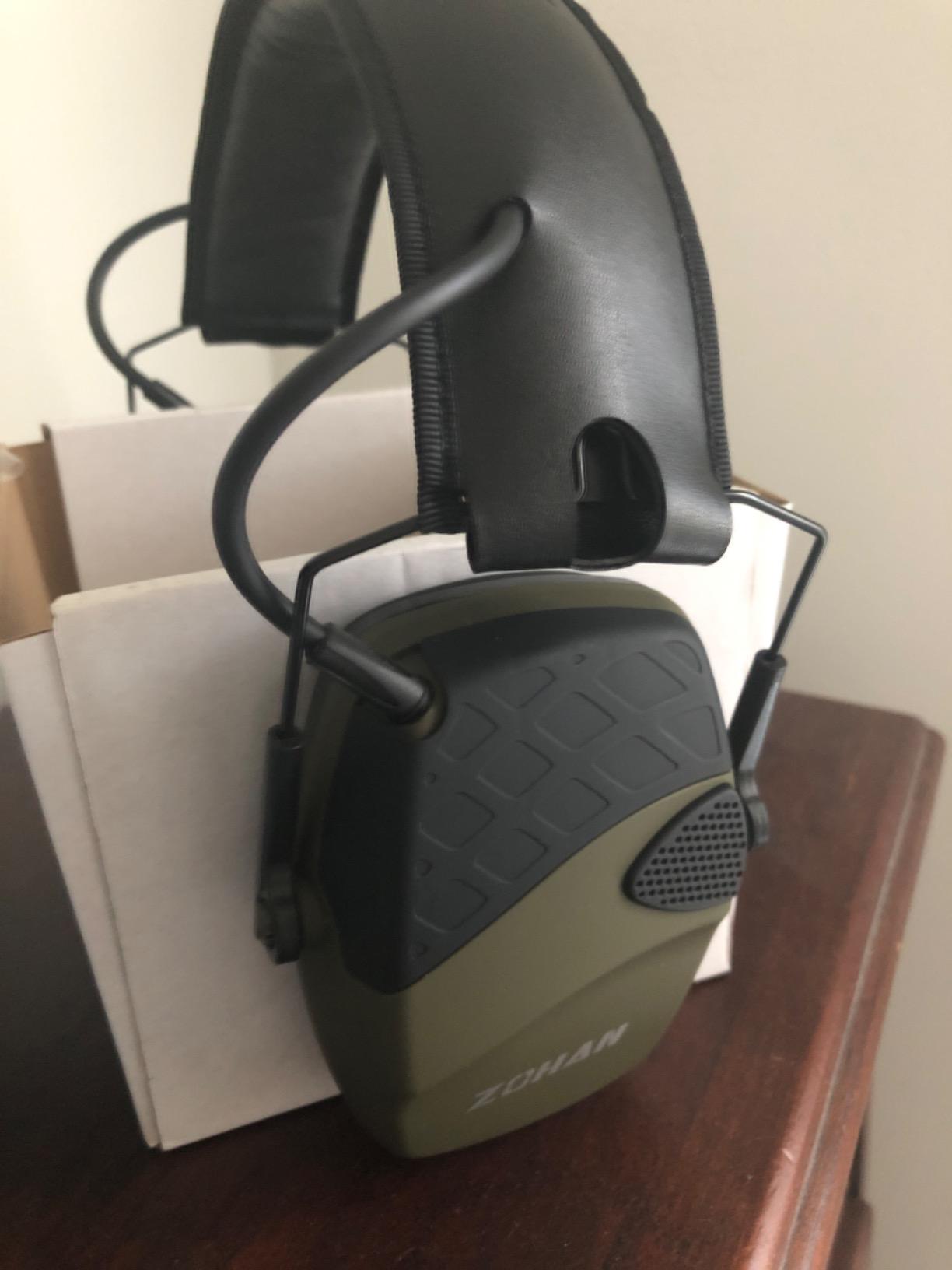
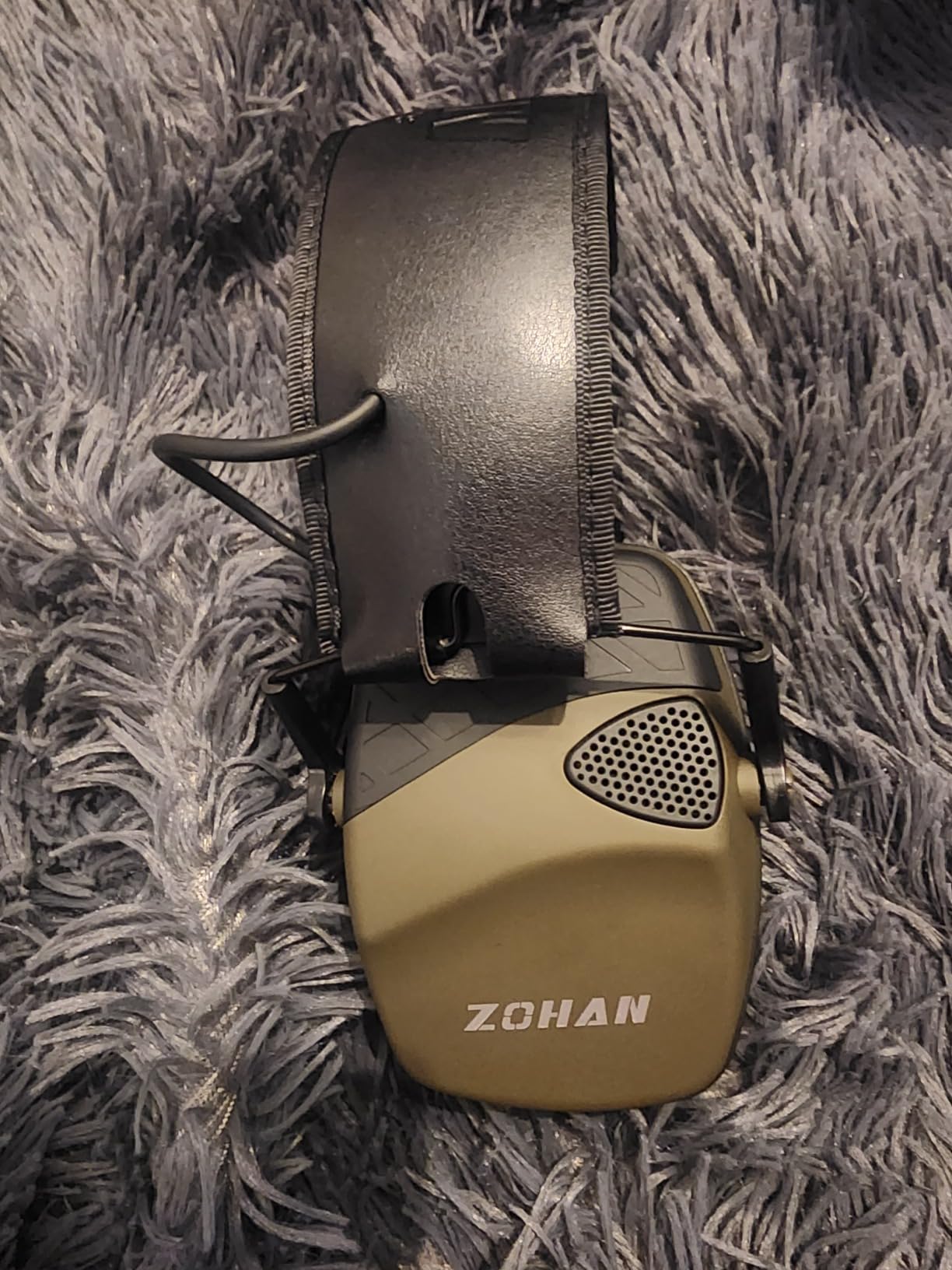
Physical design is where the effort went. Large vertical volume buttons give generous touch targets, a rubber-paint finish handles handling, and the headband is hand-stitched artificial leather rather than a bare metal wire.
It resists water, sweat and stains, folds for a range bag, and runs on two AAA cells with an audio jack for a phone or MP3 player. Owners report a comfortable adjustable fit that suits a wide range of head sizes.
What it does well for a decision?
Instant, delay-free suppression is the recurring theme in owner feedback, and it is the honest reason to prefer a simpler analog circuit: there is no digital processing between the microphone and your ear.
If you shoot outdoors, hunt, mow, or weld, the certification and the weather resistance make this a genuinely multi-purpose tool rather than a range-only purchase.
Where it is the wrong choice?
Owners frequently flag one misconception: this is an amplifying muff, not an active noise-cancelling one. Power goes into amplification, not cancellation, and expecting silence will disappoint.
Because ambient sound is amplified faithfully, a busy environment can be harder to sort through, and passive isolation is modest next to the higher-rated pairs in this roundup. If you need attenuation above all else, choose the Impact Pro or the Tactical 500.
Electronic vs Passive vs Electronic Ear Plugs: Which One Do You Need?
Electronic earmuffs win when you need to hear people. Passive muffs win when you need maximum attenuation and do not need to hear anything. That is the whole decision in one sentence.
Passive protection is quieter in absolute terms, because nothing is reopening the path to your ear. Electronic protection closes down on a dangerous sound but keeps the low-level world audible, which is what you need for instruction, competition, crowded public ranges and hunting.
For most regular shooters the answer is a double-up: foam earplugs under an electronic muff, with the plugs as the inner layer and the electronics outside. The plugs do the heavy attenuation and the muff supplies the circuit that still lets you hear a range officer. Shooters who layer the two this way usually say the gunshot drops to a dull pop rather than disappearing, while the command still comes through.
The third option is in-ear electronic protection. We covered that category separately in our electronic earplugs for shooting guide, and the trade-off is simple: in-ear units disappear under a hat and never clash with a rifle, but they lose the passive attenuation of an over-ear shell and are less forgiving of poor insertion.
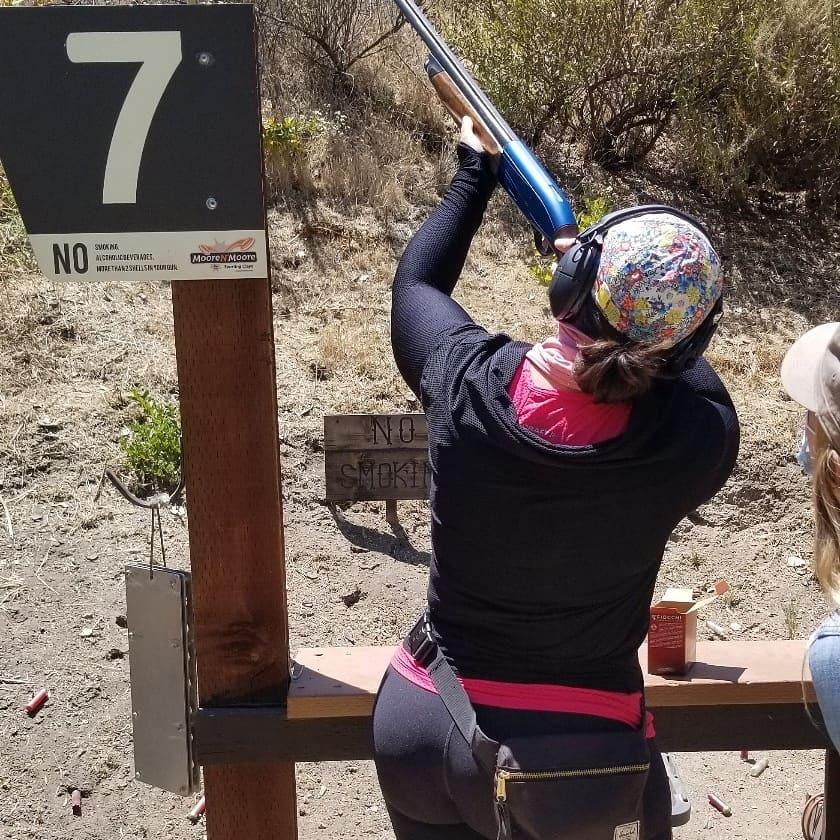
One more practical variable deserves its own paragraph. If you shoot in prescription glasses, a hat or a face covering, anything that presses on the earcup can break the seal and cost you more attenuation than any spec difference between these models. Test the muff in the headgear you actually use.
How to Choose: A 60-Second Checklist Before You Buy?
Start with your environment, not the brand. Indoor enclosed ranges push you toward the highest published NRR you can wear comfortably. Field and hunting use pushes you toward amplification quality, battery life and weather resistance. Long precision sessions push you toward slim cups and a long-gun cutout.
Second, decide how much connectivity you genuinely need. Bluetooth is genuinely useful on a busy range and pointless if you never pair a phone, and the two models here that include it differ sharply in reliability.
Third, sort out power. Decide between disposable cells and a rechargeable pack based on how often you shoot. If you shoot most days, a 300-hour runtime on AAA is worth more than a marginally quieter cup.
Fourth, check the cushion material against your tolerance. Gel stays cool over long sessions; memory foam feels softer but flattens with age. Many brands sell replacement pads, and replacing a pad is far cheaper than replacing a muff.
Finally, look at the failure modes nobody advertises. A dead microphone turns a muff into a passive one with a speaker and no reason to wear it; a crackling control button takes Bluetooth with it; a battery compartment that corrodes is a common and avoidable outcome. Products with external-opening battery doors, recessed microphones and a stated warranty are less exposed to all three.
Once you have your muff, our shooting mat guide covers the other half of a long day at the range, and our main electronic shooting earmuffs roundup covers the category in depth.
Frequently Asked Questions
What are the best electronic earmuffs for shooting?
The best electronic shooting earmuffs are the ones that balance attenuation, amplification and comfort for your environment. For most range shooters the Walker’s Razor Slim is the strongest all-rounder, while the Howard Leight Impact Pro offers the highest published NRR in our roundup at 30 dB for enclosed indoor lanes. The Peltor Sport Tactical 500 is the pick when Bluetooth and indoor echo control matter.
Is 32 dB NRR good for shooting?
Yes, 32 dB NRR is excellent on paper, but the figure is measured in a laboratory and is always higher than real-world protection. OSHA’s derating method subtracts 7 and divides by 2, which turns 32 dB into about 12.5 dB of estimated real-world attenuation. No electronic muff reaches 32 dB; most sit between 22 and 30 dB, so most shooters double up with foam earplugs instead.
Are electronic earmuffs better than passive ones for shooting?
Neither is universally better. Passive muffs attenuate more, which suits solo work where you need no sound at all. Electronic muffs attenuate slightly less but amplify speech and range commands, which is why they are the better choice for instruction, competition, crowded public ranges and hunting. Most experienced shooters wear electronic muffs over foam earplugs to get both.
What is the best Bluetooth hearing protection for shooting?
Among the options we compared, the Peltor Sport Tactical 500 is the strongest Bluetooth design because it carries independent volume control for phone audio and ambient sound, so turning music down does not deafen you to the firing line. The Walker’s XCEL Digital also has Bluetooth with four listening modes, but owners report shorter range and the occasional dropped connection.
Do electronic earmuffs still protect hearing if the batteries die?
They still block sound, but you lose the circuit that makes them worth wearing. Without power there is no amplification and no automatic suppression, so the muff behaves like a passive model with a slightly lower published NRR. That is still meaningful protection and far better than removing them, which is why models with an auto shutoff timer and a low battery warning are worth preferring.
Can you wear foam earplugs under electronic earmuffs?
Yes, and it is the standard double-up strategy. Insert the foam plugs first and let them settle, then fit the muff over them so the earcup seals against your head rather than against the plugs. The plugs add real attenuation and the muff keeps the circuit that lets you hear commands. Shooters who layer the two this way describe the shot as a dull pop rather than silence, with voices still audible.
What NRR do I need for shooting?
For indoor enclosed ranges and loud pistol or magnum shooting, aim as high as you can wear comfortably, which in this roundup means 25 to 30 dB. For outdoor range work and general hunting, the 22 to 23 dB electronic muffs here are sufficient when you also wear foam plugs. The practical limit is fit: a well-seated lower-rated muff beats a badly fitted high-rated one.
Which Electronic Shooting Earmuffs Should You Buy?
Start with the Walker’s Razor Slim. It is the pair we would hand to a shooter who wants one set of electronic shooting earmuffs and does not want to keep shopping: a 12.63 ounce low-profile design, an 85k+ review history and a build that survives the range bag.
Move up to the Howard Leight Impact Pro if you shoot enclosed indoor ranges and want the highest published attenuation available in electronic form. Choose the Peltor Sport Tactical 500 when Bluetooth and indoor echo control are your priorities, and the Peltor Tactical 100 when you want a simple, dependable workhorse with nothing to pair.
For hunting in poor weather with mode selection, the Sordin Pro-X earns its place. For a lighter pair for very long days, look at the PROHEAR 4X, and for the simplest certified package at the entry level, the ZOHAN EM054 does the job.
Whichever you choose, fit it in the headgear you actually wear, check the seal, and consider foam earplugs underneath. That last habit, more than any spec on the box, is what protects your hearing for the rest of 2026.