
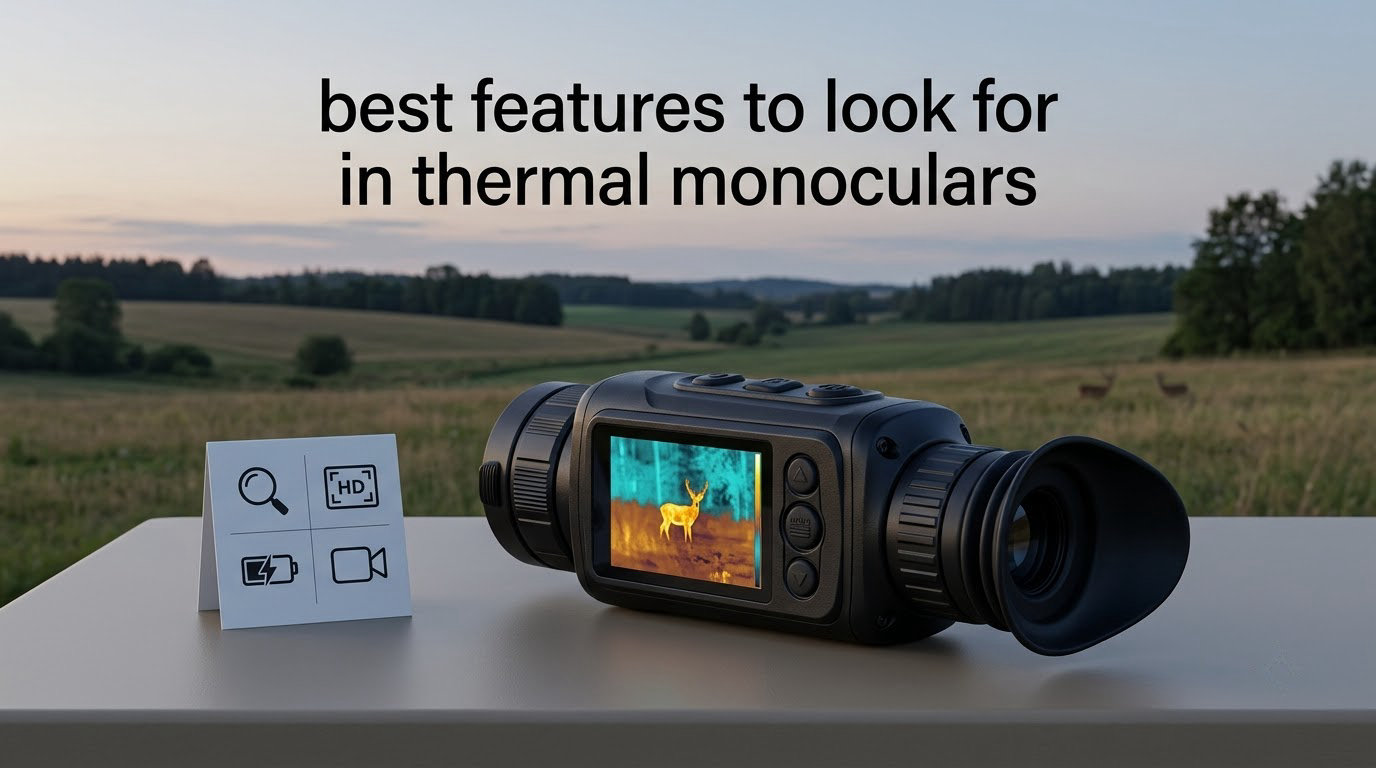
A thermal monocular is a handheld, single-eye infrared device that detects the heat radiating from people and animals and turns it into a picture you can look through like a monocular. It works in total darkness, fog, smoke, and full daylight with no light source at all, because it is measuring heat rather than visible light.
That said, the specs printed on the box are not equally important, and that is the whole reason this guide exists. Sensor resolution, thermal sensitivity, refresh rate, and field of view decide whether you can actually find and then positively identify an animal. Everything else is convenience. Once you know which four specs govern performance, the rest of the spec sheet stops being intimidating and starts being readable.
I have gone through twelve thermal monoculars and thermal scopes in detail for this piece, comparing published sensor sizes, listed detection and recognition distances, refresh rates, display types, and weight against what buyers actually report in the reviews. What follows is the feature list I would hand a friend, followed by the devices that best demonstrate each feature. If you would rather start with rankings, our full thermal monocular rankings and budget thermal monocular picks cover the shortlist in more depth.
Top 3 Thermal Monocular Features (October 2026)

TOPDON TS004 Thermal Monocular
- 256x192 sensor at 50Hz
- IP67 drop resistant build
- 11 hour runtime
- phone app

AGM Rattler V2 Thermal Scope
- 256x192 12um sensor
- Wide 9.3 degree field of view
- Dual batteries included
- IP67 recoil resistant
GOYOJO G210 Thermal Monocular
- 256x192 12um at 25Hz
- Six color palettes
- Replaceable 18650 cells
- 17.5 degree field of view
Quick Comparison: Thermal Monoculars in 2026
The table below lists every device in this guide with the features that actually separate them. Read it top to bottom and you can see the price-band logic that forum buyers describe: resolution sets the tier, and everything else is negotiated inside it.
| Product | Specifications | Action |
|---|---|---|
| TOPDON TS004 Thermal Monocular |
|
Check Latest Price |
| AGM Global Vision Rattler V2 Thermal Scope |
|
Check Latest Price |
| GOYOJO G210 Thermal Monocular |
|
Check Latest Price |
 RIX Pocket K2 Thermal Monocular RIX Pocket K2 Thermal Monocular |
|
Check Latest Price |
 Teslong TTS260 Thermal Monocular Teslong TTS260 Thermal Monocular |
|
Check Latest Price |
 ATN OTS XLT Thermal Monocular ATN OTS XLT Thermal Monocular |
|
Check Latest Price |
| RIX Pocket K3 Thermal Monocular |
|
Check Latest Price |
 GOYOJO G215 Thermal Monocular GOYOJO G215 Thermal Monocular |
|
Check Latest Price |
 ATN BlazeSeeker-210 Thermal Monocular ATN BlazeSeeker-210 Thermal Monocular |
|
Check Latest Price |
 MiLESEEY TNV10PRO Thermal Monocular MiLESEEY TNV10PRO Thermal Monocular |
|
Check Latest Price |
 Pulsar Axion Compact Thermal Monocular Pulsar Axion Compact Thermal Monocular |
|
Check Latest Price |
 TOPDON TS004 Pro Thermal Monocular TOPDON TS004 Pro Thermal Monocular |
|
Check Latest Price |
The 12 Thermal Monocular Features to Look For
These are the features that matter when buying a thermal monocular, in the order I would weight them. If a listing cannot tell you the first four, keep scrolling.
1. Sensor resolution. This is the single biggest factor, and it sets the price band for everything else. 160×120 and 256×192 units are presence detectors: they will show you that something warm is in the treeline. 384×288 is the point where most buyers start getting confident species ID on deer-sized animals. 640-class sensors clean up distant shapes further, but cost considerably more.
2. Thermal sensitivity (NETD). Measured in milli-Kelvin, NETD tells you how small a temperature difference the sensor can resolve. Under 25 mK is excellent, under 40 mK is good, and under 60 mK is acceptable for animals but soft on distant humans. A lower number means better performance in fog, at long range, and at dawn.
3. Refresh rate. Frames per second, usually 25 Hz, 30 Hz, 50 Hz or 60 Hz. Below about 25 Hz, moving animals smear and jump around the frame. At 50 Hz or 60 Hz a hog walking toward you stays solid and trackable, which is why every serious unit in this list runs at 50 Hz or better.
4. Field of view. How much terrain you can scan in one look. A wide view finds animals; a narrow view frames them. This is the most common regret in buyer threads, because a unit with too much base magnification simply cannot sweep open ground and you will walk past what you never saw.
5. Objective lens diameter. The size of the front lens in millimetres, and the cheapest way to judge how a device will gather infrared energy. Small 10mm lenses suit close-range scanning. A 15mm or 19mm lens gathers more light and pushes usable detail out to a few hundred yards.
6. Display type and resolution. OLED and AMOLED screens give you deeper blacks and brighter whites than LCOS panels, which matters when a small animal is a dim smudge against a cold background. Also check the minimum operating temperature: some LCD-based panels are not rated for deep winter use, and that is a real limit for northern hunters.
7. Battery type and hot-swap. Runtime figures assume mild conditions and a full charge. What actually protects you is whether the cells are removable in the field, so you can swap a cold one without walking back to the truck. This is the feature buyers most often wish they had prioritised before purchase.
8. IP ingress rating. The first digit is dust protection, the second is water. IP67 means dust tight and submersible to one metre for thirty minutes. IPX7 drops the dust claim but keeps the water one. IP65 is only splash resistant, which is fine for drizzle and wrong for a downpour with the unit in a pack.
9. Color palettes. Black hot and white hot are the two you will actually use. Red hot, ironbow and rainbow options add contrast and can pull a body outline away from background clutter, but they are secondary aids, not a reason to buy one unit over another.
10. Rangefinding. A laser rangefinder gives you a real distance to a target. A stadiametric rangefinder estimates distance from a known object of known size, which is faster but requires you to know what you are looking at. Neither is essential for spotting work, and both are useless for identification.
11. Recording and connectivity. Onboard photo and video capture, built-in storage, and a phone app for live viewing matter for property security, for documenting a kill, and for showing a partner what you saw. WiFi streaming is convenient but drains the battery noticeably faster.
12. Weight, warranty and controls. The most under-weighted purchase factors. A unit you will not carry is a unit you will not use, and a device with a one-year warranty and buried menu controls becomes frustrating in the dark. Check weight in the spec block before you fall for magnification.
Detection Range vs Identification Range: Where Buyers Get Misled?
Detection range means a warm object produces a visible smudge. Identification range means you can say what the object is. These are not the same number, and the gap between them is much bigger than most marketing implies.
Look at the real figures in this product set. The Teslong TTS260 is listed at 218 yards of detection with recognition to about 55 yards, a ratio near one to four. The GOYOJO G215 is listed at 1417 metres of human detection with recognition at 254 metres, roughly one to five and a half. The TOPDON TS004 Pro claims detection to 650 yards with clear detail inside 146 yards, again close to one to four and a half.
So the useful rule of thumb is this: take the headline detection number, divide it by four, and treat the result as your realistic identification ceiling. In practice a 256×192 unit often needs dividing by six, because a quarter of the sensor’s nominal reach is spent on softness rather than detail. That is also why the honest framing for small-budget sensors is presence detection, not identification, and why a 384×288 sensor is where most buyers start seeing real species ID.
One more thing worth knowing: for positive species ID you generally have to read body language. Ears, tail carriage, gait and outline do more work at range than raw pixel count, which is advice repeated constantly across the hunting and wildlife-viewing forums.
1. TOPDON TS004 Thermal Monocular – Best All-Round Entry Pick
TOPDON TS004 Thermal Imaging Monocular, 13mm 50Hz Night Vision
256x192 IR sensor
50Hz refresh
13mm lens, 410m detection
5000mAh, 11h runtime
IP67, 70g
Pros
- Most reviews of any thermal monocular we analysed
- 50Hz refresh keeps moving animals solid
- IP67 build rated to survive a 2 meter drop
- Phone app for capture and live viewing
Cons
- 8x zoom is digital only so image goes grainy when pushed
- No lanyard attachment in the box
- Pointing it at the sun or a bright heat source can damage the sensor
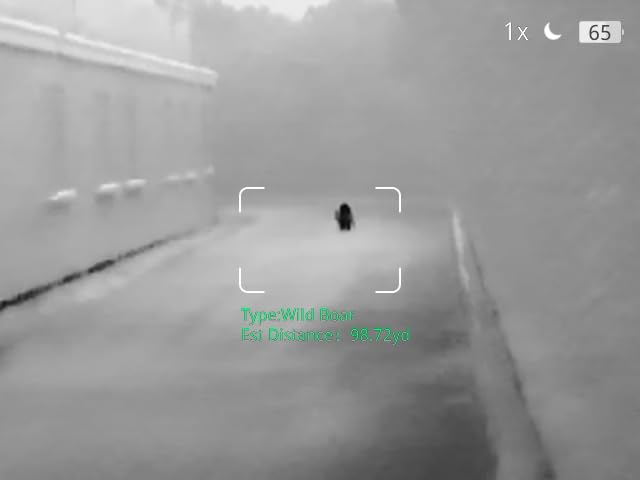
The TS004 is the reference point for this whole category. Its 256×192 sensor runs at 50 Hz, which is rare at this level and immediately separates it from the 25 Hz units that make walking animals stutter.
Owners report reliable heat detection out to 100 to 200 yards for livestock, deer, and property checks, and an IP67 silicone-cased shell that disappears into a coat at 70 grams.
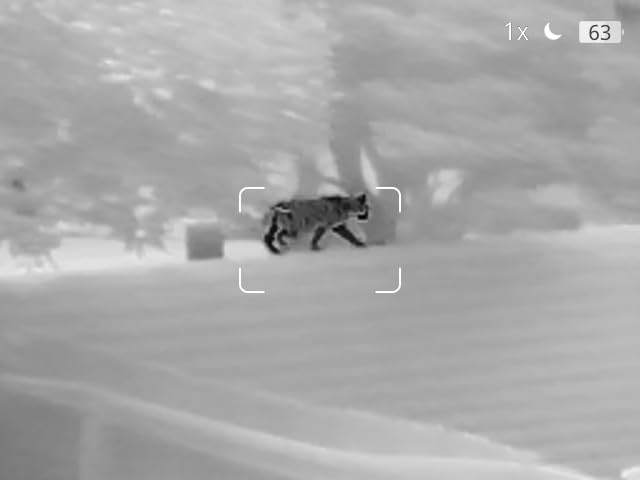
The 13mm lens is listed at 410 meters of detection with detail visibility inside 100 yards, which is an honest pairing. The large number is detection, the smaller one is what you actually use.
The TopInfrared app handles capture and live viewing, and the 10-plus hour runtime makes this the unit most likely to still be running on a long night walk.
Who it suits?
First-time buyers, property owners, and anyone doing home insulation checks. It is the pick if you want 50 Hz, a rugged shell, and phone connectivity without stepping up a tier.
Where it falls short?
Species ID beyond roughly 100 yards. The 8x zoom is entirely digital, so pushing magnification produces a grainy image rather than more detail, which is exactly where a 384×288 sensor starts to earn its money.
2. AGM Global Vision Rattler V2 Thermal Scope – Highest Rated in the Set
AGM Global Vision Rattler V2 19-256 Thermal Scope High-Sensitivity Sensor
256x192 12um sensor
2.5x base, 8x digital zoom
9.3 degree field of view
Dual batteries, 11.5h
IP67, 6.34oz
Pros
- Highest average rating in this roundup at 4.6
- 2.5x base magnification with a wide field for fast scanning
- Dual rechargeable batteries included
- Ten reticle styles plus a stadiametric rangefinder
- IP67 and recoil resistant
- operates from -22F to 131F
Cons
- Mounted rifle scope form factor
- not a handheld monocular
- Compact 256x192 sensor limits long-range detail against higher-resolution units
This is a scope rather than a handheld viewer, which makes it an unusual fit here, but it earns its place by showing what a good decision looks like once the sensor tier is fixed. Its 4.6 average across 284 reviews is the highest in our set.
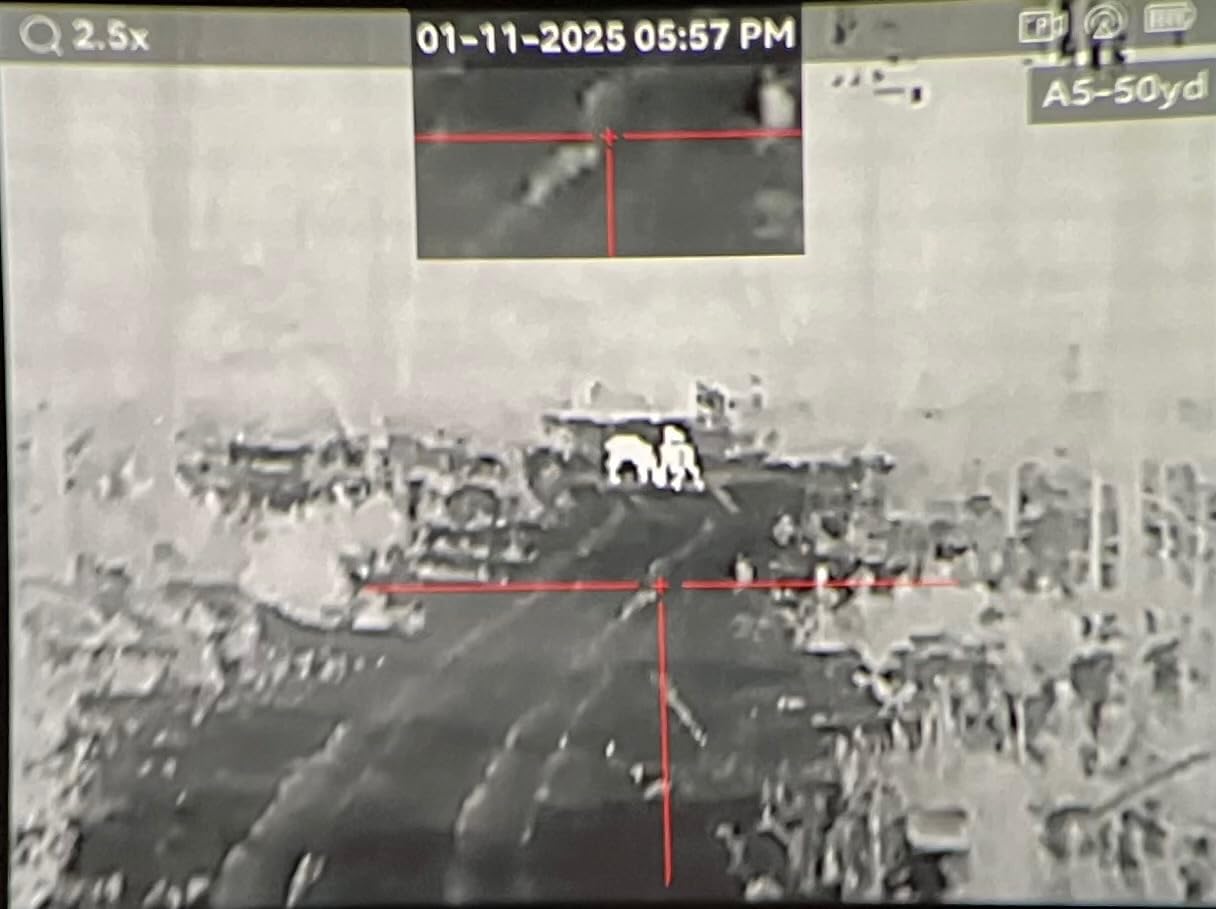
The combination buyers praise most is 2.5x base magnification with a 9.3 degree field of view, a deliberately fast-scanning setup that reflects what experienced users say matters most: find the animal first, worry about identity second.
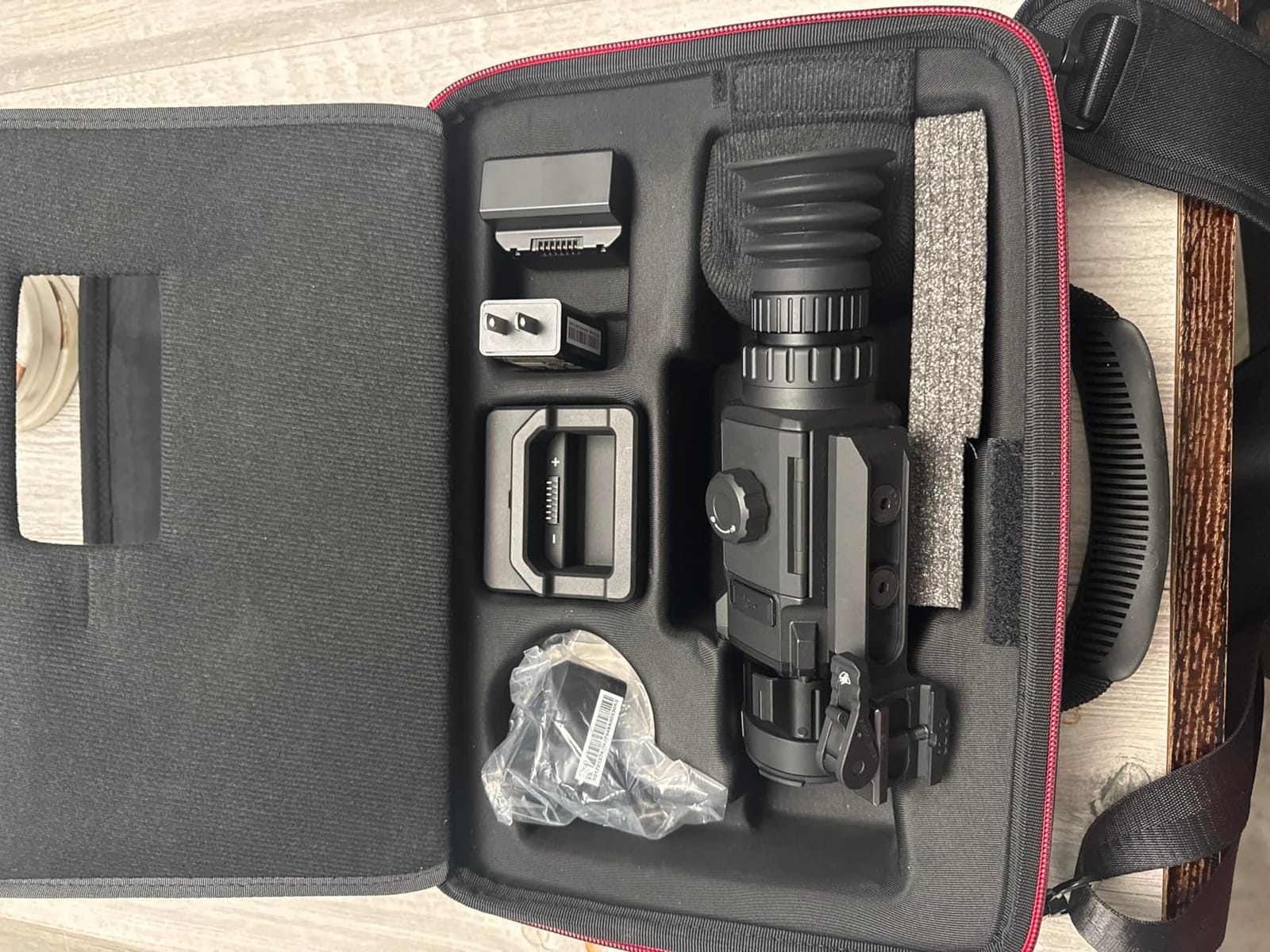
Two rechargeable batteries are included with up to 11.5 hours of runtime, which removes the cold-night anxiety that plagues single-pack designs. Ten reticle styles, four colour options and shot-activated recording with onboard audio complete the package.
The -22F to 131F operating range means this is not a three-season device, and owners note dependable multi-battery runtime with a wide, fast view for brush and moving game.
Who it suits?
Hunters who already own a rifle and want fast-scanning thermal glass with dual batteries and a wide field of view. The 2.5x base suits brush and mixed terrain well.
Where it falls short?
Scouting on foot, driving, or watching livestock, since this is a mounted device. Native resolution is also modest, so long-range ID falls short of what a 384×288 handheld delivers.
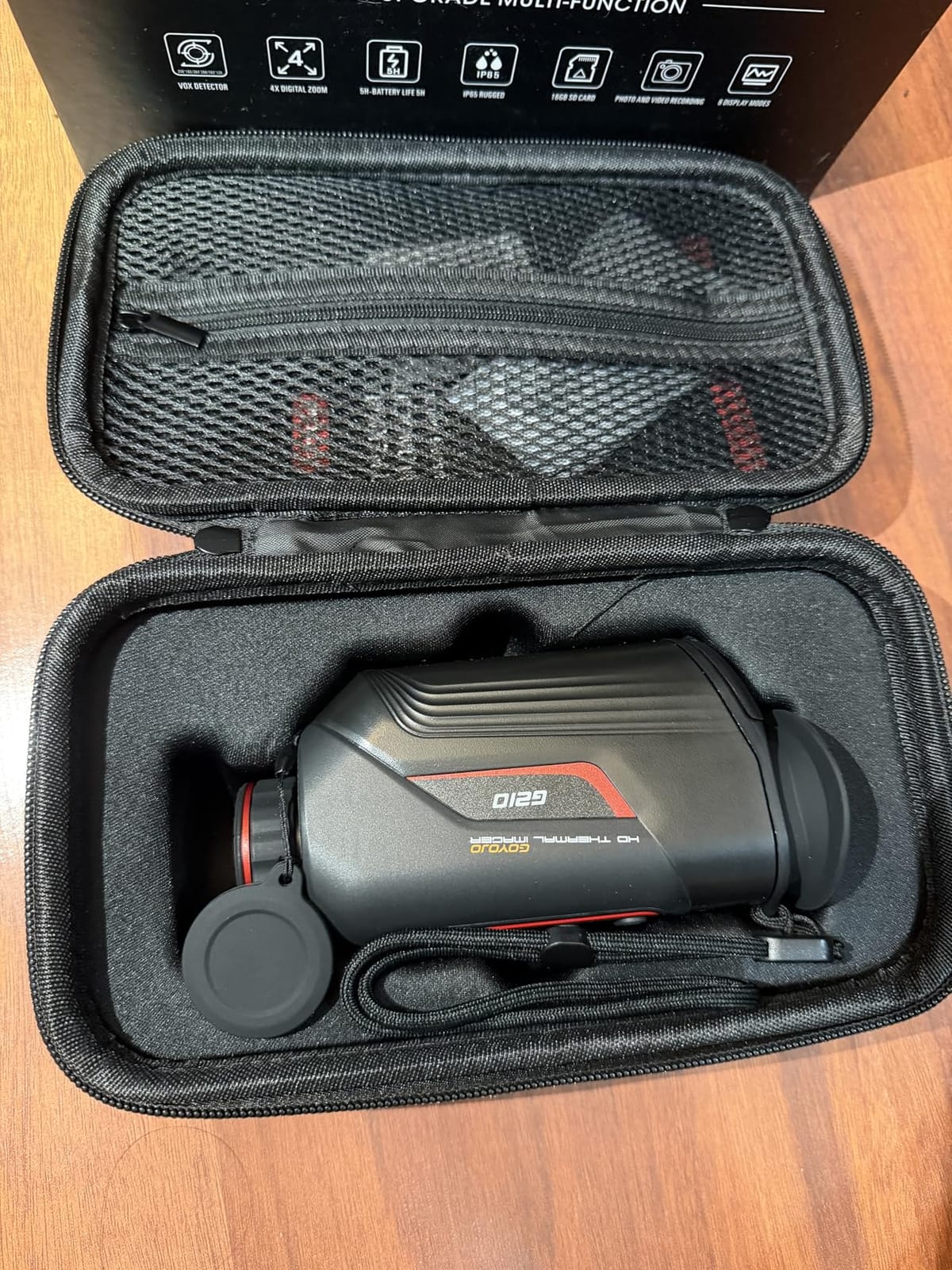
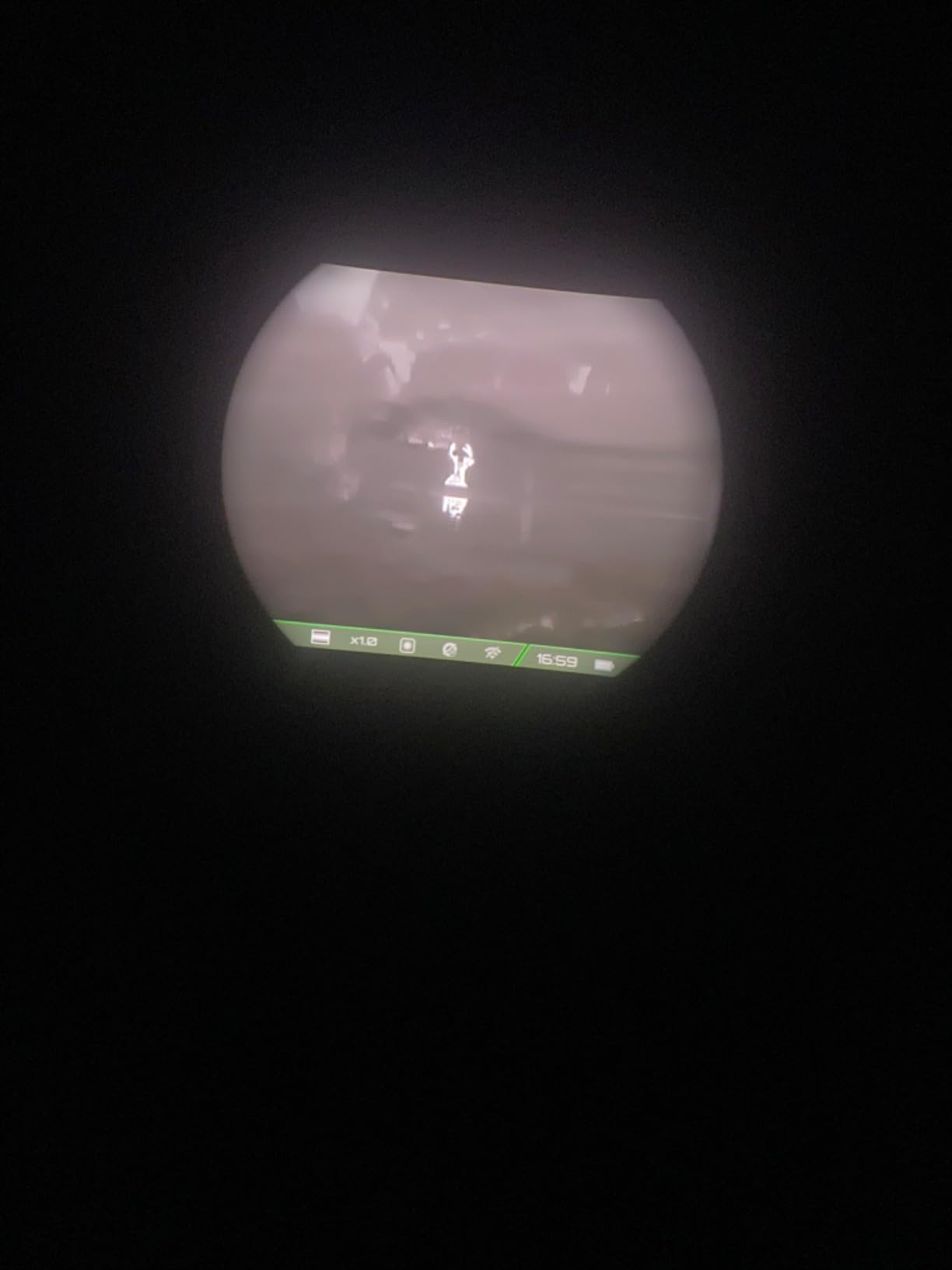
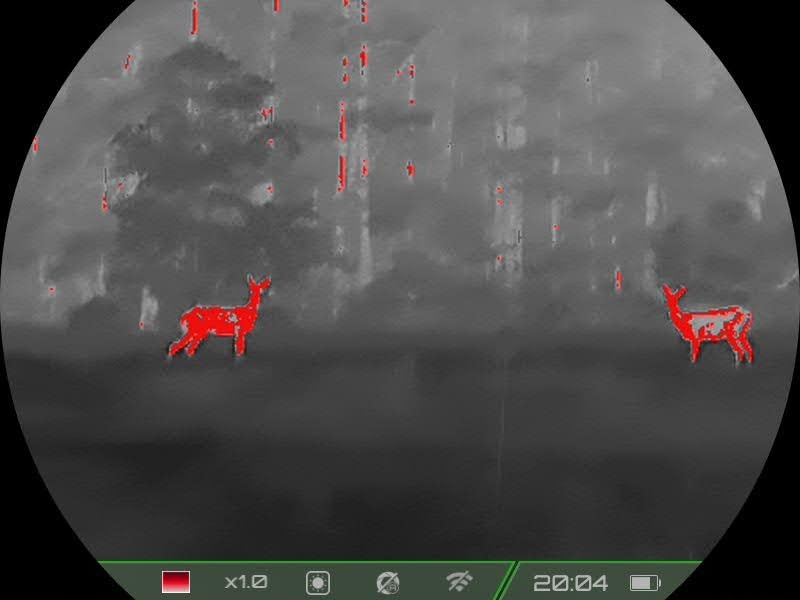
3. GOYOJO G210 Thermal Monocular – Six Palettes and Swappable Cells
GOYOJO G210 Thermal Monocular, 256×192 Thermal Imaging Monoscope Camera for Adults, 10mm Focal Lens Vision Goggles Thermal Scopes for Night Hunting Camping
256x192 sensor, 12um detector
25Hz refresh
10mm lens, 17.5 degree FOV
Six palettes, 4x digital zoom
Replaceable 18650 cells, 6h+
Pros
- Six colour palettes including iron-red and glimmer
- Replaceable 18650 batteries with field spares
- 17.5 degree field of view scans without swinging the unit
- 16GB built-in storage with no card needed
- Carry case and wrist tether included
Cons
- 10mm fixed focus is noticeably softer at distance than the 15mm G215
- Brightness setting reverts to default after some menu changes
- No microphone
- so recordings have no audio
- Mac users cannot mount it as an external drive for file transfer
The G210 is built around one idea: give the buyer options. Six palettes, replaceable cells, built-in storage, and a laser pointer in the same body, and buyers respond by comparing its imagery favourably to costlier units in the same class.
The 17.5 degree field of view is the star spec. You scan open ground without sweeping the unit, which is exactly the advice that keeps returning from experienced users about base magnification and scanning speed.
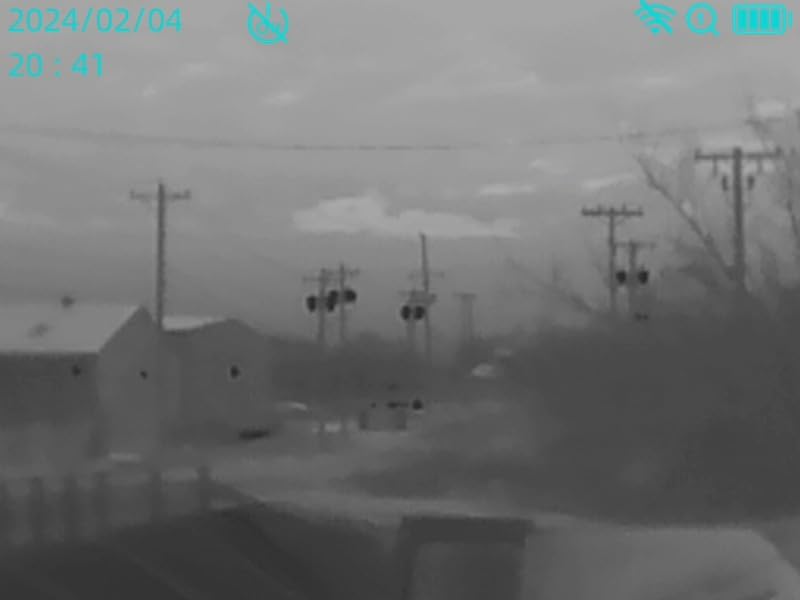
Hunters and property owners praise clear live imagery at 25 Hz, comfortable handling, and easy menu navigation. The 18650 cells are the quiet hero: a spare set in the pack removes the biggest failure mode in cold weather.
Four times digital zoom and 16GB of internal storage let you document a find without buying a card, and the WiFi app shares a live view to a phone.
Who it suits?
New buyers who want the widest field of view and the most flexible battery setup in the guide, and anyone doing home security work where palettes and spare cells matter more than long-range detail.
Where it falls short?
Identification at range. A 10mm fixed-focus lens on a 256×192 sensor detects reliably and identifies modestly, and 25 Hz is visibly jumpier than the 50 Hz units elsewhere here.
4. RIX Pocket K2 Thermal Monocular – Built for a Coat Pocket
RIX Pocket K2 Portable Thermal Monocular for Hunting, 256×192 (50Hz), Wi-Fi, Handheld Night Vision Monocular
256x192 12um sensor
NETD under 25mK
50Hz refresh
800x600 OLED
200g, IP67
Pros
- Only 200 grams
- genuinely pocketable
- NETD under 25mK is excellent for the class
- 50Hz refresh and electronic stabilisation keep the image steady
- App streaming works with very little lag
- Integrated sliding lens cover protects the objective
Cons
- Identification becomes difficult beyond about 150 yards
- Fixed focus and menu controls can be fiddly
- One owner reported a unit that would not power on reliably
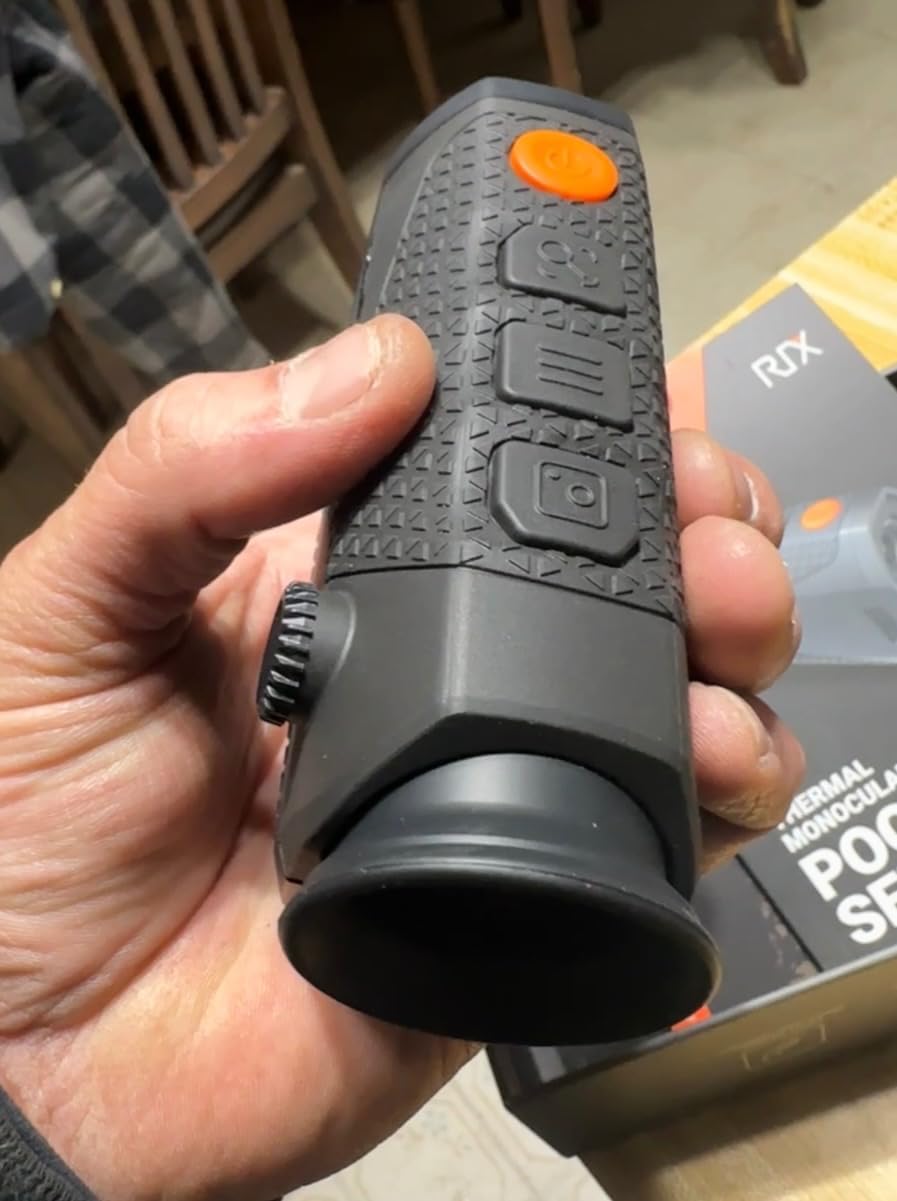
The K2 solves a problem no other device here addresses: making a thermal monocular something you actually carry. At 200 grams with a sliding lens cover and IP67 sealing, it lives in a jacket pocket instead of a case.
Its NETD of under 25 mK is the best sensitivity in the 256×192 group we looked at, and that is what lets owners find animals in tall grass where a noisier sensor flattens them out.
Resolution Enhanced Technology pixel-doubles the image, and while that is processing rather than extra sensors, buyers report it looking considerably sharper than competing 256 units. Electronic stabilisation keeps the view usable on a windy ridge.
The 19.4 degree field of view is among the widest here, and owners use the unit for farm surveillance, garden wildlife spotting, and scanning out to 150 to 200 yards.
Who it suits?
Hikers, farm and property owners, and anyone who wants a genuine thermal monocular for a full day of walking without neck strain. The light weight and 19.4 degree view make it our pick for on-foot wildlife observation.
Where it falls short?
Long-range ID work. The 256×192 sensor caps identification around 150 yards, the fixed focus frustrates rapid switching between near and far subjects, and a small cluster of buyers reported power-on reliability problems.
5. Teslong TTS260 Thermal Monocular – Made for Recording and Review
Teslong TTS260 Thermal Monocular 256 x 192, Super Resolution 512 x 384
256x192 sensor, 512x384 super resolution
12mm lens, 218yd detect / 55yd recognize
800x600 OLED eyepiece
32GB storage, USB-C and HDMI
8h runtime
Pros
- 32GB built-in storage plus USB-C and Mini HDMI output for review and sharing
- Large 0.32 inch 800x600 OLED eyepiece with adjustable diopter
- Hotspot tracking plus eight colour modes aid target detection
- Upgraded touch buttons work in the field
- -4F to 122F operating range
Cons
- Super resolution is upscaled
- not true higher resolution
- Fixed focus limits close-range sharpness
- Recognition distance of about 55 yards is modest
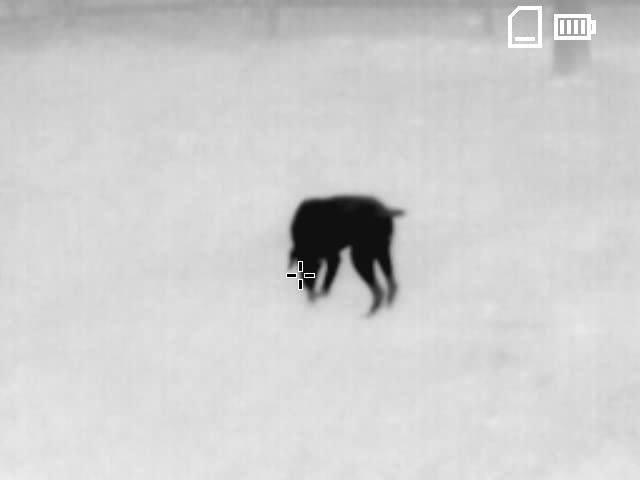
The TTS260 is the device to buy if the image matters to you later. A 32GB card, Mini HDMI output and USB-C mean you can pull footage to a laptop or television and review a night properly.
The 0.32 inch 800×600 OLED eyepiece gives one of the larger, more immersive rectangular views in this guide, with an adjustable diopter for eyeglass wearers. Buyers like the touch buttons because they work with cold hands.
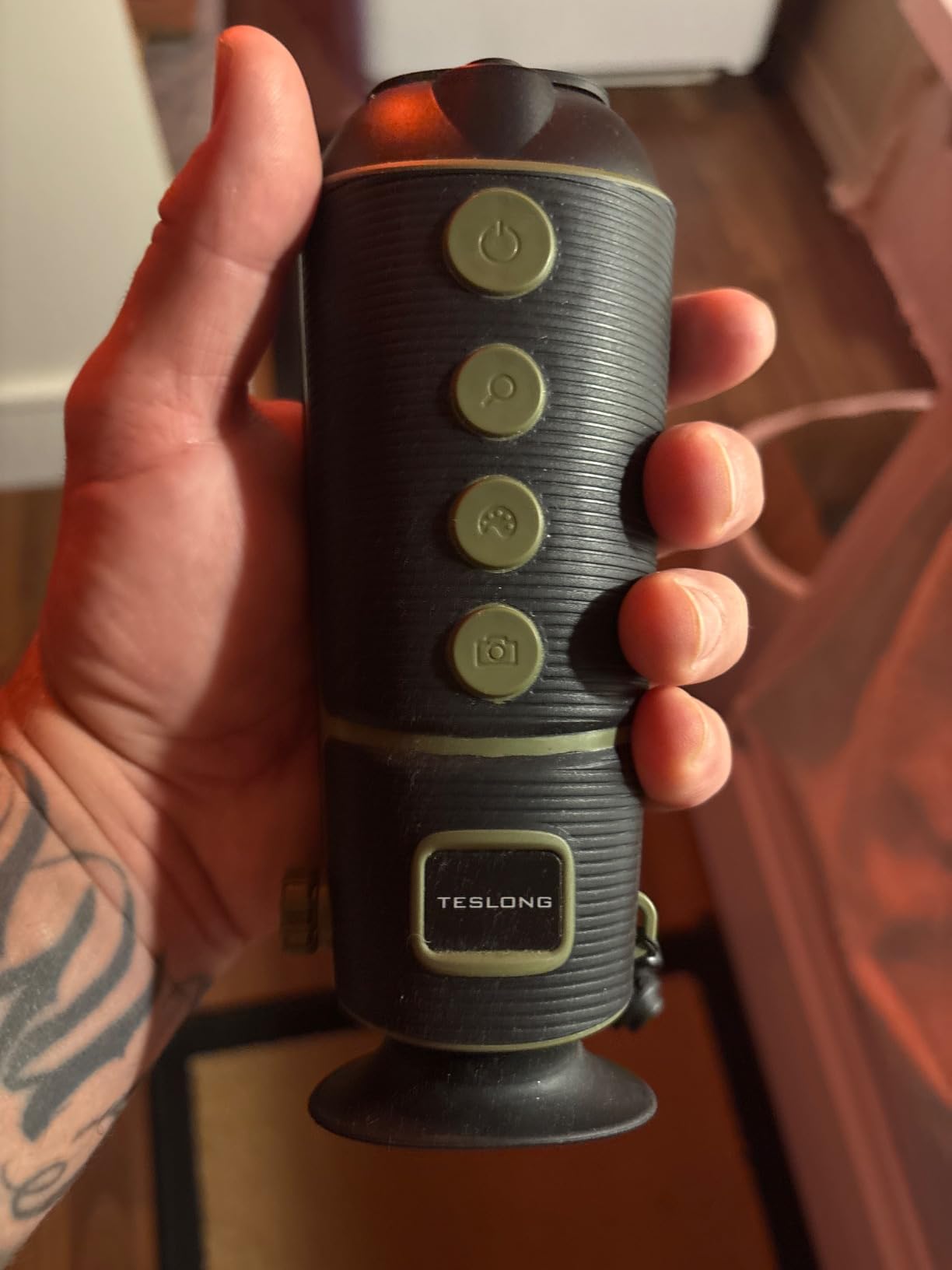
Hotspot tracking and eight colour modes are genuinely useful for property checks, where you want the unit pointing at the warmest thing in frame while you watch a wide area of ground.
Up to eight hours per charge covers most nights, though the -4F floor is a shoulder-season limit rather than a deep winter one.
Who it suits?
Anyone documenting activity: property owners, wildlife watchers, and researchers who want to log footage on a larger screen. The HDMI output is genuinely rare at this level.
Where it falls short?
Long-range work and deep winter. Reviewers are honest that the 512×384 figure is interpolated from a 256×192 sensor, and recognition to about 55 yards is a walking-horror number rather than an ID tool.
6. ATN OTS XLT Thermal Monocular – Widest View and a Rangefinder
ATN OTS-XLT Compact Lightweight Thermal Viewer, 2-8x
50Hz thermal sensor
25mm objective, 22.5 degree FOV
2-8x magnification
Smart rangefinder, photo and video
10+ hour battery
Pros
- 22.5 degree field of view is the widest in this guide
- 50Hz sensor for smooth tracking
- Controls are simple enough to operate in the dark
- Smart rangefinder plus photo and video capture
- Low power draw with 10+ hour battery life
Cons
- Image is fuzzy without a strong heat signature
- Digital zoom pixelates badly beyond 2x
- Struggles in fog
- snow and below roughly 0F
- Rangefinder needs high and low point entry rather than instant readings
- Heavier and chunkier than comparable units
The 22.5 degree field of view is the reason this unit is worth your attention. Nearly twice the view of a 15mm monocular, it lets you sweep open terrain in one pass, which is the failure mode that causes more missed animals than any other spec.
Buyers describe the 50Hz sensor as smooth for scanning and the 25mm objective as a solid light-gatherer. Controls are deliberately simple so you can find display brightness and palette without looking.
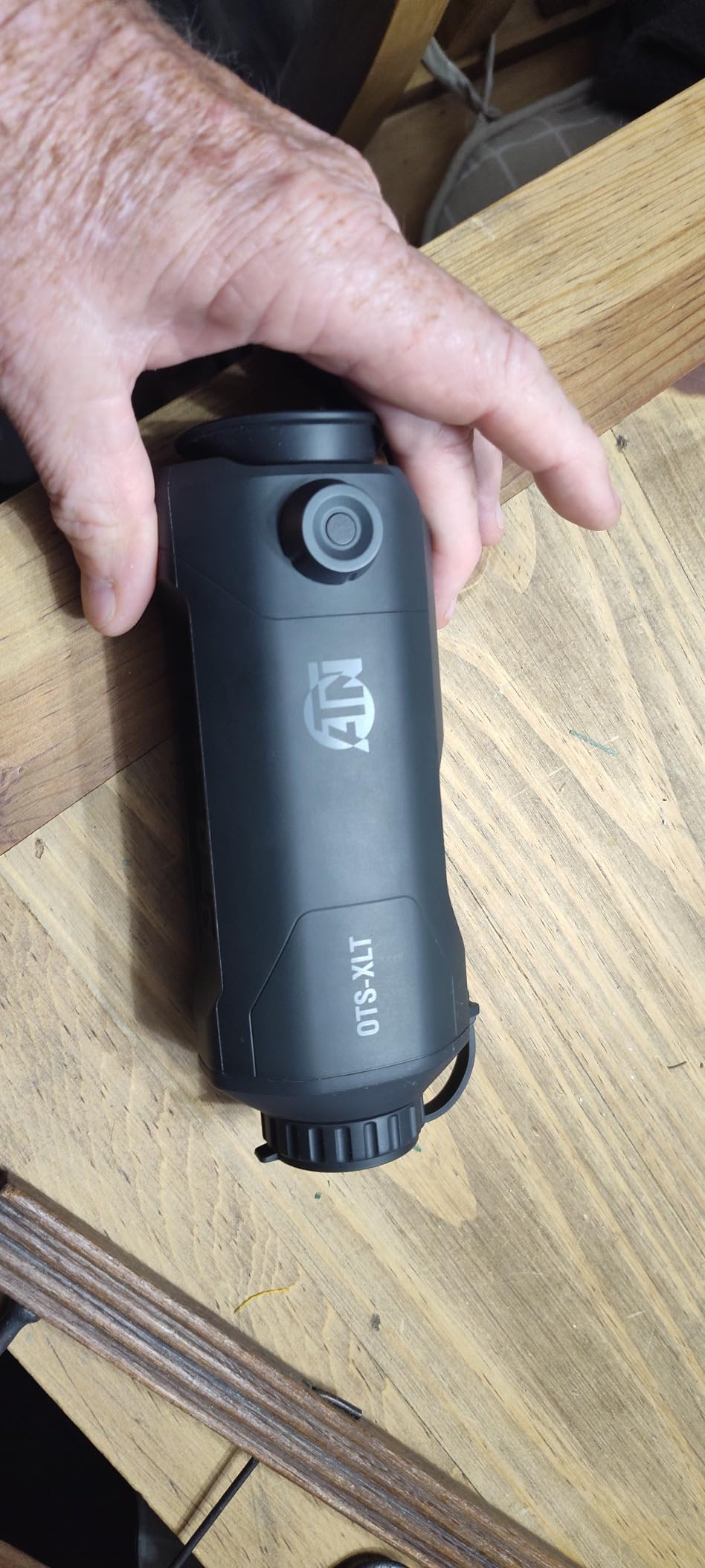
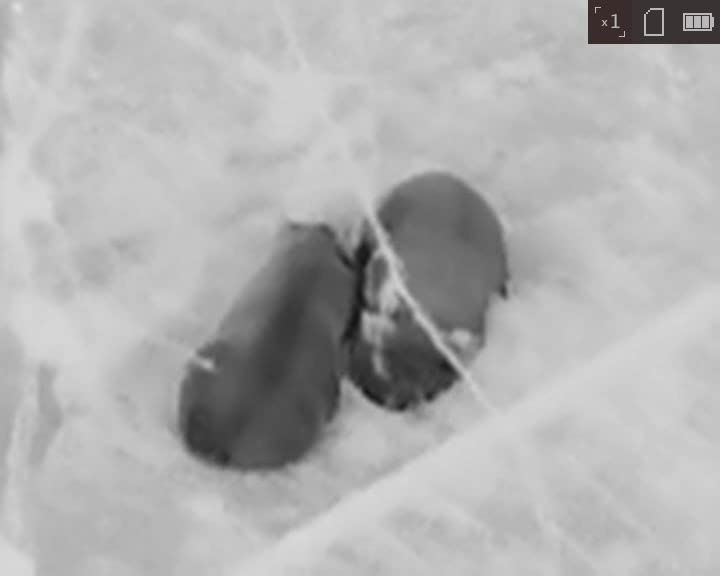
Photo and video capture with a built-in smart rangefinder add real utility if you need to document or measure rather than just scan, and battery life is listed above ten hours.
Owners report it reliably picks out warm-blooded animals and large heat sources in the dark, and one long-term owner notes the battery has held up after many charge cycles.
Who it suits?
Hunters scanning open fields, ridge lines, and large treelines where scanning speed beats magnification, plus property watching thanks to the wide view and long runtime.
Where it falls short?
Winter hunting and long-range ID. Reviews report a washed-out white screen in fog, snow and temperatures below roughly 0F, and several owners cite battery and screen failures over time, so keep the receipt.
7. RIX Pocket K3 Thermal Monocular – The Long-Range Step Up
RIX Pocket K3 Thermal Monocular for Hunting, 384×288 Night Vision Monocular
384x288 sensor
15mm lens, 2x base magnification
50Hz with EIS, 800x600 OLED
Replaceable power unit, 8GB
IP67, 7.52oz
Pros
- 384x288 sensor gives real detail gains over 256x192 units
- Only 7.52 ounces
- 50Hz refresh plus electronic stabilisation reduce motion blur
- Replaceable power unit removes runtime anxiety
- WiFi remote viewing with 8GB on-device memory
Cons
- 2x base magnification limits close-range scanning flexibility
- 8GB of memory is limiting for extended video
- Listed detection figure depends heavily on temperature contrast
The K3 is the cheapest route into a genuine 384×288 sensor in this guide, and that spec jump changes the experience. Owners moving up from 256 units consistently point to sharper target detail as the reason.
At 7.52 ounces with electronic image stabilisation and a 50Hz frame rate, it is one of the lightest 384 units you can carry, and the stabilised view makes a distant animal far easier to hold on the frame.
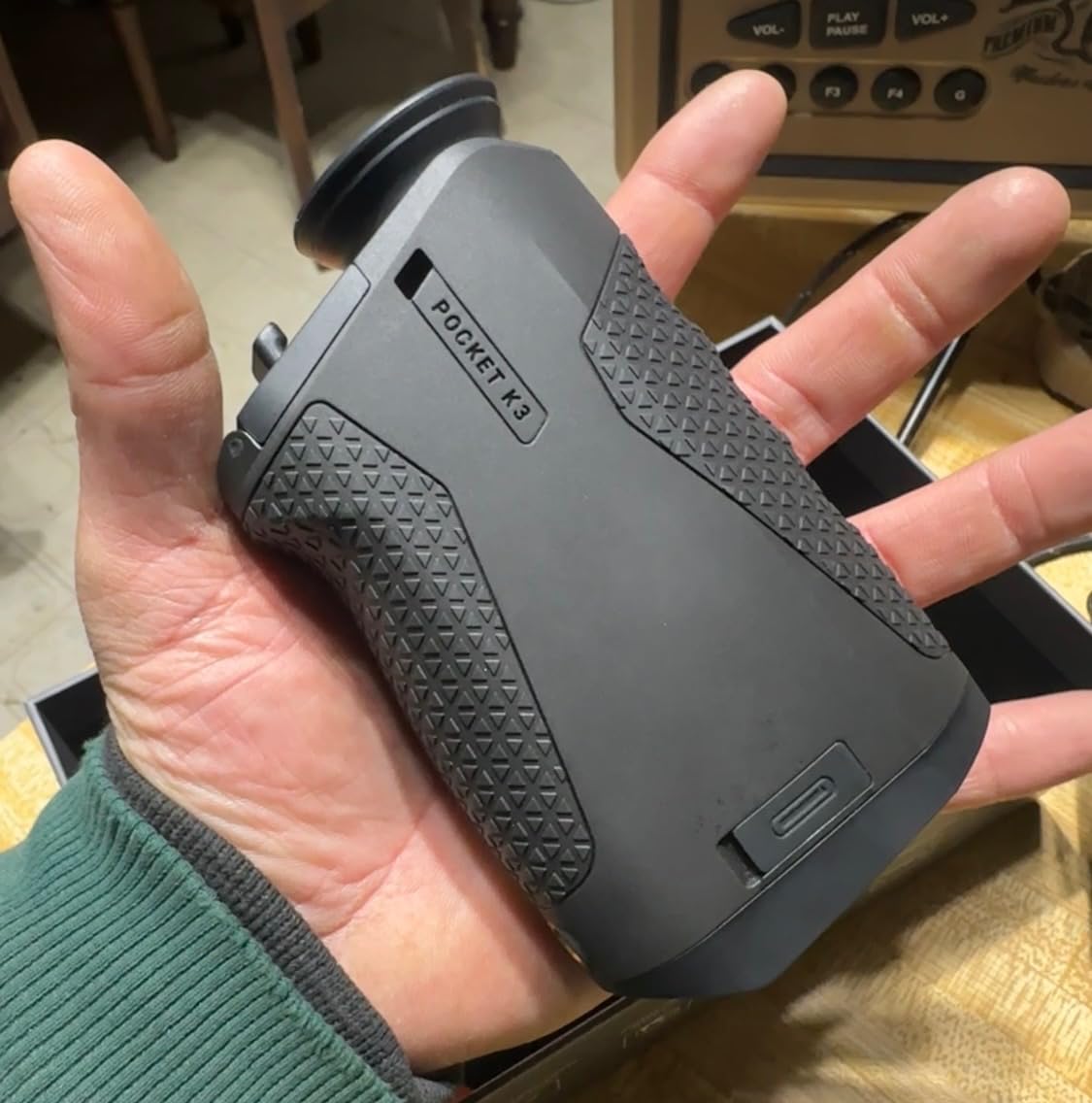
The 15mm objective and 800×600 OLED display are a sensible pairing for range work, and reviewers note the 2x base is tuned for distance rather than close scanning.
Replaceable power and 8GB of internal memory handle a night of stills and short clips, and WiFi remote viewing lets a second person see what you are seeing.
Who it suits?
Deer and elk scouting, long-range predator work, and anyone who has outgrown a 256 sensor. The low weight suits full days in the field.
Where it falls short?
Close-range sweeping and heavy video capture. The 2x base and 8GB of storage are both limits, and the small review base means you are trusting a newer platform rather than a deeply proven one.
8. GOYOJO G215 Thermal Monocular – Sharper Glass, Narrower View
GOYOJO G215 Thermal Imaging Monocular for Hunting, 256×192 (50Hz) Infrared Night Vision Telescope, 15mm Focal Lens Thermal Scopes for Outdoor Night Vision Camera Telescope
256x192 sensor, 12um detector
15mm focal lens
11.7 degree field of view
Six palettes, 4x zoom
Replaceable batteries, 6h+, IP65
Pros
- 15mm lens is noticeably clearer at distance than the 10mm G210
- Human detection listed at 1417 meters with recognition at 254 meters
- Replaceable batteries with quick startup
- WiFi app sharing for real-time collaboration
- Compact handheld form factor with tripod capability
Cons
- 11.7 degree field of view is narrow for close-range scanning
- SD card expansion is not supported
- Listed weight of 1 kg is heavy for a pocketable monocular
- One-year warranty is short
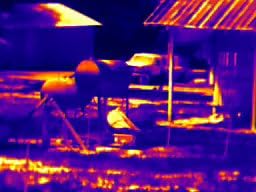
The G215 is the G210 with a longer lens, and that single change is the whole story. Owners who upgraded from the 10mm model consistently cite the 15mm front focus as the reason the image looks clearer at distance.
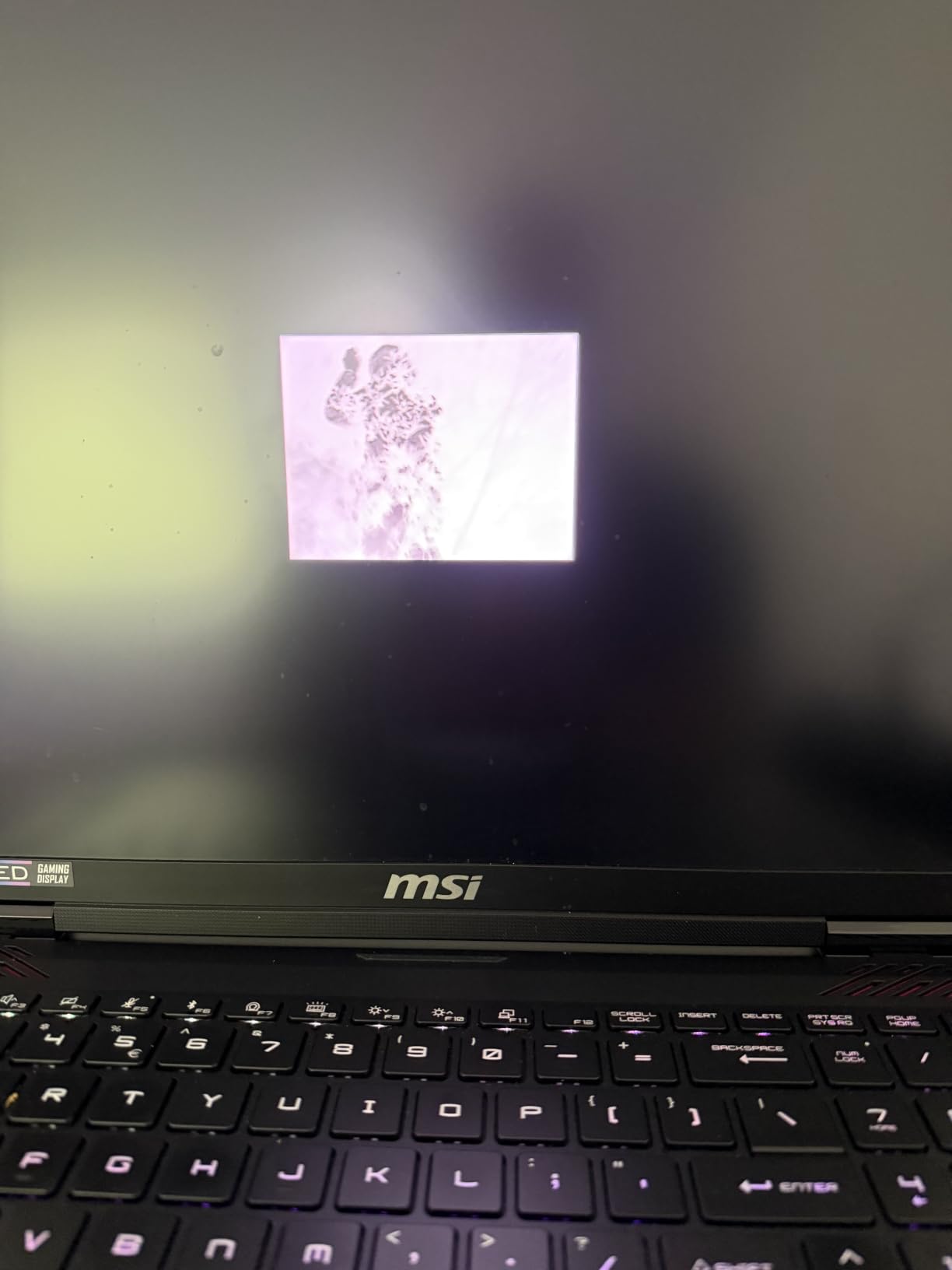
On paper its human detection and recognition figures are the most generous in this guide, at 1417 meters and 254 meters. Apply the one-to-five ratio and you get a realistic identification ceiling of a few hundred meters rather than the headline number.
Six palettes, replaceable cells, quick startup, and WiFi sharing make it a practical all-round field tool, and manual focus on the objective is a genuine improvement for locking onto a distant animal.
Wildlife observers report strong satisfaction with long-range detection, though storage is fixed at 16GB with no SD card expansion and the one-year warranty is among the shortest listed here.
Who it suits?
Scouting open country and long-range wildlife observation where detail at distance matters more than sweeping a close treeline. Strong satisfaction for deer and hog detection work.
Where it falls short?
Close-range scanning and heavy documentation. The narrow view frustrates woodland work, you cannot expand the 16GB storage, and a one-year warranty is thin for a device used outdoors.
9. ATN BlazeSeeker-210 Thermal Monocular – A Scanner With Room to Record
ATN BlazeSeeker-210 Thermal Imaging Monocular 256×192; 1.5-12x 12 Micron <35 NETD 50 Hz
256x192 12um sensor
NETD under 35mK
1.5-12x magnification
10mm lens, up to 460m detection
MicroSD up to 256GB, WiFi
Pros
- MicroSD expansion to 256GB is the largest storage option in this guide
- 1.5-12x magnification covers both scanning and identification
- Five colour palettes including iron red and alarm
- Built-in WiFi with app control and capture
- 3-year manufacturer warranty
Cons
- Identification gets difficult past about 120 yards
- Image quality is entry-level 256x192
- not 384 or 640 class
- Not much usable range beyond roughly 20 yards for some hunters
- One owner reported a battery that would not hold a charge
The BlazeSeeker-210 is sold and reviewed as a companion to a mounted thermal scope, and that framing is honest. It is a lightweight handheld scanner you pull out while you are not looking through a rifle optic.
Its distinguishing feature is storage. Recording to MicroSD cards up to 256GB means hours of footage without the ceiling internal memory imposes, and owners running property checks value that.
Auto focus, 1.5-12x magnification, five palettes and built-in WiFi with app control make it simple to learn, and owners identify deer, pigs and coyotes at around 120 yards.
NETD under 35 mK sits in the good rather than excellent band, and several owners note the image looks like entry-level 256×192 rather than anything sharper, with low contrast scenes showing it.
Who it suits?
Hunters who already run a mounted thermal scope and want a handheld scanner for off-rifle work, plus anyone recording long sessions to removable storage.
Where it falls short?
Long-range identification and open-country scanning. Past about 120 yards you are guessing, the 10mm objective gives up detail quickly, and one owner reported a battery that would not hold a charge.
10. MiLESEEY TNV10PRO Thermal Monocular – A True 320×240 Sensor
MiLESEEY TNV10PRO Thermal Monocular, 400×300 SR 320×240 IR Resolution, Aircraft Mg-Al Alloy, 13mm 50Hz Handheld Thermal Camera, Night Vision Imager, Hot Spot Tracking
True 320x240 IR sensor
50Hz with 800x600 OLED
13mm lens
5 palettes, hotspot tracking
4500mAh, 12h, magnesium-aluminium
Pros
- Genuine 320x240 sensor rather than an upscaled figure
- 50Hz refresh on a large 800x600 OLED display
- Aircraft-grade magnesium-aluminium body
- Hotspot tracking auto-locks onto targets
- 12 hour runtime with 32GB internal memory
Cons
- Hotspot tracking is over-sensitive and produces false positives
- 32GB internal storage is limited for long video sessions
- 4x digital zoom softens the image
- Only 56 reviews so far
The TNV10PRO sits in an unusual middle ground, and that is its argument. It uses a real 320×240 infrared detector rather than interpolating a 256 sensor up, which is why owners call it a visible step above the 256 tier.
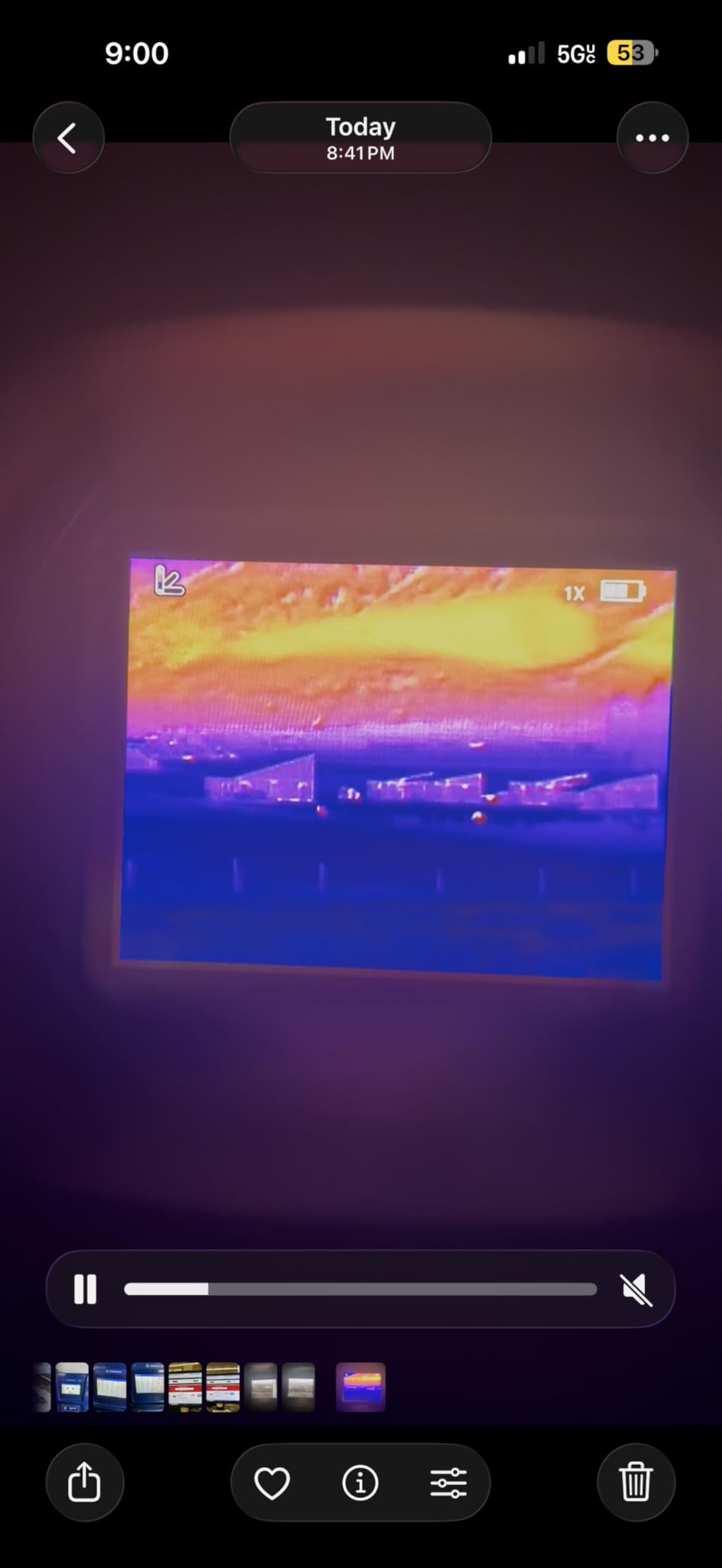
Pairing a 50Hz refresh with an 800×600 OLED display makes scanning smooth and readable, and the UHD mode is noted for roughly doubling perceived definition in low-contrast scenes.
The magnesium-aluminium housing is a real differentiator in a category full of plastic, and IP65 with a -20C to 60C operating range covers most year-round work.
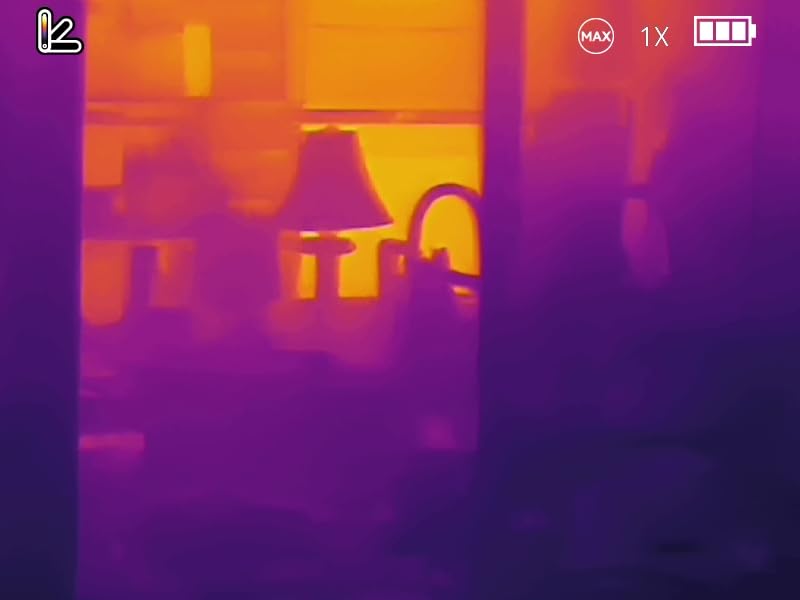
Hotspot tracking auto-locks onto warm objects in frame, saving you scanning a wide field by hand, and the 4500mAh cell is rated up to 12 hours with auto-off timers.
Who it suits?
Buyers who want more than a 256 sensor without stepping up to 384, and anyone who values a metal housing for wet, cold, knocked-about use.
Where it falls short?
Anyone needing a large recording library or a 384-class image. A minority find the hotspot tracking too trigger-happy, generating false positives on warm rocks, and the 4x digital zoom softens detail.
11. Pulsar Axion Compact Thermal Monocular – Best Spec Sheet in the Class
Pulsar Axion XQ19 Compact Thermal Monocular, 384×288 Sensor
384x288 sensor, 17um pitch
NETD under 18mK
640x400 AMOLED
19mm f/1.0 lens, 1.5-6x
Removable APS3 cell, IPX7
Pros
- NETD under 18mK is the most sensitive figure in this guide
- 640x400 AMOLED display is larger and brighter than most rivals
- 19mm f/1.0 lens gathers light well in poor conditions
- Only 8.8 ounces and comfortable for long scans
- Removable APS3 battery with app support
- 5 year limited warranty
Cons
- Palette changes take several menu steps compared with one-button rivals
- Zoom is digital only at 1.5-6x
- One owner received a battery that was dead on arrival
- Subject to US export control restrictions
If you read one spec block here and think that is the one to beat, it is this one. A 384×288 sensor with 17 micron pixels and NETD under 18 mK, plus a 640×400 AMOLED display and a 19mm f/1.0 lens, is a flagship-level combination.
Under 18 mK is the best sensitivity figure in this roundup, and it is what lets the Axion hold detail in fog, at dawn, and on distant animals where noisier sensors wash out.
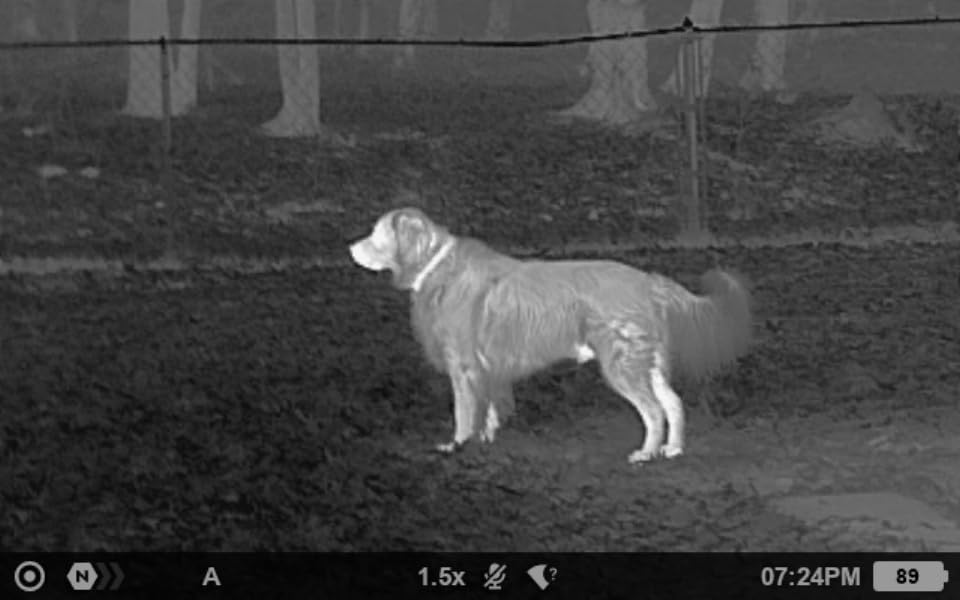
Owners compare it favourably to ATN and FLIR units on display size, build feel, and low-light sensitivity, using it for hog scouting, birding and property surveillance. The AMOLED screen’s deep blacks make small animals stand out against a cold background.
The removable APS3 battery is what we would insist on for cold-weather work, and the 5-year limited warranty is the longest listed here. At 8.8 ounces it disappears in a hand.
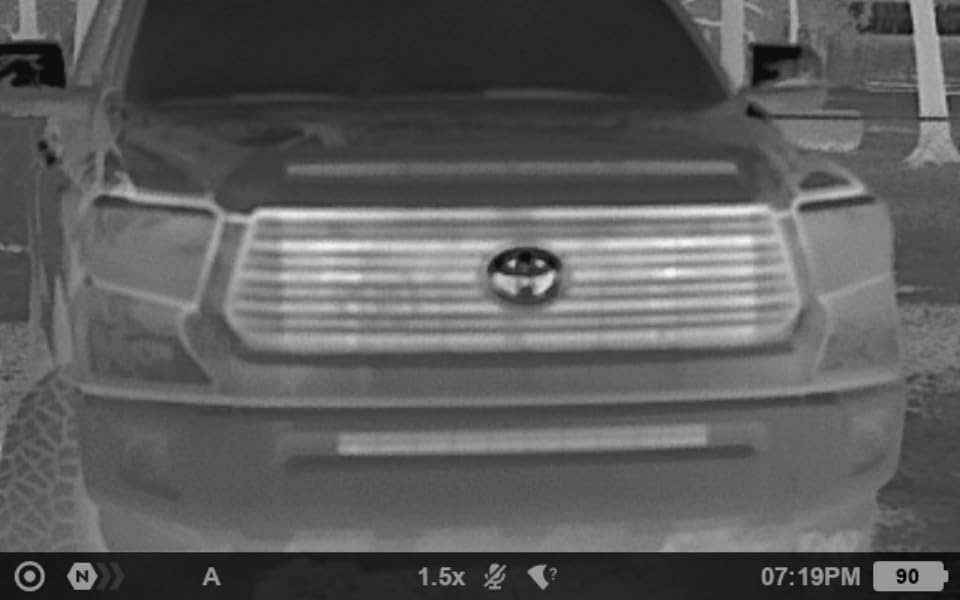
Changing palettes takes several menu steps next to one-button rivals, the 1.5-6x range is digital, and this category falls under US export control, which is a purchasing consideration rather than a quality one.
Who it suits?
Serious shooters and dedicated wildlife watchers who want a 384 sensor, the best sensitivity in the guide, and a large AMOLED display in a genuinely small package.
Where it falls short?
Users who want one-button controls or true optical magnification. The 1.5-6x range is digital, so it is a detector and ID tool rather than a glass-and-prism optic.
12. TOPDON TS004 Pro Thermal Monocular – Long Glass, Narrow View
TOPDON TS004 Pro Thermal Imaging Monocular, 19mm 50Hz Night Vision
384x288 IR with 512x384 TISR
50Hz refresh
19mm lens, 650yd detect / 146yd detail
5000mAh, 11h
IP67, drop resistant
Pros
- Image clarity exceeds other thermals claiming the same resolution
- 19mm lens with clear detail within 146 yards
- Excellent app with almost no lag for remote viewing
- Ambidextrous layout with fusion and bird modes
- Owners report seeing mice
- rabbits and birds clearly at night
Cons
- Field of view is narrow
- unsuited indoors or within about 30 feet
- Zoom is cycled through rather than having dedicated controls
- Smooth metal body wants to slide forward in the hand
- One-year warranty is short
The TS004 Pro is the version of our top pick that trades a wide view for reach. The 19mm lens and 384×288 sensor put clear detail inside 146 yards, and owners report spotting mice, rabbits and birds the base model cannot manage.
That 4.5 average across 36 reviews is high, and the pattern is consistent: strong long-range clarity and an excellent phone app for remote viewing, streaming with almost no lag.
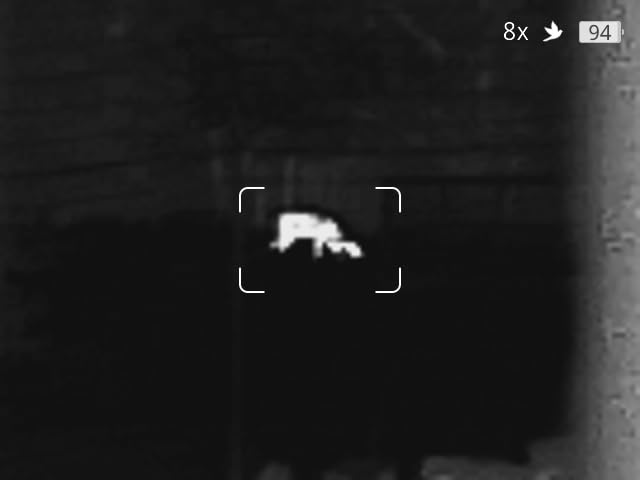
The 512×384 TISR processing sharpens the 384×288 image, and while that is upscaling, buyers coming from FLIR Scout units report better images and lower cost. A bird mode sits alongside fusion.
Buttons are responsive in the dark, the layout is ambidextrous, and the 5000mAh cell holds roughly 11 hours inside an IP67 shell rated to survive a two-metre drop.
The narrow field of view is the dominant complaint, unsuited to indoor use or anything inside about 30 feet. The smooth conical metal body can slide forward in the hand, and a few owners reported auto brightness producing false positives.

Who it suits?
Property owners watching for intruders and pests at distance, birders, and anyone whose priority is small-animal detection and long-range clarity rather than wide scanning.
Where it falls short?
Close-range and indoor work, where the narrow field of view becomes the limiting factor. Zoom is cycled through rather than on a dedicated control, and the one-year warranty is short for a device at this level.
How to Choose a Thermal Monocular: A Step-by-Step Path?
Start with the use case, not the brand. What you are looking at determines the sensor tier, and the sensor tier determines everything else you should care about.
1. Name the target. Human-sized heat signatures at property distances, deer and elk at several hundred yards, and small animals like hogs, birds, and rodents are three different problems. 2. Pick the sensor tier. Presence detection only is a 256×192 unit. Reliable species ID on deer-sized animals needs 384×288. A 640-class sensor only earns its cost if you need positive ID at long range. 3. Set the refresh rate. Take 50 Hz or 60 Hz for tracking live animals. 4. Set the field of view. Wide if you scan open ground, narrower if you work at fixed spots. 5. Only then compare the convenience features: palettes, apps, storage, and rangefinding.
That ordering matters because it stops you paying for a laser rangefinder you will never use while accepting a sensor that cannot ID what you are looking at. It is the same rule experienced users repeat on the electronics and hunting forums: decide sensor resolution first because it sets the price band, then optimise everything else inside that band.
Two decisions deserve special attention before you commit. The first is batteries. If you hunt or patrol in cold weather, choose removable cells, because stated runtime is measured in mild conditions and a cold pack can lose a large share of its capacity in a single evening.
The second is the display. OLED and AMOLED panels hold contrast in low-contrast scenes and keep working in deep cold. Some LCD-based panels are not rated below roughly 14F, and buying one of those for northern winter work is a genuinely common and expensive mistake.
Thermal versus night vision is worth a sentence of its own. Night vision amplifies available light, so it produces far more detail in true darkness, which is why many experienced hunters pair a thermal monocular with a night vision scope rather than choosing between them. Thermal wins when there is no light at all, when there is fog, smoke, or rain, in daylight, and when you need to see through light brush.
Form factor comes last. A monocular is the cheapest way in and the easiest to carry. Binoculars cost more but let two people see the same thing through one device, which matters on a guided hunt. A thermal scope or clip-on goes on a rifle and is for shooting, not scanning. A handheld unit is what you want if you are looking at animals rather than aiming at them.
In the first ten minutes after delivery, turn the device on indoors, check for dead or stuck pixels against a flat wall, verify focus and diopter with and without glasses, run the battery down and back up once to confirm cell health, and register the warranty before you leave. Forum users are far more anxious about warranty service friction than about the purchase itself.
For a wider look at the category, our guide to the best thermal monoculars for hunting goes deeper on prey-specific setups, and our night vision monocular picks cover the pairing question in more detail.
Frequently Asked Questions
What to look for when buying a thermal monocular?
Look at four specs first: sensor resolution, NETD, refresh rate, and field of view. Resolution sets the price band and decides whether you get presence detection or real species ID. NETD under 25 mK is excellent, under 40 mK good. Refresh rate of 50 Hz or more keeps moving animals trackable. A wide field of view lets you scan open ground instead of hunting for animals you never saw. Then check batteries, IP rating, and weight.
How do I pick between a 256×192 and a 384×288 thermal sensor?
A 256×192 sensor is a presence detector that can show body heat in grass or brush, and identification range is modest. A 384×288 sensor gives roughly double the pixels and is where most buyers reach reliable species ID on deer-sized animals. Pick 256 for property security, close-range work and budget. Pick 384 for hunting, wildlife observation, and anything beyond about 150 yards.
How far away from a thermal monocular can a person be detected?
Manufacturer detection figures are optimistic and usually mean a visible smudge rather than an identification. A workable rule of thumb is to divide the stated detection number by four, and by six for 256×192 sensors, to get a realistic identification ceiling. Real figures in this guide run from recognition at 55 yards on the Teslong TTS260 to recognition at 254 meters on the GOYOJO G215.
Does refresh rate really matter for hunting?
Yes, above about 25 Hz. At 25 Hz a walking animal smears and jumps around the frame, which makes tracking hard. At 50 Hz or 60 Hz a moving hog or deer stays solid and centred, and that is why every serious unit in this guide runs at 50 Hz or better. Below about 9 Hz you also run into export control restrictions on thermal imaging equipment.
What magnification is best for a thermal monocular?
Around 2x to 2.5x base magnification for most terrain. Higher base magnification narrows the field of view, and a narrow view cannot sweep open country, so you miss animals entirely rather than failing to identify them. Wide field of view for scanning, and use digital zoom only to confirm a target you have already found. Wider views like the 22.5 degrees on the ATN OTS XLT are ideal for open ground.
Can a thermal monocular be used in daylight?
Yes, and it is one of its advantages. Thermal sensors read radiated heat rather than visible light, so daylight, fog, smoke, and total darkness all work. The one real risk is pointing the lens at the sun or an extremely bright heat source, which can damage the uncooled microbolometer, so keep the objective covered when the unit is in a bag.
Bottom Line: The Thermal Monocular Features to Look For in 2026
Judge a thermal monocular on sensor resolution, NETD, refresh rate, and field of view, and treat everything else as convenience. Resolution sets the band, 50 Hz keeps animals solid, a wide view stops you missing what you never scanned for, and swappable batteries keep you running on a cold night.
For the best balance of those four right now, the TOPDON TS004 is our pick, with the largest review base in this roundup and a 50Hz sensor at the entry level. Step up to the Pulsar Axion Compact when you want a 384×288 sensor and the best sensitivity figure available, and use the AGM Rattler V2 as the example of a fast-scanning setup done properly. Whatever you choose, run the dead-pixel and battery checks the moment it arrives.