
Most people searching for the best water softeners for well water with iron are hunting for the wrong thing. A standard salt-based ion exchange softener is built to trade sodium for calcium and magnesium. Iron is a different job entirely, and a resin tank asked to do both jobs at once stops working sooner than most owners expect.
Before anything else, pull out your most recent well water test report and find the iron number in ppm. That single figure decides which of the systems below belongs in your house, and it is a different number from your hardness reading. Sizing a softener by hardness while ignoring iron is the most common expensive mistake on well water, and it shows up as a system that regenerates constantly, eats salt, and still leaves orange rings in the toilet.
We put ten whole-house systems through their ratings, owner feedback and published specifications to work out which ones actually fit an iron-bearing well, and which ones only look like they do. The list is sorted by iron threshold rather than by price or brand loyalty, because that is the number that matters once you are past the first hundred feet of pipe.
If you are still working out the basics of well water treatment, our guide to water softeners for well water covers the sizing and regeneration side in more depth. This article is about the iron.
Top 3 Best Water Softeners for Well Water with Iron (October 2026)
Three systems come out of this roundup with the strongest combination of rating, review volume and iron coverage. Every one of them is a filter or a softener with a clear iron specification, not a vague heavy-duty claim.
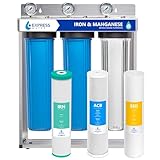
Express Water WH300SICS Iron and Manganese
- Three-stage iron and manganese filtration
- 17 gpm flow
- Stainless free-standing frame
- NSF certified cartridges

iSpring WGB32BM Iron and Manganese Filter
- Iron to 3.0 ppm and manganese to 1.0 ppm
- Catalytic media outlasts greensand
- 15 gpm flow
- Three stages on one bracket
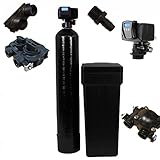
DuraWater Fleck 5600 SXT Iron Blaster 48k
- Fleck 5600 SXT digital metered valve
- 48k grain capacity
- Fine mesh resin for iron wells
- Metered regeneration
Best water softeners for well water with iron at a glance
All ten systems, with the iron figure each one is actually rated for. Read the iron column first, because that is the one that eliminates half this list for your particular well.
| Product | Specifications | Action |
|---|---|---|
| Express Water WH300SICS Iron and Manganese 3-Stage |
|
Check Latest Price |
| iSpring WGB32BM Iron and Manganese 3-Stage |
|
Check Latest Price |
| DuraWater Fleck 5600 SXT Iron Blaster 48,000 Grain |
|
Check Latest Price |
 DuraWater Air Injection Iron Eater Fleck 5600 SXT DuraWater Air Injection Iron Eater Fleck 5600 SXT |
|
Check Latest Price |
 iSpring WCFM400K Whole House Air Injection Filter iSpring WCFM400K Whole House Air Injection Filter |
|
Check Latest Price |
 AFWFilters Iron Pro 2 Combination Softener and Iron Filter AFWFilters Iron Pro 2 Combination Softener and Iron Filter |
|
Check Latest Price |
 Aquasure Harmony AS-HS70FMZ 70,000 Grain Softener Aquasure Harmony AS-HS70FMZ 70,000 Grain Softener |
|
Check Latest Price |
 Home Master HMF3SdgFeC Whole House Three Stage Filter Home Master HMF3SdgFeC Whole House Three Stage Filter |
|
Check Latest Price |
 Kenmore 420 40,000 Grain Softener with IntelliSoft Kenmore 420 40,000 Grain Softener with IntelliSoft |
|
Check Latest Price |
 PRO+AQUA Heavy Duty Whole House Well Water Filter PRO+AQUA Heavy Duty Whole House Well Water Filter |
|
Check Latest Price |
1. Express Water WH300SICS – the most proven iron filter in the group
Express Water Whole House Water Filter System, Iron & Manganese, 3-Stage
Iron and manganese filtration
17 gpm max flow
Stainless frame
100,000 gallon capacity
Pros
- Largest review base in the group with over 2700 ratings
- 17 gpm flow barely dents household pressure
- Pressure release buttons and gauges on every housing
- NSF certified filter stages
- Free-standing frame needs no wall mounting
Cons
- Does not soften water or reduce dissolved solids
- Cartridges replaced every 6 to 12 months
- Must be installed ahead of any softener
- Replacement cartridges are brand specific
When we wanted to know what actually holds up on a well with iron staining, we started with the system owners have the most experience with. The Express Water WH300SICS carries more than 2,700 ratings at 4.5 stars, and only about 5 percent of those are one star. That is the tightest distribution of any system in this roundup, and it matters more than the star number itself on a category where dramatic performance claims usually meet reality.
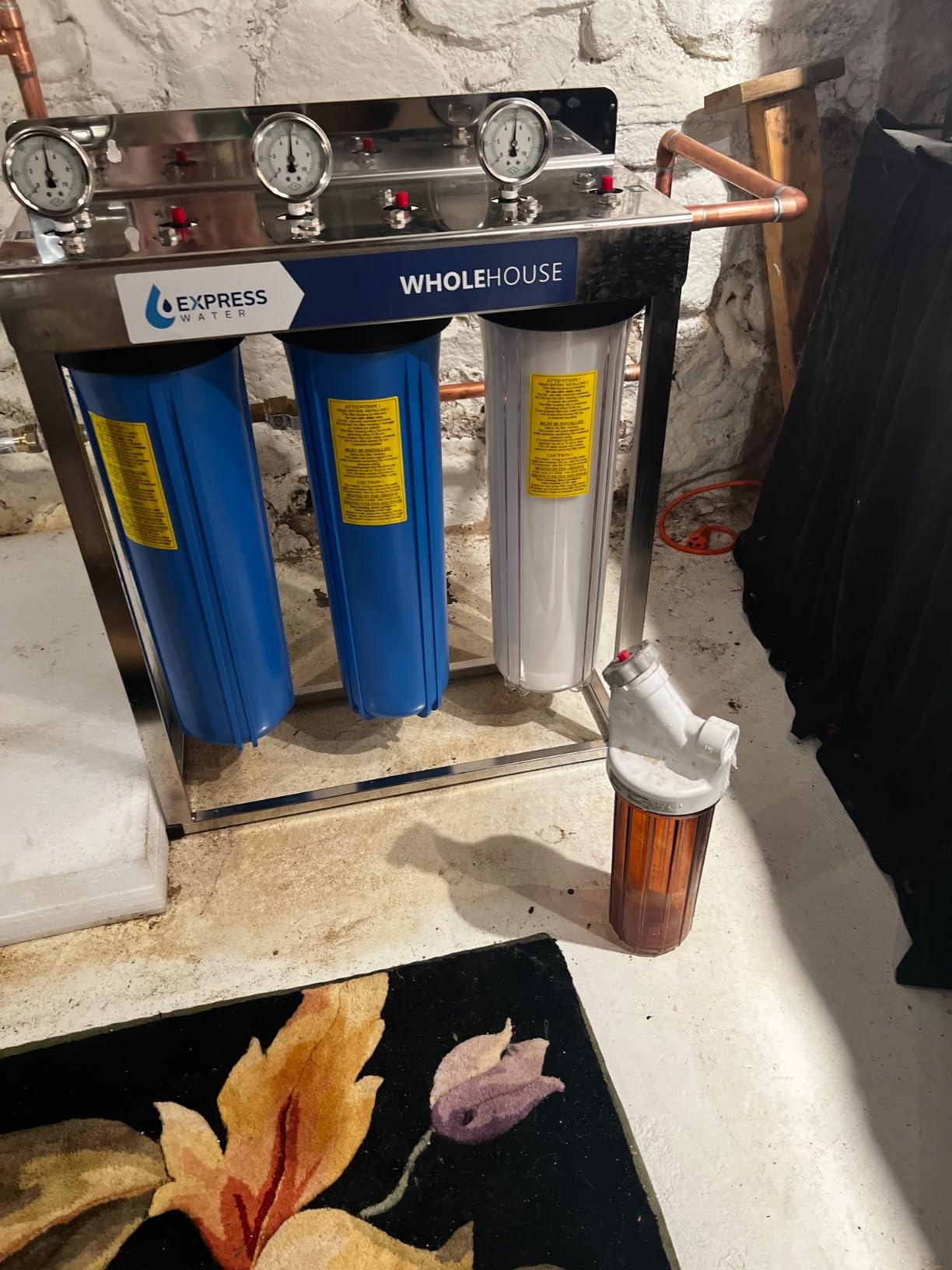
This is a three-stage cartridge system, not a softener. Stage one and two handle sediment and taste and odor chemistry, and the third stage is built for iron and manganese. Installed at the inlet ahead of any softener you own, it is the piece that clears the reddish-brown staining on porcelain, glassware and laundry that owners describe over and over in the reviews.
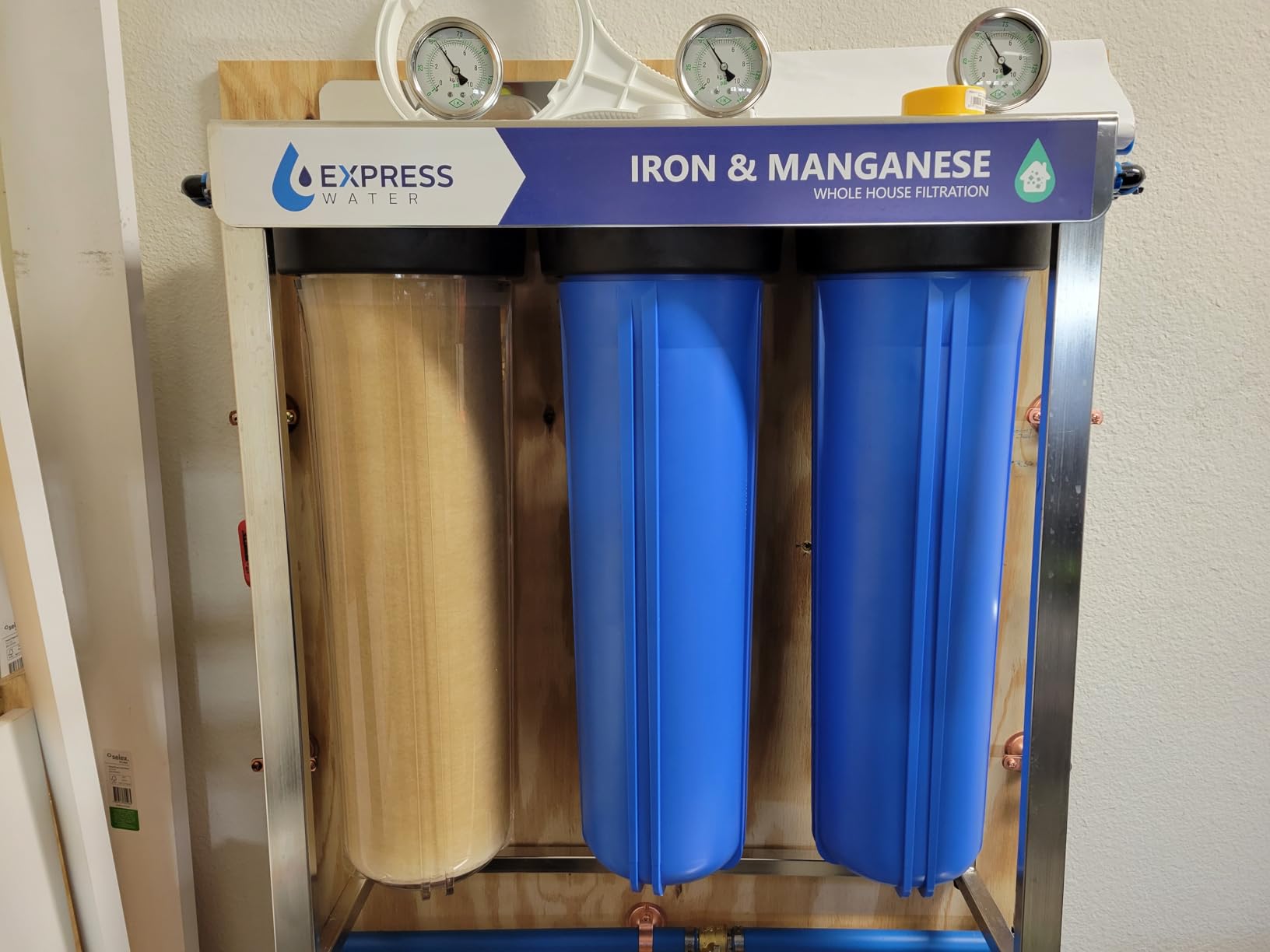
The hardware is where this unit separates itself from cheaper three-stage assemblies. Every housing has a pressure release button, which drains the canister before you unscrew it, and each housing carries a gauge so you can watch pressure drop across the filter and know when a change is due instead of guessing on a calendar. The frame is stainless steel and free-standing, so it does not need wall mounting and can sit wherever the plumbing allows.
Flow is the quiet advantage. At 17 gpm no other system in this roundup moves as much water, which means a busy household running two showers, a dishwasher and a washing machine at once should not feel the filter in the pressure. Our whole house softener roundup covers flow rating in more depth, but the short version is that undersized filters show up as pressure complaints long before they show up as filtration complaints.
Why it earns the top spot
Review volume is the single most honest quality signal available here, and this unit has more of it than anything else we looked at. Owners installing it at the inlet ahead of an existing softener report the same result: reddish-brown staining disappears, taste improves, and the metallic note that makes well water taste flat goes away within weeks.
The pressure gauges also change the maintenance conversation. Instead of replacing cartridges on a fixed schedule regardless of conditions, you read the gauge and replace when the drop tells you to. On a well with seasonal water quality changes, that flexibility is worth more than it sounds.
Where it will not solve the problem
This filter does not soften and does not reduce dissolved solids, exactly like the other cartridge systems here. If your water test shows hard water alongside the iron, you still need a softener downstream, and you still need to budget for salt and brine tank space.
Cartridges need replacing every 6 to 12 months or at 100,000 gallons, and the replacements are specific to this system. Over a decade that is a recurring line item that a self-regenerating media filter would not charge you, so for very hard wells or large households the running cost eventually favours the air injection options further down this list.
2. iSpring WGB32BM – best value for wells under 3 ppm iron
iSpring WGB32BM Iron, Manganese Whole House Water Filter System
Iron to 3.0 ppm and manganese to 1.0 ppm
15 gpm maximum flow
Three 20 inch Big Blue housings
100,000 gallon rated capacity
Pros
- Highest rated and most reviewed system in the group
- Catalytic media outlasts greensand by up to three times
- 15 gpm keeps whole-house pressure strong
- Sediment
- carbon and iron stages on one bracket
Cons
- Iron capacity stops at 3.0 ppm and manganese at 1.0 ppm
- Does not soften or reduce dissolved solids
- Plastic ports and O-rings leak easily on first assembly
- Cartridges cannot be drained before removal
The iSpring WGB32BM rates 4.6 stars across more than 1,400 reviews, which makes it the highest rated system in this roundup by a narrow margin. More importantly, the critical reviews are about fittings and handling rather than performance, and that is a much easier class of problem to solve in your own mechanical room.
The third stage is an FM25B catalytic iron and manganese cartridge rated to 3.0 ppm iron and 1.0 ppm manganese. Catalytic media of this type is not consumed in the process, and the manufacturer claims it lasts up to three times longer than greensand, which removes the periodic media top-up that greensand systems need. In front of it sit a 5-micron polypropylene sediment stage and a coconut shell carbon block for chlorine and taste.
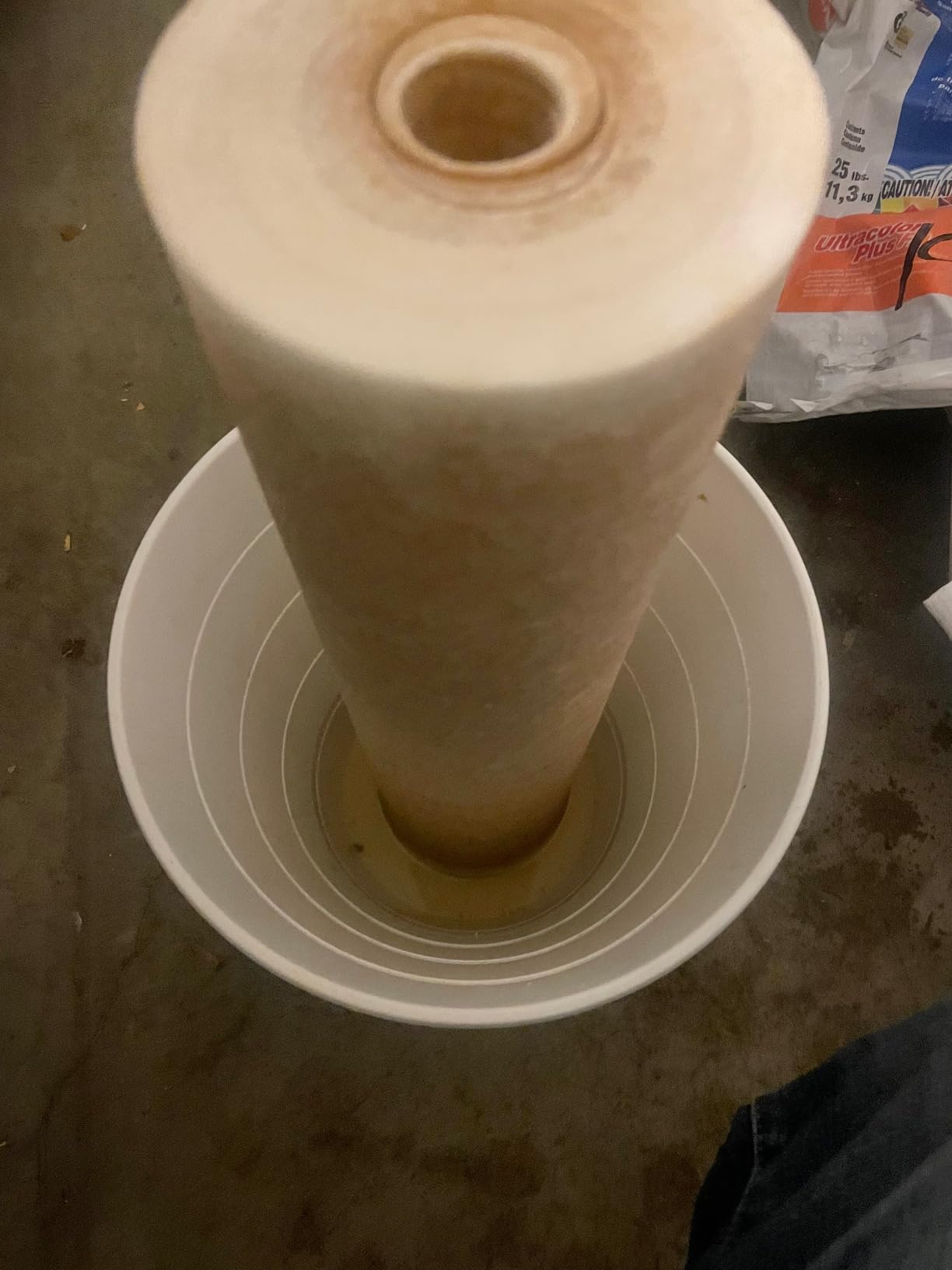
Owners on well water describe the immediate change they care about, which is orange staining stopping at the toilet and the metallic taste disappearing. Several reviewers in this listing compare the total installed cost against dealer quotes running into the thousands, and that price-to-performance gap is why this unit keeps selling. iSpring support also resolves leaks, missing parts and fittings by shipping replacements directly.
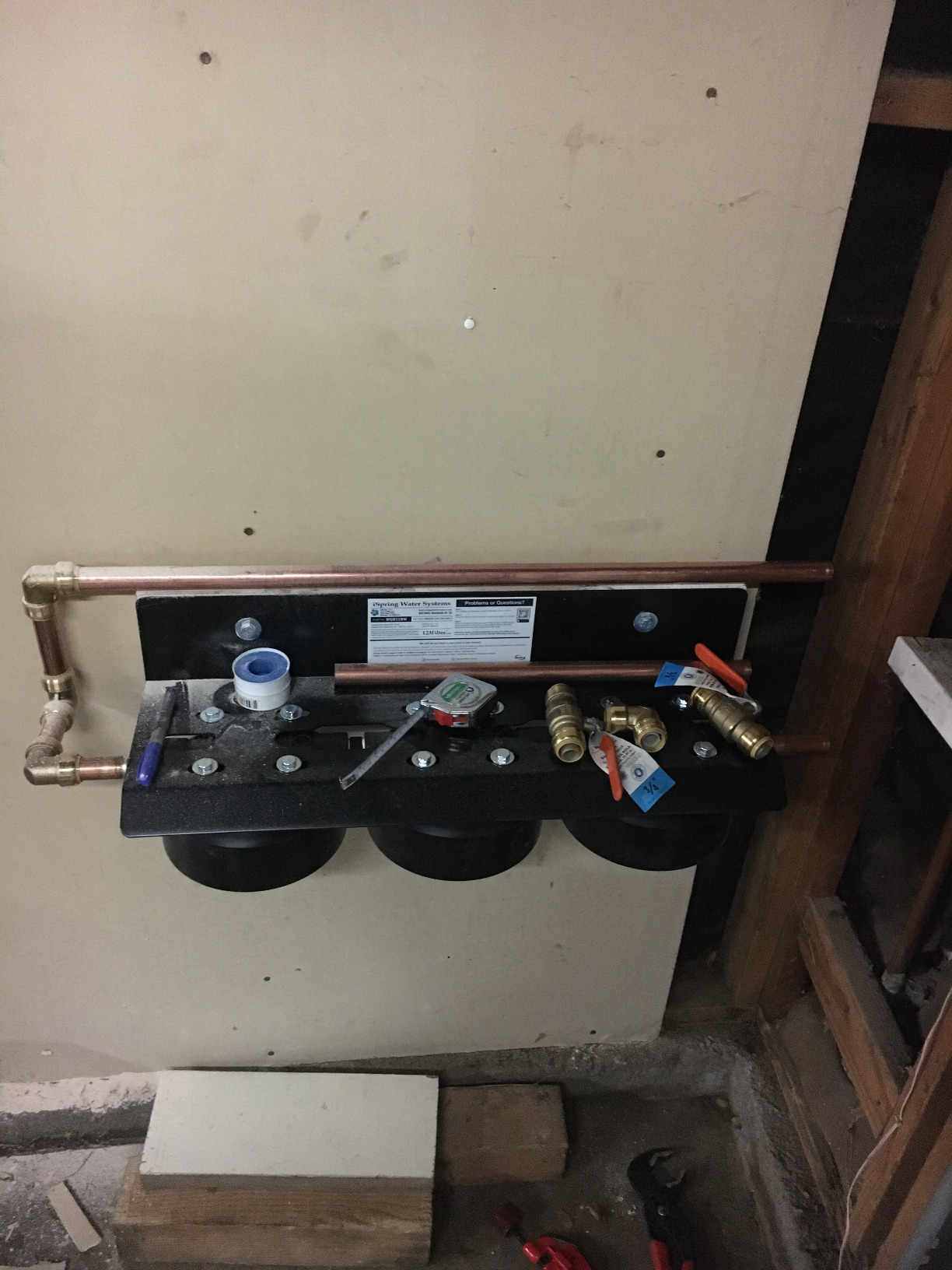
The three 20-inch Big Blue housings sit on a wall bracket with 1-inch NPT inlet and outlet, rated for 15 gpm between 25 and 80 psi. That flow figure sits comfortably above typical residential demand, so pressure drop is not the issue with this unit.
Why owners keep buying it
The instruction content in the reviews is unusually good. Buyers have written full install guides covering silicone grease on the O-rings, gentle hand tightening of the 1-inch plastic ports, and the need to keep the cartridges upright because they cannot be drained before removal. When a large share of buyers arrives already knowing how to assemble the thing correctly, the fit-and-finish complaints mostly disappear.
Media longevity is the other quiet win. A catalytic cartridge that is not consumed and is rated for 100,000 gallons per set means the iron stage keeps working for a year or more on a moderate well, which is a materially better ownership experience than topping up greensand every few months.
The limits you should know about
Three ppm iron is the ceiling, and that number excludes a lot of real wells. If your report reads 5 ppm or higher, this unit is not the answer no matter how good the reviews look, because exceeding the rating simply means stained water returns.
Manganese capacity is 1.0 ppm, which is low relative to the iron figure, so wells with a manganese problem need to look elsewhere. It also does not soften, so on a hard well it pairs with a softener rather than replacing one.
3. DuraWater Fleck 5600 SXT Iron Blaster 48k – the softener built for iron-heavy wells
DURAWATER Fleck 5600 SXT Iron Blaster 48,000 Grain Water Softener
Fleck 5600 SXT digital metered valve
48,000 grain capacity
Fine mesh resin tuned for well water
14 inch brine tank holds about 250 lb salt
Pros
- Multi-year owner reports on heavy iron wells
- Fine mesh resin upgraded for iron rather than standard resin
- Metered regeneration reduces salt use
- Complete pre-loaded system ready for hookup
Cons
- Needs a separate pre-iron or sediment filter at higher iron levels
- Uses noticeable salt and some owners add an iron inhibitor
- No hoses or fittings included in the box
- No printed instructions in the package
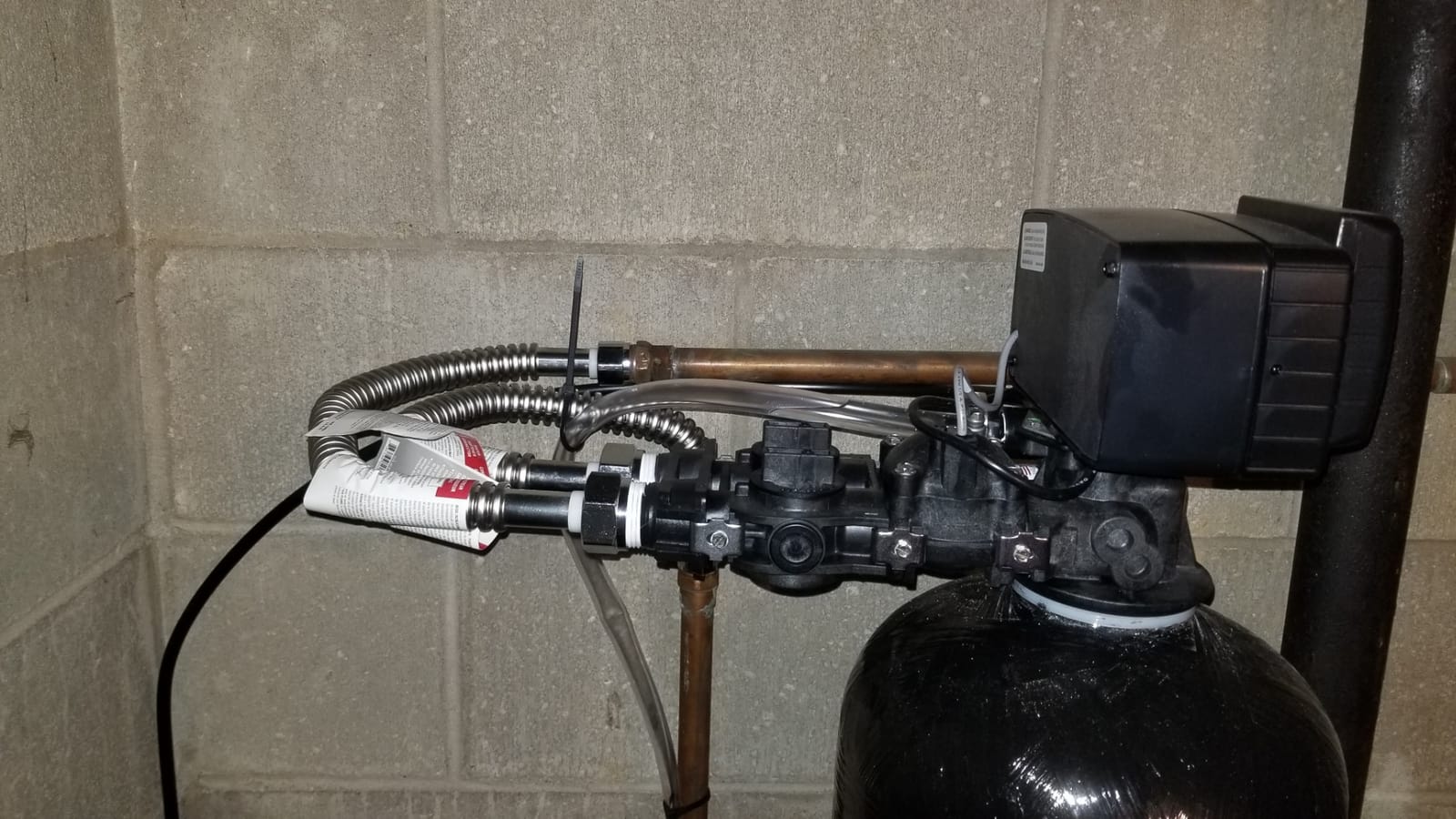
This is the softener in the group rather than a filter, and it exists because softeners keep getting installed on iron wells anyway. The DuraWater Iron Blaster pairs the Fleck 5600 SXT digital metered control valve with upgraded fine mesh resin instead of the standard 8 percent resin used in most residential tanks, and fine mesh beads give the tank more surface area to work with when iron is present in the feed water.
Capacity is 48,000 grains in a 10 inch by 54 inch tank, which puts it in the range most well households actually need. The brine tank is a 14-inch square unit with a safety float and overflow drain protection that holds roughly 250 pounds of salt, so a normal homeowner is not topping it up weekly.
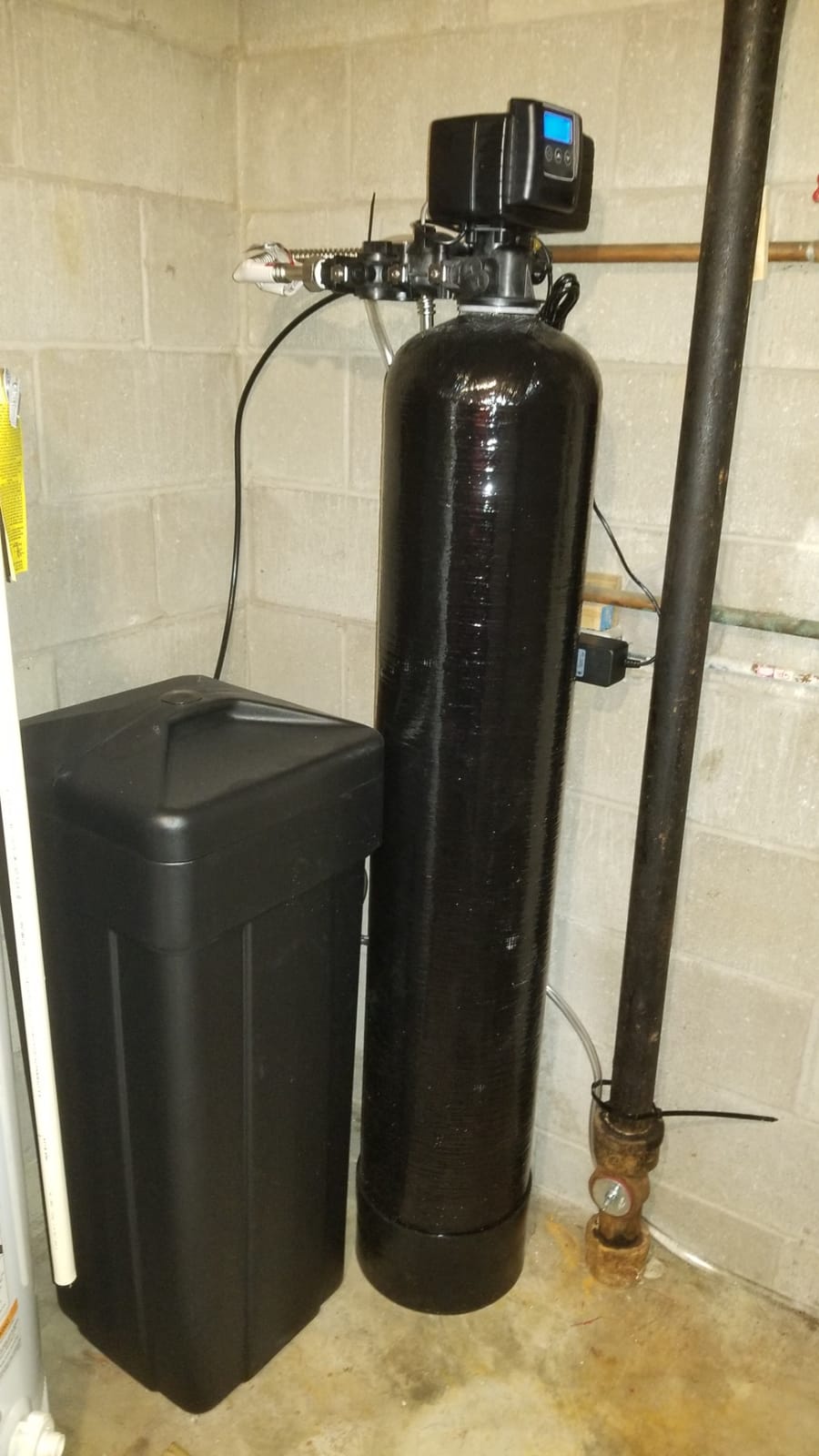
What stands out in the owner feedback is duration. Several buyers describe four to six years of continuous service on heavy-iron wells with no return of orange toilets, no metallic taste and no sulfur odor. That is the longevity record you want from a softener that is going to be permanently plumbed into someone’s house.
The metered valve regenerates on measured use rather than on a clock, which is the single biggest salt saving available on any residential softener. Owners on high-iron wells also report adding an iron inhibitor to the brine tank to keep fouling in check, and that habit is worth adopting early rather than after the resin has already been coated.
Who it fits
This tank suits a household with moderate iron and genuinely hard water, where the iron figure is low enough that the fine mesh resin can carry the load without a dedicated oxidation stage upstream. If your test report shows iron under roughly 2 ppm and hardness high enough to justify softening at all, this is a well-matched system.
The Fleck 5600 SXT valve is also the control head most water treatment professionals prefer, because it is simple, widely supported and repairable. If you ever need a technician, this is a valve they already know.
Who should pass
If your iron reading is above 3 ppm, the reviews are consistent on this point. Owners soften successfully but still see staining and odor, and end up buying a separate pre-iron filter or an iron inhibitor to compensate. At that point you are paying twice for iron treatment and getting the softener half of the deal anyway.
Two practical notes. Hoses and fittings are not included, so budget for the drain line, bypass connections and supply lines separately. And there are no printed instructions in the box, which means you are relying on the DuraWater manual or install videos to get the programming right.
4. DuraWater Air Injection Iron Eater – the pick for sulfur smell and 10-15 ppm iron
Air Injection Iron Eater Filter Great at Removing Iron Manganese, H2S Whole Home, Almond Series
Air injection oxidation with no chemicals
Removes iron up to 10-15 ppm
Fleck 5600 SXT valve pre-programmed
5 year warranty
Pros
- Highest iron rating in this roundup at 10-15 ppm
- One of very few options that also handles hydrogen sulfide odor
- No chemicals required to regenerate media
- Media arrives pre-loaded and the valve arrives programmed
Cons
- Does not soften water at all
- Bypass valve outboard threads are cut deep and leak
- No installation instructions in the box
- Yoke is supplied for 1-inch lines not 3/4-inch PEX
The Iron Eater is the only system here that treats iron, manganese and hydrogen sulfide together at a level worth talking about. Its published iron rating of 10 to 15 ppm is the highest of any unit in this roundup, and the hydrogen sulfide capability is the feature that separates it from everything else on this list. If your well smells like rotten eggs, most of the filters below will leave you disappointed.
The mechanism is air injection oxidation. Compressed air is drawn into the top of the media tank, and as the air mixes with water the dissolved ferrous iron oxidises into insoluble ferric particles that the media strains out and flushes to drain. Regeneration is driven entirely by that air, so there is no chemical feed and nothing to restock. Above 15 ppm the manufacturer points you to the black series instead, so this is a ceiling rather than a starting point.
Owners running 4 to 6 ppm iron with a strong sulfur smell describe toilets and sinks going from stained to spotless, and one reviewer measured total iron at non-detect after installation. The valve is the Fleck 5600 SXT again, pre-programmed before it ships, which removes a whole afternoon of setup and means the control head is one any technician can service.
The 10-inch fiberglass tank ships with media pre-loaded, so the heaviest part of the job is already done. At 86 pounds the unit is manageable by two people without a dolly.
The sulfur problem it actually solves
Hydrogen sulfide is a separate contaminant that happens to travel with iron, and it is the one most equipment on this list cannot touch. The iSpring WCFM400K explicitly warns that it will not remove it and may be damaged by it, and the cartridge filters are built around iron and manganese chemistry that does nothing for odor.
Owners who came to this unit for iron usually stayed for the odor. If your report includes a sulfur reading alongside iron, this is the system in the roundup that addresses both at once. If you also have hard water, budget for a softener after it.
Setup and hardware gripes
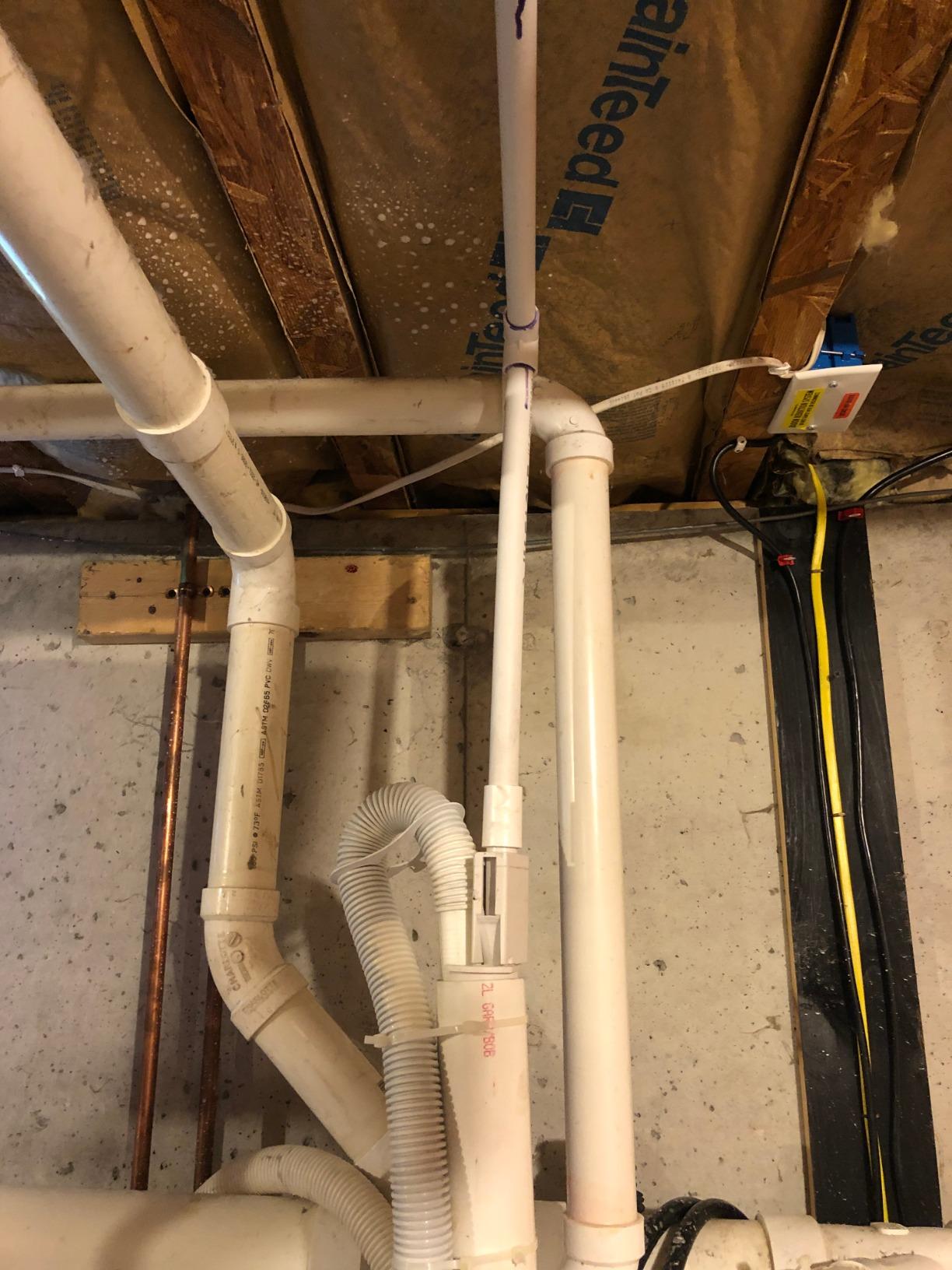
The bypass valve is the recurring complaint. Its outboard threads are cut very deep and several owners report persistent leaking no matter how hard they tighten or how much PTFE tape they apply, with the fix being a swap to brass nipples. That is a fifteen-minute fix once you know about it, but it is not in the box.
The supplied yoke is threaded for 1-inch lines, and much of the country runs 3/4-inch PEX. Assume you are adapting fittings on install day. There are also no printed instructions, so this one is a YouTube-and-support install.
5. iSpring WCFM400K – chemical-free automatic iron filtration
iSpring WCFM400K Whole House Iron and Manganese Water Filter System, Digital Control with Automatic Regeneration & Air Injection, Set & Forget Design
Air injection oxidation filtration
Chemical-free automatic media regeneration
12 gpm maximum flow
Fiberglass tank rated to 140 F
Pros
- No chemicals needed for regeneration cycles
- Automatic regeneration is genuinely set and forget
- 12 gpm suits whole-house demand
- Fiberglass tank rated to 140 F which is higher than most rivals
Cons
- Does not remove hydrogen sulfide and the maker warns of damage
- Filters iron and manganese only with no softening or TDS reduction
- One-year warranty is the shortest in this set
- Some control heads cracked after a year or two
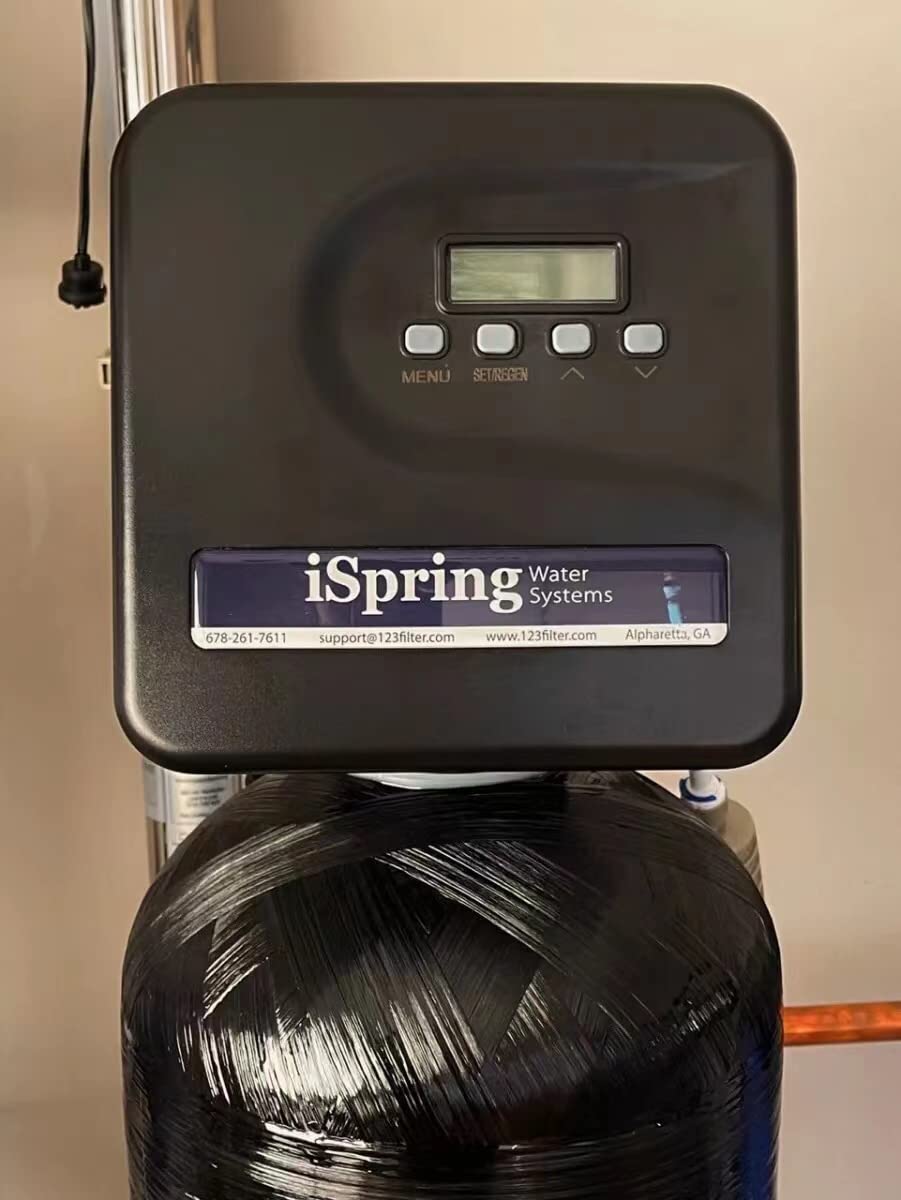
Where the cartridge filters above ask you to buy new filters twice a year, the iSpring WCFM400K regenerates its own media. Compressed air restores the oxidation capacity of the catalytic media bed, the digital control head runs the cycle on a schedule you set, and after the initial setup there is nothing to buy. Owners describe this as the single unit that finally fixed chronic well water problems, with multiple before-and-after photos of clear water at the tap.
Flow is rated at 12 gpm, which is comfortably above typical residential demand and enough to serve a household with several bathrooms without a noticeable pressure drop. The tank is fiberglass rated to 140 F, higher than most competing media tanks, which matters on shallow wells where summer water temperature climbs.
The media is certified to NSF/ANSI Standard 61, which covers material safety rather than contaminant reduction. That distinction is worth knowing: certification here means the media will not leach contaminants into your water, not that the system has been verified for a specific iron removal percentage.
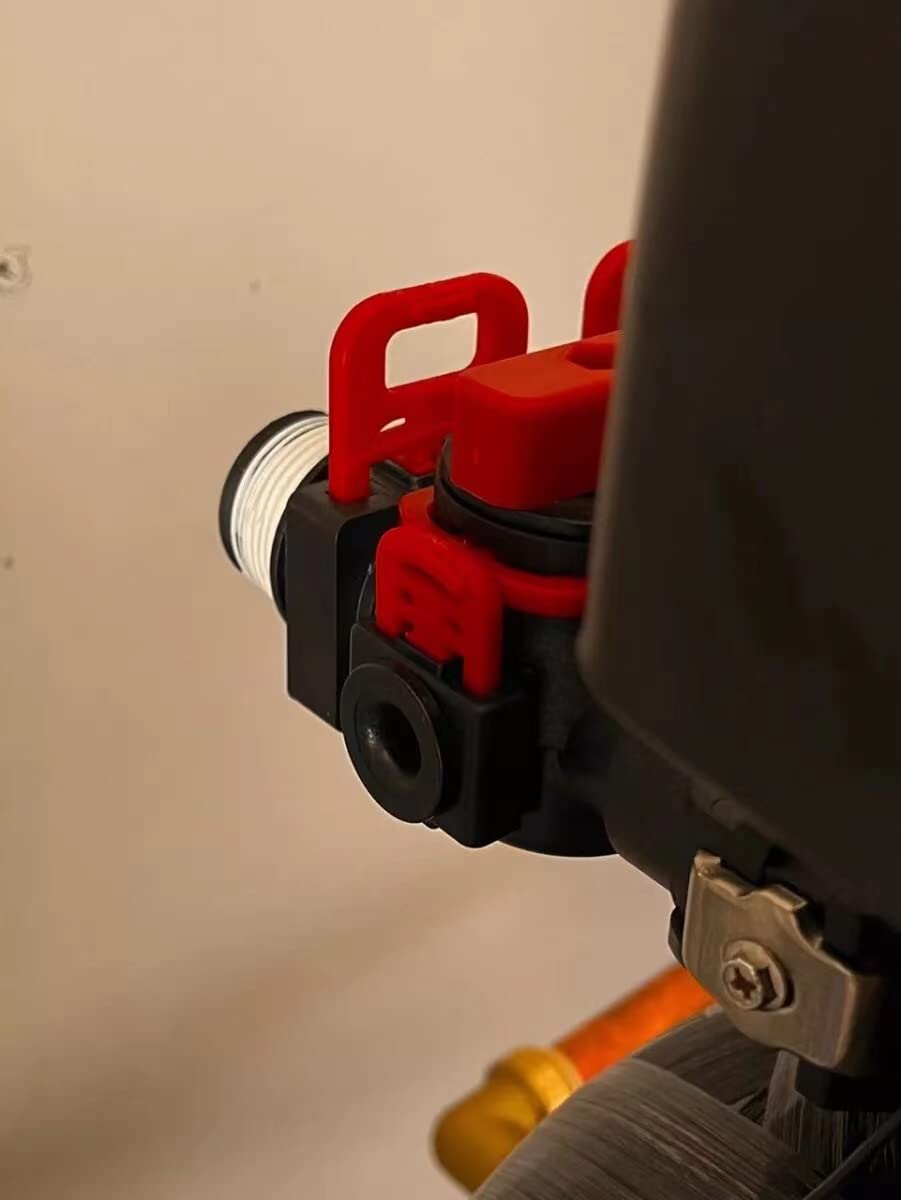
Installation is point-of-entry at the main supply line, and the package includes the drain tube, power supply and manual. The control head is programmable with customisable automatic media regeneration and flush intervals, so you set the frequency based on your own water quality rather than a fixed factory schedule.
Why air injection appeals to well owners
The economics over ten years are what make this approach interesting. A cartridge system in this roundup needs replacements every 6 to 12 months for its entire life. An air injection system needs media only when the media bed is actually exhausted, which on a moderate well can be measured in years rather than months, and the per-cycle operating cost is simply water and air.
iSpring support also handles head-unit and fitting issues by shipping replacements, and the reviews single that out repeatedly. A smaller set of owners reports control head threads cracking and leaking after a year or two of use.
The hydrogen sulfide warning
The manufacturer is unusually direct about this one: the system does not remove hydrogen sulfide, and using it on water that contains H2S can cause system damage. Sulfur is common on wells alongside iron, so confirm your sulfur reading before buying. If it is there, the Air Injection Iron Eater at number four is the option built for it.
This system also does not soften and does not reduce dissolved solids. On hard well water it is the front half of a two-stage setup, not a replacement for one.
6. AFWFilters Iron Pro 2 – all-in-one softening and iron removal in one tank
AFWFilters Iron Pro 2 Combination Water Softener Iron Filter Fleck 5600SXT Digital Metered Valve 64,000 Grain – High Flow for Whole House Use – Removes Hardness, Iron, Manganese, Sediment, Rust
Combination softener and iron filter
Fleck 5600SXT digital metered valve
64,000 grain capacity
Removes iron and manganese up to 6 ppm
Pros
- Softens and removes iron in a single pass through one tank
- Fleck 5600SXT valve regenerates on measured demand
- Resin ships pre-loaded so the heavy tank is not hand filled
- 64000 grain capacity covers larger households
Cons
- Advanced valve programming is fiddly and the manual is thin
- Resin tank weighs about 119 lb
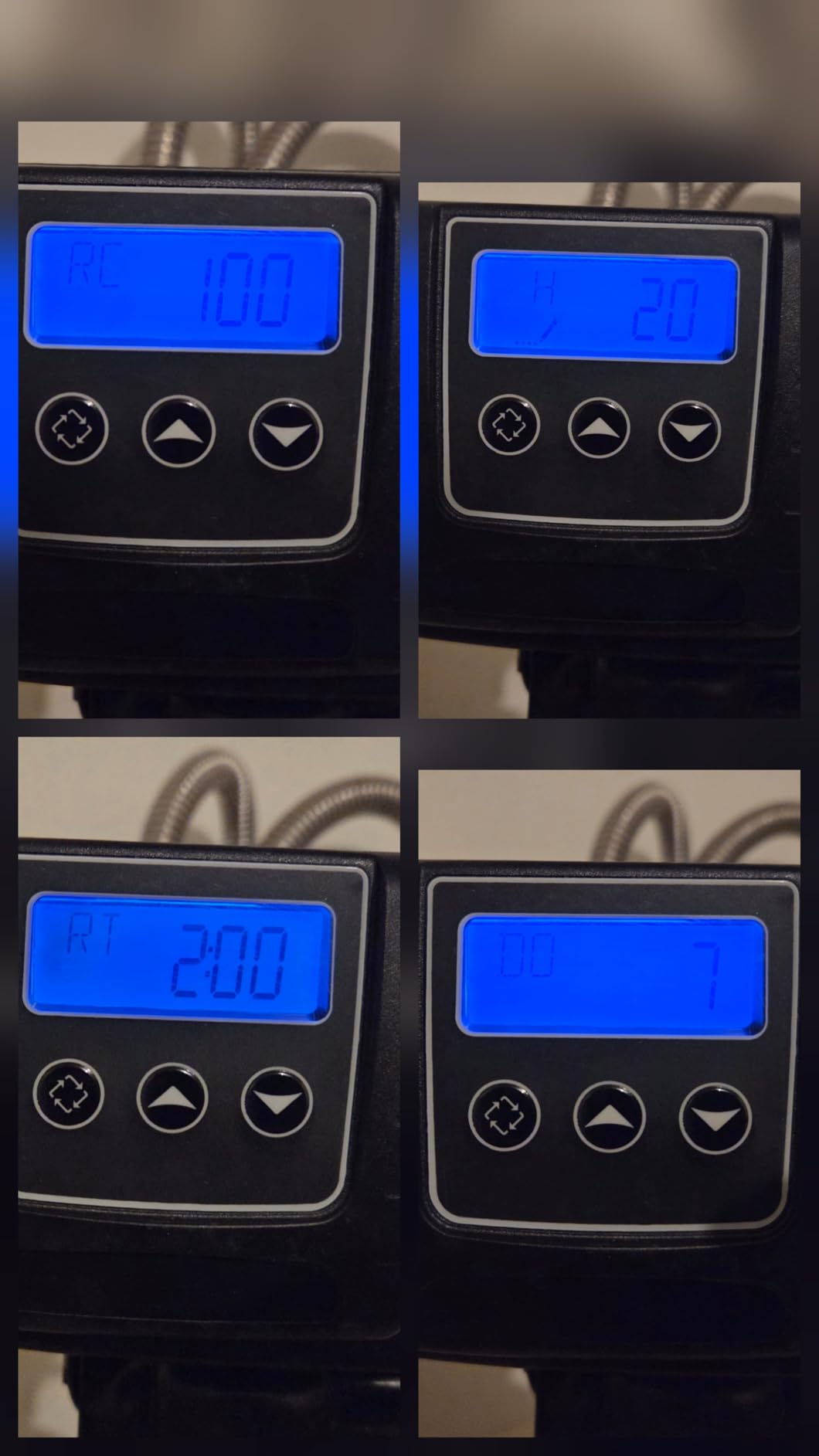
- Clock must be set to 12:01 before programming
- Does not reduce dissolved solids
Most all-in-one systems on the market are filters with a softening claim attached. The Iron Pro 2 is genuinely a softener, with 64,000 grains of ion exchange resin pre-loaded in the tank, and the manufacturer rates it to remove iron and manganese up to 6 ppm while softening. That is a real claim from a real valve, and owners on heavy-iron wells report cloudy, rotten-egg-smelling water turning clear within a day or two of the first regeneration cycle.
The control valve is the Fleck 5600SXT digital metered unit, which regenerates on measured demand rather than on a timer. Metered regeneration is where the salt savings come from, and it is the main reason this style of system costs less to run than a timer-controlled equivalent.
Reported results are the ones buyers care about: red stains stop returning, dishes and laundry come out clean, and soap use drops. Recurring complaints are documentation-related rather than performance-related, which is the profile of a system that does what it says. A minority of owners find it softens effectively but does not clear every odor or stain on its own, and add a downstream carbon filter or a sediment pre-filter alongside it.
Manufacturer support drew specific praise, including rapid replacement of a shipping-damaged box, which tells you something about how a 119-pound tank arrives and what support looks like when it does not.
Where the single-tank approach pays off
The economics are simple. One tank, one brine tank, one service point, one thing to plumb. A two-stage setup doubles the footprint, adds a second vessel to fit around and gives you two sets of connections to leak-test. For a mechanical room with limited space or a house where you would rather not cut into more pipe than necessary, that consolidation is worth real money.
The 64,000-grain capacity is also the second highest here, and it covers households where 48,000 grains would mean regenerating too often. If your household uses a lot of water and your iron sits under 6 ppm, this is a credible single-tank answer.
Programming and handling notes
The Fleck valve’s advanced programming modes are fiddly and the supplied manual is thin on detail. Several buyers had to find external videos or third-party guides to get through setup. One specific quirk catches people out: the clock must be set to exactly 12:01 before the valve will accept other entries.
At about 119 pounds, the resin tank needs two people or a dolly to move. The resin arrives pre-loaded, which saves you from hand-filling several hundred pounds of media, and the footprint is a compact 14 by 7 by 21 inches for the control assembly. Our features to look for in water softeners guide covers control valve types and what each one costs you in convenience.
7. Aquasure Harmony AS-HS70FMZ – capacity for four to six bathrooms
Aquasure Harmony Series 70,000 Grains Whole House Water Softener with Automatic Digital Metered Control Head | Fine Mesh Resin for Iron Removal, Reduces Hardness & Improves Water | for 4-6 bathrooms
70,000 grain capacity for 4-6 bathrooms
Fine mesh resin rated to 10 ppm iron
Automatic digital metered head
Stainless steel tank
Pros
- Largest grain capacity in the roundup at 70000
- Fine mesh resin rated for iron up to 10 ppm
- Triple-purpose pre-filter handles sediment
- chlorine and heavy metals
- Programmable backlit display with adjustable flush intervals
Cons
- Smaller review base than the established softener brands
- Does not reduce dissolved solids
- Pre-filled resin makes the unit heavy at 160 lb
- Tank must be positioned before plumbing is finalised
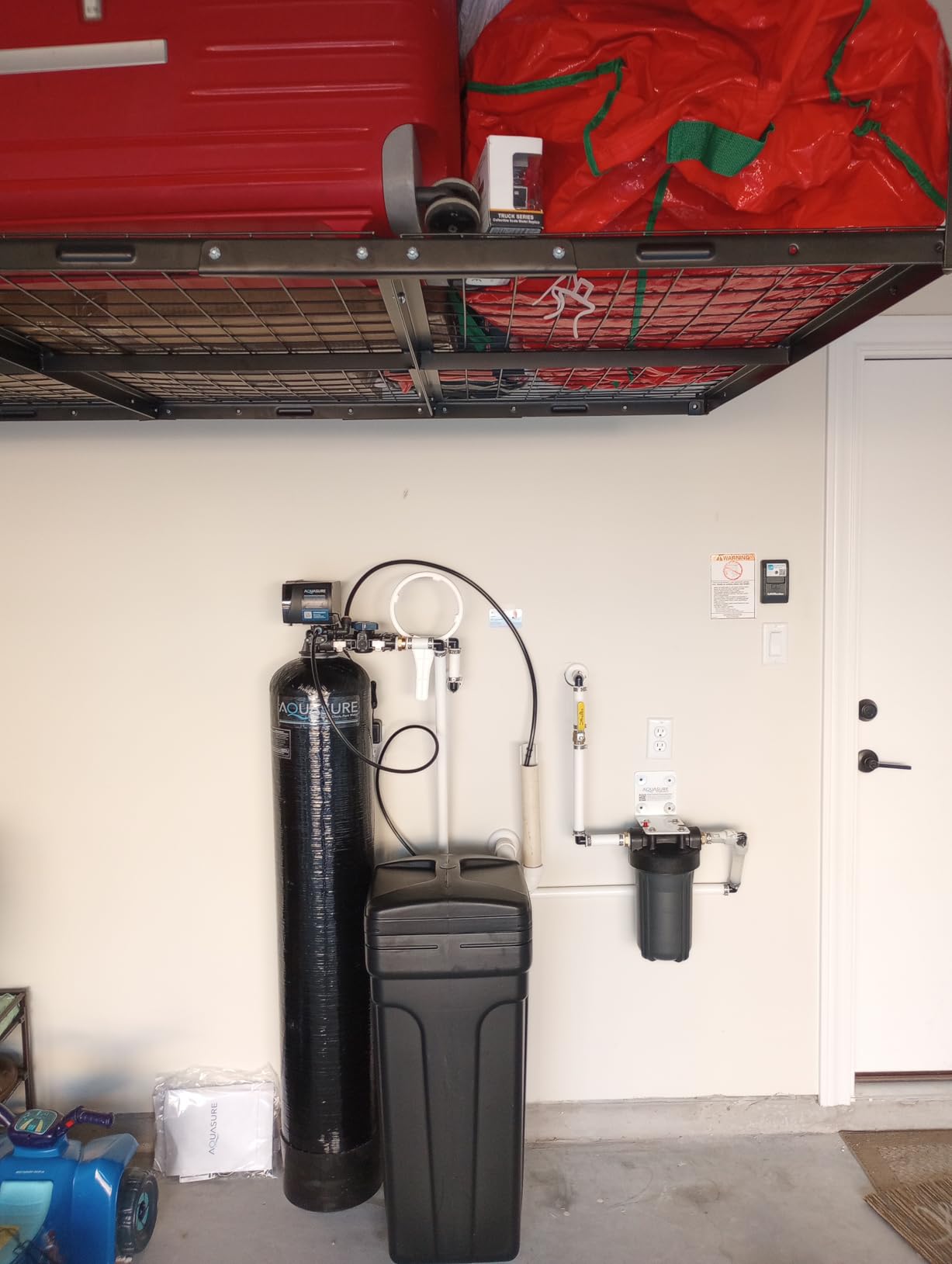
The Harmony AS-HS70FMZ is the capacity play in this roundup. At 70,000 grains it is designed explicitly for households of four to six bathrooms, and it is the softener to consider if your water usage means a 48,000-grain tank would be regenerating every other day. Regenerating that often is the clearest sign of an undersized tank, and it wastes salt and water to soften water you do not need softened yet.
It also carries the highest iron figure of any softener here. The pre-filled fine mesh resin is rated to reduce iron up to 10 ppm, which is well beyond what standard residential resin handles and covers a meaningful slice of real well water problems in a single tank.
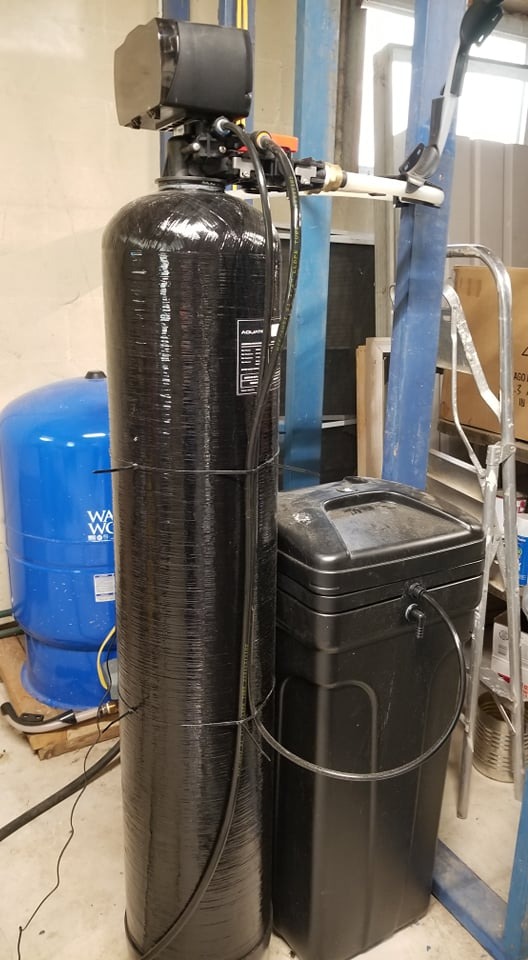
In front of the resin sits a triple-purpose pre-filter stage that the manufacturer says eliminates chlorine, VOCs, pesticides, odors, taste, sediment and heavy metals. The tank is stainless steel rather than the fiberglass used elsewhere in this roundup, and the bypass valve is described as durable, which matters on a unit this size.
The control head is a fully programmable backlit digital display with customisable auto-flush intervals, so you set the regeneration and flush frequency around your own water quality rather than accepting a factory default.
The case for 70,000 grains
Capacity only matters if your household uses the water. A family of five with three bathrooms running 75 gallons per person per day at moderate hardness generates a real grain load, and a tank sized too small will cycle constantly to keep up. Over a decade that shows up as salt consumption, brine discharge and wear on the valve.
The 10 ppm iron rating is the other argument. If your well sits between the 3 ppm limit of the cartridge filters and the point where you need a dedicated oxidation filter, this is one of the few softeners in the roundup that closes that gap without adding a second vessel.
Why the review base is thin
This listing carries 127 reviews, roughly a twentieth of what the Express Water and iSpring entries have. That means less long-term durability data exists for this model than for anything else here, and on a purchase you expect to last a decade that is a real consideration rather than a technicality.
The rating spread also shows a heavier one-star share than the Fleck-based units, at 7 percent. At 160 pounds the pre-filled resin tank is also the heaviest in the roundup and has to be set in position before the plumbing is finalised, which constrains your layout options if the mechanical room is tight.
8. Home Master HMF3SdgFeC – well-water filtration with a fine sediment stage
Home Master Whole House Three Stage Water Filtration System with Fine Sediment, Iron and Carbon, Blue
Iron, manganese and sulfur to 3 ppm combined
4-layer 25-10-5-1 micron filter
15 gpm flow with 1-inch ports
2 year limited parts warranty
Pros
- Engineered specifically for well water contaminants
- 4-layer sediment filter is finer than most rivals and holds more dirt
- 15 gpm oversize housings maintain strong pressure
- Handles iron
- manganese and sulfur to a 3 ppm combined load
Cons
- O-rings can pop out of the housing groove while tightening
- Does not soften or reduce dissolved solids
- Plastic adapters melt if a torch is used nearby during install
- Cartridges are brand specific and not interchangeable
The Home Master HMF3SdgFeC is one of the few systems here designed for well water rather than adapted from a city-water cartridge assembly. Its claim is 95 percent removal of iron, manganese, sediment and taste and odor chemicals, with iron, manganese and sulfur handled to a 3 ppm combined load. Handling sulfur alongside iron sets it apart slightly from the other cartridge units.
The sediment stage is where this unit earns its place on a well. Instead of a single 5-micron cartridge it uses a 4-layer 25-10-5-1 micron element, which catches progressively finer particles and holds considerably more dirt before it needs changing. On a well that produces sediment after rain or after the pump cycles, that difference shows up in how often you touch the system.
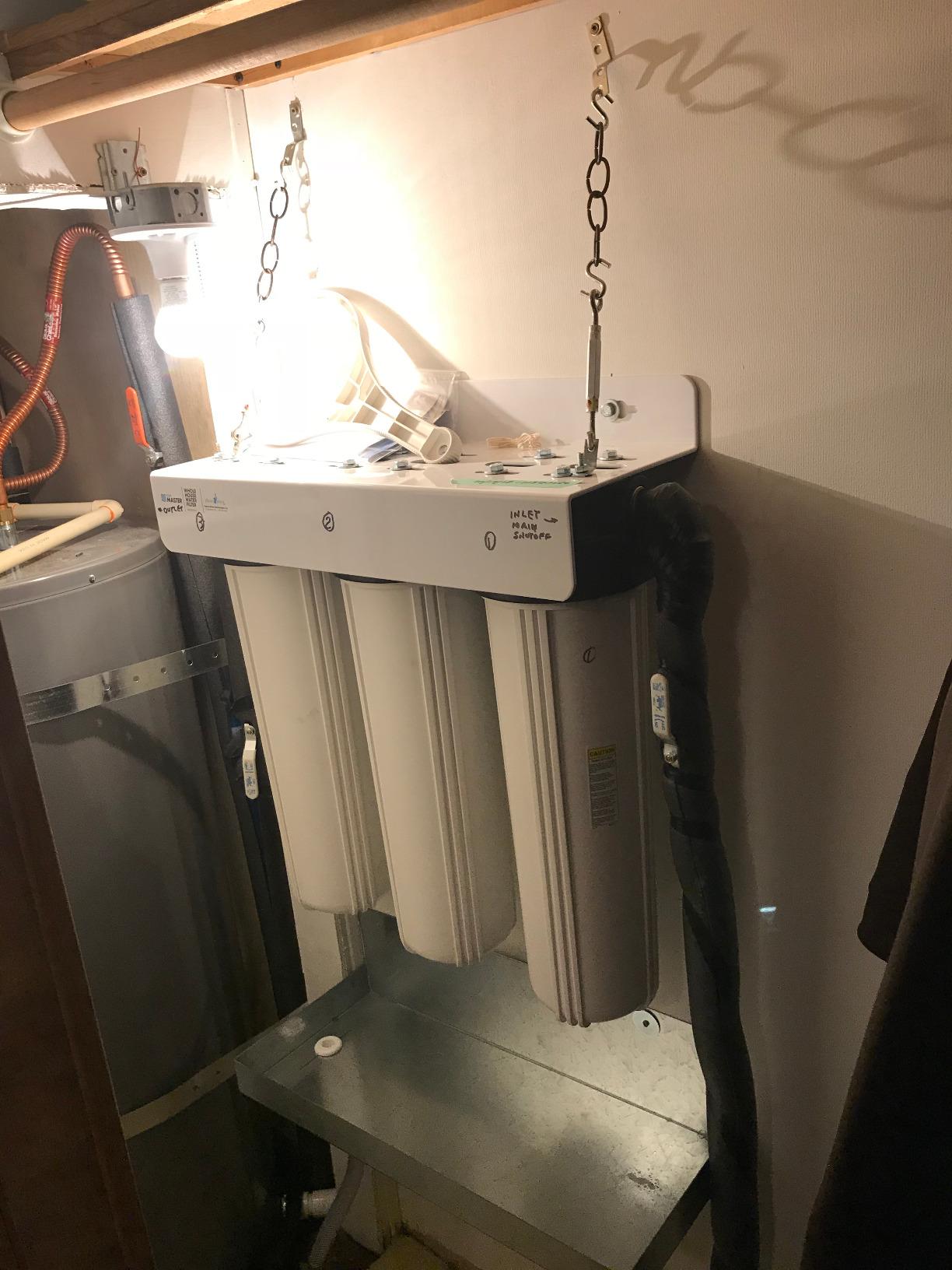
Long-term owners report steady iron removal with no return of rust staining, some with three-plus years of service, and repeat buyers have installed the same system in a second home. The oversize radial flow housings carry 15 gpm through 1-inch ports, so the pressure cost of filtration is low.
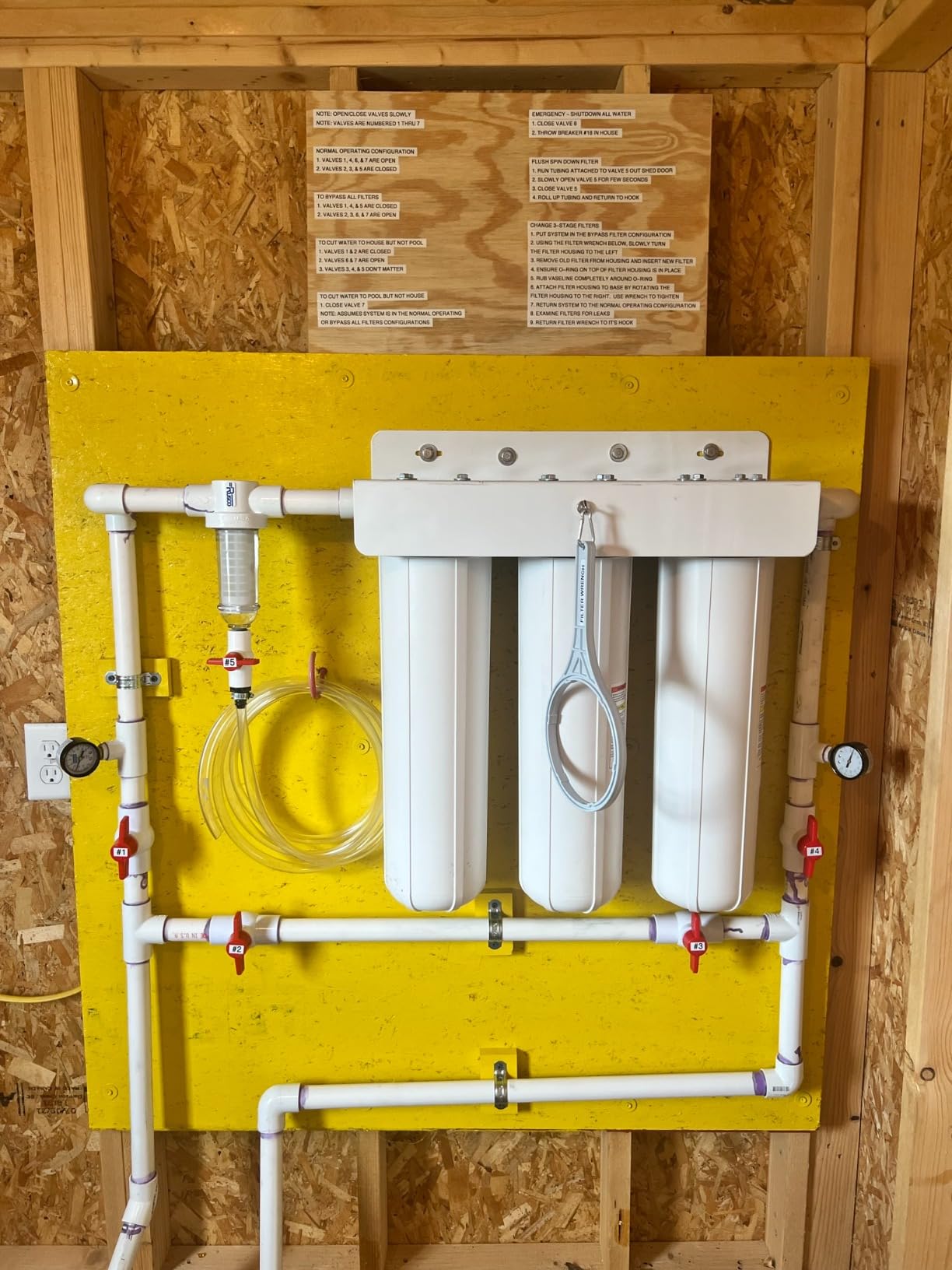
Experienced owners in this listing have built out a real maintenance playbook: pre-sediment filtration to protect the main cartridges, pressure gauges before and after the unit so you know when a change is due, a bypass loop so water stays on during service, and grease on the O-rings. That kind of documentation is unusual and worth reading before you buy.
The filtration detail that matters on wells
Sediment loading on a well is aggressive, and it is the reason many iron filter owners end up replacing cartridges far sooner than the stated interval. One owner reports the sediment cartridge loading with sludge in as little as 2.5 months on a high-iron well, which is a cost and a hassle that a 4-layer element significantly reduces.
The two-year parts warranty is longer than the one-year terms offered by most cartridge systems in this category, which matters if you are going to be buying parts from this brand for a decade.
Installation gotchas
The O-rings are the weak point and the source of nearly every negative review. They lose diameter and escape the housing groove while you tighten the cap, and there is no visible sign until you run water and find a leak. A thin film of grease on the O-rings and hand-tightening until firm is the fix, but it has to be done deliberately.
Second, do not use a torch near the plastic inlet adapters. Owners soldering copper nearby have melted the plastic and created leaks that were not there before the install. Plan the soldering before the filter goes in, or use push-fit connectors and avoid the torch entirely.
9. Kenmore 420 – compact and adaptive, but clear-water iron only
Kenmore 420 Water Softener System – 40,000 Grain Capacity with Salt Saving Technology – Whole Home Hard Water & Iron Reduction – Compact, Easy Install
40,000 grain capacity
IntelliSoft adaptive metered control
Sediment pre-filter and clear-water iron reduction
7.7 gpm maximum flow
Pros
- IntelliSoft learns usage patterns and regenerates only when needed
- Compact freestanding footprint fits tight mechanical rooms
- Handles clear-water iron alongside hardness
- 10-year tank warranty is the longest in the roundup
Cons
- Clear-water iron only and not a substitute for a real iron filter
- Lowest average rating here at 4.0 with a 15 percent one-star share
- Smallest capacity at 40000 grains
- Does not reduce dissolved solids
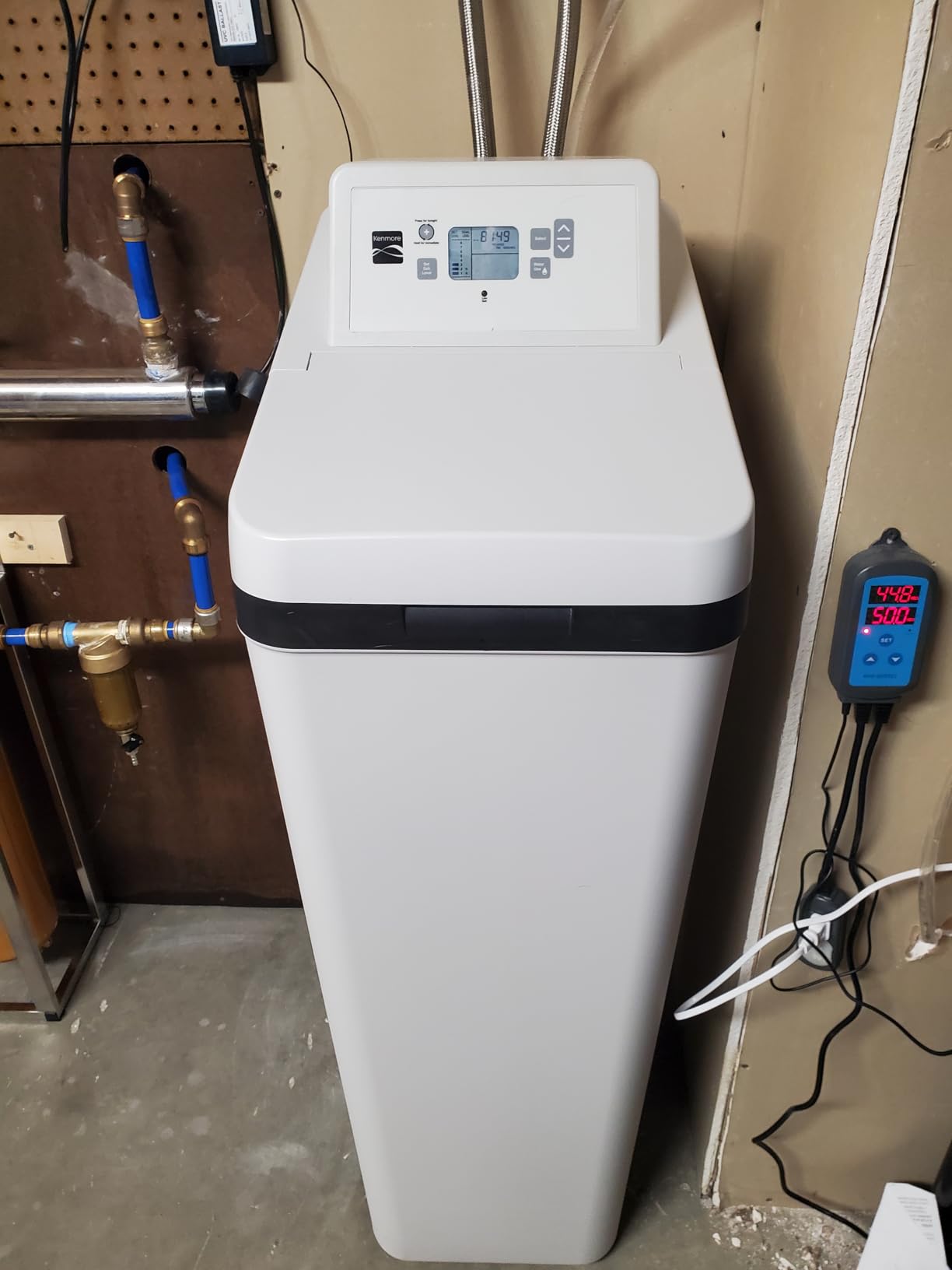
The Kenmore 420 is a softener rather than an iron filter, and it earns its place here for one specific reason: the IntelliSoft control learns your household’s actual water use pattern and regenerates only when the resin is genuinely spent. That is a real operating saving on salt and brine water compared with a timer, and owners cite it as the feature that made them happy.
Capacity is 40,000 grains, the smallest softener here, aimed at households of one to five people. The footprint is compact at 20.5 by 15 by 48 inches and freestanding, which makes it the easiest of the group to fit into a tight mechanical room where a full-size tank will not go.
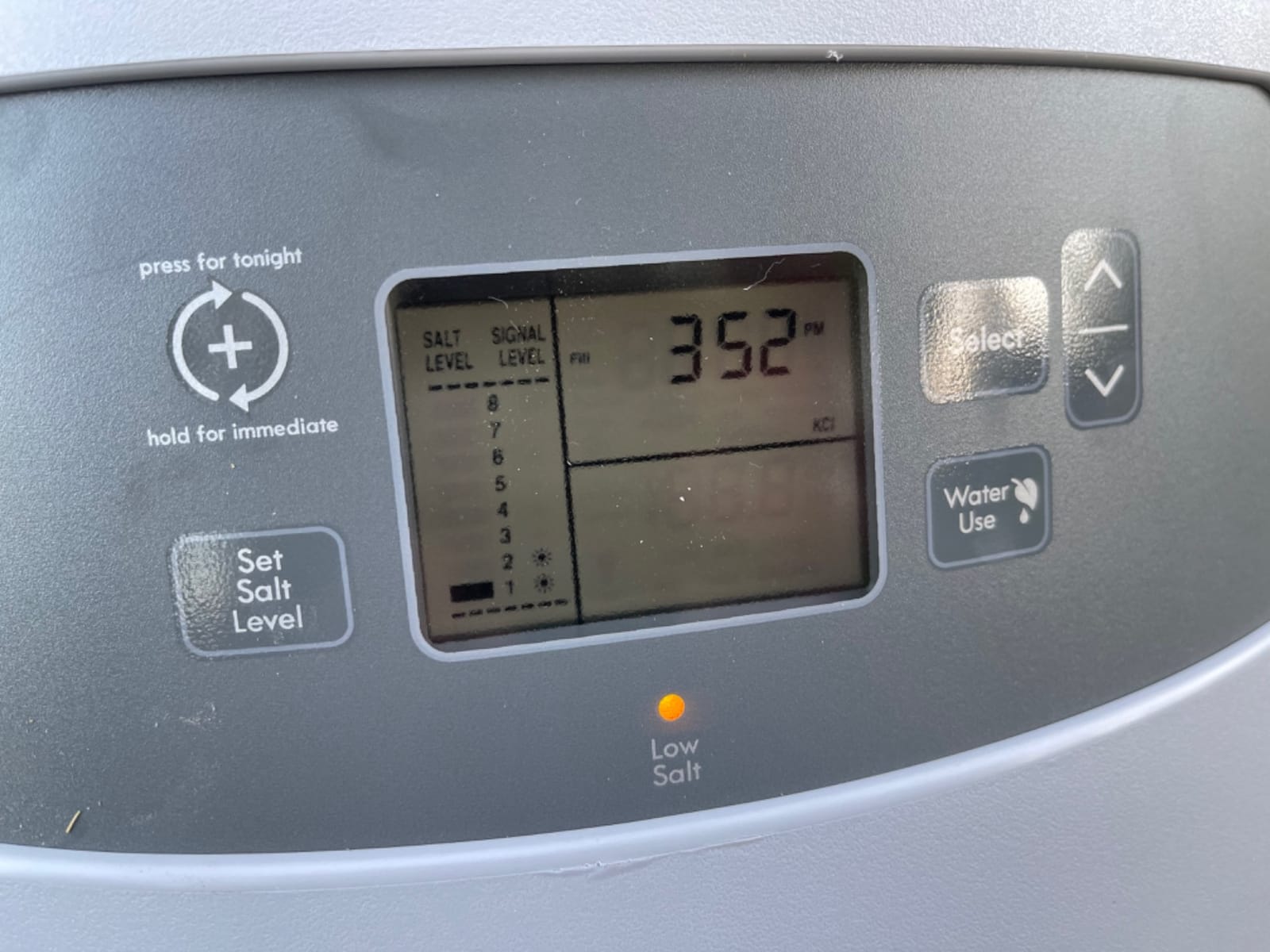
Warranty terms are the best in the roundup: one year full, three years on electronics, and ten years on the tank itself. Ten years on the vessel is a meaningful commitment from a manufacturer on a component that usually outlives everything else in the system. The system is also NSF certified and operates between 20 and 125 psi across a 40 to 120 F range.
What it does with iron is the problem. The specification is clear-water iron reduction alongside a sediment pre-filter, rated against a maximum TDS of 10 ppm. That is softener-class iron handling, not iron filtration.
What IntelliSoft does for you
Adaptive regeneration is the practical headline. Instead of a fixed schedule that regenerates whether the resin needs it or not, the control tracks usage and triggers only on measured depletion. On a well with a large enough softener this can cut salt use noticeably compared with a timer-controlled valve.
The sediment pre-filter and built-in sediment screen also add some protection for the resin and downstream plumbing, which is useful on wells where the water carries grit. At 7.7 gpm the flow rating suits typical residential demand, though it is the second lowest here.
The 15 percent one-star share
This is the lowest rated product in the set at 4.0 stars, and the distribution explains the number: 64 percent five star, but a full 15 percent one star, the largest one-star share of anything we analyzed. Buyers testing above roughly 3 ppm iron, or with sulfur odor, are the dissatisfied group, and they typically end up pairing it with a separate filter anyway.
So the honest read on this unit is that it is a good compact softener with modest clear-water iron capability, not an iron solution. If your test report shows more than a trace of iron or any sulfur, look at the filter options earlier in this list instead.
10. PRO+AQUA Heavy Duty Well Water Filter – broad claims, uneven results
PRO+AQUA Heavy Duty Whole House Well Water Filter System
Rated against iron, sulfur, manganese and heavy metals
Programmable digital control with auto-flush
1 cubic foot prefilled media tank
10 gpm maximum flow
Pros
- Automatic digital control with customisable flush intervals
- Unusually broad contaminant claims for the price
- Fiberglass-lined polyethylene tank built for durability
- Three connection options for installation flexibility
Cons
- Lowest average rating among the well-rated systems at 4.1
- Does not soften or reduce dissolved solids
- 10 gpm is the lowest flow rating in the set and pressure-drops on busy homes
- Standard warranty is one year unless registered online
The PRO+AQUA Heavy Duty system makes the broadest set of claims of anything in this roundup, listing 99 percent removal of chemicals, heavy metals, odors, VOCs, pesticides, iron, hydrogen sulfide, manganese, zinc, copper, lead, uranium, radium and radionuclides. If your concern list runs beyond iron into metals and VOCs, that list is the reason to keep reading.
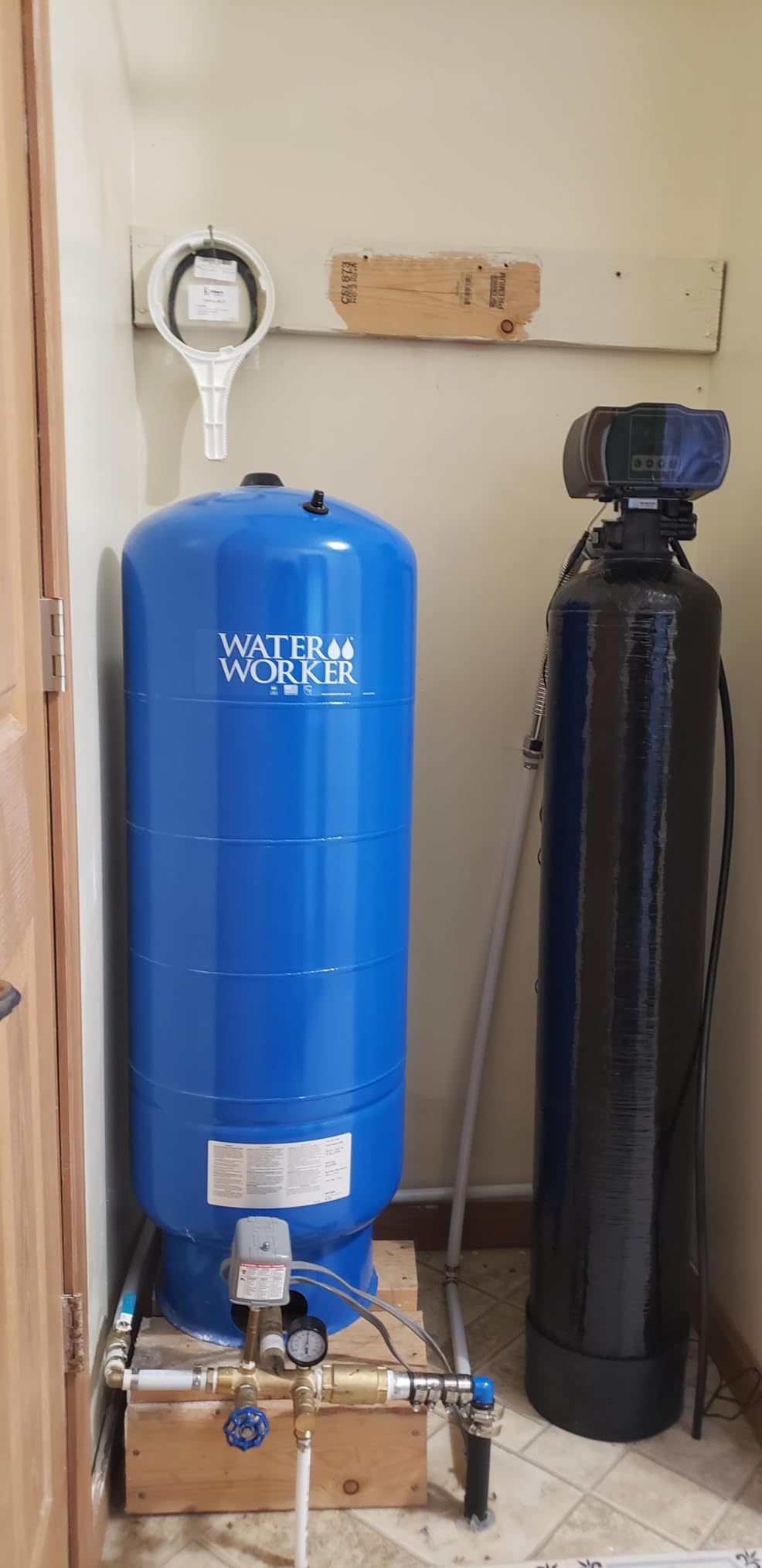
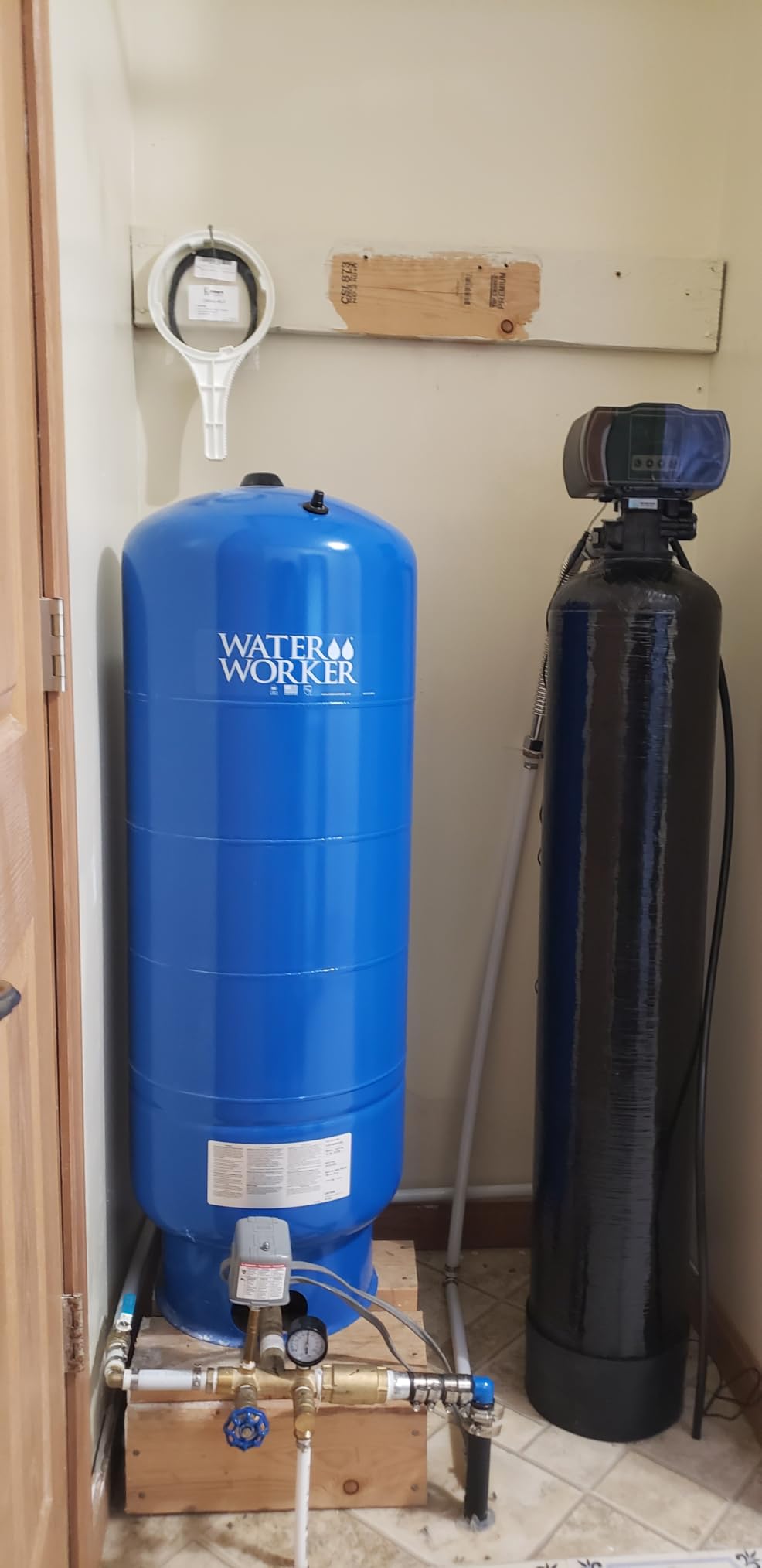
Mechanically it is a 1 cubic foot fiberglass-lined polyethylene tank with prefilled premium resin media, a durable bypass valve and a programmable backlit digital display with automatic controls and customisable auto-flush intervals. Three connection options give you some flexibility when fitting it into existing plumbing.
Buyer reaction is mixed in a way the rating distribution shows clearly: 68 percent five star but 13 percent one star, the second-highest one-star share here. Some owners report clear improvements in odor and staining, others report little change. On a well with severe iron, a system with a 10 gpm rating also has less headroom for backwash and flush cycles.
Warranty handling is the other wrinkle. The standard term is one year, extending to three years only if the product is registered online, while the marketing material references a longer period with activation. Read the terms before you rely on either number.
The contaminant list is unusually long
For a well near farmland, near industrial land or on a shallow aquifer, iron is rarely the only thing on the report. This is the one system here that explicitly names lead, uranium, radium and radionuclides alongside the usual iron and manganese list, and that breadth of coverage is a legitimate reason to choose it over a pure iron filter.
It is sized for households of four or more people, so it is not a small-cottage system either. If both contaminant breadth and household size matter, the specification sheet lines up.
Where the rating drops
Ten gallons per minute is the lowest flow rating in this roundup, and owners on high-use households report real pressure loss. On a system whose media needs regular backwashing and flushing cycles, that limited headroom is not just an inconvenience, it is a performance constraint.
The 91-pound prefilled resin tank also has to be positioned before the plumbing is finalised, and it does not reduce dissolved solids or soften water. Treat it as one treatment stage in a system rather than a complete answer.
How much iron can a water softener actually remove?
About 1 ppm of clear-water iron. That is the number most well owners need to hear, because standard residential softeners are specified for hardness and were never designed to filter iron. Above roughly 1 ppm, iron begins to foul the resin bed, and once resin is coated it stops exchanging hardness at its rated capacity.
Fouling is not a cosmetic problem. Any iron in the feed water reduces the effective capacity of the softener, which forces more frequent regeneration, which raises salt consumption and brine discharge, which wears the valve faster. It also means you start adding resin cleaner on a schedule, and enough iron eventually destroys the resin outright. Owners routinely learn this after the fact rather than from a manual, and it is one of the most common reasons a 15-year-old brine tank softener gets replaced on a well.
There are three different problems hiding behind the word iron, and they need different hardware.
Ferrous iron is dissolved, clear when you draw it, and stains everything downstream in orange and red. It is the form a softener can tolerate up to about 1 ppm and no further. Oxidation filtration exists specifically to convert ferrous iron into ferric iron.
Ferric iron is already oxidised. It shows up as visible rust-coloured particulate in the water and settles out in a glass within minutes. A sediment filter will catch ferric iron because it is already a solid, which is why sediment stages help but never solve the problem.
Iron bacteria are neither. They are microorganisms that feed on dissolved iron and produce a slime that coats fixtures and pipes, and they produce a distinctive slime, staining and odor that mineral iron alone does not. This is the failure mode that breaks oxidation filters, because the bacterial growth fouls the media bed faster than backwashing can clear it. If you have slime in the toilet bowl or a slimy feel to your tap, this needs a different approach entirely, and no system in this roundup is designed around it.
Manganese and hydrogen sulfide travel with iron on many wells but are separate contaminants. Manganese causes black or brown staining at a much lower threshold than iron causes orange. Hydrogen sulfide causes the rotten egg smell, and only two systems here address it. If your test report lists either, check that the system you are buying names it.
Match your iron number to the right kind of system
Take the iron figure from your most recent test report and find its band below. This is the decision most buyers should make before they look at brands, because it eliminates more than half the market immediately.
0 to 1 ppm iron. A standard metered softener handles this band, and adding an iron filter upstream is optional rather than mandatory. If you also have sulfur, add an oxidation stage, because the softener will not touch the odor.
1 to 3 ppm iron. A cartridge iron filter ahead of the softener is the standard answer, and it is where the Express Water WH300SICS and the iSpring WGB32BM sit. Both are rated to 3.0 ppm, both carry large review bases, and either will clear staining that a softener alone leaves behind.
3 to 6 ppm iron. You need something with real oxidation capacity rather than a cartridge. The DuraWater Air Injection Iron Eater and the iSpring WCFM400K both handle this band without chemical feed, and the all-in-one Iron Pro 2 is rated to 6 ppm if you want a single vessel.
6 to 10 ppm iron. Air injection is now the default rather than a preference. If sulfur is present as well, the Iron Eater is the only unit in this roundup rated for iron and hydrogen sulfide together.
10 to 15 ppm and above. You are at or past the ceiling of everything here. The Iron Eater is rated to 10-15 ppm, and the manufacturer’s guidance above that points to a heavier series. At these levels, have a professional size the system and confirm your well’s flow rate before you buy.
Two adjustments to any of the above. If your well also has sulfur, cross out anything that does not name hydrogen sulfide, regardless of how good its iron rating looks. And if your water is hard as well as iron-heavy, every band above 1 ppm needs the softener downstream after the filter, not instead of it.
What to look for when buying a well water softener with iron removal
Sizing is where well owners most often go wrong, and the mistake is arithmetic rather than judgement. The calculation is straightforward: gallons per person per day multiplied by household size gives daily usage, and daily usage multiplied by hardness in grains per gallon gives grains of hardness removed per day.
Worked example for a family of four at 75 gallons per person per day and 8 GPG hardness. Daily usage is 300 gallons. Daily grain load is 300 multiplied by 8, which is 2,400 grains. A 30,000-grain tank then holds about 12 days of capacity, and a 48,000-grain tank about 20 days. A rough rule is one cubic foot of resin for roughly 30,000 grains, and if your tank is regenerating every other day it is undersized regardless of what the label says.
Now factor in iron, which is the step most guides skip. Iron fouling consumes capacity before hardness does, so a well with 4 ppm iron needs a larger tank than the same household on clean water. Our worked example becomes 2,400 grains of hardness plus roughly 15 percent additional capacity allowance for iron load, which pushes a 48,000-grain tank to the sensible choice rather than a 30,000-grain one.
Look for fine mesh resin or higher crosslink resin when iron is present. Standard 8 percent crosslink resin is adequate for city water and marginal for iron-bearing wells. Fine mesh beads give you more working surface area in the same tank volume, which is why both the Fleck Iron Blaster and the Aquasure Harmony ship with it.
Demand-based regeneration matters more on a well than anywhere else, because you are paying for salt whether or not the water needs softening. Any valve with a meter beats a timer, and among metered valves the Fleck 5600 SXT family is the most widely serviced of the group, which matters when something eventually fails.
Check your well pump flow rate before you size anything. Owners on water treatment forums consistently flag undersized systems that pressure-drop under simultaneous demand, and the fix is always upstream of the brand decision. Our general softener buying guide covers flow and port sizing in more detail.
Install order is not optional. Iron filter first, softener second, with nothing in between that traps iron. Reversing it is the single most common installation error on well water and it is expensive to undo, because the resin is already damaged by the time you notice.
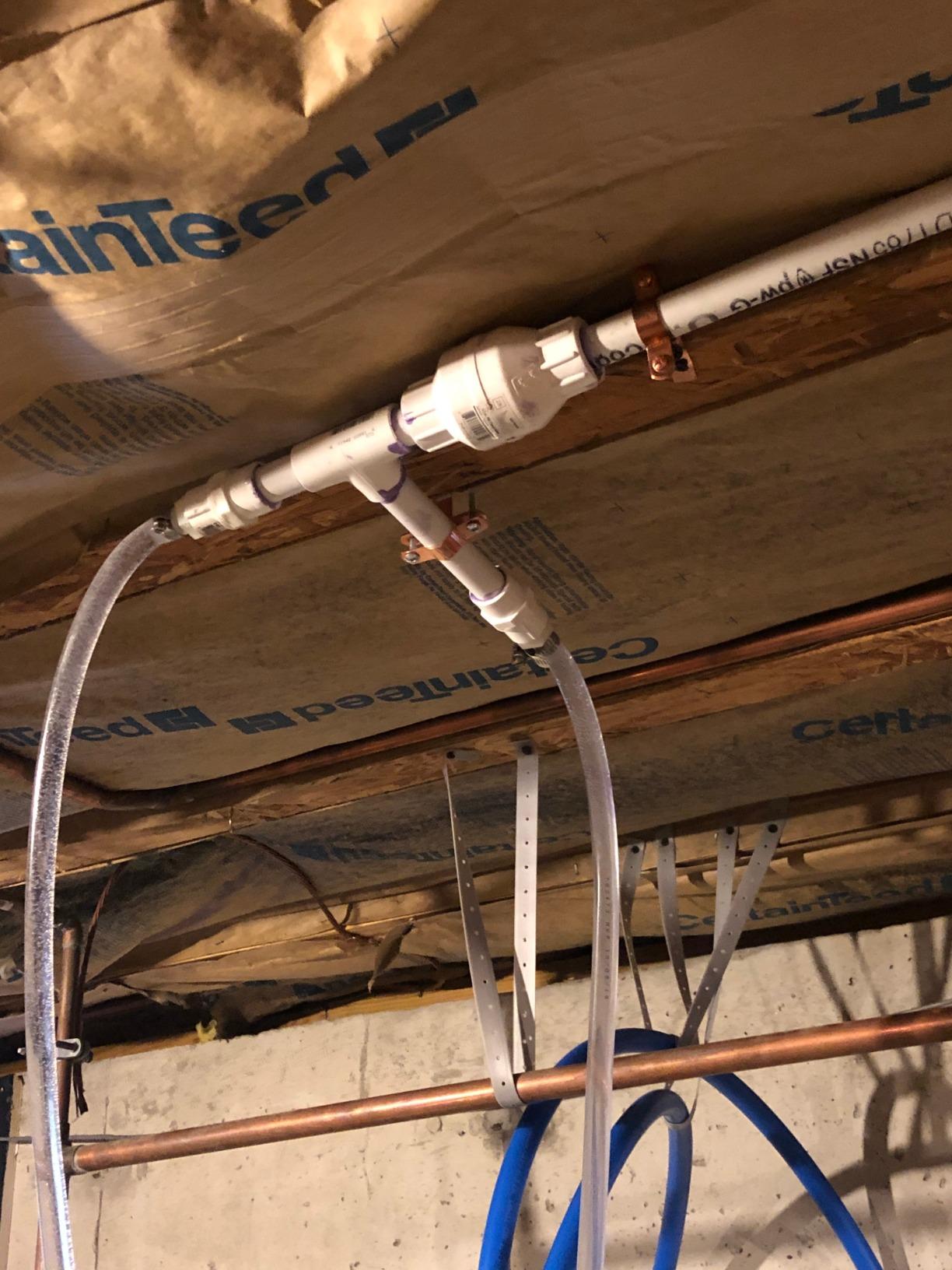
On whether to hire someone, the honest split is this. A metered salt softener with a bypass valve is a genuinely manageable DIY job for anyone comfortable with household plumbing, and the Fleck-based systems are the most commonly self-installed. An air injection or oxidation filter is a different proposition, because the drain line, air line and backwash flow need to be sized correctly to the well’s pressure, and a badly configured air injection system will underperform no matter what the specification says. If you have never plumbed a drain line before, pay for that part.
Finally, on salt-free conditioners. A Template Assisted Crystallization unit changes the crystal structure of hardness so it will not adhere to surfaces, which is a real and useful effect on scale. It does not exchange calcium and magnesium, so the water is not actually softer, and it does nothing at all for iron. On a well with iron, a salt-free conditioner solves the smallest part of your problem while leaving the part you are worried about untouched.
Ongoing costs and the maintenance each system asks of you
Equipment cost is the number everyone compares and the number that matters least over ten years. What separates an entry-level cartridge stack from an air injection tank is the running cost, and the gap is measurable.
Salt-based softeners consume salt per regeneration. A metered valve on an appropriately sized tank regenerating every 10 to 14 days uses a fraction of what a timer-controlled unit burns through on a fixed daily schedule, and larger brine tanks mean fewer top-up trips rather than a higher bill. Add softened water used for backwashing and rinse, which on a metered unit is measured in gallons per cycle rather than a fixed daily volume.
Cartridge systems carry a recurring parts bill that never stops. At 6 to 12 months per set, a household filtering for a decade is buying replacement elements roughly ten times over. That is the number that eventually makes an air injection system the cheaper long-term purchase, and it is the single most useful comparison to run before choosing between the two architectures.
Air injection units have almost no consumables. Media regeneration uses only air and water, so the ongoing cost is electricity for the control head and water for backwashing. The occasional resin cleaner and a periodic media top-up are the maintenance items, and they happen on a multi-year cadence rather than a monthly one.
Whatever you install, add annual iron fouling inspection to the schedule. Checking resin condition and treating the brine tank with an inhibitor on an iron well costs very little and is the difference between a softener that lasts fifteen years and one that lasts six.
Frequently Asked Questions
Will a water softener remove iron from well water?
Only clear-water iron up to about 1 ppm. Above that level the dissolved iron fouls the softener resin, cutting its capacity and forcing frequent regeneration, so any real iron problem needs an oxidation filter plumbed ahead of the softener rather than a softener alone.
What is the best filter for removing iron from well water?
It depends on your iron number. Under 3 ppm a three-stage cartridge filter such as the Express Water WH300SICS or the iSpring WGB32BM is enough. Between 3 and 10 ppm you want air injection oxidation, which regenerates its own media with no chemicals. Above 10 to 15 ppm you are at the practical ceiling of residential equipment.
What is the most cost-effective way to remove iron from well water?
For wells under 3 ppm, a cartridge iron filter ahead of an existing metered softener is the cheapest reliable setup. For wells between 3 and 15 ppm, an air injection filter costs more up front but has no consumables, which usually makes it cheaper to own over ten years than repeatedly replacing cartridges.
What is the best water system to remove sulfur smells?
Hydrogen sulfide needs its own treatment because it is a different contaminant from iron. Among the systems reviewed here, the DuraWater Air Injection Iron Eater is built to handle iron, manganese and hydrogen sulfide together. Several other units explicitly warn they should not be used on sulfur-bearing water.
Is it safe to drink well water with iron bacteria?
Iron bacteria are a microbiological concern rather than a mineral one, and the slime they produce can harbour other organisms. They need a dedicated disinfection and oxidation approach, not a standard softener or iron filter, because the bacterial growth fouls media faster than backwashing can clear it. Test specifically for them and treat the biological problem first.
Will a salt-free water softener work on well water with iron?
No. Salt-free conditioners using Template Assisted Crystallization change how hardness behaves but do not exchange calcium and magnesium, and they do not remove iron. On an iron-bearing well they address the smaller part of the problem while leaving staining and odor exactly where they were.
The bottom line for well water with iron in 2026
Match the system to your tested iron number, not to your hardness number. Under 3 ppm and a cartridge iron filter ahead of your softener is a complete, low-fuss solution with the deepest review history in this roundup. Between 3 and 10 ppm, air injection oxidation is the standard answer, and add sulfur to the brief if your report lists it. Above 10 to 15 ppm, get a professional involved before you buy anything.
Whichever route you take, iron filter first and softener second, every time. If you tell us your iron ppm, your household size and your well pump flow rate, we can point you at the tier that fits rather than making you guess.