
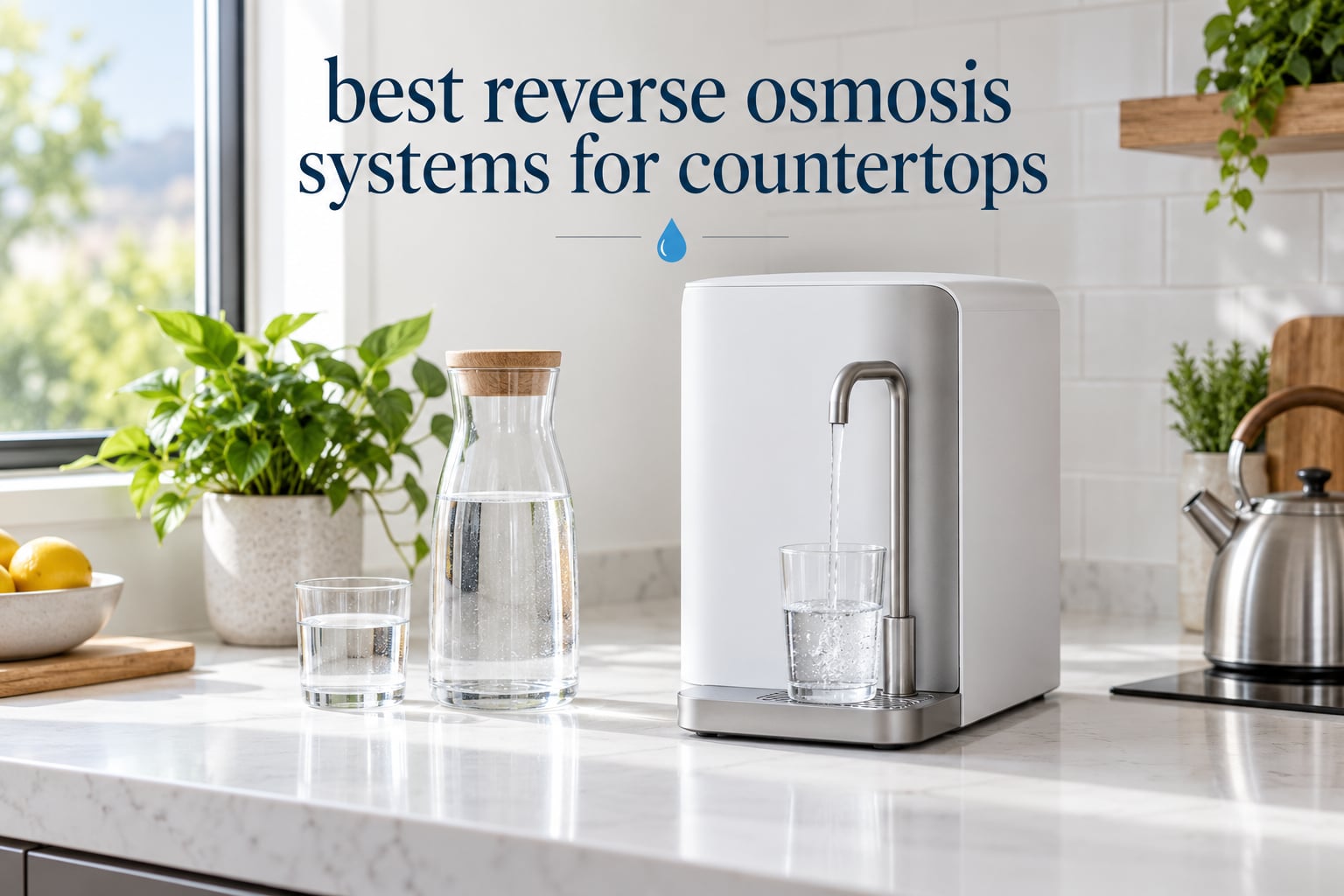
A countertop reverse osmosis system is the rare appliance that solves two problems at once: it filters out the dissolved contaminants that pitcher filters miss, and it does it without a plumber, a drilled countertop, or a plumber’s bill. You fill a tank with tap water, plug the unit into an outlet, and press a button. That simplicity is why renters, RV owners, dorm residents, and anyone whose water report flags lead or PFAS keep landing on the same category of product again and again.
The catch is that countertop RO is a crowded shelf, and the marketing is genuinely confusing. Some listings say “NSF certified” when they mean lead-free materials. Some say “SGS tested and certified” when SGS is a testing laboratory, not a certifier. Two units rated at 400 gallons a day deliver less than a gallon an hour. We built this guide around what the spec sheets and buyer reviews actually say, because the gap between the two is where most of the disappointment lives.
We compared ten countertop reverse osmosis systems across filtration claims, certification records, pure-to-drain ratios, flow rates, tank capacity, filter life, glass versus plastic collection vessels, and warranty length. Every unit here is a genuine countertop design with no plumbing required. The results surprised us more than once: the highest-rated product in the category is not the one with the longest feature list, and the most capable filtration train is not always the one with the highest gallon rating.
If you are still deciding between formats rather than models, our guide to reverse osmosis systems under 500 dollars covers the broader price tiers, and our picks for tankless reverse osmosis systems go deeper on units with no storage reservoir at all.
Top 3 Picks for Countertop Reverse Osmosis Systems in 2026
Three units earned a spot on the podium, and they earned it for very different reasons. The Bluevua RO100ROPOT takes the top slot on the strength of owner satisfaction across nearly 3,700 reviews, a glass carafe, and a filter-life monitor. The Bluevua RO100ROPOT-Lite is the compact option for small kitchens, and the SimPure Y7P-BW UV brings a UV stage and the largest stated filter capacity in the group.

Bluevua RO100ROPOT
- Borosilicate glass carafe
- Five stages with remineralization
- Filter life monitor
- 2:1 pure-to-drain ratio

Bluevua RO100ROPOT-Lite
- Compact 9.7 inch footprint
- 3:1 pure-to-drain ratio
- LED water quality display
- Glass jar fills in under three minutes

SimPure Y7P-BW UV
- UV plus four-stage RO
- 528 gallon filter life
- 418 GPD rated flow
- 4:1 pure-to-drain ratio
Best Countertop Reverse Osmosis Systems (October 2026)
All ten systems below filter without plumbing. The table highlights what actually separates them: the filtration train, the stated contaminant claims, the pure-to-drain ratio, and the container type that touches your purified water.
| Product | Specifications | Action |
|---|---|---|
| Bluevua RO100ROPOT |
|
Check Latest Price |
| SimPure Y7P-BW UV |
|
Check Latest Price |
| Bluevua RO100ROPOT-Lite |
|
Check Latest Price |
 AquaTru Glass Carafe Alkaline AquaTru Glass Carafe Alkaline |
|
Check Latest Price |
 Mate 3 UV Mate 3 UV |
|
Check Latest Price |
 iSpring RCD100 iSpring RCD100 |
|
Check Latest Price |
 Jimmy R9 Jimmy R9 |
|
Check Latest Price |
 Waterdrop C2S Waterdrop C2S |
|
Check Latest Price |
 Waterdrop C1S Waterdrop C1S |
|
Check Latest Price |
 Express Water EZRO5 Express Water EZRO5 |
|
Check Latest Price |
1. Bluevua RO100ROPOT: The Best-Rated Countertop RO System Overall
Bluevua RO100ROPOT Countertop Reverse Osmosis Water Filter System
5-stage RO with remineralization
12L borosilicate glass carafe
2:1 pure-to-drain
Filter life monitor
1-year warranty
Pros
- Best-supported owner satisfaction in the group
- Glass carafe avoids plastic contact with purified water
- Built-in remineralization stage improves taste
- Filter life monitor shows remaining service life and water quality
- Reuse of reject water cuts total waste
Cons
- Higher upfront cost than most rivals in this roundup
- Breakable glass carafe and a heavier overall weight
- Wider countertop footprint than slimmer units
The Bluevua RO100ROPOT is the countertop reverse osmosis system we recommend to most people, and the reason is unusually well documented. Across nearly 3,700 reviews it holds a 4.6 average, which puts it at the top of this roundup and reflects a specific combination of design choices rather than one flashy feature. Buyers consistently describe the same experience: fill the tank, seat the glass carafe, and get water that tastes balanced rather than stripped.
Filtration runs five stages and ends in a remineralization filter that puts minerals back into the finished water. That last stage is the difference between drinking something that reminds you of bottled water and drinking something that reminds you of a chemistry lab. The manufacturer claims 99.9 percent contaminant filtration across the train.
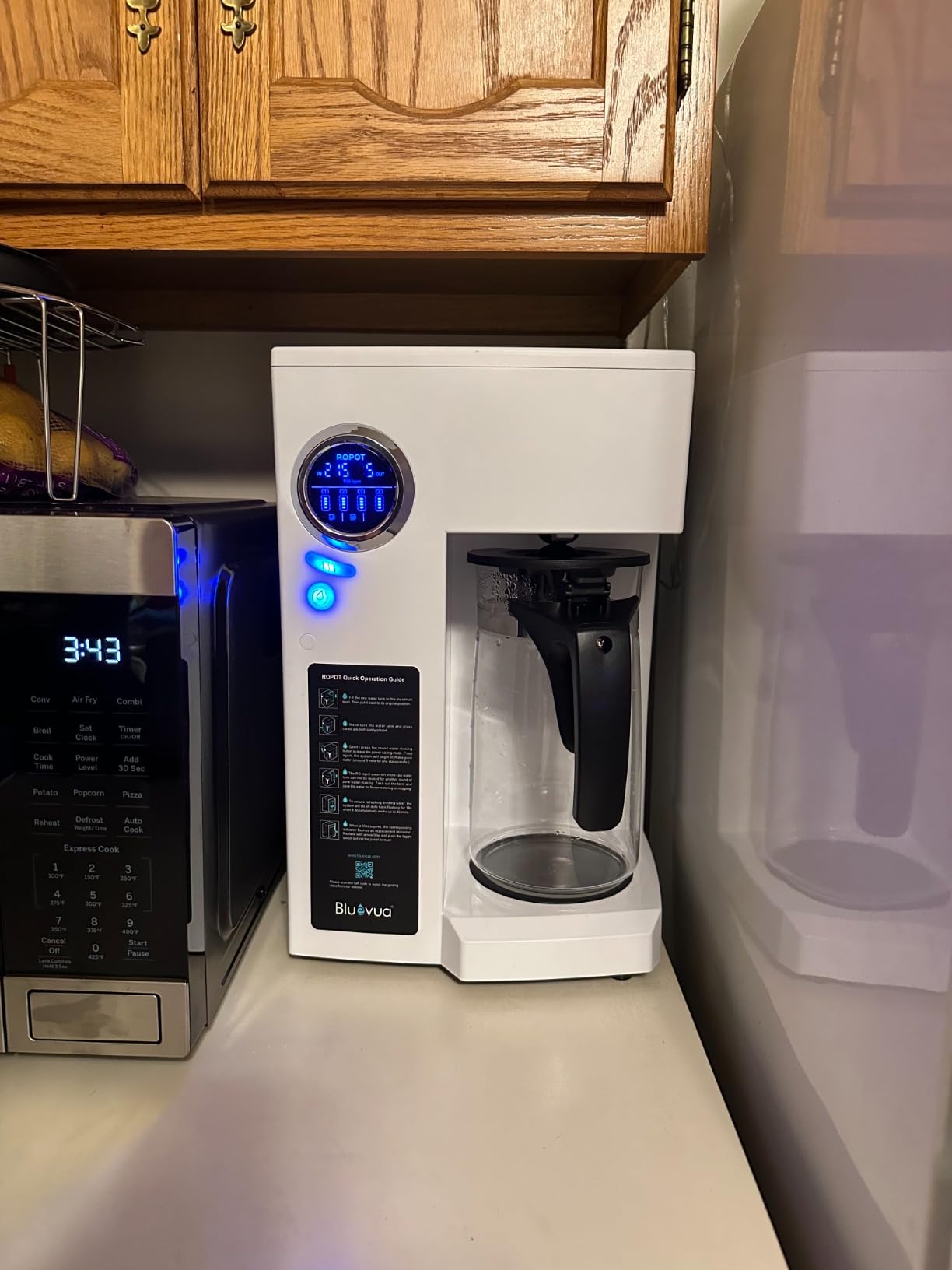
The recovery rate is the quiet advantage here. A 2:1 pure-to-drain ratio means two gallons of feed water produce roughly one gallon of purified water and one gallon of reusable reject water, and this unit recirculates that reject instead of pouring it down the drain. Over a year of drinking water for two people, the gap between a 2:1 system and a 1:3 system is measured in hundreds of gallons of saved water.
Ownership details are handled better than most. A filter life monitor display tracks remaining service life and water quality, so you are not counting months on a calendar and hoping. Filters are rated at 12 to 24 months, which stretches the annual cost well below what the sticker suggests. An automatic power-saving standby mode handles the hours the unit sits idle.
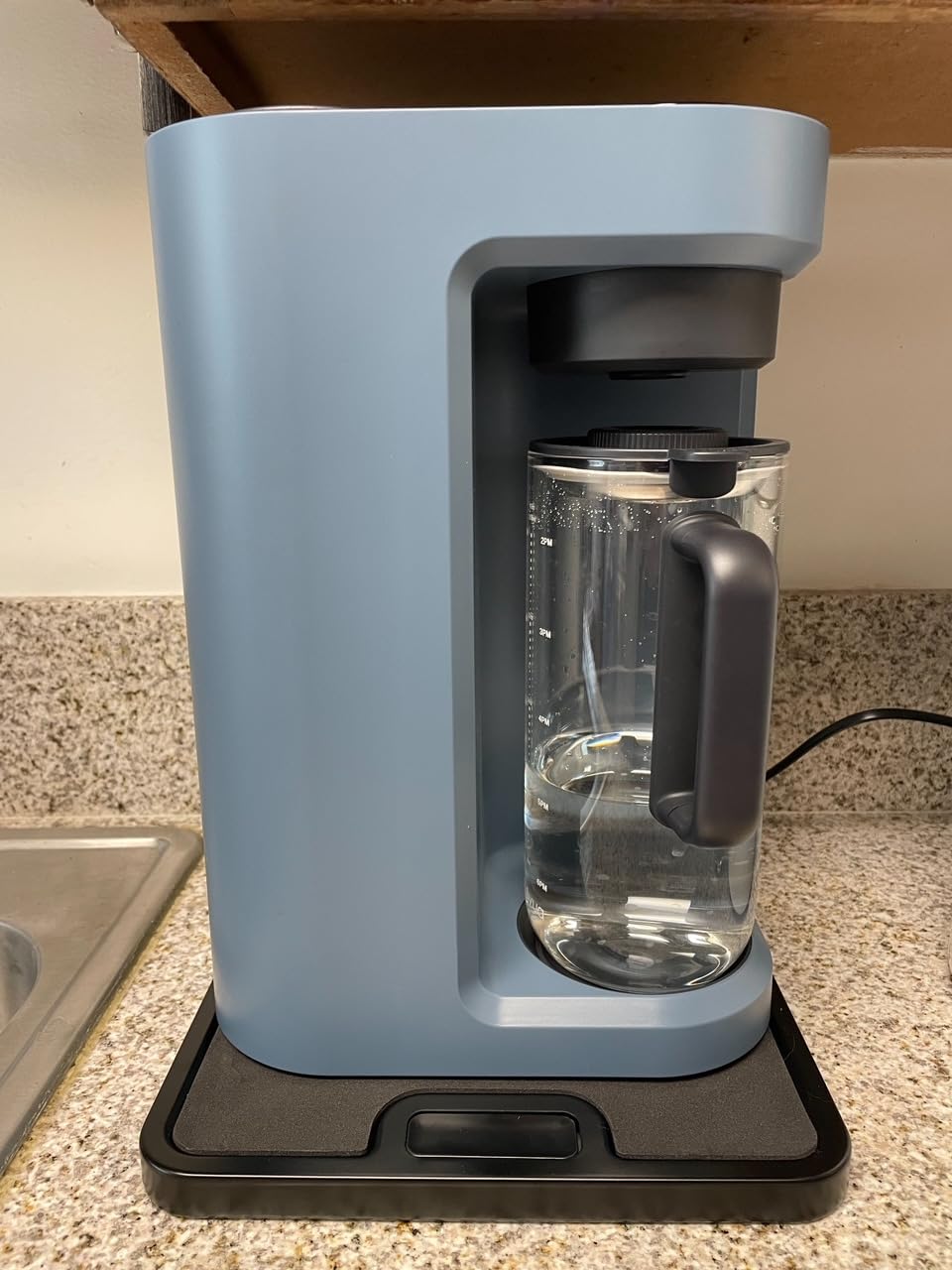
What to check before you buy the Bluevua RO100ROPOT
Measure your counter space first. At 10.9 by 15.4 by 14.3 inches, this is one of the wider bodies in the group, and the carafe needs clearance above the unit to be lifted out. If your prep space is tight, a slimmer model will save you daily friction.
Then think about the glass. Borosilicate is a genuine improvement over plastic for water that has just been stripped of everything, and the dishwasher-safe carafe is convenient. But it is heavier than plastic, it will shatter if dropped, and a replacement carafe is a separate purchase.
Where the Bluevua RO100ROPOT falls short
The straight answer is cost, and we will not pretend otherwise. This is not the cheapest way to put reverse osmosis on a counter, and buyers shopping on first purchase alone will find cheaper options that perform respectably.
Beyond price, the glass carafe is a durability trade-off some households will not want, and the 5 kg weight makes the unit awkward to move for cleaning underneath. Registration is needed to activate the 1-year limited warranty, which is a small step people forget and then discover at renewal time.
2. SimPure Y7P-BW UV: Best for PFAS, Fluoride and Well-Water Users
SimPure Y7P-BW UV Countertop Reverse Osmosis Water Filter, 5 Stage RO
UV plus four-stage 0.0001 micron RO
528 gallon filter life
418 GPD rated,0.29 gpm
4:1 pure-to-drain
13 lbs
Pros
- Tested by SGS against NSF/ANSI 58 for over 1000 contaminants
- UV stage adds a disinfection layer
- 4:1 recovery is the most efficient ratio in this group
- Large 528 gallon filter capacity
- Compact 7.5 inch width suits tight counters
Cons
- Small 1.3 gallon reservoir needs frequent refills
- Initial flush takes roughly 45 minutes across several tanks
- Awkwardly translated manual with an intensive cleaning schedule
- Plastic reservoir can taste off after about a month
The SimPure Y7P-BW UV is the unit we point people toward when their water report lists PFAS, lead, arsenic, fluoride, or nitrates. The claim here is the broadest in the roundup: testing by SGS against the NSF/ANSI 58 standard covering 99.99 percent reduction of more than 1,000 contaminants, including PFAS, PFOA, PFOS, lead, arsenic, chlorine, fluoride, and nitrates.
One important clarification, because this trips up almost every buyer. SGS is a testing laboratory. It runs the test protocol and issues a report, but it is not a certification body the way NSF, IAPMO, or WQA are. When you read “tested by SGS against NSF/ANSI 58,” you are reading a performance test against a published standard, not a listing in a certification database you can look up by model number. That is still meaningful evidence. It is just a different kind of evidence than a certification seal, and it is worth knowing which one you are relying on.
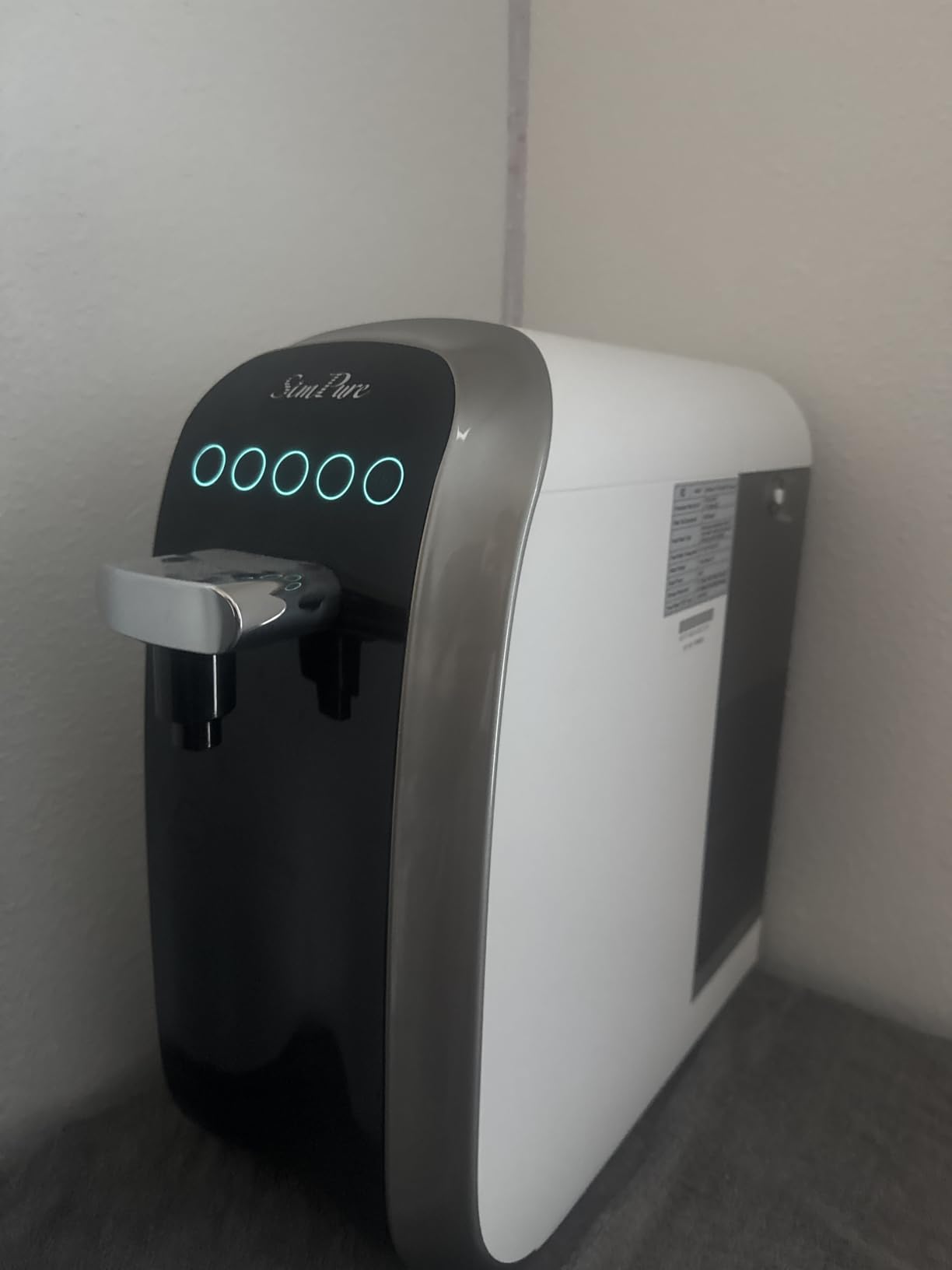
Buyers report the practical results are real. Owners drawing from well water describe total dissolved solids falling from roughly 849 ppm at the tap to around 30 ppm at the carafe, which is the range of typical bottled water. That is the kind of before-and-after number you hope for from a countertop unit.
The efficiency figure deserves attention too. A 4:1 pure-to-drain ratio is the best in this roundup, meaning four gallons of feed water yield about one gallon of purified water through a recycling multi-filtration design. If water waste is a concern in your area or your household, this is the number to optimize for.
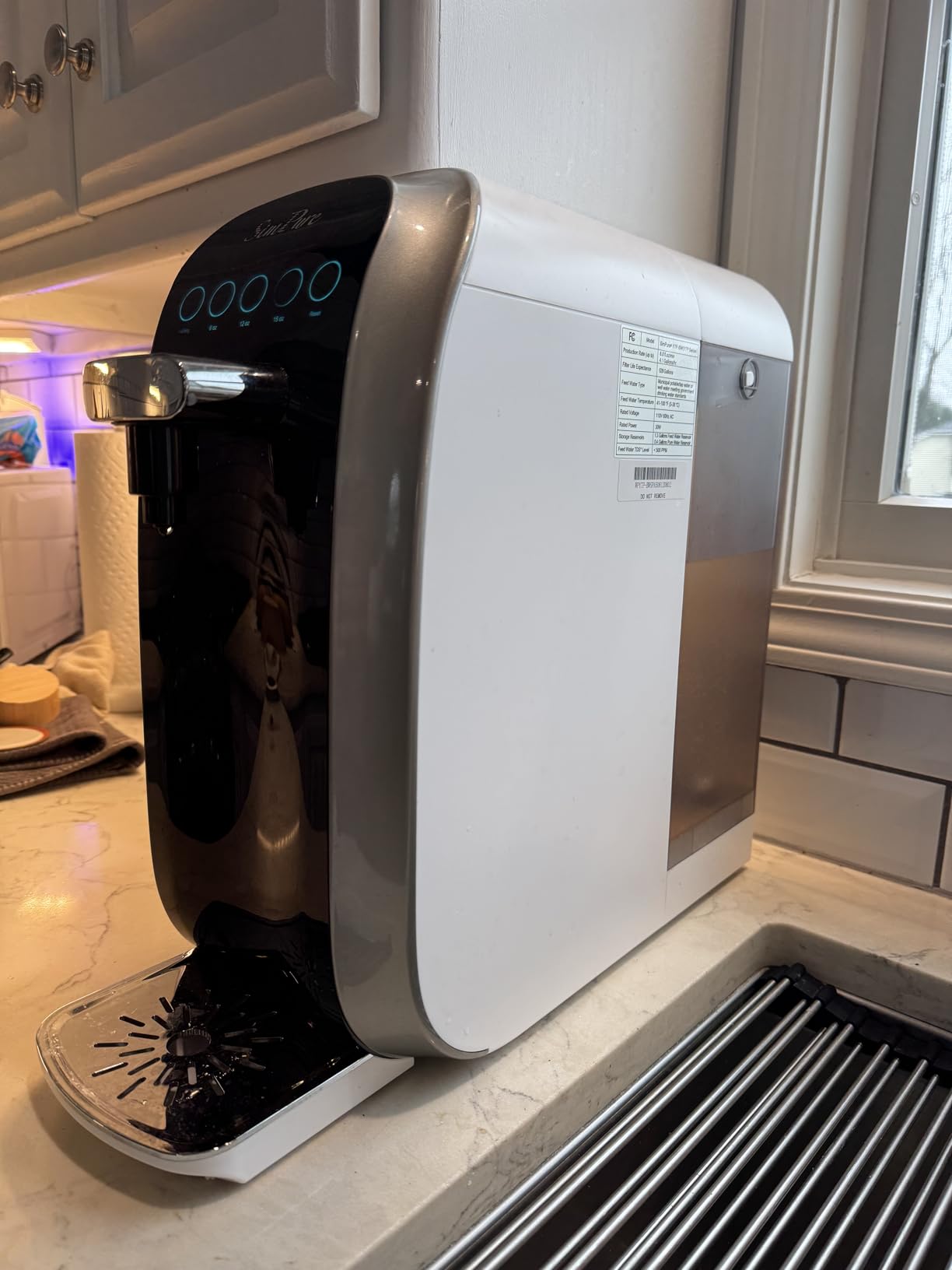
What to check before you buy the SimPure Y7P-BW UV
Count your refills before you commit. The reservoir is small at about 1.3 gallons, which works well for one or two people and turns into a daily chore for a household of four. Pair the purchase with a simple habit of refilling while you make coffee and the chore mostly disappears.
Plan for the first hour. The initial flush takes roughly 45 minutes spread across several tanks before the water is drinkable. Set it up when you are not waiting on a glass of water, and expect the pump to be audible while it runs.
Where the SimPure Y7P-BW UV falls short
The maintenance schedule is the real friction point. Owners are told to rinse the tank daily, wash components monthly, and descale every two to four weeks. On top of that, some report an off or plastic-like taste developing in the internal plastic reservoir after about a month of continuous use.
The manual is another genuine weakness, described as poorly written and awkwardly translated, which means you will be figuring out parts of the setup from the model number and the display rather than from clear instructions. The unit dispenses room-temperature water only, so it will not serve hot-water drinkers.
3. Bluevua RO100ROPOT-Lite: Best for Small Kitchens
Bluevua RO100ROPOT-Lite Countertop Reverse Osmosis Water Filter
Compact 9.7 by 9.5 inch body
3:1 pure-to-drain ratio
LED water quality display
Glass jar, filled in under three minutes
5 kg
Pros
- Smallest countertop footprint of the glass-carafe models
- Strong 3:1 efficiency for a countertop unit
- LED display tracks filter life and water quality in real time
- Glass jar rather than a plastic reservoir
- Fast delivery with a jar filled in under three minutes
Cons
- Annual filter replacement is more frequent than the full-size model
- Modest 12 liter capacity suits one or two people
- Shorter review history than the flagship Bluevua
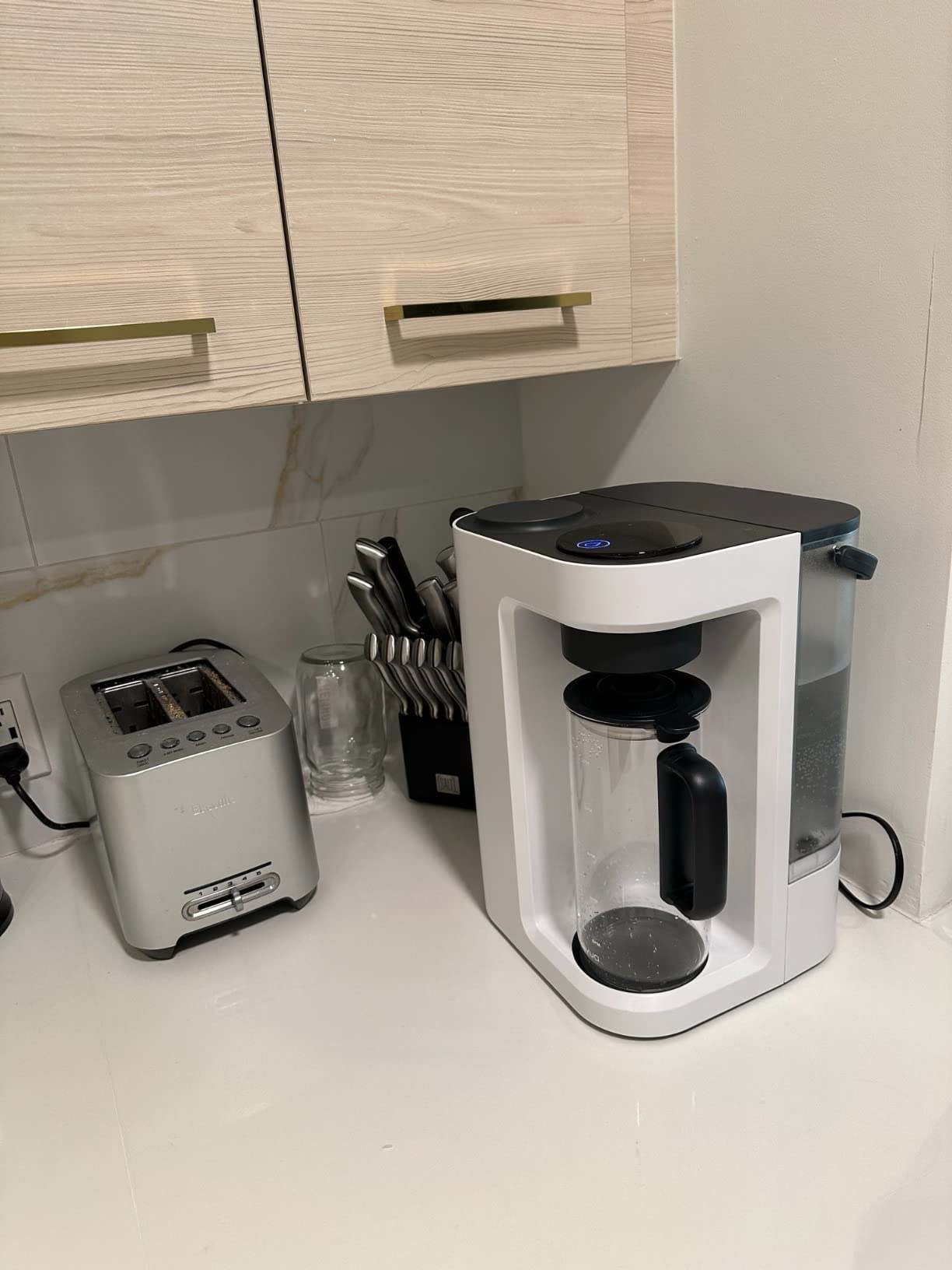
The Bluevua RO100ROPOT-Lite answers a narrow question very well: what does a countertop reverse osmosis system look like when counter space is the binding constraint? At 9.7 by 9.5 by 14.1 inches with a 9.7-inch square footprint, it is one of the smallest bodies here, and it still delivers into a borosilicate glass jar rather than a plastic tank.
The efficiency rating is the standout. A 3:1 pure-to-drain ratio means three gallons of feed water yield about one gallon purified, and the manufacturer frames this as 375 percent more efficient than typical 1:4 countertop designs. That is a meaningful difference when you are looking at yearly water use.
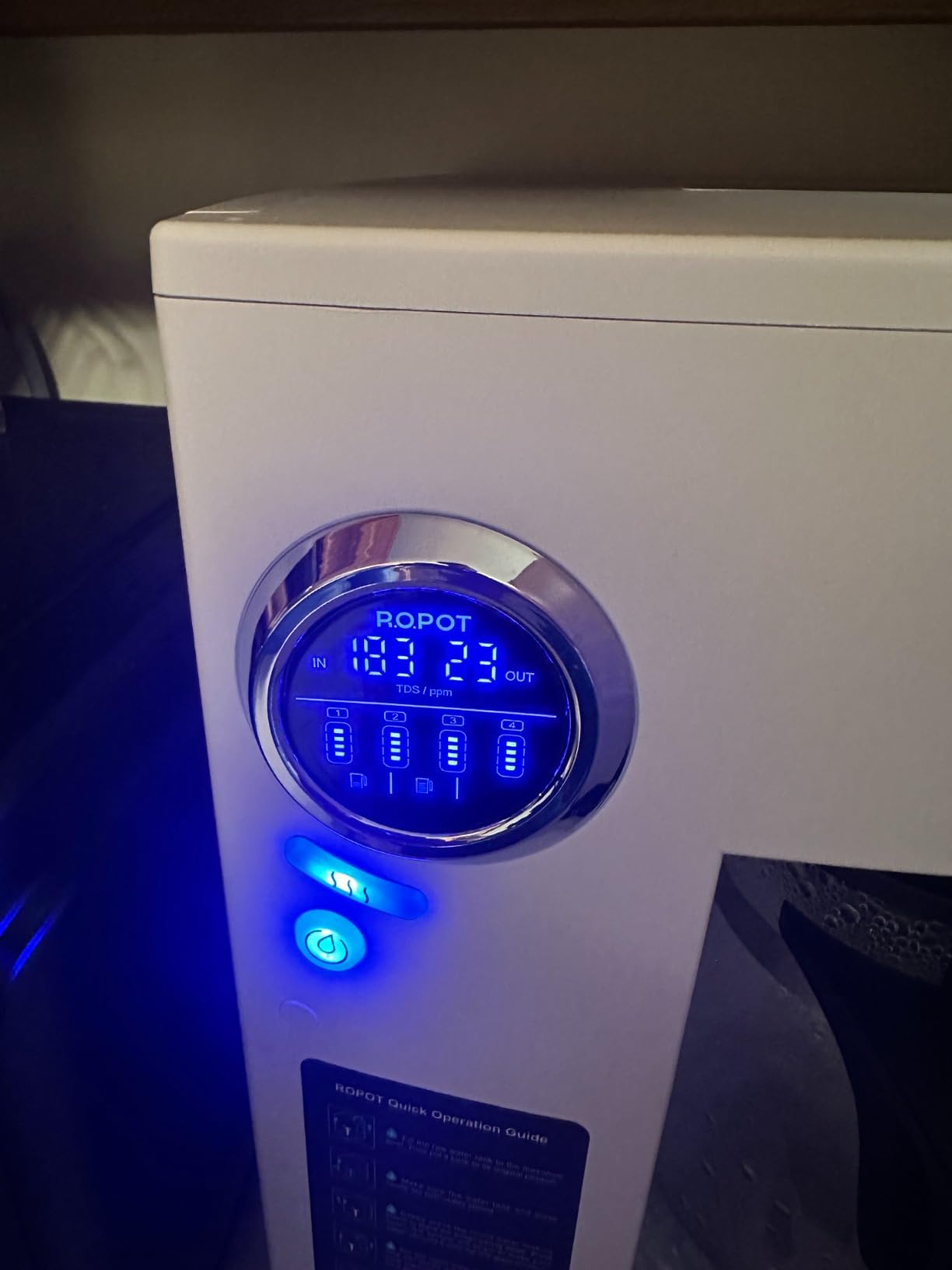
The smart LED display is more than decoration here. It reports real-time water quality, remaining filter life, and lets you select dispense volume. For a first-time RO buyer who has no idea when a membrane should change, that readout removes the most common maintenance mistake in the category.
Purification runs through a 0.0001 micron RO membrane and a five-stage composite filter, with stated reduction of TDS, PFOA, PFOS, chlorine, fluoride, arsenic, and lead. Certification language is again worth parsing carefully: the unit is WQA certified to NSF/ANSI/CAN 372, which is a lead-free materials standard, and it was tested by SGS. That is a materials claim plus a performance test, not a contaminant-reduction certification seal.
What to check before you buy the Bluevua RO100ROPOT-Lite
This is a one-to-two-person machine by design, and the 12 liter capacity is modest. If you are a family of four or you drink several liters a day, a larger reservoir will save you more frustration than the smaller footprint is worth.
Watch the filter interval. Annual replacement is more frequent than the 12-to-24-month cycle of the full-size ROPOT, so model the yearly cost in gallons produced rather than in calendar time.
Where the Bluevua RO100ROPOT-Lite falls short
The short version: this is the smaller sibling, and it inherits the smaller sibling’s limits. Tank volume caps out lower, filter changes come around sooner, and the review history is younger than the flagship model’s, which means fewer long-term reliability data points.
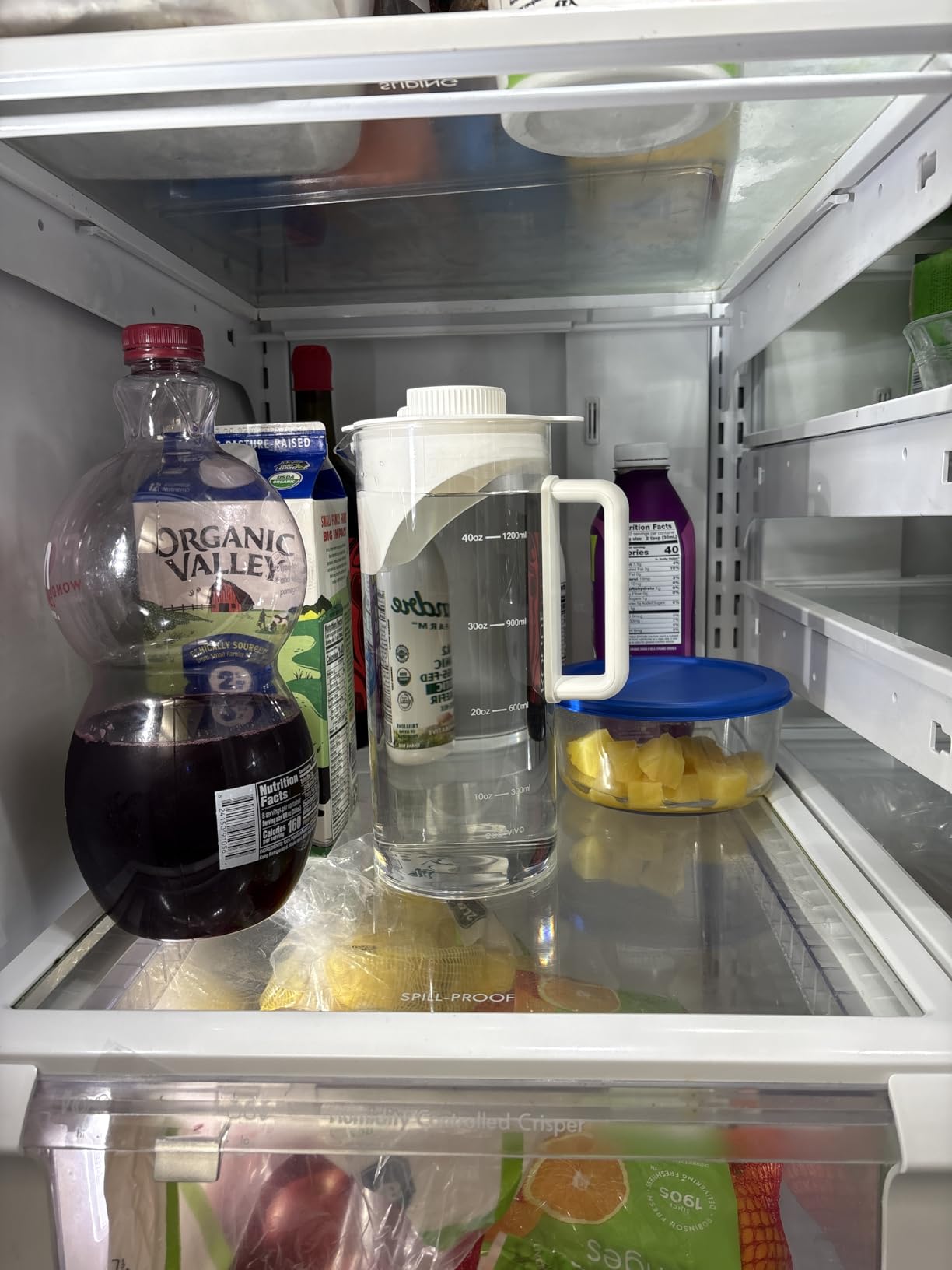
One nice touch worth mentioning: the flip-top jar lid supports fruit-infused water recipes, so the system doubles as a cold-water carafe for fruit water on days you do not need purified output.
4. AquaTru Glass Carafe Alkaline: Best for Certification Transparency
AquaTru Glass Carafe Alkaline Countertop Reverse Osmosis Water Purifier | 4 Stage RO System | Removes 84 Contaminants Including PFOA & PFOS (PFAS), Lead and Microplastics | Adds Alkaline Minerals
IAPMO tested to NSF standards
84 contaminants reduced
Alkaline mineral boost
0.5 gpm flow
Dishwasher-safe glass carafe
Pros
- Tested and certified to NSF standards by IAPMO
- not just a testing lab
- Alkaline mineral filter improves taste after RO
- Fastest stated flow rate in this roundup at 0.5 gpm
- Dishwasher-safe glass carafe with lid
- Generous filter life rated 300 to 600 gallons
Cons
- Unreinforced glass carafe cracks easily and replacements are slow
- No on-off button so filtering starts whenever the carafe is seated
- Wastewater returns to the same tank as the clean water
- Reservoir mount has no lock and spills easily
The AquaTru Glass Carafe Alkaline is the model to buy if the certification record is the deciding factor for you. It is tested and certified to NSF standards by IAPMO, which is a certification body whose product listings you can look up directly, rather than a laboratory report or a materials-only claim. That distinction is the whole point of including this unit in the roundup.
The filtration train is four stages reducing 84 contaminants, with microplastics, arsenic, PFOA, PFOS, and lead named explicitly. The final stage is a VOC carbon filter with a pH and mineral boost, which raises the alkalinity and adds minerals back after the membrane strips them out.
Flow rate is where this unit wins its place in the middle of the ranking. A maximum 0.5 gpm is the highest stated flow in this roundup, which means shorter waits between refills than most countertop models. Owners keep the glass carafe in the dishwasher, which is a small daily convenience that adds up.
Filter intervals are published clearly, which we appreciate. The pre-carbon stage is rated 6 months or 300 gallons, the RO filter 1 year or 600 gallons, and the pH and mineral filter 1 year or 300 gallons. You can plan replacements against gallonage rather than guessing.
What to check before you buy the AquaTru Glass Carafe Alkaline
Understand how the cycle starts. There is no on-off button, and the unit begins filtering automatically whenever the carafe is seated correctly. On a counter with a lot of foot traffic that means unintentional cycles, so it helps to place it somewhere out of the way.
Look closely at how the reservoir seats. The tank has no locking mount, and owners report frequent spills when it is not aligned perfectly. A little patience during setup pays off later.
Where the AquaTru Glass Carafe Alkaline falls short
The glass carafe is unreinforced borosilicate and reviews describe it cracking and shattering, with replacement pitchers slow to arrive. In a household with children, that is a real consideration.
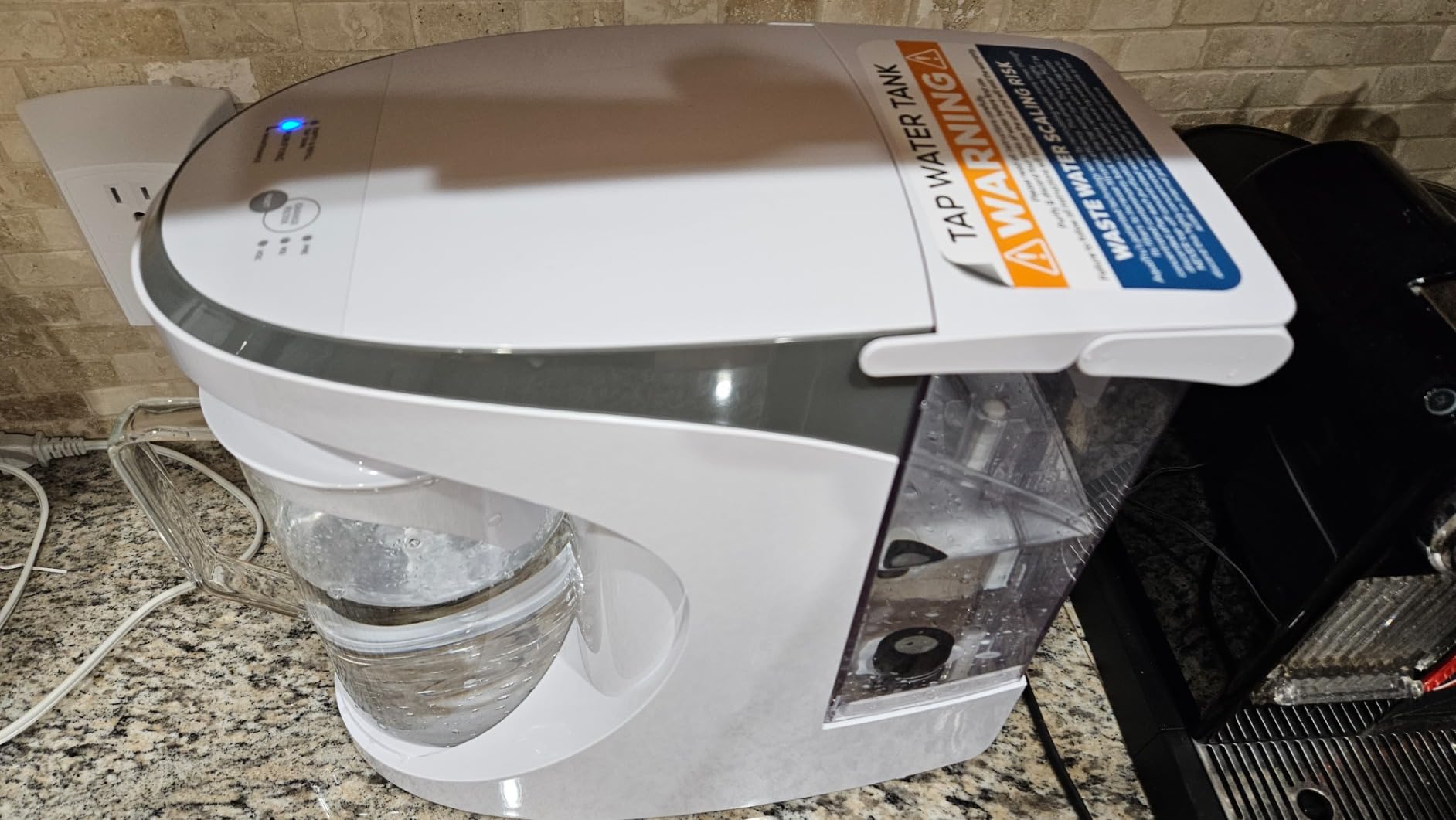
The most consequential design issue is that wastewater returns to the same feed tank as the clean water. Owners can re-filter that reject water and damage the unit, so the tank must be emptied rather than reused. Some buyers also report the system needing descaling and a membrane change far sooner than the rated one year.
5. Mate 3 UV: Best for Larger Tanks and the Longest Warranty
Mate 3 UV Reverse Osmosis Water Filter Countertop, No Installation Purifier
Nine-stage RO with UV and minerals
169oz tank,44oz glass pitcher
3:1 pure-to-waste
5-year system warranty
9.06 inch square
Pros
- Tied for the highest average rating among the units in this roundup
- 169oz tank is the largest capacity here
- Serves one to four people including pets
- Self-cleaning cycle flushes internal lines to drain
- 5-year system warranty backed by US service centers
- Compact square footprint for rentals and RVs
Cons
- Requires electricity because the booster pump cannot run without power
- Newer listing with a smaller base of reviews
- Filters and mineralization media are excluded from the 5-year warranty
The Mate 3 UV is the unit we recommend when a household of three or four has to share one countertop system. Its 169oz feed tank is the largest in this roundup, and the manufacturer rates it for one to four people including pets. That tank size, more than any other single spec, decides how often you refill.
Filtration runs nine stages combining reverse osmosis, UV, and mineral enhancement, with a stated reduction of up to 99.99 percent of contaminants. Testing was performed by SGS and the unit complies with NSF/ANSI 42, 53, and 58 standards, so you have multiple standards cited rather than one.
Two features reduce the daily friction that makes some countertop units annoying. Auto-sensing hands-free dispensing means you can pour without hunting for a button, and a built-in self-cleaning cycle flushes internal lines to drain concentrated wastewater and scale. Filter swaps take about three seconds according to the manufacturer.
The running cost figure stands out too. The brand estimates roughly 0.19 dollars per day, or about two cents per filtered bottle. That is the lowest ongoing cost per bottle among the systems we evaluated, and it is the kind of number that matters far more over three years than the purchase.
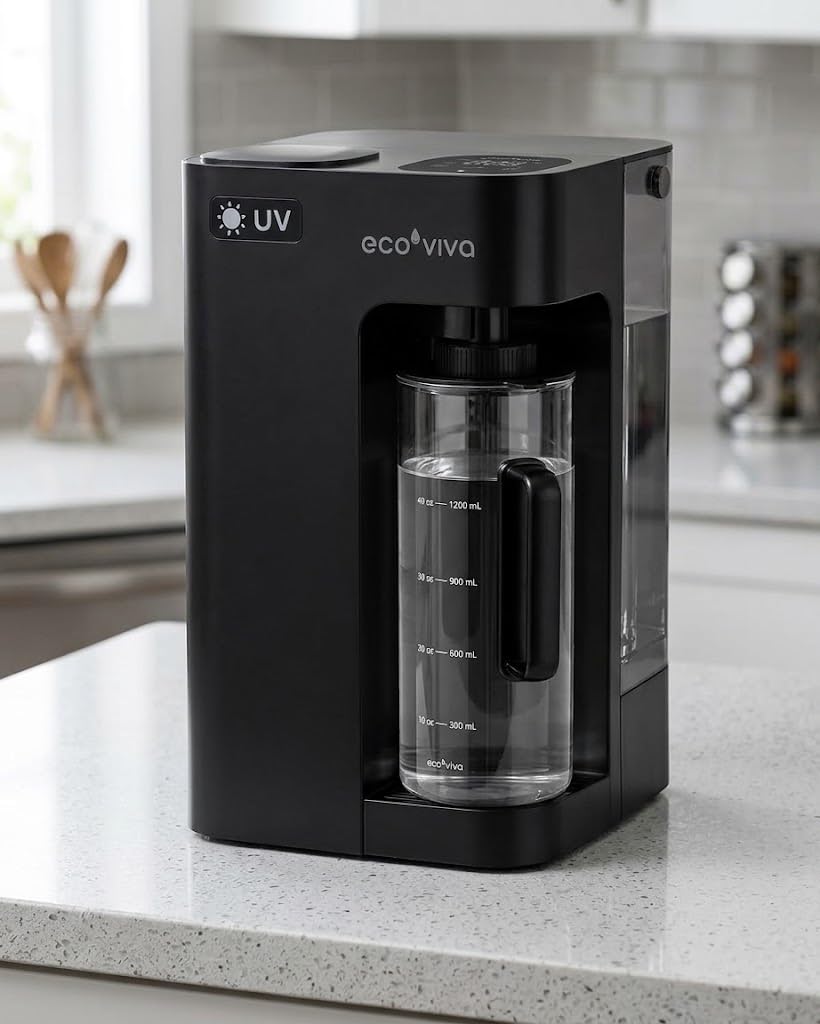
What to check before you buy the Mate 3 UV
Confirm you have an outlet within reach. An integrated electric booster pump drives true RO performance and reduces limescale on hard water, but the unit cannot filter at all without power. That trade is worth it for most households and disqualifying for anyone off-grid without a battery.
Read the warranty terms closely. The five-year limited system warranty is the longest we found in this roundup and is backed by local US service centers, but replacement filters and mineralization media are explicitly excluded.
Where the Mate 3 UV falls short
The review base is small. Ninety-three reviews is a thin record for a five-year warranty claim, so the long-term durability picture is less certain here than for models with thousands of reviews behind them.
It is also a newer listing, which means fewer owners reporting on year-two membrane condition. Treat the warranty as the compensating factor and register the unit on arrival.
6. iSpring RCD100: Best for Instant Hot Water on the Counter
iSpring RCD100 5-Stage Countertop Reverse Osmosis System, Instant Hot RO Water Dispenser with UV, 2.5:1 Pure to Drain, 100 GPD Portable Water Filtration System, 4 Temperature Options, Plug and Play
Four temperature modes to 205F
100 GPD,0.16 gpm
UV plus five-stage filtration
2.5:1 pure-to-drain
Child lock
Pros
- Hot water in about three seconds across four settings
- Plug-and-play with no plumbing at all
- Built-in UV stage alongside five-stage filtration
- Smart panel tracks filter life
- temperature and low water
- Child safety lock suits homes with small children
- iSpring replaces failed units quickly at no cost
Cons
- Several owners report the unit powering down after six months to a year
- Dispenser nozzle cavity can develop mold that resists scrubbing
- Slow 0.16 gpm flow and lower real output than the nameplate
- Wastewater returns to the feed tank so it must be dumped and refilled
The iSpring RCD100 is the most feature-dense machine in this roundup and the one that most changes what a countertop reverse osmosis system can do. It dispenses hot water in about three seconds across four temperature modes: room temperature, 120F, 185F, and 205F. That turns a drinking-water appliance into something closer to a small hot-water dispenser.
Filtration is five stages with a built-in UV light, reducing up to 99 percent of more than 1,000 contaminants including chlorine, fluoride, lead, arsenic, and PFAS. The wastewater recirculation technique delivers a 2.5:1 pure-to-drain ratio, which sits in the efficient middle of this group.
The smart panel is genuinely useful rather than decorative. It shows filter lifespan, real-time temperature, and low-water reminders, and the twist-and-lock cartridges pair with an automatic self-cleaning flush mode so maintenance is less hands-on than a manual stage change.
Two details make it family-friendly: a child safety lock on the hot outlet and an LED-lit dispensing area. The hold-to-override on room temperature gives you continuous flow when you need to fill a large bottle.
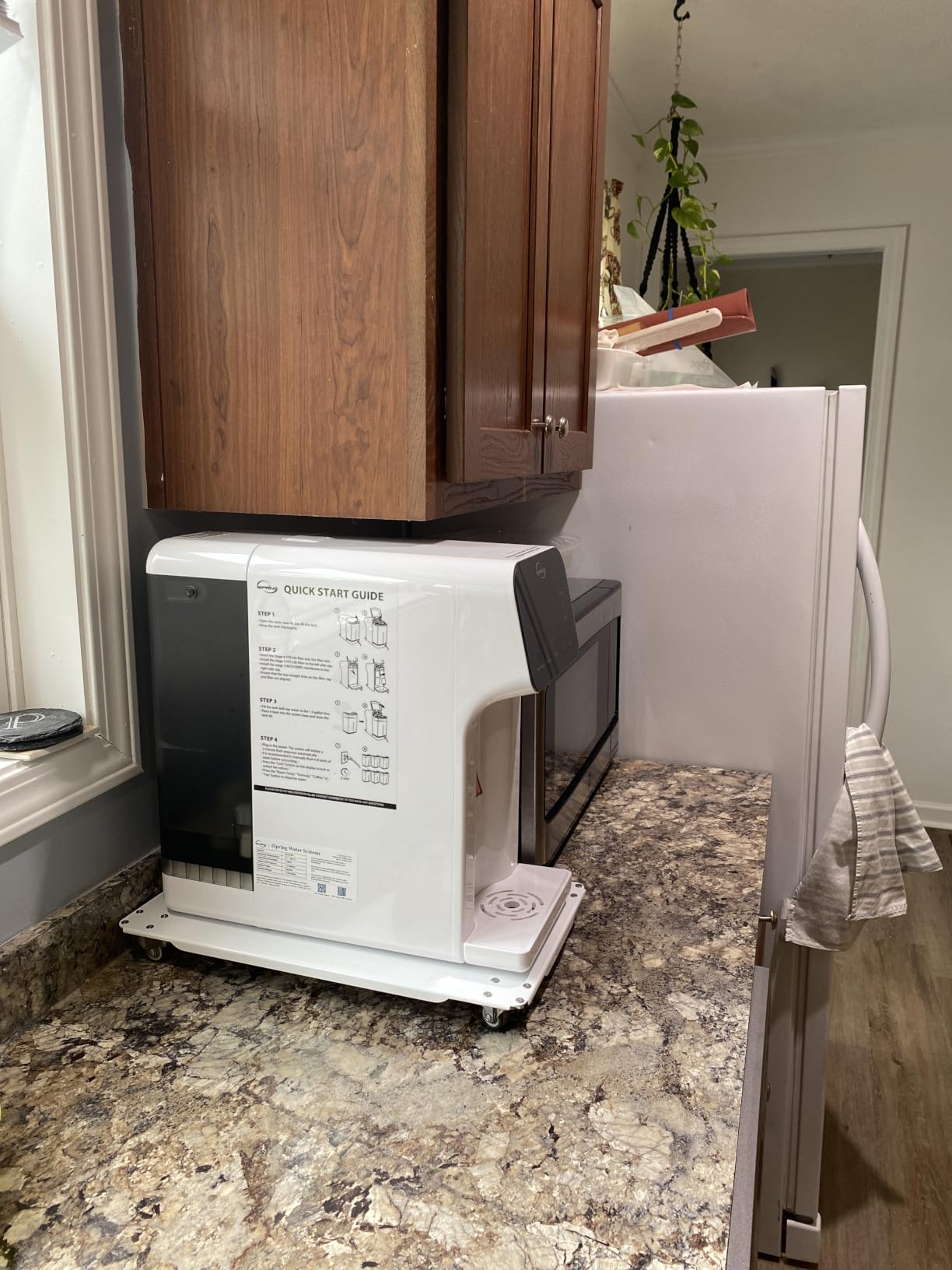
What to check before you buy the iSpring RCD100
Measure for the tall body. At 15.5 by 7 by 15.5 inches and 16.2 pounds, this is one of the largest footprints in the roundup, and hot dispensers need clearance above the outlet for the spout.
Understand the waste cycle. Wastewater returns to the feed tank, so you must empty and refill rather than let the unit recirculate indefinitely. That is a recurring task, not a one-time setup step.
Where the iSpring RCD100 falls short
Reliability is the recurring theme in the reviews. Several owners describe the unit abruptly powering down after somewhere between six months and a year, which is the most serious complaint in this roundup. iSpring’s replacement service is frequently praised, but a dead unit is still downtime.
Flow is slower than the 100 GPD nameplate implies at 0.16 gpm, and the dispenser nozzle has a deep inner cavity that reviewers report can develop mold and cannot be fully scrubbed. The unit is also specified for city water rather than well water, and its incoming water temperature range is 41 to 100F.
7. Jimmy R9: Best for Seven Temperature Settings and Two Pitchers
Jimmy R9 Reverse Osmosis Water Filter Countertop,UV Purifier & Instant Hot
Seven temperatures to 200F in three seconds
Seven-stage UV-C RO
Two 1L Tritan pitchers
5L tank,3:1 ratio
3.5 kg
Pros
- Hot water in about three seconds across seven temperature settings
- Two included 1L Tritan pitchers so one can live in the fridge
- Touchscreen shows real-time TDS and filter alerts
- Filters process up to 950 gallons over one to two years
- 9.9 inch depth fits under cabinets and in RVs
Cons
- No chilled water function despite the cold-looking pitcher
- Feed tank needs refilling several times a day for heavy drinkers
- About 1.5L of wastewater must be dumped and refilled each cycle
- Pitcher is hard to extract and spills easily
The Jimmy R9 is the most flexible hot-water option here, with seven temperature settings from room temperature to 200F and a three-second delivery time. That granularity is useful for specific jobs: formula at one setting, tea at another, instant coffee at a third.
Filtration runs seven stages combining UV-C with a 0.0001 micron RO membrane, and the final stage is a coconut shell activated carbon post-filter that adds magnesium, calcium, and trace minerals back. Testing was performed by SGS and ITS against NSF/ANSI, EPA, and FCC standards.
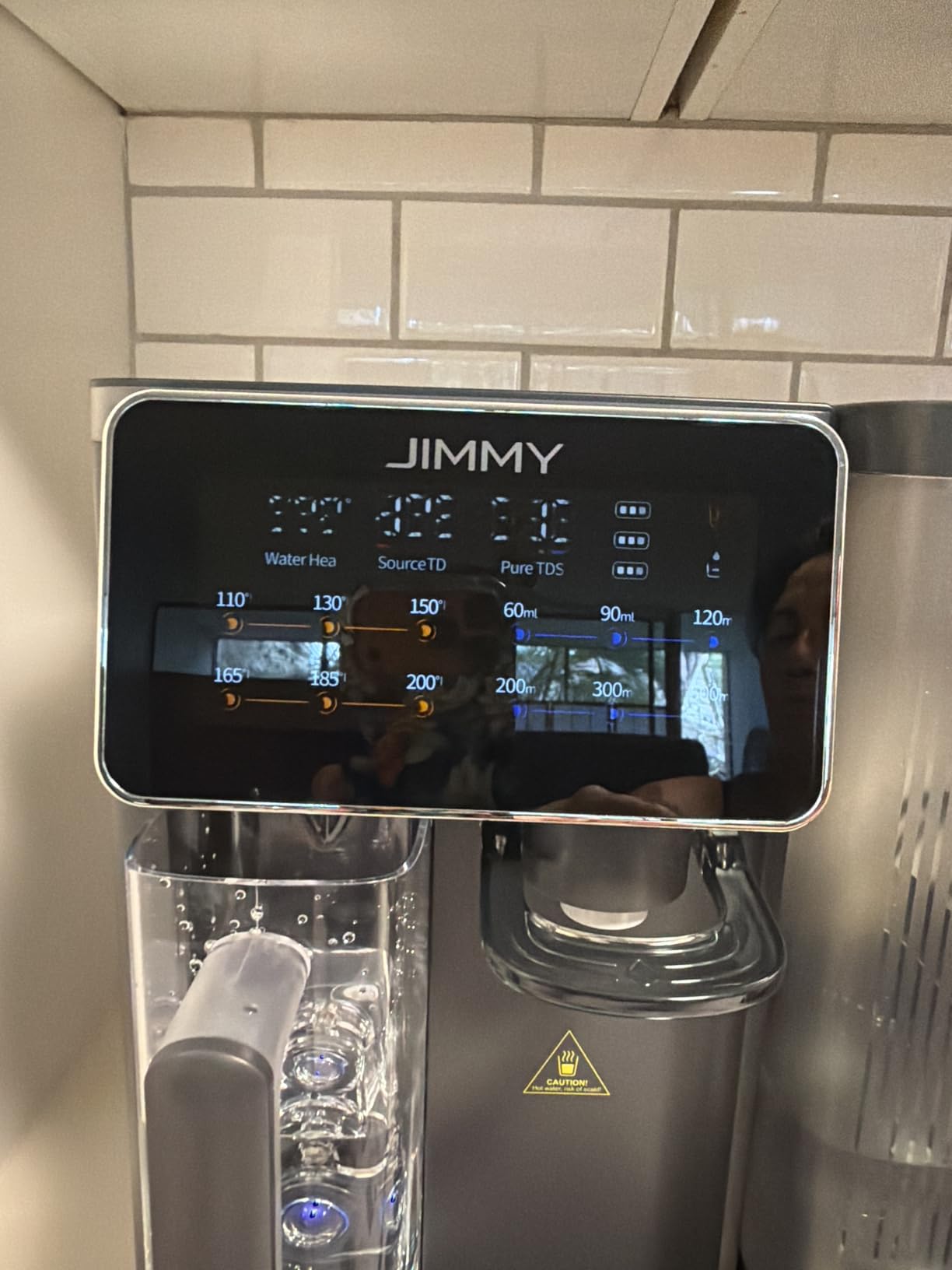
The two included 1L BPA-free Tritan pitchers are a thoughtful touch. One stays on the dispenser, the other lives in the refrigerator, and neither requires a separate purchase. For a household that drinks cold purified water daily, that removes a real cost and a real annoyance.
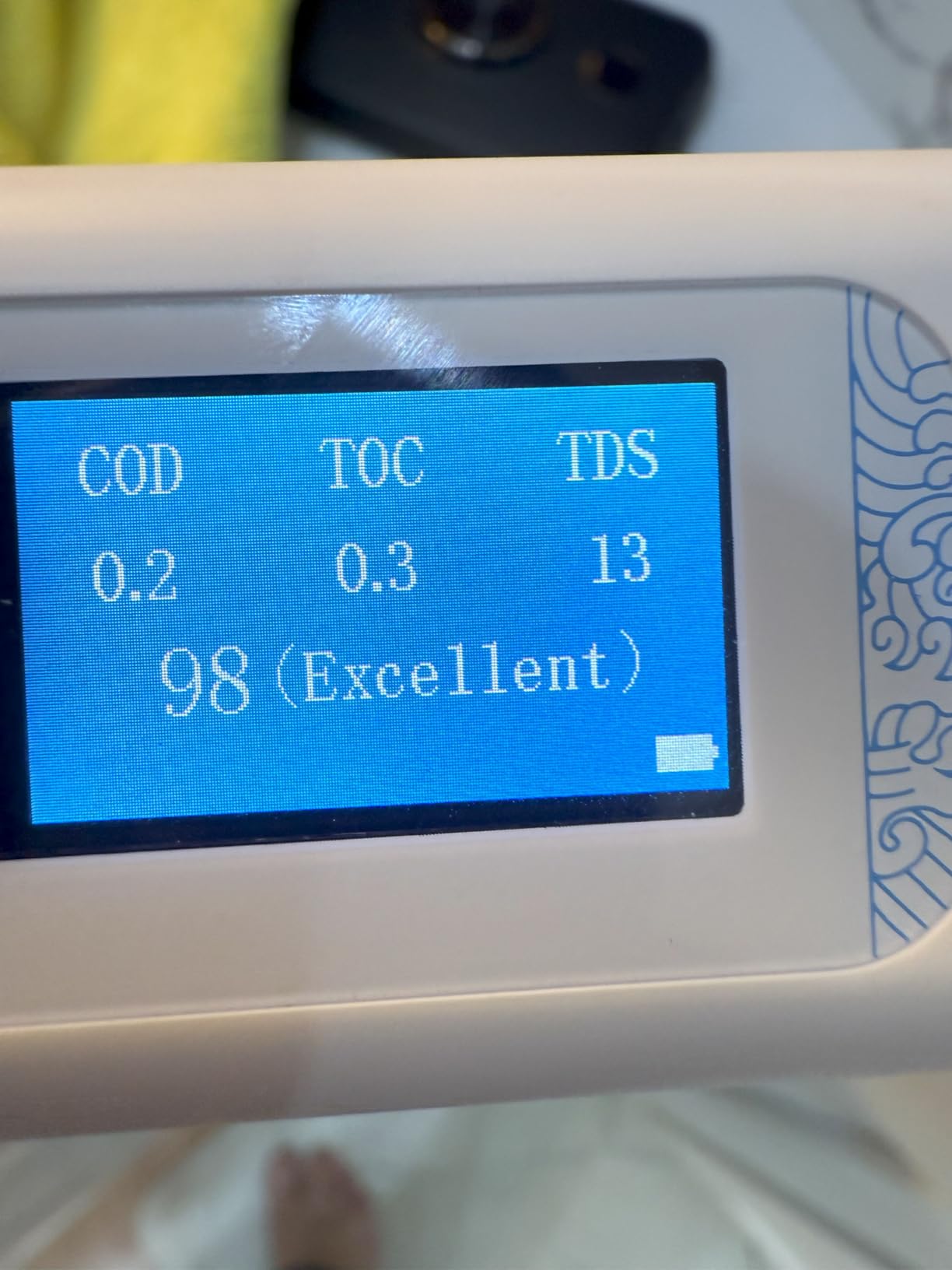
The touchscreen reports real-time TDS, purification status, and filter replacement alerts, so the maintenance signal is visible rather than guessed. Seven measured dispense options plus a free-flow setting and a child lock round out the controls.
What to check before you buy the Jimmy R9
Do not expect cold water. Despite the chilled-looking pitcher design, this unit makes room-temperature and hot water only. If you want genuinely cold purified water, plan on chilling it in the fridge the way you would with the second pitcher.
Look at the footprint depth of 9.9 inches. That is shallow enough to slide under a standard kitchen cabinet and short enough for most RV cabinetry, which makes this one of the more portable picks in the roundup.
Where the Jimmy R9 falls short
Effective capacity is smaller than the label suggests. The 5L tank yields about 0.98 gallons per fill at a 3:1 pure-to-waste ratio, and owners report the carafe hits roughly half its stated capacity before the water starts tasting dry.
The refill-and-dump cycle is the biggest daily cost. Reclaim water returns to the tank leaving about 1.5L of wastewater that must be emptied, and heavy drinkers refill several times a day. One owner also reported an early hardware failure with slow seller support on the replacement.
8. Waterdrop C2S: Best Autofill Glass Pitcher for Fridge Storage
Waterdrop C2S Countertop RO Filtration System, 40oz Autofill Glass Pitcher
Autofill 40oz glass pitcher
528 gallon filter capacity
3:1 pure-to-drain
108oz feed tank
IAPMO 372 lead-free certified
Pros
- Autofill pitcher refills itself once placed on the stand
- Remineralization stage prevents the flat taste typical of RO
- 528 gallon filter capacity keeps replacement infrequent
- Durable glass pitcher rather than plastic
- Compact 15.8 by 6.1 inch footprint works in RVs and small kitchens
Cons
- Minor dripping when lifting the pitcher or feed tank
- Small feed tank means wastewater must be dumped often
- Voice prompts are intrusive with no simple way to disable
- Some owners report continuous foaming of the filtered water
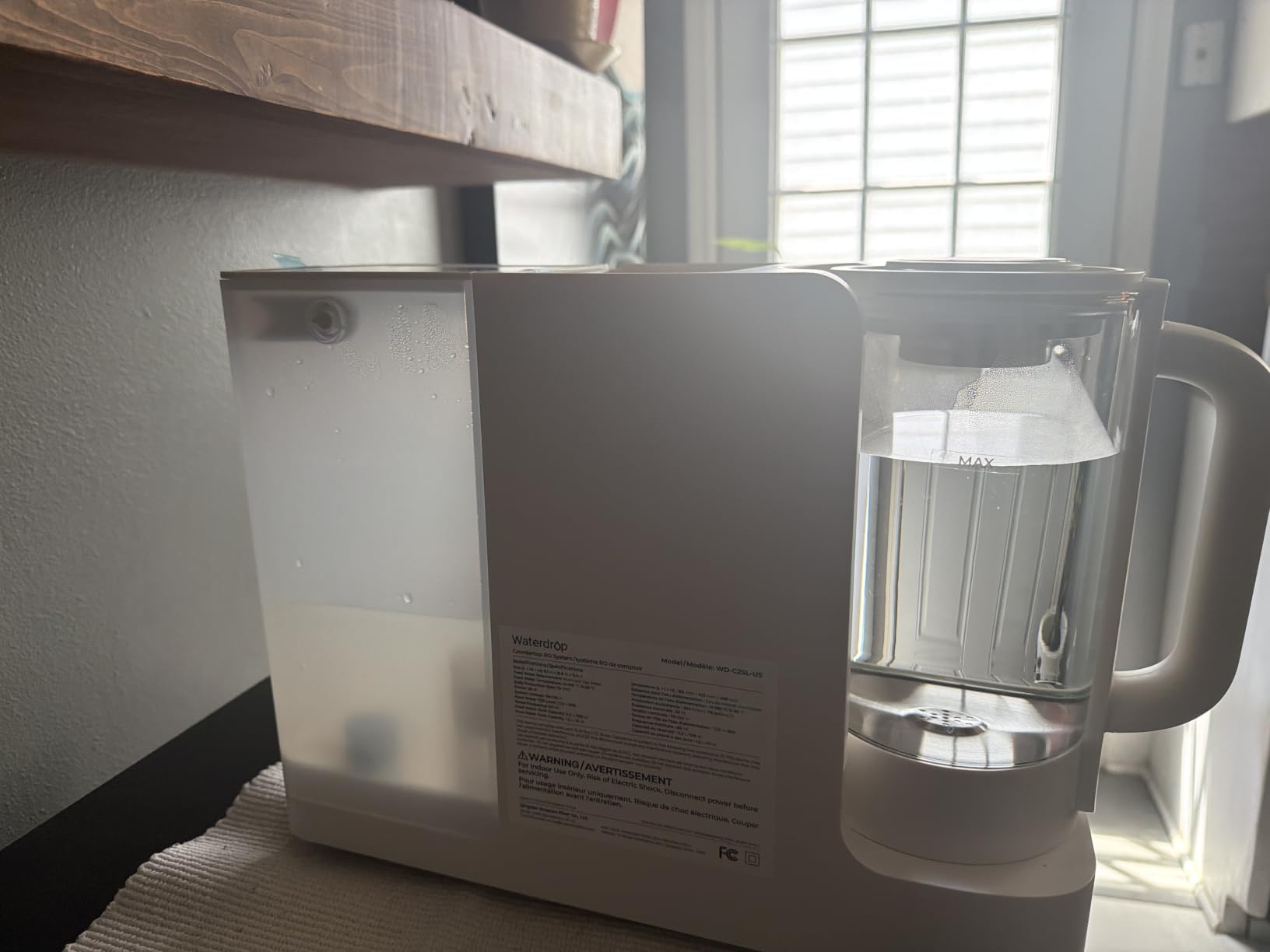
The Waterdrop C2S is defined by one feature: the pitcher refills itself. Set the 40oz detachable glass pitcher on the stand and it tops off automatically, so you are not standing there pouring from a carafe with both hands. Owners frequently say the unit paid for itself quickly on that convenience alone.
Underneath, it is a competent six-stage RO system with a 0.0001 micron membrane, rated to reduce PFOA, PFOS, TDS, chlorine, lead, heavy metals, and VOCs, tested by the SGS analytical laboratory. A remineralization stage prevents the flat, stripped taste that is the most common complaint about reverse osmosis in general.
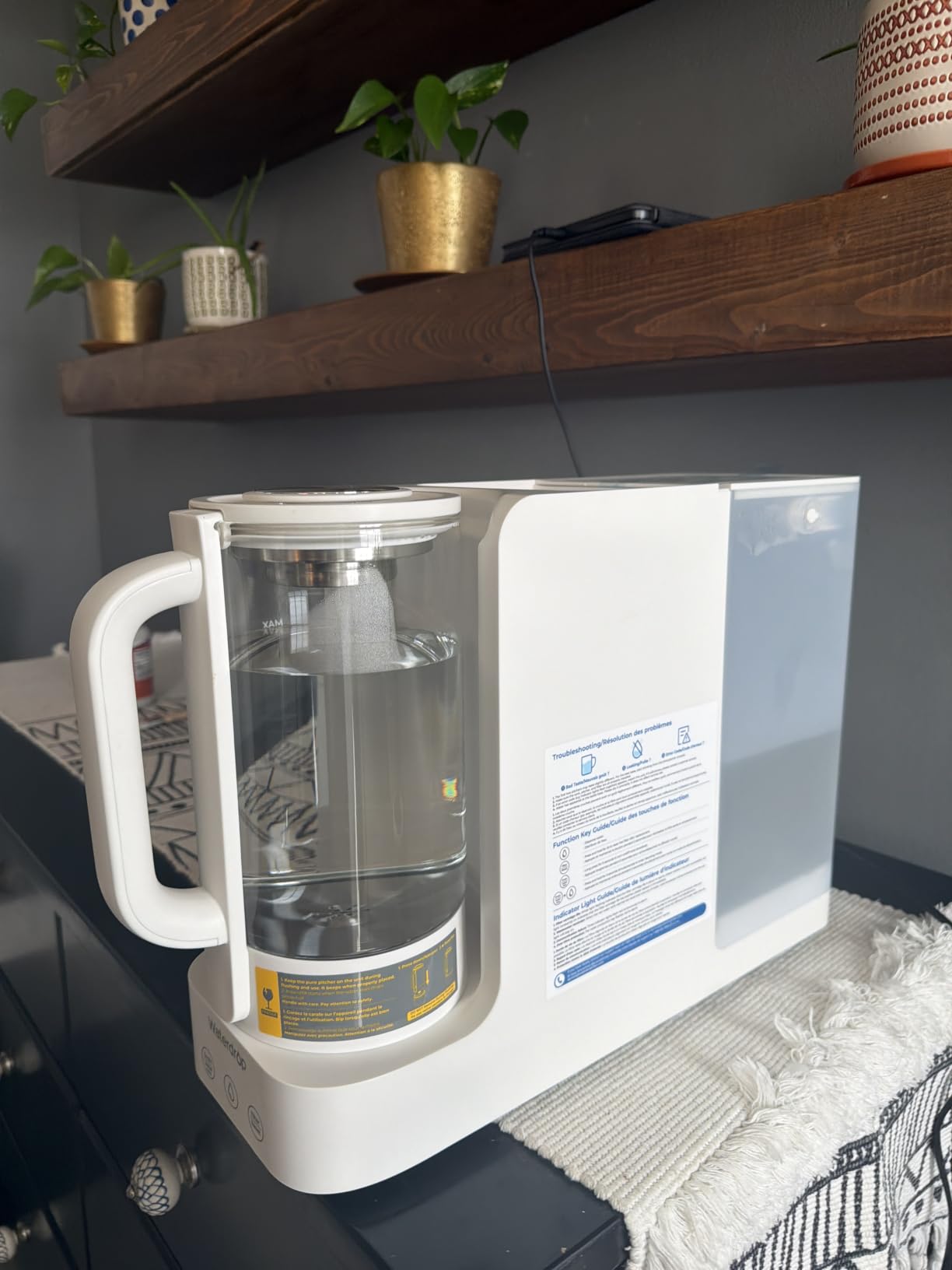
The certification line here is specific and worth reading closely: IAPMO R&T certified to NSF/ANSI 372 for lead-free materials. That is a materials certification proving the product does not leach lead, which is genuinely useful information, and it is not the same as an NSF/ANSI 58 contaminant-reduction certification. Both statements are true at once, and only one of them is about filtration.
Capacity numbers are generous for the size. A 108oz handled feed tank and 528 gallons of total filter capacity mean fewer filter swaps than most units here, and the 3:1 pure-to-drain ratio keeps waste reasonable for a countertop system.
What to check before you buy the Waterdrop C2S
Expect some dripping. Owners report minor leaks when lifting the pitcher or the feed tank, which means keeping a cloth nearby. The lid does stay in place while pouring, which matters more than it sounds.
Consider the feed tank size honestly. It is 108oz, which is on the smaller side, and because you dump and refill rather than recirculate, wastewater handling is part of the routine.
Where the Waterdrop C2S falls short
The voice alerts are the most common irritation. There is no simple way to disable them, and the prompts continue through setup and flushing. If an audible unit bothers you, this one will test that patience.
A small number of owners report persistent foaming in the filtered water, and one unit reportedly looped on flush prompts for weeks without producing drinkable output. Replacement filter refills can also be harder to source than for the larger brands. Water is room temperature only, with an incoming range of 41 to 100F.
9. Waterdrop C1S: Best for Straightforward TDS Monitoring
Waterdrop C1S Countertop Reverse Osmosis Water Filter, 6-Stage Filtration
6-stage RO,0.0001 micron membrane
Real-time TDS touchscreen
Single 12-month cartridge
3:1 efficiency
34oz fridge tank
Pros
- Live TDS reading and filter life monitoring on a touch screen
- Single composite cartridge swaps in seconds with no multi-stage juggling
- 3:1 efficiency ratio reduces waste versus older designs
- Detachable 34oz tank fits inside a refrigerator
- Compact 11.7 by 8.3 inch footprint
Cons
- Produces room-temperature water only
- Not suitable for well water or source water above 500 TDS
- Protective screen film must be removed before first use
- Guided multi-step initial rinse before the screen reaches full
The Waterdrop C1S is the no-frills entry in this roundup, and its appeal is simplicity. Rather than juggling three or four cartridges, it uses a single composite filter rated for 12 months, and owners report changing it in seconds. That is a meaningful reduction in the maintenance burden that sends people back to pitcher filters.
The six-stage train uses a 0.0001 micron RO membrane to reduce total dissolved solids, and the smart touch screen displays live TDS along with remaining filter life. Five adjustable water volumes give you some control over dispense size.
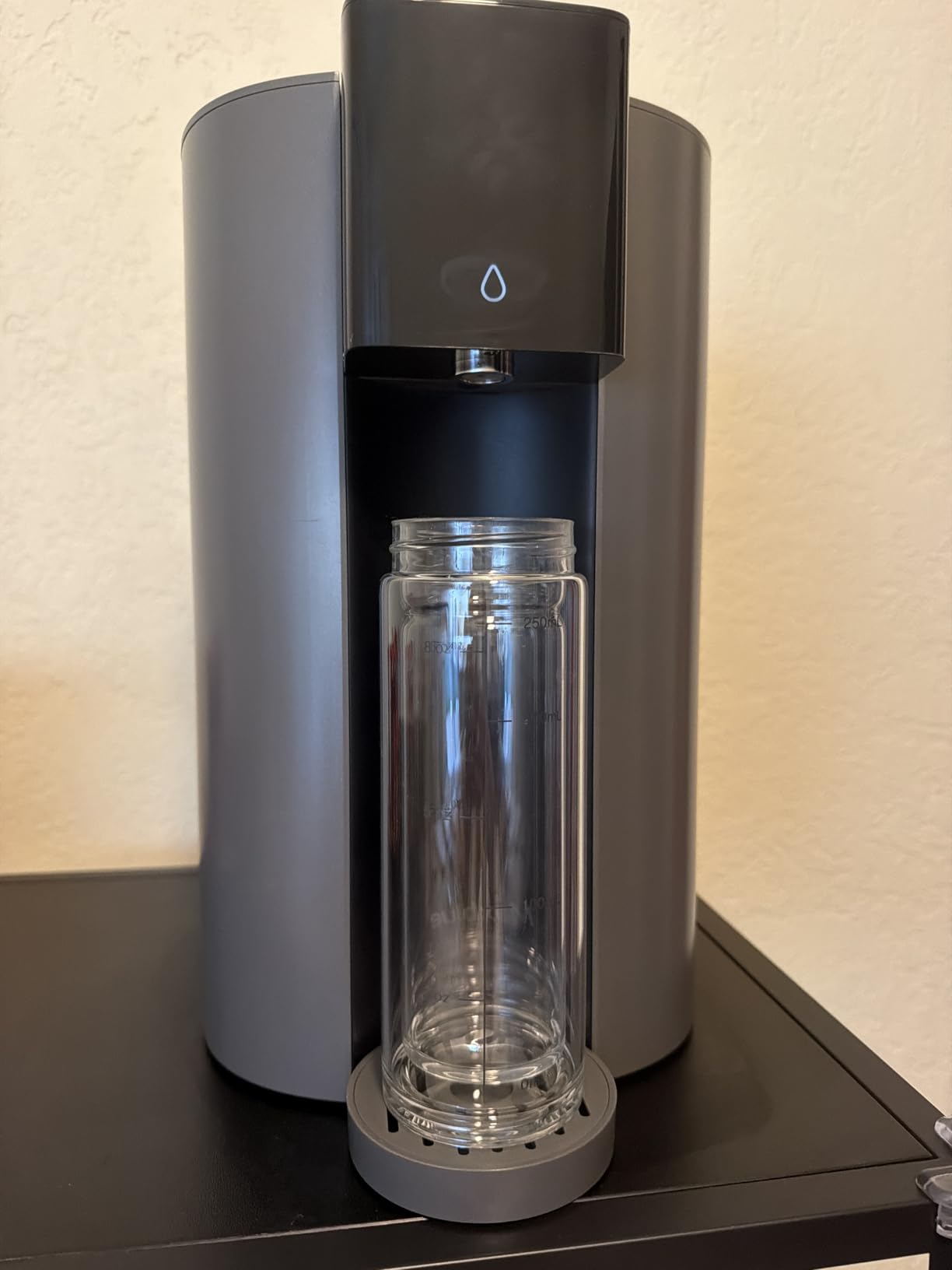
The detachable 34oz pure water tank is the sleeper feature. It comes out of the unit and fits inside a refrigerator, so you can keep genuinely cold purified water on a shelf without any chilling step or separate carafe purchase.
At 11.7 by 8.3 by 13.7 inches, the body is compact enough for a kitchen, an office, or a bedroom, and it runs at a 3:1 pure-to-drain ratio. All of that in a package with a 4.0 average rating and 275 reviews.
What to check before you buy the Waterdrop C1S
Confirm your source water fits. This unit is specified for city water, not well water, and not for source water above 500 TDS. If you have hard well water, a high-TDS source, or iron, you need pretreatment and probably a different unit entirely.
Plan the first-use rinse. The unit runs an automatic rinse on first power-on and prompts you to flush until the on-screen indicator reaches 100 percent, which takes a few rounds of filling and dumping.
Where the Waterdrop C1S falls short
Room-temperature water only, with no chilling function in the unit itself. The chilled water comes from putting the tank in the refrigerator, which is fine but not the same as a cold-dispensing appliance.
The 4.0 average is the lowest among the units here and comes with a higher share of one-star reviews than the leaders. Most of those complaints trace back to the limited room-temperature-only output and the guided initial rinse procedure rather than to filtration quality.
10. Express Water EZRO5: Best Non-Electric Budget Pick
Express Water Countertop Reverse Osmosis Water Filtration System, White
Non-electric, water pressure powered
4-stage RO filtration
0.5 to 1 gallon per hour
1:3 pure-to-drain
NSF certified
Pros
- No electricity required
- which makes it usable anywhere with a faucet
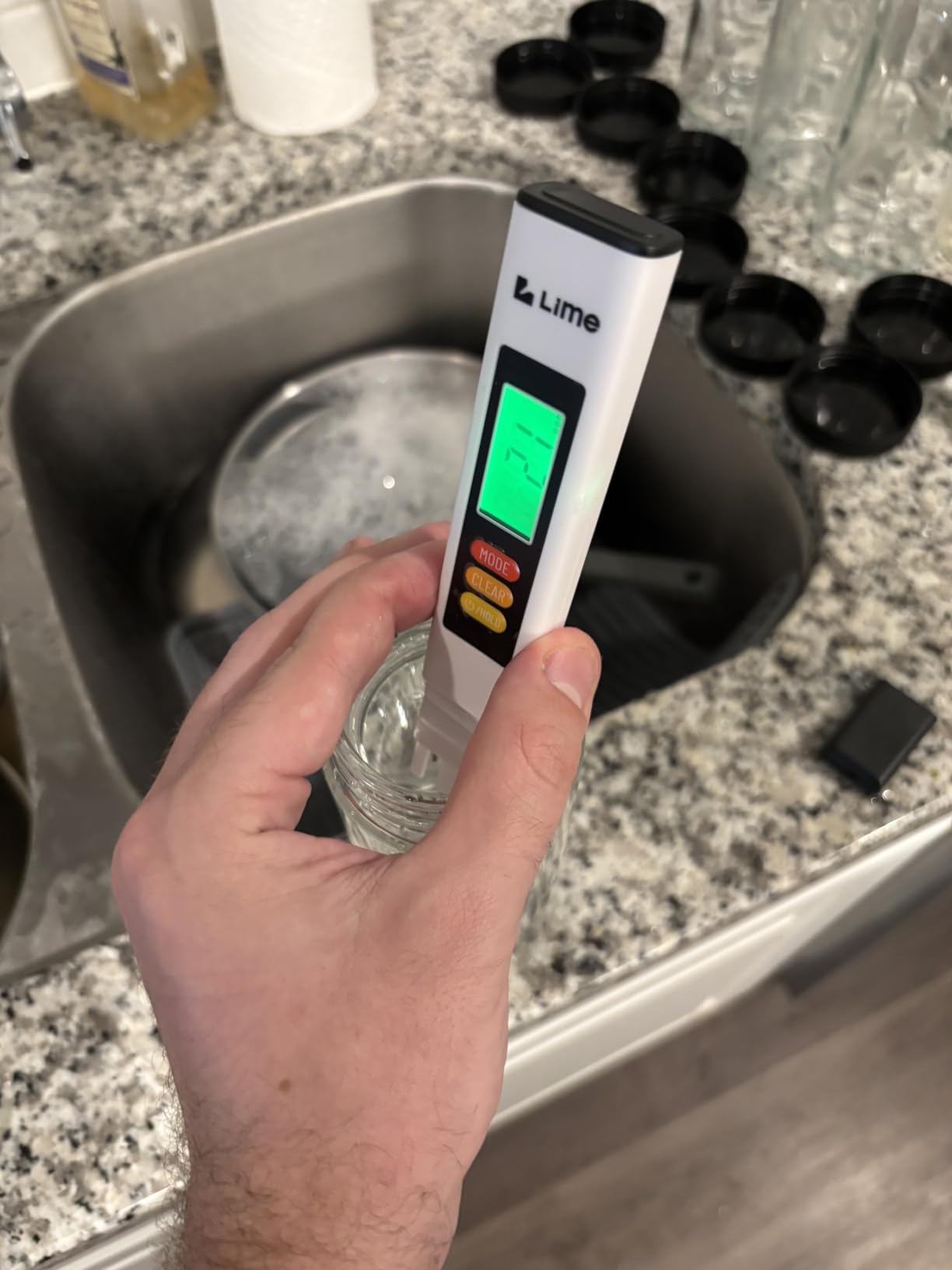
- Verified readings show tap water dropping from 575 ppm to 3 to 9 ppm
- Genuinely inexpensive filters with responsive support
- Quick-connect cartridges are simple to swap
- Some owners report the membrane lasting 18 months
Cons
- Very slow at roughly 13 to 16 minutes per gallon
- 1:3 pure-to-drain ratio is the most wasteful in this roundup
- Requires a faucet with a threaded removable aerator
- Some units arrive with a leaking membrane housing cap
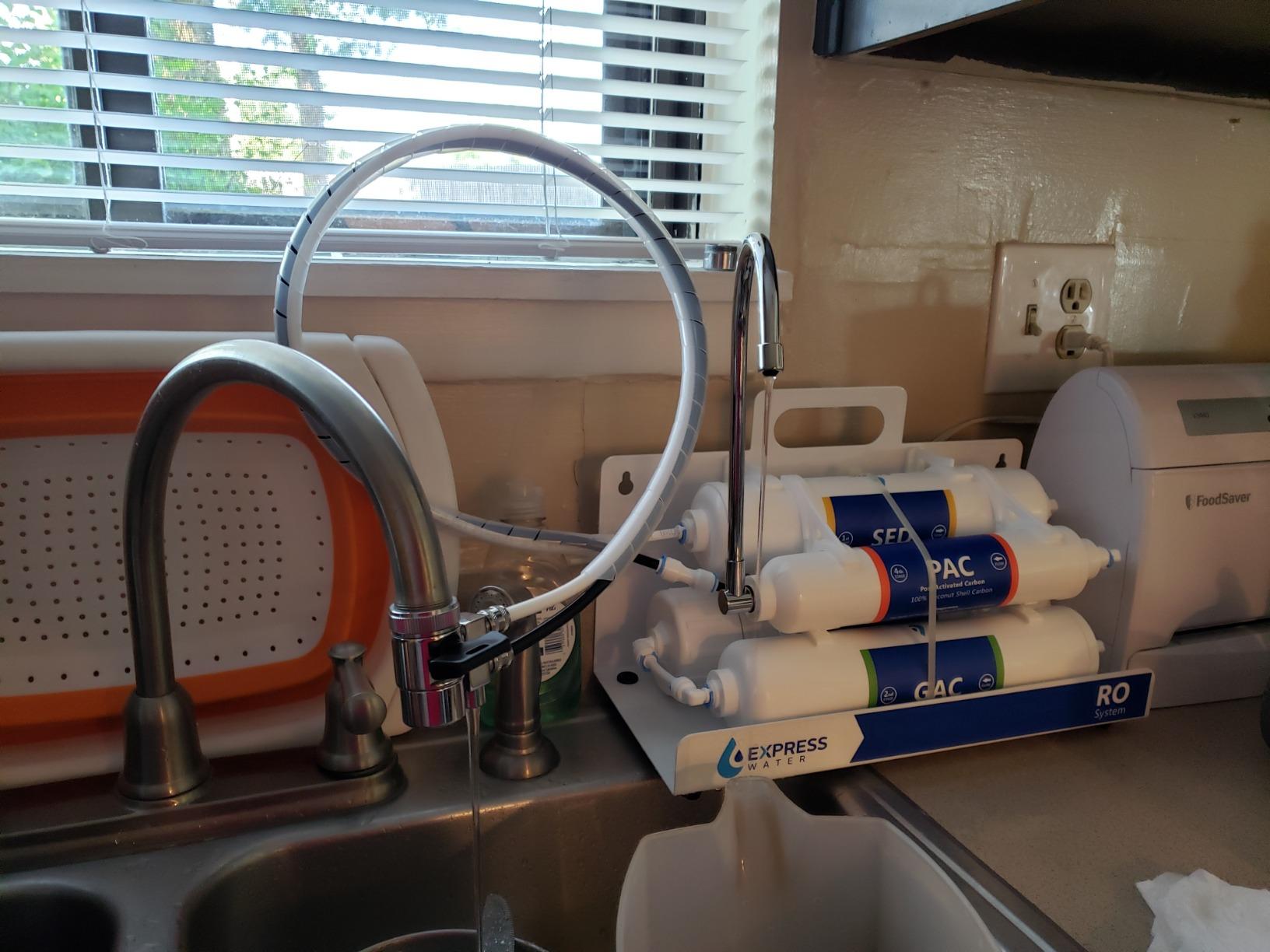
The Express Water EZRO5 is the only unit here that needs no electricity at all. It runs on water pressure alone, between a minimum of 45 PSI and a maximum of 80 PSI, which means it works in an RV, a rental where you cannot run a cord to the counter, or anywhere an outlet is inconvenient.
Filtration is four stages: sediment, granular carbon, an RO membrane, and a post activated carbon stage. It is NSF certified and stated to remove 99.99 percent of major contaminants with chlorine reduction. Buyers running their own meters report tap water at 575 ppm dropping to between 3 and 9 ppm.
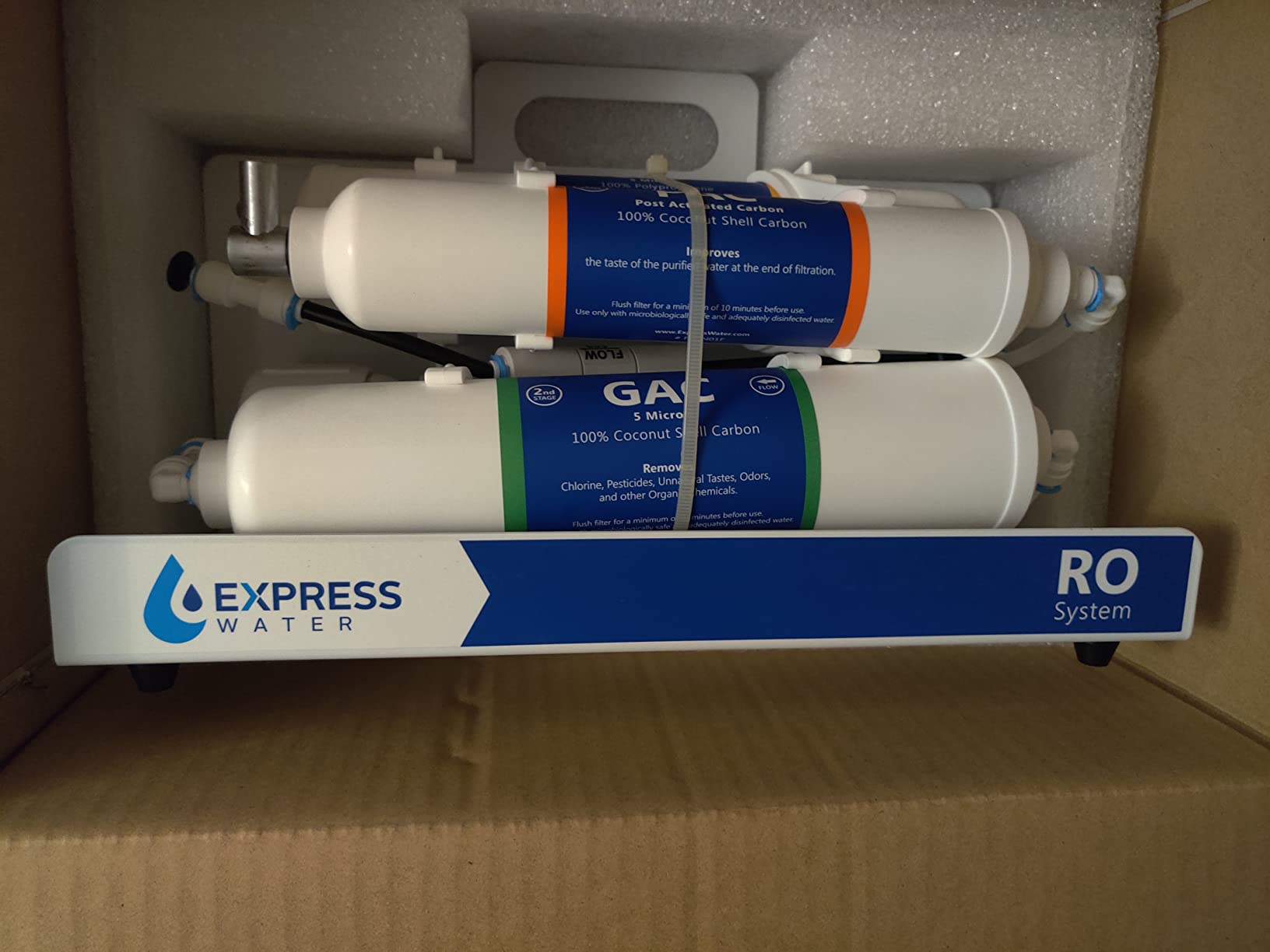
Ownership cost is where this unit separates itself. Replacement cartridges are among the least expensive in the category, quick-connect fittings mean swaps take minutes, and owners report some membranes lasting 18 months. Customer service is also repeatedly praised for shipping wrenches, tubing, and parts at no charge when something fails.
Set expectations on speed and you will not be disappointed. At roughly 13 to 16 minutes per gallon and a stated output of 0.5 to 1 gallon per hour, this is a slow batch system. It suits one or two people who plan around it.
What to check before you buy the Express Water EZRO5
Look at your faucet before anything else. This unit requires a faucet with a threaded removable aerator, and it will not fit a sprayer faucet or many pull-down kitchen taps. Getting that wrong is the most common reason these units disappoint.
Work out whether you can wait. At 13 to 16 minutes per gallon, filling a large container takes real planning, and the small metal spout makes filling anything big awkward without the optional upgrade kit.
Where the Express Water EZRO5 falls short
Water waste is the honest drawback. A 1:3 pure-to-drain ratio is the least efficient figure in this roundup, so every gallon you drink costs about four gallons of supply water. In a region with water restrictions, that is worth weighing.
Some units arrive with a leaking membrane housing cap that needs tightening, and reviews criticize the included tubing and clamps as cheap and inconsistent. Printed instructions have also been reported to conflict with the actual quick-connect removal procedure.
How to Read a Certification Record (and Spot Fake “Certified” Claims)
Certification is where this category fails buyers most often, and the reason is simple: several standards exist, they prove very different things, and marketing copy mixes them freely. Here is what each one actually means.
NSF/ANSI 42 covers aesthetic effects: taste, odor, and particulate. It tells you a filter improves the way water looks and smells. It does not tell you anything about dissolved contaminants.
NSF/ANSI 53 covers health-related contaminants such as lead, mercury, and cryptosporidium. NSF/ANSI 58 is the standard for reverse osmosis systems specifically, covering TDS reduction claims. NSF/ANSI 401 covers emerging contaminants, and P473 covers PFAS compounds specifically. NSF/ANSI 372 is different in kind: it is a materials standard proving the product does not leach lead, not a performance standard at all.
Here is the distinction that matters most in this roundup. The Bluevua RO100ROPOT and Lite, and the Waterdrop C2S, carry NSF/ANSI 372 or equivalent lead-free materials certification. That is valuable information about what the plastic parts do, and it is not a claim about how well the system filters. The AquaTru is tested and certified to NSF standards by IAPMO, which is a certification body you can look up by model. The SimPure, the Bluevua Lite, the Jimmy R9, and the Mate 3 UV were tested by SGS, which is a laboratory that runs protocols and issues reports rather than a certifier that maintains public listings.
WQA is a real certification body too. When you see a WQA seal, check what standard it covers. Some seals in this category certify lead-free materials only, which again is a materials claim.
The practical rule: look the model number up in the certifier’s own database. NSF, IAPMO, and WQA all publish searchable listings. If the product page cites a standard but the model does not appear in a database, you are looking at a laboratory test result, which is still evidence but a different kind.
Pure-to-Drain Ratio: How Much Water Your System Wastes
The pure-to-drain ratio, also called the recovery rate or efficiency ratio, tells you how many gallons of feed water it takes to make one gallon of purified water. Everything else drains to waste. This is the single most useful number for judging the environmental and utility cost of a countertop reverse osmosis system, and it is also the number most often left off retail listings.
Within this roundup the spread is wide. The SimPure Y7P-BW UV runs at 4:1, meaning four gallons in for roughly one gallon purified. The Bluevua RO100ROPOT-Lite, the Waterdrop C1S, the Waterdrop C2S, the Jimmy R9, and the Mate 3 UV sit at 3:1. The iSpring RCD100 runs at 2.5:1. The Bluevua RO100ROPOT runs at 2:1 with reject water recirculated for reuse. The Express Water EZRO5 runs at 1:3, the least efficient figure here.
Do the math for your own household. A family of four drinking four gallons a day at 3:1 needs roughly sixteen gallons of supply water daily. At 4:1 it is twenty; at 1:3 it is twenty-two and none of it is recovered. Across a year those differences add up to thousands of gallons, and they matter most in dry regions and under water restrictions.
A higher ratio also means less scale on your membrane, so the efficiency figure and the filter lifespan you get from a given membrane tend to move together. This is why the SimPure and the Mate 3 UV, both at 3:1 or better, pair strong efficiency with useful filter life claims.
How to Choose a Countertop Reverse Osmosis System in 7 Steps
Start with footprint, because it is the constraint you cannot change. Measure the counter space including clearance above the unit for lifting the carafe, and check the cabinet height above. The bodies in this roundup run from a 9.06-inch square footprint to a 15.5-inch square one, and the difference decides whether the unit fits next to your coffee maker or displaces it.
Second, learn the difference between GPD and GPM. A gallon-per-day rating assumes continuous operation and is what under-sink marketing uses to compare systems. A gallon-per-minute figure is what a countertop user actually feels. A unit rated at 418 GPD may deliver 0.29 gpm in practice, and a unit rated at 100 GPD may only manage 0.16 gpm.
Third, match tank capacity to household size. A 169oz tank is built for one to four people. A 1.3-gallon reservoir is a one-or-two-person machine and becomes a daily chore for a family of four. Our picks for reverse osmosis systems for small kitchens go further into footprint and capacity math if your counter is the limiting factor.
Fourth, read the certification language properly, using the section above as your guide. Ask one question: does this claim cover contaminant reduction, or only materials? If a unit claims to remove PFAS, look for a standard that addresses PFAS specifically rather than a general phrase.
Fifth, decide between glass and plastic for the vessel that touches purified water. Borosilicate glass carafes and pitchers appear on the Bluevua RO100ROPOT, the Bluevua Lite, the AquaTru, the Waterdrop C2S, and the Mate 3 UV. Glass avoids the microplastics question entirely and avoids the plastic taste some owners report from internal plastic reservoirs, at the cost of weight and breakage.
Sixth, model the filter cost per gallon over the realistic life of the unit, not the sticker. Take the filter price and the stated gallonage, divide, and multiply by your household’s yearly consumption. A unit with a higher purchase price and 950-gallon filters can beat a cheaper unit with 160-gallon filters on three-year cost. Our dedicated roundup on reverse osmosis systems for drinking water works through this calculation in more depth.
Seventh, check your source water. Several units here are specified for city water only and will not perform on well water with iron, sediment, or hardness. Countertop reverse osmosis needs sediment and iron pretreatment before the membrane, and no countertop unit in this roundup includes a properly sized iron filter. If you are on a well, solve pretreatment first.
One question buyers ask constantly is whether they need a water softener alongside reverse osmosis. You do not need a softener, but hardness reduces membrane life and scale is the main reason units need descaling. If your water is very hard, look for a unit with a booster pump and a self-cleaning cycle, both of which help with limescale.
Countertop vs Under-Sink RO: When the Countertop Is the Right Call
The countertop format wins in a specific set of situations, and it is worth being clear about them because most regret comes from buying the wrong format rather than the wrong model.
Choose countertop when you rent, when your plumbing is shared, when you live in an RV, boat, dorm, or off-grid setup, when you want purified water in a second location like an office or bedroom, or when you simply cannot accept a plumber visit. Under-sink wins on every other axis: instant flow, no manual refilling, no wastewater to dump, more filter capacity, and lower cost per gallon.
Countertop units also make sense as a second-stage supplement. If you already have an under-sink system and want hot or chilled dispensing, a countertop dispenser fed from treated water can add capability without touching plumbing.
A few practical notes on living with a countertop system. Clear reservoirs can develop algae when left in direct sunlight, so keep the unit out of a window. If water smells off, run the initial flush cycle or replace the carbon stage, since spent carbon is the usual source. If taste goes flat, add or restore a remineralization filter. If flow slows, descale before you blame the membrane, because most perceived failures are scale.
For filtering approaches beyond the countertop format, our guide to reverse osmosis systems for fluoride removal covers contaminant-specific matching in more detail.
Frequently Asked Questions
Do countertop RO systems work?
Yes. Countertop reverse osmosis systems use the same 0.0001 micron semi-permeable membranes as under-sink units, and owner tests on units in this roundup show total dissolved solids dropping from 575 ppm to as low as 3 to 9 ppm. Buyers also report well water at 849 ppm falling to about 30 ppm. The differences from under-sink systems are convenience rather than filtration quality: you refill a feed tank by hand, dump a wastewater reservoir, and wait for a batch instead of pulling an instant faucet stream.
Are countertop reverse osmosis filters worth it?
They are worth it when you cannot install an under-sink system, when you want purified water without a plumber, or when your water report flags PFAS, lead, fluoride, or nitrate. They are worth less if you already have under-sink RO, because you trade instant flow for refills and dumps. The decision usually comes down to plumbing freedom, not filtration capability.
Why does my reverse osmosis water taste flat?
The membrane strips out dissolved minerals along with the contaminants you want gone, and minerals are what carry taste. That is why remineralization stages exist. The Bluevua RO100ROPOT, the AquaTru Carafe Alkaline, the Jimmy R9, the Mate 3 UV, and the Waterdrop C2S all add minerals back after the membrane. Owners who find RO water flat after weeks of use usually need a calcite or mineral cartridge rather than a different membrane.
Can algae grow in reverse osmosis water?
Yes, in a clear reservoir that sits in direct sunlight, because light plus standing water is exactly what algae needs. Tanks in this roundup are typically translucent or clear plastic or glass, so the fix is placement: keep the unit out of a window and away from direct sun. Drain and rinse the reservoir on a regular schedule rather than leaving purified water standing for days.
Which reverse osmosis system wastes less water?
Look at the pure-to-drain ratio, also called the recovery rate. In this roundup the SimPure Y7P-BW UV is the most efficient at 4:1, the Bluevua Lite, Waterdrop C1S, Waterdrop C2S, Jimmy R9, and Mate 3 UV run at 3:1, the iSpring RCD100 is 2.5:1, the Bluevua RO100ROPOT is 2:1 with reject water recirculated for reuse, and the Express Water EZRO5 is the least efficient at 1:3.
Why does my reverse osmosis water smell bad?
A stale or plastic smell in reverse osmosis water usually comes from spent activated carbon rather than the membrane. Carbon stages trap chlorine compounds and organic material until they are saturated, then the odor returns. Replace the pre-carbon or post-carbon stage on schedule. If the smell persists, check whether wastewater has been recirculated into the clean-water tank, which happens on some designs and can contaminate the reservoir.
Final Verdict: Which Countertop RO System Should You Buy?
The Bluevua RO100ROPOT is our pick for the best countertop reverse osmosis system in 2026. A 4.6 average across nearly 3,700 reviews, a borosilicate glass carafe, a remineralization stage, a filter life monitor, and 2:1 pure-to-drain efficiency make it the most complete package we found, and owner satisfaction backs up the spec sheet.
Pick the Bluevua RO100ROPOT-Lite if counter space is tight, the SimPure Y7P-BW UV if your water report flags PFAS or fluoride or you want the best recovery rate here, the AquaTru if certification transparency matters most, the Mate 3 UV if a household of four shares one system, and the Express Water if you need reverse osmosis with no outlet nearby.