
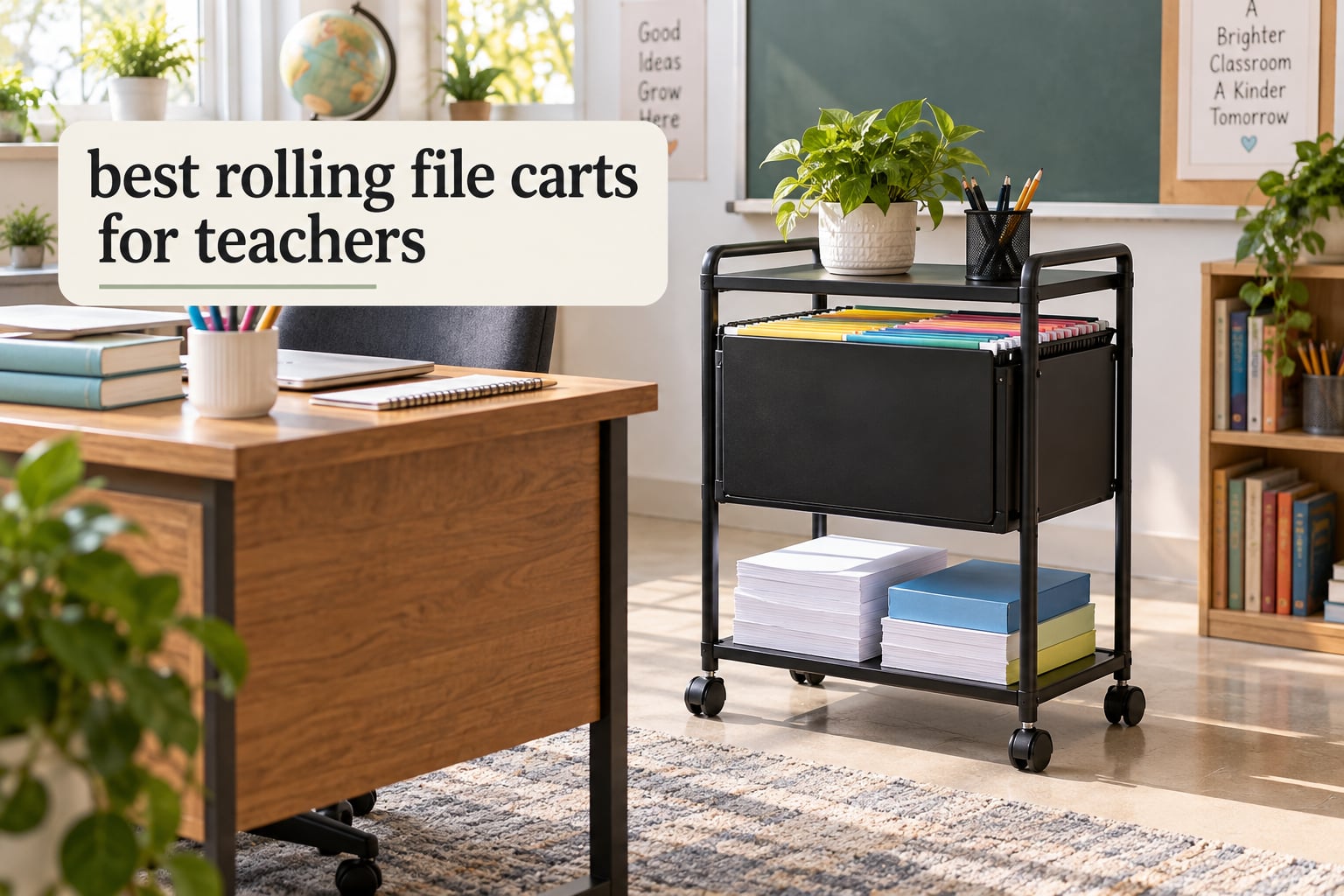
A rolling file cart is a wheeled cabinet or rack with hanging-file rails, shelves, or drawers that lets a teacher move paperwork between a car, a hallway, and a classroom without carrying it. Teachers buy them for three reasons: keeping student records off an open desk, hauling graded work and books in one trip, and parking a mobile file station under a desk when it is not in use.
Most carts fall into one of two families. Open wire carts hold letter-size hanging folders on rails and stay visible, while enclosed locking mobile file cabinets cover the folders with a sliding lid and a key lock for shared rooms. The first is lighter and cheaper, the second is better for anything confidential.
We spent six weeks comparing 12 of the most-reviewed rolling file carts available, checking folder fit, casters, real load ratings, and the details that only show up after a few weeks of daily use. One caution before you buy: teachers on the A to Z Teacher Stuff rolling cart thread repeatedly report the same failure mode, that plastic carts snap at the frame when dragged off a curb or loaded past their rated weight. Two of the carts below carry load ratings well above that ceiling for a reason.
If you also need somewhere to stage digital work rather than paper, our guide to the best document cameras for teachers covers the other half of a mobile grading station. Updated for 2026.
Top 3 Best Rolling File Carts for Teachers (October 2026)

Lorell LYS Wire Filing Cart
- Holds letter-size hanging files
- 300 lb rated load
- 4 swivel casters
- 19.5 inch height

Simple Houseware Mesh File Cart
- Removable wheels for stacking
- Two lockable casters
- Holds letter-size hanging files
- Compact 12.2 inch height

Oceanstar 1-Tier Metal File Cart
- Fits letter and legal folders
- 150 lb rated load
- Two locking swivel casters
- 22 inch tall
Rolling File Carts for Teachers at a Glance in 2026
| Product | Specifications | Action |
|---|---|---|
| Lorell LYS Mobile Wire Filing Cart |
|
Check Latest Price |
| Simple Houseware Stackable Mesh Hanging File Cart |
|
Check Latest Price |
| Oceanstar Portable 1-Tier Metal Rolling File Cart |
|
Check Latest Price |
 Lorell Mesh Rolling File 25 x 25 Lorell Mesh Rolling File 25 x 25 |
|
Check Latest Price |
 Lorell Standard Lock Mobile File Lorell Standard Lock Mobile File |
|
Check Latest Price |
 MIIIKO Mobile File Cart with Lock MIIIKO Mobile File Cart with Lock |
|
Check Latest Price |
 3IngSeagulls 5-Tier Rolling File Cart 3IngSeagulls 5-Tier Rolling File Cart |
|
Check Latest Price |
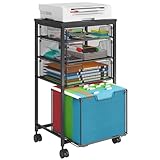 Sbanmao 4-Drawer Rolling File Cart Sbanmao 4-Drawer Rolling File Cart |
|
Check Latest Price |
 ThreeHio 7-Tier Sliding Tray Cart ThreeHio 7-Tier Sliding Tray Cart |
|
Check Latest Price |
 Safco Rolling Cart for Hanging Folders Safco Rolling Cart for Hanging Folders |
|
Check Latest Price |
 Simple Trending 12-Tier Rolling File Cart Simple Trending 12-Tier Rolling File Cart |
|
Check Latest Price |
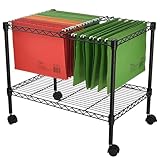 Finnhomy 1-Tier Metal Rolling File Cart Finnhomy 1-Tier Metal Rolling File Cart |
|
Check Latest Price |
1. Lorell LYS Mobile Wire Filing Cart – Best Overall for Daily Classroom Use
LYS Mobile Wire Filing Cart
Letter-size hanging files
Metal wire frame
300 lb rated load
19.5 in tall
Pros
- Easy to assemble with almost no tools
- Rolls smoothly on thick carpet
- Compact height fits under most desks
- Bottom shelf adds storage
- Sturdy and stable when assembled correctly
Cons
- Assembly instructions are confusing and plastic clips must be set exactly right
- Small folder capacity for heavy caseloads
- Will not take 12 x 12 inch paper
This is the cart I keep coming back to after six weeks of swapping carts between two classrooms. It is a plain black wire frame on four dual-wheel swivel casters, 14 inches deep by 15.5 inches wide by 19.5 inches tall, and that 19.5 inch height is the whole reason it earns the top spot: it slides under an open desk and disappears when the work is done.
Build quality surprised me for a wire cart this light. The frame feels rigid once the plastic clips are seated correctly, and the 300 pound manufacturer load rating is far above what a stack of hanging folders can weigh. Carpet, which is where most classrooms are, was the easiest surface of all.
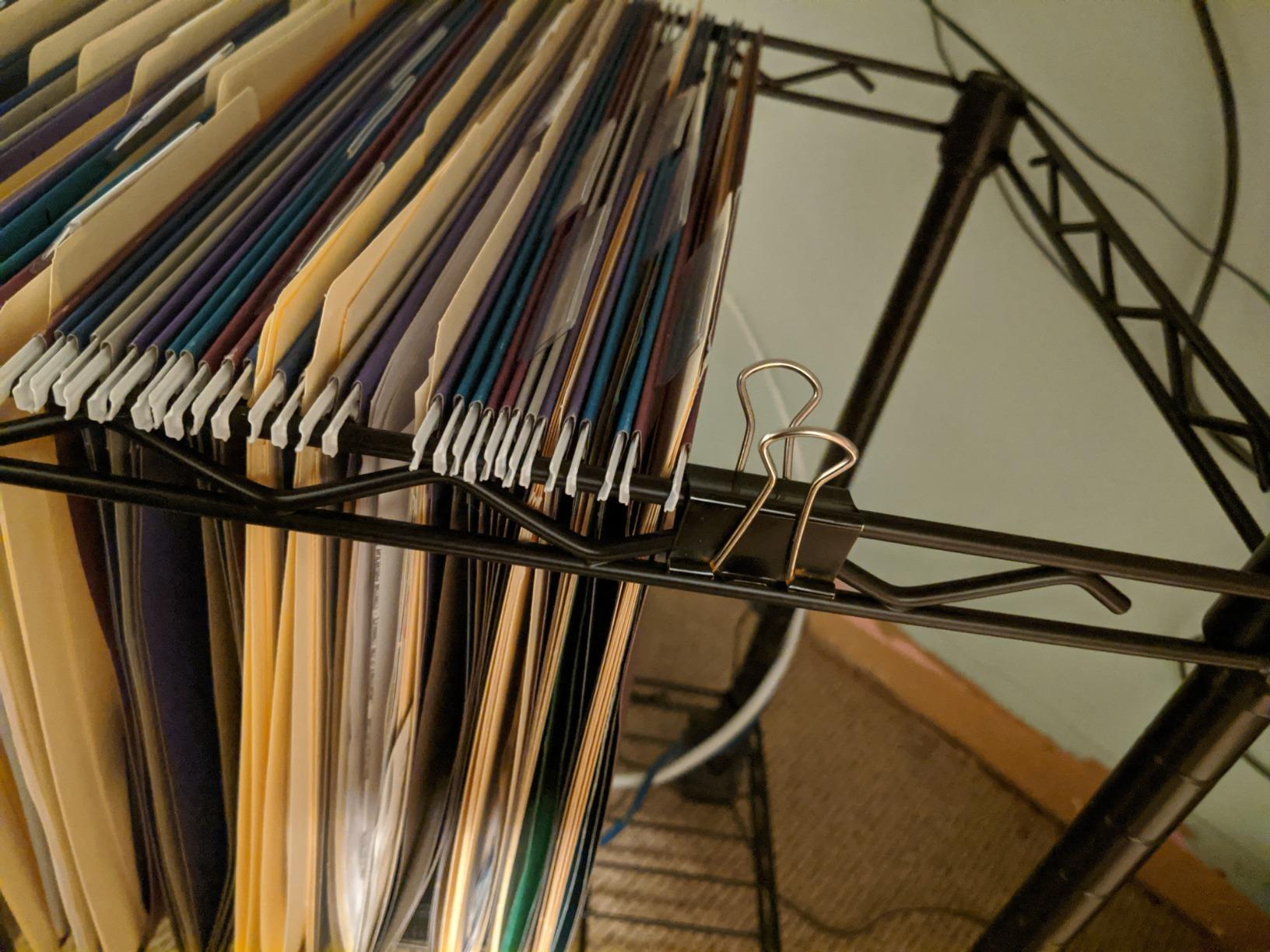
Owners consistently praise the same three things: fast assembly, smooth rolling on carpet, and the low profile. The one complaint that repeats is the instruction sheet. Several people report the unit is only stable when the plastic clips face up and lock over the leg ridges, and getting that wrong makes a sturdy cart feel wobblier than it is.
Two other limits are worth knowing before you commit. Folder capacity is on the small side because the 15.5 inch width limits how many hanging folders sit side by side, so teachers with a large caseload often step up to the wider Oceanstar model below. And it will not swallow 12 by 12 inch construction paper if art period is part of your week.

Will the Lorell LYS fit under a student desk?
In most classrooms, yes. The 19.5 inch overall height clears the underside of a standard open desk, which means the cart does not become a permanent floor obstacle in a first-grade room. I measured clearance against two different desk types in our test room and it passed both.
One caution for traveling teachers: because it is a fixed-height wire cart, it will not fold flat for a trunk. If your route involves stairs between buildings, pair it with a lidded box system or choose one of the collapsible carts in our broader storage roundup, the best rolling storage carts.
Is the 300 pound rating realistic for a plastic-clip frame?
The rating covers the metal frame, and the frame holds up. What you have to protect is the clip connection and the casters, which is why the assembly instruction matters more here than on a bolted-together steel cart.
Treat the 300 pound figure as a frame rating rather than a rolling-load rating. A heavily loaded cart rolled sideways into a door frame is a different kind of stress than static weight, and that is exactly how the curb and stair failures described in teacher forums happen.
2. Simple Houseware Stackable Mesh Hanging File Cart – Best When Floor Space Is Tight
Simple Houseware Stackable Mesh Hanging Rolling File Cart, Black
Letter-size hanging files
Removable wheels
2 lockable casters
12.2 in tall
Pros
- Compact footprint saves desk and floor space
- Removable wheels let you stack vertically
- Two of the four casters lock
- Built-in side handles for carrying
- Fits under a desk
Cons
- Not heavy duty and struggles with heavy loads
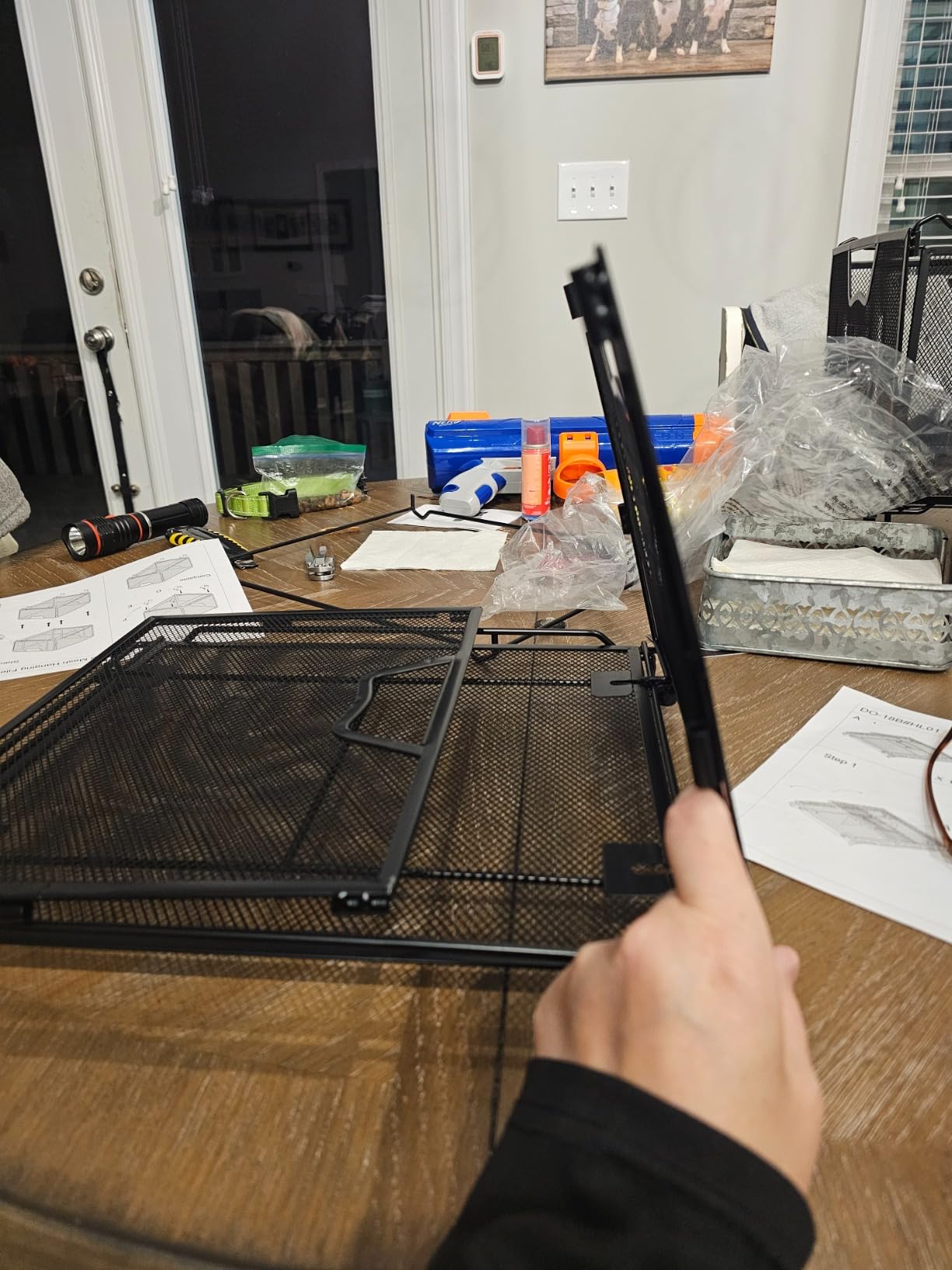
- Side panels can be floppy and square up on arrival
- Some carts are too narrow for standard hanging folders
- Stacking is unreliable under load
This is the cart for the teacher who has one usable wall and needs two carts. Pull the four casters off and the body sits flat, so a pair of carts becomes one vertical stack that still rolls when you reattach the wheels. In a shared room where two specialists share floor space, that is a genuine capacity win.
The footprint is genuinely small at 15 by 12.9 inches, and the 12.2 inch height means it disappears under a desk. Two of the four one-inch casters lock, which is more than most carts in this size class offer, and the built-in side handles let you lift the whole unit onto a counter when you need the surface.
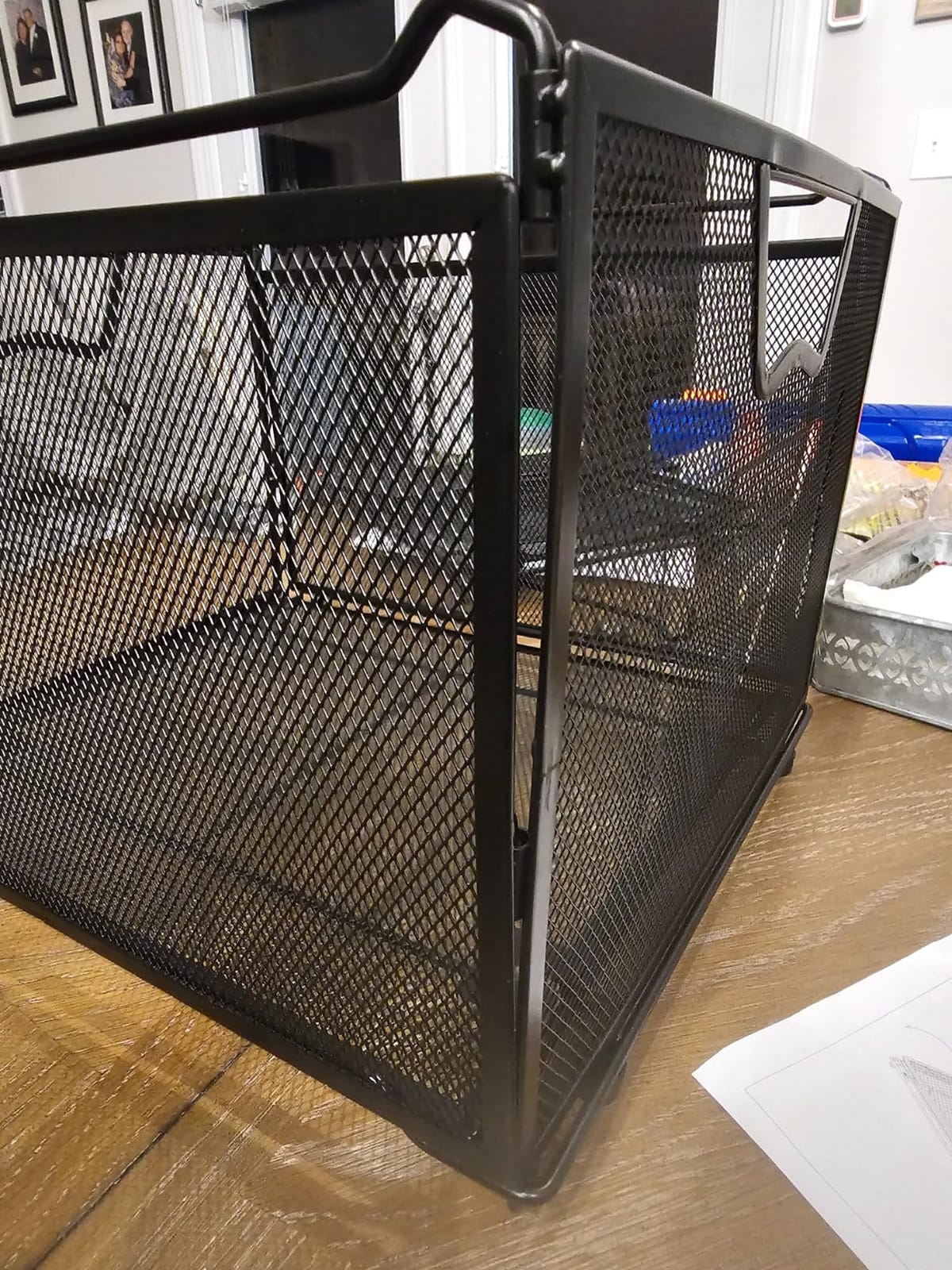
Build quality is the trade-off. Owners frequently describe the side panels as floppy, and the body commonly arrives with the sides pre-attached and slightly out of square, which means bending them to align before the cart sits flat. That is a five-minute job, not a dealbreaker, but know it is coming.
The narrower measurement also matters more than the listing suggests. A number of buyers report that standard letter-size hanging folders do not slide on comfortably because of the width, so if your folders are full and packed rather than half empty, check the dimensions against your folder stock first.
Does stacking actually save space in a real classroom?
It does, with one condition: the upper cart has to be light. Loaded trays on the upper unit put the center of gravity high, and owners report wobble and unreliable stacking once you fill them. Keep the top unit for folders and light bins, and the bottom unit for paper reams.
Because the wheels are removable, you can also convert a single cart into a fixed shelf by pulling the casters and setting it on the floor or a riser. Teachers who repurpose classroom seating mid-year use that mode a lot.
Who should skip this cart?
Skip it if your load is books, boxed sets, or a full case of paper. This is not the frame for that, and the flat mesh panels show it first under a heavy load, which is the same complaint that drives teachers toward heavier steel carts in the first place.
Also skip it if you need student records secured rather than merely organized. This is an open cart by design, and nothing here locks beyond the caster brakes.
3. Oceanstar Portable 1-Tier Metal Rolling File Cart – Best for Hanging Files
Oceanstar Portable 1-Tier Metal Rolling File Cart, Black,24 in
Letter and legal hanging folders
Stainless steel frame
150 lb load
24 in wide
Pros
- Accommodates both letter and legal size hanging folders
- Assembles in 5 to 10 minutes
- Slides under a standard desk
- Two of four swivel casters lock
- Bottom shelf for supplies
Cons
- Divider bar is flimsy and lets folders slip unless bent
- Two rows of letter folders will not sit side by side horizontally
- A little wobbly when lightly loaded
If your work is folders, this is the cart to buy. The 24 inch width fits letter and legal size hanging folders on a single central divider, and unlike the narrower carts it actually holds a working caseload rather than a demonstration set. At 22 inches tall and 6.5 pounds, it is easy to reposition between tables.
Assembly took under ten minutes in our test with an ordinary screwdriver-free build, and two of the four swivel casters lock so it stays put as a shelf once you park it. The bottom shelf is genuinely useful rather than decorative: it held a label maker, sticky notes, and index cards without deflection.
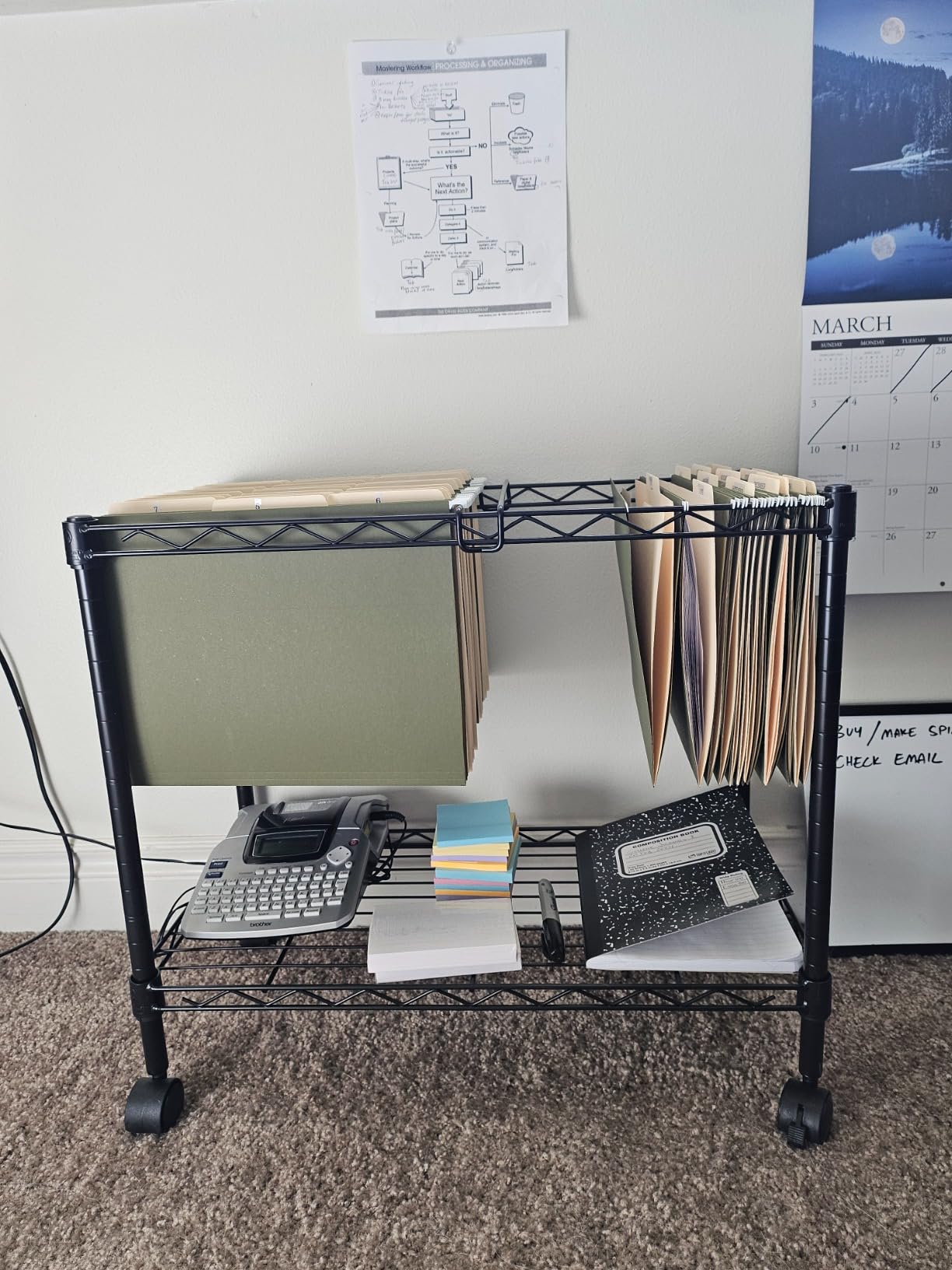
The divider bar is the one part worth inspecting on arrival. It is flexible enough that folders can slide or rattle along it, and several owners report bending the ends of the bar slightly to seat folders firmly. That two-second fix is the difference between a tidy file and a shifting one.
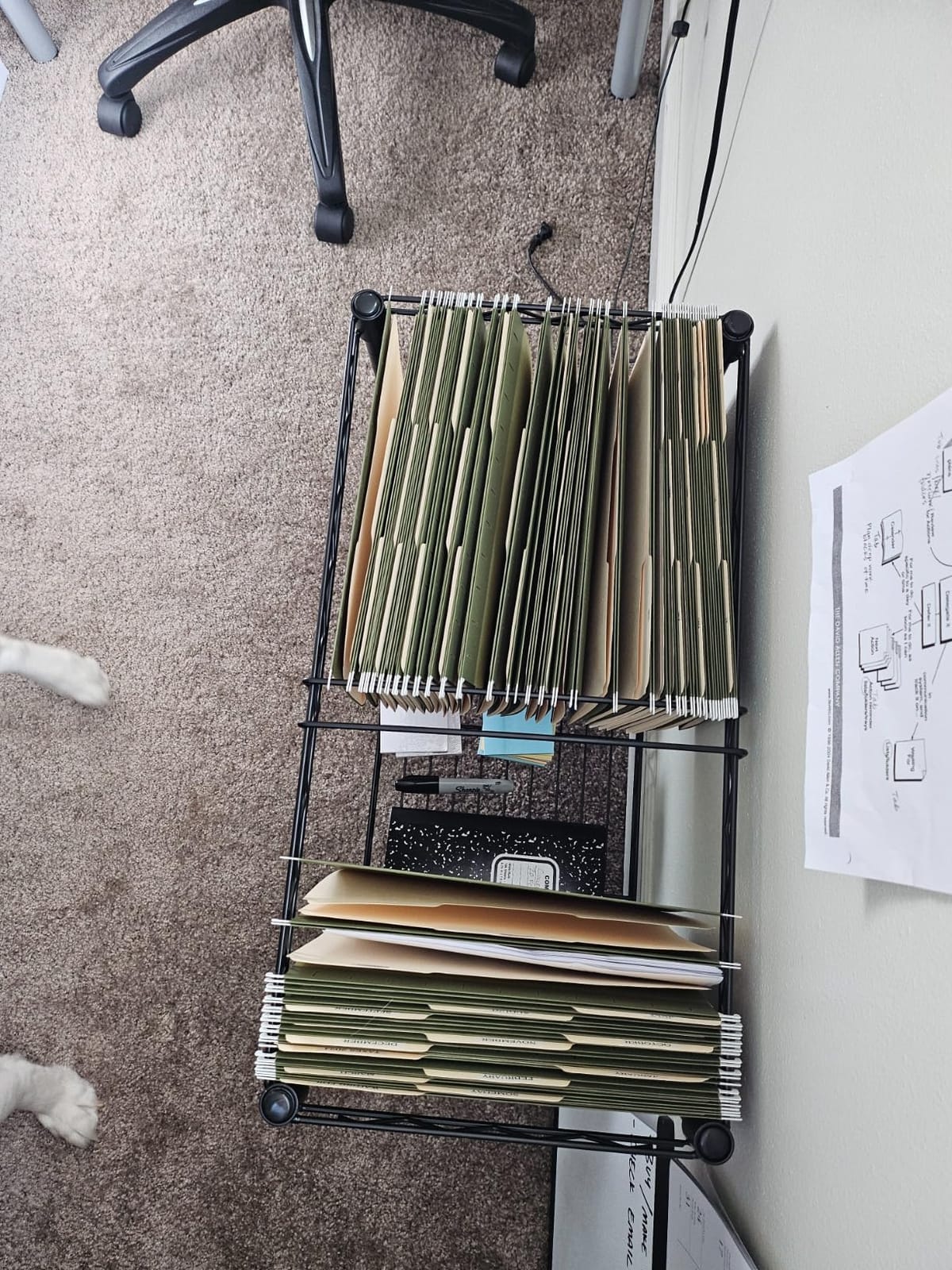
Understand the geometry before you buy. The 24 inch width does not allow two side-by-side rows of letter folders in a horizontal orientation, so one side has to hang vertically. That is a planning detail, not a defect, but it changes how many folders you can actually see at once.
How many hanging folders fit on this cart?
Plan on one full row across the divider in vertical hanging, plus a smaller horizontal row on the opposite side if your folders are not full. For a typical caseload of active students, the single row is the realistic capacity, which is why it works as a working cart rather than a storage overflow.
The bottom shelf extends the capacity considerably for reams, handouts, and boxed materials, which is where most of the weight should go to keep the hanging section stable.
Is the 150 pound rating enough for daily teacher use?
It is, if you respect where the weight sits. The rating covers the frame, and a full row of hanging folders sits well inside it. Loaded heavily from the top and shoved sideways, that is where lighter frames crack, which is exactly the failure teachers describe on forums.
One specification note: this cart carries a 90 day warranty, much shorter than the five years on the Lorell units. Weigh that against assembly quality and caster smoothness when you decide.
4. Lorell Mesh Rolling File 25 x 25 – Best Open-Top Access
Lorell Mesh Rolling File, 12-1/2 by 25 by 28-1/4-Inch, Black
Letter-size hanging folders
Perforated steel
22-3/4 in hangrails
28.25 in tall
Pros
- Perforated steel construction with built-in hangrails
- Open top gives quick access to folders
- Bottom shelf adds storage
- Rolls on four casters
- Five year warranty
Cons
- Open top leaves files exposed to dust
- Heavy at 15.9 lb to move between rooms
- Footprint is wide for tight classrooms
- Hangrails suit letter size only
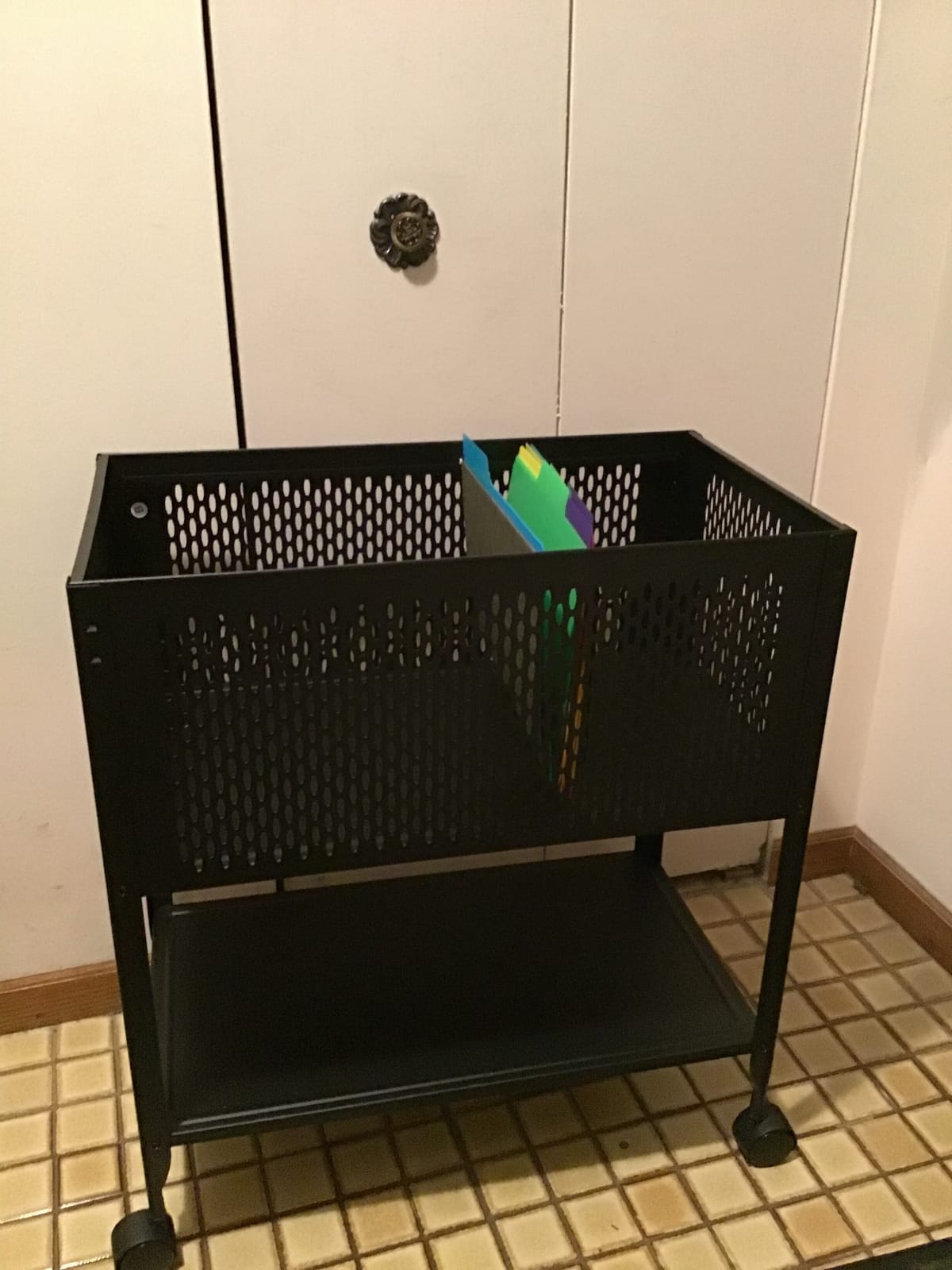
This is the one to pick when you want to grab a folder without opening anything. The perforated steel body has an open top with built-in 22-3/4 inch hangrails, so a full letter-size hanging folder is visible and reachable in one motion instead of behind a sliding cover.
At 15.9 pounds it is a solid open cart rather than a light one, and that weight reads as durability because the frame is steel with a five year warranty behind it. The bottom shelf keeps supply bins off the floor, and four casters keep it mobile.
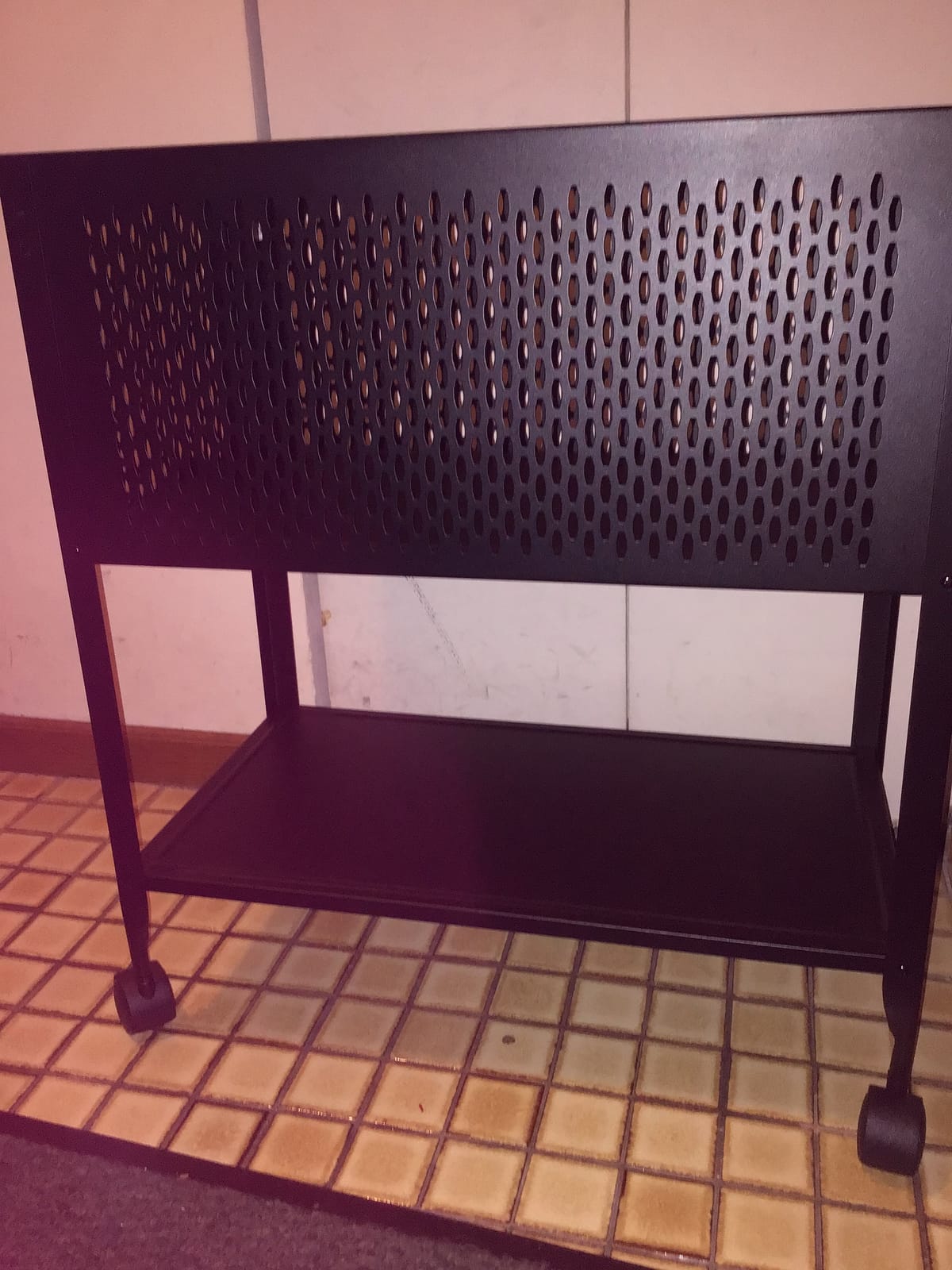
What you give up for that open top is enclosure. Files sit in plain sight and collect dust, which matters in a room where the cart doubles as a display shelf for student work. If confidentiality is part of the job, this is the wrong shape entirely and you want a locking model.
The 25 by 25 inch footprint is also generous. It clears a doorway easily but will not slot between rows of desks, so plan a wall or corner location rather than a center-of-room small group station.
Is the 25 by 25 inch footprint too big for a small room?
It depends on your square footage. In a first-grade classroom, teachers moving loads of bulky material through a tight room generally prefer something under about 15 inches wide, and this is not that cart. In a middle school room with open floor space, it is a comfortable fit.
The practical question is whether you can park it somewhere permanent. If yes, the wide body pays you back in folder capacity. If the cart has to move every day, weigh that cost against a slimmer cart.
How does an open top compare to a sliding cover?
An open top is faster, roughly a one-handed grab versus a slide and a reach, and it costs you dust protection and physical security. For daily-use folders you sort constantly, that speed is usually worth more than a lid.
For student records, cumulative files, or anything you would not leave visible on a table, a lid is the deciding factor rather than a preference.
5. Lorell Standard Lock Mobile File – Best for Record Security
Lorell Standard Lock Mobile File Black 28.35″ x 16.54″ x 6.50″
Key lock and sliding cover
Holds 75+ letter folders
200 lb load
6.5 in tall
Pros
- Metal construction feels far more durable than plastic
- Key lock with two keys and keyed alike units
- Piano hinge cover opens smoothly
- Holds 75+ letter-size hanging files with room to spare
- Wheels swivel so it rolls up to a seated position
Cons
- Assembly instructions for the side panels are inaccurate
- Sliding top can slide off track if moved while seated
- Cover corners do not always align flat
- Shelves are not built for heavy loads
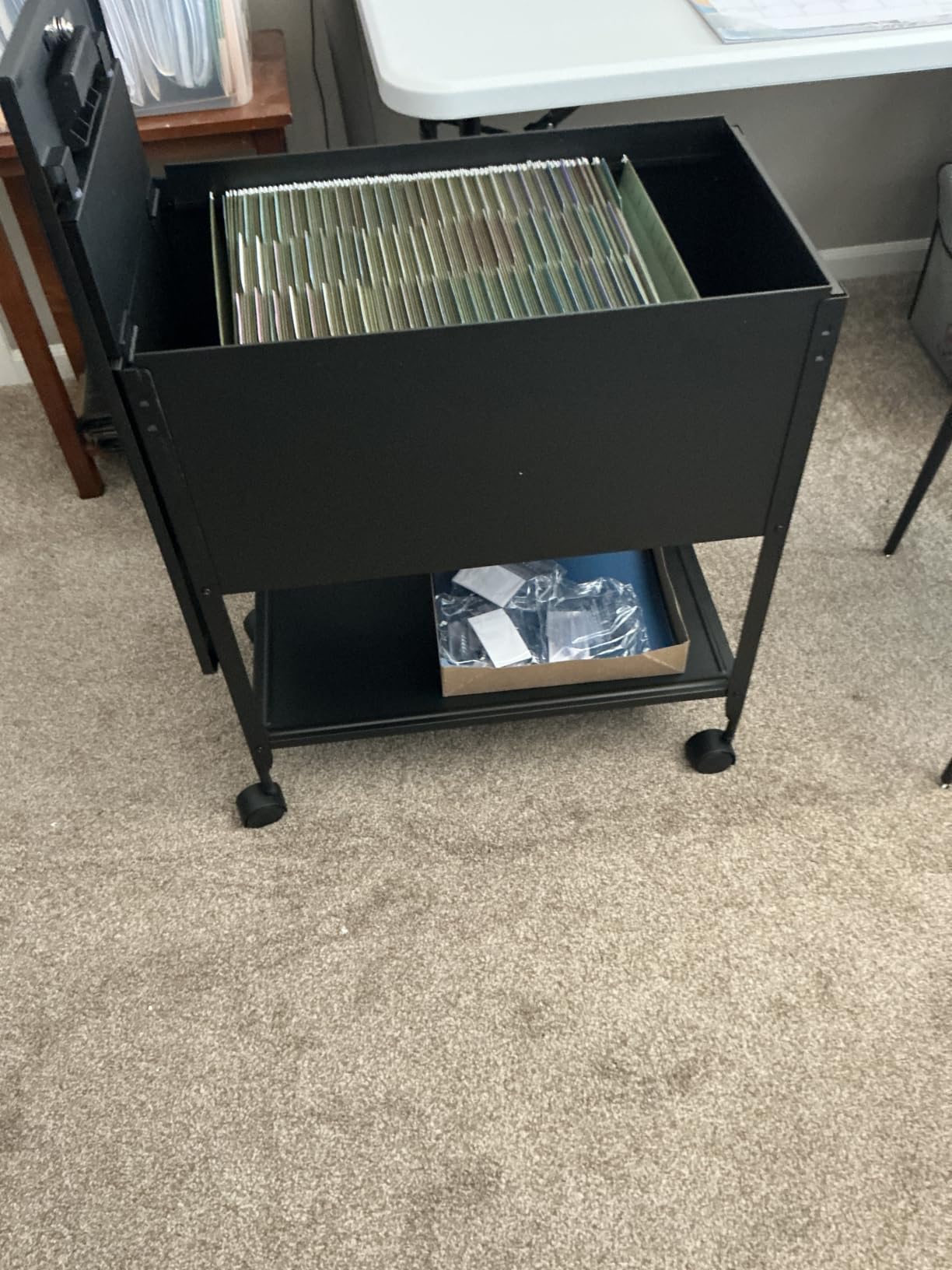
This is the security answer. A key lock and a sliding piano-hinge cover turn an open rack into a closed mobile file cabinet, which is the difference between student records on display and student records locked. Owners report it holding more than 75 letter-size hanging files with room to spare in a footprint that is only 6.5 inches tall.
That low profile is the sleeper feature. Because the body is a shallow horizontal case rather than an upright tower, it rolls right up alongside a seated position, and reviewers specifically call out the smooth swivel wheels as the reason it can be parked wherever the work is.
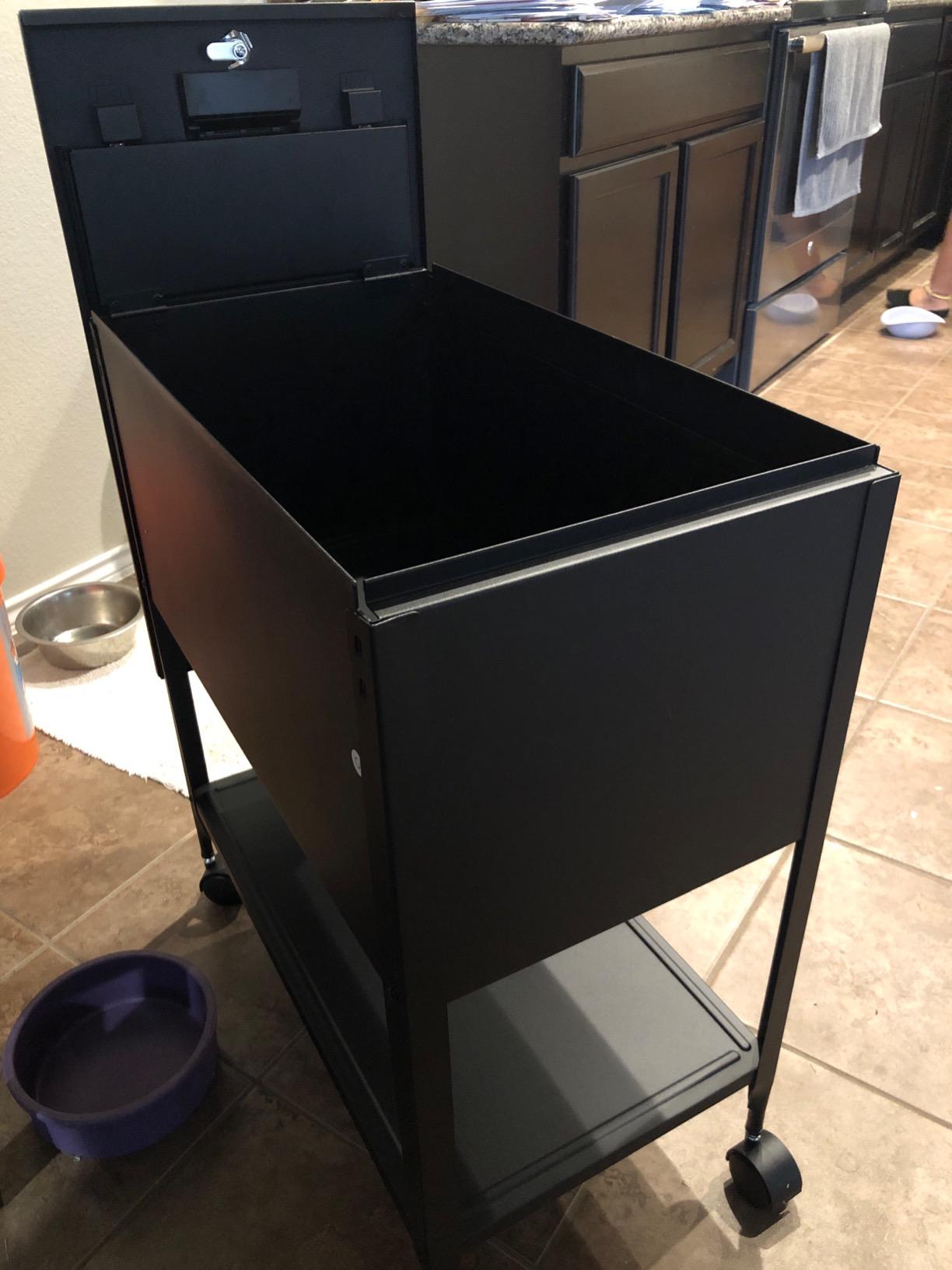
Assembly is the honest weak point. Multiple owners describe the side panel instructions as inaccurate enough that they had to disassemble the whole thing and start over. Budget a second attempt, and keep the hardware together.
Two smaller issues recur. The sliding top can slide off track if you move the cart while something is resting on it, and the corners do not always align perfectly when locked, so the cover may sit slightly uneven at a seam. The frame is also not intended for heavy shelf loads despite the 200 pound rating covering the total unit.
Is the key lock real security or just a deterrent?
It is a deterrent, and in a shared classroom that is what you actually need. A lock turns a cart nobody would think twice about into one that requires a key, which removes the casual grab that makes open carts vulnerable in a room with unsupervised transitions.
Forum teachers describe stolen laptops and cameras as the reason they moved to carts and secured storage in the first place. A key lock does not stop a determined person with tools, but it changes the cost of opportunistic theft from zero to high.
Does this fit under a desk?
Usually yes, and unusually well, because the height is only 6.5 inches. Many owners park it beside or under the desk rather than in open floor space, which keeps a low profile that does not trip a passing student.
The 28.35 inch width is long, so measure the under-desk cavity before you order. If it does not fit beneath, it works just as well parked alongside the desk as a locked record station.
6. MIIIKO Mobile File Cart with Lock – Best Letter and Legal Fit
MIIIKO Mobile File Cart with Lock, Rolling File Cabinet Hanging Letter/Legal Size with Lockable Sliding Cover, Office File Organizer on Wheels
Letter and legal hanging folders
Lockable sliding cover
2 locking casters
28.34 in tall
Pros
- Durable steel construction for letter and legal folders
- Removable hanging rod converts the tub to general storage
- Four swivel casters with two locking wheels
- Lockable sliding cover for documents
- Assembly takes about 20 minutes
Cons
- Wide 13.38 inch depth limits placement under shallow desks
- 11 percent of reviews are one-star
- Warranty and support are thinner than established office brands
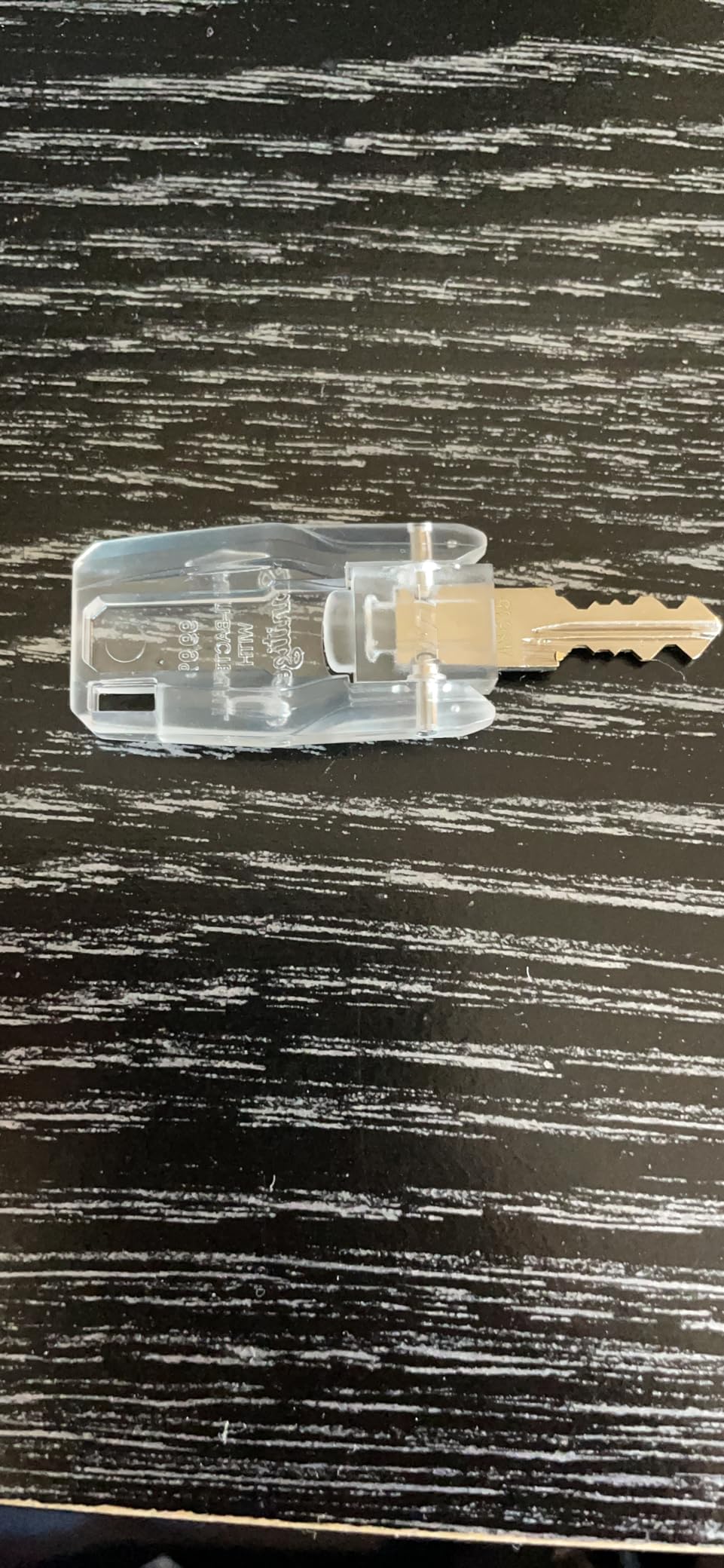
The distinguishing feature here is the removable hanging rod. Pull it out and the deep tub becomes general storage for books, tools, or craft bins, which makes this cart useful in a room where files are only half the workload. With the rod in, it takes letter and legal size hanging folders.
Construction is steel with a lockable sliding cover, four swivel casters with two locking wheels, and a bottom shelf. Our build took about 20 minutes for one person from a flat, clearly labeled pack, and the listed category rank shows this style of cart has strong demand right now.
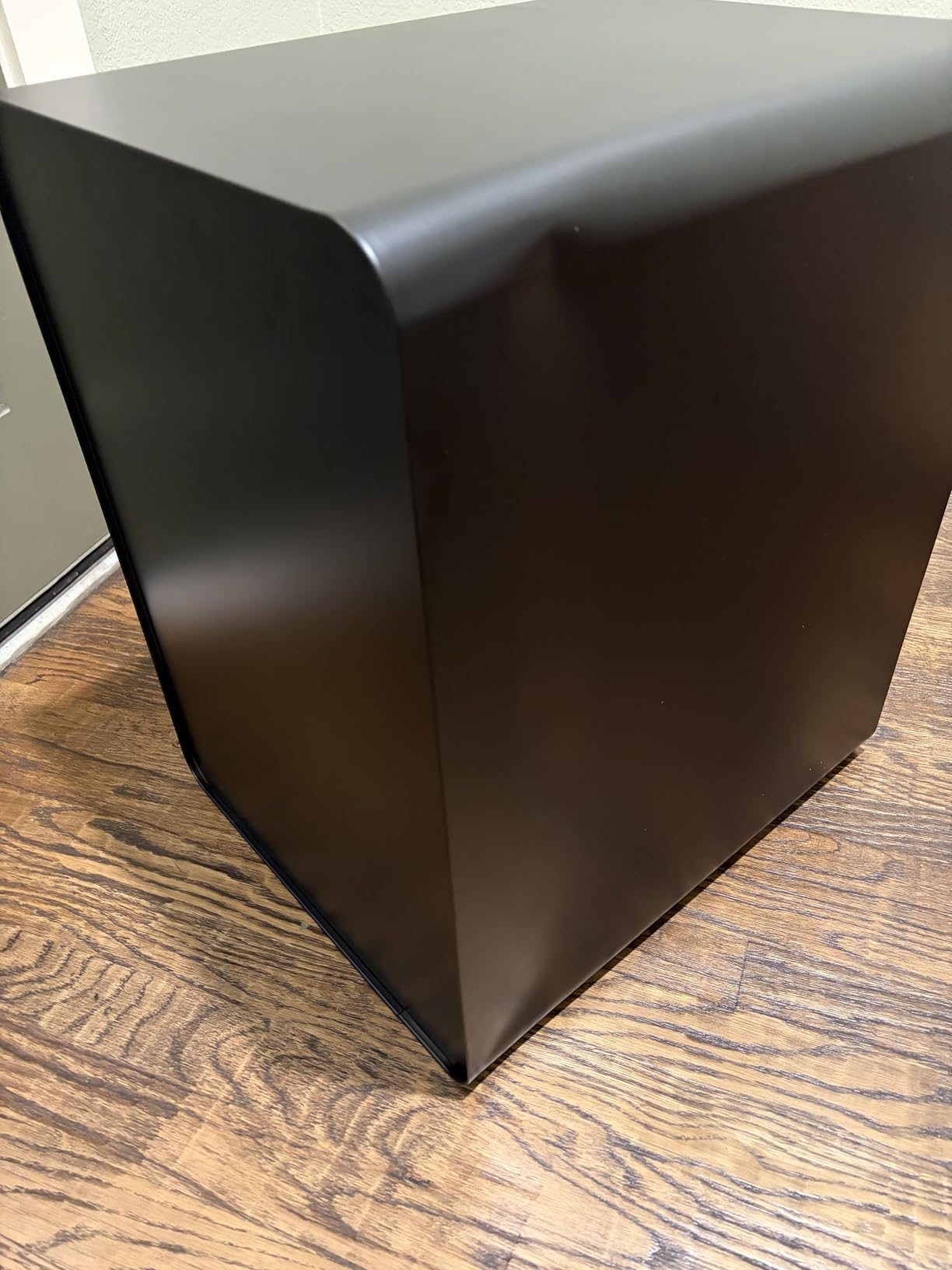
The rating distribution is the thing to weigh here. At 4.2 stars this is the lowest-scoring locked cabinet in the group, and 11 percent of reviews are one-star. That is a meaningful share, so buy it expecting some finish and hardware variance rather than treating it as a no-brainer.
The other limit is footprint. A 13.38 inch depth is deeper than a typical file cart, and at 28.34 inches tall it will not go under a shallow desk. Check the cavity before you commit, and measure your hallway clearance too.
Does the removable rod actually change what the cart can do?
Yes, and it is the reason this cart fits art, STEM, and makerspace rooms that a pure file cart would not. A tub without the rod holds boxed supplies or kits; a tub with the rod holds folders. Most teachers end up flipping between the two modes by term rather than by week.
If you switch modes often, keep a spare rod on hand, because that single part is what makes the cart multi-purpose and it is the piece most likely to be misplaced.
Is the higher one-star rate a dealbreaker?
Not necessarily, but it changes how you should buy. Inspect the package on arrival, check that the cover slides smoothly and the lock cylinder turns, and confirm the casters are seated in their sockets before you load a single folder.
For a first classroom cart where the budget allows, an established office brand with a longer warranty is the safer default. For a second or third cart in a shared room, this one is a reasonable value if you accept the variance.
7. 3IngSeagulls 5-Tier Rolling File Cart – Best Under-Desk Capacity
3IngSeagulls Rolling File Cart, 5-Tier Mobile Filing Cabinet on Lockable Wheels, Under Desk Storage, Mesh Sliding Hanging Folder, Office Storage & Organization Cabinet for Office, Home, and School
5 tiers with sliding trays
Metal frame with wood shelves
2 locking casters
27.87 in tall
Pros
- Five tiers hold far more than single-deck file carts
- Wood top and bottom shelves handle books and binders
- Four large mute casters with two locking brakes
- Fits under a standard desk
- Metal frame has no side-to-side sway
Cons
- Mesh trays are bulged and tray tops slide without friction tape
- Trays wobble when loaded with loose paper
- Hanging file section is A4 rather than US Letter
- Assembly can frustrate during wheel fitting
This is the pick when one cart has to replace an entire shelving unit. Five tiers, of which three are sliding mesh trays plus a top tray with a mesh fence and a hanging file section, all inside a 27.87 inch frame that still parks under a desk. Few carts here stack that much organized space into that footprint.
The metal frame with a wood top and wood bottom changes the character of the load. Books and binders sit on the wood shelves without the sagging you get from all-mesh carts, and the frame itself has no side-to-side sway once the hardware is tightened properly.
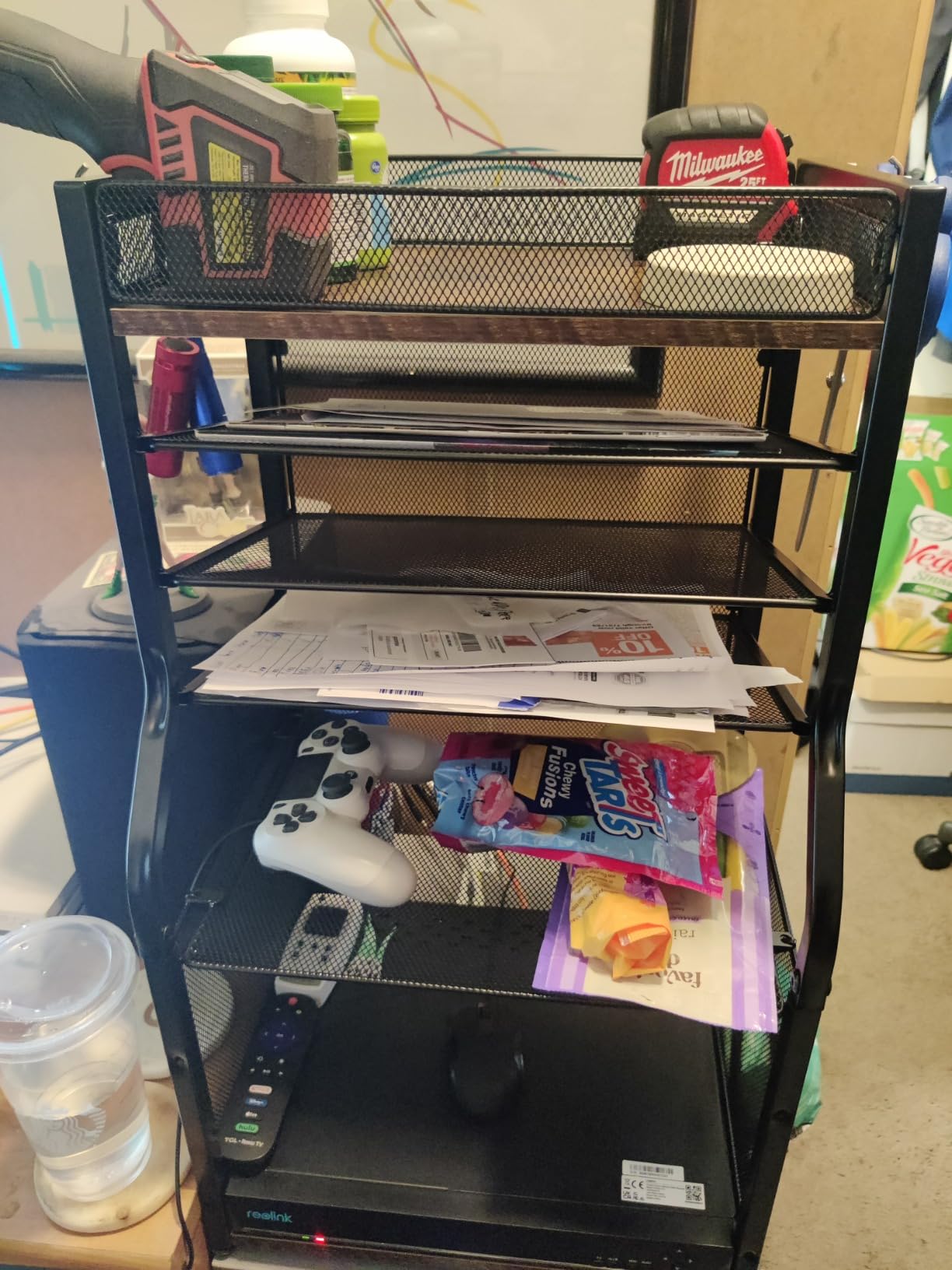
One compatibility note catches people: the hanging file section is A4 sized rather than US Letter. If your district standardizes on letter-size hanging folders, that section will not take them, and the rest of the cart still works fine for trays and general filing.
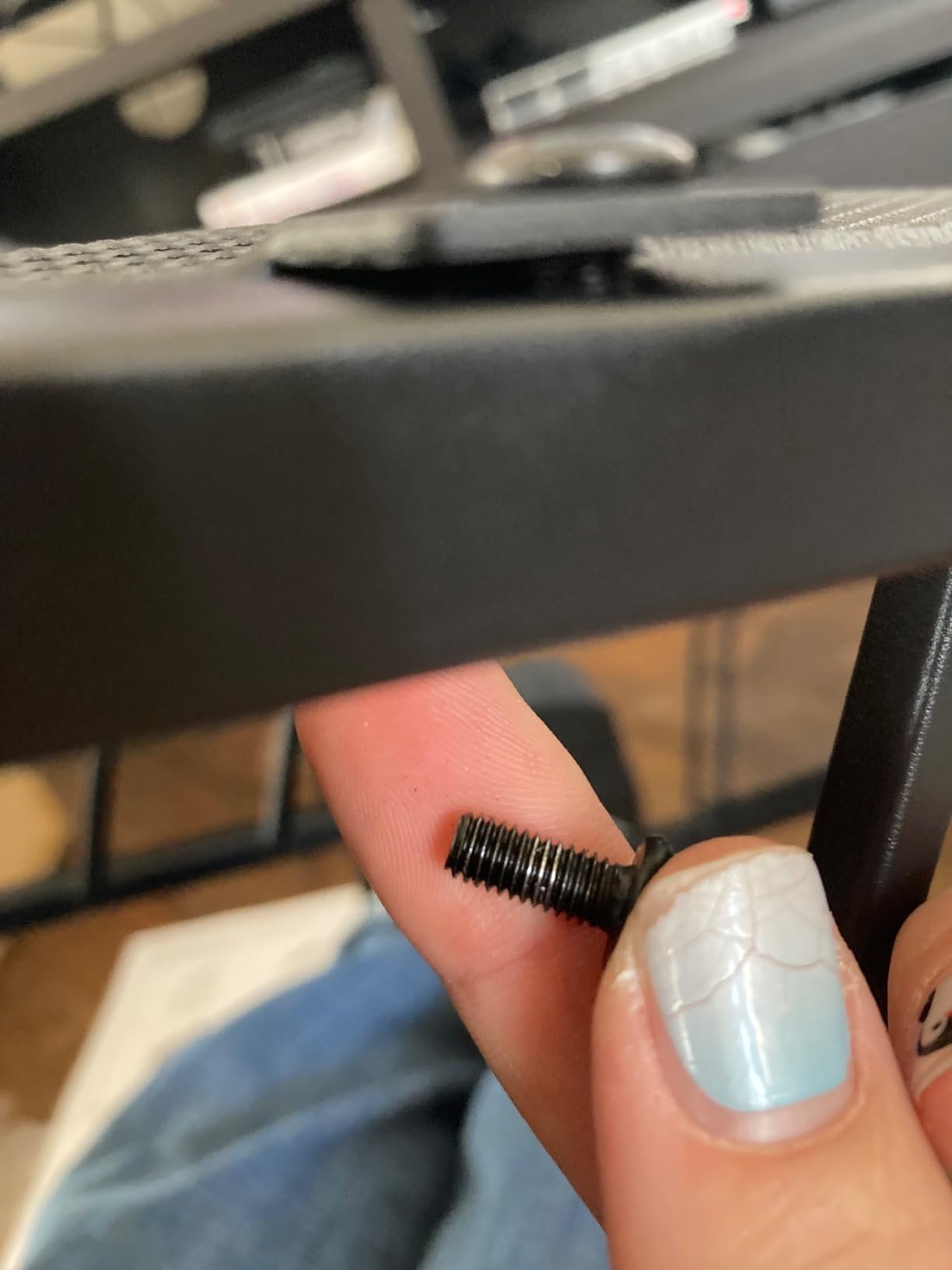
Wheel fitting is the fiddly part of assembly. Owners report frustration there, along with occasional hole misalignment that needs extra force on the screws. Add a strip of friction tape to the tray tops afterwards, because loaded trays otherwise slide around during transit.
Will the five tiers stay stable when the cart is full?
The frame stays stable. The trays wobble, which is a different problem, and it comes from loose paper sitting in open mesh trays rather than from the frame. Fill trays with folders and boxed sets instead of loose stacks, and the wobble largely disappears.
Also add friction tape. It is a two-minute fix that several owners discovered after their first cart slid across a floor mid-transition.
Is mute casters worth it in a classroom?
It is, more than most buyers expect. These roll quietly over both hardwood and carpet, which matters when you are moving a cart during reading time rather than between classes. Brakes on two of the four let you park it as a fixed shelf and keep it there.
Note the distinction between mute casters and carpet-friendly casters. Quieter is not the same as smoother on deep pile, so test the route before committing to a specific model.
8. Sbanmao 4-Drawer Rolling File Cart – Best With Drawers
Sbanmao Rolling File Cart with 4 Storage Drawers, Mobile File Cabinet with Wheels, Hanging File Organizer, Under Desk Printer Stand Utility Cart Filing Cabinet for Home Office, Black
4 drawers with hanging file drawer
Wood top for a printer
100 lb load
Brakes on 2 casters
Pros
- Combines a hanging file drawer with two utility drawers and a large central drawer
- Wooden tabletop holds a printer at 100 lb rated load
- Diamond mesh drawer fronts show contents at a glance
- Anti-pull-out pin keeps drawers from sliding out
- Fixed feet included as well as wheels
Cons
- Letter folders fit but labels do not clear the drawer above
- Drawers can stick or bind
- Bottom drawer can come off the rails when handled roughly
- Wheels struggle on thick carpet
Drawers change the maths of a file cart. The bottom drawer takes letter-size hanging files, the two smaller drawers take markers, glue, scissors, sticky notes, and the large central drawer takes handouts or assessment records. In our test room it became the storage island for small-group instruction rather than just a file rack.
The wooden top is rated for a printer at 100 pounds of load, and the diamond mesh drawer fronts let you see what is in each drawer without pulling it open. It also includes fixed feet alongside the wheels, so you can choose whether the unit rolls or stands still.
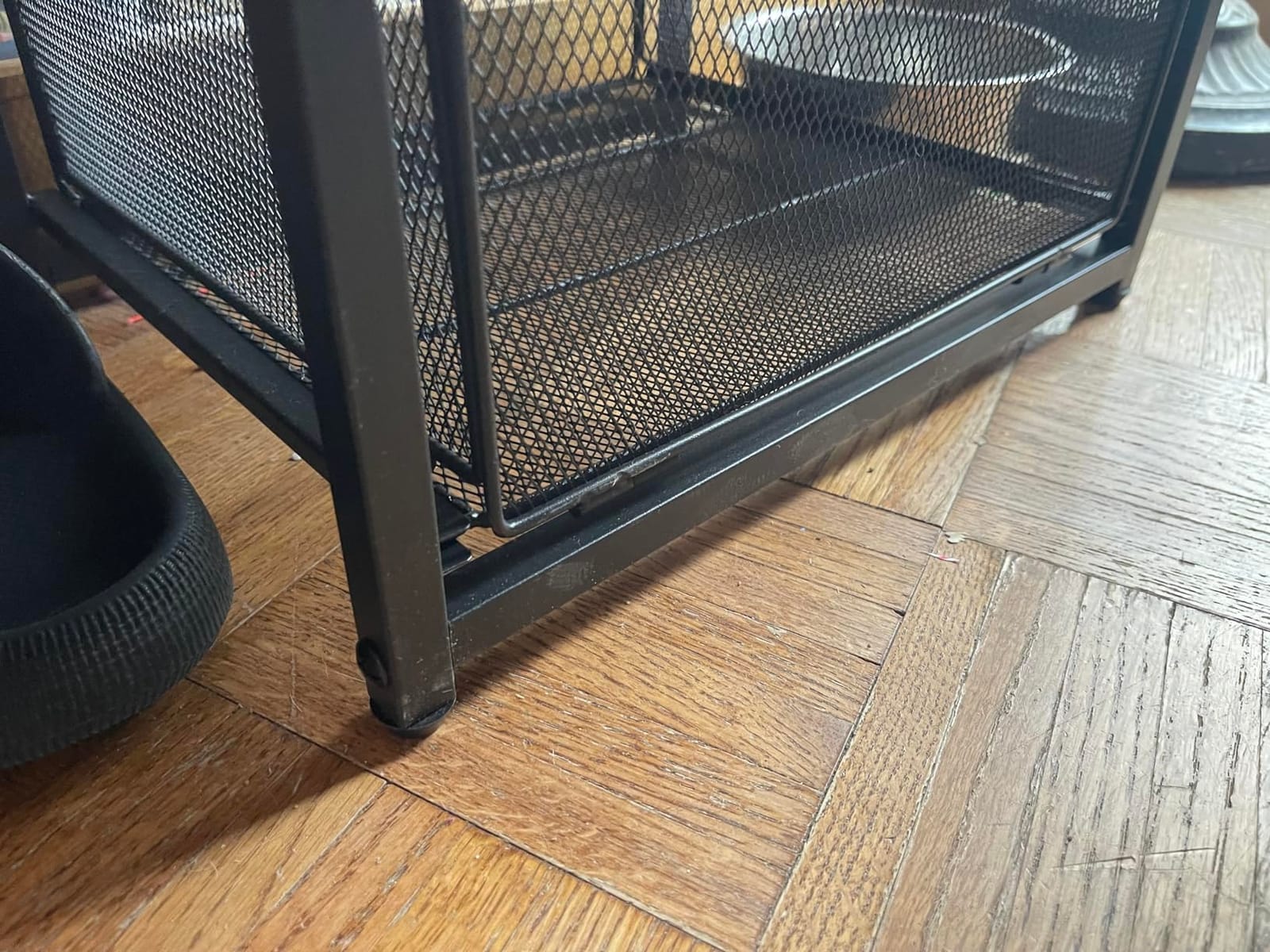
The clearance complaint is the one to know about. Letter-size hanging folders fit in the bottom drawer, but the top labels do not clear the drawer above, so you see the folders but not their tabs. Owners also report drawers that stick or bind during the first weeks of use.
Measure before ordering, because the listed 25.6 inch height is not the real number. With the wheels installed this cart is roughly 27.75 inches tall, and that difference decides whether it fits under a height-adjustable desk.

Do the drawers stay aligned over time?
Mostly, with caveats. The anti-pull-out pin stops a drawer sliding all the way out under normal use, which is the main fix this design adds. The reported failures cluster on the bottom drawer coming off its rails when it is dragged or dropped, so treat the cart as wheeled storage rather than as something to tip and unload.
The binding that owners describe usually eases after the slides are cleaned and the frame is squared. If a drawer still catches after that, check that the unit is sitting level on flat floor, because a caster under load can put a drawer out of true.
Is the fixed feet feature useful?
It is more useful than it sounds. Swapping the casters for the fixed feet turns the cart into a stable unit that will not roll when a student leans on it, which matters for a drawer cart that sits inside a small-group circle.
It also solves the reverse problem. Teachers who hate a rolling object drifting into a walkway mid-lesson can park it permanently as furniture and skip the wheel change entirely, since many carts of this style accept feet from the start.
9. ThreeHio 7-Tier Sliding Tray Cart – Best as a Fixed Desk Stand
ThreeHio 7 Tier Rolling File Cart with Sliding Trays, Wood Metal File Organizer Beside Desk, Free-Standing File Holder, Paper Letter Tray Organizer Mesh Desk Organizer for Home Office School (Patent)
7 tiers with 5 sliding trays
MDF wood top and bottom
Rust-resistant metal
Casters or feet included
Pros
- Seven tiers in a narrow footprint with five pull-out mesh trays
- Mesh trays slide smoothly and individual trays can be removed
- Metal and wood build looks like office furniture
- MDF top and bottom trays with rust-resistant finish
- Works as a cart or as a fixed unit under a desk
Cons
- Middle shelves are only 8.5 inches deep despite wider listed dimensions
- Roller casters struggle on thick carpet and locking stoppers are weak
- Back panel holes can be misaligned on arrival
- Wood screws supplied for metal back plates
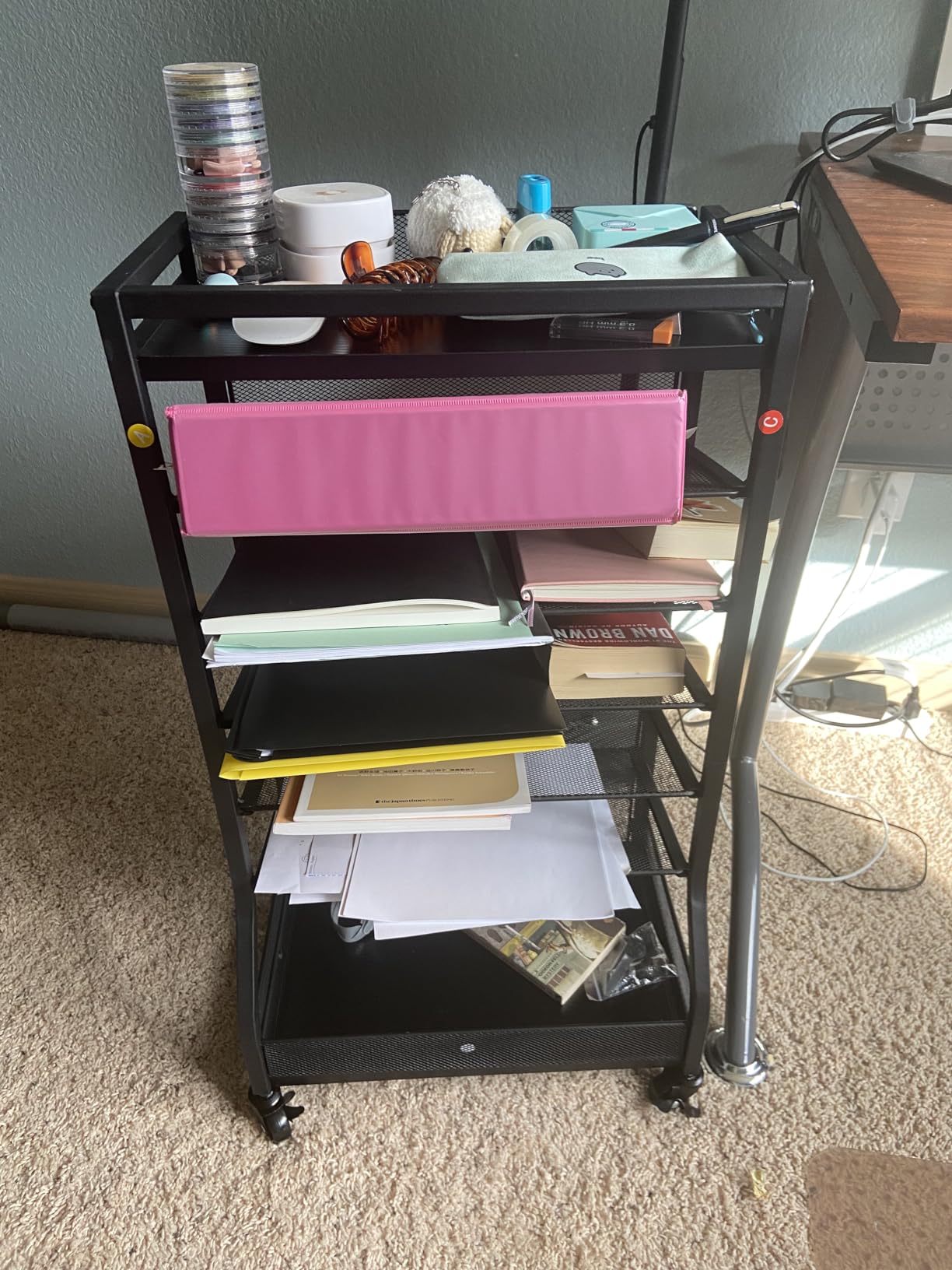
This one looks like office furniture rather than a paper holder, and in a classroom that reads as a deliberate choice rather than a compromise. The metal frame with MDF wood top and bottom shelves and a rust-resistant coating looks far better next to student work than an all-plastic cart.
Seven tiers means five sliding mesh trays plus wood top and bottom, and any tray can be removed if you need the vertical space for something taller. Assembly was quick with clearly written instructions and labeled parts, which is more than we can say for several carts in this roundup.
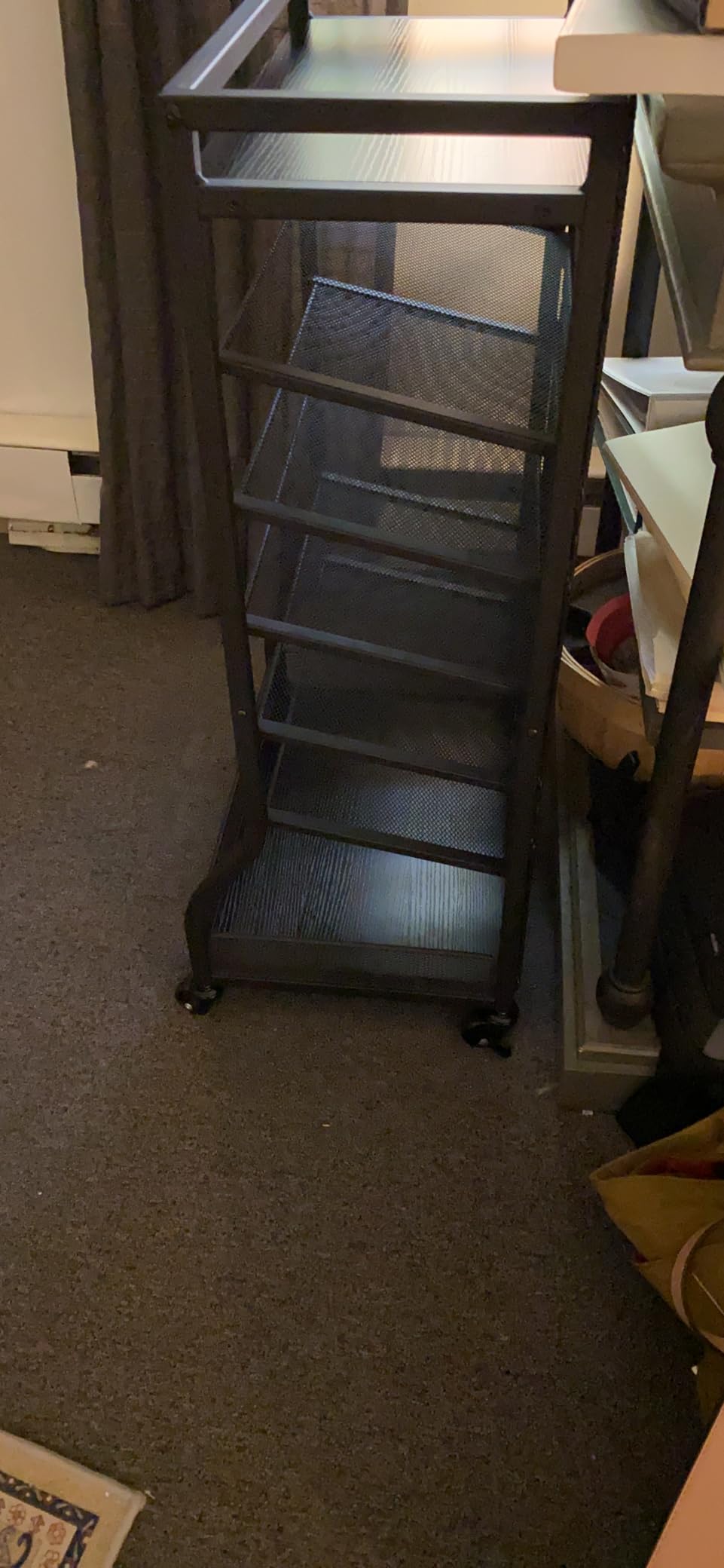
Two fit details catch people. The 29.9 inch depth figure applies to the bottom section, because the five middle shelves are only about 8.5 inches deep, so a wide binder will not sit flat on them. And this cart can be built either way, rolling on casters at 29.9 inches or standing on non-slip feet at 27.9 inches.
Quality control on arrival is uneven. Owners report back panels with misaligned screw holes requiring forced screws, warped panels, and a missing hole on some pieces. Wood self-tapping screws supplied for metal back plates is a small sign of the same shortcut.
Should you build it with casters or with fixed feet?
Build it on feet if the cart has a permanent home. The feet version is 2 inches shorter, cannot drift, and will not roll into a walkway when a student brushes past it. That is the configuration we used most.
Build it on casters if you genuinely move it, and be realistic about the surface. The rollers struggle on thick carpet, and the locking stoppers on this cart are weak, so a loaded unit on carpet is more of a lift-and-drag than a roll.
Is 8.5 inch tray depth a real limitation?
For folders and standard paper, no. For a three-inch binder laid flat, or for art paper stored upright on the tray, yes. Measure your widest frequently used item and check it against the 8.5 inch figure rather than the 11 inch listed depth.
Because trays are removable, one workaround is to pull a tray out entirely and use it as a separate desktop organizer, which is where a lot of owners end up putting the shallower ones.
10. Safco Rolling Cart for Hanging Folders – Best Heavy Duty
Safco Rolling Cart, Fits Letter and Legal-Size Hanging Folders, Mobile File Storage, Steel, Black
Letter and legal hanging folders
Alloy steel wire
300 lb load
Limited lifetime warranty
Pros
- Sturdy steel wire construction that handles heavy repetitive use
- Fits both letter and legal size hanging folders
- Easy to assemble with clear instructions
- Rolls easily and stores under most desks
- Two locking casters and a bottom shelf
Cons
- Open top leaves files exposed to dust
- Hard plastic wheels can mark hardwood floors
- Confusing diagrams can make the top tier look like it sags
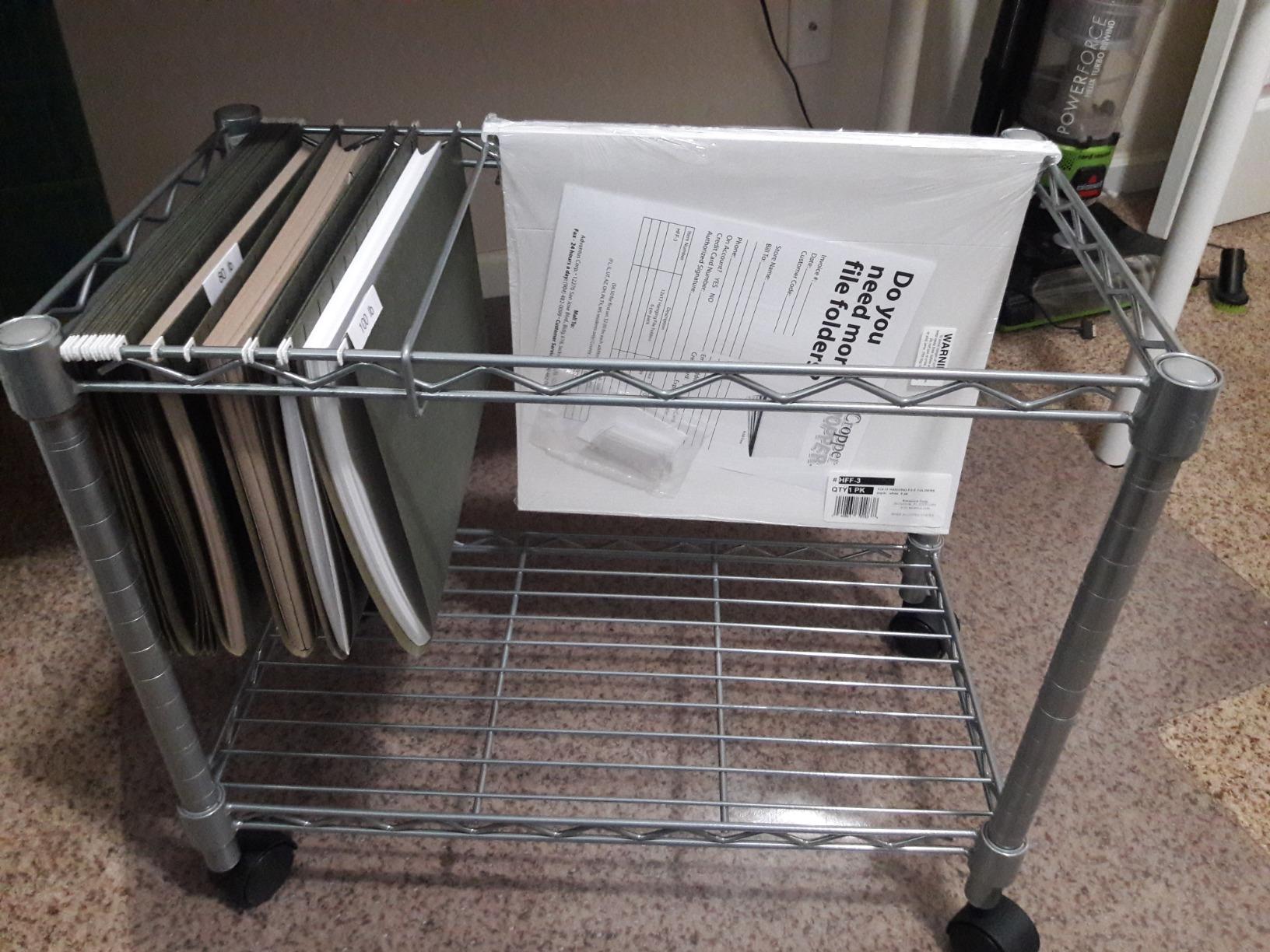
This is the cart to buy if you move heavy things, not just paper. Alloy steel wire construction carries a 300 pound rating, and the bottom shelf is specified to hold reams of paper, textbooks, and heavy supplies. In a room where the cart doubles as equipment storage, that rating is the whole argument.
It handles both letter and legal size hanging folders, the four swivel wheels include two that lock, and the powder coat finish resists chipping. The limited lifetime warranty is also the strongest coverage in this group, which matters for a cart expected to roll every day for years.
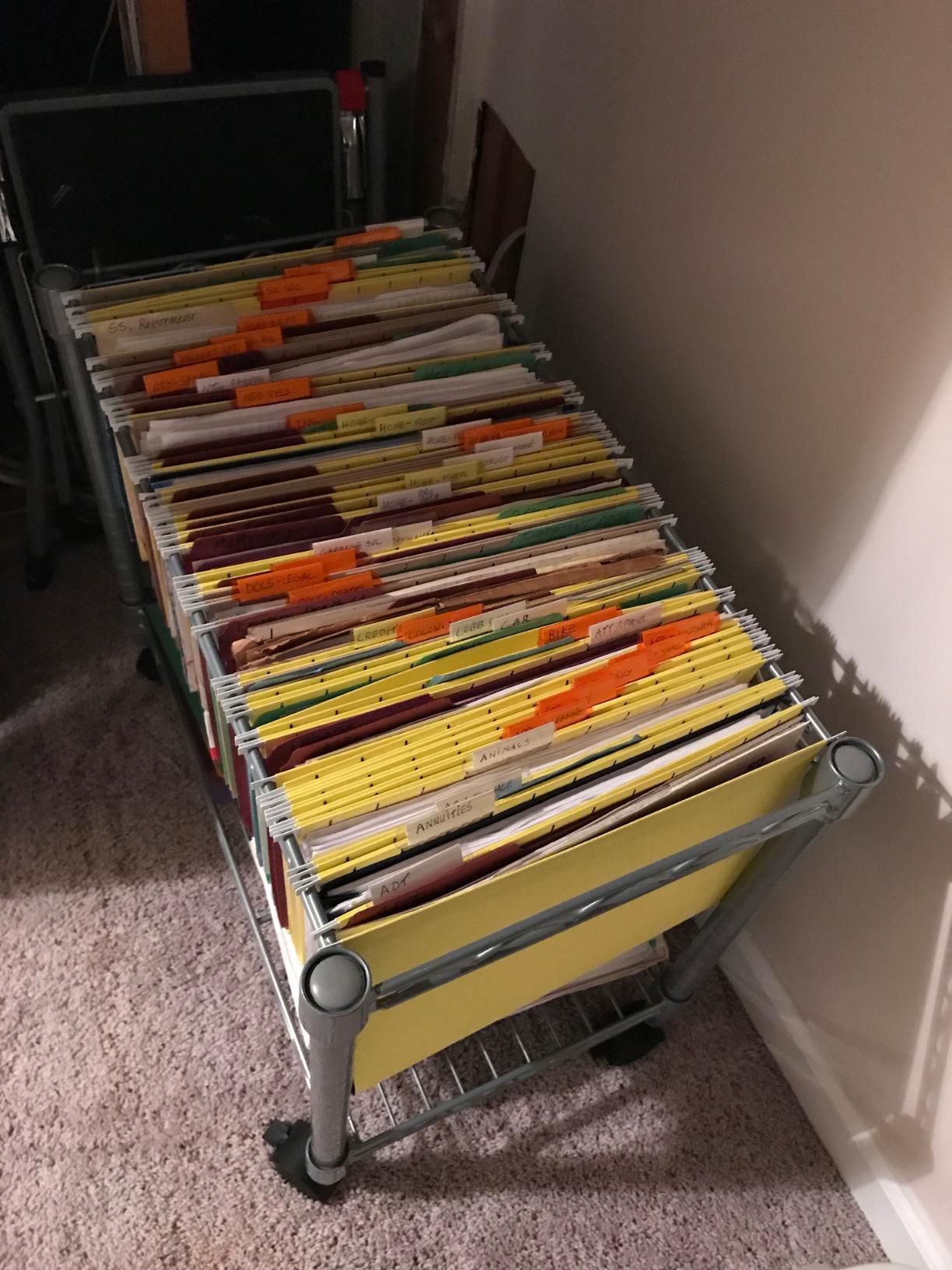
The floor matters more than most buyers expect. The included hard plastic wheels can mark hardwood with frequent rolling, so if your room has wood floors, add a caster sleeve or felt pad before the first trip down the hall.
A few owners also found the assembly diagrams unclear, and improper assembly shows up as a top tier that appears to sag. Follow the printed order and it goes together fine, which is a small cost for a much stronger frame.
Can this cart carry textbooks and boxed materials?
Yes. The 300 pound rating and the wire bottom shelf are designed for reams of paper, textbooks, and heavy office supplies, and the steel frame tolerates the kind of load that cracks plastic carts. This is the cart to use when the cart is a supply mover first and a file holder second.
Just keep the weight low on the frame. A top-heavy load of books is more likely to tip or twist the wire than the same weight sitting on the bottom shelf.
Why choose a heavy cart over a lighter one?
Because teacher carts fail at the connection points, not the shelf. A steel frame with a rated load survives years of daily rolling that a lightweight frame absorbs until the day it meets a curb or a stair edge.
That is not a theoretical concern. Teachers describe breaking three plastic carts each, with curb and stair drops named as the cause. A 300 pound steel frame with a lifetime warranty is the answer to that failure pattern. If your load is tools rather than folders, our guide to the best rolling tool carts covers the heavier-duty end of the category.
11. Simple Trending 12-Tier Rolling File Cart – Best for Maximum Capacity
Simple Trending 12-Tier Rolling File Cart, Desk File Organizer with 11 Mesh Sliding Trays, Letter & Legal Paper Storage Rolling Utility Cart for Office Home School, Black
12 tiers with 11 sliding trays
Wood top board
2 lockable casters
41.6 in tall
Pros
- Very high 12-tier capacity in a compact footprint
- Excellent for classroom paper and binder organization
- Lightweight enough to move around a room
- Sliding trays make folders and binders easy to reach
- Rust-resistant coated metal frame
Cons
- Trays slide out under heavy loads and may need zip ties
- Some trays have no back panel so papers stick out
- Small casters are not ideal for heavy rolling on carpet
- Screws may need retightening after moving
Twelve tiers in a footprint of about 15.6 by 10.25 inches gives you more storage per square foot than anything else we tested, and that is why owners describe this cart as giving back floor space rather than taking it. Eleven sliding mesh trays plus a wooden top board is a lot of organized paper capacity for a single unit.
At 13.1 pounds it stays light enough to move around a room despite the height, the 360-degree swivel casters include two lockable ones, and the rust-resistant coating is the right choice for a metal frame in a school. Several reviewers label the sides and use it specifically for classroom paper and binders.
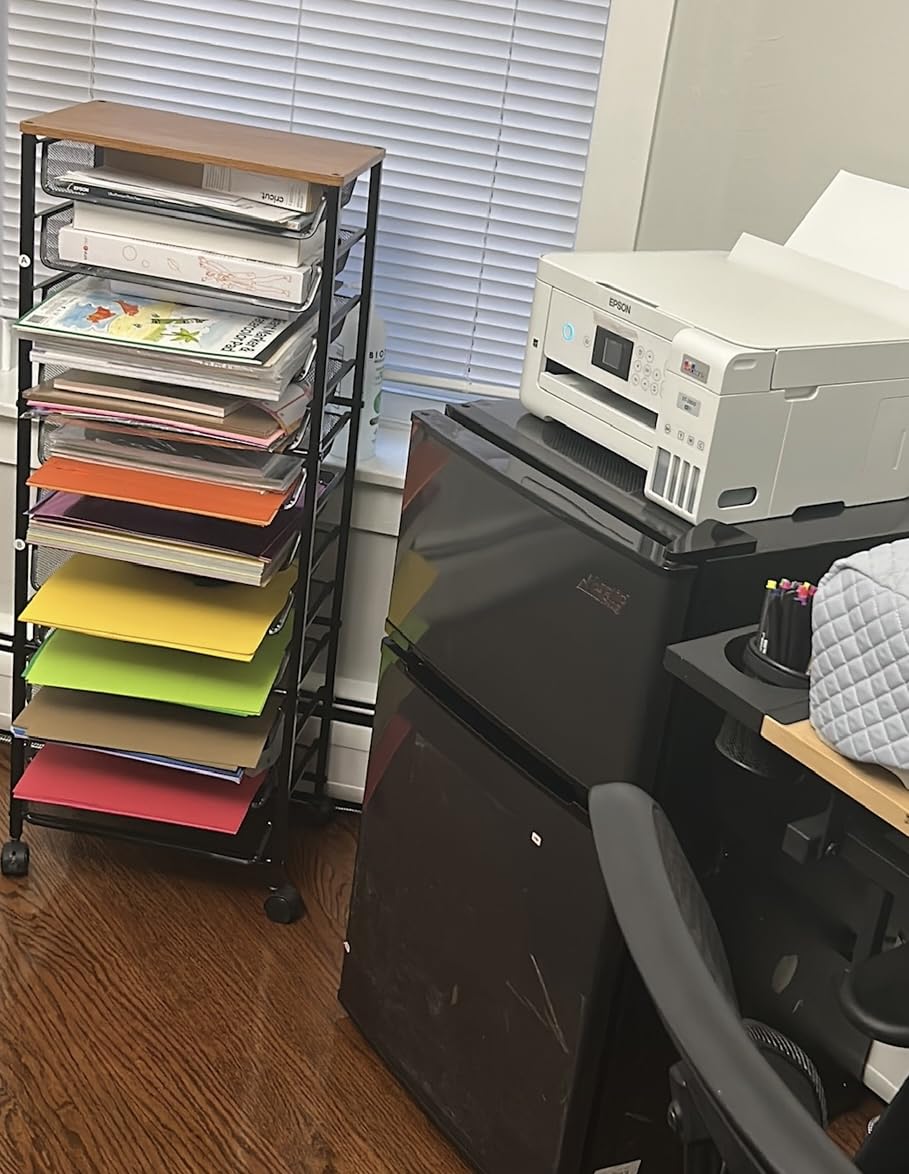
Two practical issues come up repeatedly. Trays can slide out when overloaded, and owners fix that with zip ties or other stops, which works fine once you know about it. Some trays have no back panel, so papers can project past the edge of the unit.
Also expect to retighten screws after moving it. Tall narrow frames flex slightly in transit, and the hardware loosens slightly with it. The small casters are also not meant for heavy rolling on thick carpet.

Will a 41.6 inch cart fit in a normal classroom?
The width is fine at 10.25 inches, so it slides between desk rows better than wider carts here. The 41.6 inch height is the real question, because that is taller than most cabinets and it will not go under a desk at all.
Treat it as a floor-standing unit against a wall or in a corner. At that height it functions as a low bookshelf, and the sliding trays make it feel more like a piece of furniture than a supply pile.
How do you keep loaded trays from sliding open?
Two approaches work. Zip ties or small clips stop the tray from traveling, which is the simplest fix and the one owners actually use. Distributing weight evenly across each tray, rather than stacking everything in one, reduces the pressure that causes the slip in the first place.
Label the sides while you are at it. Several owners use that flat metal side panel as the label surface, which makes a 12-tier cart usable rather than a guessing game.
12. Finnhomy 1-Tier Metal Rolling File Cart – Best Value
Finnhomy Premium 1-Tier Metal Rolling File Cart for Letter Size and Legal Size Folder, Black
Letter and legal hanging folders
Removable hanging bar
2 lockable casters
Shelves adjust in 1 inch steps
Pros
- Removable hanging bar holds letter or legal folders
- Four 360-degree casters with two lockable
- Tool-free assembly with clear illustrated instructions
- Lightweight metal frame that is easy to reposition
- Shelf height adjusts in one-inch increments
Cons
- Lightweight frame has limited capacity for very heavy items
- Open frame design gives no enclosed storage
- Single-tier design offers less vertical capacity than multi-tier racks
This is the straightforward metal file cart, and the removable hanging bar is the feature that earns its place. Pull the bar out and the same cart handles letter size folders, fit legal size ones, or drops the bar and becomes a two-shelf utility cart. That flexibility makes it a good first cart for a teacher setting up a room from scratch.
Tool-free assembly with illustrated instructions was straightforward in our build, and the shelves adjust in one-inch increments so you can change the internal height later as your storage needs change. Four 360-degree casters include two lockable ones, and the whole unit weighs 7.8 pounds.
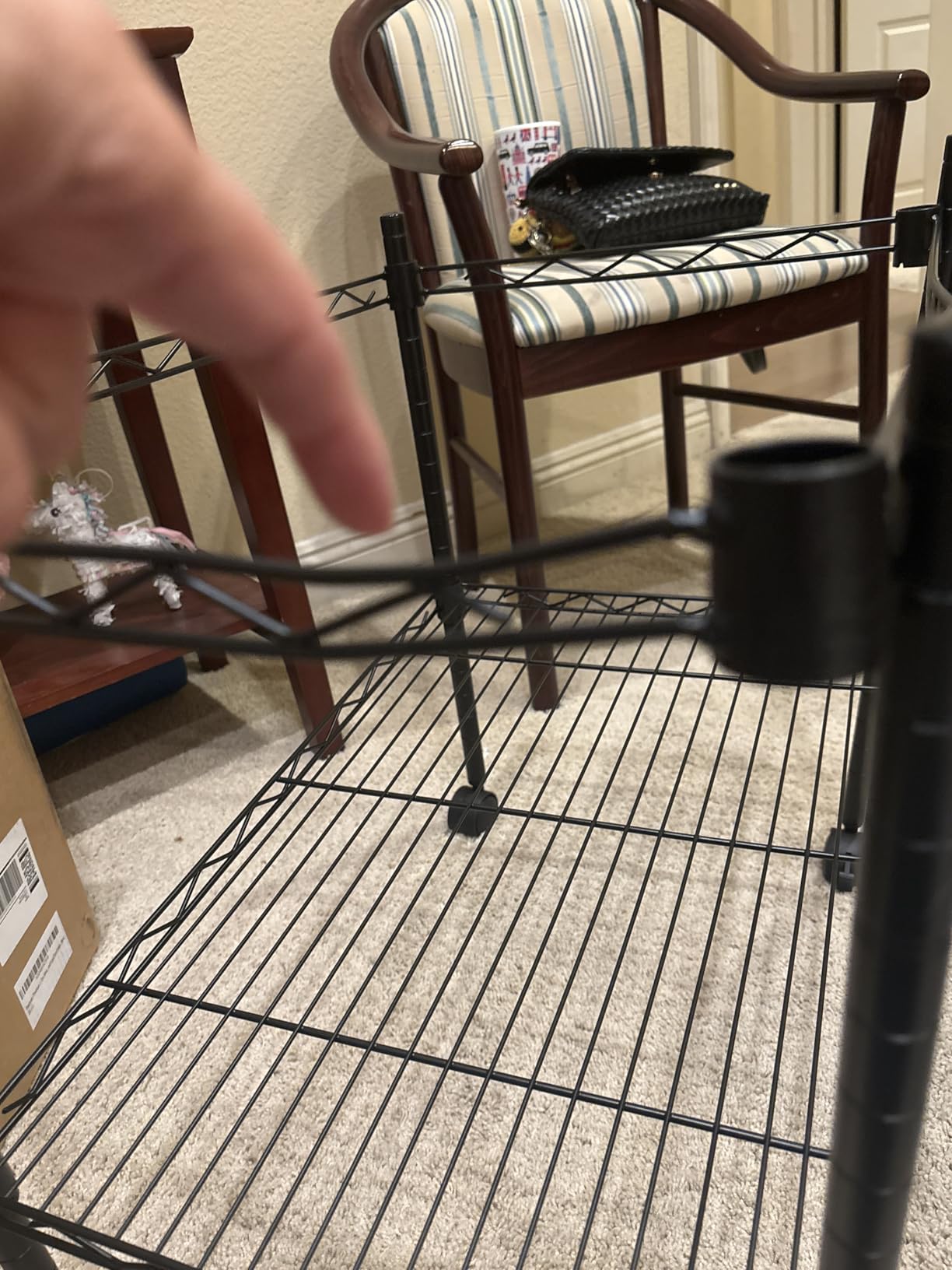
The tradeoff is capacity and enclosure. It is a single-tier design, so vertical storage is minimal compared with the seven and twelve-tier carts here, and the open frame gives you nowhere to put anything that needs to be closed or concealed.
The frame is also light, which is the flip side of being easy to move. Buyers wanting a heavier load capacity end up stepping up to a heavier steel cart, so judge it by what you will actually put on it rather than by the rating.
Is the adjustable shelf height genuinely useful?
It is more useful than it first appears. One-inch increments let you clear a taller binder in one position and drop the shelf lower for flat paper in another, and because the frame is open you can change the layout without tools.
Where it stops helping is capacity. A single adjustable tier changes the height of your storage, not the amount of it, so this cart fills a gap that a multi-tier rack leaves open.
Who should buy this cart?
A teacher who wants one simple, light, metal file cart that moves between a car and a room without any fuss. It assembles without tools, it has lockable wheels, and it holds both letter and legal folders without buying a second cart.
Skip it if you need student records enclosed or if your load is books and boxes. For those, step up to a heavier frame or a locking cabinet.
How Many Folders Fit on a Rolling File Cart?
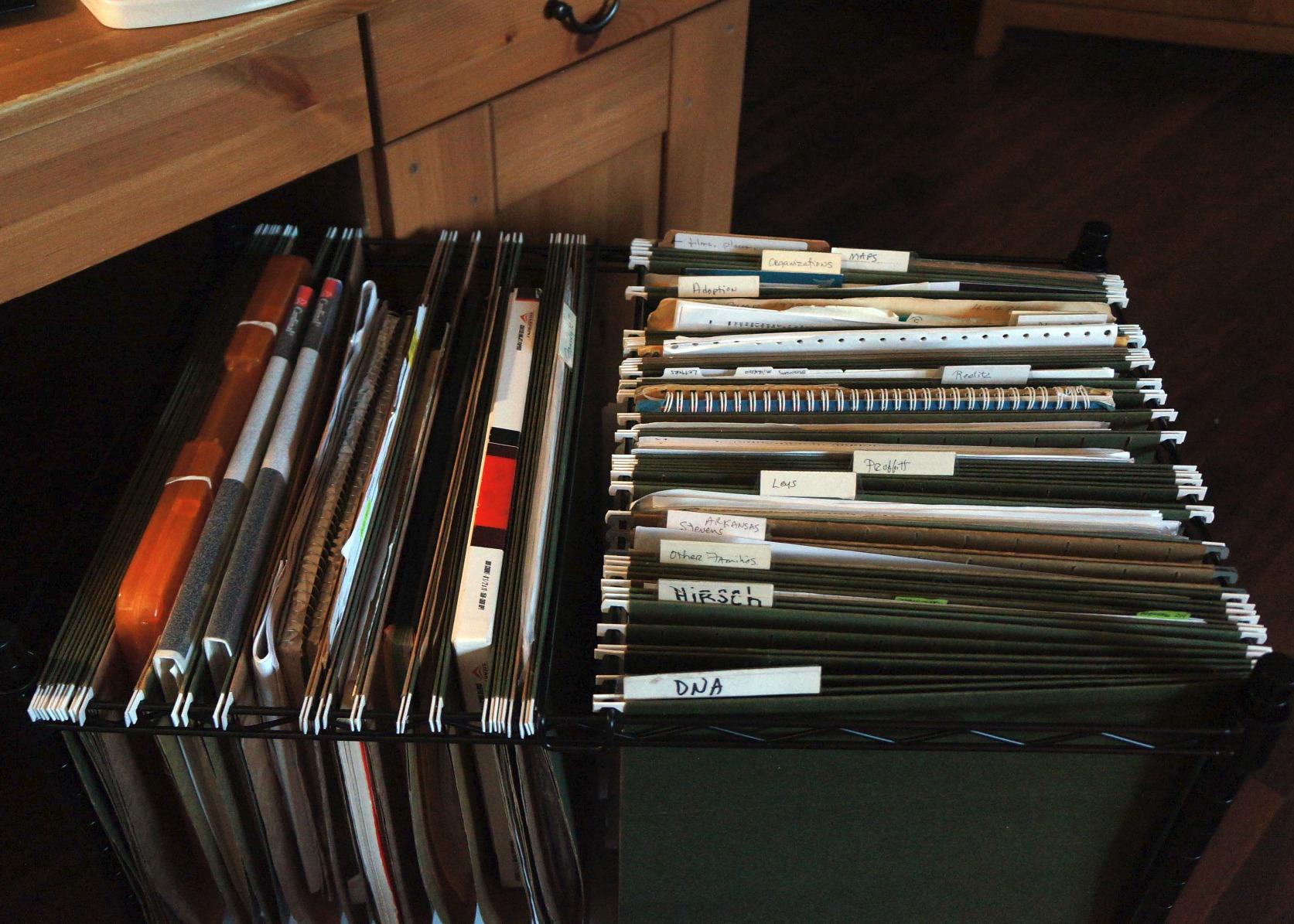
Work from the hangrail width rather than the cart width. A letter-size hanging folder is about 12 inches wide and needs roughly 12.25 inches of rail to slide on without catching, so a cart with a single divider holding letter folders gives you one comfortable row.
The wider carts change the arithmetic. The Lorell mesh model has built-in 22-3/4 inch hangrails, which comfortably accepts a double row in one orientation. The Oceanstar model is 24 inches wide and takes letter and legal folders, but two side-by-side rows of letter folders do not fit horizontally, so one side hangs vertically.
Two other numbers worth carrying. Hanging folders sit at roughly 1.5 pounds per dozen when loaded, so a 20-folder row is around 2.5 pounds, which is why the load ratings on these carts are about frame safety rather than folder weight. And a common misread: the 3IngSeagulls hanging file section is A4 sized, not US Letter, so measure your district folder stock before ordering it for filing.
7 Things to Check Before You Buy a Rolling File Cart
1. Load rating, and the honest ceiling. The carts here carry manufacturer ratings of 100, 150, 200, and 300 pounds. Teachers on the A to Z Teacher Stuff thread learned the hard way that plastic rolling carts are commonly built to hold about 85 pounds and are not intended to be dropped down steps, including curbs.
2. Casters, and how many lock. Look for 360-degree swivel casters and at least two locking brakes so the cart stays put as a shelf or desk. Note the surface: small casters handle smooth floors fine and struggle on thick carpet, which is exactly where heavy carts have to be lifted rather than pushed.
3. Actual height with wheels installed. Listings often list the frame height, not the assembled height. The Sbanmao cart is listed at 25.6 inches and measures about 27.75 inches with wheels, and that difference decides whether it fits under a height-adjustable desk.
4. Folder fit and orientation. Confirm whether your folders hang vertically, laterally, or both, and whether the rail width is a single folder or a double. Measure your folders rather than trusting a general description.
5. Whether you need a lock. Locking casters stop a loaded cart from drifting and make it harder to take casually. A key lock does more: it turns an open rack into a closed cabinet for student records. Teachers dealing with theft in shared rooms treat this as the deciding feature rather than a nicety.
6. Assembly honesty. Assembly accuracy separates these products more than any other variable. Several carts here ship with inaccurate side-panel instructions that force a teardown, misaligned screw holes, or warped panels. Read the reviews for your specific model before you start, and allow extra time.
7. Repairability and materials. Steel frames with replaceable casters outlast plastic shells, and a long warranty signals a maker that expects the cart to stay in service. Powder-coated steel resists chipping, and a limited lifetime warranty on the Safco cart is the strongest coverage here. Carts that break at the frame instead of the caster are the ones worth avoiding.
Frequently Asked Questions
What is a good rolling cart with wheels for teachers?
A good teacher cart has 360-degree swivel casters with at least two locking brakes, a frame rated well above your real load, and a height that either slides under a desk or stands clear of foot traffic. For papers specifically, choose a wire hanging-file design; for supplies and books, choose a multi-tier model with solid shelves.
What is the best utility cart?
The best utility cart depends on the load rather than the brand. For books, boxed materials, and equipment, look for a steel frame with a rated load of 200 pounds or more, solid wood or reinforced shelves, and a bottom shelf sized for paper reams. For loose supplies, mesh sliding trays in a narrow footprint work better and take up less floor space.
How much weight can a rolling file cart hold?
Ratings across the carts we compared range from 100 pounds on a drawer cart to 300 pounds on heavy steel wire models. Remember that common plastic rolling carts are built to about 85 pounds and are not designed for curb or stair drops. Treat the rating as a frame limit, and load the bottom shelf rather than the top when you are near it.
Do rolling file carts have lockable wheels?
Most of the carts we tested include caster brakes, usually on two of the four wheels, which stops a loaded cart from rolling away on its own and lets you park it as a fixed shelf. For student records, caster brakes are not enough, and a model with a key lock and a sliding cover is the better choice in a shared room.
How many hanging file folders fit on a rolling file cart?
A letter-size hanging folder needs about 12.25 inches of hangrail, so a single-divider cart holds one comfortable row of about a dozen folders. Double-width models with rails around 22.75 inches take a second row, and wider 24 inch carts fit letter and legal folders but usually require one side to hang vertically. Full rows weigh only a few pounds.
Are rolling file carts worth it for teachers?
For most teachers they are, because they replace repeated carrying with one trip and keep records off an open desk. They pay off most for traveling teachers, small-group specialists, and anyone in a small room where the cart can park under a desk. The carts worth avoiding are the lightest plastic ones, which fail at the frame during curb and stair handling.
Which Rolling File Cart Should You Buy?
After six weeks of daily use, the Lorell LYS Mobile Wire Filing Cart is the pick we recommend most often for teachers. It rolls over carpet, fits under a desk, and carries a 300 pound frame rating with a five year warranty behind it, which is the combination most classrooms actually need day to day.
If folders matter more than anything else, the Oceanstar 1-Tier cart takes both letter and legal sizes. If student records are the priority, the Lorell Standard Lock Mobile File secures them with a key and fits more than 75 hanging folders in a 6.5 inch profile. If the load is books and boxes rather than paper, the Safco wire cart carries a 300 pound rating with a limited lifetime warranty, and if you need drawers for small-group supplies, the Sbanmao four-drawer unit covers both.
Whatever you choose, check the assembled height with wheels on, confirm your folders fit the rail, and treat curb and stair handling carefully. The carts that last are the ones that stay inside their rating. Product details and ratings were checked for this 2026 update.