

A bookshelf in a home office is not a display piece. It is load-bearing office equipment that happens to look like furniture, and the difference shows up the first week you move two boxes of client manuals onto it and the shelf dips in the middle. The best bookshelves for home offices do three things at once: they hold real weight without bowing, they are deep and tall enough to use the wall you actually have, and they stay out of the way of a desk you need to work at eight hours a day.
We went through twelve shelving units that cover the full range of home office situations, from a 12 inch cube that fits beside a kitchen table to a 70 inch six-shelf tower and a reconfigurable corner system. For each one we looked at the stated shelf thickness, the published load rating, the depth of the shelf opening, the type of back panel, whether anti-tip hardware is included, and what assembly actually involves before you are standing on a ladder holding a panel in place.
What we found is that the cheapest units and the most expensive ones are not as different as you would expect on paper. Material and shelf span decide almost everything, and both are easy to check before you buy. Below is the full rundown, plus a buying guide that explains how to measure your room, how deep a shelf needs to be for hardbacks and binders, and how to anchor anything tall enough to be a problem.
Top 3 Bookshelves for Home Offices (October 2026)

Furinno LUDER 3-Cube Bookshelf
- 20 lb per cube and 60 lb total
- Closed back panel for stability
- 9.3 x 12 x 31.5 inch footprint

SUPERJARE Triple Bookshelf
- 11 adjustable open shelves
- 22 lb per shelf
- Steel frame with anti-tilt brackets

IRONCK Industrial 6-Shelf Bookcase
- 70.8 inch tall
- 22 lb per shelf on 1 inch shelves
- Anti-tip device included
The Furinno LUDER wins on evidence rather than hype: it has more owner reviews than any other unit here and a rating that has held steady across tens of thousands of them. The SUPERJARE triple shelf takes the top spot for raw capacity, with eleven adjustable shelves on a steel frame. The IRONCK tower is the one to buy when wall height is your binding constraint.
Quick Overview: All 12 Bookshelves Side by Side
All twelve units below are freestanding shelving systems suited to a workspace. The depth, width and height are the manufacturer’s stated item dimensions, and the load figure is the published per-shelf rating where one exists. No price is listed here because these change week to week; use the check buttons and read the current listing before you commit.
| Product | Specifications | Action |
|---|---|---|
| Furinno LUDER 3-Cube Bookshelf |
|
Check Latest Price |
| IRONCK Industrial 6-Shelf Bookcase |
|
Check Latest Price |
| SUPERJARE Triple Bookshelf |
|
Check Latest Price |
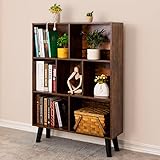 LEYAOYAO Mid-Century Cube Bookshelf LEYAOYAO Mid-Century Cube Bookshelf |
|
Check Latest Price |
 Furologee 5-Tier Bookcase with Drawer Furologee 5-Tier Bookcase with Drawer |
|
Check Latest Price |
 SUNMORY 6-Tier Tree Bookshelf SUNMORY 6-Tier Tree Bookshelf |
|
Check Latest Price |
 VASAGLE 5-Tier Bookshelf VASAGLE 5-Tier Bookshelf |
|
Check Latest Price |
 HCHQHS 6-Tier Open Bookcase HCHQHS 6-Tier Open Bookcase |
|
Check Latest Price |
 OSCHF 12-Cube Storage Shelf OSCHF 12-Cube Storage Shelf |
|
Check Latest Price |
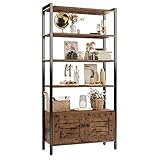 IRONCK Bookcase with Doors IRONCK Bookcase with Doors |
|
Check Latest Price |
 AFLUI Triple Bookshelf with 3 Drawers AFLUI Triple Bookshelf with 3 Drawers |
|
Check Latest Price |
 Huuger L-Shaped 5-Tier Bookshelf Huuger L-Shaped 5-Tier Bookshelf |
|
Check Latest Price |
Two patterns jump out. Depth is the first: six of these twelve are 9.5 inches deep or shallower, which is fine for paperbacks and trade paperbacks but tight for a row of hardbacks or a lever-arch binder. Height is the second: four units run past 60 inches, which is only useful if you have a wall that is tall enough and you are prepared to reach the top shelf with a step stool.
1. Furinno LUDER 3-Cube Bookshelf – Best Overall for Offices
Furinno LUDER Book Shelf, 3-Cube Bookshelf, Bookcase with Open Shelves, 9.3 x 12 x 31.5, Easy Assembly, for Living Room, Bedroom, Home Office, White
9.3 x 12 x 31.5 inches
Engineered wood
20 lb per cube, 60 lb total
Pros
- Most reviewed unit in the roundup at over 26000 ratings
- Compact cube footprint that fits beside a desk or under a window
- Closed back panel prevents items sliding behind
- FSC-certified composite wood
- Hardware and instructions included
Cons
- Some holes need drilling by the assembler
- 9.3 inch depth is too shallow for 12 inch bins
- Square edges and laminate show wear over time
This cube unit has been in front of us the longest of anything in this roundup, and it shows in the numbers. Twenty-six thousand ratings averaging 4.4 is not a marketing artefact; it is what happens when a product sells steadily for years across dorm rooms, home offices and kids’ rooms. We used it as the reference point for judging the rest of the list.
The 20 lb per-cube rating is honest for a half inch shelf in engineered wood, and in practice it holds a run of paperbacks and a few hardbacks without complaint. It is not the shelf to park a row of encyclopaedias on, but for reference books, notebooks and a printer-supply stack it is more than adequate.
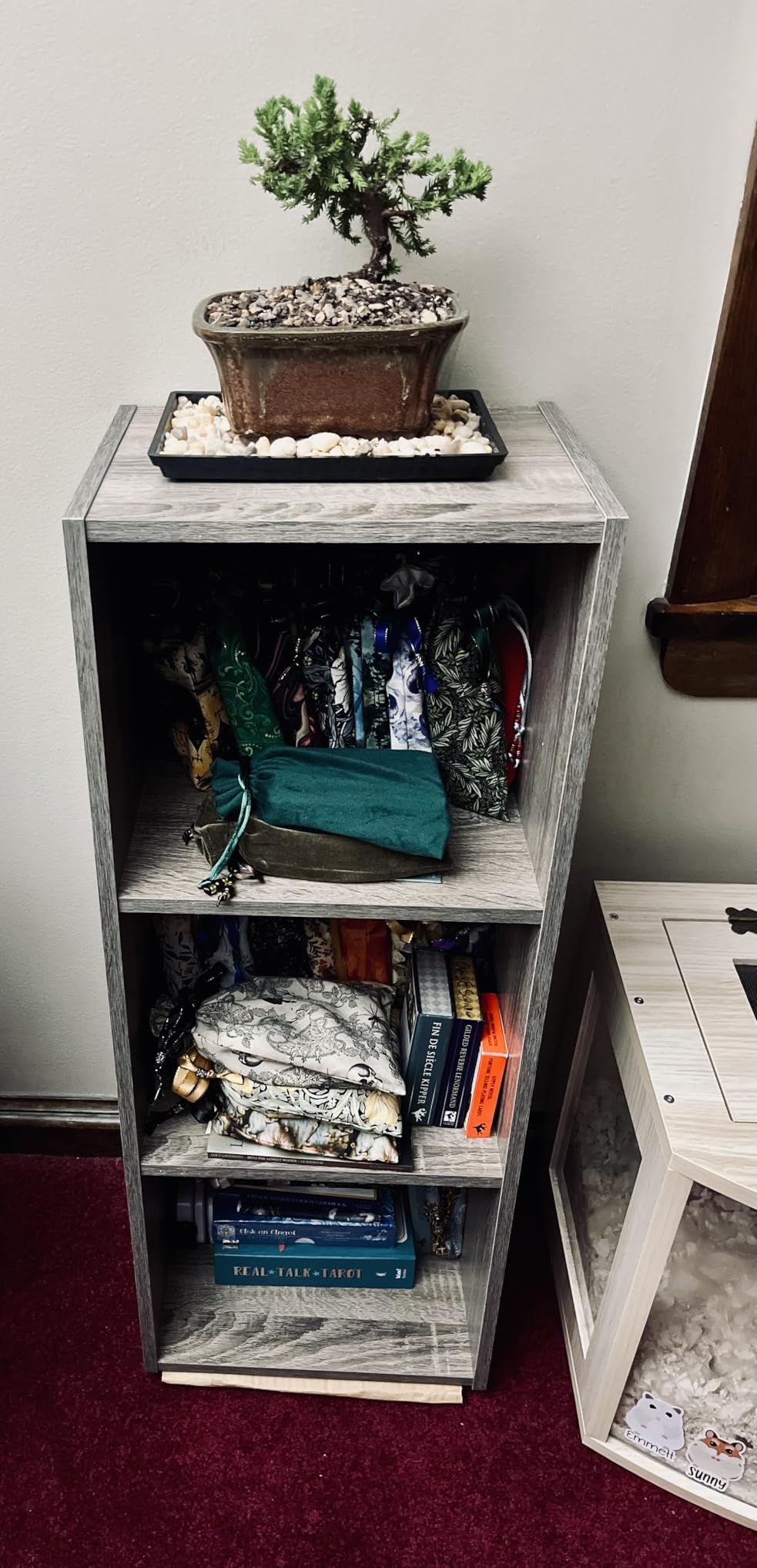
The closed back is the detail that separates this from a cheaper open-frame cube. Nothing migrates to the floor behind the unit, and the panel adds enough rigidity that the shelf does not rack when you pull a book out from the middle of a row. There is a one year limited manufacturer warranty, which is thin, but the design itself is simple enough that failure is unlikely.
Assembly took us about fifteen minutes. The pre-drilled holes lined up for most of the frame, though a couple of holes are left for the assembler to drill, so have a drill ready rather than assuming an Allen key is enough. The whole unit weighs roughly 13.4 lb, which means one person can lift it into position against a wall or move it to a different room.
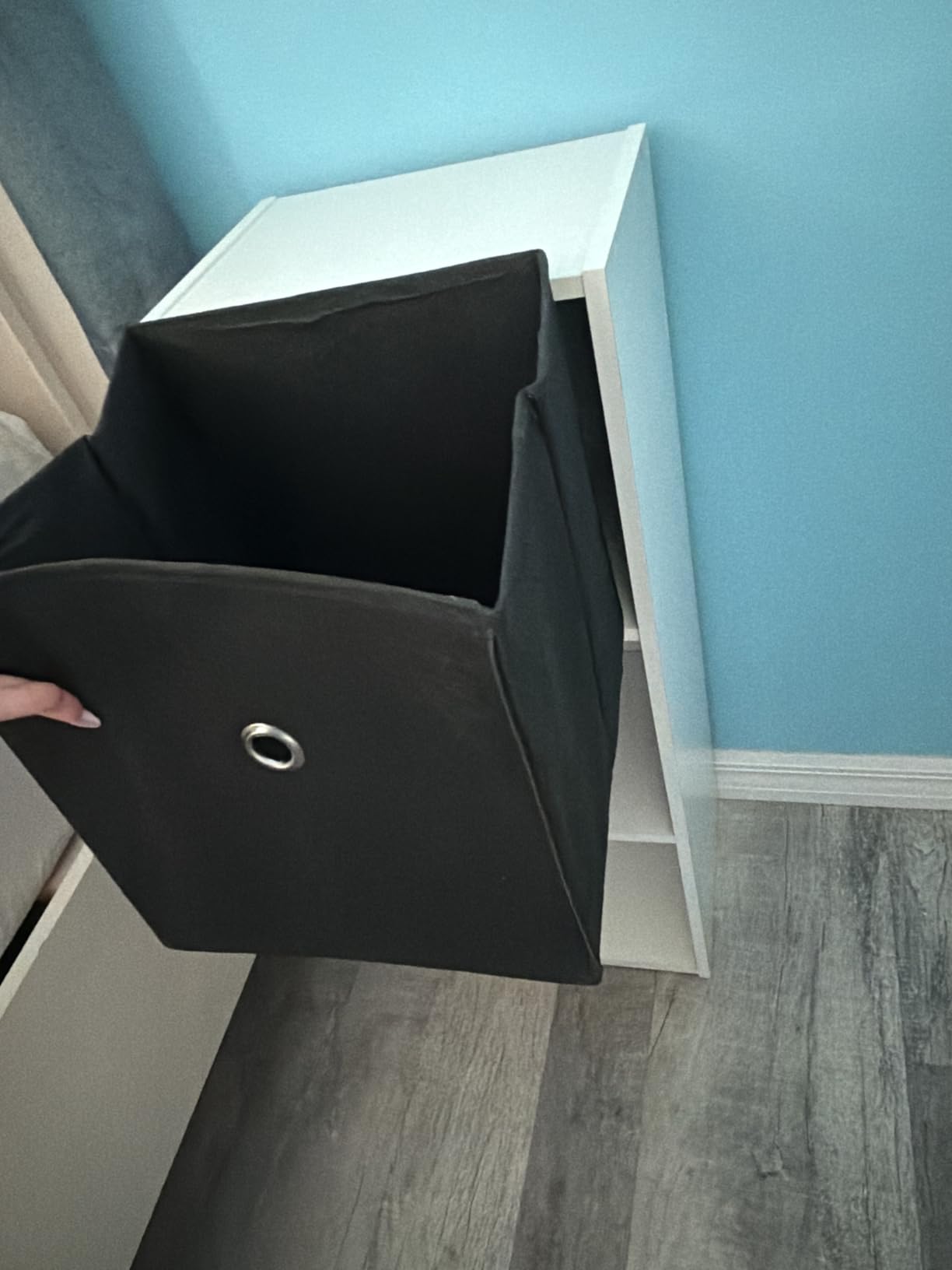
One practical warning: at 9.3 inches deep, a 12 inch square storage bin will not sit fully inside the cube. The bin protrudes at the back, and if the unit is tight against a wall that becomes a real problem. Plan your storage bins before you commit to this footprint.
How it holds up with a mixed office load
For a working office the useful question is not total weight but how the weight is distributed. Spread twenty pounds across the full width of a cube and the shelf holds it comfortably. Concentrate the same weight in a narrow stack of hardbacks at one end and you will see the centre dip slightly. If your reference collection is heavy, keep the heaviest items low and centred.
The white laminate finish wipes clean with a dry cloth, which matters more than it sounds in a workspace where you eat lunch at the desk. Avoid harsh chemicals, because the printed surface can cloud.
When it is the wrong choice
This is not the shelf for a serious book collection or for storing lever-arch binders, because the cube opening is both too shallow and too short for either. It is also the wrong pick if you want vertical storage to the ceiling; at 31.5 inches it reads as a low credenza piece rather than a bookcase.
If your office needs real capacity, look at the SUPERJARE or IRONCK units below. If you need a reference shelf for a small desk area, this is hard to argue with.
2. IRONCK Industrial 6-Shelf Bookcase – Best Tall Vertical Unit
IRONCK Industrial Bookshelves and Bookcases Floor Standing 6 Shelf Display Storage Shelves 70 in Tall Bookcase Home Decor Furniture for Home Office, Living Room, Bed Room, Vintage Brown
9.3 x 23.8 x 70.8 inches
6 shelves at 22 lb each
1 inch shelf thickness
Pros
- 70.8 inch height uses a full wall
- 1 inch thick shelves resist sagging better than thinner rivals
- Finished back panels slot in rather than being nailed on
- Anti-tip-over device included
- Eight finish options
Cons
- Assembly takes considerably longer than shorter units
- A screwdriver is required and not included
- Can rock slightly on carpet if moved carelessly
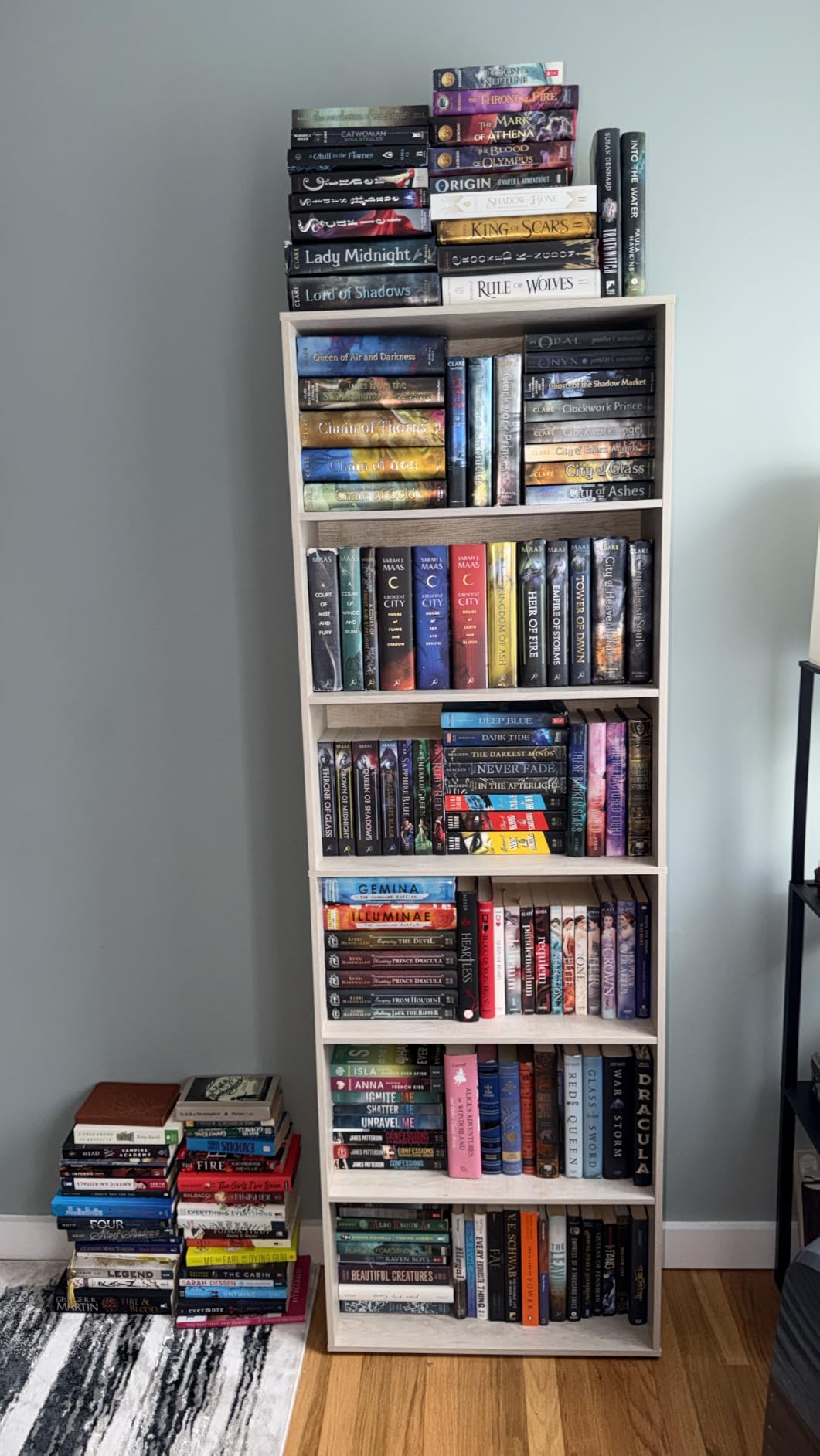
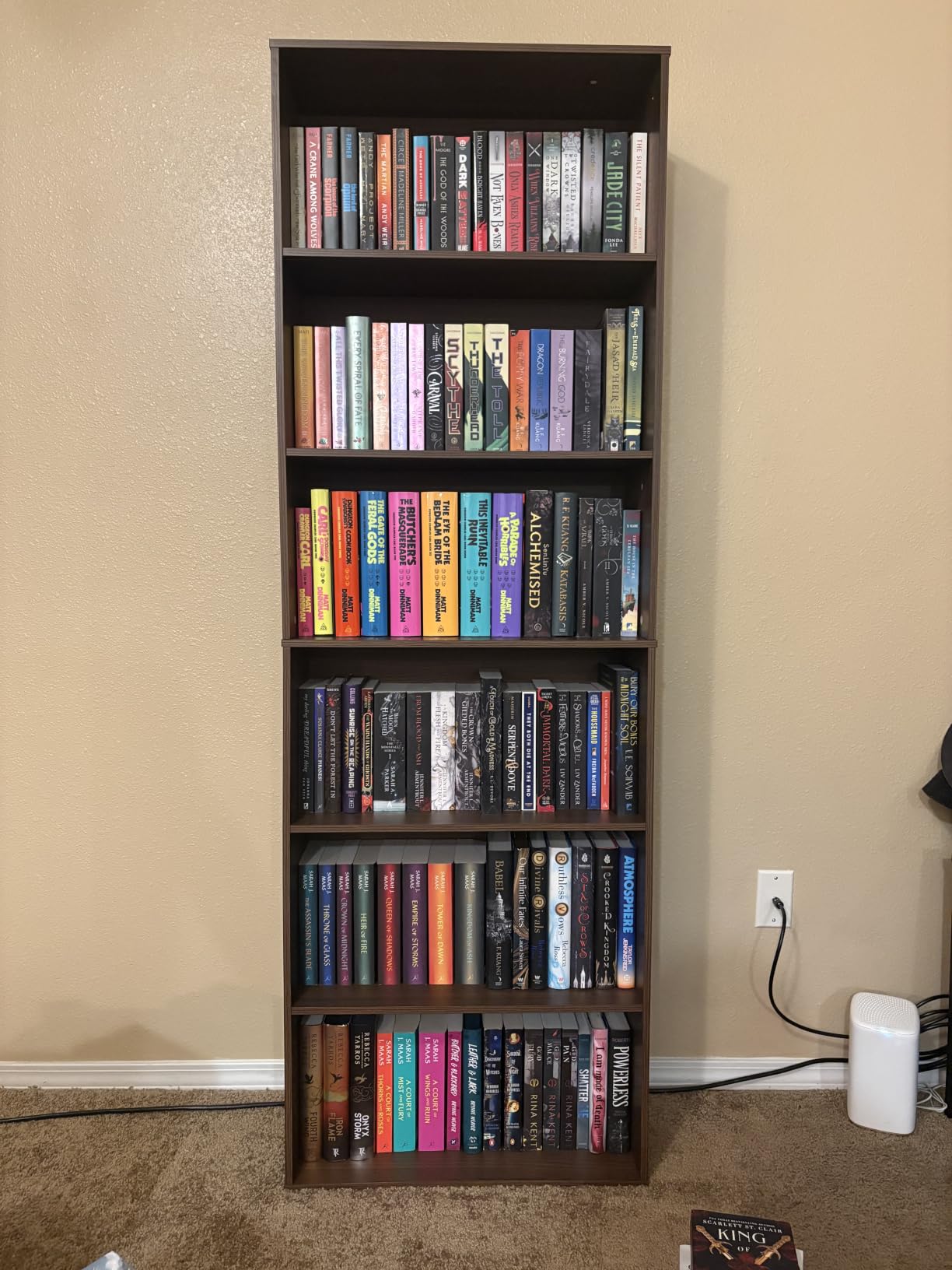
This is the shelf for a home office with a tall empty wall and a need to store a lot in a small footprint. Six shelves spread over 70.8 inches of height means you gain storage without giving up any desk space, and the 23.8 inch width is narrow enough to sit beside a window or in the corner opposite the desk.
The construction detail that matters here is shelf thickness. At 1 inch, these shelves are roughly double the thickness of most cube and tower units in this price bracket, and thicker shelves deflect less under load over the same span. That is the single biggest reason this unit holds a heavier collection without a visible dip.
Assembly is the honest weak point. A unit this tall takes meaningfully longer to build than a five-tier bookcase, and reviewers consistently mention that a screwdriver or similar tool is needed but not supplied. The included tip-over resistance device is genuinely useful, not decorative; fit it before the shelves go in if you can.
One owner reported a piece arriving with missing pre-drilled holes, so check the hardware against the parts list before you start. On carpet, move the finished unit by lifting rather than dragging, because the frame can rock if it is nudged sideways.
Each shelf is rated at 22 lb, which is enough for a run of hardbacks if you are not stacking art books on top of them. The finished back panels slot into the frame and add real rigidity, which is why multiple units bought by the same owner tend to be used side by side to build a wall of books.
What to check before you commit wall space
Measure your ceiling height, not your wall height in general. At 70.8 inches, this unit needs either a ceiling above roughly 78 inches or a space where it can stand without a cornice in the way. If you plan to put something on top of it, add that object height to the total before you check it fits.
Leave a little clearance behind the desk chair. In a nine foot by nine foot office, a 23.8 inch wide tower against the long wall usually works without crowding the workspace, and it leaves the short wall free for a board or a monitor arm.
When it is the wrong choice
Skip this one if you are not comfortable with a build that takes an evening and a second pair of hands. Anyone who wants to move the unit frequently will also find 37.2 lb awkward, even with help.
It is also worth noting that the width limits horizontal capacity. If your reference material is large-format atlases or oversized manuals lying flat, a wider unit with fewer shelves will serve you better.
3. SUPERJARE Triple Bookshelf – Best Capacity for Large Collections
SUPERJARE Triple Bookshelf, Bookcase with 11 Open Display Shelves, Wide Book Shelf Book Case for Home & Office, 4 Tier, Brown
9.5 x 59.5 x 54.9 inches
11 adjustable shelves
22 lb per shelf, 242 lb total
Pros
- Highest rating in the roundup at 4.7 stars
- Eleven shelves on a low profile keep everything reachable
- Shelf heights adjust to different book sizes
- Eight adjustable feet level the unit on uneven floors
- Anti-tilt brackets and tools included
Cons
- 59.5 inch footprint is too wide for a small room
- Several shelf levels are particle board rather than solid wood
Where most bookcases trade capacity for height, this one trades height for width. Eleven open shelves across a 59.5 inch span hold an enormous collection while keeping every shelf within easy arm reach, which is exactly what you want when you are pulling a reference book mid-task rather than climbing a ladder.
At 4.7 stars with more than four thousand ratings, it sits near the top of the ratings across everything we tested in this roundup, and the feedback is unusually consistent: people like the amount of storage and the fact that the shelves adjust.
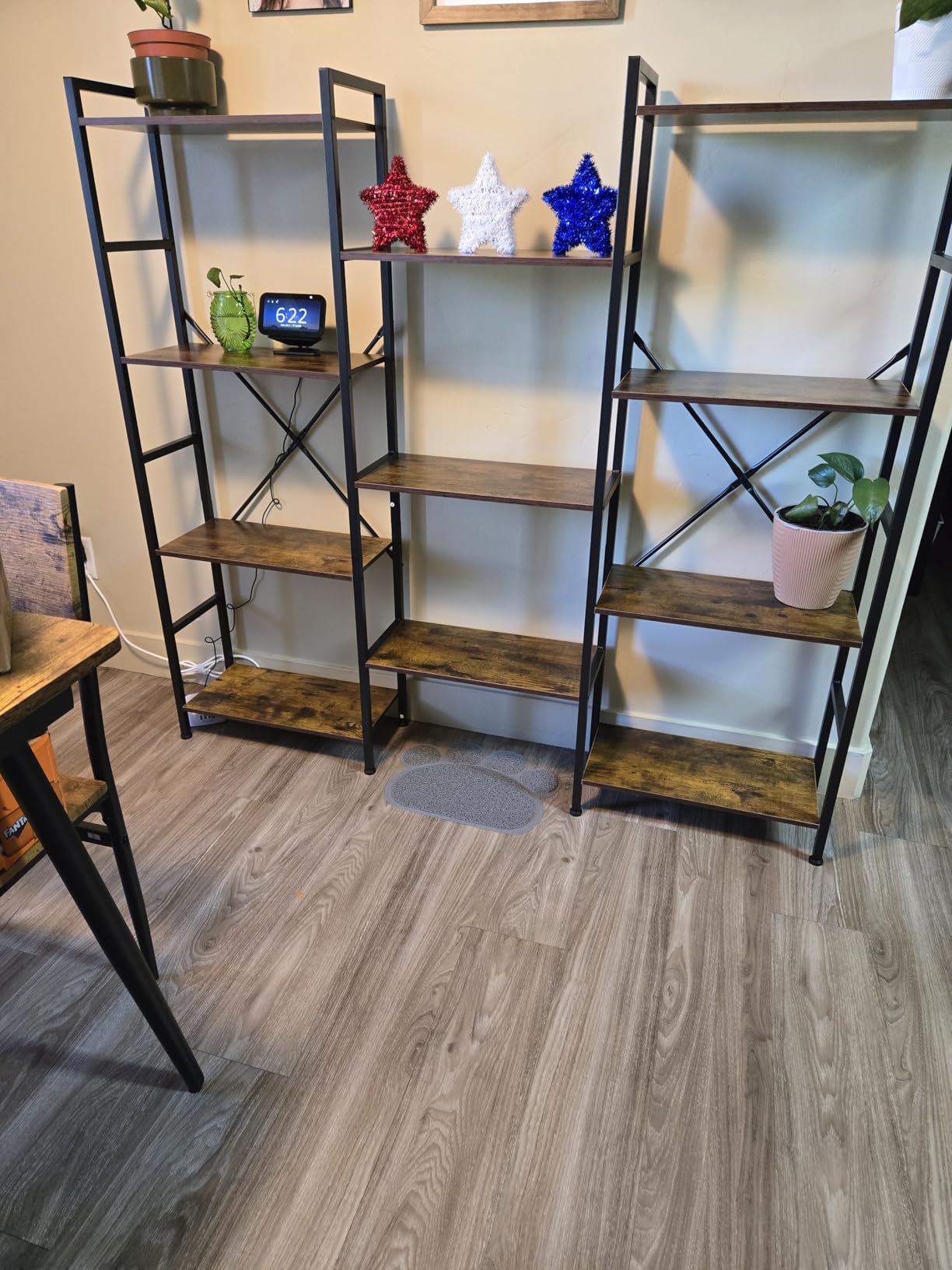
The steel frame is the structural story. A 20 by 20 mm tube frame carries the load and limits racking, so the 22 lb per-shelf rating holds even when the frame is fully loaded. The eight adjustable plastic feet matter more than they sound; office floors are rarely level, and a rocking unit is what makes tall shelves tip.
The adjustable shelf heights are what separate this from a plain six-shelf tower. Books arrive in wildly different sizes, and a fixed 11 inch gap wastes vertical space on a shelf of paperbacks while forcing you to stack tall art books. Here you reposition the shelves to suit.
Assembly is quoted at about an hour with all tools and labelled parts in the box, plus a manual. Anti-tilt wall brackets are included, and on a unit this wide we would fit them regardless of whether children or pets live in the house.
Room size is the deciding question
At nearly five feet wide, this is the largest footprint in the roundup. In a small apartment office it will dominate the room and may block a window or a door swing. In a dedicated study, a converted living room, or a shared work-and-play room, it earns its footprint back several times over.
Measure the wall before ordering and check that you still have a clear path to your chair. A unit this wide against the wrong wall turns a workable room into a cramped one.
When it is the wrong choice
The shelf levels are 12 mm particle board in a steel frame, so while the total capacity is high, the per-shelf figure of 22 lb is modest. That is fine for a broad, mixed collection. It is less suitable for a room of uniformly heavy hardbacks, where a solid wood or thick plywood shelf would serve better.
It is also open on both sides with no back panel, so it works best against a wall where the back is not visible and where nothing walks behind it.
4. LEYAOYAO Mid-Century Cube Bookshelf – Best Styling
LEYAOYAO Cube Bookshelf, Mid-Century Modern Book Shelf with Legs, Brown
9.45 x 31.5 x 43.3 inches
3 cube sections
35 lb per cube
Pros
- 35 lb per-cube rating is the highest on any open cube here
- Distinctive crisscross cube layout with raised legs
- Faster to move and to clean underneath
- Full back panel plus anti-tip device
- Available in many colour and cube-count combinations
Cons
- Plastic legs rather than solid wood
- Some owners describe the unit as feeling slightly flimsy
- Many screws make assembly slow with only the supplied key
If your office doubles as a room you look at every day, appearance is a functional consideration rather than a vanity. This mid-century cube unit has the warmest look of anything we tested, and a large share of owners in its reviews have bought a second one, which tells you how it sits in a room.
The crisscross partition design creates differently sized openings, so short novels and large hardbacks can share the same unit without looking untidy. That is harder to achieve on a fixed-grid bookcase, where every shelf is the same span.
At 35 lb per cube, this is the highest published per-cube rating among the open cube units we covered, and it reflects a shelf with real board thickness rather than a thin decorative panel. In use it held a surprising amount without complaint, though the mixed feedback on build feel is worth taking seriously.
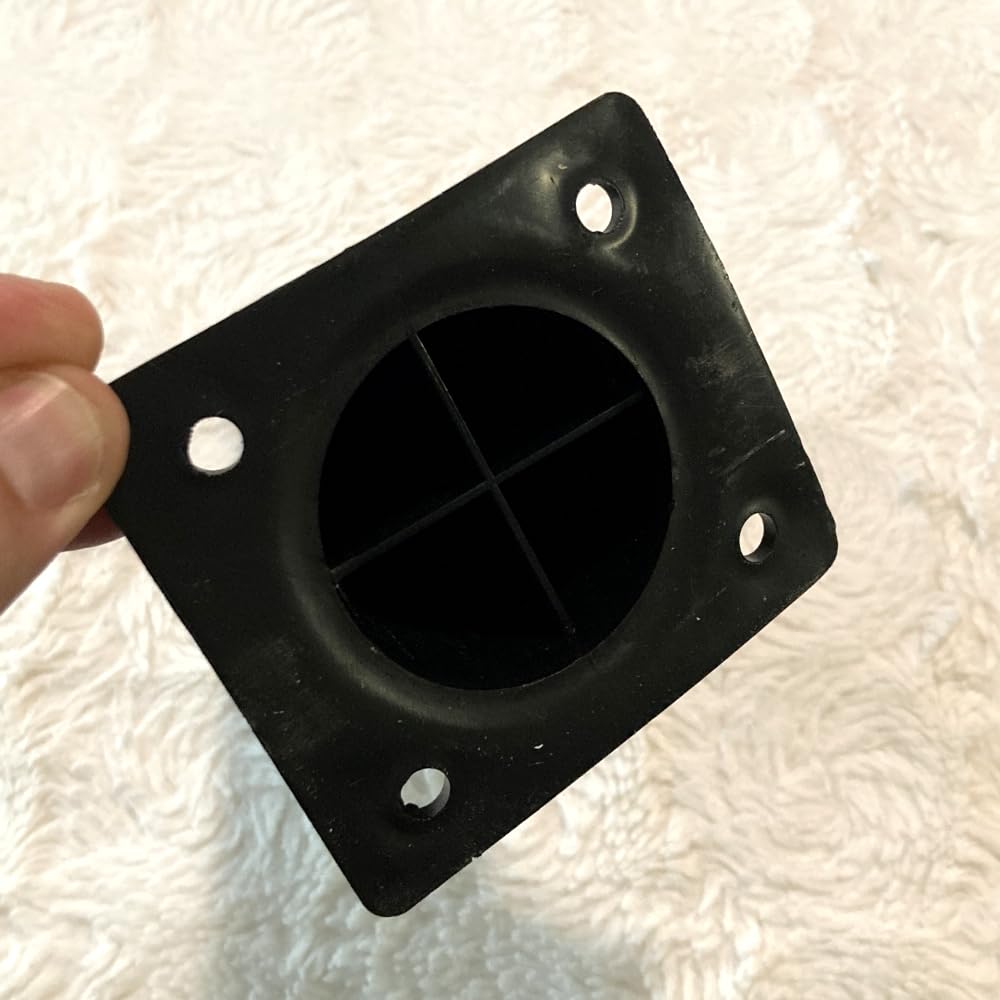
The raised canted legs are both a style choice and a practical one: the unit is lighter to move and you can clean underneath it, which matters in a home office where floor space is contested. Each leg is reinforced with four metal screws, and the full back panel plus anti-tip device keep it steady against a wall.
Assembly is fast. Several owners report around twenty minutes with a drill, and the crate is packed in thickened foam with firmed edges, so damage in transit is less common than with flimsier flat-pack furniture.

Where it earns its place in an office
The different-sized openings suit a mixed library: novels, manuals, records and boxed documents can share one piece of furniture. The full back panel means nothing disappears behind it, which is a real improvement over open-frame designs in a working room where you want the surface to look ordered.
At 43.3 inches tall it sits below eye level, so it will not block a monitor or a window. It works well as a low unit beside a desk, a room divider that is not a full wall, or a display surface for reference books you use weekly.
When it is the wrong choice
The legs are plastic, and some owners describe the overall build as feeling a little flimsy once assembled. If your collection is dominated by heavy hardbacks and you care about long-term rigidity over looks, one of the thicker-shelf units in this list is a safer bet.
The veneer finish is high gloss, which shows fingerprints more readily than a matte or laminated surface. In a room where you eat at the desk, that is a small daily annoyance.
5. Furologee 5-Tier Bookcase with Drawer – Best for Small Offices
Furologee 5 Tier Bookshelf with Drawer, Tall Narrow Bookcase, Rustic Brown
10.6 x 15.4 x 55.5 inches
5 tiers at 30 lb each
Removable fabric drawer
Pros
- Only 15.4 inches wide
- ideal for a corner or beside a desk
- 30 lb per shelf on a metal frame
- Removable drawer hides office supplies and cables
- Anti-tip safety kit and four adjustable feet included
Cons
- Narrow width limits what fits on each shelf
- Particleboard shelves rather than solid wood
- Drawer takes one of the lower tiers
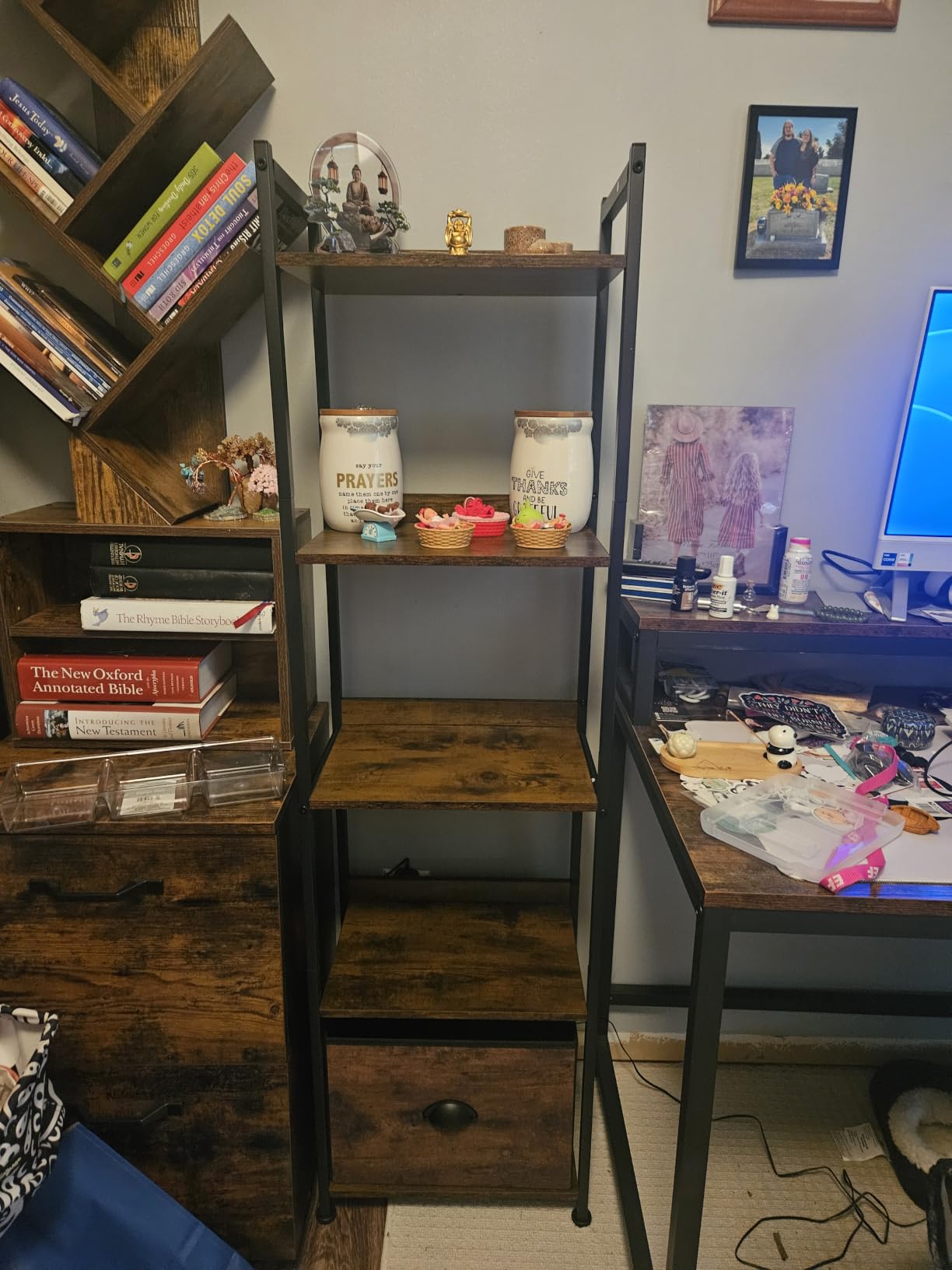
Small home office, awkward corner, desk already filling the room. This is the unit to look at first. At 15.4 inches wide it can stand beside a desk or in a corner without stealing workspace, and at 55.5 inches tall it still gives you real vertical storage rather than a low side table.
The drawer is the feature that turns a plain bookcase into office furniture. It measures roughly 13.8 inches wide by 10.2 inches deep and removes cleanly, which is where you would keep pens, a stapler, spare cables or a folder of current paperwork out of sight.
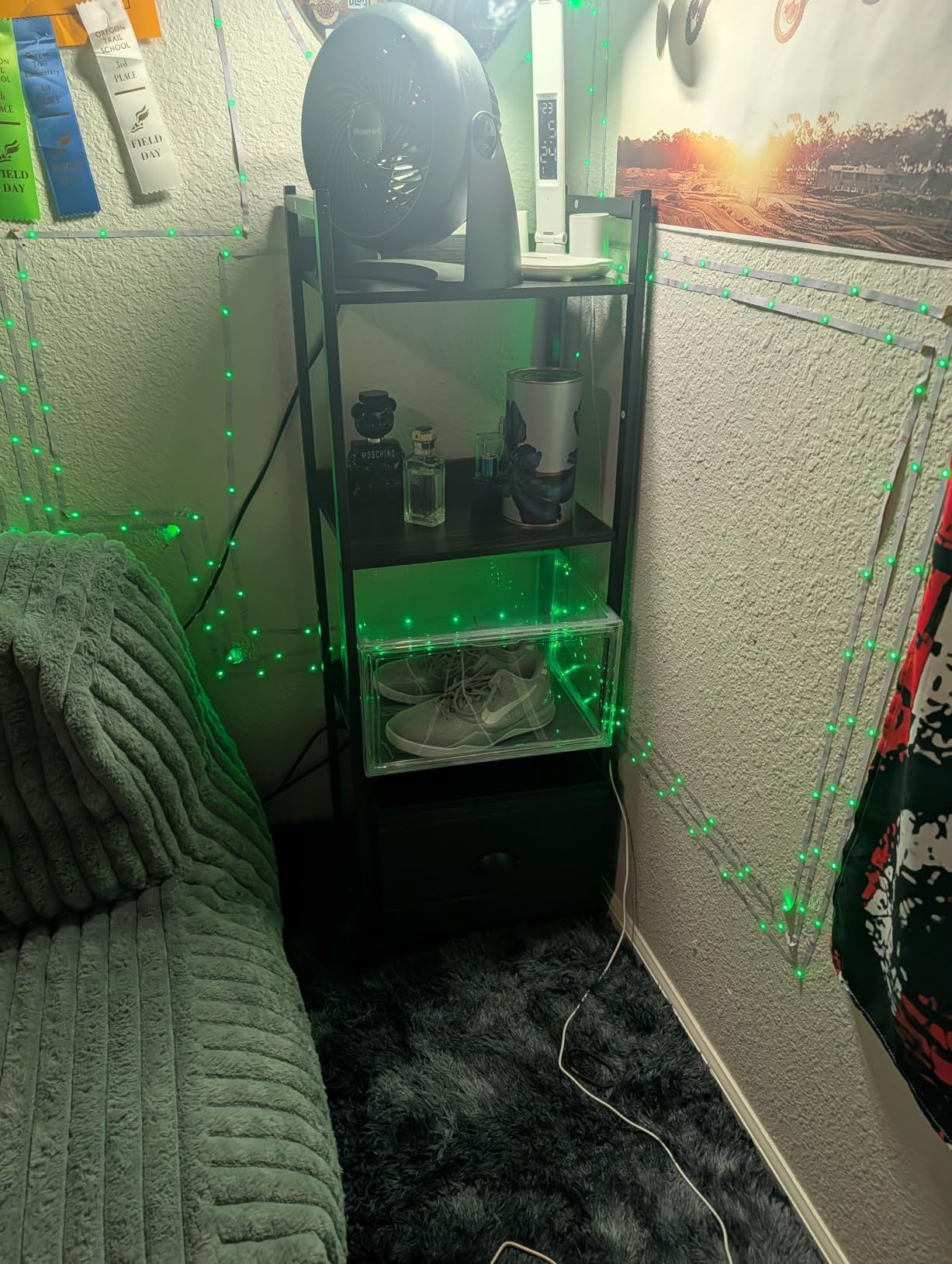
Each shelf is rated at 30 lb, which is higher than most units of this size because the load path runs through a metal frame rather than a particleboard carcass. In an office that means binders are fine here, which is not true of every narrow shelf on the market.
Assembly is straightforward, with hardware and labelled parts supplied. The four adjustable feet let you level it on carpet, which matters because a rocking narrow tower is the most likely shelf in this roundup to topple. The anti-tipping wall safety kit is in the box, and we would fit it.
Care is simple: a damp or dry cloth is enough for the wood-grain finish, and the fabric drawer lifts out if you need to wash or replace it.
Making a 15.4 inch shelf work hard
Narrow shelving works best when you accept the constraint and organise around it. Store single paperbacks, slim journals and document wallets rather than stacked hardback sets. Turn the shelf so books face outward like a display for the four or five titles you reach for most.
Because the unit is deep enough at 10.6 inches for standard hardbacks and most binders, you lose depth capacity but not much. Pair it with a low credenza under the window if you need somewhere for a printer.
When it is the wrong choice
Skip it if you own a large-format reference library, art books or vinyl records. Those need a wider opening, and the reviews reflect that: the narrow width that makes this unit useful in a small office also squeezes oversized items.
Because the drawer occupies a lower tier, you give up one shelf of vertical storage to gain concealed storage. Count how many shelves you actually need before deciding.
6. SUNMORY 6-Tier Tree Bookshelf – Best for Very Narrow Corners
SUNMORY 6 Tier Tree Bookshelf, Tall Small Bookcase with Storage Cabinet
7.9 x 14.6 x 47.4 inches
6 tiers plus 2 cabinets
Thickened MDF
Pros
- Shallowest footprint here at 7.9 inches for tight corners and hallways
- Two storage cabinets conceal office clutter
- Light at roughly 16 lb so it is easy to reposition
- QR code assembly video and numbered parts
- Anti-tip accessories and 2 year warranty
Cons
- Shallow shelves hold only a few books each
- Thin MDF has less rigidity than plywood or solid wood
- Best as a supplement rather than a main bookcase
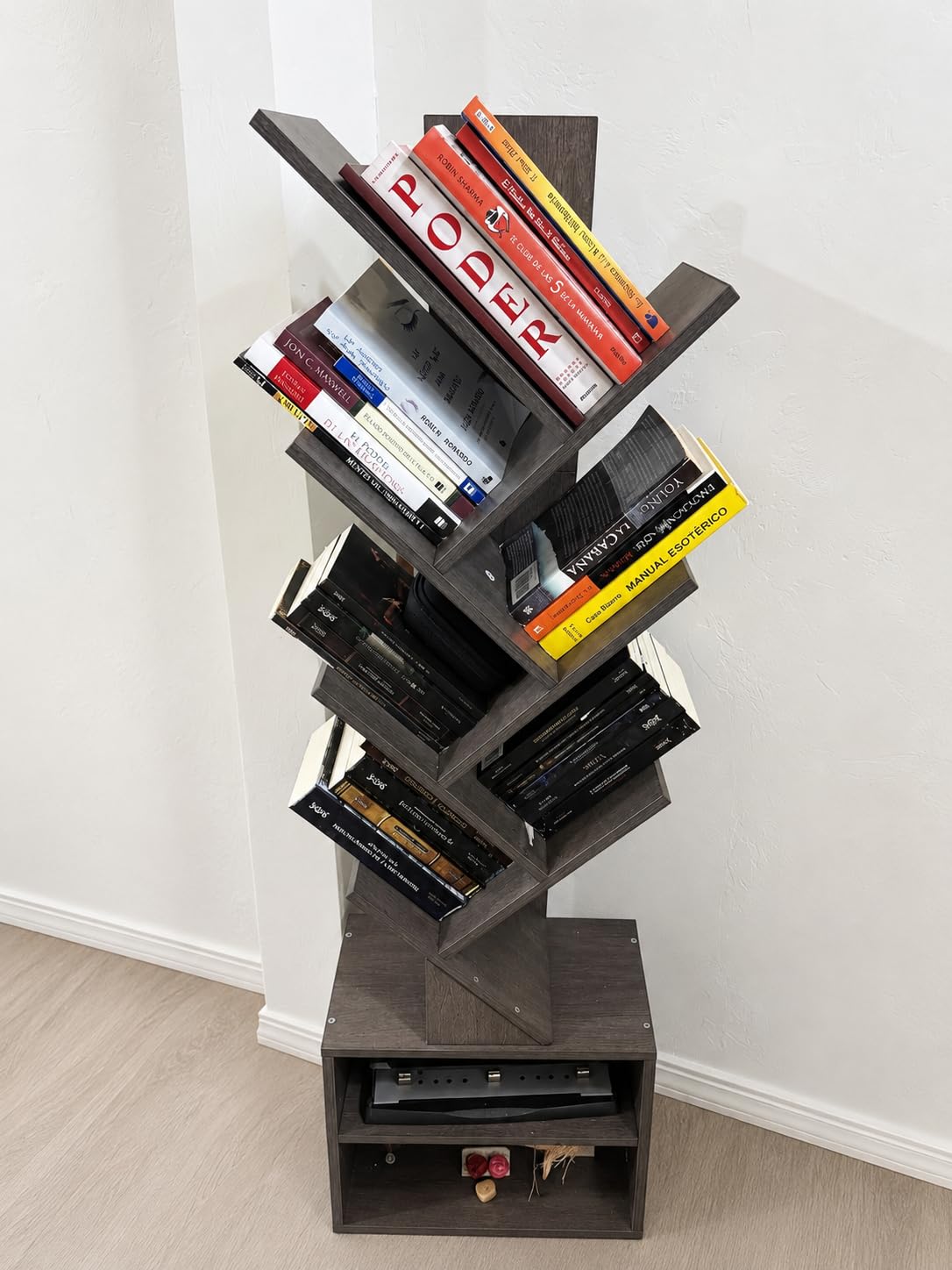
The branch-inspired silhouette is the reason this appears on most shortlists, and in a home office corner it does something useful with dead space: it draws the eye without making the room feel crowded. At 47.4 inches tall it stops well below a ceiling, which keeps the room open.
This is a supplement unit rather than a main bookcase. Six tiers plus two open storage cabinets give you somewhere for the books you want visible and somewhere for the paperwork you do not.
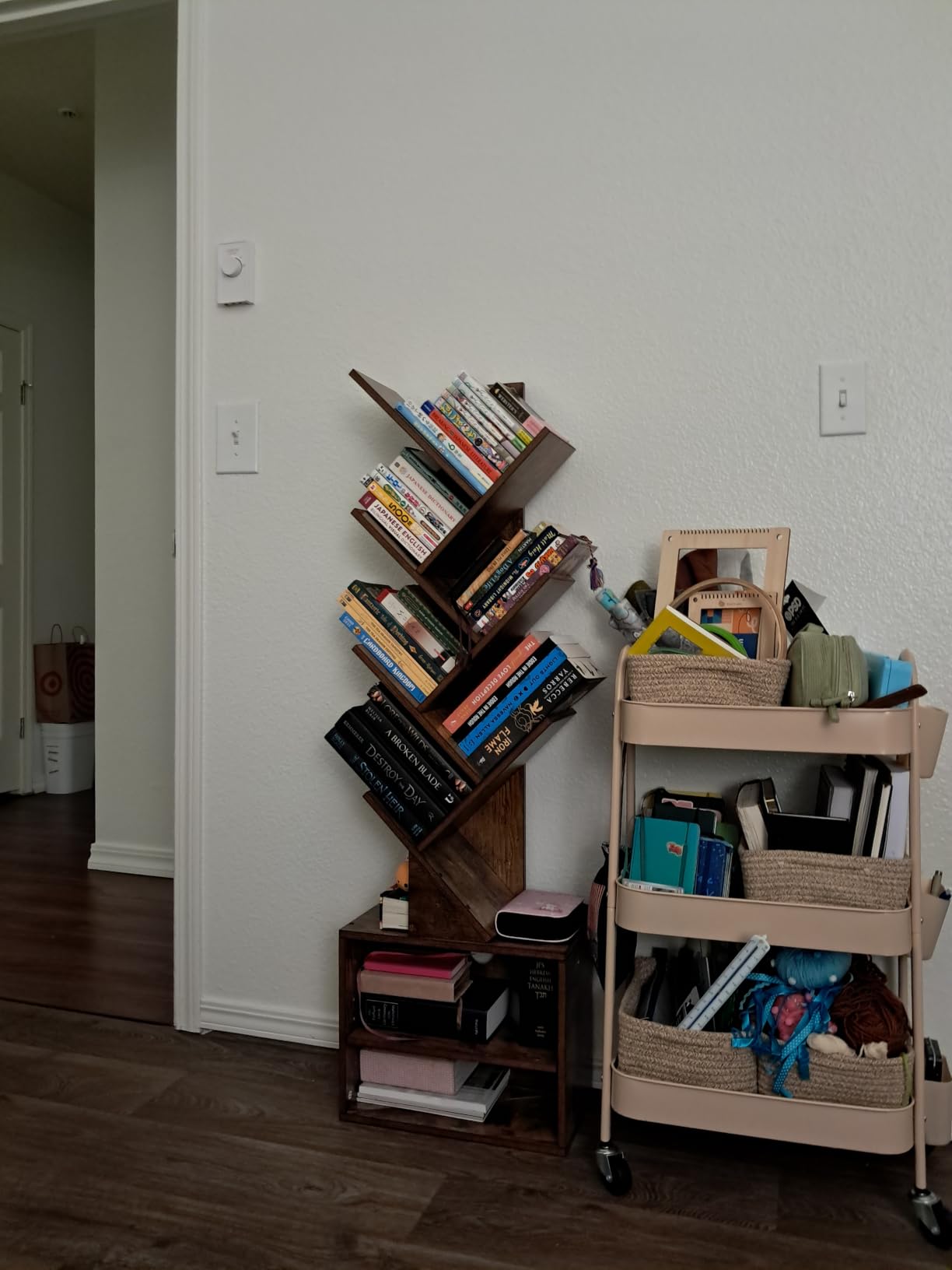
The construction is thickened MDF with a reinforced base and backboard, which is sturdier than the thinnest flat-pack shelves but not equivalent to plywood or solid wood. Reviews are consistent about that distinction: the design earns the praise, the per-shelf capacity is the limitation.
Assembly support is unusually good. Parts are numbered, and the manual includes a QR code that opens an assembly video, which is exactly the kind of thing that saves half an hour on furniture with an unconventional frame shape.
Anti-tip wall accessories are included for homes with children or pets, and the unit carries a two year warranty with lifetime technical support, which is longer than most in this roundup.
Best used as a secondary shelf
Place it where a deeper unit cannot go: beside a radiator, in the gap between a sofa arm and a wall, or on a landing. At 7.9 inches deep it holds paperbacks, slim magazines, small plants and the odd boxed cable, but a row of hardbacks will overhang the front edge.
Use the two cabinets for stationery, chargers or a folder of active project documents. Keeping the visible shelves to a curated set of books makes the shallow depth read as intentional.
When it is the wrong choice
Do not choose this as your only bookshelf in an office that holds a serious reference collection. Reviews suggest roughly five to ten books fit per shelf, and MDF shelving with a shallow span will tell you about it when you load it fully.
If you want the look of open shelving but need more capacity, choose a wider unit with thicker shelves from this list and use plants to soften it instead.
7. VASAGLE 5-Tier Bookshelf – Best Value
VASAGLE 5-Tier Bookshelf, Storage Organizer, 23.6 x 9.4 x 52.8 Inches
9.4 x 23.6 x 52.5 inches
5 tiers at 22 lb each
Particleboard and MDF
Pros
- Adjustable shelf heights on three of the five tiers
- Tools
- spare hardware and anti-tip kit all in the box
- One detailed owner counted about 90 books fitting
- Assembles solo in roughly 30 to 60 minutes
Cons
- Several owners find assembly confusing with many joiner types
- Runs smaller than the stated dimensions suggest
- Some units arrive with minor defects
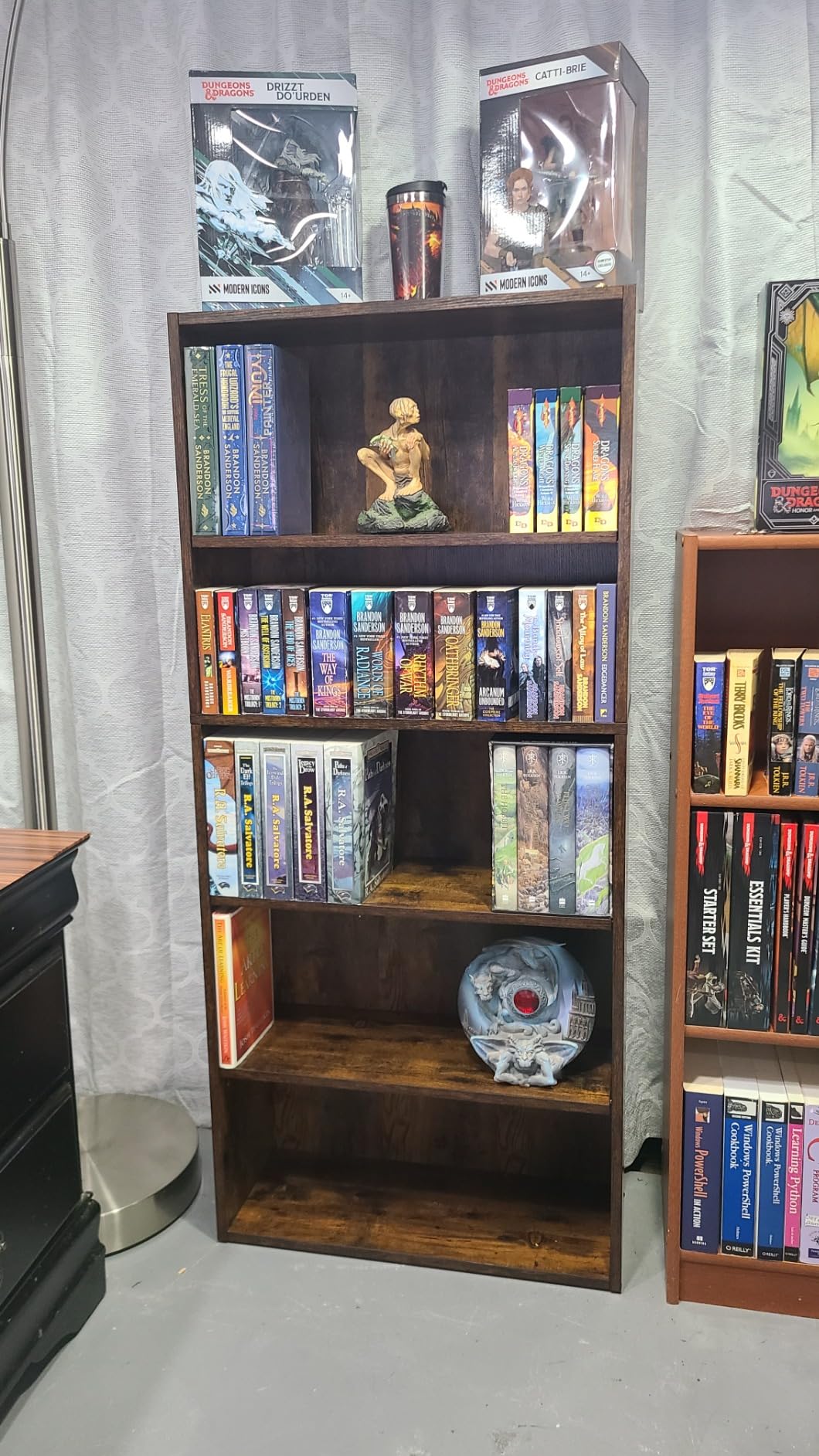
This is the unit we would put in a first home office because it does the ordinary things well and ships with the tools to build it. At 23.6 inches wide and 52.5 inches tall, it fills a wall segment without dominating the room, and the second, fourth and fifth tiers each offer three height positions.
Adjustable heights matter more than they first appear. Books are not all one size, and a fixed five-tier grid always leaves wasted vertical space on at least two shelves. Here you can raise a tier for a stack of art books and lower one for a row of paperbacks.
The 4.3 star average is the lowest of the twelve in this roundup, and the cause is consistent across reviews: assembly difficulty rather than build quality. Owners report that the variety of joiner types and the drilling feel illogical, particularly if you work from the instructions alone.
Our advice is to sort the hardware into groups before starting, follow the part labels on the panels rather than the printed diagrams, and check every hole against the parts list before driving a screw. The anti-tip kit and spare parts are in the box, which is rare and saves a second order.
Once built, it holds a substantial collection. One detailed review counted around ninety books fitting inside, and the closed back keeps items from falling behind while adding rigidity.
What you trade for the lower assembly score
The score reflects process, not failure rate in use. The particleboard back panel is less rigid than a solid wood or screwed-on plywood back, so expect a little more give if you lean on the frame, but the shelves themselves are rated at 22 lb each and behaved once loaded.
Several reviewers also note that the finished unit runs slightly smaller and shorter than the stated dimensions suggest. If you are fitting it into a specific gap, leave a couple of inches of tolerance rather than measuring to the millimetre.
When it is the wrong choice
If you dislike flat-pack furniture or you will not have an evening free for assembly, choose a unit with simpler joinery and tools included. If your office stores heavy hardbacks in quantity, this is not the shelf to build your collection around.
It is a strong choice for paperbacks, manuals, magazines and mixed office storage, which is what most home offices actually need.
8. HCHQHS 6-Tier Open Bookcase – Best as a Room Divider
HCHQHS Adjustable 6 Tier Open Bookcase, Rustic Farmhouse Book Shelves, Industrial Wood and Black Metal Bookshelves, Mid Century Bookcase for Home Office Living Room Bedroom
11.8 x 23.6 x 70.1 inches
6 tiers with adjustable middles
Backless MDF and metal
Pros
- 70 inch height with adjustable middle shelves
- Backless design keeps the visual profile light
- Eight side hooks for headphones and small items
- Edge protection for fragile objects
- Four adjustable foot pads for uneven floors
Cons
- Backless design lets items fall off the rear
- Less rigid than a closed-back unit for heavy collections
- Highest rated price point among the open shelving here
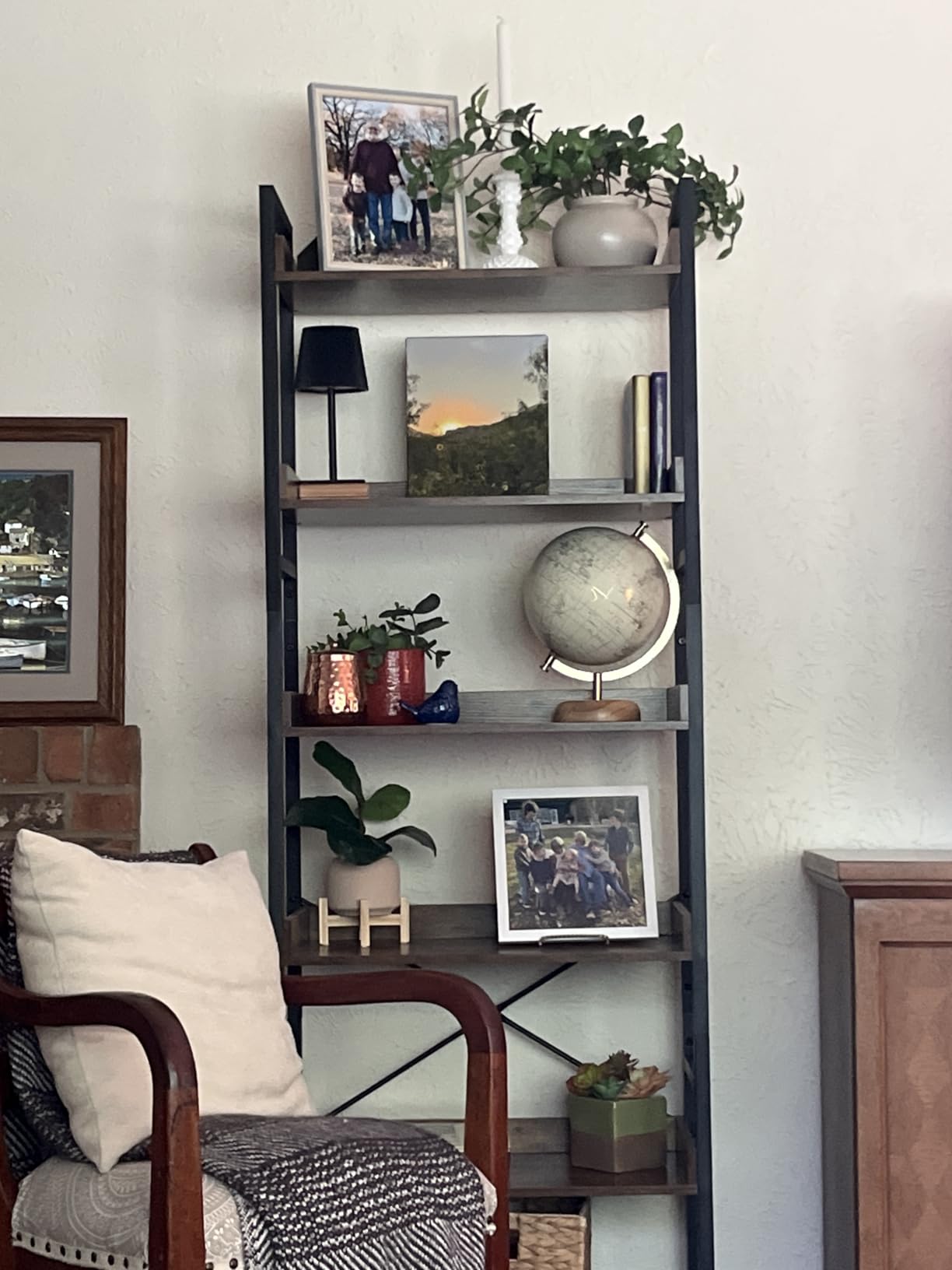
An open-plan room or a shared study both have the same problem: you need to separate two zones without installing a wall. A 70 inch backless bookcase standing perpendicular to the desk does that job while adding storage on both sides, and the visual lightness of an open frame stops it feeling like a partition.
At 11.8 inches deep it is also one of the deeper units here, so hardbacks and binders sit fully inside the shelf rather than overhanging.
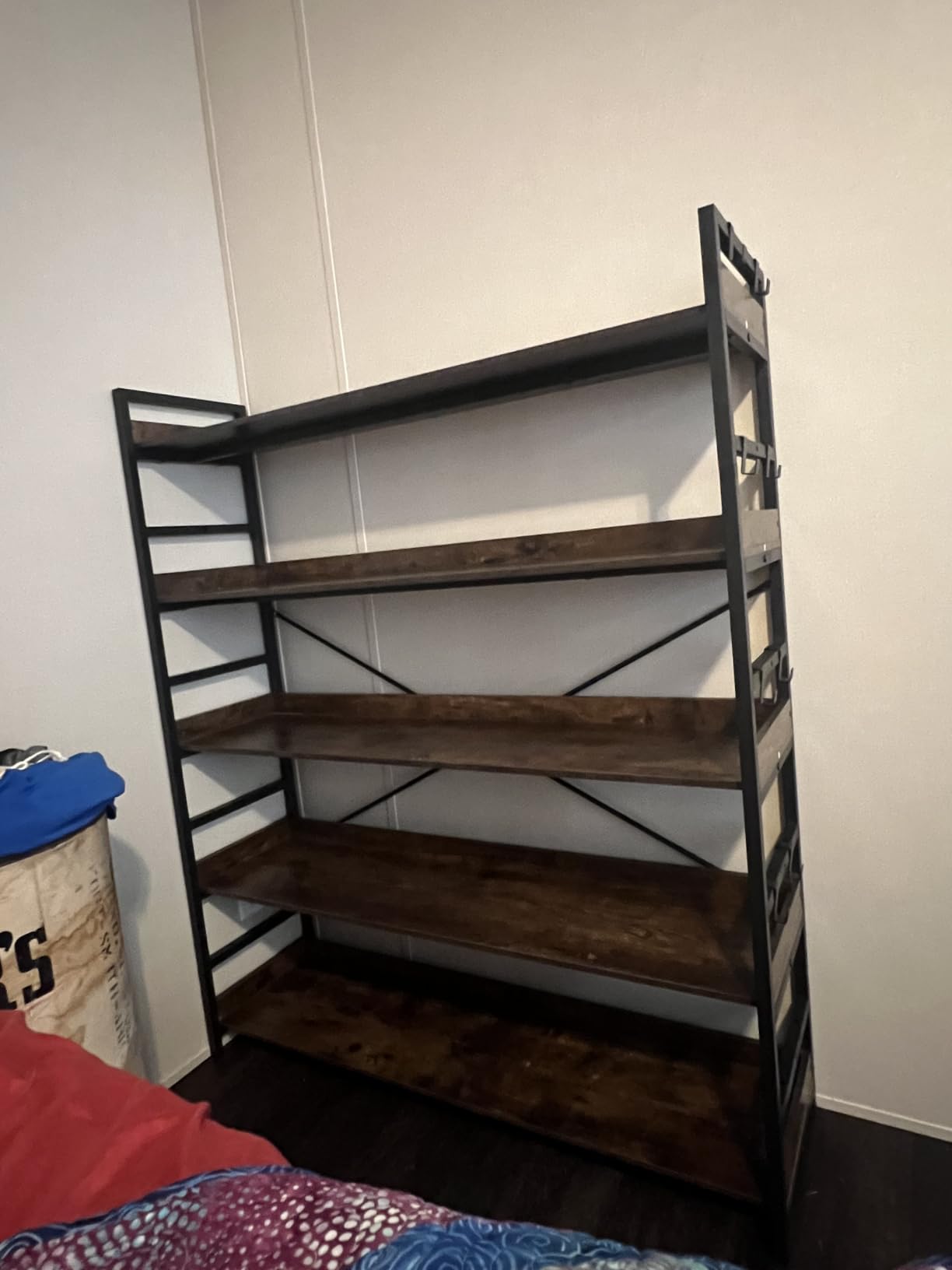
Adjustable middle shelves let you set the storage around your material, and the eight hooks on the side frames are genuinely useful in an office for headphones, a lanyard or a charging cable. Edge protection on the shelf lips is a thoughtful touch for anyone storing glass or ceramics alongside books.
The MDF is CARB P2 compliant, which is the low-emission standard relevant to a room where you spend the whole day. Four adjustable foot pads take up the levelling problem in older houses with uneven floors.
The backless design is both the reason to buy it and the reason to think twice. Without a back panel there is less resistance to racking, and books stored near the front of a shelf need a bookend or a wall behind them.
Using it as a divider without a wall
Stand the unit perpendicular to the longest wall so one face serves your desk side and the other serves the living side. Because the frame is open, light passes through, which is what keeps a small flat from feeling divided. In a rental this is also the practical argument: no wall fixing is required to make the zone feel deliberate.
Load the face closest to a wall more heavily and keep the open face to lighter items and display pieces. That is how you get the best of a backless frame without the sag risk.
When it is the wrong choice
Do not buy this as your only storage for a heavy book collection. Without a back panel the frame has less to resist lateral movement, and a full shelf of hardbacks near the front will bow.
It is also the highest-rated price point among the open shelving we covered, so if your budget is fixed you can get more shelf per unit from one of the particleboard towers and add a separate screen if you need the visual separation.
9. OSCHF 12-Cube Storage Shelf – Best for Bins and Paperwork
OSCHF 12-Cube Storage Shelf Bookcase, Black
10.6 x 47.2 x 35.4 inches
12 cubes in a 3 by 4 grid
720 lb total capacity
Pros
- Fits standard 11 inch storage bins exactly
- Full wooden back panels screwed on for rigidity
- Large boards rather than many small pieces strengthen the frame
- 720 lb total capacity
- Usable horizontally or vertically
Cons
- Very heavy at 49 lb to move and assemble
- Instruction print is small and some images hard to read
- 47 inch footprint is wide for a narrow room
An office shelf has to hold more than books. Printer paper, archived project folders, cables, and the boxes of documents you are supposed to keep but rarely open all live better in a cube unit than in an open bookcase, and this one is built for exactly that grid.
Each cube is sized to take a standard 11 inch storage bin, which is the detail that makes it practical. You can buy identical bins, swap the contents of one for another, and the labels line up because the geometry does.
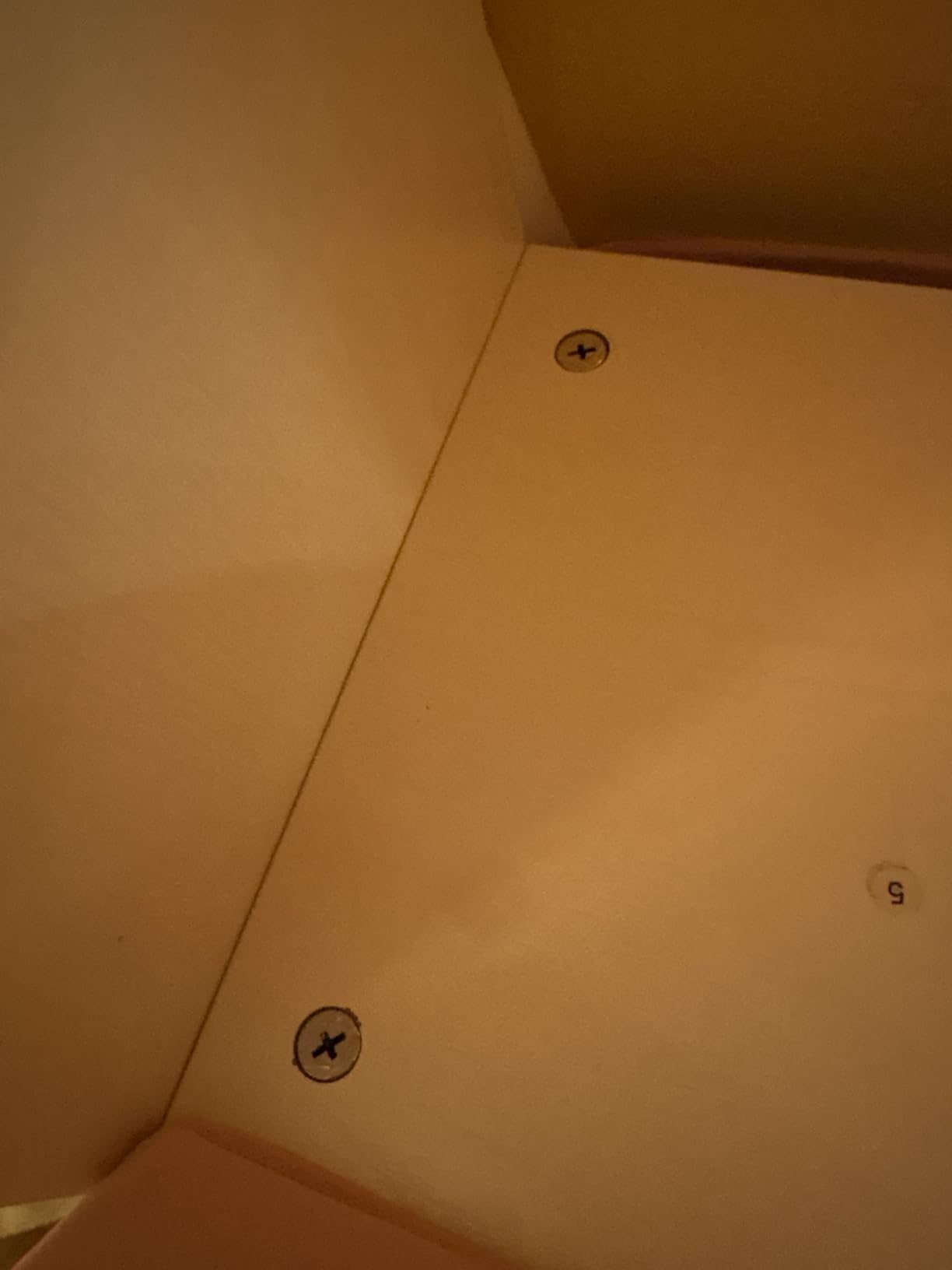
Two construction details set it apart from cheaper cube units. The back panels are full wooden panels screwed on rather than tacked cardboard, which is what stops the grid from racking, and the frame uses large boards instead of many small pieces, which removes the joints that usually loosen first. One owner even reports supporting a 15 gallon aquarium on it.
Camlock connectors hold the joints, and the hardware, tools and spare parts all ship in the box. The melamine surface is waterproof and scratch-resistant and wipes clean with a damp cloth.
It is also the heaviest unit in this roundup at 49 lb. Plan the build with two people and position the carcass before you fill it, because a fully loaded grid is not something you want to drag across a floor.
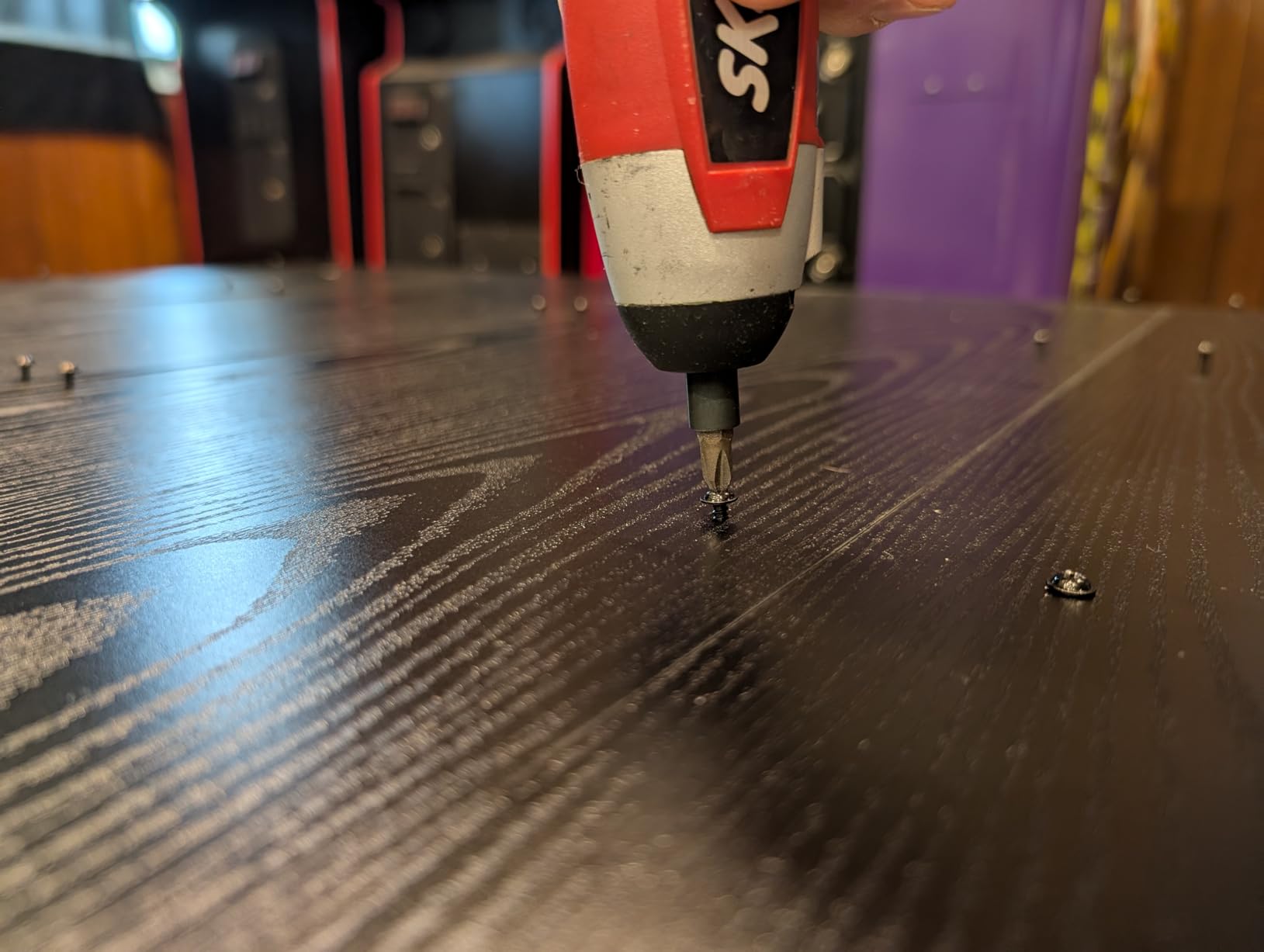
How to use the grid properly in an office
Assign the bottom row to the heaviest loads: paper reams, archived binders, box files. Use the middle rows for active project folders in labelled bins and the top row for reference books you use weekly. That distribution keeps the centre of gravity low and cuts the load on the joints.
Because it can be used horizontally or vertically, orient it whichever way suits the wall: on its long side for a low credenza under a window, or upright against a short wall.
When it is the wrong choice
The instruction sheet is small and some of the diagrams are hard to read at normal lighting, so budget extra time and expect to work from part labels. If you dislike flat-pack assembly generally, this is not the unit to learn on.
At 47.2 inches wide it needs a substantial wall, and at 35.4 inches tall it will not use vertical space. If floor area is your constraint, a taller narrow unit is a better fit.
10. IRONCK Bookcase with Doors – Best for Concealed Storage
IRONCK Bookcase with Doors and Open Shelves for Home Office and Living Room
11.8 x 27.6 x 56.7 inches
4 open shelves at 58 lb each
One cabinet section
Pros
- Highest rating in the roundup at 4.8 stars
- 58 lb per upper shelf suits heavy books and binders
- Height-adjustable shelves plus a cabinet section
- Four casters make a 43 lb unit easy to move
Cons
- Only two finish options available
- 11.8 inch depth leaves less usable width against a wall
- Doors reduce shelf opening height
The highest-rated product in this roundup, and the only one with both a cabinet section and a serious load rating. The 58 lb per upper shelf figure is well above everything else here and means binders, textbooks and hardback runs go on this unit rather than on a particleboard tower.
That cabinet section is what makes it feel like office furniture. Client folders, contracts and anything else you would rather not have on display goes behind a door, while the open shelves hold the books you want to see.
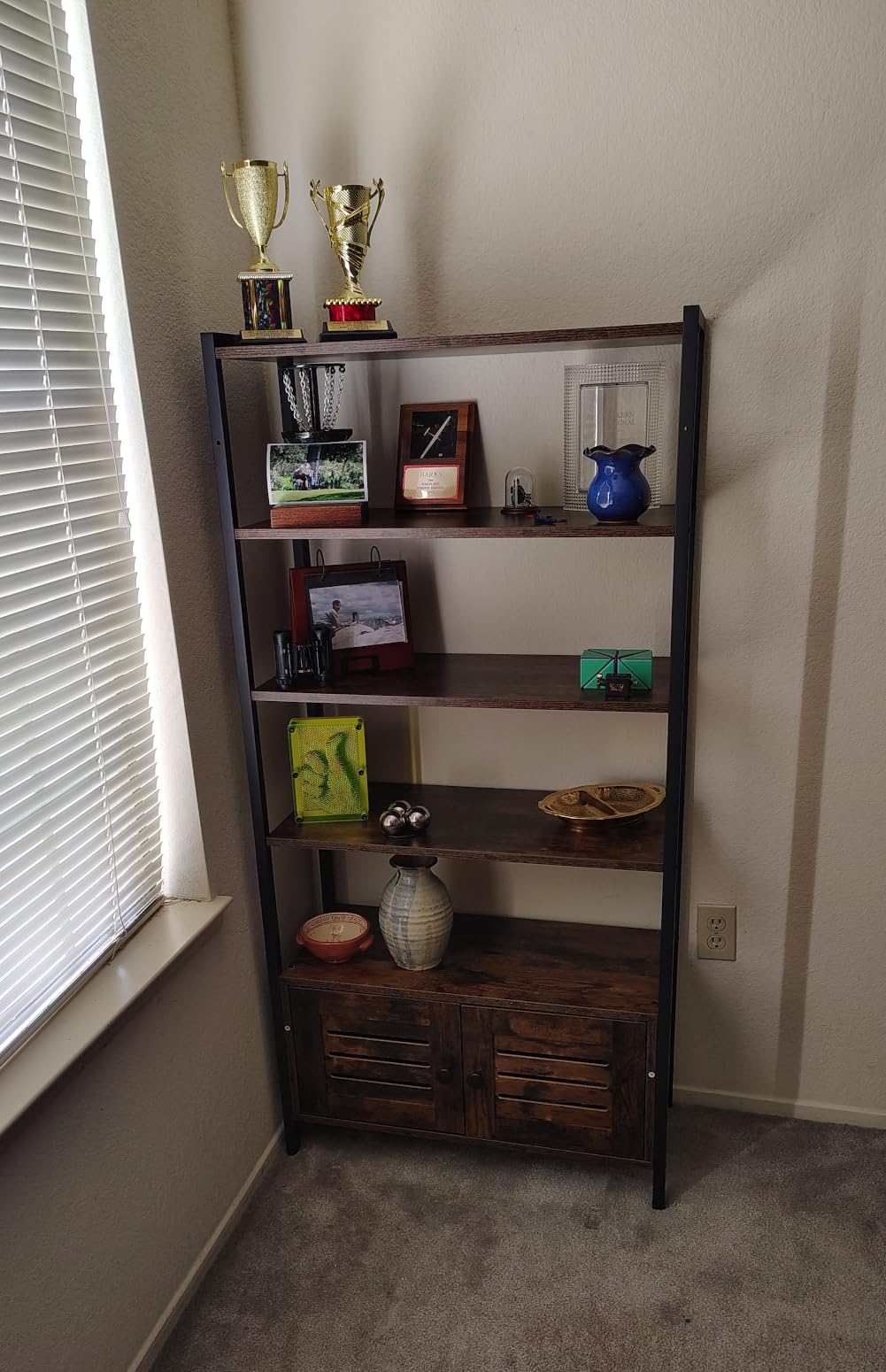
Five height-adjustable shelf positions let you configure the open section for the material you actually own. The board is thick and the frame is heavy-duty metal, which is where the load rating comes from. Four casters and adjustable footpads mean a 43 lb unit can be repositioned without two people, which matters in a small office where furniture moves often.
Reviews highlight the flexibility rather than the styling: the same unit appears in a home office, a bathroom and a kitchen, which is a fair indicator of how solid it feels once assembled. Care is a dry cloth.
The main compromise is depth. At 11.8 inches the shelves are deeper than most, which is good for large books and bad for wall clearance: the unit stands further out from the wall and eats more floor space in a tight corner.
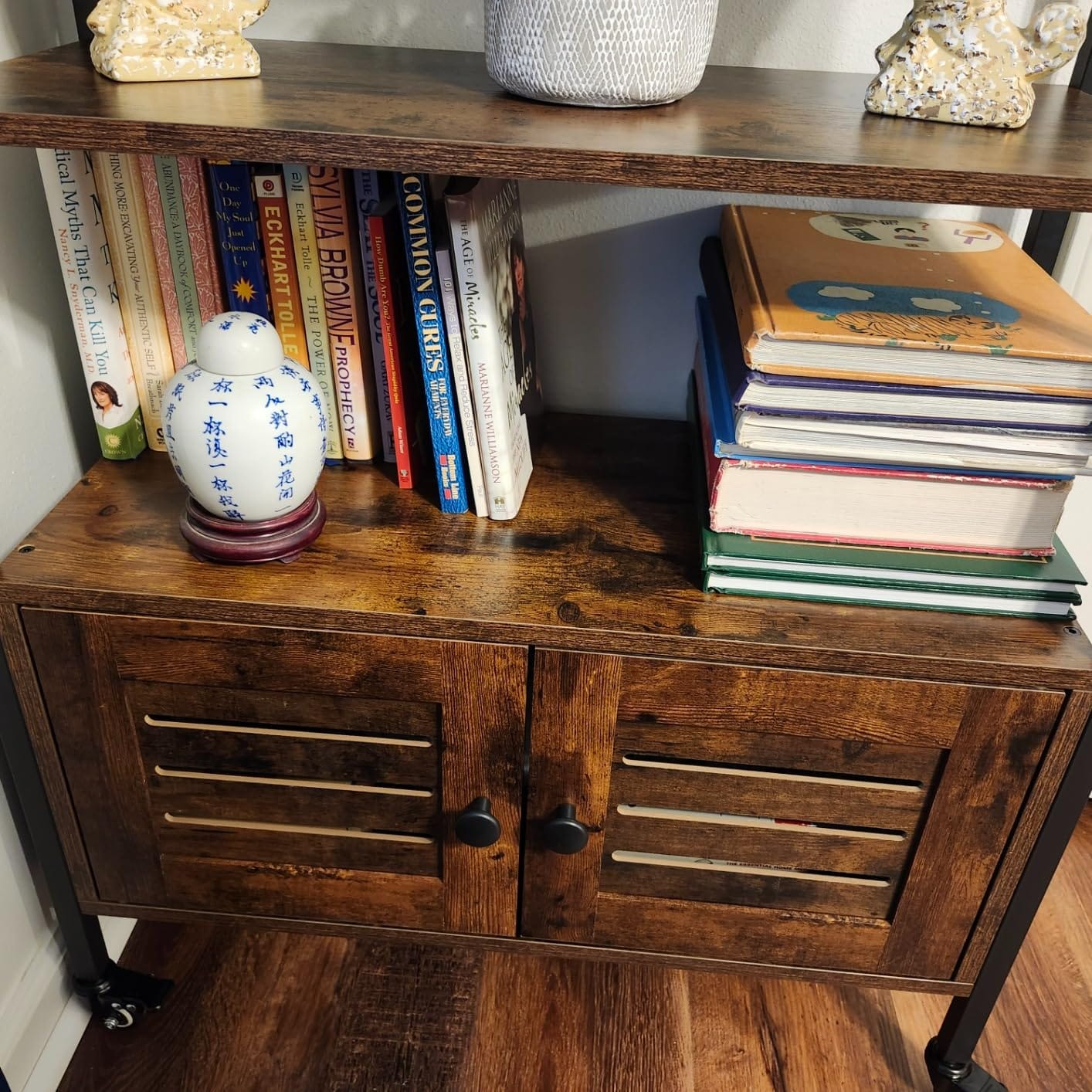
Why the load rating matters more here
Deep shelves and thick boards combine to give this unit real capacity, and that is the practical answer to anyone whose office shelving has started to bow under a growing reference library. You can load a lower shelf with a full row of hardbacks without bracing it.
The casters are also an ergonomic point. Being able to roll the unit out to clean behind or to reach a cable means you are not dragging furniture across the floor, which is what eventually racks a frame and ruins casters.
When it is the wrong choice
Only two finishes are available, so if your office has a specific colour scheme this limits you. The doors also reduce the usable opening height on the enclosed section, so check the tallest item you plan to store before buying.
At 27.6 inches wide and 43 lb heavy, it is a substantial piece of furniture. Make sure the floor is flat enough for the adjustable footpads to do their job.
11. AFLUI Triple Bookshelf with 3 Fabric Drawers
AFLUI Triple Bookshelf with 3 Fabric Drawers, 4-Tier Book Shelf and 10 Display Shelves, Industrial Large Bookcase for Home & Office, Rustic Brown, 47” Wide
9.3 x 47.2 x 55.7 inches
10 shelves at 55 lb each
3 fabric drawers
Pros
- Ten display shelves plus three drawers in one unit
- 55 lb per shelf on a reinforced cross-brace frame
- One-person assembly reported by many owners
- Tools
- instructions
- QR videos and spare hardware included
Cons
- Fabric drawers are not built for heavy contents
- Hardware is largely plastic and fragile during assembly
- Backless so items can slide off the rear
This is the hybrid option: a 47 inch wide triple-section frame with ten open display shelves and three fabric drawers across the top tier. If your office needs both visible storage for books and concealed storage for stationery, it covers both without buying two separate pieces of furniture.
The 55 lb per shelf rating comes from a reinforced cross-brace steel frame, and it is high for a unit of this footprint. Several owners describe it as sturdy once assembled, and the adjustable foot pads handle concrete and uneven floors well.
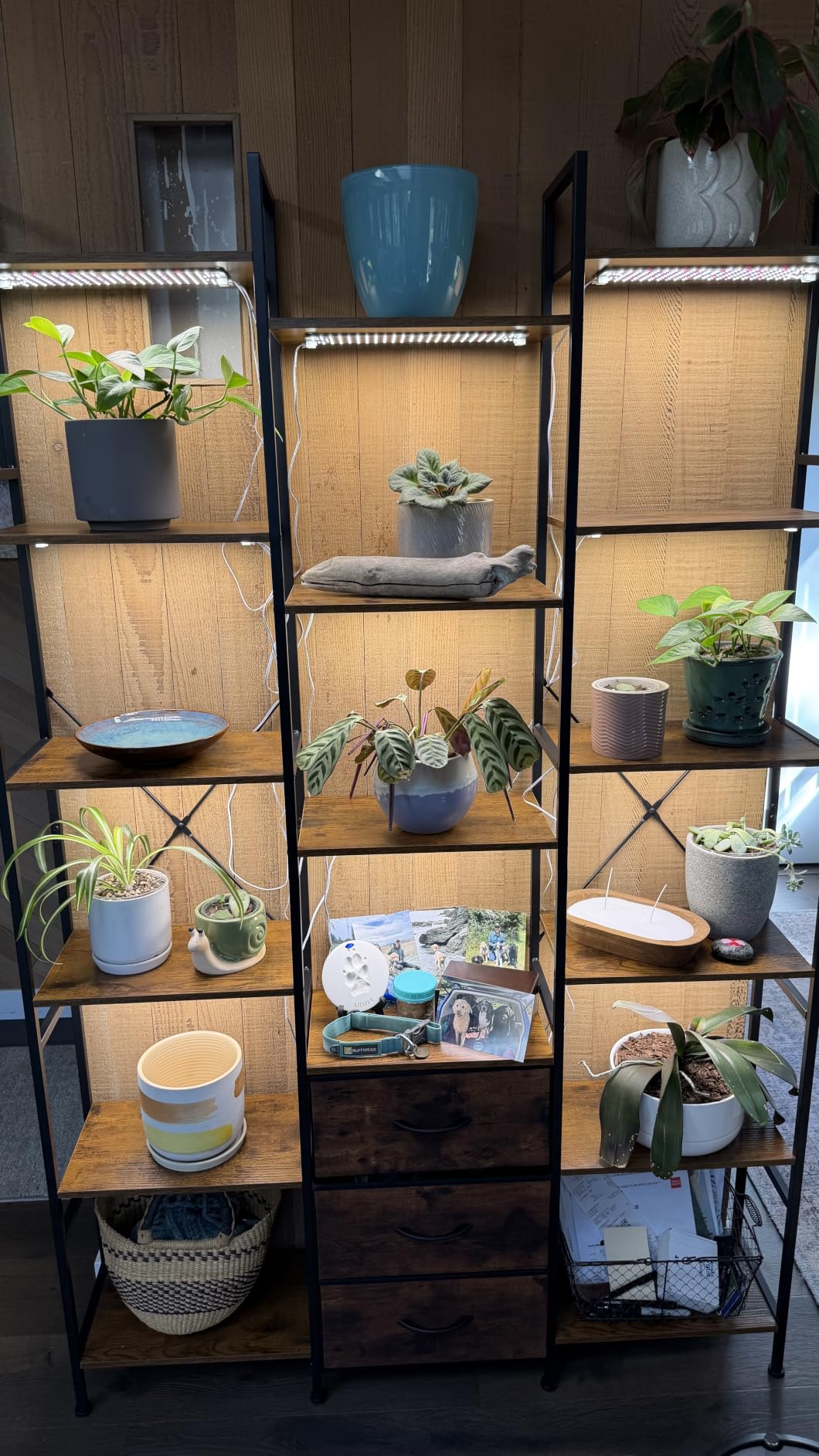
Assembly is the standout. Reviewers repeatedly mention building it alone, including one owner in their seventies with arthritis, which is unusual praise for a piece this size. The frame uses cross-bracing rather than simple uprights, which means more parts but a stiffer result.
The box includes tools, detailed instructions, QR assembly videos and spare hardware for every type of fixings. Customer support is available around the clock. That combination of support and single-person assembly is what turns a 32 lb unit into a manageable build.
Be realistic about the drawers. Fabric bins on a rail are intended for light to moderate items: stationery, cables, notebooks. Heavy box files will strain the rail and the fabric over time, so use a hard bin for anything dense.
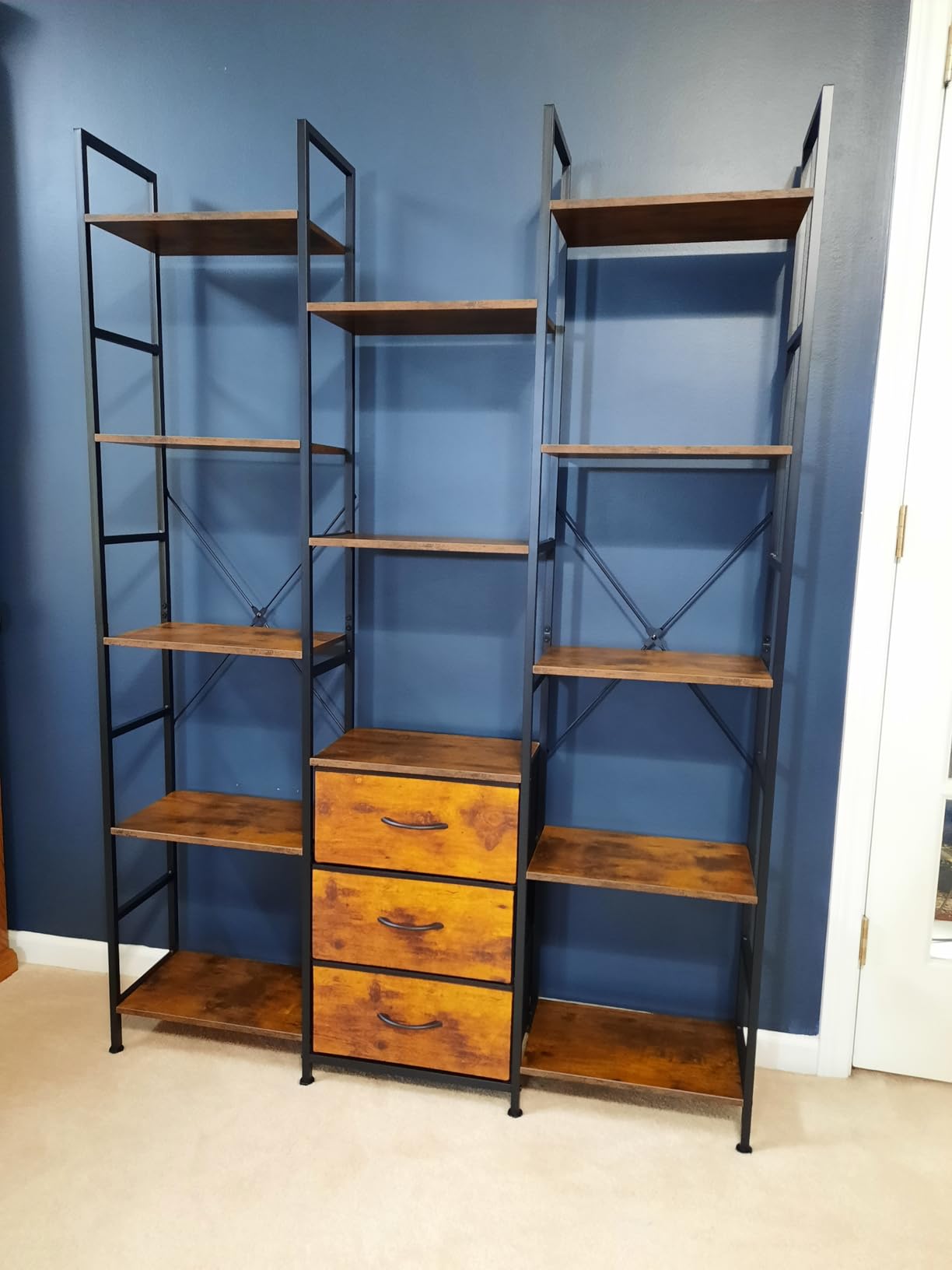
Which side of the unit to load heavily
With no back panel, put your heavier books toward the front edge on one side and keep the outer sections for lighter material and display items. The cross-bracing resists racking better than an unbraced frame, but it cannot compensate for an unbalanced load.
Wall anchoring is the standard recommendation from owners for a unit this wide and backless, and it is the right call in any room with children or pets.
When it is the wrong choice
Skip it if you need sealed or dust-proof storage; fabric is a dust magnet and does nothing for humidity. The plastic hardware is also the part most likely to strip during assembly, so do not overtighten it.
At 47.2 inches wide it needs a full wall, and it is not a unit to place in the middle of a small room as a divider without anchoring.
12. Huuger L-Shaped 5-Tier Bookshelf – Best for Corner Layouts
Huuger 5 Tier Bookshelf, L Shaped Corner Bookshelf with 10 Open Shelves, 49.4 Inch Straight Wide Bookcase with Metal Frame and Wooden Board, Adjustable Feet, Rustic Brown
9.5 inch deep
10 open shelves
FSC-certified boards on a metal frame
Pros
- Reconfigurable between an L-shape corner and a straight wall unit
- Thickened FSC-certified wood boards with an X-brace
- Tall 65.8 inch profile for vertical storage
- Tools
- spare hardware and instructions included
Cons
- 9.5 inch depth is shallower than many alternatives
- Woodgrain paper over MDF reads as cheap to some buyers
- Assembly is time-consuming
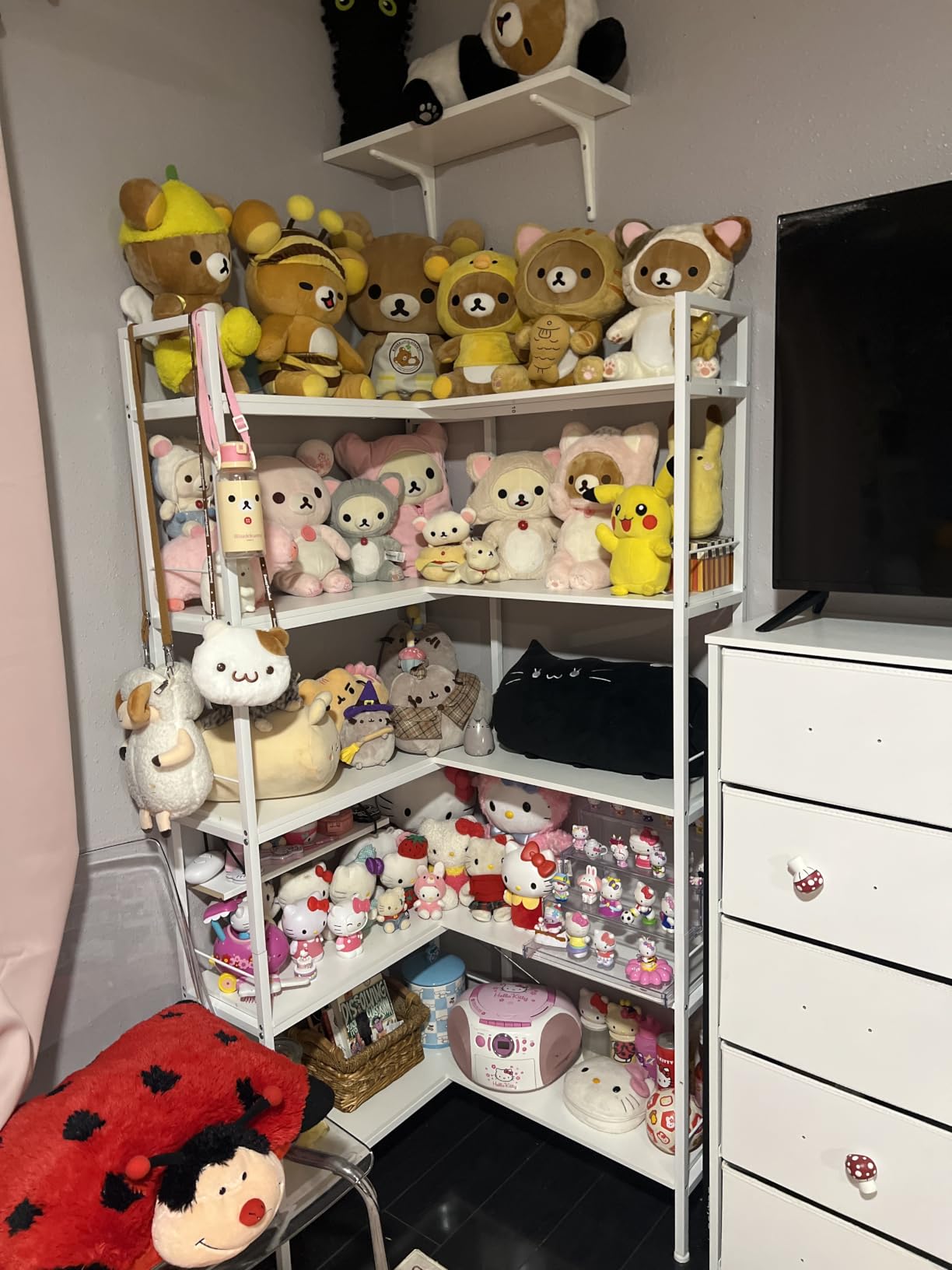
Corners are wasted space in most home offices, and this is one of the few units here that is designed to fill one. The frame reconfigures: set it as an L-shape in a corner for two-sided access, or straighten it out into a roughly 49 inch run against a wall when the layout changes.
Ten open shelves across both sections give you real capacity, and at 65.8 inches tall the whole thing uses vertical space rather than floor space, which is the point in a compact room.
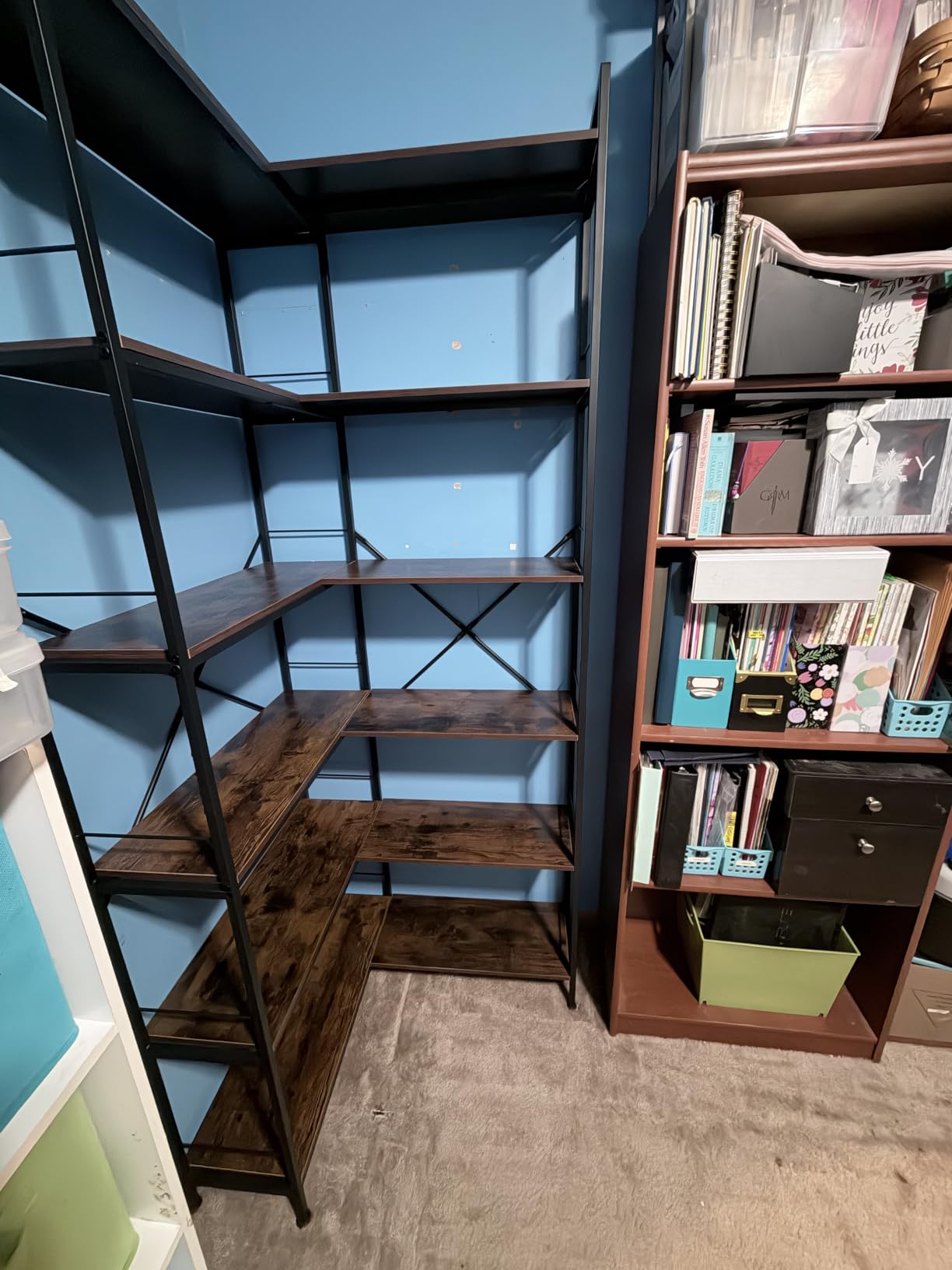
The boards are thickened FSC-certified wood on a metal frame with an X-shaped support bar, and reviewers describe the assembled unit as heavy duty and steady. FSC certification is worth noting for anyone buying for a home office; it means the wood came from a responsibly managed forest rather than an unknown source.
Adjustable feet handle uneven wood floors and carpet, which is common in older properties. Several owners have bought more than one unit to build a small library wall, so the L-configuration appears to survive repeated moves and reconfiguration.
The honest caveats are the 9.5 inch shelf depth and the finish. Woodgrain paper over an MDF core looks fine from a distance but reads as cheap up close, and the depth will not take a row of large hardbacks without overhang.
Deciding between the L-shape and the straight run
Use the L-shape if you have a genuine corner and want access from both sides; it doubles the usable shelf run without taking more floor space. Use the straight configuration if the corner is shallow or if you want the unit against one wall beside a desk.
Whichever you choose, the same limitation applies at 9.5 inches deep: paperbacks, trade paperbacks and most magazines sit properly, while oversized hardbacks and binders will overhang the front edge.
When it is the wrong choice
If finish quality matters to you at close range, or if you dislike a build that takes time, choose a unit with a veneered or solid surface. Assembly here is described as time-consuming even with clear instructions, and the supplied hex wrench has no handle.
It is also not the shelf for a heavy uniform collection. The X-brace helps, but the board thickness is closer to the particleboard end of the range than to the solid wood units we covered.
How to Choose a Bookshelf for a Home Office
Most of the disappointment people report about office shelving comes down to four measurements and one material decision. Get those right and almost any well-built unit will serve you; get them wrong and even a good shelf will sag, crowd the room or block your chair.
Measure the room before you measure the shelf
Start with the space you actually have. Note the ceiling height, the length of the wall you want to use, and the clearance you need behind your desk chair for rolling back and standing up. A 70 inch tower against a low ceiling will look like furniture bought for a different room.
In a small office, work out how far the chair extends from the desk when pushed back, then add a few inches. That number tells you the minimum gap between the shelf and the desk, and it is the number most buyers forget.
Check the baseboards too. A unit with a flat back will not sit flush against a wall with a projecting skirting board, which pushes the whole thing forward into your walkway. Several flat-pack units also have a notch at the back for a moulded or socketed wall.
Shelf depth: the number most buyers get wrong
Paperbacks need about 6 to 8 inches of depth. Trade paperbacks and most hardbacks need 9 to 11 inches. Large art books, vinyl records and lever-arch binders need 11 to 13 inches, and anything deeper than that is usually wasted space unless you are storing vinyl.
Seven of the twelve units here are 9.3 to 9.5 inches deep, which suits books and thin binders. Only two reach 11.8 inches or more. If your reference material is heavy or oversized, depth is worth paying for; if it is mostly paperbacks and manuals, a shallow unit gives you more shelves in the same footprint.
The other half of the depth rule concerns the back panel. A closed back stops books falling behind the unit and adds rigidity. A backless design looks lighter and works as a room divider, but it costs you stiffness and lets items slide off the rear edge.
Load capacity and why shelves sag
Sagging is a physics problem, not a quality problem. A shelf carries load by distributing weight across the span between its supports. The longer the unsupported span and the thinner the board, the more the middle dips. Doubling board thickness roughly halves the deflection for the same load and span.
That is why shelf thickness is the number to read first. The IRONCK industrial tower has 1 inch shelves and the LEYAOYAO cube has 35 lb per cube, while most particleboard units in this roundup quote 22 lb per shelf or 20 lb per cube. Published ratings are only as good as the span behind them, so treat them as a ceiling rather than a promise.
Material matters too. Particleboard and MDF are acceptable for paperbacks and mixed office storage. Plywood and solid wood hold their shape far longer under heavy hardbacks, which is why they appear at the higher end of the range. The Furinno and Huuger units carry FSC certification, and the HCHQHS MDF is CARB P2 compliant, which matters for off-gassing in a room you sit in all day.
One habit beats any material: distribute weight evenly across the full shelf length, keep the heaviest books on the lowest shelves, and never concentrate a tall stack in the middle of a span.
Open vs closed storage in a working office
Open shelving gives you reach, which in an office is worth more than tidiness. Every book is one movement away, you can see at a glance what you own, and there is no door to open while holding a coffee. Open units also make better room dividers because light passes through them.
Closed storage wins when the collection includes client documents, anything confidential, or materials you simply do not want on display. It also protects paper from dust and keeps the surface looking finished. The IRONCK unit with doors is the clearest example in this roundup, combining a cabinet for concealed documents with adjustable open shelves above.
A drawer is the most useful third option. In an office the things that clutter a shelf are rarely books; they are cables, stationery, headphones and the folder you are working on this week. The Furologee and AFLUI units both give you drawers for exactly that.
Anchoring a tall bookcase safely
Any unit over about five feet should be fixed to the wall. Bookcases are top-heavy when loaded, and the risk is not the unit falling in an earthquake but a child or a pet pulling on a shelf. Anti-tip hardware is included with most of the products in this roundup, which removes the usual objection.
Fit the bracket high on the unit frame, into a wall stud rather than plasterboard, and use the supplied or appropriate wall plugs. If you rent and cannot drill, use a no-drill strap fixed to the skirting with high-bond tape, keep the unit low and filled, and never place something heavy where a child can reach it.
If you want more detail on how we handle cable management and power in a workspace, our guide to smart power strips for home offices covers the routing side of keeping a working desk tidy.
Eco materials and low-emission finishes
Look for FSC certification on composite wood panels, which is the standard for responsibly sourced forestry, and prefer solid wood or bamboo if your budget stretches to it. Reclaimed or upcycled timber has the lowest embodied impact of any option, though supply is limited and the price reflects it.
In a room you sit in for eight hours a day, off-gassing deserves attention. CARB P2 or low-VOC finishes limit the emissions from adhesives and laminates, and a unit that arrives well ventilated and is left a few days before you load it will settle faster. Laminated and melamine surfaces wipe clean, which also means fewer cleaning products in the room.
Durability is the other half of the sustainability story. A heavier unit that lasts twenty years beats a lighter one you replace twice, and it is the reason a thicker shelf is often the greener choice over time.
Build it yourself or buy it?
Building a bookcase saves money mainly in materials and gives you exact dimensions, but you are paying in time, tools and skill. The hidden cost is that a homemade unit built from thin sheet goods will sag exactly like a cheap flat-pack one, unless you buy solid timber shelves and support them properly.
Buying a ready-made unit is cheaper in hours and usually cheaper in total once tools are counted. It is the right call unless you need a non-standard size, want a built-in look that matches cabinetry, or enjoy the process. For most home offices we compared, a ready-made unit delivered in an hour and anchored to the wall is the sensible choice.
Frequently Asked Questions
How deep should a bookshelf be for books?
For paperbacks, 6 to 8 inches of shelf depth is enough. Trade paperbacks and most hardbacks need 9 to 11 inches. Large art books, vinyl records and lever-arch binders need 11 to 13 inches. Anything deeper is wasted space unless you store vinyl, so match the depth to what you actually own rather than to the largest possible book.
Are open or closed shelves better for offices?
Open shelves are better when speed matters, because every book is visible and reachable without opening a door, and they double as an airy room divider. Closed shelves are better for client documents, confidential papers and anything you do not want on display. In practice a combined unit works best: open shelves for reference books, a cabinet or drawers for everything else.
Is it cheaper to build bookshelves or buy them?
Buying is usually cheaper once time and tools are counted, and flat-pack units can be assembled in under an hour with the hardware included. Building pays off when you need a non-standard size, want a built-in look, or already own the tools. The key warning: homemade shelves built from thin sheet goods sag just like cheap ready-made ones unless you use solid timber.
What are some good bookcases that won’t sag?
Sag is driven by shelf thickness and the unsupported span, not by brand. Look for shelves at least 3/4 inch thick over spans under roughly 30 inches, and prefer plywood or solid wood over particleboard for heavy hardbacks. In this roundup the IRONCK industrial tower has 1 inch shelves rated at 22 lb per shelf, and the IRONCK unit with doors is rated at 58 lb per upper shelf.
Do I need to anchor a bookshelf to the wall?
Yes, for any unit over about five feet tall. Loaded bookcases are top-heavy, and the realistic risk is a child or pet pulling on a shelf rather than a collapse. Most units here include anti-tip or wall-anchoring hardware. Fix the bracket into a wall stud, and if you rent and cannot drill, use a no-drill strap and keep the unit low.
Conclusion
After working through twelve units, the choice comes down to your room and your load. For most home offices the Furinno LUDER cube is the safest first buy, because it has the largest evidence base of anything here and fits almost anywhere. If you have wall height to spare and a heavy reference collection, the IRONCK industrial tower is the one that will not let you down.
For large collections, the SUPERJARE triple shelf holds the most while keeping everything within reach. For concealed documents and the highest published load rating, the IRONCK unit with doors wins. Whatever you choose, measure the depth of your books before the width of the shelf, check the shelf thickness, and fit the anti-tip bracket on anything taller than your shoulder.
Once the storage is sorted, the rest of the workspace matters just as much. Our picks for standing desks, balance ball chairs and mechanical keyboards cover the other pieces of an office you actually want to sit in, all updated for 2026.