
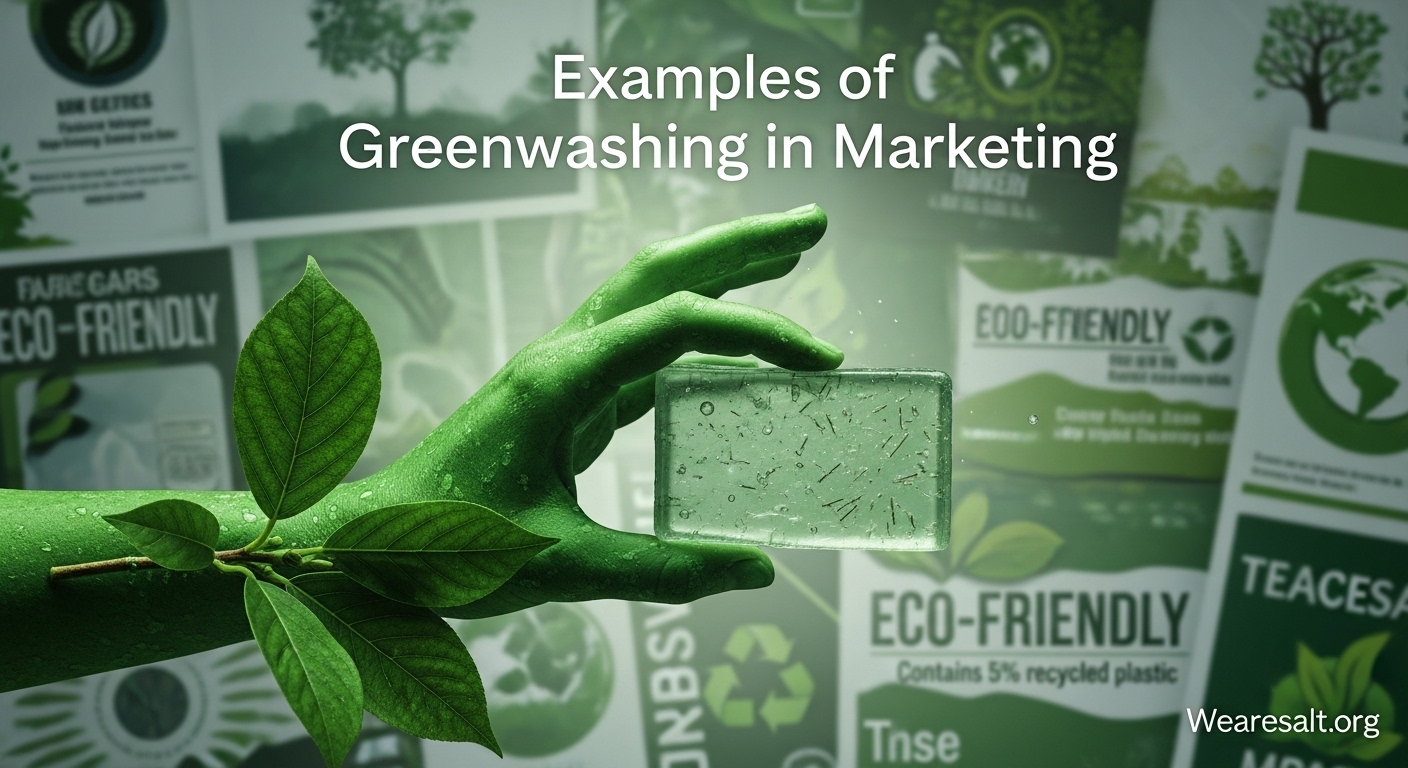
Did you know that 42% of consumers say they have been misled by green marketing claims at least once? I have spent years analyzing corporate sustainability messaging, and the gap between what companies promise and what they actually deliver keeps widening. Greenwashing is not just annoying marketing fluff. It actively harms the environment by directing consumer dollars toward harmful products while undermining genuine sustainability efforts.
In this guide, I am sharing the most shocking and educational examples of greenwashing in marketing from the past few years. You will learn how major brands from fast fashion to fossil fuels have misled consumers, what tactics they use, and how regulators are finally pushing back. Whether you are a marketer wanting to avoid these pitfalls or a consumer tired of being deceived, this article will arm you with the knowledge to spot greenwashing from a mile away.
Table of Contents
What Is Greenwashing?
Greenwashing is when a company makes false, misleading, or deceptive statements about its environmental sustainability or climate actions to appear more eco-friendly than it actually is. The term was coined in 1986 by environmentalist Jay Westerveld, who noticed hotels promoting towel reuse to “save the environment” while simultaneously expanding their operations without environmental consideration.
The psychology behind greenwashing is simple but effective. Most consumers want to make environmentally responsible choices. When a product claims to be “eco-friendly” or “sustainable,” it triggers that desire. Companies exploit this goodwill by making vague claims that sound virtuous but lack substance. The result? Consumers pay premium prices for products that are no better for the planet, while companies pocket the profits.
There is an important distinction between green marketing and greenwashing. Green marketing promotes genuine environmental benefits of products that are actually sustainable. Greenwashing is pure deception. It is the difference between a company that has reduced its packaging waste and can prove it, versus one that simply adds green leaves to their label and calls it a day.
7 Common Types of Greenwashing Tactics
Before diving into specific company examples, you need to understand the playbook. Greenwashing typically falls into seven distinct categories. Once you recognize these patterns, you will see them everywhere.
Vague Claims – Using undefined buzzwords like “eco-friendly,” “natural,” or “green” without evidence
This is the most common greenwashing tactic. Companies splash terms like “eco-friendly,” “natural,” or “green” across their packaging without defining what those words mean or providing evidence. The words sound virtuous but carry zero accountability. Without certification or data, they are meaningless marketing fluff designed to make you feel good about your purchase.
Green Imagery – Using nature visuals to imply environmental benefits that do not exist
Ever noticed how many “natural” products feature images of forests, mountains, or pristine beaches? This is green imagery at work. Companies use photos of nature, earth-tone colors, and leaf motifs to subconsciously signal environmental responsibility, even when the product inside is anything but green. A plastic bottle covered in pictures of waterfalls is still a plastic bottle.
Hidden Trade-Offs – Highlighting one small green attribute while ignoring larger environmental harms
This tactic focuses on one environmentally positive aspect while conveniently ignoring the bigger picture. A fast fashion brand might promote that their t-shirts use “organic cotton” while failing to mention the massive water waste, poor labor conditions, and carbon emissions from their production and shipping. The single green attribute becomes a distraction from systemic harm.
Irrelevant Claims – Advertising environmental benefits that are legally required anyway
Remember when products proudly advertised being “CFC-free”? Chlorofluorocarbons were banned years earlier, so claiming to be free of them was meaningless. This tactic involves highlighting environmental attributes that are already legally mandated, making it seem like the company is going above and beyond when they are simply following the law.
Lesser of Two Evils – Positioning a harmful product as green because it is slightly less damaging
Organic cigarettes. Fuel-efficient SUVs. These products position themselves as environmentally responsible within categories that are inherently harmful. Yes, an organic cigarette might have fewer pesticides, but it is still a cigarette. This tactic distracts from the fundamental problem by focusing on marginal improvements rather than actual sustainability.
Fabricated Certifications – Creating fake eco-labels or misusing legitimate ones
Some companies invent their own certification logos that look official but mean nothing. Others misuse legitimate certifications by displaying them on products that do not actually qualify. I have seen products with official-looking seals from organizations that do not even exist. This tactic preys on consumer trust in certification systems.
Misleading Packaging – Designing packaging to look recyclable when it is not
This involves designing packaging that screams “recyclable” through color schemes, symbols, or wording, when the actual materials cannot be recycled in standard facilities. A brown cardboard-look plastic container. A bottle with a chasing arrows symbol that only applies to the cap, not the bottle. These designs confuse consumers and contaminate recycling streams.
15 Notable Examples of Greenwashing in Marketing
Now that you understand the tactics, let us look at how real companies have deployed them. These examples span multiple industries and show just how pervasive greenwashing has become.
Fashion Industry Greenwashing Examples
1. H&M and the “Conscious” Collection
H&M launched its “Conscious” collection with claims of using sustainable materials like organic cotton and recycled polyester. The problem? The company continued to produce billions of garments annually using harmful synthetic materials. Norway’s consumer authority called out H&M for insufficient information about why these clothes were “sustainable.” The Conscious line represented a tiny fraction of their overall production while the company remained one of the largest fast fashion polluters globally.
2. Shein’s “Evolve” Sustainability Claims
Shein, the ultra-fast fashion giant producing thousands of new styles daily, launched its “Evolve” sustainability program claiming to address environmental concerns. The company promised to reduce waste and use more sustainable materials. Critics immediately pointed out the contradiction. A business model built on ultra-cheap, disposable clothing with massive overproduction cannot be made sustainable through minor initiatives. Shein’s carbon footprint and textile waste remain astronomical.
3. Zara’s “Join Life” Line
Inditex, Zara’s parent company, promoted its “Join Life” collection as environmentally responsible. The line used materials like organic cotton, recycled wool, and Tencel. However, investigations revealed that Inditex continued sourcing from factories with poor labor practices and environmental records. The Join Life label applied to less than 30% of their products while the company maintained its position as one of the world’s largest fast fashion producers.
Fossil Fuel and Energy Greenwashing Examples
4. Shell’s “Carbon Neutral” Driving Campaign
In 2026, Shell advertised that drivers could “carbon offset” their fuel purchases through the company’s program. The UK’s Advertising Standards Authority banned the campaign, ruling that the claims were misleading. Shell failed to provide evidence that the offsets actually compensated for the emissions from burning their fossil fuels. The ruling highlighted how oil majors use carbon offset language to continue business-as-usual while appearing climate-conscious.
5. BP’s “Beyond Petroleum” Rebranding
In 2000, BP spent hundreds of millions rebranding from “British Petroleum” to “Beyond Petroleum,” complete with a new green and yellow sunburst logo. The campaign implied a shift toward renewable energy. Two decades later, BP still derives over 95% of its revenue from fossil fuels. The rebrand was widely cited as one of history’s most expensive greenwashing campaigns. The imagery of a sun and flowers could not mask the continued extraction and burning of oil and gas.
6. Chevron’s “Human Energy” Campaign
Chevron ran an extensive “Human Energy” advertising campaign featuring images of solar panels, wind turbines, and happy communities. The messaging suggested Chevron was a leader in clean energy. In reality, Chevron invested less than 1% of its capital expenditure in renewables while continuing massive fossil fuel expansion. The campaign was classic green imagery greenwashing, using visuals of sustainability to distract from the core business of oil extraction.
Automotive Industry Greenwashing Examples
7. Volkswagen’s “Clean Diesel” Scandal (Dieselgate)
The Volkswagen emissions scandal remains one of the most notorious greenwashing cases. VW marketed its diesel vehicles as “clean” and environmentally friendly, even running Super Bowl ads about “Diesel Old Wives’ Tales” to counter concerns about diesel pollution. The truth? VW had installed defeat devices that detected emissions testing and temporarily reduced pollution levels. On the road, these vehicles emitted up to 40 times the legal limit of nitrogen oxides. The scandal cost VW over $30 billion in fines and settlements.
8. Delta’s Carbon Neutral Claims
Delta Air Lines promoted itself as the “first carbon-neutral airline” starting in 2020. The company claimed to offset all its domestic emissions through carbon credits and investments in environmental projects. However, investigations found that many of the offset projects Delta purchased credits from were questionable or ineffective. The airline continued burning massive amounts of jet fuel while marketing itself as environmentally responsible. The messaging confused consumers about the true environmental impact of air travel.
Food and Beverage Greenwashing Examples
9. Innocent Drinks’ “Little Drinks, Big Dreams” Ad Ban
Innocent Drinks, owned by Coca-Cola, ran an ad campaign claiming that buying their smoothies would help “fix up the planet.” The UK’s ASA banned the ads, ruling they exaggerated the environmental benefit of the products. The ruling noted that while Innocent had some sustainability initiatives, the claim that buying their products would “fix” the planet was misleading. The case highlighted how even smaller brands within giant corporations cannot escape scrutiny.
10. Starbucks’ Strawless Lid Controversy
Starbucks made headlines by replacing plastic straws with strawless lids to reduce plastic waste. The company promoted this as a major environmental win. Critics quickly pointed out that the new lids actually used more plastic than the straws they replaced. Starbucks had eliminated a recyclable component (straws) and replaced it with larger, more complex plastic lids that were harder to recycle. The environmental benefit was minimal, but the green marketing value was significant.
11. Coca-Cola’s “World Without Waste” Campaign
Coca-Cola, the world’s top plastic polluter according to Break Free From Plastic reports, runs extensive “World Without Waste” campaigns. The company promises to recycle a bottle or can for every one sold by 2030. Yet Coca-Cola continues to produce billions of single-use plastic bottles annually. Recycling systems cannot handle the volume, and most plastic bottles never get recycled. The campaign exemplifies the gap between corporate promises and environmental reality.
Banking and Finance Greenwashing Examples
12. HSBC’s Climate Advertising Ban
The UK’s Advertising Standards Authority banned HSBC ads in 2026 for misleading consumers about the bank’s climate credentials. The ads highlighted HSBC’s investments in tree-planting and net-zero commitments while omitting that the bank continued financing fossil fuel projects worth billions. The ASA ruled this omission was material information consumers needed. The case marked one of the first major banking greenwashing rulings and signaled that financial institutions would face scrutiny for climate advertising.
13. Lloyds Bank’s Green Campaign
Following the HSBC ruling, Lloyds Bank faced similar scrutiny for climate advertising that emphasized sustainability initiatives while the bank continued significant fossil fuel financing. The case illustrated how banks across the sector were using green marketing to rebrand themselves while their core business models continued funding climate breakdown. Financial advertising was finally being held to the same standards as other industries.
Household Products Greenwashing Examples
14. Keurig’s Recycling Claims
Keurig marketed its K-Cups as recyclable, displaying recycling symbols and claiming consumers could “recycle” their pods. The reality? The small size and mixed materials made them non-recyclable in most municipal facilities. The pods contaminated recycling streams. The company faced lawsuits and regulatory action for misleading consumers. The case showed how packaging claims about recyclability often do not match recycling infrastructure reality.
15. Windex’s “Recyclable” Bottle Controversy
Windex marketed certain bottles as being made from “100% recycled ocean plastic,” implying the product helped clean oceans. The bottles were actually made from plastic collected before it reached the ocean, from recycling centers. The marketing created the impression that buying Windex removed plastic from the ocean. The ASA investigated and the company had to clarify its claims. The case exemplified how companies use emotional environmental messaging that does not match the actual environmental benefit.
How Regulators Are Cracking Down on Greenwashing
The good news is that regulatory bodies worldwide are waking up to greenwashing. Companies can no longer expect to make vague environmental claims without consequences.
Advertising Standards Authority (UK)
The UK’s ASA has become increasingly aggressive in policing environmental claims. In 2026, the ASA banned multiple high-profile campaigns from Shell, HSBC, and others. The regulator now requires companies to substantiate all environmental claims with evidence. Vague terms like “eco-friendly” and “sustainable” must be backed by data or removed. The ASA’s rulings have set precedents affecting global advertising standards.
Federal Trade Commission (US)
The FTC’s Green Guides provide the framework for environmental marketing claims in the United States. The guides prohibit deceptive claims about environmental benefits and require substantiation for all green marketing. The FTC has fined companies millions for greenwashing violations. Recent updates to the Green Guides have strengthened requirements for carbon offset claims and recycling labeling.
EU Green Claims Directive
The European Union has introduced the Green Claims Directive, which mandates that companies substantiate environmental claims through independent verification. The directive bans vague green claims entirely and requires specific, measurable evidence for any sustainability marketing. Companies face significant fines for violations. This represents the strongest regulatory framework against greenwashing globally.
Recent Fines and Consequences
The financial consequences of greenwashing are increasing. Volkswagen paid over $30 billion in fines and settlements for Dieselgate. Fashion brands face multi-million dollar lawsuits. Banks risk losing customers and investment as ESG scrutiny intensifies. The era of consequence-free greenwashing is ending. Smart companies are investing in genuine sustainability rather than marketing campaigns.
How to Spot Greenwashing: A Consumer’s Checklist
Now that you know what greenwashing looks like, here is how to protect yourself. Use this checklist when evaluating environmental claims.
Look for vague language. Terms like “eco-friendly,” “natural,” “green,” and “sustainable” without specific definitions or certifications are red flags. Real environmental benefits are specific and measurable.
Check for third-party certifications. Look for recognized certifications like Fair Trade, B-Corp, FSC (Forest Stewardship Council), and Energy Star. Be wary of certifications you cannot verify or that sound official but lack substance.
Verify recycling claims. Just because packaging says “recyclable” does not mean it can be recycled in your area. Check your local recycling guidelines. Be skeptical of claims that seem too good to be true.
Research company track records. Look beyond the product to the company. A brand with one “sustainable” line but a history of environmental violations is likely greenwashing. Check independent reports from organizations like Break Free From Plastic.
Be skeptical of green imagery. Photos of nature, earth tones, and leaf motifs do not mean a product is sustainable. Focus on claims and certifications, not packaging aesthetics.
Check the full product lifecycle. Consider where materials come from, how the product is made, how it is transported, and what happens at end of life. A product marketed as “organic” but shipped globally may have a larger carbon footprint than a local conventional alternative.
Watch for hidden trade-offs. When a company highlights one green attribute, ask what they are not telling you. An “energy efficient” product made with toxic materials is not truly sustainable.
Frequently Asked Questions About Greenwashing
What is an example of greenwashing in marketing?
A common example is when a fast fashion brand launches a small ‘sustainable’ collection using eco-friendly materials while continuing mass production of cheap, disposable clothing. The ‘conscious’ line gets promoted heavily while the company’s overall environmental impact remains destructive. H&M’s Conscious collection is a real-world example of this tactic.
What is greenwashing and examples?
Greenwashing is when companies make misleading claims about their environmental practices to appear more sustainable than they actually are. Examples include fossil fuel companies advertising carbon offset programs while continuing oil extraction, bottled water companies promoting ‘100% recycled’ bottles while producing millions of single-use plastics, and airlines claiming to be ‘carbon neutral’ through questionable offset projects.
How does McDonald’s greenwash?
McDonald’s has been accused of greenwashing through campaigns highlighting sustainable packaging initiatives while the core business model relies on resource-intensive beef production, single-use packaging, and mass consumption. The company promoted paper straw replacements but was called out when the straws were found to be non-recyclable. Environmental groups argue these initiatives distract from the massive carbon footprint of McDonald’s supply chain.
What are the 4 P’s of green marketing?
The 4 P’s of green marketing are Product (developing environmentally friendly products), Price (pricing that reflects true environmental costs), Place (distribution that minimizes environmental impact), and Promotion (honest communication about environmental benefits). Unlike greenwashing, green marketing is authentic and backed by genuine sustainable practices throughout the business.
Why is greenwashing harmful?
Greenwashing is harmful because it misleads consumers into making environmentally damaging purchases, undermines trust in legitimate sustainability efforts, distracts from real climate solutions, and lets companies profit from deception while avoiding meaningful change. It also contaminates recycling streams and wastes consumer money on falsely marketed ‘green’ products.
How can companies avoid greenwashing?
Companies can avoid greenwashing by making specific, measurable claims backed by evidence; obtaining third-party certifications; being transparent about environmental trade-offs; avoiding vague terms without definition; ensuring all marketing accurately reflects company-wide practices; and investing in genuine sustainability improvements rather than just marketing campaigns.
Conclusion
Greenwashing is everywhere, but it is also increasingly being called out. From H&M’s Conscious collection to Volkswagen’s emissions scandal, the examples of greenwashing in marketing are as diverse as they are deceptive. The good news is that regulators, consumers, and advocacy groups are fighting back with bans, fines, and public accountability.
As a consumer, you now have the tools to spot greenwashing. Look for specific claims backed by evidence. Be skeptical of vague eco-buzzwords. Check for legitimate third-party certifications. And remember that truly sustainable companies welcome scrutiny rather than hiding behind clever marketing.
The fight against greenwashing is about more than avoiding bad purchases. It is about directing consumer power toward companies that are actually building a sustainable future. Every informed choice you make sends a message that greenwashing will not be tolerated. The planet deserves better than deceptive marketing, and so do you.