
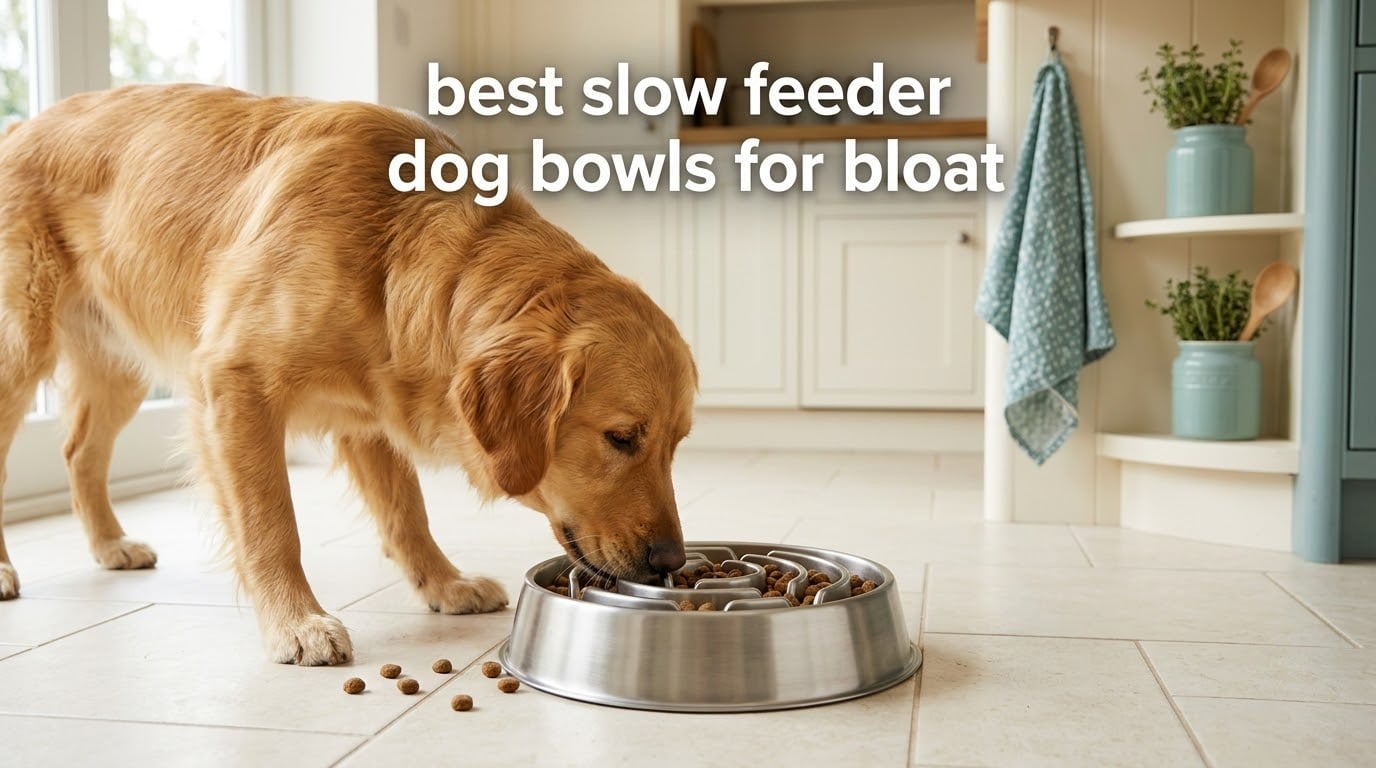
If your dog inhales dinner in under a minute, you already know the routine. The gulping, the slopping, sometimes the regurgitation twenty minutes later. You buy a slow feeder, and the search for the best slow feeder dog bowls for bloat starts with a promise that almost never gets kept: no bowl prevents bloat.
Here is the honest version. A slow feeder reduces the air a dog swallows while eating, and a review of six studies published in Veterinary Evidence found the evidence mixed: slowing a dog down will not raise gastric dilatation-volvulus risk and may lower it. That is a low-risk, inexpensive habit, not immunity. Treat it as one piece of a feeding routine, not as the piece that saves your dog.
What we did here was rank ten slow feeders against the things that actually matter for bloat-prone dogs: how much air-swallowing the pattern blocks, how hard the difficulty gradient is, whether the material survives a chewer, and whether you can sanitize the crevices. We also flagged the honest drawbacks, because the two most common complaints on forums are frustration and cleaning. If your dog gives up on a bowl, that bowl is doing nothing for bloat at all.
One note before we start, and it is not a small one. If your dog’s belly is swollen and hard, and they are retching without bringing anything up, call an emergency clinic now. Do not wait to see if it passes. We cover the warning signs further down.
Table of Contents
Top 3 Best Slow Feeder Dog Bowls for Bloat
These three earned the top spots on rating and review volume together, not on marketing copy. The Outward Hound is the safest default purchase for most dogs, MateeyLife is the strongest value if you want two bowls, and the WHIPPY bowl carries the highest average rating in the group.

Outward Hound Fun Feeder Slo Bowl
- 2 cup capacity
- 3 difficulty levels
- Shallow maze for flat-faced dogs
- Non-slip rubber base

MateeyLife 2-Pack Slow Feeder Bowls
- Two bowls in the pack
- 2 cup capacity each
- Low wide ridges
- Top-rack dishwasher safe

WHIPPY Spiral Slow Feeder Bowl
- 3 cup capacity
- Six anti-skid base pads
- Spiral pattern
- Top-rack dishwasher safe
All 10 Slow Feeders Compared for Bloat-Prone Dogs
The full lineup below, ranked by how well each bowl addresses air-swallowing for a dog at higher bloat risk. The order of this list matches the order of the individual reviews that follow.
| Product | Specifications | Action |
|---|---|---|
| Outward Hound Fun Feeder Slo Bowl |
|
Check Latest Price |
| MateeyLife 2-Pack Slow Feeder Bowls |
|
Check Latest Price |
 Gorilla Grip Patented Slow Feeder Bowl Gorilla Grip Patented Slow Feeder Bowl |
|
Check Latest Price |
 YINEYA 4-Cup Puzzle Feeder Bowl YINEYA 4-Cup Puzzle Feeder Bowl |
|
Check Latest Price |
| WHIPPY Spiral Slow Feeder Bowl |
|
Check Latest Price |
 LE TAUCI Ceramic Slow Feeder Bowl LE TAUCI Ceramic Slow Feeder Bowl |
|
Check Latest Price |
 TOKAYIFE 1-Cup Small Breed Bowl TOKAYIFE 1-Cup Small Breed Bowl |
|
Check Latest Price |
 Mr. Peanut’s Stainless Steel Slow Feed Bowl Mr. Peanut’s Stainless Steel Slow Feed Bowl |
|
Check Latest Price |
 Neater Pet Brands Stainless Steel Slow Feed Bowl Neater Pet Brands Stainless Steel Slow Feed Bowl |
|
Check Latest Price |
 Tolopu Extra-Large ABS Slow Feeder Tolopu Extra-Large ABS Slow Feeder |
|
Check Latest Price |
1. Outward Hound Fun Feeder Slo Bowl – Best Overall for Bloat-Prone Dogs
Outward Hound Fun Feeder Slo Bowl – Medium 2‑Cup Capacity, Slow Feeding, Small to Medium Dogs & Cats, Non-Slip, Blue, Notch Pattern
Capacity: 2 cups
Material: food-safe plastic, no BPA, PVC, lead or phthalates
Size: 8.5 x 8.5 x 2 inches, 8 oz
Pros
- Maze measurably slows gulping and cuts regurgitation
- Non-slip rubber base grips tile
- hardwood and carpet
- Shallow maze works for flat-faced dogs
- Top-rack dishwasher safe with no assembly
- Five difficulty levels and several patterns
Cons
- Pattern can challenge puppies and very small breeds
- Wet food is harder to lift from the channels than kibble
- An easier level is needed once a dog masters it
This is the bowl most people end up with, and for bloat reasons it is a sensible first move. The maze is shallow rather than deeply grooved, so a dog has to work between obstacles without a long tunnel to nose into, which keeps the eating mechanic close to normal foraging.
Owners of gulping dogs report meals stretching from roughly 30 seconds into the 10 to 15 minute range, and the same reviewers point to fewer vomiting episodes and less stomach upset afterward. We are careful with the headline figure: the “up to 10x” language on listings is a marketing ceiling, not a measured promise. Owners who time it usually see a few extra minutes on a beginner level, not an order of magnitude.
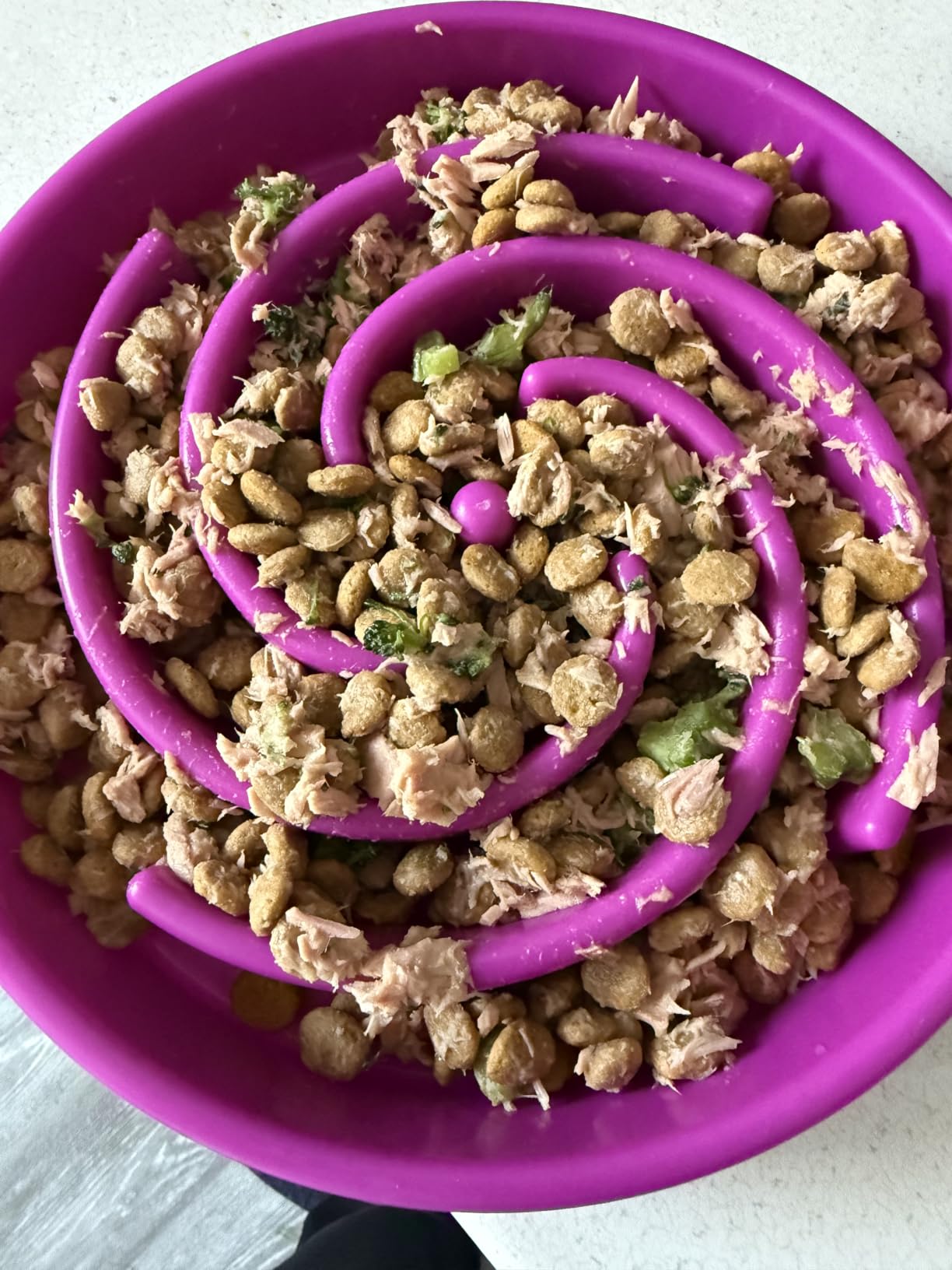
What stands out mechanically is the rubber base and the shallow floor. The base grips tile, hardwood and carpet, which matters more than it sounds, because a dog that can shove a bowl across a room is a dog that ends up gulping from the floor. The shallow pattern also means flat-faced breeds can reach the food, which rules out most plastic labyrinth bowls.
Cleaning is the easy part. No assembly, top-rack dishwasher safe, and the ridges are low enough that a bottle brush handles the worst of it. Food-safe plastic carries no BPA, PVC, lead or phthalates.
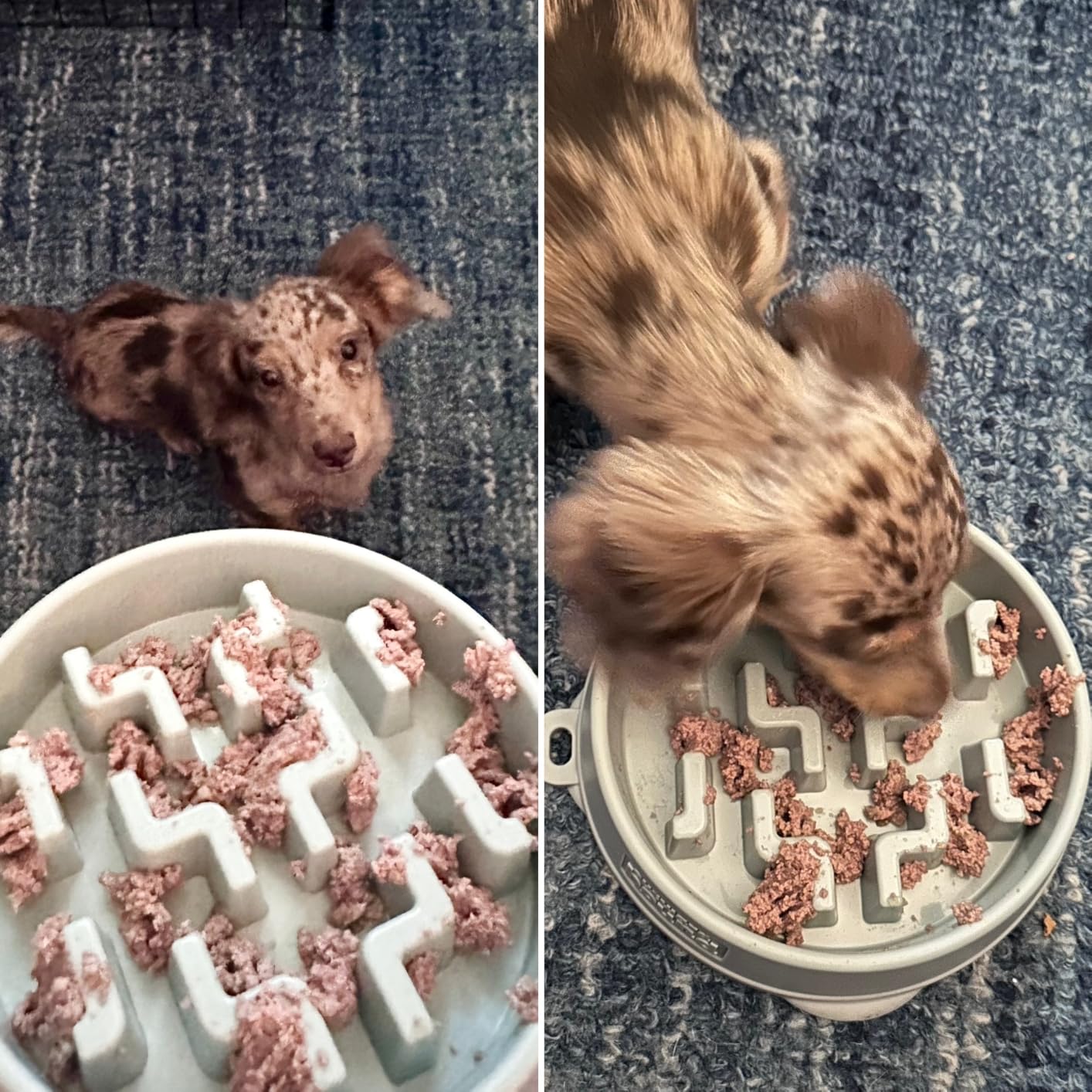
The honest drawback is difficulty calibration. Owners of very young puppies and very small breeds report that they can flip the bowl to reach food rather than work the maze, and a determined dog that has mastered one level needs a harder pattern. Buy the easier level first, then upgrade.
How to check whether your dog can actually finish the maze
Watch the first two meals rather than the first two minutes. A dog who empties the bowl and comes back to lick the base is working the pattern correctly. A dog who lifts or flips it is not, and the bowl is doing nothing.
Fill below the rim. Food sitting above the ridge line is the easiest thing in the bowl to gulp, and owners who overfill lose most of the benefit without noticing why.
When the 2-cup size is the wrong choice
This bowl is built for small to medium breeds. A large or giant dog at elevated bloat risk needs a bigger volume, and putting a big meal into a small bowl just adds a second trip. Look at the 4-cup and 10-cup options later in this list for deep-chested large breeds.
It is also a kibble-first design. Wet food works, but it clings in the low channels and comes out slowly, which dogs with sensitive mouths sometimes dislike.
2. MateeyLife 2-Pack Slow Feeder Bowls – Best Value for Two-Dog Households
MateeyLife 2-Pack Slow Feeder Dog Bowls, 2 Cups, Dog Puzzle Feeder Bowl
Pack: 2 bowls at 2 cups each
Material: food-grade polypropylene
Size: 7.87 x 7.87 x 1.57 inches, 12.7 oz
Pros
- Two bowls cover home
- travel
- daycare or a second dog
- Raised parts are low with wide gaps that guide the tongue
- Works with dry
- wet and raw food
- Widened base resists overturning
- Dishwasher safe
Cons
- Maze defeats puppies and very small breeds
- Many small parts take longer to scrub than a smooth bowl
- A two-pack is poor value if only one dog needs it
The two-pack is the part that makes this stand out. Most competitors sell a single bowl, which means the second dog, the boarding kennel or the weekend trip gets nothing. Here the second bowl solves all three, and for a bloat-prone household running separate feeding stations it is genuinely useful rather than a gimmick.
The design language here is deliberately gentle. Raised sections are kept low with wide gaps, so the tongue is guided along rather than trapped, and a dog that loses interest can still find and reach every pocket. That is a differentiator when your dog’s bloat history is accompanied by an impatient temperament.
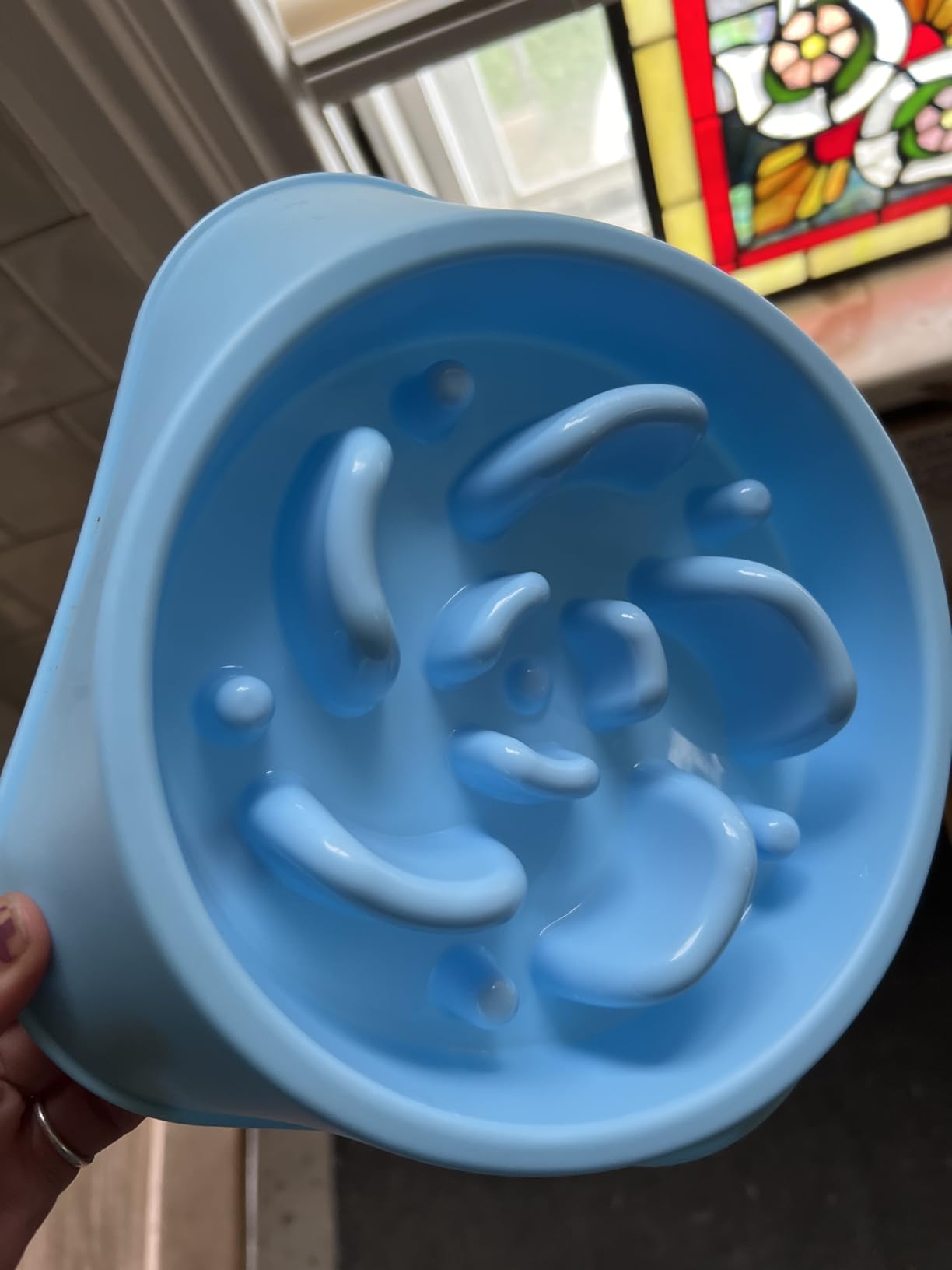
Owners of beagles and terriers report roughly doubled meal times and a noticeable drop in gagging. The widened base is the piece that does the most work for bloat: it stops the bowl being lifted or overturned, which keeps the dog working the maze instead of shaking food onto the carpet and inhaling it.
Material is food-grade polypropylene, and the specs list dry, wet and raw diets as supported. That matters more for a wet-food household than it first appears, because a bowl that only works with kibble pushes you back to a plain dish.
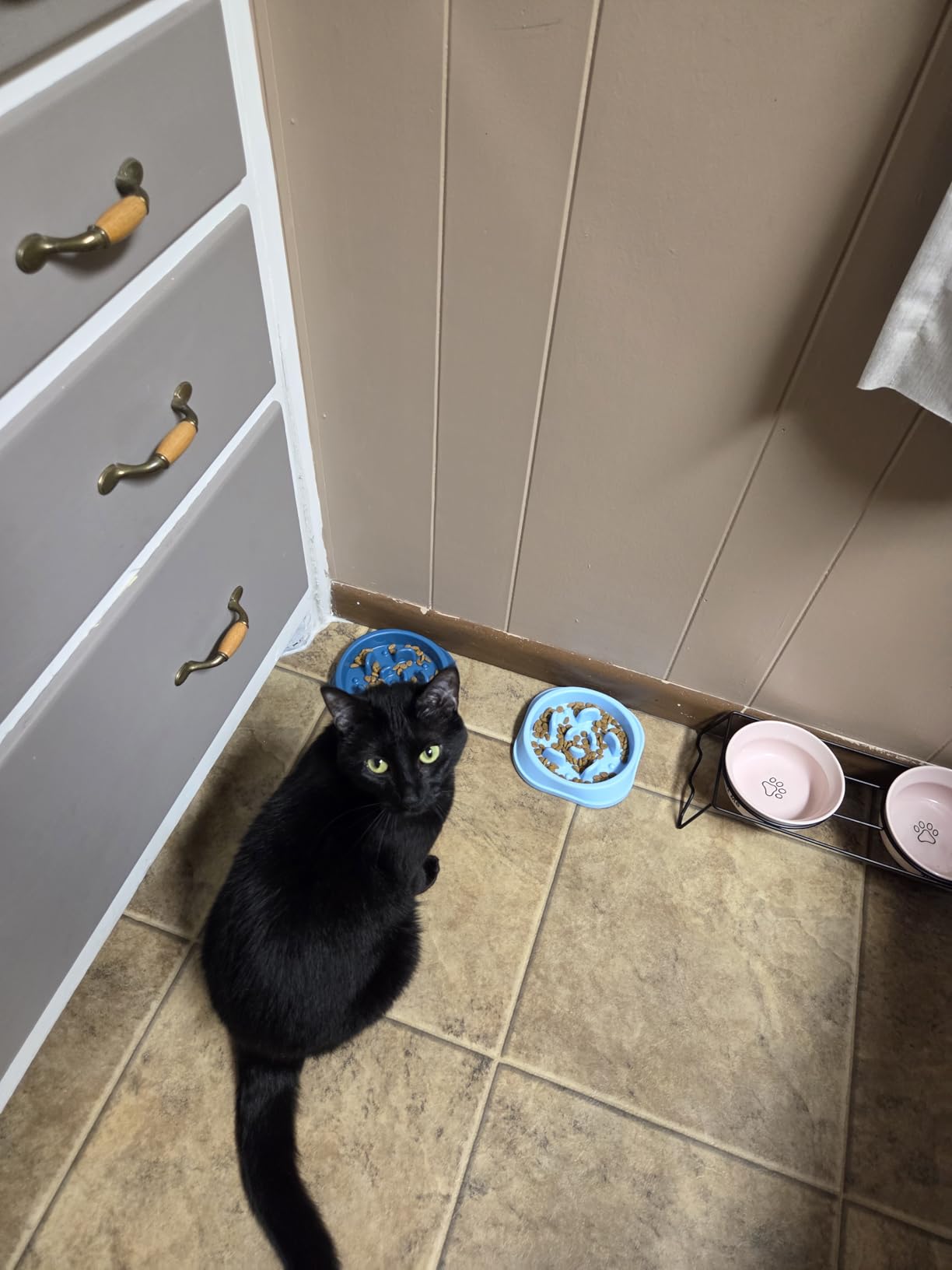
Two honest drawbacks. The many small parts of the maze take noticeably longer to wash than a smooth bowl, which is the crevice-versus-sanitizing tradeoff that owners raise constantly on forums. And the pattern is still too difficult for puppies and very small breeds.
Why two bowls matter in a multi-dog home
Feeding separately is one of the cheaper bloat interventions available, because it removes the competition that produces gulping. A dog eating next to another dog will inhale food they do not even want, purely on pace. Two bowls in two rooms is a slow feeder and a behaviour fix at once.
If you feed wet food, the second bowl is also a safety advantage, since a deep-chested dog gulping is worse than a small dog gulping.
Whether the maze is too hard for a beginner
Judge it the way you would judge any training tool. If the dog finishes in under a minute, the pattern is too easy and you need a harder version. If food is still sitting in the crevices after 15 minutes, the pattern is too hard and the dog is eating less than it should.
A useful compromise is to put a thin layer of wet food or a spoon of the wet portion into the low points first, then add kibble on top. The dog gets an immediate reward for engaging with the maze.
3. Gorilla Grip Patented Slow Feeder Bowl – Best for Wet and Raw Food Diets
GORILLA GRIP® Patented Slow Feeder Dog and Cat Bowl, BPA Free, 2 Cup Gray
Capacity: 2 cups, also 1 and 4 cup
Material: BPA-free food-grade plastic with molded rubber
Size: 8.5 x 8.5 x 1.8 inches, 6.38 oz
Pros
- Rubber base is molded in and cannot detach
- Works with wet
- dry
- fresh food
- water or ice
- Four capacity options make portioning easy
- Engaging without being confusing
- Dishwasher safe
Cons
- Base still slides on bare floors
- Large long-muzzled dogs can paw the bowl over
- Finishing feels heavier than plastic alternatives
This is the pick for a dog on a wet, fresh or raw diet, and the reason is on the spec sheet rather than in the marketing. The list of compatible foods includes wet food, dry food, fresh food, water and ice, which is broader than most competitors who quietly assume kibble.
The maze interior is the design story here. Reviewers describe it as engaging without being confusing, and several report timing a 2 cup meal taking more than twice as long as it did from a plain dish. That is a realistic result, not a headline figure, and it is exactly the range most dogs need.
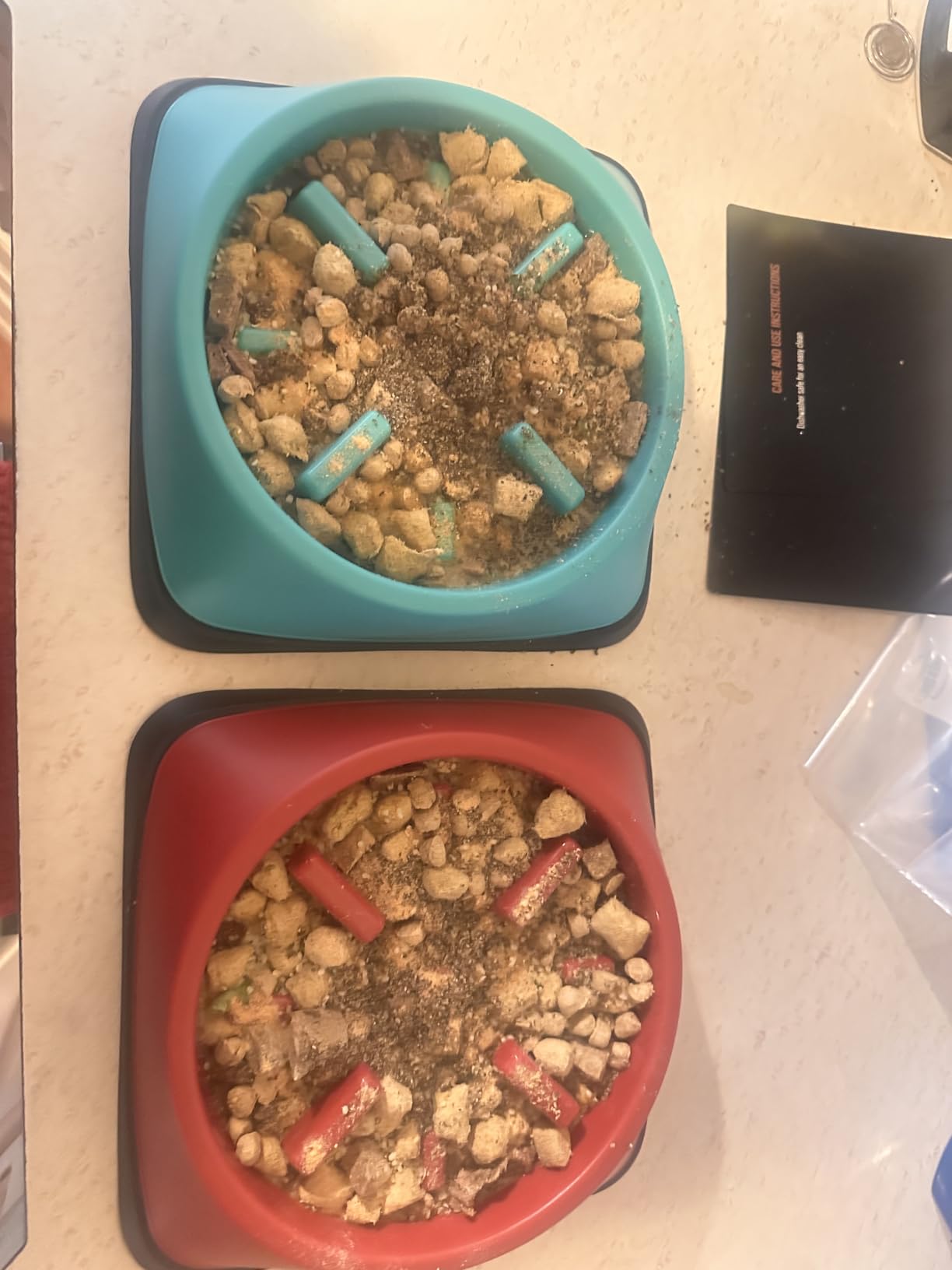
What I like most is the rubber base. It is molded around the whole underside rather than fitted as a separate ring, which removes an entire failure mode. Slip-on rubber rings are the first thing to detach on a determined dog, and once the ring goes, the bowl slides and the slowing stops.
The base still shifts on bare floors though. Several owners pair it with a silicone feeding mat, which is a good low-cost fix if your dog lives on hard flooring.
Four capacity options across 1 cup, 2 cups and 4 cups make this the easiest bowl in the set to match to a portion size, which is the other thing that quietly matters for bloat. A dog on measured meals should have a bowl where one full serving sits below the rim.
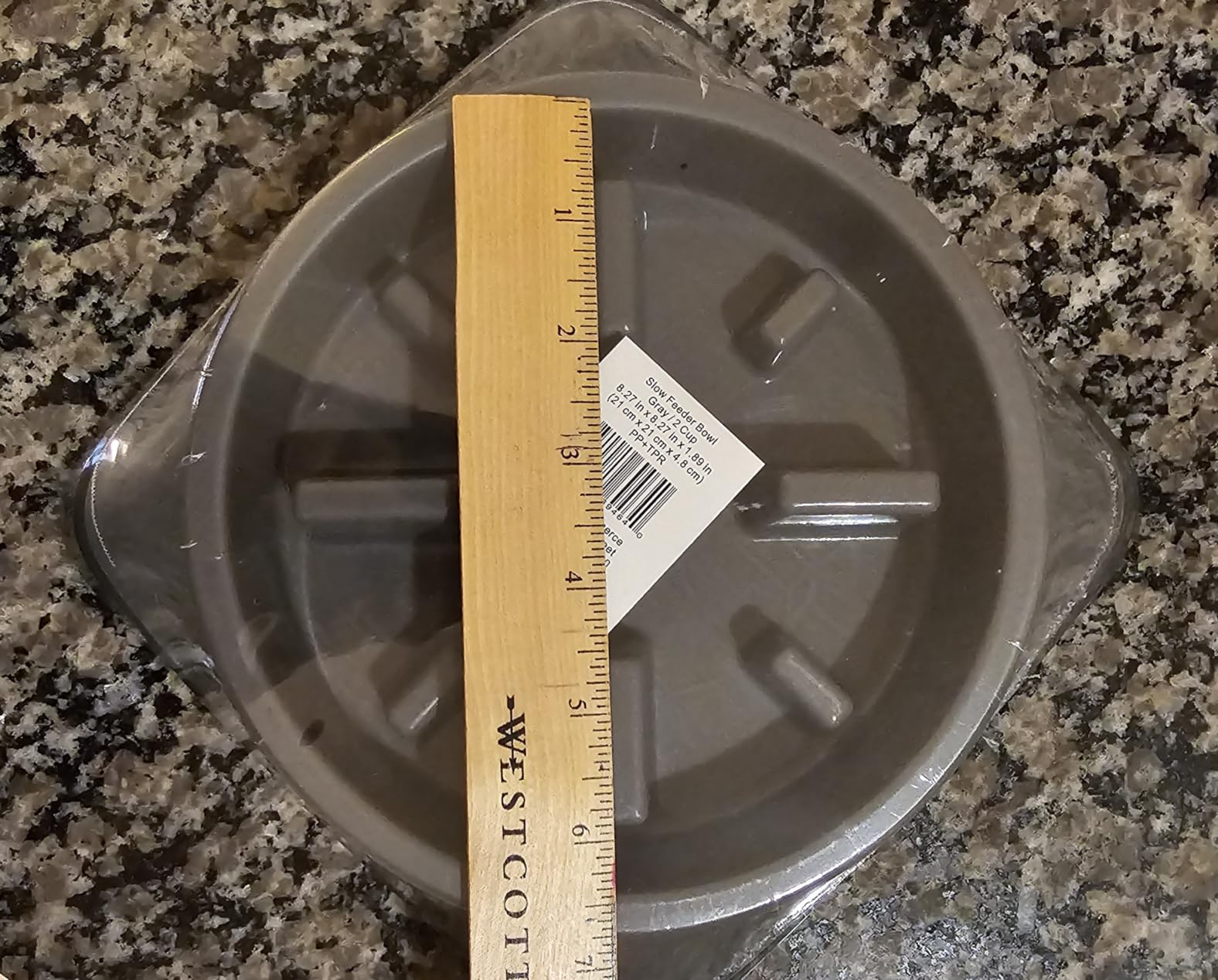
The honest drawback is the flip risk. Some puppies and some large, long-muzzled dogs can paw the bowl over to reach food at the bottom, and a flipped bowl is an empty bowl. Watch the first three meals and confirm the pattern is achievable for your dog’s muzzle length.
Why wet food changes which bowl you should buy
Wet food sits in the bottom of a channel and does not drain out of it. A dog can scoop it, but it takes more tongue work than kibble, and some dogs give up on the pattern rather than work for it.
This bowl handles that better than most because the maze interior is open rather than deeply grooved. If your dog is on a mixed diet, fill the low points with wet food first and add dry food on top so the first mouthful is always an easy win.
How to stop the base from sliding
Place a silicone feeding mat or a damp folded towel under the bowl on bare floors. A damp towel is the cheapest fix and it works on tile and laminate where most kitchens actually are.
Check the rim for chew marks every few weeks. Molded rubber is more durable than a slip-on ring, but a power chewer will find the edge eventually, and a chewed rim is the first sign the bowl needs replacing.
4. YINEYA 4-Cup Puzzle Feeder Bowl – Best for Large and Deep-Chested Breeds
YINEYA Slow Feeder Dog Bowl for Large Dogs, 4-Cup Puzzle Feeder Bowl
Capacity: 4 cups
Material: food-grade polypropylene, recyclable
Size: 10.63 x 10.63 x 2.13 inches, 15.17 oz
Pros
- 4 cup capacity fits a full large-breed meal
- Unbreakable polypropylene body
- Smooth ridges do not scratch tongue or nose
- Rubber pads protect hard floors
- Wide gaps keep food reachable
Cons
- Pads are unreliable on very smooth floors
- 4 cup volume is excessive for dogs on small portions
- Wide shallow maze is gentler than deep grooves
Large, deep-chested breeds are the dogs where bloat actually kills, so the bowl needs to hold a real meal. At 4 cups this is the first option in the list that does, and the raised maze pattern is wide and shallow enough that a bigger dog is not trying to fish kibble out of a narrow slot.
Owners of large breeds report noticeably longer meals and fewer gulping-related stomach problems. The design is explicitly tuned for both dry and wet food, and the moderate-width maze is one of the easier ones to sanitize, which matters when a large dog is eating from it twice a day.
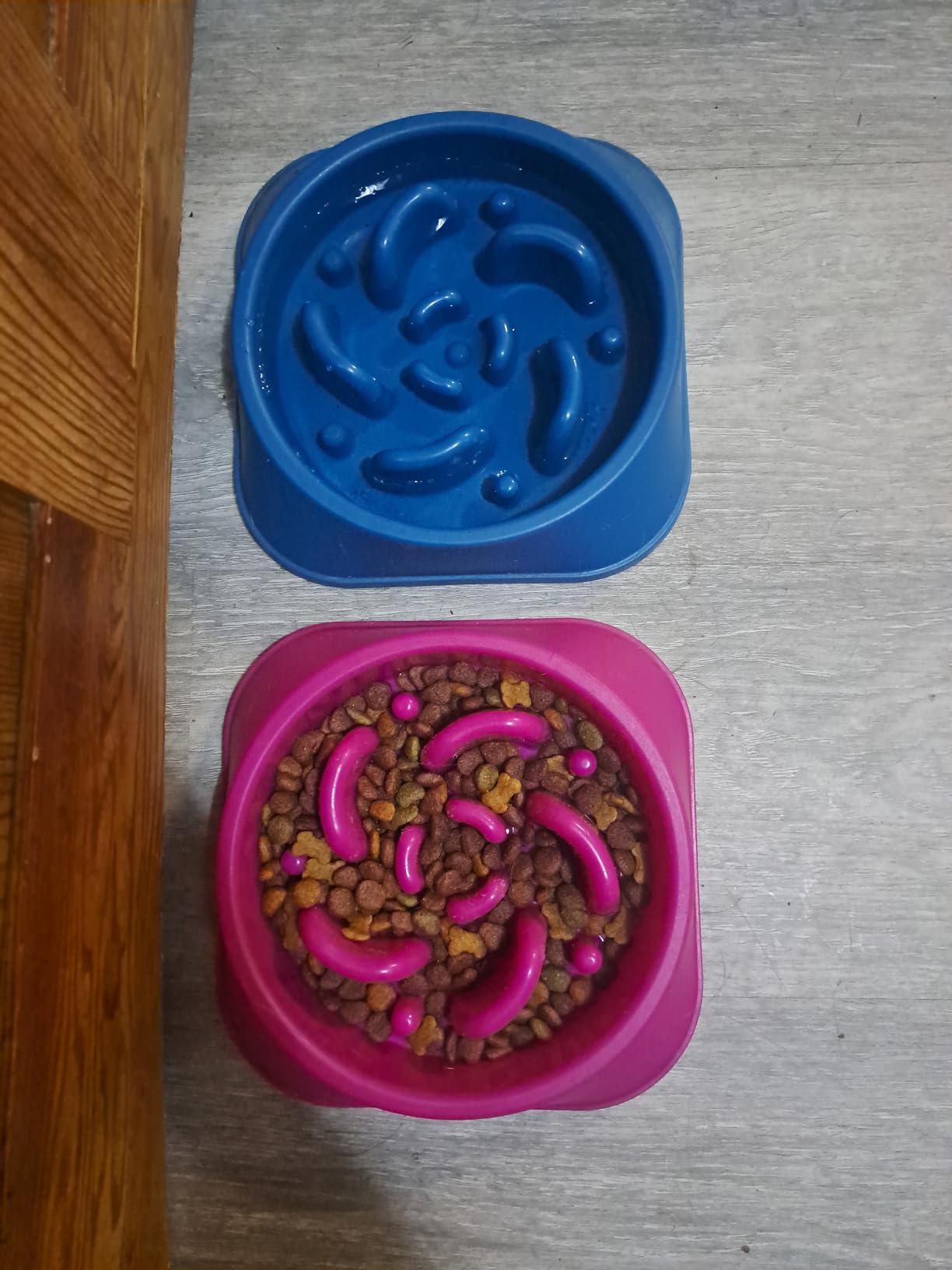
The tongue-safety detail is worth calling out. The ridges are smooth rather than sharp-edged, and the gaps are wide enough for a tongue to reach every pocket without getting wedged. On a dog that gulps hard, a rough or tight pattern is a scrape risk, and this design does not have one.
Material is food-grade polypropylene that will not shatter. That is a real safety argument over ceramic, particularly for a 100-pound dog dropping a bowl twice a day, and it is why we would start here rather than with a ceramic option for a large breed.
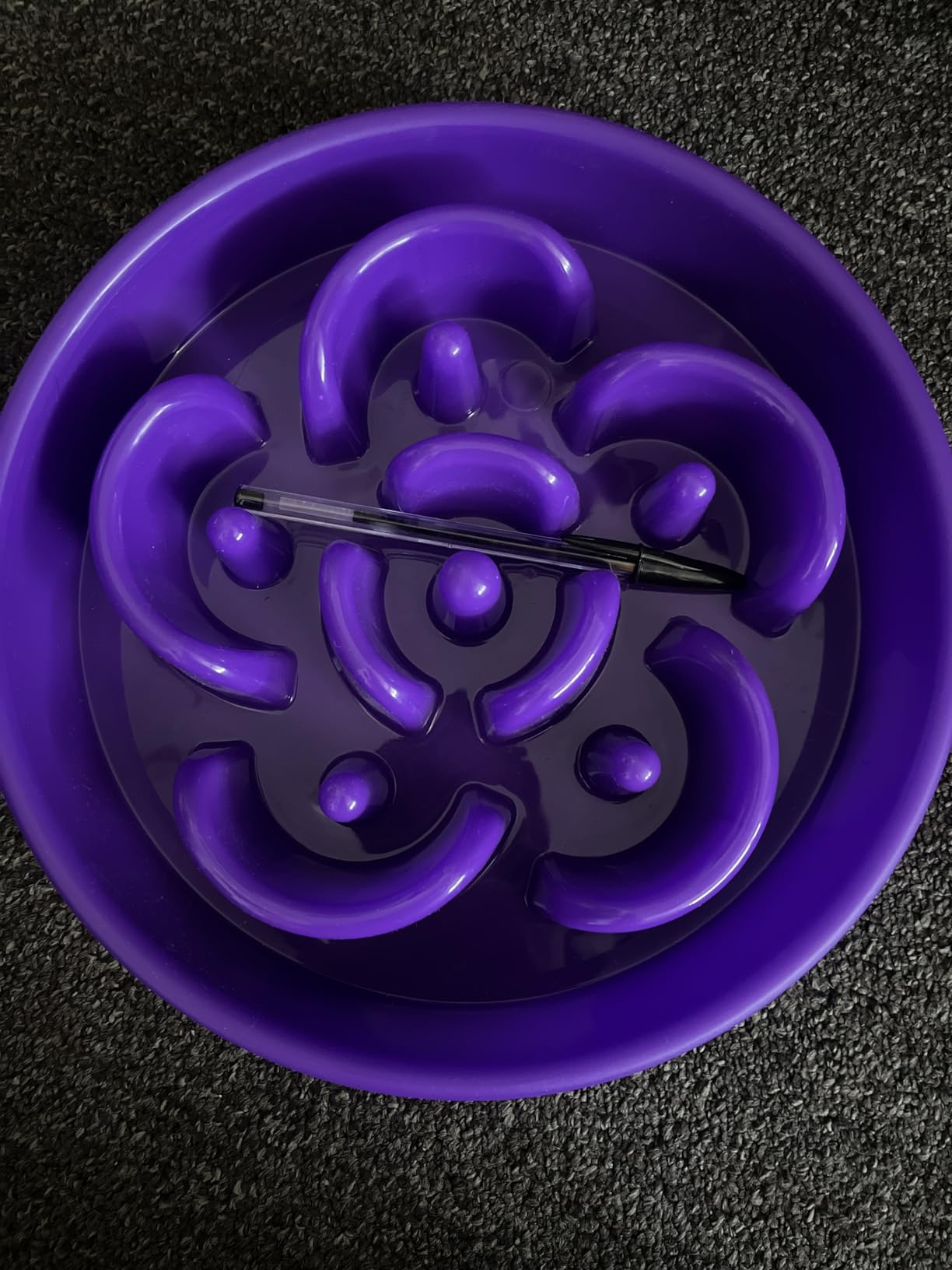
The honest drawback is that the maze is moderate rather than aggressive. Eager eaters finish quickly because the pattern is deliberately gentle, and a determined dog can outwork it. If your dog is a genuine gulper, pair this with a measured portion and a calm room rather than expecting the bowl alone to fix the pace.
Sizing for a large breed is about volume, not diameter
Put the dog’s daily portion in the bowl and see where it sits. If the food stacks above the maze, the volume is wrong and your dog will gulp the top layer straight off. A full meal should sit within the pattern.
For a large dog on a normal portion, a 4 cup bowl may be more than needed and you would do better with a smaller pattern. For a giant breed eating a full large-breed ration, this is the right capacity.
Why polypropylene beats ceramic for a big dog
It will not chip, and it will not shatter if a 90-pound dog picks it up and drops it. Ceramic slow feeders are excellent in a kitchen and a poor idea in a house with a giant breed and no supervision.
Polypropylene is also recyclable and free of BPA, PVC and phthalates, which covers the food-safety side of the question without a separate liner.
5. WHIPPY Spiral Slow Feeder Bowl – Highest Rated in the Group
Slow Feeder Dog Bowls for Large Medium Dog Non Slip Maze Puzzle Bowl Pet Slower Food Feeding Dishes Interactive Bloat Stop Preventing Choking Healthy Dog Bowl, Black
Capacity: 3 cups
Material: food-grade plastic
Size: 9.64 inch bowl, 1.37 inch depth, 10.55 oz
Pros
- Highest average rating in the group
- Six anti-skid pads hold position
- Effective reported across breeds from Poodles to St. Bernards
- Spiral grooves leave no residue behind
- Dishwasher safe
- wet or raw food
Cons
- Swirl pattern is a gentler challenge than a ridged maze
- 9.64 inch diameter is tight for very large dogs
- Plastic edges can fray for dogs that bite bowls
This carries the highest average rating in our set, and the reviews explain why: owners across a very wide range of breeds, from Standard Poodles to St. Bernards, report that gulping slows substantially and gulping-related vomiting improves. Very few products in this category have that spread of consistent reports.
The anti-skid system is the part we would highlight. Six pads across the base keep the bowl planted even when the dog pushes it around the room, and reviewers single them out by name. For a bloat-prone dog, a bowl that stays put is the difference between a slowed meal and a hoovered floor.
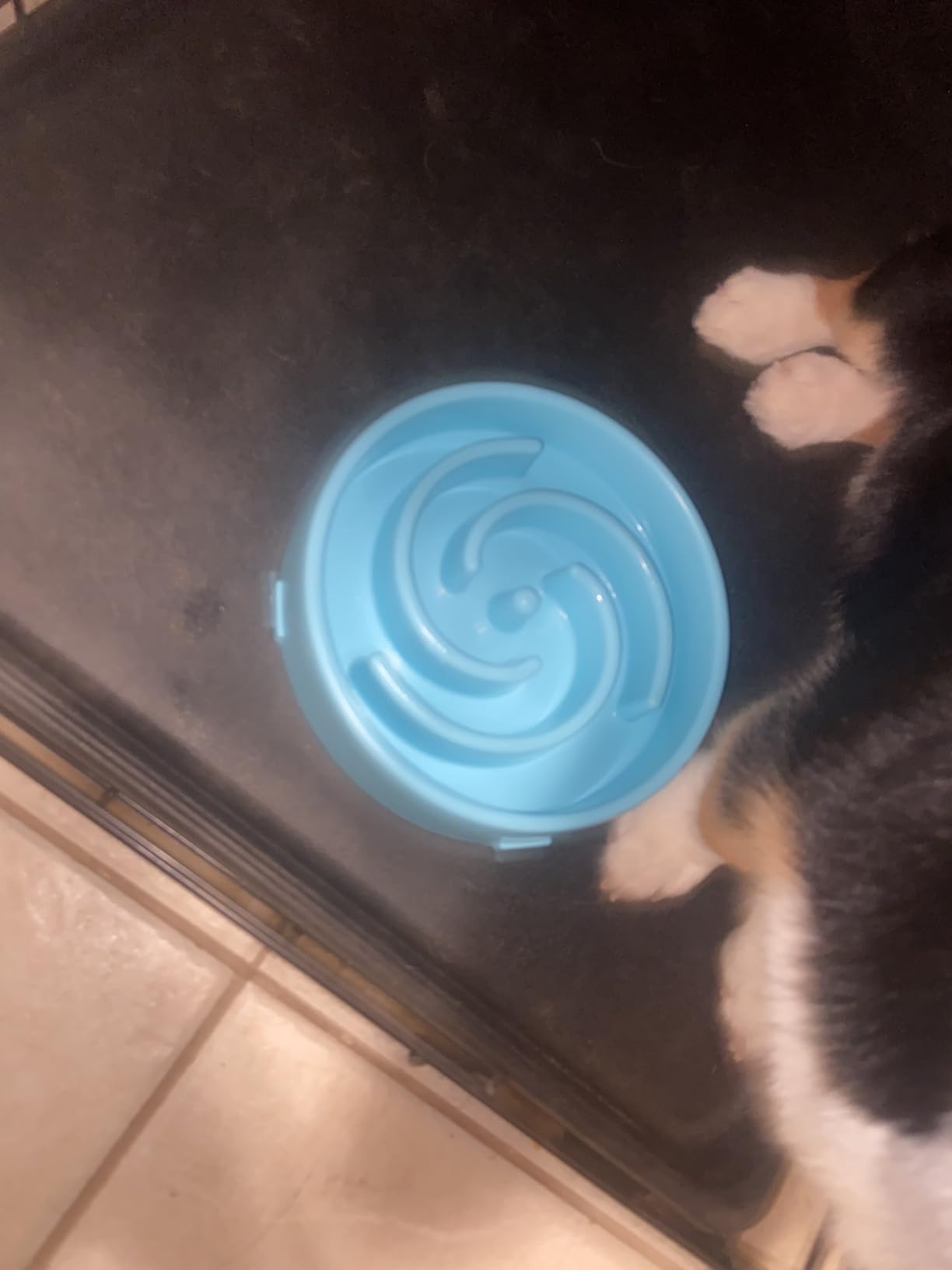
The spiral pattern is worth understanding before you buy. It runs in a swirl around the bowl rather than forming blocked pockets, and the practical benefit is cleaning: the grooves leave no crumbs or residue in the corners, so a rinse handles most of it. The trade-off is difficulty, since a dog can sweep along a channel and take several pieces at once.
Capacity is 3 cups, which covers a medium to large dog’s normal portion in one serving, and the listing states suitability for small, medium and large dogs with dry, wet or raw food.
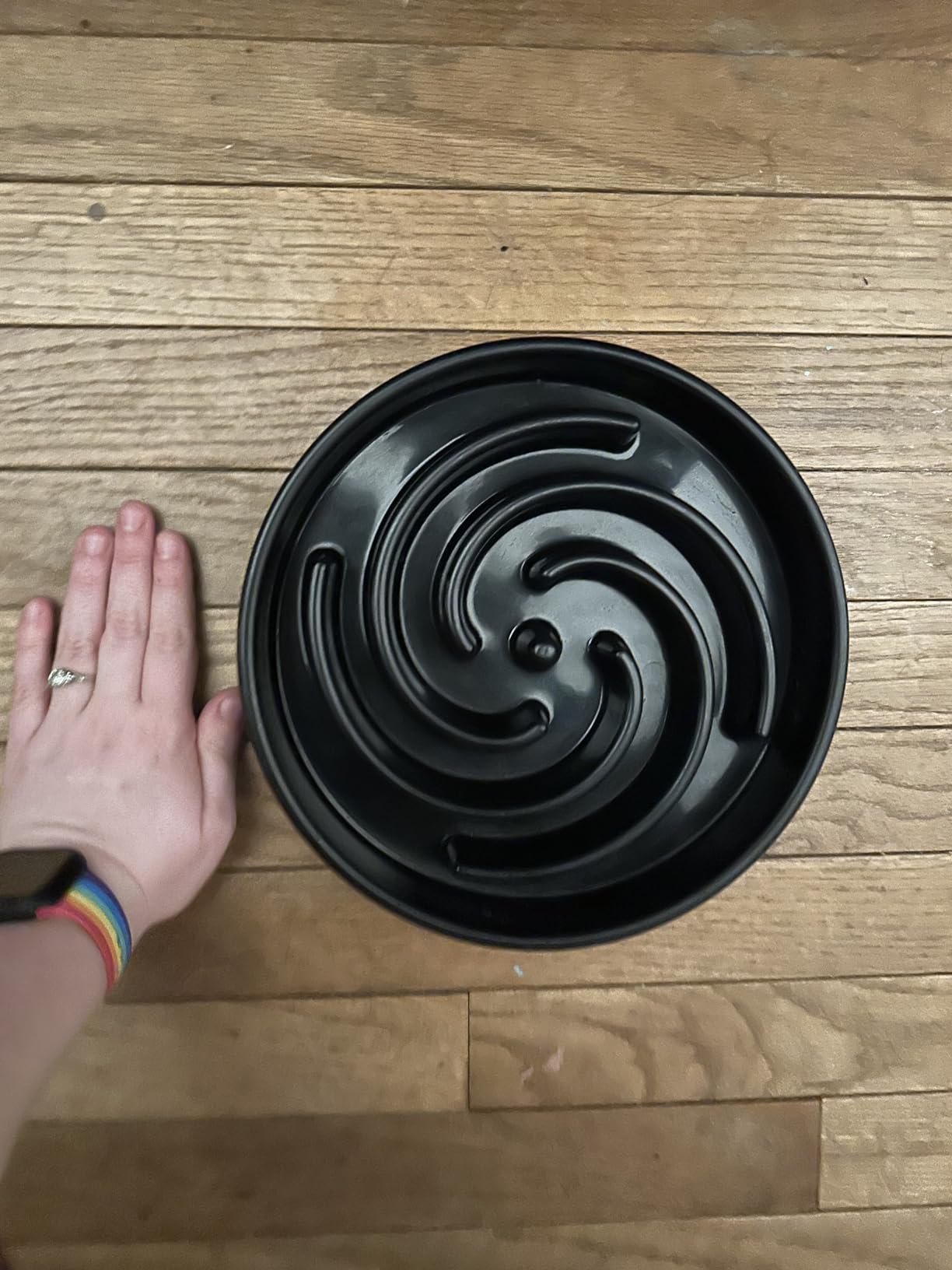
The honest drawbacks are real and worth repeating. The swirl is a moderate intervention rather than a strict one, the 9.64 inch diameter is genuinely tight for the largest dogs, and there are reports of plastic edges fraying for dogs that bite their bowls. A chewed plastic edge is a swallowing risk, so inspect it monthly if your dog is a biter.
Does a spiral pattern actually slow a fast eater
Yes, moderately. A swirl pattern spreads food along a curved channel rather than trapping it, so a dog can still take two or three pieces per mouthful. Expect a few extra minutes rather than a dramatic change, and expect the effect to shrink as the dog learns the route.
That learning curve is worth knowing about. Dogs in trials became measurably faster at the bowl by around day nine than on day one, so a feeder that works in week one may be working less well by week two. Check in at the two-week mark.
What to do when a very large dog overwhelms the bowl
Check the fill line first. If kibble piles above the maze, the bowl is too small for the portion and the surplus gets gulped regardless of the pattern. Move up to a larger capacity rather than a harder pattern.
For giant breeds specifically, look at the 10-cup option further down this list, which is built for exactly that situation.
6. LE TAUCI Ceramic Slow Feeder Bowl – Best for Hygiene and Stability
LE TAUCI Dog Bowls Slow Feeder Ceramic, 1.5 Cup Slow Feeding Bowl for Small and Medium Breed, Puzzle Dog Food Bowl for Fast Eater, Maze Purple
Capacity: 1.5 cups
Material: premium ceramic
Size: 8 x 8 x 1.8 inches, 2.31 lb
Pros
- Ceramic resists chewing and does not scratch like plastic
- Heavy base keeps the bowl stationary
- Non-porous glaze rinses clean quickly
- Meaningful meal-time extension for fast eaters
- Microwave safe
Cons
- Heavier and costlier than plastic of the same capacity
- Ceramic chips or breaks if dropped
- Some dogs need a silicone bowl first while they adjust
This is the hygiene pick, and the reason owners choose it is not aesthetic. Ceramic does not scratch, does not pit, and does not develop the rough surface that catches bacteria over years of daily use. For a dog that eats from the same bowl every day for a decade, that is a genuine advantage over hard plastic.
The heavy, stable footprint is the part that helps at mealtime. Owners report the bowl staying put as an advantage, and that matters for a bloat-prone dog because a stationary bowl keeps the dog working the pattern rather than chasing the bowl across a room.
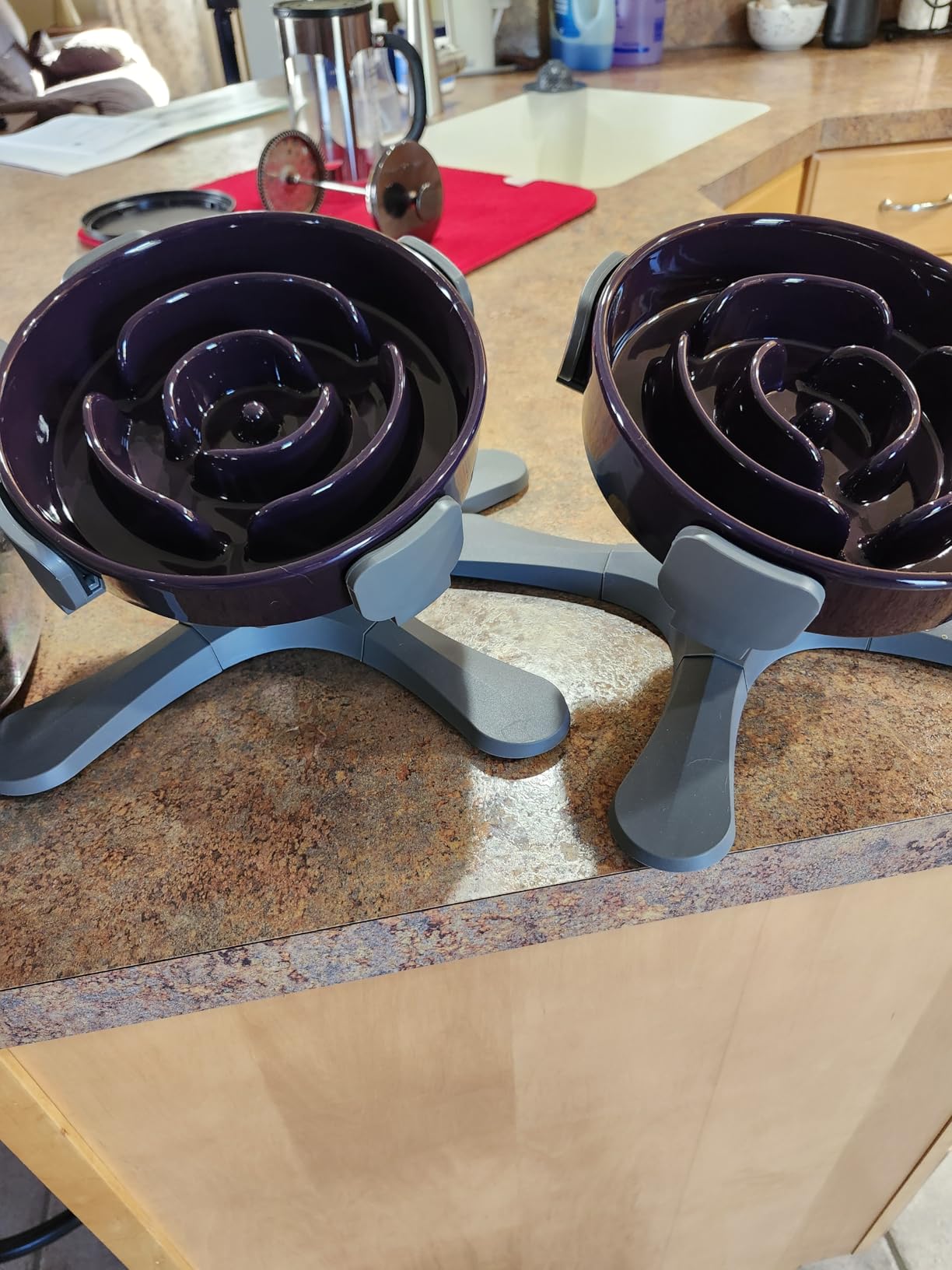
The ridges and maze pattern extend meal time meaningfully for fast eaters, and the smooth glazed surface is fast to clean. It is microwave safe for heating food, and there are many pattern and size options in the range, including raised stands.
Capacity here is 1.5 cups, which is on the smaller side. That is fine for a small to medium breed, but a large or giant dog would need two feeds in one bowl, and a second feed in a hurry is exactly the gulping behaviour you are trying to remove.
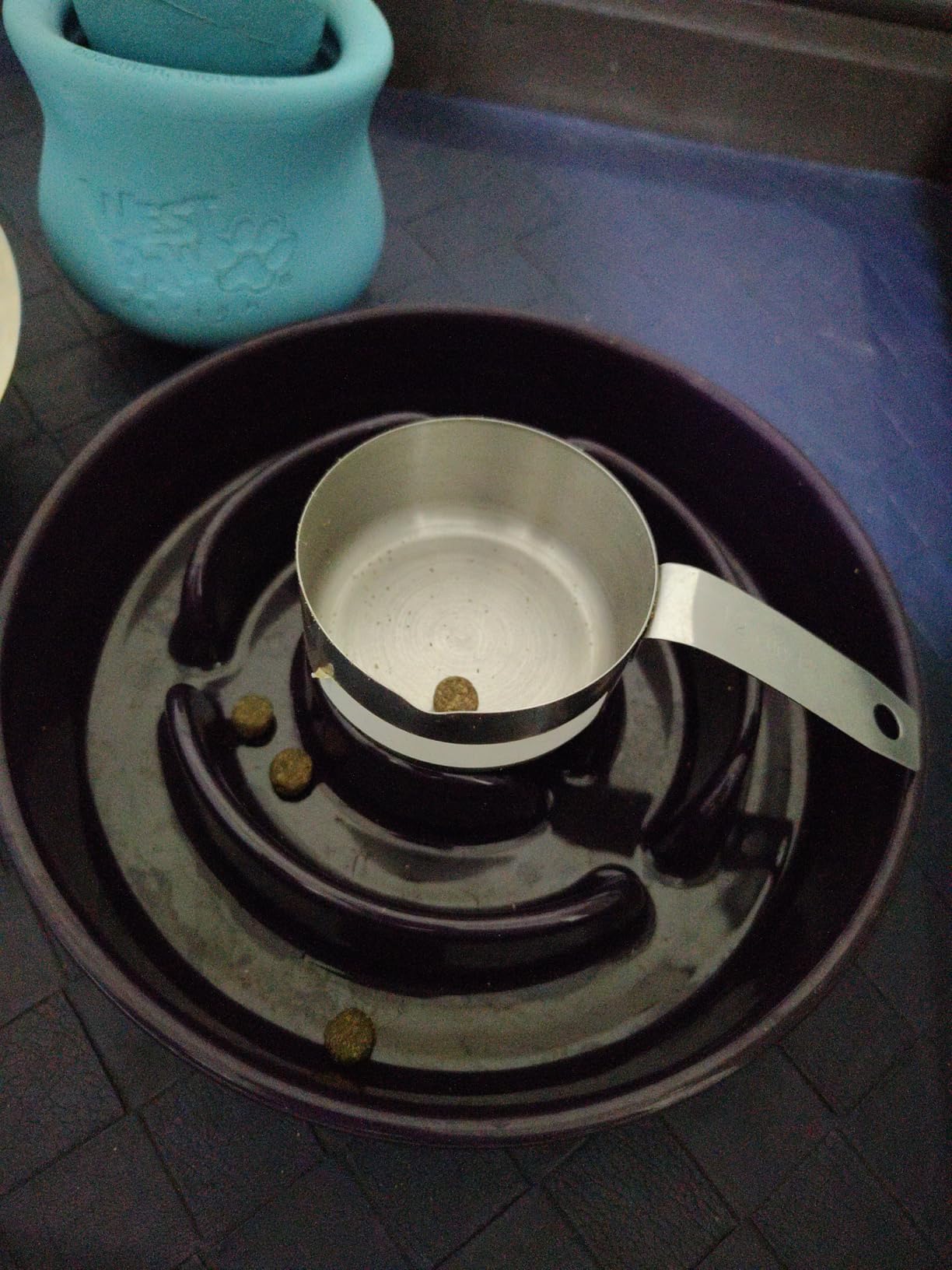
Three honest drawbacks. It is heavier and costlier than plastic of the same capacity, ceramic will chip or break if dropped, and the maker itself suggests a silicone bowl first for beginners because some dogs need an adjustment period. Read the first two as a real trade: you are buying hygiene and chew resistance with fragility and portability.
Is ceramic safe for a dog that chews its bowl
It is safer against tooth wear than plastic, and it will not be chewed through and swallowed. It is not indestructible. A ceramic bowl dropped on tile can chip, and a chipped fragment is a swallowing risk, so replace it at the first chip rather than waiting for it to fail.
It is also a poor travel option. For trips, use a silicone or plastic bowl and keep the ceramic for home.
When a heavyweight bowl is worth the tradeoff
Choose ceramic when your dog is a chewer, when scratches bother you, or when the bowl lives in a quiet kitchen and stays put. Skip it when the bowl travels, when the dog is a determined biter, or when a lighter setup matters more than a stable one.
Start on an easy pattern. If a dog finds a ceramic bowl intimidating, an adjustment period with a silicone bowl first is a reasonable path, and it avoids the frustration that makes a dog abandon the feeder entirely. The same wash-and-rinse routine applies to the rest of your dog kit, and we compared the options in our guide to the best shampoo bowls.
7. TOKAYIFE 1-Cup Small Breed Bowl – Best for Small Breeds and Toy Dogs
Slow Feeder Dog Bowls Small Breed, Dog Food Bowl Small Anti-Choking Bloat Stop Puzzle Healthy Eating Bowl (Blue, 1 Cup)
Capacity: 1 cup, medium 2 cup and large 4 cup
Material: food-safe, no BPA, PVC or phthalates
Size: 6.42 x 6.42 x 1.5 inches, 3.53 oz
Pros
- Reliably doubles or quadruples meal time for small dogs
- Compact footprint suits toy breeds and small spaces
- Base grips on most floor types
- Dishwasher safe and easy to clean
- Works with dry
- wet and raw food
Cons
- 1 cup can still be too deep for very small breeds
- No suction cups so it slides on smooth floors
- Owners of medium dogs needed the 2 cup version
Small dogs gulp for the same reason large ones do, and the flower-shaped ridges here slow eating by a reported 5 to 10 times. Small-breed owners report the clearest results in this whole category: dogs that were choking or throwing up now eat at a normal pace, often taking four times longer to finish.
The 1 cup size is deliberately compact at 6.42 inches across, which suits toy breeds like Chihuahuas, Miniature Poodles and Schnoodles and works in small spaces where a larger bowl simply will not go.
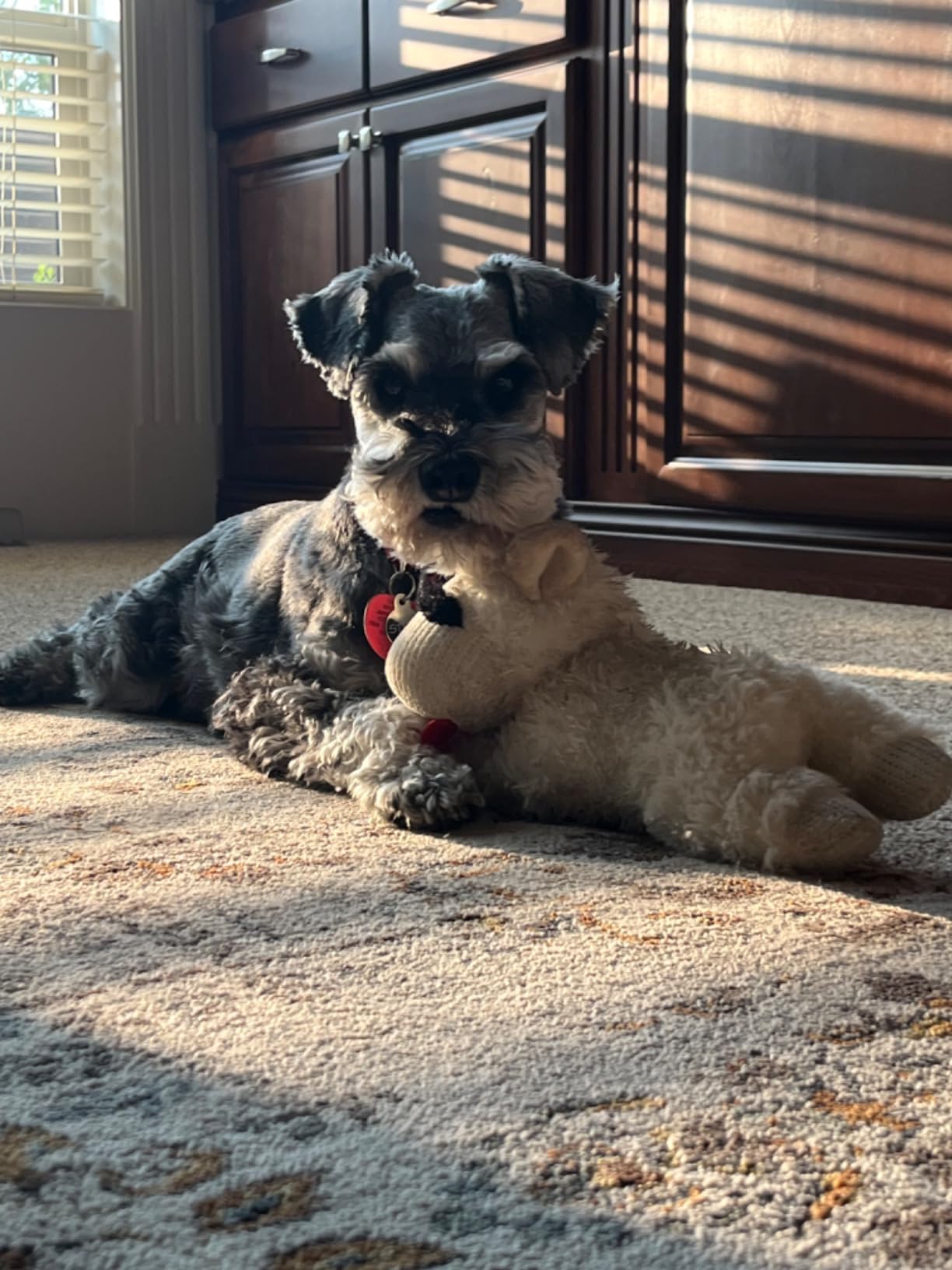
Construction is straightforward. Non-slip base, sturdy plastic, dishwasher safe, and the material is free of BPA, PVC and phthalates. It is the least complicated object in this roundup, which is a legitimate virtue in something that sits on a kitchen floor and gets washed daily.
For a bloat conversation, the honest framing is that bloat risk in small breeds is lower. The reason to buy this bowl is gulping, regurgitation and choking, which owners say this addresses well.
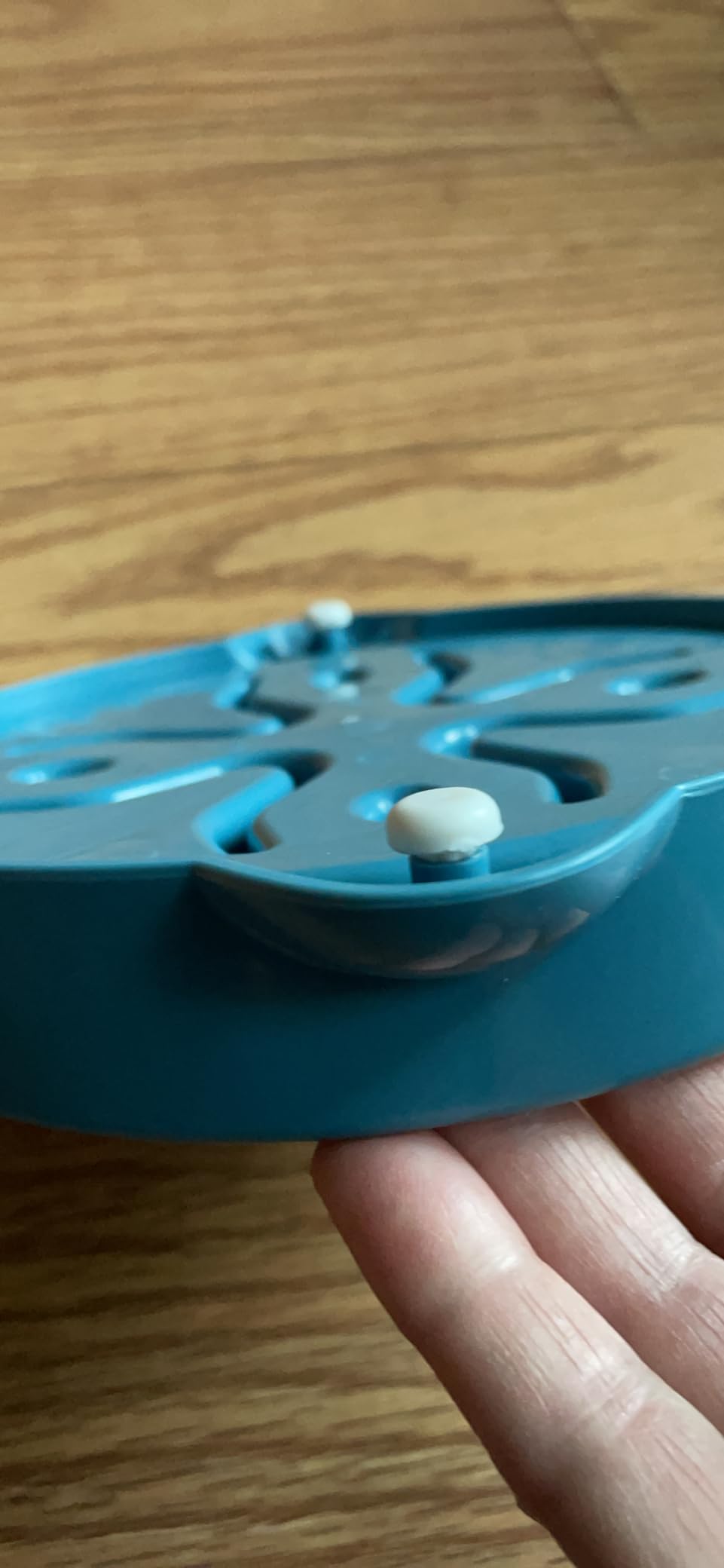
Two honest drawbacks that both come from the same place. There are no suction cups, so the bowl slides on smooth floors and owners work around it with a damp towel. And the 1 cup size can still be too deep for very small dogs, where a Maltipoo’s tongue may not reach the bottom of the pattern.
How to size a slow feeder for a very small breed
Use the dog’s actual muzzle reach, not the breed label. Put a layer of food in and watch whether the dog can clear the deepest pocket in the pattern. If food remains, the bowl is too deep and no amount of encouragement will fix it.
Owners of medium dogs found they needed the 2 cup version instead, so if your dog sits between sizes, size by portion and reach together rather than assuming the smaller bowl is gentler.
What to do when a small dog slides the bowl around
Put a damp towel or a silicone feeding mat underneath. It takes no training and it is the most common fix owners report, and it works because the bowl’s own base is a single moulded pad rather than a suction cup.
A second option is to feed the first few pieces by hand away from the bowl, then start the bowl. Hand-feeding the opening handful is the fastest way to teach a small dog that food now arrives slowly.
8. Mr. Peanut’s Stainless Steel Slow Feed Bowl – Best for Aggressive Chewers
Mr. Peanut’s Stainless Steel Interactive Slow Feed Dog Bowl with a Blue Base, Fun Healthy Bloat Stop Feeder (Large)
Material: food-safe stainless steel with silicone ring
Sizes: about 1.5, 2 and 3 cups
Size: 11.4 x 2.4 x 11.4 inches, 15.2 oz
Pros
- Heavy-gauge stainless will not scratch
- pit or be chewed
- Molded in one piece with no welded seam
- Much easier to clean than deep plastic grooves
- Shallow channels reachable for short-muzzled breeds
- Shatterproof and BPA free
Cons
- Shallower maze slows some dogs by only about 20 percent
- Removable silicone ring can detach
- Flourishes of rust can appear at the seam if not dried fully
If your dog chews through plastic, this is the answer. The bowl is stainless steel, and the honest benefit is not that it looks nicer. It is that a dog cannot eat a piece of the bowl, which removes the plastic ingestion and intestinal blockage risk that reviewers raise repeatedly for cheaper plastic feeders.
It is molded in one piece with no welded seam, so there is no joint for bacteria to hide in. Several owners who switched from plastic report better hygiene, easier cleaning and better digestion, with some noting reduced bloating and flatulence in older dogs. Reviewers also report multi-year durability with no issues.
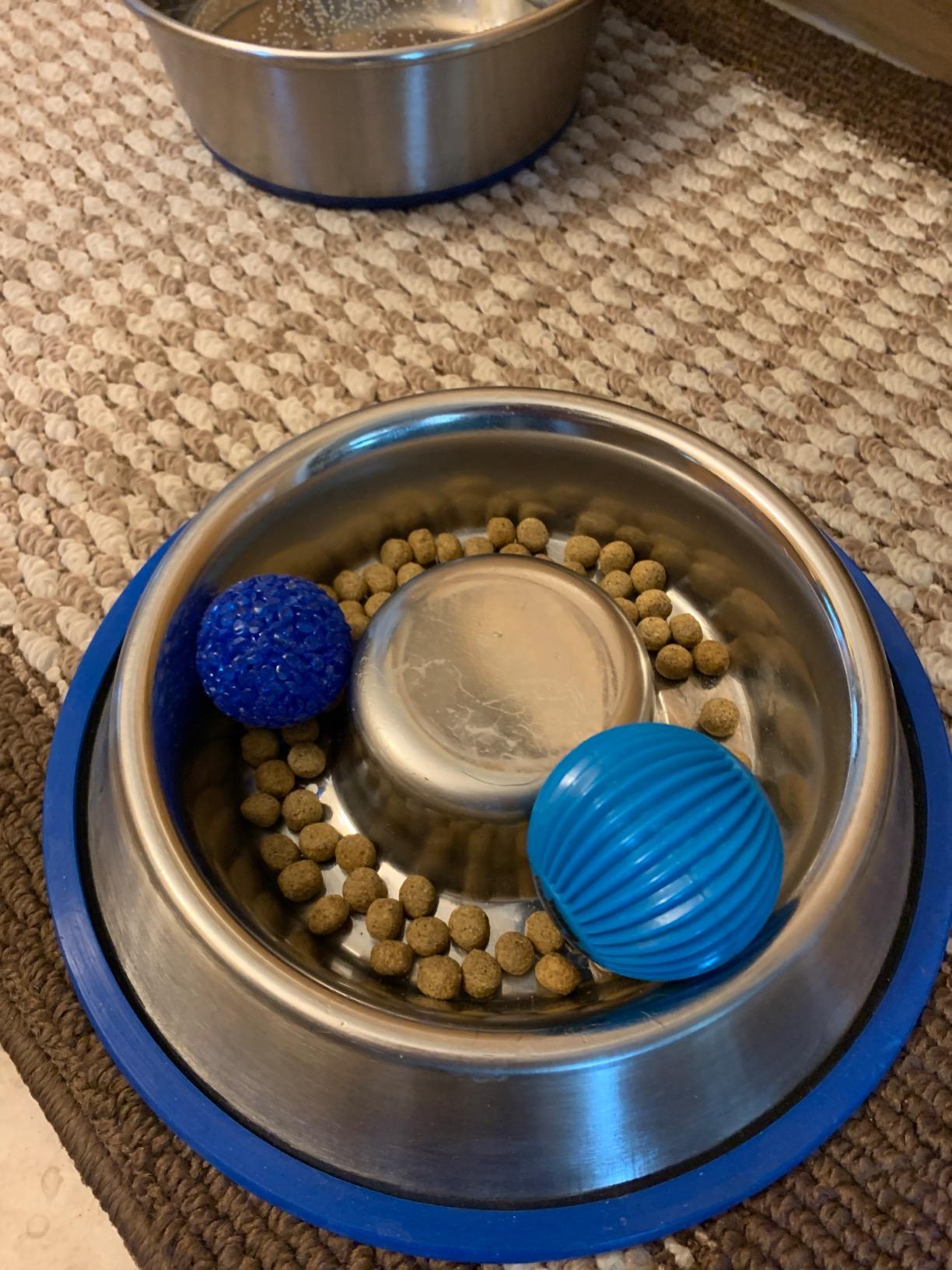
The Bundt cake-style interior turns the meal into a chase, and the shallow grooves stay accessible for short-muzzled breeds such as Boxers and Bulldogs. Wide sloped sides make the bowl hard to tip or flip, which means a determined dog cannot turn the feeder back into a speed-eating contest.
There is one maintenance instruction that matters. The bowl must be fully dried after washing, because rust spots can form along the rolled edge where the silicone ring meets the metal. Towel dry it and let it air dry fully.
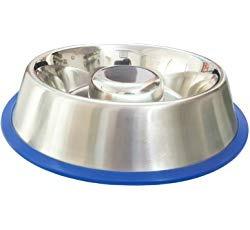
The honest drawback is the trade you are making. The stainless maze is shallower than a plastic labyrinth, so some dogs only slow by around 20 percent. If you fill the bowl to the top, kibble sits above the ridge and gets gulped, so leave the top third empty.
Is stainless steel better than plastic for a bloat-prone dog
It is better on safety and hygiene, not necessarily on slowing. Metal survives a chewer and sanitises easily, but its geometry is gentler, so expect a smaller effect than from a deep plastic maze. For a dog that chews bowls, that trade is worth making. For a dog that only needs slowing, plastic is the stronger tool.
Watch the silicone ring monthly. It is removable for cleaning and it can detach, and a loose ring means a bowl that slides.
What to do about rust spots at the seam
Dry the bowl fully every time. After the last meal of the day, rinse, towel dry, and leave it upside down on a rack so air reaches the seam where the silicone ring meets the rolled metal edge.
Rust marks at the seam are cosmetic rather than a safety problem, but they are a signal that the bowl is staying wet. A stainless steel bowl that dries properly should last years.
9. Neater Pet Brands Stainless Steel Slow Feed Bowl – Best for Non-Tip Stability
Neater Pet Brands Stainless Steel Slow Feed Bowl – Non-Tip & Non-Skid – Stops Dog Food Gulping, Bloat, Indigestion, and Rapid Eating (3 Cup)
Capacity: up to 3 cups wet or dry
Material: stainless steel with removable rubber ring
Size: 11.25 x 11.25 x 2 inches, 1.06 lb
Pros
- Non-tip low profile resists flipping and punting
- Removable rubber ring reduces clanging on tile
- Stainless is non-porous and easy to sanitise
- Obstacle height tuned to slow without frustrating
- Three cup capacity suits medium to large breeds
Cons
- Mildest slow-down of any bowl reviewed
- Rubber ring can detach or be chewed
- Bowl measures 11.25 inches across and needs floor space
- Ring must be removed for thorough cleaning
This is the lowest-rated bowl in our group, at 4.2 stars, and we are not going to pretend otherwise. What earns it a place is geometry. The base measures 11.25 inches across against a 9 inch top, giving it a low, wide, non-tip shape that dogs that normally kick dishes across the floor simply cannot move.
For a large, powerful dog, that is a real feature. A dog that cannot push the bowl cannot dump the food out and inhale it, which is one of the more common ways a slow feeder stops working.
Stainless steel is non-porous, unscented and easy to sanitise, and the removable rubber base ring keeps the bowl planted while quieting the clatter on tile. Capacity is up to 3 cups of wet or dry food, sized for medium to large breeds.
Buyers consistently value the obstacle calibration. The height is tuned to slow eating without making food unreachable, and that is the difference between a bowl that works and a bowl a dog abandons.
Be aware of the footprint. At 11.25 inches across and 2 inches tall, this needs a clear patch of floor, and it will not fit in a tight feeding nook beside a wall.
Two honest drawbacks, both about the same thing. The slowing effect here is the gentlest of any bowl we reviewed, with some dogs finishing only modestly slower, and the rubber ring can detach or be chewed, after which the bowl slides. This is a stability product more than a difficulty product.
Who should choose this bowl over a deeper maze
Choose it when the dog is large, powerful and physically capable of launching a lighter bowl across a room. Do not choose it hoping for dramatic slowing, because the obstacle height is deliberately moderate.
It also suits a household with a wet-food dog, since stainless sanitises more easily than a grooved plastic bowl and the ring comes out for a proper wash.
Why a low rating does not mean a bad product
A 4.2 average with 6 percent one-star reviews usually means the product does one thing well and disappoints on another. Here the body is excellent and the effect is mild, so buyers expecting a dramatic slow-down rate it lower than buyers who wanted a bowl that stays put.
Read the reviews for the specific behaviour you are trying to fix. If your problem is the bowl ending up across the kitchen, this solves it. If your problem is a 30-second meal, use a deeper maze instead.
10. Tolopu Extra-Large ABS Slow Feeder Bowl – Best for Giant Breeds
Tolopu Extra-Large Durable ABS Large Slow Feeder Dog Bowls(10 Cups Capacity) Stop Bloat Bowl Anti-Choking &Anti-Gulping & Fun Feeding Bowl (Large, Black)
Capacity: up to 10 cups
Material: non-toxic durable recyclable ABS
Size: 9.44 x 9.44 x 2.56 inches, 1.21 lb
Pros
- Largest capacity reviewed
- for Great Danes and Rottweilers
- Owners report 15 to 30 minute meals
- Weighted base with traction pads resists sliding
- Build quality holds over years of daily use
- Wipes clean and works for dry or wet food
Cons
- Deep bowl is hard for short-muzzled dogs to reach into
- ABS can deform in a dishwasher
- Crevices are awkward to hand wash at this size
- Too difficult for puppies
- some dogs give up
This is the bowl for the dogs where bloat is most likely to be fatal. At up to 10 cups, it is the largest capacity in the roundup, and owners of Great Danes, Rottweilers, German Shepherds and Belgian Malinois report the largest single improvement in eating time, often moving from under a minute to 15 or 30 minutes.
The same owners report reduced vomiting and successful weight loss alongside the slower meals. For a giant breed eating a full ration, this is the closest thing to a proper solution we found.
Raised feeding sections force the dog to work through the bowl rather than gulp, and the weighted base with traction pads keeps it planted while reducing mess. Build quality holds up over years of daily use, and the gloss surface wipes clean easily. Sizes are mapped to dog weight, with a small option under 11 pounds, a medium from 11 to 50 pounds and a large from 50 to 110 pounds.
That weight mapping is more useful than a breed label, and it is a better approach than the one most competitor guides use. Weigh your dog, then pick the band.
Clean it by hand. Some owners report the ABS deforming in a dishwasher despite product imagery suggesting otherwise, so treat the dishwasher as off the table for this one.
Three honest drawbacks. The bowl is very deep, so short-muzzled large breeds cannot reach food at the bottom. Hand washing is awkward because of the size. And it is genuinely difficult, with puppies and some dogs giving up with food unreachable, which is the frustration failure mode we flagged at the start.
Why giant breeds need their own bowl size
A Great Dane or Rottweiler eats a full ration, and a small bowl forces a second serving. Two servings means a second gulp, and the second one is usually faster. A 10-cup bowl lets the whole meal go into one slow feed, which is the entire point.
Check that the food sits within the pattern rather than above it. If it stacks over the top, the portion is still larger than the bowl’s working area.
When a giant breed should skip this bowl
Skip it for a flat-faced giant breed, because the depth means the bottom is unreachable. It is also too hard for a puppy, and a dog that gives up eats less, which is worse for bloat than eating quickly from an empty bowl.
For a giant breed with a short muzzle, look instead for a shallow wide-channel design, and start at an easy level with the portion split into two feeds a few hours apart.
Bloat Emergency Signs: When to Call Your Vet Now
Nothing in this article replaces veterinary care, and this is the section to bookmark. A slow feeder addresses eating speed. It does not treat a dog whose stomach is already distended. The Merck Veterinary Manual and AAHA guidance describe the following signs as emergencies, and dogs seen more than six hours after signs begin are less likely to survive.
A swollen abdomen that feels hard or tight to the touch
Repeated retching or gagging that produces nothing, or only foam
Restlessness, pacing, or an inability to settle
Heavy drooling
Pale, grey or very red gums
Weakness, difficulty standing, or collapse
Failure to pass gas or stool
Regurgitation and bloat are different things. Regurgitation is undigested food coming back up within minutes of a meal, often with no effort, and it is a common consequence of gulping. Bloat is the stomach filling with gas and distending, and that is the emergency. If you are not sure which you are seeing, treat it as the emergency.
Go to an emergency clinic immediately. Do not wait to see whether it resolves, and do not wait to see whether the retching brings something up.
How to Choose a Slow Feeder Bowl for a Dog Prone to Bloat
Eight decision rules, in the order we would work through them. We keep these practical on purpose, because a bowl choice made confidently is worth more than a bowl choice made anxiously.
1. Match the difficulty to your dog’s experience, not its size
Start on the easiest pattern your dog can finish, and move up only after a week of clean bowls. A bowl your dog cannot solve does not slow eating, it reduces it, and a dog that eats less is not what you are aiming for. Every bowl in this roundup has a beginner option except the most intricate, so use the first three meals as an assessment.
2. Get the capacity right before the pattern
A bowl that is too small makes a food-motivated dog muscle through it. Put the daily portion in, and if it stacks above the maze the bowl is wrong. Weigh your dog and use weight bands where they are offered, because a portion that fits below the pattern is the single most important factor after patience.
3. Choose material by chewer strength
BPA-free plastic is the value option and the strongest slowing geometry. Food-grade silicone is gentle, folds flat for travel and tolerates heat. Stainless steel or a rubber base is for power chewers who would otherwise eat the bowl. Ceramic is stable and hygienic but will chip. Match the material to the teeth, not to the kitchen.
4. Account for muzzle shape
Flat-faced breeds such as Bulldogs, Pugs and Shih Tzus cannot reach into a deep bowl. Look for a shallow pattern, a wide channel, or a lick mat style design where the dog works from a flat surface. A deep maze for a brachycephalic dog is not a challenge, it is an inaccessible bowl, and the dog will give up or flip it.
5. Check food compatibility before you buy
Deep mazes trap wet food and are hard to sanitise. If your dog eats wet food, choose a shallow open pattern, confirm the bowl is dishwasher safe, and clean it immediately after every use rather than at the end of the day. If the bowl is hand-wash only, expect a bottle brush in the routine permanently. Batch-cooking fresh meals ahead of time, in one of our best slow cookers, also makes it far easier to refill a bowl that is washed after every meal.
6. Set realistic expectations about time
A few extra minutes is a realistic outcome. In a small trial reported in Veterinary Evidence, dogs emptied a standard bowl in about 200 seconds and a go-slow bowl in about 350 seconds. Listings claiming ten times longer meals describe a ceiling, not an average. Also expect the effect to fade: dogs in that work became measurably faster at the bowl by around day nine than on day one.
7. Do not stop the bowl from ever being used by mistake
Set it on the floor in a calm space, fill below the rim, and leave it there. A slow feeder on a raised shelf or a crowded mat is decoration. If your dog gives up, back off one difficulty level for a few days rather than switching to a harder pattern, and reward the first few pieces by hand to rebuild the habit.
8. Do elevated dog bowls cause bloat
No strong evidence links elevated bowls to increased bloat risk. Elevation is an orthopedic and comfort choice, not a bloat intervention, and it does not change how much air a dog swallows. For bloat prevention the mechanism that matters is slowing consumption and reducing aerophagia, which a slow feeder addresses and a raised bowl does not. If you want both, use a raised bowl and a slow feeder together rather than treating height as the fix.
There are habits that carry more weight than the bowl itself. Splitting into two or three smaller meals, feeding once daily rather than twice, and keeping a calm hour around meals all matter, with no hard exercise for an hour before feeding and two hours after. If you also want to slow down grazing rather than meals, we covered the best slow feed hay nets separately.
Frequently Asked Questions About Slow Feeders and Bloat
Do slow feeder bowls help prevent bloat?
Partly, and honestly. They reduce the air a dog swallows while eating, and a review of six studies found the evidence mixed: slowing a dog down will not raise gastric dilatation-volvulus risk and may lower it. A slow feeder buys time, not immunity, so it is best understood as a low-risk supporting habit rather than a prevention method on its own. Pair it with once-daily feeding, split meals and a calm hour around food.
Do vets recommend slow feeder bowls?
Yes, routinely, particularly for large and deep-chested breeds where slowing consumption and reducing swallowed air matter most. But vets recommend them as one part of a protocol, not a standalone fix. That protocol usually includes splitting meals, feeding once daily rather than twice, and keeping a calm hour around meals with no hard exercise before or after.
What are the downsides of slow feeder bowls for dogs?
Five real ones. A too-hard maze frustrates dogs so they eat less instead of slower. Dogs get measurably faster with practice, noticeably quicker by around day nine. Deep crevices trap wet food and are difficult to sanitise. Cheaper plastic can be chewed through, creating an ingestion and blockage risk. And a bowl alone does not address the other feeding habits linked to bloat.
Do elevated dog bowls cause bloat?
No strong evidence links elevated bowls to increased bloat risk. Elevation is an orthopedic and comfort choice, not a bloat intervention, and it does not change how much air a dog swallows while eating. For bloat prevention the priority is slowing consumption and reducing aerophagia, so a slow feeder addresses the actual mechanism and a raised bowl does not.
How long should a slow feeder make a dog meal take?
A few extra minutes, realistically. In a small trial dogs emptied a standard bowl in about 200 seconds and a go-slow bowl in about 350 seconds. Marketing claims of ten times longer meals describe a ceiling rather than an average, and the gap between day one and day nine is often bigger than the gap between bowls.
Can you use wet food in a slow feeder bowl?
Yes, most slow feeders work with both wet and dry food, but wet food is harder to clean from maze crevices. Choose a simple, shallow pattern, confirm the bowl is dishwasher safe or hand-wash it straight after every use, and put wet food into the low points first so the dog gets an easy first mouthful.
What are the signs of bloat in dogs?
A swollen or hard abdomen, repeated unproductive retching, restlessness or pacing, heavy drooling, pale gums, weakness and collapse. Bloat or GDV can become fatal within hours, and dogs seen more than six hours after signs begin are less likely to survive. Go to an emergency clinic immediately rather than waiting to see if it resolves.
Are slow feeder bowls safe for puppies?
Yes, provided you use a puppy-sized model with a pattern a young dog can reach. Many puppies eat fast and regurgitate, so a shallow beginner pattern is ideal. Supervise the first few meals, keep the pattern shallow enough that the puppy can finish the whole portion, and shorten early sessions so frustration does not teach it to give up on the bowl.
A Slow Feeder Is One Piece of the Bloat Puzzle
Ten bowls, and the honest answer is that the bowl matters less than most listings suggest. A slow feeder reduces swallowed air and it cannot be eaten, crushed or flipped. That is worth doing. It is not a guarantee against bloat, and any product page that tells you otherwise is selling you a promise the evidence does not support.
For the best slow feeder dog bowls for bloat, the pattern is simple. Most dogs start on the Outward Hound, because the shallow maze is forgiving and the difficulty levels let you move up as the dog improves. A large or giant breed should skip straight to a bigger capacity, and a chewer should be in stainless steel rather than plastic.
The habits that carry more weight are the free ones. Split the meal, feed once a day rather than twice, keep the room calm, and leave the dog alone for an hour afterwards.
One next step, then: pick the easiest pattern your dog can finish, watch the first three meals, and only move up when the bowl comes back empty every time. Everything else in this guide is refinement on that.
Last updated for 2026. We may earn a commission when you buy through links on this page, at no additional cost to you.