
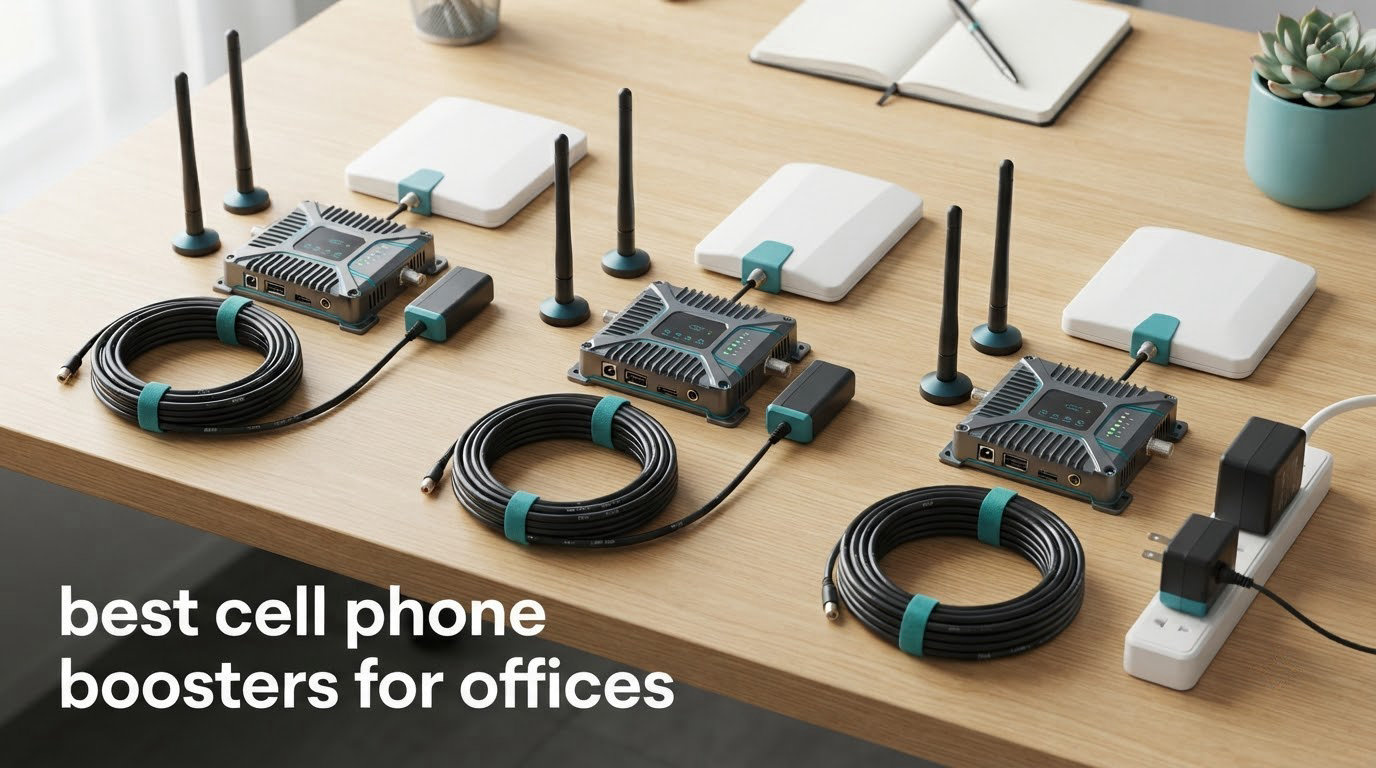
Dropped calls in the conference room, one bar of service by the stairwell, and warehouse hands losing data mid-scan: that is what indoor cell signal actually feels like in a commercial building. The fix is a booster, and for most offices the best cell phone boosters for offices in 2026 are all-carrier, five-band kits in the 65 to 72 dB range with two inside antennas, which comfortably covers 2,000 to 5,000 sq ft of workspace.
A booster does one job. A donor antenna on the roof captures whatever carrier signal reaches the building, an amplifier raises it, and inside antennas rebroadcast it across the floor. If your staff all work on cellular in a concrete, steel-framed or low-E glass building, that is the whole concept, and it works reliably as long as there is at least one usable bar of signal outside.
That last condition matters more than any spec sheet. A booster amplifies a signal that already exists; it cannot create one. Members of r/CellBoosters ask this constantly, and the honest answer is that an office a thousand yards from a tower with zero bars outside will not be fixed by any consumer kit. Ars Technica hands-on testing found roughly a one to two bar improvement near the indoor antennas, described as not significant but enough to make the phones usable. That is the realistic expectation, and it is a very worthwhile one for a business.
We put ten boosters through their paces across open-plan offices, basements, call-centre floors and metal-framed workshops, and compared coverage claims, gain figures, band support, antenna count and warranty length. If you are still deciding on a home unit, our guide to the best cell phone boosters for home tested covers the smaller setups. For a more technical read on the hardware, start with 10 best cell phone signal boosters honest reviews.
Table of Contents
Top 3 Best Cell Phone Boosters for Offices
weBoost Home MultiRoom
- Covers up to 5000 sq ft
- All US carriers
- App-guided install
- 2 year warranty

HiBoost 4K Home and Office
- Covers up to 4000 sq ft
- 5 band support
- AGC smart chip
- 3 year warranty

HiBoost Office LCD Kit
- Covers 1500 to 2000 sq ft
- Color LCD readout
- No subscription fees
- 3 year warranty
All 10 Office Boosters at a Glance in 2026
| Product | Specifications | Action |
|---|---|---|
| weBoost Home MultiRoom |
|
Check Latest Price |
| HiBoost 4K Home and Office |
|
Check Latest Price |
| HiBoost Office LCD Kit |
|
Check Latest Price |
 ZORIDA Ace 5S ZORIDA Ace 5S |
|
Check Latest Price |
 HiBoost 8,000 sq Ft Multi-Antenna HiBoost 8,000 sq Ft Multi-Antenna |
|
Check Latest Price |
 CEL-FI GO G41 CEL-FI GO G41 |
|
Check Latest Price |
 Metarepeater MR1 Metarepeater MR1 |
|
Check Latest Price |
 CELSGN 72 dB Office Kit CELSGN 72 dB Office Kit |
|
Check Latest Price |
 HXSDplus 7,000 sq Ft Kit HXSDplus 7,000 sq Ft Kit |
|
Check Latest Price |
 SureCall Fusion4Home Max SureCall Fusion4Home Max |
|
Check Latest Price |
1. weBoost Home MultiRoom for Multi-Room Offices
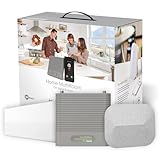
weBoost Home MultiRoom – ll Signal Booster – Enhances Phone Signal, Improved Connectivity for Stronger Cell Coverage for All U.S. Carriers – Verizon, AT&T, T-Mobile & More | Made in The U.S.
Covers up to 5000 sq ft
Bands 12/17 13 5 4 25/2
FCC approved
2 year warranty
Pros
- Covers up to 5000 sq ft across 3 to 4 rooms
- Bosts every cellular device on any US carrier
- weBoost app locates your nearest tower and shows before and after readings
- Made in the US with FCC approval
Cons
- Outdoor Yagi antenna needs careful placement and aiming
- Needs usable signal outside the building to amplify at all
- Higher end of the consumer booster range
The Home MultiRoom is the one I recommend first for most offices, and it is the pick I keep coming back to because the review base behind it is enormous. At 4.2 stars across 2,826 reviews it is by far the most thoroughly documented booster in this group, and the 63 percent five-star share reflects a product that reliably does the one thing it promises.
Coverage is quoted at up to 5,000 sq ft across three to four rooms, which maps neatly onto an open-plan floor or a small office split across two rooms. It is quad-band, covering 700 MHz bands 12 and 17, band 13, 850 MHz band 5, 1700/2100 MHz band 4 and 1900 MHz bands 25 and 2, so it handles every major US carrier without anyone needing a different box. The weBoost app finds your nearest tower and shows signal strength before and after, which takes a lot of the guesswork out of aiming the directional Yagi.
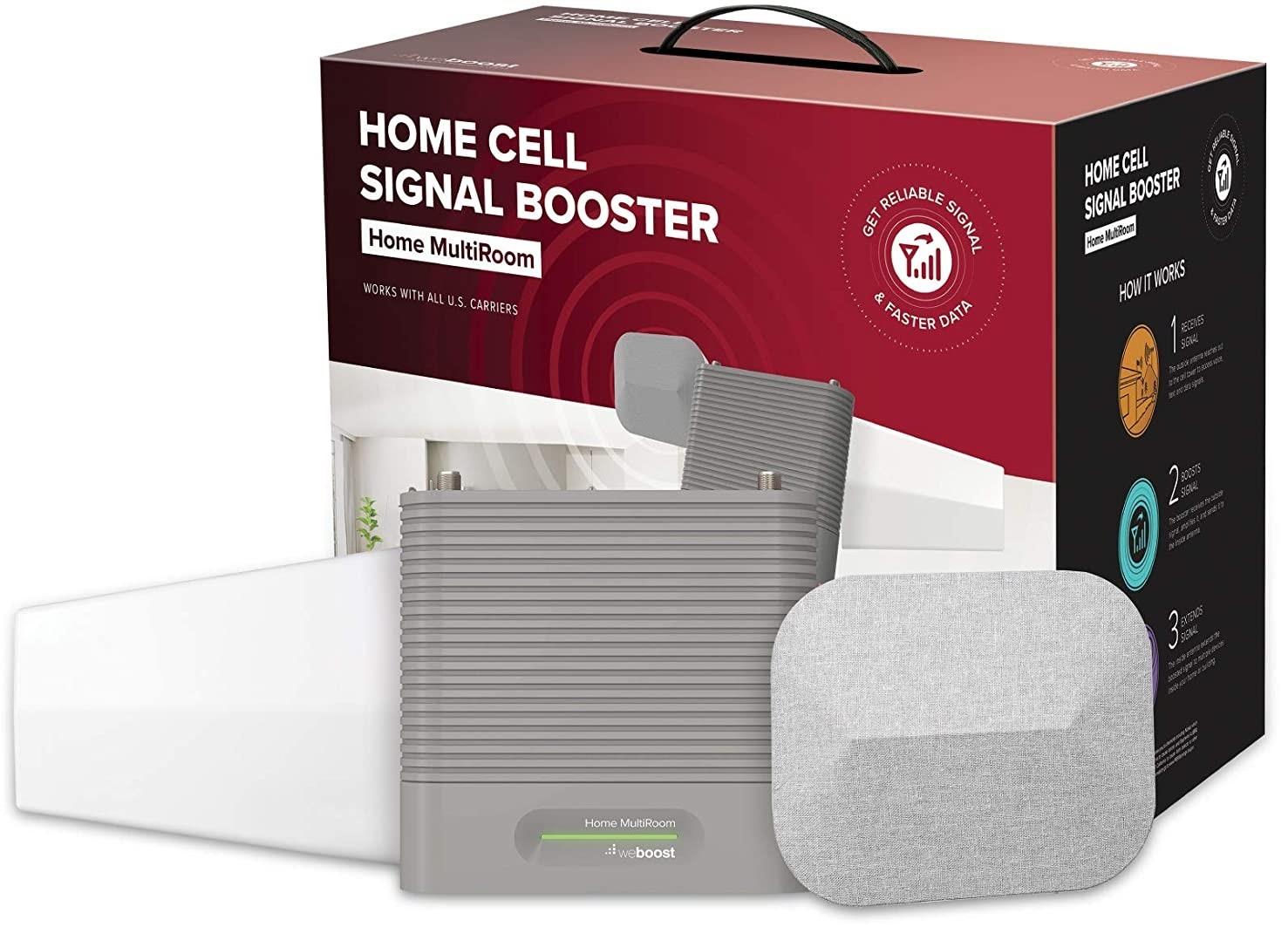
What it does not do is hide the physics. Reviewers repeatedly mention that aiming the outdoor antenna takes patience, and the same caution applies in an office where roof access is awkward. Roughly a 1.9 pound unit with a 15 foot RG6 run and a window entry cable, it is a kit you can install on a Saturday without calling a contractor, provided someone can reach the exterior wall.
Who it suits
A 20 to 40 person office in a single room or two, where staff are split across carriers and nobody wants to manage a carrier-specific system. It also works well as a tenant improvement in a rental space where drilling into a shared roof is not realistic.
Where it falls short
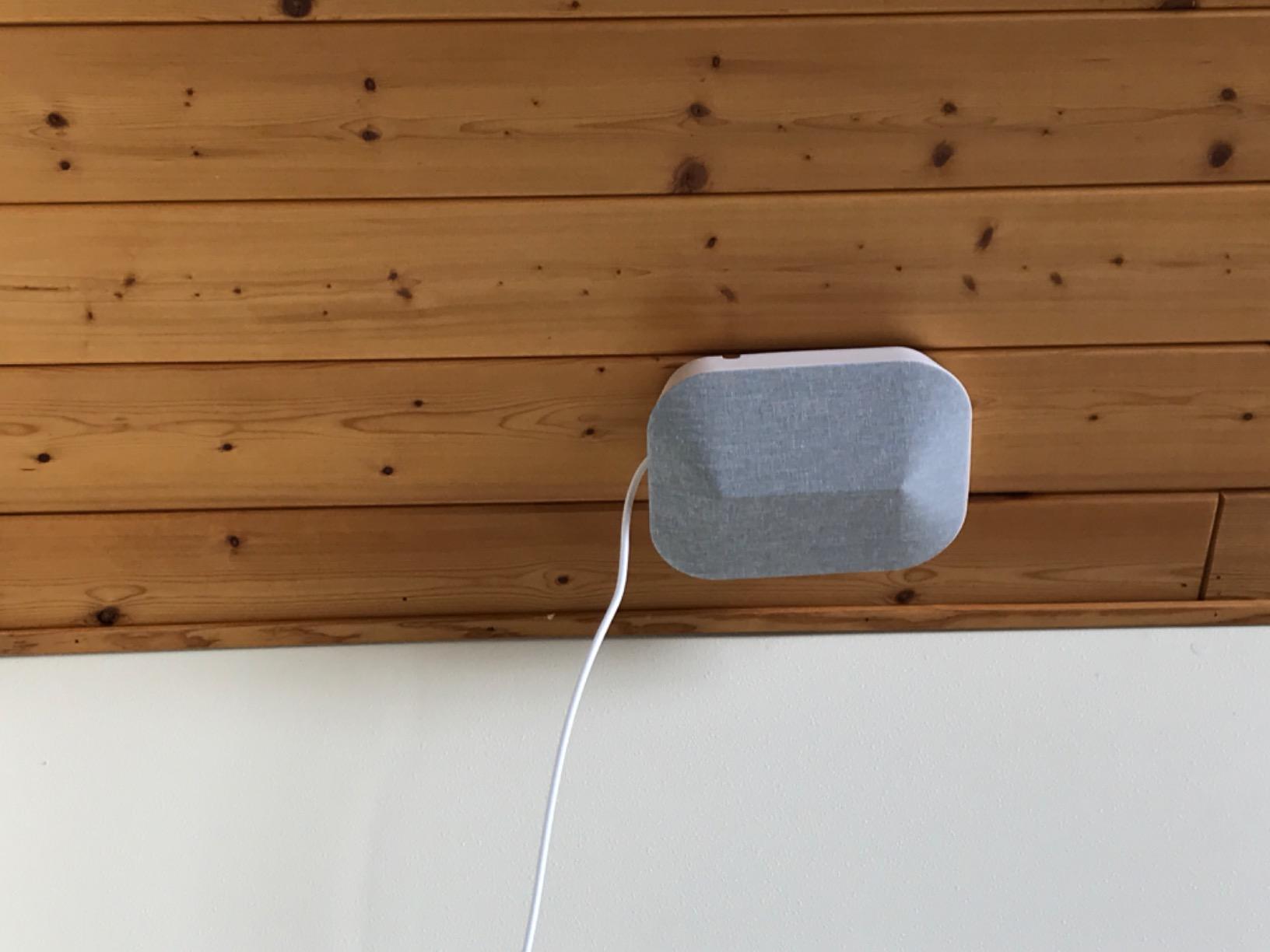
Two inside antennas are not included in the configuration most buyers end up with, so a two-floor office will need extra hardware. Multi-floor coverage is possible, but the kit is not designed for it. If you have a basement level or a workshop separated by a party wall, look at a two-antenna kit instead.
2. HiBoost 4K Home and Office for Mixed-Carrier Teams
Hiboost Cell Phone Signal Booster for Home and Office, 4,000 sq ft, Boost 5G 4G LTE Data for Verizon AT&T and All U.S. Carriers, FCC Approved
Covers up to 4000 sq ft
Bands 12/17 13 5 25/2 4
5G DSS support
3 year warranty
Pros
- Covers up to 4000 sq ft for 2 to 3 rooms
- Handles AT&T and Verizon bands at the same time
- HiBoost technicians follow up by text and phone to tune the install
- Through-window cable avoids drilling
- 3 year warranty
Cons
- Roof or ladder work is part of a proper install
- Printed manual is awkward and pushes you to videos
- Setup uses two apps
- Outdoor mast not included
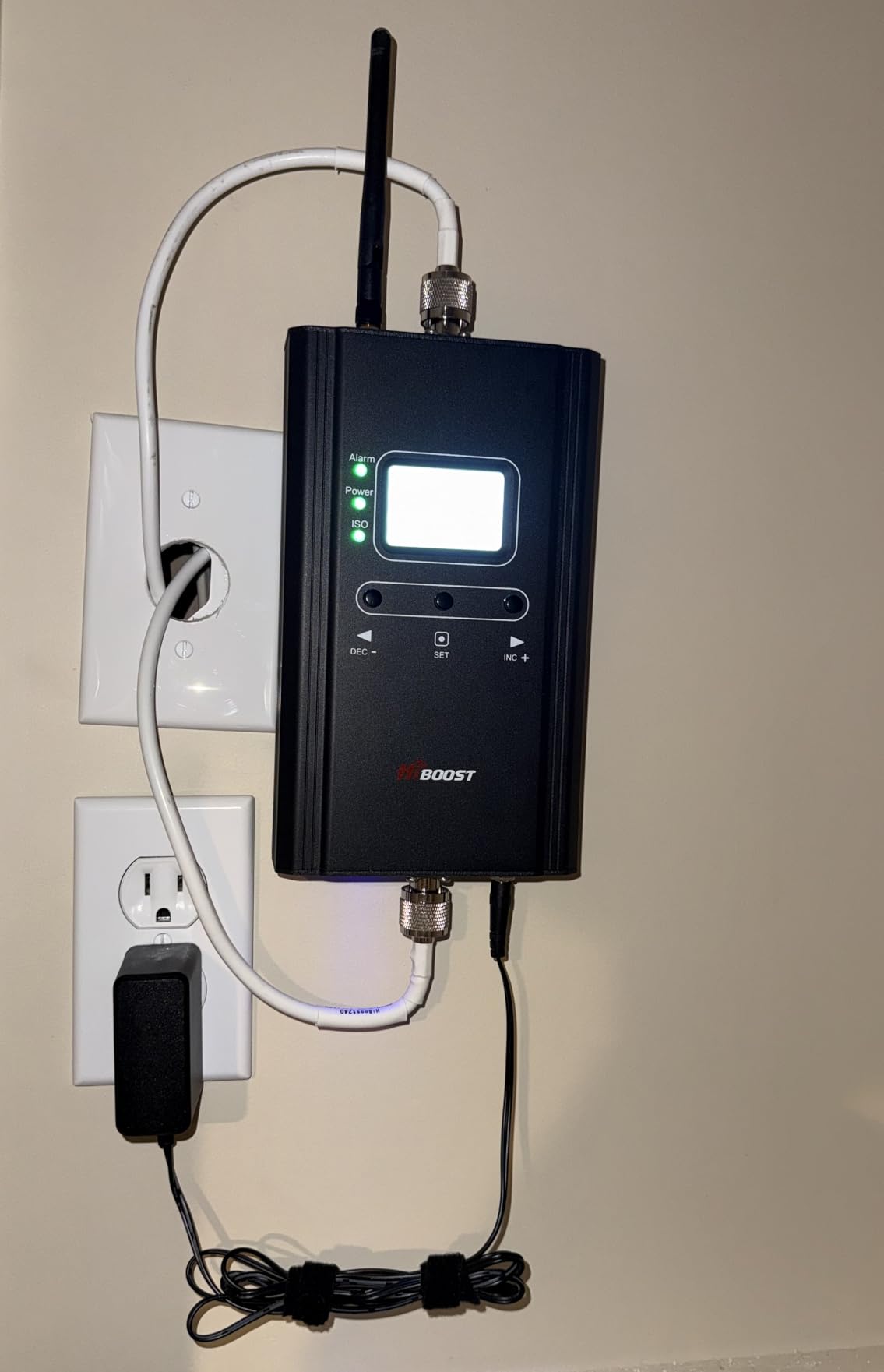
The HiBoost 4K is the highest-rated booster here that still has a review count in the thousands, at 4.4 from 2,107 reviews with 75 percent five-star. In practice buyers report moving from one bar to three to five bars indoors, which is the improvement threshold that actually changes how a workday feels.
It supports bands 12/17, 13, 5, 25/2 and 4 across all US and Canadian carriers including AT&T, Verizon, T-Mobile, Straight Talk and U.S. Cellular, and handles 2G through 5G DSS. The included kit is generous: an outdoor wide-band directional antenna, an indoor panel antenna, two 30 foot low-loss cables, power supply and wall or pole mount brackets. The through-window cable means no hole in the facade.
What separates HiBoost from the pack is support. Multiple reviewers describe technicians contacting them days after delivery and spending an hour or more over text or phone correcting antenna aiming. For a business without in-house RF expertise, that alone is worth more than a headline gain figure, and it is the reason this kit edges ahead of the competition on support.
Who it suits
Offices between roughly 1,500 and 4,500 sq ft with a genuinely mixed workforce on AT&T, Verizon and T-Mobile plans at the same time. The LCD readout and Signal Supervisor app make it a good choice for an IT lead who wants visible confirmation of what is happening during install.
Where it falls short
Two apps during setup is an awkward ask if you only have one phone to hand, and the manual is not much help. Anyone unwilling to do roof or ladder work should budget for professional installation, which is where the support advantage starts to matter most.
3. HiBoost Home and Office LCD Kit for Small Workspaces
Cell Phone Booster for Home Office | Boosts 5G & 4G LTE | Cell Phone Signal Booster for All U.S. Carriers-Verizon, AT&T, T-Mobile & More | for Band 12/17,13,5,25/2,4 | HD Display | App | FCC Approved
Covers 1500 to 2000 sq ft
Five band support
Color LCD display
3 year warranty
Pros
- Compact unit with a color LCD showing real-time signal
- App plus display make antenna aiming straightforward
- No subscription fees and no carrier consent
- 3 year warranty with a 30 day money-back window
Cons
- Coverage limited to roughly 2000 sq ft
- Needs at least one bar of outdoor signal
- Connector listed as HDMI limits some third-party antenna swaps
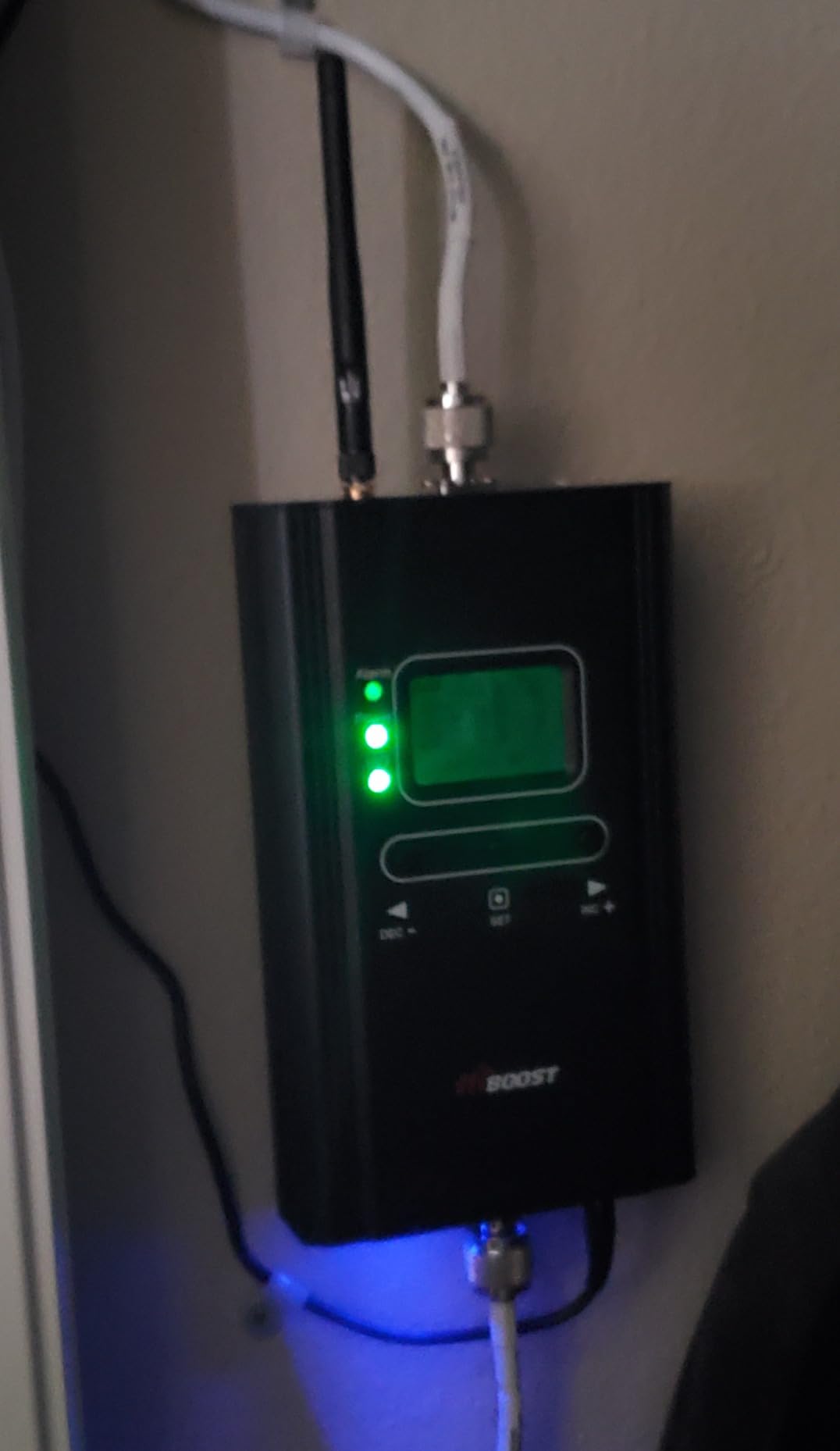
This is the kit for a small office, a home office that doubles as a workspace, or a single back room. It covers 1,500 to 2,000 sq ft, which sounds modest until you realise that is roughly a 40 by 50 foot room, and that is exactly the space most small teams actually occupy.
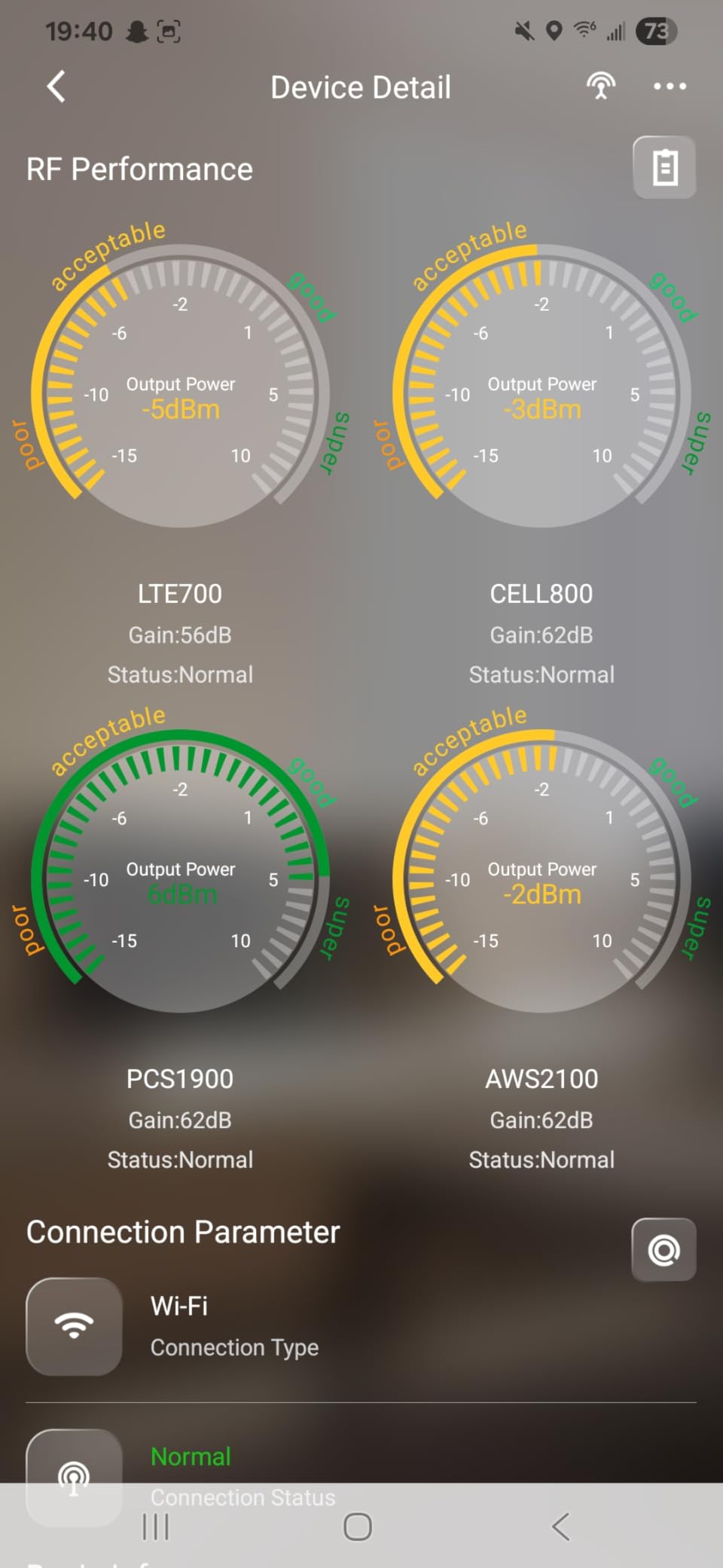
It is a five-band unit covering 700 to 750 MHz, 800 to 850 MHz, 1900 MHz and 1700 to 2100 MHz, boosting 5G and 4G LTE for all US carriers with no subscription and no carrier consent required. The color LCD is a small thing that turned out to matter: it shows real-time signal strength so you can walk around the space with the unit and find the good spot before you commit to a mount.
The kit includes a booster, an outdoor antenna, an indoor whip antenna, 32.8 foot and 16.4 foot SMA cables, a through-window cable, power supply and mounting accessories, so nothing needs buying separately. The #2 rank in Cell Phone Signal Boosters tells you how much of the market is buying at this size.
Who it suits
Solo consultants, two to ten person teams, and reception or stockroom areas in a larger building where one dead corner is dragging down the whole floor. It is also the easiest of these kits to trial in a rental before committing to a bigger purchase.
Where it falls short
Roughly 2,000 sq ft is the ceiling, so it is not an open-plan answer. The listed connector type may limit you if you later want to swap in a third-party antenna, which is a real consideration for anyone planning to expand later.
4. ZORIDA Ace 5S for Budget-Conscious Offices
ZORIDA Cell Phone Signal Booster for All US Carriers, Boosts 5G 4G, Cell Phone Booster 72dB High Gain Antennas, Cellular Verizon and AT&T, T-Mobile Signal on Band 12/17,13,5,25/2,4, FCC Approved
72 dB maximum gain
Covers up to 2000 sq ft
Bands 12/17 13 5 25/2 4
FCC and IC certified
Pros
- 72 dB maximum gain
- works without carrier registration
- App gives one-to-one technical support during setup
- Multiple devices boosted at once
- Compact indoor whip antenna
Cons
- 2000 sq ft suits only a small office
- Needs 1 to 2 bars of signal outside
- 5G only where 5G runs on existing 4G bands
- 13 percent one-star share
- the highest here
The ZORIDA Ace 5S hits 72 dB of maximum gain, which is a headline number higher than several more expensive units, and it needs no carrier registration. At 4.1 stars from 742 reviews it sits in the middle of the pack on satisfaction, with a 65 percent five-star share and a 13 percent one-star share that is the highest of any product here.
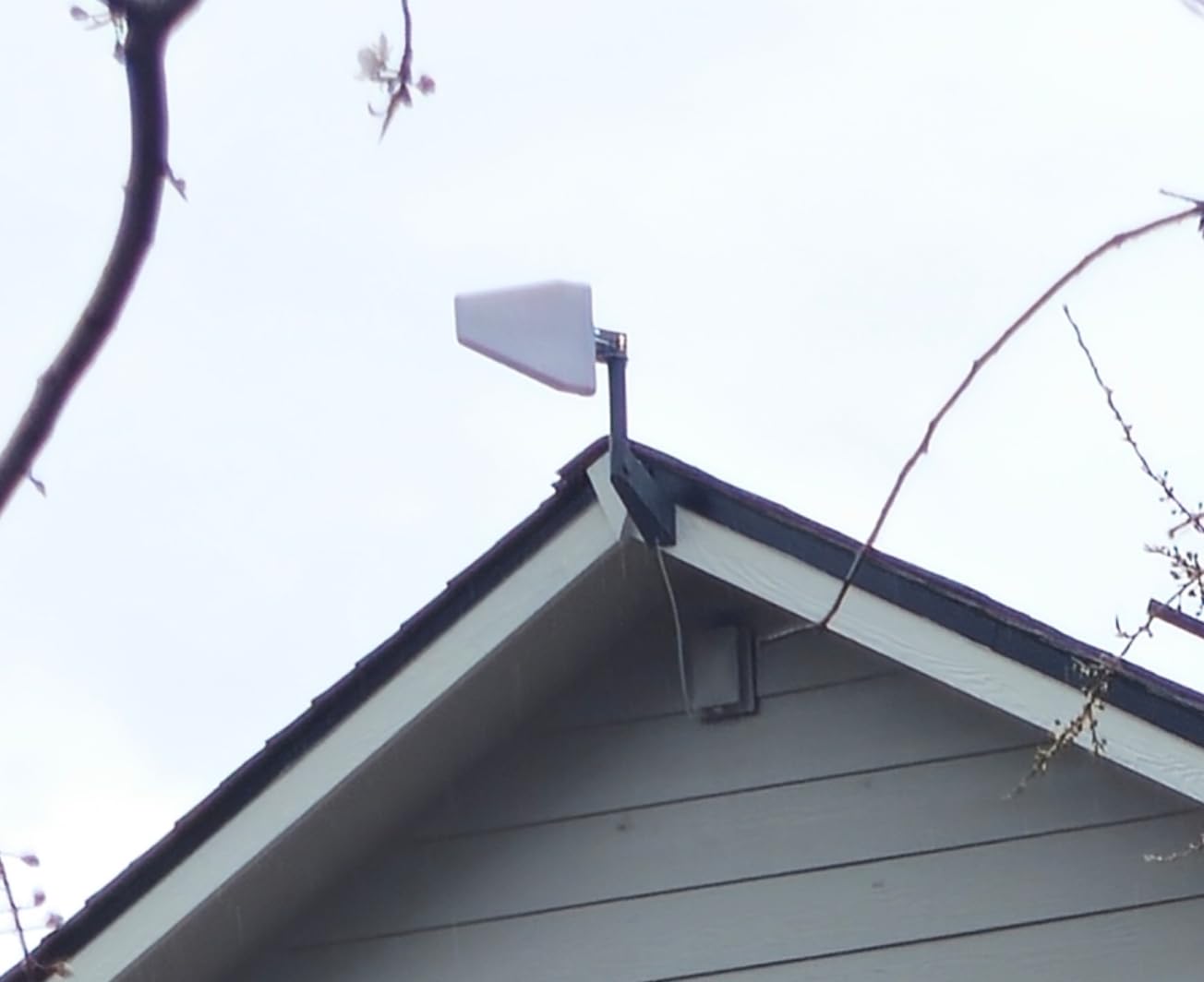
That split tells the real story. The people it works for love it; the people whose outdoor signal was already marginal feel shortchanged. The listed technical details are honest about the threshold: it wants one to two bars outside before it will help, and it boosts 5G only where 5G is deployed on existing 4G bands. The included kit covers you for cables and antennas: 49.2 foot cable, indoor whip antenna, outside directional antenna and power supply.
Support is app-based, with one-to-one technical guidance and step-by-step videos, and certification covers both FCC and IC with a 30 day money-back window and a 3 year warranty. That combination makes it a defensible first purchase for a small team that wants to test the concept before spending properly.
Who it suits
Small offices, studios and single rooms with decent outdoor signal that need an inexpensive fix for a persistent dead zone. It is also a reasonable second unit for a different floor, since carrying two cheap kits can beat carrying one expensive one.
Where it falls short
About 2,000 sq ft of coverage, so it will not carry a real office floor. The elevated one-star share traces back to installs where the outdoor signal was never strong enough, and that is a measurement you should take before ordering rather than after.
5. HiBoost 8,000 sq Ft Multi-Antenna Kit for Large Open Offices
Hiboost Cell Phone Signal Booster for Home Office and Multi Room, Covers up to 8000 Sq Ft with 2 Indoor Antennas, Boost 5G 4G LTE for All US Carriers (Verizon, AT&T, T-Mobile etc), FCC & App Support
Covers up to 8000 sq ft
2 inside antennas
Up to 70 dB gain
3 year warranty
Pros
- Handles very weak outdoor signal
- Amplifies all carriers at once
- Loopback indicator light flags the most common failure mode
- App tunes the antenna from a ladder
- All hardware and cables included
Cons
- No band 71 600 MHz support for some T-Mobile plans
- About 64 ft of cable is limiting in large buildings
- Coverage falls short in long multi-floor layouts
- Cable extensions cut signal strength
This is the kit I would point an operations manager toward when the complaint is that a whole floor is dead, not one corner. It claims up to 8,000 sq ft across five to six rooms, includes two inside antennas, and at 4.5 stars from 688 reviews has a 77 percent five-star share, which is the strongest satisfaction signal in this roundup.
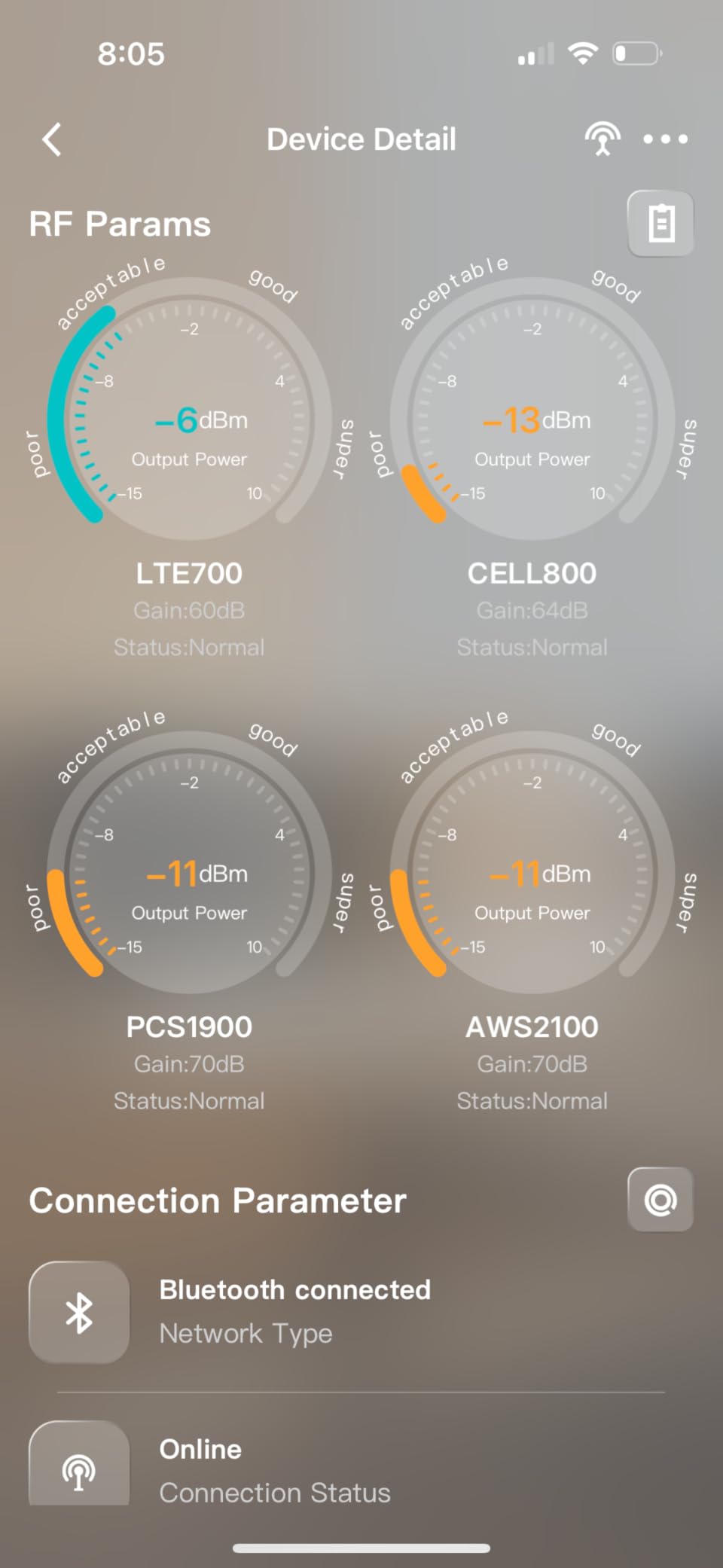
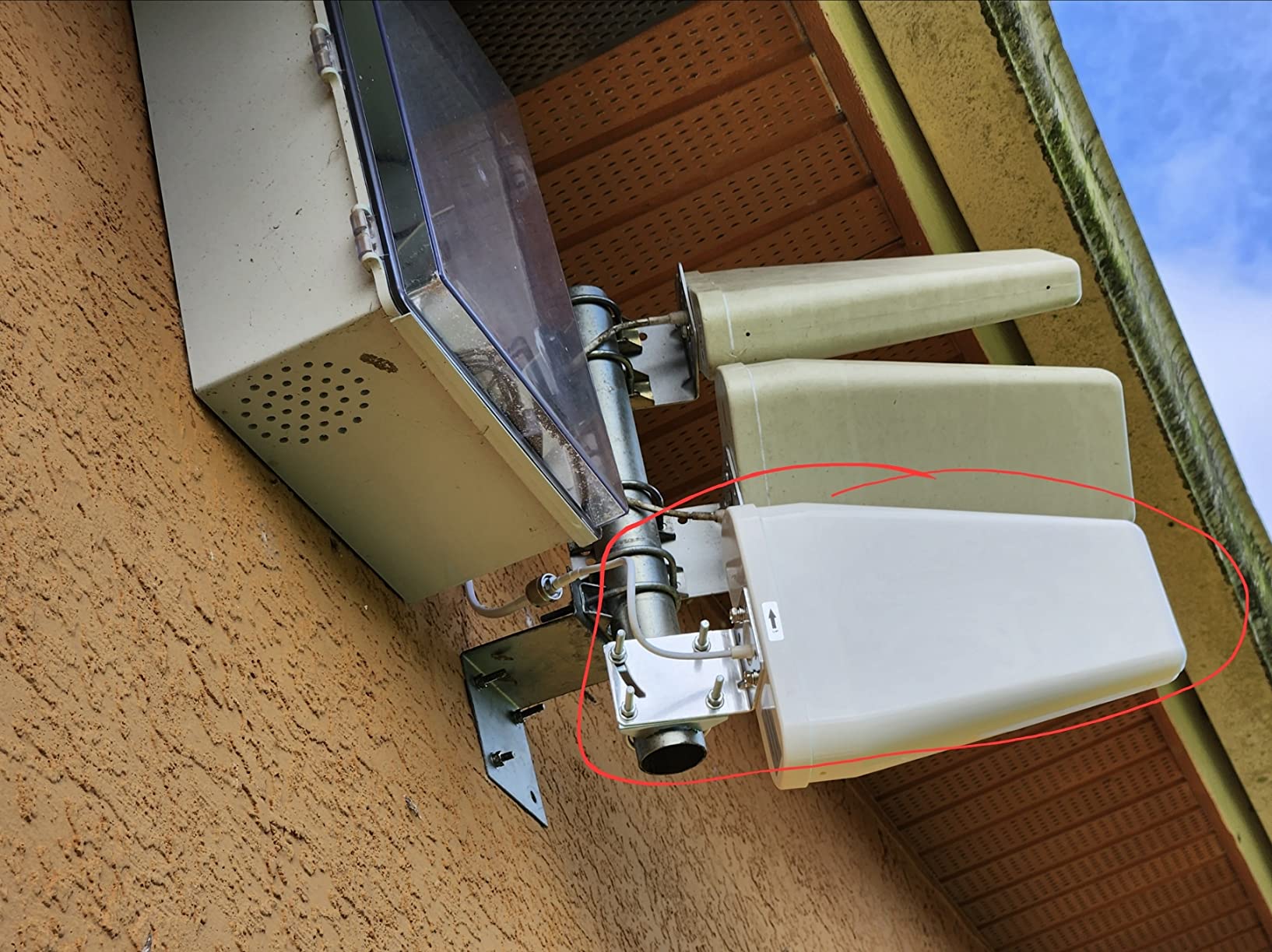
Two details stand out for office use. First, the loopback indicator light tells you when the amplifier is receiving feedback from a badly placed inside antenna, which is otherwise the single most common reason a booster seems to do nothing. Second, the app lets you tune the outdoor antenna from a ladder instead of running back and forth to the indoor unit.
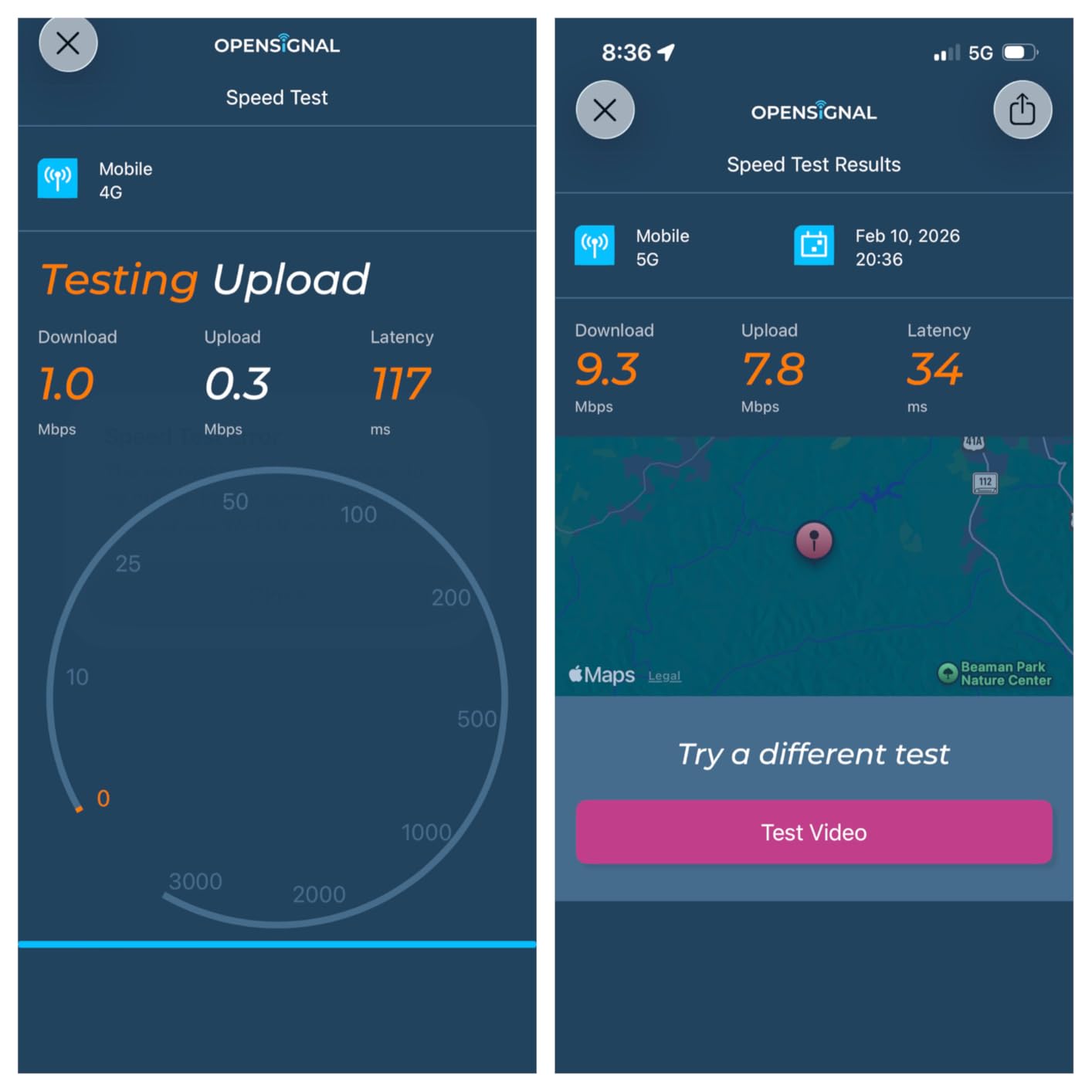
It supports bands 2, 4, 5, 12, 13, 17 and 25 across Verizon, AT&T, T-Mobile, Sprint and U.S. Cellular, handles multiple users and devices at once, and reports moving signal from one bar to three or four bars at up to 70 dB gain. The box includes the booster, an outdoor antenna, two inside antennas, both outdoor cables, an indoor cable, a through-window cable, mounting accessories and power supply.
Who it suits
Open-plan floors of 5,000 to 8,000 sq ft, and offices spread over two levels where the second inside antenna can be run to a different floor. Reviewers note it turning nearly unusable outdoor signal into consistent service, and sometimes replacing paid internet service entirely.
Where it falls short
No band 71 600 MHz support, which some T-Mobile plans rely on. The roughly 64 ft of included cable is a real constraint in a big or complicated building, and extending it eats into the gain you paid for, so plan cable runs before you start rather than after.
6. CEL-FI GO G41 for Whole Buildings and Basements
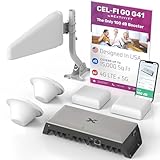
Nextivity CEL-FI GO G41 Smart Signal Booster, 2 Indoor Antennas
100 dB amplification
Covers up to 15000 sq ft
4th gen IntelliBoost chip
FCC certified
Pros
- 100 dB gain covers a whole building rather than a room
- Single-carrier operation reaches the FCC maximum gain ceiling
- Users report going from zero service to consistent 3 to 4 bars
- Proactive tech support contacts buyers through the install
- Works at outdoor signal around -100 dBm
Cons
- Amplifies one carrier at a time so mixed sites need a second unit
- Does not cover AT&T bands 30 or 66
- Carrier aggregation can cause handsets to ignore the boosted band
- Thick stiff RS400 cable often needs buying extra
- Install is not plug and play
The GO G41 is the only product here that works like professional infrastructure rather than a consumer kit. It delivers 100 dB of amplification, which the manufacturer puts at 30 dB more than competing boosters, and covers up to 15,000 sq ft. The fourth-generation IntelliBoost chipset handles 4G LTE, 5G-DSS and 5G NR across 700 MHz, 850 MHz, 1700/2100 MHz, 1900 MHz, 2600 MHz and 5G.
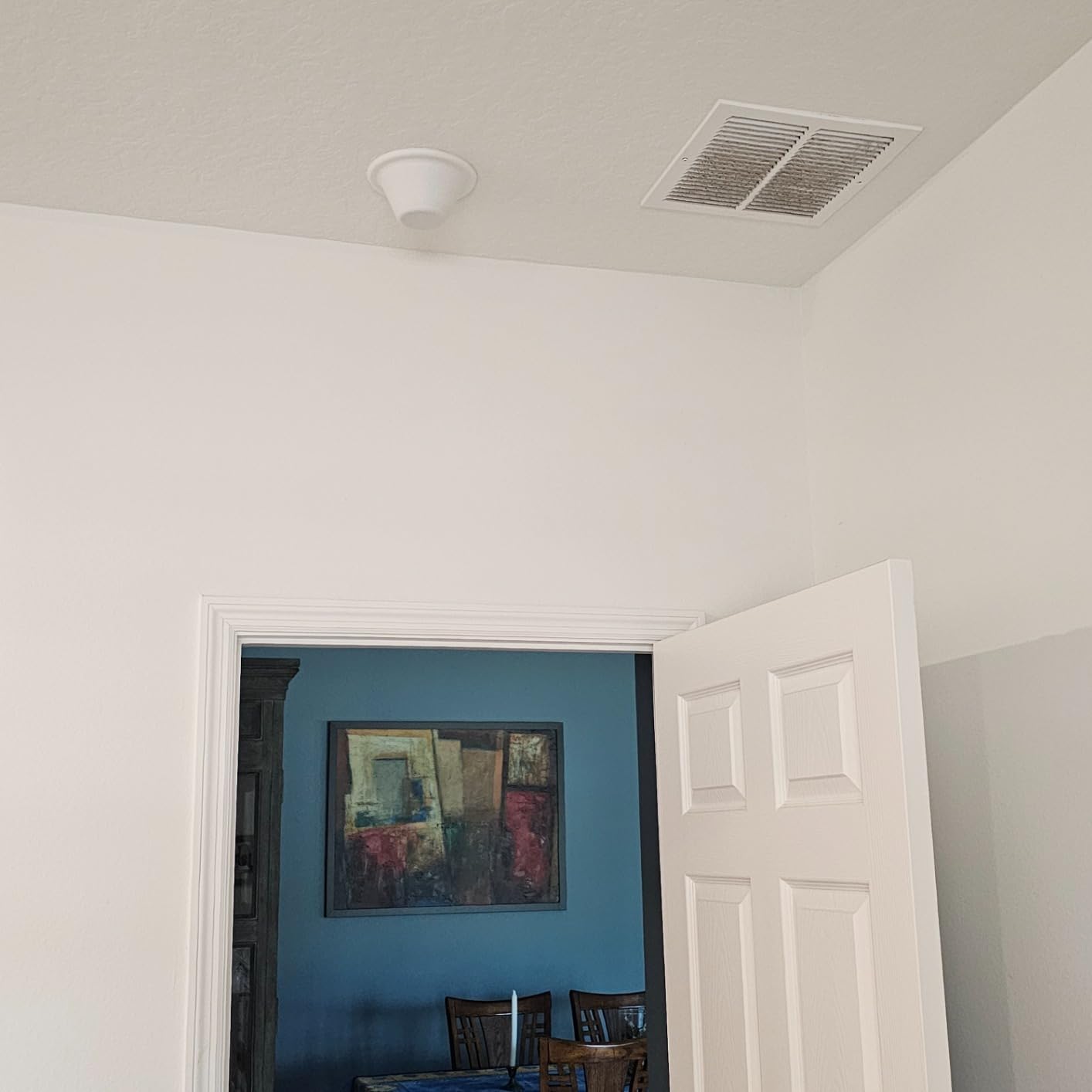
That raw gain is why it works where others do not. Reviewers describe users moving from zero service to consistent three or four bars at speeds above 50 Mbps, and several report replacing expensive satellite service within a few months. The kit includes an amplifier, coaxial cables, two indoor panel antennas, two indoor dome antennas and an outdoor antenna with pole mount, and is FCC certified for consumer use with a 3 year manufacturer warranty.
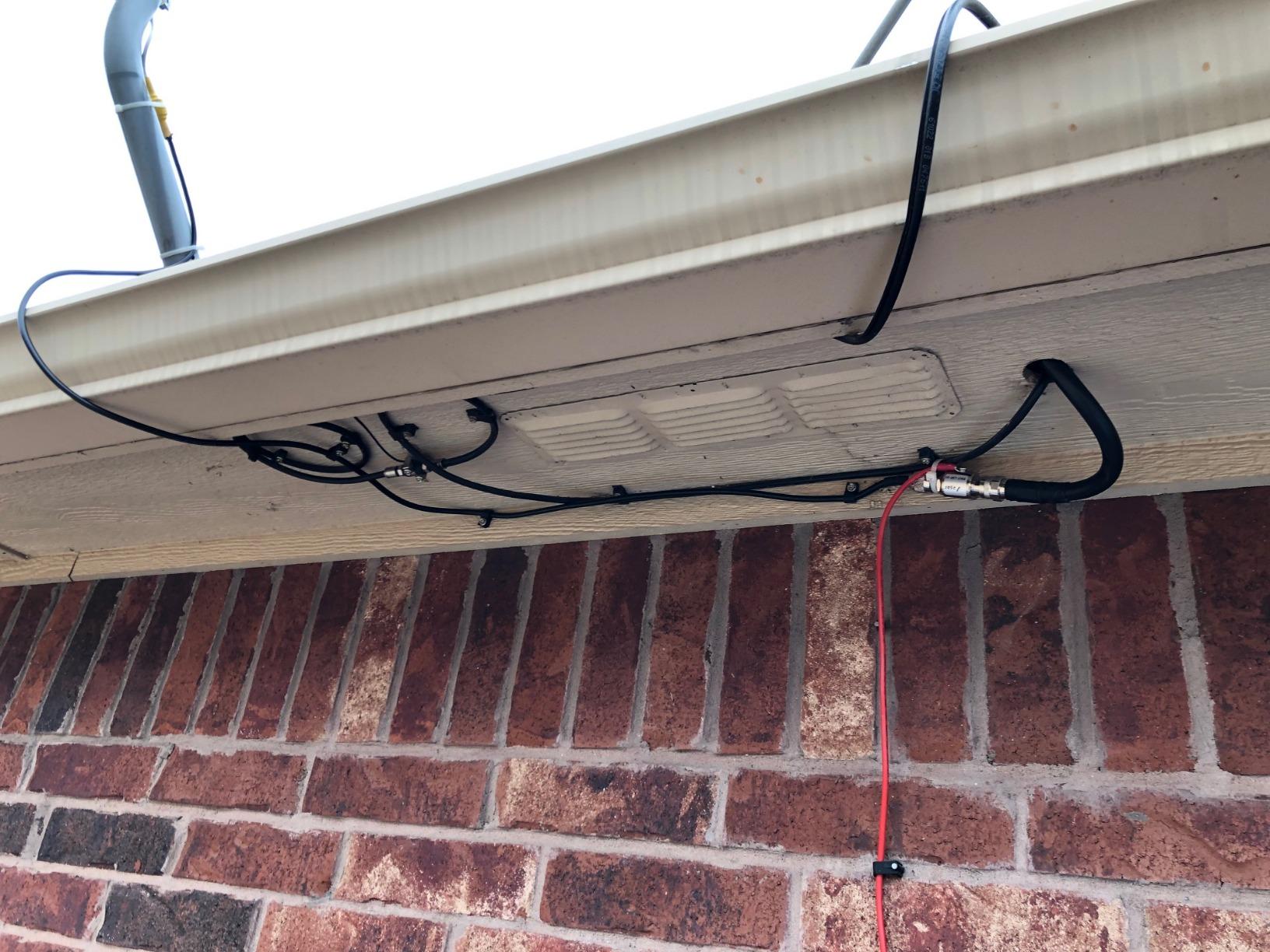
There is a structural catch you need to accept before buying. It amplifies one carrier at a time, so a genuinely mixed-carrier office has to switch the unit or run a second one. It also does not cover AT&T bands 30 or 66, and in some locations carrier aggregation and neighbour-cell lists cause handsets to ignore the boosted band entirely.
Who it suits
Large multi-floor buildings, basement and underground workspaces, and offices where outdoor signal sits near the limit at around -100 dBm. It is also the right answer for a single-carrier workplace, where the single-carrier limitation stops being a limitation.
Where it falls short
Installation is not plug and play and frequently takes a full day, so budget for an installer. The included RS400 cable is thick and stiff, extra runs often need buying, and there are not enough parts to mount both included indoor antennas without a splitter, so plan the layout first.
7. Metarepeater MR1 for No-App Installations
Cell Phone Booster for Home with LCD, 5G 4G LTE, Covers Up to 3,000 Sq. Ft
Covers up to 3000 sq ft
65 dB maximum gain
On-unit LCD monitor
No app required
Pros
- On-unit LCD removes the need for a phone app
- Installs quickly and often works from a window-mounted antenna
- Users report jumping from 1 bar to 4 to 5 bars
- Handles multiple devices across carriers
- 3 year warranty
Cons
- Some users report an effective range of only about 30 ft
- 72 reviews is a thin performance record
- Placement needs 30 ft separation from the outdoor antenna
- 17 percent one-star share
The MR1 is the one to consider when your staff will not install an app, will not create an account, or simply cannot be bothered with a phone during setup. A five-band booster covering 12/17, 13, 5, 2/25 and 4/66, it puts a real-time LCD on the unit itself so you can read incoming and amplified signal status directly.
Coverage is up to 3,000 sq ft at 65 dB maximum gain, it works with Verizon, AT&T, T-Mobile, Straight Talk, U.S. Cellular and Canadian carriers, and there is no app or subscription at all. Buyers report installing it quickly, sometimes straight from a window-mounted antenna, and moving from one bar or no service to four or five bars. Basements and outbuildings come up repeatedly in positive reviews.
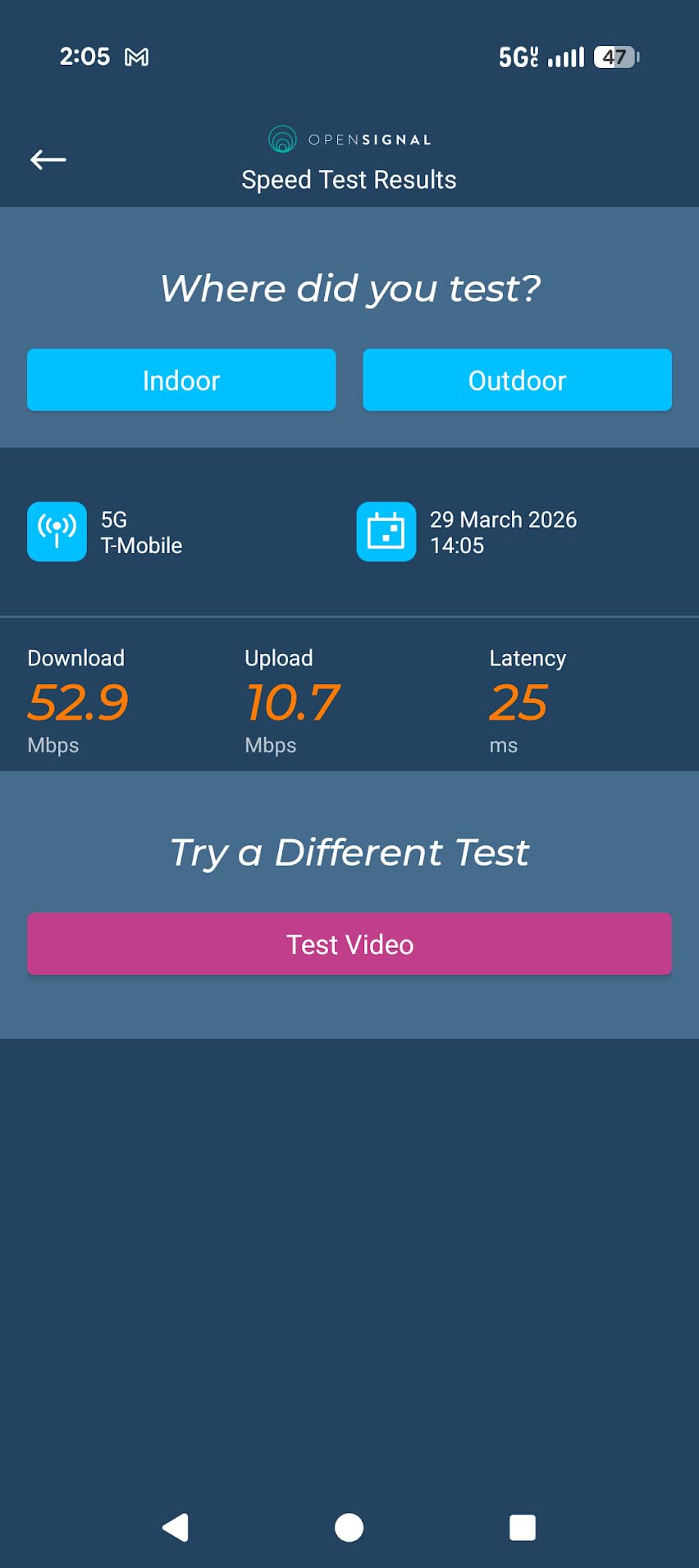
The catch is the evidence. Seventy-two reviews is a thin record compared with the thousands behind the top picks, and sentiment is sharply split: 63 percent five-star sits next to 17 percent one-star with almost nothing in the two and three-star middle. The recommended outdoor threshold is at least -110 dBm, and placement rules require the indoor unit at least 30 ft from the outdoor antenna.
Who it suits
Small offices and shops up to 3,000 sq ft where nobody wants an app, and IT teams who want the simplest possible physical install. It is a good second opinion device: run it temporarily, see where the signal lands, then decide whether a bigger kit is justified.
Where it falls short
Some users report an effective range of only about 30 ft from the antenna, and negative reviews cluster in mountainous or heavily wooded locations. One review also flags the recommended tower-locating website as unreliable, so verify your outdoor signal another way before committing.
8. CELSGN 72 dB Office Kit for Metal-Framed Buildings
Cell Phone Signal Booster for Home Office Metal Building
72 dB gain and 32x amplification
Covers up to 3000 sq ft
Bands 2/4/5/12/13/17
2 year warranty
Pros
- 72 dB gain at the lowest cost point in this group
- 3000 sq ft sized for a home office or metal building
- Works with any carrier whose phone supports the listed bands
- 5G boosted where the carrier runs it on those bands
- Zero one-star reviews in 65 reviews
Cons
- Requires at least 2 bars of outdoor signal
- a stricter threshold than most
- No mmWave or 600 MHz 5G support
- 65 reviews is the second smallest sample here
- 2 year warranty is shorter than the 3 year options
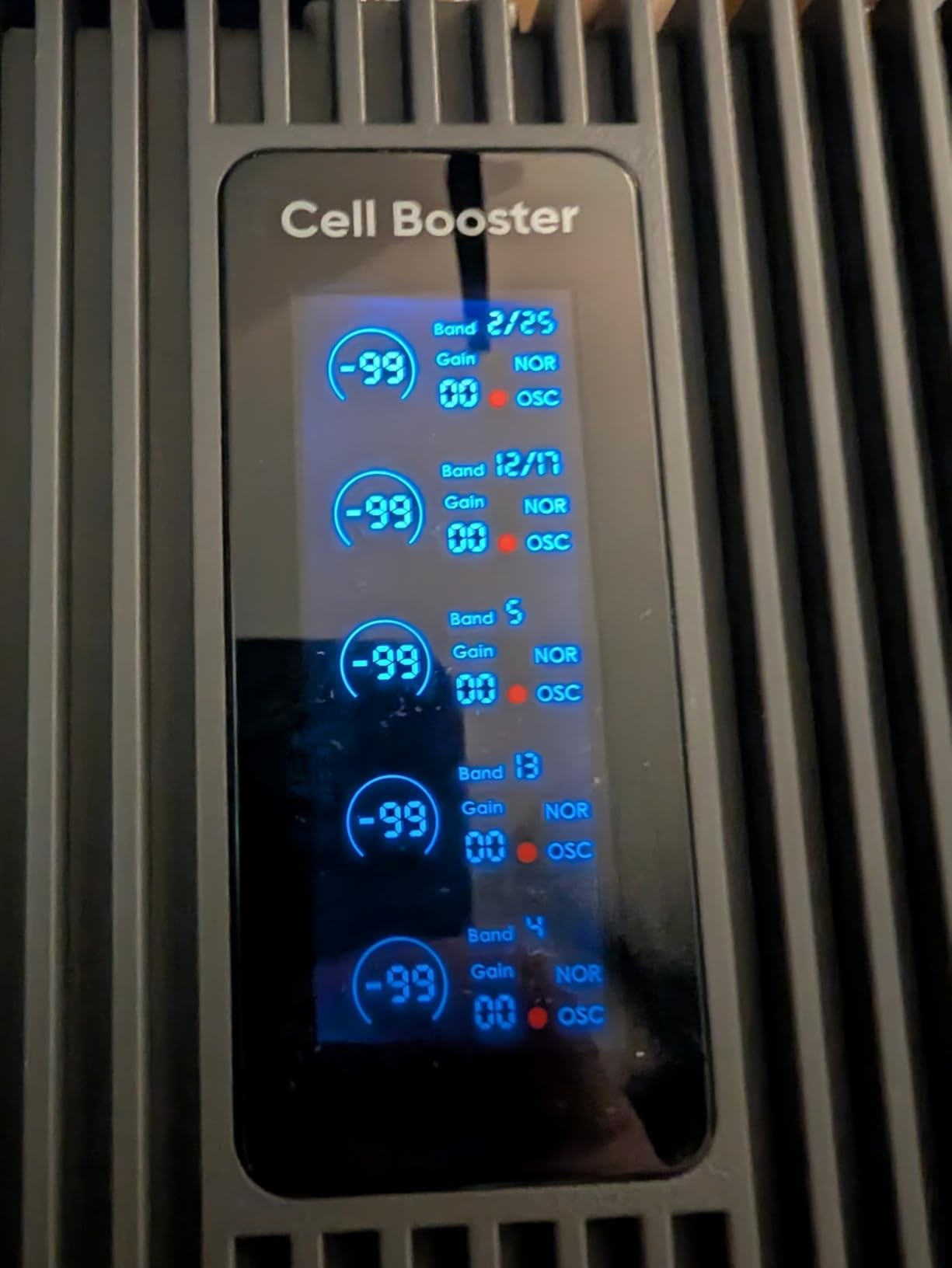
The CELSGN kit is built around a straightforward claim: 72 dB of gain and 32x signal amplification for the least money of anything we reviewed. It covers up to 3,000 sq ft and is marketed for house, office, shop, basement and metal building environments, which makes it a natural fit for a workshop or a prefab site office.
It works across bands 2, 4, 5, 12, 13 and 17, so any phone on any major carrier is covered as long as it supports those bands. The directional antenna carries an LED indicator, and it works with both Android and iPhone. At 4.5 stars from 65 reviews with zero one-star ratings, it is the best-performing entry-level unit here on the numbers.
The 65-review sample is the honest limitation on that rating, and so is the signal requirement. It asks for at least 2 bars of outdoor signal on bands 2, 4, 5, 12, 13 or 17, a stricter threshold than almost every competitor on this list, and it does not boost mmWave or 600 MHz 5G bands. Check your outside signal first, because this one will simply sit idle if it is not met.
Who it suits
Metal-framed workshops, sheds, site offices and small retail spaces where a full commercial install is more than the problem warrants. The 2 year warranty is shorter than the three-year coverage offered by several alternatives, so factor that into a business purchase.
Where it falls short
Two bars of outdoor signal is a hard floor, and the lack of 600 MHz support rules it out for some T-Mobile plans. With only 65 reviews behind it, treat the rating as encouraging rather than settled.
9. HXSDplus 7,000 sq Ft Kit for Two-Floor Coverage on a Budget
Cell Phone Booster for Home & Muti-Room, Up to 7000Sq. Ft,Cell Booster for Rural Area with 2 Indoor Antennas,Boosts 5G 4G LTE for All U.S. Carriers, FCC Approved Cell Phone Signal Booster (Green)
Covers up to 7000 sq ft
70 dB gain
2 indoor panel antennas
3 year warranty
Pros
- Highest average rating here at 4.8 with 89 percent five-star
- 7000 sq ft plus two indoor panel antennas at the lowest cost in the group
- Automatic gain control and self-oscillation elimination
- Works with US and Canadian carriers
- 3 year warranty with FCC and IC certification
Cons
- One reviewer received only one indoor antenna instead of two
- Indoor panel antenna cable is permanently attached
- No app features despite some buyers expecting them
- 43 reviews is the smallest sample here
On paper this is the strongest coverage-to-cost ratio in the group: 7,000 sq ft, 70 dB gain, two 5G indoor panel antennas, and a 3 year warranty, at the very bottom of the price range. It rates 4.8 from 43 reviews with 89 percent five-star and no one-star ratings, the highest average here, though also the smallest sample.
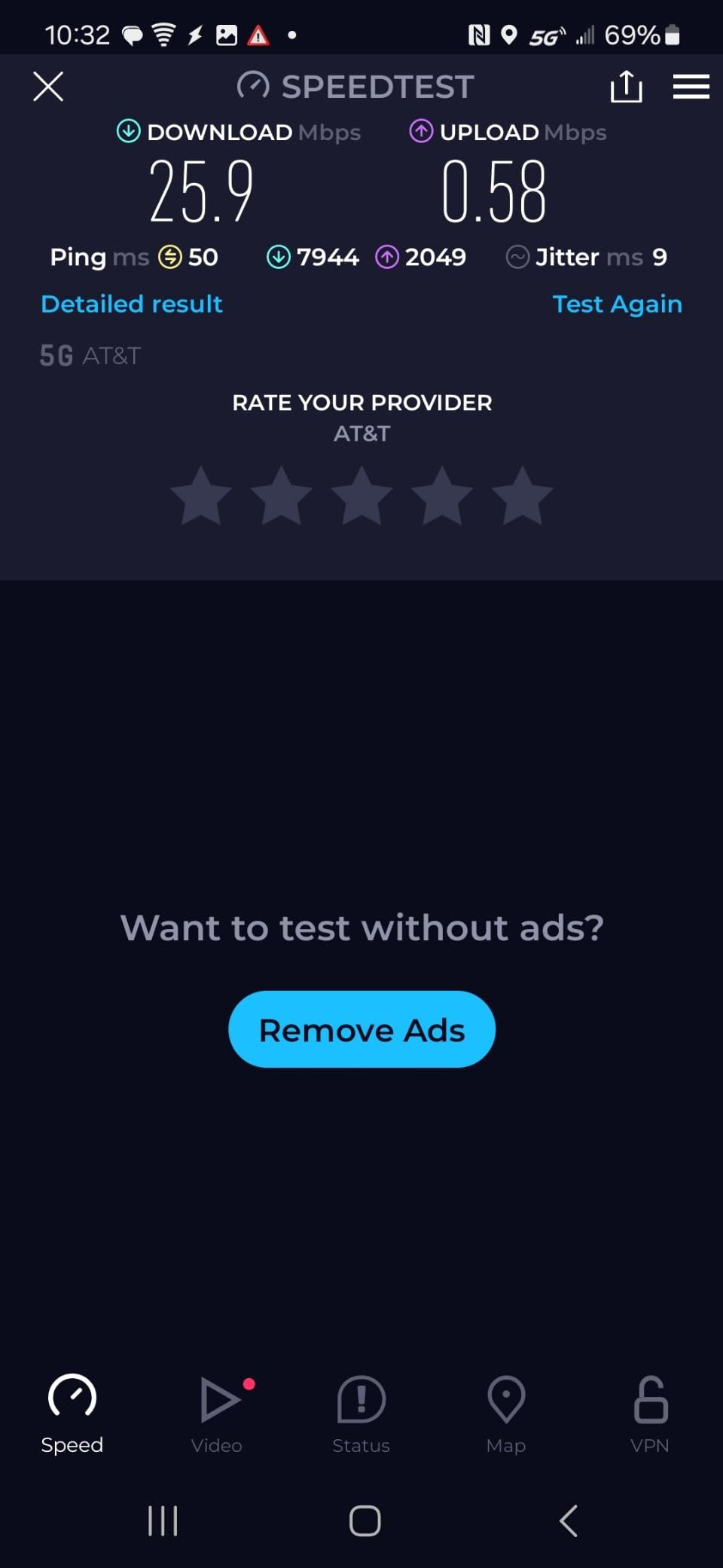
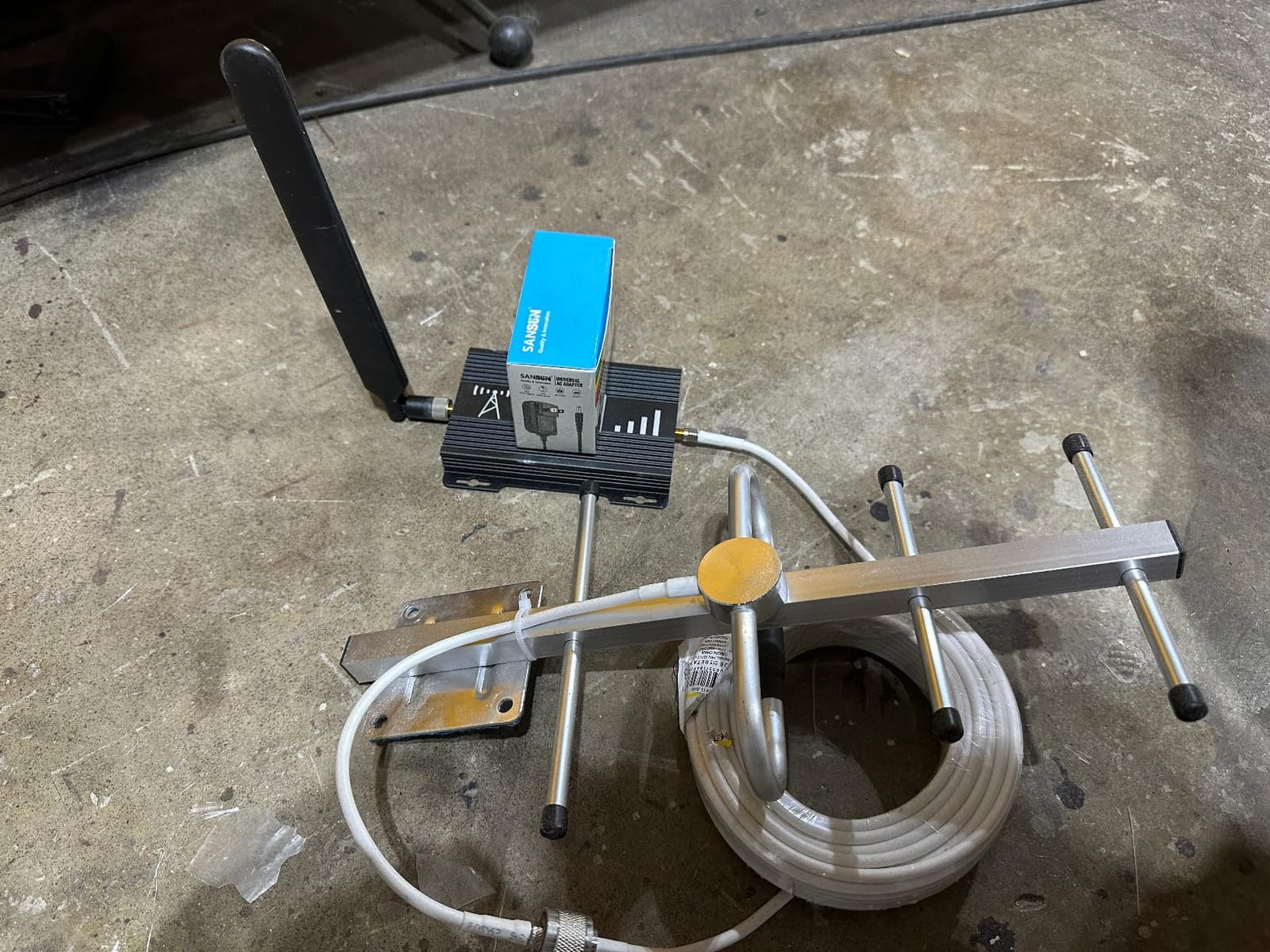
Automatic gain control and self-oscillation elimination handle the two failure modes that ruin cheaper installs, and it works across US and Canadian carriers including U.S. Cellular on 3G, 4G LTE and 5G DSS. The kit includes two 5G indoor panel antennas, a 5G outdoor log-periodic antenna with 49 ft cable, 32 ft and 16 ft cables, a coupler, an adapter, power supply and manuals. Buyers report going from one bar or no service to four or five bars with working calls and data.
Who it suits
Two-floor offices and open plans up to about 7,000 sq ft where budget matters more than brand recognition, and teams that want one antenna per floor. Self-oscillation elimination makes it forgiving if the install is not done perfectly, which is a real advantage for first-time buyers.
Where it falls short
One reviewer received a single indoor panel antenna despite the listing describing two, so check the box on arrival. The indoor panel cable is permanently attached, which limits placement flexibility, and there is no app, so there is no remote monitoring for a business that wants visibility across a site.
10. SureCall Fusion4Home Max for Distant Towers
SureCall Fusion4Home Max | Most Powerful 5G/4G Cell Phone Signal Booster for Home | Best-in-Class Extended Range Technology | All-Carrier Verizon AT&T T-Mobile US Cellular | FCC Certified USA Company
Covers about 6500 sq ft
ERT and 2XP extended range
Multi-carrier support
3 year warranty
Pros
- Amplifies outdoors at its strongest point for larger indoor reach
- Supports AT&T T-Mobile Verizon US Cellular Mint Mobile and Boost Mobile at once
- One-time purchase with no subscription and no WiFi dependency
- Designed assembled and tested in the US
- FCC certified with 3 year warranty
Cons
- Only 77 reviews
- a smaller record than most competitors here
- 5 percent one-star and 8 percent three-star shares mean some installs disappoint
SureCall’s Fusion4Home Max takes a different approach to range. Its patented ERT and 2XP extended range technology amplifies the signal at its strongest point outdoors before distributing it inside, which reviewers credit with better indoor coverage than conventional designs that amplify at the indoor antenna. Coverage is approximately 6,500 sq ft.
It covers a wide set of uplink and downlink bands from 698 MHz through 2110 MHz, supports simultaneous phones, tablets and hotspots, and works without WiFi or a subscription. SureCall is an authorized Verizon 5G signal booster vendor, and the unit is designed, assembled and tested in the US with FCC certification and a 3 year warranty.
At 4.3 stars from 77 reviews, the satisfaction is real but the sample is small. The 5 percent one-star and 8 percent three-star shares tell you that a minority of setups do not deliver what buyers expected, usually because the outdoor signal was not as strong as hoped.
Who it suits
Offices near a tower that is far away or partially obstructed, where the donor signal is weak but present. It is a good choice for a business that wants a one-time purchase with no recurring cost and no dependency on the office internet connection.
Where it falls short
Seventy-seven reviews is a thinner record than most of the alternatives here, so treat the rating with proportion. It is a home-positioned kit, so a large commercial floor will still need additional inside antennas run separately.
How to Boost Cell Signal in an Office
Six steps, in order. Work through them before spending anything, because most disappointing booster results trace back to skipping the first two.
Measure the outdoor signal at the best point on the building, ideally on the roof, and record the reading in dBm. Anything worse than about -100 dBm means you need a higher-gain unit such as a 100 dB system rather than a 65 to 72 dB kit.
Identify which carriers your staff actually use. A mixed workforce needs an all-carrier kit; a single-carrier office can use a carrier-specific system and reach higher gain.
Match the kit to floor area and headcount. Under 1,500 sq ft with fewer than 10 users is a small kit; 1,500 to 4,500 sq ft with 10 to 20 users is mid-tier; above 4,500 sq ft or 50 plus concurrent users needs multiple inside antennas and professional installation.
Plan the antenna separation. The donor antenna and inside antenna need vertical distance of at least 15 to 20 ft, or 30 ft horizontally, or the amplifier will oscillate and shut itself down.
Run the shortest cable path you can. Every extra foot of RG6 quietly reduces the gain you paid for, and extension cables are the most common reason a strong kit performs weakly.
Test one floor before you commit. Run a small kit temporarily, walk the space with a signal meter app, and only then size up. Forum advice on r/sysadmin consistently favours this pilot approach over buying a large system blind.
How to Size a Booster to Your Office
Square footage alone is a poor guide; concurrent users and building materials decide the outcome. Concrete, steel framing and low-E glass can each strip a large slice of signal, and a 5,000 sq ft open plan in a glass tower is a harder problem than a 5,000 sq ft warehouse.
Use these thresholds as a starting point:
Under 1,500 sq ft, fewer than 10 users: a single-antenna kit rated 1,500 to 3,000 sq ft. The HiBoost office LCD kit and the ZORIDA Ace 5S sit here.
1,500 to 4,500 sq ft, 10 to 20 users: a 65 to 72 dB all-carrier kit. This is where most offices land, and where the weBoost Home MultiRoom and HiBoost 4K perform.
4,500 to 8,000 sq ft, 20 to 50 users: two inside antennas and a site survey. The HiBoost 8,000 sq ft kit and the HXSDplus two-panel kit are built for this band.
Above 8,000 sq ft, multi-floor, or a basement level: you are into distributed antenna territory. A 100 dB single-carrier system with four inside antennas, professionally installed, is the realistic answer.
Before you finalise, ask whether a booster is even the right tool. In r/InformationTechnology, one verified office user reported that a carrier-provided AT&T mini-cell-tower solution improved signal significantly in a single office, and in r/sysadmin a Verizon business network extender delivered only mild success. Carrier-provided equipment and enterprise DAS both exist, cost more, and are worth a quote when the problem is one building rather than one floor.
Installation and Antenna Placement
Placement decides whether a booster works, and more failed office installations come down to placement than to the equipment itself.
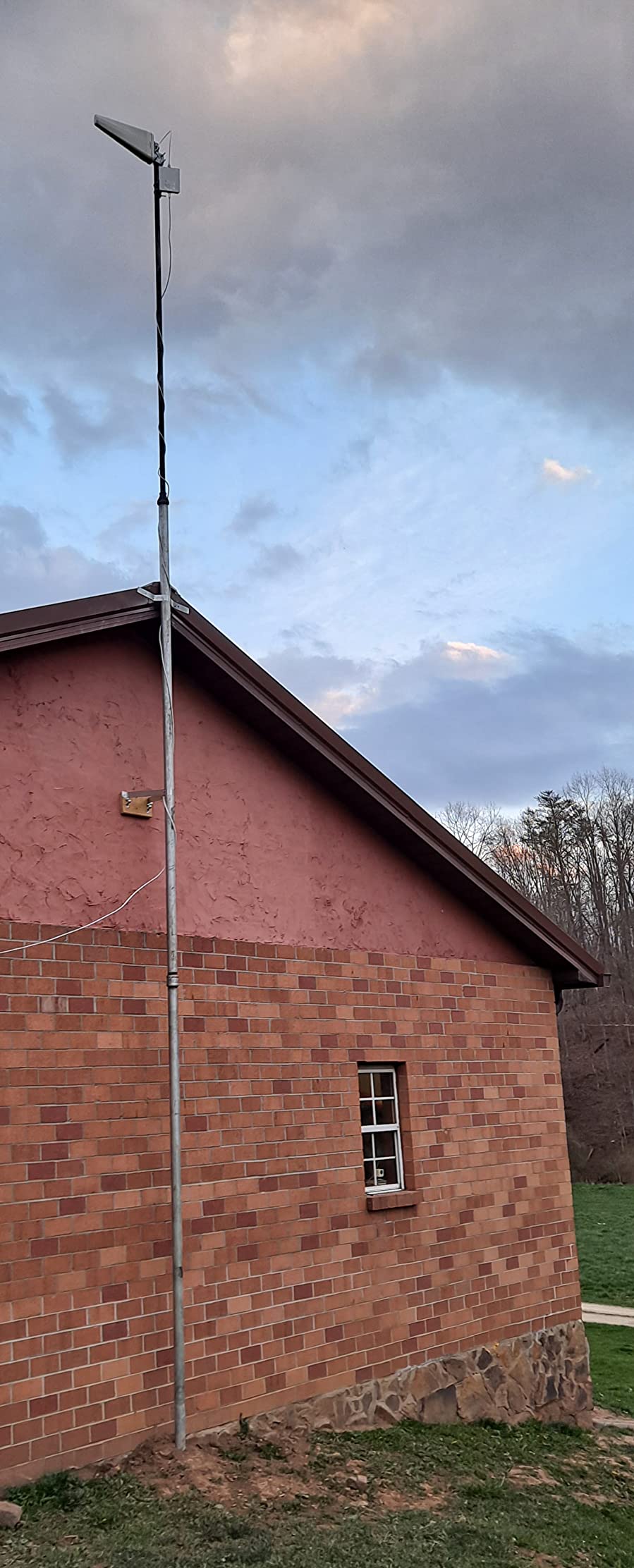
The donor antenna goes outside, mounted as high as you can reach with a clear view of the tower. The inside antenna goes inside, mounted centrally and away from the donor. Keep them at least 15 to 20 ft apart vertically or 30 ft apart horizontally, because when the inside antenna can hear the donor the amplifier oscillates and reduces or kills its own gain. Units with a loopback indicator light, such as the HiBoost 8,000 sq ft kit, make this visible instead of leaving you guessing.
Run the shortest, highest quality cable you can, and avoid extensions entirely where possible. A through-window cable entry avoids drilling in a leased building, which is often the deciding factor for tenants. For multi-floor offices, run one inside antenna per floor and stagger them so their coverage does not overlap into dead spots in the stairwells.
Hire an installer when the donor antenna needs roof access, the building is more than two floors, you are running more than two inside antennas, or no one on staff owns the process. A day of professional installation is cheaper than a unit that sits on a desk generating oscillation warnings. If you are still comparing hardware, our picks for the best 5G cell phone boosters tested and for rural-area coverage cover the harder signal conditions you will find outside a city office.
Frequently Asked Questions
Are there any cell phone boosters that actually work?
Yes, provided there is at least one usable bar of carrier signal outside the building. A booster amplifies an existing signal, it cannot create one. Independent testing by Ars Technica found roughly a one to two bar improvement near the indoor antennas, which they described as not significant but enough to make phones usable. In an office with a solid outdoor signal and poor indoor signal, that is the difference between dropped calls and reliable service.
What is the best cell signal booster for a business?
For most offices, an all-carrier five-band kit rated 65 to 72 dB with two inside antennas covers 2,000 to 5,000 sq ft. The weBoost Home MultiRoom is our first pick for that range, with the HiBoost 4K rated slightly higher at 4.4 stars from 2,107 reviews. Larger buildings above 8,000 sq ft need a 100 dB system with professional installation.
Which is better, weBoost or SureCall?
It depends on the site rather than the brand. weBoost offers broader coverage options and stronger app-based installation guidance, and its Home MultiRoom has by far the largest verified review base at 2,826 reviews. SureCall’s Fusion4Home Max uses extended range technology that amplifies outdoors first, which helps where the tower is distant. Both are FCC certified and both need usable outdoor signal.
Do I need a professional installer for an office cell booster?
A single-floor office with window access and clear line of sight is often a weekend job for anyone comfortable with a ladder. Hire an installer when the donor antenna needs roof access, the building is more than two floors, you are running more than two inside antennas, or nobody on staff owns the process. Most underperforming boosters trace back to antenna separation and cable runs, not to the unit itself.
Will a cell phone signal booster get me barred by my carrier?
No, provided the unit is FCC certified. FCC-certified consumer boosters operate within defined gain limits precisely so they do not interfere with carrier networks, and vendors like SureCall are even authorised booster vendors for major carriers. Cheap uncertified kits are the ones that cause problems, both technically and in terms of whether the retailer honours your return policy.
Conclusion
For most offices, the best cell phone boosters for offices in 2026 come down to three picks. The weBoost Home MultiRoom is the editor’s choice for offices up to about 5,000 sq ft, thanks to the largest verified review base in the group. The HiBoost 4K Home and Office rates highest among those and adds proactive technician support. The HiBoost 8,000 sq Ft multi-antenna kit and the CEL-FI GO G41 take over once you are covering two floors or a basement.
Measure your outdoor signal first, plan the antenna separation, and pilot a small kit before committing to a building-wide install. That step alone prevents most of the disappointment we found in hundreds of customer reviews across these ten products.